De-Escalation

idlibSmoke rises after an airstrike hits a city center in Syria’s northwestern Idlib Province on March 13, 2019. Photo by Ahmet Rehhal. Courtesy of Anadolu Agency and the Middle East Monitor

Commander of Russian Airborne Forces Lands in Syria: Andrei Serdyukov Takes Charge of Russian Forces in Republic 
Ivan Safronov
Kommersant
April 12, 2019

Kommersant has learned that Lieutenant General Andrei Serdyukov, commander of Russian Airborne Forces, has taken charge of Russian troops in Syria. He replaces Lieutenant General Sergei Surovikin, commander-in-chief of Russian Aerospace Forces, who commanded the Russian military in the republic the last several months.

As we have learned, Serdyukov’s priority will be coordinating joint patrols by Russian military police and Turkish servicemen in the Idlib de-escalation zone, in which over 35,000 insurgents are amassed and over thirty facilities containing chemicals [sic] are located.

Several high-ranking military and diplomatic sources told Kommersant about Serdyukov’s appointment. They said he had taken up his new duties on April 10, replacing Suvorikin who, according to our sources, would again focus on his immediate responsibilities (commanding Russian Aerospace Forces) after returning from his latest Syrian deployment.

Yesterday, the Russian Defense Ministry refrained from official comments on the shuffle.

Our sources explained Suvorikin had spent over a year in total commanding Russian forces in Syria, longer than any of the other high-ranking officers who have occupied the post. While the Syrian campaign was underway, he was promoted from the post of commander of the Eastern Military District to the post of commander-in-chief of Russian Aerospace Forces (see our November 1, 2017, issue), but even after his promotion, he was rotated in and out of Syria to command not only the Russian air force but also regular combat troops and special ops units.

In keeping with the practice of rotating senior command personnel, Serdyukov could have been sent to Syria as early as September 2017. (Our sources said his combat experience in Chechnya and the operation to annex Crimea were significant advantages.) However, shortly before this was to take place, Serdyukov’s official vehicle, while returning from exercises in Murmansk Region, brushed against a car in the oncoming lane at full speed. Serdykov’s car flipped over several times and slid into a ditch. In hospital, he was diagnosed with head and back injuries, including a closed vertebrae fracture.

The general underwent a long convalescence during which there was no question of deploying him to a combat zone. Ultimately, Lieutenant General Alexander Zhuravlov, current commander of the Western Military District, was dispatched to Syria instead.

Serdyukov has now been deployed to Syria to perform a specific mission, said one of our sources. He will focus on accelerating the Russian-Turkish agreement to organize joint patrols in the demilitarized and deescalation zones in Idlib Province. Ankara and Moscow reached the agreement in 2018. They had originally planned to launch joint patrols of Russian military policemen and Turkish servicemen on October 15. However, as one of our sources noted, the Turkish side took responsibility for withdrawing insurgents and heavy weapons from the Idlib de-escalation zone into the demilitarized zone. The plans were thwarted, however. Due to an intensification of attacks by insurgents (especially those controlled by the Al-Nusra Front, an organization banned in the Russian Federation [sic]), the joint patrols did not begin on schedule, while insurgents remained in the demilitarized zone along with their heavy weapons.

The highest level of military diplomacy was put into motion to remedy the situation. Thus, in February 2019, Russian Defense Minister Sergei Shoigu and Turkish Defense Minister Hulusi Akar signed a supplementary memorandum outlining the actions to be taken by Russian and Turkish troops during their joint patrols. According to our sources, on March 8, Turkish troops began patrolling the demilitarized zone as situated between the Turkish observation posts at Barkum, Tel Tukan, and Surman. As of March 17, their patrols were extended to areas west of Aleppo and north of Hama and the mountains of Latakia. As of yesterday, according to our sources, a coordinated patrol by joint convoys of Russian and Turkish servicemen should have begun patrolling the contact line between the warring parties in the area between the Turkish posts at Barkum and Surman.

If these maneuvers are deemed successful, the two countries will commence joint patrols in the northeastern part of the de-escalation zone after April 20.

“We are counting on being able to launch coordinated patrols in the form of joint convoys inside the demilitarized zone in May,” our source in the Russian army added.

He said the de-escalation zone was divided into parts: into a withdrawal zone 3,300 kilometers square in area, containing 511 towns and villages, and over two million people, and a demilitarized zone as such. According to our source, the demilitarized zone had an area of 3,100 square kilometers and a total of 341 towns and villages, with an approximate population of 1,690,000 people.

Our source said the situation was exacerbated by several factors simultaneously. Aside from civilians in Idlib Province, there were over 35,000 armed insurgents. There were around 8,900 militants on the western front, and almost 15,000 on the southern front. They regularly carried out raids. The last raid took place in the wee hours of April 10, when the militants shelled the towns of Tall Al-Maktal (Idlib Province), Safsafa (Latakia Province), and Hamdaniya (Hama Province).

However, according to the Russian military, the Idlib de-escalation zone contains over thirty sites where chemicals are stored [sic]. Serdyukov would also have to try and solve this problem in cooperation with the Turkish military command, our source added. He specified that an invasion of Idlib by Russian ground forces was out of the question.

Translated by the Russian Reader

______________________________________

The Takeaway

Why would I translate and publish this dry-as-dust article from Kommersant about the new commander of Russian forces in Syria and how he will be handling joint patrols with the Turks in the Idlib demilitarized zone?

1. Whenever the Russian press has anything to say about Russia’s decisive, murderous adventure in Syria, it says it in this utterly depersonalized way, as if the real subject were an upcoming corporate merger.

2. Nevertheless, the only people who ever emerge as full-blown human beings in these scanty reports are members of the Russian high military command. Notice how General Serdyukov, the new Russian commander in Syria, has been given the loving touch by Kommersant.

3. Although I would argue that Russia’s successive invasions of Ukraine and Syria have had extraordinarily bad consequences for Russians back at home, especially the working class and the political opposition, you will search high and wide for meaningful discussions of Russia’s role in Syria in Russia’s opposition press and burgeoning social media.

4. The charitable way of putting this is that Syria is a taboo subject for Russians. I’ve already written about the uncharitable way of putting this so many times I’ve lost count, but it has no visible effect on anyone.

Most Russians are convinced Syria doesn’t matter to them. In fact, Putin’s Syrian campaign has probably destroyed the last chances they had at living in a more or less prosperous, democratic country in our lifetime.

5. It’s a timely reminder that the holy blessed “anti-imperialist” martyr Julian Assange has been supporting this regime of fascist Starship Troopers for years. This is not even a secret. If you demand Assange’s release while claiming solidarity with the Syrian Revolution, I think you should have your head examined.

6. But I wouldn’t insist on it, unlike the Putin regime’s satraps, who have increasingly resorted in recent years to compulsory psychiatric hospitalization of their opponents, evoking some of the darkest pages of Soviet history. {TRR}

P.S. My comrade Dick Gregory, who has published the blog News of the Revolution in Syria since 2012, posting a total of 4,036 entries during that time, had these important corrections to make to my remarks and, especially, Kommersant‘s exercise in pro-Putin and pro-Assad propaganda.

Obviously, there are a number of untruths [in the article], from the joint patrols, which they announced a couple of weeks ago and turned out to be entirely separate patrols, through the non-existent Al Nusra Front to the nonexistent chemical weapons in Idlib.

A piece in the Syrian Observer got me thinking. I actually tweeted the portion where the Syrian opposition spokesman was saying it was important for rebel groups not to fight each other; but I began to think Russia is not trying to start an offensive in Idlib, but wants to leave enough confusion about its activities, and to massively retaliate against civilians when there is any action by the rebels, in order to protect Assad against the possibility of the rebels launching an offensive, so Assad can be kept in power despite Russia having no real plan to restabilize the regime.

Al Nusra doesn’t exist, as it was shut down in 2016 by its former leadership as part of the break with Al Qaeda, and an attempt to broaden the appeal of that brand of Islamic jihadism. So, partly the Russians are just being as lazy as many westerners by continuing to use the old name. But the Russian bombing campaign in support of Assad, always presented as combating the threat from terrorists, was initially very largely directed at specifically FSA groups (to which the US may well have given them the coordinates,, supposedly so then they wouldn’t bomb them). That’s why the surviving rebel groups in Idlib are largely Islamist, because the Russians bombed out of existence the specifically secular ones.
Network Trial Begins in Petersburg

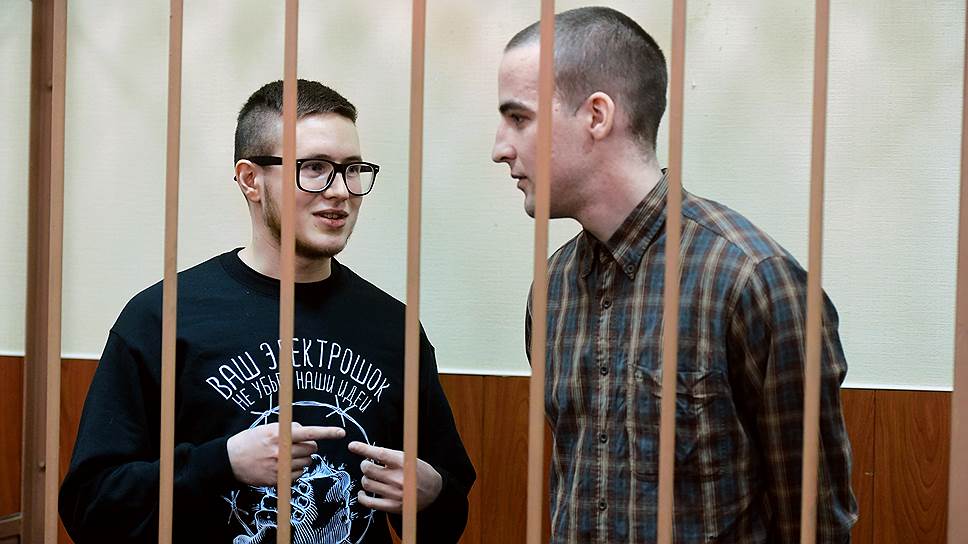
filinkov and boyarshinov-komm.jpgNetwork case defendants Viktor Filinkov and Yuli Boyarshinov in the cage at court yesterday. Filinkov (left) wears a sweatshirt emblazoned with the slogan, “Your taser can’t kill our ideas.” Photo by Alexander Koryakov. Courtesy of Kommersant

The Defendants Were Assigned Roles: Network Trial Gets Underway in Petersburg
Anna Pushkarskaya
Kommersant
April 9, 2019

The court trial in the case of the “anarchist terrorist community” Network got underway in St. Petersburg. Viktor Filinkov, a 24-year-old programmer, and Yuli Boyarshinov, a 27-year-old industrial climber, have been charged with involvement in Network. Federation Council member Lyudmila Narusova, who attended the hearing, pointed out the “ability to throw grenades,” which the prosecution included in the evidence against the defendants, was taught officially to members of the patriotic youth movement Yunarmiya.

“This case has nothing to do with the rule of law,” Narusova noted.

Filinkov and Boyarshinov’s case is being tried in St. Petersburg by the Moscow District Military Court. In January, the same court sentenced Igor Shishkin, who made a deal with case investigators, to three and a half years in prison. Subsequently, the FSB placed Network on the Russian federal list of banned organizations.

The courtroom could not accommodate everyone who wanted to attended the trial. Narusova and ex-State Duma member and civil rights activist Yuli Rybakov were in the gallery.

The defendants were applauded by the gallery as armed guards led them into the courtroom.

During the investigation, Filinkov and three young men in Penza also charged in the case publicly stated they had been tortured with electrical shocks. Boyarshinov claimed conditions in the remand prison were tantamount to torture. Both men have filed complaints with the European Court of Human Rights (ECHR) in Strasbourg.

Lawyer Vitaly Cherkasov motioned the court to let his defendant, Filinkov, sit beside him during the hearing, rather than in the cage, since he had no criminal record or history of conflicts with the law.

The presence in the courtroom of riot police, regular police, and court bailiffs, as well as Cherkasov’s mention of international norms, how things were done at the EHCR, and Prime Minister Dmitry Medvedev’s order to his underlings to explore options for banning the use of the cage in Russian courtrooms made no impression on the court. Both defendants were kept in the cage for the entire hearing.

According to the indictment, the so-called anarchist terrorist community was established no later than May 2015 by Dmitry Pchelintsev (who was arrested in Penza) and an unidentified person. They recruited the seven defendants in the case who have been investigated by the FSB’s Penza office. After cementing the group, they are alleged to have “assigned roles among themselves and explored ways of committing crimes” in order to overthrow the regime. According to the prosecution, to accomplish this objective, they planned on “establishing combat groups and recruiting individuals who shared their anarchist ideology.”

The FSB’s Petersburg office has claimed the defendants were among these recruits. Filinkov has been accused of volunteering to be the group’s “radioman,” while Boyarshinov was, allegedly, their “sapper.”

After the indictment had been read, Judge Roman Muranov asked the defendants whether they understood it.

“No,” Filinkov replied.

The prosecution claims Filinkov promised to “familiarize himself with the community’s charter, employ a pseudonym, data encryption software,  and conspiratorial methods, and acquire and improve [his] combat skills.”

In addition, Filinkov was supposed to have “supplied members with communications devices,” taught them encryption, “recruited other individuals, discussed and planned crimes during meetings, attended classes on tactics, reconnaissance, sabotage, and combat, and the use of weapons and explosive devices, and acquired the knowledge necessary in extreme circumstances and combat conditions.”

“When the time came to shift to active operations for accomplishing the objective part of the crimes [sic],” Filinkov, allegedly, agreed to “mobilize and be ready to achieve the terrorist community’s objectives.”

“I don’t understand the source of these letters, nor how the indictment could be a fiction, rather than something emerging from the evidence,” said Filinkov.

After hearing similar charges made against him, Boyarshinkov said he admitted his guilt and was willing to testify before the examination of evidence.

After the hearing, MP Narusova said the incidents of combat training, as described in the indictment, had nothing to do with the law.

“The Yunarmiya officially engages in combat training under the patronage of Defense Minister Sergei Shoigu. Children are taught to throw grenades, and they learn combat tactics. Ask Shoigu why the entire Yunarmiya is busy learning combat skills?” Narusova wondered.

“A fellow Federation Council member recently said children should be able to throw grenades,” Narusova continued.

She referred to a recent statement by Federation Council member Viktor Bondarev, who had proposed reinstating basic combat training in Russian schools. He claimed to be outraged children did not know how to throw grenades and were afraid of machine guns.

Ms. Narusova said she was drafting a law bill that would criminalize torture. She also said planned to get to the bottom of the Network case.

“This case has nothing to do with the rule of law,” Narusova noted.

In their testimony, the defendants insisted they were learning the alleged skills as a matter of self-defense, given the numbers of antifascists murdered in different parts of Russia in recent years.

In particular, Filinkov mentioned the murders of Timur Kacharava, Stanislav Markelov, and Anastasia Baburova. He reported that, during his studies at Omsk University, he and his friends had been attacked by “right-wing radicals, neo-Nazis, and fascists,” including provocateurs who, he alleged, had ties with law enforcement agencies.

According to Filinkov, the assailants in these clashes had been armed with “blades and stun guns.”

After the investigation was completed, the headmaster of the school Filinkov attended submitted a glowing letter of recommendation. The letter claims the defendant had always shown respect for the law, and was friendly, conscientious, and responsible. He had been an excellent student and won a prize at an academic astronomy competition at Baikonur.

Kommersant will be following the trial’s progress.

Translated by the Russian Reader

__________________________________________

What can you do to support the Penza and Petersburg antifascists and anarchists who have been tortured and imprisoned by the Russian Federal Security Service (FSB)?

  • Donate money to the Anarchist Black Cross via PayPal (abc-msk@riseup.net). Make sure to specify your donation is earmarked for “Rupression.”
  • Spread the word about the Network Case aka the Penza-Petersburg “terrorism” case. You can find more information about the case and in-depth articles translated into English on this website (see below), rupression.com, and openDemocracyRussia.
  • Organize solidarity events where you live to raise money and publicize the plight of the tortured Penza and Petersburg antifascists. Go to the website It’s Going Down to find printable posters and flyers you can download. You can also read more about the case there.
  • If you have the time and means to design, produce, and sell solidarity merchandise, please write to rupression@protonmail.com.
  • Write letters and postcards to the prisoners. Letters and postcards must be written in Russian or translated into Russian. You can find the addresses of the prisoners here.
  • Design a solidarity postcard that can be printed and used by others to send messages of support to the prisoners. Send your ideas to rupression@protonmail.com.
  • Write letters of support to the prisoners’ loved ones via rupression@protonmail.com.
  • Translate the articles and information at rupression.com and this website into languages other than Russian and English, and publish your translations on social media and your own websites and blogs.
  • If you know someone famous, ask them to record a solidarity video, write an op-ed piece for a mainstream newspaper or write letters to the prisoners.
  • If you know someone who is a print, internet, TV or radio journalist, encourage them to write an article or broadcast a report about the case. Write to rupression@protonmail.com or the email listed on this website, and we will be happy to arrange interviews and provide additional information.
  • It is extremely important this case break into the mainstream media both in Russia and abroad. Despite their apparent brashness, the FSB and their ilk do not like publicity. The more publicity the case receives, the safer our comrades will be in remand prison from violence at the hands of prison stooges and torture at the hands of the FSB, and the more likely the Russian authorities will be to drop the case altogether or release the defendants for time served if the case ever does go to trial.
  • Why? Because the case is a complete frame-up, based on testimony obtained under torture and mental duress. When the complaints filed by the accused reach the European Court of Human Rights in Strasbourg and are examined by actual judges, the Russian government will again be forced to pay heavy fines for its cruel mockery of justice.

***************

If you have not been following the Penza-Petersburg “terrorism” case and other recent cases involving frame-ups, torture, and violent intimidation by the Russian Federal Security Service (FSB) and other arms of the Russian security state, read and share the articles the Russian Reader has posted on these subjects.

The Crimea Lesson

history of crimeaSchoolchildren animatedly perusing a textbook entitled The History of Crimea, 5–6, Part 1. Photo courtesy of Viktor Korotayev and Kommersant
Schoolchildren Encouraged to Discuss Crimea
Ministry of Enlightenment Recommends Thematic Lessons on the Peninsula’s Accession 
Ksenia Mironova
Kommersant
March 19, 2019

The Russian Federal Ministry of Enlightenment has drafted a set of recommendations for thematic lessons dealing with “Crimea’s reunification with Russia” in schools. The ministry stressed  its recommendations are just that: recommendations. In particular, they suggest choosing the lesson’s format depending on the age of children. Depending on their ages, the ministry suggest the children play games and have contests or holding conferences, seminars, and debates involving parents and civil society stakeholders. Experts, on the contrary, argue schools should not risk debating the subject.

On Sunday, the ministry’s press service reported Crimea’s accession [sic] to Russia  had been included in the calendar of educational events occasioned by state and national holidays. In this connection, the ministry drafted recommendations for holding “thematic lessons, round tables, class assemblies, concerts, events, and contests” in connection with March 18, “the day Crimea was reunified with Russia.”

According to the ministry, its methodological suggestions are only recommendations meant to “help teachers select the right information and hold thematic lessons, special events, meetings, and other interventions.” By way of enlightening schoolchildren about the issues surrounding “Crimea’s reunification with Russia,” the ministry has recommended hold different events depending on the ages of children. It has suggested telling them about Crimea via games, contests, drawing competitions, conferences, seminars, and debates. In addition, the ministry has suggested involving parents and civil society stakeholders. The ministry’s press service said the recommendations were based on the practical know-how of teachers, but it refused to answer our questions about what exactly the ministry had recommended telling schoolchildren about “Crimea’s reunification with Russia.”

According to Olga Miryasova, secretary of the trade union Teacher, she was especially intrigued by the ministry’s recommendation to hold “debates among high school students.”

“It’s not worth risking debates on the subject. High school students read the internet and know how to argue. God forbid some of them accidentally voiced the ‘wrong’ viewpoint. The homeroom teacher would be left to pick up the pieces. Either the event, as recommended by the ministry, would be a failure or teachers and students would be forced to try and prove the legality of the ‘reunification,’ and there is no guarantee they would be able to do that. And so, again, some children would be threatened with expulsion or bad marks. That is what debates would boil down to,” argued Miryasova.

Lawmakers do not agree with her. According to Boris Chernyshov, an LDPR MP and deputy chair of the Duma’s education and science committee, such recommendations were signs of “proper management.”

“The Minister of Enlightenment was simply obliged to draft these recommendations. Crimea is a vital historical milestone. We only need the psychologists to tell us what age groups can be told what,” Mr. Chernyshov told us.

As we have written earlier, the fifth anniversary of the peninsula’s accession to the Russian Federation has been celebrated on a large scale only in Crimea, Sevastopol, and Moscow, where concerts, exhibitions, and thematic festivals were scheduled.

On March 15, a special citywide lesson dealing with Crimea’s accession to the Russian Federation was taught in all of Simferopol’s schools.

Commenting earlier on the Crimean Spring Festival, political scientist Konstantin Kalachev told us the celebration had been depoliticized as much as possible. It had been turned into a mainly cultural event.

“Crimea’s mobilizing effect has petered out,” he said. “The explanation is simple. Some people are a bit tired of the subject of Crimea, and some even find it irritating.”

Translated by the Russian Reader

Outlandish

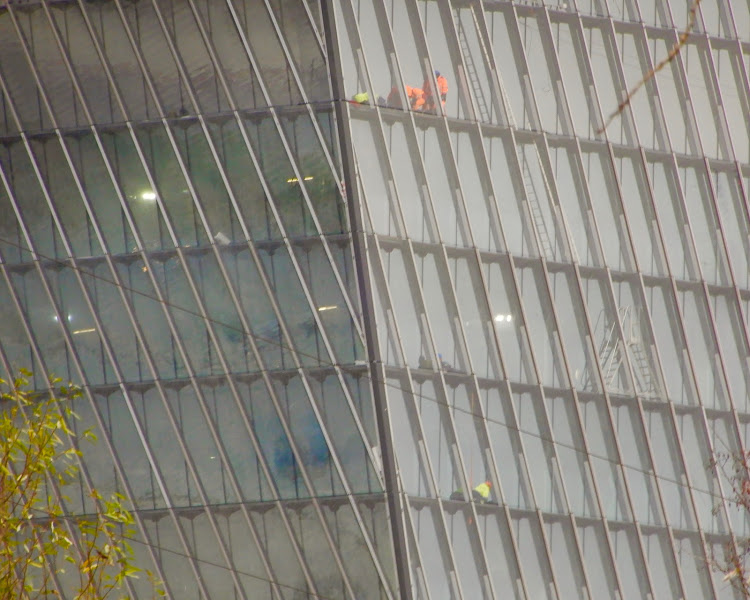
lakhtaEven with my camera’s lens maxed out, it was not to hard for me to guess who was cleaning the glass (or whatever they were doing) high up in the air on the sides of Gazprom’s almost-finished Lakhta Center skyscraper in Petersburg. They were certainly not ethnic Russians or “people of Slavic appearance,” as they say back in the Motherland. They were almost certainly underpaid, disenfranchised and nearly universally despised migrant workers from the former Soviet republics of Central Asia. Lakhta, Petersburg, November 11, 2018. Photo by the Russian Reader

It’s a brilliant plan. The Kremlin now wants to raid neighboring countries and steal their “Russian-speaking” populace (i.e., the non-ethnic Uzbeks, Kazakhs, Kyrgyz, Tajiks, etc., who live in Central Asia) to address Russia’s “population decline.”

That is, it is done with importing swarthy Muslims by the trainload and planeload so it can make them to do all the country’s menial labor while underpaying and shaking them down at the same time. Now it just wants to destabilize and impoverish their countries even further by robbing them of five to ten million people.

In recent years, self-declared progressive Russian scholars have nearly made a cottage industry of applying postcolonial theory to post-Soviet Russia. These scholars have focused almost entirely on how the Satanic West has “colonized” their country in the wake of the Soviet Union’s collapse.

How the Russian metropole colonized and occupied other countries during the tsarist and Soviet period is of no interest to them whatsoever, nor are post-Soviet Russia’s attempts at recolonization and neo-imperialism through migrant labor, military aggression, and the creation of post-Soviet counterparts to the EU and NATO.

No, it’s all about how the big bad West has woefully mistreated the world’s largest, richest country. {TRR}

_____________________________

Kremlin Seeks Russian-Speaking Migrants to Offset Population Decline
Moscow Times
March 14, 2019

The Kremlin plans to attract up to 10 million Russian-speaking migrants in the next six years to reverse the country’s population decline, the business daily Kommersant reported on Thursday.

Russia’s population declined to 146.8 million in 2018, official data released on Thursday estimates, its first decrease in 10 years. Migration has been unable to offset natural population losses for the first time since 2008.

President Vladimir Putin has prioritized migration policy by signing a plan of action for 2019–2025 and adding migration to the remit of his constitutional rights office.

The plan involves granting citizenship to anywhere from 5 to 10 million migrants, Kommersant reported, citing unnamed sources involved in carrying out Putin’s migration policy plan.

The Kremlin lists Ukraine, Kazakhstan, Uzbekistan, Moldova and other post-Soviet states with Russian-speaking populations as so-called “donor countries” where new Russian citizens could be recruited, the paper writes.

Russia needs up to 300,000 additional people per year in order to reach net-zero population growth, Kommersant’s sources are quoted as saying.

Several bills designed to ease citizenship and immigration rules are also in the pipeline, some of which could be considered this May, Kommersant reported.

One Good Turn Deserves Another

Media Identify Prigozhin Firms as Developers of Judicial Quarter in Petersburg
According to Kommersant, Firms Affiliated with Businessman Yevgeny Prigozhin and Concord Management and Consulting Are Project Subcontractors
Grigory Dubov
RBC
December 26, 2018

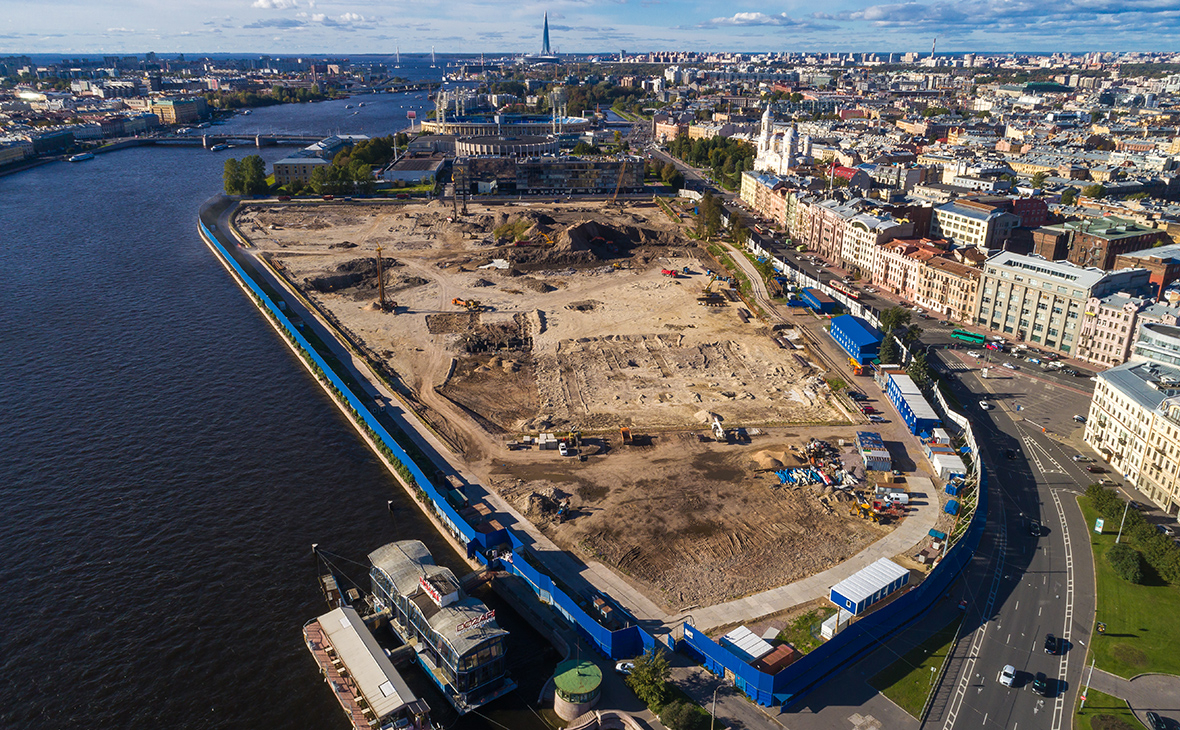
755458040463897Judicial district construction site in Petersburg. Photo courtesy of Stanislav Zaburdayev/TASS and RBC
Firms affiliated with businessman and restaurateur Yevgeny Prigozhin will build the judicial quarter in Petersburg, a project costing 35.7 billion rubles [approx. 455 million euros] that will include residential buildings for the Russian Supreme Court and Boris Eifman’s Dance Palace, report sources quoted by Kommersant newspaper familiar with the project, which has been designed by the Russian Presidential Property Management Department and construction industry insiders.

The sources say the subcontractor was selected in the summer of 2018 without tendering. The newspaper’s sources claim firms affiliated with Prigozhin have launched the process of awarding commercial tenders and have been requesting bids from major construction companies for the construction of individual buildings without advance payment. One of the Prigozhin-affiliated companies engaged in sending out bid and tender requests is Lizena, a firm founded in 2014.

In 2016, the Russian Presidential Property Management Department pledged it would build two office buildings for the Supreme Court and Judicial Department, the Dance Palance, and four residential buildings containing a total of 600 apartments within four years in Petersburg. Construction was supposed to have begun in 2017, and the opening of the facility was scheduled for 2020. In May 2017, the Presidential Property Management Department declared the project top secret and obliged future contractors to maintain secrecy.

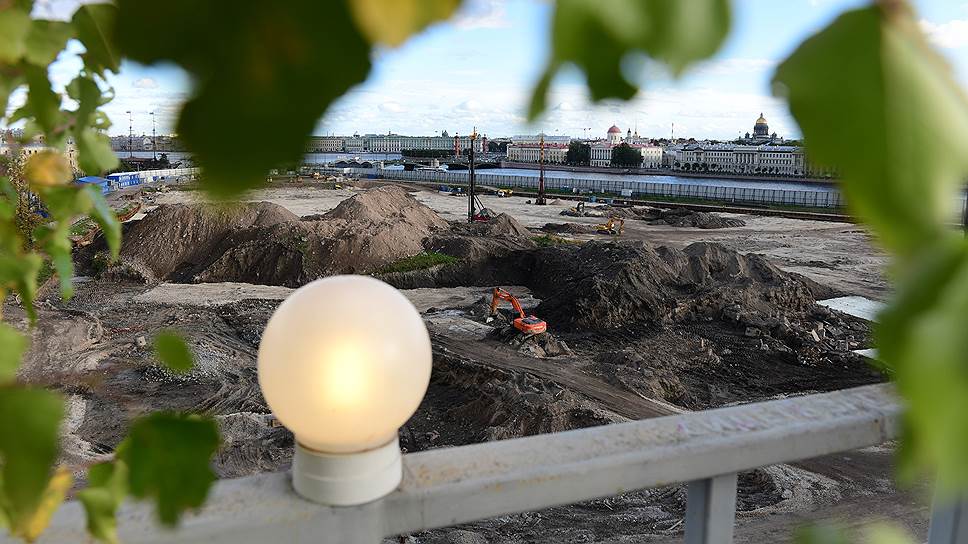
judicial quarterThe future judicial quarter in Petersburg is currently a giant sandbox. Photo courtesy of Alexander Koryakov/Kommersant
Construction was not begun, however. In September 2018, the Presidential Property Management Department acknowledged the deadlines it had set would be missed. As Kommersant wrote, the department failed to spend the 22.3 billion rubles allocated on the project. The funds were reallocated for 2021, when completion of construction has been planned. As transpired in December, an advance payment in the amount of more then 9.2 billion rubles was postponed from 2018 to 2021; no advances are envisaged in 2019 and 2020. As of December 1, according to the Federal Targeted Investment Program, builders in Petersburg had started to dig foundation pits for the residential complex. There was no information about the Supreme Court’s residence and the Dance Palace.

In March, the US Department of Justice imposed sanctions against Prigozhin and his companies Concord Management and Consulting, and Concord Catering. In February, Prigozhin and twelve other Russian nationals, as well as a number of legal entities, were indicted for interfering in the 2016 US elections. Included in the indictment was Prigozhin’s Internet Research Agency, which was abolished [sic] in 2016. RBC’s sources identified the IRA as the “troll factory” that, according to the US Department of Justice, had tried to influence US voters since 2014. President Putin called the charges made against Prigozhin by US officials “laughable.”

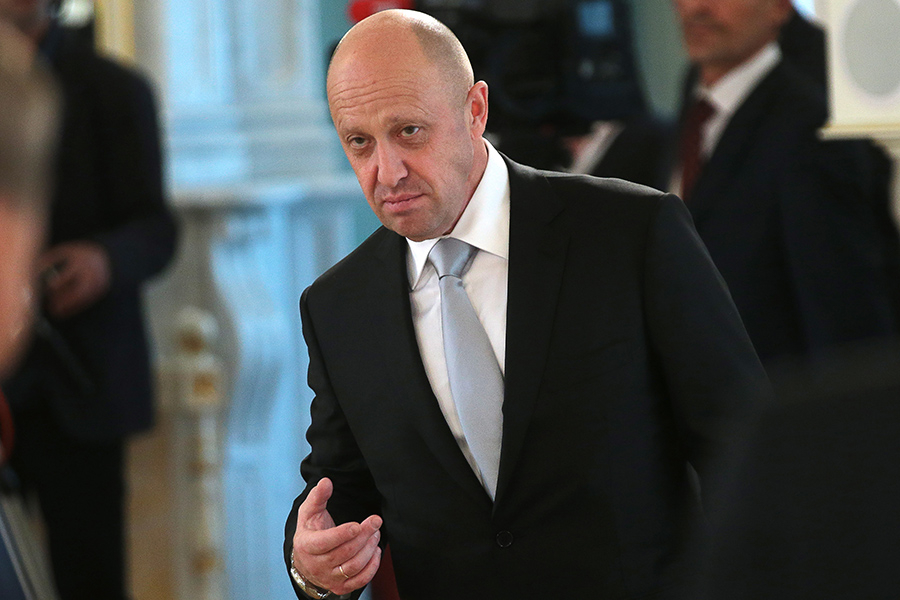
prigozhinYevgeny Prigozhin. Photo courtesy of Mikhail Metzel/TASS and RBC
A number of media outlets have also identified Prigozhin as “Putin’s chef.”

At his press conference on December 20, Putin said, “All my chefs are officers of the Federal Protection Service (FSO). All of them are military men. I have no other chefs.”

Translated by the Russian Reader

[sic]

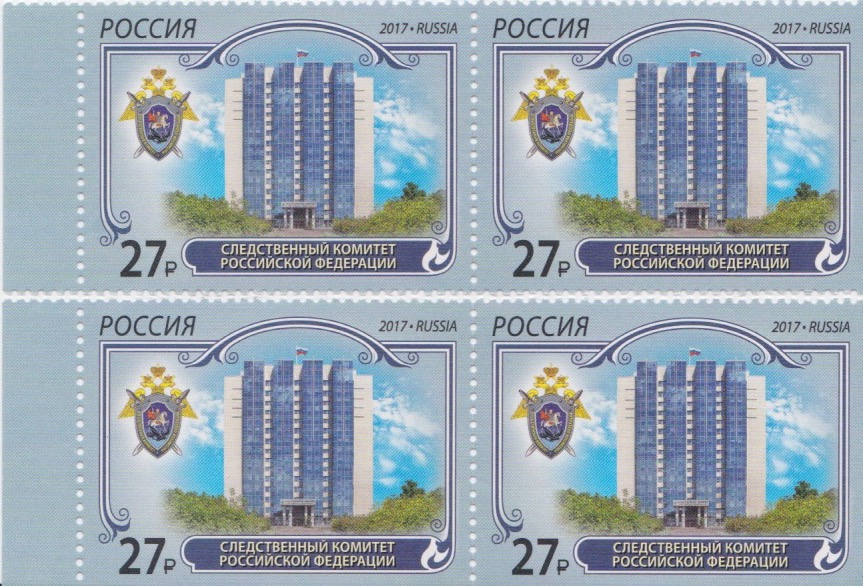
sledkom-stampsA set of four 27-ruble stamps, celebrating the Russian Federal Investigative Committee, purchased at the Petersburg Central Post Office for 108 rubles on November 12, 2017.

After Dark, They Gonna Blow Up [sic]
Police Looking for Gang of Teenage Anarchists in Moscow
Yuri Syun
Kommersant
November 10, 2018

Kommersant has learned that FSB and police in Moscow are looking for a dozen young anarchists who could be involved in planning terrorist attacks and illegal trafficking of explosives. The chekists [sic] were made aware of the alleged underground organization as part of the investigation of the suicide bombing carried out by a second-year vocational school student [sic] at the FSB’s regional office in Arkhangelsk.

While checking the contacts of the vocational school student [sic], whose suicide bombing injured three FSB officers, investigators became aware of 14-year-old Kirill K., a student in the eighth form at School No. 1571 in Moscow. According to the chekists [sic], Kirill K. and the suicide bomber communicated by mobile phone over a long period and corresponded via Telegram, including the day the terrorist attack occurred in Arkhangelsk. Obviously [sic], it was his older comrade who had told Kirill one could manufacture explosives from ordinary household chemicals, including fertilizers, easily obtainable in hardware stores. During a search of the flat of the schoolboy’s parents, on Freedom Street, police discovered [sic] an improvised explosive device (IED) manufactured from ammonium nitrate, smokeless gunpowder, and bomb parts [sic]. According to investigators, the schoolboy could have assembled the IED for an attack during celebrations [sic] of National Unity and Harmony Day [sic].

The schoolboy was detained on November 2. Yesterday, the violent crimes and public safety case squad in the Russian Investigative Committee‘s Moscow office charged him with crimes under Articles 222.1 Part 3 and 223.1 Part of the Russian Federal Criminal Code (illegal purchase and possession of explosives or explosive devices, and illegal manufacture of explosives).

According to investigators, the suspect committed both crimes as part of an organized group. The group could have included the Arkhangelsk suicide bomber, as well as other, unidentifed persons. There could have been as many as ten people in this group, sources in law enforcement say. However, they have so far been unable to identify the vocational school student and schoolboy’s alleged accomplices. This may partly be due to the fact that Kirill, citing Article 51 of the Constitution, refused to testify and admit he manufactured explosives.

However, his lawyer, Sergei Ashanin, claims law enforcers did not find any explosive devices or parts of explosive devices at the flat of Kirill’s parents.

“Except for ten grams of saltpeter and gunpowder that fit in a glass yogurt jar, there was nothing else,” added the lawyer, refusing to comment on the case.

Ashanin plans to appeals the decision of the Presnya District Court, which remanded the schoolboy in custody. We should note the court’s decision was challenged not only by the suspect, his lawyer, and his legal guardian but also by the prosecutor. Consequently, the defense plans to insist in Moscow City Court that the schoolboy be placed under house arrest instead.

Translated by the Russian Reader

Stability

DSCN1722Russians queued up at a popular currency exchange in central Petersburg on September 19, 2018, as the ruble took yet another plunge, fueled by rumors that the regime was planning to “dedollarize” the Russian economy. Photo by the Russian Reader

Foreign Currency Deposits Withdrawn from Sberbank: Depositors Take Out Over $2 Billion in Two Months 
Vitaly Soldatskikh
Kommersant
October 6, 2018

In September, Russians continued to aggressively withdraw foreign currency from accounts in Sberbank (Savings Bank). Over the past month, the amount of these deposits decreased by $900,000,000, while the amount has decreased by more than $2 billion dollars since the beginning of August. The outflow of funds from the savings accounts of individual depositors took place as rumors of a possible forced conversion of foreign currency deposits grew. However, after reasurring statements by Elvira Nabiullina, chair of the Russian Central Bank, as well as a rise in rates on foreign currency deposits, the outflows may decrease.

On Friday, Sberbank published its monthly statement before other Russian banks, as usual. According to these figures, as we have analyzed them, the populace’s foreign currency-denominated bank deposits in Sberbank decreased by $901 million or 2.7% in September and now total $32.5 billion. Likely as not, Russians simply withdrew this money from the bank without exchanging it for rubles and redepositing it. According to Sberbank’s statement, the populace’s ruble-denominated sight deposits and term deposits descreased last month by 45.78 billion rubles or half a percent to 9.65 trillion rubles. Overall, the outflow of foreign currecy deposits slowed compared with August, when individual clients withdrew $1.18 billion from the bank.

Sberbank’s press service confirmed the outflow of $900 million in deposits by retail clients in September, but noted the inflow of funds from commercial clients amounted to approximately $1.5 billion. (This calculation was made using the bank’s in-house method.)

Sberbank termed August’s outflow of foreign currency deposits the product of a “managed evolution of the bank’s balance sheets.”

Meanwhile, in late August, Sberbank introduced a new seasonal foreign currency deposit plan, valid until the end of September, with annual interest rates that varied from 1.5% to 3%. (The highest rates was for customers willing to deposit a minimum of $150 million for a period of three years.) Currently, Sberbank’s highest interest rate for dollar-denominated deposits is 2.06%, whereas a number of major banks, including VTB Bank, Russian Agricultural Bank (Rosselkhozbank), Alfa Bank, and Rosbank, offer interest rates on dollar-denominated deposits of 2.5% per annum.

September’s outflow of deposits from Sberbank occurred as VTB Bank chair Andrey Kostin made a series of statements about the possible implementation of harsher sanctions, under which Russia’s state-owned banks could be stripped of the ability to make dollar-denominated transactions. Were this to occur, Kostin said, VTB Bank could not rule out having to disburse funds from dollar-denominated accounts in another currency as a way of upholding the bank’s obligations to its clients. These statements by the head of Russia’s second largest bank did not go unnoticed. Central Bank chair Elvira Naibullina was forced to calm bank customers by denying the possibility of a compulsory conversion of deposits. According to Naibullina, such moves would only undermine confidence in Russia’s banking system.

According to our analysis, foreign currency deposits held by commercial clients at Sberbank increased by $1.43 billion in September. This occurred largely due to the growth of long-term deposits by commercial firms. Deposits made for terms of three years or longer grew by $1.56 billion, while deposits for shorter terms shrunk. Also, the balances on the accounts of foreign companies grew by $902 million. The ruble-denominated balances on Sberbank accounts held by commercial clients grew by more than 222 billion rubles in September. This increase was mainly due to the nearly 151 billion rubles in additional monies raised by the Federal Treasury.

According to Fitch Ratings, the most considerable outflows in corporate funds, adjusted for fluctuations in the foreign currency exchange rate, were observed at Sberbank (117 billion rubles or 1.7%), Gazprombank (87 billion rubles or 2.8%), and Rossiya Bank (58 billion rubles or 9.4%). Retail deposits also declined mainly at Sberbank (107 billion rubles or 0.9%) and banks undergoing reorganization by the Central Bank (35 billion rubles or 3.2%), while other banks enjoyed a fairly uniform increase in retail deposits.

According to Ruslan Korshunov, director for bank ratings at Expert RA, the largest Russian credit rating agency, “Rumors of the Russian economy’s dedollarization and the possible conversion of foreign currency deposits into rubles could have pushed a segment of the populace to withdraw their money from state-owned banks, against which sanctions could be strengthened.”

At the same, Korshunov noted the outflow of retail deposits in September could also have been caused by a seasonal factor: the return of the populace from holiday and, consequently, an increase in consumer activity. However, he believed these factors had a one-off effect and such outflows were highly unlikely in October.

Translated by the Russian Reader

Historical Amnesia in Chelyabinsk

AKG1423992Exhumation of a mass grave in the area of Pit No. 5 aka Zolotaya Gorka (Golden Hill), which was supposed to be transformed into a memorial cemetery for victims of Stalinism in the 1930s. The mass graves are located in Shershni, a suburb of Chelyabinsk. The photo was taken in 1990. Courtesy of the Elizaveta Becker Collection, Gulag Museum, International Memorial Society
The Security Services Don’t Like Plaques: Chelyabinsk Officials Say Plaque Commemorating Executions Would Discredit Police
Yulia Garipova
Kommersant
August 31, 2018

Chelyabinsk city hall has refused to assist community activists who have been trying to mount a plaque, commemorating the victims of political terror, on the walls of the city’s Interior Ministry [i.e., police] building. The site used to be the home of a building in which executions were carried out in the 1930s. According to officials, the inscription on the plaque could cause people to have “unwarranted associations about the work of the police” and undermine its authority in the eyes of the populace.

In 1932, a building was erected from the bricks of the demolished Christ’s Nativity Cathedral on Vasenko Street in Chelyabinsk. It was handed over to the OGPU (Joint State Political Directorate), later known as the NKVD (People’s Commissariat for Internal Affairs). Historians claim that, during the Great Terror, the building contained an execution room.  In 1937–1938, nine Chelyabinsk priests were murdered in the room. In 1995, a memorial plaque was mounted in the courtyard of the building at 39 Vasenko Street.

The inscription on the plaque read, “During the period of mass repressions in the 1930s and 1940s, innocent people convicted of political crimes were executed in this building.”

In the early 2000s, however, the plaque vanished.

This year, Yuri Latyshev, coordinator of the local history group Arkhistrazh, launched a campaign to restore the memorial plaque. He asked Yevgeny Golitsyn, deputy governor of Chelyabinsk Region and chair of the regional commission for restoring the rights of victims of political repression, for help. Chelyabinsk city hall’s culture department sent him a reply.

Mr. Latyshev was informed the building that had once housed the secret police had been completely dismantled due to dilapidation. The land plot was handed over to the Interior Ministry’s Chelyabinsk Regional Office. A new building had been erected on the plot, and a new plaque mounted on the building. It reads, “In memory of the victims of the 30 and 40 years [sic]. Their memory will be preserved as long as we remain human beings.”

Citing the local Interior Ministry office as its source, the Chelyabinsk city culture department explained in its letter to Mr. Latyshev that the whereabouts of the old plaque were unknown. Restoring a commemorative plaque that claimed people were executed in the building during the period of mass repressions in the 1930s and 1940s  would be a distortion of historical reality, the officials argued.

“There have not been any repressive actions of a physical nature [sic] carried out in the buildings used by the [local Interior Ministry office],” they wrote to Mr. Latyshev.

Chelyabinsk culture officials also stressed the inscription on the previous plaque could “provoke unwarranted associations about the work of the police in the minds of people, even as the Russian federal government has made considerable efforts to strengthen the police’s reputation.”

Mr. Latyshev, however, is convinced part of the old building survived the reconstruction.

“The [old] plaque was absolutely fair, correct, and decent, but someone clearly did not like it. It would be fair to hang it on the street side of the building,” says Mr. Latyshev.

He claims he has sent inquiries to the FSB and Interior Ministry, but has only been given the runaround.

“I’m surprised by the wording used by city hall officials—’unwarranted associations’—and how they immediately project these ideas into the minds of the people of Chelyabinsk,” Ivan Slobodenyuk, coordinator for the project Last Address in Chelyabinsk Region, told Kommersant.

Mr. Slobodenyuk stressed that restoring the memorial plaque would be consistent with the state policy for commemorating victims of political repression, as adopted by Prime Minister Dmitry Medvedev in 2015.

“Regional authorities have so far neglected this topic. The memorial on Golden Hill has virtually been abandoned. Part of the area containing mass graves has been redeveloped, and another section has been slated for redevelopment. Now the story with this memorial plaque comes to light,” said Slobodenyuk. “In my opinion, putting up a memorial plaque that begins with the phrase, ‘This was the site of a building in which, during the period,” and so on, in keeping with the wording on the original plaque, would not damage the police’s reputation. On the contrary, it would be a manifestation of courage and would make people respect law enforcement.”

Translated by the Russian Reader

Neocolonialism

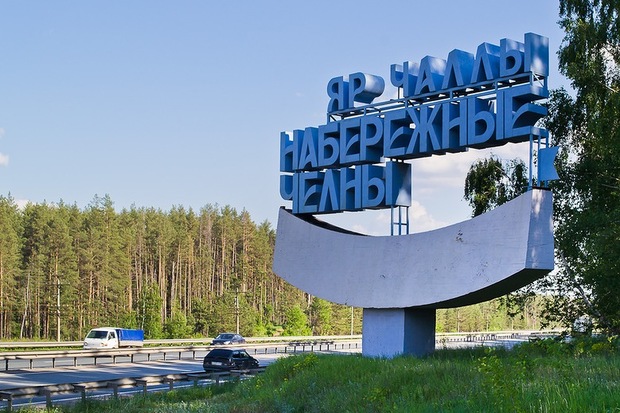
7d34dc1c84d3ef36Tatarstan’s second largest city, Naberezhnye Chelny, is known as Yar Chally in Tatar. Photo courtesy of Realnoe Vremya
Minority Languages Ready for Third Reading
State Duma Updates Standards for Teaching Official Languages
Viktor Khamrayev and Kirill Antonov
Kommersant
July 25, 2018

On Wednesday, July 25, the State Duma should pass in its third and final reading a law bill that would make study of the Russian Federation’s official language, Russian, and the official languages of the country’s ethnic republics an obligatory part of the school curriculum. However, parents would freely choose the language their children study as their native tongue. MPs are confident they have defused the anxiety felt in the ethnic republics over the plight of minority native languages. Experts in a number of the republics, however, are still concerned minority native tongues will gradually outlive their usefulness.

On Tuesday, July 24, the Duma approved in their second reading amendments to the law “On Education.” During their first reading, the draft amendments had drawn criticism from the ethnic republics due to the fact they introduced the principle of choice when studying native languages.

Vyacheslav Nikonov, chair of the Duma’s education committee, told Kommersant two important provisions had been inserted into the law bill for the second reading. The Federal Education Standards “should guarantee the opportunity to be instructed in the native languages of the peoples of the Russian Federation” and, to this end, they should provide for the study of “the official languages of the Russian Federation’s republics, the native languages of the peoples of the Russian Federation, including the Russian language.”

According to Mr. Nikonov, this rule should diffuse “concerns in the republics that the study of minority languages would become optional.”

“The federal standard means mandatory inclusion in the curriculum,” Mr. Nikonov said.

At the same time, the law establishes the free choice of the language of classroom instruction, as well as the choice of what language children would study as their native tongue, as determined by their parents.

During its second reading, 371 MPs voted for the law bill. It should pass during its third reading on Wednesday.

Mr. Nikonov reported the education committee had already negotiated with the relevant parties to establish a fund to support native languages.

“We suggest establishing the fund through a presidential decree, making it a presidential fund with appropriate federal financing,” he said.

In addition, Mr. Nikonov said MPs had been asked to develop the basic concept on which the new Federal Education Standards would be based. The government has established a working group in accordance with the resolution adopted by the Duma after the first reading of the bill.

As approved by MPs, the draft law does not provide for a transitional period while the government elaborates the new concept and educational standards. The law would come into force as soon as it was signed by the president and published. In this regard, the republics are afraid of the consequences set in motion once the law has been adopted. The free choice of a native language would come into play in the absence of new federal standards.

Under current guidelines, pupils attend five hours of Russian classes a week, while minority language classes are offered only three hours a week, Svetlana Semyonova, director of the Ethnic Schools Research Institute, explained to Kommersant.

This means, Ms. Semyonova said, that “pupils who choose Russian as their native language will have eight hours of Russian class a week, while those pupils whose native language is Yakut will study Russian for only five hours a week.”

Given that the Leaving Certificate Examination (EGE) is administered only in Russian, Ms. Semyonova argues Yakut children would be more poorly prepared for it.

Due to the EGE, very few pupils would risk choosing a minority language as their native language, Marat Lotfullin, a researcher in ethnic education at the History Institute of the Tatarstan Academy of Sciences, told Kommersant. Even non-Russian children in Tatarstan would choose Russia as their native language. He fears the Tatar language will gradually outlive its usefulness.

Mr. Lotfullin draws attention to the fact that the new law stipulates the teaching of minority native languages and classroom instruction in these languages only for primary and secondary schools, meaning ethnic schools would function only until the ninth grade.

This is “a serious restriction of the rights of the peoples of the Russian Federation,” he argues.

“If we take Tatarstan, Tatars have always enjoyed instruction in Tatar all through secondary school, including the upper grades,” Mr. Lotfullin said.

Translated by the Russian Reader. See whether you can square this story with my previous post, about a young Khakas woman in Abakan who has been charged with “extremism” by the FSB for promoting Khakas language and culture, and publishing a blog post about the discrimination Khakas experience at the hands of ethnic Russians, who constitute the majority in the nominally “ethnic” Republic of Khakassia.

Our Own Private Romania

ilieni-dinu-lazar

Wages in Russia Catch Up to Wages in Romania
Anastasia Manuylova
Kommersant
July 23, 2018

Wages in Russia are higher than those in the other CIS (Commonwealth of Independent States) countries and comparable with those in Central and Eastern European countries. Those are the findings of the experts at the Higher School of Economics (HSE) who have issued the report “Wage Comparisons among Countries in 2011–2017.” They used purchasing power parity (PPP) indicators to do their calculations.

As 2017 came to a close, Russia was the leader in terms of wages among the CIS countries. Taking PPP into account, the average monthly wage in Russia last year amounted to $671. Kazakhstan lagged behind this benchmark less than the other CIS countries. Its average monthly wage in 2016–2017 was $459 and thus lower than the average wage in Russia by 30–40%. Tajikistan was the farthest behind, with an average monthly wage of $147. The study’s authors note the wage gap between Russia and the other CIS countries has continued to widen since 2011. In particular, this has been due to a deterioration of economic conditions in Azerbaijan, Belarus, and Kazakhstan in  2015–2017.

However, Russia’s position looks less attractive when compared with other groups of countries. Thus, among the countries of Central Europe, the level of wages in Russia is comparable only with Romania ($678 a month) and Bulgaria ($602 a month). The average monthly wages in Czech Republic and Croatia, for example, are considerably higher than the average monthly wage in Russia (by 80–90%), despite a downward trend in wages that has been observed since 2011. There is also a considerable gap between wages in Russia and wages in Poland and Hungary. In 2017, they outpaced Russia by 60–70%.

Among the BRICS countries, Russia exceeds the same indicator for Brazil by 5%. This gap has been narrowing in recent years, however. Wages in China outpaced wages in Russia as early as 2014, and the gap between the two countries is now almost 30%. In the long term, as the HSE’s Svetlana Biryukova, the report’s co-author, explains, if the current wage trends in all the countries, including Russia, continue, Russia would retain its leadership only among the CIS countries, but would find itself in last place among Central and Eastern European countries.

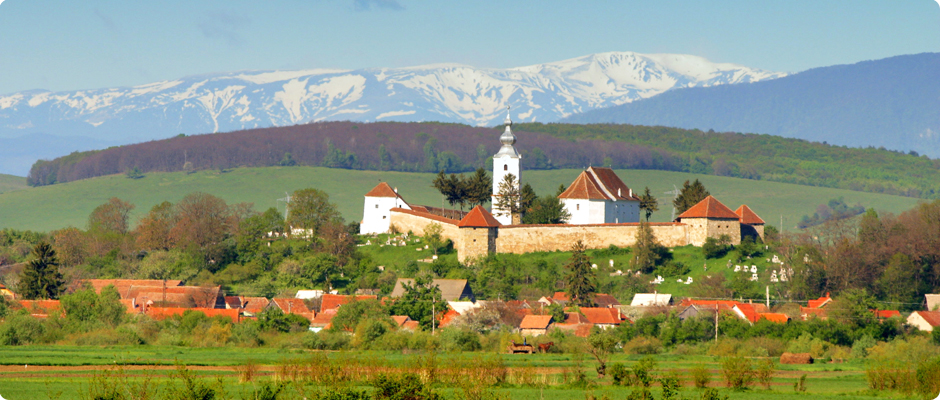
Translated by the Russian Reader. Photo courtesy of romaniatourism.com