Russian Deserters and Kenyan Job Seekers

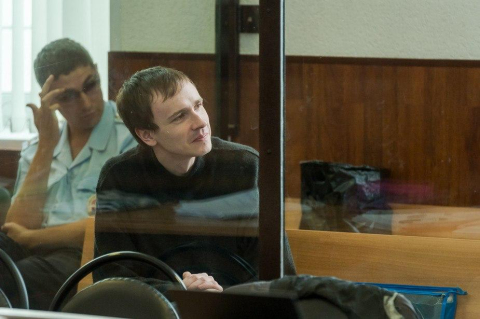
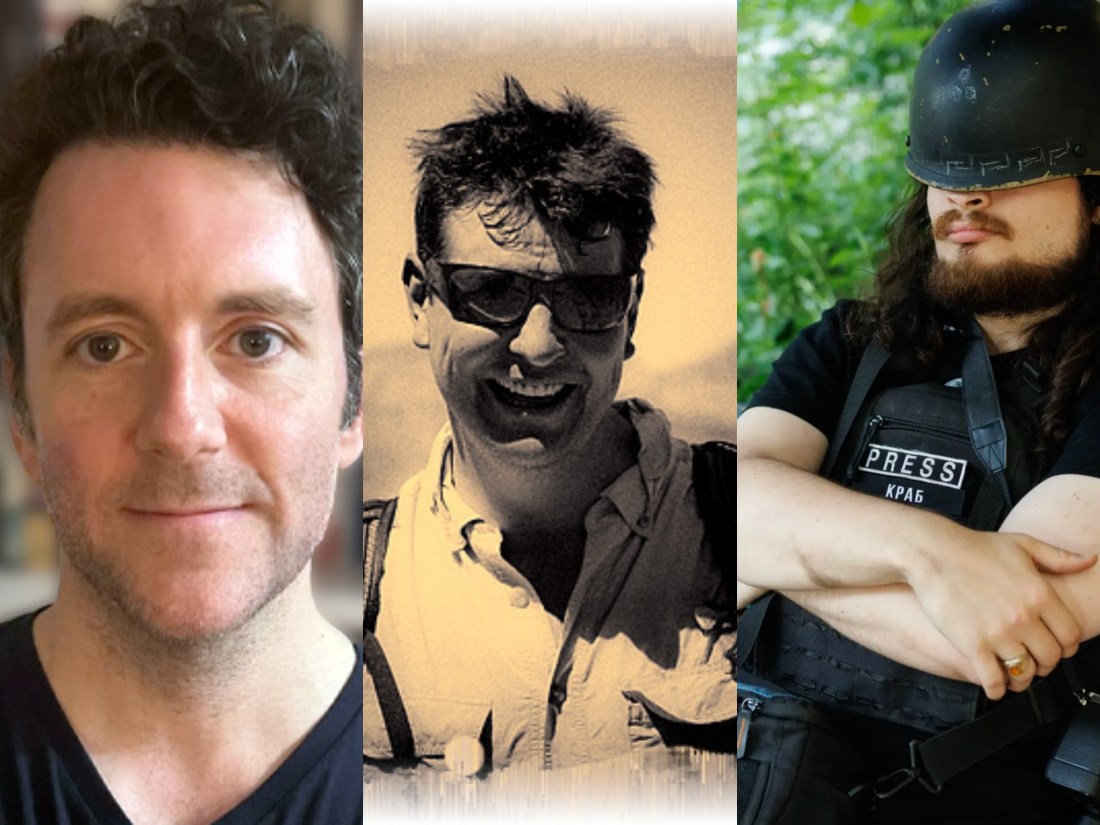
Yevgeny Korobov, a former officer of the Russian army, stands in the middle of the room dressed casually in a black shirt and light pants. The 30-year-old has been living in Astana, the capital of Kazakhstan, for almost three years.

He says that during this time seven or eight other deserters have stayed in his apartment.

“I try as best I can to help people like me. You don’t need to pay me, just live here, that’s all,” he says. “Who else will help them? After all, there is something that binds us. We are all deserters. We all ran.”

Just four years previously, Korobov was fighting in Ukraine from February to May 2022.

‘The war has begun’

Korobov had always wanted to be in the military, although his parents were postal workers. He studied at a military college in his native Krasnoyarsk, before joining the Russian army as “a young officer full of enthusiasm to serve”. His contract was to last until 2023.

His enthusiasm soon soured, however.

“During service in the army you encounter injustice and madness, and you begin to become completely disillusioned with everything, with how things are in Russia,” he says.

In early 2022, Korobov was sent to military exercises in the Kursk region, near the Ukrainian border. “I didn’t believe there would be a war, but we went there with anxiety,” he recalls.

He describes what he saw after crossing the border into Ukraine: “We drove through populated areas. People were living their lives, someone was refueling a car, someone was drinking coffee, someone smoking. And we’re driving. The war has begun.”

His brigade moved towards the capital Kyiv, stopping in the Brovary district east of the city.

This is the area where the Ukrainian prosecutor’s office says that Russian soldiers had carried out war crimes. [Investigations by the] outlets Meduza and Radio Liberty allege that soldiers of the 15th Brigade, where Korobov was based, had set up a torture chamber in a post office in the Kyiv region. Journalists also reported on the execution of at least five civilians by the same brigade.

Korobov claims that he personally did not witness war crimes, but heard about them from others. He says that his job was to escort rear columns, navigation and route reconnaissance during the war, and that therefore he was constantly on the move.

His brigade was near Kyiv until the end of March, after which he left the region when Russian forces retreated following the failed attempt to encircle the Ukrainian capital. As he retreated, Korobov saw destroyed Ukrainian towns. He says this caused him “horror and disappointment”.

Korobov says that the columns ran into ambushes by several Ukrainian forces.

“We had to fire back,” he recalls. “What else could we do? Die? Am I a good person if I died? I also wanted to live and wanted all my soldiers to return. What were we fighting for? For our lives. The Ukrainians had an enemy — us. We had two enemies — the Ukrainians and our own commanders.”

The ‘war hero’

At the end of 2022, just before he finally deserted and left Russia for Kazakhstan, Korobov was ordered by his commander in Moscow to appear on Russian television.

The show painted him as a war hero who had been injured in battle.

“Senior Lieutenant Yevgeny Korobov, together with his group, was escorting a rear column,” said the host of a popular evening talk show on Channel One. “They ran into an ambush. They fought superior enemy forces. They destroyed at least 15 militants and enemy equipment. They themselves had no losses.”

Korobov calls the story, first reported by the Russian defence ministry, fabricated. He says his unit did run into an ambush at the beginning of March 2022 in the Chernihiv region, but that the extent of the ordeal was greatly exaggerated.

A still of “war hero” Yevgeny Korobov’s appearance on Russian TV. Source: smotrim.ru/BBC News Russian

“Fell into an ambush — yes. ‘Carefully prepared’ — hardly. Whether the enemy’s numbers were superior, I don’t know how many people were there or who was firing,” retorts Korobov.

After appearing in the media, he received a medal for courage for which Korobov says he “couldn’t care less”. “For an invented feat? For a war I didn’t want to take part in? I already didn’t want to serve in the army at all — I was just enduring until my contract ended.”

What Korobov does not dispute is that he was injured in Ukraine. During the course of the television interview, he is noticeably limping.

‘No way back’

Korobov was wounded in the leg in Donetsk in May 2022 after which he was evacuated and returned to Russia.

At the time, the command was issued to assault the village of Ozerne, near Lyman. “Only once were we able to get close to it; we were hit with everything possible, and during all the following assaults we couldn’t even approach,” says Korobov.

“At that point I already understood that there was no chance we would be allowed to go home. And that the only way to leave there was as dead or wounded.”

One day, their unit accidentally landed a drone on Ukrainian positions. Korobov says his unit of four people was sent to retrieve it and told by his commanding officer not to return without it — a mission that he describes as impossible.

“I understood that that was it, there was no way back,” he says. “And I opened fire on my own soldiers. I fired a burst into the ground. I wounded my guys. Then I wounded myself, shot myself. I provided first aid, and we crawled towards evacuation.”

This suggests that the injury that was reported and celebrated on the television program Let Them Talk was one Korobov inflicted on himself.

The BBC cannot independently verify Korobov’s account, although he provided photographs of his wounded leg.

Korobov and the remnants of his platoon were then evacuated from the frontline. He spent a month and a half in a hospital, then underwent rehabilitation.

Korobov wanted to serve out his contract in Russia until 2023, without returning to Ukraine. However, after the announcement of further mobilisation in September 2022, all contracts became indefinite. At the end of that year, he was informed that he would be sent back to Ukraine.

Looking for asylum

Korobov says that before leaving Russia he contacted the Go By The Forest project, which helps former Russian soldiers like himself who fear returning to the war in Ukraine. Activists then drew up a route for him to escape to Kazakhstan.

Soon he had packed a bag and left Russia.

A criminal case for desertion has since been opened against Korobov, and he faces up to 15 years in prison. Because of this, for the first months of life in Astana he hardly left the house.

Later, he found a job at a bar — illegally, because, as an asylum-seeker, he wasn’t permitted to work there.

“Kazakhstan has not granted asylum to a single Russian citizen yet, and I think it won’t,” says Korobov.

“We are waiting for a decision from European countries, especially from France, because at the moment it is the only country that has accepted Russian deserters,” he says.

Korobov understands the reluctance of Western countries to accept Russian deserters, but believes that this is one of the “effective ways of resolving the conflict: not only supplying weapons and imposing sanctions, but also giving Russians the opportunity to refuse to carry weapons, to refuse to fight.”

The BBC spoke to Artur Alkhastov, a lawyer from the Kazakhstan Bureau for Human Rights, who has been helping Russian deserters who fled to the country during the past three years. Part of the process is to verify the former soldiers, in order to prevent agents of the Russian security services from infiltrating the group.

He says verifying Korobov’s story was difficult and took time.

In his view, a Russian deserter today is in even greater danger than many other opponents of the war or political dissidents, because the Russian authorities see these former soldiers as traitors.

This puts Russian deserters in Kazakhstan and Armenia in a vulnerable position, because both countries host Russian military bases.

Korobov and other deserters can currently be protected from extradition to Russia because they hold the status of asylum seekers, but this does not protect them from the threat of abduction, Alkhastov explains.

Source: Amalia Zatari, “Russian ‘war hero’ turned deserter: ‘I shot myself and my own men to get us out of Ukraine,'” BBC News Russian, 2 February 2026


Kenyan job seekers were lured to Russia, then sent to die in Ukraine. Source: msn.com

Hundreds of Kenyans have been recruited by the Russian military to serve on the front lines in Ukraine, according to former recruits and their families. Many have never returned.

Most men said they were tricked — offered civilian or “safe” security jobs in Russia, only to be handed a weapon and sent to the battlefield. Others were current or former soldiers who joined up as mercenaries, lured by promises of higher wages. The survivors described inhumane treatment by Russian commanders and harrowing scenes of slaughter.

While there have been isolated reports of Africans conscripted by Moscow to fight, The Washington Post uncovered an extensive clandestine pipeline stretching from Nairobi to the forests of eastern Ukraine. Russian recruitment in Kenya is more widespread, and more deadly, than previously reported, and the effort extends across the continent. The Post spoke to recruits or their family members in South Africa, Botswana, Tanzania and Nigeria, and it heard anecdotal accounts of fighters in Ukraine from eight other African countries, including Ghana, Zimbabwe and Cameroon — hidden victims of the largest European conflict since World War II.

The phenomenon is driven by two converging forces: economic desperation in Kenya, pushing young men to pursue vague promises of work thousands of miles from home, and the Russian military’s boundless appetite for fresh bodies, as it seeks to press its advantage in Ukraine without sending more of its own to die. In the middle are African recruiters, operating with direct or implicit help from political connections. Kenyan authorities have repeatedly urged young men to immigrate to Russia despite evidence that employment agencies are steering job seekers into combat.

This account is based on interviews with four Kenyans who fought in Ukraine — three of whom were wounded — and family members of nine other Kenyan recruits, including active-duty soldiers who traveled to Russia to join the military. Some came from specialized units run by military intelligence, or from the elite SPEAR team that guards the U.S. Embassy in Nairobi. The Post reviewed corroborating documents from the men sent to fight, as well as messages between recruiters and family members desperate for news of their loved ones.

Two of the injured Kenyans, neither of whom had military experience, said they were sent to fight in Ukraine with only a few days of training in a language they did not speak.

“They said: ‘Learn fast. We are taking you to the war,’” said the first man, whose hands were lacerated by shrapnel from a drone strike. He crossed rivers full of bodies on his first day, he said, and saw most of his party killed.

“I didn’t even see any people,” said the second Kenyan, who suffered burns to his head and hands in a separate incident. “It was just robots — drones — shooting at us.” Like others in this story, the men spoke on the condition of anonymity, fearing for their safety and for their fellow Africans still in the line of fire.

In November, Ukraine’s foreign minister said his government had identified 1,436 citizens from 36 African countries fighting for Russia.

“They are treated as second-rate, expendable human material,” Andrii Sybiha said in a post on X. Most, he added, “do not survive more than a month.”

Those who aren’t killed are often captured and imprisoned, survivors said, or wounded and prevented from returning home. Former recruits said those who refused to go to the front lines were threatened with arrest in Russia; others were deployed to deadly positions after their families talked to the media.

The Russian Defense Ministry did not respond to requests for comment.

The Kenyan government told The Post that it had learned of the recruitment schemes only through media reports three or four months ago, and that it was constrained by diplomatic norms. “Our ambassador [in Moscow] doesn’t have jurisdiction to leave his office and go into morgues,” said Hellen Gichuhi, Kenya’s secretary for diaspora welfare and partnerships. She declined to say how many Kenyans had asked the government about the fate of relatives in Russia, or how many Kenyans had been killed in Ukraine. “They are being recruited by rogue agencies,” she said.

Although some conscripts reported receiving salaries, most said their bank accounts were raided or frozen by recruiters. Many families said their loved ones simply went silent. A single WhatsApp group for relatives of missing Kenyans has nearly 100 members. Some have already had their worst fears confirmed.

Kenyan Grace Gathoni, 38, said her husband and the father of their four children, Martin Macharia, left for Russia on Oct. 21 after being promised a job as a driver or a cleaner. He was forced to sign a contract he didn’t understand, she said, and deployed to Ukraine.

When they last spoke on Nov. 19, she said, Macharia asked for her prayers. A week later, she saw his body on a Kenyan news bulletin.

Her 4-year-old keeps asking when he will return home, she said. The older ones know he’s not coming back.

The recruiters

Kenya, a longtime U.S. security partner in East Africa, is not growing fast enough to provide jobs for its population of 53 million. Young people struggle to find steady work; underfunded public schools and hospitals often lack staff and resources. Political graft is rampant.

President WilliamRuto has made exporting labor a central plank of his economic strategy, promising to send a million people abroad to work. Labor Minister Alfred Mutua visited Russia in June to highlight Kenyans who had found jobs there through an agency. Kenya’s prime cabinet secretary, Musalia Mudavadi, said in December that the two countries are discussing a labor treaty.

But The Post identified five Kenyan companies ostensibly recruiting for civilian jobs in Russia that instead funneled men to the front lines in Ukraine. Most prominent among them was Global Face, run by businessman Festus Omwamba, whom multiple families identified by name. Gichuhi, the diaspora welfare secretary, said most recruiters had been arrested and Global Face de-registered, although Omwamba was still at large.

Families also pointed to Edward Gituku, an associate of Omwamba who was arrested on human trafficking charges in September after 22 Kenyan men were detained while preparing to travel to Russia. Lawyer Danstan Omari, who initially represented Gituku, told The Post that his former client had admitted to sending more than 1,000 men to Russia, many of whom subsequently served in the military.

Eight Kenyans said they or their relatives had gone to Russia through Global Face, providing phone numbers registered to Omwamba, Gituku or other agency employees — and, in many cases, proof of payment to the recruiters. All said they were lured by the promise of civilian jobs, except for one man, a former Kenyan military recruit who said he knew he was being sent to fight.

The Post attempted to contact Gituku and Omwamba using numbers shared by families but was unable to reach them for comment. Global Face did not respond to emails seeking comment and appeared to have no physical offices in Kenya.

In April, Omwamba arranged for Oscar Khagola Mutoka, a 39-year-old veteran of Kenya’s U.S.-trained Ranger unit, and another local man to leave for Russia, according to Peter Shitanda Malalu, Mutoka’s cousin. Mutoka’s family last heard from him in June but kept sending messages; in January, they finally received a response from his phone. It was in Russian, from his former commander, saying he had been killed in August.

The message said “if we wanted the body, we can find it at the morgue in Rostov,” Malalu said. “We do not know if he was ever paid, but our family never received anything.”

The family shared that and other messages from the commander, including one in which he said that “compensation for the death of a soldier is granted to relatives who have citizenship of the Russian Federation” and in which he offered to bring Oscar’s body to Moscow’s airport. From there, he said, the family would be responsible for transportation costs.

In September, as Mutoka’s sister tried to trace him, she contacted a number registered to Omwamba. She received a reply saying he was in Russia and would follow up on Mutoka’s whereabouts, according to a voice note she shared with The Post. The last message from Omwamba’s number in January brushed off the family’s increasingly urgent pleas: “I do not want to be involved in your gossip,” he wrote on WhatsApp.

Another Kenyan woman, Risper Aoko Ouma, said her 39-year-old husband had flown to Russia in July on a flight arranged by Omwamba. A military veteran of 14 years, Duncan Otieno Juma was wounded almost immediately that month in a Ukrainian drone attack that killed another Kenyan and many other Africans, she said. He was then sent back to the front lines. She said she has not heard from him since August. When she asked a Global Face employee for news of her husband, she received a demand for money.

“How much are you ready to pay me?” the employee asked in a text message viewed by The Post.

More than a dozen African men were killed in October in the Kupyansk area of eastern Ukraine, Volodymyr Dehtyarov, a Ukrainian military public affairs officer, told The Post. Among the dead was a Kenyan man, whose passport he provided. The man’s family confirmed he had gone to Russia in September. They never heard from him again.

Kenyans are still making the journey, despite a growing awareness of their likely fate. A man who considered going to Russia but ultimately decided against it said two of his friends left on Dec. 27; immigration agents are watching out for men traveling to Moscow, he said, but it only means you have to pay an extra bribe.

The contract

One of the Kenyan recruits who made it back from Ukraine, a 32-year-old whose silver tooth flashed in a confident smile, now wears black gloves to hide the burns on his hands and a wool hat pulled low over burn scars on the back of his head. He said he paid Omwamba’s company and his employees a total of $390 for a civilian job in Russia.

Before he left, he said, he underwent a physical and met a man who identified himself as a member of the Russian Embassy in Nairobi. They gave him a contract in Russian to sign but refused to give him a copy, he said. He was told he’d be paid $2,650 per month for frontline work, $2,150 for a rear position away from the fighting and $885 for working back in Russia — still a small fortune in Kenya.

In August, he flew to St. Petersburg with three other civilians, all of whom were told they would work as security guards, and three former Kenyan soldiers. Despite having tourist visas, he said, they were taken by handlers to open accounts at Bank Saint-Petersburg, which is subject to U.S. sanctions. Then they were presented with new contracts — all offering frontline rates. None of them, he said, were given the option to stay in Russia.

“We said we need to translate this document, and we will sign it when we are satisfied,” the man recalled telling the Russian agent, but he was told there was no time. The men could either sign the frontline contract, the agent said, or repay the money they had spent to travel there.

“That’s what forced us to sign,” the recruit said.

A former member of Kenya’s armed forces now employed in the security sector said Omwamba’s company has recruited more than 50 military veterans whom he knew personally, including at least two who were working for a security company in the Middle East. Many had been killed, he said, citing accounts from his Kenyan contacts in Russia.

One recruit’s mother said he was a former military police officer who was working as a guard at the U.S. Embassy in Iraq when he was recruited by Russia. “He was my only son,” she said, showing a picture of a muscular man smiling on a beach. She paid nearly $3,900 to the recruiters to try to get him back, she said, but they took the money and he never came home. She doesn’t know if he’s alive.

Another person in the Kenyan security industry said he knew at least 32 active members of the military who had deserted to head to Russia. A woman said her 37-year-old brother, previously an inspector in the general service unit of the Kenyan police, had also made the trip, not realizing he was being recruited by the army. He sent an email upon arriving asking her to download a secure app so they could speak.

“He was in hiding,” she said. He was trying to escape, he told her. She never heard another word from him.

Michael Muchiri, a spokesman for Kenya’s police, told The Post that a key recruiter was arrested last year and that no serving officers had gone to Russia. The Kenyan militarydid not respond to requests for comment.

Sent to die

The 32-year-old recruit, along with 16 other Kenyans, a Guinean and several Cameroonians, undertook two weeks of training in shooting, navigation and fitness in Russian-occupied Ukraine, he said.

“We were told: ‘You are our machinery; you have to work like machines. … You must fight,’” he said. A fellow Kenyan nicknamed Mwas told him new conscripts all went in the same direction — “to the front line.” Mwas was killed shortly after they spoke, he said.

The man was among six Kenyans sent to fight; another six refused but eventually relented after they were threatened with arrest, he said.

On Sept. 16, his first day in combat, the 32-year-old, another Kenyan and three Russians were ordered to run across open ground to a forest. The area was mined, he said, and there were explosions. Their Russian guide shot at drones overhead and showed them how to navigate from dugout to dugout, he recalled, but the Kenyan began to lose his nerve when they came across a couple of Russian soldiers bleeding badly.

During their last sprint, he said, a drone fired explosives and bullets at them. The blast knocked him over and his backpack, stuck over his head, caught fire. One of the Russian soldiers was killed.

He was taken to a field hospital packed with wounded men, where he stayed for a week before being transferred by train to a hospital near St. Petersburg, he said. When doctors told him he was well enough to return to the front lines, he said, he hatched an escape plan. He asked that details not be divulged, as other injured soldiers might need similar contacts to get out, but he shared documents — including his medical report, Russian visa and a Russian military ID — to support his account. Before leaving the country, he managed to access his new bank account and withdraw about $5,000 from his promised signing bonus of $25,000.

At least, he said, he hadn’t come home empty-handed.

A 27-year-old Kenyan relayed a similar story: payments to Global Face staff, the offer of a civilian job and being taken by an agent to open a bank account after arriving in Russia. He had to sign a standing order giving the agency access to his account, he said. Later, when he tried to withdraw his money after being wounded, he was told his account was blocked. He provided a bank card, Russian military ID, medical records, photographs and other papers to support his account.

“The commanders said: ‘We have paid 1.5 million rubles to bring you here, so you’re in our hands,’” he said.

During his training in Rostov, he met about 30 other Kenyans, including a police officer from a paramilitary unit and a former soldier from the elite U.S.-trained long-range surveillance squad, he said — as well as men from Togo, Nigeria and Malawi.

“The trainers didn’t speak English. They just showed you how to shoot a gun,” he said.

In Ukraine, his group of 27 included five Kenyans, he said. They were ordered to sprint across open ground and cross two rivers, one swollen with bodies. Only he and another Kenyan survived the onslaught of Ukrainian drones, he said.

The recruit had injuries to his hands; the other man was wounded in the leg. They came across an injured radio operator, who messaged for help. None came. They spent another two days limping back to a Russian base.

The man said he was hospitalized with eight other wounded Kenyans, some South Africans and a Cameroonian. One had lost part of an arm; two had lost their legs.

“One man with no legs asked if he could go home,” he said, “and was told, ‘When your contract ends.’”

He escaped from the hospital, and then from Russia, he said. Since returning home, he has struggled to find work.

A third man who traveled to Russia in August said he and another Kenyan were given weapons but no training and ordered to carry heavy backpacks of rations to frontline positions in a Ukrainian forest.

When they reached the forward operating base, they were told to rest, the man said, then abandoned by the Russian soldiers they had resupplied. With no water, they drank from a river filled with corpses.

“We saw so many dead,” he said.

Source: Rael Ombuor and Katherine Houreld, “Kenyan job seekers were lured to Russia, then sent to die in Ukraine,” Washington Post, 2 February 2025. I have subscribed to the Washington Post for several years and have depaywalled this article as a public service. You can also access it for free here. ||||| TRR

Blood Type

Contemporary listeners of Kino’s hit album Blood Type (1988) would have had no trouble identifying the war alluded to in the title track: the Soviet-Afghan War was still ongoing. The war was one of the causes of the Soviet Union’s sudden collapse in 1991. Unless it is stopped in short order, the Trump regime’s just-as-needless war against U.S. cities will lead to the collapse of the United States. ||||| TRR


Kino, “Blood Type” (1988), English Translation

Source: TK Stuff (YouTube), 26 December 2021


The Soviet–Afghan War took place in Afghanistan from December 1979 to February 1989. Marking the beginning of the 47-year-long Afghan conflict, it saw the Soviet Union and the Afghan military fight against the rebelling Afghan mujahideen, aided by Pakistan. While they were backed by various countries and organizations, the majority of the mujahideen’s support came from Pakistan, the United States (as part of Operation Cyclone), the United Kingdom, China, Iran, and the Arab states of the Persian Gulf, in addition to a large influx of foreign fighters known as the Afghan Arabs. American and British involvement on the side of the mujahideen escalated the Cold War, ending a short period of relaxed Soviet Union–United States relations.

Combat took place throughout the 1980s, mostly in the Afghan countryside, as most of the country’s cities remained under Soviet control. The conflict resulted in the deaths of one to three million Afghans, while millions more fled from the country as refugees; most externally displaced Afghans sought refuge in Pakistan and in Iran. Between 6.5 and 11.5% of Afghanistan’s population of 13.5 million people (per the 1979 census) is estimated to have been killed over the course of the Soviet–Afghan War. The decade-long confrontation between the mujahideen and the Soviet and Afghan militaries inflicted grave destruction throughout Afghanistan, and has been cited by scholars as a significant factor contributing to the dissolution of the Soviet Union in 1991; it is for this reason that the conflict is sometimes referred to as “the Soviet Union’s Vietnam”.

Source: Wikipedia. The emphasis, in the last paragraph, is mine. ||||| TRR


[…]

The pretext for this war, of course, has always been a bogus premise. Yet federal agents treat it with the dogma of settled fact. But I keep wondering: How does the average CBP or ICE agent convince themselves of this? Even now, I can’t help shake the absurdity of anyone—Trump, Gregory Bovino, whomever—hoping to convince a thinking person, even themselves, to believe that places like Minneapolis have ever required an armed occupation. It’s against this genuine perplexity that I keep coming back to how these officers look and what mirrors might reflect back to them when they dress up for war.

“Anybody who’s had a fun evening on Halloween can understand what happens when somebody fully dresses up in paramilitary gear with flash-bang grenades hanging off of them,” said Peter Kraska, a justice studies professor at Eastern Kentucky University. “They’re going to walk out in public and say to themselves, ‘I am different from all these people.’ They become the enforcer. And when they look out and see the other, they see an enemy. The [paramilitary gear] gets them to react differently and think differently than they normally would.”

The role of military-style uniforms in helping the Trump administration create a theater of war where none exists cannot be overstated. It marks a stark evolution from the early days of Trump’s mass deportation plans, when plainclothed agents looked a lot like your best friend’s worst boyfriend—the guy who moved to rural Pennsylvania and discovered the basement levels of gun culture. Now, agents march into town in the costume of a foreign invasion.

Consider the camouflage now ubiquitous across the cities ICE occupies. At first, the pattern’s technical science might seem like a natural extension of the Trump administration’s increasingly illegal efforts to shield the identities of the men carrying out its vision of cruelty. But the theory breaks down when you look at the urban landscapes where ICE hunts down immigrants. Simply put, wearing camo in places like Lake Street or Hyde Park defies its central aim. If camo’s built-in purpose is to avoid detection, ICE’s embrace of it is the opposite: They want maximum visibility. They want to show they are soldiers. And they want to do so to make it seem reasonable, if only to themselves, to act like an invading army.

When I reached out to the Department of Homeland Security about the use of military gear among ICE agents, spokesperson Tricia McLaughlin responded with her own question: “Why do ICE agents wear tactical gear when they are facing rampant assaults and vehicular attacks? Is that the question you’re asking?” No, not really. But the snark with which McLaughlin replied was enough to grasp that questioning why DHS employs camo when lush woodlands do not exist in the cities its agents invade was irrelevant. They are dressing for the war they want.

What other way was there to interpret the coat of the former envoy of terror, Bovino? The commentariat spent much time deliberating its lineage, whether or not Bovino’s hulking olive garb was in fact true Nazi wear. (It turns out it was not.) But in roaming around Minneapolis in the fashions of Hugo Boss circa 1933, Bovino, who reportedly travels with his own film crew, succeeded in pushing the optics of war where it does not exist.

“What you’re seeing is the functionality of gear for legitimate, militarized purposes versus a type of postmodern, performative imagery,” Kraska said. “It makes them feel a particular way, to tap into those warrior fantasies and masculine drive of, ‘I’m a real man, I’m a real badass.’”

Federal agents stand outside the Whipple Federal Building in Saint Paul, Minnesota, on 8 January 2026. Photo: Octavio Jones/AFP/Getty/Mother Jones

The same holds for the men under Bovino. These are federal agents who wear hats intended for jungle warfare—again, in Minneapolis, where no such jungle exists—as well as blood-type patches, despite little evidence that they would ever be needed. After all, they are in Minneapolis, an American city with American hospitals, where doctors provide blood transfusions without the help of uniform instructions, the way a soldier on a remote battlefield might actually need. Furthermore, ICE’s own data strongly undercuts the notion that the job of an ICE officer is even uniquely dangerous work. In the absence of peril, federal agents turn to costume to legitimize their presence.

[…]

Source: Inae Oh, “ICE’s Theater of War,” Mother Jones, 29 January 2026. The emphasis, in the last paragraph, is mine. ||||| TRR

Cruel and Unusual

I am heating water for my coffee on a gas burner because there is no electricity.

Kyiv, the Kyiv region, Odesa region, and the Dnipropetrovsk region are in a total blackout — the result of Russia systematically destroying Ukraine’s energy system over the past months.

The Kyiv metro has stopped. There is no water anywhere.

At the same time, Russia’s State Duma Speaker Volodin, speaking on behalf of Russian deputies, openly calls for genocide — urging new strikes on Ukraine’s already devastated energy and heating infrastructure in order to cause mass civilian deaths.

This weekend the temperature drops sharply. Next week, it is expected to reach –30°C.

Meanwhile, ordinary Russians are celebrating on social media that Ukrainians are freezing.

We know this logic well. Their aspiration is simple: to make life here “like it is for them.”

In Russia, even without war, power outages in entire regions are normal.

In a gas-rich country, it is normal for many regions to have no gas at all.

This is exactly what the so-called Russian world aims for — to make us like them, if not through conquest, then through the destruction of our critical infrastructure and the physical extermination of Ukrainians.

Source: Lyuba Yakimchuk (Facebook), 31 January 2026


The number of children in Immigration and Customs Enforcement detention on a given day has skyrocketed, jumping more than sixfold since the start of the second Trump administration. The Marshall Project analyzed data obtained by the Deportation Data Project and found that ICE held around 170 children on an average day under Trump. During the last 16 months of the Biden administration, ICE held around 25 children a day.

The Marshall Project’s analysis found that on some days, ICE held 400 children or more. The data covers September 2023 to mid-October 2025, meaning it does not include the surge of arrests from recent immigration enforcement operations in Minnesota. Nor does the data include children in the custody of the Border Patrol or the Office of Refugee Resettlement, where children are held without a guardian.

The Dilley Immigration Processing Center in Texas is the main facility for family detention. U.S. Rep. Joaquin Castro spent two-and-a-half hours inside Dilley on Wednesday, visiting parents and children. He said that the 1,100 detainees housed at the facility included a 2-month-old infant. “They are literally being treated as prisoners,” said Castro, a Democrat from San Antonio, in a live-streamed video. “This is a monstrous machine.”

In 2021, Biden largely halted the practice of family detention, and the Dilley facility, which had mostly housed families, closed in 2024. But the Trump administration revived the practice last year, and the facility, which is located about 75 miles outside of San Antonio, reopened.

The detainment of children by ICE has led to protests in recent weeks, both inside and outside Dilley. On Wednesday, state police used pepper spray on people protesting outside.

Immigration attorney Eric Lee was visiting clients at the facility on Saturday when staff abruptly told him to leave. Outside, he could hear a large group of children and women detained inside chanting, “Let us out.” Lee said he later learned that families inside the detention center had gotten news that people across the country were protesting the detainment of 5-year-old Liam Conejo Ramos, whose story went viral amid the backlash against the Trump administration’s recent immigration enforcement surge in Minnesota.

The Marshall Project (YouTube), 28 January 2026

Javier Hidalgo, legal director at the Texas-based immigration advocacy group RAICES said he’s seen many young children like Liam in Dilley. “That’s very much the norm,” Hidalgo said. “That’s what the government is spending taxpayer money on.”

A previous Marshall Project analysis found that ICE has booked at least 3,800 children into detention since Trump took office last year. At least 1,000 children were held longer than 20 days, a court-ordered limit on child detention.

“Every single day that a kid is in a place like this, they deteriorate,” Hidalgo said. “I’ve seen [them] withdraw. They lose weight; they just get physically worse.”

Children being detained with their families as part of immigration raids has become a common occurrence across the country. According to school officials in Columbia Heights, Minnesota, four children, including Liam, have been detained from their district during recent raids.

A 7-year-old in Portland, Oregon, was taken from a hospital parking lot in January with her family, after her parents took her to the emergency room, according to Oregon Live. As ProPublica reported, a 6-year-old boy in Chicago was detained with his mother in a large apartment raid during “Operation Midway Blitz.”

The Marshall Project spoke with three different lawyers representing children who were held with their families at Dilley. They said their clients were often taken into detention during in-person check-ins and had pending cases that could result in them remaining in the country legally. The lawyers believe their clients were detained not because of any danger they posed, but because the Trump administration is trying to deport as many people as possible.

“They’re probably the easiest catch for a lot of immigration officials,” said Veronica Franco Salazar, a Houston-based immigration lawyer.

In court documents, families have described horrific conditions while detained with their children in Dilley. They reported moldy, worm-filled food and foul-tasting, undrinkable water. With little for children to do, some resorted to playing with rocks. Parents worried about the psychological toll of detention, describing children hitting themselves in their faces or wetting themselves despite being potty-trained.

During his visit, Castro said that he heard many families talk about the psychological toll of detention. He spent half an hour with Liam, and said Liam’s father, Adrian Conejo Arias, told him Liam has been depressed and sleeping a lot. Liam remained asleep in his father’s arms during the visit with Castro. Arias said Liam had been asking about his classmates and the bunny hat he was wearing when detained. The congressman said he told the father that children at Liam’s school were still saving a spot for him at his desk.

CoreCivic, the private company running the Dilley facility, declined to answer a detailed list of questions. “Our responsibility is to care for each person respectfully and humanely while they receive the legal due process that they are entitled to,” Brian Todd, a public affairs employee at CoreCivic, told The Marshall Project in an emailed statement. Todd referred all questions to ICE, which did not respond to emails.

Kristin Kumpf, coordinator for the National Coalition to End Family and Child Detention, explained that the public may see videos or photos of the moments people are taken from their homes or snatched off the street, but there is less attention to the conditions children endure in the black box of detention.

“It’s only a matter of time before we see a child die within Dilley or another facility,” Kumpf said.

Hayam El-Gamal and her five children, including 5-year-old twins, have been locked inside Dilley for eight grueling months. Lee, who represents the family, said they’ve received poor medical care and are suffering from psychological stress.

“They’re calling me crying every day,” Lee said. “It’s an unmitigated horror show, and there’s no other way to put it.”

El-Gamal’s husband, Mohamed Sabry Soliman, is facing charges for attacking people at an event in Colorado supporting Israeli hostages in Gaza. At least 13 people were injured in the attack, and one person died, according to prosecutors. Soliman told detectives his family knew nothing of the attack, according to court documents, and an FBI agent testified they were not involved. The family’s lawyer said they are being unfairly punished for crimes they had no part in.

Lee recounted how one of El-Gamal’s children had appendicitis while in detention and “was left writhing on the floor of the facility screaming and in pain.” Lee said facility staff just gave him Tylenol, and it was only when he started vomiting that the child was taken to urgent care.

“Why is this happening to us?” El-Gamal’s eldest daughter, 18-year-old Habiba Soliman, asked in a handwritten statement provided to The Marshall Project by Lee. “It’s very easy to see the truth about this place and about us. The people need to be truthful to themselves and follow the facts.”

Lee said he believes ICE is retaliating against Habiba Soliman for speaking out about her family’s long detention. She was recently moved to a different area of the facility. Lee said the timing of the move, many months after her 18th birthday, but shortly after she spoke to the press about her long detainment, suggested it was punishment. ICE did not respond to questions about the reason for the separation. Lee said she has faced threats of being moved to a different facility altogether if she didn’t behave.

“I will never forget the look of fear and helplessness on my mother’s face as she watched me being taken away and couldn’t do anything to prevent it,” Habiba Soliman wrote in her statement. “We need everyone to step up and say that detaining families for indefinitely long periods should be illegal.”

Source: Anna Flagg and Shannon Heffernan, “‘Why Is This Happening to Us?’ Daily Number of Kids in ICE Detention Jumps 6x Under Trump,” The Marshall Project, 29 January 2026. Thanks to White Rose Resistance for the heads-up.

2016 (Have a Heart)

About the Book

In this gripping tale of contemporary Russia, a young filmmaker and her friends run afoul of a government that ruthlessly oppresses artists who dare to satirize the regime

When Maya, a young Russian filmmaker, makes a low-budget horror movie with her friends, it seems like a promising start to a career in indie film. Little does she know that her jokey lo-fi film will soon attract the attention of the autocratic censors at the highest levels of the Russian police state.

What follows is a propulsive narrative of an artist being crushed by state power, and the choices that one makes within a system where free expression is literally illegal. Written with the undeniable voice of a emigre from Putin’s Russia, The Undead is a tense, piercing story that serves as a parable, and a warning, about political oppression.

Contributors

Svetlana Satchkova is a Russian-born journalist and writer who immigrated to the United States in 2016. She is an established arts journalist with bylines in the Rumpus, Newsweek, LARB, and others. She is currently a research fellow at the Jordan Center for the Advanced Study of Russia at New York University, has an MFA from Brooklyn College, and lives in Brooklyn. The Undead is her first novel in English.

Praise

“[An] exquisite balance between contentment and foreboding, tranquility and chaos” — Vogue

“Chillingly examines the Russian government’s stranglehold on the arts and media industries …. a convincing cautionary tale of the dangers of political apathy.” Publishers Weekly

“[A] brisk, vivid page turner” — The Milwaukee Shepherd Express

“There is nothing supernatural about the zombies in Svetlana Satchkova’s savvy, frightening novel. They are all of us, wherever we are, who keep looking away when authoritarian forces crush expression. Witty and unsettling, The Undead is a cautionary tale about, among other things, never quite admitting where the danger lies until it’s too late.” —Sam Lipsyte, author of The Ask

The Undead is a courageous and witty book about art and politics. With keen insight and wry humor, Svetlana Satchkova evokes a devastating artistic and moral reckoning. This fascinating, propulsive novel will stay with me.” —Helen Phillips, author of The Need

The Undead has the force of an undertow, pulling us relentlessly away from safety. Svetlana Satchkova has written a gripping, haunting portrait of a world coming undone.” —Madeleine Thien, author of Do Not Say We Have Nothing

In The Undead, the career and well-being of Maya, a young filmmaker in Moscow, unravel in the most bizarre, realistic way, showcasing the insidious, absurd nature of a totalitarian state. Deeply informative and engrossing, The Undead examines how bizarre and horrific human nature can evolve under the pressure of the desire to live unharmed rather than free. A moving examination of the meaning of home, the horror of a dictatorship, the hilarity and joy of movie-making, and one woman’s political coming of age in Putin’s Russia. Truly important reading for our times.” —Paula Bomer, author of The Stalker

Source: Melville House. The emphasis is mine. ||||| TRR


Glinstake, “Live at 16 Tons”

Glintshake‘s performance at the club 16 Tons on 2 April 2016.

Setlist:

  1. Halfman
  2. My New Style
  3. Squalor
  4. Shadows
  5. Fifteen Minutes to Five
  6. The Steppe is the Place
  7. Have a Heart 8
  8. Phoenix

ГШ (GLINTSHAKE): Facebook •. VKSoundcloudiTunes Instagram

CREDITS:

Camera: Alec Mirzametov, Anton Rodionov • Editing/Grading: Alec Mirzametov

Source: Alec Mir (YouTube), 30 May 2016. Annotation translated by the Russian Reader. The emphasis is mine. ||||| TRR


Glintshake, “Have a Heart” • Erarta Museum, St. Petersburg, 2 April 2017 • Source: Denis Morozov (YouTube)

[Verse 1]
Beyond the bright lights
Of sleepy buildings
Lines in the snow
Send signals
From distant stations
Docks are waiting
Waiting in the fog
For distant shores
In the haze of summer
In the arctic circle

[Chorus]
Have a heart

[Verse 2]
A gusty wind
Noise on the line
The compactor gently crushes the white Volga, waves splash
The markings are washed away
The airfield is not visible in the fog, the camera clicks
The speed drops
The waves crash
The earliest
The most distant flight
Faces and shadows
Of random passersby

[Bridge]
In dark apartments
In yellow deserts
In blue snows
In fiery rivers
In the foggy sea

[Chorus]
Have a heart

[Outro]
Salt on the dials
The needle flutters
The airfield is invisible in the fog, the camera clicks
Step on the gas!
In the endless field, in the pink jungle, in the summer haze
Have a heart

Source: Genius. Translated by the Russian Reader


Glintshake, “Halfman” (2016)

[Verse 1]
Headlights, I see a shadow
Someone’s been hanging around for days
Standing around the corner
Lying on the grass under the window
A bloodsucker
Or the corner
Loading
His black barrel
His black barrel
His black barrel
His black barrel

Who is he, a skinner
Or a TV reporter
A maniac, a Satanist
Or a Russian Orthodox Stalinist
I hear the wind
An ominous moan
The pungent scent
Of pouring cologne

[Chorus]
A halfman
Roams Moscow
A halfman
In a half-jacket

[Verse 2]
Strolls in places
Where everything is sold without a passport
Zhiguli cars are burning
We gotta move before they sweep us away
Gritting my teeth
I dance
In a techno club
Four days

When I grow up
I’ll stop thinking and understand everything
The light of faith will dispel the darkness
My same-sex marriage will fall apart
I’ll go out into the world
I’ll throw away my syringe
I’ll become the best
Of all the shop girls

[Chorus]
A halfman
Roams Moscow
A halfman
Not in his right mind

Source: Genius. Translated by the Russian Reader


In my days as a magazine editor in Russia, I used to write about movies Volodymyr Zelensky starred in. I thought of him as a decent actor and a nice enough person. Over the last few weeks, I’ve seen him turn into a towering historical figure. Watching his impassioned address to the UN Security Council, in which he spoke about war crimes committed by Russian troops in a town of Bucha, I caught myself thinking that I want Russia’s next leader to be just like him – courageous, principled, and boundlessly empathetic.

In the fall of 1993, I began my first semester at NYU. Just one year earlier, I’d been a regular Moscow teenager, whose wildest ambition was to own a nice pair of jeans. But my father had been offered a job at an American company, and our family relocated to New York. With the move, the world suddenly opened to me, possibilities beckoning. My father, ever the practical man, told me to study business. Ever the obedient Soviet child, I didn’t protest, despite the fact that nothing could interest me less — but fortunately for me, there was no such thing as a business major at NYU, and, when I got my BA in philosophy, I moved back to Russia, leaving my parents and younger brother behind. The fact that I did so was testament to how profoundly I’d changed in four years.

I was barely 20, but my reasons for returning were clear. I’d fallen in love with a man who lived in Moscow, and I longed for the glorious city which I still considered to be my home. In 1997, Moscow was an exciting place where everything was changing at an incredible pace. New lives were being built on top of the remnants of the USSR. I also felt drawn to Russian intellectual culture, having started writing my first novel in Russian, and I wanted my child, whom I was already carrying, to speak my native language as fluently as I did.

My marriage to the father of my son didn’t work out, as was perhaps expected of a union between people so young. But I was busy becoming who I wanted to be — a writer and a mother — and quickly bounced back. Meanwhile, Russia continued to change. In August 1999, I saw Vladimir Putin on television for the very first time, introduced as the new prime minister. I’ve never been particularly politically astute, but at that moment, I saw in his face, as in a crystal ball, what was going to happen in the years to come: the scheming, the corruption, the crackdown on independent media, the police state.

In September of that same year, a series of explosions destroyed several apartment blocks in the cities of Moscow, Buynaksk, and Volgodonsk; over 300 people died and 1700 were injured. I remember watching the news late at night, my two-year-old son asleep in the next room, and trembling in fear as I wondered if my building would be next. I imagined the most horrible thing – not that we’d both be dead, but dying, separated by fallen walls, him calling me, pleading for help. In a few days, rumors abounded that it was Putin who’d ordered the explosions with the aim of blaming them on Chechen militant Islamists. He became president in 2000, after starting the second war in Chechnya and famously having promised to “snuff ‘em in the outhouse,” to the delight of the majority of the population of Russia.

Had I believed my initial premonition, I would’ve left right away, but I liked to think of myself as a rational person. And so I tried to convince myself that I was being paranoid. It wasn’t easy.

Over the next ten years, Putin’s regime took away people’s freedoms in tiny steps that were probably meant to be unnoticeable, while he gathered enough power for himself that he could change the constitution and effectively be president indefinitely. Meanwhile, I built up my Moscow life. I was a writer, but I was also a single mother whose relatives lived across the ocean, and I worried about what would happen to my son if anything happened to me. So, though I wanted to report on the shrinking of democracy, I wrote instead about beauty and culture. In this way, I thought, I’d protect myself from the dangers of those who covered nationalist movements and wars. I wouldn’t end up dead, like Anna Politkovskaya and countless others.

But self-preservation under a regime like Putin’s can only take you so far. In 2014, when the people of Ukraine ousted their pro-Russia president Victor Yanukovych from his office, Putin swiftly moved into the neighboring country and annexed the Crimean Peninsula. Russian society split into two opposing camps, one cheering Putin’s maneuver and the other incensed by it. The question “Who does Crimea belong to?” became the most salient marker of “them” versus “us.” Marriages crumbled under the weight of this question; friendships were irreparably broken; people became estranged from their parents. Later that year, a provision to the criminal law obligated all dual nationals to report to the authorities. I made a copy of my American passport, filled out the requisite forms, and went to my local branch of the Federal Migration Service. The man who inspected my documents had the unmistakable air of someone who was embroiled in Russian state bureaucracy, at once condescending and menacing. He made it exceedingly clear what he thought of the likes of me, and when I came home that evening, I told my partner that, finally, I wanted to leave Russia for good.

It took us another two years to make the move, and we arrived in the United States in 2016. I began writing fiction in English and continued to work for Russian media outlets that didn’t support Putin’s regime. Still, I was careful not to write about politics, knowing that, if I went back to Moscow, I could face prosecution. Everything changed this February, however: Putin’s invasion into Ukraine — a country that I’d visited often and love, a country where many of my friends hail from — made it impossible for me to keep silent. I need to say publicly that this war is abhorrent and that Russians do not equal Putin –– even those of us who, like me, have been afraid to speak out in the past.

I do realize that I’m able to take this risk because I’m in New York, protected by my American passport. A law has been passed in Russia that prohibits its citizens from using the word “war” to refer to the “special operation” that’s taking place in Ukraine, and effectively prevents them from saying they’re against it under the threat of imprisonment. My heart goes out to all the people back home who feel the same way I do. I know that there are many of them and that they are experiencing crushing guilt for failing to somehow stop Putin, the president they didn’t elect. And while we’ll agonize for a long time over the question of what more each of us could have done, it’s beyond clear that peaceful protests don’t stand a chance against Putin’s weapons and his complete disregard for human life.

Source: Svetlana Satchkova, “I’m Russian and I stayed quiet about Putin for a long time. This is what I really think,” The Independent, 11 April 2022. The emphasis is mine.||||| TRR

A Fundraiser for Yuri Dmitriev’s 70th Birthday

Yuri Dmitriev

[Fundraiser for Yuri Dmitriev’s 70th Birthday]

Yuri Dmitriev is a historian and researcher of Stalinist repressions in Karelia, in the North of Russia, and one of the first political prisoners of the new repressive era in Russia. He searched for the sites of mass executions in 1937–1938 and worked to restore the fates of people who were shot during the Great Terror and died in the Gulag camps. He recognised the terrible nature of the new Russian regime sooner than others did, and spoke openly about it. The conviction of Yuri Dmitriev is an example of the Putin regime’s direct inheritance of the spirit and logic of Stalinist terror.

Since December 2016, Dmitriev has been persecuted on false charges. He has been imprisoned for nine years. His sentence is 15 years. He will turn 70 on January 28, 2026.

For the past four years, the historian has been held in a harsh regime penal colony in Mordovia, central Russia. During his time there, he has been placed in solitary confinement nine times. His health is now in critical condition. We want to raise money to give Yuri Dmitriev and his family a gift for his anniversary. These funds will be used to cover his daily expenses in the colony (purchasing food and necessary items), regular visits from his lawyer, and parcels. This is the least we can do to thank Yuri Dmitriev for his work to restore the memory of the victims of Stalin’s terror and for his uncompromising stance towards the crimes of the present.

Collecte de fonds pour les 70 ans de Iouri Dmitriev

Iouri Dmitriev est un historien et un chercheur spécialiste des répressions staliniennes en Carélie, dans le nord de la Russie. Il compte parmi les premiers prisonniers politiques de la nouvelle ère répressive instaurée en Russie. Pendant des décennies, il a recherché les lieux d’exécutions massives de 1937–1938 et s’est attaché à rétablir l’identité et le destin des personnes fusillées durant la Grande Terreur ou mortes dans les camps du Goulag. Très tôt, il a compris et dénoncé publiquement la dérive autoritaire du régime russe contemporain.

La condamnation d’Iouri Dmitriev incarne, de manière tragiquement exemplaire, la continuité entre la logique répressive actuelle et l’héritage de la terreur stalinienne.

Depuis décembre 2016, il est la cible de persécutions fondées sur des accusations fabriquées de toutes pièces. Incarcéré depuis neuf ans, il purge aujourd’hui une peine de quinze années de prison. Il aura 70 ans le 28 janvier 2026.

Depuis quatre ans, Iouri Dmitriev est détenu dans une colonie pénitentiaire à régime sévère en Mordovie, dans le centre de la Russie. Durant cette période, il a été placé à neuf reprises à l’isolement. Son état de santé est désormais extrêmement préoccupant.

Nous souhaitons organiser une collecte afin d’offrir à Iouri Dmitriev et à sa famille un présent pour son anniversaire. Les fonds permettront de couvrir ses dépenses quotidiennes dans la colonie pénitentière (achats alimentaires et produits de première nécessité), les visites régulières de son avocat ainsi que l’envoi de colis.

C’est le minimum que nous puissions faire pour exprimer notre gratitude envers Iouri Dmitriev, pour son travail inlassable de restauration de la mémoire des victimes de la terreur stalinienne et pour sa position sans compromis face aux crimes perpétrés aujourd’hui.

Сбор средств к 70-летию Юрия Дмитриева

Юрий Дмитриев – историк, исследователь сталинских репрессий в Карелии, на Севере России, один из первых политических заключенных новой репрессивной эпохи в России. Он занимался поиском мест массовых убийств 1937–1938 годов, восстановлением судеб людей, расстрелянных в период Большого террора и умерших в лагерях ГУЛАГа. Он раньше других понял страшную природу новой российской власти и открыто говорил о ней. Осуждение Юрия Дмитриева – пример, проявляющий прямое наследование путинским режимом духа и логики сталинского террора.

С декабря 2016 г. Дмитриева преследуют по лживым обвинениям.  Он находится в неволе уже 9 лет. Срок заключения по приговору – 15 лет.  28 января 2026 года ему исполнится 70 лет.

Последние четыре года историк находится в колонии строгого режима в Мордовии в Центральной России. За время своего пребывания там он девять раз сидел в штрафном изоляторе. Его здоровье сейчас в критическом состоянии. Мы хотим собрать денег, чтобы сделать подарок к юбилею Юрия Дмитриева ему и его семье. Эти средства будут потрачены на его ежедневные расходы в колонии (покупку еды и необходимых вещей), регулярные визиты адвоката, посылки. Это то немногое, что мы можем сделать в благодарность Юрию Дмитриеву за его работу по восстановлению памяти о жертвах сталинского террора и за его непримиримость по отношению к преступлениям настоящего.

Source: Memorial France (Helloasso). Thanks to Jessica Gorter for the heads-up. It took me a minute or two to fill out the form to donate money to this fundraiser, and I would urge you to donate as well by clicking on any of the five links (above) in this post. To read my years-long coverage of the Dmitriev Case, go here. ||||| TRR

Is 19-Year-Old Lyuba Lizunova a Terrorist?

Lyubov “Lyuba” Lizunova

I post this with a big ask: please share it!

There are political prisoners whose names are not mentioned often and so they have few chances of making it onto prisoner exchange lists.

In a nutshell: political prisoner Lyubov “Lyuba” Lizunova, who is now nineteen years old, was arrested along with her boyfriend Alexander “Sasha” Snezhkov in 2022, when she was sixteen and still in high school (Sasha was nineteen at the time). This is the so-called Case of the Chita Anarchists or the Case of the Transbaikal Leftist Association. Why were they arrested? For writing the graffiti “Death to the regime” on the wall of a co-op garage on the outskirts of Chita, and for moderating Antifa Telegram channels. She was the drummer, and he was the vocalist in a band. They recorded songs and played concerts. . . . Lyuba was originally sentenced to three and a half years behind bars; Sasha, to six years. They are both behind bars now: Sasha is in prison in Krasnokamensk, while Lyuba is in a penal colony in Ulan-Ude.

I have been corresponding with Lyuba. The last letter I got from her arrived yesterday, the twentieth of January.

Now here’s the bottom line.

The very same day, yesterday, a court ruled that the Transbaikal Leftist Association is a “terrorist” organization, and named Lyuba and Sasha as its organizers and leaders. This means that they could be charged with, and found guilty of, violating Russian Federal Criminal Code Article 205.5 [“organizing and participating in the activities of a terrorist organization”].

The penalty for violating this law is fifteen to twenty years in prison. If she is convicted on the new charges, Lyuba Lizunova could be released in the 2040s.

The 2040s!

She will be around thirty-nine years old.

She wrote me a letter earlier, on the sixteenth of January:

“I don’t know what to expect. […] It’s a rather hefty sentence for a social media post and a bit of graffiti, right? I’m slowly shedding my usual calm confidence that I’ll be released on 19.02.2027. Don’t think I’m complaining or being dramatic—it’s just the way it is. The prisoner transport is also not clear. I will go either this month, or in March. The trip to Yaroslavl is long: it will take two months, including stops, just to get there, and the same amount of time for the return trip. I need to stock up somehow. […] Everything is kind of shaky and unreliable. The only things which are strong are ideals, principles, and love.”

I would argue that very young people should be at the top of the prisoner exchange lists, that we should drag children, schoolchildren, and university students out of prisons by any means necessary. These prison sentences are Stalinist [in their severity].

Actually, this is my main point. What follows are personal details.

I will later publish excerpts from Lyuba’s letters if she permits it.

While Lyuba was jailed in the pretrial detention center, she studied for the Unified State Exam and managed to finish eleventh grade. (I don’t know how she managed that.) During the ten months in jail and later, during the long prisoner transport (in a Stolypin wagon and paddy wagon) to the penal colony in Tomsk and then to Chita, she read about one hundred books (all of Solzhenitsyn, Kafka, Schopenhauer, Aristotle, Frankl, and Dante—basically, whatever she could find). She has no time to read that much in the penal colony, although she has recently been reading Anna Seghers: she has only one day off, and that day she is kept busy with “squad” assignments. But she asked me to send her something to read; I’ll try to send something, I’ve never done it before. She is the “detachment artist,” so she designs all the holiday celebrations, posters, and props. She writes poetry for her own amusement and sometimes borrows a guitar from a “local lady.” In the next barracks, someone has a synthesizer.

I am including these details on purpose, as they make it possible to visualize Lyuba’s story: the daily lifestyle, including sewing and cleaning the premises; eating Dosirac instant noodles (Lyuba is a vegetarian and cannot eat the food served in the penal colony, because everything is cooked in a meat broth); and the nitty-gritty of the prisoner transports.

Strikingly, Remembrance Day for the Victims of Political Repression was observed at Lyuba’s penal colony: she drew a poster for the occasion. Actually, our correspondence and acquaintance began that same day: I chose her letter from a long list of letters from other political prisoners to read aloud at our Returning the Names event. It had a particularly poignant ring. I later realized why she takes the Stalinist crackdowns so personally. She wrote to me that her great-grandfather was a bigwig in the Chita KGB. When she was taken to FSB headquarters for interrogations, she was escorted past a stand dedicated to him, featuring a framed portrait, documents, and awards. It sounds like a movie—a sixteen-year-old schoolgirl being led down a corridor past a portrait of her great-grandfather—but it isn’t a movie.

If you have ideas about who can publicize this case, or who can help make the media cover the cases of very young political prisoners, please write to me. And write letters to them, please.

https://memopzk.org/figurant/lizunova-lyubov-vitalevna

FKU IK-7 UFSIN of Russia in the Republic of Buryatia • Lyubov Vitalyevna Lizunova (born 2006)

Source: Alexandra Selivanova (Facebook), 21 January 2026. Translated by the Russian Reader. Since letters to Russian prisoners are vetted by prison censors, they must be written in Russian or translated into Russian, something that can done more or less decently using an online machine translator. ||||| TRR


A court in Russia’s Transbaikal region has designated the informal youth group known as the Transbaikal Left Association (ZLO) as a terrorist organisation and banned its activities nationwide.

According to the ruling by the Transbaikal Regional Court, the group, which was founded in 2019, operated with its own symbols and maintained pages on social media. The court concluded that elements of terrorist activity were present in its actions, as outlined in a lawsuit brought by prosecutors, Caliber.Az reports via Russian media

The case named Alexander Snezhkov and Lyubov Lizunova, described by authorities as the group’s unofficial leaders, as defendants. Snezhkov was sentenced to six years in prison, while Lizunova received a sentence of three and a half years. They were convicted on charges including vandalism, incitement to terrorism, and extremism.

Snezhkov rejected the accusations, stating that ZLO functioned primarily as an information platform through which he expressed his personal views. At the same time, he acknowledged that in 2022 he had asked Lizunova to prepare a post that he later published online. He said he subsequently deleted the post after realising that it could be interpreted as justifying terrorist activity, including attacks on military enlistment offices.

Source: Sabina Mammadli, “Russian court bans Transbaikal left association, designates it as terrorist,” Caliber, 20 January 2026

Stand with Ukraine Through Darkness

As temperatures in Kyiv plunged to -20°C (-4°F), Russia intensified its attacks on Ukraine’s energy infrastructure, leaving millions in total darkness and biting cold. Though Russia has tried this strategy before, this winter is different. The scale and relentlessness of these attacks have reached unprecedented levels. Many Ukrainians are now forced to survive winter without steady heat, without light, without the basic infrastructure that makes normal life possible.

“As Russia tries to freeze Ukrainians to submission, families try everything to stay warm”
“‘The situation now is the worst’ — Kyiv’s energy crisis deepens after Russia pounds power grid”

The reality behind the headlines

While this crisis unfolds, international coverage has been limited. We want you to see what’s actually happening on the ground.

Our journalists are reporting these stories while living them — and so is everyone else in Kyiv, rushing to charge phones during brief power windows, cooking on camping stoves in their kitchens, huddling under blankets in apartments that feel like freezers. For the elderly, it’s worse. When elevators stop working, they are stuck in their own homes, unable to reach food or medical care. What was occasional last winter is now constant.

To light the darkness

Building on our “I Stand with Ukraine” T-shirt, we’re launching I Stand with Ukraine Through Darkness — available as a T-shirt and hoodie.

From January 20 through February 3, all proceeds from this collection go to supporting the charitable organization Starenki, which helps older people living in vulnerable situations.

This winter Starenki’s volunteers provide a lifeline by:

Delivering essentials — Food and hygiene kits for older people, especially those who are physically unable to navigate stairs to reach shops. When high-rise buildings are left without power, elevators become inoperable — effectively trapping seniors in their apartments.

Providing emotional aid — Companionship and conversation to combat the profound isolation that comes with darkness.

SHOP I STAND WITH UKRAINE THROUGH DARKNESS

Why this matters now

As Ukraine enters its fourth winter of war, international attention is fading. The reality of these freezing blackouts is slipping from the headlines.

By wearing this design, you do more than help support the elderly in Ukraine — you raise awareness of the situation and keep Ukraine from slipping from the world’s attention. 

Share this. Wear this. Spread the word.

Source: The Kyiv Independent Store email newsletter, 20 January 2026. I have purchased one of these t-shirts and would urge you to do so as well. ||||| TRR


[Editor’s note: On January 21, Kyiv’s Mayor, Vitali Klitschko, urged the city’s inhabitants to “leave if you can.” 600,000 have already left these last two weeks since Russia intensified its attack on the city’s energy infrastructure. The mayor says that the constant Russian attacks are pushing the city towards “a humanitarian catastrophe.” Temperatures are plunging to as low as –18°C (0°F). According to Klitschko, “the situation is critical with basic services – heating, water, electricity. Right now, 5,600 apartment buildings are without heating.” This morning, President Zelenskiy said that one million people in Kyiv are now without power. The city’s authorities have now have been forced to drain the city’s central heating and water system to prevent pipes from freezing and bursting. A couple of days ago, Ukraine’s Minister of Energy, Denys Shmyhal, said that “there is not a single power plant in Ukraine that has not been hit by the enemy during the war.”]

Today we received this from a dear, long-term friend in Kyiv:

BY OLEKSIY KURKA, resident of Kyiv, works in diplomacy and policymaking

I’ve written about Russian attacks so many times that the words no longer convey any new meaning, muted by repetition. But friends abroad cared to check in with me after last night, so here is an update.

As of this hour, only a fraction of the capital has electricity. I’ve been without power for about 24 hours now; others for much longer. It isn’t clear when it might return.

The heating is also off. The building is gradually cooling down. Soon I’ll be breathing out vapour, like some of my friends. Those living through ‘no-heat’ situations for longer – such as those near the front lines – are now camping out in their flats. It’s 5-7°C warmer inside a tent inside your flat.

The attack caused massive disruptions to public transport. Segments of the Metro I use to commute were closed due to electricity shortages. Many, myself included, had to stay and work from home.

My portable power station is gradually running out. Not having a predictable source of power is beginning to worry me more. I can predict one thing: our foes will stop at nothing to inflict more suffering on Ukrainians – while they can.

On a brighter note, I found and successfully installed a solution to the lack of internet at home. It’s an external antenna that catches and amplifies signals from nearby towers. Even during prolonged outages, I have about 15-20 Mbps, which is brilliant.

As for the power, I was inspired by my neighbour who took a mini petrol generator out to the courtyard and recharged his upper-floor flat via an extension lead. Now I fancy having the same system – and solar panels, for when there’s more daylight. Anything that minimises energy dependence is a win.

I went for a walk on the slippery, ice-clad streets of my district in an off-grid darkness that once again revealed the starred heavens. Most businesses and shops are running off generators, their light bulbs making up for the absence of proper street lights, coupled with the headlights from cars. This is how we see. That, and the torches in our hands.

Earlier today, we chatted with a visiting colleague who asked many questions about life these days. I made the point that a war of attrition forces things upon you that you’d otherwise never have thought you’d need.

But when it happens a few times, you spot the trend and start thinking even more creatively about what is yet to come. Do I need to consider satellite internet now, or are the mobile towers maintained well enough for me to avoid rushed decisions and unnecessary costs? Thinking ahead and learning from others makes the unpredictability a tiny bit more predictable, as it were.

Do I plan to leave Kyiv because of these ‘inconveniences’? I said a long time ago that there are two conditions for me to make such a significant decision: when there is no drinking water, and when the prospect of Russian occupation looms larger.

The first is not yet a reality for Kyiv, and I hope it never will be. The latter is no longer a reality, thanks to the Ukrainian army and our partners who provide Ukraine with air defence, long-range, and other weapon systems.

One more thing: Even if I leave the place, it’s only to come back.

Source: “#blackoutnotes [Ukraine],” Two Grumpy Old Men on Ukraine, 21 January 2026


Nature in Kyiv now, January 2026

The sun floods the room like a Christmas postcard: snow-covered trees, silence, a fairy tale.

But it ends at the windowpane.

I stand in the middle of the room in two sweaters and a robe, clutching a cup of hot tea as if it could save me. The thermometer indoors reads +9°C (48°F). It’s the third day without heat, and every hour the cold settles deeper into the walls.

In my arms is my six-month-old son, Ustym. I hold him tighter than I should, trying to give him my warmth. And suddenly it hits me: I don’t know how to protect him from the cold.

I can endure it. He can’t.

I cry quietly so he won’t hear. The tears on my sleeve are warmer than the air in the room.

I pack to leave the city.

There, the power may go out—but there is warmth. What a strange word now. A luxury. A reason to flee your own home.

I thought this fear was mine alone. But when I wrote to my colleague Nastia, I realized the cold does not discriminate. She has no child, but the same thermometer, the same сold walls, and made the same decision to leave.

As a result of Russia’s prolonged strikes on Ukraine’s energy infrastructure, including power plants and substations, large parts of Kyiv were left without heating for several days as temperatures dropped to –15°C — the lowest in recent years. During the January 9 attacksdamage to the power grid led to heating outages in approximately 6,000 apartment buildings, nearly half of the city, demonstrating how winter has become yet another front in the war.

Kyiv Mayor Vitalii Klitschko called the situation the most difficult for the capital since the start of the full-scale invasion and urged residents to temporarily leave the city, despite the opening of hundreds of heating centers. 600,000 Kyivans have fled the capital since January 9. For many, leaving the city is no longer a matter of comfort but one of survival.

It is a reminder that in times of war, even a major city can turn perilous overnight, and true security depends not only on the absence of missiles but on access to basic needs like heat, electricity, and water.

Our apartments turned into cold traps we had to escape. We came together to share this strange, frightening feeling, when every minute at home feels like a test, and survival becomes a daily struggle.

Nastia: On the night before the major strike that left us without heat, January 8, I took a hot shower for the first time in a week and had uninterrupted electricity for the whole evening.

Restoration work on hot water and heating had been underway in my building before, we always had problems with heating and water.

I felt like a human being again — someone who, after work, can properly warm up in the shower, instead of heating up a kettle 5 times.

After the attack, I was back to not having water, heating and electricity. When I woke up under two blankets I felt powerless again: I already knew I would cancel the plans I had that evening because of how exhausted I felt.

I didn’t even try to catch the internet in my apartment, because I knew I’d fail. I just washed my face under freezing water and went to the cafe nearby to work.

Later I was riding the metro and barely held back tears. Not even because of the cold, but because I would yet again have to spend my evening in a dark apartment all alone. Such evenings just gnaw at me, creating a deep sense of isolation. I know that when I set foot in the apartment nothing will be waiting for me there, except darkness, silence, and piercing cold.

“Please, come home. Don’t be there alone in the cold,” my parents told me. My dad suggested I go with his friend, who was also planning to leave Kyiv on January 9. I was hesitant at first: I had friends, plans, and work to do. But if I had been able to find ways to function with blackouts and distract myself before, this time I just couldn’t find the strength to bear it.

Myroslava: During the latest Russian attack on Friday, January 9, we immediately lost both electricity and heat. The boiler in the building runs on electricity, so it was clear that if there’s no power, there won’t be heat either.

At first I was calm; this was not the first time, and we’d get through it. But then Mayor Klitschko urged people to leave the city for the weekend, and that was alarming. The apartment was getting colder and colder.

My husband and I decided to go to his parents’ village to wait it out for the weekend, hoping that heat would return soon. On Sunday evening, we returned to Kyiv: heating had already come back in parts of the city. But not in ours. In the morning I took Ustym to my parents, where it was warmer, and went to work.

I dressed him in layers and held him close to share my warmth.

He seemed fine. It was I and even more so his grandparents who were truly scared.

I knew that we would only leave the Kyiv apartment at the most critical moment, when we had no strength left to endure. That’s exactly what happened on the last two nights–not only because my son woke up frequently, but also because of the cold, in which it was impossible to sleep. I was in warm pajamas, under a duvet and three blankets, surrounded by cats – and it still didn’t help.

I left for the Kyiv region on January 13th for my in-laws’ house, which has its own heating. The situation was so bad I couldn’t even wait for my husband to finish work. The frost had turned the roads into solid ice, and with darkness falling early, driving was dangerous. So my father-in-law drove out to pick up Ustym and me.

Nastia: As I was leaving Kyiv it was darker than usual – the blackouts had taken over the capital. Sorrow and the shame of leaving my own home kept me quiet and bitter in the taxi, but it changed when I met with my dad’s army friend; he cheered me up with conversations about life. The roads were covered with ice and snow.

That evening I got a message from my friend.

“I’ve never regretted more… the day I moved to Kyiv,” she said with an exhausted voice.

I often thought the same, but with the same thoughts I realized it was the best decision – it’s the city where I met most of my great friends, found work I love, and made plenty of great memories I want to keep until my last day.

For now I have to witness it from social media and news, or from my friends’ messages.

Energy workers are active around the clock. And they have been working under tremendous pressure for months. The brutal weather makes it much more difficult – just imagine working in the frost night and day, breaking through snow and ice to repair something, while Russia continues destroying more and more facilities.

DTEK, the country’s biggest private energy firm, posted on Threads: “It’s really difficult for us now. The damage from new big shellings is very serious. This was compounded by the severe weather we could all see outside our windows — the harshest winter in many years.”

Myroslava: The thought that we had to leave Kyiv hurts the most; it breaks me from the inside. I always saw the capital as a fortress, a place that must hold out under any conditions. In 2022, many Ukrainians stayed here even when the Russians stood on the outskirts of the city, because they believed Kyiv would be defended to the end. Now people are leaving not because of a military offensive, but because of the weather.

This is exactly what Russia wants – to make Kyiv unlivable, to break Ukrainians’ morale and force concessions. And they’re partially succeeding: home has stopped being a safe place.

That’s why visiting stores have become one of the most painful things for me. Supermarkets are a kind of marker of stability, an indication that tomorrow will still come. When they are open, it feels like life is still holding on.

But a few days ago, I saw a message that supermarkets in Kyiv were starting to close, including one near my home.

The store is closed, and a sign to that effect hangs on the entrance, Kyiv, January 13th, 2026

It stayed open at the start of the war, through heat, cold, and the blackouts of 2023.

And this time, it didn’t survive.

Nastіa: Leaving was difficult not only because it carried a sense of shame for giving up and escaping, while my friends and lots of other people had to stay and endure the cold.

But also it was hard to walk away from the places I love, not knowing how soon I’d be able to return. I don’t know how my apartment is now, or my favorite cafés and stores where I could go from my dark apartment to recharge my phone a bit.

I didn’t spend much time in the cold and blackouts after the latest attack, but it didn’t take long to feel its full effects. I was barely able to get myself out of bed; the indoor temperature had already plunged to about +10°C / 50°F.

And the rest of the time I spent dragging bottled water from the shop to clean up and take a shower before I could leave. At that point, I had no running water at all.

Myroslava: I miss my husband terribly, as he stayed in our Kyiv apartment. He works in Kyiv, and with this weather, regular trips aren’t realistic.

We’ve always done everything together, and now it feels like I’m without my main support. We text each other constantly. I send him photos of Ustym, and we wish each other good morning every day, trying to keep that closeness alive.

He has to keep the bathroom warm so the pipes don’t burst, otherwise the whole building could lose heat for the rest of winter. At –15°C outside, it’s frightening. He uses whatever he can: an oil radiator when there’s electricity, a gas heater when there isn’t.

Our cats, Stuhna and Sherri, stayed in the apartment. I constantly worry that they are cold, curling up and searching for any bit of warmth. They need to be fed and given water, and the rooms need to be kept warm. Every time I think about them, my heart tightens, because I left and they stayed behind.

The war has torn families apart on so many levels, and not just on the front lines. This winter brings a painful new wave of uncertainty and separation – endured not because people are giving up, but because they are forced to protect what matters most.

Editor’s note: The Counteroffensive team will continue to report from Kyiv, but we support any member of their team that wants to go back to their hometowns to be with their families. We also offered to take any member of the team to Warsaw for a week, at least until this blows over. They all refused to leave their country. I hope this shows, in some small sense, the grit, determination and courage of the small team I’m privileged to lead.

Source: Myroslava Tanska-Vikulova and Anatasiia Kryvoruchenko, “Why Myroslava, Nastia left Kyiv,” The Counteroffensive with Tim Mak, 21 January 2026. I am a paid subscriber to this publication and I would suggest that you subscribe to it too. ||||| TRR

Minnesota Now, the U.S. Then and Now

I want to try and describe what it is like in Minnesota right now for my friends in other states. As a reminder, Alyse and I live in the suburbs — Apple Valley — not Minneapolis. This federal invasion and occupation is occurring all across the state, not just in Minneapolis.

ICE is not looking for specific people. They don’t have a sheet of paper with specific names, specific addresses, that they are arriving in communities to get. They drive around looking for kidnappings of opportunity.

So they will sit and idle in their car, waiting for a Black, brown or Asian person who is walking into the gas station, taking out their trash, walking their dog, or working at their job and then swarm and grab them.

ICE drives around *incredibly recklessly* and uses license plate readers to find people with mostly-Hispanic sounding last names, pulls them over, and kidnaps them. Again, these aren’t specific people ICE has been tasked with finding. Most of the people who are kidnapped are U.S. citizens, lawful permanent residents, or have legal status of some sort (work permit, a social security number, or are a refugee or asylee) (picture 1). These are documented immigrants or citizens who have broken no laws — including not having broken laws entering the country. These are people just going about their daily life who get stopped and snatched because they’re Black, brown or Asian.

Just going about OUR daily life, we see abandoned cars in the middle of highways, on neighborhood streets, in front of doctors offices. Sometimes the doors are still open and the car is still running. We could be in line to get Burger King and watch ICE snatch a teenager on his way into work (picture 2). We could be taking out the trash, walking kids to the bus stop, going for a walk outside, and there will all of a sudden be a swarm of anonymous, masked, violent men ripping a family from their home or out of the booth at a restaurant. Picture 3 is a neighborhood, one mile from my house, at 8:30AM this past Wednesday. It was school bus pick up time and also trash day in that neighborhood. This is just in the middle of the neighborhood.

This can happen any where at any time. There is no place we can go and be assured we won’t see someone be violently taken. Target. The grocery store. A restaurant. Driving Hattie to swim lessons. Driving to church. Going to the doctor (picture 4). Multiple times a day, we get texts from co-workers, neighbors, friends, family members about a person they know (or are related to, or work with, or are their kids’ friends parents) who was taken.

ICE sets up checkpoints in neighborhoods and make everyone leaving or entering show their papers (note: very few people can prove their citizenship at a moments notice. A majority of Minnesotans don’t have passports. Citizens don’t just carry their birth certificate around). They go door-to-door in apartment buildings and neighborhoods, just hoping a Black, brown or Asian person will open their door (because they have no judicial warrant to take a specific person(s), just kidnapping whoever accidentally opens their door).

Schools have had to close. ICE has shown up to schools and just pepper sprayed kids and parents (picture 5). Districts are calling families and advising that their kids switch to online school. ICE circles and targets Spanish-immersion programs, forcing moms and dads to sit watch over their kids’ school to keep their kids and teachers safe (picture 6). Kids come home from school to empty houses, their parents having been stolen sometime during the day. When parents are kidnapped in front of others, they will yell out their full names and the name of their kids’ school(s) so someone can call the school and alert the administration, hoping their kids can be put with a safe adult instead of coming home to no one. There are people who signed delegation of parental authority (DOPA) forms — agreeing to take a neighbor or friend’s kids in the event of an emergency — who now have multiple children from multiple families.

ICE is ubiquitous. They are everywhere. We see them 3, 5, 7 times a day just going through our normal routine. There are more federal agents in Minnesota than there are local law enforcement from the ten largest metro police departments COMBINED (picture 7).

This is going to come to other states and I want people to be prepared, because I cannot overstate how many people have (had to) come together to respond.

Regular Minnesotans — people who have never once gone to a protest, called their elective representatives, participated in an economic strike, people who rarely even vote — have been activated. Grandparents carry whistles in their cars in case they come across ICE while living their lives and need to warn the surrounding area. Parents of kids in K-12 organize to ensure there’s parents at bus stops and the area around schools, because ICE stakes out bus stops and school properties — taking parents who are waiting at the bus stop or in the carpool line (picture 😎. We’ve set up massive food donation and delivery infrastructure. We organize rides to school and work. People are literally taking in families.

SO many kids aren’t going to school right now (picture 9). So many businesses are closed or have lost their customer base entirely. So many families are facing eviction because they can’t go to work and won’t be able to pay their rent.

Minnesotans are being collectively punished and traumatized. 6 month old babies have been teargassed because their parents are just driving in their own neighborhood (picture 10). We are coming together in the most beautiful ways — I don’t want to understate that. But I want everyone outside of Minnesota to understand: we are under a federal invasion and occupation of armed, masked, paramilitary that roam our streets, brutalizing, harassing and murdering with impunity.

There may be people who might think that when this comes to your state, being white or being a U.S. citizen or living in a suburb or rural area or living in a neighborhood with few or no immigrant neighbors means you won’t see or experience this kind of daily assault of an invasion and occupation. I want to dispel that idea.

There are things I’m forgetting, certainly, but I wanted to try and paint the picture because this isn’t ending in Minnesota. We are the test case before expanding to other states in the country.

Help us now to stop this before it spreads. Organize in your communities now.

To support MN’s during this time, donate here: http://standwithminnesota.com/

Source: Erin Maye Quade (Facebook), 18 January 2026. Thanks to Rahul Mahajan for the heads-up.


On January 7 U.S. Immigration and Customs Enforcement (ICE) agent Jonathan Ross shot and killed Renee Good, a thirty-seven-year-old woman who had been observing ICE raids from her car in her Minneapolis neighborhood. In videos of the incident, we can see Ross firing through Good’s windshield and open window as she begins to drive away. The horrific footage of the killing felt like a stark symbol of today’s authoritarian moment—but at the same time, I knew that anyone involved in the struggle against police violence would find it tragically familiar.

To put Good’s killing in context, I spoke with historian and Boston Review contributing editor Robin D. G. Kelley, whose forthcoming book, Making a Killing: Capitalism, Cops, and the War on Black Life, covers the history of county, state, and municipal police violence—as well as the activism against it. In an email exchange, we discussed the pitfalls of the “perfect-victim narrative,” policing’s terror tactics, why agents don’t need more training, and where we go from here.

Deborah Chasman: Good’s killing shocked Americans. But much about it reflects violence that’s very familiar to you. Can you put the murder in the context of your research?

Robin D. G. Kelley: Despite having spent more than thirty years studying and writing about police violence, I am still shocked by every death—even when the outcome is predictable. But the killing of Good shocked even the most seasoned organizers. She was a white woman and a mother—two things you’re not supposed to be when armed agents of the state put you in a body bag. (That she was queer and a poet, not so much.)

Of course, the very idea that certain people, by virtue of their characteristics, don’t deserve to be brutalized, caged, or killed by police is the problem. Mariame Kaba warns against “perfect-victim narratives,” which reinforce what Ruth Wilson Gilmore calls “the problem of innocence.” Centering someone’s innocence clouds the case for abolition, which seeks to create a world where no one is caged or gunned down even if they broke the law. No matter who she was, what she looked like, her marital or citizenship status, or what she might have done in the past or even in the moment, Good had the absolute right not to be shot for driving away.

What doesn’t surprise me is why and how Jonathan Ross shot her and the federal government’s efforts to cover up what happened. Researching Making a Killing, I found too many incidents to count where police fatally shot people for attempting to drive away. These were not high-speed chases, by the way—sometimes it was just a car lurching forward or an engine revving up that prompted a shooting. They all have one thing in common: police justify the shootings as acts of self-defense. The alleged “suspect,” the story goes, intended to ram the officer, who opened fire because he feared for his life. After these shootings, cops rarely argue they were simply trying to stop a fleeing suspect, because it opens them up to two objections: that firing at a driver puts others in harm’s way, and that they could have taken down the license plate and pursued the person later. Fearing for one’s life is always used to absolve cops from having to explain why they didn’t act differently.

This is why, in videos of the moments before the shooting, we can hear Good’s wife Rebecca saying, “We don’t change our plates every morning, just so you know. It will be the same plate when you come talk to us later.” And this is also why, for many years and in different cities, movements fighting police misconduct demanded that officers be banned from using lethal force against fleeing suspects who do not pose an imminent threat, whether on foot or in a car.

I’m also not shocked by the utter refusal of the federal government to investigate or consider bringing charges against Ross. I’ve lived through and documented so many cases of officers whose egregious acts of violence led to no indictments and no investigations; so many cases of police and even prosecutors destroying incriminating evidence. The question is, why are so many people surprised and indignant about the feds’ unqualified defense of Ross? Maybe because we’ve fallen into the trap of distinguishing ICE and CBP (bad) from local police (good). Maybe it’s a residual effect of the January 6 insurrection, in which some police officers had been victims of right-wing mobs (which themselves included a disproportionate number of cops and soldiers). In any case, the narrative has taken hold that ICE agents are rogue cops or cops on steroids, trained to terrorize or simply untrained. Strangest of all in this story is the liberal pipe dream that local police will stand up against ICE and CBP, when police have collaborated with ICE and been deployed to protect agents from protesters, even in so-called sanctuary cities.

I’m not sure if it’s amnesia or just wishful thinking, but it seems like the well-documented terror tactics of municipal, county, and state police have just disappeared from people’s memory. Chicago and Los Angeles, where resistance to ICE has been extraordinary and well-organized, have histories of police violence that rival anything ICE agents are doing. Indeed, it is precisely the long experience of organizing against this violence that prepared activists in these cities to resist ICE.

Chicago, which takes up a very long chapter in my book, is known for police torture, the maintenance of secret “black sites,” assassinations and executions, and prosecutors who have consistently protected police even to the point of hiding evidence. This is the city where the second Black police superintendent, LeRoy Martin, bragged in 1987, “When you talk about gangs, I’ve got the toughest gang in town: the Chicago Police Department.” And it is the same city that has been a model of resistance to police repression for more than half a century, culminating in the collective struggles for justice for Rekia Boyd, Laquan McDonald, and victims of torture that brought down the ruling regime of Rahm Emanuel.

This is not to diminish ICE and CBP’s violent tactics. These outright abductions are terrifying, though again, not without precedent. Police have abducted Black men standing on a street corner or a stoop and tossed them into unmarked vans just for looking suspicious, and there are numerous cases of young Black women abducted off the streets and sexually assaulted by police. But there is a fundamental difference between these abductions and ICE’s: the former were intended to be secret, the latter publicized. ICE and CBP agents are either filming these acts of terror themselves (Ross had one hand on his gun and the other holding his cell phone to film!), or they are arriving with a film crew. The point is to create fear, to terrorize people into submission, to create a state of emergency.

Finally, let’s try not to make these attacks about Trump or even Stephen Miller. Both ICE and CBP have histories of violence dating back to well before 2016. My colleague Kelly Lytle Hernandez has written on the history of the Border Patrol, which has been terrorizing people since 1924.

DC: Republicans and right-wing pundits have been relentless in blaming Good for her murder, or calling her a domestic terrorist and warning that any activism will put you in harm’s way. Clearly there’s a legal element to blaming Good—it’s meant to exonerate the agent. But how do those narratives function politically?

RK: Anyone organizing against state power will be a target, whether their protest abides by the law or involves civil disobedience. Either way, nothing justifies the harm, which is what these narratives attempt to do. Just last night, after ICE shot another person in Minnesota and protesters were in the streets battling federal agents, there was a lot of talk—including from Governor Tim Walz and Minneapolis Mayor Jacob Frey—about the need for peaceful protest: code for candlelight vigils and silent prayer. Militant civil disobedience, aggressively confronting a phalanx of masked agents in riot gear, or blocking traffic is nonviolent, but these tactics are not considered by the political class to count as “peaceful protest.” And by now, it should be clear that peaceful protest, whatever form it takes, will not get ICE or CBP out of your city; it will not stop the terror or the abductions.

And yet, when we return to Good’s death, we must remember that she actually wasn’t protesting. She was a legal observer doing her job, and when told to leave she was complying. Unsurprisingly, J. D. Vance and all the right-wingers who blame Good for her death are simply lying. Calling her a domestic terrorist—it’s the oldest trick in the book. The subtext to which we ought to pay attention is how her gender and sexuality constituted the real threat to Ross, his fellow agents, Vance, Stephen Miller, and MAGA. One must imagine what it meant to Ross for a smiling queer woman to tell him, “I’m not mad at you.” After shooting her three times, Ross or an agent near him mutters, “Fucking bitch!” That says it all.

Nearly every victim of an ICE or CBP shooting is blamed for being either a fugitive or domestic terrorist. When ICE agents fatally shot Silverio Villegas-González, a thirty-eight-year-old immigrant from Mexico, as he tried to drive away from what amounted to an ambush in Chicago, DHS released a brazenly false statement claiming that he “refused to follow law enforcement officers’ commands” and used his car as a weapon, hitting and dragging one of the officers. And so the same old story goes: “Fearing for his own life and broader public safety, the officer fired his weapon.” We know now that no officer was hit or dragged, and the one officer allegedly hurt suffered minor cuts from breaking Villegas-González’s window.

Likewise, when CBP agents shot Marimar Martinez, a thirty-year-old schoolteacher and U.S. citizen—also in Chicago—they labeled her a domestic terrorist and charged her with ramming a federal law enforcement officer. We know now that the agent, Charles Exum, rammed her vehicle, jumped out with his gun drawn, and said “Do something bitch” before shooting her five times. The DHS lies were so egregious (and Exum didn’t help their case by bragging about it in text messages) that the prosecution had no choice but to drop all the charges.

DC: In the wake of Good’s murder, many have called for better training for ICE officers—a response that activist Kelly Hayes, among others, has forcefully rejected. I know you agree. Can you explain why?

RK: Jonathan Ross wasn’t one of those cats recruited with a $50,000 bonus and handed a gun. Besides being a veteran of the Iraq war, he had spent a decade as a member of the special response team of ICE’s enforcement and removal operation. He got more training than most of the other masked goons running the streets of the Twin Cities. The argument for more and better training was thoroughly discredited after George Floyd’s murder in 2020. As it turned out, Derek Chauvin had lots of training: he had taken the crisis intervention training, use-of-force training, de-escalation vs. restraint training, and even training in implicit bias, which became mandatory for Minneapolis police officers beginning in 2018. The result? Chauvin racked up seventeen misconduct complaints over nineteen years on the force. And after 2018, cases of police brutality and excessive force complaints increased across the city.

But if training hasn’t worked, why does it continue? Why is it always trotted out, alongside new technologies, as the solution? Because training and technologies (body cams, Tasers, so-called less-than-lethal weapons, predictive policing software) are a boondoggle for corporate interests. Training costs money, which increases police budgets, which are paid for through taxes and bonds—a hidden source of revenue for financial institutions that administer the bonds. The money for training flows to private companies, usually run by former police chiefs and so-called criminal justice experts—not community organizations that have been fighting for accountability. Sometimes the investment in new technologies and training comes from corporate-funded private police foundations, whose donations enable departments to purchase equipment, such as surveillance technology, guns, ballistic helmets, cameras, and drones, and assist officers with bonuses or legal fees, with no oversight or public input. But corporations like Amazon and Google get a great return on their investment since law enforcement agencies adopt technologies of surveillance, data mining and management, etc., coming from these companies.

To understand what “training” produces, let’s focus on one company: 21st Century Policing Solutions, LLC (21CP), which grew directly out of an Obama-era task force formed in late 2014 after the killing of Michael Brown. 21CP is made up of law enforcement officials, lawyers, and academics, and it’s paid by municipalities and university public safety forces to train police in a host of areas: gaining community trust, racial equity, changing use-of-force policies, communication, transparency, strategic management, and community policing. Usually, this work entails producing reports that ultimately just repeat boilerplate recommendations. Oklahoma City paid 21CP $193,000 for a report many Black residents found to be useless—nothing changed. Aurora, Colorado, paid 21CP $340,000 to “investigate” the police missteps that resulted in the death of Elijah McClain, a young Black man who had been injected with ketamine under police custody and died. 21CP produced a 161-page report that primarily described the operations of the Aurora Police Department, compared it with other departments in similar-sized cities, repeated what we all know about the death of McClain, and offered obvious and fairly innocuous recommendations: prohibiting chokeholds, retaliatory violence, using force on people who are handcuffed—in other words, prohibiting behavior that is already prohibited. And worse, these reports often suggest recruiting and training more officers. I want to suggest that when we talk about training and technology, we need to follow the money. And in the case of CBP and ICE, the last thing we should be doing is proposing reforms that give them more money.

As the coercive arm of the state, the police—including CBP and ICE—are the primary instruments of state violence within the borders of the United States. They function as an occupying force in America’s impoverished ghettos, barrios, reservations, on the Southwest border, and in any territory with high concentrations of subjugated communities. For people who reside in these communities, keeping us safe is not the objective. Instead, the modern police force—whether local, state, or federal—wages domestic war. Whether we call it a war on crime, a war on militants, or a war on drugs, law enforcement at every level has turned many Black working-class neighborhoods in particular into killing fields and open-air prisons, stripping vulnerable residents of equal protection, habeas corpus, freedom of movement, and even protection from torture. The attack on non-white immigrants is just another front in a war the police have waged since their inception.

And despite the handwringing and outrage over the Trump administration’s flagrant violation of the Posse Comitatus Act of 1878 limiting the use of the military in domestic matters, the police have long functioned as an army against dissident social movements. The police are the first line of defense against strikes and left-wing protests, while often serving as a cordon to protect Klansman, Nazis, and the alt-right.

DC: What are the chances that Ross will be held accountable? How does this end?

RK: Simply put, Ross will not be held accountable, nor will anyone else responsible for the death or injury of victims of ICE or CBP attacks. As I document in my book, we can’t get accountability from the “regular” police, whatever that means: after decades, we haven’t been able to achieve something as basic as an honest civilian review board with subpoena powers and the ability to hire and fire officers! Since Trump’s second term, things have gotten even worse. Guided by the Heritage Foundation’s Project 2025, the Trump administration rescinded Biden-era police and criminal justice reforms; shuttered the National Law Enforcement Accountability Database (NLEAD) created in 2023 to allow prospective employers to access the records of federal law enforcement officers in order to check their backgrounds for misconduct; halted all open federal investigations into law enforcement, notably in Jackson, Mississippi, and New York City; ended federal consent decrees mandating reforms of Louisville and Minneapolis police departments; made the extraordinary offer of free private-sector legal services for officers accused of misconduct.

It is not enough to abolish ICE. We need to abolish the police and cages and build other institutions and relationships that can bring us genuine safety. Abolition is less an act of demolition than a construction project. It is creative creation, the boundless, boundary-less struggle to make our collective lives better, what Ruth Wilson Gilmore calls “life in rehearsal.”

Ironically, the federal government’s escalation of violence and its spillover into other communities have actually forced people to find their own strategies to keep each other safe, through communication, patrols, whistles, trainings in nonviolent resistance, and old-fashioned organizing. It’s not just about keeping ICE out, but making sure that the medical and child care needs of neighbors are being met, that people who can’t leave their homes out of fear are fed, and that some homes can become designated safe houses.

I’m reminded of a 2009 statement issued by the abolitionist organization Critical Resistance. Instead of police, the statement asks,

What if we got together with members of our communities and created systems of support for each other?. . . . Relying on and deploying policing denies our ability to do this, to create real safety in our communities.

We’re seeing this in action now in the mobilizations against ICE. The question is whether it can be sustained and turned into something that can replace our dependence on armed agents of the state to solve human problems.

Independent and nonprofit, Boston Review relies on reader funding. To support work like this, please donate here. Robin D. G. Kelley is Distinguished Professor and Gary B. Nash Endowed Chair of U.S. History at UCLA and a contributing editor at Boston Review. His many books include Freedom Dreams: The Black Radical Imagination. Deborah Chasman is publisher and coeditor of Boston Review. Her writing has also appeared in New York magazine and the Chronicle of Higher Education.

Source: Robin D.G. Kelley and Deborah Chasman, “Renee Good’s Murder and Other Acts of Terror,” Boston Review, 17 January 2026

Persons of No Interest

“Pegasus over the whole world.” What’s wrong with this picture? A still from S1E1 of “Ponies”

Despite its equestrian-themed title, misfit-spies motif and occasional reference to “Moscow rules,” Peacock’s new espionage thriller “Ponies” has little in common with Apple TV+‘s “Slow Horses.” Set in Cold War Moscow, “Ponies” falls, intriguingly and occasionally uneasily, somewhere between FX’s “The Americans” and underappreciated female-empowerment comedy film “The Spy Who Dumped Me.”

Which is not surprising since it was created by Susanna Fogel and David Iserson, co-writers of “The Spy Who Dumped Me,” which the former directed and the latter executive produced.

Opening with an attempt to extract a CIA asset from the clutches of the KGB, the series centers on Moscow’s American Embassy circa 1977 (with a soundtrack and brief glimpses of a young George H.W. Bush and, later, Elton John, to prove it).

As the American operatives engage in the obligatory shoot-‘em-up car chase, two women meet in a market. Though they are each less than thrilled with their almost nonexistent lives as wives of envoys to the associate of the U.S. ambassador (i.e. the spies from the opening sequence), their contrasting attitudes and sparky, odd-couple chemistry is immediately, and a bit ham-handedly, established.

Polite, rule-following and Russian-fluent Bea (Emilia Clarke) believes her husband, Chris (Louis Boyer), when he lovingly assures her that this posting will be over in a few years and soon she will be putting her unidentified Wellesley degree to better use. (Note to whoever wrote the Peacock press notes: A Wellesley degree does not make a woman “overeducated.”)

Tough-talking, streetwise Twila (Haley Lu Richardson) is not so deferential or deluded; she pushes Bea to face down an unscrupulous Russian egg merchant with profanity-laden elan. Unsurprisingly, her marriage to Tom (John Macmillan) is more than a little rocky.

Still, when their husbands die, ostensibly in a plane crash, Bea and Twila are grief-stricken — they have lost not only their husbands but their careers as foreign service wives.

Back in the U.S., Bea is bucked up by her Russian, Holocaust-surviving grandmother (the always welcome Harriet Walter), while Twila realizes she fled her hardscrabble Indiana background for good reason.

Determined to find out what really happened to their husbands, the two return to Moscow and confront station head Dane Walter (Adrian Lester), convincing him that their status as wives — the ultimate Persons of No Interest, or “PONI” in spy parlance — offers the perfect cover.

Ignoring the historical fact that both countries have long had female undercover operatives, Dane decides (and convinces then-outgoing CIA head Bush, played by Patrick Fabian) that Russia would never consider two women (including, you know, one fluent in Russian) a threat and, by the middle of the first episode, we’re off.

Reinstalled as secretaries, Bea’s mission is to get close to new asset Ray (Nicholas Podany), Twila’s to … be a secretary. She, of course, decides to become more involved, enlisting the aid of Ivanna (Lili Walters), an equally tough market merchant.

Everything gets immediately more complicated, and dangerous, when Bea catches the eye of Andrei (Artjom Gilz), a murderous KGB leader who may be able to lead the CIA to the surveillance facility that Chris and Tom were trying to find when they died.

Clarke, returning to TV for her biggest role since her career-making turn as Daenerys Targaryen in “Game of Thrones,” is the obvious headliner. And in early episodes she does, in fact, carry the series, evoking, with as much realism as the relatively light tone of the writing will allow, a woman whose self-knowledge and self-confidence have eroded after she was sidelined into the role of wife.

Richardson, who many will remember as Portia, long-suffering assistant to Tanya (Jennifer Coolidge) in Season 2 of “The White Lotus,” is given the opposite task. Twila is, in Hollywood parlance, a “firecracker” — you know, the tough-talking dame who inevitably nurses a wounded heart. While drafting Bea as a spy makes a certain amount of sense, Twila’s skill set, as she is told, is being “fearless.” Her real talent, however, turns out to be standing up for “ordinary women,” including a string of prostitutes, murdered and forgotten.

Since neither woman receives the kind of training even most fictionally drafted civilian spies get in these kinds of stories, Bea and Twila are forced to rely on their wits, and the yin-yang balance of their good girl/tough girl relationship.

This makes for some great banter and fish-out-of-water moments, but it muddies the tone — are they being taken seriously as spies or not? — and requires significant suspension of belief (as does the Moscow setting created by Budapest; everyone keeps talking about how cold it is, but it never seems that cold). Fortunately, compared with their professional counterparts in most espionage dramas, the career agents on both sides appear, at least initially, to be quite limited in their spy craft as well.

An emerging plotline involving sex tapes and blackmail adds all sorts of tensions, as well as historical accuracy, and, as things get rolling, the spies become sharper and the notion of surveillance grows increasingly complicated and tantalizing.

Still, “Ponies” is obviously less interested in the granular ins and outs of gadgets, codes and dead drops than it is in the personal motivations of those involved and the moral morass that is the Cold War. “You came to Moscow to find truth?” an asset scoffs.

The cast is uniformly strong, the performances solid and engaging (Walter’s Russian grandma reappears midway through to show everyone how it’s done). If “Ponies” takes almost half of its eight-episode season to equal the sum of its parts, Fogel, who also co-wrote “Booksmart,” is a master spinner of female friendship, and Clarke and Richardson make it impossible not to instantly recognize, and connect with, Bea and Twila.

Their chemistry, and the absurdity of their situation, propels the story over any early “wait, what?” bumps and confusing tonal shifts into an increasingly propulsive and cohesive spy drama, with plenty of “trust no one” twists and turns, and the kind of period detail that would make “Mad Men” proud. (OK, yes, I am old enough to have tried the shampoo “Gee Your Hair Smells Terrific.”)

Fortunately, even as it moves with increasing assurance into “Tinker, Tailor” territory, “Ponies” remains a story of love. Which, as spies know only too well, can exist only when you accept, and share, the real truth about yourself. With a cliff-hanging ending, “Ponies” is betting that Bea and Twila will get another season to find their truths, even in Moscow.

Source: Mary McNamara, “‘Ponies’ elevates a Cold War spy story with emotional depth and female friendship,” Los Angeles Times, 15 January 2026


“The Shot Glass Beer Bar.” And what’s wrong with this picture? Another still from S1E1 of “Ponies”

The ryumochnaya is a purely Soviet phenomenon. It is a special snack bar in a Spartan format. It specialized in strong alcoholic drinks, with sandwiches served as appetizers or snacks. At some point, these “snack bars” turned out to be a form of “cultural recreation” available to most Soviet people.

“Men who usually drank port by their building entrances, like revolutionaries who gathered for a meeting in the basement or under a painted wooden mushroom figure on a children’s playground, could now go to a proper establishment, knock back a shot and intelligently [sic] have a bite of sandwich as a snack. Such a thing was not even dreamt of at that time,”  journalist Leonid Repin wrote in ‘Stories about Moscow & Muscovites throughout time’.

The first USSR shot bars opened in Moscow in 1954. According to Moscow historian Alexander Vaskin, this was a political move by the new head of state, first secretary of the CPSU Central Committee Nikita Khrushchev. He had to quickly win the people’s love and authority. 

“The idea to open shot bars in Moscow was not just good — it was fantastic! By creating a network of shot stores, the Party and the government showed great care for the health of the people and their cultural leisure,” Leonid Repin wrote.

They were designed to make lovers of liquor and vodka products more “cultured”, so that they did not drink in public places. But, some places became a refuge for citizens who could not find a place for themselves in the post-war USSR.

“At the corner of Mayakovskaya and Nekrasova streets [in Leningrad – ed.], there was a terrible drinking parlor full of legless invalids. It smelled of damp sheepskin, misery, shouting, fighting… it was a terrible post-war shot bar. There was a feeling that the people were deliberately made drunk there – all those ‘stumps’, ‘crutches’, former officers, soldiers, sergeants. They couldn’t find a way to keep these people warm and busy and this was one of the ways out,” writer Valery Popov speculated.

Cheap and cheerful

They poured vodka, port wine, liqueurs, wine and cognac in shot bars. Each shot was served with a modest snack – a sandwich with sausage, cheese, eggs, herring or sprat. There were four sprats on a sandwich, which was supposed to go with a 100 ml shot.

“There was only one inconvenience: after one drink, I wanted to drink some more and I had already had more than enough sandwiches. In general, it all happened like this: men stood there, knocking over shot after shot while making the ‘Leaning Tower of Pisa’ out of piles of sandwiches,”  recalled Repin. 

There were no tables or waiters in shot bars. Visitors lined up, received simple orders from the barmaid and then went to the bar tables.

Soviet writer and publicist Daniil Granin described a shot bar: “This is a glorious place – the smell of vodka, cigarettes, only men and without the forced drunkenness of bars, without molestation, sticky lingering conversations. Drank a shot, ate a sandwich, quickly and delicately.” 

Simplicity implied low prices, so almost any citizen could afford to go to a shot bar. Prices and sandwich varieties were the same throughout the Soviet Union, recalls Alexander Vaskin. 

“Prices were just kopecks. Everything happened in silence, with a sense of dignity. You drink up and then move on home or to see somebody or to the Philharmonic,” St. Petersburg historian Lev Lurie describes the advantages of a shot bar.

Overheard over a shot of vodka

In general, the visitors of such places were mostly decent.

“A factory worker and a journalist, an engineer and a plumber could all get together in a shot bar. It was not only a men’s club of interest, but also a place that attracted different people. It was possible to conduct sociological surveys and study the structure of society in them,” says Alexander Vaskin. 

And the state did study it. As Lev Lurie notes, in the 1950s, almost half of political cases were initiated because of freethinking at shot bars.

“The ryumochnaya remained a haven for skilled, intelligent workers, who determined the social appearance of the city: serious, hardworking men who go  fishing, watch soccer, take vacations in their factory’s preventorium or at the dacha. These establishments for visitors who had finished their work shift played the same role as pubs did in England,” he writes.

Shot bars today

In 1985, Mikhail Gorbachev, general secretary of the CPSU Central Committee, initiated an anti-alcohol campaign. Its active phase lasted for two years, with the country reducing the production and sale of strong alcohol.

The measures also affected the shot bars. 

The next blow to them was the collapse of the Soviet Union. The formation of the restaurant market in the country and the emergence of new formats of catering reduced the shot bars to the role of “nostalgic” establishments, frequented by an aging, but loyal audience.

“Rumochnayas were never rebuilt nor did they disappear anywhere. They remained, like the Rostral Columns, Zenith and ‘White Nights’, without changing their function. <…> The average age of visitors now is close to the retirement age: almost all of these people were brought up, knowing the simple and raw nature of a shot shop from childhood. All those who drank a lot, died, having failed to survive the 1990s. Only tough veterans now remain, who know their limit and are used to ‘cultured’ drinking,” Lev Lurie characterizes the situation in St. Petersburg. 

A newfangled, post-Soviet ryumochnaya. Photo: Alexey Kudenko/Sputnik via Gateway to Russia

He emphasizes that it is in the Northern Capital that the shot bars have retained their popularity: according to Lurie, there are more of them than in Moscow, yet it is difficult for old places to attract a new audience.

“Shot shops don’t lend themselves to stylization. There have been several attempts to create something in this genre for a younger and better-off audience. They’ve all failed. Young people drink much less than their fathers and grandfathers and they are not hooked on vodka. Local hipsters prefer to have a ‘shot’ in a trendy bar somewhere on Dumskaya or Fontanka. But, real connoisseurs of the genre have not rushed to the new establishments – it is expensive. The shot bars are still alive, but they are slowly dying out along with their customers, like thick table magazines or a game of dominoes in the yard,” concludes Lurie, a St. Petersburg resident.

In Moscow, St. Petersburg or any other city in Russia, it is not a problem to find a shot bar: establishments in this format continue to open. Nevertheless, not all owners adhere to the principles of “old-school” shot bars; namely, simple, cheap and democratic. And any Soviet-styled “neryumochnaya” (non-shot bars) will still correspond to modern restaurant realities in terms of its interior and menu. 

In the meantime, the genuine Soviet “ryumochnaya heritage” is hidden under inconspicuous signboards, in basements, visited by “their own” kind. It is cheap and cheerful, not fashionable at all, but authentic. The only difference is they have normal tables and chairs now.

Source: Yulia Khakimova, “The ‘ryumochnaya’: A bar of purely Soviet invention,” Gateway to Russia, 11 August 2023. Some of the claims and “factual” assertions, made above, should be taken with a grain of salt, although the overall picture painted is true to life. ||||| TRR

(Anti)Fascism Tuesday

Federal immigration agents detained three people and deployed chemical agents at multiple locations around E. 34th Street and Park Avenue in Minneapolis’ Powderhorn neighborhood Tuesday morning. At least two were observers and not the target of immigration enforcement operations.

Around 9:40 a.m., community response networks began sending alerts about Immigration and Customs Enforcement (ICE) door-knocking at E. 34th Street and Park Avenue. By 10 a.m., a crowd of over 100 observers had gathered, confronting agents at multiple intersections. 

Among the detainees was a woman who was forcibly removed from her vehicle after agents smashed her passenger-side window. 

In a video taken by Sahan Journal, the woman can be seen arguing with agents prior to being grabbed by multiple agents and carried to agents’ vehicle. The woman can be heard shouting that she is disabled and on her way to a doctor’s appointment that ICE was obstructing. Prior to the detention agents had instructed her to drive away.

After being pulled out of a car, a women screams as she’s being arrested by immigrations agents at 34th and Park in Minneapolis on Jan 13, 2026. Credit: Chris Juhn for Sahan Journal

Shortly after, another observer on site was tackled and forcibly put in agents’ vehicle as well. According to state Rep. Aisha Gomez, DFL-Minneapolis, who was present at the scene, agents pushed the man’s head into the concrete prior to carrying him away. Gomez also said that agents were physical with her as well. 

“These officers have obviously not had the basic law enforcement training,” Gomez said. “I was shoved with no verbal communication whatsoever.” 

Andy Larson, a south Minneapolis resident who was out observing ICE activity Tuesday, told Sahan Journal that one protester kicked out the taillight of an ICE vehicle and was tackled to the ground up the road on Park Avenue and E. 36th Street.

“It was a really good kick,” Larson said.

The protester managed to escape ICE agents, Larson said. ICE deployed chemical irritants and shot pepper balls into the crowd and fled the scene.

According to Sahan Journal photojournalist Chris Juhn, a Hispanic man was also visible in the back of one vehicle. It is unclear whether the man was an observer or target of federal operations. ICE did not respond to Sahan’s request for comment on the operations. 

At multiple points during the operation, agents deployed chemical agents at observers. Agents fired pepper balls at observers’ feet and threw canisters of tear gas at the corner of 34th Street and both Park and Oakland avenues prior to leaving the scene. Eyewitness Moses Wolf said there was no singular precipitating event that led to tear gas being deployed on Park Avenue.

“There was a crowd confronting each other telling ICE to get out,” Wolf said. “I didn’t really see any physical altercation happening.” He said it appeared to be a tactic by ICE agents to exit the scene.

Wolf said the confrontation prior to the deployment of tear gas had not escalated beyond what had already been happening. 

“It wasn’t anything crazy,” Wolf said. “I turned around for one second and there was this whole entire cloud of it, and pepper spray came with that.” 

Eyewitness Neph Sudduth said at Oakland Avenue agents used tear gas as they were leaving.

“They were finally leaving, it was the last car of the convoy,” Sudduth said. “They just threw two or three canisters out at us as they left.”

Both Sudduth and Wolf said they witnessed agents using pepper spray out of the windows of their vehicles as they drove off.

“They just wanted to hurt us cause we told them how we felt, and they didn’t like it,” Sudduth said.

The operation in Powderhorn is part of a flood of federal immigration activity in Minnesota. As many as 2,000 federal agents are present in the state according to reporting from the New York Times, with an additional 1,000 set to be deployed. 

For Gomez, the clash with ICE is the new reality of life in the Twin Cities with federal agents present. 

“This is what our streets are like,” Gomez said. “We have these masked, unaccountable unknown to us federal agents, and it’s like they’re the secret police.”

Despite the difficulties, Gomez believes observers should and will continue to show up to meet federal agents in the streets. 

“Our community is undeterred,” she said. “We’re not going to just lay down. You can gas us and mace us all you want, we’re not going to just lay down.”

Sahan Journal reporter Andrew Hazzard contributed to this story.

Source: Nicolas Scibelli, “Crowd of 100 confronts immigration agents door-knocking in south Minneapolis,” Sahan Journal, 13 January 2024


1. Numbers

During the 2024 campaign, Donald Trump promised to deport every illegal immigrant who was a rapist, murderer, or thief. He also promised to deport 20 million immigrants. Some voters believed the first promise; other voters believed the second.

Because people are stupid, that first group of voters believed that there were 20 million undocumented immigrants who have committed felonies. This is not possible. The total number of people in jail in America today—this includes federal, state, local, and tribal land prisons—is just under 2 million. The number of undocumented immigrants who have committed serious crimes cannot be 10x the entire prison population of the United States. If it were, then daily life in America would look like Escape from New York.

So some Trump voters were duped owing to their general ignorance and/or innumeracy.

But others were not. Others signed up for Trump because of his second promise (the 20 million deportations) and viewed the first promise (about deporting only criminals) as the pap necessary to get the suckers onboard.

There are two crucial questions about these two groups. The first is:

What is their relative size? What percentage of Republican voters were tricked into voting for Trump’s immigration policies versus what percentage are getting exactly what they wanted?

Would you like to guess? Go ahead. I promise that whatever you’re thinking, it isn’t dark enough.

Here’s a survey tracking Republican approval of Trump’s immigration policies (the top line, in red) over most of 2025:

That’s a consistent level of support around 80 percent. Now here is the first poll conducted after the killing of Renee Good:

Even after the killing of an unarmed American citizen, a total of 80 percent of Republicans approve of what ICE is doing and 53 percent of Republicans strongly approve.

It seems pretty clear that, at best, one in five Trump voters were duped. The majority of them are getting exactly what they wanted.

Now if Trump were to lose the support of 20 percent of Republicans voters—or even 14 percent—it would be meaningful for Republican electoral prospects. Which is nice.

The problem is that having 80 percent of Republican voters actively supporting a fascist race war is meaningful for our societal prospects.


Which brings us to the second question: How are these groups distributed through the elite positions of power in government? And here it seems that many of the Republicans most invested in a race war have a great deal of power. Like, for instance, Vice President JD Vance, Deputy Chief of Staff Stephen Miller, and Secretary of Homeland Security Kristi Noem.

At the elite levels, even the idea of 20 million deportations is too little. Here’s a tweet from the Department of Homeland Security on New Year’s Eve:

100 million deportations?

There are 43 million foreign-born Americans. Most of them are legal immigrants. In order to perform 100 million deportations, DHS would have to round up every immigrant of any status—even naturalized citizens—and then also snatch 57 million American who are citizens by birth and deport them, too.

Want to guess who those other 57 million Americans might be?

This week the Department of Labor published this:

Of course, the slogan sounds better in the original German.

Oh, and don’t forget the Department of Labor’s heroic propaganda posters depicting the American worker in a very specific way.

On the one hand, it feels weird to say that the U.S. government is attempting some low-key ethnic cleansing.

On the other hand, the reality is that we have a masked secret police force going door-to-door attempting to kidnap brown people; one government agency publicly daydreaming about deporting 100 million people; and another government agency saying that the ideal worker is a 20-year-old white guy.

2. Demographics

Another tell: This administration is obsessed with America’s falling fertility rate. From the NYT:

Vice President JD Vance last week called falling marriage rates “a big problem.” The deputy secretary of Health and Human Services in December urged his agency to “make America fertile again.” And at a recent conference for young conservatives, Sean Duffy, the transportation secretary, doubled down on the importance of marriage and children, holding out his nine kids as a model for others to follow.

Full disclosure: I am also obsessed with America’s falling fertility rate. Enough that I wrote a book about it.

The problem here is that nearly all of the declines in total fertility rate (TFR) over the last decade have been the result of declining Hispanic fertility.

Here’s the deal: The TFR—the total number of kids the average woman has over the course of her life—has been below the replacement level, but relatively stable, among white and black Americans for the last generation or so. But America’s TFR kept declining anyway. Why?

Because Hispanic Americans—many of whom were recent immigrants—had TFR’s higher than the U.S. average. And their baby-making propped up the nationwide number. The problem is that, as recent immigrants spent time in America, their reproductive behavior began regressing to the mean. The shift has been dramatic:

If you were concerned about the fertility rate in America, would you be trying to (a) halt all immigration—since immigrants usually bring with them fertility rates higher than native-born Americans—and (b) deport 100 million people from the ethnic group that has the highest fertility rate?

No.

The only reasonable conclusion is that the concern of people in the Trump administration isn’t about the total fertility rate. It’s about the white fertility rate.

I don’t know how much clearer the regime could be.

So tell me: What does the pie chart look like on Republican voters and race war? What is the percentage of Trump voters in each of these categories:

  • Group A: Sees and understands the administration’s intent and supports it.
  • Group B: Sees and understands, but oppose it.
  • Group C: Do not understand that the regime views its program as part of a race war and thinks it’s all business as usual?

And follow-up question: How big can Group A be for us to retain a functional, liberal society?

I look forward to your discussion.

Source: Jonathan V. Last, “The Nazi Slogans Are Not an Accident,” The Bulwark, 13 January 2026. I subscribe to the Bulwark, and so I have shared this article here as a service to my own readers. ||||| TRR


Forbes Breaking News, “BREAKING NEWS: Robin Kelly Introduces Articles Of Impeachment Against Kristi Noem,” 13 Jan. 2026

[. . .]

“Mr. Speaker, I rise today to announce I will be impeaching Homeland Security Secretary Kristi Noem,” announced Rep. Robin Kelly of Illinois.

“Secretary Noem has violated the Constitution and she needs to be held accountable for terrorizing our communities. Operation Midway Blitz has torn apart the Chicagoland area. President Trump declared war on Chicago and then he brought violence and destruction to our city and our suburbs in the form of immigration enforcement.”

Rep. Kelly then broke down some of the outrageous violence that ICE has visited upon her district.

“In my district, federal agents repelled down from Black Hawk helicopters and burst into an apartment building in the South Shore area. They dragged US citizens and non-citizens alike out of their beds in the middle of the night. They claimed the apartment was infiltrated by members of a Venezuelan gang. I don’t understand this president’s obsession with Venezuela, but they did not arrest a single member from that gang.”

“I visited that apartment building and saw firsthand the destruction those agents left. Doors to people’s homes or apartments were kicked down. Belongings, including little kids’ toys, were strewn about in the hallway. That raid and so many others shook our community, not just immigrants, but everyone. Now, Secretary Noem has brought her reign of terror to Minneapolis after she left Charlotte and Raleigh. We have all seen what happened.”

“ICE officers shot and killed Renee Nicole Good in cold blood. Without knowing any of the facts or an investigation, Secretary Noem lied about what happened. She called [a] beloved 37-year-old mom a domestic terrorist. Secretary Noem and her rogue agents are the ones terrorizing our communities, and she is breaking the law to do so. I will hold her accountable.”

“I’m filing three articles of impeachment against Secretary Noem. Number one, obstruction of Congress. Secretary Noem has denied me and other members of Congress oversight of ICE detention facilities. It is our constitutional duty to find out what’s happening in these centers where people are reportedly being treated like less than animals. Two, violation of public trust.”

“Secretary Noem directed ICE agents to arrest people without warrants, use tear gas against citizens, and ignore due process. She claims she’s taken murderers and rapists off our streets, but none of the 614 people arrested during Operation Midway Blitz has been charged or convicted of murder or rape.”

“Three, self-dealing. Secretary Noem has abused her power for personal benefit. She steered a federal contract to a new firm run by a friend, her friend. Her propaganda campaign to recruit ICE agents cost taxpayers $200 million. She made a video that turned the South Shore raid into something that looked more like a movie trailer. But make no mistake, this is not a movie. This is real life and real people are being hurt and killed. I really have to wonder who are the people behind the mask. These DHS agents have no identifying factor.”

“From all their botched raids and officer-involved shootings, I have to ask, what is their training like? What is the vetting? Is Secretary Noem recruiting January 6th insurrectionists? I was one of the last members of Congress to escape the House Gallery on January 6th. I remember hiding on my hands and knees and running through the hallways to a safe room. Insurrectionists are not fit to serve as law enforcement. I realize that impeachment of Secretary Noem does not bring Renee back.”

“True justice would be Renee alive today at home with her family. Impeachment doesn’t bring back the four other people killed by immigration officers this year, including a man in Chicago. We could not bring them back to their loved ones. What we can do, though, is impeach Secretary Noem. Hold her accountable. Let her know the public is watching. In this country, we do not kill people in cold blood without consequences. These are not policy disagreements.”

“These are violations of her oath of office and she must answer for her impeachable actions.”

[. . .]

Source: Occupy Democrats (Facebook), 13 January 2026


Audience members at the all-ages Minneapolis rock venue Pilllar Forum tussled with ICE agents on the street outside the club on Sunday — prompting that night’s show to be canceled.

The owner of Pilllar Forum, Corey Bracken, said several of his customers and musicians were pepper-sprayed by ICE agents and at least two were hit with batons on the street outside the venue, at 2300 Central Av. NE., where other ICE detainments and community protests have happened in recent days.

“My staff doesn’t feel safe after this, and our artists and customers don’t feel safe,” said Bracken, a dad who expanded his skateboarding store into a music venue and coffee shop in 2023 to bring more live music and art to underage fans.

He is leaving it up to his staff and the bands themselves to decide whether to proceed with upcoming concerts, including several more scheduled this week.

The ruckus started shortly after the 6:30 p.m. showtime for a four-band bill headlined by Pilllar Forum regular Anita Velveeta, a popular trans/queer punk act. Audience members saw ICE agents pull up and detain two individuals outside the neighboring Supermercado Latino market, prompting the club’s young music fans to quickly exit onto the street and protest the agents’ actions.

The Department of Homeland Security didn’t respond to a Star Tribune request for comment. An employee at Supermercado Latino also declined to comment on the incident.

Antonio Carvale, singer/guitarist in one of Sunday’s opening bands, BlueDriver, said he was one of five people at the venue who had to be treated with water and saline solution after being hit with pepper spray. He said agents fired the spray after they pushed a protester who pushed back.

“Honestly, the pain felt brutal, but fortunately the community was prepared and helped treat our eyes,” Carvale said, but he commiserated with a bandmate who was also struck by a baton and “banged up pretty bad.”

The band was disappointed Sunday’s gig then was canceled, but he added, “It would’ve been hard to play when I couldn’t even see the frets.”

One of the audience members who was pepper-sprayed, Jess Roberts of Minneapolis, said she had to go to an urgent care clinic because she was sprayed in the ear, which led to an infection.

The run-in with ICE followed a viral Instagram post by Pilllar Forum that went up Friday and landed 25,000 likes. It showed a peaceful but loud crowd of protesters shouting down ICE agents on Central Avenue, with the message, “And that is how you get it done.”

Minneapolis City Council President Elliott Payne and the new Minnesota state senator representing northeast Minneapolis, Doron Clark, joined Bracken in another social media video posted late Sunday denouncing the incident. Clark called Pilllar Forum “an institution here on Central.”

Payne urged residents, “Stay safe and stay vigilant.”

Twin Cities musicians and music fans offered online support for Pilllar Forum after Sunday’s mayhem.

“Thank you for supporting the community!” veteran rocker Tim Ritter of the band Muun Bato wrote on the venue’s Facebook page.

Bracken did offer refunds to paid attendees of Sunday’s canceled show, proceeds of which were to be donated to families affected by ICE detainments, per headliner Anita Velveeta’s request.

“So far, I haven’t heard from anyone who wants their money back,” Bracken said.

Source: Chris Riemenschneider, “Music fans scuffle with ICE outside all-ages Minneapolis rock venue,” Minnesota Star Tribune, 12 January 2026. I subscribe to the online edition of this newspaper (which I grew up reading as a kid), and so I am just as happy to share its contents here when appropriate. ||||| TRR