How to Vote Safely: A “First Aid Kit” from OVD-Info
Hello, dear friend!
Elections for State Duma representatives will take place 18–20 September 2026, and in some regions there will also be regional and municipal elections.
As with other public events in Russia, it is good to prepare ahead of time. We know that Russians are already encountering pressure at work, and security forces are paying visits to activists at home. Even just going to the polling station can raise concerns, since police will be on duty there.
In order to help you to feel calmer and to lower possible risks, this edition of “First Aid Kit” [Aptechka] has gathered some basic recommendations:
what to do if you are being forced to vote a certain way at work;
how to prepare to go to the polling station, including when voting from abroad;
how to prepare for interactions with police and possible detainment.
If you know other people who also need this information, read this “First Aid Kit” and tell them what you learned. You should only forward this email to people whom you completely trust: the Russian authorities consider OVD-Info an “extremist organization,” so it can be dangerous to publicly share our publications.
⛔ If you are being forced to vote at work
There can be attempts to force people who work in government agencies and institutions, and even in private companies, students, members of the military, and other people to take part in elections, register for remote e-voting, come to a polling station on a particular day or prove that they voted for a specific candidate by means of a photograph or screenshot.
All of these things are against the law and violate your electoral rights. Participation in elections is free and voluntary, and voting must be secret (articles 3 and 7 of the federal law “On particular guarantees to electoral rights and the right to take part in referenda for citizens of the Russian Federation”). The law directly prohibits forcing a person to participate or not participate in elections and interfering with their free volition.
Forcing someone to vote and violating the secrecy of voting is a serious crime. Depending on the circumstances these actions can fall under article 141 of the Russian Constitution.
If you encounter pressure, try to document it. This can be useful when reporting this kind of activity:
save your emails and screenshots;
write down the content of the conversation, the date and time;
when possible, make audio recordings.
If you are unable to fight back and your employer is demanding a photo of your ballot, you can use the “Galochka” bot. It can generate a photo with a vote for the candidate required by your employer.
❗If you attract attention from the police
In the lead-up to societally significant events and in their aftermath, the security forces sometimes conduct so-called “prophylactic measures”: they can come to your house, call you in for a prophylactic conversation, or issue a precaution.
A precaution is an official demand to not do what the authorities consider to be illegal. For instance, it can be issued in response to assumed participation in voting at noon on Sundays.
It is important to understand and remember the basic rules of behavior around these “prophylactics”:
you are not obliged to let security forces into your home — a prophylactic does not allow for forced entry;
identify the officers (ask for their names and official identification), and ask why they have come;
if a precaution is going to be issued to you, you can refuse to open the door, or ask to be summonedofficially to the police station or sent an official summons by mail;
while talking with officers remember your right not to bear witness against yourself or your family— this is guaranteed by article 51 of the Constitution;
only answer the questions that are asked and do not provide personal information that could harm you;
do not insult the security forces and do not use force against them.
Remember that a precaution is a form of intimidation. The law meanwhile does not provide for individual liability for noncompliance with the precaution.
Preparing for the Polling Station
In advance of election day it’s worth taking care of some practical matters, regardless of whether you plan to vote in Russia or in another country.
✔️ Figure out where and how you will vote
Find out ahead of time which polling station you can vote at. If you need to switch polling stations or vote electronically, get your application in no later than 14 September.
If you are voting in Russia, you can find out where your polling station is on the Central Electoral Commission website.
If you want to vote somewhere other than your place of registration, apply at the State Services site. They also have information about different ways to apply.
If you’re voting in another country, check the address and working hours of the polling station on the Ministry of Foreign Affairs site—you don’t have to apply to vote at polling stations abroad.
✔️ Prepare Your Phone
Police officers are present at polling stations. Their primary task is the protection of public order. But it is possible that if you are filming, they might notice you and try to take your phone away. For this reason it’s important to ensure its security ahead of time.
So think ahead about what device to bring along:
If you think you have a high risk of being detained, use a back-up phone and prepare it according to our manual. Turn off your main phone and leave it at home.
If you bring your main phone with you, update the operating system and all the apps. Protect your phone with a strong password (at least 8 characters — number, case-sensitive letters, and special symbols). It’s also good to turn on an augmented security mode: in iOS — Lockdown Mode, in Android — Advanced Android Protection. If the security forces are trying to take your phone, try to turn it off. These are general recommendations, not only for elections.
Don’t save any data in your phone’s memory that could create greater risks for you.
✔️ Remember the Basic Rules for Interacting with Police
Try to stay calm and avoid conflict
Do not insult police officers and do not resist them physically — even touching a uniform could turn into a criminal case.
Ask the police officer to identify themselves and show their badge. If possible, write down this information on a piece of paper. Ask politely why the officer is speaking with you.
If the officer tells you to come with them or tries to take you somewhere, ask directly: “Are you arresting me?”
If you are indeed being arrested and/or taken to a police vehicle or police station: call your people and/or your lawyer as soon as possible, tell them what happened and ask for help.
Read our manual about how to behave with police officers ahead of time.
✔️ When Voting Abroad
Outside of Russia you won’t be dealing with Russian police, but visiting the Russian consulate or embassy also requires preparation.
If you’re worried about your data, it’s better not to have your main phone on you. But whatever device you bring along, you should make sure to do the latest update (of its operating system and all apps), password-protect it (at least 8 characters — number, case-sensitive letters, and special symbols) and turn it off before entering the foreign mission.
Take along your international passport, since you might not be allowed to vote with your internal passport while abroad.
Remember that the conulate or embassy employees cannot detain or interrogate visitors, even if a criminal case has been opened against that person in the Russian Federation.
Meanwhile, it might be dangerous for some people to visit a Russian foreign mission. For instance, if you have refugee status or have requested asylum, your host country could refuse you protection because of contact with the Russian government.
If you are afraid to visit a polling station abroad or cannot get there for other reasons, check to see if you have access to remote electronic voting and apply for it no later than 14 September. For online voting you will need a VPN with a Russian IP-address.
Remember that Russian foreign mission employees can be present in the polling station and can record video. If you are displaying symbols prohibited in Russia, these photographs could later end up with the Russian security forces.
While voting both in Russia and abroad, any number of situations can arise. We have prepareda master manual for preparing for elections. It contains practical advice for decreasing your risks and how to act if things go downhill. Read it ahead of time.
If you think you might be detained or arrested
On voting day, the security forces might alerted by publications online, public expressions of support for a candidate or party, picketing, arguments with election officials or attempts to oppose violations. But you can experience persecution due to just how you are dressed or if you happen to visit the polling station when a protest is underway.
If you believe that you might be detained or even arrested, you should prepare in advance:
understand what to do if you are charged with an arrestable offense;
find and save contact info for a lawyer;
if you don’t have a lawyer, and you or a person close to you is arrested, use our manuals and document templates;
ask a trusted person to save our contact info: Telegram bot @ovdinfobot and info@ovdinfo.org. We can’t find you a lawyer, but we can help consult about your situation and record the facts around the violations of your rights.
Take Care of Yourself
Being informed and prepared do not guarantee you won’t have problems with the system, but they do help you to feel calmer and to avoid making things worse if something goes wrong. We will be here for the duration of the voting period.
On 18 September, from 10:00 a.m. to 10:00 p.m. Moscow Time, we will hold an election consultation day. Send any questions to our bot @OvdinfoBot, and an expert will provide detailed recommendations.
We’re also available every day to advise you on issues such as pressure on election observers and election commission members, coercion to vote, detentions and the issuance of summonses at polling stations, warnings issued to activists, and other matters.
OVD-Info continues its work despite the pressure. If you are outside Russia and do not plan to travel there, please support us by donating using foreign bank cards or secure cryptocurrency.
If you decide to donate but also plan to travel to Russia at some point, be sure to read about the risks and the instructions for interacting with border guards. Additionally, you can get advice on preparing for your trip via @ovdinfobot or at info@ovdinfo.org.
Source: OVD-Info newsletter, 12 September 2026. Translated by the Fabulous AM. I owe you one—or three. }}}}]} trr
Russia’s parliamentary election for the first time includes residents of regions that Moscow illegally annexed from Ukraine after the start of its full-scale invasion more than 4 1/2 years ago, part of Kremlin efforts to cement its gains.
Officials in Kyiv vigorously denounced the action as illegal, and a human rights activist described residents there as being coerced to participate in the election.
While the vote across Russia started Friday and lasts until Sunday to help boost turnout, balloting actually has been underway in the annexed parts of Ukraine and some areas on the Russian side of the border since the end of last month. Officials cited security reasons for the extended period.
Russian authorities say the Donetsk, Luhansk, Kherson and Zaporizhzhia territories, often referred to by Moscow officials as the “new regions,” have over 3.5 million voters. They were annexed by Russia in September 2022, despite not fully being under Moscow’s control. The move has not been recognized internationally.
At one polling station in the Russian-held part of the Donetsk region, voters dropped their ballots in a box as an armed Russian soldier stood nearby and watched.
Putin stressed the importance of voting in the regions
In a speech Wednesday, Russian President Vladimir Putin emphasized the importance of voting in those regions for the State Duma, the lower house of parliament. Residents there will be voting for the Duma “for the first time since their reunification with Russia.”
He noted that Russian soldiers involved in the fighting will also vote.
Voting is also taking place in Crimea, the Black Sea peninsula that was illegally annexed by Moscow in 2014.
The first wartime election to the State Duma is intended to secure the Kremlin’s political dominance and showcase public support for the war.
“Your choice and resolve will once again demonstrate that millions of people stand behind our fighters, that we are a united people, bound by shared values, historical memory and love for the Motherland and that nobody can divide or intimidate us, undermine our statehood and political system,” Putin said.
Ukraine urges other countries not to recognize the vote
Authorities in Kyiv called the voting in those territories illegal and urged foreign governments and international organizations not to recognize the election. They warned Ukrainians that taking part in organizing the vote could carry criminal liability.
A coalition of nine Ukrainian human rights groups called on residents of the Russia-held territories to stay away from the polls.
“We urge residents of the temporarily occupied territories, above all, to protect their lives and health and to look after their own safety,” the coalition said in a statement. “Holding Russian elections in the temporarily occupied territories is an attempt to use the electoral process to legitimize the Russian occupation and the attempted annexation of Ukrainian territories.”
European Commission spokesperson Christian Wigand said the voting in Russian-held regions represented “another blatant violation of international law. The European Union does not, and will never recognize either the holding of these so-called elections, sham elections, in the temporarily occupied territories of Ukraine or their results.”
Activists describe coercion to vote
Violeta Artemchuk, coordinator of the Donbas SOS human rights group who was among those who signed the statement, said members of local election commissions were going house to house, escorted by Russian troops and security agents, to force people to vote.
Moscow-appointed authorities exert pressure on residents, threatening those who work in the public sector with dismissal if they fail to vote and making pensions and other social payments conditional on participating, Artemchuk said.
“For instance, if a person with a disability or a pensioner relies on social assistance and does not take part in the ‘voting,’ they could be added to a list of individuals deemed ‘disloyal’ to the so-called authorities and subsequently deprived of their benefits or humanitarian assistance,” she said.
Volodymyr Fesenko, a political analyst with the Kyiv-based Penta Center, emphasized that “elections held at gunpoint are a farce.”
“The very fact that voting takes place amid endless shelling and bombing reflects the Kremlin’s attitude toward the people and the electoral process in the occupied territories,” Fesenko told The Associated Press.
“It’s nothing short of a mockery. Any electoral procedures conducted by the Russian occupation authorities have nothing to do with democracy,” he said.
Georgy Pirogov. Photo: FSB Public Relations Centre/TASS/ZUMA Press/Scanpix/LETA via Novaya Gazeta Europe
Two years ago, Georgy Pirogov, a Russian man who had moved abroad after the full-scale invasion of Ukraine, disappeared in Uzbekistan. He later resurfaced in a Moscow pre-trial detention centre. In July 2026, he was convicted of treason, and last week, the Federal Security Service (FSB) announced that the verdict had entered into force. The agency accused Pirogov of spying for Polish military intelligence and providing financial support to Ukraine’s military. According to the human rights group Department One, Pirogov says he was injected with an unknown substance before his removal from Uzbekistan. Novaya Gazeta Europe examines what we know about the case.
In early July, the Moscow City Court sentenced Georgy Pirogov to 23 years in prison followed by two more years of movement restrictions and a fine of 800,000 rubles (€8,100). Pirogov had left Russia via the United Arab Emirates after the full-scale invasion of Ukraine and settled in Georgia, where he worked as an industrial climber before travelling to Uzbekistan for work. His relatives lost contact with him on 6 July 2024, and his abandoned car was later found in the Uzbek city of Nukus. Just two days later, on 8 July 2024, a Moscow district court sent him to pre-trial detention.
According to an FSB press release, Pirogov “independently established contact” in April 2022 with a representative of Polish military intelligence and was tasked with gathering classified information about advanced weapons systems used by Russian forces against Ukraine. Russian investigators allege he obtained data on missile systems, as well as personal details of individuals with access to state secrets, through defence industry contacts. Prosecutors also claim he transferred cryptocurrency to fund Ukraine’s military, purchased military equipment, and arranged its delivery from Poland to Ukraine.
Information about Pirogov’s life is hard to come by. Two videos of him are publicly available: one from 2024, filmed in Uzbekistan, in which he describes the harsh conditions of his work, and another, undated, that shows him after his arrest ”confirming” to FSB interrogators that he had gathered information.
Novaya Gazeta Europe reviewed the social media profiles of several of Pirogov’s relatives and found no political posts, aside from a petition his sister shared five years ago on Change.org concerning a small-scale land dispute near Moscow. Records from Georgia’s National Statistics Office indicate that, until 2024, a man named Georgy Pirogov served as director and co-owner of the Namaste Hostel in Tbilisi. The hostel’s Facebook and Instagram pages feature photos and videos of a man closely resembling the Pirogov convicted in Moscow, and the accounts stopped updating around the time of his disappearance, though the hostel itself continues to operate. Its representatives did not respond to a request for comment.
Novaya Gazeta Europe found three documents connected to Pirogov’s case in a public legal database: two attempts by his lawyer to appeal his pre-trial detention order before the Moscow City Court, and a separate appeal against the seizure of his property. None of the motions succeeded.
Court documents show that Pirogov has elderly parents, holds a university degree, is unmarried, and had no prior criminal record. His lawyer said that Pirogov had “actively assisted in uncovering and investigating the crime” and had confessed, and that, contrary to the prosecution’s portrayal of him as a Polish spy stealing data for Ukraine’s armed forces, “no socially dangerous consequences” had resulted from his actions.
“The entire case behind the accusation [that he was working for Polish intelligence] was built on an FSB sting operation. Agents posed as one of his acquaintances and communicated with Pirogov under that person’s identity; the authorities later classified those exchanges as treason,” Yevgeny Smirnov, a lawyer with Department One, told Novaya Gazeta Europe. He said it remains unknown to what extent the FSB coordinated Pirogov’s abduction in Uzbekistan with the country’s own security services.
“They took him the simplest way possible — FSB officers flew in, detained him, injected him with some substance, and brought him to Moscow,” Smirnov said, adding that this account came from Pirogov himself, who gave it to explain how he ended up back in Russia after his arrest. The account raises questions: the substance would presumably have been meant to make Pirogov compliant with his abductors’ instructions, yet he would also have needed to appear sufficiently lucid to avoid arousing the suspicion of Uzbek border guards as he boarded the plane.
Smirnov noted that the charge brought against Pirogov has become commonplace in Russia. “[Charges of] treason in the form of espionage are extremely widespread right now — photographing military sites, sending data about military personnel, these things are now classified as treason,” he said.
The legal framework inside Russia has undergone a fundamental shift since the expansion of wartime legislation.
Charges of high treason and espionage, once rare, are now systematically deployed as standard instruments of domestic policy. The handling of these cases by the Russian judiciary is characterised by near-total secrecy, with the vast majority of trials held behind closed doors and resulting in lengthy penal colony sentences.
This data compiled by @one_dept documents the accelerating rate of these convictions. While the individual metrics are detailed in the slides, the broader picture reflects a judicial system restructured to neutralise dissent.
A Pride flag near the Russian coat of arms during a protest outside the Russian Embassy in London, 16 March 2023. Krisztian Elek/SOPA Images/LightRocket via Getty Images
Russian authorities have banned nine groups that provide support to lesbian, gay, bisexual, and transgender (LGBT) people as “extremist,” Human Rights Watch said today. The apparent aim is to further suppress, stigmatize, and criminalize those who document abuses, share information, and provide legal, medical, and other assistance to Russia’s LGBT population.
“Russian authorities are intensifying their criminalization of those who provide critical support to the very LGBT people they have systematically persecuted,” said Hugh Williamson, Europe and Central Asia director at Human Rights Watch. “Authorities should vacate all court decisions and criminal convictions based on these spurious ‘extremism’ charges.”
On April 22, a court in Orel banned Parni Plus, an LGBT media outlet. The court based its decision largely on an “expert assessment” by the Nizhny Novgorod Academy of the Internal Affairs Ministry, effectively a law enforcement university. It found that Parni Plus “belittled Russian spiritual values and showed contempt for Russian President Vladimir Putin,” criticized Russian laws, and attempted to create “an alternative, anti-state hierarchy of values.” Parni Plus said the authorities were “trying to label the visibility, voice and experiences of the LGBTQ community as ‘extremism’” and said it would continue its work.
A similar report formed the basis for the Moscow city court ruling banning the Moscow Community Center for LGBT+ Initiatives on April 23. The center said it “cannot ignore the fact that queer people have not ceased to exist and require support.” The group also said it would continue its advocacy and providing psychological, legal, and other support.
Centre T called the May 4 decision by the Moscow city court to ban the organization “unfounded and repressive.” The group pledged to continue its work to provide support and information for transgender and nonbinary people.
On March 3, the Saint Petersburg city court banned Coming Out, a prominent LGBT support group, as “extremist.” The group said the authorities have been expanding the definition of extremism to criminalize “virtually any independent activity, any dissent, or any act of solidarity to isolate, intimidate, and silence those who speak about issues and support vulnerable people.” Coming Out said it would continue its work to resist the state’s efforts “to make LGBT+ people unseen and unheard.”
Russian LGBT Network, which the Saint Petersburg city court on April 27 also banned as “extremist,” said the court’s judgment had “nothing to do with justice,” and that its activities essentially consisted of supporting the LGBT community, documenting discrimination, protecting rights, and discussing the situation of queer people in Russia. It also said it would continue its work.
On April 7, the Sverdlovsk Region court outlawed the LGBT Resource Centre. The court said the center engaged in “propaganda” and that its activities contradicted Russia’s state policy. On April 29, the Yaroslavl Region court banned Kallisto as “extremist,” claiming the movement aimed to “reshape and effectively destroy Russia’s fundamental spiritual and moral values, in particular traditional family values.”
On May 19, a court in Novosibirsk used the same reasoning to ban T9 NSK, an initiative that supported transgender people and their friends and family. The group shut down its website and social media accounts. In May, the Saint Petersburg city court registered the Justice Ministry’s lawsuit to ban the Alliance of Straights and LGBT for Equality as “extremist.” The group said it would continue working to provide support, security, overcome isolation and censorship, and focus on education and outreach. This was the last known case to be tried, in closed proceedings.
Under article 282.2 of Russia’s criminal code, participation in organizations banned as “extremist” carries penalties of up to 6 years in prison, while leading such an organization carries up to 12 years. Donations to such organizations are punishable with up to 8 years in prison under article 282.3, and repeated displays of “extremist” symbols, such as the rainbow flag or banned organizations’ logos, up to 4 years under article 282.4.
On March 6, a court in Samara convicted Artyom Fokin, the leader of Irida, a local LGBT community organization, on charges of leading an “extremist” organization and repeated violation of the country’s repressive “foreign agents” legislation and fined him 450,000 rubles (US$6,000). A Samara court subsequently banned the group on April 24.
Human Rights Watch monitoring has found that at least nine people had been convicted on criminal charges based on the “extremist” designation of the “International LGBT Movement,” including for allegedly leading organizations supposedly belonging to this movement, sharing content, organizing drag shows, conducting activism, or supporting same-sex dating. At least 25 others are facing criminal charges.
In 2023, the United Nations high commissioner for human rights, Volker Türk, condemned the Russian Supreme Court’s “LGBT-extremism” ruling. Independent UN human rights experts warned that the designation enables arbitrary and abusive application of the law and jeopardizes a wide range of activities protected under international human rights law.
“The Russian government’s banning of LGBT rights organizations is absurd, harmful, and discriminatory,” Williamson said. “Rights-respecting governments should support Russian LGBT groups and activists, including by enabling them to continue their work from abroad.”
Evgeny Pisemsky, founder and editor of Parni Plus, at the 2024 Pride parade in Bristol. Photo: Evgeny Pisemsky/DW
It has been nearly three years since the nonexistent “International LGBT Movement” was declared an “extremist” organization by the Russian Supreme Court, per its 30 November 2023 ruling. The decision unleashed a crackdown resulting in over one hundred convictions on charges of “LGBT propaganda.” Russian police have detained people at clubs and private parties, and queers have been remanded in custody and fined several thousands of rubles. Numerous LGBTQ+ organizations have been targeted, and many of them have been declared “extremist” as well, although they provided medical and legal assistance, hosted cultural events, and reported on the queer community via social media. Deutsche Welle spoke with members of these organizations about how they continue to operate in Russia and render assistance to people despite all the obstacles.
“The greater the pressure has been, the more attention we’ve paid to the LGBT movement”
Parni Plus, which has been around for eighteen years, is the principal Russian-language queer news website, and it has been closely linked to Phoenix Plus, an NGO that was founded two years earlier. Phoenix Plus focused on raising awareness, promoting free testing, and supporting HIV-positive people. Phoenix Plus’s chair, the cisgender male Evgeny Pisemsky, had also worked as a volunteer at the public awareness center Info Plus. Since Info Plus provided little specific information for HIV-positive gays, the idea arose to launch the site Parni Plus.
“Originally, running the site was my hobby, but at one point I realized it was a great way of reaching a bigger audience,” Pisemky, who became the website’s editor-in-chief, told DW.
Parni Plus has transformed along with the changing political climate in Russia. After the Russian State Duma passed a law banning “promoting LGBT to minors,” the site started publishing articles about the LGBTQ+ movement’s fight for its rights.
“The greater the pressure has been, the more attention we’ve paid to the LGBT movement,” Pisemsky explained to DW.
At one time, the media project tried to “navigate” the legal obstacles while also publishing articles criticizing the authorities for ignoring HIV prevention. This resulted in numerous instances when the authorities blocked the website.
“Our lawyer and I would send off complaints to Roskomnadzor [the Russian media watchdog] along the lines of ‘Where did you find that?’ and they would unblock us every time,” said Pisemsky.
When Phoenix Plus was declared a “foreign agent,” in 2020, Pisemsky had to shut it down in order to safeguard Parni Plus. But its consciousness-raising and activism continued, as Pisemsky consistently helped people get online HIV consultations from anywhere in Russia. The covid-19 lockdowns and Russia’s subsequent full-scale invasion of Ukraine did not put a stop to the organization’s work either: its team was ready to assist anyone and everyone remotely.
The team made the decision to reject the “18+” warning label it had been obliged to post on the website. In June 2023, they wrote that information about sexuality and sexually transmitted diseases were particularly vital to children and adolescents.
“[W]e are sick and tired of turning our back on queer children and teenagers. They are the most vulnerable segment of our communities, which are in particular need of support nowadays. We are not only freeing them from the need to lie when accessing the site. We [also] plan to publish many more articles just for minors,” they wrote.
After the LGBTQ movement was declared “extremist” in Russia, the Parni Plus team was forced to flee the country.
“We became ‘foreign agents’ twice: first as Phoenix Plus, and then as Parni Plus. Practically all our reporters were also declared ‘foreign agents’, and we racked up over twenty fines, totaling two million rubles,” Pisemsky recounted.
He argues that remaining open matters most of all.
“The ‘extremist’ label makes you worry about family members, and the authorities have been trying to erase us, but we have been surviving against the odds. It is vital to LGBTQ+ people that [our] organizations remain visible,” said Pisemsky.
80% of transgender people in Russia want to leave
Centre T is an organization specializing in assistance to trans people. It emerged in 2020 from a therapy group run by Yan Dvorkin, who is non-binary, and his colleague.
“We didn’t plan on founding a special organization. We were just psychologists who did sessions for trans people. But we quickly realized that our clients had a huge number of unmet needs in different areas, and that there was nowhere in Moscow for them to turn. There was nowhere to refer people for medical care or for meeting people and relaxing,” Yan explained.
That was how Centre T came into being. Its first project was called “Plush Toy Cat”—monthly tea parties featuring board games and dancing. These events took place for several years and, according to Dvorkin, would draw as many as 150 people.
“People from the regions would even come to hang out with other transgender people. It was an unbelievably positive experience: the participants found friends, partners, and future roommates at the get-togethers.”
Centre T gradually expanded. Its staff began providing consultations on emigration and means of obtaining medical care. They engaged in public education and community building, opened a shelter in Moscow, and set up regional associations.
After Russia’s full-scale invasion of Ukraine, the Centre T team immediately sensed that negative changes were afoot in Russian society. According to Dvorkin, the active persecution of trans people in Russia kicked off precisely after February 2022, culminating in the 2023 law banning “sex change” (the correct term is “gender transition”).
“We worked with a medical board based at a clinic, and its physicians treated transgender people with respect. They issued diagnoses of ‘transsexualism’—a classification that enabled individuals to start redoing their identification papers and getting ready for surgeries. The passage of the law banning gender transition changed everything. We had fought against its adoption, and it was largely for this reason that our organization was designated a ‘foreign agent’ in 2023,” he said.
Dvorkin has no regrets that Centre T put up such a fierce fight. The team received many words of support in return.
Centre T staff members attended court hearings of cases involving LGBT individuals. Members of ultra-right gangs would occasionally attack them at the entrance to the courthouse.
Dvorkin described how the Centre T team coped with tough times.
“One time they attacked us with pepper spray and a child passing by got caught in the crossfire. His mother came to our defense and went with us to the police station. But our arguments about dangerous radicalization or the literal example of who was actually harming children fell on deaf ears in court. After losing such cases we would go to my place to ‘celebrate’ by eating a cake baked in advance and singing along to a guitar,” he recounted.
After the “LGBT movement” was ruled “extremist,” it became much harder for Centre T to operate, as many organizations voided their cooperation agreements with them, and they had to cancel in-person events. The situation in Russia changed drastically, and Centre T began moving its staff members abroad; many of them had been charged with violating the anti-LGBT “propaganda” law. Centre T also made the decision to close its Moscow shelter, which had attracted unwanted attention.
“This dude tried to kick down the door. We called the police. Our people saw through the window that he went outside, shook the policeman’s hand, and they went their separate ways,” recounted Dvorkin.
Currently, Centre T continues to operate online: it helps people access medical care and responds to crisis calls, providing support not only to trans people and their families but also to professionals at various levels. Centre T has also been providing more robust counseling on emigration matters.
“It has become clear that transgender people can no longer live a normal life in Russia. Eighty percent of transgender people in Russia want to leave and are looking for a way to do so,” concluded Dvorkin.
Although he sees Centre T’s new status as an “extremist organization” as dangerous, he has no plans to go into hiding.
“If I’m detained and extradited, then that’s life,” he said.
The MCC has gone underground
Unlike the majority of LGBTQ+ organizations, the Moscow Community Center for LGBT+ Initiatives (MCC) is still engaged in offline work in Russia and make it their emphasis. The MCC was formed in 2015 and conceived as a place where people could drop in, feel safe, and have a good time by reading books, drinking coffee, attending themed events, and meeting new eople. In 2019 it was transformed into a co-working café.
“We wanted casual passersby to be able to walk into our café, see the special ‘signs,’ and immediately realize they were in an LGBT space,” notes Olga Baranova, the MCC’s non-binary president.
Another of the MCC’s big projects is the queer festival OpenArt. Launched in 2017, it still takes place, under wraps, in Russia. Although it is hard to imagine now, the festival’s first edition was even guarded by police officers.
“An FSB officer arrived and asked what was going on. I told him to come in and have a look. He was afraid of possible riots and that skinheads would go after the festival attendees on the dark streets and beat them up. So we were assigned a police patrol. The provocateurs showed up at the doors, of course, but our guards kept everyone safe. No one inside noticed a thing,” Baranova recounts.
Despite the law against “gay propaganda” among children, the MCC managed to navigate the obstacles and and engage with a young audience: in 2022, for example, the festival was held in a two-story venue, with a 16+ area on the first floor. Nevertheless, it wasn’t without its challenges.
“Center ‘E’ officers [the Russian Interior Ministry’s anti-“extremism” police] came and talked with me. They asked me to shut everything down. Ultimately, though, the festival was a huge success,” Baranova recalls.
When the “International LGBT Movement” was declared “extremist” by the Russian authorities, the MCC went underground. The organization is now focused on emergency assistance, whether that means moving people abroad or getting them into a shelter.
“It’s important to remember that we cannot help everyone because we simply don’t have the resources,” Baranova points out. “If the police are pounding on your door, if you’re up against a tough situation in life, then you definitely should write to us and submit a request.”
Otherwise, the MCC continues to hold events on important topics, and their goal is to ensure that people do not end up being isolated.
“We see what are our beneficiaries need and every three to six months we change the focus of our meetings,” notes Baranova. “For example, right now many of them are looking for jobs.”
The community center wanders among various venues, and Baranova regrets the constant need to move from place to place. “In your own home you can put your favorite pillow on the bed and your favorite glass on the table. These are the things that create a sense of home, not bare walls,” she complains.
Members of the Russian LGBTQ community are persecuted for their identity
Eighteen years ago, a small community center called Coming Out opened in St. Petersburg. Since then, it has grown into one of Russia’s leading LGBTQ+ rights organizations. Coming Out also provided free psychological counseling and ran in-person solidarity groups, but its primary activities were legal support and consultations.
Thanks to Coming Out, there is an archive of accounts of discrimination against queer people in Russia.
“Long before 2022, we gatherd accounts of discrimination against queer people by law enforcement, of workplace and domestic discrimination, and of discrimination at medical and educational institutions. We analyzed the messages transmitted by the state propaganda machine and corroborated the existence of worrying trends with the numbers. We annually presented the outcomes of our work to Russian and international officials,” Denis Oleinik, a cisgender man and Coming Out’s executive director, explained to DW.
Coming Out was designated a “foreign agent” by the Russian authorities in December 2021. A few months later, realizing they could no longer work in Russia because they could not guarantee their own safety, the organization’s staff gradually fled Russia and moved its entire operations online. When Coming Out was declared an “extremist” organization, in March 2026, all of its staff members were ready for this turn of events, according to Oleinik.
“Over the past four years, we’ve learned to do everything remotely, put together a secure volunteer system, and set up systems for gathering and storing information that are as anonymous as possible. It’s really important to us that the beneficiaries of our assistance are safe and that the help we provide doesn’t harm them. To date, there have been no cases of people being persecuted for receiving support or assistance,” he explained.
Oleinik wants anti-queer discrimination to disappear in the future, but Coming Out’s research paints a completely different picture.
“In 2025, members of Russia’s LGBTQ community were subjected to persecution and discrimination not only for things they said or wrote but also for their very identity. Thus, in 2025, posting personal photos featuring kissing, publishing a blog about the lives of a same-sex couple, and organizing meetings in one’s own home were classified as ‘propaganda’ and ‘extremism,'” its report says.
This means that Oleinik and his colleagues have their work cut out for them.
Kolya* says they would not dare to go to a state health-care facility for the therapy they are receiving for a mental health condition. The 19-year-old from a city in Russia’s far-east, who identifies as non-binary and gay, tells The Lancet they fear that information about their sexuality could be passed on to other state institutions and used against them in some way. “I wouldn’t have told the mental health specialist treating me about my sexuality if they weren’t a private doctor. I wouldn’t tell the municipal clinic, I wouldn’t want them to have that kind of information about me in case they passed it on somewhere”, they say.
Kolya chose a private clinic because, like many in the LGBTQ+ community, they perceive them to be less likely to divulge their gender identity or sexuality to others, and less likely to be discriminatory. Kolya’s distrust of the Russian health-care system, and their avoidance of it, is becoming increasingly common among the heavily marginalised LGBTQ+ community, according to one of the largest surveys of how LGBTQ+ people are living in Russia, released in May.
The survey of more than 6000 people in Russia by the Coming Out and Sphere Foundation organisations showed a significant rise in the number of LGBTQ+ people avoiding seeing a doctor for fear of discrimination or biased treatment last year, reaching 35%.
Many of the respondents who reported discrimination said they had faced inappropriate comments, jokes, or offensive remarks from medical professionals, as well as experiencing reproductive coercion. Others specifically mentioned issues that arose when seeking help from psychologists and psychotherapists. In such cases, respondents reported instances of outing and breaches of confidentiality, including the disclosure of information about sexuality or gender identity without their consent.
The report’s authors say LGBTQ+ people, and especially transgender people, are losing access to medical services due to this distrust. “In our latest survey we saw a 6 percentage point year-on-year rise in people avoiding seeing a doctor. Historically, annual increases for this indicator have been in the range of 1–2 percentage points. A 6-point rise represents a marked departure from that trend—that’s why it is significant”, Denis Oleinik, Executive Director of Coming Out, told The Lancet.
“If this rate of increase were to continue at the same pace annually, within 5 years a substantially larger proportion of LGBTQ+ people would be avoiding medical care, with serious consequences for both individual health outcomes and broader public health. The 6-point rise may not sound dramatic in isolation, but viewed against the historical baseline and the potential trajectory it represents a genuinely concerning shift”, he added.
Over the past decade, a series of repressive anti-LGBTQ+ laws have been passed in Russia, including bans on any public information or activities supporting LGBTQ+ rights or displaying non-heterosexual orientation, on same-sex marriage, and on transgender people officially or medically changing their gender. A 2023 ruling by the Supreme Court also banned the international LGBT movement, declaring it extremist, allowing people to be fined or prosecuted for anything that could be construed as promoting “non-traditional sexual relations”.
In previous years, authorities have used these tools to crack down on groups and activists taking action to support LGBTQ+ rights, but now they are increasingly being used against individuals, with prosecutions even for displaying or wearing rainbow-coloured materials. “The persecution has moved to people being targeted not for something they have done, but just for being LGBTQ+,” said Oleinik. This in turn has made many in the community concerned about going anywhere, including health-care facilities, where their gender identity or sexual orientation could be identified and possibly disclosed.
Vitaly Djuma, Executive Director at the Eurasian Coalition on Health, Rights, Gender and Sexual Diversity told The Lancet that, in many cases, an LGBTQ+ person with a particular complaint that could be linked to non-heterosexual sexual behaviour would “not give up that kind of intimate information unless they really trusted the doctor, especially if they thought it could lead to disclosure [of their sexual orientation]”. Instead, he said, they would be forced to go to a private clinic, if they could afford it, or risk seeking treatment within state health care. “They would have to just try and deny the complaint is any indication of their sexuality”, he added.
Groups providing harm reduction services in Russia say that LGBTQ+ people are accessing their services, which they can legally provide to other key populations, to resolve health issues. “The LGBTQ+ community is increasingly reaching out to us in a more discreet way, sometimes through third parties. People are afraid to disclose that they are LGBTQ+”, a worker at a non-governmental organisation in a major Russian city, speaking on condition of anonymity, told The Lancet.
The situation is especially difficult for transgender people, who, the survey shows, are more likely to face discrimination in health care, and more likely to avoid going to a doctor, than other members of the LGBTQ+ community. Oleinik said there were “few cases where doctors or clinics outright rejected providing services to someone just because they were gay or lesbian, but for trans people, it’s much worse”.
He added that there had also been cases of transgender people who, with medical changing of gender banned, turned to the black market to get the medicines they needed to transition, administered them unsupervised, and subsequently became ill.
Lucy Shtein of the North Caucasus SOS crisis group, which evacuates persecuted LGBTQ+ people from Russia, pointed out that following the ban, transgender people had become even more vulnerable as a group. “After the ban on gender transition, access to medical care became even more restricted for them”, she told The Lancet.
Furthermore, anti-LGBTQ+ legislation has forced groups which provided health services for members of the community, such as harm reduction, prevention of sexually transmitted infections, or psychosocial help, to either close down or leave the country, cutting off another line of access to health care for people who do not trust state medical services. Experts say it is difficult to determine what effect this avoidance of, and inability to access, health care, is having on health among the LGBTQ+ community in Russia.
Data for some common health indicators in the community, such as numbers of HIV/AIDS cases and other sexually transmitted infections, as well as depression and other mental health conditions, are not always available or lack relevant detail. Although there are official figures for the number of people currently living with HIV and new infections, specific data on epidemiological trends among key populations is either not publicly available or, according to experts, not reliable.
Routes of transmission—according to some reports most new infections are now transmitted through heterosexual contact—are determined through self-reporting, while historical data have shown the proportion of overall HIV testing carried out among key populations is decreasing year on year.
This makes it very difficult to get an accurate picture of the epidemiological situation for the disease among the community, which could indicate potential wider consequences of individuals avoiding health care.
“Data for transmission routes is unreliable with the use of self-reporting and a large amount of unidentified transmissions. The HIV epidemic is absolutely still ongoing among men who have sex with men and other members of the LGBTQ+ community, especially in big cities where the practice of chemsex is burgeoning”, Djuma said.
Oleinik added that systematic research on LGBTQ+ people has become essentially impossible as researchers, non-governmental organisations, and public health professionals cannot gather such data without risking being associated with extremist activity. “If anything does exist in official sources, it tends to appear exclusively in negative framing—for example, linking same-sex behaviour to HIV transmission in ways that stigmatize the community rather than support it. Such studies or statistics cannot be trusted as objective public health data”, he said.
Additionally, apart from physical health, there are serious concerns of a deterioration of mental wellbeing among the community, with studies having previously established links between discrimination and mental health among LGBTQ+ people.
There are no specific data available on mental health in the community— statistics for relevant indicators, such as suicide, are not up to date—but there is some anecdotal evidence of worsening mental health in the general population, and all those who spoke to The Lancet said mental health among the community was inevitably being impacted by the government’s repressive legislation and an increasing normalisation of homophobic discourse among politicians and society.
Kolya says that “aggressive government anti-LGBTQ+ narratives” were one of the key reasons they were in psychotherapy and taking anti-depressants. “It’s stressful as hell sometimes. Every queer person I know feels that same stress [caused by these narratives]”.
Groups working with LGBTQ+ people in Russia said they had seen a rise in demand for their mental health services. “We have received significantly more requests for psychological support, especially from young LGBTQ+ people. Many have become more willing to seek support, are less afraid of psychotherapy, and are more open to working with psychologists and psychiatrists. This is likely connected both to the deterioration of mental health due to repression and to a broader understanding of the importance of mental health in general”, said Shtein.
“The number of people who come to us seeking psychological support is higher than last year and it’s growing every month”, added Oleinik. “The number of people thinking about suicide or who [harmed] themselves is also growing every year”, he said.
Kolya, and others who spoke to The Lancet, said that suicidal ideation and attempts were common among the community, again especially among transgender people. However, Oleinik said that despite the grim situation facing the community, groups like his would continue to help LGBTQ+ people access health care. “Our role in the current situation is increasingly important. We understand that people in the community need us—a lot of organisations have closed, stopped offering some programmes, but we can still reach the community. It might look like there is little hope at the moment, but we won’t stop”, he said.
A magistrate in Moscow has been delivered a complaint of “LGBT propaganda” (as defined by Article 6.21.3 of the Russian Federal Code of Administrative Offenses) filed against Olga Baranova, program director of the Moscow Community Center for LGBT+ Initiatives. Apparently, this is her first fine—coming after the MCC was designated an “extremist” organization.
The hearing will take place on July 8, according to the court’s website. The court has not disclosed which agency drafted the report. Cases involving “LGBT propaganda” can be launched by various agencies: the Interior Ministry, the Prosecutor’s Office, or Roskomnadzor. However, in politically motivated cases, the instigator is most often Center “E”—the Interior Ministry’s department for “combating extremism.”
In late April, a court ruled in favor of the Justice Ministry and designated the MCC an “extremist” organization. It is one of ten LGBT groups that were given this designation in 2026. The Center is currently appealing the decision, so it is not yet listed in the registry of extremist organizations.
Alexander Klimov, art director of the Orenburg bar Pose. Source: Social media/Moscow Times
A court in the Orenburg region on Monday handed down prison sentences to a bar owner and two of his employees in Russia’s first criminal case targeting people accused of belonging to what authorities call the “International LGBT Movement.”
The trio was arrested on LGBTQ+ “extremism” charges in March 2024, representing the first instance of criminal charges being pressed in connection with the Russian Supreme Court’s designation of the non-existent “LGBT movement” as “extremist” the year before.
Bar owner Vyacheslav Khasanov received a seven-year sentence, according to Ostorozhno Novosti. Manager Diana Kamilyanova was sentenced to six years and three months, while art director Alexander Klimov received two years and three months.
All three were accused of organizing events that demonstrated “affiliation with individuals of unconventional sexual orientation under the guise of running a nightlife venue.” According to the exiled news outlet Mediazona, the bar hosted drag shows.
The trio denied the charges during the court proceedings, which were held behind closed doors.
While the case represents the first instance of criminal charges being brought under the LGBTQ+ “extremism” designation, Russia’s first actual prison sentence under the ban was issued separately in January 2025 in the Kemerovo region.
The Orenburg court said Monday that its verdict has not yet taken effect and remains subject to appeal.
In addition to the prison terms, the court seized 1 million rubles ($12,800) in revenue from Khasanov. It also barred all three defendants from working in the entertainment and hospitality industries for two to three years following their release.
Even Lunacharsky Street is so transparent Bicycles and horses race home On these streets, my love, I honed my style I touched the air with my hand Even Lunacharsky Street can be so gloomy and wicked at times And a cloud with a pointy beard delivers a delicious jolt And it groans languidly
There is nothing beyond the black sky And nothing will be first Perhaps the gods played a trick on you And scattered their plywood arrows in the corners Somewhere far away I take you without asking Somewhere far away I bury myself alive In letters and numbers I’m drowning and floundering With an artificial belly Like a clown in a circus
Upward and downward This is Real life This is The fleeting joy of a glance on the street A smile, warmth Your shadows kiss You don’t care, you keep going Leaving behind perhaps another life I can’t do it—this thought terrifies me so I can’t do it
There is nothing beyond the black sky And nothing will be first Perhaps the gods played a trick on you And scattered their plywood arrows in the corners Somewhere far away I take you without asking Somewhere far away I bury myself alive In letters and numbers I’m drowning and floundering With an artificial belly Like a clown in a circus
Upward and downward This is Real life This is The fleeting joy of a glance on the street A smile, warmth Your shadows kiss You don’t care, you keep riding Leaving behind perhaps another life I can’t do it—this thought terrifies me so I can’t do it
Amnesty International has published its annual Death Sentences and Executions report for the year 2025, with data showing a sharp increase in the number of executions carried out. At least 2,707 people are known to have been put to death by the state last year, up 78 percent compared to 2024. As our infographic shows, the death penalty continues to be quite widespread in Asia, with China, India, Thailand, Singapore and Indonesia, among others, employing it. The use of capital punishment is very rare in Europe: it only exists in Belarus, and Amnesty International notes that 2025 was the first year it recorded neither new death sentences nor executions since President Alexander Lukashenko assumed office in 1994. While Russia technically also retains the death penalty in its law, the country is considered abolitionist in practice, meaning no executions have been carried out in at least ten years.
In the Americas, the death penalty is also mostly a thing of the past, with the notable exceptions of Guyana, Cuba and the United States. Last year, the U.S. executed 47 people across 11 states, almost twice as many as in 2024 (25 executions). Florida alone accounted for almost half of these executions (19). Capital punishment is still more common in Africa and the West Asia. In 2025, Iran executed at least 2,159 people, more than double its 2024 figure and the highest number on record since 1981, and the Islamic republic has been consistently using the death penalty as a tool of political repression.
113 countries and territories around the world have abolished the death penalty completely, most recently Zambia. In 2023 and 2024, African nations Equatorial Guinea, Ghana and Zimbabwe abolished the death penalty for all but very serious crimes. 87 nations still have capital punishment on the books, but 24 of them are considered abolitionists in practice. In March of this year, the Israeli Knesset voted to expand its death penalty law in such a way that applies only to Palesinians and dismantles fundamental safeguards to prevent the arbitrary deprivation of life and protect the right to a fair trial, a decision condemned by Amnesty International. The NGO has called on Israel to repeal the decision.
A personal account of day-to-day life in Iran told through the calls of two Iranian sisters – one in the UK, the other in the Iranian city of Shiraz. Since the outbreak of war at the end of February, a near total internet blackout and a shutdown of international phone lines by the Iranian authorities has meant limited information has got out of the country. Despite the risks involved, the sisters have made recordings of their conversations which have been shared with the BBC. They discuss when the bombs land, the destruction of places they love and the realities of an economy that’s being brought to its knees. They struggle to sleep at night. Salaries don’t come through. It’s a roller coaster of emotions. But there are also moments of calm and comfort…a spot of dark humour and the scent of hyacinths.
Actors: Leila played by Lisa Zahra Gita played by Zahra Ahmadi
This Census chart shows changes in where Hawaiian and other Pacific Islander populations were living in 2010 and 2020.By 2020, more than half of Native Hawaiians (at the top left, in blue) were not living in Hawaii, something local Hawaiian leaders attribute to the high cost of living on the islands.
This week, Rafia Zakaria won the 2026 National Magazine Award in the category of Columns and Essays. The winning piece, “Water Pressure,” was published in Issue 150 of The Believer and is available to read in full on our website. It follows Zakaria’s father on his search for clean water in Karachi, Pakistan, where the mounting climate crisis has crept into all aspects of daily life. Zakaria discussed the prize and the celebrated essay with our managing editor, Ginger Greene.
THE BELIEVER: You won a National Magazine Award last night in New York for your essay, “Water Pressure.” What did it feel like to see this piece recognized in that way?
RAFIA ZAKARIA: It was a tremendous surprise… It is very difficult to place personal essays, but it is the personal story that can ultimately make an abstract issue—such as water scarcity in a faraway city like Karachi—seem as real as the heat wave that was happening in New York on the day of the award ceremony. I was so grateful to work on this project, and to have the freedom and latitude to explore what extreme heat can do to ordinary people in an ordinary megacity.
BLVR: Your story explores the many difficulties of procuring water and power in Karachi, in an ever-warming world. What inspired you to approach this subject? And what were some of the difficulties you faced as you developed the essay?
RZ: I feel like a lot of climate journalism focuses on the deterioration of beautiful natural environments and the loss of wild ecosystems. I wanted to focus on how extreme heat, as well as water and power scarcity, affect human relationships, how it erodes and corrodes the scheme of relations between people and the environment. Sometimes it is not possible to see how it is happening, when you are in the midst of dealing with these problems every day. But as someone who is in and out of Karachi, I was able to perceive these dynamics.
One of the difficulties I faced reporting this story was a lack of precedence for this sort of exploration. For instance, there is excellent and deep reporting on natural or man-made disasters and their aftermath. But there is less writing on persistent issues, like decades-long water shortages, where there is no single cataclysmic event on which to center a story. I wanted to show that the story of chronic scarcity can also be told in an impactful and interesting way.
BLVR: The piece opens with a vivid scene from your family’s neighborhood in Karachi, in which a man is angered when he notices your aunt receiving an overflow of water into her underground water tank, such that it’s wastefully flooding out onto the street. Their confrontation ends when your aunt begins to throw rocks at him to get him to leave her alone. I was curious: What was your first reaction when you heard this story? Was it relayed to you as a problem of “water envy,” as you call it?
RZ: I will admit that my aunt’s reaction was a bit extreme, but it crystallized how chronic scarcity can create levels of seething frustration that can bubble to the surface in absurd ways. The story was told to me in the context of: Is she OK? But actually no one facing this sort of privation day after day is really OK. Water is a mainstay of existence, so the fact that you can now have an iPhone but not access to clean water is a bizarre juxtaposition of privilege and paucity.
I also felt that my aunt’s actions put into stark focus what people likely want to do but usually don’t. I came up with the term “water envy” because I wanted to start creating a vocabulary for phenomena that are felt, but for which there are often no words. I think the phrase encapsulates how policing resource consumption becomes just another part of living in a neighborhood. In most cases people will not challenge each other to the extent they do in this instance, but that is why it is such an apt story: Both characters had reached the end of their rope.
BLVR: Water politics in Karachi are complicated. For one thing, there are the daily strategies middle-class Karachiites have developed to procure water, which involves pumping water from the main lines into private underground water tanks. Navigating the uncertainty of main-line waterflow has become a full-time job for your father, as you point out. At the same time, there are many more people who don’t have access to these “pump games,” because they can’t afford a private tank. They are forced to purchase water from private companies that hike up their prices. How has the situation with Karachi’s water mafia progressed since you reported this piece?
RZ: I think the situation is much more dire now, because the pressures have become more acute. The population has grown dramatically and grows further still on a daily basis. Temperatures have risen, owing to climate change phenomena like the heat domes I talk about in the piece. As a result, people increasingly have to resort to taking their chances and obtaining water without knowing its source or even if it is potable.
In the summer there are thousands of deaths that are ultimately caused by lack of clean water, but they are not often tallied under this category. As the heat index rises in Karachi, these situations are pushed to the limit and people—particularly the very old and the very young—begin to die. The water mafias are more entrenched and merciless now; they know how to throttle competition and work with street gangs and land mafias to ensure that the consumers in a specific area have no options but to pay them.
BLVR: As we approach the summer months, Karachi is already reaching excessively high temperatures. In early May, the city recorded a peak of 111 degrees Fahrenheit, the city’s highest reading since 2018. This heat, as you describe in your piece, compounds with power outages and water shortages, which seeds the ground for long-term public health crises. How are you feeling about the upcoming summer?
RZ: I dread the summer months for Karachiites. If you fall sick during the summer, it is hard to get reliable care in a timely fashion and, most of all, to find a relatively cool environment to recover in. Any illness could threaten survival. Since there is no easily available large-scale refrigeration in poorer areas, there is also a huge risk of eating spoiled food. There is no way of telling if something in a store fridge was left out for hours the night before, or if the energy source powering the fridge is reliable. So it’s Russian roulette all summer long.
This summer will not be any different. The political rift between Karachi and the rest of the province means that the city is constantly starved of resources and the federal government seems disinterested in the plight of the people that live there. Many Karachiites are the children of people who migrated from India in 1947 and hence distinct from Punjabis, who make up the majority ethnicity. All of these divisions make the situation one of constant chaos. People are living a bit of a Hobbesian existence there.
BLVR: How has the situation in Karachi shaped your relationship to your experience of the US? You recently moved to Salt Lake City in Utah, which is also in the midst of a climate-related disaster. Have you noticed any similarities between the two places?
RZ: Well, there is a war over water underway in Utah as well. Last week, three county commissioners in Box Elder County, Utah, passed a proposal to build a 40,000 acre data center in the area—that is twice the size of Manhattan. The residents, aghast at what their elected representatives have done, are now trying to organize a referendum that will stop the plan. If the data center is built, the project will suck up all the water left in the already drying Great Salt Lake. It is estimated that it will also increase nighttime temperatures by 8 to 28 degrees Fahrenheit.
This situation really reminds me of Karachi, and it is difficult for me not to feel a bit like a Cassandra. Utahns have little idea of what that sort of scarcity and extreme heat can do to the fabric of society. It transforms our individual and collective relationships with the natural environment, but also the relationships we humans have with each other.
I’ve spent most of the last 48 hours doomscrolling through people’s reactions to the destruction of the Voting Rights Act by the Supreme Court. The people I follow most regularly have split into predictable camps. There are people like me and Adam Serwer who are trying to put the court’s decision into the larger context of the long-standing white hostility to Black voting rights and Black political power. There are the folks like Ian Millhiser who have tried to explain the immediate legal effects of the court’s unconscionable decision. The activist set is taking some time to digest what has happened and plan for next steps, with some vowing to “fight” and ultimately “win” in some fashion.
Predictable, too, has been the reaction from the right. White supremacists and, to the extent there’s a difference, Republicans have been giddy. I read one particularly risible piece of trash in National Review crowing about how the Supreme Court’s decision will allow Republicans to gerrymander away Black political power while stopping Democrats from restoring that power. I think that legal analysis is wrong. But what struck me was not the stupidity of the argument but how happy they were to make it.
That happiness, from whites, is something that most of the articles and analyses, including mine, have failed to capture sufficiently. It is as distressing to me as the actual decision and the terrible results that will result from it.
The Voting Rights Act was once considered a pillar of American democracy—so much so that it was extended and expanded in 1982 by President Ronald Reagan. It was reauthorized in 2006 by President George W. Bush, and that reauthorization passed the Senate 98–0. In just 20 years, the VRA has gone from being such a mainstay of the democratic project that even dyed-in-the-wool conservatives didn’t dare vote against it to something that barely hooded mouthbreathers at National Review are happy to trash.
I don’t really know how to process that information. It’s not just that we’re going back to a Jim Crow state of affairs—it’s that white people are happy about it. As if the 60 years of post-apartheid America that were ushered in by the VRA were just an unfortunate detour, and now white people can get back to their preferred route.
Republicans always want you to believe that they’re not racist “in their hearts,” that they just happen to prefer a set of policies that coincidentally result in inequality, oppression, and less opportunity for non-white Americans. But this reaction to the death of the VRA proves they’re lying. They hate Black people, and they hate Black people who have political power most of all.
And now, they’re happy to finally be able to take that political power away.
Is there even one series with a cover like this (you know what I mean) that actually has good ratings? Why on earth are they making THIS????
Source: Ororo.tv. Racist comment translated by the Russian Reader, who has unfortunately read and heard thousands of such comments in Russian during his thirty-plus years on the Russia desk. ||||| trr
John Watson and Sherlock Holmes’ fates intertwined one last time in the Season 2 finale of Watson, which serves as a series finale as the CBS medical drama has been canceled.
In the closer, as Watson (Morris Chestnut) traveled with Mary (Rochelle Aytes) to Baltimore to get surgery for the glioblastoma that had been causing his Sherlock visions all season, a disoriented Holmes — in the flesh — was admitted to the Holmes Clinic in Pittsburgh. When Watson got word, he abandoned his surgery plans and returned to treat his friend. He deducted the cause of Sherlock’s illness but the delay of his own life-saving surgery cost him, and Watson suffered a debilitating seizure.
He eventually woke up and professed his love to Mary who reciprocated. With his surgeon coming to Pittsburgh, the finale ended with Watson in the OR and a vision of him and Mary living at 221B Baker Street in London, the future he had laid out for them in their heart-to-heart hours earlier. (In the Sherlock Holmes lore, the brilliant detective shared his apartment at the famous address with Watson.)
Speaking to Deadline, Watson creator/executive producer Craig Sweeny addressed how he approached the finale and its ending and provided one explanation for the Baker Street flashforward.
“The season finale was tricky to write in that, even while we were filming it, we didn’t know if the show was coming back or not,” he said.
CBS’ cancellation decision came after Watson had wrapped production on Season 2.
“We opted to treat it mostly as a season finale, with a coda appended that nods to a possible future for Watson and Mary,” Sweeny added. “The coda, set at Baker Street, has several possible interpretations — among other things, it could be a fantasia Watson is seeing as he’s on the operating table in what may be his dying moments. I have my own interpretation but prefer not to comment on it beyond what’s on the screen so audiences can make up their own minds.”
At the time of the Watson January 2025 series premiere, Sweeny told Deadline that he had built the show on the presumption that Sherlock is dead. “I don’t want to be held to that if there’s some great story that presents itself, but I don’t believe that we’re ever going to feature Sherlock as an ongoing character in the show Watson at this time,” Sweeny said back then.
Following the Season 2 finale, Sweeny explained to Deadline how the idea of bringing Sherlock onto the show started and evolved — from a hallucination stemming from Watson’s brain tumor to a real person — and what the Season 3 plan for the Watson/Sherlock storyline was.
“In Season 3, Watson would also have been Sherlock’s doctor treating ongoing complications from the ailment that plagued Holmes at the end of Season 2,” Sweeny said. “We originally conceived the Watson/Holmes storyline to have Holmes exist only as a delusion in Watson’s head as a means for Watson to learn about his glioblastoma, but quickly revised those plans after we saw what Robert Carlyle brought to the role of Sherlock Holmes. Watson’s Holmes and Watson were fun to write and watch, and so we devised a way for Sherlock to be present in the real world.”
The Season 2 finale of Watson left storylines open-ended for the young doctors too, including the ongoing investigation into Beck’s death, the search for Sasha’s birth mother and Sasha (Inga Schlingmann) breaking up with Stephens (Peter Mark Kendall). Season 3 would’ve wrapped their fellowship arcs.
“The heart of Watson was the cases, so if we had come back we would have continued to hunt the strange and amazing scientific outliers that made up our strongest episodes,” Sweeny said. “Of course, medical fellowships last three years, so a major theme of season three would have been exploring what would have happened to Ingrid, Stephens, Adam, and Sasha at the end of their Fellowships and how many new doctors would be worked into the mix.”
Sweeny took the opportunity of the Watson finale to reflect on the series’ two-season run.
“We had a lot more to say with the show, so of course it’s sad we won’t be making any more,” he said. “But I’m grateful that we got to write and produce 33 episodes. I love to write procedurals with cases that are set at the edge of what humans know, and Watson gave me and our team the chance to do that every week.”
Sweeny previously spent five years on CBS’ Sherlock Holmes/Dr. Watson procedural Elementary, most of them as executive producer. He went on to acknowledge Watson executive producer Dr. Shäron Moalem, who “shared insights from decades working in genetics and was singularly important in crafting cases set on the vanguard of what’s possible.”
Sweeny also praised the work environment on Watson and its No.1 on the Call Sheet.
“Making Watson for two seasons was a rewarding experience for the producers, cast, and crew. We had tight-knit communities in Los Angeles and Vancouver,” he said of the series, which was written in Los Angeles and filmed in Vancouver. “I’ve been blessed to have career highlights and happy experiences on shows, but I’ve never known anything quite like the warm and collegial vibe that prevailed on Watson. I’m especially grateful to Morris Chestnut for his role in making that happen. When Morris was considering the role, we met for coffee and talked about the environment we both hoped to foster. His tireless leadership and example helped make the Watson set a happy experience for everyone who worked there.”
As he closes (prematurely) the chapter on Watson, Sweeny chooses to focus on the positive.
While thanking the “special group of people” who worked on the series, his producing partners, the cast, the writing staff, the casting and post departments, he said, “Naturally, all of us mourn the loss of the show and the community around it while also being grateful for the opportunity to make as much Watson as we did.”
IN A WORLD OF MIKE JOHNSONS — BE A MARSHAWN An angry Louisianan, known only as Marshawn [sic], gave an impassioned speech in a state Senate hearing this week in the lead-up to the vote to eliminate a majority Black district that — until last week — was protected by the VRA.
If you watch ONE THING today — let it be this
“I have no doubt in my mind that the map’s gonna pass,” Marshawn said. “If y’all can give us less than zero seats, you would do it. Y’all do this under the orders of somebody that said the Civil Rights Act was harmful to white people, that it caused reverse racism.”
“You showed us what you want to do. And I believe the country as a whole is rebuking your party. Y’all are in a death spiral. That’s why y’all have to redistribute. That’s why y’all have to cheat. That’s why Trump got to go to Texas and say he was entitled the five more seats. It’s because y’all know what y’all doing is abhorrent.”
“So I’m positive y’all gonna be okay with the maps. But the beautiful thing is, the children that y’all have made and the people that’s younger than y’all don’t support none of this racism that y’all want. The MAGA party is the last breath of the Confederacy. And I’ll be happy to see millennials and Gen Z bury y’all. There will be no more of your party. The midterms gonna come, y’all gonna get wiped out. Trump gonna get dragged out of the White House and I’m gonna love every second.”
“Because y’all loved every second of the suffering that he caused to everybody in this country and worldwide. We starvin’ Cuba. We bomb Nigeria. We holding Zimbabwe and Zambia hostage for the minerals. We don’t want to give them AIDS support. The pro-lifers that say all life is special, y’all letting kids die of AIDS. What part of your Bible say that?”
“Point out the scripture. I think everybody would love to see it. And we would love to see y’all in the midterms.”
In September 2022, Zambian officials were notified that one of their citizens had been killed in action, in Ukraine. Lemekhani Nyirenda’s death has sparked interest in Russia’s continued presence in Africa and how Africans are treated within Russia’s borders. Nyirenda’s death is one recent example of how Russia — and, before it, the Soviet Union — used and abused Africans to create their reputations as anti-imperialist and anti-racist states. There is a growing amount of literature being written on Soviet-African relations, particularly on Soviet interests and engagement on the African continent as a foreign policy concern. Yet less attention is being paid to the African experience within the Soviet Union. The experiences of African citizens reveal the paradoxical nature of Soviet anti-racist ideology and praxis. While the USSR recruited and welcomed thousands of African students to study technological and scientific disciplines to fight the legacies of imperialism in their home countries, Soviet citizens often treated the Africans in their midst with disdain and hostility.
This December will mark the 60th anniversary of the death of an African student in Moscow. The Ghanaian citizen Edmund Assare-Addo, who was studying medicine in Moscow, was found dead on a country road on the outskirts of the Soviet capital in 1963. As the historian Julie Hessler has shown, the contested death of Assare-Addo marked a watershed for Soviet-African race relations. It sparked one of the USSR’s largest protests since the 1920s, with some 500 African students marching through Moscow. Many of them arrived from St. Petersburg (then known as Leningrad) and other Soviet cities to participate. Wearing traditional Russian fur caps with ear-covering flaps, they gathered by the Kremlin’s gates, holding up signs saying, “Stop Killing Africans” and “Moscow, a second Alabama.”
While the Soviet media was relatively silent about the unrest, Western media covered the African student protests widely. Students interviewed by the New York Times on Dec. 19, 1963, complained of regular harassment by Soviet citizens and physical assaults. There was a discrepancy between the ideal of an anti-racist, multinational Soviet society and the existence of Black Africans within its borders.
Race relations between Black residents and students in the Soviet Union and their white (Slavic-presenting) counterparts are difficult to trace. As the USSR did not use race to categorize or organize society, it is hard to know how many African students studied there. Soviet citizens, however, were categorized within the ethno-federal state by “nationality,” with categories like “Jewish” or “Tatar.” Yet there was a clear ideological rejection of race and racism.
What we do know is that thousands of Africans moved to the Soviet Union, beginning in the 1950s, to gain access to Soviet higher education and military training. Generally, 1957 is seen as a turning point in the Soviet approach toward Africa and Africans.
In the 1920s and ’30s, African Americans were a focal point for Soviet anti-racist ideological practice. Dozens of African Americans moved to the Soviet Union for better economic opportunities and the chance to experience life in a country that officially condemned racism. The writer and poet Langston Hughes was the most famous of these visitors. His early writing on his experience reflected the hope that African American visitors to the USSR held for a society that actively struggled against racism. Other African American visitors, such as Homer Smith and Paul Robeson, lived in the Soviet Union for years, where they enjoyed special privileges as representatives of the “oppressed class of workers and an oppressed race,” according to the Sixth World Congress of the Communist International in 1928. The combination of foreignness (Americanness) and Blackness worked to the advantage of Black Americans. I would argue that, because African Americans were Americans, they were not only representatives of some of the most oppressed workers, but also of a pantheon of modern industrial developments — the United States.
There were considerably fewer Africans present in the Soviet Union during the early Stalinist era, yet those who were there did notice the difference between how the USSR talked about imperialist oppression and how it depicted Africans. The historian Woodford McClellan’s study of Black students at the Communist University of the Toilers of the East (KUTV), a training academy in Moscow during the 1920s and ’30s, includes an example of Black African students taking issue with the depictions of Africans and Black people in Soviet public media and discourse. For example, some objected to the portrayal of Blacks through Blackface in plays, while others complained of being called “monkey” and the prevalent juxtaposition of Black Africans with apes and monkeys in theaters. My research on early Soviet children’s books up through the late 1930s reveals that, even in one of the most experimental periods in Soviet artistic production, Black people — specifically Africans — were often depicted as wild, animalistic figures far removed from modernity.
It was following the 1957 International Youth Festival in the Soviet Union that one could see the impacts of these depictions in Soviet children’s and popular culture. There were visible tensions between Soviet citizens and the Africans in their midst. African students recruited to study in the USSR received benefits and opportunities unavailable to Soviet people. They received stipends from the government, had more freedom of movement around and outside the Soviet Union, and could shop at foreign stores that were off-limits to most Soviets. Coupled with these privileges was the fact that foreign students from the global south often had different curricula from their Soviet counterparts, focusing on transferable skills they could implement when they returned to their home countries. Return was key in the eyes of Soviet officials. African students were not allowed to remain in the USSR for extended periods after completing their studies. In her essay describing her 1976 trip to the Soviet Union, the African American writer and feminist Audre Lorde noted the difference between her lodgings in a first-rate hotel and a shabby hostel where some African and Asian participants in a conference were housed.
So how did the Soviet Union get to the situation in December 1963 in which African students accused their Soviet hosts of racism and, worse, of killing one of their own? In accounts from the 1960s to the Soviet collapse in 1991, African students described carrying knives to protect themselves and being called racial slurs by their Soviet classmates. When Assare-Addo died, rumors swirled. African students alleged he was killed because of his interracial romance with a white Soviet woman. Such relationships were not unusual for the time. As Harold D. Weaver has written when detailing his experiences as a Black American in the Soviet Union in the 1970s, there were numerous sexual escapades between African men and Soviet women. This was one of the touchstones of racial strife between Soviets and Africans, particularly between men: the assumption that African men were taking white Soviet women (and most African students and residents in the Soviet Union were men). Clearly, anti-racist ideology reached its limits when it replicated long-standing Western stereotypes of Black men as violators of white women.
Interracial relationships and, worse, interracial sex, were stigmatized throughout and after the Soviet era. Research by the sociologist Charles Quist-Adade on mixed-race, Afro-Russian children in the late 1980s and early 1990s highlights the racist undertones of Soviet views of interracial romances between Soviet women and African men. His respondents and their white, Soviet mothers describe regular public and private hostility toward them. Soviet women who had romantic engagements with African men were called prostitutes and shamed by their families and communities.
Worse was the treatment of Soviet women who became pregnant with mixed-race children. Women reported being pressured to end their pregnancies or give up their children for adoption to make their lives easier. Soviet women generally were not allowed to follow their African partners to their homes on the African continent, so those who chose not to terminate their pregnancies were often forced to raise their children alone, with little social support.
Some heartbreaking testimonies include childhood ostracization in school, name-calling and feelings of rejection throughout their school years. Yelena Khanga, an Afro-Russian television presenter and producer, is known for her work on the early 2000s daily talk show “The Domino Effect.” In an interview with NPR, she shared her feelings of isolation and loneliness among her Soviet classmates. Her Russian boyfriend even referred to her as his “little monkey” as a racialized term of endearment.
Compounding these feelings of isolation were the continued depictions of Africans as wild and Africa as a dangerous place. A popular Soviet children’s cartoon from 1970, “Katorok,” features a song, “Chunga Changa,” which depicts Africans as jet-black, barely human figures who commune with wild animals while dancing. Worse, the song’s lyrics include a recitation of the stanza “chew coconuts and eat bananas.” What kind of feelings could these depictions engender toward Africans? Moreover, as waiting lines for basic consumer goods grew longer and few had access to foreign goods, the privileges of African students and visitors aggravated public hostilities against them. Ultimately, a general attitude of “how can these people come here and live better than we do, on our dime, when they are so underdeveloped and behind?” flourished.
The collapse of the Soviet Union in late 1991 represented a nadir for Africans living in the newly formed Russian Federation. Suddenly, they found themselves the unwanted guests of a government that no longer existed. They began to bear the brunt of anger about the Soviet system. Beatings, verbal assaults and murders of Africans, among other visible minorities, exploded. The 2010s were a harrowing period for any visible minority in Russia, as stabbings and physical assaults became commonplace in the major cities of Moscow and St. Petersburg. [Actually, the peak of this “harrowing period,” in St. Petersburg at least, was the late 2000s — trr.] Quist-Adade’s respondents described being harassed in the street and told they had AIDS because they were mixed-race (or had a mixed-race child).
Most recently, Africans and Afro-Russians have decried the racism and discrimination they face daily. From racial slurs to discrimination in housing, Black people struggle for equality in the Russian Federation. Lemekhani Nyirenda’s odyssey of studying in Russia, only to be accused of drug trafficking and sentenced to 9 1/2 years in a Russian prison, is the latest example of Black people’s hardships in Russia. That Nyirenda’s death occurred in Russia’s brutal campaign in Ukraine while Russia is courting additional African support is the culmination of the decades-long tension between ideology and praxis in the Soviet Union and Russia toward Africa and Africans.
The conception of Africans as representatives of “backward” countries needing Russian material aid has continued and flourished in the latter years of Vladimir Putin’s rule. Nyirenda’s death, allegedly as a member of the Wagner Group of Russian mercenaries, is ironic because it is this same group that has boots on the ground across the African continent, extracting precious minerals and resources at the expense of Africans.
The experiences of Africans and African Americans in the Soviet Union are often flattened into a single “Black” experience. However, African Americans were treated better than people from Africa and were respected by their Soviet counterparts as representatives of the United States, the USSR’s most significant competitor and a model of industrial modernity. Moreover, Africans were representatives of countries that were seen as the little brothers of the Soviet Union in the quest to decolonize and liberate the Third World. Africans were in the USSR to learn skills to improve their home countries, which were often depicted as wild and backward. Unfortunately, these assumptions about Black Africans led to Afro-Russians’ ostracization in the late Soviet era and beyond. From throwing bananas at Black soccer players to wearing Blackface in ballet performances, some of the worst stereotypes of Blackness continue to thrive in the Russian Federation. The collapse of the Soviet Union did not end one form of internationalism in which the Soviet Union and its successor, the Russian Federation, participated — which is that of global anti-Blackness.
In the autumn of 2024, Arina Ivanova packed a tracksuit, socks, a change of underwear, soap, a toothbrush, and a few dishes into a bag. Once she was ready, she made her way to a friend’s place and waited. In August 2025, Ivanova was sentenced to five years in a penal colony for disseminating “fake news” about the Russian army. In January, she was transferred to a penal colony, and there has been no contact with her since.
Thirty-eight-year-old Ivanova was born and raised in Novokuznetsk, a coal and iron ore mining town in the southern Kuzbass (Kemerovo) Region of Siberia. On 13 August 2025, three days after Arina’s birthday, local media outlets reported on inspections of local schools in the runup to the new academic year, a military recruiting officer caught taking bribes, and the sale of an “elite three-bedroom apartment.”
Arina was sentenced to five years in a penal colony the same day, but there was no mention of it in the city’s media. Neither journalists nor human rights activists knew about Arina until Darya, who was working as a news editor at OVD Info, accidently discovered her in a Novokuznetsk pretrial detention center.
“Some colleagues of mine noticed on a court website that an Arina Sergeyevna Ivanova had been sentenced in Novokuznetsk for violating the law on ‘fake news.’ They sent them an official request for information,” recounts Darya. “The reply came back that the defendant had been sentenced to five years in prison. I took an interest, partly because I’m from Novokuznetsk myself. We turned up several administrative charges for various antiwar statements, and we sensed that this person had a firm stance, that she had convictions, which made us even more determined to locate and help her. Then I googled something like ‘Novokuznetsk woman fined for discrediting army” and found a news item about her on “Kuzbass without Extremism,” a [Telegram channel] for Center “E” [anti-extremism police] officers.
A post there dated 13 October of last year reports that an administrative offenses case had been launched against “Citizen Arina I.” for displaying Nazi symbols (per Article 20.3.1 of the Administrative Offenses Code), specifically for posting the slogan “Glory to Ukraine.” It further alleges that Ivanova “deliberately committed this offense with the aim of obtaining political asylum.”
Further down in the post are a few seconds of audio labeled “Arina I. Conversation with a Girlfriend.” The voices have been altered, and the words are barely decipherable: “Well, yes, I deliberately posted those comments so I could get political asylum.” “Do you realize that’s dangerous? They could even put you in jail for that.”
“They could show up any day now”
On the morning of 24 December 2024, a man identifying himself as a police investigator called Karina, a childhood friend of Arina’s, on her mobile phone. He told her they needed to meet to talk about Arina.
She immediately told Arina about the call, as Arina had been staying at Karina’s home since the autumn. Arina went to the door. Standing on the other side of it were men in uniform.
Ivanova was first summoned to the police in October 2023. The grounds for the summons, as stated in the case file, was an antiwar post of hers on [the Russian social media network] VKontakte, featuring a video titled “StopRussianfascism” and “an image of human figures arranged in the shape of a Nazi swastika.” Arina was fined 1,500 rubles under the Administrative Offenses Code article prohibiting the public display of banned symbols (Article 20.3.1). She was handed a second fine, in the same amount, for violating the same article, over a message posted on Telegram containing a “slogan used by Ukrainian nationalists.”
“She said she was having endless panic attacks,” Karina recalls. “The walls felt like they were closing in. She knew that any day now they could show up and take her away, and she, a ordinary, law-abiding person, would end up in prison for things she had said.”
In the autumn of 2024, Arina once again confided in her friend that she was having a hard time, and Karina suggested she come stay with her, just as before. Arina moved in with Karina four months prior to her arrest.
Karina says that her friend didn’t try to leave the country, even after being slapped with several administrative citations.
“People react to stress in different ways: some are proactive, while Arina just freezes up and takes a ‘come what may’ attitude,” Karina recounts. “We talked about the possibility of her leaving and seeking political asylum. I tried to urge her to go, but when I got home from work, she would just be lying there watching TV. That’s just how her psyche responded: she retreated into her shell and couldn’t find her way back out. Arina didn’t do anything at all, because she was scared, I think.”
On the morning of 24 December, three men entered Karina’s apartment.
“I didn’t want to let them in at all at first,” she recalls. “They asked whether I knew that Arina was on the wanted list. I didn’t. They went downstairs, brought back an arrest warrant, and said that if I didn’t let them in, they would break down the door and come in without asking me.”
“They don’t give a damn how many cats you have”
“She used to say, ‘They won’t take me away because I have so many cats,'” recounts Karina. “She’s a kind, naive gal, and telling her the truth felt like twisting the knife, but I had to snap her out of it and bring her back down to earth, because she was completely living in a fantasy world. I told her, ‘Arina, it makes absolutely no difference to them how many cats you have; they don’t give a damn. They’ll just show up, take you away, open the door, let the cats out, and that will be the end of it.'”
It wasn’t just her loved ones who noticed her bewilderment. Through mutual acquaintances, Arina got in touch with Yevgeny, a lawyer in Novokuznetsk. According to him, it was already clear at the time that things wouldn’t stop at just an administrative offenses case.
“Arina came to my office,” recalls Yevgeny. “She seemed lost and didn’t fully grasp what was happening. She had no clear plan: all her actions appeared chaotic and disjointed. I drafted a formal complaint regarding the administrative offense case free of charge, but it was never filed. Nor did Arina go to see the lawyer I had advised her to consult. I got the impression that she didn’t understand the gravity of the situation—specifically, how the mechanism for prosecution and imprisonment actually works.”
Realizing that arrest was imminent, Arina entrusted her cats to Svetlana, a volunteer. Arina had previously brought animals to Svetlana for spaying and neutering, and had sought her advice on their medical treatment and care. Svetlana, by her own account, runs a temporary foster facility located within a veterinary clinic.
When she was already in pretrial detention, Arina learned that the volunteer had demanded that the animals be retrieved, threatening to euthanize them otherwise.
“In my opinion, [Svetlana] isn’t a terribly rational woman. She wrote to me saying that ‘winter is coming’ and that she would have to euthanize these [cats] in order to take others in from the streets,” says Karina. “I don’t know what became of them…. I asked that woman to stop doing this work and to stop ‘rescuing’ animals.”
“My childish love for animals grew into something bigger”
“Like many others, I couldn’t decide what I wanted to be early on in life,” Arina writes in a letter from the detention center. “Everything was decided by chance. When I was seventeen, I was looking for a summer job, and I stumbled upon a job posting for a small flower shop. I’ve always loved flowers, so I decided it was a good opportunity to learn something new.”
After graduating from a technical college specializing in construction, Arina worked as a florist for about fifteen years. When she realized that arranging bouquets no longer brought her the joy it once had, she decided to turn her hobby—cooking—into a career.
During the ten years previous to 2024, Arina and Karina had little contact with each other. Their paths began to diverge when Karina started a relationship and had a son.
“Arina mostly stayed at home,” recalls Karina. “We lost touch for a time. I would try to get us back in touch and would invite her over. It’s not like she turned me down exactly, but she was seemingly avoiding spending time with me, and so finally we settled on merely congratulating each other on holidays and birthdays. Then she took up volunteering, and she and her mom started taking in stray cats from everywhere. Then her mom emigrated and she stayed behind [in Russia] with the cats.”
Arina writes that she had been surrounded by animals since childhood. She would drag every stray cat and dog home, and spend all her pocket money on their medical care.
“I thank Mom for supporting me in this,” she writes in the letter. “My childhood love of animals grew into something bigger. Volunteering became not only a hobby but an important part of my life. Thanks precisely to the animals who acted as my lifeline, I stayed afloat in the wake of the events of February [2022].”
Arina’s mother Tatyana, born in the town of Perevalsk in [Ukraine’s] Luhansk Region, also had a tough time when the war broke out. She has been living for the past ten years in South Korea and, according to her, had been writing antiwar social media posts intended for Russian immigrants to South Korea who “support the whole thing.”
“I’m from Ukraine myself, and Arina and I traveled there so many times,” says Tatyana. “[The war’s outbreak] was a tragedy for me and sent me into a depression. I would scroll through my news feed to see what was happening there, and it was unthinkable. Arina naturally couldn’t help thinking about it either.”
“I relied on her like she was an adult”
Tatyana is sixty years old. In South Korea, she works as a hotel housekeeper. She had worked as a train conductor in the 1990s in Russia. She got the job when “salaries at some workplaces were delayed for a year, but there was a stable income on the railway.” But even there, the screws began to tighten: wages dropped, while responsibilities increased. When Arina was twenty-five, her mother moved to South Korea.
“We would have an ancient railcar, yet it had to look brand-new for the federal inspection commission,” Tatiana recalls. “Sometimes we would buy paints and varnishes—even a toilet seat—with our own money. My gut told me that things in Russia were only going to get worse, and that I needed to escape this hopelessness.”
According to Tatyana, Arina became independent at an early age. Her mother would leave for long stints working on the railroad, and the girl would be left alone in their apartment: there was simply no other way to feed the family, since unemployment was rampant throughout the country. Tatyana and Arina’s father had separated long ago, and Tatyana had no other relatives, so mother and daughter relied entirely on one another.
“It would happen that I’d travel to Simferopol or Kislovodsk, where fruit was cheap. I’d buy several bucketfuls, bring them home, hand them over to my daughter, and leave the same evening. When I came back home, there would be the jars of jam that my ten-year-old child had made. I relied on her like she was an adult.”
When Tatyana tried to find common ground with the investigator in Arina’s case, she described her daughter as a “Turgenev girl” and underscored that Arina had never had a boyfriend.
Since childhood, Arina had described herself as a “bookworm.” She tried to spend as little time in public as possible and avoided big groups. Even going to the supermarket was stressful for her, and so, according to Tatyana, she had the groceries delivered more often.
Karina has her own views of Arina’s relationship with her mother. The girls became friends when Karina was thirteen and Arina eleven. Karina says that Tatyana often manipulated Arina by suggesting that she couldn’t live without her, “that if Arina left, she would drop dead on the spot.”
“Arina would often leave home and live at our place,” says Karina. “One time her mom came and got her only after [she had been gone for] two weeks. To me as an outsider, it seemed that her mom used her like her own personal Cinderella. She did all the chores and had no personal life.”
Karina argues that this upbringing made Arina eager to please. Once, when Arina was staying with her, Karina had fancied “a particular kind of belyash,” and so Arina had brought her these belyash every single day, recalls Karina.
“Sad to say, I didn’t grow up in the happiest family, so I know firsthand what domestic violence is,” Arina writes from Pretrial Detention Center No. 2 in Novokuznetsk. “My parents got divorced when I was around five years old. When I turned nine, the man who would become my stepfather appeared in our lives. The problems started almost immediately: my stepfather turned out to be a maniacally cruel man. There were rows nearly every day at home, rows that would end with him beating up my mom. When I would try to defend her, he would beat me as well. […] [Once] my stepfather came home at night and woke us up. He sat me on the bed, put a knife to Mom’s neck, sat down opposite me, and said that if I tried to get up he would slice her throat. And so I sat there till morning.”
Arina writes that calls to the police were of no help. To get away from her mother’s live-in partner, they moved frequently, but the man always learned where they were.
“He was a terrible man,” Tatyana recounts. “He drank a lot and suffered from a maniacal persecution complex. I would rent [other] apartments to hide from him. I would ask the police to intervene and then write to the prosecutor’s office because the police would take no action. But like a cunning worm, he would go to ground and vanish—and then it would all begin over again. That hell lasted nine years.”
Arina says that she left home at thirteen due to the situation there, “because it was unbearable, but after a month or so I came back since I was worried about Mom.”
Tatyana recalls this story differently. As she tells it, Arina had got mixed up with a bad crowd that used hard drugs, and it was during this time that she left home.
“Arina means everything to me: she’s my air, my sunshine, my life,” says Tatyana. “When I realized I couldn’t bring her back, I went to the hairdresser’s and got my hair done, bought a bottle of sleeping pills, and got ready to end my life. I was sitting in an armchair, the pills and a glass of water in front of me on a stand. I thought that I’d watch a TV program and that would be it. I was watching the TV, without seeing or understanding anything, when suddenly the phone rang. I picked up the telephone, and it was Arina.”
“I’m in outer space without her”
Karina telephoned Arina’s mom after her arrest and told her everything. They are now in constant contact and trying support each other.
“I’m only just coming to my senses, thanks to the antidepressants,” says Tatyana. “Until April, I was going out in my winter clothing and didn’t even realize that summer was round the corner: I was still living back in December, when they arrested her. You can’t even imagine how difficult it is for her and me that we’re separated. I have the feeling that I’m in outer space without her.”
On 13 August of last year, Novokuznetsk’s Kuibyshev District Court sentenced Arina Ivanova to five years in a medium-security penal colony for antiwar social media posts and comments on the law criminalizing the dissemination of “fake news.”
“I heard those comments in court,” says Karina. “I realize that she’s partly in the wrong: you shouldn’t speak out against your country at such a time. There are people who try to hold protest rallies against their country, and that’s a criminal offense because such people can cause trouble for the country. But I can say for certain that if Russia were picking a bone with Kazakhstan, Arina would be worried about the civilians there as well. I don’t get why the people who are baying for blood and writing ‘let’s nuke them’ on social media don’t get in trouble for it, while a person calling for peace is in the wrong.”
Pretrial Detention Center No. 2 in Novokuznetsk is an elongated brick building. Karina headed there on 30 December, bearing a care package with which she hoped to cheer up her friend on the eve of the New Year’s holiday. Karina had never been in a place like that before.
“It’s a majorly depressing place,” she says. “There are nasty women who bark at you like dogs and treat you like an inmate. The first time I left that place, I felt so horrible that I cried all day and didn’t want to talk to anyone. That kept happening until I saw [Arina] in court, where she kept her chin up.”
Karina is also taking antidepressants now. She says that over the past year the overwhelming sense of injustice she feels had caused her to cry “a ton of tears.”
“I’m finally starting to get a grip on reality,” adds Tatyana. “Previously, I felt total apathy. I could think only about her. I worked like a robot, not even realizing I was working. The pills have kicked in now, but I’m having a hard time all the same. Why did they arrest my child and hand her such a long sentence? Because she loves people? Because she’s warm and compassionate? I just can’t wrap my head around it.”
In mid-November 2025, the appellate court upheld Arina’s sentence.
“Although I knew this would be the outcome, I was upset anyway,” Arina wrote. “In the near future, I have to get ready for the transfer to the penal colony. It is terrifying for me.”
I managed to speak with Svetlana, the volunteer to whom Arina entrusted her cats. According to her, she had seen Arina’s antiwar posts and advised her to delete them.
“I said to her, ‘Do you remember Solzhenitsyn’s The Oak and the Calf? You won’t be able to change things. Think about the animals. You need to be thinking about them.'”
She says that the animals are alive (only three elderly cats have died, of natural causes) and that she had blurted out the remark about euthanasia to Karina “in the heat of the moment,” simply because Karina had not responded to her calls and messages.
According to Svetlana, she is currently fostering around forty cats. Some of the fourteen cats handed over to her by Arina have already been placed in new homes. Others remain in her care to live out their days, and “none have been euthanized.”
“I’m feeling so many emotions that I’m at a loss for words,” Arina wrote in reply to my letter recounting the plight of her kitties. “I spent the whole year feeling guilty for the animals’ death. Not a day went by when I didn’t remember them. And then, on Christmas Eve, I get such a letter. I don’t know any other word for it but a miracle!”
Arina was transported to the penal colony in the town of Yurga in January. There has been no contact with her since then. She has not answered letters from her mom, Darya, or me.
“There was a short prayer in the last letter I sent her. Later, she wrote that she’d been labeled a ‘religious extremist’ in the pretrial detention center and was threatened that such people were treated differently in the penal colonies. It was after that that she was sent to the penal colony, and there’s been no word of her for three months now. I don’t know what to think,” says Tatyana.
As this article goes to press (on 24 April 2026), we have still had no contact with Arina.
Azat Miftakhov is being transferred to the colony where Alexei Navalny was murdered
Anarchist, mathematician, and political prisoner Azat Miftakhov was sentenced on March 28, 2024, to 4 additional years in prison. On September 4, 2023, he was detained upon leaving IK-17 [Correctional Colony No. 17] in Omutninsk, Kirov region, where he had already served his first sentence—allegedly for breaking a window at a United Russia office in Moscow’s Khovrino district. The basis for the new prosecution for “justifying terrorism” was (allegedly) comments Azat made while watching a TV program with other inmates about anarchist Mikhail Zhlobitsky, who carried out an explosion at the FSB office in Arkhangelsk. Testimony against Azat was given by fellow prisoners and a prison employee.
Recently, the political prisoner was transferred from a prison in Dimitrovgrad, Ulyanovsk region. In a letter dated April 19, Azat reported on his transfer from Kirov to Vorkuta:
“I’m writing to you from Vorkuta. And as you understand, I’m heading to Kharp. I think no further comments are needed.
“Two days on the train have worn me out quite a bit. The toilet—once every 4 hours, hot water—three times a day, there’s no room to turn around in the compartments, my bones ache from constantly lying on a hard bunk and the shaking of the train. So the stop in Vorkuta is very welcome. Tomorrow morning we depart, and we’ll arrive in Kharp the same day. It seems I’ll go straight from the train to the camp without intermediate stops (apparently there are no detention centers there).”
The prisoner’s support group comment[ed] on this news:
“It is quite obvious that transferring Azat to Kharp is nothing other than a desire to take revenge on him for his firm stance. It is both a threat that his life depends on the will of the security apparatus and the creation of significant hardship for the remaining 1.5 years of his sentence.
“Kharp is one of the northernmost places of detention in Russia; it is located beyond the Arctic Circle, in permafrost conditions. It was established in 1961 on the basis of preserved buildings of a former camp unit of the Gulag’s Construction Site No. 501.
“In addition to Alexei Navalny, who was unable to leave the colony alive, well-known political prisoners held in Kharp include Platon Lebedev (2005–2006) and Oleg Sentsov (2017–2019).”
“As his lawyer, I visited Azat monthly in the Ulyanovsk region, spending under 10,000 rubles (circa 110 euros) on travel (or not much more, depending on circumstances). Now I understand that a trip to the Yamalo-Nenets Autonomous Okrug will cost closer to 40,000 (circa 440 euros): 5000 for two nights in a hostel, 12000 and 20000 for flights… (12000 is with a middle-of-the-night layover and worst possible service).
“I’ll also have to cross the Ob River to and from the airport. And I hope I won’t have to open and close the swimming season immediately… since, according to a hostel worker, ice crossing is still operational.
“Maybe later I’ll figure out how to make these trips cheaper, but it’s unlikely I’ll manage without expensive flights… after all, two days by train one way, especially when trains don’t run daily, is not something you can do regularly.
“Oh, and if Azat ends up specifically in the colony in the village of Kharp, and not in Labytnangi (the nearest city), then it seems there’s no electronic mail there. That already borders on torture.”
On [5 August 2025] Russia’s Supreme Court rejected the final appeal for Azat Miftakhov, a mathematician and anarchist serving his second politically motivated prison sentence. His latest conviction, for “justifying terrorism,” rests entirely on the testimony of a fellow inmate who claimed Miftakhov had praised an attack on the security services. For over six years, Miftakhov has navigated two coexisting identities in Russia’s brutal penal system: that of a political prisoner and a member of the “obizhennye”, or the “degraded”—the untouchable caste at the bottom of the prison hierarchy. In letters from behind bars, he tells Mediazona how he survives.
Azat Miftakhov, 31, was a graduate student in mathematics at Moscow State University when he was first arrested in February 2019.
Initially accused of making explosives, he was beaten and tortured by security service agents who threatened to rape him with an electric screwdriver. Another detainee was tortured with an electric shocker by security forces who demanded he incriminate the mathematician. After his detention, Miftakhov attempted to slit his wrists but gave no confession.
Bespectacled, short and soft-spoken, the anarchist has not yielded to this day, despite pressure from the FSB and a second fabricated terrorism case.
Back in February 2019, when the security forces failed to find evidence that the young man had been making explosives, Miftakhov was accused in a case concerning a window broken a year earlier at a ruling United Russia party office in Moscow’s Khovrino district.
The pressure campaign continued inside the prison. Officers from the FSB informed other inmates of Miftakhov’s bisexuality. The move was a calculated effort to have him ostracised and forced into the “degraded” caste, a group subject to constant humiliation, violence, and forced labour. Miftakhov did not deny the officers’ words; back in 2019, intimate photos of him were published by Telegram channels linked to security services and later by the state-run TV channel Rossiya-1.
A vigorous public campaign in support of Miftakhov began from the first days of his arrest, so he could not hide his status as a political prisoner from other detainees, though he did not deliberately advertise it.
“During mail call, the whole prison section is standing in formation,” he explains. “An activist comes up with a stack of letters. The first is for me, the second for me, the third, the fourth… In the end, only two or three letters go to other inmates. The rest are mine.” He often received letters and postcards from France, Germany, and Sweden, something extraordinary for other prisoners. “They’re writing even from America!” they would marvel. The camp’s population changed, but newcomers would often approach me and ask: “Is it true that Oxxxymiron wrote a song about you?”
—
In the winter of 2021, Azat Miftakhov was sentenced to six years in a penal colony. A secret witness, interrogated a year after the case was opened, claimed to have identified Miftakhov among the group that broke the United Russia office window and threw a smoke bomb inside, recognising him by his “expressive eyebrows.” The anarchist himself denied any involvement in the action.
After his time in Moscow’s pre-trial detention centres, Miftakhov was transferred in August 2021 to serve his sentence at Penal Colony No. 17 (IK-17) in Omutninsk, Kirov region. The prison was “red”, or tightly controlled by the administration through “activists” from among the prisoners.
Although severe physical violence had become a rarity there in recent decades, the colony’s reputation for torture dated back to the late 1980s, especially as punishment for refusing to prepare for official holidays. For many years, the most important of these was Victory Day, and all prisoners without exception were required to participate in preparations for a “parade” featuring models of military equipment.
“It was considered an absolutely mandatory thing, and to refuse meant condemning yourself to unimaginable torment: torture with shockers, bleach, and the punishment cell,” recalls Timur Isayev, who was incarcerated in IK-17 at the same time as Miftakhov. He was serving a sentence for organising an escort agency. After his release, Isayev left Russia.
Miftakhov impressed Isayev immediately upon his arrival at the colony. The inmates learned that during quarantine, security officers had offered the mathematician the chance to “hide” his “degraded” status in exchange for cooperation, but he refused.
“He told them: ‘Chief, you protect laws and rights, yet you speak to me in some kind of criminal jargon that you yourself are supposed to fight against. I don’t recognise your stinking ponyatiya. I don’t recognise this division of people either. Do what you think is necessary.’ The cops were just stunned by such audacity and directness,” Isayev recalls.
Thus, from the perspective of the other prisoners, Miftakhov had essentially “defined” himself as “degraded”, since he had the opportunity to hide his status, explains the source to Mediazona. Therefore, each of [the] muzhiki, or “the men”, regular prisoners, had to decide for himself whether it was appropriate to communicate with him. Isayev says he spoke with him without regard for others: “He had a normal social life in the zone, he was treated very well—not like the others in that caste, with whom he could still interact. He had a completely special position.”
From Azat Miftakhov’s letter to Mediazona (abridged)
You can’t get “infected”’ by talking to someone who is “degraded”, but it’s considered improper for one of “the men” to hang around a “degraded” person for too long. You won’t be “called to account” for it, but you might catch ridicule and taunts from others, even provocations. They might suggest that a “man” “share” living quarters with the “degraded” since he gets along with them so well.
The life of a “degraded” person consists of many prohibitions. Many of them are so fundamental that they cannot be ignored without getting into a conflict with “the men”. Take, for example, the obligation for the “degraded” to be last in every queue: for the canteen, the shop, the medical unit. It happened more than once, for instance, that I’d stand in line for the shop all day. The queue is long, and as always, they’ve brought in an insufficient amount of goods. Every now and then, you hear that this or that has already run out. And then, just as the queue reaches the “degraded” inmates, a dozen more of “the men” suddenly appear from around the corner, having only just decided to join the line. You have to let them go first. It’s frustrating, of course, but what can you do? If you don’t like it, you can get locked in a punishment cell or a cell-type unit. But then you can forget about parcels and visits.
There is only one prohibition that I refuse to accept—the ban on fighting one of “the men”. If someone tries to humiliate my human dignity with an insult or by forcing me to do something, I consider it my sacred right to respond with force. The only thing I have to be wary of when exercising this right is punishment from the activists or the criminal elites. They can beat you severely for it, causing serious injury. However, I value my human dignity too highly to allow it to be debased, even under the threat of injury. Prison is a place where you’d better not “swallow” humiliation. If you “swallow” it once, you convince those around you that you can “swallow” it again and again. It’s better to nip it in the bud. That’s my philosophy on the matter.
I have had to fight “the men” several times, and each time it was over my status. It didn’t always lead to a scandal. Sometimes we managed to make peace with my opponent afterwards. A couple of times, a “case” was brought against me. The “trial” took place in a storeroom. Activists and various influential people as “judges” would cram in there, along with both sides of the conflict, meaning me and my “victim”. Witnesses were also called. Some “judges” seemed eager to pass a harsh sentence, which could have been carried out on the spot. I had to be prepared for such a turn of events and at the same time maintain my composure while justifying my position. Although according to the “prison” law, I was already in the wrong from the start, so my universal human arguments were unlikely to work there.
Fragment of Miftakhov’s letter to Mediazona
—
Miftakhov’s principles faced a major test in the spring of 2022, as the colony prepared for its annual Victory Day parade.
When Miftakhov saw other prisoners painting the “Z” and “V” symbols of the Ukraine invasion onto military props, he informed his detachment chief he would not participate. He expected to be sent to a punishment cell, but the administration, wary of his high profile, opted for a different strategy.
The day before the parade, Miftakhov was summoned; he expected to be tortured there, but instead, an inspector led him to a windowless room hidden deep within the medical unit, furnished only with a bed, a bedside table, and a toilet. Soon, the head of the operational department arrived. He explained that the room would temporarily become a “safe place” for the political prisoner.
From Azat Miftakhov’s letter to Mediazona (abridged)
“We’ve received information that some convicts are unhappy with your position,” the officer told me. “They want to teach you a lesson.”
“Therefore,” he continued, “it was decided to provide you with a safe place. Due to the threat to your health.”
“And how long will I be in this safe place?” I asked.
“Well,” the officer seemed to ponder, “I don’t know. Maybe a month, maybe a year. Or maybe until the last convict who wants to beat your ass is released.”
After talking with me a little more, he left, and I remained in that room. That’s how I began to learn what a “safe place” was. And I must say, it was the best gift the IK-17 administration could have possibly given me.
From then on, I didn’t have to go to work. I could spend all day on self-development, solving math problems and reading books. But most importantly, I could rest from the constant hustle and bustle of the common area. I wished it could last until my release. However, my happiness was not destined to last long. A week later, some random people were asked to sign off that the threat against me was gone. I had to return.
—
It was in IK-17 that Miftakhov formed a friendship with Evgeny Trushkov, another “degraded” prisoner serving a long sentence for charges including group rape. This friendship would prove to be his undoing. As Miftakhov’s release date in September 2023 approached, the FSB scrambled to build a new case against him. Trushkov became their star witness.
He testified that Miftakhov had “justified terrorism” in conversations with him, allegedly praising Mikhail Zhlobitsky, a teenager who bombed an FSB office in 2018. “I admire the actions of Mikhail Zhlobitsky, who was not afraid to lay down his life in the fight against Putin’s regime,” Trushkov claimed Miftakhov had said.
From Azat Miftakhov’s letter to Mediazona (abridged)
In the two years we knew each other, I received nothing but support from him. Sometimes he would tell me how he wanted to help me evade the FSB’s attention, that he was even willing to postpone his own freedom for it. Some of his suggestions were naive, which only convinced me of their sincerity. So when I found out that Trushkov had testified against me, I didn’t believe it at first. Only gradually, as I got acquainted with my new criminal case, did I begin to understand that he had betrayed me.
I do not think Trushkov initiated the criminal case, as he claimed in court. I am sure his story about how he, out of patriotic feelings, went to report the alleged crime to the detachment chief was fabricated to make the prosecution’s evidence seem coherent.
I believe this is what happened. On July 20, he was presented with a choice: either you give us the testimony we need against Azat, or you get “spun up” with him on a terrorism charge, but a more severe one. And they probably made it clear that the necessary witnesses for such a charge would be found. From there, I see two possible scenarios. First: he got scared for himself. Second: he made a deal with the FSB for my own good. I do not rule out either of these options, nor do I justify them.
Making deals with the FSB is a losing game from the start. One should not think that you can outsmart them this way, gaining more than you lose. Such underestimation of the enemy is extremely dangerous. Once you make one concession to them, they will force you to make a second, a third, and so on, until you give them your soul. In my conversations with him, I noticed this naive underestimation of the special services.
—
On the day he was due to be freed, Miftakhov was met at the prison gates by FSB agents who immediately re-arrested him. In a new trial based on his friend’s testimony, he was sentenced to another four years for “justifying terrorism.”
He is now held in a high-security prison in Dimitrovgrad, mostly in solitary confinement. His mental health has declined sharply. Trushkov, meanwhile, was released from the colony to fight for [the Wagner Group] in Ukraine. In a phone call to Miftakhov’s wife from the front, he slurred, “Get the kid out of there,” knowing Dimitrovgrad prison’s reputation.
Miftakhov is not scheduled for release until September 2027.
From Azat Miftakhov’s letter to Mediazona (abridged)
“There are no friends in prison,” as the inmates say. I don’t like such generalisations, but there is a certain amount of truth in it. Inmates are inherently placed in a vulnerable position. One wants to be released as soon as possible, another hopes for an unscheduled visit with his wife, and all of this depends on the goodwill of the administration. The administration knows the value of these benefits and sells them for special services. Snitching and betrayal are among them. And yes, prison status has no meaning here: “snitches” are found among both the “degraded” and “the men”. And you can’t say that the proportion among the former is noticeably different from the proportion among the latter.
Nevertheless, I managed to get burned by my friendship with Trushkov. Well, I have to admit that I am apparently a poor judge of character. This incident has significantly affected my perception of people in places of detention. When I meet a new person, I can’t help but start to assess whether he is capable of refusing the chekists if they try to force him to testify against me with threats and promises.
Daria Egereva, a decolonial activist and spokeswoman for the Selkup, an indigenous ethnic minority in Siberia, has been accused of “involvement in a terrorist organization” as part of a major criminal case against ten individuals and “other persons,” according to an appellate ruling by the Moscow City Court that has been uneartherd by Mediazona.
Egereva was detained and remanded in custody in December 2025. Decolonial activists then reported that she had been accused of involvement with the Aboriginal Forum [aka Aborigen Forum], an association of experts on the indigenous peoples and ethnic minorities of the Russian North. The organization was banned twice in Russia in 2024.
According to the appellate ruling, Egereva faces eight criminal charges: disseminating “fake news” about the Russian army; calling for separatism; participating in an “extremist” organization; inciting hatred or enmity; condoning Nazism; creating and participating in a terrorist community and a terrorist organization; and desecrating the Russian flag or coat of arms.
One of the well-known individuals implicated in the case is Petersburg journalist Maxim Kuzakhmetov. He was arrested in absentia and placed on the wanted list.
What specifically prompted the criminal case against Daria Egereva is unclear. The Moscow City Court’s ruling states that the activist’s defense team denies the charges.
Today, March 12, Moscow’s Basmanny Court held another hearing on Daria Egereva’s pretrial detention. The court extended her pretrial detention for three months, as requested by government investigators. The hearing was held in public and was attended by diplomats from several embassies, her husband, and her children. She is facing 20 years in jail on terrorism charges.
“Being held in a Russian prison is a tremendous ordeal for anyone. I spent five days in this nightmare in 2021. For me, it’s like five years of my life. Daria has already been held for 86 days, and her sentence was extended by 92 days. This is terrible, unlawful, a violation of rights. Demand Daria Egereva’s release!” – Andrei Danilov, Saami Indigenous representative.
“Last time, Daria Egereva’s detention was extended by a month; now it’s been extended to three. Despite appeals from Indigenous representatives from various countries, Daria remains in custody. It’s heartbreaking to see how the solidarity of people around the world in this situation is simply ignored.” – Aivana Enmynkau, Nuvuqaghmiit Indigenous representative.
On December 17, 2025, a large-scale, coordinated wave of repressive actions against Indigenous Peoples and their human rights defenders occurred in Russia. On that day, Darya Egereva, an ethnic Selkup, was arrested in Moscow. She is a co-chair of the International Indigenous Peoples Forum on Climate Change (IIPFCC) and a long-standing participant in the international Indigenous rights movement. Daria’s colleagues and the international civil society connect her detention to climate change activism.
The website and the petition supporting Daria Egereva were launched as a part of the International Solidarity Campaign calling to #FreeDariaEgereva, where you can send a letter to Daria or find other ways to support her.
The International Committee of Indigenous Peoples of Russia (ICIPR) strongly condemns the new wave of repression against Indigenous human rights defenders in the Russian Federation, including their prosecution on fabricated charges of “extremism” and “terrorism” brought by the Russian authorities.
ICIPR considers these actions to constitute a deliberate misuse of anti-extremism and counter-terrorism legislation aimed at suppressing peaceful human rights work. We further regard them as a serious violation of the international obligations of the Russian Federation as a Member State of the United Nations, including its obligations under the UN Charter, the International Covenant on Civil and Political Rights, and the United Nations Declaration on the Rights of Indigenous Peoples — in particular the prohibition of reprisals for cooperation with United Nations mechanisms.
On 17 December 2025, Ms. Daria Egereva was arrested in Moscow. She is an Indigenous Selkup human rights defender, Co-Chair of the International Indigenous Peoples’ Forum on Climate Change (IIPFCC), and a member of the United Nations Indigenous Peoples’ Coordinating Body (UN ICB). She has been charged with participation in the activities of a so-called “terrorist organization,” an offence carrying a potential sentence of 10 to 20 years of imprisonment.
These charges are based on her alleged association with the Indigenous human rights defenders’ network Aborigen Forum, as well as on her many years of human rights work with the Centre for Support of Indigenous Peoples of the North (CSIPN). Notably, CSIPN was explicitly identified in UN Human Rights Council resolution 60/21 of 7 October 2025 among organizations subjected to forced closure and persecution by the Russian Federation.
The Aborigen Forum network, of which CSIPN was a member, was designated an “extremist organization” by the Russian authorities in July 2024, despite the fact that its members have never engaged in any acts of violence that could meet the definition of terrorism. At all times, the activities of the network and its members were peaceful, lawful, and focused on human rights advocacy, carried out exclusively through non-violent means and aimed at the protection of the rights of Indigenous Peoples, including through engagement with United Nations mechanisms.
Following its designation, the network decided to immediately dissolve and cease its activities; nevertheless, in December 2024 the Russian authorities included Aborigen Forum in the list of terrorist organizations.
On the same day, 17 December 2025, another human rights defender was arrested in Moscow under the same terrorism-related charges.
At the same time, beginning on 17 December 2025, the Federal Security Service of the Russian Federation (FSB) launched a series of coordinated searches and interrogations targeting Indigenous activists and human rights defenders across the country, including in the Altai Republic, Tomsk, Murmansk and Kemerovo Oblasts, Altai Krai, Taimyr and Krasnoyarsk Krai, the Republic of Sakha (Yakutia), and the city of Saint Petersburg. These operations targeted members of Indigenous communities, including Selkups, Tubalars, Chulyms, Shors, Kumandins, Dolgan, Yukaghirs, Evenks, Sámi, and Nganasans.
On the same day, a separate search was conducted in Murmansk Oblast at the home of Ms. Valentina Sovkina, a member of the Sámi Indigenous People and of the United Nations Permanent Forum on Indigenous Issues (UNPFII).
According to currently available information, at least 17 Indigenous leaders in different regions of the Russian Federation have been searched and interrogated by FSB. All their electronic devices have been confiscated.
ICIPR views these developments as politically motivated persecution and as a continuation of the systematic criminalization of peaceful Indigenous human rights work, including cooperation with international human rights mechanisms and participation in the work of the United Nations.
Call for International Solidarity
In light of this sharp escalation of repression against Indigenous Peoples, ICIPR hereby announces the launch of an international solidarity action by Indigenous Peoples and allies worldwide in support of Indigenous Peoples in Russia who are being targeted by state repression, including Indigenous human rights defenders.
We call upon Indigenous Peoples’ organizations and movements worldwide, UN bodies and mechanisms, including Special Procedures, States, academic institutions, and human rights organizations and civil society actors to speak out against these reprisals, to demand the immediate cessation of politically motivated prosecutions, and to uphold the fundamental principle that engagement with the United Nations must never be criminalized.
Solidarity is not optional — it is a shared moral responsibility.
We urge all partners to mobilize in solidarity. Further details on modalities and next steps will be shared shortly.
Ukrainian political prisoner faces new ‘trial’ and life sentence for opposing Russia’s occupation of Crimea (Kharkiv Human Rights Protection Group, March 11th)
Occupiers are blackmailing the families of prisoners of war by demanding they register Starlink terminals in their names (Kharkiv Human Rights Protection Group, March 10th)
10-year sentence for love of Ukraine against 71-year-old pensioner under Russian occupation (Kharkiv Human Rights Protection Group, March 10th)
Crimean Tatar political prisoner with a malignant brain tumour forced to sign a fake ‘clean bill of health’ (Kharkiv Human Rights Protection Group, March 9th)
“Change is inevitable” and Free Iryna Danylovych: the ZMINA team joined the Women’s March to become the voice of women prisoners held by the Kremlin (Zmina, March 8th)
‘We work to gather coal’: Ukraine’s mines are war’s second frontline (Sianushka writes, March 7th)
Wednesday 15 April, 6.0-7:30 pm. Try Me for Treason: Voices Against Putin’s War – Part of the Think Human Festival 2026 Actors will perform extracts from speeches made from the dock by Russian oppositionists who have been tried for sabotage for actions taken against the Russo-Ukrainian war Clerici Building, Clerici Learning Studio, Oxford Brookes University, Headington Campus, Oxford.
This bulletin is put together by labour movement activists in solidarity with Ukrainian resistance. To receive it by email each Monday, email us at 2022ukrainesolidarity@gmail.com. More information at https://ukraine-solidarity.org/. We are also on Twitter, Bluesky, Facebook and Substack, and the bulletin is stored online here.
In the labour movement and civil society organisations in the UK, support for Ukrainian resistance to Russian imperialism is countered by those who argued that Ukraine is only a proxy of western powers.
The underlying idea, that the only “real” imperialism is western – and that resistance to Russian or Chinese imperialism, or their puppets in e.g. Syria or Iran, is therefore illegitimate – has its roots in twentieth-century Stalinism. But it retains its hold, in part, because the western empire’s crimes are so horrific. It is Gaza, and climate change, that angers young people in the UK above all.
This “campism” (division of the world into a US-centred “camp” and other, not-so-bad camps) transmits itself, in part, through activists who seek simple principles on which to build social movements.
It has reared its ugly head again during the US-Israeli war on Iran this month, treating the theocratic, authoritarian regime as the victim rather than the Iranian people caught between that regime and the murderous US-Israeli onslaught.
This article is a plea to avoid such simplicity. It has grown out of an email, written last year to one such activist, who told me I was wrong to support the provision of arms to Ukrainians resisting Russian aggression. I asked him these five questions, and I still hope he will reply.
1. What is the character of Russian imperialism, and what is its relationship to Ukraine?
We often hear, or read, on the “left” that the war in Ukraine is an “inter-imperialist war”. I don’t agree. There’s certainly an inter-imperialist conflict that forms the context, but the actual war is between Russia (an essentially imperialist country) and Ukraine (clearly not an imperialist country). I’ll come back to the character of the war below (question 2). But I think we agree that Russia is essentially imperialist. What sort of imperialism?
For all socialists in the 19th and early 20th centuries, Russia was the most fearsome empire and Ukraine was its oldest, and largest, colony. Throughout the Soviet period, as far as I know, none of the versions of socialism or communism, however exotic, argued that Ukraine and the other 13 non-Russian republics had somehow disappeared or lost their right to self-determination.
As far as extreme Stalinists were concerned, that right was guaranteed by the Soviet constitution and all was fine. There were plenty of arguments about the extent to which the speaking of Ukrainian in Ukraine, Kazakh in Kazakhstan, Azeri in Azerbaijan etc should be implemented. But as far as I’m aware, not even when Stalinist nationalities policy zig-zagged into extreme insanities, did anyone suggest that these were not nations with their own language and culture.
Russia emerged from the Soviet period as a severely weakened empire, or a would-be empire, but still an empire. The large stock of nukes and gigantic army made up for what Russia lacked in terms of its economy.
A large part of Putin’s project is to strengthen the Russian empire. That was what the incredibly brutal wars in Chechnya in the 1990s and early 2000s were about, and a large part of what the Russian intervention in Syria was about. In my view, this is essentially what the war in Ukraine is about too.
What about Ukraine? The friend I was arguing with wrote to me: “we’re not talking about an ‘oppressed people’ in the sense we may talk of resistance in Palestine, we’re talking about an advanced capitalist state’s army, which is supported by NATO powers and in a war with another state’s army, with all the consequences that brings”.
Let’s unpack this. Of course there’s no comparison, in Ukraine or anywhere else, to the long-running history of violent ethnic cleansing in Palestine, let alone the genocide now being carried out. It would be analytically meaningless, and I’d say morally dubious, to try to make a comparison. So let’s not try.
I would not compare Ireland’s situation to Palestine either, but I would say that Ireland – which also has an “advanced capitalist state”, right? – and Ukraine are both examples of countries that have historically been subject, by Britain and Russia respectively, to long-term forms of imperial domination.
Some people think that in the post-Soviet period, Russian domination of Ukraine has been fading away. I myself thought that in the early 2000s, and how wrong I turned out to be.
Certainly the Ukrainian bourgeoisie tried to carve out for itself an independent economic path (or rather, a path towards closer economic integration with Europe), with some success. Other republics took distance, economically, from Russia: Azerbaijan towards Turkey, some of the central Asian states towards China. But Ukraine’s aspirations took a crushing blow from the 2008-09 financial crisis. Russia attempted to reassert control through local politicians, but found itself in a cul-de-sac in 2014. The Kremlin then opted for military subversion.
2. What caused the war (which is relevant to how it might be stopped)?
The standard explanation of the 2014 invasion by campists and “realists” is that Putin’s hand was forced by NATO. To my mind (i) that’s a heap of happy horse manure, and (ii) while there was strand of thinking (albeit not consistent or dominant) in the NATO powers that Putin should be more tightly controlled, it is just deceptive to present this as the cause of the invasion. Actually, Yanukovich was forced out by a popular movement – extremely politically heterogenous, but a movement all the same – and Putin felt forced to act.
I remember going to Kyiv literally the day after Yanukovich left. I met a friend. She said: “the Russians are going to invade”. I said: “no they won’t. That would be madness, it would ruin all they have been trying to do with the economy for years”. It was madness, it did ruin Russia’s economic strategy, but they did it anyway.
Why? I was then working at the Oxford Institute for Energy Studies, in which context I had to interact with Russian business people and researchers. I spent several years asking them: why did they think the Kremlin did it? The best answer I got was: “Because they could, given the confusion in Ukraine at that moment. And because if they had not taken the opportunity, they would have had to answer to the military, and to the nationalists, as to why they had not done it.” (A forthcoming book by Alexandra Prokopenko answers a slightly different question, i.e. why didn’t the Russian elite, most of whom saw the war as a disaster, do more in 2022 to stop it.)
What was the social reality of the initial invasion in 2014? What were Russian troops and the Russian-supported forces in Donetsk and Luhansk up to in 2014-21? The “campists” and “realists” have little or nothing to say about this. The answer is that they were terrorising people who disputed their right to set up tinpot dictatorships, jailing trade unionists, putting in place an arbitrary, dictatorial legal system, attempting to stop people speaking or teaching kids the Ukrainian language, and so on.
It’s estimated that as well as wrecking the economy, these bastards managed to reduce the population by half between 2014 and 2018 or so. Many people who were young and able to leave, left.
Surely this was not an inter-imperialist war? And without understanding this, it’s impossible to claim seriously that the conflict post-2022 is an inter-imperialist war. Militarily, it’s a war between Russia and Ukraine, and grew out of the 2014-21 war. No matter how much support is being given to Ukraine by the western powers – and it’s actually pretty small scale by historical standards – this is not a conflict between two imperialist armies.
3. Are there circumstances in which, against a background of inter-imperialist conflict, socialists would take the side of one state against another?
Of course there are – which is another hole, or a crater, more like – in “campist” and “realist” arguments.
Sure, there’s an inter-imperialist conflict going on. But I would say socialists are justified in supporting Ukraine because we stand for nations’ right to self-determination, free of imperialist bullying.
An example of this is Iran, which is surely as much an “advanced capitalist state” as Ukraine, and also surely close geopolitically to Russia and China. Does that mean that as socialists we are indifferent to the attack on Iran by the US and Israel? Of course not. Neither were we indifferent to the attack on Iraq in 2003.
In fact I can think of examples of socialists actually supporting a capitalist, perhaps would-be imperialist, power invading another country. One such is the Indian invasion of Bangladesh in 1971, when Pakistan was threatening to crush the Bangladeshi independence movement militarily. I wrote to an Indian socialist friend to ask about this, and she replied:
I am not sure if it’s correct to refer to India at that time as a “would-be imperialist power”, although it certainly was the dominant power in South Asia. But you are right in thinking that Indian socialists, including the Communist Party of India and the Communist Party of India (Marxist), with the exception of the Maoists, supported the Indian intervention to halt what I would subsequently call a genocidal assault on East Bengal, with an especially horrifying number of rapes. No doubt [the Indian prime minister] Indira Gandhi was being opportunistic, and, as I found later when I visited Bangladesh, workers there had no illusions in her or in India. But the rapes and killings had to be stopped, and she did it.
If we go back to the 1930s and 40s there are numerous examples of socialists supporting the supply of weapons to states, and quasi-state formations, by imperialist countries. Socialists in the UK and across Europe supported the supply of weapons by British and American imperialism to the French resistance, which was led by a bunch of reactionary bourgeois politicians, who after the war led reactionary bourgeois governments. I do not know what Irish socialists thought of the supply of weapons to the IRA by Nazi Germany, but certainly they made no vocal demands that the arms be sent back.
Of course there are political reasons to be cautious about focusing on the supply of weapons, to do with our larger attitude to militarism and our attitude to the state. (I have mentioned these in this related article.)
But let’s again consider Ukraine specifically. In his email, my friend contrasted Palestinians (an “oppressed people”) to Ukrainians (who have “an advanced capitalist state’s army”). What difference does this make?
In my view, the absence of a Palestinian capitalist state with weapons is a key factor that has allowed the genocide to proceed in Gaza. It’s no accident that the Israeli right has spent the last quarter of a century making sure that no steps are taken in the direction of the formation of such a state (the “two state solution”).
If only Palestinians had had that advanced state with an army, that Ukrainians have!
To see what happens to people attacked by Russia without a fully-fledged state and army to protect them, we have only to look to Chechnya, which was subject to a war of mass extermination as a result.
4. Is there a difference between the manner of social control in Russia on one side, and Ukraine, Poland and other eastern European countries on the other? And does this make any difference?
Last year, I picked a polemical argument with people who talk about the war in Ukraine being a confrontation between authoritarianism and democracy, because I think that that folds too easily into the western imperialist powers’ narratives. But the issue of bourgeois democracy is not irrelevant.
In Ukraine, however dire the situation, it is still possible – as we saw, dramatically, with the “anti-corruption” demonstrations last summer – for people to demonstrate, to criticise the government in the media, etc, in other words to exercise the rights of free speech and assembly – with a risk of repression that I suppose is comparable to the UK, i.e. low.
In Russia, this is obviously not the case. We have seen no movements involving street demos since 2022, and the standard punishment for criticising the war on social media is seven or eight years in prison. Numerous people have been killed for opposing the government. Our socialist and anarchist friends and comrades are either in jail, or have left the country, or, if they can not do so, have stopped doing any public political activity or organising.
Does this difference matter? Does it mean that some of the considerations that were discussed in the 1940s – that the axis powers, i.e. not only Germany which was fully Nazi but also fascist Italy and fascist Spain – represented a threat to democracy that was qualitatively different from the threat posed by the British, French and American bourgeoisies? I think it matters, and I think that again has implications for whether socialists favour the Ukrainian side in the war.
5. Can we make clear that we favour the use of weapons by the capitalist state for one thing (defending Ukrainian people) but not another (general rearmament)?
In his email, my friend said he would find it difficult to justifying arms deliveries to working-class Brits who are faced with monstrous spending cuts. We need to discuss this seriously, analytically.
I think it’s obvious that there are some uses of force by the state that we favour, and some we don’t. If we were on a counter-demo against a bunch of fascists outside a hotel being used to house migrants, and were significantly outnumbered, and all that was protecting the hotel was a line of cops, we would not be urging the cops to go away, would we? We would not lambast their defence of the hotel in the same terms that we lambast many other things that police officers do, would we?
Obviously we would hope not to be in that situation, and we would put all the emphasis on mobilising to ensure that the counter-demos were bigger.
But working-class Ukrainians never hoped to be in the situation they are in either.
This argument can easily be extended to examples of military force. I asked some Argentine comrades about the Malvinas war of 1982. Many in the largely-underground labour movement urged the military dictatorship, which had killed, tortured and imprisoned many thousands of their friends and comrades, to divert its resources to fight the armed forces sent by Margaret Thatcher to the islands. One comrade wrote to me that the Argentine Trotskyist organisations
held a critical position, differentiating the Malvinas cause (which they supported) from the military leadership of the military junta, which they considered a genocidal dictatorship that used the war to remain in power.
Sections of the left proposed the nationalisation of British-owned properties, the confiscation of British assets, and the non-payment of the external debt to Great Britain, seeking to make the war “popular” and not directed by the military junta.
The Argentine left maintained a position of national sovereignty over the islands, denouncing the British occupation since 1833. It criticised the dictatorship’s handling of the war, viewing the conflict as a way in which the military junta sought to perpetuate its power. The general approach is sovereigntist and anti-imperialist, differentiating it from the positions of the center-right or liberal sectors.
Were the Argentine socialists right to support the war, and to call for it to be “made popular”, even in the face of a brutal, inhuman dictatorship?
Why, now, should we not put demands on the racist, anti-working-class, genocide-supporting Starmer government to step up UK arms shipments to Ukraine?
My friend said in his email that he “simply could not face [working class people in dire circumstances], or the people I work with around [climate impacts] and defend the absurd amount of money which has gone to continuing this bloody stalemate”.
I would suggest to him that he could say to his comrades: the state can fund this stuff if it has the will to do so. The state can tax the rich, or whatever. It’s not an either/or. It’s a matter of principle.
Conclusion
The damage done by western “leftists”’ cynical attempts to delegitimise Ukrainian resistance has already been done. At least since 2014, and rising to a crescendo in 2022. Always wrapped up in earnest-sounding, empty words about “anti imperialism”. The damage is not to Ukrainian people – that is done by Russian bombs, and by the gangsters and torturers that the Kremlin has put in charge of Donbas – but rather damage to socialism, damage to its development as a movement.
An exhibit at the Cooper Molera Adobe museum in Monterey, California. Photo: The Russian Reader
Cooper Molera Adobe is now pursuing the interpretation of Ohlone/Esselen/Costonoan Native Indian slaves at our historic site. This includes evaluating our history, beyond gaining simple historical information and respectfully work with descendants to then forge a richer, more diverse narrative and legacy.
Three pillars of multi-disciplinary research, relationship building, and interpretation as major benchmarks will guide our methodology as we move forward with this project. Cooper Molera Adobe has partnered with Woodlawn Pope Leighey and Shadows on the Teche as a working group in a large network of sites the National Trust has to move toward this collective goal.
Failing to tell the truth about race and slavery results in widely-held fears of engaging with people who look, speak, act or think differently than oneself. It is lived out in anger and despair in feeling marginalized, erased, and invisible due to demographics or identity.
Follow us on Instagram, Facebook, and our website to see more of our updates in the future for this project.
On April 27, 1863, nearly five months after President Abraham Lincoln issued the Emancipation Proclamation, California abolished its system of forced apprenticeship for American Indians. Under the apprenticeship provisions of the state’s Act for the Government and Protection of Indians, several thousand California Indians, mostly children, had suffered kidnapping, sale and involuntary servitude for over a decade.
Newly elected California Republicans, eager to bring California in line with the national march toward emancipation, agitated for two years in the early 1860s to repeal Indian apprenticeship. And yet those Republicans’ limited vision of Indian freedom — one in which Indians would be free to reap the fruits of their labor, but not free from the duty to labor altogether — made for an incomplete Indian Emancipation Proclamation. Although California was distant from the battlefields of the Civil War, the state endured its own struggle over freedom that paralleled that of the North and the South.
The Republican campaign to abolish Indian servitude ran up against nearly a century of coerced Indian labor in California. Under Spanish and Mexican rule, thousands of California Indians worked on missions and ranches, bound to their employment through a combination of economic necessity, captivity, physical compulsion and debt.
With the United States’ conquest of California in 1847, the discovery of gold in 1848 and the formation of a state government in 1849, new American lawmakers expanded and formalized Indian servitude to meet growing demands for labor. The 1850 Act for the Government and Protection of Indians authorized whites to hold Indian children as wards until they reached adulthood. Indian adults convicted of vagrancy or other crimes could be forced to work for whites who paid their bail.
Skyrocketing demand for farmworkers and domestic servants, combined with violence between Indians and invading whites in the northwestern part of the state, left Democrats in war-torn counties clamoring for the expansion of the 1850 Indian act. A “general system of peonage or apprenticeship” was the only way to quell Indian wars, one Democrat argued. A stint of involuntary labor would civilize Indians, establish them in “permanent and comfortable homes,” and provide white settlers with “profitable and convenient servants.” In 1860, Democrats proposed new amendments to the Act for the Government and Protection of Indians that allowed whites to bind Indian children as apprentices until they reached their mid-20s. Indian adults accused of being vagrants without steady employment, or taken as captives of war, could be apprenticed for 10-year terms. The amendments passed with little debate.
As the nation hurtled toward a war over slavery, Californians watched as their own state became a battleground over the future of human bondage. Apprenticeship laws aimed at “civilizing” the state’s Indians encouraged a robust and horrific slave trade in the northwestern counties. Frontier whites eagerly paid from $50 to $100 for Indian children to apprentice. Groups of kidnappers, dubbed “baby hunters” in the California press, supplied this market by attacking isolated Indian villages and snatching up children in the chaos of battle. Some assailants murdered Indian parents who refused to give up their children.
Once deposited in white homes, captive apprentices often suffered abuse and neglect. The death of Rosa, a 10-year-old apprentice from either the Yuki or Pomo tribes, provides a grim case in point. Just two weeks before the repeal of Indian apprenticeship, the Mendocino County coroner found the dead girl “nearly naked, lying in a box out of doors” next to the home of her mistress, a Mrs. Bassett of Ukiah. Neighbors testified that the child was sick and restless and that Basset shut her out of the house in the middle of a raging snowstorm. Huge bruises on Rosa’s abdomen suggested that Bassett had mercilessly beaten the ill child before tossing her out into the blizzard. Mendocino officials never brought charges in the case.
The horrors of kidnapping and apprenticeship filled the state’s newspapers just as antislavery California Republicans swept into power in 1861–2. Republicans assailed the apprentice system and blamed Democrats for the “abominable system of Indian apprenticeship, which has been used as a means of introducing actual slavery into our free State.” George Hanson, an Illinois Republican whose close relationship with Abraham Lincoln earned him an appointment as Northern California’s superintendent of Indian affairs, vowed to eliminate the state’s “unholy traffic in human blood and souls.” He tracked down and prosecuted kidnappers in the northwestern counties (with mixed success) and petitioned the State Legislature to abolish the apprenticeship system.
In 1862, Republican legislators proposed two new measures to overturn the 1860 apprenticeship amendments. Democrats blocked these bills and insisted that apprenticeship “embodied one of the most important measures” for Indians’ “improvement and civilization.” Indian servitude lived on.
By the time the legislature met again in the spring of 1863, however, all signs pointed to the destruction of the apprenticeship system. Republicans won firm majorities in both houses of the State Legislature, and in January California became the first state to endorse Lincoln’s Emancipation Proclamation. Republicans again proposed to repeal the apprenticeship amendments, and this time they achieved their goal with no debate or dissent. Involuntary labor for American Indians died quietly.
Or did it? Republicans had eliminated all the 1860 amendments authorizing the forced apprenticeship of American Indians. But they had left intact sections of the original 1850 act that mandated the forcible binding out of Indian convicts and vagrants. Moreover, repeal only prevented future apprenticeships; Republican legislation did not liberate Indians already legally apprenticed. After repeal, as many as 6,000 Indian children remained servants in white homes.
The incomplete nature of Indian emancipation in California reflected Republicans’ own ambivalence toward Indian freedom. Most Republicans opposed the kidnapping and enslavement of Indians. They believed that Indians, like former African-American slaves, should be entitled to reap the economic rewards of their own work. On the other hand, they asserted that the key to “civilizing” Indians was to force them to participate in the California labor market. They could not be free to support themselves through traditional mobile hunting and gathering practices that removed their labor from white supervision and tied up valuable natural resources. Such a lifestyle was, in Republicans’ minds, little more than idle vagrancy. Just as their Republican colleagues on the East Coast argued that ex-slaves should be schooled to labor by being bound to plantation wage work through long-term contracts, California Republicans began to advocate compulsory labor as the only way to cure Indian vagrancy.
The Republican vision for Indian freedom quickly took shape after the Civil War. Republican appointees who oversaw California’s Indian reservations compelled all able-bodied Indians to work on the reservation farms. Those who refused, or who pursued native food-gathering practices, forfeited the meager federal rations allotted to reservation Indians. By 1867, one Republican agent declared that “the hoe and the broadaxe will sooner civilize and Christianize than the spelling book and the Bible.” He advocated forcing Indians to work until they had been “humanized by systematic labor.” These policies persisted long after the war. At Round Valley Reservation, one critic observed in 1874 that “compulsion is used to keep the Indians and to drive them to work.” Indian workers received no payment for “labor and no opportunity to accumulate individual property.”
The ambiguous postwar liberty of California Indians reveals that the Civil War was a transcontinental conflict that reached west to the Pacific. The freedoms won in wartime, and the unfulfilled promises of emancipation, encompassed not only black and white, free and slave, but also American Indian peoples who suffered from distinctly Western systems of unfree labor. The Civil War and Reconstruction are best understood as truly national struggles over the meaning and limits of freedom, north, south and west.
Confusion about how sex trafficking works and who qualifies as a victim has compounded the problem. The government’s 2019 indictment charged Epstein with trafficking minors between 2002 and 2005, the period covered by his earlier Florida plea deal. The adult women Epstein entrapped after his 2008 conviction weren’t included in the indictment.
In 2019, prosecutors brought charges using the minimum number of victims needed to apprehend Epstein in order to keep the case secret and avoid him fleeing, according to people familiar with the investigation.
Prosecutors continued interviewing victims after his July 2019 arrest and had planned to expand the indictment, including potentially to adult women, had Epstein not died the following month, according to these people and a 2019 Justice Department memo released in the files.
For sex-trafficking cases involving adults, prosecutors must prove the victim was compelled into sexual exploitation through force, fraud or coercion. Fraud typically involves false promises of employment or a better life; coercion can be psychological and take the form of threats of deportation, blackmail or debt bondage, lawyers said.
Federal prosecutors have successfully prosecuted cases of adult sex trafficking. In 2019, the Nxivm group founder Keith Raniere was convicted for his exploitation of adult women and sentenced to 120 years in prison.
Most recently, the Alexander brothers were convicted in a case in which adult women testified that they had been lured to exclusiveparties and trips, then drugged and assaulted. Lawyers for the Alexander brothers said they planned to appeal.
Pyramid scheme
After his 2008 plea deal, Epstein shifted his focus to adult women who looked like teenagers—many of them fashion models from Europe and Russia. He dangled fake jobs linked to his famous connections, promising work at places like Victoria’s Secret. He rarely delivered.
Once inside his orbit, the women said they were coerced into performing massages that escalated into sexual demands. Several have said he required at least one such encounter a day, and when no other women were available, he turned to his “assistants.”


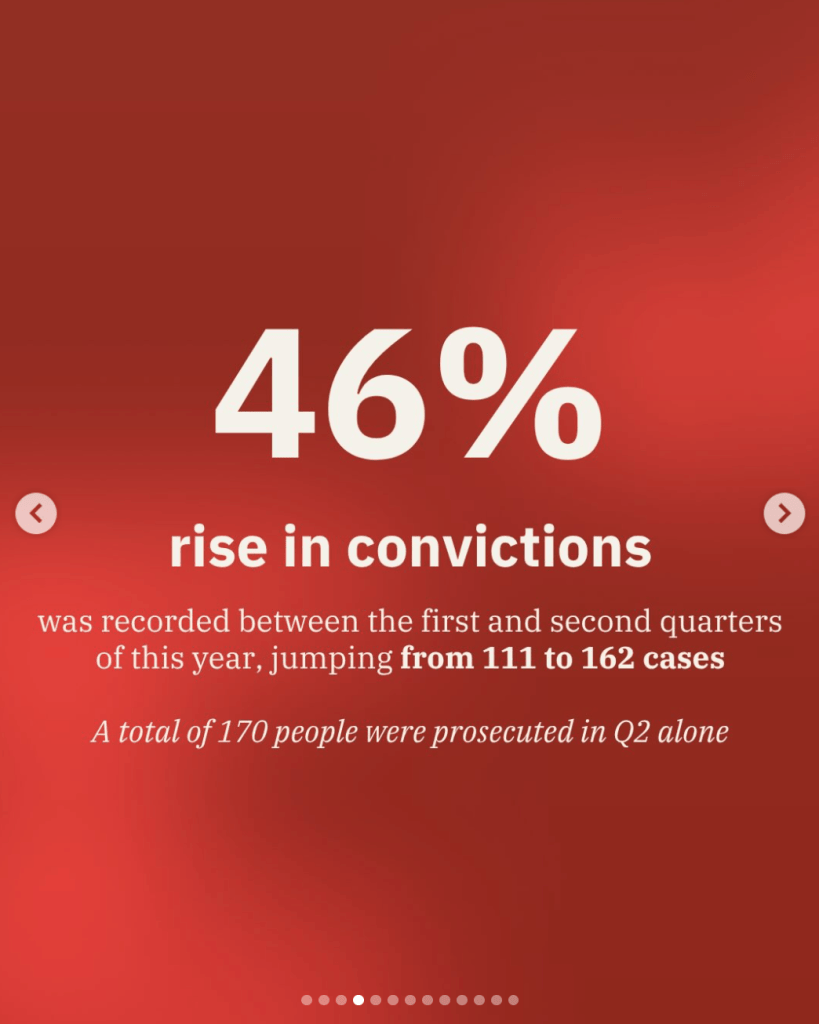

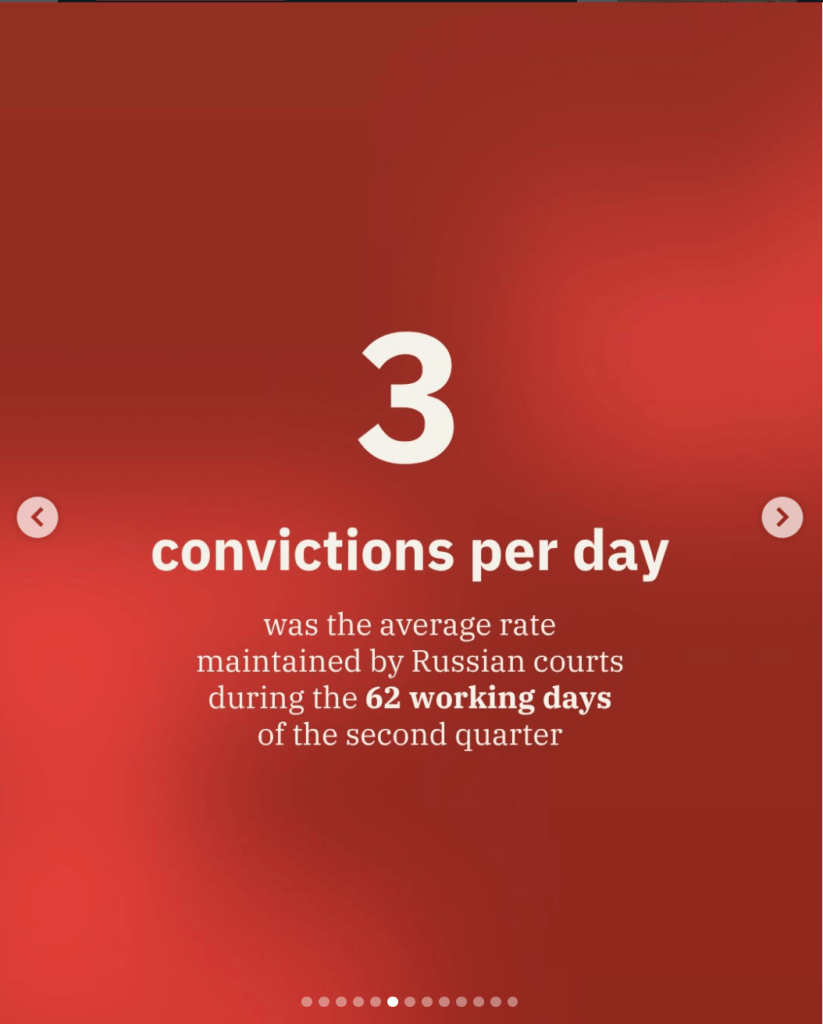

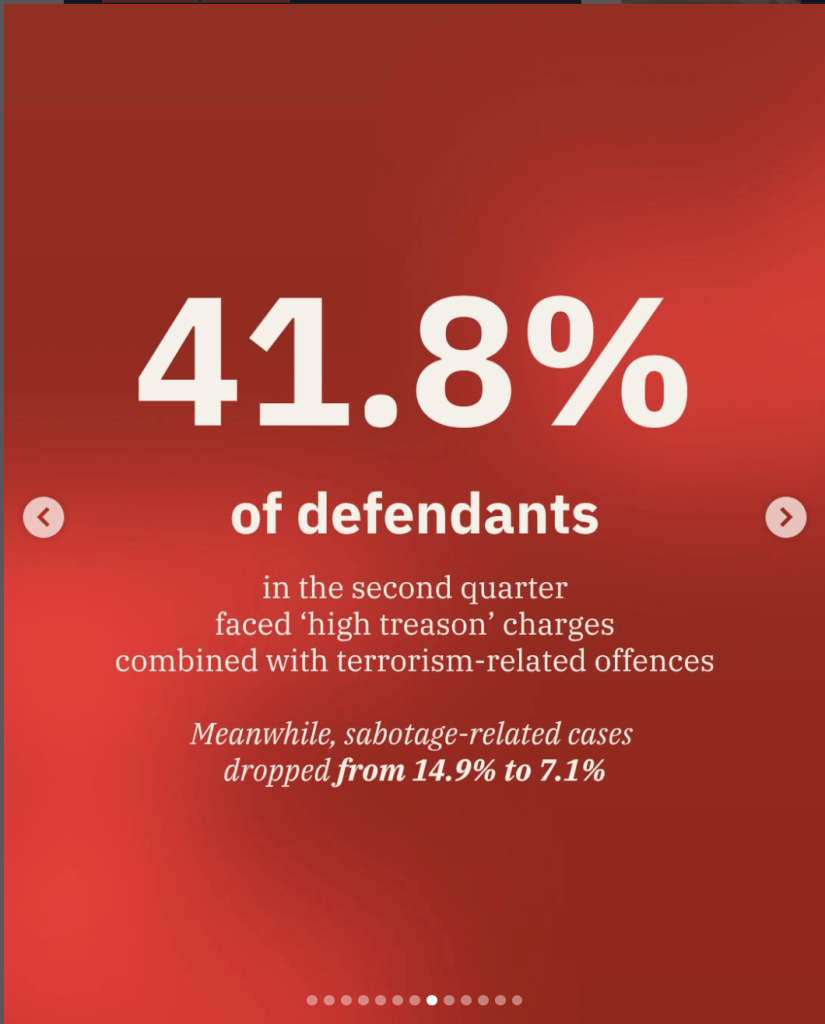
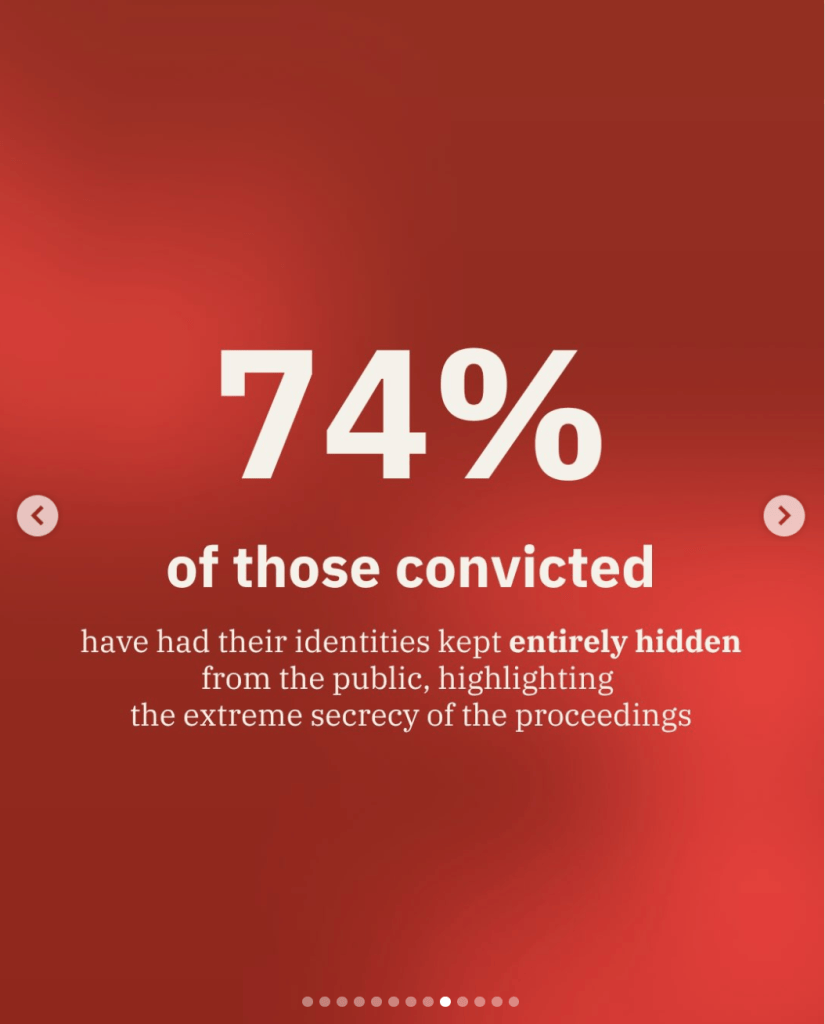


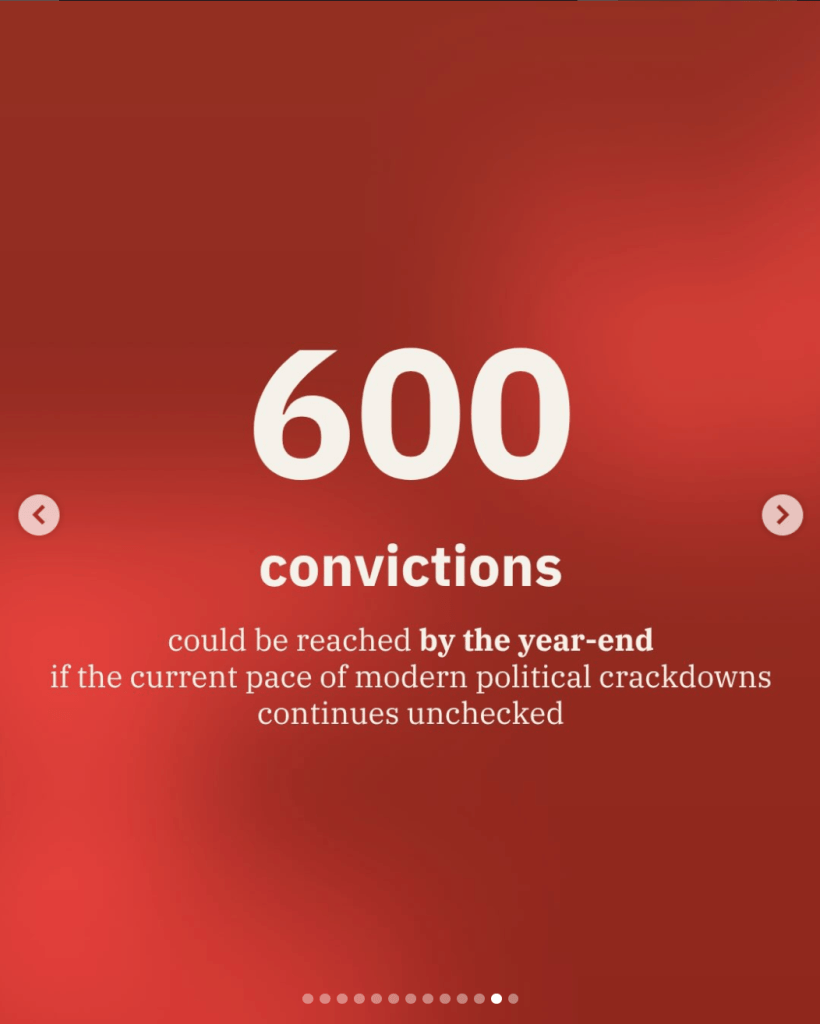

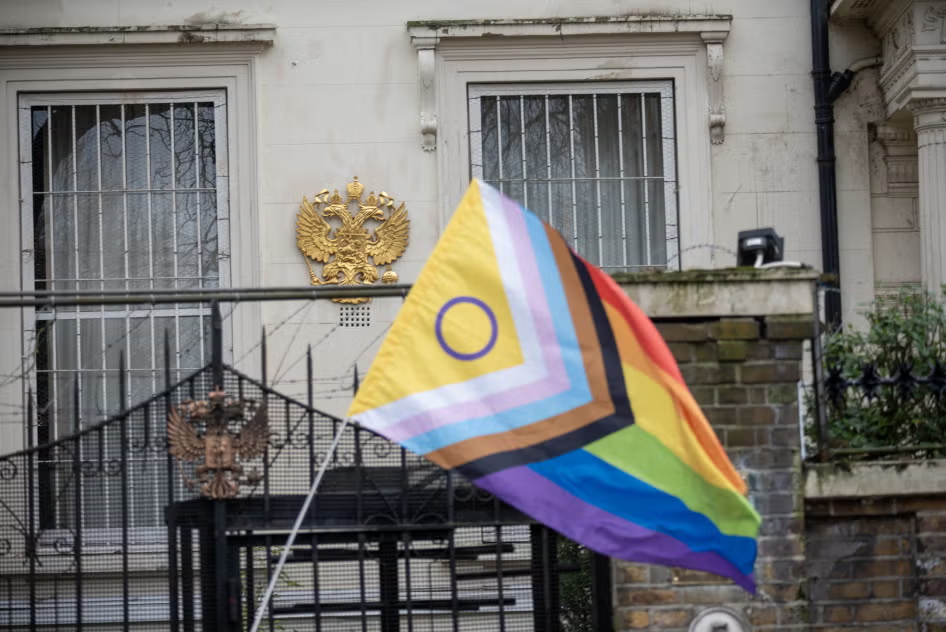
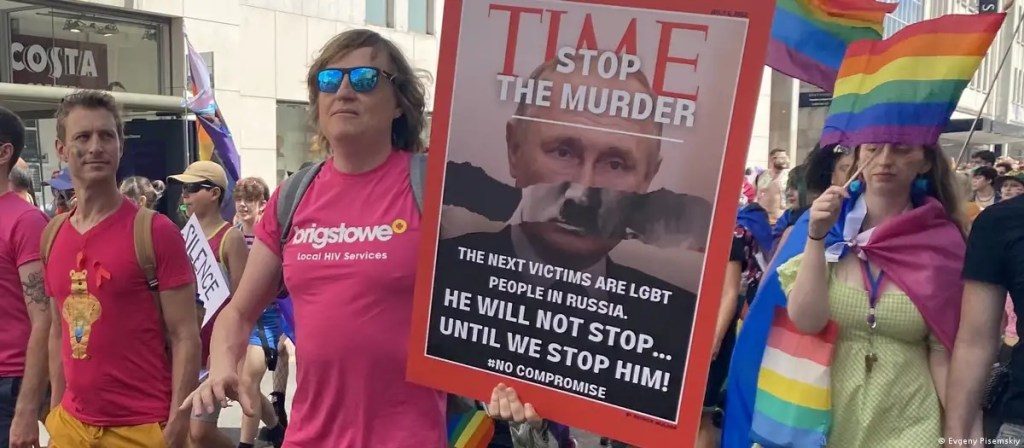
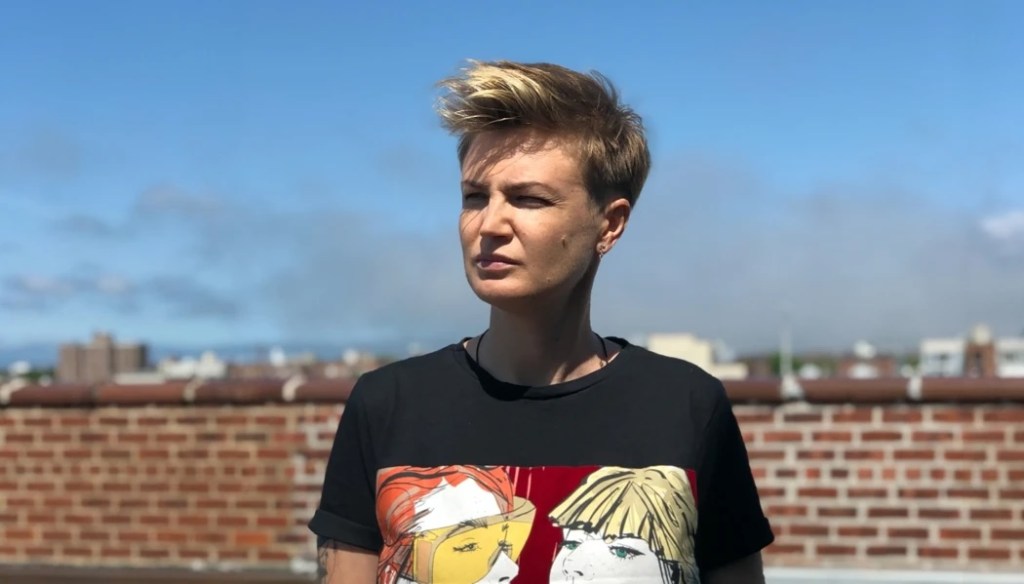
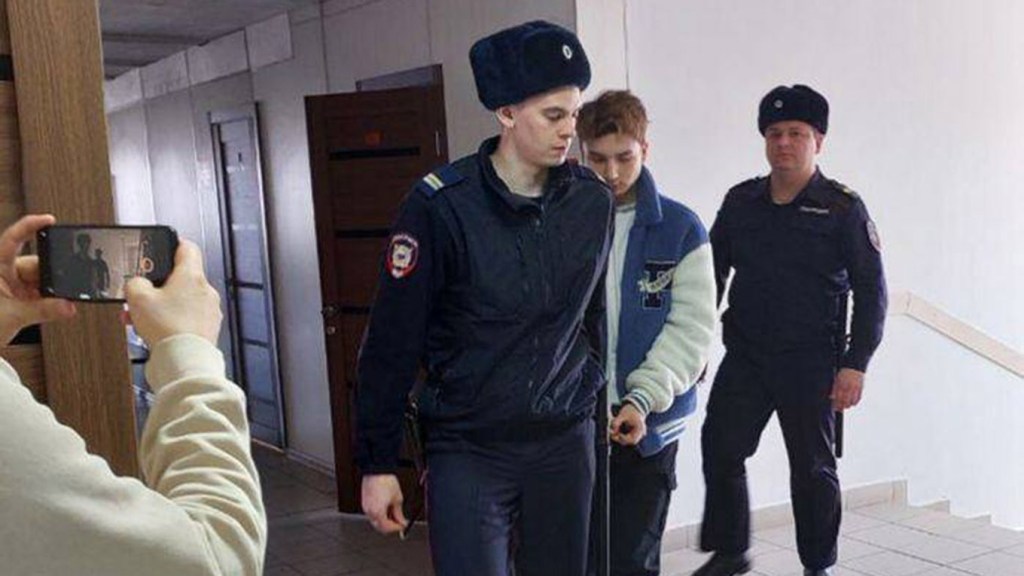
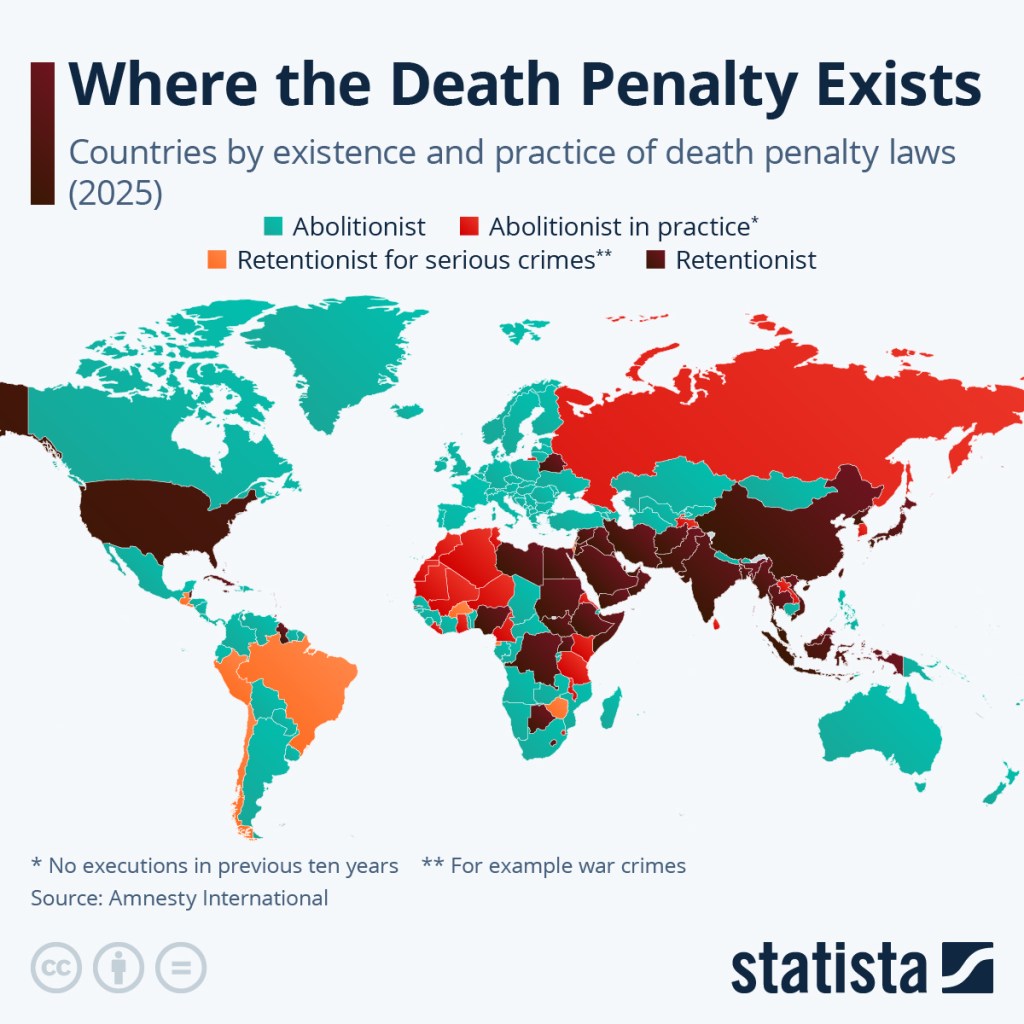
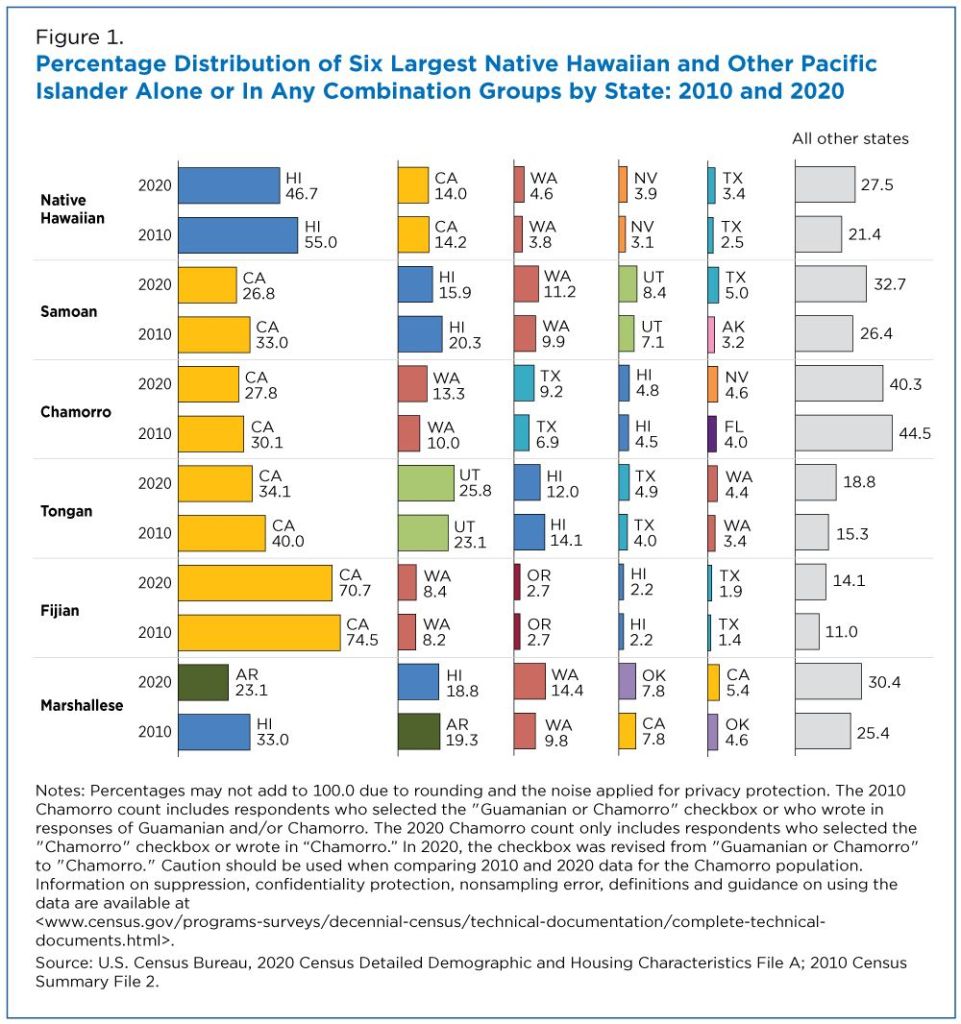



 An angry Louisianan, known only as Marshawn [sic], gave an impassioned speech in a state Senate hearing this week in the lead-up to the vote to eliminate a majority Black district that — until last week — was protected by the VRA.