Five Profiles in Courage and Compassion

When Putinism lies in ruins, Russians will remember the fearless moral clarity of this prison letter from Darya Kozyreva, a medical student first expelled from university and then arrested for her antiwar actions.
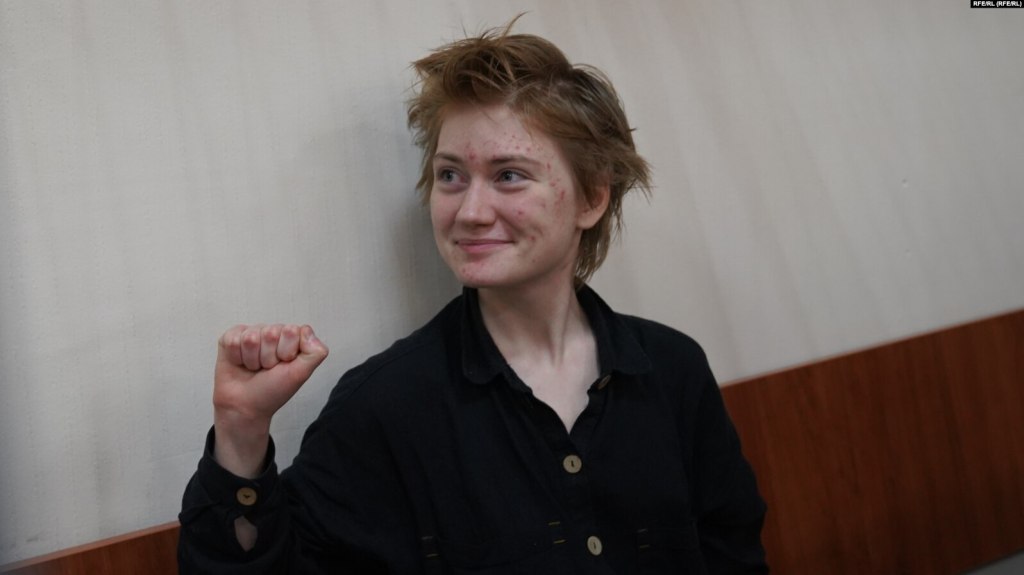
Darya Kozyreva

‘Russia is wrapped in a heavy, impenetrable cocoon, a cocoon of silence. How many crimes the Putin dictatorship has committed, how many foreign cities it has seized and devastated, how many killings and tortures it has meted out, and the response to all these outrages is a deafening silence.

‘Many prefer not to know what is happening, to close their eyes and stop listening. Many deceive themselves, wishing to be deceived — after all it is so easy to believe blindly what the television says, even if it is broadcasting the most monstrous lies.

‘But many know perfectly well what this vile regime is doing. They endure the burden of their dissent, their outrage, their anger. And all the same, they are silent.

‘Just as any crime is committed with somebody’s tacit consent, so any dictatorship is maintained thanks to the people’s silence. A colossus with feet of clay will be worthless if all the dissenters speak out.

‘But they are silent.

‘One person thinks that everything has been decided, and that there is no reason for them, a minor figure, to get mixed up in this. Another hopes that others will say everything — but those others also find excuses to remain silent.

‘The real reason for this silence is human fear, visceral fear. No dictatorship can make everyone believe in it — therefore it constantly resorts to fear, its first and last instrument for subjugating the people.

‘Germans in the era of Hitler obediently shouted ‘Heil,’ understanding the consequences of disobedience; Soviet people in the era of Stalin were afraid to whisper in their own kitchens for fear of being denounced. The steamroller of repression doesn’t need to crush every dissenter, just a few demonstrative examples, and the rest will gag their own mouths.

‘The absurdity of Putinist repression has reached such heights that any trifle can become a pretext for persecution – and no one knows what one can say. The criminal in the Kremlin is satisfied; that’s exactly what he needs. As long as everyone is silent, his own skin will be safe.

‘That is precisely why one cannot stay silent. No, human fear is understandable: it is very difficult to risk one’s position, one’s future, one’s freedom. To say nothing of the fact that many have families — for these people, the fear is doubled. But will it be easier for these families to live under a dictatorship, under tightening screws, behind an iron curtain?

‘A dictatorship can continue to wreak its atrocities, its lawlessness, as long as it feels strength and power. Nothing will change as long as everyone remains submissively silent.

‘So perhaps the time has come to start speaking?

‘Everyone who can speak, must speak. The individuals who dared to speak up are now too few to move anything. Everyone must speak, who does not agree with the Moscow regime. Individuals can easily be put behind bars for their words, because they are individuals. But there are not enough prisons for everyone, for all the dissenters in Russia. Even if the regime builds just as many especially for them.

‘When, having overcome fear, everyone begins to speak out, it will time for Putin’s gang to be afraid.

‘No evil lasts for ever, any dictatorship will inevitably collapse. It can collapse of its own weight, like the USSR, or thanks to the uprising of the people.

‘Don’t let this dictatorship live any longer than it can. Speak out, people!’

Source: Robert Horvath (X), 25 June 2024. Originally published in Russian by Holod on 25 June 2024 with this preface: “Daria Kozyreva is one of the youngest political prisoners in Russia. Until two years ago, she was in medical school at St. Petersburg State University and was politically active. In 2023, she was charged with an administrative offense for an anti-war post on [the Russian social media network] VKontakte and expelled from the university. On 24 February 2024 Kozyreva was detained after she pasted a leaflet containing a poem by the poet on the monument to [Ukrainian poet] Taras Shevchenko. Kozyreva faces five years for “repeatedly discrediting the Russian army.” She is in a pretrial detention center in St. Petersburg, where she is awaiting trial. There, she wrote a column about silence, fear and hope specially for Holod. We have published it as is.” Thanks to Simoni Pirani for the heads-up. Photo of Ms. Kozyreva, above, courtesy of RFE/RL.


Kneeling in the midst of the sedge, Linda Yamane sings faithfully an Ohlone song expressing gratitude to the plants after gathering material for her baskets. Once lost due to the Spanish colonization in the 18th century, the Ohlone basket-weaving skill was restored by Linda, who made her first tribal basket in 1994. Woven from willow sticks and sedge roots, the baskets played an essential role in the daily life of Ohlone people, who strongly connected to nature back to the old days. In the revival of the intricate basketry, Linda is motivated to bring about respect and appreciation of the traditional art, and the Ohlone spirit, living on in the mind of descendants, is thus aroused.

Source: Wood Culture Tour (YouTube), 23 June 2015


“Using archived ethnographic research, Linda Yamane is bringing back the language of the Ohlone, a Northern California tribe.”

Source: “Reviving the Ohlone Language,” Smithsonian Magazine (YouTube), 23 February 2010
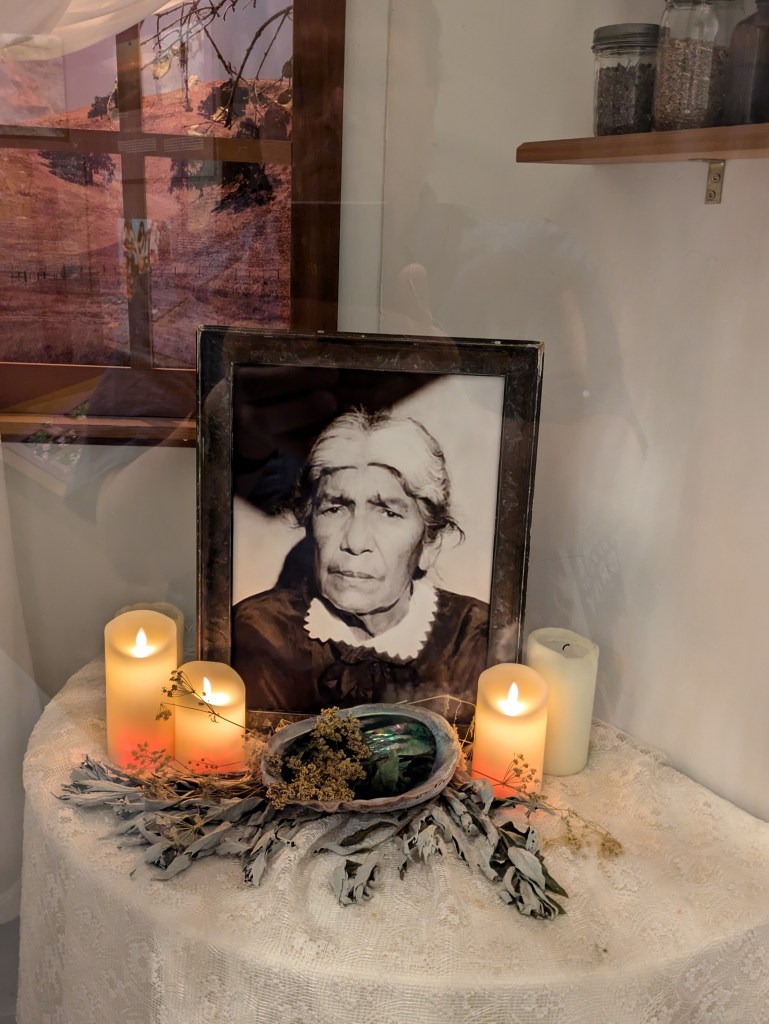

Source: Santa Cruz Museum of Art & History, 30 June 2024. Photos by the Russian Reader


[…]

Desperate to talk to his wife, he signaled to a tall, skinny orderly who was cleaning his room that he wanted to use his phone. The Russian man quickly understood and when Mr. Shahi said, “Nepali, Nepali,” the cleaner opened a translation app on his phone.

“Get me a cellphone. I pay you later,” was Mr. Shahi’s message.

The Russian man smiled.

The same day, a new phone appeared.

[…]

They began to panic. In Russia, deserters are punished by military courts and can spend years in prison. But then they saw a taxi coming down a road and waved it down. Mr. Khatri said he frantically tapped open Google Translate on his phone and used it to tell the driver they were lost tourists and needed to get to Moscow. The driver took them all the way — 15 hours — and at the end, refused to take a single ruble.

Mr. Khatri worked with middlemen to get a flight to Kathmandu. Now back home in Rolpa, he said: “Some Russians are quite helpful. I could have died if that driver hadn’t helped us.”

Mr. Shahi had similar kind words for the Russian orderly. With the new phone, he spoke to his wife. She borrowed heavily from relatives — $8,000 this time — to pay another group of traffickers who said they could get her husband out.

On the morning of Jan. 23, Mr. Shahi gingerly stepped out of the Rostov hospital. He hobbled to a nearby market where a taxi was waiting for him. The driver communicated through a translation app, telling Mr. Shahi: Don’t talk. I’ll do the talking. If we get stopped, I’ll tell them you’re sick and headed to the hospital.

They drove all day to the one place that could help with the final stage of the escape: The Embassy of Nepal, in Moscow.

[…]

Source: Bhadra Sharma and Jeffrey Gettleman, “How to Escape from the Russian Army,” New York Times, 27 June 2024


With his immersive documentary “Real,” Sentsov takes viewers inside Ukraine’s war trenches, after unknowingly turning on the GoPro camera on his helmet.

Oleg Sentsov was used to fighting Moscow even before he enlisted in the Ukrainian Defense Forces, shortly after Russia’s full-scale invasion of Ukraine in February 2022.

It’s just that previously, instead of a gun, he’d used his camera.

When Russian special forces arrived in Crimea in 2014, Sentsov was on the ground documenting the illegal annexation of the region. He was arrested, sent to Russia, and given a 20-year sentence on  charges of “plotting terrorism.”

Following a coordinated effort by the European Film Academy, Amnesty International and the European Parliament with the support of directors like Ken Loach, Pedro Almodóvar and Agnieszka Holland — Sentsov was finally released on September 7, 2019, as part of a Ukrainian-Russian prisoner swap.

In November 2019, the Ukrainian film director and human rights activist was able to collect the 2018 Sakharov Prize for Freedom of Thought that was awarded to him by the European Parliament. Named after Russian dissident Andrei Sakharov, the award honors people who have “dedicated their lives to the defense of human rights and freedom of thought.” 

Even while behind bars, Sentsov continued to work. Via covert letters smuggled out of prison by his lawyer, he directed “Numbers,” an adaptation of his own stage play about life in a dystopian, authoritarian state. The parallels to Sentsov’s own life were obvious. 

But Sentsov is no knee-jerk nationalist. His 2021 feature “Rhino,” which premiered at the Venice Film Festival, is a look at the chaos that engulfed Ukraine following the collapse of the Soviet Union and how crime and corruption filled the resulting power vacuum. 

‘Live’ from the trenches

But “Real,” Oleg Sentsov’s latest film, is unlike anything he’s made before. 

It begins without explanation or warning. We are suddenly in a foxhole, hearing the frantic voice of a soldier over the radio in another trench, under attack from Russian forces and in desperate need of reinforcements.


Oleg Sentsov, “Real,” 2024: official international trailer

During the first days of the Russian full-scale invasion of Ukraine, film director Oleh Sentsov joined the Ukrainian Defense Forces. In his role as an army lieutenant, he took part in several intensive battles – and during one, his BMP was destroyed by Russian artillery. In the aftermath, he became embedded in nearby trenches and tried to organize via radio the evacuation of part of his unit. All the while, his men were under constant attack, and eventually ran out of ammunition, making their evacuation all the more urgent. This military event on the Ukrainian-Russian front line positions was given the code name Real. This is the name of the film.

Source: Arthouse Traffic (YouTube), 18 June 2024


The voice on our end — that of “Real” director Sentsov, call sign “Grunt” — is trying to organize the evacuation of troops under fire and the resupply of his unit. Ammunition is running out, and the Russian forces — uniformly referred to over the radio as “f**kers” — are closing in.

“This is one of those very long days. It was part of the much-anticipated Ukrainian counter-offensive of last summer,” says Sentsov, speaking via Zoom on leave from the front.

“We had spent almost 10 days trying to get through the Russian defense line. We lost equipment, we lost weapons. But we were still in the same place. It was really obvious that we were losing many people, losing armaments, vehicles, everything. But even at that moment, we’d kept our belief that we could do something.”

Sentsov’s unit was sent deep into enemy territory but their armored personnel carrier was hit and they were forced to flee on foot. The director-turned-soldier found himself in a trench, with a handful of his squadmates. Other units were pinned down by enemy fire and running out of ammunition.

“They were almost entirely surrounded by enemies, and I was the only one who had a connection with them and could report back up to the higher commanders,” says Sentsov. “I was stationed a bit uphill and could communicate with both headquarters and the people in the trench.”

Camera on by accident

“Real” plays out as a single, unedited take — an hour-and-a-half long — as Sentsov repeatedly calls between the units and headquarters, trying to cut through the fog of war and get help to the soldiers before it’s too late. We see everything through Sentsov’s eyes, or rather, through the lens of the GoPro camera attached to his helmet.

The director hadn’t meant to be recording. He turned the camera on by accident when he was checking his equipment. It was weeks later, after the battle, that he discovered the footage on the camera’s memory card.

“At first, I thought it looked very random, I didn’t think it would be interesting for anyone and I wanted to erase it,” he says. “But then I started to watch it and I recognized that, oh my God, this is part of this very tragic event, with so many people in the trenches, cut off and surrounded by Russians. Our friends, my friends. People who will watch the movie may never see those soldiers and these situations but they can learn how tragic it was. They can see one of the most tragic days of the Ukrainian counter-offensive.”

“Real” has none of the stylistic flourishes that exemplify Sentsov’s narrative films. 2022’s “Rhino,” subtitled “Ukrainian Godfather” in its US release, is a slick gangster thriller that borrows heavily from the movies of Martin Scorsese and Francis Ford Coppola to tell the story of the rise and fall of a violent delinquent — the Rhino of the title — who finds success in the chaos of 1990s Ukraine. 

2020’s “Numbers,” which is set on a single stage, evokes the theatrical mimimalism of Lars von Trier’s “Dogville” or the plays of Bertolt Brecht. 

In “Real,” the hand of the director is nowhere to be seen. Sentsov makes not a single edit. He adds no music or sound effects. Nothing is explained beyond what we see and hear on screen in real time. 

“This is why I don’t call this a film or even a documentary but rather a pure document,” says Sentsov. “This is the video document that shows a part of the war, a very small glimpse of the war. But this war document captured on camera really shows us how cruel, how stupid, and, I can’t even find the words to describe it, how senseless war is… You get a very different perception of war if you only know it from war movies or from documentaries edited to make war look presentable. There’s always this component of heroism, everyone wants to emphasize this, to show dynamic, heroic action. But real war is very, very different.”

Sentsov calls “Real” an “immersive experience. You are thrown in and you only slowly start to understand what’s going on. It really drags you into the trenches.”

A document of war

Anyone expecting action will be disappointed. Instead we are forced to wait, along with the squad in the foxhole, with no idea what is happening around us and when the enemy will attack. “Real” captures the tension, the tedium, and the terror of war in equal measure.

“When I was young, I remember watching the movie ‘Platoon’ by Oliver Stone, and there’s a scene when one of the soldiers says: ‘Forget the word hero. There’s nothing heroic in war’,” says Sentsov. I couldn’t really understand that at the time because I grew up on very different movies that gave a very different perception of war. Now, after two-and-a-half years in an active war zone, I have to say I completely agree with that young man in the movie.”

Sentsov admits “the truth” he shows in his film may be painful for many, particularly inside Ukraine, to watch. The failure of the summer counter-offensive to break the Russian’s defensive line has shifted the conflict towards a brutal war of attrition. 

“There are many things about the situation, about the reality of the war, that we are not discussing here inside Ukraine,” says Sentsov. “If someone would ask me how long it will take to reestablish control over the 1991 borders and to achieve a military defeat of Russia, I would say maybe it could happen in 10 years, but that would be a miracle.”

Instead of pretending that reality doesn’t exist, says Sentsov, it would be better, for Ukraine and the world, to “stare at the eyes of the truth, however painful. Otherwise, we are going to spend all our lives in an illusion that doesn’t relate to reality, to the real situation in front of us.”

Source: Scott Roxborough, “War in Ukraine: Oleg Sentsov’s ‘accidental’ documentary,” Deutsche Welle, 27 June 2024

On This Day, or, Cyka Blyat

Don’t turn off your TV set. Keep watching the “most exciting World Cup ever.” While you do that, actual Russians and some non-Russians (i.e., Oleg Sentsov) are suffering horribly for the near-absolute power Russia’s Emperor of Ice Cream and his retinue have acquired over the last twenty years.

It was this same power (and the money that comes with it) that made it possible for the Emperor of Ice Cream and his pals to buy off FIFA’s bid committee and win the right to host the 2018 World Cup. They invoked this same power to spend more on preparations for the World Cup than any other host country has ever spent.

But instead of doing what enlightened despots have been known to do on such occasions — declaring amnesties, pardons, and ceasefires during Olympic Games and other such celebrations and great sporting events — the Emperor of Ice Cream’s repressive and imaginative secret services have seemingly notched up their civil war against their own people while you stay glued to your TV set, pretending it is possible to separate sports from politics.

Tell that to Yuri Dmitriev, rearrested and recharged for a crime for which he had recently been acquitted. Tell that to the Penza-Petersburg “terrorists,” all of them tortured by the FSB (KGB) into forcing them to give the testimony the FSB wanted to hear, never mind that it is total nonsense, the sick fantasies of the FSB itself, which sees or, rather, pretends to see a “terrorist” hiding under every rock. Tell that to Oleg Sentsov, a Ukrainian filmmaker and resident of Crimea, sentenced to 20 years in a maximum security correctional facility in Russia’s Far North for the thought crime of opposing Russia’s occupation of Crimea.

Source: Thomas Campbell (Facebook), 29 June 2018


“The amount of pollution caused by idling cars is incredible.”

Nigel Havers, “PM,” BBC Radio 4, 29.06.17

Source: Thomas Campbell (Facebook), 29 June 2017. As a blogger quoted on Dictionary.com notes, ‘While there is no exact English translation, the Russian phrase cyka blyat (сука блять in the Russian alphabet) is roughly equivalent to the English “fucking shit” or “bitch whore.” Cyka means “bitch” while blyat is a multifunctional vulgarity along the lines of “shit” or “fuck.” Together, cyka blyat is used to express uncontrollable anger, similar to dropping a series of F-bombs in English.’


It’s frightening how “natural” absolutely neo-Nazi-like racialism has come to seem to so many folks in the Former East. It really beggars the imagination. What went wrong?

And it’s all reproduced and disseminated, whether in private conversation or more impersonal forums like Facebook, with such aplomb and confidence, as if literally no else in the world has thought or could think otherwise. Even broaching, in the most primitive way possible, the idea that races are a “construct” used to dominate some “races” while advantaging others, not something “natural,” will only expose you to instant derision.

What “race” is this bird? Is it white or black? In fact, it’s black, white, and several shades in between. Obviously, this is an absurd conversation, since we superior beings don’t attribute “race” to birds.

But we do attribute it to each other, missing somehow that the whole point, the only point, is power. Natural’s not in it.

Source: Thomas Campbell (Facebook), 29 June 2017


One of the keys to successfully translating contemporary Russian avant-garde poetry into English is having absolutely no sense of colloquial English. The translations should sound leaden, awkward, and dull, as if they had been written by a manager in the Flint, Michigan, water department trying to justify his criminal negligence in an impenetrable and evasive letter to the EPA, to wit:

I feel fear.

I am afraid of something, but I don’t know what.

Wherever you were, you must get

from wherever it was

to the place from which you left.


Why do you assume that your toothache corresponds to the fact

that you hold your cheek.

“Try our Piter Burger”

Source: Thomas Campbell (Facebook), 29 June 2016


A mace in the backseat of someone’s decked out ride.

Source: Thomas Campbell (Facebook), 29 June 2016


I’m totally wired.

Source: Thomas Campbell (Facebook), 29 June 2016


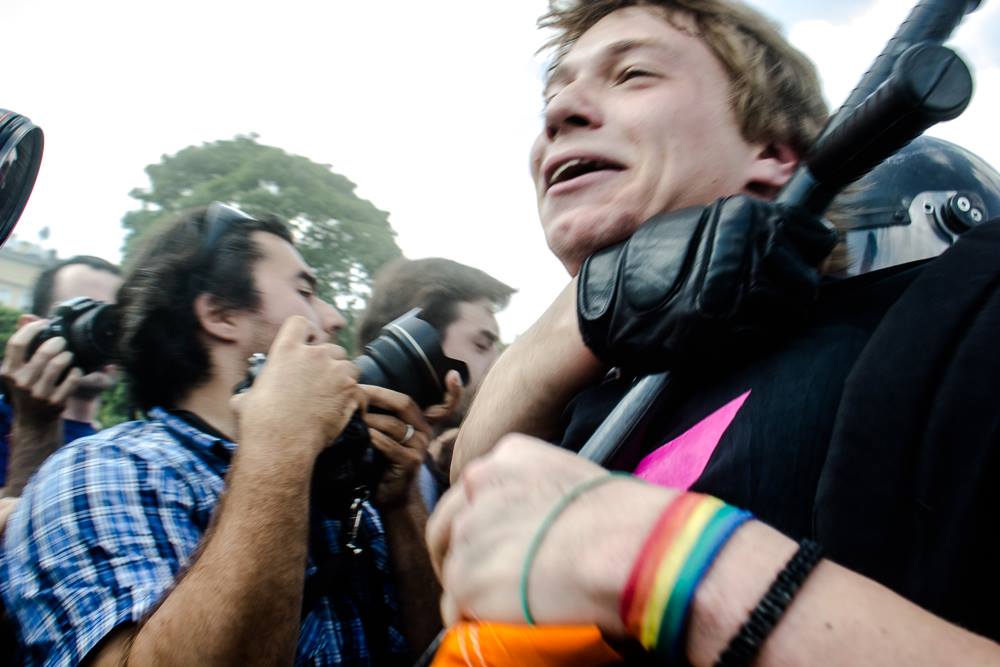
Russia’s cultural capital, where nice young men like this one are beat up in broad daylight by fascists, and the police protect the fascists.

Photo by Sergey Chernov

Source: Thomas Campbell (Facebook), 29 June 2013


More fascists at today’s LGBT Pride event in Petersburg, as photographed by the intrepid Sergey Chernov. He reports that a few of the fascists brought small children with them so that it would be possible to charge the LGBT activists with violating Petersburg’s fascist-inspired law against “gay propaganda” amongst minors.

Photo by Sergey Chernov

Source: Thomas Campbell (Facebook), 29 June 2013


Fascists posing as “Cossacks” at today’s LGBT Pride event in downtown Petersburg, where all the gay activists were arrested by the police, unlike the 200 or 300 fascists, who apparently enjoy near or complete immunity for crimes that would get anyone else arrested. Photo by one of the few faithful friends of freedom left in Petersburg, Sergey Chernov.

Photo by Sergey Chernov: “St. Petersburg LGBT Pride event: fascists.”

Source: Thomas Campbell (Facebook), 29 June 2013


Photo by Sergey Chernov: “St. Petersburg annual LGBT Pride event: stoned, beaten and arrested. Central St. Petersburg, today.”

Source: Thomas Campbell (Facebook), 29 June 2013

“It’s Too Late for Me to Be Afraid”: Olga Nazarenko’s Solo Anti-War Protests

Olga Nazarenko: “I’m a Russian citizen who opposes the war. Send Putin to The Hague!”

Olga Nazarenko, a lecturer at medical university in Ivanovo, got involved in protests supporting Ukraine back in 2018. Since February 24 of this year, she has gone on an anti-war picket almost every week. Over this time, five cases have been opened against her for administrative offenses. Recently, Nazarenko was fined 150 thousand rubles [approx. 2,350 euros] for an anti-war picket. Only a few people in Ivanovo support the lecturer, so she usually stands alone with a placard. There are incomparably more people in her city who disagree with her position. Once, when Nazarenko was returning home, a passerby doused her face with spray paint on a dark street. People have written the Z symbol and the words “Ukrainian scum” on the associate professor’s mailbox. Nazarenko paints over the insults with yellow and blue flowers.

Nazarenko spoke to Radio Svoboda about her resistance to the war.

What was February 24 like for you?

– I didn’t believe until the last moment that war was possible. I can describe my reaction to the news about the outbreak of war with Ukraine only with obscene language. That same day, I went on a solo picket with an anti-war placard, and the next day too. Since then, I have been going on pickets every week, sometimes once every two weeks.

– You have already been convicted once for “discrediting the armed forces.” Why do you risk being prosecuted?

– My conscience won’t let me do otherwise. In the twenty-first century, problems in interstate relations are not solved by war. It’s barbaric. This war is an injustice on Russia’s part, and I cannot remain silent when I see injustice. A [solo] picket is now the only way to voice one’s stance publicly. Yes, most passersby do not voice their opinion in any way while I am picketing. But at each picket I see that two or three people support me. I understand that it is vital for each of them to see that they are not alone. Also, I have friends and acquaintances living in Ukraine. I worry about them, of course, and I know that for them my support — at least in the sense that I am not silent — is also vital.

– What was the trial at which you were fined 150 thousand rubles like?

– On February 27, I went out with a placard that read, “I’m a Russian citizen who opposes the war. Send Putin to The Hague!” Half an hour later, I was detained after a disgruntled passerby denounced me to the police. In April, the court recognized that my right to a defense had been violated due to the fact that my lawyer was not given the charge sheet to sign. The police appealed this decision, and the court found me guilty under Article 20.2 of the Russian Federal Administrative Offenses Code for, allegedly, “organizing a public event” and fined me 150 thousand rubles. I told the court about my anti-war stance and that our courts are cemented into the power vertical, and so they make the rulings that the Russian authorities need them to make. I also told the court that Russia is waging an unjust war against Ukraine, that people are dying, and that I opposed it. In my opinion, the judge’s ruling had been made in advance.

– Do passersby often react aggressively to your anti-war pickets?

– Of course, there are people who react aggressively to my position. They drew the Z symbol and wrote “Ukrainian scum” on my mailbox. I painted over the inscription with yellow and blue flowers, making it beautiful. Once on the street late at night, a young man doused my face and clothes with spray paint. Fortunately, my glasses protected my eyes from injury, while my clothes turned a golden color. My down jacket even became beautiful, iridescent, but only on one side, sadly. Once, at a picket in support of the boys from the Network Case, a man came up and said that people like me should be shot. He tried to take my placard away and hurt my finger in the scuffle. But I kept him from getting my placard.

– At what point did you decide to go on pickets?

– I have been actively voicing my position since 2014. I was outraged that Russia, at a difficult moment for Ukraine, committed a treacherous act against it by annexing Crimea. This was the first thing that angered me, and the second was the lies that supported it. I realized that in such circumstances I could not remain silent. At first, I went to various protest rallies and marches. But they were held rarely and I wanted to voice my civic stance more often. At first, I was bashful about going out on solo pickets. But on social media I saw that people were doing solo pickets. At some point I decided to try to picket too and got sucked into it.

I have been going on pickets in support of Ukraine since 2018. A friend of mine and I protested for the release of the Ukrainian filmmaker Oleg Sentsov. After all, a hybrid war had essentially been waged since 2014, and I had always opposed it. I was brought up on the principle that you couldn’t take what doesn’t belong to you, which also applied to international relations. Crimea is Ukrainian by all international standards. I could not approve of Russia’s interference in the affairs of a sovereign state, and from that moment I took an unambiguous stance. On February 24, everything became completely transparent.

– In February of last year, you hung a large banner that read “The FSB is a disgrace to Russia” on a railway bridge. What made you decide to do this protest?

– I believe that the FSB now holds all the power in our country, because Putin is from the FSB. So, the FSB lets itself break any law and torture people with impunity — such as, for example, the defendants in the Network Case. I think it important to voice my negative attitude to this. The banner hung for about half an hour until police officers arrived and tore it down.

I was detained right there and taken to the police department, where they took my statement and released me. This is not the first time I have publicly condemned the actions of the FSB. For example, I picketed against the Network Case outside the FSB headquarters in Ivanovo.

Olga Nazarenko

– Aren’t you afraid to publicly criticize the FSB?

– Yes, that organization has a lot of power, but I have no respect for it.

– I know that you sued Center “E” last year. Please tell us how that happened.

– I was doing community service at the zoo for a video in which I had talked about the problems of our region and called for peaceful protest. I was charged with “organizing an unauthorized event” for these actions. Right when I was cleaning the bird cages, a Center “E” officer came and videotaped me without my permission. The video was posted on the Telegram channel “A Cop’s Life: Ivanovo,” along with what they imagined was a funny comment. I decided that the Center “E” officer had violated my right to privacy. I filed an administrative lawsuit against the Interior Ministry, but my suit was dismissed.

– Not long ago, you were accused of resisting the police because you tried to help a friend at an anti-war picket. What did you do then?

– A female acquaintance decided to go on a picket on February 24 and asked on a chat for support. I responded to this request and arrived at the picket site. As soon as the young woman held up her placard, a policeman approached her and tried to detain her. She was opposed to being detained, so I got between her and the policeman. Consequently, we were both detained. The next day, I was taken to the police department, charged with resisting the police, and sentenced to 80 hours of community service. I’ve already done them. But soon I will have to do another 180 hours for a fresh administrative offense related to publicly voicing my anti-war position.

– How do the heads of the medical school where you work look at your pickets and court hearings?

– They are still relatively friendly to me at work. The bosses said that I could do anything as long as it was not during working hours. I never engage in activism to the detriment of my work: I don’t lobby anyone in the classroom. So I have no problems at the university now. For the time being I can juggle work and activism.

– Does your family support your anti-war position?

– My loved ones worry about me, but they don’t try to dissuade me. My husband and I try not to talk about politics. His point of view runs counter to mine, and we don’t discuss politics to avoid spoiling our relationship. As it is, there are so many situations in which I have to get harsh to defend my position, but at home I want to live in peace and tranquility. My little son and adult daughter worry about me and support me emotionally.

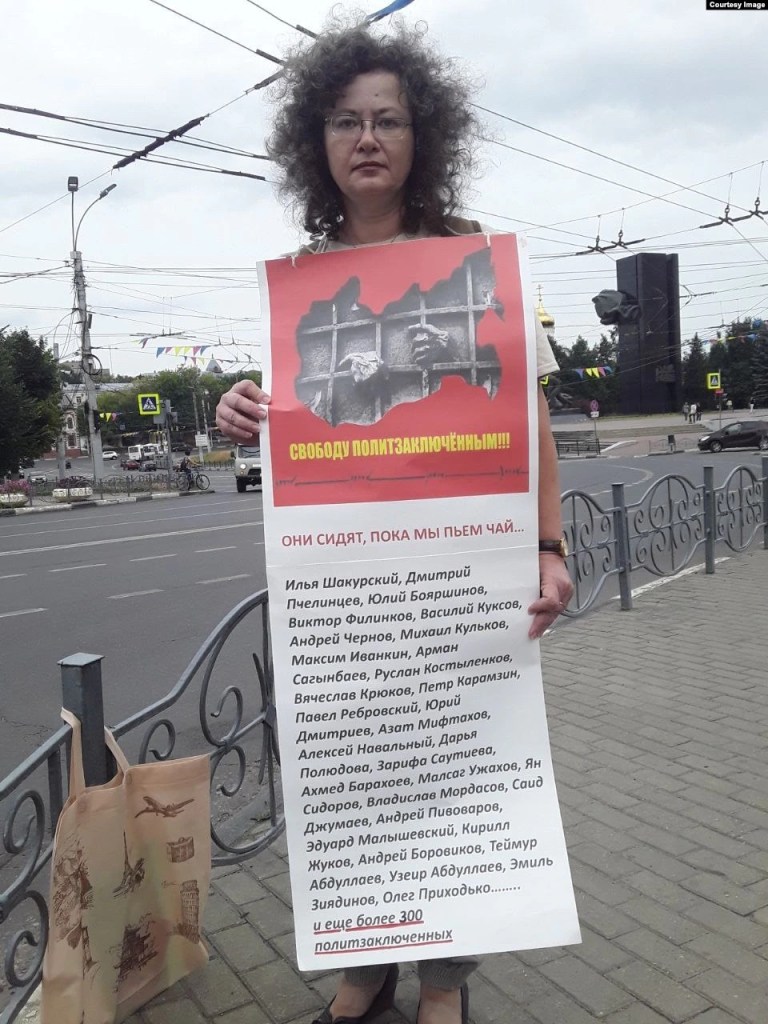
Olga Nazarenko, holding a placard that reads, “Free political prisoners!!! While we drink tea, they’re in prison.” It features a long list of current Russian political prisoners, nearly of all whose cases have been covered on this website.

– How are you going to pay the 150 thousand ruble fine?

– Friends and friends of friends helped me to pay the previous fine of 75 thousand. I don’t know yet how I will raise this amount. I’ll probably have to turn to public organizations for help.

– Putin recently passed laws that give [law enforcement] even more possibilities to crack down on grassroots activists. Aren’t you afraid to continue going on pickets when this is the reality?

– It’s too late for me to be afraid. If the security forces want to sanction me, they have enough material against me. I have already passed the phase of being afraid.

– Do you think your numerous pickets have affected the attitude people in Ivanovo have toward the war with Ukraine?

– Everything in society has only gotten worse over the years. In the big scheme of things, such protests cannot change a thing. They matter only to the person who does them and to people who think the same way, as well as for those supported by them.

– Why are you taking such a big risk in this instance?

– I just act on the principle that you do what you have to do, come what may. This is how I was brought up as a child. I realize that there could be unpleasant consequences for me, but I don’t think about it.

– How exactly were you brought up?

– My parents are teachers. They are decent people who shaped my principles, such as the literature I read as a child. My favorite books were Alexandra Brushtein’s trilogy The Road Goes Off into the Distance.

– But many Russians have read those books. Aren’t you angry that so few Russians protest publicly?

– I am a little annoyed, rather, that people cannot act in keeping with their conscience. And I realize that if more Russians had openly voiced their position when it was not less dangerous, the situation would be slightly different now.

Most people let their personal interests outweigh [other things], and this is normal. My instinct for self-preservation is a little dull, and perhaps this is not entirely normal. I don’t condemn Russians, but still I think that, in the current situation, it is impossible to remain silent.

– Now, after almost five months of war in Ukraine, many Russian activists complain of burnout and fatigue. Do you have such problems?

– I don’t have burnout and depression, but nor do I have any hope that things will change quickly. Perhaps in a hundred years our great-grandchildren will be able to change something — if we manage to raise our children the right way, and then they raise their children the right way. At some point, there will be enough people to change things here. But my generation won’t live to see it.

– Are you not planning to leave the country if a criminal case is opened against you?

– I’m not going anywhere. Russia is my country: it doesn’t belong only to those in power and their supporters. I won’t let anyone kick me out of my own country. I’m ready for a possible prison sentence. If it happens, I will serve my time, and then I will get out and continue my pickets. I’m not too afraid of prison: people somehow live in there too. You can’t jail everyone, and you can’t shut everyone up.

Source: Darya Yegorova, “‘It’s too late for me to be afraid’: Olga Nazarenko’s solo pickets,” Radio Svoboda, 16 July 2022. All images courtesy of Ms. Nazarenko via Radio Svoboda. Thanks to Comrade Koganzon for the heads-up. Translated by the Russian Reader

Oleg Sentsov: “Don’t Believe Putin”

sentsovOleg Sentsov and David Sassoli at the Sakharov Prize award ceremony. Photo courtesy of Deutsche Welle

“Don’t Believe Putin,” or, What Advice Sakharov Prize Winner Sentsov Gave the European Union
Yuri Sheyko
Deutsche Welle
November 26, 2019

Andrei Sakharov, Nelson Mandela… Oleg Sentsov could never have imagined his name would be on a par with these people.

“This is a great honor and a great responsibility,” the Ukrainian filmmaker said during his appearance at the European Parliament.

It was there on November 26 that he was finally given the Sakharov Prize he had been awarded in 2018. This was the second award ceremony. There was an empty chair in the plenary hall in Strasbourg a year ago because Sentsov was still being held in a Russian penal colony. After the exchange of prisoners between Ukraine and Russia in early September, the European Parliament held a new ceremony in which the Ukrainian was able to participate.

Sentsov Warns EU Politicians
The ceremony on Tuesday was simple. The president of the European Parliament, David Sassoli, spoke before yielding the floor to the prizewinner. Sentsov briefly mused about what the Sakharov Prize meant to him before quickly segueing to his main message.

“There is a lot of talk nowadays about reconciliation with Russia, about negotiations. I don’t believe Putin, and I would urge you not to believe him. Russia and Putin will definitely deceive you. They don’t want peace in Donbass, they don’t want peace for Ukraine. They want to see Ukraine on its knees,” Sentsov said.

His words were in stark contrast to the high expectations for the summit of the so-called Normandy Four, scheduled for December 9 in Paris, as well as French President Emmanuel Macron’s desire to normalize relations with Russia. Sentsov thus had advice for all EU politicians.

He said that every time one of them thought about extending the hand of friendship to Putin over the heads of Ukrainians, they should also think about every one of the thirteen thousand people who have perished in the war in Donbass, about the Ukrainian political prisoners still held in Russia, about the Crimean Tatars, who face arrest at any minute in annexed Crimea, and about the Ukrainian soldiers “in the trenches, risking their lives for our freedom and your freedom.”

Laconic as usual, Sentsov spoke for less than five minutes, but it was enough to elicit applause from both MEPs and visitors. The balcony was nearly full with visitors and journalists. Most MEPs were also present for the ceremony. There were only empty seats on the edges of the assembly hall, where left and right populists sit. Members of both groupings took their places several minutes after Sentsov left the dais so they could take part in voting.

Sentsov: “No Happy Ending”
The ceremony lasted less than half an hour: no speeches by or questions from MEPs were on the program. Many of them thought this was not enough, however, so the day before the ceremony, on the evening of November 25, the foreign affairs and development committees, along with the human rights subcommittee, which are responsible for the Sakharov Prize, hosted a conversation with Sentsov.

When Sentsov arrived at the event, MEPs lined up to greet him or have their picture taken with him. The session was thus delayed for five minutes or so.

Many of the MEPs who spoke at the meeting praised Sentsov’s courage.

“I admire and respect you not only for your courage, but also for your perseverance. You emerged a winner. And so we are very happy that you are free. By your example, you can inspire people to fight for freedom not only in Ukraine and Europe, but also around the world where there are dictatorships,” observed Sandra Kalniete, a Latvian MEP for the European People’s Party.

However, the praise did not make a big impression on the Ukrainian. He thanked the MEPs for supporting Ukraine in the struggle against Russian aggression, but reminded them the struggle was not over.

“There was no happy ending when I was released,” Sentsov said, reminding the MEPs that over one hundred Ukrainian political prisoners were still behind bars in Russia, and Russian-backed separatists in Donbass held over two hundred captives.

Sentsov’s Creative Plans
Kalniete’s voice was filled with emotion, and she even apologized for being so flustered. Perhaps it was emotion that made foreign affairs committee chair David McAllister mistakenly identify Sentsov as a “Russian” filmmaker, but he immediately corrected himself.

“As a Ukrainian filmmaker and writer, you have been a very harsh critic of Russia’s illegal annexation of Crimea,” McAllister said.

The MEPs peppered their guest with questions and requests for political advice, but after the first round of speeches by representatives of all the factions who wished to attend the event, Sentsov had nothing more to say.

McAllister decided to take a creative approach.

“There is a second round [of speeches] in this ‘movie.’ You’re a director, and I’m an actor, but this time it’s the other way around. You can say whatever you want, especially about your experience with the Russians,” he said.

After a few more questions, Sentsov no longer refrained from comment.

Speaking about the 1994 Budapest Memorandum, under which Ukraine relinquished the world’s third largest nuclear arsenal in exchange for assurances regarding its territorial integrity, Sentsov said, “Since they [Russian] took Crimea from us, they can return our bombs.”

If the MEPs had reacted enthusiastically to many of the Sakharov Prize laureate’s statements, there was a heavy silence in the room after he said this. Subsequently, he had to explain what he meant more than once. In an interview with Deutsche Welle, he assured us it had not been an “actual” proposal.

“It’s not a call to return [our] nuclear weapons, but an argument in negotiations: where it all began and what we need to get back to,” Sentsov underscored.

He believes negotiations in the Normandy and Minsk formats are a dead end, and sees the possibility of a real solution to the problem of Donbass and Crimea when Vladimir Putin ceases to be the president of Russia.

“And then Ukraine, Europe, and the whole world should be ready to take a tough stance on the return of those territories,” he said.

The MEPs also asked Sentsov about his plans for the future. The director confirmed he intends to finish shooting the film Rhino first. He interrupted work on the film when the Euromaidan protests, in which he was involved, kicked off. The director has written screenplays for five films, which he would like to shoot in five years. Sentsov warned, however, that he did not mix creative work with public life, so we should not expect him to make films about his time in prison, Maidan or Crimea.

Translated by the Russian Reader

The Persecution of Konstantin Kotov

Yan Shenkman
Facebook
August 14, 2019

Today, Kostya Kotov was sent down for two months. It was a temporary remand in custody, but there is a chance he could be charged with the same article in the criminal code as Ildar Dadin, meaning he could be sentenced to prison for up to five years for the sum total of administrative offenses on his record.

Kostya was always sticking up for people. He would go to courthouses and stand holding placards in their defense. If that is a crime, I don’t know what to say.

As Yana Teplitskaya wrote correctly today, the difference between Dadin and Kotov is enormous. Dadin attacked the regime, while Kotov stood up for its victims. Meaning he did what you cannot help doing if you have a shred of conscience left in you.

By coincidence, Dadin was detained today, too.

Kostya is a staunch opponent of violence: I have personally spoken with him about this. He is a calm, intelligent chap and works as a programmer. I cannot even remember him raising his voice to anyone.

And so it transpires he is a criminal and a danger to society.

This is awful, but I wanted to write about something else.

I was at Kotov’s court hearing today. The authorities took a long time getting him to the courthouse. The hearing was slated for ten, but it was around two when he was brought to the courthouse.

I went outside to have a smoke. A film crew from Channel One was hanging out there. Right then, a paddy wagon pulled up and guards led Kostya to the courtroom. I waved at him.

“Konstantin, tell us what you were arrested for?” the female reporter from Channel One yelled from right behind me.

I don’t know what answer she wanted to hear and how she imagined she would hear it. The distance between the vehicle and the entrance to the courthouse was ten meters or so. Kostya was handcuffed and under guard. Did she expect him to stop and explain to her why he had been arrested?

Someone next to me turned to her.

“For nothing,” he said.

Kotov had been taken away. I didn’t manage to finish my cigarette.

kotov-1Konstantin Kotov. Photo by Adik Zubcik. Courtesy of Facebook and Mediazona

“Any Injustice Would Upset the Guy”: The Man Charged under the “Dadin” Article
Anna Kozkina, Dima Shvets, and Elizaveta Pestova
Mediazona
August 13, 2019

On Wednesday, the Presna District Court will decide on custody measures for 34-year-old Konstantin Kotov, a programmer who has been charged under the rarely used Article 212.1 of the Russian Criminal Code, which makes repeated administrative violations at protest rallies a criminal offense. Mediazona tells the story of a man who had the bad luck to get involved in political activism in a period when people who attend any unauthorized public events are rampantly persecuted.

Comrades
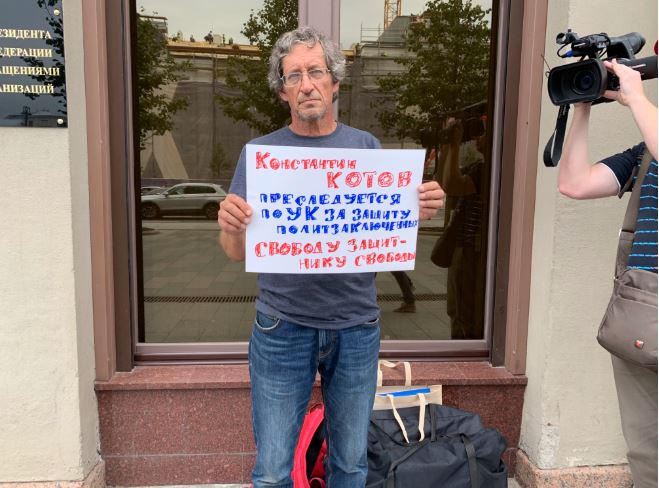
It is August 13, the middle of the workday. The weather in Moscow is fine. A fifty-something man stands outside a presidential administration building on Staraya Ploshchad, holding a placard that reads, “Konstantin Kotov is being persecuted under the criminal code for defending political prisoners. Free the defender of freedom.”

The man is Nikolai Rekubratsky, a poet and researcher at the Freshwater Fisheries Institute who lives in Dmitrov. In his spare time, he and several allies run the Facebook Group Sentsov. Exchange. Today and Every Day.

Rekubratsky says members of the group have been holding solo pickets here every weekday since September 6, 2018. Usually, the picketers demand a total exchange of Russian and Ukrainian prisoners of war, but last night their comrade the 34-year-old Moscow programmer Konstantin Kotov was detained and charged with a criminal offense. Kotov was one of the people who came up with the idea for the daily pickets and had been actively involved in them.

_____________________________

caf20691d9cda5e2f430ad4794b128e3Illustration by Mike Ch. Courtesy of Mediazona
Article 212.1. How Many Times Have We Told You?
Article 212.1 (repeated violation of the rules for holding rallies) was added to the Criminal Code in the summer of 2014. In January 2015, for the first time, the Russian Investigative Committee charged three activists with breaking the new law.

_____________________________

“We met about a year ago at pickets in support of Oleg Sentsov, who was on hunger strike at the time in support of other political prisoners. It had a big impact on many people who were strangers to political activism. But Kostya had earlier attended protest marches of some sort. I don’t know exactly which ones,” says Nikolai. “He said he had no clue who Sentsov was, but when his hunger strike kicked off and Kostya read about it on the internet, it made a very strong impression on him and so he began supporting Sentsov.”

Other activists walked up to the entrance to the presidential administration. One young man hands Rekrubratsky his written surety for Kotov: tomorrow, a court will decide on custody measures for him. The people going into the building pay no mind to the picketers.

“Life was such that ever more events and injustices happened, and Kostya could not help reacting to them. He took part in pickets and was repeatedly detained,” Rekrubratsky continues.

kotov-2Nikolai Rekubratsky. Photo by Dima Shvets. Courtesy of Mediazona
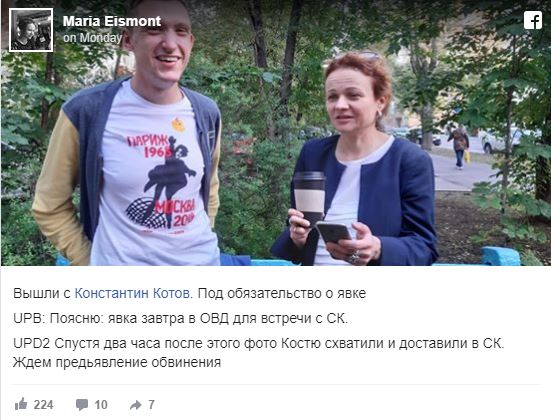
Judging by his Facebook page and the accounts of friends, Kotov supported arrested Open Russia activist Anastasia Shevchenko and Alexei Navalny’s Anti-Corruption Foundation. He ran the Telegram channel #StopFSB, which is dedicated to the defendants in the Penza-Petersburg “terrorism” case and the New Greatness case. He tried to help Moscow State University graduate student Azat Miftakhov. That is, he empathized with the defendants in nearly all the current criminal cases with political overtones.

Kotov’s allies recall other stories as well, for example, how Kotov bought medicine for New Greatness defendant Anna Pavlikova or assembled care packages for the arrested Ukrainian sailors.

Nevertheless, on Facebook, Kotov listed his place of employment as DSSL, a company that produces video surveillance systems and, in particular, facial recognition software.

“Any injustice would upset the guy. He always reacted, going to rallies and standing in pickets. His stance was always extremely peaceful,” recalls activist Anna Babicheva.

“At the Nemtsov memorial march in February, Kostya for some reason gave me his placard, which is very well designed. There are silhouettes of crosses and bombs drawn on it, and the simple slogan, ‘Say No to War.’ It is a big A1-sized placard, and I really enjoy picketing with it. It’s my favorite placard by Kostya,” says Grigory Simakov, a volunteer at the Nemtsov Bridge memorial, a member of the 14% Movement, and a participant in the total prisoner exchange pickets.

It was Kotov’s protest activism that was the reason for the criminal charges filed against him under Russian Criminal Code Article 212.1 (“repeated violation of the rules for holding rallies, marches, and pickets”).

The Case
According to the written order to institute criminal proceedings, the case is based on three occasions on which Kotov was charged with administrative offenses in the last six months, although the document refers not to three but four violations.

The first administrative case had to with calls to take part in the Moscow City Duma elections protest on July 19 on Trubnaya Square, which Kotov posted on Facebook. The Tverskoi District Court in Moscow found him guilty of organizing a public event without notifying the authorities (Article 20.2.2 of the Administrative Offenses Code) and sentenced him to ten days in jail.

Earlier, on June 12, Kotov took part in a march in defense of journalist Ivan Golunov. The Presna District Court fined him 15,000 rubles after finding Kotov guilty of hindering the movement of vehicles and pedestrians (Article 20.2.6.1 of Administrative Offenses Code).

Kotov was detained during a gathering, outside an FSB building on May 13, in support of defendants in the Network and New Greatness cases. In this instance, the Meshchansky District Court found him guilty of repeated violations of the law on rallies (Article 20.2.8 of the Administrative Offenses Code) and jailed him for five days.

On August 10, Kotov again took part in an “unauthorized” protest near Staraya Ploshchad. According to investigators, he chanted the slogans “Let them run,” “Putin is a thief,” “We are the power here,” “Down with Putin,” “All for one, and one for all,” and “Russia will be free.”

After police dispersed the protest, Kotov spent two days at the Sokolinaya Gora police precinct. On August 12, he was released under an obligation to return to the precinct for a meeting with an Investigative Committee investigator. Several hours later, he was detained again and taken to the Investigative Committee for questioning.

kotov-3

A screenshot from Maria Eismont’s Facebook page showing her and Konstantin Kotov after his release from a Moscow police precinct on August 12 and explaining that Kotov was “grabbed” and delivered to the Investigative Committee two hours after the photo was taken. Courtesy of Mediazona

OVD Info lawyer Maria Eismont described Kotov’s arrest as follows.

“They attacked him from behind. They threw him on the ground and twisted his arms behind his back. Yet, at the same time, they asked, ‘Konstantin, what are your political views?’ When his personal effects were searched at the Investigative Committee, they found a copy of the Criminal Procedures Code, a copy of the Administrative Offenses Code, a booklet entitled Crimea Is Ours, a bag emblazoned with poems by a poet from Lviv, and a placard that read, ‘Let them run.'”

“Then they found his mathematical engineering honors diploma.”

“‘Attaboy!’ said the investigator,” Eismont recounted.

In the late evening, it transpired that charges had been filed against Kotov under the relatively rarely used Article 212.1 of the Russian Criminal Code. After the release of Ildar Dadin, the first person to be charged, convicted, and imprisoned under the new law, it has been used only twice: against Vyacheslav Egorov, leader of the anti-landfill protests in Kolomna, and against Andrei Borovikov, who was involved in the anti-landfill protests in Shies.

Then came a nighttime search of Kotov’s home.

“Morning is arriving, dawn is breaking outside. Investigators put the placard they have found—’Free Ponomaryova,’ ‘Free Nastya Shevchenko,’ ‘Free political prisoners!’—on the living room floor. ‘Kostya, do you have bags to put all of this in?’ ‘I have garbage bags.’ ‘Those will do.’ There is a sewing machine. ‘Is it a Singer?’ ‘No.’ There are more placards. ‘You have a lot of this stuff,’ a field officer notes,” Eismont wrote in her description of the search.

kotov-5

During the search of Konstantin Kotov’s apartment. Courtesy of Maria Eismont

Kotov was formally charged on the morning of August 13.

“Unfortunately, Criminal Code Article 212.1, which had been dubbed a ‘sleeper’ article, has woken up and sprung into action. Moreover, as in the Egorov case, the formal approach to the law has been taken in Kotov’s case, despite the Constitutional Court’s well-known ruling on the matter. This means that if a person has been found by the courts to have violated Article 20.2 of the Administrative Offenses Code three times over six months, the fourth violation is treated as a criminal offense,” says Eismont. “The fact that people involved in ‘unauthorized’ protests cross the street at crosswalks doesn’t matter to anyone. The Constitutional Court ruled that only those protesters who did something dangerous were liable to criminal prosecution and punishment. The system has shown that it regards protesting without permission as a danger to itself and, thus, a crime.”

Translated by the Russian Reader

They Are Who They Are

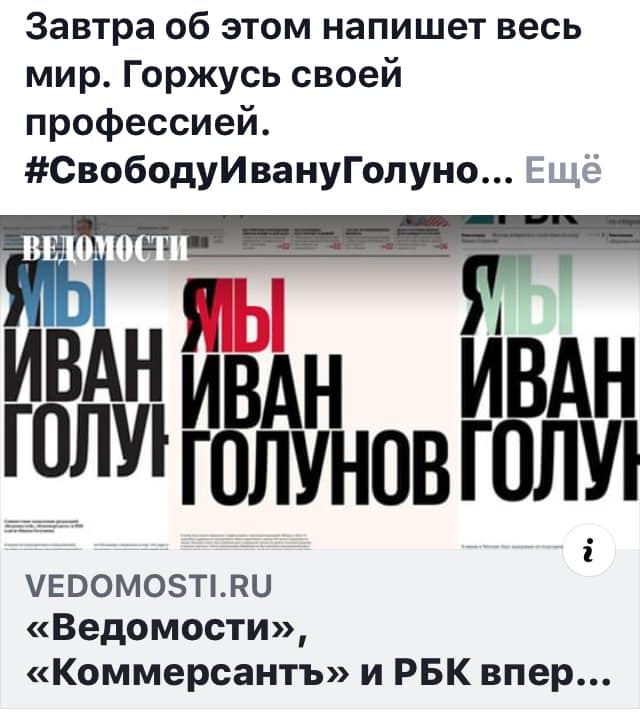
gorzhush“Tomorrow, the whole world will write about this. I am proud of my profession. #FreeIvanGolunov…” Vedomosti.ru: Vedomosti, Kommersant, and RBC will for the first time…” Screenshot of someone’s social media page by Ayder Muzhdabaev. Courtesy of Ayder Muzhdabaev
Ayder Muzhdabaev
Facebook
June 9, 2019

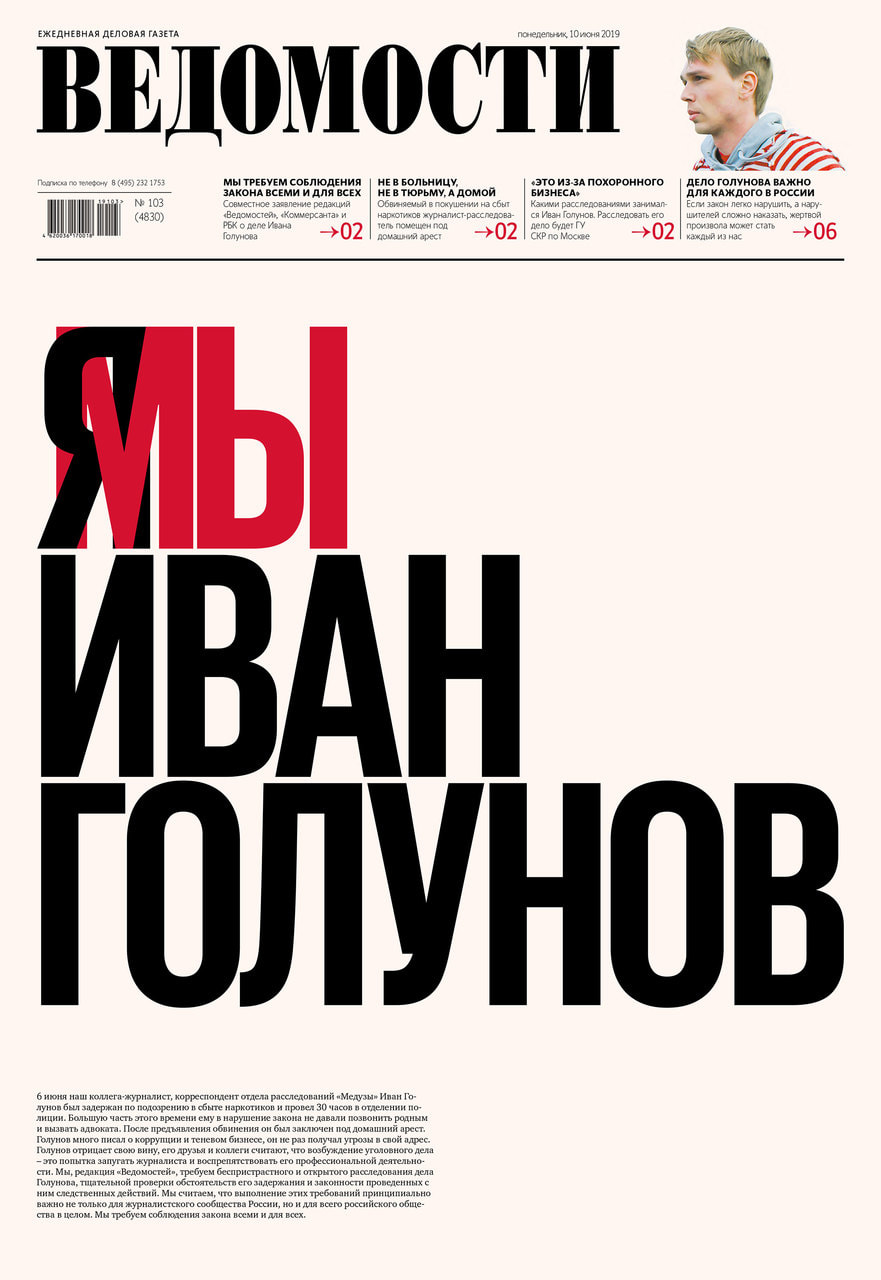
Russia’s “liberal opposition journalists” have been vying to praise each other as they celebrate a feast of “disobedience.” They just stood in the crossfire, that is, in timid solo pickets. And now, risking having their offices torched, three newspapers have produced editions with the same headline in defense of a colleague detained by police on trumped-up charges.

They have never nor would they ever publish a newspaper with the headline “I Am/We Are Crimean Tatars,” a people their country has been murdering and imprisoning on trumped-up charges by the hundreds for the last five years.

They have never nor would they publish a newspaper with the headline “I Am/We Are Ukrainians,” a people their country has been murdering by the thousands and imprisoning by the hundreds on trumped-up charges for the last five years.

It suffices to say they would even find printing the headline “I Am/We Are Oleg Sentsov” terrifying. It would never occur to them because they know how life works in the Reich, where Ukrainians are “fascists,” and Crimean Tatars are “terrorists,” just like Oleg Sentsov. So “I-ing” and “we-ing” is taboo to them.

They are delicately integrated into the Russian Reich. They feel it in their bones. They are one of the regime’s vital props. The hybrid dictatorship badly needs to pretend there is a political struggle in Russia and the country has a free press. They help it in its quest to destroy the western world and attack other countries.

They always only do things that won’t get them in serious trouble. They would never do anything that poses the slightest risk of exposing them as real enemies of the Reich.

We enter this in #TheChroniclesOfTheRussianReich.

Translated by the Russian Reader

i-we

The front page of Vedomosti, June 10, 2019: “I Am/We Are Golunov.” Courtesy of Vedomosti

Joint Communique on the Ivan Golunov Case by the Editors of Vedomosti, Kommersant, and RBC 
We Demand Maximum Transparency from Investigation
Vedomosti
June 9, 2019

Ivan Golunov, an investigative reporter with Meduza, was detained on June 6 on suspicion of attempting to produce and distribute narcotics.

We welcome the fact that the court has ordered house arrest for Golunov rather than remanding him in custody in a pretrial detention facility.

However, we do not find the evidence of Golunov’s guilt, as provided by police investigators, convincing, while the circumstances of his arrest raise serious doubts that laws were not broken in the conduct of the initial investigation.

We cannot rule out the possibility that Golunov’s arrest has something to do with his work as a journalist.

We demand a detailed inquiry into whether the Interior Ministry officers who were complicit in Golunov’s arrest acted legally. We insist that the outcome of this inquiry be provided to the media.

We expect law enforcement to comply strictly with the law. We demand maximum transparency from the investigation. We will closely monitor the investigation’s progress. We encourage relevant public organizations to join us.

We believe implementation is fundamentally important not only to Russa’s journalism community but also to Russian society as a whole. We demand that everyone obey the law and the law be obeyed with regard to everyone.

Translated by the Russian Reader

upside down cake

Pineapple upside-down cake. Stock photo

Nearly the entire leftist and liberal Russian intelligentsia have thrown their ferocious but scattered energies into a campaign to free a well-known journalist on whom the cops planted narcotics. It is obviously a frame-up and rightly makes folks in the world’s largest country indignant.

But it also makes people think they are fighting the good fight when most of the fights they should be fighting or should have been fighting long ago they ignore altogether, like the fight against what their own government and armed forces have been doing in Syria, or the kangaroo court trials against antifascists in Penza and Petersburg (the so-called Network trials), and the alleged (Muslim Central Asian) accomplices of the alleged suicide bomber who, allegedly, blew himself up in the Petersburg subway in April 2017.

I shouldn’t even mention the case of the so-called New Greatness “movement,” an “extremist group” set up, concocted, and encouraged from its miserable start to inglorious finish by the FSB (the newfangled KGB). Its so-called members did nothing but attend a couple of “political” discussions organized by the selfsame FSB.

All these young people have been framed, and many of them have plausibly claimed they were tortured by FSB officers into “confessing.”

That is, whole groups of innocent people (mind you, I am only scratching the surface here, leaving out scores if not hundreds if not thousands of the regime’s other victims at home and abroad) have been railroaded by the mighty Putinist state, but they have not been granted an audience, so to speak, by progressive Russian society because progressive Russian society cannot identify with any of them in any way.

But it can identify with the nice white middle-class reporter from Moscow. And it does want to remind itself of its essential goodness and compassion from time to time, so everyone has jumped on the bandwagon to get the reporter out of jail.

Or, rather, everyone has engaged in a frenzy of virtue signaling that may not actually get him out of jail.

Bully for them, but no one notices that many of these grassroots campaigns are patterned like hysterias and moral panics. They are also identical to other suddenly emergent internet-powered fads, like the recent craze for Game of Thrones or “Facebook flash mobs” that involve, say, posting a picture of yourself from twenty years ago and explaining what you were up to way back then.

It has to be something, anything, except the things that matter a million times more, like the Russia air force’s endless bombing of Syrian children and Syrian hospitals, and the Putin regime’s endless, vicious hunt for “extremists” and “terrorists” like the Jehovah’s Witnesses, the Network “terrorists,” the “New Greatness” extremists, the conspicuously othered (and, thus, forgotten) Petersburg subway “terrorists,” and on and on.

These witch hunts are discussed publicly by virtually no one, and their victims (this is especially the case with the Central Asian “subway bombers”) are mostly left to fend for themselves.

What matters about the reporter is that he is white, innocent, and “one of us.” Apparently, he doesn’t believe in “extremist” nonsense like anti-fascism, anarchism, Islam or Jehovah’s Witness doctrine.

The reaction to the case is a symptom of liberalism that is utterly white and nationalist, meaning it is not liberalism at all.

It is white nationalism with a human face, Great Russian chauvinism turned upside down.

“They cannot do this to one of us.”

But “they” have done to it to thousands of non-white, non-Russian others over the years, including Chechens, antifascists, Syrians, Crimean Tatars, businessmen, Muslims, Jehovah’s Witnesses, Krasnodar’s farmers, truckers, environmentalists, anarchists, LGBTQ+ activists, Central Asian migrant workers, Ukrainians, anti-“reunification” Crimeans, the passengers of MH17, US voters, etc.

Almost no one batted an eye when they were “destroyed” (this is the regime’s pet dehumanizing verb for when it murders or obliterates its enemies), neutralized or otherwise royally fucked over by the Putin regime.

It is all over but the shouting unless the shouting quickly becomes a lot more inclusive. June 9, 2019 || THE RUSSIAN READER

redman.JPGPhoto by the Russian Reader

“This is too much, even for Russia.”
Meduza editor on BBC Radio 4 morning news broadcast, commenting on the arrest of Meduza reporter Ivan Golunov, 9 June 2019

But declaring all Jehovah’s Witnesses “extremists” and organizing a witch hunt against them is not too much, “even for Russia”?

I had it with Meduza after the hamfisted, blatantly misogynist way it handled its recent in-house #MeToo scandal. The scandal revealed the actual shallowness of the website’s liberalism.

Of course, Meduza should defend its reporter from police railroading.

But the fact it has managed to make the story go international in a matter of days and then, using this bully pulpit, suggest there is nothing worse going on in Russia than Golunov’s persecution, also reveals something about the depth of its liberalism or, rather, about what passes for liberalism in Russia.

Unlike liberalism in other countries, Russian liberalism has no time for anybody but the rather narrow segment of Russians it recognizes as full-fledged human beings.

I would guess this amounts to less than one percent of the entire population, but I am probably being too generous. June 9, 2019 || THE RUSSIAN READER

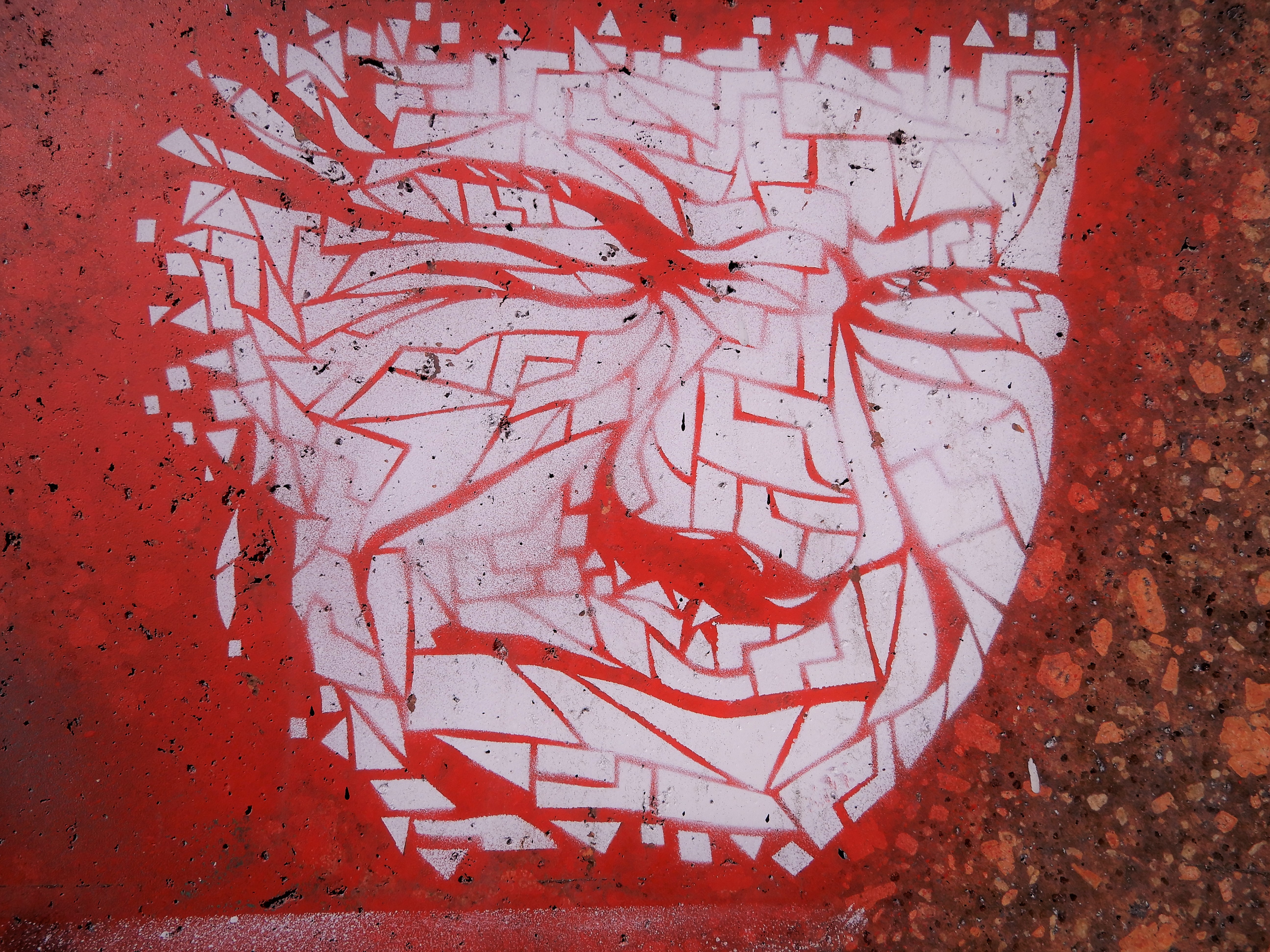
crisisRussia does not have to worry about a crisis of democracy. There is no democracy in Russia nor is the country blessed with an overabundance of small-d democrats. The professional classes, the chattering classes, and much of the underclass, alas, have become accustomed to petitioning and beseeching the vicious criminal gang that currently runs Russia to right all the country’s wrongs and fix all its problems for them instead of jettisoning the criminal gang and governing their country themselves, which would be more practically effective. Photo by the Russian Reader
Free the Network case defendants, the Jehovah’s Witnesses facing charges and the ones already doing jail time, ditto for the Crimean Tatars, Oleg Sentsov and Alexander Kolchenko, the Ukrainian sailors, Yuri Dmitriev, the Petersburg subway bombing defendants, the myriads of Russian businessmen in prison after they were set up by rivals and taken down by the FSB for a good price, the New Greatness kids, and hundreds of other Russian “outlaws” whose names I cannot remember or, worse, have never heard.

Free them first, and the day after you free them, free Ivan Golunov.

While you are at it, stop making war in Eastern Ukraine and stop bombing innocent Syrians. And bring the people responsible for shooting down Flight MH17 and killing everyone on board to justice.

The day after you have done all these things, free Ivan Golunov.

But don’t be such arrogant, self-important pricks as to appear on the world’s most respected radio and TV network and claim the Golunov case is the worst thing that has happened under Putin’s reign.

Anna Politkovskaya was murdered, for God’s sake. And so were Stanislav Markelov and Anastasia Baburova.

I could start another list of reporters, activists, politicians, etc., who were murdered, probably on the orders of the Kremlin or with its blessing, over the last twenty years.

Boris Nemtsov was murdered only a few hundred meters from the Kremlin.

God forbid I should mention “convicted pedophile” Sergei Koltyrin. Even the most hardcore human rights advocates in Russia have abandoned him and made mention of his name taboo, although I am reasonably certain he was set up just like the saint-like Ivan Golunov, only on charges so devastating that his former allies abandoned him and he abandoned himself to the nonexistent mercies of Russia’s nonexistent justice system.

But, definitely, the worse thing that has happened under Putin’s reign is the house arrest of Meduza reporter Ivan Golunov on what are undoubtedly trumped-up drug charges. June 9, 2019 || THE RUSSIAN READER

barney fife

P.S. As I was assembling this collage of reflections inspired by the collective hysteria among the Russian liberal intelligentsia over reporter Ivan Golunov’s dubious arrest, it occurred to me that, perhaps, my own reaction and that of Ayder Muzhdabaev, whose “outburst” leads off this montage, were not sufficiently charitable.

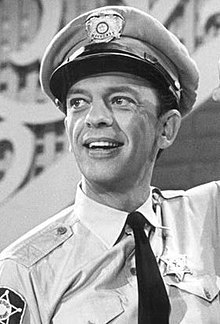
But then I read and translated what the editors of Kommersant, RBC, and Vedomosti published on the front pages of their newspapers today. Their milquetoast appeal to Russian law enforcement—a multi-headed hydra that has spent the last thirty years proving again and again it is one of the most brutal, vicious criminal gangs in the world, an army of thugs who routinely terrorize the people they have sworn to protect, a mob of degenerates who will stop at nothing, including the routine use of torture, to get their man—sounds more like an appeal to US TV sitcom cops Barney Miller and Barney Fife.

Do these hardened (?) newspaper reporters really believe an appeal like this will have a real effect on the investigation of Golunov’s nonexistent crimes?

It is also worth remembering (as Sergey Abashin did on his Facebook page earlier today) that the free press warriors at Kommersant recently fired a reporter for writing negative comments about Valentina Matviyenko, formerly Putin’s satrap in Petersburg, currently chair of the Federation Chamber, which rubber-stamps all the odious, wildly unconstitutional laws sent its way. In protest at the firing, the newspaper’s entire political desk immediately resigned as well.

That, by the way, is real solidarity, although it probably won’t get them their jobs back, quite the opposite.

Meanwhile, RBC has been a shell of its former militant self after its owners fired three top editors three years ago and, again, a whole slew of reporters resigned along with them.

RBC used to have an investigative reporting desk that would be the envy of any newspaper anywhere in the world. Nowadays, it mostly reports the kinds of “news” its oligarch owners and the Kremlin want it to report.

The 2011–2012 fair elections protests were mostly an extended exercise in virtue signaling and “creativity,” not a serious attempt by the grassroots to force the Kremlin to hold fair elections, much less to attempt regime change. Russian society has paid heavily for its frivolousness then.

Why, then, has it not yet figured out what its foe is really like? Why does it appeal for justice and fairness to authorities who have proven beyond a reasonable doubt they are hardened criminals? Finally, why does it imagine that reposting Ivan Golunov’s articles on Facebook is real solidarity? Does it think the regime will fall if, say, a million people repost these articles? Five million?

Photo of Don Knotts as Barney Fife courtesy of Wikipedia

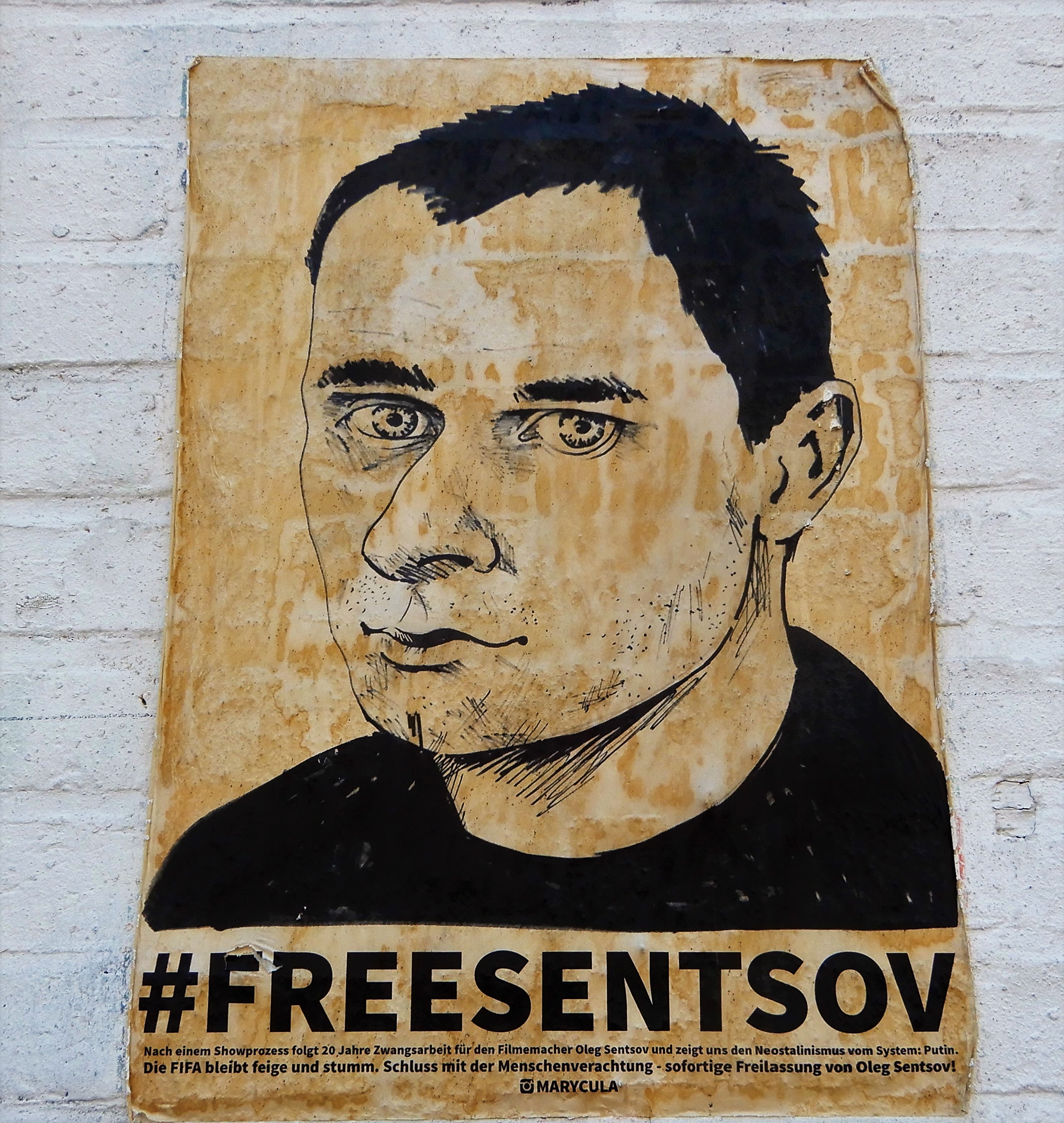
#FREESENTSOV

#FREESENTSOV (MARYCULA).JPGNach einem Showprozess folgt 20 Jahre Zwangszeit für dem Filmmacher Oleg Sentsov und zeigt uns den Neostalinismus vom System: Putin. Die FIFA bleibt feige und stumm. Schluss mit der Menschenverachtung – sofortige Freilassung von Oleg Sentsov!

A show trial is followed by twenty years of hard time for Oleg Sentsov and demonstrates the neo-Stalinism of Putin’s system. FIFA remains cowardly and silent. Put an end to the inhumanity: release Oleg Sentsov immediately! Poster by Marycula

Photographed by the Russian Reader at R.A.W. Gelände in Berlin-Friedrichshain, on April 1,  2019

#FREESENTSOV

No Amnesty for “Terrorists”

boyarshinovAmnesty International, the world’s premier human rights organization, thinks there is a chance Network case suspect Yuli Boyarshinov (pictured here) and his ten comrades can get a fair trial in Russia, which has a 99% conviction rate. Photo courtesy of Rupression

Despite what I wrote to a comrade yesterday, it turns out Amnesty International did issue a report on the Network case—just as last year was ending, meaning well over a year since the ugly, insulting mess kicked off in Penza.

But you might wish Amnesty International had not bothered to write anything, especially after you read the report’s conclusion.

Amnesty International is urging the Russian authorities to review the Network case and if the evidence received during such review demonstrates that the case was, indeed, fabricated, all charges against the co-accused individuals must be dropped and they must be immediately released. If there are legitimate grounds to continue their prosecution, the Russian authorities should fully respect the right to a fair trial and, amongst other things, open the trial in the Network case to members of the public.

If the suspects in the sickening torture carnival and flagrant frame-up known as the Network case go to trial, there is a 99% chance that, as in the recent case of two other well-known convicted “terrorists,” Oleg Sentsov and Alexander Kolchenko, the Networkers will be tried in closed chambers by a military tribunal in a city like Rostov-on-Don, which has the added advantage of being quite far from the Networkers’ homes in Penza and Petersburg, making it extraordinarily  difficult for their family and friends to make the trip so they can, at best, stand in the hallway of the courthouse or outside it and, perhaps, every once in a while catch a glimpse of their loved ones as they are shuttled back and forth between hearings by heavily armed bailiffs and guard dogs.

Correspondingly, the Networkers will be found guilty on all charges and sentenced to hefty terms in prison like Kolchenko and Sentsov, who were just as obviously the victims of a blatant frame-up, meant to teach Crimeans and the world a brutal lesson about the new bosses in the Crimean Peninsula.

Given these circumstances, what prevented Amnesty International from declaring the Networkers prisoners of conscience and turning their case into a full-fledged international solidarity campaign is beyond me.

Amnesty International must think there is a chance the Networkers are “real” terrorists, meaning the world’s greatest human rights advocates have become either hopelessly naive in their late middle age or abysmally cynical. {TRR}

Thanks to Comrade Koganzon for finding AI’s dismal report.

______________________________________

What can you do to support the Penza and Petersburg antifascists and anarchists who have been tortured and imprisoned by the Russian Federal Security Service (FSB)?

  • If you are in London or can get to London on January 19, join the solidarity demo at the Cable Street Mural at 2 p.m. The demonstration is supported by Anarchist Communist Group, Anarchist Federation, Brighton Antifascists, Bristol Anti-Fascists, Brazilian Women against Fascism, Feminist Fightback, London Antifascists, London Anarchist Black Cross, North London Anti-Fascists, Plan C LDN, RS21, and Labour Briefing. Please email london19jan(at)riseup.net to add your organization to the list of supporters. More information about the Cable Street Mural and its location can be found on its Facebook page.
  • Donate money to the Anarchist Black Cross via PayPal (abc-msk@riseup.net). Make sure to specify your donation is earmarked for “Rupression.”
  • Spread the word about the Network Case aka the Penza-Petersburg “terrorism” case. You can find more information about the case and in-depth articles translated into English on this website (see below), rupression.com, and openDemocracyRussia.
  • Organize solidarity events where you live to raise money and publicize the plight of the tortured Penza and Petersburg antifascists. Go to the website It’s Going Down to find printable posters and flyers you can download. You can also read more about the case there.
  • If you have the time and means to design, produce, and sell solidarity merchandise, please write to rupression@protonmail.com.
  • Write letters and postcards to the prisoners. Letters and postcards must be written in Russian or translated into Russian. You can find the addresses of the prisoners here.
  • Design a solidarity postcard that can be printed and used by others to send messages of support to the prisoners. Send your ideas to rupression@protonmail.com.
  • Write letters of support to the prisoners’ loved ones via rupression@protonmail.com.
  • Translate the articles and information at rupression.com and this website into languages other than Russian and English, and publish your translations on social media and your own websites and blogs.
  • If you know someone famous, ask them to record a solidarity video, write an op-ed piece for a mainstream newspaper or write letters to the prisoners.
  • If you know someone who is a print, internet, TV or radio journalist, encourage them to write an article or broadcast a report about the case. Write to rupression@protonmail.com or the email listed on this website, and we will be happy to arrange interviews and provide additional information.
  • It is extremely important this case break into the mainstream media both in Russia and abroad. Despite their apparent brashness, the FSB and their ilk do not like publicity. The more publicity the case receives, the safer our comrades will be in remand prison from violence at the hands of prison stooges and torture at the hands of the FSB, and the more likely the Russian authorities will be to drop the case altogether or release the defendants for time served if the case ever does go to trial.
  • Why? Because the case is a complete frame-up, based on testimony obtained under torture and mental duress. When the complaints filed by the accused reach the European Court of Human Rights in Strasbourg and are examined by actual judges, the Russian government will again be forced to pay heavy fines for its cruel mockery of justice.

***************

If you have not been following the Penza-Petersburg “terrorism” case and other recent cases involving frame-ups, torture, and violent intimidation by the Russian Federal Security Service (FSB) and other arms of the Russian security state, read and share recent articles the Russian Reader has posted on these subjects.

Free Edem Bekirov!

15447318032279451Edem Bekirov.  Photo courtesy of Vector News

Ayder Muzhdabaev
Facebook
December 28, 2018

Watch the footage we shot of Edem Bekirov. Then read what the well-known Kyiv musician Mitya Gerasimov has written.

“I’m sitting in my parents’ kitchen in Kazan. In its news bulletin, Echo of Moscow, a supposedly liberal radio station, reports that a terrorist has been detained on the Crimean border, the member of an armed band. He has been accused of storing and transporting weapons and explosives. His name is not mentioned, but it is clear they are talking about our friend Edem Bekirov, a Crimean Tatar from Novooleksiivka in Kherson Region.

“Edem is an ill, elderly man who has had heart bypass operations and a leg amputated due to diabetes. Before the latest operation, he went to Kyiv to see his mom. On the border, he was abducted by men in masks. For a time, nothing was known about his whereabouts. Then they let him call home from the FSB’s Simferopol office. He had not been given anything to eat or drink for two days or been taken to the bathroom. He was not permitted to take bandages to dress the unhealed wound on his stump or the medicines that keep him alive. He needs to take sixteen pills a day.

“The Russian authorities have been slowly killing Edem in a remand prison for over two weeks. The day before yesterday, the so-called court dismissed the appeal in his case. The radio reports the detained man associated with the terrorist group led by Lenur Islamov. They apparently meant the Crimean Tatar TV channel ATR, where Edem’s daughter works.

“Everyone knows Crimean Tatars do not kill anyone or carry out terrorist attacks. They have a principled stance of nonviolent resistance to the occupiers. The cartridges and twelve kilos of explosives that Edem, one-legged and ill, was supposedly taking somewhere is the same nonsense they made up about the so-called terrorist militant Oleg Sentsov. I remember watching Russian television in early 2014, before the annexation. It was footage of Grushevsky Street in Kyiv: Molotov cocktails, burning tires, snowdrifts. The announcer explained to viewers they were seeing Crimean Tatars rioting in Simferopol.

“There is the pre-New Year’s hustle and bustle on the streets of our cities: lanterns, New Year’s trees, shopping, traffic jams. Like many other Crimean political prisoners, Edem Bekirov will ring in his new year behind bars. We must do everything we can to publicize his plight. We have to shout about it on every street corner. We have to get him out of jail before it’s too late.”

That is the Happy New Year we are having.

Translated by the Russian Reader

The Minimum of Solidarity (125 Days)

day 125Award-winning Ukrainian filmmaker and political prisoner Oleg Sentsov has been on hunger strike for 125 days in the Polar Bear Maximum Security Prison in the far north of Russia. His only demand throughout the strike has been that the Russian authorities release sixty-four other Ukrainian political prisoners, most of them, like Mr. Sentsov, from Crimea, which was illegally occupied by Russia in 2014.

In recent days, I have seen a lot of snide commentary from Russian nationals to the effect that Mr. Sentsov should give up his hunger strike, because it’s obviously not working.

In my opinion, what Mr. Sentsov, who was sentenced to twenty years in prison on trumped-up charges by a kangaroo military tribunal in Rostov-on-Don, does is up to him, don’t you think? I think he should get a free pass when it comes to what he does or doesn’t do after the Putin regime ruined his life while Russian society mostly stood by idly and silently once again.

Oleg Sentsov is a far braver man than most of us can hope to be. If we do not want to help him and refuse to show solidarity with him and his cause, the least we could do would be to refrain from writing and talking about him.

That would be the minimum of solidarity in this case. {TRR}

#SaveOlegSentsov