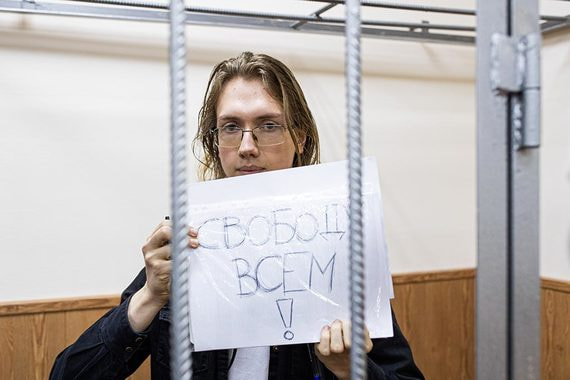
18 Years in Prison for Being Tortured by the FSB

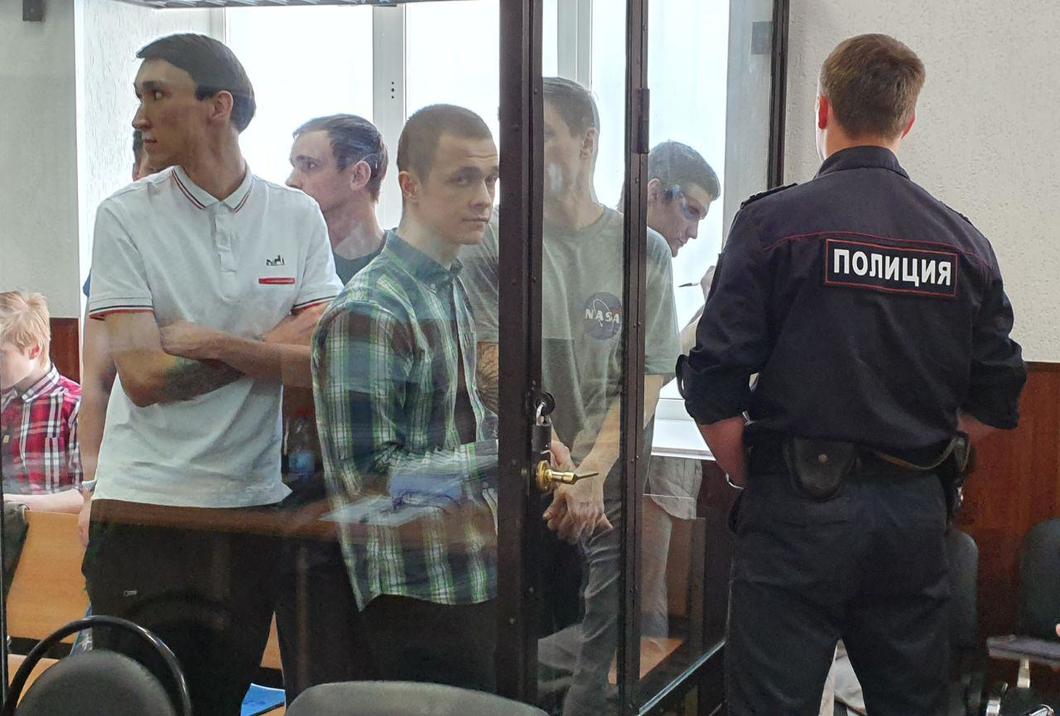
content_001_setNetwork Case defendants. Photo by Andrei Karev. Courtesy of Novaya Gazeta

Prosecutor Asks Court to Sentence Penza Network Case Defendants to Up to Eighteen Years in Prison
OVD Info
December 26, 2019

The state prosecutor has asked the Volga District Military Court to sentence the five defendants in the Penza portion of the Network Case to between six and eighteen years in prison, according to a member of the campaign to support the defendants who was present in the courtroom.

The prosecution asked the court to hand down the longest sentence to Dmitry Pchelintsev: 18 years in a maximum-security penal colony. It asked the court to sentence Ilya Shakursky to 16 years, Andrei Chernov to 14 years, Maxim Ivankin to 13 years, Mikhail Kulkov to 10, Vasily Kuksov to 9 years, and Arman Sagynbayev to 6 years. It asked that all the defendants except Kuksov and Sagynbayev be sent to maximum-security penal colonies.

The prosecutor told the court that the defendants’ accounts that they were tortured into testifying had not been corroborated.

All the defendants are accused of involvement in a “terrorist community,” punishable under Article 205.4.4 of the Russian Criminal Code. Pchelinsky and Shakursky are accused of organizing a “terrorist community,” punishable under Article 205.4. In addition, some of the defendants are accused of illegal possession of firearms (Article 222.1), illegal possession of explosives (Article 222.1.1), attempted arson or bombing with mischievous intent (Article 167.2 in combination with Article 30.3), and large-scale attempted drug trafficking (Article 228.1.4.g in combination with Article 30.3).

The criminal case against the Network “terrorist community” was launched in October 2017. According to the FSB, eleven young men in Penza and Petersburg organized the Network and were planning to overthrow the government. The defendants in the case claimed the FSB subjected them to psychological pressure, tortured them with electric shocks, beat them, and planted weapons on them. Some of the defendants recanted the confessions they made in the days following their arrests. OVD Info has reported on each of the defendants in the case in detail.

Translated by the Russian Reader

__________________________________________

If you have not been following the Penza-Petersburg “terrorism” case and other recent cases involving frame-ups, torture, and violent intimidation by the Russian Federal Security Service (FSB) and other arms of the Russian police state, read and share the articles I have posted on these subjects.

“Free Everyone!”: Five More Men Arrested and Charged in Moscow Case

What We Know About the New Defendants in the Moscow Case: Basmanny District Court Remands Four of Them in Custody for Two Months
Vedomosti
October 16, 2019

mosdelo-1Andrei Barshay, 21 years old, a student at Moscow Aviation Institute. Volunteer teacher at the institute’s physics and math magnet school. Pleaded not guilty to charges of using force against a police officer. Investigators claim Barshay ran at a Russian National Guardsman and pushed him in the back, causing him pain, during the July 27 protest rally in Moscow. Photo by Yevgeny Feldman. Courtesy of Vedomosti. 
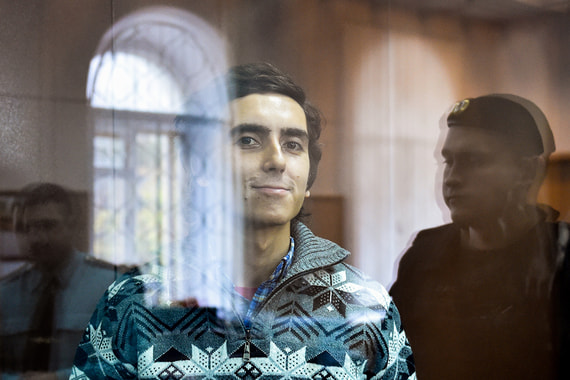
mosdelo-2Vladimir Yemelyanov, 27 years old. Lives in Mytishchi and works as a store merchandiser. Pleaded not guilty to charges of using force against a police officer. Until his arrest, he took care of his 74-year-old grandmother and 91-year-old great-grandmother. Investigators claim he grabbed a Russian National Guardsman by the uniform and pulled him over, making it impossible for him to move and causing him physical pain. Photo by Andrei Vasiliev. Courtesy of TASS and Vedomosti
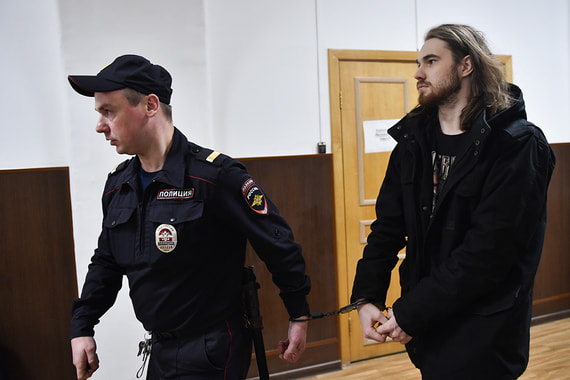
mosdelo-3Maxim Martintsov, 27 years old, laboratory worker. Pleaded not guilty to charges of using force against a police officer. Lives in Moscow but family lives in Bryansk Region. Until his arrest, he financially supported his elderly grandmother and grandfather. Investigators claim that, during the July 27 protest rally, he was on Rozhdestvenka Street, where he and Yegor Lesnykh attacked a Russian National Guardsman and threw him on the pavement. Photo by Andrei Vasiliev. Courtesy of TASS and Vedomosti
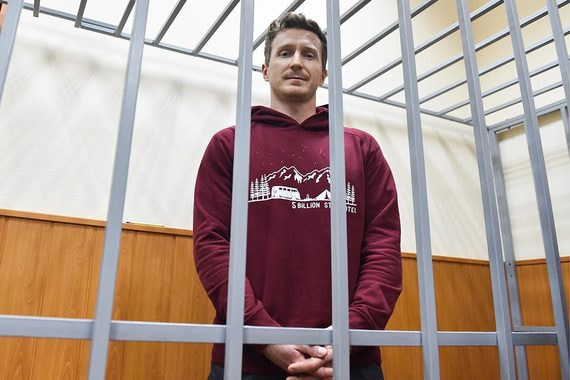
mosdelo=4Yegor Lesnykh, 34 years old, native of Volzhsky, lives in Moscow. Works as a self-employed renovator. Pleaded not guilty to charges of using force against a police officer. Investigators claim that, during the July 27 protest rally, he and Maxim Martintsov threw a Russian National Guardsman on the pavement. In addition, Lesnykh, allegedly, kicked another law enforcement officer in the lower right part of his back. Photo by Andrei Vasiliev. Courtesy of TASS and Vedomosti
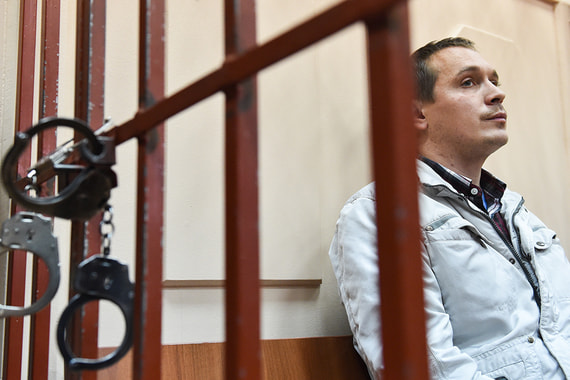
mosdelo-5Alexander Mylnikov, 34 years old. Lives in the South Butovo district of Moscow, and is employed as a courier. Pleaded not guilty. Investigators asked the court to put Mylnikov under house arrest. The father of three young children, he supports them and his spouse. Investigators claim that, during the July 27 protest rally, he, Yegor Lesnykh, and Maxim Martintsov threw a riot policeman on the ground. Photo by Andrei Vasiliev. Courtesy of TASS and Vedomosti
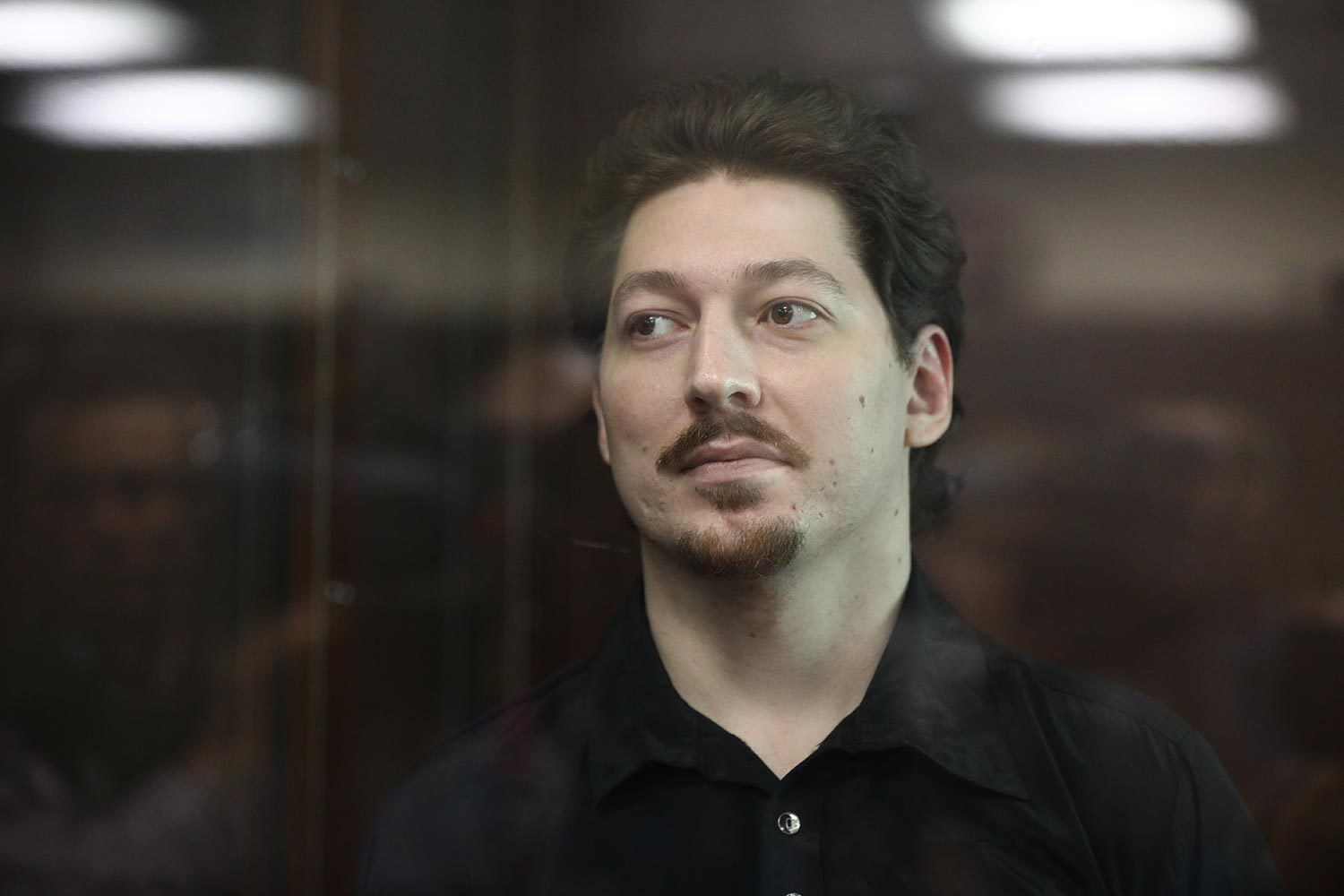
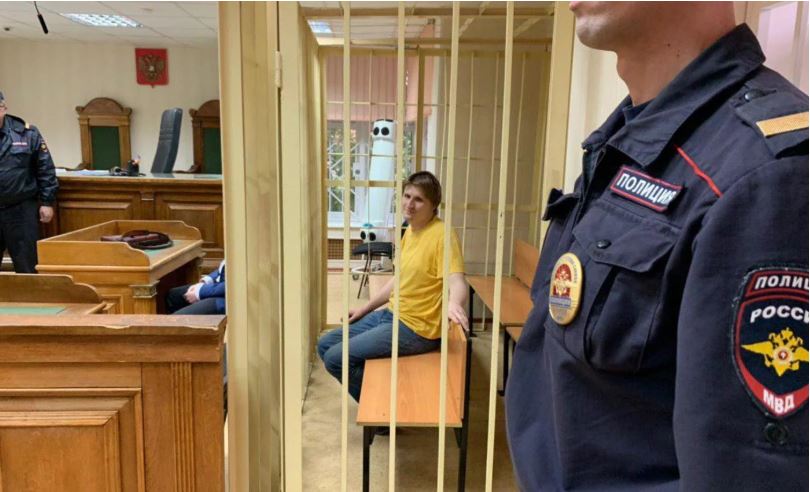
Translated by the Russian Reader. Please read my previous posts on the 2019 Russian regional elections and the fallout from them, including the ongoing crackdowns against opposition politicians and rank-and-file protesters.


Three Years in Prison for Touching a Policeman’s Helmet

fullscreen-1qel
Kirill Zhukov was sentenced to three years in prison for touching a Russian National Guardsman’s helmet. Photo by Yevgeny Razumny. Courtesy of Vedomosti

Number of Guilty Verdicts in the Moscow Case Reaches Five
Anastasia Kornya and Svetlana Bocharova
Vedomosti
September 5, 2019

On July 27, 2019, during an “unauthorized” rally in support of independent candidates to the Moscow City Duma, Kirill Zhukhov raised the visor of a helmet worn by a Russian National Guardsman. Yesterday, September 4, he was found guilty of violence towards a government official, as punishable under Article 318.1 of the Russian Criminal, and sentenced to three years in a medium-security prison colony. The verdict said that Zhukov, acting intentionally and fully aware he was dealing with a government official who was performing his duties, struck him a single blow to the head with his left hand in an attempt to tear off the helmet, causing the victim physical pain.

State investigators conducted a special forensic test establishing, allegedly, that even a slight, upward blow with the hand to the helmet’s visor causes the head to tilt back and the strap to make full contact with the skin in the chin area [sic].

Zhukhov, on the contrary, tried to prove he had only waved his hand in front of the guardsman’s visor since he wanted to draw his attention to a woman injured during the rally. But the court reacted to his testimony “critically.” As the judge explained, Zhukhov’s purpose in testifying in this way had been to mitigate the severity of his crime.

On Wednesday, the Meshchansky District Court sentenced Yevgeny Kovalenko to three and a half years in a medium-security prison colony. He was found guilty of violence against two law enforcement officers. Allegedly, he pushed one of the officers and threw a garbage can at the other.

“Fully cognizant that the man before him, Tereshchenko, was performing his duties, [Kovalenko] pushed him on the right side of the torso with both hands, causing him to lose balance and fall from the height of his own height [sic] on the granite steps and experience physical pain,” the verdict stated.

Continuing to act with criminal intent, Kovalenko grabbed National Guardsman Maxim Saliyev by the body armor with both hands, abruptly pulling him and dragging him towards himself and thus causing him physical pain. After Tereshchenko pushed Kovalenko away, Kovalenko grabbed a trash receptacle and threw it at the guardsmen, hitting Saliyev in the lower back. According to the verdict, the guardsman experienced not only physical pain when falling but also emotional suffering since, at that moment, he remembered he had to perform his duties [sic].

During the trial, Kovalenko explained he had not intended any harm. He had only tried to frighten off policemen who were beating up protesters. However, the judge said the court was skeptical of his claims. They were refuted by the evidence in the case file and were an attempt to avoid punishment.

“The court notes the consistent and purposeful nature of the defendant’s actions, testifying to his criminal intent to employ violence,” the verdict stated.

The judge emphasized that arguments about police misconduct could not be considered during the trial and were not evidence of the defendant’s innocence.

Kovalenko’s defense counsel Mansur Gilmanov pointed out that the crime with which his client had been charged was a crime against the normal functioning of government. It thus followed that beating up peaceful protesters was one way in which the government normally functioned, he argued.

Svetlana Bayturina, Zhukov’s lawyer, called the sentence handed down to her client unprecedentedly severe: usually, such cases had resulted in fines for defendants or, at most, suspended sentences. The speed with which the case was investigated and tried was also unprecedented: the investigation took three days; the trial, one. Bayturina promised the defense would appeal the verdict and intended to take the case all the way to the European Court of Human Rights in Strasbourg.

This was the second “judgment day” for arrested protesters. The day before, blogger Vladislav Sinitsa was sentenced to five years in prison for posting a tweet the prosecution had described as a call to harm the children of law enforcement officers. Technician Ivan Podkopayev was sentenced to three years in prison for spraying pepper spray in the direction Russian National Guardsmen, while businessman Danila Beglets was sentenced to two years in prison for grabbing a policeman’s arm. Their cases were tried under the special procedure: neither man denied his guilt.

Gilmanov noted there was no significant difference between the sentences given to defendants who made deals with the prosecution and those handed down to defendants who pleaded not guilty. This testified to the fact the verdicts were political. The sentences were decided by more senior officials and legal nuances did not matter much, he argued.

Protesters arrested and charged under Article 318.1 after a similar “unauthorized” rally in Moscow on March 26, 2017, were given much lighter prison sentences, between eight months and two and a half years. For example, Stanislav Zimovets, convicted of throwing a brick that hit a riot police commander in the back, was sentenced to two years and six months in prison, while Dmitry Krepkin, who kicked a riot policemen’s hip or his billy club, was sentenced to eighteen months in prison. Only Andrei Kosykh, convicted of punching one policeman’s helmet and kicking another policeman in the neck and lower jaw, was sentenced to three years and eight months in prison, but he was convicted under Article 318.2, which covers violence that could result in death or grievous bodily harm.

The sentences in the so-called Moscow case have been roughly the same as those handed out in the Bolotnaya Square Case in 2012, only this time the protesters had not resisted law enforcement officers at all, political commentator Alexei Makarkin noted. According to him, the sentences in the current cases were dictated by the new rules of the game.

“Whereas before if someone hit a policemen in the teeth and damaged the enamel, he would do hard time, now people are getting similar, slightly shorter sentences for lifting the visors on riot policemen’s helmets, while people who grabbed a policemen by the arms are getting two years in prison,” Makarkin said.

In the Bolotnaya Square Case, the official charges looked more serious, Makarkin argues. The confrontation on the square was much rougher. In some ways, it harked back to the 1990s, when people fought with policemen without incurring such long sentences, he noted.

“The Bolotnaya Square Case marked a new phase. We realized the state had made it a rule that if you raised your hand against a police officer, you would go to jail. If a policeman raised a hand against you, he would be commended,” Makarkin said.

This time, the security forces also wanted to punish a certain number of people, but they failed to put together a new Bolotnaya Square case.

“So they decided anyone who had raised their hand and somehow touched a policeman should go to jail. But since they failed to dig up anything serious, they chose from what they had to work with,” Makarkin said.

Translated by the Russian Reader

Five Years in Prison for a Tweet

sinitsa in dockVladislav Sinitsa in the cage during his custody hearing on August 5. Photo courtesy of Mediazona
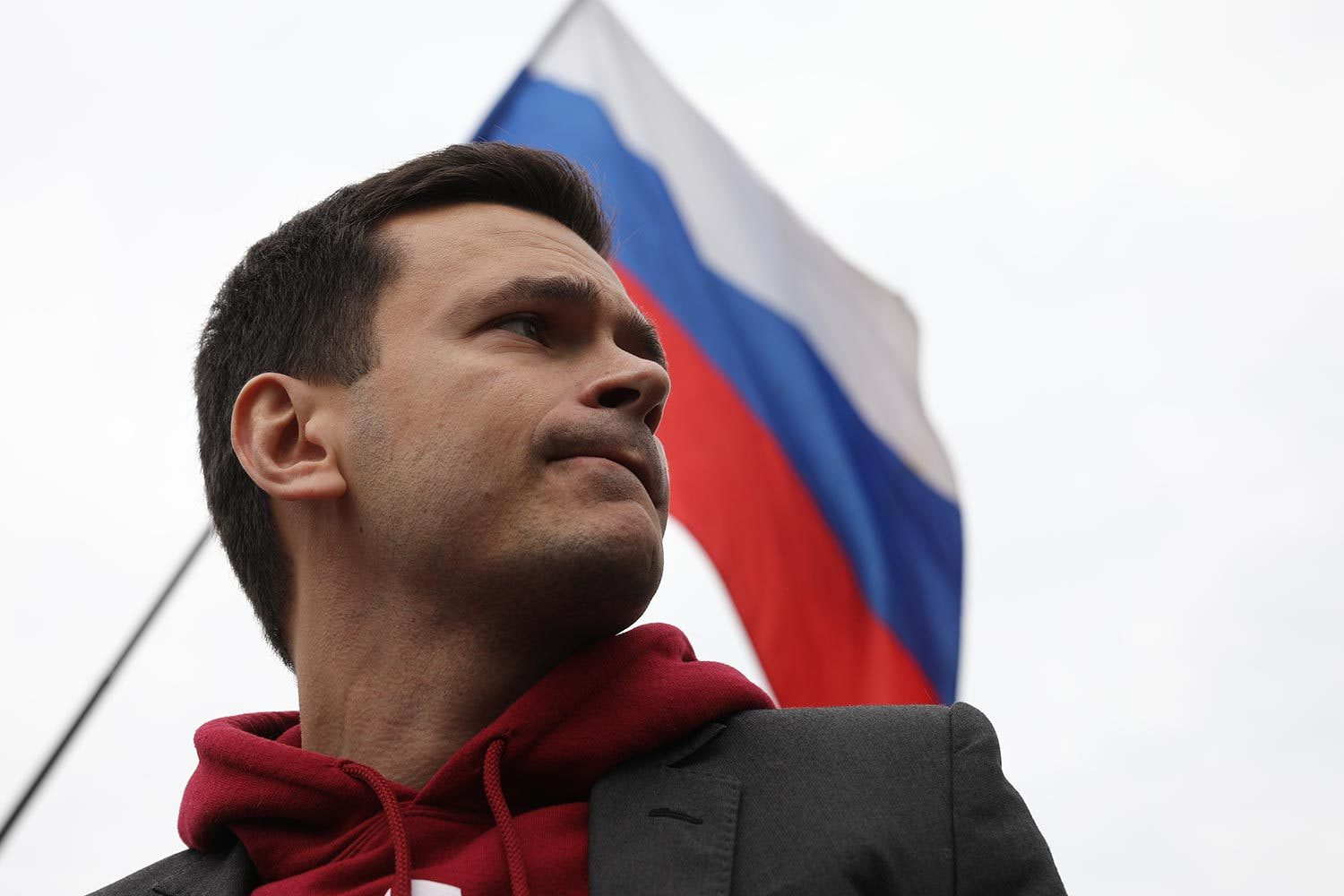
Court Sentences Vladislav Sinitsa to Five Years in Prison for Tweet about Children of Security Forces Officers
Mediazona
September 3, 2019

Moscow’s Presna District Court has sentenced Vladislav Sinitsa, a financial manager from the Moscow Region, to five years in a medium-security penal colony for a tweet about the children of security forces officers, reports the Moscow News Agency.

Judge Elena Abramova found Sinitsa guilty of inciting hatred with the threat of violence (punishable under Article 282.2.a of the Russian Criminal Code). The prosecutor had asked her to sentence Sinitsa to six years in prison.

The court handed down the verdict on the second day of the trial per se.

The court questioned two witnesses: Russian National Guardsmen Alexander Andreyev and Artyom Tarasov, who, allegedly, saw Sinitsa’s tweet.

Andreyev said he regarded the tweet as a call to “kidnap the children of National Guardsmen and slaughter them.” However, he was unable to tell the court his own username on Twitter. He claimed he saw the tweet after searching for “Max Steklov,” which is Sinitsa’s username.

Tarasov also said he took the tweet as a threat.

After the witnesses were questioned, the prosecutor summarized the two volumes of the case file, including the findings of forensic experts from the Center for Socio-Cultural Forensic Testing [sic]. They found evidence in the tweet of calls for violent action against the security forces, and signs of threats and incitement of hatred towards them.

It has transpired that the people who performed the forensic examination for the prosecution had no specialized education in the field.

In turn, the defense questioned forensic experts who had examined Sinitsa’s tweets at its request: Elena Novozhilova, a linguist from the nonprofit Independent Forensic Testing Center, and Maria Kulikova, an analyst with the Center for Forensic Examination and Research.

Kulikova harshly criticized the forensic examination commissioned by the prosecution. Both experts spoke of its poor quality.

Mediazona has written at length abut the criminal case against Sinitsa.

On July 31, Sinitsa supplied his own answer to the question of whether it was a good idea to publish the identities of security forces officers in a tweet published under the username “Max Steklov.”

The tweet was quoted on national TV channels.

Later, on August 3, the Russian Investigative Committee opened a criminal investigation. Two days later, the Presna District Court remanded Sinitsa in custody.

Sinitsa has insisted he was not calling on anyone to do anything but had implied popular unrest could arise if the security forces continued beating protesters.

Translated by the Russian Reader

Five Time’s the Charm

yashinIlya Yashin is not the only unregistered candidate for the Moscow City Duma against whom the tactic of consecutive arrests has been used. Photo by Yevgeny Razumny. Courtesy of Vedomosti

Yashin Breaks Record for Numbers of Arrests: Moscow Test Drives New Method of Combating Activists
Anastasia Kornya
Vedomosti
August 30, 2019

On Thursday, Ilya Yashin, head of the Krasnoselsky Municipal District Council in Moscow, was sentenced to his fifth consecutive jail sentence of ten days for an administrative violation. The Tverskaya District Court found him guilty of calling on the public to attend an August 3 “unauthorized” protest rally in support of the independent candidates barred from running in the September 8 elections to the Moscow City Duma.

Yashin has been in police custody since July 29. He has been detained every time he left the special detention center after serving his latest sentence. Police have taken him to court, where he has faced fresh charges of holding an “unauthorized” protest or calling on the public to attend one and then been sentenced to jail again. The municipal district councilman has thus been in detention almost continuously for thirty-two days, while the total time he has spent in jail this summer is forty-one days. This considerably exceeds the maximum allowable sentence of thirty days, as stipulated by the Criminal Procedures Code.

Yashin is scheduled to be released on September 7, but there is no guarantee he will not go to jail again.

Yashin’s lawyer Vadim Prokhorov told the court that the prosecution of the councilman was tantamount to a political reprisal. Formally, he noted, one arrest can follow another without violating the law. The problem was that the courts could make one wrongful ruling after another. Prokhorov saw no point in amending the laws, which are quite logical on this point.

“It would be like treating cancer with aspirin,” he said. “We have to change the whole judicial system.”

Ilya Yashin is not the only unregistered candidate for the Moscow City Duma against whom the tactic of consecutive arrests has been used. Former MP Dmitry Gudkov was sentenced to thirty days in jail on July 30, but several days before his scheduled release he was sentenced to another ten days in jail for calling on people to attend the July 27 protest rally. Yulia Galyamina has been convicted of three administrative offenses and sentenced to ten days in jail twice and fifteen days once; she is still in police custody. Konstantin Yankauskas has been arrested and sentenced to seven, ten, and nine days in jail, respectively; like Yashin, he was detained by police after leaving the special detention center. Oleg Stepanov has been sentenced consecutively to eight and fifteen days in jail; Ivan Zhdanov, to ten and fifteen days in jail.

The authorities are unwilling to charge the protest leaders with felonies and remand them in custody, but they clearly do not want to see them at large, said Alexei Glukhov, head of the project Defense of Protest. He noted that the current tactic of arresting opposition leaders multiple times is something novel: in the entire history of the protest movement [sic], no one had ever been arrested more than two times in a row.

Glukhov warned that the tactic was quite dangerous. Courtesy of the Russian Supreme Court, which in the recent past has ruled that violating the deadline for filing charges (legally, the authorities have two days to do this) did not preclude filing charges later, any person who attends a protest rally has the sword of Damocles hanging over their head for a year after the rally.  The authorities can arrest them at any time, for example, by claiming they had only just established their identities.

Glukhov pointed out that, in its review of the government’s draft project for a new Criminal Procedures Code, the Presidential Council on Human Rights had drawn attention to the fact that the one-year statute of limitations in such cases was not justified and could be misused.

Translated by the Russian Reader

Pskov Region: Copyright Trumps Voting Rights

Yabloko Candidate in Pskov Region Barred from Election for Not Crediting Composer in Campaign Videos
Novaya Gazeta
August 30, 2019

A court in the Pskov Region has disqualified Yabloko Party candidate Sofia Pugachova from standing in the election for the post of head of the Novorzhev District due to the fact that the composer of the music used in her campaign videos was not credited, according to Lev Schlosberg, a member of the Pskov Regional Assembly.

“There was no copyright violation since the composer had consented to use of his piece. The original agreements, in English and Russian, were submitted to the court. The court, however, failed to react to this evidence, not even mentioning it in its ruling,” explained Schlosberg, adding there was a danger similar lawsuits would be filed in the Pustoshka District and Pushkin Hills District.

Schlosberg said the videos did not credit the composer, but when the error was caught, the videos were removed from the web and replaced with new ones.

The music in question was the Italian composer Daniele Dinaro’s Lux.

Pugachova said that Alexei Ivanov, the Growth Party’s rival candidate for the same post, had petitioned the court to disqualify her.

“They could not find fault with anything else, so they found this way of barring me from the election. The court even questioned whether the composer’s signature on the agreement was genuine. That was why we also entered into evidence a video showing Dinaro signing the agreement with us,” Pugachova said.

She argues that the court’s ruling was completely illegal and is currently preparing to appeal it.

Translated by the Russian Reader

Five Crimean Tatars Sentenced to as Long as 17 Years in Prison in Rostov-on-Don

800px-Flag_of_the_Crimean_Tatar_people.svgThe Crimean Tatar national flag. Courtesy of Wikipedia

Five Crimean Tatars Sentenced to as Many as 17 Years in Prison in Rostov-on-Don
Anton Naumlyuk
Radio Svoboda
June 18, 2019

The North Caucasus Military Court in Rostov-on-Don has rendered a verdict in the Simferopol Hizb ut-Tahrir trial.

Five Crimean Tatars were detained after searches of their homes in October 2016. They were charged with involvement in Hizb ut-Tahrir, an organization that has been banned in Russia. One of the five defendants, Teimur Abdullayev, was also charged with organizing cells for the organization in Simferopol.

During closing arguments, the prosecution has asked the court to sentence the defendants to between 11 and 17 years in prison. However, except for Abdullayev, who was sentenced to 17 years in a maximum-security prison camp, the other four defendants were given longer sentences than the prosecutor had requested. Uzeir Abdullayev was sentenced to 13 years in prison. Emil Jemandenov and Ayder Saledinov were sentenced to 12 years in prison, while Rustem Ismailov was sentenced to 14 years in prison.

The convicted men had pleaded innocent to the charges. Their defense team plans to appeal the verdict.

“We are not terrorists. We have not committed any crimes,” Uzeir Abdullayev said in his closing statement. “I would also like to say that the criminal case [against us] was a frame-up, a fabrication. The secret witness alone was proof of that—and he was proof of our innocence. […] I thus want to show that human rights are violated in Russia and you violate your own Constitution.”

Nearly 70 individuals have been arrested in Crimea, occupied by Russia since 2014, as part of the criminal investigation into Hizb ut-Tahrir, an organization that is not illegal in Ukraine and most European countries. Most of the suspects and defendants in the case, include the Crimean Muslims convicted today, have been declared political prisoners by the International Memorial Society, an alliance of human rights organizations headquartered in Moscow.

Translated by the Russian Reader

Beat the Crimean Tatars, Save Russia!

simferopolThe defendants in the Simferopol Hizb ut-Tahrir trial in Rostov-on-Don. Photo courtesy of Crimean Solidarity and Krym.Realii
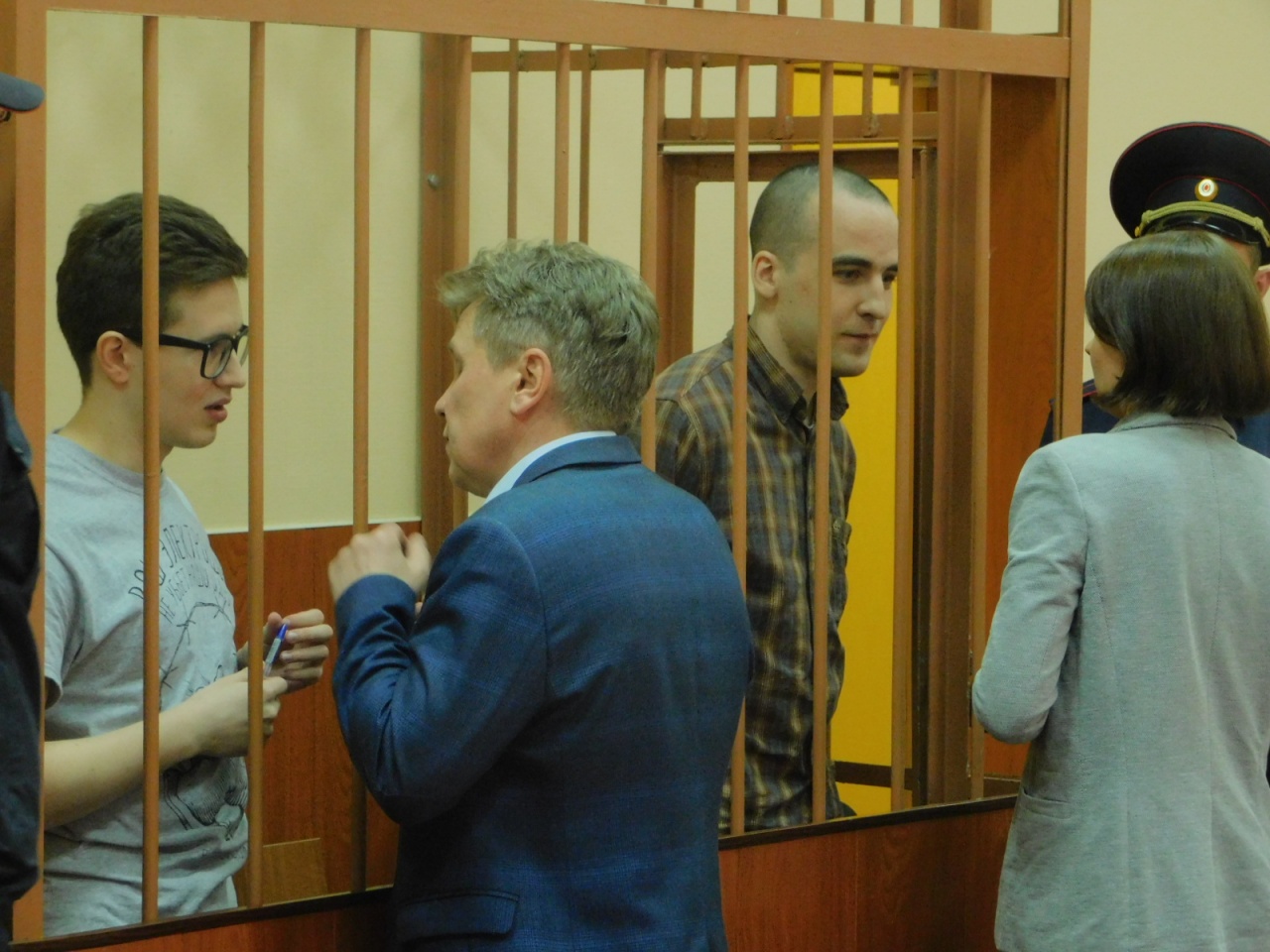
Numerous Searches Underway in Crimean Tatar Homes in Connection with “Terrorism” Case, Several Men Detained
OVD Info
June 10, 2019

Police have been carrying out numerous searches in the homes of Crimean Tatars in several Crimea towns and villages. One man has been charged with organizing a terrorist organization or involvement in one. This news was reported on the Facebook page of Crimean Solidarity activist Luftiye Zudiyeva and the movement’s official Facebook page.

It is known that four people have been detained. Eldar Kantimirov was taken from the village of Zarechnoye in an unknown direction. According to activists, he was charged with organizing a terrorist organization or involvement in one (Russian Criminal Code Article 205.2). The particulars of the case, like Kantimirov’s whereabouts and his official status in the case, are still unknown. They may have to do with the religious organization Hizb ut-Tahrir, which has been declared a terrorist organization in Russia.

Riza Omerov, who lives in Belogorsk, was taken to FSB headquarters. His sister is married to Rustem Ismailov, a defendant in the Simferopol Hizb ut-Tahrir trial. Omerov has three children. His wife, who is seven months pregnant, has now gone into premature labor.

Ayder Jepparov was detained in the village of Zuya in the Belogorsk District. He was also taken to FSB headquarters.

Eskender Suleymanov was detained in Stroganovka, a village in the Simferopol District. He is the brother of Ruslan Suleymanov, a defendant in the Hizb ut-Tahrir trial. The activist was taken to FSB headquarters in Simferopol.

The homes of Ruslan Mesutov, in the village of Maly Mayak, and Lenur Halilov, chair of the religious community in the village of Izobilnoye, both located in the Alushta District, were also searched.

UPDATE. Ruslan Mesutov has been detained. Like Eldar Kantimirov, he has been accused of involvement in a terrorist organization (Russian Criminal Code Article 205.5 Part 2).

Lenur Halilov has been accused of organizing terrorist activities (Russian Criminal Code 205.5 Part 1).

Ayder Jepparov, Riza Omerov, and Eskender Suleymanov remain in police custody. It is still not known whether they have been charged as part of the criminal case.

A search has also been underway in the home of Enver Omerov, Riza Omerov’s father. FSB officers stopped his car and detained him during the night. OVD Info has been unable to ascertain whether the security forces have released him.

FSB investigator Sergei Makhnev, who has been involved in the case of the second Simferopol Hizb ut-Tahrir group, led the search. Makhnev has already stated Suleymanov’s case would be incorporated into this case.

UPDATE 2. Crimean Solidarity has reported that Riza Omerov, Enver Omerov, Ayder Jepparov, and Eskender Suleymanov were remanded in custody until August 5.

Russia has declared Hizb ut-Tahrir a terrorist organization. Its members have been charged and sentenced to long terms in prison only for gathering at people’s homes, reading religious books, and recruiting new members.

According to numerous experts, Hizb ut-Tahrir was wrongly declared a terrorist organization since its members in Russia have never advocated violence or been involved in terrorist attacks.

_________________________________________________

Rostov: Prosecutors Ask Court to Sentence Simferopol Hizb ut-Tahrir Trial Defendants to 17 Years in Prison
Krym.Realii
June 10, 2019

Our correspondent reports the prosecution in the first Simferopol Hizb Ut-Tahrir trial has asked the North Caucasus Military District Court in Rostov-on-Don to sentence the defendants to long terms in prison camps.

The prosecutor asked that Teimur Abdullayev be sentenced to 17 years, Rustem Ismailov, to 13 years, Uzeir Abdullayev and Ayder Saledinov, to 12 years, and Emil Jemadenov, to 12 years.

On October 12, 2016, five homes in Crimea were searched by police and security services. Consequently, the five men currently on trial in Rostov-on-Don were detained and charged with involvement in Hizb ut-Tahrir, an organization that was banned in Russia and Crimea, which Russia occupied in 2014.

On December 6, 2018, it transpired the five men had been transferred to a remand prison in the Russian city of Rostov-on-Don.

On February 19, 2019, a secret witness was interrogated during a hearing of the Simferopol Hizb ut-Tahrir case by the North Caucasus Military Court in Rostov-on-Don.

Hizb ut-Tahrir, an international Islamic political organization, says its mission is to unite all Muslim countries in an Islamic caliphate, but it rejects terrorism as a means of attaining their goal. They claim they have been unjustly persecuted in Russia and Crimea, which was occupied by Russia in 2014.

The Russian Supreme Court banned Hizb ut-Tahrir in 2003, placing it on a list of organizations deemed “terrorist.”

Defenders of the Crimeans convicted and arrested in the Hizb ut-Tahrir case argue they have been persecuted on religious grounds. Lawyers note that, while it has mainly been Crimean Tatars who have been persecuted by Russian law enforcement as part of the case, Ukrainian, Russians, Tajiks, Azeris, and non-Tatar Crimeans who practice Islam have also been persecuted.

International law forbids an occupying power from enforcing its own laws in occupied territory.

Translated by the Russian Reader

Vocalese (The Network Trials)

DSCN0045Viktor Filinkov (left) and Yuli Boyarshinov (right) in the dock at the Network trial in Petersburg, discussing matters with their defense lawyers. Photo courtesy of Zaks.ru
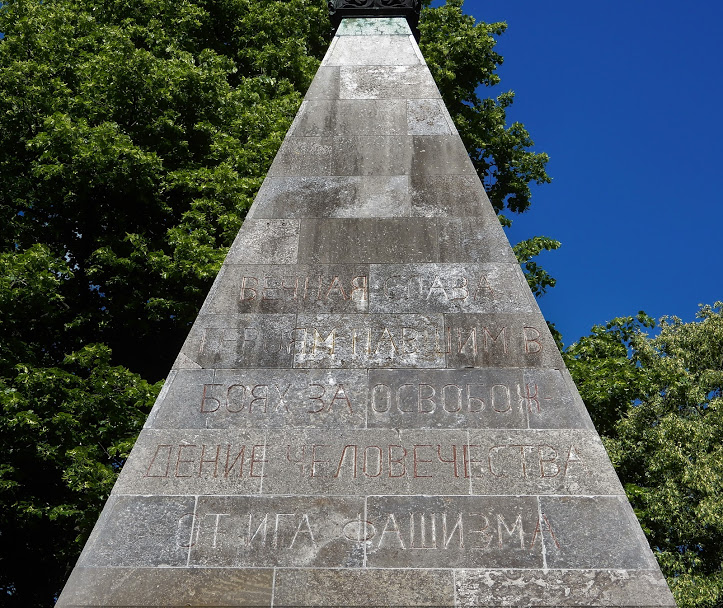
Petersburg Defendants in Network Case Remanded in Custody till September 11
Zaks.ru
June 4, 2019

On Tuesday, June 4, a panel of judges from the Moscow Military District Court, presiding at a circuit hearing in Petersburg, extended the remand in custody of anarchists Viktor Filinkov and Yuli Boyarshinov, defendants in the trial of the so-called Network terrorist community, until September 11.

The defendants’ previous remand in custody would have expired on June 11. The prosecution insisted it be extended. The defendants asked to release them on house arrest. Filinkov and Boyarshinov have been imprisoned for nearly a year and a half.

Earlier in the hearing, the court granted a motion, made by Filinkov’s defense counsel, Vitaly Cherkasov, to order a phonoscopic forensic examination of an audio recording in the case files containing, allegedly, a conversation between the Petersburg defendants.

As part of the forensic examination, FSB Captain Maxim Volkov recorded their voices in the courtroom. They were told to say anything they liked in the microphone.

Filinkov spoke for around eleven minutes about what happened during the early days after he was detained by the FSB, including  the electrical shock torture to which he had previously accused the FSB officers who detained him of subjecting him.

Boyarshinov recounted the time he had spent in remand prison, his loved ones, and his passion for traveling.

The trials of the Network defendants have been taking place simultaneously in Petersburg and Penza.

There are nine defendants in the dock. They have been charged with establishing a terrorist organization that, allegedly, wanted to carry out terrorist attacks against officials and security services officers. They also, allegedly, planned to overthrow the government.

On the contrary, the defendants claim they practiced airsoft together and discussed anarchist ideas, but had no plans to commit any crimes whatsoever.

Translated by the Russian Reader

_________________________________________

They took a dynamo out of a bag and put it on the table. All the agents were wearing balaclavas and medical gloves.

They strapped my hands behind my back, I was only in my underpants, they strapped my legs to the bench with tape. One agent, Alexander, stripped the wires with a craft knife and attached them to my toes. They didn’t ask any questions, they simply started cranking the dynamo.

I felt electric currents in my legs up to the knees. It feels like you are being skinned alive, but when it stops, it’s as if nothing happened at all. There’s no pain when the electricity stops.

Well, it’s impossible to endure this. They hit me [with electric shocks] maybe about five times without asking any questions, probably, to stun me or something like that. Then they told me: if you haven’t figured it out, you are in the hands of the FSB, we are not going to play games, you will have to answer our questions now. The answers “no”, “I don’t know”, “I don’t remember” are wrong answers.

Excerpt from Network defendant Dmitry Pchelintsev’s testimony at the Penza Network trial, as published by People and Nature on June 4, 2019. Read the rest of Pchelintsev’s nearly unbearable story there.

Yana Teplitskaya: Can Torture Be Endured?

buch stele“We shall never forget the memory of the heroes who fell in battle to liberate humanity from the yoke of fascism.” A nearly effaced Soviet war memorial in Berlin-Buch, June 1, 2019. Photo by the Russian Reader

Yana Teplitskaya
Facebook
June 1, 2019

In a recent radio broadcast, Ekaterina Schulman talked about torture in the Network case. She told listeners what she thought people should do if they were tortured by the FSB. They should do everything they are told to do, remember exactly what happened to them, and go public with the story of their torture.

“If you are subjected to physical force, say everything they want you to say. Don’t try and be a hero under any circumstances. That is not the task at hand. The task at hand is to remember as much as possible of what happened to you and tell people about it. You can recant your testimony in court. You can tell your defense lawyer what happened to you. The task at hand is to publicize what happened. It is the only tool you have at your disposal,” she said.

I was quite surprised by this way of stating the matter. It is hard to remember, but a year and half ago or so I used to give the same advice myself. Nowadays, on the contrary, I don’t think it is very good advice. It could even be harmful. I would argue it is based on several misapprehensions.

1. Torture Cannot Be Endured

This is not necessarily true. The Tosno policemen tasered by FSB officers did not confess. Nor did Pavel Zlomnov sign a confession.

Sometimes, torturers give up torturing their victims for some reason. This what happened to Dilmurod Muidinov, a defendant in the Petersburg subway bombing case.

Sometimes, torture can be endured. Sometimes, it cannot.

It’s also not clear what it is meant by the word “endure.” The accounts I read suggest people always attempt to conceal something from their torturers even when they have given in, as it were. In fact, they try and reduce the potential harm of the words they are made to say when they are being tortured. They fight over the wording of their “confessions” and barter over it as much as they are able.

I don’t know what happened during Igor Shishkin’s 24-hour interrogation, but I am certain it would not have lasted so long if Igor had just signed the statement the FSB field officers wanted him to sign.

Dmitry Pchelintsev has spoken at length about how he tried to change the wording of his statement, given under duress, when talking to the FSB investigator, how he spun his initial statement.

The FSB often tortures people in one place and interrogates them for the first time in another place. When they are tortured, people agree to sign anything whatsoever. During the first interrogation, however, they try and deny their guilt. At this point, it is sometimes enough for the investigator and state-appointed defense counsel to make it clear to a person they are on the same side as the torturers, and for field officers to suggest they will torture the person again in order to persuade them to give in.

Sometimes, this works: this was what happened to Viktor Filinkov and Akram Azimov. Sometimes, it doesn’t, as in the case of Sergei Laslov and Ilya Shchukin, the Tosno policemen.

2. You can recant the testimony you signed under torture

No, you cannot! Of course, you can try and prove you were tortured, which is almost impossible in practice. But the statement you signed stays in the case file all the same. The court can deem it proof of your guilt and the guilt of the people against whom you were forced to testify, even if you recant your testimony.

Nor it is clear where you will find a lawyer who, after hearing your account of being tortured, will take all the necessary legal steps to make your going public pay off. Ilya Shakursky, for example, told his lawyer that he had been tortured, but it was pointless.

3. Publicity is your savior

This is not obviously the case.

If you don’t talk publicly about being tortured, you will get a lighter sentence. If you talk about it publicly, you can be charged with new crimes, as happened in the cases of Pavel Zlomnov and Igor Salikov. You can be charged under more serious paragraphs of the Criminal Code for the same crimes, as in the case of Network defendants Ilya Shakursky and Dmitry Pchelintsev. You can be tortured again, as happened to Pchelintsev. You can be threatened, as happened to Viktor Filinkov. Your loved ones can be threatened and intimidated, as happened to Zlomnov and the Azimov brothers.

The arsenal the torturers have at their disposal is endless.

Nor it is guaranteed you will draw attention to your case by going public. Or, at any rate, that you will draw enough attention to your case to shut down the legal nihilism unleashed against you.

An example of this is the Petersburg subway bombing investigation and trial, which have taken place in nearly total media and public silence, despite public statements by three of the defendants that they were tortured in a secret FSB prison.

Translated by the Russian Reader