No Amnesty for “Terrorists”

boyarshinovAmnesty International, the world’s premier human rights organization, thinks there is a chance Network case suspect Yuli Boyarshinov (pictured here) and his ten comrades can get a fair trial in Russia, which has a 99% conviction rate. Photo courtesy of Rupression

Despite what I wrote to a comrade yesterday, it turns out Amnesty International did issue a report on the Network case—just as last year was ending, meaning well over a year since the ugly, insulting mess kicked off in Penza.

But you might wish Amnesty International had not bothered to write anything, especially after you read the report’s conclusion.

Amnesty International is urging the Russian authorities to review the Network case and if the evidence received during such review demonstrates that the case was, indeed, fabricated, all charges against the co-accused individuals must be dropped and they must be immediately released. If there are legitimate grounds to continue their prosecution, the Russian authorities should fully respect the right to a fair trial and, amongst other things, open the trial in the Network case to members of the public.

If the suspects in the sickening torture carnival and flagrant frame-up known as the Network case go to trial, there is a 99% chance that, as in the recent case of two other well-known convicted “terrorists,” Oleg Sentsov and Alexander Kolchenko, the Networkers will be tried in closed chambers by a military tribunal in a city like Rostov-on-Don, which has the added advantage of being quite far from the Networkers’ homes in Penza and Petersburg, making it extraordinarily  difficult for their family and friends to make the trip so they can, at best, stand in the hallway of the courthouse or outside it and, perhaps, every once in a while catch a glimpse of their loved ones as they are shuttled back and forth between hearings by heavily armed bailiffs and guard dogs.

Correspondingly, the Networkers will be found guilty on all charges and sentenced to hefty terms in prison like Kolchenko and Sentsov, who were just as obviously the victims of a blatant frame-up, meant to teach Crimeans and the world a brutal lesson about the new bosses in the Crimean Peninsula.

Given these circumstances, what prevented Amnesty International from declaring the Networkers prisoners of conscience and turning their case into a full-fledged international solidarity campaign is beyond me.

Amnesty International must think there is a chance the Networkers are “real” terrorists, meaning the world’s greatest human rights advocates have become either hopelessly naive in their late middle age or abysmally cynical. {TRR}

Thanks to Comrade Koganzon for finding AI’s dismal report.

______________________________________

What can you do to support the Penza and Petersburg antifascists and anarchists who have been tortured and imprisoned by the Russian Federal Security Service (FSB)?

  • If you are in London or can get to London on January 19, join the solidarity demo at the Cable Street Mural at 2 p.m. The demonstration is supported by Anarchist Communist Group, Anarchist Federation, Brighton Antifascists, Bristol Anti-Fascists, Brazilian Women against Fascism, Feminist Fightback, London Antifascists, London Anarchist Black Cross, North London Anti-Fascists, Plan C LDN, RS21, and Labour Briefing. Please email london19jan(at)riseup.net to add your organization to the list of supporters. More information about the Cable Street Mural and its location can be found on its Facebook page.
  • Donate money to the Anarchist Black Cross via PayPal (abc-msk@riseup.net). Make sure to specify your donation is earmarked for “Rupression.”
  • Spread the word about the Network Case aka the Penza-Petersburg “terrorism” case. You can find more information about the case and in-depth articles translated into English on this website (see below), rupression.com, and openDemocracyRussia.
  • Organize solidarity events where you live to raise money and publicize the plight of the tortured Penza and Petersburg antifascists. Go to the website It’s Going Down to find printable posters and flyers you can download. You can also read more about the case there.
  • If you have the time and means to design, produce, and sell solidarity merchandise, please write to rupression@protonmail.com.
  • Write letters and postcards to the prisoners. Letters and postcards must be written in Russian or translated into Russian. You can find the addresses of the prisoners here.
  • Design a solidarity postcard that can be printed and used by others to send messages of support to the prisoners. Send your ideas to rupression@protonmail.com.
  • Write letters of support to the prisoners’ loved ones via rupression@protonmail.com.
  • Translate the articles and information at rupression.com and this website into languages other than Russian and English, and publish your translations on social media and your own websites and blogs.
  • If you know someone famous, ask them to record a solidarity video, write an op-ed piece for a mainstream newspaper or write letters to the prisoners.
  • If you know someone who is a print, internet, TV or radio journalist, encourage them to write an article or broadcast a report about the case. Write to rupression@protonmail.com or the email listed on this website, and we will be happy to arrange interviews and provide additional information.
  • It is extremely important this case break into the mainstream media both in Russia and abroad. Despite their apparent brashness, the FSB and their ilk do not like publicity. The more publicity the case receives, the safer our comrades will be in remand prison from violence at the hands of prison stooges and torture at the hands of the FSB, and the more likely the Russian authorities will be to drop the case altogether or release the defendants for time served if the case ever does go to trial.
  • Why? Because the case is a complete frame-up, based on testimony obtained under torture and mental duress. When the complaints filed by the accused reach the European Court of Human Rights in Strasbourg and are examined by actual judges, the Russian government will again be forced to pay heavy fines for its cruel mockery of justice.

***************

If you have not been following the Penza-Petersburg “terrorism” case and other recent cases involving frame-ups, torture, and violent intimidation by the Russian Federal Security Service (FSB) and other arms of the Russian security state, read and share recent articles the Russian Reader has posted on these subjects.

Relentless Repression in Russia: Why Londoners Are Demonstrating on January 19

Relentless repression in Russia: why we will demonstrate on Saturday 19 January
People and Nature
14 January 2019

On Saturday, January 19, we will demonstrate in London in solidarity with Russian antifascists. Eleven of them, who have been arrested, tortured, and accused of fabricated “terrorism” charges, are awaiting trial. Many others have faced a relentless campaign of persecution by officers of the Federal Security Service (FSB) and the police, as summarized in the following article.

Please join us on Saturday to support the Russian antifascists and strengthen international solidarity against fascism, xenophobia, and state terror. Please repost and share this article.

Details of our London event here.

2018 summary

By Misha Shubin, 31 December 2018 (Original Russian text here)

I’ve also decided to sum up the year. Not my own year, but rather to remember what happened to anarchists and leftists in Russia in 2018. This post will be long, and many of you know  or heard something about the events I recount here.

But I think it is very important not to forget all this. [Note. Links from the original article to Russian-language sources are included. Links to English translations or relevant articles in English added where available. Translator.]

The Network Case

Eleven anarchists and antifascists have been arrested. They are accused of setting up a terrorist group and planning terrorist attacks. According to the Federal Security Service (FSB), they wanted to organise an armed uprising in Russia.

Almost all the evidence has been gathered on pain of torture. The detainees were beaten up. Some of them were tortured using shocks from a stationary electric dynamo, others with tasers. At least one of the accused, Dmitry Pchelintsev, was hung upside down.

The accused are Yegor Zorin, Ilya Shakursky, Vasily Kuksov, Dmitry Pchelintsev, Arman Sagynbayev, Andrei Chernov, Viktor Filinkov, Igor Shishkin, Yuli Boyarshinov, Mikhail Kulkov, and Maksim Ivankin.

What to read:

“How the FSB is manufacturing a terrorist case against antifascists in Russia”

What else you need to know about this case:

“A witness in the ‘network’ case, Ilya Kapustin, was tortured with a hand-held electric shocker.” Subsequently, he left for Finland, where he has applied for political asylum.

Viktoria Frolova, Ilya Shakursky’s girlfriend, was detained on Russia’s border with Ukraine. (Link in Russian.) Shakursky was threatened that “it would be bad” for his girlfriend if he did not make a confession.

The case of anarchist Yevgeny Karakashev

In early February 2018, anarchist Yevgeny Karakashev was arrested in Crimea [the peninsula annexed by Russia from Ukraine in 2014]. They brought him to the police station with a bag over his head. There were fresh bruises on his temples and his knees. On the basis of

two videos that he had uploaded to various chat forums, he was accused of making public calls for terrorist activity.

What to read:

“A rifle stock to the heart, a fist to the gut: how left-wing activists are persecuted in Crimea”

(And more in Russian.) [And a report of Karakashev’s subsequent court appearance is here.]

What else you need to know about this case:

The main prosecution witness is a former comrade of Karakashev’s.

In the autumn, 16 people from various Russian regions were summoned to the Russian Investigative Committee for interrogations. Many of them have expressed left-wing views. Some of them did not even know Karakashev.

Torture of anarchists in Chelyabinsk

Anarchists in Chelyabinsk staged an event on the night of 14–15 February in solidarity with the Network Case defendants. They displayed a banner outside the FSB headquarters and threw a flare over a fence. The banner read, “The FSB is the chief terrorist.”

Three days later, five people were arrested: Dmitry Semenov, Dmitry Tsibukovsky, Anastasia Safonova, Maksim Anfalov, and their friend Maksim. Tsibukovsky and Anfalov were beaten up and tortured with electric shockers.

Over the summer, the criminal case against theChelyabinsk anarchists was dropped.

What to read:

“The main thing at that moment, in that situation, was to come out alive”

What else you need to know about this case:

In November, a new criminal case was opened against anarchists Tsibukovsky, Safonova, Grigory Potanin, Mikhail Perkov, and Dmitry Dubovoi. This time, they were charged with vandalism during their protest of the government’s pension reform.

The broken window in United Russia’s office and torture of Svyatoslav Rechkalov

On 31 January, persons unknown broke a window at the office of United Russia [the largest party in the Russian parliament, which supports President Putin] and threw a smoke bomb. A criminal investigation into vandalism was launched. Sixteen days later, Yelena Gorban and Aleksei Kobaidze were arrested. After questioning, they were released on their own recognizance.

On 14 March, searches were conducted of the homes of anarchists from the People’s Self-

Defence organisation in connection with the case. Subsequently, Svyatoslav Rechkalov and Andrei were detained; the latter, most likely, was released.

Rechkalov was driven around the city for several hours, blindfolded. Then security services officers beat him and tortured him with electric shocks. They warned that, if he did not make the necessary confession, he would end up a defendant in the Network Case. After being tortured, Rechkalov was released. He emigrated to France.

What to read:

“The horror continues”, and “They put a bag on my head, cuffed my hands behind my back and tortured me with a taser”.

What else you need to know about this case:

In November, Rechkalov started getting threats from the FSB. (Link in Russian.)

Torture of Left Bloc activist Maksim Shulgin

In late April, Left Bloc activist Maksim Shulgin was detained in Tomsk. On the way to his interrogation, security service officers beat him up in their vehicle and held his face against a heater. To protect his face from burns, Shulgin put his arms against the heater

and received first- and second-degree burns. Shulgin was accused of inciting hatred towards the police after posting songs on VK [a Russian social network similar to Facebook].

Shulgin filed a complaint about his having been tortured. In late December, he was again detained. This time, law enforcers tried to choke him to force him to withdraw the accusations he had made against FSB officers.

What to read:

Arrest in April. “Is Maxim Shulgin An Extremist?” and “Tomsk resident tortured for posting songs about police on VK.”

Torture in December. (Link in Russian.)

What else you need to know about this case:

Another nine Left Bloc activists were detained with Shulgin. They were forced to make confessions under threat of torture. (Link in Russian.)

Explosion in Arkhangelsk, interrogation of anarchists and leftist activists, and torture of Vyacheslav Lukichev

On 31 October there was an explosion at the FSB headquarters in Arkhangelsk, set off by Mikhail Zhlobitsky [who died at the scene]. As a result, all over Russia the police detained and brought anarchists, left-wingers, and those who hold alternative political views in for so-called discussions. (Link in Russian.)

In early November, anarchist Vyacheslav Lukichev was arrested in Kaliningrad. He was accused of vindicating the explosion set off by Zhlobitsky. It was later established that after Lukichev’s arrest he was beaten by six people. He was questioned for 36 hours.

What to read:

“Vyacheslav Lukichev: interrogated for 36 hours and beaten”

What else you need to know about this case:

After the explosion, a 14-year old who, allegedly, had contact with Zhlobitsky was detained in Moscow on suspicion of planning bombings. (Link in Russian.)

What else happened this year?

■ In March, the police checked the documents of participants in a football tournament organised by antifascists. (Link in Russian.)

■ In July, police and FSB officers went to the Pryamukhino Readings [an event held annually to discuss the ideas and legacy of Mikhail Bakunin, at his birthplace in Tver Region]. The conference theme was “Revolution and Culture”. The security service officers checked participants’ passports, and then detained Artem Markin, an anarchist from Belarus. He was detained for three days for allegedly using psychotropic substances. See: “A Funny Thing Happened in Pryamukhino”.

■ In August, officers from Centre “E” [Center for Combating Extremism] turned up at the Icebreaker [Ledokol] punk festival. They arrested two people, tried to persuade them to turn informer, and asked about the People’s Self-Defence group. (Link in Russian.)

■ In October, anarchist Ilya Romanov was sentenced to five-and-a-half years on charges of incitement to terrorism. He allegedly published on Facebook a video recording of jihadists and an occult ritual featuring a puppet named Vladimir. All the indications are that the criminal case was a frame-up. See: “Meet Russian anarchist Ilya Romanov. He’s spent nearly twenty years in prison”.

■ In late December, the anarchist Aleksandr Kolchenko [from Crimea, who since 2015 has been serving a ten-year sentence in Russia on trumped-up charges] was transferred, on a formal pretext, to a punitive isolation cell, where he saw in the new year. (Link in Russian.)

Moloko plus siloviki

[Moloko is Russian for “milk”. Siloviki is a widely used term for the heads and officers of Russia’s numerous, overlapping security services, including the FSB, Centre “E”, the Russian National Guard, and the Russian Investigative Committee.]

In mid June, there was a gathering in Krasnodar of members of the collective that publishes the countercultural almanac moloko plus. Sofiko Arifdzhanova and Pavel Nikulin had planned to present the latest issue of the almanac, on the topic of revolution. On the day before the event, the police arrested Sofiko and a volunteer [who helped with printing], Anastasia Kkhukhurenko. The police would not release them and demanded a meeting with Pavel. They then forced Sofiko and Anastasia to sign an undertaking not to organise unauthorised mass gatherings and warned them about the punishments for extremist activity before releasing them

The next day, persons unknown attacked Sofiko and Pavel with pepper spray. A few hours later, at the presentation, the police arrived and confiscated almanac’s print run.

In September, there was another presentation, in Petersburg, and FSB officers turned up. In this case, everything turned out relatively peacefully. They just got up and left.

After another two weeks, there was a presentation here in Nizhny Novgorod. A few minutes after it began, officers from Centre “E” burst in, with armed back-up. Sofiko, Pavel, and I were arrested and taken to the police station. Ninety copies of the almanac were confiscated, along with some gas cylinders [sic]. Pavel was detained for two days on charges of insubordination to a police officer. The issue of moloko plus is now being checked for any indications of extremism. There is a big text about our adventures in Russian here.

I am sure I have forgotten something and so not included it. Generally speaking, that was the sort of year we had.

More on defending Russian political prisoners:

 The Rupression site

 “Convoyed”, on The Russian Reader

Thanks to People and Nature for their generous permission to republish this important article and solidarity appeal here. I have lightly edited the original text to make it hew more closely to this website’s imaginary style guide. {TRR}

Solo

nikolai boyarshinov

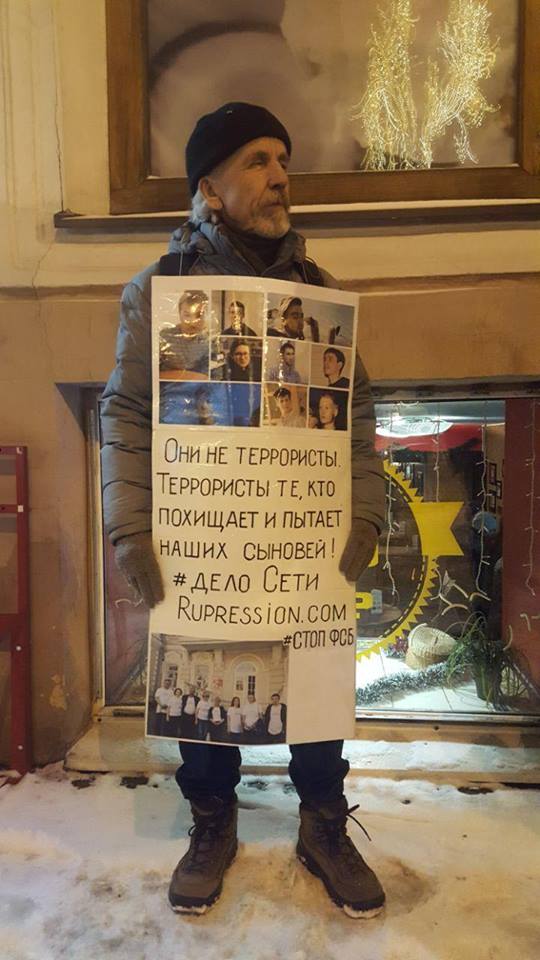
“They are not terrorists. The terrorists are the ones who kidnap and torture our sons! #NetworkCase, rupression.com, #StopFSB,” reads the placard held in this photo by Nikolai Boyarshinov, father of Network frame-up “suspect” Yuli Boyarshinov.

Mr. Boyarshinov has been going to Petersburg’s main street, Nevsky Prospect, and getting out his message by picketing alone every Friday for a long while now.

By law, solo pickets are a perfectly legal tool of protest and dissent in Russia. They do not require prior authorization or notification from local authorities, unlike mass protests.

(Mass protests actually don’t require prior authorization, either, only prior notification, but the Putinist authorities forcibly shut down all “unauthorized” mass protests as a matter of practice.)

And yet Mr. Boyarshinov was arrested by police yesterday for no reason whatsoever.

His arrest is the latest in a series of arrests and harassment of solo picketers in Russia’s former capital.

It would seem the Putin regime is not happy ordinary Russians like Mr. Boyarshinov still enjoy the freedom to protest in public at all, so they have decided to try out illegal arrests of perfectly legal solo picketers in Russia’s second largest city by way of further intimidating the country’s grassroots and opposition. {TRR}

Thanks to Natalia Vvedenskaya and Solidarity Saint Petersburg for the heads-up.

***************

What can you do to support the Penza and Petersburg antifascists and anarchists tortured and imprisoned by the FSB?

  • If you are in London or can get to London on January 19, join the solidarity demo at the Cable Street Mural at 2 p.m. The demonstration is supported by Anarchist Communist Group, Anarchist Federation, Brighton Antifascists, Bristol Anti-Fascists, Brazilian Women against Fascism, Feminist Fightback, London Antifascists, London Anarchist Black Cross, North London Anti-Fascists, Plan C LDN, RS21, and Labour Briefing. Please email london19jan(at)riseup.net to add your organization to the list of supporters. More information about the Cable Street Mural and its location can be found on its Facebook page.
  • Donate money to the Anarchist Black Cross via PayPal (abc-msk@riseup.net). Make sure to specify your donation is earmarked for “Rupression.”
  • Spread the word about the Network Case aka the Penza-Petersburg “terrorism” case. You can find more information about the case and in-depth articles translated into English on this website (see below), rupression.com, and openDemocracyRussia.
  • Organize solidarity events where you live to raise money and publicize the plight of the tortured Penza and Petersburg antifascists. Go to the website It’s Going Down to find printable posters and flyers you can download. You can also read more about the case there.
  • If you have the time and means to design, produce, and sell solidarity merchandise, please write to rupression@protonmail.com.
  • Write letters and postcards to the prisoners. Letters and postcards must be written in Russian or translated into Russian. You can find the addresses of the prisoners here.
  • Design a solidarity postcard that can be printed and used by others to send messages of support to the prisoners. Send your ideas to rupression@protonmail.com.
  • Write letters of support to the prisoners’ loved ones via rupression@protonmail.com.
  • Translate the articles and information at rupression.com and this website into languages other than Russian and English, and publish your translations on social media and your own websites and blogs.
  • If you know someone famous, ask them to record a solidarity video, write an op-ed piece for a mainstream newspaper or write letters to the prisoners.
  • If you know someone who is a print, internet, TV or radio journalist, encourage them to write an article or broadcast a report about the case. Write to rupression@protonmail.com or the email listed on this website, and we will be happy to arrange interviews and provide additional information.
  • It is extremely important this case break into the mainstream media both in Russia and abroad. Despite their apparent brashness, the FSB and their ilk do not like publicity. The more publicity the case receives, the safer our comrades will be in remand prison from violence at the hands of prison stooges and torture at the hands of the FSB, and the more likely the Russian authorities will be to drop the case altogether or release the defendants for time served if the case ever does go to trial.
  • Why? Because the case is a complete frame-up, based on testimony obtained under torture and mental duress. When the complaints filed by the accused reach the European Court of Human Rights in Strasbourg and are examined by actual judges, the Russian government will again be forced to pay heavy fines for its cruel mockery of justice.

***************

If you have not been following the Penza-Petersburg “terrorism” case and other recent cases involving frame-ups, torture, and violent intimidation by the Russian Federal Security Service (FSB) and other arms of the Russian police state, read and share recent articles the Russian Reader has posted on these subjects.


Free Edem Bekirov!

15447318032279451Edem Bekirov.  Photo courtesy of Vector News

Ayder Muzhdabaev
Facebook
December 28, 2018

Watch the footage we shot of Edem Bekirov. Then read what the well-known Kyiv musician Mitya Gerasimov has written.

“I’m sitting in my parents’ kitchen in Kazan. In its news bulletin, Echo of Moscow, a supposedly liberal radio station, reports that a terrorist has been detained on the Crimean border, the member of an armed band. He has been accused of storing and transporting weapons and explosives. His name is not mentioned, but it is clear they are talking about our friend Edem Bekirov, a Crimean Tatar from Novooleksiivka in Kherson Region.

“Edem is an ill, elderly man who has had heart bypass operations and a leg amputated due to diabetes. Before the latest operation, he went to Kyiv to see his mom. On the border, he was abducted by men in masks. For a time, nothing was known about his whereabouts. Then they let him call home from the FSB’s Simferopol office. He had not been given anything to eat or drink for two days or been taken to the bathroom. He was not permitted to take bandages to dress the unhealed wound on his stump or the medicines that keep him alive. He needs to take sixteen pills a day.

“The Russian authorities have been slowly killing Edem in a remand prison for over two weeks. The day before yesterday, the so-called court dismissed the appeal in his case. The radio reports the detained man associated with the terrorist group led by Lenur Islamov. They apparently meant the Crimean Tatar TV channel ATR, where Edem’s daughter works.

“Everyone knows Crimean Tatars do not kill anyone or carry out terrorist attacks. They have a principled stance of nonviolent resistance to the occupiers. The cartridges and twelve kilos of explosives that Edem, one-legged and ill, was supposedly taking somewhere is the same nonsense they made up about the so-called terrorist militant Oleg Sentsov. I remember watching Russian television in early 2014, before the annexation. It was footage of Grushevsky Street in Kyiv: Molotov cocktails, burning tires, snowdrifts. The announcer explained to viewers they were seeing Crimean Tatars rioting in Simferopol.

“There is the pre-New Year’s hustle and bustle on the streets of our cities: lanterns, New Year’s trees, shopping, traffic jams. Like many other Crimean political prisoners, Edem Bekirov will ring in his new year behind bars. We must do everything we can to publicize his plight. We have to shout about it on every street corner. We have to get him out of jail before it’s too late.”

That is the Happy New Year we are having.

Translated by the Russian Reader

[sic]

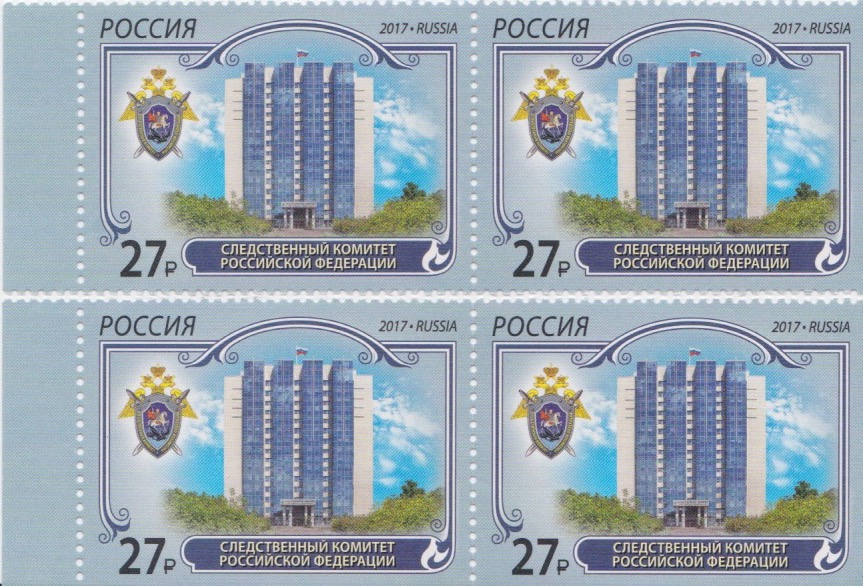
sledkom-stampsA set of four 27-ruble stamps, celebrating the Russian Federal Investigative Committee, purchased at the Petersburg Central Post Office for 108 rubles on November 12, 2017.
After Dark, They Gonna Blow Up [sic]
Police Looking for Gang of Teenage Anarchists in Moscow
Yuri Syun
Kommersant
November 10, 2018

Kommersant has learned that FSB and police in Moscow are looking for a dozen young anarchists who could be involved in planning terrorist attacks and illegal trafficking of explosives. The chekists [sic] were made aware of the alleged underground organization as part of the investigation of the suicide bombing carried out by a second-year vocational school student [sic] at the FSB’s regional office in Arkhangelsk.

While checking the contacts of the vocational school student [sic], whose suicide bombing injured three FSB officers, investigators became aware of 14-year-old Kirill K., a student in the eighth form at School No. 1571 in Moscow. According to the chekists [sic], Kirill K. and the suicide bomber communicated by mobile phone over a long period and corresponded via Telegram, including the day the terrorist attack occurred in Arkhangelsk. Obviously [sic], it was his older comrade who had told Kirill one could manufacture explosives from ordinary household chemicals, including fertilizers, easily obtainable in hardware stores. During a search of the flat of the schoolboy’s parents, on Freedom Street, police discovered [sic] an improvised explosive device (IED) manufactured from ammonium nitrate, smokeless gunpowder, and bomb parts [sic]. According to investigators, the schoolboy could have assembled the IED for an attack during celebrations [sic] of National Unity and Harmony Day [sic].

The schoolboy was detained on November 2. Yesterday, the violent crimes and public safety case squad in the Russian Investigative Committee‘s Moscow office charged him with crimes under Articles 222.1 Part 3 and 223.1 Part of the Russian Federal Criminal Code (illegal purchase and possession of explosives or explosive devices, and illegal manufacture of explosives).

According to investigators, the suspect committed both crimes as part of an organized group. The group could have included the Arkhangelsk suicide bomber, as well as other, unidentifed persons. There could have been as many as ten people in this group, sources in law enforcement say. However, they have so far been unable to identify the vocational school student and schoolboy’s alleged accomplices. This may partly be due to the fact that Kirill, citing Article 51 of the Constitution, refused to testify and admit he manufactured explosives.

However, his lawyer, Sergei Ashanin, claims law enforcers did not find any explosive devices or parts of explosive devices at the flat of Kirill’s parents.

“Except for ten grams of saltpeter and gunpowder that fit in a glass yogurt jar, there was nothing else,” added the lawyer, refusing to comment on the case.

Ashanin plans to appeals the decision of the Presnya District Court, which remanded the schoolboy in custody. We should note the court’s decision was challenged not only by the suspect, his lawyer, and his legal guardian but also by the prosecutor. Consequently, the defense plans to insist in Moscow City Court that the schoolboy be placed under house arrest instead.

Translated by the Russian Reader

Convoyed

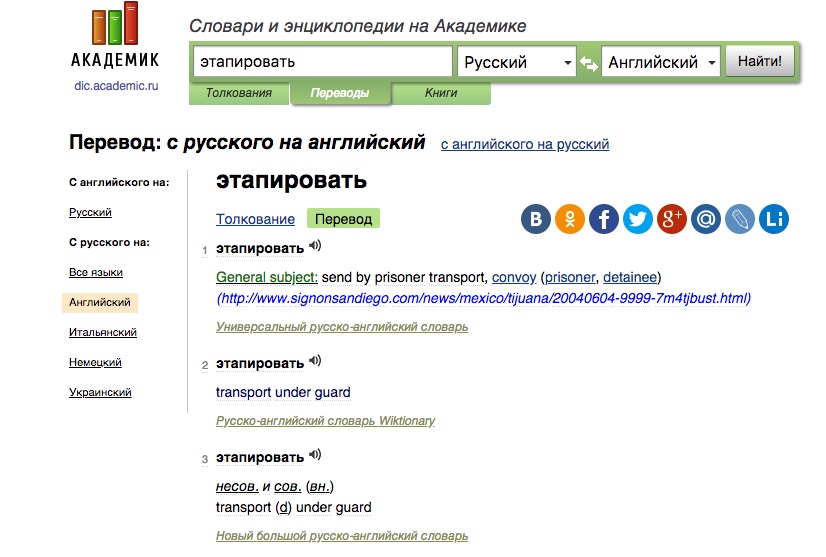
convoyedHow is the all-too-common Russian verb etapirovat’ translated into English? Screenshot of the relevant page from the website dic.academic.ru
Yekaterina Kosarevskaya
Facebook
October 30, 2018

Viktor Filinkov has arrived in Petersburg. He’s now in Remand Prison No. 4 on Lebedev Street, but apparently he will be transferred from there to Remand Prison No. 3 on Shpalernaya Street. Yana Teplitskaya and I chatted with him for two hours until lights out.

And yesterday Roma and I chatted with Yuli Boyarshinov.

Viktor’s in a very sad state healthwise.

He took ill at every stop along the way during his convoy without having recovered from the previous stop. In Yaroslavl on Friday, before the last leg of his journey, Viktor was suddenly unable to walk. He doesn’t understand what it could have been, and he has never had anything like it before. His cellmates summoned the doctor. Viktor was taken to the dispensary. He was brought to his senses with smelling salts, given a injection of something, and left there until it was time to go.

It took three days for Viktor to get to Petersburg. They were on the road from Saturday to Tuesday, traveling only at night. During the day, the train car in which he was convoyed stood unheated and idle on the tracks.

He says he was really glad to go to Penza and hang out with [all the other prisoners in the Network case], although he did not enjoy the trip itself. The Penza Remand Prison was at such pains to show that none of the suspects in the Network case was being tortured anymore that every evening all ten suspects were inspected. They were forced to strip and undergo a full look-over, after which they were told to sign their names in a notebook. Viktor got tired of signing his name, so he took to drawing smileys, but no one followed his lead.

I wonder what it will mean when the wardens stop keeping this notebook.

Viktor told us about other remand prisons as well. He told us about Larissa the rat. He thought one inmate had made friends with her, but then he woke up and, finding the rat at the foot of his bed, he moved to a top bunk.

It transpired that the censor at the Nizhny Novgorod Remand Prison expunged not only the phrase “Public Monitoring Commission” from Yana’s letters but everything else he found unfamiliar, including “vegan,” “Homo sapiens,” and “transhumanism.”

Viktor also told us Yegor Skovoroda had written to him in a postcard that he was a nudnik. Viktor wrote a three-page letter proving it wasn’t the case, but then he thought better of it and didn’t mail the latter.

Yana and I tried to recall the latest news. We told Viktor about Saturday’s protest rallies, about our latest report, about who had successfully defended their dissertation (it wasn’t me), and who still hadn’t defended their dissertation and could thus invite Viktor to their defense (that would be me).

Yuli is in Remand Prison No. 3 on Shpalernaya Street and is fine. The only thing is that the prison’s censor has again gone on holiday, so Yuli doesn’t get any letters. So far he hasn’t received a single letter on Shpalernaya.

The censor at Remand Prison No. 4 has also gone on holiday.

UPDATE. I forgot to write that when we were traveling to Remand Prison No. 3 yesterday, Yana and I agreed that if I found out Viktor was there, I would exit the prison and telephone her so that she could travel there, too. I was worried I would waste a lot of time getting my telephone out of the box at the entrance to the prison, turning it on, and entering all the passwords. It transpired that Viktor was not there, but someone had made sure I didn’t waste any time. My telephone was turned on, and the password entry window was on the screen.

Translated by the Russian Reader

***************

What can you do to support the Penza and Petersburg antifascists and anarchists tortured and imprisoned by the FSB?

  • Donate money to the Anarchist Black Cross via PayPal (abc-msk@riseup.net). Make sure to specify your donation is earmarked for “Rupression.”
  • Spread the word about the Network Case aka the Penza-Petersburg “terrorism” case. You can find more information about the case and in-depth articles translated into English on this website (see below), rupression.com, and openDemocracyRussia.
  • Organize solidarity events where you live to raise money and publicize the plight of the tortured Penza and Petersburg antifascists. Go to the website It’s Going Down to find printable posters and flyers you can download. You can also read more about the case there.
  • If you have the time and means to design, produce, and sell solidarity merchandise, please write to rupression@protonmail.com.
  • Write letters and postcards to the prisoners. Letters and postcards must be written in Russian or translated into Russian. You can find the addresses of the prisoners here.
  • Design a solidarity postcard that can be printed and used by others to send messages of support to the prisoners. Send your ideas to rupression@protonmail.com.
  • Write letters of support to the prisoners’ loved ones via rupression@protonmail.com.
  • Translate the articles and information at rupression.com and this website into languages other than Russian and English, and publish your translations on social media and your own websites and blogs.
  • If you know someone famous, ask them to record a solidarity video, write an op-ed piece for a mainstream newspaper or write letters to the prisoners.
  • If you know someone who is a print, internet, TV or radio journalist, encourage them to write an article or broadcast a report about the case. Write to rupression@protonmail.com or the email listed on this website, and we will be happy to arrange interviews and provide additional information.
  • It is extremely important this case break into the mainstream media both in Russia and abroad. Despite their apparent brashness, the FSB and their ilk do not like publicity. The more publicity the case receives, the safer our comrades will be in remand prison from violence at the hands of prison stooges and torture at the hands of the FSB, and the more likely the Russian authorities will be to drop the case altogether or release the defendants for time served if the case ever does go to trial.
  • Why? Because the case is a complete frame-up, based on testimony obtained under torture and mental duress. When the complaints filed by the accused reach the European Court of Human Rights in Strasbourg and are examined by actual judges, the Russian government will again be forced to pay heavy fines for its cruel mockery of justice.

***************

If you have not been following the Penza-Petersburg “terrorism” case and other recent cases involving frame-ups, torture, and violent intimidation by the Russian Federal Security Service (FSB) and other arms of the Russian police state, read and disseminate recent articles the Russian Reader has posted on these subjects.

Yevgenia Litvinova: October 28, 2018

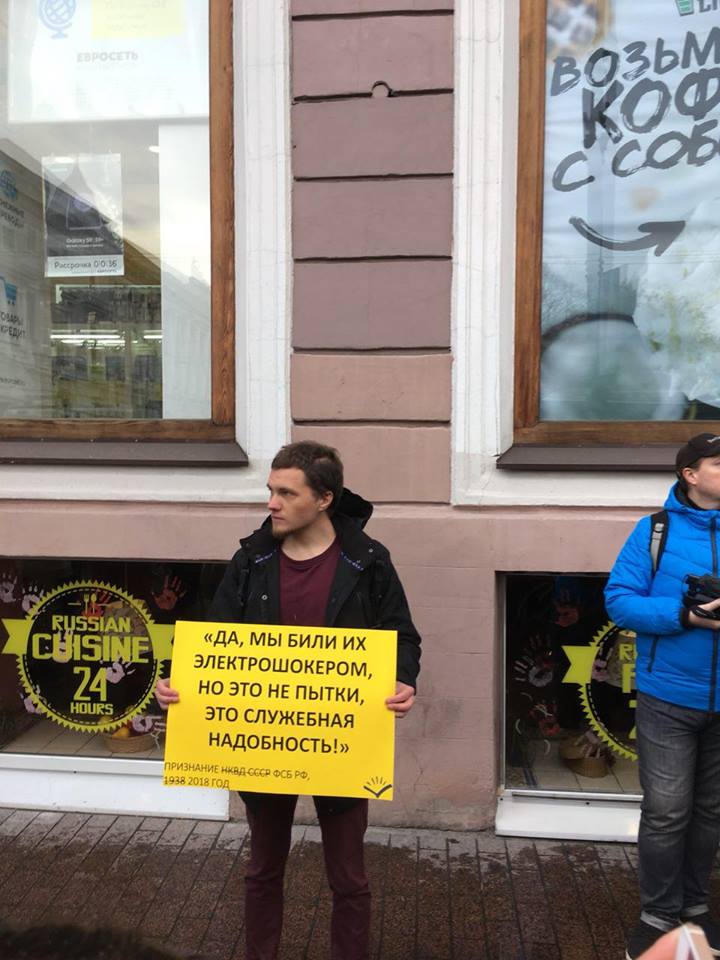
october 28Petersburg democracy activist Pavel Chuprunov, holding a placard that reads, “‘Yes, we tasered them, but it wasn’t torture. We were doing our jobs!’ Admission by the Soviet NKVD Russian FSB, 1938 2018.” Nevsky Prospect, Petersburg, 28 October 2018. Photo by Yevgenia Litvinova
Yevgenia Litvinova
Facebook
October 29, 2018

October 28 was the day chosen for publicly supporting people accused of extremism and locked up in jail, i.e., the suspects in the Network and the New Greatness cases. Petersburgers had no choice but to be involved in this international event, since some of the suspects in the Network case are from Petersburg.

The day before, I had listened to Yekaterina Kosarevskaya and Yana Teplitskaya’s brilliant but very heavy report about the use of torture in the FSB’s St. Petersburg and Leningrad Region Directorate. In particular, the report recounts how the young men accused in the Network case were tortured. All we can do is constantly talk about these people publicly, about what happened to them over the last year (they were arrested nearly a year ago), and what is happening to them now.

The rally in support of the young folks locked up in remand prisons on trumped-up charges was not approved by the authorities, although the organizers—Open Russia, Vesna, and Bessrochka (Endless Protest)—suggested a variety of venues in the downtown area. Everywhere was off limits.

You can protest in Udelny Park, in the far north of Petersburg, that is, in the woods. It’s a great place to have a stroll and get some fresh air, but who would be there to see your protest? The squirrels? This proposal is better than the garbage dump in Novosyolki, which the authorities always used to suggest as an alternative venue, but it’s not a suitable place for a political rally.

All that remained was the only form of political protest that doesn’t require prior approval from the authorities: solo pickets.

The protesters had different placards, but all of them were quite persuasive. They got to the heart of these frame-ups, which crush and maim people in order to earn promotions for the policemen and security services officers who dream them up.

Solo pickets had always been safe in Petersburg, unlike in Moscow, Krasnodar, and so on. That was why many people found them monotonous and boring.

“Oh, solo pickets again,” people would complain.

The plan was to take it in turns to stand holding placards on the corner of Nevsky and Malaya Sadovaya. But the folks from NOD (National Liberation Movement) read announcements for the upcoming protests and got there early. We had to move away from Malaya Sadovaya and closer to the pedestrian underpass to the subway. It’s an uncomfortable, narrow spot.

NOD has been a little sluggish lately. What happened to their weekly vigils? When there’s no money, there’s no NOD. But suddenly they had reappeared, which meant they had been asked to take to the streets by people whose offer you can’t refuse.

Recently, solo pickets have ceased to be “boring,” but there’s no reason for rejoicing. Solo pickets started becoming a staple of news reports around a month ago, when Alexander Beglov was appointed Petersburg’s acting governor. Since then, police have made a habit of detaining people at solo pickets. They make up excuses for their actions on the fly.

I knew this, of course, but I naively counted on logic and common sense winning the day. I compiled and printed out a number of laws proving that I and other “favorites” of Lieutenant Ruslan Sentemov, a senior police inspector in the public order enforcement department of Petersburg’s Central District, had to the right to speak out via solo pickets. I was planning to hand these papers to Sentemov on camera. But I didn’t see him at the rally. I thought he hadn’t come at all. Nor did he see me.

I got lucky. Because what logic had I imagined? What common sense? What laws? What right to hold solo pickets?

Sentemov did see another of his “favorites,” Dmitry Gusev. He pointed at him and said, “Detain him.”

Dmitry was not holding anything at all, much less a placard. He had no plans to be involved in the picketing. But that was that, and now he is detained at a police precinct, like dozens of other people. I counted over thirty detainees. But Alexander Shislov, Petersburg’s human rights ombudsman, writes that around fifty people were detained. Around one hundred people were at the protest.

Several detainees were released without charges, while others were charged with violating Article 20.2 Part 5 of the Administrative Offenses Code, but most of the detainees will spend the night in police stations. They have been charged with violating Article 20.2 Part 2, which is punishable by jail time.*

The detainees were dispersed to different police stations, some of them quite far away. They needed food, water, and toiletries. Police stations usually don’t have any of these things, although they are obliged to provide them if they detain someone for more than three hours.

Over ten people who were present with me at the protest traveled the police stations to check on the detainees. The rest came from the Observers HQ at Open Space. We constantly called and wrote each other, makingsure no one had been left without assistance. I hope that was how it worked out. The detainees should have everything they need for this evening, overnight, and tomorrow morning.

Natalia Voznesenskaya and I had planned to go to the 28th Police Precinct, but all the detainees there had been released.

We went instead to the 7th Precinct. The internet told us it was near the Kirovsky Zavod subway station. We wandered for a long time amidst the nice little houses built after the war, supposedly by German POWs. We arrived at the police station only to find that its number had recently changed. It was no longer the 7th Precinct, but the 31st Precinct.

We went to the real 7th Precinct, on Balkanskaya Street. Elena Grigoryeva, Dmitry Dorokhin, and two other men were detained there. (One of the men had been taken away by ambulance.) Unexpectedly, the 7th Precinct was a decent place. It was no comparison with the 76th and 78th Precincts, in the Central District. The police officers on duty there accepted our food packages and spoke politely with us.

We ran into Alexander Khmelyov at the station. Wielding a power of attorney as a social defender, he had come to see what kind of mattresses and linens had been issued to the detainees. There were no bedbugs. What was more, the police officers brought the detainees supper from a nearby cafe. They were obliged to do it, but their colleagues at other precincts never do it, and detainees usually don’t even get breakfast.

So, now the stomachs of the detainees were full, and they could take the food we had brought with them to court. Court hearings can last eight hours or more, although it happens that fifteen minutes is all the time a judge needs. There is usually no difference. The court’s rulings have been written in advance.

Before leaving the house to go the protest in support of the suspects in the New Greatness and Network cases, I listened to a program on Echo of Moscow about the case of Elena Kerenskaya, sister of Alexander Kerensky, chair of the Provisional Government in 1917. Kerenskaya was executed by the NKVD in Orenburg on February 2, 1938.

I don’t want to blow things out of proportion, but it has become easier and easier to under how the trials of the 1930s happened the way they did.

* Article 20.2 of the Russian Federal Administrative Offenses Code covers “violation[s] of the established procedure for organizing and holding meetings, rallies, demonstrations, marches, and pickets.” Part 2 stipulates punishments for people who organize or hold rallies without notifying the authorities in advance. They can be jailed for up to ten days or fined up to 30,000 rubles (400 euros).

Translated by the Russian Reader

How the FSB Tortures Detainees: Stories of the Victims

How the FSB Tortures: The St. Petersburg Public Monitoring Commission’s Report and the Stories of the Victims
Team 29
October 25, 2018

Torture victims and activists say violence has become a common practice in the security services. Anyone whosoever can become their victim: Muslims and atheists, anarchists and entrepreneurs, industrial climbers and police officers. The victims are afraid to talk about what happened to them, while family members, physicians, and eyewitnesses are threatened into staying silent. Members of the St. Petersburg Public Commission for Monitoring Conditions in Places of Detention (hereafter, PMC) have written a report on how the FSB tortures detainees and witnesses in FSB offices, remand prisons, vehicles, forests, and garages. We have excerpted the highlights of their report in what follows, as well as publishing a video (above) in which the victims and their relatives tell their own stories.

“Writhing from the Electrical Current, He Lifted the FSB Officer and Himself into the Air”
In December 2017, the FSB’s Saint Petersburg office announced it had prevented a terrorist attack on Our Lady of Kazan Cathedral, in downtown Petersburg. Seven people were detained on suspicion of involvement in planning the attack. Five of them were remanded in custody. What happened to the other two suspects is still not known.

One of the detainees, Aliskhan Esmurziyev, says his torture began in a minivan, in which FSB officers, their faces covered, kicked and tasered him. He was then taken to an FSB office, where he could hear the other detainees screaming. After he was interrogated by an investigator, he was taken to a separate room, where, according to Esmurziyev, he was handcuffed, a sack was pulled over his head, and crocodile clips were attached to his feet. Esmurziyev was electrocuted while an FSB officer sat astride him. His body writhing from the electrical current, Esmurziyev lifted the FSB officer and himself into the air.

Another detainee, Shamil Omargadzhiyev, was beaten in front of his pregnant wife. According to the PMC’s information, FSB officers broke into his home, which they searched while beating and kicking him, knocking out one of his teeth and demanding he confess to planning the terrorist attack. When he was delivered to court, he fainted several times. In the compartment of the paddy wagon in which he had been transported, it had been difficult for him to breath. Six feet five inches tall, Omargadzhiyev had had his hands tied back in a way that made it impossible for him to sit down and thus breathe.

Both detainees are accused of illegal possession of weapons (punishable under Article 222 of the Russian Federal Criminal Code). Esmurziyev filed a complaint with the Russian Investigative Committee about the crimes committed against him, but later rescinded the complaint for “procedural” reasons. Omargadzhiyev’s defense counsel also filed a complaint with the Investigative Committee, but it refused to open a criminal investigation while also not allowing him to see the written judgment that explained the reasons for the refusal.

“If I Didn’t Know the Answer, I Was Electrocuted”
Eleven young men in St. Petersburg and Penza were accused of involvement in a “terrorist community” and arrested. Most of them are antifascists and anarchists. The FSB claims they were members of an underground organization known as the Network, which planned “to incite the popular masses in order to subsequently destabilize the political circumstances” in Russia during the March 2018 presidential election and this summer’s 2018 FIFA Football World Cup, held in Russia. The case is currently under investigation. Most of the suspects have been in remand prisons since October 2017 and January 2018, respectively, and several of them have reported being tortured.

Novosibirsk native Arman Sagynbayev was detained in Petersburg in November 2017. He would later recount that he had been put in a minivan and had a sack pulled over his head. Two wires were attached to his hands, and he was electrocuted while being beaten over the head with something resembling a day planner.

“The torture lasted approximately four hours, but I cannot say for certain, because I had no way of telling the time and I was in a lot of pain,” Sagynbayev recounts.

Petersburg resident Yuli Boyarshinov was jailed in an overcrowded cell at Remand Prison No. 6 in Gorelovo, located just beyond the Petersburg city lines in neighboring Leningrad Region. In the cell, which had 110 cots for 150 prisoners, the “senior” inmates, who cooperated with the wardens, routinely beat up the other prisoners. Boyarshinov was also beaten. He was called to the kitchen, which is not outfitted with CCTV cameras, and quizzed about the circumstances of his arrest. He was beaten in such a way that no traces of the assault were left on his body. He was also threatened with rape.

FSB officers detained Viktor Filinkov at Petersburg’s Pulkovo Airport in January 2018. He was taken to an unknown location, where the FSB officers commenced interrogating, beating, and electrocuting him right in the vehicle.

Subsequently, members of the Petersburg PMC noted numerous wounds on his thigh in the shape of paired, evenly spaced dots, such as a taser would have left behind.

“If I didn’t know the answer,” says Filinkov, “I was electrocuted. If my answer was not what they expected, I was electrocuted. If I thought for too long or took to long to give an answer, I was electrocuted. If I forgot what I had been told, I was electrocuted.”

Filinkov’s defense counsel filed an official request for a criminal investigation, but his request was rejected. In September 2018, he filed a complaint with the European Court of Human Rights in Strasbourg.

Members of the Petersburg PMC visited Igor Shishkin, another suspect in the Network case, on January 27, 2018. Since he was dressed in a long-sleeved shirt and trousers, they noted only the injuries they could see, including

  • a large bruise around his left eye all the way to the bone;
  • blood in the corner of his left eye;
  • an abrasion in the middle of his left cheek;
  • marks from handcuffs on both hands;
  • a split lower lip;
  • a bruise around his right eye;
  • scratches on his left cheek;
  • a burn on the back of his left hand.

Later, similar burns were noted on Shiskin’s back and the back of his thigh.

Ilya Kapustin was not a suspect in the Network case. Nevertheless, he was interrogated as a witness and tasered for four hours in a car before being taken to FSB headquarters, where the interrogation was resumed.

The Malvina Taser
Major Ilya Shchukin, head of the property crimes desk at the Tosno District Police Precinct, and Field Investigator Sergei Laslov are suspected of official misconduct and falsifying evidence. They allegedly replaced Suprastin with amphetamines in a pack of cigarettes confiscated from a detainee. Prior to this, they had allegedly been involved in planting drugs on people to bolster clearance rates.

On April 12, 2017, FSB officers detained Shchukin and two of his colleagues in the town of Kirishi. Shchukin was dragged from his car and immobilized. The hood of his jacket was pulled over his head, and he was taken to a van. In the van, he was asked what he was doing there. When he replied, officers of the FSB’s special weapons and tactics division Grad (“Hail”) told him he was lying and tasered his fingers several times. He was asked more questions and electrocuted several times. Shchukin was tortured for approximately an hour and a half. He was electrocuted in the groin and anus. The Grad officers told Shchukin he would have no more children.

“The door of the van would open from time to time. I would hear a man saying I was talking shit and the Grad officers should keep working me over,” Shchukin recounts.

Shchukin was then taken to another van and forced to kneel with his hands cuffed behind his back for approximately an hour. Only then was Shchukin driven to an FSB office. He refused to plead guilty. During interrogations, Shchukin told his interrogators on several occasions that he had been tortured. His burns were examined by a specialist, but the specialist was, supposedly, unable to establish whether the wounds were typical of a taser, since he did not the taser’s model. Shchukin knew it was a Malvina brand taser, but his appeal for a second forensic examination was rejected.

Sergei Laslov was detained on July 6, 2017, in his police precinct. He was driven in a bus to nearby garages. It was there, Laslov recounts, that an FSB officer demanded he confess to the crime, and a Grad officer tasered him. Laslov refused to confess his guilt, and so he was driven to a forest on the outskirts of Tosno. There, says Laslov, a senior FSB officer ordered he be bent forward head towards the floor, and a Grad officer beat him, delivering taser blows to his crotch and groin.

A short propaganda film about the Petersburg FSB Grad unit, broadcast on Russian television and posted on YouTube in 2014. This video is not part of the Petersburg PMC and Team 29’s report, but it nicely characterizes the extreme militarization of policing under the Putin regime.

Laslov was tortured for over two hours. The first taser went dead, so the Grad officer was given another, larger taser. Ultimately, Laslov agreed to tell how, allegedly, he had committed the crime so they would stop torturing him. He was driven to an FSB office, where he signed a typewritten statement.

Laslov told his defense counsel about the torture. A medical forensics expert noted the injuries from the tasers on Laslov’s body. Laslov filed a criminal complaint. In October 2017, an investigator with the Military Investigative Committee issued a decision refusing to initiate criminal proceedings. A military prosecutor overruled the refusal, but the investigator reissued it.

“I Felt Unbearable Pain”
Igor Salikov is accused of sexual assault. He believes his ex-wife paid the security services to charge him with the crime.

Salikov says that on the early morning of May 7, 2018, police investigators, an FSB officer, and a masked man came to the home he shares with his common-law wife Olga Smirnova in the village of Ogonki, Leningrad Region, for the latest in a series of searches. Later, Salnikov would identify the masked man as the officer with the FSB’s economic security service in Petersburg’s Petrograd District who searched his house in October in connection with a weapons possession investigation.

It was the masked man, Salikov says, who handcuffed him and repeatedly struck Olga Smirnova with a truncheon. She was then driven away by plainclothes FSB officers, while Salikov was interrogated. When the FSB officer did not like his answers, he hit Salikov with a truncheon and tasered him. Salikov’s female housekeeper called the police, but when they arrived, the FSB officer and one of the investigators went outside to talk with them, and they soon left.

After Salikov again refused to incriminate himself, he was pushed in the back and fell face first on the floor. Salikov recalls that the FSB officers took one of the rifles Salikov kept in the house and used it to strike Salikov in the anus.

“The blow was so strong the rifle barrel penetrated me, ripping through my trousers, and nearly nailing me to the floor. I felt unbearable pain.”

An ambulance was summoned. Salikov was first taken to the district hospital, and then to Petersburg, where he was able to get the medical attention he needed. He was diagnosed as having suffered a ruptured bladder, ruptured anus, ruptured colon, and other injuries.

Salikov’s request to have a criminal torture investigation opened was turned down, since it was, allegedly, impossible to establish the involvement of specific officers in the Petrograd District office of the FSB’s St. Petersburg and Leningrad Region Directorate.

The members of the St. Petersburg PMC argue torture has become an integral part of the investigations and inquiries carried out by officers of the FSB’s St. Petersburg and Leningrad Region Directorate. As the PMC members point out, however, local FSB officers enjoy absolute impunity, since neither the Military Investigative Committee nor the military courts do their jobs. The PMC members suggest disbanding the FSB’s St. Petersburg and Leningrad Region Directorate and prosecuting all FSB officers involved in torture without transferring the directorate’s functions to another organization.

Authors: Yana Teplitskaya and Yekaterina Kosarevskaya, Members of the St. Petersburg Public Commission for Monitoring Conditions in Places of Detention 
Legal Consultant: Daryana Gryaznova
Video: Anastasia Andreyeva
Editors: Nikolai Ovchinnikov and Tatyana Torocheshnikova

Translated by the Russian Reader

No Justice, No Peace: Petersburg’s Kangaroo Courts Revisited

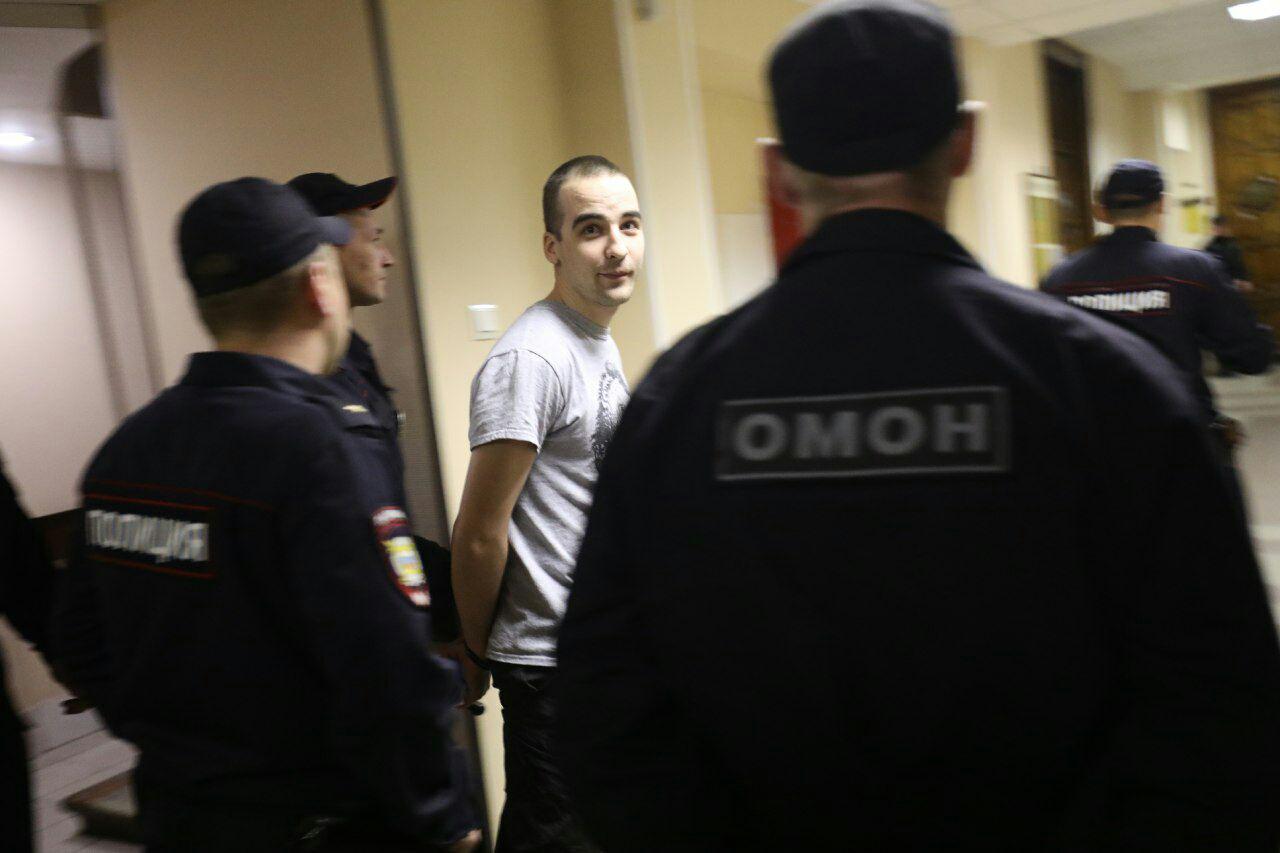
boyarshinovRussian political prisoner Yuli Boyarshinov, a “suspect” in the FSB frame-up known as the Network case aka the Penza-Petersburg “terrorism” case, lookng like a human being amidst the combined armed guard of regular police and riot police at Petersburg’s Dzerzhinsky District Court this past Friday. Photo by David Frenkel. Courtesy of Telegram channel Angry Defender (Zlaya Zashchitnitsa)

Reporters Kicked Out of Dzerzhinsky District Court
Zaks.ru
October 19, 2018

Reporters and people who have come to support the accused have been kicked out of Petersburg’s Dzerzhinsky District Court, where Network case suspect Igor Shishkin’s custody extension hearing is currently underway. Court bailiffs have explained the decision was dictated by the court’s shortened working day, our correspondent reports.

Today, the Dzerzhinsky District Court has already held two custody extension hearings involving suspects in the Network case. Viktor Filinkov and Yuli Boyarshinov were again remanded in custody until January 22, 2019. The hearings took place in closed chambers. Only reporters and relatives of the suspects were allowed to go up to the floor in the courthouse where the courtroom is located. Court bailiffs forced the men’s supporters to stay on the first floor.

When Mr. Boyarshinov was led away after hearing the court’s ruling, friends and activists who had come to support him sang a song by the group Truckdrivers on the first floor of the courthouse.

We don’t want freedom in handcuffs.
We want crystal-clear truth.
You can ask for it on the barricades
Or trust in law and order.

Angered by the supporters’ behavior, the bailiffs detained activist Yevgenia Kulakova and took her to their office to write her up for violating Article 17.3 of the Administrative Offenses Code (failure to obey a judge or court bailiff’s for maintaining order in the court). However, civil rights activist Dinar Idrisov came to the young woman’s aid, and the bailiffs let her off after issuing a warning.

Later, the bailiffs ordered everyone to exit the building, even the relatives of Network case suspect Igor Shishkin, who could have been called as witnesses. According to the bailiffs, the court was open only until 4:45 p.m. today. It is a common practice in Petersburg courts to kick out members of the public and reporters.

Viktor Filinkov, Yuli Boyarshinov, Igor Shiskin, and eight residents of Penza have been accused of involvement in a “terrorist community” that was, allegedly, planning to carry out terrorist attacks and overthrow the Russian state. Several of the accused have claimed they were tortured into incriminating themselves and their fellow suspects.

Translated by the Russian Reader

***************

What can you do to support the Penza and Petersburg antifascists and anarchists tortured and imprisoned by the FSB?

  • Donate money to the Anarchist Black Cross via PayPal (abc-msk@riseup.net). Make sure to specify your donation is earmarked for “Rupression.”
  • Spread the word about the Network Case aka the Penza-Petersburg “terrorism” case. You can find more information about the case and in-depth articles translated into English on this website (see below), rupression.com, and openDemocracyRussia.
  • Organize solidarity events where you live to raise money and publicize the plight of the tortured Penza and Petersburg antifascists. Go to the website It’s Going Down to find printable posters and flyers you can download. You can also read more about the case there.
  • If you have the time and means to design, produce, and sell solidarity merchandise, please write to rupression@protonmail.com.
  • Write letters and postcards to the prisoners. Letters and postcards must be written in Russian or translated into Russian. You can find the addresses of the prisoners here.
  • Design a solidarity postcard that can be printed and used by others to send messages of support to the prisoners. Send your ideas to rupression@protonmail.com.
  • Write letters of support to the prisoners’ loved ones via rupression@protonmail.com.
  • Translate the articles and information at rupression.com and this website into languages other than Russian and English, and publish your translations on social media and your own websites and blogs.
  • If you know someone famous, ask them to record a solidarity video, write an op-ed piece for a mainstream newspaper or write letters to the prisoners.
  • If you know someone who is a print, internet, TV or radio journalist, encourage them to write an article or broadcast a report about the case. Write to rupression@protonmail.com or the email listed on this website, and we will be happy to arrange interviews and provide additional information.
  • It is extremely important this case break into the mainstream media both in Russia and abroad. Despite their apparent brashness, the FSB and their ilk do not like publicity. The more publicity the case receives, the safer our comrades will be in remand prison from violence at the hands of prison stooges and torture at the hands of the FSB, and the more likely the Russian authorities will be to drop the case altogether or release the defendants for time served if the case ever does go to trial.
  • Why? Because the case is a complete frame-up, based on testimony obtained under torture and mental duress. When the complaints filed by the accused reach the European Court of Human Rights in Strasbourg and are examined by actual judges, the Russian government will again be forced to pay heavy fines for its cruel mockery of justice.

***************

If you have not been following the Penza-Petersburg “terrorism” case and other recent cases involving frame-ups, torture, and violent intimidation by the Russian Federal Security Service (FSB) and other arms of the Russian police state, read and disseminate recent articles the Russian Reader has posted on these subjects.

Last Address: Vladimir Nagly

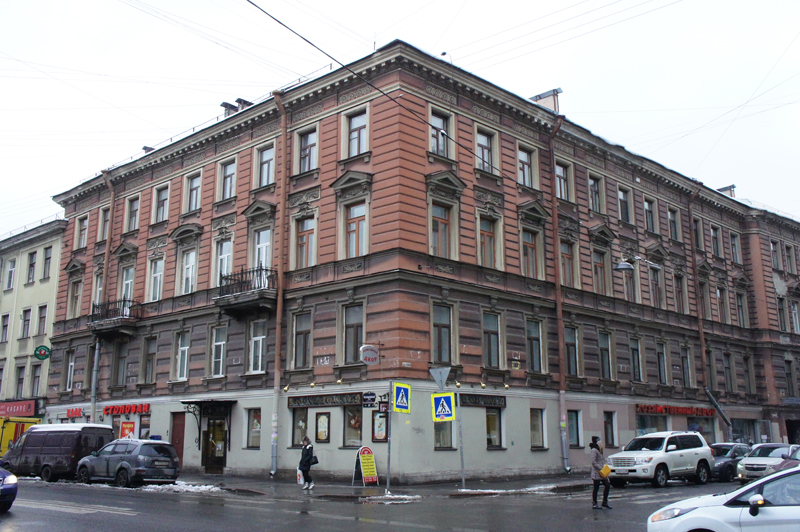
DSCN1867Here lived Vladimir Naumovich Nagly, theater director. Born 1903. Arrested 21 October 1938. Died 6 October 1940 in a prison camp in Kolyma. Exonerated in 1956.” Last Address memorial plaque at 38 Kolomenskaya Street in Petersburg’s Central District. Photo by the Russian Reader
Last Address
26 February 2016

House No. 38 on Kolomenskaya Street in St. Petersburg was erected in 1880 during the heyday of historicism in architecture. The building’s architect, Alexander Ivanov, was inspired by the French and Italian Renaissance.

The Tver Charitable Society was housed in the building in the early twentieth century. It provided social support and financial assistance to needy people from Tver who lived in St. Petersburg.

Vladimir Naumovich Nagly lived in the building in the 1930s.
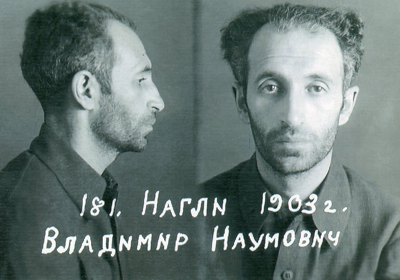
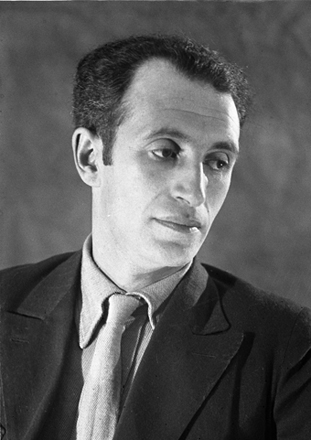
Vladimir Nagly was born in 1903 in Petersburg to the family of a watchmaker. He was a supporter of the October Revolution, joining the the Red Army in 1919, and the Bolshevik Party in 1921. However, he devoted all of his short life to the theater.

In his indictment, dated 26 July 1939, Vladimir Nagly, former director of the Theater of Comedy and Satire (1930–1933), former director of the First Five-Year Plan Park of Culture and Rest (summer 1931), former director of the Central Park of Culture and Rest (summer 1932), former director of the Philarmonic (1932), former deputy director of the Pushkin Academic Drama Theater (1933–1936), former deputy director of Lenfilm Studios (1936–1938) and, at the time of his arrest on 20 October 1938, director of the Theater of Drama and Comedy (now the Theater on Liteiny), was identified as a “guerillla” in a group that was, allegedly, planning to murder Andrei Zhdanov, who at the time was First Secretary of the Leningrad Regional Party Committee and the Municipal Committee of the All-Union Communist Party (Bolsheviks).

“It was agreed to invite ZHDANOV to view the pictures during the October Days. This time SMIRNOV [director of Lenfilm] had positioned the guerillas in advance: NAGLY was in a narrow corridor that lead from Smirnov’s office to the screening room. […] The plan was that, after the shooting, the lights would be shut off, panic would ensue in the dark, and [the conspirators] would escape.”

The main point in the indictments ends with praise for the NKVD officers who prevented the “terrorist attack.”

“Turning off the lights after the shooting was envisaged [in all the alleged plans to murder Zhdanov]. On this occasion, however, NKVD officers set up heightened surveillance […] and NAGLY was asked to withdraw from the positions they had taken up. When ZHDANOV arrived at the factory [i.e., Lenfilm] for the film screening, he went through the main entrance. NKVD officers had been positioned from there to the screening room. So, in this case [the conspirators] were unable to commit the heinous deed.”

Vladimir Nagly, who was thirty-six years old, was sentenced to eight years in the camps for involvement in a “right-wing counterrevolutionary Trotskyist-Zinovievist organization.” Although he suffered from a stomach ulcer and had undergone a ten-month-long investigation, prison doctors concluded he was fit for manual labor and the long, gruelling transport to the camps. In his memoirs, Georgy Zzhonov, who would go on to become a famous actor of screen and stage, accidentally recognized Nagly during his own transport to the camps in Kolyma. He described Nagly as “unhealthy.”

Nagly’s death certificate, dated 6 October 1940, and drawn up by officials at the Sevvostlag, listed the cause of death: “He froze to death on the way [to the camp]. There are no other indications.”

The regime admitted the case was a complete frame-up only in 1956, when Nagly was posthumously exonerated.

Vladimir Nagly’s son Mikhail (1926–2012), who was himself a well-known theater director, recalled that, before his father was arrested, the actors Nikolay Cherkasov, Vasili Merkuryev, Yuri Lavrov, and Yekaterina Karchagina-Alexandrovskaya were frequent guests in their spacious flat, and that his father had taken him to a see a rehearsal by the world-famous avant-garde theater director Vsevolod Meyerhold. The family avoided talking about Vladimir Nagly’s plight, and his relatives only recently learned the circumstances of his criminal case and his death.

A plaque in memory of Vladimir Nagly was mounted on the building at 38 Kolomenskaya Street on 28 February 2016.

Thanks to Jenya Kulakova of Last Address for the information about Vladimir Nagly. Translated by the Russian Reader