45 Days

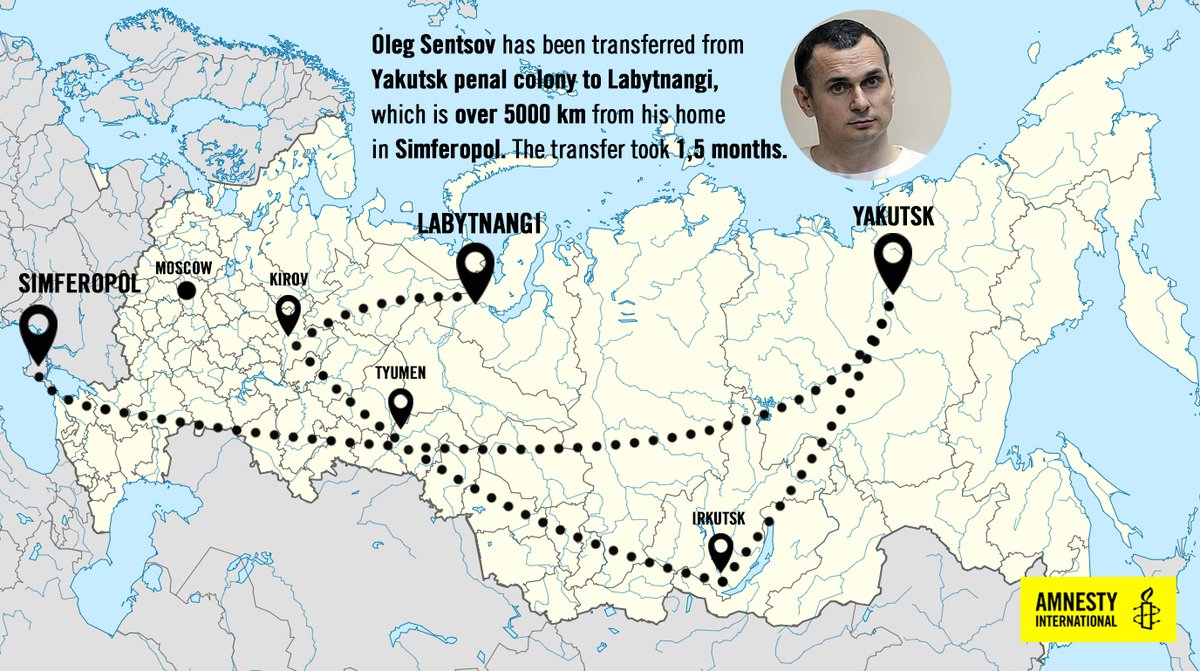
word-image-49This map, published by Amnesty International, shows the geography of Oleg Sentsov’s ordeal, from his arrest in occupied Crimea, in May 2014, to his arrival at the Labytnangi Correctional Colony, north of the Arctic Circle, in October 2017. Courtesy of Let My People Go!

#SaveSentsov
#FreeOlegSentsov

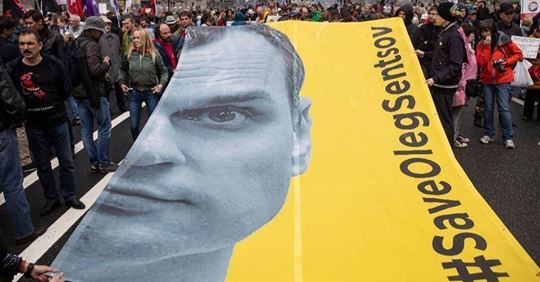
Ukrainian film director and political prisoner Oleg Sentsov is in the midst of his forty-fifth day on hunger strike in the maximum security penal colony, north of the Arctic Circle, where the Putin regime sentenced him to twenty years for the thought crime of not approving its illegal occupation of Crimea in 2014.

Sentsov’s only demand is that the Putin regime release the several dozen other Ukrainian political prisoners it has imprisoned.

It should also release Mr. Sentsov, made to suffer for a crime he did not commit. (He was convicted on terrorism charges). It would be a gesture of peace and reconciliation appreciated round the world, especially during the World Cup, which Russia is currently hosting.

But I am not holding my breath. Russia has been misruled for the last twenty years by a clique of KGB officers who morphed into some of the most reckless and impudent gangsters the world has ever seen once the Soviet Union collapsed. Yet this utterly destructive regime gets oodles of aid and comfort from the international far left and far right, as well as corrupt entities like FIFA and the London City, who want to partake in Russia’s embezzled riches.

A wiseguy like Putin knows this and, I am afraid, has calculated that the fallout from Sentsov’s death in prison is an acceptable risk. Releasing Sentsov, on the other hand, would show that Putin is susceptible to pressure from the outside world. Unless I am misreading him, he is loath to do this, at least in an obvious way. // TRR


Where Did You Go? (Day 44)

44th day“The forty-fourth day of Sentsov’s hunger strike.” Post on filmmaker Askold Kurov’s Facebook page

Ukrainian political prisoner and filmmaker Oleg Sentsov has completed the forty-third day of his hunger strike. His only demand is that Russian authorities release the other Russian political prisoners they have imprisoned during their illegal invasion of Ukraine.

Unfortunately, I have the growing sense that even the most progressive Russians, whatever that means, are so impressed by the nonstop international football party that has been unleashed on the streets of their major cities that they are less and less able to focus on what matters in the near term (the government’s plan to raise the retirement age, the pending retrial of Yuri Dmitriev, the mind-bending Penza-Petersburg “terrorism” case, Sentsov’s hunger strike, six more years of pitch-black Putinist reaction). They behave and talk like people who have richly earned a celebration.

In the grand scheme of things, none of us deserve a celebration. We are sinners in the hands of an angry God, and we deserve to be crushed.

Viewing our fallen world more realistically, however, we probably do need to give ourselves a break, no matter how dire the circumstances, every once in a while, but only after we have done our work, especially the collective grassroots work that keeps our societies from slipping over the edge into the abyss of lawlessness, reaction, and fascism.

With few exceptions, Russia’s hyper-educated populace, however, checked out of hands-on politics long ago. They are literally the most holiday-prone bunch I have ever encountered in the world. Nearly everyone I know is endlessly on vacation, on the road, not at home, checked out, off the radar in internal exile, you name it.

This was my roundabout way of saying the truly heroic Mr. Sentsov’s chances do not look good. // TRR

* * * * * * * * * *

Many of my western leftist friends have been having a field day with the White Pride House’s disgusting treatment of immigrant families and children from Latin America, as they should be.

But when it comes to the Kremlin’s disgusting treatment of nearly everyone under its own black hole sun, from Oleg Sentsov and the alleged Penza-Petersburg “terrorists” to Yuri Dmitriev and Oyub Titiev, mum has been word among western leftists.

This is not to mention the Kremlin’s escapades in Syria and Ukraine, the wretched treatment of migrant workers from Central Asia in Russia itself, or the fact Russia is basically off limits to the refugees and asylum seekers whom, in some cases, it has helped to generate, as in Syria.

Meanwhile, Russia has been witness a slow but noticeable exodus of its own asylum seekers and more quiet exiles, including dozens if not hundreds of political activists, and thousands of LGBT people, now that the country has been officially and virulently homophobic for several years.

None of this gets even so much as a look-in from most of my western leftist friends, who, at best, are happy to have me rattle on about these things ad nauseam, but probably think I have been lying or exaggerating these past ten years.

In any case, nothing the Kremlin ever does figures in either their political activism or political thinking (except in complaints about “anti-Russian hysteria” in their local mass media). They are loath to show solidarity with grassroots Russian activists, even Russians in serious trouble like the young antifascists implicated in the total frame-up known as The Network Case.

No, the wroth of western leftists is always and only reserved for the Great Satan, the cause of all evil in the world, the country that invented imperialism, racism, capitalism, nepotism, and daltonism, the United States of America.

Why they should be so implicitly sympathetic to the hyper-reactionary, neo-imperialist, homophobic, anti-working class, rampantly state capitalist, kleptocratic, illiberal, anti-intellectual, wildly corrupt nationalist and racist regime in Russia is beyond my powers to comprehend.

But their silence speaks louder than their words, as does their pointed failure, when it comes to people I know personally, to engage meaningfully with all the things I have written and translated over the last ten years.

This is especially palpable now the World Cup is underway. Even politically engaged liberals among my acquaintances have obviously given the Russian regime a free pass for the month.

Actually, they have been giving it a free pass since 1999, but I won’t mention discuss this long, ugly story now.

What I meant to say was that Ukrainian filmmaker and political prisoner Oleg Sentsov is dying, and the western left pointedly has nothing to say about why he is in “jail” (as the Moscow Times quaintly puts it, although he is actually incarcerated in a maximum security penal colony north of the Arctic Circle) and why he was sent there for twenty years.

It is pathetic. It is also part of the reason why “the masses” generally trust the western left about as far as they can throw it. Because just like Donald Trump and Theresa May, there are species of despotism, tyranny, and even genocide the western left really quite fancies or, at least, can countenance in the name of “anti-imperialism.”

To put it bluntly, I am afraid the western left would rather Oleg Sentsov and his ilk just crawled under a rock and died. They only muddy what should be a crystal-clear view of “geopolitics.” // TRR

The Bill for the 2018 World Cup

Russia and Brazil World Cup’s Leading Spenders over Last Twenty Years
Delovoi Peterburg
June 18, 2018


Photo by Sergei Konkov

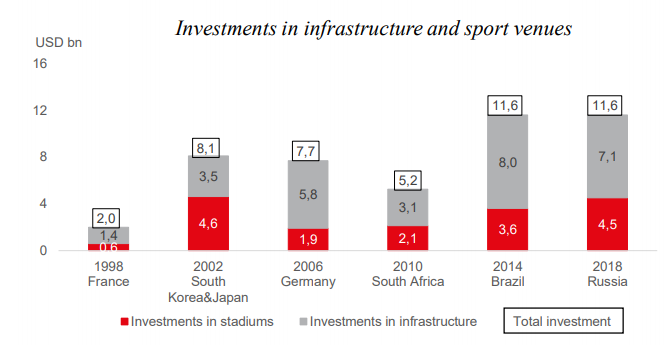
Russia and Brazil took first place in terms of the cost of readying their countries to host the FIFA World Cup since 1998. A report by JLL, a consultancy company, shows each country spent $11.6 billion on organizing the event.

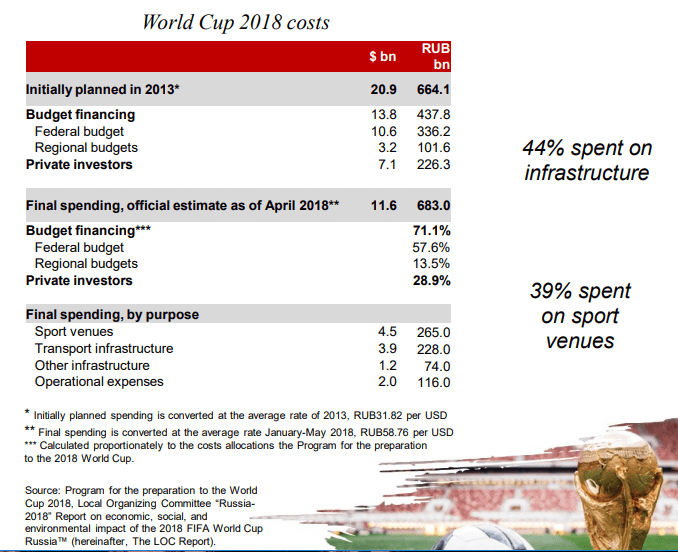
The report’s authors note that, according to the latest data available, Russia has spent ₽683 billion [approx. €9.3 billion] to host the World Cup. Thirty-nine percent of this money, or ₽265 billion, has been spent on building and repairing sports facilities.

The report’s authors also note that Russia has been the only recent host of the World Cup to build or renovate all twelve venues.

They write that Russia has set the per stadium record, spending an average of $380 million on each venue.

By way of comparison, South Korea and Japan spent $8.1 million on the 2002 World Cup; Germany, $7.7 billion on the 2006 World Cup; and South Africa, $5.2 billion on the 2010 World Cup. The most modest preparations were made by France for the 1998 World Cup. France spent only $2 billion on organizing the event.

infrastructure vs. venues

Russia spent the most money on infrastructure while preparing for the World Cup. The country invested $7.1 billion in infrastructure, including $3.9 billion on transportation infrastructure. Meanwhile, it spent $4.5 billion on stadiums.

Russia yields only to South Korea and Japan in expenditures on stadiums. They spent a total of $4.6 billion.

world cup 2018 costs

Overall, Russia spent ₽18.9 billion [approx. €256 million] more on getting ready for the World Cup than was planned in 2013.

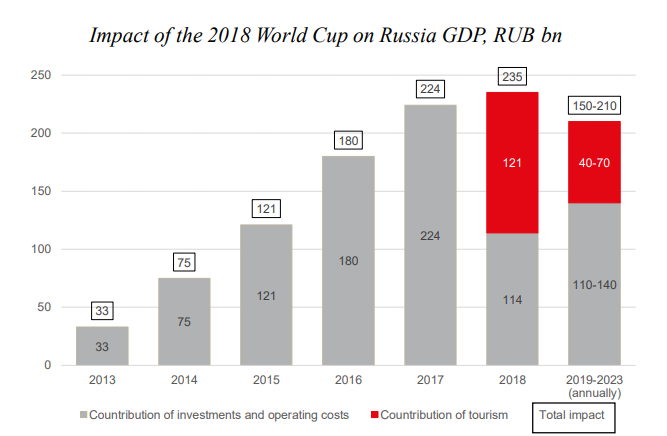
According to the 2018 FIFA World Cup Organizing Committee’s preliminary estimate, as cited in JJL’s report, the summary economic impact of the 2018 World Cup on Russia during the period 2013–2018 will be ₽867 billion [approx. €11.8 billion] or roughly one percent of annual GDP. The primary effect will be achieved through investments and operating expenses. It is expected to reach ₽746 billion.

impact


The 2018 FIFA World Cup takes place in twelve stadiums in eleven Russian cities from June 14 to July 15, 2018.

Diagrams excerpted from “Investing into [sic] Football Passion: The Effect of the World Cup in Russia.” Article translated by the Russian Reader

Plato Re-Elaborated

rus yachts.jpg

That city would not lack a yacht club, would not lack

a soccer club. Noting the absence of smoke from the brick

factory chimneys, I’d know it was Sunday,

and would lurch in a bus across town, clutching a couple of bucks.


I’d twine my voice into the common animal hoot-

ing on that field where what the head begins is finished by the foot.

Of the myriad laws laid down by Hammurabi

the most important deal with corner kicks, and penalty kicks to boot.


—Joseph Brodsky, “Plato Elaborated,” trans. George L. Kline, New Yorker, March 12, 1979, p. 40


***********************

It would be nice, wouldn’t it, to be a regular guy, to immerse oneself in enjoying life, in a pleasant job, and forget that a dictatorship for life has taken root in our country? It would be nice, wouldn’t it, to forget the dictatorship wages war against neighboring countries? It would be nice, wouldn’t it, to forget it has destroyed all constitutional rights, the freedom of speech, secularism, the right to a pension, the right to one’s native language, and the right to forget things and be happy?

—Sergey Abashin, Facebook, June 24, 2018

Photo and translation by the Russian Reader

Yegor Lopatin: Oleg Sentsov’s Forty Days

safe_image

Oleg Sentsov’s Forty Days
Yegor Lopatin
Za-Za
June 22, 2018

We are witnessing a tragedy generated by incredible cynicism. Oleg Sentsov has been on hunger strike for forty days.

Have you tried not eating for four days? For ten days? I once performed an experiment on myself and did not eat for eight days. What mattered to me was whether I could do it or not. I passed the test fairly easily.

As far as I can remember, no one has been on hunger strike for forty days in a row.*

I would imagine Sentsov, who is 42 years old, has already irreparably damaged his health and can never be completely normal again. This is quite sad. What is even sadder, however, is that he apparently has decided to die, thus challenging the people who sent him to prison for 20 years, annexed Crimea, and unleashed a war in Donbass.

Sentsov has no other means of influencing these people, who are firmly convinced anyone can be broken with a good spanking. We are thus witnesses to a invisible duel between Sentsov and Putin, who bears direct responsibility for everything that happens in Russia.

No one will emerge from this duel a winner. There will only be losers. Sentsov will most likely die an agonizing death, and the damage to Putin’s reputation will be worse than from the sinking of the Kursk and the downing of Flight MH17, although people with their heads screwed on straight have long understood that Putin’s reputation is beyond saving.

Ukrainian President Petro Poroshenko will also bear blame for Sentsov’s death. He has been incredibly passive during the hunger strike and has done basically nothing to save Sentsov.

All of us, the people of Russia, are directly responsible for the lawlessness of our authorities, who have destroyed a young man on trumped-up charges. I do not believe Sentsov could have planned terrorist attacks in Crimea or even laid a finger on anyone.

Sentsov was sentenced to 20 years in prison because Putin illegally annexed Crimea, defying the Budapest Memorandum on Security Assurances, signed on December 5, 1994.

This is a typical KGB move: doing something nasty and blaming the victim for it.

So, before you bask in the success of the Russian national football team, remember that an amazingly courageous man is dying a painful death right now for his beliefs.

His name is Oleg Sentsov.

This is not only his tragedy. It is our tragedy, too.

Yegor Lopatin is a Russian writer. Thanks to Elena Zaharova for the heads-up. Translated by the Russian Reader. Photo courtesy of the Los Angeles Times

* Provisional IRA militant Bobby Sands was on hunger strike in the Maze Prison for 66 days in 1981, while Soviet dissident and political prisoner Anatoly Marchenko struck for 117 days in 1986. Marchenko died in a prison hospital several days after ending his strike, while Sands died in the prison hospital while still on strike. // TRR

Darya Apahonchich: No Exit?

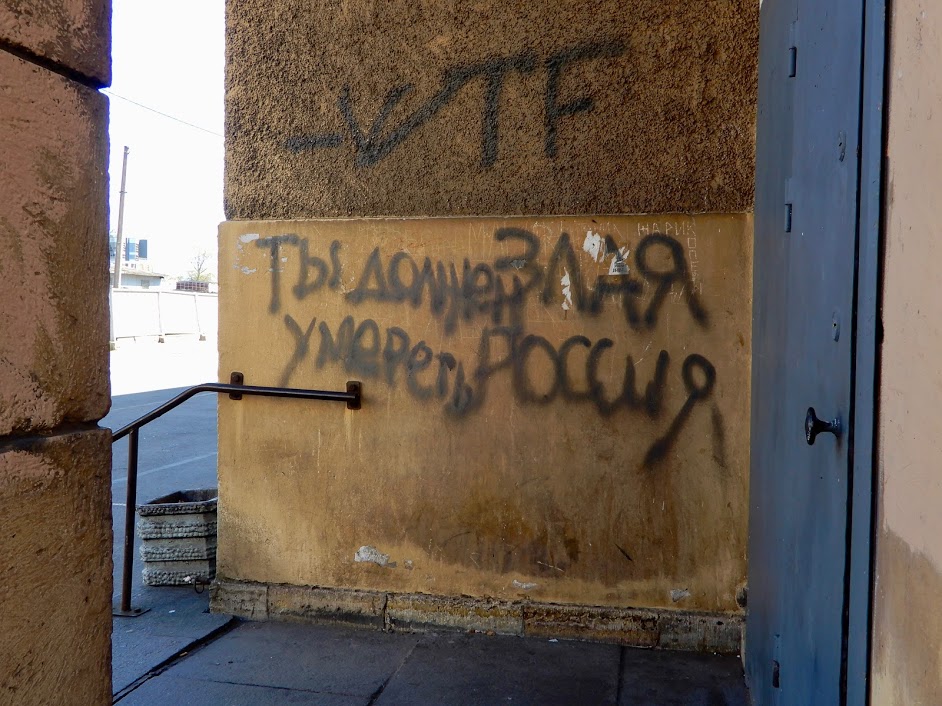
you must die“You must die.” ∴ “Wicked Russia.” Downtown Petersburg, May 6, 2018

Darya Apahonchich
Facebook
June 15, 2018

My father died two years ago; my mom, a year and a half ago. Both of them were fifty-nine. They worked their whole lives, my mom a little longer. She taught physical therapy and physical education. Dad was a military man and volcanologist. He went into business after perestroika.

I don’t want to generalize, but they had very different, very complicated lives. They did not communicate with each other for the last twenty years. But they had one thing in common: they did not think in terms of the future. They did not look forward to anything. They did not dream of traveling. They did not plan to move house or look for better housing. They did not want new friends. They did not pursue hobbies. They never got the hang of computers. (Although Dad used them, he did not like them at all.)

One another annoying but important thing was that they drank a lot. When they were on binges, they would turn into people who could not care less whether there was a future or not. In the aftermath of their binges, they would experience an agonizing sense of guilt.

I find it horribly painful to write this, but it is not only my family’s story. It is the story of many families in Russia.

When we cannot choose our own reality, we do not think in terms of the future. Along with poverty and helplessness, we learn the important lesson that we cannot change anything, and all that awaits us is death.

I have always asked myself whether anything would have been different if my parents had more money and opportunities. When it comes to alcoholism, I don’t know. Maybe nothing would have changed. As far as despair was concerned, maybe they would have made a difference.

The new retirement age in Russia will be sixty-three for women, and sixty-five for men. The government has been instituting this reform hastily, while people are watching the World Cup.

Photo and translation by the Russian Reader. Thanks to Ms. Apahonchich for her kind permission to translate and publish her piece on this website.

MP: Russian Women Should Avoid Sex with Foreign Men during World Cup

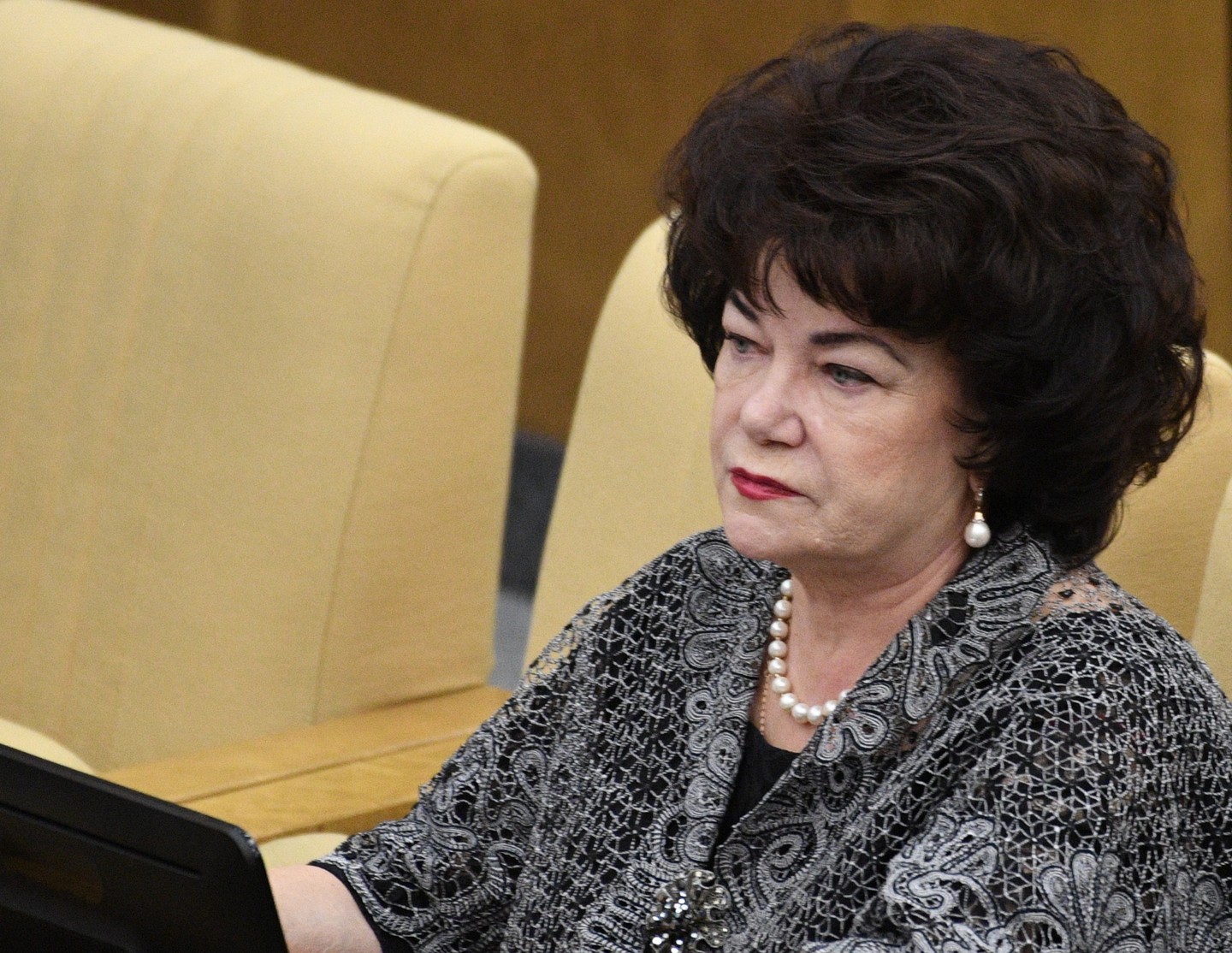
плетневаVeteran Russian MP Tamara Pletnyova (CPRF) has urged Russian women to avoid sex with foreign men during the 2018 World Cup, which kicks off tomorrow in Moscow. Photo courtesy of Life.ru

Russian Women Urged “Not to Engage in Sexual Relations” during 2018 World Cup
Fontanka.ru
June 13, 2018

Tamara Pletnyova, chair of the Russia State Duma’s Committee on Family, Women, and Children has urged Russian women not to engage in sexual relations with foreign men during the 2018 Football World Cup.

As the MP said this afternoon on radio station Moscow Speaking, inappropriate behavior on the part of Russian women would lead to the birth of children in single-parent families. Even if the foreign men married their sexual partners, it would not end well, the MP argued.

“Even if they marry the women and take them abroad, later on the women won’t know how to come back home. Women like that come to my committee for help. They cry, telling us how their husbands grabbed their children and left the country with them. I would like women in our country to marry men for love, no matter what their ethnicity, as long as they are Russian nationals who would build good families, live in harmony, have children, and raise them,” said Pletnyova.

The Duma committee chair argued many women became single mothers in the aftermath of the 1980 Moscow Olympics.

“These kids have suffered since Soviet times. If the parents were from the same race, it was better than nothing, but if they were from different races, the kids had it bad. I’m not a nationalist, but nonetheless. I know the children suffer. Then they are abandoned, and that is that: they are left with their mothers,” Pletnyova said in conclusion.

Thanks to Sergey Abashin for the heads-up. Translated by the Russian Reader

La Belle Vie

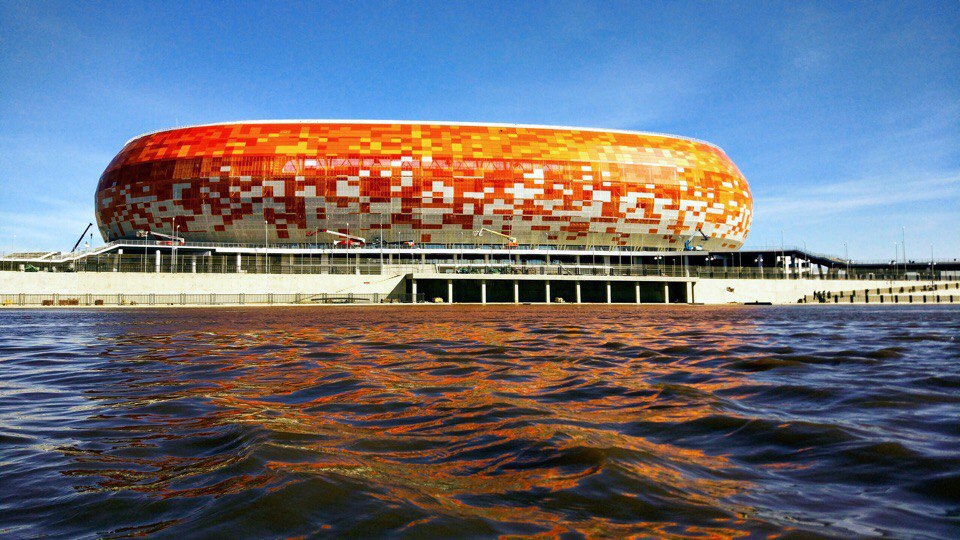
Стадион_Mordovia_arenaMordovia Arena in Saransk, one of the venues of the 2018 FIFA World Cup. Photo courtesy of Wikimedia Commons

Miracles of OSINT
Telegram
June 6, 2018

You would like to attend World Cup matches, but you have no money? Take a cue from Russian officials and employees of Russian state-owned companies. You will be footing the bill for their tickets.

The Mordovia Mortgage Corporation, a state-owned company, has spent 750,000 rubles [approx. 10,000 euros] on 100 tickets for the matches taking place in Saransk. What about helping people in the queue to improve their living conditions? Are you kidding? What about the epic battle between Peru and Denmark?

The Russian Foreign Ministry’s Main Office for Servicing the Diplomatic Corps has purchased 58 tickets for a total of 1.3 million rubles [approx. 18,000 euros], including 18 tickets to the semifinals. Do you know who the Foreign Ministry purchased the tickets for, according to the Public Procurement Website? For the Moscow Country Club, run by the ministry.

The Sports Training Center in Kratovo, in Moscow Region, decided not to limit themselves to a single city. They have spent 260,000 rubles [approx. 3,500 euros] on tickets to matches in Moscow, Kazan, and St. Petersburg. They have bought from two to four tickets to every match, so they probably won’t be doling them out to talented kiddies, but to the folks who run the center, all the more so because the training center in Kratovo specializes in training the Russian national badminton squad.

But you watch the matches on TV and be glad that, while foreigners are flooding Russia, the local authorities won’t turn off your hot water.

Translated by the Russian Reader

The Cabbies Left While the Cossacks Stayed: Rostov-on-Don on the Eve of the World Cup

rostov arena-2Rostov Arena. Photo courtesy of ftbl.ru

The Cabbies Left, The Cossacks Stayed
Gleb Golod
Takie Dela
June 8, 2018

The banks of the Don River in Rostov were always quite different. The right bank was landscaped, featuring bars and restaurants suited to every taste, singing fountains, and amusements. The left bank featured a wild beach chockablock with sand and trees. It was a favorite spot for picnickers and outdoor shish kebab cookouts. People used to swim there until the Don was completely polluted.

The new Rostov Arena has been built on the the left bank. Nine months and 913 million rubles [approx. 123 million euros] turned the wild beach into a landscaped park and river embankment. All that is left of the levberdon, as Rostovians call it, is a pier that extends nearly to the middle of the mighty river.  Over the long years it has been there, it has rusted, and there are holes in its covering here and there. The locals loved it, however. In the evenings, you would always find a couple in love, a photographer and his model, a small group of friends, and an old fisherman who had good luck catching herring in the middle of the Don.

Since May 1, when the park on the left bank officially opened, it has been standing room only on the pier. Locals stroll there with their children, joined by the foreigners who have arrived earlier in Rostov-on-Don. Someone worried about safety decided to limit the number of people on the pier and welded an iron grille to the entrance, but this has not stopped the flood of visitors. Cyclists toss their bikes over it, men help their female companions climb over it, and parents ferry their children from one side of the grille to the other.

Every half hour, an improvised river taxi docks alongside the pier. It charges adults 500 rubles for a ride. Children sail for free.

“Business? What business? The main thing we sell are emotions. River cruises are soothing. Adults can relax while the kids doze,” a man in a sailor’s hat and striped shirt advertises a short cruise on the Don while docking at the pier.

“Business has been good, of course, since so many people started coming here,” he admits. “I would give the embankment a ‘C’ for now. There is not much in the way of infrastructure or development. We’ll see how it looks a year from now.”

The boat pilot does not waste any time. He has struck up a conversation with a young boy, whom he has given a tennis ball. The boy persuades his parents to go for a ride on the boat. They quickly give in. The vessel weighs anchor and speeds off toward the other shore.

The Stadium and the Park
The boat pilot gave the new park a “C,” but the locals like the new sports facilities and playgrounds, and the fact the park is well maintained. But it lacks trees, many of which were cut down during the beautification.

“There is a lot of exercise equipment, and the air is fresh, but I probably won’t be coming here in the summer. There are few trees and little shade. But you know what the heat is like here in July. You could kick the bucket,” says a young woman in workout gear.

The local are not imagining things. There really are many fewer trees. The park was built without consideration of the place’s specific features. Consequently, the “city’s green shield” was left with huge gaps in it, says Alexander Vodyanik, environmentalist and assistant secretary of the Russian Public Chamber.

The “wild” green area on the left bank, which stretched all the way to Bataysk, a suburb of Rostov-on-Don, moistened the winds sweeping in from the Kalmyk steppes, winds that are especially palpable in the spring. It was the primary source of fresh air, supplying it just as ably as a forest, says Vodyanik. The place had to be beautified, but a completely different park should have been built, a wetlands park.

“Historically, this place functioned as a city beach, and it should have been turned into a city beach. People swim at a beach, but the Don has been so badly polluted for so long that swimming was definitely off limits in this part. In that case, swimming pools could have been set up while simultaneously purifying the water. This has been done in Germany on the Rhine, which is much dirtier than the Don, and the project has been a success,” says Vodyankik. “But a park was built here instead. An instant lawn, which has already gone bad, was rolled out. Eighty percent of the poplars were cut down. We had problems with our woodlands as it was, but they were damaged even further.”

The so-called Tourist Police are identified as such on the armbands they wear. A female student from Namibia leads a tour for her friends, who have arrived to enroll at the Don State Technical University. A young man named Aman hopes to get a ticket to the match between Brazil and Switzerland. If it does not work out, however, he will just go for a stroll around the city.

“I really like it here. The city is pretty and has an interesting history. Things are good, the park is good. Everything is terrific and cozy,” he says in English. “By the way, could you tell me where the stadium is? All the signs are in Russian, which I don’t actually understand.”

Rostov Arena was built at a distance from residential areas, so loud fans will not bother locals even on match days. The stadium is accessible by bus and taxi. True, fans will have to walk the last 500 meters to the turnstiles. This decision was made for security reasons.

Cabbies Leave the Fan Zone
Specially accredited taxi drivers will ferry fans from the left bank to the right bank and the fan zone on Theater Square. The most popular taxi services in Rostov-on-Don, Uber and Leader, accessible on the Rutaxi app, will not be working during the World Cup because they are not officially registered as commercial transport services.

Among the major cab companies, Yandex Taxi and Taxi 306 have been accredited to work during the World Cup. Roman Glushchenko, executive director of Taxi 306, told us  a total of 500 cars had been accredited in Rostov-on-Don, but he refused to discuss whether that would be enough cars to handle all comers.

According to gypsy cab driver Leonid, around 150 drivers of the ten thousand drivers affiliated with the company 2-306-306 have been accredited. Cabbies like Leonid mainly work for themselves rather than licensed carriers, which are practically nonexistent in the city, he explains. The gypsy cabbies use Yandex, Uber, Gett, and Leader as dispatchers, either directly or through small intermediary firms. So, when the issue of accreditation for the World Cup arose, it was a problem for drivers, who had to obtain permits, sign a contract with a licensed carrier, and paint their cars yellow or white. The Rostov Regional Transport Ministry issued the full list of requirements for accreditation.

“I’m not going to lift a finger to get accreditation,” Leonid admits. “Why should I give myself a headache by getting permits that would mean I would start making a loss? Licensed cars must be stickered with the taxi company’s ID tag. I don’t want to have this for a number of reasons. I would also have to register as an independent entrepreneur, get a license from the Transport Ministry, which was free until this year, and insure my cab, although premiums are higher than usual. And that’s over and above the 25% cut I give to Yandex. I know lots of gypsy cabbies. Not a single one of them has bothered to get accreditation. It’s just bad business for them.”

To prevent the few accredited taxis from jacking up rates for Rostovians and fans, the Transport Ministry has established a single rate for the entire World Cup.

Leonid plans to spend the World Cup in Sochi. He says the transport system there is better, applying for a license is easier, and the city is generally better prepared after hosting the 2014 Winter Olympics.

“Who wants to sit in traffic jams driving back and forth to the stadium?” he grumbles.

Although the World Cup lasts only four weeks, Theater Square, which will house a fan zone that can accommodate 22,000 fans, was closed to car traffic and public transport on May 13 and will remain closed until July 21. In the mornings and evenings, buses are already stuck in traffic on Sholokhov Avenue. When the World Cup kicks off, share taxis (marshrutki) will be removed from Red Army Street. Officials have promised they will be replaced with new buses.

There are plans to show all the matches on giant screens, organize entertainment for fans, and open food courts on Theater Square. The fan zone is a few hundred meters from the ruins of an entire residential neighborhood, destroyed by fire last year.

The square itself is home of the Gorky Drama Theater, hence the square’s name. It is one of two Russian buildings whose models are exhibited in the Museum of Architecture in London. (The other is St. Basil’s Cathedral.) The late constructivist landmark resembles a stylized caterpillar tractor. Corbusier called it a “gem of Soviet architecture.” Unfortunately, the fan will not be able to see it. The theater could not be cleaned up in time for the World Cup and has been draped with several banners.

Rostov-on-Don-Maxim-Gorky-Drama-TheatreThe Maxim Gorky Drama Theater in Rostov-on-Don. Postcard image courtesy of Colnect

Painted Residents Greet Cossacks
The authorities promised to repair and reconstruct many historic buildings and entire streets in preparation for the 2018 World Cup, but with a few weeks left before the championship, it was clear they would run out time.

Residents of Stanislavsky Street, in the downtown, recount how workers have been laboring outside their houses round the clock, trying to finish their work not by June 1, as city officials had promised, but at least by June 14, when the World Cup kicks off. When you are in a hurry, mistakes are inevitable: a female pensioner was unable to exit her building because the door was blocked by paving slabs. Other houses wound up a meter lower than the newly beautified street, and residents have had to jury-rig stairways to the pavements.

Around fifty buildings in Rostov-on-Don’s historic center have been hung with giant photographs of the buildings or World Cup banners because they could not be repaired in time. Among them is the famous house of Baron Wrangel, where the leader of the Whites during the Russian Civil War spent his childhood and youth. The house is a neoclassical architectural landmark. The mansion was nationalized during the Soviet period and turned into a kindergarten. The kindergarten shut down in the nineties, and the building was abandoned. Over the years, it has become quite dilapidated and has been repeatedly vandalized, so it looks hideous.

But when only a few months remained until the World Cup, no one had any brighter idea than to drape the landmark with a picture.
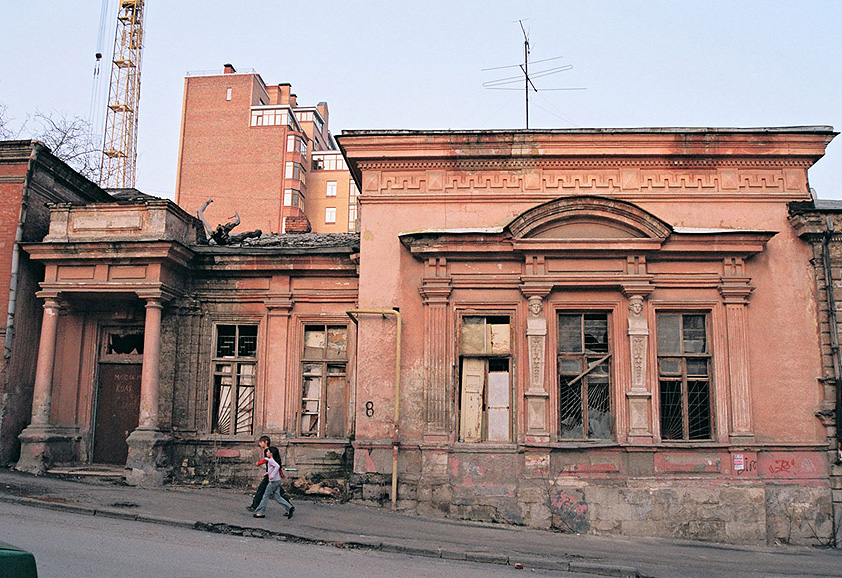
2010_04_24_domvrangelyaThe Wrangel House in Rostov-on-Don. Photo courtesy of RostovNews.Net

The Rostov branch of the Russian Society for the Protection of Historical and Cultural Landmarks (VOOPIK) tried to persuade city officials a dilapidated Wrangel House would look better than a picture emblazoned on a tarp. They circulated a petition and sent a letter to Governor Vasily Golubev, all to no avail.

“We got a reply less than half a page long. It acknowledged receipt of our letter, but there had been an onsite meeting of a commission chaired by Deputy Governor Sergei Sidash. On the basis of arguments made by commission members, they had decided to drape it in banners,” says Alexander Kozhin, head of VOOPIK’s Rostov branch.
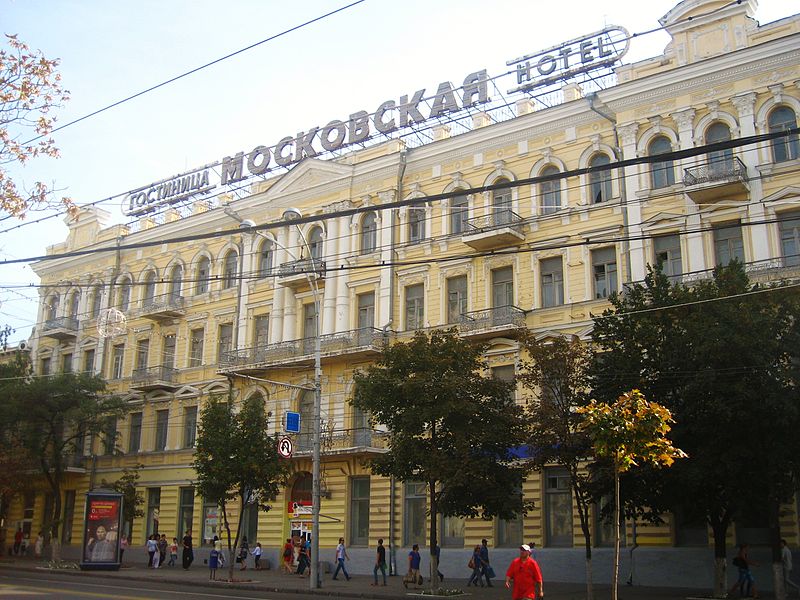
800px-Гостиница__Московская_The Moscow Hotel, in downtown Rostov-on-Don, before the 2007 fire. Photo courtesy of Wikimedia Commons

The same plight befell the Moscow Hotel, a nineteenth-century eclecticist building. In 2007, it was badly damaged in a fire and has been awaiting reconstruction ever since. The dilapidated Gorky Library (originally the Sagiyev Family Tenement House, an Art Nouveau landmark) is covered in scaffolding. It has been decided to demolish the Pavlenkova Tenement House, on long-suffering Stanislavsky Street, altogether.
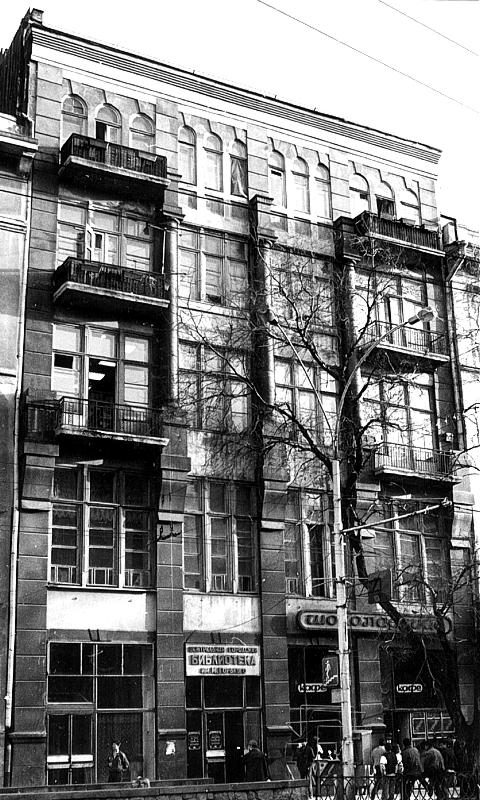
sar-htosThe Sagiyev Family Tenement House aka the Gorky Library, in downtown Rostov-on-Don. Photo courtesy of voopiik-don.ru


1526621588_pavlenkovoyThe ruins of the Pavlenkova Tenement House, in downtown Rostov-on-Don. Photo courtesy of Rostov.ru

A few weeks before the start of the World Cup, images of a building on Sholokhov Avenue appeared in the news and social media. Happy residents peered from the windows: a fiddler holding his instrument, an artist at an easel, a girl blowing soap bubbles, a football fan wearing a Spartak FC scarf, and patriots with the Russian tricolor draped on their backs. The balconies are adorned with balloons and potted plants.

All of them were painted images on yet another banner covering up unfinished repairs.

The upcoming championship has not changed the life of Rostov-on-Don’s real residents all that much. Schoolchildren and university students started and finished their final exams earlier, so schools and universities would be closed when the World Cup kicked off. The old airport was shut down, replaced by the new Platov Airport outside the city. All political rallies and marches have been prohibited during the World Cup.

The police will not be alone in enforcing this and other prohibitions. In early May, Don Cossacks in Rostov announced that three hundred Cossacks, included mounted Cossacks, would be keeping the peace on the streets as “volunteers.” They have assured the public that, at their own behest, they would not engage in violence and would leave their whips at home. If the police, however, are breaking up a fight, the Cossacks will back them up. The volunteers in papakha hats will pay particular attention to LGBT fans.
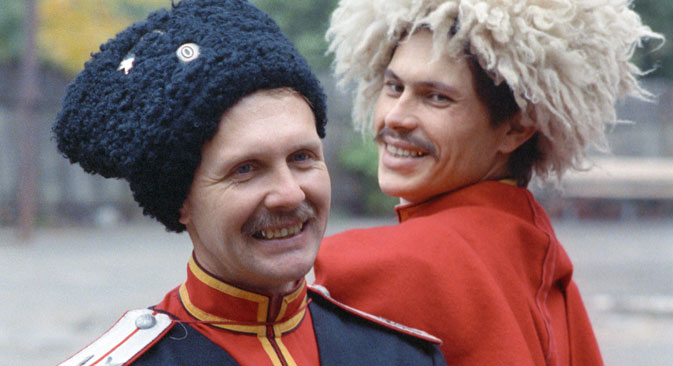
TASS_1044980_673“Cossacks.” Photo courtesy of Russia Beyond

“If two men kiss at the World Cup, we will tell the police to check them out,” they said.

The first World Cup match in Rostov-on-Don kicks off on June 17. A total of five matches will be played on the left bank of the Don: four matches in the group stage and one match in the round of sixteen.

Translated by the Russian Reader
“Popular” (Who Will Foot the Bill for the 2018 FIFA World Cup?)

zenit arena-3The Zenit Arena in Petersburg is the most expensive football stadium in history. And one of the ugliest. Photo by the Russian Reader

Mega events like the 2014 Winter Olympics and the 2018 World Football Cup are held in Russia not for compelling or eve merely sound economic reasons, but to satisfy the destructive, overwhelming vanity of the country’s president for life and his clique of gangster-cum-satraps.

Do you think ordinary Russians are unaware of this? If they are aware of it, maybe the current Russian regime isn’t nearly as “popular” as the press and Russia’s troika of loyalist pollsters (Levada, FOM, VTsIOM) would have us believe?

Why would a regime so remarkably bad at the basics of governance be “popular”? Because Russians are less intelligent than other people?

Or is it because the current regime has treated them from day one like inhabitants of foreign country it has recently occupied by brute fore? // TRR

_______________________________________

The initial plan had been that as of 2019 each region would be responsible for its own arenas. But local authorities estimate that this would create costs of 200 million to 500 million rubles (€2.6 -6.5 million/$3.2-8 million) — a tremendous financial burden for seven of the cities hosting World Cup matches.

Several do not even have teams that play in Russia’s top football division. The most successful squads in Volgograd, Kaliningrad, Nizhny Novgorod and Samara play in the country’s second tier. This season, home games in those regions drew just 1,000 to 5,000 spectators. Saransk’s team plays in the third division; Sochi does not even have a professional squad. So generating sufficient money through ticket sales will prove challenging at best.

And even the more-elite clubs Yekaterinburg and Rostov, which respectively attract some 4,500 and 9,000 fans per match, will struggle to generate enough income to cover the hefty running costs of their huge football stadiums.