Yana Teplitskaya: Wonderland

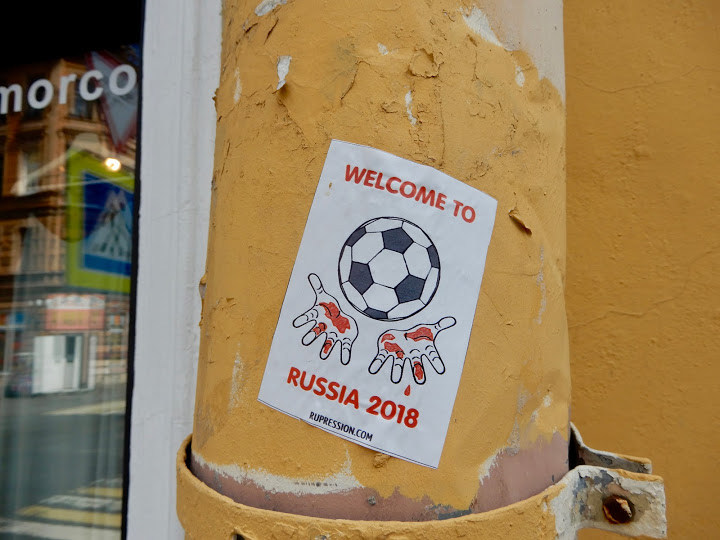
welcome to russia

Yana Teplitskaya
Facebook
September 4, 2018

Emotions are weird. I write “hogtie,” “taser,” and “Liteiny 4” [FSB headquarters in Petersburg] without feeling anything.

I wrote “interrogation in the middle of the night” and the tips of my fingers went numb.

I don’t understand what remains when you’ve run out of hatred and fear has faded.

Navigating your way through fear gives you a lot of strength, but it doesn’t last long.

Love and solidarity.

However, their supply is probably limited, too, since I feel so little strength.

***

“I have the sense we live so well that we should [help others].”

“But I know now this sense doesn’t get you far. My human rights work started from an overabundance of well-being, but I think it has been spent, that it has bottomed out.”

“Oh! So, no matter how much I do for the kids, I’m giving them a finite, rather than an indefinite, supply?”

***

As for basic trust in the world, I have the general sense that if you really have to do it, you will do anything. The deaths of other people and one’s own ailments take away that feeling. Just like the torture of Igor.

***

“Officials who are directly accused of torture: […] born 1993.”

:(

***

Excerpts from a funny [and seemingly really lousy] interview about “why you do what you do.”

*

“Would you like to be written up in the history books?”

“Uh, well, I’d like these cases to be written up in the history books. That would mean this nightmare had ended [and a new one had begun].”

*

“I have generally always been interested in the human rights movement and the struggle for the rule of law in Russia. I read a good number of autobiographies [of human rights activists and dissidents] while I was at school.”

“And your interests didn’t look odd to the people at school?”

“No, I think everyone else was also into something ‘odd.'”

*

“But why this way? After all, you could save people by being a surgeon.”

“Because it’s simple, while being a surgeon is really complicated. What we do is really simple. You simply show up somewhere and write down everything as it happened. Anyone could do it.”

***

I remember thinking while I was at school that it was fortunate I was finishing school during a period of authoritarianism. Under democracy and totalitarianism, I would have found it too messy to advocate human rights. I wouldn’t have even given it a thought, for different reasons: it’s too messy in a democracy, while it’s too dangerous under totalitarianism. So, if I had finished school in 2018, I would have hardly taken up human rights advocacy.

***

I see the circumstances in both Russia and Petersburg completely differently from the way I saw them ten years ago. Roughly speaking, ten years ago, the prisons were a topsy-turvy world, a “wonderland,” while the outside world was almost normal. In these circumstances, it made sense to rupture the impervious world of prisons, because doing so would in itself improve conditions in prisons. Rupturing this impervious world was simple. It was enough to hang around, both inside and outside, and flap your gums. In the outside world, you would jabber about  what was happening on the inside, and vice versa.

I no longer see things this way. With its aggressive propaganda, wars, and insane laws, the outside world is about the same as the topsy-turvy world, as “wonderland.” Therefore, my goals and methods have changed a bit.

Nowadays, perhaps, the role of the outside world is played by hypothetical readers of our reports “from the normal world,” meaning decent people on the internet and on the street, future readers, the UN Committee against Torture. Due to the need to navigate temporal and geographical borders, everything has become a little stricter. It has become vital to accurately record what is happening.

Yana Teplitskaya is a member of the Petersburg Public Commission for Monitoring Conditions in Places of Incarceration (“Petersburg Public Monitoring Commission” or “PMC”). Ms. Teplitskaya and her fellow PMC member Yekaterina Kosarevskaya were instrumental in uncovering and publicizing the torture by the FSB of the suspects the security agency abducted as part of its alleged investigation of the so-called Network Case aka the Penza-Petersburg “terrorism” case. Photo and translation by the Russian Reader. My thanks to Ms. Teplitskaya for her permission to publish her remarks in translation on this website. 

Network: Parents versus the FSB

Network: Parents of Anarchists versus the FSB
Alexei Polikhovich and Ksenia Sonnaya
OVD Info
July 30, 2018
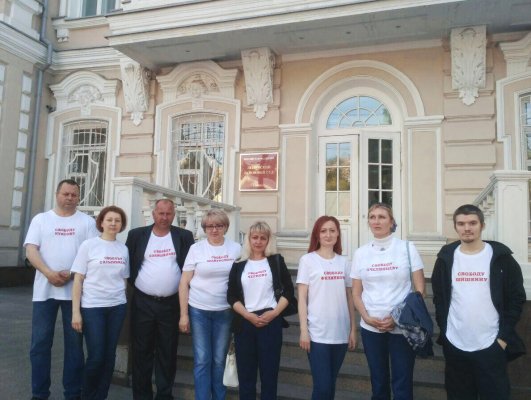
Members of the Parents Network. Photo courtesy of OVD Info

Eleven antifascists from Penza and Petersburg have been charged in the case against the alleged “terrorist community” known as the Network. Many people have got used to news of the violence, threats, and electrical shock torture used against the suspects in the case, but the accused themselves and their loved ones will probably never grow inured to such things. The parents of the accused came together in a committee known as the Parents Network. They have been trying to do something to help their loved ons.

The Russian Federal Security Service (FSB) claims the Network is an international organization. Aside from Penza and Petersburg, secret cells were, allegedly, established in Moscow and Belarus. Yet no one has been arrested either in Russia’s capital or abroad. Meanwhile, the Parents Network is definitely an international organization. Aside from Penza, Petersburg, Moscow, and Novosibirsk, the committee has members in Petropavlovsk, the city in Kazakhstan where Viktor Filinkov’s mother lives.

Members of the Parents Network have appeared at two press conferences, in April and May of this year. They have established a chatroom on Telegram where they discuss new developments in the case, exchange opinions, share impressions of hearings and interrogations, and give each other support. In addition, the parents try and force reactions from Russian government oversight and human rights bodies. They write letters to Russia’s human rights ombudsman and the Presidential Human Rights Council, and file complaints with the Investigative Committee and the Russian Bar Association.

OVD Info spoke with members of the Parents Network.

Tatyana Chernova, Andrei Chernov’s mother, shop clerk
All this kicked off in March at the next-to-last custody extension hearing in Penza.

I went to see Ilya Shakursky. I knew reporters and human rights advocates would be there. I just approached the people who had come to the hearing and asked for help. One of those people was Lev Ponomaryov, leader of the movement For Human Rights. He responded and proposed meeting in Moscow.

I didn’t know any human rights activists. I didn’t know where to go or to whom to turn, since I’d never dealt with this. When I’d discuss it with my daughter, she would scold me, telling me we had to wait or we might make things worse.

My husband and I went to see Lev Ponomaryov. We said we didn’t know what to do. We had a lawyer. Our lawyer did his job, while we, the parents, didn’t know how to help. We were told to take a pen and sign up, that the first thing to do was unite with all the other parents. I found their telephones numbers and gradually called all of them.
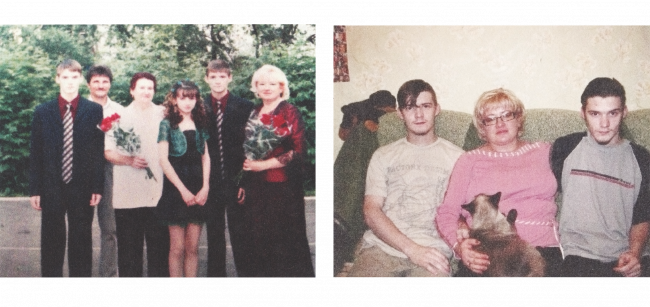
Andrei Chernov’s family

I couldn’t get hold of Lena Shakurskaya. I sent her an SMS, saying I’m so-and-so’s mom, I want to talk, if you want to talk, write. She called me right back. Everyone was probably waiting for it. We shared a misfortune, and it brought us together. Our first meeting was at Lev Ponomaryov’s office. Lena came to Moscow for the meeting. It was only there she heard the whole truth. Mikhail Grigoryan, Ilya’s former lawyer, had been telling her a different story. The Pchelintsevs met her. They told her what was going on. Lena was made sick by what she found out.

We try to have each other’s backs. The blows are such that it’s hard to take. Yes, I have friends. But I can call Sveta Pchelintseva or Lena Bogatova, say, knowing they’ll know where I’m coming from, because this is part of our personal lives.

Yelena Bogatova, Ilya Shakursky’s mother, shop clerk
We had a lawyer, Mikhail Grigoryan. He warned me against communicating with the relatives of the other lads. He said each of us had to defend their own son. Nothing good would come of fraternizing. I listened to him.

In March, I saw Andrei Chernov’s mom. Again, at Grigoryan’s insistence, I didn’t go up to her or chat with her. Later, I had doubts. I wanted to talk to someone. God was probably reading our minds: it was then Tatyana Chernova sent me an SMS. We got in touch on the phone. I went to Moscow without telling the lawyer. We met with human rights activists. We discussed how to talk about the kids.

It’s really rough when you’re on your own in these circumstances, but now we are together. You realized you’re not alone and our boys are not alone. What we do is mainly for them. We put on these t-shirts when we go to hearings so they can see we are fighting. We have gone to all the hearings together so they see we’re all together.

At first, I was a “cooperative” mom. I was friendly with the investigator. We would talk. He said unflattering things about the other parents. Grigoryan would ask me to meet with Ilya to “talk sense” into him. The investigator would talk to me, telling me that if I was a good mom, I would get the message through his head, that is, if we had a good relationship, as I had told him. Then I would get to see Ilya for ten minutes.
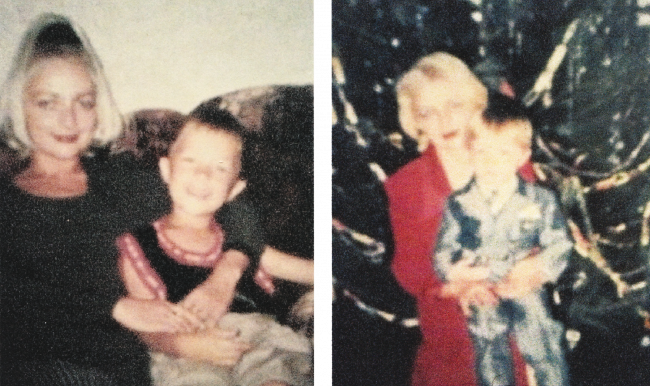
Yelena Bogatova and Ilya Shakursky

In February, when Ilya signed a statement saying he had not been tortured, his uncle and I persuaded him to sign the paper. We didn’t understand a thing, of course. Grigoryan said Ilya had to sign the paper. He said he was working for us and Ilya shouldn’t be obstinate, but should sign everything he asked him to sign.

Ilya stared at me.

“Mom, what are you doing?” he said. “I’m not guilty of anything.”

“Sign it or things will get worse for you, and I’ll have it worse. I won’t see you again,” I said to him.

I was selfish, drowning in my own grief. I pushed my son into doing it because I felt sorry for myself. The FSB used me. Yes, you can see him, but make him to sign this. Hold his hand.

It’s psychologically easier for me now. I feel strong inside. I have the confidence to keep going and try and rescue the boys from the paws of the FSB. I don’t have any friends per  se anymore. At first, they would call and ask about things, but then they would do it less and less often. I don’t know, maybe they’re afraid of the FSB. They’re afraid of calling me once too much because they know my phone is bugged.

On the other hand, I have a sense of how many friends Ilya has. I communicate with the Parents Committee and Ilya’s friends, who are not afraid of anything. We talk on the phone. They visit Ilya’s grandma and help. They water the garden and go to the store, just like Timur and his friends.

Natalya, Viktor Filinkov’s mom, businesswoman
It was like a bolt out of the blue. Viktor’s wife, Alexandra, wrote to me. I was ready to go see him that very minute, but I was told it would be better for me not to show up in Russia for the time being. I live in Petropavlovsk in northern Kazakhstan, which is not far from Omsk. It’s sixty kilometers to the Russian border.

Then I could not wait any longer. I said I was going to Petersburg, come what may. Everyone was surprised I was allowed to see him. I was the first parent allowed to see their child. But it was so little time. It was so hard to talk to him through the glass.

“Mom, I’ve been tortured,” he said.

I could see he had a scar. He told me to stay strong and be reasonable about what was happening.
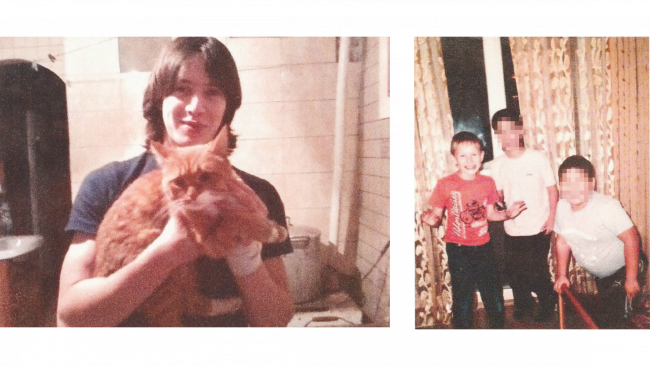
Viktor Filinkov

I’d never been interested in politics. Now, though, I’m interested. I’m interested in Russian politics and Kazakhstani politics, and I read all the news straight through. I read about what incidents happened where, who was tortured where, who has been framed, who has been protected. I read everything about what’s happened to antifascists and anarchists everywhere.

I think about why I don’t live in Russia, in Petersburg. I cannot move right now. It’s complicated to do the paperwork, register as an immigrant, and get a temporary resident permit. The thing that causes me the most pain is the thought they could ban me from entering the country.

Nikolai Boyarshinov, Yuli Boyarshinov’s father, artist
It’s a terrible state, which everyone has been through, when you suddenly find out your son has been arrested, and the charges are so absurd. You have no idea at all what to do. It’s a wall against which you beat your head. You quite quickly realize you’re completely powerless.

I joined the Parents Network when it had quite a few members. I was completely crushed then. At first, I imagined it existed for its own sake, to keep from going insane. But then I noticed it got results. By then I had completely recovered from my initial state, so I did things, thought about things, and discussed things. Being involved in the Parents Network was my salvation.

We have a chat page on Telegram. In contrast to the Network, which the FSB concocted, we don’t hide the fact we have a Network. If you think our children organized a criminal Network, then our Network is probably criminal, too.

Our actions get few results, perhaps, but it is this way, bit by bit, that you build up the desire to do something to improve the conditions in which the boys are incarcerated.  Publicity was their salvation, after all. It’s not a matter of getting them released yet. We are still thinking about how to keep them alive.

That was how it happened with my son. I saw him at the first custody extension hearing, a month after his arrest. I saw what he looked liked when he arrived at the courthouse. He looked drab and battered. He had fresh bruises on his head. You could see that it couldn’t go on for long like that. His friends, thirty people or so, came to the next hearing. When he saw everyone, he was happy. A new phase began after that. It was clear that at least they wouldn’t kill him.
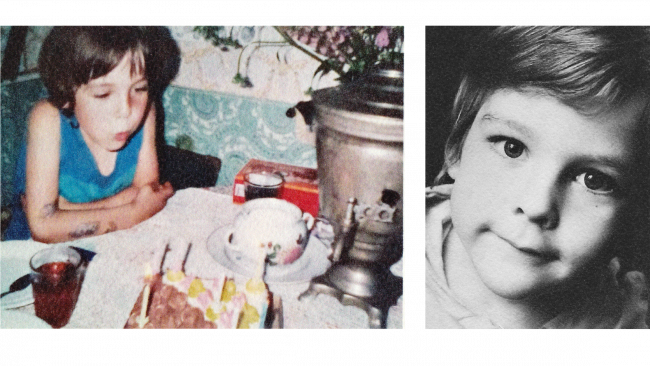

Yuli Boyarshinov in childhood

It was a turning point for me. When everything went public, it saved my son’s life. Yet now I’m afraid the publicity will die down and the boys will again be isolated, and the nightmare will recommence. That’s why I never turn down an interview.

I go out picketing on Fridays. I had doubts when the World Cup was underway. The first day I had the sense I was preventing people from enjoying themselves, but I decided to keep going out. Something unexpected happens each time. A young man came up to me and said he knew nothing about the Network. He walked away, apparently looked in the internet, and came back. I told him about the other boys.

“I don’t share those views,” he said.

“It doesn’t matter now whether you’re leftist or rightist,” I replied. “What matters is that you have views, and that is sufficient grounds to arrest you and charge you with a crime.”

The Parents Network is now like a family. We’ve agreed that when this travesty of justice is over, we will definitely have a reunion with everyone. Everyone has become family. Viktor’s mom lives in Kazakhstan, and his wife had to escape, so when I take care packages to Yuli, I take packages for Viktor, too. I really want to meet all the boys. I’m worried sick about all of them. My wife sometimes reads an article about Dima Pchelintsev or Viktor, and she cries. We feel like they’re our children.

Yelena Strigina, Arman Sagynbayev’s mother, chief accountant 
The first to get together were the people in Penza, the Pchelintsevs and the Chernovs. I joined along the way. The defense lawyers had to sign a nondisclosure agreement, so we had to go public with all our problems.

I live in Novosibirsk. We all stay in touch through a certain banned messenging site. When we were at the hearings in Penza, we made t-shirts emblazoned with the logo “Free [son’s surname].” It might look like a game to outsiders, but we have to stay afloat. It’s important to do something. And to publicize everything that happens.
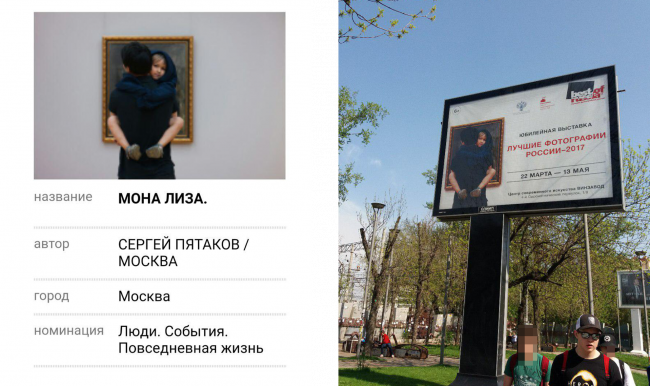

Arman Sagynbayev and his niece. Screenshot from the website of the Best of Russia competition (left); photo of a billboard in Moscow (right)

Arman has a serious chronic illness. There was no point in torturing him. His first testimony was enough to send him down for ten years. He testified against himself more than he did against the others. He was extradited from Petersburg to Penza. Along the way, the men who were transporting him opened the doors when they were in the woods and dragged Arman out. They promised to bury him alive. That was at night. In the morning, he was taken to the investigator for questioning. When people are under that kind of pressure, they would say anything. I would say I’d attempted to invade Kazan and blow up chapels.


Arman Sagynbayev in childhood

I kept the story secret from friends and relatives. But after the film about the case on NTV, everyone called and started looking funny at me. The news even made it to the school that Arman’s little brother attends. Imagine: your brother is a terrorist. It was a good thing honest articles had been published at that point. I would send people links to them. Thanks to those articles, people read a different take on events, and we have been protected from a negative reaction from society.

Svetlana Pchelintsev, Dmitry Pchelintsev’s mother, cardiologist
The Parents Network has empowered us a hundredfold. By joining together, we are no longer each fighting for our own son, we are fighting for all the boys. We love kids we don’t know at all, kids who are complete strangers, as if they were our own kids. Our hearts ache for each of them. I think it’s wonderful. A whole team of parents fighting for all the boys. What can stop parents? Nothing can stop them.

What has happened is terrible. Whether we like or not, we have to go on living while also helping the children. So, when one mom has a moment of weakness, she can telephone another mom, who is feeling the opposite emotions. It’s vital when a person hears that support.
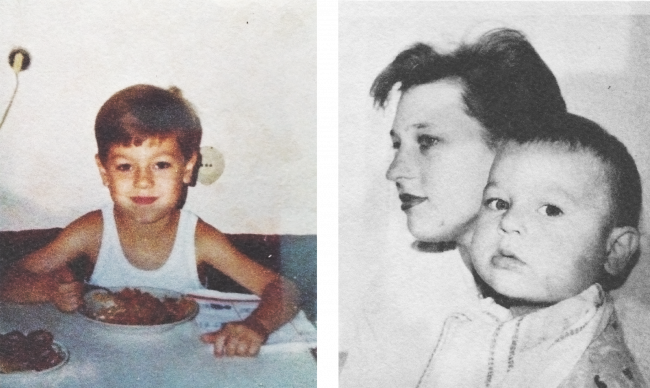

Dmitry Pchelintsev in childhood

Dmitry Pchelintsev, Dmitry Pchelintsev’s father, engineer
We are a committee of parents. What we do is support each other. We live in Moscow, but our son is jailed in Penza. The parents who live in Penza visit our son. Our kids, as it turns out, belong to all of us. We were in Penza and we gave all the children all their care packages at the same time. If we talk with the warden of the remand prison, we speak on behalf of all the kids.

This has helped us and helped our children. We get emotional support. It’s one thing when you sit alone in a closed room and don’t know what’s happening to your child. It’s another thing when all the parents meet and discuss everything. Tiny facts come together into a big picture, and you more or less understand what’s happening.

In my view, publicity is quite effective. This has been borne out by the actions of the case investigator, Tokarev. If it makes Tokarev uncomfortable, if it makes Tokarev angry, it’s a good thing. As he said, “You raised this ruckus in vain. They would have been in prison long ago.” So, what’s bad for him is good for me. I visited the offices of the Investigative Committee in Penza. They couldn’t believe it was possible the FSB would torture people in a remand prison.

Lena, Ilya Shakursky’s mom, said Tokarev always referred to us and the Chernovs as “uncooperative” parents. He complained that, if it weren’t for us, our kids would have been sentenced to two years each in prison and that would have been it. How can a person say such things? You put a man in jail for nothing, and then you sit and clap.

The FSB are Putin’s hellhounds. Putin loosened their leash a little, and they grabbed everyone they could before the presidential election and the World Cup. Now it’s all coming to an end, and he’ll again say, “Heel!” Let’s see where it leads. Perhaps the plug will be pulled, unfortunately.

All photos courtesy of the parents and relatives of the accused and OVD Info. Translated by the Russian Reader.

***************

What can you do to support the Penza and Petersburg antifascists and anarchists tortured and imprisoned by the FSB?

  • Donate money to the Anarchist Black Cross via PayPal (abc-msk@riseup.net). Make sure to specify your donation is earmarked for “Rupression.”
  • Spread the word about the Network Case aka the Penza-Petersburg “terrorism” case. You can find more information about the case and in-depth articles translated into English on this website (see below), rupression.com, and openDemocracyRussia.
  • Organize solidarity events where you live to raise money and publicize the plight of the tortured Penza and Petersburg antifascists. Go to the website It’s Going Down to find printable posters and flyers you can download. You can also read more about the case there.
  • If you have the time and means to design, produce, and sell solidarity merchandise, please write to rupression@protonmail.com.
  • Write letters and postcards to the prisoners. Letters and postcards must be written in Russian or translated into Russian. You can find the addresses of the prisoners here.
  • Design a solidarity postcard that can be printed and used by others to send messages of support to the prisoners. Send your ideas to rupression@protonmail.com.
  • Write letters of support to the prisoners’ loved ones via rupression@protonmail.com.
  • Translate the articles and information at rupression.com and this website into languages other than Russian and English, and publish your translations on social media and your own websites and blogs.
  • If you know someone famous, ask them to record a solidarity video, write an op-ed piece for a mainstream newspaper or write letters to the prisoners.
  • If you know someone who is a print, internet, TV or radio journalist, encourage them to write an article or broadcast a report about the case. Write to rupression@protonmail.com or the email listed on this website, and we will be happy to arrange interviews and provide additional information.
  • It is extremely important this case break into the mainstream media both in Russia and abroad. Despite their apparent brashness, the FSB and their ilk do not like publicity. The more publicity the case receives, the safer our comrades will be in remand prison from violence at the hands of prison stooges and torture at the hands of the FSB, and the more likely the Russian authorities will be to drop the case altogether or release the defendants for time served if the case ever does go to trial.
  • Why? Because the case is a complete frame-up, based on testimony obtained under torture and mental duress. When the complaints filed by the accused reach the European Court of Human Rights in Strasbourg and are examined by actual judges, the Russian government will again be forced to pay heavy fines for its cruel mockery of justice.

***************

If you have not been following the Penza-Petersburg “terrorism” case and other recent cases involving frame-ups, torture, and violent intimidation by the Russian Federal Security Service (FSB) and other arms of the Russian police state, read and republish the recent articles the Russian Reader has posted on these subjects.

Two More Suspects Detained in Network Case

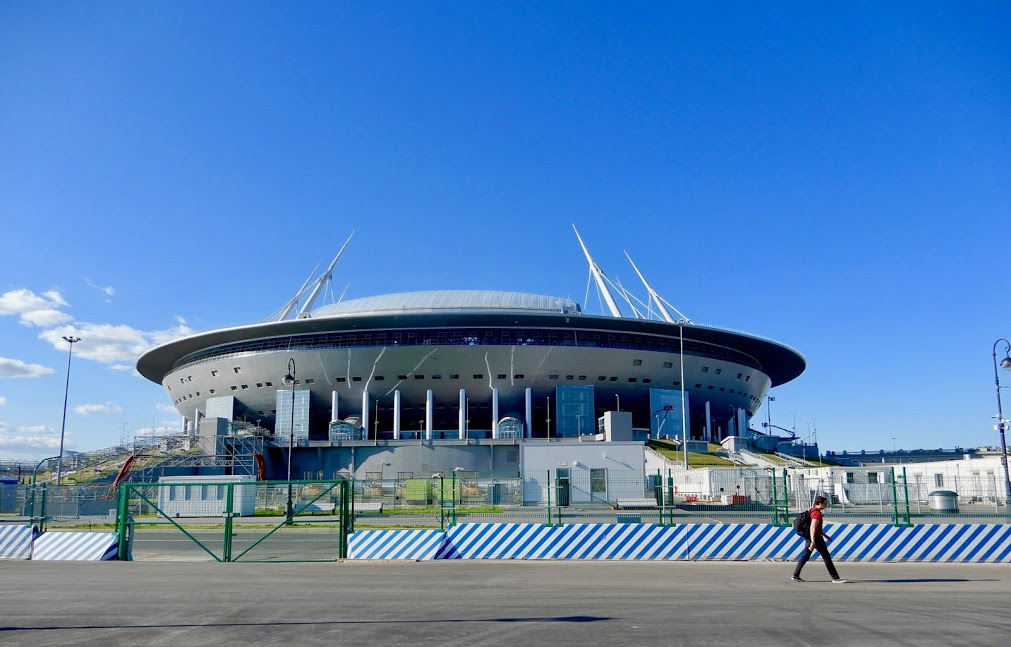
krestovsky stadiumThe members of the wholly mythical terrorist organization the Network have been accused by the FSB of planning to disrupt the March presidential elections and this summer’s World Cup in order to foment rebellion among the hoi polloi. These accusations would be hilarious if they were not served up with heavy helpings of torture, intimidation, and incarceration. Photo of Krestovsky Stadium in Petersburg, a World Cup venue, by the Russian Reader
Two Suspects Detained in Network Case
OVD Info
July 5, 2018

Mikhail Kulkov and Maxim Ivankin, two suspects in the so-called Network Case, have been detained and placed in police custody, OVD Info has learned from Yelena Bogatova, the mother of Ilya Shakursky, another suspect in the case.

The Lenin District Court in Penza has remanded Kulkov and Ivankin in custody until September.

Bogatova had been waiting for a lawyer outside the Penza Remand Prison when Ivankin and Kulkov were brought there. According to her, their parents learned of their arrests on July 4. Their custody hearings took place at 2 p.m. on July 5.

Alexei Kulkov, Mikhail Kulkov’s father, told OVD Info the young men had been detained in Moscow without IDs. Penza’s Lenin District Court has remanded them in custody until September 18. Mr. Kulkov reported that his son and Maxim Kulkin have been charged with organizing a “terrorist community.”  He said he saw the two young men for several minutes in the courthouse as they were escorted down the hallway. He noticed they had black eyes and bruises on their bodies.

Previously, Ivankin and Kulkov were detained in Penza in March 2017 along with antifascist Alexei Poltavets. They were initially charged with drugs possession. According to Poltavets, after they were detained, Russian Federal Security Service (FSB) officers tortured and beat them, demanding they testify against their friends in the antifascist scene. Poltavets later left Russia and had not seen Ivankin and Kulkov since then.

In June 2018, it transpired that Ivankin and Kulkov’s case had been combined with the investigation of the so-called Network, an organization that FSB investigators claim is a terrorist group. Ivankin and Kulkov have been charged with planning to produce or sell drugs in large quantities (Russian Criminal Code Article 228.1 Part 4 Paragraph G and Article 30 Part 3).

In the criminal case files, Ivankin, Kulkov, and Poltavets are identified both by their real names and the pseudonyms Redhead, Ilya, and Boris.

It transpired on July 4 that another suspect in the Network Case, Dmitry Pchelintsev, had been transferred from Penza Remand Prison No. 1, most likely to St. Petersburg.

On May 23, a friend of the accused, Victoria Frolova, was detained at the Russian-Ukrainian border. She was forced to testify against her Penza friends, including Ivankin and Kulkov. In her signed statement, Ivankin and Kulkov are identified as members of the 5.11 (“November Fifth”) cell of the Network. According to FSB investigators, all members of the Network trained with sticks in the woods, practice orienteering and first aid, and learned to set traps.

In the autumn of 2017, five young men were arrested in Penza: Yegor Zorin, Ilya Shakursky, Dmitry Pchelintsev, Vasily Kuksov, and Andrei Chernov. Arman Sagynbayev was detained in St. Petersburg and extradited to Penza. All of them were charged with involvement in a “terrorist” community. The FSB claimed the young young were involved in a terrorist organization known as the Network, whose cells, allegedly, existed in Moscow, Petersburg, Penza, and Belarus. The accused men gave accounts of mental coercion, electrical shock torture, and being hung upside down by FSB officers, as well as their planting weapons in the men’s cars and flats.

Later, several of the suspects renounced their confessions, saying they had been given under torture.

Besides the six suspects jailed in Penza, there are three more young men who have been charged with involvedment in the Network who have been remanded in custody in Petersburg. They are Viktor Filinkov and Igor Shishkin, on whose bodies human rights activists found physical traces of their having been tortured, and Yuli Boyarshinov, originally accused of illegal possession of explosive substances. Later, investigators tried to force him to testifying against the men accused in the Network Case and charged him with the same offenses.

Translated by the Russian Reader

***************

What can you do to support the Penza and Petersburg antifascists and anarchists tortured and imprisoned by the FSB?

  • Donate money to the Anarchist Black Cross via PayPal (abc-msk@riseup.net). Make sure to specify your donation is earmarked for “Rupression.”
  • Spread the word about the Network Case aka the Penza-Petersburg “terrorism” case. You can find more information about the case and in-depth articles translated into English on this website (see below), rupression.com, and openDemocracyRussia.
  • Organize solidarity events where you live to raise money and publicize the plight of the tortured Penza and Petersburg antifascists. Go to the website It’s Going Down to find printable posters and flyers you can download. You can also read more about the case there.
  • If you have the time and means to design, produce, and sell solidarity merchandise, please write to rupression@protonmail.com.
  • Write letters and postcards to the prisoners. Letters and postcards must be written in Russian or translated into Russian. You can find the addresses of the prisoners here.
  • Design a solidarity postcard that can be printed and used by others to send messages of support to the prisoners. Send your ideas to rupression@protonmail.com.
  • Write letters of support to the prisoners’ loved ones via rupression@protonmail.com.
  • Translate the articles and information at rupression.com and this website into languages other than Russian and English, and publish your translations on social media and your own websites and blogs.
  • If you know someone famous, ask them to record a solidarity video, write an op-ed piece for a mainstream newspaper or write letters to the prisoners.
  • If you know someone who is a print, internet, TV or radio journalist, encourage them to write an article or broadcast a report about the case. Write to rupression@protonmail.com or the email listed on this website, and we will be happy to arrange interviews and provide additional information.
  • It is extremely important this case break into the mainstream media both in Russia and abroad. Despite their apparent brashness, the FSB and their ilk do not like publicity. The more publicity the case receives, the safer our comrades will be in remand prison from violence at the hands of prison stooges and torture at the hands of the FSB, and the more likely the Russian authorities will be to drop the case altogether or release the defendants for time served if the case ever does go to trial.
  • Why? Because the case is a complete frame-up, based on testimony obtained under torture and mental duress. When the complaints filed by the accused reach the European Court of Human Rights in Strasbourg and are examined by actual judges, the Russian government will again be forced to pay heavy fines for its cruel mockery of justice.

***************

If you have not been following the Penza-Petersburg “terrorism” case and other recent cases involving frame-ups, torture, and violent intimidation by the Russian Federal Security Service (FSB) and other arms of the Russian police state, read and republish the recent articles the Russian Reader has posted on these subjects.

Kicker Conspiracy

Go to Russia for a few World Cup fixtures, get rip-roaring drunk, hit on a married Russian woman, and you are an instant “Russia expert,” fit for print in the bloody Guardian.

And don’t forget to thank the Russian security forces for their professionalism in keeping your jet-setting, neo-colonialist, neo-imperialist ass safe while you’re making an ass of yourself.

Huge congratulations must go to the law enforcement that’s been put in place to stop both the most fighty Russians and the most fighty English from making their presence felt. But those responsible for the headlines with TOO MANY CAPITAL LETTERS should be ashamed. Not just for denying England fans these experiences, but for allowing the Russian people to feel demonised, and indeed for allowing Putin to capitalise on this othering of the Russian people to support his us-against-them narrative. Every English person that has a positive interaction with a Russian person is a step further away from letting the people in power turn us against each other … is what I drunkenly mumbled into Anastasia’s ear a few minutes before I learned she had a husband, and a few minutes after she’d said there are no good computer hackers in Russia, and about 20 minutes after I’d been singing “Football’s coming home”. We’re all living in our own fantasies I suppose.

_________________________________________

I wish everyone could read this detailed interview with the fearless Russian human rights activist Anatoly Kalyapin and head of the Committee for the Prevention of Torture about the nearly ubiquitous use of torture by Russian law enforcement.

Under ordinary circumstances, I might even think about translating the interview and publishing it on this website.

But these are not ordinary circumstances. As the Putin regime ratchets up its “Great Terror Lite” apparatus, a frighteningly large segment of apparently educated and even liberal Russians and non-Russians have persuaded me that having fun, partying like it’s 1999, and staying glued to their TV sets watching World Cup fixtures trump petty considerations like human rights and international solidarity.

So, if you’d like to read this interview with a knowledgeable, brave man, run it through whatever online translation machine you prefer and see what miserable gobbledygook comes out the other end.

It has finally dawned on me how few people, both inside and outside Russia, really care to know anything about the real Russia, especially since Don Putin started kicking magical, psychedelic, multi-colored sand in their face with his twelve-billion-dollar “kicker conspiracy.”

I have no hope for a planet whose most powerful, empowered, and well-off inhabitants have such a strong will to be fooled and such an insuperable desire to kick up their heels as if they were teenagers. // TRR

Thanks to Lika Frenkel for the heads-up and the late Mark E. Smith (March 5, 1957–January 24,  2018) for not refusing his vision and sharing it with us so generously for so many years.

_________________________________________

Kicker, Kicker Conspiracy

J. Hill’s satanic reign
Ass-lickers, Keegan’s Team

Kicker, Kicker Conspiracy

In the marble halls of the charm school
How flair is punished
Under Marble Millichip, the F.A. broods 
On how flair can be punished
Their guest is a Euro-State magnate
Corporate-u-lent

Kicker, Kicker Conspiracy 

In the booze club, George Best does rule
How flair is punished
His downfall was a blonde girl,
but that’s none of your business!

Kicker, Kicker Conspiracy

Football fan at the bus stop
Stretched on the balls of his feet
In the Christmas rush
Had in his hands two lager cans
Talks to himself
At the back
At the top

But in the pavement on the club unit
Plastic, Slime, Partitions, Cocktail, Zig-Zag, Tudor Bar

Pat McCat. Pat McCat, the very famous sports reporter is
talking there.

Fans remember, you are abroad!
Remember the police are rough!
Remember the unemployed!
Remember my expense account!

Hot dogs and seat for Mr. Hogg!
Hot dogs and seat for Mr. Hogg
And his grotty spawn!

Lurid brochures for ground unit
How style is punished

Kicker, Kicker Conspiracy
Remember, don’t collect with the rough
Kicker, Kicker Conspiracy

Kicker, destroy the facilities!

Kicker Conspiracy

Source: The Fall, “Kicker Conspiracy” (1983); lyrics courtesy of The Annotated Fall

Where Did You Go? (Day 44)

44th day“The forty-fourth day of Sentsov’s hunger strike.” Post on filmmaker Askold Kurov’s Facebook page

Ukrainian political prisoner and filmmaker Oleg Sentsov has completed the forty-third day of his hunger strike. His only demand is that Russian authorities release the other Russian political prisoners they have imprisoned during their illegal invasion of Ukraine.

Unfortunately, I have the growing sense that even the most progressive Russians, whatever that means, are so impressed by the nonstop international football party that has been unleashed on the streets of their major cities that they are less and less able to focus on what matters in the near term (the government’s plan to raise the retirement age, the pending retrial of Yuri Dmitriev, the mind-bending Penza-Petersburg “terrorism” case, Sentsov’s hunger strike, six more years of pitch-black Putinist reaction). They behave and talk like people who have richly earned a celebration.

In the grand scheme of things, none of us deserve a celebration. We are sinners in the hands of an angry God, and we deserve to be crushed.

Viewing our fallen world more realistically, however, we probably do need to give ourselves a break, no matter how dire the circumstances, every once in a while, but only after we have done our work, especially the collective grassroots work that keeps our societies from slipping over the edge into the abyss of lawlessness, reaction, and fascism.

With few exceptions, Russia’s hyper-educated populace, however, checked out of hands-on politics long ago. They are literally the most holiday-prone bunch I have ever encountered in the world. Nearly everyone I know is endlessly on vacation, on the road, not at home, checked out, off the radar in internal exile, you name it.

This was my roundabout way of saying the truly heroic Mr. Sentsov’s chances do not look good. // TRR

* * * * * * * * * *

Many of my western leftist friends have been having a field day with the White Pride House’s disgusting treatment of immigrant families and children from Latin America, as they should be.

But when it comes to the Kremlin’s disgusting treatment of nearly everyone under its own black hole sun, from Oleg Sentsov and the alleged Penza-Petersburg “terrorists” to Yuri Dmitriev and Oyub Titiev, mum has been word among western leftists.

This is not to mention the Kremlin’s escapades in Syria and Ukraine, the wretched treatment of migrant workers from Central Asia in Russia itself, or the fact Russia is basically off limits to the refugees and asylum seekers whom, in some cases, it has helped to generate, as in Syria.

Meanwhile, Russia has been witness a slow but noticeable exodus of its own asylum seekers and more quiet exiles, including dozens if not hundreds of political activists, and thousands of LGBT people, now that the country has been officially and virulently homophobic for several years.

None of this gets even so much as a look-in from most of my western leftist friends, who, at best, are happy to have me rattle on about these things ad nauseam, but probably think I have been lying or exaggerating these past ten years.

In any case, nothing the Kremlin ever does figures in either their political activism or political thinking (except in complaints about “anti-Russian hysteria” in their local mass media). They are loath to show solidarity with grassroots Russian activists, even Russians in serious trouble like the young antifascists implicated in the total frame-up known as The Network Case.

No, the wroth of western leftists is always and only reserved for the Great Satan, the cause of all evil in the world, the country that invented imperialism, racism, capitalism, nepotism, and daltonism, the United States of America.

Why they should be so implicitly sympathetic to the hyper-reactionary, neo-imperialist, homophobic, anti-working class, rampantly state capitalist, kleptocratic, illiberal, anti-intellectual, wildly corrupt nationalist and racist regime in Russia is beyond my powers to comprehend.

But their silence speaks louder than their words, as does their pointed failure, when it comes to people I know personally, to engage meaningfully with all the things I have written and translated over the last ten years.

This is especially palpable now the World Cup is underway. Even politically engaged liberals among my acquaintances have obviously given the Russian regime a free pass for the month.

Actually, they have been giving it a free pass since 1999, but I won’t mention discuss this long, ugly story now.

What I meant to say was that Ukrainian filmmaker and political prisoner Oleg Sentsov is dying, and the western left pointedly has nothing to say about why he is in “jail” (as the Moscow Times quaintly puts it, although he is actually incarcerated in a maximum security penal colony north of the Arctic Circle) and why he was sent there for twenty years.

It is pathetic. It is also part of the reason why “the masses” generally trust the western left about as far as they can throw it. Because just like Donald Trump and Theresa May, there are species of despotism, tyranny, and even genocide the western left really quite fancies or, at least, can countenance in the name of “anti-imperialism.”

To put it bluntly, I am afraid the western left would rather Oleg Sentsov and his ilk just crawled under a rock and died. They only muddy what should be a crystal-clear view of “geopolitics.” // TRR

Petersburg Court Bailiffs Attack Reporter at Network Case Hearing

Mediazona’s Petersburg Correspondent Accused of Disobeying Court Bailiffs
Mediazona
June 19, 2018

David Frenkel, a Mediazona correspondent, has informed us that bailiffs at Petersburg’s Dzerzhinsky District Court have cited him for violating Article 17.3 of the Administrative Code (“failure to comply with the orders of a judge or court bailiff”).

Frenkel attended the custody extension hearing of Penza-Petersburg “terrorism” case suspect Viktor Filinkov. Journalists and the public were not admitted to the courtroom during the hearing and the judge’s ruling. When the hearing was over, and Filinkov was escorted from the courtroom, the public, around forty people, applauded him.

It was then that court clerk Yelena Krasotkina, outraged the public supported the prisoner, ordered the bailiffs to detain Frenkel, who at the time was standing in the corridor and not applauding.

Yekaterina Kosarevskya, a member of the Petersburg Public Monitoring Commission, said she heard Krasotkina say to the bailiffs, “Write somebody up for something.”

One of the bailiffs suggested detaining Frenkel. Ten minutes later, another bailiff threatened to detain Kosarevskaya.

When the bailiffs detained Frenkel, they broke his glasses. They claimed he screamed.

The bailiffs cited him Frenkel for violating Adminstrative Code Article 17.3 Part 2 (“Failure to obey the lawful request of a court bailiff for establishing order in the court and stopping actions violating court rules”).

Frenkel sent a photo of the citation to his Mediazona colleagues: he was unable to read it, since a bailiff, surnamed Vikulov, had broken his glasses. The citation claimed Frenkel “made noise, clapped, shouted, and urged the crowd to take illegal actions.”

Frenkel was then taken to the 78th Police Precinct. The policemen swore when they found out why Frenkel had been brought to the police station. He was released after approximately fifteen minutes.

Viktor Filinkov’s term in remand prison was extended four months, until October 22, 2018.

When Frenkel was escorted from the corridor, it transpired the bailiffs had run out of blank arrest sheets.

Around forty people had gathered before the hearing in the second-floor corridor of the courthouse. They included the parents of Yuli Boyarshinov, another suspect in the Penza-Petersburg “terrorism” case, whose remand to police custody was extended later in the day. No member of the public was able to attend the hearing. Before escorting Filinkov from the holding cell, the guards and bailiffs ordered the public to go down to the first floor. They claimed their request had to do with “safely escorting” their prisoner.

The members of the public were reluctant to leave the second floor. Court clerk Yelena Krasotkina emerged from the office of the Dzerzhinsky District Court’s presiding judge. Krasotkina announced the decision to hold both hearings in closed chambers had been made earlier and ordered the public to leave the courthouse.

View image on TwitterView image on TwitterDavid Frenkel (@merr1k): “I get the sense the brass has taken the Dzerzhinsky District Court to task, and so they are avoiding the use of force. They are swearing and getting mad, but they’re putting up with us. 11: 12 a.m., July 19, 2018.”

The bailiffs placed a bench at the entrance of the corridor to courtroom, forbidding members of the public from going around the bench. Krasotkina reprimanded the bailiffs, complaining , “They’re all still here,” meaning the members of the public. Armed guards in masks escorted Filinkov into the courtroom as this was happening.

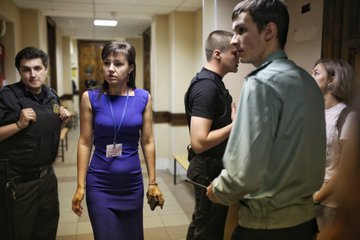
Inside the Dzerzhinsky District Court, June 19, 2018. Photo by David Frenkel. Courtesy of Mediazona  

Members of the public and the bailiffs argued with each other. A man who was possibly in charge of the armed guard joined them. He warned the public they would not be admitted to the courtroom to hear the judge’s ruling in the cases of Filinkov and Boyarshinov.

“How is that?” asked a member of the public.

“Well, if the judge permits it, the public gets in. If the judge doesn’t, they don’t,” replied the man.

“How do we find that out?” asked perplexed members of the public.

“When the hearing is over, they’ll come out and tell you,” he concluded.

Krasotkina periodically emerged from the presiding judge’s office, taking a photograph of the members of the public on one such occasion.

Filinkov’s defense counsel, Vitaly Cherkasov, a lawyer with the Agora International Human Rights Group, then emerged from the courtroom, telling the crowd the defense had asked the judge to transfer Filinkov to house arrest.

Finally, after the court had rendered its ruling, Frenkel was detained by the bailiffs.

Armed guards escort Viktor Filinkov at the Dzerzhinsky District Court. Photo by David Frenkel. Courtesy of Mediazona 

This was not the first time a member of the press has been cited for violating Article 17.3 at the Dzerzhinsky District Court. On March 22, 2018, bailiff Ivan Lozovsky cited journalist Sasha Bogino for violating the administrative law. He ordered her to stop “live streaming,” although the Mediazona correspondent was sitting in the courtroom with her laptop open and not filming anything. In late May, a court ordered Bogino to pay a fine of 500 rubles.

Filinkov and Boyarshinov have been in police custody since January of this year. On June 18, 2018, the Dzherzhinsky District court extended the term in custody of the third Petersburg suspect in the Penza-Petersburg “terrorism” case, Igor Shishkin. Another six young men are in police custody in Penza as suspects in the same case.

According to the Russian Federal Security Service (FSB), the members of the alleged “terrorist community” known as “The Network” had planned “to stir up the popular masses in order to destabilize the political circumstances” in Russia on the eve of March’s presidential election and the 2018 FIFA World Cup, which is currently underway. In addition, on June 15, 2018, it transpired that three new charges had been added to the case.

Three of the suspects, who have been charged with violating Article 205.4 of the Russian Criminal Code (“involvement in a terrorist community”), Viktor Filinkov, Ilya Shakursky, and Dmitry Pchelintsev, have claimed they were tortured into confessing after they were detained by FSB field officers. In addition, Alexei Poltavets, an acquaintance of the suspects, has claimed he was tortured into testifying against them.

The Russian Investigative Committee has so far refused to refuse to file abuse of authority charges against any FSB officers. In the case of Ilya Kapustin, who was tortured during his interrogation by the FSB as a witness, the Investigative Committee decided Kapustin’s taser burns were “consistent with injuries caused by skin diseases or insect bites.”

The suspects’ loved ones have formed a Parents Network. In April 2018, the group held a press conference in Moscow.

Translated by the Russian Reader

***************

What can you do to support the Penza and Petersburg antifascists and anarchists tortured and imprisoned by the FSB?

  • Donate money to the Anarchist Black Cross via PayPal (abc-msk@riseup.net). Make sure to specify that your donation is earmarked for “Rupression.”
  • Spread the word about The Network Case aka the Penza-Petersburg “terrorism” case. You can find more information about the case and in-depth articles translated into English on this website (see below), rupression.com, and openDemocracyRussia.
  • Organize solidarity events where you live to raise money and publicize the plight of the tortured Penza and Petersburg antifascists. Go to the website It’s Going Down to find downloadable, printable posters and flyers. You can also read more about the case there.
  • If you have the time and means to design, produce, and sell solidarity merchandize, please write to rupression@protonmail.com.
  • Write letters and postcards to the prisoners. Letters and postcards must be written in Russian or translated into Russian. You canfind the addresses of the prisoners here.
  • Design a solidarity postcard that can be printed out and used by others to send messages of support to the prisoners. Send your ideas to rupression@protonmail.com.
  • Write letters of support to the prisoners’ loved ones via rupression@protonmail.com.
  • Translate the articles and information at rupression.com and this website into languages other than Russian and English, and publish your translations on social media and your own websites and blogs.
  • If you know someone famous, ask them to record a solidarity video, write an op-ed piece for a mainstream newspaper or write letters to the prisoners.
  • If you know someone who is a print, internet, TV or radio journalist, encourage them to write an article or broadcast a report about the case. Write to rupression@protonmail.com or the email listed on this website, and we will be happy to arrange interviews and provide additional information.
  • It is extremely important this case break into the mainstream media both in Russia and abroad. Despite their apparent brashness, the FSB and their ilk do not like publicity. The more publicity the case receives, the safer our comrades will be in remand prison from violence at the hands of prison stooges and torture at the hands of the FSB, and the more likely the Russian authorities will be to drop the case altogether or release the defendants for time served if the case ever does go to trial.
  • Why? Because the case is a complete frame-up, based on testimony obtained under torture and mental duress. When the complaints filed by the accused reach the European Court of Human Rights in Strasbourg and are reviewed, the Russian government will be forced to pay heavy fines for its cruel mockery of justice.

***************

If you have not been following the Penza-Petersburg “terrorism” case and other cases involving frame-ups, torture, and violent intimidation by the Russian Federal Security Service (FSB) and other arms of the Russian police state, read and repost the recent articles the Russian Reader has translated and published on these subjects.

Anna Tereshkina: At the Court Hearing

tereshkina-11

Anna Tereshkina
Facebook
June 19, 2018

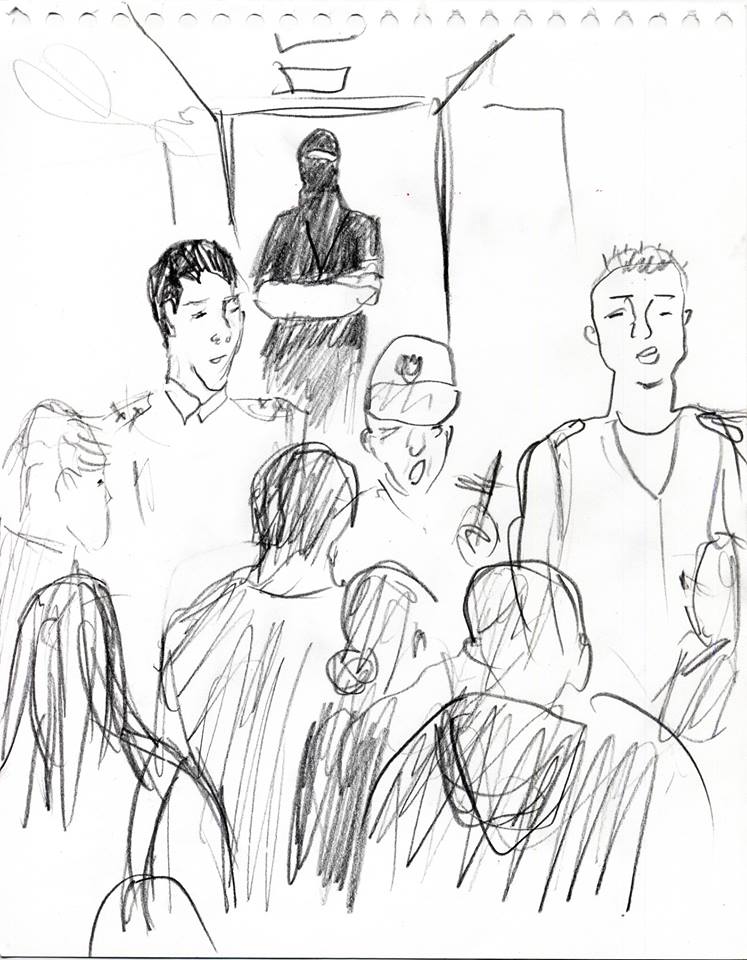
*This text is not an objective reflection of the “hearing.” Rather, I see its value as therapeutic in the light of what happened today.

This was my second time at a remand extension hearing for Viktor Filinkov.

There were more people, and their voices were louder. But I still left feeling as if I had been hit with a shovel, which was no surprise.

tereshkina-2.jpg

This time round, the court bailiffs immediately herded everyone down to the first floor, but they were unable to drive anyone completely out of the courthouse.

People stood near the stairway.

Our way down the long corridor was blocked by three beefy bailiffs, who were the centerpiece of a genuine commedia dell’arte.

At first, they used a bench to block the way into the corridor. Folks sat down on the bench. Then they decided to remove the bench. One young woman, however, refused to get up, and the three muscleheads threatened to drag her forcibly from the bench. They left the bench where it was, but turned it around. I managed to squeeze through and sit down on it.

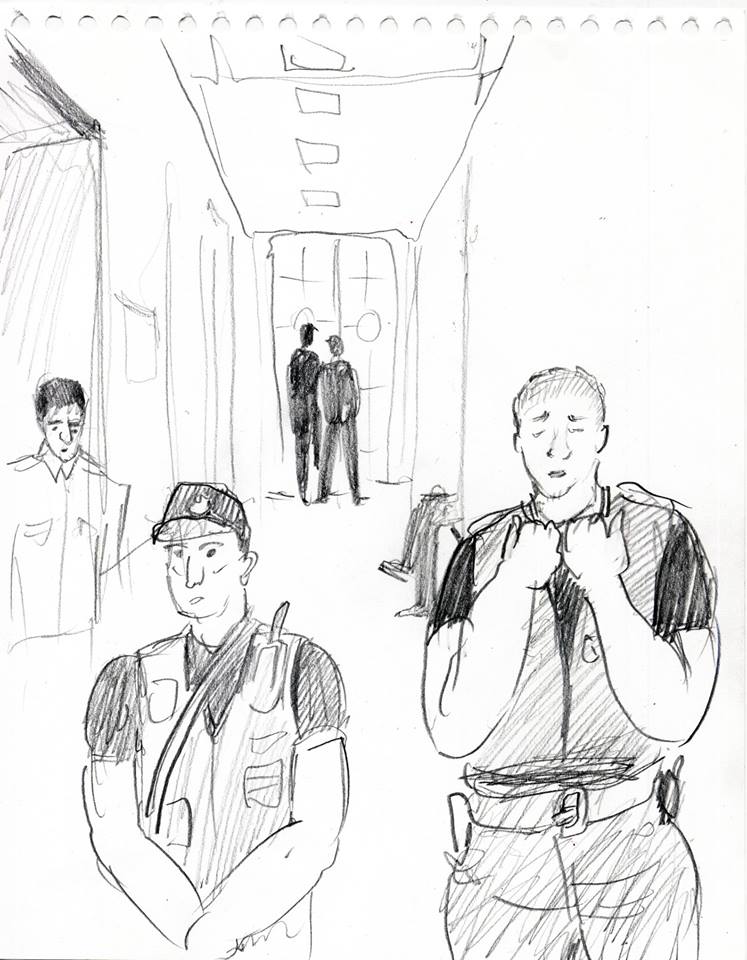
Folks were pushing from one side, as during rush hour in the subway, while on the other side an amphitheater opened up. Knights in bulletproof vests outfitted with tons of pockets stood in this amphitheater. They were nearly motionless, like the best sitters during life drawing classes at the Academy of Arts.

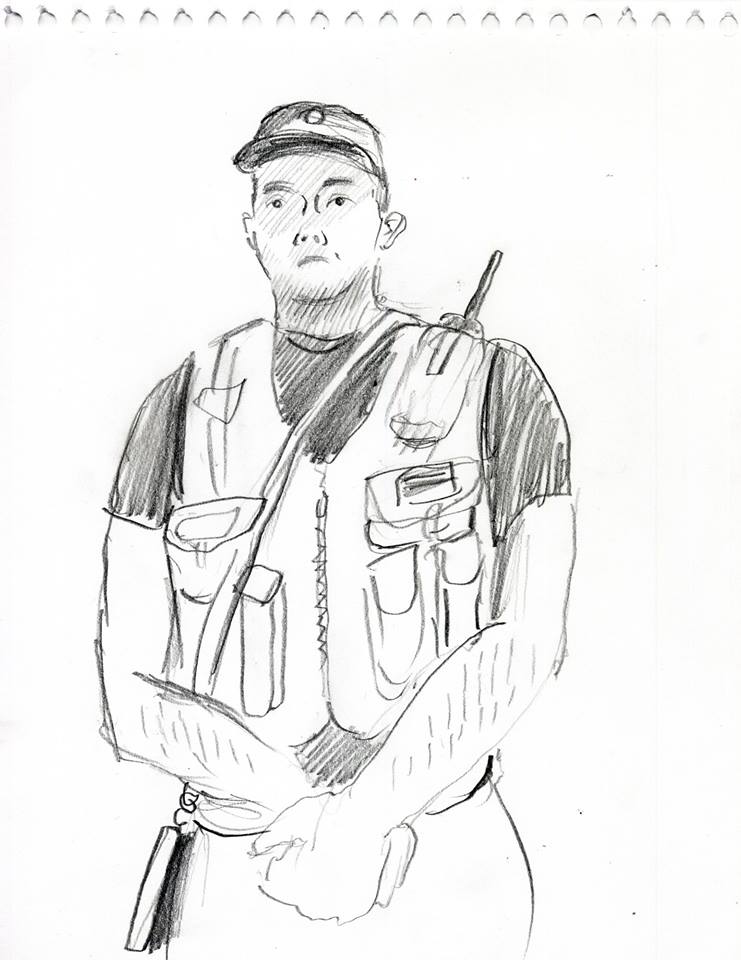
I tried to make a stupid joke that snuggling up against young women like that, not letting them walk down the corridor, was the only joy in their dull jobs. A tall, thin bailiff (I had sketched him at the previous hearing) kept running back and forth, trying to cuddle up to T., pushing his more broad-shouldered colleague away from her.

The broad-shouldered bailiff, who bore a resemblance to Ramzan Kadyrov, smiled reservedly when I joked, while the other bailiff (I memorized his name: Anton) went so far as to say it was not their choice to wear the bulletproof vests, but they were under orders to wear them. He kept pulling at the neck of his t-shirt, as if he wanted to tear off his entie sweaty get-up.

But my jokes and attempts to see something human about them collapsed when all of them went after reporter David Frenkel, elbowing their way through the crowd. We tried to squeeze past them, but they had the right to employ violence. I sensed the tension in their elbows. But if someone like me had tensed their elbows like that, they would have been charged with “disobeying” officers of the law. It was scary.

Amid the stuffiness of the corridor, a ball consisting of the swearing gorillas and skinny David rolled down the stairway. (It transpired later the brave young men broke David’s glasses.)

The crowd seethed with despair and resentment.

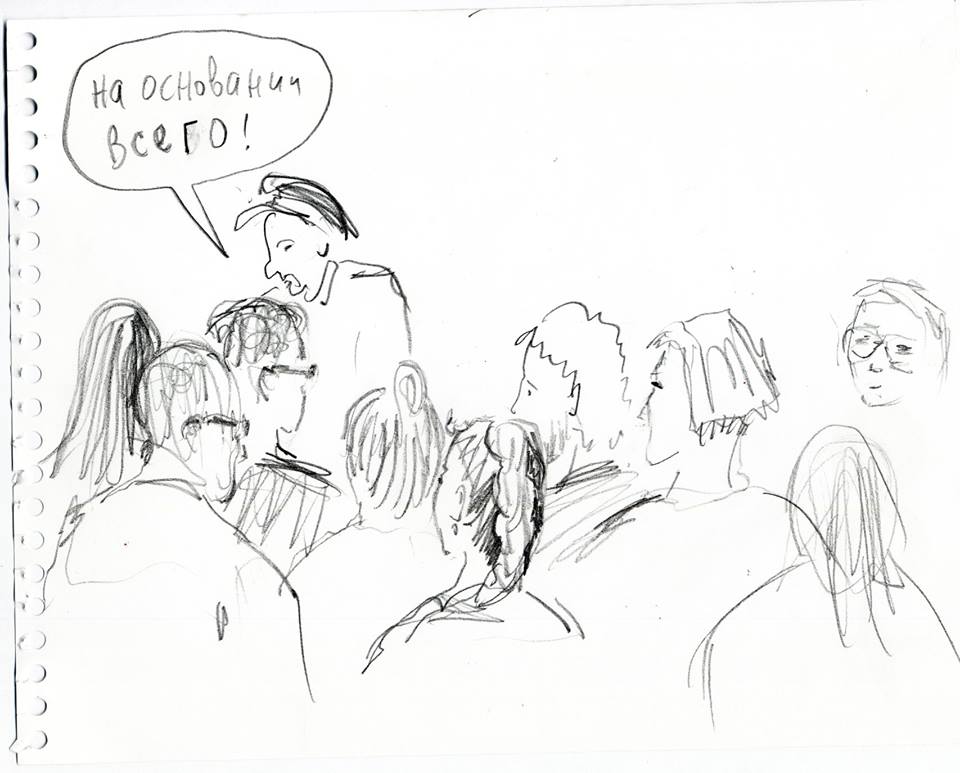
“Look at yourselves! How you behave! You are violating the right of citizens to exercise their right to . . . ,” a female court clerk in a blue dress kept repeating at us.

tereshkina-1“I have every grounds!”

The bits of bureaucratese clawed at each other. Words stumbled and snapped, turning into feckless curses.

“What grounds do you have for kicking us out?”

“I have every grounds!”

“Who the heck are you?”

“I’m the locum!”

“Whose locum? What’s your name?”

“I’ve already told you everything!”

This had all happened somewhere before, either in a story by Kafka or during my schooldays.

Ultimately, I really resent the fact I cannot draw Viktor or Yuli Boyarshinov or the lively crowd, constantly in motion, but am forced to draw the faces of the bailiffs, frozen in the stupid frenzy of their work. Violence is such a habitual part of their work they have ceased noticing it.

I would rather not have the opportunity to draw them. I would rather this hearing had not taken place. I would like to have magical powers and make it all go away. I would snap my fingers and, instead of a court bailiff, a marvelous violinist would be standing there or a waste recycling engineer who was a feminist and vegan to boot.

tereshkina-5

But, alas, the bailiffs pushed us back by another ten centimeters, and Ninja Turtles in balaclavas escorted Viktor into the courtroom. Our only magical powers were yelling and clapping as loudly as we could.

Like last time, I could not take it anymore. I left before the hearing was over. Where can I find the strength to endure this?

Drawings by Anna Tereshkina. I thank Ms. Tereshkina  for her kind permission to reproduce them here as well as publish a translation of the accompanying text.  All images © Anna Tereshkina, 2018. Translated by the Russian Reader.

***************

What can you do to support the Penza and Petersburg antifascists and anarchists tortured and imprisoned by the FSB?

  • Donate money to the Anarchist Black Cross via PayPal (abc-msk@riseup.net). Make sure to specify that your donation is earmarked for “Rupression.”
  • Spread the word about The Network Case aka the Penza-Petersburg “terrorism” case. You can find more information about the case and in-depth articles translated into English on this website (see below), rupression.com, and openDemocracyRussia.
  • Organize solidarity events where you live to raise money and publicize the plight of the tortured Penza and Petersburg antifascists. Go to the website It’s Going Down to find downloadable, printable posters and flyers. You can also read more about the case there.
  • If you have the time and means to design, produce, and sell solidarity merchandize, please write to rupression@protonmail.com.
  • Write letters and postcards to the prisoners. Letters and postcards must be written in Russian or translated into Russian. You canfind the addresses of the prisoners here.
  • Design a solidarity postcard that can be printed out and used by others to send messages of support to the prisoners. Send your ideas to rupression@protonmail.com.
  • Write letters of support to the prisoners’ loved ones via rupression@protonmail.com.
  • Translate the articles and information at rupression.com and this website into languages other than Russian and English, and publish your translations on social media and your own websites and blogs.
  • If you know someone famous, ask them to record a solidarity video, write an op-ed piece for a mainstream newspaper or write letters to the prisoners.
  • If you know someone who is a print, internet, TV or radio journalist, encourage them to write an article or broadcast a report about the case. Write to rupression@protonmail.com or the email listed on this website, and we will be happy to arrange interviews and provide additional information.
  • It is extremely important this case break into the mainstream media both in Russia and abroad. Despite their apparent brashness, the FSB and their ilk do not like publicity. The more publicity the case receives, the safer our comrades will be in remand prison from violence at the hands of prison stooges and torture at the hands of the FSB, and the more likely the Russian authorities will be to drop the case altogether or release the defendants for time served if the case ever does go to trial.
  • Why? Because the case is a complete frame-up, based on testimony obtained under torture and mental duress. When the complaints filed by the accused reach the European Court of Human Rights in Strasbourg and are reviewed, the Russian government will be forced to pay heavy fines for its cruel mockery of justice.

***************

If you have not been following the Penza-Petersburg “terrorism” case and other cases involving frame-ups, torture, and violent intimidation by the Russian Federal Security Service (FSB) and other arms of the Russian police state, read and repost the recent articles the Russian Reader has translated and published on these subjects.


Nikolai Boyarshinov: I Hope One Day We Can Say the FSB Has Been Banned

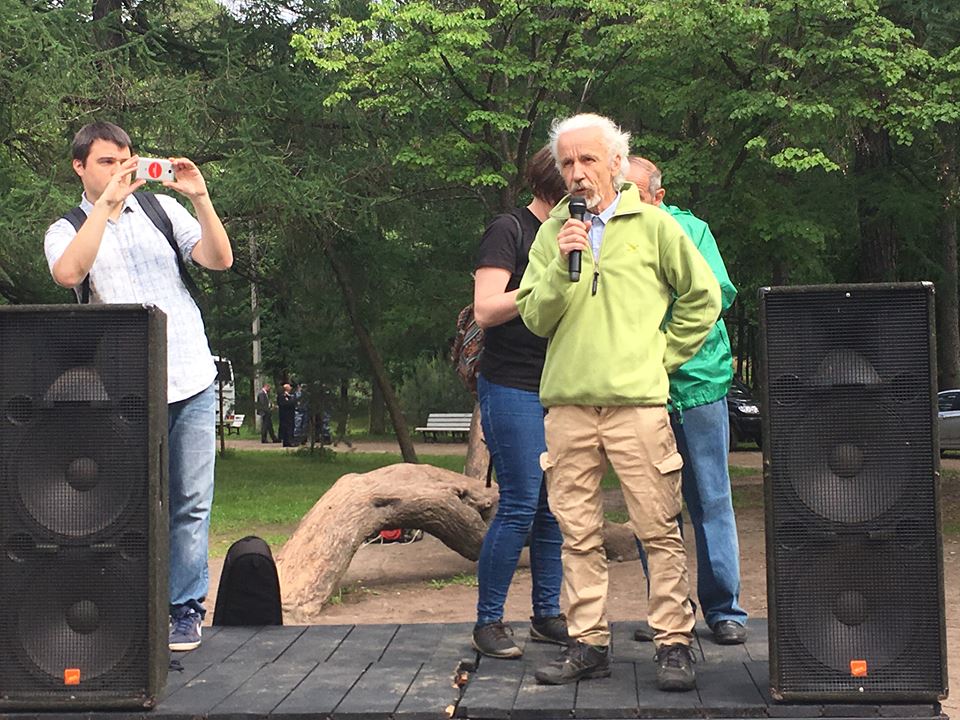
nikolai-1Nikolai Boyarshinov, speaking at an opposition rally in Udelnyi Park, Petersburg, June 11, 2018. Photo by Jenya Kulakova
I am Nikolai, father of Yuli Boyarshinov. First, I want to share my joy with all of you. I was finally able to see my son. Only after he had been in jail five months was I allowed to speak with my son. Knowing what he had been through, I was not sure I would see the same person, but it was not like that all. Yuli was still the same kind, attentive person. Caring for others has always been his priority, caring for his parents, friends, acquaintances, and complete strangers, caring for animals and the environment. But I digress.

After Theater.Doc’s staging of Torture [at the Interior Theater in Petersburg] someone suggested I write to Putin as part of his Direct Line TV program. Although I found it quite disgusting, I wrote to him anyway.

“Esteemed Vladimir Vladimorovich! We, the citizens of Russia, are quite concerned about our own safety. We are not sure we are protected from terrorist attacks. The FSB should take care of this. Instead, the FSB abducts young men, frames them for crimes, and practices torture. It is involved everything except protecting people.”

This was followed by the particulars of my son’s case.

I don’t think we should be afraid of Islamic State, which has been banned in Russia. We have the FSB, which has been permitted in Russia. But I hope one day, when we mention the FSB, we can add that it has been banned in Russia.

I would like to thank everyone who has come out today, everyone who is not afraid to speak the truth. I really hope I will live to see my son a free man, and that my son will live to see a free Russia. Thank you.

Protest rally at Udelnyi Park, Petersburg, June 11, 2018

Source: Facebook (Jenya Kulakova)

Translated by the Russian Reader

***************

What can you do to support the Penza and Petersburg antifascists and anarchists tortured and imprisoned by the FSB?

  • Donate money to the Anarchist Black Cross via PayPal (abc-msk@riseup.net). Make sure to specify that your donation is earmarked for “Rupression.”
  • Spread the word about The Network Case aka the Penza-Petersburg “terrorism” case. You can find more information about the case and in-depth articles translated into English on this website (see below), rupression.com, and openDemocracyRussia.
  • Organize solidarity events where you live to raise money and publicize the plight of the tortured Penza and Petersburg antifascists. Go to the website It’s Going Down to find downloadable, printable posters and flyers. You can also read more about the case there.
  • If you have the time and means to design, produce, and sell solidarity merchandize, please write to rupression@protonmail.com.
  • Write letters and postcards to the prisoners. Letters and postcards must be written in Russian or translated into Russian. You canfind the addresses of the prisoners here.
  • Design a solidarity postcard that can be printed out and used by others to send messages of support to the prisoners. Send your ideas to rupression@protonmail.com.
  • Write letters of support to the prisoners’ loved ones via rupression@protonmail.com.
  • Translate the articles and information at rupression.com and this website into languages other than Russian and English, and publish your translations on social media and your own websites and blogs.
  • If you know someone famous, ask them to record a solidarity video, write an op-ed piece for a mainstream newspaper or write letters to the prisoners.
  • If you know someone who is a print, internet, TV or radio journalist, encourage them to write an article or broadcast a report about the case. Write to rupression@protonmail.com or the email listed on this website, and we will be happy to arrange interviews and provide additional information.
  • It is extremely important this case break into the mainstream media both in Russia and abroad. Despite their apparent brashness, the FSB and their ilk do not like publicity. The more publicity the case receives, the safer our comrades will be in remand prison from violence at the hands of prison stooges and torture at the hands of the FSB, and the more likely the Russian authorities will be to drop the case altogether or release the defendants for time served if the case ever does go to trial.
  • Why? Because the case is a complete frame-up, based on testimony obtained under torture. When the complaints filed by the accused reach the European Court of Human Rights in Strasbourg and are ultimately ajudicated, the Russian government will be forced to pay heavy fines for its cruel mockery of justice.

***************

If you have not been following the Penza-Petersburg “terrorism” case and other cases involving frame-ups, torture, and violent intimidation by the Russian Federal Security Service (FSB) and other arms of the Russian police state, read and repost the recent articles the Russian Reader has translated and published on these subjects.

Zeitgenossenschaft

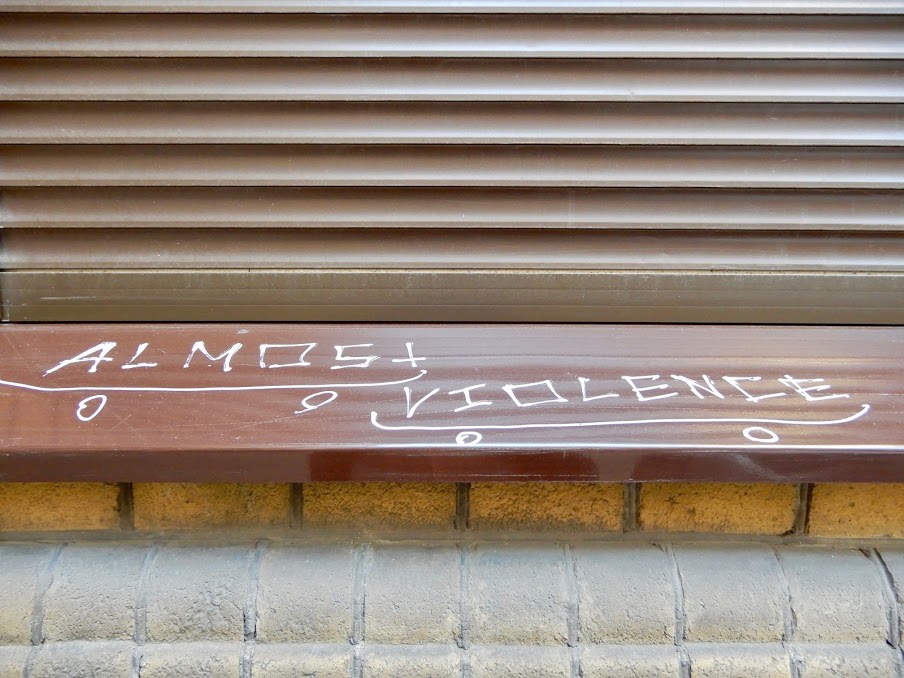
almost violence

Judging by virtual and real encounters in recent weeks, Russophonia has been doing its darnedest to descend into a war of all against all.

Thus, at the birthday party of an old family friend, a group of Russian physicians—people who run whole departments of hospitals and even whole hospitals—artlessly segued from running down the birthday boy’s grandson, who was seated only a table’s length away from them, and is one of the sweetest young men I have ever met, to making baldfaced statements such as “Putin is the guarantee of stability,” “There should be more than one currency in the world,” and outright nationalist assaults, prompted partly by the fact I had been introduced to the other guests not by name, but as a “citizen of country X.”

Meanwhile, on the other end of the Russophoniacal political spectrum, which looks a lot like the opposite end, only it is topsy-turvy and striped, a well-known Ukrainian provocateur decided to take a few swipes at me on Facebook by claiming I “defended” Russia.

What he really meant by this, I could not figure out for the life of me, but I gathered that the point of his mostly incoherent remarks was that, since I write about Russia and edit a website about Russia, I was thus inadvertently or even deliberately legitimizing the country.

The problem for professional Russophobes like him is that Russia exists and has existed for a long time. No one can wish it away, just as we cannot wish away climate change, rampant poverty or racism. But we can wish for a world without any of these things or a lot less of these things, and we can make that world a reality.

Russians can also wish for a more democratic, egalitarian Russia and make that a reality, too. If, like me, you are not in a position to engage directly in the country’s democratization by virtue of your nationality, you can at least help people in Russia campaigning for a freer, fairer country by writing about them and, more generally, by providing or seeking a clearer, more detailed picture of what has been going on in Russia, and what the causes of current events in Russia really are, refusing to accept the lazy non-explanations of Russophobes, Russophiles, crypto-Putinists, and bored academics alike.

My Ukrainian detractor was not having any of it, alas. My unwillingness to accept the falsehood that Russians are mostly bad to the bone was more proof I was soft on Russia.

The crux of our disagreement was that I refused to concede that there are inordinately large numbers of bad or stupid people in Russia, as compared with other countries. On the other hand, I do believe, on the basis of long years of in-country observation, conversations with thousands of Russians, and intense and extensive reading of the Russian press and the relevant literature, that Putin’s alleged popularity is an authoritarian construct, not an expression of the popular will.

This is an argument that needs to be made in full, which I have done in bits and bobs over the last few years, often by translating the work of Russian observers who have made similar claims. That is, it is, at least, a rational argument that has a good deal of evidence to support it.

I definitely do not believe in collective guilt, which my Ukrainian interlocutor seemed to think was as natural as the sun rising in the morning.

My detractor believed in lots of noxious things and decided he could dump them down my throat by way of debunking the ten-plus years of hard work I have put in covering Russia from an angle no one else covers it.

Several of my comrades and friends were party to this ridiculous conversation, but instead of defending me or at least pointing out the flaws in the Ukrainian provocateur’s completely blowsy argument, they just let him spit in my face repeatedly, although his only real object was to get my goat and disparage my work.

Here we arrive at an actual—not imaginary—problem in Russia these days: the lack of solidarity among people who should otherwise feel it and exercise it towards each other and, in its absence, the sickening phenomenon of people standing by idly and silently as out-and-out bullies—the police, Putin, NOD, “Cossacks,” Russian physicians, Ukrainian provocateurs, and so forth—beat up other people physically or verbally or both.

In the aftermath of solidarity’s triumph in the Yuri Dmitriev case, a groundswell has been seemingly gathering to support the nine young Penza and Petersburg antifascists abducted and tortured by the FSB, and then accused, absurdly, of being wannabe terrorists supposedly hellbent on causing mayhem during the March presidential election and upcoming World Football Cup.

If the groundswell really does exist, the credit for it should go to an incredibly tiny group of people who decided they had to make a lot of noise about the case at all costs. Most of these people are 100% Russians, whatever that means, and I have rarely been so inspired as I have been by this group of people, most of whom are also fairly young and predominantly female.

In fact, if you read this and its predecessor, Chtodelat News, you will find lots of stories, some of them going ten years back, chockablock with smart, courageous, team-oriented, democratic, egalitarian Russians.

Russia thus has every chance of becoming a democratic, egalitarian country in the foreseeable future. But the same could be said of the United States and a whole host of other countries—the vast majority of countries on earth, I would imagine—that either have strayed too far from the democratic path or never were quite on track in the first place.

Democracy is not an essential feature of some peoples and countries, while despotism is an essential feature of other peoples and countries. If you believe that canard, it will not be long before you are saying the Jews are entirely responsible for the mess we are in, the Palestinians are capable only of terrorism, the Americans are too blame for all the world’s problems (including problems they really did not have a hand in causing) or your own people (fill in the blank) are too corrupt, swinish, and stupid to govern themselves, so a dictator like Putin or Assad has to do the job for them. There is no alternative, in other words.

Democracy is something we do together. We either practice hard and try to make every note bend just right or we don’t practice at all or not often enough, in which case a cynical cacophonist like Putin or Trump gets to call the tune for us. Not because we are inherently racist or authoritarian, but mostly because we are too scared, indifferent, busy, self-absorbed, lazy and sorely tempted not to listen to our better natures and see the good in others.

But we are obviously not essentially good, either. We are the political animals who have the power to make and remake ourselves and our societies in ways that are better and worse. We also have to decide all the time what constitutes better and worse.

If you do not believe this, you do not believe in the power of politics and do not understand the “mystery” of human beings. Ultimately, you think that some humans or all humans are too wayward and disorganized to get their act together, and therefore should be policed.

I did not think up this distinction between politics and policing myself. A far wiser and thoughtful man than I am, the French philosopher Jacques Rancière did, but as the years go by, seemingly becoming nastier and darker, I see how his distinction does get to the heart of the matter.

This is simplifying the matter unforgivably, but you are either on the side of politics or the side of the police.

Politics is messy and usually not particularly satisfying, but it is the only way we have to approximate knowing all the things we have to know to make and enact good decisions that affect us all.

Policing, on the other hand, is easy as pie. Entire groups, classes, peoples, and groups are declared out of bounds and thus subject to police action. If you argue with the police about their inclusion of a particular group of people on its list of “not our kind of folks,” they will say what police always say on such occasions—”Oh, so you’re in cahoots with them?”—and rap you over the head with a truncheon.

In the years I have been editing websites and deliberately misusing social media for the same purposes, I have been rapped over the head with heavy verbal truncheons so many times I am now permanently punch drunk.

Most of the policing, unsurprisingly, has been meted out by Russophones, many of whom really do suffer from chauvinism of a kind that, at best, does not brook the possibility that a non-native Russophone could have anything worthwhile to say about Russian politics and society. The Ukrainian provocateur was from this school of opinion.

Since there are something like twenty people in the world—seriously!—who genuinely support what I do here, I guess I will keep doing it, but the other day’s round of kangaroo boxing left me seriously wary about people whom I had considered comrades. // TRR

Photo by the Russian Reader

Lemmy Kilmister vs. Vladimir Putin

Mother of Man Accused in Penza Case Files Complaint Against Lawyer Mikhail Grigoryan, Who Concealed Son’s Torture from Her
Mediazona
May 14, 2018

Yelena Bogatova, mother of antifascist Ilya Shakursky, one of the young men accused in the so-called Penza-Petersburg “terrorism” case (aka The Network case) has filed a complaint against attorney Mikhail Grigoryan with the Moscow Bar Association and the Penza Bar Association. Mediazona has a copy of the complaint in its possession. In the complaint, Ms. Bogatova reports that, in October 2017, she signed an agreement with Mr. Grigoryan. According to the agreement, he agreed to defend her son, for which she paid him ₽100,000 [approx. €1,360]. According to Ms. Bogatova, over the six months during which the investigation of the Penza case was underway, Mr. Grigoryan “grossly violated the basic principles of attorney ethics.”

Thus, Mr. Grigoryan did not convey to Ms. Bogatova her son’s account of how security services officers tortured him with electrical shocks. Mr. Grigoryan also convinced Mr. Shakursky he must confess his involvement in a “terrorist community,” thus depriving him of professional services.

In addition, without obtaining Ms. Bogatova and her son’s consent, Mr. Grigorayn “used the information confided to him and interpreted it in an unethical manner,” acted against Mr. Shakursky’s will, and “made public statements that his client’s guilt had been proven, despite his denial of guilt.”

Mikhail Grigoryan, sporting a leather jacket and a Motorhead t-shirt against the backdrop of a Vladimir Putin calendar. Photo courtesy of Mr. Grigoryan’s VK page and Mediazona

Mr. Grigoryan, for example, gave an interview to the BBC’s Russian Service in which he discussed the “serious set of evidence” the case investigators had assembled against the accused young antifascists.

“According to Grigoryan, during the investigation, FSB officers showed him a large ‘tome,’ a methodology that had, allegedly, been confiscated from one of the accused, describing the rules for recruiting new group members,” wrote BBC reporters Olga Prosvirova and Oksana Chizh in the article.

“Believe me, it was not written by twentysomething young men. I think it was drafted somewhere in the depths of the secret services. Not our secret services, of course. I’ll leave the rest to your imagination,” they quoted Mr. Grigoryan as saying.

Mr. Grigoryan also was interviewed by Russian TV channel NTV, excerpts of which were used in their documentary film on the Penza case. In the interview, Mr. Grigoryan claims his client “was well aware” he was involved in a terrorist community.

“Why were they learning to shoot firearms? Here there seems to be awareness of what they were doing. Can we say they were playing cops and robbers? I don’t think these are little kids. They are not Young Pioneers. They went out to practice. Why were they learning to shoot firearms?” Mr. Grigoryan told NTV reporters.

As Ms. Bogatova wrote in her complaint, she expected Mr. Grigoryan to defend her son, not act as his accuser. She asked the bar associations to take disciplinary measures against Mr. Grigoryan.

The FSB launched an investigation into the “The Network terrorist community” in October 2017. Most of the young men who have been accused and arrested in the case are antifascists and anarchists. According to the FSB, the members of the alleged community were planning terrorist attacks during the March 2018 presidential election and this summer’s FIFA World Cup in order to “sway the masses and further destabilize the political situation” in Russia, ultimately inciting an armed uprising.

Yegor Zorin, Ilya Shakursky, Vasily Kuksov, Dmitry Pchelintsev, and Andrei Chernov were detained last autumn in Penza and remanded in custody. Arman Sagynbayev was apprehended in Petersburg and transferred to the remand prison in Penza.

Viktor Filinkov and Igor Shishkin were apprehended and remanded in custody in the same case this past January in Petersburg. In April, a third Petersburger, Yuli Boyarshinov, was charged in the case.

Pchelintsev, Shakursky, and Filinkov have testified FSB officers tortured them, demanding they confess to the charges against them.

Translated by the Russian Reader

***************

What you can do to support the Penza and Petersburg antifascists and anarchists tortured and imprisoned by the FSB

  • Donate money to the Anarchist Black Cross via PayPal (abc-msk@riseup.net) and make sure to specify that your donation is earmarked for “Rupression.”
  • Spread the word about The Network Case aka the Penza-Petersburg “Terrorism Case.” You can find more information about the case and in=depth articles translated into English on this website (see below), rupression.com, and openDemocracyRussia.
  • Organize solidarity events where you live to raise money and drawn attention to the plight of the tortured Penza and Petersburg antifascists. Go to the website It’s Going Down to find downloadable, printable posters and flyers. You can also read more about the case there.
  • If you have the time and means to design, produce, and sell solidarity merch, please write to rupression@protonmail.com.
  • Write letters and postcards to the prisoners. Letters and postcards must be written in Russian or translated into Russian. You will find the addresses of the prisoners here.
  • Design a solidarity postcard that can be printed out and used by others to send messages of support to the prisoners. Send your ideas to rupression@protonmail.com.
  • Write letters of support to the prisoners’ loved ones via rupression@protonmail.com.
  • Translate the articles and information at rupression.com and this website into languages other than Russian and English, and publish your translations on social media and your own websites and blogs.
  • If you know someone famous, ask them to record a solidarity video, write an op-ed piece for a mainstream newspaper or write letters to the prisoners.
  • If you know someone who is a print, internet, TV or radio journalist, encourage them to write an article or broadcast a report about the case. Write to rupression@protonmail.com or the email listed on this website, and we will be happy to arrange interviews and provide additional information. It is extremely important this case break into the mainstream media both in Russia and abroad. Despite their apparent brashness, the FSB and their ilk do not like publicity. The more publicity the case gets, the safer our comrades will be in remand prison from violence at the hands of prison stooges and more torture at the hands of the FSB, and the more likely the Russian authorities will be likely to drop the case altogether or release the defendants for time served if the case ever does go to trial. Why? Because the case is a complete frame-up, based on testimony obtained under torture. When the complaints filed by the accused reach the European Court of Human Rights in Strasbourg and are ultimately ajudicated, the Russian government will be forced to pay heavy fines for its cruel mockery of justice.

***************

If you have not been following the Penza-Petersburg “terrorism” case and other cases involving frame-ups, torture, and violent intimidation by the Russian Federal Security Service (FSB) and other arms of the Russian police state, read and repost the recent articles the Russian Reader has translated and published on these subjects.