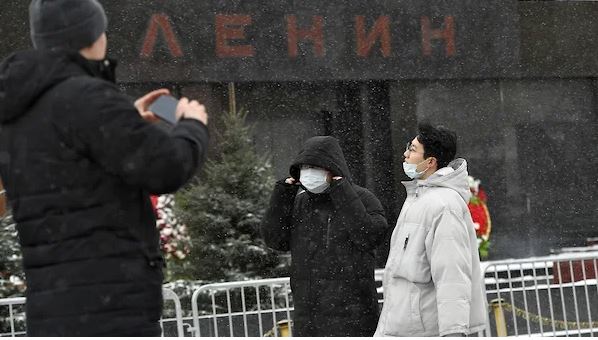
El lector ruso: El espíritu del año nuevo


“Devuelve el espíritu del año nuevo”: Igor Stomajin, Moscú, 2024

Fiel a su naturaleza vanguardista, el Noise Cabaret estrena, el 25 de diciembre, la serie inmersiva Diálogos, basada en la obra filosófica de Platón. Aleksander Judiakov transforma la antigua filosofía griega en una animada, ingeniosa y provocativa charla con la audiencia. 

Junto a su compañero, Ivan Wahlberg, Judiakov, quien no sólo actúa sino que también dirige el proyecto, guiará a la audiencia a través del laberíntico  pensamiento de Platón: ¿qué es la justicia?, ¿dónde está la línea entre lo existente y lo no existente?, ¿cuál es la naturaleza del amor? Estas y muchas otras fundamentales preguntas filosóficas servirán de punto de partida para reflexionar y debatir. 

Diálogos es una serie de performances interactivas en la que cada espectador toma parte en discusiones filosóficas que consisten en textos de Platón adaptados e improvisados de forma histriónica, lo que significa que el desarrollo de la sesión depende de la participación de la audiencia. Cada nueva performance es un capítulo aparte que trata un problema filosófico específico, de forma que el espectador puede unirse a la serie en cualquier momento. El primer episodio está dedicado al concepto de la justicia.   

El Noise Cabaret planea invitar a celebridades de San Petersburgo para enriquecer la conversación con la audiencia con sus propias opiniones y perspectivas. 

Judiakov ha compartido la idea básica del proyecto:

“Quisimos crear una historia acerca de gente que conversa en un bar. Pero, gente que habla sólo entre ellos no es interesante, tiene que haber algo primordial. Cuando estudié a Platón, me interesé en muchos aspectos de su filosofía, sería un error limitarnos a un solo tópico. Así nació la idea de crear una serie: tomar a Platón, leerle y discutir los temas que él refiere en los diálogos socráticos. 

Planeamos producir una nueva sesión cada dos o tres meses. No pretendemos ser estudiosos serios de la filosofía platónica, sino que esta es más bien una excusa para hablar con el público acerca de temas difíciles, exponer los Diálogos y reflexionar acerca de estos. Y un bar es un lugar donde podemos hablar de todo tipo de cosas, incluso de filosofía”.

Fuente: Fontanka.ru, 23 de diciembre del 2024. Traducción original The Russian Reader. Traducción al español por Hugo Palomino.


Los rusos han gastado casi 6 000 millones de rublos en Ozempic genéricos el 2024

Los medicamentos basados en semaglutida se usan habitualmente para perder peso. 

En los primeros diez meses del 2024, los rusos gastaron 5,9 000 millones de rublos (aproximadamente 52 000 millones de euros) en más de un millón de envases de versiones genéricas del medicamento Ozempic (semaglutido), de acuerdo al DSM Group, según un reporte de Vedomosti.

Entre los genéricos más populares se encuentran el Semavic de Geropharm y el Quincenta de Promomed. El Ozempic original dejó de exportarse a Rusia en diciembre del 2023, abriendo el mercado a otros equivalentes locales. 

2024 ha sido un año récord para medicamentos en esta categoría. En comparación, el 2023 los rusos gastaron sólo 297 millones de rublos en Ozempic al adquirir 20 mil dosis. El 2022 gastaron 1,9 mil millones de rublos (en 256 mil dosis); el 2021, 758 millones de rublos; y el 2020, 76 millones de rublos.

Los medicamentos basados en la semaglutida son usados en el tratamiento de diabetes, pero recientemente han ganado popularidad como fármacos  adelgazantes, lo que ha contribuido a su crecimiento de ventas en Rusia.  

Fuente: ASTV.ru, 21 de diciembre del 2024. Traducción original The Russian Reader. Traducción al español por Hugo Palomino.
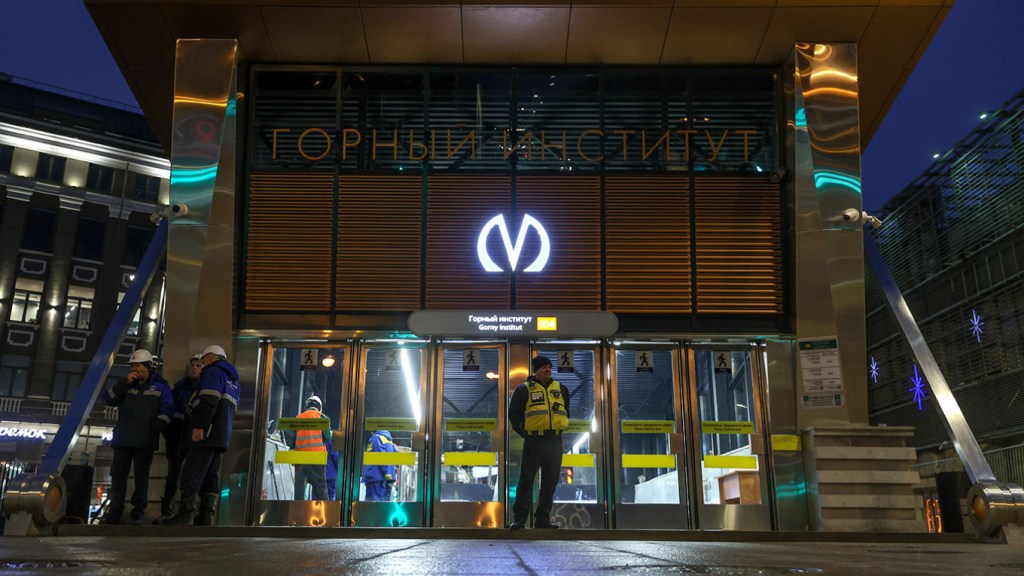

La ciudad de San Petersburgo inaugurará una nueva estación de metro esta semana. Así lo anunció, el jueves, el gobernador Alexander Beglov, en la que será la primera estación de metro en abrir en cinco años.

La estación Gorny Institute de la isla Vasílievski, extenderá la cuarta línea (naranja) hacia el oeste. Esta comenzará a operar el viernes (27 de diciembre) a las 9 de la mañana, cuando su vestíbulo se abra tanto al ingreso como a la salida, dijo Beglov.

“La apertura de la estación Gorny Institute es un hito”, escribió el gobernador en Telegram, haciendo notar que la ciudad ha superado “retos importantes” durante la construcción de la misma.

Beglov agradeció al presidente Vladimir Putin, a los constructores del metro, a ingenieros y residentes de San Petersburgo por su paciencia y apoyo, calificando la finalización de la estación el “primer resultado” de los constantes esfuerzos para mejorar el sistema de metro urbano.

La inauguración de la estación se produce tras años de retrasos. Inicialmente programada para el 2015, su apertura se pospuso primero al 2018 y luego al 2022. El trabajo de construcción fue empañado por la fatal caída de un andamio en junio del 2020, incidente en el que falleció un trabajador y otro resultó herido.   

Gorny Institute es la primera estación en abrir desde el 2019, cuando otras tres estaciones, Prospect Slavy, Dunayskaya y Shushary fueron inauguradas.

El metro de San Petersburgo está compuesto en la actualidad por cinco líneas y 72 estaciones. Sin embargo, su expansión se ha ralentizado con el tiempo, en claro contraste con el pujante sistema de metro de Moscú, que este último año inauguró ocho nuevas estaciones.  

Fuente: Moscow Times, 26 de diciembre del 2024. Traducción al español por Hugo Palomino para The Russian Reader.


Al tratar de comprender la tonalidad del film (Anora), se me viene a la memoria una frase de Francis Bacon: “Uno puede ser optimista y no tener esperanza alguna”. La situación en la que los protagonistas se ven envueltos, a merced de los ricos, es totalmente desesperanzadora. La versión optimista del guión mostraría a un Vanya que encararía a sus padres para huir con Ani, aún cuando así perdiera su fortuna –lo que constituye la trampa de la película. O quizás, la madre despiadada y capitalista podría sentir respeto a regañadientes por su tenaz nuera, como ocurrió en la última temporada de Fargo. Aún con su siniestro  desenlace, la impresión que deja la película  se aleja de lo penoso o pesimista. El optimismo desesperanzado del cine de Baker se sostiene en lo extraordinario de la vida que parece escapar de la pantalla y, especialmente, su cuidado por los personajes, incluso Vanya.  

Fuente: Aaron Schuster, “The Ethical Dignity of Anora,” e-flux Notes, 20 de noviembre del 2024. Traducción al español por Hugo Palomino para The Russian Reader.


Durante el otoño del 2023, con el objeto de entender qué ocurre con la sociedad rusa en tiempos de guerra, el equipo del Laboratorio Sociológico Público (Public Sociology Laboratory en inglés) realizó una serie de viajes de investigación etnográfica a tres regiones rusas: Sverdlovsk, Krasnodar y Buriatia. En el transcurso de un mes los investigadores del Laboratorio observaron cómo la gente aborda el tema de la guerra y sus efectos en la vida diaria de pueblos y ciudades. Grabaron también  entrevistas sociológicas con residentes locales. El Laboratorio ha compilado tres detallados diarios de observación (de más de 100 mil palabras cada uno) y ha conducido 75 entrevistas exhaustivas. Más importante aún, ha recolectado datos realmente invaluables que proporcionan una idea de lo que dice y piensa la gente acerca de la guerra en su vida cotidiana, más allá de sus respuestas a las interrogantes de los investigadores.  

El texto completo del reporte es de la envergadura de un libro, escrito también como uno: en siete capítulos se introducen  muchos personajes, permitiendo así a los lectores sumergirse por completo en los tiempos de la guerra contemporánea en Rusia. El siguiente sumario destaca las principales conclusiones del análisis.

●      La sociedad rusa permanece políticamente desmovilizada y sin ideología. Aún cuando predomina la opinión de que es una sociedad estrictamente militarizada, vemos que la guerra se ha convertido en una rutina y por ende en una parte ignorada de la realidad. Por ejemplo, comparado con el primer año del conflicto, la cantidad de simbología a favor de la guerra en espacios públicos ha disminuido en las tres regiones. La guerra no se ha convertido ni en fuente de nuevas ideas en la vida cultural de pueblos y ciudades ni se ha integrado en el ámbito familiar o en el ámbito cultural establecido. La guerra no se discute en espacios públicos, incluso, salvo raras excepciones, en comunidades locales en línea.    

●      En conversaciones espontáneas, los rusos raramente discuten los objetivos generales, causas, criminalidad o justificaciones de la guerra. Están más preocupados por el impacto del conflicto en sus vidas cotidianas. Cuando hablan acerca de la guerra, usualmente vuelven sobre tópicos que ya discutían antes de la conflagración, por ejemplo, problemas cotidianos, dinero o ética. Los hombres discuten más a menudo temas que son considerados “masculinos” en la sociedad, como aspectos técnicos de la guerra; mientras las mujeres se dedican a temas más “femeninos” como el efecto destructor del conflicto en las familias.

●      La participación de diversos tipos de voluntariado a favor de la guerra y asistencia organizada a la milicia, que generalmente es tomada como referencia y ejemplo de la movilización y militarización de la sociedad rusa, raramente está  motivada por un firme aval del público a la “operación especial”. Está, más bien, asociada con la presión de la administración, las normas morales de la comunidad (sobre el apoyo mutuo) y/o por el deseo de ayudar a sus seres queridos, en lugar del deseo de propiciar una victoria rusa. La observación de actividades de voluntarios muestra que estos no discuten de guerra o política en el trabajo, sino que prefieren temas  con los que pueden relacionarse personalmente: precios, pensiones, familias y/o historias vinculadas a centros voluntarios. 

●      A pesar de todas las similitudes, la guerra es percibida de forma diferente en diferentes regiones. Las peculiaridades de la perspectiva  de cada región se debe a factores como el número de unidades militares y colonias penitenciarias desde donde se reclutan presos, la proximidad a la zona de combate, la prosperidad de la región y el acceso a puestos de trabajo decentes, la compenetración de los lazos sociales, la circulación de noticias que llegan de amistades en el frente de batalla, etc. En otras palabras, las diferencias en las percepciones de la guerra pueden atribuirse principalmente a las peculiaridades de la vida en las regiones previas a la invasión rusa de Ucrania.

●      El conflicto entre opositores y simpatizantes de la guerra está perdiendo fuerza gradualmente, mientras el cisma entre aquellos que permanecen en Rusia y quienes se marcharon crece. Ambos casos se dan porque la experiencia compartida de vivir a través de una situación difícil dentro del país se está convirtiendo en algo más importante que cualquier diferencia de puntos de vista para muchos rusos y también porque la gente discute cada vez menos acerca de la guerra.

●      Al mismo tiempo, el menguante conflicto entre opositores y simpatizantes de la guerra no siempre implica una mayor cohesión social. Ya que la sociedad está intentando vivir como si la guerra no estuviera ocurriendo y el gobierno no menciona ninguna pérdida o problema relacionado con la guerra, todas las consecuencias negativas del conflicto se han normalizado o han sido apartados al ámbito de los “problemas personales” que no son discutidos con otros y que todos deben lidiar por sí mismos.

●      En general, muchos no se sienten capaces de influir en las decisiones políticas. Por consiguiente, se distancian cada vez más de la guerra. Ellos entienden que no pueden cambiar la política del gobierno pero retienen, al menos, algún control sobre sus vidas privadas, por lo que se refugian en estas. Con el tiempo, no solo los rusos apolíticos sino incluso opositores declarados de la invasión  sienten esta impotencia y, como resultado, algunos de ellos aceptan la nueva realidad, mientras siguen condenando la guerra para sus adentros.  

●      Consecuentemente, muchos rusos desconfían cada vez más de noticias políticas provenientes de un rango diverso de fuentes. En cambio ponen su confianza en medios locales. Los problemas locales en las noticias les parecen más importantes y relevantes. Más aún, sienten que, a diferencia de la guerra, al menos tienen la capacidad de influenciar en asuntos locales. 

●      Al mismo tiempo, la guerra está influyendo en el estado emocional de la gente. Muchos de nuestros interlocutores admiten haber experimentado ansiedad, tensión, incertidumbre, miedo incluso cuando no hablan de estas emociones  abiertamente. La partida de hijos y maridos a la guerra hace que las mujeres “griten a todo pulmón”. Sin embargo, raramente comparten estos sentimientos con otros y si lo hacen es en círculos de amistades cercanas. 

●      Muchos rusos sin interés en la política pueden justificar o condenar la guerra dependiendo del contexto comunicativo.

  1. Tienden a justificar la guerra de forma no emocional a través de la normalización (“siempre ha habido guerras”) o la racionalización (“era necesario”) cuando se les pregunta directamente en contextos formales como en las entrevistas de investigación.
  2. Tienden más a criticar la guerra cuando se les sugiere pensar en los efectos negativos de esta sobre la gente ordinaria. Este criticismo difiere del de los opositores al conflicto. Para los opositores, la guerra es un crimen moral contra Ucrania, mientras que para los rusos apolíticos, la guerra es vista como algo que destruye la sociedad rusa y daña a la gente común. Sin embargo, este criticismo no lleva a los rusos apolíticos a cuestionarse la necesidad o inevitabilidad de la guerra ni a extender sus críticas hacia el gobierno.
  3. Tienden a justificar la guerra emocionalmente cuando son confrontados con narrativas tradicionales contrarias al conflicto. Cuando Rusia es acusada de cometer crímenes morales contra la gente de Ucrania, suelen tomar tales acusaciones de manera  personal e intentan defender su propia dignidad.

Algunos experimentan un fortalecimiento del sentimiento de identidad nacional y, a veces, esto incrementa la demanda de una mayor solidaridad. Es importante dejar constancia que este incremento de la identidad nacional no guía a los rusos a adoptar el signo imperial del nacionalismo. A diferencia del Kremlin, la gente común y corriente vive en un mundo de estados-nación, no en un mundo de fantasías imperiales (según estas fantasías, Ucrania no es un estado real y los ucranianos son gente inferior). 

Una sensación de duda es lo que realmente une a los rusos hoy en día. A pesar de que la gente usa diferentes estrategias para hacer frente a esa sensación, esta complica significativamente la habilidad de planificar sus vidas y hunde a los rusos en el pesimismo.

Así, por una parte, lo que antes era la  naturaleza singular de la guerra, está dando paso a la normalización: gradualmente la guerra se está convirtiendo en algo ordinario, un elemento más del mundo que les rodea. De alguna manera, muchos rusos se resisten a los intentos del Kremlin de convertir ciudadanos ordinarios en partidarios ideológicos y a los intentos de la oposición liberal, que se manifiesta contra la guerra, de forzar a la sociedad a experimentar un sentimiento de culpa y participación activa. Por otra parte, la guerra constantemente nos recuerda su presencia al crear nuevas amenazas, nuevas ansiedades y nuevas razones para tener a los rusos descontentos.

Fuente: Public Sociology Laboratory (Programa ruso), diciembre del 2024. Traducción al español por Hugo Palomino para The Russian Reader.


¡Queridos lectores!

Estos tiempos son difíciles, la clave en este caso es persistir en todo sentido.

Nadie dijo que fuese sencillo.

Pero no es tan duro tampoco.

El otro día le pregunté a Vladimir Putin si él esperaba algo más de sí mismo en el año que acababa.

Pero quiero preguntarte, lector, ¿esperas algo más de ti mismo el año que viene?

Necesitamos esperar algo. Necesitamos querer algo. Es una forma de aferrarnos a nosotros mismos. De cuidar de nosotros mismos. Incluso de encontrarnos a nosotros mismos.

¡Un signo duro (“Ъ”) nunca será un signo blando (“Ь”)!

¡Feliz nuevo año por llegar!

¡No nos quedemos a la defensiva!  

Andrei Kolesnikov, Corresponsal especial,  Editorial Kommersant.

Fuente: correo electrónico de Kommersant, 31 de diciembre del 2024. Traducción original The Russian Reader. Traducción al español por Hugo Palomino. El llamado signo duro, que los bolcheviques eliminaron del alfabeto cirílico ruso en 1918, ha sido el logotipo de Kommersant desde que el periódico fue relanzado en enero de 1990. Andrei Kolesnikov ha sido el corresponsal especial del medio en el Kremlin, es decir el jefe Putinversteher* del diario, por muchos años. Por supuesto, él lo negará cuando las cosas se pongan difíciles y Putin se marche, y dirá que ha sido siempre la forma cínica y jocosa, aunque siempre leal, en la que ha escrito acerca del dictador ruso y criminal de guerra durante todos estos años.   

* Término derivado del alemán versteher, persona con conocimiento de un tema en particular, usado aquí de forma peyorativa, algo así como un “Putinologo” en el peor sentido de la palabra.
Thе New Year Spirit


Faithful to its avant-garde nature, Noise Cabaret premieres the immersive series Dialogues, based on the philosophical works of Plato, on December 25. Alexander Khudyakov turns ancient Greek philosophy into a lively, witty and provocative dialogue with the audience.

Along with his partner Ivan Wahlberg, Khudyakov, who not only acts in the project but directs it, will guide the audience through the labyrinths of Plato’s thought. What is justice? Where is the line between existence and non-existence? What is the true nature of love? These and many other fundamental philosophical questions will serve as starting points for reflection and debate.

Dialogues is a series of interactive performances in which each viewer is involved in a philosophical discussion consisting of adapted texts by Plato and actorly improvisation, meaning that the way the performance goes depends on the audience’s involvement. Each new performance is a separate chapter dealing with a specific philosophical problem, so you can join the series at any stage. The first episode deals with the concept of justice.

Noise Cabaret plans to invite Petersburg celebrities to enrich the conversation with the audience with their own opinions and views.

Khudyakov shared the idea behind the project.

“We wanted to do a story related to people talking in a bar. But just people talking to each other is not interesting. There has to be a big focus. When I studied Plato, I was interested in several aspects of his philosophy. It would have been wrong to limit ourselves to a single topic. So the idea to make a series arose: take Plato, read him, and discuss the themes he raises in the Socratic dialogues.

“We plan to produce a new episode every two or three months. There’s no pretense here that we’re serious scholars of Plato’s philosophy: it’s more of an excuse to talk to people about difficult topics, to air the Dialogues and reflect on them. And a bar is a place where you can talk about all sorts of things, including philosophy.”

Source: Fontanka.ru, 23 December 2024. Translated by the Russian Reader


Russians spent almost 6 billion rubles on Ozempic generics in 2024

Semaglutide-based drugs are commonly used for weight loss

In the first ten months of 2024, Russians spent 5.9 billion rubles [approx. 52 billion euros] on over one million packs of generic versions of the drug Ozempic (semaglutide), according to DSM Group, as reported by Vedomosti.

Among the most popular generics are Geropharm’s Semavic and Promomed’s Quincenta. The original drug Ozempic stopped [sic] official supplies to Russia in December 2023, opening the market to domestic analogues.

2024 was a record year for drugs in this category. By comparison, in 2023, Russians spent only 297 million rubles on Ozempic, buying 20 thousand packs. In 2022, they spent 1.9 billion rubles (256 thousand packs); in 2021, 758 million rubles; and in 2020, 76 million rubles.

Semaglutide-based drugs are used to treat diabetes but have recently been gaining popularity as weight loss drugs, which has also contributed to their sales growth in Russia.

Source: ASTV.ru, 21 December 2024. Translated by the Russian Reader


St. Petersburg will open a new metro station this week, Governor Alexander Beglov announced Thursday, marking the former Tsarist capital’s first new metro station in five years.

The Gorny Institute metro station, located on Vasilievsky Island, will extend the fourth (or “orange”) line westward. It will begin operations at 9:00 a.m. on Friday, with its vestibule open for both entry and exit, Beglov said.

“The opening of Gorny Institute is a milestone,” the governor wrote on Telegram, noting that the city had overcome “significant challenges” during the station’s construction.

Beglov thanked President Vladimir Putin, metro builders, engineers and residents of St. Petersburg for their patience and support, calling the station’s completion the “first results” of sustained efforts to advance the city’s metro system.

The station’s opening comes after years of delays. Initially scheduled for completion in 2015, its opening was postponed to 2018 and later to 2022. Construction efforts were further overshadowed by a fatal scaffolding collapse in June 2020 that killed one worker and injured another.

Gorny Institute is the first station to open since 2019, when three others — Prospect Slavy, Dunayskaya, and Shushary — were inaugurated.

St. Petersburg’s metro is currently made up of five lines and 72 stations. However, it has expanded slowly over the years, in stark contrast to Moscow’s burgeoning metro system, which this year opened eight new stations.

Source: Moscow Times, 26 December 2024


[…]

In trying to grasp the tonality of the film [Anora], I am reminded of a line from Francis Bacon: “You can be optimistic and totally without hope.” The situation the characters find themselves in, being at the mercy of the rich, is totally without hope. The “hopeful” version of the script would be one in which Vanya does stand up to his parents and runs off with Ani, even at the price of losing his wealth—this is the film’s narrative lure. Or maybe another where the ruthless capitalist mother gains a grudging respect for her tough daughter-in-law, like in the last season of Fargo. But despite its grim closure, the impression the film gives is far from dreary or pessimistic. The hopeless optimism of Baker’s cinema lies in the sheer life that seems to almost burst out of the filmic frame, and, especially, his deep care for his characters, even Vanya.

Source: Aaron Schuster, “The Ethical Dignity of Anora,” e-flux Notes, 20 November 2024


In the fall of 2023, with the goal of understanding what is really happening with Russian society during wartime, the Public Sociology Laboratory team went on ethnographic research trips to three Russian regions—Sverdlovsk, Krasnodar and Buryatia. Over the course of a month, PS Lab researchers observed how people talk about the war and how it affects daily life in cities and villages. In addition, they recorded sociological interviews with local residents. PS Lab has compiled three detailed ethnographic observation diaries (more than 100,000 words apiece) and conducted 75 in-depth interviews. Overall, it has managed to collect truly unique data that provides an idea of what people say and think about the war in everyday situations, and not only when answering researchers’ questions.

The full text of the report is book-length and written in a book-style format: it consists of seven chapters, introduces many characters, and allows readers to be fully immersed in contemporary wartime Russia. The following summary, meanwhile, highlights the main analytical conclusions.

  • Russian society remains politically demobilized and deideologized. Despite the prevailing opinion that it is strictly militarized, we see that the war has become routine and therefore a disregarded part of reality. For example, compared to the first years of the war, the amount of prowar symbolism in public spaces has decreased in all three regions. The war has neither become a source of new ideas in the cultural life of cities or villages nor been integrated into familiar and already-established cultural formats. The war is not discussed in public places, including, with rare exceptions, local online communities.
  • In spontaneous conversations, Russians rarely discuss the overall goals and causes, criminality, or justifications of the war. They are concerned with the impact of the war on their everyday lives. When they talk about the war, they mostly talk about the same things they discussed before the war, for example, everyday difficulties, money, or ethics. Men more often discuss topics that are considered “masculine” in society, such as the technical side of the war, and women usually talk about “feminine” topics, such as how war destroys families.
  • Participation in various types of prowar volunteering and organized assistance for the military, which are often cited as an example of the mobilization and militarization of Russian society, is rarely motivated by people’s firm support for the “special operation.” It is usually associated with pressure from the administration, community moral norms (concerning mutual assistance), and/ora desire to help loved ones, rather than a wish to make victory for Russia more likely. Observation of volunteers’ activities show that while working, they do not discuss the war or politics, rather choosing topics that are personable and relatable to them: prices, pensions, families, and/or stories related to the volunteer centers.
  • Despite all these similarities, the war is perceived slightly differently in different regions. The peculiarities of each region’s view owe to factors like the number of military units and penal colonies from which prisoners are recruited, proximity to the combat zone, the prosperity of the region and the availability of decent jobs, the density of social ties, the circulation of news transmitted by friends on the front lines, etc. In other words, the differences in perceptions of the war are attributable mainly to the peculiarities of life in the regions before the invasion of Ukraine.
  • The conflict between opponents and supporters of the war is gradually subsiding, while the rift between those who stayed in Russia and those who left is growing. This is happening both because the shared experience of living through a difficult situation within the country is becoming more important for many Russians than any differences in viewpoint, and also because people are discussing the war less.
  • At the same time, the waning conflict between opponents and supporters of the war does not always mean more social cohesion. Since people are trying to live as if the war is nonexistent and the government does not talk about any losses or problems associated with the war, all negative consequences of the war are either normalized or pushed into the realm of “personal problems” that are not discussed with anyone and that everyone must deal with on their own.
  • Overall, many people do not feel able to influence political decisions. Therefore, they are increasingly distancing themselves from the war. They understand that they cannot change government policy, but they retain at least some control over their private lives—and therefore they are immersed in them. Over time, not only apolitical Russians but even sure opponents of the invasion experience this powerlessness and, as a result, some of them accept the new reality while continuing to condemn the war internally.
  • Consequently, many Russians are increasingly distrustful of political news from a broad range of sources. Instead, they put their trust in local media. Local problems and news seem much more important and relevant to them. Moreover, they feel that, unlike the war, local issues are at least sometimes within their ability to influence.
  • At the same time, the war is weighing people’s emotional state. Many of our interlocutors admit that they experience anxiety, tension, uncertainty, fear, even if these things are not usually spoken about openly. The departure of sons and husbands to war makes women “scream at the top of their lungs.” However, people rarely share such emotions with others, and if they do, they do so in groups with close friends.
  • Many Russians who are not interested in politics may justify or condemn the war depending on the communicative context.
  1. They tend to non-emotionally justify the war through normalization (“there are always wars”) or rationalization (“it was necessary”) when asked about it directly in more formalized settings, such as research interviews.
  2. They are more likely to criticize the war when prompted to think about how it negatively affects them as ordinary Russians. This criticism differs from that of war opponents. For opponents, the war is a moral crime against Ukraine, whereas for apolitical Russians, the war is seen as something that destroys Russian society and harms ordinary people. However, this criticism does not lead apolitical Russians to question the war’s necessity or inevitability, nor does it extend to criticizing the Russian government.
  3. They tend to emotionally justify the war when confronted with traditional anti-war narratives. When Russia is accused of committing moral crimes against the Ukrainian people, they often take such accusations personally and attempt to defend their own dignity.
  • Some people have experienced a strengthened sense of national identity, and sometimes a demand for greater solidarity arises. It’s important to note that this increased sense of national identity does not lead Russians to adopt the official imperial brand of nationalism. Unlike the Kremlin, ordinary people live in a world of nation states, not in a world of imperial fantasies (according to which Ukraine is not a real state and Ukrainians are an inferior people).
  • A feeling of uncertainty is what truly unites Russians today. Despite the fact that people choose various strategies to cope with this feeling, it still significantly complicates the ability to plan one’s life and plunges Russians into pessimism.

Thus, on the one hand, the formerly extraordinary nature of the war is giving way to normalization: the war is gradually becoming something ordinary, another unremarkable part of the surrounding world. In a sense, many Russians resist both the Kremlin’s attempts to turn ordinary citizens into ideological supporters and the attempts of the anti-war liberal opposition to force society to actively experience guilt and fight. On the other hand, the war constantly reminds us of its existence, creating new threats, new anxieties, and new reasons for discontent in Russians.

Source: Public Sociology Laboratory (The Russia Program), December 2024


Dear readers!
Times are tough, and the key in this case is holding on in every sense.
No one says it’s easy.
But it’s not so hard either.
The other day I asked Vladimir Putin whether he expected anything more from himself in the outgoing year.
But I want to ask you: do you expect anything more from yourself in the coming year?
We need to expect things. We need to want things. It’s a way of holding on to ourselves. Of looking after ourselves. Of not losing ourselves. And even of finding ourselves.
A hard sign (“Ъ”) will never be a soft sign (“Ь”)!
Happy incoming New Year!
Let’s not be on the defensive!

Andrei Kolesnikov, Special Correspondent, Kommersant Publishing House

Source: Email from Kommersant, 31 December 2024. Translated by the Russian Reader. The so-called hard sign, which the Bolsheviks dropped from the Russian Cyrillic alphabet in 1918, has been the logo of Kommersant since the newspaper’s relaunch in January 1990. Andrei Kolesnikov has been the newspaper’s special Kremlin correspondent — that is, its chief Putinversteher — for many years. Of course he’ll deny it all when push comes to shove and Putin goes, and he’ll point of course to the cynical, jocular (but ultimately loyal) way he’s written about the Russian dictator and war criminal all these years.

Teach Your Children Well: Import Substitution

As Kommersant has learned, Russian schools have received new recommendations on teaching special lessons in the light of the “special military operation” in Ukraine. In this case, teachers must organize classes for students in grades 5-9 and 10-11 on the topic of “anti-Russian sanctions and their impact on the domestic economy.” In the training manual, this “impact” is depicted rather positively: schoolchildren are told about the growth of the share of Russian-made products in several sectors, and then they are asked to assess which countries would suffer great economic losses from sanctions. Economists interviewed by Kommersant point out the mistakes made by the manual’s authors and warn that Russian schoolchildren will soon see the effect of sanctions themselves.

Materials for the “sanctions” lesson were handed over to Kommersant by a teacher in the Moscow Region. We found reports on such lessons on the websites of a number of schools in the Moscow, Oryol and Samara regions. As stated in the manual, teachers should “show Russia’s capacities for overcoming the negative consequences of the sanctions pressure brought by western countries on our society’s economy [and] give [pupils] an idea of the main vector of anti-sanctions policy in the Russian Federation.” The classes are to be held as part of social studies courses.

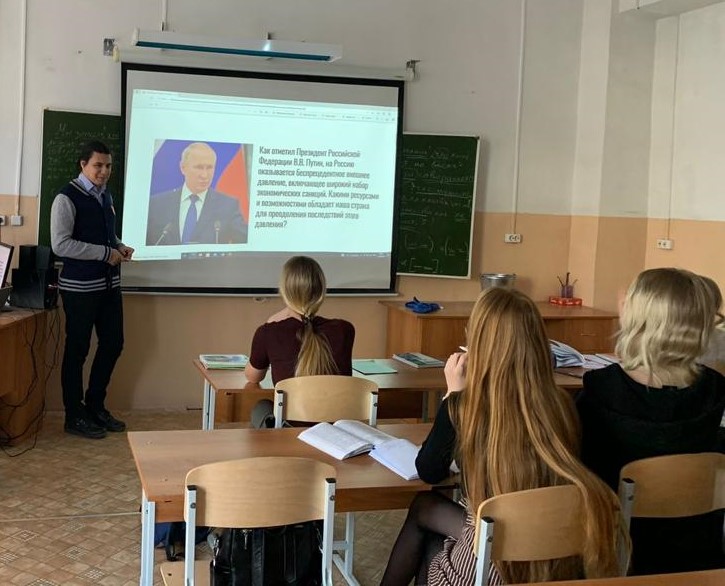
At the beginning of the lesson, teachers must quote President Vladimir Putin that “unprecedented external pressure has been exerted on Russia.” They must then ask schoolchildren whether they know “what the priority measures of our state’s anti-sanctions policy are.”

“Thus, as the photo from Lyceum No. 3 (Opornaya, 4) shows, as prescribed in the methodological recommendations, the lesson began with a quote from the head of state that “unprecedented external pressure has been exerted on Russia.” Vladimir Putin then invites teenagers to familiarize themselves with the resources that the country has in the face of western sanctions. Source: “Children in Vladivostok schools are told about western sanctions and the benefits of import substitution,” vl.ru, 5 April 2022

Only then should teachers tell their pupils what sanctions are: “Restrictions designed to ‘punish’ a country for its actions.” At this point, they must also clarify what “actions” are meant: “the special military operation being conducted by Russia in Ukraine, occasioned by the need to protect the population of Donbas.” Examples of sanctions include the freezing of assets of state corporations and banks, as well as a portion of Russia’s gold and foreign exchange reserves. Another example is the departure of foreign companies.

Teachers should then tell pupils that Prime Minister Mikhail Mishustin “has identified protecting the domestic market and keeping the able-bodied population employed as the most important focus of the anti-sanctions policy.” And students have to answer the question “Why exactly are these areas a priority?”

The manual also contains a link to a video about the benefits of import substitution.

The video explains that, in the 1990s and early 2000s, imported products prevailed over domestic ones. “Active advertising of foreign goods” and “the idea of the superiority of imported products and the inability of Russian manufacturers to bring similar products online” were pushed. But by 2022, the situation had changed dramatically, says the voice-over: the share of Russian-made products had grown in food production machinery (from 12% to 45%), agricultural machinery (from 24% to 55%), and machine tool construction (from 18% to 38%). It is also suggested that teachers show pupils statistics from the Ministry of Industry and Trade during the lesson. The statistics purportedly show that the share of Russian goods across the entire civilian range of commodities has increased many times in the field of mechanical engineering since 2014.

“Together with pupils, the teachers conclude that economic policy in recent years has been aimed at increasing protections for domestic producers and ensuring their sustainability in the face of external crises,” the lesson script says. At this point, students in grades 5-9 are asked to list the set of measures taken to support the Russian economy and citizens in “conditions of increased pressure from sanctions,” while high school students have to describe their intended effect.

At the end of the lesson, students must fill out a feedback form. They have to answer the following questions: “Are the sanctions against Russia fair?”, “Will the sanctions lead to a strengthening of the Russian economy?”, and “Who will suffer great economic losses?”

There are three possible answers to the last question: Russia, the NATO countries, or all countries of the world.

The Education Ministry confirmed to Kommersant that it had sent methodological recommendations to schools. They were developed by the Institute of Education Development Strategies, which is subordinated to the Ministry. The Ministry noted that “leading third-party experts” from different industries had been involved in developing the lesson scenario. “The lesson materials offer schoolchildren the chance to familiarize themselves with the measures taken by the president and the government to counteract sanctions by unfriendly countries,” the Ministry told Kommersant. “The lesson materials specially emphasize the characteristics of the import substitution policy that has been implemented in Russia in recent years. The lesson assumes the active involvement of students when working with documents and interactive materials containing important information about the Russian economy’s achievements in various sectors and its readiness to resist sanctions,” they said.

Teachers from schools in Crimea and Sevastopol confirmed to Kommersant that they would have to give such lessons. And yet, they refused to give a personal assessment of the lessons, explaining that they were afraid of violating the laws on disrespect for the authorities and discrediting the armed forces. The Irkutsk Regional Ministry of Education said that lessons on import substitution had already been conducted (as extracurricular classes) for 85,000 students in 154 schools. “Children have generally shown an interest and reacted positively to the information,” they noted.

Kommersant asked economists to comment on the manual. Natalya Zubarevich, a specialist in regional socio-economic development, refused to look at it. “Why should I read this manual? It’s already clear as it is that we will lose the most advanced technology industries,“ she told Kommersant. “There is no need to hurry. Even if this manual is read aloud to children, life will show them how things really stand. In the summer, or certainly in the autumn, the children will come home and see for themselves that their families have no money, and that there is no way to buy certain goods.”

The manual’s specialized language is too complicated for both schoolchildren and teachers, says Vladimir Salnikov, an expert at the Center for Macroeconomic Analysis and Short-Term Forecasting.

“Many points [in the manual] are quite correct at the qualitative level, but you can argue with individual figures,” says Salnikov. “For example, according to our estimates, the share of imports in certain industries is slightly higher [than indicated in the lesson materials]. Mr. Salnikov considers it an incorrect decision to present mechanical engineering as a good example of import substitution. “Things were going much better in the Russian food industry and in a number of segments of the chemical industry. And things have been quite good in some parts of light industry,” the expert says, “but the progress has been worse in mechanical engineering.”

The presentation states that “the share of Russian-made goods in the automotive industry” increased from 7% in 2014 to 86.3% in 2020. Kommersant‘s sources in the automotive industry confess that they do not understand where these figures came from: “Probably, the figures for 2020 include Russia’s entire production of cars, regardless of localization. But in this case, it is wrong to call the goods absolutely domestic. It’s also unclear why the manual’s authors cite the figure of 7% for 2014. In fact, at that time, Russian production’s share in the car market was about 75%. It’s a shame that schoolchildren will receive distorted information,” they said. Our sources also reminded us that the only automotive plants currently operating in Russia are those belonging to GAZ, UAZ, KamAZ, Mazda Sollers, and the Chinese brand Haval. The rest have been idled due to sanctions.

In early March, the Education Ministry recommended that schools hold a special history lesson (see Kommersant, 2 March 2022). Its goal was to “shape” an adequate stance among high school students on the issue of the special peacekeeping operation by the armed forces. Later, classes devoted to fake news were held in schools, in which students were urged not to believe the reports of the Ukrainian authorities about the number of Russian soldiers who had been killed (see Kommersant, 11 March 2022). Finally, during the “Brotherhood of Slavic Peoples” lesson, schoolchildren were told about the kindred cultures of Russia, Belarus, and Ukraine, “who should remain a single people today and not succumb to the provocations of those trying to divide them.”

Source: Anna Vasilyeva, Maria Starikova, Olga Nikitina; Vlad Nikiforov (Irkutsk); and Alexander Dremlyugin (Simferopol), Kommersant, 5 April 2022. Translated by the Russian Reader

Case Closed?

Zhlobitsky

Investigation of Bomb at Arkhangelsk FSB Office Discontinued Due to Suspect’s Death
Kommersant
May 24, 2020

FSB (Federal Security Service) investigators have dropped the criminal prosecution of the teenager who in October 2018 brought a explosive device into the FSB’s Arkhangelsk Regional offices and perished in the resulting blast, TASS reports, citing a source. The case has been discontinued on non-exoneratory grounds.

“FSB investigators conducted a thorough investigation into the allegations of terrorism made against the Arkhangelsk teenager. Investigators obtained the findings of previous forensic examinations and questioned witnesses before deciding to terminate the case on non-exoneratory grounds in connection with the suspect’s death,” the source said.

All legal proceedings in the case have been completed, but the case will not be referred to the court. Once the criminal investigation into the terrorist attack is discontinued, the process of establishing the deceased man’s guilt has been completed, but the charges are not considered withdrawn.

The explosion in the entryway of the Arkhangelsk regional offices of the FSB occurred on October 31, 2018. A homemade bomb was detonated by 17-year-old Mikhail Zhlobitsky. Three FSB employees were injured, and the young man himself was killed on the spot. Before his death, [Zhlobitsky] posted an explanation for what he was about to do in an anarchist chat room on Telegram. He had decided to protest the “fabrication of cases and torture of people” [by the FSB] by setting off a bomb.

Several people have since been convicted of exonerating [sic] the attack. In February 2019, a criminal investigation was opened into the actions of Pskov journalist Svetlana Prokopieva, who had voiced an opinion about the teenager’s motives for detonating the bomb. For approving [sic] the bombing in Arkhangelsk, a resident of Sochi was sentenced to two and a half years in prison. For the same reason, Kaliningrad activist Vyacheslav Lukichev was fined 300,000 rubles. Ivan Lyubshin, a resident of Kaluga, was sentenced to five years and two months in a penal colony for exonerating terrorism over a comment he had posted on Vkontakte (VK). In Voronezh Region, a criminal investigation of exonerating terrorism was recently launched over a series of social media comments made by a local resident, Nadezhda Belova.

A growing number of Russians have been prosecuted or are currently facing prosecution for allegedly “exonerating” publicly the suicide bomber Mikhail Zhlobitsky. They include Nadezhda Belova, Lyudmila StechOleg NemtsevIvan LyubshinSvetlana ProkopievaAnton AmmosovPavel ZlomnovNadezhda RomasenkoAlexander DovydenkoGalina GorinaAlexander SokolovYekaterina Muranova15-year-old Moscow schoolboy Kirill, and Vyacheslav Lukichev. Photo courtesy of Anarchist Fighter. Translated by the Russian Reader

Welcome to Moscow!

chinamenThe photo accompanying the article translated below would leave no doubt in readers’ minds that it was people from China who would be targeted by the new surveillance measures. Photo by Gleb Shchelkunov. Courtesy of Kommersant
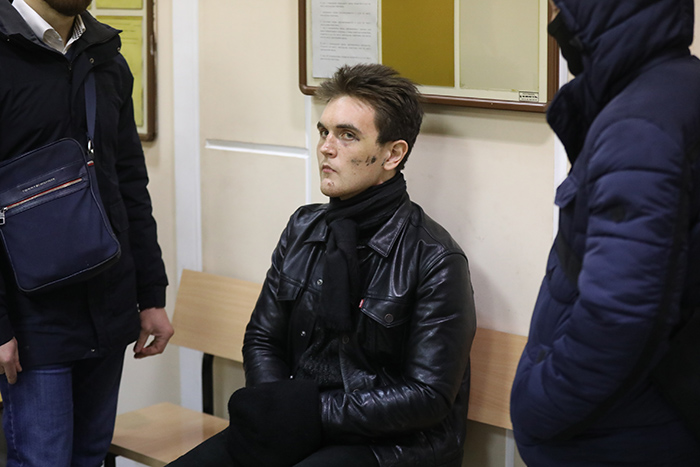
Big Tour Is Watching You
System for Monitoring Flows of Foreigners to Be Readied for When Borders Open
Yulia Tishina
Kommersant
April 9, 2020

It is not only the city’s residents that the Moscow mayor’s office wants to track: it is also interested in designing a system, based on data from telecom operators, for tracking the movements of tourists in the capital. The system should help monitor the incidence of coronavirus and localize breakouts after the borders have beern reopened. According to our sources, Yandex, which already supplies the authorities with data on transport flows and monitors the level of self-isolation in Moscow, could be eligible for the contract.

Moscow authorities could create a system for monitoring places where foreign tourists gather, a source in the mayor’s office has told our newspaper. It would track foreigners who came to Moscow and determine the areas where they spent the most time, using data from telecom providers based on roaming or local SIM cards.

According to the source, the Moscow Department of Information Technology (DIT) plans to sign a contract for providing such data with a sole provider. This information was confirmed by another source familiar with the authorities’ plans. According to the source, monitoring of tourists in Moscow would be required to control the incidence of infection after restrictions on movement between countries had been lifted: “The system should help track residents who have potentially come into contact with foreigners and localize outbreak areas.”

DIT’s press service said there were currently no plans to create such a system, but confirmed it was doing a “cost assessment of services for the provision of on-demand geo-analytical reports.”

City authorities have already been purchasing data from operators on the movement of individuals, based on the geolocation of SIM cards. Since 2015, DIT has spent 516 million rubles [approx. 6.3 million euros] on purchasing such data, Vedomosti reported in March 2019. The city administration’s analytical center acts as an intermediary between DIT and operators, and the data is anonymized.

Yandex could submit a bid design the tourist tracking system, said one of our sources. “The company already transmits its data to the authorities in various categories, including traffic flows,” he said. Yandex has also launched a system for monitoring the level of self-isolation in Moscow and other cities. Yandex declined to comment on city hall’s project. MTS, MegaFon, and VimpelCom also declined to comment.

A spokesperson at Tele2 said it is impossible to identify individual subscribers in projects using depersonalized data.

A system for monitoring coronavirus patients based on geolocation data from telecom operators was launched in Moscow on March 3.

To do this, the patient has to download a special app or get a device loaded with it from the authorities. The best option may be to implement monitoring of tourist traffic on the basis of the existing system, according to Dmitry Karosanidze, head of the network solutions sales support group at Jet Infosystems. “You would also have to work out how to rapidly upload data on newly arrived tourists from the databases of telecom operators, as well as the databases of the Tourism Ministry and the Border Guards,” he added.

Many companies in the retail and banking segment have been purchasing aggregated geolocation data for a long time from telecom operators to determine the best locations for stores and branches, said Kirill Morozov, head of the telecoms and IT division at PwC. “If data were collected and transmitted anonymously, it would not violate users’ rights,” he noted.

Such technologies already enable state agencies to analyze the flow of people in the city in order to make decisions about infrastructure development, said Anna Nikitova, an adviser at Yakovlev & Partners Law Group. “But selective tracking of individuals excludes depersonalizing information. And providing third parties with information about subscribers can only be done with their consent,” she noted. Therefore, bringing the system online would likely involve the authorities enacting new directives, the expert argued, while it would be important to ensure their compliance with European data protection regulation (GDPR).

Thanks to Anatrrra for the heads-up. Translated by the Russian Reader

Trump’s Christmas Gift to Putin: The Case of Nikita Semyonov and Georgy Chernyshov

20191230143413-img-3898Georgy Chernyshov. Photo by David Frenkel. Courtesy of Bumaga

Kira Dolinina
Facebook
February 12, 2020

After the verdicts in the Network Case, I would imagine I don’t have to explain anything about our justice system and how it is consuming our children. So I  simply ask you to recall that we have been raising money to pay the lawyers defending 23-year-old Nikita Semyonov, who has been framed on “terrorism” charges. Thanks to you, we raised the first installment, 200,000 rubles. Thank you very much!

But the case is still ongoing. The investigators are investigating, Nikita is in remand prison, and only the lawyers can stand up for him. Prison officials wouldn’t give him a pen for several weeks so that he could write a complaint. I won’t even mention their failure to document his injuries from the beating investigators gave him.

Let’s not surrender this boy to them, okay?

Here is the number of the Sberbank account for paying Nikita Semyonov’s lawyers: 5336 6902 4491 0313.

The money is really needed. Please re-post this message.


“The Nikita Semyonov Case: The FSB Pins Failed Terrorist Attack on Orphan.” ROMB, February 6, 2020

Before the new year, Putin thanked Trump for helping prevent a terrorist attack, and the FSB demonstratively arrested two young men in Petersburg, Nikita Semyonov and [Georgy] Chernyshov. They said on TV that the young men were going to blow up Kazan Cathedral and the shopping center near Moscow Railway Station, although the only evidence in the case is a photo of the cathedral, download from the internet, and memes that the young men exchanged in a chat room.

Semyonov talked to his lawyer on January 25. On January 30, the investigator made both of his lawyers sign an agreement not to disclose evidence in the preliminary investigation, so they are unable to comment on the specifics of the case.

Suspects in Terrorist Attack Case Deny Wrongdoing
Marina Tsareva
Kommersant
February 4, 2020

Saint Petersburg City Court has left Georgy Chernyshov in police custody. He and Nikita Semyonov were detained by the Russian Federal Security Service (FSB) before the New Year’s holidays for, allegely, planning terrorist attacks. The men allegedly planned to set  off explosions in Kazan Cathedral and the Galereya Shopping Center. Both suspects have denied any wrongdoing, although the FSB reported they had confessed to the crimes after they where detained. Semyonov’s lawyers claim their defendant never made any such confession, although he was interrogated three times without defense counsel present and was subjected to coercion by FSB officers.

Nikita Semyonov, 22, and Georgy Chernyshov, 23, were detained on December 27 of last year at around nine in the evening on Gagarin Prospect. After the Kremlin’s press service reported that Russian President Vladimir Putin had thanked US President Donald Trump for information about the planned attack, as communicated via the special services, the FSB’s public relations center issued a press release about the arrests of two persons who had been planning to commit terrorist attacks in crowded places in Petersburg during the New Year’s holidays.

The same day, media outlets, citing sources in the FSB, reported that a criminal case involving violations of Russian Federal Criminal Code Articles 30 and 205 had been opened, although the first article was not mentioned during the subsequent remand hearing, held three days after the arrests. Investigators alleged that both suspects had communicated with adherents of the banned terrorist organization Islamic State (IS) via messenger services.

Chernyshov and Semyonov allegedly informed an IS member about their plan to engage in terrorist activities and recorded a video showing them swearing allegiance to the group. After that, according to investigators, the men began selecting places to carry out terrorist attacks, settling on two sites in downtown Petersburg, the Galereya Shopping Center and Kazan Cathedral. They allegedly photographed both buildings, sending the images to IS.

According to the Petersburg judicial press service, Chernyshov has denied any wrongdoing. Earlier, Leonid Krikun and Andrei Fedorkov, Semyonov’s attorneys, told Kommersant that their client had denied involvement in the terrorist organization’s activities and told them he had never been interested in the ideas of Islam in any way, nor did he speak Arabic. (The conversation took place on January; on January 30, the investigator made both lawyers sign an agreement not to disclose evidence in the preliminary investigation, so they are currently unable to comment on the specifics of the case.) According to them, Semyonov had not confessed either to involvement with IS or planning to commit terrorist attacks. On the contrary, on December 30, the FSB reported that both suspects had confessed, and the agency had “seized [physical] evidence confirming they were planning terrorist attacks.”

The lawyers told Kommersant that Semyonov was interrogated three times without a lawyer present, including at night, and the FSB “pressured”* him during the interrogations.

A video released by the FSB on December 30 focused on the knives and ammunition found in Semyonov’s apartment. His lawyers noted that the ammunition was for a hunting rifle that had been legally owned by his father, who died in 2017. Neither the knives nor the ammunition were ultimately confiscated by the FSB.


Vyacheslav Falkov, Chernyshov’s attorney, reported that he had also been forced to sign a non-disclosure agreement and thus would no longer be able to comment on the case.

*Meaning that the FSB tortured Semyonov. Thanks to Kira Dolinina for the heads-up. Translated by the Russian Reader

Hand It Over

moscow highway serviceMoscow’s streets are, apparently, reserved for planet-killing traffic jams and idiotic displays of state power, like this parade of trucks by the Moscow Highway Service. Yesterday, another of the city’s municipal agencies, which are run as profit-making “state enterprises,” Moscow City Transport, won a 1.2 million-ruble lawsuit against opposition leaders and independent city council candidates for the losses it incurred, allegedly, during the July 27 protest rally in support of independent candidates barred from running in the September 8 elections. A raft of other frivolous lawsuits against the opposition is coming down the pike by way of punishing them for their persistence and their tactical victory this past Sunday. Photo courtesy of the Moscow Highway Service
Hand It Over: Court Awards Moscow City Transport 1.2 Million Rubles in Suit Against Opposition Politicians
Maria Litvinova
Kommersant
September 11, 2019

Alexei Navalny, Lyubov Sobol, Ivan Zhdanov, Yulia Galyamina, Ilya Yashin, Alexander Solovyov, Oleg Stepanov, and Vladimir Milov must jointly pay Moscow City Transport (Mosgortrans) 1.2 million rubles [approx. $18,000] for the losses it incurred due to traffic stoppages during the “unauthorized” protest rally on July 27 in Moscow. Such was the ruling made on Tuesday by the Koptevo District Court on the lawsuit brought by Moscow City Transport. The defendants were unsuccessful in their attempt to demand financial documents showing the losses. They argued that public transport was poorly organized and also pointed out the large-scaled public events held by the mayor’s office in the downtown area.

Moscow City Transport filed a suit against Alexei Navalny, Lyubov Sobol, Ivan Zhdanov, Yulia Galyamina, Ilya Yashin, Alexander Solovyov, Oleg Stepanov, Georgy Alburov, and Vladimir Milov, who were involved, allegedly, in organizing the July 27 protest rally dedicated to the course of the Moscow City Duma election campaign [sic]. The plaintiff claimed that public transport ground to a halt on several streets due to the blocking of roads by people who took part in the “unauthorized” event and the company incurred losses. Moscow City Transport sought 1.2 million rubles in damages from the members of the opposition.

The hearing at the Koptevo District Court was attended by legal counsel for the defendants, including Alexander Pomazuyev (Sobol and Stepanov), Oksana Oparenko and Sergei Badamshin (Solovyov), Vadim Prokhorov (Yashin), and Andrei Tamurka (Galyamina), as well as Vladimir Milov, who was barred from running in the elections, and his lawyer Valentina Frolova. Navalny and Zhdanov neither attended the hearing nor sent their lawyers. Moscow City Transport’s lawyers refused to give their names to reporters.

Judge Vera Petrova opened the hearing by rejecting a number of motions made by the defendants. In particular, the opposition politicians had asked for a financial report from Moscow City Transport for July 2019 showing the losses, as well as the logbooks of its bus drivers. According to Pomazuyev, it was impossible to substantiate Moscow City Transport’s calculations and corroborate the alleged losses.

The defendants had also moved to have officers of the Russian National Guard and the Interior Ministry, who, they claimed, had blocked roads, named as co-defendants, but the court turned them down.

The defense argued that when it refused to examine key documents the court had taken the plaintiff’s side. Its subsequent motion, asking for the judge to recuse herself, was also denied.

During the trial, one of the plaintiff’s lawyers admitted there had been traffic congestion in different parts of Moscow on July 27 but was unable to explain why the protest rally was the reason for the lawsuit.

Moscow City Transport had identified the persons liable for its losses on the grounds that they had already been convicted on administrative charges for their involvement in the “unauthorized” rally and they had published posts on social media encouraged people to turn out for the event.

The defendants and their lawyers wondered why they had been singled out given the fact that numerous people had either been detained at the protest rally or posted about it on social media.

“There were endless numbers of people on the internet who encouraged people to come out for the event,” a lawyer for the plaintiff conceded, “but we chose to sue these people.”

The lawyers for the defense rejected the claim their clients had encouraged people to block streets. They presented the court with a list of the streets traveled by the buses that, allegedly, got stuck in traffic due to the protest rally in downtown Moscow. For example, Bus No. 137 travels from Belovezhskaya Street to Kyiv Station without going through downtown.

Milov told the court that the documents presented by the plaintiff pointed to “traffic congestion,” not the “blocking of roads.”

“Because of traffic jams, it took me two and a half hours to get here today. Moscow City Transport should sue the Moscow mayor’s office for its poor job of regulating traffic,” he said.

“Moscow City Transport handles the sale of transport tickets in ticket offices around the city,” he said. “Passengers put down their money and decide for themselves when to use the tickets they buy. So, you do not incur losses when buses are stuck in traffic but make money hand over fist.”

The defense argued that the Moscow mayor’s office regularly blocked roads in order to hold city-sponsored events, but Moscow City Transport had never once sued the mayor’s office for losses.

Moscow City Transport’s lawyers countered that the mayor’s office always compensated them for losses.

“If you had compensated us, we would have no claim against you,” one of them said.

Frolova reminded the court of the “burden of responsibility” borne by the public authorities.

“How are the rights of people who enjoy dumplings and pancakes [a reference to the festivals regularly organized downtown by the mayor’s office—Kommersant] any different from the rights of people who are voicing their civic stance?” she asked.

The defendants insisted on the political nature of the court case, arguing it had to do with the elections to the Moscow City Duma.

“The elections are over, people voiced their opinion, let’s get back to the law,” Badamshin said to the judge.

“The court has ruled in favor of the plaintiff,” said Judge Vera Petrova, putting an end to the arguments.

The court rejected the suit in relation to one of the co-defendants, Georgy Alburov. The money will be recovered from all the other co-defendants jointly and severally.

Several other private firms, state-owned companies, and state agencies plan to seek compensation from the opposition, in particular, the Moscow Highway Service, the Moscow subway, the taxi service, the staffing company Ancor, the car rental company Fly Auto and, as transpired yesterday, the Moscow Prosecutor’s Office.

Translated by the Russian Reader

They Are Who They Are

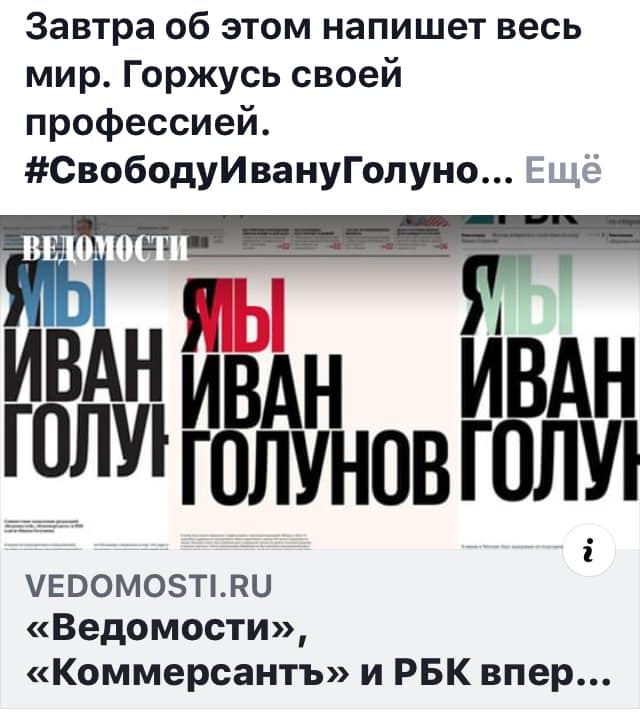
gorzhush“Tomorrow, the whole world will write about this. I am proud of my profession. #FreeIvanGolunov…” Vedomosti.ru: Vedomosti, Kommersant, and RBC will for the first time…” Screenshot of someone’s social media page by Ayder Muzhdabaev. Courtesy of Ayder Muzhdabaev
Ayder Muzhdabaev
Facebook
June 9, 2019

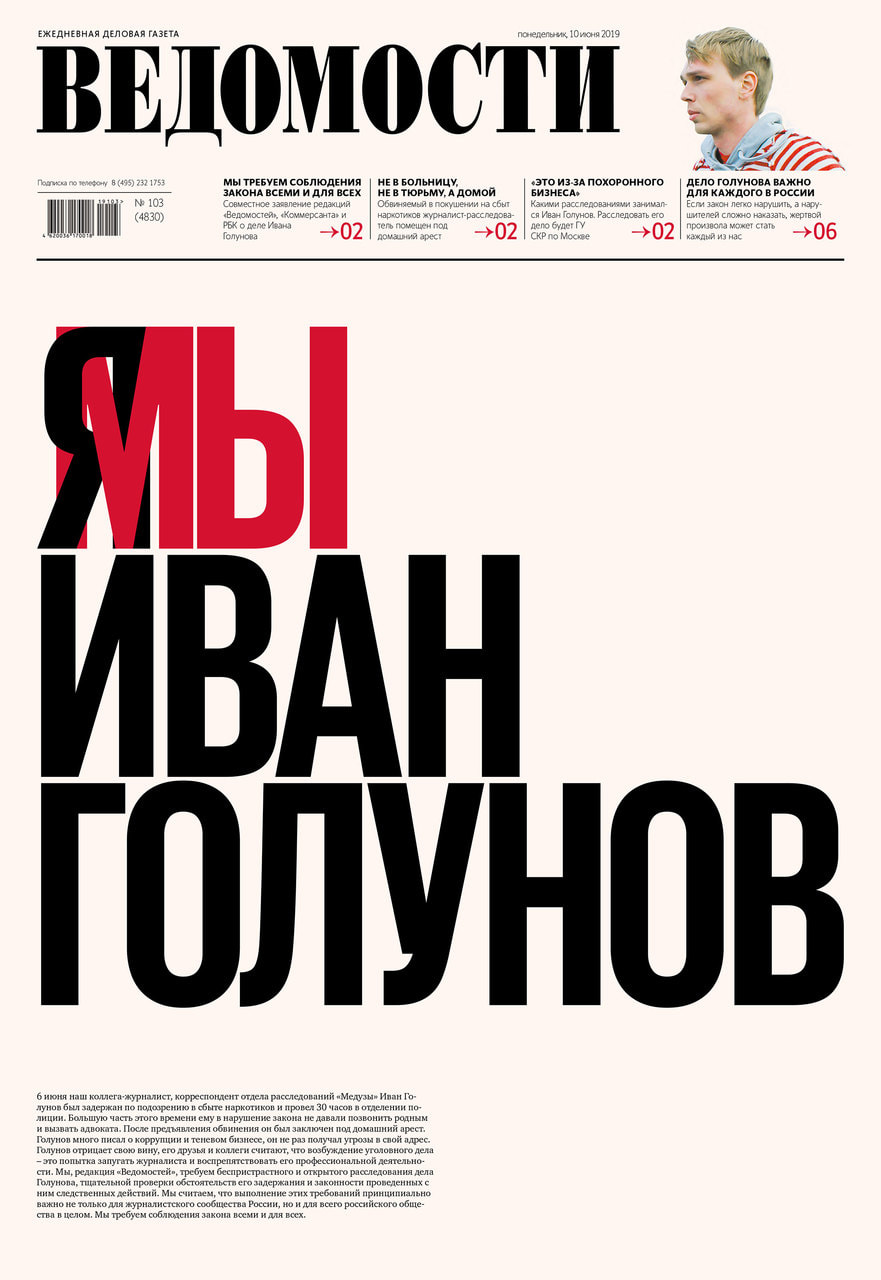
Russia’s “liberal opposition journalists” have been vying to praise each other as they celebrate a feast of “disobedience.” They just stood in the crossfire, that is, in timid solo pickets. And now, risking having their offices torched, three newspapers have produced editions with the same headline in defense of a colleague detained by police on trumped-up charges.

They have never nor would they ever publish a newspaper with the headline “I Am/We Are Crimean Tatars,” a people their country has been murdering and imprisoning on trumped-up charges by the hundreds for the last five years.

They have never nor would they publish a newspaper with the headline “I Am/We Are Ukrainians,” a people their country has been murdering by the thousands and imprisoning by the hundreds on trumped-up charges for the last five years.

It suffices to say they would even find printing the headline “I Am/We Are Oleg Sentsov” terrifying. It would never occur to them because they know how life works in the Reich, where Ukrainians are “fascists,” and Crimean Tatars are “terrorists,” just like Oleg Sentsov. So “I-ing” and “we-ing” is taboo to them.

They are delicately integrated into the Russian Reich. They feel it in their bones. They are one of the regime’s vital props. The hybrid dictatorship badly needs to pretend there is a political struggle in Russia and the country has a free press. They help it in its quest to destroy the western world and attack other countries.

They always only do things that won’t get them in serious trouble. They would never do anything that poses the slightest risk of exposing them as real enemies of the Reich.

We enter this in #TheChroniclesOfTheRussianReich.

Translated by the Russian Reader

i-we

The front page of Vedomosti, June 10, 2019: “I Am/We Are Golunov.” Courtesy of Vedomosti

Joint Communique on the Ivan Golunov Case by the Editors of Vedomosti, Kommersant, and RBC 
We Demand Maximum Transparency from Investigation
Vedomosti
June 9, 2019

Ivan Golunov, an investigative reporter with Meduza, was detained on June 6 on suspicion of attempting to produce and distribute narcotics.

We welcome the fact that the court has ordered house arrest for Golunov rather than remanding him in custody in a pretrial detention facility.

However, we do not find the evidence of Golunov’s guilt, as provided by police investigators, convincing, while the circumstances of his arrest raise serious doubts that laws were not broken in the conduct of the initial investigation.

We cannot rule out the possibility that Golunov’s arrest has something to do with his work as a journalist.

We demand a detailed inquiry into whether the Interior Ministry officers who were complicit in Golunov’s arrest acted legally. We insist that the outcome of this inquiry be provided to the media.

We expect law enforcement to comply strictly with the law. We demand maximum transparency from the investigation. We will closely monitor the investigation’s progress. We encourage relevant public organizations to join us.

We believe implementation is fundamentally important not only to Russa’s journalism community but also to Russian society as a whole. We demand that everyone obey the law and the law be obeyed with regard to everyone.

Translated by the Russian Reader

upside down cake

Pineapple upside-down cake. Stock photo

Nearly the entire leftist and liberal Russian intelligentsia have thrown their ferocious but scattered energies into a campaign to free a well-known journalist on whom the cops planted narcotics. It is obviously a frame-up and rightly makes folks in the world’s largest country indignant.

But it also makes people think they are fighting the good fight when most of the fights they should be fighting or should have been fighting long ago they ignore altogether, like the fight against what their own government and armed forces have been doing in Syria, or the kangaroo court trials against antifascists in Penza and Petersburg (the so-called Network trials), and the alleged (Muslim Central Asian) accomplices of the alleged suicide bomber who, allegedly, blew himself up in the Petersburg subway in April 2017.

I shouldn’t even mention the case of the so-called New Greatness “movement,” an “extremist group” set up, concocted, and encouraged from its miserable start to inglorious finish by the FSB (the newfangled KGB). Its so-called members did nothing but attend a couple of “political” discussions organized by the selfsame FSB.

All these young people have been framed, and many of them have plausibly claimed they were tortured by FSB officers into “confessing.”

That is, whole groups of innocent people (mind you, I am only scratching the surface here, leaving out scores if not hundreds if not thousands of the regime’s other victims at home and abroad) have been railroaded by the mighty Putinist state, but they have not been granted an audience, so to speak, by progressive Russian society because progressive Russian society cannot identify with any of them in any way.

But it can identify with the nice white middle-class reporter from Moscow. And it does want to remind itself of its essential goodness and compassion from time to time, so everyone has jumped on the bandwagon to get the reporter out of jail.

Or, rather, everyone has engaged in a frenzy of virtue signaling that may not actually get him out of jail.

Bully for them, but no one notices that many of these grassroots campaigns are patterned like hysterias and moral panics. They are also identical to other suddenly emergent internet-powered fads, like the recent craze for Game of Thrones or “Facebook flash mobs” that involve, say, posting a picture of yourself from twenty years ago and explaining what you were up to way back then.

It has to be something, anything, except the things that matter a million times more, like the Russia air force’s endless bombing of Syrian children and Syrian hospitals, and the Putin regime’s endless, vicious hunt for “extremists” and “terrorists” like the Jehovah’s Witnesses, the Network “terrorists,” the “New Greatness” extremists, the conspicuously othered (and, thus, forgotten) Petersburg subway “terrorists,” and on and on.

These witch hunts are discussed publicly by virtually no one, and their victims (this is especially the case with the Central Asian “subway bombers”) are mostly left to fend for themselves.

What matters about the reporter is that he is white, innocent, and “one of us.” Apparently, he doesn’t believe in “extremist” nonsense like anti-fascism, anarchism, Islam or Jehovah’s Witness doctrine.

The reaction to the case is a symptom of liberalism that is utterly white and nationalist, meaning it is not liberalism at all.

It is white nationalism with a human face, Great Russian chauvinism turned upside down.

“They cannot do this to one of us.”

But “they” have done to it to thousands of non-white, non-Russian others over the years, including Chechens, antifascists, Syrians, Crimean Tatars, businessmen, Muslims, Jehovah’s Witnesses, Krasnodar’s farmers, truckers, environmentalists, anarchists, LGBTQ+ activists, Central Asian migrant workers, Ukrainians, anti-“reunification” Crimeans, the passengers of MH17, US voters, etc.

Almost no one batted an eye when they were “destroyed” (this is the regime’s pet dehumanizing verb for when it murders or obliterates its enemies), neutralized or otherwise royally fucked over by the Putin regime.

It is all over but the shouting unless the shouting quickly becomes a lot more inclusive. June 9, 2019 || THE RUSSIAN READER

redman.JPGPhoto by the Russian Reader

“This is too much, even for Russia.”
Meduza editor on BBC Radio 4 morning news broadcast, commenting on the arrest of Meduza reporter Ivan Golunov, 9 June 2019

But declaring all Jehovah’s Witnesses “extremists” and organizing a witch hunt against them is not too much, “even for Russia”?

I had it with Meduza after the hamfisted, blatantly misogynist way it handled its recent in-house #MeToo scandal. The scandal revealed the actual shallowness of the website’s liberalism.

Of course, Meduza should defend its reporter from police railroading.

But the fact it has managed to make the story go international in a matter of days and then, using this bully pulpit, suggest there is nothing worse going on in Russia than Golunov’s persecution, also reveals something about the depth of its liberalism or, rather, about what passes for liberalism in Russia.

Unlike liberalism in other countries, Russian liberalism has no time for anybody but the rather narrow segment of Russians it recognizes as full-fledged human beings.

I would guess this amounts to less than one percent of the entire population, but I am probably being too generous. June 9, 2019 || THE RUSSIAN READER

crisisRussia does not have to worry about a crisis of democracy. There is no democracy in Russia nor is the country blessed with an overabundance of small-d democrats. The professional classes, the chattering classes, and much of the underclass, alas, have become accustomed to petitioning and beseeching the vicious criminal gang that currently runs Russia to right all the country’s wrongs and fix all its problems for them instead of jettisoning the criminal gang and governing their country themselves, which would be more practically effective. Photo by the Russian Reader
Free the Network case defendants, the Jehovah’s Witnesses facing charges and the ones already doing jail time, ditto for the Crimean Tatars, Oleg Sentsov and Alexander Kolchenko, the Ukrainian sailors, Yuri Dmitriev, the Petersburg subway bombing defendants, the myriads of Russian businessmen in prison after they were set up by rivals and taken down by the FSB for a good price, the New Greatness kids, and hundreds of other Russian “outlaws” whose names I cannot remember or, worse, have never heard.

Free them first, and the day after you free them, free Ivan Golunov.

While you are at it, stop making war in Eastern Ukraine and stop bombing innocent Syrians. And bring the people responsible for shooting down Flight MH17 and killing everyone on board to justice.

The day after you have done all these things, free Ivan Golunov.

But don’t be such arrogant, self-important pricks as to appear on the world’s most respected radio and TV network and claim the Golunov case is the worst thing that has happened under Putin’s reign.

Anna Politkovskaya was murdered, for God’s sake. And so were Stanislav Markelov and Anastasia Baburova.

I could start another list of reporters, activists, politicians, etc., who were murdered, probably on the orders of the Kremlin or with its blessing, over the last twenty years.

Boris Nemtsov was murdered only a few hundred meters from the Kremlin.

God forbid I should mention “convicted pedophile” Sergei Koltyrin. Even the most hardcore human rights advocates in Russia have abandoned him and made mention of his name taboo, although I am reasonably certain he was set up just like the saint-like Ivan Golunov, only on charges so devastating that his former allies abandoned him and he abandoned himself to the nonexistent mercies of Russia’s nonexistent justice system.

But, definitely, the worse thing that has happened under Putin’s reign is the house arrest of Meduza reporter Ivan Golunov on what are undoubtedly trumped-up drug charges. June 9, 2019 || THE RUSSIAN READER

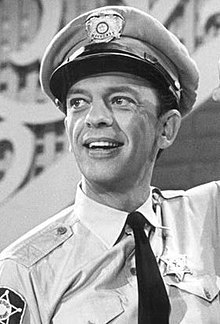
barney fife

P.S. As I was assembling this collage of reflections inspired by the collective hysteria among the Russian liberal intelligentsia over reporter Ivan Golunov’s dubious arrest, it occurred to me that, perhaps, my own reaction and that of Ayder Muzhdabaev, whose “outburst” leads off this montage, were not sufficiently charitable.

But then I read and translated what the editors of Kommersant, RBC, and Vedomosti published on the front pages of their newspapers today. Their milquetoast appeal to Russian law enforcement—a multi-headed hydra that has spent the last thirty years proving again and again it is one of the most brutal, vicious criminal gangs in the world, an army of thugs who routinely terrorize the people they have sworn to protect, a mob of degenerates who will stop at nothing, including the routine use of torture, to get their man—sounds more like an appeal to US TV sitcom cops Barney Miller and Barney Fife.

Do these hardened (?) newspaper reporters really believe an appeal like this will have a real effect on the investigation of Golunov’s nonexistent crimes?

It is also worth remembering (as Sergey Abashin did on his Facebook page earlier today) that the free press warriors at Kommersant recently fired a reporter for writing negative comments about Valentina Matviyenko, formerly Putin’s satrap in Petersburg, currently chair of the Federation Chamber, which rubber-stamps all the odious, wildly unconstitutional laws sent its way. In protest at the firing, the newspaper’s entire political desk immediately resigned as well.

That, by the way, is real solidarity, although it probably won’t get them their jobs back, quite the opposite.

Meanwhile, RBC has been a shell of its former militant self after its owners fired three top editors three years ago and, again, a whole slew of reporters resigned along with them.

RBC used to have an investigative reporting desk that would be the envy of any newspaper anywhere in the world. Nowadays, it mostly reports the kinds of “news” its oligarch owners and the Kremlin want it to report.

The 2011–2012 fair elections protests were mostly an extended exercise in virtue signaling and “creativity,” not a serious attempt by the grassroots to force the Kremlin to hold fair elections, much less to attempt regime change. Russian society has paid heavily for its frivolousness then.

Why, then, has it not yet figured out what its foe is really like? Why does it appeal for justice and fairness to authorities who have proven beyond a reasonable doubt they are hardened criminals? Finally, why does it imagine that reposting Ivan Golunov’s articles on Facebook is real solidarity? Does it think the regime will fall if, say, a million people repost these articles? Five million?

Photo of Don Knotts as Barney Fife courtesy of Wikipedia

If All Else Fails, Threaten to Sodomize Him

dmitriev-frenkelYuri Dmitriev. Photo by David Frenkel. Courtesy of Kommersant

Defense Lawyer Reports Cellmates Tried to Force Karelia Memorial Head Yuri Dmitriev to Pen Confession
Mediazona
May 30, 2019

His cellmates in the Petrozavodsk Remand Prison tried to force Yuri Dmitriev, historian and head of the Memorial Society in Karelia, to submit a written confession, defense lawyer Viktor Anufriev told Kommersant.

According to Anufriev, in late April, the inmates threatened to sodomize Dmitriev if he did not confess.

“It went on for four days. Dmitriev told the remand prison’s wardens  if it continued, he would have to defend his life and honor, and someone might end up dead,” said Anufriev.

Ultimately, Dmitriev was moved to another cell.

Dmitriev has been accused of sexually assaulting his foster daughter. Last year, a court acquitted the historian of sexually abusing the girl and producing pornography. The verdict was soon quashed, however, and Dmitriev was sent back to remand prison.

Dmitriev is best known for unearthing mass graves of victims of the Stalinist Great Terror at Sandarmokh in Karelia and establishing a memorial on the site, where over nine thousand people were executed. Dmitriev has argued the criminal cases against him were provoked by his efforts to memorialize the victims of political terror in the Soviet Union.

Translated by the Russian Reader

The Network Trials: Pinning the “Code” on the Defendants

filinkov-boyarshinovPetersburg Network Trial Defendants Viktor Filinkov and Yuli Boyarshinov. Photo by Alexander Koryakov. Courtesy of Kommersant

Prosecution Tries to Pin “Code” on Network Defendants
Anna Pushkarskaya
Kommersant
May 21, 2019

The Volga District Military Court rejected the defense’s motion to send the Penza segment of the so-called Network case back to prosecutors. The prosecution has alleged the defendants established the Network (an organization now officially banned in the Russian Federation), a “terrorist community” of anarchists, in order to overthrow the regime.

Today in Penza the prosecution will begin presenting its case against the seven defendants.

This stage of the trial has been completed in Petersburg, where Viktor Filinkov and Yuli Boyarshinov are on trial for their alleged involvement in the community. Their defense attorneys have moved to disallow key pieces of evidence in the prosecution’s case and summon Penza FSB investigator Valery Tokarev and Petersburg FSB field officer Konstantin Bondarev to the stand. The two FSB officers have been accused by the defendants of torturing them with electrical shocks. The Moscow District Military Court, which is hearing the case in Petersburg, postponed its consideration of these motions until June 4.

The trial in Penza began later than the trial in Petersburg. During the second hearing in Penza, on May 15, after the indictment was read aloud, the defense moved to send the case back to the prosecutor’s office for further investigation. It argued the case had been carelessly patched together, and some of the evidence had been obtained under pain of torture. It was nearly impossible to mount a coherent defense against such an “absurd, vague, and inconsistent” indictment, they said.

Prosecutor Sergei Semerenko argued the trial should proceed, although he refused to rule out the possibility the indictment would ultimately be withdrawn and resubmitted on less serious charges.

The judges reacted to this turn of event unexpectedly. They withdrew to chambers and never returned to the courtroom. A court clerk eventually told the lawyers, waiting for a ruling on their motion, the hearing was adjourned, after which armed guards led the defendants away.

The next day it transpired the trial would resume on May 21.

In the Penza trial, Dmitry Pchelintsev and Ilya Shakursky have been charged with running the Network terrorist community. They face twenty years in prison if convicted. Arman Sagynbayev, Vasily Kuksov, Andrei Chernov, Mikhail Kulkov, and Maxim Ivankin have been charged with involvement in the alleged community. They face ten years in prison if convicted.

A number of the defendants have also been indicted on other charges, including weapons possession and drug trafficking.

In Petersburg, Viktor Filinkov and Yuli Boyarshinov also face charges of involvement in the alleged community. Boyarshinov has also been charged with possession of gunpowder.

Filinkov has claimed he was tortured and denies his guilt. Boyarshinov has complained of torture-like conditions in remand prison but has confessed his guilt.

The subject of torture also came during when a witness in the trial, Igor Shishkin, was questioned. Mr. Shishkin has already been convicted on charges of involvement with the alleged Network as part of a plea agreement with investigators. Members of the Petersburg Public Monitoring Commission found the most serious injuries on his body after he was initially detained and questioned by the FSB in January 2018.

When Mr. Shishkin was asked whether unacceptably violent methods had been used on him and whether had testified voluntarily, he smiled and replied, “The military investigator carried out a brilliant investigation: nothing of the sort was found.”

The Moscow Military District Court finished its examination of the evidence in Petersburg on May 17 after holding a video conference with witnesses in Penza, including the defendants on trial there. All the witnesses testified they had not seen Viktor Filinkov at training sessions in the woods.

However, Mr. Pchelinitsev and Mr. Sagynbayev testified they had not been questioned about the Petersburg case. The transcript of this interrogation had been copied from testimony they gave to FSB investigator Valery Tokarev in Penza while they were tortured. They later withdrew their testimony.

Mr. Filinkov, who worked as a programmer before his arrest, also claimed investigators had falsely interpreted physical evidence seized during searches and reached the wrong conclusions during their investigation.

In particular, he claimed he had not “zigzagged” around Petersburg on the day before his arrest before discarding the hard drives FSB field agents later found in a trash bin. The images and photos on the drives, which had been entered into evidence, were of the kind one would find in the possession of any punk. They had been produced by his wife Alexandra Askyonova as a teenager.

Ms. Aksyonova was granted political asylum in Finland last week.

Mr. Filinkov made a point of noting that Petersburg field officer Konstantin Bondarev, who had compiled the case file on him, should be charged with torture.

Ultimately, the court agreed to summon Mr. Tokarev and Mr. Bondarev to the witness stand, but so far they have failed to appear at the hearings.

The key evidence of the alleged anarchist community’s terrorist inclinations are two documents, seized from two of the Penza defendants: the so-called Code, which outlines the Network’s alleged goals and organizational structure, and the minutes of an interregional “congress” held in a Petersburg flat in 2017, featuring responses from the movement’s alleged cells to socio-political issues.

The FSB has claimed the cells were armed units. The minutes contain neither the names nor the pseudonyms of the respondents.

When Vladimir Putin discussed the Network case with the Presidential Human Rights Council, he referred to a report drafted for him; the report claimed that “founding and programmatic documents had been seized from the terrorist community.”

However, the defendants and witnesses have denied the existence of the documents, claiming they only held discussions during their meetings but did not ratify or sign documents.

Mr. Shishkin, who made a plea agreement with investigators, corroborated this.

Prosecutor Ekaterina Kachurina asked him, “Why did you become interested in anarchist ideology?”

“And why did you become a prosecutor?” he replied, explaining anarchism was interesting to him.

Mr. Pchelintsev said there had been no “congress,” only “a seminar by consensus.”

Vitaly Cherkasov, Mr. Filinikov’s defense attorney, said in court there was every reason to believe “an unlimited number of Petersburg and Penza FSB officials had illegal access over a lengthy period of time” to the hard drive and laptop on which the files containing the “Code” and the “Minutes” had, allegedly, been discovered, due to improprieties in the secure storage and unsealing of the physical evidence.

Mr. Boyarshinov’s assistant defense attorney, Olga Krivonos, moved to have the court declare the documents inadmissible as evidence, along with the FSB’s linguistic forensic investigation, which concluded the “Code” was a “set of instructions outlining the basic organizational principles of a network of combat units capable of resisting the current powers that be.”

The court has adjourned until June 4.

Translated by the Russian Reader. You can read more about the Network case and stories related to the case here.