Yana Teplitskaya: Can Torture Be Endured?

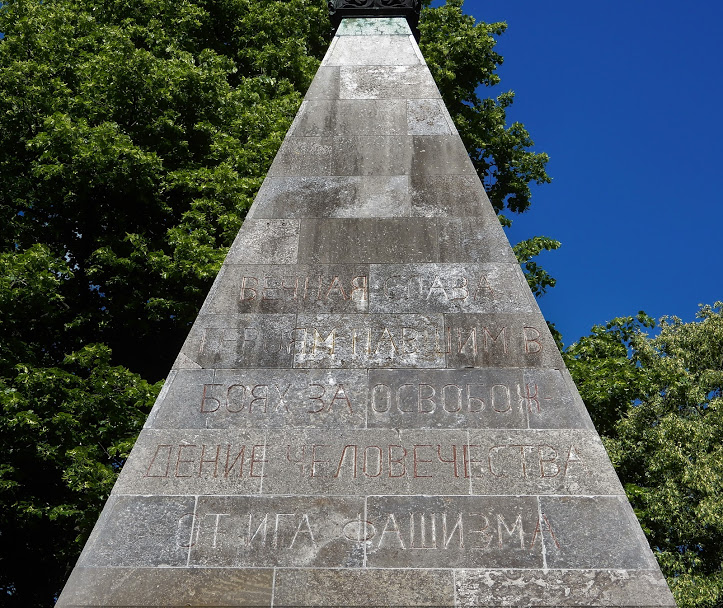
buch stele“We shall never forget the memory of the heroes who fell in battle to liberate humanity from the yoke of fascism.” A nearly effaced Soviet war memorial in Berlin-Buch, June 1, 2019. Photo by the Russian Reader

Yana Teplitskaya
Facebook
June 1, 2019

In a recent radio broadcast, Ekaterina Schulman talked about torture in the Network case. She told listeners what she thought people should do if they were tortured by the FSB. They should do everything they are told to do, remember exactly what happened to them, and go public with the story of their torture.

“If you are subjected to physical force, say everything they want you to say. Don’t try and be a hero under any circumstances. That is not the task at hand. The task at hand is to remember as much as possible of what happened to you and tell people about it. You can recant your testimony in court. You can tell your defense lawyer what happened to you. The task at hand is to publicize what happened. It is the only tool you have at your disposal,” she said.

I was quite surprised by this way of stating the matter. It is hard to remember, but a year and half ago or so I used to give the same advice myself. Nowadays, on the contrary, I don’t think it is very good advice. It could even be harmful. I would argue it is based on several misapprehensions.

1. Torture Cannot Be Endured

This is not necessarily true. The Tosno policemen tasered by FSB officers did not confess. Nor did Pavel Zlomnov sign a confession.

Sometimes, torturers give up torturing their victims for some reason. This what happened to Dilmurod Muidinov, a defendant in the Petersburg subway bombing case.

Sometimes, torture can be endured. Sometimes, it cannot.

It’s also not clear what it is meant by the word “endure.” The accounts I read suggest people always attempt to conceal something from their torturers even when they have given in, as it were. In fact, they try and reduce the potential harm of the words they are made to say when they are being tortured. They fight over the wording of their “confessions” and barter over it as much as they are able.

I don’t know what happened during Igor Shishkin’s 24-hour interrogation, but I am certain it would not have lasted so long if Igor had just signed the statement the FSB field officers wanted him to sign.

Dmitry Pchelintsev has spoken at length about how he tried to change the wording of his statement, given under duress, when talking to the FSB investigator, how he spun his initial statement.

The FSB often tortures people in one place and interrogates them for the first time in another place. When they are tortured, people agree to sign anything whatsoever. During the first interrogation, however, they try and deny their guilt. At this point, it is sometimes enough for the investigator and state-appointed defense counsel to make it clear to a person they are on the same side as the torturers, and for field officers to suggest they will torture the person again in order to persuade them to give in.

Sometimes, this works: this was what happened to Viktor Filinkov and Akram Azimov. Sometimes, it doesn’t, as in the case of Sergei Laslov and Ilya Shchukin, the Tosno policemen.

2. You can recant the testimony you signed under torture

No, you cannot! Of course, you can try and prove you were tortured, which is almost impossible in practice. But the statement you signed stays in the case file all the same. The court can deem it proof of your guilt and the guilt of the people against whom you were forced to testify, even if you recant your testimony.

Nor it is clear where you will find a lawyer who, after hearing your account of being tortured, will take all the necessary legal steps to make your going public pay off. Ilya Shakursky, for example, told his lawyer that he had been tortured, but it was pointless.

3. Publicity is your savior

This is not obviously the case.

If you don’t talk publicly about being tortured, you will get a lighter sentence. If you talk about it publicly, you can be charged with new crimes, as happened in the cases of Pavel Zlomnov and Igor Salikov. You can be charged under more serious paragraphs of the Criminal Code for the same crimes, as in the case of Network defendants Ilya Shakursky and Dmitry Pchelintsev. You can be tortured again, as happened to Pchelintsev. You can be threatened, as happened to Viktor Filinkov. Your loved ones can be threatened and intimidated, as happened to Zlomnov and the Azimov brothers.

The arsenal the torturers have at their disposal is endless.

Nor it is guaranteed you will draw attention to your case by going public. Or, at any rate, that you will draw enough attention to your case to shut down the legal nihilism unleashed against you.

An example of this is the Petersburg subway bombing investigation and trial, which have taken place in nearly total media and public silence, despite public statements by three of the defendants that they were tortured in a secret FSB prison.

Translated by the Russian Reader

The Network Trials: Pinning the “Code” on the Defendants

filinkov-boyarshinovPetersburg Network Trial Defendants Viktor Filinkov and Yuli Boyarshinov. Photo by Alexander Koryakov. Courtesy of Kommersant

Prosecution Tries to Pin “Code” on Network Defendants
Anna Pushkarskaya
Kommersant
May 21, 2019

The Volga District Military Court rejected the defense’s motion to send the Penza segment of the so-called Network case back to prosecutors. The prosecution has alleged the defendants established the Network (an organization now officially banned in the Russian Federation), a “terrorist community” of anarchists, in order to overthrow the regime.

Today in Penza the prosecution will begin presenting its case against the seven defendants.

This stage of the trial has been completed in Petersburg, where Viktor Filinkov and Yuli Boyarshinov are on trial for their alleged involvement in the community. Their defense attorneys have moved to disallow key pieces of evidence in the prosecution’s case and summon Penza FSB investigator Valery Tokarev and Petersburg FSB field officer Konstantin Bondarev to the stand. The two FSB officers have been accused by the defendants of torturing them with electrical shocks. The Moscow District Military Court, which is hearing the case in Petersburg, postponed its consideration of these motions until June 4.

The trial in Penza began later than the trial in Petersburg. During the second hearing in Penza, on May 15, after the indictment was read aloud, the defense moved to send the case back to the prosecutor’s office for further investigation. It argued the case had been carelessly patched together, and some of the evidence had been obtained under pain of torture. It was nearly impossible to mount a coherent defense against such an “absurd, vague, and inconsistent” indictment, they said.

Prosecutor Sergei Semerenko argued the trial should proceed, although he refused to rule out the possibility the indictment would ultimately be withdrawn and resubmitted on less serious charges.

The judges reacted to this turn of event unexpectedly. They withdrew to chambers and never returned to the courtroom. A court clerk eventually told the lawyers, waiting for a ruling on their motion, the hearing was adjourned, after which armed guards led the defendants away.

The next day it transpired the trial would resume on May 21.

In the Penza trial, Dmitry Pchelintsev and Ilya Shakursky have been charged with running the Network terrorist community. They face twenty years in prison if convicted. Arman Sagynbayev, Vasily Kuksov, Andrei Chernov, Mikhail Kulkov, and Maxim Ivankin have been charged with involvement in the alleged community. They face ten years in prison if convicted.

A number of the defendants have also been indicted on other charges, including weapons possession and drug trafficking.

In Petersburg, Viktor Filinkov and Yuli Boyarshinov also face charges of involvement in the alleged community. Boyarshinov has also been charged with possession of gunpowder.

Filinkov has claimed he was tortured and denies his guilt. Boyarshinov has complained of torture-like conditions in remand prison but has confessed his guilt.

The subject of torture also came during when a witness in the trial, Igor Shishkin, was questioned. Mr. Shishkin has already been convicted on charges of involvement with the alleged Network as part of a plea agreement with investigators. Members of the Petersburg Public Monitoring Commission found the most serious injuries on his body after he was initially detained and questioned by the FSB in January 2018.

When Mr. Shishkin was asked whether unacceptably violent methods had been used on him and whether had testified voluntarily, he smiled and replied, “The military investigator carried out a brilliant investigation: nothing of the sort was found.”

The Moscow Military District Court finished its examination of the evidence in Petersburg on May 17 after holding a video conference with witnesses in Penza, including the defendants on trial there. All the witnesses testified they had not seen Viktor Filinkov at training sessions in the woods.

However, Mr. Pchelinitsev and Mr. Sagynbayev testified they had not been questioned about the Petersburg case. The transcript of this interrogation had been copied from testimony they gave to FSB investigator Valery Tokarev in Penza while they were tortured. They later withdrew their testimony.

Mr. Filinkov, who worked as a programmer before his arrest, also claimed investigators had falsely interpreted physical evidence seized during searches and reached the wrong conclusions during their investigation.

In particular, he claimed he had not “zigzagged” around Petersburg on the day before his arrest before discarding the hard drives FSB field agents later found in a trash bin. The images and photos on the drives, which had been entered into evidence, were of the kind one would find in the possession of any punk. They had been produced by his wife Alexandra Askyonova as a teenager.

Ms. Aksyonova was granted political asylum in Finland last week.

Mr. Filinkov made a point of noting that Petersburg field officer Konstantin Bondarev, who had compiled the case file on him, should be charged with torture.

Ultimately, the court agreed to summon Mr. Tokarev and Mr. Bondarev to the witness stand, but so far they have failed to appear at the hearings.

The key evidence of the alleged anarchist community’s terrorist inclinations are two documents, seized from two of the Penza defendants: the so-called Code, which outlines the Network’s alleged goals and organizational structure, and the minutes of an interregional “congress” held in a Petersburg flat in 2017, featuring responses from the movement’s alleged cells to socio-political issues.

The FSB has claimed the cells were armed units. The minutes contain neither the names nor the pseudonyms of the respondents.

When Vladimir Putin discussed the Network case with the Presidential Human Rights Council, he referred to a report drafted for him; the report claimed that “founding and programmatic documents had been seized from the terrorist community.”

However, the defendants and witnesses have denied the existence of the documents, claiming they only held discussions during their meetings but did not ratify or sign documents.

Mr. Shishkin, who made a plea agreement with investigators, corroborated this.

Prosecutor Ekaterina Kachurina asked him, “Why did you become interested in anarchist ideology?”

“And why did you become a prosecutor?” he replied, explaining anarchism was interesting to him.

Mr. Pchelintsev said there had been no “congress,” only “a seminar by consensus.”

Vitaly Cherkasov, Mr. Filinikov’s defense attorney, said in court there was every reason to believe “an unlimited number of Petersburg and Penza FSB officials had illegal access over a lengthy period of time” to the hard drive and laptop on which the files containing the “Code” and the “Minutes” had, allegedly, been discovered, due to improprieties in the secure storage and unsealing of the physical evidence.

Mr. Boyarshinov’s assistant defense attorney, Olga Krivonos, moved to have the court declare the documents inadmissible as evidence, along with the FSB’s linguistic forensic investigation, which concluded the “Code” was a “set of instructions outlining the basic organizational principles of a network of combat units capable of resisting the current powers that be.”

The court has adjourned until June 4.

Translated by the Russian Reader. You can read more about the Network case and stories related to the case here.

My Generation

frenkel-subway trialThe defendants in the Petersburg subway bombing trial. Photo by David Frenkel

After a terrific, well-attended solidarity talk in support of the defendants in the Network case, held here in Berlin the other night, I spoke to a lovely young Russian activist.

I said to them that there were, of course, many more instances of wild injustice in Putinist Russia with which an engaged foreign audience could be regaled, such as the ongoing trial of several Central Asians, accused of complicity in the alleged terrorist suicide bombing in the Petersburg subway on April 3, 2017.

Like the Network case, the Petersburg subway bombing case has all the hallmarks of a frame-up. As in the Network case, there have been numerous allegations the defendants have been tortured by investigators.

“But the difference,” the young person interrupted me, “is racism.”

They meant that, since all the defendants hailed from Central Asia, there was no way to mount the successful solidarity campaign that has shown a harsh light on the Network case and garnered it widespread notoriety, especially within Russia.

The young person went on to tell me that a friend of theirs had been attending the subway bombing trial. She had told them it was horrific. The defendants had been assigned state-appointed lawyers who did nothing to defend them. The trial was such a flagrant frame-up the interpreters working it had banded together to try and do anything they could to help the young people, who in all likelihood have been accused of terrible crimes they did not commit.

It goes without saying that all of them will be found guilty and sentenced to long terms in prison.

The case has been covered spottily by Petersburg and Russian media outlets, but I have seen very little outrage or even mild concern about it from my acquaintances on Russophone social media, most of whom live in Petersburg.

Many of these same people are now visibly bent out shape about the goings-on in Israel-Palestine. In the past few days, they have been treating virtual friends like me to generous helpings of unsubstantiated hasbara.

Are they unconcerned about the miscarriage of justice perpetrated on nearly a dozen young Central Asians because they think all Muslims are terrorists and, by definition, guilty of every charge of terrorism laid at their door?

It has been a commonplace of Russian quasi-liberal thinking that Stalinism affected Russians so deeply it infected their collective DNA. The Stalinist bug, so this spurious argument contends, has been passed on to the new generation as well, even though the Soviet Union collapsed almost thirty years ago, before my interlocutor and huge numbers of other terrific young Russian social and political activists I know were born.

Supposedly, several generations must pass before the Stalinist bug will finally be expunged from the national genetic code and Russians can build a more democratic polity in their country.

In reality, there is a great deal of anecdotal evidence pointing to the new generation’s eagerness and readiness to live that way right now.

On the contrary, it is my own age mates, the so-called last Soviet generation, who were born after Stalin died, who seem most afflicted by a kind of cognitive and emotional Stalinism that, often as not, emerges in their thoughts and deeds not as nostalgia or admiration for the real Stalin, but as dogmatic worldview that makes events in, say, Israel more real and important than most events in their own country and cities.

Given recent oddities around the Network trial and the unwonted negative publicity the case has generated for the FSB, I think there is a slight chance the powers that be might have decided to ratchet things down a bit. I could be wrong, but I would not be surprised if, when the trials in Penza and Petersburg resume after a long, unexplained recess, the defendants were indicted on lesser charges and then immediately released on probation, taking into account the long time all of them have spent in remand prisons since their arrests in late 2017 and early 2018.

There is no chance this will happen in the subway bombing trial for the simple reason that almost no one in Petersburg can be bothered to go to bat for a group of non-Russian Muslims or even bat an eye when they are tortured and framed exactly like their non-Muslim contemporaries. {TRR}

__________________________________________________

The Russian Reader is a website that covers grassroots politics, social movements, the economy, and independent culture in Russia and the Russian-speaking world.

All the work on the website is done for free.

Unless otherwise noted, everything published on the Russian Reader can be reproduced elsewhere so long as the Russian Reader is indicated clearly as the source, and a link back to the original blog entry is included in the republication. In fact, you are encouraged to post these articles on social media and share them wherever you like.

Growing numbers of readers are the only way I know whether the Russian Reader is accomplishing its mission: to make news and views from the other Russias more accessible to the outside world.

You can also help the Russian Reader by donating money by pressing the buttons marked “Donate” and “Buy me a coffee,” on the left side of this page, or by clicking on the advertisements that appear occasionally on this site.

“Lie Still, Bitch!”

ammosov-1Anton Ammosov. Courtesy of OVD Info

Beaten, Sacked and Threatened with Torture: The Story of a Man Detained for Posting Comments about the FSB
OVD Info
April 24, 2019

In November 2018, libertarian Anton Ammosov was detained in Yakutsk by FSB officers. The officers beat him in their car and threatened to torture him. Then his home was searched, he was sacked from his job, and his home was searched a second time. Ammosov had warranted this treatment only because he had commented on news stories about the Network case and the suicide bombing at FSB headquarters in Arkhangelsk in October 2018. Ammosov told OVD Info about what happened to him and how his life changed with the FSB’s advent.

I was then still employed as a systems administrator at the Ammosov Northeastern Federal University. My boss telephoned me on the evening of November 20, 2018. He told me I had to go to the personnel department at eight the following morning and bring my [internal] passport with me. I was really surprised, because the personnel department opened at nine. But my boss insisted I had to be there by eight and the matter was urgent.

The next day I arrived at the university at the scheduled time. I was seen by the deputy head of the personnel department. I wondered why he was personally handling the matter. He took my passport and left the office for five minutes. He said he had to make photocopies. He told me some rubbish about problems with the database. I realized he was doing what the FSB told him to do. I heard him talking to someone on the phone, but I did not put two and two together. I spent ten to fifteen minutes in the personnel department.

I went outside, planning to walk to the building where I worked. I had walked only a few meters when I heard a van’s side door opening. Armed, masked men threw me down on the snow.

“Lie still, bitch!” they screamed.

They beat me, cuffed my hands behind my back, and pulled my cap down to my nose. I could not see a thing. I was dragged into the van, which immediately took off.

I was placed in the front row of seats with my knees on the floor. My scarf and the cap pulled down over my face suffocated me. I was beaten on the back, kidneys, and buttocks. I was hit in the head several times, but when I screamed I was officially disabled and had glaucoma, they stopped hitting me in the head.

When I asked why I had been detained, the masked men responded by beating me harder. One of them either sat on my back or pressed it with his knee. He twisted my fingers, trying to unblock my phone, but there was no fingerprint sensor on my smartphone. The man twisted my little fingers. He said he would break them if I did not tell him the password to my telephone. Then he said they would take me straight to the right place for such things and torture me with electrical shocks by hooking me up to a generator. One of the FSB guys quoted what I had written in the comments section of the regional news website ykt.ru.

I had written there that FSB officers were cooking up criminal cases and torturing people with generators. I had written about the Network case. I wrote about the young man who had blown himself up in Arkhangelsk. There was also a news item about the FSB’s having detained someone for a post on the social network VK, and I had published an unflattering comment about them.

We drove for twenty minutes. They beat me the entire way, threatening to torture me with electrical shocks.

ammosov-2FSB headquarters in Yakutsk. Courtesy of Google Maps and OVD Info

The car stopped. They pulled me roughly to my feet and dragged me somewhere. Along the way, they constantly dropped me on the marble floor. I hit my knees on the floor several times. They also made a point of slamming my whole body against door jambs and columns. They joked about how clumsy they were. Every time they dropped me on the floor they told me to get up. When I was unable to get up on my own, they would jerk me to my feet by pulling me up by both arms. The handcuffs dug into my wrists.

I was taken into a room. I could see only the floor and my feet: the caps was pulled over my face the whole time. They stood me beside the wall while they rifled my backpack. They took the cap off and asked about the medications in my backpack. It was then I saw them: five men in sand-colored uniforms and balaclavas. They were strapping and tall, with blue eyes, meaning they were not locals. Apparently, locals are not hired by the FSB in the ethnic republics.

I was asked about the medicine before they pulled the cap back over my eyes. They said they were going to eat meat and when they returned, they would torture by shocking me using a generator. I was really afraid. I did not understand what was happening. I had not yet been told why I was detained.

An FSB field officer wearing no mask came in a while later. I gathered he was an investigator. He asked me about the password to my phone. I was standing next to the wall, the cap pulled over my eyes. I said nothing. I refused to speak to him. He said he would call in the boys in masks. They would “do their number” on me and I would talk whether I wanted or not. It was thus in my interests to give him the password; otherwise, I would  be tortured badly. I cracked and told him the password. The field officer was happy.

My hat was removed and I was sat down in a chair.

“What is happening? Why have you detained me?” I asked him.

“You know why,” the field officer replied. He said they had been watching me for a long time. They had a case file on me. He was glad to meet me in person.

I found out why I had been detained only a few hours earlier.

A major entered the office. He said someone had posted a picture containing threats against the FSB in the comments section of the website ykt.ru. They thought I had done it. I replied I had not done it. There were 20,000 students and 6,000 staff member at the university, and they all had the same IP address. I got the impression the major did not understood much about this stuff. He said the FSB surveilled WhatsApp and Telegram and read everything.

Interrogation
When they unblocked my phone, they asked me what I thought about anarchism, whether I knew Mikhail Zhlobitsky, what I thought about him, and what my political views were. They asked about Telegram and what I had been doing on the chat group Rebel Talk, whether I had been looking for allies there. They asked me what I thought about Putin, Russia, and Navalny.

I had joined the chat group out of curiosity for a day or two. I had learned about it in the news reports about the bombing in Arkhangelsk. I was on it for a while, wrote a bit, left the group, and forgot about. I did not write anything worth mentioning in the chat group.

During the interrogation. I realized I was on lists of theirs. I could have got on the lists due to the speech I gave at an anti-corruption rally in Yakutsk in June 2017.

I was in the FSB office for around eight hours. It was a room three meters by four meters, and it was not heated. I was handcuffed to the chair. I was not provided with legal counsel.

They threatened to shoot me, saying traitors like me should be executed. They were surprised by my ethnicity. They said I was the first Yakut they had detained on such charges. They threatened to leave me in the FSB’s remand prison. The field officer told me he had murdered many people. He asked me to give him an excuse to beat the crap out of me or cripple me.
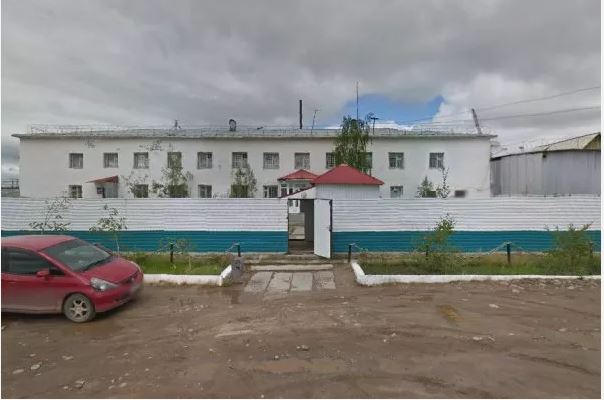
ammosov-3Remand Prison No. 1 in Yakutia. FSB officers threatened to send Anton Ammosov there. Courtesy of Google Maps and OVD Info 

The masked mem threatened me when they did not like my answers to questions. They had to tell me what they wanted to hear from me. They told me my home would be searched. They would be looking for a bomb or part for making a bomb.

At around five in the evening, I was taken to another office, which had windows. I realized it was evening, because it was dark outside. The state-provided attorney came. I told him I had been beaten and threatened. He could not have cared less. He made no mention of my complaints in the papers that were drawn up. He signed them and left.

I spent approximately twelve hours at FSB headquarters, until nine in the evening. I was not fed, given anything to drink or allowed to make a phone call the entire time.  My wife had no idea what had become of me.

My wife thought I had been hit by a car or died. She called all the morgues. All my relatives searched for me, because I had never disappeared before. My wife was getting ready to go to the police when the FSB agents brought me home. My wife wept when she saw us.

They showed us a document claiming the search was conducted due to my comments on the website. They did not let us photograph the search warrant, which had been issued by a court only at five in the afternoon te same day, meaning after they detained me.

The search took two hours. They confiscated two desktop computers, my work laptop, flash drives, hard drives, a router, and telephones. They told me to buy a new telephone and SIM card right away and report to FSB headquarters at one o’clock the next day.

I was told they wanted to charge me with vindicating terrorism because I had written “Well done, kid” under a news report about the bombing in Arkhangelsk.

They found out about the comment because of what I told them during the interrogation. I had thought the whole affair had kicked off due to the remark, but it later transpired they did not know about it.

My posts on Telegram and comments to news reports were sent off for a forensic examination by linguists.

I fell asleep that day only towards morning. I did not eat at all for the next three days: I had no appetite. I went to FSB headquarters as if I were going to work. I was summoned nearly every day.

They asked me again about my political views and what anarchism was. I replied I did not support anarchism. I identified myself as a libertarian, but not a radical one. I believed the state was a necessity, but not a state like the one we had in Russia.

I was also asked about Navalny. I said I supported him.

The Beating
Because I was summoned to the FSB, I was not able to have my injuries from the beating medically certified. I made it to the emergency room only on November 23. The medics refused to document my injuries when I told him FSB officers had beaten me. They kicked me out of the emergency room, telling me they did not need any trouble. They suggested I go to the medical examiner’s office.

When I came to the medical examiner’s office, they initially agreed to document my injuries, but when they found out who had injured me, they kicked me out of the surgery and demanded a reference from the Russian Investigative Committee.

The lawyer whom my mom helped me find after what happened at the FSB suggested I go to an outpatient clinic and have my injuries documented there, but without telling them who injured me. Otherwise, they would turn me down, too. That was just what I did.

The GP, a woman, documented I had been beaten all over, suffering soft-tissue bruises on the back, the buttocks, and both knee joints. It was not certain whether my kidneys had been injured. An eye doctor prescribed drops. In the summer of 2018, I had glaucoma implant surgery. After I was beaten in the van, not allowed to put drops in my eyes at the FSB, and stood hunched over, which I am definitely not supposed to do, I had poor vision in my sick eye.

Sacking
A few days later. I learned that. on November 21, the day I was detained, FSB officers had come to my workplace at the university around two in the afternoon. They confiscated my two desktop computers and all the laptops in the office, despite the fact they were not mine. They also took three printers, one of which was out of order, routers, flash drives, and notebooks.

The videotape from university surveillance cameras showing the FSB abducting me also vanished from the university.

On December 29, university rector Yevgenia Isayevnva Mikhaylova summoned me to her office.

She asked what happened, why security services officers had come after me, and inquired about my political views. She then said I should write a resignation letter. I told here I did not want to do it. She replied it was people like me who undermined the university’s image. She disparaged Navalny every which way to Sunday. She said Putin was the best president and he should reign forever.

That is verbatim.

After I refused to resign voluntarily, Mikhaylova said she had to react to events so the FSB would see she had punished me. She suggested I quit for a while. Then she would rehire me and transfer me to a new department. I would not have minded such a transfer, by the way, but I did not trust her, of course.

ammosov-4Ammosov Northeastern Federal University. Courtesy of Google Maps and OVD Info 

When I came back to work after the New Year holidays, I learned by chance a few days later that I had been sacked in late December. A colleague had access to the university’s 1C Database. It said there I had turned in my resignation letter on December 29, that is, the day after my meeting with the rector. But that was not true.

The folks in the personnel department twisted every which way in the wind. They said I had been sacked in order to transfer me to another position. They suggested I sign a resignation letter and backdate it. I refused to do this. But then the head of the personnel department told me the FSB had called. She thought it had been a signal to sack me. It was clear, however, she had not made to decision to sack me. The rector had told her to do it.

When I told the FSB officer handling my case I was being sacked, he said he would phone the university and find out what the problem was. Subsequently, I was transferred to another department.

There I was assigned work that did not fit my specialization: I was supposed to do paperwork. I was transferred to a job I was unable to do. I was put in the coldest corner of the room and given an old computer.

I resigned two weeks later. I realized that was the whole point. Subsequently, I got a job at a technical creativity center, where I now teach robotics to children. After the new year, the FSB ceased summoning me to interrogations.

The Second Search
At six in the morning on April 2, regular police and Investigative Committee officers rang our doorbell, demanding we open it. The security forces offices showed us a search warrant issued by the Basmanny District Court in Moscow. The search’s ostensible purpose was to confiscate electronic devices that could contain correspondence with Zhlobitsky. I was an official witness in the case.

I was told I had been corresponding with Zhlobitsky on VK under the pseudonym Pyotr Vasilyev or Vasily Petrov. However, I had not been registered on VK for many years. The accusation was thus utter rubbish.

During the search, the authorities confiscated two desktop computers, a flash drive, a hard drive, and two telephones. I was then taken to the Investigative Committee for an interrogation. I was again questioned about Zhlobitsky.

A few days later, I got another phone call from the FSB field agent. He chewed me out. He said I had concealed the Investigative Committee’s visit from him. He told me I had not been sincere with the FSB. He threatened to put me on a list of politically unreliable citizens. I would be banned from employment in the state sector and sacked from my current job.

Translated by the Russian Reader
Network Trial Begins in Petersburg

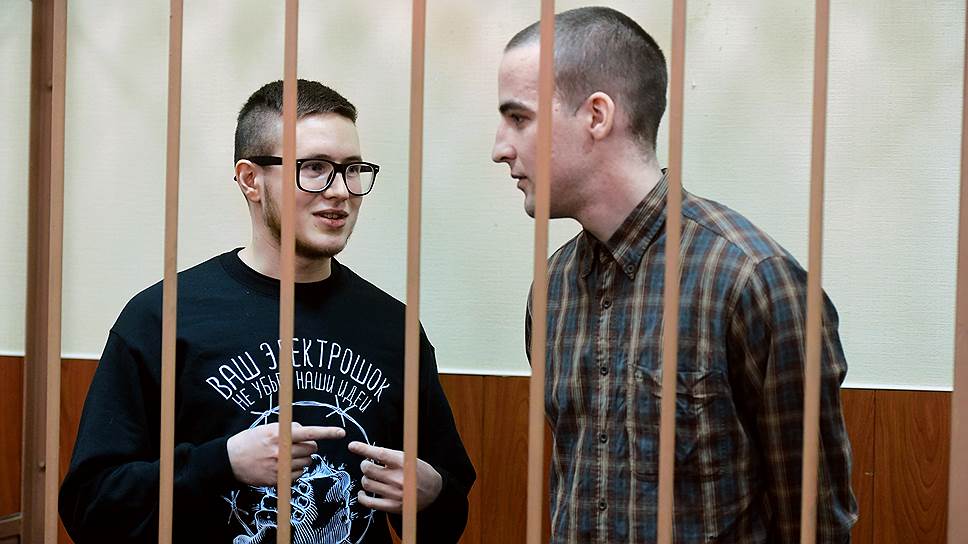
filinkov and boyarshinov-komm.jpgNetwork case defendants Viktor Filinkov and Yuli Boyarshinov in the cage at court yesterday. Filinkov (left) wears a sweatshirt emblazoned with the slogan, “Your taser can’t kill our ideas.” Photo by Alexander Koryakov. Courtesy of Kommersant
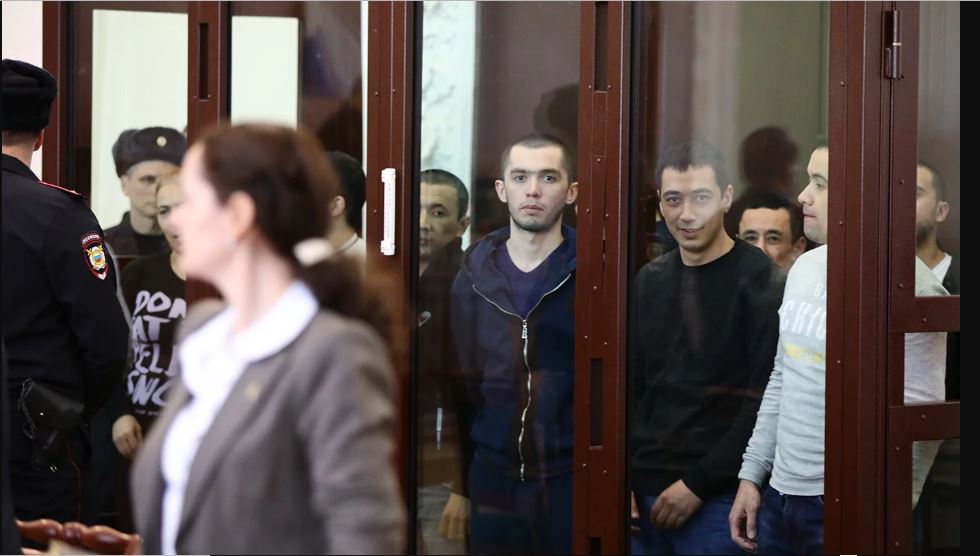
The Defendants Were Assigned Roles: Network Trial Gets Underway in Petersburg
Anna Pushkarskaya
Kommersant
April 9, 2019

The court trial in the case of the “anarchist terrorist community” Network got underway in St. Petersburg. Viktor Filinkov, a 24-year-old programmer, and Yuli Boyarshinov, a 27-year-old industrial climber, have been charged with involvement in Network. Federation Council member Lyudmila Narusova, who attended the hearing, pointed out the “ability to throw grenades,” which the prosecution included in the evidence against the defendants, was taught officially to members of the patriotic youth movement Yunarmiya.

“This case has nothing to do with the rule of law,” Narusova noted.

Filinkov and Boyarshinov’s case is being tried in St. Petersburg by the Moscow District Military Court. In January, the same court sentenced Igor Shishkin, who made a deal with case investigators, to three and a half years in prison. Subsequently, the FSB placed Network on the Russian federal list of banned organizations.

The courtroom could not accommodate everyone who wanted to attended the trial. Narusova and ex-State Duma member and civil rights activist Yuli Rybakov were in the gallery.

The defendants were applauded by the gallery as armed guards led them into the courtroom.

During the investigation, Filinkov and three young men in Penza also charged in the case publicly stated they had been tortured with electrical shocks. Boyarshinov claimed conditions in the remand prison were tantamount to torture. Both men have filed complaints with the European Court of Human Rights (ECHR) in Strasbourg.

Lawyer Vitaly Cherkasov motioned the court to let his defendant, Filinkov, sit beside him during the hearing, rather than in the cage, since he had no criminal record or history of conflicts with the law.

The presence in the courtroom of riot police, regular police, and court bailiffs, as well as Cherkasov’s mention of international norms, how things were done at the EHCR, and Prime Minister Dmitry Medvedev’s order to his underlings to explore options for banning the use of the cage in Russian courtrooms made no impression on the court. Both defendants were kept in the cage for the entire hearing.

According to the indictment, the so-called anarchist terrorist community was established no later than May 2015 by Dmitry Pchelintsev (who was arrested in Penza) and an unidentified person. They recruited the seven defendants in the case who have been investigated by the FSB’s Penza office. After cementing the group, they are alleged to have “assigned roles among themselves and explored ways of committing crimes” in order to overthrow the regime. According to the prosecution, to accomplish this objective, they planned on “establishing combat groups and recruiting individuals who shared their anarchist ideology.”

The FSB’s Petersburg office has claimed the defendants were among these recruits. Filinkov has been accused of volunteering to be the group’s “radioman,” while Boyarshinov was, allegedly, their “sapper.”

After the indictment had been read, Judge Roman Muranov asked the defendants whether they understood it.

“No,” Filinkov replied.

The prosecution claims Filinkov promised to “familiarize himself with the community’s charter, employ a pseudonym, data encryption software,  and conspiratorial methods, and acquire and improve [his] combat skills.”

In addition, Filinkov was supposed to have “supplied members with communications devices,” taught them encryption, “recruited other individuals, discussed and planned crimes during meetings, attended classes on tactics, reconnaissance, sabotage, and combat, and the use of weapons and explosive devices, and acquired the knowledge necessary in extreme circumstances and combat conditions.”

“When the time came to shift to active operations for accomplishing the objective part of the crimes [sic],” Filinkov, allegedly, agreed to “mobilize and be ready to achieve the terrorist community’s objectives.”

“I don’t understand the source of these letters, nor how the indictment could be a fiction, rather than something emerging from the evidence,” said Filinkov.

After hearing similar charges made against him, Boyarshinkov said he admitted his guilt and was willing to testify before the examination of evidence.

After the hearing, MP Narusova said the incidents of combat training, as described in the indictment, had nothing to do with the law.

“The Yunarmiya officially engages in combat training under the patronage of Defense Minister Sergei Shoigu. Children are taught to throw grenades, and they learn combat tactics. Ask Shoigu why the entire Yunarmiya is busy learning combat skills?” Narusova wondered.

“A fellow Federation Council member recently said children should be able to throw grenades,” Narusova continued.

She referred to a recent statement by Federation Council member Viktor Bondarev, who had proposed reinstating basic combat training in Russian schools. He claimed to be outraged children did not know how to throw grenades and were afraid of machine guns.

Ms. Narusova said she was drafting a law bill that would criminalize torture. She also said planned to get to the bottom of the Network case.

“This case has nothing to do with the rule of law,” Narusova noted.

In their testimony, the defendants insisted they were learning the alleged skills as a matter of self-defense, given the numbers of antifascists murdered in different parts of Russia in recent years.

In particular, Filinkov mentioned the murders of Timur Kacharava, Stanislav Markelov, and Anastasia Baburova. He reported that, during his studies at Omsk University, he and his friends had been attacked by “right-wing radicals, neo-Nazis, and fascists,” including provocateurs who, he alleged, had ties with law enforcement agencies.

According to Filinkov, the assailants in these clashes had been armed with “blades and stun guns.”

After the investigation was completed, the headmaster of the school Filinkov attended submitted a glowing letter of recommendation. The letter claims the defendant had always shown respect for the law, and was friendly, conscientious, and responsible. He had been an excellent student and won a prize at an academic astronomy competition at Baikonur.

Kommersant will be following the trial’s progress.

Translated by the Russian Reader

__________________________________________

What can you do to support the Penza and Petersburg antifascists and anarchists who have been tortured and imprisoned by the Russian Federal Security Service (FSB)?

  • Donate money to the Anarchist Black Cross via PayPal (abc-msk@riseup.net). Make sure to specify your donation is earmarked for “Rupression.”
  • Spread the word about the Network Case aka the Penza-Petersburg “terrorism” case. You can find more information about the case and in-depth articles translated into English on this website (see below), rupression.com, and openDemocracyRussia.
  • Organize solidarity events where you live to raise money and publicize the plight of the tortured Penza and Petersburg antifascists. Go to the website It’s Going Down to find printable posters and flyers you can download. You can also read more about the case there.
  • If you have the time and means to design, produce, and sell solidarity merchandise, please write to rupression@protonmail.com.
  • Write letters and postcards to the prisoners. Letters and postcards must be written in Russian or translated into Russian. You can find the addresses of the prisoners here.
  • Design a solidarity postcard that can be printed and used by others to send messages of support to the prisoners. Send your ideas to rupression@protonmail.com.
  • Write letters of support to the prisoners’ loved ones via rupression@protonmail.com.
  • Translate the articles and information at rupression.com and this website into languages other than Russian and English, and publish your translations on social media and your own websites and blogs.
  • If you know someone famous, ask them to record a solidarity video, write an op-ed piece for a mainstream newspaper or write letters to the prisoners.
  • If you know someone who is a print, internet, TV or radio journalist, encourage them to write an article or broadcast a report about the case. Write to rupression@protonmail.com or the email listed on this website, and we will be happy to arrange interviews and provide additional information.
  • It is extremely important this case break into the mainstream media both in Russia and abroad. Despite their apparent brashness, the FSB and their ilk do not like publicity. The more publicity the case receives, the safer our comrades will be in remand prison from violence at the hands of prison stooges and torture at the hands of the FSB, and the more likely the Russian authorities will be to drop the case altogether or release the defendants for time served if the case ever does go to trial.
  • Why? Because the case is a complete frame-up, based on testimony obtained under torture and mental duress. When the complaints filed by the accused reach the European Court of Human Rights in Strasbourg and are examined by actual judges, the Russian government will again be forced to pay heavy fines for its cruel mockery of justice.

***************

If you have not been following the Penza-Petersburg “terrorism” case and other recent cases involving frame-ups, torture, and violent intimidation by the Russian Federal Security Service (FSB) and other arms of the Russian security state, read and share the articles the Russian Reader has posted on these subjects.

Moscow Anarchist Azat Miftakhov: Arrested, Tortured and Missing

azatMoscow anarchist Azat Miftakhov at the center of a selfie taken, apparently, by the Center “E” officers who tortured him. Screenshot courtesy of Jenya Kulakova

Jenya Kulakova
Facebook
February 2, 2019

For a day and a half, lawyers have been unable to see Azat Miftakhov, an anarchist and Moscow State University graduate student who was detained yesterday. Yesterday evening, Miftakhov was taken from the Balashikha police station as a defense counselor looked on and taken to parts unknown. Miftakhov was bruised and surrounded by eight cop. It has been twenty-four hours since he was last seen. No one knows his whereabouts, his condition, and the charges against him.

On the other hand, Ren TV and Rossiya 24 have broadcast photos and videos from the Miftakhov’s search and interrogation. In one of them, an investigator mocks Miftakhov, who is handcuffed, when he claims he is afraid of being tortured. The Center “E” officers take a selfie with their prisoner. (I was unable to find any other photo, so that’s why it illustrates this post.)

The folks who were detained along with Miftakhov, but released yesterday, report they were beaten and tortured with electric shocks. The torture was so bad that yesterday Miftakhov “didn’t look like a human being.” He attempted to slash his wrists to keep from being tortured again. Today, lawyer Svetlana Sidorkina heard an investigator in court talking to someone about it.

The authorities did not produce Miftakhov in court today for his own custody hearing.

Like a year ago in Petersburg, torture is happening practically in broad daylight, but we don’t know what to do.  Yesterday, when I left a message on the Moscow police’s hotline, the operator almost laughed at me. Just as Putin claimed [at a recent meeting of the Council for Civil Society and Human Rights] that FSB officers don’t torture people in vehicles, she doubted what I was saying.

“He’s being tortured right in an Interior Ministry building? Right now? Give me a break,” she said to me.

A missing person report on Miftakhov has been filed, and lawyers have been trying since yesterday to get access to him. But what’s the point?

I hope this hell ends for him as soon as possible.

Here are a few links to articles [in Russian] about what has transpired about the searches and arrests in Moscow since yesterday.

Translated by the Russian Reader

FSB May Have Used Neo-Nazi Provocateur to Frame Network Suspects

Russian Security Services May Have Used Agent Provocateur to Frame Up Antifascists
People and Nature
January 31, 2019

Antifascists have launched an international campaign to defend Russian activists who have been arrested, tortured in detention, and charged with terrorism-related offences in the Network case.

The Federal Security Service (FSB) claims that 11 people arrested in St Petersburg and Penza were part of an underground terrorist group seeking to sow disorder ahead of the 2018 Russian Presidential elections and the football World Cup.

Several of the detainees have described in detail how they were tortured by the FSB. For example, Viktor Filinkov described how he was tortured with an electric shocker after being detained at St. Petersburg’s Pulkovo Airport in January 2018. Filinkov stated that FSB officers put him in a minivan, and then drove him around the city while torturing him into learning a forced confession.

pan-antifaDemonstrators showing their solidarity with Network defendants on January 19, 2019, in London. Photo courtesy of People and Nature

The quasi-official St. Petersburg Public Monitoring Commission has compiled evidence of torture, and the issue was raised at a meeting of the Kremlin’s own Presidential Council for Civil Society and Human Rights. Nevertheless, preparations for what the defendants and their families describe as a show trial continue.

On 19 January, demonstrations in solidarity with the defendants were held in Moscow, St. Petersburg, Kyiv, London, and other European and North American cities. (Information on the London event here and here.)

On 17 January, defendant Igor Shishkin received three and a half years for involvement in a terrorist organization. Shishkin admitted his guilt and came to a pretrial agreement with the investigation. Most other defendants have renounced their confessions, citing the fact that they were tortured by FSB officers.

The following article, by Tatyana Likhanova of the independent Russian newspaper Novaya Gazeta, describes the use of what appears to be an agent provocateur in the Network case. This agent, who attended the same sports club as one of the case investigators in Penza, previously gave information to Ilya Shakursky, one of the defendants, and appears to have encouraged Shakursky to take radical action. We translated it with the author’s permission.

***

Following the conviction of Igor Shishkin, his lawyer Dmitry Dinze published several extracts from the case materials in a Facebook post. According to the post, a certain “V.I. Kabanov (an agent who possesses audio files of conversations with members of the Network)” features on the list of witnesses who testified against the defendants.

Ilya Shakursky, one of the Penza-based defendants in the Network case, reported that this agent came into contact with the antifascists previously, in a statement made last April. Having introduced himself as “Vlad Dobrovolsky,” the agent encouraged them to take radical measures against the Russian authorities and engage in violent acts against law enforcement officials. Shakursky’s statement was given to Senior Investigator Valery Tokarev and attached to the case files. But this evidence was not verified by law enforcement.

At a recent court hearing on the extension of pretrial custody for Shakursky, the following statement by the defendant was read out by the presiding officer (the session was open to the public, and journalists made audio recordings):

In autumn 2016, I met a young man named Vlad Dobrovolsky on the VKontakte social network [a Russian network similar to Facebook]. His name and surname may not be real. He was of an average height, with short dark hair, a beard, and strong build. I can identify him. I also know that he was studying at Penza State University. Vlad had given me important information about upcoming attacks by neo-Nazis on antifascist events. According to him, he did it because of a personal grudge against the Penza Nazis.

He also told me that some neo-Nazis maintained close relations with officers from the counter-extremism department, who, in turn, do not prevent the organisation of neo-Nazi events (tournaments, meetings, concerts).

Vlad found out later that I play airsoft, and offered to give me a few training sessions on tactics. At one of his training sessions, he showed me his Wild Boar firearm.

Later, he told me that a radical neo-Nazi organisation operates in Siberia; its aim is to fight for the autonomy of Siberia. As a committed antifascist, I felt it was my duty to learn more about this organization in order to expose it later on by writing articles in the media. That is why I deliberately misled Dobrovolsky when I spoke about my views and supported his proposals. My goal was to gain his trust to learn more about the neo-Nazis.

In spite of his constant requests to meet, I rarely met Vlad. Communication with him was not a priority for me. I was busy with my studies and my personal life. At the last meeting in summer 2017, he talked about his desire to move on to radical action and try to make an explosive device. I thought he was a crazy fanatic and stopped talking to him, ignoring his calls.

In court, Shakursky clarified that the man called “Dobrovolsky” is known in Penza as a neo-Nazi.

Novaya Gazeta found a user with the same name on the Ask.fm social network. His jokes in the comments have a nationalist flavor.

Talking with relatives during breaks, Shakursky also said that he recorded conversations with Vlad on his smartphone. He also saved the correspondence with him and photographs of “Dobrovolsky” from several meetings (a friend of Shakursky’s, at his request, photographed them secretly).

pan-shakurskyIlya Shakursky

Law enforcement confiscated the smartphone and computer. According to Shakursky, the investigating officers showed his correspondence with “Dobrovolsky” to Dmitry Pchelintsev, another defendant, but this correspondence is not in the file. As for the audio recordings, they were added to the case file, but with omissions that allow the remaining phrases to be used against the defendants. The defense has no access to the original records, since Shakursky’s electronic devices remain in the possession of the investigation.

pan-pchelintsevDmitry Pchelinstev

When Ilya’s acquaintances showed a photo of “Dobrovolsky” to students at Penza university, they recognized a Penza State University student called Vlad Gresko. As Novaya Gazeta has noted, on Ask.fm, people address user wlad8 as “Gres.” Web searches revealed yet another coincidence: “Dobrovolsky” trains at the same sport club as investigator Valery Tokarev. Both appear in pictures on the zavod58_sport_club online community.

During breaks in court hearings, Shakursky also managed to report that, after one of his meetings with Vlad, a sporty-looking man came up to him on the street and tried to provoke a fight. Subsequently, after his arrest, Shakursky saw this same man in the FSB office. The man turned out to be Dmitry N., an investigating officer with the Penza branch office of the FSB.

According to Shakursky, the officer “listened to Nazi bands […] and talked to officer Shepelev about his desire to ‘shoot shavki’ [Russian neo-Nazi slang for antifascists – Novaya Gazeta]. I pretended that I did not recognize him.”

Indeed, according to Shakursky’s statement on torture, it was Captain Shepelev who subjected Shakursky to torture in an effort to force him to confess to terrorism charges. During a court session break, Shakursky said:

This man [Shepelev] participated in my torture and the torture of Dima [Dmitry Pchelintsev, another defendant]. He threatened to rape me. […] When the human rights ombudsperson [Elena Rogova] visited us, which was a while ago, when Dima and I couldn’t see each other, she asked me to draw the locations [in investigation detention] where I had been tortured. I drew them. In the office next door, Dima drew the same thing. She compared them, and it was the same place. Although I was not being kept there officially [according to the Military Investigative Commission’s investigation into the claims of torture – Novaya Gazeta].

There were three people there — Shepelev held me down, tied me up with black tape. [….] I was wearing only my underwear. He took my underwear off and said he was going to rape me.

Elena Bogatova, Shakursky’s mother, told journalists that when law enforcement searched her son’s apartment, officers went straight to a hole under the kitchen window. There, they found “an improvised explosive device camouflaged as a fire extinguisher”. When Shepelev ordered officers to look under the couch, a pistol was found.

The initial forensic test did not find any DNA or fingerprint traces belonging to Shakursky on these items. Then, after Shakursky gave a saliva sample, a second test was conducted. This test showed traces of Shakursky’s DNA on a piece of electrical tape stuck to the explosive device. But, as Elena Bogatova recalls, and photographs of the search confirm, after the device was found, it was left on the apartment floor for a period of time. Given that Shakursky had lived there for a significant period of time, there were bound to be traces of his DNA.

According to Bogatova, Captain Shepelev also tried to force her to give a “correct comment” to the television channel NTV when they interviewed her. She was advised not to deny the existence of a terrorist organization and not insist on her son’s innocence. Otherwise, Bogatova says, Shepelev threatened he would spread rumors in prison that her son was a pedophile.

■ A cash appeal to support the Network case defendants (for legal expenses and support of their families), initiated by the organizing committee for the 19 January demonstration in London, will close in nine days’ time on 8 February. It has raised more than £3000, surpassing the original target of £2000. But we are making a final push to try to hit £4000. You can see the details, and donate, here.

Thanks to Gabriel Levy for permission to republish the article. It has been edited very lightly to conform with our style guide. {TRR}

__________________________________________

What can you do to support the Penza and Petersburg antifascists and anarchists who have been tortured and imprisoned by the Russian Federal Security Service (FSB)?

  • Donate money to the Anarchist Black Cross via PayPal (abc-msk@riseup.net). Make sure to specify your donation is earmarked for “Rupression.”
  • Spread the word about the Network Case aka the Penza-Petersburg “terrorism” case. You can find more information about the case and in-depth articles translated into English on this website (see below), rupression.com, and openDemocracyRussia.
  • Organize solidarity events where you live to raise money and publicize the plight of the tortured Penza and Petersburg antifascists. Go to the website It’s Going Down to find printable posters and flyers you can download. You can also read more about the case there.
  • If you have the time and means to design, produce, and sell solidarity merchandise, please write to rupression@protonmail.com.
  • Write letters and postcards to the prisoners. Letters and postcards must be written in Russian or translated into Russian. You can find the addresses of the prisoners here.
  • Design a solidarity postcard that can be printed and used by others to send messages of support to the prisoners. Send your ideas to rupression@protonmail.com.
  • Write letters of support to the prisoners’ loved ones via rupression@protonmail.com.
  • Translate the articles and information at rupression.com and this website into languages other than Russian and English, and publish your translations on social media and your own websites and blogs.
  • If you know someone famous, ask them to record a solidarity video, write an op-ed piece for a mainstream newspaper or write letters to the prisoners.
  • If you know someone who is a print, internet, TV or radio journalist, encourage them to write an article or broadcast a report about the case. Write to rupression@protonmail.com or the email listed on this website, and we will be happy to arrange interviews and provide additional information.
  • It is extremely important this case break into the mainstream media both in Russia and abroad. Despite their apparent brashness, the FSB and their ilk do not like publicity. The more publicity the case receives, the safer our comrades will be in remand prison from violence at the hands of prison stooges and torture at the hands of the FSB, and the more likely the Russian authorities will be to drop the case altogether or release the defendants for time served if the case ever does go to trial.
  • Why? Because the case is a complete frame-up, based on testimony obtained under torture and mental duress. When the complaints filed by the accused reach the European Court of Human Rights in Strasbourg and are examined by actual judges, the Russian government will again be forced to pay heavy fines for its cruel mockery of justice.

***************

If you have not been following the Penza-Petersburg “terrorism” case and other recent cases involving frame-ups, torture, and violent intimidation by the Russian Federal Security Service (FSB) and other arms of the Russian security state, read and share the articles the Russian Reader has posted on these subjects.

No Amnesty for “Terrorists”

boyarshinovAmnesty International, the world’s premier human rights organization, thinks there is a chance Network case suspect Yuli Boyarshinov (pictured here) and his ten comrades can get a fair trial in Russia, which has a 99% conviction rate. Photo courtesy of Rupression
Despite what I wrote to a comrade yesterday, it turns out Amnesty International did issue a report on the Network case—just as last year was ending, meaning well over a year since the ugly, insulting mess kicked off in Penza.

But you might wish Amnesty International had not bothered to write anything, especially after you read the report’s conclusion.

Amnesty International is urging the Russian authorities to review the Network case and if the evidence received during such review demonstrates that the case was, indeed, fabricated, all charges against the co-accused individuals must be dropped and they must be immediately released. If there are legitimate grounds to continue their prosecution, the Russian authorities should fully respect the right to a fair trial and, amongst other things, open the trial in the Network case to members of the public.

If the suspects in the sickening torture carnival and flagrant frame-up known as the Network case go to trial, there is a 99% chance that, as in the recent case of two other well-known convicted “terrorists,” Oleg Sentsov and Alexander Kolchenko, the Networkers will be tried in closed chambers by a military tribunal in a city like Rostov-on-Don, which has the added advantage of being quite far from the Networkers’ homes in Penza and Petersburg, making it extraordinarily  difficult for their family and friends to make the trip so they can, at best, stand in the hallway of the courthouse or outside it and, perhaps, every once in a while catch a glimpse of their loved ones as they are shuttled back and forth between hearings by heavily armed bailiffs and guard dogs.

Correspondingly, the Networkers will be found guilty on all charges and sentenced to hefty terms in prison like Kolchenko and Sentsov, who were just as obviously the victims of a blatant frame-up, meant to teach Crimeans and the world a brutal lesson about the new bosses in the Crimean Peninsula.

Given these circumstances, what prevented Amnesty International from declaring the Networkers prisoners of conscience and turning their case into a full-fledged international solidarity campaign is beyond me.

Amnesty International must think there is a chance the Networkers are “real” terrorists, meaning the world’s greatest human rights advocates have become either hopelessly naive in their late middle age or abysmally cynical. {TRR}

Thanks to Comrade Koganzon for finding AI’s dismal report.

______________________________________

What can you do to support the Penza and Petersburg antifascists and anarchists who have been tortured and imprisoned by the Russian Federal Security Service (FSB)?

  • If you are in London or can get to London on January 19, join the solidarity demo at the Cable Street Mural at 2 p.m. The demonstration is supported by Anarchist Communist Group, Anarchist Federation, Brighton Antifascists, Bristol Anti-Fascists, Brazilian Women against Fascism, Feminist Fightback, London Antifascists, London Anarchist Black Cross, North London Anti-Fascists, Plan C LDN, RS21, and Labour Briefing. Please email london19jan(at)riseup.net to add your organization to the list of supporters. More information about the Cable Street Mural and its location can be found on its Facebook page.
  • Donate money to the Anarchist Black Cross via PayPal (abc-msk@riseup.net). Make sure to specify your donation is earmarked for “Rupression.”
  • Spread the word about the Network Case aka the Penza-Petersburg “terrorism” case. You can find more information about the case and in-depth articles translated into English on this website (see below), rupression.com, and openDemocracyRussia.
  • Organize solidarity events where you live to raise money and publicize the plight of the tortured Penza and Petersburg antifascists. Go to the website It’s Going Down to find printable posters and flyers you can download. You can also read more about the case there.
  • If you have the time and means to design, produce, and sell solidarity merchandise, please write to rupression@protonmail.com.
  • Write letters and postcards to the prisoners. Letters and postcards must be written in Russian or translated into Russian. You can find the addresses of the prisoners here.
  • Design a solidarity postcard that can be printed and used by others to send messages of support to the prisoners. Send your ideas to rupression@protonmail.com.
  • Write letters of support to the prisoners’ loved ones via rupression@protonmail.com.
  • Translate the articles and information at rupression.com and this website into languages other than Russian and English, and publish your translations on social media and your own websites and blogs.
  • If you know someone famous, ask them to record a solidarity video, write an op-ed piece for a mainstream newspaper or write letters to the prisoners.
  • If you know someone who is a print, internet, TV or radio journalist, encourage them to write an article or broadcast a report about the case. Write to rupression@protonmail.com or the email listed on this website, and we will be happy to arrange interviews and provide additional information.
  • It is extremely important this case break into the mainstream media both in Russia and abroad. Despite their apparent brashness, the FSB and their ilk do not like publicity. The more publicity the case receives, the safer our comrades will be in remand prison from violence at the hands of prison stooges and torture at the hands of the FSB, and the more likely the Russian authorities will be to drop the case altogether or release the defendants for time served if the case ever does go to trial.
  • Why? Because the case is a complete frame-up, based on testimony obtained under torture and mental duress. When the complaints filed by the accused reach the European Court of Human Rights in Strasbourg and are examined by actual judges, the Russian government will again be forced to pay heavy fines for its cruel mockery of justice.

***************

If you have not been following the Penza-Petersburg “terrorism” case and other recent cases involving frame-ups, torture, and violent intimidation by the Russian Federal Security Service (FSB) and other arms of the Russian security state, read and share recent articles the Russian Reader has posted on these subjects.

Solo

nikolai boyarshinov

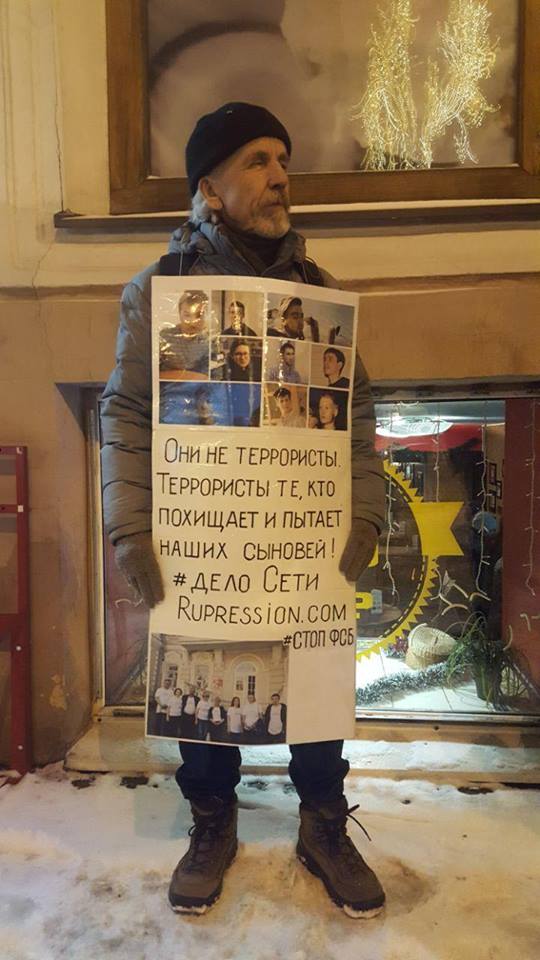
“They are not terrorists. The terrorists are the ones who kidnap and torture our sons! #NetworkCase, rupression.com, #StopFSB,” reads the placard held in this photo by Nikolai Boyarshinov, father of Network frame-up “suspect” Yuli Boyarshinov.

Mr. Boyarshinov has been going to Petersburg’s main street, Nevsky Prospect, and getting out his message by picketing alone every Friday for a long while now.

By law, solo pickets are a perfectly legal tool of protest and dissent in Russia. They do not require prior authorization or notification from local authorities, unlike mass protests.

(Mass protests actually don’t require prior authorization, either, only prior notification, but the Putinist authorities forcibly shut down all “unauthorized” mass protests as a matter of practice.)

And yet Mr. Boyarshinov was arrested by police yesterday for no reason whatsoever.

His arrest is the latest in a series of arrests and harassment of solo picketers in Russia’s former capital.

It would seem the Putin regime is not happy ordinary Russians like Mr. Boyarshinov still enjoy the freedom to protest in public at all, so they have decided to try out illegal arrests of perfectly legal solo picketers in Russia’s second largest city by way of further intimidating the country’s grassroots and opposition. {TRR}

Thanks to Natalia Vvedenskaya and Solidarity Saint Petersburg for the heads-up.

***************

What can you do to support the Penza and Petersburg antifascists and anarchists tortured and imprisoned by the FSB?

  • If you are in London or can get to London on January 19, join the solidarity demo at the Cable Street Mural at 2 p.m. The demonstration is supported by Anarchist Communist Group, Anarchist Federation, Brighton Antifascists, Bristol Anti-Fascists, Brazilian Women against Fascism, Feminist Fightback, London Antifascists, London Anarchist Black Cross, North London Anti-Fascists, Plan C LDN, RS21, and Labour Briefing. Please email london19jan(at)riseup.net to add your organization to the list of supporters. More information about the Cable Street Mural and its location can be found on its Facebook page.
  • Donate money to the Anarchist Black Cross via PayPal (abc-msk@riseup.net). Make sure to specify your donation is earmarked for “Rupression.”
  • Spread the word about the Network Case aka the Penza-Petersburg “terrorism” case. You can find more information about the case and in-depth articles translated into English on this website (see below), rupression.com, and openDemocracyRussia.
  • Organize solidarity events where you live to raise money and publicize the plight of the tortured Penza and Petersburg antifascists. Go to the website It’s Going Down to find printable posters and flyers you can download. You can also read more about the case there.
  • If you have the time and means to design, produce, and sell solidarity merchandise, please write to rupression@protonmail.com.
  • Write letters and postcards to the prisoners. Letters and postcards must be written in Russian or translated into Russian. You can find the addresses of the prisoners here.
  • Design a solidarity postcard that can be printed and used by others to send messages of support to the prisoners. Send your ideas to rupression@protonmail.com.
  • Write letters of support to the prisoners’ loved ones via rupression@protonmail.com.
  • Translate the articles and information at rupression.com and this website into languages other than Russian and English, and publish your translations on social media and your own websites and blogs.
  • If you know someone famous, ask them to record a solidarity video, write an op-ed piece for a mainstream newspaper or write letters to the prisoners.
  • If you know someone who is a print, internet, TV or radio journalist, encourage them to write an article or broadcast a report about the case. Write to rupression@protonmail.com or the email listed on this website, and we will be happy to arrange interviews and provide additional information.
  • It is extremely important this case break into the mainstream media both in Russia and abroad. Despite their apparent brashness, the FSB and their ilk do not like publicity. The more publicity the case receives, the safer our comrades will be in remand prison from violence at the hands of prison stooges and torture at the hands of the FSB, and the more likely the Russian authorities will be to drop the case altogether or release the defendants for time served if the case ever does go to trial.
  • Why? Because the case is a complete frame-up, based on testimony obtained under torture and mental duress. When the complaints filed by the accused reach the European Court of Human Rights in Strasbourg and are examined by actual judges, the Russian government will again be forced to pay heavy fines for its cruel mockery of justice.

***************

If you have not been following the Penza-Petersburg “terrorism” case and other recent cases involving frame-ups, torture, and violent intimidation by the Russian Federal Security Service (FSB) and other arms of the Russian police state, read and share recent articles the Russian Reader has posted on these subjects.


Two More Suspects Detained in Network Case

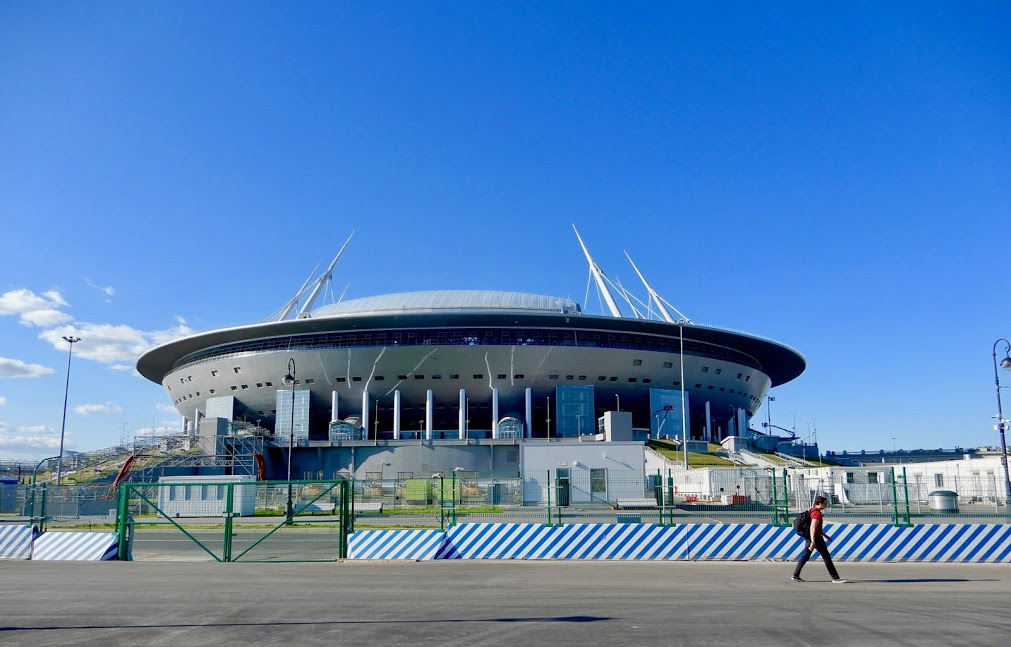
krestovsky stadiumThe members of the wholly mythical terrorist organization the Network have been accused by the FSB of planning to disrupt the March presidential elections and this summer’s World Cup in order to foment rebellion among the hoi polloi. These accusations would be hilarious if they were not served up with heavy helpings of torture, intimidation, and incarceration. Photo of Krestovsky Stadium in Petersburg, a World Cup venue, by the Russian Reader

Two Suspects Detained in Network Case
OVD Info
July 5, 2018

Mikhail Kulkov and Maxim Ivankin, two suspects in the so-called Network Case, have been detained and placed in police custody, OVD Info has learned from Yelena Bogatova, the mother of Ilya Shakursky, another suspect in the case.

The Lenin District Court in Penza has remanded Kulkov and Ivankin in custody until September.

Bogatova had been waiting for a lawyer outside the Penza Remand Prison when Ivankin and Kulkov were brought there. According to her, their parents learned of their arrests on July 4. Their custody hearings took place at 2 p.m. on July 5.

Alexei Kulkov, Mikhail Kulkov’s father, told OVD Info the young men had been detained in Moscow without IDs. Penza’s Lenin District Court has remanded them in custody until September 18. Mr. Kulkov reported that his son and Maxim Kulkin have been charged with organizing a “terrorist community.”  He said he saw the two young men for several minutes in the courthouse as they were escorted down the hallway. He noticed they had black eyes and bruises on their bodies.

Previously, Ivankin and Kulkov were detained in Penza in March 2017 along with antifascist Alexei Poltavets. They were initially charged with drugs possession. According to Poltavets, after they were detained, Russian Federal Security Service (FSB) officers tortured and beat them, demanding they testify against their friends in the antifascist scene. Poltavets later left Russia and had not seen Ivankin and Kulkov since then.

In June 2018, it transpired that Ivankin and Kulkov’s case had been combined with the investigation of the so-called Network, an organization that FSB investigators claim is a terrorist group. Ivankin and Kulkov have been charged with planning to produce or sell drugs in large quantities (Russian Criminal Code Article 228.1 Part 4 Paragraph G and Article 30 Part 3).

In the criminal case files, Ivankin, Kulkov, and Poltavets are identified both by their real names and the pseudonyms Redhead, Ilya, and Boris.

It transpired on July 4 that another suspect in the Network Case, Dmitry Pchelintsev, had been transferred from Penza Remand Prison No. 1, most likely to St. Petersburg.

On May 23, a friend of the accused, Victoria Frolova, was detained at the Russian-Ukrainian border. She was forced to testify against her Penza friends, including Ivankin and Kulkov. In her signed statement, Ivankin and Kulkov are identified as members of the 5.11 (“November Fifth”) cell of the Network. According to FSB investigators, all members of the Network trained with sticks in the woods, practice orienteering and first aid, and learned to set traps.

In the autumn of 2017, five young men were arrested in Penza: Yegor Zorin, Ilya Shakursky, Dmitry Pchelintsev, Vasily Kuksov, and Andrei Chernov. Arman Sagynbayev was detained in St. Petersburg and extradited to Penza. All of them were charged with involvement in a “terrorist” community. The FSB claimed the young young were involved in a terrorist organization known as the Network, whose cells, allegedly, existed in Moscow, Petersburg, Penza, and Belarus. The accused men gave accounts of mental coercion, electrical shock torture, and being hung upside down by FSB officers, as well as their planting weapons in the men’s cars and flats.

Later, several of the suspects renounced their confessions, saying they had been given under torture.

Besides the six suspects jailed in Penza, there are three more young men who have been charged with involvedment in the Network who have been remanded in custody in Petersburg. They are Viktor Filinkov and Igor Shishkin, on whose bodies human rights activists found physical traces of their having been tortured, and Yuli Boyarshinov, originally accused of illegal possession of explosive substances. Later, investigators tried to force him to testifying against the men accused in the Network Case and charged him with the same offenses.

Translated by the Russian Reader

***************

What can you do to support the Penza and Petersburg antifascists and anarchists tortured and imprisoned by the FSB?

  • Donate money to the Anarchist Black Cross via PayPal (abc-msk@riseup.net). Make sure to specify your donation is earmarked for “Rupression.”
  • Spread the word about the Network Case aka the Penza-Petersburg “terrorism” case. You can find more information about the case and in-depth articles translated into English on this website (see below), rupression.com, and openDemocracyRussia.
  • Organize solidarity events where you live to raise money and publicize the plight of the tortured Penza and Petersburg antifascists. Go to the website It’s Going Down to find printable posters and flyers you can download. You can also read more about the case there.
  • If you have the time and means to design, produce, and sell solidarity merchandise, please write to rupression@protonmail.com.
  • Write letters and postcards to the prisoners. Letters and postcards must be written in Russian or translated into Russian. You can find the addresses of the prisoners here.
  • Design a solidarity postcard that can be printed and used by others to send messages of support to the prisoners. Send your ideas to rupression@protonmail.com.
  • Write letters of support to the prisoners’ loved ones via rupression@protonmail.com.
  • Translate the articles and information at rupression.com and this website into languages other than Russian and English, and publish your translations on social media and your own websites and blogs.
  • If you know someone famous, ask them to record a solidarity video, write an op-ed piece for a mainstream newspaper or write letters to the prisoners.
  • If you know someone who is a print, internet, TV or radio journalist, encourage them to write an article or broadcast a report about the case. Write to rupression@protonmail.com or the email listed on this website, and we will be happy to arrange interviews and provide additional information.
  • It is extremely important this case break into the mainstream media both in Russia and abroad. Despite their apparent brashness, the FSB and their ilk do not like publicity. The more publicity the case receives, the safer our comrades will be in remand prison from violence at the hands of prison stooges and torture at the hands of the FSB, and the more likely the Russian authorities will be to drop the case altogether or release the defendants for time served if the case ever does go to trial.
  • Why? Because the case is a complete frame-up, based on testimony obtained under torture and mental duress. When the complaints filed by the accused reach the European Court of Human Rights in Strasbourg and are examined by actual judges, the Russian government will again be forced to pay heavy fines for its cruel mockery of justice.

***************

If you have not been following the Penza-Petersburg “terrorism” case and other recent cases involving frame-ups, torture, and violent intimidation by the Russian Federal Security Service (FSB) and other arms of the Russian police state, read and republish the recent articles the Russian Reader has posted on these subjects.