Source: Ozon email advertising circular, 14 November 2025
An American World War II cemetery in the Netherlands removed displays focused on Black American soldiers, sparking outrage and compelling Dutch politicians to appeal to U.S. officials this week to restore the information.
The two displays were added to the Netherlands American Cemetery’s visitor center in September 2024 after some historians and relatives of service members criticized the site for not mentioning the unique experiences of Black troops. One plaque featured the story of George H. Pruitt, a Black soldier in the 43rd Signal Construction Battalion, who died trying to save a comrade. The other highlighted how Black American service members were “fighting on two fronts” — for freedom overseas and for their civil rights at home.
The displays’ removal, American and Dutch critics of the move say, signifies an erasure of Black Americans’ contributions in the war and their work to liberate the Netherlands from the Nazis. It also represents an overstep in the Trump administration’s campaign to curb what it deems diversity, equity and inclusion efforts, the critics said.
It’s unclear exactly when the plaques were removed.
The American Battle Monuments Commission, a U.S. government agency that oversees the cemetery, did not respond to requests for comment from The Washington Post. The commission told Dutch news outlets that one panel is “off display, though not out of rotation,” and a second panel was retired. The commission did not elaborate on either decision.
Janice Wiggins, the widow of Jefferson Wiggins, a Black WWII soldier who was quoted in one of the displays, said she had “a gut-wrenching feeling” when she learned the panels had been removed.
“Not only reading about, but actually experiencing, how history and those who shaped it can be so easily and casually erased,” she said. “It was very personal.”
“The removal of the displays is disrespectful to the Black American soldiers who served and to the legacies their families cherish,” Wiggins added.
More than 8,000 U.S. troops who fought in World War II are buried at the Netherlands American Cemetery, a solemn site in the village of Margraten in the southern part of the country. Just over 170 of these service members are Black Americans, a slice of the more than 1 million Black Americans who fought during World War II in segregated forces.
The cemetery is special to the local community, according to the American Battle Monument Commission’s website. Residents have adopted the grave sites, bringing flowers to the cemetery for decades.
The 6,450-square-foot visitor center, where the displays about Black service members were, tells the stories of the thousands of Americans commemorated at the cemetery.
One of the removed plaques described the “horrors of war” that Black service members faced while serving primarily in labor and support positions. In fall 1944, the U.S. Army’s 960th Quartermaster Service Company, a mostly Black unit, arrived in Margraten “to dig graves at the newly created cemetery,” the display read, according to a photo provided to The Post.
Jefferson Wiggins, a first lieutenant, recounted seeing service members under his command crying as they dug the graves.
“They were just completely traumatized,” the display said.
Now there is no textual information provided about Black troops at the cemetery, said Kees Ribbens, a senior researcher at the NIOD Institute for War, Holocaust and Genocide Studies in Amsterdam. Although it’s unclear why the displays were removed, Ribbens said it’s notable that it happened during the Trump administration’s crackdown on diversity efforts.
President Donald Trump signed executive orders on his first day in office banning government diversity, equity and inclusion efforts. The impact has been widespread: Arlington National Cemetery scrubbed information from its website about prominent Black, Hispanic and female service members and topics such as the Civil War. Exhibits related to slavery were removed at multiple national parks. The White House accused the Smithsonian of promoting “race-centered ideology.”
“Given the emphasis the current administration puts on DEI, it doesn’t make it that difficult to start wondering if the disappearance of Black history [at the cemetery] has to do with the current winds blowing in D.C.,” Ribbens said.
In the Netherlands, the public has been baffled that anyone would see a reason to remove the panels, Ribbens said.
Dutch politicians have demanded that the displays be reinstated, appealing to the American Battle Monuments Commission and the U.S. ambassador to the Netherlands.
Alain Krijnen, the mayor of Eijsden-Margraten, where the cemetery is, sent a letter Monday to the commission: “We greatly value the story of the Black Liberators in relation to the past, present and future. In that context, we would greatly appreciate it if the story of the Black Liberators — like the 172 Black Liberators buried in Margraten — could be given permanent attention in the visitor center, and therefore reconsider the removal of the displays.”
The office of the governor of Limburg, the Dutch province containing the cemetery, said it also has “serious concerns.”
“The displayed panels depicted a history we must never forget, and from which we can learn a great deal — especially now, as global divisions are being increasingly magnified,” Bas Alberson, a spokesman for the governor’s office, said in a statement to The Post.
The mayor’s office and the Limburg governor’s office said they had not heard from American officials as of Wednesday.
Janice Wiggins, the 77-year-old widow of Jefferson Wiggins, said she learned the displays had been removed after her friends visited the cemetery in October and noticed the absence. The removal chips away at some of her life’s work, she said.
“Along with [former] US Ambassador to the Netherlands Shefali Razdan Duggal and Dutch author Mieke Kirkels, I lobbied for the inclusion of Black American soldiers in the exhibits at the Netherlands American Cemetery Visitors Center. The original exhibits included only White soldiers,” Wiggins, who lives in New Fairfield, Connecticut, wrote in an email.
Those who have family buried at the cemetery also feel the loss.
Julius Morris is a Black WWII soldier who is buried there. His nephew, Raphael Morris, who lives in St. Louis, felt resigned when he heard the news.
“Business as usual by this administration,” said Morris, 73. “Color me concerned, disappointed, but not surprised.”
Performers: MONTSERRAT MARTÍ CABALLE (soprano), OSCAR ENCINAS (tenor), LUCÍA GARCÍA (soprano), CARLOS COSÍAS (tenor), OLGA PUDOVA
A Russian premiere!
THE MONSERRAT CABALLÉ FESTIVAL
On 28 March 2025, the Oktyabrsky Concert Hall will host a magnificent musical celebration, the first Monserrat Caballé Festival, dedicated to the great Spanish opera singer.
Specially for this event, renowned artists from Spain — relatives, friends, and students of the legendary opera diva — will come to Russia for one evening only! For their one and only performance they have chosen the beautiful St. Petersburg, our country’s musical capital, and the Oktyabrsky Concert Hall, where a distinct atmosphere always reigns.
Monserrat Caballé, whose name has come to symbolize impeccable vocals and subtle artistry, has left an indelible mark on world culture. Having performed over 100 opera roles and almost 1,000 different musical works, she has forever remained in the hearts of not only connoisseurs of exquisite classical music but also fans of musicals and fans of pop rock for performances like the title song from the album Barcelona, the international mega hit she recorded with Queen lead signer Freddie Mercury. Monserrat adored Russia and often visited our country to give concerts. The Caballé family thus decided to hold the first music festival named after her in our country.
The Monserrat Caballé Festival is meant to preserve the superstar’s historical legacy and introduce the public to today’s talents, the most popular performers continuing the Spanish school of opera’s rich traditions.
Among the performers are the great singer’s daughter, MONTSERRAT MARTÍ CABALLÉ (soprano), and the famous Spanish voices OSCAR ENCINAS (tenor), LUCÍA GARCÍA (soprano), and CARLOS COSÍAS (tenor). OLGA PUDOVA, a guest soloist at the Bolshoi and Mariinsky theaters, a phenomenal coloratura soprano who has already conquered Europe’s principal opera stages, is a special guest from Russia.
The artists will be accompanied by OLGA PUDOVA, well known to Russian and international audiences, and the famous conductor MIKHAIL GOLIKOV, People’s Artist of Kabardino-Balkaria. Creative teams from St. Petersburg and Moscow will also be involved in the concert.
The Monserrat Caballe Festival is not only a tribute to the legendary singer but also a grand exuberant celebration, aimed at a wide range of spectators and embracing all generations and the most varied musical tastes.
Don’t miss the opportunity to gift yourself an unforgettable evening full of vivid emotions, beautiful melodies and Spanish passion!
Source: Bileter.ru. Translated by the Russian Reader
On 20 October 2012, during her tour in Russia, Caballé suffered a stroke in Yekaterinburg and was quickly transferred to the Hospital de Sant Pau in Barcelona.
In his Literary Life, [Joseph] Brodsky’s friend Lev Loseff explained the background of “A Halt in the Desert,” a poem about the destruction of a beautiful old building: “One night Brodsky watched the first stages in the razing of the Greek Orthodox church from the apartment of his friends, two sisters from a Tatar family,” and called the poem “a meditation on the symbolic significance of what has just happened: Russia has broken with its Christian and Hellenistic cultural heritage.” Brodsky writes:
So few Greeks live in Leningrad today that we have razed a Greek church, to make space for a new concert hall, built in today’s grim and unhappy style. . . . it is sad that from this distance now we see, not the familiar onion domes, but a grotesquely flattened silhouette.
The deliberately created “fresh ruins” and “open altar wounds” recall the recent wartime devastations. The biblical allusion in “Thou who doest sow” suggests the threat of retribution in Hosea 8:7, “they have sown the wind and they shall reap the whirlwind.” Brodsky concludes by hopelessly asking:
What lies ahead? Does a new epoch wait for us? And if it does, what duty do we owe?– What sacrifices must we make for it?
Loseff claimed that Brodsky condemns “the collective guilt of a nation that produced this regime, that refused to accept the historical alternative, the heritage of Greece and Greek democracy.” But the Russians did not refuse to accept the heritage of Greece. They were not consulted and had no choice. An atheistic Communist system had been imposed on them by deadly force after the Revolution of 1917 and brutally maintained by all successive regimes. It was now the poet’s responsibility to preserve this culture.
Saint Pavel? A scene from a march protesting the blocking of Telegram, St. Petersburg, 1 May 2018. Photo: Olga Maltseva/AFP, via Important Stories
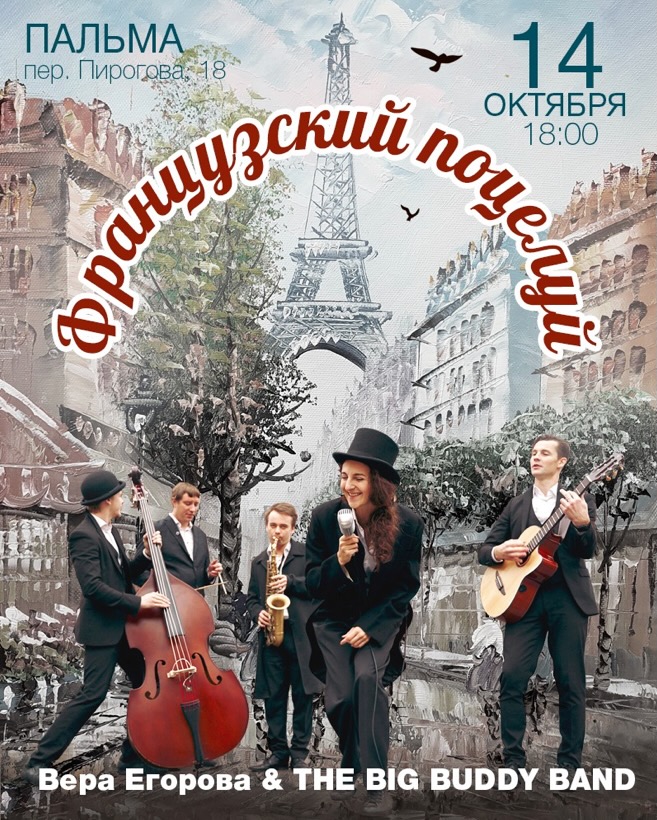
French Kiss is an enchanting cabaret show in the style of the Moulin Rouge, as performed by the world-famous Bize Lisu Show Ballet.
The ballet dancers have already conquered the whole world with their performances. They have garnered roaring applause at the birthday of the Prince of Monaco and in the Kremlin Palace, at Europe’s oldest theaters in Malta and the largest modern concert halls in China.
The unique hand-sewn costumes, the sensual dances, the expressive vocals and the compère’s unsurpassed humor are all part of the grandiose performance.
Duration: 2 hours (with 1 intermission) Age limit: 18+
Performers: Bize Lisu Show Ballet Vocals – Yana Radion, Maria Mantrova, Anastasia Radion Compère – Denis Groshev
*Seat numbers 200 to 220, at the buffet tables in the second row of the balcony.
“French Kiss, the Show”
The venue The show French Kiss will take place in one of the most entrancing places in St. Petersburg— the cultural space Gaika Space. And it will be held in LUXURY format [sic], in which the audience is able to choose festive board tables for two to four people.
The original menu, featuring delicious appetizers and exquisite drinks from the bar, will help you not only to enjoy the show, but will plunge you into a world of gastronomic discoveries. Our show will make your evening unforgettable!
Secure free parking is provided to guests of the show for the entire duration of the performance.
Source: Bileter.ru. Translated by the Russian Reader
A very cold welcome awaited Pavel Durov in France, but it increasingly seems this is exactly what Durov was aiming for.
Did he come clean? No, it’s just business
Only a week into the discussion of the Pavel Durov case did commentators begin recalling what kind of person he was, and several stories emerged about his life, which, incidentally, has involved support (including financial support), from the “authoritative” Petersburg entrepreneur Mikhail Mirilashvili. Without this support, Durov’s main business venture, the social network VKontakte, might perhaps not have taken off. (Formally, Mikhail’s son, Vyacheslav, was involved in the business, but the money belonged to Mirilashvilipère.) To complete the picture, it should be remembered that Mikhail Mirilashvili “developed” (as they say) Petersburg’s casinos, for licensing of which the then-deputy mayor of St. Petersburg Vladimir Putin was responsible.
Vladimir Putin (left) and Mikhail Mirilashvili (right)
Vkontakte rose and flourished on pirated content, which is still abundant on the network, despite the fierce efforts to combat it. Business journalists relish recalling how Durov fought for Vkontakte—not in the sense of freedom of speech, but in the sense of the value of his stake in the social network—and won, pocketing 400 million dollars.
For an interpretation of Durov’s arrest and persecution by the French authorities, see Baruch Taskin and Aaron Lea’s column. I would like to reiterate that Durov is first and foremost a businessman, and a very cynical one at that. It suffices to recall [the time Durov threw money out of a window] in Petersburg and Durov’s reaction [to the crowd’s reaction and the public and media backlash]. He laughed, before summarizing his mockery in philosophical terms:
“We refuse to accept a world where people can betray their humanity for money. If there are people who agree to do it, their behavior should be severely ostracized.”
We know nothing about Durov’s involvement with the FSB—all our assumptions are based on circumstantial evidence—but the left-wing albeit decent newspaper Liberation has written about his cooperation with the French security services, quoting Durov’s own statements.
Pavel Durov (center) may even benefit from his arrest in France: the court ruling will be an excuse for Telegram’s transition from a media platform to a crypto-business.
Source: Moscow Times Russian Service weekly newsletter, 1 September 2024. All images and captions were included in the original publication. Translated by the Russian Reader
“Pavel Durov launched money from a window (Vesti report)”
Pavel Durov launched paper airplanes with five-thousand ruble bills on board into a crowd on 26 May 2012, which was St. Petersburg City Day. How the crowd lunged for the five-thousand ruble bills can be seen on the footage recorded by the Kazan Cathedral superview webcam. About ten banknotes were thrown, after which the crowd finally became furious and the amusement was stopped.
The webcam is installed on Nevsky Prospekt. The webcam offers a view of the Kazan Cathedral. On the left in the frame is the house of the Singer company. On the days of city holidays, Nevsky Prospekt in this section becomes pedestrian. Live 24/7 we broadcast the life of our metropolis.
Kazan Cathedral (Cathedral of the Kazan Icon of the Mother of God) is one of the largest churches in St. Petersburg. It was built on Nevsky Prospekt in 1801–1811 by architect Andrey Voronikhin in the style of Russian classicism to store a revered list of the miraculous icon of the Mother of God of Kazan. After the Patriotic War of 1812, it acquired the significance of a monument of Russian military glory. In 1813, the commander Mikhail Illarionovich Kutuzov was buried here and the keys to the captured cities and other military trophies were placed.
Source: Taxi Crew (YouTube), accessed 1 September 2024. Happening upon this livestream of Kazan Cathedral and environs, the neighborhood where I lived for my first two years in Petersburg, was oddly reassuring, and so I left it on in the background as I worked on this “collage” of news and views and images. It was only now, as I was finishing the piece, that I realized that Kazan Cathedral itself is a monument to the centuries-long profound misunderstanding, sometimes tawdry, sometimes violent, that goes by the name of “Franco-Russian relations” in polite society. ||| TRR
The band Picnic’s new concert program is entitled “One on One.”
Imagine a magic crystal with three facets. The first one is the eponymous new album. The second is video sequences and a laser show. And the third is the band’s musical calling cards: “The Egyptian,” “Kingdom of Curves,” “The Shining,” and others.
Since “the show must go on” (as the famous song says), it must go on not just any old way. The best minds from Kaliningrad to Vladivostok have been working on how to amaze you. Those who attended our concerts during The Future Awaits Us tour probably know already that Picnic’s bold claims are no empty threat. Of course, we will pull back the veil of secrecy, but only at the concert will all our secrets be revealed.
Both of these stances, however, involve a lack of agency, a factor that is borne out in other research we have conducted. Indeed, reviewing nearly 100,000 substantive war-related texts from across six Telegram channels—including three generally pro-war and three anti-war channels—suggests that a lack of agency is common both to supporters and opponents of the war.
On the pro-war channels—which were dominated by reports from the front and patriotic rallying cries, but also included a number of discussions of mobilization and ways out avoiding military service—attribution of “credit” for the war was mixed. Often, the war was highly personalized: something was ordered by Putin, said by his spokesman Dmitry Peskov, or carried out by (then) Defense Minister Sergei Shoigu.
When discussing mobilization, the discussion was dry and procedural, with no discernible consideration of justice or fairness (or the irony of pro-war channels discussing ways of avoiding the fight). Almost never did commentators use the first person: things were done, said or thought by others, but not by them.
On the anti-war channels, the war was largely de-personalized. To the extent blame was attributed to Putin, it was mostly implicit: because it was Putin’s war, his role appeared to require little overt discussion. Perhaps surprisingly, discussion of military mobilization, similarly to the pro-war channels, focused on procedural consideration[s] and avoided issues of justice and fairness. Unlike in the pro-war channels, however, there was considerable use of the first person, but predominantly the first person singular, as commentators discussed their own thoughts and experiences. Use of the first person plural—“we”, with connotations of collective responsibility and action—were rare.
Given the roles played both by “system justification” and “agreeableness” among war supporters—psychological motivations that encourage people to get in line and discourage difference—the lack of a sense of agency is not surprising. Even those who write openly of their support for the war on Telegram don’t tend to see the war as something over which they have any control; while the war may be prosecuted with their support, it is prosecuted without their involvement.
It is perhaps somewhat more jarring that this lack of agency seems to extend to much of the anti-war community, however. To be certain, anti-war Russians clearly claim responsibility for their own lives and, in many cases, for assisting Ukrainian refugees, for example. Moreover, there are individuals and small groups who have attempted acts of resistance ranging from anti-war graffiti and solitary protests to outright sabotage. But there is little discussion of any potential agency over the war itself, or the idea that, if they acted, Russian citizens might be able to bring the war to an end.
In the first half of 2024, the average bill for entertainment tickets (excluding movies) amounted to 3,400 rubles [approx. 35 euros], which is 18.8% higher than a year earlier, reported Yandex Afisha. According to the service, this economic indicator rose by 14% last year. The largest increase in the average bill was recorded in theaters, which rose by almost a quarter, up to 3,800 rubles. The average price of concert tickets on Kassir.ru[a online ticket purchasing service] increased by 20% compared to last year, and the total price increase for the first six months of the year amounted to 16%. Market participants say the increase in ticket prices has been caused by the growing costs of organizing events, as well as by increased demand for performances by domestic artists after the departure of many foreign performers. This has led to an increase in the fees sought by Russian artists and, consequently, to an increase in ticket prices.
But the continued damage to Putin’s authority after a catastrophic war and repeated shocks does not translate to an internal threat to his power. Nor is there a risk his regime might collapse in the foreseeable future, according to analysts.
Stanovaya said that many Russians, particularly members of the elite, had come to expect the worst in the war but realized that there was no alternative to Putin in Russia’s repressive political system.
“They are so used to shocking events. They’re so used to living in a very unpredictable situation, so it’s very difficult to surprise them. And they are also used to the feeling that they don’t have the power to affect anything, and they are helpless,” she said.
The crisis, she continued, had certainly undermined Putin’s authority — without necessarily undermining his grip on power.
The colossal immersive 3D show The Grinch and the New Year Factory
Palma Mansion (18 Pirogov Lane) Dates: 2.01.2024, 3.01.2024, 4.01.2024, 5.01.2024, 7.01.2024 Time: 11:00, 14:00, 17:00 (daily) We recommend arriving 30 minutes before the start of the event.
New Year is a magical time of miracles and fairy tales! StageMagic Agency has produced a colossal immersive 3D show, The Grinch and the New Year’s Factory, that will entertain children of all ages and even adults! The show can be seen only from January 2 to 7 in the old Palma Mansion!
This New Year’s week will be full of magic, and even the walls of the mansion will come to life as if by magic! No, no, we’re not kidding! Thanks to cutting-edge 3D mapping technologies we will create a Petersburg Disneyland in an old mansion featuring enchanting sets, an incredibly colorful light show, and an exciting performance, including musical numbers performed by the city’s best artists!
Little viewers can look forward to becoming full-fledged participants in a exciting journey through Cartoonland and along with their favorite Disney characters saving the New Year from the insidious Grinch, who decided to spoil the children’s holiday and stole all the gifts from the elves’ magic factory! Elsa, Jack Sparrow, a wizard on a real magic carpet, and many more will come to the aid of the good elves! Will the cartoon characters manage to save the New Year? Will goodness prevail? Come and find out at the main New Year’s celebration in Petersburg, The Grinch and the New Year Factory.
Before the show starts, children will enjoy an exciting welcome program including interactive games with their favorite cartoon characters, a TikTok show, a beauty bar, a magician’s show, and even a photo shoot with adorable husky dogs.
But that’s not all! Every child will receive a 3D gift from Santa Claus, and every adult will receive a welcome cocktail from the owner of the mansion!
All categories of children’s tickets entitle them to receive a gift.
RECOMMENDED FOR CHILDREN BETWEEN 4 AND 10 YEARS OLD ADMISSION WITH PARENTS CHILDREN ARE SEATED IN THE FRONT ROWS BY AGE (YOUNGER CHILDREN IN THE FRONT ROWS, OLDER CHILDREN BEHIND THEM, AND PARENTS BEHIND ALL THE CHILDREN)
There is no such thing as too much magic, StageMagic knows that for sure! See you in the fairy tale!
Duration: 1 hour and 20 minutes We recommend bringing a change of shoes.
Source: Bileter.ru. Translated by the Russian Reader
Dima Zitser. Photo courtesy of Deutsche Welle
Dima Zitser, the well-known educator, writer, and presenter of the weekly program Love Cannot Be Educated, gave a lecture in Berlin in mid-December. Before his “pedagogical standup routine,” as he himself dubs his encounters with audiences, Zitser granted an interview to DW. With Russian schools becoming obedient tools of propaganda, the renowned educator increasingly has to explain to worried parents how to protect their children from the monstrous influence of the government’s lies and manipulation. Zitser told DW how to talk to children about the war, how to teach them to resist propaganda, and how to help them adapt to a new country when they have been forced to move.
DW: Russian parents today often do not know how to talk to their children about the war. They want to protect their children from trauma, but prefer to create an information bubble for them and pretend that nothing is happening. How do you feel about this stance?
Dima Zitser: You cannot avoid talking about the war with your child. You’re forbidden not to talk about it! First of all, it’s tantamount to deception: children are always aware of and know much more about the world around them than we would like them to. If Mom doesn’t talk to it, the child will take its questions to everyone else but Mom. It won’t want to traumatize its mom. It will imagine that this is a painful topic for Mom, that it is not the done thing to talk about it in adult society.
Russian children live in a country that has unleashed a bloodbath. Clearly, we must protect children, and we must choose our words carefully when we talk to them about the subject. But we cannot conceal from them the kind of world they live in. Imagine the level of disenchantment that awaits it when a child bumps its head on this reality. There are no secrets that don’t surface in the end. What do we want our child to grow up to be? A person who doesn’t care about the troubles happening in its midst? It is vital for a person to experience emotional strife.
— Sometimes a child has a hard time coping with the war and even feels ashamed because he or she is Russian. What can parents do in such cases?
You have to explain that it has nothing to do with a people or a nation. Tell your child about the history of Germany, say, which went through its own horror. Tell it about Thomas Mann and Bertolt Brecht, about people who found the strength to stand out. It was hard for them, but if they hadn’t done what they did, the German people would have been finished.
My eldest daughter lives in New York. She does a lot of projects, including ones on behalf of Ukrainians. Her son Yasha is nine years old. [Ukrainians] refused to speak Russian with them in one place. So Yasha asked, “If this language is so hated and it has to do with this war, why do we even speak it?” There is no short answer in this case. Your conversation with your child should start with the fact that the feelings and emotions of people from Ukraine who cannot stand to hear Russian are understandable.
A close friend of mine from Kyiv refused to communicated me after the Russian invasion started, even though I’ve never been a Russian citizen. But later I wrote to her in Ukrainian (my mom and dad are from Ukraine), and we had the most painful conversation for an hour and a half. We met in Europe a month and a half after the war started, and she explained to me that she couldn’t bear to hear Russian being spoke. Although my friend understands that Russian-speaking people may have nothing to do with the war, she feels physically sick and her body hurts when she hears Russian.
I think we need to talk about it. This is what is meant by empathy. We try to understand, albeit incompletely, what is going on with other people.
Dima Zitser, ”Freedom from Education” (TEDx Sadovoe Ring, June 2016, Moscow). With English subtitles
— Suppose a child goes to a Russian school where there is aggressive ideological training, where the war is glorified in “Lessons About What Matters.” Is it enough for the family to talk to the child about what is going on?
I take a very rigid stance in this sense. If people who read DW have these things going on at their child’s school, they have to get the child out of there. There is no other option. If we’re talking about a person around six or seven years old, it believes what adults say without a second thought. It has no sense whatsoever that adults could want to harm it. This, by the way, is the basis of many crimes. The impact of school, propaganda, and indoctrination on this person is enormous! There are absolutely horrible studies on this subject in connection with the Second World War and Nazism.
Get the child out of there! In the Russian law on education, there are different forms of education—for example, homeschooling. Right off the bat tomorrow morning, any family can take their child out of school and start homeschooling it. After that, the technical stuff starts. It will be difficult, but did these people assume that they could live during a war and pretend that there was no war? That they could say things to their child at home, and the child would go to its quasi-Nazi school and everything would be fine? It won’t be fine. It’s a war, guys! It’s a matter of saving our loved ones!
We can’t live in a time of war as if it isn’t happening. We have to make decisions. For example, we can form a study group: parents agree amongst themselves, pool their money, and hire a teacher. This is legal, and there is such a trend in Russia.
If a person is fifteen or sixteen years old, it’s no big deal. Well, they will live amidst doublethink, just as we did when we were growing up. True, it did us no good. There is such an argument amongst adults: “We survived after all.” Like hell we survived! We learned to lie, to be mistrustful, to look for a hidden agenda in everything, to expect the worst. I would prefer to live in a world where people are open and frank.
— Suppose a child has been removed from a Russian school, but other sources of aggressive propaganda continue to harass it. Should children be taught to recognize and combat propaganda?
This is like asking whether a person should be taught critical thinking. Yes, of course they should! We should teach them to seek out alternative sources of information and ask follow-up questions. If someone speaks on behalf of the state, one should immediately question what they say. We must teach children that the phrases “everyone knows,” “anyone would say,” and “there is no doubt” are forms of manipulation.
— In addition to children who have remained in the Motherland, there are thousands of children who have left Russia with their parents. The problems faced by emigrants are often discussed, but what happens to the children is forgotten. How should parents behave so that emigration is less painful for their children?
The most common mistake is to try to maintain the routine you had in place before you left the country. Did you study music? You’ll go to music school here too! Were you studying English? You’ll keep learning English! We played chess on Tuesdays? We’ll do the same thing here!
Not even the best parents are immune to this mistake. They instinctively try to maintain stability at such moments, but they are accomplishing just the opposite. The frame of reference has changed! You can’t live in Berlin as if you were still living in Ryazan! People here are different—they speak differently, look different, behave differently. When we try to stop time, we keep the child from growing.
When we keep a child “packed and ready to go,” it has no chance to grow into the country in which it has arrived. What should it do, pretend it’s in Moscow? Not start speaking a new language? Not make new friends? Not go to the German theater? We are suggesting that these years be excised from its life. It’s a grave mistake.
Children are quite protective of adults, often more protective than adults are of them. They understand that Mom has it rough, and Dad has it rough, so I’ll try not to whine. I’m not very good at it—I get prickly and rude—but I try. Adults are really tempted to say, “What do you know about trauma? You’re only nine years old! What we [adults] are going through, now that’s trauma!” But for all its short nine years, it had lived its little life in familiar conditions, from which it was yanked at the snap of someone’s fingers.
You have to find things to keep yourselves afloat. You have to give yourselves the opportunity to learn things, to be interested in things, to like things. There is a beautiful tree here, a comfortable bench here, a nice store here. You have to establish a new routine: going out to eat delicious ice cream after school, inventing new traditions, having new conversations. Yes, it’s going to be hard, and that’s okay. But we’re together, we’re having lots of experiences, we’re recreating our family bonds. If mom (or dad) doesn’t tell the child that she (or he) is having a hard time, then the child is sure that it doesn’t have the right to say that it is having a hard time either. This is an important point! Sometimes, you have to hug each other and cry on each other’s shoulders. This doesn’t lead to neurosis. It’s a way for the child to realize: I’m normal.
Today, everyone at Samokat is talking about only one thing.
Samokat has been notified that we are being evicted from our little home on Monchegorsk Street in Petersburg. While everyone else is busy with pleasant pre-New Year’s chores, we are being kicked out on the street along with our favorite books and holiday plans. We have just one day to move: tomorrow.
First of all, we appeal to the leadership of St. Petersburg and the Committee for City Property Management. And we hope that the cultural capital is not indifferent to the plight of one of the best bookstores in the city by one of the primary independent children’s publishers in Russia.
Just yesterday we shared a Christmas greeting from Natasha, celebrated our publishing house’s anniversary, showed off our cozy annex, and invited you to our New Year’s workshops. Yes, we share all the news with you. Today, unfortunately, there will be no good news.
Samokat’s annex has become a magnet for our dear readers, a place chockablock with warmth and coziness, and we believe that this warmth amounts to much more than four walls (even if they are the four walls dearest to our hearts). Now we need your help very much.
Tomorrow, our little home at Monchegorsk 8B will be open from 9:00 a.m., and we will be giving away all our books at a thirty-percent discount. Now we basically have nowhere to move the books, and any purchases you make will be a huge support to us. Also, if possible, please pick up confirmed internet orders.
We are looking for volunteers to help us get our little home ready to move. There are only two young women taking care of our little home, Natasha and Polina, and we are confident that you will not leave them in the lurch. If you are willing to help, come to Monchegorsk from 1:00 p.m.
We are urgently looking for a suitable storage facility to temporarily store our books, we have somewhere around 250 boxes of books, furniture and equipment.
And of course, we are looking for a new shelter for our books. We need upwards of 25 square meters for retail space and book events, plus a utility room, in the historical/cultural center of Petersburg.
If you have suggestions and options, please write via Telegram at +7 (921) 809-8519, and Natasha and Polina will be in touch.
Vocals – Vera Egorova, Double Bass – Anton Krasikov, Guitar – Yuri Yurov, Drums – Ivan Laptev, Saxophone – Anton Seryogin
Description
The lights of the city in evening, the music, the vibe… under a Paris sky!
Stage Magic Agency invites everyone to be inspired by the romantic motifs of France in the light of the crystal chandeliers at the Palma Mansion on October 14. The evening’s programme includes treasures of French pop and chanson as performed by the extravagant Vera Egorova & The Big Buddy Band. We will make a genuine French voyage from Zaz’s contemporary hits to such symbols of the era as Edith Piaf and Yves Montand.
Vera Egorova & The Big Buddy Band are musical hooligans from St. Petersburg and the musical project of singer and actress Vera Egorova. The band has performed more than 500 concerts in Russia and abroad and taken prizes at various international competitions and festivals. Each of their performances is a ton of drive and an endless stream of emotions.
Well, bon voyage! See you at the Palma!
Concert programme: Zaz – Je veux Zaz – Paris sera toujours Paris Zaz – demain c’est toi Edith Piaf – Padam Padam Edith Piaf – La vie En Rose Joe Dassin – Les Champs Elysees Charles Aznavour – Oublie Loulou Paolo Conte – Via con me Yves Montand – Sous le ciel de Paris Patricia Kass – Mon mec a moi Julie London – Fly me to the moon Madeleine Peyroux – J’Ai Deux Amours Osvaldo Farres – Quizas
Duration: 1 hour 15 minutes
Source: Bileter.ru (via the website’s 5 October 2023 email newsletter). The “concert programme” is reproduced here as it appeared in the original.
I could detect almost no actual French in this so-called cover of a French song by the “musical hooligans from St. Petersburg,” making it a perfect illustration of the cargo cult character of “world culture” as imagined and appropriated by xenophobic Putin-era Russians. ||| TRR
Dozens of people, including a 6-year-old child, were killed in a Russian attack that hit a cafe during a wake service in a village in the Kharkiv region of northeastern Ukraine on October 5, according to Ukrainian officials. RFE/RL visited the village a few hours after the deadly attack.
— Why is the issue of colonialism nearly absent from the Russian opposition’s agenda?
— It’s an unpopular topic because it forces us to look for the root of our troubles not only in the Putin regime but in ourselves as well. It forces us to look at our behavior and change it, and that’s an unpleasant process. No one likes admitting they’re wrong. No one likes admitting that their behavior or they themselves are racist. No one likes admitting they’re a xenophobe or colonialist.
— What must we do to rid ourselves of the colonial and imperial mindset?
— First of all, we must understand that Russians have to do this work themselves. Because if someone else from the outside does the work to decolonize Russians, they won’t like it. We don’t have to agree with every position 100%, we can argue on some points.
Changing a mindset is not an instantaneous thing. Unfortunately, we just don’t have time, because if we are going to discuss for another twenty years whether it is possible or not to use slurs in reference to ethnic minorities, nothing can help us anymore. We will turn other people’s lives into hell, and our own, too. But, of course, Russian colonialism won’t let itself be deconstructed without putting up a fight.
— This begs the question about another pattern you described—complaints about Russophobia. Why do you think they are unfounded? And do you consider, for example, banning cars with Russian license plates from entering European countries to be Russophobia?
— Of course, this is a very unpleasant situation. Russian liberals support one of the most important narratives of the Putin regime and of Russian colonialism in general, which boils down to the claim that Russians are victimized. I don’t think that banning Russian cars from entering [the EU] is a manifestation of Russophobia. I think it is a manifestation of the reaction to [Russia’s] full-scale invasion [of Ukraine], which, by the way, is still ongoing. The reaction is going to affect people who themselves have not been involved in the invasion in any way. Moreover, people who are least guilty may suffer from it—for example, activists who have been fighting the Putin regime all their lives.
This will continue, because the citizens of the Russian Federation were unable to oppose what is happening in any way, and in the eyes of the world, most of them fueled this invasion economically, politically, and rhetorically. Precisely because we don’t resist, we have to pay for it somehow. For example, we are in no hurry to separate the criminals from those who have not committed crimes.
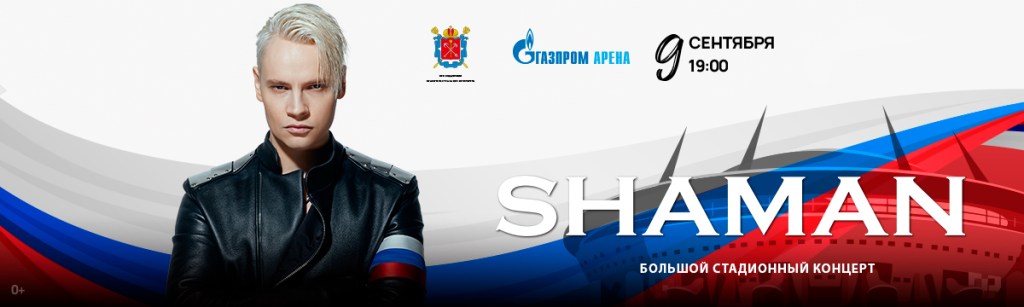
This ad for a “big stadium concert” by the Russian nationalist pop singer Shaman, scheduled for 7 p.m., September 9, at Petersburg’s Gazprom Arena, showed up this morning (for the second or third time in the last mont) in the weekly email newsletter I get from Bileter.ru, a Russian online retail ticket vendor. The aesthetic here is both strikingly fascistic/nationalistic and pointedly un-Russian. I would say it’s almost American in its inspiration, if I didn’t know better. ||| TRR
This showed up in my mailbox today too:
За последние две недели в редакции произошли изменения. У нас теперь новый руководитель редакции, а потому скоро вы ощутите изменения, которые make Inc. great again.
Here’s my translation:
There have been changes to [our] editorial board over the past two weeks. We have a new editorial director now, and so you will soon feel the changes that [will?] make Inc. great again.
These days, all “progressive” Russians are fluent in English, supposedly, and this is often how they signal their “progressive” values to each other: by shouting out their true reactionary colors in Rusglish.
In this case, the progressive reactionaries hale from Inc. Russia, “a magazine for entrepreneurs [that] focuses on small and medium-sized businesses, advanced technologies, and the people behind it all.” Founded in the US in 1979, the Russian edition has been in existence since 2016.
The passage that I quoted and translated, above, led off Inc. Russia‘s weekly email newsletter.
Immediately after Russia’s brutal, unprovoked invasion of Ukraine, the Russian Inc.ers were openly dismayed by the sudden turn of events in their otherwise entrepreneurially progressive country—without, however, ever going so far as to oppose the war explicitly. This dismay and confusion gradually and visibly diminished as the war continued. Now, apparently, Inc. Russia has come full circle: they are determined to show that they and their readers live in nearly the best of all possible entrepreneurial worlds. They’ve definitively stopped paying any mind to their country’s breakneck plunge into fascism, much less to the war itself.
And yet the new realities occasionally puncture Russian Inc.‘s otherwise now-placid surface, as in this news item published on their website earlier today:
English to become optional in the subway
It may become option to duplicate information in subways in English. The Transport Ministry has published a law bill addressing the matter. The Moscow subway stopped duplicating [station] names back in 2021, while Nizhny Novgorod and Kazan do not plan to give up English until instructions are received.
As reported by Kommersant, the Transport Ministry has published a draft law on amendments to the orders regulating the “standard rules” for the use of subways, monorails, funiculars, and suspended cable cars.
Carriers are currently required to duplicate all information on diagrams, signs, inscriptions, and station announcements in English. The Transport Ministry proposes doing away with this obligation, leaving the decision to the regions.
The proposal was prompted by “numerous appeals from citizens and [regional governments], due to the considerable informational burden on passengers and taking into account the socio-political situation.”
Moscow’s Metro, Central Circle, and Monorail stopped announcing stations in English back in 2021, after a drop in the number of tourists due to the pandemic and “passenger complaints about additional information.”
Oleg Yaushev, director of the Nizhny Novgorod Metro, said that none of the city’s residents had complained about the English dubbing in the city’s subway, so the company does not plan to remove it.
“We installed this information system relatively recently and spent a lot of money on it. Why remove it now? Tourists who are native English speakers travel to the city. The language is widely spoken, and we welcome them. Of course, if there is a directive to remove everything and leave it only in Russian, we will comply. But it’s not worth freaking out about it,” he said.
Kazan’s Metroelectrotrans also expressed its willingness to execute the order, “if it is issued.” However, local residents there have also not petitioned the company to cancel the dubbing of station names in English.
Russian streaming service Amediateka (thanks to the good offices of sanctions busters HBO) keeps its viewers comfortably ensconced in an alternate reality dominated by the Great Satan’s pop culture:
The second season of the sports series “Winning Time: The Rise of the Lakers Dynasty” recounts the period between 1980 and 1984. It deals with the rivalry with the Boston Celtics, as well as with the personal lives of the players, which prove no less emotional and striking than their play on the court. Jerry Buss wants to get his sons involved in working with the Lakers, Magic Johnson learns to be a good father, and Larry Bird plunges into family squabbles. Won’t this prevent the lads from becoming NBA champions?
Source: Amediateka email newsletter, 14 August 2023. Translated by the Russian Reader
Finally, here is yet another reflection of the Russian petite bourgeoisie’s (and, hence, Russian officialdom’s) peculiar love-hate, cargo-cultish relationship with the “collective west” (i.e., the United States) and the English language.
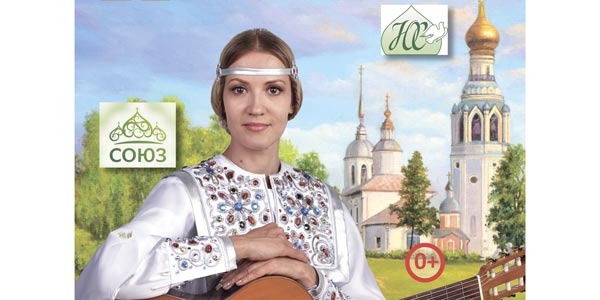
Yulia Slavyanskaya is a Russian singer of spiritual and patriotic songs. In 2002, she recorded her first album Wake up, Soul!, which was a real success! The singer attracted numerous fans who value spirituality, a positive attitude, and patriotism in music. Yulia writes her own music based on the poems of contemporary poets and classic poets.
Even the youngest listeners like the songs of this beautiful performer of contemporary songs [sic] about the soul and for the soul, songs about love for each other and for one’s Motherland. Her extraordinary lucid voice cannot be confused with anyone else’s!
For many years, Yulia Slavyanskaya has been performing solo concerts all over Russia. She has been joyfully welcomed in Donetsk, Gorlovka [sic], Belarus, Serbia, Abkhazia, Kirghizia [sic], and Montenegro.
She has been a prizewinner at many Russian and international festivals of spiritual song. She was awarded the Republic of Abkhazia’s highest honor, the Akhdz-Apsha (“Honor and Glory”) medal, in the third degree, and has received numerous awards from municipal, public, and religious organizations in Russia and other countries.
Yulia Slavyanskaya’s concert and performances can be viewed on the TV channels Spas, Soyuz, A Minor, and My Joy. You can also get to know her work on the website юлия-славянская.рф and social networks on the Internet.
Yulia Slavyanskaya’s concerts are attended by whole families. Her work is filled with amazing light and purity! At the concert in St. Petersburg, Yulia will perform songs from all six of her released albums.
By tradition, the little children who attend Yulia Slavyanskaya’s concert will become its active participants.
Source: Bileter.ru, via their weekly email newsletter. Ticket prices for the concert range between 700 and 1,500 rubles. Translated by the Russian Reader
“Encounters at the Lavra,” Soyuz TV (562K subscribers), 2,055 views, Mar 29, 2021. Priest Anatoly Pershin welcomes Orthodox singer and composer Yulia Slavyanskaya. The program features songs based on the lyrics of Archpriest Andrei Logvinov: “The Martyrs’ Candles Were Lighted” and “So Much Is Given.” Father Anatoly performs the song “How I Want Purity.”
A man sporting a “Made in the USSR” tattoo, Liteiny Prospect, Petersburg, May 1, 2023. Photo by Vadim F. Lurie, reproduced here with his kind permission
Victory Day is a memorable holiday for every citizen of St. Petersburg! During the celebration of the Great Victory, each of us remembers the heroic deeds of our grandfathers. In keeping with a long-established tradition, many musicians dedicate their concerts to this important date.
On May 15, the Lensovet Palace of Culture will host “Echo of Victory,” a soulful solo musical performance by Dmitry Pevtsov and the Pevtsov Orchestra.
Dmitry Pevtsov, “Echo of Victory,” 15 May, Lensovet Palace of Culture
“Echo of Victory” is a new themed concert in which poems and songs of the war years and the best songs of Soviet and modern composers will be performed. The program will feature such songs as “Airplanes First of All,” “From Dawn to Dawn,” and, of course, everyone’s favorite song, which has become a symbol of the celebration of May 9—”Victory Day”!
We invite everyone to the “Echo of Victory” concert on May 15 at the Lensovet Palace of Culture. Let’s remember the great songs of that heroic time and once again feel proud of our great nation!
Directed by Denis Isakov
Duration 1 hour 40 minutes (without intermission)
Source: Bileter.ru. Translated by the Russian Reader
The Russian authorities and Russian propagandists have been competing with each other to recreate something outwardly similar to the Soviet system in our country. The message to Russian society is simple: we are different, we have a different path, don’t look anywhere else, this is our destiny — to be unlike everyone in the world. And yet there are more and more traits of our country’s yesterday in its tomorrow.
For some reason, the speakers at the Knowledge educational forum, starting with Prime Minister Mikhail Mishustin, called directly for Russia’s self-isolation. Mishustin demanded that we achieve independence from foreign designs in the information sphere. The word “independence” has been increasingly used to mean isolation and breaking ties.
Deputies in the State Duma have proposed re-establishing the mandatory three-year “repayment through job placement” for university graduates, and prohibiting those who have not served in the army from working in the civil service.
With Ella Pamfilova, head of the Russian Central Elections Commission, on hand as a friendly observer, Uzbekistan held a referendum on April 30 to decide whether to adopt a new constitution that would grant the current president, Shavkat Mirziyoyev, the right to de facto lifelong rule by lengthening presidential terms from five to seven years and nullifying Mirziyoyev’s previous terms. The ballot, which involved digital technologies, produced a turnout of 84.54%, and according to preliminary data, 90.21% of voters said yes to the amendments, which would change two-thirds of the Constitution, while 9.35% of voters voted no, and 0.49% of the ballots were disqualified. Although democratic procedures were seemingly followed, Uzbekistan is moving away from democracy.
Something makes us see Pamfilova’s visit to Uzbekistan not only as a trip “to strengthen friendship and cooperation,” but also as a completely practical exchange of know-how in organizing such referendums. Only by adopting a new constitution can the first and second chapters of the current Russian Constitution be amended, and it is the second chapter that enshrines civil rights and freedoms, we should recall.
Alexander Bastrykin, the prominent human rights activist and chair of the Russian Investigative Committee, has proposed adopting a new Russian constitution that would enshrine a state ideology, completely eliminate international law’s precendence over domestic law, and re-envision human rights as an institution alien and hostile to Russia, as something encroaching on its sovereignty. Uzbekistan’s know-how in voting on a new constitution will come in handy for the Russian Central Election Commission.
At seven o’clock this evening live on Citizen TV, we will talk about why, exactly, the Russian authorities are so enthusiastic about Soviet political practice and the Soviet style, and where such intentions can lead our country.
Russian President Vladimir Putin agreed with the need [for Russia] to develop its own communication protocols instead of foreign TCP/IP to ensure the country’s technological sovereignty and independence.
On Thursday, the head of state held an event at the Rudnevo Industrial Park during which the specifics of the development of domestic unmanned aerial systems were discussed. In this context, Alexander Selyutin, board chair of the Technojet group, spoke about the “Internet from Russia” project.
After listening to the proposals, Putin turned to his aide Maxim Oreshkin.
“Maxim Stanislavovich, talk to your colleagues, then report back to me separately, we need to help. This is obligatory, because if you have advanced proposals, your own, of course, we need to do everything to support them. It means technological sovereignty, and better competitiveness, and independence. […] We will definitely help,” the president said.
Those wishing to take part in a virtual LDPR rally at the monument to Vladimir Zhirinovsky created in Minecraft have overloaded the server. The number of applications exceeded twelve thousand, LDPR’s press service informed us.
As Andrei Svintsov, a member of the LDPR faction [in the State Duma], noted, this is only the first such event. The Liberal Democrats plan to continue using [Minecraft] and other gaming platforms to communicate with voters and attract new supporters, becoming in fact “Russia’s first digital party.”
The MP also recalled that experts continue to work on the “Cyber Zhirinovsky” political algorithm, which was previously announced by the party’s current leader Leonid Slutsky.
In late April, Judge Yevgenia Nikolayeva closed a court hearing at which it was decided how much time to give Alexei Navalny to examine the 196 volumes of the latest criminal case against him. According to the police investigator, this was necessary in order to protect investigatory privilege.
Over the past five years, judges in Russia have increasingly closed court hearings to observers, journalists, and even relatives of defendants. Because of this, defense lawyers cannot inform the public about what happens in these proceedings. Mediazona reviewed the judicial statistics and discovered that, in 2022, judges ruled 25,587 times to hear cases in closed chambers. This was almost twice as often as in 2018, when judges decided 13,172 times to hear cases without outsiders present.
The Constitution actually guarantees that your case should be heard in open court, but there are exceptions. The principal exceptions are cases involving state secrets (which is why all treason and espionage trials are closed), cases against defendants under sixteen years of age, and cases involving sexual offenses. The statistics for all such cases have not changed much in recent years.
But there is one more exception — a trial can be closed to “ensure the safety” of the people involved in the proceedings and their loved ones. This extremely vague wording allows judges to close any court hearing. Judges make vigorous use of it, especially when hearing high-profile cases.
Here’s another example. In September, the Moscow City Court closed the hearing of an appeal against the verdict in the “fake news” trial of municipal district council deputy Alexei Gorinov, who had been sentenced to seven years in prison for an argument over a children’s drawing contest in which he had said that children were dying in the war in Ukraine The judge alleged that the court had received threats, and said that the hearing would have to be closed for the safety of the parties to the proceedings.
Russian judges may be following the lead of their Belarusian colleagues, who have learned how to conduct political trials without outside scrutiny. They cite covid regulations, or fill the gallery with persons unknown, or don’t let anyone except the relatives of the defendants in the courtroom. Russian courts have begun to use many of these methods. And the Belarusian courts can declare a hearing closed without explaining the reasons at all.
The authorities do not want people to know about political trials, to monitor these trials, or to support the accused. That is why, on the contrary, it is important for society today to talk about political prisoners and help them.
A Russian version of the song by the French left-wing chansonnier Georges Moustaki. Translation: Kirill Medvedev. Guitar: Oleg Zhuravlev. Video: Nikolay Oleynikov
Don’t ask what her name is, she’s Beloved and tender, but fickle Very spunky, she’ll wake up and go forward To a new life that shines and sings
Bullied and branded Tortured and executed Well, how much can she suffer! And she rises up and strikes, And spends many, many years in prison, Yes, we betrayed her But we only love her more and more And so we want to follow her Right to the end
What her name is, don’t ask, my friend, She’s just a mayflower and a wild fruit She sprouts anywhere, like grass Her path will take her wherever she wishes
Don’t ask what her name is, she’s Sometimes beloved, sometimes persecuted, but faithful This girl that everyone is waiting for Permanent revolution is her name
Academic freedom in the Putinist dictatorship is the freedom to criticize the enemy:
MARCH 17, 2020 | The media center at the Alexandrinsky Theater’s New Stage (Fontanka Embankment, 49A, St. Petersburg) will host the first event in a series of conversations between the outstanding scholars of our time, on the occasion of the European University in St. Petersburg’s 25th birthday. A conversation between historical sociologist and NYU Abu Dhabi professor Georgi Derlugian and Russian international affairs journalist, political scientist, and editor-in-chief of the magazine Russia in Global Politics Fyodor Lukyanov will open the series of encounter. The topic of their discussion is “TRUMP AND HIS DOCTRINE: HOW THE US PRESIDENT TREATS THE WORLD ORDER WITH SHOCK THERAPY.”
The freedom to imagine that a dictatorship is actually a hipster’s paradise:
MARCH 14, 2023 | The Open Living Room at the Lermontov Library (Liteiny Prospect., 17–19) will host a lecture by Yevgenia Kuziner, a graduate student at the HSE Center for Youth Studies, “POINT OF ATTRACTION: HOW, BY WHOM AND FOR WHOM ARE CREATIVE SPACES CREATED IN THE CITY?” | Starts at 6:30 p.m. | Registration required | Detailed information at https://otkrytaya-gostinaya.timepad.ru/event/2331631/
And the freedom to pretend that real sociology is possible in dictatorships:
APRIL 13, 2023 is the deadline to apply to the 19th Russian-Chinese Sociological Conference, “CONTEMPORARY CITIES AND SOCIAL GOVERNANCE IN RUSSIA AND CHINA,” which will take place April 21–22, 2023. The conference will be held in an online format and hosted by St. Petersburg State University, Russia. The languages of the conference are Russian, Chinese and English. Detailed information at https://soc.spbu.ru/images/nauka/inffo-letter_21-22.04.2023_3.pdf
Source: Excerpts from the emailed newsletter of the Center for Independent Sociological Research (CISR) in St. Petersburg, recently revamped as “The MILIEU” [sic], March 2020 and March 2023. Translated by the Russian Reader
The Forty-First is a completely original production.
It is chockablock with irony and actorly improvisation.
There will be loads of laughter, convulsive choking back of tears, fond embraces, and love gushing down the throat during this play. As it wafts into the theater’s low flies, the powerful actorly energy is instantly transmitted to the audience.
This is a restoration of Vlad Furman’s legendary production The Forty-First, based on the novel [sic] of the same name by Boris Lavrenyov.
The love story of the Red Army sniper Maria Basova (aka Maryutka), picking off “enemies” one by one (the thirty-first, the thirty-second… the forty-first!), and the White Army officer Govorukha-Otrok (who was to be her forty-first victim, but survives) is known to audiences from Grigory Chukhrai’s eponymous film version, starring Izolda Izvitskaya and Oleg Strizhenov.
Vlad Furman staged The Forty-First at the Mironov Theater in 2000. It was one of the best theatrical productions in Petersburg, and its director and performers were nominated for Petersburg’s highest theatrical honor, the Golden Spotlight.
Boris Lavrenyov’s story is incredibly timely today.
Love is severely tested by the Civil War and differences in political views.
A new generation of actors takes to the stage in this new production of The Forty-First.
Twenty years later, the production features very young artists who have been working with Vlad Furman for several years in stagings of The Merchant of Venice and Medea. The older generation of artists at the Andrei Mironov Theater joins them in this production.
Source: Bileter.ru. Still from the play The Forty-First courtesy of the Andrei Mironov Theater (St. Petersburg). Translated by the Russian Reader
In March 1942, Pierre Matisse, an art dealer and son of the artist Henri Matisse, opened the show Artists in Exile at his gallery in New York’s Fuller Building. It featured one work each by fourteen artists who had fled the rising tide of fascism and totalitarianism in Europe. Max Ernst, Marc Chagall, Fernand Léger, André Breton , Piet Mondrian, Jacques Lipschitz, Ossip Zadkine, and the other men (not a single woman was shown at exhibition) came from different countries and strata of society and represented different modernist trends in art: Dadaism, Surrealism, Cubism, and De Stijl. Since the late 1930s, these trends had been vilified and condemned, and in many cases their works had been destroyed by the Nazis as so-called degenerate art.
Many of these artists were aided by art dealers and patrons such as Pierre Matisse, and collectors such as Peggy Guggenheim. Museums also played a vital role in helping artists and their immediate families. The first director of the Museum of Modern Art Alfred Barr and his wife, the art historian Margaret Scolari Barr, worked with the Emergency Rescue Committee (ERC). The artistic community, founded as it was on humanist principles and nonviolence, generally did what it should have done: it sought to render mutual aid and fight evil.
[These two opening paragraphs seem to have been plagiarized, in translation, from this article, originally published on the website of the WWII National Museum in New Orleans, to which I have already linked above — TRR.]
Eighty-one years later, the director of the seemingly progressive Multimedia Art Museum, Olga Sviblova, appeared at the Knowledge Society Awards in the Kremlin — along with Yana Churikova, Fyodor Bondarchuk, and Polina Gagarina. Immediately after the war started, a year ago, the Garage Museum issued a high-profile essentially anti-war statement and halted all exhibitions. It could have served as an example and an impetus for other institutions to stop the widespread normalization of the war, but this has not happened. A year later, we find that museum’s statement has itself disappeared* from all official sources.
*UPD: We were mistaken. The announcement on the suspension of exhibitions remains on the museum’s website, but doesn’t appear on the main page anymore. The museum also currently shows archive-based artists projects.
Alas, we can safely say that the art community in Russia passively supports the war, living it up in the public space at venues somehow associated with contemporary art. Why is this happening? Shouldn’t the artistic community be grounded in humanist principles and nonviolence? How did it happen that (with rare exceptions) the Russian art scene, which survives mainly on government money but aspires to be part of the global community, has been silent in the midst of war? Juliet Sarkisyan, an art critic who blogs at the Telegram channel Juliet has a gun, answers these questions.
Since the war’s outbreak members of the culture community have been leaving Russia because they do not agree with the state’s current repressive and imperialist policies. They do not see any prospects here at home: they do not want to merge with the masses and have anything to do with the official agenda. They generally leave for the opportunity to speak freely and make art. But some do not see the point in producing the latter at all (at least while the war is going on), since this can free up resources and time for helping Ukrainians, as well as showing solidarity through their silence.
A narrow stratum of the artistic community underwent a reorientation — instead of the usual artistic practices, they have preferred to engage in activism, and art criticism became homogeneous. Some continue to do it anonymously in Russia, while others have been forced to leave the Russian Federation for this reason (and many others). In any case, for reasons of security, I cannot give anyone’s surnames and first names as examples. The other part of the artistic community — apparently, the prevailing one — continues to engage in the production of art, come hell or high water, within Russia’s current system. Putin recently issued a decree on the “Fundamentals of State Cultural Policy,” which is designed to reaffirm traditional values and introduce censorship for cultural events. I would like to take the liberty to criticize cultural workers (opposed to the war) who blindly continue their artistic endeavor inside Russia, while also taking into account all the difficulties and, as it were, the impossibility of choice they face. But first we need to figure out who cultural figures are and what their mission is.
What exactly is this “artistic community” face to face with this war? Are they intellectuals or an intelligentsia? In the modern use of the terms “intelligentsia” and “intellectuals,” there are two markedly pronounced trends. The first is typified by the synonymous use of terms, implying, in fact, the merging of the concepts. The second trend involves preserving and consistently distinguishing both the terminology and the concepts themselves.
Michel Foucault identifies intellectuals “in the political, not the sociological sense of the word, in other words the person who utilizes his knowledge, his competence and his relation to truth in the field of political struggles.” [This passage is not in quotation marks in the original article, although it is a direct quotation.] In the first part of the book Intellectuals and Power [a three-volume 2002 Russian-language compendium of his articles and interviews] Foucault writes: “What we call today ‘the intellectual’ […] was, I think, an offspring of the jurist, or at any rate of the man who invoked the universality of a just law, if necessary against the legal professions themselves (Voltaire, in France, is the prototype of such intellectuals). […] [T]he intellectual has a three-fold specificity: that of his class position (whether as petty-bourgeois in the service of capitalism or ‘organic’ intellectual of the proletariat); that of his conditions of life and work, linked to his condition as an intellectual (his field of research, his place in a laboratory, the political and economic demands to which he submits or against which he rebels, in the university, the hospital, etc.); lastly, the specificity of the politics of truth in our societies” [Michel Foucault, Power/Knowledge: Selected Interviews and Other Writings, 1972–1977, ed. Colin Gordon (1980), pp. 128–132].
Antonio Gramsci also spoke about the organic intellectuals mentioned by Foucault. The Italian [sic] believed that there was not one, but many different types of intellectuals. Intellectual activity does not necessarily imply devotion to the ideas of socialism. Most intellectuals, Gramsci noted, were reluctant to change or saw themselves not as conservatives or liberators, but rather as technical thinkers. Gramsci offers a convenient series of distinctions among organic intellectuals, traditional intellectuals, and intellectuals of the new type.
Organic intellectuals form a completely different type of social stratum. Their activity consists “in active participation in practical life, as constructor, organiser, ‘permanent persuader’ and not just a simple orator” (Gramsci, 1971: 10) [sic: Antonio Gramsci, Selections from the Prison Notebooks, ed. and trans. Quentin Hoare and Geoffrey Nowell Smith (1971), p. 10]. “Organic intellectuals” [quotation marks — sic] not only have special knowledge, but also become legislators of meanings: they have a special understanding of what is happening and are actively involved in politics.
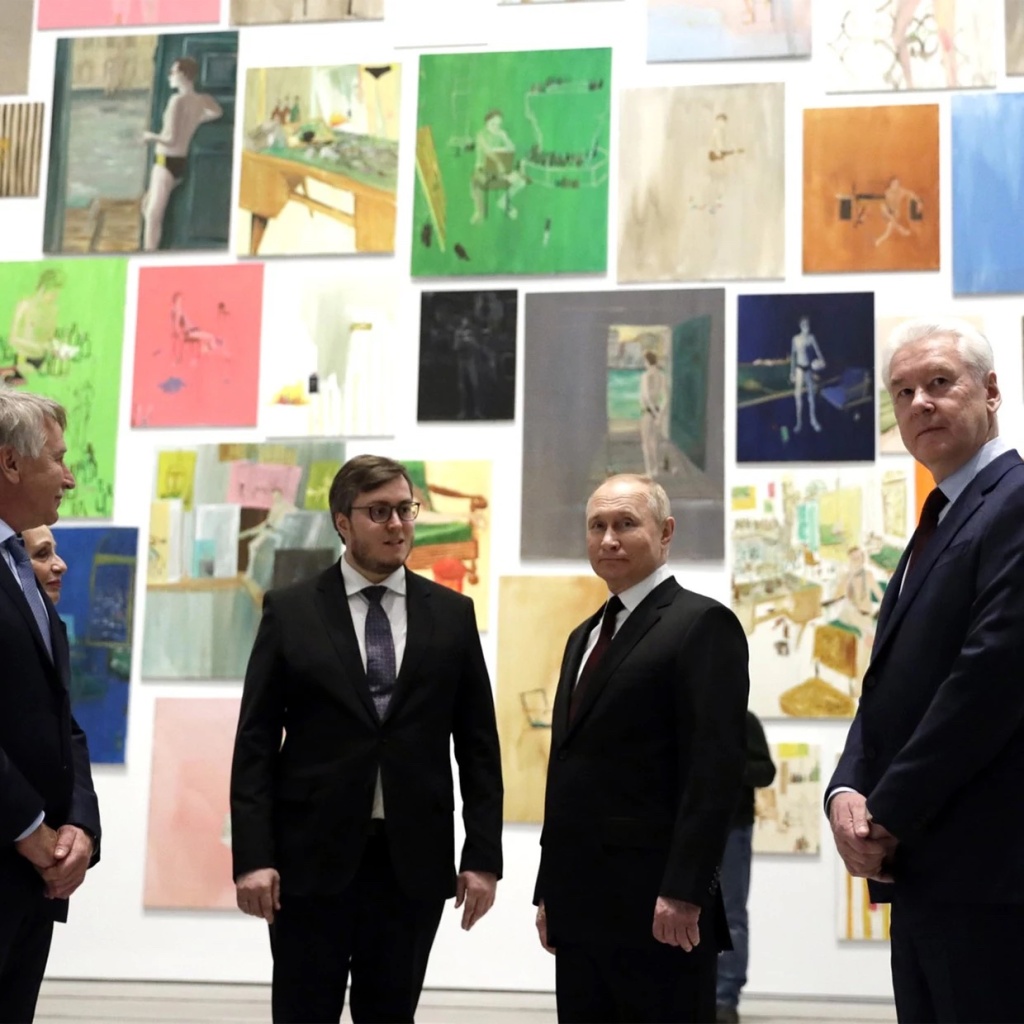
(Left to right) Russian businessman Leonid Mikhelson, founder and funder of the arts organization the V-A-C Foundation; V-A-C publishing programs director Grigory Cheredov [full disclosure: Mr. Cheredov has commissioned me many times in the past several years to translate texts for V-A-C, which I happily did because he and his colleagues were easily among the most decent and professional of my Russian art world clients, at least until the war broke out and they failed to pay me for the last two jobs I had done for them before the war — TRR]; Russian president Vladimir Putin; and Moscow mayor Sergei Sobyanin, at the V-A-C Foundation’s newly opened art and culture space, GES-2 House of Culture, December 1, 2021
No matter how intellectuals are defined — as bearers of culture or as critically thinking people — it is obvious that in the twentieth century there were significant changes in the organization and nature of intellectual life. The most widespread meaning of the word “intellectual” is even narrower and includes a political dimension. Real intellectuals are those who go beyond their immediate area of expertise to intervene in public policy issues, usually in a spirit of disagreement with the authorities. This concept was first popularized by the archetypal intellectual Jean-Paul Sartre.
And Jürgen Habermas, a major theorist of the Frankfurt School of social philosophy, who has paid serious attention to the theory and practice of politics, was convinced by his own experience of the effectiveness of such an approach to political life. He has argued that “philosophers, along with writers, historians and other experts, should act in the public sphere as intellectuals and least of all as interpreters and elucidators of any one doctrine.” [This is a quotation from an 1989 interview of Habermas by Yuri Senokosov, as published, in Russian translation, in Jürgen Habermas, Democracy, Reason, Morality: Moscow Lectures and Interviews (Moscow: Academia: 1995), pp. 109–110. Judging by the peculiarly specific way it is introduced here by Ms. Sarkisyan, the wording was discovered by her in Elena Iosifovna Kukushkina, “The Intelligentsia in the Political Life of Society,”Vestnik Moskovskogo Universiteta, Series 12: Political Science, 4 (2012): 21, where the passage in question is incorrectly indicated as being on page `113 of the book —TRR.] In 1953, he took on Martin Heidegger in the wake of the latter’s newly discovered Nazi sympathies in a review of Heidegger’s book Introduction to Metaphysics. In the late fifties and early eighties, Habermas was involved in pan-European anti-nuclear movements, and in the sixties he was one of the leading theorists of the student movement in Germany, although in 1967 he actually broke with the radical core of this movement when he warned about the possibility of “leftist fascism.” In 1977 he protested against the restriction of civil liberties posed by domestic anti-terrorist legislation, and in 1985–1987 he was involved in the so-called historians’ debate on the nature and extent of Germany’s guilt in the war, condemning what he considered historical revisionism of Germany’s Nazi past. He also warned about the dangers of German nationalism in connection with the unification of Germany in 1989–1990.
Intellectuals from different countries — the scientists, writers, artists and humanists of the twentieth century — amassed a wealth of experience in solving problems on a global scale. In the period between the two world wars, they led anti-fascist movements and fought to prevent interethnic conflicts and liberate countries from colonial dependence. By initiating and being actively involved in these campaigns, the world cultural elite demonstrated the intelligentsia’s truly inexhaustible possibilities of the intelligentsia as a force capable of having a tangible impact on political processes at different levels. [This paragraph has been copied almost verbatim from page 22 of Elena Kukushkina’s scholarly article, as cited above — TRR.]
The cultural and artistic community — whether it consists of intellectuals or not — has the weight, influence, and social capital to make the fight against the current regime effective. As for their responsibility, they are capable of exposing the lies of governments and analyzing their actions in terms of causes, motives, and often hidden intentions. Privilege confers opportunity, and opportunity imposes responsibility. For me, the urgent question today is what responsibility should Russian society, in particular the intelligentsia (of which the artistic community is a part), bear when it comes to horrors of the full-scale war in Ukraine. And of course, this question (about the responsibility borne by people of the aggressor nation for the war it has launched) is not new at all.
The philosopher Noam Chomsky, for example, criticized the American government and the Vietnam War in the book [sic]The Responsibility of Intellectuals. Privilege, he argues, entails the responsibility to tell the truth and expose lies. But our intellectual culture supports this ideal only nominally. Yes, it is forbidden in Russia to publicly voice an opinion that differs from the government’s rhetoric. Otherwise, one risks criminal prosecution, which can even lead to imprisonment. What other options are left if a basic human need — freedom of speech — is taken away from us? Are there niches in which we can preserve our humanity while also avoiding tentacles of the state? It seems that during a war it is difficult to engage in aesthetics. It takes us down the path to escapism and the opportunity to close our eyes to everything that is happening around you us. In peacetime, there are trends that establish a certain regime for artists.
But since the beginning of the war, Russian public cultural activity has not undergone any structural changes or even hints of them. New galleries and cultural centers have been opening (e.g., the Zotov Center, Nakovalnya Gallery, and Seréne Gallery), and the old ones continue to operate as if nothing has happened.
Only a few such venues have curtailed their public programs (and not all of them due to political convictions): Typography Contemporary Art Center, Kerka Gallery, the space It’s Not Herе, the Sphere Foundation (the former Smirnov and Sorokin Foundation), Fragment Gallery, and the Garage Museum. Where does normalization come from? The government has been sparing no efort to hide the war crimes that it commits every day, not only with the help of propaganda, but also through attempts to preserve the normal life that existed before the war. Tomorrow will be the same as today. This illusion of normality also occurs in everyday life. The cultural realm has also played a considerable role in generating it. All the existing cultural institutions and people involved to one degree or another in the production of public life are this totalitarian regime’s witting or unwitting opportunists.
Russian curator Olga Sviblova at the Knowledge Society’s awards ceremony at the Kremlin, December 13, 2022. The society has adopted a suggestively Roman (i.e., not Cyrillic) and thus pro-war “Z” as its logo, as seen behind Sviblova.
The Russian intelligentsia, as represented by the artistic community (if it can be called that at all), is against the war in Ukraine. But even if it verbally opposes war crimes and imperialism, it supports the existing state of things in its actions, thus contradicting itself. Collaboration with institutions (especially those directly dependent on the Russian federal culture ministry, whose head in an interview called for killing Ukrainians) and the absence of discussion about rethinking the cultural field within the country suggest that the cultural community refuses to react at all to the events taking place this minute in Ukraine. It refuses to accept any responsibility for what is happening.
Fairs, exhibitions, public educational outreach, and the production of uncritical art only perpetuate the status quo and play along with the official agenda. To understand what I am talking about, look at the list of exhibitors at the Cosmoscow Art Fair in September 2022. The fair, to which Putin’s spokesman Dmitry Peskov was invited, imposed strict censorship on its participants.
This familiar pre-war environment is exactly what the government wants to see. We have seemingly begun to forget that we live in a totalitarian state, and everything we produce on its territory is part of it and monitored thanks to the presence of a single comprehensive ideology. What kind of art production can we talk about when there is strict censorship of all legal channels of information? Censorship is usually exercised in the name of so-called national security interests or as part of larger-scale campaigns to protect morality. (In our case, this is the policy to preserve and strengthen “traditional Russian spiritual and moral values.”)
Regimes try to monopolize artistic production either by co-opting artists to the point that they become mouthpieces and servants of the state, or by restricting the access of independent artists to places for displaying and implementing artistic expression. What kind of independent public art can we talk about? The usual strategies of artistic activity no longer work. It’s time to admit it.
We have begun to forget that no uncritical culture is possible at a time when the mass killings of civilians, violence, and torture are taking place daily, and the integrity of a sovereign neighboring state is being destroyed. What kind of art production in the Russian Federation is there to talk about when you are a member of the aggressor nation? Even if you adhere to an anti-war stance, how can art in state-controlled institutional venues be perceived from the outside as anything other than serving this regime?
Russian culture should be held accountable for the war in Ukraine. But people often downplay the importance of culture in political and public life, regarding it as a separate part of the personal realm rather than as a fusion of the forms of social interaction. We need to recognize that the current regime did not suddenly emerge on February 24, 2022. It had to be built up and supported for many years to officially establish itself once and for all and launch a full-scale war in Ukraine. All these years we ignored this build-up, living in a world of illusions. Unfortunately, this illusion is still maintained. In many ways, it is created by part of the cultural and artistic communities.
Russian rapper Timati and fashion designer Masha Tsigal at Cosmoscow Art Fair, September 2022
Many people who have remained in Russia might not agree with me. How can artists earn money without resorting to public utterance and without cooperating with institutions? How can galleries stop working? After all, this is their source of income (although it often does not bring in money, but vice versa). How can we just come to a standstill and not produce anything?
But does everyone really continue to work because of economic dependence, and not out of social necessity — that is, because they belong to a scene where there is a fear of losing the context that gives a person meaning? It boils down either to staying, accepting the state of things, and leading your normal life (as far as it is possible to do that at all now) or giving up on it and leaving. Of course, this dichotomy is not the only one: there are many other ways of living this war. None of us, including me, has answers to these questions. The question, rather, is whether we are aware of what kind of force and political dimension our position can have and what responsibility we should have to Ukraine. Time will pass and the question will arise: how did the Russian intellectual community behave during the war? Silence is also an answer, however.
The ruins of the Arch of Triumph (also called the Monumental Arch) in Palymra, 2010. Photo courtesy of Wikipedia
In April, the project for restoring the Arch of Triumph, the most famous structure of the Syrian city of Palmyra, should be ready and presented to the public, according to our sources involved with restoring the ancient city.
The Petersburg organizations involved in the project have been doing their design work remotely. They considered it safer because, according to the restorers, not all the terrorists in Syria have been “pacified” yet.
The restoration is coordinated by the Institute of the History of Material Culture (IIMC RAS), which signed an agreement on the restoring the arch with the Syrian Department of Antiquities in March of last year. The details of the agreement are unknown. In November of last year, the archaeological excavations were completed. The project also involves the State Hermitage Museum and the architectural firms of Maxim Atayants and Studio 44. Atayants, as a connoisseur of antiquity, is more responsible for the “theoretical” part, that is, for the choice of approach. Five specialists from Studio 44, including Nikita Yavein, the head of the firm, are involved, and they are working on technical issues. According to sources, other firms are also involved — for example, the restoration company Agio.
The Arch of Triumph itself was built during the reign of Roman Emperor Septimius Severus (193–211 CE) and, apparently, glorifies his victories. It underwent restoration involving reinforced concrete elements in the 1930s. The arch was partially destroyed in 2015, during the Syrian civil war. The central span and one of the pylons collapsed.
More alive than Buddha
Until recently, it had not been decided exactly how to restore the arch — to its state at the time when terrorists attempted to blow it up (which means reproducing the version produced by the restorers in the 1930s), or in some other way. The Venice Charter on the Conservation and Restoration of Monuments and Sites stipulates that monuments should be preserved in the form in which they have come down to our time. According to established practice, reconstruction by means of anastylosis, as the most sparing method, is permitted for ancient ruins. In this approach, the surviving stones are put back in place. But experts do not want to limit themselves only to anastylosis in the case of Palmyra.
First, it would look uninteresting: the edifice would not make the proper impression, and it is probably not worth the effort. Second, much of the stone in the lower part of the arch has been lost or compromised and would still have to be reinforced or recreated. According to the IIMC RAS, about 40% of the structure remains standing. Another 30% of the stone blocks are not in their place, but they can be used in the restoration. The remaining sections are partly or completely destroyed. That is, there is slightly less genuine material than is usually required for a restoration (i.e., 80-90% of authentic stone). UNESCO has long refused to restore the statues of Buddha blown up by the Taliban in Afghanistan (they have not yet been restored) precisely on the grounds that a significant part of the stone was lost.
Archaeological diplomacy
Meanwhile, the project for the arch must also be vetted by UNESCO since Palmyra is a World Heritage Site. Moreover, not everything is cut and dried when it comes to UNESCO, as shown, for example, by the rather critical report issued by its monitoring mission that visited Russia in 2019.
Two arguments have been drawn up to justify the design decisions to high-level international institutions. First, that the recreation would be reversible. That is, sometime in the future the arch could be disassembled again if so desired and the new inclusions (such as the “crowns” on the stone blocks) removed, and it would look more or less as it looked before it was blown up. The second argument is that the arch is a symbol of both Palmyra and all of Syria. And in the case of symbols, recreation seems to be permitted.
The issue turns out to be largely legal. Perhaps that is why Alexei Mikhailov, the deputy chair of the city’s Landmarks Use and Preservation Committee (KGIOP), known, in particular, for his work designed historical preservation zones in central Petersburg, has been appointed to the team of restorers. In a comment to the TV channel Saint Petersburg, Mikhailov drew an analogy with Notre Dame Cathedral. Located in Paris, like UNESCO’s headquarters, the cathedral is currently undergoing reconstruction after a fire in 2019.
“We are now drawing the parallel that the arch of Palmyra is as much of a symbol as Notre Dame is for Paris. And it is a reconstruction that is underway there. This is very important and must be conveyed to our international colleagues. It will determine which form of restoration will be employed,” Mikhailov said.
Our sources say that negotiations were held with Petersburg restorers about restoring other sites in Palmyra and Syria. Apparently, they intensified after the devastating earthquake that hit Syria about a month ago. (According to the Syrian Arab News Agency (SANA), aftershocks from that quake continue to occur.) Last week, Vedomosti reported, citing a diplomatic source, that Syrian President Bashar al-Assad is scheduled to visit Russia. As one of that newspaper’s sources suggests, he may ask for Moscow’s help in recovery work.
Scholars without borders
Petersburg experts agree that it is necessary to maintain world heritage. They disagree only about whether such aid is a burden or not.
“I don’t think it’s a lot of money compared to other government spending,” Alexander Kitsula, vice president of the St. Petersburg Union of Architects, told DP. At the same time, he noted that, with all due respect to the history of Petersburg, the antiquities of Palmyra “are incomparably more important than the excavations at Okhta Point.”
“It is wrong to let world culture be lost in any case, and if our country has reserves that can be sent there, it is probably the right thing to do. But, of course, our country also has huge holes in this area,” he believes. The expert emphasizes that Russia’s antiquities are no less in need of attention than foreign ones.
“My personal opinion is that we still have tons of work to do here at home. And this is far from a first-degree problem for the Russian Federation in general. But if someone has decided that it has to be done, then it has to be done,” Pasechnik added.
Alexei Kovalyov, a researcher at the Institute of Archaeology of the Russian Academy of Sciences, sees no problems in the fact that our scholars are also at work in Palmyra.
“St. Petersburg has been one of the world’s major centers for archaeology. Our expeditions are working in the South Caucasus and Central Asia, and our expedition in Iraq has just been resumed. Such projects are part of our international policy: they are usually funded per intergovernmental agreements. In the case of Palmyra, this means the Syrian side,” Kovalev explained. He also added that there are many specialists in ancient monuments working in Petersburg who know the peculiarities of the architecture of the period to which Palmyra belongs.


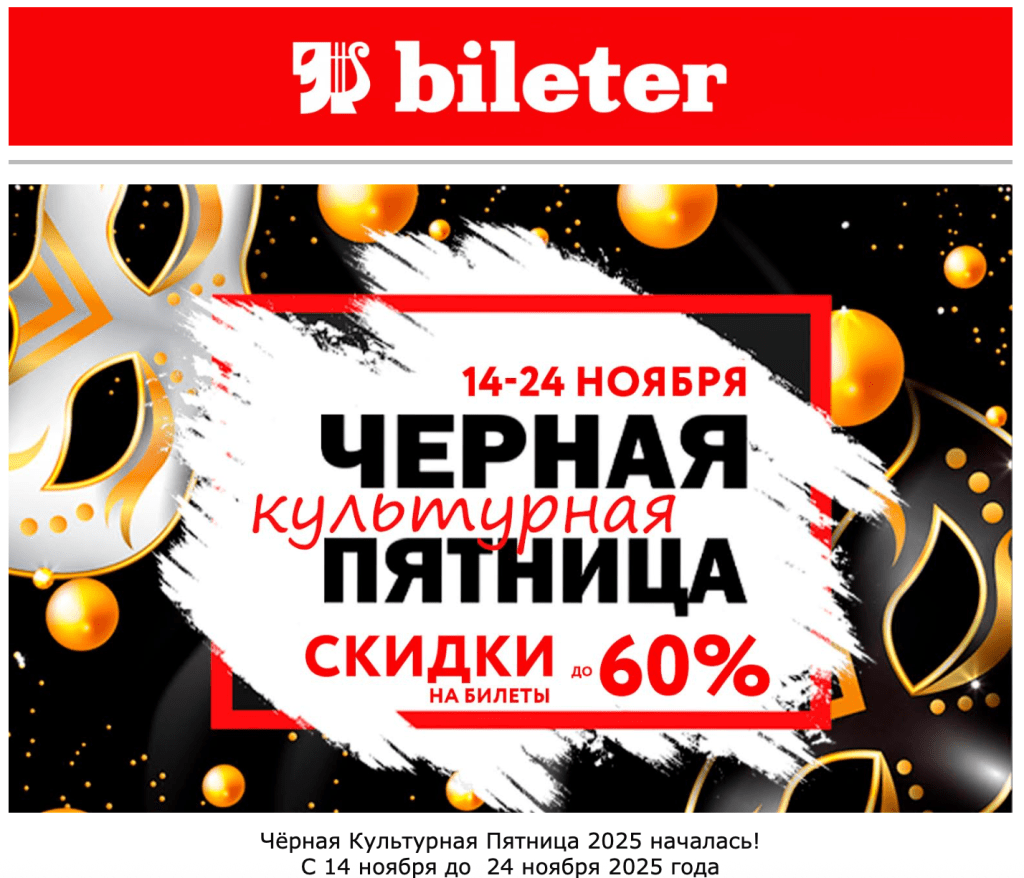
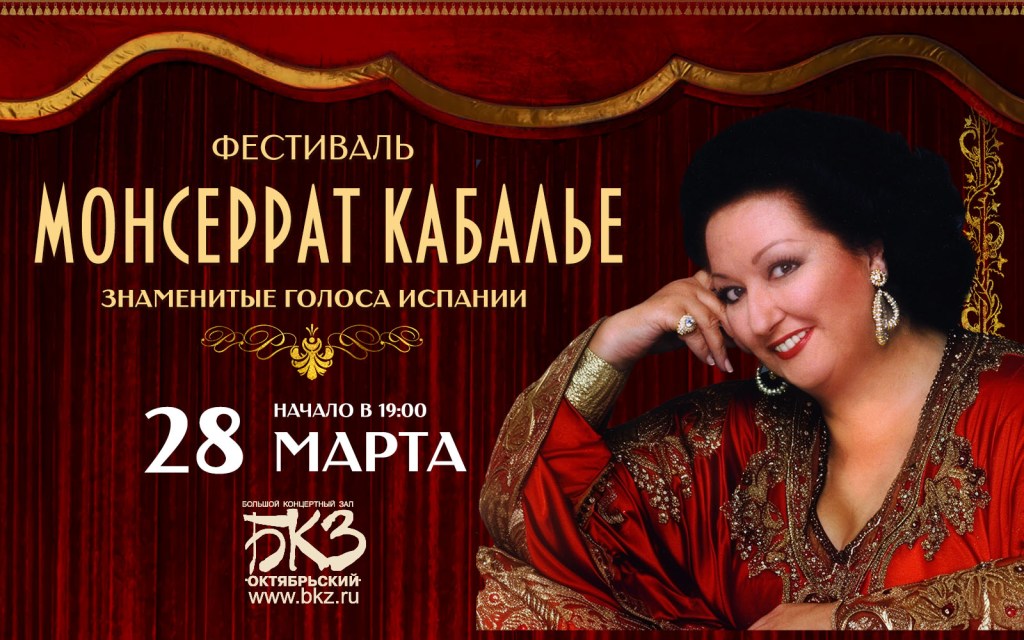
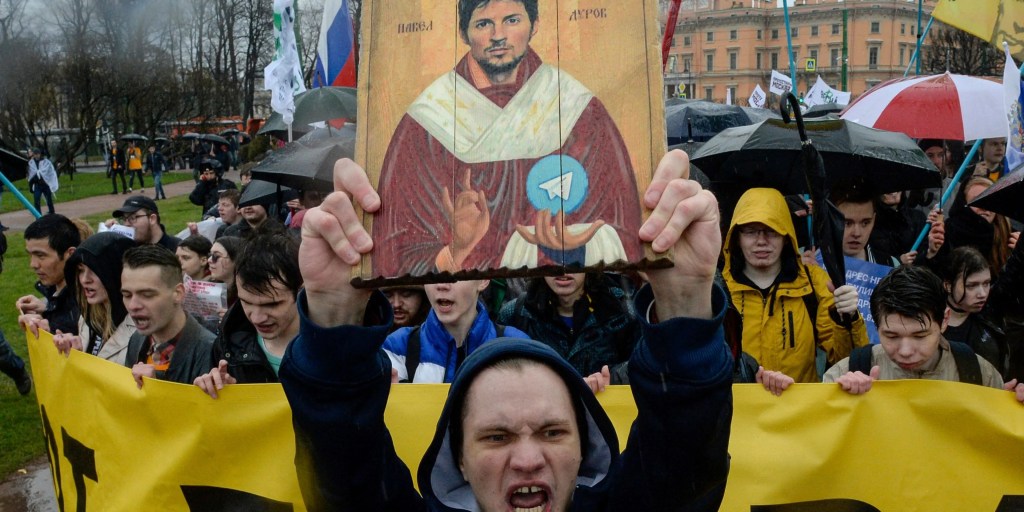


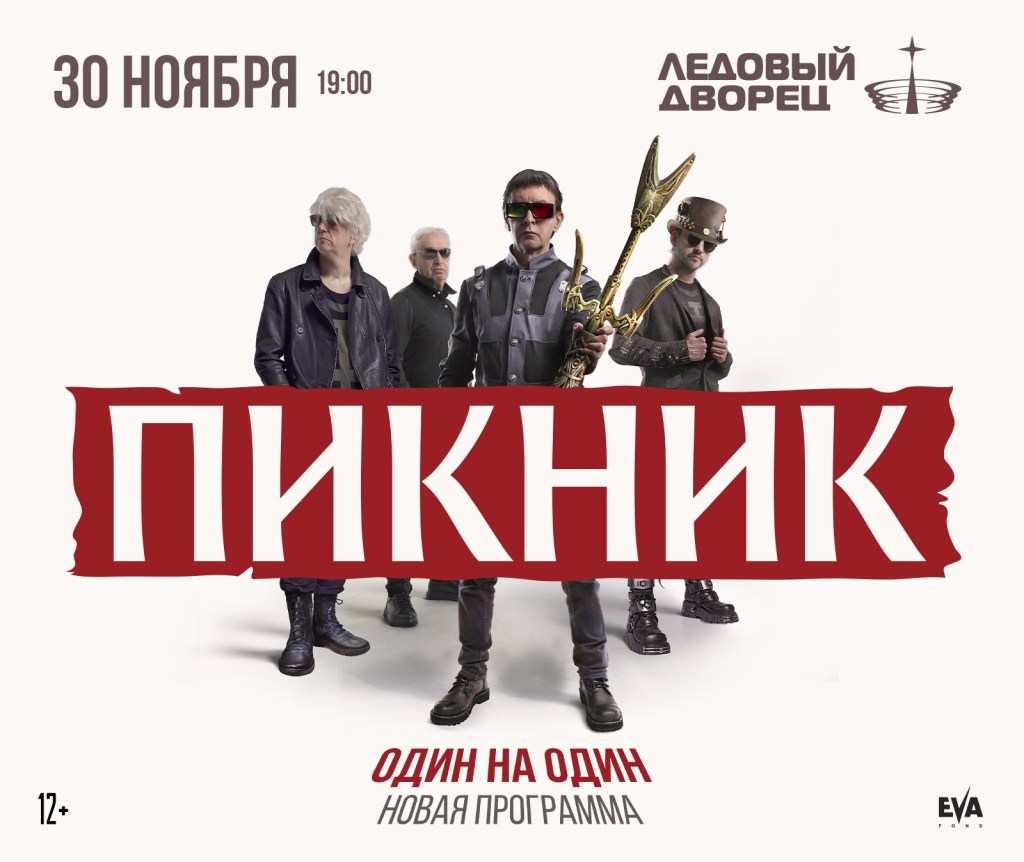
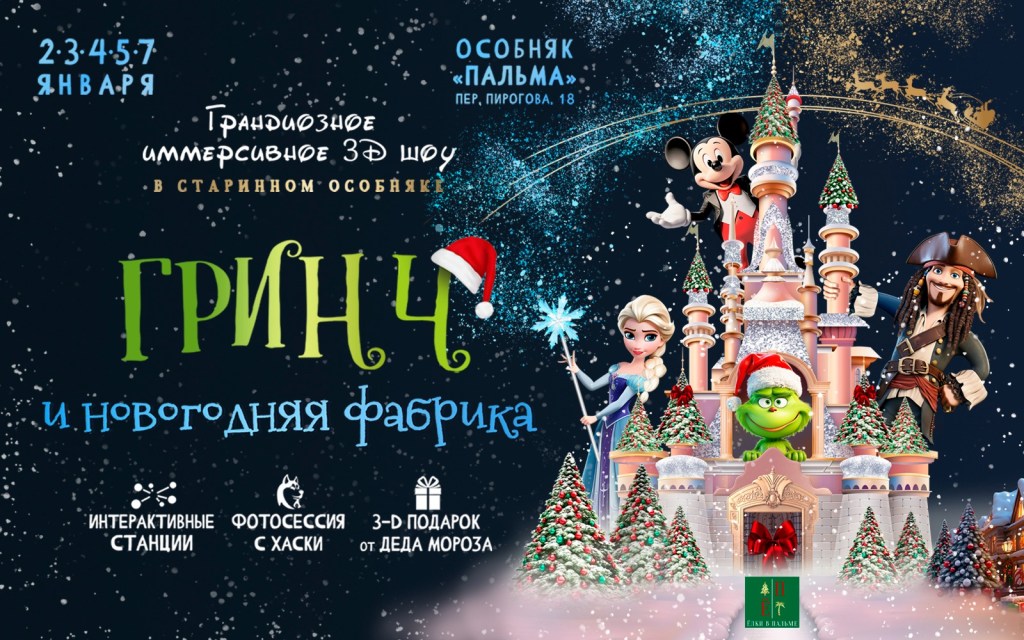

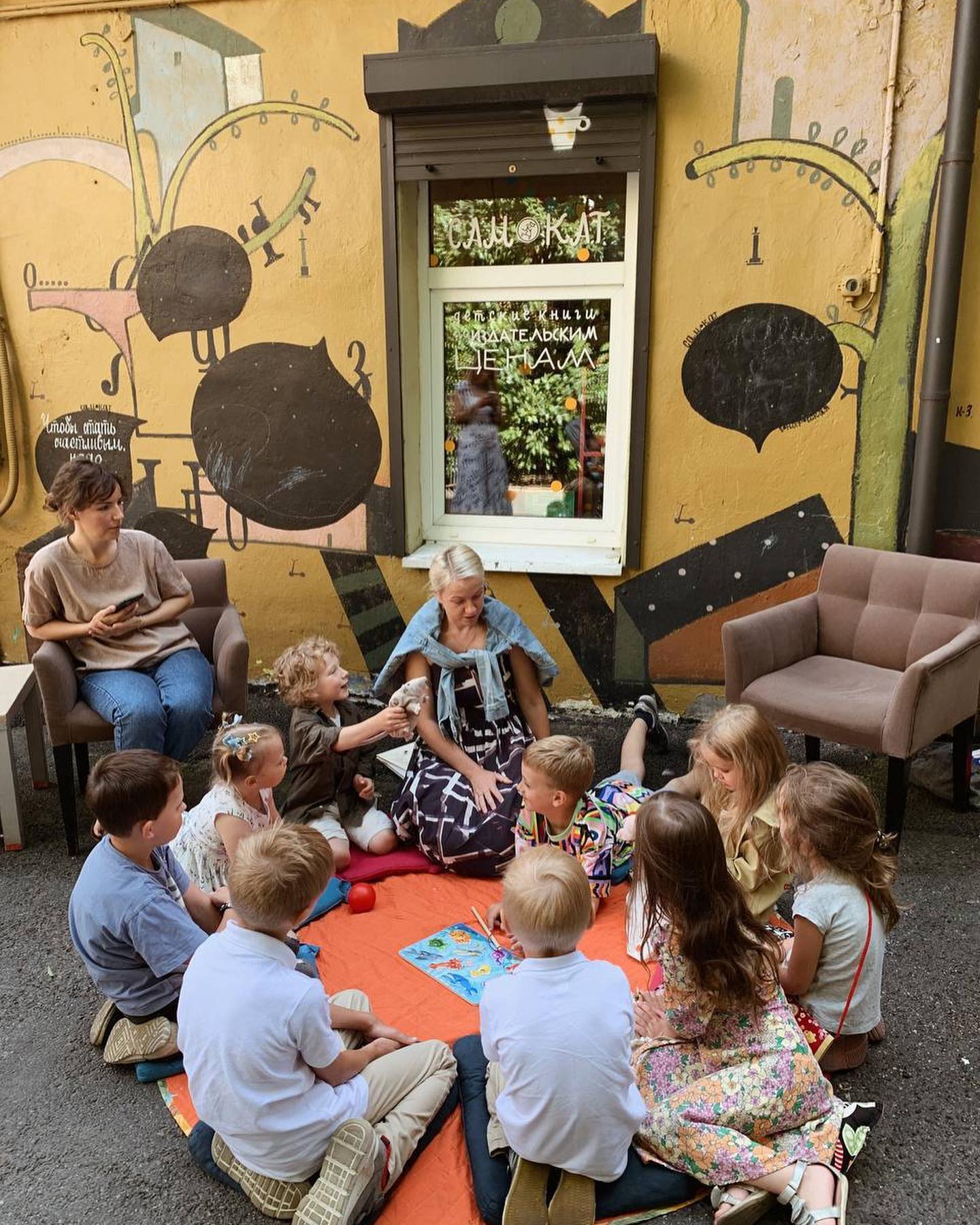
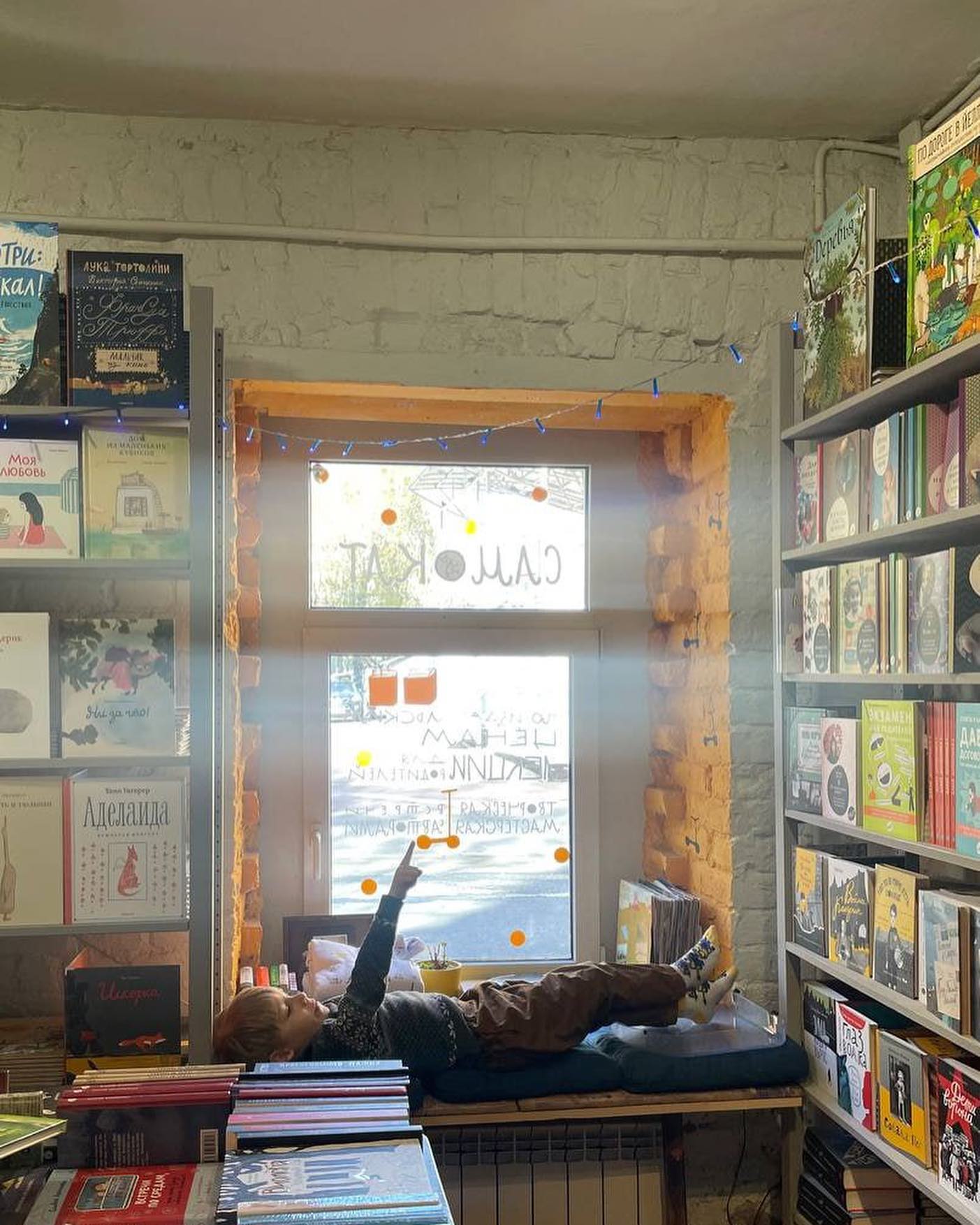
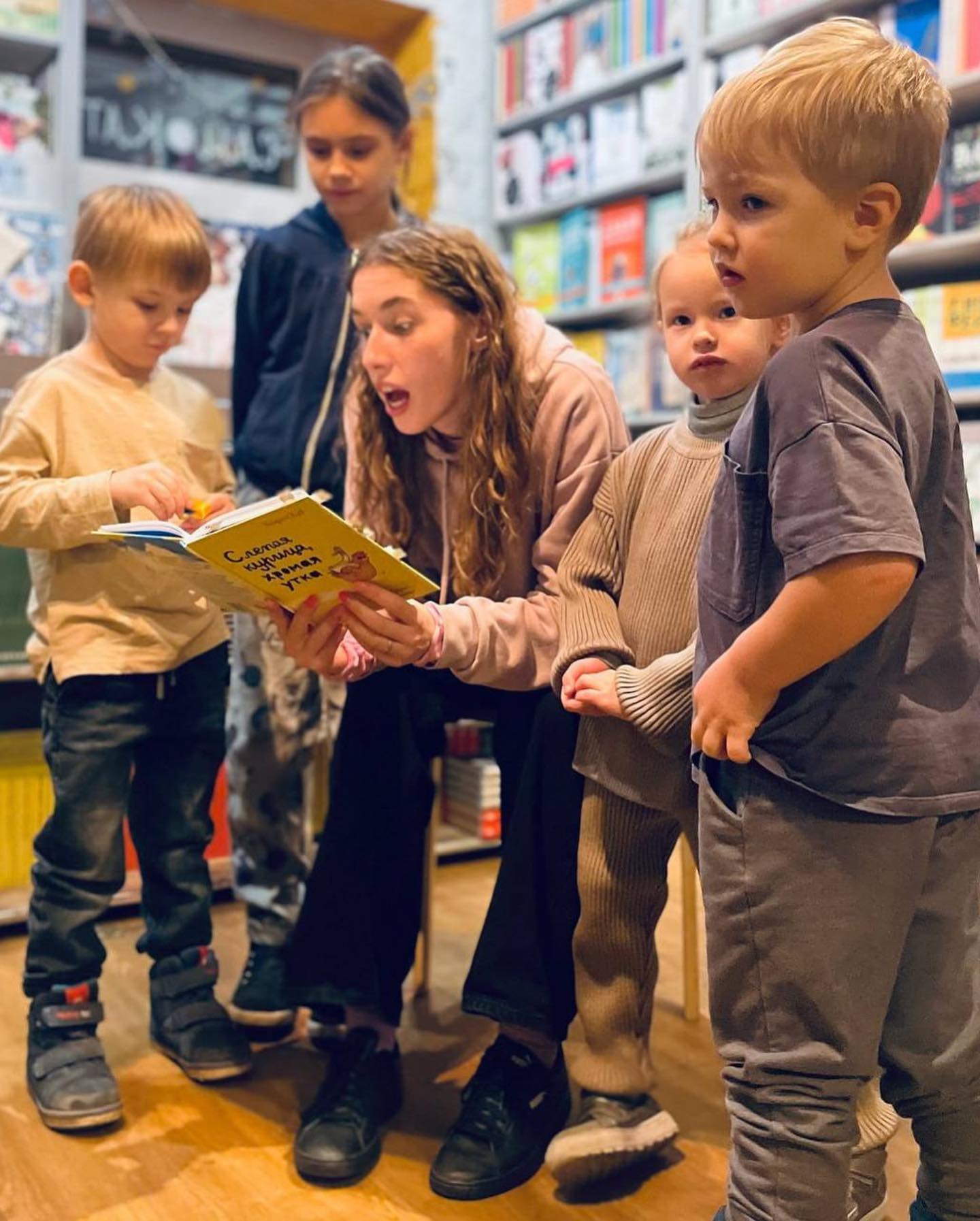
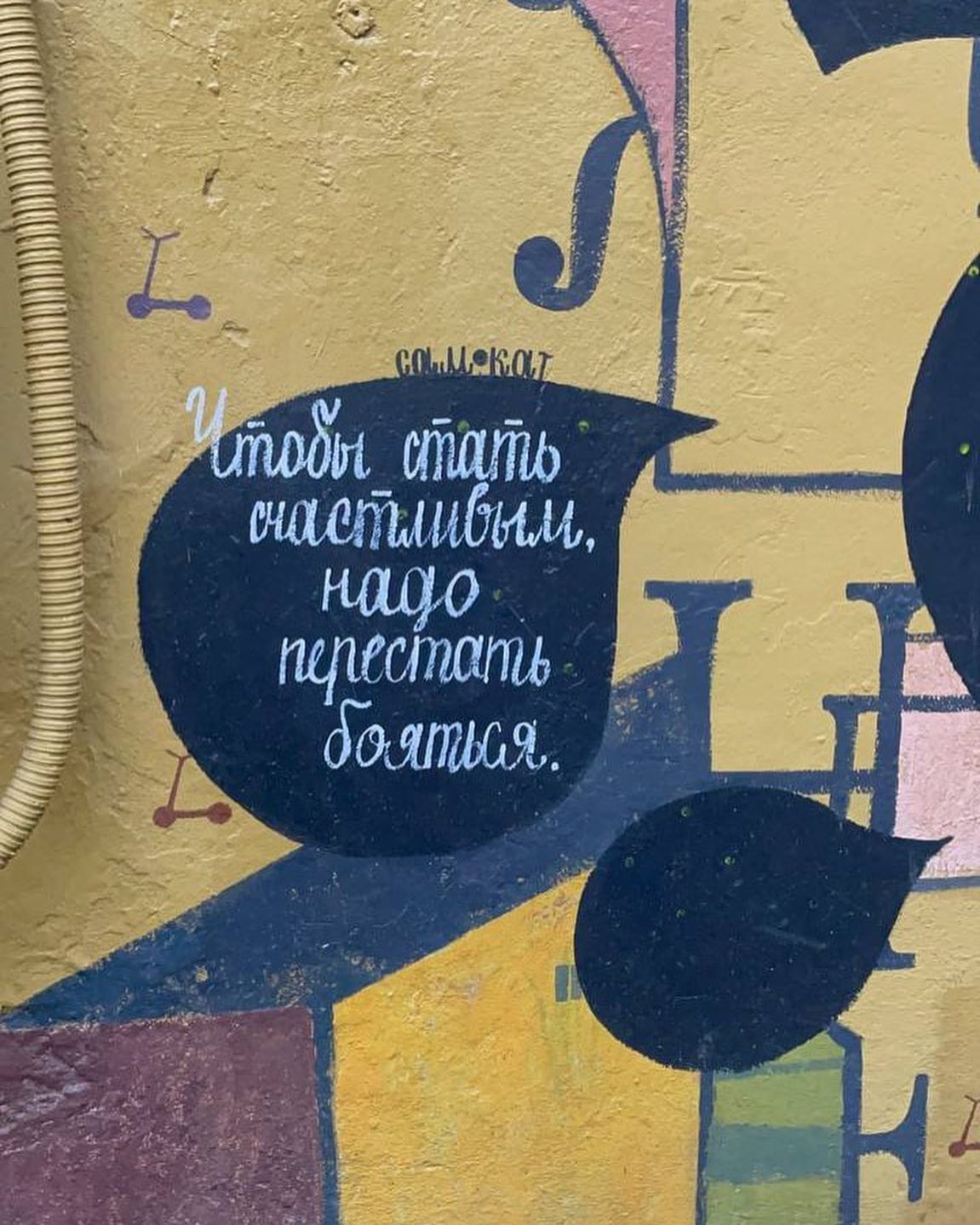
 First of all, we appeal to the leadership of St. Petersburg and the Committee for City Property Management. And we hope that the cultural capital is not indifferent to the plight of one of the best bookstores in the city by one of the primary independent children’s publishers in Russia.
 If you have suggestions and options, please write via Telegram at +7 (921) 809-8519, and Natasha and Polina will be in touch.