
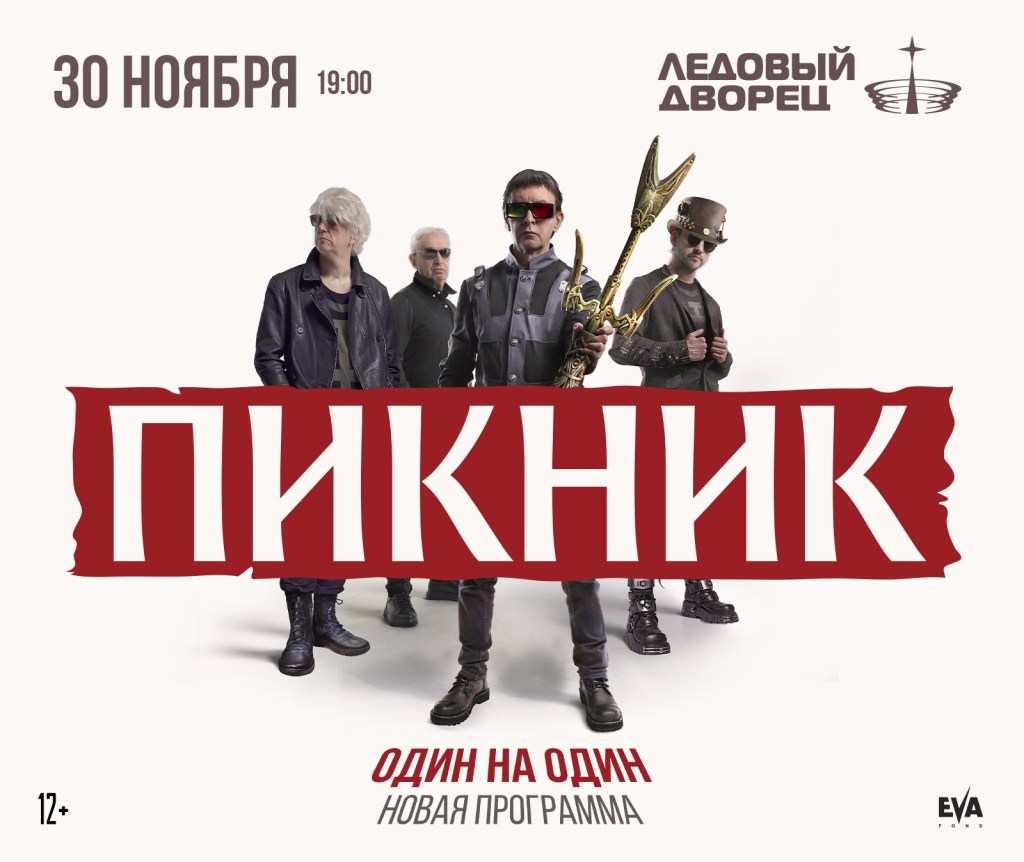
PICNIC
One on One
The band Picnic’s new concert program is entitled “One on One.”
Imagine a magic crystal with three facets. The first one is the eponymous new album. The second is video sequences and a laser show. And the third is the band’s musical calling cards: “The Egyptian,” “Kingdom of Curves,” “The Shining,” and others.
Since “the show must go on” (as the famous song says), it must go on not just any old way. The best minds from Kaliningrad to Vladivostok have been working on how to amaze you. Those who attended our concerts during The Future Awaits Us tour probably know already that Picnic’s bold claims are no empty threat. Of course, we will pull back the veil of secrecy, but only at the concert will all our secrets be revealed.
Source: Bileter.ru
[…]
Both of these stances, however, involve a lack of agency, a factor that is borne out in other research we have conducted. Indeed, reviewing nearly 100,000 substantive war-related texts from across six Telegram channels—including three generally pro-war and three anti-war channels—suggests that a lack of agency is common both to supporters and opponents of the war.
On the pro-war channels—which were dominated by reports from the front and patriotic rallying cries, but also included a number of discussions of mobilization and ways out avoiding military service—attribution of “credit” for the war was mixed. Often, the war was highly personalized: something was ordered by Putin, said by his spokesman Dmitry Peskov, or carried out by (then) Defense Minister Sergei Shoigu.
When discussing mobilization, the discussion was dry and procedural, with no discernible consideration of justice or fairness (or the irony of pro-war channels discussing ways of avoiding the fight). Almost never did commentators use the first person: things were done, said or thought by others, but not by them.
On the anti-war channels, the war was largely de-personalized. To the extent blame was attributed to Putin, it was mostly implicit: because it was Putin’s war, his role appeared to require little overt discussion. Perhaps surprisingly, discussion of military mobilization, similarly to the pro-war channels, focused on procedural consideration[s] and avoided issues of justice and fairness. Unlike in the pro-war channels, however, there was considerable use of the first person, but predominantly the first person singular, as commentators discussed their own thoughts and experiences. Use of the first person plural—“we”, with connotations of collective responsibility and action—were rare.
Given the roles played both by “system justification” and “agreeableness” among war supporters—psychological motivations that encourage people to get in line and discourage difference—the lack of a sense of agency is not surprising. Even those who write openly of their support for the war on Telegram don’t tend to see the war as something over which they have any control; while the war may be prosecuted with their support, it is prosecuted without their involvement.
It is perhaps somewhat more jarring that this lack of agency seems to extend to much of the anti-war community, however. To be certain, anti-war Russians clearly claim responsibility for their own lives and, in many cases, for assisting Ukrainian refugees, for example. Moreover, there are individuals and small groups who have attempted acts of resistance ranging from anti-war graffiti and solitary protests to outright sabotage. But there is little discussion of any potential agency over the war itself, or the idea that, if they acted, Russian citizens might be able to bring the war to an end.
In the first half of 2024, the average bill for entertainment tickets (excluding movies) amounted to 3,400 rubles [approx. 35 euros], which is 18.8% higher than a year earlier, reported Yandex Afisha. According to the service, this economic indicator rose by 14% last year. The largest increase in the average bill was recorded in theaters, which rose by almost a quarter, up to 3,800 rubles. The average price of concert tickets on Kassir.ru [a online ticket purchasing service] increased by 20% compared to last year, and the total price increase for the first six months of the year amounted to 16%. Market participants say the increase in ticket prices has been caused by the growing costs of organizing events, as well as by increased demand for performances by domestic artists after the departure of many foreign performers. This has led to an increase in the fees sought by Russian artists and, consequently, to an increase in ticket prices.
Source: Moscow Times Russian Service, 16 August 2024. Translated by the Russian Reader
[…]
But the continued damage to Putin’s authority after a catastrophic war and repeated shocks does not translate to an internal threat to his power. Nor is there a risk his regime might collapse in the foreseeable future, according to analysts.
Stanovaya said that many Russians, particularly members of the elite, had come to expect the worst in the war but realized that there was no alternative to Putin in Russia’s repressive political system.
“They are so used to shocking events. They’re so used to living in a very unpredictable situation, so it’s very difficult to surprise them. And they are also used to the feeling that they don’t have the power to affect anything, and they are helpless,” she said.
The crisis, she continued, had certainly undermined Putin’s authority — without necessarily undermining his grip on power.
[…]
