This year’s Berlin Film Festival is showing only one film from Ukraine: the documentary film Traces was tapped to represent the country. Traces tells the stories of women who survived rape and violence during the war in Donbas and Russia’s full-fledged invasion of Ukraine.
The Traces team on the stage of the Haus der Berliner Festspiele, 16 February 2026. Source: Berlinale
“I always wished one thing for my pupils: that they would never be forced to take up arms,” Liudmyla Mefodiivna, a teacher of Ukrainian language and literature, says in an interview with Deutsche Welle.
The elderly woman, who taught school for forty-five years, was tortured and raped by a soldier after pro-Russian militias arrived in her village. As he was leaving, her tormentor left a bullet on the table as a warning and a threat: “I’ll come back and kill you if you so much as peep.” The teacher’s story, along with [five] other stories of violence and horror, is recounted in the documentary film.
“The occupiers came, and the majority of my pupils rose to Ukraine’s defense. Many of them have been killed, while others have been taken captive or returned from the front severely wounded. It’s terribly painful to witness and survive this. Ukraine is now flowing with blood, and mothers weep over the bodies of their sons, husbands, and family members. Four men have been killed in our family alone, leaving behind young children,” says Mefodiivna.
She recalls that she was unable to talk about her experience for a long time. Her family insisted, though, that her testimony of the atrocity must be heard.
“They beat me, choked me, cut me, knocked out my teeth, and broke my ribs,” Mefodiivna says. “They robbed me of my health. Thanks to the support of these wonderful women I met, I was finally able to start talking. I began to tell my story. I want the whole world to know about the crimes Russia has been committing, about how it has tortured and abused Ukrainians.”
Directors Alisa Kovalenko and Marysia Nikitiuk, along with six of the film’s protagonists, have traveled to the Berlinale to present the film, a testament to their pain. All of them are members of SEMA Ukraine, an organization which helps women who have survived violence. As they sit down for interviews, it is particularly noticeable how nervous they are: their hands are shaking.
Olga from Kherson spent one hundred days in captivity with her son and her husband.
“I was ashamed to talk about [the Russians] did to me. Getting to know the organization was like a breath of fresh air for me,” Olga says. “Now we help other women, and men too. Because men have also been victims of sexualized torture, and yet this is hardly ever discussed.”
Seventy-two-year-old Nina is the most emotional during the interview. She almost immediately begins to weep as she recalls how the war first destroyed her home, and then her life.
“I thought I would have a quiet life in the village, planting trees and waiting for grandchildren. But then the tanks came and the earth burned. And then the monsters came. . . .”
Nina’s face is wracked by sobbing, shame, and grief.
The voice as a weapon
It is shame that prevents victims of violence from testifying against their aggressors, meaning that wartime victims of sexual violence are effectively ignored in the official statistics. When talking about civilian casualties, the focus is usually on those who have been killed, wounded, or taken prisoner.
“Those who have survived sexual assault, including in captivity, often go unnoticed and do not receive housing, medical, or mental health assistance from the state. Many suffer from stigmatization, and some cannot cope with what they have experienced,” says the SEMA Ukraine booklet.
The women are fighting to be heard.
“Our voices are the weapons that will punish the perpetrators,” the organization tells victims of violence.
“When I started talking about what I’d survived (this was before the full-scale invasion), I often encountered people seemingly switching off. When I would try to tell them about the most terrible things which had happened to me, their eyes would go blank. They would stop hearing what I was saying. It was like an internal defense mechanism, when what you’re listening to is too painful and unpleasant that you just don’t take on board what’s being said. I believe that this film can break down this barrier, and that after seeing it, people will no longer be able to shut their ears again,’ says SEMA Ukraine founder Iryna Dovhan.
The film opens with Dovhan’s story. In 2014, she was captured by pro-Russian armed groups in Donbas for aiding Ukrainian soldiers. After torturing and abusing her for several days, the pro-Russian militiamen tied her to a pole in downtown Donetsk, wrapped her in an Ukrainian flag, and hung a sign on her that read, “She is murdering our children.” The city’s residents visited the captive to hit, spit on, and insult her.
Dovhan was lucky in some sense: a picture of the helpless woman tied to a pole was taken by a western photographer covering the conflict in Donbas. The photograph was picked up by international media outlets, and Dovhan’s captors were forced to release her.
“I hope that the world will stand with us. I hope that the world will understand that we don’t need sympathy—‘oh, those poor women’—but a joint campaign to make sure this does not happen again in the future and the perpetrators are punished. Otherwise, evil will return again and again,” says Dovhan.
After what she survived, she found the strength to unite and support other women who had suffered.
How the film Traces came to be
The film’s co-director Alisa Kovalenko was also tortured and raped, but she found help at SEMA Ukraine.
“My journey to this film took twelve years. In 2014, I was captured in Donbas and suffered violence. For a long time, I couldn’t talk about it. When I first gave my testimony to human rights activists from the Helsinki Group, I asked, ‘Have you heard many stories like this before?’ They replied, ‘No. You are the first’. It was a shock. I knew there were many more of us, the people whom I had seen with my own eyes in captivity—both men and women.”
The filmmaker describes meeting other women who had gone through the same ordeal as a turning point.
“We sat down together for the first time and started talking. We experienced healing. We felt that we were not alone. And we began to break down the wall of silence step by step.”
It became clear that the traces of the atrocities had to be preserved, but for the filmmakers—Alisa Kovalenko was soon joined by Marysia Nikitiuk—it was extremely important to settle on the right narrative form to preserve the dignity of the victims and not traumatize viewers. Many things in the hours-long filmed accounts of torture, rape, and humiliation did not make it into the final cut.
“We wanted to shove all the worst things in the audience’s faces and shout, ‘Look what they’ve been doing to us!’ But we tried to strike a balance. This film is not meant to shock the viewer. It’s about dignity, about the light that is born in spite of evil. We learned to talk about it the right way, without retraumatizing either the protagonists or the audience. It’s a victim-centered approach,” says Kovalenko. “Some stories were left out due to limited running time—for example, how women in captivity were starved and would share one dumpling a day between four of them, or were forced to sing the Russian national anthem to be allowed to go to the toilet. But these testimonies exist—in books, in human rights reports, in memory.”
Laying the foundations for memory was the goal of the filmmakers. That is why, in Berlin, the women come onstage and recount their experiences once again to the audience, thus overcoming their pain.
“The war gradually fades into the background. Tragedy turns into statistics, and statistics become routine, and that is terrifying,” the filmmakers note. “Traces resurrects the names. They are no longer numbers, but flesh-and-blood women who look the viewer in the eye and speak. A tragedy should have names, not be turned into statistics.”
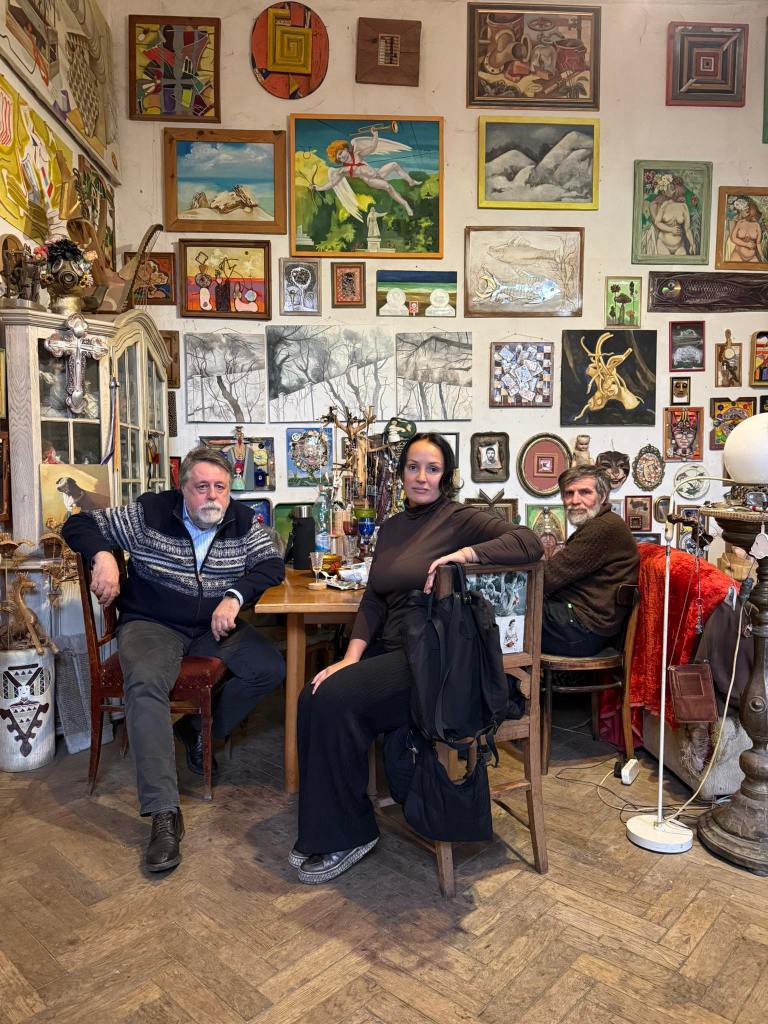
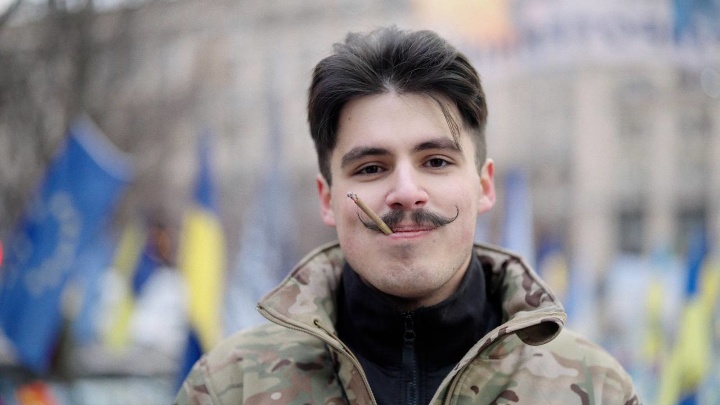
The name of the beautiful young woman in this photo, taken a month ago in Odessa, is Katya, and she is the mother of a wonderful young man, Timofey Anufriev, a Russian passport holder who went to war to defend Ukraine. Today we received news that he has been killed. You can learn more about him in the film to which I’ve linked in the comments. And try to think hard about [the difference between mere] words and real actions… May the memory of the heroes live forever!
The Insider, “‘War is like playing chess with death’: Confessions of a philosophy student from the RVC” (in Russian, no subtitles)
Until recently, 21-year-old Timofey Anufriev (son of the renowned artist Sergei Anufriev) was an ordinary university student in Petersburg. For over a year, though, he has been fighting for Ukraine in the ranks of RVC (Russian Volunteer Corps). Our film crewmet with him in Kiev. Timofey talks about why he made this decision and about war and death in this report by The Insider.
Source: The Insider (YouTube), 20 March 2025. Annotation translated by the Russian Reader. There is an egregiously machine-translated and machine-dubbed version of this same film which can be viewed here. |||| TRR
Timofey Anufriev
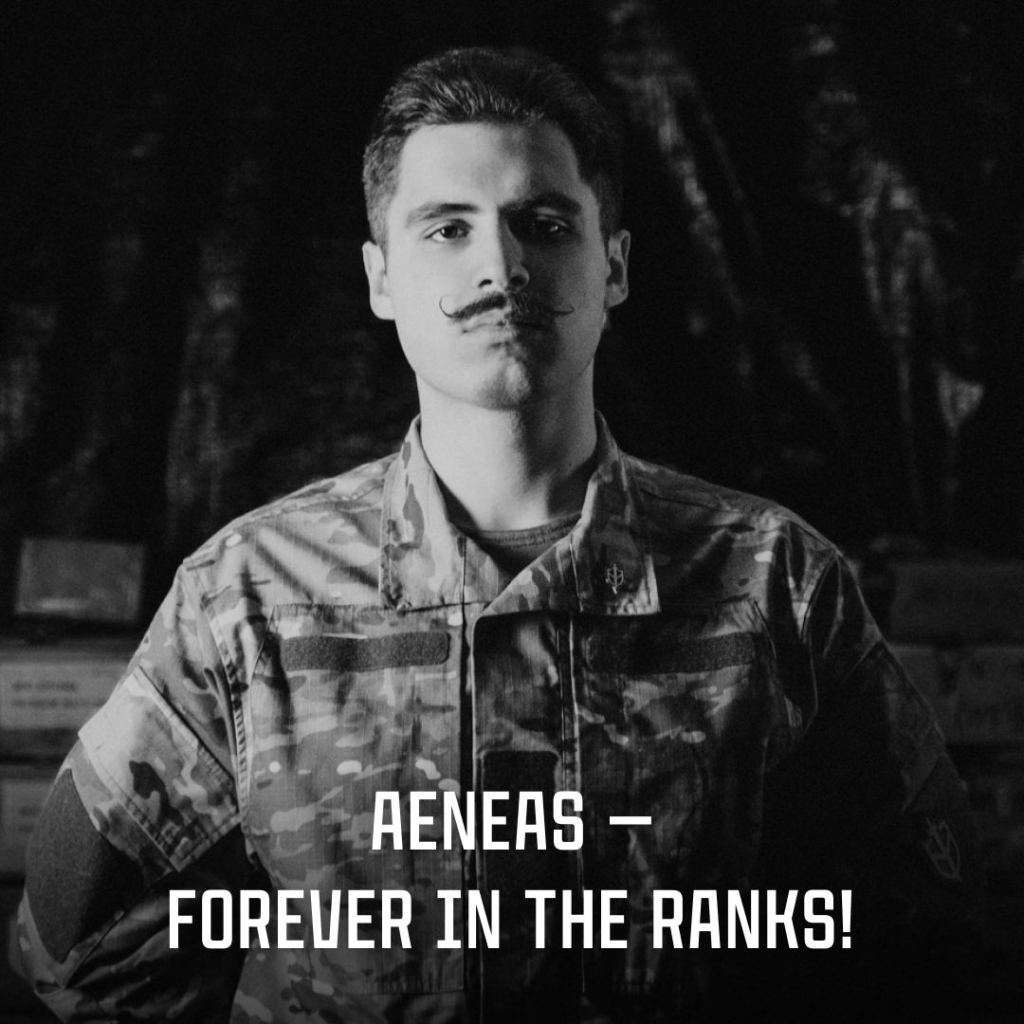
[The] 22-year-old Russian-Ukrainian fighter Timofey ‘Aeneas‘ Anufriev was kіlled in action while defending his second homeland.
“Timofey participated in many of the Corps‘ operations: assaults, cleanups, and capturing prisoners. He lived and dіеd like a true knight and poet, in a blaze of fiery glory! <…> Forever in the RVC, forever in the ranks!” the Corps wrote on its Telegram channel.
Anufriev served as a stormtrooper and had the call sign ‘Enei’ [Aeneas]. He was awarded the medal ‘For Assistance to Military Intelligence of Ukraine.’
“The son of a well-known conceptual artist [Sergei Anufriev], born in Moscow and raised in Odesa, Enei regarded both Ukraine and Russia as countries close to him. Highly intelligent and well-educated, open and kind, he sought to contribute to the Corps not only in combat but also beyond the battlefield.
From an early age, Enei was familiar with the cultural circles of two capitals. Unlike the detached, insular segment of the artistic elite that exists removed from reality, he was deeply concerned about the fate of his people.
The outbreak of the war coincided with his first year at university in Saint Petersburg, where he studied philosophy and planned to become a public intellectual. He was disturbed by the way many around him in Russia pretended that nothing was happening. As a result, he decided first to leave the country and later to join the Russian Volunteer Corps.
“There is always a choice,” Enei believed—and he made one guided by his sense of honor. Throughout his combat service, he served as an assault infantryman, one of the most dangerous roles in war.
He took part in numerous operations, including assaults, clearing operations, and the capture of enemy personnel. He lived—and died—in accordance with his convictions.” wrote RVC on its nocturnal post.
The son of a famous conceptual artist, he was born in Moscow and grew up in Odessa. Aeneas considered Ukraine and Russia to be his home countries. An exceptionally intelligent and educated, open and kind person, he sought to benefit the Corps not only in battle, but also beyond it.
From childhood, Aeneas was familiar with the cultural bohemian scene of the two capitals, but he was not part of the abstract and “airy” artistic elite that exists detached from reality. On the contrary, he was deeply concerned about the fate of his people.
The war began during his first year at university in St. Petersburg, where he studied philosophy and planned to become a public philosopher. He was disgusted by the fact that many of his peers in the Russian Federation pretended that nothing was happening. Therefore, he decided to first leave Russia and then join the Russian Volunteer Corps.
“There is always a choice,” Eney believed, and he made a choice dictated by honor. He spent his entire military career as an assault soldier — the most dangerous job in the war.
He participated in many operations of the Corps: he stormed, cleared, and took prisoners. He lived and died like a true knight and poet, in the rays of fiery glory!
He was awarded the medal “For Assistance to Military Intelligence of Ukraine.”
Kushnir (2025), a film about the late pianist and antiwar protester Pavel Kushnir (in Russian and English, with subtitles)
Pavel Kushnir was a virtuoso pianist, a writer, and a courageous man whom the world discovered only too late. He died on July 27, 2024, in a Birobidzhan detention center following a dry hunger strike. The formal pretext for his arrest was a series of anti-war videos posted on a YouTube channel that had only 5 subscribers.
This film is an attempt to understand the man who played Rachmaninoff until his fingers bled, who dreamed of flying to Mars, who idolized Kurt Cobain, and who called the war by its true name while living in complete isolation.
We have gathered archival footage, previously unknown recordings of Pavel, fragments of his poignant cut-up novel, and memories from close friends and colleagues, including Clean Bandit soloist Grace Chatto, music expert Mikhail Kazinik, and publisher Dmitry Volchek. This is a story not just about a death in prison, but about an extraordinary life that became an act of art and resistance.
In this video:
Unique footage of Kushnir’s performances and artistic actions.
The story of an unmade avant-garde film and friendships with global stars.
The Birobidzhan Diary: a chronicle of loneliness and the fight against fascism.
Why a brilliant musician went unnoticed by the cultural establishment, but not by the prison system.
Our film about the pianist Pavel Kushnir has dropped. […] Honestly, the film was ready to go in late April, but we spent a long while navigating the legal maze around the music, copyrights, and permissions. That was not even the main reason for the delay, though. I wanted to wait until the media hype had subsided and we could take a look at Pavel’s legacy from a certain historical distance, to talk about him not as a victim (although that viewpoint is legitimate, of course) but as a rebel whose choice was deliberate. Similarly, if you will, there are different takes on Christ: some view him as a needless victim who arouses pity, and the more maudlin that pity, paradoxically, the stronger their hatred for his crucifiers; while others see him as a rebel whose heroism was deliberate.
In my opinion, seeing Pavel as a pure “victim” robs him of agency, turning him into an extra in someone else’s play, in which the crucifiers have all the starring roles.
The film is based on Pavel’s own diaries. In terms of composition, I reprised the structure of his screenplay for the unmade film The Six Weary Ones. Three states of madness—prophetic madness, creative madness, and the madness of protest—figure as the three aspects of his personality. As in Joyce, each of Kushnir’s chapters has its own color and symbol. We have added music to these chapters. The music for the red chapter, “Prophet,” is by Rachmaninoff. Bach supplies the music for the blue chapter, “Creator”: blue stands for the heavens and the cosmos, and fugues are cosmic in nature. The third, black-and-white chapter, dealing with rebellion and Birobidzhan, is set to Scriabin’s Prometheus, a [tone] poem about the first rebel in history. Camus writes, in The Rebel, that rebellion confers agency on us, turning us from beasts into human beings. Again, it’s all in the eye of the beholder: some feel pity for Prometheus, chained and tortured by the eagle, while others see in him the power of the unbroken human spirit. And Scriabin’s idea of transforming all of humanity meshes perfectly with the cosmic utopia begun in the previous chapter. Prometheus: The Poem of Fire is a mystery play; as [Russian poet Konstantin] Balmont put it, it is “a vision of singing, falling moons, of musical stardoms, arabesques, hieroglyphs, and stones sculpted from sound.”
The film is chockablock with musical, literary and philosophical allusions which I won’t burden you with now. But if you’re interested, I’ll set up a cozy stream on my tiny Telegram channel where we’ll discuss the film and unpack its hidden layers, and I’ll answer your questions. You can write in the comments about whether this idea seems viable, and I’ll decide what to do based on your feedback.
Once again I want to thank everyone who did their part and helped commemorate a major artist. Thanks to you, we raised 1,185 euros and 533,954.51 rubles [approx. 5,800 euros], which is not just a large sum but a phenomenally large sum, considering that the major media practically ignored our fundraising campaign. That being said, many friends and former colleagues supported us by reposting [our fundraising appealing], which is eloquent testimony to the fact that a person and his reputation are more vital than any institution, and for this I am endlessly grateful to them.
The money we raised was enough for several full-fledged scouting trips and location shoots. Considering the geographical scope of our shoots, which included traveling to Birobidzhan itself, our grassroots war chest was emptied at some point. It became clear that without outside help we wouldn’t be able to complete the project properly, avoid devolving into a Skype interview format, and pay all the courageous artists, editors, and cameramen who had agreed to shoot a film in Russia at their own peril. I understood that asking folks for money again was not a good plan. So, after consulting with our small team, I accepted an offer from the online platform Votvot. They covered our remaining expenses and, most importantly, agreed to our condition that the film would be freely available. Our promises to our donors have not been broken: this grassroots film is being released in a way that is accessible to the grassroots—on YouTube.
I want to thank my friend and colleague Alexander Urzhanov from the bottom of my heart: he was quite emotionally invested in this film and provided us with his fabulous production resources. I would also like to thank all the folks at Narra: they have asked me not to name them, but you know who you are. Misha, Dasha, Ira, and Nastya, I couldn’t have done it without you and by myself! Particular thanks go to Boris Barabanov and Darina Lukutina from Votvot, without whom this film would scarcely have been possible.
I would like to thank Pavel’s relatives for permitting us to use his voice to read his diaries. Getting ahead of myself, I should say that this is the only digitally generated thing in the film. Everything else was filmed or recorded using analog methods: the diaries, the posters, and the drawings of a certain incomparable artists were all done without synthetics or computer glitz. All you see is life’s pleasant graininess.
I thank Pavel’s friends for sharing their archives and letters, as well as everyone who appears in this film.
I have one final request to you. Watch this film tomorrow. More to the point, share this film. I’m afraid that the film will get lost in the ruthless algorithmic desert without your reposts. May this film find everyone who needs it.
Pavel Kushnir was a classical pianist. But according to Russian authorities, he was also a dangerous dissident. In July 2024, he died on hunger strike in a remote prison in Far East Russia. Who was Pavel Kushnir, and why did he end up in jail? Liza Fokht from BBC Russian has been trying to piece together Pavel Kushnir’s story.
Turning Her Back on Propaganda What does daily life consist of in a prison camp? It consists of work, of course, work which is dull and exhausting. It consists of sleep, which is fitful, as sometimes there are inspections every two hours. And it consists of spending time with people whom you didn’t choose to spend time with. The wardens make sure to burden convicts so that they have nothing that is theirs alone, so that they have no time to think about anything, so that they are entirely subordinate to the powers that be. The goal of prison camp “re-education” is the same: breaking the will of the prisoners, turning them into obedient robots who obey all the orders of their superiors.
This is especially true for political prisoners—people who think independently and have their own principles. The overarching mission of the wardens is to attain voluntary submission, joyful and proactive submission, from political prisoners. But the wardens rarely succeed in this mission.
They have utterly failed with Valeria Zotova, a political prisoner at Kostroma Penal Colony No. 3. The wardens have insistently offered her a path to redemption, that is, cooperating with the authorities and taking part in “civic life.” Zotova has turned it down.
Recently, the prison camp’s club showed a movie, a Russian propaganda film titled Callsign: Passenger. Here is what Wikipedia says about the movie: “The movie is set in 2015. The movie’s main character is Nikolai Ryabinin, a trendy Moscow writer and carefree party animal. His brother volunteered for the war in Donbass and has gone missing. Nikolai goes looking for his brother and joins a separatist unit, the Aurora Battalion, in which his brother previously served. There, he gets the ironic nickname “Passenger” and under the leadership of the commander (callsign: Trigger) reevaluates his own life and comes to support the separatists.”
It’s an unimaginative piece of propaganda based on Alexander Prokhanov’s novel The Murder of Cities. It’s cheap trash, of course, like the writer himself, but the convicts are obliged to drink this cinematic concoction down to the dregs. All of them are herded into the club. Zotova refuses to go. Ultimately, it’s her right to watch the movie or not. But what do rights matter when it comes to Russian patriotism! Zotova is forcibly escorted into the auditorium. Watch our high art: look what talented filmmakers made it, what actors starred in it! But Lera Zotova turns her back on the screen and looks the other way.
Turning one’s back on propaganda is simple—simple but dangerous. The pressure on Valeria continues unabated. The harassment has been endless. The wardens summoned a friend of Zotova’s and stipulated to either: “Either freedom or Zotova—you choose.” They have been trying to create a vacuum around the political prisoner, depriving her of contact with those who are close to her in any way. The young woman is twenty-one years old, but she has been bullied like a hardened criminal. Because, as prison authorities envision it, she should be like everyone else: obedient, involved in the prison camp’s civic life, acting in plays, fulfilling the production quotas, and not smarting off to her superiors.
Abkhazia is a country (some would argue an occupied region) with which it is impossible to work without ignoring the political context. It is an unrecognized state that in the 90s separated from Georgia, wanting to gain independence. Independence that came at the cost of war, brutality on both sides, historical trauma and nationalist myths. Most of the international community calls those events the Georgian-Abkhazian conflict, while Abkhazians themselves believe that it was the Patriotic War, singing about the victory in traditional music. Unrecognized, but actual separation from Georgia became possible due to participation of North Caucasian volunteers, and after that, assistance from Russia. Today there are Russian military bases in Abkhazia, so Georgia perceives Abkhazia as an occupied region, although similar thoughts can be voiced on the other side of the Georgian-Abkhazian border.
Given the painful past, ambiguous present and shaky future of Abkhazia, any project with its culture can be perceived as a political statement. Especially if the project is made by a North Caucasian label with residence in Germany and an independent nomadic director. That is why we are happy that we are releasing films 12 years after they were recorded: we had time to think and choose our words.
While filming on Gagra beach, a local TV station caught him for a story titled “Wow, a French filmmaker came in search of a unique culture,” quite typical of regional media in the Caucasus. The journalist then asked Vincent if Abkhazians have well preserved their musical heritage.
[Vincent laid it on thick.]
“It is very bad. You have the most beautiful music, but it is very difficult to talk about its preservation and development. If everything goes on like this, you will lose everything. You need more work.”
This was a very important and thoughtful reaction for us. European attention to Caucasian cultures sometimes perpetuates oriental clichés and deceptively reassures locals: “Europeans are coming to us in search of lost antiquity, so everything is fine. We are still ancient and unique.” In this sense, Vincent’s response was both sobering and provocative. And even total disagreement with the brash Frenchman is also a good option. It’s either work or don’t listen to those who learned about your culture yesterday.
In addition, in interviews, and in general during the course of the project, we said a lot that it was important to document the diversity of Abkhazian music. While we were trying to find the most ancient and ‘authentic’ forms of folklore, Vincent insisted on recording everything from state choirs to late patriotic songs.
Today it seems to us that this is the political and social meaning of the project: to start a living archive with different music from Abkhazia. Music that is not limited to the war for independence and the defense of political freedom before a new ally. Before the 90s, Abkhazians had bright moments in history and battles sung in songs.
Besides, in 2013 we could only meet folklorists, bearers of tradition and rare indifferent officials who were interested in working on the project. Today we are releasing this release with the support of the cultural center SKLAD in Sukhum. It is not enough for young curators and artists to preserve culture and revel in nostalgia. Instead, they are creating a new context. 12 years ago such initiatives were hard to find. Now they are a visible voice of contemporary Abkhazia. Our films and recordings are intended, among other things, to make such voices audible.
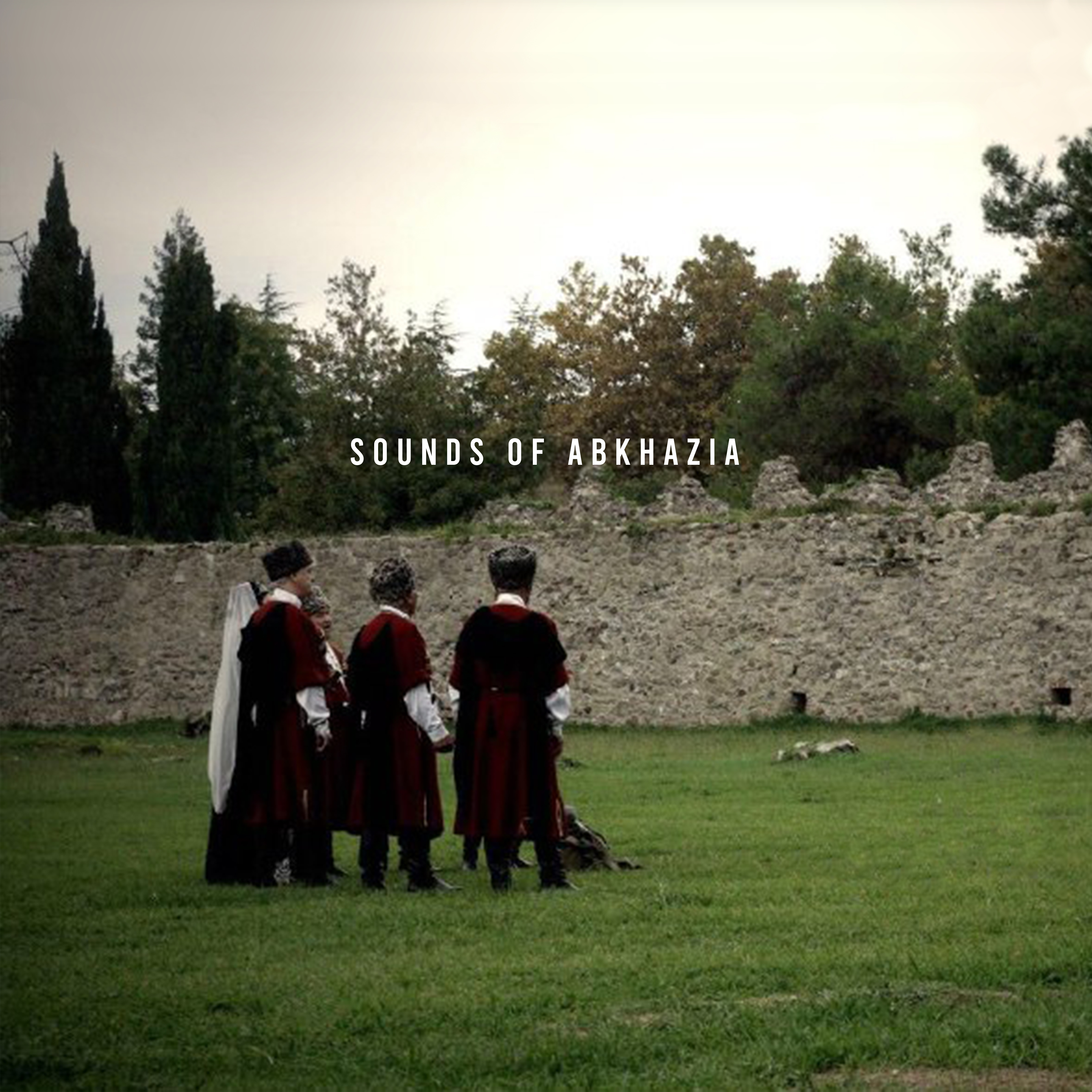
A collection of ten short films recorded in Abkhazia, an independent republic bordering the Black Sea. Filmed by Vincent Moon and produced by Petites Planètes in collaboration with Ored Recordings. Listen to the album on https://oredrecordings.bandcamp.com/album/sounds-of-abkhazia
“When an empire falls, does it make a sound? And who is there to hear it?” – so read the opening line of the call for papers for this issue in October 2021. Looking back at that text from the vantage point of 2025, that sounds far too optimistic and premature. Shortly after that call was published, the empire in question made a whole lot of noise about its unwillingness to stay fallen. The shadow of Russia’s brutal war of conquest in Ukraine hangs over this issue – as it has over any project that deals with the post-Soviet since February 2022 – determining both its shortcomings and, in a perverse way, its urgency.
That the full-scale invasion came to many of us as a shock is the result of complacency and unwillingness to listen to the comparatively quieter rumblings that have been shaking the region over the past two decades. To the fact that the invasion commenced already in 2014 with the occupation of Crimea and Russian military support for separatist forces in Donetsk and Lugansk. To the 2008 week-long war with Georgia that concluded with Russian occupation of the disputed territories of Abkhazia and South Ossetia. To the forceful integration of Belarus into Russia that began as soon as the Belarusian dictator Lukashenka came to power in 1994 and intensified with the establishing of the so-called “Union State” in 1999. Not even to mention the Russian imperial ventures in Africa and the Middle East.
The world refused to listen until the noise became impossible to ignore – the noise of bombs and artillery shells falling on Kyiv, Kharkiv, Mariupol, Odesa, Dnipro, Zaporizhzhia and many more. Yet even these sounds fall on deaf ears far too often: many among the anti-imperialist left, enamored by the platonic ideal of a multi-polar world, seem to prefer listening to Putin’s propaganda, just as many left-leaning intellectuals were similarly entranced by Soviet propaganda during the Cold War. And many across the political spectrum – including the sitting US president – who campaign against military aid to Ukraine seem to prefer the comfortable silence of subjugation to the noisy cacophony of resistance.
What, then, can a niche academic publication on sound(s) from the post-Soviet realm – in itself a controversial designation tinged with colonial history – hope to achieve? Especially one edited by a Russian-Jewish academic based in Western Europe, with all the problematic positionality this brings? Perhaps nothing. Or perhaps, the promise of a sonic epistemology long held as a keystone of sound studies – that of attuning and entangling oneself with the object of listening as opposed to holding it in a distancing gaze – could be fulfilled at least to some extent here, opening some ears and minds to the politics of the region.
In the video installation Repeat after Me by the Ukrainian artist collective Open Group – arguably the most important sound artwork of this decade and the centerpiece of the last Venice biennale – Ukrainian war refugees recount their experiences of the invasion while recreating its soundscape with their voices: the sounds of shelling, explosions, war planes and drones, air raid sirens, etc. A row of microphones in front of the screen and onomatopoeic subtitles in the video invite the public to join in and voice those sounds in karaoke fashion as a “gesture of togetherness” (Keylin 2023: 128). The playful format allows participants to empathize with the refugees’ traumatic experiences from the safe distance of Verfremdung (estrangement), while making them acutely aware of the very safety and distance that they enjoy. In this way, Repeat after Me attunes the audience both to the (sonic) reality of the war and to their own positionality.
Hence, the aspiration of this issue: to make the post-Soviet realm audible – not as a continuous, homogenous soundscape far too often conflated with Russia, but as a cacophony – decidedly not a symphony – of diverse cultures, identities, aesthetics, and political programs; to sound out both the connections that gave the Second World its identity against the First and Third ones and the contradictions that made it fall apart. In the hope that listening – from a safe distance – to the sounds of the post-Soviet realm can attune the reader’s ear to the voices coming from it.
A multitude of limitations – some fundamental, some situational – work against this aspiration. First, the diversity of sound cultures and the complexity of political relationships within the post-Soviet space are far too vast to address comprehensively in any single publication. Second, the discipline of sound studies has only begun to establish itself in the region over the past decade, often lacking institutional support and publication venues. Moreover, much of this emerging discourse, especially in Russia, orients itself more towards Western academic scholarship than towards the post-Soviet realm and its own sound practices (e.g., the History of Sound book series at the New Literary Observer press, which in large part consists of translations of key anglophone works). One important exception that has to be mentioned here is the 2018 multilingual special issue of the Topos journal, P.S. Soundscapes,edited by Benjamin Cope and Pavel Niakhayeuand dedicated to sound and music in contemporary Eastern Europe. All of this greatly limits the pool of potential authors for this issue, to the extent that half of the texts included here are written by Western scholars. Finally, the war itself had an obvious impact, delaying this issue by over two years and leading several prospective authors, particularly those hailing from the post-Soviet realm itself, to withdraw their texts. Not a perfect issue, then, but hopefully still capable of opening the space for a dialogue.
Listening to the Subaltern Empire
Despite recent post- and decolonial turns in sound studies that shift focus away from Eurocentrism and acknowledge the global diversity of sounding and listening practices, the post-Soviet space remains largely a sonic terra incognita. The few exceptions that prove the rule include the sound experiments of the Soviet avantgarde – owing to Andrey Smirnov’s monumental study Sound in Z (the title’s correspondence to the current Russian military symbol is an unfortunate prophetic coincidence) – and the overtone singing traditions of the Far East. However, the academic attention that both these phenomena received does not stem from any specific interest in the region, but from their attachment to more famous “brands”: the historical avantgarde and Tibetan spirituality respectively.
The post-Soviet world falls into the cracks between the Global North and the Global South, persistently absent from the sonic maps of either realm. It tests the limits of post- and decolonial frameworks, which were largely developed to address the relationships between European empires and their overseas colonies. Political scientist Viatcheslav Morozov describes Russia’s peculiar position in this coordinate system as a “subaltern empire” that, “while remaining a sovereign state,” has “colonized the country on behalf of the global capitalist core” (Morozov 2015: 32) into which it was integrated on unequal, subordinate terms. As a result, Russian political consciousness is built on an unsolvable paradox of holding in suspension Eurocentrism and Euroscepticism: the aspiration to be an equal part of the Global North and the resistance to its cultural influence. In a twist of fate that the academic community still struggles to wrap their heads around, Morozov was arrested in January 2024 in Estonia and later plead guilty to spying for Russia. Although this fact may cast a shadow on Morozov’s academic work, the notion of the subaltern empire has been crucial to the postcolonial discourse on the post-Soviet realm.
In his influential – if controversial – book Internal Colonization, cultural historian Alexander Etkind similarly approaches the Russian imperial project as one of self-colonization that inevitably results in self-othering. “The state was engaged in the colonization of foreign territories and it was also concerned with colonizing the heartlands,” he argues, leading “peoples of the Empire, including the Russians” to develop “anti-imperial, nationalist ideas in response” (Etkind 2011: 2). Etkind’s work was rightfully criticized (as I will discuss below) for sidestepping Russia’s actual colonial conquests – its subjugation of Siberia, Caucasus, East Asia, or Belarus and Ukraine – and its colonial subjects. It is, however, notable for pointing out the “reversed, internal orientalism” (Etkind 2011: 16) suffusing modern Russian culture – one that simultaneously construes Russia itself as a colonial other to the enlightened West and conceives a colonial other within Russia in the form of its uneducated and uncivilized narod (a word that literally means “people”, but more often than not is used to denote peasants and commoners).
Two articles in this issue demonstrate how this contradictory mentality unfolded in the experimental music and sound art scene in 1980s Saint Petersburg, a city originally designed as a flagship for the Europeanization of Russia, but which came to be known in the twenty-first century as a hub of Russian nationalism and fascism. Giada Dalla Bonta’s article “Sounding the dissolution from a Cosmic Space” introduces the universalist trend typified by the electronic music duo New Composers, Valeriy Alakhov and Igor Verichev. Bridging avantgarde legacies and rave culture, the pair’s work was informed, on the one hand, by the avantgarde concept of vsyochestvo (from the root vsyo – “all, everything” – and the suffix combination -chestvo that typically refers to “practice”), of an inter- and postmedia approach to art taken to extremes. On the other hand, their work was rooted, in the holistic worldview of Russian Cosmist philosophy, rhymed with the everyday mythology of the Soviet space program. Dalla Bonta’s article pursues two lines of inquiry: first, it reassesses the role and influence of sonic practices on the late Soviet underground art. Second, it examines the New Composers’ idiosyncratic blend of aesthetics and philosophies through the lens of Kodwo Eshun’s notion of sonic fiction (1999) and Jean-Luc Nancy’s relational theory of sound (2007), revealing how they expressed a politics of togetherness characteristic of late Soviet underground culture.
New Composers, “Exactly Today and Exactly Now” (1989)
Dalla Bonta acknowledges an ostensibly paradoxical ideological shift towards conservatism and nationalism in the underground art scene following the dissolution of the Soviet Union but purposefully limits the timeframe of her account to the 1980s to focus on liberatory impulses in the New Composers’ early work. Conversely, Sam Riley’s article “A Butterfly Akin to a Bird: Imagining New Jazz in Leningrad” examines how the roots of this shift can be found already in the late Soviet period. The text focuses on two other emblematic figures of underground sonic experimentalism: composer and pianist Sergey Kuryokhin and critic Efim Barban. Through a reading of Barban’s book Black Music, White Freedom, which initially circulated in Samizdat and laid the theoretical foundations for the late Soviet experimental music scene, Riley explicates the racism inherent in Barban’s theory and Kuryokhin’s practice as they strived to disentangle jazz from its Black American origins, formulating a purportedly superior Soviet-Eurocentric “new jazz” idiom. The late Soviet sonic underground thus aligned with progressive and conservative trends simultaneously: both emancipatory – in resisting the authoritarian state and its ideology – and reactionary – in reinforcing the Eurocentric cultural hegemony under the guise of Enlightenment-style universalism.
Belliphonic Relationalities
The principal critique of the theory of Russia’s self-colonization, as presented in Etkind’s work, addresses two fundamental issues. The first concerns how its focus on internal colonization obscures the external conquests of the Russian Empire. The second, more insidious issue relates to what exactly is construed as the internal territory being self-colonized. As literary scholar Vitaly Chernetsky points out, “in his argument about Russia’s internal colonization, […] Etkind’s frame of reference is constituted by the events that took place and the phenomena that existed in Ukrainian and Belarusian territory. Thereby Etkind perpetuates the aspects of Russian colonialist ideology that he apparently internalized to an extent that makes them invisible to him” (Chernetsky 2007: 43). Etkind’s blind spot is indicative of a key characteristic of the Russian imperialist mentality: an unselfconscious refusal to see Ukrainians and Belarusians as anything other than inferior Russians. The lack of racial difference between these peoples is weaponized to conceal the reality of colonial difference. This denial of self-determination undoubtedly drives much of Russia’s expansionist politics: the forceful integration of Belarus and the violent invasion in Ukraine – clear attempts to replay the history of the not-so-internal colonization. In this context, it would hardly be controversial to say that the three texts dedicated to the current political soundscapes of these two countries, as they are conditioned by Russian aggression, form the core of this special issue.
In “Warbound: Collective Audio Streaming from Ukraine,” Olya Zikrata directly addresses the sonic dimension of the ongoing Russian invasion in Ukraine and the Ukrainian resistance. Her article revolves around the 2022 project Listen Live consisting of five online broadcasts by sound artists from different parts of Ukraine that together weave a multifaceted soundscape of living in the middle of a violent invasion. Building on – but also challenging – J. Martin Daughtry’s notion of “belliphonic” as the agglomeration of war-related sounds (2015), Zikrata argues that the sonic experience of the war in Ukraine is not reducible to a catalogue of explosions and sirens but rather includes the totality of acoustic environments affected and effected by the invasion. In stark contrast to the sound design of war movies, the streams of Listen Live focus on the quieter aspects of war: the digging of trenches, the life in frontline cities in between bombings, the refugee experience in western Ukraine. Zikrata approaches them as acts of acoustic witnessing, a “collectively developed sonic intelligence,” revealing the situated relationalities that bind together the land and its human and non-human inhabitants living through the invasion.
The themes of witnessing, testimony, and acoustic relationality also suffuse my interview with Sashko Protyah, an independent filmmaker from war-torn Mariupol, as he reflects on the past 15 years of his career. His early influences, including experimental music and sound poetry, shaped his affinity for sound as compositional material rather than mere accompaniment to visuals, which has resulted in a number of collaborations with experimental musicians, sound artists, and beatboxers. The evolution of Protyah’s artistic trajectory took him from playful absurdism to politicized documentary storytelling, underscoring an approach to sound and cinema as tools for reflection and resistance, gaining a particular urgency under the condition of war.
Finally, Pavel Niakhayeu’s article (bordering on a short monograph in its breadth and detail) “Voices, Noises, and Silence in the Political Soundscape of Belarus” is a meticulous sonic ethnography of Belarusian political life, covering the period from 2020 to 2023. The 2020 election, in which the dictator Alyaxandr Lukashenka once again fraudulently declared himself the winner, catalyzed a peaceful protest movement. It quickly became the largest protest in modern Belarusian history before being violently quelled with Russian backing, forcing protesters into hiding or emigration. Combining field recordings and soundwalks, sociological interviews and media analysis, Niakhayeu’s article documents how these phases unfolded in the acoustic dimension: from the political soundscapes of the protest itself – suffused by poetry, folk songs, and the sound of Belarusian language – to the “sonic violence continuum” of the authoritarian state’s reaction and the silence(s) that followed. These soundscapes may also be called belliphonic – both in the sense of Putin using Belarus as a launching site for his attack on Ukraine, and in the sense of Belarus itself being the object of a hybrid warfare of sorts.
Soundscapes of the “South of the Poor North”
Whereas Russian imperialism in Ukraine and Belarus was (and is) driven by the ostensible non-distinction of their peoples, other forms of Russian colonial conquest relied on familiar constructions of the racialized colonial other. One of the critiques levied at Etkind by the decolonial theorist Madina Tlostanova is that, in his focus on the internal, self-othering Orientalism of the Russian elites, he fails to notice the more obvious, outward Orientalism “directed against Russia’s South – the Caucasus, and its Orient – Central Asia” (Tlostanova 2014: n.p.). A linguistic quirk that would be amusing if not for the oppression that it represents: While in English, the term “Caucasian” connotes “white,” in (post-)Soviet vernacular Russian, “Caucasian” (kavkazets – formed from the bureaucratese “person of Caucasian ethnicity”) is a term of racialization and othering, coding the members (or presumed members) of any of the diverse Caucasian nations as decidedly non-white.
Tlostanova’s own theory proposes that the post-Soviet realm neither fits within nor breaks off from the colonial North-South dichotomy, but rather mirrors and complicates it. She conceptualizes Russia as “the poor North,” separated from the global (rich) North by imperial difference, as well as from its own “South of the poor North,” by colonial difference (Tlostanova 2011). The “imperial difference […] refers to various losers that failed to succeed in or were prevented by different circumstances and powers from fulfilling their imperial mission in modernity. These losers took second-class places and became intellectually, epistemically or culturally colonized by the winners” (Tlostanova 2011: 71). Consequently,
Russia projected its own inferiority complexes onto its non-European colonies in the Caucasus and Central Asia through its self-proclaimed modernizer and civilizer role. The Russian colonies either felt the double dictate of coloniality of knowledge in its modern Western and Russian/Soviet versions, or, regarding themselves as standing higher on the human scale (within the same Western modern epistemic system, grounded in taxonomizing people into those who have the right and the ability to produce knowledge and those who are doomed to act as objects of study and consumers of theories produced in the West) than the Russian subaltern empire, have refused its dictate and negated its epistemic authority, choosing a direct European influence instead and dreaming to become at some point fully integrated. (Tlostanova 2015: 47)
Brian Fairley addresses the sonic experience of such a paradoxical positionality through the example of Georgian Orthodox chant in his article “Singing at Your Own Funeral: Overdubbed Intimacy and the Persistence of Tradition in Soviet Georgia.” Counted among the oldest Christian denominations in the world, the Georgian Orthodox Church was first subordinated to the Moscow Patriarchate following the integration of Georgia into the Russian Empire, then persecuted and all but banned (along with all other religious practices) under Soviet rule. Fairley discusses amateur tape recordings of Georgian requiem chants made in the 1960s by the singer Artem Erkomaishvili, which were later played at his own funeral. The article weaves together the sonic history of Georgian indigenous musical culture under colonial rule and the media history of anti-Soviet dissent. Fairley likens Erkomaishvili’s recordings to magnitizdat, a dissident practice by which censored music – most often rock music bootlegged from the West – found unofficial circulation in amateur tape recordings. This case study thus exemplifies the complex entanglement of contradictory indigenous, Soviet, and Western vectors characteristic of the sound cultures in “the South of the poor North.”
Tlostanova does not make a principal distinction between the imperial projects of tsarist Russia and the Soviet Union. This position, however, is not universally shared, particularly among historians of Central Asia. Adeeb Khalid, for example, argues that the Soviet project consisted in “homogeniz[ing] populations in order to attain universal goals” (Khalid 2006: 233), a strategy associated with the modern state rather than a colonial one, which would conventionally be built on perpetuating difference. Historian Botakoz Kassymbekova, on the other hand, points to the futility of classifying the USSR as either a modern state or a colonial empire, as its “cultural policies […] were contradictory and entailed elements of both modern(izing) and colonial rule […] Blurring boundaries between imperialism and socialism, colonialism and state building, the Soviet political design combined ideas and mechanisms of liberation and oppression, universalism and difference” (Kassymbekova 2016: 15, 17). Pointing out that most Central Asian societies have never thought of themselves as colonized or postcolonial, ethnographer Sergei Abashin similarly suggests that the culture and politics of the region are better described as a complex and site-specific entanglement of local and metropolitan forces that act at times in accord and at times in conflict with each other (Abashin 2015: 44).
In my interview with the Kazakhstani “imaginary art institution” Krëlex zentre, its members Ruthia Jenrbekova and Maria Vilkovisky discuss how such localities facilitate highly idiosyncratic sonic idioms that can be described as a kind of creole. The duo lists among their influences Soviet radio, Western classical and experimental music, punk, electronica and techno, and the soundscapes of Almaty’s industrial suburbs, all of which coalesce into an equally eclectic practice incorporating sound poetry, experimental theatre, and installation art, among many other things. They describe themselves as pirates, plundering the global cultural archive in order to challenge the ethnicization and genderization of artistic identities.
Finally, Phoebe Robertson’s article “The Chanting Flute: Uncovering Russian Orthodox and Shamanic Sounds in Sofia Gubaidulina’s …The Deceitful Face of Hope and of Despair (2005)” traces a similar creole-esque aesthetic in the works of the late Sofia Gubaidulina. Of Tatar ancestry and Russian Orthodox faith, working in the European New Music paradigm, and hailed as the most important Russian composer of the past century, Gubaidulina exemplifies the contradictions that permeate the sound cultures of the post-Soviet realm. Robertson examines how the composer brings together musical references from Russian Orthodox and Siberian shamanic chants within the European concerto genre – an act that in other contexts could amount to cultural appropriation. In the post-Soviet context, however, both the eastward and westward cultural vectors point to a shared history of repression and dissent, one that Gubaidulina’s work highlights.
The eight diverse texts collected in this special issue throw into sharp relief a point I made in passing in the opening section: that the (post-)Soviet is emphatically not a symphony. The region’s political and cultural history is one of contradictions, holding many familiar dichotomies – of the East and the West, the progressive and the reactionary, the colonial and the emancipatory – in a superposition, a dissonant cluster defying harmonic resolution. (Post-)Soviet sound thus demands a mode of listening that is attuned to these contradictions and that attends to the region not as a monolithic soundscape but as a collection of idiosyncratic localities, each resonating their own sets of frequencies.
References
Abashin, Sergey (2015). The Soviet Kishlak: Between Colonialism and Modernization [Советский кишлак: между колониализмом и модернизацией]. Moscow: New Literary Observer.
Chernetsky, Vitaly (2007). Mapping Postcommunist Cultures: Russia and Ukraine in the Context of Globalization. Montreal: McGill-Queen’s Press.
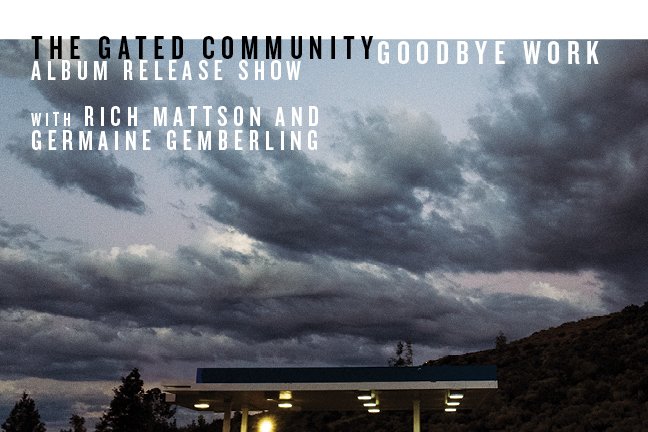
This is a single release of the song “Hand in the Air,” which is the first track on our forthcoming sixth album, Goodbye Work (2025).
This song is an ode to the nerdy child who raises their hand when the teacher asks a question in class. An impressionistic, autobiographical song about the awkward years in junior high.
The picture in the window Lights up from behind The richer is the meadow That we seek but fail to find
chorus: Was it you Was it you Was it you On the landing? (Too demanding?)
Was it you Was it you Was it you With your hand in the air?
The poster isn’t yellow Maybe orange, maybe green When a man starts to bellow One makes sure not to be seen
A chair in the corner To pretend to try to hide A face getting warmer So it turns to the other side ______________________
Rosie Harris: lead vocals Sumanth Gopinath: backing vocals, acoustic guitar, Hammond organ Beth Hartman: backing vocals, egg shaker Cody Johnson: bass guitar Nate Knutson: electric guitars Paul Hatlelid: drums
music by The Gated Community, lyrics by Sumanth Gopinath
Much beloved Minnesota Americana band The Gated Community celebrate the release of their sixth full-length studio album, Goodbye Work! Special guests acclaimed musicians Rich Mattson and Germaine Gemberling (aka “Rich and Germaine”) of Rich Mattson and the Northstars open the night.
The Gated Community is an Americana band with a nearly twenty-year history. Formed in 2006 in Minneapolis’s storied West Bank neighborhood, the band is known for its gripping original songs, beautiful vocal harmonies, and multiple lead singers. Led by South Asian American singer/songwriter Sumanth Gopinath (aka Sonny), the band’s music is eclectic in style, encompassing country, folk, bluegrass, and rock. Born in Chicago and raised in Louisiana, Gopinath relocated to the Twin Cities in 2005, after stints in Texas and Connecticut.
Current members have been in the band for a decade or more. Their lineup includes Sumanth Gopinath (acoustic guitar), Rosie Harris (banjo), Beth Hartman (percussion), Paul Hatlelid (drums), Cody Johnson (bass), and Nate Knutson (electric guitar). Everyone in the band sings lead and plays multiple instruments. They perform in a range of configurations, including as small as a duo or trio.
The Gated Community is thrilled to hold this album release show at The Parkway Theater. After placing in the venue’s first-ever “Battle of the Bluegrass Bands” in 2019, the band later headlined The Parkway that same year. Six years and a global pandemic later, the band returns again to the theater with renewed energy and purpose amid the chaos of the present.
The Holy Bible (1994) was a remarkably coherent and thoughtful, if violent and unreasonable protest against the ‘end of history’ that had been declared a couple of years earlier – theirs was the 1994 of Srebrenica and Rwanda, not of Fukuyama or Anthony Giddens. Musically, while hardly avantgarde, The Holy Bible had a newly acquired postpunk angularity and a disdain for the American marketplace. Subjects were political (‘Revol’, a bizarre song speculating on the sex lives of Soviet leaders), historical (two songs about the Holocaust, hugely ill-advised in theory but surprisingly tactful in practice), or concerned different forms of personal collapse, told in the first-person, as in the staccato, self-undermining assertions of ‘Faster’, or ventriloquised through female narrators, such as the depressive sex worker of ‘Yes’ and the anorexic teenager of the exceptionally disturbing ‘4st 7lb’.
Manic Street Preachers, The Holy Bible (1994)
These songs asserted physical and intellectual self-control to the point of psychosis, as a means of armouring the self against a terrifying and repugnant outside world. The Holy Bible is striking not just for Jones’s and, especially, Edwards’s punishingly moralistic and sometimes surreal lyrics, but for the fact that Bradfield and Moore were able to crowbar them into rock anthems, of a sort. The results can still send shivers up the spine, as when the brutal, unforgiving words of the disgust-filled, misanthropic ‘Of Walking Abortion’, or ‘Archives of Pain’, a Foucault-inverting paean to the guillotine, are bellowed as stadium rock choruses. In these songs Bradfield didn’t sing so much as ‘bark phonemes’, as Tom Ewing put it of the breathtaking ‘Faster’. Bradfield had managed to turn the amusicality of his two lyricists into a virtue, and ‘I am an architect; they call me a butcher’ into my personal favourite first line of a rock single.
It was an incredible performance, bearing no apparent resemblance to what the Manics had originally aimed to do – this wasn’t selling sixteen million copies in any lifetime – but there was no failure, now. The Manics had set out, to quote a Ballard interview sampled midway through the album, to ‘rub the human face in its own vomit, and then force it to look in the mirror’, and that’s what they did. There is still nothing in rock music quite like it, and it was practically impossible to follow.
Aotearoa singer/songwriter Marlon Williams (Kāi Tahu, Ngāi Tai) performs an intimate concert to a small group of fans at the RNZ studio to celebrating 20 years of NZ Live on RNZ National. Marlon performs five tracks and chats to RNZ’s Jesse Mulligan about making his fourth solo album, ‘Te Whare Tīwekaweka’ and the process of songwriting in te reo Māori. […] Tracks as they appear in the session:
Watch Ambika Mod read from Heart Lamp, the #InternationalBooker2025-shortlisted novel written by Banu Mushtaq and translated by Deepa Bhasthi. In twelve stories, Heart Lamp exquisitely captures the everyday lives of women and girls in Muslim communities in southern India. In the titular story, Mehrun, a young mother, despairs at the way her life has unfolded.
Filmación de los históricos conciertos en el Estadio Nacional que marcaron el retorno triunfal de Los Prisioneros después de casi 10 años de separación. Grabado los días 30 de noviembre y 1 de diciembre de 2001.
A recording of birdsong made in the late afternoon of 30 April 2025 at George Washington Park in Pacific Grove, California, by Comrade Koganzon using the Merlin Bird ID app. The following birds can be heard on this recording: Hutton’s vireo, oak titmouse, yellow-rumped warbler, American crow, lesser goldfinch, acorn woodpecker, bushtit, American robin, dark-eyed junco, California towhee, Anna’s hummingbird, chestnut-backed chickadee, house finch, spotted towhee, and song sparrow. ||| TRR
Future History of Earth’s Birds
Amie Whittemore
—after Alexander Lumans and Jennifer Ackerman
Among them, a common language of alarm.
Also, rapture.
Know that when zebra finches felt the first pinch of climate change, they chirped to their offspring, still shelled, to warn, to insist, they hatch smaller and fiercer. Dawn’s chorus is a peace-making operation. The birds with the biggest eyes sing first. Thus light is the first part of song.
Some birds create barriers of pinging notes—golden bells dangling
in the air, alarms and warnings. Does it matter
what kind of birds did this? They’re all dead now.
In bird language, there’s a call for mobbing, a call for fleeing.
To avoid danger, sometimes you must approach it.
In the shell, a bird recognizes its parents’ voices. In love, mates sing duets they invent together. On death, the survivor must learn a new tune.
There are such things as universal truths.
Some kites drop fire onto the earth to scare up dinner. Some kites,
dropping fire, taught humans their first warm meal.
Neither ice nor snow lived long enough to hear the last bird sing—just wind,
which carried those notes as far as it could before they slipped from its palms—
There is a common language of alarm.
Source: poets.org. Originally published in Poem-a-Day on May 11, 2025, by the Academy of American Poets.
Riot police disperse protesters in Baymak, Bashkortostan, on 17 January 2024. Photo: Anya Marchenkova/AFP via Getty Images via Foreign Policy
On Wednesday, a local court in the Orenburg region handed out prison sentences to four participants of peaceful rallies in support of Indigenous activist Fayil Alsynov.
Up to 5,000 people gathered in Bashkortostan’s southeastern Baymak district in January last year to protest the imprisonment of Alsynov, a prominent Indigenous rights and environmental campaigner. The protests were followed by sweeping arrests.
Aydar Yusupov, Ilnaz Makhmutov, Zaki Ilyasov and Vallyam Mutallapov, who will spend from three to four years in a penal colony, are among more than 80 men and women facing criminal prosecution in the “Baymak case,” the largest political trial in Russia’s history.
To mark the first anniversary of the Baymak events, Kremlin-installed authorities in Bashkortostan released a propaganda film “The Anatomy of Bashkir Nationalism. The Baymak Tragedy” produced by state-aligned journalist Timur Valitov.
In her piece for From the Republics, Bashkort social researcher Iliuza Mukhamedianova considers why regional authorities invested in the film and aired it during prime time, as well as how carefully crafted smear campaign against the protesters could impact Bashkortostan’s civil society.
Kremlin-Funded Propaganda Fuels Destabilization in Bashkortostan
By Iliuza Mukhamedianova
25 minutes. That’s how much time the creators of “The Anatomy of Bashkir Nationalism” dedicate to speaking about the local national organization “Bashqort.” This is almost a third of the entire movie.
But why pay such close attention to an organization dismantled back in 2020, long before the protests in Baymak?
Perhaps, that’s the easiest way to construct an image of an almighty enemy.
In the film, “Bashqort” — an organization that aimed to reinstate Bashkortostan’s sovereignty and preserve the Bashkort language and culture — is portrayed as the ultimate evil. The filmmakers place sole responsibility for the Baymak protests on “Bashqort” members, accusing them of “extremism” and collaboration with “foreign enemy states.”
Demonizing an organization that no longer exists helps to absolve Bashkortostan’s authorities of responsibility, legitimizes their actions, and justifies their brutal response to the protests.
The film also glances over the fact that protests in Baymak were not organized by a single group like “Bashqort” or one individual but were instead a grassroots action, an organic reaction to the sentencing of activist Fayil Alsynov.
Neither does the film mention who killed protester Rifat Dautov or who tortured the many Baymak detainees. And that’s truly a shame because these are the questions we, the people of Baymak, would like to have answered.
The Baymak protests would not have gained momentum without extensive media coverage — the authorities understand this well.
Faithful to its avant-garde nature, Noise Cabaret premieres the immersive series Dialogues, based on the philosophical works of Plato, on December 25. Alexander Khudyakov turns ancient Greek philosophy into a lively, witty and provocative dialogue with the audience.
Along with his partner Ivan Wahlberg, Khudyakov, who not only acts in the project but directs it, will guide the audience through the labyrinths of Plato’s thought. What is justice? Where is the line between existence and non-existence? What is the true nature of love? These and many other fundamental philosophical questions will serve as starting points for reflection and debate.
Dialogues is a series of interactive performances in which each viewer is involved in a philosophical discussion consisting of adapted texts by Plato and actorly improvisation, meaning that the way the performance goes depends on the audience’s involvement. Each new performance is a separate chapter dealing with a specific philosophical problem, so you can join the series at any stage. The first episode deals with the concept of justice.
Noise Cabaret plans to invite Petersburg celebrities to enrich the conversation with the audience with their own opinions and views.
Khudyakov shared the idea behind the project.
“We wanted to do a story related to people talking in a bar. But just people talking to each other is not interesting. There has to be a big focus. When I studied Plato, I was interested in several aspects of his philosophy. It would have been wrong to limit ourselves to a single topic. So the idea to make a series arose: take Plato, read him, and discuss the themes he raises in the Socratic dialogues.
“We plan to produce a new episode every two or three months. There’s no pretense here that we’re serious scholars of Plato’s philosophy: it’s more of an excuse to talk to people about difficult topics, to air the Dialogues and reflect on them. And a bar is a place where you can talk about all sorts of things, including philosophy.”
Russians spent almost 6 billion rubles on Ozempic generics in 2024
Semaglutide-based drugs are commonly used for weight loss
In the first ten months of 2024, Russians spent 5.9 billion rubles [approx. 52 billion euros] on over one million packs of generic versions of the drug Ozempic (semaglutide), according to DSM Group, as reported by Vedomosti.
Among the most popular generics are Geropharm’s Semavic and Promomed’s Quincenta. The original drug Ozempic stopped [sic] official supplies to Russia in December 2023, opening the market to domestic analogues.
2024 was a record year for drugs in this category. By comparison, in 2023, Russians spent only 297 million rubles on Ozempic, buying 20 thousand packs. In 2022, they spent 1.9 billion rubles (256 thousand packs); in 2021, 758 million rubles; and in 2020, 76 million rubles.
Semaglutide-based drugs are used to treat diabetes but have recently been gaining popularity as weight loss drugs, which has also contributed to their sales growth in Russia.
St. Petersburg will open a new metro station this week, Governor Alexander Beglov announced Thursday, marking the former Tsarist capital’s first new metro station in five years.
The Gorny Institute metro station, located on Vasilievsky Island, will extend the fourth (or “orange”) line westward. It will begin operations at 9:00 a.m. on Friday, with its vestibule open for both entry and exit, Beglov said.
“The opening of Gorny Institute is a milestone,” the governor wrote on Telegram, noting that the city had overcome “significant challenges” during the station’s construction.
Beglov thanked President Vladimir Putin, metro builders, engineers and residents of St. Petersburg for their patience and support, calling the station’s completion the “first results” of sustained efforts to advance the city’s metro system.
The station’s opening comes after years of delays. Initially scheduled for completion in 2015, its opening was postponed to 2018 and later to 2022. Construction efforts were further overshadowed by a fatal scaffolding collapse in June 2020 that killed one worker and injured another.
Gorny Institute is the first station to open since 2019, when three others — Prospect Slavy, Dunayskaya, and Shushary — were inaugurated.
St. Petersburg’s metro is currently made up of five lines and 72 stations. However, it has expanded slowly over the years, in stark contrast to Moscow’s burgeoning metro system, which this year opened eight new stations.
In trying to grasp the tonality of the film [Anora], I am reminded of a line from Francis Bacon: “You can be optimistic and totally without hope.” The situation the characters find themselves in, being at the mercy of the rich, is totally without hope. The “hopeful” version of the script would be one in which Vanya does stand up to his parents and runs off with Ani, even at the price of losing his wealth—this is the film’s narrative lure. Or maybe another where the ruthless capitalist mother gains a grudging respect for her tough daughter-in-law, like in the last season of Fargo. But despite its grim closure, the impression the film gives is far from dreary or pessimistic. The hopeless optimism of Baker’s cinema lies in the sheer life that seems to almost burst out of the filmic frame, and, especially, his deep care for his characters, even Vanya.
In the fall of 2023, with the goal of understanding what is really happening with Russian society during wartime, the Public Sociology Laboratory team went on ethnographic research trips to three Russian regions—Sverdlovsk, Krasnodar and Buryatia. Over the course of a month, PS Lab researchers observed how people talk about the war and how it affects daily life in cities and villages. In addition, they recorded sociological interviews with local residents. PS Lab has compiled three detailed ethnographic observation diaries (more than 100,000 words apiece) and conducted 75 in-depth interviews. Overall, it has managed to collect truly unique data that provides an idea of what people say and think about the war in everyday situations, and not only when answering researchers’ questions.
The full text of the report is book-length and written in a book-style format: it consists of seven chapters, introduces many characters, and allows readers to be fully immersed in contemporary wartime Russia. The following summary, meanwhile, highlights the main analytical conclusions.
Russian society remains politically demobilized and deideologized. Despite the prevailing opinion that it is strictly militarized, we see that the war has become routine and therefore a disregarded part of reality. For example, compared to the first years of the war, the amount of prowar symbolism in public spaces has decreased in all three regions. The war has neither become a source of new ideas in the cultural life of cities or villages nor been integrated into familiar and already-established cultural formats. The war is not discussed in public places, including, with rare exceptions, local online communities.
In spontaneous conversations, Russians rarely discuss the overall goals and causes, criminality, or justifications of the war. They are concerned with the impact of the war on their everyday lives. When they talk about the war, they mostly talk about the same things they discussed before the war, for example, everyday difficulties, money, or ethics. Men more often discuss topics that are considered “masculine” in society, such as the technical side of the war, and women usually talk about “feminine” topics, such as how war destroys families.
Participation in various types of prowar volunteering and organized assistance for the military, which are often cited as an example of the mobilization and militarization of Russian society, is rarely motivated by people’s firm support for the “special operation.” It is usually associated with pressure from the administration, community moral norms (concerning mutual assistance), and/ora desire to help loved ones, rather than a wish to make victory for Russia more likely. Observation of volunteers’ activities show that while working, they do not discuss the war or politics, rather choosing topics that are personable and relatable to them: prices, pensions, families, and/or stories related to the volunteer centers.
Despite all these similarities, the war is perceived slightly differently in different regions. The peculiarities of each region’s view owe to factors like the number of military units and penal colonies from which prisoners are recruited, proximity to the combat zone, the prosperity of the region and the availability of decent jobs, the density of social ties, the circulation of news transmitted by friends on the front lines, etc. In other words, the differences in perceptions of the war are attributable mainly to the peculiarities of life in the regions before the invasion of Ukraine.
The conflict between opponents and supporters of the war is gradually subsiding, while the rift between those who stayed in Russia and those who left is growing. This is happening both because the shared experience of living through a difficult situation within the country is becoming more important for many Russians than any differences in viewpoint, and also because people are discussing the war less.
At the same time, the waning conflict between opponents and supporters of the war does not always mean more social cohesion. Since people are trying to live as if the war is nonexistent and the government does not talk about any losses or problems associated with the war, all negative consequences of the war are either normalized or pushed into the realm of “personal problems” that are not discussed with anyone and that everyone must deal with on their own.
Overall, many people do not feel able to influence political decisions. Therefore, they are increasingly distancing themselves from the war. They understand that they cannot change government policy, but they retain at least some control over their private lives—and therefore they are immersed in them. Over time, not only apolitical Russians but even sure opponents of the invasion experience this powerlessness and, as a result, some of them accept the new reality while continuing to condemn the war internally.
Consequently, many Russians are increasingly distrustful of political news from a broad range of sources. Instead, they put their trust in local media. Local problems and news seem much more important and relevant to them. Moreover, they feel that, unlike the war, local issues are at least sometimes within their ability to influence.
At the same time, the war is weighing people’s emotional state. Many of our interlocutors admit that they experience anxiety, tension, uncertainty, fear, even if these things are not usually spoken about openly. The departure of sons and husbands to war makes women “scream at the top of their lungs.” However, people rarely share such emotions with others, and if they do, they do so in groups with close friends.
Many Russians who are not interested in politics may justify or condemn the war depending on the communicative context.
They tend to non-emotionally justify the war through normalization (“there are always wars”) or rationalization (“it was necessary”) when asked about it directly in more formalized settings, such as research interviews.
They are more likely to criticize the war when prompted to think about how it negatively affects them as ordinary Russians. This criticism differs from that of war opponents. For opponents, the war is a moral crime against Ukraine, whereas for apolitical Russians, the war is seen as something that destroys Russian society and harms ordinary people. However, this criticism does not lead apolitical Russians to question the war’s necessity or inevitability, nor does it extend to criticizing the Russian government.
They tend to emotionally justify the war when confronted with traditional anti-war narratives. When Russia is accused of committing moral crimes against the Ukrainian people, they often take such accusations personally and attempt to defend their own dignity.
Some people have experienced a strengthened sense of national identity, and sometimes a demand for greater solidarity arises. It’s important to note that this increased sense of national identity does not lead Russians to adopt the official imperial brand of nationalism. Unlike the Kremlin, ordinary people live in a world of nation states, not in a world of imperial fantasies (according to which Ukraine is not a real state and Ukrainians are an inferior people).
A feeling of uncertainty is what truly unites Russians today. Despite the fact that people choose various strategies to cope with this feeling, it still significantly complicates the ability to plan one’s life and plunges Russians into pessimism.
Thus, on the one hand, the formerly extraordinary nature of the war is giving way to normalization: the war is gradually becoming something ordinary, another unremarkable part of the surrounding world. In a sense, many Russians resist both the Kremlin’s attempts to turn ordinary citizens into ideological supporters and the attempts of the anti-war liberal opposition to force society to actively experience guilt and fight. On the other hand, the war constantly reminds us of its existence, creating new threats, new anxieties, and new reasons for discontent in Russians.
Dear readers! Times are tough, and the key in this case is holding on in every sense. No one says it’s easy. But it’s not so hard either. The other day I asked Vladimir Putin whether he expected anything more from himself in the outgoing year. But I want to ask you: do you expect anything more from yourself in the coming year? We need to expect things. We need to want things. It’s a way of holding on to ourselves. Of looking after ourselves. Of not losing ourselves. And even of finding ourselves. A hard sign (“Ъ”) will never be a soft sign (“Ь”)! Happy incoming New Year! Let’s not be on the defensive!
Andrei Kolesnikov, Special Correspondent, Kommersant Publishing House
Source: Email from Kommersant, 31 December 2024. Translated by the Russian Reader. The so-called hard sign, which the Bolsheviks dropped from the Russian Cyrillic alphabet in 1918, has been the logo of Kommersant since the newspaper’s relaunch in January 1990. Andrei Kolesnikov has been the newspaper’s special Kremlin correspondent — that is, its chief Putinversteher — for many years. Of course he’ll deny it all when push comes to shove and Putin goes, and he’ll point of course to the cynical, jocular (but ultimately loyal) way he’s written about the Russian dictator and war criminal all these years.
I’d like to say I was first drawn to Russia by a fascination with late Soviet politics under Gorbachev, or the great works of Russian literature. But for me the initial interest was the language itself, as taught by an eccentric but effective teacher called Mr Criddle. Short and bearded, even a little gnome-like, he usually dressed in sandals and socks and ran his classes at Worcester Sixth Form College with old-fashioned discipline. Before we started the course, he had handed out copies of the thirty-three character Cyrillic script at our college open day with instructions to learn it or not bother turning up for class.
Mr Criddle had learned his own Russian in the mid-sixties at the Liverpool College of Commerce, taught by a graduate of a Cold War creation known as the Joint Services School for Linguists (JSSL). The JSSL had taken around 5,000 conscripted men from military boot camps in the 1950s and produced a whole generation of Russianists. The kadety, as the students called themselves, were trained to be high-level interpreters, ready to interrogate Soviet prisoners, decipher classified documents and run counter-propaganda operations should the USSR ever invade. As it never did, many ended up teaching the language in UK universities and schools.
The JSSL method was fast, deep and tough, with heavy emphasis on repetition and rote-learning. Its students had a skukometer, a made-up word from the Russian for boredom, to measure how brain-numbing a class was, and I would come to know how they felt. Mr Criddle had picked up the JSSL military style from his own teacher. Ignoring any official syllabus, he had a giant library of homemade flash cards which he used to drill us relentlessly. He’d cut all the images out of magazines and glued them to one side of the cards, writing the correct adjective endings or verb declensions on the back. He kept them in recycled envelopes at the back of the room. It was the exact opposite of how I’d learned French and German, where we chose a ‘foreign’ name and then role-played trips to the bakery or camp-site shop. For Russian, Mr Criddle had us create our own carefully indexed grammar books and then he dictated every page. It was a whole year before we learned anything practical like how to introduce ourselves perhaps partly because no one was planning a summer holiday in the Soviet Union, but we could soon form the genitive plural in our sleep.
Source: Sarah Rainsford, Goodbye to Russia (2024)
The Booker Prize: “Nonso Anozie reads from ‘James’”
Watch Nonso Anozie read from Booker Prize 2024-shortlisted James, written by Percival Everett.
The story so far: It’s 1861 and Jim, a slave and soon-to-be companion of Huckleberry Finn on a dangerous journey along the Mississippi River, is a man driven by a fierce instinct to survive and to protect his family. This includes teaching his own and other children the behavioural and language skills needed to avoid antagonising the white people who have made their lives hell.
All traces of Ukraine are being expunged. Schools have switched to the Russian curriculum, and Russian youth and paramilitary organisations work in the territories. Repression combined with Russification aims to transform the social and political fabric of the territories, says Nikolay Petrov, the author of a new report for the German Institute for International and Security Affairs.
“I dreamed that I was talking in my dream and to be safe was speaking Russian. (I don’t speak any Russian, and also I never talk in my sleep.) I was speaking Russian so that I wouldn’t understand myself and no one else would understand me either.”
Alexander Ivanov, “Gennady Shpalikov: Being Restless” (in Russian, with no subtitles)
Gennady Shpalikov and Guy Debord were nearly the same age, and their popularity peaked at the same time. But is this the only thing that unites the French philosopher and the Russian writer? Alexander Ivanov, founder of the publishing house Ad Marginem, will show that these two figures were connected not only by the time in which they worked but also by the very spirit of the time, which they saw, felt and were able to convey to others.
Debord’s adage “Love is possible only on the eve of a revolution” could well have been endorsed by Shpalikov.
Debord was the founder of Situationism.
An amazing poet, screenwriter, and director, Shpalikov was the Soviet Guy Debord. Like Debord, Shpalikov had an explicitly spatial mind: he understood space not as a receptacle for bodies but as a way of assembling the soul in the gaps, intervals, and flashes of aimless, unprogrammed, slippery movements around the urban environment. Debord called this mode of movement détournement — a deviation, an illegitimate, reverse appropriation in which the spaces and cultural signs captured by other people’s meanings are reappropriated by turning them inside out semantically or simple shifting their meaning. This was exactly how Shpalikov dealt with the anonymous, official space of the Soviet city: by romanticizing its most banal corners and nooks. Both of these artists conjured the mood of an entire epoch in the late 50s and early 60s.
November 1 is the fiftieth anniversary of the death of Gennady Shpalikov, the screenwriter, filmmaker, and poet, one of the symbols of the Thaw era, an extremely popular writer and yet one whose work has been poorly read. Igor Gulin explains how Shpalikov looked for an answer to the question of where good people end up, and how the drama of his characters reprised his own.
Gennady Shpalikov on the set of the film I Am Twenty. Photo: Gorky Film Studio
Screenwriting was an honorable profession in the Soviet Union. Screenwriters were not considered to be craftsmen consigned to the sidelines, but serious writers, and so the screenwriter’s name was listed first in the credits, before the director’s. Nevertheless, not even the best of them were stars. Gennady Shpalikov was an exception. From his very first efforts in cinema, his name was a symbol of the new art of the Thaw — first among his fellow filmmakers, then for a relatively wide swath of the intelligentsia. His death in 1974 was a token of the sixties generation’s demise.
The cinematic Thaw was already in full swing by the time Shpalikov joined the profession. Marlen Khutsiev and Felix Mironer’s Spring on Zarechnaya Street(1956), Mikhail Schweitzer’s The Tight Knot (1957), Mikhail Kalatozov’s The Cranes Are Flying (1957), and Grigory Chukhrai’s The Ballad of a Soldier(1959) had been released, but these beautiful pictures still lacked something that would instill a sense of decisive reform and renewal. Shpalikov carried out a tiny revolution in Soviet cinema — not alone, of course, but he was its leader. He contributed an open sense of form, showing that a movie could be something other than an itinerary from point A to point B. It could be a stroll, a stroll with no clear goals, from one impression to another, from one funny and touching incident to another.
Almost all of Shpalikov’s scripts from the 1960s are just such cinematic walkabouts: A Streetcar to Other Cities (1962), directed by his friend Yuli Fait (1962); The Star on the Buckle (1962) and I’m from Childhood (1966), written for Viktor Turov; I Walk Around Moscow (1963) directed by Georgiy Daneliya; The Wharf and Summer Holiday, which were never made into films; A Long Happy Life (1966), of course; and Ilyich’s Gate (1962–1964) to a great extent. This film was more complicated, however. Khutsiev’s lofty idealism counterbalanced Shpalikov’s nimble gifts, and it was their confrontation and, at times, conflict that gave birth to a masterpiece. This later worked with Larisa Shepitko, when she and Shpalikov agonizingly co-wrote You and I (1971). To produce something truly significant, Shpalikov needed a co-writer-slash-director — a collaborator and an opponent, not a faithful executor of his ideas.
The stroll was the genre not only of Shpalikov’s creative work but also of his life. He existed in the same way, charming everyone he met, traipsing from one crowd to another, from one idea to another. He wrote the same way: on telegram blanks and napkins, not bothering with punctuation and spelling, and often not worrying whether the text was coherent, paying mind to its intonation and pacing, rather than to the idea and the logic of form. His scripts and songs, poems and prose experiments often seem sloppy to a sober eye. But their sloppiness never irritates: it comes across as organic, as a hallmark of authenticity.
Dozens of memoirs have been written about Shpalikov. Their authors constantly wonder aloud how it happened that this carefree, lively man took to drinking heavily and eventually committed suicide. They often blame the era. There is some truth to this, but it is a little different than is commonly thought. The Stagnation was not only a time of disillusionment after the upswing of the Thaw. It was also a time of complication. The members of the Sixties generation who continued to create and grow learned to resist better. It required them to mobilize their inner strength, making them more reflective and deeper. Shpalikov was a genius of splendid superficiality, of drifting and gliding. He understood this perfectly well. The drama of his art kicked off long before the frosts of the Brezhnev era set in.
The same disturbing intuition — sometimes well concealed, sometimes voiced as directly as possible — was evident in everything Shpalikov wrote. Surprisingly, this anxiety was hardly detected by his contemporaries, who remained under the hypnosis of the myth they had created themselves. It concerns the central figure of Shpalikov’s entire oeuvre. What to do with the fact that the “good man,” about whom he always wrote, so easily goes to the bad? What to do with the fact that charming frivolity quickly turns into grim irresponsibility, moral freedom into immorality, the freewheeling life of the tumbleweed into pathetic escapism, and nonstop wittiness into nauseating clownishness? Committed to the utmost sincerity, Shpalikov had an absolute ear for falsity and from the very beginning heard the rudiments of falsity in himself. Perhaps that is why he seemed doomed (and suicidal notes appear in his texts very early on). Drunkenness, however, made it easier for him to accept his fate.
This intuition is almost nonexistent in Ilyich’s Gate, in which the romantics and the bastards are delineated from each other. But it is already present (for the time being, as a quite vague hint) in I Walk Around Moscow (the young Nikita Mikhalkov’s ambiguous charisma works perfectly in this regard). It is also palpable in TheWharf, Shpalikov’s first major feature. (Its director, Vladimir Kitaysky, committed suicide while working on the picture, and the movie was never completed.) The script of The Wharf is an enchanting, airy text centered on a rather savage deed. Coming to Moscow for a single evening, the main character, a barge captain, decides to kidnap his son from his mother, wanders around nighttime Moscow with the boy for a long while, and when he falls asleep on a bench, simply runs away to his barge. A good guy’s transformation into a scoundrel is amped up to wholly Dostoevskyean cruelty in Summer Holiday and A Charming Man’s Day (another script that was never produced). This trajectory devolves into total despair in You and I, in which a Thawnik’s romantic flight to the Far North is played out as an egoistic escape from his own worthless life, frittered-away talent, ruined romance, and lost friendship.
Shpalikov never judges his characters: their meannesses and downfalls just happen. There is no reflection at all in his art. There is only movement, and this movement has its own laws. At the beginning of the trajectory there is a good, harmonious man, but once chosen, the freewheeling life gradually whittles him down to the ugly figure of a cynic, a vulgarian, a scoundrel. Shpalikov has a very frank poem about this:
Аh the streets, the only refuge Not for the homeless, but for those who live in the city. The streets pester and haunt me, They are my comrades and my adversaries.
I don’t feel as if I am walking them, I obey them, I move my feet, And the streets guide me, they lead me Through a sequence set once upon a time,
A sequence of cherished back alleys, A sequence of jaunty notions and good intentions.
The same thing happens in Shpalikov’s only directorial work. A Long Happy Life is usually remembered as a light, lyrical picture, but actually it is chockablock with contempt for oneself and one’s kind. It is a movie about how a typical man of the 1960s, a charming unshaven geologist, runs off into nowhere and away from a beautiful woman, and at the same time from any future, from that selfsame long happy life, simply because he cannot help but run. A lighter note is generated by the finale: the famous five-minute scene of a barge on a river is Shpalikov’s homage to Jean Vigo’s L’Atalante, his favorite film.
This is Shpalikov’s main gimmick. As intoxication relieves a hangover, so the shame of escape is relieved by yet another escape. And if the body can no longer escape, there remain flights of fantasy. Distracted from the protagonist’s mediocre fate, the gaze follows the barge and loses itself in this marvelous tracking shot. All of Shpalikov’s best poems are about the same thing: not about the joy of life, but about the desire to escape from it to a place that is obviously impossible, somewhere “where mother is young and father is alive.” To leave, but not by sinking into drunkenness, illness, and rows, but to disappear gently, to be weathered away from the world. “My head is vacant, / Like a deserted place. / I’m flying off somewhere, / Like a tree from a leaf.”
Richard Viktorov, Per Aspera Ad Astra (1981). In Russian, with English subtitles.
Per Aspera Ad Astra/Through the Thorns to the Stars (1981), a new version, in Russian with English subtitles.
Soviet film directed by Richard Viktorov, based on a novel [sic] by Kir Bulychev. Music by Alexey Rybnikov (original score); Sergei Skripka (conductor).
Yelena Metyolkina as Neeya • Uldis Lieldidz as Cadet Stepan Lebedev • Vadim Ledogorov as Sergei Lebedev • Yelena Fadeyeva as Maria Pavlovna • Vatslav Dvorzhetsky as Petr Petrovich • Nadezhda Semyontsova as Professor Nadezhda Ivanova • Aleksandr Lazarev as Professor Klimov • Aleksandr Mikhajlov as Captain Dreier • Boris Shcherbakov as Navigator Kolotun • Igor Ledogorov as Ambassador Rakan • Igor Yasulovich as Torki • Gleb Strizhenov as Glan • Vladimir Fyodorov as Turanchoks • Yevgeni Karelskikh
The lone survivor of a derelict spaceship is brought to Earth to recuperate and regain her lost memories. Given the name Neeya, a series of events triggers her telekinetic powers and a number of flashbacks reveal her origins on the planet Dessa. A human spaceship returns her to Dessa. The planet is found to be in ecological ruin and run by a businessman who intends to keep it that way. The crew of the ship, aided by their robot and Neeya’s powers, defeat a monster unleashed against them. They repair the planet’s ecosystem and Neeya remains to help rebuild Dessa while the crew returns to Earth.
Igor Mozheiko was born ninety years ago in Moscow. Mozheiko was a failed spy, a narrowly focused academic and extraordinarily wide-ranging popularizer and encyclopedist, a passionate collector, a skillful translator, and a great writer. As an author, Mozheiko was renowned under the pseudonym Kir Bulychev, but far from all his accomplishments are well known.
Soviet science fiction writer Kir Bulychev (aka Igor Mozheiko) Photo: Ogonyok magazine photo archive/Kommersant
The Darling
The popular take on the happy Soviet era is founded, as we know, on the realities of the final Five-Year Plans. The cultural component of these notions consists almost entirely of cinematic images and lines from movies. The enormous eyes of Natalya Guseva and Yelena Metyolkina, the ominous Turanchoks, the catchphrases “I have the mielophone” and “He will turn speckled purple,” jokes about the android Werther and, of course, the song “The Beautiful Afar” stole the hearts of thousands of Young Pioneers.
Thanks to clever mental gymnastics, for many of these erstwhile Young Pioneers the beautiful afar speaks not from the future, which they would have had to make happen, but from the past, when Young Pioneer ties were redder, ice cream tasted better, and friendship was stronger.
The key creator of this beautiful afar was Kir Bulychev, the screenwriter and author of the literary works on which these movies, TV series and cartoons were based.
It is impossible to argue with this, as well as with the fact that this reputation would amuse, if not offend, Bulychev. He explained the popular love for science fiction by the fact that “any alternative reality was hostile to communist reality,” and in the Theater of Shadows series he turned the concept of yesterday into a dusty boring hell in which scoundrels perpetrate madness.
The cinema noticed Bulychev late, and at first not as a writer, but as an imposing extra. His beard and his friendship with novice actors got the young Orientalist a role in the film Hockey Players (1964) as a silent sculptor who beautifully shares the screen with a portrait of Ernest Hemingway. The first screen adaptation of his work — based on the story “The Ability to Throw a Ball” — happened twelve years later in Alma-Ata, and after that his cinematic career was up and running.
Writer Kir Bulychev, aka scholar Igor Mozheiko, in the film Birthmark, based on a story from his collection Aliens in Guslyar: Photo: Mosfilm
Bulychev’s stories were adapted by both novice filmmakers and the country’s leading directors. A vivid example in all senses is Georgiy Daneliya’s Tears Were Falling (1982). Bulychev’s plots were the basis for comedies (Chance, 1984), action films (The Witches Cave, 1989) and slapstick tragedy (The Comet, 1983). Some of the stories have been adapted more than once. For example, “The Ability to Throw a Ball” was reshot for Central Television twelve years after the first adaptation, and another twelve years later in Poland. The story “Abduction of the Wizard” was made into a two-part television play in Leningrad in 1981, and into a feature film in Sverdlovsk in 1989. It is superfluous to remind readers of the fresh remake of Guest from the Future into the science fiction film One Hundred Years Ahead(which diverges almost entirely from its source), but it does make sense to note that this year the television series Obviously Incredible, based on the Veliky Guslyar series, was released.
There are a lot of questions raised by the 1989 film adaptation of The Witches Cave, but they definitely don’t involve the plot and the cast. Photo: Gorky Film Studio
In his memoirs, which Bulychev wrote in 1999, four years before his death, he said, “I did not make a noticeable mark on the cinema.” Since then, the number of films, cartoons, and TV series based on his texts has increased by a dozen. Now approaching fifty, this number will clearly continue to grow.
Sanctuary
The adventures of Alisa Seleznyova, as played by Natalya Guseva, deprived Soviet schoolchildren of sleep, but they were seemingly the least worried about the mielophone. Photo: Gorky Film Studio
Kir Bulychev became the number one Soviet science fiction writer in the early 1980s. He was awarded two State Prizes at once — for his screenplays for The Mystery of the Third Planet and Per Aspera Ad Astra, thus revealing at last the real man behind the pseudonym. Previously, few people had known that the mega-popular books were written by an Orientalist specializing in Burmese history.
He proved to be one of the few science fiction writers whom editors were not ashamed to publish and who were safe to publish. This was a massive virtue in an era in which the people in charge were guided by the slogan “Fiction is either anti-Soviet or crap” (said to Boris Strugatsky by a Leningrad filmmaker) or “I divide socially engaged science fiction into two kinds: the first I send to the trash bin, the second to the KGB” (related to Mozheiko by an editor at Molodaya Gvardiya, the only dedicated publishers of new Russian science fiction at the time.)
The film A Guest from the Future was window into another world for many Soviet children. Photo: Gorky Film Studio
In the early 1980s, the Soviet Union was going through the so-called gun carriage races (a series of funerals for the country’s rapidly expiring leaders) and the unnamed Afghan war, and butter and meat rationing cards were introduced in some regions at the request of workers. Meanwhile, schoolchildren were being readied for nuclear war by taking them out of classes for practice runs to bomb shelters, which in most cases were nonexistent. And the cries of punks (who, according to Soviet propaganda, were exemplars of decadent petty-bourgeois ideology, and sometimes even neo-Nazis), “No future for me,” resounding from the other side of the Iron Curtain, resonated painfully in immature hearts, and they did not presage confidence in the future.
The Olympics proved a poor substitute for the communism promised by 1980. The Food Programme, scheduled to run until 1990, was little inspiration, and the world’s most advanced ideology could not offer any more attractive image of the future. But Kir Bulychev could and did.
The animator partly modeled the characters in Mystery of the Third Planet on her own relatives. Image: Soyuzmultfilm
He brought Alisa Seleznyova into every home and the dreams of man. Even more importantly, he became a major source of intellectual entertainment, a kind conversationalist and a sensitive shepherd for a vast army of Soviet teenagers. Bulychev’s stories and novels were printed in most children’s newspapers and magazines, which were widely available, unlike the books (especially those with illustrations by Yevgeny Migunov), and anyone could try his or her hand as a co-author. Mozheiko agreed to publish two of his novels in Pionerskaya Pravda in an interactive mode: the author took into account the suggestions and wishes sent by Young Pioneers by mail in each new installment.
Neither children, their parents, nor any normal person could resist the world described vividly and painstakingly in his books: a prosperous, bright and fascinating world with no ideology at all, a world in which a girl can fly not only to the Medusa system, but also abroad, dress beautifully and easily break century-old Olympic records, descend to the seabed in the arms of dolphins, fight with pirates, make friends with Baba Yaga, sit down for a chat with her teacher, know all languages and basically everything in the world, while being friends with whomever she wants. She is A Girl Nothing Can Happen To.
It was a world of private interests and emphatically personal growth rather than a collective existence based on the principle that the majority were always right. It was a world of tenderhearted people, where only pirates were evil and only robots were stupid.
It was a world in which one would like to live, like the Noon Universe of the Strugatskys, only tailored to younger and middle-aged children. “Let’s give the globe to children,” sang Sofia Rotaru, and nobody believed it, but what if we could do it? Everything was free, everything was cool, you didn’t have to die at all, and there were vending machines on the streets dispensing free ice cream and soda of all sorts. And there was no communism, capitalism and other historical materialisms, no Young Pioneers, Komsomol members, Communards and Soviet power, no giant monuments to Lenin looming over Sverdlovsk, as in the early Strugatsky novels. On the contrary, the Stalinist monument to Gogol on the eponymous boulevard was replaced by a pre-revolutionary one, and the boulevard itself was turned into a jungle complete with cypresses, bananas and monkeys.
Actress Elena Metyolkina (seated) starred in the film Per Aspera Ad Astra, based on a script by Kir Bulychev, and then appeared as Polina in Guest from the Future. Photo: RIA Novosti
Such an approach was tantamount to an “Attack!” command for conservative editors and their curators in the security services. But it was Molodaya Gvardiya whose internal reviewers noted that “We know what the author is hinting at when he writes that dark clouds were creeping over Red Square” and also pointed out that the author’s secret goal in “Cinderella’s White Dress” was to discredit Soviet cosmonauts. This review, according to Mozheiko, had been written by Alexander Kazantsev, a veteran Soviet science fiction writer and the prototype of Professor Vybegallo in the Strugatskys’ novel Monday Begins on Saturday. The requirements of the publishing house Detskaya Literatura (Children’s Literature) were milder, and the censorship’s scrutiny of it, more lax.
As a matter of fact, a well-fed future in which carefree children bounce between planets had long been a commonplace in Soviet science fiction, but the world was quite sterilely fantastic, the characters were cartoonish, and the action was forced in the works of Vitaly Gubarev, Vitaly Melentyev and Anatoly Moshkovsky.
As painted by Bulychev-Mozheiko, Alisa’s world is natural and authentic.
The girl with with the Carrollesque name made Wonderland beautiful and desirable.
Few people paid attention to the fact that in the original version of the song about the beautiful afar, as heard in Guest from the Future, the voice summons viewers not to “marvelous lands” (as in all subsequent reprints and collections of lyrics), but “to non-paradisal lands.”
In any case, the voice asks strictly.
An Aerial View of the Battle
Science fiction writer Kir Bulychev published serious historical books under his real name. Image: Molodaya Gvardiya
According to a popular legend, Kir Bulychev was born by accident. In 1967, the censors removed a translated story from the upcoming issue of the almanac Iskatel (Seeker), which already had a cover featuring a dinosaur in a glass jar. Replacing the cover would cost a hell of a lot of money and threatened the editors with the loss of their bonuses, so the young feature writer Mozheiko overnight came up with a sci-fi story on the given theme, which he signed with a pseudonym inspired by his wife’s name and his mother’s surname, in keeping with the habit of academics of not blowing their cover in in non-academic outings. The editors kept their bonuses, and world literature gained a new author.
The legend, of course, is false. By 1967, Mozheiko had already published four books, including a very popular one about the Burmese revolutionary Aung San, in The Lives of Remarkable People series. He has also published a couple of science fiction stories under the pseudonym Maung Sein Ji, passing them off as translations from the Burmese. Most importantly, he had published several stories about Alisa under the pseudonym Kirill Bulychev.
As a translator he had debuted a decade earlier, when he published a story by Arthur C. Clarke, which he translated with his childhood friend and future academic colleague Leonid Sedov. Initially, the pals had offered the publisher their translation of an unknown book about a girl who fell down a rabbit hole into a magical land. The young men had no clue about the book’s cult status beyond their one-sixth of the world nor about the existence of at least four previously published Russian translations. But at least one of the failed translators obviously remembered the heroine’s name.
In any case, Bulychev — initially, Kirill or “Kir.”, then just Kir — was born an experienced author with a steady hand, a broad outlook, a constructive mindset and a quite recognizable style. It was a style capacious and not simple even, but simplified at times, almost, to the point of outright silliness. But only almost.
The life of Soviet individuals was subject to a set of unwritten rules that changed markedly from department to department and from decade to decade. Mozheiko learnt them early —because there was no other way.
He was born into the family of a prosecutor from the Middle Volga region and the commandant of the Shlisselburg Fortress. However, by that time the fortress had been turned into a chemical warehouse. His mother had gone into the reserves before her maternity leave, and came to work as a rank-and-file staffer at a chemistry institute. His father soon took the post of Chief Arbitrator of the USSR (a position similar to the chair of the Supreme Arbitration Court), but by that time he had already left the family. Igor’s stepfather, who had fought through the entire conflict, was killed on the last day of the Second World War. Igor and his sister and mother survived bombings, evacuation, a return to Moscow and starvation.
He learnt to read late, fell in love with science fiction early and started writing it, went to a “special faculty for future intelligence officers,” which “was modestly called the translation department of the Institute for Foreign Languages,” and twice dodged KGB drafts (after graduation and as a correspondent for the APN news agency in Burma) and escaped into academia, which he combined with popular science journalism from the very beginning.
As a translator he worked on Zarubezhstroy construction projects in Burma, Ghana and Iraq. As a correspondent for the magazine Vokrug Sveta (Around the World) he journeyed to the most exotic fringes of the Soviet Union, and as a simultaneous interpreter he traveled in Europe and the USA. “Asimov greeted me with a handshake, Harlan Ellison chatted with me, I heard [Clifford] Simak speak, I argued (I was so brazen) with Frederik Pohl, I appeared on the radio with Lester del Rey, and I palled around with James Gunn, but most importantly I spent a whole day drinking with Gordon Dickson and Ben Bova, not to mention his gloriously beautiful wife, Barbara Benson,” recalled Mozheiko. This, of course, was not only unimaginable for most venerable Soviet writers, but also for the so-called Gertrudes — the Heroes of Socialist Labor [Geroi truda] who led the Writers’ Unions for decades.
Mozheiko himself never joined either the Writers’ Union or the Communist Party, flatly refusing the most persistent invitations. The explanation “I consider myself unworthy” did the trick, but just barely. When it didn’t work, Mozheiko changed jobs.
This, by the way, enabled him to keep his beard, since the recruiters from state security, or high-ranking guests like cosmonaut Valentina Tereshkova insistently advised him to shave it off. (“As a correspondent for APN, I photographed cosmonauts for our newspaper. Valentina Tereshkova sent back one of the photos I had given to her with the following autograph: ‘Your wife should make you shave off your beard. After all, a person’s dignity is determined by their character, not by their personality.’ Our guest believed that personality was the nose and the ears.”)
Mozheiko was no longer allowed to travel abroad after 1970, but at least he did not go to jail with several of his acquaintances, passionate collectors like him who were handed lengthy prison sentences in the so-called Case of the Numismatists. (Dozens of lines in the indictment amounted to nothing more than “Defendant No. X criminally exchanged one coin for another.”)
And he continued to write.
The Academicians’ Reserve
The talking tiger in Two Tickets to India, a cartoon based on Kir Bulychev’s screenplay, has an unearthly charm. Image: Vitaly Karpov/RIA Novosti
Mozheiko’s reputation as a supremely tenderhearted storyteller was reinforced by his appearance and his work for Detskaya Literatura, but he was actually quite a tough-minded author. Bulychev’s first novel, The Last War, deals with the aftermath of a nuclear armageddon: even if it was set on another planet, such topics were not encouraged in Soviet literature. A couple of years earlier, a scene depicting a tactical nuclear strike was thrown out of the magazine version ofInhabited Island, by the Strugatskys, and the book edition was put on hold for two years. The release of The Last War in the same series (The Library of Adventure and Science Fiction) seemed to pop the cork, so Inhabited Island was also published, but both books waited twenty years to be reprinted in the capital.
A considerable portion of “Abduction of the Wizard” is given over to a quasi-documentary account of brilliant children killed in childhood by Nazis, pogromists and torpid relatives. In the prologue to the story “A Pet,” the touching rendezvous of a young couple ends with the words, “They were incinerated.” And the protagonist of the later story “A Plague on Your Field!”, whose son has died of an overdose, dooms a outsized segment of humanity to starvation in order to take revenge on the drugs mafia.
Bulychev was also quite decisive in interviews and in correspondence with dissatisfied readers: “I beg you: stop reading me. Spare your nerves.” He spared himself even less, however, and he repeatedly explained this in his final years. “I had no willpower, no courage, no determination to oppose the authorities. Yes, I was duplicitous. I wrote certain things for myself, for my friends. I’m not a battler by nature. Since I lived in our country, I went to my job at the institute and was certain that I would die under unfinished socialism.”
The phrase about his job is significant: censorship troubles occasionally threatened him not only on the literary front, but also on the academic one. A good illustration is the 1966 popular history book about the colonizers of Southeast Asia, With Cross and Musket, whose depth and unconventionality overwhelmed readers and amazed experts. Mozheiko wrote it in collaboration with Leonid Sedov and Vladimir Tyurin. Sedov, his old friend and now a prominent Khmerologist, resigned from the Institute of the Peoples of Asia after Warsaw Pact troops invaded Czechoslovakia. Tyurin, a specialist on Malaysia, was declared a defector and dismissed fifteen years later. (Subsequently, however, he returned safely and was reinstated to his post.) The book has never been reprinted.
But Mozheiko published many other scholarly and popular scholarly books, including those dealing not only with his main subject of study, the history of Myanmar.
It is time to mention the encyclopedia Nagrady (Honors; 1998) and the fact that Mozheiko spent the last ten years of his life as a member of the Presidential Commission on State Honors developing the country’s current system of state honors, based on the traditions of the Russian Empire.
Mozheiko’s fundamental study of piracy, In the Indian Ocean (later published as Pirates, Corsairs, Raiders) also deserves special mention, as well as the absolutely revolutionary monograph 1185, a cross-section of one year in world history, focused on events which the author considered crucial in many senses.
Reviewers noted with some bewilderment that individual people’s motives and feelings are far more interesting to the historian Mozheiko than historical processes and the movements of the masses, and even more so than quotations from the classic Marxist-Leninist authors (defiantly ignored even in a book published on the fiftieth anniversary of the October Revolution).
The River Chronos
The animated film Alisa’s Birthday was produced in 2008, marking Alisa’s rebirth in the twenty-first century. Image: Cinema Panorama
The writer Bulychev declared his humanism with his trademark rigor. “There is nothing in literature but man,” he explained in an ancient interview (in 1980). Bulychev’s texts, which are chockablock with miracles, journeys through time and space, incursions of fairy tale into reality and vice versa, are populated by nothing but people, or rather, by what he identified as the typical triad of “man, society and time.” That is why his work is still massively reprinted and, more significantly, still massively read, along with the Strugatsky brothers and Vladislav Krapivin. Other stars of Soviet science fiction have not passed the test of time much less well.
Bulychev pointedly assigned himself on a lower shelf. “If God has not given me the talent of Tolstoy or the Strugatskys,” he said, “I am to some extent willing to compensate for this deficiency through hard work,” while also stipulating, “I can usually spare two months a year for science fiction.” After the collapse of the Soviet Union, the reason for the stipulation, apparently, became less pressing. In any case, the author’s productivity increased manifold, if not by an order of magnitude.
According to his own estimates, Bulychev wrote a total of fifty volumes: a dozen were popular science books, another dozen were children’s science fiction, while the rest were science fiction for adults. Understandably, the most visible and talked about were the works in the Alisa Seleznyova series, almost fifty novellas, most of them pounded out in the post-perestroika years in frankly machine-gun mode. Only the first five or six of them are actively reissued nowadays, which is not surprising.
Puppet animations based on Kir Bulychev’s series about the town of Veliky Guslyar are less renowned than the drawn stories about Alisa. Photo: Kuibyshevtelefilm
Almost as popular is the series about Veliky Guslyar: a hundred stories and seven novellas, alternately ironic and mocking, about the inhabitants of a provincial town teeming with aliens, and rife with paranormal phenomena and outright devilry.
Fans of old-school science fiction love the Doctor Pavlish series, about a space doctor facing generally insoluble ethical dilemmas.
Bulychev himself appreciated the River Chronos series, which plays with the twists and turns of Russian history. The author always gravitated to such games: back in 1968, he wrote (with no hopes of publishing it) the story “Misfire ’67,” about reconstructors who accidentally cancel the October Revolution.
And yet Kir Bulychev remains in world literature and in the hearts of readers as a genius of the short story — psychological stories for adults about the impossibility of understanding someone else’s mind and feeling someone else’s love and the fierce necessity of it. These stories are told in the same stingy style, which does not distract from their initially unpretentious plots, which conclude quite unsophisticatedly. But they make you catch your breath for a moment, because you recognize them as familiar — as painful and akin and tenderhearted.
Few people call these texts their favorites and keep them at their fingertips for quick infusions of wisdom, but every few weeks, the story “Can I Ask Nina?” suddenly pops up in social networks, messengers, and private conversations, and like an avalanche, everyone starts asking each other, “Have you read ‘The Snow Maiden’? And ‘Professor Kozarin’s Crown’? And ‘Red Deer, White Deer?’”
The list goes on and on and on.
At the end of the Soviet era, Bulychev explained, “I write only what I find interesting. This is unforgivable from the point of view of a reader who loves science fiction of a certain style and school. But it isn’t a shortcoming to me.”