On Chaplygin Street in Moscow. Photo by anatrrra. Used with their permission
EXTERIOR: A neo-classical building in Moscow’s old German quarter. A plaque on the wall reads, “Western District Military Court No 2”. A group of actors and journalists mill around on the lawn.
INTERIOR: A large hall with a grand staircase. Through the frame of a metal detector stands a statue of Lady Justice in her blindfold, holding scales in one hand and a sword in the other.
A commotion. Several portly guards in flak jackets, with a dog on a leash, escort two handcuffed women through the hall. One, about 5ft tall with big eyes and curly hair, is Yevgenia Berkovich, a 39-year-old poet and theatre director. She is dressed in a white shirt and black trouser-suit. The other, slightly taller, wearing jeans, a white T-shirt and large owlish glasses, is Svetlana Petriychuk, a 44-year-old playwright.
The two women are led into a courtroom and placed in a cage of bullet-proof glass. A bailiff lets in the spectators, who sit down on the upholstered, green benches. Berkovich mischievously sticks out her tongue as photographers’ cameras flash and click. Yuri Massin, the judge, looks towards Berkovich.
Massin: Are you ready for the proceedings? Berkovich: Well, it depends on what will happen.
What happened was a show trial that revealed the radicalisation of the Russian state in the past few years. By the time proceedings began on May 20th 2024, Berkovich and Petriychuk had already been in detention for more than a year, having been charged with “propaganda and the justification of terrorism”. In the eyes of the regime, they had committed a crime by writing and staging a play called “Finist, the Bright Falcon”. Part docu-drama, part fable, “Finist” tells the story of the thousands of Russian women who, from 2015, were seduced online by professional recruiters from Islamic State (IS), and travelled to Syria to marry jihadists. Many of these women received lengthy sentences on their return home. The play premiered in 2020 to critical acclaim and was performed across the country.
As with any show trial, this one’s outcome was preordained, and its purpose was to justify the existing system and demarcate the ideological limits of the state. In doing so, it elucidated the ultra-conservative, anti-Western belief system that has expanded across public life since the full-scale invasion of Ukraine in February 2022. Berkovich and Petriychuk were the first artists to be jailed since Soviet times for the content of their work—or, more precisely, the thoughts of their characters. But as theatrical professionals, they managed to turn the trial into their show.
Jade Bird, “American Pie” (Don McLean cover). Thanks to the amazing Dick Gregory for the heads-up.
Nearly 3 million Americans identify as transgender, including one in 30 of those aged 13 to 17, according to a new report. But data on the country’s trans community may soon be hard to come by, its authors warned, as the Trump Administration and a number of GOP-led states seek to limit the recognition, and rights, of transgender people.
The UCLA Williams Institute has been publishing reports about transgender Americans since 2011, tracking information such as the race, ethnicity, age, regional location, and mental health of transgender individuals.
Trans adults and youth make up 1% of Americans aged 13 and older and 3.3% of 13-to 17-year-olds, according to the institute’s Wednesday report. Researchers found that younger adults, those aged 18 to 34, were more likely to identify as transgender than their older counterparts, making up more than 50% of the country’s transgender population.
For its initial 2011 report, the institute relied on just two state-level population surveys. Researchers noted that they have since been able to access broader and higher-quality data through the Centers of Disease Control and Prevention (CDC): To generate the most recent findings, they used data from the CDC 2021-2023 Behavior Risk Factor Surveillance System and 2021 and 2023 Youth Risk Behavior Survey. The report authors noted that the Youth Risk Behavior Survey in particular “currently provides the best available data for our estimates of the size and characteristics of youth who identify as transgender in the U.S.”
But the agency will no longer collect information on transgender people in compliance with President Donald Trump’s Executive Order calling for federal recognition of only two biological sexes.
Since Trump returned to office in January, information regarding trans people and health resources for LGBTQ+ people has been quietly removed or modified on federal websites. And the Department of Health and Human Services (HHS) has stepped away from its previous practice of supporting gender-affirming-care, in spite of numerous statements from all major medical associations in the U.S., including the American Medical Association and the American Academy of Pediatrics, declaring the care as best practice. In May, HHS called for “exploratory therapy” or psychotherapy to treat individuals with gender dysphoria instead of the medically recommended care.
Multiple states have also sought to restrict access to gender-affirming care, particularly for minors, amid broader global efforts to target such care for trans youth. A June Supreme Court decision upholding a Tennessee state-level ban on gender-affirming-care for youth delivered a heavy blow to the U.S. LGBTQ+ community, permitting similar bans that have been enacted across the country and presenting a significant obstacle to future efforts to challenge restrictions in the courts.
Amid the current political climate, the authors of Wednesday’s Williams Institute report say they are unsure whether survey respondents will accurately respond to questions regarding their gender identity moving forward. In addition to the uncertain future of data on the U.S. transgender population, they wrote, “It is also unclear whether individuals’ willingness to disclose on surveys that they identify as transgender will remain unchanged in the years to come.”
Despite those looming challenges in gathering information, however, the authors noted it is already clear that younger people are more likely to identify as transgender and they anticipate that to continue being true.
“This has implications for institutions in our society, including educational institutions, the U.S. Armed Forces, civilian workplaces, health care settings, and other areas, regarding how to meet the needs of and provide opportunities for current youth and future generations,” they said.
Jade Bird, “I’ve Been Everywhere” (Johnny Cash cover)
In the Central Coast, where my father farmed strawberries, the land is mostly flat for miles in every direction so it was easy to spot the green vans and trucks of the Immigration and Naturalization Service heading our way in the distance, kicking up a cloud of dust in their wake. It was the late ‘70s and raids were an occasional part of working in the ag industry.
When the trucks were spotted — most often by a worker — a loud call would go out: “La Migra, la migra.” That’s when immigrant workers without legal status would drop what they were doing and sprint away, either for a nearby riverbed or over a set of raised railroad tracks adjacent to the fields. The immigration raids on my father’s strawberry fields fascinated me when I was a boy. It wasn’t until I was older that I understood the impact on the workers who were rounded up and deported, as well as the effects on the families left behind. I now recall them in a more somber light.
My father worked as a sharecropper in the Central Coast. He oversaw several acres of strawberries and managed up to a dozen workers for Driscoll Inc., the berry company headquartered in my hometown of Watsonville.
From the time I was about 6 or 7 years old until I was 16, I spent my summers and most weekends in the fall in my dad’s strawberry fields. It was backbreaking work. I have the chiropractor invoices to prove it.
Immigration raid methods have changed. The toll they take has not
The ICE raids of the past few months across Southern California reignited my boyhood memories of the strawberry field raids.
What has not changed is the impact on the immigrant families, especially the children. Children of immigrants sustain deep emotional scars from immigration raids.
A study published last month on Psychiatry News said immigrant children or children of mixed-status parents endure serious trauma when their parents are deported.
“Forced family separations, particularly those resulting from immigration enforcement (e.g., detention, deportation), introduce acute psychological risks,” according to the study, which list the results as an “elevated risk of suicidal ideation, externalizing behavior and alcohol use.”
Even living under the threat of having a parent deported is traumatizing to children.
“These fears have been shown to lead to school absenteeism, academic disengagement, and heightened emotional distress,” the study says.
Even as a boy, the fear and desperation were palpable
When I worked in the fields, the raids came about once or twice a summer. I didn’t witness this myself, but the family lore includes the story of a worker who was so desperate to escape the INS that he jumped into a nearby port-a-potty — hiding among the feces and urine in the holding tanks — until the INS agents departed.
Each summer, two or three of my father’s workers would be deported, only to return the following season. That was more common back in the ‘70s than it is today. My dad tried to help his workers without green cards by connecting them with legal aid groups or lawyers so they could straighten out their legal status. Not all of them did and some who had green cards ran at the sight of INS trucks anyway.
In a recent conversation with my younger brother, Peter, he recalled panicking during the first raids he witnessed. He said he asked my older siblings if he should run from the agents, too.
“No, you’re an American. Just shut up,” they told him.
Jade Bird, “Grinnin’ in Your Face” (Son House cover)
[…]
A lost white race of Bible giants—literally bigger, stronger, and whiter than everyone else—fashioned as a symbol of everything conservatives wanted to remake America into, is an all-too-convenient bit of lore for the conspiracy-besotted right. (Never mind that the Nephilim were technically the villains in Genesis!) And the Smithsonian was, if anything, a useful foil for a fringe movement looking for an enemy to accuse of suppressing the truth.
Soon enough, claims that the Smithsonian intentionally hid the bones of Bible giants went mainstream, presaging the country’s own rightward shift. By the 2010s, the Smithsonian’s secret giants appeared in popular paranormal books, on late-night radio shows, in multiple cable TV documentaries (including at least two separate History Channel shows), and across a network of evangelical and far-right media outlets.
Among the most popular of these were the Christian DVDs and later podcasts produced by Steve Quayle and his Nephilim-hunting partner, Timothy Alberino. Quayle, an archconservative, blamed Bible giants for “teaching” men to be gay. He and Alberino were regulars on the right-wing podcast circuit in the 2010s, often appearing with figures like Alex Jones and Jim Bakker so Quayle could hawk their merch, attack Democratic politicians as demonic, and advocate for a targeted genocide of Nephilim-controlled liberals.
Burlinson told Blaze TV that he had been radicalized against the Smithsonian through Alberino’s podcasts and videos. In his podcasts, Alberino has described Bible giants as a “superior race society.”
In recent years, Alberino has made moves to go more mainstream. He has appeared on Ancient Aliens, the History Channel show advocating historical conspiracies, where David Childress is a featured star. That same show also hosted Tucker Carlson, Tennessee Republican Representative Tim Burchett, and others to peddle conspiracies about government cover-ups of space aliens, interdimensional beings, demons, and more.
For the far right, the E.T.s of Ancient Aliens—the same ones Congress is currently hunting in various UFO hearings—are actually angels and demons, and those demons are the souls of the giants who died in the Flood, according to a nonbiblical text Alberino endorses. Burlinson said in 2023 that he thinks UFOs could be angels, and more recently he promised that a congressional UFO hearing to be held on September 9 would feature witnesses who “handled the bodies” of these beings.
Conspiracies about Bible giants are basically the Christian version of UFOs and aliens, and it’s no wonder there is significant cross-pollination between believers in the two camps, even in Congress, where several representatives like Burlinson and Burchett have publicly discussed their belief in both. In fact, both conspiracies give pride of place to the Nephilim narrative from Genesis 6:4 as proof of either fallen angels or alien intervention.
It would be laughable if the Smithsonian conspiracy theory and tales of Bible giants now being spread on Blaze TV, on Joe Rogan’spodcast, and across right-wing media, were not a kind of Trojan horse to soften up the public to accept political propaganda in place of history and complete the assault on America’s museums that failed in the 1990s. But the conspiracists continue to spread their lore, and mainstream conservative politicians continue to escalate their attacks on the Smithsonian—a far-right pincer movement directed at an institution that is both the nation’s premier repository of historical fact and a potent bolsterer of America’s civic fabric. And that is no laughing matter.
THE BIZARRE TWISTS AND TURNS of Donald Trump’s Ukraine peacemaking project continue: Just three days after the president announced in a triumphant Truth Social post that Vladimir Putin was willing to meet with Volodymyr Zelensky—either one on one or in a trilateral summit with Trump—and to accept an arrangement in which NATO countries would provide postwar security guarantees for Ukraine, the Putin regime has unequivocally shot down both proposals. Russian foreign minister Sergei Lavrov (last seen sporting a “USSR” sweatshirt on his trip to Alaska) has made it clear that there won’t be a meeting with Zelensky until “all the issues” have been resolved—including the question of Zelensky’s legitimacy as president, given that Ukrainian elections have been put on hold on account of the war—and that Russia will not accept the presence of foreign troops, presumably other than its own, on Ukrainian soil.
Trump’s stormy bromance with Putin seems to be off again, too: in social media posts on Thursday, he criticized “crooked and grossly incompetent” Joe Biden for not allowing Ukraine to strike back at Russia and (speciously) compared his chummy-seeming interaction with Putin in Alaska with Richard Nixon’s confrontation with Nikita Khrushchev in Moscow in 1959.
It’s impossible to tell whether Trump’s social-media posturing will translate into action. There is still no word, for instance, on whether the administration is greenlighting Ukraine’s proposal, unveiled after the Monday White House meeting, for $100 billion in U.S. arms shipments to Ukraine (with the Europeans footing the bill) and an additional $50 billion project for joint U.S.-Ukrainian drone production. Nor is there any word on whether or when new sanctions will kick in.
WHILE THE CIRCUS PLAYS ON in Washington and Moscow, the war on the ground—and in the air—continues in Ukraine, and sometimes in Russia. Ukraine is in an undeniably tough position, though nowhere near the desperate predicament imagined both by haters and by worriers who keep predicting an imminent “collapse” of its defenses. On August 12, just before the Alaska summit, many thought they saw a sign of such collapse in a Russian “breakthrough” not far from the long-contested city of Pokrovsk (Donetsk region), near the former coal-mining town of Dobropillia, where Russian forces managed to make rapid advances past severely undermanned Ukrainian lines, move about nine miles forward, seize three villages (now mostly deserted, though some residents who have not been able to get out still remain there), and cut off a vital supply route for Ukrainian troops. These gains appeared to augur the fall of Pokrovsk itself, a prospect that has been discussed since late last year.
But a few days later, the supposed catastrophic defeat turned into an impressive Ukrainian victory thanks to the quick deployment of new units from the Armed Forces of Ukraine and the National Guard, which retook two of the captured villages as well as four previously occupied settlements and cleared the area of Russian troops, reportedly inflicting significant losses. As for Pokrovsk itself, there have been some clashes inside the city, with incursions by small Russian units; but observers such as expatriate Russian military expert Yuri Fedorov think it’s extremely unlikely that the city will fall before inclement weather forces the Russian offensive to wind down.
It is true that momentum is on Russia’s side, in the sense that only Russia is currently conducting offensive operations. But Russian forces’ progress is snail-paced and intermittent, with the Ukrainians often successful in pushing them back (and using drones to make up for manpower and ammunition shortages). The result, more often than not, is a ghastly tug-of-war over small patches of devastated land—contests in which a “win” may consist of planting a flag in a ghost settlement.
Overall, analysts agree that Russia has no chance of capturing the entirety of the Donetsk region—as it has tried to do since the start of Putin’s covert war in Eastern Ukraine in 2014—anytime in the foreseeable future; doing so would require taking heavily fortified urban areas, and even the most cavalier willingness to sacrifice men may not accomplish that goal without several more years of costly fighting. Hence Russian demands for Ukraine to surrender the remainder of the region without a fight.
Ukraine also continues to score successes in its aerial war on strategic Russian targets such as oil refineries, arms and ammunition depots and factories, and trains carrying weapons and fuel to the frontlines. (Russian troops aren’t the only ones feeling the effects: there are reported miles-long lineups for gasoline in parts of Russia.) And, Western arms deliveries aside, Ukraine is making strides in developing its own weaponry, like the new Flamingo long-range cruise missile capable of hitting targets more than 1,800 miles away; Zelensky has said that it could be mass-produced by February.
In other words: Ukraine is still not losing. But there is no question that it is exhausted—and that the enemy’s continuing terrorism against its civilian population is taking its toll. On Wednesday night, Russia launched one of its heaviest assault waves yet: 574 drones and 40 missiles, with targets located as far away from the frontlines as Lviv and Transcarpathia. Most were intercepted by Ukrainian defenses, but one person was killed and over a dozen wounded.
Was this a deliberate middle finger to Trump over his supposed peace effort? It sure looks like it, especially considering the bombing of an American factory in the Transcarpathian city of Mukachevo—the premises of Flex Ltd., a manufacturer of civilian electronic goods. At the very least, it shows that Russia is not de-escalating. Likewise, it’s unclear whether the incursion of a Russian drone that crashed and burned in a rural area in eastern Poland during the overnight attack on Ukraine was a deliberate provocation, as the Polish government charged. But it certainly doesn’t tell us that Putin wants peace.
He can still be forced into it, however. A scenario in which Ukraine drives Russian troops and occupation forces out of its territory is as impossible as one in which Russia makes major territorial gains in Ukraine; but there may come a point, perhaps soon, when the war’s economic and political burdens for the Putin regime become too heavy. Even with rigged elections and a thoroughly owned population, Putin still cannot afford too much discontent among the Russian middle class—or among the elites. There is a reason he has not undertaken another round of mobilization since 2022. But right now, recruitment is dropping, soldiers recovering from wounds or suffering from serious physical and mental health problems are being forced into combat, and mobilization may be the only way to keep the war going. The war will end when Putin starts to see its costs as too high and the chances of achieving his aims, stated and unstated, as too low.
U.S. policy could be instrumental in making that happen. But for that, the Trump administration would have to commit to a firm and consistent pro-Ukraine policy. For starters, the president’s promises of “very severe consequences” if Putin stands in the way of peace should mean something more than memes and empty talk. (And the vice president shouldn’t keep fawning about the “soft-spoken” Kremlin dictator who “looks out for the interests, as he sees it, of Russia.” Sorry, JD, but you sound like a jackass.)
Yet here we are, with Putin doing everything to sabotage any meaningful peace talks but put up an “I ♥ WAR” neon sign on the Kremlin walls—and what is Trump’s response? Another deadline: this time, he says, we’ll know whether a deal can be made “within two weeks”—famously, Trump’s “placeholder” unit of time. No doubt they’re quaking in their boots in the Kremlin.
The Trump administration has quietly rescinded long-standing guidance that directed schools to accommodate students who are learning English, alarming advocates who fear that schools will stop offering assistance if the federal government quits enforcing the laws that require it.
The rescission, confirmed by the Education Department on Tuesday, is one of several moves by the administration to scale back support for approximately 5 million schoolchildren not fluent in English, many of them born in the United States. It is also among the first steps in a broader push by the Trump administration to remove multilingual services from federal agencies across the board, an effort the Justice Department has ramped up in recent weeks.
The moves are an acceleration of President Donald Trump’s March 1 order declaring English the country’s “official language,” and they come as the administration is broadly targeting immigrants through its deportation campaign and other policy changes. The Justice Department sent a memorandum to all federal agencies last month directing them to follow Trump’s executive order, including by rescinding guidance related to rules about English-language learners.
Since March, the Education Department has also laid off nearly all workers in its Office of English Language Acquisition and has asked Congress to terminate funding for the federal program that helps pay for educating English-language learners. Last week, education advocates noticed that the guidance document related to English learning had a new label indicating it was rescinded and remains online “for historical purposes only.”
On Tuesday, Education Department spokeswoman Madi Biedermann said that the guidance for teaching English learners, which was originally set forth in 2015, was rescinded because it “is not in line with Administration policy.” A Justice Department spokesman responded to questions by sending a link to the July memorandum and said he had no comment when asked whether the guidance would be replaced.
For decades, the federal government has held that failing to provide resources for people not proficient in English constitutes discrimination based on national original under Title VI of the Civil Rights Act.
In rescinding the guidance, the Trump administration is signaling that it may stop enforcing the law under that long-standing interpretation. The Education and Justice departments have been responsible for enforcing the law.
In the July memorandum, Attorney General Pam Bondi cited case law that says treating people, including students, who aren’t proficient in English differently does not on its face amount to discrimination based on national origin.
Other guidance related to language access for people using services across the federal government is also being suspended, according to the memo, and the Justice Department will create new guidance by mid-January to “help agencies prioritize English while explaining precisely when and how multilingual assistance remains necessary.” The aim of the effort, Bondi said in a statement published alongside the memo, is to “promote assimilation over division.”
The consequences for school districts were not immediately clear, but advocates worry that rescinding the 2015 guidance could open the door for weaker instruction for English learners and upend decades of direction from the federal government to provide English-language services to students who need them.
“The Department of Education and the Department of Justice are walking away from 55 years of legal understanding and enforcement. I don’t think we can understate how important that is,” said Michael Pillera, an attorney who worked at the Office for Civil Rights for 10 years and now directs the Educational Opportunities Project at the Lawyers Committee for Civil Rights.
Without pressure from the federal government to comply with the law, it is possible that some school districts will drop services, Pillera said, particularly as many districts struggle with financial pressures.
“It’s going to ripple quickly,” he predicted. “Schools were doing this because the Office for Civil Rights told them they had to.”
Many districts will probably not change their services, but rescinding the guidance opens the door, said Leslie Villegas, an education policy analyst at New America, a think tank. Advocates may watch for changes in districts that previously had compliance problems or those that had open cases with the Office for Civil Rights related to English-language instruction, she noted.
“The rescission of this guidance may create the mentality that no one’s watching,” Villegas said.
In recent months, the Justice Department notified at least three school districts — in Boston; Newark; and Worcester, Massachusetts — that the government was releasing them from government monitoring that had been in place to ensure they offered services to English-language learners.
Officials in Worcester said they expected the action even before Trump took office. But in Boston, some parent advocates questioned why the monitoring had ended, the Boston Globe reported.
Supporters of immigration restrictions argued that relieving pressure on schools to provide these services might be helpful, especially given the costs to districts.
“If you devote all these resources to these kids coming in [to school] completely unprepared, inevitably it will diminish the quality of education others are getting,” said Ira Mehlman, spokesman for the Federation for American Immigration Reform.
Todd DuBois, communications director for U.S. English, a group that advocates for English as the official and common language, said some education is needed to help “bridge the gap” for students who do not speak English, but the group is concerned that multilingualism “gets in the way of teaching English literacy earlier in life.”
The requirement to serve English-language learners in school is based on two federal statutes. The first is Title VI of the Civil Rights Act, which bars discrimination based on national origin, among other traits. Alandmark 1974 Supreme Court case, Lau v. Nichols, interpreted this law to include a mandate for English-language services in schools.
The second federal law at issue is the 1974 Equal Educational Opportunities Act, which requires public schools to provide for students who do not speak English. A 1981 case decided in federal appeals court, Castañeda v. Pickard, laid out a test to determine whether schools were properly providing services to English learners in school.
In 2015, the Justice and Education departments published their 40-page guidance document, explaining how schools can properly comply with these laws and avoid potential federal investigations and penalties.
“For a teacher, it was kind of like the Bible,” said Montserrat Garibay, who headed the Office of English Language Acquisition under the Biden administration. “If, in fact, we want our students to learn English, this needs to be in place.”
In her memorandum, Bondi said that in addition to cutting back on multilingual services the administration deems “nonessential,” federal agencies would be tasked with boosting English education and assimilation.
“Instead of providing this office with more capacity and more resources to do exactly what the executive order says — to make sure that everybody speaks English — they are doing the total opposite,” Garibay said.
Mark Krikorian, executive director of the Center for Immigration Studies, which supports immigration enforcement measures, suggested the federal government should not direct how school districts offer services. But he also said that teaching children English is consistent with efforts to make sure people living in the United States speak English.
“I’m all for English-language education. We probably need to do even more of that,” he said. “If you’re going to let people in who don’t speak English, then you want them to be acquiring English as soon as possible.”
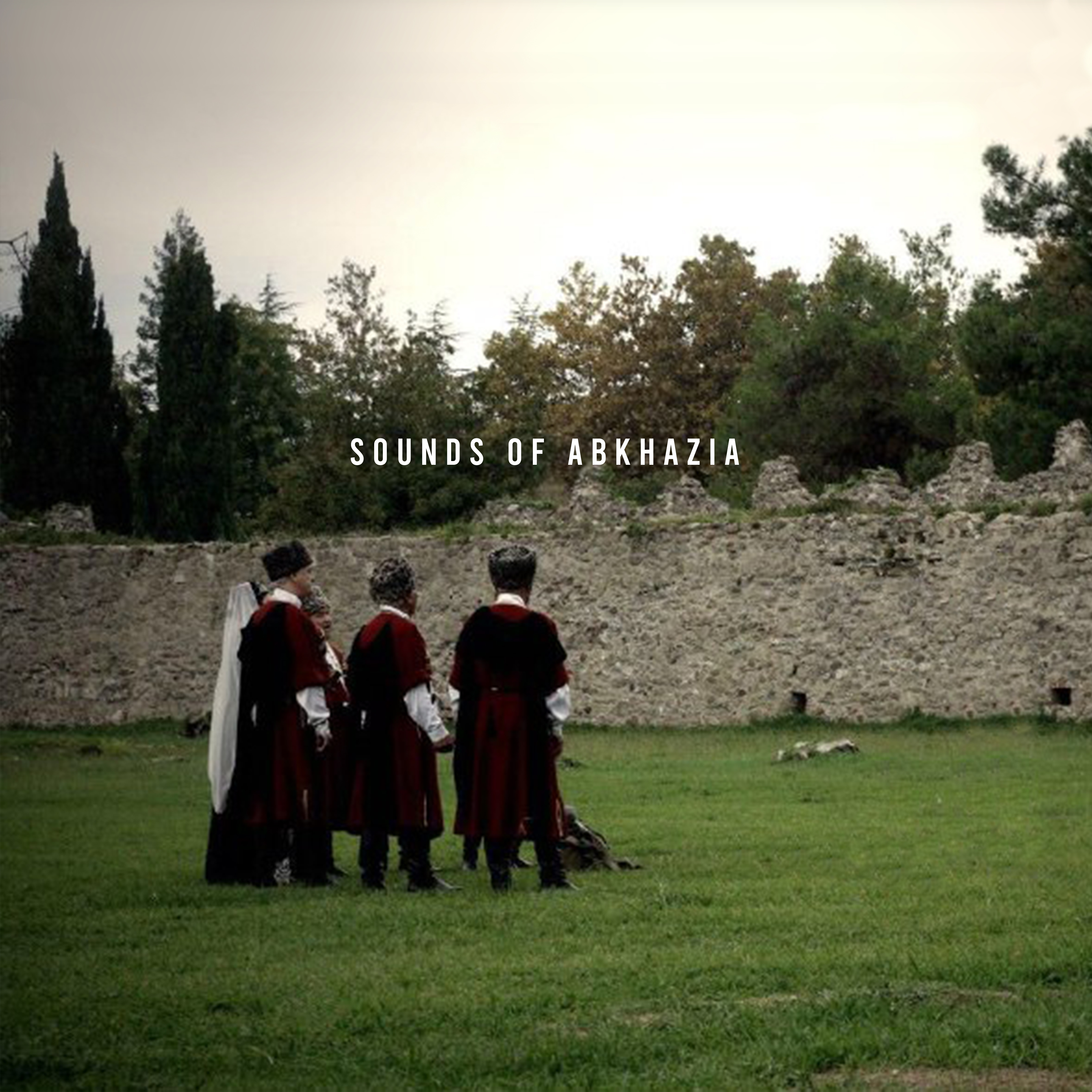
Abkhazia is a country (some would argue an occupied region) with which it is impossible to work without ignoring the political context. It is an unrecognized state that in the 90s separated from Georgia, wanting to gain independence. Independence that came at the cost of war, brutality on both sides, historical trauma and nationalist myths. Most of the international community calls those events the Georgian-Abkhazian conflict, while Abkhazians themselves believe that it was the Patriotic War, singing about the victory in traditional music. Unrecognized, but actual separation from Georgia became possible due to participation of North Caucasian volunteers, and after that, assistance from Russia. Today there are Russian military bases in Abkhazia, so Georgia perceives Abkhazia as an occupied region, although similar thoughts can be voiced on the other side of the Georgian-Abkhazian border.
Given the painful past, ambiguous present and shaky future of Abkhazia, any project with its culture can be perceived as a political statement. Especially if the project is made by a North Caucasian label with residence in Germany and an independent nomadic director. That is why we are happy that we are releasing films 12 years after they were recorded: we had time to think and choose our words.
While filming on Gagra beach, a local TV station caught him for a story titled “Wow, a French filmmaker came in search of a unique culture,” quite typical of regional media in the Caucasus. The journalist then asked Vincent if Abkhazians have well preserved their musical heritage.
[Vincent laid it on thick.]
“It is very bad. You have the most beautiful music, but it is very difficult to talk about its preservation and development. If everything goes on like this, you will lose everything. You need more work.”
This was a very important and thoughtful reaction for us. European attention to Caucasian cultures sometimes perpetuates oriental clichés and deceptively reassures locals: “Europeans are coming to us in search of lost antiquity, so everything is fine. We are still ancient and unique.” In this sense, Vincent’s response was both sobering and provocative. And even total disagreement with the brash Frenchman is also a good option. It’s either work or don’t listen to those who learned about your culture yesterday.
In addition, in interviews, and in general during the course of the project, we said a lot that it was important to document the diversity of Abkhazian music. While we were trying to find the most ancient and ‘authentic’ forms of folklore, Vincent insisted on recording everything from state choirs to late patriotic songs.
Today it seems to us that this is the political and social meaning of the project: to start a living archive with different music from Abkhazia. Music that is not limited to the war for independence and the defense of political freedom before a new ally. Before the 90s, Abkhazians had bright moments in history and battles sung in songs.
Besides, in 2013 we could only meet folklorists, bearers of tradition and rare indifferent officials who were interested in working on the project. Today we are releasing this release with the support of the cultural center SKLAD in Sukhum. It is not enough for young curators and artists to preserve culture and revel in nostalgia. Instead, they are creating a new context. 12 years ago such initiatives were hard to find. Now they are a visible voice of contemporary Abkhazia. Our films and recordings are intended, among other things, to make such voices audible.
A collection of ten short films recorded in Abkhazia, an independent republic bordering the Black Sea. Filmed by Vincent Moon and produced by Petites Planètes in collaboration with Ored Recordings. Listen to the album on https://oredrecordings.bandcamp.com/album/sounds-of-abkhazia
“When an empire falls, does it make a sound? And who is there to hear it?” – so read the opening line of the call for papers for this issue in October 2021. Looking back at that text from the vantage point of 2025, that sounds far too optimistic and premature. Shortly after that call was published, the empire in question made a whole lot of noise about its unwillingness to stay fallen. The shadow of Russia’s brutal war of conquest in Ukraine hangs over this issue – as it has over any project that deals with the post-Soviet since February 2022 – determining both its shortcomings and, in a perverse way, its urgency.
That the full-scale invasion came to many of us as a shock is the result of complacency and unwillingness to listen to the comparatively quieter rumblings that have been shaking the region over the past two decades. To the fact that the invasion commenced already in 2014 with the occupation of Crimea and Russian military support for separatist forces in Donetsk and Lugansk. To the 2008 week-long war with Georgia that concluded with Russian occupation of the disputed territories of Abkhazia and South Ossetia. To the forceful integration of Belarus into Russia that began as soon as the Belarusian dictator Lukashenka came to power in 1994 and intensified with the establishing of the so-called “Union State” in 1999. Not even to mention the Russian imperial ventures in Africa and the Middle East.
The world refused to listen until the noise became impossible to ignore – the noise of bombs and artillery shells falling on Kyiv, Kharkiv, Mariupol, Odesa, Dnipro, Zaporizhzhia and many more. Yet even these sounds fall on deaf ears far too often: many among the anti-imperialist left, enamored by the platonic ideal of a multi-polar world, seem to prefer listening to Putin’s propaganda, just as many left-leaning intellectuals were similarly entranced by Soviet propaganda during the Cold War. And many across the political spectrum – including the sitting US president – who campaign against military aid to Ukraine seem to prefer the comfortable silence of subjugation to the noisy cacophony of resistance.
What, then, can a niche academic publication on sound(s) from the post-Soviet realm – in itself a controversial designation tinged with colonial history – hope to achieve? Especially one edited by a Russian-Jewish academic based in Western Europe, with all the problematic positionality this brings? Perhaps nothing. Or perhaps, the promise of a sonic epistemology long held as a keystone of sound studies – that of attuning and entangling oneself with the object of listening as opposed to holding it in a distancing gaze – could be fulfilled at least to some extent here, opening some ears and minds to the politics of the region.
In the video installation Repeat after Me by the Ukrainian artist collective Open Group – arguably the most important sound artwork of this decade and the centerpiece of the last Venice biennale – Ukrainian war refugees recount their experiences of the invasion while recreating its soundscape with their voices: the sounds of shelling, explosions, war planes and drones, air raid sirens, etc. A row of microphones in front of the screen and onomatopoeic subtitles in the video invite the public to join in and voice those sounds in karaoke fashion as a “gesture of togetherness” (Keylin 2023: 128). The playful format allows participants to empathize with the refugees’ traumatic experiences from the safe distance of Verfremdung (estrangement), while making them acutely aware of the very safety and distance that they enjoy. In this way, Repeat after Me attunes the audience both to the (sonic) reality of the war and to their own positionality.
Hence, the aspiration of this issue: to make the post-Soviet realm audible – not as a continuous, homogenous soundscape far too often conflated with Russia, but as a cacophony – decidedly not a symphony – of diverse cultures, identities, aesthetics, and political programs; to sound out both the connections that gave the Second World its identity against the First and Third ones and the contradictions that made it fall apart. In the hope that listening – from a safe distance – to the sounds of the post-Soviet realm can attune the reader’s ear to the voices coming from it.
A multitude of limitations – some fundamental, some situational – work against this aspiration. First, the diversity of sound cultures and the complexity of political relationships within the post-Soviet space are far too vast to address comprehensively in any single publication. Second, the discipline of sound studies has only begun to establish itself in the region over the past decade, often lacking institutional support and publication venues. Moreover, much of this emerging discourse, especially in Russia, orients itself more towards Western academic scholarship than towards the post-Soviet realm and its own sound practices (e.g., the History of Sound book series at the New Literary Observer press, which in large part consists of translations of key anglophone works). One important exception that has to be mentioned here is the 2018 multilingual special issue of the Topos journal, P.S. Soundscapes,edited by Benjamin Cope and Pavel Niakhayeuand dedicated to sound and music in contemporary Eastern Europe. All of this greatly limits the pool of potential authors for this issue, to the extent that half of the texts included here are written by Western scholars. Finally, the war itself had an obvious impact, delaying this issue by over two years and leading several prospective authors, particularly those hailing from the post-Soviet realm itself, to withdraw their texts. Not a perfect issue, then, but hopefully still capable of opening the space for a dialogue.
Listening to the Subaltern Empire
Despite recent post- and decolonial turns in sound studies that shift focus away from Eurocentrism and acknowledge the global diversity of sounding and listening practices, the post-Soviet space remains largely a sonic terra incognita. The few exceptions that prove the rule include the sound experiments of the Soviet avantgarde – owing to Andrey Smirnov’s monumental study Sound in Z (the title’s correspondence to the current Russian military symbol is an unfortunate prophetic coincidence) – and the overtone singing traditions of the Far East. However, the academic attention that both these phenomena received does not stem from any specific interest in the region, but from their attachment to more famous “brands”: the historical avantgarde and Tibetan spirituality respectively.
The post-Soviet world falls into the cracks between the Global North and the Global South, persistently absent from the sonic maps of either realm. It tests the limits of post- and decolonial frameworks, which were largely developed to address the relationships between European empires and their overseas colonies. Political scientist Viatcheslav Morozov describes Russia’s peculiar position in this coordinate system as a “subaltern empire” that, “while remaining a sovereign state,” has “colonized the country on behalf of the global capitalist core” (Morozov 2015: 32) into which it was integrated on unequal, subordinate terms. As a result, Russian political consciousness is built on an unsolvable paradox of holding in suspension Eurocentrism and Euroscepticism: the aspiration to be an equal part of the Global North and the resistance to its cultural influence. In a twist of fate that the academic community still struggles to wrap their heads around, Morozov was arrested in January 2024 in Estonia and later plead guilty to spying for Russia. Although this fact may cast a shadow on Morozov’s academic work, the notion of the subaltern empire has been crucial to the postcolonial discourse on the post-Soviet realm.
In his influential – if controversial – book Internal Colonization, cultural historian Alexander Etkind similarly approaches the Russian imperial project as one of self-colonization that inevitably results in self-othering. “The state was engaged in the colonization of foreign territories and it was also concerned with colonizing the heartlands,” he argues, leading “peoples of the Empire, including the Russians” to develop “anti-imperial, nationalist ideas in response” (Etkind 2011: 2). Etkind’s work was rightfully criticized (as I will discuss below) for sidestepping Russia’s actual colonial conquests – its subjugation of Siberia, Caucasus, East Asia, or Belarus and Ukraine – and its colonial subjects. It is, however, notable for pointing out the “reversed, internal orientalism” (Etkind 2011: 16) suffusing modern Russian culture – one that simultaneously construes Russia itself as a colonial other to the enlightened West and conceives a colonial other within Russia in the form of its uneducated and uncivilized narod (a word that literally means “people”, but more often than not is used to denote peasants and commoners).
Two articles in this issue demonstrate how this contradictory mentality unfolded in the experimental music and sound art scene in 1980s Saint Petersburg, a city originally designed as a flagship for the Europeanization of Russia, but which came to be known in the twenty-first century as a hub of Russian nationalism and fascism. Giada Dalla Bonta’s article “Sounding the dissolution from a Cosmic Space” introduces the universalist trend typified by the electronic music duo New Composers, Valeriy Alakhov and Igor Verichev. Bridging avantgarde legacies and rave culture, the pair’s work was informed, on the one hand, by the avantgarde concept of vsyochestvo (from the root vsyo – “all, everything” – and the suffix combination -chestvo that typically refers to “practice”), of an inter- and postmedia approach to art taken to extremes. On the other hand, their work was rooted, in the holistic worldview of Russian Cosmist philosophy, rhymed with the everyday mythology of the Soviet space program. Dalla Bonta’s article pursues two lines of inquiry: first, it reassesses the role and influence of sonic practices on the late Soviet underground art. Second, it examines the New Composers’ idiosyncratic blend of aesthetics and philosophies through the lens of Kodwo Eshun’s notion of sonic fiction (1999) and Jean-Luc Nancy’s relational theory of sound (2007), revealing how they expressed a politics of togetherness characteristic of late Soviet underground culture.
New Composers, “Exactly Today and Exactly Now” (1989)
Dalla Bonta acknowledges an ostensibly paradoxical ideological shift towards conservatism and nationalism in the underground art scene following the dissolution of the Soviet Union but purposefully limits the timeframe of her account to the 1980s to focus on liberatory impulses in the New Composers’ early work. Conversely, Sam Riley’s article “A Butterfly Akin to a Bird: Imagining New Jazz in Leningrad” examines how the roots of this shift can be found already in the late Soviet period. The text focuses on two other emblematic figures of underground sonic experimentalism: composer and pianist Sergey Kuryokhin and critic Efim Barban. Through a reading of Barban’s book Black Music, White Freedom, which initially circulated in Samizdat and laid the theoretical foundations for the late Soviet experimental music scene, Riley explicates the racism inherent in Barban’s theory and Kuryokhin’s practice as they strived to disentangle jazz from its Black American origins, formulating a purportedly superior Soviet-Eurocentric “new jazz” idiom. The late Soviet sonic underground thus aligned with progressive and conservative trends simultaneously: both emancipatory – in resisting the authoritarian state and its ideology – and reactionary – in reinforcing the Eurocentric cultural hegemony under the guise of Enlightenment-style universalism.
Belliphonic Relationalities
The principal critique of the theory of Russia’s self-colonization, as presented in Etkind’s work, addresses two fundamental issues. The first concerns how its focus on internal colonization obscures the external conquests of the Russian Empire. The second, more insidious issue relates to what exactly is construed as the internal territory being self-colonized. As literary scholar Vitaly Chernetsky points out, “in his argument about Russia’s internal colonization, […] Etkind’s frame of reference is constituted by the events that took place and the phenomena that existed in Ukrainian and Belarusian territory. Thereby Etkind perpetuates the aspects of Russian colonialist ideology that he apparently internalized to an extent that makes them invisible to him” (Chernetsky 2007: 43). Etkind’s blind spot is indicative of a key characteristic of the Russian imperialist mentality: an unselfconscious refusal to see Ukrainians and Belarusians as anything other than inferior Russians. The lack of racial difference between these peoples is weaponized to conceal the reality of colonial difference. This denial of self-determination undoubtedly drives much of Russia’s expansionist politics: the forceful integration of Belarus and the violent invasion in Ukraine – clear attempts to replay the history of the not-so-internal colonization. In this context, it would hardly be controversial to say that the three texts dedicated to the current political soundscapes of these two countries, as they are conditioned by Russian aggression, form the core of this special issue.
In “Warbound: Collective Audio Streaming from Ukraine,” Olya Zikrata directly addresses the sonic dimension of the ongoing Russian invasion in Ukraine and the Ukrainian resistance. Her article revolves around the 2022 project Listen Live consisting of five online broadcasts by sound artists from different parts of Ukraine that together weave a multifaceted soundscape of living in the middle of a violent invasion. Building on – but also challenging – J. Martin Daughtry’s notion of “belliphonic” as the agglomeration of war-related sounds (2015), Zikrata argues that the sonic experience of the war in Ukraine is not reducible to a catalogue of explosions and sirens but rather includes the totality of acoustic environments affected and effected by the invasion. In stark contrast to the sound design of war movies, the streams of Listen Live focus on the quieter aspects of war: the digging of trenches, the life in frontline cities in between bombings, the refugee experience in western Ukraine. Zikrata approaches them as acts of acoustic witnessing, a “collectively developed sonic intelligence,” revealing the situated relationalities that bind together the land and its human and non-human inhabitants living through the invasion.
The themes of witnessing, testimony, and acoustic relationality also suffuse my interview with Sashko Protyah, an independent filmmaker from war-torn Mariupol, as he reflects on the past 15 years of his career. His early influences, including experimental music and sound poetry, shaped his affinity for sound as compositional material rather than mere accompaniment to visuals, which has resulted in a number of collaborations with experimental musicians, sound artists, and beatboxers. The evolution of Protyah’s artistic trajectory took him from playful absurdism to politicized documentary storytelling, underscoring an approach to sound and cinema as tools for reflection and resistance, gaining a particular urgency under the condition of war.
Finally, Pavel Niakhayeu’s article (bordering on a short monograph in its breadth and detail) “Voices, Noises, and Silence in the Political Soundscape of Belarus” is a meticulous sonic ethnography of Belarusian political life, covering the period from 2020 to 2023. The 2020 election, in which the dictator Alyaxandr Lukashenka once again fraudulently declared himself the winner, catalyzed a peaceful protest movement. It quickly became the largest protest in modern Belarusian history before being violently quelled with Russian backing, forcing protesters into hiding or emigration. Combining field recordings and soundwalks, sociological interviews and media analysis, Niakhayeu’s article documents how these phases unfolded in the acoustic dimension: from the political soundscapes of the protest itself – suffused by poetry, folk songs, and the sound of Belarusian language – to the “sonic violence continuum” of the authoritarian state’s reaction and the silence(s) that followed. These soundscapes may also be called belliphonic – both in the sense of Putin using Belarus as a launching site for his attack on Ukraine, and in the sense of Belarus itself being the object of a hybrid warfare of sorts.
Soundscapes of the “South of the Poor North”
Whereas Russian imperialism in Ukraine and Belarus was (and is) driven by the ostensible non-distinction of their peoples, other forms of Russian colonial conquest relied on familiar constructions of the racialized colonial other. One of the critiques levied at Etkind by the decolonial theorist Madina Tlostanova is that, in his focus on the internal, self-othering Orientalism of the Russian elites, he fails to notice the more obvious, outward Orientalism “directed against Russia’s South – the Caucasus, and its Orient – Central Asia” (Tlostanova 2014: n.p.). A linguistic quirk that would be amusing if not for the oppression that it represents: While in English, the term “Caucasian” connotes “white,” in (post-)Soviet vernacular Russian, “Caucasian” (kavkazets – formed from the bureaucratese “person of Caucasian ethnicity”) is a term of racialization and othering, coding the members (or presumed members) of any of the diverse Caucasian nations as decidedly non-white.
Tlostanova’s own theory proposes that the post-Soviet realm neither fits within nor breaks off from the colonial North-South dichotomy, but rather mirrors and complicates it. She conceptualizes Russia as “the poor North,” separated from the global (rich) North by imperial difference, as well as from its own “South of the poor North,” by colonial difference (Tlostanova 2011). The “imperial difference […] refers to various losers that failed to succeed in or were prevented by different circumstances and powers from fulfilling their imperial mission in modernity. These losers took second-class places and became intellectually, epistemically or culturally colonized by the winners” (Tlostanova 2011: 71). Consequently,
Russia projected its own inferiority complexes onto its non-European colonies in the Caucasus and Central Asia through its self-proclaimed modernizer and civilizer role. The Russian colonies either felt the double dictate of coloniality of knowledge in its modern Western and Russian/Soviet versions, or, regarding themselves as standing higher on the human scale (within the same Western modern epistemic system, grounded in taxonomizing people into those who have the right and the ability to produce knowledge and those who are doomed to act as objects of study and consumers of theories produced in the West) than the Russian subaltern empire, have refused its dictate and negated its epistemic authority, choosing a direct European influence instead and dreaming to become at some point fully integrated. (Tlostanova 2015: 47)
Brian Fairley addresses the sonic experience of such a paradoxical positionality through the example of Georgian Orthodox chant in his article “Singing at Your Own Funeral: Overdubbed Intimacy and the Persistence of Tradition in Soviet Georgia.” Counted among the oldest Christian denominations in the world, the Georgian Orthodox Church was first subordinated to the Moscow Patriarchate following the integration of Georgia into the Russian Empire, then persecuted and all but banned (along with all other religious practices) under Soviet rule. Fairley discusses amateur tape recordings of Georgian requiem chants made in the 1960s by the singer Artem Erkomaishvili, which were later played at his own funeral. The article weaves together the sonic history of Georgian indigenous musical culture under colonial rule and the media history of anti-Soviet dissent. Fairley likens Erkomaishvili’s recordings to magnitizdat, a dissident practice by which censored music – most often rock music bootlegged from the West – found unofficial circulation in amateur tape recordings. This case study thus exemplifies the complex entanglement of contradictory indigenous, Soviet, and Western vectors characteristic of the sound cultures in “the South of the poor North.”
Tlostanova does not make a principal distinction between the imperial projects of tsarist Russia and the Soviet Union. This position, however, is not universally shared, particularly among historians of Central Asia. Adeeb Khalid, for example, argues that the Soviet project consisted in “homogeniz[ing] populations in order to attain universal goals” (Khalid 2006: 233), a strategy associated with the modern state rather than a colonial one, which would conventionally be built on perpetuating difference. Historian Botakoz Kassymbekova, on the other hand, points to the futility of classifying the USSR as either a modern state or a colonial empire, as its “cultural policies […] were contradictory and entailed elements of both modern(izing) and colonial rule […] Blurring boundaries between imperialism and socialism, colonialism and state building, the Soviet political design combined ideas and mechanisms of liberation and oppression, universalism and difference” (Kassymbekova 2016: 15, 17). Pointing out that most Central Asian societies have never thought of themselves as colonized or postcolonial, ethnographer Sergei Abashin similarly suggests that the culture and politics of the region are better described as a complex and site-specific entanglement of local and metropolitan forces that act at times in accord and at times in conflict with each other (Abashin 2015: 44).
In my interview with the Kazakhstani “imaginary art institution” Krëlex zentre, its members Ruthia Jenrbekova and Maria Vilkovisky discuss how such localities facilitate highly idiosyncratic sonic idioms that can be described as a kind of creole. The duo lists among their influences Soviet radio, Western classical and experimental music, punk, electronica and techno, and the soundscapes of Almaty’s industrial suburbs, all of which coalesce into an equally eclectic practice incorporating sound poetry, experimental theatre, and installation art, among many other things. They describe themselves as pirates, plundering the global cultural archive in order to challenge the ethnicization and genderization of artistic identities.
Finally, Phoebe Robertson’s article “The Chanting Flute: Uncovering Russian Orthodox and Shamanic Sounds in Sofia Gubaidulina’s …The Deceitful Face of Hope and of Despair (2005)” traces a similar creole-esque aesthetic in the works of the late Sofia Gubaidulina. Of Tatar ancestry and Russian Orthodox faith, working in the European New Music paradigm, and hailed as the most important Russian composer of the past century, Gubaidulina exemplifies the contradictions that permeate the sound cultures of the post-Soviet realm. Robertson examines how the composer brings together musical references from Russian Orthodox and Siberian shamanic chants within the European concerto genre – an act that in other contexts could amount to cultural appropriation. In the post-Soviet context, however, both the eastward and westward cultural vectors point to a shared history of repression and dissent, one that Gubaidulina’s work highlights.
The eight diverse texts collected in this special issue throw into sharp relief a point I made in passing in the opening section: that the (post-)Soviet is emphatically not a symphony. The region’s political and cultural history is one of contradictions, holding many familiar dichotomies – of the East and the West, the progressive and the reactionary, the colonial and the emancipatory – in a superposition, a dissonant cluster defying harmonic resolution. (Post-)Soviet sound thus demands a mode of listening that is attuned to these contradictions and that attends to the region not as a monolithic soundscape but as a collection of idiosyncratic localities, each resonating their own sets of frequencies.
References
Abashin, Sergey (2015). The Soviet Kishlak: Between Colonialism and Modernization [Советский кишлак: между колониализмом и модернизацией]. Moscow: New Literary Observer.
Chernetsky, Vitaly (2007). Mapping Postcommunist Cultures: Russia and Ukraine in the Context of Globalization. Montreal: McGill-Queen’s Press.
This is a single release of the song “Hand in the Air,” which is the first track on our forthcoming sixth album, Goodbye Work (2025).
This song is an ode to the nerdy child who raises their hand when the teacher asks a question in class. An impressionistic, autobiographical song about the awkward years in junior high.
The picture in the window Lights up from behind The richer is the meadow That we seek but fail to find
chorus: Was it you Was it you Was it you On the landing? (Too demanding?)
Was it you Was it you Was it you With your hand in the air?
The poster isn’t yellow Maybe orange, maybe green When a man starts to bellow One makes sure not to be seen
A chair in the corner To pretend to try to hide A face getting warmer So it turns to the other side ______________________
Rosie Harris: lead vocals Sumanth Gopinath: backing vocals, acoustic guitar, Hammond organ Beth Hartman: backing vocals, egg shaker Cody Johnson: bass guitar Nate Knutson: electric guitars Paul Hatlelid: drums
music by The Gated Community, lyrics by Sumanth Gopinath
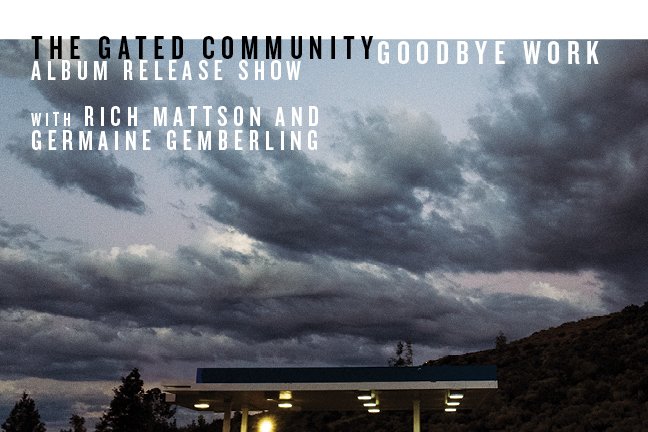
Much beloved Minnesota Americana band The Gated Community celebrate the release of their sixth full-length studio album, Goodbye Work! Special guests acclaimed musicians Rich Mattson and Germaine Gemberling (aka “Rich and Germaine”) of Rich Mattson and the Northstars open the night.
The Gated Community is an Americana band with a nearly twenty-year history. Formed in 2006 in Minneapolis’s storied West Bank neighborhood, the band is known for its gripping original songs, beautiful vocal harmonies, and multiple lead singers. Led by South Asian American singer/songwriter Sumanth Gopinath (aka Sonny), the band’s music is eclectic in style, encompassing country, folk, bluegrass, and rock. Born in Chicago and raised in Louisiana, Gopinath relocated to the Twin Cities in 2005, after stints in Texas and Connecticut.
Current members have been in the band for a decade or more. Their lineup includes Sumanth Gopinath (acoustic guitar), Rosie Harris (banjo), Beth Hartman (percussion), Paul Hatlelid (drums), Cody Johnson (bass), and Nate Knutson (electric guitar). Everyone in the band sings lead and plays multiple instruments. They perform in a range of configurations, including as small as a duo or trio.
The Gated Community is thrilled to hold this album release show at The Parkway Theater. After placing in the venue’s first-ever “Battle of the Bluegrass Bands” in 2019, the band later headlined The Parkway that same year. Six years and a global pandemic later, the band returns again to the theater with renewed energy and purpose amid the chaos of the present.
The Holy Bible (1994) was a remarkably coherent and thoughtful, if violent and unreasonable protest against the ‘end of history’ that had been declared a couple of years earlier – theirs was the 1994 of Srebrenica and Rwanda, not of Fukuyama or Anthony Giddens. Musically, while hardly avantgarde, The Holy Bible had a newly acquired postpunk angularity and a disdain for the American marketplace. Subjects were political (‘Revol’, a bizarre song speculating on the sex lives of Soviet leaders), historical (two songs about the Holocaust, hugely ill-advised in theory but surprisingly tactful in practice), or concerned different forms of personal collapse, told in the first-person, as in the staccato, self-undermining assertions of ‘Faster’, or ventriloquised through female narrators, such as the depressive sex worker of ‘Yes’ and the anorexic teenager of the exceptionally disturbing ‘4st 7lb’.
Manic Street Preachers, The Holy Bible (1994)
These songs asserted physical and intellectual self-control to the point of psychosis, as a means of armouring the self against a terrifying and repugnant outside world. The Holy Bible is striking not just for Jones’s and, especially, Edwards’s punishingly moralistic and sometimes surreal lyrics, but for the fact that Bradfield and Moore were able to crowbar them into rock anthems, of a sort. The results can still send shivers up the spine, as when the brutal, unforgiving words of the disgust-filled, misanthropic ‘Of Walking Abortion’, or ‘Archives of Pain’, a Foucault-inverting paean to the guillotine, are bellowed as stadium rock choruses. In these songs Bradfield didn’t sing so much as ‘bark phonemes’, as Tom Ewing put it of the breathtaking ‘Faster’. Bradfield had managed to turn the amusicality of his two lyricists into a virtue, and ‘I am an architect; they call me a butcher’ into my personal favourite first line of a rock single.
It was an incredible performance, bearing no apparent resemblance to what the Manics had originally aimed to do – this wasn’t selling sixteen million copies in any lifetime – but there was no failure, now. The Manics had set out, to quote a Ballard interview sampled midway through the album, to ‘rub the human face in its own vomit, and then force it to look in the mirror’, and that’s what they did. There is still nothing in rock music quite like it, and it was practically impossible to follow.
Aotearoa singer/songwriter Marlon Williams (Kāi Tahu, Ngāi Tai) performs an intimate concert to a small group of fans at the RNZ studio to celebrating 20 years of NZ Live on RNZ National. Marlon performs five tracks and chats to RNZ’s Jesse Mulligan about making his fourth solo album, ‘Te Whare Tīwekaweka’ and the process of songwriting in te reo Māori. […] Tracks as they appear in the session:
Watch Ambika Mod read from Heart Lamp, the #InternationalBooker2025-shortlisted novel written by Banu Mushtaq and translated by Deepa Bhasthi. In twelve stories, Heart Lamp exquisitely captures the everyday lives of women and girls in Muslim communities in southern India. In the titular story, Mehrun, a young mother, despairs at the way her life has unfolded.
Filmación de los históricos conciertos en el Estadio Nacional que marcaron el retorno triunfal de Los Prisioneros después de casi 10 años de separación. Grabado los días 30 de noviembre y 1 de diciembre de 2001.
A recording of birdsong made in the late afternoon of 30 April 2025 at George Washington Park in Pacific Grove, California, by Comrade Koganzon using the Merlin Bird ID app. The following birds can be heard on this recording: Hutton’s vireo, oak titmouse, yellow-rumped warbler, American crow, lesser goldfinch, acorn woodpecker, bushtit, American robin, dark-eyed junco, California towhee, Anna’s hummingbird, chestnut-backed chickadee, house finch, spotted towhee, and song sparrow. ||| TRR
Future History of Earth’s Birds
Amie Whittemore
—after Alexander Lumans and Jennifer Ackerman
Among them, a common language of alarm.
Also, rapture.
Know that when zebra finches felt the first pinch of climate change, they chirped to their offspring, still shelled, to warn, to insist, they hatch smaller and fiercer. Dawn’s chorus is a peace-making operation. The birds with the biggest eyes sing first. Thus light is the first part of song.
Some birds create barriers of pinging notes—golden bells dangling
in the air, alarms and warnings. Does it matter
what kind of birds did this? They’re all dead now.
In bird language, there’s a call for mobbing, a call for fleeing.
To avoid danger, sometimes you must approach it.
In the shell, a bird recognizes its parents’ voices. In love, mates sing duets they invent together. On death, the survivor must learn a new tune.
There are such things as universal truths.
Some kites drop fire onto the earth to scare up dinner. Some kites,
dropping fire, taught humans their first warm meal.
Neither ice nor snow lived long enough to hear the last bird sing—just wind,
which carried those notes as far as it could before they slipped from its palms—
There is a common language of alarm.
Source: poets.org. Originally published in Poem-a-Day on May 11, 2025, by the Academy of American Poets.
As a Kyrgyz woman born in the last years of the Soviet Union, I never thought twice about whether my usage of the Russian language was problematic or not — until recently when I reached out to my Ukrainian friend in Russian, and she responded to me in Ukrainian.
I have been thinking about the political aspects of language since then.
Last week I was invited to a podcast to talk about de-colonial feminism in Central Asia by a research group that does memory studies in Kyrgyzstan. There we sat in a warmly lit Bishkek studio in comfortable canary-yellow armchairs — two women of clearly Central Asian descent, with names that mean ‘honey’ and ‘worship’ in our native language, discussing whether the Soviet Union was a colonial empire, and how a more than 100-years history of Russian presence in the region has disrupted and affected the lives of peoples of Central Asia. I am making smart jokes and incisive observations, we laugh, we debate, we lament — all in Russian.
Although this language was not the main subject of our discussion, we comment in passing on it — noting how intangible colonial legacies can sometimes have a constructive element to them.
It is, of course, possible for all of us to drop the language of the colonizer, whether it’s English, French, Spanish, Russian, or Chinese — and speak our own languages, but the ease and comfort of using these when trying to communicate with people outside our cultures is just so tempting! And so then the question is whether to take offense towards the language because it happens to have been “originated” by the ‘big bad’ or to ignore that and make it our own?
Russian was the language of books that took me on journeys across galaxies, of Soviet-era films that fanned the fire of idealism in me, of finding community with other post-Soviet teenagers that, like me, had traveled to the United States as exchange students. We spent the year yell-singing Kino’s songs, making the olivier salad for a New Year’s celebration, and rooting for Evgeni Plushenko in the 2001 Winter Olympic Games in Salt Lake City.
It was the language of the early science fiction stories I wrote when I was twelve, of expressing my first heartbreak in broken poetry form, and of clumsily flirting, building alliances, or of standing up to bullies.
It is also the language of differentiation — a tool of categorizing people into social strata, both inside Russia and in the non-Russian republics during Soviet times. My own mother had been ridiculed for not speaking Russian well, considered ‘dark’ and uneducated, uncultured. To this day she gets offended when my Russian-schooled siblings sometimes laugh at the little mistakes she makes when attempting to speak it because it reminds her of how she was treated when she was younger.
Not to worry though — this is a very rare occurrence, because our mom is so strong-minded that she’s bent everyone to her will, forcing everyone to speak Kyrgyz if they wanted to be understood by her. Even our dad, who was a Russian speaker with a beautifully reverberating voice, had mastered the Kyrgyz language for our mother’s sake. My siblings too, although their attempts at translating their jokes and anecdotes from Russian into Kyrgyz for our mom sometimes backfire because they do not take into account the semantic nuances of the two languages. And despite her lack of Russian, she made a successful career in the 90s as a kommersantka — just like thousands of other women who picked up the baton when the system that was oppressing them fell — traveling by bus and train to Moscow, Minsk, Tallinn, and later by plane to Meshhed, ensuring we were never hungry or dependent on anyone.
Maybe that’s a good example of how language does not have to be a cornerstone of someone’s lived experience. Some people choose to speak the oppressor’s language, some people choose not to. As long as there’s a way of making each other understood, even by mixing words or even using gestures, it’s all good.
My Ukrainian friend was so kind and gracious when I apologized for using Russian when I reached out to her, and she sent me a beautiful voice message back in Russian. I could hear she struggled a little speaking it because, as she explained, she had not spoken it in a while. She said she didn’t mind using it to communicate with me, and that she was sorry she hadn’t learned some Kyrgyz by now because she has other Kyrgyz friends too. And I was sorry I hadn’t learned Ukrainian by now. But eventually it was Russian we exchanged these lamentations in, and the question remains open to me — whose language is it anyway?
Syinat Sultanalieva is a human rights activist and researcher from Kyrgyzstan, who writes science fiction on the side when she’s not busy dissecting power structures and dynamics in the region and the world.
Lӓysӓn Ensemble of Yafarovo Village Let’s Get Together Tonight: Mishar Tatar Songs from Orenburg Region
The Mishars are an ethnic subgroup of Tatars. They have their own dialect and their own culture. The main part of the Mishars live in the Middle Volga region and the Urals.
Yafarovo is a Mishar village located in the Aleksandrovsky district of the Orenburg region.
Izhevsk long ago nabbed Tula’s de facto title as Russia’s arms manufacturing capital: the Kalashnikov Concern is headquartered there, producing shells, assembling drones, and making rifles. But in a seemingly parallel reality amid the rumble of the factories, young Izhevskers have opened an independent bookstore, and they have also been translating the Udmurt avant-garde of the twenties into Russian and publishing literary magazines. Who are these young people? And how was all of it possible?
“We’ll be having a children’s New Year’s party in there”
Five years ago, Albert Razin, an Udmurt activist and patriot, set himself on fire in the capital of Udmurtia, on the square outside the republic’s State Council building. Razin held a placard featuring a quotation from Rasul Gamzatov: “And if tomorrow my language disappears, I am willing to die today.”
In late 2024, I lived in Izhevsk a stone’s throw away from the spot where Razin had burned on behalf of the Udmurt language. It is the very heart of the city: the Eternal Flame, the republic’s government house, the opera house, a Rostic’s fast-food restaurant, the residence of the head of Udmurtia, and the Kuzebay Gerd National Museum are nearby.
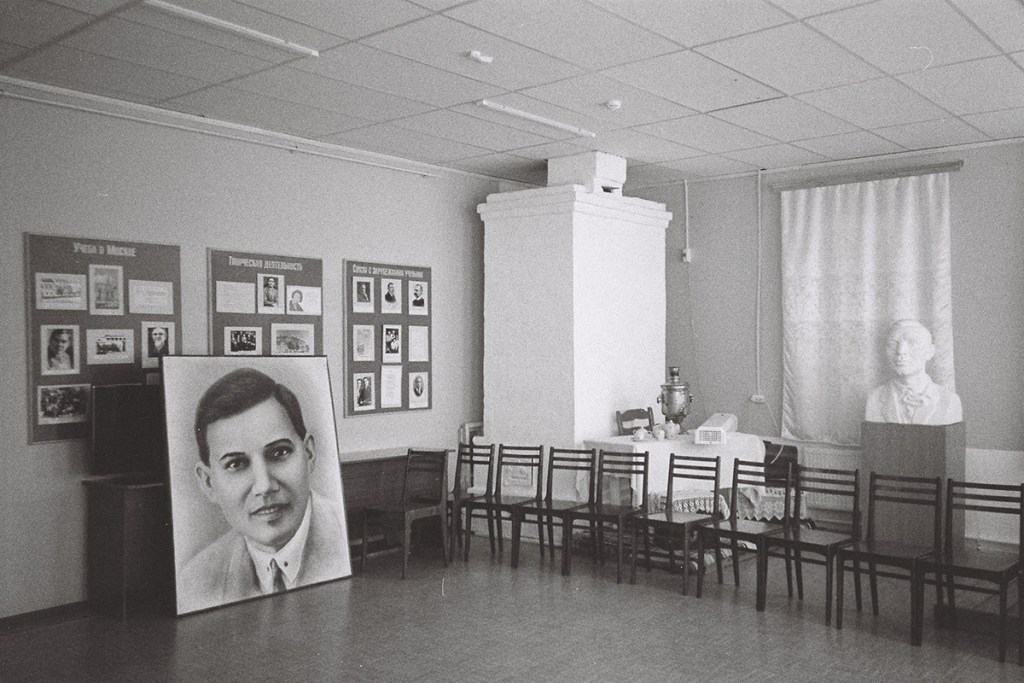
Gerd (a pseudonym meaning “knot” in Udmurt; Gerd’s birth name was Kuzma Chaynikov) was a poet, folklorist, and probably the most important Udmurt of the twentieth century. In 1932, he was arrested along with other prominent members of Soviet Finno-Ugric ethnic groups as part of the fabricated SOFIN Case. [SOFIN was the acronym of the fictitious “Union for the Liberation of Finnish Peoples” — TRR.] The poet was accused of plotting to get Udmurtia and other autonomies to secede from the Soviet Union and establish a Finno-Ugric federation under the protectorate of Finland. Kuzebay was shot in 1937 at Sandarmokh in Karelia. He was exonerated in 1958.
The Gerd Museum’s website advertises a separate exhibition dedicated to the Udmurt national poet. The museum is located in the building of the former arsenal. The entrance to the main exhibit is on Kuzebay Gerd Square, where twenty years ago a monument to the poet was erected. Perched on a rock, a quite youthful Gerd gazes thoughtfully at the former military warehouse. He is writing a poem, apparently.
I am all alone at first, but schoolchildren wearing blue ties later come running into the museum. A museum worker, dressed in a traditional costume adorned with a monisto necklace, greets the children in Udmurt — Chyrtkemesi! — but she immediately switches to Russian and talks about the pre-Petrine history of Udmurtia, that is, before Izhevsksy Zavod (the name of the settlement which preceded city) arose in these parts. Count Peter Shuvalov built an ironworks there with the permission of the Empress Elizabeth. A little later, Izhevsk became the Russian Empire’s virtual arms capital (no offense to Tula).
The rooms I have visited recount this history as well as a little bit of Soviet history (artisanal carpets are intermingled with IZh motorcycles and cars — a total delight!), but I cannot go any further.
“But where is the Kuzebay Gerd section?” I wonder aloud.
“Ah, you wanted to see it?” responds the docent. “Unfortunately, it is impossible at the moment. It was in the room next to the ticket office, but it has been temporarily moved to the warehouse. We’ll be having a children’s New Year’s party in there.”
“Nobody the whole day”
Kuzebay Gerd is to Udmurtia what Pushkin is to Russia. One of the creators of the modern Udmurt language, Gerd also lived a very short life, thirty-nine years (five of them in Stalin’s camps). But over those years he wrote hundreds of articles, poems, plays, and prose works which became the foundation of the living Udmurt language.
The writer gained genuine recognition only during perestroika, and it is only recently that streets and museums have been named in Gerd’s honor and his legacy has been studied anew.
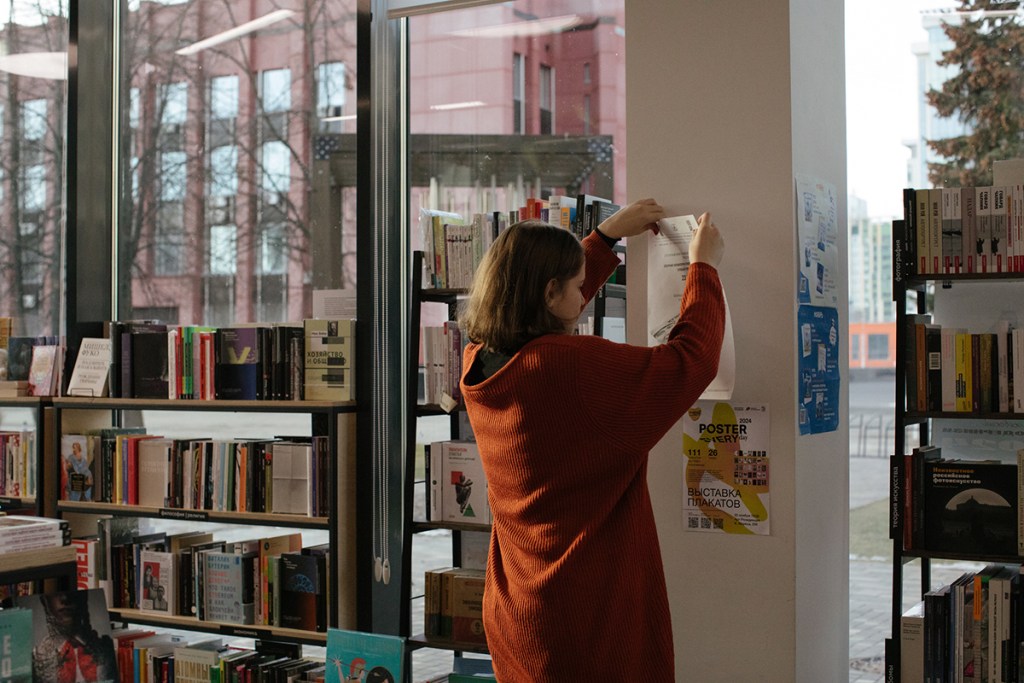
Sonya, a clerk at Kuzebay Bookstore, puts up an event flyer.
Kuzebay’s cheerful face can now be seen on posters, lapel pins, and even as an emoji on Telegram. The only independent bookstore in Izhevsk, and maybe in the whole of Udmurtia, bears his name — Kuzebay Bookstore.
Like its spiritual forebear, Kuzebay Bookstore thrives in spite of its circumstances. Today, it is an absolutely metropolitan store that is no shabbier than Vse Svobodny in Petersburg or Falanster in Moscow: Kuzebay stocks the same books on its shelves, and it has the same friendly vibe. But Kuzebay opened a year before the quarantine. Back then, it occupied a small corner at the Center for Contemporary Dramaturgy and Directing. Les Partisans Theater, in which the store’s co-founders, German and Ksenia Suslov acted, was also based there. Kuzebay achieve relative stability in early 2022, after moving to its current location.
The Kuzebay Gerd Museum in the village of Bolshaya Gurez-Pudga, Udmurtia. The museum is located in a hut next door to the local school.
“We were a quite small operation during the covid, so we didn’t give a shit whether we shut down or not,” recounts German Suslov. “We were open for deliveries. Back then, the state still paid me twelve thousand [rubles a month] for the fact that I was my own sole employee. I was like, Great, money’s coming in, cool beans. Things have somehow been growing ever since.”
German even now regularly works as a salesclerk and is awfully good at cleverly persuading people who stop by for the latest detective novel by Darya Dontsova to buy family sagas from House of Stories publishers. But the first person I meet in the store is Gosha, a tall thin salesclerk who looks like a Viking sporting a tiny cap. He sits in a cozy swing chair, playing chess on his phone. He is the only soul in the store.
German Suslov, co-owner of Kuzebay Bookstore and editor-in-chief of Luch magazine, at work.
“Is it so empty often?” I ask as I peruse Mushroom Kingdom, a wacky book by local artist Andrei Kostylev, better known as Bi-jo.
“Not nowadays, but it used to happen,” says Gosha. “This one [female salesclerk] and I even had a competition to see who had fewer people stop by the store in a day. It was a draw: zero.”
“No one at all for an entire day?”
“Yeah, it was winter, so not a single person came in. But there are always people coming in now. And even if there are no sales at the store, there are sales on Ozon almost every day.”
“The worst thing is poetry readings”
German shows up at Kuzebay about half an hour late for our interview. He is in a terrible rush, as always. The Moscow Non/Fiction Book Fair is coming up: Kuzebay is supposed to represent the publishing house and the store, and we have to send the books out in time. We pull a few boxes out of the car together, while Gosha sits down to check the books and put stickers on them. Like the many-armed Shiva, German simultaneously supervises the process, does the interview, eats a flatbread from the Tatar bazaar, pours tea for everyone, and chats with the customers who do come in.
German Suslov and Andrei Gogolev in the storage room of Kuzebay Bookstore
German has always been an energetic multi-tasker. Although he is not yet thirty, he has been a prominent figure in Izhevsk’s cultural scene for nearly ten years. He used to be an actor at the local independent theater Les Partisans, which exists to this day. But his restless nature needed something else besides theater and the history program at Udmurt State University.
“And so, I thought: the craving for theater, music, cinema was instilled in me by older comrades,” says German simply. “But what were my interests before the theater? I wrote poetry. So, I had to get into the business of poetry. And I quickly realized that no one here was doing poetry seriously.”
According to German, the literary scene in Izhevsk was rather fragmented ten years ago. There were no decent places for young people to publish and perform their work. After graduating from college, many people left for the big cities.
In St. Petersburg, a whole generation of young poets from Izhevsk emerged all at once in the early twenty-teens, including Tatiana Repina, Pyotr Bersh, Ilya Voznyakov, and Grigory Starovoitov, all of whom I know personally. Most of the members of that scene gave up writing poetry a long time ago, although Tanya Repina has achieved some fame, and my friend Petya Bersh continues to write and perform.
“When I left in the early teens, nothing was happening in Izhevsk at all. There were no prospects,” Petya, who returned to his homeland in 2022, told me. “Everything has changed now, of course, and Kuzebay has played no small role in that.”
There was no Kuzebay Bookstore at first, though. In 2016, five actors from Les Partisans dreamed up the PoetUP Contemporary Poetry HQ to consolidate Udmurtia’s most interesting poets, give them a venue, and relaunch the literary scene in Izhevsk.
“The worst thing you can imagine is an open mic poetry reading. It’s hell on earth,” says German, laughing. “And even worse is an open mic poetry reading in Izhevsk with no prescreening at all. So, what did we do in 2016? We started selecting and inviting people. Yes, we would have embarrassing events too, but far fewer. What mattered was what we were striving for. We did not want it to happen that one person would read and all his friends would get up and leave when he finished.”
[…]
Excerpted from: Ilya Semyonov (text) and Natalya Madilyan (photos), “Why does a star gurgle?” Takie Dela, 23 January 2025. Translated by the Russian Reader. I would like to finish translating this fascinating long article (this is the first quarter of it) and publish it in its entirety on this website, but that would take a lot of time and hard work. In the real world, where I have worked as professional freelance translator for nearly thirty years, I would charge 600 to 850 euros to translate this article if someone commissioned me to do it. If you would like to support my work in general and read this article in full, please donate to me via PayPal (avvakum@gmail.com) or Venmo (@avvakum). If you cannot afford to donate money right now, you can help my cause by sharing my work on social media and with friends. Thank you!
This week’s edition of BBC Radio 4’s obituaries program featured appreciations of the KGB defector Oleg Gordievsky and the composer Sofia Gubaidulina. ||| TRR
Oleg Gordievsky, Renee Goddard, Professor Richard Fortey, Sofia Gubaidulina
Matthew Bannister on Oleg Gordievsky, the KGB agent who defected to Britain and became a valued source of secret intelligence during the 1970s and 80s.
Renee Goddard, the actress and TV commissioner who fled Nazi persecution only to be interned in Britain.
Professor Richard Fortey, the palaeontologist who used his expertise in trilobites to tell stories about the origins of life on earth. Bill Bryson pays tribute.
Sofia Gubaidulina, the composer whose large scale religious works attracted criticism from the Soviet authorities.
Nacimiento-Fergusson Road is a stunning drive located on the Pacific coast of the U.S. state of California, regarded as one of the best motorcycling roads in central California.
Where is the Nacimiento-Fergusson Road?
The road is located in Monterey County, in the US state of California, running across the eastern slope of the Santa Lucia range within Los Padres National Forest.
Riot police disperse protesters in Baymak, Bashkortostan, on 17 January 2024. Photo: Anya Marchenkova/AFP via Getty Images via Foreign Policy
On Wednesday, a local court in the Orenburg region handed out prison sentences to four participants of peaceful rallies in support of Indigenous activist Fayil Alsynov.
Up to 5,000 people gathered in Bashkortostan’s southeastern Baymak district in January last year to protest the imprisonment of Alsynov, a prominent Indigenous rights and environmental campaigner. The protests were followed by sweeping arrests.
Aydar Yusupov, Ilnaz Makhmutov, Zaki Ilyasov and Vallyam Mutallapov, who will spend from three to four years in a penal colony, are among more than 80 men and women facing criminal prosecution in the “Baymak case,” the largest political trial in Russia’s history.
To mark the first anniversary of the Baymak events, Kremlin-installed authorities in Bashkortostan released a propaganda film “The Anatomy of Bashkir Nationalism. The Baymak Tragedy” produced by state-aligned journalist Timur Valitov.
In her piece for From the Republics, Bashkort social researcher Iliuza Mukhamedianova considers why regional authorities invested in the film and aired it during prime time, as well as how carefully crafted smear campaign against the protesters could impact Bashkortostan’s civil society.
Kremlin-Funded Propaganda Fuels Destabilization in Bashkortostan
By Iliuza Mukhamedianova
25 minutes. That’s how much time the creators of “The Anatomy of Bashkir Nationalism” dedicate to speaking about the local national organization “Bashqort.” This is almost a third of the entire movie.
But why pay such close attention to an organization dismantled back in 2020, long before the protests in Baymak?
Perhaps, that’s the easiest way to construct an image of an almighty enemy.
In the film, “Bashqort” — an organization that aimed to reinstate Bashkortostan’s sovereignty and preserve the Bashkort language and culture — is portrayed as the ultimate evil. The filmmakers place sole responsibility for the Baymak protests on “Bashqort” members, accusing them of “extremism” and collaboration with “foreign enemy states.”
Demonizing an organization that no longer exists helps to absolve Bashkortostan’s authorities of responsibility, legitimizes their actions, and justifies their brutal response to the protests.
The film also glances over the fact that protests in Baymak were not organized by a single group like “Bashqort” or one individual but were instead a grassroots action, an organic reaction to the sentencing of activist Fayil Alsynov.
Neither does the film mention who killed protester Rifat Dautov or who tortured the many Baymak detainees. And that’s truly a shame because these are the questions we, the people of Baymak, would like to have answered.
The Baymak protests would not have gained momentum without extensive media coverage — the authorities understand this well.