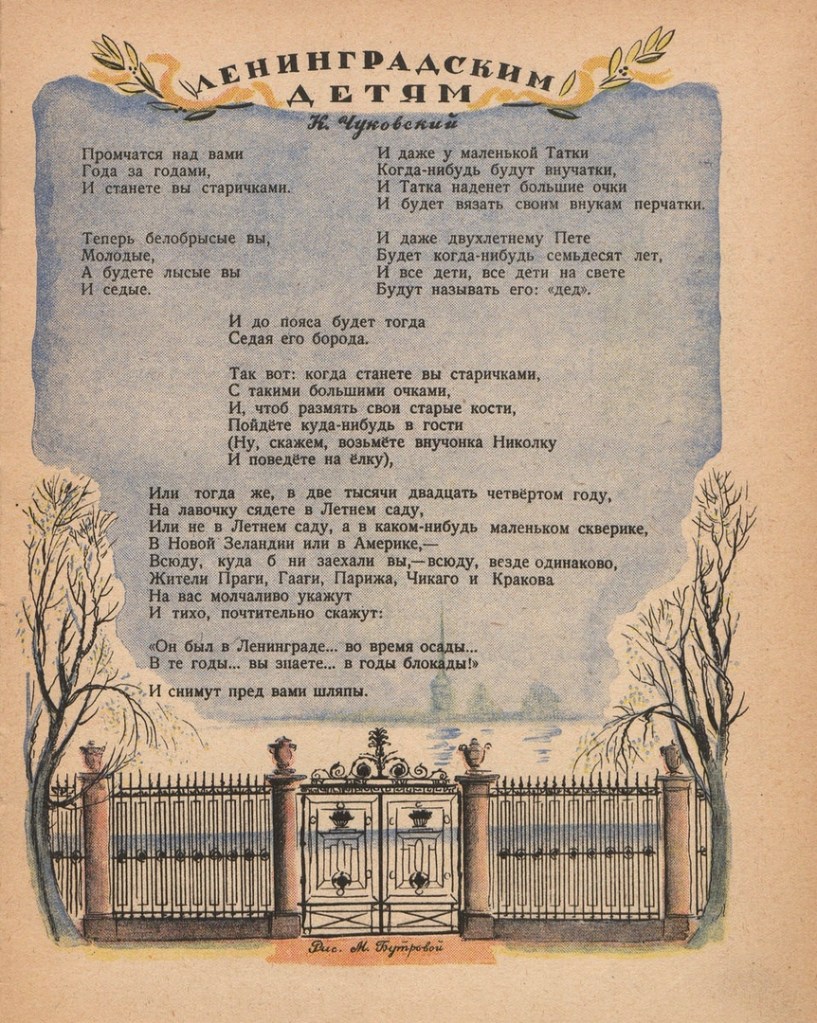
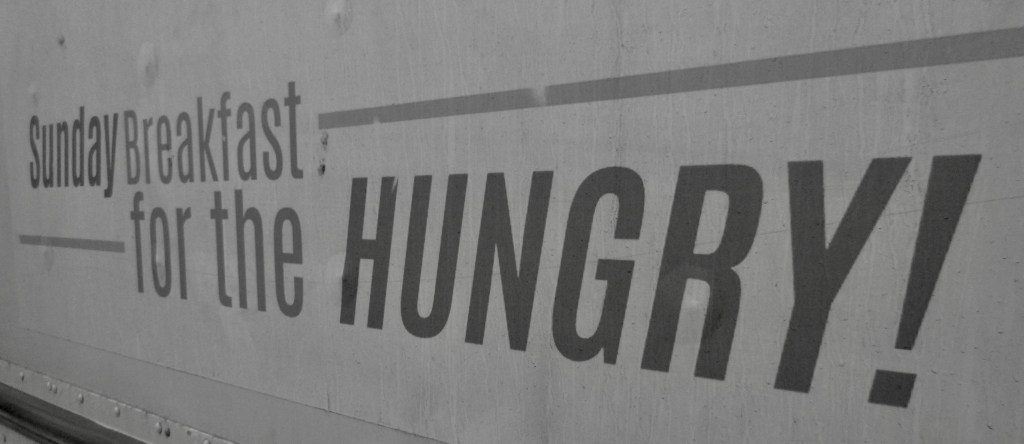
Kornei Chukovsky’s poem “To the Children of Leningrad” (1944), as published in the children’s magazine Murzilka in 1945. Source: dinasovkova (LiveJournal)
The years will speed past you, Year after year after year, And you’ll become old women and men.
Now you are towheaded, Now you are young, But then you shall be bald And grey.
And even little Tatka Shall someday have grandkids, And Tatka will put on big glasses And knit mittens for her grandchildren.
And even two-year-old Petya Will someday be seventy years old, And all the children, all the children in the world Will call him “old man.”
And his grey beard will Hang down to his waist.
Now, when you’re old women and men, Wearing those big glasses, To stretch your old bones You’ll go on an outing. (You’ll pick up your grandson Nikolka, say, And take him to a New Year’s party.)
Or, in that very same year, two thousand twenty-four, You’ll sit on a bench in the Summer Garden. Or not in the Summer Garden, but in some little square In New Zealand or America. It will be the same everywhere, wherever you go — Prague, The Hague, Paris, Chicago, Krakow. The residents will silently point at you And quietly, respectfully say:
“They were in Leningrad during the Blockade, Back in those days, you know, in the years of the Siege.”
And they’ll doff their hats to you.
1944
Translated by the Russian Reader. Thanks to Alexander Voitsekhovsky and Svetlana Voskoboinikova for the heads-up.
Actor Alexander Sushchik recites Kornei Chukovsky’s “To the Children of Leningrad”
Few people in Russia see the March 2024 presidential election as a real opportunity to change the country’s leadership. Voting in Russian elections has not been free and fair in recent times, and since the invasion Ukraine, the Russian regime has tightened the screws dramatically. There is no freedom of speech, people are persecuted for making anti-war statements, many opposition leaders and activists are in prison, and hundreds of thousands of people have fled Russia.
In January [2024], however, thousands of people unexpectedly showed up to sign petitions supporting the presidential candidacy of Boris Nadezhdin, a former State Duma deputy who entered politics in the 1990s. Nadezhdin is running under the slogan “End the special military operation.” Many people view endorsing Nadezhdin as a legal opportunity to voice their anti-war sentiments. Standing in long queues at signature collection points, people said they had come to see other people who thought like they did and voiced hope for change.
Their conversations are featured in Nadezhdin’s Queue, a film in Radio Svoboda’s documentary project “Signs of Life.”
[Ksenia] Sobchak: You want your children to live in a stable country without revolution?
[Chulpan] Khamatova: Without revolution. It could be some kind of changes in mindset. Without revolutions. I don’t want revolution. I’m categorical on this point, because the heads of completely innocent people fly in revolution and all these wars. I don’t think it’s right. Both sides have to do their utmost to avoid this.
Sobchak: But would you accept any compromise for the sake of avoiding revolution? Figuratively speaking, I don’t know whether you have any notion of geopolitics or not, whether you understand what’s happening in North Korea. People eat grass, and there’s a city within a city where officials live, while [ordinary] people live a completely different life without electricity. It’s just that I’ve been there, and so I know what I’m talking about. To put it starkly, which would you choose—living in a country like North Korea, for example, or revolution?
Khamatova: I would choose North Korea. I don’t want victims. It means that the people who oppose this regime lack certain tactics, know-how, and wisdom, that’s all.
Russian holiday-goers are set to be the first known tourists allowed into North Korea since it closed its borders as a pandemic response in early 2020. A five-day jaunt was arranged by an agency in Primorsky Krai after the eastern region’s governor visited the hermit kingdom’s capital for talks. The countries pledged closer ties after a series of meetings in September.
Friends, we apologize for replacing the video. The Zygar channel team reposted it due to a factual textual error, but the time codes remain the same.
Since I am a writer, I think that in the near future I will have to write a book which could be called The Empire Must Die, but only about another empire—Putin’s Russia.
And, of course, in this book one of the most important characters will be Chulpan Khamatova, the actress and co-founder of the Gift of Life charitable foundation.
She was one of the first to protest against the war with Ukraine and leave Russia.
Chulpan will talk about her life, starting the foundation, her encounters with Putin, and fighting for the lives of children, friends, and her own honor.
[…]
You can help children with cancer and donate an affordable amount to the Gift of Life Foundation: https://podari-zhizn.ru/ru.
00:00 – First meeting with Putin 09:57 – The germ of charity 13:30 – Anton Chekhov in the Kremlin 17:47 – Meeting Yuri Shevchuk 21:40 – The foundation’s first concert 24:31 – On medicine, doctors, and building a new hospital 26:41 – Putin and the PR move 30:22 – The Friendship Medal and the search for the missing money 33:20 – The relationship between Putin, the doctors and the clinic 36:53 – Canceling Matvienko and Gref’s speech 40:10 – Putin’s meeting with the creative intelligentsia 42:07 – Putin on democracy and freedom 45:24 – Chulpan, Putin, and the breast pump 48:48 – President Dmitry Medvedev in the lives of charitable organizations
49:44 – Medvedev’s meeting with foundations, the story about the hamsters and beads 1:01:51 – Putin’s election campaign 1:07:05 – “This clinic should be turned over to the doctors.” 1:09:57 – Decentralization of hospitals, opening the center in Yekaterinburg 1:14:50 – Bullying and depression 1:18:58 – “Chulpan chooses North Korea”: the problematic headline 1:25:50 – “If I chose North Korea, why didn’t I stay there?” 1:28:53 – Reorganizing the foundation”from a church into a McDonald’s” 1:31:32 – Unholy Chulpan and Dima Yakovlev’s Law 1:35:53 – One-on-one with Putin 1:44:23 – Petition for the annexation of Crimea 1:45:53 – Offer to become children right’s ombudsperson 1:54:44 – Kirill Serebrennikov and detention 2:01:22 – Last meeting with Putin 2:05:56 – “Should I be afraid?” 2:09:56 – War in Ukraine: 24 February 2023 2:16:23 – The difficulty of emigration
Grand Theft Auto aka Watch Out for Cars! (Eldar Ryazanov, 1966). In Russian, with English subtitles
The restoration of the film was performed by a team of professionals from Mosfilm’s Computer Graphics Group. Learn more at https://cg.mosfilm.ru
Film comedy. Insurance agent Yuri Detochkin—a completely wholesome and naive man—driven by a sense of justice, steals cars from people living on illegal income, sells them, and gives the profits to orphanages.
Director: Eldar Ryazanov Screenplay: Eldar Ryazanov and Emil Braginsky Film Score: Andrei Petrov Camera: Vladimir Nakhabtsev and Anatoly Mukasei Production design: Boris Nemechek and Lev Semyonov
Starring: Andrei Mironov, Oleg Yefremov, Anatoly Papanov, Lyubov Dobrzhanskaya, Innokenty Smoktunovsky, Yevgeny Yevstigneyev, Georgy Zhzhonov, Tatiana Gavrilova, Olga Aroseva, Gottlieb Roninson, Sergei Kulagin, Viktoria Radunskaya, and Boris Runge
The wife’s all-time favorite Soviet comedy and certainly well up there among my Top 10, Beregis/Auto has survived into the new millennium and continues to flourish as a New Year staple on Moscow TV—which is sorely strained these days to offer viewers something, indeed anything, to laugh about.
What strikes me today, while looking back at the mini-review below—in the role of a post-post-Soviet appraiser eyeing a post-Soviet impression of a mid-Soviet comedy—is not just how other-worldly both of these recent pasts can now seem (which of course they do), but how much the human mind (and heart) want to keep these eras, with their flawed but well-understood mores, sensibilities and now-appreciated modest virtues, from being erased altogether.
Because part of you, you recognize, goes off the chalk board with them—the part the new nihilists desperately want you to abandon as they clumsily and ahistorically attempt to redesign the past, social and political, to serve their nefarious present purposes.
Orwell was not only right, he was right twice, in stages. Put briefly, we need to remember both why Beregis/Auto worked so well when we first saw it—and then why it could still serve as an anchor in reality while a new generation of bad guys was busily turning their sad and saddening unreality into a Double Plus Good fake-reality that nobody could call out in public. And now decidedly can’t.
But praise be: Beregis/Auto is still there, on celluloid and on television, to remind Muscovites and everyone else that decency could and did appear and persist in consecutive yet differently indecent times—and can now raise our hopes that it will reappear as this dark period finally gives way to dawn.
Source: Mark H. Teeter (Facebook), 2 January 2024. Thanks to Mark for his kind permission to repost his somber New Year’s reflection and the eighth-year-old movie review (below) which prompted it on this website.
MOSCOW TV TONITE: The USSR’s Auto-Robbin’ Hood
Берегись автомобиля/Grand Theft Auto (USSR, 1966)(Dom Kino, 19:00)
If you get the joke at the heart of Beregis’/Auto, you get the Soviet Union, a society in which irony knew no limits and “found humor” was literally all around you, just daring you to laugh…which was the risky part. The movie is based on the jocular metaphor of a Soviet Robin Hood – a morally upright socialist citizen who is pursued by the police, naturally, for taking morality into his own hands: he steals cars from “bad people” (who make “illegal income”) and gives them to good ones (OK, orphanages).
With this suggestive premise E. Ryazanov began an unbroken string of 7 serio-comic Mosfilm hits that ran through Гараж/Garage (1979), with the latter affirming that even if you could steal automobiles in good conscience, as in Beregis’/Auto, there was still no safe place to park them!
The Ryazanov Septet corresponded with the onset, entrenchment and fossilization of late-Soviet Глубокий застой (“Deep Stagnation 9”) and neatly defined the predominant modi vivendi of High Brezhnevism – gaming the system and/or simple theft – but did so, remarkably, without getting the director incarcerated or, even curiouser, blackballed by Goskino. Eventually somebody’s dissertation will tell us why.
Beregis’/Auto was ER’s first collaboration w/ screenwriter E. Bagrinsky and one of the best: the two carefully crafted a “good-hearted saddening comedy” (“добрую, грустную комедию”) about two “friendly enemies,” one representing the state and the other the individual. They are doomed to find themselves eternally at odds, the viewer understands, as the social system they inhabit can’t cope with abstract legality any better than it can abstract art.
Yet however telling its plot and finely tuned its direction, Beregis’/Auto still wouldn’t succeed without its exceptional cast. The праведник-hero – a childlike naïf nicely dubbed Detochkin – is played by the only person who *could* have played him, in retrospect: I. Smoktunovsky, the actor of his generation, who could do (and did) everything from Chekhov to Shakespeare – indeed, he had just done his stunning turn as Hamlet for G. Kozintsev (Lenfilm, 1964) when Beregis’ came out, making the movie’s amateur play-within-a-film staging of the melancholy Dane a big “inside” joke that every contemporary Soviet viewer got immediately.
Supporting, indeed matching Smoktunovsky as Detochkin’s Inspector Javert is O. Efremov in one of the great roles of a great career, making you *believe* in a Soviet police detective who both does his job and regrets its consequences – the only appropriate response there was to the Detochkin case – and on whose office wall in place of the standard Dzerzhinsky photo hangs a picture of…Stanislavsky! Beyond these two beacons of Soviet cinema, Beregis’/Auto offers a collection of supporting players that’s hard to match in *any* film of its era: A. Papanov, A. Mironov, E. Evstigneev, G. Zhzhenov – even D. Banionis (later the hero of Solaris) has a cameo (undubbed) as a bribe-taking Baltic pastor!
Enough. Add Beregis’/Auto to your must-see list and tune it in this evening (or watch on YouTube below).
Oh, and some free advice: if you (try to) drive in the Greater Moscow area, remember to keep your nose clean and your car insurance paid up. If today’s anti-corruption Robin Hoods start stealing cars, there’s no guarantee they’ll distinguish between your Škoda and Alexei Miller’s Lamborghini.
Through a thick layer of snow in the forests of Russia, historian Yuri Dmitriev searches for unmarked and lost graves. His singular efforts have uncovered mass burial sites of those who were killed under Stalin’s “Great Terror” of 1937. With no help from official channels, he traces the dead and rescues their memory from the eternal doom of oblivion. Dmitriev’s riveting story is a tale of one man’s fight against the erasure of history by the state. – Bedatri D. Choudhury
Both screenings will be followed by a Q&A with director Jessica Gorter and cinematographer Sergei Markelov.
All in-person screening venues provide sound amplification headphones upon request with venue management. IFC Center can also provide a T-Coil loop for compatible devices.
Please join us next Wednesday night, November 15, for a screening of The Dmitriev Affair (2023 | 96 min | Netherlands) by Jessica Gorter, followed by Q&A with the director!
Our screening of The Dmitriev Affair at Hunter College CUNY takes place after its U.S. premiere at DOC NYC on Sunday and Monday, November 12 and 13! Please consider attending these earlier screenings, especially if you cannot make it to ours!
Thank you, as always, and see you soon!
Tamizdat Project
THE DMITRIEV AFFAIR Film screening and Q&A with the director Jessica Gorter Wednesday, November 15, 7 pm Elizabeth Hemmerdinger Center (709 Hunter East Building) Free and open to the public. RSVP required
The riveting story of Yuri Dmitriev is a tale of one man’s fight against the erasure of history by the Russian state. Deep inside the Russian forests, against the wishes of the authorities, 60-year-old Yuri Dmitriev searches for mass graves from the era of Stalin’s terror against his own people – until one day he is arrested and sentenced to 15 years in a penal colony. Following Yuri closely, the film paints a shocking picture of the way the Russian state rewrites history and treats its citizens.
Yuri Dmitriev exhumes what the Russian rulers would rather forget. After years of searching the pine forests of Karelia in northwestern Russia, he discovers a mass grave containing thousands of people who were secretly executed during Stalin’s “Great Terror” of 1937. It is not the Russian government but Yuri Dmitriev who tracks down their identities in the archives and organizes commemorations for their next of kin. Thanks to his efforts, they finally find out what happened to their lost relatives. Having himself been left at a maternity clinic as a baby, he is a man on a mission: “Every human being has the right to know where they came from and where their family lies buried.”
Trailer for “The Dmitriev Affair” (2023)
While abroad there is increasing recognition for this “archaeologist of terror,” in Russia Dmitriev is discredited as someone collaborating with the West. Then he is arrested, on basis of a fabricated charge. Tragically accurate Dmitriev predicts his own future and that of his country.
Jessica Gorter is a Dutch documentary filmmaker. She studied directing and editing at the Dutch Film and Television Academy in Amsterdam. Her films are screened worldwide at film festivals, theatrically released and broadcasted internationally. Gorter made her breakthrough with 900 Days (2011) about the myth and reality of the Leningrad blockade. The film won a.o. the IDFA Award for Best Dutch Documentary, the Prix Interreligieux at Visions du Réel and the special jury prize at ArtDocFest in Moscow. In 2014 Jessica received the prestigious Documentary Award from the Dutch Prince Bernhard Cultural Fund for her work. In her other feature-length documentary The Red Soul (2017), the director investigated why Stalin is still seen as a hero by so many Russians. With her latest documentary The Dmitriev Affair (2023) Gorter continues the theme of the films she has been making in Russia since the 1990s: laying bare the consequences for individual lives of the disintegration of the Soviet Union.
Directions: At the reception desk of the Hunter West Building, please present your ID to get a pass. From there, take the escalator to the 3rd floor, turn right and walk across the sky bridge to the Hunter East Building, then take the elevator to the 7th floor. Hemmerdinger Center is at the end of the hallway past the turnstiles.
I imagine that only this solution can give Palestinians their full basic rights. What is the one-state solution? It enables both Palestinians and Israelis to live in one democratic secular state where everyone has equal rights and is free to practice his or her beliefs. Israelis claimed that Palestinians would be a demographic threat under the one-state solution, as Jews would become the minority. But equal rights are the solution that guarantees the most rights and protections for all. After all, Jews, Christians, and Muslims lived together peacefully in Palestine in the past. And, after 1948, Christians, who are a minority compared with Muslims, lived peacefully together with Muslims.
It’s July 2050, one of the hottest summers ever in Gaza. I live in Beersheba now, my family’s original city, but I often travel to Gaza where my mother still lives. She decided to stay in Gaza. She owns a house there and is used to the atmosphere of Gaza. Yet she comes to visit from time to time. There is no military checkpoint and no apartheid wall. Travel between the two cities takes only one hour, not the many humiliating hours we endured when we lived under occupation and separation. I work now as a physiotherapist at a new hospital in Beersheba.
Gaza has all the infrastructure and facilities that it needs: fresh water, electricity, and natural gas. The employment rate increases as agriculture improves and farmers no longer fear Israeli bombs. There is free movement of imports and exports and of industrial goods. Also, the population of Gaza has decreased as many refugees returned to live on their original land. There’s a new geographical distribution. My friend returned to Haifa and works as a teacher at one of the government schools.
The medical situation in Gaza is at its finest, with an adequate number of facilities for the population as well as ample supplies and equipment. People no longer need to travel for medical treatment or die waiting to get permission from Israeli officers.
Democratic elections take place every four years. We are now preparing for a new legislative election. Palestinian and Jewish citizens elect representatives together. Electoral lists feature candidates from different backgrounds, religions, and ideologies. The atmosphere is democratic. There are diverse political, social, and religious views, and everyone respects others’ views and beliefs. I call this “normal diversity”: no group is superior to the other.
We have both an airport and a seaport. We don’t have to struggle at crossings. We can simply visit, move, and travel to any other city or country. Gaza lives like any other place in the world with opportunities for development and production. Palestine lives like any other country within the range of acceptable normal diversity. Each citizen is a first-class citizen, and everyone has equal rights.
Source: Basman Aldirawi, “Gaza 2050: Three Scenarios,” in: Jehad Abusalim, Jennifer Bing, and Michael Merryman-Lotze (eds.), Light in Gaza: Writings Born of Fire (Chicago: Haymarket Books, 2022). Still, above, from Nicholas Hytner (director), The History Boys(2006).
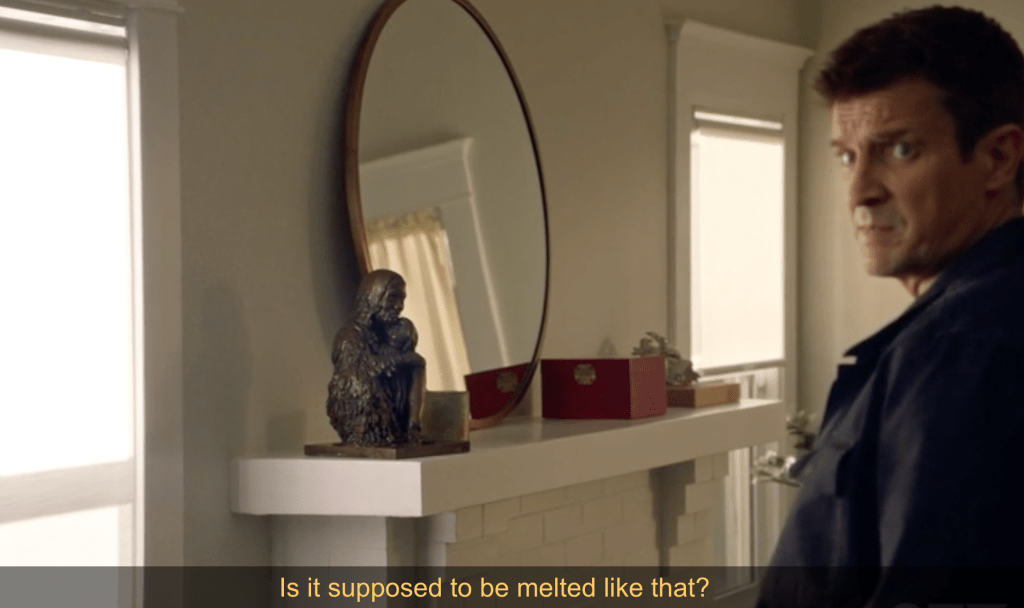
Professor Ryan mentions the events of May 13, 1985. On that day, about 500 police officers arrived at a row house at 6221 Osage Avenue in West Philadelphia to serve arrest warrants against several members of the militant black anarcho-primitivist group MOVE which has been called a terrorist organization by city officials and which had been in conflict with neighbors. After refusing to surrender to police, officers lobbed tear gas into the house and fired more than ten thousand rounds of ammunition in the house with residents returning gunfire. After a long standoff, the police commissioner ordered that the compound be bombed, in part because of fear there was a fortified gun bunker on the roof of the building. Six adults and five children died in the fire that followed.
In the aftermath of the bombing, the police and fire department let fires burn out of control for almost one and a half hours at the order of the Mayor which destroyed sixty-five houses in the neighborhood. Professor Ryan mentions that her grandmother’s house was one of those that was destroyed by these fires.
A commission instituted to investigate the events found that dropping a bomb on an occupied row house was unconscionable. While no one involved was criminally prosecuted, the city was later ordered to pay $1.5 million to the survivors of the bombing and $12.83 million to other residents displaced by the bombing and the fires. In November 2020, the Philadelphia City Council approved a resolution to formally apologize for the MOVE bombing.
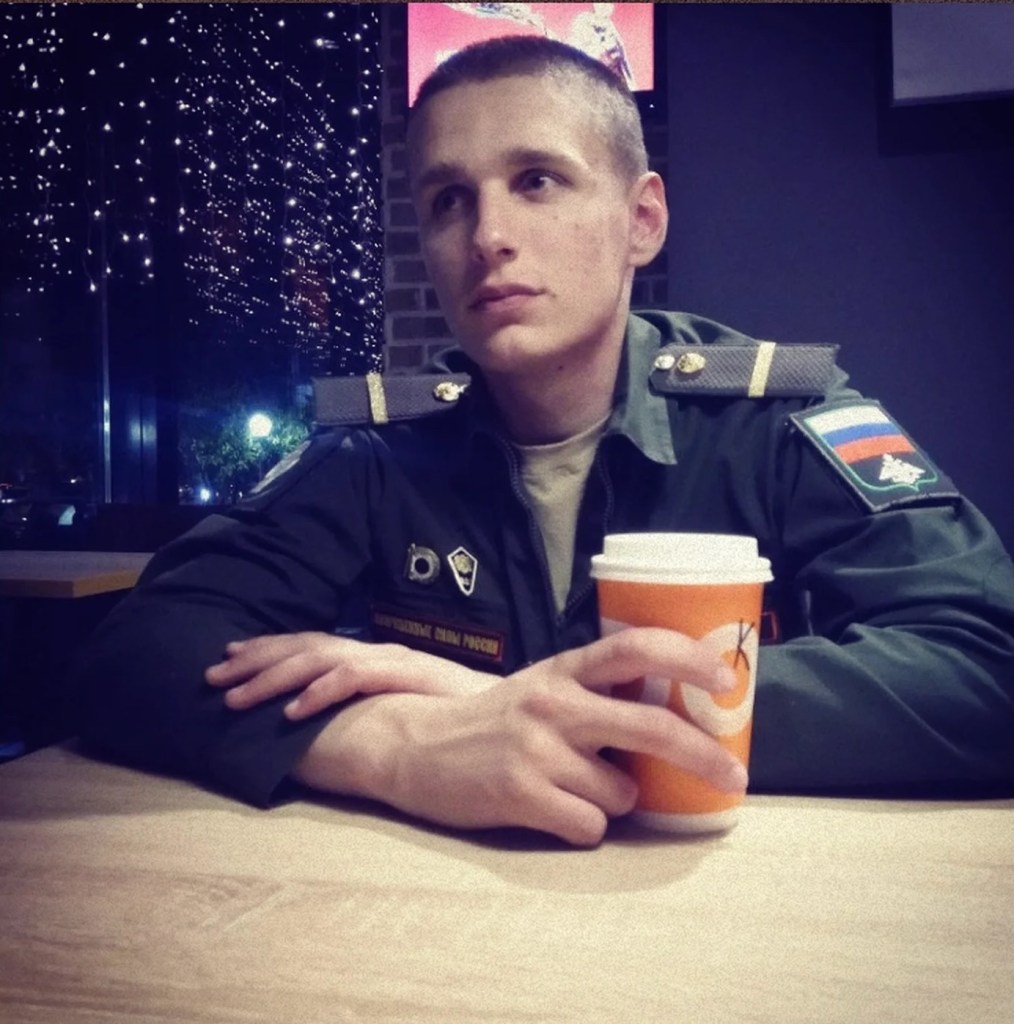
Daniil Bazel, candidate for the Zaporizhzhia regional Duma in Russian-occupied eastern Ukraine Social media photo via Important Stories
The Russian authorities plan to hold “elections” in the parts of Ukraine they have annexed—the parts of Kherson and Zaporizhzhia regions held by Russia, and the so-called people’s republics of Donetsk and Luhansk—on September 8–10. The “lawmakers” elected to the parliaments thus formed will appoint the heads of the regions and municipalities. Local residents will play no part in this process.
The “elections” will be held on the basis of party lists, which Important Stories and the Conflict Intelligence Team (CIT) perused together. On those lists we found collaborators, acting members of the Russian State Duma, corrupt officials, and even mobilized men. For example,
One of the candidates is State Duma member Igor Kastyukevich, who is running as United Russia’s number two candidate in the elections in the Kherson region. Kastyukevich has been implicated in the deportation of Ukrainian children to Russia. A year ago, he recounted how he had assisted in moving over fifty children from the Kherson Children’s Home to Crimea.
Roman Batrshin, the appointed head of the Zaporozhzhia regional court, is running for the Zaporizhzhia regional duma. Previously, Batrshin was acting head of the Smolensk court. He became a “local” in the occupied region quite recently.
When our correspondent called Batrshin’s number, the voice on the other end of the line sounded like Batrshin’s. When asked about the elections he said, “It’s not me you’re talking to. He’s not here.”
Among them is Daniil Bazel, a 23-year-old mobilized soldier. In Moscow, he worked in the one of the arms of the Russian National Guard, but is now trying his hand at entering the Zaporizhzhia regional “parliament.”
“I’ve decided to run because I’ve come to like the region a lot,” Bazel told Important Stories. “It has to be developed. I myself am a mobilized soldier. I spent eleven months in Zaporizhzhia and and now I am directly performing tasks related to the service in the Zaporozhzhia region [sic]. I saw it all from the inside and I wanted to help fix everything.”
It is apparent from the candidate lists that the main problem faced by the organizers of the “elections” was finding people willing to run. Thus, 27% of LDPR’s candidates are pensioners and housewives far removed from politics, while such people make up nearly half of the candidates on the CPRF and A Just Russia lists.
LDPR is also running several serial candidates, that is, people who have run in dozens of elections at various levels but who have never once been elected. But there is one federal politician on the LDPR list—party chair Leonid Slutsky, who is running simultaneously in all four occupied regions.
The General Radio Frequency Center, which is subordinate to Roskomnadzor, and the company Crib Room, which develops solutions for locating and analyzing destructive content on the internet, have drafted a white paper entitled “Russia’s Gaming Industry.” The authorities see online gaming communities as a channel for communicating with young people and “a tool for state information influence on society.” According to the paper, the state can use games “to promote political ideas, brands and attitudes among young people,” which may require the development of technological tools for working with gaming communities.
Market participants note that the authorities’ growing interest in the industry creates problems for companies negotiating with foreign studios to launch games in Russia. Foreign companies do not want to deal with excessive regulation and censorship. “The Russian market is already small in global terms, and foreign studios were beginning to restore a cautious interest in it, but [the Russian authorities] are trying to regulate it rigidly, while the economic feasibility of such an approach is not broached by the people behind the initiative,” stresses Vasily Ovchinnikov, CEO of VIDO [the Videogame Industry Development Organization].
Pacific Grove, California, 10 June 2023. Photo by the Russian Reader
Jose Martinez has lived and worked in the United States since he was 14 years old. Now 67, he drives around the Yakima Valley in Washington state checking on fellow workers.
“When it’s hot, do you have a place to protect yourself from the sun and heat?” he calls out to some workers on the side of an apple orchard on a sunny June morning.
Martinez worked in agriculture across the fields of California and, most recently, Washington state. Irrigation, grapes, apples, mushrooms, dairies and now cherries. He’s done a little bit of everything.
“I love the fields because you’re in the open air,” he told NPR in his native Spanish, sitting on the lawn outside his home in Sunnyside, Wash. “It’s beautiful. I am proud to do it, to be a farmworker. Why not?”
When people think of farmworkers, often they think of migrant workers and labor organizers like Cesar Chavez and Dolores Huerta. Now, they may add another name to those creating major changes in the farming workplace: Jose Martinez.
Over the past decade, Martinez has been central to two flagship lawsuits creating policy changes in the state — making Washington one of the leaders in providing overtime to farmworkers and settling acivil rights case in favor of workers. And recently, he has taken his fight to Washington, D.C., where he has pushed for an expansion of legal status and protections for farmworkers.
Federally, farmworkers are largely excluded from many federal workplace safety regulations. They don’t have a right to overtime pay or to unionize, and children as young as 12 can legally work in the fields. As a result, some states, like Washington, have extended additional rights and regulations.
The Nottingham Starbucks voted to join Starbucks Workers United in June 2022 — and Ms. Torregoza and her colleagues stepped into a world of trouble.
The corporate dirty war that ensued — in Nottingham and at newly unionized Starbucks cafes across the country — draws a sobering picture of employee rights casually crushed and labor laws too weak to help. Starbucks continues to fight and appeal the many labor complaints pending against it and maintains that the company has done nothing wrong.
But these professions of innocence are countered by piles of testimony from workers and National Labor Relations Board findings suggesting that Starbucks has indeed illegally repressed employees’ rights. The company has so far racked up a staggering number of complaints from the agency. In 100 cases, many of which consolidate a number of incidents, regional N.L.R.B. offices have decided there is sufficient evidence to pursue litigation against Starbucks. That includes a nationwide complaint, consolidating 32 charges across 28 states, alleging that Starbucks failed or refused to bargain with union representatives from 163 cafes.
Starbucks lacks the glamour of Hollywood and the indispensability of UPS, but as strikes and union drives erupt across the economy, the coffee workers’ struggle illuminates the stark and sometimes insurmountable challenges confronted by ordinary American workers who try to exercise their right to organize.
That Starbucks is carrying on this campaign in plain sight may be the most damning aspect: Union busting is illegal, but consequences are inconsequential. The Starbucks case demonstrates that a large corporation can effectively bust a union with time, by dithering over details and exhausting legal appeals. According to national labor laws, an employer “must bargain in good faith.” But that is a squishy and essentially unenforceable rule. Starbucks may yet succeed in smothering one of the most energized labor movements of our time.
The striking miners were 10,000 strong on the first day of September 1921 as they charged up the slope of Blair Mountain, propelled by a radical faith in the American dream. According to an Associated Press reporter who crouched behind a log and watched through field glasses, each time they pressed forward, a “veritable wall” of machine gun fire drove them back. As the barrage echoed through the hollows, reminding some of the action they had just seen in the forests of France, the advancing miners soon heard a different sound: deeper, earthshaking explosions. From biplanes above, tear gas, explosive powder and metal bolts rained down. “My God,” screamed one miner fighting his way up Crooked Creek Gap. “They’re bombing us!”
“They” were Sheriff Don Chafin and his deputies, who terrorized the citizens of Logan County, W.Va., by the authority of the coal companies. The miners vastly outnumbered their opponents, but Chafin had the superior position and weapons. “ACTUAL WAR IS RAGING IN LOGAN,” one local paper declared the day before.
The miners were fighting for the right to unionize, and to end the reviled “mine guard system,” a private force of armed guards who brutally enforced the company’s control in the coal fields. Unless the mine guard system was removed, John L. Lewis, president of the United Mine Workers of America, had warned, “the dove of peace” would “never make permanent abode in this stricken territory.”
On Sept. 4, federal troops arrived at Blair Mountain. The miners cheered, thinking Uncle Sam had come to liberate them from King Coal. Uncle Sam had no such plans. In 1921, about three million Americans were unemployed, and Washington was concerned that the industrial war raging in southern West Virginia could spread to other states. The troops told miners to stand down, and they did. “We wouldn’t revolt against the national government,” one of them said.
The miners were roundly defeated, but their struggle was not in vain: Years later, as part of the New Deal, the rights they were fighting for — including the right to collectively bargain — were written into law. Black, white and immigrant, the “Red Neck Army” (so named for the red bandannas they wore) had mounted the largest working-class uprising in U.S. history and the largest armed insurrection since the Civil War.
Today, Blair Mountain is just that: a mountain. While many battlefields are the object of exhaustive study and veneration — places and times when power wobbled and blood was shed — Blair Mountain is still largely unexplored. No statue or roadside attraction commemorates it; no tour buses roll up and disgorge visitors. Despite a burst of recent interest, for most West Virginians, the story of Blair Mountain barely even exists.
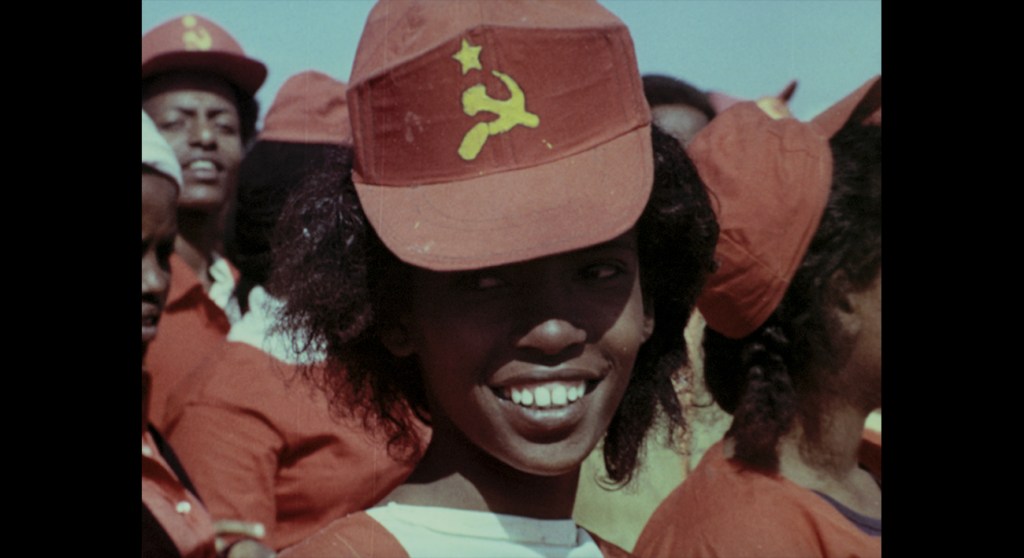
A still from Red Africa (Krasnaya Afrika, 2022), directed by Alexander Markov. Courtesy of Visions du Réel
In the 1960s, a wave of newly independent African states found themselves courted by a far-flung friend: the Soviet Union. Alexander Markov’s engrossing archival documentary, assembled from footage shot by Soviet crews between 1960 and 1990, charts the breadth of Moscow’s project to export socialism to the African continent. Red Africa threads dignitary visits, infrastructure projects, and Cold War–era cultural exchange into the excavation of a single soft-power machine, while also demonstrating the power of the cinematic image to propel myth-making at home up until the dissolution of the Soviet Union. Closer afield, We Love Life, which opens the screening program, revisits propaganda and home movie footage of the Spartakiads, a mass sporting event held in communist Czechoslovakia from World War II to the Velvet Revolution. Through the film’s kaleidoscopic editing, its scores of synchronized bodies vibrate as a site where ideology, collective memory, and personal experience converge.
We Love Life. 2022. Great Britain. Directed by Hana Vojáčková. North American premiere. In Czech, Slovak, English; English subtitles. 29 min.
Krasnaya Afrika (Red Africa). 2022. Russia/Portugal. Written and directed by Alexander Markov. North American premiere. In Russian, Portuguese; English subtitles. 65 min.
Thu, Feb 23, 4:30 p.m. • Introduced by Hana Vojáčková • MoMA, Floor T2/T1, Theater 2
Vsevolod Korolev in the dock at Vyborg District Court in Petersburg. Photo by Valentin Nikitchenko
An unexpected twist in the Vsevolod Korolev case
On January 12, Peterburg’s Vyborg District Court held a hearing on the merits of the criminal case against Petersburg documentary filmmaker Vsevolod Korolev. At today’s hearing, the complainant and prosecution witness Mikhail Baranov was cross-examined. It was Baranov who had requested that law enforcement agencies file criminal charges against Korolev.
Baranov unexpectedly changed his initial testimony, telling the court that he considered the posts by the accused “an expression of free speech,” and that he himself had “liked” Korolev’s posts to give them more publicity. The prosecution witness also said that the police had come to his home, and that he had been questioned at the police department about that very same “like.” It was only after this interaction that Baranov had filed the complaint, asking the authorities to determine whether Korolev’s posts constituted “disseminating fake news about the army.”
However, the interrogation record in the case file paints a different picture: according to it, Baranov had gone to the police himself. Korolev’s posts had, allegedly, angered him. Today, at the trial, Baranov said that he could not remember what his emotions were at the time, and that his opinion could have changed.
Vsevolod Korolev, a St. Petersburg poet and documentary filmmaker remanded in custody on charges of spreading ‘fake news’ about the Russian army, is a political prisoner. Until his arrest, Vsevolod Korolev supported people subjected to repression for anti-war statements: he made a documentary about those prosecuted and he called the war a war
The human rights project, ‘Political Prisoners. Memorial,’ considers Vsevolod Korolev a political prisoner in line with international standards. He is being prosecuted for posts on social networks. Korolev’s criminal prosecution violates his constitutional right to freedom of expression. His prosecution is intended to silence voices in Russia that oppose the war against Ukraine and to intimidate civil society.
We demand the immediate release of Vsevolod Korolev and the termination of all criminal prosecutions under the unconstitutional Article 207.3 of the Russian Criminal Code.
Who is Vsevolod Korolev and what are the charges against him?
Vsevolod Korolev, 34, is from St. Petersburg and in recent years he has been active in the city’s volunteer movement and engaged in civic activism. Korolev has worked as a volunteer with the Perspectives Charitable Foundation and the St. Petersburg Observers movement (which organizes independent election observation).
After the start of the full-scale Russian invasion of Ukraine in February 2022, Korolev became very active in the anti-war movement. On his social media pages he wrote about the crimes of the Russian military, attended the trials of those arrested on charges related to the war, collected donations of food and other necessities for those held on remand, and made documentary films about what was happening. For example, he made films about the prosecutions for ‘anti-war’ activities of the artist Sasha Skochilenko and the journalist Maria Ponomarenko.
On 11 July 2022, a criminal case was opened against Vsevolod Korolev on suspicion of disseminating information known to be false about the use of the Russian armed forces. The next day his apartment was searched and he was detained.
Korolev is accused of making posts in March and April 2022 on the VK social media site about the crimes of the Russian military in Bucha and Borodyanka near Kiev and about the shelling of Donetsk. Korolev subsequently confirmed he had made posts about the war in Ukraine, but maintained they contained no lies.
Korolev understood the risks of speaking out freely. ‘I refuse to not say the truth about things,’ he wrote on his social networks.
On 13 July, a St. Petersburg court remanded Korolev in custody, even though he has had his thyroid removed and needs regular medical examinations.
Korolev faces up to 10 years in prison if convicted.
Why do we consider Vsevolod Korolev a political prisoner?
Article 207.3 of the Russian Criminal Code criminalising dissemination of information known to be false about the actions of the Russian army contradicts the Russian Constitution, Russia’s international obligations and fundamental principles of law.
In particular, Article 19 of the International Covenant on Civil and Political Rights states: ‘Everyone shall have the right to freedom of expression.’ Restrictions on the exercise of these rights ‘shall only be such as are provided by law and are necessary: (a) For respect of the rights or reputations of others; (b) For the protection of national security or of public order (ordre public), or of public health or morals.’ Such norms are also contained in Article 29 of the Russian Constitution. The restrictions on freedom of expression introduced by Article 207.3 of the Russian Criminal Code serve none of these purposes and are a form of censorship. This is all the more so given that, in the course of an armed conflict, it is not always possible to establish the accuracy of statements made by the parties to the conflict, and the Russian authorities hold simply that official reports by the Russian Ministry of Defence should be considered reliable.
Article 207.3 of the Russian Criminal Code was specifically created as an instrument for the prosecution of critics of the Russian authorities and criminalises any statements about the use of the Russian armed forces abroad. This has already been confirmed in practice. Under this article, people are more often prosecuted not even for statements of fact but for expressing their opinions and personal attitudes. At the same time, the prosecuting authorities ascribe to many of those prosecuted, like Vsevolod Korolev, the subjective motive of ‘political hatred,’ which significantly increases the potential penalty.
A more detailed description of this case and the position of the Human Rights Project can be found on our Telegram channel.
A full list of political prisoners in Russia can be found on our temporary website.
Recognition of an individual as a political prisoner does not imply the ‘Political Prisoners. Memorial’ project agrees with, or approves of, their views, statements, or actions.
How can you help?
You can send letters to the following address:
In Russian: 196655, г. Санкт-Петербург, г. Колпино, ул. Колпинская, д. 9, ФКУ СИЗО-1 УФСИН России по СПб и ЛО, Королёву Всеволоду Анатольевичу 1987 г. р.
In English: Vsevolod Anatolievich Korolev (dob 1987), Remand Prison No. 1 of the Federal Penitentiary Service of Russia for St. Petersburg and Leningrad Region, 9 Kolpinskaya Street, Kolpino, St. Petersburg, 196655, Russia.
Source: “‘Political Prisoners. Memorial’: St. Petersburg poet and documentary filmmaker Vsevolod Korolev is a political prisoner,”Rights in Russia, 10 October 2022. As I have pointed out in previous posts on Russian anti-war protesters and political prisoners, Russian remand prisons and penal colonies only accept letters written in Russian, and the federal penitentiary service’s FSIN-Pismo service and Zonatelekom are only accessible to residents of the Russian Federation. It’s also almost a certainty that YooMoney, another Russia-based service, will not accept money from non-Russian bank cards. ||| TRR
Eleven years ago, on December 16, 2011, the bloodiest page in the history of independent Kazakhstan was written. A months-long strike by oil workers in Zhanaozen ended when police shot the unarmed strikers in the city’s central square. For another three days, the police and the army terrorized the local population.
In this documentary film, Just Journalism has reconstructed the chronology of those tragic days. Oil workers who survived the massacres, relatives of the victims, local residents, eyewitnesses, and people who were directly involved in the events in Zhanaozen in December 2011 talk about the fear and hatred that have settled on this city in western Kazakhstan since then.
The film features unique footage and eyewitness testimony.
Just Journalism is a nonprofit project by the journalists Lukpan Akhmedyarov and Raul Uporov. They strive to answer not only the questions who, what, where, and when, but above all the questions, Why is this happening? What does it mean?
Just Journalism is a nonprofit project. There are no advertisements, promotions, or product placements in our videos, which you can watch for free. If you want to support us you can do so by donating money over the phone on +7 775 570 59 20 or to Kaspi Gold card number 4400 4301 0175 8271.
In Kazakh and Russian. Translation from the Russian and English subtitles by Thomas H. Campbell