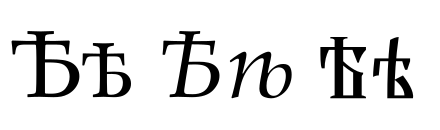
More on grammatical gender.
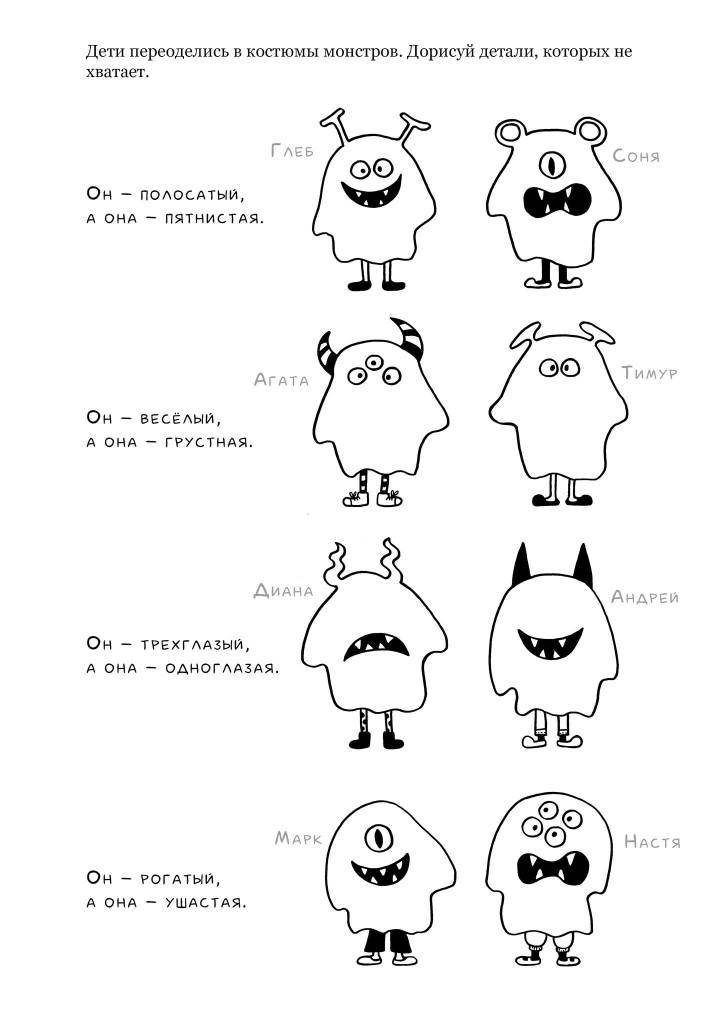
The kids dressed up in monster costumes. Draw in the details that are missing.
He’s striped and she’s spotted. (Gleb and Sonya)
He’s cheerful and she’s sad. (Agata and Timur)
He’s three-eyed and she’s one-eyed. (Diana and Andrei)
He’s horned and she’s big-eared. (Mark and Nastya)
Source: Natalia Vvedenskaya (Facebook), 20 August 2024
I’d like to say I was first drawn to Russia by a fascination with late Soviet politics under Gorbachev, or the great works of Russian literature. But for me the initial interest was the language itself, as taught by an eccentric but effective teacher called Mr Criddle. Short and bearded, even a little gnome-like, he usually dressed in sandals and socks and ran his classes at Worcester Sixth Form College with old-fashioned discipline. Before we started the course, he had handed out copies of the thirty-three character Cyrillic script at our college open day with instructions to learn it or not bother turning up for class.
Mr Criddle had learned his own Russian in the mid-sixties at the Liverpool College of Commerce, taught by a graduate of a Cold War creation known as the Joint Services School for Linguists (JSSL). The JSSL had taken around 5,000 conscripted men from military boot camps in the 1950s and produced a whole generation of Russianists. The kadety, as the students called themselves, were trained to be high-level interpreters, ready to interrogate Soviet prisoners, decipher classified documents and run counter-propaganda operations should the USSR ever invade. As it never did, many ended up teaching the language in UK universities and schools.
The JSSL method was fast, deep and tough, with heavy emphasis on repetition and rote-learning. Its students had a skukometer, a made-up word from the Russian for boredom, to measure how brain-numbing a class was, and I would come to know how they felt. Mr Criddle had picked up the JSSL military style from his own teacher. Ignoring any official syllabus, he had a giant library of homemade flash cards which he used to drill us relentlessly. He’d cut all the images out of magazines and glued them to one side of the cards, writing the correct adjective endings or verb declensions on the back. He kept them in recycled envelopes at the back of the room. It was the exact opposite of how I’d learned French and German, where we chose a ‘foreign’ name and then role-played trips to the bakery or camp-site shop. For Russian, Mr Criddle had us create our own carefully indexed grammar books and then he dictated every page. It was a whole year before we learned anything practical like how to introduce ourselves perhaps partly because no one was planning a summer holiday in the Soviet Union, but we could soon form the genitive plural in our sleep.
Source: Sarah Rainsford, Goodbye to Russia (2024)
Watch Nonso Anozie read from Booker Prize 2024-shortlisted James, written by Percival Everett.
The story so far: It’s 1861 and Jim, a slave and soon-to-be companion of Huckleberry Finn on a dangerous journey along the Mississippi River, is a man driven by a fierce instinct to survive and to protect his family. This includes teaching his own and other children the behavioural and language skills needed to avoid antagonising the white people who have made their lives hell.
Source: The Booker Prizes (YouTube), 12 October 2024
All traces of Ukraine are being expunged. Schools have switched to the Russian curriculum, and Russian youth and paramilitary organisations work in the territories. Repression combined with Russification aims to transform the social and political fabric of the territories, says Nikolay Petrov, the author of a new report for the German Institute for International and Security Affairs.
Source: “Kremlin-occupied Ukraine is now a totalitarian hell,” The Economist, 10 November 2024
Source: Rotten Tomatoes Coming Soon (YouTube), 18 October 2024
“I dreamed that I was talking in my dream and to be safe was speaking Russian. (I don’t speak any Russian, and also I never talk in my sleep.) I was speaking Russian so that I wouldn’t understand myself and no one else would understand me either.”
Source: Charlotte Beradt, The Third Reich of Dreams: The Nightmares of a Nation, trans. Damion Searls (Princeton UP, 2025), quoted in Zadie Smith, “The Dream of the Raised Arm,” New York Review of Books, 5 December 2024
