El lector ruso: Darle la espalda a la propaganda (Valeria Zotova)

Valeria Zotova

Darle la espalda a la propaganda

¿Cómo es la vida cotidiana en un campo de prisioneros? Significa, sobre todo, trabajar, actividad repetitiva y agotadora. Significa dormir un sueño intermitente, ya que, a veces, las inspecciones son cada dos horas. Y significa pasar tiempo con personas a las que no te acercarías por tu propio deseo. Los guardias se aseguran de agobiar a los presos para que no tengan nada propio, para que no tengan tiempo para pensar en nada, para que estén completamente subordinados a quienes mandan. El objetivo de la “reeducación” en los campos de prisioneros es el mismo: doblegar la voluntad de los prisioneros, convertirlos en obedientes máquinas que obedezcan todas las órdenes de sus superiores.

Esto se cumple sobre todo con los presos políticos, quienes piensan con independencia y tienen sus propios principios. La misión principal de los guardias es conseguir la sumisión voluntaria, dichosa y proactiva de los presos políticos. Pero los guardias rara vez tienen éxito en esta misión.

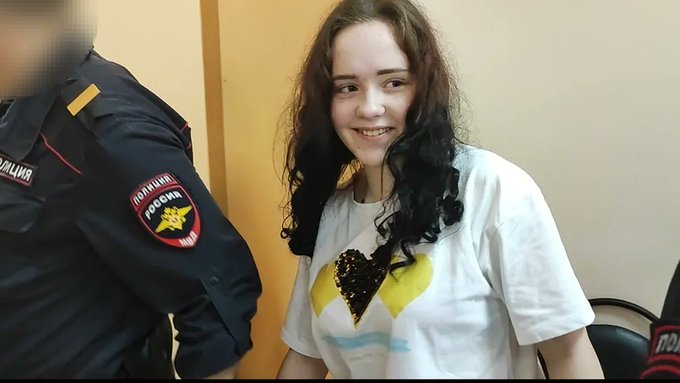
Con Valeria Zotova, presa política de la Colonia Penal n.º 3 de Kostromá, han fracasado estrepitosamente. Los guardias insistentemente le han ofrecido una vía de redención: cooperar con las autoridades y participar en la vida cívica. Zotova la ha rechazado.

Recientemente, el club del campo de prisioneros proyectó una película de propaganda rusa titulada “Callsign: Passenger”. En Wikipedia se describe así el filme: “La película está ambientada en 2015. El protagonista es Nikolai Ryabinin, un escritor moscovita de moda y fiestero despreocupado. Su hermano, voluntario en la guerra en el Donbás, ha desaparecido. Nikolai va en busca de su hermano y se une a una unidad separatista, el Batallón Aurora, en el que su hermano sirvió anteriormente. Allí, recibe el irónico apodo de “Pasajero” (Passenger) y, bajo el liderazgo del comandante (callsign: Trigger), repiensa su propia vida y se une a los separatistas”.

Esta pieza de propaganda carente de imaginación está basada en una novela de Alexander Prokhanov, El asesinato de las ciudades. Es, por supuesto, basura barata, tanto como el propio escritor, pero los convictos están obligados a beber este cóctel cinematográfico hasta la última gota. Todos son arreados al club. Zotova se niega a ir. En última instancia es su derecho decidir si ve la película o no. ¡Pero qué importan los derechos cuando se trata del patriotismo ruso! Zotova es llevada a la fuerza al auditorio. Observen nuestro arte: ¡miren el talento de los cineastas que lo crearon, los actores que lo protagonizaron! Pero Lera Zotova le da la espalda a la pantalla y no ve la película.

Darle la espalda a la propaganda es simple, simple pero peligroso. La presión sobre Valeria continúa sin cesar. El acoso ha sido incesante. Los guardias llamaron a una amiga de Zotova y le espetaron: «Libertad o Zotova, tú eliges». Han intentado crear un vacío en torno a la presa política, privándola de todo contacto con sus allegados. La joven tiene veintiún años, pero ha sido acosada como una criminal avezada. Porque, según las autoridades penitenciarias, debería ser como todos los demás: obediente, involucrada en la vida cívica del campo de prisioneros, en obras de teatro, cumpliendo con las cuotas de producción y no arrogante para con sus superiores.

Fuente: Alexander Podrabinek (Facebook), 24 de agosto del 2025. Gracias a VA por ponernos al tanto. Traducido al inglés por The Russian Reader y al español por Hugo Palomino

Turning Her Back on Propaganda: Valeria Zotova

Valeria Zotova

Turning Her Back on Propaganda
What does daily life consist of in a prison camp? It consists of work, of course, work which is dull and exhausting. It consists of sleep, which is fitful, as sometimes there are inspections every two hours. And it consists of spending time with people whom you didn’t choose to spend time with. The wardens make sure to burden convicts so that they have nothing that is theirs alone, so that they have no time to think about anything, so that they are entirely subordinate to the powers that be. The goal of prison camp “re-education” is the same: breaking the will of the prisoners, turning them into obedient robots who obey all the orders of their superiors.

This is especially true for political prisoners—people who think independently and have their own principles. The overarching mission of the wardens is to attain voluntary submission, joyful and proactive submission, from political prisoners. But the wardens rarely succeed in this mission.

They have utterly failed with Valeria Zotova, a political prisoner at Kostroma Penal Colony No. 3. The wardens have insistently offered her a path to redemption, that is, cooperating with the authorities and taking part in “civic life.” Zotova has turned it down.

Recently, the prison camp’s club showed a movie, a Russian propaganda film titled Callsign: Passenger. Here is what Wikipedia says about the movie: “The movie is set in 2015. The movie’s main character is Nikolai Ryabinin, a trendy Moscow writer and carefree party animal. His brother volunteered for the war in Donbass and has gone missing. Nikolai goes looking for his brother and joins a separatist unit, the Aurora Battalion, in which his brother previously served. There, he gets the ironic nickname “Passenger” and under the leadership of the commander (callsign: Trigger) reevaluates his own life and comes to support the separatists.”

It’s an unimaginative piece of propaganda based on Alexander Prokhanov’s novel The Murder of Cities. It’s cheap trash, of course, like the writer himself, but the convicts are obliged to drink this cinematic concoction down to the dregs. All of them are herded into the club. Zotova refuses to go. Ultimately, it’s her right to watch the movie or not. But what do rights matter when it comes to Russian patriotism! Zotova is forcibly escorted into the auditorium. Watch our high art: look what talented filmmakers made it, what actors starred in it! But Lera Zotova turns her back on the screen and looks the other way.

Turning one’s back on propaganda is simple—simple but dangerous. The pressure on Valeria continues unabated. The harassment has been endless. The wardens summoned a friend of Zotova’s and stipulated to either: “Either freedom or Zotova—you choose.” They have been trying to create a vacuum around the political prisoner, depriving her of contact with those who are close to her in any way. The young woman is twenty-one years old, but she has been bullied like a hardened criminal. Because, as prison authorities envision it, she should be like everyone else: obedient, involved in the prison camp’s civic life, acting in plays, fulfilling the production quotas, and not smarting off to her superiors.

Source: Alexander Podrabinek (Facebook), 24 August 2025. Thanks to VA for the heads-up. Translated by the Russian Reader

Who Is Valeria Zotova?

Valeria Zotova
Photo courtesy of Solidarity Zone

Who is Valeria Zotova?

On June 28, Valeria Zotova, a 19-year-old woman from Yaroslavl, was found guilty of “plotting to commit a terrorist act” (per Article 30.1 and Article 205.1 of the Russian Federal Criminal Code). Zotova will spend six years in prison because of the “experiments” that the FSB (the Russian Federal Security Service) conducts on people.

According to police investigators, Zotova wanted to set fire to a warehouse where “aid” was collected for Russian servicemen fighting in the war against Ukraine.

In the video footage of her arrest, Zotova is pulled from the passenger seat of a car by masked men. However, the other people in the car were apparently not touched.

Prior to this, a certain “Andrei” had for a long time been writing to Valeria, claiming that he lived in Ukraine. In the letters, he asked Valeria to perform “missions” for him. She refused and showed the exchanges with “Andrei” to her mother. After some time, Andrei’s “girlfriend” “Karina” started writing to Valeria in VKontakte. According to Valeria’s mother, “Karina” harassed her daughter, constantly writing and calling her, and urging her to commit arson. When Valeria was detained, “Karina” was in the vehicle with her, but “Karina” was not charged in the case.

It transpired that “Andrei’s girlfriend” was an FSB officer and a secret witness. At one of the hearings in Valeria’s trial, “Karina” openly stated that it was all a “crime re-enactment” [sledstvennyi eksperiment, which translates literally as “investigative experiment”—TRR] Although the FSB chose not to conceal its actions, this had no effect on the verdict.

The defense provided the court with obvious evidence of Valeria’s innocence, namely, her correspondence with Karina, in which Valeria repeatedly refuses to commit arson.

Despite the fact that the court did admit this evidence into the case file and “weighed” it, Valeria was found guilty on the charges. Instead of the eight years of imprisonment requested by the prosecutor, the court sentenced Valeria to six years.

Valeria’s lawyer has appealed the verdict, so we can look forward to an appeals hearing in the future.

We wrote recently about why the appeals process is so important.

On the outside, Valeria worked very hard, almost seven days a week. In her spare time, she drew and beaded. In winter, she skated whenever possible. She adores doing crosswords and other such puzzles. She is an extraordinarily upbeat and resilient young woman who always succeeded at whatever she undertook.

A drawing that Valeria Zotova sent from the pretrial detention center in Yaroslavl
Courtesy of Solidarity Zone

Valeria is currently in custody at the Yaroslavl pretrial detention center. You can show your solidarity and support by sending her a letter. She is always glad to get them and expresses her gratitude for all the support.

💌📦 Address for letters and parcels:

Zotova Valeria Igorevna (born 2003)
10 ul. Portovaya nab., SIZO-1
Yaroslavl 150001 Russian Federation

You can also send her letters via FSIN-Pismo and Zonatelecom.

Solidarity Zone is supporting Valeria Zotova.

#wewriteletters

Source: Solidarity Zone (Telegram), 14 August 2023. Thanks to Simon Pirani for the heads-up. Translated by the Russian Reader. People living outside of Russia will find it difficult or impossible to send letters to Russian prisons via the FSIN-Pismo and Zonatelecom services or regular mail. In many cases, however, you can send letters (which must be written in Russian or translated into Russian) via the free, volunteer-run service RosUznik. Ms. Zotova has not yet appeared on their list of supported addressees, however. You can write to me (avvakum@pm.me) for assistance and advice in sending letters to her and other Russian political prisoners.

Valeria Zotova: Framed

Valeria Zotova

Defense appeals Valeria Zotova’s verdict

On June 28, the 2nd Western District Military Court sentenced nineteen-year-old Valeria Zotova to six years in prison in a criminal case fabricated by the FSB.

The court has not yet provided a copy of the verdict to either Valeria or her lawyer. Therefore, the lawyer could not prepare a full-fledged appeal. But he did file a brief complaint to meet the deadline: an appeal must be filed within fifteen days of the date of sentencing.

The appeals process is a very important component of legal proceedings. Until the appeals stage has been completed and the sentence comes into force, there is hope that the verdict will be reversed or changed and Valeria will not be sent to a penal colony at this time.

You can always support Valeria by writing her a letter or sending a parcel.

💌📦 Address for letters and parcels:

Zotova Valeria Igorevna (born 2003)
10 ul. Portovaya nab., SIZO-1
Yaroslavl 150001 Russian Federation

Solidarity Zone is supporting Valeria Zotova.

#politicalprisoners#crackdown#solidarity#fsb#fsblawlessness#provocation#yaroslavl#no war#wewriteletters

Source: Solidarity Zone (Facebook), 16 July 2023. Translated by the Russian Reader. People living outside of Russia will find it difficult or impossible to send parcels to Russian prisons or to use the FSIN-Pismo and Zonatelecom services to contact Russian political prisoners. In many cases, however, you can send letters (which must be written in Russian or translated into Russian) via the free, volunteer-run service RosUznik. As of this writing, Ms. Zotova has not appeared on their list of supported addressees. You can also ask me (avvakum@pm.me) for assistance and advice in sending letters to her and other Russian political prisoners.


Valeria Zotova, 19, from Russia’s Yaroslavl has been sentenced to six years behind bars for plotting to set a military aid collection point on fire, Solidarity Zone reports.

The woman was found guilty of attempted “terrorist attack”. The state prosecution wanted eight years in prison for Zotova.

“However, the case materials, correspondence received by the lawyer and Valeria’s own words indicate that the case was a provocation staged by the FSB, whose agents actively persuaded the woman to set the aid collection point for the Russian military ablaze. Zotova may have attracted the attention of the special services due to her anti-war stance,” human rights activists said.

A criminal case against Zotova was opened in February. The woman went for a walk with her friends in mid-February. Later that night, law enforcers showed up at her place for a search without any explanation. During the search, the detainee’s mother was threatened with promises to make her a suspect in her daughter’s case for “participating in anti-war rallies”. She denies these accusations: despite her anti-war views, she did not participate in rallies against the Ukraine war. The news emerged later that Valeria was held in a detention centre in Yaroslavl.

In April, Russian authorities placed Valeria’s mother Svetlana Zotova on the extremist list. The woman had previously been charged with “calls” to commit terrorist and extremist actions. The charges stemmed from comments allegedly posted by Svetlana Zotova on Telegram channels. The woman was prohibited from leaving the country. She could face up to ten years in prison on the charges.

Source: “Russian Valeria Zotova sentenced to six years in prison for attempting to set military aid collection point on fire,” Novaya Gazeta Europe, 28 June 2023

“Terrorist” (The Case of Valeria Zotova)

Valeria Zotova is a new prisoner of Putin’s regime

19-year-old Valeria Zotova was detained in the wee hours of February 17. She is accused of planning to set fire to a warehouse from which supplies are sent to military personnel involved in the war against Ukraine. According to the security forces, the young woman has been charged with committing a “terrorist act” (per Article 205 of the Russian Federal Criminal Code).

You can support Valeria Zotova right now by writing her a letter!

💌 Address for letters:

Zotova Valeria Igorevna (born 2003)
53 ul. Portovaya nab., SIZO-1
Yaroslavl 150001 Russian Federation

(It is possible to send letters via the electronic services FSIN-Pismo and Zonatelecom.)

Source: Solidarity Zone (Facebook), 21 February 2023. Translated by the Russian Reader. Thanks to Sergey Ogurtsov for the heads-up. People living outside Russia will find it difficult or impossible to use the FSIN-Pismo and Zonatelecom services. In many cases, however, you can send letters (which must be written in Russian or translated into Russian) via the free, volunteer-run service RosUznik. As of this writing, however, Ms. Zotova has not appeared on their list of supported addressees. You can also ask me (avvakum@pm.me) for assistance and advice in sending letters to Russian political prisoners.


The Yaroslavl District Court has remanded in custody 19-year-old Valeria Zotova, accused of attempted terrorism (per Article 30.3 and Article 205.1 of the Russian Federal Criminal Code), reports TASS, citing the press service of the Yaroslavl Regional Court.

A day earlier, Zotova’s mother told OVD Info that her daughter had left the house on the evening of February 16, saying that she was going for a walk with friends, but did not return home. At about one o’clock in the morning, security forces came to search the Zotov home. The officers did not identify themselves and did not state the grounds for their investigation.

The young woman was taken to Yaroslavl’s Pretrial Detention Center No. 1. On February 20, a Telegram channel linked to the local security forces posted a video of Zotova’s arrest. The report said that she had been charged with terrorism (per Article 205.1 of the Criminal Code). If convicted on this charge, she could face between ten and fifteen years in prison.

Following the footage of the detention, a “confession” appears on the video: Valeria Zotova says that she transmitted information, coordinates and photos of a building for a monetary reward. According to her, [the people who paid her the money] “wanted to set fire to this building,” in which “parcels for the mobilized are collected and sent to Donbas.”

Svetlana Zotova said that in October of last year she herself had been fined for “discrediting” the army (per Article 20.3.3 of the Administrative Offenses Code) over a “No war” message, graffitied on a local kiosk. During the search, the security forces threatened to make her a suspect in her daughter’s case, claiming that she had been involved in anti-war rallies. The woman stated that she was not involved in anti-war protests, despite her views. Before the invasion of Ukraine, she had picketed in support of politician Alexei Navalny and the Khabarovsk protesters.

Source: “Court in Yaroslavl remands 19-year-old woman in custody for two months on terrorism charges for ‘attempted arson’ of collection point for the mobilized,” Current Time, 22 February 2023. Translated by the Russian Reader