Me Talk Pretty One Day

67392734_2292618164188215_3196602514246783151_nPopular Russian blogger Dr. Philipp Kuzmenko might style himself the Russian “Doctor Phil,” but the title of his new book admirably owes nothing to modern English. Image courtesy of Feedler

The wholesale destruction of the Russian language at the hands of intellectuals and hipsters trying to look more worldly than they really are is not distressing only because what they do to their mother tongue looks and sounds awful and needless, but also because they pilfer the most threadbare, unattractive bits of modern English to gussy up their own perfectly pedestrian thoughts, e.g.,

В школьников по-прежнему запихивают объем информации, а сегодня надо учить компетенциям, трекам, по которым ребенок сможет добывать знания сам.

Schoolchildren are, as before, crammed with a volume of information, but today it is necessary to teach competencies, tracks with which the child will be able to obtain knowledge himself.

This is not the most egregious example I could find (it popped up on my Facebook newsfeed a few minutes ago), but it nicely shows the kind of wild register switching that happens when people talk and write like this.

There are at least three registers in the sentence quoted above: colloquial Russian (“crammed,” “schoolchildren”), bureaucratese (“as before,” “volume,” “information,” “obtain”), and avoidable, undigested Anglicisms (“competencies,” “tracks”).

Topping this progressivist cake is the cherry of Russian’s inbuilt sexism, if we can call it that, which means that a “child” is always a “he,” not a “she” or “it” or “they.”

Sometimes, the outcome of this permanent mental confusion is almost worthy of the greatest Russian literary register switcher of all time, Andrei Platonov. But he was making a very big tragicomic point, unlike his tin-eared descendants, who are unconsciously turning his uncanny nightmares into linguistic norms.

Why should this bother me, a non-native Russian speaker? Because I work as a translator. Much of the stuff I translate, nearly all of it written by highly educated, extraordinarily well-read Russians, resembles the hodgepodge quoted above, although it is usually even more unintentionally funny, chockablock with so many half-baked, misunderstood Anglicisms that I could think the authors were pulling my leg.

In fact, they are deadly serious.

To spare my readers the same sense that the writers are having a laugh at their expense, I have to translate their hipster worldliness signaling into what they might have said had they been real English speakers with no penchant for tiresome jargon and bureaucratese.

Does this mean I translate their “I’m so clever I’m also thinking in English as I write this” Russian into idiomatic Russian before translating it into real English?

Of course not. But in this case, I could venture such a translation, just for fun.

Мы все еще запихиваем в школьников большие куски информации, но сегодня мы должны учить их умениям, способам, с помощью которых они могли бы учиться сами.

It’s hardly perfect, but at least I used twenty-four Russian words—and one foreign borrowing, naturalized ages ago—to say what a native Russian speaker wanted but failed to say.

Tellingly, Yandex Translate had no trouble translating my hasty rewrite into perfectly decent English.

We still cram large chunks of information into schoolchildren, but today we have to teach them skills, ways in which they could learn for themselves. // TRR

I Have No Idea What I’m Talking About, But I’m Famous, So It Doesn’t Matter

vadim f. lurie-10 august-fuck offOne of the many young people in Russia who, according to Anne Applebaum, are leading the latest tiny, Moscow-centered pro-democracy movement there. The slogan on his t-shirt reads, “Fuck off.” Photo by Vadim F. Lurie, who captured this image during the “authorized” fair elections march in Moscow on August 10, 2019.
What was I just saying about leaky arguments on behalf of Russia’s courageous but incredibly tiny fair elections movement?

I always had famous Anne Applebaum pegged as a real Russophobe, not a fake one like me, someone who has constantly run afoul of the liberal and leftist Russia discourse police and been crossed off their Christmas card lists many times over. But it turns out Applebaum is such a “Russophile” she is ready to turn reality on its head by comparing the truly grassroots, popular, massive, well-organized pro-democracy movement in Hong Kong with the minuscule ragtag non-movement in Russia.

In Russia, where propaganda also attacks the West and derides democracy as chaotic and anarchic, protesters have focused very directly on the most fundamental of democratic institutions: they are demanding the right, simply, to vote for independent candidates in local elections. Just as in Hong Kong, Russian protests are being led by younger people [sic], none of whom can remember any other leader except Vladimir Putin: “I am 20 years old, and in my entire life there has not been a single day of freedom,” one of them told reporters, according to Meduza, an independent website that covers Russia. They, too, are well organized, using up-to-the-minute apps to keep in touch with one other, deploying a phalanx of lawyers and a carefully planned social media campaign [sic]. Like the young Hong Kongers, young Russians aren’t just dedicated; they are organized, thoughtful and well prepared [sic].

There are some obvious explanations for this East-West paradox. Clearly, the inhabitants of stable democracies find it hard to appreciate what they have: “You don’t know what you’ve got ’til it’s gone” isn’t just a song lyric; it’s an expression of something fundamental about the human brain. Like wealth or health, political freedom may simply be something that people don’t value if they’ve always had it [sic].

But it may also be that the young protesters of Russia and China are simply ahead of us. We’ve gotten used to the idea that political influence flows from West to East, but are we so sure that is still true? A generation of Eastern dissidents has thought harder than we [sic] have about how to self-organize, about how to operate in a world run by secretive, kleptocratic elites who go out of their way to create distraction and apathy. Remember that they, too, are fighting regimes that seem in hock to moneyed interests and wrestling to cope with the pace of technological change. It may be that we in the West simply haven’t thought about what tactics ordinary people need [sic] to deploy to compete in a world where money is offshore, power is invisible and apathy is widespread. It may be that we need to learn from people who have.
—Anne Applebaum, “Hong Kong and Russia Protesters Fight for Democracy. The West Should Listen and Learn,” Washington Post, 16 August 2019

For the sake of rapping the sock puppet known as “the west” on the knuckles, Applebaum conveniently forgets to compare the numbers of people involved in demos and other protest actions in a city of seven million people, on one hand, and the world’s largest country, on the other.

She claims “the west,” where, she alleges, everyone has suddenly given up on democracy, can learn something from “the east.” How is that someone who has written so eloquently about the Soviet Gulag has no clue that the people spearheading the Russian non-movement, people from Moscow and Petersburg, overidentify with “the west” and regard their cities, wrongly or rightly, as European cities, not “eastern” cities?

Wrongly or rightly, and unlike Applebaum, they overidentify so strongly with the nonexistent west that they almost never show any sign they have anything to learn from “the east.” Maybe I have the wrong friends and follow the wrong people and groups on Russian social media, but I have not seen anyone talking about the lessons Russian protesters can learn from people in Hong Kong or, say, Puerto Rico. Forgive me if I don’t spell out, for the thousandth time, the darker side of the disdain many members of the Russian liberal and left intelligentsia have for “non-westerners,” especially “non-westerners” who make them look bad by fighting more fiercely and in much greater numbers for their freedom.

It is only possible to learn a real lesson when our teacher has all her facts straight. Unfortunately, when it comes to Russia and its “western” discourse police officers, including Applebaum, complexity, subtlety, and a basic grasp of facts go straight out the window. For reasons I have never been able to fathom, normally decent editors fall asleep at the wheel when their reporters and op-ed contributors write about Russia, especially when they have the cachet of someone like Applebaum.

It seemingly never occurs to anyone in “the west” or “the east” (i.e., Russia) that this bizarre mixture of total indifference, willful ignorance masked as insider knowledge, and desperate cheerleading does nothing for the minority of people in Russia who have the courage to confront their country’s criminal regime. // TRR

Thanks to Boycott Russia Today for the heads-up and Vadim F. Lurie for the fabulous photograph.

New Russian Drama: An Anthology

drama

Maksim Hanukai
Facebook
August 13, 2019

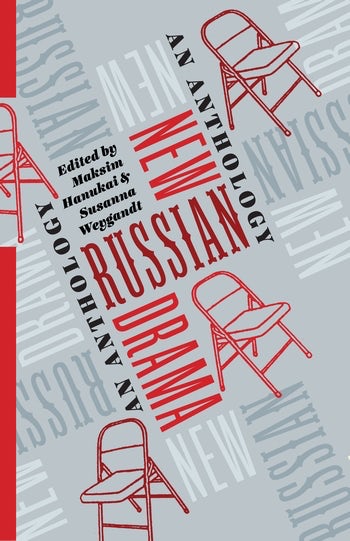
I am very excited to announce the publication of New Russian Drama: An Anthology. The volume features 10 plays (or “texts”) by contemporary playwrights writing in Russian. It is framed by an Introduction by myself and Susanna Weygandt and what I think will be a somewhat controversial Foreword by the eminent Richard Schechner.

Enormous thanks to everyone who contributed to this project: Susanna Weygandt, Ania Aizman, Thomas Campbell, Kira Rose, Sasha Dugdale, Christine Dunbar, Christian Winting, Richard Schechner and, last but not least, the playwrights! Also major thanks to Boris Wolfson, Julie Curtis, Duska Radosavljevic, and Christian Parker for their very generous blurbs.

I include the Table of Contents and a link to the official book site. According to Columbia University Press, customers in the United States, Canada, and most of Latin America, the Caribbean, and East Asia can receive a 30% discount off the price of the book by using the promo code CUP30 on the CUP website. Customers in the United Kingdom, Europe, Africa, Middle East, South Asia, and South Africa should contact CUP’s distributor John Wiley & Sons to order the book and for information regarding price and shipping cost. Of course, the anthology is also available from other booksellers on- and offline.

Please help spread the news and consider teaching or staging these wonderful plays in your courses and theaters (or vice versa)!

TABLE OF CONTENTS

Foreword, by Richard Schechner
Introduction by Maksim Hanukai and Susanna Weygandt
A Chronology of New Russian Drama
1. Plasticine, by Vassily Sigarev
2. Playing the Victim, by the Presnyakov Brothers
3. September.doc, by Elena Gremina and Mikhail Ugarov
4. The Brothers Ch., by Elena Gremina
5. The Blue Machinist, by Mikhail Durnenkov
6. The Locked Door, by Pavel Pryazhko
7. The Soldier, by Pavel Pryazhko
8. Summer Wasps Sting in November, Too, by Ivan Vyrypaev
9. Somnambulism, by Yaroslava Pulinovich
10. Project SWAN, by Andrey Rodionov and Ekaterina Troepolskaya
Notes
About the Authors

_____________________________________

New Russian Drama took shape at the turn of the new millennium—a time of turbulent social change in Russia and the former Soviet republics. Emerging from small playwriting festivals, provincial theaters, and converted basements, it evolved into a major artistic movement that startled audiences with hypernaturalistic portrayals of sex and violence, daring use of non-normative language, and thrilling experiments with genre and form. The movement’s commitment to investigating contemporary reality helped revitalize Russian theater. It also provoked confrontations with traditionalists in society and places of power, making theater once again Russia’s most politicized art form.

This anthology offers an introduction to New Russian Drama through plays that illustrate the versatility and global relevance of this exciting movement. Many of them address pressing social issues, such as ethnic tensions and political disillusionment; others engage with Russia’s rich cultural legacy by reimagining traditional genres and canons. Among them are a family drama about Anton Chekhov, a modern production play in which factory workers compose haiku, and a satirical verse play about the treatment of migrant workers, as well a documentary play about a terrorist school siege and a post-dramatic “text” that is only two sentences long. Both politically and aesthetically uncompromising, they chart new paths for performance in the twenty-first century. Acquainting English-language readers with these vital works, New Russian Drama challenges us to reflect on the status and mission of the theater.

Source: Columbia University Press

Steven Salaita: The Inhumanity of Academic Freedom

team-22

“The Inhumanity of Academic Freedom,” a lecture Steven Salaita gave the day before yesterday at the University of Cape Town, is so powerful and echoes so many of the depressing things I have gone through as an agitator and (former) academic in the past several years that I would like to quote it here in full, but I’ll limit myself to quoting a single passage. Please read the lecture from beginning to end: it’s more than worth it. Salaita is a rare truthteller in a fallen world that fancies itself chockablock with truthtellers but which is actually pullulating with hasbaristas of various stripes. Thanks to George Ciccariello-Maher for the heads-up. Thanks to the Imatra IPV Reds Finnish baseball club for the image. (If you think it has nothing to do with the lecture, it means you haven’t read the whole thing.) // TRR

_____________________________________

In the end, we have to apply value judgments (mediated by lawless forces) to balance speech rights with public safety. In societies like the USA and South Africa, steeped in the afterlives of colonization, this task is remarkably difficult. We know that racism is bad, but global economic systems are invested in its survival. We know that anti-Zionism isn’t racism, that, in fact, it is the just position.  Yet no agreement exists about what comprises appropriate speech, in large part because maintaining a community is at odds with corporate dominion. As a result, there’s no way to prioritize a set of beliefs without accusations of hypocrisy (or without actual hypocrisy). The easy answer is to protect speech equally and let a marketplace of ideas sort the winners and losers. 

There’s a catch, though. Value judgments don’t arise in a vacuum and discourses don’t exist in a free market. Structural forces, often unseen, always beneficial to the elite, determine which ideas are serious and which in turn get a hearing. If we conceptualize speech as a market-driven phenomenon, then we necessarily relinquish concern for the vulnerable. We’re left with competing narratives in a system designed to favor the needs of capital. It’s a highly lopsided competition. Those who humor the ruling class will always enjoy a strong advantage, which aspiring pundits and prospective academics are happy to exploit. Corporate and state-run media don’t exist to ratify disinterest, but to reproduce status quos. 

The political left is already restricted, on and beyond campus. The same notions of respectability or common sense that guide discussion of academic freedom also limit the imagination to the mechanical defense of abstractions. Sure, academic freedom is meant to protect insurgent politics, and often does, but the milieu in which it operates has plenty of ways to neutralize or quash insurgency.  

I focus on radical ideas because Palestine, one of my interests and the source of my persecution, belongs to the set of issues considered dangerous by polite society, at least in North America and much of Europe (and, for that matter, the Arab World). Others include Black liberation, Indigenous nationalism, open borders, decolonization, trans-inclusivity, labor militancy, communism, radical ecology, and anti-imperialism. Certain forms of speech reliably cause people trouble: condemning the police, questioning patriotism, disparaging whiteness, promoting economic redistribution, impeaching the military—anything, really, that conceptualizes racism or inequality as a systemic problem rather than an individual failing. More than anything, denouncing Israeli aggression has a long record of provoking recrimination. Anti-Zionism has always existed in dialogue with revolutionary politics around the globe, including the long struggle against Apartheid. 

White Riot


2014-10-23_white_riot-90cd7205

George Ciccariello-Maher
Facebook
August 4, 2019

Two and a half years ago, I sent a tweet mocking the white supremacist myth of “white genocide,” which posits that white people are being “replaced” by a combination of migration, birth rates, and racial mixing. Twitter and the media briefly lit up, with thousands discussing the absurdity of the white genocide myth—this was a good thing indeed.

But a great coalition of liberals, conservatives, and cowardly academics, hand-in-hand with white supremacists, found my words too controversial (more controversial, apparently, than the words of the Nazis themselves). Today, two and a half years later, I don’t have a job as a result.

Since then, the myth of “white genocide” and “the great replacement” has metastasized, fusing seamlessly with Trump’s demonization of Central American migrants among others. It has been the direct cause of—among other things—the mass slaughter of 51 in Christchurch, New Zealand, only a few months ago, and in just the past week, 4 deaths in Gilroy (targeting “hoards of mestizos”) and now at least 20 in El Paso (targeting the “invasion” of Texas by Mexicans—explain this to the people who were there before 1848).

Despite this roaring cognitive dissonance, too many Democratic Party hacks, handwringing liberals, and trash professors continue to make excuses for the Nazis in our midst. CNN headlines grant credence to the myth of a disappearing white America. They tell us that Antifa and the Nazis are the same things, that fighting white supremacy only makes it stronger. When liberalism coddles the right and legitimizes its theories, the deaths in El Paso and elsewhere are the only logical result.

But we know that material force defeats material force, that fascism and white supremacy will not go away until we make them go away. We know that white supremacist movements and ideas must be destroyed before they kill again.

Every Proud Boy, neo-Nazi, and Identity Europa member is a mass shooting waiting to happen. And every mealy-mouthed liberal is an accomplice.

Death to the Klan. Death to fascism. Death to white supremacy. Treason to whiteness is loyalty to humanity.

Thanks to Nazir Khan for the heads-up. Comic strip courtesy of Keith Knight // TRR

“White Riot” by The Clash
SongFacts

In this song, Clash frontman Joe Strummer is expressing his view that young white people should be outraged over their oppressive government just as blacks were, and should demonstrate through direct action and protest. He made it clear that the song—and the group—in no way advocated violence, and that it was certainly not racist.

Strummer explained to NME: “The only thing we’re saying about the blacks is that they’ve got their problems and they’re prepared to deal with them. But white men, they just ain’t prepared to deal with them—everything’s too cozy. They’ve got stereos, drugs, hi-fis, cars. The poor blacks and the poor whites are in the same boat.”

This song was inspired by the Notting Hill riots in west London on August 30, 1976. The carnival was a celebration of Caribbean culture, but it turned violent when police were attacked after arresting a pickpocket. Over 100 police officers were hospitalized along with about 60 crowd members. A lot of the tension was along racial lines, with black youths clashing with white officers, although gangs of white youth were also involved. Clash members Joe Strummer, Paul Simonon, and their manager Bernie Rhodes were at the event and got caught up in the riots, which led to this song. They included a photo of the Notting Hill riots on the back cover of the album.

Released in the UK on CBS Records March 26, 1977, “White Riot” was The Clash’s first single. It became one of their signature songs and was an indication of things to come. The Clash spent the next eight years speaking out for the lower class and against the establishment. Targets of their scorn included the British government and their record company.

Predictably, this song caused some problems during Clash concerts at times when audience members—often political punks—would use it as an excuse to cause trouble. Whether they should play it or not was sometimes a source of tension in the band.

At a gig in 1979, Joe Strummer was determined to play the song as an encore but Mick Jones vehemently disagreed, saying he was sick of the song and wanted to leave it behind. The argument became heated and Strummer for the only time in the band’s career punched Jones, leading to an odd situation during the encore where Jones had a bandage around his eye and nose whilst playing on stage—he gave up playing it halfway through and left the rest of the band to play on. Other tales abound of promoters requesting the band not to play the song for fear of wrecking the venue. Naturally, The Clash, being the troublemakers that they were, would play it anyway.

Clash members Mick Jones and Joe Strummer played this together for the last time in November 2002. Jones was in the audience for one of Strummer’s solo shows and came onstage to join him. Strummer usually didn’t like to play this, but he turned to Jones and said, “This one’s in ‘A’, you know it.” Strummer died of a heart attack a month later.

The album wasn’t released in the US until 1979. Over 100,000 copies were sold there as an import in 1977.

“What Is This, the Gestapo?” University Student Yegor Zhukov Charged with Rioting in Moscow

Higher School of Economics Student Yegor Zhukov Arrested in Riot Investigation
Andrei Karev
Novaya Gazeta
August 2, 2019

Moscow’s Presna District Court has remanded in custody yet another person charged in the riot investigation launched after the July 27 protest rally in Moscow: 21-year-old Yegor Zhukov, a candidate for the Moscow City Duma, video blogger, and student at the Higher School of Economics.

content_______2Yegor Zhukov in court. Photo by Vlad Dokshin. Courtesy of Novaya Gazeta
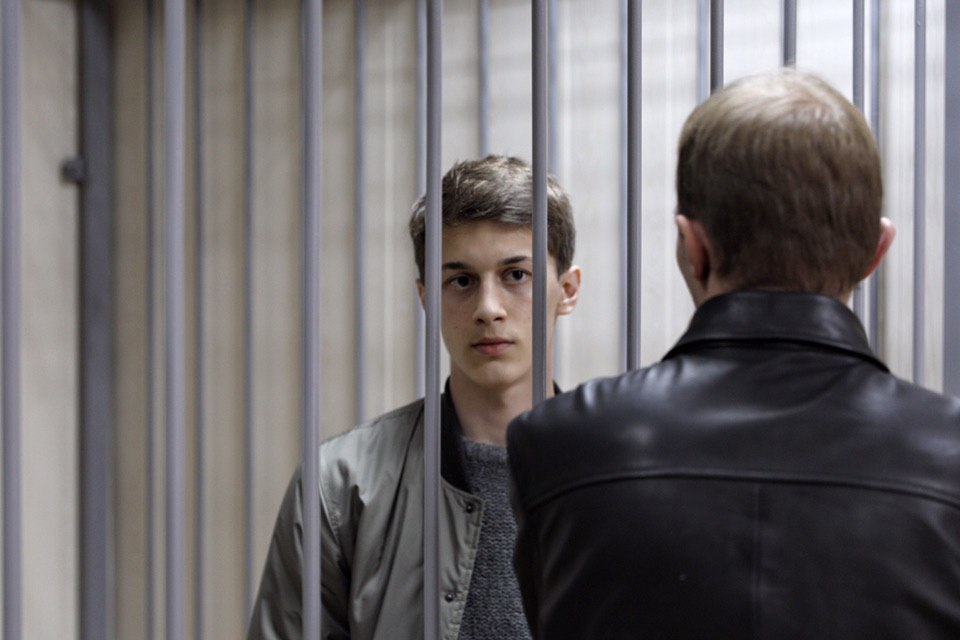
Judge Alexander Avdotyina granted a motion made by the case investigator and remanded Zhukov in custody until September 27.

The hearing began with a motion from Zhukov’s defense lawyer, Daniil Berman. He asked the court to call a recess and give his client a bottle of water.

“He has not had a drop of water since two in the morning and has not slept since yesterday,” Berman claimed.

The judge, however, refused to uphold the motion, explaining that giving Zhukov a bottle of water was against the rules.

“What is this, the Gestapo?” Zhukov’s outraged mother wondered aloud.

Her son has been charged with involvement in rioting, punishable under Article 212.2 of the Russian Criminal Code. Zhukov has completely denied his guilt and refused to give testimony to investigators. According to the case investigator, if Zhukov were at large, he could hinder the investigation, present a flight risk, and pressure witnesses.

He argued that Zhukov’s guilt was borne out by evidence gathered during the investigation.

“Zhukov could destroy evidence in the case and communicate information learned during the investigation to other suspects,” explained the investigator from the Russian Investigative Committee.

The prosecutor seconded the investigator’s arguments.

Zhukov asked the court to impose pretrial restrictions that did not involve imprisoning him.

content_______3Yegor Zhukov in court. Photo by Vlad Dokshin. Courtesy of Novaya Gazeta
Berman argued there were no grounds for remanding Zhukov in custody. There had been no criminal wrongdoing on Zhukov’s part, and investigators had not presented any specific evidence. Berman motioned the court not to impose pretrial restrictions that would involve isolating his client from society, asking it instead to place Zhukov under house arrest or release him on bail or on his own recognizance.

“There have been lies at each stage of the criminal investigation. It seems as if the case file has been hastily thrown together: it is a collection of commonplaces. What are the charges? What exactly did my client do? The case investigators should at least pretend to be upholding the law. It is outrageous they asked the court to uphold this motion. Why should a student and Muscovite be remanded in custody?” Berman exclaimed.

He added that Zhukov’s parents were willing to post one million rubles [$15,320] in bail.

Earlier, it transpired Valeria Kasamara, vice-rector at the Higher School of Economics and candidate for the Moscow City Duma in Borough No. 45, had agreed to stand surety for Zhukov.

“I request Yegor Zhukov not be remanded in custody. He is my student. He has always been distinguished by his curiosity and high academic performance. I know him personally and can vouch for his good character,” reads the document, posted on Telegram by Pavel Chikov, head of the Agora International Human Rights Group.

Higher School of Economics students, alumni, and faculty have published an open letter demanding the university’s administrators officially voice their support for Zhukov. According to the letter’s authors, the HSE administration should personally make official statements supporting Zhukov, stand surety for him in court, and appeal to all public authorities to explain the grounds for the criminal charges against him.

“The charges against Yegor are charges against the entire university and each member of the university community. The university teaches us to think critically, speak freely, and ask questions. The Higher School of Economics does not have the moral right to turn its back when a member of its community faces three to eight years in prison for speaking freely and asking the right questions,” it says in the letter.

The Investigative Committee has consolidated separate charges of rioting (punishable under Article 212 of the Russian Criminal Code) and violence against police officers (punishable under Article 318 of the Russian Criminal Code) into a single criminal investigation of the “unauthorized” protest rally in Moscow on July 27. According to Chikov, 84 investigators have been assigned to the case.

Earlier on Friday, the court remanded Alexei Minyaylo, Samariddin Radzhabov, Ivan Podkopayev, and Kirill Zhukov in custody. Yevgeny Kovalenko had already been remanded in custody as part of the same investigation.

Thanks to Dmitry Kalugin for the heads-up. Translated by the Russian Reader

Si prestas tu martillo, te prestaré mi hacha

On this latest episode of Departures, Robert Amsterdam speaks with an admired friend and colleague Dr. Anders Åslund, author of the new book, Russia’s Crony Capitalism: The Path from Market Economy to Kleptocracy.

In his book, Åslund contends that in his eighteen years in Moscow, Putin has succeeded in establishing a Russian state and economy that are “exceedingly reminiscent” of those that existed in tsarist Russia, a far cry from the democratic state and liberal market economy that global observers had anticipated would inevitably follow the collapse of the Soviet Union.

According to Åslund, Putin has accomplished this by constructing an “iron quadrangle” comprised of “four circles of power,” which are “vertical state power,” “big state enterprises,” Putin’s “cronies,” and “Anglo-American offshore havens,” respectively.

The consolidation of this iron quadrangle is the result of Putin’s years’ long effort to deinstitutionalize the Russian state, and devise a system that guarantees macroeconomic stability, but falls short of delivering economic growth. As Åslund describes, these circumstances will likely yield a Russia in regression, a nation that is increasingly patrimonial and, as a result, will accelerate the ongoing retreat of democracy. Should this continue unabated, global powers, particularly those in the West, may expect Putin to grow increasingly authoritarian, and in the tsarist tradition, grow evermore inclined to taking risks in seeking sources of legitimacy other than macroeconomic stability.

Source: robertamsterdam.com

____________________________________

South Korean jets fired warning shots at a Russian military plane. South Korea’s defence ministry said two Russian bombers and a surveillance plane, plus two Chinese bombers, had violated its airspace (above barren islands also claimed by Japan). Reports from inside the Korean government said the Russians acknowledged the incursion and blamed it on malfunctioning equipment.
The Economist Espresso, 24 July 2019

___________________________________

What is Vladimir Putin goal [sic] for Russia and the Russian people?
Dima Vorobiev, Former Soviet propaganda executive
Answered Jul 18

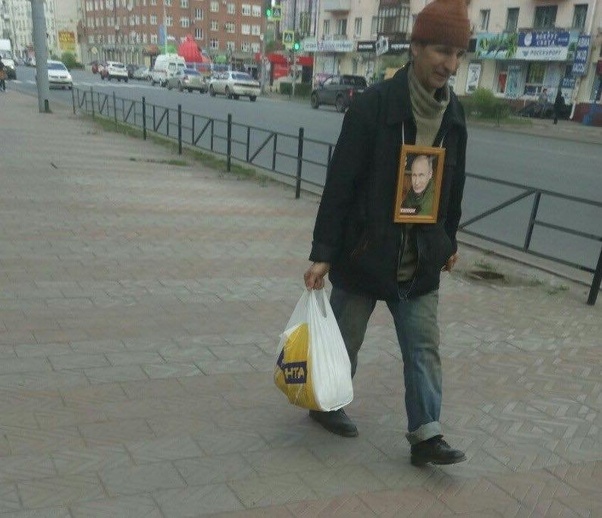
Russian Federation is run as a highly profitable commercial project of about 100,000 families, with President Putin and a circle of a few influential state-oligarchical clans at the top.

They have been very successful and ensured two decades of stable and relatively wealthy existence for the broad masses of our population.

Vladimir Putin’s goal for Russia and the Russian people is to perpetuate this project for as long as possible.

Below, a resident of St. Petersburg, hugely impressed by many successes of President Putin, uses his portrait for personal protection in his daily affairs against bad luck, evil spirits, and corrupt government servants.

putinist

Source: Quora

___________________________________

Giuseppe Conte, Italy’s prime minister, does not belong to either of the parties in his populist coalition government. But today the former law professor will report to parliament on the allegedly grave misdemeanor of one. Prosecutors are investigating allegations that the hard-right Northern League negotiated with Russian intermediaries for funding worth tens of millions of euros. The League’s leader, Matteo Salvini, who was not at the meeting in Moscow and denies receiving money, at first refused to make a statement to parliament, but now says he will give his version of events. It might be thought the claims should be particularly damaging since they are backed by a purported recording of the discussions. But they seem to have done Mr. Salvini no harm. A poll at the weekend showed backing for the League had risen nearly three points, to 35.9%, since before the recording was made public. For now, Mr. Salvini seems bulletproof.
The Economist Espresso, 24 July 2019

A Holiday in Chernobyl

Watch Kate Brown’s stunning lecture about the real, terrifying aftermath of the disaster at the Chernobyl Nuclear Plant.

Then buy her fabulous, groundbreaking new book Manual for Survival: A Chernobyl Guide to the Future and read it from cover to cover.

Once you have done this, ask yourself what kind of cynical lunatics would take people on holidays to the Chernobyl Exclusion Zone.

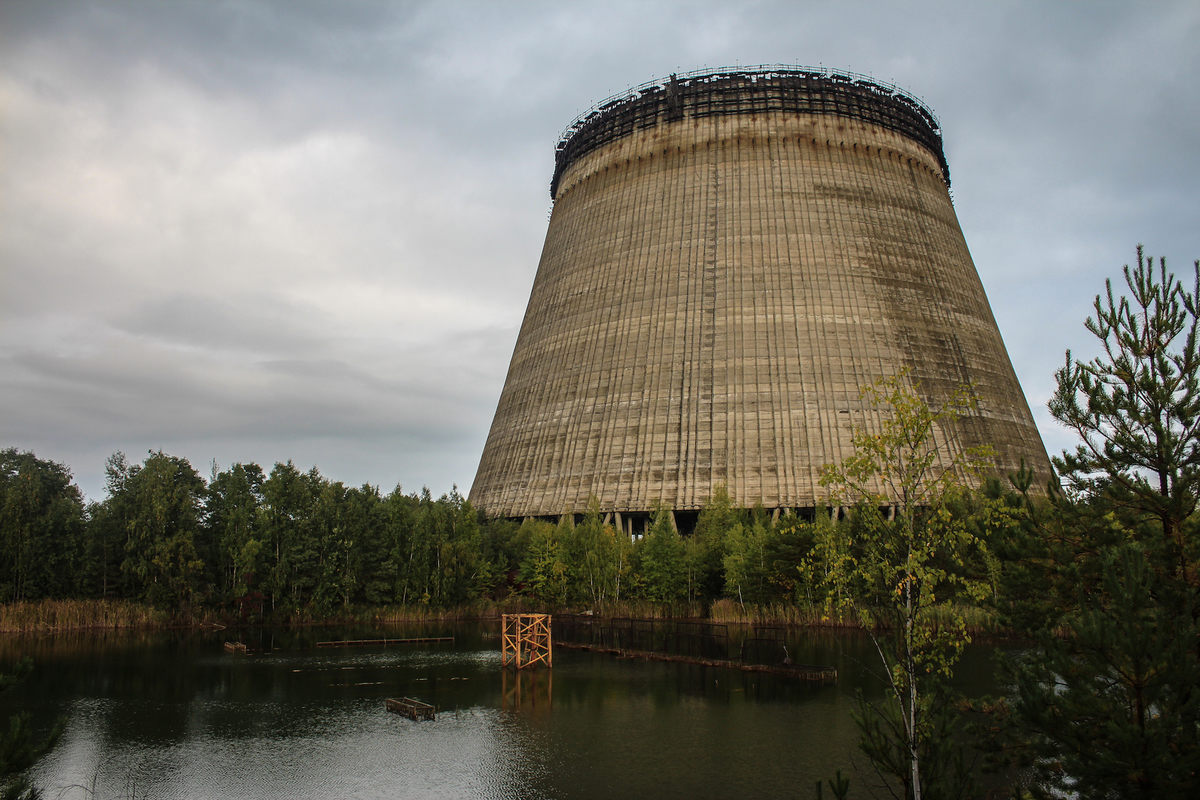
Chernobyl Cooling Tower

Day 5: Chernobyl Nuclear Power Plant
Friday, July 31, 2020

Leaving early from our hotel, we’ll travel by private bus to the Chernobyl Exclusion Zone. We’ll meet our Chernobyl guide, while a documentary film playing on the bus will bring us up to speed on the accident, its causes, and its many repercussions. On our first day in Chernobyl we’ll visit the reactors themselves to witness ground zero of the accident, admire the new containment structure installed in 2016, as well as check out some of the other facilities around the nuclear power plant. Between excursions, we’ll take lunch in the Chernobyl workers’ canteen, surrounded by scientists and engineers currently stationed at the plant. Later, after a long day of exploring, dinner will be served at a restaurant in Chernobyl town. Our accommodation for the night is at a hotel nearby, located inside the Chernobyl Exclusion Zone.

Day 6: The Streets of Pripyat
Saturday, August 1, 2020

At the time of the Chernobyl accident, the workers’ city Pripyat had a population of 49,000 people. It was evacuated soon after the event, and now survives as one of the world’s most famous ghost towns. Today, we’ll get to know this empty city intimately, walking its desolate streets, and visitings its abandoned schools, hospitals, and theaters. We’ll see all of Pripyat’s main landmarks, including the fairground, swimming pools, and also some fabulous street murals. After lunch back at the Chernobyl canteen, we’ll then get to visit one of the Exclusion Zone’s best-kept secrets: the DUGA radar installation, or “Russian Woodpecker,” that rises to a height of 150 meters at the heart of an abandoned Soviet military base. Late in the day we’ll return to the capital for one last night at our Kyiv hotel.

Source: Atlas Obscura. Photo of Chernobyl Cooling Tower by Darmon Richter. Courtesy of Atlas Obscura. Thanks to Louis Proyect for the heads-up on the lecture.

A Putin-Trump Bot and Shill for Lyndon Larouche Has Something to Say to You

maga man.pngThis is what I look like in real life. Photo by Jonathan Ernst. Courtesy of Reuters and Business Insider Deutschland

Throughout the last presidential election campaign, I was verbally abused by a young art historian who was so determined to see Hillary Clinton win the race he attacked everyone who expressed the slightest uncertainties about her sterling character, political record, etc.

He did this to me on countless occasions, despite the fact I had already said I would vote for Clinton to prevent Trump from becoming president.

My ex-art historian friend pursued this social media campaign of abuse right up until election day. Although I tried several times to persuade him that verbally abusing people is not a very good way of making them do anything, he persisted in his vicious attacks on specific doubters like me and people who weren’t crazy about Clinton in general.

I’m not sure where he got his marching orders or whether he got them at all. Our political culture is suffused with violence, abuse, aggression, and stupidity, so it’s possible he set out on his perilous and, ultimately, futile course without any explicit prompting from the obnoxious Clinton campaign and the even more obnoxious Democratic National Committee (DNC).

Whatever the case, I’m already seeing signs the DNC faithful have started abusing doubters well in advance of the primaries, the convention, and the election.

Just today, in fact, one such fanatic labeled me a “Putin-Trump bot” and a “shill for Lyndon Larouche.”

Why did he attack me in this way? Only because I suggested—plausibly, I think—that there is no guarantee that if a Democrat grabbed the White House in January 2021, she or he would move to prosecute Trump.

I think it is likely that, instead, the new president would pardon Trump and only Trump in order to smooth the transition and also receive carte blanche to go after everyone else in Trump’s administration.

Two tenured professors who know for a fact I am neither a “Putin-Trump bot” and “Larouche shill” let this abusive comment stand without comment.

So, if that is how it’s going to be, I am going to make a promise to all of you.

I will not vote for the US Democratic Party in the 2020 US presidential election. They have broken their promises to working-class people, minorities, people of color, and pretty much their entire so-called base for as long as I have been following politics.

What our country needs is not a Democrat in the White House but a lot more democracy. It is clear the two “legal” parties have very odd ideas about democracy. One party has abandoned its conservative and liberal roots in pursuit of fascism. The other party does almost nothing to stop them while rapping the knuckles of the inspiring congresswomen of color who were elected in 2018 and are willing and able to take on a bully like Trump.

In short, if the Democratic Party could run an Ocasio-Cortez/Omar ticket in the 2020 presidential election, I would consider voting for it (and I’m sure millions of other people would, too), but the DNC would never let such a ticket make it onto the ballots even if Rep. Ocasio-Cortez were not too young to run, and Rep. Omar had not been born in another country.

What our country really needs, as an interim step toward real democracy, is a multi-party parliamentary republic without a president. I would argue this form of governance would make the nightmare of the last two and a half years a lot less feasible by diffusing power among parties more narrowly defined by class, ideological, and regional interests.

I don’t encourage anyone else to follow my example. After all, I have it on good authority that I am a Larouchian shill and a Trump-Putin bot.

I would, however, encourage you not to succumb to the “unity at any cost” campaign the DNC will unleash on the nation, using its millions of dupes around the country to viciously attack anyone who wavers from the party line.

When you’re verbally abused by a DNC fanatic, as I was today, explain as calmly as you can that this style of campaigning turns people off and encourages them to stay home rather than vote.

The latest issue of the Economist (July 6, 2019) had an interesting piece summarizing some research done by the newspaper itself. It claimed that, if everyone had voted in 2016, Clinton would have won.

In other words, if the US had mandatory voting like Australia has, for example, passive Clinton supporters would have been more or less forced to vote for her and she would have easily beaten Trump.

The Economist also argued Republicans would have to soften their hardline fascist message to appeal to fence-sitters, who also have a tendency not to vote.

What the article failed to point out is that the real Australia recently returned the governing Liberal-National coalition to power despite the fact all of the polls had predicted victory for the Australian Labor Party.

This means Scott Morrison was returned to his job as the country’s PM, despite the fact he presided belligerently over Australia’s own asylum-seeker concentration camps on Manus Island and Nauru before mounting a leadership challenge and taking over as the Liberal Party chair and, hence, the PM.

Scott Morrison is only slightly less odious than Donald Trump, by the way.

So, mandatory voting is no guarantee of happiness and sunshine in Australia, America or anywhere else.

The DNC is even less inclined to produce happiness and sunshine for ordinary Americans than the Australian Labor Party or even the Australian Liberal Party, not all of whose members are fascist pigs.

Don’t take the DNC’s abuse. I understand the desire to get rid of Trump, but it can’t happen at any price. If the price is Joe Biden, I would place a bet in any establishment willing to take it that he would pardon Trump the day after the inauguration.

If you must vote, then, a) don’t vote for a “compromise” ticket, and b) don’t take abuse from the DNC-inspired unity-at-all-costers.

When someone is willing to rain such mendacious filth on the head of a person he has never met and knows nothing about, this alleged unity is worthless.

All of you are smart and strong enough not to buckle under such pressure.

Who knows? If millions of you made pledges like the one I am making now it might make the DNC sit up and listen. {PUTIN-TRUMP BOT}

Terry Burke: Russiagate, Syria, and the Left

dezaOnce again, years of experience and research have been poured into an article challenging entrenched narratives on the anglophone institutional left, and once again, fear of retaliation from the purveyors of these entrenched narratives has made this challenge unpalatable even to left and liberal publishers with an obvious interest in countering them.

So, once again, the Antidote Writers Collective is pleased to participate in a decentralized effort to bring this challenge out into the open.

The following was initially published on CounterVortex with the understanding that the website’s publisher would be backed up by cross-posts from sympathetic websites in order to reduce the authoritarian left’s ability to target one vulnerable person with their classic arsenal of trolling, threats, abuse, and lawsuits.

Comrade of the zine Terry Burke has been a dedicated peace activist her entire life and has already heard the worst of it even from former comrades who have unthinkingly taken on Putinist narratives and allowed themselves to be played against the emergence of effective opposition to rising fascism in the United States. We salute her years of persistence and are proud to have her back. Enjoy.
Antidote Zine

Russiagate, Syria, and the Left
Terry Burke
CounterVortex
June 27, 2019

The last major national protest in the US was “Families Belong Together” in June 2018. Hundreds of thousands of people across the country demonstrated against the Trump administration’s policy of separating children and families at the border. People who had never protested before brought their families. It’s now a year later and the situation for immigrant families has only gotten worse. Where is the outrage?

Plans for an ICE raid targeting millions of immigrants. Initiating a military strike on Iran and then canceling it. Environmental policies that disregard climate change. Pulling the US out of treaties. Rising alt-right and nationalism around the world. Ignoring congressional subpoenas. Corrupt, incompetent people heading every federal agency. The list of destructive Trump policies seems endless.

Trump’s recent visit to London brought tens of thousands of protesters into the streets. Where are the protests in the US? Where are the coalitions in the US organizing against Trump’s anti-democratic, inhumane policies? Where is the left?

Part of the problem is the enormous amount of disinformation that has been specifically directed at the left, disinformation that most people don’t recognize. The disinfo uses anti-imperialist language and is posted on “left” and “progressive” sites that usually have nominally accurate stories on Palestine, Israel, climate change, corporate corruption, and other progressive issues. In addition to the disinfo media sites, respected left authors have confused their readers by dismissing Russiagate as a hoax, claiming that Russian interference in the US elections has been greatly exaggerated to provide the Democrats an excuse for Clinton’s loss.

Eight years of steady disinformation on Syria have created a split in the peace movement. The enormous amount of time and energy spent debating Syria could have gone to building the peace movement instead of dividing it. The doubts raised repeatedly about Russian interference and Mueller’s investigation have weakened the opposition to Trump. Some people don’t know which news sources they can trust. Others restrict themselves only to sources that support their ideological line.

Steve Bannon famously said, “The Democrats don’t matter. The real opposition is the media. And the way to deal with them is to flood the zone with shit.” That is exactly what has happened. There are thousands of new and unaccountable media organizations on the internet.

As Syria solidarity activists, we have been struggling against extensive, sophisticated disinformation regarding Syria for years—and it’s largely not from the US mainstream media. Syria is not Iraq, where the New York Times helped Bush lead us into war with fake information about WMDs. Syria is not Kuwait, where there were false stories planted about babies in incubators.

The mainstream media articles “demonizing” Assad are fundamentally true: his regime is one of the world’s most repressive, with a police and prison torture system of historic proportions. Unlike Iraq and Iran, and contrary to the propaganda claims, the CIA did not instigate a serious covert regime change operation in Syria. The US efforts in Syria are well documented in Shane Bauer’s recent two-part article for Mother Jones. He writes, “American involvement in Syria has been as fragmented and volatile as the conflict itself.” In this groundbreaking article, he documents how the US has spent billions, initially aiding the Free Syrian Army, but ultimately focused on combating ISIS, forbidding US-backed groups from fighting Assad’s forces.

His article corroborates the stories of anti-Assad Syrians of a genuine uprising against a brutal dictator evolving into a proxy war; of Assad bombing and starving civilians. The Syrian people were caught up in the fervor of the Arab Spring and surprised themselves (and the CIA) by going to the streets in the hundreds of thousands, demonstrating for democracy, overcoming their deep fears of reprisal.

However, most of the peace movement still doesn’t recognize the legitimacy of the Syrian people’s eight-year struggle against the Assad dictatorship. There have been so many articles in “progressive” media promoting Assad’s narrative of another US regime change effort that they have buried the voices of Syrians.

The voices of Syrian communists, anarchists, democracy activists, writers, artists, intellectuals, and nonviolence activists have rarely been represented in “progressive” media. The majority of these media’s articles on Syria have been written by non-Syrians and they usually promote Assad’s line that he is protecting his sovereign country from US-backed terrorists.

Research from the University of Washington has shown how dominant the pro-Assad political messaging is from an “echo system” of sites that follow Russian, Iranian, and Syrian government-funded media. Researchers examined Twitter conversations about the White Helmets (a Syrian volunteer rescue group) in the summer of 2017. There were four times as many tweets from the echo system as there were from other media sources. Articles from the echo system claimed the White Helmets were a “propaganda construct,” “crisis actors” who staged events, and “they worked with or were themselves terrorists.”

The UW study noted that this echo system of sites claiming to be “independent” and “alternative” shared the same stories and writers. A few of these sites are Global ResearchRTMint Press NewsSputnik NewsFree Thought ProjectThe Anti-Media21st Century WireVeterans TodayZero Hedge, and many others.

For Syria activists, the UW research wasn’t a surprise. It confirmed our experiences over the last six years, that our struggle to get the truth out was up against a substantial, coordinated disinformation effort. We were familiar with this “echo-system” well before the UW study. While they claim to be “independent,” their political line was almost always the same on Syria, Crimea, Putin, and Trump. They played a role in electing Trump by bashing Clinton, equating Clinton and Trump, going easy on Trump, and disparaging voting.

While the sites claim to be funded by their readers and ads, they actually have very few ads and do not disclose information on their funding sources. In 2013, a former writer at Mint Press News, Joey LeMay, told BuzzFeed News, “It was incredibly secretive.” The article goes on to say there were “barely any ads on the website, and whenever LeMay asked about where they got their money, ‘it was brushed off as a non-issue. I would go home feeling not squeaky clean,’ he said.”

The sites in this echo system have all also posted numerous Russiagate articles. It’s understandable that progressives would question how extensive and effective Russian propaganda was in the 2016 elections. The mainstream media hasn’t examined Russian propaganda that targets the left. The UW research has not been mentioned in mainstream or progressive media. But it’s not an either/or proposition: we can criticize Clinton’s campaign and still acknowledge that Russian interference helped Trump win in an election where Clinton won the popular vote by a substantial margin.

The claim that a few Facebook ads bought with Russian rubles could have influenced the 2016 election may have seemed preposterous back in 2016. However, since then, there have been numerous exposés of Russia’s sophisticated use of social media and information warfare—something we had thought was mainly the province of our CIA.

While Russian disinformation is a new concern for Americans, not so for Europeans. In June 2017 the Washington Post reported that “across the [European] continent, counterintelligence officials, legislators, researchers, and journalists have devoted years—in some cases, decades—to the development of ways to counter Russian disinformation, hacking and trolling.” There have been numerous articles on how Swedenthe Baltic statesFinlandGermany, France, Italy, and others are dealing with Russian cyber attempts to influence elections and sway popular opinion.

When well-known left writers like Glenn GreenwaldMatt TaibbiKatrina vanden HeuvelNorman Solomon, and Max Blumenthal immediately denounced the evidence of Russian interference back in 2016, it had a silencing effect. After that, few well-known left writers pursued the serious possibility of effective Russian involvement. In the two and a half years since Trump’s election, there have continued to be new articles and research on Russian bots, trolls, Twitter campaigns, fake accounts, and continued Russian interference in the EU, but the Russiagate authors have ignored this information. Dark Money author Jane Mayer has also written on how Russia helped elect Trump.

After the release of the highly biased Barr summary which seemed to vindicate them, Chris HedgesGlenn GreenwaldStephen CohenMatt TaibbiAaron MatePaul Street in Counterpunch, and Katie Halper from FAIR castigated the US press for its extensive coverage of the Russia/Trump allegations.

However, they wrote nothing revising their Russiagate-is-a-hoax position after the subsequent release of the redacted Mueller report in April and Mueller’s public statement in May. The Mueller report explicitly documents extensive Russian interference in the 2016 elections, but they have refused to acknowledge this.

Greenwald wrote on April 18 that “the actions in which Trump engaged were simply not enough for Mueller to conclude that he was guilty of criminal obstruction.” After Mueller clearly stated on May 29 that he would not exonerate the president for obstruction of justice, Greenwald wrote a series of articles on Brazil and wrote nothing to correct his earlier misstatements about obstruction.

It is critical to understand that the Russiagate narrative is Trump’s narrative. By insisting for over two years that Russian interference was overblown, these authors have been defending the worst president in US history.

The UW-identified echo system of “alternative” media sites has also had numerous articles promoting Russiagate skepticism and Barr’s disingenuous summary of the Mueller Report. Global ResearchMint Press NewsFree Thought ProjectThe Anti-MediaZero Hedge21st Century WireActivist Post, and others have also continued to argue for the Russiagate conspiracy thesis, despite Mueller’s statement and all the information on Russian cyberwarfare.

Even Fox News occasionally departs from supporting Trump’s position on Russian interference, as summed up in a May 2019 Newsweek headline: “Fox News Legal Analyst Says Mueller Evidence Against Trump ‘Remarkably Similar’ to Nixon, Clinton Impeachment Charges.” But the left’s Russiagate skeptics have not conceded anything. Stephen Cohen recently wrote that Russiagate “is the worst and […] the most fraudulent political scandal in American history.”

The echo system and the Russiagate authors have published very little criticism of Putin’s Russia. They have many articles criticizing the US mainstream media, the corporate ownership of US media, “censorship” by Facebook and YouTube, but nothing on the new law in Russia whereby people can be jailed for fifteen days for “disrespecting” the Russian government online. An open internet in the US means there are thousands of sites with articles criticizing the US, but even one site with critical articles in Russia could result in fines and jail time. The difference is dramatic, and there have been no articles from the Russiagate skeptics on this oppressive law.

It’s rarely mentioned that Hedges has had a weekly show on RT (formerly Russia Today) since June 2016, which is funded by the Russian government. He’s scathing in his criticism of the US, but it’s hard to find his criticisms of Russia. After the Barr summary, he chastised the US press for “one of the most shameful periods in modern American journalism” and somehow never mentions the Russian restrictions on “disrespecting” the Russian government online.

Rania Khalek is also paid by the Russian government. Her site In the Now is one of three that were recently exposed as being owned by RT. Facebook briefly took them down until a small mention of RT’s involvement was placed on the page – a mention most people will never notice.

It is difficult to determine the motivation of the Russiagate writers and the echo system. Kate Starbird at the University of Washington writes about the echo system that “[their] efforts […] consist of diverse individuals and organizations who are driven by a variety of different motivations (including political, financial, and ideological).”

There is a certain amount of hyperbole to the Russiagate articles. The investigation is blamed for “Manufacturing War with Russia,” for “Endangering American Security,” for “Media Malpractice,” for being “This Generation’s WMD,” for “Target[ing] Any Dissent in US,” and so forth. When examining these authors’ lists of articles, one would prefer they had spent as much analysis on the dangers of a Trump presidency as they have spent on promoting their Russiagate thesis.

Stephen Cohen talks about the origins of the allegation that Trump was an agent of the Kremlin. Was it “begun somewhere high up in America by people who didn’t want a pro-détente president?” He suggests that “this originated with Brennan and the CIA.” It is all speculation, with no corroborating evidence.

For a starkly different perspective, consult authoritarianism scholars Sarah Kendzior or Timothy Snyder’s interviews, writings, and videos for detailed documentation of Trump’s dealings with Russia. They have been warning for the last three years about the dangers of the US sliding into autocracy under Trump. They have researched Trump’s ties to Russia in the decades before the 2016 elections and have tried to warn us about what is coming.

Contrast Cohen’s speculation with Snyder’s detailed factual information. Snyder is a Yale historian who wrote The Road to Unfreedom about Russia’s return to an authoritarian government under Putin and the rise of nationalism in Europe and America. He has put together a series of videos to explain what is happening here and internationally. In a concise Twitter thread, he documents fifty very specific reasons (with citations) why Trump owes a debt to Putin. He discusses the people in Trump’s campaign and in the Trump administration: “It is astounding how many of them are more directly connected to the Russian Federation than to the US.”

Kendzior lived in Uzbekistan during its transition from democracy to autocratic rule. When she started covering the Trump campaign in 2016, it reminded her of what she’d seen from the regime in Uzbekistan. Her website and podcast Gaslit Nation, which she presents together with journalist Andrea Chalupa, is an unparalleled source of information about Trump and his Russian connections and crimes. Kendzior and Chalupa advocate impeachment hearings so that the rest of the country can learn about these crimes.

Snyder and Kendzior have no doubts about the Trump-Russia collusion. There are other independent authors and researchers who are documenting and exposing what’s happening. Even without the Mueller report, there is an enormous amount of public information about Trump’s ties to the Kremlin, Russian interference, and the loss of our democracy.

When Syria solidarity activists first read the November 2016 Washington Post article about Russian propaganda influencing the 2016 elections, we were relieved. Finally, the Russian propaganda we had struggled against for years was being exposed! We assumed the propaganda on Syria would also be exposed. We thought the propaganda sites on the internet would be discredited.

We didn’t anticipate that prominent left writers would immediately denounce the Russian propaganda story as the “new McCarthyism” and Russiagate and that they would still be defending this narrative two and a half years later, in the face of so much evidence.

We didn’t understand how difficult it would be for the techies at Facebook, YouTube, and Twitter to discern propaganda from the truth and how clumsy they would be in taking down sites, usually with almost no explanation, and occasionally taking down legitimate sites at the same time.

From our viewpoint as Syria solidarity activists, we are still in the same position now as we were in November 2016. Disinformation still dominates the internet. Syrian and Russian planes have been bombing civilians in Idlib for the last month, initially bombing twenty-five hospitals. While Physicians for Human Rights and Amnesty International have condemned the strikes on hospitals, sounding the alarm, there is no international pressure on Russia and Syria to end them. The echo system of media sites is distracting the left with disinformation about Assad’s 2018 chemical attack on civilians in Douma being supposedly “staged” by the rebels.

The persistent Russiagate articles from prominent left writers have many progressives feeling unsure what to believe. It has put us in the strange position of claiming that a former FBI director is more trustworthy than Chris Hedges or Stephen Cohen. But there is much more information validating what Mueller has reported than there is for the Russiagate skeptics and Trump.

There is no easy solution to the problem of massive disinformation on the internet. Certainly, we should be listening to the voices of progressive Syrians, Venezuelans, Palestinians, Ukrainians, Sudanese, not media pages that follow Putin’s line. Information about who is funding web pages would be one step towards transparency. Independent university research labs could evaluate the accuracy of media sites.

Another voice we should be listening to now is the authoritarianism scholar based in St. Louis. Sarah Kendzior says the Trump administration is a transnational crime syndicate masquerading as a government and he should be impeached. It’s time for us to be in the streets.

Terry Burke is an activist with the Committee in Solidarity with the People of Syria (CISPOS) in Minneapolis. Thanks to Comrade Ed Sutton and Antidote Zine for the heads-up. The article has been edited slightly to meet this website’s unwritten standards. Photograph by the Russian Reader, December 15, 2018, Ligovsky Prospect, Petersburg. In Russian slang, the word deza means “disinformation.”