Goodbye to All That

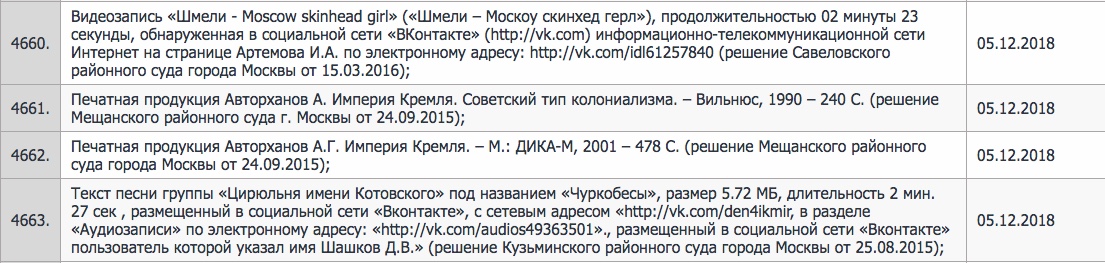
pofigin forteWhatever Forte Chewing Gum. Improves emotional baseline. Gives peace of mind. Compensates for lack of positive emotions.” Scan of package by the Russian Reader

As of today and until further notice, I will not be publishing stories about human rights abuses, political prisoners, police frame-ups, attacks on Russian human rights, civil rights, environmental, and trade union organizations and activists, and related matters on this website.

I have decided to discontinue this coverage for a number of reasons. First, most of the work I have done on this subject over the last eleven years has obviously not made the slightest dent in how the current Russian regime and its opponents are viewed in my blog’s target audience outside Russia, even among people I have thought of, mistakenly, as allies, supporters, and friends.

Second, my recent campaign to rally support and solidarity for the blog was a near-total failure. Even people who have personally benefited from coverage on the blog ignored it altogether, once again confirming to me that not many people agree with me that solidarity is a two-way street.

Finally, I’m tired of dealing with the rather large amount of snarkiness towards me and the blog. If this snarkiness were limited to weird comments by total strangers, I could deal with it just fine. But when people who know me well resort either to telling me peremptorily what I should and should not publish on the blog or, on the contrary, ignore altogether the efforts I make on behalf of campaigns and organizations in which they are directly involved, I lose all sense that what I do matters to anyone but me and a handful of apparently misguided people.

Since this is the case, I will now confine myself to dealing with other subjects that interest me. I hope they will interest my readers as well. As I now realize, however, I literally cannot do anything at all to increase overall interest in the Russian Reader, certainly not explicit, enthusiastic support for it.

So, from now on, I will devote whatever time I have for the blog to no less interesting topics, but ones in which I have much less emotional and personal investment.

It is simply too hard for me to continue as if I didn’t notice all of the things I have mentioned above.  {TRR}

Russian Trucking News

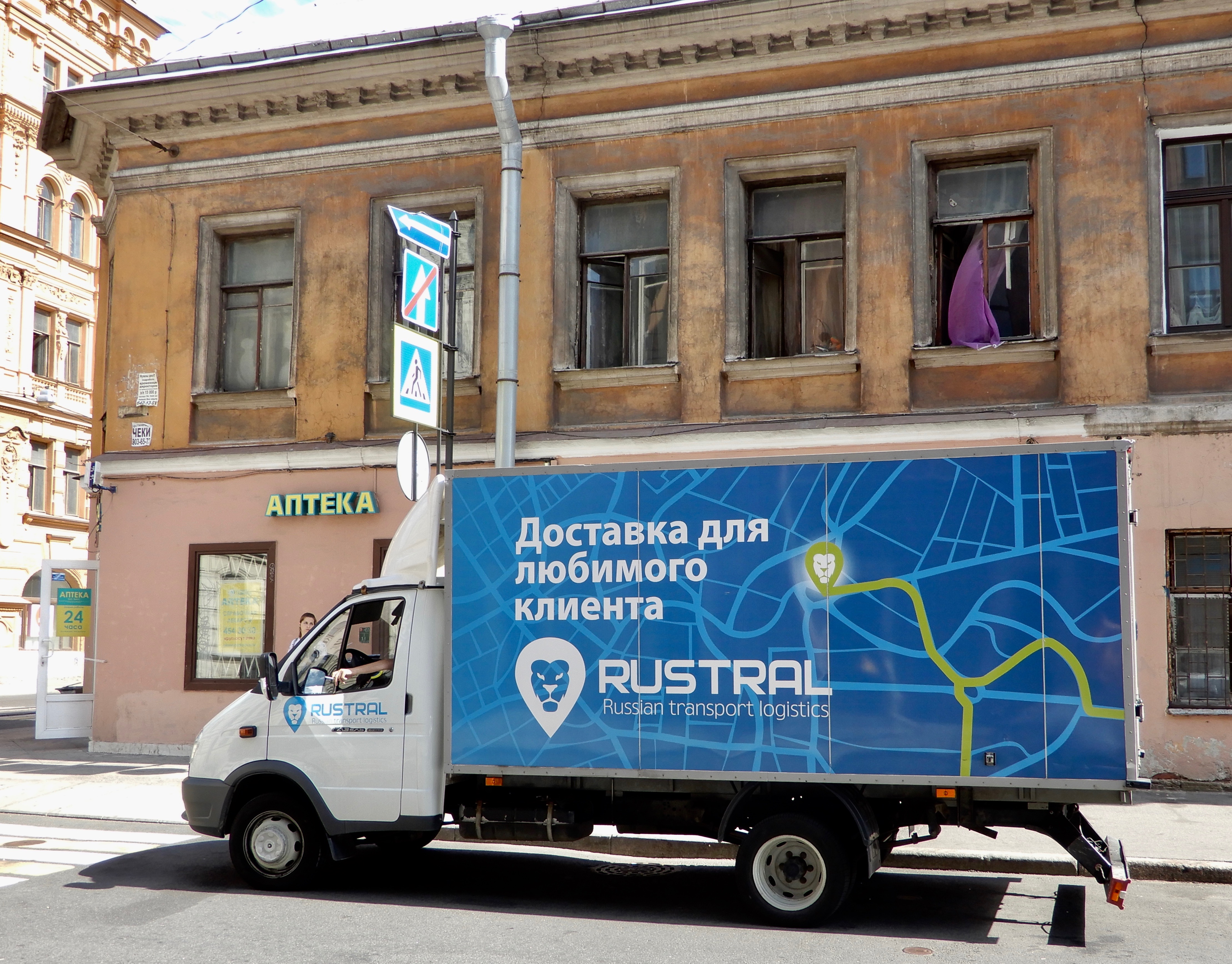
DSCN0034“Delivery for a favorite client.” A short-haul freight truck in downtown Petersburg, August 8, 2018. Photo by the Russian Reader

Officials Want to Equip New Trucks with Special Sensors as of 2024
Carriers Are Worried Tightening Monitoring Weight and Size of Trucks Will Increase Load on Business
Elizaveta Bazanova and Vladimir Shtanov
Vedomosti
December 24, 2018

Officials have concocted a new way to monitor business. They want to equip trucks with axial-load sensors in order to combat trucks hauling loads in excess of legal weights. Legislation requiring such loads be transported by trucks weighing over 3.5 tons will be drafted by 2024. The plan is contained in the outline of the Russian government’s national Safe and High-Quality Highways project, two federal officials told Vedomosti. A spokesperson for Deputy Prime Minister Maxim Akimov said the project’s outline would be approved by the cabinet on Monday.

The Industry and Trade Ministry and the Transportation Ministry would have until 2022 to draft amendments to the technical regulations of the Eurasian Customs Union (EACU), forbidding the import to Russia of trucks not equipped with the sensors. The amendments should also be inserted into Russian technical regulations before 2024, according to the national highway project’s outline. (Vedomosti has seen part of this document.) As of 2024, all new trucks will have to be equipped by manufacturers with the sensors, explained Akimov’s spokesperson. Owners of old trucks will not be forced to install them. They will have the option of installing them, says a source who has learned about the plans from a federal official.

Regulations on equipping all Russian trucks weighing more than 3.5 tons with axial-load sensors have not yet been drafted, according to spokespeople at the Transport Ministry and Rosavtodor (Russian Federal Road Agency).

Russian authorities set about establishing weight-and-size monitoring system for freight trucks in 2016. Their goal is to maintain the quality of roads and reduce the number of accidents. Automatic scales that measure the axial load of trucks have been installed on highways in test regions. If a truck is overweight, the carrier must pay a fine of up to 450,000 rubles [approx. 5,800 euros]. A total of twenty-seven checkpoints in eighteen Russian regions have been set up on federal highways. By 2024, the number of checkpoints should rise to 387, covering federal and regional highways in seventy-five regions.

The pilot program in Vologda Region has shown the average overload is thirty percent, the Transport Ministry reported. During their first year of operation, the checkpoints reduced the number of violators from forty percent to four percent.  On the federal level, the weight-and-size monitoring system will be a public-private partnership. RT Invest Transport Systems, owned by Igor Rotenberg, son of Arkady Rotenberg, and RT Invest, jointly owned by Rostec and Andrei Shipelov, has shown interest in acquiring an operating license. In June 2018, the company proposed a public-private partnership with the government.

The regions will establish their own public-private partnerships. Truck owners will be able to purchase the sensors from any manufacturer. No directives will be issued on this score, a federal official assured us.

3.74 million trucks were registered in Russia as of July 1, reports Autostat. Under the European classification, trucks weighing between 3.5 tons to 12 tons are categorized as N2. Such trucks are manufactured by KAMAZ, Iveco, Mercedes-Benz, and Renault (Midlum), among other companies. They are usually employed for short hauls, for example, from a distribution center to retail outlets, a logistics manager from a company in the consumer sector told us.

Currently, truck owners rarely install the sensors, said Boris Rybak, director general of Infomost, because equipping a truck costs owners between several tens of thousands to several hundreds of thousands of rubles. Trucks manufactured in the west that carry goods in Russia usually have the sensors pre-installed.

Alexander Lashkevich, director for relations with industrial and infrastructure organizations at the Business Lines Group, said they did not install additional sensors, since they are a standard feature on most imported vehicles, but this applies to trucks with a capacity of more than 12 tons. The new K5 line of trucks from KAMAZ features axial-load sensors as a standard feature, said a company spokesperson.  Lashkevich said Business Lines used special calculators that facilitate loading semitrailers so as to avoid overloading.

Introducing weight and size monitoring will help maintain roads, but it is not clear why small-tonnage vehicles need to be equipped with axial-load sensors. Problems with overloaded axles happen to heavy haul vehicles. Ultimately, the load on the shipping business will grow, while the expediency of the planned measures is difficult to assess, warned Lashkevich.

The sensors are not needed on low-tonnage trucks. Problems with excess weight “occur extremely rarely due to the specifics of moving people’s things to new residences,” explained Arkady Usachov, director general of Gentle Move, a moving company.

The damage to roads caused by trucks weighing under 12 tons is considerably less, said Rybak, but equipping even light trucks with the sensors is a worldwide trend: you can load even a 3.5 ton truck with up to ten tons of freight. Such systems are in operation on roads in many countries, agreed Mikhail Blinkin, director of the Institute of Transport Economics and Transport Policy Studies at the Higher School of Economics.

The cost of buying and operating trucks could increase, warned Usachov.

“Freight haulage should be getting cheaper, but this approach will only make it more expensive,” argued Alexander Prokofiev, head of operations at the Moving Center. “Plato, ERA-GLONASS, and other systems will not provide real security, and they will not improve road quality. The amount of freight hauled on the roads will not decrease. Roads have to be built well from the get-go.”

Translated by the Russian Reader

The Media’s Russia Obsession?

trumputin

Let’s talk about the media’s so-called Russia obsession for a few minutes.

What is meant by this is that the mainstream press have devoted tons of coverage to the substantial allegations that the Kremlin mounted a massive operation, mostly via social media, to influence the outcome of the 2016 US presidential election and, further, that the campaign of the candidate who won the election actively colluded with the Kremlin, among other things, in order to discredit the candidate’s main opponent in the election. The press has also focused a lot on Robert Mueller’s special investigation of these allegations.

Is all of this press coverage sterling? No. Does the press get the story wrong sometimes? Yes.

But this has always been the case with the nominally free press in nominally democratic societies ever since the free press emerged in the eighteenth century in a few countries groping their way towards democracy. It always been biased, prone to mistakes, and otherwise wildly imperfect. And yet it has always been subject to intense scrutiny, at least in my lifetime—and the really infantile desire on the part of certain social and political forces that it be perfect—that is, perfectly biased and ventriloquizing only their viewpoints—although these same forces are rarely so critical of either themselves or other important social institutions.

In this case, the social and political forces that routinely complain about the media’s so-called Russia obsession seem to mean, in fact, that the mainstream press and the press in general should simply stop covering what is surely the story of the century: allegations that the world’s largest country massively intervened in a presidential election in the world’s most powerful country, and that the man who won the election and members of his campaign and transition team were in close contact with agents of the world’s largest country during the campaign and transition.

What kind of press would we have if they completely ignored this story?

We would have a press much like the press in the world’s largest country, which routinely ignores or severely undercovers really big stories—such as the country’s involvement in putting down a popular revolution in a third country whose people have never down anything bad to the people of the world’s largest country—or which engages in outright Goebbels-like propaganda nearly every day, leaving the really important stories to opposition liberal newspapers and online media outlets that are read and accessed by a tiny fraction of the country’s populace.

Finally, the mainstream media have not been obsessed with Russia itself, but with the alleged actions of the Kremlin, Russian secret services, and Russian internet trolls in connection with the 2016 US presidential election. Period.

There is a another Russia, populated by 143 million people, that had nothing whatsoever to do with the story of the century. They did nothing to skew the outcome of the 2016 US presidential election and, in the main, their lives, aspirations, and actions are roundly ignored by the so-called mainstream media in the west and Russia itself. They are roundly ignored by the so-called alternative media, too, for the simple reason that much of the alternative media in the west operate under the delusion that Putin is an “anti-imperialist.” By definitions, Russians who oppose his sagacious rule must be “puppets of the west.”

If all of this weren’t the case, I would have expected that one or more of these “Russia-obsessed” or “anti-Russian-obsessed” newspapers, magazines, TV channels or websites would have picked up and covered, for example, the shocking story of the Penza-Petersburg “terrorism” case aka the Network case, in which eleven young anarchists and antifascists have been accused of involvement in a “terrorist community” dubbed “the Network.”

Most of the accused men have told the same grisly tale of being abducted by FSB-KGB field agents, who took them to remote areas in minivans or to the basements of their headquarters and tortured them for hours, using tasers and bare electrical wires, and severe beatings, attempting to force them to memorize the “confessions” they would later make (or, in some cases, refuse to make) to FSB investigators, who would then petition the courts to send them to remand prisons, where all of them are still imprisoned to this day.

The allegations of torture have been confirmed by Russian civil rights activists and defense attorneys who spoke with some of the men soon after their arrests and, in a few cases, they were also confirmed by physicians who examined the men when their wounds were still fresh.

In any case, a small but growing group of very determined people, including the men’s parents, friends, reporters, human rights activists, and concerned citizens, have been working as hard as they can over the last year to bring the case to the attention of the wider Russian public, force prosecutors to investigate the allegations of torture by FSB officers, and otherwise prove that, as seems to be the case, the FSB conjured the entire tale of the “terrorist community” from whole cloth and then handpicked a dozen or so completely innocent young men to be the fallguys, trying to torture and pummel them into admitting their “guilt” although they were guilty of no crime at all.

You would think the “Russia-obsessed” corporate media would jump on a story like this, but except for one article in the New Yorker, the western corporate media have utterly ignored the story of the Network “terrorists,” despite the efforts of actual alternative media like openDemocracyRussia (oDR) and my own blog, the Russian Reader, to write about it any chance we can and translate Russian coverage of the case, as published in such as liberal, leftist and civil rights media outlets as Mediazona, OVD Info, and Novaya Gazeta.

The campaign to save the Network boys scored a minor victory the other day during a meeting of the Presidential Council for Civil Society and Human Rights, when several members of the council brought up the case and a similar case no less shocking, the New Greatness case, and forced President Putin to talk about them.

A KGB-FSB officer to the core, Putin pretended not to have heard of the cases, which both pivot on allegations of extreme entrapment, torture, and fabrication by other KGB-FSB officers.

Putin hemmed and hawed, lied and prevaricated, feigned that he couldn’t believe what he was hearing, etc., but he did promise to look into the cases and get to the bottom of them.

It’s entirely possible he won’t do that, but it’s just as possible he will make the cases quietly go away to avoid embarrasment.

Who knows.

What I do know, though, is that western mainstream and alternative media, all of them “obsessed” with Putin (but not Russia) in their own way, have shown no interest in this story and thousands of other similar and dissimilar but no less fascinating stories from the real Russia inhabited by most Russians.

There was a slight uptick in their interest in grassroots Russia during the 2011–2012 fair elections protests, but since that movement was roundly defeated, western press coverage has been firmly refocused on the beloved hated figure of the supreme leader, thus once again denying nearly all the other 143 million Russians of agency, their own opinions, and their own lives.

If you’re interested in the Network case and related stories, please check out the coverage on oDR and the Russian Reader. Outside of Russia, practically speaking, there has been no coverage of the case anywhere else, and most things you read on international anarchist and antifascist websites are reprints of the stories we have translated and published.

So, let’s put this canard about the media’s Russia obsession to rest, okay? It’s deeply offensive to ordinary smart Russians, whose numbers are much greater than you would be led to think by the mostly lazy coverage of the country in the western press, and just as offensive to the handful of non-Russians who care deeply about what goes on here. {TRR}

P.S. You can support the Network suspects and their families concretely by donating to a solidarity campaign organized by comrades in London on their behalf. Your support will help to offset their legal costs, organizing humanitarian support for the arrested and offering support to their relatives. The resources gathered have so far been distributed according to the financial circumstances of the respective families and the needs of the arrested. Further financial support is being distributed according to the choices made by those arrested throughout the investigation.

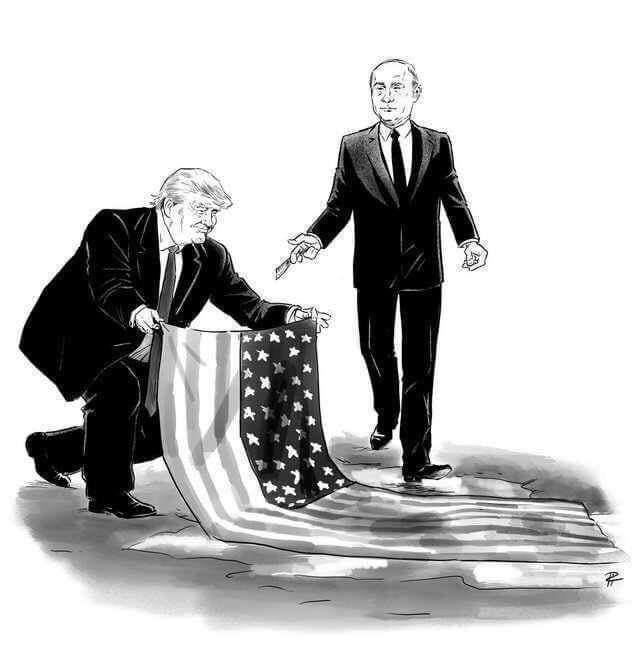
Cartoon courtesy of JA and Union Thugs 

Out of Sight, Out of Mind

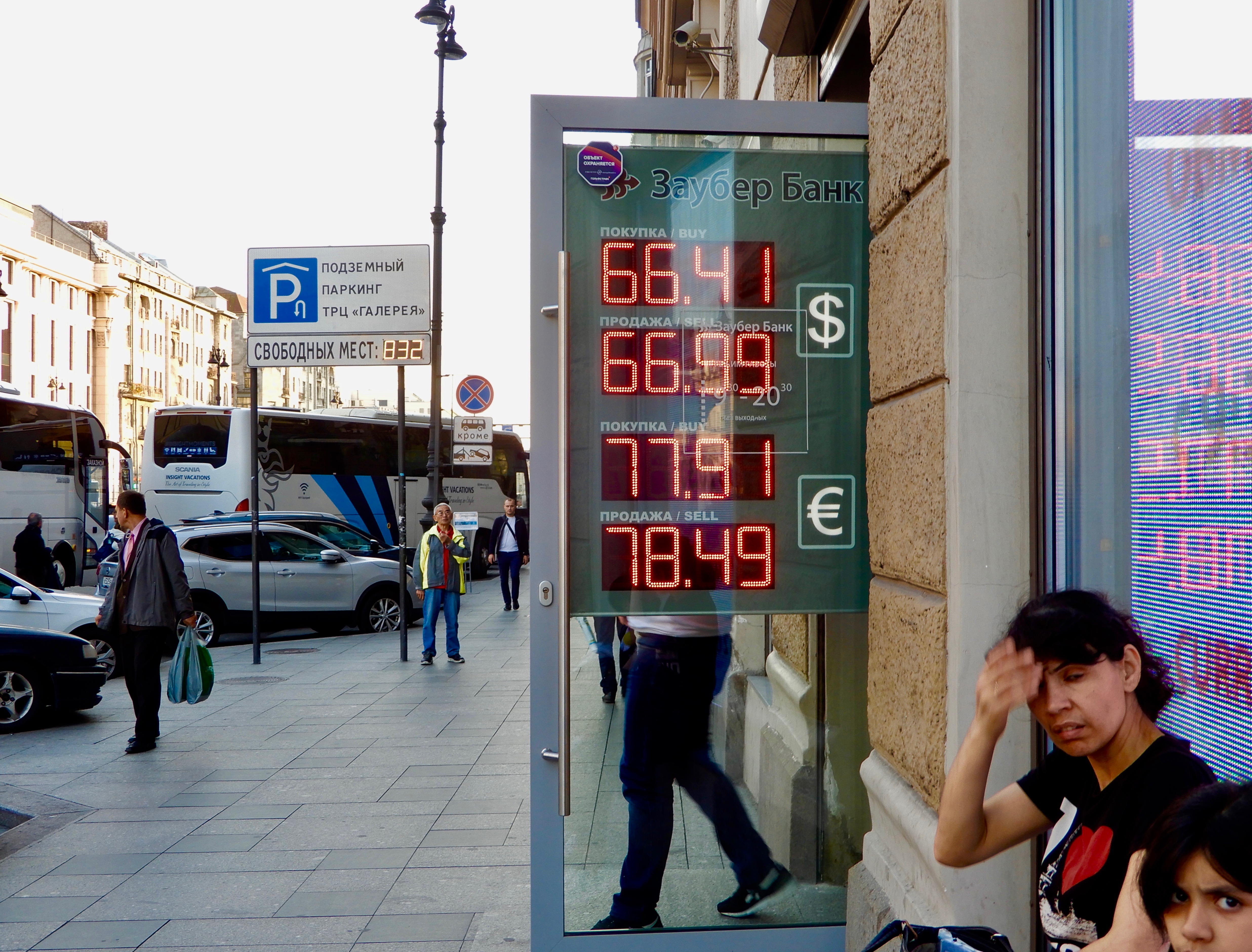
DSCN1726Goodbye to all that. Exchange rates for the US dollar and the euro, as displayed electronically on the door of Zauber Bank, Ligovsky Prospect, September 19, 2018. Photo by the Russian Reader

Putin Signs Law Banning Outdoor Currency Exchange Rate Electronic Display Boards
Delovoi Peterburg
December 18, 2018

President Putin has signed a law banning outdoor foreign currency exchange rate electronic display boards. The document was published on the Legal Information Website on Tuesday, December 18.

The document amends the law on foreign currency regulation. The Russian Central Bank now has the right to regulate how commercial banks post information about foreign currency exchange rates.

In Febrary 2018, the Central Bank proposed banning foreign currency exchange rate electronic display boards outside the premises of banks. The regulator explained the idea was prompted by the need to combat illegal exchange offices.

“As practice shows, information about foreign currency exchange rates is most often displayed outdoors by so-called illegal currency exchange points, which are camouflaged as limited service branches of authorized banks,” the Central Bank’s press service explained.

In December, a law bill that would grant the regulator the right to establish requirements for display of such information was adopted by the State Duma and approved by the Federation Council.

The Central Bank’s draft instructions explain that information about foreign currecy exchange rates can be placed only within the premises of an authorized bank and in such a way that the information is visible only inside the facility itself.

Translated by the Russian Reader

Sonnet 130

DSCN4325

My mistress’ eyes are nothing like the sun;
Coral is far more red than her lips’ red;
If snow be white, why then her breasts are dun;
If hairs be wires, black wires grow on her head.
I have seen roses damask’d, red and white,
But no such roses see I in her cheeks;
And in some perfumes is there more delight
Than in the breath that from my mistress reeks.
I love to hear her speak, yet well I know
That music hath a far more pleasing sound;
I grant I never saw a goddess go;
My mistress, when she walks, treads on the ground:
And yet, by heaven, I think my love as rare
As any she belied with false compare.

Source: poets.org. Photo by the Russian Reader

Are Russians Eating Well?

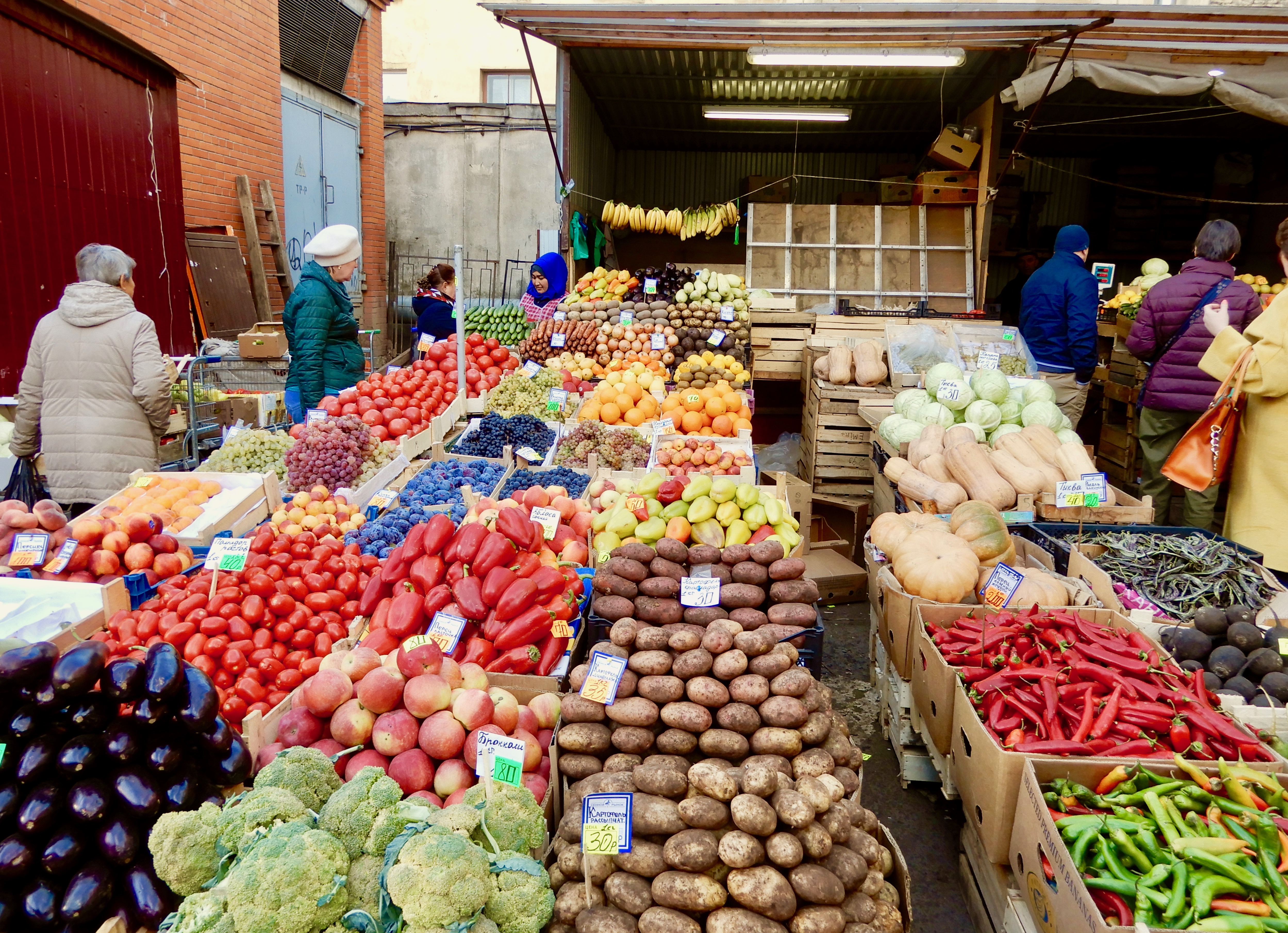
DSCN1832A fruits and vegetables stall at the famous Hay Market (Sennoy rynok) in downtown Petersburg, September 29, 2018. Photo by the Russian Reader

Eating Their Fill: Russia’s Food Security in the Wake of Crimea
Have Russians Eaten Better After the Government Moved to Defend Them from Western Food? 
Yevgeny Karasyuk
Republic
December 6, 2018

Soon after the embargo that was imposed four years ago in response to the stance of western countries on Crimea, analysts warned Russia itself would primarily suffer from food anti-sanctions.

“We won’t heighten the Russian Federation’s food security at all. In fact, we will reduce it,” Natalya Volchkova, a professor at the New Economic School, said at the time.

Of course, the criticism of the experts was ignored. No one in government questioned the policy of forced import substitution. Most Russians even imagined it was a rare instance when the government made a good decision. Only a few years ago, 71% of the populace [sic] spoke in favor of limiting imports.*

Time has passed, and the experts to whom no one listened have compiled figures showing where the policy has taken the country. A recent report, authored by a group of researchers from RANEPA, provides an analysis of its consequences.

Import substitution in the food sector was an obsession and, at the same time, a source of pride for ex-agriculture minister Alexander Tkachov. His replacement, Dmitry Patrushev, son of the Russian Security Council’s secretary and a none-too-successful state banker, has changed little in the government’s take on the situation. The new minister is certain Russia has reached a level of self-sufficiency above 90% in terms of basic food staples. Thus, Alexei Gordeyev, deputy prime minister for agriculture and an ex-agriculture minister himself, is convinced Russia has successfully carried out import substitution.

Food imports actually did slump sharply—by 46%—from 2013 to 2016. Although an unbiased analysis if how Russian producers succeeded in turning the tables and quickly saturating the market with their own products would point to the ruble’s sudden devaluation, rendering foreign imports uncompetitive, as had already happened in recent history, rather than to the success of the anti-sanctions.

Whatever the cause of Russia’s newfound food independence, however, it has not lead to food security. Citing the international standard, the authors of RANEPA’s report define food security as “the physical and economic availability of safe nourishment, sufficient for an active, fulfilling life.” In other words, there really are more domestically grown and produced food items in Russia nowadays, but the bulk of the populace has less and less access to them.

“Caloric Value of the Russian Diet.” The blue line indicates caloric value, while the dotted line indicates the recommended daily caloric intake per family member in kilocalories. The light purple area indicates the number of Russians who suffer from obesity, in thousands of persons, while the shaded dark purple area indicates the number of Russia who suffer from anemia, also in thousands of peoples. Source: Rosstat and RANEPA. Courtesy of Republic

Last year, Russia was ranked forty-first in the Global Food Security Index, compiled by the Economist Intelligence Unit, meaning that it ranked lower than it had in 2013, when it ranked fortieth. This was due, among other things, to insufficient funding of research and a reduction in the variety of food products.

According to official statistics, food accounts for approximately 35% of expenses in Russian household budgets, which is a high proportion when compared with the OECD countries, among which even the highest percentages, achieved by Poland and Mexico, fall short of 25%. Independent evaluation of spending on food, however, claim that the proportion of Russian family budgets spent on food is actually over fifty percent. Given the almost continuous drop in the real incomes of Russians, the selection of products has declined in quality and abundance. On average, Russian households continue to skimp on everything they can do without, as confirmed by the compilers of the Coffee and Milk Index, as published by Romir, a Russian marketing research company. (The index tracks sales of chocolate, coffee, milk, and bottled water.) RANEPA’s researchers noted the discrepancy between the excess fat in the food and bread Russians eat and the low number of calories in their diets.

By closing the borders to imports and showering the domestic agro-industrial complex with generous state subsidies—1.2 trillion rubles [approx. 15.9 billion euros] in the past six years from the federal budget alone—the regime has persuaded itself it has been filling the nation’s bellies and improving its health. Its expectations were exaggerated, however. Oversaturated with cheap carbohydrates, the standard fare eaten by many Russians remains unbalanced and low on energy. “This is borne out by widespread anemia among the populace as a whole and children in particular,” RANEPA’s researchers write. The number of Russians who suffer from obesity has grown for the same reason.

Obviously, these problems cannot be written off as temporary glitches in demand in the domestic food market, whose revival has been unanimously trumpeted by former agriculture ministers and the current agriculture minister. Rather, they are the natural consequence of systemic problems with the natural resources economy that shoulders the burden of the Kremlin’s geopolitical capers. The average Russian family often simply cannot afford a plentiful variety of healthy, high-quality food.

The authors of RANEPA’s report have emphasized this.

“Neglecting this fact can lead to a distorted picture of the state of food security,” they write.

However, there is still very little chance the alarming conclusions of the experts will be heard this time around, forcing the government to make adjustments to its food policy.

* How did they do that? Was a nationwide referendum held? The author, of course, is referring to a so-called public opinion poll in which, at best, a thousand or two “ordinary” Russians were asked loaded questions, to which they gave the “right” answers. {TRR}

__________________________________

Russians Spend 30% of Their Budgets on Food
Georgy Tadtayev
RBC
December 17, 2018

Russians spend nearly a third of their household budgets on food. Russia lags behind Montenegro, Latvia, and Turkey in this sense. Russians spend less than seven percent of their budgets on culture and leisure.

According to RIA Rating, as reported by RIA Novosti, Russians spent 31.2% of their household budgets on food in 2017.

The estimate of the percentage of their household budgets people in forty European countries, Russia, Kazakhstan, and Turkey spend on food was based on information from the IMF and national statistics agencies. Russia ended up in the bottom ten of the ranking, ranking 31st. Its nearest neighbors were Montenegro (29.7%) and Latvia (31.7%).

Ukrainians spend the greatest portion of their household budgets on food: 50.9%. People in Kazakhstan (46%, 39th place) and Moldova (43.4%, 38th place) also spend more than 40% of their budgets on food.

Western European countries topped the rating. Luxembourg came in first place. Residents of the duchy spend a mere 8.7% of their money on food. Close behind Luxembourg were Great Britain (10%) and the Netherlands (10.6%).

The agency also ranked countries according to percentages of income spent on alcohol and cigarettes. Residents of three Balkan countries—Romania (8.2%), Bulgaria (5.1%), and Serbia (4.7%)—spend the most on bad habits. Luxembourg (1.3%), Moldova (1.5%), and Cyprus (1.6%) spend the least on alcohol and cigarettes. Russia ranked 24th: Russians spend 3% of their househould budgets on bad habits.

Sweden was the top-ranked country in terms of spending on culture and leisure: Swedes spend 18.7% of their budgets for these purposes. Moldovans spend the least on leisure and culture: 1.3%. Russia ranked 21st: Russians spend 6.9% of their money in this category.

Translated by the Russian Reader

Suing the Opposition into Oblivion

The Lash and the Pocketbook: Petersburg Tests New Scheme for Punishing Opposition
Sergei Yeremeyev
Zaks.ru
December 14, 2018

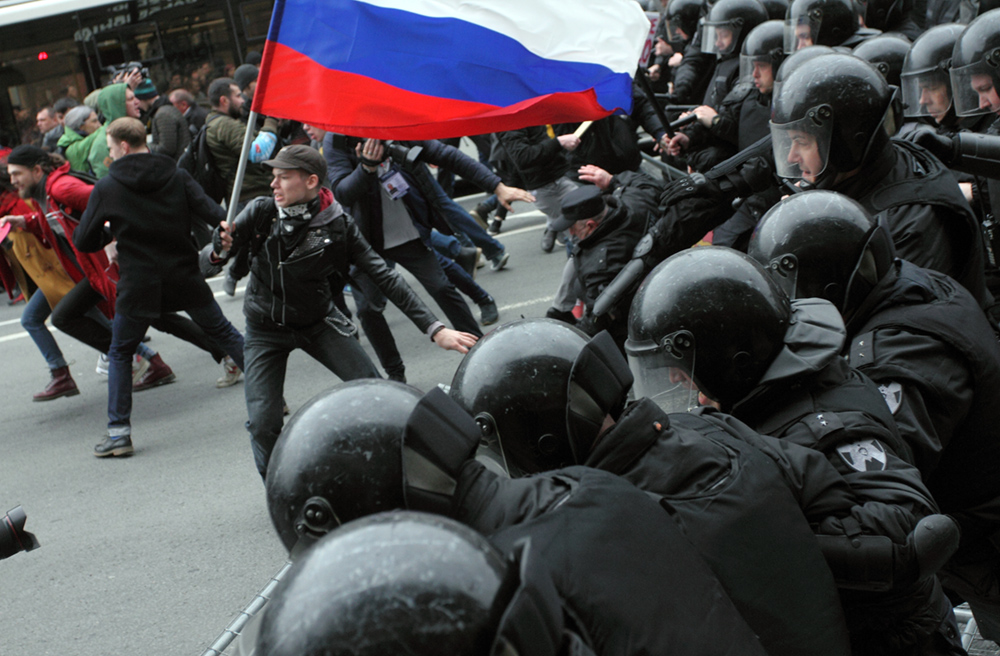
The prosecutor’s office has estimated that two Petersburg parks sustained 10.9 million rubles [approx. 144,000 euros] in damage during the He’s Not Our Tsar protest, which took place on May 5, 2018, in Petersburg [and other Russian cities]. Two people, Denis Mikhailov and Bogdan Livtin, will be held responsible for all the protesters, police officers, and ordinary Petersburgers who walked on the lawns that day in the vicinity of Palace Square. Law enforcement agencies have identified the two men as organizers of the protest rally.
IMG_5092.JPG (349 KB)

Saving the Grass from Provocateurs
Suing for damage to municipal property is the Russian state’s new know-how when it comes to intimidating the opposition. Like certain other innovations, for example, repeated arrests for involvement in the same protest rally, it is being tried out on Alexei Navalny’s supporters.

The authorities decided to start big. The prosecutor’s office has estimated the city suffered nearly 11 million rubles in damage from the He’s Not Our Tsar rally. According to members of the Navalny Team in Petersburg, the 300-page complaint claims opposition protesters damaged the greenery in the Alexander Garden and the garden next to the Winter Palace. Allegedly, they trampled the lawns, flower beds, and roses, and damaged the dogwood and lilac bushes.

The complaint states the cost of restoring the vegetation in the two green spaces, as provided by the city’s municipal amenities committee. According to the committee, it cost 3,651,000 rubles [approx. 48,000 euros] to repair the damage incurred by the May 5 rally.

The prosecutor’s office multiplied this amount by three, citing a municipal regulation on the amount of compensation to be paid when greenery has to be replaced. The regulation states the amount of damage caused to green spaces protected by the city’s Committee on the Use and Preservation of Landmarks (KGIOP) must be multiplied by a factor of three.
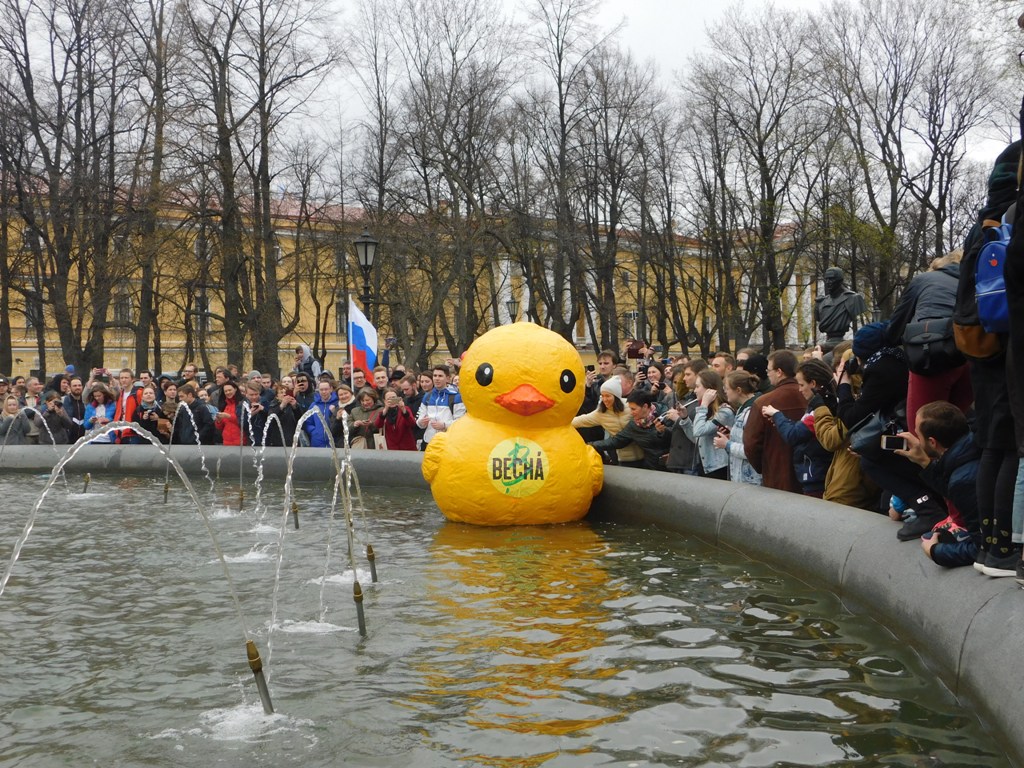
DSCN0254.jpg (303 KB)A giant rubber duck emblazoned with the logo of the Vesna (“Spring”) Movement floats in a fountain in the Alexander Garden on May 5, 2018.

Ivan Pavlov, lawyer and head of Team 29, a group of civil rights lawyers, fears the lawsuit against Litvin and Mikhailov is only the first of similar penalties.

“I am concerned by the direction the prosecutor’s office has taken. This would set a very dangerous precedent. Precedents are usually tried out in other regions of the country, but this time they are starting with Petersburg. Fines are one thing, but civil liability is a whole new level of impacting people’s desire to protest,” Pavlov told Zaks.ru.

Leonid Volkov, project manager at the Anti-Corruption Foundation (FBK), argues that if you follow the Petersburg prosecutor’s thinking to its logical conclusion, you could also punish the organizers of authorized rallies.

“If they tell us that the rally organizer should be punished for trampling the law rather than the person who trampled the lawn, it makes no difference whether the rally was authorized or not, right? Let’s imagine we have organized an authorized rally. The prosecutor shows up and tells us organizers he is suing us for a billion rubles. It would sound completely insane,” Volkov said.

Downtown Petersburg is often used as a venue for large-scale events, including official celebrations. For example, this past summer, the Smolny reported that, during the annual Crimson Sails celebration for school leavers, when young Petersburgers and out-of-towners party all night long, approximately 600 cubic meters of rubbish were removed from the downtown area. It is unknown whether the city inspected the condition of its bushes after the school leavers’ party.

The New Governor
Litvin, federal coordinator and press secretary for the Vesna Movement,  actually applied to the Smolny for permission to hold the May 5 rally. He proposed a march down Zagorodny Prospect, following by a rally on Pioneer Square. The city’s law and order committee found a reason to turn down his application, just like the other applications submitted by Navalny supporters. The city told the opposition to hold its rally in Udelny Park, a large green space in the north of the city that looks more like a forest. Insulted by this suggestion, Navalny supporters announced the rally would take place on Palace Square.

Three months later, on August 2, the October District Court fined Litvin 20,000 rubles for organizing the unauthorized He’s Not Our Tsar protest rally per Article 20.2 Part 1 of the Administrative Offense Code. Petersburg City Court subsequently overturned the lower court’s ruling. The case will be reheard in the near future.

Mikhailov, the Navalny Team’s Petersburg coordinator, has already been punished twice for the May protest. First, the Smolny District Court sentenced him to 25 days in jail, and then the October District Court fined him 300,000 rubles [approx. 4,000 euros], a record fine for opposition political activism in Petersburg. The fact that Mikhailov was on the air on the internet channel Navalny Live during the event, answering the questions of his comrades in Moscow, was considered proof he organized the protest.

“I was covering the event, because the major national media were not there. At such a huge event! In Petersburg, 10,000 people marched on the Nevsky,” replied Mikhailov.

He now recalls an interesting conversation he had on the sidelines of one of his court hearings.

“There was a certain law enforcement officer at one of my court hearings. He told me the prosecutor’s office was planning to file suit, because the damages incurred by the city were too large. Nothing came of it. Judging by the complaint, this past summer, they really did carry out inspections and corresponded on the matter, but then it fizzled out. But in November, when Alexander Beglov was appointed acting governor [of Petersburg], the officials involved resumed their correspondence and the lawsuit was drawn up. Putting it simply, Beglov came to power and gave them the green light,” Mikhailov told Zaks.ru.

Maxim Reznik, a member of the St. Petersburg Legislative Assembly, has also noticed the new governor’s shadow looming over the lawsuit. Reznik argues the Smolny is using such cases to intimidate the opposition in the run-up to the 2019 elections.

“They strike us with the lash, and they hit us in our pocketbooks. It’s directly connected with the new governor. Because he is either involved in what is happening or he has no control of the situation. Why he would want that? The regime is showing us its teeth. It doesn’t want there to be any protests whatsoever. [Beglov] needs things to be quiet so he can bring happiness to the city, while anyone who intends to agitate the people should know their place,” said Reznik.

Supernatural Stupidity
Maybe ten thousand people did not attend the May 5 protest, but there were clearly more than two thousand people on the streets, as was claimed by the Interior Ministry’s local office. Originally, no one had planned to march on Nevsky Prospect. Since a celebration for bikers and rehearsals for the May 9 Victory Day military parade were taking place on Palace Square, the protest rally was hastily moved across the street to the Alexander Garden. When the Alexander Garden was teeming with people who wanted to express their displeasure at the policies of the old-new president, Vladimir Putin, voices in the crowd called for the rally to move to the Nevsky, and people spontaneously rushed into the city’s main street.

The Navalny Team did not immediately join the march. Initially, the rally’s Telegram channel broadcast requests not to heed people urging protesters to leave the Alexander Garden. Volunteers sporting “20!8” pins made the same request in person, until they realized there was no holding people back. The crowd stayed on the sidewalk for awhile, but when it encountered a segment of the Nevsky closed to traffic for repairs, it went onto the roadway. At approximately the same time, Mikhailov, who was in the midst of the crowd, went on the air on Navalny Live.

The first arrests occurred at the corner of Marat Street and Nevsky, where a police barrier awaited the demonstrators. Seeing what happened, the bulk of the crowd turned around and headed in the opposite direction, walking down the Nevsky and parallel streets. In none of the court hearings in the cases of Litvin and Mikhailov was any evidence presented that suggested either of the men had encouraged the demonstrators to return to Palace Square.

Most of the arrests took place outside the Hermitage. Police dressed in riot gear gave chase over the lawns to anyone chanting slogans. They caught some of these people, dragging or escorting them to paddy wagons parked on Palace Passage. The proceedings were videotaped and photographed by bloggers and reporters. No one had the time to look where they were walking.

Two men, however, will be held liable for damaging the lawns and other vegetation. One of them, Litvin, never even made it back to the Winter Garden: he was detained near Gostiny Dvor when the demonstrators headed in the opposite direction.

Attorney Arkady Chaplygin call this method of singling out guilty parties a supernatural stupidity.

“The lawsuit makes no sense whatsoever. The Russian Civil Code prohibits seeking monetary compensation for damage from persons who did not cause the damage. The law requires the individual who caused the damage to be identified. This lawsuit is a PR stunt on the part of Governor Beglov meant to intimidate the opposition. It is a stupidity supernatural in its scope,” argued Chaplygin.

The Frunze District Court will try and make sense of the botany of the city’s parks and the prosecutor’s arithmetic after the New Year’s holidays. A preliminary hearing in the case has been scheduled for January 10.

Photos courtesy of Zaks.ru. Translated by the Russian Reader
Banned: The Kremlin’s Empire

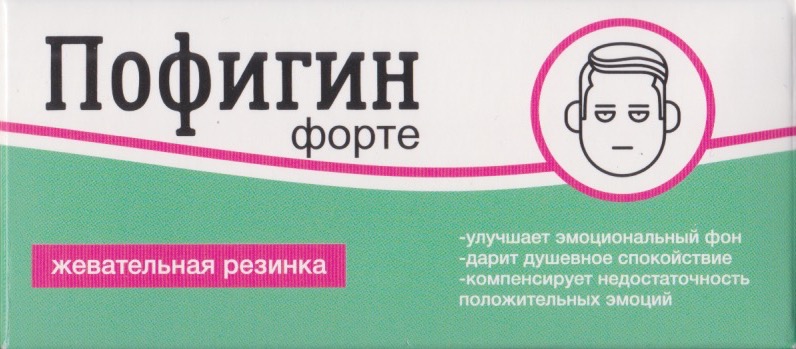
kremlin's empire.jpegA screenshot of the section of the Russian Justice Ministry’s list of “extremist” matter containing two editions of Abdurakhman Avtorkhanov’s The Kremlin’s Empire: The Soviet Style of Colonialism. They are wedged between a video entitled “Bumblebees: Moscow Skinhead Girl,” and the lyrics to a song entitled “Wog Devils” by the group Kotovsky Barbershop, each of them posted on personal pages on the Russian social media network VK. 

Avtorkhanov’s Kremlin’s Empire Ruled Extremist
Grani.ru
December 15, 2018

Two editions of The Kremlin’s Empire: The Soviet Style of Colonialism by Abdurakhman Avtorkhanov, a Chechen émigré historian of the Soviet Union, have been placed on the list of “extremist” matter, as published on the Russian Justice Ministry’s website. The SOVA Center reported the news on Friday.

The first edition of Avtorkhanov’s book was published in the Bavarian town of Garmisch-Partenkirchen in 1988. The first Soviet edition of the book was published in Vilnius in 1990. In 2001, Moscow publisher Dika-M reprinted the book, dropping the subtitle The Soviet Style of Colonialism. The Vilnius and Moscow editions were placed on the list of “extremist” matter on December 5, registered under No. 4661 and No. 4662, respectively.

Avtorkhanov’s book was placed on the list due to a ruling made over three years ago by the Meshchansky District Court in Moscow. On the court’s old website, which is no longer updated, there is a record of ten administrative suits filed by Yevgeny Novikov, who was the Meshchansky Inter-District Prosecutor at the time. Judge Maria Kudryavtseva ruled in Novikov’s favor on September 24, 2015. The Justice Ministry and the Library of Ukrainian Literature in Moscow were third parties in each of the proceedings.

Along with Avtorkhanov’s book, the Justice Ministry also placed a number of books in Ukrainian on the list of “extremist” matter on December 5, books that had also been banned by order of the Meshchansky District Court on September 24, 2015. This could mean Avtorkhanov’s book was confiscated during one of the numerous police searches carried out at the Library of Ukrainian Literature.

Grani.ru was unable to locate the decision to ban the editions of Avtorkhanov’s book in open sources.

“Perhaps the complaint against the book had to do with Avtorkhanov’s interpretation of the Molotov-Ribbentrop Pact or the history of the Bandera movement, which the prosecutor and the court construed as dissemination of falsehoods about the Soviet Union during the war,” SOVA Center wrote in its article. “However, evidence that Russian Federal Criminal Code Article 354.1 [exoneration of Nazism – Grani.ru] may have been violated cannot serve as formal grounds for ruling an item extremist.”

In his youth, Avtorkhanov (1908–1997) was a Bolshevik Party functionary in Chechnya. He was arrested and tortured in 1937. In 1940, he was exonerated. After his acquittal was reversed, he fled from Grozny into the mountains, but was soon captured. In October 1941, he was sentenced to three years in prison. He was released in April 1942. Lavrenty Beria tasked Avtorkhanov with assassinating his childhood friend Hasan Israilov (1910–1944), who in 1940 led an armed revolt against the Soviet regime in Chechnya. Avtorkhanov secretly contacted Israilov and gave him the memorandum “A Provisional Popular Revolutionary Government of Chechnya-Ingushetia,” which he had drafted for the German government.

In the summer of 1942, during the German offensive in the Caucasus, Avtorkhanov crossed the frontline, presenting the Germans with the memorandum, and offering to a write a series of pamphlets about anti-Soviet uprisings in the region. In January 1943 he moved to Berlin, where he was involved in the North Caucasus National Committee. He lived in a displaced persons camp from 1945 to 1948, subsequently settling in Munich.

In 1949, Avtorkhanov was appointed a lecturer at the US Army Russian Institute in Garmisch and Regensburg. In 1955, US counterintelligence foiled an assassination attempt on Avtorkhanov’s life. He retired in 1979. During the 1990s, he supported Chechen independence.

Avtorkhanov’s other books include The Technology of Power (1959), The Origin of the Partocracy (1973), The Mystery of Stalin’s Death (1981), From Andropov to Gorbachev (1986), and Lenin in the Destinies of Russia (1990). The Technology of Power was widely distributed in samizdat in the Soviet Union. Reading and possessing the book was a criminal offense.

Thanks to EZ for the heads-up. Translated by the Russian Reader

Let’s Give In to Russian Blackmail

nod-constitution day-1“The Russian Constitution: The Basic Law or Legal Sabotage?” Front page of a newspaper handed out on the streets of Petersburg by memberx of NOD (National Liberation Movement) on December 12, 2018, celebrated as Constitution Day in Russia. This article argues that Russia’s current constitution, adopted in 1993, was drafted by CIA agents working under the cover of USAID. Their goal, allegedly, was to colonize Russia by subjugating its sovereignty to international law.
___________________________

Don’t Let Russia Leave the Council of Europe
Yuri Dzhibladze and Konstantin Baranov
oDR
December 13, 2018

Those who wish to punish the Kremlin for its aggressive actions in Ukraine and elsewhere are missing the target: it is not the Russian government, but the Russian public who will suffer if the country leaves the Council of Europe.

After the Kerch Strait incident, proponents of pushing Russia out of the Council of Europe seem to have got additional justification for their position in a discussion that rages in the Council’s Parliamentary Assembly (PACE). In fact, the potential costs of this departure appear to be too high and far-reaching—not only for the Russian society, but for the whole of Europe.

More than four years since its delegation has been deprived of voting and participation rights in the PACE, Russia is now a step away from leaving the Council of Europe – either at its own initiative or as a result of expulsion for non-payment of its membership fees. In recent months, the situation has reached a deadlock due to an uncompromising position of both the Russian authorities and their critics in the PACE.

Those who wish to punish the Kremlin for its aggressive actions in Ukraine and elsewhere miss the target: it is not the Russian government, but the Russian public who would suffer the most should the country leave the Council of Europe. Since 1996, when Russia joined the organisation, for millions living in the country (including nationals of other states), the European Court of Human Rights (ECtHR) has been an ultimate hope for justice, which they cannot find in Russia. In this period, almost 2,500 judgements have been delivered to Russia. In 2017 alone, the state paid over 14.5 million euros as just satisfaction to victims. The judgments have had a significant positive impact on Russian laws and judicial practice, despite their implementation being far from ideal and counting to roughly one-third of cases. Should Russia depart from the Council of Europe, the scope of human rights problems in the country will grow exponentially, including a threat of speedy reinstatement of the death penalty.

The potential consequences would go far beyond the deterioration of the internal situation. This move would not resolve the issue of the annexed Crimea or put an end to the armed conflict in Donbass. On the contrary, expelling the violating country would demonstrate the weakness of the European system of protection of human rights and the rule of law in dealing with such gross violations.

What is more, Russia’s withdrawal would definitely worsen conditions of citizens of Ukraine and other countries who are held in Russian prisons and face unfair trials, torture and inhuman and degrading treatment. It would also result in a denial of the protection of the European Convention on Human Rights (ECHR) to inhabitants of Russia-controlled Crimea. It would eliminate effective guarantees from deportation for refugees and asylum seekers from Syria, Afghanistan and Central Asia. Finally, the practice of expulsion of a member state might trigger other countries to leave the Council and deter Belarus from returning to a special observer’s status at the PACE.

Politicians should assume full responsibility for making the choice that may define Europe’s future and work towards a solution that would preserve the common European legal framework and space for critical dialogue aimed at promoting human rights, democracy and the rule of law on the entire territory of Europe, including Russia.

We do not demand to “give in to blackmailing.” Lifting all restrictions on the Russian delegation in the PACE would be indeed unprincipled. However, finding a reasonable solution, in our view, would be a courageous decision to take responsibility and to advance the core values of the organisation by allowing the critical dialogue to continue. Amending the PACE rules of procedure – restricting national delegations’ rights only within the Assembly itself and not depriving them of the voting rights in elections of non-PACE mandates—including ECtHR judges, Commissioner for Human Rights and Secretary General—appears such a legally sound and reasonable solution.

Threats by Russian officials to leave the Council of Europe are not just a bluff to raise the bargaining stakes. There are many influential people in the Russian political establishment in favour of isolationist policies who actually want the country to withdraw. If a reasonable solution is not found before next spring, Russia’s authorities will not wait for the official discussion of its potential expulsion at the Committee of Ministers in June 2019 and will announce the withdrawal from the Council before.

It should be clear to everyone: Russia’s departure from the Council of Europe would not stop human rights violations and halt the authoritarian backslide in our country, or prevent the Kremlin’s aggressive behaviour in the international arena. Instead, it would put an end to a difficult struggle of Russian civil society to make Russia an important part of Europe on the basis of shared norms and values of democracy, rule of law and respect for human rights. It will turn a large territory in Europe into a legal “grey zone” for decades to come.

The authors represent a group of Russian human rights defenders who recently issued a Memorandum on the crisis in relations between the Council of Europe and the Russian Federation.

About the authors

Yuri Dzhibladze is a founder and president of Moscow-based Centre for the Development of Democracy and Human Rights and advocacy coordinator at the EU-Russia Civil Society Forum. He has worked on human rights, democracy, and international organisations since the late 1980s.

Konstantin Baranov is member of the Coordinating Council and international advocacy coordinator at the Youth Human Rights Movement, an international NGO enjoying participatory status with the Council of Europe. He is an expert on the protection of civil society space and fundamental freedoms in Russia and the post-Soviet area.

NB. This article was originally published by oDR under a Creative Commons Attribution 4.0 International licence

___________________________

When will Russia stop behaving like the enemy of Western Europe?
Dima Vorobiev, I worked for Soviet propaganda
Quora
Answered Feb 18

Russia is not the enemy of the Western Europe. The disruptive policy of President Putin is aimed at (1) weakening the political and military dominance of the US in Europe and/or (2) full or partial acceptance by the West of the following list of Russia’s political objectives:

  • Recognition of Crimea as Russian territory
  • Total freeze on expansion of NATO. No membership for Sweden, Finland, Ukraine or Georgia.
  • No NATO bases in the Baltics, Poland, Czech republic and Slovakia, Romania and Bulgaria. Removal of the American anti-ballistic bases in Central Europe.
  • Finlandization of Georgia, Ukraine and guarantees of such arrangement for Belarus, in case it gets a pro-Western government in the future.
  • Guarantees of unhindered land connection through Lithuania between the Russian heartland and the exclave of Kaliningrad. The unhindered transit through the Suwalki gap would be very useful for Russia as a gauge of the level of determination on the part of NATO in the case of a swift escalation in tensions.
  • Recognition of Russia’s right to permanent military presence in the Mediterranean (through bases in Syria and possibly in Libya or other places)
  • Repeal of all sanctions against Russian oligarchs, their companies and sectoral interests.

If the West won’t agree to such a new global security arrangement, the current confrontation will continue, with variations only in the level of tensions. Because of the technological gap, the Russian military-industrial complex will increasingly depend on China for high-tech components for our weapons systems. Russian economy will also be more and more streamlined to accommodate the needs of Chinese manufacturing.

This stalemate can continue for many years, unless one of the following happens:

  1. Unexpected massive deterioration of economy in Russia.
  2. Low-probability, high-impact catastrophe in the US or Europe that makes the West seek help from Russia
  3. Power shift in Russia with full revision of national policy. (Highly unlikely with President Putin still in power).

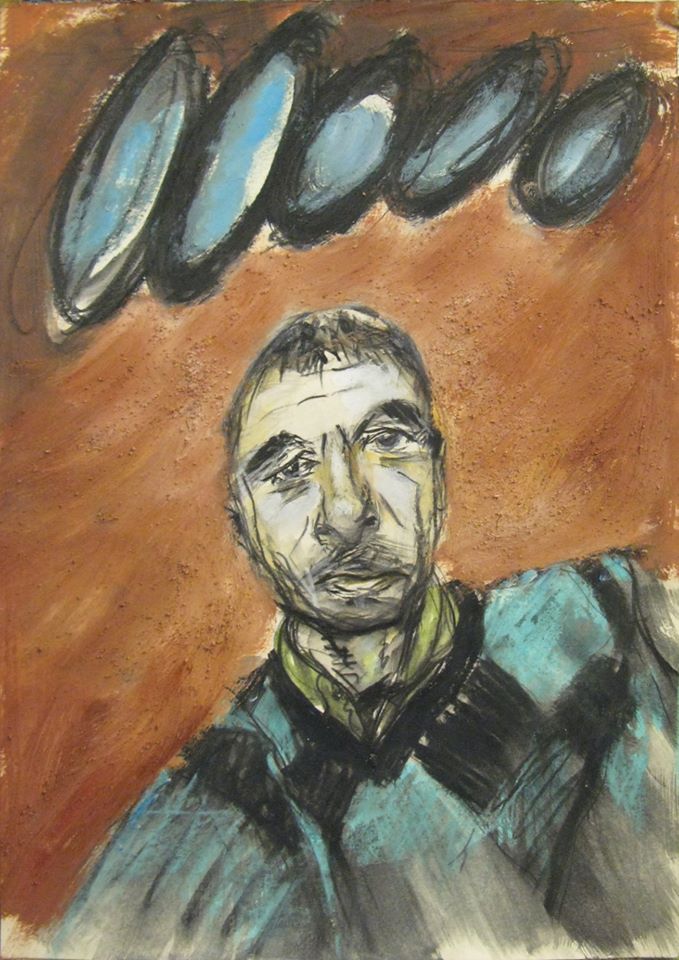
Yuri Leiderman: Self-Portrait with Limelights

leiderman-self-portrait with limelightsYuri LeidermanSelf-Portrait with Limelights, 2015–2018. Crayon sauce, pastel and oil on paper, 42 cm x 30 cm. Courtesy of the artist. All rights reserved

 __________________________________________________

The Russian Reader covers grassroots political, environmental and social movements, economic and social issues, and independent culture in Russia and the Russian-speaking world. It is not subsidized by anyone except my extremely generous readers, who can use the “Donate” button in the sidebar to make a donation to me via PayPal or can go to my Ko-fi page and buy me a coffee, so to speak. Otherwise, I do all work on the website for free. I pay no fees to to the periodicals and authors whose articles I translate and post on the site. Unless otherwise noted, everything I publish on the Russian Reader can be reproduced elsewhere, so long as the Russian Reader is acknowledged as the source and a link back to the original post is included in the republication. {TRR}