The Russian Reader Reads: Havli

This is the first in a series of posts in which I showcase a few of the newsletters, blogs, Substacks, and websites — all of them produced by hardworking, passionate lone wolves or tiny, perpetually underfunded grassroots collectives — which inspire me to continue making the Russian Reader and inform me about parts of the world and communities about which I would otherwise be utterly clueless.

Peter Leonard describes Havli as “a Central Asia-themed Substack written by me, Peter Leonard, a former editor at Eurasianet and the one-time Central Asia correspondent for the Associated Press. By drawing on my decades of experience visiting, studying and reporting on the region, I intend to make this newsletter an informative and, fingers crossed, engaging way to keep abreast of developments of note.”

Mr. Leonard’s latest post on Havli dovetails with so many of political and social trends I’ve been tracing over the years that it seems tailor-made for my website. Enjoy! I hope you’ll consider subscribing to Havli and supporting it financially. \\\ TRR
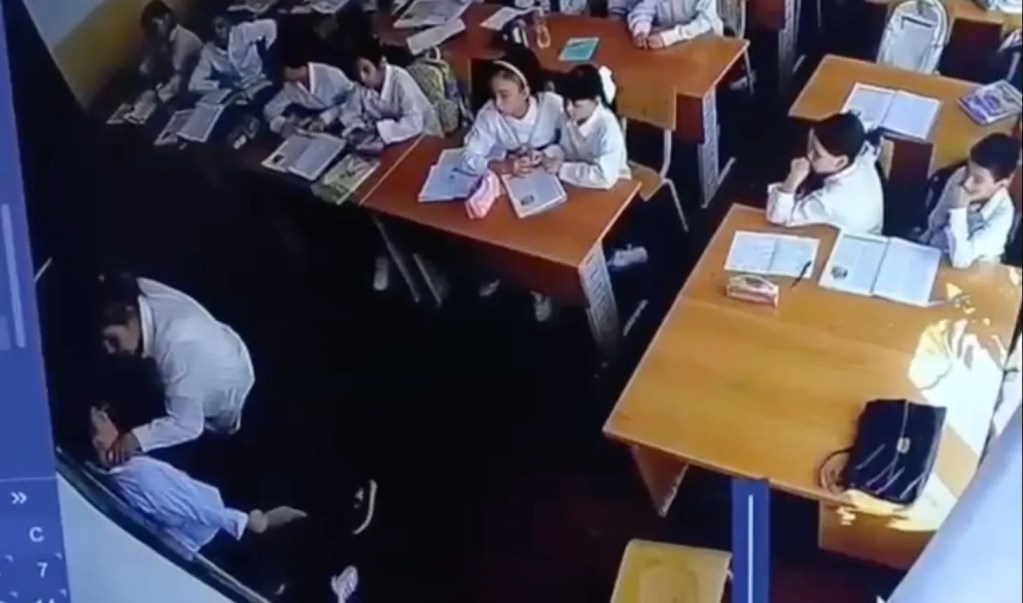
Closed-circuit television footage showing a teacher at a Tashkent school grabbing a pupil by the neck.

In the worst-case scenario, giving a teacher lip usually ends with the offending pupil visiting the headmaster’s office.

Things have to get pretty bad for a classroom kerfuffle to provoke a diplomatic incident.

A teacher at a school in Uzbekistan’s capital, Tashkent, managed to do just that this week by manhandling a pupil who complained that she was conducting her Russian language class entirely in Uzbek. Closed-circuit television footage obtained by the boy’s parents shows the teacher grabbing the child by the neck, and then slapping and screaming at him.

The video images quickly circulated on social media, eliciting howls of protest from self-avowed Russian patriots indignant at this alleged case of maltreatment of their ethnic kinfolk. 

“You can just imagine what a racket there would be if a similar thing happened in Russia with a migrant. And it is not like Uzbekistan is confronting a wave of ethnic crime from Russia; you don’t get murderers, thugs, drug dealers, and Wahhabis going there from our country,” wrote the author of a Telegram account that disseminated the footage.

This was quite the overreach. Expatriate labourers from Central Asia living in Russia face systematic harassment and violence, often from the police. This happens so frequently it barely makes the news.

The spokeswoman for the Foreign Ministry in Moscow was quick to demand an investigation.

“If it is justified, action must be taken against the perpetrator of this cruel treatment against the child,” Maria Zakharova said. “We are monitoring this situation closely.”

The response from Uzbekistan was swift. Alisher Kadyrov, the deputy speaker of parliament, suggested that Russia “mind its own internal business.” 

“The rights of this child are being violated in a school in Uzbekistan, the offence was committed against a child of an Uzbek citizen, and measures will be taken on the basis of laws adopted on behalf of the people of Uzbekistan,” he wrote on Telegram.

Uzbek Foreign Minister Bakhtiyor Saidov delivered the same message in person, albeit more obliquely, to his Russian counterpart on the sidelines of the ongoing United Nations General Assembly, noting that their meeting “underscored the importance of commitment of states to the principle of non-interference to each other’s internal affairs.”

Following this outcry, news emerged that the teacher at the Tashkent school assaulted another pupil in an unrelated incident and has since been sentenced to serve seven days in jail.

Moscow shows every sign of relishing the opportunity to make hay of this episode.

Claims of Central Asia’s allegedly spiralling Russophobia problem have been wielded with increasing readiness by surrogates for the Russian authorities since the start of the invasion of Ukraine. The Kremlin perceives the region’s rulers as more or less loyal, but it worries that the general public is not as reliably slavish. The nightmare scenario for Moscow is that a groundswell of anti-Russia sentiment across parts of Central Asia could eventually force a gradual shift in diplomatic stances. 

The concern looks overblown at present, but it is not fully unjustified.

Older generations, especially the shrinking cohort with vivid memories of the Soviet Union, are typically more sympathetic to Russia and its bellicose conduct. Younger people whose media diet does not consist of consuming Russian state propaganda are more hostile.

Russian chauvinists are alarmed that the increasingly exclusive use of local languages in Central Asia is weakening their ability to project their message.

Research by Central Asia Barometer, an attitudes-surveying think tank, suggests that there is some association between language use and views on the war in Ukraine. Russian speakers in countries like Kazakhstan and Kyrgyzstan are more likely to justify the invasion of Ukraine than those who speak their own languages.

Fears that the status of Russian is slipping leads at times to comically petty whining. 

Earlier this year, famous Russian TV presenter Tina Kandelaki complained in a Telegram post that Kazakhstan was poised to rename a number of train stations to make them sound less Russian. She cast this move — which comprised in the event of changing names like Railway Siding No. 13 to Akshi Railway Siding — as the start of a slippery slope that would end with the closure of Russian schools, the banning of the Russian language and “[Russian] pensioners getting kicked out into the cold.”

Historians in Central Asia crafting narratives that highlight the negative aspects of Russian and Soviet rule are another trigger. The mere suggestion that the region owes its civilisation to an era pre-dating the arrival of the Russians is enough to irk some. 

In August, scholars from all over the region assembled at the Eurasian National University in Astana for the first-ever edition of the Forum of Historians of Central Asian States. “It is important for us to begin to rethink our common history,” Kazakh Science and Higher Education Minister Sayasat Nurbek told the scholars.
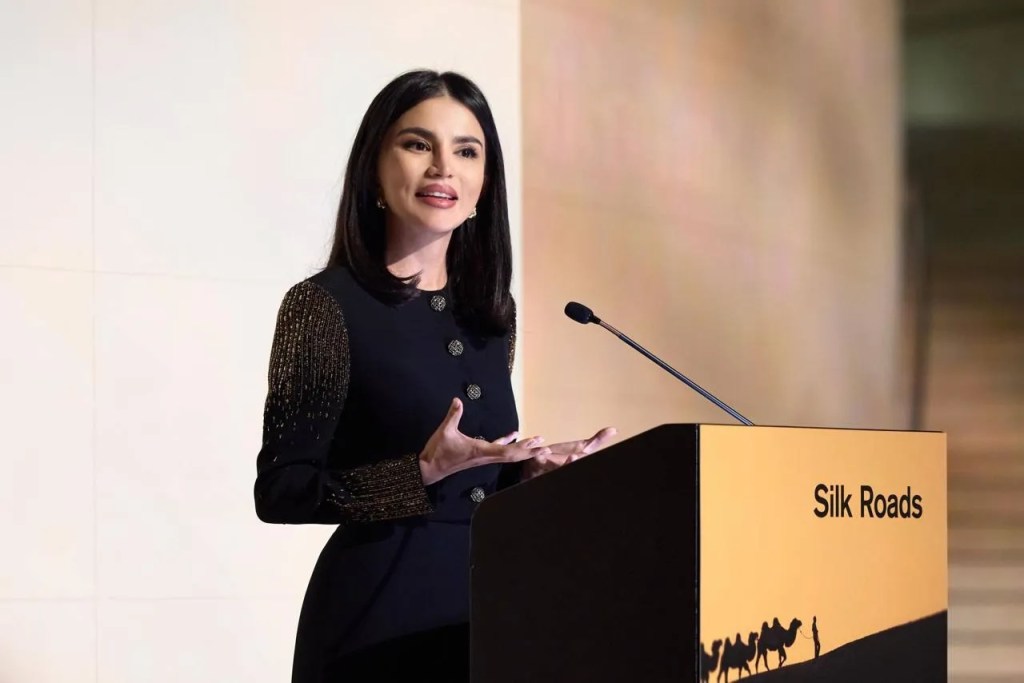
Mirziyoyeva is taking a leading role in lobbying for a vision of Uzbekistan’s history that looks beyond the role of the Russians and the Soviet Union.

The political elite has taken the lead on this. Saida Mirziyoyeva, a senior advisor to her father, Uzbek President Shavkat Mirziyoyev, in August delivered a speech in Kazakhstan that strongly signals what areas of the official narrative on recent history will be emphasised going forward. She alluded in her talk to a pair of reformist and softly nationalist movements that emerged in what are today Uzbekistan and Kazakhstan as having been thwarted by Soviet oppressors.

“At the beginning of the 20th century, both the Jadids and representatives of the Alash movement fought for a single goal: the liberation of the people, for the development of their motherlands. But they were not given the opportunity to realise their dreams,” she said.

Russian critics of this kind of talk smell a rat.

They point to the content of one history textbook in Uzbekistan as evidence of dangerous revisionism. A passage from a book cited by outraged Russian patriots talks of how the “Soviet regime subordinated Uzbekistan’s economy to the interests of the centre, turning it into a raw materials appendage.” This is loathsome ingratitude designed to demonise Russians, they grumble. 

Kyrgyzstan and Tajikistan are far more economically dependent on Russia than either Kazakhstan or Uzbekistan, but they too have in their own small ways worked to forge narratives that are gently but implicitly critical of the legacy of Muscovite rule. In July, Kyrgyz President Sadyr Japarov officially recognized five victims of Soviet repression as founders of the modern statehood of Kyrgyzstan. All the men were executed in 1930s during waves of Stalinist repressions against perceived nationalist movements.

That anti-nationalist campaign was the same one that crushed the Jadidist and Alash movements referenced by Mirziyoyeva.

Central Asian leaders periodically try to soothe the nerves of Russians eager to winkle out evidence of xenophobia in the region. 

In his address to the nation earlier this month, Kazakhstan’s President Kassym-Jomart Tokayev reprised a tried-and-tested Astana mantra.

“In Kazakhstan, there is no — and cannot be any — space for discrimination on linguistic, religious, ethnic or social grounds,” he said. “Incidents and provocations do sometimes occur, but these happen because of the thoughtlessness and ignorance of individual citizens. When these things happen, they are dealt with — and will [always] be dealt with — by law enforcement agencies.”

The large community of vocal Russian revanchists monopolising the public conversation inside their country do not buy it. And they are seizing on any excuse to make their point heard.

Source: Peter Leonard, “Russophobia panic fanned by school scuffle in Uzbekistan,” Havli, 27 September 2024. The link in the sixth paragraph was put there by me. \\\ TRR
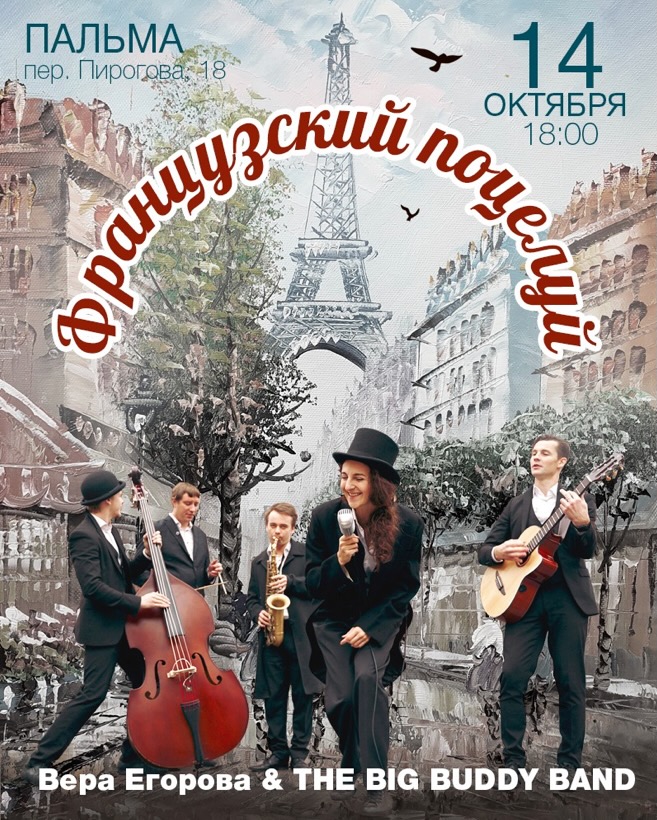
French Kiss

French Kiss: A Concert by Vera Egorova & The Big Buddy Band

6:00 p.m., October 14, Palma Creative Space, Pirogov Embankment, 18

Performers

Vocals – Vera Egorova, Double Bass – Anton Krasikov, Guitar – Yuri Yurov, Drums – Ivan Laptev, Saxophone – Anton Seryogin

Description

The lights of the city in evening, the music, the vibe… under a Paris sky!

Stage Magic Agency invites everyone to be inspired by the romantic motifs of France in the light of the crystal chandeliers at the Palma Mansion on October 14. The evening’s programme includes treasures of French pop and chanson as performed by the extravagant Vera Egorova & The Big Buddy Band. We will make a genuine French voyage from Zaz’s contemporary hits to such symbols of the era as Edith Piaf and Yves Montand.

Vera Egorova & The Big Buddy Band are musical hooligans from St. Petersburg and the musical project of singer and actress Vera Egorova. The band has performed more than 500 concerts in Russia and abroad and taken prizes at various international competitions and festivals. Each of their performances is a ton of drive and an endless stream of emotions.

Well, bon voyage! See you at the Palma!

Concert programme:
Zaz – Je veux
Zaz – Paris sera toujours Paris
Zaz – demain c’est toi
Edith Piaf – Padam Padam
Edith Piaf – La vie En Rose
Joe Dassin – Les Champs Elysees
Charles Aznavour  – Oublie Loulou
Paolo Conte – Via con me
Yves Montand – Sous le ciel de Paris
Patricia Kass – Mon mec a moi
Julie London – Fly me to the moon
Madeleine Peyroux – J’Ai Deux Amours
Osvaldo Farres – Quizas

Duration: 1 hour 15 minutes

Source: Bileter.ru (via the website’s 5 October 2023 email newsletter). The “concert programme” is reproduced here as it appeared in the original.


“Vera Yegorova & tBBB — Je Veux (ZAZ cover) | LIVE.

I could detect almost no actual French in this so-called cover of a French song by the “musical hooligans from St. Petersburg,” making it a perfect illustration of the cargo cult character of “world culture” as imagined and appropriated by xenophobic Putin-era Russians. ||| TRR


Dozens of people, including a 6-year-old child, were killed in a Russian attack that hit a cafe during a wake service in a village in the Kharkiv region of northeastern Ukraine on October 5, according to Ukrainian officials. RFE/RL visited the village a few hours after the deadly attack.

Source: Radio Free Europe/Radio Liberty (YouTube), 5 October 2023


[…]

— Why is the issue of colonialism nearly absent from the Russian opposition’s agenda?

— It’s an unpopular topic because it forces us to look for the root of our troubles not only in the Putin regime but in ourselves as well. It forces us to look at our behavior and change it, and that’s an unpleasant process. No one likes admitting they’re wrong. No one likes admitting that their behavior or they themselves are racist. No one likes admitting they’re a xenophobe or colonialist.

— What must we do to rid ourselves of the colonial and imperial mindset?

— First of all, we must understand that Russians have to do this work themselves. Because if someone else from the outside does the work to decolonize Russians, they won’t like it. We don’t have to agree with every position 100%, we can argue on some points.

Changing a mindset is not an instantaneous thing. Unfortunately, we just don’t have time, because if we are going to discuss for another twenty years whether it is possible or not to use slurs in reference to ethnic minorities, nothing can help us anymore. We will turn other people’s lives into hell, and our own, too. But, of course, Russian colonialism won’t let itself be deconstructed without putting up a fight.

— This begs the question about another pattern you described—complaints about Russophobia. Why do you think they are unfounded? And do you consider, for example, banning cars with Russian license plates from entering European countries to be Russophobia?

— Of course, this is a very unpleasant situation. Russian liberals support one of the most important narratives of the Putin regime and of Russian colonialism in general, which boils down to the claim that Russians are victimized. I don’t think that banning Russian cars from entering [the EU] is a manifestation of Russophobia. I think it is a manifestation of the reaction to [Russia’s] full-scale invasion [of Ukraine], which, by the way, is still ongoing. The reaction is going to affect people who themselves have not been involved in the invasion in any way. Moreover, people who are least guilty may suffer from it—for example, activists who have been fighting the Putin regime all their lives.

This will continue, because the citizens of the Russian Federation were unable to oppose what is happening in any way, and in the eyes of the world, most of them fueled this invasion economically, politically, and rhetorically. Precisely because we don’t resist, we have to pay for it somehow. For example, we are in no hurry to separate the criminals from those who have not committed crimes.

[…]

Source: Farida Kurbangaleyeva, “‘The war is a consequence of Russian colonialism and imperialism’: anthropologist Vasilina Orlova on why the opposition is also to blame for the invasion of Ukraine,” Republic, 5 October 2023. Translated by the Russian Reader

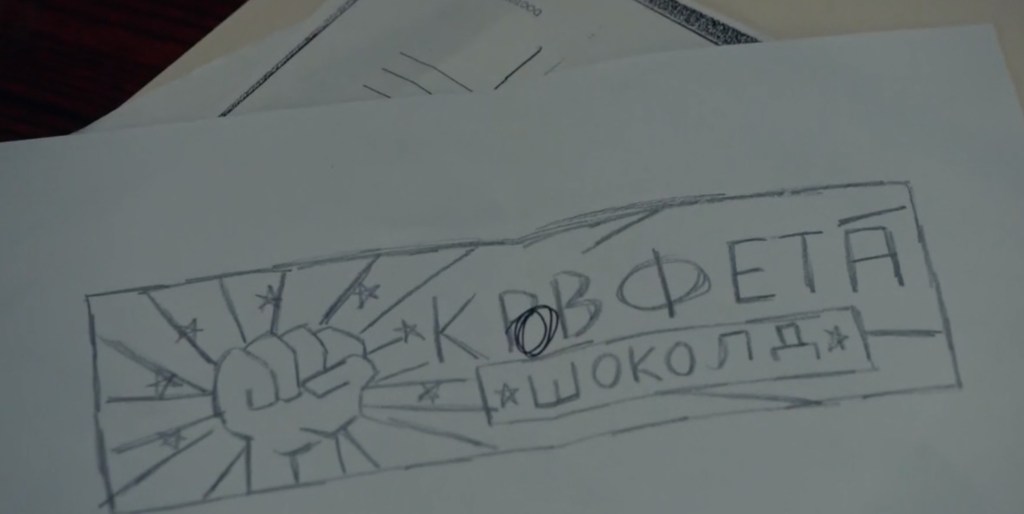
Krovfeta

“It’s a Soviet-era candy bar made with cow’s blood.”
Still from “Enervo,” Season 4, Episode 20 of The Rookie (ABC)

‘Following a drive during which we learned that Agent Fox is gay and Simone herself is bi, Fox tasked Clark with rifling through screens and screens of tipline calls possibly about the Russian, but “people person” Simone instead sneaked off to talk to locked-up Zeke, her former student, asking if he remembered anything else about the bomber. This led to Zeke sketching a Russian candy bar that the guy munched on, and that in turn — thanks to some Russian musicians that Simone’s dad Cutty sometimes jams with — led Simone to a store. Not waiting for Nolan to catch up, Simone approached and tried to chat up Gurin by herself, but that led to a brief brawl, where the Russian walloped the unarmed trainee hard, and then ran off.’

Source: Matt Webb Mitovich, “The Rookie: Grade Part 2 of the Spinoff Pilot, Tell Us If You’d Watch It,” TVLine, 1 May 2022. In Russian, konfeta means “candy,” and is derived from the Italian confetto. The Russian word for “blood” is krov’ (with a so-called soft v), not krov (as here, with a so-called hard v), which, on the contrary, means “roof” and, by extension, “shelter, a place to stay” (“a roof over one’s head”). So, in their misguided effort to confect “blood candy,” the writers of The Rookie actually conjured up a “roofy.” And the Russian word for “chocolate” is shokolad, not shokold, as here. But that mistake can be put down to Zeke’s “poor” memory. UPDATE (2 May 2022). My boon companion, who was born and raised in the Soviet Union, told me earlier today that she and other children were given sweet “Hematogen” nutrition bars to raise their hemoglobin levels, as she put it. These bars were sold in pharmacies and labeled as such, not as chocolate, candy or “krovfeta.” Adults did not eat Hematogen bars, she said, adding that she stopped eating them when she realized what was in them. In 2019, Vice published a provocatively titled article about Hematogen bars that might have inspired the writers at The Rookie. I’m happy to admit that, despite having lived in Russia twenty-some years, I’d never heard of them until today. ||| TRR

Love and Vodka

I was seven years old when a distant relative, the brother of my great-aunt’s husband, showed up at our dacha. He was stuck there for the whole summer. We called him Uncle Misha. He was decidedly unlike my parents and their acquaintances. Having him around caused me grief at the time, but now I am grateful to fate, because in the person of Uncle Misha, Russia (from whose sight my relatives had erratically shielded me) came into my life.

Like Russia, Uncle Misha was extremely stupid. The first thing he did was dig up a huge boulder sticking out of the ground in the garden, and spend a whole month chiseling an inscription on it. The inscription was long: “On April 22, 1870, Vladimir Ilyich Lenin, the leader of the world proletariat, was born.” Uncle Misha painted each embossed letter white.

Besides, he liked to drink, and that addiction laid waste to his dreams. The fact was that Uncle Misha wanted a bicycle most of all and saved up for one for a long time. When he had purchased a bike, Uncle Misha went to Solnechnoye to celebrate the occasion. He fell asleep at a beer stall, and the bike was immediately filched.

Like Russia, however, Uncle Misha had amazing skills. I remember how he picked a basketful of pine cones, took out our decorative, Nicholas I-era samovar, filled it with the cones, soldered the leaky spigot, stoked the pipe almost with his boot, and brewed some extremely tasteless tea.

Then he disappeared, and a couple of years later he died of cancer. It was all a long time ago, and I would have forgotten Uncle Misha, but now he has suddenly risen from the grave. I constantly see and hear (mostly at a safe distance, thank God) the people who surrounded me as a child. There are the old women crushing each other whilst queueing for sugar, officious Auntie Motyas with serious hairdos, exact replicas of my teachers and head teachers, the peasants wearing baggy-kneed trousers, the gopniks with herring eyes — they are the grandsons and granddaughters of the Soviet people who so spoiled my childhood. They have been cloned whole, already dressed and sporting mohair hats and berets from the get-go.

I spent a whole month this past winter in Petersburg and saw them at every turn. While I was it, I went to a Chris Marker retrospective that friends of mine put on. There were about twenty people in the large auditorium, and I knew almost all of them personally — five organizers, five foreigners, and ten university students.

After getting any eyeful of this, I was persuaded that it was impossible to improve this country. It keeps churning out people on the same old conveyor belt, but no cataclysm is capable of stopping it. And right now I’m even more convinced that this is the case.

Source: Dmitry Volchek, Facebook, 10 April 2022. Photo and translation by the Russian Reader


If a Russian loves Russia, he’s a patriot. If a Ukrainian loves Ukraine, he’s a “Bandera nationalist.”

If a Russian says “khokol,” he’s merely joking. If a Ukrainian says “moskal,” he’s a “Russophobe.”

If pro-Russian slogans are bandied about in Russia, it’s normal. If pro-Ukrainian slogans are bandied about in Ukraine, it’s “Nazism.”

If the Russian president talks to the American president, he’s forging better relations between their two countries. If the Ukrainian president talks to the American president, they’re “hatching a plot” against Russia.

If a Russian national speaks Russian, it is par for the course. If a Ukrainian speaks Ukrainian, he is “persecuting” Russophones.

Source: Rodica Rusu Gramma, Facebook, 8 April 2022. Thanks to Andreas Umland for the link. Translated by the Russian Reader


When you see footage from protest rallies in the Russian Federation, all that ring-around-the rosy, or watch broadcasts made by the Russian emigration in Tbilisi, you immediately recall one of Jünger’s journal entries in Strahlungen. Although, admittedly, some Russians, a few, have already caught sight of the abyss out of the corner of their eyes.

PARIS, 14 JUNE 1942
Went to Bagatelle in the afternoon. There Charmille told me that students had recently been arrested for wearing yellow stars with different mottoes, such as “idealist,” and then walking along the Champs-Ėlysées as a demonstration.

Such individuals do not yet realize that the time for discussion is past. They also attribute a sense of humor to their adversary. In so doing, they are like children who wave flags while swimming in shark-infested waters: they draw attention to themselves.

[Ernst Jünger, A German Officer in Occupied Paris: The War Journals, 1941–1945, trans. Thomas S. Hansen and Abby J. Hansen (Columbia University Press, 2019)]

Source: Mitya Raevsky, Facebook, 15 April 2022. Translated by the Russian Reader 

We have to admit that our generation of Russian anti-authoritarian leftists drew the short straw when it comes to the people [narod]. I want to emphasize, though, that they are not the way they are “genetically.” They have been raised to be this way. Yes, there was a seed of imperial mindedness, but without soil and fertilizers, that godawful hogweed would not have grown.

The “cultural code” of the people, that is, this selfsame soil, has been shaped by three subprograms:

– Brutal capitalism and maximum competition multiplied by the cult of success, causing universal brutalization and an inability to communicate.

– The survival tactic that follows from the first subprogram: identifying with the powerful aka blaming the victim. If you want to foster a nation of stern warriors, you foster a nation of toadies. Hence our servility and respect for ranks.

– A regime based on a twenty-year-long counter-terrorism operation.

Are these remarks a balm to anyone? Of course not. I don’t believe that this regime is capable of changing anything from the inside. It will be destroyed from the outside, and lessons will be learned, I hope.

Source: George Losev, Facebook, 15 April 2022. Translated by the Russian Reader


“I need love and vodka,” says one young woman to another. Everyone is so joyful.

T-shirts sporting the Z symbol are sold in the pedestrian underpass near Gostiny Dvor. Near the the exit from Gribanal [Griboyedov Canal subway station], a woman sells willow branches [for Palm Sunday, which is this Sunday in the Russian Orthodox calendar], the Soviet flag flying above her. A jeep adorned with a huge [Russian] tricolor cruises near Kazan Cathedral. A car branded with the letter Z is parked in Bankovsky Lane.

I don’t know whether I will ever be able to love this city again. Or at least not feel sick. I walk around it looking for niches, corners, secret places where I can hide, pretend to be a shadow cast by the caryatids, so that I won’t be found, pried out, and forced to be part of universal vileness.

Source: Comrade JG, Facebook, 16 April 2022. Translated by the Russian Reader with the kind permission of the author, who wishes to remain anonymous.

Decolonization

There are fewer than 2,000 Tubalars, a Turkic nation in the Altai, but they have effectively been collectively declared a foreign agent with the banning of their national cultural public organization, the latest abuse of a little-notice people far from the center of Russia.

As Ilya Azar of Novaya gazeta reports, “the Russian authorities, the Church, private business and even scientific and technical progress have consistently deprived the Tubalars of the[ir] accustomed milieu, their health and their national-cultural autonomy.” Labelling them foreign agents is the logical next step (novayagazeta.ru/articles/2022/03/22/inoagent-komarik).

In a 12,000-word article about one of the least known peoples of the Russian Federation, Azar says that Moscow banned the organization which unites almost all Tubalars as a foreign agent because it accepted money from the World Wildlife Fund and from other foreign groups to protect the cedar trees and animals that are the basis of Tubalar life.

But the Russian journalist reports that many Tubalars assume the call for this action came from others in the Altai Republic because in their view no one in Moscow knows enough about or cares what happens to them. Consequently, someone local is to blame, although that person still unknown is relying on Russian laws to gain access to resources the Tubalars control.

One likely consequence of this action by the Russian justice ministry is that the continued presence of the Tubalars on the list of protected numerically small nationalities is at risk. Without the aid they have received as a result of being included on that list, the Tubalars face a bleak future.

Their language is already dying out, their national traditions are under attack, and outsiders, predominantly ethnic Russians are coming in. Thus, for them, being labelled foreign agents is a sign that the passing of a people who have lived in the Altai from time immemorial is rapidly approaching. 

Source: Window on Eurasia (Paul Goble), 30 March 2022


The inimitable Benjaminian magic of social media: a screenshot from this blog’s Twitter feed, 30 March 2022.
Sources: Olena Halushka and Anton Shekhovtsov

Neither Putin’s speech preceding the invasion (where he stated that the very idea of Ukrainian statehood was a fiction), nor the invasion itself are something new or unseen – they are merely the next steps in a long history of the Russian colonial perception of Ukraine and Ukrainian culture as a threat that has to be destroyed.

Regardless of this, there are still numerous voices, especially among the “westerners”, calling for the separation of Russian culture from what they call “Putin’s aggression”. One of the most illustrious examples of such shortsightedness is the open letter by PEN-Deutschland, which explicitly states that “the enemy is Putin, not Pushkin or Tolstoy”, and in regard to the calls for boycotting Russian culture notes that “іf we allow ourselves to be carried away by such reflexes, by generalizations and hostility against Russians, madness has triumphed, reason and humanity have lost”. Thus, not only does this statement infantilize the whole of Russian society and redirect the guilt of warmongering onto a single person, but also, on a larger scale, it seems to completely ignore the fact that precisely Pushkin and precisely Tolstoy – among many others – were vocal promoters of the Russian imperial myth and colonial wars.

The historical lack of understanding of Russian culture as imperial and colonial by nature, and of its bearers as people who belong to a privileged group, along with the firmly engraved perception of Russian culture being more important in comparison with the cultures of neighbouring countries has resulted in the current Western belief that the suffering of Ukrainians, killed by Russian artillery and bombing, are largely equal to the inconveniences of Russian civilians. Through this lens, both Ukrainians and Russians are equally considered to be the victims of Putin’s criminal regime. And thus we see a rise in Western emergency residencies and scholarships for artists and scholars from Ukraine AND Russia. We also see plenty of panel discussions on the ongoing war where Western organizers invite participants both from Ukraine and Russia.

Moreover, the responses to sanctions imposed on Russia and the calls for boycotting its culture more and more frequently come with accusations of discrimination, “russophobia”, and hatred. Thus, a reaction directly caused by military aggression becomes reframed as unprovoked hatred of an ethnic group.

In a new music video by the Russian band Leningrad, today’s position of Russians is compared to the position of Jews in Berlin in 1940. To illustrate this comparison, people in the video wear traditional Russian kosovorotkas with makeshift Stars of David attached to them. Such an interpretation is a blatant insult to the memory of the victims of the Shoah. Moreover, the rhetoric of the band discursively coincides with the manipulative methods of Russian propaganda.

Source: Lia Dostlieva and Andrii Dostliev, “Not all criticism is Russophobic: on decolonial approach to Russian culture,” Blok, 29 March 2022. Thanks to Alevtina Kakhidze for the heads-up.

La algarabía 

WORD OF THE DAY
la algarabía (ahl-gah-rah-BEE-ah)
noun
racket
Cerré la ventana para no escuchar la algarabía de los manifestantes que estaban afuera.

I closed the windows so as not to hear the racket of the protesters outside.

Source: “Word of the Day,” 29 December 2021, spanishdict.com

Yigal Levin • Facebook • December 24, 2021

Do Russians want war?

A picket in Russia against war with Ukraine was so tiny that I didn’t even notice it in the stream of incoming news. And it happened something like a week ago. Six (6) activists were involved in the protest. They unfurled posters calling on the Kremlin to stop the war against Ukraine and waved the Ukrainian and Russian flags.

This was how it was reported on the Voice of America website:

“The participants of the anti-war rally said that most passersby did not support the picket. Some spat at the picketers, while others made the cuckoo sign and called the picketers insulting or abusive names. Kirov residents, mostly people of the older generation, urged that ‘Ukraine be wiped off the face of the earth,’ and told the protesters ‘not to disgrace themselves.'”

Basically, it’s all quite clear and expected. Just remember a few things. First, when they tell you that Russians don’t want war with Ukraine, they are lying to you. Let me remind you that silence = consent. Secondly, when you are accused of Russophobia, spit in the face of the person who accuses you.

But the six people who attended this protest rally are heroes. I say that without the slightest trace of irony.

Translated by the Russian Reader

“No to war! No to Putin” “Hands off Ukraine!” Photo of anti-war rally in Kirov courtesy of Yigal Levin

On 4 December, the Associated Press, citing information from the US intelligence services, reported that Russia was preparing to put 175,000 troops near the Ukrainian border. “[Deploying] Russian armed forces on Russian territory – that’s the legal right of a sovereign state”, responded Maria Zakharova, spokeswoman for the Ministry of Foreign Affairs, without denying the build-up of forces on the border.

Along with the migration crisis on the Polish-Belarusian border, these actions are an episode in the cynical and dangerous geopolitical game of Russian and the west, in which millions of working people in Ukraine, Belarus, Russia and other countries are being held hostage. This sabre-rattling is not only an attempt to push other states into retreat. Behind it also stands the aspirations of the elite to “rally the nation” once again around the Putin regime, as it did in 2014, after the annexation of Crimea.

The so-called “hybrid war with the west” is needed to distract the population’s attention from the poverty, inequality, political repression, falsification of elections and the collapse of the fight with the coronavirus. This “hybrid war” serves as a justification for round after round of attacks on the rights and freedoms of Russians, for the continuation of a social and economic policy directed against the majority of people – and for power becoming un-removable.

Militarism and nationalism are lethally dangerous drugs that are being injected into Russian society and, at the same time, are poisoning the consciousness of the ruling clique, which is becoming more and more removed from reality.

The loss of social support, the absence of any vision of the future and the determination to stay in charge by any means have pushed Russia’s rulers towards this terrible step: an attempt to cut the Gordian knot of their problems by dragging Russia into a major war.

In this situation it is essential that the progressive forces in Russian society, including the left, are united in opposition to war. Whatever our attitude to the political situation in Ukraine, or to the policy of the USA or the EU in the region, another military adventure will lead to nothing but a humanitarian catastrophe and the reinforcement of authoritarianism on both sides of the border.

We must not allow a repeat of 2014, when a section of the Russian opposition, gripped by illusions in the supposedly progressive character of the so-called “Russian spring”, in practice supported the Kremlin and its imperial expansion.

It must be axiomatic that a regime of record-breaking social inequality, of lies, repression and obscurantism, can not bring “freedom” to anyone, including the Russian-speaking citizens of Ukraine.

Source: Russian Socialist Movement (RSD) • Facebook • December 7, 2021 • Translated by Simon Pirani and published on People and Nature on December 29, 2021


Yigal Levin • Facebook • December 29, 2021

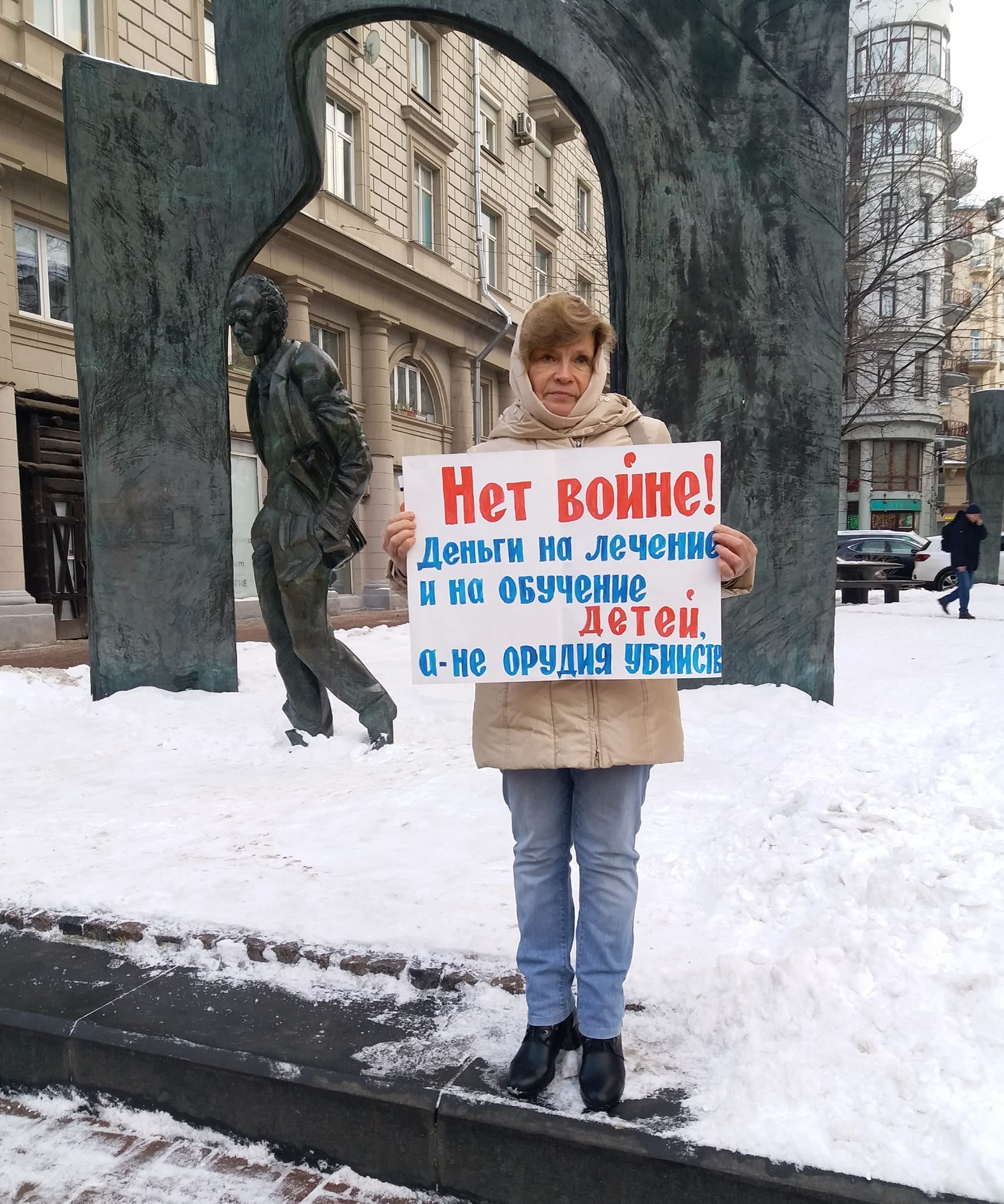
Solo pickets by Russians against the Russian government’s aggression in Ukraine. December 12, 15, 22, 27 and 28, Moscow. My deepest gratitude to these brave people. [There are several more photos at the link — TRR.]
 
“No to war! Money for the treatment and education of children, not for murder weapons.”

Weaponizing Russian: The Gasan Gusejnov Controversy

guseynovGasan Gusejnov. Photo courtesy of Radio Svoboda
Gasan Gusejnov Refuses to Apologize for Remarks About Russian Language
Radio Svoboda
November 8, 2019

Gasan Gusejnov, a lecturer at the Higher School of Economics, has refused to apologize publicly for a post on Facebook in which he called the Russian language “miserable” and “cesspool-like.” According to Gazeta.Ru, the professor believes it would not be ethical for him to respond to the decision of a university commission, which had advised him to apologize.

The ethics commission at the Higher School of Economics recommended the professor apologize for his remarks. They were “ill-considered and irresponsible,” said the commission, which also claimed they had harmed the university’s reputation.

Gusejnov, in turn, told journalists he already given university administrators all necessary explanations and had no plans to apologize to anyone. He stressed that he had written the post as a private individual and had not yet received any official demands from the university.

A lecturer in the humanities faculty and a doctor of philology, Gusejnov published his post on Facebook in late October.

“In Moscow, with its hundreds of thousands of Ukrainians and Tatars, Kyrgyz and Uzbeks, Chinese and Germans, it is utterly impossible to find anything in other languages, except for the miserable, cesspool-like Russian that this country now speaks and writes,” he wrote.

Gusejnov’s post sparked a controversy on social media and in the media. Facebook deleted his post for violating its rules. The professor himself later explained that he had meant the language of hatred and aggression used in the media, social networks, and opinion journalism. According to Gusejnov, it was “an extremely dangerous environment and an extremely dangerous tool.”

This week, as the public debate about Gusejnov’s remarks continued, Vladimir Putin spoke at a meeting of the Russian Language Council. According to the Russian president, war had been declared on the Russian language worldwide in order to reduce its space [sic]. As Putin said, this was being done by “boorish Russophobes,” “fringe groups,” and “aggressive nationalists.”

The president did not specify what threats he had in mind. But he did instruct the government to amend the current laws “On the State Language” and “On the Languages of the Peoples of Russia” and create a “single corpus of dictionaries and reference books” that would dictate how all government entities used the language. Putin did not mention Gusejnov in his remarks.

Thanks to Dmitry Kalugin for the heads-up. Translated by the Russian Reader

The Media’s Russia Obsession?

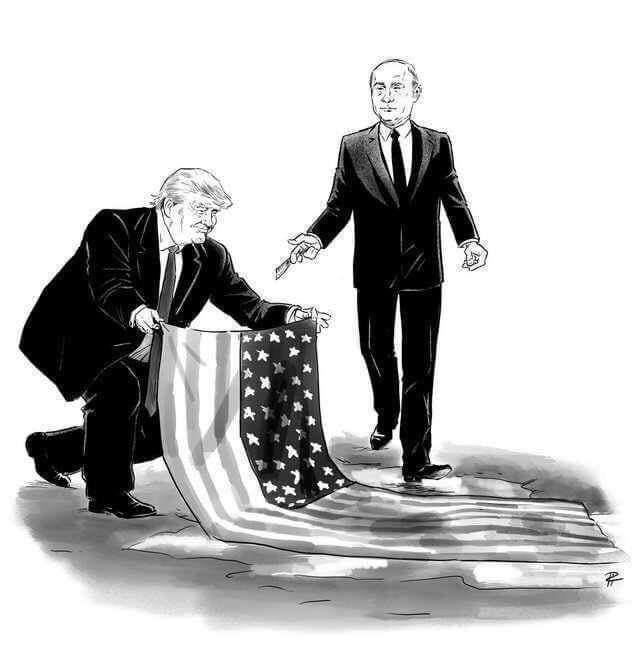
trumputin

Let’s talk about the media’s so-called Russia obsession for a few minutes.

What is meant by this is that the mainstream press have devoted tons of coverage to the substantial allegations that the Kremlin mounted a massive operation, mostly via social media, to influence the outcome of the 2016 US presidential election and, further, that the campaign of the candidate who won the election actively colluded with the Kremlin, among other things, in order to discredit the candidate’s main opponent in the election. The press has also focused a lot on Robert Mueller’s special investigation of these allegations.

Is all of this press coverage sterling? No. Does the press get the story wrong sometimes? Yes.

But this has always been the case with the nominally free press in nominally democratic societies ever since the free press emerged in the eighteenth century in a few countries groping their way towards democracy. It always been biased, prone to mistakes, and otherwise wildly imperfect. And yet it has always been subject to intense scrutiny, at least in my lifetime—and the really infantile desire on the part of certain social and political forces that it be perfect—that is, perfectly biased and ventriloquizing only their viewpoints—although these same forces are rarely so critical of either themselves or other important social institutions.

In this case, the social and political forces that routinely complain about the media’s so-called Russia obsession seem to mean, in fact, that the mainstream press and the press in general should simply stop covering what is surely the story of the century: allegations that the world’s largest country massively intervened in a presidential election in the world’s most powerful country, and that the man who won the election and members of his campaign and transition team were in close contact with agents of the world’s largest country during the campaign and transition.

What kind of press would we have if they completely ignored this story?

We would have a press much like the press in the world’s largest country, which routinely ignores or severely undercovers really big stories—such as the country’s involvement in putting down a popular revolution in a third country whose people have never down anything bad to the people of the world’s largest country—or which engages in outright Goebbels-like propaganda nearly every day, leaving the really important stories to opposition liberal newspapers and online media outlets that are read and accessed by a tiny fraction of the country’s populace.

Finally, the mainstream media have not been obsessed with Russia itself, but with the alleged actions of the Kremlin, Russian secret services, and Russian internet trolls in connection with the 2016 US presidential election. Period.

There is a another Russia, populated by 143 million people, that had nothing whatsoever to do with the story of the century. They did nothing to skew the outcome of the 2016 US presidential election and, in the main, their lives, aspirations, and actions are roundly ignored by the so-called mainstream media in the west and Russia itself. They are roundly ignored by the so-called alternative media, too, for the simple reason that much of the alternative media in the west operate under the delusion that Putin is an “anti-imperialist.” By definitions, Russians who oppose his sagacious rule must be “puppets of the west.”

If all of this weren’t the case, I would have expected that one or more of these “Russia-obsessed” or “anti-Russian-obsessed” newspapers, magazines, TV channels or websites would have picked up and covered, for example, the shocking story of the Penza-Petersburg “terrorism” case aka the Network case, in which eleven young anarchists and antifascists have been accused of involvement in a “terrorist community” dubbed “the Network.”

Most of the accused men have told the same grisly tale of being abducted by FSB-KGB field agents, who took them to remote areas in minivans or to the basements of their headquarters and tortured them for hours, using tasers and bare electrical wires, and severe beatings, attempting to force them to memorize the “confessions” they would later make (or, in some cases, refuse to make) to FSB investigators, who would then petition the courts to send them to remand prisons, where all of them are still imprisoned to this day.

The allegations of torture have been confirmed by Russian civil rights activists and defense attorneys who spoke with some of the men soon after their arrests and, in a few cases, they were also confirmed by physicians who examined the men when their wounds were still fresh.

In any case, a small but growing group of very determined people, including the men’s parents, friends, reporters, human rights activists, and concerned citizens, have been working as hard as they can over the last year to bring the case to the attention of the wider Russian public, force prosecutors to investigate the allegations of torture by FSB officers, and otherwise prove that, as seems to be the case, the FSB conjured the entire tale of the “terrorist community” from whole cloth and then handpicked a dozen or so completely innocent young men to be the fallguys, trying to torture and pummel them into admitting their “guilt” although they were guilty of no crime at all.

You would think the “Russia-obsessed” corporate media would jump on a story like this, but except for one article in the New Yorker, the western corporate media have utterly ignored the story of the Network “terrorists,” despite the efforts of actual alternative media like openDemocracyRussia (oDR) and my own blog, the Russian Reader, to write about it any chance we can and translate Russian coverage of the case, as published in such as liberal, leftist and civil rights media outlets as Mediazona, OVD Info, and Novaya Gazeta.

The campaign to save the Network boys scored a minor victory the other day during a meeting of the Presidential Council for Civil Society and Human Rights, when several members of the council brought up the case and a similar case no less shocking, the New Greatness case, and forced President Putin to talk about them.

A KGB-FSB officer to the core, Putin pretended not to have heard of the cases, which both pivot on allegations of extreme entrapment, torture, and fabrication by other KGB-FSB officers.

Putin hemmed and hawed, lied and prevaricated, feigned that he couldn’t believe what he was hearing, etc., but he did promise to look into the cases and get to the bottom of them.

It’s entirely possible he won’t do that, but it’s just as possible he will make the cases quietly go away to avoid embarrasment.

Who knows.

What I do know, though, is that western mainstream and alternative media, all of them “obsessed” with Putin (but not Russia) in their own way, have shown no interest in this story and thousands of other similar and dissimilar but no less fascinating stories from the real Russia inhabited by most Russians.

There was a slight uptick in their interest in grassroots Russia during the 2011–2012 fair elections protests, but since that movement was roundly defeated, western press coverage has been firmly refocused on the beloved hated figure of the supreme leader, thus once again denying nearly all the other 143 million Russians of agency, their own opinions, and their own lives.

If you’re interested in the Network case and related stories, please check out the coverage on oDR and the Russian Reader. Outside of Russia, practically speaking, there has been no coverage of the case anywhere else, and most things you read on international anarchist and antifascist websites are reprints of the stories we have translated and published.

So, let’s put this canard about the media’s Russia obsession to rest, okay? It’s deeply offensive to ordinary smart Russians, whose numbers are much greater than you would be led to think by the mostly lazy coverage of the country in the western press, and just as offensive to the handful of non-Russians who care deeply about what goes on here. {TRR}

P.S. You can support the Network suspects and their families concretely by donating to a solidarity campaign organized by comrades in London on their behalf. Your support will help to offset their legal costs, organizing humanitarian support for the arrested and offering support to their relatives. The resources gathered have so far been distributed according to the financial circumstances of the respective families and the needs of the arrested. Further financial support is being distributed according to the choices made by those arrested throughout the investigation.

Cartoon courtesy of JA and Union Thugs 

How to Become a “Russian Expert” on Facebook in a Matter of Weeks!

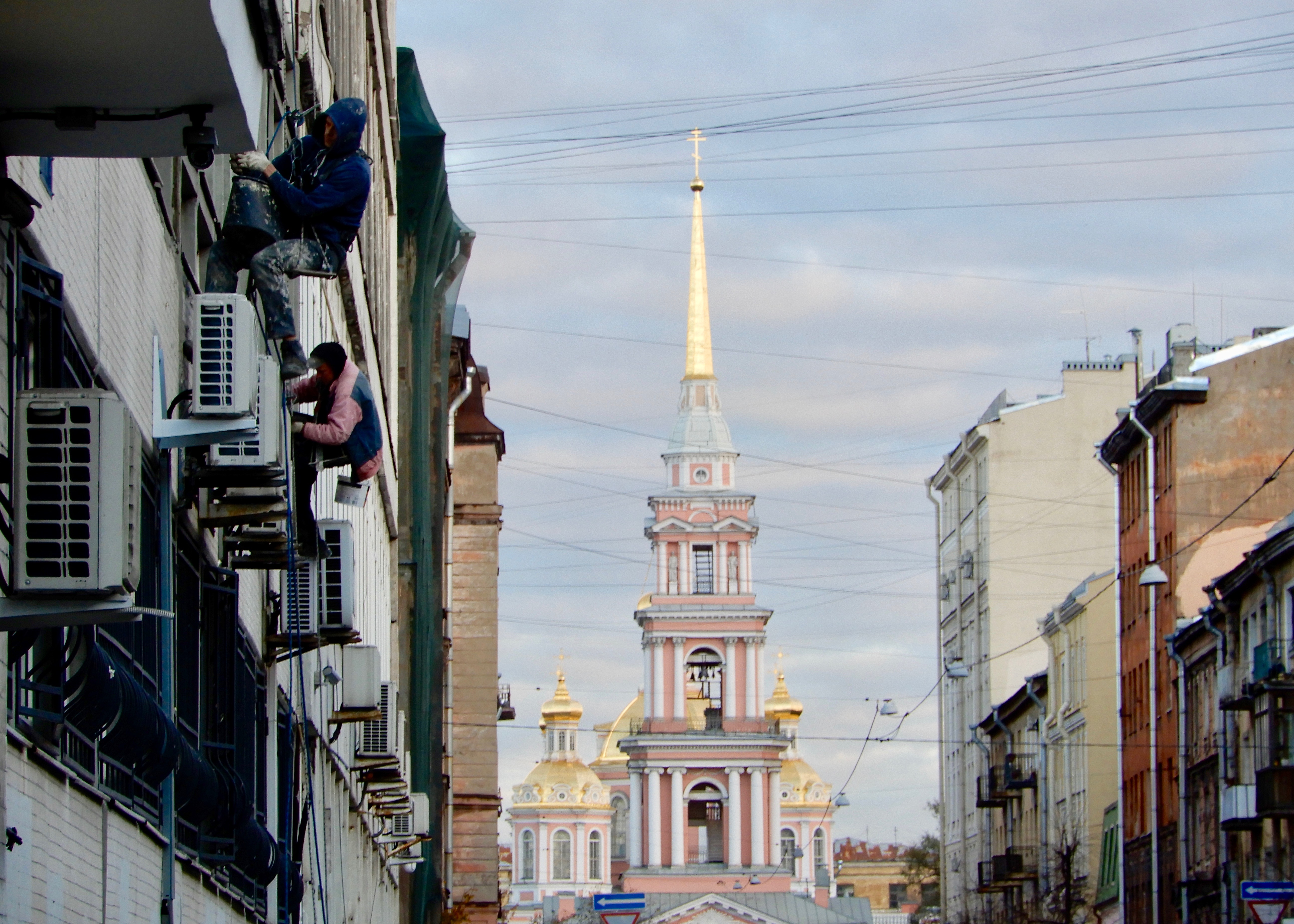
paintingSaints Cyrill and Methodius Church on Ligovsky Avenue in Petersburg, as seen from the end of Tyushin Street, 27 October 2018. Photo by the Russian Reader
How do you become a “Russia expert” on Facebook in a matter of weeks?

Method No. 1: Claim “the Russians” are behind literally everything untoward that happens in the world, from attempted piped bombings in the United States to typhoons in the South Pacific.

How does this method work?

It’s easy!

First, never provide any hard evidence of this alleged “Russian” influence. Refer vaguely but insistently to allegedly irrefutable research—done by someone else, of course—on how social networks can be used to disseminate fake news and crackpot theories.

Second, don’t learn Russian or spend any time in Russia.

In fact, it helps a lot if you know as little as possible about Russians and Russia, because knowing something would needlessly complicate your ambition to have yourself deemed a “Russia expert” on Facebook.

Finally and most important, if someone calls you on the carpet for your glaring lack of evidence and knowledge, and the spurious logic of your arguments, accuse the person of being “rude and aggressive” and immediately unfriend them. You can’t afford to have someone who actually knows something about Russia and Russians or can even just ask a decent question that throws a less than glowing light on your dicey arguments and made-up facts hanging round bothering you and your devoted virtual fans, for you have a higher calling.

You’re a “Russia expert”! {TRR}

Vera Afanasyeva: Russophobia

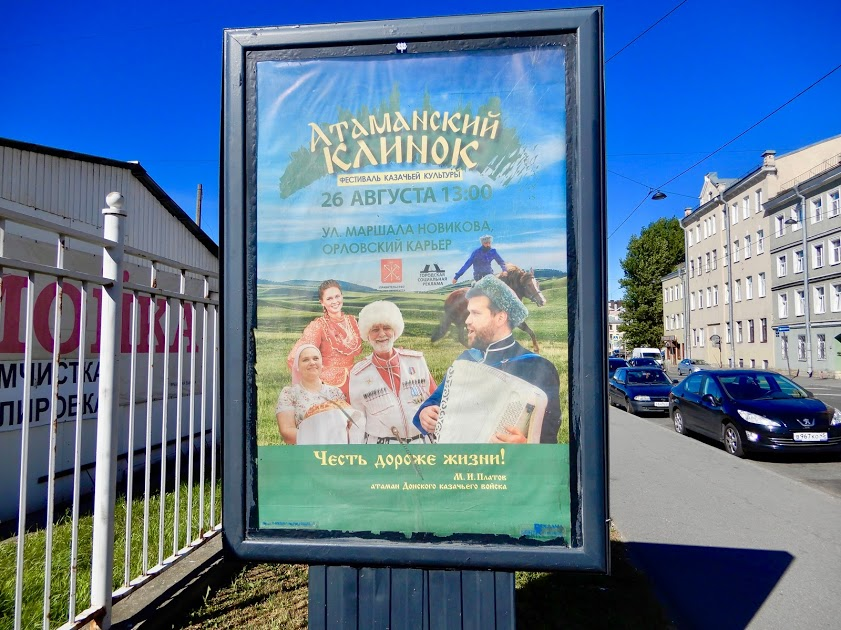
ataman klinokA “public service” advertisement, paid by Petersburg city hall, advertising a celebration of “Cossack culture” on August 27. Historically, Petersburg and the surrounding area never had anything to do with Cossacks, except for the Cossack regiments quartered in the capital during the tsarist regime. Borovaya Street, Petersburg, August 8, 2018. Photo by the Russian Reader

Vera Afanasyeva
Facebook
August 23, 2018

Russophobia

Russophobia is when you don’t know what makes Russians tick and how they live. You don’t walk the same streets they walk, you don’t take the bus, tram or subway with them, and you don’t eat the food they eat. You race down empty roads in your motorcade, while people are stuck for hours in traffic jams because of you. Before you visit the provinces, the roads are repaved with asphalt that will last a day, and the squalid sheds where people live are painted bright colors.

Russophobia is when you live in palaces while the majority of the populace huddle in ruins. You expropriate the people’s money, their lands, forests, water, and factories so you can bask in unimaginable luxury while depriving other people of the bare necessities. You are convinced people should work for years on end for kopecks so that you can sport a wristwatch that costs as much as a block of flats, and your dogs can fly on their own planes.

Russophobia is when you are afraid of your fellow Russians. During your meetings with them, you interact with shills and answer questions that have been rehearsed.

Russophobia is when you destroy everything Russian. You destroy education in Russia because ignoramuses are easier to govern, while your children study at Oxford. You destroy science and research in Russia because you could not care less about Russia’s future. You destroy culture in Russia to encourage lowlifes who will stop at nothing. You destroy morality in Russia because it is an utter mystery to you. You destroy manufacturing because all you want is an oil-dependent economy.

Russophobia is when you turn Russia’s expanses into giant dumps. You unnecessarily drain Russia’s natural resources without increasing the welfare of ordinary Russians. You clear-cut forests while admiring the plastic forests in Moscow.

Russophobia is when you rant and rave about patriotism while your family, real estate, and money have long been located abroad.

Russophobia is when your disrespect for your great, long-suffering country is so strong you casually rewrite its history to suit your purposes, resuscitating tyrants and reviving idols in the process.

Russophobia is when you despise the Russian people so much you replace their true virtues with absurd surrogates, thus spawning clowns and mummers.

Russophobia is when you crack down on all freethinking, cannot appreciate talented people, trample the best and the brightest, facilitate the nation’s degradation, and build a system of governance in which the nastiest folk flourish. You appoint your incompetent and vicious friends and relatives to the cushiest jobs.

Russophobia is when you rob Russia’s children of their future and hurry old people to their graves by depriving them of pensions and decent medical care.

Russophobia is when you quarrel with the entire world, plunging Russians into wars and even greater poverty.

Russophobia is when you pull out all the stops so Russians dream of living somewhere other than Russia.

Russophobia is when you regard all Russians as fools. You persistently and stubbornly lie to them while speaking on TV and in parliament.

Russophobia is when you take no notice of what is currently happening in Russia or you feign not to notice.

Russophobia is when you label everyone who tries to prevent all these outrages enemies.

That is what Russophobia is.

Vera Afanasyeva is a professor in the philosophy department at Saratov State University and a writer. Thanks to Yakov Gilinsky for the heads-up. Translated by the Russian Reader