Alexander Podrabinek: Murder in Tyumen

“Russian counter-terrorism police say they prevented an imminent Islamic State attack in the Siberian city of Tyumen, as two armed terror suspects were eliminated in an intense raid with heavy gunfire and explosions. The militants, who were holed up in a private home, refused to lay down their arms and opened fire at the law enforcement on Friday. ‘They were neutralized during a gunfight,’ the National Anti-Terrorism Committee (NAC) said. There were no casualties among civilians and security personnel as a result of the exchange of fire. The terrorists were planning an attack in [a] public place in the city and the decision to launch an operation was made swiftly, the NAC said. Numerous unconfirmed videos on social media appeared to show the nighttime operation in full swing, with heavy gunfire, a building on fire, and a score of police cars and military vehicles amassed in the streets.” Published on April 12, 2019, by user AS2017

Murder in Tyumen
Alexander Podrabinek
Grani.ru
April 14, 2019

The killing of two suspected terrorists in Tyumen has been spun as a showcase counter-terrorist operation. It went off without a hitch, that is, you do not count the spontaneous undertaking by curious locals who attempted to livestream it on the internet. On the other hand, Tyumen Regional Governor Alexander Moor had lots of nasty things to say about local video bloggers, commentators, and social media users.

On Friday, security forces cordoned off the area around Amur Street in Tyumen. They claimed two Islamic State terrorists had holed themselves up in a private house in the street. The cordoned-off area was declared a counter-terrorist operation zone, and approximately one hundred local residents were forcibly evacuated from the area. I think it superfluous to ask whether the suspected terrorists noticed the evacuation or not. If the terrorists had been real terrorists and the operation itself risky, not a staged textbook operation, the security forces would have tried to use the element of surprise. But no, all possible eyewitnesses were first removed from nearby houses, and only then did the security force go after the “terrorists.”

tyumen“Counter-terrorism operation” in Tyumen. Photo by Maxim Slutsky. Courtesy of TASS

The two people who had been designated terrorists were killed, of course. Half of their one-storey wooden house was burnt to the ground. This makes sense: the fire destroyed inconvenient evidence. The Russian Investigative Committee reported that two machine guns, two explosive devices, and religious pamphlets were found in the house, along with twenty-first-century weaponry in the shape of electronic devices. In short, they predictably found the usual kit of the modern “terrorist.”

Surprisingly, the fire did not damage the damning evidence. The explosive devices did not explode, the religious pamphlets were not reduced to ashes, the smartphones did not melt. If we recall that in many other cases the Russian security forces planted weapons and narcotics on “suspects,” nothing surprising happened. The “clues” the investigators need will be entered into physical evidence, while the stuff it does not need will not be registered anywhere.

We might learn the identities of the dead men in the coming days. Someone must have known them, and someone will tell us about them. The security forces identify them as “terrorists,” but the charges filed are not for terrorism, but conspiracy to murder and attempted murder of a law enforcement officer. This is odd, as is the fact that the FSB carried out the counter-terrorist operation, while the Investigative Committee has headed the investigation.

The Investigative Committee and FSB claim the “terrorists” were Islamic State members who were planning massacres in public places. They have not made any details of the case public, much less the overall circumstances. We are asked to take their word on it, although after the “bags of sugar” in Ryazan, Alexander Litvinenko’s murder, the attempted assassination of the Skripals, and many other exploits, the security forces cannot imagine the public will trust them.

The Tyumen “terrorists” have been accused of conspiracy to commit a crime (Russian Federal Criminal Code Article 30), but they were unable to commit any crimes because their lives were taken. Along with their lives, they were deprived of the chance to defend themselves and attempt to prove their innocence in court.

Is it possible they were real terrorists and eliminating them was necessary to ensure the safety of others? Of course, it is possible. On the other hand, are we not aware of numerous instances when the security forces provoked crimes only to kill the “suspects” while covering their tracks—their own tracks more than the tracks of the “criminals”? I have in mind not only the crimes of the NKVD but also the events of the past two decades, especially in Dagestan and the rest of the North Caucasus?

One of the most telling examples of this kind was the so-called Nord-Ost hostage crisis at the Dubrovka Theater in Moscow in 2002. While freeing the hostages, the security forces killed all thirty-six terrorists. Most of them were killed by being shot in the back of the head while lying unconscious, knocked out by the poisonous gas the special forces released in the theater’s auditorium. They thus got rid of the defendants and the need for a trial, a trial during which parts of the story that shed an unflattering light on the regime could have come out.

Heir of the old Soviet ways, the current regime has aspired to conduct all cases and campaigns against people who have opposed it under arms and people who have fought it with words and people who have been the accidental victims of deliberate provocations by the security services in secret. Reporters are not allowed into counter-terrorist operation zones, inconvenient eyewitnesses are rubbed out, defense attorneys are made to sign nondisclosure agreements, and court trials are held in closed chambers.

Consequently, we have no reliable means of judging whether a particular individual has committed a crime or not. We are well aware, however, that despotism and lawlessness are fond of silence but no friends of publicity. We have been through this before. So, every time a clandestine operation is carried out, every time “criminals” and witnesses are eliminated, and every time a trial is heard in closed chambers, we have every reason to suspect the security forces of provocation, dishonesty, and fraud.

Thanks to Nastia Nek for the heads-up. Translated by the Russian Reader

Russian Police Tortured Jehovah’s Witnesses in Surgut with Stun Guns

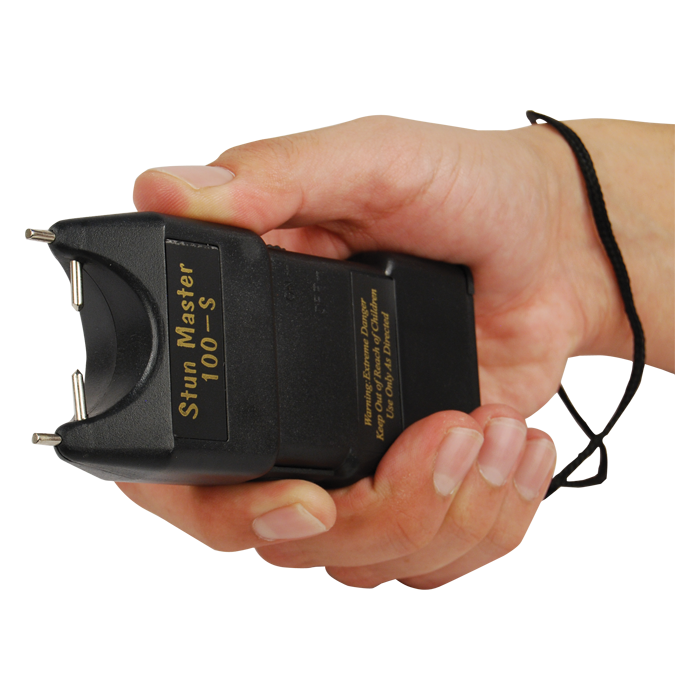
stun master 100-sA stun gun like the Stun Master S-100 could have been used by Russian police on recalcitrant Jehovah’s Witnesses in Surgut. The Stun Master delivers an electric shock of 100,000 volts and sells for a mere $22 at diyhomeprotection.com.
Forensic Examination Confirms Surgut Jehovah’s Witnesses Tortured with Stun Gun
OVD Info
March 28, 2019

Defense lawyers commissioned an independent forensic examination of the wounds on the bodies of six Jehovah’s Witnesses in Surgut. The Stealth Forensic Research Institute concluded five of the men could have been tortured with stun guns. OVD Info has a copy of the institute’s findings.

Burns from stun guns were found on Vyacheslav Boronos, Yevgeny Kairyak, Kirill Severinchik, Alexei Plekhov, and Artyom Kim.

The forensic examiners concluded the wounds on the bodies of the arrested men were consistent with wounds they could have received if they had been shocked with stun guns. The examiners arrived at the findings after analyzing medical files and considering the opinions of experts on the wounds and the photographic and video documentation of the wounds.

In mid February, numerous police raids and searches were carried out in the homes of Jehovah’s Witnesses in Surgut. At least seven of the men detained during the raids complained they were beaten, humiliated, and tortured with stun guns. OVD Info published an account of these events, as provided by the victims’ lawyer.

On March 27, the Russian Investigative Committee reported the Jehovah’s Witnesses detained during the raids in Surgut had not been tortured with stun guns. But they had been subjected to physical force due to the fact that they, allegedly, had resisted arrest. The Investigative Committee thus explained why there had been bruises and abrasions of the legs of the Jehovah’s Witnesses.

In April 2017, the Russian Supreme Court ruled that the Administrative Center of Jehovah’s Witnesses in Russia was an extremist group and banned its work nationwide. In August 2017, all Jehovah’s Witness congregations in Russia were placed on the list of officially banned “extremist” groups.

Translated by the Russian Reader

Here is a list of the articles I have previously published about the new campaign of persecution of Russian Jehovah’s Witnesses:

_________________________________________

SM-100S-bFeatures:

  • 100,000 Volts
  • 4.5″ Tall
  • Safety Switch
  • Wrist Strap
  • Lifetime Warranty
  • Uses One 9V Energizer Eveready Alkaline Battery (not included)

How To Use:

  • A short blast of 1/4 second will startle an attacker, cause minor muscle contractions and have a repelling effect.
  • A moderate length blast of 1 to 4 seconds can cause an attacker to fall to the ground and result in mental confusion.  It may make an assailant unwilling to continue an attack, but will be able to get up almost immediately.
  • A full charge of 5 seconds can immobilize an attacker, cause disorientation, loss of balance, falling to the ground and leave them week and dazed for several minutes afterward.

Note: This Stun Master stun gun will have an effect anywhere on the body, but the maximum effect is in the following areas:

  • Upper Shoulder
  • Below Rib Cage
  • Upper Hip

How Stun Guns Work:

The stun gun does not rely on pain for results. The energy stored in the gun is dumped into the attacker’s muscles causing them to do a great deal of work rapidly.

This rapid work cycle instantly depletes the attacker’s blood sugar by converting it to lactic acid. In short, he is unable to produce energy for his muscles, and his body is unable to function properly. The stun gun also interrupts the tiny neurological impulses that control and direct voluntary muscle movement. When the attacker’s neuromuscular system is overwhelmed and controlled by the stun gun he loses his balance.

Should the attacker be touching you, the current will NOT pass to your body! Stun Master has been a leading brand in the stun gun industry since 1994 making it a true icon in the world of self-defense. This type of success for so many years in a competitive field is the finest recommendation any product could be given.

Source: DIY Home Protection

_________________________________________

Article 3 of the European Convention on Human Rights prohibits torture, and “inhuman or degrading treatment or punishment”. There are no exceptions or limitations on this right.

Article 9 – Freedom of thought, conscience and religion

1. Everyone has the right to freedom of thought, conscience and religion; this right includes freedom to change his religion or belief and freedom, either alone or in community with others and in public or private, to manifest his religion or belief, in worship, teaching, practice and observance.

2. Freedom to manifest one’s religion or beliefs shall be subject only to such limitations as are prescribed by law and are necessary in a democratic society in the interests of public safety, for the protection of public order, health or morals, or for the protection of the rights and freedoms of others.

The Russian Federation signed the European Convention on Human Rights on February 28, 1996, and ratified it on May 5, 1998.

Only a 100% Conviction Rate Would Do, But We’ll Settle for 99.49%

bogatry

Bastrykin: Low Number of Acquittals Shows Quality of Investigative Committee’s Work
Mediazona
March 1, 2019

Alexander Bastrykin, head of the Russian Investigative Committee, explained the low percentage of acquittals in cases handles by his agency’s officers as the outcome of their consistent, high-quality work, reports TASS.

“In 2018, 516 people were acquitted out of the thousands of criminal cases submitted to the courts [by the Investigative Committee.] This amounts to .51% of the number of cases investigated. In 2017, [the Investigative Committee] submitted 128,000 criminal cases to the courts. There were acquittals in 534 of them, which amounts to .42%,” Bastrykin said at a staff meeting to discuss the Investigative Committee’s work over the past year.

[Bastrykin] added that, in the European countries, every fifth verdict was an acquittal.

“The figures in Europe are stable: a 20% acquittal rate. And they’re proud of those results,” Bastrykin noted.

Photo and translation by the Russian Reader

Schoolchildren in Kemerovo Region Fainting from Hunger

school lunchA stock photo of schoolchildren enjoying lunch in some place happier and more prosperous than Kemerovo Region and other parts of Russia that have been left to die by the country’s rapacious, neo-imperialist ruling class. Courtesy of Siber.Realii

Inspection Confirms Schoolchildren Fainting from Hunger in Kemerovo Region
Radio Svoboda
February 5, 2019

An inspection has confirmed that schoolchildren in Kemerovo Region have been fainting from hunger. Dmitry Kislitsyn, the region’s children’s rights ombudsman, said schoolmasters and regional officials had attempted to hush up the incidents. He has written about the problem in a report to Kemerovo Governor Sergei Tsivilyov. REN TV has published a copy of the report.

In particular, the health worker at the school in the village of Pashkovo, in the region’s Yashkino District, reported three incidents of children fainting that officials had not bothered to register. They were caused by hunger. In the school itself, the water was unfit for drinking, and the cafeteria was in disrepair. At other schools, pupils were divided into those who paid for meals and those from impoverished families. In certain cases, the number of children receiving hot meals during the school day did not exceed a third of the total number of pupils, while the portions of food served were smaller than stated in the regulations.

Kislistyn said the majority of members of the inspection commission had tried to “paper over the incidents.” Nevertheless, the ombudsman had reported the outcome of the inspection to the Russian Investigative Committee, the prosecutor’s office, and the official national consumer watchdog Rospotrebnadzor.

On January 23, 2019, Kislitsyn told a session of the regional council that incidents of hunger-induced fainting had increased among children in the region’s schools. He claimed he had been contacted by homeroom teachers who had noticed the social stratification of their pupils in connection with school meals. Some children were not eating at school because their parents did not pay for meals. According to Kislitsyn, the parents also could not afford to feed their children in the mornings. The ombudsman said this was the case in village schools, as well as among children bused to school from the countryside. Regional officials, however, had denied Kislitsyn’s claims.

Thanks to Comrade Koganzon for the heads-up. Translated by the Russian Reader

Relentless Repression in Russia: Why Londoners Are Demonstrating on January 19

Relentless repression in Russia: why we will demonstrate on Saturday 19 January
People and Nature
14 January 2019

On Saturday, January 19, we will demonstrate in London in solidarity with Russian antifascists. Eleven of them, who have been arrested, tortured, and accused of fabricated “terrorism” charges, are awaiting trial. Many others have faced a relentless campaign of persecution by officers of the Federal Security Service (FSB) and the police, as summarized in the following article.

Please join us on Saturday to support the Russian antifascists and strengthen international solidarity against fascism, xenophobia, and state terror. Please repost and share this article.

Details of our London event here.

2018 summary

By Misha Shubin, 31 December 2018 (Original Russian text here)

I’ve also decided to sum up the year. Not my own year, but rather to remember what happened to anarchists and leftists in Russia in 2018. This post will be long, and many of you know  or heard something about the events I recount here.

But I think it is very important not to forget all this. [Note. Links from the original article to Russian-language sources are included. Links to English translations or relevant articles in English added where available. Translator.]

The Network Case

Eleven anarchists and antifascists have been arrested. They are accused of setting up a terrorist group and planning terrorist attacks. According to the Federal Security Service (FSB), they wanted to organise an armed uprising in Russia.

Almost all the evidence has been gathered on pain of torture. The detainees were beaten up. Some of them were tortured using shocks from a stationary electric dynamo, others with tasers. At least one of the accused, Dmitry Pchelintsev, was hung upside down.

The accused are Yegor Zorin, Ilya Shakursky, Vasily Kuksov, Dmitry Pchelintsev, Arman Sagynbayev, Andrei Chernov, Viktor Filinkov, Igor Shishkin, Yuli Boyarshinov, Mikhail Kulkov, and Maksim Ivankin.

What to read:

“How the FSB is manufacturing a terrorist case against antifascists in Russia”

What else you need to know about this case:

“A witness in the ‘network’ case, Ilya Kapustin, was tortured with a hand-held electric shocker.” Subsequently, he left for Finland, where he has applied for political asylum.

Viktoria Frolova, Ilya Shakursky’s girlfriend, was detained on Russia’s border with Ukraine. (Link in Russian.) Shakursky was threatened that “it would be bad” for his girlfriend if he did not make a confession.

The case of anarchist Yevgeny Karakashev

In early February 2018, anarchist Yevgeny Karakashev was arrested in Crimea [the peninsula annexed by Russia from Ukraine in 2014]. They brought him to the police station with a bag over his head. There were fresh bruises on his temples and his knees. On the basis of

two videos that he had uploaded to various chat forums, he was accused of making public calls for terrorist activity.

What to read:

“A rifle stock to the heart, a fist to the gut: how left-wing activists are persecuted in Crimea”

(And more in Russian.) [And a report of Karakashev’s subsequent court appearance is here.]

What else you need to know about this case:

The main prosecution witness is a former comrade of Karakashev’s.

In the autumn, 16 people from various Russian regions were summoned to the Russian Investigative Committee for interrogations. Many of them have expressed left-wing views. Some of them did not even know Karakashev.

Torture of anarchists in Chelyabinsk

Anarchists in Chelyabinsk staged an event on the night of 14–15 February in solidarity with the Network Case defendants. They displayed a banner outside the FSB headquarters and threw a flare over a fence. The banner read, “The FSB is the chief terrorist.”

Three days later, five people were arrested: Dmitry Semenov, Dmitry Tsibukovsky, Anastasia Safonova, Maksim Anfalov, and their friend Maksim. Tsibukovsky and Anfalov were beaten up and tortured with electric shockers.

Over the summer, the criminal case against theChelyabinsk anarchists was dropped.

What to read:

“The main thing at that moment, in that situation, was to come out alive”

What else you need to know about this case:

In November, a new criminal case was opened against anarchists Tsibukovsky, Safonova, Grigory Potanin, Mikhail Perkov, and Dmitry Dubovoi. This time, they were charged with vandalism during their protest of the government’s pension reform.

The broken window in United Russia’s office and torture of Svyatoslav Rechkalov

On 31 January, persons unknown broke a window at the office of United Russia [the largest party in the Russian parliament, which supports President Putin] and threw a smoke bomb. A criminal investigation into vandalism was launched. Sixteen days later, Yelena Gorban and Aleksei Kobaidze were arrested. After questioning, they were released on their own recognizance.

On 14 March, searches were conducted of the homes of anarchists from the People’s Self-

Defence organisation in connection with the case. Subsequently, Svyatoslav Rechkalov and Andrei were detained; the latter, most likely, was released.

Rechkalov was driven around the city for several hours, blindfolded. Then security services officers beat him and tortured him with electric shocks. They warned that, if he did not make the necessary confession, he would end up a defendant in the Network Case. After being tortured, Rechkalov was released. He emigrated to France.

What to read:

“The horror continues”, and “They put a bag on my head, cuffed my hands behind my back and tortured me with a taser”.

What else you need to know about this case:

In November, Rechkalov started getting threats from the FSB. (Link in Russian.)

Torture of Left Bloc activist Maksim Shulgin

In late April, Left Bloc activist Maksim Shulgin was detained in Tomsk. On the way to his interrogation, security service officers beat him up in their vehicle and held his face against a heater. To protect his face from burns, Shulgin put his arms against the heater

and received first- and second-degree burns. Shulgin was accused of inciting hatred towards the police after posting songs on VK [a Russian social network similar to Facebook].

Shulgin filed a complaint about his having been tortured. In late December, he was again detained. This time, law enforcers tried to choke him to force him to withdraw the accusations he had made against FSB officers.

What to read:

Arrest in April. “Is Maxim Shulgin An Extremist?” and “Tomsk resident tortured for posting songs about police on VK.”

Torture in December. (Link in Russian.)

What else you need to know about this case:

Another nine Left Bloc activists were detained with Shulgin. They were forced to make confessions under threat of torture. (Link in Russian.)

Explosion in Arkhangelsk, interrogation of anarchists and leftist activists, and torture of Vyacheslav Lukichev

On 31 October there was an explosion at the FSB headquarters in Arkhangelsk, set off by Mikhail Zhlobitsky [who died at the scene]. As a result, all over Russia the police detained and brought anarchists, left-wingers, and those who hold alternative political views in for so-called discussions. (Link in Russian.)

In early November, anarchist Vyacheslav Lukichev was arrested in Kaliningrad. He was accused of vindicating the explosion set off by Zhlobitsky. It was later established that after Lukichev’s arrest he was beaten by six people. He was questioned for 36 hours.

What to read:

“Vyacheslav Lukichev: interrogated for 36 hours and beaten”

What else you need to know about this case:

After the explosion, a 14-year old who, allegedly, had contact with Zhlobitsky was detained in Moscow on suspicion of planning bombings. (Link in Russian.)

What else happened this year?

■ In March, the police checked the documents of participants in a football tournament organised by antifascists. (Link in Russian.)

■ In July, police and FSB officers went to the Pryamukhino Readings [an event held annually to discuss the ideas and legacy of Mikhail Bakunin, at his birthplace in Tver Region]. The conference theme was “Revolution and Culture”. The security service officers checked participants’ passports, and then detained Artem Markin, an anarchist from Belarus. He was detained for three days for allegedly using psychotropic substances. See: “A Funny Thing Happened in Pryamukhino”.

■ In August, officers from Centre “E” [Center for Combating Extremism] turned up at the Icebreaker [Ledokol] punk festival. They arrested two people, tried to persuade them to turn informer, and asked about the People’s Self-Defence group. (Link in Russian.)

■ In October, anarchist Ilya Romanov was sentenced to five-and-a-half years on charges of incitement to terrorism. He allegedly published on Facebook a video recording of jihadists and an occult ritual featuring a puppet named Vladimir. All the indications are that the criminal case was a frame-up. See: “Meet Russian anarchist Ilya Romanov. He’s spent nearly twenty years in prison”.

■ In late December, the anarchist Aleksandr Kolchenko [from Crimea, who since 2015 has been serving a ten-year sentence in Russia on trumped-up charges] was transferred, on a formal pretext, to a punitive isolation cell, where he saw in the new year. (Link in Russian.)

Moloko plus siloviki

[Moloko is Russian for “milk”. Siloviki is a widely used term for the heads and officers of Russia’s numerous, overlapping security services, including the FSB, Centre “E”, the Russian National Guard, and the Russian Investigative Committee.]

In mid June, there was a gathering in Krasnodar of members of the collective that publishes the countercultural almanac moloko plus. Sofiko Arifdzhanova and Pavel Nikulin had planned to present the latest issue of the almanac, on the topic of revolution. On the day before the event, the police arrested Sofiko and a volunteer [who helped with printing], Anastasia Kkhukhurenko. The police would not release them and demanded a meeting with Pavel. They then forced Sofiko and Anastasia to sign an undertaking not to organise unauthorised mass gatherings and warned them about the punishments for extremist activity before releasing them

The next day, persons unknown attacked Sofiko and Pavel with pepper spray. A few hours later, at the presentation, the police arrived and confiscated almanac’s print run.

In September, there was another presentation, in Petersburg, and FSB officers turned up. In this case, everything turned out relatively peacefully. They just got up and left.

After another two weeks, there was a presentation here in Nizhny Novgorod. A few minutes after it began, officers from Centre “E” burst in, with armed back-up. Sofiko, Pavel, and I were arrested and taken to the police station. Ninety copies of the almanac were confiscated, along with some gas cylinders [sic]. Pavel was detained for two days on charges of insubordination to a police officer. The issue of moloko plus is now being checked for any indications of extremism. There is a big text about our adventures in Russian here.

I am sure I have forgotten something and so not included it. Generally speaking, that was the sort of year we had.

More on defending Russian political prisoners:

 The Rupression site

 “Convoyed”, on The Russian Reader

Thanks to People and Nature for their generous permission to republish this important article and solidarity appeal here. I have lightly edited the original text to make it hew more closely to this website’s imaginary style guide. {TRR}

[sic]

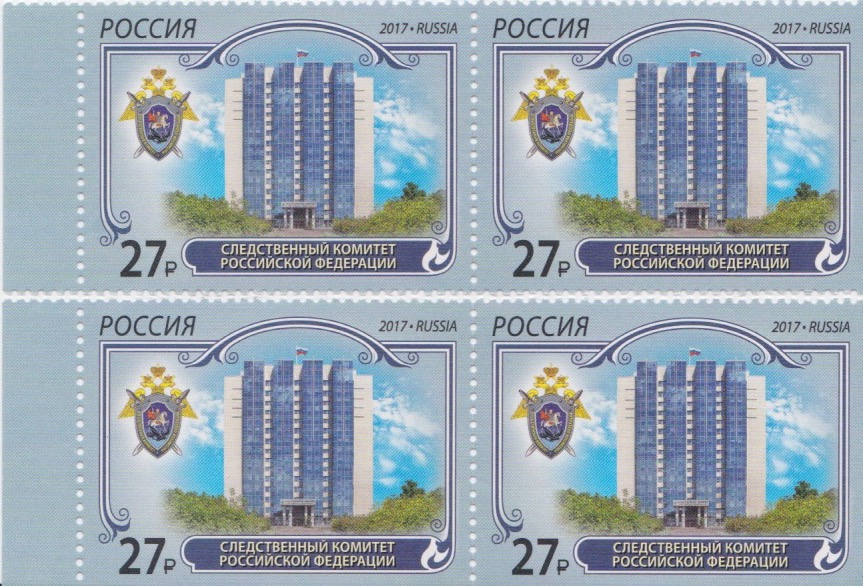
sledkom-stampsA set of four 27-ruble stamps, celebrating the Russian Federal Investigative Committee, purchased at the Petersburg Central Post Office for 108 rubles on November 12, 2017.
After Dark, They Gonna Blow Up [sic]
Police Looking for Gang of Teenage Anarchists in Moscow
Yuri Syun
Kommersant
November 10, 2018

Kommersant has learned that FSB and police in Moscow are looking for a dozen young anarchists who could be involved in planning terrorist attacks and illegal trafficking of explosives. The chekists [sic] were made aware of the alleged underground organization as part of the investigation of the suicide bombing carried out by a second-year vocational school student [sic] at the FSB’s regional office in Arkhangelsk.

While checking the contacts of the vocational school student [sic], whose suicide bombing injured three FSB officers, investigators became aware of 14-year-old Kirill K., a student in the eighth form at School No. 1571 in Moscow. According to the chekists [sic], Kirill K. and the suicide bomber communicated by mobile phone over a long period and corresponded via Telegram, including the day the terrorist attack occurred in Arkhangelsk. Obviously [sic], it was his older comrade who had told Kirill one could manufacture explosives from ordinary household chemicals, including fertilizers, easily obtainable in hardware stores. During a search of the flat of the schoolboy’s parents, on Freedom Street, police discovered [sic] an improvised explosive device (IED) manufactured from ammonium nitrate, smokeless gunpowder, and bomb parts [sic]. According to investigators, the schoolboy could have assembled the IED for an attack during celebrations [sic] of National Unity and Harmony Day [sic].

The schoolboy was detained on November 2. Yesterday, the violent crimes and public safety case squad in the Russian Investigative Committee‘s Moscow office charged him with crimes under Articles 222.1 Part 3 and 223.1 Part of the Russian Federal Criminal Code (illegal purchase and possession of explosives or explosive devices, and illegal manufacture of explosives).

According to investigators, the suspect committed both crimes as part of an organized group. The group could have included the Arkhangelsk suicide bomber, as well as other, unidentifed persons. There could have been as many as ten people in this group, sources in law enforcement say. However, they have so far been unable to identify the vocational school student and schoolboy’s alleged accomplices. This may partly be due to the fact that Kirill, citing Article 51 of the Constitution, refused to testify and admit he manufactured explosives.

However, his lawyer, Sergei Ashanin, claims law enforcers did not find any explosive devices or parts of explosive devices at the flat of Kirill’s parents.

“Except for ten grams of saltpeter and gunpowder that fit in a glass yogurt jar, there was nothing else,” added the lawyer, refusing to comment on the case.

Ashanin plans to appeals the decision of the Presnya District Court, which remanded the schoolboy in custody. We should note the court’s decision was challenged not only by the suspect, his lawyer, and his legal guardian but also by the prosecutor. Consequently, the defense plans to insist in Moscow City Court that the schoolboy be placed under house arrest instead.

Translated by the Russian Reader

How the FSB Tortures Detainees: Stories of the Victims

How the FSB Tortures: The St. Petersburg Public Monitoring Commission’s Report and the Stories of the Victims
Team 29
October 25, 2018

Torture victims and activists say violence has become a common practice in the security services. Anyone whosoever can become their victim: Muslims and atheists, anarchists and entrepreneurs, industrial climbers and police officers. The victims are afraid to talk about what happened to them, while family members, physicians, and eyewitnesses are threatened into staying silent. Members of the St. Petersburg Public Commission for Monitoring Conditions in Places of Detention (hereafter, PMC) have written a report on how the FSB tortures detainees and witnesses in FSB offices, remand prisons, vehicles, forests, and garages. We have excerpted the highlights of their report in what follows, as well as publishing a video (above) in which the victims and their relatives tell their own stories.

“Writhing from the Electrical Current, He Lifted the FSB Officer and Himself into the Air”
In December 2017, the FSB’s Saint Petersburg office announced it had prevented a terrorist attack on Our Lady of Kazan Cathedral, in downtown Petersburg. Seven people were detained on suspicion of involvement in planning the attack. Five of them were remanded in custody. What happened to the other two suspects is still not known.

One of the detainees, Aliskhan Esmurziyev, says his torture began in a minivan, in which FSB officers, their faces covered, kicked and tasered him. He was then taken to an FSB office, where he could hear the other detainees screaming. After he was interrogated by an investigator, he was taken to a separate room, where, according to Esmurziyev, he was handcuffed, a sack was pulled over his head, and crocodile clips were attached to his feet. Esmurziyev was electrocuted while an FSB officer sat astride him. His body writhing from the electrical current, Esmurziyev lifted the FSB officer and himself into the air.

Another detainee, Shamil Omargadzhiyev, was beaten in front of his pregnant wife. According to the PMC’s information, FSB officers broke into his home, which they searched while beating and kicking him, knocking out one of his teeth and demanding he confess to planning the terrorist attack. When he was delivered to court, he fainted several times. In the compartment of the paddy wagon in which he had been transported, it had been difficult for him to breath. Six feet five inches tall, Omargadzhiyev had had his hands tied back in a way that made it impossible for him to sit down and thus breathe.

Both detainees are accused of illegal possession of weapons (punishable under Article 222 of the Russian Federal Criminal Code). Esmurziyev filed a complaint with the Russian Investigative Committee about the crimes committed against him, but later rescinded the complaint for “procedural” reasons. Omargadzhiyev’s defense counsel also filed a complaint with the Investigative Committee, but it refused to open a criminal investigation while also not allowing him to see the written judgment that explained the reasons for the refusal.

“If I Didn’t Know the Answer, I Was Electrocuted”
Eleven young men in St. Petersburg and Penza were accused of involvement in a “terrorist community” and arrested. Most of them are antifascists and anarchists. The FSB claims they were members of an underground organization known as the Network, which planned “to incite the popular masses in order to subsequently destabilize the political circumstances” in Russia during the March 2018 presidential election and this summer’s 2018 FIFA Football World Cup, held in Russia. The case is currently under investigation. Most of the suspects have been in remand prisons since October 2017 and January 2018, respectively, and several of them have reported being tortured.

Novosibirsk native Arman Sagynbayev was detained in Petersburg in November 2017. He would later recount that he had been put in a minivan and had a sack pulled over his head. Two wires were attached to his hands, and he was electrocuted while being beaten over the head with something resembling a day planner.

“The torture lasted approximately four hours, but I cannot say for certain, because I had no way of telling the time and I was in a lot of pain,” Sagynbayev recounts.

Petersburg resident Yuli Boyarshinov was jailed in an overcrowded cell at Remand Prison No. 6 in Gorelovo, located just beyond the Petersburg city lines in neighboring Leningrad Region. In the cell, which had 110 cots for 150 prisoners, the “senior” inmates, who cooperated with the wardens, routinely beat up the other prisoners. Boyarshinov was also beaten. He was called to the kitchen, which is not outfitted with CCTV cameras, and quizzed about the circumstances of his arrest. He was beaten in such a way that no traces of the assault were left on his body. He was also threatened with rape.

FSB officers detained Viktor Filinkov at Petersburg’s Pulkovo Airport in January 2018. He was taken to an unknown location, where the FSB officers commenced interrogating, beating, and electrocuting him right in the vehicle.

Subsequently, members of the Petersburg PMC noted numerous wounds on his thigh in the shape of paired, evenly spaced dots, such as a taser would have left behind.

“If I didn’t know the answer,” says Filinkov, “I was electrocuted. If my answer was not what they expected, I was electrocuted. If I thought for too long or took to long to give an answer, I was electrocuted. If I forgot what I had been told, I was electrocuted.”

Filinkov’s defense counsel filed an official request for a criminal investigation, but his request was rejected. In September 2018, he filed a complaint with the European Court of Human Rights in Strasbourg.

Members of the Petersburg PMC visited Igor Shishkin, another suspect in the Network case, on January 27, 2018. Since he was dressed in a long-sleeved shirt and trousers, they noted only the injuries they could see, including

  • a large bruise around his left eye all the way to the bone;
  • blood in the corner of his left eye;
  • an abrasion in the middle of his left cheek;
  • marks from handcuffs on both hands;
  • a split lower lip;
  • a bruise around his right eye;
  • scratches on his left cheek;
  • a burn on the back of his left hand.

Later, similar burns were noted on Shiskin’s back and the back of his thigh.

Ilya Kapustin was not a suspect in the Network case. Nevertheless, he was interrogated as a witness and tasered for four hours in a car before being taken to FSB headquarters, where the interrogation was resumed.

The Malvina Taser
Major Ilya Shchukin, head of the property crimes desk at the Tosno District Police Precinct, and Field Investigator Sergei Laslov are suspected of official misconduct and falsifying evidence. They allegedly replaced Suprastin with amphetamines in a pack of cigarettes confiscated from a detainee. Prior to this, they had allegedly been involved in planting drugs on people to bolster clearance rates.

On April 12, 2017, FSB officers detained Shchukin and two of his colleagues in the town of Kirishi. Shchukin was dragged from his car and immobilized. The hood of his jacket was pulled over his head, and he was taken to a van. In the van, he was asked what he was doing there. When he replied, officers of the FSB’s special weapons and tactics division Grad (“Hail”) told him he was lying and tasered his fingers several times. He was asked more questions and electrocuted several times. Shchukin was tortured for approximately an hour and a half. He was electrocuted in the groin and anus. The Grad officers told Shchukin he would have no more children.

“The door of the van would open from time to time. I would hear a man saying I was talking shit and the Grad officers should keep working me over,” Shchukin recounts.

Shchukin was then taken to another van and forced to kneel with his hands cuffed behind his back for approximately an hour. Only then was Shchukin driven to an FSB office. He refused to plead guilty. During interrogations, Shchukin told his interrogators on several occasions that he had been tortured. His burns were examined by a specialist, but the specialist was, supposedly, unable to establish whether the wounds were typical of a taser, since he did not the taser’s model. Shchukin knew it was a Malvina brand taser, but his appeal for a second forensic examination was rejected.

Sergei Laslov was detained on July 6, 2017, in his police precinct. He was driven in a bus to nearby garages. It was there, Laslov recounts, that an FSB officer demanded he confess to the crime, and a Grad officer tasered him. Laslov refused to confess his guilt, and so he was driven to a forest on the outskirts of Tosno. There, says Laslov, a senior FSB officer ordered he be bent forward head towards the floor, and a Grad officer beat him, delivering taser blows to his crotch and groin.

A short propaganda film about the Petersburg FSB Grad unit, broadcast on Russian television and posted on YouTube in 2014. This video is not part of the Petersburg PMC and Team 29’s report, but it nicely characterizes the extreme militarization of policing under the Putin regime.

Laslov was tortured for over two hours. The first taser went dead, so the Grad officer was given another, larger taser. Ultimately, Laslov agreed to tell how, allegedly, he had committed the crime so they would stop torturing him. He was driven to an FSB office, where he signed a typewritten statement.

Laslov told his defense counsel about the torture. A medical forensics expert noted the injuries from the tasers on Laslov’s body. Laslov filed a criminal complaint. In October 2017, an investigator with the Military Investigative Committee issued a decision refusing to initiate criminal proceedings. A military prosecutor overruled the refusal, but the investigator reissued it.

“I Felt Unbearable Pain”
Igor Salikov is accused of sexual assault. He believes his ex-wife paid the security services to charge him with the crime.

Salikov says that on the early morning of May 7, 2018, police investigators, an FSB officer, and a masked man came to the home he shares with his common-law wife Olga Smirnova in the village of Ogonki, Leningrad Region, for the latest in a series of searches. Later, Salnikov would identify the masked man as the officer with the FSB’s economic security service in Petersburg’s Petrograd District who searched his house in October in connection with a weapons possession investigation.

It was the masked man, Salikov says, who handcuffed him and repeatedly struck Olga Smirnova with a truncheon. She was then driven away by plainclothes FSB officers, while Salikov was interrogated. When the FSB officer did not like his answers, he hit Salikov with a truncheon and tasered him. Salikov’s female housekeeper called the police, but when they arrived, the FSB officer and one of the investigators went outside to talk with them, and they soon left.

After Salikov again refused to incriminate himself, he was pushed in the back and fell face first on the floor. Salikov recalls that the FSB officers took one of the rifles Salikov kept in the house and used it to strike Salikov in the anus.

“The blow was so strong the rifle barrel penetrated me, ripping through my trousers, and nearly nailing me to the floor. I felt unbearable pain.”

An ambulance was summoned. Salikov was first taken to the district hospital, and then to Petersburg, where he was able to get the medical attention he needed. He was diagnosed as having suffered a ruptured bladder, ruptured anus, ruptured colon, and other injuries.

Salikov’s request to have a criminal torture investigation opened was turned down, since it was, allegedly, impossible to establish the involvement of specific officers in the Petrograd District office of the FSB’s St. Petersburg and Leningrad Region Directorate.

The members of the St. Petersburg PMC argue torture has become an integral part of the investigations and inquiries carried out by officers of the FSB’s St. Petersburg and Leningrad Region Directorate. As the PMC members point out, however, local FSB officers enjoy absolute impunity, since neither the Military Investigative Committee nor the military courts do their jobs. The PMC members suggest disbanding the FSB’s St. Petersburg and Leningrad Region Directorate and prosecuting all FSB officers involved in torture without transferring the directorate’s functions to another organization.

Authors: Yana Teplitskaya and Yekaterina Kosarevskaya, Members of the St. Petersburg Public Commission for Monitoring Conditions in Places of Detention 
Legal Consultant: Daryana Gryaznova
Video: Anastasia Andreyeva
Editors: Nikolai Ovchinnikov and Tatyana Torocheshnikova

Translated by the Russian Reader

You Gotta Fight for Your Right to Party

Involving Teenagers in Unauthorized Protest Rallies Could Cost as Much as One Million Rubles
Experts Say Authorities Won’t Find It Hard to Prove Charges
Olga Churakova
Vedomosti
July 11, 2018

Госдума готовится ввести многотысячные штрафы за вовлечение подростков в несанкционированные митингиThe State Duma plans to introduce hefty finds for involving teenagers in unauthorized protest rallies. Photo by Andrei Gordeyev. Courtesy of Vedomosti
On Tuesday, the State Duma’s Family Affairs Committee gave the go-ahead to a law bill that would introduce penalties for “encouraging” teenagers to attend unauthorized protest rallies. On Monday, the bill was approved by the government’s Legislative Affairs Commission. In its written appraisal of the bill, the Family Affairs Committee recommended clarifying the minimum age at which offenders would be held liable for violations, although the relevant committee reviewing the bill is the Committee on Constitutional Law.

Tabled by Alyona Arshinova, Anatoly Vyborny, and other United Russia MPs, the law would amend the Administrative Violations Code to include penalties of 15 days in jail, 100 hours of community service or a fine of 50,000 rubles for individuals who encourage minors to attend unauthorized protest rallies. Fines for officials would range from 50,000 to 100,000 rubles, while fines for legal entities would range from 250,000 to 500,000 rubles. A repeat violation could send individuals to jail for up to thirty days, while legal entities would be fined as much as one million rubles [approx. €13,800].

“In my experience, there is no such thing as a perfect law bill. As for the current bill, the relevant committee has not yet meet to discuss it,” says Vyborny.

However, Vyborny is certain the amendments are necessary.

“Children cannot resist the negative influence of adults. It matters to them to express themselves, and we hope this bill will deter them from ill-considered actions. Administrative liability will be a deterrent,” he says.

What matters is that young people are not drawn into a culture of legal nihilism, the MP argues. According to Vyborny, the bill does not aim to punish minors, but protest rally organizers. Hence, the age limit is defined in the bill.

OVD Info estimated that ninety-one teenagers were detained on May 5, 2018, in Moscow at an unauthorized protest rally to mark the inauguration of Vladimir Putin as president for the fourth time. According to OVD Info, at least 158 minors were detained nationwide on May 5 at similar protests. OVD Info estimated that a total of 1,600 people were detained that day.

Lawyer Oleg Sukhov says proving protest rally organizers are in violation of the new law would be a piece of cake. Rallies are organized in different ways, including personal contacts and public announcements.

“Our government is planning to deter all means of organizing protest rallies. It realizes this work on the part of the opposition will only intensify over time not only via the web but also through communication with young Russians,” notes Sukhov.

The main point is the government would not have to prove anything, argues Sukhov. Minors will go on attending protest rallies. Whenever they tell police they saw an announcement on the web, the organizers will be charged with violating the law according to a fast-track procedure.

“Clearly, the law will be enforced selectively. It’s a classic manifestation of the so-called mad printer. The terms used in the wording of the bill are not defined at all. For example, what does it mean to ‘encourage’ a teenager to attend a rally? Can teenagers attend rallies? They can. So, how do we figure out whether they attended on their own or were ‘encouraged’? We can’t,” says Navalny’s righthand man Leonid Volkov.

Volkov does not believe the law will be effective since protesters have been paying fines as it is.

“It is no accident this attempt to intimidate young people made the news today, the same day the Investigative Committee released a video about a teenager who goes to prison for reposting [‘extremist’ items] on social media. Of course, this will only produce new Primorsky Partisans,” Volkov concludes.

“Extremism Is a Crime,” a video posted on YouTube on June 25, 2018, by the MultiKit Video Studio. The annotation to the video reads, “A public service video on the dangers of extremism, produced by MultiKit Video Studio for the Russian Investigative Committee’s Altai Territory Office. The video will be shown in schools to prevent such crimes.”

__________________________

__________________________

KMO_156800_00022_1_t218_212746.jpgAlexei Avetisov. Photo by Emin Dzhafarov. Courtesy of Kommersant
Youth Policy Finds a Direction
Kremlins Finds a Specialist in Subcultures and Extremism
Sofia Samokhina, Maxim Ivanov and Lada Shamardina
Kommersant
July 11, 2018

Kommersant has learned Alexei Avetisov, member of the Russian Public Chamber and president of the Russian Student Rescue Corps, could join the Office of Public Projects in the Kremlin. Avetisov has been tapped to head the Department for Combating Extremism among Youth. Ksenia Razuvayeva, head of Rospatriotcenter (Russian Center for the Civic and Patriotic Education of Children and Young People) has been named as a candidate for head of the Department of Youth Policy in the Office of Public Projects. Both candidates would still have to be vetted by the Kremlin.

Alexei Avetisov, member of the Russian Public Chamber and president of the Russian Student Rescue Corps, could head the Department for Combating Extremism among Youth in the Kremlin’s Office of Public Projects. Currently, the Office of Public Projects, which is run by Sergei Kiriyenko, the president’s first deputy chief of staff, has no such department. Our sources say Mr. Avetisov would be tasked with overseeing youth subcultures and decriminalizing the youth scene, in particular, by dealing with the popular AUE network of criminal gangs. The Presidential Human Rights Council discussed the issue with Vladimir Putin in December 2016.

Olga Amelchenkova, head of the Victory Volunteers Movement and member of the Russian Public Chamber, told us there were few organizations in Russia involved in volunteering in emergencies, and Mr. Avetisov was one of the few people who had constantly brought up the subject in the Public Chamber.

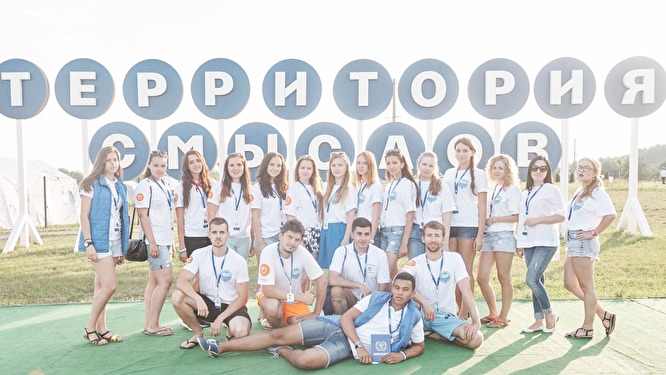
An acquaintance of Mr. Avetisov’s said his Russian Student Rescue Corps had brought many universities together. The organization took part in the first Taurida Camp held after the annexation of Crimea in 2014, an event attended by MPs and high-ranking officials. From 2015 to 2017, Mr. Avetisov was director of Territory of Meanings on the Klyazma, a youth education form, sponsored by Rosmolodezh (Russian Agency for Youth Affairs). His main job at the forum was providing technical support for the camp.

On June 6, Znak.com, citing its own sources, reported law enforcement agences were investigating Territory of Meanings on the Klyazma and, in this connection, “questions for the forum’s ex-director Alexei Avetisov could arise.” The website indicated companies allegedly affiliated with Mr. Avetisov had for several years been awarded “lucrative” contracts for constructing venues at the forum. The firms in question had no experience implementing government contracts. Currently, some of the companies have either gone out of business or are dormant, wrote the website.

Timur Prokopenko, deputy chief of staff in charge of the Office of Domestic Policy in the Kremlin, had been in charge of youth forums in recent years. He also handleded youth policy in his capacity as head of the Office of Domestic Policy. However, on June 14, a presidential decree turned youth policy over to the Office of Public Projects.

znakcom-2039402-666x375Territory of Meanings staffers. Photo from the camp’s VK page. Courtesy of Znak.com
Gazeta.Ru has reported that Rospatriotcenter head Ksenia Razuvayeva could take charge of the Office of Public Project’s Department of Youth Policy. Before taking over the running of Rospatriotcenter, Ms. Razuvayeva ran the Moscow branch of the Russian Volunteers Union and collaborated with the Young Guard of United Russia (MGER), which Mr. Prokopenko ran from 2010 to 2012. Ms. Razuvayeva would not confirm to us that she was moving to the Office of Public Projects Earlier, a source of ours in the Kremlin said she might not make it through the vetting process. Another of our sources noted a possible conflict of interests was at play. Ms. Razuvayeva also told us it was the first time she had heard about Mr. Avetisov’s moving to the Office of Public Projects.

“The vast majority of Young Guardsmen and other pro-regime activists brought up through the ranks in the past decades are supremely focused on their careers. The system simply spits out anyone else,” political scientist Abbas Gallyamov told us.

According to Gallyamov, “Changing colors for the new boss and refusing to have anything to do with people they worshipped only the day before are quite ordinary for this crowd.”

“Therefore, it does not matter whose people they were considered yesterday. They will be loyal to any boss, just because he or she is the boss,” Gallyamov added.

Translated by the Russian Reader

Petersburg Court Bailiffs Attack Reporter at Network Case Hearing

Mediazona’s Petersburg Correspondent Accused of Disobeying Court Bailiffs
Mediazona
June 19, 2018

David Frenkel, a Mediazona correspondent, has informed us that bailiffs at Petersburg’s Dzerzhinsky District Court have cited him for violating Article 17.3 of the Administrative Code (“failure to comply with the orders of a judge or court bailiff”).

Frenkel attended the custody extension hearing of Penza-Petersburg “terrorism” case suspect Viktor Filinkov. Journalists and the public were not admitted to the courtroom during the hearing and the judge’s ruling. When the hearing was over, and Filinkov was escorted from the courtroom, the public, around forty people, applauded him.

It was then that court clerk Yelena Krasotkina, outraged the public supported the prisoner, ordered the bailiffs to detain Frenkel, who at the time was standing in the corridor and not applauding.

Yekaterina Kosarevskya, a member of the Petersburg Public Monitoring Commission, said she heard Krasotkina say to the bailiffs, “Write somebody up for something.”

One of the bailiffs suggested detaining Frenkel. Ten minutes later, another bailiff threatened to detain Kosarevskaya.

When the bailiffs detained Frenkel, they broke his glasses. They claimed he screamed.

The bailiffs cited him Frenkel for violating Adminstrative Code Article 17.3 Part 2 (“Failure to obey the lawful request of a court bailiff for establishing order in the court and stopping actions violating court rules”).

Frenkel sent a photo of the citation to his Mediazona colleagues: he was unable to read it, since a bailiff, surnamed Vikulov, had broken his glasses. The citation claimed Frenkel “made noise, clapped, shouted, and urged the crowd to take illegal actions.”

Frenkel was then taken to the 78th Police Precinct. The policemen swore when they found out why Frenkel had been brought to the police station. He was released after approximately fifteen minutes.

Viktor Filinkov’s term in remand prison was extended four months, until October 22, 2018.

When Frenkel was escorted from the corridor, it transpired the bailiffs had run out of blank arrest sheets.

Around forty people had gathered before the hearing in the second-floor corridor of the courthouse. They included the parents of Yuli Boyarshinov, another suspect in the Penza-Petersburg “terrorism” case, whose remand to police custody was extended later in the day. No member of the public was able to attend the hearing. Before escorting Filinkov from the holding cell, the guards and bailiffs ordered the public to go down to the first floor. They claimed their request had to do with “safely escorting” their prisoner.

The members of the public were reluctant to leave the second floor. Court clerk Yelena Krasotkina emerged from the office of the Dzerzhinsky District Court’s presiding judge. Krasotkina announced the decision to hold both hearings in closed chambers had been made earlier and ordered the public to leave the courthouse.

View image on TwitterView image on TwitterDavid Frenkel (@merr1k): “I get the sense the brass has taken the Dzerzhinsky District Court to task, and so they are avoiding the use of force. They are swearing and getting mad, but they’re putting up with us. 11: 12 a.m., July 19, 2018.”

The bailiffs placed a bench at the entrance of the corridor to courtroom, forbidding members of the public from going around the bench. Krasotkina reprimanded the bailiffs, complaining , “They’re all still here,” meaning the members of the public. Armed guards in masks escorted Filinkov into the courtroom as this was happening.

Inside the Dzerzhinsky District Court, June 19, 2018. Photo by David Frenkel. Courtesy of Mediazona  

Members of the public and the bailiffs argued with each other. A man who was possibly in charge of the armed guard joined them. He warned the public they would not be admitted to the courtroom to hear the judge’s ruling in the cases of Filinkov and Boyarshinov.

“How is that?” asked a member of the public.

“Well, if the judge permits it, the public gets in. If the judge doesn’t, they don’t,” replied the man.

“How do we find that out?” asked perplexed members of the public.

“When the hearing is over, they’ll come out and tell you,” he concluded.

Krasotkina periodically emerged from the presiding judge’s office, taking a photograph of the members of the public on one such occasion.

Filinkov’s defense counsel, Vitaly Cherkasov, a lawyer with the Agora International Human Rights Group, then emerged from the courtroom, telling the crowd the defense had asked the judge to transfer Filinkov to house arrest.

Finally, after the court had rendered its ruling, Frenkel was detained by the bailiffs.

Armed guards escort Viktor Filinkov at the Dzerzhinsky District Court. Photo by David Frenkel. Courtesy of Mediazona 

This was not the first time a member of the press has been cited for violating Article 17.3 at the Dzerzhinsky District Court. On March 22, 2018, bailiff Ivan Lozovsky cited journalist Sasha Bogino for violating the administrative law. He ordered her to stop “live streaming,” although the Mediazona correspondent was sitting in the courtroom with her laptop open and not filming anything. In late May, a court ordered Bogino to pay a fine of 500 rubles.

Filinkov and Boyarshinov have been in police custody since January of this year. On June 18, 2018, the Dzherzhinsky District court extended the term in custody of the third Petersburg suspect in the Penza-Petersburg “terrorism” case, Igor Shishkin. Another six young men are in police custody in Penza as suspects in the same case.

According to the Russian Federal Security Service (FSB), the members of the alleged “terrorist community” known as “The Network” had planned “to stir up the popular masses in order to destabilize the political circumstances” in Russia on the eve of March’s presidential election and the 2018 FIFA World Cup, which is currently underway. In addition, on June 15, 2018, it transpired that three new charges had been added to the case.

Three of the suspects, who have been charged with violating Article 205.4 of the Russian Criminal Code (“involvement in a terrorist community”), Viktor Filinkov, Ilya Shakursky, and Dmitry Pchelintsev, have claimed they were tortured into confessing after they were detained by FSB field officers. In addition, Alexei Poltavets, an acquaintance of the suspects, has claimed he was tortured into testifying against them.

The Russian Investigative Committee has so far refused to refuse to file abuse of authority charges against any FSB officers. In the case of Ilya Kapustin, who was tortured during his interrogation by the FSB as a witness, the Investigative Committee decided Kapustin’s taser burns were “consistent with injuries caused by skin diseases or insect bites.”

The suspects’ loved ones have formed a Parents Network. In April 2018, the group held a press conference in Moscow.

Translated by the Russian Reader

***************

What can you do to support the Penza and Petersburg antifascists and anarchists tortured and imprisoned by the FSB?

  • Donate money to the Anarchist Black Cross via PayPal (abc-msk@riseup.net). Make sure to specify that your donation is earmarked for “Rupression.”
  • Spread the word about The Network Case aka the Penza-Petersburg “terrorism” case. You can find more information about the case and in-depth articles translated into English on this website (see below), rupression.com, and openDemocracyRussia.
  • Organize solidarity events where you live to raise money and publicize the plight of the tortured Penza and Petersburg antifascists. Go to the website It’s Going Down to find downloadable, printable posters and flyers. You can also read more about the case there.
  • If you have the time and means to design, produce, and sell solidarity merchandize, please write to rupression@protonmail.com.
  • Write letters and postcards to the prisoners. Letters and postcards must be written in Russian or translated into Russian. You canfind the addresses of the prisoners here.
  • Design a solidarity postcard that can be printed out and used by others to send messages of support to the prisoners. Send your ideas to rupression@protonmail.com.
  • Write letters of support to the prisoners’ loved ones via rupression@protonmail.com.
  • Translate the articles and information at rupression.com and this website into languages other than Russian and English, and publish your translations on social media and your own websites and blogs.
  • If you know someone famous, ask them to record a solidarity video, write an op-ed piece for a mainstream newspaper or write letters to the prisoners.
  • If you know someone who is a print, internet, TV or radio journalist, encourage them to write an article or broadcast a report about the case. Write to rupression@protonmail.com or the email listed on this website, and we will be happy to arrange interviews and provide additional information.
  • It is extremely important this case break into the mainstream media both in Russia and abroad. Despite their apparent brashness, the FSB and their ilk do not like publicity. The more publicity the case receives, the safer our comrades will be in remand prison from violence at the hands of prison stooges and torture at the hands of the FSB, and the more likely the Russian authorities will be to drop the case altogether or release the defendants for time served if the case ever does go to trial.
  • Why? Because the case is a complete frame-up, based on testimony obtained under torture and mental duress. When the complaints filed by the accused reach the European Court of Human Rights in Strasbourg and are reviewed, the Russian government will be forced to pay heavy fines for its cruel mockery of justice.

***************

If you have not been following the Penza-Petersburg “terrorism” case and other cases involving frame-ups, torture, and violent intimidation by the Russian Federal Security Service (FSB) and other arms of the Russian police state, read and repost the recent articles the Russian Reader has translated and published on these subjects.

Torture as an Everyday Practice

They Were Suffocated with a Plastic Bag Doused with Ammonia and Punched in the Kidneys: How a Navalny Team Volunteer and His Friends Were Tortured by Police
Alexander Skrylnikov
MBK Media
May 31, 2018

Максим Гребенюк. Фото: личная страница ВКонтактеMaxim Grebenyuk. Photo from personal VK page

Maxim Grebenyuk, a volunteer with the Navalny Team in Voronezh, and his friends were tortured by police at a police station who were trying to force them to confess to stealing a mobile phone. Voronezh police offices handcuffed the young men and suffocated them with a plastic bag doused with ammonia so they would not faint from the lack of oxygen.

On the night of May 18, Mr. Grebnyuk and his friends Sergei Troyansky, Ilya Podgorny, and Andrei Biryukov were visiting an acquaintance of one of the young men, Yelizaveta Kurlyantseva. Two men named Roman and Vadim, whom Mr. Grebnyuk did not know, were also at Ms. Kurlyantseva’s flat. Mr. Grebnyuk spent no more than an hour at the flat, but a week later he found out that he and his friends had been summoned to Voronezh Police Precinct No. 4 as witnesses in the case of Ms. Kurlyansteva’s stolen phone. At the police station, it transpired the police did not want testimony, but confessions, and police officers employed torture to obtain them.

MBK Media asked Mr. Grebnyuk what methods of torture the Voronezh police used.

*****

When we went into the precinct, they immediately confiscated our telephones and internal passports. They took us in for questioning one at a time. Andrei was the first to go into Office No. 26. He was in there ten minutes. They let him go. Nothing happened to him.

Then I went in. There were two men in plain clothes in the room.

“Everything is fucked,” they said.

They made no attempt to find out what had happened and how. They said right out I had stolen the telephone.

I replied I hadn’t stolen it.

“Either you stole it or you tell us who did.”

I repeated it wasn’t me who stole it, and one of them slapped me. I tried to invoke my right not to speak to them without an attorney present, and they hit me again.

They kept asking me about the phone, but I said I’d hear it about only the day before. They warned me they were going to use “other methods.”

When I asked them why they were hitting me instead of figuring things out, they said, “We’re not hitting you now. We have other methods.”

What methods did they have in mind?

They put a plastic bag over my head twice, once without any ammonia in it, once with a minimal amount. I was running out of air. I was choking. When they saw it wasn’t having the desired effect, they doused the bag with lots of ammonia and put it over my head. It was unbearable. They did the trick with the plastic bag twice while simultaneously keeping me handcuffed with my hands behind the back of the chair. One of them held the chain on the handcuffs with his foot so I was unable to move.

Then they let me go and called Sergei into the room. The same thing happened to him. Later, the two guys I hadn’t met before, Roman and Vadim, were brought to the station. They said they were tortured in the same way, and one of them was punched in the kidneys.

After the police were done with me, it was my turn again. There were five men in the room. They did the trick with the plastic bag again. I screamed so loud the whole station would have heard it. One of the officers must have heard me, but there was no reaction. I was asked whether I could take much more of thatand, naturally, I said I couldn’t. I cannot stand torture.

They promised would get us dead to rights in several days if no one confessed and to torture us the whole time. They gave us ten minutes to decide who would take the rap. Otherwise, they promised to torture me again.

That didn’t happen, thank God. They forced us to give our written consent to a lie detector test and make statements that none of us had seen the telephone before letting us go.

How long did the torture last?

It was really hard to keep track of time due to my emotional state. It was something like half an hour.

What things did the police say?

They only insisted I confess and chatted among themselves. They didn’t try and figure out what had happened to the phone. They only insisted I confess.

How did you feel when they put the plastic bag doused with ammonia over your head?

It was awful. The bag is over your head, and you have to breathe. When you inhale, there is a really sharp pain and burning sensation in your lungs and nasal cavities. Your eyes tear up. You have to breathe, but you inhale two or three times, and the air runs out. When the air ran out, I wanted to faint so I wouldn’t have to go on feeling it, but the ammonia made that impossible.

Did you think about confessing at some point?

I felt like saying I stole the phone. Those thoughts came and went, although I hadn’t stolen the phone. I just wanted it to stop. When they threaten to keep doing this to you for two days, then anyone would say he stole the phone if the alternative was that the torture continued. The same thing happened to Sergei, and the others said the same thing happened to them. I don’t know how to describe it.

Do you see any link between what happened and the fact you’re a Navalny Team volunteer?

It’s entirely possible. The police focused on me, and they confiscated my internal passport, which I keep in a protective cover that has the phrase “Opposition Member’s Passport” emblazoned on it. The other guys don’t have anything to do with the opposition movement. The focus was on me. They interrogated me longer and more often.

Were you able to learn the names of the torturers?

Yes, I think so. One was named Oleg Sokolovsky, and another guy was named Sergei, but that was it.

Were you able to medically certify your injuries?

Yes, we were at a forensic medical exam yesterday on the orders of the investigator, and everything was certified there. The gouges made by the handcuffs have gone away, but there are still bruises on our wrists and forearms. Sergei and I have them in the exact same places.

Does the young woman who filed the theft complaint know you were tortured?

When she found out she was shocked. She had no idea stuff like that happened. She offered to withdraw her complaint, but I talked her out of it. Someone did steal the phone, so the complaint should be on file. And the guilty party should be punished, only not using such methods.

Will the policemen be punished for their actions? What do you predict will happen? What do you hope will happen?

I don’t know. I hope there will be publicity, and the case won’t be brushed under the rug. When we were signing the consent forms for the lie detector test, Sergei was told directly, “You can file a complain or not. Nothing will happen to us anyway.”

What has to be done to stop police officers in Russia from regarding torture as the norm?

As you well know, we have to change the system from the top down. Firing a few police officers won’t change anything.

*****

Navalny Team lawyer Danil Novikkov told us they filed a complaint with the Investigative Committee the next day. He also told us that one of the lie detector tests to which Mr. Grebnyuk and his friends consented had been postponed indefinitely after one of the police officers involved had been questioned at the Investigative Committee.

Novikov told us a little about Maxim Grebnyuk.

“He’s one of our oldest volunteers. He was expelled from the LDPR [the so-called Liberal Democratic Party of Russia, chaired since its founding in the 1990s by the nationalist clown Vladimir Zhirinovsky] when they found out he supported Navalny’s views. He has been a co-sponsor of public events and campaign booths on many occasions, and he always attends protest rallies,” said Mr. Novikov.

The lawyer, nevertheless, saw no connection between the police’s torture of Mr. Grebnyuk and his opposition work.

“The police just turn a blind eye to tortue,” he said.

Police Precinct No. 4 in Voronezh declined to comment on the incident.

Thanks to Evgeny Shtorn for the heads-up. Translated by the Russian Reader