Friends, I rarely sign petitions and I never ask other people to sign them.
Now, however, circumstances are such that we need to get as many of our fellow citizens involved in discussing the political crisis in Moscow. During this crisis, the FSB, the Russian Investigative Committee, and the police have taken direct control of civic life, bordering on a military coup.
So I would ask you to read this petition, sign it, and talk about it on social media.
It says two things.
1. Criminally prosecuting peaceful citizens for their convictions is defined as political terror.
2. Alexander Bastrykin, chair of the Investigative Committee, is asked to put an immediate end to the criminal investigation of the “riot” in Moscow on July 27 due to the fact that no such crime was committed.
To date, eight people have been arrested and remanded in custody in the case of the riot that did not happen. One suspect in the case has vanished. And this is only the beginning.
None of us is so naive as to believe Bastrykin would meet us halfway. No one has any illusions about the man. He regards the people of our country as expendable in maintaining his personal power and the power of his friends. Nevertheless, Bastrykin formally has the authority to stop this train before it reaches full speed.
We must circulate the petition to get as many people as possible to pay attention to what is happening. We also must show the authorities that society is morally, civically, and politically ready to resist.
If hundreds of thousands of us stand up to be counted, no one can say we do not exist, as they said our signatures in support of candidates standing in these elections did not exist.
___________________________
Stop the Criminal Case Against People Who Took Part in the Peaceful Protest on July 27, 2019, in Moscow Change.org
August 5, 2019
Novaya Gazeta started this petition to Alexander Bastrykin, Chair of the Investigative Committee, and the Investigative Committee
We, citizens of Russia, demand an end to the political terror unleashed against our country’s people by law enforcement agencies.
On July 27, 2019, a peaceful rally in defense of our constitutionally guaranteed voting rights took place in Moscow. In response to the rally, the Russian Investigative Committee has launched a criminal investigation into “rioting.”
According to Article 212 of the Russian Criminal Code, riots involve violence against citizens and public officials, property damage, arson, and mayhem. However, nothing of the sort happened in Moscow on July 27, 2019.
On the contrary, voters demanded that Russia’s laws should be upheld and candidates who had previously been barred should be allowed to stand in the elections to the Moscow City Duma. The “disorderly conduct” cited by investigators cannot be defined as a “riot” either according to the letter of the law or in terms of common sense.
Despite what the Russian Constitution says, people who peacefully defended their rights have now been subjected to criminal prosecution for their beliefs.
We believe the criminal investigation into rioting is being used to intimidate the people of Russia. It is tantamount to banning our voting rights.
As of August 5, peaceful protesters Sergei Abanichev, Vladislav Barabanov, Yegor Zhukov, Kirill Zhukov, Yevgeny Kovalenko, Daniil Konon, Alexei Minyaylo, Ivan Podkopayev, and Samariddin Radzhabov have been remanded in custody as part of the riot investigation for no reason whatsoever.
None of them has admitted their guilt.
We are aware of the impending arrests of our family members, friends, and colleagues.
We also know the fabricated evidence in the case is based on information extracted from telephones that were illegally confiscated from citizens detained during peaceful protests.
If the Investigative Committee uses its authority to unleash political terror against its own people, it would not go unnoticed. Massive abuse of the law for political ends would have long-term tragic consequences for our country, as evidenced by the history of the twentieth century.
Criminal prosecution cannot be a means of settling scores with political opponents. It will provoke a further escalation of the civil conflict in Russia.
Who We Are
Founded in 1993, Novaya Gazeta is a Russian newspaper known all over the world for its investigations of high-level corruption and special reports from hot spots. We have won a Pulitzer Prize and been nominated for a Nobel Prize. Our staff includes journalists Elena Milashina, Olga Bobrova, Roman Anin, Elena Kostyuchenko, Pavel Kanygin, and Ilya Azar. Yulia Latynina, Dmitry Bykov, Irina Petrovskaya, and Slava Taroshchina are among our regular contributors. In 2018, our editorial staff and friends of our newspaper launched a partnership campaign. To date, 20% of the newspaper’s expenses have been covered by personal donations from over seven thousand of its readers.
Image courtesy of Kirill Martynov and Change.org. Translated by the Russian Reader
Vladislav Barabanov in the dock at the Presna District Court in Moscow earlier today. Photo by Elizaveta Pestova. Courtesy of Yegor Skovoroda and Mediazona
The Presna District Court has remanded three more people in custody as part of the Moscow “riot” case. It became clear during the hearings how they had warranted being charged with involvement in rioting, punishable by up to eight years in prison under Article 212.2 of the Russian Criminal Code.
Daniil Konon, 22, a student at the Bauman School, waved his arms energetically and showed people on the streets where other protesters had gone. (Ren TV has posted a video denunciation of Konon.) Thus, the Investigative Committee argued in court, Konon “coordinated” the riot, a riot that, in fact, never took place.
Daniil Konon in the dock at the Presna District Court today. Photo by Anna Kozkina. Courtesy of Yegor Skovoroda and Mediazona
Vladislav Barabanov, 22, an anarchist from Nizhny Novgorod, also, allegedly, “coordinated” the pogrom that wasn’t. However, field agents from Center “E” cited a video in which Barabanov can be seen merely standing in the midst of other demonstrators. He is not even waving his arms.
Sergei Abanichev, 25, is a manager. His girlfriend says he enjoys helping homeless animals. What was his crime? He tossed an empty paper cup from Burger King towards the cops, who were coming at the protesters from all sides. That was it.
Sergei Abanichev in the dock at the Presna District Court. Photo by Dmitry Shvets. Courtesy of Yegor Skovoroda and Mediazona
I overheard a conversation in the court building. A case investigator exited the courtroom.
“It’s fine. He’ll have to suffer for a month, that’s all,” he said to the mother of one of the men who had been remanded in custody.
“Aren’t you ashamed?” a young woman from the support group asked him.
“What, me? No. Are you?” he replied.
I really do not like high-sounding words like “captives” and “hostages,” but all these people, seized at random by the police, are, in fact, hostages. The security forces took them captive only to frighten all of us.
Don’t be afraid.
Free all political prisoners!
Today, we again covered the hearings simultaneously online, meaning we had several reporters working in the court building, and several working at the office. Covering events online is a lot of work and only your donations and support make it possible. This is going to be a big case, so do not forget to donate to Mediazona.
Yegor Skovoroda is a journalist at Mediazona. Translated by the Russian Reader
Higher School of Economics Student Yegor Zhukov Arrested in Riot Investigation
Andrei Karev Novaya Gazeta
August 2, 2019
Moscow’s Presna District Court has remanded in custody yet another person charged in the riot investigation launched after the July 27 protest rally in Moscow: 21-year-old Yegor Zhukov, a candidate for the Moscow City Duma, video blogger, and student at the Higher School of Economics.
Yegor Zhukov in court. Photo by Vlad Dokshin. Courtesy of Novaya Gazeta
Judge Alexander Avdotyina granted a motion made by the case investigator and remanded Zhukov in custody until September 27.
The hearing began with a motion from Zhukov’s defense lawyer, Daniil Berman. He asked the court to call a recess and give his client a bottle of water.
“He has not had a drop of water since two in the morning and has not slept since yesterday,” Berman claimed.
The judge, however, refused to uphold the motion, explaining that giving Zhukov a bottle of water was against the rules.
“What is this, the Gestapo?” Zhukov’s outraged mother wondered aloud.
Her son has been charged with involvement in rioting, punishable under Article 212.2 of the Russian Criminal Code. Zhukov has completely denied his guilt and refused to give testimony to investigators. According to the case investigator, if Zhukov were at large, he could hinder the investigation, present a flight risk, and pressure witnesses.
He argued that Zhukov’s guilt was borne out by evidence gathered during the investigation.
“Zhukov could destroy evidence in the case and communicate information learned during the investigation to other suspects,” explained the investigator from the Russian Investigative Committee.
The prosecutor seconded the investigator’s arguments.
Zhukov asked the court to impose pretrial restrictions that did not involve imprisoning him.
Yegor Zhukov in court. Photo by Vlad Dokshin. Courtesy of Novaya Gazeta
Berman argued there were no grounds for remanding Zhukov in custody. There had been no criminal wrongdoing on Zhukov’s part, and investigators had not presented any specific evidence. Berman motioned the court not to impose pretrial restrictions that would involve isolating his client from society, asking it instead to place Zhukov under house arrest or release him on bail or on his own recognizance.
“There have been lies at each stage of the criminal investigation. It seems as if the case file has been hastily thrown together: it is a collection of commonplaces. What are the charges? What exactly did my client do? The case investigators should at least pretend to be upholding the law. It is outrageous they asked the court to uphold this motion. Why should a student and Muscovite be remanded in custody?” Berman exclaimed.
He added that Zhukov’s parents were willing to post one million rubles [$15,320] in bail.
Earlier, it transpired Valeria Kasamara, vice-rector at the Higher School of Economics and candidate for the Moscow City Duma in Borough No. 45, had agreed to stand surety for Zhukov.
“I request Yegor Zhukov not be remanded in custody. He is my student. He has always been distinguished by his curiosity and high academic performance. I know him personally and can vouch for his good character,” reads the document, posted on Telegram by Pavel Chikov, head of the Agora International Human Rights Group.
Higher School of Economics students, alumni, and faculty have published an open letter demanding the university’s administrators officially voice their support for Zhukov. According to the letter’s authors, the HSE administration should personally make official statements supporting Zhukov, stand surety for him in court, and appeal to all public authorities to explain the grounds for the criminal charges against him.
“The charges against Yegor are charges against the entire university and each member of the university community. The university teaches us to think critically, speak freely, and ask questions. The Higher School of Economics does not have the moral right to turn its back when a member of its community faces three to eight years in prison for speaking freely and asking the right questions,” it says in the letter.
The Investigative Committee has consolidated separate charges of rioting (punishable under Article 212 of the Russian Criminal Code) and violence against police officers (punishable under Article 318 of the Russian Criminal Code) into a single criminal investigation of the “unauthorized” protest rally in Moscow on July 27. According to Chikov, 84 investigators have been assigned to the case.
Earlier on Friday, the court remanded Alexei Minyaylo, Samariddin Radzhabov, Ivan Podkopayev, and Kirill Zhukov in custody. Yevgeny Kovalenko had already been remanded in custody as part of the same investigation.
Thanks to Dmitry Kalugin for the heads-up. Translated by the Russian Reader
According to OVD Info, as of 9:00 p.m. Moscow Time today, July 27, 2019, 938 people had been detained in Moscow for taking part in an “unauthorized” grassroots protest against the disqualification of independent candidates who had registered to stand in the September 8, 2019, election to the Moscow City Duma.
Russian Opposition Hit with New Wave of Searches and Arrests
Yelena Mukhametshina Vedomosti
July 25, 2019
On Wednesday evening, Moscow’s Simonovsky District Court jailed politician Alexei Navalny for thirty days for calling on Muscovites to go to the mayor’s office this weekend to protest irregularities in the upcoming elections to the Moscow City Duma. Law enforcement agencies simultaneously launched a dragnet against the Russian opposition. Investigators searched the homes of ex-MP Dmitry Gudkov, his colleague Alexander Solovyov, Ivan Zhdanov, director of Navalny’s Anti-Corruption Foundation (FBK), and municipal council member Nikolai Balandin.
The search in Gudkov’s home lasted around two hours. Investigators confiscated the politician’s computers, smartphone, and all portable electronic storage devices. Gudkov’s press secretary Alexei Obukhov said the search warrant mentioned the confiscation of all computer discs [sic] in connection with the protest rallies and pickets outside the Moscow City Elections Commission on July 14, 15, and 18. Identified as a witness in a criminal investigation, Gudkov was given a summons to an interrogation at the Main Investigative Department of the Investigative Committee’s Moscow office on Thursday morning. Navalny’s colleague Leonid Volkov reported that, after his home was searched, Zhdanov was taken immediately to the Main Investigative Department.
Police searching Dmitry Gudkov’s apartment. Courtesy of Dmitry Gudkov’s Telegram channel and Vedomosti
FBK lawyer Lyubov Sobol, municipal district council member Yulia Galyamina, and ex-MP Gennady Gudkov have also been summoned to interrogations on Thursday morning.
“Would that they went after criminals this way. They are just scumbags!” Gudkov, Sr., wrote in an emotional post on his Twitter page after receiving a phone call from an Investigative Committee investigator.
On Wednesday afternoon, the Main Investigative Committee reported it had launched a criminal investigation into the protest rally that was held outside the Moscow City Elections Commission on July 14 by opposition candidates to the Moscow City Duma under Article 141 of the Russian Criminal Code, which criminalizes the “obstruction of voting rights or the work of electoral commissions.” In July 2019, the Main Investigative Office writes, members of a particular movement organized illegal and unauthorized rallies and pickets outside the Moscow City Elections Commission in order to exert pressure on members of the election commissions and obstruct their work. People who attended the rallies threatened election commissions members with violence, the Main Investigative Offices reports. It did not specify which part of Article 141, in its view, had been violated. It could choose to indict people under Article 141.2, which carries a maximum punishment of five years in prison.
The protests out the Moscow City Elections Commission were sparked when district election commissions found flaws, allegedly, in the signature sheets of people intending to run as independent candidates in the September 8 elections to the Moscow City Duma. The flawed signature sheets, allegedly, disqualified them as candidates, and the local election commissions refused to register them. Among the disqualified candidates were municipal district council members Ilya Yashin, Konstantin Yankauksas, Anastasia Bryukhanova, Galyamina, and Dmitry Gudkov; Navalny’s colleagues Sobol and Zhdanov; and Yabloko Party members Elena Rusakova, Kirill Goncharov, and Sergei Mitrokhin.
All last week, the opposition kept up its protests, which had not been vetted by the mayor’s office, on Trubnaya Square. On Saturday, an estimated 22,500 people attended an authorized protest rally on Sakharov Avenue. During the rally, Navalny told the crowd that if all the independent candidates were not registered in the coming week, people should go to the mayor’s office on July 27.
On Wednesday afternoon, opposition politicians told Vedomosti they were prepared to rally outside the mayor’s office on Saturday.
“The criminal investigation is obviously an attempt to intimidate us. We want to run in the elections, but they refuse to put us on the ballot. Now they say they have launched a criminal investigation. We will keep defending our rights,” said Yashin.
Galyamina also believes the authorities are trying to intimidate the opposition.
“On July 14, [Moscow City Elections Commission chair Valentin] Gorbunov was at his dacha, and the commission was closed for business. It is unclear whose work we could have obstructed,” she said.
Gorbunov told Vedomosti that he was not at the commission’s offices on July 14, but that during election campaigns the commission’s working groups and members work weekends as well.
“Time is short and we have to wind things up,” he said.
Gorbunov learned about the criminal investigation from the press. He had no idea who had filed the complaint.
“I believe people need to act within the law. [Central Elections Commission chair Ella] Pamfilova said that rallies were not a form of political campaigning, that people had to work within the bounds of the law. I can only say that the rally outside the Moscow City Elections Commission was not authorized, but it is up to law enforcement agencies to comment on criminal liability for what happened,” he said.
However, on July 14, Gorbunov had told Vedomosti the commission was closed on Sundays.
“They [the opposition] might as well have gone to some factory that was closed on Sunday,” he said then.
The criminal investigation is probably meant by the security forces as a way to intimidate protesters, argues a person close to the mayor’s office. This source said it was clear police would detain people who attempted to attend an unauthorized rally on July 27.
According to court statistics, people have been charged and convicted of violating Article 141 extremely rarely. In the last ten years, the most “fruitful” years were 2009 and 2011, when fifteen and eleven people, respectively, were charged and convicted of violating the article.
In 2009, six people were indicted under Article 141 due to numerous abuses in the mayoral election in Derbent. In 2011, Andrei Ruchkin, head of the Engels District in Saratov Region, was charged under Article 141.3 for meddling with the work of the local election commission. In 2018, members of the Yabloko Party in Pskov were charged under Article 141 for encouraging voters to spoil their ballots in the gubernatorial election, but the charges were dropped for lack of evidence.
Criminal Code Article 141 is peculiar it is mainly employees of the executive branch who obstruct the exercise of voting rights and the work of election commissions, but they are almost never charged with violating the law, explains Andrei Buzin, co-chair of Golos, a Russian NGO that defends voting rights and monitors elections.
“It was not considered kosher to file criminal charges, and so several years ago a similar article was inserted into the Administrative Violations Code. Several election observers were charged under this law,” he said.
Buzin argues that the situation has been turned upside down.
“The protesters were defending voting rights, so it would truer to say that it has been the election commissions that have been obstructing citizens,” he said.
“There is almost no case law for Article 141. It is hard to say who could be charged with violating the law. We have had no experience with it,” said Pavel Chikov, head of the Agora International Human Rights Group. “There was an incident in the Moscow Region. Candidates were assaulted, but we were not able to get criminal charges filed.”
Now the article was being used to punish political “crimes,” he argued.
“It is a variation of the Bolotnaya Square case of 2012, only somewhat lighter. The defendants in that case were charged with rioting,” he said.
Chikov added that we should probably expect more arrests in the wake of the searches.
Michael Calvey in court. Photo by Maxim Shemetov. Courtesy of Reuters and Republic
“We Give You Serebrennikov and You Give us Calvey”: How Law Enforcement Works
Olga Romanova Republic
May 13, 2019
“Who would make the decision about your arrest?”
“My colleagues would betray me, but they would vet it with my bosses.”
“What about Vasya [a big businessman]?”
“Cops, the economic security squad. It’s enough for the word to come down from the district office to grab him. Vasya is a respected person. He’s a thief.”
“And me?”
“You’re an enemy of the state. If the neighborhood cops can decide to arrest Vasya, the Secret Chamber, so to speak, would have to give the orders to arrest you. The decision to arrest you would be made by no one lower ranked than Bortnikov’s deputy, although you’re naked and barefoot, and no one would ask the prosecutor’s office or the Investigative Committee to go after you. It’s creepy and pointless.”
This should give you an idea of the conversations I have with my acquaintances in the security forces nowadays. It helps to do business with people who know the score. None of them is surprised when you ask them who would arrest someone, how they would do it, and when they would do it. Everything would have been planned long ago, and there are no illusions. If a person has to be placed under arrest and charged, it is going to happen. If they do not need to be indicted, they can be kept in custody for a while. No one remembers, even for appearance’s sake, that there are courts in Russia, and courts decide whether to remand someone in custody after hearing arguments by all the interested parties. Everyone knows the decisions are not made in court.
There is no one with whom you can talk about these cases.
This is not quite true. My sources in all the law enforcement and security agencies, who can be frank with me as long as they remain anonymous, talk to me about these cases, too, but they look really worried when they do.
Rank-and-file law enforcement officers are confused. They do not understand why someone decided to back off the Serebrennikov case so abruptly and quickly. The train was rushing the director and filmmaker towards a sentence of the four years or so in the camps when a powerful hand jerked hard on the brakes. The passengers jumped off the train, of course, for they didn’t want to keep traveling in that direction, but the trainmaster, driver, and conductors were completely at a loss.
What should they do with the next train and its contingent of VIP passengers? Should they railroad them, as they were ordered to do, or should they avoid hurrying the case? After the emergency brake has been pulled, everyone emerges with injuries and bumps. Some of the crew were counting on promotions after they had wrapped up such a big case. Other members of the crew were acting on orders from a celestial. He will not forgive them because now they know there are tougher celestials in the system. He cannot forgive the people involved in the case for knowing that fact nor can he forgive the other celestials for intervening. The passengers could not care less. Either they get to where they are going or they do not get there, but the crew is always aboard the train.
True, a smart alec from the Investigative Committee told me something interesting about the procedural aspect.
“Why is everyone so angry? The Serebrennikov case was sent back to the prosecutor’s office, so what? You saw that the court ordered a forensic examination. The first forensic examination was really crooked. The judge in the trial of Serebrennikov’s accountant, Nina Maslyaeva, wondered why everyone was so glad. Serebrennikov’s case would now be sent back to the prosecutor’s office because his circumstances are the same as Maslyaeva’s. You are mixing up cause and effect. The judge in the Maslyaeva case cannot reach a verdict because he understands the outcome of the forensic examination, which was the same as in the Serebrennikov case, will now be different, and Maslayeva will have to be re-indicted in the light of the new forensic examination in the Serebrennikov case.”
Translated into ordinary language, he means the case can still go any which way. Procedurally, all the cards are still on the table, and the haggling could continue. Things could go one way or the other. The powers that be could change their minds and send Serebrennikov to prison, but they could also let him go. They could arrest him again and send him down. The statute of limitations is a flexible thing.
Somewhere above the clouds, the thunder gods fight over the case. Invisible to the world, they communicate with ordinary people by making motions to conduct additional forensic examinations. Ordinary people make of it what they will. Police investigators are also part of the rank and file, part and parcel of Russia’s unwashed masses.
In ordinary times, this is not what happens to ordinary defendants in ordinary cases. Everyone would have gone down five years each per capita, and no would have batted an eye. In this case, the decisions are obviously political. Look who made the decision! Who telephoned whom? What levers did they use? Who or what did they offer in exchange? Freebies are for freaks, after all. We will return to this subsequently when we discuss other factors.
If the boring procedural hypothesis made by my anonymous source at the Investigative Committee is right, events should unfold as follows. The authorities will get the results of the new forensic examination in the Serebrennikov case. If the total damages are less than was claimed earlier (or, say, there were, miraculously, no damages at all), the charges against Serebrennikov and the other defendants will be dropped right in the courtroom. If, on the contrary, the sum of the damages is more or less hefty, a million rubles, at least, the defendants will be found guilty and sentenced to prison. Then you can appeal the verdict wherever you like.
No one would ask why a particular ruling was made. No one would ask what happened. Why are some people treated one way, while others are treated another way? The foot soldiers of law enforcement know the score. But when they do not know the score, they know it is better not to ask whether a mistake has been made but to follow orders.
How Things Go Down
The Calvey case bears a strong resemblance to the case against Vladimir Yevtushenkov. Yevtushenkov failed to take the hints. He was told directly what to do but refused to hand over his business. Then he was arrested and given a good talking. He and his captors came to an understanding. He was released and his business confiscated. Unlike Yevtushenkov, however, Calvey is as poor as a church mouse. Compared with Yevtushenkov, that is. Calvey does not own a Bashneft, after all.
The foot soldiers in the security forces have not been particularly surprised about how the Calvey case has unfolded. They expected something of the sort. They expected him to “cash out,” as they call it, and they believe he has, in fact, cashed out. They are uninterested in what this meant. It is not their war, and the spoils are not theirs to claim.
We should look at this more closely.
My source, whom I trust, albeit warily, explains the obvious to me.
“All cases are business as usual except the cases in which there a phone call,” he says.
I have two questions for him right off the bat. What does he mean by “business as usual”? Who usually makes the “phone call”?
He explains that people who follow high-profile cases and comment on them fail to take one important factor into account in their arguments. The high-profile cases are handled by another agency as it were. They involve the same players: the prosecutor’s offices, the courts, the remand prisons, and the Investigative Committee. All of them realize, however, when they are handling a special case involving the interests of high-ranking officials and elite businessmen. In these cases, they need to keep close track of which way the wind blows.
The bulk of cases are “mundane.” There is a huge number of such cases, and they can drag on forever. Take, for example, the Baltstroy case, the case of police anti-corruption investigator Boris Kolesnikov, and the case of ex-deputy culture minister Grigory Pirumov, cases that everyone has forgotten, and the Oboronservis case, the cases of the banks implicated in the so-called Russian Laundromat, and the case of Alexander Grigoriev, the man, allegedly, behind the Laundromat, who was mixed up with Putin’s cousin Igor Putin. New indictments in these cases are made all the time. More and more defendants are convicted in these cases and sent down. It never stops, but public interest in these cases is almost nil.
There are cases that collapse, however. Why does this happen?
Why was the case of ex-economics minister Alexei Ulyukayev not reviewed on appeal? Why was his prison sentence not reduced by four years during the sentencing appeal hearing? Does anyone know why? Perhaps the political spin doctors get it, but Russia’s law enforcers do not have a clue. What they understand is when an order comes down to reduce a sentence and when it does not. They leave the blabbing to the spin doctors.
Alexei Fedyarov is a former prosecutor from Chuvashia. Nowadays, he is the head of our legal department at Russia Behind Bars. He gave me permission to quote him.
“It happens. A case is going fine. In the morning, you have a meeting with your superiors. They tell you everything is great, keep pushing, you’ve got the bastards. I was handling a case against the management of the Khimprom factory in Novocheboksarsk. At briefings, I was told my group and I were doing a great job. We had done the initial investigation beautifully and now it was time to detain the suspects, remand them in custody, and put them away. I went to my office, where the city prosecutor was waiting for me. He asked me to hand over the case file. I gave him the case file and he told me it was over, I should forget it. He was personally going to deliver the case file to the head prosecutor of the republic and that would be the end of it. There would be no supporting documentation or anything. The case really did disappear, although an hour before I had been told to push it.
“During that hour, the head prosecutor of the republic had got a message from the Russian Prosecutor General’s Office. A call from a deputy prosecutor general was enough for them to take the whole thing back, despite the fact it was a big, interesting case involving illegal wiretapping throughout the company and even the local police department and the tax police office. We had found tons of recorded conversations: they recorded everything. They were trying to protect themselves and investigate other people.”
Sources of the “Telephone Call”
How does the “telephone call” work?
The “telephone call” is a conventional name for the outcome of lengthy negotiations. We see only the reflection of this process: Calvey’s arrest, his transfer to house arrest, Serebrennikov’s arrest and his release on his own recognizance, Abyzov’s arrest.
I am going to quote my anonymous source verbatim. In this instance, the way he says what he says is as important as what he says.
“Anyone can hit the brakes. It could be Bortnikov. It could be Chaika. But it is the outcome of agreements among people, not an arbitrary decision. They do not do things that way. Maybe new factors have been brought into play, but there has to be someone who wants to negotiate on behalf of the accused person, who appeals on his behalf. He would be told, ‘Okay, fine. But you have to give us such-and-such in exchange.” Then it is a matter of talking with Lebedev [Chief Justice of the Russian Supreme Court] and everything is put into reverse. It could be like, ‘We’ll give up Serebrennikov if you take the heat off Calvey.’ You see, the siloviki are not all on the same side. There is no longer one side. Not even everyone in the FSB or its departments is on the same side. The Constitutional Department fights with the Anti-Terrorism Department. It’s the same thing in the prosecutor’s office and the Investigative Committee. In the Investigative Committee, there is the group loyal to Bastrykin and then they are the boys from the North Caucasus. There are also the guys from Tatarstan and Bashkortostan, who are filthy rich but live orderly lives and are also capable of getting things done.
“Anything goes at this level. Why are you inclined to exaggerate how this works? Number One basically does not care about this stuff.”
I should try and explain.
The Investigative Committee and Prosecutor General’s Office are still at serious loggerheads. The conflict has even intensified. It is a personal conflict and a clash of business interests and a fight over resources. The amount of resources has not grown. On the contrary, there are palpably fewer resources. Relations between the Investigative Committee and the Prosecutor General’s Office are currently not just strained, they are intolerably strained.
In court, they take the same side, but those are the rules of the game. If a case has gone to trial, you cannot come out against your colleagues: you would be digging yourself a hole. As a prosecutor, you did not reverse the indictment. You were involved in prolonging the suspect’s custody in remand prison, and you seconded all the motions made by the case investigator. The case investigator, of course, always plays along with the prosecutor. In criminal trials, they are the prosecution.
Even the “groundlings” find it easier to make a deal. The big bosses may be at war with each other, but down on the ground, the workhorses plow away and know the score. There is no love lost for Bastrykin among Investigative Committee officers just as prosecutors are not fond of Chaika. But it is like this everywhere: people like their bosses only when they are standing right in front of them. There is a certain difference, however. Chaika and his deputies at the Prosecutor General’s Office are all former case investigators. They have paid their dues. Bastrykin does not have this background: he is not a criminologist. Their workhorses thus complain about different things. Bastrykin’s underlings complain about incompetence, while prosecutors grouse about their bosses’ passion for business.
The Investigative Committee and the Prosecutor’s Office have an innate tendency to divide up into clans, which are defined geographically: there are Circassian clans, Bashkir clans, etc. They are local fraternities of sorts, and they do not go away when someone moves and transfers to a new job. The clans are often at odds with each other. This is something you must always factor in when dealing with Russian law enforcers.
Internal disunity has also been increasing day by day in the conglomerate known as the FSB. Even mid-level officers have trouble getting along. For example, M Directorate, which oversees the Interior Ministry, the Federal Penitentiary Service, and so on, is often combined, in many regions, with the Economic Security Department, and there is a big problem with compatibility in terms of the cases they pursue. But there is also K Directorate, aka the 8th Directorate, which oversees banks and the financial system. Regarded as “blue bloods,” they are strongly disliked by other FSB officers.
“A guy from K Directorate worked out at the World Class gym where I worked out. His driver took him to work in a Maybach. Now he has transferred his membership to the gym in Zhukovka. A membership there costs 600,000 rubles a year [approx. $9,500] and the swimming pool is filled with mineral water. ‘My clients work out there,’ he said to me, ‘so I moved my membership there,'” an athlete and retired FSB veteran told me.
The FSB’s Constitutional and Anti-Terrorism Departments are a whole other story. They oversee everyone who has any dealings with the opposition and they inspire no confidence whatsoever. For example, I am flattered Kirill Serebrennikov and I are overseen by the same FSB officers. But we are overseen by officers from the Constitutional Department, while the Anti-Terrorism Department are working-class blokes who specialize in completely different cases. They were merged into a single directorate in which the Anti-Terrorism Department, supposedly, is subordinated to the Constitutional Department. Naturally, they cannot stand each other.
What about the top bosses? They are busy with other things, which is why they are in charge. They are busy with politicking and intrigues. These quiet squabbles surface as cases like the recent arrest of Colonel Kirill Cherkalin from K Directorate. Did he really take a bribe? Maybe he did: anything is possible. It is more likely, however, he was arrested as part of a war for turf, turf that has been shrinking exponentially with every passing day. Fattened cows no longer graze on this turf: there are basically no cows left to milk. The entire herd has been devoured.
What to Expect
I will quote in full the monologue my anonymous source delivered when I asked him about the future. I do no think there is any need to decode it.
“The turbulence will increase. Until all the issues with Russia’s natural gas and its transit through Ukraine are settled, Number One won’t have time for things happening here. They have been outsourced to our guys. They have been told to go and bite everyone’s heads off. They have temporary permission to do it.
“But there are few fat cats. All the money has been sent abroad. Everyone is living on loans. All of Rublyovka is up to their ears in loans. There will be searches in some people’s homes, and some folks will be ripped to shreds. There will be a lot of this kind of stuff this year. The government will be purged, too. People love this sort of thing.
“Abyzov made no impression on anyone. No one understood what it was about. The only thing people will remember is that he offered to pay a billion rubles in bail. No one will forget him and the billion rubles.
“Circumstances are such that even the system’s insiders cannot make any forecasts. The settings are changing constantly. There is no stable paradigm.
“It is like with water. At room temperature, we understand how it acts. You can stick your finger in it and blow on it. But now it is being warmed. It has not boiled yet and vaporized, but you do not know what to do with it and how it will act next.
“The tax police are busy with major shakedowns. They are kicking everyone’s ass. When we ask them why they are doing it, they reply, ‘Crimea is ours, and our job is to get people to make additional payments.’ But additional payments and penalties are different things, especially penalties meant to wipe people out. They are going after people’s last rubles.
“I have a friend who works as a business court judge on tax cases. Whereas earlier, when she would be asked why she reduced a claim from one hundred million rubles to ten million, she could have an off-the-record chat with the head judge of the court and explain she was doing it so the person could keep their business, such chats are not kosher nowadays.
“Hard times are coming. The Syrian project fell through, and Russia failed to get control of the pipeline going through Turkey. Nothing that was planned in Syria has worked out, and both the South Stream and Nord Stream projects fell through [sic]. Nor will they replace the Ukrainian transit, although that was the goal. But it impossible to exit Syria, and now they have butted their noses in Venezuela. Their luck has been bad. People’s nerves are on edge up top.
“Number One is interested only in oil and gas, and so other parties have got involved in the game. If it were up to Number One, he would crush everyone and no one would breathe another word. He probably decided the lower ranks should take care of this stuff themselves. The very top bosses are not concerned with these matters at all right now. The lower ranks are running things and a huge amount of haggling has been happening. We are witnessing a classic turf war.”
Welcome to the magical world of turbulence in a pot of boiling water.
Olga Romanova is the director of Russia Behind Bars, a charitable foundation that aids Russian convicts and their families, people who have been victimized by the Russian justice system. Translated by the Russian Reader
Even in Siberia, sometimes someone can hear you scream. Image courtesy of Wikimedia Commons
Police in Krasnoyarsk Territory Beat Up Kansk Woman While Detaining Her Sibir.Realii
May 23, 2019
In Krasnoyarsk Territory, two criminal investigators from the regional office of the Interior Ministry broke into an apartment and beat an alleged female suspect.
The episode was filmed by an eyewitness, who sent the video to TVK, a local TV channel.
According to the eyewitness, the incident took place in the town of Kansk.
The regional office of the Russian Investigative Committee, which learned about the incident from reporters, confirmed the men in the video were, in fact, police officers. The Investigative Committee has launched an official inquiry.
The woman’s injuries had been noted earlier in the Investigative Committee’s Kansk office, but officials initially said the suspect had been detained by a squad of Special Rapid Deployment Force (SOBR) officers, who had to use physical force because, allegedly, the woman resisted arrest.
The video contradicts this claim, showing one of the policemen beating the woman before taking her away.
It also transpired the woman was not a suspect. Police wanted merely to question her as part of a criminal investigation.
According to the Investigative Committee, a car belonging to a court bailiff had been burned. The police were attempting to identify people involved in the crime. They had thus wanted to take the local woman in for questioning.
The territorial police’s press service refused to comment on the incident, noting only that they had launched their own internal investigation.
Vladimir Yermolayev, head of the Russian Investigative Committee in Surgut
Russian Investigative Committee Investigators Accused of Torturing Jehovah’s Witnesses Recognized as Outstanding in Khanty-Mansi Autonomous Region Znak.com
April 23, 2019
Vladimir Yermolayev, head of the Russian Investigative Committee office in Surgut and Investigator Sergei Bogoderov, whom followers of the religious organization Jehovah’s Witnesses, banned in Russia as “extremist,” accused of torturing them, have been recognized by their superiors as among the most outstanding employees in the committee’s regional directorate.
The recognition for their outstanding work was reported on website of the Russian Investigative Committee’s Khanty-Mansi Autonomous Region Directorate, to which the Surgut office reports. According to the directorate, Yermolayev was among the top three heads of local offices in 2018 in terms of professional outcomes, ranking second overall. He yielded first place to Dmitry Kuznechekov from Pyt-Yak while outpacing Alexander Zakharov from Kogalym.
Bogoderov was also awarded second place by his superiors in the category “Best Investigator.” First and third places were awarded to Investigator Ruslan Mukharyamov, from Yugorsk, and Stanislav Tomak, from Nizhnevartovsk.
“The staff of the investigative directorate congratulates the winners and wishes them further success in their professional careers,” reads the press release issued by the Khanty-Mansi Autonomous Region’s Investigative Directorate.
On February 15, 2018, raids were carried out on the homes of Jehovah’s Witnesses in Surgut. Criminal charges were filed against two dozen adherents of the religious doctrine. They were charged with establishing an “extremist” community and involvement in an “extremist” community. Three of the believers were remanded in custody. Three weeks later, one of the men was released. After they spent two months in a remand prison, the other two men were released on their own recognizance by a court, which denied Yermolayev and Bogoderov’s motion to extend their time in police custody. All three men still face criminal charges, however.
A few days after the February 15, 2018, dragnet, several of the Jehovah’s Witnesses who had been detained claimed that, while they were in custody at the Russian Investigative Committee’s Surgut Investigative Branch, they had been strangled with plastic bags, doused with water, tasered, injected with a life-threatening unknown substance, and threatened with sexual violence.
In late March, lawyers representing the Surgut Jehovah’s Witnesses held a press conference in Moscow at which they presented reporters with the findings of an investigation of the torture, undertaken by independent experts. The lawyers and the accused also identified the investigators who, according to them, were involved in torturing them in Surgut.
The lawyers noted Yermolayev’s particular role in humiliating the detainees and forcing them to testify. They claimed it was Yermolayev who ordered Investigative Committee investigators and field officers to torture the detainees until they supplied them with the testimony needed to file criminal charges for establishing an “extremist” community.
The Surgut Investigative Office and the Khanty-Mansi Autonomous Region Investigative Directorate have consistently denied accusations they employed torture. They explained the injuries on the bodies of the suspects, as documented by experts, were caused by “vigorous resistance.”
Last week, it transpired that the Yugra District Court found the searches carried out by the Investigative Committee in the homes of two suspected Jehovah’s Witnesses, Yevgeny Kayryak and Vyacheslav Boronos, had been illegal. According to the defense lawyers, this underscores the “professionalism” of investigators.
Kayryak and Boronos have also claimed they were tortured on the day they were detained.
Artyom Kim, arrested by Investigator Bogoderov on February 15, 2019, on suspicion of “extremism,” recounted how he was tortured by law enforcement officers at the Surgut Investigative Office in a video posted on Russia human rights activist Lev Ponoromaryov’s YouTube channel on April 3, 2019.
Beaten, Sacked and Threatened with Torture: The Story of a Man Detained for Posting Comments about the FSB OVD Info
April 24, 2019
In November 2018, libertarian Anton Ammosov was detained in Yakutsk by FSB officers. The officers beat him in their car and threatened to torture him. Then his home was searched, he was sacked from his job, and his home was searched a second time. Ammosov had warranted this treatment only because he had commented on news stories about the Network case and the suicide bombing at FSB headquarters in Arkhangelsk in October 2018. Ammosov told OVD Info about what happened to him and how his life changed with the FSB’s advent.
I was then still employed as a systems administrator at the Ammosov Northeastern Federal University. My boss telephoned me on the evening of November 20, 2018. He told me I had to go to the personnel department at eight the following morning and bring my [internal] passport with me. I was really surprised, because the personnel department opened at nine. But my boss insisted I had to be there by eight and the matter was urgent.
The next day I arrived at the university at the scheduled time. I was seen by the deputy head of the personnel department. I wondered why he was personally handling the matter. He took my passport and left the office for five minutes. He said he had to make photocopies. He told me some rubbish about problems with the database. I realized he was doing what the FSB told him to do. I heard him talking to someone on the phone, but I did not put two and two together. I spent ten to fifteen minutes in the personnel department.
I went outside, planning to walk to the building where I worked. I had walked only a few meters when I heard a van’s side door opening. Armed, masked men threw me down on the snow.
“Lie still, bitch!” they screamed.
They beat me, cuffed my hands behind my back, and pulled my cap down to my nose. I could not see a thing. I was dragged into the van, which immediately took off.
I was placed in the front row of seats with my knees on the floor. My scarf and the cap pulled down over my face suffocated me. I was beaten on the back, kidneys, and buttocks. I was hit in the head several times, but when I screamed I was officially disabled and had glaucoma, they stopped hitting me in the head.
When I asked why I had been detained, the masked men responded by beating me harder. One of them either sat on my back or pressed it with his knee. He twisted my fingers, trying to unblock my phone, but there was no fingerprint sensor on my smartphone. The man twisted my little fingers. He said he would break them if I did not tell him the password to my telephone. Then he said they would take me straight to the right place for such things and torture me with electrical shocks by hooking me up to a generator. One of the FSB guys quoted what I had written in the comments section of the regional news website ykt.ru.
I had written there that FSB officers were cooking up criminal cases and torturing people with generators. I had written about the Network case. I wrote about the young man who had blown himself up in Arkhangelsk. There was also a news item about the FSB’s having detained someone for a post on the social network VK, and I had published an unflattering comment about them.
We drove for twenty minutes. They beat me the entire way, threatening to torture me with electrical shocks.
FSB headquarters in Yakutsk. Courtesy of Google Maps and OVD Info
The car stopped. They pulled me roughly to my feet and dragged me somewhere. Along the way, they constantly dropped me on the marble floor. I hit my knees on the floor several times. They also made a point of slamming my whole body against door jambs and columns. They joked about how clumsy they were. Every time they dropped me on the floor they told me to get up. When I was unable to get up on my own, they would jerk me to my feet by pulling me up by both arms. The handcuffs dug into my wrists.
I was taken into a room. I could see only the floor and my feet: the caps was pulled over my face the whole time. They stood me beside the wall while they rifled my backpack. They took the cap off and asked about the medications in my backpack. It was then I saw them: five men in sand-colored uniforms and balaclavas. They were strapping and tall, with blue eyes, meaning they were not locals. Apparently, locals are not hired by the FSB in the ethnic republics.
I was asked about the medicine before they pulled the cap back over my eyes. They said they were going to eat meat and when they returned, they would torture by shocking me using a generator. I was really afraid. I did not understand what was happening. I had not yet been told why I was detained.
An FSB field officer wearing no mask came in a while later. I gathered he was an investigator. He asked me about the password to my phone. I was standing next to the wall, the cap pulled over my eyes. I said nothing. I refused to speak to him. He said he would call in the boys in masks. They would “do their number” on me and I would talk whether I wanted or not. It was thus in my interests to give him the password; otherwise, I would be tortured badly. I cracked and told him the password. The field officer was happy.
My hat was removed and I was sat down in a chair.
“What is happening? Why have you detained me?” I asked him.
“You know why,” the field officer replied. He said they had been watching me for a long time. They had a case file on me. He was glad to meet me in person.
I found out why I had been detained only a few hours earlier.
A major entered the office. He said someone had posted a picture containing threats against the FSB in the comments section of the website ykt.ru. They thought I had done it. I replied I had not done it. There were 20,000 students and 6,000 staff member at the university, and they all had the same IP address. I got the impression the major did not understood much about this stuff. He said the FSB surveilled WhatsApp and Telegram and read everything.
Interrogation
When they unblocked my phone, they asked me what I thought about anarchism, whether I knew Mikhail Zhlobitsky, what I thought about him, and what my political views were. They asked about Telegram and what I had been doing on the chat group Rebel Talk, whether I had been looking for allies there. They asked me what I thought about Putin, Russia, and Navalny.
I had joined the chat group out of curiosity for a day or two. I had learned about it in the news reports about the bombing in Arkhangelsk. I was on it for a while, wrote a bit, left the group, and forgot about. I did not write anything worth mentioning in the chat group.
During the interrogation. I realized I was on lists of theirs. I could have got on the lists due to the speech I gave at an anti-corruption rally in Yakutsk in June 2017.
I was in the FSB office for around eight hours. It was a room three meters by four meters, and it was not heated. I was handcuffed to the chair. I was not provided with legal counsel.
They threatened to shoot me, saying traitors like me should be executed. They were surprised by my ethnicity. They said I was the first Yakut they had detained on such charges. They threatened to leave me in the FSB’s remand prison. The field officer told me he had murdered many people. He asked me to give him an excuse to beat the crap out of me or cripple me.
Remand Prison No. 1 in Yakutia. FSB officers threatened to send Anton Ammosov there. Courtesy of Google Maps and OVD Info
The masked mem threatened me when they did not like my answers to questions. They had to tell me what they wanted to hear from me. They told me my home would be searched. They would be looking for a bomb or part for making a bomb.
At around five in the evening, I was taken to another office, which had windows. I realized it was evening, because it was dark outside. The state-provided attorney came. I told him I had been beaten and threatened. He could not have cared less. He made no mention of my complaints in the papers that were drawn up. He signed them and left.
I spent approximately twelve hours at FSB headquarters, until nine in the evening. I was not fed, given anything to drink or allowed to make a phone call the entire time. My wife had no idea what had become of me.
My wife thought I had been hit by a car or died. She called all the morgues. All my relatives searched for me, because I had never disappeared before. My wife was getting ready to go to the police when the FSB agents brought me home. My wife wept when she saw us.
They showed us a document claiming the search was conducted due to my comments on the website. They did not let us photograph the search warrant, which had been issued by a court only at five in the afternoon te same day, meaning after they detained me.
The search took two hours. They confiscated two desktop computers, my work laptop, flash drives, hard drives, a router, and telephones. They told me to buy a new telephone and SIM card right away and report to FSB headquarters at one o’clock the next day.
I was told they wanted to charge me with vindicating terrorism because I had written “Well done, kid” under a news report about the bombing in Arkhangelsk.
They found out about the comment because of what I told them during the interrogation. I had thought the whole affair had kicked off due to the remark, but it later transpired they did not know about it.
My posts on Telegram and comments to news reports were sent off for a forensic examination by linguists.
I fell asleep that day only towards morning. I did not eat at all for the next three days: I had no appetite. I went to FSB headquarters as if I were going to work. I was summoned nearly every day.
They asked me again about my political views and what anarchism was. I replied I did not support anarchism. I identified myself as a libertarian, but not a radical one. I believed the state was a necessity, but not a state like the one we had in Russia.
I was also asked about Navalny. I said I supported him.
The Beating
Because I was summoned to the FSB, I was not able to have my injuries from the beating medically certified. I made it to the emergency room only on November 23. The medics refused to document my injuries when I told him FSB officers had beaten me. They kicked me out of the emergency room, telling me they did not need any trouble. They suggested I go to the medical examiner’s office.
When I came to the medical examiner’s office, they initially agreed to document my injuries, but when they found out who had injured me, they kicked me out of the surgery and demanded a reference from the Russian Investigative Committee.
The lawyer whom my mom helped me find after what happened at the FSB suggested I go to an outpatient clinic and have my injuries documented there, but without telling them who injured me. Otherwise, they would turn me down, too. That was just what I did.
The GP, a woman, documented I had been beaten all over, suffering soft-tissue bruises on the back, the buttocks, and both knee joints. It was not certain whether my kidneys had been injured. An eye doctor prescribed drops. In the summer of 2018, I had glaucoma implant surgery. After I was beaten in the van, not allowed to put drops in my eyes at the FSB, and stood hunched over, which I am definitely not supposed to do, I had poor vision in my sick eye.
Sacking
A few days later. I learned that. on November 21, the day I was detained, FSB officers had come to my workplace at the university around two in the afternoon. They confiscated my two desktop computers and all the laptops in the office, despite the fact they were not mine. They also took three printers, one of which was out of order, routers, flash drives, and notebooks.
The videotape from university surveillance cameras showing the FSB abducting me also vanished from the university.
On December 29, university rector Yevgenia Isayevnva Mikhaylova summoned me to her office.
She asked what happened, why security services officers had come after me, and inquired about my political views. She then said I should write a resignation letter. I told here I did not want to do it. She replied it was people like me who undermined the university’s image. She disparaged Navalny every which way to Sunday. She said Putin was the best president and he should reign forever.
That is verbatim.
After I refused to resign voluntarily, Mikhaylova said she had to react to events so the FSB would see she had punished me. She suggested I quit for a while. Then she would rehire me and transfer me to a new department. I would not have minded such a transfer, by the way, but I did not trust her, of course.
Ammosov Northeastern Federal University. Courtesy of Google Maps and OVD Info
When I came back to work after the New Year holidays, I learned by chance a few days later that I had been sacked in late December. A colleague had access to the university’s 1C Database. It said there I had turned in my resignation letter on December 29, that is, the day after my meeting with the rector. But that was not true.
The folks in the personnel department twisted every which way in the wind. They said I had been sacked in order to transfer me to another position. They suggested I sign a resignation letter and backdate it. I refused to do this. But then the head of the personnel department told me the FSB had called. She thought it had been a signal to sack me. It was clear, however, she had not made to decision to sack me. The rector had told her to do it.
When I told the FSB officer handling my case I was being sacked, he said he would phone the university and find out what the problem was. Subsequently, I was transferred to another department.
There I was assigned work that did not fit my specialization: I was supposed to do paperwork. I was transferred to a job I was unable to do. I was put in the coldest corner of the room and given an old computer.
I resigned two weeks later. I realized that was the whole point. Subsequently, I got a job at a technical creativity center, where I now teach robotics to children. After the new year, the FSB ceased summoning me to interrogations.
The Second Search
At six in the morning on April 2, regular police and Investigative Committee officers rang our doorbell, demanding we open it. The security forces offices showed us a search warrant issued by the Basmanny District Court in Moscow. The search’s ostensible purpose was to confiscate electronic devices that could contain correspondence with Zhlobitsky. I was an official witness in the case.
I was told I had been corresponding with Zhlobitsky on VK under the pseudonym Pyotr Vasilyev or Vasily Petrov. However, I had not been registered on VK for many years. The accusation was thus utter rubbish.
During the search, the authorities confiscated two desktop computers, a flash drive, a hard drive, and two telephones. I was then taken to the Investigative Committee for an interrogation. I was again questioned about Zhlobitsky.
A few days later, I got another phone call from the FSB field agent. He chewed me out. He said I had concealed the Investigative Committee’s visit from him. He told me I had not been sincere with the FSB. He threatened to put me on a list of politically unreliable citizens. I would be banned from employment in the state sector and sacked from my current job.
Jordan and Maidan: The Network Trial, Day Three
Sergei Kagermazov OVD Info
April 11, 2019
Yuli Boyarshinov in court. Photo by David Frenkel. Courtesy of OVD Info
The left-wing radical community Network existed, but its young anarchists were training to fend off attacks by ultra-rightists when and if a coup like the one that took place in Ukraine kicked off in Russia. In any case, this was the takeaway message of the testimony given by defendant Yuli Boyarshinov. Echo of Moscow in Petersburg correspondent Sergei Kagermazov describes day three of the Network trial for OVD Info.
The Guerrilla School
The courtroom at the 224th Garrison Military Court in Petersburg is unable to accommodate everyone. Some members of the public are left standing on the far side of the metal detector. The bailiffs claim there is no room and do not let people into the hallway even.
Later, it transpires that several university students who had not heard of the case wormed their way into the courtroom. Someone asked them to attend the hearing, and so reporters from Novaya Gazeta, TASS, and Rosbalt are unable to get into the courtroom. Subsequently, one of the students was identified as a member of the local branch of United Russia’s Young Guard (Molodaya gvardiya). Fontanka.ru would write that the FSB were behind the restricted access to the courtroom.
The highlight of day three of the trial is defendant Yuli Boyarshinov’s testimony. He pleaded guilty and moved to have his case tried separately under a special procedure involving elimination of the evidence phase, but the court denied his motion.
According to Boyarshinov, he knew he was an antifascist approximately since 2009. Six years later, he met another person accused [and convicted] in the case, Igor Shishkin. Shiskin also pleaded guilty, made a deal with case investigators, and was sentenced to three and a half years in prison.
“Around 2015 or 2016, I came to think a violent coup was possible in Russia. On the internet, I learned about radical right-wing groups planing something like what happened in Ukraine in 2014,” says Boyarshinov, who speaks as if he were reading the case file aloud.
People ordinarily do no talk like this.
Boyarshinov insists he was interested only in self-defense in the event radical nationalists emerged in Russia. He learned to handle weapons at the Guerrilla Club, a place in Petersburg affiliated with the DOSAAF [Voluntary Society for Assisting the Army, Air Force and Navy]. Other suspects in the Network case, whom Boyarshinov identified as Yegor and Polina, also took instruction there. Boyarshinov cannot recall their surnames. The young people purchased mock-ups of Kalashnikov rifles and practiced with them. However, their only goal was self-defense. Boyarshinov emphasizes the young people were not planning any attacks.
It was also then the suspect [sic] met Alexandra Aksyonova, who introduced herself as Olya. Aksyonova is the wife of another defendant in the case, Viktor Filinkov, who is being tried together with Boyarshinov. The young woman is currently in Finland, where her application for political asylum is under review. NTV has reported Aksyonova was one of the leaders of the Network and alleged she had ties with Ukrainian nationalists.
As for the Guerrilla Club, it was also a place where future Donetsk People’s Republic and Lugansk People’s Republic volunteer fighters trained, as well as the Swedes responsible for the bomb attacks in Gothenburg in 2016 and 2017. But none of these people had yet piqued the FSB’s curiosity. When Filinkov asks whether Boyarshinov knew numerous nationalists trained at the Guerrilla Club, Judge Roman Muranov disallows the question as having no bearing on the case.
Jordan 1
Boyarshinov also testifies that, in the early summer of 2016, he was invited to a meeting in the Priozersk District of Leningrad Region. The meeting was attended by Yegor, Polina, and Shishkin, as well as Anton and Pasha, Network members from Penza (the men’s real names were Maxim Ivankin and Dmitry Pchelintsev, who are two more defendants in the case), and two other people. Since the Petersburgers did not know the people from Penza, they also used pseudonyms. Boyarshinov introduced himself as Yura, Yegor as Matvei, and Shishkin as Maxim.
At the meeting, the young men from Penza showed the others a document they called “The Code.” It was a draft project for a community called the Network. Boyarshinov says “The Code”{ ran to around fifteen pages, but only a couple of pages were read aloud to him. The case file contains a document resembling “The Code,” but that is the problem: it only resembles it. Boyarshinov was able to read the entire text of “The Code” only during the pretrial investigation. The young men from Penza said [at the meeting in the Priozersk District] they wanted to encourage the cooperation of different groups involved in self-defense.
Yuli Boyarshinov in court. Photo by David Frenkel. Courtesy of OVD Info
“So, formally, I joined the Network community,” Boyarshinov admits.
Due to security considerations, it was decided to identify the Petersburg group as “Jordan 1.”
Subsequently, members of the Network would choose different specialties for themselves. Since he had studied demolition and explosives at the Guerrilla Club, Boyarshinov became the group’s sapper.
Another meeting was held in western or northwestern Moscow Region in the woods. Six people attended, including members from Moscow. A third meeting took place in the winter of 2016 at Shishkin’s mother’s dacha. There were also several meetings in the autumn of 2016.
It was at one of these meetings that Boyarshinov met Filinkov. After Boyarshinov has testified, the people in the courtroom learn that, according to the case file, the FSB was already staking out both defendants at the time.
In February 2017, another meeting was held in a rented flat in Petersburg. Shishkin did not come to the meeting, but Filinkov, the Muscovites, and Pchelintsev and Ivankin were present. It was at this meeting that what the FSB identifies as “the minutes” was left behind, finding its way into the case file.
“I cannot corroborate what is described in the minutes of the meeting: I did not take notes. But the description seems more or less accurate,” says Boyarshinov.
When he read the minutes of the meeting, he realized the Network had decided not just to learn self-defense, but to try and destroy the regime.
“I don’t believe in violence, in violence against state authorities. I am sorry I was in such a community,” Boyarshinov repents.
Boyarshinov was detained by police. He claims to have found the smoke powder [with which police apprehended him] on the the roof of a building, since he worked as an industrial climber. He found the powder interesting, since he was studying demolition and explosives. When it was reported Pchelintsev had been detained, Boyarshinov decided to throw the powder away. He left his house and was caught by police.
“Russia’s Falling Apart, We Have to Leave”
The next to testify is Stepan Prokofiev, in whose flat Filinkov lived while he was looking for a place to rent. Prokofiev’s flat was searched by the FSB after they detained Filinkov.
The defendant [Filinkov] immediately points out Prokofiev might commit perjury and slander him.
“The FSB coerced the witness,” argues Filinkov.
[On the day of the search at his flat], Prokofiev was awoken, forced to lie face down on the floor, and handcuffed. He would spend the night at a police station. When Filinkov’s defense attorney, Vitaly Cherkasov, asks whether police explained to him why spent the night at a police station, Judge Muranov disallows the question as having no bearing on the case.
At the courthouse: members of the public holding pieces of paper inscribed with the message “NTV lies.” Photo by David Frenkel. Courtesy of OVD Info
“Filinkov went to Ukraine to see his wife. When he got back, he told me he had met someone who had fought in Donbas while he was in Kyiv. Filinkov told me a couple of times that Russia was falling apart and we had to leave. He said it would happen after the [March 2018 Russian] presidential election. He would talk about leaving for Georgia or Ukraine after this happened, because it was cheaper to live there,” Prokofiev recounts.
Filinkov counters that he never mentioned talking with anyone who fought in Donbas.
Prosecutor Yekaterina Kachurina is more interested in two guns that were legally registered in Filinkov’s wife’s name. However, it follows from the testimonies of Filinkov and the witness that, for the time being, there is nothing for the prosecution to get its hooks into. The papers for the guns were in order, and the guns were kept in a safe.
The day ends with an attack by an NTV crew on the attorneys and parents of the defendants. However, members of the pubic cover the lens of NTV’s camera with pieces of paer inscribed with the message “NTV lies” and rattle the young woman holding the microphone by peppering her with absurd questions. Meanwhile, the defense attorneys are able to escape, while the parents get into taxis and quickly quite the scene.
Today, defendant Yuli Boyarshinov, while generally admitting his guilt, did not corroborate the prosecution’s position.
The prosecution has insisted that the members of the Network terrorist community, via “direct involvement in training sessions” that took place in St. Petersburg, Leningrad Region, and Penza Region, mastered “tactical methods of seizing buildings, facilities, and individuals” in order to “forcibly capture and eliminate” state authorities and “change the constitutional order.”
When examined in court, Boyarshinov corroborated the testimony he had given during the pretrial investigation: the goal of the training sessions was to master the skills of self-defense against ultra-nationalists. Defense, not offense!
He Admitted His Guilt But Did Nothing Wrong: Yuli Boyarshinov’s Testimony at Network Trial Gives Prosecution’s Case No Trump Cards Тatyana Likhanova Novaya Gazeta in Petersburg
April 11, 2019
The authorities decided to restrict access to the trial of the so-called terrorist community Network, which is an organization now officially banned in Russia.
The high-profile case is being heard by a circuit panel of judges from the Moscow District Military Court at the Garrison Military Court in Petersburg. The hearings have been held in a cramped courtroom with two rows of benches accommodating ten people each. It is thus out of wildly out proportion with the heightened attention paid to the case by the public and the media.
On Tuesday, journalists from several periodicals appealed to the Moscow District Military Court to provide them with normal working conditions. On Wednesday morning, the approaches to the courtroom were occupied by groups of students from the Chemical and Pharmaceutical University and Herzen University’s law school.
The former said they had been sent there by a university official responsible for military training and patriotic education, while the latter claimed they had come to witness a high-profile case they had long been following, although they could not answer a single question about what was at stake in the case.
Among those crowded around the door to the courtroom was a young man bearing a resemblance to Vlad Girmanov, secretary of the military and patriotic club at the Pharmaceutical University, as well as people who had picketed the Petersburg office of [Russian opposition politician and anti-corruption crusader] Alexei Navalny.
Yuli Boyarshinov arriving at the courthouse. Photo by Elena Lukyanova. Courtesy of Novaya in Petersburg
The influx of “extras” was an excuse to limit the access of the press and the public to the trial. The bailiffs refused to let correspondents from Deutsche Welle, TASS, Fontanka.ru. Bumaga, Rosbalt, and other media outlets into the courthouse to cover the trial, as well as Petersburg Public Monitoring Commission member Yekaterina Kosarevskaya. Complaints were filed with the head of the St. Petersburg bailiff service and the chairs of the Petersburg Garrison Military Court and the Moscow District Military Court. They were asked to verify the legality of the actions taken by the bailiffs and secure a courtroom large enough to accommodate everyone interested in witnessing this high-profile case. According to Fontanka.ru, the order to restrict access to the courtroom was made by FSB officers, who thus bypassed the top officials in the Petersburg judicial system.
The hearing opened with testimony by Yuli Boyarshinov, who has pleaded guilty. He said he had been an antifascist since 2009. In the winter of 2015–2016, he concluded that riots involving violence by nationalist groups (“along the lines of the events in Ukraine in 2014”) were possible in Russia. In order to acquire self-defense skills, Boyarshinov attended a month-long course at the Guerrilla Tactical and Firearms Training Center. (Its website says it is affiliated with the DOSAAF [Voluntary Society for Assisting the Army, Air Force and Navy] and “teaches civilians survival skills in local armed conflicts, social unrest, and martial law.”) The course included instruction in handling firearms, surviving in the woods, first aid, radio communication, and mines and explosives.
Boyarshinov attended the classes with his friend Yegor and a young woman identified as Polina. In addition to lectures, training sessions were held at a shooting range near the village of Olgino, during which Boyarshinov used a mock-up of a Kalashnikov assault rifle he acquired. Alexandra Askyonova, co-defendant Viktor Filinkov’s future wife, also went to the shooting range.
In the summer of 2016, Boyarshinov was invited to a meeting with “guys from Penza who were also interested in self-defense.” The meeting took place in the woods of Leningrad Region.
“We made bonfires, discussed different social problems and issues of self-defense, and trained with dummy weapons,” he said.
The attendees used fictitious names because they did not yet trust each other. One of the four attendees would later be identified as Dmitry Pchelintsev, another as Maxim Ivankin.
According to Boyarshinov, the Penza attendees talked about a project provisionally entitled the Network, designed to unite different groups for self-defense classes.
They presented their vision of the organization in a manifest of sorts, entitled “The Network Code,” one or two pages of which were read aloud.
Boyarshinov claimed he did not take what he heard seriously, and when someone later sent him the entire text of “The Code,” he did not bother to read it from cover to cover. He read the full text, nearly twenty pages, only when he was recently reviewing the criminal investigation case file. He was unable to corroborate whether what he read was identical to what had been sent to him earlier, but he said it seemed similar.
The document also outlines possible areas for studying self-defense skills: tactician, medic, signalman, and other roles, with no reference to specific people.
“These areas correspond to the disciplines I studied during the course at the Guerrilla Center,” Boyarshinov noted.
Yuli Boyarshinov’s father Nikolai in the courtroom. Photo by Elena Lukyanova. Courtesy of Novaya Gazeta in Petersburg
The second meeting that summer took place in the Moscow Region. Several young people from the capital joined the attendees of the first meeting. Boyarshinov remembered only that one of them was named Lev. There were more conversations around campfires and training sessions with dummy weapons.
In the winter of 2016–2017, the group traveled to Igor Shishkin’s mother’s dacha, spending their time in much the same way.
Boyarshinov stressed they worked only on fending off attacks during all the meetings and training sessions: they never practiced raids and assaults. Political issues were not discussed, and there was no talk of drilling for terrorist-like crimes.
Shishkin, who made a deal with case investigators, also noted the absence of violent actions during the training when he described the trip to his mother’s dacha in his testimony.
Boyarshinov corroborated that Filinkov did not attend the first two meetings. Aksyonova introduced Boyarshinov to Filinkov in the autumn of 2016. Filinkov took part in a couple of training sessions at the firing range near Olgino. One dealt with first aid and evacuating the wounded, while the second focused on fending off attacks of VIPs [sic] by employing the methods of private security companies. No knives or firearms were used during the training sessions, only dummy machine guns.
As for the group’s allegedly strict conspiratorial methods, among which case investigators identified the use of messengers and encrypted correspondence, Boyarshinov explained they had been his usual means of communication in the years prior to his involvement with the group.
The third meeting with the young men from Penza and several Muscovites took place in a rented flat in Petersburg in February and March 2017. In the case file, this meeting has been identified as a “national congress of the Network terrorist community.”
Boyarshinov, on the contrary, described a two- or three-day meeting, involving approximately a dozen people. They discussed a little of everything, from music to social, environmental and antifascist events. Filinkov was in attendance, but Boyarshinov could not remember him giving a report, showing any initiative or shouldering any responsibilities for further action.
Boyarshinov could not say who organized the meeting and who kept the minutes of the meeting. (A printed file entitled “Minutes of the Congress” was entered into physical evidence.) He could not corroborate whether Filinkov was present the entire time or whether he came and went, since he had himself had come to and gone from the meeting. As far as he could remember, “The Network Code” was also discussed.
However, some of those present said the group should prepare vigorously to fend off potential violent actions when circumstances in Russia deteriorated, while others had advocated “provoking actions themselves,” Boyarshinov recalled uncertainly.
Only after carefully reading the redaction of “The Network Code” provided to him by case investigators did Boyarshinov discover “it had been proposed to establish combat cells and target the authorities.”
“I have never espoused terrorism and I am sorry I wound up in this community,” he added.
However, Boyarshinov was unable to clarify who he believed had authored the document, how its contents were regarded by any of his current co-defendants, and whether it had been backed by someone specifically.
UPDATE
The next day, April 11, the hearing started nearly two hours late. (Allegedly, the armed escort bringing the defendants to court had got stuck in traffic, although it takes fifteen minutes to drive from the remand prison to the courthouse.)
The hearing was brief. The court heard the testimony of the two janitors who had served as official witnesses during the search of Filinkov’s place of residence. The presiding judge then announced the trial was adjourned until May 14.
One explanation for such a long adjournment is the reluctance of Petersburg investigators to wind the case up before the scandal surrounding the lead investigator in the main part of the Network case, Valery Tokarev, a senior investigator in the FSB’s Penza Region office, has been cleared up.
The previous day’s evening news broadcast on state TV channel Russia 24 featured a segment on fugitive businessman Alexei Shmatko.
Shmatko, who complained he was tortured by Tokarev, has been granted political asylum in Great Britain. (The segment starts at the fifty-minute mark.)
This was not the first time the All-Russia State Television and Radio Broadcasting Company had discussed the vicissitudes of this Penza businessman’s career. Shmatko had been on federal business ombudsman Boris Titov’s list of fugitive Russian businessmen who had voiced a desire to return home. But Tokarev’s name had never been mentioned on the air before. (Although Shmatko claims he had mentioned it during previous TV interviews.)
This time round, the presenter on state television was insistent, encouraging the businessman to dot his i’s and cross his t’s. Who had bribed him? What was the reason?
“He subjected me to torture,” Shmatko said, specifying his charges against Tokarev, “and accepted a bribe from me to release me from remand prison.”
Shmatko complained he had informed the Russian Investigative Committee about this incident in a written statement, but they “had not batted an eye.” He also assured the news presenter he was willing to return to Russia if his case were transferred to the feds, investigated thoroughly, and Senior Investigator Tokarev were arrested.
If this happened, Shmatko would return to Russia for Tokarev’s trial and testify against him.
The interview with Shmatko was chockablock with quotations from the President’s Address to the Federal Assembly on the need to criminalize illegal investigations and punish those responsible for launching them.
On April 10, Prosecutor General Yuri Chaika, speaking in the Federation Council, reported the number of corrupt FSB officers who had been outed had more than doubled. He also drew attention to “egregious cases of cruelty toward inmates.”
Three defendants in the Network case in Penza—Dmitry Pchelintsev, Ilya Shakursky, and Arman Sagynbayev—complained they had been tortured with electric shocks in an attempt to force them to incriminate themselves and others, including the Petersburg defendants.
Translated by the Russian Reader. You can find links to my previous coverage of the Network case here.

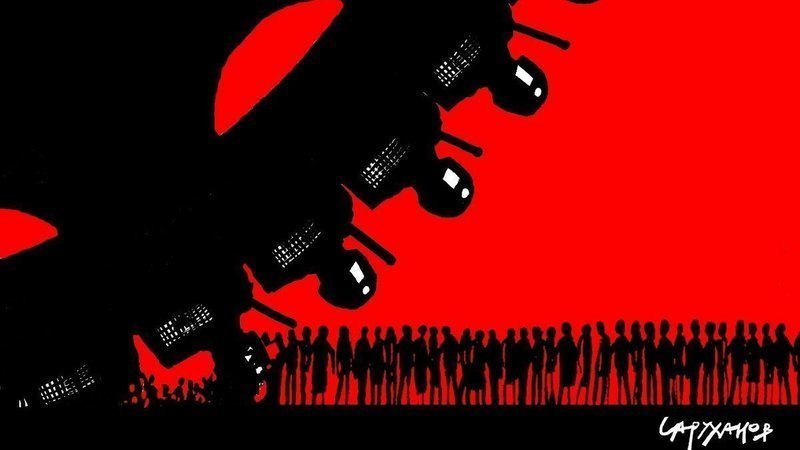
 Vladislav Barabanov in the dock at the Presna District Court in Moscow earlier today. Photo by Elizaveta Pestova. Courtesy of Yegor Skovoroda and Mediazona
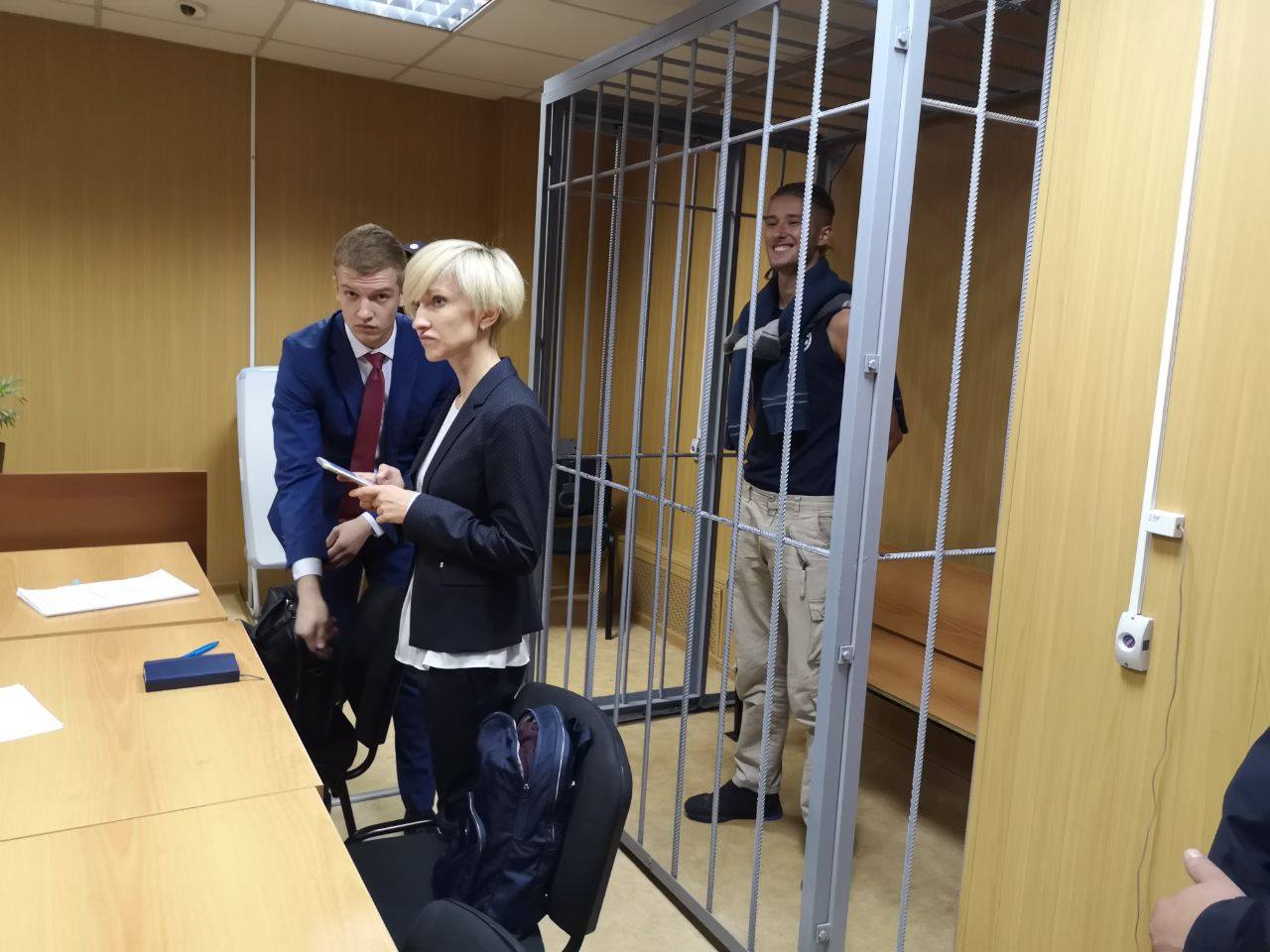 Daniil Konon in the dock at the Presna District Court today. Photo by Anna Kozkina. Courtesy of Yegor Skovoroda and Mediazona
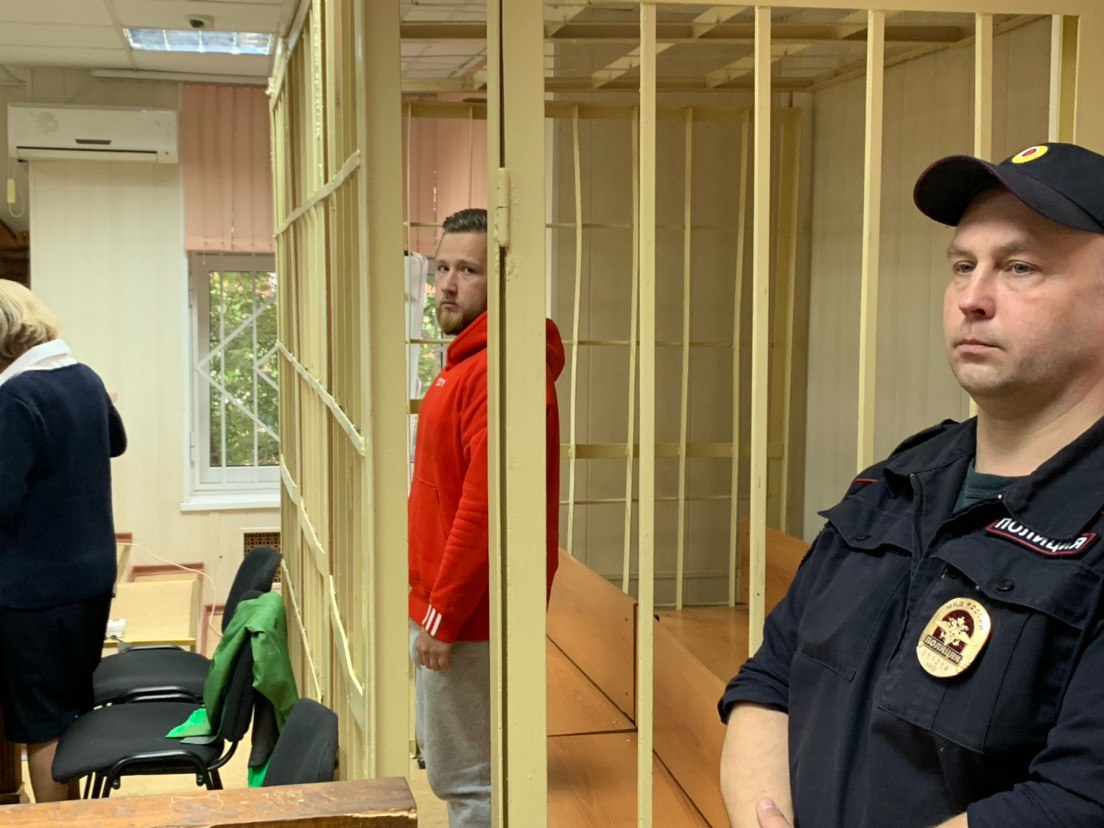 Sergei Abanichev in the dock at the Presna District Court. Photo by Dmitry Shvets. Courtesy of Yegor Skovoroda and Mediazona
 Yegor Zhukov in court. Photo by Vlad Dokshin. Courtesy of Novaya Gazeta
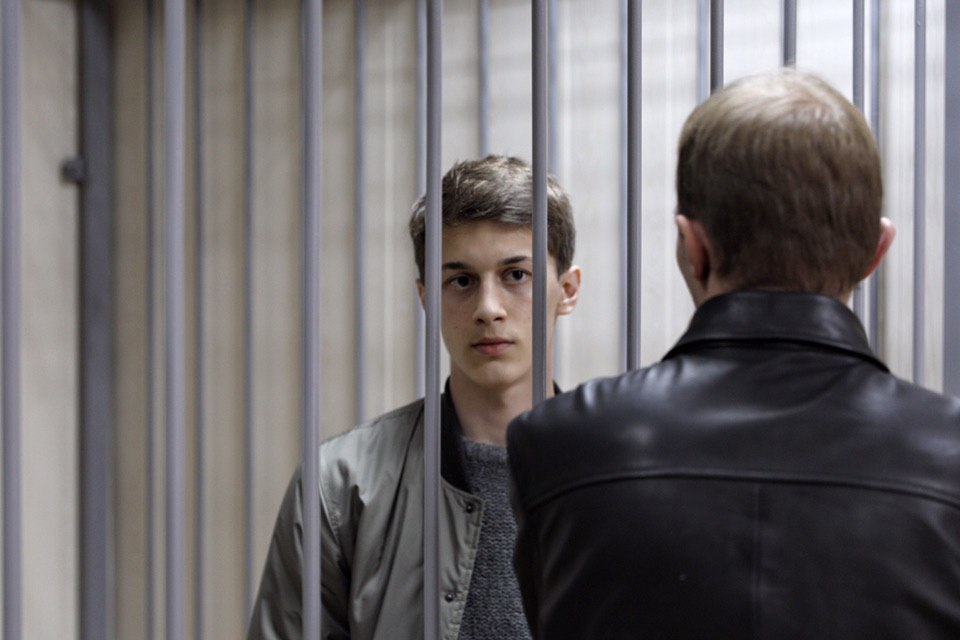 Yegor Zhukov in court. Photo by Vlad Dokshin. Courtesy of Novaya Gazeta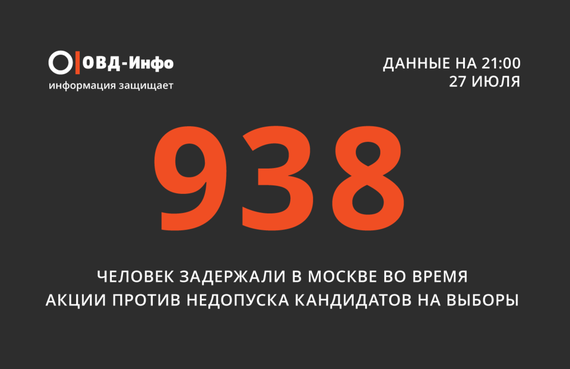
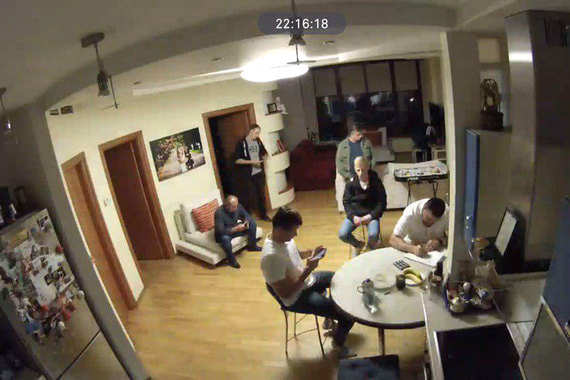 Police searching Dmitry Gudkov’s apartment. Courtesy of Dmitry Gudkov’s Telegram channel and Vedomosti
 Even in Siberia, sometimes someone can hear you scream. Image courtesy of
 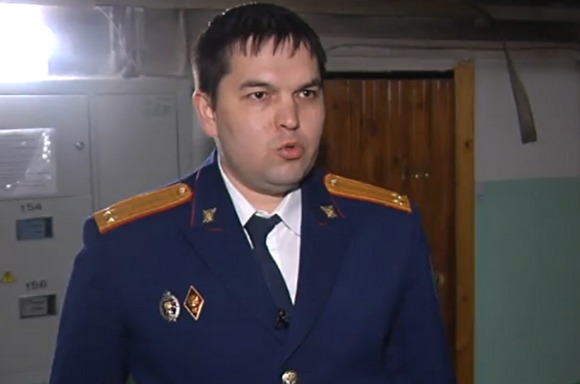 Vladimir Yermolayev, head of the Russian Investigative Committee in Surgut
 Anton Ammosov. C
 FSB headquarters in Yakutsk. Courtesy of Google Maps and OVD Info
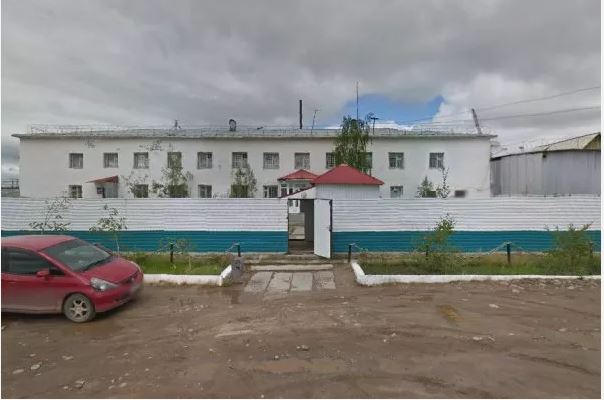 Remand Prison No. 1 in Yakutia. FSB officers threatened to send Anton Ammosov there. Courtesy of Google Maps and OVD Info
  Ammosov Northeastern Federal University. Courtesy of Google Maps and OVD Info
  Yuli Boyarshinov in court. Photo by David Frenkel. Courtesy of OVD Info
 Yuli Boyarshinov in court. Photo by David Frenkel. Courtesy of OVD Info
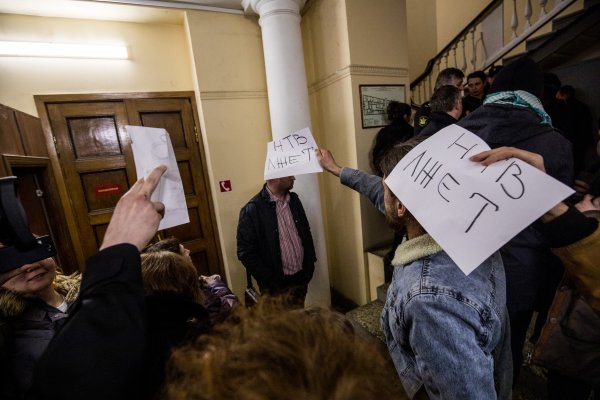 At the courthouse: members of the public holding pieces of paper inscribed with the message “NTV lies.” Photo by David Frenkel. Courtesy of OVD Info
 Yuli Boyarshinov arriving at the courthouse. Photo by Elena Lukyanova. Courtesy of Novaya in Petersburg
 Yuli Boyarshinov’s father Nikolai in the courtroom. Photo by Elena Lukyanova. Courtesy of Novaya Gazeta in Petersburg