Jonathan Pryce and Terry McKeown in Brazil (1985). Courtesy of imdb.com
Authorized to Remain Silent Why We Know Nothing about the Outcome of Most Criminal Cases and Verdicts against People Who, According to the Russian Secret Services, Planned or Attempted to Carry Out Terrorist Attacks
Alexandra Taranova Novaya Gazeta
April 27, 2018
High-ranking officials from the Russian Federal Security Service (FSB), the Russian Interior Ministry (MVD), and the Russian National Anti-Terrorist Committee (NAK) regularly report on the effective measures against terrorism undertaken by their agencies. If we add reports of constant counter-terrorist operations in the North Caucasus, especially in Dagestan and Chechnya, operations involving shootouts and the storming of houses, we might get the impression the level of terrorism in Russia is close to critical, resembling the circumstances somewhere in Afghanistan, the only difference being that Afghanistan does not have the FSB, the MVD, and the NAK to protect it.
Over the past two weeks, there were at least two such stories in the news.
A few days ago, the FSB reported it had “impeded the criminal activity of supporters of the international terrorist organization Islamic State, who […] had begun planning high-profile terrorist attacks using firearms and improvised explosive devices.”
The FSB’s Public Relations Office specified the terrorist attacks were to be carried out in goverment buildings in Stavropol Territory.
Earlier, TASS, citing the FSB’s Public Relations Office, reported that, since the beginning of the 2018, six terrorist attacks had been prevented (including attacks in Ufa, Saratov, and Ingushetia), while three crimes of a terrorist nature had been committed (in Khabarovsk Territory, Dagestan, and Sakhalin Region), and this had been discussed at a meeting of the NAK. Other media outlets quoted FSB director Alexander Bortnikov, who claimed that last year the security services had prevented twenty-five terrorist attacks, but four attacks, alas, had gone ahead.
For the most part, however, it is impossible to verify these reports, because, with rare exceptions, the terrorists, either potential terrorists or those who, allegedly, carried out terrorist attacks, are identified by name. Neither the Russian Investigative Committee (SKR) nor the FSB informs Russians about subsequent investigations, about whether all the terrorists and their accomplices have been rounded up. Likewise, with rare exceptions, we know nothing either about court trials or verdicts handed down in those trials.
Novaya Gazeta monitored reports about prevented terrorist attacks from November 2015 to November 2017. We analyzed all the media publications on this score: the outcome of our analysis has been summarized in the table, below. The veil of secrecy makes it extremely hard to figure out what reports merely repeat each other, that is, what reports relate to one and the same events, and we have thus arrived at an overall figure for the number of such reports. Subsequently, by using media reports and court sentencing databases, we have counted the number of cases that officially resulted in court sentences.
Most news reports about prevented terrorist attacks in Russia are not followed up. For example, at one point it was reported (see below) that five people with ties to Islamic State had been apprehended in Moscow and Ingushetia for planning terrorist attacks, and this same news report mentioned that a criminal case had been launched. But only the surname of the alleged band’s leader was identified, and he was supposedly killed while he was apprehended. There is no more information about the case. Over a year later, we have no idea how the investigation ended, whether the case went to trial, and whether the trial resulted in convictions and verdicts.
Other trends also emerged.
During the two-year period we monitored, reports about prevented terrorist attacks and apprehended terrorists encompassed a particular group of Russian regions: Moscow, Crimea, Petersburg, Kazan, Rostov, Baskortostan, Volgograd, Yekaterinburg, and Krasnoyarsk. When we turn to verdicts handed down in such cases, this list narrows even further. Rostov leads the country, followed by Crimea. There are two reports each from Krasnoyarsk and Kazan, and several isolated incidents. The largest number of news reports about terrorist attacks and acts of sabotage, i.e., 30% of all the reports we compiled and analyzed, originated in Crimea.
FSB
MVD
NAK
Russian Security Council (Sovbez)
Number of reports of prevented terrorists, November 2015–November 2017
3,505 reports (18,560 identical reports in the media)
1,702 reports
(3,571 identical reports in the media)
492 reports
(852 identical reports in the media)
236 reports
(1,122 identical reports in the media)
Outcomes: arrests, criminal charges, verdicts, etc.
13 verdicts,
14 arrests
3 verdicts,
2 arrests
2 incidents: in one case, it was reported that all the detainees had been killed; in the other, that the detainees awaited trial, but were not identified by name.
It is impossible to find out what happened to any detainees, since no information was provided about them. The exception is Lenur Islyamov, who is currently at large and vigorously pursuing his objectives.
The Triumps of the Special Services with No Follow-Up
Here are the most revealing examples.
On November 12, 2016,RBC reported the security services had apprehended a group of ten terrorists, migrants from Central Asia. According to the FSB, they planned “high-profile terrorist attacks” in heavily congested areas of Moscow and Petersburg. Officials confiscated four homemade bombs, firearms, ammunition, and communications devices from the militants. The FSB claimed all the detainees had confessed to their crimes.
In the same news report, the FSB was quoted as having reported that on October 23, 2016 “there occurred an attack on police officers, during which two alleged terrorists were shot dead” in Nizhny Novgorod. The report stressed that, three days later, the banned group ISIL claimed responsibility for the attack, just as it had taken responsibility for an attack on a traffic police post in Moscow Region on August 18, 2016.
There were no names and no details. The outcomes of the investigations, the plight of the detainees, and judicial rulings were never made public, nor did state investigators or defense counsel share any information.
This same RBC article mentions that, four days before the alleged incident in Nizhny Novgorod, the SKR had reported the apprehension of an ISIL supporter who had been planning a terrorist attack at a factory in Kazan, while Interfax‘s sources reported the apprehension of a man who had been planning a terrorist attack in Samara. It was also reported that in early May 2016 the FSB had reported the apprehension of Russian nationals in Krasnoyarsk who were “linked to international terrorist organizations and had planned a terrorist attack during the May holidays.”
No names were mentioned at the time. Later, however, details of the case were made public.
Thus, on April 7, 2017, Tatar Inform News Agency reported that the Volga District Military Court in Kazan had handed down a verdict in the case of Robert Sakhiyev. He was found guilty of attempting to establish a terrorist cell in Kazan. The first report that a terrorist attack had been planned at an aviation plant in Kazan was supplied by Artyom Khokhorin, Interior Minister of Tatarstan, during a meeting of MVD heads. According to police investigators, Sakhiyev had been in close contact with a certain Sukhrob Baltabayev, who was allegedly on the international wanted list for involvement in an illegal armed group. Using a smartphone, Sakhiyev had supposedly studied the plant’s layout via a satellite image.
On August 2, 2017, RIA Novosti reported that a visting collegium of judges from the Far East District Military Court in Krasnoyarsk had sentenced Zh.Zh. Mirzayev, M.M. Abdullayev, and Zh.A. Abdusamatov for planning a terrorist attack in Krasnoyarsk in May 2016 during Victory Day celebrations. Mirzayev was sentenced to 18 years in prison; Abdullayev, to 11 years in prison; and Abdusamatov, to 11 years in a maximum security penal colony. According to investigators, Mirzayev worked as a shuttle bus driver in Krasnoyarsk and maintained contact with Islamic State via the internet. Mirzayev decided to carry out a terrorist attack by blowing up a shuttle bus.
On January 26, 2017, TASS reported the police and FSB had identified a group of eight people planning terrorist attacks in Moscow in the run-up to State Duma elections. Oleg Baranov, chief of the Moscow police, had reported on the incident at an expanded collegium of the MVD’s Main Moscow Directorate.
We know nothing more about what happened to the “identified” would-be terrorists.
On January 31, 2017, RBC issued a bulletin that the Russian secret services had prevented an attempt to carry out terrorist attacks in Moscow during the 2016 Ice Hockey World Championships.The source of the news was Igor Kulyagin, deputy head of staff at the NAK. The militants were allegedly detained on May 2.
“We succeed in catching them as a result of a vigorous investigative and search operation in the city of Moscow,” the FSB added.
The names of the militants were not reported nor was there any news about an investigation and trial.
In the same news item, Mr. Kulyagin is quoted as saying, “In total, Russian special services prevented around [sic] 40 terrorist attacks, liquidated [sic] about [sic] 140 militants and 24 underground leaders, and apprehended about [sic] 900 people in 2016.”
According to Mr. Kulyagin, in Ingushetia on November 14, 2016, the authorities uncovered five militants who “had been planning terrorist attacks in crowded places during the New Year’s holidays, including near the French Embassy in Moscow.”
Again, the reading public was not provided with any names or information about the progress of the investigation. The only alleged terrorist who was identified was Rustam Aselderov, who had been murdered.
“According to the special services, [Aselderov] was involved in terrorist attacks in Volgograd in 2013 and Makhachkala in 2011.”
We have no idea whether an official investigation of his murder was ever carried out.
Lenta.Ru reported on February 1, 2017, that FSB officers in Krasnodar Territory had prevented a terrorist attack.The supposed terrorists had planned an explosion at New Year’s celebrations. A possible perpetrator of the terrorist attack, a 38-year-old native of a Northern Caucasus republic, was apprehended. No other particulars of the incident were reported, and they still have not been made public to this day.
On October 2, 2017, Russia Today, citing the FSB, reported an IS cell had been apprehended in Moscow Region. Its members has allegedly planned to carry out “high-profile terrorist attacks” in crowded places, including public transport. The FSB added that foreign emissaries had led the cell, whose members had included Russian nationals.
No names or details were subsequently provided to the public.
The same article reported that, on August 31, 2017, the FSB had apprehended two migrants from Central Asia, who had been planning terrorist attacks in congested places in Moscow and Moscow Region on September 1. RIA Novosti reported the same “news” in August 2017. The detainees were, allegedly, members of IS.
According to the FSB, one of the men had “planned to attack people with knives.” His comrade had planned to become a suicide bomber and blow himself up in a crowd. Supposedly, he had made a confession.
We know nothing about what happened to the two men and the criminal case against them.
On November 7, 2017,Izvestia reported MVD head Vladimir Kolokoltsev’s claim that a Kyrgyzstani national had been apprehended in the Moscow Region town of Khimki. The man had, allegedly, been planning to carry out a terrorist attack outside a subway station using a KamAZ truck. The detained man was not identified. We know nothing about what has happened to him or whether the investigation of the case has been completed.
Trials of Terrorists
On July 19, 2016, RIA Novosti reported the Russian Supreme Court had reduced the sentence (from 16 years to 15.5 years) of one of two radical Islamists convicted of plotting a terrorist attack in the mosque in the town ofPyt-Yakhin theKhanty-Mansi Autonomous Okrug.
“The panel of judges has decided the verdict of the court, which sentenced Rizvan Agashirinov and Abdul Magomedaliyev to prison terms of 16 and 20 years, respectively, should be mitigated in the case of Agashirinov, and left in force in the case Magomedaliyev.”
On August 31, 2016,TASS reported the North Caucasus District Military Court had sentenced Russian national Rashid Yevloyev, a militant with the so-called Caucasus Emirate, to six years in a penal colony for planning terrorist attacks.
On February 15, 2017, Moskovsky Komsomolets reported the Moscow District Military Court had sentenced Aslan Baysultanov, Mokhmad Mezhidov, and Elman Ashayev. According to investigators, after returning in 2015 from Syria, where they had fought on the side of ISIL, Baysultanov and his accomplices had manufactured a homemade explosive device in order to carry out a terrorist attack on public transport in Moscow.
Baysultanov was sentenced to 14 years in prison; Ashayev, to 12 years, and Mezhidov, to 3 years.
On May 10, 2017,Interfax reported the North Caucasus District Military Court in Rostov-on-Don had sentenced ISIL recruiters who had been apprehended in Volgograd Region. The alleged ringleader, Raman Radzhabov, was sentenced to 4 years in prison after being found guilty of recruiting residents of Volgograd Region. His accomplices—Azamat Kurkumgaliyev, Gayrat Abdurasulov, Nurken Akhetov, and Idris Umarov—were found guilty of aiding and abetting Radzhabov, and given sentences of of 2 to 2.5 years in prison.
On May 30, 2017, RIA Novosti reported the ringleader of a failed terrorist attack in Kabardino-Balkaria, Adam Berezgov, had been sentenced to 7 years in prison. The defendant was found guilty of “planning a terrorist attack, illegally acquiring and carrying explosive substances or devices, and illegally manufacturing an explosive device.”
On July 27, 2017, TV Rain reported the Russian Supreme Court had increased by three years the sentence handed down to Ruslan Zeytullayev, who had been convicted and sentenced to 12 years for organizing in Crimea a cell of Hizb ut-Tahrir, an Islamist group banned in Russia. Zeytullayev’s sentence is now 15 years in prison.
On July 31, 2017, RIA Novosti reported the North Caucasus District Military Court had sentenced Ukrainian national Alexei Sizonovich to 12 years in a penal colony for involvement in planning a terrorist attack that was to have taken place in September 2016. The court ruled the 61-year-old defendant and an “unidentifed person” had, allegedly, established a group in Kyiv “for the commission of bombings and terrorist attacks in Ukraine and the Russian Federation.” It was reported the defendant “repented.”
On August 11, 2017, Lenta.Ru reported the North Caucasus District Military Court had sentenced 19-year-old Ukrainian national Artur Panov to 8 years in a medium-security penal colony for terrorism. Panov was found guilty of facilitating terrorism, planning a terrorist attack, and illegally manufacturing explosive substances. His accomplice, Maxim Smyshlayev, was sentenced to 10 years in a maximum-security penal colony.
At the trial, Panov pled guilty to calling for terrorism, and manufacturing and possessing explosives, but pled innocent to inducement to terrorism. Smyshlayev pled innocent to all charges.
On September 18, 2017, RIA Novosti reported a court in Rostov-on-Don had convicted defendants Tatyana Karpenko and Natalya Grishina, who were found guilty of planning a terrorist attack in a shopping mall. Karpenko was sentenced to 14.5 years in prison, while Grishina was sentenced to 9 years.
“The investigation and the court established Karpenko and Grishina were supporters of radical Islamist movements. […] From October 2015 to January 2016, the defendants planned to commit a terrorist attack in the guise of a religious suicide,” the Investigative Directorate of the SKR reported.
Fakes
On April 17, 2017, Memorial Human Rights Center issued a press release stating the case of the planned terrorist attack in the Moscow movie theater Kirghizia had been a frame-up. The human rights activists declared the 15 people convicted in the case political prisoners. It was a high-profile case. Novaya Gazeta wrote at the time that the MVD and FSB had insisted on pursuing terrorism charges, while the SKR had avoided charging the suspects with planning a terrorist attacking, accusing them only of possession of weapons in a multi-room apartment inhabited by several people who barely knew each other. It was then the case was taken away from the SKR.
Whatever the explanation for the trends we have identified, it is vital to note that Russian society is exceedingly poorly informed about the progress of the war on terrorism conducted by Russia’s special services, despite the huge number of reports about planned terrorist attacks. Due to the fact the names of the accused are hidden for some reason, and the court sentences that have been handed down are not made public in due form (even on specially designated official websites), it is impossible to evaluate the scale of the threat and the effectiveness of the special services, and to separate actual criminal cases from those that never went to court because the charges were trumped-up. Meanwhile, using media reports on prevented terrorist attacks for propaganda purposes contributes to an increase in aggressiveness and anxiety among the populace, who has no way of knowing whether all the apprehended terrorists have been punished, and whether this punishment was deserved.
Thanks to George Losev for the heads-up. Translated by the Russian Reader
The Network Case: “He Was Tortured in the Woods for Six Hours to Force Him to Testify, and Then Some More So He Would Memorize the Right Wording”
Zoya Svetova MBKh Media
April 20, 2018
Viktor Filinkov. Photo by David Frenkel. Courtesy of Mediazona
The Russian Federal Investigative Committee has refused to open a criminal case in connection with a complaint filed by Viktor Filinkov, one of the young antifascists accused in The Network case [aka the Penza-Petersburg “terrorism” case—TRR], who claims that Russian Federal Security Service officers tortured him. Yana Teplitskaya and Yekaterina (“Katya”) Kosarevyskaya, members of the Petersburg Public Monitoring Commission, were the first people Filinkov told he had been tortured. Now they are under police surveillance themselves.
The human rights activists talked to Zoya Svetova about why they decided to join the Petersburg Public Monitoring Commission, what goes on in Petersburg’s remand prisons and penal colonies, and how they have been harassed by reporters from Russian TV channel NTV.
____________________
Yana, Katya, and I talk in a cafe. They have come to Moscow for a day. They have many meetings scheduled, and the young women interrupt each while discussing what they have seen in remand prisons, but mostly they discuss the young men accused in The Network case, which has shaken them. It is not every day people tell you they have been brutally tortured and you see burns on their bodies left by tasers. As for me, this is my first meeting with these young and incredibly mature human rights defenders, who are only twenty-six years old.
Why did you decide to visit prisons and police precincts?
Yana: I wanted to join the Public Monitoring Commission (PMC) as soon was it was established, but you have to be at least twenty-five years old to join, so we didn’t end up on the previous commission. But we helped train other candidates and assisted them in their work. As soon as we turned twenty-five, we submitted our applications.
What do you do for a living?
Yana: I’m a mathematician.
Are you a schoolteacher?
No, I don’t teach. I do research.
Katya: I’m also a mathematician. I work at a school, but I also do research and teach math at a university, probability theory. We met before we studied at university, and then we went to university together. And we both decided to join the PMC.
How did you find out about the PMCs and public oversight?
Katya: I read Anna Karetnikova’s LiveJournal blog, I think. (Anna Karetnikova was a member of the Moscow PMC from 2009 to 2016 — ZS.)
Yana: When we got on the PMC, we already knew what it was, because we had been involved in shaping the PMC’s previous roster. We talked about the PMC to various people and organizations, and got them together.
Katya: And we worked with them when there were large-scale detentions at protest rallies. We found out who could visit detainees in police stations.
Who nominated you to the PMC?
Yana: We lucked out. We were nominated by Azaria, an organization of mothers against narcotics. Azaria is not on the list of “foreign agents” and looks completely innocent. In reality, it is a really cool organization. They are not afraid of anyone, and they really support and help us.
Yana Teplitskaya and Yekaterina Kosarevskaya outside Penal Colony No. 5
Until you found yourselves in the middle of the scandal surrounding The Network case defendants, was your work with the PMC completely routine?
Yana: We were not admitted to police stations seven times in a row, meaning that at some point the police just stopped letting us in to do inspections. The first time they didn’t let us in, they had detained young people coming home from a concert. Policemen stopped them and asked to see their papers. They refused to do that until the police had identified themselves by name and explained why they needed to see their papers. The policemen responded by pepper-spraying and detaining them. We were not let into the police precinct to see them. Subsequently, we were not let into police stations under different pretexts. Ultimately, we were able to overcome the problem. Fifteen Interior Ministry employees were brought to justice for not letting PMC members into police stations. We were not the only ones to file complaints. We posted our reports on the incidents, and our readers filed complains on the basis on this information.
Apparently, one of our readers on the social networks played a role. He filed complaints anywhere he could, and the authorities responded to his complaints, referring to him as “the PMC’s community volunteer.” The police officers who did the audit later told us that he had worn them down and asked us to tell him they would fix everything as long as he stopped complaining. Many other people helped out as well, including Human Rights Council member Andrei Babushkin. We also filed lots of detailed complaints ourselves. We managed to navigate around the problem, and this was a victory, of course, in whose wake our visits to police stations suddenly improved dramatically. The police were now afraid of us. Initially, we had good relations with the Federal Penitentiary Service (FSIN). The FSIN was inclined to cooperate, while the Interior Ministry [i.e., the police] was not. At our very first meeting with them, they told us we had to send notifications when we were planning to visit police stations only by fax, but we were not cool with that, of course. We ourselves had written the rules for how the PMC functioned. Our rules state that our rights as PMC members cannot be infringed. There is nothing in the rules about notifying a police station or remand prison by fax, as had been the case in the first two sittings of the PMC. Back then, only the PMC’s chair could notify penitentiary facilities about commission visits. He could do this only during business hours, because the fax was in his office.
How do you now notify the authorities you are coming to visit their facilities?
Yana: We give them five minutes’ warning. There is no need to notifiy the police ahead of time, whereas the FSIN does need to transfer staff to escort the PMC members around its prisons. We rarely need to catch the FSIN unawares with our visits, while the police often hide detainees from us, and try and take them out of precinct houses via emergency exits. Our latest conflict with them has to do with the fact that they must provide us with records of the people they detain and bring to their stations. They are convinced they do not need to show us these records.
How many people on the Petersburg PMC are on your side?
Katya: Four of the PMC’s twenty-five members.
Yana: It is not that they are all evil monsters. I think we have a fairly good working atmosphere in the commission. For example, there is one lovely lady. She doesn’t always feel well, but she goes out with us on inspections when she can.
When you met the young men accused in The Network case, was it the first time you had dealt with complaints of torture by people in police custody?
Katya: We had usually received really old reports about torture. We would go to a remand prison, where the inmates told us they had been tortured at a police station. There have been many such complaints, around twenty, concerning various police precincts.
What do you do with such reports?
Katya: If the individual is willing, which is not always the case, we publicize them. We try and describe the circumstances on our group page on Facebook, we write down the detainee’s full testimony in an official report, we file a criminal complaint, and send it off. But we don’t have the manpower to keep track of the complaint and file another complaint, about the lack of an official response, when the time comes. We usually try and find lawyers to take over the case, and we always find them.
Yana: So far, we have no criminal cases pending against police officers. On the contrary, the Interior Ministry’s Central District Petersburg office has filed suit against me. They were miffed when I published the story of a woman who claimed she was tortured at the 78th Police Precinct in Petersburg. The woman was pregnant, and police officers abused her. The lawsuit against me claims I published “information that undermines the reputation” or “discredits” the precinct. We published the women’s complaint on the social networks without revealing her last name. The news website Moi Rayon [My Neighborhood] reprinted it. The Interior Ministry mixed everything up, filing suit against me because they thought I’d written the article. In fact, we are involved in lots of lawsuits. We are usually the ones on the attack, and Team 29 helps us out with this.
You won the right to bring recording equipment into a penal colony in court, yes?
Katya: Yes. Recently, Petersburg City Court took the penal colony’s appeal of this ruling under consideration. We have not been let into the penal colony with recording equipment a single time even after the court’s decision came into force. The court ruled that the actions of a specific staff member of the penal colony who had not let us bring recording devices into the colony had been illegal, but this does not mean they have to let us and our equipment into the colony the next time round, although the FSIN’s public stance was originally that they would let us in if we informed them in advance that we planned to bring equipment. But then they changed their minds. We were not allowed to bring recording equipment into the remand prisons from the get-go.
Where are the young men accused in The Network case currently located?
Katya: Six of the accused in The Network case are in Penza, while the other three are in Petersburg and Leningrad Region. Two of them were originally jailed in Remand Prison No. 3 in Petersburg, a place we visit all the time. On March 15, Viktor Filinkov, who was the first person charged in the case to complain of torture, was transferred to a remand prison in Leningrad Region, which is considered a torture chamber. Immediately after he was detained, Filinkov himself was tortured in the wood for six hours, first to force him to testify, and then to make him memorize the right wording. Before his custody hearing, he was told that if he dared to recant his testimony, he would be sent to Remand Prison No. 6 in Gorelovo.
That is the torture chamber remand prison where he is currently in custody?
Yes, he was transferred after he was shown an “optimization” order, although there is room for fifty inmates in Remand Prison No. 3, and there are vacant spots in the cells. Gorelovo, on the other hand, is horribly overcrowded. The cells are meant for one hundred inmates, but there are one hundred and fifty inmates living in them. What kind of “optimization” are we talking about? Yuli Boyarshinov, the third Petersburg man charged in the case, is also being held in Gorelovo.
We cannot visit the remand prison in Gorelovo. The Leningrad Region PMC goes there. When we arrived in Remand Prison No. 3 on March 16, we were suddenly told Filinkov had been transferred to Remand Prison No. 6 in Gorelovo. We asked the Leningrad Region PMC to go out there. They made the trip and told us everything was okay, that Viktor was not being tortured. But they cannot visit him as often as we could.
Do you think he was transferred there so you would be unable to visit him?
That was not the only reason. First, Remand Prison No. 6 is the worst pretrial detention facility in Petersburg and Leningrad Region. Second, he refused to testfiy, so what use was he to the FSB? He had to be sent somewhere where we could not visit him.
Of the men charged in the case, which of them have been tortured, according to your evidence?
Viktor Filinkov and Igor Shishkin, whom we saw, were brutally tortured. Compared to the accounts from Penza, it would appear this was not the worst FSB operatives were capable of. According to testimony given to one of the defense attorneys, one of the accused men in Penza was tortured with electrical shocks for a month. In Penza, the FSB does not even bother to hide what they are doing. The FSB officers show up at the remand prison there, and take their man to another room, where they have a generator and electrical wires set up, and they torture the guy right in a cell in the remand prison. Defense attorney Olga Dinze said there was a secret prison in Moscow where inmates were constantly tortured with electrical shocks for a week. Why? Because they had to be forced to testify.
Have the accused in The Network case testified?
Katya: Yes. Viktor was tortured for six hours, but he agreed to confess after ten minutes. But then he was tortured simply so he would memorize his testimony. It was like animal training.
He told you this in the remand prison?
Yes, he told us, and then he provided a detailed written account of the first forty-eight hours after he was detained. He wrote us a letter and sent it to us by mail. When he was taken to the remand prison, the torture stopped. He had forty taser burns on his body, tiny spots on his thigh and around his groin. And on his chest. We didn’t see his groin area.
Traces of tasers burns on Ilya Kapustin’s body. Photo courtesy of his attorney and Mediazona
How did the staff at Remand Prison No. 3 react to the stories of torture?
Igor Shishkin had taser burns all over his back, buthe burns are listed as “bruises” in the prison’s medical journal.
One staff member forbade Igor from lifting his trousers and showing us the wounds he suffered when tortured. But we documented the injuries anyway. First, we examined Viktor’s taser burns, writing them down by hand, and then we drew pictures for each day, seeing as how the FSB investigators were in no hurry to show up. We documented all the injuries with the remand prison’s physician and warden present.
What was the reaction when you you went public with it?
Yana: Unfortunately, when Igor Shishkin was being tortured, there was not enough public pressure to stop the torture or get into the FSB building and see Igor. After we published our findings, we received support, and lots of it. (Igor Shiskin has not filed a complaint that he was tortured. He claims not to remember how he got the burn marks— ZS.)
How did the other members of the Petersburg PMC react?
The question was whether the PMC would interfere with our work or not. The commission members have not interfered in any way. A month after Shishkin and Filinkov were detained, the Petersburg human rights ombudsman and the chair of the Petersburg PMC visited them in the remand prison and wrote a very carefully worded report that did not gainsay our report. Of course, all traces of their injuries had vanished by that time.
What was the outcome of the Investigative Committee’s review of Filinkov’s torture complaint?
Yana: On Thursday, April 19, it transpired that the investigator refused to file criminal charges. His report says that not all the videos were preserved, the report by PMC members cannot be admitted into evidence, and Viktor was tasered, but only two times in order to prevent him from falling out of the vehicle and “escaping.”
Do you feel that you are being shadowed?
Yana: Yes, I have some notion the police have opened a dossier on us. We have the sense our telephones are tapped and we are being followed. There was a time when the surveillance was demonstrative. It was not a huge inconvenience.
On Friday, NTV will show a film about The Network case. Apparently, you are central characters in this film.
Yana: An NTV crew ambushed me on Sunday, and they ambushed Yekaterina on Saturday.
Katya, the NTV crew ambushed you during a scheduled visit to the Doctor Haass Prison Hospital. NTV asked two questions. Why do you defend terrorists? Why do you defend Ukrainians? Why do think that interested NTV?
Katya: The Ukrainian consul general in Petersburg visited Ukrainian prisoners with me and we wrote about it on Facebook. We visited an inmate in a penal colony who was convicted on drugs charges. He had not been receiving anti-retroviral therapy for a while.
They aren’t political prisoners?
No. Maybe they wanted to make a connection between The Network case and Ukraine? Or maybe they just took a gander at my Facebook page and read that I had spoken to the Ukrainian consul.
An investigator with the Penza FSB summoned one of the mothers to his office and spent two and a half hours persuading her she would help her son out by going on camera and saying the right words, saying the young men were practicing to blow up the Lenin Mausoleum. When she left the FSB building, her husband was waiting for her, but she was put in a vehicle with the NTV crew, and the FSB officer got in with her. They took her to her house and taped the interview there. That was on April 11, I think, and I basically already guessed NTV had begun shooting a film, but I didn’t think I’d be in it.
Yana: They ambushed me at the exit of a house where I don’t spend much time, but where I’m officially registered as living. I had it a bit easier, because they taped Katya after a difficult visit to a hospital. She was tired, but I was rested. Besides, I was ready, because I knew about Katya’s so-called interview. So my time with them was much easier and shorter. The questions were literally the very same ones. There was no individual approach: they could not really tell me and Katya apart, nor could I tell them apart. I accused the young woman questioning me that yesterday she was Maria, and today she was Alexandra, because they looked a lot alike. She show me her ID, but she did not me show me her editorial assignment or tell me the name of the program. I heard the same thing Katya had heard: “You defend terrorists. Ukraine. Right Sector. You prey on the sorrow of parents.”
Yana runs off to catch a train to Petersburg, but Katya and I continue the conversation. I wanted to ask her about Petersburg’s prisons. There is much less known about them than about Moscow’s prisons.
How often do you visit remand prisons?
Katya: I sometimes don’t have the strength. On Saturday, I visited the Doctor Haass Prison Hospital, chatted with NTV, and went to Remand Prison No. 3. Previously, I had visited Remand Prison No. 5, but before that there had been a long break, because it didn’t work out. Sometimes it happens we don’t do any visits for several weeks, but then we do visits. For The Network case we were going to Remand Prison No. 3 on a daily basis. On average, we do around two visits a week.
Tell me about Petersburg’s remand prisons.
We have separate PMCs for Petersburg and Leningrad Region, although the FSIN has one office in charge of the city and the region. The very worst remand prison in Leningrad Region is in Gorelovo, but we are not allowed to visit it.
In Petersburg, there is the renowned remand prison The Crosses on the Arsenal Embankment. It is a historic landmark, and it has been closed. A work-release penal colony from the region was temporarily transferred there. There is talk the local FSIN office will move its headquarters there.
What about The New Crosses?
That remand prison was built to house 4,000 inmates, but something went wrong. Corruption charges have been filed, and so one of the two crosses (wings), designed to hold 2,000 inmates, is the subject of court battles, and it cannot be accessed. There are no inmates there. If it were opened, the inmates from Gorelovo would be transferred there.
The New Crosses remand prison
Are Petersburg’s remand prisons overcrowded?
The Old Crosses was overcrowded. Eight square meters per four inmates, which was two times less space than necessary, but there were always enough beds. There had bunk beds there.
Besides torture, what are the most egregious human rights violations in Petersburg’s remand prisons and penal colonies?
There is a penal colony in which a suspiciously high number of inmates die from cardiac arrest and a suspiciously high number of inmates are a brought injured to hospital and die from their injuries. There is a psychiatric ward in a remand prison that the PMC is not allowed to visit. Complaints about torture and abusive treatment came from the psychiatric ward of The Crosses.
Why are you not allowed into the remand prison’s psychiatric ward?
We are currently fighting a court battle over just this issue. The staff read the law on the provision of psychiatric care, which says individual members of public organizations can enter psychiatric wards only when accompanied by medical personnel. Then they incorrectly read the law on public oversight and decided PMC members are members of public organizations, so we also should be escorted by medical personnel. We get there and are told no medical staff are on duty. We have to wait a while, because they won’t let us in just like that. We are let in only during working hours and only in the company of a physician. We are allowed into the intensive care units only when the attending physician allows it. I appealed our not being admitted to the ward in court. A district court said it was fine we were not being allowed into the ward. Look at the Azaria website, said the judge: Yekaterina Kosarevskya is a member of a public organization. I’ve filed an appeal.
Have you dealt with the case of businessman Valery Pshenichny, who died in Remand Prison No. 4 in Petersburg? Have you heard about his death?
Yana and Roma, the chair of our PMC, went to the prison after the suicide. But they had no contact with the relatives, so it was impossible to do anything. The Investigative Committee had already confiscated the CCTV tapes, which was all the evidence there was, and the only hting Yana and Roma could do was talk with remand prison staff, and try and understand whether the story Pshenichny had committed suicide could be trusted. But they could not understand a thing.
But now, after the article in Novaya Gazeta, which claims that, according to the forensic examination, Pshenichny was murdered and raped, will you conduct a public investigation?
Probably. But it’s not very clear what we can do as PMC members. It is doubtful whether there is any evidence left in the remand prison.
Do you feel any danger due to the fact that you and Yana were the first people to to talk about Filinkov’s torture at the hands of the FSB?
At first, I probably felt danger, because I didn’t know how the FSB would react, and it didn’t know how to react. My nerves were on edge. But now? Everything is a source of danger, probably. NTV has shown its face.
Do you continue to keep track of Filinkov’s plight?
Yes. We continue to file various appeals. I write letters to Viktor, and we visit Igor Shishkin in Remand Prison No. 3.
What is Remand Prison No. 3 like? It probably resembles Lefortvo Remand Prison in Moscow.
It’s a tiny historical building. The warden once boasted of the various famous people who were jailed there. Various wings of the building are under repair all the time. The cells are eight measures square and have bunks for two people. The toilet is separated by a low wooden partition.
Who is jailed there?
There are people accused of treason. One just went to trial in Sevastopol. He lived in Crimea, where he had an interesting job. He was accused of spying for China against Russia, although the evidence in the case relates to 2013, when Crimea was part of Ukraine.
How do prisoners treat you? How do they react to the fact you are so young?
I listen to them carefully, and some PMC members get angry at me that I talk with the prisoners for so long. As for my youth, sometimes it can be an advantage, because certain inmates tell me a lot: a nice young lady has paid them a visit and they feel they can talk with me. So it is not as if these inmates are complaining, they are just having a chat with a nice young woman. When we are able to help them, they say the PMC is a good thing. When we are unable to help them, they complain they turned to us for help and we didn’t help them.
“No, we didn’t,” I say.
It is amazing that both you and Yana are mathematicians, and suddenly you’re inspecting prisons. Why such interest in human rights?
My parents, the books I read. Books about the Decembrists, the Harry Potter books. Grandfather consistently refused to join the Party. But I learned the KGB was a bad thing when I was nine years old, in 2000.
It is the first black hole that has sucked me in. I planned to join the PMC, because I had always been interested (the Peter and Paul Fortress was nearby), but it was one interest among others. I was interested in the rights of migrant workers, in books about social organization. I was certain that, at most, I would spend a third of my free time on the PMC, but then it dragged me in all on its own.
What dragged you in?
Prisons suck me in. It’s bad, of course. I was once driving from the Arsenal Embankment to the Sverdlovskaya Embankment, and I glanced at a building not far from the place where I grew up. I thought I should probably stop my involvement in this nonsense. I should earn money and buy a flat in that building, because it was a beautiful red-brick building, wonderfully designed, with a view of the Neva River. But then I realized that the building merele reminded me of The Crosses.
Thanks to Vladimir Akimenov for the heads-up. Translated by the Russian Reader. If you have not been following the Penza-Petersburg “terrorism” case, the case of the mysterious death in custody of Petersburg businessman Valery Pshenichny, and related cases involving alleged frame-ups and torture by the Russian police and secret services, please have a look at some of the recent articles I have published on these subjects.
Arrests Made in the New Greatness Case in Moscow Grani.ru
March 15, 2018
Arrests and searches have been made in Moscow in the investigation of the New Greatness movement. The first source to report the news was Kremlin Washerwoman, a Telegram channel associated with the security services. More detailed information was soon published by OVD Info.
The detainees included the movement’s leader, Ruslan Kostylenkov, and two female activists, Maria Lapina and a juvenile whose name has not been disclosed. They were taken to the Kuntsevo Interdistrict Office of the Russian Investigative Committee. The female juvenile detainee was escorted by her father.
It is reported that during one of the searches a list containing the names of ten members of the movement was confiscated. According to uncorroborated reports, FSB investigators were present during the search.
There is information the juvenile detainee had earlier been subjected to pressure from Center “E” (Center for Extremism Prevention), after which her employer demanded she quit her job.
Photos of the search, as published on Kremlin Washerwoman, show campaign material for the so-called Voters’ Strike, a leaflet printed with New Greatness’s platform, and a t-shirt emblazoned with anarchist symbols.
Screenshot from the Telegram channel Kremlin Washerwomen. “Searches taking place at the home of supports of an obscure organization by the name of New Greatness. The guys drink a lot and cannot pin down their views.”
After lunch, Kremlin Washerwoman posted a video showing Kostylenkov’s confession. Out of breath, Kostylenkov recites a memorized text, mentioning in particular plans for “organizing a tribunal for members of the ruling elite” and “practice in shooting and throwing Molotov cocktails.”
The movement’s website contains only a home page featuring a notification that the site would be launched on March 15, that is, today. It also contains a brief, two-paragraph description of the movement’s objectives.
“We are the ones who will awake a sense of their own self-worth in people and help the nations of Russian acquire the energy for reviving the spirit of victors,” reads the text. “Only together can we build a strong country the rest of the world will respect and take into account.”
At the same time, both “pro-regime” and “opposition” forces are criticized for “divvying up spheres of influence,” while “ordinary people vegetate in poverty and dishonor, having forgotten the plight of the Motherland in which they live is in their hands.”
Screenshot of the homepage of New Greatness’s website
New Greatness began posting on its VK page on December 30 of last year. In late January, the movement encouraged people to take part in a rally demanding the preservation of trolleybus service in Moscow. The capital’s mayor has gradually been replacing trolleybus lines with bus line, which has sparked protests by environmentalists.
In February, New Greatness launched a large-scale campaign to paste anti-Putin leaflets around Moscow. The movement signaled it was in favor of boycotting the presidental election. On February 25, its activists were involved in the Boris Nemtsov Memorial March in Moscow.
On February 26, a pinned post was published on the movement’s VK page that read as follows: “Our young, ambitious, and quickly growing organization needs your help. If you are finally ready for the fight and willing to sacrifice your time and strength for the sake of our Motherland’s future by working in strong team led by an energetic leader, then join us. To do that, you must live in Moscow or Moscow Region and write to the message inbox on this page. If you cannnot help out physically, help us financially!”
The message is followed by an electronic address for transferring money.
On the evening of March 14, the Telegram canal A Copper Spills posted a message that opened as follows: “Evidence that an extremist organization has been established has been uncovered.”
The post’s author claimed Center “E” investigators in Moscow’s Southeastern District had discovered that “unidentified persons” had established “a group accessible to all [VK] users, which posted information about the creation of an informal political association whose main activity is involvement in popular insurrections, revolutionary actions, and clashes with the authorities.”
“The evidence is there, but for now we’ll keep quiet about everything else. When the times comes, we will tell all,” the author of the post concludes.
Kuntsevo is located in Moscow’s Western District, not in the Southeastern District. Besides, none of New Greatness’s posts contain calls for clashes with the authorities. In this connection, it is difficult to give an unequivocal answer to the question of whether the post on A Copper Spills had anything to do with the recent searches.
Thanks to Comrade Sammakko for the heads-up. Translated by the Russian Reader
P.S. Not that anyone much cares (I’m not trying to be smug: I really don’t get the sense there are huge numbers of people either in my reading audience, Russia or the great wide world who genuinely care about any of this), but I think we can extract three takeway lessons rom the war the Russian security services and police have unleased against grassroots activists in recent months.
1. When the director of the FSB or Putin (I forget who) said the other day the FSB had “prevented” fifty or a hundred or six thousand “terrorist attacks” last year, what they really had in mind is juvenile operations and investigations like the one described in the article above. That is, perfectly harmless young people with “funny ideas” and “informal” lifestyles are turned into “terrorist groups” with a little ultraviolence from the so-called security services.
The key is to scare, threaten or torture the harmless non-terrorists into confessing their non-guilt and signing confessions before letting them see a lawyer. Then their gooses are cooked for good, because cases concerning “terrorism” and “public safety” more generally have been removed from the remit of jurors in Russia, meaning they are tried by judges who know in advance what verdicts they are supposed to hand down.
A jury of more or less intelligent people would look at the flimsy evidence and the forced confessions and be tempted to acquit the defendants. If the Bolotnaya Square defendants, for example, had been tried by juries of their peers, I have no doubt most if not all of them would have been acquitted.
2. It has become extraordinarily dangerous to call for a boycott of the March 18 presidential election. Activists who have been calling for a boycott have painted big targets on their backs, and the authorities have spent the last few months shooting at them with increasing ferociousness. Depending on their ideological leanings, the activists have been sentenced to more or less long jail sentences or branded “terrorists,” as seems to be the case with the unfortunates described in the Grani.ru article, above.
I could be wrong, but this “minor terror” alone should be enough to discredit the election in the eyes of anyone with a conscience. By voting on Sunday, you will be saying to the authorities they can terrorize with impunity anyone who criticizes elections in Russia too vigorously and loudly, although that is exactly what needs to happen.
3. The only way to beat this racket is broad-based solidarity, but as we have seen with the accused in the Penza-Petersburg “terrorism” case and even with many of Navalny’s nominal supporters sent off to jail or beaten up for god knows what reason, people occupying different political camps are not too eager to show their solidarity.
The poor folks from the utterly harmless and helpless New Greatness movement, I am nearly certain, will elicit no solidarity or support from anyone whatsoever, except maybe the lawyers from Agora or Public Verdict, if they are lucky.
This points up the biggest flaw in the Russian grassroots democratic movement (if such a thing exists): its clannish, extremely partisan notions of solidarity. There are very few political activists who cross party lines to show their solidarity with their nominal opponents, and this is a huge, crippling problem for the anti-Putin, pro-democracy movement if it wants ever to move forward for real.
When it comes to folks like the New Greatness movement, it likely means they will be railroaded and sent off to a penal colony for ten years or twenty years without so much as anyone but their loved ones even noticing it happened.
After all, even silly, harmless people have human rights, such as the right to an attorney, the right to a proper investigation, and the right to a fair trial.TRR
“I’ll Go All Out to Ensure Putin Loses”
Yelizaveta Mayetnaya Radio Svoboda
December 5, 2017
“Citizen Putin! If there is a clampdown on public liberties under the pretext of terrorists attacks, it will be clear to everyone who is behind them!”
“Putin is war. Say no to war!”
“Dimon got what was coming to him. Let’s go after Vovan.”
“We live the way we vote.”
Dmitry Skurikhin, owner of a store in the village of Russko-Vysotskoye, near Petersburg, reacts immediately and visually to every political event in Russia.
Skurikhin immediately hangs each new poster on the front of the store, a small, two-storey building, so it is readily visible from the nearby bus stop. They usually do not stay up for long, however. The record is held by the slogan “Peace to Ukraine,” which stayed up for two weeks.
Skurikhin at a pro-Navalvy rally on the Field of Mars in Petersburg
43-year-old Dmitry Skurikhin is a local businessman, whose family owns three village shops. By local standards, he is well off. His family owns several cars, and they have everything they need. However, Skurikhin says the incomes of villagers have taken a nosedive in the past year: “They buy almost nothing, because they barely have enough for food.” Around six thousand people live in Russko-Vysotskoye. Very few of them are holiday cottage dwellers. The majority commute to work in Petersburg. Skirukhin was the first businessman in the village to open self-service stores, but “then the Pyatyorochka and Magnit chains moved in, and we croaked, of course.” He now sells toys, newspapers, clothings, and sundries.
He has been hanging political posters on his store, situated along a road, for almost four years. Before that, he pasted homemade bumper stickers on his car. Skirukhin recalls that the first bumper sticker read, “No new taxes!” The year was 2005.
Skurikhin: They had decided to raise taxes on us local businessmen then. It was one of those taxes you couldn’t avoid paying. Either you worked and paid the tax or you didn’t work and didn’t pay the tax. We businessmen realized they were clamping down on us. We joined forces and beat back the tax. It made such an impression on me that since then I haven’t been able to stop going. There are at least some improvements in our lives, specifically in our village. I’m a local grassroots activist, not even a region-wide activist, but a village-level activist. I was born here, and I live and work here. My kids go to school and kindergarten here. I think I have helped improve life in our village.
Radio Svoboda: How exactly have you improved life in the village?
Skurikhin: As they call it now, I was a municipal district council member from 2009 to 2014. At the time, our district authorities were running this interesting scam. They were “milking” the villages. They would buy heat from the producer and sell it to residents. They marked up the price one hundred percent. When the situation had reached a deadlock, it transpired they were charging residents, but not paying the producer anything. They were getting heat for free. The chair of the district council was mixed up in the scam. Thanks in part to my efforts, the gentleman was conveyed directly from the district chairman’s office to prison. That was in May 2012. Since then we haven’t had any disasters with our supply of heat and water.
We still have problems sometimes, but we are now longer in that disastrous state when a group of people affiliated with district officials were just robbing people by latching onto the flow of payments for housing and utilities. Then we had problems with the road. I organized a decent protest rally. A lot of folks turned out for it: 165 people, which is a huge number for our village. We demanded the road be repaired. The road was repaired. So, by starting with small changes like that, stirring people up, I have been trying to bring them round to the idea that fair elections, free speech, and democracy mean improving the welfare of society. On May 1, we had a rally that wasn’t about the roads (we’ve had the roads fixed), but was about healthcare, fair elections, and responsible authorities. Those were the topics of our rally. 45 people showed up. The rally was authorized. I always try and authorize events with the authorities, but we rallied at the skating rink on the edge of the forest.
“Dimon got run over. Let’s go after Vovan.” This is a reference to Alexei Navalny’s film documentary exposé of Prime Minister Dmitry Medvedev and his untold riches, Don’t Call Him Dimon. “Vovan” is a humorous reference to Vladimir Putin.
In 2014, my time as district council member ended for a simple reason: our team doesn’t pay for votes. If you don’t buy yourself votes, meaning if you don’t pay off the right people during early voting, then you’re out of the race, because your opponents do pay for votes. United Russia paid 1,500 rubles per vote! All the other candidates lost.
Radio Svoboda: Did you prove in court they paid for votes?
Skurikhin: It’s impossible to prove in court, because the scam is quite competently organized. They don’t buy votes, but pay for the services of fake campaign workers, meaning they contract out their campaign. United Russia has a team of between ten and fifteen people, depending on the number of seats that are up for grabs in a specific municipal district, and they hire canvassers. But the canvassers don’t have to canvass. They just need to show up and vote ahead of time, for which they are paid 1,500 rubles a pop. That’s it. It’s perfectly legal. All the evidence is circumstantial. When I tried to get hired as a canvasser in a neighboring village, I was told I would not do, because I wasn’t registered in that precinct.
“How’s that?!” I said. “I’m a local resident. I have a store here. I know everyone in the village, and they all know me. I’ll canvass for you like nobody’s business.”
“No, no, you don’t fit us.”
“What’s the deal?”
“You’re registered somewhere else.”
It’s all clear, guys! You don’t need canvassers: you need voters, whom you buy off for 1,500 rubles apiece. I dubbed the technique “bribing a voter under the guise of paying a canvasser.” It works like a charm in all the villages, where the populace is not too savvy. The populace in general is not very savvy, but in the countryside it’s just unbelievable. The salary in these places is commonly 1,000 rubles a day [approx. 14 euros a day]. People who get a 1,000 rubles a day don’t suffer. I ran a counter-campaign against this.
When the villagers were going to vote, I would say to them, “Guys, are you really unaware that when they get seats on the council, they’ll shake a hundred times more out of your pockets?”
“I toss manure on a farm with a pitchfork for a 1,000 rubles a day. But here I’m getting 1,500 rubles for five minutes of my time. Maybe you’d like to go and pitch manure for me?” one guy told me.
That’s their whole rationale! There’s nothing more to say.
Radio Svoboda: When did you hang the first political banner on your store? How long did it stay up?
Skurikhin: It was the spring of 2014. My fifth daugther was born then. I decided to give my wife a present by building a politicized bus stop opposite the store. I fashioned the frame and the foundation. We didn’t have a stop there. People would always stand outside there, and the buses would stop to pick them up. I built a bus stop and draped it with posters. This was when the annexation of Crimea was happening. We had a couple of posters about Crimea: I demanded an end to the disgrace. Then there were posters demaning pay rises for ordinary doctors and school teachers. I was still a council member. I gathered information on how much doctors were paid in Russia. President Putin had literally just claimed that there were no doctors in Russia who were paid less than the average monthly salary in their regions. That was an outright lie. I wrote it on my poster, because I knew how much our doctors were paid. I had gathered the information in my capacity as a municipal district council member.
Radio Svoboda: How much did doctors really make then?
Skurikhin: The ophthalmologist in our village was paid 14,000 rubles, while the average monthly wage in Leningrad Region was 35,000 rubles. I think this as an absolutely proven lie. I hung it up on the bus stop. The local authorities were completely shocked by it. The stop had been turned into a shelter and was hung with banners and pasted with posters. They didn’t know what to do, so the posters stayed up for three weeks or so, I think. Then a major from Center “E” [the so-called anti-extremism police] in Petersburg came and had a long chat with me. That was April 1, 2014. I remembered the date, because it was the day the Russian State Duma issued a resolution condemning restrictions on freedom of speech in Ukraine. And I was sitting there chatting with this little vampire who was directly threatening me and my business.
“We will shut you down if you don’t stop it!” he told me.
The bus stop stood for a month, and then it had to be demolished. All that’s left is the concrete slab, where locals still wait to catch the bus.
Radio Svoboda: Who demolished it?
Skurikhin: I did, on orders from the local authorities. They told me either I had to demolish it and haul it away or they would do it themselves. Since then I have been hanging posters on the store.
I hung up the poster “I congratulate you on the 61st anniversary of the Dragon’s death. The Dragon is dead, but his cause lives on. // Russian citizens, stop being slaves. Become citizens. Kill the dragon inside you.” The poster, which showed Stalin in his casket, used to be coupled with the second part, about citizens, which was swiped by the polizei. The poster “Peace to Ukraine” broke all the records: it hung for two weeks.
The second part of this poster, featuring a dead Stalin and a call to “kill the dragon inside you” and “become citizens” was “swiped by the polizei.”
The local authorities, by the way, didn’t know how to react. The poster was hanging on my building. It’s my property and my land, and the poster belongs to me. It hung there for quite a long time. Other events took place, for example, the 2014 elections. I hung my campaign posters there. As a municipal district council member, I was competing for votes. I would hang up a poster. It would become stale, and I would hang up a new one. And then, when I clearly campaigned against Putin. . . For example, I had posted a banner reading, “Putin should resign.” It was 9.4 meters by 2 meters. The banner caught everyone’s eye: my store stands next to the road. Well, they just came and swiped the banner. I decided to hang up another banner. Since it was forbidden to demand Putin’s resignation, I demanded Putin be freed. Since he considered himself a galley slave, I wrote, “Free Vladimir Putin! Let’s free this galley slave. Otherwise, he and his pals will row [rake in] too much.” This banner was also 9.4 meters by 2 meters.
Radio Svoboda: It was probably removed immediately, no?
Skurikhin: I don’t know why, but it stayed up for nearly two weeks. I saw policemen come and look at it. Maybe they didn’t get it? I can’t say how the authorities make decisions. But then they removed it anyway. I have been doing this on purpose. My goal is to ensure President Putin loses this election. During the last election, in 2012, I printed flyers and ensured that Putin got the least number of votes in our district in our precincts, although he won anyway, of course. Our precinct was among the ten worst precincts in Leningrad Region. Numbers decide everything in a democracy. I worked on the electorate the best I could.
Radio Svoboda: Do the security services often summon your for talks and try to reason with you?
Skurikhin: Earlier they did, but recently they have left me alone for some reason. I think they just realized, probably, that they should be talking to me in handcuffs, whereas talking to me just for the heck of it, what’s the point? Besides my chat with the major from Center “E,” a major from the FSB, a colonel from the FSO (Federal Protective Service), and the Investigative Committee summoned me. Each of my posters has been sent off for a forensic examination. Policemen photograph them, and the photos are sent to Center “E” and Saint Petersburg State University for analysis: they have this forensics examination center there. Their forensics experts study my posters and render their findings. If the findings are neutral, the posters are returned to me, accompanied by an official ruling refusing to file criminal charges against me. I’ve had around a hundred such posters. Each one is also accompanied by a description. The police also try to do everything by the book. In Nazi Germany, they incinerated Jews by the book. Here in Russia, they have been trying to shut me up by the book, to put it crudely.
Radio Svoboda: What grounds do the police have for removing posters from private property? How does it usually happen?
Skurikhin: First, they get a complaint either from the local council or from a resident: someone is unhappy with the poster hanging on my store. The police arrive and write me up for violating the regional law that all posters must be vetted with the local council. This little law was invented in Leningrad Region. I disagree with it, so I simply say it wasn’t so. They write me up, then they bring a slave from the local housing authority, whom they force to climb up and remove my poster. Then they leave. After which the situation proceeds as I’ve described it. Unfortunately, the forensics experts have concluded that two of my posters insulted the honor and dignity of the president and incited social discord. I try not to insult anyone. I think through all my posters and make sure that they are worded as properly as possible, because you don’t help things by insulting people. I want to persuade people to vote against Putin, persuade them we need democratic values, freedom, and liberalism. Yet two of my posters have been deemed insulting to Putin. They were the reason I was summoned to the Investigative Committee to talk with an investigator.
Radio Svoboda: Have criminal charges been filed in connection with the two posters?
Skurikhin: You know, I haven’t asked the police about it. But they did get me summoned to the Investigative Committee, where I was asked for an explanation. I was shown the findings of the forensics experts. The poster in question was “Putin is war. Say no to war.” As you remember, it was Anna Politkovskaya who said, “Putin is war.” The slogan was written with bloody smudges, so there was nothing in particular to interpret. It was clear as clear could be. The poster was deemed to have insulted Putin’s honor and dignity. I don’t think I insulted him, but the Investigative Committee does.
Radio Svoboda: What war did you have in mind when when you wrote the slogan?
Skurikhin: Any war. Because Putin is, in fact, war. We were flattening Ukraine at the time.
Radio Svoboda: Have they threatened to close your business?
Skurikhin: The major from Center “E” threatened me, but no one else has. It’s just I’ve been in business for twenty-one years, and all the agencies they could sick on me, I’ve been working with them for a long time. I have a good relationship with them. Most important, all of them are on my side. As they’re tearing down the posters, the policemen say to me, “Damn, what you write is true.” But they’ve taken an oath, they have their orders, they would immediately get hell from their commander, so they can’t say it that way. I can because I don’t have a commander. Firefighters, the guys at Health Inspection Services, they all understand what is happening in Russia. Most of them are smart people.
“Americans, don’t sanction all of Russia. Our head vampires got their jobs dishonestly and run things dishonestly. Sanction them!”
Radio Svoboda: Does your family support you?
Skurikhin: Yes, of course. Sure, they worry about me. The situation in Russia is such that the most active dissenters are shot down. My kids are aged nineteen, fourteen, seven, and four. All of them are girls: I live in a flower garden. If I’m arrested, my wife will feed the family: she’ll be like Vassa Zheleznova. I hope it doesn’t come to that, but we’ve talked it all throgh, of course. So that’s why I try and write slogans that are legal. I have studied a ton of material on the subject. What is an insult? It’s when you compare someone with an animal. The rest can be offensive and unpleasant, but it is not insulting in the criminal sense. You can say, “Skurikhin, you’re an idiot.” Yes, it’s possible for you to have this opinion. But I think differently. But if you say, “Skurikhin, you’re a jackass,” that is an insult.
Radio Svoboda: Have other businessmen put up similar posters?
Skurikhin: There were elections to the State Duma in 2016. As a member of Parnas (People’s Freedom Party), I ran in them in my own electoral district, the southwest district of Leningrad Region. Sergey Naryshkin, now our top spy, ran in the same district. I made the rounds of all my businessmen friends and asked them to support me. I made banners that read, “Skurikhin and Parnas are your only worthy choice.” In our part of the world, most of the shops are village shops, and they are on private property, so I was able to hang them up for free. No other candidate got that kind of support. The rest had to pay for billboards. I spent 150,000 rubles on my election campaign. My wife later gave me a piece of her mind about that. I took second place in the elections in my own village. Only Naryshkin got more votes. I got support for my posters and ideas, for saying “Putin should resign.” My fellow villagers gave me the number two spot. In my native Lomonosov District, I took sixth place, and I took eighth place in the entire electoral district, which has a population of 500,000. What does that tell you? I would argue the outcome shows that liberal and democratic ideas are popular in society, but they simply never get conveyed to the voters, since the media are totally blocked. I have no other way of telling people Putin should have been dismissed from the Kremlin long ago. I only have my posters. But, generally speaking, it’s very hard for a Parnas member to get around United Russia on the first try.
Radio Svoboda: Do you attend all protest rallies?
Skurikhin: Yes, I try to go to all of them. At the last pro-Navalny rally, in June, I was wearing a “Sick of Him” t-shirt and carrying a flag. I was taken to a police station, but I escaped. This year there were also primary elections—Naryshkin gave up his seat in the Duma when he was appointed head of the SVR (Foreign Intelligence Service) in October 2016—and this year there were reelections. We also held events that, in my opinion, were meaningful to our district. I couldn’t let my people down, so I had to hightail it from the police station.
Radio Svoboda: Are you following the presidential campaign?
Skurikhin: Yes, of course. I’ll go all out to ensure Mr. Putin loses the election, at least in my precinct. I support Navalny’s registration as a candidate and Ksenia Sobchak’s candidacy, because we need as many candidates as possible in the first round just to take votes away from Putin and get a second round. If there is a second round, that will be a significant victory in itself.
Thanks to Comrade Uvarova for the heads-up. Translated by the Russian Reader
It Was an Execution: Dozens of People Were Shot in Grozny on the Night of Janunary 25 Elena Milashina Novaya Gazeta
July 9, 2017
Over the years, Novaya Gazeta has regularly published information about massacres and reprisals in Chechnya. The motives for persecuting the people who live in the repubic have been quite varied. In early April, Novaya Gazeta published evidence testifying to the widespread persecution, torture, and killings of gay Chechens. Due to enormous international pressure, Russia’s law enforcement agencies for first time conducted, much against their will, a pre-investigation of evidence of extrajudiciary killings in Chechnya. This was in itself an incredible achievement.
On April 20, we handed over to police investigators information about two men who, we had concluded, had been killed during the anti-gay campaign in Chechnya. Our journalistic investigation, in fact, began with attempting to clarify what had happened to these two men.
We sent all information about the murdered men to investigators for their review as soon as we received it. We also gave the Russian Investigative Committee the anonymous testimony of the surviving victims, who had been kept in secret prisons and gone through terrible torture. This testimony aided investigators in independently and successfully establishing the identities of the victims, according to our information.
Igor Sobol, deputy head of the major case squad in the Central Investigations Department at the Russian Investigative Committee’s North Caucasus Federal District office, who conducted the pre-investigation, had planned to meet with the victims to try and convince them to make statements. However, Sobol had worked on the pre-investigation for a mere two weeks when he was suddenly appointed to a new post. The pre-investigation was assigned to another investigator. After this reshuffle, the official investigation ceased to be robust and adopted a predictable stance. Since the victims had not filed complaints themselves, no crime had taken place.
Moskalkova’s Stance
We guessed this would be the outcome. It is the silence of living victims, scared to death by the unlimited capacities of Chechnya’s security forces, that is the main argument used by police investigators in response to all complaints about human right violations in Chechnya.
Therefore, in addition to the names of the slain gays, we gave investigators a list of twenty some Chechens, arrested starting late December 2016 and, according to our information, murdered in January of this year. These people were arrested during several special raids conducted in Chechnya after December 17, 2016. These people were not formally charged with any crimes. As in the case of the gays, a decision was most likely made to exterminate these people, and the order was carried out.
FYI
On December 17, 2016, a group of young men assaulted and murdered a policeman’s acquaintance. The assailants stole the policeman’s car. During the chase, they ran over a traffic police officer in this car. All the assailants were destroyed [sic], including three detainees.
According to the Memorial Rights Center, they were shot in a hospital in Grozny.
The incident triggered massive arrests throughout Chechnya, and two preventive, proactive counter-terrorist operations were conducted.
All the information about what we have assumed were murdered Chechens was passed on not only to police investigators but also to high-ranking officials, including Tatyana Moskalkova, Russia’s federal human rights ombudsman.
In our letters to these officials, we made a special point of distinguishing between the people we assumed had been killed on suspicion of homosexuality, and the people killed for another reason. (Most likely, they were killed on suspicion of extremism, although we cannot corroborate this: no formal charges were filed, and the Chechen police did not have sufficient information to file charges.)
“No one can be subjected to violence, humiliation and, especially, the loss of life under any circumstances,” Moskalkova announced publicly before sending our petition to the Russian Investigative Committee for review.
On June 6, the preliminary outcome of the review, which the Russian Investigative Committee had been conducting for over two months, was made public. Ombudsman Moskalkova reported on the Investigative Committee’s reaction to her request.
“The reply I received says they have not ascertained evidence confirming violent actions, because they had no specific information on these citizens.”
Moskalkova had every reason to put the matter to rest, as many high-ranking officials had done before her. But she adopted a principled stance under the circumstances.
“Since my request and the letter from Novaya Gazeta I sent contain the names of the people who have, allegedly, perished, the review cannot be deemed completed at this point, and I ask you to clarify what happened to the people whose names are listed in the letter,” wrote Moskalkova.
In an interview with TASS News Agency, Moskalkova likewise remarked that the list given to her by Novaya Gazeta “contains only surnames and names, and nothing else.” She expressed her hope that the “investigative authorities would be able to talk with the article’s author and obtain additional information about years of birth, places of burial, relatives, and former places of residence.”
The fact is that, during our communications with the investigator conducting the review, we passed on more complete information that would make it possible to identify people from the list and establish what had happened to them. At the time, we had information about the places where these people had resided and their dates of birth.
One January Night
After sending the list to the official investigators, we did not halt our own investigation. We kept on trying to explain what had happened to these people.
Since we no longer have any confidence that the new investigator conducting the review will want to talk with our reporters, we have decided to publish everything we know about the circumstances of how these people disappeared.
Large-scale arrests of people kicked off in Chechnya after December 17 of last year. In early January, special raids were carried out the Grozny, Kurchaloy, and Shali districts of Chechnya, during which many people were arrested. The arrestees, however, were not formally registered or charged with crimes. Instead, they were put in the cellars and outbuilding of police departments. The arrests continued until late January. According to what we have learned, around two hundred people were arrested.
Novaya Gazeta carefully monitored these events and has written on several occasions about the plight of the arrestees. Thus, on January 12, we published the names of those arrested after a special raid in the Kurchaloy District. Some of the people on this list were “legalized” only on February 20. This means they were formally arrested only a month and a half after they had in fact been detained. These people were formally charged with illegal arms trafficking (Article 222 of the Russian Federal Criminal Code), and a handful were also charged with violating Article 208 (involvement in an illegal armed formation).
We believe that, during a month and a half of illegal detention, these people were coerced into confessing their guilt, which is often the only evidence of guilt in Chechnya. This can be easily seen if we examine the criminal cases currently under investigation by the Chechen Investigative Committee. The names of twenty-two men, detained on January 9 and 10, 2017, and published on Novaya Gazeta‘s website on January 12, is evidence of the illegal one-and-a-half-month detentions, which, in fact, from the legal point of view, render null and void all thhe so-called confessions of guilt.
When comparing this information, we discovered that six people, detained on January 9 and 10, are on the list of those presumably murdered, which we passed on to the Russian Investigative Committee.
The Marked List
During our journalistic investigation, we were able to obtain a list of the people detained in January from a source in the Chechen Interior Ministry. We were also able to match the detainees with the following towns and villages in Chechnya.
Shali: 28 people
Kurchaloy: 9 people
Tsotsi-Yurt: 11 people
Mayrtup: 6 people
Germenchuk: 3 people
Komsomolskoye: 1 person
Avtury: 2 people
Old Sunzha: 4 people
Serzhen-Yurt: 2 people
Belgatoy: 1 person
Comparing this document with the list of allegedly murdered people that Novaya Gazeta sent to the Russian Investigative Committee, we found out what had happend to another 21 people who had been arrested and subsequently killed, according to our information. The great number of arrests took place in Shali, and we have ascertained the addresses of the people on our list from Shali. But all our attempts to find out anything about the plight of these people have been met with incredible fear on the part of our sources. One of them, an employee in Shali city hall, panickedly refused to look over the names of the Shali residents we had ascertained.
“Everyone who was detained in Shali in Janury is gone. Don’t look for them,” he said.
Currently, we know about 27 people who were presumably killed (see the list at the end of this article), although we have reason to believe that 56 Chechens may have been killed. These people were detained at different times. (We have managed to ascertain the dates when thirty of the detainees were arrested: January 9, January 10, January 21, and January 24.) However, the date and time of death, according to our information, is the same for all these people: the night of January 25.
That night, all the detainees were held at the base of the Police Patrol Service’s Hero of Russia Akhmat-Hadji Kadyrov Regiment, headed by police colonel Aslan Iraskhanov. The relative of one victim, an influential Chechen official who has managed to uncover the circumstances of the detainees’ disappearance, has testified that, on the night in question, the following people were located at the Kadyrov Regiment’s base: Apti Alaudinov, First Deputy Interior Minister of the Chechen Republic; Abuzeyd Vismuradov aka The Patriot, commander of the Terek Rapid Deployment Task Force and head of Ramzan Kadyrov’s personal security detail; Colonel Iraskhanov of the Kadyrov Regiment; and the police chiefs of the districts where the detainees were registered.
According to the information we have, the detainees were shot that night. Their bodies were transported to various cemeteries, including Christian cemeteries, and buried in hastily dug graves. (Novaya Gazeta knows the locations of some burial sites).
Careful study of the lists of detainees has led us to conclude that the decision to carry out the extrajudicial executions was taken centrally [sic] and, oddly enough, spontaneously. However, this is how key decisions are made in today’s Chechnya.
This follows, at least, from an analysis of a document given to us by our source in the Chechen Republic Interior Ministry. It consists of the typical photo charts that are used by all police officers and are compiled, apparently, according to a single template. (We can assume that Chechen police officers keep records of their “unofficial” actions according to the generally accepted practices of the Russian Interior Ministry.) The photographs were obviously taken immediately after the arrests; moroever, they were not taken in official police departments. Many of the detainees are handcuffed to gym wall bars or radiators, which are more typically found in basements. Marks have been made next to certain photographs, apparently, at different times. If there are no marks, it means the detainee was released. Marks containing the numbers of criminal code articles mean the detainee was later charged with a criminal offense. These marks were made in the same column of the photo chart, right after each detainee’s personal information.
That is, up until a certain point, the police had two options as to what to do with the detainees: release them or bring them up on criminal charges. Later, however, marks that have nothing to do with police expediency emerged on the margins of the list: plus and minus signs. The plus signs most often match detainees charged with criminal offenses. The minus signs can mean only one thing: extermination.
The Dead Speak
We would like to underscore the fact that despite its having been confirmed by two sources (the first source works in the Investigative Department of the Chechen Investigative Committee, and the second in the administration of the head of Chechnya), we cannot affirm that, on the night of January 25, an extrajudicial execution took place in Chechnya, unprecedented in its scale even for that republic.
But we can insist on instituting a criminal case, during which it would not be particularly hard to check this evidence. First, we have given the Russian Investigative Committee more than enough evidence about the victims. Second, the exhumation and postmortem forensic examination of corpses is quite capable of revealing traces of bullet wounds: they stay on bone remains forever. Ascertaining the identities of the presumed murder victims is also easy: DNA samples would need to be taken from the relatives of the victims for comparative analysis. Unlike the persecution of the gays, in which the victims’ families, albeit under duress, were involved in the crackdown, the relatives of people arrested on suspicion of extremism will assist investigators in this case. In addition, far from all of them know what really happened to their loved ones. Many still hope the detainees will come home alive. People are still looking for their loved ones who disappeared in January. They visit police stations and ask questions.
In response, they have heard the same excuses for months on end. “Maybe they are already somewhere in Syria.” “You should have kept track of your relatives yourselves. What do you want from us?” At best, the police tell these people, “You’ll find out when the time comes.”
Our recurrent and now public appeals to the Russian Investigative Committee are our attempt to bring to the country’s leadership and the country’s head investigators evidence that leaves little doubt that extrajudiciary executions have been actively pursued in Chechnya. We are sure it was long-term connivance of this practice that made possible the widespread persecution of gays in Chechnya. If this practice is not harshly eliminated, next time we will face an even more brazen crime than killing people only because somebody considered their sexual orientation unacceptable.
We have published this evidence because the state, as represented by the authorized law enforcement agencies, has left us no choice. For two months, we had hoped for cooperation, which was effective at the very outset. Today,it is obvious that the Russian Investigative Committee is giving ground on this case just as it gave ground in the Boris Nemtsov murder case. That is why we are publishing a list of those people who, according to our information, were victims of possibly the most terrible extrajudicial execution in Grozny. And now police investigators, who refer to the lack of living complainants, will have to deal with special witnesses.
Because in Chechnya only the dead have nothing to fear.
Novaya Gazeta‘s List
1. Abdulmezhidov, Adam Isayevich, born May 27, 1987
2. Abumuslimov, Apti Hasanovich, born June 2, 1989, resided at Shkolnaya Street, 16, Shali
3. Abdulkerimov, Said-Ramzan Ramzanovich, born March 25, 1990, registered at Dokhtukayev Street, 18, Kurchaloy
4. Alimkhanov, Islam Aliyevich, born July 6, 1998
5. Abubakarov, Adam Dzhabrailovich, born May 5, 1995
6. Bergayev, Ismail Shadidovich, born August 19, 1998
7. Dasayev, Adam Ilyasovich, born June 16, 1988, Shali
8. Jabayev, Zelimkhan Khizirovich, born December 18, 1993
9. Ilyasov, Adam Khuseinovich, born September 22, 1997
10. Lugayev, Rizvan Said-Khamzatovich, born September 13, 1987, Shali
11. Malikov, Rizvan Agdanovich, born June 1, 1990
12. Muskiyev, Mohma Turpalovich, born July 17, 1988, registered at Novaya Street, 10, Tsotsi-Yurt
13. Mussanov, Temirlan Ahmadovich, born April 28, 1986, Chicherin Street, 2, Shali
14. Ozdiyev, Usman Vakhayevich, born December 24, 1989, registered at Grozny Street, 39, Shali
15. Rashidov, Doku Ibrahimovich, born May 30, 1995
16. Syriyev, Magomed Musayevich, born February 23, 1993
17. Soltamanov, Ismail Ezer-Aliyevich, born March 30, 1994, registered at Nuradilov Street, Mayrtup
18. Suleimanov, Magomed Arbeyevich, born January 3, 1987, Caucasus Village, 8/4, Shali
19. Tuchayev, Ahmed Ramzanovich, born February 23, 1987, Shkolnaya Street, 30, Shali
20. Khabuyev, Khamzat Slaudinovich, born February 14, 1993
21. Hakimov, Alvi Aslambekovich, born November 16, 1992
22. Khamidov, Shamil Ahmedovich, born November 14, 1986
23. Tsikmayev, Ayub Sultanovich, born April 2, 1984, Molodezhnaya Street, Germenchuk
24. Shapiyev, Muslim Isayevich, born November 28, 1989, registered at Kutuzov Street, 12, Shali
25. Eskarbiyev, Saikhan Vahamsoltovich, born May 23, 1992
26. Yusupov, Sakhab Isayevich, born January 19, 1990
27. Yusupov, Shamkhan Shaykhovich, born June 17, 1988, registered at Soviet Street, 11, Kurchaloy
Translated by the Russian Reader. Photo courtesy of Wikipedia
Krasnodar farmers speaking to the press before heading out on the first protest convoy, last August. Photo courtesy of Meduza
Farmers Plan Another Tractor Convoy Rosbalt
March 13, 2017
Krasnodar farmers intend to hold another protest against the illegal seizure of land on March 28, Alexei Volchenko, chair of the grassroots organization Polite Farmers, announced at a press conference at Rosbalt News Agency. According to Volchenko, the tractor convoy will set out from the village of Kazanskaya in the Krasnodar Territory’s Kavkazsky District and spread to other regions.
“You’ve all heard about the African Swine Fever that has been making its way around Russia. Farms are being destroyed, subsidiary farms are being destroyed, and people are simply going hungry. They take out million of rubles in loans to get their farms going, and as we see now, due to the fact these farms are being destroyed, people are hanging and shooting themselves. It’s a total mess,” said Volchenko.
The tractor convoy will be held as part of nationwide strike by truckers. Earlier, strike organizers announced their intention to call for the abolition of freight charges on federal highways and an amendment of the regulations concerning freight haulage. If the authorities do not react to the strike, the truckers will call for the government to resign.
According to Volchenko, organizers of the protest have faced pressure from officers of the regional Investigative Committee and the FSB. Criminal cases have been opened against several of the activists.
“This convoy is mainly about the fact that the squeeze has been put on farmers. Instead of helping farmers in some way (in fact, the problems of farmers are not so great: they canbe solved), criminal charges are filed against them,” Volchek added.
Polite Farmers activist Nikolai Maslov underscored the fact that the convoy participants so far have no plans to make political demands, insisting only that their legal rights are honored.
“We would like the situation resolved. For the time being we are not making political demands,” he said. “We don’t want a revolution, we know our history. We just want to solve our problems through dialogue.”
Translated by the Russian Reader. Thanks to Comrade Koganzon for the heads-up
The Dmitriev Affair
Anna Yarovaya 7X7
March 1, 2017
March 12 is, technically, the last day of historian Yuri Dmitriev’s term in police custody during the investigation of the accusations made against him. The 61-year-old researcher has spent nearly the last three months in Pretrial Detention Facility No. 1 in Petrozavodsk. During this time, solo pickets supporting Dmitriev have been held on the streets of the Karelian capital, his case has been discussed at a traveling session of the Presidential Human Rights Council, and the republic got a new governor.
According to Dmitriev’s attorney, the historian will probably be indicted and his case sent to court. Yuri Dmitriev has been accused of producing pornography.
Neither his colleagues, friends or people who have worked at some time with Yuri Dmitriev believe the charges are true. Many link his arrest to the work he has done his whole life: searching for the places where political prisoners were shot, compiling lists of victims of political crackdowns during the Soviet period, and heading Memorial’s Karelian branch.
***
But this article is not about the criminal case, which falls within the jurisdiction of law enforcement. Hoping for a objective investigation, we can only wait for a fair resolution to this situation. We decided it was important to tell readers about the cause to which the arrested historian has devoted his life.
This article might be called a series of interviews about Dmitriev. It has transpired we knew almost nothing about him. On the other hand, it has become clear why a man like him might have been seen as “inconvenient” by the current regime.
From the Author
I met Yuri Dmitriev in 2012. I was on assignment, shooting a story about the construction of houses on the site of a former cemetery, and it led me to the historian. The story first grew into a ten-minute TV program, and then ballooned into an investigative film. We visited archives and former burial sites, traveled to working cemeteries, sat at a computer for hours on end searching for documents, read articles from conventions and laws, and basically worked on the film, Northern Point, together.
What always struck me about Dmitriev was his enthusiasm, which materialized less in the help he gave me and more in his attitude to history, to events that had occurred many years ago. For example, in the same cemetery where I shot the film, he found the remains of a POW. None of the local authorities was in a hurry to bury the exhumed “youth,” as Dmitriev called him. So Dmitriev put the bones in his garage. A while later, he secured a spot in Peski Cemetery, found a sponsor to help him buy a gravestone, and asked the philologist Valentina Dvinskaya to translate the phrase “To the victims of war, disappeared but not forgotten” into German so that it could be engraved on the headstone. He did all this for an unknown man who had been killed over sixty years ago.
The gravestone Yuri Dmitriev erected on the spot where the POW was reinterred
The news of Dmitriev’s arrest was a shock to me. We had not communicated in a long while. A couple of years ago, we had planned to make a film about the burial of prisoners in the locks of the White Sea-Baltic Channel and the so-called Solovki execution transports. Dmitriev is indefatigable and has always been researching numerous topics. But it turns out that I’m not writing about them now.
Anatoly Razumov: The Solovki Quotas Anatoly Razumov came to Petrozavodsk from Petersburg on Dmitriev’s birthday, January 28. His longtime friend and colleague was not allowed to visit Dmitriev in the pretrial detention facility.
“I am here, nearby, and he knows it,” Razumov said to me then.
Indeed, he was nearby. He held a solo picket in support of his arrested comrade. For over an hour, Razumov stood on Petrozavodsk’s main street holding a placard that read, “Happy birthday, Yuri Dmitriev,” enthusiastically telling passersby about what his friend had worked on his whole life. It would have been an unpardonable mistake to turn down such a conversation.
Razumov and I spoke on the phone a couple of days later. I had a sense of déjà vu. The same thing had happened when Dmitriev had told me about the military cemeteries in Petrozavodsk. He had not just spoken, but had asked me a lot of questions whose answers I hadn’t known. “Ig-no-rance,” he would kindly drawl, ordering me to jot down the title of yet another book I “should have read before meeting” with him.
Razumov did not point out the gaps in my knowledge, but I heard about many things for the first time during our conversation. That was probably why the conversation did not turn into a proper interview. It was more of a monologue, a story about his friend, his cause, and his contribution to history. I decided it was vital to reproduce it verbatim, as Razumov told it to me, so readers could understand what a difficult and profound business Dmitriev had been involved in before his arrest.
The Book of Remembrance
I have worked in the Russian National Library (the Publichka) since 1978, and for over a quarter of a century I have been compiling and publishing The Book of Remembrance of Victims of Political Repression. In 1987, I started gathering material, and in 1990, compiling a card catalogue based on the published lists of the victims. I retyped biographical information about them in their birthplaces: Minsk, Tallinn, Pskov, Petrozavodsk, Murmansk, Tver, Novgorod, Kiev, etc.
The first books of remembrance were published in the late eighties and early nineties. Books of remembrance were only taking shape as a genre then. There had always been lots of talk about the war, about the Great Patriotic War: as a topic it was always at the center of attention. But to compile books of remembrance about the war that included lists of the dead and missing in action was permitted only during the second thaw, in 1985. Prior to this, the names of the dead and the missing were not published. The first books of remembrance about the war were usually quite modest in terms of structure: surname, first name, patronymic. They didn’t even always include information about the place of death, and of course there was no personal information about these people.
But a mere four years passed, and we had permission to publish the names of the victims in newspapers, magazines, and books. We were permitted to clean up the burial sites of those who had been shot or died in captivity that had been found. It had been forbidden to write and say anything about the millions of those who had been killed and gone missing during the purges and crackdowns. Whatever person you asked about, nothing was known about him. Then suddenly we could publish this information.
Different people in different parts of the country were compiling books of remembrance. There were lots of enthusiasts, like me and Yuri Dmitriev, albeit not in every region of Russia. None of us had thought we would live to see this great day.
The first book published, in 1989, was The Book of Remembrance of Soviet Diplomatic Corps Workers, victims of purges during the thirties, forties, and early fifties. There were 130 names in the book.
Other books of remembrance were gradually published, regional books, books dealing with particular ethnic groups, with crackdowns against believers of different faiths, with particular sites where those had been shot were buried.
Sandarmokh
I kept track of all the new publications on the history of the Soviet purges and crackdowns. We also needed a bibliography for Pages of History, a digest, published by Lenizdat, of which I was a co-editor. I kept track of the search for sites where the executed had been buried. I was educated not only as a historian but also as an archaeologist. Of course, I knew about the famous site of the Katyn massacre near Smolensk, which had been found long ago. But it was not common knowledge in the Soviet Union or, rather, you were not supposed to know about it, much less about other burial grounds. Of course, there were such burial sites near every major town and city in the Soviet Union.
In 1988, it was a bombshell when they found Kurapaty, an execution site from the time of the Great Terror near Minsk. I published the Belarusians’ story of the find in the Leningrad newspaper Smena, and we wrote wrote about Kurapaty in the Pages of History digest. Everything was read hot off the presses. The reporters at Leningradskaya Pravda called on Petersburgers to report all suspicious areas and find “our local Kurapaty.” Thus, in the spring of 1989, a special security facility was found in the village of Levashovo near Leningrad. It was the largest burial site of executed prisoners in the Soviet Union.
I followed all these developments closely. I knew, of course, about the work in the Karelia. Even before we had met, I had heard about Yuri and what he was doing.
In 1996, I was editing the second volume of The Leningrad Martyrology, which dealt with October 1937, and I needed to publish a list of the prisoners at Solovki Prison who had been shot. Where were they executed? Even state security officers in Petersburg didn’t know: they had no information about it. Yeah, they had been shot somewhere, and it was clearly not in Leningrad, because there was a record showing that one of the regular executioners, NKVD Captain Matveev, had been seconded to Kem in connection with this list of prisoners. That was all.
The second volume was published in 1996 with a preface by Dmitry Likhachov, and in July 1997 Sandarmokh was found. My Lord! There was no doubt prisoners transported from Solovki had been shot there in October and November 1937. That was the first time I heard Dmitriev’s name: in the reports about the find and from Petersburg members of Memorial, whom I knew quite well.
But I met Dmitriev later, as part of the Returned Names project. In 2000, an attempt was made to compile a single database containing the names of all victims of political persecution in the Soviet Union. It was an international project: we were supported by the Ford Foundation. During an academic conference in Nizhny Tagil, my colleagues asked me to be the project’s regional coordinator for Northwest Russia. I surveyed the entire region, and that was when I met Yuri personally.
Personal
Like Yuri, I’m from a military family. Our family wandered a lot. My father served in different places, mostly in his homeland of Belarus, but also with the Soviet troops in Germany. We lived for a time in Berlin, and then Eberswald. I was never able to make friends with my agemates, and I lost track of many of them. I started to make friends at university, and then on the job, the job I got at the library after finishing university. It was God’s will that I do this, that I found a vocation in life that totally suited me.
I had always been disturbed by the question of why it was wrong to think freely and ask questions, why a person’s life was so little valued that it could be ended just like that. A person should live a long life. Why are the tormented deprived not only of life, but even of a grave? You can imagine how I felt when it was possible to talk about executed prisoners. Nothing had been known about them. Not even their relatives said anything about them: either they lied or didn’t know. I took on the job of restoring memory. All the colleagues I met in this new life became kindred souls, but a select few became close friends. Yura was a close friend from the moment we met.
Yura immediately took me in his jalopy to Sandarmokh. We barely made it to Medvezhyegorsk in that wreck. From time to time, he would roll down the window for Veda (aka the dog Ved’ma, “Witch”), and she would happily bark at everything in the vicinity, thus replacing the horn, which didn’t work in that car, I think.
Yura showed me Sandarmokh. That was important to me. By that time, his book The Karelia Memorial Lists was nearly ready. I soon attended the book’s presentation. I opened up the packages from the printers (Yura taught me not to cut the plastic tapes but undo them), handed copies out to people, and made my own speech. It was a wonderful presentation. Everyone spoke very well, including the relatives of the victims, who regarded Yura as an important, valuable person. Since then he has been one of my greatest friends, and a wonderful person with whom to speak when I want to talk frankly.
He would come to Petersburg for presentations of successive volumes of the Martyrology and do what I had done at his presentation.
I liked Yuri’s position. I absolutely understood him. He would just say, “Old women need to know where their dead are buried, and I’m going to do everything to make that happen.” And he did what he could, and he still does that. I’m more in the habit of listening rather than asking questions, which complements his outgoingness and talkativeness.
Yuri Dmitriev and Anatoly Razumov
The Solovki: A Common Cause
A map of the Solovki Islands
Until the summer of 1937, Karelia was administered by the NKVD’s Leningrad Regional office, meaning that Karelian folk were persecuted here, and people from Leningrad ended up there: their lives crossed. Yura and I exchanged information about the victims: he gave me info about his victims, and I gave him info about mine. Finally, we set about comparing the information about the Solovki execution groups of 1937 and 1938. Sandarmokh had been found, but that was the first group of executed Solovki prisoners. It was the first execution plan, the first “quota.” 1,200 people were supposed to be shot, and 1,111 were shot outside of Medvezhyegorsk. When was the next detachment of executed prisoners? December 1937, the group of prisoners in which Pavel Florensky was shot. Where they were shot remained a mystery. There was no mention of it in the papers I had found in the state security archives in Petersburg. It was forbidden to include information of this sort in the instructions.
Here is an execution order, issued to Commandant Polikarpov: “509 persons [in fact, three people on the list had already been sent to Moscow] from the Solovki Prison should be shot.” But where? Seemingly, since Polikarpov was commandant of the Leningrad office, they would have been sent to Leningrad. At our own peril and risk, when we were editing the fourth volume of the Martyrology (dealing with executions in December 1937), we wrote that the Solovki prisoners had been shot in Leningrad. We published the fourth volume, but questions still remained. After all, there were no documents with accurate information.
A third group of Solovki prisoners, another 200 people, was shot on February 17, 1938. The details about what happened to them were even murkier. If the second group had been transported to the mainland for execution in early December (it was a warm year, and the shipping season ended late), it was altogether unclear where the 200 people were shot in 1938.
In 2004, I decided to go on an expedition. It is each individual’s plight that matters to Yura and me, not statistics. When you read the files, the person appears right before you, and he doesn’t let you go.
Yura and I agreed to travel to Solovki. I couldn’t find a more knowledgeable and closer person to help me look for something on the islands. We were armed with a description of the execution, drawn from the testimony of former Solovki Prisoner officers, interrogated during the Thaw: they claimed the 200 prisoners had been shot on the way from the Solovki Kremlin to the lighthouse on Sekirnaya Hill. I had never been to Solovki. I knew the local places names from looking at maps and papers. So we arrived there in 2004. It was the first tentative expedition. We walked around looking. Yura would immediately stop at any suspicious spot. We would pitch tent in some places and try to probe the soil, but we didn’t find anything.
Anatoly Razumov and Yuri Dmitriev during the 2004 expedition to Solovki
We went again the next year. By then we had become friends with Father Matfei, rector of the Holy Ascension Hermitage, and he showed us all the suspicious spots on Sekirnaya Hill, drawing our attention to the vegetation, trees, and depressions. But I took ill then, and Yura wouldn’t let me go into the field. Yura is the sort of guy who is endlessly concerned about the people around him, albeit sometimes in a rough way. He laid me down with a temperature in a cell in the hermitage, and he went off with the writer Vasily Firsov, who had come along with us on the trip, to investigate one of the suspicious spots. Suddenly, they came running in: “We’ve found them!” Of course, I ran out to have a look and help them with the work. We then uncovered the remains of two prisoners who had been shot.
I was unable to make the trip in 2006: editing the forthcoming volumes of the Martyrology was taking up all my time. Teachers and students from the Moscow International Film School went to Solovki that year. They helped Yura clear the burial site of dry branches, undergrowth, and deadwood, and discovered many more pits. So the discovery of the cemetery where the executed prisoners were buried dates back to then.
And yet our long-standing goal of finding the site where 200 people were executed, the so-called third Solovki quota, has not been fulfiled. There were no more such mass executions on the islands. The site should be a trench or gigantic pit or series of pits. We haven’t found the place, but we’ll find it someday, just like the place where the group in which Florensky was shot, the so-called second Solovki quota. I think we should search near Lodeynoye Field, because the highly decorated executioner Shalygin was dispatched to the vicinity of the Lodeynoye Field Camp. I have told all this to Yura.
This arrest, you see… Not only did they trash his nest, his apartment, brazenly, tramping all over it in their boots, but they also dealt a blow to the work. I’d been helping Yura edit two new books of remembrance and had been sending him information from time to time. Yuri has edited another book of remembrance long ago: it just needs to be printed.
And when it comes to the search for the execution sites, the only hope lies with Yura’s expeditions. I have outlined the range of places to search, and Yura had set about searching. He had got his film school kids involved in the work. Yura and I have work to do together. I hope he will be released in a good frame of mind and finish the two books of remembrance, and I’ll persuade him to publish the third. And if we have the manpower, we will find the places where the second and third Solovki quotas are buried.
Remains of executed prisoners, Solovki
My Friend’s Arrest
Despite the fact Yuri is easy to get along with, he has keen insight into human nature. He is quite good at sizing up a person, sensing the direction his thoughts are moving. When he comes to Petersburg for the presentation of the latest volume of the Martyrology, what with his speeches, jokes, and irony, people here are just ready to idolize him.
I have thought about why this has happened to Yura now. I have my own opinion on this score, of course: how things were going in that direction, how everything was shaping up. I remember the Brezhnev era. I thought then I would not outlive the Soviet leadership, because I tried to speak my mind. Sometimes you’ll end up sweating like a pig, but if you can, you should try and speak your mind. Yura also acts that way and speaks that way, often in an absolutely denuded, harsh form. I imagine lots of people really don’t like either what he does or how he talks and acts.
Basically, it somehow happened the decision was made to shut him down, to knock him out of his work and life. For Yura is one of a kind, there is no one else like him anywhere else in Russia. And if he is shut down in this way, and it’s done a little more dirtily than usually, everyone else will hunker down. I won’t bother speculating about the specifics, but I’ve read my share of Soviet-era investigative files from the archives, and our modern justice system is based on that Soviet system, alas, not on the old Russian system. I know the clichés, we all remember them. “People don’t go to jail in this country for nothing.” “The prosecutor and the police see eye to eye on the case, and that’s how it should be.” “Our courts are the most humane and fairest in the world.”
I think all this will definitely start to recede someday in connection with some case. Will it be Yura’s case? I don’t know. But there is a chance they hung all this on the wrong man and don’t understand the strength of his spirit.
“They Always Existed”
I think about the horrible purges and persecutions of the Soviet era. I don’t think the crackdowns were harsher during one period and less harsh during a different period. They always existed. Only they existed relative to the political moment, and the persecutions were modified only in those terms. However the regime wanted to crack down on its enemies that was how it cracked down on them.
The current Russian legal system can be described as follows. If we call pre-revolutionary Russia Russia 1, it was followed by the Soviet Union, which wasn’t even Soviet Russia, but let’s call it Russia 2 for argument’s sake. Where do live now? At best, in Russia 2+, because there is no Russia 3. It hasn’t come into being. It hasn’t understood or realized itself. It has its roots in the Soviet past and grows out of that past.
The legal system of the current Russian state doesn’t hold a candle to the system that existed prior to 1917. It’s flesh of the flesh of the Soviet system. I have been interviewed on the subject several times, on the question of whether the purges could happen again and whether they could be even worse. But they are already happening: we have crackdowns right now. Could they intensify? Could they become scarier? You can never say never, but our job is to take a stand against political persecution and stand firm.
Dmitriev’s Daughter Katerina Gleb Yarovoi, my husband and colleague, was the first to meet Katerina. He was the first reporter with whom Yuri Dmitriev’s eldest daughter agreed to talk about her father’s arrest. We then communicated through social networks, and there were money transfers for Dmitriev, which different people sent to Katerina through me. Then we finally met in person at Dmitriev’s house.
“When they came for Dad, they made such a mess there. They ripped out all the wiring, so now the lights don’t work and you have to bring your own,” Katya says by way of explaining the lamp sticking out of her bag.
The last time I had been in the apartment was three years ago. Cigarette smoke, the buzz of the computer, a cup of coffee, and a bar of Osobyi chocolate: that is how I remember working on Northern Point. I cannot imagine how I would have managed without Dmitriev. It was he who showed me an entire period in the history of Petrozavodsk, a time of POW camps, POWs who died in the postwar city from being worked to death and were buried, and the modern residential buildings erected a short time later on top of their remains.
The apartment is completely different now: empty, quiet, gloomy. Disturbed by the police, Dmitriev’s workplace is no longer cosy. A lone pack of Belomorkanal cigarettes lies amidst papers, cables from the computer equipment dangle from his desk, and amongst other books I see the blue cover of The Memorial Lists of Karelia, which Dmitriev and Ivan Chukhin worked on for many years. The apartment’s owner, torn on December 13 from his customary working atmosphere, gazes on the scene reproachfully from a portrait hung on the wall.
“He had a dog then, Veda, short for Ved’ma [“Witch”]. She was with him on all the trips, on all the digs. He found her on Friday the thirteenth, so he called her Ved’ma. He never went anywhere without here. When she died, Dad cried over her,” Katerina tells me, showing me a photo of a dappled mongrel, seated at Dmitriev’s feet.
There are lots of photographs, a whole album. We had come to Dmitriev’s apartment to get them.
Dmitriev’s daughter Katerina
Did your father tell you and your brother what he did, where he would go, what he was investigating?
Of course. I remember that Dad was constantly going on different digs. He was constantly studying skulls, bringing them home. I was still in kindergarten then. We probably didn’t pay much mind to the particulars of his work. But as long as I can remember, he would sleep a couple of hours day. He would sit poring over those cards, he constantly had to dictate something. When we were a bit older, he tried to explain things to us. For example, my great-grandfather, Mom’s grandfather, had been shot. Dad found Great-Granddad’s burial site in a memorial book: the Zaretsk Cemetery next to Exaltation of the Cross Cathedral in Petrozavodsk. I cannot speak for my brother, but I’m a daddy’s girl, and I have always been around him. We would be sitting together, and he would tell me about the plights of people, how they were arrested, and why they might have been arrested then. He was always interesting to be around. His work has always interested me from a personal viewpoint. It’s frightening and, at the same time, interesting.
Did you help him?
It depends. I think sometimes he would have gladly refused our “help.” Say, when my brother and I were teenagers, we were terribly curious about what was on Dad’s computer. We got on the computer and poked the keys. Dad came in, and he was totally shocked: we had accidentally deleted all his files. So then we had to sit there and help him restore everything. It was interesting at one time, but at a certain point it irritated me. Imagine: I was fifteen years old, my friends were waiting to go for a walk, and he would say, “Help me.” And I would sit and dictate to him, and he would be looking for each letter with one finger, hammering out the dates. I would freak out then.
The trips were probably more exciting? Did you often go on the expeditions?
I can’t say I went that often. But as they say, seldom but to the point. One day, Dad said to us, “Who’s going with me tomorrow to Medvezhyegorsk?” My brother and I immediately said neither of us was going, we didn’t want to. But at six in the morning, for reasons I can’t explain, I jumped out of bed when Dad was getting ready to go and said, “Wait! I’m going with you.” And so we set out for the digs. We lived in a cottage on the shore of a lake. Dad’s colleagues from Petersburg and a group of soldiers were with us. The amount of walking we did then was inexpressible. We were constantly on foot. Dad and his colleagues would split up and discuss things amongst themselves. Dad understood, of course, that I needed to eat, that I needed breaks, that it was hard for me, but all the same we walked and searched a great deal. Ultimately, we found what we were looking for. We found Sandarmokh.
Katerina and Dmitriev. Expedition to the Medvezhyegorsk District in search of Sandarmokh, 1997
How did a teenage girl react to such a find?
Probably because Dad was calm about it, I reacted to the remains more or less calmly. The soldiers chuckled nervously when they found bones, and there were people who fainted, wailed, and felt sick. I remember there were very many gadflies and horseflies. The mosquitoes seemed like paradise compared with them. I then had the impression (maybe I believed in the transmigration of souls) that the horseflies were the people we had found. And I felt peaceful and scared at the same time. It’s hard to convey the emotions.
Did you understand why your father did this work?
It came with time. I would often ask him why he was always sitting at the computer and writing or retyping something. He would say, “I don’t know who I was in my past life, but I’ve understood the meaning of my life now, and I know I have to do this.” When I was older, I would constantly tell him to relax and ask him how he could spend so much time sitting poring over the lists and working at the computer. He would say, “I can’t relax. I have to finish the book. They’re waiting for me.” Yet he didn’t do it for money. When The Book of Remembrance came out, people would tell him that he could sell it, maybe even for good money. But he would always reply, “I can’t make money off of people for whom these memories matter, because everyone should know where their loved ones are buried.” I came to a new awareness after his arrest. I knew that Dad had a lot of acquaintances, but I didn’t expect such support. When I told him how much his friends and colleagues had supported him, he even shed a tear.
Did you go on any more trips with your father after Sandarmokh and those finds? Do you have any desire to continue his work?
It’s very difficult. Not everyone is psychologically capable of coping with it. After Sandarmokh, I was in Krasny Bor Forest when the cemetery there was opened. We went there several years ago. They had this program: children sang songs, there was a portable belfry that people played, and very poignant poems were recited. I haven’t been to Sandarmokh for a long time. A lot of people used to go there, crowds of people. But nowadays fewer and fewer people make the trip. The last few years, however, my son has gone there. He is now the same age I was when we found Sandarmokh. So the baton has been passed, as they say.
Valentin Kaiser: The Work Is His First Wife Valentin Kaiser is a longtime friend of Yuri Dmitriev. The news of his friend’s arrest certainly shook him, too. Kaiser has been setting up a shipping museum in a basement room at the River Academy. Now he recalls that he once helped Dmitriev establish a Museum of Victims of Political Repression, but city hall evicted it due to the tenant’s utter pennilessness.
Yura and I met in the 1980s, when the Popular Front formed. Back then, Yura cried, “Clobber the Communists!” He was an assistant to Ivan Chukhin, a deputy to the USSR Supreme Soviet. In his book The Practice of Terror in Karelia, Chukhin wrote, “I took up this question to rehabilitate my father, because I found his signature on thirty-four execution orders.” After Chukhin passed away, Yuri continued his cause.
Have you helped Dmitriev in his work?
I have tried to help Yura, but it’s quite difficult to help him. Working with this stuff, especially digging, is quite difficult. I once traveled with him to Krasny Bor Forest, where we found Japanese spies in a common grave. There were these green lacquered shoes in the grave: there was one Japanese woman in the city then. There were also twelve pairs of leather shoes: they belonged to the Japanese spies. I watched the soldiers digging and dragging them out. It’s not my thing. It’s quite heavy psychologically. There are many investigative files where the pages are covered in blood or torn. Only he alone could cope with this specifics of this, as well as the digging and reburials. Moreover, he did it in keeping with the scientific method, measuring and describing everything.
At one time, Yura had a Museum of Victims of Political Oppresion, at 25 Lenin Prospect, in a basement. He had collected wheelbarrows there, hardware, and God knows what else. But then the mayor’s office leased the space commercially, and Yura dragged everything in bags to a garage.
Valentin Kaiser
Recently, Dmitriev said something was about to happen. Did he share his thoughts and worries with you?
A year ago, Yuri said they were trying to put the squeeze on him. It’s my opinion, but I think the top brass really didn’t like what he was doing. The children of the people involved in the executions are usually amongst the top brass. They really don’t like it when people start making names and surnames public.
There was this incident. When Ivan Chukhin passed away, his last book, The Practice of Terror in Karelia, was published. The book’s final chapter is untitled: it contains the surnames of the men who did the shooting. During the book’s presentation at the university, a young man expressed his outrage: “Who gave you the right to mention my father’s surname?” Yuri said to him, “First, I didn’t write the book. Go to the cemetery and ask Ivan Chukhin why he did it. Second, if you had any brains, you’d keep your mouth shut. If you had a conscience, you’d hang yourself from a rope for having a dad like that.” Yura is an abrupt fellow by nature. He can tell anyone to go frack himself, even a minister.
You think it’s revenge for being too active?
Well, they sentenced someone from Moscow Memorial to seven years in prison [?], and now they’re trying to get at the rest of them to put an end to their cause. But I don’t think it will work out for them, because human souls are immortal. I’ll give you an example. When we took people to Sandarmokh for the first time, we had just stepped onto the path, and it was quiet in the forest, not a hint of a breeze, and suddenly the crowns of the trees stirred so furiously that this roar resounded over the whole forest. Yura said then that people’s souls had waited so many years to be remembered.
I certainly don’t believe Yura could do the things of which he has been accused. First, he’s not stupid: there’s no point being involved in this nonsense. Second, when I spoke with the police investigator, I told him that in order to do what Yura has been accused of, one would need lots of time, but when would he have managed to do the huge amount of work he was doing? Women avoided him because the work was his first wife.
Olga Kerzina: They Have a Pure, Cheerful Relationship Olga Kerzina is director of the Moscow International Film School. Like many of the people with whom I spoke, she was drawn to Yuri Dmitriev by a passion for history and, specificially in her case, an interest in Solovki. But Kerzina is not simply an associate of Dmitriev’s but also the godmother of his youngest daughter.
Everyone with whom I’ve spoken while writing this article has told me about they met Dmitriev? How did you meet?
In the early 2000s, we had a project entitled Freedom. We were trying to understand how freedom was understood by people imprisoned in the 1930s, for these were people from the aristocracy and the intelligentsia, and how the process works nowadays. We made a film about the Solovki Camp, interviewing the convicts who were still alive then. As part of the expedition, we went to a juvenile penal colony in Vologda. That was our itinerary. But there was one other stop, Petrozavodsk. We were trying to figure out who worked on history here, and that’s how we found Dmitriev. He immediately amended our itinerary and took us to Sandarmokh. Thus, in 2000, the first generation of students met him. That’s when we got the idea to make trips to Solovki. All we knew then was that it was the first camp established under Lenin. So of course when we met Yuri in Petrozavodsk, his stories made a big impression on us. He inspired us with the idea of erecting a monument on Solovki. In 2002, we erected a memorial cross (produced in the Solovki cross-making workshop of Georgy Kozhokar) in the Philipp Pustinya. We regard it as an echo of the inspiration we felt after meeting Dmitriev.
Meaning your relationship began as a working relationship?
Yes, and with stories about how to work with history, what its peculiarities and features are. But we really got to know each other and became friends later. In 2005, Yuri found an burial site on Sekirnaya Hill on Solovki. It was a really serious place for us. In 2006, he asked us to work on a memorial. In the summer of 2006, we had seven days of intense work with Dmitriev on Sekirnaya Hill. We had a lot of help from Father Matfei. He and Yuri supervised the work. So you could say our real collaboration began with the establishment of a cemetery on Sekirnaya Hill in 2006.
The film school kids, as many people call them, are in fact teenagers, children, basically. What was their attitude to work that was anything but childish? Even many adults cannot cope with this work psychologically.
The film school students weren’t involved in the digs, because it’s a serious business. A prayer has to be performed, and the whole thing is complicated. But you should realize this place on a hillside was an impenetrable forest, a pine and spruce forest. It was hard even to walk through it without scratching yourself. Basically, we cleared the whole place from scratch. We pruned the dry branches, carried away fallen trees, and made stairs from the boulders. Then we set up benches, dragged sand from a quarry to fill in the graves, and helped erect the crosses. Vasily Firsov and Yuri were doing the excavations then, and we did everything else, but under Dmitriev’s guidance. For example, we marked the premises of the cemetery. First, we wrapped tape around the trees, and then we drafted a map so the cemetery would be included on the map of Solovki.
As far as I understand, work on the Solovki memorial went on for many years?
And it’s still underway. In 2007, we put up a stand there, and then a chapel. In 2008, a memorial cross in memory of the Solovki neo-martyrs was erected next to the cemetery. That cross was also built in Georgy Kozhokar’s studio. The main breakthroughs happened in 2006 and 2007: they were the most dynamic years. Then we took a break, because Yuri adopted Sveta [name changed] then. We resumed work in 2011. But the cemetery is a burial site from 1929, and Dmitriev was looking for the third group of Solovki prisoners transported off the islands and shot, and then the second group as well, the group in which Pavel Florensky was shot.
Meaning there have been other expeditions to find the Solovki quotas?
After Anatoly Razumov hypothesized that Lodeynoye Field was the next place where prisoners were transported and shot, we organized an expedition there. Yuri and Sveta joined us then, and after that she took part in all our summer expeditions. So it turns out that since 2011, we have gone on two summer expeditions, to Lodeynoye Field and Solovki. Yuri tried to be involved in both trips.
We have somehow impercetibly segued to Sveta’s appearance. I know that you’re her godmother, and this choice mattered a lot both to Dmitriev and to the girl herself. How did you make this decision?
He introduced Sveta to us in 2009. She was still small then, and he wasn’t traveling anywhere then. He just came to see us in Petrozavodsk. And when he took her on an expedition for the first time, our kids made friends with her right away, of course. She’s a wonderful child. Yuri had long spoken of the fact he want to baptise her, and he wanted to do on Sekirnaya Hill, because the place meant so much to him, it was so bound up with his work. It was Father Matfei who baptised her. He took it seriously. I know he discussed it with Katya. And the choice was a serious one to him, an important aspect, partly due to the fact that he had been adopted himself, and as long as he had the strength he wanted to give another person the same chance. At the same time, he took great care of her during these trips, and yet it mattered that she be able to do everything herself: cook, dress herself, and clean up. He raised an independent lady.
The decision was obvious for me. After the Solovki expeditions, after all the hard work we had done (hard both physically and emotionally), when you experiece such extreme moments, you come to know a person and get closer.
We have found out what Yuri Dmitriev is like as a friend, colleague, and father. What is he like to you?
Of course, he’s amazing. What do our students find interesting? His determination to pursue his cause, the fact he fears nothing, that he seeks the means to do something even when obstacles arise and things don’t work. Well, and the goal itself is noble. He has a very profound understanding of his cause. Also, you can always count on him. The summer of 2007 was quite chilly. It was raining buckets the whole time, the temperature was around ten degrees Centigrade, and we had to work in the rain, but the bathhouse hadn’t really been set up yet. The students were really freezing. He then fired up the stove and showed how to caulk the windows, how to start a fire in the rain when the firewood is damp, and how to chop firewood generally. Basically, he was an exemplar of how to survive in difficult conditions. And despite the fact that outwardly he seemed harsh and abrupt, it was only outwardly. In fact, he’s a quite sensitive person on the inside, and a truly good father.
I’ll tell you an interesting story. In 2014, when we worked in Lodeynoye Field, he and Sveta came. He was then still working as a guard at a factory. He got his pay once and brought it home, but Sveta took it to school and handed it out to the children. I was stunned by his reaction. He was glad that the child was growing up to be a generous person, that she didn’t take it all for herself, but gave it to her friends. Meaning he wasn’t angry or upset. He was genuinely glad that his child was generous. And the kids gave nearly all the money back.
In a nutshell, how can you call this a father-daughter relationship?
It’s impossible to convey. They have a pure, cheerful relationship. It’s amazing how one can strike out against a loved one like that. It’s hard to live that down.
Are you planning an expedition to Solovki this summer?
Yes, and we hope to be going with Yuri.
Film school kids during expedition with Yuri Dmitriev
Irina Flige: Sandarmokh Irina Flige is head of Memorial’s Petersburg branch. In 1997, she was a member of the expedition to the Medvezyegorsk District during which she, Venianim Iofe, and Yuri Dmitriev discovered Sandarmokh.
When I found out that Flige was coming to Petrozavodsk with the commission from the Presidential Human Rights Council, I had to see her. We met not just anywhere, but in Sandarmokh. It probably could not been any other way.
Irina, tell me how you met and worked with Yuri Dmitriev. We could probably say that Sandarmokh introduced you?
Quite right. The fact is that Sandarmokh was found thanks to the work of two search teams. Starting in the late 1980s, Veniamin Iofe and I searched for huge number of people who had gone missing on Solovki in 1937. Our search was gradual, and by 1997 we were led to the Medvezyegorsk District by different sources, to this place. But what does it mean to be led to a place by archival documents? It means being led to the place with the accuracy of a single square kilometer. And at that moment, the spring of 1997, we met Yura. He and Ivan Chukhin had been working together for many years searching for people shot on verdicts rendered by the so-called Karelian NKVD troika.
Did he have more accurate information about the execution sites?
It wasn’t quite that way. Basically, the execution site was not listed on certificates of implemented death sentences in all regions. Karelia is an exception in this sense. The place of execution is listed on nearly all the certificates, but to the nearest settlements, for example, Petrozavodsky, Segezha, Medvezhyegorsk, and so on. By the time we met, Yura had been searching for the burial sites of people shot after being sentenced to death by the Karelian troika for many years. He had found Krasny Bor, and different points in the vicinity of Petrozavodsk. And he had his own notions of where this place was located in the vicinity of Medvezhyegorsk. When we met, we immediately had a common research interest and we agreed to make a trip here. That was July 1, 1997. The three of us, Yura and I, led by Veniamin Iofe, came here. Although in fact there were five of us, because Yura’s daughter Katya and his dog were with us.
How much time did you spend searching and digging?
One day. You wouldn’t believe it: one day! The fact was that we were fantastically well prepared. We had found this spot in the archive documents and came here. So set to work. In May, however, Iofe had made an agreement with the Medvezhyegorsk District administration. Its head supported the expedition and had agreed with the nearest military unit, which sent soldiers to do the work of uncovering the burial pits.
The soldiers were digging. It was one empty pity after another, and at the same they were giggling. Yura was dubious that we should search near the quarry mentioned in certain documents. He began running around in circles. Then he walked up and said, “I think I’ve found them!” He showed us two saucer-like shapes on the ground. In summer, they were quite visible: as time passed, the mass burial pit was sinking. We moved to this spot with the soldiers. They dug just as cheerfully, giggling as they did. Then suddenly they jumped out of the two-meter-deep pit (the burial was quite deep) as if they were on springs, frightened. That same day we summoned the prosecutor’s office, and the site was designated a mass grave.
Execution pit at SandarmokhSearching at Sandarmokh, 1997
Was the decision that there would be a memorial cemetery here taken promptly?
Yes, a memorial was opened here on October 27. 1997 was the sixtieth anniversay of the Great Terror, the sixtieth anniversary of the executions. At that time, we regarded October 27 as the day the first verifiable executions took, the first executions of the Solovki quota. Later, in 1998, and this is quite important, at Memorial’s behest, the Karelian government and the Medvezhyegorsk District administration established a International Day of Remembrance here at Sandarmokh. Its date, August 5, marks the beginning of mass punitive operations of the Great Terror in 1937. People travel here from every region of Russia and from other countries. This commemoration has gone on for almost twenty years.
How does Sandarmokh differ from other mass execution sites?
Many execution grounds have been located, but many of them do not have clear boundaries. We don’t where they begin and end. Here the entire grounds have been reliably identified and fenced off. The second things is that now we know all the names of the people executed and buried at Sandarmokh.
Are days of remembrance held at all the execution grounds?
Yes, days of remembrance of the victims of the Soviet terror are held in various parts of the country. But these are usually regional commemorative days, attended by people from that region. This is how they are held in Petersburg, Moscow, and all the major cities. Sandarmokh is different, because here there are lots of people who were not inhabitants of Karelia. There were the convicts of Solovki and the Belbaltlag, who were shot in 1937. These people were not free. They were either convicts or so-called special settlers who had remained in Karelia after serving their sentences. So the memory of these people draws people from different parts of Russia and different countries.
Sandarmokh is a unique piece of completed research. It is to Yura’s tremendous merit that he collected all the information, and today we know by name all the people who lie here. In October 2016, we launched the Sandarmokh website and produced a mobile app. We really hope the site will be popular. Indeed, the number of views of the site already shows that it’s popular.
Sandarmokh is unique in another way. When we speak of memory, quite often at many historical commemorative sites these two notions—history and memory— diverge a bit. History and memory only partially intersect, because of traditions, because of legends, because of incomplete historical date, incapable of refuting these legends. This is how it is at Levashovo in Petersburg. If we speak of Levashovo as a commemorative site, it is the Great Terror in Leningrad that is commemorated. If we speak of the historical aspect, it’s all quite confusing. Of the 19,450 people interred there, we can identify only eight thousand. The others are unknown. In this sense, Sandarmokh is also a unique place. The names attached to the site have been completely verified.
You have said that in the past two years the Karelian leadership has either been prejudiced against or has just ignored the days of remembrance held in Sandarmokh. What is the reason for this?
It’s difficult for me to say why this is. I don’t know what motivates them, and I find it hard to assess it. But I can say for certain that the tradition of holding the International Day of Remembrance on August 5 at Sandarmokh cannot be broken. This year marks the eightieth anniversary of the Great Terror and the twentieth anniversary of the discovery of the cemetary at Sandarmokh. So this year the days of remembrance will be especially solemn. In any case, round figures are quite important in human memory. The children of the victims, who are old and have been herew many times, attach a special importance to coming this year. For them, it will be eighty years since their father or grandfather was executed. We’d like to thionk that this year the commeroration will be organized properly, up to par, with the support and involvement of the authorities.
Can you imagine the day without Yuri Dmitriev?
It’s quite hard to imagine. But I’m an optimist, and I think that Yura will be involved in the commemorations on August 5.
There is a rather heated discussion on the political aspect of the case against Dmitriev going on right now in Petrozavodsk, and in Russia per se. What do you think about this?
Like all of us, I am sure that everyone realizes the case is a frame-up. And when a case is a frame-up, it becomes political for that reason alone. But we won’t be guess who ordered the frame-up, although it will come to light sooner or later. Right now we have to do what we can and what we’re able to do: mount a public campaign in defense of Yuri Dmitriev.
Irina Flige at Sandarmokh
Sergei Krivenko: Memorial I had not planned to write about the arrest, but as I wrote the article, the idea that the Dmitriev case was the yet another demonstrative flogging of free-thinking people grew more and more firmly in my head. Many people link Dmitriev’s arrest to Memorial. Memorial itself links the Dmitriev case to the organization’s work.
As Sergei Krivenko, a board member of the International Memorial Society, told me, after the film on nationwide television in which Dmitriev’s case smoothly segued into an account of Memorial, almost no doubts remained that the arrest was linked to the organization’s work.
After Dmitriev’s arrest, there was talk that the Karelian branch of Memorial had not been active, and that Dmitriev himself, allegedly, had nothing to do with the organization’s work. We realize that this is far from the case. As a member of Memorial, tell us how Dmitriev ended up in Memorial?
Yuri Dmitriev has always been in the Memorial movement. We communicated with him, and he took part in events and conferences. There has always been a branch head in Karelia, but in recent years this person was not particularly active since he was elderly. In 2014, however, we underwent re-registration, and we needed a presence in the regions. Dmitriev took over this work in Karelia. He went through the formalities of establishing a Karelian Republican Branch of the Memorial Society and headed it.
So it turns out the opinion that Dmitriev’s arrest is consciously directed against Memorial is not groundless?
You would reach this conclusion based on the segment shown on Rossiya 24. Since two topics, Dmitriev and Memorial, are linked in the segment, you could say there is an underlying cause having to do with Memorial’s work.
At the meetings of the Presidential Human Rights Council in Karelia, when we talked about preserving memory, I detected two clear trends. On the one hand, the local authorities support all commemorative work. Even Dmitriev himself has been awarded a certificate of appreciation from the Republic of Karelia for his work in preserving historical memory. They are grateful for this work. At the same time, however, officials let it slip that this work should not be politicized. We don’t need foreign delegations or any interest on the part of foreigners. We’ll deal with it ourselves. But Dmitriev was quite active. Many foreign delegations went through him. Apparently, this didn’t suit the authorities entirely. At any rate, that was the impression I had.
In mid 2016, the Finnish newspaper Kaleva published an article by Petrozavodsk State University Yuri Kilin, which was subsequently cited by Izvestia and Zvezda TV. These publications argued that Sandarmokh was a place where Finnish invaders executed Soviet prisoners. So again the rhetoric leans toward the notion that Memorial had distorted reality.
I think this is a general trend. There is no single coordination center, where the conspirators sit and lay their plans: now we’ll publish this article, and then we’ll do something else. The article was published in line with the zeitgeist, which is marked by the rehabilitation of Stalin’s name and anti-western rhetoric generally. I think everything has just converged. It resembles the situation in Soviet times when the authorities tried to draw attention away from Katyn, where Polish officers had been executed. The Soviet authorities found a tiny Soviet village called Khatyn, which had been burned to the ground by the Nazis, and they talked about it. It really was burned to the ground: that’s a fact. But subsequently Memorial’s researchers found documents in the archives that confirmed the Central Committee had pushed this news in order to blur the public consciousness: Khatyn/Katyn, either the Germans killed people there or they hadn’t. It is the same thing in this case. They are foisting a certain current of opinion on Sandarmokh. Maybe it was the Finns who did the shooting, maybe not. It produces an ambiguous perception.
What do you know about any changes in Dmitriev’s case after the Human Rights Council’s visit?
I know that during our visit, they sped up the case: they wanted to submit it for trial. That was what the defense attorney said after talking with the police investigator. But after our visit, the case was again sent back for further investigation. They had not filed charges yet. As for Sandarmokh, there will be a request in our recommendations, which are still being drafted, a request we will also send under seperate cover, that the council and the government of Karelia jointly participate in the August 5 International Day of Remembrance at Sandarmokh.
Sergei Krivenko
***
It was interesting to observe society’s reaction after Yuri Dmitriev’s arrest. People seemingly split into two camps, all vying with each other to assert they didn’t or did believe the accusations. Everyone tried to remember something that would tip the majority in his or her favor.
Interestingly, in the arsenal of those who tried to mock Dmitriev, there were no arguments, while many people had never met Dmitriev and knew nothing about him or his work. Yet for some reason they considered it their duty to come up with something and voice it to the public. But let these thoughts remain with the people who thought them.
I decided it was important to publish letters of support from people who knew Dmitriev personally, people who were not afraid to speak out personally in their defense. Of course, these are only a few of them. [The original Russian article contains a selections of such letters — TRR.]
Letters in support of Yuri Dmitriev
This was where I should have ended the article, and I had finished it and nearly published it. But for some reason I put it off. After I found this letter in my mailbox, I understood why. Apparently, it was a sign.
I publish the following letter with the permission of its author, that is, Yuri Dmitriev.
Good day, Anna!
Thanks for your kind words of support.
I could never imagine that such a trivial event as the arrest of Old Khottabych would cause such a public outcry. What matters is the reaction of normal people to the destruction of our family. The family is the most important thing. It shapes the personality and prompts a person to action. Any encroachment on the family by the state causes outrage among normal people. The enormity and impudence of the accusations against me only confirms the “human” essence of our current government.
I’m not afraid of the future. The worst thing that could happen has already come to pass: Sveta [name changed — Anna Yarovaya] has been taken away from us. She has again been deprived of a family and, at the whim of the state, plunged back into the life from I wrested her with great difficulty eight years ago.
Over the eight years spent in our family, Sveta went from being a tiny, sensitive girl to a completely independent young lady with a well-formed worldview, a variety of interests, the capacity to help people, and quite hardy health. Sveta independently chose the Orthodox faither as her main support in life, and she independently made the decision to take up sport. That was also quite a happy decision. In a year, she won three medals and won the city championship in her weight category. Sveta merged so organically with our family that we had forgotten she hadn’t been with us since birth, and Sveta responded to us with the same love.
How to return Sveta to the family? How to raise her and give her a good education? These are the questions that worry me more now than how many years the state is preparing to send me down for my civic stance. I see no other reasons for my “sudden” prosecution. Whose toes did I step on? I haven’t found an answer yet. But I realize that everything happens according to God’s will.
So far I cannot understand what role the Lord has given me for several years of my next life. Either I have been chosen to be a martyr or preacher or some kind of unifying element. The time will come and I will find out for sure. And then He will show me my way. But for the time being my attorney and I are fighting for our rights, fighting against the bias of the investigators and the blatant lies of the charges.
The meetings with Katya, the kind letters of support that have been arriving from different corners of the country, and daily conversations with God have helped me remain a reasonable, sensible person.
I follow the events in Russia with great anxiety. Unfortunately, the worst predictions are coming true, and I’m afraid that a great sorrow (for everyone) is not long in coming.
Translated by the Russian Reader. Thanks to Comrade Koganzon for the heads-up. All photos courtesy of Anna Yarovaya and7X7
_____________________
More Dubious Charges against Jailed Russian Historian of the Terror & Memorial Activist
Halya Coynash Human Rights in Ukraine
March 11, 2017
Three months after Yuri Dmitriev, a Russian historian and head of the Karelia branch of the Memorial Society, was arrested and remanded in custody on bizarre charges, the investigators have come up with two new indictments. There is no evidence to substantiate the original charge, and total mystery over the new accusations. The fact that the prosecutor was originally supposed to have acted on the basis of an anonymous denunciation brings a chilling flashback to the worst Soviet days, as does a great deal about this case. A recent slanderous attack on state-controlled television has only compounded the suspicion that the prosecution is part of a mounted attack on Memorial and its work exposing perpetrators of the Terror.
Everything about Dmitriev’s arrest and the charges elicit concern, and it is no surprise that the Presidential Human Rights Council announced on February 12 that they were taking the case, which appears fabricated, under their personal supervision.
The charges
The 61-year-old was originally accused of producing child pornography, with the charges based solely on a folder filed away on his computer with 49 photos of his adopted (in legal terms, fostered) 11-year-old daughter Natasha.
The photos record her height and weight and certainly appear to confirm his explanation that the photos were like a medical journal kept until 2015. The little girl had been painfully thin and in poor health when taken from the children’s home and the authorities had themselves advised him to monitor her development. The photos show her naked, which is logical if you need to see whether her ribs are protruding, etc. It was also, however, to ensure that the authorities saw that she was well-looked after and that there were no suspicious bruises.
Visits are frequent when children are growing up in foster families. Sergei Krivenko from the Human Rights Council spoke with officials from the childcare department involved who had carried out such monitoring over the entire eight years and had never once found any reason for concern. This was confirmed at the child’s school and clinic.
It is impossible to believe that Natasha’s interests have been considered at all. She has been prevented from seeing Dmitriev’s children and grandchildren whom she views as her family, and has now been sent away to live in a village with a grandmother she had not set eyes on for eight years.
The sudden arrest in the absence of any kind of background of concerns, Krivenko stresses, is one of the reasons for immense scepticism about this supposed blitzkrieg reaction to a single anonymous denunciation.
If one of the new charges is linked with Natasha, then it has been made too late in the day to arouse anything but suspicion. At a closed hearing on March 9, Dmitriev was remanded in custody for a further month with the prosecution citing not only the claim of producing pornographic material using a minor, but also charges under Article 135 of the Criminal Code (depravity without the use of force) and Article 222 (illegal possession of a firearm).
Dmitriev’s lawyer Viktor Anufriev believes that the new charges are meant to acquit Dmitriev on the original charge, which has served as pretext for three months in detention to demonstrate ‘objectivity’ while ensuring a hefty prison sentence. He says that the prosecution are taking a tough line, and that this case has obviously been agreed “at all levels”.
All of this supposedly arose from a highly suspicious denunciation regarding only the photos. Elaborate efforts were taken to ensure that Dmitriev spent a few hours at the police station on December 10 and that his partner was suddenly admitted to hospital for an operation she had long been waiting for. Dmitriev immediately understood on his return that somebody had been there, and had been on his computer.
It became clear why on December 12. An anonymous letter informing police of the photos had supposedly been received and this was deemed sufficient to arrest Dmitriev and take him away in handcuffs.
A background steeped in history
Dmitriev is well-known far beyond Karelia, particularly for his discovery of graves of victims of the Terror at the Sandarmokh Clearing (Karelia). It is thanks to him and his colleagues that we know the fate of 1,111 prisoners of the Solovki Prison, including 290 prominent Ukrainian writers, artists, scientists and others, who were executed ‘by quota’ between 27 October and 4 November 1937.
Over the years since Vladimir Putin first became Russian president, there has been a marked increase in the power of the FSB, Russia’s security service, and a deliberate shift towards emphasising the ‘positive’ features of the Soviet Union and downplaying the crimes committed by the Soviet regime. It is no accident that recent Levada Centre polls have shown a record number of Russians viewing bloody dictator Joseph Stalin positively, and found only 22% of respondents seeing the repression and crimes as something that arouses shame.
All of this has set the Memorial Society and the current regime on a collision course. We see, on the one hand Putin’s choice for education minister, Olga Vasilyeva, questioning the scale of Stalin’s crimes and Putin himself having issued a decree keeping huge amounts of documents about Soviet repression secret for another 30 years. Memorial and historians like Dmitriev, on the other hand, are continuing their work in disclosing not just the victims of the Terror, but those directly involved in implementing it.
Katerina Klodt learned after her father’s arrest that he had long received calls, with the main question being whether he would be publishing material about the perpetrators. She told Novaya Gazeta that she believes Dmitriev’s arrest is linked solely with his work: “repression, Sandarmokh, books about the victims and the executioners.”
There seems to be nobody in Karelia who believes in the charges against Dmitriev. Those who know him mention that he can be difficult, stubborn and direct in his efforts to expose crimes of the past and that he is very much a thorn in the side to local officials and FSB officers.
This is not just about personal scores, however. One of the reasons for resistance to publication of information about perpetrators throughout Russia is the fact that some of the people who wrote anonymous denunciations or arrested innocent people are still alive, or their children or grandchildren are in positions of authority and don’t want the information to be made public.
Attack on Memorial
The scale of the attack and the real target can be gauged from a 15-minute program broadcast on Jan 10, 2017, on the government-controlled Rossiya 24 TV channel. Most of the film is in fact an attack on Memorial, with the five minutes about Dmitriev and the photos clearly aimed at spreading dirt and convincing the audience of his guilt. Such films have been produced about Ukrainian political prisoners, like filmmaker Oleg Sentsov, and they demonstrate a profoundly disturbing level of collaboration between the FSB, the Investigative Committee and state-controlled media.
Challenged after the broadcast, an Investigative Committee official, Vitaly Konovalov, denied any leak from his department and said that the photos shown on the program were not from the investigation.
The photos are accompanied by commentary clearly aimed at ensuring that the audience are convinced of Dmitriev’s ‘guilt’, with this serving to discredit Memorial. Like most of the propaganda on Russian media, the film is very effective. Those who know Memorial are disgusted; others, perhaps not convinced, but influenced by the dirt flung about.
Fellow historian of the Terror Anatoly Razumov says that he immediately understood that all of this could not be the work of some local officials. With respect to the film, he was told by media people in Petrozavodsk that “this is not out material, it’s a Moscow matter”.
Memorial’s publication of 40 thousand former NKVD workers was published in 2016 and was widely reported in the international media. Since then Memorial has been forcibly labelled a ‘foreign agent’ and Dmitriev arrested. The charges, like the film on Rossiya 24, serve to spread dirt among those who know nothing of the historian and Memorial’s work. For those who do, their absurdity is doubtless also a warning of what they too could expect.
Dynamo Stadium under reconstruction. Photo courtesy of Wikipedia
Dynamo Stadium Builders Getting the Round Around MPRA
February 6, 2017
Workers at StroyProf, Ltd. (aka SMP, Ltd.) have been on strike since January 9. The firm has done electrical work in the Moscow subway, Dynamo Stadium, and other facilities. StroyProf is yet another example of the fraud thriving in the Moscow construction industry.
Like workers at other construction companies such as SMU-77, Ingeocom, and Horizon, workers at StroyProf have been hoodwinked. Instead of the 30,000 to 40,000 rubles a month they were promised, they have been issued 500 to 2,500 rubles from time to time for food and travel expenses. This has been going on since November 8, 2016. In early January, StroyProf owed different workers between 30,000 and 60,000 rubles.
StroyProf skimps altogether on working conditions and occupational safety.
“One day, the foreman tried to restrict our lunch break to ten minutes. We replied we wouldn’t be eating lunch for an hour. It wouldn’t be ten minutes, either, but as long as we needed. […] On November 14, we went to work at Dynamo Stadium. We were installing ducts. On the first day, we expected the uniforms and shoes required for safety. We were only offered the uniforms and shoes of workers who had the day off. We turned them down, since that doesn’t meet sanitary requirements,” the workers recalled.
In addition, management attempted to force the electricians to work alone on jobs that, according to work safety rules, can be done only by two workers.
On January 9, the workforce downed tools. The strikers contacted the MPRA trade union that had already been coordinating the campaign mounted by workers at SMU-77 and Horizon. On February 9, Horizon and StroyProf workers plan to pay a collective visit to the Moscow office of the Investigative Committee.
The Investigative Committee has become actively involved in the search for Anzor Khubuluri, head of SMU-77, which owes back wages to subway construction workers. Criminal charges have been filed.
The situation with Horizon’s workers, who had been working without contracts, is not as hopeful. The company has officially claimed the workers demanding back pay did not work for them, but off the record they have offered to pay back part of their debt, using the Tajik Migrant Workers movement as mediators.
StroyProf management has also been trying to avoid accountability for their actions. They have threatened workers they will be charged with extortion for demanding payment of wages. However, the example of the subway construction workers, who with MPRA’s help have achieved an appropriate response from law enforcement agencies, has given hope to other groups of hoodwinked workers.
Based on reporting from MPRA Moscow and Moscow Region
Translated by the Russian Reader. Thanks again toComradeIvan Ovsyannikov for the heads-up. MPRA is the Interregional Trade Union Workers Association. MPRA is affiliated with the IndustriALL Global Union.
Poet Alexander Byvshev. Photo courtesy of OVD Info
New Criminal Charges Filed against Ex-Schoolteacher Alexander Byvshev OVD Info
January 17, 2017
On January 17, 2017, police searched the house of ex-schoolteacher Alexander Byvshev in the village of Kromy, Oryol Region. During the search, law enforcement officers confiscated a computer and other information storage devices. After the search, the suspect was interrogated at the local office of the Russian Investigative Committee.
As Alexander Podrabinekwrote on his Facebook page, Byvshev has again been charged under Criminal Code Article 282 (inciting enmity or hostility, as well as humiliation of human dignity). The charges were filed in connection with Byvshev’s poem “On the Independence of Ukraine,” which was published in February 2015 in several Ukrainian periodicals. As Byvshev himself noted, the poem is a “polemical response” to Joseph Brodsky’s eponymous poem.
On July 13, 2015, the Kromy District Court found Byvshev guilty of inciting ethnic hatred (Criminal Code Article 282.1) and sentenced him to 300 hours of compulsory labor for writing poems supporting Ukraine. He was also forbidden to work as a schoolteacher for two years. In autumn 2014, after one of Byvshev’s poems was declared extremist, Rosfinmonitoring placed Byvshev on its list of terrorists and extremists, and his bank accounts were blocked.
A Toilet for the Investigator
Tatyana Voltskaya Radio Svoboda
November 30, 2016
Inside the Café Beirut. Photo courtesy of Tatyana Voltskaya/RFE/RL
Criminal charges have been brought against the co-owner of the Café Beirut in Petersburg; on November 29, police searched her home. In September and October, the café was searched on several occasions by Investigative Committee, Rospotrebnadzor, and Emergencies Ministry officers.
The café believes the only cause of its woes is a casual patron who tried to use the establishment’s toilet last summer, but was turned away.
There is generally nothing wrong about popping into a café to use the toilet. The employees of the Café Beirut say they would never turn away polite, friendly visitors. But when an individual makes noise, swears, and might make a less than pleasant impression on diners, they do not see fit to let him in. Thus, this past July, they turned away a young man who, they say, behaved just this way.
On September 7, investigators, Rospotrebnadzor inspectors, and Emergencies Ministry officers raided the café and searched it. An employee recognized the young investigator leading the raid as the same young man who had unsuccessfully tried to use the Beirut’s toilet in summer.
Another search took place on September 23, resulting in the completely undocumented confiscation of the establishment’s cash register, computer server, order terminal, and charter documents, meaning everything they needed to stay in business. The café was closed for a whole week, but then it opened again, having suffered considerable losses, of course.
But that was not the end of the matter. On November 29, police searched the home of the café’s co-owner Elizaveta Izvozchikova, who has been charged with violating Article 238 of the Criminal Code (“Production, storage, transport or sale of goods and products, works or services that do not meet safety requirements”). According to Izvozchikova, the female investigator who led the search rang at her apartment at seven in the morning.
“She came to my apartment accompanied by an officer of the economic crimes department district office and two official witnesses. They served me with a search warrant, which made it clear to me that criminal charges had been filed against me under Article 238. The article says nothing about harming anyone, only about providing poor-quality services. To file charges under this article, it is sufficient to record violations of some kind, say, sanitation rules. We quickly fixed all the violations for which we had been cited and submitted a report to the Investigative Committee. After all, we opened just recently, in late February of this year. We did a major overhaul and replaced all the plumbing, sewerage, and electrical wires. The basement was in bad shape. Then we restored the historic storefront, made high-quality repairs inside, and installed new equipment in the kitchen. We wanted to do something good for people, feed them tasty food and give them good service. I am a designer by education, and I really wanted to make the café pretty. I am a responsibe person, so I tried to make sure everything was in order: that the fire extinguisher was certified, that the kitchen was clean, that we followed all the rules. But on September 7 we had our first inspection. The investigator from the Investigative Committee forced everyone outside and demanded we sign papers of some of kind without reading them. Otherwise, he threatened us with immediate closure and put a lot of pressure on my manager, who is fairly young.”
Café Beirut co-owner Elizaveta Izvozchikova. Photo courtesy of Tatyana Voltskaya/RFE/RL
I asked what the reason for the first inspection was.
“My internal investigation revealed that our manager had seen the young man who turned out to be an investigator: he had not let him use our toilet. We had guests, he had demanded to use the toilet in a rude way, waving his arms and cursing, so he was not allowed to use the toilet. The second inspection, headed by this investigator, took place on September 23. He confiscated the cash register and a bunch of other things. The investigation was then terminated. Later, however, the decision to terminate the investigation was annulled, the case file was submitted for an additional investigation, and another inspection was organized. Rospotrebnadzor and the Emergencies Ministry cited us for four violations. We immediately fixed two of the problems: we installed a missing washbasin and a germicidal lamp. But the other two violations were simply nonexistent. We were told our doors had to be at least one meter wide, and we had to have a second emergency exit. According to fire safety rules, however, wide doors and a second exit are obligatory only for premises larger than one hundred square meters, and if there are over fifty evacuees, but our place seats only thirty people. We explained everything to them and attached documents to our reports, including the cadastral passport, which shows we have only sixty-three square meters of space. We also requested that everything they had confiscated be returned to us, as they had nothing to do with the inspection. Instead of a response, however, criminal charges have been filed. The charges are based on those same two violations, turned up by the Emergencies Ministry, but I do not believe that the Emergencies Ministry officer was unfamiliar with the rules in question. The third violation consisted in the fact that, according to Rospotrebnadzor, we had no right to worked with unpeeled root vegetables; this requires a separate bath or even a whole room. So we ordered peeled root vegetables, meaning we started using prepared food, which we immediately reported to the authorities. But it made no difference at all. I was summoned for interrogation on November 29, but I refused to answer the questions in order to better familiarize myself with the charge sheet. So I will be going to the Investigative Committee on Monday, December 5. While the inspections were going on, we made huge losses. We were closed for an entire week, and many of our clients even now think we are still closed. Nothing like this has ever happened to any of my colleagues, and I continue to hope for justice. We have not violated any law. We are conscientious taxpayers and entrepreneurs who are trying to run a small business, and we do no harm to anyone,” says Elizaveta Izvozchikova.
Restored historical storefront at the Café Beirut (right). Photo courtesy of Tatyana Voltskaya/RFE/RL
Lawyer Boris Gruzd argues that criminal prosecution has not been used for its intended purpose in this case.
“I think that criminal charges are sometimes filed on insufficient grounds and used for other purposes, as a means of revenge, for dealing with undesirable persons. I think this is one of those cases. It often happens that, even when criminal law has seemingly been violated, it is extremely hard to file criminal charges. An enormous amount of effort is made to turn even obvious crimes into criminal cases. But here criminal charges have been filed out of thin air, so to speak. Because, when criminal charges are filed, aside from violation of the law, another important element is danger to the public. In this case, however, they have found fault with a telegraph pole, as the saying goes. I am sure you could find a dozen such violations in any small business and major state company. What public good has been violated that it is necessary to resort to criminal prosecution? It is a last resort that should be used very selectively and carefully, when other tools do not work. This is a classic case of ‘nightmarizing business.'”
I asked Gruzd whether there was any hope of punishing those who spin such cases out of thin air.
“It is necessary to take steps in this direction. It produces a particularly sharp contrast with the notorious case of the women who was murdered although she called the police because her [ex-]partner had threatened her. But the dispatcher, the best beat cop in the city, told her that if and when she was killed, they would come and describe her corpse. Here, the Investigative Committee, whose remit is grave and especially grave crimes, has pounced on a café. So they have the time and the energy to deal with this nonsense?” notes Gruzd.
Alexander Kobrinsky, a member of the fifth convocation of the St. Petersburg Legislative Assembly, says the persecution of the Café Beirut’s co-owner is not something out of the ordinary in Russia.
“Recently, everyone watched the video in which security guards tried to keep a drunk man, who turned out to be a police officer, from entering a café. A while later, the riot cops arrived and detained the security guards, who were just doing their jobs. But the situation is understandable, because law enforcement officers consider themselves a superior caste, endowed with special rights, including the right to cook up criminal cases as a means of personal revenge. It is quite widespread, since the law allows them to file criminal charges, suspend business operations, and confiscate tools, computers, whatever. Maybe the charges will be dropped a year from now, but getting a business back up on its feet after such shocks is not always possible. That is why, by the way, prohibiting the detention of people involved in commerce and seizure of their property has now been actively discussed. What point have we reached to openly admit that the vast majority of criminal charges filed against businessmen in Russia is based on mercenary motives and revenge! Clearly there are thieves and con men, but it turns out that they constitute the minority of defendants in such cases. Such is the system and such is the law. We see that a completely peculiar set of circumstances has been established in Russia. I don’t know, maybe Putin was speaking sincerely about the investment climate, but there is no longer any way of manually managing hundreds of thousands of these minor strongmen. In Russia, every police capitan, assistant investigator, and junior assistanct prosecutor is a low-level power broker. They are used to living this way: they have been living this way for a quarter of a century. And they do not want to live any other way, no matter what Putin has said,” argues Kobrinsky.
According to Kobrinsky, this mindset—that I am a landlord, and you are my slaves—is very difficult to eradicate. One has the impression that the head of state seemingly has no leverage over Russia’s law enforcement system, that it must be completely dismantled and reassembled anew.
On November 29, Elizaveta Izvozchikova was released on her own recognizance.
 Jonathan Pryce and Terry McKeown in Brazil (1985). Courtesy of imdb.com
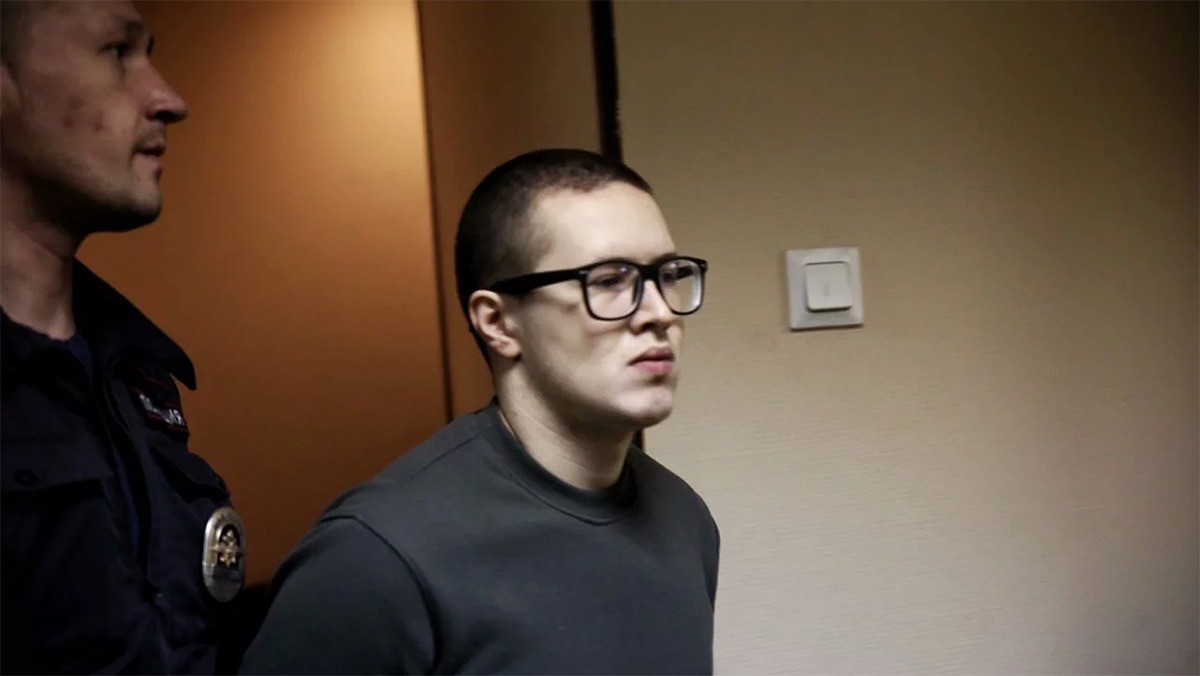 Viktor Filinkov. Photo by David Frenkel. Courtesy of Mediazona
 Yana Teplitskaya and Yekaterina Kosarevskaya outside Penal Colony No. 5
 Traces of tasers burns on Ilya Kapustin’s body. Photo courtesy of his attorney and Mediazona
 The New Crosses remand prison
 Screenshot of Ruslan Kostylenkov’s alleged confession. Courtesy of
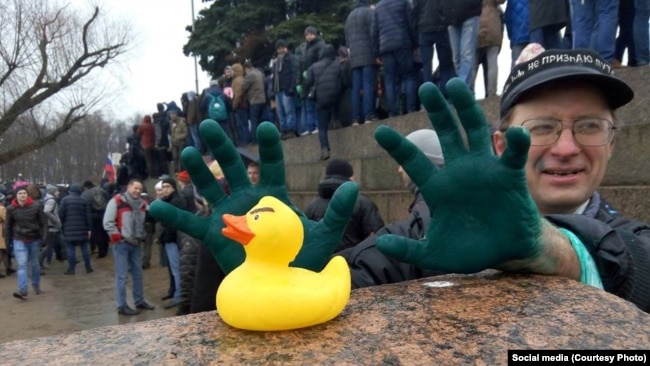
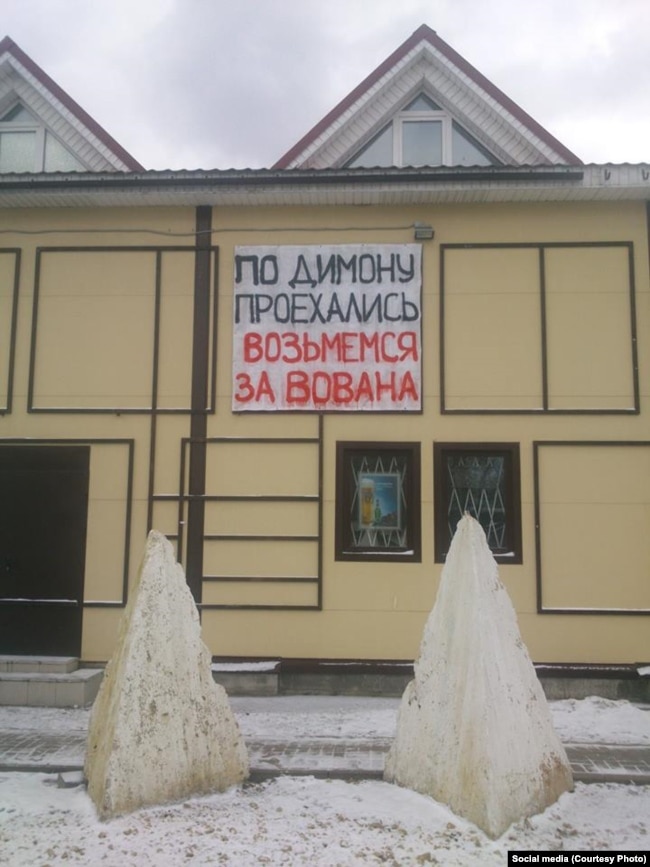
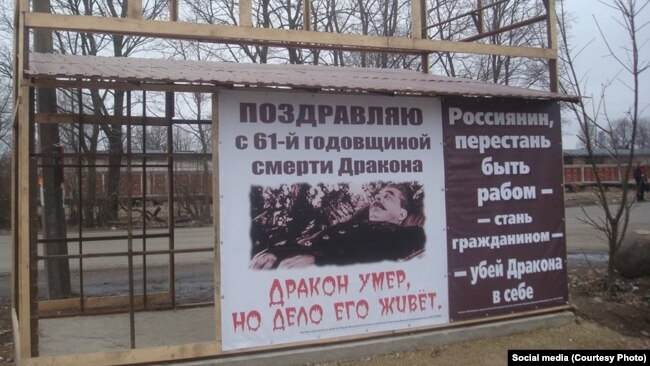
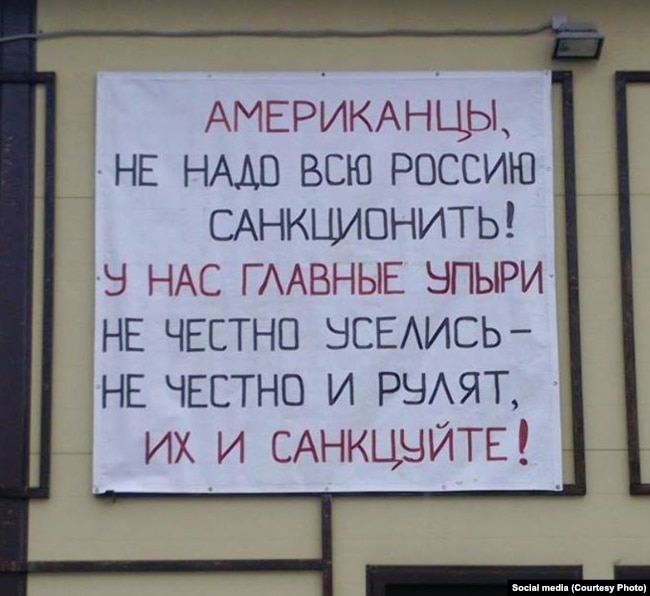
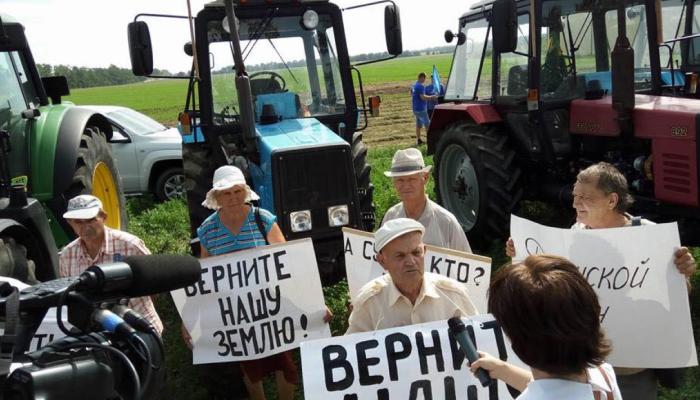







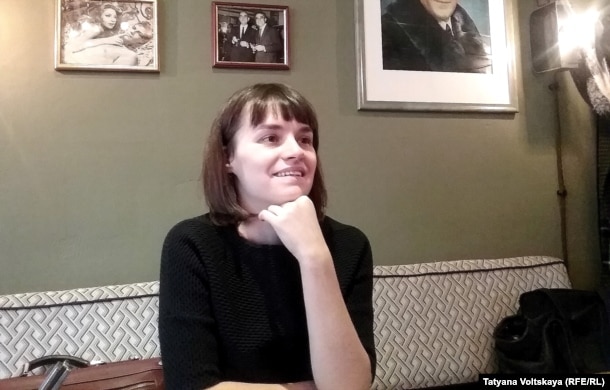

#/media/File:%D0%A1%D1%82%D0%B0%D0%B4%D0%B8%D0%BE%D0%BD_%22%D0%94%D0%B8%D0%BD%D0%B0%D0%BC%D0%BE%22_%D0%BD%D0%B0_%D1%80%D0%B5%D0%BA%D0%BE%D0%BD%D1%81%D1%82%D1%80%D1%83%D0%BA%D1%86%D0%B8%D0%B8.jpg)