Source: Ozon email advertising circular, 14 November 2025
An American World War II cemetery in the Netherlands removed displays focused on Black American soldiers, sparking outrage and compelling Dutch politicians to appeal to U.S. officials this week to restore the information.
The two displays were added to the Netherlands American Cemetery’s visitor center in September 2024 after some historians and relatives of service members criticized the site for not mentioning the unique experiences of Black troops. One plaque featured the story of George H. Pruitt, a Black soldier in the 43rd Signal Construction Battalion, who died trying to save a comrade. The other highlighted how Black American service members were “fighting on two fronts” — for freedom overseas and for their civil rights at home.
The displays’ removal, American and Dutch critics of the move say, signifies an erasure of Black Americans’ contributions in the war and their work to liberate the Netherlands from the Nazis. It also represents an overstep in the Trump administration’s campaign to curb what it deems diversity, equity and inclusion efforts, the critics said.
It’s unclear exactly when the plaques were removed.
The American Battle Monuments Commission, a U.S. government agency that oversees the cemetery, did not respond to requests for comment from The Washington Post. The commission told Dutch news outlets that one panel is “off display, though not out of rotation,” and a second panel was retired. The commission did not elaborate on either decision.
Janice Wiggins, the widow of Jefferson Wiggins, a Black WWII soldier who was quoted in one of the displays, said she had “a gut-wrenching feeling” when she learned the panels had been removed.
“Not only reading about, but actually experiencing, how history and those who shaped it can be so easily and casually erased,” she said. “It was very personal.”
“The removal of the displays is disrespectful to the Black American soldiers who served and to the legacies their families cherish,” Wiggins added.
More than 8,000 U.S. troops who fought in World War II are buried at the Netherlands American Cemetery, a solemn site in the village of Margraten in the southern part of the country. Just over 170 of these service members are Black Americans, a slice of the more than 1 million Black Americans who fought during World War II in segregated forces.
The cemetery is special to the local community, according to the American Battle Monument Commission’s website. Residents have adopted the grave sites, bringing flowers to the cemetery for decades.
The 6,450-square-foot visitor center, where the displays about Black service members were, tells the stories of the thousands of Americans commemorated at the cemetery.
One of the removed plaques described the “horrors of war” that Black service members faced while serving primarily in labor and support positions. In fall 1944, the U.S. Army’s 960th Quartermaster Service Company, a mostly Black unit, arrived in Margraten “to dig graves at the newly created cemetery,” the display read, according to a photo provided to The Post.
Jefferson Wiggins, a first lieutenant, recounted seeing service members under his command crying as they dug the graves.
“They were just completely traumatized,” the display said.
Now there is no textual information provided about Black troops at the cemetery, said Kees Ribbens, a senior researcher at the NIOD Institute for War, Holocaust and Genocide Studies in Amsterdam. Although it’s unclear why the displays were removed, Ribbens said it’s notable that it happened during the Trump administration’s crackdown on diversity efforts.
President Donald Trump signed executive orders on his first day in office banning government diversity, equity and inclusion efforts. The impact has been widespread: Arlington National Cemetery scrubbed information from its website about prominent Black, Hispanic and female service members and topics such as the Civil War. Exhibits related to slavery were removed at multiple national parks. The White House accused the Smithsonian of promoting “race-centered ideology.”
“Given the emphasis the current administration puts on DEI, it doesn’t make it that difficult to start wondering if the disappearance of Black history [at the cemetery] has to do with the current winds blowing in D.C.,” Ribbens said.
In the Netherlands, the public has been baffled that anyone would see a reason to remove the panels, Ribbens said.
Dutch politicians have demanded that the displays be reinstated, appealing to the American Battle Monuments Commission and the U.S. ambassador to the Netherlands.
Alain Krijnen, the mayor of Eijsden-Margraten, where the cemetery is, sent a letter Monday to the commission: “We greatly value the story of the Black Liberators in relation to the past, present and future. In that context, we would greatly appreciate it if the story of the Black Liberators — like the 172 Black Liberators buried in Margraten — could be given permanent attention in the visitor center, and therefore reconsider the removal of the displays.”
The office of the governor of Limburg, the Dutch province containing the cemetery, said it also has “serious concerns.”
“The displayed panels depicted a history we must never forget, and from which we can learn a great deal — especially now, as global divisions are being increasingly magnified,” Bas Alberson, a spokesman for the governor’s office, said in a statement to The Post.
The mayor’s office and the Limburg governor’s office said they had not heard from American officials as of Wednesday.
Janice Wiggins, the 77-year-old widow of Jefferson Wiggins, said she learned the displays had been removed after her friends visited the cemetery in October and noticed the absence. The removal chips away at some of her life’s work, she said.
“Along with [former] US Ambassador to the Netherlands Shefali Razdan Duggal and Dutch author Mieke Kirkels, I lobbied for the inclusion of Black American soldiers in the exhibits at the Netherlands American Cemetery Visitors Center. The original exhibits included only White soldiers,” Wiggins, who lives in New Fairfield, Connecticut, wrote in an email.
Those who have family buried at the cemetery also feel the loss.
Julius Morris is a Black WWII soldier who is buried there. His nephew, Raphael Morris, who lives in St. Louis, felt resigned when he heard the news.
“Business as usual by this administration,” said Morris, 73. “Color me concerned, disappointed, but not surprised.”
School of Rock performs System of a Down’s “Toxicity” (2022)
Actors Martin and Janet Sheen, John Cusack and Slovenian philosopher Slavoj Žižek have signed an open letter urging Russian prison officials to end the solitary confinement of jailed activist Mikhail Kriger, who has been on a dry hunger strike for more than a week.
They join Garbage frontwoman Shirley Manson, who earlier this week called on the local prison chief to end Kriger’s isolation.
Kriger, 65, first launched a hunger strike in late September. He started a dry hunger strike — meaning abstention from both food and water — last Friday after a planned visit with his daughter was canceled.
Kriger has accused prison authorities of deliberately trying to isolate him to prevent contact with other inmates.
The latest signatories of the letter to the head of Correctional Colony No. 5 in Russia’s Oryol region claimed Kriger’s condition “has now become critical,” according to the letter published by the exiled news website Mediazona.
“[Kriger’s] speech has slowed, his gaze is unfocused and he is extremely weak. Dry hunger strikes cause organ failure and quickly lead to shock and death,” the Sheens, Cusack and Žižek wrote.
Kriger was in 2023 sentenced to seven years in prison for “justifying terrorism” and “inciting hatred” over anti-Kremlin social media posts. The activist said during trial that he was being persecuted for his anti-war views and open pro-Ukrainian position.
The Nobel Peace Prize-winning human rights group Memorial designated Kriger a political prisoner.
The anti-Kremlin activist group Pussy Riot raised alarm over Kriger’s hunger strike earlier this week, calling on followers to write letters to him and the prison administration.
It was not immediately clear whether authorities in the Oryol region prison colony intended to respond to the international appeals.
It was also not clear when Kriger was expected to be moved out of solitary confinement and whether his medical condition was being properly monitored.
Kriger’s support group said the activist was taken to a regional hospital on Wednesday for tests, the results of which have not been shared.
Kriger’s lawyer said he was “cheerful, wrote poems and even offered to hop on one leg to show his strength,” the support group said in an update Thursday.
“Forced feeding will only begin if he loses consciousness or doctors deem his condition critical,” Kriger’s support group wrote on Telegram.
Yegor Shramko holding a placard that reads “No to the war with Ukraine” in Petersburg’s Palace Square
Our correspondent reports that activist Yegor Shramko did an anti-war picket in Palace Square and was detained.
The Petersburg man held a blue-and-yellow placard bearing the slogan “No to the war in Ukraine” and stood this way for around an hour. Shramko told our correspondent that although passersby supported him, the police were summoned by animateurs dressed as Russian emperors and empresses who offer to take photos with them for money on the square.
“I cannot keep silent. A life in which you have to fear everything, keep quiet, and be afraid of every little noise has no value for me,” Shramko explained to Bumaga.
He told RusNews that he had been wanting to stage the protest for four months but only worked up the nerve today.
This past summer, Shramko was jailed for twenty-four hours on charges of “displaying extremist symbols.” The “extremist symbol” in this case was the portrait of Alexei Navalny which Shramko brought to the Solovetsky Stone on the murdered politician’s birthday. At the time, Shramko told Bumaga that Navalny’s own words—”I’m not afraid, and you shouldn’t be afraid either”—had encouraged him to take the plunge and risk arrest by carrying out the proteest.
The activist held a solo picket for about an hour. St. Petersburg residents approached him—some offered words of support, while others began arguing with him. More than 50 minutes after the picket began, security forces in full uniform arrived and detained Yegor.
As you have probably heard, recently, on a Swiss train, a Russian man (with Latvian citizenship) attacked a family. The family was speaking Ukrainian among themselves. He started threatening to kill them and their baby.
It’s easy to dismiss this as just another “fait divers” (which, in a sense, it is), but I think it says something larger. To understand his actions, you have to understand where it comes from.
For centuries, the inhabitants of the Russian state lived in a situation where order depended on fear and extreme forms of violence. This was true in much of the world, but while many countries began to change over the last century (let’s put aside the reasons behind the change), in the Russian/Soviet empire the situation actually became worse. Much worse.
The rules were never something people agreed to follow together (after all, you need to feel a part of a society and thus to share common imaginary to do it, and it is impossible to do it if you live in the empire, however much some contemporary researchers might wish it). It is something they were imposed from above, by the state, or by whoever had power over you at the moment. People learned that laws only mattered when someone strong was watching. So when a person raised in that kind of world finds themselves in a place like Switzerland, where rules work because the majority respects them voluntarily, they see the absence of fear and coercion as a sign that anything goes.
The man in that train was in a setting where no one was looking as capable to physically stop him and he took that as permission to dominate others, those people that he hates for the mere fact of their existence.
This same pattern plays out on a global scale. The Russian state elites see Europe much like that man saw the train: as a place without explicit “real” (military) force. It looks fake, easy to break, like a house of cards, because it relies on trust, and thus, in their view, on NOTHING.
People and societies shaped by fear and domination can’t imagine relationships built on any agreements (that require trust). They assume that if no one is dominating explicitly, it’s an invitation to act.
The man on the train and Putin’s crew are two versions of the same story. Both come from a social setting that sees respect as submission, peace as weakness, agreements as empty shells and absence of explicit force as an invitation to unlimited violence.
Donald Trump told Ukrainian President Volodymyr Zelensky on Friday to make a deal with Russia, pouring cold water on Kyiv’s push for Tomahawk missiles as the U.S. leader pursues a diplomatic solution to the war.
Trump said as recently as last month that he believed Ukraine could take back all its territory — but a day after agreeing to meet Russian President Vladimir Putin for a new summit the American had changed his tune.
After meeting with Zelensky at the White House, Trump said on social media that their talks were “very interesting, and cordial, but I told him, as I likewise strongly suggested to President Putin, that it is time to stop the killing, and make a DEAL!”
Trump also appeared to suggest both sides should accept their current front lines. “They should stop where they are. Let both claim Victory, let History decide!” he said.
Zelensky said after the meeting that Russia was “afraid” of the U.S.-made long-range Tomahawk cruise missiles, but that he was “realistic” about receiving the weapons from Washington.
He told reporters that while he and Trump talked about long-range weapons they “decided that we don’t speak about it because… the United States doesn’t want escalation.”
‘Get the war over’
Zelensky came to Washington after weeks of calls for Tomahawks, hoping to capitalize on Trump’s growing frustration with Putin after a summit in Alaska failed to produce a breakthrough.
But the Ukrainian left empty-handed as Trump eyes a fresh diplomatic breakthrough on the back of last week’s Gaza peace deal.
Trump has appeared far more upbeat about the prospects of a deal since his two-and-a-half hour call with Putin on Thursday, in which they agreed to meet in Budapest.
“Hopefully we’ll be able to get the war over with without thinking about Tomahawks,” Trump told journalists including an AFP reporter as he hosted Zelensky at the White House.
Trump added that he believed Putin “wants to end the war.”
Zelensky, who came to the White House to push for the long-range U.S.-made weapons, said however that he would be ready to swap “thousands” of Ukrainian drones in exchange for Tomahawks.
Zelensky congratulated Trump on his recent Middle East peace deal in Gaza and said he hoped he would do the same for Ukraine. “I hope that President Trump can manage it,” he said.
‘Many questions’
Diplomatic talks on ending Russia’s invasion have stalled since the Alaska summit.
The Kremlin said Friday that “many questions” needed resolving before Putin and Trump could meet, including who would be on each negotiating team.
But it brushed off suggestions Putin would have difficulty flying over European airspace.
Hungary said it would ensure Putin could enter and “hold successful talks” with the United States despite an International Criminal Court arrest warrant against him for alleged war crimes.
Since the start of his second term, Trump’s position on the Ukraine war has shifted dramatically back and forth.
Initially Trump and Putin reached out to each other as the U.S. leader derided Zelensky as a “dictator without elections.”
Tensions came to a head in February, when Trump accused his Ukrainian counterpart of “not having the cards” in a rancorous televised meeting at the Oval Office.
Relations between the two have since warmed as Trump has expressed growing frustration with Putin.
But Trump has kept a channel of dialogue open with Putin, saying that they “get along.”
The U.S. leader has repeatedly changed his position on sanctions and other steps against Moscow following calls with the Russian president.
Putin ordered a full-scale invasion of Ukraine in February 2022, describing it as a “special military operation” to demilitarize the country and prevent the expansion of NATO.
Russia now occupies around a fifth of Ukrainian territory — much of it ravaged by fighting.
On Friday the Russian Defense Ministry announced it had captured three villages in Ukraine’s Dnipropetrovsk and Kharkiv regions.
All last week, Republican leaders tried to portray the No Kings protests scheduled for Saturday, October 18, as “Hate America” rallies. G. Elliott Morris of Strength in Numbers partnered with Atlanta-based science newsroom The Xylom to estimate that as many as 8.2 million people turned out yesterday to oppose the Trump administration. The mood at the protests was joyful and peaceful, with protesters holding signs that championed American principles of democracy, free speech, equality, and the rule of law. As the Grand Junction, Colorado, Daily Sentinel put it in a front-page headline: “‘This is America’ ‘No Kings’ protests against Trump bring a street party vibe to cities nationwide.”
Then last night, after the protests, the president’s social media account posted an AI-generated video showing Trump in a fighter jet with “KING TRUMP” painted on the side. The president sits in the airplane in front of something round that could be seen as a halo. He is wearing a gold crown; weirdly, the oxygen mask is over his mouth and chin, rather than mouth and nose.
Once in the air, the plane drops excrement on American cities, including what seems to be New York City. The excrement drenches protesters, one of whom is 23-year-old liberal political commentator and influencer Harry Sisson. Journalist Aaron Rupar of Public Notice, who shares media clips that reflect politics, commented: “Trump posts AI video showing him literally dumping sh*t on America.” Historian Larry Glickman noted that media outlets make much of alleged Democratic disdain for ordinary Americans, but have had little to say about the disdain for Americans embodied by Trump’s video.
Several administration videos and images have responded to Americans saying “No Kings” by taking the position “Yes, We Want Kings,” an open embrace of the end of democracy. But they are more than simple trolling. Led by Trump, MAGA Republicans have abandoned the idea of politics, which is the process of engaging in debate and negotiation to attract support and win power. What is left when a system loses the give and take of politics is force.
The idea that leaders must attract voters with reasoned arguments to win power and must concede power when their opponents win has been the central premise of American government since 1800. In that year, after a charged election in which each side accused the other of trying to destroy the country, Federalist John Adams turned the reins of government over to the leader of the opposition, Thomas Jefferson. That peaceful transfer of power not only protected the people, it protected leaders who had lost the support of voters, giving them a way to leave office safely and either retire or regroup to make another run at power.
The peaceful transfer of power symbolized the nation’s political system and became the hallmark of the United States of America. It lasted until January 6, 2021, when sitting president Trump refused to accept the voters’ election of Democrat Joe Biden, the leader of the opposition.
Now back in power, Trump and his loyalists are continuing to undermine the idea of politics, policies, and debate, trying instead to delegitimize the Democratic opposition altogether. Yesterday, during the protests, President Donald Trump, Vice President J.D Vance, and the official White House social media account posted a video of Trump placing a royal crown on his head, draping a royal robe around his shoulders, and unsheathing and brandishing a sword (an image that raises questions about why Trump wanted one of General Dwight D. Eisenhower’s swords so badly that he had the museum director who refused to hand it over fired). In the video, Democratic leaders including former House speaker Nancy Pelosi (D-CA) and what appears to be Senate minority leader Chuck Schumer (D-NY) first kneel and then bow to Trump.
Administration imagery doesn’t simply insult opposition leaders; it undermines the idea of politics by suggesting that Democrats are un-American. Last night the White House continued its racist crusade against Democratic leaders by posted an AI-generated image of Trump and Vance wearing jewel-encrusted crowns positioned above an image of House minority leader Hakeem Jeffries (D-NY) and Senate minority leader Chuck Schumer (D-NY) wearing Mexican sombreros. The caption reads: “We’re built different.”
The administration’s hostility to loyal opposition is translating into direct assaults on our government. House speaker Mike Johnson is refusing to seat a member of the opposition. Voters chose representative-elect Adelita Grijalva (D-AZ) on September 23 to fill a vacant House seat, but Johnson has come up with one reason after another not to seat her. Until she is sworn in, she has no access to government resources and cannot represent her constituents. She also cannot be the 218th signature on a discharge petition that would force a vote on whether to demand the release of the Epstein files, the final signature needed.
Grijalva recorded a video reinforcing the political system, saying: “We need to get to work, get on the floor, and negotiate so we can reopen the government.”
But Republican congressional leaders are refusing even to talk with Democrats to reopen the government, let alone to negotiate with them. They are trying to force Democrats simply to do as they say, despite the fact that 78% of Americans, including 59% of Republicans, support the Democrats’ demand for an extension of the tax credit that lowers the cost of healthcare premiums on the Affordable Care Act markets. Lindsay Wise, Anna Wilde Mathews, and Katy Stech Ferek of the Wall Street Journal reported today that more than three quarters of those who are insured through the ACA markets live in states that voted for Trump.
A video of Trump in a bomber attacking American cities carries an implied threat that the disdain of throwing excrement doesn’t erase. This morning, Trump reinforced that threat when he reminded Fox News Channel host Maria Bartiromo: “Don’t forget I can use the Insurrection Act. Fifty percent of the presidents almost have used that. And that’s unquestioned power. I choose not to, I’d rather do this, but I’m met constantly by fake politicians, politicians that think that, that you know they it’s not like a part of the radical left movement to have safety. These cities have to be safe.”
That “safety” apparently involves detaining U.S. citizens without due process. On Thursday, Nicole Foy of ProPublica reported that more than 170 U.S. citizens have been detained by immigration agents. She reports they “have been dragged, tackled, beaten, tased and shot by immigration agents. They’ve had their necks kneeled on. They’ve been held outside in the rain while in their underwear. At least three citizens were pregnant when agents detained them. One of those women had already had the door of her home blown off while Department of Homeland Security Secretary Kristi Noem watched.”
On Friday, the Trump administration pushed its attempt to use the military in Democratic-led cities, asking the Supreme Court to let it deploy troops in Chicago immediately. Chris Geidner of Law Dork notes that four judges, two appointed by Democrats and two appointed by Republicans, have rejected the administration’s arguments for why they must send in troops. Now the Department of Justice has appealed to the Supreme Court, asking for a decision on the so-called shadow docket, which would provide a fast response, but one without any hearings or explanation.
The administration’s appeal to the Supreme Court warned that there was “pressing risk of violence” in Chicago—a premise the judges rejected—and said preventing Trump from going into the city “improperly impinges on the President’s authority.”
How much difference will the No Kings Day protests, even as big as they were, make in the face of the administration’s attempt to get rid of our democratic political system and replace it with authoritarianism? What good is an inflatable frog against federal agents?
Scholar of social movements Lisa Corrigan noted that large, fun marches full of art and music expand connections and make people more willing to take risks against growing state power. They build larger communities by creating new images that bring together recognizable images from the past in new ways, helping more people see themselves in such an opposition. The community and good feelings those gatherings develop help carry opposition through hard moments. Corrigan notes, too, that yesterday “every single rally (including in the small towns) was bigger than the surrounding police force available. That kind of image event is VERY IMPORTANT if you’re…demonstrating social coherence AGAINST a fascist government and its makeshift gestapo.”
Such rallies “bring together multigenerational groups and the playfulness can help create enthusiasm for big tent politics against the monoculture of fascism,” Corrigan writes. “The frogs (and unicorns and dinosaurs) will be defining ideographs of this period of struggle.”
Yesterday’s news made me think about when I was little and went on road trips with my family. My parents always insisted on preparing and eating Korean food at rest areas along the way. This was before Korean food became more well-known and I remember that if there were people nearby who could smell our food, they often made faces and comments about the smell. Eating kimchi in public was always an interesting experience back then. This was just embarrassing, but does the new Supreme Court ruling mean that in this scenario, it is now something much more ominous we should be worried about?
Now someone could call ICE on a foreign-looking family eating foreign-smelling food in a rest area. When ICE shows up we now would have to show papers to prove we are citizens based on a racially motivated tip, is that our reality? Also, remembering that my mother never became a citizen but had a green card and probably speeding tickets so she would have been deportable under the current regime? What if I can’t prove my citizenship because I don’t carry my passport or naturalization papers, I am detained until I can prove my citizenship and they have the legal authority to do all of this now?
Lawyers, please help me understand. Is this our reality now? Is eating kimchi in public while Korean enough to get ICE called on us?
And I want to add that racial profiling has always been used against Black Americans and to a lesser degree other less white adjacent communities forever in this country, whether it was deemed constitutional or not. This is not new for Black Americans and others and something I have to acknowledge.
Jade Bird, “American Pie” (Don McLean cover). Thanks to the amazing Dick Gregory for the heads-up.
Nearly 3 million Americans identify as transgender, including one in 30 of those aged 13 to 17, according to a new report. But data on the country’s trans community may soon be hard to come by, its authors warned, as the Trump Administration and a number of GOP-led states seek to limit the recognition, and rights, of transgender people.
The UCLA Williams Institute has been publishing reports about transgender Americans since 2011, tracking information such as the race, ethnicity, age, regional location, and mental health of transgender individuals.
Trans adults and youth make up 1% of Americans aged 13 and older and 3.3% of 13-to 17-year-olds, according to the institute’s Wednesday report. Researchers found that younger adults, those aged 18 to 34, were more likely to identify as transgender than their older counterparts, making up more than 50% of the country’s transgender population.
For its initial 2011 report, the institute relied on just two state-level population surveys. Researchers noted that they have since been able to access broader and higher-quality data through the Centers of Disease Control and Prevention (CDC): To generate the most recent findings, they used data from the CDC 2021-2023 Behavior Risk Factor Surveillance System and 2021 and 2023 Youth Risk Behavior Survey. The report authors noted that the Youth Risk Behavior Survey in particular “currently provides the best available data for our estimates of the size and characteristics of youth who identify as transgender in the U.S.”
But the agency will no longer collect information on transgender people in compliance with President Donald Trump’s Executive Order calling for federal recognition of only two biological sexes.
Since Trump returned to office in January, information regarding trans people and health resources for LGBTQ+ people has been quietly removed or modified on federal websites. And the Department of Health and Human Services (HHS) has stepped away from its previous practice of supporting gender-affirming-care, in spite of numerous statements from all major medical associations in the U.S., including the American Medical Association and the American Academy of Pediatrics, declaring the care as best practice. In May, HHS called for “exploratory therapy” or psychotherapy to treat individuals with gender dysphoria instead of the medically recommended care.
Multiple states have also sought to restrict access to gender-affirming care, particularly for minors, amid broader global efforts to target such care for trans youth. A June Supreme Court decision upholding a Tennessee state-level ban on gender-affirming-care for youth delivered a heavy blow to the U.S. LGBTQ+ community, permitting similar bans that have been enacted across the country and presenting a significant obstacle to future efforts to challenge restrictions in the courts.
Amid the current political climate, the authors of Wednesday’s Williams Institute report say they are unsure whether survey respondents will accurately respond to questions regarding their gender identity moving forward. In addition to the uncertain future of data on the U.S. transgender population, they wrote, “It is also unclear whether individuals’ willingness to disclose on surveys that they identify as transgender will remain unchanged in the years to come.”
Despite those looming challenges in gathering information, however, the authors noted it is already clear that younger people are more likely to identify as transgender and they anticipate that to continue being true.
“This has implications for institutions in our society, including educational institutions, the U.S. Armed Forces, civilian workplaces, health care settings, and other areas, regarding how to meet the needs of and provide opportunities for current youth and future generations,” they said.
Jade Bird, “I’ve Been Everywhere” (Johnny Cash cover)
In the Central Coast, where my father farmed strawberries, the land is mostly flat for miles in every direction so it was easy to spot the green vans and trucks of the Immigration and Naturalization Service heading our way in the distance, kicking up a cloud of dust in their wake. It was the late ‘70s and raids were an occasional part of working in the ag industry.
When the trucks were spotted — most often by a worker — a loud call would go out: “La Migra, la migra.” That’s when immigrant workers without legal status would drop what they were doing and sprint away, either for a nearby riverbed or over a set of raised railroad tracks adjacent to the fields. The immigration raids on my father’s strawberry fields fascinated me when I was a boy. It wasn’t until I was older that I understood the impact on the workers who were rounded up and deported, as well as the effects on the families left behind. I now recall them in a more somber light.
My father worked as a sharecropper in the Central Coast. He oversaw several acres of strawberries and managed up to a dozen workers for Driscoll Inc., the berry company headquartered in my hometown of Watsonville.
From the time I was about 6 or 7 years old until I was 16, I spent my summers and most weekends in the fall in my dad’s strawberry fields. It was backbreaking work. I have the chiropractor invoices to prove it.
Immigration raid methods have changed. The toll they take has not
The ICE raids of the past few months across Southern California reignited my boyhood memories of the strawberry field raids.
What has not changed is the impact on the immigrant families, especially the children. Children of immigrants sustain deep emotional scars from immigration raids.
A study published last month on Psychiatry News said immigrant children or children of mixed-status parents endure serious trauma when their parents are deported.
“Forced family separations, particularly those resulting from immigration enforcement (e.g., detention, deportation), introduce acute psychological risks,” according to the study, which list the results as an “elevated risk of suicidal ideation, externalizing behavior and alcohol use.”
Even living under the threat of having a parent deported is traumatizing to children.
“These fears have been shown to lead to school absenteeism, academic disengagement, and heightened emotional distress,” the study says.
Even as a boy, the fear and desperation were palpable
When I worked in the fields, the raids came about once or twice a summer. I didn’t witness this myself, but the family lore includes the story of a worker who was so desperate to escape the INS that he jumped into a nearby port-a-potty — hiding among the feces and urine in the holding tanks — until the INS agents departed.
Each summer, two or three of my father’s workers would be deported, only to return the following season. That was more common back in the ‘70s than it is today. My dad tried to help his workers without green cards by connecting them with legal aid groups or lawyers so they could straighten out their legal status. Not all of them did and some who had green cards ran at the sight of INS trucks anyway.
In a recent conversation with my younger brother, Peter, he recalled panicking during the first raids he witnessed. He said he asked my older siblings if he should run from the agents, too.
“No, you’re an American. Just shut up,” they told him.
Jade Bird, “Grinnin’ in Your Face” (Son House cover)
[…]
A lost white race of Bible giants—literally bigger, stronger, and whiter than everyone else—fashioned as a symbol of everything conservatives wanted to remake America into, is an all-too-convenient bit of lore for the conspiracy-besotted right. (Never mind that the Nephilim were technically the villains in Genesis!) And the Smithsonian was, if anything, a useful foil for a fringe movement looking for an enemy to accuse of suppressing the truth.
Soon enough, claims that the Smithsonian intentionally hid the bones of Bible giants went mainstream, presaging the country’s own rightward shift. By the 2010s, the Smithsonian’s secret giants appeared in popular paranormal books, on late-night radio shows, in multiple cable TV documentaries (including at least two separate History Channel shows), and across a network of evangelical and far-right media outlets.
Among the most popular of these were the Christian DVDs and later podcasts produced by Steve Quayle and his Nephilim-hunting partner, Timothy Alberino. Quayle, an archconservative, blamed Bible giants for “teaching” men to be gay. He and Alberino were regulars on the right-wing podcast circuit in the 2010s, often appearing with figures like Alex Jones and Jim Bakker so Quayle could hawk their merch, attack Democratic politicians as demonic, and advocate for a targeted genocide of Nephilim-controlled liberals.
Burlinson told Blaze TV that he had been radicalized against the Smithsonian through Alberino’s podcasts and videos. In his podcasts, Alberino has described Bible giants as a “superior race society.”
In recent years, Alberino has made moves to go more mainstream. He has appeared on Ancient Aliens, the History Channel show advocating historical conspiracies, where David Childress is a featured star. That same show also hosted Tucker Carlson, Tennessee Republican Representative Tim Burchett, and others to peddle conspiracies about government cover-ups of space aliens, interdimensional beings, demons, and more.
For the far right, the E.T.s of Ancient Aliens—the same ones Congress is currently hunting in various UFO hearings—are actually angels and demons, and those demons are the souls of the giants who died in the Flood, according to a nonbiblical text Alberino endorses. Burlinson said in 2023 that he thinks UFOs could be angels, and more recently he promised that a congressional UFO hearing to be held on September 9 would feature witnesses who “handled the bodies” of these beings.
Conspiracies about Bible giants are basically the Christian version of UFOs and aliens, and it’s no wonder there is significant cross-pollination between believers in the two camps, even in Congress, where several representatives like Burlinson and Burchett have publicly discussed their belief in both. In fact, both conspiracies give pride of place to the Nephilim narrative from Genesis 6:4 as proof of either fallen angels or alien intervention.
It would be laughable if the Smithsonian conspiracy theory and tales of Bible giants now being spread on Blaze TV, on Joe Rogan’spodcast, and across right-wing media, were not a kind of Trojan horse to soften up the public to accept political propaganda in place of history and complete the assault on America’s museums that failed in the 1990s. But the conspiracists continue to spread their lore, and mainstream conservative politicians continue to escalate their attacks on the Smithsonian—a far-right pincer movement directed at an institution that is both the nation’s premier repository of historical fact and a potent bolsterer of America’s civic fabric. And that is no laughing matter.
THE BIZARRE TWISTS AND TURNS of Donald Trump’s Ukraine peacemaking project continue: Just three days after the president announced in a triumphant Truth Social post that Vladimir Putin was willing to meet with Volodymyr Zelensky—either one on one or in a trilateral summit with Trump—and to accept an arrangement in which NATO countries would provide postwar security guarantees for Ukraine, the Putin regime has unequivocally shot down both proposals. Russian foreign minister Sergei Lavrov (last seen sporting a “USSR” sweatshirt on his trip to Alaska) has made it clear that there won’t be a meeting with Zelensky until “all the issues” have been resolved—including the question of Zelensky’s legitimacy as president, given that Ukrainian elections have been put on hold on account of the war—and that Russia will not accept the presence of foreign troops, presumably other than its own, on Ukrainian soil.
Trump’s stormy bromance with Putin seems to be off again, too: in social media posts on Thursday, he criticized “crooked and grossly incompetent” Joe Biden for not allowing Ukraine to strike back at Russia and (speciously) compared his chummy-seeming interaction with Putin in Alaska with Richard Nixon’s confrontation with Nikita Khrushchev in Moscow in 1959.
It’s impossible to tell whether Trump’s social-media posturing will translate into action. There is still no word, for instance, on whether the administration is greenlighting Ukraine’s proposal, unveiled after the Monday White House meeting, for $100 billion in U.S. arms shipments to Ukraine (with the Europeans footing the bill) and an additional $50 billion project for joint U.S.-Ukrainian drone production. Nor is there any word on whether or when new sanctions will kick in.
WHILE THE CIRCUS PLAYS ON in Washington and Moscow, the war on the ground—and in the air—continues in Ukraine, and sometimes in Russia. Ukraine is in an undeniably tough position, though nowhere near the desperate predicament imagined both by haters and by worriers who keep predicting an imminent “collapse” of its defenses. On August 12, just before the Alaska summit, many thought they saw a sign of such collapse in a Russian “breakthrough” not far from the long-contested city of Pokrovsk (Donetsk region), near the former coal-mining town of Dobropillia, where Russian forces managed to make rapid advances past severely undermanned Ukrainian lines, move about nine miles forward, seize three villages (now mostly deserted, though some residents who have not been able to get out still remain there), and cut off a vital supply route for Ukrainian troops. These gains appeared to augur the fall of Pokrovsk itself, a prospect that has been discussed since late last year.
But a few days later, the supposed catastrophic defeat turned into an impressive Ukrainian victory thanks to the quick deployment of new units from the Armed Forces of Ukraine and the National Guard, which retook two of the captured villages as well as four previously occupied settlements and cleared the area of Russian troops, reportedly inflicting significant losses. As for Pokrovsk itself, there have been some clashes inside the city, with incursions by small Russian units; but observers such as expatriate Russian military expert Yuri Fedorov think it’s extremely unlikely that the city will fall before inclement weather forces the Russian offensive to wind down.
It is true that momentum is on Russia’s side, in the sense that only Russia is currently conducting offensive operations. But Russian forces’ progress is snail-paced and intermittent, with the Ukrainians often successful in pushing them back (and using drones to make up for manpower and ammunition shortages). The result, more often than not, is a ghastly tug-of-war over small patches of devastated land—contests in which a “win” may consist of planting a flag in a ghost settlement.
Overall, analysts agree that Russia has no chance of capturing the entirety of the Donetsk region—as it has tried to do since the start of Putin’s covert war in Eastern Ukraine in 2014—anytime in the foreseeable future; doing so would require taking heavily fortified urban areas, and even the most cavalier willingness to sacrifice men may not accomplish that goal without several more years of costly fighting. Hence Russian demands for Ukraine to surrender the remainder of the region without a fight.
Ukraine also continues to score successes in its aerial war on strategic Russian targets such as oil refineries, arms and ammunition depots and factories, and trains carrying weapons and fuel to the frontlines. (Russian troops aren’t the only ones feeling the effects: there are reported miles-long lineups for gasoline in parts of Russia.) And, Western arms deliveries aside, Ukraine is making strides in developing its own weaponry, like the new Flamingo long-range cruise missile capable of hitting targets more than 1,800 miles away; Zelensky has said that it could be mass-produced by February.
In other words: Ukraine is still not losing. But there is no question that it is exhausted—and that the enemy’s continuing terrorism against its civilian population is taking its toll. On Wednesday night, Russia launched one of its heaviest assault waves yet: 574 drones and 40 missiles, with targets located as far away from the frontlines as Lviv and Transcarpathia. Most were intercepted by Ukrainian defenses, but one person was killed and over a dozen wounded.
Was this a deliberate middle finger to Trump over his supposed peace effort? It sure looks like it, especially considering the bombing of an American factory in the Transcarpathian city of Mukachevo—the premises of Flex Ltd., a manufacturer of civilian electronic goods. At the very least, it shows that Russia is not de-escalating. Likewise, it’s unclear whether the incursion of a Russian drone that crashed and burned in a rural area in eastern Poland during the overnight attack on Ukraine was a deliberate provocation, as the Polish government charged. But it certainly doesn’t tell us that Putin wants peace.
He can still be forced into it, however. A scenario in which Ukraine drives Russian troops and occupation forces out of its territory is as impossible as one in which Russia makes major territorial gains in Ukraine; but there may come a point, perhaps soon, when the war’s economic and political burdens for the Putin regime become too heavy. Even with rigged elections and a thoroughly owned population, Putin still cannot afford too much discontent among the Russian middle class—or among the elites. There is a reason he has not undertaken another round of mobilization since 2022. But right now, recruitment is dropping, soldiers recovering from wounds or suffering from serious physical and mental health problems are being forced into combat, and mobilization may be the only way to keep the war going. The war will end when Putin starts to see its costs as too high and the chances of achieving his aims, stated and unstated, as too low.
U.S. policy could be instrumental in making that happen. But for that, the Trump administration would have to commit to a firm and consistent pro-Ukraine policy. For starters, the president’s promises of “very severe consequences” if Putin stands in the way of peace should mean something more than memes and empty talk. (And the vice president shouldn’t keep fawning about the “soft-spoken” Kremlin dictator who “looks out for the interests, as he sees it, of Russia.” Sorry, JD, but you sound like a jackass.)
Yet here we are, with Putin doing everything to sabotage any meaningful peace talks but put up an “I ♥ WAR” neon sign on the Kremlin walls—and what is Trump’s response? Another deadline: this time, he says, we’ll know whether a deal can be made “within two weeks”—famously, Trump’s “placeholder” unit of time. No doubt they’re quaking in their boots in the Kremlin.
The Trump administration has quietly rescinded long-standing guidance that directed schools to accommodate students who are learning English, alarming advocates who fear that schools will stop offering assistance if the federal government quits enforcing the laws that require it.
The rescission, confirmed by the Education Department on Tuesday, is one of several moves by the administration to scale back support for approximately 5 million schoolchildren not fluent in English, many of them born in the United States. It is also among the first steps in a broader push by the Trump administration to remove multilingual services from federal agencies across the board, an effort the Justice Department has ramped up in recent weeks.
The moves are an acceleration of President Donald Trump’s March 1 order declaring English the country’s “official language,” and they come as the administration is broadly targeting immigrants through its deportation campaign and other policy changes. The Justice Department sent a memorandum to all federal agencies last month directing them to follow Trump’s executive order, including by rescinding guidance related to rules about English-language learners.
Since March, the Education Department has also laid off nearly all workers in its Office of English Language Acquisition and has asked Congress to terminate funding for the federal program that helps pay for educating English-language learners. Last week, education advocates noticed that the guidance document related to English learning had a new label indicating it was rescinded and remains online “for historical purposes only.”
On Tuesday, Education Department spokeswoman Madi Biedermann said that the guidance for teaching English learners, which was originally set forth in 2015, was rescinded because it “is not in line with Administration policy.” A Justice Department spokesman responded to questions by sending a link to the July memorandum and said he had no comment when asked whether the guidance would be replaced.
For decades, the federal government has held that failing to provide resources for people not proficient in English constitutes discrimination based on national original under Title VI of the Civil Rights Act.
In rescinding the guidance, the Trump administration is signaling that it may stop enforcing the law under that long-standing interpretation. The Education and Justice departments have been responsible for enforcing the law.
In the July memorandum, Attorney General Pam Bondi cited case law that says treating people, including students, who aren’t proficient in English differently does not on its face amount to discrimination based on national origin.
Other guidance related to language access for people using services across the federal government is also being suspended, according to the memo, and the Justice Department will create new guidance by mid-January to “help agencies prioritize English while explaining precisely when and how multilingual assistance remains necessary.” The aim of the effort, Bondi said in a statement published alongside the memo, is to “promote assimilation over division.”
The consequences for school districts were not immediately clear, but advocates worry that rescinding the 2015 guidance could open the door for weaker instruction for English learners and upend decades of direction from the federal government to provide English-language services to students who need them.
“The Department of Education and the Department of Justice are walking away from 55 years of legal understanding and enforcement. I don’t think we can understate how important that is,” said Michael Pillera, an attorney who worked at the Office for Civil Rights for 10 years and now directs the Educational Opportunities Project at the Lawyers Committee for Civil Rights.
Without pressure from the federal government to comply with the law, it is possible that some school districts will drop services, Pillera said, particularly as many districts struggle with financial pressures.
“It’s going to ripple quickly,” he predicted. “Schools were doing this because the Office for Civil Rights told them they had to.”
Many districts will probably not change their services, but rescinding the guidance opens the door, said Leslie Villegas, an education policy analyst at New America, a think tank. Advocates may watch for changes in districts that previously had compliance problems or those that had open cases with the Office for Civil Rights related to English-language instruction, she noted.
“The rescission of this guidance may create the mentality that no one’s watching,” Villegas said.
In recent months, the Justice Department notified at least three school districts — in Boston; Newark; and Worcester, Massachusetts — that the government was releasing them from government monitoring that had been in place to ensure they offered services to English-language learners.
Officials in Worcester said they expected the action even before Trump took office. But in Boston, some parent advocates questioned why the monitoring had ended, the Boston Globe reported.
Supporters of immigration restrictions argued that relieving pressure on schools to provide these services might be helpful, especially given the costs to districts.
“If you devote all these resources to these kids coming in [to school] completely unprepared, inevitably it will diminish the quality of education others are getting,” said Ira Mehlman, spokesman for the Federation for American Immigration Reform.
Todd DuBois, communications director for U.S. English, a group that advocates for English as the official and common language, said some education is needed to help “bridge the gap” for students who do not speak English, but the group is concerned that multilingualism “gets in the way of teaching English literacy earlier in life.”
The requirement to serve English-language learners in school is based on two federal statutes. The first is Title VI of the Civil Rights Act, which bars discrimination based on national origin, among other traits. Alandmark 1974 Supreme Court case, Lau v. Nichols, interpreted this law to include a mandate for English-language services in schools.
The second federal law at issue is the 1974 Equal Educational Opportunities Act, which requires public schools to provide for students who do not speak English. A 1981 case decided in federal appeals court, Castañeda v. Pickard, laid out a test to determine whether schools were properly providing services to English learners in school.
In 2015, the Justice and Education departments published their 40-page guidance document, explaining how schools can properly comply with these laws and avoid potential federal investigations and penalties.
“For a teacher, it was kind of like the Bible,” said Montserrat Garibay, who headed the Office of English Language Acquisition under the Biden administration. “If, in fact, we want our students to learn English, this needs to be in place.”
In her memorandum, Bondi said that in addition to cutting back on multilingual services the administration deems “nonessential,” federal agencies would be tasked with boosting English education and assimilation.
“Instead of providing this office with more capacity and more resources to do exactly what the executive order says — to make sure that everybody speaks English — they are doing the total opposite,” Garibay said.
Mark Krikorian, executive director of the Center for Immigration Studies, which supports immigration enforcement measures, suggested the federal government should not direct how school districts offer services. But he also said that teaching children English is consistent with efforts to make sure people living in the United States speak English.
“I’m all for English-language education. We probably need to do even more of that,” he said. “If you’re going to let people in who don’t speak English, then you want them to be acquiring English as soon as possible.”
Leningrad, 1987. Donald Trump and his first wife, Ivana Zelníčková.
The businessman visited the USSR with his wife hoping to make real estate deals, but was confronted by Soviet laws which did not permit foreigners to own more than a 49% stake in a business venture.
So, no deals were made, and Trump was left disappointed by the Soviet system. But he was impressed by the architecture.
Tomorrow, the current U.S. president and Vladimir Putin will meet in Alaska, formerly Russian territory.
Coeleen Kiebert, Ode to the Women of Ukraine, May They Return to Quilt Their Beauty Again Soon, 2021. Ceramic, indigo linen. Pajaro Valley Arts, Watsonville, California, 26 April 2025. Photo by the Russian Reader
Donbas hostages savagely tortured for ‘confessions’ in 2019 sentenced in Russia to 24 years (Kharkiv Human Rights Protection Group, April 25th)
Huge sentences and videoed ‘repentance’ in Russia’s mounting terror in occupied Zaporizhzhia oblast (Kharkiv Human Rights Protection Group, April 24th)
“Relatives said: people like you should be killed.” The story of a woman who survived torture and fled occupied Mariupol twice (Ukrainska Pravda, April 24th)
‘Wiping out neighborhood after neighborhood’ Russia pounds Ukraine’s Pokrovsk, forcing civilians to flee under fire. For many, it’s not the first time. (Meduza, April 21st)
Darya Kozyreva gets real prison term for Taras Shevchenko poem and opposition to Russia’s war against Ukraine (Kharkiv Human Rights Protection Group, April 22nd)
The Lost Army: War veterans could pose a problem for Putin’s Russia, just like they did for interwar Germany (The Insider, April 21st)
Meeting with Representatives of Ukrainian Roma in Brussels (Kharkiv Human Rights Protection Group, April 25th)
Experts of the Committee on the Elimination of Racial Discrimination Commend Ukraine’s Presence Despite the Prevailing Circumstances, Raise Questions on the Treatment of Ukraine’s Indigenous Peoples and the Roma Population (UNHCR, April 24th)
KYIV, Ukraine (AP) — A peace proposal by the Trump administration that includes recognizing Russian authority over Crimea shocked Ukrainian officials, who say they will not accept any formal surrender of the peninsula, even though they expect to concede the territory to the Kremlin, at least temporarily.
Giving up the land that was illegally annexed by Russia in 2014 is also politically and legally impossible, according to experts. It would require a change to the Ukrainian constitution and a nationwide vote, and it could be considered treason. Lawmakers and the public are firmly opposed to the idea.
“It doesn’t mean anything,” said Oleksandr Merezkho, a lawmaker with Ukrainian President Volodymyr Zelenskyy’s party. “We will never recognize Crimea as part of Russia.”
Unlike a territorial concession, a formal surrender would permanently relinquish Crimea and abandon the hope that Ukraine could regain it in the future.
The Ukrainian public largely understands that land must be ceded as part of any armistice because there is no way to retake it militarily. Polls indicate a rising percentage of the population accepts such a trade-off.
But much of the public messaging about land concessions has suggested that they are not necessarily permanent, as when Kyiv Mayor Vitalii Klitschko told the BBC recently that Ukraine may need to temporarily give up land as part of a peace deal.
Saying otherwise would effectively admit defeat — a deeply unpopular move, especially for Ukrainians living under Russian occupation who hope to be liberated and reunited with their families one day. It also would call into question the sacrifices made by tens of thousands of Ukrainian service members who have been killed or wounded.
U.S. President Donald Trump underscored the Crimea proposal in an interview published Friday in Time magazine: “Crimea will stay with Russia. Zelenskyy understands that, and everybody understands that it’s been with them for a long time.”
Asked by reporters on Sunday if Zelenskyy was ready to give up Crimea, Trump said, “Oh, I think so. Crimea was 12 years ago. That was President Obama that gave it up without a shot being fired.”
His comments offered the latest example of the U.S. leader pressuring Ukraine to make concessions to end the war while it remains under siege. Trump has also accused Zelenskyy of prolonging the war by resisting negotiations with Russian President Vladimir Putin.
Crimea, a strategic peninsula along the Black Sea in southern Ukraine, was seized by Russia years before the full-scale invasion that began in 2022. The Russian takeover followed large protests that ousted former Ukrainian President Viktor Yanukovych, who had refused to sign an association agreement with the European Union.
In the lead-up to peace talks, Ukrainian officials told the Associated Press for months that they expect Crimea and other Ukrainian territory controlled by Russia to be among Kyiv’s concessions in the event of any deal. But Zelenskyy has said on multiple occasions that formally surrendering the land has always been a red line.
Elements of Trump’s peace proposal would see the U.S. formally recognizing Crimea as Russian and de facto accepting Moscow’s rule over occupied Ukrainian territories, according to a senior European official who spoke on condition of anonymity to discuss sensitive diplomatic discussions.
Whether the U.S. formally recognizes Crimea as Russian is out of Zelenskyy’s hands. But many obstacles prevent the Ukrainian president from doing so, even under immense pressure. He cannot unilaterally sign any such proposal, and he could be reprimanded by future governments for even attempting it, experts said.
Ukraine began to accept that it would not regain its lost territories after the failure of the country’s 2023 summer counteroffensive. From then on, the Ukrainian military concentrated on defending the territory it still held.
In return for territorial concessions, Ukraine wants robust security guarantees that ideally would include NATO membership or concrete plans to arm and train its forces against any future Russian invasion with the pledged support of allies. One scenario envisions European boots on the ground, which Russia rejects.
Zelenskyy has said negotiations over occupied Ukrainian territory will be drawn out and will not likely occur until a ceasefire is in place. In late March, he told reporters after a call with Trump that the U.S. president “clearly understands that legally we will not recognize any territories.”
He said giving up territory would be “the most difficult question” and “a big challenge for us.”
Formal recognition of Crimea would also amount to political suicide for Zelenskyy. It could expose him to legal action in the future, said Tymofiy Mylovanov, president of the Kyiv School of Economics and a former economics minister.
Signing a potentially unconstitutional document could be interpreted as high treason, Mylovanov said.
The Ukrainian government cannot act either. It has no constitutional means to accept a violation of its territorial integrity, and altering the territorial makeup of the country requires a nationwide referendum.
If Ukrainian lawmakers were even to entertain the idea of surrendering Crimea, it would trigger a long, drawn-out legal debate.
“That’s why Russia is pushing it, because they know it’s impossible to achieve,” Mylovanov said.
“Anything related to constitutional change gives so much policy and public communication space to Russia,” he added. “This is all they want.”
Soldiers on the front line say they will never stop fighting, no matter what the political leadership decides.
“We lost our best guys in this war,” said Oleksandr, a soldier in the Donetsk region, who spoke on the condition that only his first name be used in line with military protocols. “We won’t stop until all Ukrainian lands are free.”
Coeleen Kiebert, Ode to the Women of Ukraine, May They Return to Quilt Their Beauty Again Soon, 2021 (detail). Pajaro Valley Arts, Watsonville, California, 26 April 2025. Photo by the Russian Reader
Russia jails dissident once targeted by Putin at KGB for 16 years
A court in St. Petersburg has sentenced Alexander Skobov, a 66-year-old Soviet dissident and activist, to 16 years in jail on charges of justifying terrorism and joining a terrorist group. Skovov was first arrested more than four decades ago and Vladimir Putin was among the KGB officers who worked on his case. Prosecutors said Skobov justified terrorist attacks on Russian territory and supported the Freedom of Russia legion, which Russia has deemed a terrorist organisation for fighting alongside Ukrainian forces.
Skobov will spend the first three years of his sentence in prison (typically reserved for highly dangerous criminals such as kidnappers and terrorists and repeat offenders), with the rest in a high-security penal colony. He will be 80 by the time he can be released, although it is questionable whether he will survive that long in Russia’s harsh prison system. The activist has many health problems, including diabetes, hepatitis C, asthma and glaucoma.
At the court hearing, Skobov made clear that he did not believe he was facing a fair trial. He refused to answer questions and did not stand when the judge addressed him. “Today they will ask me again – do I plead guilty? Well, now I’m the one asking,” he said in his closing statement. “It’s me asking the servants of Putin’s regime who are present here, who are small cogs in his repressive regime: do you plead guilty to complicity in Putin’s crimes? Do you repent of your complicity?”
In the USSR, Skobov was repeatedly charged with “anti-Soviet” offenses. He was first arrested in 1978 on charges of distributing anti-Soviet leaflets and was sentenced to two years in a psychiatric hospital (punitive psychiatry was widespread in the Soviet Union and used as one of the main tools of repression in the 1960s, 70s and 80s). Skobov was forcibly hospitalized again in 1982 for daubing anti-Soviet graffiti on the walls of a building and then released in 1985.
Vladimir Putin, who worked in the Fifth Department of the KGB that was tasked with combating “ideological sabotage,” was among the KGB officers that handled his original cases, independent media and rights groups reported.
Why the world should care
This is far from the first instance when somebody in Russia has been imprisoned for a post on social media. Since 2010, prosecutors have opened more than 1,000 such criminal cases. But a 16-year sentence for an elderly activist in frail health stands out as particularly punitive. It’s safe to say that treatment of dissidents in modern Russia is growing far tougher than it was in the post-Stalin Soviet Union.
“Illinois Governor JB Pritzker (D-IL) Speaks at the 2025 HRC Los Angeles Dinner,” Human Rights Campaign (YouTube)
The Trump administration and his Republican lackeys in Congress are looking to reverse every single victory this community has won over the last 50 years. And right now, it’s drag queens reading books and transgender people serving in the military. Tomorrow, it’s your marriage license and your job they want to take. Bending to the whims of a bully will not end his cruelty. It will only embolden him. The response to authoritarianism isn’t acquiescence. Bullies respond to one thing, and one thing only, a punch in the face.
But you see, that starts with fully acknowledging what is happening. The meme lords and the minions in the White House are intentionally breaking the American system of government so they can rebuild it in their own image. They’ve shut down cancer research and HIV prevention. They’ve eliminated drinking water and clean air regulations and upended the lives of veterans. They’ve said that a recession that Trump is likely to cause will be worth it, which is an assessment worthy of Trump University.
At its core, what Elon Musk and Donald Trump are doing isn’t about efficiencies or cost savings. It’s about giving their wealthy friends a tax break and making the middle class and veterans and public school kids pay for it. It’s a few idiots trying to figure out how to pull off the scam of their lives.
Meanwhile, the scariest part is that they’re using the power of the presidency to try to delight their base by targeting vulnerable people, people they think can’t fight back, calling them domestic enemies or claiming they’ll ruin American culture. Remember their slogan, “Make America Great Again.” Authoritarians target vulnerable minority communities first because they think that if they can conquer those that they deem weak, and they can show everyone else who’s boss, which is why we can’t sit back right now and wait to see what happens. If we wait, I guarantee you the battle will have already been lost.
Donald Trump cannot take anything from us that we don’t choose to give him. He and his henchmen don’t want people to realize that. But now is the time for us to wake up. The good news is every day I’m seeing more and more people across this country realize that they don’t want to give him much at all.
The question I get asked most right now is, “So what can I do? What can I do?” And I’m going to be blunt about this. Never before in my life have I called for mass activism, but this is the moment. Take to the streets, protest, show up at town halls. Jam the phone lines in Congress, 202-224-3121, and afford not a moment of peace to any elected representatives who are aiding and abetting Musk and Trump’s illegal power grab. This is not a drill, folks. This is the real thing.
Seize every megaphone you have. Go online and make a donation to the legal funds fighting Trump, to HRC, and to the candidates for Congress that vow to take this country backward. And don’t limit your voice to the traditional political channels. Be like Lucy Welch. When JD Vance went to vacation at the Sugarbush Resort in Warren, Vermont, Lucy, who writes the Sugarbush Daily Snow Report, used her report to defend her diverse and wonderful community, ending by saying, “I am using my relative platform as a snow reporter to be disruptive. What we do or don’t do matters.”
What we do and don’t do matters. It matters right now more than it ever has before. When my future grandkids look back on this moment, I want them to know that my voice was one of the loudest in the room, screaming for justice and fighting against tyranny.
And in the midst of this existential fight, this battle that seems to consume everything, well, let’s not take the soul-sucking path of sacrificing the most persecuted for that which we deem to be most popular. I know that there are transgender children right now looking out at this world and wondering if anyone is going to stand up for them and for their simple right to exist. Well, I am. We are. We will.
I know that amidst the ongoing assault on our institutions, it is easy for people to fall into despair about our democratic system. But I love this country too much not to fight for it. You’re here tonight because you do too. And when I think about that love, I think back to all the times in our history when our ancestors had to fight back against tyrants and racists and those who couldn’t understand that freedom and justice are our foundational promises in this country.
That group of people, that small group of people that got together in Chicago to found this country’s first known gay rights organization. Well, it was called the Society for Human Rights. It was 1924 and the flicker of light was brief. It only lasted a matter of months before social persecution and criminal prosecution bankrupted the promise of the group’s charter. But oh, that flicker ignited something. By whisper and by word of mouth, folks around the country started to catch wind of the idea. And eventually, it ended up in the ears of a man here in California who later said the idea of gay people getting together at all was an eye-opener for him.
Well, that man’s name was Harry Hay. And a couple of decades later, he went on to found the Mattachine Society right here in Los Angeles. It was the first sustained gay rights organization in the United States. Harry said that he was first told about the Chicago group as a warning that the idea was too dangerous and nobody should try to pull anything off like that ever again. How lucky the world is that Harry didn’t listen.
When we say history repeats itself, it’s not because the villains and battles don’t evolve with the ages. They do. But the fight itself remains elemental. It’s always men who would be king, blaming the suffering of the masses on those who look different or sound different or live differently. And since the dawn of time, the triumph of good over evil has relied on those who believe in empathy and kindness, summoning the steel spine needed to defend those values that by their nature leave us vulnerable to attack. This community knows that. You have lived and breathed this fight for generations. Our hope, our hope lies in this room.
The fact that we are still here today means that we have the faith and courage that we will win the battles that really matter. Now, when I first ran for governor in 2018, I started every single stump speech by saying, and this will tell you why Donald Trump doesn’t like me very much. I said at the beginning of every stump speech, everything we care about is under siege by a racist, misogynist, homophobic, xenophobic Donald Trump.
Alexandra in Times Square. Personal photo courtesy of Republic
Alexandra left Russia four years ago, fleeing oppression, propaganda, and ever harsher anti-LGBT laws. She applied for political asylum in the U.S., made a home in New York, and felt safe for the first time. But with Donald Trump’s return to power, her fears have returned. The new rules and laws, the rhetoric, and the swaying of public sentiment against trans people have been much too reminiscent of what she had escaped. Alexandra spoke to Republic about how America has been changing and what now lies in store for thousands of people like her.
I arrived in the U.S. exactly four years ago yesterday. A lot has changed in that time. I arrived right when the covid restrictions were still in force. Just a couple of days before I arrived in New York, an order to wear two masks each had been issued. The city was completely empty. I went straight to Times Square, and there were maybe one or two people walking down the street. Gradually, the restrictions were lifted, and more and more people were out in public. And then the border with Mexico was opened, and everything changed dramatically in terms of jobs, the economy, and real estate — rent went up about forty percent. Now there are new problems: Trump and Musk. But first things first.
“I always had a hard time in Russia”
I am thirty-four years old. I lived in Perm until I was twenty-five, then I moved to St. Petersburg and lived there until I moved to the U.S. I did a lot of jobs in Russia, mainly sales. In my final years in Perm, I worked at a real estate agency.
I had traveled a lot and at first I decided to just move to a big city in Russia, which didn’t make me safe in the end. I decided to leave Russia after the lockdown started. My ex-husband had gone to the U.S. in 2011 on the Work and Travel Program and he had really liked the country. Besides, when it was possible to fly anywhere again, the only valid visas we had were for the U.S.
When I was twenty-five years old, I officially changed my gender and got a woman’s passport. This was in 2016, back in Perm. It was quite difficult to do this. The problem was that at the real estate agency where I worked, no one knew about me, but I had to sign legal documents there. So I had to change my surname, first name, and patronymic to something feminine, but without specifying my gender. The civil registry office did not immediately know how to do this legally: they discussed it among themselves for several months. In the end, they changed my name and surname to the feminine versions of the original ones. I had been Alexander, and so I became Alexandra. They got rid of my patronymic because they didn’t know how to come up with a feminitive for it.
Later, after the updated information had been entered into my birth certificate, I went to the passport office. They remembered me there because a couple of years earlier they had refuse to issue me a passport on the grounds that the photo I had given them was of a young woman, but my papers indicated my gender as “M.” I had filed a complaint with the prosecutor’s office, but it hadn’t led to anything at the time. Ultimately, though, the [passport office] staff decided to meet my needs and help me. I was issued a passport with an “F” in it. I have had several cosmetic surgeries, but have not had intimate plastic surgery, meaning I haven’t undergone a complete transition, but a social one. I don’t want to have surgery yet.
It was always hard for me in Russia. If you are lesbian or gay, you can hide it from society somehow. This is impossible for us transgender people.
You go to apply for a job and you are simply rejected, at best. At worst, you are threatened and humiliated.
I was also harassed at school. For example, I was subjected to a full body search with no clothes on at the checkpoint when I took my Unified State Exam. When it comes to medical institutions, even if you go to a private clinic for a paid operation, you still face discrimination. When I tried to get permission for a sex change, they suggested I go to the male ward because in the female ward they thought I would “rape all the female patients.”
I was an activist in Rainbow World, the Perm branch of the Russian LGBT Network: I constantly attended events and was actively involved in organizing them. When I needed supporting evidence [for my asylum claim] from the head of Rainbow World, she was afraid to communicate with my lawyers, since she seriously feared reprisals from the authorities. Now she doesn’t contact me at all.
We once took part in the May Day rally. We had got all the permissions beforehand, but the placards had not been discussed, and so we ended up having our own mini-gay pride parade. Things were still relatively calm at the time: we marched down the street and people heard us; we were written about and discussed. But then the pressure started. Public opinion shifted dramatically in the direction of aggression towards LGBT people. A few months later, the police came to the offices of our organization and searched them. They confiscated our laptops, and there, of course, they found all our info — addresses, contacts, and passwords. No one thought at the time that things would take such a turn for the worse.
At one point, when I was working at the real state agency in Perm, a local activist came into my life. I don’t know who he was, but he had sent me clip from an episode of the Malakhov show in which he had taken part. He was always stalking me outside the real estate office where I worked. When I would walk past him with my colleagues, right in front of them he would say, “You have to give me an interview.” I would say, “I don’t know you. What’s this about anyway?’ And he would say, “If you don’t, I’ll tell everyone who you are.” This would happen in public, right on the street.
After the first law banning so-called LGBT propaganda for minors was adopted in 2013, police officers started showing up at my house because I right then I was helping out transgender teenagers. The police would knock on our door and ring the doorbell. They would try to get into my flat under various pretexts. One time they stood outside the door for three hours. We just pretended nobody was home. Then, when it got quiet, we looked out the window. The police officers looked up too, realized we were looking at them, and came upstairs again. They stood outside our door again for a while.
Then some people assaulted me and my ex-husband. It turned into a brawl, and a police patrol turned up “by chance.” We were all taken to the police station and advised to “keep quiet and stay inconspicuous.” After that, in 2019, we decided to move to Peter. Everything was relatively calm in Petersburg. But then they found us there too. I do not know what kind of databases they have, but they found us, although I didn’t show my face anywhere at all in Petersburg, and I wasn’t involved in any organizations. The only thing I did was go to the Side by Side LGBT film festival.
I was in no hurry to leave Russia because I have an elderly father, who is seventy-one. I didn’t want to leave him. And I never thought that I should leave the country where I was born, grew up, worked, and paid taxes. Plus, I had a flat and a car in Russia. I didn’t want to start all over again in another place. When covid started, my husband’s and my Schengen visas had expired. We only had our U.S. visas left, and they were still valid for about six months. We decided to give it a try, because we were afraid that, later, the authorities wouldn’t let us go anywhere at all, that the country was heading towards the Iron Curtain.
“Since Moving to the U.S., I Haven’t Been Hiding Anything from Anyone at All”
We arrived in New York on a visa, on a direct flight from Moscow. We started looking for human rights organizations who could provide free lawyers. We called various places: our English was nonexistent, so we used online translators and sometime just read the text into an answering machine. Several organizations reached out to us. Eventually, an organization which deals with domestic violence helped us out. We lived in a hotel at first. We were quarantined there for a fortnight, then we rented a place through Airbnb and looked for a permanent place. I started working three weeks later.
I am currently working as a cleaner and as a webcam model. Webcam modeling is not an easy gig. I started doing it back in Petersburg, because I was afraid of getting a on-the-books job. Initially, you think that it’s easy money and that it won’t affect you in any way, but then you realize you’re just a piece of meat. It’s quite tough psychologically. All this overlapped with my old traumas, and eventually led to big psychological problems. Before the New Year, I stopped taking the antidepressants I’d been taking since 2018.
You can make $100, $300, and $500 a day in the webcam industry. Here in the U.S., it’s a legitimate job, you pay taxes, it’s all above board. Since moving to the U.S., I haven’t been hiding anything from anyone at all. It’s my new principle in life.
I am horrified to read the news from Russia about LGBT people being labeled “extremists” and being murdered in prisons, about gay bars and clubs being raided. It’s wacky, it’s incomprehensible. After moving to the U.S., especially after Russia’s war with Ukraine began, I realized how effective propaganda was in Russia. All my friends and acquaintances in Russia suddenly changed their opinions about politics dramatically, even about LGBT people. Even my friends who are LGBT people themselves either try to avoid the topic or say, “Well, that’s right, but what can we do? It’s the way it has to be.” Some of them I’ve stopped talking to, some I haven’t. Maybe they are simply afraid to say too much.
The authorities inserted pedophilia into the law on “LGBT propaganda” and thus made a strong link in people’s heads between LGBT people and pedophiles. This propaganda has been effective even in my own family.
My dad’s new wife has a niece. The niece’s son was three years old at the time. Kids are drawn to me and I always play with them. But at one point I saw how afraid she was to leave her child alone with me. The propaganda has affected even those closest to me.
In the U.S., I saw a completely different world and attitude towards people like me. When I told someone at work for the first time that I was a transgender woman, I got a neutral reaction, as if I was talking about something quite ordinary. The first time I went to the New York Pride March, it was more like a carnival: it was beautiful, friendly, and flamboyant. There were a lot of children there, and there were separate events for them. For the first time in my life I felt I was no different from anyone else, that I had rights, that I could speak openly, that I could receive proper medical care. When I lived in Perm, I was even unable to find an endocrinologist who did hormone replacement therapy. [Living in New York] has changed my sensibility a lot.
Alexandra in Times Square. Personal photo courtesy of Republic
Donald Trump’s policies have not affected me specifically yet. But knowing how it all kicked off in Russia, I am scared. In 2013, there was the ban on “gay propaganda,” and consequently, teenagers were left without the support that, for example, they had received from Lena Klimova and her project Children 404. I also helped kids out then, shared my know-how with them, and tried to support them. All transgender people have been dismissed from the [U.S.] army. It’s a nightmare. When the state starts cracking down on a single albeit tiny segment of the populace, and it succeeds, it keeps on going.
“Judging by the First Month of Trump’s Presidency, We Are in for Tough Times”
I believe that common sense should prevail in all things. Previously, the bias had gone in the other direction in the U.S.: people used to be afraid to say something against LGBT, and this was also wrong. Everyone should have freedom of speech. For example, my acquaintances from [the country of] Georgia had this thing happen to them. They were working on a commission for a moving company: a gay couple was moving. One of the workers looked askance, or they said something among themselves. They then got a call from the front office and a dressing-down. They were warned that they would be fired if it happened again. Or there was the case of the flower shop: the owners refused to sell flowers for a same-sex wedding, and the shop had to close because of the scandal that erupted. That’s over the top. I think that if you’re refused service somewhere, you can go to some other place. Let them lose their profits. It’s the same with clubs: if the bouncers don’t let you in, well, those are their views. Everybody has different views. But now it’s going too far in the other direction and it’s scary. I hope that one day we will reach a sensible balance.
Now I live with my fiancé, who is from Ukraine. We discuss politics, and we both want the war to end soon, for people to stop dying. I would like to make a trip to Russia.
I don’t think Russia belongs to Putin and his lackeys. It’s my country, just like it is yours, just like it is everyone else’s. I would like to believe that things will change and we can go back someday.
I am in the U.S. legally, but I am waiting for political asylum. There are numerous such cases, and they take a very long time to process. The approximate wait time for a green card in the past was ten years . I was involved in a class action lawsuit against the U.S. Immigration Service, and I was told that as long as I had a short wait time, the case would not be considered. I appealed that decision and have been scheduled for an interview for late 2026. I would like to go to Turkey, for example, to meet my relatives. I would really like to see my dad. But even if everything goes well at the interview, I will probably not get a green card until 2028.
My father loves me, but over the last three years, since the war started, we have come to disagree about Russian politics, and over time we stopped discussing it. He watches [Russian] television and relays to me what is said there. He constantly accuses me of being under the influence of “American propaganda” and “brainwashed.” But I just reply, “Fine.”
They usually say that the first one hundred days of a presidency set the course for the next four years. Judging by the first month of Trump’s presidency, we are in for tough times, although maybe these measures are like Margaret Thatcher’s — first shock therapy, then stabilization. I hope to get citizenship in the future. I would finally feel safe: there is still a risk of deportation for now. I try not to give up, to hope for the best. Let’s see if positive thinking does the trick.
Brut America, “French Senator criticizes Trump,” YouTube, 7 March 2025
French politician Claude Malhuret critiqued the United States’ shifting stance on Ukraine and targeted President Donald Trump in his remarks during a general session of the French Senate on Tuesday.
Source: YouTube. Thanks to Olga Klymenko and Nancy Ries for the heads-up.
Monsieur le Président,
Monsieur le Premier ministre,
Mesdames et Messieurs les Ministres,
Mes chers Collègues,
L’Europe est à un tournant critique de son histoire. Le bouclier américain se dérobe, l’Ukraine risque d’être abandonnée, la Russie renforcée.
Washington est devenu la cour de Néron, un empereur incendiaire, des courtisans soumis et un bouffon sous kétamine chargé de l’épuration de la fonction publique.
C’est un drame pour le monde libre, mais c’est d’abord un drame pour les États-Unis. Le message de Trump est que rien ne sert d’être son allié puisqu’il ne vous défendra pas, qu’il vous imposera plus de droits de douane qu’à ses ennemis et vous menacera de s’emparer de vos territoires tout en soutenant les dictatures qui vous envahissent.
Le roi du deal est en train de montrer ce qu’est l’art du deal à plat ventre. Il pense qu’il va intimider la Chine en se couchant devant Poutine, mais Xi Jinping, devant un tel naufrage, est sans doute en train d’accélérer les préparatifs de l’invasion de Taïwan.
Jamais dans l’histoire un président des États-Unis n’a capitulé devant l’ennemi. Jamais aucun n’a soutenu un agresseur contre un allié. Jamais aucun n’a piétiné la Constitution américaine, pris autant de décrets illégaux, révoqué les juges qui pourraient l’en empêcher, limogé d’un coup l’état-major militaire, affaibli tous les contre-pouvoirs et pris le contrôle des réseaux sociaux.
Ce n’est pas une dérive illibérale, c’est un début de confiscation de la démocratie. Rappelons-nous qu’il n’a fallu qu’un mois, trois semaines et deux jours pour mettre à bas la République de Weimar et sa Constitution.
J’ai confiance dans la solidité de la démocratie américaine et le pays proteste déjà. Mais en un mois, Trump a fait plus de mal à l’Amérique qu’en quatre ans de sa dernière présidence. Nous étions en guerre contre un dictateur, nous nous battons désormais contre un dictateur soutenu par un traître.
“Armogedon Dasha,” Kronstadt, Russia, summer 2006. Photo by the Russian Reader
If one starts from the premise that the United States was engaged in a peace process, then what we saw Americans do yesterday makes no sense. The same goes if we begin from the assumption that present American leadership is concerned about peace generally, or cares about American interests as such. But it is not hard to see another logic in which yesterday’s outrages do come into focus.
It would go like this: It has been the policy of Musk-Trump from the beginning to build an alliance with Russia. The notion that there should be a peace process regarding Ukraine was simply a pretext to begin relations with Russia. That would be consistent with all of the publicly available facts. Blaming Ukraine for the failure of a process that never existed then becomes the pretext to extend the American relationship with Russia. The Trump administration, in other words, ukrainewashed a rapprochement with Russia that was always its main goal. It climbed over the backs of a bloodied but hopeful people to reach the man that ordered their suffering. Yelling at the Ukrainian president was most likely the theatrical climax to a Putinist maneuver that was in the works all along.
This, of course, might also seem illogical, and at an even higher level. The current American alliance system is based upon eighty years of trust and a network of reliable relationships, including friendships. Supporting Russia against Ukraine is an element of trading those alliances for an alliance with Russia. The main way that Russia engages the United States is through constant attempts to destabilize American society, for example through unceasing cyberwar. (It is telling that yesterday the news also broke that the United States has lowered its guard against Russian cyber attacks.) Russian television is full of fantasies of the destruction of the United States. Why would one turn friends into rivals and pretend that a rival is a friend? The economies of American’s present allies are at least twenty times larger than the Russian economy. And Russian trade was never very important to the United States. Why would one fight trade wars with the prosperous friends in exchange for access to an essentially irrelevant market? The answer might be that the alliance with Russia is preferred for reasons that have nothing to do with American interests.
In the White House yesterday, those who wished to be seen as strong tried to intimidate those they regarded as weak. Human courage in defense of freedom was demeaned in the service of a Russian fascist regime. American state power was shifted from the defense of the victim to the support of the aggressor. All of this took place in a climate of unreason, in which actual people and their experiences were cast aside, in favor of a world in which he who attacks is always right. Knowledge of war was replaced by internet tropes, internalized to the point that they feel like knowledge, a feeling that has to be reinforced by yelling at those who have actually lived a life beyond social media. A friendship between Donald Trump and Vladimir Putin, a masculine bond of insecurity arising from things that never happened, became more important than the lives of Ukrainians or the stature of America.
There was a logic to what happened yesterday, but it was the logic of throwing away all reason, yielding to all impulse, betraying all decency, and embracing the worst in oneself on order to bring out the worst in the world. Perhaps Musk, Trump, and Vance will personally feel better amidst American decline, Russian violence, and global chaos. Perhaps they will find it profitable. This is not much consolation for the rest of us.
Foreign Ministry Spokeswoman Maria Zakharova’s comment on Zelensky’s voyage to Washington, D.C. (March 1, 2025)
Leader of the neo-Nazi regime Zelensky’s visit to Washington D.C. on February 28 is an epic political and diplomatic failure of the Kiev regime.
The Russian Side has repeatedly made it clear at all levels that Zelensky is a corrupt individual who lost his grip on reality and is unable to reach and honour agreements.
The Kiev regime refused to continue talks on a political and diplomatic settlement in the spring of 2022, using lies and fake claims to justify continued hostilities and keep receiving Western military and financial aid.
With his outrageously rude behaviour during his stay in Washington, Zelensky re-affirmed his status of the most dangerous threat to the international community as an irresponsible figure that can stir up a big war. It must be clear to everyone that this kind of attacks coming from a terrorist leader are quite unambiguous.
This cynical individual will stoop to anything in pursuit of his goals and is obsessed with preserving the power he has usurped. That is why he:
has destroyed the opposition,
built a totalitarian state,
ruthlessly sending millions of his fellow citizens to death.
Under the increasingly deteriorating political situation, this figure is unable to show a sense of responsibility and is therefore obsessed with continuing the war and rejects peace, which means death to him.
Unprecedented in history of international politics and diplomacy, a dressing down given to Zelensky by the US president in the White House is also indicative of the political weakness and extreme moral degradation of the European leaders who continue to support the maniac head of the Nazi regime who has lost touch with reality.
As before, we continue to operate on the premise that a truly just and durable peace is not possible unless the root causes of the Ukraine crisis are completely eliminated.
The main ones among them include:
the West breaking its promises not to expand NATO and the alliance’s absorption of Europe’s entire geopolitical space all the way up to Russia’s borders,
the Kiev regime’s systematic elimination of everything about Russia, including language, culture, and church, just like the German Nazis did in the past.
The demilitarisation and denazification of Ukraine, as well as recognition of existing realities on the ground remain Russia’s unchanged objectives.
The sooner Kiev and the European capitals come to realise this, the closer to a peaceful settlement of the Ukraine crisis we will be.
Rick Wilson: “And I truly believe that Donald Trump will very soon offer military aid to Russia. I believe this in my heart of hearts. I want every single one of you people who think, ‘Oh, this was such a brave moment of diplomacy,’ when Donald Trump starts offering Russia intelligence, and weapons, and support, and protection, I want you to tell me if you think you still live in the America you voted for.”








 Leningrad, 1987. Donald Trump and his first wife, Ivana Zelníčková.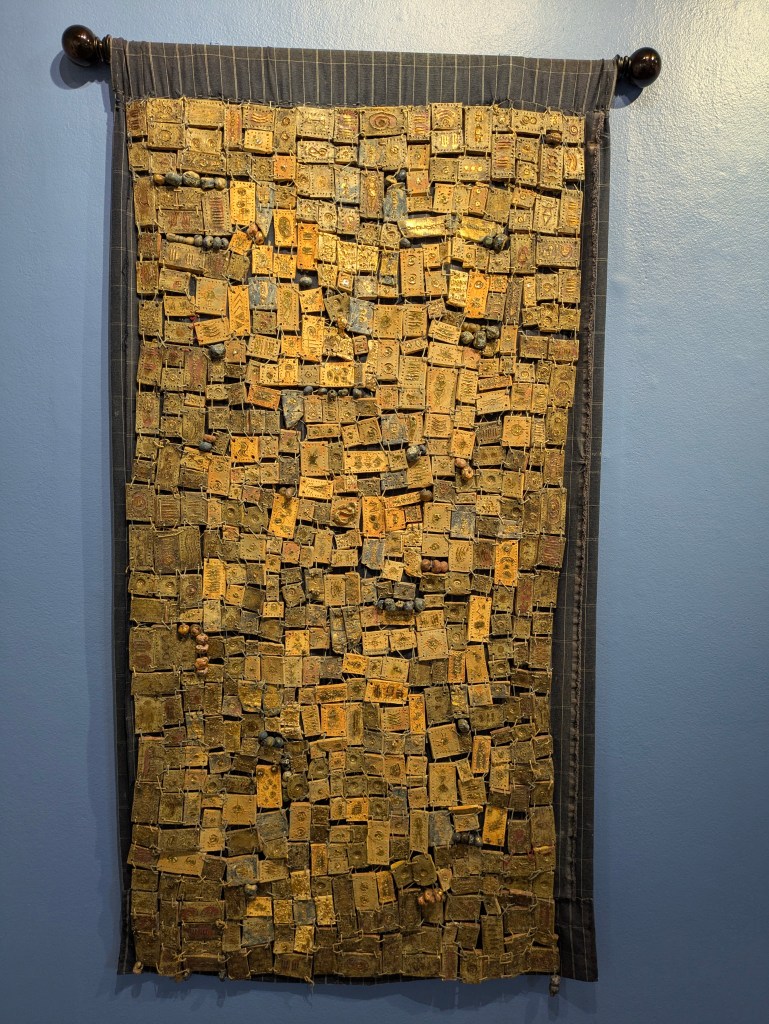


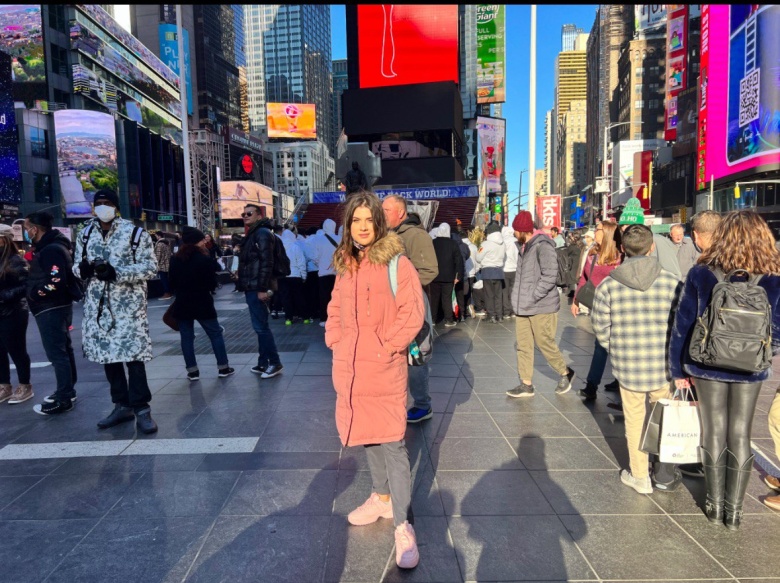
 Foreign Ministry Spokeswoman Maria Zakharova’s comment on Zelensky’s voyage to Washington, D.C. (March 1, 2025)
 Leader of the neo-Nazi regime Zelensky’s visit to Washington D.C. on February 28 is an epic political and diplomatic failure of the Kiev regime.
 The Kiev regime refused to continue talks on a political and diplomatic settlement in the spring of 2022, using lies and fake claims to justify continued hostilities and keep receiving Western military and financial aid.
 has destroyed the opposition,
 The sooner Kiev and the European capitals come to realise this, the closer to a peaceful settlement of the Ukraine crisis we will be.