— I read about your wedding to Yana last year. Tell me, are you happy?
— Yes. But happy in what sense? I don’t feel like I’m in a happy period in my life as a human being. But I’m very happy with Yana. We didn’t even plan to get married: we just had to get married for the paperwork. We are now traveling a lot between countries and applying for visas, and it’s much easier to explain why Yana has to travel with me and I with her by showing them a marriage certificate than by telling them a long story about how we’re from Russia, where gay marriage doesn’t exist. Anyway, we got married, and it as if nothing has changed in our lives: we love each other just as much, and we have the same joint budget.
But the morning after the wedding, I woke up and looked at Jana and realized that she really drives me crazy.
And then Yana woke up and started looking at me funny. Basically, we went around for a week looking daggers at each other, and then we went to psychotherapists, each to her own, and found out that, despite the fact that getting married was a purely formal act to us, it meant a lot to our subconscious minds. That’s why all kinds of shit had started to come out of our heads, which had been building up there all our lives, as it transpired.
For example, after we got married, Yana suddenly moved from the category of “my lady love” to the category of “my family.” I have completely different requirements for my family. Yana looked at me and thought, “I never wanted to get married. Marriage is a trap, it’s the worst thing that can happen.” Because of her family history, she had come to the opinion that there was basically nothing worse than marriage. When we realized what was coming out of us, we just talked to each other and calmed down. Everything fell into place. Now my therapist says we should definitely learn to fight because it’s a good way to find a new common ground, to talk about things, to release emotions. We just haven’t fought yet.
— How many years have you been together?
— Three years. We’ve argued, we’ve been pissed at each other sometimes, but we’ve never really fought. My therapist says this is potentially the weakest point in our marriage, because people in real families should fight and yell at each other periodically. I agree with her. My sister and I or my mom and I sometimes yell at each other so hard that glass shatters. So now we’re learning how to fight.
— Don’t you think that the very fact that you were able to get married is a privilege for people from Russia?
— Of course I do. There is a huge number of people living in Russia who are no less deserving than me and who cannot get married because of their orientation. Of course, it’s very unfair. I’m aware of that, and I’m very grateful to the people who have given their lives, among other things, to make it possible for me to have a same-sex marriage in the United States and for that marriage to be recognized around the world by countries which agree on the simple fact that all people are equal and all people have the right to a family.
— You don’t feel guilty about that?
— No, because I remember that my goal hasn’t changed.
My goal is to get married on Red Square.
I believe that it will happen sooner or later. Every person should have the right to a family, every person should have the right to call their loved one a relative. This, by the way, should not necessarily be bound up with sexual orientation or gender identity. I think a lot about single women or men for whom the most important person in their life is a male or female friend with whom they would like to share a household, bequeath property to them, and identify them as their nearest and dearest. That is, the very mechanism of civil partnerships would be useful not only for LGBT people.
— In interviews you gave long ago, you said that people in Russia generally didn’t care who you slept with. Has propaganda succeeded in turning LGBTQ+ people into enemies?
— I’m not in Russia at the moment, so I can’t see what is happening there now. But I am glad that for every snitch and provocateur who goes to a gay club to turn people in to the cops, there are hundreds of people who know that their friends, brothers and sisters, and coworkers are not hetero- or cisgender people, and yet do not go to the authorities and snitch on them. But of course this is a very difficult time, because, pardon the expression, all sorts of scum who derive power and joy from the fact that they can take away another person’s life feel quite free and easy in Russia now, because a group of people with whom they can do as they pleased has been pointed out to them, and the state will only pat them on the heads for doing it.
Protestors at Christopher Street Park pose for a photo. Photo: S. Baum/Erin in the Morning
This weekend at Stonewall, trans pasts and trans futures collided. The crowd of over 300 people at Christopher Street Park cheered on as the two kids took the stage, all smiles as they were wrapped in the pink, white and blue. They were led by Denise Norris, co-founder of The Transexual Menace, a direct action group which began organizing against trans exclusion in 1993.
In 1969, the Stonewall uprising spilled out from the iconic gay bar and into the streets — including that same park, a small patch of pavement and grass across the road. Many see this as the birthplace of the LGBTQ liberation movement as we know it today.
Now, a new generation has joined the fight.
“Even in our middle school, which supposedly accepts everyone, we face hate from many of our classmates,” one of the kids told the crowd.
They passed the mic to their friend. “They’re saying, ‘Oh, this school is progressive. And we don’t stand up for hate, and homophobia, and transphobia,’” the other youngster added. “Well, maybe they should do something about it.”
But Saturday’s rally was living proof of trans histories, resilience and joy. One protestor held a sign reading: “We are older than your laws and we will outlive them. There are queer and trans kids, adults and elders in the future.”
People gathered at Christopher Street Park in New York City to protest the Trump Administration’s repression of trans people on Feb. 22, 2025. Photo: S. Baum/Erin in the Morning
The area in and around Stonewall, including the park, was incorporated into the National Parks Service in 2016 as a historical monument of the West Village enclave where trans, queer and gender nonconforming youth made their home for decades. But after Trump’s return to office, even the NPS webpage for Stonewall saw the word “transgender” removed.
“Before the 1960s, almost everything about living openly as a lesbian, gay, bisexual (LGB) person was illegal,” the new website now reads, the “T” conspicuously missing. “The Stonewall Uprising on June 28, 1969 is a milestone in the quest for LGB civil rights.”
Norris spoke about organizing the event within her own intergenerationally trans family, including her nephew, Garrett. Now in his twenties, Garrett is working with his aunt to cultivate a national network, encouraging trans people and their allies everywhere to take autonomous action.
“If you don’t want to be transgressive, if you’re not here to make the systemic change that we need in this society so trans people have space to be equal — not merely acceptable — you might as well be the ‘transgender happy friends,’” Norris told Erin in the Morning at the rally. “The battle is not about if we are going to be passable or acceptable to the oppressor. It doesn’t matter if you’re ‘passing,’ they’re still going to come for you.”
The Transexual Menace, whose blood-stained logo is a campy, tongue-in-cheek nod to “The Rocky Horror Picture Show,” cut its teeth mobilizing against trans exclusion from queer spaces and causes in the 1990s. Where some gay and lesbian organizations sought to align themselves with more white, heteronormative, upper class sensibilities, the Transexual Menaces — “Stone Butch Blues” author Leslie Feinberg among them — refused to center respectability politics in their actions, Norris said.
At the rally, speakers showcased a tour de force of trans life spanning generations. Dr. Carla Smith, CEO of The NYC LGBT Community Center, told the crowd how she brought along her wife and grandchild. Jay Walker, a founding member of groups like the Reclaim Pride Coalition and Gays Against Guns, led the protestors in chants. Bernie Wagenblast, the much-beloved voice of New York City subways, was also spotted among the masses.
“We’re criminalizing trans people for existing and decriminalizing those that commit actual crimes, like Donald Trump and his 1,500 insurrectionists,” Toress said in her speech.
She could be heard from outside the metal gates of Christopher Street Park, which are adorned with archival images of trans and gender nonconforming youth — smiling, hugging, protesting. It was these street queens and butches of color that are said to have “thrown the first brick at Stonewall,” a common phrase used to characterize the much-mythologized riots. Protestors left bricks beneath the photographs in their honor.
How bad can it get? When we strip away US president Donald Trump’s insults and temper fits, what can he actually do?
First, he can withdraw US military aid to Ukraine – which he has been talking about doing since long before the US presidential election. If the European states got their act together, which is possible, the effects of this would be constrained.
At the “Russian troops out” march in London, 22 February 2025
US diplomats have reportedly threatened to block Ukraine’s access to the Starlink communication system on which its drones rely, potentially giving asymmetrical advantage to Russia.
Second, Trump can cancel sanctions. The latter would bring him into conflict with the Countering America’s Adversaries Through Sanctions Act of 2017, which was specifically designed to compel the president to lift sanctions only with Congress approval. Of course Trump could play fast and loose with the law, which he has done and is doing in other respects, and/or Congress could go along with him.
The cancellation of sanctions would be bad. But let’s not lose sight of the fact that the sanctions were never very effective, in large part because previous US governments, under both Trump and Biden, sought to limit their effect on the oil market and the world economy.
Third, Trump can shift narratives. I broadly agree with people who say we should judge Trump and his cohorts by their actions, not by the constant stream of often incoherent words. Yes, but. Nazi salutes normalise Nazism; speculation about expelling the Palestinian population from Gaza normalises ethnic cleansing; and slandering the Ukrainian president as a “dictator” who started the war in his country reinforces Russian propaganda.
On the third anniversary of Russia’s all-out invasion – and the eleventh year of its military attack on Ukraine, and the long chains of suffering it has caused – these are real dangers. It’s not clear how they will play out.
Tomorrow in Ukraine, Russian soldiers will attack Ukrainians. Russian drones and bombs and rockets will target Ukrainian homes. A criminal war of aggression will continue.
Tomorrow in Saudi Arabia, Russian officials will discuss the future of Ukraine with a handful of Americans, delegated by a president who sympathizes with the Russian view of the war. The Russians will have the luxury of talking about Ukraine without the presence of Ukrainians.
The headlines are about “peace negotiations.” But what is really going on? How should we think about this unusual encounter in Saudi Arabia?
Here are ten suggestions, drawn from years on working on relations among the three countries, and from some recent personal observations at the Munich Security Conference.
1. Be critical of the words on offer. Question the word “peace.” The term used in the media is “peace negotiations.” The United States and Russia are not at war. Russia is at war with Ukraine, but Ukraine is not invited to these talks. Russian authorities, for their part, do not generally speak of peace. They present the talks with the United States as a geopolitical coup, which is not the same thing. The highest Russian officials have repeatedly stated that their war aims in Ukraine are maximalist, including the destruction of the country. Informed observers generally take for granted that Russia would use a ceasefire to distract the United States and Europe, demobilize Ukraine, and attack again. This is not a plan that the Russians are working very hard to disguise. It is a simple point, but always worth making: there could indeed be peace tomorrow in Ukraine, if Russia simply removed its invasion force.
Today, there was one happy man in the Kremlin. Vladimir Putin banked his legacy on an all-out war that, at one point, looked all but lost for him. But he waited long enough to see the tides change in his favor.
Three years in and hundreds of thousands of deaths after, the U.S. president is calling Putin, offering peace talks on Russia’s terms.
Hi, my name is Oleksiy Sorokin, I’m the deputy chief editor of the Kyiv Independent, and this is the latest issue of our Russia-themed newsletter.
Today we will talk about how Russia is about to win the war.
It’s a topic of debate when authoritarian Russia began morphing into a totalitarian state, but Feb. 24, 2022, is a point that finalized this transformation. A point of no return.
The all-out war was supposed to be quick. It was supposed to be a victory of a new world order and of a new Russia, once again a force that would decide the fate of the world, a force that people would fear.
Taking Kyiv, installing a new Russian-controlled government, and forcing Ukraine to recognize Crimea, Donetsk, and Luhansk as Russian was to be achieved within months, if not days.
The country Putin attempted to subjugate, however, was fiercely resisting. Something that Russian political and military leadership didn’t expect and didn’t prepare for.
Yet, over and over, Russian President Putin was bailed out by the West.
In 2022, Russia was making fortunes on selling off its energy resources to the West. When Russian troops were murdering civilians of Mariupol and nearing Kyiv, Moscow’s war chest was being replenished by Europeans.
The slow phasing out of Russian energy resources in the West allowed Russia to iron out its pivot to the East, building a formidable shadow fleet to transport its energy resources to anyone willing to buy.
When Russia began to lose ground and prepare for a Ukrainian counteroffensive, the U.S. was slowing down military shipments, giving Moscow further breathing room.
Seeing that the West was unwilling to support Ukraine to the fullest and was willing to allow Russia to continue, Russia, well, continued.
Russian leadership doubled down, increasing attacks on Ukraine, making committing war crimes a state policy, and simultaneously choking all forms of dissent at home.
Ukrainian civilians and prisoners of war were tortured and often murdered, and children from occupied territories were abducted.
Domestically, Russia outlawed speaking against the war, with people receiving hefty prison terms for criticising the invasion.
For the majority, however, the state made sure their economic well-being and daily routines remained unchanged, allowing ignorance to flourish. The Russian economy was doing fine.
All this made Putin confident. He knew that time played in his favor. The U.S. would surrender, and Europe would be in no position to object. He was right.
While on the campaign trail, Donald Trump had made it clear that he has little interest in continuing to support Ukraine’s fight against Russia.
His comments of ending the war in “24 hours” were a figure of speech, but it was clear that some sort of peace plan would be presented by the incoming administration.
Russia listed its demands, Ukraine listed theirs. Both waited. The fighting went on along the front line.
Russia was in a better position to negotiate. The West’s unwillingness to truly stop Russia, especially if it meant causing any sort of inconvenience at home, allowed it to regroup and begin a major offensive, ongoing to this day.
What came next was too good to be true… for Russia.
On Feb. 11, U.S. Defense Secretary Pete Hegseth began his European tour. Off the bat, he made public the U.S. position concerning the upcoming peace talks.
Hegseth said, “Returning to Ukraine’s pre-2014 borders is an unrealistic objective,” and that NATO membership for Ukraine is not an option, effectively agreeing with Russia’s demands.
Then, Trump called Putin.
“We both reflected on the great history of our nations and the fact that we fought so successfully together in World War II, remembering that Russia lost tens of millions of people,” said Trump following the call, parroting the Kremlin’s favorite line of the huge sacrifice Russia undertook in a war that ended 80 years ago, and how it is for whatever reason relevant today.
“As we both agreed, we want to stop the millions of deaths taking place in the war with Russia/Ukraine. President Putin even used my very strong campaign motto of ‘common sense’,” Trump added.
“We agreed to work together, very closely, including visiting each other’s nations. We have also agreed to have our respective teams start negotiations immediately, and we will begin by calling President Zelensky of Ukraine, to inform him of the conversation,” he went on.
The next day, Trump proposed to return Russia to G7, the intergovernmental political forum of the most developed democratic countries from which Moscow was kicked out following the start of its war in 2014.
Russian officials and pro-war public figures were openly excited about Trump’s moves.
“The movement that has begun is the result of the heroic work of our fighters and the principled position of Vladimir Putin, who speaks of openness to negotiations but firmly defends Russia’s national interests,” said lawmaker Evgeniy Revenko, deputy head of Putin’s United Russia party.
“Zelensky’s days are numbered, and Trump’s arrival at the Victory Parade in Moscow no longer seems like a fantasy,” he added.
“The phone call between Putin and Trump will go down in the history of world politics and diplomacy. It is not a breakthrough yet, but perhaps the first step towards one. I am sure that in Kyiv, Brussels, Paris, and London, they read Trump’s lengthy commentary on his conversation with Putin with horror and cannot believe their eyes,” said Russian Senator Aleksey Pushkov.
I can’t believe I’m saying this, but I agree with Mr. Pushkov.
Following the call, the Kremlin said, “We, of course, understand that our main counterpart in this process is Washington.”
And here we are today. It took three years, but Russia is where it wanted to be from the start — at a table with the U.S. deciding the fate of the world without the world’s consent.
Putin will push for more, seeking to squeeze the most out of Washington, and give nothing in return.
Russia would demand to keep the territories it controls, and most likely try to take the ones it doesn’t. According to Russia’s new constitution, Russia sees Ukrainian Crimea, and four oblasts — Donetsk, Luhansk, Zaporizhzhia and Kherson — as its own. Russia doesn’t have full control of any of the four.
With NATO off the table, other demands might be thrown at Trump, reducing Kyiv’s army or legalizing Russian language and influence in Ukraine.
Whether the U.S. will agree, and most importantly, whether Kyiv and the EU will go by the agreements that Moscow and Washington are set to achieve behind their backs, remains to be seen. There’s a strong chance that they won’t.
But overall, the sun is now much brighter for Putin than it was just a few days ago.
Eleven years of fighting against Ukraine, three years of all-out war and thousands of war crimes committed, Putin isn’t a pariah anymore. His worldview is on track to become mainstream, and it’s the leader of the free world who is leading him back to the table.
Russians refuse to sell insulin and other vital medicines to Ukrainians without Russian passports, reports Ukrainian intelligence (Ukrainska Pravda, February 7th)
How can Ukraine solve the problem of documents from the occupied territories? Human rights defenders share their vision with international partners (Zmina, February 7th)
A janitor, a cook, an informer — who is being tried for collaborating with the enemy? (Kharkiv Human Rights Protection Group, February 6th)
Russian FSB carry out new terror raids and arrests by quota in occupied Crimea (Kharkiv Human Rights Protection Group, February 6th)
Human rights and humanitarian legal norms: 2024 review (Crimea Human Rights Group, 5 February)
Viktor Dzytsiuk was almost tortured to death in occupied Donbas. Now Russia is continuing his torment (Kharkiv Human Rights Protection Group, February 5th)
ZMINA took part in a discussion on the cultural decolonisation of Crimea (Zmina, February 4th)
Russian FSB uses shoddily faked video to charge 63-year-old woman abducted from occupied Ukraine with ‘terrorism’ (Kharkiv Human Rights Protection Group, February 3rd)
Ukrainian Holocaust survivor: Hitler wanted to kill me as a Jew. Putin is trying to kill me because I’m Ukrainian (Kharkiv Human Rights Protection Group, February 3rd)
How Ukraine lost faith in the Red Cross and UN (Kyiv Independent, January 22nd)
Prison medicine: ways to humanize it (Kharkiv Human Rights Protection Group, February 7th)
UN monitors report sharp increase in executions of Ukrainian POWs, and point to Russian officials’ effective incitement to kill (Kharkiv Human Rights Protection Group, February 7th)
The Centre for Civil Liberties Participated in the First World Congress on Enforced Disappearances (Centre for Civil Liberties, February 6th)
“I Urge You to Make Every Effort to Release Ukrainian Prisoners of War And Unlawfully Detained Civilians ” Maksym Butkevych at the UN Security Council (Centre for Civil Liberties, February 6th)
Saturday 15 February, 11.0 am — 4.0 pm, Conference: End the Russian invasion and occupation. National Education Union, Mabledon Place, London, WC1H 9BD. Register here.
Saturday 15 February, 11.0 am – Palestine solidarity demo. To join the Ukraine-Palestine solidarity contingent, with our banner, “From Ukraine to Palestine – Occupation is a crime”, meet outside Banqueting Hall, corner of Whitehall and Horseguard Avenue, London SW1A
This bulletin is put together by labour movement activists in solidarity with Ukrainian resistance. To receive it by email each Monday, email us at 2022ukrainesolidarity@gmail.com. To stop the bulletin, reply with the word “STOP” in the subject field. More information at https://ukraine-solidarity.org/. We are also on twitter, Bluesky, Facebook and Substack, and the bulletin is stored online here.
Russia’s full-scale invasion of Ukraine in 2022 prompted a refugee crisis in Europe. News footage showed people piling onto trains and into cars, desperate to escape the threat of bombs and Russian occupation. In Kharkiv, a taxi driver named Sergii told me how in those chaotic early days of war, he had helped evacuate people as Russian missiles turned his bustling neighbourhood of Saltivka into a ghost town.
“I survived by praying to God,” Sergii said, pointing to the icon of the Virgin Mary dangling from his cab’s rearview mirror. “I helped people with no money get out of Saltivka, because people with money had already left.” He narrowly avoided death himself, he added, explaining a rocket had destroyed his apartment as he went out to his cab to retrieve the mobile phone he’d left on the front seat.
Nearly seven million people have now fled Ukraine. The majority have settled in European countries, many of which responded to the war by waiving visa requirements for Ukrainian refugees. Around 250,000 came to the UK, which decided not to fully lift restrictions but to instead introduce two emergency visas: the Ukraine Family Scheme and the Homes for Ukraine scheme.
At their outset, both visas granted Ukrainian nations the right to live, work and study in the UK for up to three years. Now, as the third anniversary of Russia’s invasion rolls around, anybody who arrived in the early days of the war is about to see their right to remain expire.
Yet this week, many Ukrainians faced the prospect that they may never be able to return to their homes. US President Trump announced he had spoken to his Russian counterpart, Vladimir Putin, to begin peace negotiations that risk handing over occupied regions of Ukraine to Russian control.
Residents of Ukrainian towns and cities previously liberated from Russian control, such as Bucha and Izium, have spoken about the reign of terror and cruelty they endured under occupation, including torture, rape, summary executions and false imprisonment. Should the peace deal go ahead on Putin’s terms, Ukrainian refugees in the UK face an increasingly uncertain future, with those whose homes are in the occupied territories potentially unable to return.
But even before the announcements from the White House and the Kremlin, the UK’s visa schemes have long presented problems for the vulnerable Ukrainians they are supposed to support.
“Before the full-scale invasion, I had a normal life,” Nastya*, aged 24, told openDemocracy “I worked in a supermarket and a fabric factory. Everything was absolutely good. And then on 22 February 2022, the war started.”
At the time, Nastya lived in Uzhorod, a city near the Slovakian border. As missiles battered the country’s major cities and the Russian forces occupied cities such as Izium and Mariupol, committing war crimes in Bucha and Irpin, she decided to flee with her husband.
“It was a stressful time,” she admitted. “I did not know what the future would be and my family were scattered around the world, some in England, some in Germany and some in Ukraine.”
Nastya and her then-husband travelled to Germany, where her mother was living, before coming to the UK on the Ukraine Family Scheme in August 2022. “It was hard to get a job in Germany, especially as I don’t speak German,” she explained. “I didn’t want to live on benefits, I wanted to support myself and live independently. I had heard in the UK there were opportunities for work, so I relocated.”
Nastya and her husband’s visas took only a few days to be approved, and the pair moved in with her sister-in-law in Leeds, where Nastya found a job in a local factory. “The work was hard and physical with lots of heavy lifting but I was earning some money which is good,” she said.
After three months in the UK, Nastya discovered she was pregnant with her first child. It was happy news, but it came as her marriage was falling apart. “It was quite difficult,” she said. ‘My husband was very sad and there were a lot of horrible moments. I decided to separate from him and go to Germany to be with my mother to have the baby.”
Nastya gave birth to a beautiful baby girl, who shares her bright brown eyes and dark hair. While she had wanted to be with her own mother during the birth, as a newly single mum Nastya was keen to return to the UK, where her father and grandmother were living, to get a job, support her daughter, and start a new life.
She had assumed that as she had the right to live and work in the UK, her daughter would be able to join her on the same family visa scheme.
But what Nastya did not realise is that while she was caring for her newborn in Germany, the Conservative government had been quietly restricting Ukrainians’ right to enter the UK. The family visa scheme had been closed and Ukrainians were no longer allowed to sponsor fellow refugees to arrive on the Homes for Ukraine visa.
Now, if Nastya wanted to come to the UK, she would have to leave her daughter behind.
War in Europe
When the Homes for Ukraine scheme was launched in 2022, members of the British public could open their homes to Ukrainian refugees in exchange for an initial monthly payment of £350 from their local council, while Ukrainians who successfully applied for the scheme were granted the right to live, study and work in the UK for three years.
But in February 2024, the then-Tory government brought in a series of changes. It halved the length of time a new Ukrainian applicant would be able to stay in the UK to 18 months, and amended the rules so that only people with British citizenship can sign up to become hosts. At the same time, it cancelled the family visa scheme, meaning Ukrainian nationals living in the UK can no longer sponsor family members to join them.
These changes have effectively made it impossible for Ukrainian nationals in the UK to help loved ones to settle here to escape the war. Now, Ukrainians wanting to come to the UK are reliant on there being an available British citizen who will take them in. But this, too, has suffered changes that have made it a less appealing prospect for many hosts.
In November, the Labour government announced all British citizens signed up to the Homes for Ukraine scheme will be paid £350 a month, regardless of how long they have been hosting. Households who have been hosting for more than a year are currently paid £500 a month.
Even before this announcement, the number of hosts was in decline, according to openDemocracy’s analysis of government data. In the third quarter of 2023, 100,061 households in England received the monthly ‘thank you’ payment, but by the third quarter of Q3 2024, this had fallen to 48,533 households, the lowest number since the full-scale war began.
This decrease in hosts was also apparent in our review of Homes for Ukraine Facebook pages. While at the start of the war, posts from Ukrainians looking for sponsors received multiple comments from potential hosts, these days they often garner no responses or are met with ‘jokes’, with one commenter saying: “I’d rather be in Mykolaiv than London”. Others respond telling those who wish to relocate to the UK from another European country, like Nastya, that the scheme is not for them: “People in the UK would prefer to sponsor people who are in Ukraine and need to be saved from war.”
“Instead of putting more and more administrative barriers in front of people fleeing war, the UK government must show it can match the solidarity and empathy shown by the people of the UK,” said Alena Ivanova, committee member of the Ukraine Solidarity Campaign, which is organising a march to the Russian embassy in London to mark the third anniversary of the full-scale invasion.
“We know that the vast majority of Ukrainians in the UK are vulnerable women, small children and elderly people who carry significant trauma as a result of Russia’s brutal war. The least we as a country can do is not put them further at risk and increase their anxiety but help them settle and rebuild their lives,” Ivanova added.
Those who arrived in the UK through either the Homes for Ukraine or Ukraine Family Visa scheme in the early days of the war are about to see their right to remain expire. But with the conflict ongoing, they can extend their visas via the Ukraine Permission Extension Scheme.
While this extension is undoubtedly needed, the process for obtaining it is fraught – and may put vulnerable people at risk of falling out of the system.
People needing an extension can apply only when they have 28 days or less left on their right to remain, which may impact their ability to work or be housed, with landlords and employers nervous about accepting Ukrainians who may not have the legal right to be in the country. Those who miss the extension window are at risk of becoming undocumented and therefore will be considered to be in the UK illegally. Although the war means it is unlikely these people will be deported, they would be unable to work or access housing, and are at risk of being removed in the future.
And applications for extensions can only be made from within the UK – a problem for women like Nastya in Germany, or for anyone visiting family in Ukraine.
Polling by the Office for National Statistics found that while the majority of Ukrainians are aware of the visa changes and the need to apply for an extension, a small minority of mainly vulnerable refugees, such as the elderly or young, are not.
Uncertainty is also built into the extension scheme. People will be able to extend their right to stay in the UK by only 18 months, half the three years they were initially granted. If they stay for the full term, a Ukrainian refugee’s total residency in the UK will have been four and a half years – six months short of the five years that a person must have continuously lived here to be eligible for the right to settle permanently.
There is also uncertainty for those British nationals hosting Ukrainians. If their guest is granted an extension, their host will need to reapply for thank you payments.
openDemocracy asked the UK government how it plans to deal with the temporary nature of the visas should the conflict continue for another 18 months. We also asked what plans they have in place should a peace deal cede Ukrainian territory to Russia, with those fleeing the occupied regions unable to return home. They did not respond.
‘I feel loneliness’
Nastya had always planned to return from Germany to the UK with her daughter. Here, she could work and have her own home where she, her daughter and her new partner, who is also Ukrainian, could live as a family.
Now, the changes to the visa schemes have cut her and her daughter off, leaving her living in limbo. She and her daughter face a choice: living in Germany where she struggles to find work and faces eviction from her refugee accommodation in the coming year, or returning to Ukraine which endures daily bombardment by Russian bombs and drones.
“In Germany, I face going into a refugee camp, which is no place to raise a child,” Nastya warned. “My mother lives in a separate city and so we cannot see each other regularly.”
Worse, the heartbreak of being separated from her father and grandmother has been devastating.
“They have never had the chance to meet their granddaughter and great-granddaughter,” she said, the pain of separation clear in her voice. “I have not been in touch with them face to face, and they would really like to meet. I want to see my father and grandmother and it is impossible.”
The changes to the visa schemes have left women like Nastya experiencing a double displacement. First, the full-scale invasion forced them from their homes in Ukraine. Now, changing government policy has separated them from family members in the UK.
“I have cried a lot,” said Nastya. “I feel loneliness, it is so hard that I can’t put it into words. I am crying a lot but I don’t want to blame anyone. If I would receive a visa for my daughter it would be really nice and I would be able to meet my family.”
Nastya has some hope. Last month, the Labour government partially reversed the changes made by the previous administration, allowing Ukrainians to bring their children to join them in the UK, a change described as a “welcome step in the right direction,” by Mubeen Bhutta, British Red Cross director of policy, research and advocacy. The charity has supported Nastya and her family.
“Our teams have supported people who had been unable to reunite with young children,” she said. “We’ve seen their pain and suffering and know this will mean a lot to families who have been torn apart. However, even with these changes many family members will remain separated.
“It is still very difficult for displaced Ukrainians to help elderly parents or partners find safety in the UK. It is vital that the government addresses these obstacles and helps more Ukrainians reunite with their loved ones.”
Nastya, who has a legal right to be in the UK, can now apply for an extension and for her daughter to join her. Her partner, however, must find a British national to sponsor him.
“It is really hard to be a refugee,” she said. “It is impossible to see a future for Ukraine. It would be really nice to go to the UK to work, to rent a flat, to pay taxes. This is what I need, simple things to be satisfied. I want my daughter to be happy, to have a good education.”
US aid suspension hits Russian independent media and NGOs
The decree by US President Donald Trump’s decree halting American aid to foreign countries and suspending the work of the United States Agency for International Development (USAID) hits exiled Russian media and NGOs hard. For many organizations and publications, grant funding is the sole means they have of ensuring their continued existence.
As soon as the new US administration announced the suspension of all international aid programs, there was panic among the Russian emigrant community. Most exiled Russian NGOs and media rely on grants as their major—and sometimes sole—source of funding, with a significant chunk coming from Washington. The topic has been high on the agenda for Russia’s opposition and anti-war communities— though only behind the scenes. Affected NGOs and media outlets do not want to admit publicly that they receive American funding, as it could lead to criminal prosecution by the Russian authorities. They are also reluctant to publicly discuss financial problems.
Dozens of organizations are under threat from within the Russian-language anti-war diaspora community, including those who help persecuted individuals to leave Russia, try to protect minority rights and bring accurate information about the war to audiences within Russia. According to the Moscow Times, citing a source in Washington, up to 90 organizations have already lost their funding. As one example, The Ark, which offers temporary housing, legal aid, psychological support and other assistance to Russians forced to flee their homeland, immediately lost half its budget.
Former political prisoner Andrei Pivovarov (released in the summer 2024 prisoner exchange) wrote that Trump’s decree would lead to the cancellation of one-off events and the abandonment of long-term projects. “You can cancel a conference, but you can’t, for example, stop paying the rent. You can’t tell your landlord: ‘wait, Trump will work it out’. He’ll just cancel the contract. And many simply do not have the kind of safety net that can pay for these three months, or raise money via crowdfunding,” he explained. “It will be even more difficult with people. There are many countries where residency is tied to a work contract, and if there is no money for that it raises questions about the basis for extending [residency].”
Russian propaganda channels are jubilant. For decades they have been telling Russians that the opposition lives on Western money and carries out orders from abroad. Trump’s decree offers them a great opportunity to say that these claims have now been proven and that “independent” media is nothing of the sort. Of course, nobody on the pro-Kremlin side is bothering to look at the details of how Western grant funding actually works. Maria Zakharova, a representative of Russia’s Foreign Ministry, has already claimed that USAID forced “countless grant-eaters” to remain silent about alleged Ukrainian war crimes.
Not all funding for Russian civil society came from US state grants. Private foundations as well as European governments also support Russian initiatives. But removing perhaps a quarter of the support from Russian journalists and organizations can only lead to ever more fierce competition for the remaining funds—not every project will survive.
Why the world should care
Trump’s radical measures are hitting activists and NGOs around the world. Russian organizations and media outlets, cut off from their homeland, face greater problems than many as they have far fewer sources of alternative funds.
Written by Peter Mironenko, translated by Andy Potts and edited by Jake Cordell
If Russia had a wish list, it would include gutting the DOJ and FBI to eliminate counterintelligence operations and successful prosecutions, crippling U.S. sanctions enforcement by weakening the Treasury Department, fracturing America’s alliances to isolate the U.S. on the global stage, and dismantling USAID to eliminate vital democratic and humanitarian aid programs worldwide. That wish list is now being fulfilled—not by the Kremlin, but by Elon Musk and Trump.
Each of these attacks is a direct blow to U.S. national security and global influence but I’m going to focus on the dismantling of USAID—a move that Russian officials and state media are openly celebrating.
This isn’t just about shutting down an aid agency; it’s about deliberately weakening U.S. power while handing a geopolitical victory to authoritarian regimes in Moscow and Beijing.
Gutting USAID—A Gift to Russia
With Trump’s full backing, Musk has taken aim at USAID, calling it “a criminal organization” that “needs to die,” and branding the agency “a viper’s nest of radical left Marxists who hate America.” Shortly after, he announced that Trump had personally agreed USAID should be shut down.
Now, its funding is frozen, employees are locked out of headquarters in Washington, lawmakers are barred from entering the USAID building, and critical aid programs are being dismantled.
USAID is set to be merged into the State Department, but it will be a shell of its former self—stripped of its resources, workforce, and influence, ensuring it can never have the same impact.
For decades, USAID has been a pillar of American influence abroad, supporting independent journalism, anti-corruption initiatives, election monitoring, and providing critical, life-saving humanitarian assistance across the globe. It has played a key role in countering Russian, Iranian, and Chinese influence, providing a lifeline to civil society organizations resisting authoritarian regimes or strengthening their democracies. Now, that support is disappearing.
Russia’s reaction? Celebration as Kremlin propagandists and state officials are jubilant. And they’re right—USAID has been one of the biggest obstacles to its authoritarian expansion. With its demise, Russia gains a clearer path to spread its influence, undermine democracies, and prop up pro-Kremlin regimes worldwide.
Who Benefits from USAID’s Collapse? Russia and China
The closure of USAID isn’t about cutting spending—it’s about weakening U.S. global influence while empowering our adversaries. With American aid disappearing, nations that once relied on USAID for support will turn to Russia and China for funding.
This is a seismic shift in global power. Russia and China will step into the vacuum left by the U.S., using economic leverage to expand their authoritarian agendas. This is exactly what Moscow and Beijing have wanted for decades—and Trump and Musk are delivering it on a silver platter.
At the same time, Musk is propping up pro-Kremlin far-right parties across Europe—or, as I like to call them, ‘Kremlin projects’—while interfering in the elections and internal affairs of our allies.
Trump and Musk Are Lying—USAID Was Critical
Trump and Musk have claimed USAID was corrupt and ineffective. That’s a lie. USAID has been one of the most scrutinized and audited agencies in the federal government, and their accusations are baseless and an excuse to dismantle a tool that supports democracy, transparency, and independent governance.
The truth is simple: dismantling USAID doesn’t benefit the American people—it benefits authoritarian regimes. Its closure will leave a vacuum that Russia, China, and other adversaries will quickly fill.
Their claims of “fraud” are just a smokescreen for a broader effort to undermine democracy and erase America’s ability to support those fighting for freedom worldwide.
Musk’s Expanding Control Over Federal Systems
Simultaneously, Musk’s influence over the federal government is growing at an alarming rate, giving an unelected, unvetted billionaire, and his unvetted associates unprecedented access to highly sensitive data. His aides have locked career federal workers out of their systems at the U.S. Office of Personnel Management, effectively cutting off access to vital personnel records and personal information.
Meanwhile, his team has gained unauthorized access to General Services Administration systems, deploying AI tools to reshape the agency in ways that remain undisclosed to the public. Adding to these alarming developments, Musk’s handpicked allies—including unvetted college students—have taken over Technology Transformation Services, which manages critical government IT systems, sparking chaos and raising significant security concerns.
Musk and his unvetted, unelected team now have access to everything— our Social Security records, Medicare payments, tax filings, federal employee data, and other sensitive and classified files. Even our children’s information is now in their hands.
What will Musk do with it? Who will he share it with? This isn’t hypothetical—it’s a direct national security threat and threat to all of us and we need immediate answers.
Demand Accountability
We cannot allow this to happen without a fight. Contact your Senators, Representatives, and local officials and demand answers:
Did Trump give direct authorization for Musk to have access to sensitive government systems and all our private data?
What safeguards exist to prevent him from sharing Social Security numbers, tax filings, and federal employee records with foreign actors or private interests?
What steps are being taken to prevent further infiltration in government operations?
Who is ensuring our personal, financial, and national security data isn’t exploited for political or corporate gain?
Flood their phone lines, send emails, and make noise on social media platforms. We need answers because none of us want a billionaire beholden to Russian and Chinese interests to have our private info.
The website of the United States Agency for International Development went dark over the weekend and employees were put on leave, as Elon Musk said Monday that President Donald Trump wanted to shut down the largest disburser of U.S. foreign aid. The remarks were made by Musk during a live stream discussing the work of his government task force, the so-called Department of Government Efficiency, that he was announced to be leading by the president. Media reports meanwhile said that USAID could be absorbed into the State Department while many of the projects its supports – from health to infrastructure and disaster-relief programs – would be slashed significantly. USAID spending equals less than 1 percent of the federal budget.
The United States Agency for International Development, USAID for short, is the biggest dispenser of U.S. foreign aid, according to the federal website Foreignassistance.gov. It disbursed almost $44 billion in the fiscal year of 2023 (latest available), with $16 billion going to Ukraine. The number represents more than 60 percent of all U.S. foreign aid listed on the website. The agency pays out only economic aid, with military aid being handled by the Department of State and the Department of Defense.
After Ukraine, USAID payments were predominantly going to the Middle East and Africa in 2023. Ethiopia, Jordan, Afghanistan and Somalia all received more than $1 billion from USAID that year. U.S. aid recipients are found all over Latin America, Africa, Asia and Eastern Europe. Together with the Department of State/Defense spending, which focuses on the Middle East even more due to military aid components, it is the widest-ranging U.S. foreign aid paid out.
German Chancellor Olaf Scholz criticized U.S. President Donald Trump’s proposal to tie military aid for Ukraine to access to the country’s rare earth resources, calling it “very selfish and self-centered,” Spiegel reported on Feb. 4.
Speaking after an informal meeting of European leaders in Brussels, Scholz reportedly stressed that Ukraine should first be helped to “get back on its feet” and that its resources should be used for reconstruction after the war.
This comes as Trump told reporters on Feb. 3 that he was seeking a deal where Ukraine would “secure what we’re giving them with their rare earths and other things,” though he did not specify which materials Washington is targeting.
A source in the Presidential Office told the Kyiv Independent that sharing Ukrainian resources with allies is already part of President Volodymyr Zelensky’s “victory plan,” which has been presented to foreign leaders, including Trump.
Trump’s remarks come amid uncertainty over the future of the U.S. aid to Ukraine.
The U.S. has provided $65.9 billion in military aid to Ukraine since the start of Russia’s full-scale invasion, with assistance remaining unaffected by the current aid freeze, Zelensky confirmed on Jan. 25. Non-military programs run by the U.S. Agency for International Development (USAID) have lost funding under the new administration.
USAID has provided Ukraine with $2.6 billion in humanitarian aid, $5 billion in development assistance, and over $30 billion in direct budgetary support. In response to the funding cuts, Ukraine’s parliamentary committee on humanitarian and information policy has begun consultations with European partners to temporarily replace U.S. funding.
Under Scholz’s leadership, Germany has become Ukraine’s second-largest military donor after the U.S. However, the chancellor has resisted providing Taurus long-range cruise missiles, citing escalation concerns.
Scholz has also blocked the proposed additional security assistance for Ukraine worth 3 billion ($3.09 billion) euros unless it is covered by additional government borrowing.
The plan, backed by German Foreign Minister Annalena Baerbock and Defense Minister Boris Pistorius, included three additional Iris-T air defense batteries, 10 howitzers, and more artillery ammunition.
Late Monday evening, President Donald Trump signed an executive order that effectively lays the groundwork for a sweeping ban on the 15,000 transgender troops currently serving in the United States military. The order, delegating much of its implementation to Defense Secretary Pete Hegseth, declares that being transgender is “incompatible with service.” It further mandates that all transgender personnel must be misgendered in official military communication and policy. Most notably, the order frames transgender identity as inherently at odds with “a soldier’s commitment to an honorable, truthful, and disciplined lifestyle, even in one’s personal life.”
The executive order, titled “Prioritizing Military Excellence and Readiness,” claims its purpose is to “protect unit cohesion” from “ideologies harmful” to it—explicitly targeting the service of transgender troops. It asserts that the medical needs of transgender individuals are incompatible with military service, despite evidence that treatments like hormone therapy result in no operational downtime. Aware of this contradiction, the order offers an additional justification for the ban, framing transgender individuals as inherently “selfish” and “false.”
See the rationale given by the order here:
Consistent with the military mission and longstanding DoD policy, expressing a false “gender identity” divergent from an individual’s sex cannot satisfy the rigorous standards necessary for military service. Beyond the hormonal and surgical medical interventions involved, adoption of a gender identity inconsistent with an individual’s sex conflicts with a soldier’s commitment to an honorable, truthful, and disciplined lifestyle, even in one’s personal life. A man’s assertion that he is a woman, and his requirement that others honor this falsehood, is not consistent with the humility and selflessness required of a service member.
While the order itself is vague on the specifics of implementation, its intent is clear: to serve as a ban on transgender service members. It declares that being transgender is “inconsistent with service” and mandates that pronouns used by the military must “accurately reflect an individual’s sex.” The order gives Defense Secretary Pete Hegseth 60 days to implement these directives, including ending “invented and identification-based pronoun usage” and prohibiting transgender service members from bunking with others of their gender.
If implemented broadly, the ban will have immediate and damaging consequences for both transgender service members and military readiness across the United States. SPARTA, a leading transgender military advocacy organization, estimates that removing 15,000 transgender service members would result in the loss of an $18 billion capital investment, with the Palm Center projecting an additional $1 billion cost to recruit and train replacements. Notably, up to 73% of these service members are senior enlisted personnel with 12-21 years of experience—expertise that cannot be easily replaced by the U.S. government.
You can see SPARTA’s figures here:
When asked about the potential for a ban when it was first floated in November, Emily Shilling, President of SPARTA, stated, “The most immediate impact is that transgender people serve in every theater of the world. If it were a fairly fast-moving ban, you would be pulling these individuals out of their units, leaving critical gaps in skill sets, experience, and leadership positions that you’re just not going to be able to fill with equivalent people anytime soon, especially given the shortfalls in recruiting,”
A transgender officer with years of military experience, speaking anonymously about the rumors of an impending transgender military ban, shared that she had recently spoken with several transgender service members deeply concerned about the possibility. When asked about claims that transgender people are a liability to the military, she dismissed the notion outright, stating, “Every trans service member that I have observed performing their job excels at their job, and that’s because we have to… Every trans sailor, every trans soldier, every trans Marine, and airman that I have known has excelled at their job.”
It remains unclear how swiftly or extensively Defense Secretary Hegseth will implement these changes, how many transgender service members will face discharge, or whether the administration will revert to a “don’t ask, don’t tell” approach—forcing transgender personnel back into the closet or demanding their detransition. What is clear, however, is the administration’s framing of being transgender not as an inherent aspect of human diversity but as a dishonorable and incompatible choice. This rhetoric signals a chilling disregard for the thousands of transgender service members who have served with distinction for decades, suggesting the administration feels no obligation to temper its actions with respect or restraint.
Within hours of his inauguration, President Trump signed an executive order titled “Defending women from gender ideology extremism and restoring biological truth to the federal government”, following a whipping up of anti-trans feeling during the US election.
The order states that Trump’s administration will make it “the policy of the United States to recognise two sexes, male and female. These sexes are not changeable and are grounded in fundamental and incontrovertible reality.”
The response from LGBTQ+ groups was dismay and fear. Quoted in the Detroit Free Press, trans woman Rachel Crannell-Crocker remarked that Trump “wants to say we are not real,” while Bobbie Hirsch said “I’m scared, I’m really scared for my future.” Kimberly Frost, co-director of ILGA World, said Trump was “emboldened by anti-gender movements” to “use the lives of trans people as tools to sow divisions in society. Our communities deserve better.”
Trump’s move is not unexpected. During a fraught and divisive election campaign, Republicans spent nearly $215m alone on network TV ads that vilified transgender people, according to recent data from AdImpact. The past few years have seen a rush of anti-trans bills in red states, such as banning changes to birth certificates or defining sex as immutably set at birth. Books featuring LGBTQ+ content have been banned, and drag shows have faced protests and been subject to lurid conspiracy theories by Trump’s far right supporters.
Having spent nearly a decade reporting on far right threats to gender rights, the order’s purpose is clear to me: it sits squarely within the attack on so-called “gender ideology” with the ultimate aim to restore a “natural order” of white male supremacy. And while the target is trans people, the threat goes much wider, potentially laying the groundwork for further attacks on the US’s already degraded abortion rights.
What is gender ideology?
Originating in the mid-1990s in Catholic and other conservative Christian circles, the term “gender ideology” sprung up in response to feminists seeking to place “gender” into a United Nations report on its 1994 women’s conference. Initially the term focused on abortion rights, but quickly expanded to criticise any rights related to gender and sexuality, including LGBTQ+ and trans rights.
As the term gathered momentum, it became framed as a threat to ‘traditional’ – see conservative and Christian nationalist – values. LGBTQ+ activists and feminists were accused of imposing “gender ideology” on everything from schools to families and government, determined to “indoctrinate” children and young people with the “transgender agenda.”
Attacks on “gender ideology” were amplified by conservative writers such as Dale O’Leary who popularised the term in her book Gender Agenda, and picked up by the Vatican, as well as the anti-abortion, anti-LGBTQ+ ‘religious freedom’ organisations such as Alliance Defending Freedom and the Heritage Foundation. The right-wing think tank is behind the controversial Project 2025, with ADF on the project’s advisory board.
The project – which brings “together … over 100 respected organizations from across the conservative movement, to take down the Deep State and return the government to the people” – is key to understanding Trump’s move.
Project 2025 published a “Mandate for Leadership”, providing an anti-rights blueprint for the incoming administration. It offered policy ideas to demolish so-called “gender ideology”, demanding that “enforcement of civil rights should be based on a proper understanding of those laws, rejecting gender ideology.” It demanded that “gender ideology” be removed from school curricula and, in language echoed in Trump’s order, warned “radical gender ideology is having a devastating effect on … young girls.”
The project also called on the government to “reverse the DEI [diversity, equality, inclusion] revolution in Labor policy”. Trump’s order did so willingly, revoking previous executive orders that protected against discrimination and stating that government agencies must “take immediate steps to end Federal implementation of unlawful and radical DEI ideology.”
A threat to abortion?
While the executive order is first and foremost a frightening attack on trans people, its wording sets alarm bells ringing for abortion rights, too. It will be no surprise that curtailing abortion rights is a key focus of Project 2025 – the mandate mentions “abortion” 199 times.
Trump’s previous administration created a conservative-majority Supreme Court that overruled Roe vs Wade, opening the door for individual states to implement deadly and devastating abortion bans across the US. Now, the executive order’s wording suggests a wider attack on reproductive rights.
The order defines “female” as meaning “a person belonging, at conception, to the sex that produces the large reproductive cell”, while male is defined as “a person belonging, at conception, to the sex that produces the small reproductive cell.”
As well as being troubling for trans identity, the wording defines male and female foetal personhood from conception. If the foetus is recognised as a person at conception, then that foetus legally has the same rights as a born person, with catastrophic consequences for pregnant women and people. Foetal personhood means a woman can be prosecuted for murder if she has an abortion, as it violates the right to life. She can face manslaughter charges if she has a miscarriage for which she is blamed.
Bethany Van Kampen Saravia, senior legal and policy adviser at the gender rights NGO Ipas, told openDemocracy that “the language used in this cruel and dehumanising executive order is undoubtedly deliberate and deeply flawed on several counts. Simply put, it is outside of the executive authority to declare a fertilized egg a ‘person’ who has constitutionally protected rights.”
This is not a new threat. So far, 24 US states have included foetal personhood language in laws regulating or banning abortion, while 17 states have foetal personhood by law or judicial decision that applies to either criminal or civil law, or both. There have already been multiple cases where women in the States have been criminalised for miscarriage.
“Personhood arguments have long been used by anti-rights actors in attempts to fully ban and criminalize abortion and to punish pregnant people,” warned Van Kampen Saravia. “This language can also ban some forms of birth control and fertility treatments like IVF. This is a clear and deliberate signal of what is to come from this Administration.”
“It is outside of the executive authority of the President to instate a nationwide abortion ban, yet there is much that he can do to limit access to medication abortion and those threats need to be taken seriously,” she added. “Ipas US condemns these egregious acts of hate and bigotry. These executive orders are nothing shy of human rights violations and the world should be paying very close attention now to what is being feigned as ‘defending women’ and who is actually being targeted and criminalized.”
The ideology behind the ‘natural order’
The attacks on abortion and LGBTQ+ rights are often interlinked, as both pose a threat to the far right idea of a ‘natural order’ which has been undermined by feminism and human rights, and must be returned to through reversing social progress and protections.
The idea that there is a ‘natural order’ which needs to be re-established has its roots in fascist ideology, and its intent is found in almost all attacks on gender rights including from Trump, Putin, and anti-gender ideologues in Europe. It valorises male supremacy, female subordination, and declares the non-existence of LGBTQ+ people.
As I write in my book, the existence of trans people is a grave threat to the natural order and its advocates who want to reassert male supremacy and abolish the rights of LGBTQ+ people. The goal of male supremacist, anti-gender movements is to ‘naturalise’ gendered stereotypes about men’s and women’s behaviour and status: they want to naturalise male supremacy and female inferiority.
The far right wants to tie women’s inferiority to biology, and to claim that harmful gendered stereotypes are biologically innate in order to pin women to specific roles in society. These same stereotypes are used to justify women’s oppression: women are just more nurturing, or they are bad at leadership, for example, they should stay in the domestic sphere and leave the public sphere to the boys. The anti-gender movement wants to claim that women’s oppression is natural, rooted in women’s biology, and therefore cannot be challenged.
But biology is not destiny, as the famous feminist slogan states. The ‘natural order’ of female inferiority and male supremacy is disrupted by feminists saying women can have control over their fertility, or LGBTQ+ people saying one can express their gender identity as they choose. They therefore have to be stopped.
This order has nothing to do with “defending women” from “extreme gender ideology.” The extreme gender ideology is the one that tries to push women into oppressive boxes, ban abortion, and seek to abolish the existence of trans people and the LGBTQ+ community more widely.
The extreme gender ideology is the movement that elects a President after a judge in New York found a rape allegation made against him to be “substantially true”. It is the movement that celebrates his election with the slogan “your body, my choice.”
REMEMBER RUSSIAN ‘GUN-RIGHTS ADVOCATE’ [ ] AND CONVICTED FELON MARIA BUTINA? Who doesn’t? Welp, here she is w/ your Daily Irony Supplement — and it’s a massive dose! See, as of Jan. 20 she’ll likely get a pardon and move back Stateside to improve on her spying career (hey, how could she do worse?); but in the meantime, she’s trying to get *Americans* (et al.) to go the *other* way, i.e. move to Moscow — y’know, like Our Guy Ed Snowden & his new roommate, Bashar al-Assad, who just *love* it there, right?
[WARNING: Do not watch this video immediately after a meal.]
“Not until I went into the churches of America and heard her pulpits flame with righteousness did I understand the secret of her genius and power. America is great because she is good, and if America ever ceases to be good, she will cease to be great.” – Alexis de Tocqueville
In the Soviet Union, where I grew up, any expression of faith was met with ridicule and harassment under anti-religion propaganda. This experience deepened my appreciation for the freedom to worship and inspired DEO FAVENTE wine—a tribute to God’s grace and providence.
As we approach Thanksgiving, let us reflect on the foundation of America’s greatness: her faith in God. It is through that faith and the values rooted in His word that our nation remains a true Land of Promise, guided by His hand.
Source: Land of Promise emailing, 14 November 2024
“We chose the name Terra de Promissio, latin for the Land of Promise. because as farmers, the land is about the “promise”. The promise that every new season brings the possibility AND the hope of a bountiful harvest.”
“and as we were both born, have lived and worked overseas, It is the promise of AMERICA, one nation under god AND the American Dream. We very much appreciate what this country represents. America is truly the land of promise and we are grateful for the freedom, liberty and opportunities that these united states offers to all of us.”
Charles and Diana bought a former dairy ranch in 1999 and then over the next 3 years, oversaw the planting of 33,000 vines. During the summer of 2002, they bought a used trailer to live in and then brought Diana’s Dad and sister Alina from Russia to help manage the vineyard. We welcomed Diana’s Family to the USA with an American Flag. And from that day on, the American Flag has proudly flown every day here at the vineyard. Terra de Promissio had its first harvest in 2005 and sold to 3 wineries. In 2007, after renting a house in Petaluma, they converted a barn into a home and moved to the vineyard full time. In 2012 and 2013, they planted an additional 18,000 vines to bring the total planted acreage of Terra de Promissio to 50 acres.
[…]
Diana KARREN
Diana was born in the Soviet Union. She was a Young Pioneer in the Communist System. But in the 1980s as the Soviet Union began to collapse, she put herself thru college and at the same time, worked for western companies that were investing in the now Former Soviet Union. Her hard work and great grades paid off and she was accepted to the University of Pennsylvania’s Wharton School of Business, where she graduated with a Masters of Business Administration in 2003.
During a two year period (2001-2003) Diana single-handily designed, gained government approvals and oversaw the planting of Terra de Promissio, while being pregnant and giving birth to Christian and doing it as a full time MBA Ivy-League student. In 2005, Diana oversaw the first harvest to Siduri, Flowers and Lynmar. In the ensuring years, as the grape production ramped up, Diana added multiple wineries including Kistler, Kosta-Browne and Willams Selyem. In 2011, Kosta Browne received the Wine Spectator’s Wine of the Year for the 2009 Sonoma Coast, which was primarily using grapes from Terra de Promissio.
Since day one, every row and block is custom farmed per each of the winemakers specific instructions. Because of this attention to detail by Diana, Terra de Promissio is now the most vineyard designated pinot noir in Sonoma County with over 10 wineries using the TdP name on their label. Beginning with the 2013 harvest, Diana began overseeing the winemaking process for Land of Promise. She now makes 4 Land of Promise Pinots and one Rosé. For more info, please click here or the link below.
In addition to managing the vineyard and the winery, Diana spends her Sunday mornings at Calvary Chapel Petaluma where she volunteers watching the babies and toddlers during the busy first service, so their parents can enjoy and listen to the sermons.
Just one week has passed since Donald Trump’s electoral triumph, and already Russian President Vladimir Putin—one of the strongman leaders Trump admires most—is messing with his head.
First, Putin waited two days before congratulating Trump on his victory. One can imagine Trump receiving phone calls from kowtowing leaders the world over—Ukraine’s Volodymyr Zelensky, Israel’s Benjamin Netanyahu, the Palestinian Authority’s Mahmoud Abbas, the chief of NATO, the European heads of state—all the while wondering about the man whom he’s admired publicly and privately for the past eight years: When is Vladimir going to call?
Then, in response to Trump’s claim that during their phone call, he asked—in some accounts, warned—Putin not to escalate the war in Ukraine, a Kremlin spokesman denied that the two had spoken on the phone at all. (Putin issued his belated congratulations at a news conference.)
I don’t know who’s telling the truth, a practice for which neither man has a sterling reputation. But either way, in the next few weeks, when Putin orders 50,000 fresh recruits (including 10,000 imported North Korean soldiers) to go on the next rampage—ousting Ukrainian soldiers from the thin slice of Russian territory they hold, then retaking soil across the border in Donbas province—he can tell a complaining Trump that he doesn’t recall any such conversation. If Trump thinks Putin actually will refrain from stepping up attacks on Ukraine as a friendly favor … well, maybe our once-and-future president will learn a lesson about the limits of personal relations in the face of perceived national interests early in his second term.
The final twist of this saga came on Monday, when Nikolai Patrushev, an aide to Putin who was previously director of Russia’s Federal Security Service, made the following comment in an interview with the Moscow newspaper Kommersant:
The election campaign is over. To achieve success in the election, Donald Trump relied on certain forces to which he has corresponding obligations. As a responsible person, he will be obliged to fulfill them.
This is a mind-blowing bit of psychological warfare! The Russians are basically telling Trump: We put you in office. Now it’s time for you to pay us back.
Donald Trump’s stunning political comeback has created an opening for Russia to shatter Western unity on Ukraine and redraw the global power map, according to several influential members of the Russian elite.
In the corridors of power in Moscow, the win for Trump’s populist argument that America should focus on domestic woes over aiding countries like Ukraine was being hailed as a potential victory for Russia’s efforts to carve out its own sphere of influence in the world.
In even broader terms, it was seen as a victory for conservative, isolationist forces supported by Russia against a liberal, Western-dominated global order that the Kremlin (and its allies) have been seeking to undermine.
In his first remarks since the election, President Vladimir Putin said Thursday that the West’s post-Cold War monopoly on global power was “irrevocably disappearing,” before going on to praise Trump for behaving “courageously” during an attempt on his life this summer.
“His words about his desire to restore relations with the Russian Federation and to help resolve the Ukrainian crisis, in my opinion, deserve attention,” he said during his annual speech at the Valdai Forum in Sochi.
Members of Russia’s elite were more blunt in their response to Trump’s victory.
“We have won,” said Alexander Dugin, the Russian ideologue who has long pushed an imperialist agenda for Moscow and supported disinformation efforts against Kamala Harris’s campaign. “The world will be never ever like before. Globalists have lost their final combat,” he wrote on X.
Monterey, California, 4 November 2024. Photo: The Russian Reader
I’m worried about the left’s demonization of America’s origins and the future of Western civilization, as many conservatives feel that the basic tenets of society as we’ve known it are under attack.
Carolina Performing Arts, “Omar the Opera: Behind the Scenes”
Rhiannon Giddens’ opera Omar was presented at Carolina Performing Arts in February 2023. In this video, take a deep dive into the opera’s creation and hear from cast members about their experiences. To learn more, visit: https://southernfuturescpa.org/projects/omar/Omar was co-commissioned and co-produced by Spoleto Festival USA and Carolina Performing Arts at the University of North Carolina at Chapel Hill. Additional co-commissioners include LA Opera, Boston Lyric Opera, San Francisco Opera, and Lyric Opera of Chicago.
“Video has come out from Bucks County, Pennsylvania showing a ballot counter destroying ballots for Donald Trump and keeping Kamala Harris’s ballots for counting,” an account called “Dan from Ohio” wrote in the comment section of the far-right website Gateway Pundit. “Why hasn’t this man been arrested?”
But Dan is not from Ohio, and the video he mentioned is fake. He is in fact one of hundreds of inauthentic accounts posting in the unmoderated spaces of right-wing news site comment sections as part of a Russian disinformation campaign. These accounts were discovered by researchers at media watchdog NewsGuard, who shared their findings with WIRED.
“NewsGuard identified 194 users that all target the same articles, push the same pro-Russian talking points and disinformation narratives, while masquerading as disgruntled Western citizens,” the report states. The researchers found these fake accounts posting comments in four pro-Trump US publications: the Gateway Pundit, the New York Post, Breitbart, and Fox News. They were also posting similar comments in the Daily Mail, a UK tabloid, and French website Le Figaro.
“FOX News Digital’s comment sections are monitored continuously in real time by the outside company OpenWeb which services multiple media organizations,” a spokesperson for the company tells WIRED. “Comments made by fake personas and professional trolls are removed as soon as issues are brought to our attention by both OpenWeb and the additional internal oversight mechanisms we have in place.”
Breitbart replied to WIRED’s request for comment in Russian: “Пожалуйста, скажите Newsguard, чтобы они пошли на хуй.” In English, this means “please tell Newsguard to go fuck themselves.”
The Gateway Pundit and the New York Post did not respond to a request for comment from WIRED.
“The actors behind this campaign appear to be exploiting a particularly vulnerable part of the media landscape,” McKenzie Sadeghi, the AI and foreign influence editor at NewsGuard, tells WIRED. “Comment sections designed to foster reader engagement lack robust security measures, allowing bad actors to post freely, change identities, and create the illusion of genuine grassroots campaigns rather than orchestrated propaganda.”
The disinformation narratives being pushed by these accounts are linked to Storm-1516, according to Newsguard. Storm-1516 is a Russian disinformation campaign with a history of posting fake videos to push Kremlin talking points to the West that was also connected to the release of deepfake video falsely claiming to show a whistlelbower making allegations of sexual assault against vice presidential candidate and Minnesota governor Tim Walz. (WIRED first reported that the Walz video was part of a campaign by Storm-1516. A day later, the US government confirmed WIRED’s reporting.)
Links to the video were posted by multiple accounts with names like “Disobedient Truth” and “Private Patriot” in the comment section of outlets like Breitbart and the Gateway Pundit.
“More bad news for the Dems: Breaking: Tim Walz’s former student, Matthew Metro, drops a shocking allegation- claims Walz s*xually assaulted him in 1997 while Walz was his teacher at Mankato West High School,” the comments read.
The links posted in the comments came hours before the video was shared on social media platforms like X, where it racked up millions of views.
“Replying in threads is a tactic that can have an impact with very little investment,” Darren Linvill, codirector at Clemson University’s Media Forensics Hub, tells WIRED. “By inserting disinformation into an unrelated conversation it might be seen, even if the account being used has no followers and was just created yesterday. It also doesn’t matter if the account you are using is caught and shut down because you haven’t lost an investment, you can just create another account five minutes later.”
The fake comments, Newsguard found, are also then used in reports from Russian state-backed media outlets to bolster claims about how Western audiences are responding to a particular incident.
After the Trump assassination attempt in July, Tsargrad TV published an article titled “Biden’s Trace in Trump’s Assassination Attempt. Americans Agree with the Kremlin’s Version: ‘Russians Are Right.’” The article outlined how Americans believe that the Biden administration played a part in the shooting, citing “comments to articles in Western media” as evidence.
NewsGuard’s researchers identified 104 articles in Russian state media that cited comments from Western news outlets as evidence to back up their claims between January and August of this year.
“This tactic allows bad actors to reduce the risk of detection and embed propaganda in a subtle, seemingly organic way, blending it into the casual commentary of supposed everyday Western readers,” Sadeghi said. “The repetition of the same claim across multiple formats and contexts can create a sense of familiarity that may lend the narratives an appearance of credibility.”
The network of accounts has also been used to seed other narratives, including one earlier this month where dozens of comments in the New York Post and Breitbart claimed, without evidence, that Ukrainian president Volodmyr Zelensky had used Western military aid to purchase a car that once belonged to Adolf Hitler.
That claim has been spread by the network of inauthentic websites controlled by former Florida cop John Dougan, who now lives in Moscow and runs a network of pro-Kremlin websites. Dougan’s network of websites have previously shared disinformation narratives from Storm-1516.
This very disturbing story about Russian grassroots lucre in wartime was published on the front page of yesterday’s print edition of the New York Times. I’m quoting it in full here for the benefit of non-subscribers.
On the other hand, as perhaps only I am in a position to know, there is something disturbing about how certain of the sources for this story boldly claim eyewitness-like knowledge of events in the Russians provinces which they couldn’t possibly have witnessed, while also cashing in on the chaos unleashed by Russia’s vicious war against Ukraine, only from the opposite side of the world.
I’m also troubled that PS Lab, which was founded long before the war, is portrayed here as an outgrowth and brainchild of those selfsame academic entrepreneurs at George Washington University. ||| TRR
Expensive new cars and motorcycles crowd the streets. Apartment prices have more than doubled. And once-strapped residents are suddenly seen wearing fur coats and carrying ostentatiously overflowing grocery bags.
That is how one resident of a small, long-impoverished industrial city in Siberia describes her hometown these days. The explanation for the burst in prosperity lies in the isolated cemetery, with rows of Russian flags marking the new graves of soldiers killed in Ukraine, and also downtown, where a billboard lists the scores of local men who went to fight.
“I was stunned by how many,” said the resident, the wife of a middle-aged firefighter who enlisted last summer without telling her beforehand. “Money from the war has clearly affected our city.”
The Kremlin has been showering cash on men who enlist. It wants to avoid an unpopular draft, while also addressing the lack of men with sufficient patriotic zeal to join up. There are large signing bonuses, fat monthly salaries and what Russians call “coffin money,” a substantial payment to the families of the tens of thousands of soldiers killed in battle.
The money is changing the face of countless Russian backwaters like the Siberian city. “The allure of extremely high salaries and other benefits has been a major factor in attracting voluntary recruits, especially from relatively poor regions,” said a report issued this year by the Bank of Finland’s Institute for Emerging Economies.
By improving the standard of living among Russia’s poor, the payments have spurred support for President Vladimir V. Putin and the war, researchers noted, while also changing the perception of fighters from patriots to “soldiers of fortune.”
The names and hometowns of the people living inside Russia who agreed to discuss these war payments are not being published to avoid possible legal problems for speaking publicly about the conflict.
Russia has stopped publishing various economic statistics, leaving only a patchwork of indicators about the effects of the war payments. Some studies have documented the influx, however.
For example, the Bank of Finland researchers found that the number of bank accounts in Russia’s poorer areas surged over the past year. Nationwide data was too uneven to establish a concrete correlation with signing bonuses and enlistment data, the study said, but general estimates of casualties by region coincided with the areas experiencing high growth in bank depositors.
Also, in recent months, recruitment posters across Russia changed noticeably, replacing patriotic themes with financial offers. State TV and advertisements on social media carried the same messages.
“Pride of Russia,” some ads used to say, naming the soldier pictured, or “Homeland Begins with Family,” showing a soldier silhouetted with a mother and child. There were comparisons to heroic feats during The Great Patriotic War, as World War II is known in Russia.
Now, a ruble sign dominates the posters, which display the large sums on offer for signing a military contract. Payments vary by region.
“The people who wanted to join out of patriotic sentiment have mostly already been recruited and died or were wounded,” said Oleg Jouravlev, one of the founders of PS Lab, a group of mainly sociologists organized under the Russia Program at George Washington University to study attitudes toward the war. “There are not many like that left in Russia.”
On July 31, Mr. Putin issued a decree more than doubling the contract signing bonus from the federal government to 400,000 rubles, or more than $4,000, from 195,000 rubles. At least 47 regional governments followed suit after he encouraged them to match the reward, according to a survey by the independent media outlet iStories, with the average signing bonus nationwide quadrupling in the past eight months.
U.S. officials estimate that Russia is recruiting 25,000 to 30,000 new soldiers a month, roughly equal to the number of dead and wounded. As soon as local governments see interest lagging, they jack up the financial incentives, experts say.
This past month, the frontline Belgorod region broke all records with a signing bonus amounting to more than $30,000, well above the previous leader, Moscow, at about $20,000. The lowest bonuses are around $500.
The larger sums constitute a small fortune in many of the less developed towns and villages of Russia — where the average salary is a few hundred dollars per month — especially when combined with a frontline fighter’s monthly salary starting at 210,000 rubles, or about $2,100.
A study of the payments for Re: Russia, an online platform for political and economic analysis, found that the signing bonus equals roughly the average annual per capita income in Russia, and the monthly salary is three times the average wage. Rural wages are significantly lower than those in big cities.
“The money is a social elevator for those who went to war,” said Ayan, a resident of Buryatia, a Siberian region with a considerable proportion of people living below the poverty line and high levels of personal debt.
Coffin money payments amount to almost $150,000 per family, enough to buy an apartment in all but the most expensive Russian cities. While an apartment is often the main goal, recipients say they buy all kinds of things, including new teeth, breast implants and vacations.
The war payments are especially attractive to impoverished, middle-aged men who see them as their last chance to escape a lifetime of debt, said Ivan Grek, the director of the Russian Program at George Washington University. Beyond that, people getting the money are eating in restaurants, and buying cars, electronics, clothes and property.
Government statistics from early 2024 show a 74 percent growth in ordinary Russians across the country purchasing cars compared with the same time period last year, Mr. Grek noted, while those paying off consumer debts jumped to 21 percent, up from about 9 percent before the war.
“There is the spirit of a party out there,” he said, even if the source of the money limits the euphoria. His program recently sent three researchers to live for a month in small Russian communities to gauge perceptions of the war. “Now they have a car, they can drink and eat, it is a whole new life for them,” he said.
Artem, a soldier who fled Russia, estimated that 60 percent of the men in his unit signed up because they had unpaid loans. “Almost all of them had problems with alcohol and debt,” he said.
Some experts question whether the spiraling payouts are sustainable and expect that the draw, like patriotism, will eventually fade. Overall, war payments to Russian soldiers — whether for signing, injury or death — will amount to at least 7.5 percent of federal spending for the year, according to Re: Russia.
The sister of a dead officer from Makhachkala said that while he was alive he kept telling her that the death payment would take care of her, their mother and his daughter: “‘Buy an apartment,’ he said, and I told him, ‘You are a moron! Don’t even say such things.’”
Despite the shattering grief after his death, the sister said, the money makes it feel as if her brother is watching over them posthumously. “He did everything he wanted for us,” she said.
The money often has a trickledown effect. A resident of North Ossetia said that a couple of years ago his local plumber had applied to emigrate due to the lack of work. But recently, he said, the plumber told him, “I’ve never had so much work in my life,” with war widows buying new apartments or refurbishing old ones.
The firefighter from Siberia, aged 46, had gone heavily into debt over failed foreign exchange trades, according to his son. After losing several fingers in an industrial accident, he had burned through a $25,000 settlement and a considerable chunk of his disability pension. The father sold the family car to raise money, but ultimately the man filed for bankruptcy before enlisting.
A few days after the first interview for this article, the firefighter’s wife, who had not heard from him in a month, received a military report saying that he had been shot in the chest and killed on July 30, just four days after he deployed in Ukraine. Two younger soldiers trying to rescue him also died, but no bodies have been recovered.
“You are signing your death warrant,” his son said of his father’s decision to enlist. “It was a foolish decision to abandon my mother and my sister and cause everyone so much pain. Money is irrelevant in this situation.”
Reporters without Borders demand Russia ends torment of Crimean Tatar journalist sentenced to 14 years for defending human rights (Kharkiv Human Rights Protection Group, 1 November)
Fundraiser for scary drones (Solidarity Collectives, 30 October)
Upcoming events:
Thursday, 7 November, 19.00. On Zoom. Emergency Forum on the US presidential election with Tanya Vyhovsky (Vermont State Senator), Bohdan Ferens (SD Platform Ukraine) and Alex Sobel MP. Ukraine Solidarity Campaign.Information and registration here.
Monday, 18 November, 18.00. “Political prisoners in Russia and the Occupied Territories of Ukraine”. Panel discussion with speakers from Memorial, Kharkhiv Human Rights Protection Group and others. Queen Mary University, London, Centre for Eurasian, Russian and East European Studies. This is a hybrid event with in-person and on-line attendance. Register on eventbrite here
This bulletin is put together by labour movement activists in solidarity with Ukrainian resistance. To receive it by email each Monday, email us at 2022ukrainesolidarity@gmail.com. To stop the bulletin, reply with the word “STOP” in the subject field. More information at https://ukraine-solidarity.org/. We are also on X, Facebook and Substack, and the bulletin is stored online here.
John Oliver’s compelling but soberly made case for voting for Kamala Harris was pointed out to me by my fellow exile from fascist Russia, Mark Teeter. ||| TRR
Expo of war materiel captured in SMO opens in Petersburg on National Unity Day; visitors handed volunteer army service recruiting brochures
Visitors to the Russia Is My History Park were shown equipment from the Kharkiv and Sumy fronts, including an American Abrams tank and a Bradley IFV. The city hall media outlet Petersburg Diary reports that the exhibition was organized at the behest of Governor Alexander Beglov.
Beglov himself attended the opening. In his speech, Beglov said that, in the SMO [special military operation], the enemy’s vehicles “burn just like they burned during the Great Patriotic War.”
“Only three of the twenty-two ‘death machines’ [on display] are Ukrainian-made. All the rest were made in America, Canada, Europe and even by our neighbors in Finland, who basically have always lived at our expense,” Fontanka quotes the head of the city as saying.
Fontanka reports that there were so many visitors in the park that it was difficult to get close to the [captured] equipment. Those who came to the expo were handed propaganda booklets about volunteering for the army. Volunteers who are sent to the SMO zone are now promised 2.1 million rubles [approx. 19,500 euros] in a lump sum and 210 thousand rubles [approx. 1,950 euros] monthly.


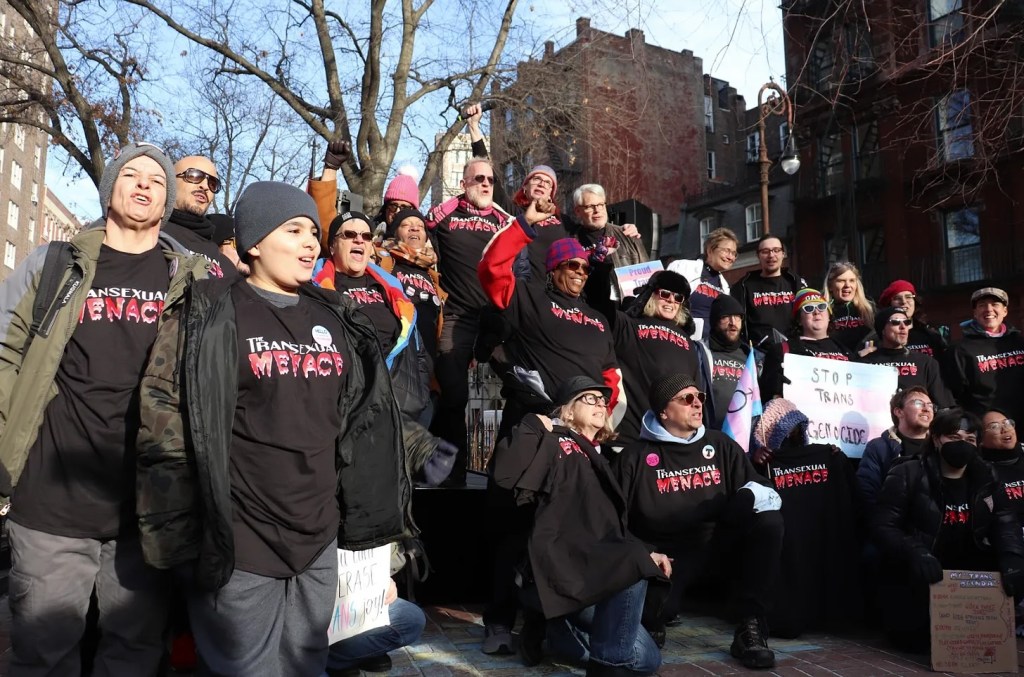

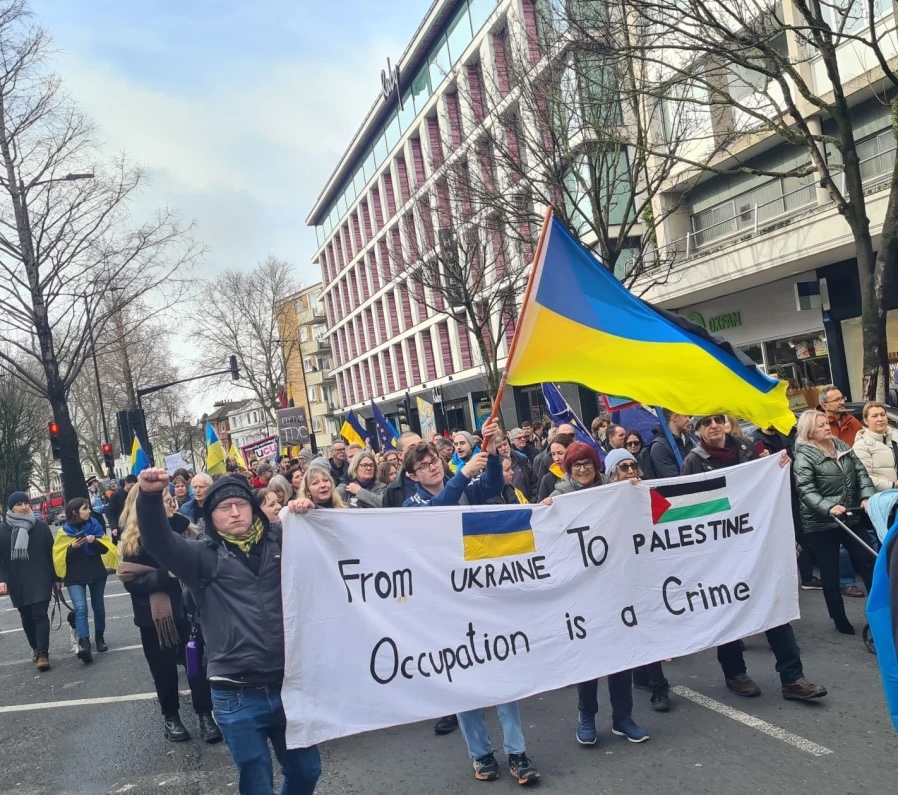
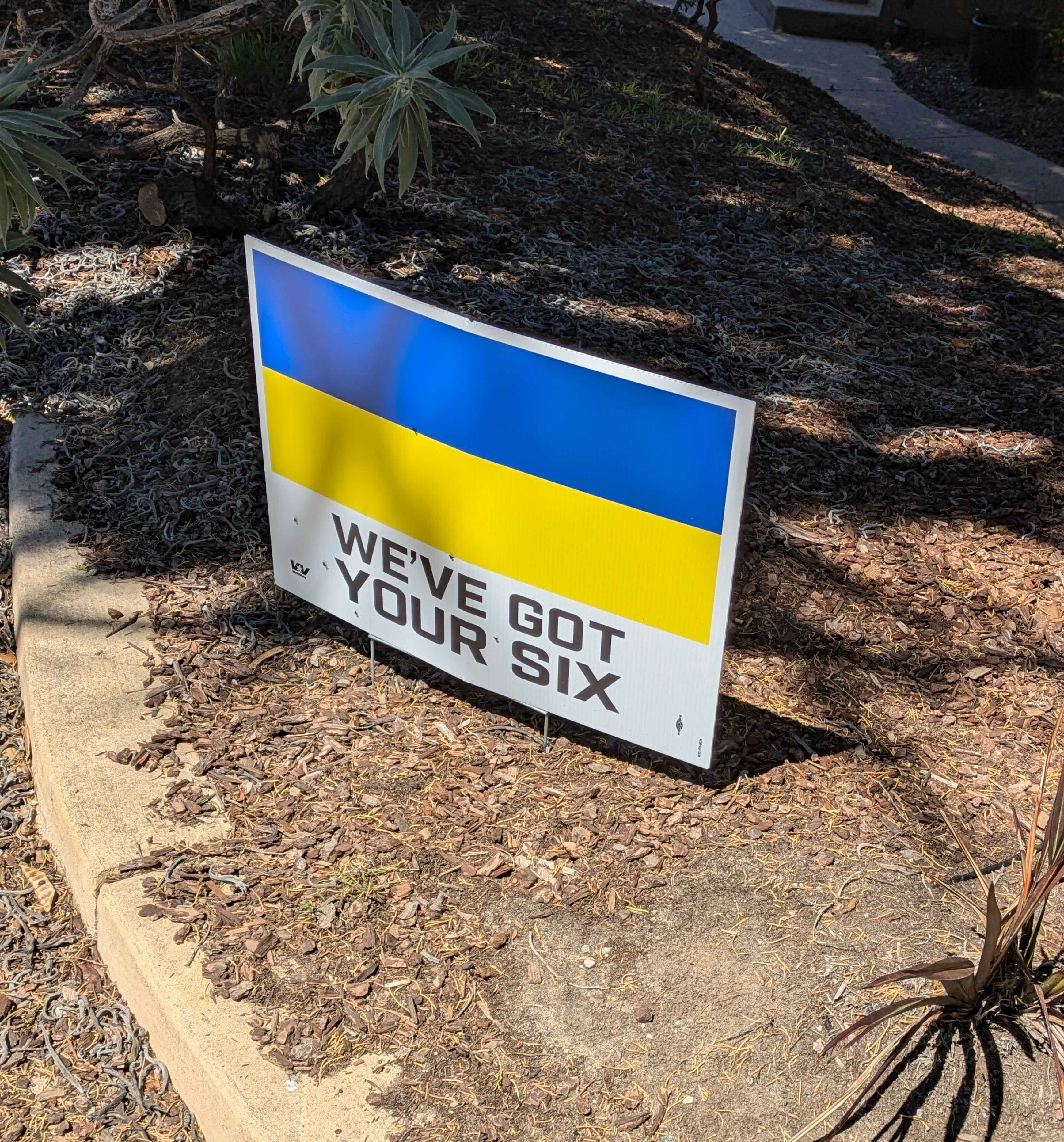


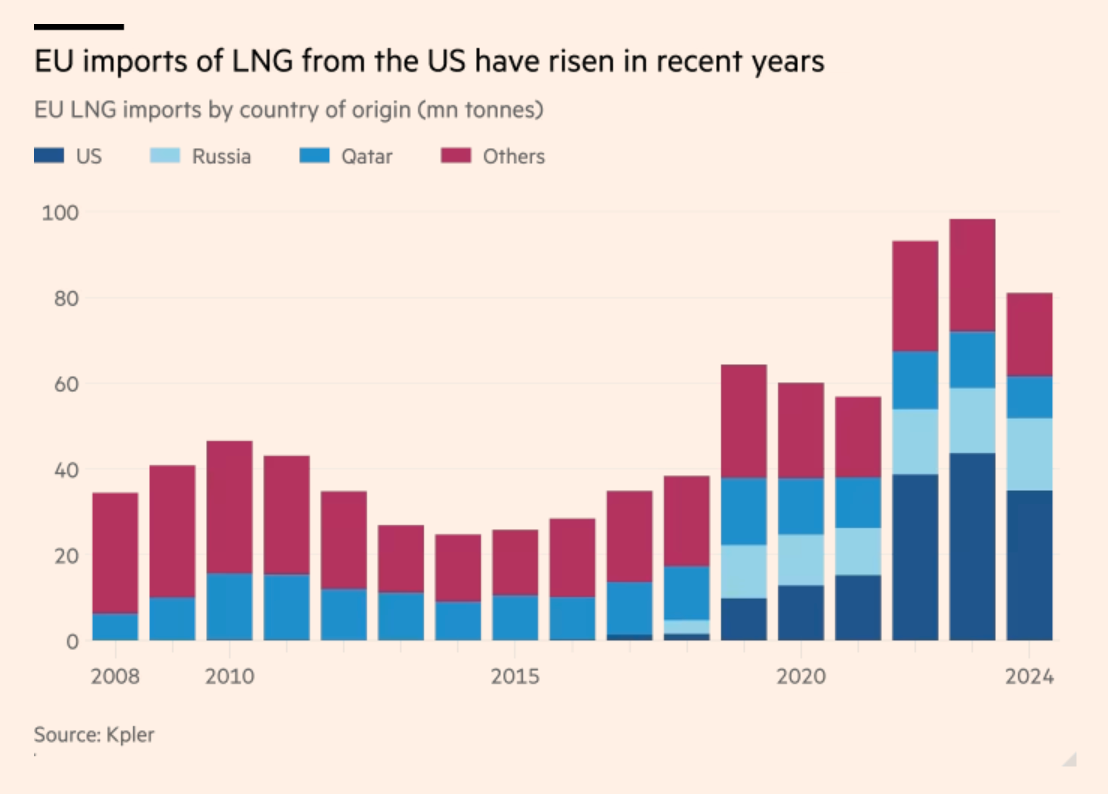
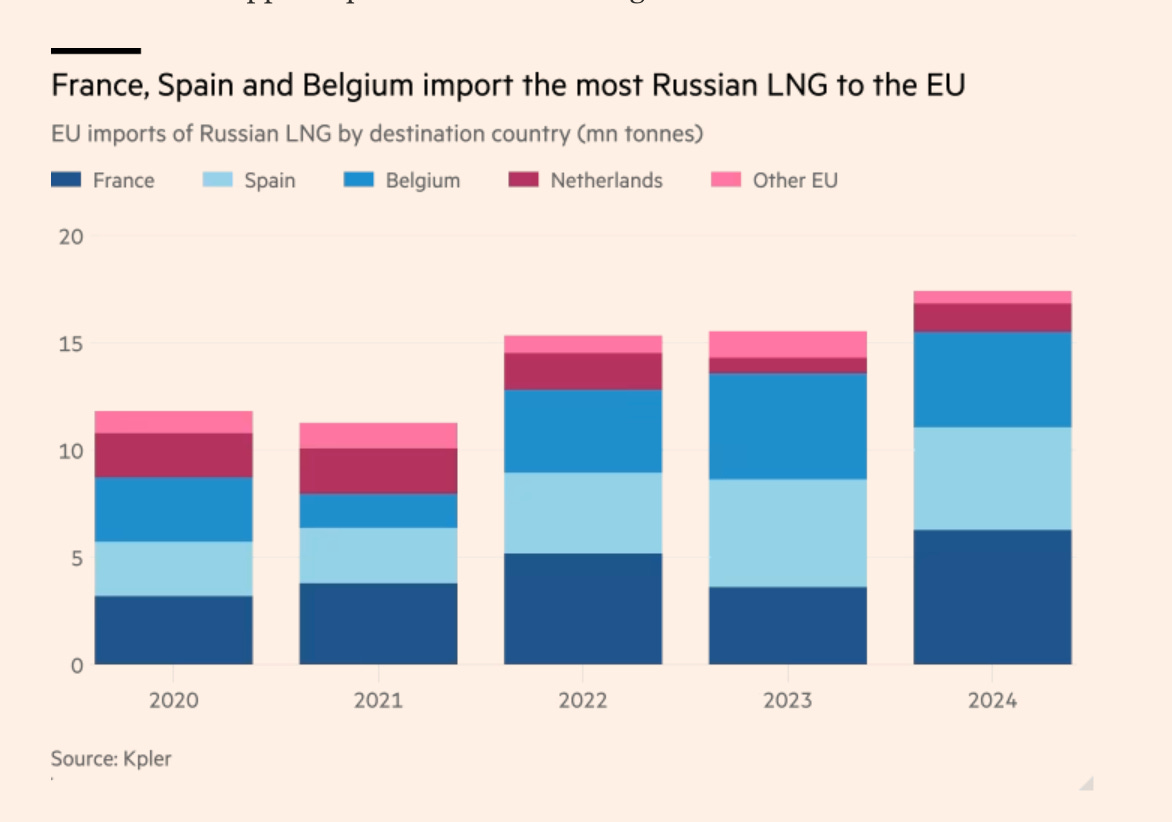


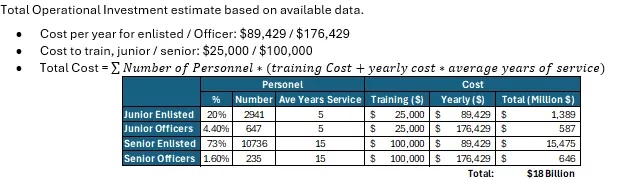
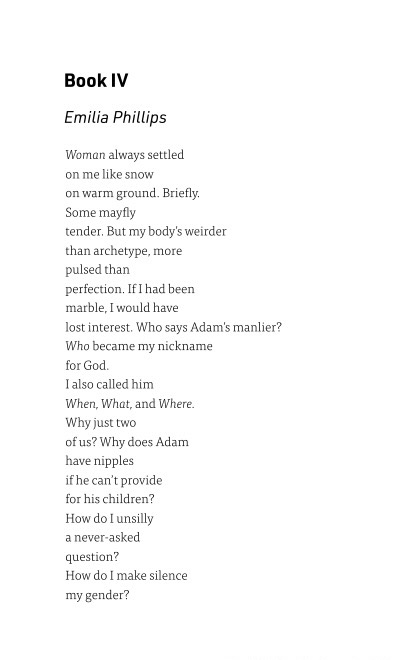
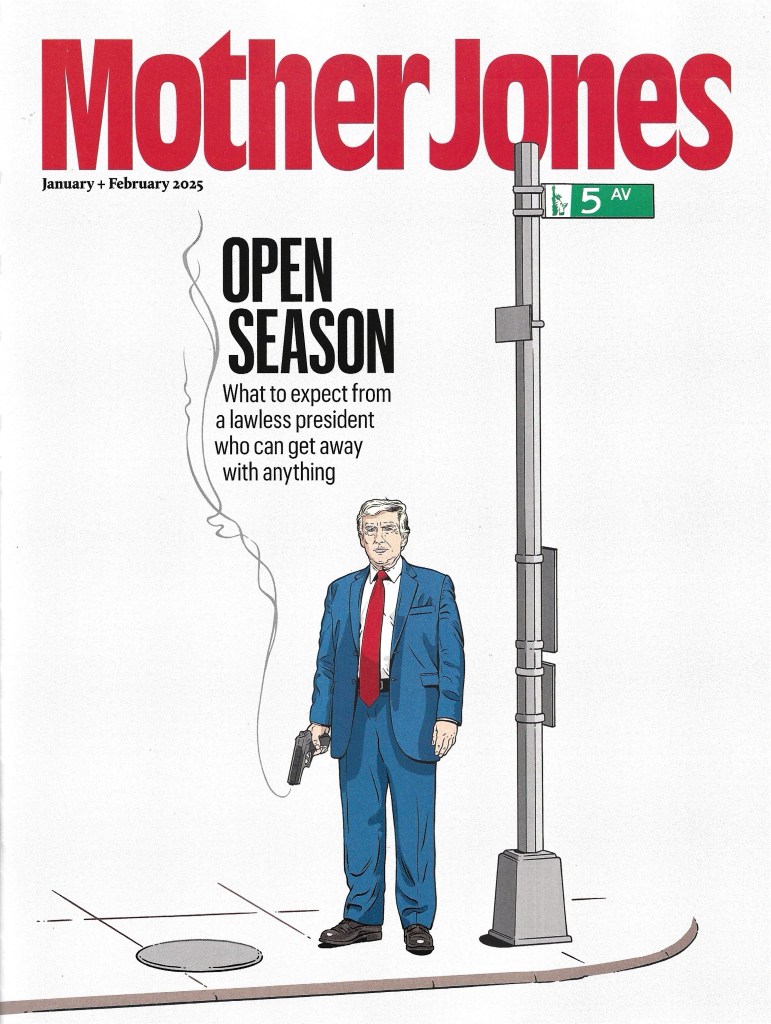
 ] AND CONVICTED FELON MARIA BUTINA? Who doesn’t? Welp, here she is w/ your Daily Irony Supplement — and it’s a massive dose! See, as of Jan. 20 she’ll likely get a pardon and move back Stateside to improve on her spying career (hey, how could she do worse?); but in the meantime, she’s trying to get *Americans* (et al.) to go the *other* way, i.e. move to Moscow — y’know, like Our Guy Ed Snowden & his new roommate, Bashar al-Assad, who just *love* it there, right?