Mia Wasikowska and Xavier Samuel, with Di Adams and Sam Parsonson (lying on the ground) in The Killings at Parrish Station.
For a murder mystery with its beginnings in the red dirt of Broken Hill, you would think The Killings at Parrish Station had its origins in similar real-life scenario. After all, there’s plenty of open space out there in which to hide a body or three.
Instead, the drama’s origins come from somewhere quite different: a frozen Russian mountain and a baffling cold case in which nine experienced hikers mysteriously died in the Ural Mountains in 1959. Was it an avalanche? Misadventure? Or something more sinister? UFOs, missile testing or a government cover-up?
Fast-forward 60 years or so and comedy writer Ben Jenkins is sitting at home in Sydney – during the depths of COVID-19 – digger deeper and deeper into the rabbit holes of the internet when he stumbles across the case known as the Dyatlov Pass incident.
“It’s just a really creepy horrible story,” says Jenkins. “But basically a big search party was launched from them. They found their bodies in really bizarre and kind of inexplicable circumstances. The tent that they were staying in had been cut open, but from the inside, as if somebody was fleeing in terror.
“One of the bodies had injuries that were so traumatic in terms of impact, that it was in line with, like, a car accident. And then there were mutilations and all that sort of stuff.”
But what really interested him was the reaction of his Russian mother-in-law when he told her the story.
“My mother-in-law was like, ‘Dyatlov? But why are you talking about Dyatlov Pass?’” recalls Jenkins. “And she knew all about it, and she’d grown up with this story, and she was telling me how as she got older in the USSR, the story just kept coming back.
“There were like parliamentary hearings, and every now and again, a journalist would go digging, and careers were made or ruined on the back of this thing that happened so long ago. And that was really the seed for this. It was like, ‘How do you tell a story about something that refuses to go away?’”
And so begins The Killings at Parrish Station – not with the deaths of Russian hikers, but with four scientists found murdered in 1987 at an outback research station. The only survivor is delirious and keeps muttering cryptic phrases. Also taking an interest in the deaths is the son of a wealthy mining family, whose uranium mine seems to have links to the station’s radio telescope and a 15th century book called The Bone Gospel.
It’s cosmic and creepy and really gives the crime genre a decent nudge in a very different direction.
“Audiences aren’t stupid,” says Jenkins, who has worked on The Chaser’s election specials and the ABC’s consumer affairs series The Checkout. “And even if they don’t articulate this stuff out loud, they know the shape of a crime realm. They know, ‘OK, we’ve gone from A to B, now we’ve got to go to see [this bit]’, and there’s a point at which that stops becoming comfortable and starts just becoming annoying.
“One of the joys of making this show was we were operating in a really established genre space, in terms of crime investigation, and we were able to use that comfort to surprise people in a way because you use that expectation, you go, ‘No, no, we’re not doing that, you are not watching the show you thought you were watching.’”
Investigating the case is Detective Georgie Cooke and her partner, Michael Thorne. City detectives, they arrive in Broken Hill hot and out of sorts, collars stuck to sweaty necks and confronted with a grisly crime scene. We meet them across two timelines – in 1987, played by Mia Wasikowska and Xavier Samuels – and then in the present, played by Heather Mitchell and Robert Taylor, which is when a copycat killer appears to surface.
“She’s a detective who’s battling her own traumas from the job,” says Wasikowska of her character, Georgia. “And then also from her own life, and so she’s coming into this case with her own baggage.”
The show marks Wasikowska’s first TV role in 18 years after she got her start as a teenager in the splashy HBO drama In Treatment and then followed that with films, such as the indie hit The Kids Are All Right and Tim Burton’s kaleidoscopic live-action version of Alice in Wonderland.
The Killings at Parrish Station is a homecoming for her in more ways than one, as it meant she was able to live and film in the same city for the first time in years.
“As you get older, the idea of going to a film set for two months and being completely removed from your own life here is sort of less appealing,” Wasikowska, 36, says. “So it’s nice to be seeing same people again and working with people again, and the crew as well. Those are the things that I’m interested in, that’s a really nice feeling.”
Parrish Station also marked another screen milestone for Wasikowska: her first time playing a detective.
“I was like, as long as I can put my sunglasses on my head and have a cigarette moment, then I’ll be happy,” she says, laughing. “As long as you can crouch down next to a body with a dictaphone, then I feel like I’ve like ticked off some detective moves.”
And the gory stuff? Parrish Station is filled with bodies in several states of disrepair. “It’s … very effectively disturbing,” she confirms.
Keeping it the appropriate level of disturbing was something Jenkins was keen to do. He didn’t want the murders at the centre of the story treated as pure entertainment, which is why the present-day storyline includes a pointed poke at true-crime podcasts.
“There’s something about treating murder in a very twee way,” says Jenkins. “It’s treating the worst thing that ever happened to people as entertainment, and that was a big starting point for me in this story.
“These true crime podcasters, [in the show are a] case in point. I want to show there is this dreadful traumatic thing that happens, and you’re at the centre of it, and you think, ‘I’ve got to muddle through this, and I’ve got to work out how to keep living after this’, but what you don’t control is 20 years later, people are selling tote bags off the back of it, and turn it into this like fun, almost fictionalised puzzle box.”
Jenkins’ background is in writing sketch comedy for stage and screen. And while that is not an obvious pathway to drama, Jenkins says comedy is what sharpened his drama instincts. After all, it worked for Katie Dippold, a comedy writer who worked on Parks and Recreation before creating the hit show Widow’s Bay, and for Zach Cregger, who wrote and directed the horror films Barbarian and Weapons after getting his start in a sketch comedy troupe.
“You write so much and so much gets thrown away,” says Jenkins. “And you just get really good at living with that. Sketch teaches you to be really economical, because every line has to do about six different things. It also teaches you, I think, a very healthy terror of boring people, especially if you’ve done live sketch. I did that for years, and I think every writer would benefit from doing that.
“Because there is a moment when you’re doing a show, and you know it’s not going very well, and you can see the audience, and you can see somebody in the audience, and their face unmistakably says, ‘I can’t believe we hired a babysitter for this’ and it gives you so much respect for people’s time.”
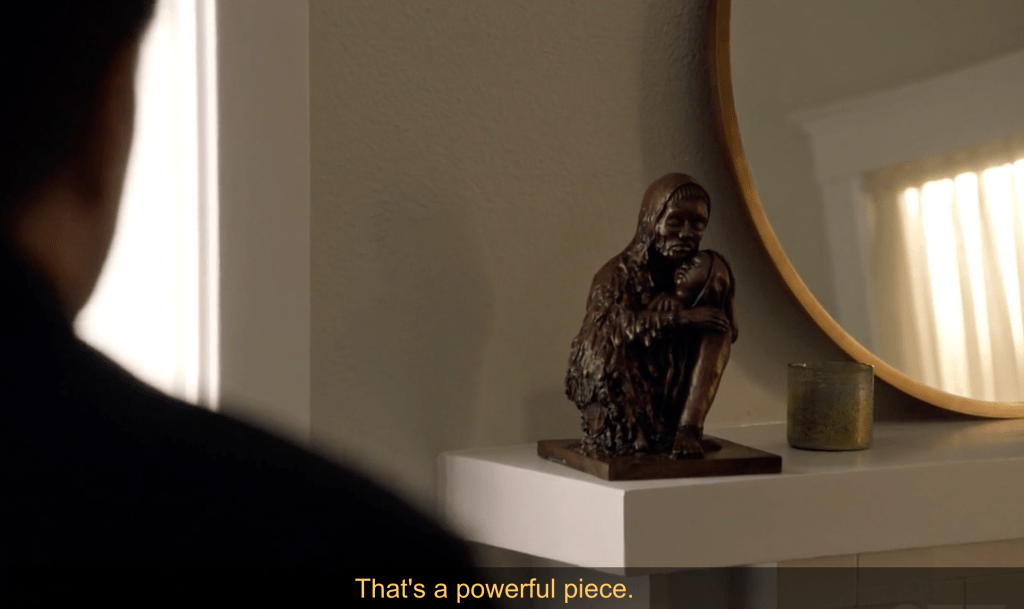
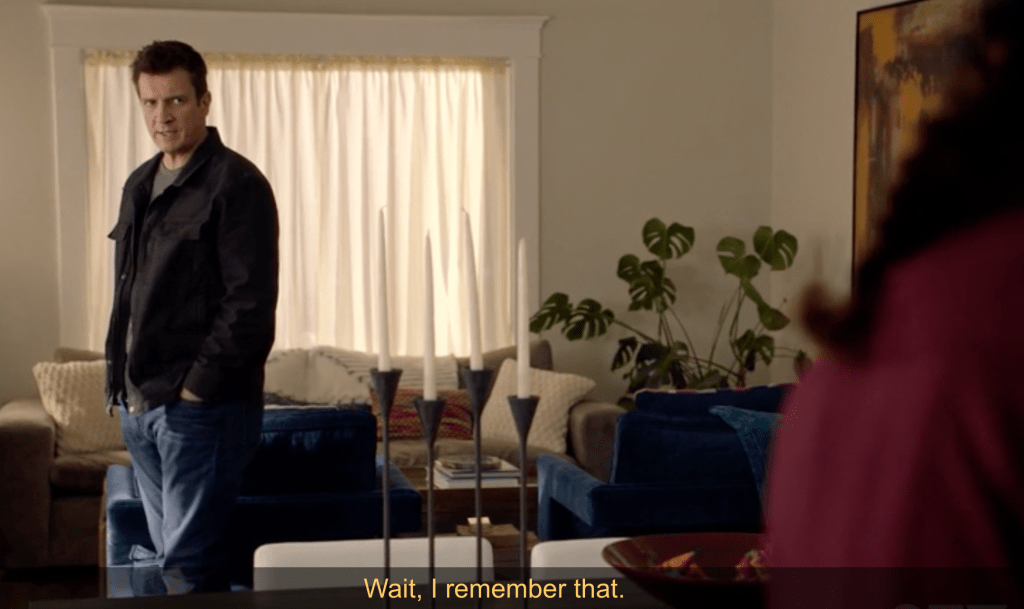
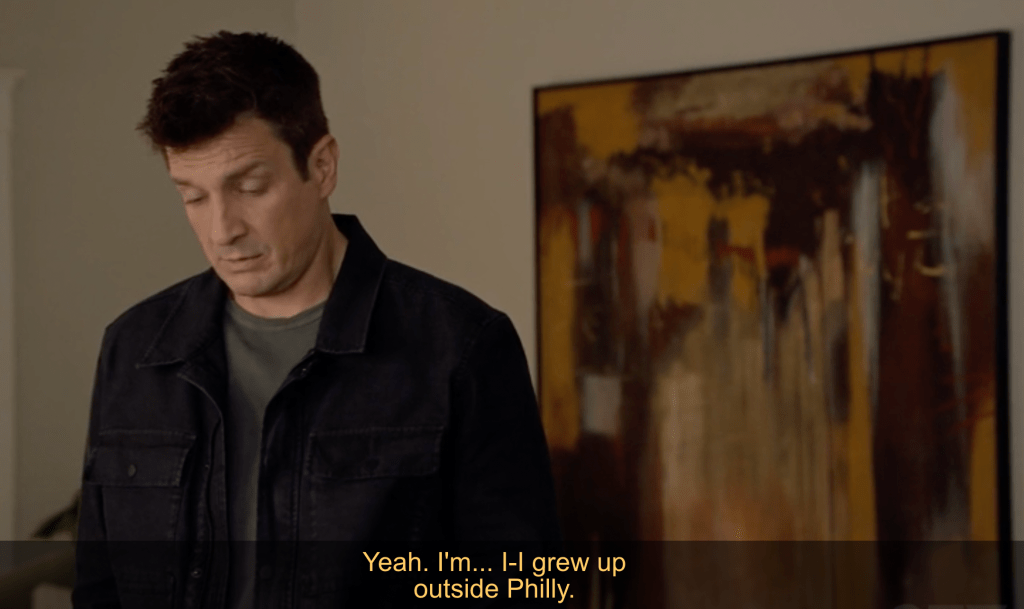
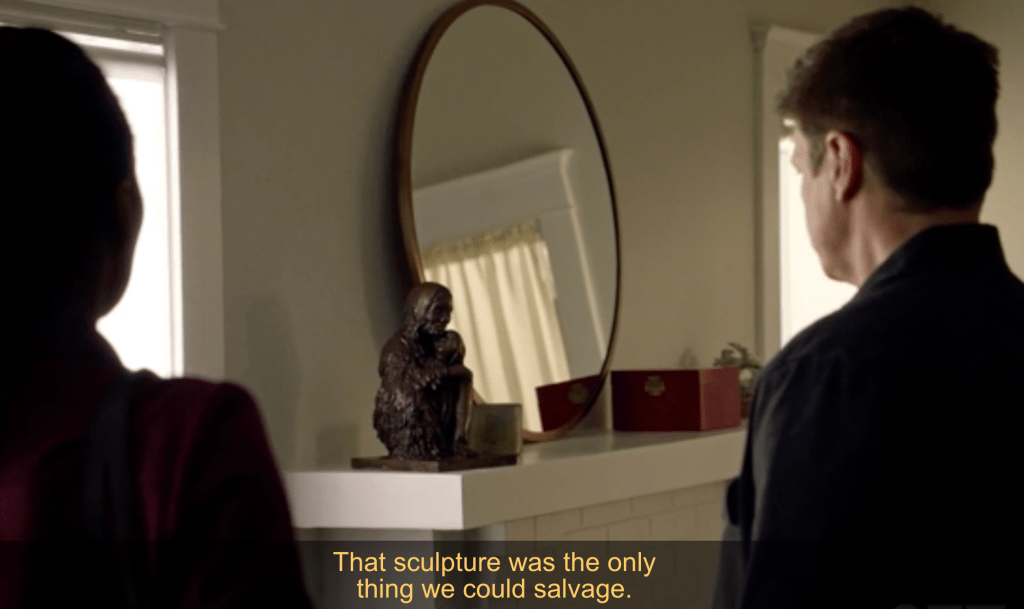
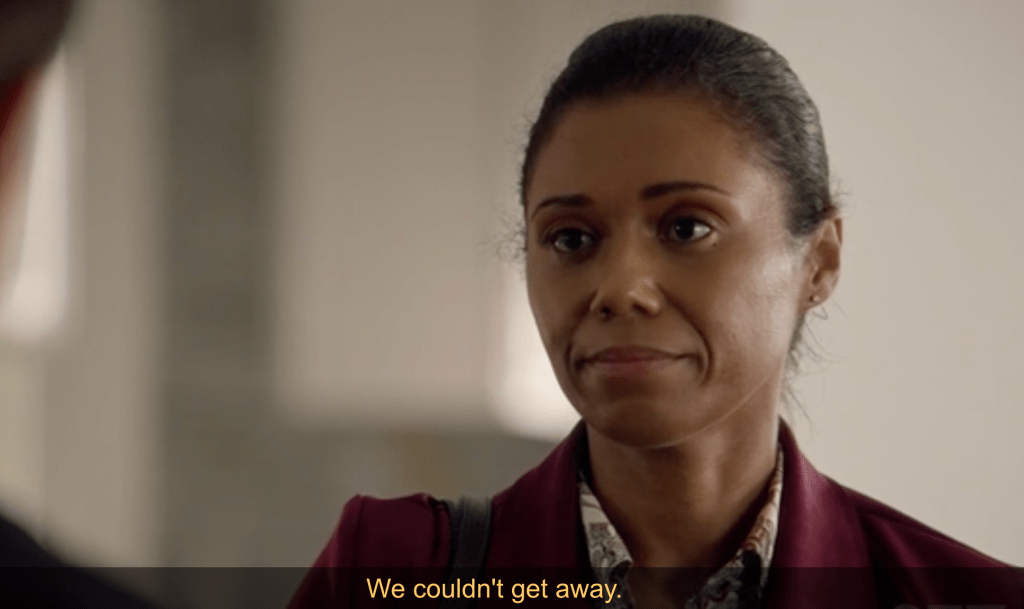
Ben Jenkins’s Russian mother-in-law wasn’t consulted, apparently, on the pronunciation of the cryptically significant Russian word muzjik, which the present-day Detective Georgia Cooke inexplicably pronounces muhz-DJEEK. Stills from The Killings at Parrish Station, S01E01: “Muzjiks”
The world’s end kicks off not with explosions but with alarming news and eerie silence on the streets of Los Angeles. The world is going mad slowly, and Madison Clark (played by Kim Dickens of Gone Girl, House of Cards, and Treme), a school psychologist and mother raising two children, is the first to sense it.
Madison’s new husband, Travis Manawa (played by Cliff Curtis of Training Day, Avatar: The Way of Water, and Invincible), is a teacher trying to build a new life from the ruins of his old one, while also raising his son from a previous marriage. Their mundane problems fade into insignificance when the world order collapses and fear becomes commonplace.
“Victory will be ours” reads the banner on the Russian Embassy in Seoul. Source: Jintak Han/ZUMA/Picture Alliance
On Sunday, 22 February, a fifteen-meter-high banner in the colors of the Russian flag sporting the slogan “Victory will be ours” in Russian appeared on the Russian Embassy’s building in Seoul. The banner was unfurled ahead of the fourth anniversary of Russia’s full-scale war against Ukraine.
The South Korean Foreign Ministry “expressed concerns […] over the large banner,” according to the Yonhap News Agency. The ministry stressed that it could create “unnecessary tensions with South Korean citizens and other countries,” as it is regarded as an allusion to Russia’s war against Ukraine.
Russian Embassy refuses to take down banner
Despite the concerns raised by South Korea’s Foreign Ministry, the Russian Embassy has refused to remove the banner from its building. The banner was hung on the occasion of Diplomatic Workers Day and Defender of the Fatherland Day, according to the Foreign Ministry’s Telegram channel.
“The popular expression on the banner is familiar to all Russians. It is associated with our history, including the mobilization of the Soviet people for victory over Nazi Germany and other glorious chapters of Russian history,” embassy spokespeople underscored. They also claimed that the banner “promotes patriotic consolidation among Russians, and the historical connotations mentioned should not hurt anyone’s feelings.”
Both the pot (Iran) and the kettle (the U.S.) are “rounding up” their detractors.
Trump’s White House website welcomes visitors with a pop-up that reads: “WELCOME TO THE GOLDEN AGE!” But on this heavy news day a year into Trump’s second term, it is increasingly clear that as his regime focuses on committing the United States to white Christian nationalism, the country is becoming increasingly isolated from the rest of the world, and its own economy is weakening.
At the Munich Security Conference over the weekend, Secretary of State Marco Rubio’s endorsement of white Christian nationalism does not appear to have swayed European countries to abandon their defense of democracy and join the U.S.’s slide toward authoritarianism. Instead, as retired lieutenant general and former commander of U.S. Army Europe Mark Hertling wrote, it squandered the strategic advantage its partnership with Europe has given the U.S.
Foreign affairs journalist Anne Applebaum noted that the word in Munich was that “Europe needs to emancipate itself from the U.S. as fast as possible.” In Germany, Der Spiegel reports plans to bring Ukrainian veterans to teach German armed forces drone use and counter-drone practices the Ukrainians are perfecting in their war against Russian occupation. Canada’s prime minister Mark Carney is working to reduce Canada’s defense dependence on the U.S., ramping up domestic defense production.
Carney has advanced a foreign policy that centers “middle powers” and operates without the U.S. That global reorientation has profound consequences for the U.S. economy, as well. Canada is leading discussions between the European Union and a 12-nation Indo-Pacific bloc to form one of the globe’s largest economic alliances. A new agreement would enable the countries to share supply chains and to share a low-tariff system. Canada also announced it is renewing its partnership with China. As of this week, Canadians can travel to China without a visa.
Today France’s president Emmanuel Macron and India’s prime minister Narendra Modi upgraded Indian-French relations to a “Special Strategic Partnership” during a three-day visit of Macron to Mumbai. They have promised to increase cooperation between the two countries in defense, trade, and critical materials.
Trump insisted that abandoning the free trade principles under which the U.S. economy had boomed since World War II would enable the U.S. to leverage its extraordinary economic might through tariffs, but it appears, as economist Scott Lincicome of the Cato Institute wrote today for Bloomberg, that the rest of the world is simply moving on without the U.S.
While Trump boasts about the U.S. stock market, which is indeed up, U.S. markets have underperformed markets in other countries. Today, Carl Quintanilla of CNBC reported that the S&P 500, which measures 500 of the largest publicly traded companies in the U.S., is off to its worst year of performance since 1995 when compared to the All Country World Index (ACWI), an index that measures global stocks.
In May 2023 the Florida legislature passed a law requiring employers with 25 or more employees to confirm that their workers are in the U.S. legally. The new law prompted foreign farmworkers and construction workers to leave the state. Now, the Wall Street Journal reported in a February 6 editorial, employers “are struggling to find workers they can employ legally.”
The newspaper continued: “There’s little evidence that undocumented migrants are taking jobs from Americans. The reality is that employers can’t find enough Americans willing to work in the fields or hang drywall, even at attractive wages. Farm hands in Florida who work year-round earn roughly $47,000, which is more than what some young college graduates earn.” “The lesson for President Trump is that businesses can’t grow if government takes away their workers,” the Wall Street Journal Editorial Board concluded.
Today Florida attorney general James Uthmeier reacted to the Wall Street Journal editorial, explaining on Fox Business that the Republican Party expects to replace undocumented workers with young Americans: “We need to focus on our state college program, our trade schools, getting people into the workforce even earlier. We passed legislation last year to help high school students get their hands dirty and get on job sites more quickly. So I think there’s a lot more we can do with apprenticeships, rolling out, beefing up our workforce, and trying to address the demand that is undoubtedly here in the state.”
Steve Kopack of NBC News reported on February 11 that while the U.S. added 1.46 million jobs in 2024, the last year of former president Joe Biden’s administration, it added just 181,000 jobs in 2025. That makes 2025 the worst year for hiring since 2003, aside from the worst year of the coronavirus pandemic. Manufacturing lost 108,000 jobs in 2025.
Peter Grant of the Wall Street Journal reported today that banks that have loaned money to finance the purchase of commercial real estate are requiring borrowers to pay back tens of billions of dollars as the delinquency rate for such loans has climbed to a high not seen since just after the 2008 financial crisis. About $100 billion in commercial real estate loans that have been packaged into securities will come due this year and probably won’t repay when they should. More than half of the loans are likely headed for foreclosure or liquidation.
Trump vowed that he would cut “waste, fraud, and abuse” out of the country’s government programs, but cuts to social programs have been overwhelmed by spending on federal arrest, detention, and deportation programs, as well as Trump’s expansion of military strikes and threats against other countries. In his first year back in office, Trump launched at least 658 air and drone strikes against Iraq, Somalia, Iran, Yemen, Syria, Nigeria, and Venezuela.
Just today, U.S. Southern Command announced it struck three boats in the eastern Pacific and the Caribbean yesterday and killed 11 people it claims were smuggling drugs, bringing the total of such strikes to more than 40 and the number of dead to more than 130. Now Trump is moving American forces toward Iran, threatening to target the regime there.
The administration is simply tacking the cost of these military adventures onto government expenditures, apparently still maintaining that the tax cuts for the wealthy and corporations Republicans extended in their July “One Big Beautiful Bill Act” and tariffs will address the growing deficit and national debt by increasing economic growth.
The nonpartisan Congressional Budget Office (CBO) last week projected that the deficit for the fiscal year ending September 30, 2026, will be $1.85 trillion. Richard Rubin of the Wall Street Journal notes that for every dollar the U.S. collects this year, it will spend $1.33. The CBO explained that the Republican tax cuts will increase budget deficits by $4.7 trillion through 2035.
If the American people have suffered from Trump’s reign, the Trump family continues to cash in. Today Trump’s chair of the Commodity Futures Trading Commission, Michael Selig, announced he will try to block states from regulating prediction markets, saying they “provide useful functions for society by allowing everyday Americans to hedge commercial risks like increases in temperature and energy price spikes.”
Republicans insist that prediction markets are more like stock trading than like betting, but a group of over 20 Democratic senators warned last week in a letter to Selig that prediction market platforms, where hundreds of millions of dollars are wagered every week, “are offering contracts that mirror sportsbook wagers and, in some cases, contracts tied to war and armed conflict.” They added that the platforms “evade state and tribal consumer protections, generate no public revenue, and undermine sovereign regulatory regimes,” and urged Selig to support regulations Congress has already put into law.
Prediction markets also cover the actions of President Trump, whose son Don Jr. is both an advisor to and an investor in Polymarket and a paid advisor to Kalshi. Polymarket and Kalshi are the two biggest prediction markets, and both are less regulated than betting sites. The Trump family has announced it is starting its own “Truth Predict.”
David Uberti of the Wall Street Journal reported that Eric Trump is investing heavily in drones, particularly in Israeli drone maker Xtend, which has a $1.5 billion deal to merge with a small Florida construction company to take the company public. The Defense Department has invited Xtend to be part of its drone expansion program.
And yet it is clear the administration fears the American people. The Minnesota Bureau of Criminal Apprehension (BCA), a statewide program that specializes in police shootings, said yesterday that it has received formal notice that the Federal Bureau of Investigation (FBI) will not allow it any “access to information or evidence that it has collected” related to the shooting death of Minneapolis intensive care nurse Alex Pretti. The BCA says it will continue to investigate and to pursue legal avenues to get access to the FBI files.
Fury at ICE continues to mount, with voices from inside the government complaining about Homeland Security Secretary Kristi Noem. Gordon Lubold, Courtney Kube, Jonathan Allen, and Julia Ainsley of NBC News reported today on her alienation of senior officials at the Coast Guard as she has shifted their primary mission of search and rescue to flying deportation flights. Noem’s abrupt removal of Coast Guard commandant Linda Fagan only to move into her vacated housing at Joint Base Anacostia-Bolling herself also rankled, along with Noem’s lavish use of expensive Coast Guard planes.
Daniel Lippman and Adam Wren of Politico reported today that Noem’s spokesperson, Tricia McLaughlin, is resigning.
Marissa Payne of the Des Moines Register reported today that in Iowa, Republican state lawmakers are working to rein in the power of the state governor before the 2026 elections, a sure sign that they are worried that a Democrat is going to win the election.
That fear appears to be part of a larger concern that the American people have turned against the Republicans more generally. Last night, late-night talk show host Stephen Colbert told viewers he had been unable to air an interview he did with a Democratic candidate for the U.S. Senate from Texas, James Talarico. “I was told…that not only could I not have him on, I could not mention me not having him on,” Colbert said. “And because my network clearly doesn’t want us to talk about this, let’s talk about this.”
Talarico is a Texas state lawmaker studying to be a minister, who criticizes the Republican use of Christianity as a political weapon. Such politicization of Christianity both distorts politics and cheapens faith, he says. The true way to practice Christianity is simple but not easy, he says: it is to love your neighbor. Political positions should grow out of that to feed the hungry, welcome the stranger, and heal the sick. “[T]here is nothing Christian about Christian nationalism,” he told Colbert. “It is the worship of power in the name of Christ, and it is a betrayal of Jesus of Nazareth.”
Although Talarico is locked in a tight primary battle with Representative Jasmine Crockett, his message offers a powerful off-ramp for evangelicals uncomfortable with the administration, especially its cover-up of the Epstein files. Without evangelical support, MAGA Republicans cannot win elections.
Talarico has the administration nervous enough that Federal Communications Commission (FCC) chair Brendan Carr opened an investigation of the morning talk show The View after Talarico appeared on the show earlier this month. Lawyer Adam Bonin explained that Carr changed the FCC’s enforcement of the Equal Time Rule (which is not the Fairness Doctrine). It says that when broadcast networks (not cable) give air time to someone running for office, they have to give the same time to any other candidate for that office. The obvious exception is when a candidate does something newsworthy outside the race, in which case a network can interview that person without interviewing everyone else.
For 20 years, that rule has applied to talk shows, but Carr announced last month that if a non-news talk show seems to be “motivated by partisan purposes,” then it will not be exempt. For Colbert’s show, it would have meant that after interviewing Talarico, the network would have had to give equal time to all other Democrats and Republicans running for the Senate seat. CBS could have challenged the rule but chose not to.
Why is the administration worried about Talarico in a state Trump won in 2024 by 14%? “I think that Donald Trump is worried that we’re about to flip Texas,” Talarico said. “Across the state there is a backlash growing to the extremism and the corruption in our politics…. It’s a people-powered movement to take back our state and take back our country.”
As of 10:00 tonight, Colbert’s 15-minute interview with Talarico has been viewed on YouTube 3.8 million times. Forbes says it is Colbert’s most watched interview in months.
The Late Show with Stephen Colbert, “Rep. James Talarico On Confronting Christian Nationalism, And Strange Days In The Texas Legislature”
Stephen Colbert hosts Texas State Rep. James Talarico for an online-exclusive interview that touches on the issues raised in Talarico’s campaign for the Democratic nomination for Senate including the separation of church and state, the dangers of consolidated corporate-owned media, and the fabricated culture wars pushed by Republicans in states like Texas.
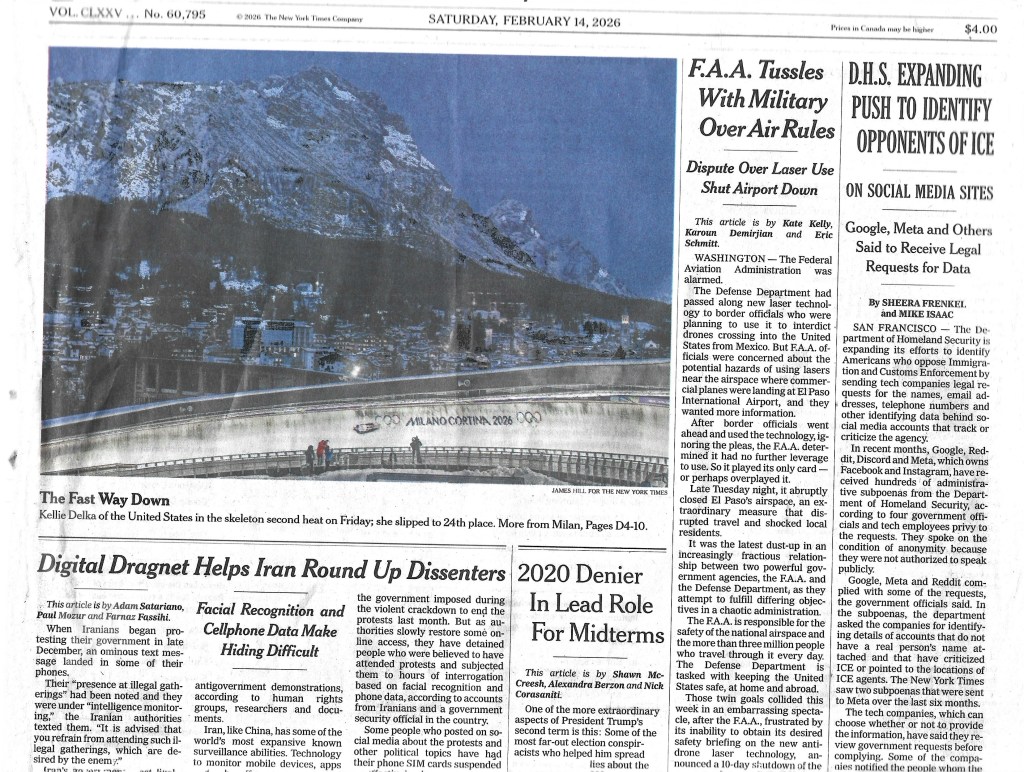
The Department of Homeland Security is expanding its efforts to identify Americans who oppose Immigration and Customs Enforcement by sending tech companies legal requests for the names, email addresses, telephone numbers and other identifying data behind social media accounts that track or criticize the agency.
In recent months, Google, Reddit, Discord and Meta, which owns Facebook and Instagram, have received hundreds of administrative subpoenas from the Department of Homeland Security, according to four government officials and tech employees privy to the requests. They spoke on the condition of anonymity because they were not authorized to speak publicly.
Google, Meta and Reddit complied with some of the requests, the government officials said. In the subpoenas, the department asked the companies for identifying details of accounts that do not have a real person’s name attached and that have criticized ICE or pointed to the locations of ICE agents. The New York Times saw two subpoenas that were sent to Meta over the last six months.
The tech companies, which can choose whether or not to provide the information, have said they review government requests before complying. Some of the companies notified the people whom the government had requested data on and gave them 10 to 14 days to fight the subpoena in court.
“The government is taking more liberties than they used to,” said Steve Loney, a senior supervising attorney with the American Civil Liberties Union of Pennsylvania. “It’s a whole other level of frequency and lack of accountability.” Over the last six months, Mr. Loney has represented people whose social media account information was sought by the Department of Homeland Security.
The department said it had “broad administrative subpoena authority” but did not address questions about its requests. In court, its lawyers have argued that they are seeking information to help keep ICE agents in the field safe.
Meta, Reddit and Discord declined to comment.
“When we receive a subpoena, our review process is designed to protect user privacy while meeting our legal obligations,” a Google spokeswoman said in a statement. “We inform users when their accounts have been subpoenaed, unless under legal order not to or in an exceptional circumstance. We review every legal demand and push back against those that are overbroad.”
The Trump administration has aggressively tried tamping down criticism of ICE, partly by identifying Americans who have demonstrated against the agency. ICE agents told protesters in Minneapolis and Chicago that they were being recorded and identified with facial recognition technology. Last month, Tom Homan, the White House border czar, also said on Fox News that he was pushing to “create a database” of people who were “arrested for interference, impeding and assault.”
Silicon Valley has long had an uneasy relationship with the federal government and how much user information to provide it. Transparency reports published by tech companies show that the number of requests for user information from different governments around the world has climbed over the years, with the United States and India among those submitting the most.
Some social media companies previously fought government requests for user information. In 2017, Twitter (now X) sued the federal government to stop an administrative subpoena that asked it to unmask an account critical of the first Trump administration. The subpoena was later withdrawn.
Unlike arrest warrants, which require a judge’s approval, administrative subpoenas are issued by the Department of Homeland Security. They were only sparingly used in the past, primarily to uncover the people behind social media accounts engaged in serious crimes such as child trafficking, said tech employees familiar with the legal tool. But last year, the department ramped up its use of the subpoenas to unmask anonymous social media accounts.
In September, for example, it sent Meta administrative subpoenas to identify the people behind Instagram accounts that posted about ICE raids in California, according to the A.C.L.U. The subpoenas were challenged in court, and the Department of Homeland Security withdrew the requests for information before a judge could rule.
Mr. Loney of the A.C.L.U. said avoiding a judge’s ruling was important for the department to keep issuing the subpoenas without a legal order to stop. “The pressure is on the end user, the private individual, to go to court,” he said.
The Department of Homeland Security also sought more information on the Facebook and Instagram accounts dedicated to tracking ICE activity in Montgomery County, Pa., outside Philadelphia. The accounts, called Montco Community Watch, began posting in Spanish and English about ICE sightings in June and, over the next six months, solicited tips from their roughly 10,000 followers to alert people to the locations of agents on specific streets or in front of local landmarks.
On Sept. 11, the Department of Homeland Security sent Meta a request for the name, email address, post code and other identifying information of the person or people behind the accounts. Meta informed the two Instagram and Facebook accounts of the request on Oct. 3.
“We have received legal process from law enforcement seeking information about your Facebook account,” the notification said, according to court records. “If we do not receive a copy of documentation that you have filed in court challenging this legal process within ten (10) days, we will respond to the requesting agency with information.”
The account owner alerted the A.C.L.U., which filed a motion on Oct. 16 to quash the government’s request. In a hearing on Jan. 14 in U.S. District Court for the Northern District of California, the A.C.L.U. argued that the government was using administrative subpoenas to target people whose speech it did not agree with.
Sarah Balkissoon, a Department of Justice lawyer representing the government, said the Department of Homeland Security’s position was that it was “within their power to investigate threats to its own officers or impediments to their officers,” according to a court transcript viewed by The Times.
Two days later, the subpoena was withdrawn.
The Montco Community Watch accounts continue to post almost every day. The Times emailed a request for comment to the address associated with the accounts but did not receive a reply.
On Monday, the Instagram account posted an alert for ICE activity in the Eagleville area of Montgomery County. “Montco ICE alert,” the post said. “This is confirmed ICE activity.”
On Friday, the account posted a video of students at Norristown Area High School protesting against ICE. “We stand with you and are proud you made your voices heard!” the post said.
It’s one of the saddest hit songs to grace American music: “Deportee (Plane Wreck at Los Gatos).”
The 1948 Woody Guthrie composition documented a plane crash that killed all 32 people on board in Los Gatos Canyon near the Central Valley town of Coalinga on Jan. 28 of that year. Twenty-eight of the victims were Mexicans being forced back home — some entered the country without papers, some were guest workers whose stints were over — accompanied by the immigration agent charged with making sure they got there, much like the deportation flights of today.
The Associated Press reported that newspapers published across the country the following day — including The Times — listed the names of the Southern California crew on board and the migra man, Frank E. Chaffin of Berkeley.
The Mexicans? The story deemed them “deportees.” They were buried in a mass grave at Holy Cross Cemetery in Fresno under a bronze marker that read: “28 Mexican citizens who died in an airplane accident.” The American government never even bothered to tell their family members. Many wondered what happened to their loved ones for decades.
Guthrie heard the AP report over the radio and was so angered by how the press and government dismissed the deceased that he penned “Deportee.” With mournful chords and vivid lyrics, the working class troubadour attacked an American society that that simultaneously let crops rot “in their creosote dumps” and treated the migrants who picked them “like rustlers, like outlaws, like thieves.”
It’s been covered by some of this country’s greatest musicians — I’m talking Dolly Parton, Bruce Springsteen, Johnny Cash and Willie Nelson (my favorite version is by folk-rock heroes The Byrds).
The Byrds, “Deportee (Plane Wreck at Los Gatos)” (1969)
Even with “Deportee,” this story had fallen out of public consciousness over the decades. Until January, when ICE dredged it up to once again insult the memory of the lost Mexican immigrants.
ICE’s inexplicable recap
On Jan. 28, the social media accounts of Immigration and Customs Enforcement commemorated Chaffin’s death and only his. The caption alongside a grainy black and white photo of him read: “The plane he was on to deport 28 illegal Mexican aliens caught fire and crashed killing all onboard.”
ICE’s unnecessarily inflammatory language not only was ahistorical, but also it didn’t even match up with its own official account. The agency’s Wall of Honor, which commemorates the lives of employees who died in the line of duty, described the migrants who died alongside Chaffin as “Mexican nationals.”
Such warping of the past isn’t accidental but rather part of a long con by the Trump administration to justify its agenda. In an administration that knows no lows, dismissing the Mexican victims of the Los Gatos Canyon disaster as “illegal Mexican aliens” was particularly egregious.
‘It’s disrespectful, it’s dehumanizing, it’s ICE’
I called up Mike Rodriguez, an ethnic studies teacher in Santa Ana who found out in 2015 that his paternal aunt, María Rodríguez Santana, was on that doomed plane.
“First thing I thought was, ‘Well that’s the United States,’” Rodriguez said of ICE’s social media post. “They’re doing the same thing that the government tried to do in 1948 by erasing them.”
He added that la migra didn’t even bother to list the names of the American crew that died, either. “It’s disrespectful, it’s dehumanizing, it’s ICE,” he said.
But Rodriguez takes solace in knowing he and others are doing their part to make sure people know the full story. He regularly speaks about the tragedy and visited both the site of the crash and Holy Cross Cemetery, where a plaque with all of the victims’ names was erected in 2013.
Tim Z. Hernandez, a University of Texas El Paso professor who has spent much of his career trying to track down descendants, interviewed Rodriguez and his uncle for a forthcoming documentary and also featured their story in the 2024 book”They Call You Back: A Lost History, A Search, A Memoir.” The two appeared at an event last year at the Untold Story bookstore in Anaheim, where Rodriguez sung “Deportee” while his son played guitar. He added extra lyrics to honor his Tía María and Hernandez.
“Thankfully, we have truth tellers like Woody Guthrie and Tim,” Rodriguez said. “And I remember what Woody sang — ‘All you fascists bound to lose.’ And that’s the way this is administration is, trying to strip away our constitutional rights. But their day will come.”
Despite its equestrian-themed title, misfit-spies motif and occasional reference to “Moscow rules,” Peacock’s new espionage thriller “Ponies” has little in common with Apple TV+‘s “Slow Horses.” Set in Cold War Moscow, “Ponies” falls, intriguingly and occasionally uneasily, somewhere between FX’s “The Americans” and underappreciated female-empowerment comedy film “The Spy Who Dumped Me.”
Which is not surprising since it was created by Susanna Fogel and David Iserson, co-writers of “The Spy Who Dumped Me,” which the former directed and the latter executive produced.
Opening with an attempt to extract a CIA asset from the clutches of the KGB, the series centers on Moscow’s American Embassy circa 1977 (with a soundtrack and brief glimpses of a young George H.W. Bush and, later, Elton John, to prove it).
As the American operatives engage in the obligatory shoot-‘em-up car chase, two women meet in a market. Though they are each less than thrilled with their almost nonexistent lives as wives of envoys to the associate of the U.S. ambassador (i.e. the spies from the opening sequence), their contrasting attitudes and sparky, odd-couple chemistry is immediately, and a bit ham-handedly, established.
Polite, rule-following and Russian-fluent Bea (Emilia Clarke) believes her husband, Chris (Louis Boyer), when he lovingly assures her that this posting will be over in a few years and soon she will be putting her unidentified Wellesley degree to better use. (Note to whoever wrote the Peacock press notes: A Wellesley degree does not make a woman “overeducated.”)
Tough-talking, streetwise Twila (Haley Lu Richardson) is not so deferential or deluded; she pushes Bea to face down an unscrupulous Russian egg merchant with profanity-laden elan. Unsurprisingly, her marriage to Tom (John Macmillan) is more than a little rocky.
Still, when their husbands die, ostensibly in a plane crash, Bea and Twila are grief-stricken — they have lost not only their husbands but their careers as foreign service wives.
Back in the U.S., Bea is bucked up by her Russian, Holocaust-surviving grandmother (the always welcome Harriet Walter), while Twila realizes she fled her hardscrabble Indiana background for good reason.
Determined to find out what really happened to their husbands, the two return to Moscow and confront station head Dane Walter (Adrian Lester), convincing him that their status as wives — the ultimate Persons of No Interest, or “PONI” in spy parlance — offers the perfect cover.
Ignoring the historical fact that both countries have long had female undercover operatives, Dane decides (and convinces then-outgoing CIA head Bush, played by Patrick Fabian) that Russia would never consider two women (including, you know, one fluent in Russian) a threat and, by the middle of the first episode, we’re off.
Reinstalled as secretaries, Bea’s mission is to get close to new asset Ray (Nicholas Podany), Twila’s to … be a secretary. She, of course, decides to become more involved, enlisting the aid of Ivanna (Lili Walters), an equally tough market merchant.
Everything gets immediately more complicated, and dangerous, when Bea catches the eye of Andrei (Artjom Gilz), a murderous KGB leader who may be able to lead the CIA to the surveillance facility that Chris and Tom were trying to find when they died.
Clarke, returning to TV for her biggest role since her career-making turn as Daenerys Targaryen in “Game of Thrones,” is the obvious headliner. And in early episodes she does, in fact, carry the series, evoking, with as much realism as the relatively light tone of the writing will allow, a woman whose self-knowledge and self-confidence have eroded after she was sidelined into the role of wife.
Richardson, who many will remember as Portia, long-suffering assistant to Tanya (Jennifer Coolidge) in Season 2 of “The White Lotus,” is given the opposite task. Twila is, in Hollywood parlance, a “firecracker” — you know, the tough-talking dame who inevitably nurses a wounded heart. While drafting Bea as a spy makes a certain amount of sense, Twila’s skill set, as she is told, is being “fearless.” Her real talent, however, turns out to be standing up for “ordinary women,” including a string of prostitutes, murdered and forgotten.
Since neither woman receives the kind of training even most fictionally drafted civilian spies get in these kinds of stories, Bea and Twila are forced to rely on their wits, and the yin-yang balance of their good girl/tough girl relationship.
This makes for some great banter and fish-out-of-water moments, but it muddies the tone — are they being taken seriously as spies or not? — and requires significant suspension of belief (as does the Moscow setting created by Budapest; everyone keeps talking about how cold it is, but it never seems that cold). Fortunately, compared with their professional counterparts in most espionage dramas, the career agents on both sides appear, at least initially, to be quite limited in their spy craft as well.
An emerging plotline involving sex tapes and blackmail adds all sorts of tensions, as well as historical accuracy, and, as things get rolling, the spies become sharper and the notion of surveillance grows increasingly complicated and tantalizing.
Still, “Ponies” is obviously less interested in the granular ins and outs of gadgets, codes and dead drops than it is in the personal motivations of those involved and the moral morass that is the Cold War. “You came to Moscow to find truth?” an asset scoffs.
The cast is uniformly strong, the performances solid and engaging (Walter’s Russian grandma reappears midway through to show everyone how it’s done). If “Ponies” takes almost half of its eight-episode season to equal the sum of its parts, Fogel, who also co-wrote “Booksmart,” is a master spinner of female friendship, and Clarke and Richardson make it impossible not to instantly recognize, and connect with, Bea and Twila.
Their chemistry, and the absurdity of their situation, propels the story over any early “wait, what?” bumps and confusing tonal shifts into an increasingly propulsive and cohesive spy drama, with plenty of “trust no one” twists and turns, and the kind of period detail that would make “Mad Men” proud. (OK, yes, I am old enough to have tried the shampoo “Gee Your Hair Smells Terrific.”)
Fortunately, even as it moves with increasing assurance into “Tinker, Tailor” territory, “Ponies” remains a story of love. Which, as spies know only too well, can exist only when you accept, and share, the real truth about yourself. With a cliff-hanging ending, “Ponies” is betting that Bea and Twila will get another season to find their truths, even in Moscow.
“The Shot Glass Beer Bar.” And what’s wrong with this picture? Another still from S1E1 of “Ponies”
The ryumochnaya is a purely Soviet phenomenon. It is a special snack bar in a Spartan format. It specialized in strong alcoholic drinks, with sandwiches served as appetizers or snacks. At some point, these “snack bars” turned out to be a form of “cultural recreation” available to most Soviet people.
“Men who usually drank port by their building entrances, like revolutionaries who gathered for a meeting in the basement or under a painted wooden mushroom figure on a children’s playground, could now go to a proper establishment, knock back a shot and intelligently [sic] have a bite of sandwich as a snack. Such a thing was not even dreamt of at that time,” journalist Leonid Repin wrote in ‘Stories about Moscow & Muscovites throughout time’.
The first USSR shot bars opened in Moscow in 1954. According to Moscow historian Alexander Vaskin, this was a political move by the new head of state, first secretary of the CPSU Central Committee Nikita Khrushchev. He had to quickly win the people’s love and authority.
“The idea to open shot bars in Moscow was not just good — it was fantastic! By creating a network of shot stores, the Party and the government showed great care for the health of the people and their cultural leisure,” Leonid Repin wrote.
They were designed to make lovers of liquor and vodka products more “cultured”, so that they did not drink in public places. But, some places became a refuge for citizens who could not find a place for themselves in the post-war USSR.
“At the corner of Mayakovskaya and Nekrasova streets [in Leningrad – ed.], there was a terrible drinking parlor full of legless invalids. It smelled of damp sheepskin, misery, shouting, fighting… it was a terrible post-war shot bar. There was a feeling that the people were deliberately made drunk there – all those ‘stumps’, ‘crutches’, former officers, soldiers, sergeants. They couldn’t find a way to keep these people warm and busy and this was one of the ways out,” writer Valery Popov speculated.
Cheap and cheerful
They poured vodka, port wine, liqueurs, wine and cognac in shot bars. Each shot was served with a modest snack – a sandwich with sausage, cheese, eggs, herring or sprat. There were four sprats on a sandwich, which was supposed to go with a 100 ml shot.
“There was only one inconvenience: after one drink, I wanted to drink some more and I had already had more than enough sandwiches. In general, it all happened like this: men stood there, knocking over shot after shot while making the ‘Leaning Tower of Pisa’ out of piles of sandwiches,” recalled Repin.
There were no tables or waiters in shot bars. Visitors lined up, received simple orders from the barmaid and then went to the bar tables.
Soviet writer and publicist Daniil Granin described a shot bar: “This is a glorious place – the smell of vodka, cigarettes, only men and without the forced drunkenness of bars, without molestation, sticky lingering conversations. Drank a shot, ate a sandwich, quickly and delicately.”
Simplicity implied low prices, so almost any citizen could afford to go to a shot bar. Prices and sandwich varieties were the same throughout the Soviet Union, recalls Alexander Vaskin.
“Prices were just kopecks. Everything happened in silence, with a sense of dignity. You drink up and then move on home or to see somebody or to the Philharmonic,” St. Petersburg historian Lev Lurie describes the advantages of a shot bar.
Overheard over a shot of vodka
In general, the visitors of such places were mostly decent.
“A factory worker and a journalist, an engineer and a plumber could all get together in a shot bar. It was not only a men’s club of interest, but also a place that attracted different people. It was possible to conduct sociological surveys and study the structure of society in them,” says Alexander Vaskin.
And the state did study it. As Lev Lurie notes, in the 1950s, almost half of political cases were initiated because of freethinking at shot bars.
“The ryumochnaya remained a haven for skilled, intelligent workers, who determined the social appearance of the city: serious, hardworking men who go fishing, watch soccer, take vacations in their factory’s preventorium or at the dacha. These establishments for visitors who had finished their work shift played the same role as pubs did in England,” he writes.
Shot bars today
In 1985, Mikhail Gorbachev, general secretary of the CPSU Central Committee, initiated an anti-alcohol campaign. Its active phase lasted for two years, with the country reducing the production and sale of strong alcohol.
The measures also affected the shot bars.
The next blow to them was the collapse of the Soviet Union. The formation of the restaurant market in the country and the emergence of new formats of catering reduced the shot bars to the role of “nostalgic” establishments, frequented by an aging, but loyal audience.
“Rumochnayas were never rebuilt nor did they disappear anywhere. They remained, like the Rostral Columns, Zenith and ‘White Nights’, without changing their function. <…> The average age of visitors now is close to the retirement age: almost all of these people were brought up, knowing the simple and raw nature of a shot shop from childhood. All those who drank a lot, died, having failed to survive the 1990s. Only tough veterans now remain, who know their limit and are used to ‘cultured’ drinking,” Lev Lurie characterizes the situation in St. Petersburg.
A newfangled, post-Soviet ryumochnaya. Photo: Alexey Kudenko/Sputnik via Gateway to Russia
He emphasizes that it is in the Northern Capital that the shot bars have retained their popularity: according to Lurie, there are more of them than in Moscow, yet it is difficult for old places to attract a new audience.
“Shot shops don’t lend themselves to stylization. There have been several attempts to create something in this genre for a younger and better-off audience. They’ve all failed. Young people drink much less than their fathers and grandfathers and they are not hooked on vodka. Local hipsters prefer to have a ‘shot’ in a trendy bar somewhere on Dumskaya or Fontanka. But, real connoisseurs of the genre have not rushed to the new establishments – it is expensive. The shot bars are still alive, but they are slowly dying out along with their customers, like thick table magazines or a game of dominoes in the yard,” concludes Lurie, a St. Petersburg resident.
In Moscow, St. Petersburg or any other city in Russia, it is not a problem to find a shot bar: establishments in this format continue to open. Nevertheless, not all owners adhere to the principles of “old-school” shot bars; namely, simple, cheap and democratic. And any Soviet-styled “neryumochnaya” (non-shot bars) will still correspond to modern restaurant realities in terms of its interior and menu.
In the meantime, the genuine Soviet “ryumochnaya heritage” is hidden under inconspicuous signboards, in basements, visited by “their own” kind. It is cheap and cheerful, not fashionable at all, but authentic. The only difference is they have normal tables and chairs now.
“I’m terrified at the moral apathy, the death of the heart, which is happening in my country. These people have deluded themselves for so long, they really don’t think I’m human. I base this on their conduct, not on what they say. And this means that they have become, in themselves, moral monsters.” –James Baldwin
LET’S GET THIS OUT OF THE WAY: When it comes to the recent deaths of immigrants being held in detention, it would be wrong to describe the situation as wholly unprecedented. Detainees died under Bush, Obama, and Biden. But detainee deaths have accelerated during President Donald Trump’s second term, with 17 already since his inauguration. During the Biden administration, there were 26 deaths in 48 months—roughly one death every two months. During Trump’s term, that rate has nearly quadrupled. And ICE, now one of the best-funded operations of the federal government, is planning to double detention space before the end of the year.
“It’s absolutely horrific,” Rep. Pramila Jayapal (D-Wash.), the ranking member of the immigration subcommittee, told me before jumping into the numbers above. In July, ICE was awarded $45 billion to expand its operations—its budget is now significantly larger than that of the federal prison system. And now, Jayapal points out, a little-known LLC has been awarded a $1.2 billion contract to build a facility in Texas despite never having previously won a federal contract for more than $16 million. Meanwhile, another $2.25 million contract was given to a Republican donor who received a presidential pardon from Bill Clinton in 2000 after having pleaded guilty to mail fraud.
“Contracts are being distributed to Trump’s buddies and people with no experience running detention centers, many of these contracts are no-bid,” Rep. Jayapal said. “They’re incarcerating people and allowing them to die, not providing medical facilities. There are no standards. It’s horrific.”
Most ICE and border patrol agents will continue working during the government shutdown; their status as “essential” will shield them from the layoffs OMB director Russell Vought has requested in lieu of furloughs from most agencies and departments. But the nature of immigration officers’ “essential” work has significantly changed over the past eight months to become something far more brutal than procedural; in some cases, it has come to appear simply heartless. We have entered a period in which it is becoming important to ask: What happens when our leaders and the people who work for them see immigrants not as human beings but as scum? And what happens when that way of thinking about people starts also to be applied to others, like journalists and political opponents?
Different cities. Different motives. Same profile. White. Male. Armed. Deadly.
The news pretends each act is an isolated tragedy: a troubled man, a random eruption, a community blindsided. But line them up side by side and the repetition is too precise to ignore. These aren’t anomalies; they’re a drumbeat. Churches, schools, bars, government buildings. Nothing is sacred. Nobody is immune. The perpetrators are acting out the same choreography and playing variations on a script that ends with bodies on the ground and their names immortalized in headlines.
Humiliation is the through-line.
Strip away the headlines, the manifestos, the mugshots, and what you see is white men who cannot live with being ordinary, ignored, or denied. White masculinity in America was built on the guarantee of centrality, the right to be heard, feared, and obeyed. When that illusion frays, humiliation takes its place. And humiliation, when combined with access to assault rifles and an internet full of cheerleaders becomes combustible.
Enter Donald Trump.
He is not the author of this script, but he is its loudest hype man. He takes that humiliation and translates it into a politics of grievance. He tells white men their despair isn’t failure, it’s theft. He tells them their rage isn’t weakness, it’s patriotism. He baptizes their sense of collapse as a holy war. Trump doesn’t hand them the gun, but he hands them the permission slip to kill. He turns their humiliation into a rallying cry, their despair into his campaign platform, and their death wish into applause lines.
The assassination of Charlie Kirk proves this. Here was no random eruption in a mall or classroom, but a sniper attack staged at a political rally. What we witnessed was violence designed as theater. The accused, Tyler Robinson, was reportedly obsessed with Kirk, surveilled his movements, and turned grievance into spectacle. This wasn’t just about killing one man, it was about sending a message by inscribing grievance onto the national stage. And while Robinson didn’t appear to seek his own death in the same way as other shooters, the logic still holds: collapse turned outward, humiliation converted into performance, violence as a last-ditch claim to visibility. Whether in a schoolyard or at a rally podium, the impulse is the same — make sure the world cannot look away.
That’s why so many of these killings end with the shooter’s own death. Researchers have long noted that mass shooters often carry suicidal intent. Some kill themselves on the spot, others provoke police into finishing the job. Even those who survive often admit they never planned an escape. They weren’t trying to get away with it. They were trying to make sure we all saw them on the way out.
This is suicide turned outward. Instead of a private exit, it is a public performance. It is despair weaponized into punishment. It is a white man who feels invisible deciding that if he must disappear, he will do it in a blaze that makes his enemies, his community, his whole country remember his name. The bullets are not just aimed at bodies, they are aimed at the world that he believes has betrayed him.
“Armogedon Dasha,” Kronstadt, Russia, summer 2006. Photo by the Russian Reader
If one starts from the premise that the United States was engaged in a peace process, then what we saw Americans do yesterday makes no sense. The same goes if we begin from the assumption that present American leadership is concerned about peace generally, or cares about American interests as such. But it is not hard to see another logic in which yesterday’s outrages do come into focus.
It would go like this: It has been the policy of Musk-Trump from the beginning to build an alliance with Russia. The notion that there should be a peace process regarding Ukraine was simply a pretext to begin relations with Russia. That would be consistent with all of the publicly available facts. Blaming Ukraine for the failure of a process that never existed then becomes the pretext to extend the American relationship with Russia. The Trump administration, in other words, ukrainewashed a rapprochement with Russia that was always its main goal. It climbed over the backs of a bloodied but hopeful people to reach the man that ordered their suffering. Yelling at the Ukrainian president was most likely the theatrical climax to a Putinist maneuver that was in the works all along.
This, of course, might also seem illogical, and at an even higher level. The current American alliance system is based upon eighty years of trust and a network of reliable relationships, including friendships. Supporting Russia against Ukraine is an element of trading those alliances for an alliance with Russia. The main way that Russia engages the United States is through constant attempts to destabilize American society, for example through unceasing cyberwar. (It is telling that yesterday the news also broke that the United States has lowered its guard against Russian cyber attacks.) Russian television is full of fantasies of the destruction of the United States. Why would one turn friends into rivals and pretend that a rival is a friend? The economies of American’s present allies are at least twenty times larger than the Russian economy. And Russian trade was never very important to the United States. Why would one fight trade wars with the prosperous friends in exchange for access to an essentially irrelevant market? The answer might be that the alliance with Russia is preferred for reasons that have nothing to do with American interests.
In the White House yesterday, those who wished to be seen as strong tried to intimidate those they regarded as weak. Human courage in defense of freedom was demeaned in the service of a Russian fascist regime. American state power was shifted from the defense of the victim to the support of the aggressor. All of this took place in a climate of unreason, in which actual people and their experiences were cast aside, in favor of a world in which he who attacks is always right. Knowledge of war was replaced by internet tropes, internalized to the point that they feel like knowledge, a feeling that has to be reinforced by yelling at those who have actually lived a life beyond social media. A friendship between Donald Trump and Vladimir Putin, a masculine bond of insecurity arising from things that never happened, became more important than the lives of Ukrainians or the stature of America.
There was a logic to what happened yesterday, but it was the logic of throwing away all reason, yielding to all impulse, betraying all decency, and embracing the worst in oneself on order to bring out the worst in the world. Perhaps Musk, Trump, and Vance will personally feel better amidst American decline, Russian violence, and global chaos. Perhaps they will find it profitable. This is not much consolation for the rest of us.
Foreign Ministry Spokeswoman Maria Zakharova’s comment on Zelensky’s voyage to Washington, D.C. (March 1, 2025)
Leader of the neo-Nazi regime Zelensky’s visit to Washington D.C. on February 28 is an epic political and diplomatic failure of the Kiev regime.
The Russian Side has repeatedly made it clear at all levels that Zelensky is a corrupt individual who lost his grip on reality and is unable to reach and honour agreements.
The Kiev regime refused to continue talks on a political and diplomatic settlement in the spring of 2022, using lies and fake claims to justify continued hostilities and keep receiving Western military and financial aid.
With his outrageously rude behaviour during his stay in Washington, Zelensky re-affirmed his status of the most dangerous threat to the international community as an irresponsible figure that can stir up a big war. It must be clear to everyone that this kind of attacks coming from a terrorist leader are quite unambiguous.
This cynical individual will stoop to anything in pursuit of his goals and is obsessed with preserving the power he has usurped. That is why he:
has destroyed the opposition,
built a totalitarian state,
ruthlessly sending millions of his fellow citizens to death.
Under the increasingly deteriorating political situation, this figure is unable to show a sense of responsibility and is therefore obsessed with continuing the war and rejects peace, which means death to him.
Unprecedented in history of international politics and diplomacy, a dressing down given to Zelensky by the US president in the White House is also indicative of the political weakness and extreme moral degradation of the European leaders who continue to support the maniac head of the Nazi regime who has lost touch with reality.
As before, we continue to operate on the premise that a truly just and durable peace is not possible unless the root causes of the Ukraine crisis are completely eliminated.
The main ones among them include:
the West breaking its promises not to expand NATO and the alliance’s absorption of Europe’s entire geopolitical space all the way up to Russia’s borders,
the Kiev regime’s systematic elimination of everything about Russia, including language, culture, and church, just like the German Nazis did in the past.
The demilitarisation and denazification of Ukraine, as well as recognition of existing realities on the ground remain Russia’s unchanged objectives.
The sooner Kiev and the European capitals come to realise this, the closer to a peaceful settlement of the Ukraine crisis we will be.
Rick Wilson: “And I truly believe that Donald Trump will very soon offer military aid to Russia. I believe this in my heart of hearts. I want every single one of you people who think, ‘Oh, this was such a brave moment of diplomacy,’ when Donald Trump starts offering Russia intelligence, and weapons, and support, and protection, I want you to tell me if you think you still live in the America you voted for.”
Western free society is seriously sick too. The symptoms pop up here and there, but one of the most disgusting is the massive support for the alleged “people of Palestine”—that is, Hamas—in this whole monstrous story. I really don’t understand HOW it has been possible, after the atrocities of October 7, after the taking of hostages, including children, to pretend that this was a minor trifle? That the ruthless Jews suddenly out of the blue started tormenting the unfortunate residents of the Gaza Strip?
After all, bolstered by this wave of international support, Hamas thinks it has won. This will lead to fresh terrorist attacks, of course.
The map above shows what Palestine’s West Bank would look like if all non-Palestinian land suddenly turned into water.
All that would remain would be an archipelago of small islands with the sea of Israel to the west and the Jordanian ocean to the east.
The map is designed to show just how broken up Palestinian land in the West Bank really is. And while originally published in French, it is quite clear in the main point it’s trying to make.
Here are some key points about the map:
Regions of Palestinian Authority:
The map shows areas of partial and total Palestinian autonomy, marked in different shades of green. The darker green areas represent total autonomy, while the lighter green areas represent partial autonomy.
Israeli Settlements:
Areas in blue indicate Israeli settlements.
Urban Zones:
Orange areas represent urban zones.
Protected and Historical Sites:
Natural reserves and protected coasts are marked, along with historical sites.
Geographical Representation:
The map depicts the West Bank as a series of islands, which illustrates the fragmented nature of Palestinian territories due to the division created by Israeli settlements, roads, and checkpoints.
Symbols:
Various symbols denote airports, historical sites, protected coasts, beaches, and camping areas. There are also symbols indicating maritime connections, which, in the context of the map, seem to suggest metaphorical “water” crossings between different areas of Palestinian control.
Geographic Features:
Names of regions and cities such as Ramallah, Nablus, Hebron, Bethlehem, and Jericho are mentioned, providing a sense of the location and distribution of these areas.
The map’s creation by Julien Bousac aims to highlight the challenges faced by Palestinians due to the fragmentation of their territories. The fictional archipelago metaphorically represents how the West Bank is divided and isolated, illustrating the complex political and social landscape of the region.
Red America and Blue America have become two different and mutually antagonistic countries sharing the same geographic space. They barely talk to each other, don’t understand one another — and while Blue America happens to be aware that both itself and Red America exist in a larger, infinitely complex world that needs both of them to be one whole for its survival, just as both of them need that larger world for theirs, Red America is not interested in and indeed is hostile to anything and anyone that is not itself and, while generally tending to be poor and perennially gripped by bitterness and resentment, derives its existential satisfaction almost exclusively from making Blue America feel bad — “owning the libs,” as Red America calls it.
A really good series. I don’t know to what degree it straight up deserves а rating of eight, but it has interesting and fairly unique ideas, and the lead actress is pretty and acts well. We’ll see what the next episodes are like, but on the basis of the first one we can say [that the show] has fine potential. If it develops in a good direction, it could turn out to be decent.
Source: Ororo.TV. Translated by the Russian Reader

























 Foreign Ministry Spokeswoman Maria Zakharova’s comment on Zelensky’s voyage to Washington, D.C. (March 1, 2025)
 Leader of the neo-Nazi regime Zelensky’s visit to Washington D.C. on February 28 is an epic political and diplomatic failure of the Kiev regime.
 The Kiev regime refused to continue talks on a political and diplomatic settlement in the spring of 2022, using lies and fake claims to justify continued hostilities and keep receiving Western military and financial aid.
 has destroyed the opposition,
 The sooner Kiev and the European capitals come to realise this, the closer to a peaceful settlement of the Ukraine crisis we will be.