

This week’s edition of BBC Radio 4’s obituaries program featured appreciations of the KGB defector Oleg Gordievsky and the composer Sofia Gubaidulina. ||| TRR
Oleg Gordievsky, Renee Goddard, Professor Richard Fortey, Sofia Gubaidulina
Matthew Bannister on Oleg Gordievsky, the KGB agent who defected to Britain and became a valued source of secret intelligence during the 1970s and 80s.
Renee Goddard, the actress and TV commissioner who fled Nazi persecution only to be interned in Britain.
Professor Richard Fortey, the palaeontologist who used his expertise in trilobites to tell stories about the origins of life on earth. Bill Bryson pays tribute.
Sofia Gubaidulina, the composer whose large scale religious works attracted criticism from the Soviet authorities.
Source: Last Word, BBC Radio 4, 28 March 2025
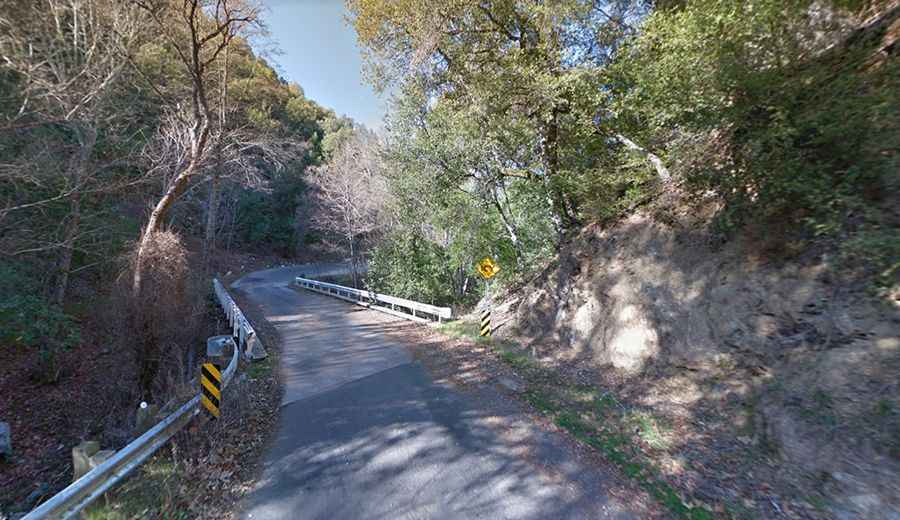
Nacimiento-Fergusson Road is a stunning drive located on the Pacific coast of the U.S. state of California, regarded as one of the best motorcycling roads in central California.
Where is the Nacimiento-Fergusson Road?
The road is located in Monterey County, in the US state of California, running across the eastern slope of the Santa Lucia range within Los Padres National Forest.
How long is the Nacimiento-Fergusson Road?
The road is 39.26 km (24.2 miles) long, running west-east from Mission Road to California State Route 1 (Cabrillo Highway). It’s a spectacular road throughout.
Is the Nacimiento-Fergusson Road paved?
Completed in 1937, the road is well-paved and maintained, barely two lanes wide (no center strip) with steep banks on both sides.
How long does it take to drive the Nacimiento-Fergusson Road?
Driving the road without stopping typically takes between 60 and 80 minutes. Although quiet and mostly unused, encounters with other cars are possible. The eastern slope, heavily forested, offers limited vistas, with pull-outs along the way for photos and turning around.
Is the Nacimiento-Fergusson Road open?
Carved into the mountain’s side, the road tops out at 840m (2,759ft) above sea level, crossing the unpaved Old Coast Road seven miles from Highway 1. It may be impassable during winter months and occasionally closed for brief periods during tank, artillery, and other firing exercises. Extensive slides and debris flows are common.
Is the Nacimiento-Fergusson Road difficult?
This is not a drive for the faint of heart, with precipitous drops and no guardrails. Going slow around corners and staying attentive is crucial. The last part of the road features more than 100 turns, so note potential blind corners during the ascent. If you’re comfortable essentially driving up the side of a cliff, it’s a gorgeous drive. Night driving is not recommended, and cellular service is unreliable.

Source: dangerousroads
A Harvard scientist who fled Russia because she opposed the war in Ukraine is facing deportation from the U.S. after being detained over undeclared frog embryos.
Kseniia Petrova, a bioinformatician at the Kirschner Lab at Harvard Medical School, was detained at the U.S. border on February 16 while returning from France and had her visa revoked, according to her friend Cora Anderson.
The Department of Homeland Security confirmed Petrova’s detention in a statement to The Independent, alleging that she had “knowingly broken the law” by attempting to “smuggle” undeclared frog embryos and petri dishes through customs.
Petrova’s lawyer, Gregory Romanovsky, acknowledged that it was “her fault” she did not declare the items and that she “did not really think through” the decision, but said such behavior would usually only warrant confiscation and a fine of about $500.
He accused U.S. Customs and Border Protection of trying to “punish” her by revoking her visa, and said it was “quite likely” she would receive a long jail sentence if sent back to Russia.
It’s not clear where exactly Petrova would be deported, as she flew to the U.S. from France, but her friends and Romanovsky fear she could end up in Vladimir Putin’s clutches again if her bid to stay in the U.S. fails in court.
Her detention was first reported by independent Russian media, including The Insider, Mediazone, and Agentsvo.
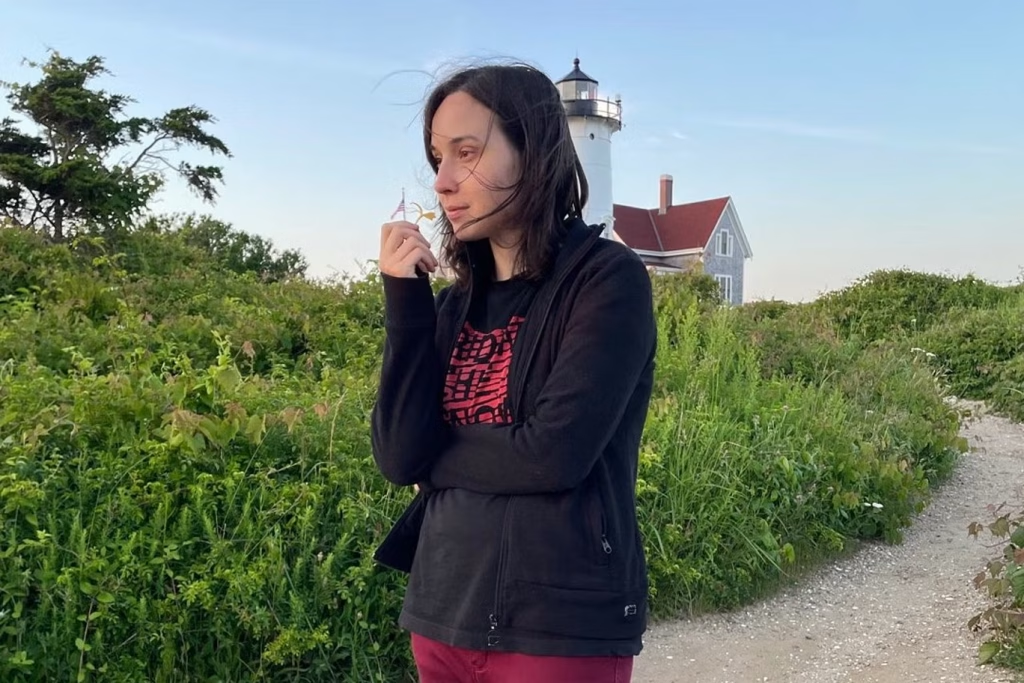
“Kseniia is a Russian woman that had to leave her home country and family because she was going to go to prison for opposing the war with Ukraine,” said Anderson in a Facebook post on Wednesday.
“Once hired, she worked hard and has been an absolute delight for all to work with and a loving and loyal friend,” Anderson added. “Her giggly and bubbly personality really brightened up the lab space and anywhere she may be. Not only is she kind, but incredibly intelligent and diligent…
“Despite having lawyers and the fact she did not do anything illegal in the first place, she is still [in detention], and we have no idea when she will be paroled. I miss my friend and just want her home in Boston.”
A GoFundMe page set up by Anderson to cover Petrova’s legal expenses raised nearly $29,000 of its $30,000 goal as of Thursday evening.
A DHS spokesperson said, “The individual was lawfully detained after lying to federal officers about carrying biological substances into the country.
“A subsequent K9 inspection uncovered undeclared petri dishes, containers of unknown substances, and loose vials of embryonic frog cells, all without proper permits.
“Messages found on her phone revealed she planned to smuggle the materials through customs without declaring them. She knowingly broke the law and took deliberate steps to evade it.”
Petrova’s case is one of many recent similar situations since Donald Trump’s return to power, in which legal immigrants in the U.S. have been imprisoned for weeks at a time after having their visas revoked, sometimes for unclear reasons.
Trump promised while campaigning for president that he would target undocumented immigrants guilty of crimes, while his ‘border czar’ Tom Homan has said his focus is on “the worst of the worst”.
Tourists and international travelers have also been detained, and the Department of Homeland Security has revoked the legal status of more than 500,000 Cubans, Haitians, Nicaraguans, and Venezuelans, leaving them open to deportation in about a month.
Trump, meanwhile, has abruptly reversed the nation’s stance on the war in Ukraine, suspending military aid and intelligence sharing while demanding control of the embattled country’s energy and mineral resources, and falsely claiming Ukraine started the war. Trump also called Putin a “genius” after he invaded Ukraine three years ago.
The Biden administration reportedly paused all deportation flights to Russia in early 2022 after the war began, but quietly restarted them one year later.
In an interview with NBC News, Romanovsky, the lawyer, said Petrova had been carrying scientific samples of frog embryos that she was bringing back from a French lab at the request of her superior as part of a research project.
“It was her fault. She was supposed to declare that item. She did not,” he said. “She had no previous experience with bringing samples. She didn’t really think this through. She didn’t she didn’t look up the requirements.”
But he argued that in such circumstances, CBP is only meant to seize the item and impose a fine of about $500, and that it had no reason to merit cancelling her visa.
Petrova’s research supervisor, Leon Peshkin, told The Washington Post that the embryos were “non-toxic” and that he had made a “huge mistake” in asking her to bring them back.
Romanovsky then said that his client was given two choices: withdraw her application to enter the U.S. voluntarily and reapply from an embassy abroad, or immediately be sent back to France and be banned from returning for at least five years.
Petrova chose the first option, but when CBP offered to inform the Russian government of her situation, she got scared and told them she would be persecuted if forced to go back there.
Indeed,The Harvard Crimson reported that Petrova was arrested in Russia in 2022 for protesting against the war.
That allegedly triggered a CBP protocol known as “credible fear”, in which non-citizens who claim they will be persecuted abroad get to stay in the U.S. and make their claim to an immigration judge.
Yet instead of being paroled until her court date, Romanovsky said, agents chose to keep her in detention.
“She’s certainly a victim of the new policy where people are held indiscriminately, held and not released, regardless of whether they’re a threat to anybody or whether flight risk,” he said. “There’s really no sense to continue to hold her.”
Source: The Bulwark (YouTube), “JD Vance Declares War on Reality in Greenland,” 28 March 2025
Source: Elizabeth Booker Houston (Instagram), 9 February 2025
Source: ContraPoints (YouTube), 24 March 2025
•Bluesky: https://bsky.app/profile/contrapoints.bsky.social
•Website: https://www.contrapoints.com/
•Donate: https://paypal.me/contrapoints
