What has Putin ever done to deserve this indulgence?
When you have puzzled that one out, try and explain how four [ahn-TEE-fuh] musicians from Washington, DC, wrote the anthem for the summer of 2019 way back in 1989, that is, exactly thirty years ago, when many of today’s hottest climate changers were not even a gleam in their parents’ eyes.
Anytime but now Anywhere but here Anyone but me I’ve got to think about my own life
Anytime but now Anywhere but here Anyone but me I’ve got to think about my own life
We are consumed by society We are obsessed with variety We are all filled that anxiety World would not survive
We gotta put it out, put it out, we gotta put it out The sky is burning We gotta put it out, we gotta put it out, put it out The water’s burning We gotta put it out, put it out, put it out The earth is burning
Outrage But then they say…
Anytime but now Anywhere but here Anyone but me I’ve got to think about my own life
Anytime but now Anywhere but here Anyone but me I’ve got to think about my own life
The world is not our facility We have a responsibility To use our abilities To keep this place alive
We gotta put it out, put it out, put it out The sky is burning We gotta put it out, we gotta put it out, put it out The water’s burning We gotta put it out, put it out, we gotta put it out The earth is burning
Right here Right now Do it Do it Now Do it Now Do it Now Do it
I always had famous Anne Applebaum pegged as a real Russophobe, not a fake one like me, someone who has constantly run afoul of the liberal and leftist Russia discourse police and been crossed off their Christmas card lists many times over. But it turns out Applebaum is such a “Russophile” she is ready to turn reality on its head by comparing the truly grassroots, popular, massive, well-organized pro-democracy movement in Hong Kong with the minuscule ragtag non-movement in Russia.
In Russia, where propaganda also attacks the West and derides democracy as chaotic and anarchic, protesters have focused very directly on the most fundamental of democratic institutions: they are demanding the right, simply, to vote for independent candidates in local elections. Just as in Hong Kong, Russian protests are being led by younger people [sic], none of whom can remember any other leader except Vladimir Putin: “I am 20 years old, and in my entire life there has not been a single day of freedom,” one of them told reporters, according to Meduza, an independent website that covers Russia. They, too, are well organized, using up-to-the-minute apps to keep in touch with one other, deploying a phalanx of lawyers and a carefully planned social media campaign [sic]. Like the young Hong Kongers, young Russians aren’t just dedicated; they are organized, thoughtful and well prepared [sic].
There are some obvious explanations for this East-West paradox. Clearly, the inhabitants of stable democracies find it hard to appreciate what they have: “You don’t know what you’ve got ’til it’s gone” isn’t just a song lyric; it’s an expression of something fundamental about the human brain. Like wealth or health, political freedom may simply be something that people don’t value if they’ve always had it [sic].
But it may also be that the young protesters of Russia and China are simply ahead of us. We’ve gotten used to the idea that political influence flows from West to East, but are we so sure that is still true? A generation of Eastern dissidents has thought harder than we [sic] have about how to self-organize, about how to operate in a world run by secretive, kleptocratic elites who go out of their way to create distraction and apathy. Remember that they, too, are fighting regimes that seem in hock to moneyed interests and wrestling to cope with the pace of technological change. It may be that we in the West simply haven’t thought about what tactics ordinary people need [sic] to deploy to compete in a world where money is offshore, power is invisible and apathy is widespread. It may be that we need to learn from people who have. —Anne Applebaum, “Hong Kong and Russia Protesters Fight for Democracy. The West Should Listen and Learn,” Washington Post, 16 August 2019
For the sake of rapping the sock puppet known as “the west” on the knuckles, Applebaum conveniently forgets to compare the numbers of people involved in demos and other protest actions in a city of seven million people, on one hand, and the world’s largest country, on the other.
She claims “the west,” where, she alleges, everyone has suddenly given up on democracy, can learn something from “the east.” How is that someone who has written so eloquently about the Soviet Gulag has no clue that the people spearheading the Russian non-movement, people from Moscow and Petersburg, overidentify with “the west” and regard their cities, wrongly or rightly, as European cities, not “eastern” cities?
Wrongly or rightly, and unlike Applebaum, they overidentify so strongly with the nonexistent west that they almost never show any sign they have anything to learn from “the east.” Maybe I have the wrong friends and follow the wrong people and groups on Russian social media, but I have not seen anyone talking about the lessons Russian protesters can learn from people in Hong Kong or, say, Puerto Rico. Forgive me if I don’t spell out, for the thousandth time, the darker side of the disdain many members of the Russian liberal and left intelligentsia have for “non-westerners,” especially “non-westerners” who make them look bad by fighting more fiercely and in much greater numbers for their freedom.
It is only possible to learn a real lesson when our teacher has all her facts straight. Unfortunately, when it comes to Russia and its “western” discourse police officers, including Applebaum, complexity, subtlety, and a basic grasp of facts go straight out the window. For reasons I have never been able to fathom, normally decent editors fall asleep at the wheel when their reporters and op-ed contributors write about Russia, especially when they have the cachet of someone like Applebaum.
It seemingly never occurs to anyone in “the west” or “the east” (i.e., Russia) that this bizarre mixture of total indifference, willful ignorance masked as insider knowledge, and desperate cheerleading does nothing for the minority of people in Russia who have the courage to confront their country’s criminal regime. // TRR
According to organizers, at least 1.7 million people attended a pro-democracy rally in Hong Kong today, August 18, 2019. Photo courtesy of HKFP
More and more Russians seem to be breaking free of the old habit of trying to guess the party line. Increasingly, they just do what they deem important, and the authorities deal with the consequences. We are all much more used to the reverse relationship, which is why Russia’s new situation is hard to grasp. People in Russia are only now learning to peer into themselves, not into their television sets, searching for clues to what will happen next.
This does not mean that the Kremlin has suddenly become more transparent or less authoritarian. It only means that Russian society has started to realize that it may, in fact, be an originator of political and societal change, not just on the receiving end.
For how long this new situation—or an impression of it—will last is unclear. The Kremlin is at war and wants everyone in Russia to be at war too. Russians seem to be drifting away from this belligerence. The question is whose pull, the Kremlin’s or Russian society’s, is stronger. I am afraid the Kremlin’s is stronger but will be happy to be mistaken. —Maxim Trudolyubov, “Ask Not What Will the Kremlin Do Next,” The Russia File, 16 August 2019
_____________________________________
What does the phrase “more and more Russians” mean, in the essay quoted above? How does Maxim Trudolyubov know they are doing anything at all, much more “breaking free of the old habit of trying to guess the party line” and doing “what they deem important” (whatever that means)?
If its organizers are to be believed, a pro-democracy rally in Hong Kong was attended by 1.7 million people today, August 18. According to Worldometers, Hong Kong’s population, as of today, was almost 7.5 million people, meaning that nearly 23% of Hong Kong’s residents marched today in support of the city’s autonomy and democratic rights.
In Moscow, “up to 60,000 people” attended an “authorized” pro-democracy rally on August 10. It was, apparently, the biggest opposition rally in Russia since the fair election protests of 2011–2012.
World Population Reviewestimates Moscow’s population as slightly over 12 million people.
If the figures for the August 10 rally and Moscow’s population are to be credited, then, 0.005% of the city’s populace came out for an “authorized” rally—meaning an event where they had much less reason to fear a police crackdown than at the “unauthorized” rallies at which riot police and Russian National Guardsmen detained thousands of protests over the last month or so.
When you are trying to get your collective point across to an authoritarian government, the numbers do matter, just as they matter in non-authoritarian countries.
As I have argued in many different ways many different times, the Russian opposition, especially its self-declared leaders in Moscow, is woefully bad at two things: mobilizing ordinary pro-democratic Russians to make their numbers known to the regime, and meaningfully allying itself with the grassroots pro-democracy movement beyond Moscow.
In fact, at the very same time as a tiny minority of brave, smart Muscovites have been doing battle with the Moscow City Elections Commission and the security forces to defend their constitutional right to vote and run for office, an even tinier and, perhaps, braver minority of Petersburgers has been fighting to get a small slate of independent candidates onto the ballot for elections to the city’s municipal district councils, chronically underfunded entities with almost no power to do anything more than making cosmetic improvements to the neighborhoods they represent. Just as in Moscow, the would-be candidates themselves have been harassed, beaten, and arrested, along with some of their supporters.
Typically, when the Petersburg pro-democratic opposition held an authorized rally on August 3, only two thousand people showed up. Sadly and hilariously, Deutsche Welle described it as an “event in support of candidates not allowed to run in the elections to the Moscow City Duma.” In reality, Petersburgers rallied in support of their own beleaguered opposition candidates, in solidarity with Muscovites, and against the upcoming pro forma election of acting Governor Alexander Beglov, the Kremlin’s third satrap in the city, on September 8.
But the real story was too complicated for Deutsche Welle. It was, apparently, too gnarly for the vast majority of Petersburgers as well. World Population Reviewestimates Petersburg’s population as nearly 5.5 million. (I suspect it is actually much higher than this, but that is another conversation.) So, proportionately, even fewer people in Russia’s “cultural capital” are worried about their rapidly vanishing constitutionally guaranteed rights than their comrades in Moscow and their Chinese frenemies in Hong Kong: 0.0003%, to be exact.
He also makes an assertion that is debatable and a promise he probably has no intention of keeping, to wit:
“Russian society is turning into a much more active player in Russia’s public life. Importantly, it is not limited to the political protests that have been taking place in Moscow for the past several weeks. The protests are just the most visible part of the change. There is exciting new art, there is a new wave of independent journalism, there is an entire universe of YouTube and other social media channels that are completely free of both pro-Kremlin and strictly oppositional politics (all of those trends deserve a special take, which we will provide).”
I will have been reporting on these “other Russias,” as I have dubbed them, for twelve years come this October. I know them as well as any “outsider” can know them. I will keep writing about them and translating dispatches from these other Russias as long as I am able.
Despite my interest in the other Russias and Russians, however, and my endless admiration for the sheer courage, tenacity, and intelligence of many of the real-life heroines and heroes who have made appearances on this website over the years, I knew the fair elections movement of 2011–2012 was a non-starter almost as soon as it kicked off, even though it was a nationwide grassroots movement, unlike the 2019 fair elections movement, which has been practically limited to Moscow.
I knew that for two reasons. First, the numbers of anti-Putinists showing their faces in public at protest rallies, “authorized” and “unauthorized,” were also minuscule as percentages of the general populace. Second, the “movement” was managed lackadaisically, with indecently long pauses between “authorized” rallies.
In Moscow, at least, there does seem to be a greater sense of urgency and intensity this time around, but the numbers of people showing up for rallies have been halved. Paradoxically, however, those people have been more willing to face police crackdowns, but I am not sure this is necessarily a good thing, politically and strategically.
Like Trudolyubov, I am happy to be mistaken. Unlike Trudolyubov, I have no sense that Russian society has become a bigger player than it was seven years ago. There was also a lot of new art, independent journalism, and social media savvy on the margins then as now.
The sad truth is that, unlike countries and territories populated by people of color, such as Hong Kong and Puerto Rico, Russia gets way more credit for every tiny gesture towards democracy, autonomy, and independence made by its supposedly “white” people, even though Russian society punches way below its weight when it comes to every possible measure of official and popular support for democracy, minorities, civil and human rights, progressive environmental policies, engaged art, cutting-edge education, grassroots-driven urban planning, you name it.
What Russia does have a lot of is flag twirlers who have ensconced themselves in plum jobs at western news outlets and think tanks, places where, correspondingly, you will not find a lot of people of color and people from the formerly colonized parts of the world. So, even though the Kremlin has made xenophobia, anti-Americanism, rampant homophobia, Islamophobic, anti-westernism, anti-liberalism, Russian Orthodox obscurantism, and aggressive covert and overt interventions into the affairs of other countries planks in its unwritten ideological platform, and Russia’s opposition has said almost nothing about any of it, much less organized protests against, say, the Kremlin’s criminal military involvement in the brutal ongoing murder of Syria’s pro-democracy movement, the so-called west, at least as represented by places like the Kennan Institute and media organizations like the BBC, has way more time and sympathy for all things Russian than it has for anything happening in countries and places dominated by people of color.
It would be strange of me, of all people, to argue for less interest in grassroots politics and culture in Russia, but a genuine curiosity should also involve being able to tell the fibbers and crypto-nationalists from the truth-tellers and democrats. // TRR
Thanks to the fabulous Mark Teeter for the heads-up. I am nearly certain he would have a different take on Trudolyubov’s essay, but in my Facebook newsfeed it ended up cheek by jowl with an article about today’s truly massive protests in Hong Kong.
I was ten years old but I remember August 1991 well. And I remember how many people asked, after that unique celebration of unity and freedom, what would have happened had the coup emerged victorious.
Russia 2019 is the answer to this question. It is a country in which the coup has emerged victorious, [a country ruled by] a dozen paranoid old men, their hands trembling in fear.
Yes, the new coup has lasted longer than three days, but not much longer. The first chords of Swan Lake have already sounded.
Translated by the Russian Reader. Image courtesy of 123RF
_______________________________________________
A friend of mine asked me the other day what I thought about the new fair elections protests in Moscow. First, I feel solidarity with the protesters. Otherwise, I would not have bothered to translate and edit eleven posts (so far) about the protests and their ugly aftermath.
But I don’t understand the point made by Alexei Navalny’s comrade Leonid Volkov, an otherwise sensible person, in the Facebook post, as quoted above.
I could very well be wrong, and, actually, I do hope I am wrong, but I see very little difference between the mostly lacksadaisical fair elections protests of 2011–2012 and the relatively fierce but tiny fair elections protests of 2019.
The numbers are, in fact, the main problem. Despite the strange argument made by a talking head from the Carnegie Center Moscow, as quoted in the Moscow Times, that fifty thousand is a number of protesters the Russian authorities cannot ignore, there is no question of their ignoring anything. The Putin regime did not ignore the protests of 2011–2012. It waited until Putin had secured a new term as president before cracking down hard on protesters and quickly adopting a whole raft of laws designed to make public protests and dissent much more dangerous.
In 2019, the crackdown has begun almost immediately, but there is no sign the regime will cave and force the Moscow City Elections Commission to reinstate the candidates it barred in July from running in the September elections to the Moscow City Duma, much less collapse altogether.
Since it is the world’s largest country, it seems funny to say it, but Russia is one of the most insular, isolated places on earth. International news is a genre that barely exists in the country’s mainstream or alternative press nor does it usually make much of an impression on the chatocrats who set the tone in Russia’s remarkably hysterical, dispiriting, troll-infested social media.
It also does not help that places mainly or completely populated by what many Russian liberals regard as subhumans almost never figure in the news in Russia at all. Otherwise, political and media activists like Volkov would think twice before seeing the demise of Putin’s twenty-year-old “putsch” in yet another series of relatively minuscule gatherings of righteous Muscovites brandishing clever placards and getting their pictures taken for Instagram.
If there were real international news in the Russian press, the Russian fair elections movement and its would-be leaders and strategists, like Volkov, would think about the recent, incomparably more numerous, and demonstrably more effective protests in Puerto Rico and Hong Kong, for example. When half a million people protest against the powers that be on an island populated by 3.5 million people, the authorities really cannot ignore them, just as Beijing could not pretend all was well in Hong Kong, a city of 7.3 million people, when two million people there took to the streets to protest the former enclave’s shrinking autonomy and the PRC’s attacks on its laws and democratic institutions.
Puerto Rican officials have already seen the writing on the wall and surrendered to the demands of the fierce, fearless, relentless protest movement there. The Hong Kong protest movement faces a much stronger enemy, of course, but I think there is a far greater chance we will witness democracy emerging all over China in our lifetimes than we will see the reemergence of democracy in Russia.
Despite the fact the Russian intelligentsia likes to hypnotize itself with dubious theories about history and regime change—namely, that great historical turnabouts have always been powered by tiny but energetic minorities—real democratic change in Russia will only happen when many more people join a movement that, in fact, exists only as a notion, not as a real grassroots movement.
A real grassroots movement, after all, would be capable of mobilizing considerably more than fifty thousand people in a city of twelve million people.
The second big problem with the Russian protest non-movement is that, like many of the Russians who make usually brief appearances in its ranks, it is wildly impatient. Liberal, educated Russians regard themselves as the most “European” and “western” people on the planet, hindered from realizing their true destiny as saviors and leading lights of the nonexistent west only by a thousand years of unrelenting, savage tyranny, an endless dark stormy night punctuated only here and there by occasional, short-lived bursts of sunlight.
Since they are essentially not practically “Europeans” and “westerners” (unlike most actual Europeans and westerners, who, in their view, have given up the west’s civilizing mission by letting their countries be overrun by Puerto Ricans, Chinese, and Muslims, among other miserables), many Russians think they deserve to live in a democratic country right now without doing most if any of the things other societies do to establish and fortify democracy and the rule of law at home.
The flip side of this blatantly anti-western “westernism” is that droves (or, at least, very large dribbles) of Russians have been leaving or semi-leaving Russia in recent years, knowing nothing can change for the better under Putin and despairing that the post-Putin era will not dawn anytime soon. Like most of the really important things going in Russia, this story has been underreported, although anyone who has hundreds of Russian acquaintances or who lives in one of the handful of cities on earth that liberal Russians consider civilized (Berlin, Paris, and New York, e.g.) will know what I mean.
In yet another “only in Russia” twist, many people in this new wave of émigrés and exiles are not battle-hardened veterans of the amorphous protest non-movement, but the most politically apathetic people you could ever hope to meet.
This is not to say there are not lots of good eggs among them. Likewise, this blog’s mission has been to reiterate constantly the well-missed point that there are other Russians besides Putin and other Russias besides “Putin’s Russia,” whatever that is. But since I am not a politician and, thus, a sophist, like Leonid Volkov and his friend Alexei Navalny (the first, a well-informed commentator whose reflections I have shared on several occasions with my reader; the second, a smart cookie who might also be nearly the only person in the ragtag Russian opposition who really understands politics and has an inkling of how to build grassroots political movements), I am under no obligation to paint a pretty picture of “democracy in Russia” when what is called for is a horrorshow.
Lastly, fifty thousand people protested in downtown Moscow for the right to vote for their own candidates to a Russian regional parliament in a country where all that parliaments, city councils, municipal district councils, and village councils ever do is rubber-stamp the executive branch’s decisions. At exactly the same time, Russian warplanes were trying hard to finish off the last stronghold of a genuinely popular revolution in what they hoped would be the final chapter in a four-year-long military intervention in a majority Muslim country. And yet Putin’s criminal entanglement of his country’s well-equipped armed forces in Syria has been so uninteresting to liberal Russians that they have never protested in numbers greater than three or four at a time, and you can count those times on one hand.
The irony of this non-coincidence will be lost on Leonid Volkov and his comrades in the Russian protest non-movement, a non-movement that imitates the civil disobedience of the Indian independence movement and the US civil rights movement, for example, while blithely ignoring their superior political, strategic, and organizational aspects. Like the overall ignorance among Russians about today’s protest movements and popular revolutions in Syria, Hong Kong, and Puerto Rico, this might be because they were movements led and sustained by people of color. // TRR
It’s funny the things you find in your email inbox in the morning. This morning, as usual, I found mailers from many of the Russian and English-language online newspapers I read, including Petersburg’s humble but always revealing business daily Delovoi Peterburg.
Today’s big news was that police had searched the head office of Bukvoyed, one of Russia’s largest bookstore chains.
Founded in 2000, Bukvoyed (“Bookworm”) has 140 stores around the country.
A source at Bukvoyed told Delovoi Peterburg the search had nothing to do with the company per se but with one of its business partners.
If you have been monitoring the fortunes of Russian business under the Putinist tyranny, a crony state-capitalist regime, run by “former” KGB officers as if it was the Soprano mob, only a million times nastier, you would know it has not been easy to do business of any kind in Russia during the last twenty years. The country’s current prime minister and ex-president, Dmitry Medvedev, once famously said the regime’s vast police and security apparatus, known collectively as the siloviki, needed to stop “nightmaring” (koshmarit) business.
He also famously said, when he was president, that his country was plagued by “legal nihilism.”
Although he was right on both counts, Medvedev did nothing about it. Since the brief, supposedly more “liberal” period when he was freer to speak his mind because, technically, he was the most powerful man in Russia, the nightmaring of business (and nearly everyone else who makes themselves a target by doing anything more ambitious than hiding their light in a bushel) has only got worse, and legal nihilism, along with anti-Americanism, homophobia, xenophobia, and neo-imperialism, has become even more entrenched as part of the Kremlin’s unwritten ideology and, thus, a guidepost for how Russia’s police, security agencies, prosecutors, and judges deal with “criminals.”
As Denis Sokolov recently argued in Republic, the siloviki have established a system of “police feudalism” in Russia under which the FSB, the Russian Investigative Committee, the Interior Ministry, the Russian Prosecutor General’s Office, the Russian National Guard, the tax police, and other state security agencies have divided the country into fiefs, bits of “turf” where they are almost entirely free to shake down, rob, nightmare, and legally nihilize whomever and whatever they want under a set of unwritten rules outsiders can only guess at.
After reading about Bukvoyed’s legal-nihilistic woes, then, I was startled by the banner ad I found at the bottom of the page.
“Synergy Global Forum, October 4–5, 2019, Gazprom Arena, Saint Petersburg. Arnold Schwarzenegger. Grant Cardone. Michael Porter. Randi Zuckerberg. Ichak Adize.” Ad courtesy of Delovoi Peterburg
Referred to, hilariously, as “spikery” (“speakers”) on the Russian version of the Synergy Global Forum’s website, these five greater and lesser lights of global capitalism have been, no doubt, promised or paid extraordinarily hefty fees to keynote this hootenanny in the belly of the crony state-capitalist beast.
Formerly known as the Zenit Arena (after the city’s Russian premier league football team, FC Zenit, owned by state-controlled Gazprom), even the venue itself, the Gazprom Arena, is a monument to the mammoth crookedness, thuggery, violence, and corruption replicated all over the world’s biggest country every day for the last twenty years by the Kremlin’s minions.
But you would never know that by reading the cheery boilerplate on the Synergy Global Forum’s website.
Gazprom Arena is the most visited indoor stadium in Eastern Europe, second only to the famous Wembley in London. The main feature of the project — a sliding roof, which allows you to carry out activities in a comfortable environment at any time of the year and in all weather conditions. Large capacity, modern technical equipment, and two-tier parking make Gazprom Arena one of the best venues for major festivals, exhibitions, and business conferences.
More important, however, is the ostensible point of all this spikery, other than making lots of money for everyone involved.
Synergy Global Forum has been held since 2015. The first Forum gathered 6,000 participants and became the largest business event in the country. Two years later, we broke this record and entered Guinness World Records — 25,000 entrepreneurs and top managers participated at SGF in Olympiyskiy in 2017. This year we set a new big goal — to gather 50,000 participants from all over the world at SGF 2019 in St. Petersburg. Synergy Global Forum not only gives you an applied knowledge, but also motivates and inspires to global achievements, gives the belief that any ambitious goal is achievable. What goals do you set for yourself?
Aside from being one big [sic], this sampling of spikery reveals that the apocryphal gospel of Dale Carnegie and other “good capitalist” snake oil salesmen is alive and well and making waves in a place like Russia, where it could not be more out of place.
I don’t mean that Russia and Russians are “culturally” or “civilizationally” incompatible with self-improvement, the power of positive thinking, and other tenets of American capitalist self-hypnosis. If you had spent most of your adult life in Russia, as I have, you would know the opposite is the case.
Unfortunately. Because what Russia needs more than anything right now is not more navel-gazing and better business practices, but regime change and the rule of law. Since I’m a democratic socialist, not a Marxist-Leninist, and, I hope, a realist, these things cannot come about other than through a revolution in which Russia’s aspiring middle classes, at whom snake-oil festivals like the Synergy Global Forum are targeted, join forces with the grassroots, who have been nightmared and legally nihilized in their own way under Putin.
One of the first things a new bourgeois-proletariat Russian coalition government would have to do, aside from prosecuting and imprisoning tens of thousands of siloviki and banning them from politics and the civil service for life, would be to disentangle the country from its current incredibly destructive armed and unarmed interventions in conflicts in other countries, starting with Ukraine and Syria.
What does the Synergy Global Forum and its sponsor, Synergy Business School have to do with such seemingly distant and terribly messy international politics? Well, this:
So, in fact, Synergy Business School is in the business of equipping people from some of the world’s most powerful and aggressive theocratic, monarchist, and crony state-capitalist tyrannies with MBAs while claiming its core values are “openness to newness, commitment to development, and intelligence.”
You can say I’m a dreamer but I am nearly sure SBS’s core values are completely at odds with the neo-imperialism, neo-colonialism, militarism, hostility to civil and human rights, and fascism of the current regimes in Russia, Saudi Arabia, and Iran.
I write this not because I believe in building a “better” capitalism (I don’t), but because I am nearly sure one party to this mass chicanery, including the invited spikery, does believe it is possible to do just that and thus “peacefully” transform these countries into slightly quirky versions of Australia and Canada. (For the record, I don’t for a minute believe these supposedly democratic countries have no problems of their own with human rights, etc.)
That is not going to happen if only because, at another level, carefully hidden from the incurious eyes of the people who go to such events, their real purpose is to whitewash these regimes, make them more attractive to foreign investors, and expand their international networks of shills and useful idiots.
I learned this valuable lesson about Putinist Russia by carefully following the amazing career of Vladimir Yakunin, another “former” KGB officer and fellow Ozero Dacha Co-op member who could write a textbook about how to co-opt distinguished foreign academics, decision-makers, and journalists into, mostly unwittingly, toeing the Putinist line.
It comes down to this. Why are Arnold Schwarznegger, Randi Zuckerberg, and their fellow 2019 Synergy Global Forum spikery so willing to help whitewash a gang of fascist war criminals who are also at warwith their own people?
Since there is no good answer to this question, they should be arrested upon their return from the forum and charged with colluding with hostile foreign powers.
If you don’t understand what I mean by “fascist war criminals,” please read the article below. // TRR
Russia and Assad are butchering Syrian civilians again. No one seems to mind
Terry Glavin National Post
July 24, 2019
Maybe it’s because of the guilty anti-interventionist conscience of the world’s comfortable liberal democracies, or because it’s now an article of respectable faith in the NATO capitals that Syrian lives simply aren’t worth the bother. Maybe it’s just that we’ve all become so accustomed to reports of slaughter and barbarism in Syria that it barely warrants public attention at all.
Whatever the reason, or excuse, Russian foreign minister Sergei Lavrov is finally having his way in the Syrian governorate of Idlib, and the world barely notices.
It’s been nearly a year since Lavrov expressed his desire that the “abscess” of Syrian resistance in Idlib, a sprawling province that borders Turkey in Syria’s northwest, be “liquidated.” It’s been nearly a month since 11 humanitarian organizations came together with the United Nations Office for Humanitarian Affairs to warn that “Idlib is on the brink of a humanitarian nightmare unlike anything we have seen this century.”
We’ve reached that brink now. Just this week, 66 civilians have been killed and more than 100 non-combatants wounded, the UN reports, in a series of bombing runs carried out across Idlib. The worst massacre was an airstrike Monday on a public market in the village of Maarat al-Numan. At least 39 people were killed, among them eight women and five children.
Since the Syrian dictator Bashar Al-Assad’s barrel bombers and Russia’s fighter-bombers began their recent offensive in Idlib on April 29, the Syrian Observatory for Human Rights has tallied 2,641 casualties. The UN counts 400 civilian deaths, but there is no accurate count of the dead and injured in Syria anymore. The wounded lie dying in the rubble of bombed buildings. At least 25 hospitals and clinics in Idlib have been destroyed since April 29, bringing the number of health centers deliberately targeted since 2011 to about 570. More than 800 health workers have been killed.
Three years ago, when the UN and monitoring agencies stopped counting, the Syrian dead were numbered at 500,000. In the face of these most recent war crimes and atrocities, the UN’s humanitarian affairs office has been reduced to begging Assad and Lavrov to ease up to allow humanitarian aid into Idlib’s besieged districts, and pleading with Russia and Turkey to uphold the terms of a year-old memorandum of understanding that was supposed to demilitarize Idlib. Fat chance of that.
The Kremlin-Ankara pact arose from negotiations that began in the months following the 2016 fall of Aleppo, where thousands of Syrian civilians were slaughtered by Vladimir Putin’s air force in the course of the Kremlin’s commitment to Assad to help bomb the Syrian resistance into submission. Joining with Russia and Iran, Turkish strongman Recip Erdoğan entered into a series of talks in Astana, Kazakhstan, that eventually led to an agreement to establish Idlib as a jointly-patrolled “deconfliction zone.”
A series of these de-escalation agreements have each in their turn become death traps. In Homs, in Ghouta, in Quneitra, the pattern has repeated itself. Weakened by starvation sieges, and bloodied by Russian fighter jets, Assad’s barrel bombs, ground assaults by Iran’s Hezbollah units and multiple chemical attacks — sarin, chlorine, napalm — Syria’s various and fractious resistance outfits have surrendered several cities and towns on the promise of safe passage with their families to one or another de-escalation area. Convoys of buses carry them across the countryside. They settle in, and then they come under attack again.
Until April 29, Idlib was the last of these demilitarized zones, and by then the population had doubled to three million people. Among Idlib’s recent arrivals were civilians fleeing the Syrian carnage who had not been able to join the six million Syrians who have managed to escape the country altogether. But the newcomers also include members of various armed opposition groups, and the Assad regime has deftly manipulated its “de-escalation” and safe-passage arrangements to pit those groups against one another.
More than a dozen safe-passage agreements struck prior to the Kremlin-Ankara arrangement amount to what democratic opposition leaders have called ethnic cleansing and “compulsory deportation.” Most of the opposition groups that submitted to them have ended up in Idlib. Among them: Islamic State fighters from Yarmouk, and the jihadist fronts Ahrar al-Sham and Jaish al-Fatah from districts around Aleppo and Damascus.
What this has meant for Idlib is that the mainline opposition in the Turkish-backed and formerly American-supported Syrian Interim Government has been losing its hold on the governorate, and its democratically elected local councils have come under increasing pressure from the Hay’at Tahrir al-Sham jihadist coalition. And now that Assad’s Syrian Arab Army has been moving in from the south, and Russian and regime bombs are falling from the skies, tens of thousands of civilians are on the move again.
More than 300,000 people are on the roads, most of them headed towards Turkey, but Turkey has already taken in half of Syria’s six million refugees and the Turkish border is now closed to them. More than 1,000 Turkish troops are patrolling Idlib’s northern countryside as part of the Astana accord, and they won’t let the Syrian civilians pass. Humanitarian groups report that hundreds of Syrian refugees have been picked up in Istanbul in recent weeks and deported back to Syria.
“Yet again innocent civilians are paying the price for the political failure to stop the violence and do what is demanded under international law — to protect all civilians,” is the way UN Humanitarian Coordinator Mark Lowcock puts it. “Our worst fears are materializing.”
No help is coming from Europe. The European Union has made its peace with Ankara — Erdoğan prevents Syrian refugees from sneaking into Greece or Bulgaria or setting out in leaky rafts into the Mediterranean, and Europe looks the other way while Erdoğan deports Syrian refugees back to the slaughterhouse of Idlib.
Neither is any help coming from the United States, where the Kremlin-friendly Trump administration is balking at the idea of imposing sanctions on Turkey for buying into Russia’s S-400 missile system, and is otherwise continuing the Obama administration’s policy of thinking about mass murderer Assad as somebody else’s problem.
And then there’s Canada, where we’re all supposed to congratulate ourselves for having high-graded the best and brightest Syrians from the UN’s refugee camps, and we expect the Syrian refugees we’ve taken in to be grateful and to forgive us all for standing around and gawping while their country was turned into blood, fire, and rubble.
Whatever our reasons, or excuses, Idlib is being liquidated, a humanitarian nightmare is unfolding in Syria again, and hardly anybody notices.
Below, I have reposted a message from my favorite Maoist country swing band, Minneapolis’s The Gated Community.
If you’re a comrade and love country music and live in the Cities (if you live in the Cities, I don’t need to tell you what this means) go see them play a big show at the Parkway Theater on Chicago Avenue. And take your sweetheart and all your friends with you.
This is a song about a gated community entitled “Gated Community,” not a song by The Gated Community. But since they sometimes listen to my advice, I am hoping they will be covering it soon. // TRR
Hi and welcome to Music From Your Heart.
The musical message my heart wants to share with the world is very, very simplistic.
It does not involve complex dialectical or poststructuralist philosophies. It is not about special advanced mediation. And it is not about years and years of study towards a doctoral degree.
This is a simplistic message from the heart. It cuts to the core of what we’re all about.
Deep within the heart of every single person on the planet is a simplistic wisdom. Deep within the heart of every single person is a sense of war. And deep within the heart of every single person is a sense of anxiety.
And the message here is about re-awakening that place within every single person on the planet. That’s why the Music From Your Heart franchise was created.
And we all need reminders to return to that place within. So join the Music From Your Heart Newsletter for these reminders. You’ll get training videos, PDF guides, and updates so you can stay connected with this simplistic message and bring it into your daily life.
Alexander Beglov was appointed the acting governor of Petersburg or vrio (to coin the acronym for such officials who “temporarily carry out the duties” of one office or another) on October 3, 2018.
His appointment immediately sparked speculation the Kremlin had put him in charge of Putin’s hometown not only temporarily but also so he could run for the post “legitimately” in the upcoming gubernatorial election, scheduled for September 8, 2019.
As luck would have it, the seven-year reign of his predecessor, the dull but mostly inoffensive Georgy Poltavchenko, was blessed by relatively snowless winters.
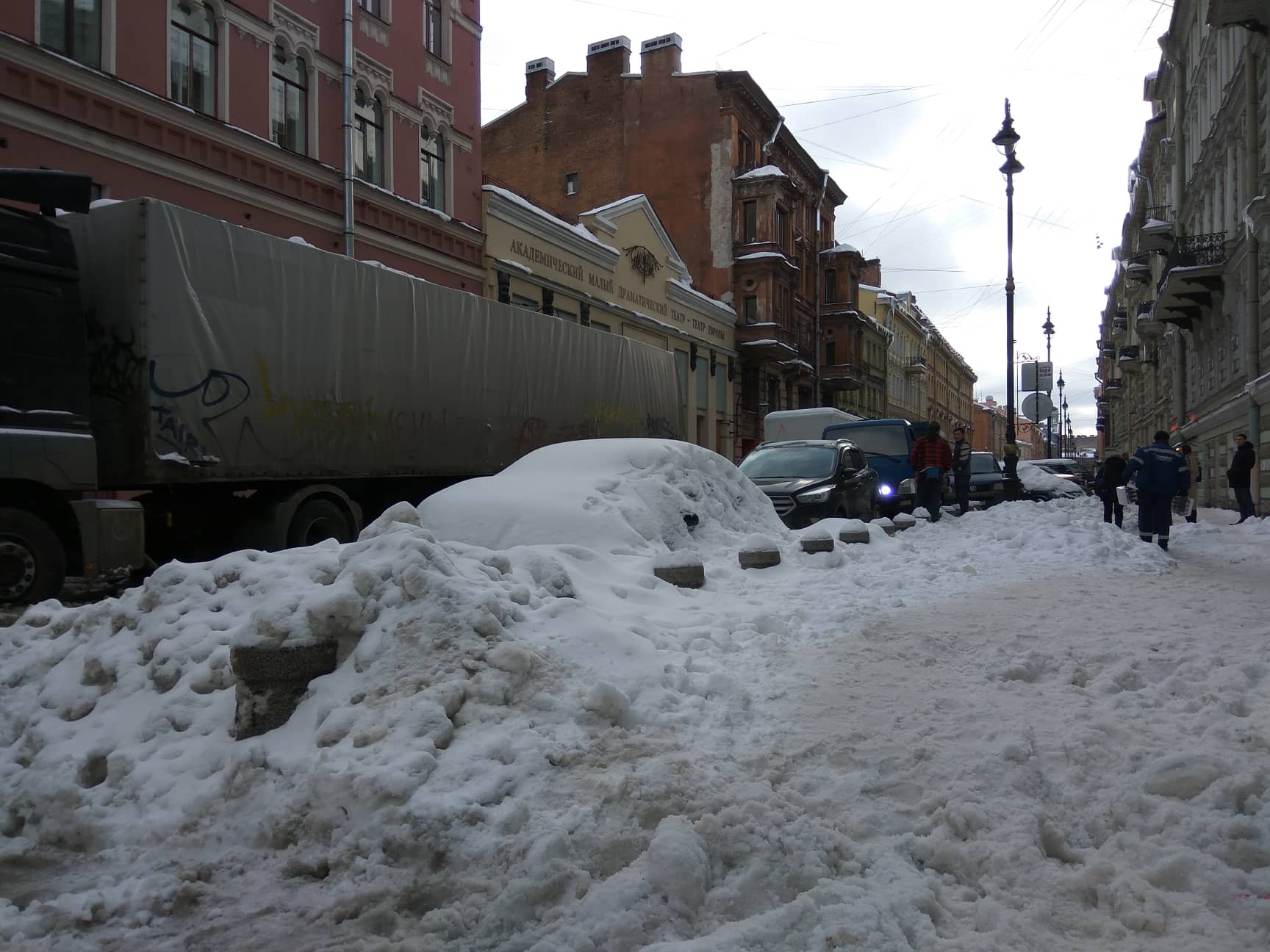
Petersburg, however, is the northernmost major city in the world and, unsurprisingly, it sometimes snows a lot there in the winter. The “anomalous winter” of 2010–11, during which the local authorities could not get a handle on cleaning relatively heavy snowfalls from streets, pavements, and roofs, spurring wild popular discontent, famously led to the dismissal of then-Governor Valentina Matviyenko and her replacement by the quieter Poltavchenko.
Like all members of Putin’s clique of made men and women, Matviyenko was not punished for her failures. Instead, she was “upmoted” (my term) to the much cushier post of speaker of the Federation Council. There she has been instrumental, I suspect, in persuading the press and the public she presides over a “senate,” peopled by “senators,” not a rubber-stamp entity filled with repellent losers too big to fail who have been rewarded generous sinecures in exchange for total loyalty.
In any case, today’s would-be Russian “senate” is a far cry from the feisty and, at times, mildly separatist Federation Council of the nineties, whose members would never have been so obnoxious as to style themselves “senators” and then get everyone else to go along with this sycophantic malarkey, including opposition activists, reporters, and academics who should know better.
The winter of 2018–19 was another “anomaly,” apparently, and vrio (interim governor) Beglov made it even worse by behaving even more brazenly and clumsily than Matviyenko had done during her own “snow apocalypse.”
You would think the Kremlin would not be so provocative as to shove Beglov, who looks remarkably like Mel Brooks in his salad days, playing the “villain” in one of his hilarious film parodies, down the throats of Petersburgers on Election Day 2019, but that is the plan. All the stops have been pulled out, including a total purge of opposition candidates attempting to run for seats on the city’s district municipal councils, although these underfunded, powerless bodies that have zero say over the Smolny, Petersburg’s city hall, where Beglov and his team call the shots.
The Kremlin is willing to make Beglov the city’s “legitimate” governor over everyone’s dead bodies, as it were, alienating even more otherwise apolitical Petersburgers from the regime.
Finally and, perhaps, apropos of nothing, has anyone ever remarked on the fact that both Beglov and Poltavchenko were born in Baku in the mid-1950s? Does it snow there in the winter?
The picture, above, was taken by Kseniya Brailovskaya in downtown Petersburg during the height of the municipal collapse this past winter. As another heat wave envelopes Europe, you will probably see more of these snapshots in the coming days, especially since I have a post or two in the works about the flagrant purges of opposition candidates in Petersburg. They have mirrored similar purges in Moscow, but without sparking spontaneous unrest of the weekend before last or the heavily attended protest rally that took place in the capital on Saturday. {TRR}
A friendly meeting between the heads of over twenty Petersburg media outlets and acting Governor Alexander Beglov took place in the Smolny. The meeting was cast as a campaign event at which heated discussions were not welcome.
During the first hour, Beglov cheerfully talked about all the problems he had solved. He said his priority has been to combat depression among Petersburgers. Beglov thanked, in all seriousness, the opposition for keeping him on his toes and informing him about hotspots.
Then followed several questions from the attendees. The most pointed question was, “How can we help you?” or something like that. Despite being a candidate in the gubernatorial race, Beglov was not taken aback by this offer and spent another hour outlining his plans for the near term.
The only question that knocked the vrio off his high horse had to do with the scandals surrounding the elections to the municipal district councils. Beglov said he could not intervene since he himself was a candidate.
As the meeting drew to a close, the heads of the city’s media outlets asked whether Beglov would be willing to meet with reporters in a similar format in the future. Beglov said he would definitely talk with everyone but only after September 8.
This is what I look like in real life. Photo by Jonathan Ernst. Courtesy of Reuters and Business Insider Deutschland
Throughout the last presidential election campaign, I was verbally abused by a young art historian who was so determined to see Hillary Clinton win the race he attacked everyone who expressed the slightest uncertainties about her sterling character, political record, etc.
He did this to me on countless occasions, despite the fact I had already said I would vote for Clinton to prevent Trump from becoming president.
My ex-art historian friend pursued this social media campaign of abuse right up until election day. Although I tried several times to persuade him that verbally abusing people is not a very good way of making them do anything, he persisted in his vicious attacks on specific doubters like me and people who weren’t crazy about Clinton in general.
I’m not sure where he got his marching orders or whether he got them at all. Our political culture is suffused with violence, abuse, aggression, and stupidity, so it’s possible he set out on his perilous and, ultimately, futile course without any explicit prompting from the obnoxious Clinton campaign and the even more obnoxious Democratic National Committee (DNC).
Whatever the case, I’m already seeing signs the DNC faithful have started abusing doubters well in advance of the primaries, the convention, and the election.
Just today, in fact, one such fanatic labeled me a “Putin-Trump bot” and a “shill for Lyndon Larouche.”
Why did he attack me in this way? Only because I suggested—plausibly, I think—that there is no guarantee that if a Democrat grabbed the White House in January 2021, she or he would move to prosecute Trump.
I think it is likely that, instead, the new president would pardon Trump and only Trump in order to smooth the transition and also receive carte blanche to go after everyone else in Trump’s administration.
Two tenured professors who know for a fact I am neither a “Putin-Trump bot” and “Larouche shill” let this abusive comment stand without comment.
So, if that is how it’s going to be, I am going to make a promise to all of you.
I will not vote for the US Democratic Party in the 2020 US presidential election. They have broken their promises to working-class people, minorities, people of color, and pretty much their entire so-called base for as long as I have been following politics.
What our country needs is not a Democrat in the White House but a lot more democracy. It is clear the two “legal” parties have very odd ideas about democracy. One party has abandoned its conservative and liberal roots in pursuit of fascism. The other party does almost nothing to stop them while rapping the knuckles of the inspiring congresswomen of color who were elected in 2018 and are willing and able to take on a bully like Trump.
In short, if the Democratic Party could run an Ocasio-Cortez/Omar ticket in the 2020 presidential election, I would consider voting for it (and I’m sure millions of other people would, too), but the DNC would never let such a ticket make it onto the ballots even if Rep. Ocasio-Cortez were not too young to run, and Rep. Omar had not been born in another country.
What our country really needs, as an interim step toward real democracy, is a multi-party parliamentary republic without a president. I would argue this form of governance would make the nightmare of the last two and a half years a lot less feasible by diffusing power among parties more narrowly defined by class, ideological, and regional interests.
I don’t encourage anyone else to follow my example. After all, I have it on good authority that I am a Larouchian shill and a Trump-Putin bot.
I would, however, encourage you not to succumb to the “unity at any cost” campaign the DNC will unleash on the nation, using its millions of dupes around the country to viciously attack anyone who wavers from the party line.
When you’re verbally abused by a DNC fanatic, as I was today, explain as calmly as you can that this style of campaigning turns people off and encourages them to stay home rather than vote.
The latest issue of the Economist (July 6, 2019) had an interesting piece summarizing some research done by the newspaper itself. It claimed that, if everyone had voted in 2016, Clinton would have won.
In other words, if the US had mandatory voting like Australia has, for example, passive Clinton supporters would have been more or less forced to vote for her and she would have easily beaten Trump.
The Economist also argued Republicans would have to soften their hardline fascist message to appeal to fence-sitters, who also have a tendency not to vote.
What the article failed to point out is that the real Australia recently returned the governing Liberal-National coalition to power despite the fact all of the polls had predicted victory for the Australian Labor Party.
This means Scott Morrison was returned to his job as the country’s PM, despite the fact he presided belligerently over Australia’s own asylum-seeker concentration camps on Manus Island and Nauru before mounting a leadership challenge and taking over as the Liberal Party chair and, hence, the PM.
Scott Morrison is only slightly less odious than Donald Trump, by the way.
So, mandatory voting is no guarantee of happiness and sunshine in Australia, America or anywhere else.
The DNC is even less inclined to produce happiness and sunshine for ordinary Americans than the Australian Labor Party or even the Australian Liberal Party, not all of whose members are fascist pigs.
Don’t take the DNC’s abuse. I understand the desire to get rid of Trump, but it can’t happen at any price. If the price is Joe Biden, I would place a bet in any establishment willing to take it that he would pardon Trump the day after the inauguration.
If you must vote, then, a) don’t vote for a “compromise” ticket, and b) don’t take abuse from the DNC-inspired unity-at-all-costers.
When someone is willing to rain such mendacious filth on the head of a person he has never met and knows nothing about, this alleged unity is worthless.
All of you are smart and strong enough not to buckle under such pressure.
Who knows? If millions of you made pledges like the one I am making now it might make the DNC sit up and listen. {PUTIN-TRUMP BOT}
Actually, no one should perform again in Russia, including Russians, until Putin and his fascist clique clear out of Dodge for good. It’s just funny that tiny, virtually unarmed countries like Georgia and Estonia have the moxie to stand up against the Kremlin, while much richer, stronger countries like the US, the UK, and Germany try to avoid the topic.
This is not to mention Russians themselves, who, especially in the capitals, have more means at their disposal to oppose tyranny than their poor Georgian ex-countrymen, who still hold them in the highest regard despite getting the Russian neo-imperialist treatment now and in the recent past with hardly a peep from “liberal” Russians.
Twenty years of nonstop Putinism has done such a number on Russian brains that you wouldn’t believe it unless you had witnessed it up close and personal for nearly the whole time, as I did.
It’s worse than you can imagine and it’s much, much, much worse than most Russians can imagine since, apparently, all they can imagine is inflicting Putinism on themselves and the rest of the world till kingdom come.
Correct me if I’m wrong. Show me the two million people who were just on the streets of downtown Moscow. Don’t believe the hype generated by “flash mobs” that are mostly ghosts in the social media machine.
The regime will go when millions of Russians hit the streets in all the major cities and everywhere else, too. That means two million people in Moscow, one million in Petersburg, hundreds of thousands in all the other big cities. This is what “the opposition” should be organizing toward. Neither the country nor the world has any more time for the Theory of Small Deeds 7.0 or whatever version Russia’s beautiful souls have recently launched.
I see lots of my Russian friends going to great pains and putting themselves through excruciating intellectual contortions to separate themselves and their country discursively from the current regime and government. That’s a cop-out. They either have revolt for real or things will get much, much worse very quickly.
Nine young people, all of them immigrants from Kyrgyzstan, are currently being tried for the attack by a military court in Petersburg. Several of the defendants have claimed they were tortured by FSB investigators and held in secret FSB prisons. Several observers say the trial is a frame-up; others suspect there was no “terrorist” attack at all.
It’s definitely worth reading, although it clocks in at 10,000 words. This has become the done thing in supposedly serious online Russian journalism, where editing has gone out of fashion as it has in most other parts of the journalistic and publishing worlds in Russia.
Whatever happened to the notion that short is sweet?

 One of the many young people in Russia who, according to Anne Applebaum, are leading the latest tiny, Moscow-centered pro-democracy movement there. The slogan on his t-shirt reads, “Fuck off.”
 According to organizers, at least 1.7 million people attended a pro-democracy rally in Hong Kong today, August 18, 2019. Photo courtesy of

 “Synergy Global Forum, October 4–5, 2019, Gazprom Arena, Saint Petersburg. Arnold Schwarzenegger. Grant Cardone. Michael Porter. Randi Zuckerberg. Ichak Adize.” Ad courtesy of Delovoi Peterburg
 This is what I look like in real life. Photo by Jonathan Ernst. Courtesy of Reuters and
 Here is the address of a new grassroots, homemade website (in Russian), profiling all the defendants and outlining everything known about the criminal investigation into