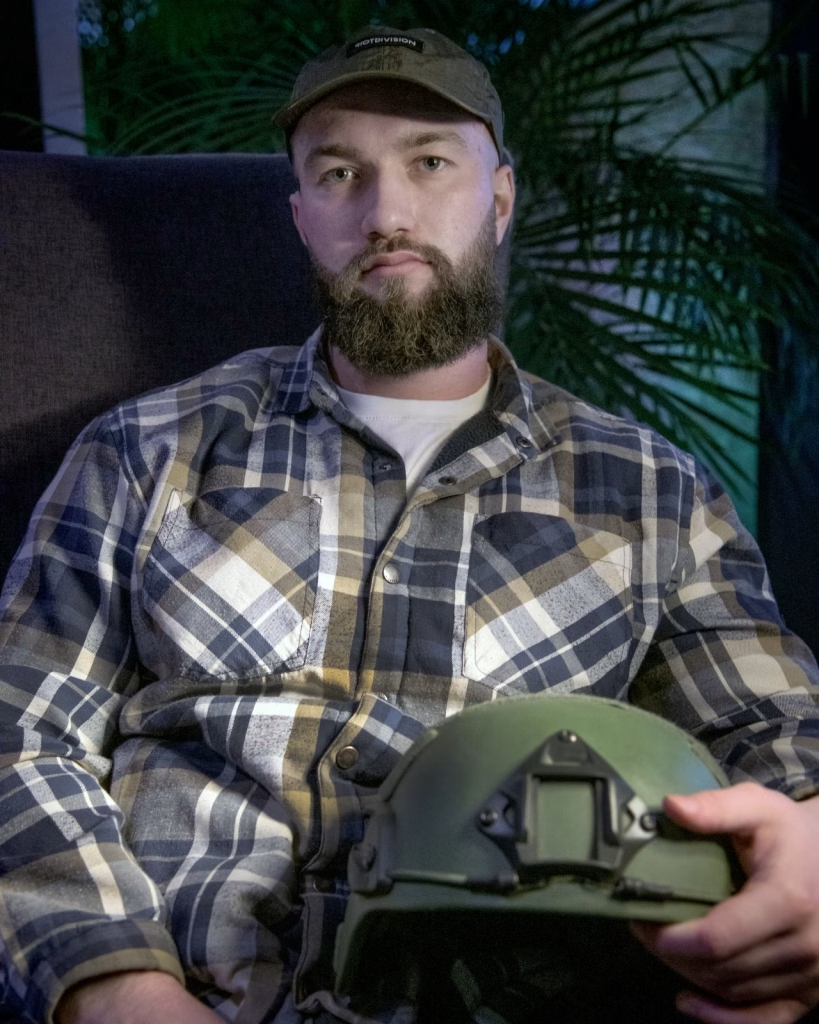
Lt. Lev Stupnikov pulled his truck up to the edge of a field in eastern Ukraine on a frigid February morning, followed by a convoy of senior Russian army officials coming to observe a training exercise near the front line.
For several consecutive days, Russian infantrymen, medics and officers had been drilling on the frozen mud, preparing for an offensive on the nearby city of Vuhledar. The only cover was a line of bare trees.
Stupnikov approached a group of waiting soldiers and snapped a photo, keeping his cellphone close to his chest to avoid drawing attention. Then he quickly tapped out a message: “There must be between 120 and 150 men here.”
Stupnikov, a recent graduate from a prestigious military academy in St. Petersburg, Russia, had a secret. Earlier that month, he had begun covertly sharing information with Ukrainian intelligence.
He had already given his contact the exact coordinates of the field.
Now, with scores of Russian soldiers and their commanding officers gathered there, Stupnikov would have only moments to move out of the line of fire.
“Walk away,” the Ukrainian contact replied, then: “I’m waiting for a message that you’ve left.” Having received no answer, the contact sent a note in all caps a minute later: “LEAVE.”
Stupnikov took this video as he walked away from the target area.
Stupnikov was already on the move, sidling up to a group of drivers smoking beside idling vehicles. Feigning a grimace and clutching his stomach, he asked them for a pack of wet wipes. Then he disappeared into the nearby stand of trees and stooped down, pretending to relieve himself.
He was knocked to the ground by an explosion that sent shrapnel careening into a nearby truck. The Ukrainians had fired a barrage of missiles.
When he got to his feet, Stupnikov was stunned by the gruesome sight. Dozens of mutilated bodies lay strewn across the field. Victims groaned in their death throes. Others were motionless over pools of blood on the black earth beneath them.
His phone buzzed. “Were there explosions? Send a photo.”
“There’s just meat,” he answered.
Later that day, he shared a confirmed tally with the Ukrainians: 68 killed and 60 wounded. Among the dead were 10 officers, including one of Kyiv’s top targets: Col. Gusein Musayev, commander of the 36th Motorized Rifle Brigade. The death toll was among the highest from any single strike since Russia began its invasion of Ukraine two years earlier.
It was the first in a string of attacks that the Ukrainians carried out with Stupnikov’s help, making him one of the most consequential saboteurs in recent military history. Ukraine used the intelligence and coordinates he supplied to kill more than 300 Russian soldiers, according to interviews with his handlers, video footage, text exchanges and official Russian reports.
The 26-year-old’s story offers a rare window into a shadow war waged by Ukrainian military intelligence. Ukrainian agents communicate over encrypted platforms with thousands of Russians, ranging from homemakers living near military factories to soldiers on the front line.
The operation taps into growing political disaffection inside Russia. The aim isn’t just to end Russia’s invasion; Ukraine is trying to build an army of Russian turncoats with the training and determination to one day mount an armed struggle inside Russia and help bring an end to Russian President Vladimir Putin’s decadeslong grip on power.
Stupnikov’s decision to turn against his own comrades came after years of deepening disillusionment with the Russian military. But his deadly act of betrayal, which inspired others to follow his lead, was ultimately enabled by an unlikely person, seeking to get him out of harm’s way—his mother.
Protecting the Fatherland
More than three years before Russia’s full-scale invasion of Ukraine, a teenage Stupnikov stepped up to a podium at the Budyonny Military Academy of the Signal Corps to give his oath of service.
“I solemnly swear allegiance to my Fatherland, the Russian Federation,” read the stocky 17-year-old, decked out in a fresh military uniform with a rifle slung across his shoulder.
His mother, Tatiana Yantsen, watched him with a sense of alienation from the other beaming parents around her. She had moved the family to Russia from Kazakhstan six years earlier, under a program to repatriate Russians living abroad.
Her father had told her: “We are russky,” or ethnic Russian. “Our historic homeland is Russia.” She had taken the chance to start a new life in the Siberian city of Omsk.
In the years since, however, the 49-year-old office worker had grown opposed to Putin and joined protests against his rule. A single mother abandoned by her husband, she didn’t want her only son serving in the army.
Academy life was fueling Stupnikov’s own disenchantment with the army, even as he excelled in sports and schoolwork. It began when he was rejected by a pilot school at 17 because he refused to pay a bribe. Now, at the academy, cadets had to fork over to leave the compound, take longer vacations or choose their military base after graduation.
He was shocked at the dilapidated Soviet-era vehicles he saw during training.
By the time he married his teenage sweetheart, Liza, in 2021, he was already planning a life outside of the military. He wanted to become a fitness instructor and start a family.
At his wedding he stood with ramrod military posture as guests scrawled wishes on his vest. They toasted the couple and placed donations in either a pink or a blue box, betting on the sex of their first child.
Events outside of his control would soon upend his plans.
‘Inside, I Was on Fire’
He awoke one morning in February 2022 to clips on his phone of Russian helicopters flying over Ukrainian cities and bombs exploding in the first hours of Russia’s full-scale invasion.
He was appalled by the violence and wanted no part in it. “They were dropping bombs on innocent civilians,” he said. “It was evil.”
Almost overnight, the conflict transformed the atmosphere on campus. Cadets lined up on the parade ground each morning as an officer read out battlefield updates. They learned which villages had been “liberated” and the number of Ukrainian “nationalists” killed overnight.
They were herded into the academy’s grand auditorium and shown speeches by Putin about the need for the “special military operation” against NATO aggression.
Stupnikov sat toward the back with a vacant stare. He thought of the images emerging from Ukraine and wondered of his comrades: How can you all continue living as normal, as if nothing has happened? He spent his evenings at home with Liza, watching Russian opposition clips and interviews with prisoners of war captured by Ukraine.
A small coterie of dissenters began exchanging knowing glances on campus. Some asked to quit the academy. Their requests remained pending for months. It was clear that de-enlisting was no longer an option.
Stupnikov was careful to conceal his views. He became skilled in a sort of double-think. “I couldn’t show my emotions,” he recalled. “But inside, I was on fire.”
His graduation wasn’t until June, but the bungled war effort urgently needed a fresh crop of officers. So in April, the 450 cadets in his cohort gathered in the parade ground and marched forward one by one to pick up shoulder patches decorated with two gold stars and a red stripe denoting their new rank: lieutenant.
As dusk settled, Stupnikov stood in a circle with other newly minted officers holding, per Russian military tradition, a combat helmet filled with champagne. As Liza watched, he shouted the name of his assigned military base in Russia’s Far East. Then he downed the champagne to loud cheers.
A Mother’s Fear
One crisp morning in Omsk, in November 2023, Tatiana arrived early at work. She brewed a strong coffee, then fired off a message to her son: “How are you holding up?”
She was hanging up her jacket when her phone lighted up with his reply. Instead of a message, it was a scanned army document. Marked “URGENT” in all caps, it said her son would be dispatched to the war, along with a dozen other troops, “for the timely replenishment of losses.”
Tatiana sat down at her desk and lowered her head into her hands. She was shaking, her heart pounding in her ears. “It dawned on me: The moment has come,” she later recalled. “I have to do something.”
She had already spent 18 months waging her own inner struggle. She took Stupnikov’s younger sister, Alisa, out of school classes that celebrated Russia’s war effort. On her drive to work, she would blast songs by Ukrainian ska punk band Zhadan and the Dogs, singing along to lyrics that mixed denunciations of the war with empathy for its Ukrainian victims. At traffic lights, she would reach for the volume control, wary of drawing attention. Alisa, then 14, worried her mother would get herself in trouble.
When Stupnikov visited Omsk with Liza after his graduation, Tatiana and her son spent hours on the phone with human-rights lawyers and nonprofit groups that helped Russian soldiers desert. Some advised him to head to Belarus, a staunch Russian ally, and then to Armenia, where he would be stuck in legal limbo. Others said: Get in touch when you are actually at war.
But Tatiana wanted to act before it was too late. She knew her son’s journey to the Ukrainian border had a stopover in Moscow. She urged him to board a flight there to Kazakhstan, where relatives would put him up.
Fearing the potential consequences, Stupnikov didn’t go through with it. Instead, he arrived that fall in the front-line village of Mykilske, part of Russia’s 36th Separate Guards Motor Rifle Brigade.
One night, Tatiana headed to the Omsk city center with a stack of posters denouncing the war. With trembling hands, she taped them to two dozen posts. When she retraced her steps the next day, all the posters had been taken down.
Growing Resentment
Stupnikov was appointed the chief signals officer for a battalion tasked with helping capture Vuhledar, a stronghold central to Ukraine’s defense of the strategic Donbas region. His job was ensuring commanders had smooth communication with their units and access to feeds from reconnaissance drones and surveillance cameras.
The 36th Brigade was a storied unit that had advanced on Kyiv in the first days of the invasion. But after nearly three years of war, it had almost no volunteers or contract soldiers left. Most of the Russians fighting under Stupnikov were convicts granted early release and untrained recruits who had signed up for money.
He was disgusted by their conduct. One afternoon, he watched as a group ransacked an alcohol store, roughing up its Ukrainian owner. The brigade command post in Mykilske, where Stupnikov often sat behind a set of screens, was decked out with chairs, sofas, carpets and large-screen televisions looted from local homes.
Walking with a subordinate to check Russian surveillance cameras on the outskirts of Mykilske one day, Stupnikov motioned toward the ruined homes flanking the street, and asked aloud: “How hard must it be to be a civilian here?”
The subordinate scoffed. “Well, why did they clamor to be part of Europe then?” he said, echoing a Kremlin argument that Ukraine’s Western political course had left Russia no choice but to invade.
Stupnikov bit his tongue. “Yeah, I guess so,” he replied.
Learning to Speak in Code
In February 2024, three months into Stupnikov’s front-line service, Tatiana wrote to Dmytro Karpenko, a computer programmer working closely with Ukrainian military intelligence. Could he help her son desert?
Karpenko was well-known for posting video interviews with Russian prisoners of war to his YouTube channel. Some POWs contacted him after returning home, offering military secrets for cash.
In October 2023, he announced payments of 250,000 rubles, equivalent to around $2,700, for any Russian serviceman who supplied information to aid Ukraine’s war effort.
Russians from all walks of life began reaching out: employees of state energy companies; agents from Russia’s Federal Security Service, or FSB; even anxiety-ridden grandmothers of Russian soldiers.
Karpenko, who has a round face, close-cropped black hair and bags under his eyes, spent his waking hours smoking cigarettes, taking calls and scrolling through messages on a dozen smartphones with some 40 accounts he used to field informants. The shoulder patch on his military-style jacket read: “Fuck, it’s like I live in a mental asylum.”
“You cast your line, and you don’t know what you’ll pull in,” he said of his program. “You might pull in a tiny fish or you might pull in a whale.”
Stupnikov recognized Karpenko’s name when his mother told him about her outreach. He had watched dozens of his POW interviews. He composed a message on WhatsApp. “I’m ready to work with you, and to give myself up,” it read. He appended his name, rank, location, and battalion and brigade names.
In a phone call that evening, Karpenko relayed his conditions. He proposed a schedule of interaction, with an appointed time each week when the two would get in touch to discuss the next target and the cash sum it would earn. Stupnikov would have to regularly erase any record of their exchanges.
They also established a code language. A number agreed in advance—the day of the month, plus five—would be typed after each greeting. A message sent on Feb. 20 should start with “Hello 25.” If no number was given, Karpenko would know his source had been compromised.
Stupnikov agreed to work with the Ukrainian. He set just one condition of his own: No money, he said, was to change hands.
A Traitor in the Ranks
Their first collaboration—the strike on the field in eastern Ukraine—was more successful than anything Karpenko had previously arranged. Stupnikov helped his fellow soldiers with the cleanup, loading the dead and injured into waiting trucks. Then he headed back to barracks, where he sat with the surviving troops and pretended he had suffered a concussion.
That night, he slept badly, fearing the FSB would soon haul him in.
Four thousand miles away in Russia’s Far East, the town of Borzya, home of the 36th Brigade, lowered flags to half-staff. Officials promised compensation to relatives of the dead. Russian channels ran footage of the gruesome aftermath, prompting soldiers and war correspondents to rail against the military command. “As usual, no one is going to pay the price,” one wrote.
FSB agents summoned the brigade’s deputy commander for questioning, as well as a soldier who had recorded a video later broadcast by Ukrainian and Western media. Troops in Stupnikov’s battalion were instructed to surrender their phones for inspection. Stupnikov slipped away and buried the compromised device—one of three in his possession—in the garden of the house where he was billeted.
As the Ukrainians urged him on, Stupnikov stepped up his campaign, sabotaging his brigade’s work with actions large and small. He shared radio frequencies, troop locations and detailed battle planning. He disabled cameras monitoring Ukrainian territory and cranked up the voltage on a battery pack attached to a drone controller, causing it to overheat and malfunction halfway through a mission.
Thanks to Stupnikov, the Ukrainians knew exactly who was being sent where and when tanks would advance. His brigade was losing soldiers at a rate that stood out—even in a Russian army that was hemorrhaging men.
In March, the Ukrainians killed several officers at a large brigade gathering flagged by Stupnikov. In May, they struck the basement of a former hotel where two assault units were staying, killing 20 men including a captain. Other tips led to a strike on a brigade command post during a high-level meeting.
Some nights, as Stupnikov began drifting off, he would suddenly see and hear explosions like the ones he had helped bring about. In those moments, he tried to brush aside the guilt and rationalize what he was doing. He told himself the victims were bad people. Russia would have sent them to their slaughter anyway. At least their mothers would now get their bodies back and qualify for a payout from the state.
“If I was a pious person, I could have concluded that I had committed murder, and that all those souls will haunt me forever,” he said.
The Slip-Up
The more his sabotage efforts succeeded, the more Stupnikov feared he was sticking out. Eventually, he was the battalion’s only remaining officer from the cohort that was there when he joined in November. Every other soldier involved in planning the unit’s combat operations had been killed, wounded or moved to another part of the front.
Increasingly, suspicion of a high-level saboteur grew.
Stupnikov was sitting in the Mykilske command post one day in June when his commander suddenly threw up his arms in exasperation. The senior officer had been monitoring the battlefield on a set of computer screens. Kyiv had just launched another successful strike against his force.
“Nothing we’re doing is working out. I have a feeling there’s a Stierlitz in our ranks,” the commander said, invoking the name of a fictional sleeper agent—the hero of a popular Soviet movie—who had infiltrated the Nazi leadership. Scanning the room, the commander settled his gaze on Stupnikov.
Stupnikov tried to play it off as a joke. He laughed and quickly turned back to his work. But he feared it would only be a matter of time before his secret was discovered.
“It was constant, endless tension,” he said. “Real spies get training in espionage. I had received no such training at all.”
The mounting toll of secrecy soon led to a slip-up that nearly cost him his life. One evening toward the end of May, he shared with Karpenko a screenshot from Google Maps showing the brigade’s new headquarters in Mykilske. The Ukrainian told him there was a problem: The file he sent wasn’t loading.
Stupnikov had already deleted the screenshot, so he sent a new one. Some time later, he went to sleep.
A deafening blast soon jolted him awake. He saw a gaping hole where the walls had collapsed and realized he had accidentally sent the coordinates of his own basement location. He narrowly survived.
Weeks later, in early July, Stupnikov was in the brigade command post when he got a message from Karpenko: “Come to the edge of Mykilske at an appointed time later this week,” it said. “Leave any weapons behind.”
His long-awaited exfiltration was about to begin.
A Nighttime Escape
The night of July 6 was warm, clear and cloudless. A light breeze rustled in the trees as Stupnikov walked to the outskirts of the village, carrying his military radio and his smartphone. His mother checked in as she always did before bed.
“Go to sleep,” he texted her, revealing nothing about his plans. “Everything is fine.”
The Ukrainians had flown a drone over the path he should follow. Reviewing the footage they sent, he had noted the deep tank tracks and the destroyed armored vehicles on the final approach to Ukrainian-held land.
He was provided with a password to give a Ukrainian unit waiting on the other side. He chuckled to himself when he read the phrase—so absurd in light of the ordeal he was about to face.
As he neared the edge of the village, Stupnikov heard a shout from one of the two-story homes on the street, which served as a brigade observation post. A Russian soldier was checking: Was he friend or foe?
Stupnikov named his battalion, and said he was out to inspect surveillance cameras and test the radio connection. “Is it possible to go farther in that direction?” he asked the soldier, motioning toward Ukrainian territory.
“Yes, but not very far,” the man answered.
“It’s OK,” Stupnikov replied. “I’m not planning to go far.”
A few hundred yards farther he maneuvered around a set of antitank obstacles and paused near a tree line. Then he heard the whir of the Ukrainian drone sent to guide him.
Inside an underground bunker several miles away, a group of soldiers from Ukraine’s 72nd Brigade sat before a set of large screens. They watched as the crosshairs of the drone’s camera zeroed in on a small figure—colored white in the drone’s thermal imaging lens, in stark contrast to the surrounding gray terrain. Stupnikov emerged from a street flanked by damaged buildings and took his first steps into no-man’s-land.
“Imagine what is going through his head right now,” one of the Ukrainians wondered.
“He’s afraid,” another said.
Stupnikov was indeed afraid. He had told his mother the prospect of crossing the front line terrified him. He knew all manner of things could go wrong.
The Russians—or even the wrong Ukrainians—could spot him at any moment and call in a strike.
He had no time to linger on such thoughts. He pressed forward and tried to calm his nerves by imagining himself in a hot bath.
Knotted lengths of metal, left by wire-guided antitank rockets, kept catching in his feet. They were hard to distinguish from the tripwires of the antipersonnel mines that covered the area, which for two years had demarcated the front line. Many of the explosives were masked by a fresh layer of grass.
He moved steadily north, using his smartphone to illuminate the ground. He couldn’t discern a clear path. From their bunker, the Ukrainians discussed ways to bring the guidance drone closer to Stupnikov and center it over the intended route. The drone camera panned round to assess the surrounding terrain: miles of marshland pockmarked with craters from artillery strikes.
About 40 minutes in, he heard ducks quacking. It was a reassuring sign that he was headed in the right direction: His destination lay on the edge of a pond.
Inside the bunker, the Ukrainians were transfixed by the live feed of his passage. “He’s so close now,” one excited drone operator said as Stupnikov neared the tree line where the forward positions of Ukraine’s 72nd Brigade were concealed.
Then suddenly, barely perceptible amid the trees and undergrowth, like insects moving along a cauliflower bud, several tiny white figures popped up on the Ukrainians’ drone footage. On the ground, peering out of a dugout, three Ukrainian troops aimed their rifles at the approaching man.
One of them appeared twitchy. He gripped a machine gun with shaking hands, Stupnikov later recalled.
“What’s the pass code?” he barked.
Stupnikov answered with the words that had earlier made him chuckle: “Peanut shop.”
He was checked for weapons, blindfolded and led to a pickup truck.
‘Where I Was Supposed to Be’
It was 8 a.m. in Omsk when Tatiana was awaked by a phone call. The number displayed on her screen was Karpenko’s, but when she picked up, groggy and disoriented, it was her son’s voice that she heard.
“Are you awake?” he asked. Birds chirped as he sat on the porch of a house near the front line, still in his Russian uniform. “Listen: I have come to where I was supposed to be.”
Still from a video that shows Stupnikov calling his mother just after his escape across the frontlines. He tells her: “I have come to where I was supposed to be.”
Tatiana sprang to her feet. Her son hadn’t mentioned Ukraine—they assumed their calls were being recorded—but this was a phrase they had agreed on in the event he made it to the other side.
After the call, she collapsed on the bed and buried her head in her pillows. She had bottled up her emotions for months, afraid that leaning in to them would draw unwanted attention and distract her from the task of helping her son. Now she wept, with a huge smile spread over her face. “I felt a lightness in my soul,” she said.
But anxiety soon crept in. Karpenko instructed her to wait two days and then call Stupnikov’s military base, to report his disappearance. After that, the Ukrainian said, they would begin the process of getting her and her family out too.
A One-Way Ticket
Stupnikov was placed in a cell, isolated from other POWs. On the second day, he was driven to a building near the front line and brought to a basement room. A broad-shouldered military commander with black stubble entered.
Denis Kapustin led the Russian Volunteer Corps, or RVC, a Ukrainian army unit composed of ethnic Russians opposed to Putin’s regime. The RVC had led armed raids into Russia and doubled as a far-right political organization advocating for Putin’s ouster. The RVC lacked a communications specialist, and Kapustin wanted Stupnikov on board.
But the Moscow-born commander, a top target for Russia’s intelligence services, couldn’t take chances, not knowing yet whether he could trust the defector. Several bodyguards surrounded Kapustin as he laid out his bargain: The RVC was offering membership in an elite fighting force, he told Stupnikov, but it was a one-way ticket. Once you join, you stay through the war.
Stupnikov had earned his freedom. After crossing the front line, he had handed the Ukrainians a smartphone with the passcodes to multiple communication channels they would use for months to access live feeds from a dozen Russian drones and surveillance cameras. He was wary of wading back into war, and tempted to try to build a life elsewhere.
That option was fraught. Another defector, Russian army pilot Maksim Kuzminov, had flown his Mi-8 attack helicopter into Ukraine the previous year and turned it over to Kyiv for a $500,000 reward. Six months later, Kuzminov was arriving back at a rented condo by the Spanish seaside when an assassin shot him dead. Anyone thinking of betraying Russia had gotten the message.
Stupnikov understood a central paradox of his situation: The safest place for turncoats like him was in Ukraine—close to the troops and country they left behind. Two days after their meeting, he passed a message to Kapustin: He was in.
A major issue remained unresolved. Stupnikov’s wife had remained in Borzya, integrated with the tightknit community of officers’ wives. After joining the RVC, he called Liza to ask if she was ready to join him.
He wasn’t prepared for her response. She told him she wanted a calm life far from the war and close to her parents. Stupnikov told her he had escaped the Russian army to give her and his family a better life abroad.
After that call, he messaged her repeatedly, trying to convince her. A major battle in northern Ukraine helped distract him from a deepening depression. But Liza had made up her mind. In one text, she told him: “This was your dream, not mine.”
Stupnikov sent a final message to her in late September. After it was met with silence, he followed up: “So, are we no longer talking?” She never answered.
One year later, after Stupnikov shared his story in a two-hour video interview with Karpenko, Liza was questioned by Russian authorities as part of a criminal probe into his desertion. She told Russian state media his decision to help Ukraine amounted to treason. “He betrayed me too,” she said.
Until the interview, Russia’s military command had no proof Stupnikov was alive. He had been listed as AWOL, presumed dead. Now, prosecutors visited his relatives in Omsk and called on residents of housing blocks where his family had lived. But by this point, Tatiana and Alisa were no longer there.
‘Is This Really Our War?’
In February 2025, mother and daughter packed a backpack and suitcase each. They were headed for Moldova, where they were to cross by foot into Ukraine and be met by Karpenko.
They packed light, in line with their cover story about a brief holiday abroad. But Tatiana couldn’t resist one indulgence: In a folder, she placed a lock of baby hair that she kept from Alisa and Stupnikov’s infancy, as well as some old photos and his high school certificate.
She had spent the previous months fielding calls from Russian military officials. They urged her to convince Stupnikov, if he was alive, to give himself up. She pretended to be a distressed mother and argued hysterically that it was their job to find him.
When she reached Omsk airport, the customs officer checked their passports and then turned to Alisa. “Is this your mom?” he asked the 16-year-old. Alisa nodded. “When is your mom’s birthday?” the man followed up. It was a routine question, to verify their relationship. But Alisa froze, her mind blank. She blinked, paused, and then muttered: “In the winter.”
Tatiana turned cold—then sought refuge in humor. “You know what teenagers are like,” she joked. “They don’t care about their parents.” The officer gave a wan smile. “Yeah, I also have teenagers,” he said. Then he stamped their passports and waved them through.
Stupnikov got a break from front-line service to greet them at their temporary accommodation in Kyiv. Tatiana hadn’t seen him in a year and a half, and was moved by the change in his appearance. He had put on a bit of weight and had a full beard and thick handlebar mustache, a look typical for RVC fighters inspired by Russian counter-revolutionaries from 1917.
In conversations over the following days, Tatiana told him she was conflicted over his decision to once again leave his family and go back to fighting. “Is this really our war?” she asked him.
Stupnikov explained the sense of duty he felt. He wanted to atone for being part of a brutal invasion force. He believed every Russian citizen bore responsibility for the war and for helping end it. “Yes,” he answered his mother. “This is our war.”
A New Mission on the Other Side
This summer, Stupnikov was among dozens of RVC fighters who gathered in a forest clearing near the front lines in eastern Ukraine. They lighted a set of fires and formed a circle around the stone remains of an ancient pagan church.
Holding rifles that once belonged to comrades killed in battle, and were now inscribed with their call-signs, they walked forward one-by-one and placed the guns on the ground. They delivered a brief eulogy, then pressed their fists to their chests and called out: “Forever in our ranks!”
Stupnikov is now facing off against the Russian brigade he left behind. His story has inspired others. One Russian drone pilot tossed a live grenade into his military barracks before sprinting across the front lines earlier this year. Another defector who aided Ukraine said he had wanted to beat Stupnikov’s record of 300 Russians dead. Karpenko’s informant pipeline has become a 24/7 operation, with longtime sources earning $4,000 a month.
As Stupnikov watched the ceremony commemorating the fallen, his eyes began welling up. He had lost his wife. His mother and sister were in a safe location, but he hadn’t seen them in months.
An apartment where he was staying suggested a spartan lifestyle. He kept all his possessions in two sacks. Propped against the wall was an antidrone gun he took on trips to maintain communications equipment deep inside the so-called kill zone between Russian and Ukrainian positions.
In Ukraine, he was no longer an officer. He looked at the other unranked Russians beside him. Some had set fire to army recruitment offices inside Russia, or risked jail at protests. All were now fighting together to take back their country. These men, Stupnikov said, were his new family.
He reflected on the promise he had made at the military academy, almost a decade earlier. “Did I betray my oath? I pledged to defend freedom, independence, and the constitutional order,” he said. “But Putin destroyed all three.”
Source: Matthew Luxmoore, “The Defector: A Russian Officer Turned Against His Country and Helped Ukraine Kill Hundreds,” Wall Street Journal, 15 October 2026. I paid for access to this article so you don’t have to. |||||TRR
As Russia turns to Chinese labour to fill its workforce shortages, migrant workers find themselves caught between unpaid wages, dangerous construction sites and a war far from home
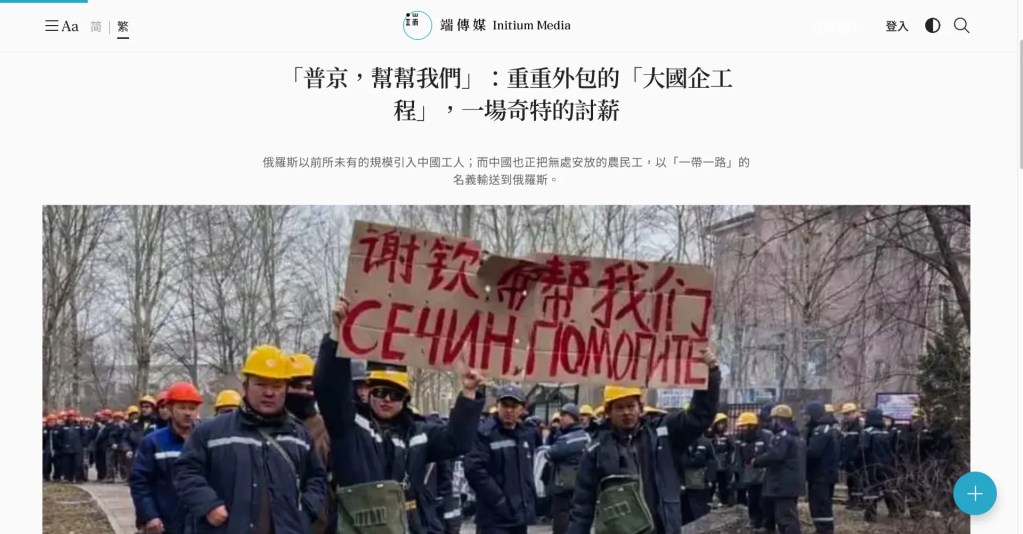
On April 12, dozens of Chinese construction workers marched through Komsomolsk-on-Amur, an industrial city in Russia’s Far East, carrying makeshift signs. One read, in Russian, “Putin, help us.” Another appealed to Igor Sechin, the powerful head of Russia’s state-owned oil giant Rosneft.
The men, mostly in their forties and fifties, had reportedly gone months without pay. Yet footage of their protest showed an oddly subdued scene. Some chatted on the pavement; others sat on the grass or scrolled through their phones. A few called out “No money” to those filming.
In wartime Russia, where even solitary protesters risk arrest, the gathering was extraordinary. Police descended on the city centre, but the workers were initially allowed to disperse without a violent crackdown. Several were subsequently fined for participating in an unauthorised public gathering.
An investigation by Chinese-language independent outlet Initium Media follows the workers’ grievances into a much larger story: how Russia’s wartime labour shortage and China’s shrinking construction industry have created a growing, precarious market for Chinese migrant labour.
The protesters were working on a long-delayed upgrade to a Rosneft refinery, contracted to a Chinese company, Beijing Seawide Oriental Energy Technology Group Limited. Russian regional authorities claimed Rosneft had terminated the contract over poor workmanship and delays, insisting that payments to the contractor had been made. Chinese social media accounts, meanwhile, blamed Rosneft for withholding outstanding payments. The precise circumstances remain disputed.
The refinery has had a troubled history. Originally scheduled for completion in 2015, its modernisation repeatedly stalled. In 2021, Chinese workers staged several protests demanding unpaid wages and permission to return home during China’s pandemic border restrictions.
Five years later, little appears to have changed. Initium contacted workers through Douyin, China’s version of TikTok. Some said they had received their wages; others had not. One worker declined to speak openly, fearing that communications through the Russian-provided internet connection might be monitored. “There are grievances we cannot speak of,” he said. He described 10-hour working days without rest days.
By late May, some workers were posting videos of themselves packing for home. Asked whether he had finally been paid, the same worker replied simply: “No.”
But Komsomolsk is only one corner of a much larger phenomenon.
Near the Baltic port of Ust-Luga, outside St Petersburg, Chinese workers are helping construct an enormous gas-processing and petrochemical complex. In 2019, China National Chemical Engineering signed a €12 billion contract to build its petrochemical plant, one of the largest deals of its kind. One worker told Initium that some 30,000 Chinese labourers were now employed on the project.
Their Douyin videos offer glimpses of life rarely seen in official accounts of Sino-Russian cooperation: endless queues for work, unappetising canteen meals, snow-covered accommodation blocks and occasional drinks after exhausting shifts. For many, the journey was their first trip abroad, sometimes even their first flight.
Although many workers reveal little emotion in their videos, their choice of background music hints at the exhaustion and loneliness beneath the routine. One of the most frequently used soundtracks features a drunken man shouting a song called The Hardest Meal Is One You Have to Beg For: “Alone in a foreign land, who can I tell my troubles to?” Meanwhile, fellow villagers leave comments asking when the workers will return home. “We’re already wearing short sleeves here,” reads one. “Why is it still snowing where you are?”
The dangers extend well beyond isolation. Initium verified reports of fatal construction accidents, including workers crushed by equipment. The nearby port has also become a target for Ukrainian drone strikes. In August 2025, three Chinese workers were injured during an attack. Subsequent strikes sent flames and smoke into the sky, while communications disruptions left workers searching for mobile signals.
The investigation found no evidence in workers’ videos of appropriate safety training following the attacks. In one circulated message, a purported manager even falsely attributed an incident that injured Chinese workers to an operational mistake involving a construction drone, instead of an enemy attack.
Unpaid wages are another recurring grievance. Videos circulated online show workers confronting management and, in one instance, apparently threatening to jump from a building to demand payment. Initium also observed how footage of a wage protest on Douyin quickly became impossible to share or comment on.
Behind these disputes lies a labyrinth of subcontracting. Recruitment agents advertise the Baltic project as a prestigious “major state-owned enterprise project”, implying security and reliability. But ordinary labourers often have no direct employment relationship with the Chinese state-owned main contractor. Instead, they are hired through layers of subcontractors, labour brokers and work teams. When wages disappear, responsibility becomes difficult to pin down.
The arrangement allows major companies to distance themselves from workers’ grievances, even as they profit from enormous international contracts.
There is a further paradox. Russia needs these workers because its invasion of Ukraine has drained the domestic labour force through military mobilisation, emigration and expanding defence industries. According to figures cited by Initium, Chinese arrivals for work doubled from 66,000 in 2023 to 132,000 in 2025.
China, meanwhile, has its own employment crisis. The collapse of its property boom has eliminated construction jobs, pushing labourers to seek opportunities abroad. Overseas projects promoted under the Belt and Road Initiative offer a possible escape, although the number of workers dispatched overseas remains tiny compared with the jobs lost domestically.
And Russia’s industrial ambitions may themselves be economically questionable. The Ust-Luga complex was conceived largely to supply European markets, which have since sought to reduce their dependence on Russian energy. China, already facing petrochemical overcapacity, has little reason to import its products from halfway around the world.
Yet for the workers, such geopolitical calculations are distant concerns. On Douyin, beneath videos of bitter cold, dangerous worksites and lonely evenings, the most common questions are not about Russia’s future or China’s economic strategy.
They are simpler: “Are you still hiring?” “Does your site need ordinary workers?” “Brother, can you take me with you next time?”
The answers, when they come at all, are often just as brief: “Full.” “Not hiring.” “Wait a little longer.”

Summarised by contributing editor Kin-Long Tong
| Kin-Long’s take: This story connects two transformations rarely examined together. English-language coverage of China and the war tends to focus on great-power politics: Xi and Putin, sanctions, energy and Beijing’s support for Moscow. This story offers a human perspective largely absent from Anglophone media: how geopolitical decisions travel downward into the lives of people with almost no power over them. |
Original, ‘「普京,幫幫我們」:重重外包的「大國企工程」,一場奇特的討薪’ by 龔玨 Gong Jue first published in Chinese on Initium Media on June 8, 2026.
Initium Media is a Chinese-language digital media outlet based in Singapore.
SOURCE: “‘Putin, help us!’ the Chinese workers building Russia’s wartime economy,” Translator, 6 November 2026. Thanks to Adam Tooze for the heads-up.
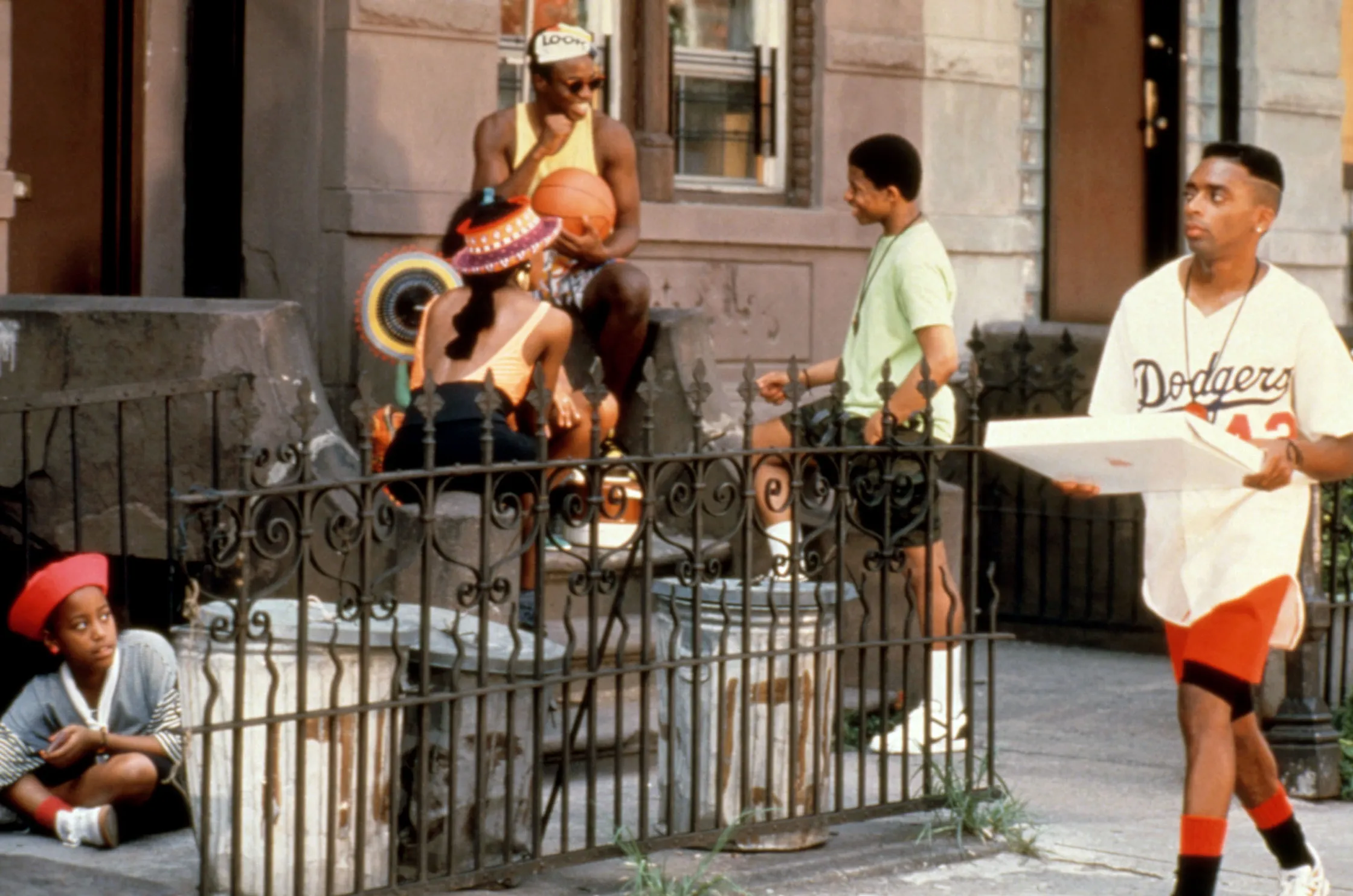
WHAT FILM HELPS YOU LIVE BETTER? It’s an impossible question. Something by Francis Ford Coppola? Terrence Malick? Richard Linklater? A documentary by Steve James, Ondi Timoner, Barbara Kopple, the Maysles Brothers, or D.A. Pennebaker and Chris Hegedus? Yes to all. But just as Chris Rock says about music, I think there is something special about great films you discover as you are coming of age. I was twenty-one years old when I first saw Shelton Jackson “Spike” Lee’s masterpiece Do the Right Thing, and I haven’t been the same since.
It’s hard to capture just how abrupt, startling, and revolutionary Lee’s explosion onto the film scene was. Before 1986, the only African-American-directed movie anyone I knew could name was Melvin Van Peebles’s 1971 Sweet Sweetback’s Baadasssss Song. And let’s be honest, that was mostly because of the impeccably cool title. But when Lee came out of NYU film school, hooked up with the Independent Feature Project (already doing great work in the field), and made She’s Gotta Have It for 185 thousand dollars (much of it charged on his own credit cards), it was a veritable storming-the-barricades moment for black film.
Two films later, however, Do the Right Thing was a different matter entirely—bigger, bolder, iconic, not only career-defining but era-defining. And so, so ballsy. Lee has become so well known as a provocateur, both on screen and off, that people tend to forget that before Do the Right Thing he had never really addressed white-on-black racism in his films. But in the summer of 1989 he addressed not only that, but an entire world of intra-racial and interracial concerns. The film takes place in Brooklyn on the hottest day of the year, and it’s not just white and black people who are tired of each other and getting to the boiling point; Asian and Latino characters are part of the mix as well. There are even roiling tensions within racial groups. As characters make completely understandable but utterly devastating decisions, a window is opened on the human condition. There’s an immediacy, an urgency to Do the Right Thing that took open-minded, sensitive, concerned—and sheltered—white people like me by surprise. Making that film was a revolutionary act.
It all starts with those opening credits, a sequence so powerful that some critics have said you could skip the rest of the film and still get the point. It begins with a solo saxophone—I always forget that part, but it does. That sax is playing a song many do not recognize, the chorus of “Lift Every Voice and Sing,” named the Negro National Anthem in 1919. But those strains soon fade away, and the booming rhythms of Spike Lee’s new negro national anthem, Public Enemy’s “Fight the Power,” explode into the room. Then Rosie Perez steps on screen and begins to dance—and to utterly destroy.
In the film’s heightened-reality production design, presentational delivery (with direct camera addresses, stylized camera movements, etc.), and perhaps most of all in the seriousness with which he treats the moral, ethical, and sociopolitical quandaries of both his groups and his individual characters, Lee strongly echoes a dramatist I had fallen in love with in college—Bertolt Brecht. As Douglas Kellner writes in his marvelous essay “Aesthetics, Ethics, and Politics in the Films of Spike Lee,” Do the Right Thing:
dramatizes the necessity of making moral and political choices. Both Brecht and Lee produce a sort of “epic drama” that paints a wide tableau of typical social characters, shows examples of social and asocial behavior, and delivers didactic messages to the audience. Both Brecht and Lee utilize music, comedy, drama, vignettes of typical behavior, and figures who present the messages the author wishes to convey.
Growing up during the civil rights movement, it would have been easy for Lee to make an angry film, a screed against white power, a film about the sinful nature of whites and the noble suffering of blacks. But at every step of the way he refuses to take that easy road. He elevates his story not only with his Brechtian approach, not only with his classical structure (the film follows the Aristotelian unities of action [one main plotline], time [one day], and place [one location]; and the local disc jockey Mister Señor Love Daddy and street-corner characters can be read as Greek choruses as easily as Brechtian ones), but especially with his evenhanded treatment of both sides of the central dispute. Lee’s character, Mookie, is hardworking and honest—and is also lazy and apt to disappear for a couple of hours to be with his girlfriend. Danny Aiello’s character, Sal, is providing a service to the community and has generally good relations with its inhabitants—but is also unnecessarily intransigent and ultimately betrays deeply covered racism. Bill Nunn’s character, Radio Raheem, is a symbol of black pride and manhood and doesn’t deserve his fate—but he is also wrong to enter the pizza shop and refuse to turn down the deafening music emanating from his now archetypal boom box.
And lest we dwell solely on the philosophical issues at hand, it must be pointed out that all of these characters are wildly entertaining and funny. Do the Right Thing is the precise opposite of an eat-your-vegetables movie.
There’s a telling moment when Sal and Buggin’ Out (a wonderful Giancarlo Esposito, a constant presence in Lee’s early pictures) have an argument about the “wall of fame” in Sal’s pizzeria, which proudly displays a series of Italian American heroes. Buggin’ Out argues forcefully that a pizzeria in a black neighborhood, supported by the hard-earned money of black residents, should have “some brothers on the wall.” Sal fires back that if Buggin’ Out wants brothers on the wall, he should open his own pizzeria. In the director’s commentary, at this moment Lee muses quietly, “Two good points….”
It’s that kind of sympathy for both sides, that determination to present them both as compelling and understandable, that makes for good drama. It also happens to be what makes good human beings. Throughout the film, as befits his style and techniques and fundamental storytelling approach, Lee presents us with characters who are archetypes (tellingly, he dons a gold tooth and an earring to play Mookie)—but they never become stereotypes; there are always living, breathing human beings inside those archetypes. They’re our neighbors. They are us.
And that’s what makes Do the Right Thing, to use a phrase Lee fittingly applied to his film Chi-Raq, “a righteous movie.” It’s a movie that presents characters across the spectrum who have various sorts of righteousness; it’s a film with a righteous core; and it’s a film that both enacts righteousness (many black crew members who got their breaks on Do the Right Thing went on to long film careers, including as directors) and preaches righteousness. It’s a movie that has fueled righteousness in my own life. Lee’s film, Lee’s characters, and their constant presence in my life never allowed me to see either side of racial disputes in shallow, stereotypical terms—but they also never let me forget the anger, resentment, and frustration of being black in America. Even growing up around African Americans my whole life, I’m not sure I ever truly began to understand the depth of those currents until I saw Do the Right Thing.
Perez told me last year that part of the desperation you can see in that opening credits dance came because Lee worked her to the bone that day. There was real anger behind that dance. But there was real anger in Lee’s direction of the film too—in his choice of angles, his cuts, his music, the performances he drew from his actors—alongside his moderation and sensitivity.
The characters of Do the Right Thing spoke to me deeply in 1989, and they speak to me still. I’ll hear their words often in my day-to-day life. Mookie and Radio Raheem and Buggin’ Out, of course. And Mister Señor Love Daddy, too. And from time to time I see Perez’s gyrating, violently pulsing form, becoming one with Chuck D and Flavor Flav’s lyrics and the Bomb Squad’s music, saying it all without a single word of dialogue. Those characters are not even a half step shy of real to me—they’ve been my companions for my entire adult life.
Michael Dunaway is a New York Times award-winning filmmaker, creative director of the Sarasota Film Festival, and editor at large for Paste magazine. He is currently in development on a film about the civil rights movement.
In honor of Black History Month, I wanted to take this time to focus on one of the most important films for black culture. Today we will be looking at Spike Lee’s 1989 masterpiece, Do The Right Thing. Even after 30 plus years the film is still relevant in terms of issues within our society today, but more importantly it still provokes conversations about these topics. The film is know for its commentary on racial disparities within America and around the world. While we will be touching on these, the main thing we will be looking at is Why Mookie broke that window.
SOURCE: I Take on the Movies (YouTube), “Do the Right Thing | Why Mookie Broke the Window,” 7 February 2022
