Delete All the Messages on Your Phone Before Going to Russia: The Treason Case Against Mikhail Loshchinin

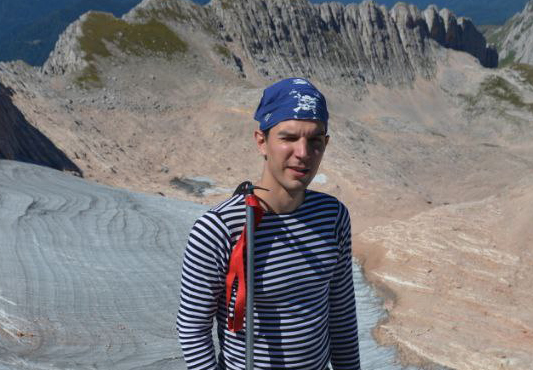
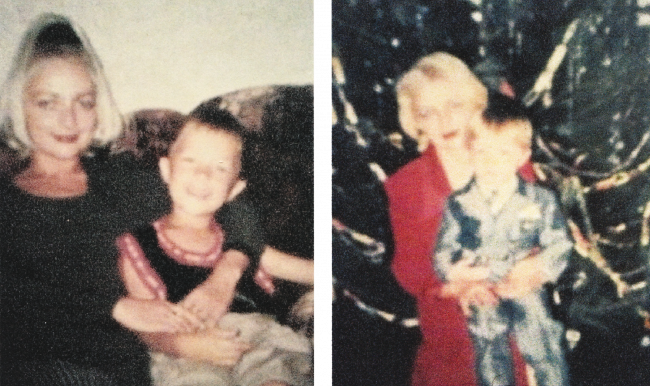
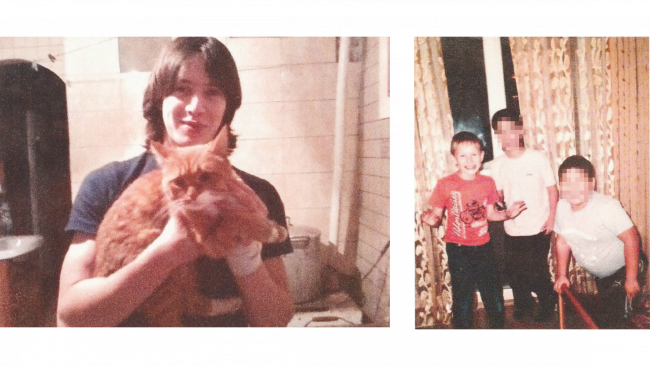
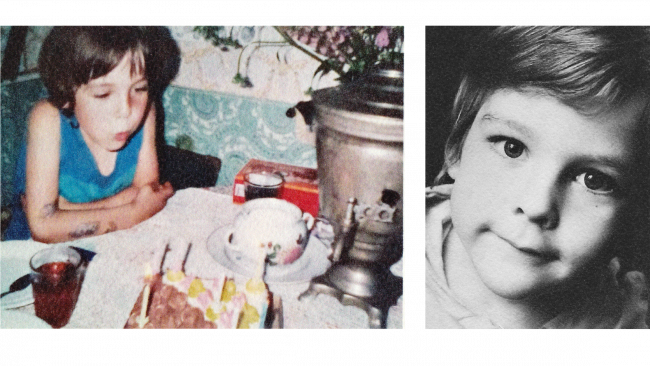
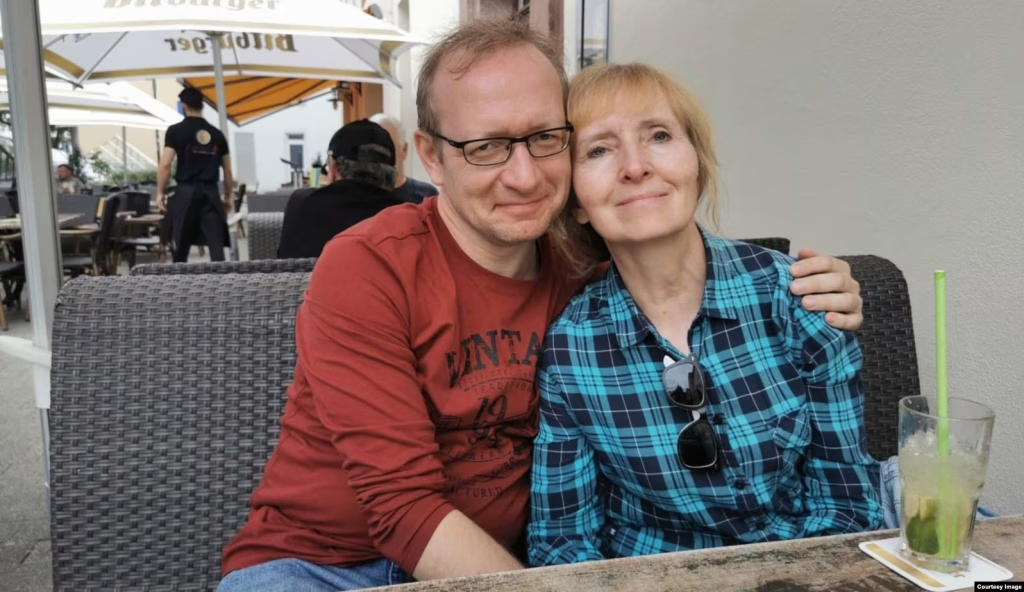
Mikhail Loshchinin and his mother, Olga. Courtesy of RFE/RL

More and more Russians face trumped-up charges of “high treason.” Anything whatsoever—from commenting on a banned organization’s social media post to wiring a paltry sum of money to a relative or acquaintance in Ukraine—can occasion these charges. Foreign nationals who have retained their Russian citizenship have also faced prosecution. It has become ever more dangerous for them to travel to Russia to visit loved ones.

This past summer, Mikhail Loshchinin, a 48-year-old dual Belgian-Russian national, decided to visit his father, who had suffered a heart attack, and headed to Petersburg.

In recent years, Loshchinin had been living in Germany while working as a database manager in Luxembourg. On 1 July 2025, he crossed the Latvian border on a motorcycle with a German license plate and stopped at the Ubylinka border-crossing station, in the Pytalovo District of Russia’s Pskov Region. He was carrying a Russian federal passport, which he presented to the Russian border guards.

“They staged a provocation at the border”

“Sometime around 2020, before the war, Misha traveled to Russia by motorcycle. He made it there and back just fine. He had good memories [of the trip], and so he decided to repeat his ‘feat,'” says Loshchinin’s mother Olga, who now liveas in Poland. “The goal was to visit his father, who had undergone heart surgeries and had been feeling quite poorly after a heart attack; there was a risk the visit would be their last. [Mikhail] decided to travel with his Russian passport so as not to have bother getting a visa. (As a Russian national, Loshchinin does not need a visa to enter Russia—Sever.Realii.) He’d spent the last twenty-five years in Europe: his mindset had changed, he’d been Europeanized. He’d come to rely on the system’s accountability, on the fact that laws were obeyed.”

According to Olga, the border guards asked to check Mikhail’s telephone, on which they apparently found numerous Ukrainian contacts. Before his trip, Mikhail had not deleted anything from his WhatsApp account, as he did not consider corresponding with friends in Ukraine to be a crime.

“There were no grounds to detain him, so they staged a provocation at the border,” says Olga. “He had been waiting there for a long time for the inspection to end when he asked where he could buy some water. They told him to follow them on his motorcycle to the local store, that they would show him the way. He followed them, but they suddenly made a funny turn and detained him for crossing the border. In other words, they had deliberately lured him there to have a legal reason to detain him.”

Mikhail grew up in a large family: the four Loschinin children were born in the Soviet Union but later moved away. Mikhail had been living in Europe since 1999. His sister became a citizen of Ukraine, and he often visited her. He had many friends and acquaintances in Ukraine. Their contact details were stored in his phone, naturally.

Mikhail had always been apolitical, and his arrest has no connection with his work, says Olga.

“It is, rather, a matter of his being in the wrong place at the wrong time, and the police investigator admitted as much to him. . . . Misha has always had an excellent reputation, and his employers have valued him. He’s also a well-rounded fellow: he’s a biker, plays the guitar, and sings and does the lighting for productions by small Russian-language theaters. He bought the [lighting] equipment with his own money and promotes Russian culture among his western friends and acquaintances any way he can: he hasn’t lost his connections with his roots. . . . He falls in love easily, and has had several marriages, but now he’s a bachelor. He has a daughter from his second marriage.”

After Mikhail set off for Russia, he constantly telephoned with his sister and mother, who now live in Poland, but they lost touch with him on July first. Three days later, he called from someone else’s phone and told them he had been detained.

“At 10:27 a.m. on July fourth, there was a call from an unknown Russian number. It was our Misha. He said that Dmitry, an FSB officer, had given him a phone to make the call, that he was under guard at the Hotel Dubrava in the border town of Pytalovo, that they’d confiscated his papers and the keys to his motorcycle, and that the motorcycle itself was parked outside the hotel,” Olga recalls.

Mikhail told his loved ones that he had been given a choice: either he would be sent to a basement somewhere, where he would sit and wait until they decided what to do with him and his papers, or he could go to a hotel and wait there, at his own expense.

“No one wants to sit in a basement, naturally,” Olga continues. “He had some money, and since the rooms were inexpensive, he chose the hotel. They confiscated his telephone, his passport, and the papers for his motorcycle, and they posted guards without whom he wasn’t allowed to leave his room. They had to get the go-ahead for every trip outside the hotel. They escorted him when he would go out to the store and the post office.”

Mikhail spent nearly a month at the Dubrava Hotel.

“Misha’s money was running out. We were by then terribly anxious and contacted a lawyer, who arrived at the hotel on the evening of August first and was able to see Misha and speak with him. On August second, a group of persons unknown took him to an undisclosed location. Those were the roughest days for us. As later transpired, he had been transported from Pytalovo to Stary Oskol, in Belgorod Region, and the journey had taken several days. Misha later told us that along the way they had passed through Smolensk; he had managed to catch sight of that. It turns out that, in his correspondence for 2022, an ex-girlfriend of Mikhail’s had asked him for financial help. Her profile picture now has a Ukrainian symbol on it, but it wasn’t there in 2022.”

The lawyer traveled to Stary Oskol, Olga recounts, but at the local pretrial detention center he was told that they had “no such person” in custody. The lawyer then filed a formal appeal with the prosecutor’s office, the FSB, and the Investigative Committee, asking them to figure out what had become of Mikhail. On 21 August 2025, Mikhail telephoned Olga himself—from Pretrial Detention Center No. 1 in Pskov. The call was again made from an unknown number.

“Judging by how his voice sounded, he wasn’t himself. He was clearly under duress and kept asking whether it was alright to talk now, meaning that the call was made in someone else’s presence,” says Olga. “He said that he had been accused of ‘high treason’ per Article 275 of the Russian Federal Criminal Code: ‘financing representatives of a foreign state hostile to the Russian Federation.’ We got a call from someone named Denis, who introduced himself as Misha’s attorney. He called us again and warned us not to hire anyone else, claiming our own attorney wouldn’t even be admitted to the remand hearing. We recorded the call but of course we didn’t do what he asked; he had no right to say that to us, and our own attorney did attend the hearing. Since then, Misha has been in custody at the Pskov detention center. He’s under investigation.”

Later, Mikhail said that, in Stary Oskol, he had been placed in a specialized facility for Ukrainian prisoners of war.

“He was tortured and abused, both mentally and physically, there” says Olga. “First of all, they took away his glasses. He has terribly poor eyesight, minus eight, and he practically lost his sight. He could only walk with his head down, bent over. They stripped him naked and beat him. He told his lawyer about all of it. He was completely crushed, and of course this was done deliberately to squash any hope that he might be released and to make him agree to sign whatever papers they put in front of him. They forced him to sign a paper stating that he had been gallivanting freely around Russia until August twenty-first. He told us this recently. But we have a document stating that he was in Stary Oskol, and it is unlikely that he could have traveled freely around Russia without papers or a means of transport and without informing his relatives. There are many inconsistencies in their ‘body of evidence.'”

“I am horrified by what has happened to my son”

On 10 November, Mikhail Loshchinin celebrated his forty-eighth birthday in the Pskov detention center.

“I am horrified by what has happened to my son,” says Mikhail’s mother. “I’ve been doing a lot of soul-searching, since I didn’t expect the authorities to behave as they have behaved. And yet I didn’t have full faith in Russian law enforcement. My grandfather was in prison in 1937. He had been an officer in the White Army. The family was then living in Grozny, and my mom was small. Several former [White] officers lived in the vicinity. They would get together for readings and go on picnics; they were cultured folk. The entire group was arrested. Grandfather was the only one of them to survive because he didn’t sign anything [i.e., a confession]; the rest of them were shot. He never told anyone what price he had paid for this. My mom, still a kid then, brought care packages to him in prison.”

Olga has carefully researched Article 275 of the Russian Federal Criminal Code and argues that it has simply been “misapplied to a completely peaceful, innocent man.”

“We have a really good, tight-knit family. Although [Mikhail’s] dad lives in Petersburg, and we’re divorced, we have a decent relationship, and we’ve even started conversing more often now. And all the kids are tight-knit. Misha was always quite kind; we even wanted him to become a doctor, since kindness is quite valuable in a doctor. But he chose a different path in life. He wanted to be a programmer, and he’s been successful at it,” says Olga.

According to her, many of Mikhail’s friends in Luxembourg, where he had worked in recent years, are now deeply concerned about him.

“He always had a good head on his shoulders, and he became quite well known in Russian diaspora theatrical and cultural circles, and not only in those circles. He even did the sound for the Orthodox Church of Luxembourg,” says Olga. “There are videos on YouTube of him playing ‘Under the Blue Sky’ on the guitar in concert and his boss, a Frenchman, singing it in Russian. It is an ironic twist of fate that a person like can be destroyed so simply. . . . Summer is the time when theaters get ready for the high theatrical season, and right then Misha vanished. A support group has emerged, all of his friends. I honestly had no idea that there were so many of them.”

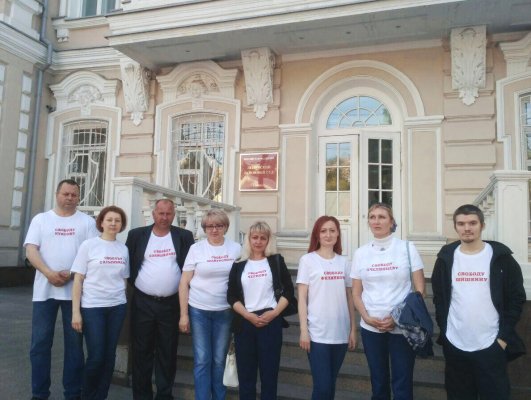
Mikhail’s friends have been writing petitions requesting his release from police custody, which his relatives have been passing on to his lawyer.

“Although Mikhail lived in Luxembourg, he visited us quite often recently. He has a girlfriend in Slovakia, and when he went to see her, he found ways to come through [Poland] and see us,” says Olga.

According to Loshchinin’s family, Mikhail has begun to suffer from retinal detachment while in custody.

“In 2024, he visited an ophthalmologist, who informed him that surgery was not necessary at the time, but that it would have to be performed immediately if he began seeing flashes in his line of sight. Now he has been seeing those flashes,” Olga explains. “It is hard to get proper medical care in prison, and I’m afraid that he may simply go blind in there. I can’t imagine that my son, who has done nothing nasty in his life, is now being treated as one of the most dangerous criminals, and all because he hadn’t cut off his ties with Russia. If you take someone’s phone and check their messages, every other person could be under suspicion.”

“Thousands of people across the country are being held without charge”

Loshchinin’s defense attorney declined to comment for this article because he is bound by a non-disclosure agreement.

Attorney Yevgeny Smirnov, who works for the human rights project Department One, says that there have been many such treason cases, and that there have even been prisoner exchanges involving people convicted of treason.

According to our count, at least 148 people in Russia faced criminal charges of treason, espionage, and clandestine collaboration with foreigners in 2023, and at least 88 such cases were brought before the courts. The trend continued in 2024 and 2025. According to statistics on court rulings for the first half of 2025, as published by the Judicial Department of the [Russian] Supreme Court, 115 high treason cases were instigated, which was twice as many as in the first half of 2024. At the same time, according to data from Department One, the Supreme Court has underestimated the number of convictions in such cases by at least threefold.

“Mikhail Loshchinin wired money to a private individual in Ukraine,” explains Smirnov. “According to the security forces, this is a form of high treason, and it has existed for over ten years: providing financial assistance for activities contrary to the security of the Russian Federation. The FSB often takes advantage of this. They might have claimed, for example, that the young woman to whom Mikhail wired money works for the SBU [Security Service of Ukraine] or is involved in the Territorial Defense Forces. Something like that. And that wiring her money was thus a criminal offense.”

The attorney is not surprised that Mikhail was detained in Pytalovo for a month without charges, staying in a hotel at his own expense and under guard.

“There are thousands of people across the country being held without charge. Some are under administrative arrest, while others are in former hotels refitted as [detention] centers, or in actual hotel rooms. Most often, police investigators need the time to get the go-ahead to file criminal charges. Moscow gives the go-ahead for such cases.”

“There is no good outcome in these situations,” Smirnov notes.

“They might sentence him up to thirteen years in prison. The only hope for release is through a prisoner exchange, and that would involve a political decision,” argues Smirnov. “How many people in Russia have been released in the last ten years via prisoner exchanges? A couple dozen, probably. And how many political prisoners are there in the country currently? Ten to fifteen thousand. [Mikhail’s] chances are a bit greater since he’s a Belgian national, of course. There are not so many Belgian nationals [in Russian prisons], and if Belgian politicians get involved in the campaign to secure his release, the chances will grow for sure.”

Olga, Mikhail’s mother, says that Belgian consular officers have tried on several occasions to get permission to visit him in the detention center but were turned down.

“He’s a Russian national, but Russia doesn’t recognize his Belgian citizenship,” says Smirnov. “Most countries don’t recognize dual citizenships: it’s a normal practice. So, Belgian consuls aren’t being allowed to see him. It’s been the usual practice for decades.”

Smirnov argues that people living abroad should not travel to Russia unless absolutely necessary “because it’s a big risk.” If travel is unavoidable, you should prepare in advance by purchasing a separate telephone, planning your itinerary with care, seeking advice from those in the know, and being ready for the fact that the border guards will question you and search all your devices.

Source: “‘The goal was to visit his father’: dual Belgian-Russian national detained and charged with treason,”Sever.Realii (RFE/RL), 3 December 2025. Translated by the Russian Reader
In Plain Sight

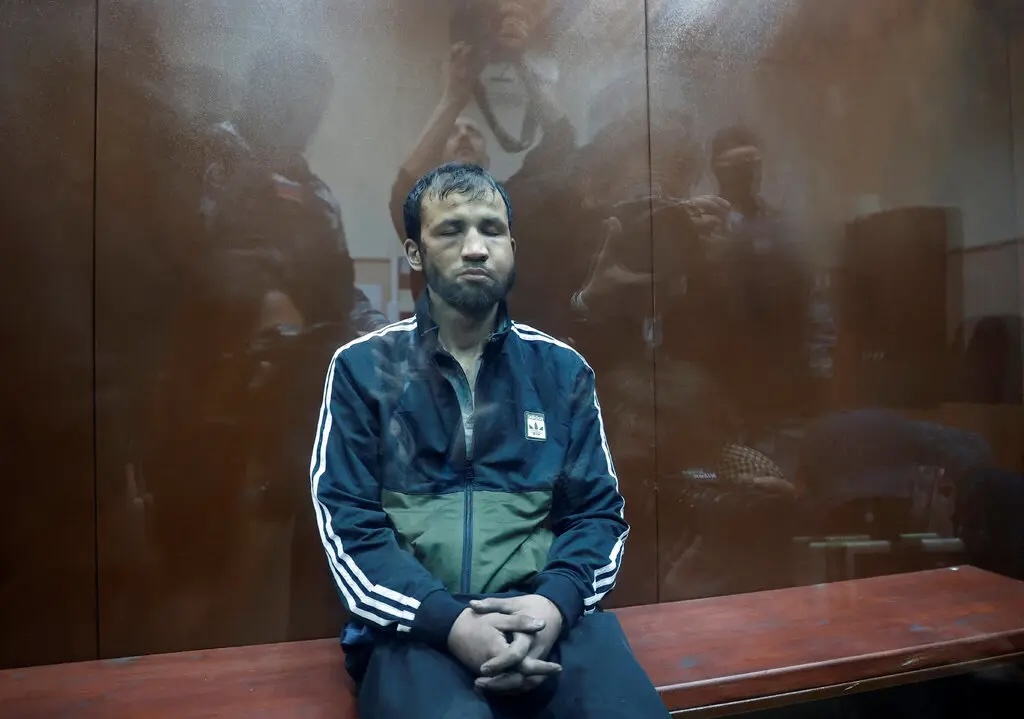
Accused terrorist Shamsidin Fariduni, with bruising on his face, inside a Moscow courtroom.
Photo: Yulia Morozova/Reuters via the New York Times

It seems that one of the consequences of this tragedy [i.e., the terrorist attack on the concert hall in suburban Moscow] has been the legalization, or legitimization, of torture. Torture existed before, but it was concealed and formally condemned. Now torture is openly praised and flaunted, and state institutions, including courts, do not react in any way. Another step towards fascization.

Source: Sergey Abashin (Facebook), 25 March 2024. Translated by the Russian Reader


Warning: this newsletter contains numerous descriptions of violence and torture.

People are tortured every day in Russia. For a long time we have been hearing about torture in penal colonies and police departments from victims and human rights activists. Mops and electric shockers have been mentioned in reports in the independent media and in the accounts of people who were subjected to violence, but the Federal Penitentiary Service (FSIN) and the police themselves have usually denied the accusations. Even in today’s Russia, however, the courts have periodically tried to imprison law enforcers who have tortured people, such as those implicated in the Karelian penal colony case, the Yaroslavl case, and the Saratov prison hospital case.

The terrorist attack in suburban Moscow has changed everything.

On 22 March, gunmen killed at least 137 people at the Crocus City Hall concert venue outside Moscow. They set fire to the building and left before the police arrived. Law enforcers have already detained suspects, and the Z bloggers have been salivating over the photos and videos of their abuse at the hands of the authorities. Never before have we had such flagrant acknowledgement of torture.

“The law enforcers have often covered their tracks by sweeping stories of torture under the rug, and we were told that there was no torture, that the reports were nonsense,” Sergei Babinets, head of the Crew Against Torture, said in an interview with Mediazona. “But since yesterday it seems as if there is a path to making torture a little more public.”

Dalerdzhon Mirzoyev (whom propagandist Margarita Simonyan dubbed the “ringleader” of the terrorists) was brought to his arraignment hearing with bruises on his face and remnants of a bag around his neck. He had no bruises at the time of his arrest, and the bag could have been used by law enforcers to strangle Mirzoyev. When the judge announced the pretrial restraint measures (Mirzoyev was remanded in custody to a pretrial detention center) Mirzoyev could not stand up. Instead, he leaned against the wall of the “fish tank” in the courtroom.

Saidakrami Murodali Rachabalizoda was brought to the hearing with his head bandaged. A law enforcer had cut off his ear when he was detained and tried to make him eat it. Neo-Nazi Yevgeny “TopaZ” Rasskazov of the nationalist subversive group Rusich announced an auction for the knife that was allegedly used to cut off Rachabalizoda’s ear.

The third detainee, Shamsidin Fariduni, was also apparently tortured. Telegram channels associated with law enforcement circulated a photo of Fariduni lying on the ground with his pants pulled down and law enforcement officers standing over him. There are wires from a field telephone attached to his groin. Such wires are used to electrocute detainees. (They have been used, for example, on detained Ukrainians in the occupied territories.) And someone is also stepping on Fariduni with a foot shod in an army tactical boot. Fariduni arrived in court with a swollen and beaten face.

Muhammadsobir Faizov. Photo: Alexandra Astakhova/Mediazona

Finally, the fourth detainee, Muhammadsobir Faizov, came to the court from the intensive care unit in a wheelchair. He could barely speak, and was hooked up to a catheter and a urinal. One of his eyes was injured. For the duration of the hearing, his doctors—two women in ambulance corps uniforms who had arrived with Faizov—were asked to leave the courtroom.

Why is this happening? Sergei Babinets argues that law enforcers could have been affected by the absence of major terrorist attacks in recent years.

“Many people were simply not ready for it—not ready emotionally, not ready psychologically, not ready on various fronts. And people may have started to lose their nerve due to this. That’s why there have been calls to reinstate the death penalty, to locate all the guilty parties and execute them, for example,” he said.

Аccording to Babinеts, Russian aggression in Ukraine has also played a role.

“The normalization of violence may have aggravated the situation with torture. We can see that law enforcement officers are really starting to let themselves go more,” he said.

Babinets adds, however, that there is no point to this violence.

“Torture most often leads to the torturer obtaining the information he wanted to obtain initially,” he said. “If they want a person to confess that they had been working, for example, for the Ukrainian army, they can be tortured until they confess. It is impossible to effectively investigate crimes in this way.”

Source: “Torture has gone public,” WTF? newsletter (Mediazona), 25 March 2024. Translated by the Russian Reader


It’s more than two decades since I read the late Stanley Cohen’s ground-breaking States of Denial: Knowing About Atrocities and Suffering (2001). In the introduction, Cohen recalls his own experiences growing up in apartheid South Africa, when he asked himself why his own outrage at the injustice he observed all around was not reflected in the society around him:

Why did others, even those raised in similar families, school and neighbourhoods, who read the same papers, walked the same streets, apparently not “see” what we saw. Could they be living in another perceptual universe — where the horrors of apartheid were invisible and the physical presence of black people often slipped from awareness? Or perhaps they saw exactly what we saw, but just didn’t care or didn’t see anything wrong.

Cohen went on to become a sociologist and a lifelong human rights activist. States of Denial was a valiant attempt to bring his discipline to bear on the subject of why people become become ‘everyday bystanders’ of atrocities who ‘block out, shut off or repress’ troubling or disturbing information to the point when they ‘react as if they do not know what they know.’

Some of these observations related to Israel, where Cohen moved in 1980. A Zionist in his youth, Cohen opposed the military occupation of the West Bank and Gaza, and became a strong critic of Israeli repression of the Palestinians. In his book, he describes his work with the Israeli human rights group B’Ttselem on the torture of Palestinian detainees and the obstacles it encountered:

Our evidence of the routine use of violent and illegal methods of interrogation was to be confirmed by numerous other sources. But we were immediately thrown into the politics of denial. The official and mainstream response was venomous: outright denial (it doesn’t happen); discrediting (the organization was biased, manipulated or gullible); renaming (yes, something does happen, but it is not torture); and justification (anyway ‘it’ was morally justified). Liberals were uneasy and concerned. Yet there was no outrage.

Cohen returned to the UK in 1996, and died in 2013, but were he alive today, I suspect he would have recognized the ongoing devastation of Gaza as a textbook example of the ‘politics of denial’. According to the latest figures from the United Nations Office for the Coordination of Humanitarian Affairs, the IDF has killed more than 31,988 people, most of whom are women and children, with another 7,000 buried in the rubble, and wounded 74,188. To put these figures in perspective, this February civilian casualties in Ukraine were estimated at 10,582 dead and 19,875 injured since the Russian invasion began on 24 February 2022.

So in just under six months, Israel has killed more civilians in Gaza than Russia has killed in two years. It has destroyed or damaged more than 60 percent of Gaza’s housing stock, 3 churches, 224 mosques, 155 health centres, 126 ambulances. Nearly 2.3 million Palestinians have been displaced, and 1.1 million people are facing ‘catastrophic levels of food insecurity,’ which threatens to become a famine.

All this has been done with the indirect support or direct collusion of the United States government, the European Union, and the British government. Despite the outpouring of rage and horror on the streets of so many cities across the world, liberal democracies that claim to uphold an international order based on human rights and universal moral norms have ‘known and not known’ what has been taking place in front of their eyes.

Many of these governments once railed against ‘dictators killing their own people’, and used atrocities and human rights abuses as a moral lubricant for liberal ‘interventions’ and ‘ humanitarian’ wars to prevent ‘massacres’ and ‘bloodbaths.’ Apart from a few tepid words of condemnation, when the obscenity of what is unfolding became too much to ignore, these same governments have enabled Israel to inflict incredible carnage on a mostly unarmed and defenceless population.

None of is taking place in secret. In February, Amnesty claimed that ‘Fresh evidence of deadly unlawful attacks in the occupied Gaza Strip…demonstrates how Israeli forces continue to flout international humanitarian law, obliterating entire families with total impunity.’ Israeli soldiers routinely post tweets and TikTok videos of themselves gleefully blowing up Palestinian homes, wearing Palestinian lingerie and women’s dresses, humiliating Palestinian prisoners made to strip down to their underwear, and generally exulting in the destruction.

[…]

Source: Matt Carr, “In Plain Sight: Atrocity Denialism and the Destruction of Gaza,” Matt Carr’s Infernal Machine, 26 March 2024

Oleg Vazhdayev: A War Resister on Trial for “Terrorism” in Rostov-on-Don

Oleg Vazhdayev. Photo courtesy of Solidarity Zone

Oleg Vazhdayev has been transferred to Rostov-on-Don, where the court will begin to try his case the day after tomorrow.

Vazhdayev, an auto mechanic, was detained in late September on charges of attempting to set fire to a military enlistment office in Krasnodar. After his arrest, the police tortured him, demanding that he confess to receiving funding from Ukraine.

The building in which the military enlistment office is housed was not damaged, but this did not stop the security forces from charging Vazhdayev with committing a “terrorist act” (per Article 205.1 of the Russian Federal Criminal Code). He faces ten to fifteen years in prison if convicted.

The criminal case against Vazhdayev has been submitted to the Southern District Military Court, and he was recently transferred from the Krasnodar pretrial detention center to Rostov-on-Don.

The trial of the case on the merits should begin the day after tomorrow. Come to the trial!

🕑 2:00 p.m., 31 May 2023

📍 Southern District Military Court (Judge Maxim Mikhailovich Nikitin), 75B Mechnikov Street, Rostov-on-Don

❗️If you are going to the trial, don’t forget to bring your internal passport with you and leave all blades and means of self-defense at home.

You can also write to Oleg or send him a package.

💌📦 Address for letters and parcels:

Vazhdayev Oleg Igorevich (born 1988)
219 ul. Maksima Gor'kogo, SIZO-1
Rostov-on-Don 344022 Russian Federation

(It is possible to send emails via the service Zonatelecom.)

Solidarity Zone is supporting Oleg Vazhdayev and his family.

Source: Solidarity Zone (Facebook), 29 May 2023. Translated by the Russian Reader. People living outside Russia will find it impossible to use the Zonatelecom service. It is also probably impossible to send parcels to Russian detention facilities from abroad. But you can ask me (avvakum@pm.me) for assistance and advice in sending messages to Russian political prisoners.

Ivan Astashin: Violence Is the Norm

I’m not surprised by the violence. I am not surprised because I know about the violence that occurs in Russia every day. Senseless cruelty is seemingly the norm for some Russians. I don’t have a ready answer to why this is the case. It’s worth asking sociologists, anthropologists, and psychologists for an explanation.

Those of you who were born in the early 1990s or earlier probably know about the brutal executions, tortures, and rapes of the Chechen population by Russian soldiers. Some of you will say that the Chechen militants were cruel too. Yes, they were. But it is always worth remembering that it was the Russian troops who invaded Chechnya, and not vice versa. Another big question is who was the first to employ torture and execute the so-called enemy using elaborate methods. To refresh your memory of those events, I would remind you of several well-known cases. The bombing of Katyr-Yurt. The murder of six dozen civilians in Novy Aldy by the Petersburg riot police. The abduction, rape, and murder of the 18-year-old Chechen girl Elza Kungayeva by Colonel Yuri Budanov. In addition, human rights defenders, journalists, and the European Court of Human Rights have reliably verified a huge number of abductions and the cruelest tortures of Chechens by Russian forces.

I remember the first time I found out about these tortures at school. A classmate told me that his brother had “fought” in Chechnya and brought back a videotape showing the torture of local residents. I didn’t watch the tape: what my classmate told me sufficed. A few years later, in the ninth grade, I met a Chechen boy my age, who told me about similar tortures to which his relatives had been subjected. I was told the same thing about men who had been involved in the Chechen campaign whom I met in prison. Only Chechens themselves do not like talking about the torture and rapes; therefore, the information found in open sources details only a small portion of the crimes committed by the Russian security forces in Chechnya.

‘Post-Soviet visual. An unknown activist’s protest performance titled “Bucha-Moscow” against the war crimes of the Russian army in Ukraine. Images via Холод.’ Courtesy of Soviet Visuals. Thanks as well to OG for the heads-up.

In addition to war, there is also quite enough cruelty (sadism, I would even say) both in the army and outside it. By the way, it is quite logical that since Russian soldiers bully and actually torture their fellow soldiers, they would not have any moral barriers vis-a-vis the enemy and the “enemy” civilian population. The infamous story of Private Andrei Sychev, who was tortured by his mates on the occasion of the New Year, is an eloquent illustration of relations within the army.

As probably everyone knows now, there are whole torture “conveyor belts” in the Russian penitentiary system. In such places, prisoners are tortured with extreme cruelty. And, it seems, with a particular relish. They are tortured both by Federal Penitentiary Service employees and by other prisoners who have signed contracts with the wardens. They torture and rape prisoners, and sometimes they kill them. Moreover, this goes on in both adult and juvenile penitentiaries.

And the cops? They also enjoy torturing, beating, and, on occasion, raping detainees in police departments.

However, cruelty is found not only among the security forces. Due to the fact that I was reputed to be a “lawyer” in the penal colony, many prisoners brought their verdicts to me to “have a look.” I wish I hadn’t seen them. Out of greed, in a drunken stupor or out of fear, these seemingly utterly ordinary people had done terrible things.

I also remember the stories of some of my inmate friends about how their fathers had “raised” them. “My dad beat me with a stick.” “Mine whacked the fucking hell out of me with a hose.”

As for these last arguments, you might counter me by saying that they are criminals from difficult backgrounds. Perhaps.

What about domestic violence? According to the Consortium of Women’s Non-Governmental Associations, at least five thousand women were killed as a result of domestic violence [in Russia] in 2018 alone.

Once in power (whether as conferred by epaulettes or as the “head of the family”) and believing in their impunity, many, many people in Russia become executioners, sadists, and rapists. And if this is also bolstered by xenophobic propaganda and strong alcohol, the monsters begin doing the unimaginable. Since the regime in Russia gives some people the authority to inflict whatever they want on those in their jurisdictions, and forces others to go along and not to rebel, violence becomes commonplace.

Now it has spilled out of Russia. The whole world has now seen what had been happening on the sly during “counter-terrorist operations,” in police departments, in secret prisons and the Federal Penitentiary Service’s unclassified institutions, and in the army, as well as on the streets and in home. [Bucha] is undoubtedly a terrible tragedy and a huge grief for the victims and all decent people. But I hope that over time it will lead to society’s re-examining the policy of giving people uncontrolled power. Ridding the world of violence seems to be an almost unmanageable task, but I think that when Russia doesn’t have policemen who “Putin told to beat the holy fuck” out of someone, when it doesn’t have military men whose crimes will be “written off by the war,” when it doesn’t have security officers who “defend the motherland,” and when there is no support in society for patriarchy, racism, and xenophobia, there will be much less violence.

Source: Ivan Astashin, Facebook, 5 April 2022. Mr. Astashin is a former political prisoner. Translated by the Russian Reader

ACAB (Dispatch from Minsk)

black and bluePeople examining the bruised back of a man released from police custody in Mogilev, Belarus. Photo courtesy of Yevgenia Litvinova and Mediazona
Here is a curious dispatch from my friend the Belarusian anarchist activist and blogger Mikola Dziadok, who, the last time I checked, was in hiding after police raided his and his girlfriend’s apartment and his mom’s apartment in search of Mikola, hoping to arrest him on trumped-up charges. // TRR

Mikola Dziadok
Facebook
August 14, 2020

Here’s another morsel for those who enjoy shouting “The police are with the people!”

A Minsk resident told me this story.

A 17-year-old boy was detained the day before yesterday under the pretext of “What you doing here?” He was taken to a police station, where he was beaten in the assembly hall. Moreover, although it was regular cops who had brought him in, it was the OMON (riot police) who did the beating. Then they laid him face down on the floor, like so many other [detainees in recent days].

They telephoned his guardians. His guardian came to the police station, and they started beating the fuck out of him, too.

He asked what for.

They asked him why the fuck he had come.

He replied that they had telephoned him themselves and told him to come retrieve his kid.

They replied by asking him how old he was and what kid he was talking about. (The man has two kids of his own.)

After some time, the man and his ward were finally released. The man said that another man, around fifty years of age, was still in police custody when they left, and he had been jailed for the same reason: for coming to pick up his kid. And the same thing had happened to him.

Translated by the Russian Reader 

Yana Teplitskaya: Wonderland

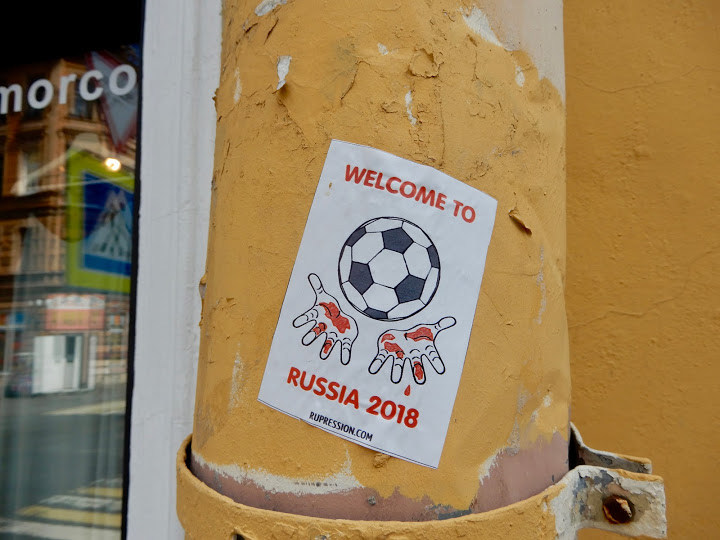
welcome to russia

Yana Teplitskaya
Facebook
September 4, 2018

Emotions are weird. I write “hogtie,” “taser,” and “Liteiny 4” [FSB headquarters in Petersburg] without feeling anything.

I wrote “interrogation in the middle of the night” and the tips of my fingers went numb.

I don’t understand what remains when you’ve run out of hatred and fear has faded.

Navigating your way through fear gives you a lot of strength, but it doesn’t last long.

Love and solidarity.

However, their supply is probably limited, too, since I feel so little strength.

***

“I have the sense we live so well that we should [help others].”

“But I know now this sense doesn’t get you far. My human rights work started from an overabundance of well-being, but I think it has been spent, that it has bottomed out.”

“Oh! So, no matter how much I do for the kids, I’m giving them a finite, rather than an indefinite, supply?”

***

As for basic trust in the world, I have the general sense that if you really have to do it, you will do anything. The deaths of other people and one’s own ailments take away that feeling. Just like the torture of Igor.

***

“Officials who are directly accused of torture: […] born 1993.”

:(

***

Excerpts from a funny [and seemingly really lousy] interview about “why you do what you do.”

*

“Would you like to be written up in the history books?”

“Uh, well, I’d like these cases to be written up in the history books. That would mean this nightmare had ended [and a new one had begun].”

*

“I have generally always been interested in the human rights movement and the struggle for the rule of law in Russia. I read a good number of autobiographies [of human rights activists and dissidents] while I was at school.”

“And your interests didn’t look odd to the people at school?”

“No, I think everyone else was also into something ‘odd.'”

*

“But why this way? After all, you could save people by being a surgeon.”

“Because it’s simple, while being a surgeon is really complicated. What we do is really simple. You simply show up somewhere and write down everything as it happened. Anyone could do it.”

***

I remember thinking while I was at school that it was fortunate I was finishing school during a period of authoritarianism. Under democracy and totalitarianism, I would have found it too messy to advocate human rights. I wouldn’t have even given it a thought, for different reasons: it’s too messy in a democracy, while it’s too dangerous under totalitarianism. So, if I had finished school in 2018, I would have hardly taken up human rights advocacy.

***

I see the circumstances in both Russia and Petersburg completely differently from the way I saw them ten years ago. Roughly speaking, ten years ago, the prisons were a topsy-turvy world, a “wonderland,” while the outside world was almost normal. In these circumstances, it made sense to rupture the impervious world of prisons, because doing so would in itself improve conditions in prisons. Rupturing this impervious world was simple. It was enough to hang around, both inside and outside, and flap your gums. In the outside world, you would jabber about  what was happening on the inside, and vice versa.

I no longer see things this way. With its aggressive propaganda, wars, and insane laws, the outside world is about the same as the topsy-turvy world, as “wonderland.” Therefore, my goals and methods have changed a bit.

Nowadays, perhaps, the role of the outside world is played by hypothetical readers of our reports “from the normal world,” meaning decent people on the internet and on the street, future readers, the UN Committee against Torture. Due to the need to navigate temporal and geographical borders, everything has become a little stricter. It has become vital to accurately record what is happening.

Yana Teplitskaya is a member of the Petersburg Public Commission for Monitoring Conditions in Places of Incarceration (“Petersburg Public Monitoring Commission” or “PMC”). Ms. Teplitskaya and her fellow PMC member Yekaterina Kosarevskaya were instrumental in uncovering and publicizing the torture by the FSB of the suspects the security agency abducted as part of its alleged investigation of the so-called Network Case aka the Penza-Petersburg “terrorism” case. Photo and translation by the Russian Reader. My thanks to Ms. Teplitskaya for her permission to publish her remarks in translation on this website. 

Network: Parents versus the FSB

Network: Parents of Anarchists versus the FSB
Alexei Polikhovich and Ksenia Sonnaya
OVD Info
July 30, 2018

Members of the Parents Network. Photo courtesy of OVD Info
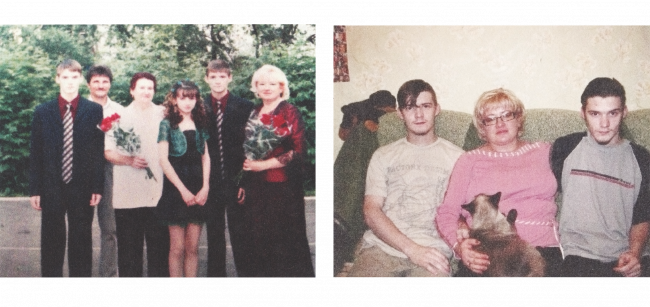
Eleven antifascists from Penza and Petersburg have been charged in the case against the alleged “terrorist community” known as the Network. Many people have got used to news of the violence, threats, and electrical shock torture used against the suspects in the case, but the accused themselves and their loved ones will probably never grow inured to such things. The parents of the accused came together in a committee known as the Parents Network. They have been trying to do something to help their loved ons.

The Russian Federal Security Service (FSB) claims the Network is an international organization. Aside from Penza and Petersburg, secret cells were, allegedly, established in Moscow and Belarus. Yet no one has been arrested either in Russia’s capital or abroad. Meanwhile, the Parents Network is definitely an international organization. Aside from Penza, Petersburg, Moscow, and Novosibirsk, the committee has members in Petropavlovsk, the city in Kazakhstan where Viktor Filinkov’s mother lives.

Members of the Parents Network have appeared at two press conferences, in April and May of this year. They have established a chatroom on Telegram where they discuss new developments in the case, exchange opinions, share impressions of hearings and interrogations, and give each other support. In addition, the parents try and force reactions from Russian government oversight and human rights bodies. They write letters to Russia’s human rights ombudsman and the Presidential Human Rights Council, and file complaints with the Investigative Committee and the Russian Bar Association.

OVD Info spoke with members of the Parents Network.

Tatyana Chernova, Andrei Chernov’s mother, shop clerk
All this kicked off in March at the next-to-last custody extension hearing in Penza.

I went to see Ilya Shakursky. I knew reporters and human rights advocates would be there. I just approached the people who had come to the hearing and asked for help. One of those people was Lev Ponomaryov, leader of the movement For Human Rights. He responded and proposed meeting in Moscow.

I didn’t know any human rights activists. I didn’t know where to go or to whom to turn, since I’d never dealt with this. When I’d discuss it with my daughter, she would scold me, telling me we had to wait or we might make things worse.

My husband and I went to see Lev Ponomaryov. We said we didn’t know what to do. We had a lawyer. Our lawyer did his job, while we, the parents, didn’t know how to help. We were told to take a pen and sign up, that the first thing to do was unite with all the other parents. I found their telephones numbers and gradually called all of them.

Andrei Chernov’s family

I couldn’t get hold of Lena Shakurskaya. I sent her an SMS, saying I’m so-and-so’s mom, I want to talk, if you want to talk, write. She called me right back. Everyone was probably waiting for it. We shared a misfortune, and it brought us together. Our first meeting was at Lev Ponomaryov’s office. Lena came to Moscow for the meeting. It was only there she heard the whole truth. Mikhail Grigoryan, Ilya’s former lawyer, had been telling her a different story. The Pchelintsevs met her. They told her what was going on. Lena was made sick by what she found out.

We try to have each other’s backs. The blows are such that it’s hard to take. Yes, I have friends. But I can call Sveta Pchelintseva or Lena Bogatova, say, knowing they’ll know where I’m coming from, because this is part of our personal lives.

Yelena Bogatova, Ilya Shakursky’s mother, shop clerk
We had a lawyer, Mikhail Grigoryan. He warned me against communicating with the relatives of the other lads. He said each of us had to defend their own son. Nothing good would come of fraternizing. I listened to him.

In March, I saw Andrei Chernov’s mom. Again, at Grigoryan’s insistence, I didn’t go up to her or chat with her. Later, I had doubts. I wanted to talk to someone. God was probably reading our minds: it was then Tatyana Chernova sent me an SMS. We got in touch on the phone. I went to Moscow without telling the lawyer. We met with human rights activists. We discussed how to talk about the kids.

It’s really rough when you’re on your own in these circumstances, but now we are together. You realized you’re not alone and our boys are not alone. What we do is mainly for them. We put on these t-shirts when we go to hearings so they can see we are fighting. We have gone to all the hearings together so they see we’re all together.

At first, I was a “cooperative” mom. I was friendly with the investigator. We would talk. He said unflattering things about the other parents. Grigoryan would ask me to meet with Ilya to “talk sense” into him. The investigator would talk to me, telling me that if I was a good mom, I would get the message through his head, that is, if we had a good relationship, as I had told him. Then I would get to see Ilya for ten minutes.

Yelena Bogatova and Ilya Shakursky

In February, when Ilya signed a statement saying he had not been tortured, his uncle and I persuaded him to sign the paper. We didn’t understand a thing, of course. Grigoryan said Ilya had to sign the paper. He said he was working for us and Ilya shouldn’t be obstinate, but should sign everything he asked him to sign.

Ilya stared at me.

“Mom, what are you doing?” he said. “I’m not guilty of anything.”

“Sign it or things will get worse for you, and I’ll have it worse. I won’t see you again,” I said to him.

I was selfish, drowning in my own grief. I pushed my son into doing it because I felt sorry for myself. The FSB used me. Yes, you can see him, but make him to sign this. Hold his hand.

It’s psychologically easier for me now. I feel strong inside. I have the confidence to keep going and try and rescue the boys from the paws of the FSB. I don’t have any friends per  se anymore. At first, they would call and ask about things, but then they would do it less and less often. I don’t know, maybe they’re afraid of the FSB. They’re afraid of calling me once too much because they know my phone is bugged.

On the other hand, I have a sense of how many friends Ilya has. I communicate with the Parents Committee and Ilya’s friends, who are not afraid of anything. We talk on the phone. They visit Ilya’s grandma and help. They water the garden and go to the store, just like Timur and his friends.

Natalya, Viktor Filinkov’s mom, businesswoman
It was like a bolt out of the blue. Viktor’s wife, Alexandra, wrote to me. I was ready to go see him that very minute, but I was told it would be better for me not to show up in Russia for the time being. I live in Petropavlovsk in northern Kazakhstan, which is not far from Omsk. It’s sixty kilometers to the Russian border.

Then I could not wait any longer. I said I was going to Petersburg, come what may. Everyone was surprised I was allowed to see him. I was the first parent allowed to see their child. But it was so little time. It was so hard to talk to him through the glass.

“Mom, I’ve been tortured,” he said.

I could see he had a scar. He told me to stay strong and be reasonable about what was happening.

Viktor Filinkov

I’d never been interested in politics. Now, though, I’m interested. I’m interested in Russian politics and Kazakhstani politics, and I read all the news straight through. I read about what incidents happened where, who was tortured where, who has been framed, who has been protected. I read everything about what’s happened to antifascists and anarchists everywhere.

I think about why I don’t live in Russia, in Petersburg. I cannot move right now. It’s complicated to do the paperwork, register as an immigrant, and get a temporary resident permit. The thing that causes me the most pain is the thought they could ban me from entering the country.

Nikolai Boyarshinov, Yuli Boyarshinov’s father, artist
It’s a terrible state, which everyone has been through, when you suddenly find out your son has been arrested, and the charges are so absurd. You have no idea at all what to do. It’s a wall against which you beat your head. You quite quickly realize you’re completely powerless.

I joined the Parents Network when it had quite a few members. I was completely crushed then. At first, I imagined it existed for its own sake, to keep from going insane. But then I noticed it got results. By then I had completely recovered from my initial state, so I did things, thought about things, and discussed things. Being involved in the Parents Network was my salvation.

We have a chat page on Telegram. In contrast to the Network, which the FSB concocted, we don’t hide the fact we have a Network. If you think our children organized a criminal Network, then our Network is probably criminal, too.

Our actions get few results, perhaps, but it is this way, bit by bit, that you build up the desire to do something to improve the conditions in which the boys are incarcerated.  Publicity was their salvation, after all. It’s not a matter of getting them released yet. We are still thinking about how to keep them alive.

That was how it happened with my son. I saw him at the first custody extension hearing, a month after his arrest. I saw what he looked liked when he arrived at the courthouse. He looked drab and battered. He had fresh bruises on his head. You could see that it couldn’t go on for long like that. His friends, thirty people or so, came to the next hearing. When he saw everyone, he was happy. A new phase began after that. It was clear that at least they wouldn’t kill him.


Yuli Boyarshinov in childhood

It was a turning point for me. When everything went public, it saved my son’s life. Yet now I’m afraid the publicity will die down and the boys will again be isolated, and the nightmare will recommence. That’s why I never turn down an interview.

I go out picketing on Fridays. I had doubts when the World Cup was underway. The first day I had the sense I was preventing people from enjoying themselves, but I decided to keep going out. Something unexpected happens each time. A young man came up to me and said he knew nothing about the Network. He walked away, apparently looked in the internet, and came back. I told him about the other boys.

“I don’t share those views,” he said.

“It doesn’t matter now whether you’re leftist or rightist,” I replied. “What matters is that you have views, and that is sufficient grounds to arrest you and charge you with a crime.”

The Parents Network is now like a family. We’ve agreed that when this travesty of justice is over, we will definitely have a reunion with everyone. Everyone has become family. Viktor’s mom lives in Kazakhstan, and his wife had to escape, so when I take care packages to Yuli, I take packages for Viktor, too. I really want to meet all the boys. I’m worried sick about all of them. My wife sometimes reads an article about Dima Pchelintsev or Viktor, and she cries. We feel like they’re our children.

Yelena Strigina, Arman Sagynbayev’s mother, chief accountant 
The first to get together were the people in Penza, the Pchelintsevs and the Chernovs. I joined along the way. The defense lawyers had to sign a nondisclosure agreement, so we had to go public with all our problems.

I live in Novosibirsk. We all stay in touch through a certain banned messenging site. When we were at the hearings in Penza, we made t-shirts emblazoned with the logo “Free [son’s surname].” It might look like a game to outsiders, but we have to stay afloat. It’s important to do something. And to publicize everything that happens.


Arman Sagynbayev and his niece. Screenshot from the website of the Best of Russia competition (left); photo of a billboard in Moscow (right)

Arman has a serious chronic illness. There was no point in torturing him. His first testimony was enough to send him down for ten years. He testified against himself more than he did against the others. He was extradited from Petersburg to Penza. Along the way, the men who were transporting him opened the doors when they were in the woods and dragged Arman out. They promised to bury him alive. That was at night. In the morning, he was taken to the investigator for questioning. When people are under that kind of pressure, they would say anything. I would say I’d attempted to invade Kazan and blow up chapels.


Arman Sagynbayev in childhood

I kept the story secret from friends and relatives. But after the film about the case on NTV, everyone called and started looking funny at me. The news even made it to the school that Arman’s little brother attends. Imagine: your brother is a terrorist. It was a good thing honest articles had been published at that point. I would send people links to them. Thanks to those articles, people read a different take on events, and we have been protected from a negative reaction from society.

Svetlana Pchelintsev, Dmitry Pchelintsev’s mother, cardiologist
The Parents Network has empowered us a hundredfold. By joining together, we are no longer each fighting for our own son, we are fighting for all the boys. We love kids we don’t know at all, kids who are complete strangers, as if they were our own kids. Our hearts ache for each of them. I think it’s wonderful. A whole team of parents fighting for all the boys. What can stop parents? Nothing can stop them.

What has happened is terrible. Whether we like or not, we have to go on living while also helping the children. So, when one mom has a moment of weakness, she can telephone another mom, who is feeling the opposite emotions. It’s vital when a person hears that support.


Dmitry Pchelintsev in childhood

Dmitry Pchelintsev, Dmitry Pchelintsev’s father, engineer
We are a committee of parents. What we do is support each other. We live in Moscow, but our son is jailed in Penza. The parents who live in Penza visit our son. Our kids, as it turns out, belong to all of us. We were in Penza and we gave all the children all their care packages at the same time. If we talk with the warden of the remand prison, we speak on behalf of all the kids.

This has helped us and helped our children. We get emotional support. It’s one thing when you sit alone in a closed room and don’t know what’s happening to your child. It’s another thing when all the parents meet and discuss everything. Tiny facts come together into a big picture, and you more or less understand what’s happening.

In my view, publicity is quite effective. This has been borne out by the actions of the case investigator, Tokarev. If it makes Tokarev uncomfortable, if it makes Tokarev angry, it’s a good thing. As he said, “You raised this ruckus in vain. They would have been in prison long ago.” So, what’s bad for him is good for me. I visited the offices of the Investigative Committee in Penza. They couldn’t believe it was possible the FSB would torture people in a remand prison.

Lena, Ilya Shakursky’s mom, said Tokarev always referred to us and the Chernovs as “uncooperative” parents. He complained that, if it weren’t for us, our kids would have been sentenced to two years each in prison and that would have been it. How can a person say such things? You put a man in jail for nothing, and then you sit and clap.

The FSB are Putin’s hellhounds. Putin loosened their leash a little, and they grabbed everyone they could before the presidential election and the World Cup. Now it’s all coming to an end, and he’ll again say, “Heel!” Let’s see where it leads. Perhaps the plug will be pulled, unfortunately.

All photos courtesy of the parents and relatives of the accused and OVD Info. Translated by the Russian Reader.

***************

What can you do to support the Penza and Petersburg antifascists and anarchists tortured and imprisoned by the FSB?

  • Donate money to the Anarchist Black Cross via PayPal (abc-msk@riseup.net). Make sure to specify your donation is earmarked for “Rupression.”
  • Spread the word about the Network Case aka the Penza-Petersburg “terrorism” case. You can find more information about the case and in-depth articles translated into English on this website (see below), rupression.com, and openDemocracyRussia.
  • Organize solidarity events where you live to raise money and publicize the plight of the tortured Penza and Petersburg antifascists. Go to the website It’s Going Down to find printable posters and flyers you can download. You can also read more about the case there.
  • If you have the time and means to design, produce, and sell solidarity merchandise, please write to rupression@protonmail.com.
  • Write letters and postcards to the prisoners. Letters and postcards must be written in Russian or translated into Russian. You can find the addresses of the prisoners here.
  • Design a solidarity postcard that can be printed and used by others to send messages of support to the prisoners. Send your ideas to rupression@protonmail.com.
  • Write letters of support to the prisoners’ loved ones via rupression@protonmail.com.
  • Translate the articles and information at rupression.com and this website into languages other than Russian and English, and publish your translations on social media and your own websites and blogs.
  • If you know someone famous, ask them to record a solidarity video, write an op-ed piece for a mainstream newspaper or write letters to the prisoners.
  • If you know someone who is a print, internet, TV or radio journalist, encourage them to write an article or broadcast a report about the case. Write to rupression@protonmail.com or the email listed on this website, and we will be happy to arrange interviews and provide additional information.
  • It is extremely important this case break into the mainstream media both in Russia and abroad. Despite their apparent brashness, the FSB and their ilk do not like publicity. The more publicity the case receives, the safer our comrades will be in remand prison from violence at the hands of prison stooges and torture at the hands of the FSB, and the more likely the Russian authorities will be to drop the case altogether or release the defendants for time served if the case ever does go to trial.
  • Why? Because the case is a complete frame-up, based on testimony obtained under torture and mental duress. When the complaints filed by the accused reach the European Court of Human Rights in Strasbourg and are examined by actual judges, the Russian government will again be forced to pay heavy fines for its cruel mockery of justice.

***************

If you have not been following the Penza-Petersburg “terrorism” case and other recent cases involving frame-ups, torture, and violent intimidation by the Russian Federal Security Service (FSB) and other arms of the Russian police state, read and republish the recent articles the Russian Reader has posted on these subjects.

Is Maxim Shulgin an “Extremist”?

Maxim Shulgin

Open Russia Human Rights (Pravozashchita Otkrytki)
July 20, 2018

Remember the story of Maxim Shulgin, the Left Bloc activist from Tomsk? He was charged with violating Russian Criminal Code Article 282 for posting songs on the VK social network. When Center “E” officers searched his flat in April and took Shulgin to their headquarters, they beat him up on the way there and pushed him against the heater in their car, causing burns to his body. We published his account.

Other Left Bloc activists were detained the same day. When they refused to testify against Shulgin, they were threatened with violence and told they would be charged with criminal offenses as well. When Shulgin was delivered to Center “E” headquarters with a bandaged arm, they decided the threats were real and answered the investigator’s questions.

Now the witnesses have recanted their testimony, recording a video in which they recounted what happened that day.

Our attorney Andrei Miller has been working on the Shulgin case. We immediately had Shulgin’s beating certified by a physician, and the evidence has been submitted to the Investigative Committe’s military investigation department. However, the issue of whether charges will be filed in connection with Shulgin’s bodily injuries has not yet been resolved.

_________________________

Human Rights Open Russia (Pravozashchita Otkrytki)
April 30, 2018

“‘Guys, I can’t breathe,’ I said. They kicked me and said, ‘Are you alive down there?'”

Maxim Shulgin, a 28-year-old Left Bloc activist from Tomsk, recounted how Center “E” officiers detained him and what happened to him afterwards.

Tomsk Center “E” officers raided the Left Bloc’s offices yesterday.

“We were standing there smoking when a GAZelle van without license plates roared into the yard at full speed. The door opened, and guys wearing masks and caps came running out. I thought it was neo-Nazis who had come to shut us down. But then I realized they don’t drive around in GAZelle vans.”

The Center “E” officers forced the Left Bloc activists to lie face down on the floor. They confiscated their telephones, meaning the detainees had no connection with outside world until later that night and were unable to tell anyone what had happened to them. The detainees were taken to Center “E” headquarters, while Shulgin was handcuffed and taken home for a search of his flat.

“There were four field officers, wearing balaclavas, caps, jeans, windbreakers, and sneakers. They were carrying pistols, and their faces were covered. They addressed one of their number as ‘Pasha’ or ‘Pavel.’

“The worst nightmare was in the van. I lay between the front and back seats, and the men put their feet on me. They deliberately turned on the heater under the front seat, although it was three or four in the afternoon and eighteen degrees Centigrade outside. They did this on purpose, so I would find it hard to breathe, and if I hadn’t put my arm against the heater, one whole side of my body would have been burned. ‘Guys, I can’t breathe,’ I said. They kicked me and said, ‘Are you alive down there? Be patient, bro. We’ll arrive soon, and everything will be okay.’ They also beat the left side of my body. When I took too long answering their questions, they would beat me just like that, apparently because they enjoyed it.

“On the way, they asked about our plans for May Day. They commented that Russian extremists had degenerated. Now I can’t really remember [what they said], because I could not breathe and my arm was burning.”

The Center “E” officers confiscated all the equipment and political campaign materials in Shulgin’s flat. Then they took him to their headquarters, where the other Left Bloc activists were waiting.

“When [the Center “E” officers] saw my arm was burnt, they got a bit scared. I rode in the back seat on the way from my house. One of them said, ‘Sorry, bro.’ Another one laughed and punched me in the side. Good cop, bad cop, in short.”

The field officers and a public defender forced Shulgin to testify, threatening to arrest him. He was shown an order to instigate criminal proceedings, dated April 27. The charge was violation of Criminal Code Article 282 Part 1, allegedly, for saving songs on the VK social network that “incited hatred towards a particular social group, i.e., law enforcement officers.”

“After they thrashed me, my thought was to get out of there first thing. I signed a form releasing me on my recognizance. The idea that policemen are a social group is laughable, of course. Apparently, there is the proletariat, the bourgeoisie, and police officers.”

Along with the charge sheet, Shulgin was shown the results of a forensic examination that concluded that four of the songs on his VK page were “extremist”:

  • Chetverio, “Fuck, Pigs!”
  • Dukhi tsekha (Spirits of the Shop Floor), “Cop President”
  • Nichego Khoroshego (Nothing Good), “Molotov Cocktail”
  • Plokhie Dyadki (Bad Guys), “Cop”

Translated by the Russian Reader

Kicker Conspiracy

Go to Russia for a few World Cup fixtures, get rip-roaring drunk, hit on a married Russian woman, and you are an instant “Russia expert,” fit for print in the bloody Guardian.

And don’t forget to thank the Russian security forces for their professionalism in keeping your jet-setting, neo-colonialist, neo-imperialist ass safe while you’re making an ass of yourself.

Huge congratulations must go to the law enforcement that’s been put in place to stop both the most fighty Russians and the most fighty English from making their presence felt. But those responsible for the headlines with TOO MANY CAPITAL LETTERS should be ashamed. Not just for denying England fans these experiences, but for allowing the Russian people to feel demonised, and indeed for allowing Putin to capitalise on this othering of the Russian people to support his us-against-them narrative. Every English person that has a positive interaction with a Russian person is a step further away from letting the people in power turn us against each other … is what I drunkenly mumbled into Anastasia’s ear a few minutes before I learned she had a husband, and a few minutes after she’d said there are no good computer hackers in Russia, and about 20 minutes after I’d been singing “Football’s coming home”. We’re all living in our own fantasies I suppose.

_________________________________________

I wish everyone could read this detailed interview with the fearless Russian human rights activist Anatoly Kalyapin and head of the Committee for the Prevention of Torture about the nearly ubiquitous use of torture by Russian law enforcement.

Under ordinary circumstances, I might even think about translating the interview and publishing it on this website.

But these are not ordinary circumstances. As the Putin regime ratchets up its “Great Terror Lite” apparatus, a frighteningly large segment of apparently educated and even liberal Russians and non-Russians have persuaded me that having fun, partying like it’s 1999, and staying glued to their TV sets watching World Cup fixtures trump petty considerations like human rights and international solidarity.

So, if you’d like to read this interview with a knowledgeable, brave man, run it through whatever online translation machine you prefer and see what miserable gobbledygook comes out the other end.

It has finally dawned on me how few people, both inside and outside Russia, really care to know anything about the real Russia, especially since Don Putin started kicking magical, psychedelic, multi-colored sand in their face with his twelve-billion-dollar “kicker conspiracy.”

I have no hope for a planet whose most powerful, empowered, and well-off inhabitants have such a strong will to be fooled and such an insuperable desire to kick up their heels as if they were teenagers. // TRR

Thanks to Lika Frenkel for the heads-up and the late Mark E. Smith (March 5, 1957–January 24,  2018) for not refusing his vision and sharing it with us so generously for so many years.

_________________________________________

Kicker, Kicker Conspiracy

J. Hill’s satanic reign
Ass-lickers, Keegan’s Team

Kicker, Kicker Conspiracy

In the marble halls of the charm school
How flair is punished
Under Marble Millichip, the F.A. broods 
On how flair can be punished
Their guest is a Euro-State magnate
Corporate-u-lent

Kicker, Kicker Conspiracy 

In the booze club, George Best does rule
How flair is punished
His downfall was a blonde girl,
but that’s none of your business!

Kicker, Kicker Conspiracy

Football fan at the bus stop
Stretched on the balls of his feet
In the Christmas rush
Had in his hands two lager cans
Talks to himself
At the back
At the top

But in the pavement on the club unit
Plastic, Slime, Partitions, Cocktail, Zig-Zag, Tudor Bar

Pat McCat. Pat McCat, the very famous sports reporter is
talking there.

Fans remember, you are abroad!
Remember the police are rough!
Remember the unemployed!
Remember my expense account!

Hot dogs and seat for Mr. Hogg!
Hot dogs and seat for Mr. Hogg
And his grotty spawn!

Lurid brochures for ground unit
How style is punished

Kicker, Kicker Conspiracy
Remember, don’t collect with the rough
Kicker, Kicker Conspiracy

Kicker, destroy the facilities!

Kicker Conspiracy

Source: The Fall, “Kicker Conspiracy” (1983); lyrics courtesy of The Annotated Fall

Torture as an Everyday Practice

They Were Suffocated with a Plastic Bag Doused with Ammonia and Punched in the Kidneys: How a Navalny Team Volunteer and His Friends Were Tortured by Police
Alexander Skrylnikov
MBK Media
May 31, 2018

Максим Гребенюк. Фото: личная страница ВКонтактеMaxim Grebenyuk. Photo from personal VK page

Maxim Grebenyuk, a volunteer with the Navalny Team in Voronezh, and his friends were tortured by police at a police station who were trying to force them to confess to stealing a mobile phone. Voronezh police offices handcuffed the young men and suffocated them with a plastic bag doused with ammonia so they would not faint from the lack of oxygen.

On the night of May 18, Mr. Grebnyuk and his friends Sergei Troyansky, Ilya Podgorny, and Andrei Biryukov were visiting an acquaintance of one of the young men, Yelizaveta Kurlyantseva. Two men named Roman and Vadim, whom Mr. Grebnyuk did not know, were also at Ms. Kurlyantseva’s flat. Mr. Grebnyuk spent no more than an hour at the flat, but a week later he found out that he and his friends had been summoned to Voronezh Police Precinct No. 4 as witnesses in the case of Ms. Kurlyansteva’s stolen phone. At the police station, it transpired the police did not want testimony, but confessions, and police officers employed torture to obtain them.

MBK Media asked Mr. Grebnyuk what methods of torture the Voronezh police used.

*****

When we went into the precinct, they immediately confiscated our telephones and internal passports. They took us in for questioning one at a time. Andrei was the first to go into Office No. 26. He was in there ten minutes. They let him go. Nothing happened to him.

Then I went in. There were two men in plain clothes in the room.

“Everything is fucked,” they said.

They made no attempt to find out what had happened and how. They said right out I had stolen the telephone.

I replied I hadn’t stolen it.

“Either you stole it or you tell us who did.”

I repeated it wasn’t me who stole it, and one of them slapped me. I tried to invoke my right not to speak to them without an attorney present, and they hit me again.

They kept asking me about the phone, but I said I’d hear it about only the day before. They warned me they were going to use “other methods.”

When I asked them why they were hitting me instead of figuring things out, they said, “We’re not hitting you now. We have other methods.”

What methods did they have in mind?

They put a plastic bag over my head twice, once without any ammonia in it, once with a minimal amount. I was running out of air. I was choking. When they saw it wasn’t having the desired effect, they doused the bag with lots of ammonia and put it over my head. It was unbearable. They did the trick with the plastic bag twice while simultaneously keeping me handcuffed with my hands behind the back of the chair. One of them held the chain on the handcuffs with his foot so I was unable to move.

Then they let me go and called Sergei into the room. The same thing happened to him. Later, the two guys I hadn’t met before, Roman and Vadim, were brought to the station. They said they were tortured in the same way, and one of them was punched in the kidneys.

After the police were done with me, it was my turn again. There were five men in the room. They did the trick with the plastic bag again. I screamed so loud the whole station would have heard it. One of the officers must have heard me, but there was no reaction. I was asked whether I could take much more of thatand, naturally, I said I couldn’t. I cannot stand torture.

They promised would get us dead to rights in several days if no one confessed and to torture us the whole time. They gave us ten minutes to decide who would take the rap. Otherwise, they promised to torture me again.

That didn’t happen, thank God. They forced us to give our written consent to a lie detector test and make statements that none of us had seen the telephone before letting us go.

How long did the torture last?

It was really hard to keep track of time due to my emotional state. It was something like half an hour.

What things did the police say?

They only insisted I confess and chatted among themselves. They didn’t try and figure out what had happened to the phone. They only insisted I confess.

How did you feel when they put the plastic bag doused with ammonia over your head?

It was awful. The bag is over your head, and you have to breathe. When you inhale, there is a really sharp pain and burning sensation in your lungs and nasal cavities. Your eyes tear up. You have to breathe, but you inhale two or three times, and the air runs out. When the air ran out, I wanted to faint so I wouldn’t have to go on feeling it, but the ammonia made that impossible.

Did you think about confessing at some point?

I felt like saying I stole the phone. Those thoughts came and went, although I hadn’t stolen the phone. I just wanted it to stop. When they threaten to keep doing this to you for two days, then anyone would say he stole the phone if the alternative was that the torture continued. The same thing happened to Sergei, and the others said the same thing happened to them. I don’t know how to describe it.

Do you see any link between what happened and the fact you’re a Navalny Team volunteer?

It’s entirely possible. The police focused on me, and they confiscated my internal passport, which I keep in a protective cover that has the phrase “Opposition Member’s Passport” emblazoned on it. The other guys don’t have anything to do with the opposition movement. The focus was on me. They interrogated me longer and more often.

Were you able to learn the names of the torturers?

Yes, I think so. One was named Oleg Sokolovsky, and another guy was named Sergei, but that was it.

Were you able to medically certify your injuries?

Yes, we were at a forensic medical exam yesterday on the orders of the investigator, and everything was certified there. The gouges made by the handcuffs have gone away, but there are still bruises on our wrists and forearms. Sergei and I have them in the exact same places.

Does the young woman who filed the theft complaint know you were tortured?

When she found out she was shocked. She had no idea stuff like that happened. She offered to withdraw her complaint, but I talked her out of it. Someone did steal the phone, so the complaint should be on file. And the guilty party should be punished, only not using such methods.

Will the policemen be punished for their actions? What do you predict will happen? What do you hope will happen?

I don’t know. I hope there will be publicity, and the case won’t be brushed under the rug. When we were signing the consent forms for the lie detector test, Sergei was told directly, “You can file a complain or not. Nothing will happen to us anyway.”

What has to be done to stop police officers in Russia from regarding torture as the norm?

As you well know, we have to change the system from the top down. Firing a few police officers won’t change anything.

*****

Navalny Team lawyer Danil Novikkov told us they filed a complaint with the Investigative Committee the next day. He also told us that one of the lie detector tests to which Mr. Grebnyuk and his friends consented had been postponed indefinitely after one of the police officers involved had been questioned at the Investigative Committee.

Novikov told us a little about Maxim Grebnyuk.

“He’s one of our oldest volunteers. He was expelled from the LDPR [the so-called Liberal Democratic Party of Russia, chaired since its founding in the 1990s by the nationalist clown Vladimir Zhirinovsky] when they found out he supported Navalny’s views. He has been a co-sponsor of public events and campaign booths on many occasions, and he always attends protest rallies,” said Mr. Novikov.

The lawyer, nevertheless, saw no connection between the police’s torture of Mr. Grebnyuk and his opposition work.

“The police just turn a blind eye to tortue,” he said.

Police Precinct No. 4 in Voronezh declined to comment on the incident.

Thanks to Evgeny Shtorn for the heads-up. Translated by the Russian Reader