Steven Salaita: The Inhumanity of Academic Freedom

team-22

“The Inhumanity of Academic Freedom,” a lecture Steven Salaita gave the day before yesterday at the University of Cape Town, is so powerful and echoes so many of the depressing things I have gone through as an agitator and (former) academic in the past several years that I would like to quote it here in full, but I’ll limit myself to quoting a single passage. Please read the lecture from beginning to end: it’s more than worth it. Salaita is a rare truthteller in a fallen world that fancies itself chockablock with truthtellers but which is actually pullulating with hasbaristas of various stripes. Thanks to George Ciccariello-Maher for the heads-up. Thanks to the Imatra IPV Reds Finnish baseball club for the image. (If you think it has nothing to do with the lecture, it means you haven’t read the whole thing.) // TRR

_____________________________________

In the end, we have to apply value judgments (mediated by lawless forces) to balance speech rights with public safety. In societies like the USA and South Africa, steeped in the afterlives of colonization, this task is remarkably difficult. We know that racism is bad, but global economic systems are invested in its survival. We know that anti-Zionism isn’t racism, that, in fact, it is the just position.  Yet no agreement exists about what comprises appropriate speech, in large part because maintaining a community is at odds with corporate dominion. As a result, there’s no way to prioritize a set of beliefs without accusations of hypocrisy (or without actual hypocrisy). The easy answer is to protect speech equally and let a marketplace of ideas sort the winners and losers. 

There’s a catch, though. Value judgments don’t arise in a vacuum and discourses don’t exist in a free market. Structural forces, often unseen, always beneficial to the elite, determine which ideas are serious and which in turn get a hearing. If we conceptualize speech as a market-driven phenomenon, then we necessarily relinquish concern for the vulnerable. We’re left with competing narratives in a system designed to favor the needs of capital. It’s a highly lopsided competition. Those who humor the ruling class will always enjoy a strong advantage, which aspiring pundits and prospective academics are happy to exploit. Corporate and state-run media don’t exist to ratify disinterest, but to reproduce status quos. 

The political left is already restricted, on and beyond campus. The same notions of respectability or common sense that guide discussion of academic freedom also limit the imagination to the mechanical defense of abstractions. Sure, academic freedom is meant to protect insurgent politics, and often does, but the milieu in which it operates has plenty of ways to neutralize or quash insurgency.  

I focus on radical ideas because Palestine, one of my interests and the source of my persecution, belongs to the set of issues considered dangerous by polite society, at least in North America and much of Europe (and, for that matter, the Arab World). Others include Black liberation, Indigenous nationalism, open borders, decolonization, trans-inclusivity, labor militancy, communism, radical ecology, and anti-imperialism. Certain forms of speech reliably cause people trouble: condemning the police, questioning patriotism, disparaging whiteness, promoting economic redistribution, impeaching the military—anything, really, that conceptualizes racism or inequality as a systemic problem rather than an individual failing. More than anything, denouncing Israeli aggression has a long record of provoking recrimination. Anti-Zionism has always existed in dialogue with revolutionary politics around the globe, including the long struggle against Apartheid. 

3 April 2017 (website)

3april2017 website-screenshotHere is the address of a new grassroots, homemade website (in Russian), profiling all the defendants and outlining everything known about the criminal investigation into the alleged “terrorist suicide bombing” in the Petersburg subway on April 3, 2017.

Nine young people, all of them immigrants from Kyrgyzstan, are currently being tried for the attack by a military court in Petersburg. Several of the defendants have claimed they were tortured by FSB investigators and held in secret FSB prisons. Several observers say the trial is a frame-up; others suspect there was no “terrorist” attack at all.

http://3apr2017.tilda.ws/

You can follow the link in the first paragraph to items I have posted on the case, including the first serious investigative report on the case, published on the Radio Svoboda website in February 2018.

I have another, even more serious rundown of the investigation, trial, and defendants,  published by The Insider a week ago, queued up and ready to translate when I get around to it.

It’s definitely worth reading, although it clocks in at 10,000 words. This has become the done thing in supposedly serious online Russian journalism, where editing has gone out of fashion as it has in most other parts of the journalistic and publishing worlds in Russia.

Whatever happened to the notion that short is sweet?

Thanks to George for the heads-up.

#Petersburg #subway #bombing #showtrial #frame-up

Drive Like Jehu

Wonders of OSINT
June 17, 2019

Penza Region Governor Ivan Belozertsev has claimed CIA agents were behind a deadly brawl between Roma and ethnic Russians in a town with the beautiful name of Chemodanovka (“Suitcaseville”).

photo_2019-06-17_12-57-54

This is the state-owned Mercedes, equipped with a flashing light, in which Russian patriot Belozertsev travels around his native land. Someone writing on a forum for motorists described his driving style.

“Yesterday, a Mercedes with a flashing light (license plate P 058 PP58) passed me on the Tambov Highway. He definitely could not care less about obeying the traffic signs.”

What do you expect? When US intelligence agents are all around, you have to drive like Jehu to shake their tail.

Photo courtesy of Wonders of OSINT. Translated by the Russian Reader

Xenophobia. Interrogation. Deportation

[This is a message from the American Civil Liberties Union I found in my mailbox this morning. Why have I reproduced it here? Because the best way to take the wind out of the sails of Putin and his Herrenvolk back in the Motherland is to demonstratively reject and dismantle all the quasi-fascist and nationalist practices that the so-called western democracies have been indulging in more and more often in recent years. By rejecting them, we also encourage the brave folk in Russia who are fighting the same evils. TRR.]

ACLU

Last week President Trump tweeted plans to unleash a wave of ICE raids across the country to conduct mass arrests and deportations. Whether or not the raids occur, he’s playing games with millions of people’s lives and stoking fear and uncertainty in our communities.

ICE has already been out of control under his administration, and one reason why is because of controversial 287(g) agreements that give local law enforcement the authority to racially profile, detain, and deport members of their communities. Your state or local police could be doing ICE’s dirty work as we speak.

287(g) agreements expire on June 30 and have to be affirmatively renewed. That means we have a chance to squash them before the month’s end. Tell Congress to eliminate 287(g) agreements in one fell swoop by passing the PROTECT Immigration Act right now.

Under 287(g) agreements, police get federal ICE authority that can lead them to racially profile people who look or sound “like immigrants” and interrogate them about their immigration status. They also use ICE’s database to deport people who come into contact with local police for minor non-immigration offenses. And they can hold people for up to 48 hours on ICE detainers, even if all charges have been dropped.

To date, local police have helped deport over 12,000 immigrants in the Trump years alone – but we can fight back. If passed, the PROTECT Immigration Act would eliminate 287(g) agreements altogether.

Sign the petition demanding that Congress pass the PROTECT Immigration Act and restore trust and inclusivity in our communities.

It’s not easy going up against Trump’s deportation machine. But if enough of us speak out, then we can put an end to this administration’s anti-immigrant agenda, one abusive policy at a time.

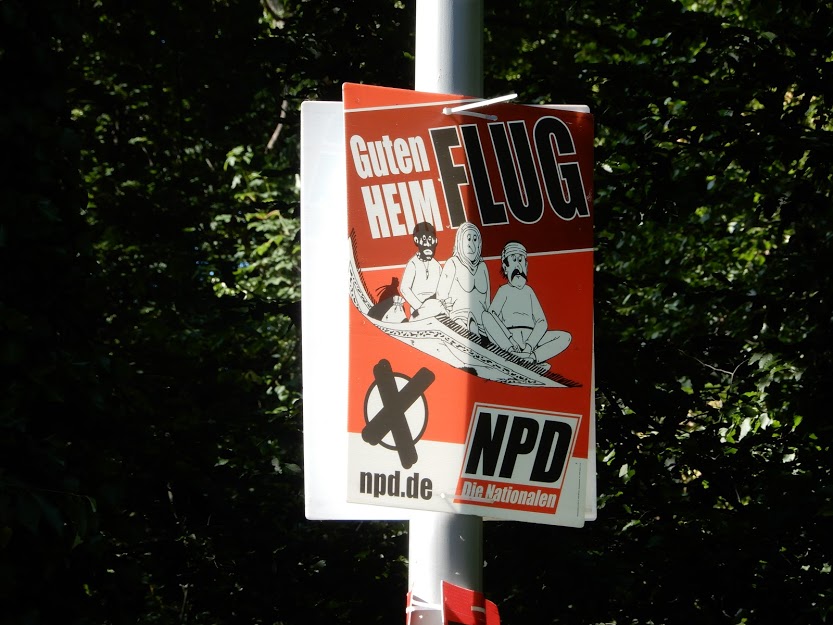
gutenheimflugThis is just one of several dozen racist European parliamentary election posters I found less than a month ago near the commuter train station in Buch, Berlin’s northernmost district. All of them were in support of the neo-Nazi Nationaldemokratische Partei Deutschlands (NDP). A local friend of mine said the fact the posters were still up a week after the elections could have been interpreted as a violation of election law on the part of local authorities. In any case, the sheer profusion of Islamophobic and racist hate speech near its train station is at odds with Buch’s status as a place chockablock with cutting-edge medical research clinics and life sciences labs. If you were, say, a scientist from India who had come to Berlin at the invitation of Max Delbrück Center for Molecular Medicine and you saw what I saw in Buch, the center’s home, would you accept a job offer to work there, knowing your new neighbors and the local officials were cool with neo-Nazi propaganda gracing their town’s streets? As it was, despite their efforts to make Buch look like Neo-Naziland (they scared me away for good, that’s for sure), the NDP won no seats in the elections and were relegated to the “Others” category in the final tallies. But their “more respectable” friends in the Alternative für Deutschland (AfD), who would also no doubt wish that all immigrants of a certain type would have a “good flight home,” received over four million votes on May 26, 2019, meaning they would have six seats in the new parliament, up one from the previous sitting. Photograph by the Russian Reader
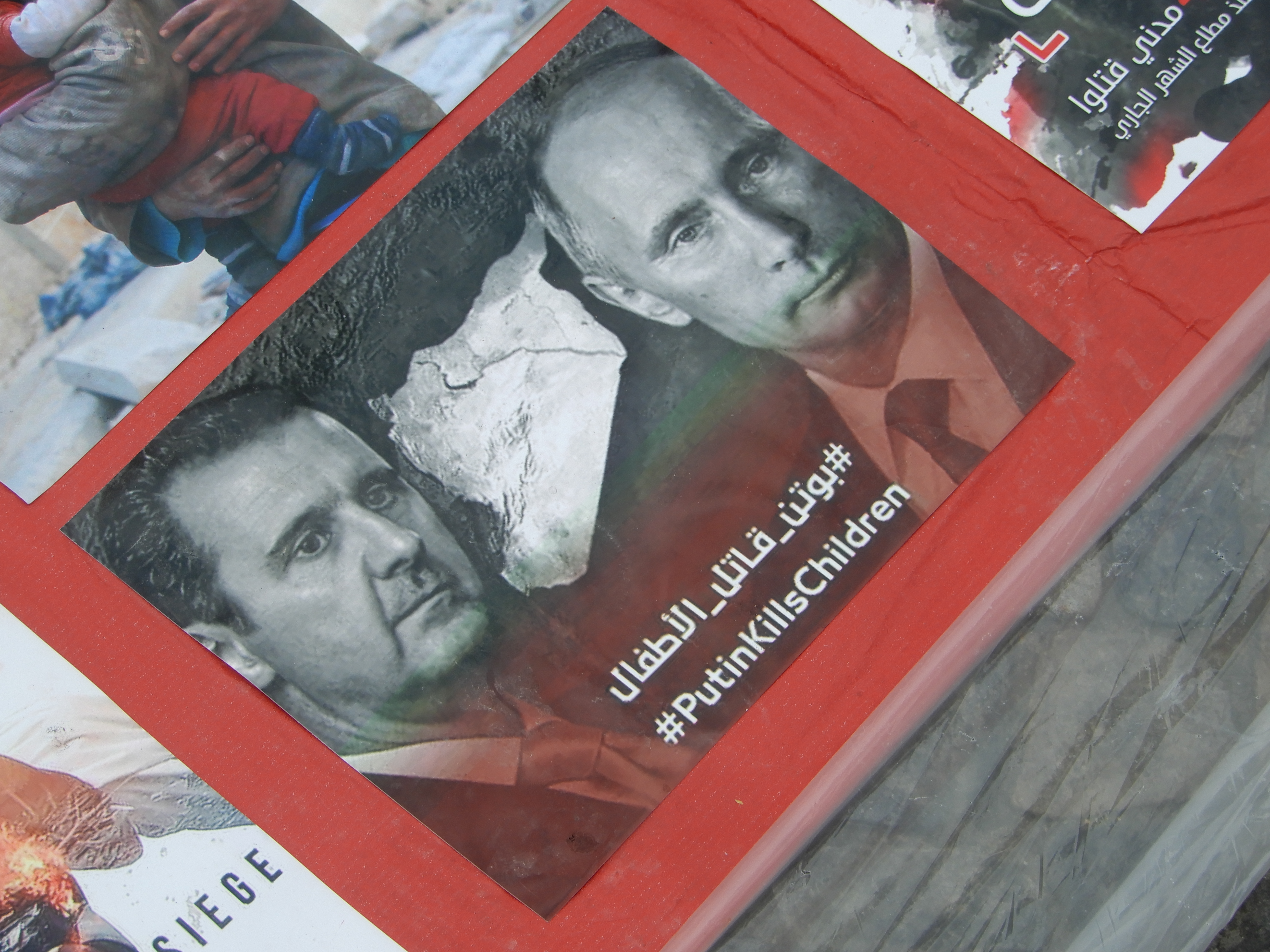
 

#PutinKillsChildren

putinkillschilren.JPGPoster at a rally in support of Idlib, 15 June 2019, Pariser Platz, Berlin. Photo by the Russian Reader
As the extraordinarily eloquent photographs a friend of mine took six days ago in Moscow show, another “look at us revolution” has been taking place there.

Like the previous “look at us revolution” of 2011–2012, staged almost exclusively for social media and international media consumption, the implicit message has been, “W are smart white people and we deserve better. Marvel at our clever placards. Look deeply into our educated white faces. In every single way that matters, we are just like you Herrenvolk in Europe and the US. The fact we live under a vicious tyranny is an unhappy accident for which we bear almost no responsibility.”

Beyond that, apparently, there is no plan, program or coordination, so it would be a mistake to imagine the detention of these protesters by the hundreds means the Putin regime is afraid of them. No, the regime is discouraging the protesters and potential protesters and, more importantly, it is gathering information on the detainees, information it can use in future crackdowns.

There will be a real revolution in Moscow when the super smart “white people” there not only learn how to get much larger numbers of people on the street, coordinate their movements, push back against the police’s attempts to detain them, and make real political demands but also discover the existence of the rest of the world and Moscow’s increasingly baleful effect on it.

If a hundred thousand people marched in the streets of Moscow demanding Putin immediately withdraw all Russian troops and mercenaries from Syria, this would not only signal the beginning of the end of Putin’s long reign but it would also mean anti-regime Russians had realized solidarity is a two-way street.

You cannot expect people in other parts of the world to empathize with your struggle for democracy and justice when your country’s armed forces, internet trolls, mercenaries, spies, and military proxies are fighting and fueling armed conflicts and political crises in dozens of other countries.

Russia might have more natural resources than any other country in the world, but the reserves of goodwill toward the country and its people will eventually dry up.

It has been said before by hundreds of activists and commentators, but if the US had allied itself with Assad to bomb the hell out of his opponents in Syria, the whole world, especially the leftist part, would be up in arms.

Russia has been bombing the hell out of Syria and doing lots of other nasty stuff elsewhere, including poisoning people in broad daylight and shooting down airliners, but it troubles almost no one, relatively speaking.

What is more, no one bothers to ask why it does not bother all the nice “white people” in Moscow, who would never think to demonstrate en masse against their country’s attacks on lesser folk in third-world countries. {TRR}

#PutinKillsChildren

People Apps

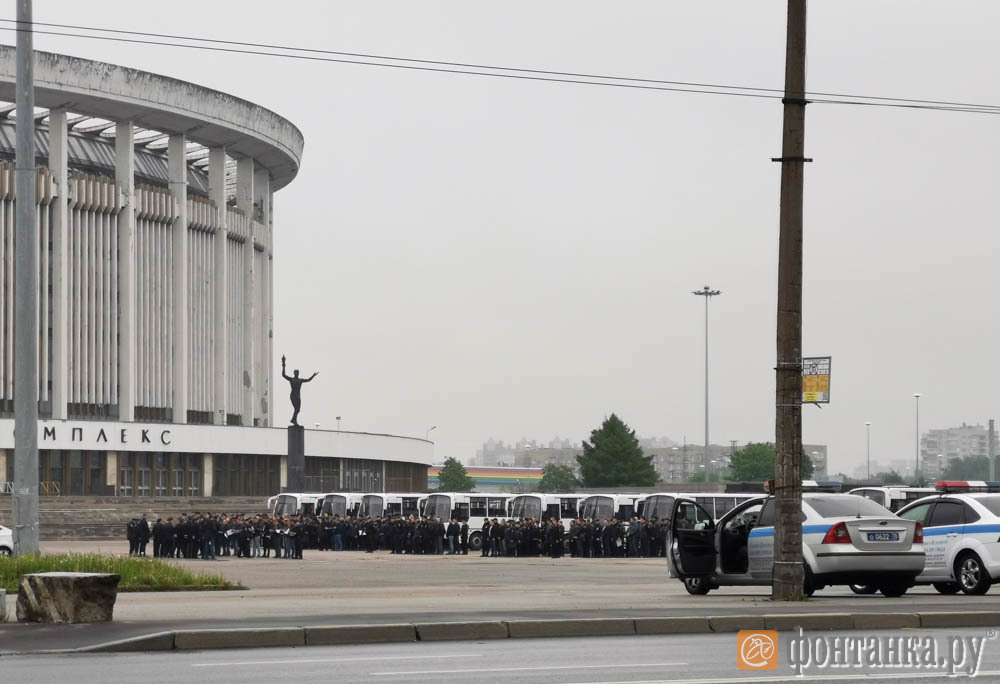
raidPetersburg police muster at five in the morning on May 29 in the parking lot of the Soviet-era Sport and Concert Complex (SKK) in the southern part of the city before heading off to raid the homes and workplaces of Central Asian migrant workers. Photo courtesy of Fontanka.ru
Petersburg Police Raid Migrant Workers After Diaspora Refuses to Help Find People Involved in Brawl
Mediazona
May 29, 2019

The press service of the Russian Interior Ministry’s Leningrad Directorate informed Interfax that Petersburg police began raiding places migrant workers lived. The raids kicked off when two diasporas [sic] refused to help security forces find people implicated in a large brawl involving knives.

Roman Plugin, head of the Interior Ministry’s regional directorate, gave the order for the raids. He ordered that people involved in a large brawl that took place on Salov Street on May 20 be found. Four people were stabbed during the brawl.

According to police, natives of the North Caucasus and people from a country of the near abroad, who are hiding in Petersburg [sic], were involved in the brawl.

Fontanka.ru writes that three hundred police officers are involved in the raids. 78.ru adds that the police officers, in particular, raided the wholesale vegetable market on Sofia Street and a wholesale warehouse on Salov Street. They were supposed to find people involved in the brawl, which occurred after a “group of Uzbekistanis refused to share turf with Russian nationals from the North Caucasus” [sic].

According to the news website’s source in the police, the security forces had attempted to negotiate the issue with prominent figures who had a say in circumstances at the major wholesale vegetable markets. They, however, had pretended not to know who was involved in the brawl.

Thanks to Yana Teplitskaya for the heads-up. Translated by the Russian Reader

My Generation

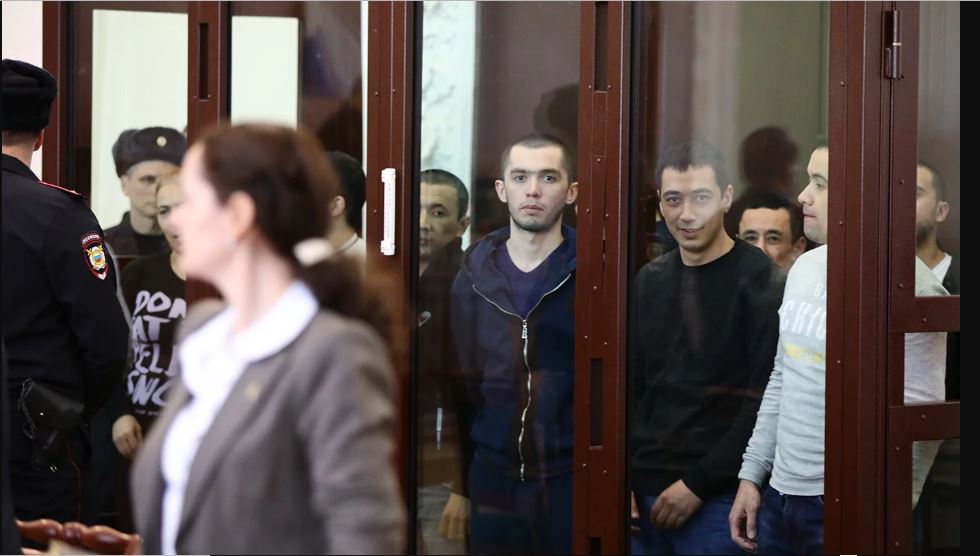
frenkel-subway trialThe defendants in the Petersburg subway bombing trial. Photo by David Frenkel

After a terrific, well-attended solidarity talk in support of the defendants in the Network case, held here in Berlin the other night, I spoke to a lovely young Russian activist.

I said to them that there were, of course, many more instances of wild injustice in Putinist Russia with which an engaged foreign audience could be regaled, such as the ongoing trial of several Central Asians, accused of complicity in the alleged terrorist suicide bombing in the Petersburg subway on April 3, 2017.

Like the Network case, the Petersburg subway bombing case has all the hallmarks of a frame-up. As in the Network case, there have been numerous allegations the defendants have been tortured by investigators.

“But the difference,” the young person interrupted me, “is racism.”

They meant that, since all the defendants hailed from Central Asia, there was no way to mount the successful solidarity campaign that has shown a harsh light on the Network case and garnered it widespread notoriety, especially within Russia.

The young person went on to tell me that a friend of theirs had been attending the subway bombing trial. She had told them it was horrific. The defendants had been assigned state-appointed lawyers who did nothing to defend them. The trial was such a flagrant frame-up the interpreters working it had banded together to try and do anything they could to help the young people, who in all likelihood have been accused of terrible crimes they did not commit.

It goes without saying that all of them will be found guilty and sentenced to long terms in prison.

The case has been covered spottily by Petersburg and Russian media outlets, but I have seen very little outrage or even mild concern about it from my acquaintances on Russophone social media, most of whom live in Petersburg.

Many of these same people are now visibly bent out shape about the goings-on in Israel-Palestine. In the past few days, they have been treating virtual friends like me to generous helpings of unsubstantiated hasbara.

Are they unconcerned about the miscarriage of justice perpetrated on nearly a dozen young Central Asians because they think all Muslims are terrorists and, by definition, guilty of every charge of terrorism laid at their door?

It has been a commonplace of Russian quasi-liberal thinking that Stalinism affected Russians so deeply it infected their collective DNA. The Stalinist bug, so this spurious argument contends, has been passed on to the new generation as well, even though the Soviet Union collapsed almost thirty years ago, before my interlocutor and huge numbers of other terrific young Russian social and political activists I know were born.

Supposedly, several generations must pass before the Stalinist bug will finally be expunged from the national genetic code and Russians can build a more democratic polity in their country.

In reality, there is a great deal of anecdotal evidence pointing to the new generation’s eagerness and readiness to live that way right now.

On the contrary, it is my own age mates, the so-called last Soviet generation, who were born after Stalin died, who seem most afflicted by a kind of cognitive and emotional Stalinism that, often as not, emerges in their thoughts and deeds not as nostalgia or admiration for the real Stalin, but as dogmatic worldview that makes events in, say, Israel more real and important than most events in their own country and cities.

Given recent oddities around the Network trial and the unwonted negative publicity the case has generated for the FSB, I think there is a slight chance the powers that be might have decided to ratchet things down a bit. I could be wrong, but I would not be surprised if, when the trials in Penza and Petersburg resume after a long, unexplained recess, the defendants were indicted on lesser charges and then immediately released on probation, taking into account the long time all of them have spent in remand prisons since their arrests in late 2017 and early 2018.

There is no chance this will happen in the subway bombing trial for the simple reason that almost no one in Petersburg can be bothered to go to bat for a group of non-Russian Muslims or even bat an eye when they are tortured and framed exactly like their non-Muslim contemporaries. {TRR}

__________________________________________________

The Russian Reader is a website that covers grassroots politics, social movements, the economy, and independent culture in Russia and the Russian-speaking world.

All the work on the website is done for free.

Unless otherwise noted, everything published on the Russian Reader can be reproduced elsewhere so long as the Russian Reader is indicated clearly as the source, and a link back to the original blog entry is included in the republication. In fact, you are encouraged to post these articles on social media and share them wherever you like.

Growing numbers of readers are the only way I know whether the Russian Reader is accomplishing its mission: to make news and views from the other Russias more accessible to the outside world.

You can also help the Russian Reader by donating money by pressing the buttons marked “Donate” and “Buy me a coffee,” on the left side of this page, or by clicking on the advertisements that appear occasionally on this site.

Outlandish

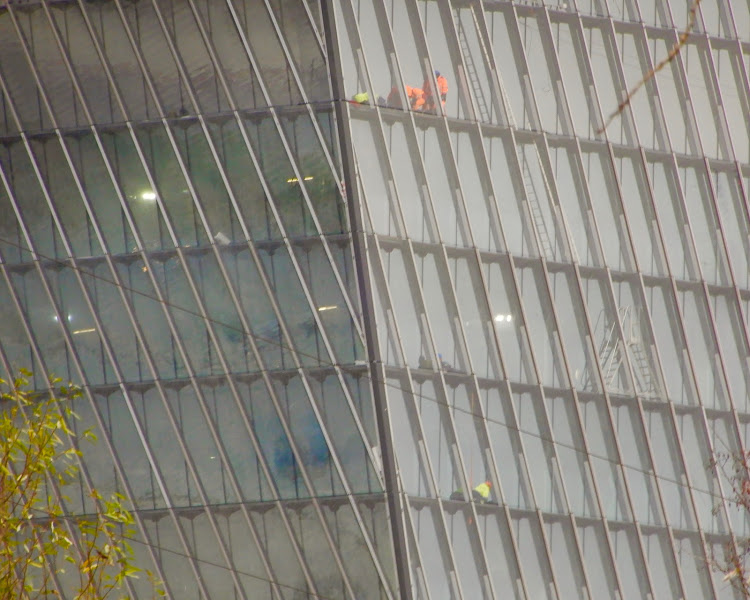
lakhtaEven with my camera’s lens maxed out, it was not to hard for me to guess who was cleaning the glass (or whatever they were doing) high up in the air on the sides of Gazprom’s almost-finished Lakhta Center skyscraper in Petersburg. They were certainly not ethnic Russians or “people of Slavic appearance,” as they say back in the Motherland. They were almost certainly underpaid, disenfranchised and nearly universally despised migrant workers from the former Soviet republics of Central Asia. Lakhta, Petersburg, November 11, 2018. Photo by the Russian Reader

It’s a brilliant plan. The Kremlin now wants to raid neighboring countries and steal their “Russian-speaking” populace (i.e., the non-ethnic Uzbeks, Kazakhs, Kyrgyz, Tajiks, etc., who live in Central Asia) to address Russia’s “population decline.”

That is, it is done with importing swarthy Muslims by the trainload and planeload so it can make them to do all the country’s menial labor while underpaying and shaking them down at the same time. Now it just wants to destabilize and impoverish their countries even further by robbing them of five to ten million people.

In recent years, self-declared progressive Russian scholars have nearly made a cottage industry of applying postcolonial theory to post-Soviet Russia. These scholars have focused almost entirely on how the Satanic West has “colonized” their country in the wake of the Soviet Union’s collapse.

How the Russian metropole colonized and occupied other countries during the tsarist and Soviet period is of no interest to them whatsoever, nor are post-Soviet Russia’s attempts at recolonization and neo-imperialism through migrant labor, military aggression, and the creation of post-Soviet counterparts to the EU and NATO.

No, it’s all about how the big bad West has woefully mistreated the world’s largest, richest country. {TRR}

_____________________________

Kremlin Seeks Russian-Speaking Migrants to Offset Population Decline
Moscow Times
March 14, 2019

The Kremlin plans to attract up to 10 million Russian-speaking migrants in the next six years to reverse the country’s population decline, the business daily Kommersant reported on Thursday.

Russia’s population declined to 146.8 million in 2018, official data released on Thursday estimates, its first decrease in 10 years. Migration has been unable to offset natural population losses for the first time since 2008.

President Vladimir Putin has prioritized migration policy by signing a plan of action for 2019–2025 and adding migration to the remit of his constitutional rights office.

The plan involves granting citizenship to anywhere from 5 to 10 million migrants, Kommersant reported, citing unnamed sources involved in carrying out Putin’s migration policy plan.

The Kremlin lists Ukraine, Kazakhstan, Uzbekistan, Moldova and other post-Soviet states with Russian-speaking populations as so-called “donor countries” where new Russian citizens could be recruited, the paper writes.

Russia needs up to 300,000 additional people per year in order to reach net-zero population growth, Kommersant’s sources are quoted as saying.

Several bills designed to ease citizenship and immigration rules are also in the pipeline, some of which could be considered this May, Kommersant reported.

Aliyah

aliyah

Canadian professional wrestler Aliyah. Photo courtesy of WWE

It’s really unpleasant to discover that, for no apparent reason and unbeknownst to you, you have been unfriended long ago by someone you really did think of as a friend,

The funny thing is that, two years ago, I translated a dozen or so pages of essays and other documents this particular friend needed for their Fulbright application. I did all of this work literally overnight, with almost no advanced warning.

The friend didn’t think to offer me any money or anything else for my work, but when they did, in fact, get the Fulbright, they suddenly popped up again to ask for free English lessons.

Since I haven’t heard word one from them since then, I assume they and their family stayed in the States.

What happened to the film I had been helping them make for several years is for me to wonder alone about, too.

This is a lesson I should have learned the hard way when A.S. and I held what proved to be a truly savage and unpleasant “solidarity evening” for our old friend the artist B. in 2008 after he was deported from Brexitland, where he had applied, quite sincerely and on impeccable legal grounds, for asylum as a gay man whose life was threatened in his home country.

All three of us were roundly denouced by the rather odd audience in attendance at the erstwhile artists squat Pushkinskaya 10 (now a municipally subsidized arts center) for advocating the international human rights approach to asylum seeking.

The thing to do, we were told in no uncertain terms, was to trick your way into the promised land of your choice by hook or by crook, not to openly apply for asylum and get mixed up with the allegedly politically dodgy types (i.e., anarchists and other No Borders activists) who support asylum seekers in other countries.

Meanwhile, my wife’s cousin M., who up until a few months ago showed no interest in their late grandfather and his Jewishness, has suddenly decided to make Aliyah. The only problem is that his cousin, my wife, is the only living member of the family who knows anything about their grandfather, his Jewishness, and Jewishness in general, and who has kept anything she could pertaining to her grandfather’s life, because she loved him, and because she finds her fascinating multi-ethnic family’s history fascinating.

I am going to go out on a limb here and say that politics in Israel has been badly skewed  to the hard right by the huge influx of “Russian Jews” who emotionally, religiously, philosophically, and technically speaking had about as much business making Aliyah as I, a third-generation Scandinavian American, would have.

Naturally, since they have no real business being there or, rather, since they know they fudged their way into the country, they are even more resentful of the Palestinians, the natives brutally shunted aside to make room for their illegitimate millions.

This has been borne out by Likud’s strangehold on power in alliance with Avgidor Lieberman and the other radical right politicians heavily supported by immigrants from the former Soviet Union.

The only way out of this impasse is to declare Zionism a “triumphant failure” that did the job it set out to do when circumstances for Jews in the world were desperate. Now that they are much less desperate, Zionism, like “communism” in its own time, can phase itself out, giving way to a single Israeli-Palestinian state where everyone would learn Arabic and Hebrew at school, and to which anyone in the world would be eligible to immigrate if they chose to do it.

Of course, it would be a big mess, but it would also be a lot more fun than the current US tax payer-subsidized disgrace in Israel-Palestine.

But what to do about the alleged right of Russians to immigrate anywhere they choose by any means necessary when, in their majority, they themselves refuse to acknowledge the same rights for non-Russians? Spend enough time in these parts and you will realize that really large numbers of Russians do think quite sincerely and distressingly that Muslim, Asian, and African riffraff should not be allowed to live in their precious spiritual homelands of North America, Western Europe, and Israel, and certainly not in their beloved-and-hated Motherland itself.

I have no cheeky pie-in-the-sky solution to this racist silliness. I do know, though, that it had something to do (minus the racism) with why I lost a real friend. {TRR}

Anti-Central Asian Migrant Worker Dragnet in Tula

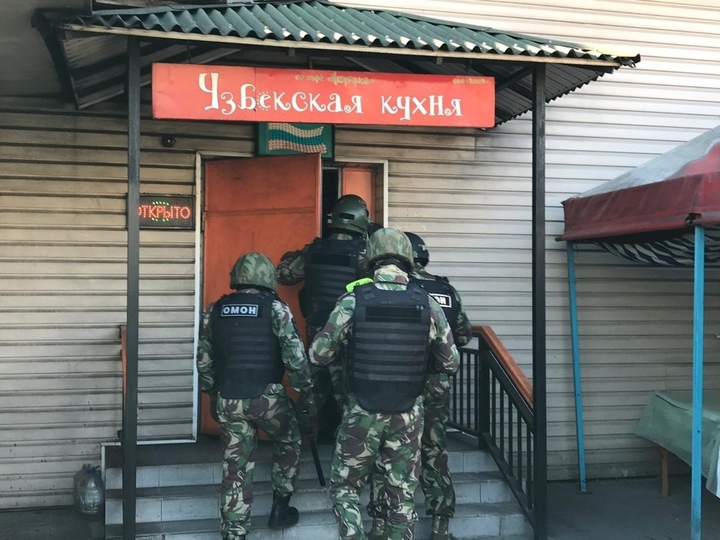
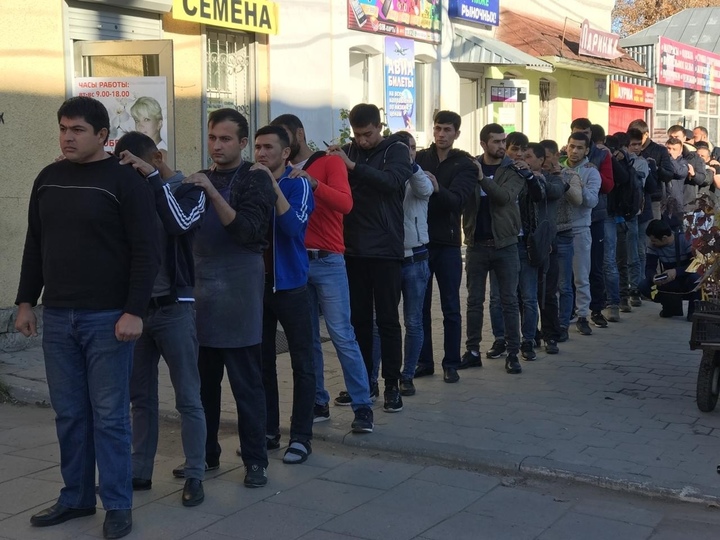
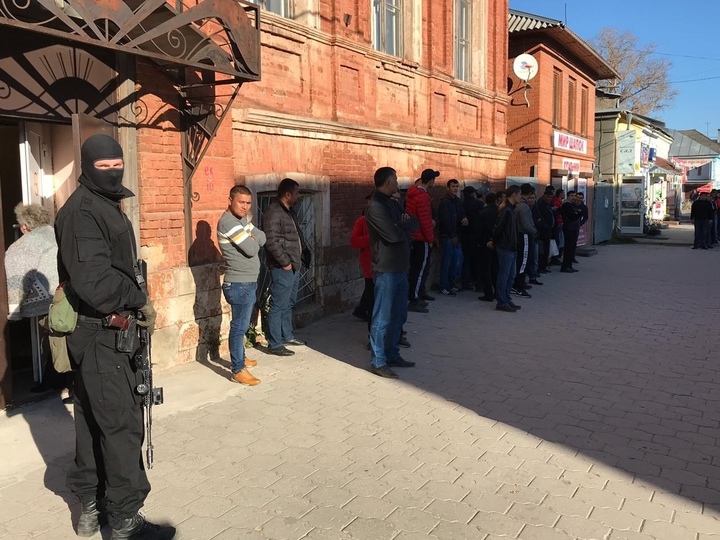
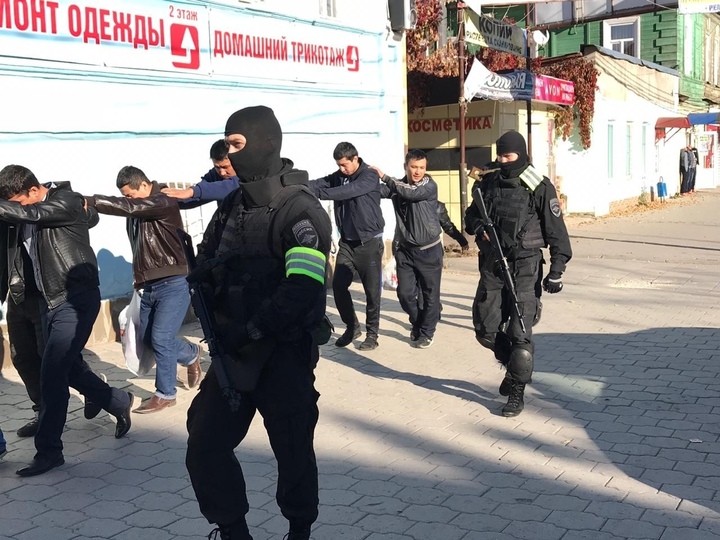
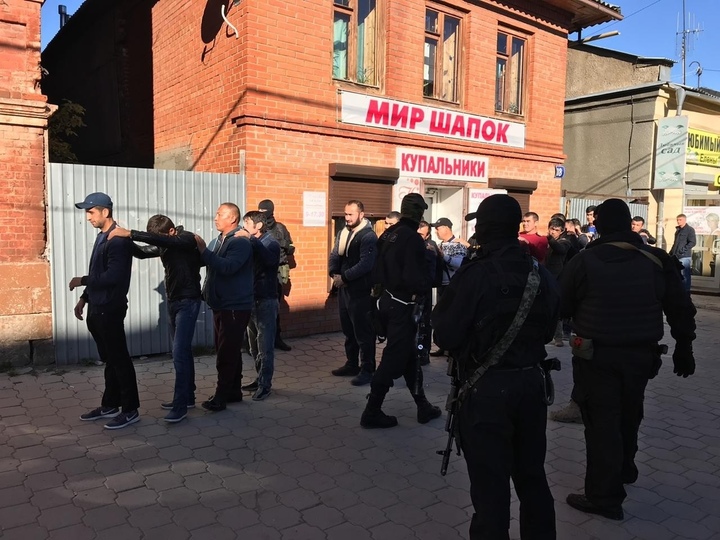
uzbek cuisineRussian riot police (OMON) prepare to enter a business identified as “Uzbek Cuisine” in the Central Market area in Tula during yesterday’s “total spot checks.” Photo courtesy of Moskovsky Komsomolets in Tula
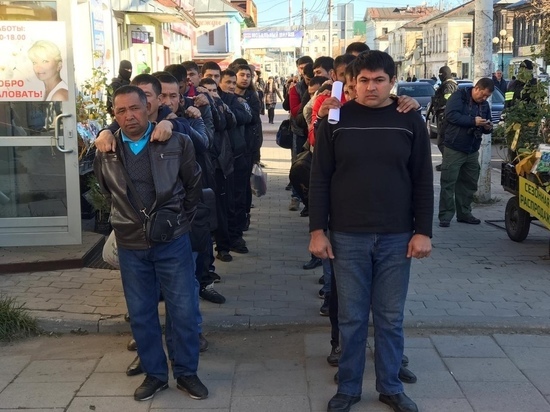
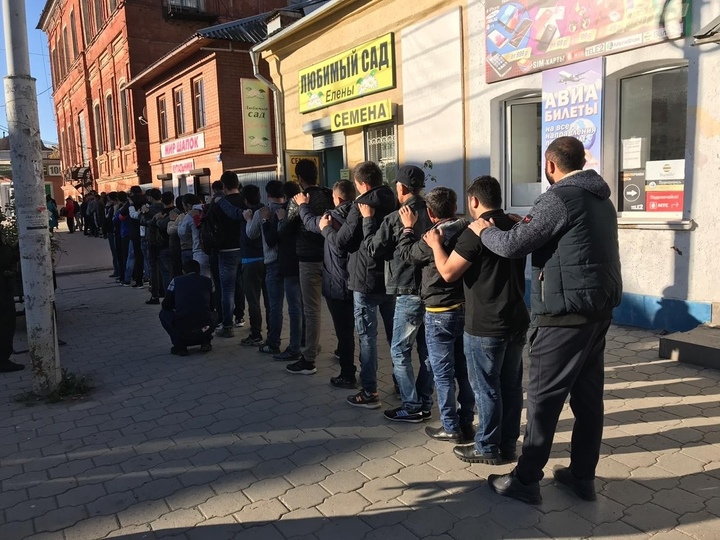
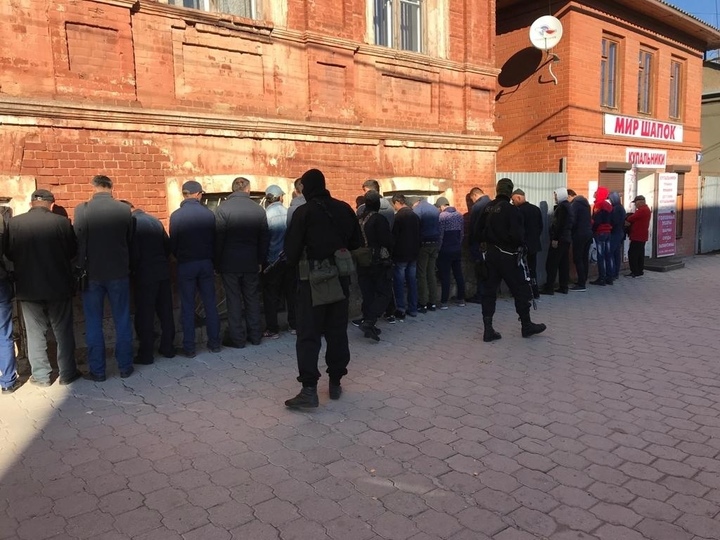
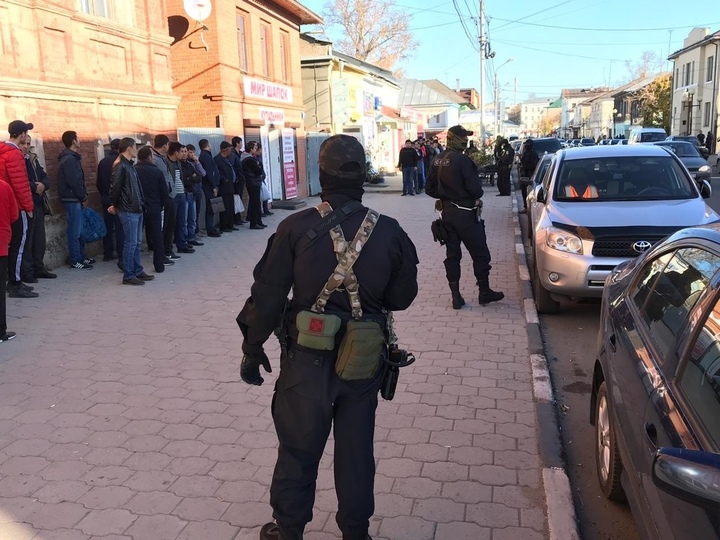
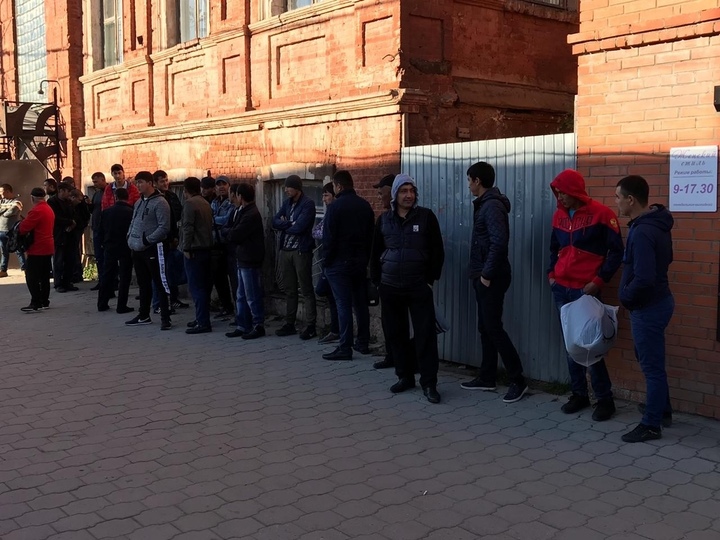
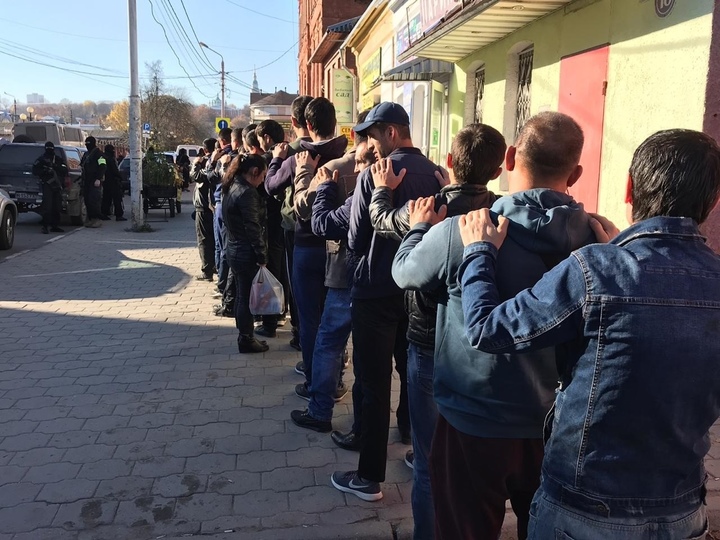
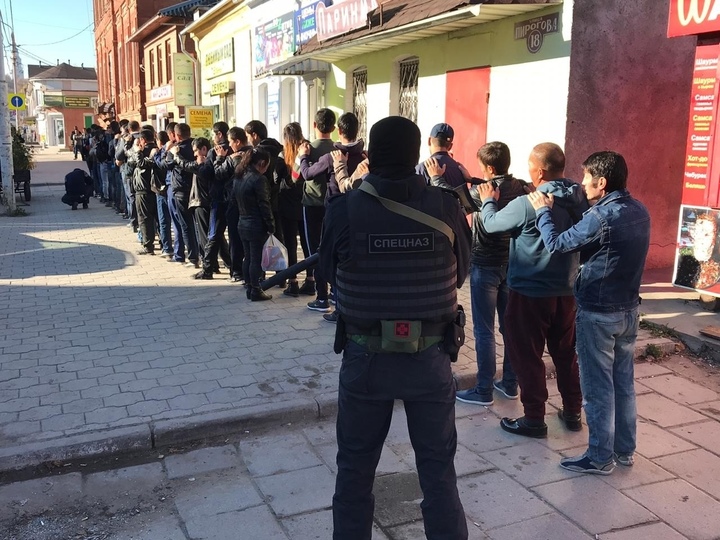
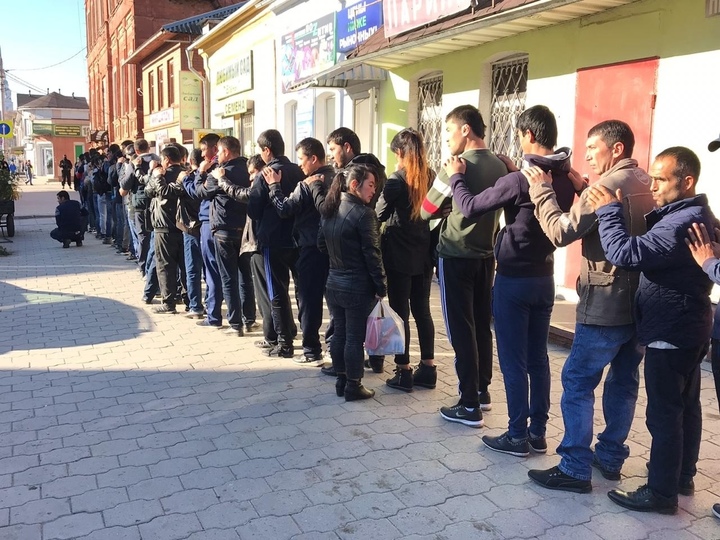
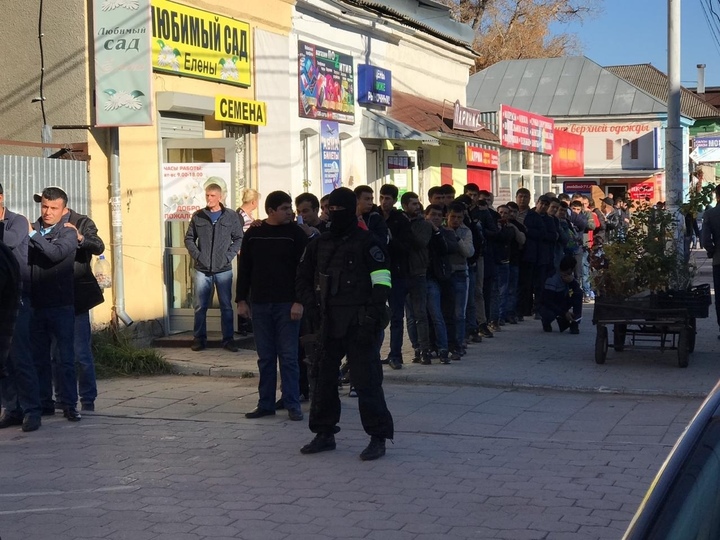
Unprecedented Document Checks in Tula: Migrant Workers Lined Up in Columns Many Meters Long
MK v Tule (Moskovsky Komsomolets in Tula)
October 20, 2018

Беспрецедентные проверки в Туле: мигрантов выстроили в многометровые колонны

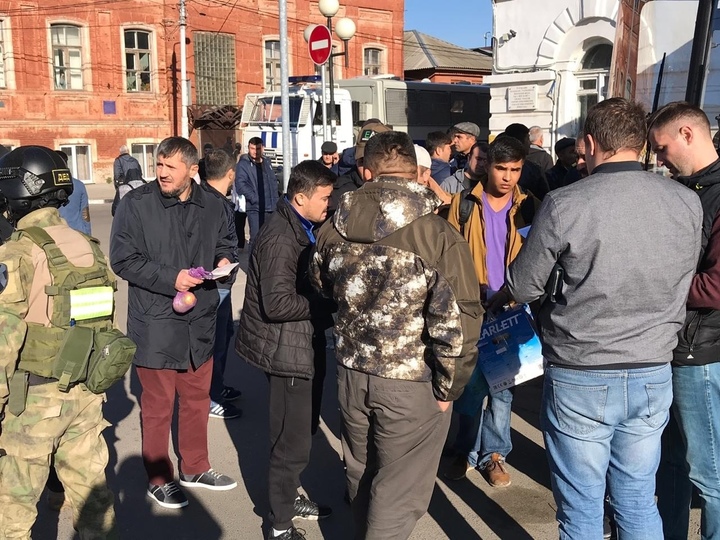
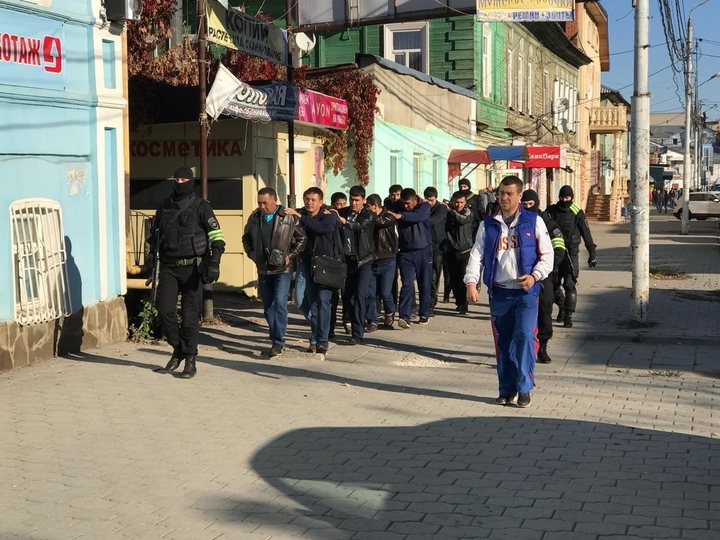
The total checks of migrant workers in Tula have moved beyond the Central Market. According to Moskovsky Komsomolet in Tula‘s correspondent, law enforcers from the Tula Regional Office of the Interior Ministry, the riot police (OMON), the Rapid Deployment Special Force (SOBR), and the Russian National Guard have inspected the streets adjacent to the market.

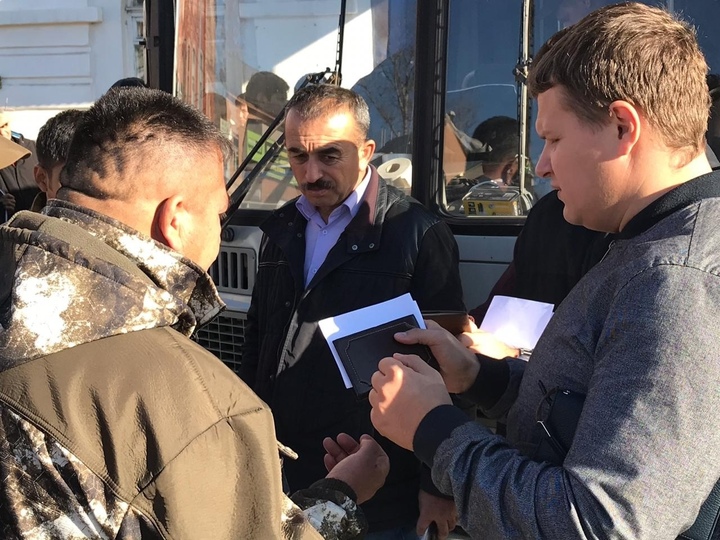
In particular, visitors from the Asian republics [sic] were also checked on Pirogov and Kaminsky Streets. Law enforcers looked to see whether people had documents [sic], residence registration stamps, and work permits.

Approximately two hundred migrants workers were formed into a long column that grew longer by the minute. Checks for violations of immigration laws proceeded apace.

The total spot checks for illegals [sic] in Tula started at 10 a.m. on October 20, when law enforcers descended on the Khlebnaya Square area en masse. The entire market was cordoned off.

All photos courtesy of Moskovsky Komsomolets in Tula. Translated by the Russian Reader. Thanks to Sergey Abashin and Valentina Chupik for the heads-up.

Migrant workers, most but not all of them hailing from the former Soviet Central Asian republics of Uzbekistan, Kyrgyzstan, and Tajikistan, have been perfect scapegoats for the Putinist police state, which from day one (nearly twenty years ago) has increased its hold on public opinion through an endless series of semi-official campaigns against nefarious aliens and “national traitors.”

So-called law enforcement officers have long ago turned shaking down migrant workers—something literally every resident of every major city in Russia has seen with their own eyes thousands of times in recent years, but which they have “disappeared” along with most of society’s supposedly intractable problems—into a land office business, that is, a source of easy, quick cash.

In any case, as likely as not, most of the men shown in the photographs, above, probably had all the papers they needed to live and work legally in Russia, including residence registration papers and work permits. Unless they have temporary or permanent residence permits, they would have to renew these papers every three months in a process that is every bit as wasteful, time consuming, and humiliating as yesterday’s dragnet in Tula.

To add to their woes, the top brass of Russia’s dizzying of ever-proliferating, interwing, and competing law enforcement agencies and secret services regularly trot out cooked-up stats showing, allegedly, that migrant workers commit either an outsized proportion of all crimes in Russia or the majority of crimes. Human rights advocates can easily punch holes in these barefaced attempts to generate moral panics while simultaneously proving the police state’s continued indispensability, but these counterarguments rarely if ever get the audience enjoyed by Moskovsky Komsolomets, a mass-circulation national tabloid, based in Moscow, that for many years now has published local supplements in Russia’s numerous, far-flung regions.

Owned until 1991 by the Soviet Communist Youth League (Komsomol), Moskovsky Komsolets abandoned whatever socialist and international principles it had long ago, opting for sensationalism and high circulations. According to the BBC, the newspaper had an average issue readership of 1,215,000 in 2008, making it Russia’s second most read newspaper, after Argumenty i Fakty. Given its heavy internet and social media presence, those readership figures have certainly only gone up in the intervening years.

MK, as it usually styles itself nowadays, perhaps to make us forget about its humble socialist origins, was also identified in 2004 by the Sova Center and the Moscow Helsinki Group as the leading purveyor of hate speech amongst Russia’s national print media outlets. Certainly, yesterday’s “photo essay” in MK in Tula was an attempt to whip up a moral panic while boosting readership.

The newspaper, however, is not primarily responsible for the fact that Russian officialdom and to a certain extent, Russian society at large demonizes, terrorizes, and racially profiles the cheap, supposedly expendable immigrant workforce that keeps the perennially flailing Russian economy afloat.

If you want to learn more about the bigger picture when it comes to migrant workers in Russia, a story egregiously underreported by the international press and reported mostly in the sensationalist, racist manner, displayed above, by the Russian press, I would recommend the following articles, published on this website in the past year, plus Professor Sergey Abashin’s now-classic essay “Migrants and Movements in Central Asia,” published here three years ago. {TRR}