The immigrant worker from Uzbekistan entered the bank in Moscow, but when he reached the teller, she refused to serve him and she wouldn’t say why.
For him and others from impoverished countries across Central Asia who seek better lives in Russia, such hostility is woven into everyday life. Sometimes it bursts into outright violence.
“Mostly you notice it when you go to the hospital, a clinic, a government office: You stand in line and everyone shoots you dirty looks,” said the man, who spoke to the Associated Press on condition of anonymity because he feared repercussions.
Such xenophobia clashes with economic realities at a time when Russia has a labor shortage, primarily due to its war in Ukraine. In the first quarter of 2025, over 20% of Russian businesses said they were hindered by a lack of workers, according to the Central Bank.
But rather than welcoming laborers, Russian officials are fomenting anti-migrant sentiment and increasing restrictions on immigrants, which the government says number 6.1 million, but is probably higher. The government is tracking their movement, clamping down on their employment and impeding their children’s rights to education.
A massacre and a backlash
The continued crackdown comes as a trial began this month for four Tajik nationals who are accused of the shooting and arson attack at a Moscow concert hall in March 2024 that killed 149 people. The four were arrested within hours of the attack and appeared in court with signs of being severely beaten. An Islamic State group claimed responsibility but Russia sought to blame Ukraine for the bloodshed.
Anti-migrant rhetoric had been growing in Russia since the early 2020s. But the massacre in particular launched a wave of “terrible violence” against immigrants, said lawyer Valentina Chupik, who has worked with the immigrant community for over 20 years. In the eight days after the killings, she received 700 reports of injuries to immigrants, including “faces smashed against the doors of police stations,” she said.
Parliament speaker Vyacheslav Volodin captured the public mood after the massacre, saying “migration control is extremely important” to ensure foreign nationals carrying out “illegal activity” could be deported without a court order.
The violence drew concern from human rights groups.
“Central Asian migrants seeking work in Russia due to dire economic conditions in their countries of origin today face ethnic profiling, arbitrary arrests, and other harassment by police in Russia,” Human Rights Watch said in a report on the anniversary of the attack.
“The heinous massacre cannot justify massive rights abuses against Central Asian migrants in Russia,” said its author, Syinat Sultanalieva.
Raids, roundups and restrictions
While some violence has subsided, it hasn’t disappeared. In April, police raided a Kyrgyz-run bathhouse in Moscow with video showing masked men forcing half-naked bathers to crawl across the floor and deliberately stepping on them before covering the lens of a security camera.
Police also reportedly rounded up immigrants in raids on warehouses, construction sites and mosques, then coerced them into joining the military to fight in Ukraine. Some are threatened with having their residency documents withheld, while others are recently naturalized citizens who failed to register for military service. In such cases, serving in the military is presented as the only alternative to prison or deportation. For others, a fast track to Russian citizenship is offered as an incentive for enlisting.
Speaking in St. Petersburg in May, Alexander Bastrykin, head of Russia’s Investigative Committee, said “20,000 ‘young’ citizens of Russia, who for some reason do not like living in Uzbekistan, Tajikistan (and) Kyrgyzstan” were serving in Ukraine.
Those immigrants who have avoided violence still are subject to new anti-migrant laws. Much of this is targeted specifically toward workers from Central Asia.
In 2024, 13 Russian regions banned immigrants from certain jobs, including in hospitality, catering and finance, and even as taxi drivers. A pilot program starting in September in the Moscow region requires migrants who enter Russia without a visa to be tracked via an app. Those failing to comply are added to a police watchlist, impeding access to services like banking, and subjecting them to a possible cutoff of cellphone and internet connectivity.
A nationwide law banned children of immigrants from attending school unless they could prove they could speak Russian. Less than six weeks after the law came into force, officials told local media that only 19% of children who applied for the language test were able to take it, and the most common reason for rejection was incomplete or inaccurate documents.
Another man from Uzbekistan who has worked in Russia for almost two decades and lives in St. Petersburg said he’s had to wait in line for over seven hours to get needed residency documents. The man, who also spoke to AP on condition of anonymity for fear of reprisals, hopes to stay in Russia but says the climate has worsened.
“It’s hard to get paperwork,” he said. “There just isn’t the time.”
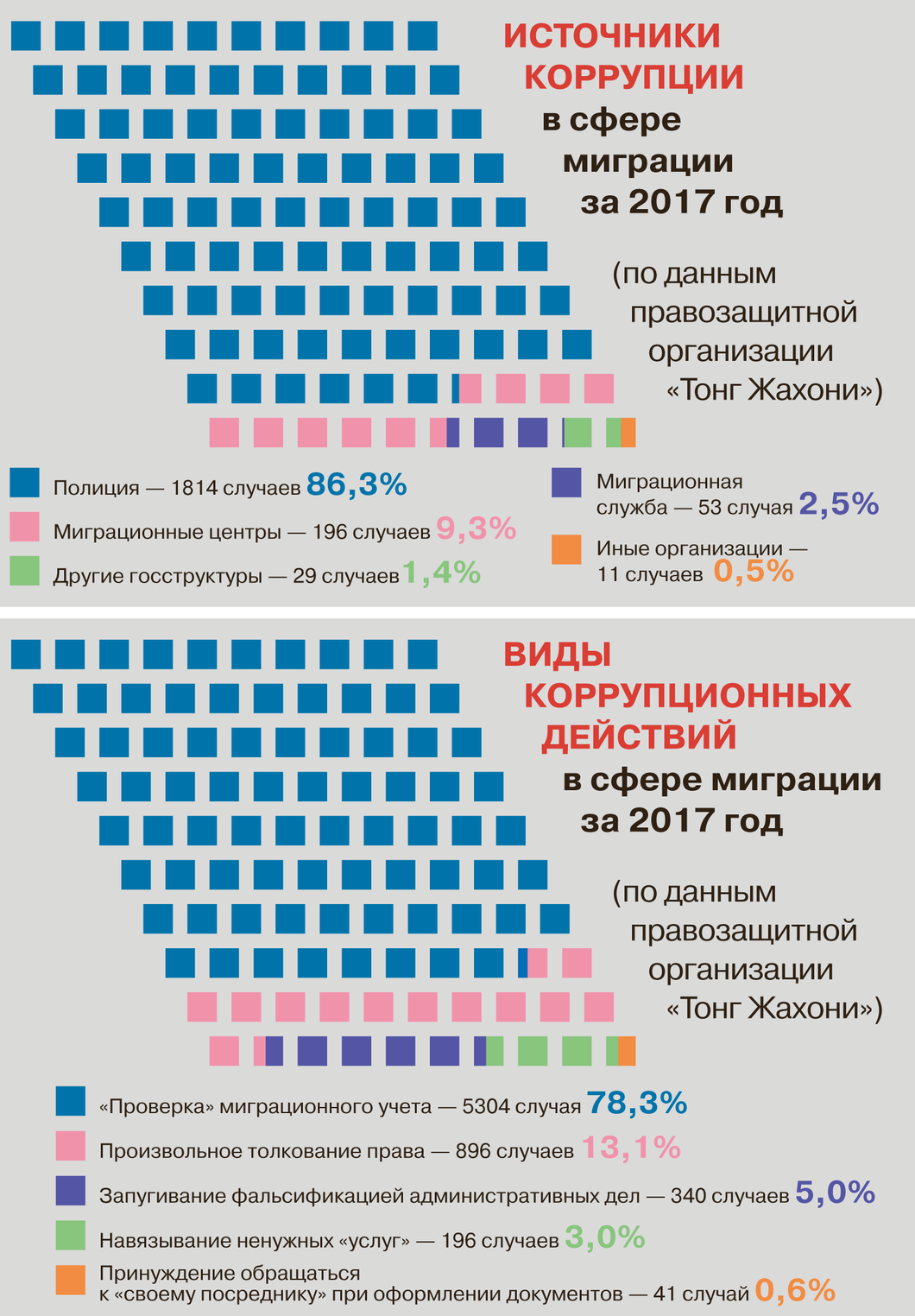
The oppressive laws sometimes force immigrants to resort to paying bribes. Chupik, the lawyer, believes that Russia’s system results in “violations that cannot be avoided.”
“This is exactly what this mass regulation is striving for: not for all migrants to be here legally, but for everyone to be illegal,” she said. “That way, they can extract bribes from anyone at any moment and deport anyone who resists.”
Encouraging anti-migrant sentiment
Anti-migrant sentiment is unlikely to diminish anytime soon, mostly because it’s encouraged by authorities like the Investigative Committee’s Bastrykin, who said immigrants “physically occupy our territory, not just with their ideology but with specific buildings” — referring to sites such as mosques.
Ultra-nationalist lawmaker Leonid Slutsky said foreign workers “behave aggressively, causing conflicts and potentially dangerous situations.”
Migrants are an easy scapegoat for many social ills, and not just in Russia, said Caress Schenk, an associate professor of political science at Nazarbayev University in Kazakhstan.
“Closing borders, conducting migrant raids and tightening policies are all tools that are easy go-tos for politicians the world over,” she said. “It goes in cycles that are sensitive to geopolitical pressures, as we’re seeing now, but also things like election campaigns and domestic political rivalries.”
A surge of “anti-migrant propaganda” has dwarfed previous rhetoric of recent years, according to the Moscow-based Uzbek immigrant who was ignored by the bank teller.
“If every person paying attention to the TV, the radio, the internet is only told that migrants are ‘bad, bad, bad,’ if they only show bad places and bad people, of course, that’s what people are going to think,” he said.
Such anti-migrant rhetoric has become part of the nationalist narrative from President Vladimir Putin and others used to justify the 2022 invasion of Ukraine — that Russia is under constant threat.
“Russia has started lumping together all of ‘the external enemies’ that it’s created over the years for itself: the migrants, the Ukrainians, the West,” said Tajik journalist Sher Khashimov, who focuses on migration, identity and social issues. “It all becomes this part of this single narrative of Russia being this castle under siege, and Putin being the only person who is on the lookout for ordinary Russians.”
The Uzbek immigrant in Moscow said Russia has created conditions “supposedly to help people, to help migrants.”
“But the rules do not work,’ he added. ”Special barriers are created that migrants cannot pass through on their own.”

Source: SEIU California (Facebook), 8 September 2025
A prominent nonviolent activist from Moroccan-occupied Western Sahara has been detained by federal immigration officers. Jamal Fadel was seized by masked ICE agents at Manhattan’s notorious federal building at 26 Federal Plaza on August 25 after a routine immigration hearing — an arrest that was caught on video.
Fadel is from the occupied city of Boujdour in Western Sahara. He’s been protesting nonviolently against Morocco’s occupation since he was a high school student, and was threatened by Moroccan authorities so many times that he left to seek political asylum in the United States.
Fadel is currently being held by ICE at the Moshannon Valley Processing Center in Pennsylvania. His attorney expects ICE will move for an expedited removal hearing. If deported, Fadel faces lengthy imprisonment, torture — or worse.
Source: Democracy Now (Facebook), 9 September 2025
I spotted some of the Trump administration’s wanted men on Tuesday, the day after the U.S. Supreme Court granted immigration agents virtually unchecked permission to continue the “largest Mass Deportation Operation” in America’s history.
The wanted stood outside of a U-Haul truck rental outlet in the San Gabriel Valley. They polished other people’s BMWs and Range Rovers at a Pasadena car wash. I saw the wanted women too, walking to jobs as nannies and housekeepers.
They looked suspicious, all right, by the definition outlined Monday by Supreme Court Justice Brett M. Kavanaugh. They were natives of Mexico and Central America, seeking “certain kinds of jobs, such as day labor, landscaping, agriculture, and construction.”
They were suspect to many Californians too, but only of wanting to work, wanting to earn a little cash, wanting to pay their bills and feed their families. One hundred and seventy five years to the day after land that once belonged to Mexico became the 31st American state, California felt to many people Tuesday like it had reverted to a kind of frontier justice, where racial profiling had become the law of the land.
“I am just working hard and paying taxes,” said Mario, 50, between sips of coffee on the sidewalk outside the U-Haul station. Even before the Immigration and Customs Enforcement raids began three months ago, the Honduran immigrant said, life for street-corner workers was not easy.
“People are just looking for work. Some of them are even homeless,” said Mario, who declined to give his last name. “But some people are showing them hate, sometimes even hitting or kicking the homeless. We see it out on the street.”
At the Pasadena car wash where six workers were carted away in late August, those left behind continued their buffing and polishing Tuesday.
“It feels like we have come down low, really low,” said Cesar, between checking in customers. Though he was born just blocks away at Pasadena’s Huntington Hospital, he said he does not feel immune from the raids.
“If now they are just going to judge you by how you look, or maybe how you talk, I can get pulled over. Anyone can get pulled over,” said Cesar, who did not give his last name. “It’s gonna be harder for people to live a normal life. They’re gonna just have to deal with harassment. That’s not something I would want anyone to have to go through.”
Earlier raids by Trump immigration agents have spread far beyond snagging the criminals and drug traffickers the president and his allies claimed to be after. With 10 million Latinos living in the seven Southern California counties covered by the court’s order, a rights group said the high court’s action cleared the way for “an extraordinarily expansive dragnet, placing millions of law-abiding people at imminent risk of detention by federal agents.”
“We should not have to live in a country where the Government can seize anyone who looks Latino, speaks Spanish, and appears to work a low wage job,” Justice Sonia Sotomayor wrote. “Rather than stand idly by while our constitutional freedoms are lost, I dissent.”
The action offered portentous echoes of the mistreatment and greater violence unleashed on Chinese immigrants in the late 1800s. Today, it had U.S.-born citizens, such as The Times’ Gustavo Arellano, feeling they will have to carry their passports to prove their citizenship.
Outside the U-Haul, Mario said he holds a green card. So he will continue waiting on the sidewalk for his next job.
“I believe in God,” he said. “We might think different things, but we all have the same heart. There should be the same heart for everyone. Everyone.”
Source: James Rainey, “Essential California” newsletter (L.A. Times), 10 September 2025
The United States deported 39 Uzbek nationals on a charter flight to Tashkent, the U.S. Embassy confirmed in what it described as part of ongoing efforts to remove migrants without legal status. Earlier this year, more than 100 Central Asians, mostly Uzbeks, were repatriated in a similar U.S.-funded operation. The deportations attest to close cooperation between Washington and Tashkent on migration enforcement. That partnership has been accompanied by political overtures. Last week, Presidents Shavkat Mirziyoyev and Donald Trump held a phone call in which they pledged to broaden their strategic partnership ahead of an expanded dialogue session this autumn. U.S. officials have pointed to investment opportunities in Uzbekistan, particularly in critical minerals, while both sides also highlight cooperation on security and migration.
Source: Peter Leonard, “Central Asia’s week that was #70,” Havli, 10 September 2025

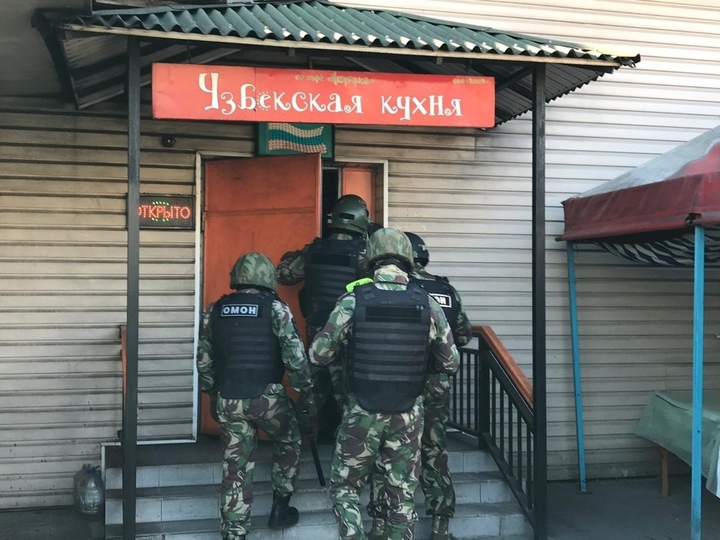 Russian riot police (OMON) prepare to enter a business identified as “Uzbek Cuisine” in the Central Market area in Tula during yesterday’s “total spot checks.” Photo courtesy of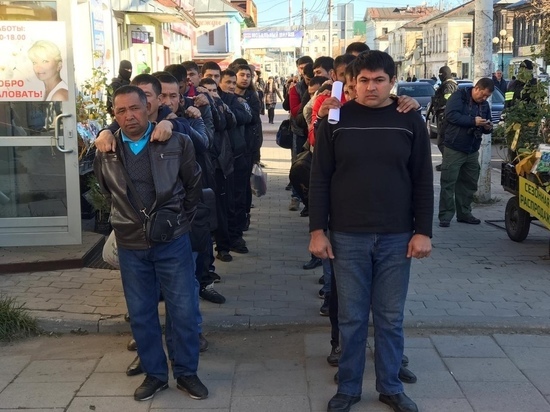
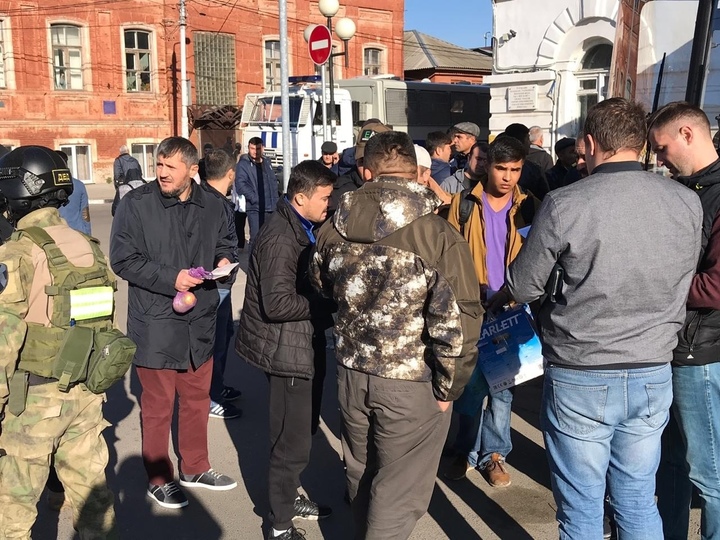
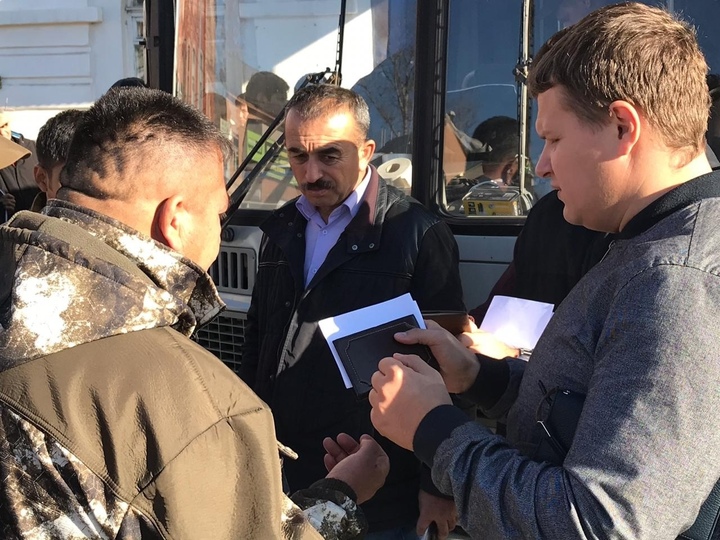
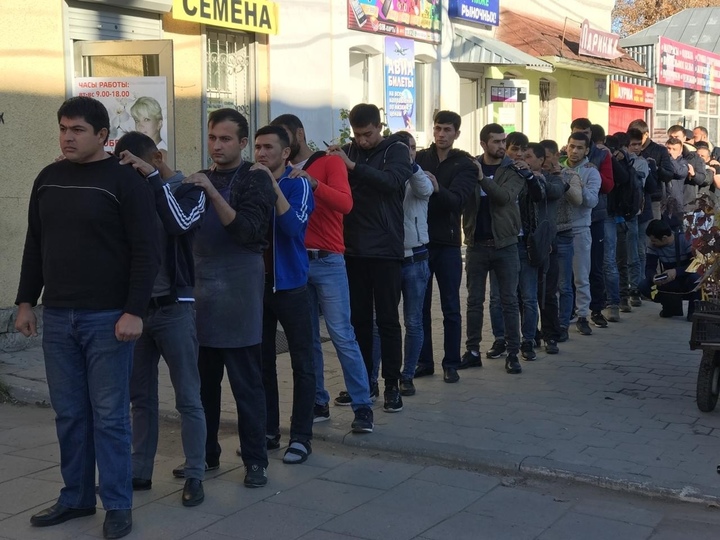
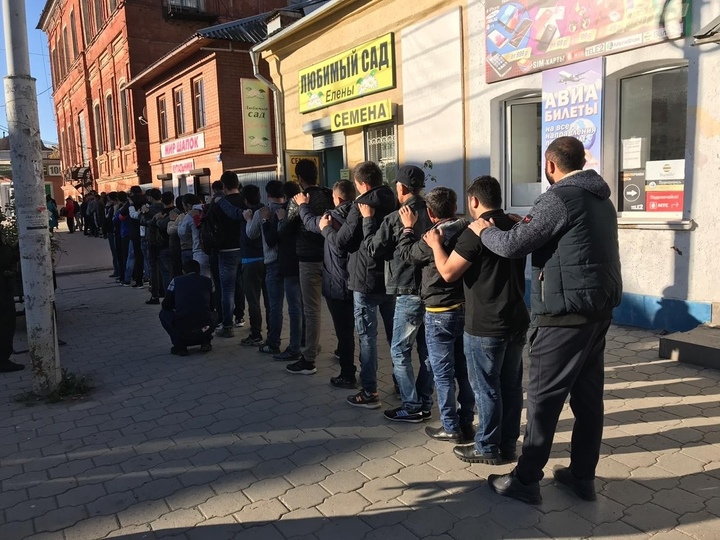
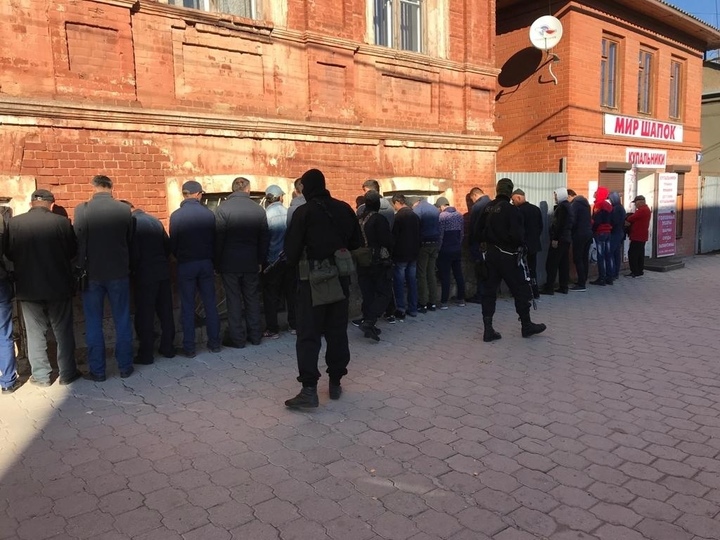
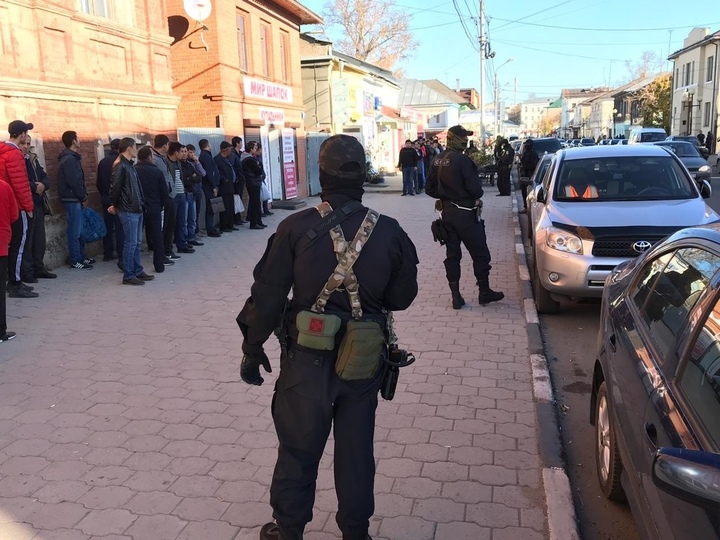
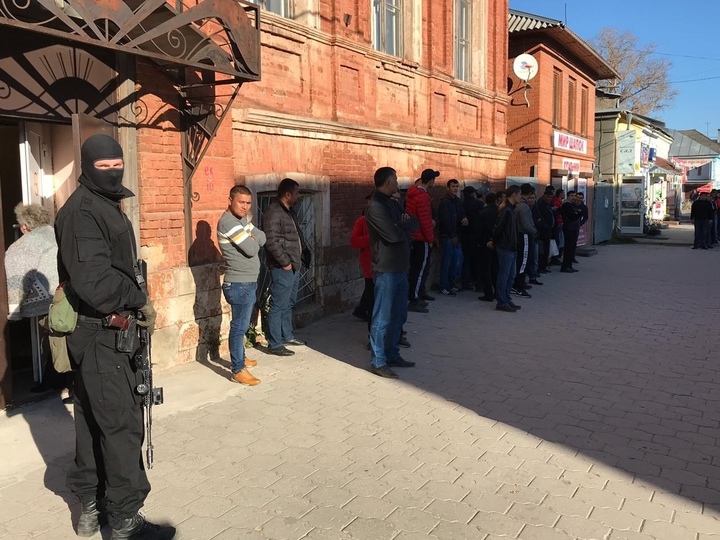
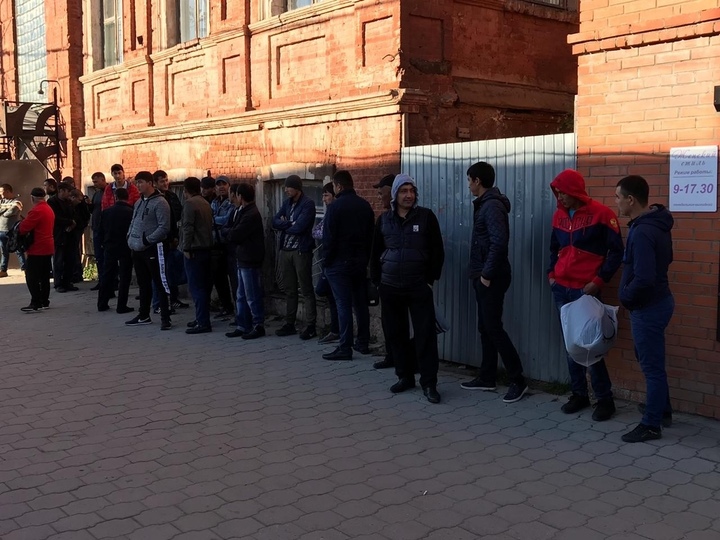
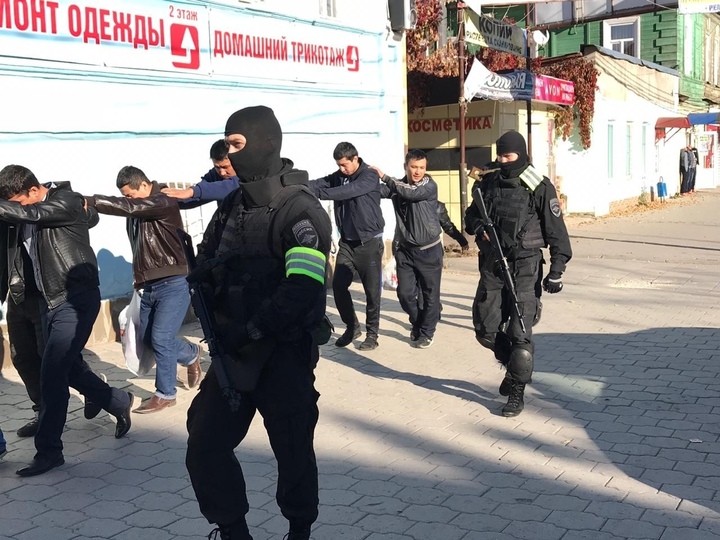
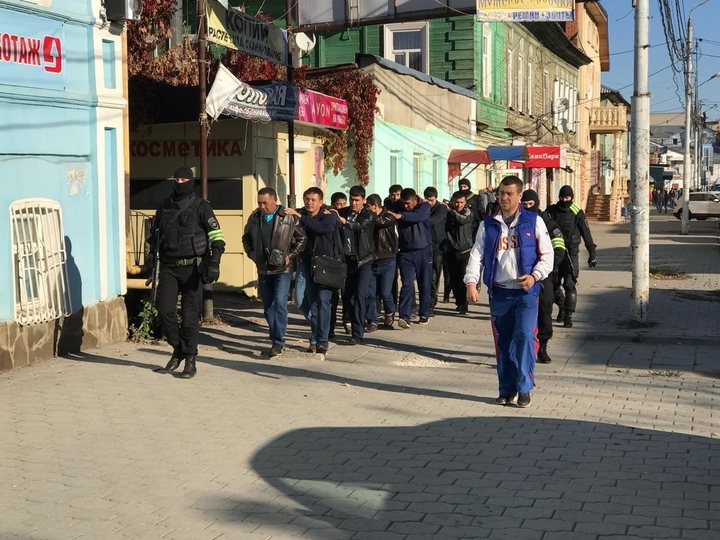
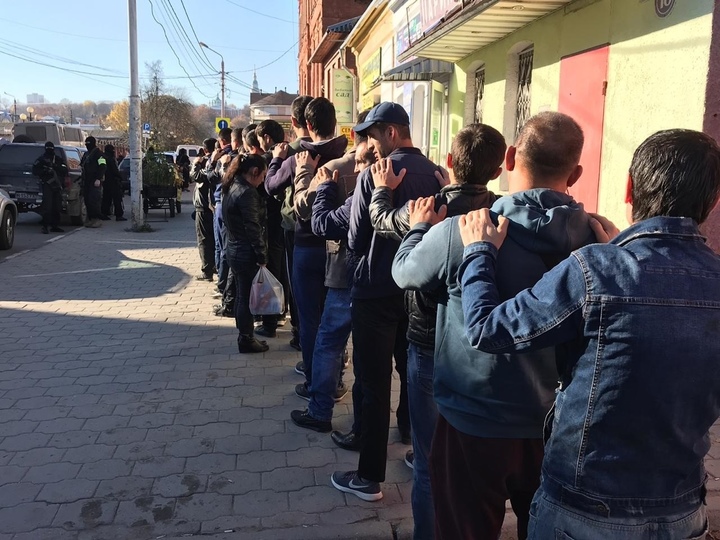
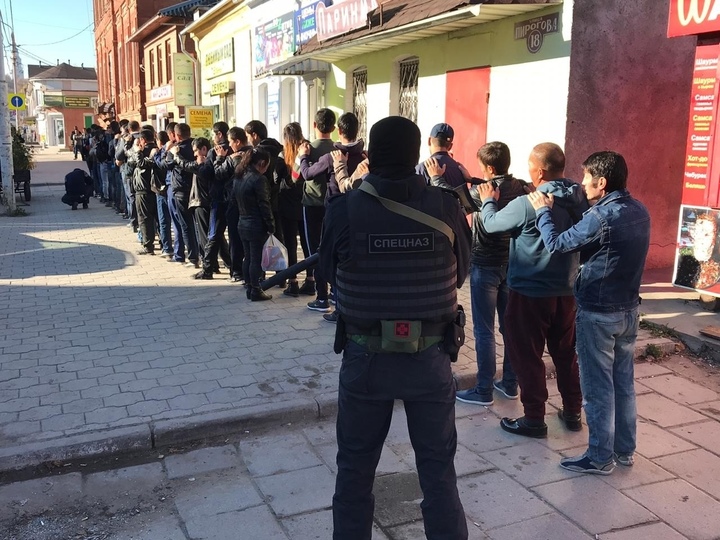
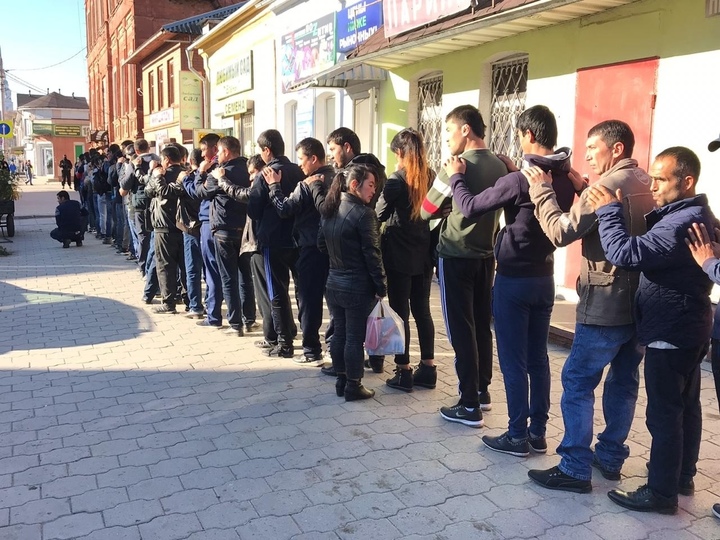
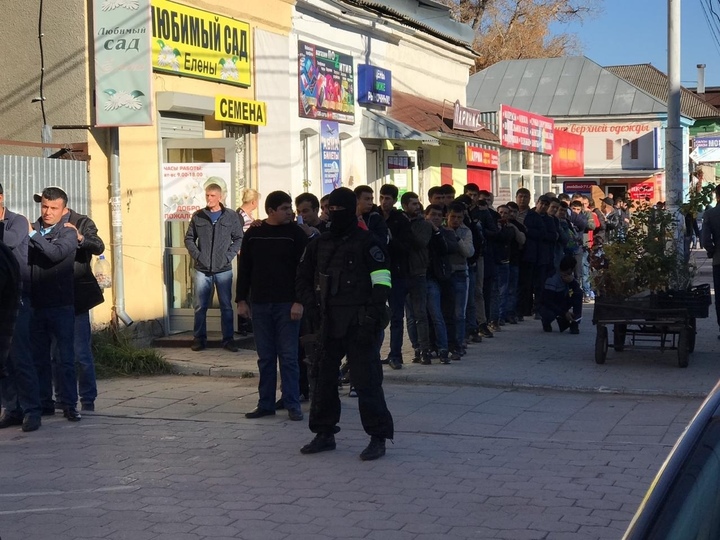
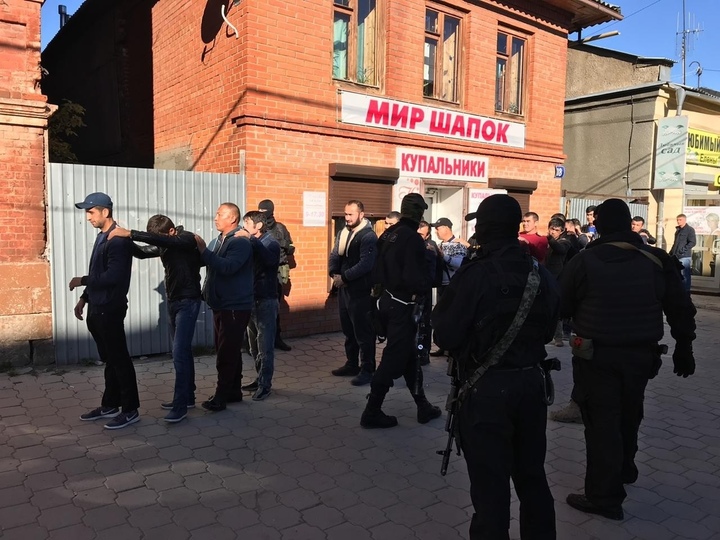
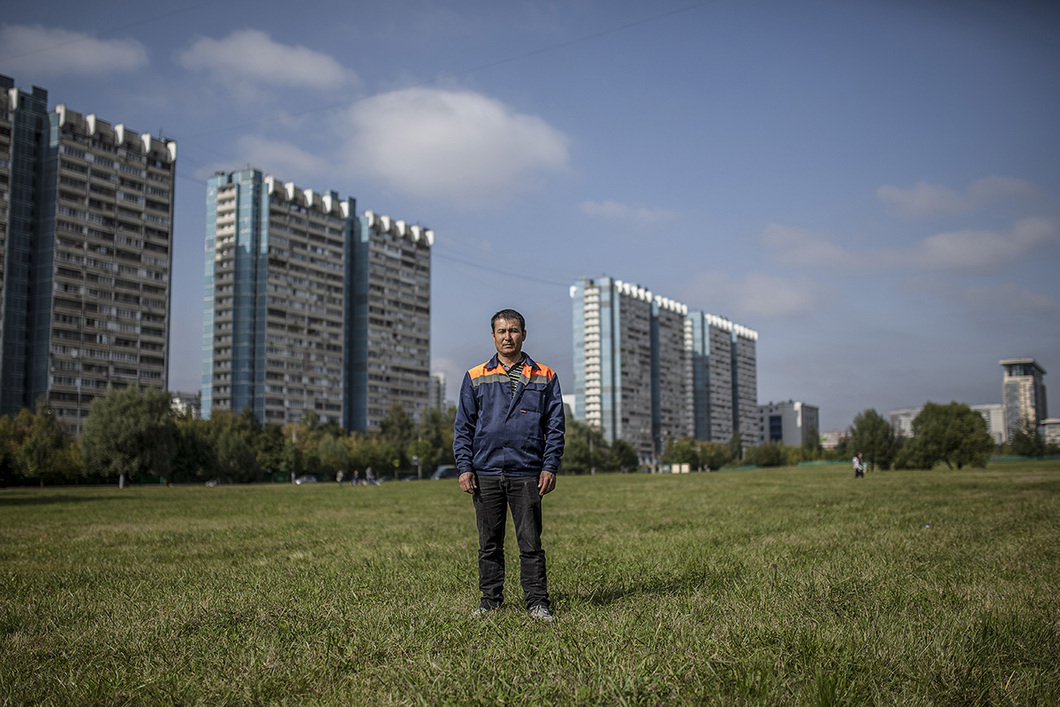
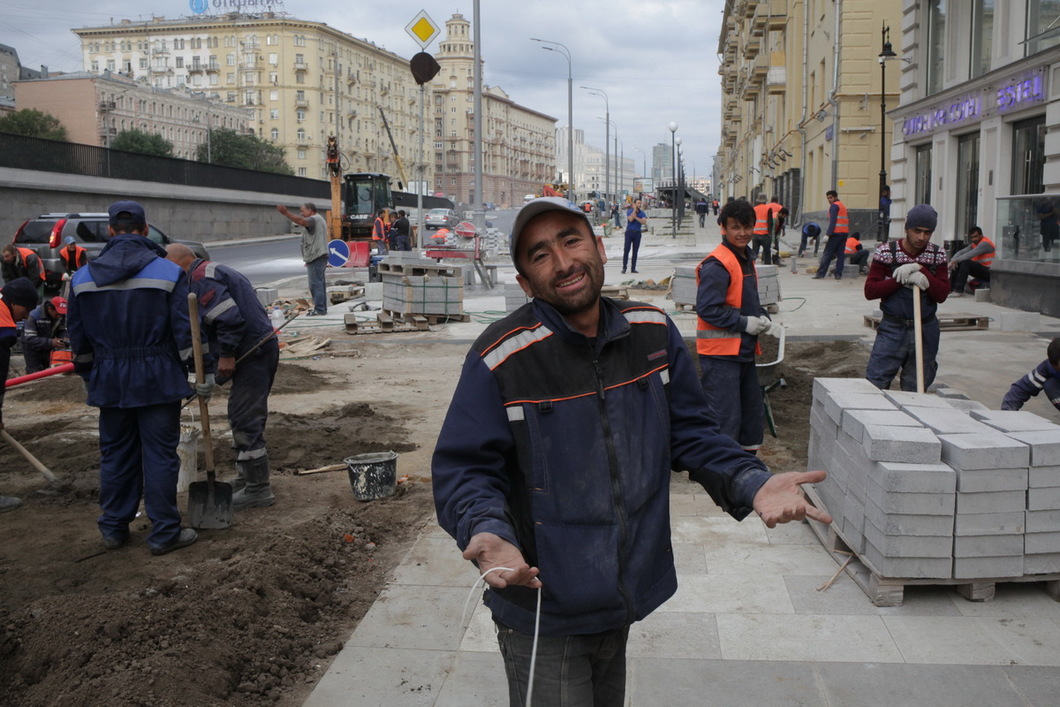
 Photo by Yuri Kozyrev for the project Muscovites. Courtesy of Novaya Gazeta
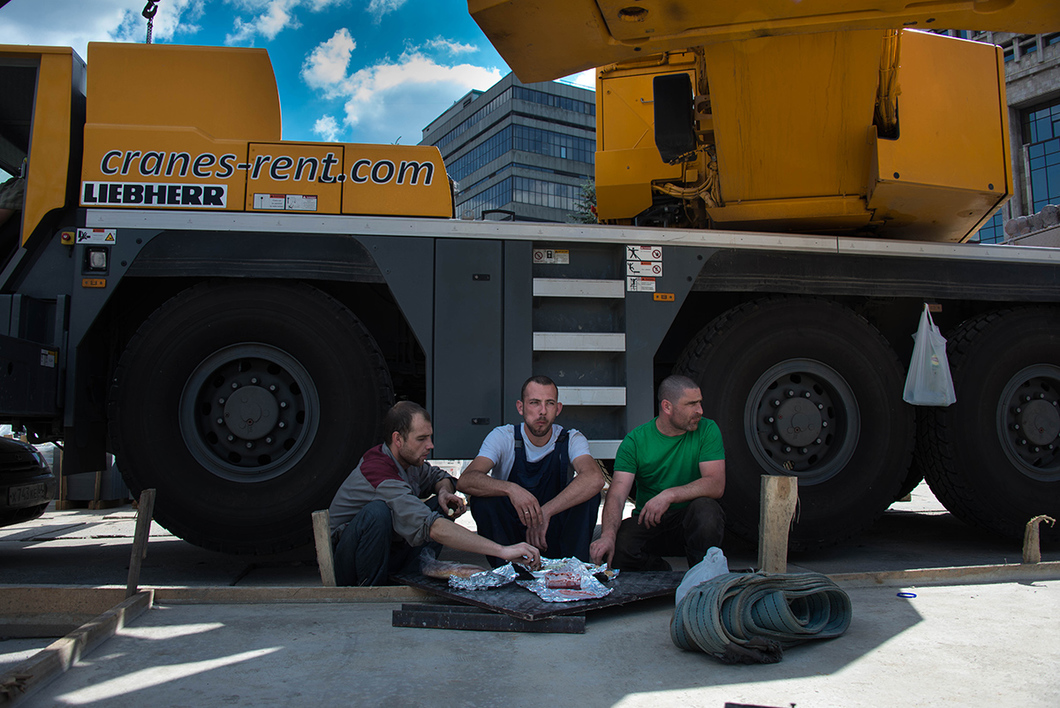
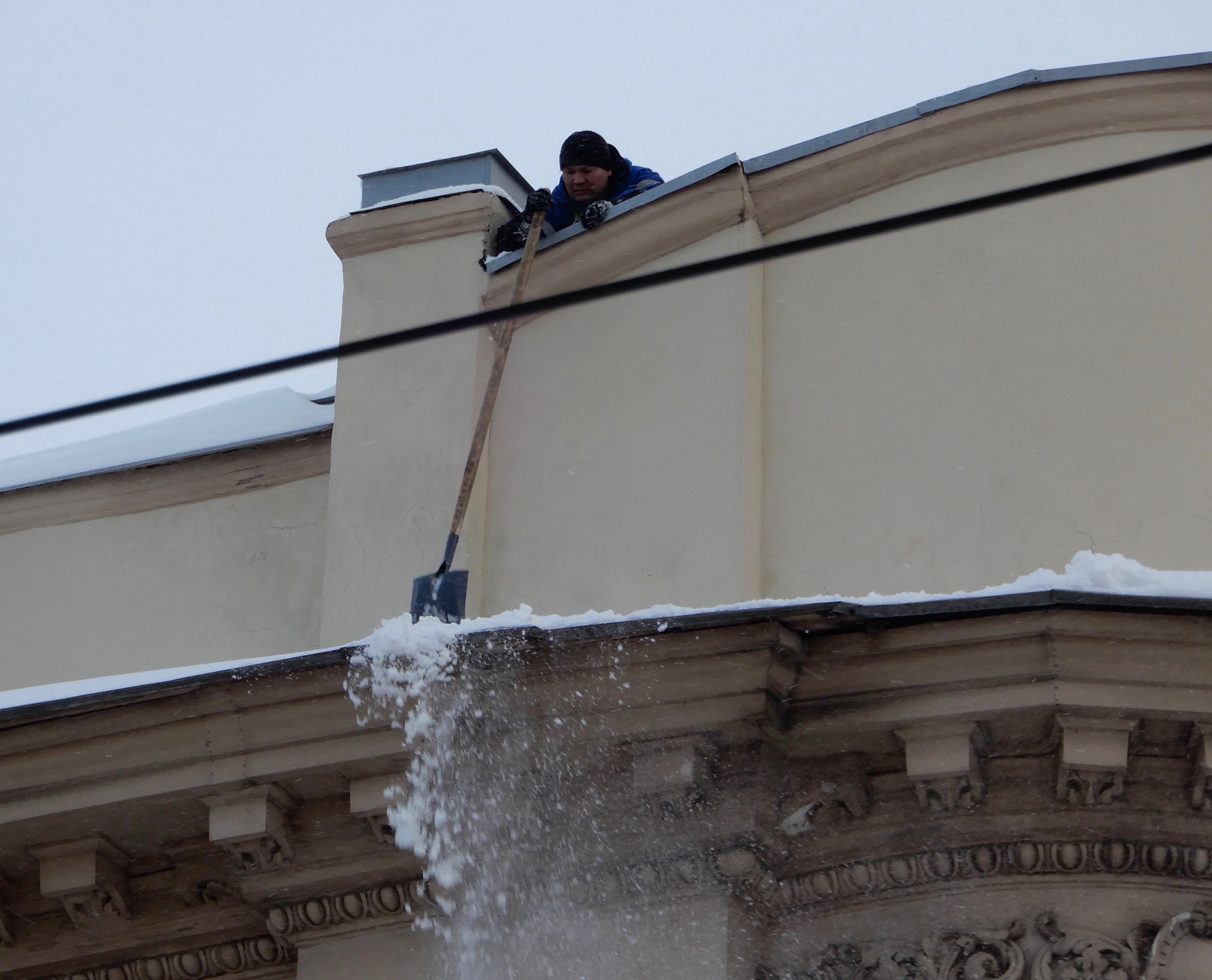 To give only one of a thousand examples, without Central Asian migrant workers, there would be almost no one left to do the heavy and, sometimes, dangerous work of clearing freshly fallen snow from rooftops and pavements during the winter. February 5, 2018, Petersburg. Photo by the Russian Reader