The Network Case in Context

Scenes from the reading of the verdict in the Network trial in Penza on February 10, 2020. Filmed by Vlad Dokshin, edited by Alexander Lavrenov. Courtesy of Novaya Gazeta

Vladimir Akimenkov
Facebook
February 10, 2020

Today’s verdict in Penza was terribly inhumane, exorbitantly vicious, and so on, of course. The Putin regime handed out humongous sentences to members of the anti-authoritarian scene, punishing them for exercising their right to be themselves. Anarchists and non-official antifascists were severely and cruelly punished by the dictatorial regime—acting through the FSB and a kangaroo court—for their DIY activities, for making connections outside the official, formalized world, for dissenting, for rejecting all hierarchies. These political prisoners have been sent to the camps for many years, and it will take an enormous effort to keep them alive, if they are sent to the north, to keep them healthy and sane, and to get them released early. I wish them and their relatives and friends all the strength in the world.

Unfortunately, many people have reacted to the verdict in the Network Case as if it were utterly unprecedented, as if the bloodbath in Chechnya, and the torture and savage sentences meted out to defendants in other “terrorist” cases had never happened. It as if, even recently, their own government had not committed numerous crimes against the people of Ukraine and Syria, against prisoners in camps and other “others,” against National Bolshevik party activists and a range of other movements, against young radicals and people who professed the “wrong” religion, and on and on and on.  People, including political activists, have been surprised by the torture of the defendants, the rigged trial, and the harsh sentences in Penza, as if they lived in a happy, prosperous society, not a totally toxic, brazen empire whose security forces are the heirs of a centuries-long tradition of butchery and fanatical cruelty.

You are not supposed to say out loud what I am about to write, but if the young men had attacked government offices, there would probably have been no national and international solidarity campaign on behalf of these political prisoners. Or they would simply have been tortured to death or subjected to extrajudicial executions. If the Networkers had gone to jail for direct actions, a good number of Russian “anarchists” and “antifascists” would have disowned them, stigmatized them, urged others not to help them, and denounced them to western socialists. This was what really happened to the Underground Anarchists a hundred years ago: they were condemned by their “allies,” who wanted to go legal and curried favor with the Red despots.  The same thing has happened in our time: there were anarchists who hated on the young Belarusians sentenced to seven years in prison for setting fire to the KGB office in Bobruisk, the political refugees in the Khimki Forest case, the persecuted activists of the Popular Self-Defense, and Mikhail Zhlobitsky. Or, for example, some of the people in the ABTO (Autonomous Combat Terrorist Organization) case, who were sent down for many years for arson attacks: they were tortured and accused of “terrorism,” and we had to work hard to scrape away the mud tossed at them by the state and “progressive” society. Oddly enough, the attitude of “thinking people” to “incorrect” political prisoners is matched by the Russian government’s refusal to exonerate Fanny Kaplan or the revolutionaries who blew up the Bolshevik Party city committee office on Leontievsky Lane in Moscow on September 25, 1919. (After the bloodshed in Moscow in 1993, however, Yeltsin made the populist move of exonerating the people involved in the Kronstadt Rebellion.)

One of the places we should look for the roots of the savage trial of the Penza prisoners is the disgusting newspeak that people in the RF have been taught—”the president’s orders have not been implemented,” “the government has sent a signal,” “the annexation of Crimea,” “the conflict in Donbass,” “the clash in the Kerch Strait,” “s/he claims s/he was tortured,” “s/he claims the evidence was planted,” “the terrorists of the People’s Will,” “Chechen terrorists,” “the Russophobe Stomakhin,” “the neo-Nazi Astashin,” “the guerrilla band in the Maritime Territory,” “the terrorist attack in Arkhangelsk,” and so on.

Various people, including people from the anarchist scene, have written that the Network Case has shattered them and the people they know. If this is so, it is even worse than the outrageous criminal case itself. Yes, I am a living person, too, and yes, I find it very hard myself. But we cannot let the circumstances bend and break us: this is exactly what they want. This is especially the case if you are a consistent foe of systematic oppression, if you are an anarchist. Really, people, what would you do if the regime launched a truly massive crackdown on dissenters of the kind we have seen in the past, from tsarist Russia to Erdogan’s Turkey, from America at the turn of the nineteenth and twentieth centuries to the Iran of the ayatollahs? However, a massive crackdown would entail having a mass liberation movement, something that does not exist in today’s Russia. By the way, it would appear that our half-strangled semi-free media have been doing an excellent job of spreading fear among the atomized masses by regaling them with stories of the state’s repressive policies, of its crimes and nefarious undertakings, instead of using the news to instill people with righteous anger.

We can assume that the brutal verdict in the Network Case and other instances of rough justice on the part of the state will have direct consequences for the Kremlin both at home and abroad. Generally speaking, evil is not eternal. Over time, people will be able to overcome their disunity, believe in themselves, and finally destroy the thousand-year-old kingdom of oppression. “The jailed will sprout up as bayonets.”

politzeki1“Russia’s political prisoners: the jailed will sprout up as bayonets.” A banner hung over Nevsky Prospect in Petersburg by the Pyotr Alexeyev Resistance Movement (DSPA) in August 2012. Photo courtesy of Zaks.ru

♦♦♦♦♦♦♦♦♦♦♦♦♦♦♦♦

Elena Zaharova
Facebook
February 10, 2020

I don’t understand.

You can throw a brick at me, you can ban me, you can do what you like, but I don’t get you. Why this sudden mass fainting spell? When the authorities started abducting, murdering, and imprisoning the Crimean Tatars in 2014, you didn’t notice. Okay, you couldn’t care less about Crimea and Ukraine. The authorities have long been imprisoning members of Hizb ut-Tahrir in Kazan and Bashkortostan, but there’s the rub—we defend Jehovah’s Witnesses, not Hizbites. And the authorities have been sentencing the Crimean Tatars and the Hizbites to ten years, twenty years, twenty-two years in prison. But you haven’t heard about that. And suddenly today you say, “Oh the horror!!! It’s fascism!!!”

It’s the same with the Constitution. The authorities long ago trampled it into the dust, killing it off with Federal Law No. 54 [on “authorization” for  demonstrations and public rallies] and giving us the heave-ho. No one noticed. For the last couple of weeks, however, everyone has been calling on people to defend the Constitution—that is, to defend what it is written in a booklet that everyone was too lazy to read before.

Need I mention the wars no one has noticed yet?

Only don’t remind me about the dozens of people who have been picketing outside the presidential administration building in Moscow for two years running. I have nothing but praise for them, but they are the exception.

Vladimir Akimenkov was one of the defendants in the Bolotnaya Square Case and currently raises money for Russian political prisoners and their families. Elena Zaharova is an anti-war and civil rights activist. Translated by the Russian Reader

School Daze

olimpiada_po_himii(21)Moscow schoolchildren were smart enough to win the All-Russian Chemistry Olympiad in 2017, but the Moscow police department thinks they are not smart enough to know and speak their own minds when it comes to politics. Photo courtesy of Mos.ru, the official website of the Moscow mayor’s office
Policewoman Tells Moscow Schoolchildren “You Are Kaput” and Threatens Criminal Charges If They Attend Protest Rallies
Mediazona
September 6, 2019

​On condition of anonymity, a pupil at a school in Moscow has told Mediazona that today, during a lesson, a woman in a police uniform who identified herself as an inspector for minors came to his class. She threatened the schoolchildren with criminal charges if they attended protest rallies and said they would be unable to go to university.

Our source recorded the policewoman’s monologue on his telephone.

“As you know, protest rallies have been going on here in Moscow. People who attend them face administrative charges for this and then criminal charges. When people say they just happened to be in the same place, it makes no impression on me. I just put them on the watch list, and they get visits not only from beat cops but also from detectives,” she says at the beginning of her speech.

The policewoman then says she plans to put children on the watch list without bothering to figure out what happened.

“I do not care whether you there or not there, whether you went to a rally or were on a ‘stroll,’ whether you were just going to the toilet or not. I am going to put you on the watch list and that is that: you are kaput,” she says.

On a second recording, made in a parallel class at the same school, the policewoman goes into more detail about the dangers of being placed on the watch list of the police’s commission for the affairs of minors.

“When you are put on the watch list you can forget about your future and your plans for the future because you will not be able to get into any university. I am not talking about not being able to buy cigarettes or [inaudible] on a park bench. This is really serious. [. . .] I think your parents could also have a rough time at work. And basically, it is no fun being on the watch list, something everyone finds out later. Because we alert everyone that their employee’s child has been put on the watch list for this reason and that,” she says.

The school’s deputy headmaster then addresses the pupils.

“The main thing you have to understand is that the people who try to get you involved in this are just manipulating you. They could not care less about your civic stance. You are just numbers to them. They count you up and say that a hundred people, a thousand people came out for the rally. During the war, people like this were called ‘cannon fodder,'” he says.

“Remember that every so-called stroll in quotation marks—because, unfortunately, all children say they were strolling there—can bounce back on you in the sense that your entire educational trajectory and all your plans can be ruined very bitterly. We just worked together to try and save a pupil in the eleventh form after this situation because he was planning to go to a higher education institution connected with the law enforcement authorities. A lawyer was hired to defend him and he managed to get the charges dropped because the kid really had participated in so many academic competitions that it played a decisive role. But I would not wish what he went through on anyone. So don’t do it. Be smart and realize that the money they [inaudible] will later turn into tears of blood shed by your parents in the form of heavy fines,” he says.

According to our anonymous source, the preventive talks took place in the ninth and tenth forms at his school. He speculated they had probably taken place in other forms, too.

Translated by the Russian Reader

Petersburg: Russia’s Window on the West

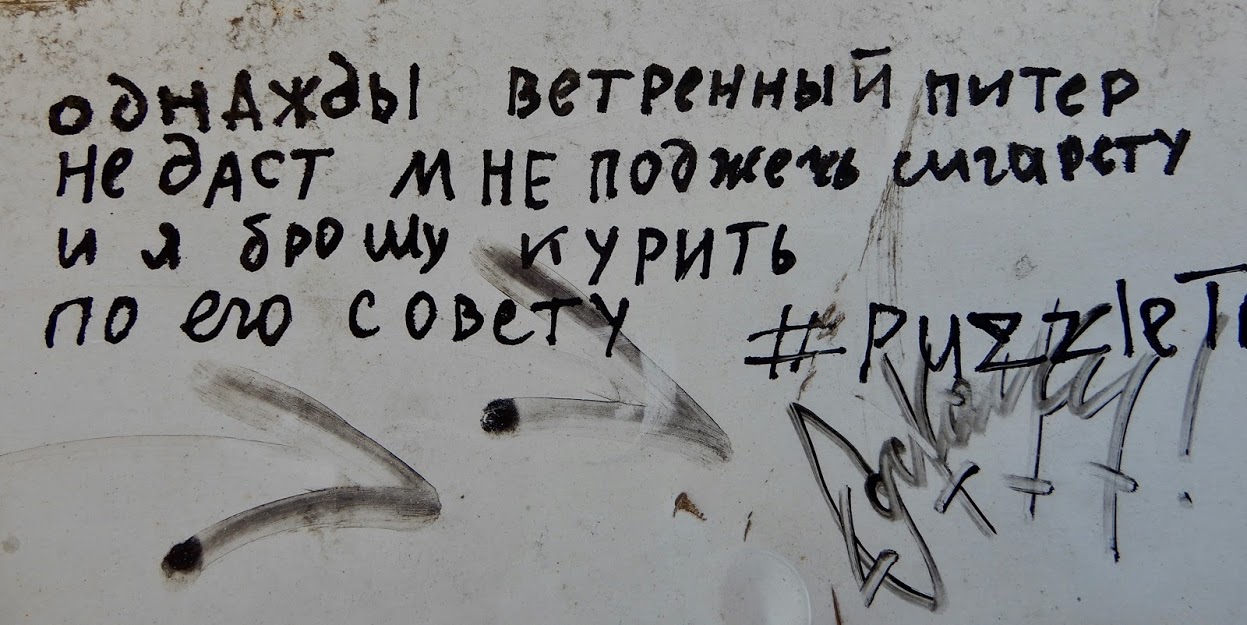
windy petersburg“One day windy Petersburg won’t let me light a cigarette and I’ll give up smoking on its advice.” Graffiti, Petersburg, July 19, 2018.  Photo by the Russian Reader
Rotunda
June 17, 2019

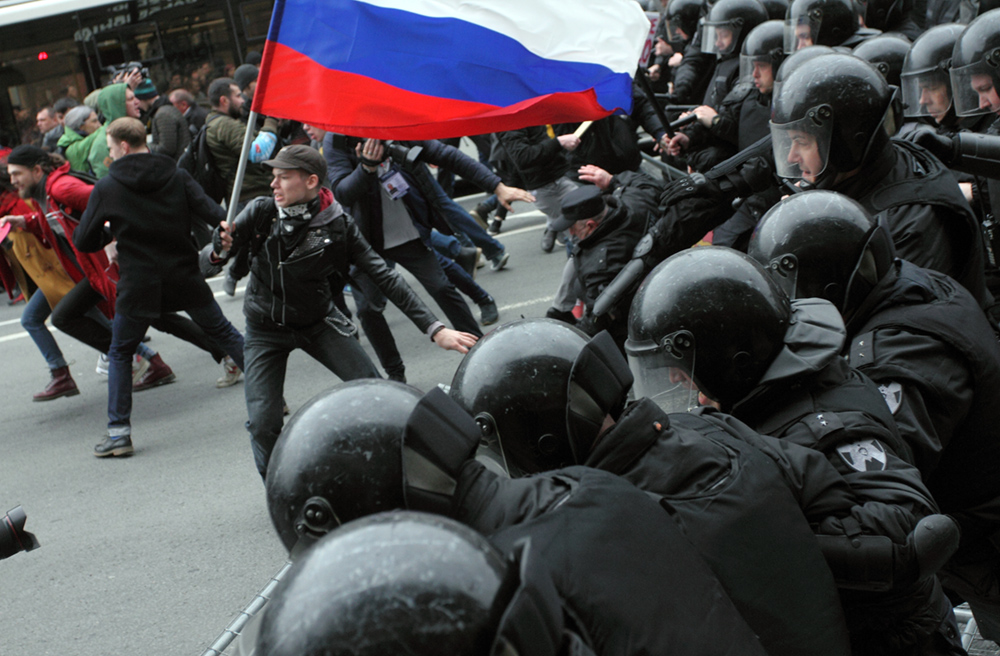
While Moscow Mayor Sergei Sobyanin and the Kremlin were trying to spearhead protests and organize their own rally in support of [the briefly arrested investigative journalist] Ivan Golunov, Petersburg’s acting governor Alexander Beglov missed the political bandwagon once again. Today, during a session of the governor’s so-called inner cabinet at the Smolny, he was told by his underlings the Vesna (Spring) Movement wanted to hold a rally against the persecution of journalists on June 23. Beglov ordered city officials to reach out to the organizers and move the rally to another date since, otherwise, it “would ruin the celebration for school leavers.”

When Beglov gave this order, he was likely unaware city officials had already taken care of the kids. The Smolny turned down Vesna’s request to approve their rally by making up literally a million excuses. For example, a source in the Smolny reported a military band would be playing on Lenin Square (one of the city’s specially designated so-called Hyde Parks, where, theoretically, protesters do not need the city’s go-ahead to hold rallies) on June 23. It also transpired that urgent repairs of heating mains, buildings, pedestrian crossings, etc., were underway at all the other venues in the city center where protest rallies could be held.

Rotunda (Rotonda) is a Telegram channel, covering city politics in Petersburg and written by reporters Maria Karpenko and Ksenia Klochkova. Translated by the Russian Reader

Suing the Opposition into Oblivion

The Lash and the Pocketbook: Petersburg Tests New Scheme for Punishing Opposition
Sergei Yeremeyev
Zaks.ru
December 14, 2018

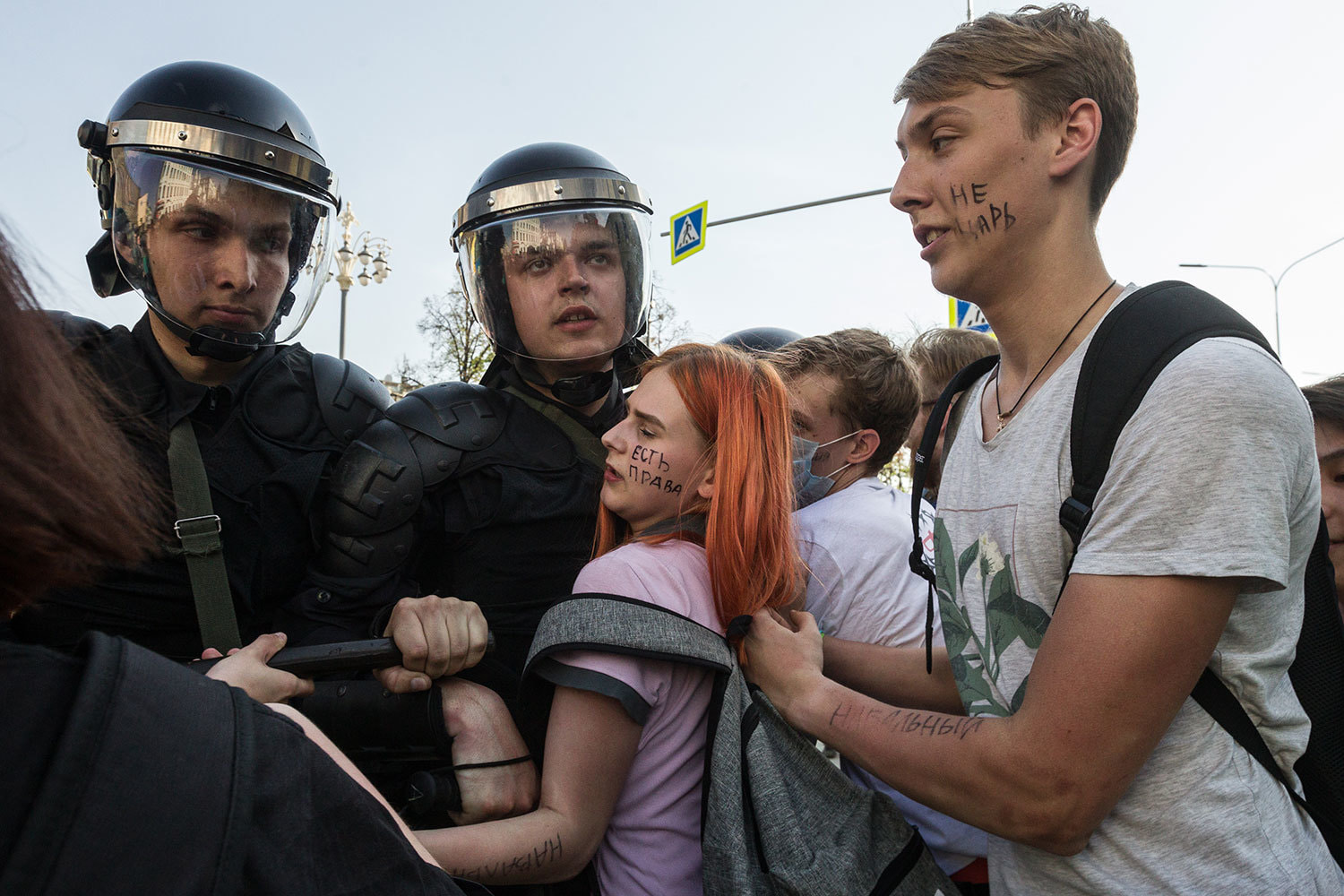
The prosecutor’s office has estimated that two Petersburg parks sustained 10.9 million rubles [approx. 144,000 euros] in damage during the He’s Not Our Tsar protest, which took place on May 5, 2018, in Petersburg [and other Russian cities]. Two people, Denis Mikhailov and Bogdan Livtin, will be held responsible for all the protesters, police officers, and ordinary Petersburgers who walked on the lawns that day in the vicinity of Palace Square. Law enforcement agencies have identified the two men as organizers of the protest rally.

IMG_5092.JPG (349 KB)

Saving the Grass from Provocateurs
Suing for damage to municipal property is the Russian state’s new know-how when it comes to intimidating the opposition. Like certain other innovations, for example, repeated arrests for involvement in the same protest rally, it is being tried out on Alexei Navalny’s supporters.

The authorities decided to start big. The prosecutor’s office has estimated the city suffered nearly 11 million rubles in damage from the He’s Not Our Tsar rally. According to members of the Navalny Team in Petersburg, the 300-page complaint claims opposition protesters damaged the greenery in the Alexander Garden and the garden next to the Winter Palace. Allegedly, they trampled the lawns, flower beds, and roses, and damaged the dogwood and lilac bushes.

The complaint states the cost of restoring the vegetation in the two green spaces, as provided by the city’s municipal amenities committee. According to the committee, it cost 3,651,000 rubles [approx. 48,000 euros] to repair the damage incurred by the May 5 rally.

The prosecutor’s office multiplied this amount by three, citing a municipal regulation on the amount of compensation to be paid when greenery has to be replaced. The regulation states the amount of damage caused to green spaces protected by the city’s Committee on the Use and Preservation of Landmarks (KGIOP) must be multiplied by a factor of three.

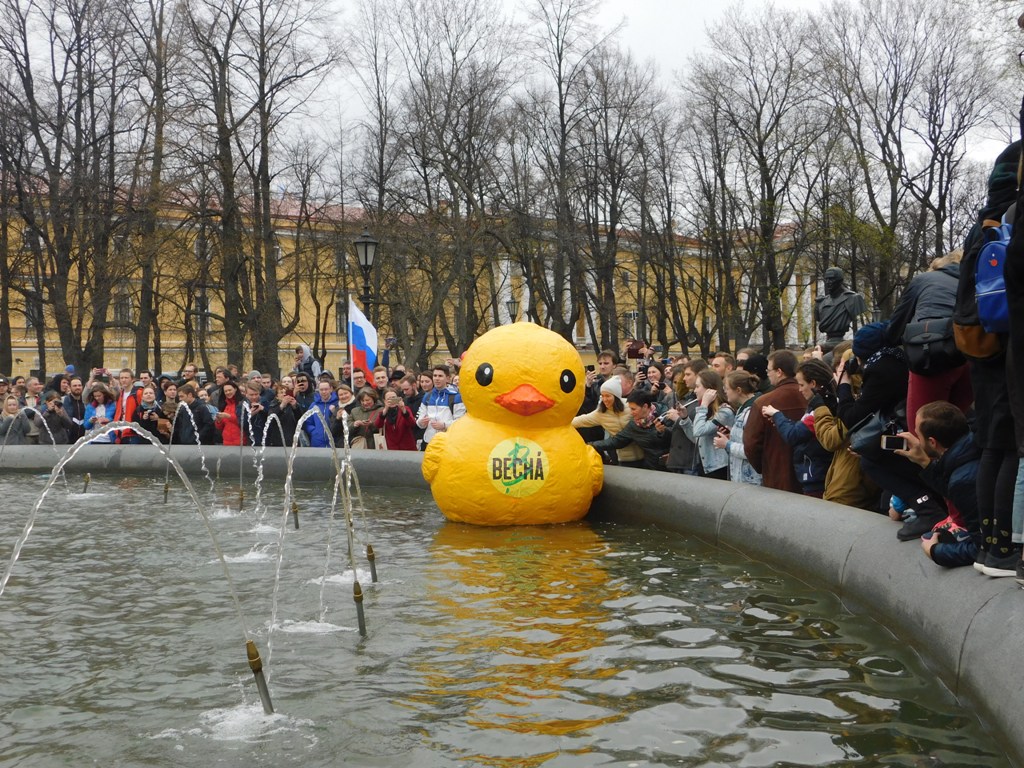
DSCN0254.jpg (303 KB)A giant rubber duck emblazoned with the logo of the Vesna (“Spring”) Movement floats in a fountain in the Alexander Garden on May 5, 2018.
Ivan Pavlov, lawyer and head of Team 29, a group of civil rights lawyers, fears the lawsuit against Litvin and Mikhailov is only the first of similar penalties.

“I am concerned by the direction the prosecutor’s office has taken. This would set a very dangerous precedent. Precedents are usually tried out in other regions of the country, but this time they are starting with Petersburg. Fines are one thing, but civil liability is a whole new level of impacting people’s desire to protest,” Pavlov told Zaks.ru.

Leonid Volkov, project manager at the Anti-Corruption Foundation (FBK), argues that if you follow the Petersburg prosecutor’s thinking to its logical conclusion, you could also punish the organizers of authorized rallies.

“If they tell us that the rally organizer should be punished for trampling the law rather than the person who trampled the lawn, it makes no difference whether the rally was authorized or not, right? Let’s imagine we have organized an authorized rally. The prosecutor shows up and tells us organizers he is suing us for a billion rubles. It would sound completely insane,” Volkov said.

Downtown Petersburg is often used as a venue for large-scale events, including official celebrations. For example, this past summer, the Smolny reported that, during the annual Crimson Sails celebration for school leavers, when young Petersburgers and out-of-towners party all night long, approximately 600 cubic meters of rubbish were removed from the downtown area. It is unknown whether the city inspected the condition of its bushes after the school leavers’ party.

The New Governor
Litvin, federal coordinator and press secretary for the Vesna Movement,  actually applied to the Smolny for permission to hold the May 5 rally. He proposed a march down Zagorodny Prospect, following by a rally on Pioneer Square. The city’s law and order committee found a reason to turn down his application, just like the other applications submitted by Navalny supporters. The city told the opposition to hold its rally in Udelny Park, a large green space in the north of the city that looks more like a forest. Insulted by this suggestion, Navalny supporters announced the rally would take place on Palace Square.

Three months later, on August 2, the October District Court fined Litvin 20,000 rubles for organizing the unauthorized He’s Not Our Tsar protest rally per Article 20.2 Part 1 of the Administrative Offense Code. Petersburg City Court subsequently overturned the lower court’s ruling. The case will be reheard in the near future.

Mikhailov, the Navalny Team’s Petersburg coordinator, has already been punished twice for the May protest. First, the Smolny District Court sentenced him to 25 days in jail, and then the October District Court fined him 300,000 rubles [approx. 4,000 euros], a record fine for opposition political activism in Petersburg. The fact that Mikhailov was on the air on the internet channel Navalny Live during the event, answering the questions of his comrades in Moscow, was considered proof he organized the protest.

“I was covering the event, because the major national media were not there. At such a huge event! In Petersburg, 10,000 people marched on the Nevsky,” replied Mikhailov.

He now recalls an interesting conversation he had on the sidelines of one of his court hearings.

“There was a certain law enforcement officer at one of my court hearings. He told me the prosecutor’s office was planning to file suit, because the damages incurred by the city were too large. Nothing came of it. Judging by the complaint, this past summer, they really did carry out inspections and corresponded on the matter, but then it fizzled out. But in November, when Alexander Beglov was appointed acting governor [of Petersburg], the officials involved resumed their correspondence and the lawsuit was drawn up. Putting it simply, Beglov came to power and gave them the green light,” Mikhailov told Zaks.ru.

Maxim Reznik, a member of the St. Petersburg Legislative Assembly, has also noticed the new governor’s shadow looming over the lawsuit. Reznik argues the Smolny is using such cases to intimidate the opposition in the run-up to the 2019 elections.

“They strike us with the lash, and they hit us in our pocketbooks. It’s directly connected with the new governor. Because he is either involved in what is happening or he has no control of the situation. Why he would want that? The regime is showing us its teeth. It doesn’t want there to be any protests whatsoever. [Beglov] needs things to be quiet so he can bring happiness to the city, while anyone who intends to agitate the people should know their place,” said Reznik.

Supernatural Stupidity
Maybe ten thousand people did not attend the May 5 protest, but there were clearly more than two thousand people on the streets, as was claimed by the Interior Ministry’s local office. Originally, no one had planned to march on Nevsky Prospect. Since a celebration for bikers and rehearsals for the May 9 Victory Day military parade were taking place on Palace Square, the protest rally was hastily moved across the street to the Alexander Garden. When the Alexander Garden was teeming with people who wanted to express their displeasure at the policies of the old-new president, Vladimir Putin, voices in the crowd called for the rally to move to the Nevsky, and people spontaneously rushed into the city’s main street.

The Navalny Team did not immediately join the march. Initially, the rally’s Telegram channel broadcast requests not to heed people urging protesters to leave the Alexander Garden. Volunteers sporting “20!8” pins made the same request in person, until they realized there was no holding people back. The crowd stayed on the sidewalk for awhile, but when it encountered a segment of the Nevsky closed to traffic for repairs, it went onto the roadway. At approximately the same time, Mikhailov, who was in the midst of the crowd, went on the air on Navalny Live.

The first arrests occurred at the corner of Marat Street and Nevsky, where a police barrier awaited the demonstrators. Seeing what happened, the bulk of the crowd turned around and headed in the opposite direction, walking down the Nevsky and parallel streets. In none of the court hearings in the cases of Litvin and Mikhailov was any evidence presented that suggested either of the men had encouraged the demonstrators to return to Palace Square.

Most of the arrests took place outside the Hermitage. Police dressed in riot gear gave chase over the lawns to anyone chanting slogans. They caught some of these people, dragging or escorting them to paddy wagons parked on Palace Passage. The proceedings were videotaped and photographed by bloggers and reporters. No one had the time to look where they were walking.

Two men, however, will be held liable for damaging the lawns and other vegetation. One of them, Litvin, never even made it back to the Winter Garden: he was detained near Gostiny Dvor when the demonstrators headed in the opposite direction.

Attorney Arkady Chaplygin call this method of singling out guilty parties a supernatural stupidity.

“The lawsuit makes no sense whatsoever. The Russian Civil Code prohibits seeking monetary compensation for damage from persons who did not cause the damage. The law requires the individual who caused the damage to be identified. This lawsuit is a PR stunt on the part of Governor Beglov meant to intimidate the opposition. It is a stupidity supernatural in its scope,” argued Chaplygin.

The Frunze District Court will try and make sense of the botany of the city’s parks and the prosecutor’s arithmetic after the New Year’s holidays. A preliminary hearing in the case has been scheduled for January 10.

Photos courtesy of Zaks.ru. Translated by the Russian Reader

If a Tree Falls in the Forest, Does It Make a Sound?

RUS-2016-Aerial-SPB-Field_of_Mars
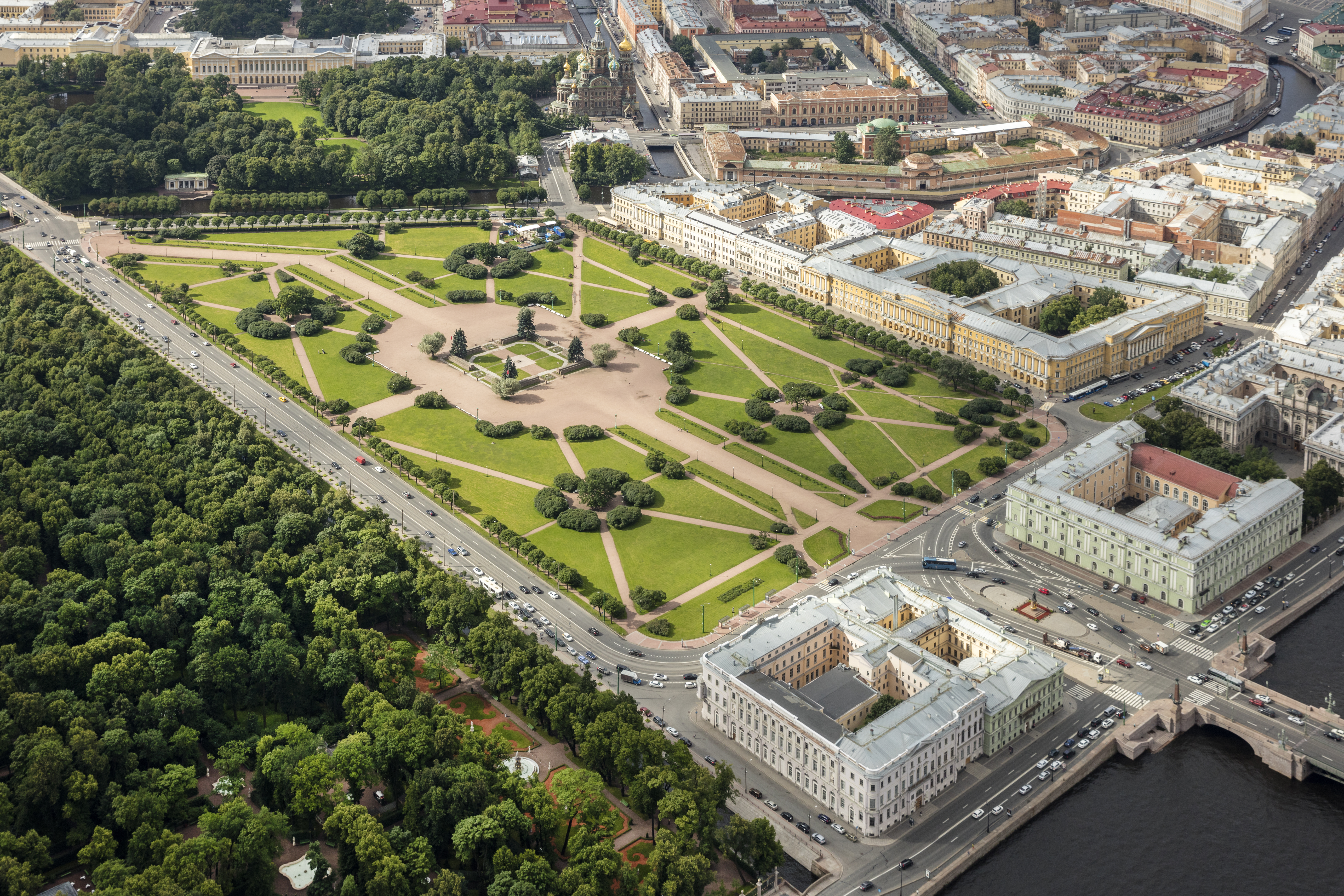
The Field of Mars is in the center of Petersburg, but it is conveniently isolated from well-populated residential neighborhoods and high streets. Unless they are extremely well attended, most political rallies held on the famous former parade grounds and revolutioanry mass burial site go unnoticed by the vast majority of Petersburgers. Photo courtesy of Andrew Shiva and Wikipedia

Up the River: The Smolny Will Expand List of Venues for Political Rallies
Mikhail Shevchuk
Delovoi Peterburg
December 4, 2018

As soon as he took up his duties as acting governor of St. Petersburg, Alexander Beglov announced plans to amend the law on political rallies.

“We need to make changes and introduce order, so there were will be no violations on either side,” he said at a meeting of the Presidential Council for Civil Society and Human Rights in October.

The Smolny has now drafted amendments to the law. The principle of “Hyde Parks,” that is, of specially designated places where Petersburgers can vent their indignation without prior notification of the authorites, remains in force. However, the Smolny has proposed establishing a minimum number of such places, eight in all.

The current law on political rallies does not specify the number of venues. City hall publishes the list of political rally sites in an ordinance. Originally, in 2012, the Field of Mars (or, rather, a small part of it) was designated the city’s “Hyde Park.” Two years later, four more venues were added: Udelny Park, Polyustrovsky Park, Yuzhno-Primorsky Park, and 30th Anniversary of October Gardens. The Field of Mars was struck from the list last year.

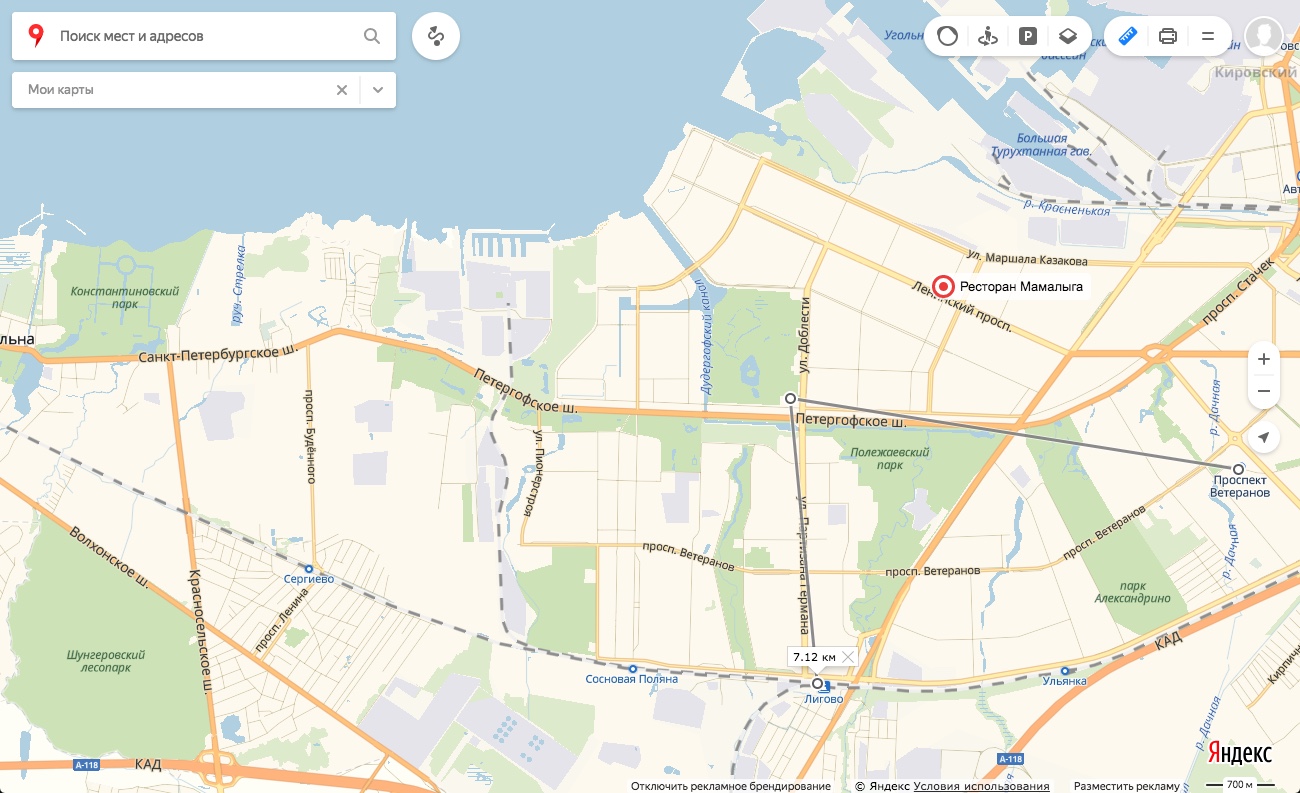
uppYuzhno-Primorsky Park is located in the far southwest of Petersburg. It is four kilometers from the nearest subway station, and three kilometers from the nearest suburban railroad station. Map courtesy of Yandex

Theoretically, it is possible to organize demonstrations in other places, but city hall usually refuses to sanction the rallies under various pretexts, suggesting to organizers they use one of the designated “Hyde Parks.” As a matter of principle, however, the opposition avoids the “Hyde Parks,” which are all situated in the city’s outskirts. Instead, they prefer to assemble at such traditional sites for political rallies as Lenin Square, Pioneer Square and, sometimes, even Palace Square, although they risk fines and forcible dispersal by police.

The maximum number of people who can attend a political rally held without prior notification of the authorities would range from 200 to 500 people under the amended law. As under the old law, State Duma MPs, members of the St. Petersburg Legislative Assembly, and members of the city’s municipal district councils would be able to hold meetings with constituents on the streets.

Officials would now calculate how many people can attend a political rally at a particular venue according to the norm of one person per square meter. Lenin Square and Pioneer Square would thus be able to accommodate rallies attended by as many as 10,000 people. Organizers would also be obliged to inform officials of canceled rallies under the threat of a fine of 5,000 rubles for individuals and 100,000 rubles for legal entities.

“It’s not the number of sites that matters,” said Andrei Pivovarov, leader of the local office of Open Russia. “And no one has ever been fined for going over the maximum number of attendees. One venue would be enough for us, but as long as it is in downtown Petersburg. If the venues are going to be in the outskirts, city hall could give us a dozen such places, but we would try to protest downtown anyway.”

However, Pivovarov said that if the new list included the Field of Mars, Lenin Square, and Pioneer Square, the opposition would be quite satisfied and make use of these venues.

St. Petersburg Legislative Assembly member Maxim Reznik also named the two squares. He said the number of people attending a rally and the convenience of Petersburgers were more important than a particular place. The opposition was always ready for dialogue, he said. However, if the regime made a point of tightening the screws, dissenters, Reznik said, would choose the paddy wagon, that is, they would choose to attend an unauthorized rally rather than cancel it.

Translated by the Russian Reader

Yevgenia Litvinova: October 28, 2018

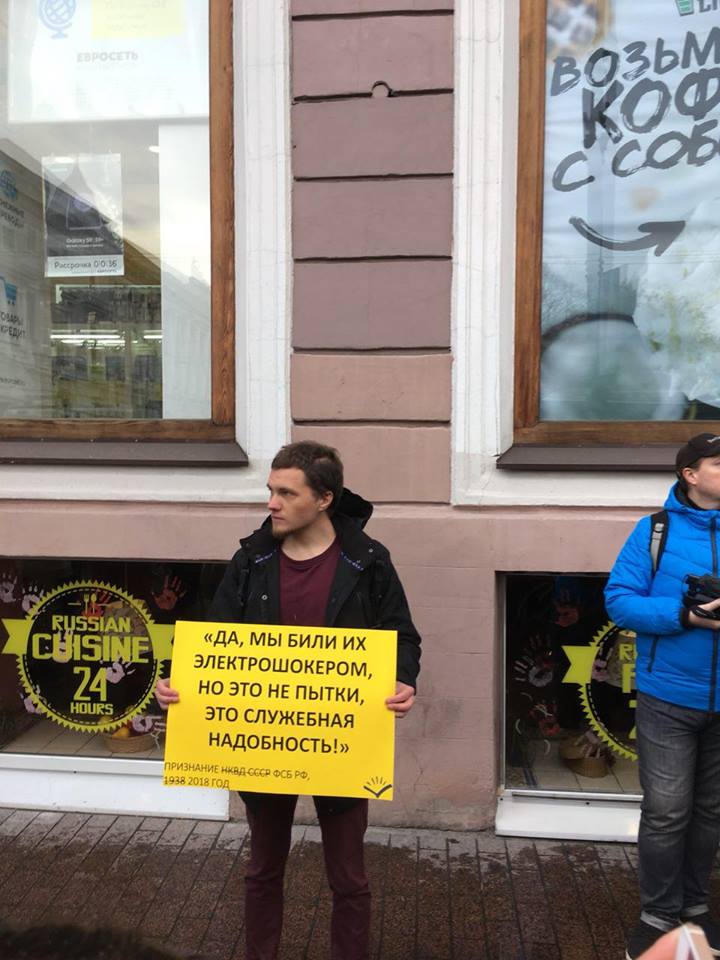
october 28Petersburg democracy activist Pavel Chuprunov, holding a placard that reads, “‘Yes, we tasered them, but it wasn’t torture. We were doing our jobs!’ Admission by the Soviet NKVD Russian FSB, 1938 2018.” Nevsky Prospect, Petersburg, 28 October 2018. Photo by Yevgenia Litvinova
Yevgenia Litvinova
Facebook
October 29, 2018

October 28 was the day chosen for publicly supporting people accused of extremism and locked up in jail, i.e., the suspects in the Network and the New Greatness cases. Petersburgers had no choice but to be involved in this international event, since some of the suspects in the Network case are from Petersburg.

The day before, I had listened to Yekaterina Kosarevskaya and Yana Teplitskaya’s brilliant but very heavy report about the use of torture in the FSB’s St. Petersburg and Leningrad Region Directorate. In particular, the report recounts how the young men accused in the Network case were tortured. All we can do is constantly talk about these people publicly, about what happened to them over the last year (they were arrested nearly a year ago), and what is happening to them now.

The rally in support of the young folks locked up in remand prisons on trumped-up charges was not approved by the authorities, although the organizers—Open Russia, Vesna, and Bessrochka (Endless Protest)—suggested a variety of venues in the downtown area. Everywhere was off limits.

You can protest in Udelny Park, in the far north of Petersburg, that is, in the woods. It’s a great place to have a stroll and get some fresh air, but who would be there to see your protest? The squirrels? This proposal is better than the garbage dump in Novosyolki, which the authorities always used to suggest as an alternative venue, but it’s not a suitable place for a political rally.

All that remained was the only form of political protest that doesn’t require prior approval from the authorities: solo pickets.

The protesters had different placards, but all of them were quite persuasive. They got to the heart of these frame-ups, which crush and maim people in order to earn promotions for the policemen and security services officers who dream them up.

Solo pickets had always been safe in Petersburg, unlike in Moscow, Krasnodar, and so on. That was why many people found them monotonous and boring.

“Oh, solo pickets again,” people would complain.

The plan was to take it in turns to stand holding placards on the corner of Nevsky and Malaya Sadovaya. But the folks from NOD (National Liberation Movement) read announcements for the upcoming protests and got there early. We had to move away from Malaya Sadovaya and closer to the pedestrian underpass to the subway. It’s an uncomfortable, narrow spot.

NOD has been a little sluggish lately. What happened to their weekly vigils? When there’s no money, there’s no NOD. But suddenly they had reappeared, which meant they had been asked to take to the streets by people whose offer you can’t refuse.

Recently, solo pickets have ceased to be “boring,” but there’s no reason for rejoicing. Solo pickets started becoming a staple of news reports around a month ago, when Alexander Beglov was appointed Petersburg’s acting governor. Since then, police have made a habit of detaining people at solo pickets. They make up excuses for their actions on the fly.

I knew this, of course, but I naively counted on logic and common sense winning the day. I compiled and printed out a number of laws proving that I and other “favorites” of Lieutenant Ruslan Sentemov, a senior police inspector in the public order enforcement department of Petersburg’s Central District, had to the right to speak out via solo pickets. I was planning to hand these papers to Sentemov on camera. But I didn’t see him at the rally. I thought he hadn’t come at all. Nor did he see me.

I got lucky. Because what logic had I imagined? What common sense? What laws? What right to hold solo pickets?

Sentemov did see another of his “favorites,” Dmitry Gusev. He pointed at him and said, “Detain him.”

Dmitry was not holding anything at all, much less a placard. He had no plans to be involved in the picketing. But that was that, and now he is detained at a police precinct, like dozens of other people. I counted over thirty detainees. But Alexander Shislov, Petersburg’s human rights ombudsman, writes that around fifty people were detained. Around one hundred people were at the protest.

Several detainees were released without charges, while others were charged with violating Article 20.2 Part 5 of the Administrative Offenses Code, but most of the detainees will spend the night in police stations. They have been charged with violating Article 20.2 Part 2, which is punishable by jail time.*

The detainees were dispersed to different police stations, some of them quite far away. They needed food, water, and toiletries. Police stations usually don’t have any of these things, although they are obliged to provide them if they detain someone for more than three hours.

Over ten people who were present with me at the protest traveled the police stations to check on the detainees. The rest came from the Observers HQ at Open Space. We constantly called and wrote each other, makingsure no one had been left without assistance. I hope that was how it worked out. The detainees should have everything they need for this evening, overnight, and tomorrow morning.

Natalia Voznesenskaya and I had planned to go to the 28th Police Precinct, but all the detainees there had been released.

We went instead to the 7th Precinct. The internet told us it was near the Kirovsky Zavod subway station. We wandered for a long time amidst the nice little houses built after the war, supposedly by German POWs. We arrived at the police station only to find that its number had recently changed. It was no longer the 7th Precinct, but the 31st Precinct.

We went to the real 7th Precinct, on Balkanskaya Street. Elena Grigoryeva, Dmitry Dorokhin, and two other men were detained there. (One of the men had been taken away by ambulance.) Unexpectedly, the 7th Precinct was a decent place. It was no comparison with the 76th and 78th Precincts, in the Central District. The police officers on duty there accepted our food packages and spoke politely with us.

We ran into Alexander Khmelyov at the station. Wielding a power of attorney as a social defender, he had come to see what kind of mattresses and linens had been issued to the detainees. There were no bedbugs. What was more, the police officers brought the detainees supper from a nearby cafe. They were obliged to do it, but their colleagues at other precincts never do it, and detainees usually don’t even get breakfast.

So, now the stomachs of the detainees were full, and they could take the food we had brought with them to court. Court hearings can last eight hours or more, although it happens that fifteen minutes is all the time a judge needs. There is usually no difference. The court’s rulings have been written in advance.

Before leaving the house to go the protest in support of the suspects in the New Greatness and Network cases, I listened to a program on Echo of Moscow about the case of Elena Kerenskaya, sister of Alexander Kerensky, chair of the Provisional Government in 1917. Kerenskaya was executed by the NKVD in Orenburg on February 2, 1938.

I don’t want to blow things out of proportion, but it has become easier and easier to under how the trials of the 1930s happened the way they did.

* Article 20.2 of the Russian Federal Administrative Offenses Code covers “violation[s] of the established procedure for organizing and holding meetings, rallies, demonstrations, marches, and pickets.” Part 2 stipulates punishments for people who organize or hold rallies without notifying the authorities in advance. They can be jailed for up to ten days or fined up to 30,000 rubles (400 euros).

Translated by the Russian Reader

Russia: Great Cops, Wicked People

police vs youthThe Russian Justice Ministry insists there have been no violations by Russian law enforcers at protest rallies, but that complainants broke the law themselves. Photo by Yevgeny Razumny. Courtesy of Vedomosti 

Russian Authorities See No Laws Broken in Large-Scale Detentions at Protest Rallies: Justice Ministry Explains to Strasbourg That Detainees Broke the Law Themselves
Anastasia Kornya
Vedomosti
October 8, 2018

Last week, the Russian Justice Ministry’s press reported the ministry had sent a legal opinion to the European Court of Human Rights (ECHR), explaining the position of the Russian authorities on the merits of twenty formal complaints made to the court concerning administrative convictions handed down by Russian courts for alleged violations of the law on protest rallies during public events in Moscow, St. Petersburg, and Barnaul in 2016–2017.

The Justice Ministry’s opinion is encapsulated in the following argument: “The termination of public events held by the complainants and their prosecution under the law do not violate international norms and [were] aimed at maintaining public order, security, and the rights of other persons. The corresponding charges of administrative offenses were ajudicated by [Russian] courts in full compliance with the requirements of procedural laws, and in compliance with the adversarial principle and the equality of arms.”

The Russian Justice Ministry insists there have been no violations by Russian law enforcers at protest rallies, but that complainants broke the law themselves.

“Although they had the opportunity to hold their events in compliance with the law, the complainants knowingly neglected their obligation to coordinate them with the proper authorities,” the Justice Ministry argued.

The Justice Ministry reminded the court that, in the past, the ECHR has acknowledged the right of states to establish requirements for the organization and conduct of public events, as well as the right to impose penalties on persons who do not comply with these demands. The Justice Ministry referred to the ECHR’s rulings in Berladir and Others v. Russia (10 July 2012) and Éva Molnár v. Hungary (7 October 2008).

Last year, complaints to the ECHR regarding violations of the freedom of assembly were second in popularity only to complaints about conditions of detention, and they may come in first place this year. Since the beginning of 2018, the ECHR has fast-tracked its consideration of these cases in keeping with established practice.

Alexei Glukhov, head of the legal service Defending Protest (Apologiya protesta), which specializes in helping people detained at public events, says that, despite fast tracking, the Russian authorities respond at length to each complaint. (In the cases that Defending Protest has handled, there have been over fifty official communiqués alone.) The responses are almost always the same, however. There were no violations of constitutional rights, the Russian authorities explain: law enforcement agencies acted according to the letter of the law, while it was the demonstrators themselves who violated it, even if the authorities sent them deep into the woods to hold their protest rally.

Glukhov argues the Justice Ministry’s current legal opinion is intended for internal use. Law enforcers and ordinary Russians alike should understand it is pointless to invoke Article 11 of the European Convention, which protects the right to freedom of assembly and association, including the right to form trade unions.

Actually, the Justice Ministry is in a pickle, argues civil rights attorney Dmitry Agranovsky. It must export the image of a democratic country abroad, but this correlates poorly with de facto feudalism at home, where all efforts have been made to reduce the numbers of protests and protesters, says Agranovsky. According to him, not only administrative but also criminal punishments are clearly out of synch with the violations that occur and are meant to have a chilling effect on the populace.

Translated by the Russian Reader

Andrey Loshak: What the Krasnodar Police Did to Lawyer Mikhail Benyash

mikhail benyahsMikhail Benyash. Courtesy of Andrey Loshak’s Facebook page
Andrey Loshak
Facebook
September 24, 2018

Achtung! Uwaga! Attention! Yet another outburst of lawlessness is underway in Krasnodar, an experimental region of Russia where the authorities test ever more repressive techniques and see whether they can get away with them or not. When I was making a film about volunteers in Navalny’s presidential campaign, it was Krasnodar where I encountered the gnarliest fucked-up shit. Provocateurs in hoods and masks attacked young people attending an “unauthorized” protest rally, and the cops, who stood nearby, claimed not to see anybody in masks attacking anyone. It was really frightening. The provocateurs assaulted the activists and assisted the cops in loading them into paddy wagons. I was also detained then for the first time in my life, despite my attempts to prove I was a reporter. I was quickly released, however. They were still afraid of causing a stir in the Moscow liberal media.

Afterwards, my cameraman and I stood outside the gates of the police station until one in the morning filming the activists, who were mainly really young men and woman, as they were let go after they were formally charged and written up. The whole time this was happening, the lawyer Mikhail Benyash was trying to get into the police station, but the police kept him out. He stood by the gate, writing down the names and numbers of the released detainees. He sadly reported that, due to the court hearings of the detainees, whom he would be defending, he would not be making it back to his hometown of Gelendzhik anytime soon, although there he was in the midst of civil court cases involving hoodwinked investors in unbuilt cooperative apartment buildings.

I asked him why he bothered with all of it when no one paid him for his work. His answer stunned me. It transpired he and I had the exact same motives. He also liked the young people who had been detained, and he also saw them as a source of hope. He was the first romantic lawyer I had ever met. (Unfortunately, I did not know Stanislav Markelov personally.) It was no wonder I took a shine to him. Later, in our correspondence, he suggested titling the series The Ugly Swans, after the novel by the Strugatskys, and wrote me a detailed explanation of why I should do it.

Here is an excerpt from his letter.

“These were the kind of young people with whom you spoke on October 7: quite сheerful, cool, and kind. Unspoiled. Clever, a little naive, and free of feigned helplessness. They grew up on the internet, in the chats on VK and Telegram.

“Instead of Tolstoy and Dostoevsky, they imbibed fantasy novels and movies about superheroes, and they fashioned all of it into a model for doing the right thing.

“Instead of Dostoevsky’s subservience, they absorbed the humor of Marvel Comics and a primitive albeit correct sense of right and wrong from movies about Batman, the Flash, and Iron Man. They fire back at priests of all types with quotations from Sheldon Cooper.

“Now I have been watching all these crazy comics serials, but not for entertainment or by way of procrastinating, but in order to understand the young people who grew up on them and so I can speak their language. I’m holding my own for the time being, but the kids are evolving rapidly.”

On September 9, which the Navalny Team had declared a day of protests nationwide, Benyash arrived in Krasnodar as usual to defend activists detained at the march, which, as usual, had not been authorized by the authorities. On the eve of the protest, nearly all Navalny staffers in Krasnodar had been arrested on a ridiculous pretext: all of them were jailed for, allegedly, disobeying police officers. There was not anything like this preventive crackdown in any other city in Russia.

On the way to Krasnodar, Benyash got a telephone call informing him he was under surveillance by the police. The caller also told him his exact location. Mikhail does not scare easily, so he did not turn around. Once he was in Krasnodar, he headed with a female acquaintance to the police station where the detainees would be taken.

Suddenly, a Mazda stopped next to him. Several brutes in plain clothes jumped out of the car, grabbed Mikhail, and tossed him into their car, where they forcibly confiscated his telephone as he was trying to telephone colleagues. The men beat him, choked him, and pressed his eyes with their fingers.

At the police station, he was thrown to the ground, handcuffed, and dragged to the fourth floor. In Krasnodar, experienced opposition activists know the fourth floor is the location of the CID and that if you are taken there, it means the police will put on the pressure and try and beat a confession out of you.

All of these events were witnessed by Mikhail’s female companion, whom the cops also brought to the station.

On the fourth floor, they beat the living daylights out of Benyash. Several blows to his face caused him to fall and hit his head on the corner of a safe.

Meanwhile, the news got out that Benyash had been detained. Lawyer Alexei Avanesyan tried to get into the station to see him, but the police would not let him in. At some point, the cops donned helmets and armor before announcing the station was going into lockdown mode, which happens when a police state is threatened by an armed attack from the outside. In fact, the police in Krasnodar go into lockdown mode every time they don’t want to let lawyers into the station to consult with detained opposition activists. When Avanesyan learned Benyash had been beaten, he summoned an ambulance crew to examine Benyash, who recorded and certified his injuries. By ten p.m., i.e., eight hours after Benyash had been detained, the lockdown was called off and Avanesyan was let into the police station.

There Avanesyan encounted Deputy Chief Papanov, who lied, telling Avanesyan Benyash was not at the station. Avanesyan is not the shy and retiring type, either. He took advantage of the confusion to make a break for the fourth floor, where he found the beaten Benyash in a room and three field agents huddled over him. Avanesyan was then allowed to consult with the detained lawyer Benyash. The police were trying to frame him on two charges: organizing an unauthorized protest rally and resisting the police!

Avanesyan alerted their colleagues via social media, asking them to come to Banyash’s court hearing. Seven lawyers showed up. Although the hearing was scheduled for nine in the morning, it didn’t kick off until ten in the evening. Apparently, none of the local judges wanted to get dirt on their hands.

The court clerk, who was drunk, didnot want to let the lawyers into the hearing, but she was forced to back off, but ordinary members of the public were not admitted into the courtroom.

Judge Buryenko denied all the motions made by the defense. He did not ask police officers to testify. He did not admit the video recordings into evidence, and he even refused to view them. He did not call Benyash’s companion to testify, although she was standing in the hallway.

Benyash was found guilty on all counts and sentenced to forty hours of community service and fourteen days in jail. Although the lawyer had nothing to do with organizing or running the protest rally, he was given the harshest punishment for his non-involvement in it, despite the fact that the number of detainees in Krasnodar also broke all records: around one hundred protesters were hauled in by the police on September 9.

I quote Mediazona, who cite the court’s written verdict.

“According to the police officer’s report, Benyash got into the car voluntarily in order to go to the police station and have charges filed against him, but in the police station parking lot the lawyer banged his head against the car window of his own accord and kicked open the door in an attempt to escape. The police officer claims Benyash refused to stop hitting his head against the wall [sic], which was grounds for charging him with violating Article 19.3 of the Administrative Offenses Code.”

But there is more. Benyash was supposed to be released from jail yesterday. Avanesyan arrived at the special detention facility, seventy kilometers outside of Krasnodar, where Benyash had been jailed, to pick him up. But instead of picking up his released colleague, he was shown a new indictment against Benyash, this time on criminal charges. Benyash was alleged to have violated Article 318 Part 1 of the Russian Federal Criminal Code: “engaging in violence against the authorities.” Medical certificates attesting to the finger bites allegedly suffered by police officers and the enormous suffering they endured as a result have been admitted into evidence.

Benyash has again been detained: for forty-eight hours for the time being. Tomorrow, he will go to court.

Dear colleagues from Novaya Gazeta, TV Rain, and other independent media, please cover this case. Otherwise, the experiment in Krasnodar will very quickly  expand nationwide. Even the Brezhnev-era KGB did not stoop to beating up and imprisoning dissident lawyers.

Thanks to George Losev for the heads-up. Translated by the Russian Reader

__________________________________________________

The Russian Reader is a website that covers grassroots politics, social movements, the economy, and independent culture in Russia and the Russian-speaking world. All the work on the website is done for free, and no fees are paid for the articles translated into English and posted on the site. Unless otherwise noted, everything published on the Russian Reader can be reproduced elsewhere so long as the Russian Reader is indicated clearly as the source, and a link back to the original post is included in the republication. In fact, you are encouraged to repost these articles on social media and share them wherever you like. Growing numbers of viewers and visitors are the only way I know whether the Russian Reader is accomplishing its mission: to make news and views from the other Russias more audible to the outside world.


#MONSTERS

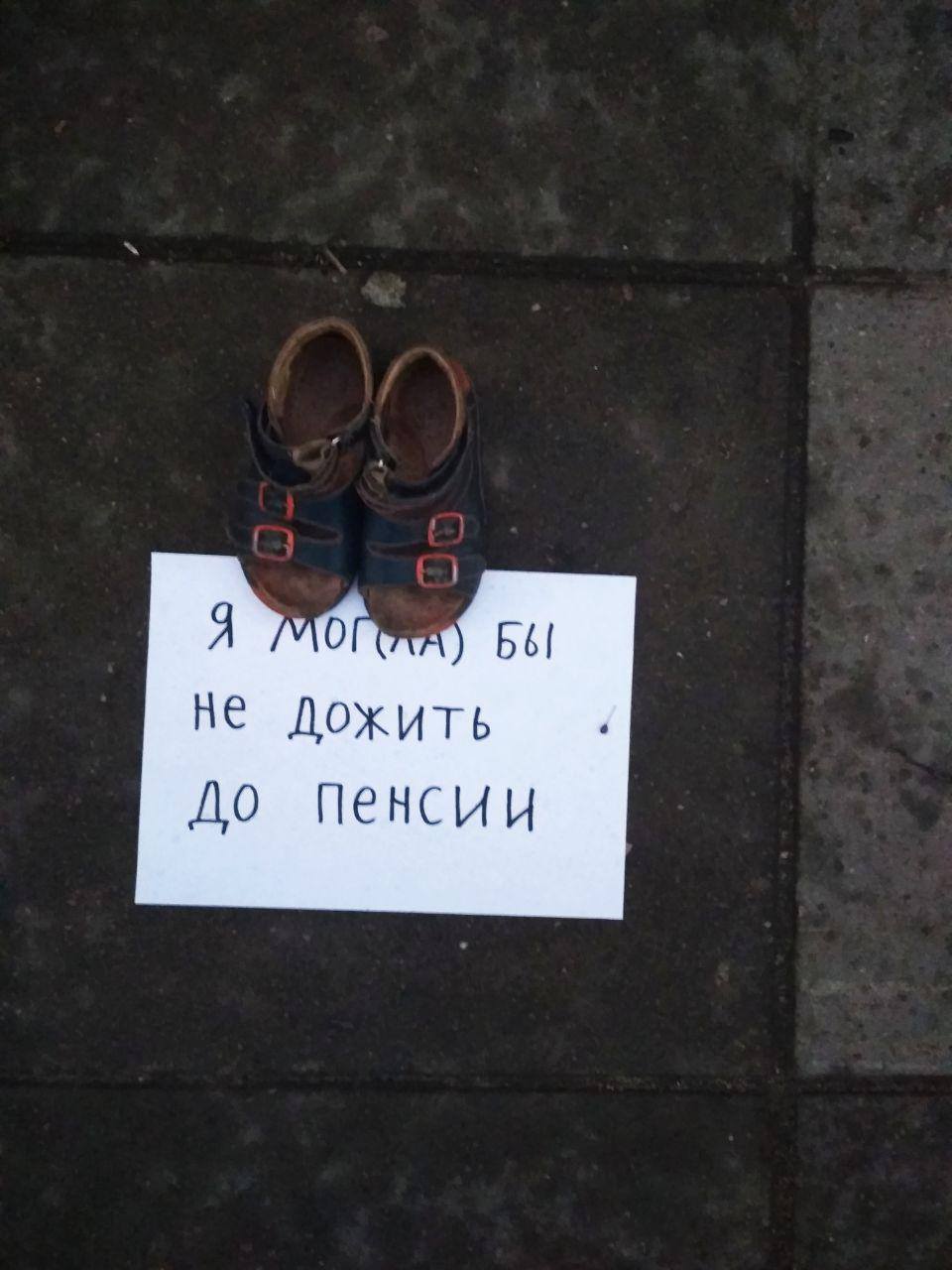
monsters-nonretirement“I could have failed to live until retirement.”

MONSTERS
Facebook
September 18, 2018

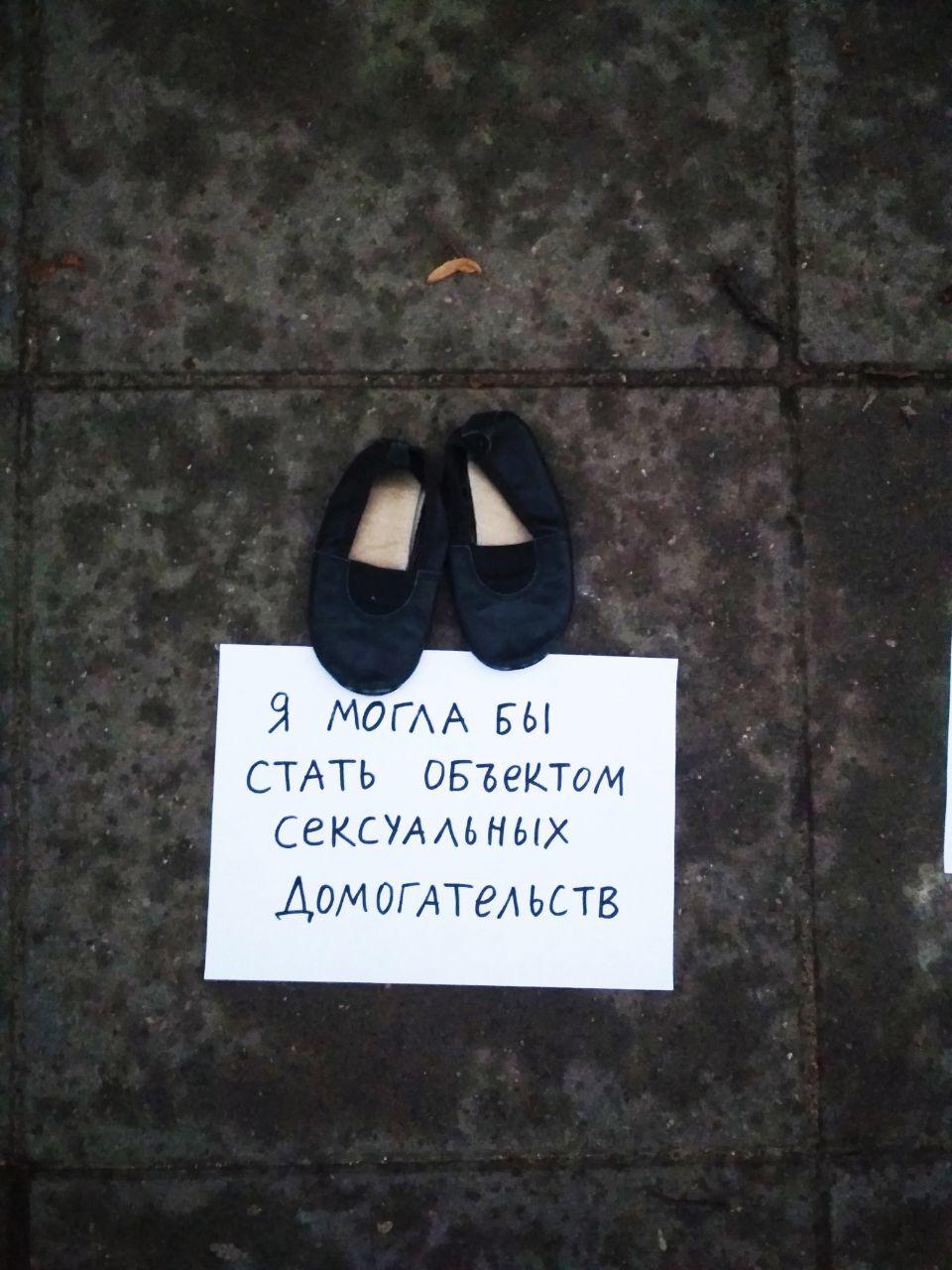
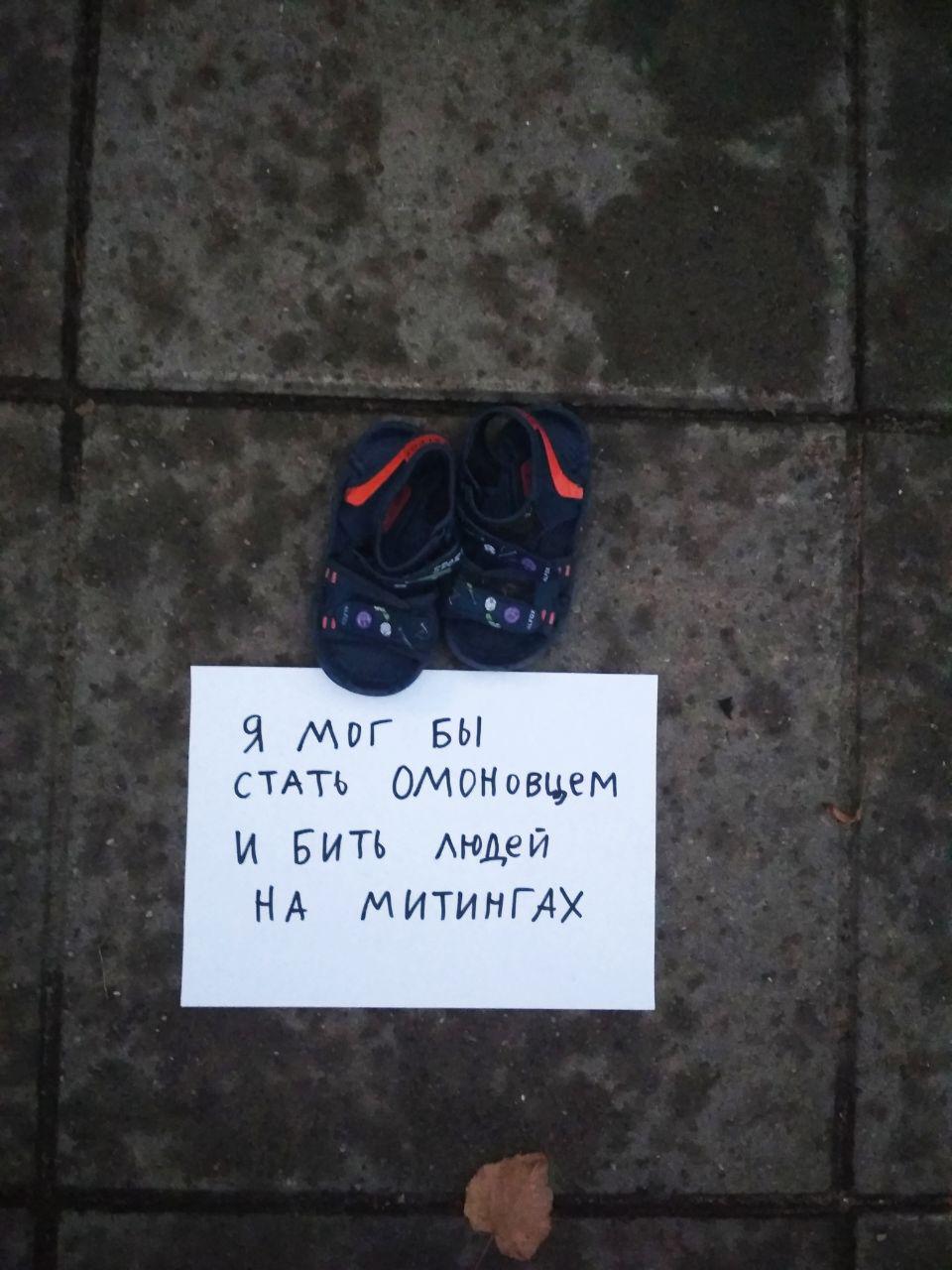
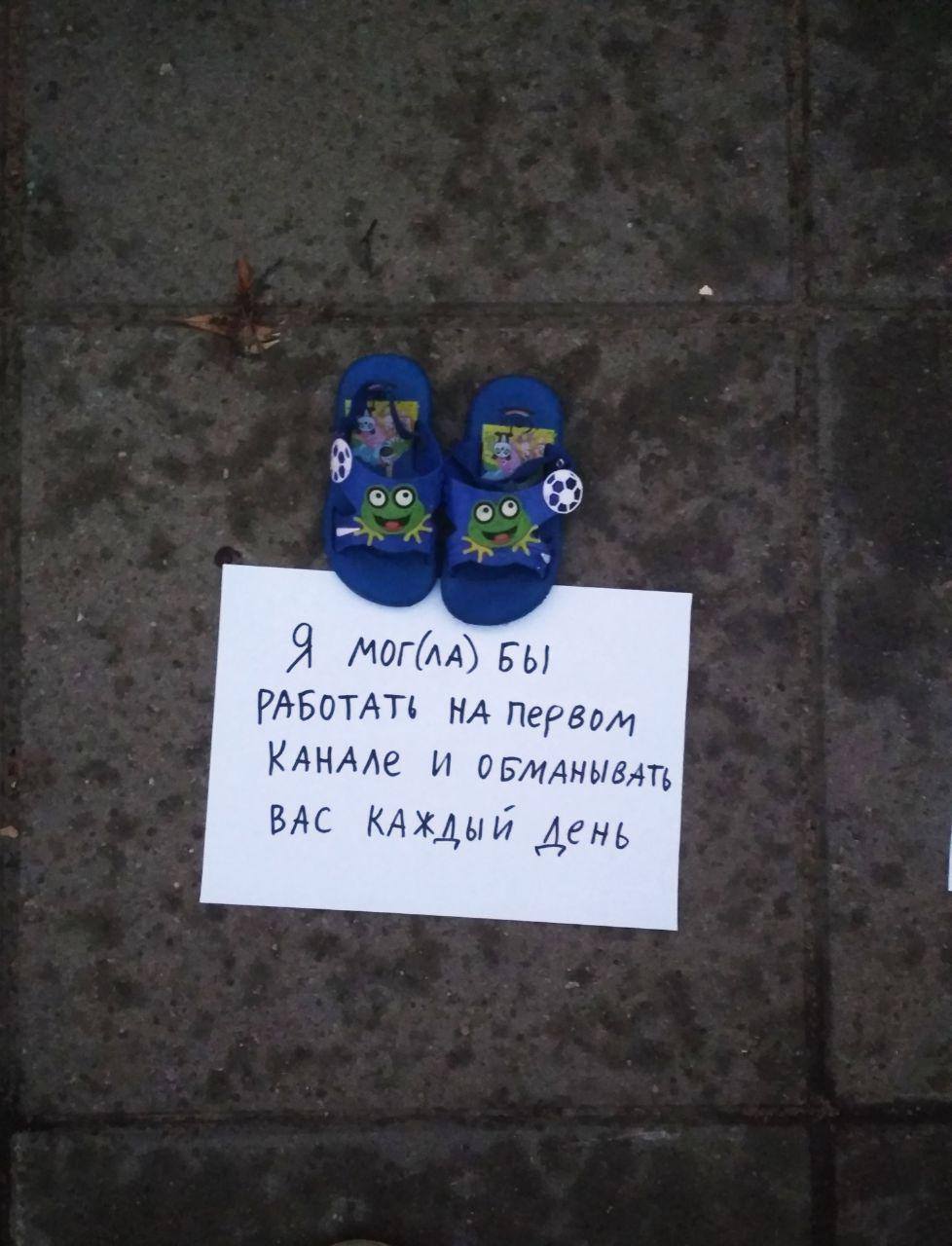
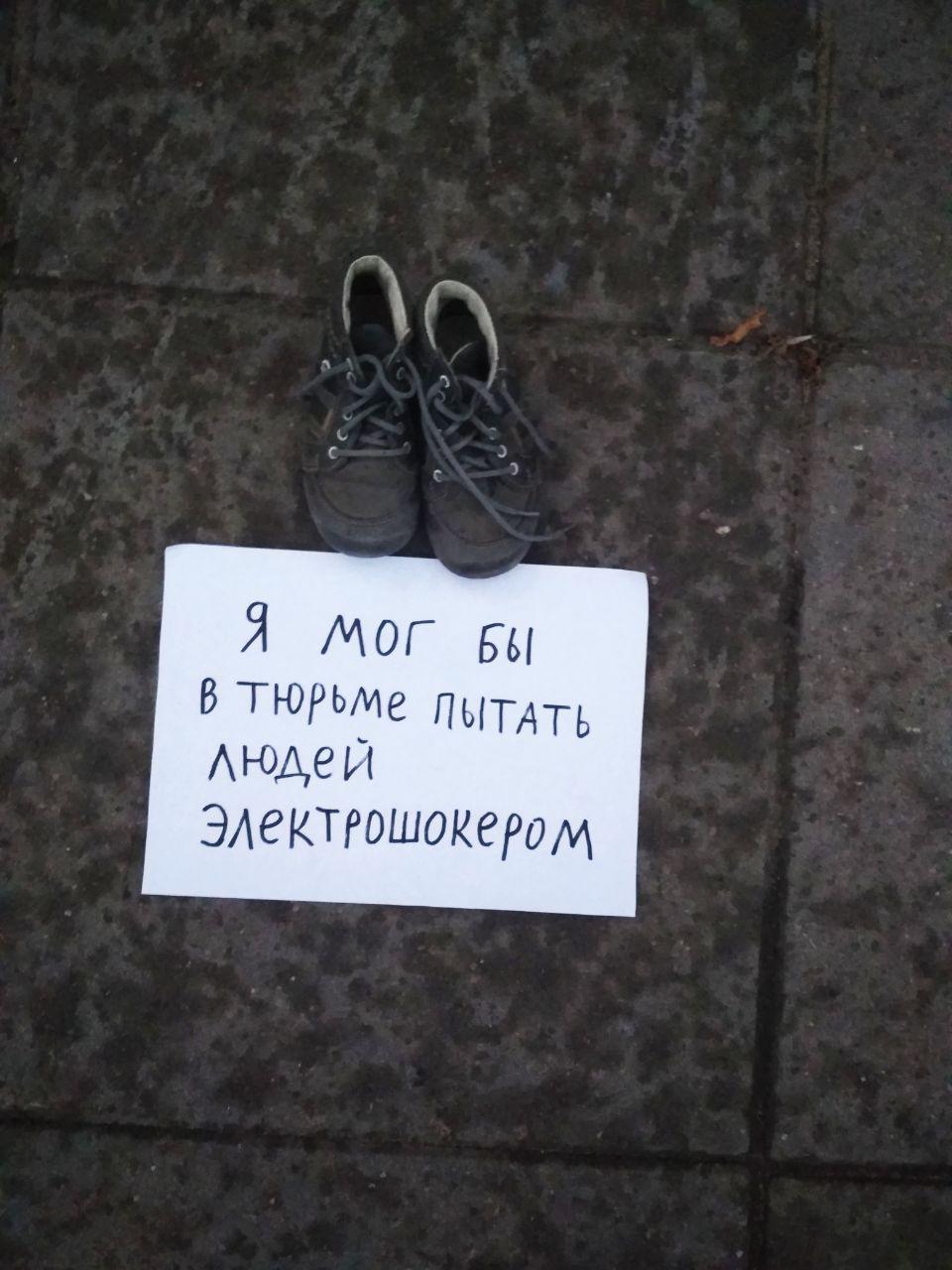
A powerful anti-anti-abortion protest took place today in Petersburg, but you will not hear about it in any of the mass media.

monsters-wagner“I could have worked for the Wagner Group.”

Until we fail to put a halt to abortions, which, fortunately, annually do away with enough people to populate the city the size of Petersburg, there is no point in discussing or contemplating anything serious.

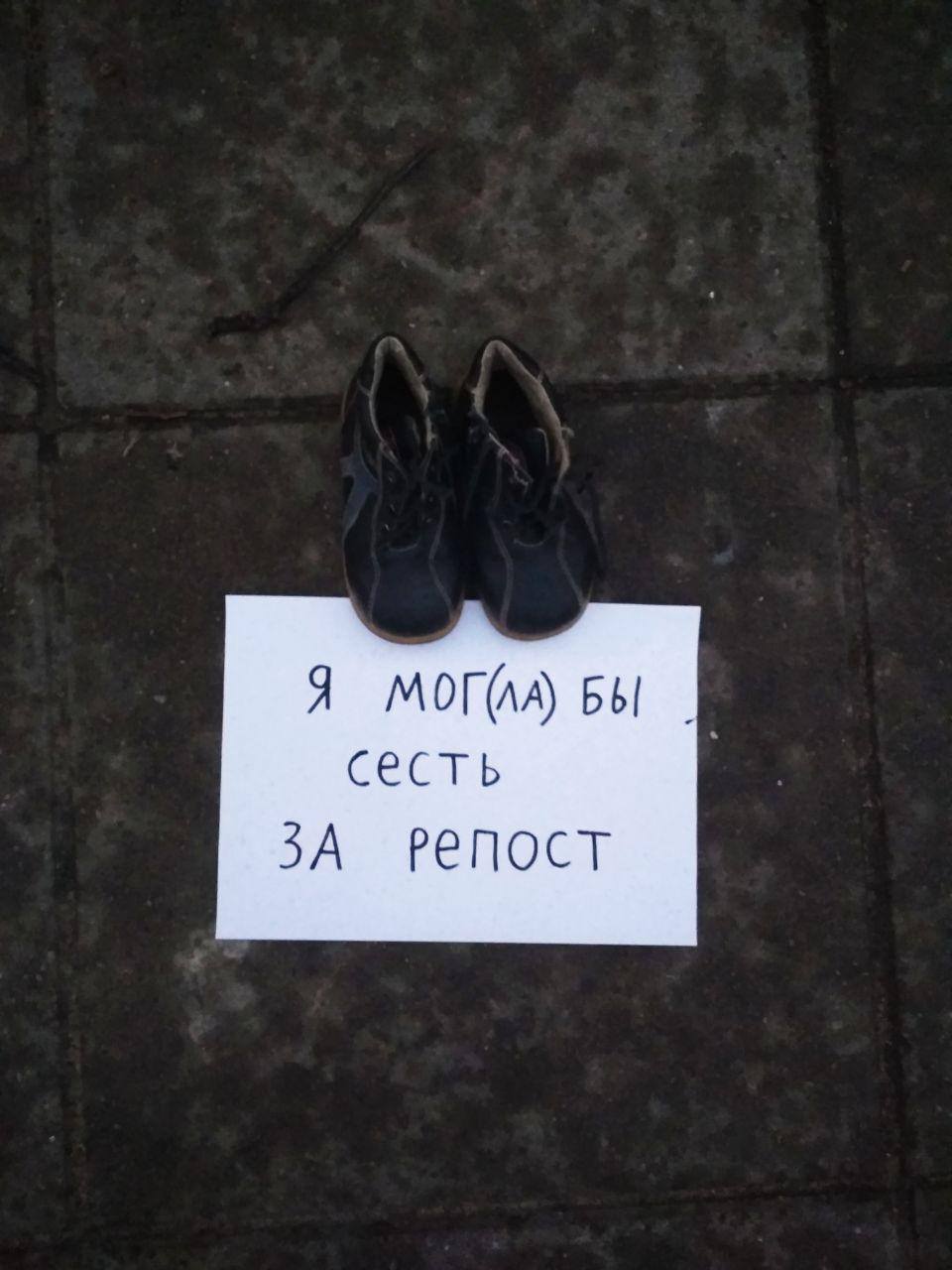
monsters-repost“I could have been sent to prison for reposting.”

Russia is not only the land of the dead, which has been said more than once, but it is also the land of the unborn.

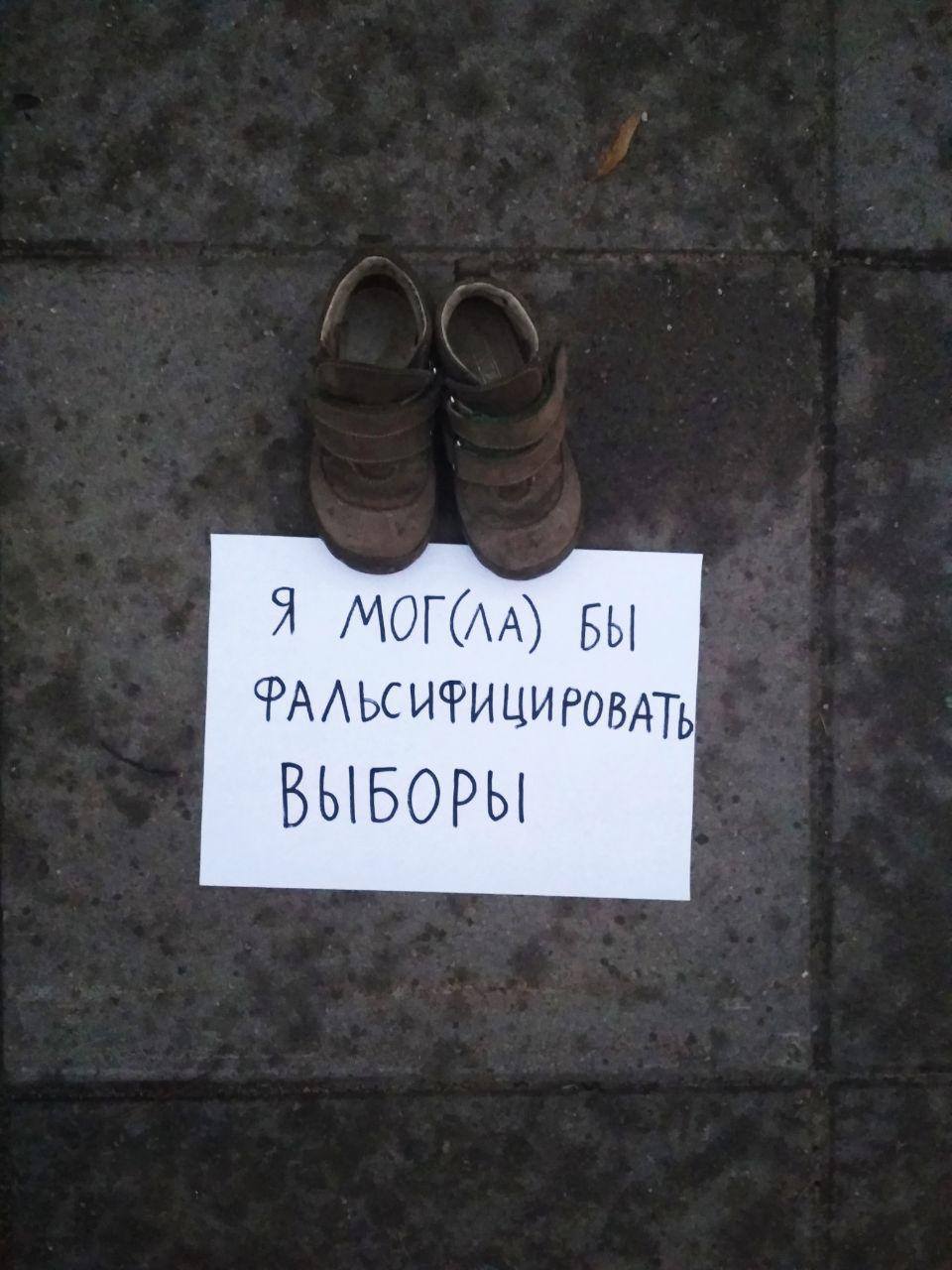
monsters-election rigger“I could have rigged elections.”

The Russian Federation not only has a past that never was. It also has a future that will never be.

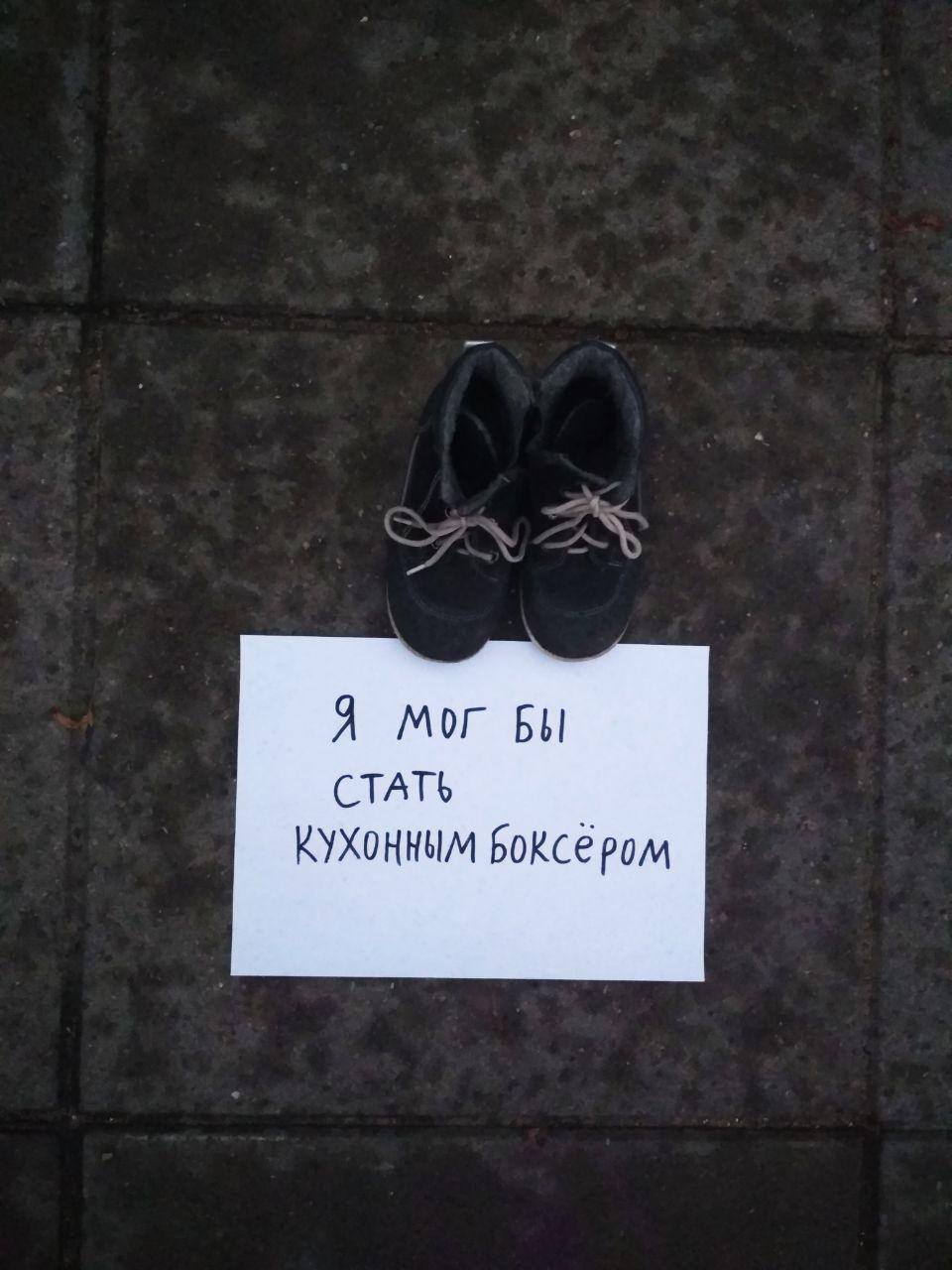
monsters-kitchen boxer“I could have engaged in domestic violence.”

Russia is a failed state. Russia is a fake state.

monsters-sexually harassed“I could have been an object of sexual harassment.”

All Russians, men and women, are in some respect dead men and dead women, but they are also embryos.

monsters-omon“I could have been a riot cop and assaulted people at protest rallies.”

No wonder the stage of (para)political theater has recently been occupied by such figures: aborted embryos telling us they could have been soldiers, for example, and dead women and men, who worked to the grave, but did not live to see a single kopeck of their pensions.

monsters-channel one“I could have worked for Channel One and hoodwinked people every day.”

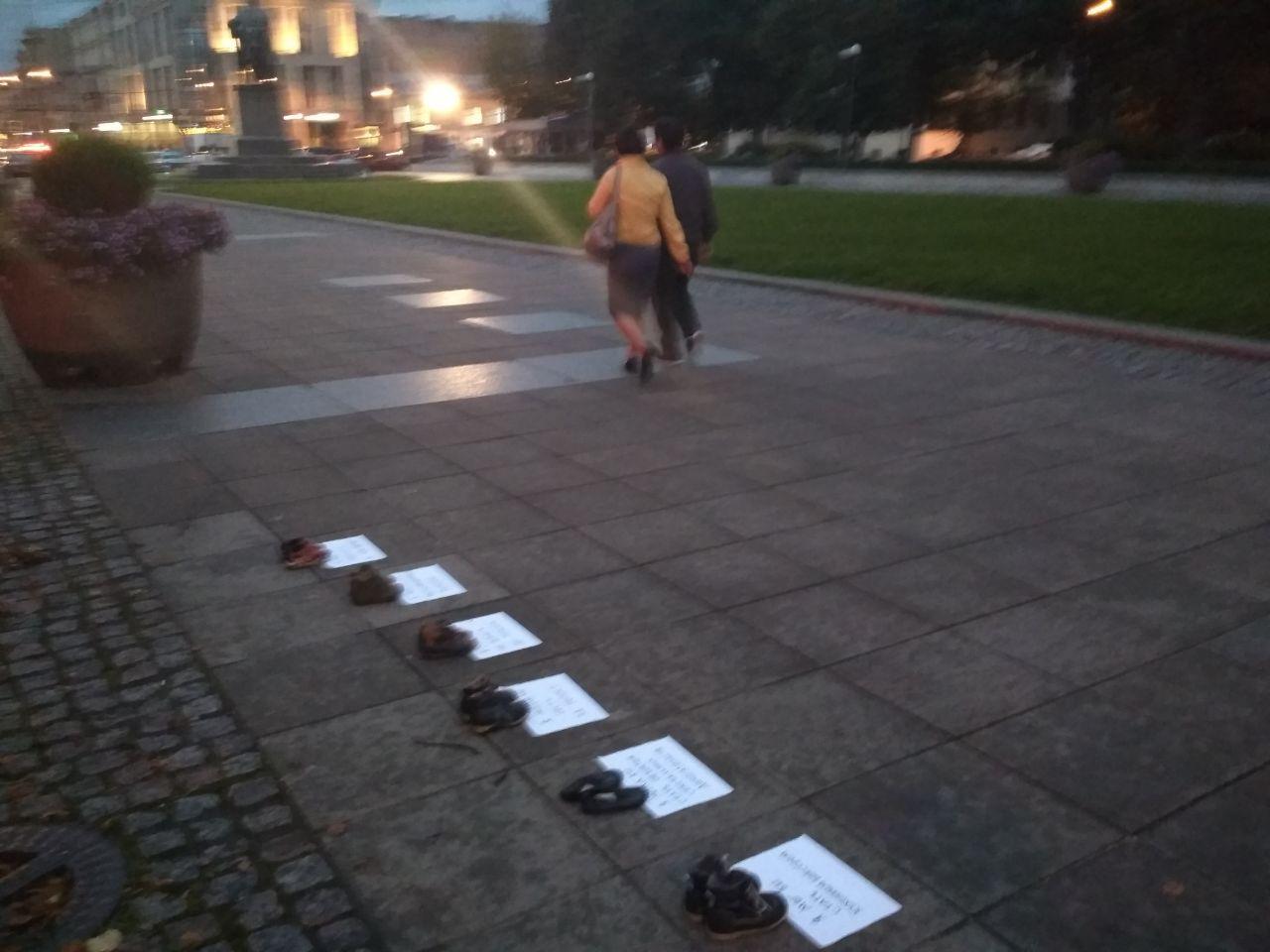
Bringing together the dead and the unborn was long overdue. This is just what we have done in our protest. We are MONSTERS, a new group of militants in the field of political art in Petersburg.

monsters-torturer“I could have tortured people in prison with a taser.”

We staged our protest in response to the latest move by the pro-lifers, who played heavy on people’s heart strings.

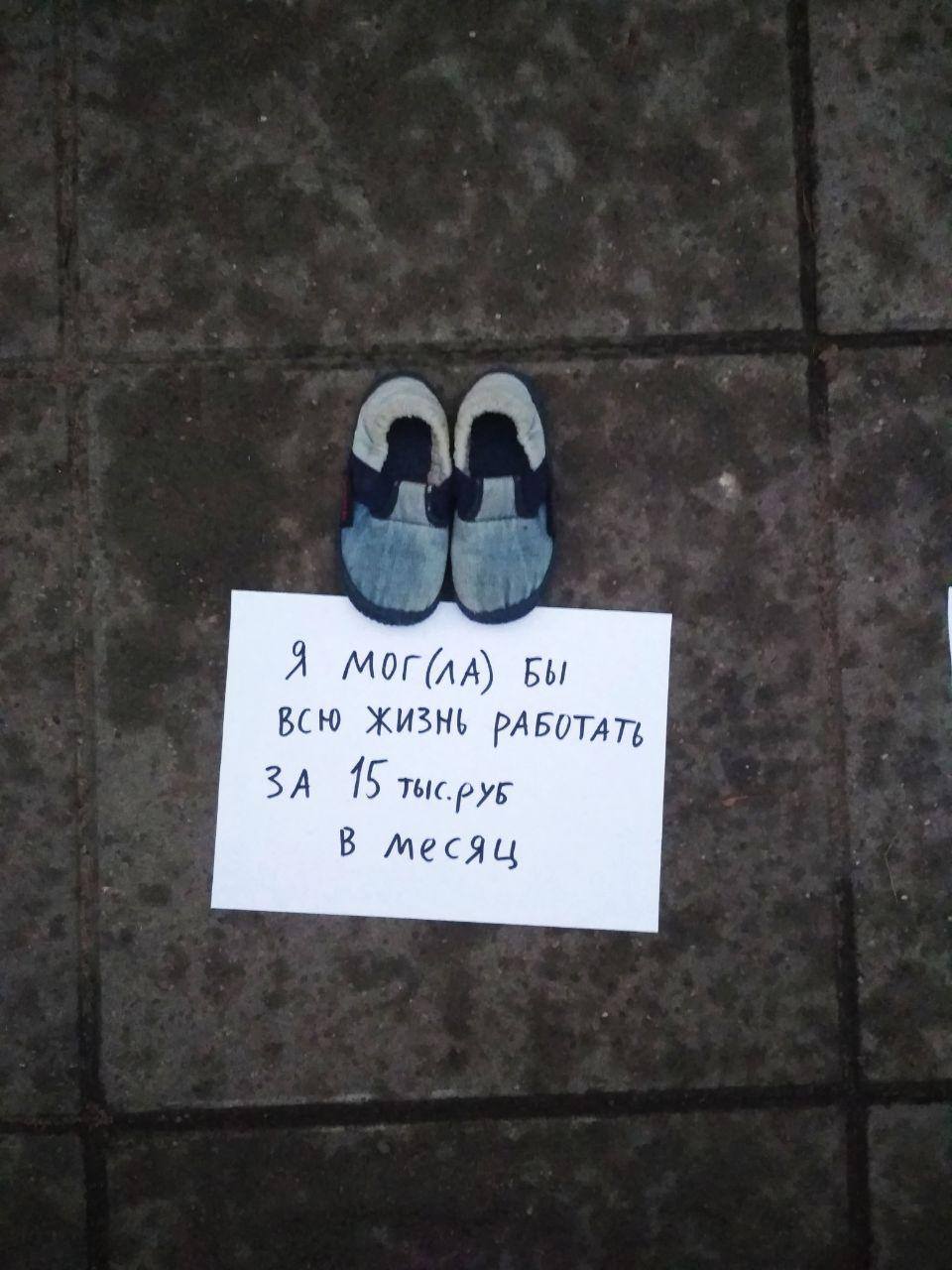
monsters-15000 a month“I could have earned 15,000 rubles a month my whole life.”

We profess and practice monstrous political art. We thus decided to do something even more sentimental.

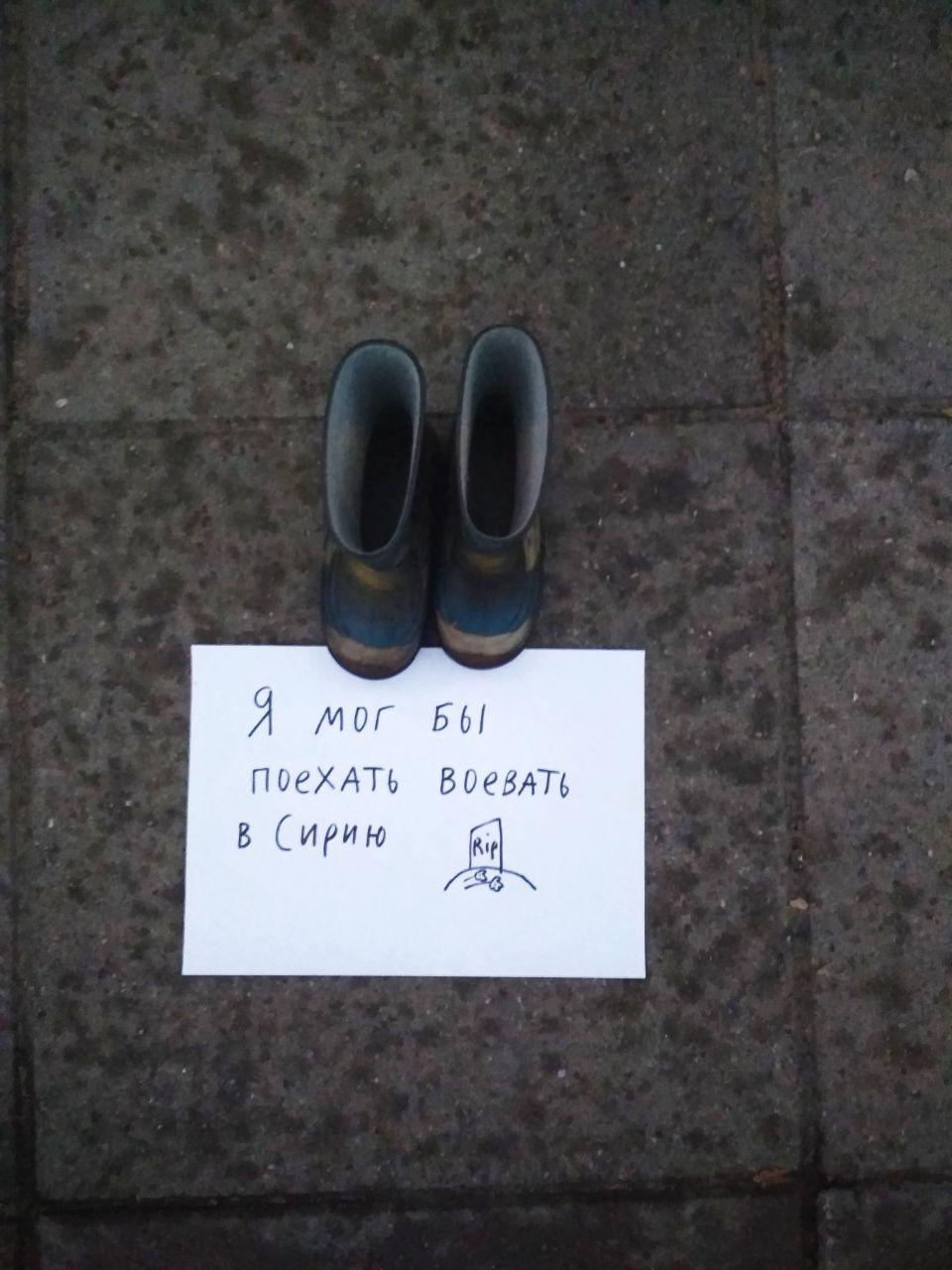
monsters-syria“I could have gone to Syria to fight.”

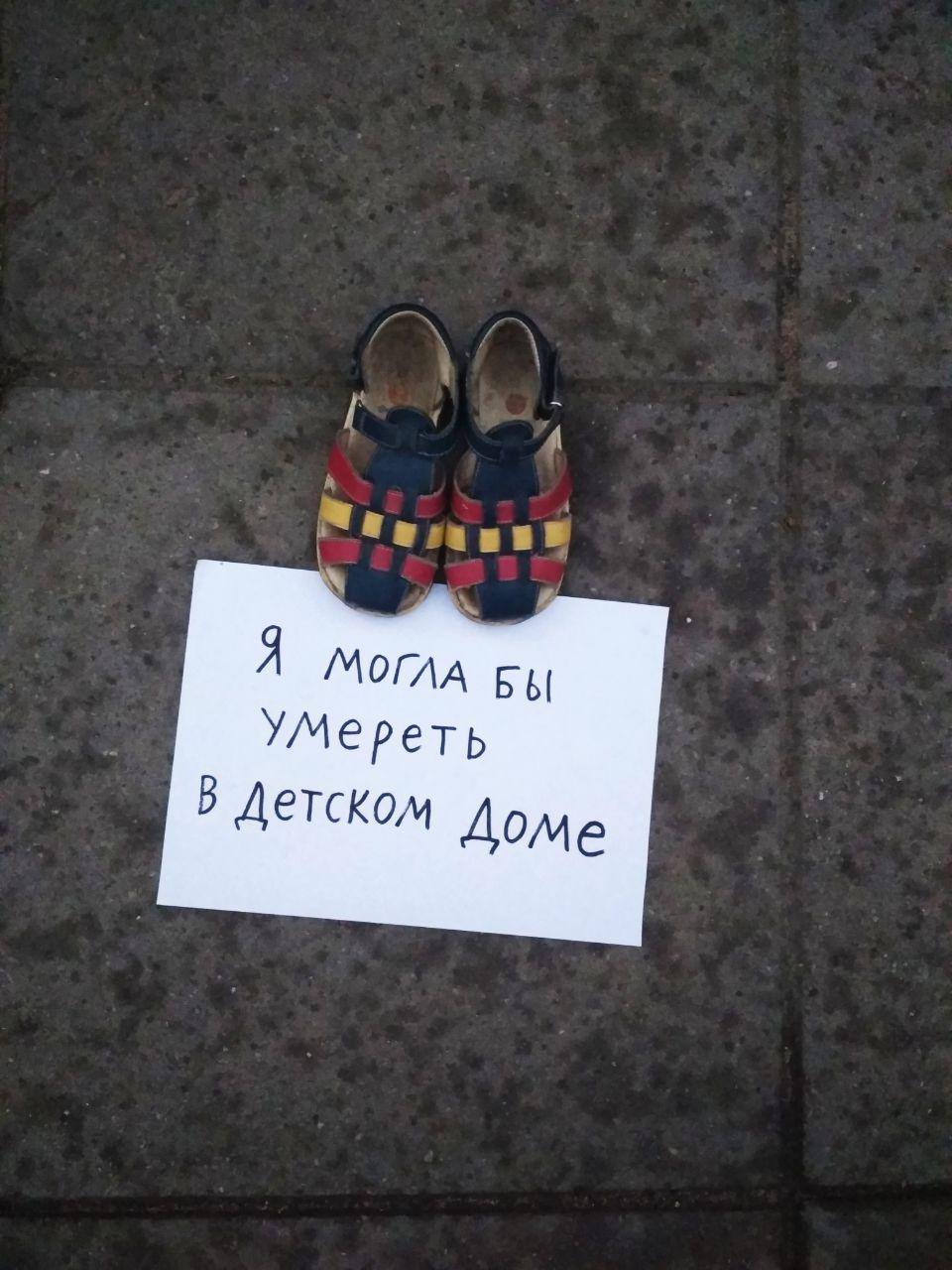
You thus see before you dead embryos. They might not have lived until retirement, but in any case they did not survive until retirement.

monsters-died in orphanage“I could have died in an orphanage.”

#MONSTERS

monsters-installation viewA view of the silent protest on Pioneer Square in Petersburg’s Central District

Translated by the Russian Reader