The world’s end kicks off not with explosions but with alarming news and eerie silence on the streets of Los Angeles. The world is going mad slowly, and Madison Clark (played by Kim Dickens of Gone Girl, House of Cards, and Treme), a school psychologist and mother raising two children, is the first to sense it.
Madison’s new husband, Travis Manawa (played by Cliff Curtis of Training Day, Avatar: The Way of Water, and Invincible), is a teacher trying to build a new life from the ruins of his old one, while also raising his son from a previous marriage. Their mundane problems fade into insignificance when the world order collapses and fear becomes commonplace.
“Victory will be ours” reads the banner on the Russian Embassy in Seoul. Source: Jintak Han/ZUMA/Picture Alliance
On Sunday, 22 February, a fifteen-meter-high banner in the colors of the Russian flag sporting the slogan “Victory will be ours” in Russian appeared on the Russian Embassy’s building in Seoul. The banner was unfurled ahead of the fourth anniversary of Russia’s full-scale war against Ukraine.
The South Korean Foreign Ministry “expressed concerns […] over the large banner,” according to the Yonhap News Agency. The ministry stressed that it could create “unnecessary tensions with South Korean citizens and other countries,” as it is regarded as an allusion to Russia’s war against Ukraine.
Russian Embassy refuses to take down banner
Despite the concerns raised by South Korea’s Foreign Ministry, the Russian Embassy has refused to remove the banner from its building. The banner was hung on the occasion of Diplomatic Workers Day and Defender of the Fatherland Day, according to the Foreign Ministry’s Telegram channel.
“The popular expression on the banner is familiar to all Russians. It is associated with our history, including the mobilization of the Soviet people for victory over Nazi Germany and other glorious chapters of Russian history,” embassy spokespeople underscored. They also claimed that the banner “promotes patriotic consolidation among Russians, and the historical connotations mentioned should not hurt anyone’s feelings.”
Following the shooting that claimed the life of a National Guard member last Wednesday in Washington, the Trump administration has announced it will be halting all asylum decisions and paused issuing visas for people travelling on Afghan passports. The suspect in Wednesday’s shooting that killed Specialist Sarah Beckstrom, 20, and critically wounded Staff Sgt. Andrew Wolfe, 24, is Rahmanullah Lakanwal, a 29-year-old Afghan national who worked with the CIA during the Afghanistan War and had been living in the U.S. since 2021. He applied for asylum during the Biden administration under a program that resettled Afghans after the U.S. withdrawal from the country, and was granted it this year under President Trump.
As seen in our infographic, based on data released by the U.S. Department of Justice, Afghanistan was not one of the 10 most common countries of origin for people who received asylum in the U.S. in the fiscal year 2024. Only 508 Afghans were granted asylum in the country that year, while 61 were refused. By comparison, the U.S. granted asylum to 3,605 Russian nationals, making Russia the most common nationality to get asylum in the country during that time period. This was followed by China, with 2,998 Chinese nationals receiving asylum, and Venezuela, with 2,656 successful asylum applications.
Source: Ozon email advertising circular, 14 November 2025
An American World War II cemetery in the Netherlands removed displays focused on Black American soldiers, sparking outrage and compelling Dutch politicians to appeal to U.S. officials this week to restore the information.
The two displays were added to the Netherlands American Cemetery’s visitor center in September 2024 after some historians and relatives of service members criticized the site for not mentioning the unique experiences of Black troops. One plaque featured the story of George H. Pruitt, a Black soldier in the 43rd Signal Construction Battalion, who died trying to save a comrade. The other highlighted how Black American service members were “fighting on two fronts” — for freedom overseas and for their civil rights at home.
The displays’ removal, American and Dutch critics of the move say, signifies an erasure of Black Americans’ contributions in the war and their work to liberate the Netherlands from the Nazis. It also represents an overstep in the Trump administration’s campaign to curb what it deems diversity, equity and inclusion efforts, the critics said.
It’s unclear exactly when the plaques were removed.
The American Battle Monuments Commission, a U.S. government agency that oversees the cemetery, did not respond to requests for comment from The Washington Post. The commission told Dutch news outlets that one panel is “off display, though not out of rotation,” and a second panel was retired. The commission did not elaborate on either decision.
Janice Wiggins, the widow of Jefferson Wiggins, a Black WWII soldier who was quoted in one of the displays, said she had “a gut-wrenching feeling” when she learned the panels had been removed.
“Not only reading about, but actually experiencing, how history and those who shaped it can be so easily and casually erased,” she said. “It was very personal.”
“The removal of the displays is disrespectful to the Black American soldiers who served and to the legacies their families cherish,” Wiggins added.
More than 8,000 U.S. troops who fought in World War II are buried at the Netherlands American Cemetery, a solemn site in the village of Margraten in the southern part of the country. Just over 170 of these service members are Black Americans, a slice of the more than 1 million Black Americans who fought during World War II in segregated forces.
The cemetery is special to the local community, according to the American Battle Monument Commission’s website. Residents have adopted the grave sites, bringing flowers to the cemetery for decades.
The 6,450-square-foot visitor center, where the displays about Black service members were, tells the stories of the thousands of Americans commemorated at the cemetery.
One of the removed plaques described the “horrors of war” that Black service members faced while serving primarily in labor and support positions. In fall 1944, the U.S. Army’s 960th Quartermaster Service Company, a mostly Black unit, arrived in Margraten “to dig graves at the newly created cemetery,” the display read, according to a photo provided to The Post.
Jefferson Wiggins, a first lieutenant, recounted seeing service members under his command crying as they dug the graves.
“They were just completely traumatized,” the display said.
Now there is no textual information provided about Black troops at the cemetery, said Kees Ribbens, a senior researcher at the NIOD Institute for War, Holocaust and Genocide Studies in Amsterdam. Although it’s unclear why the displays were removed, Ribbens said it’s notable that it happened during the Trump administration’s crackdown on diversity efforts.
President Donald Trump signed executive orders on his first day in office banning government diversity, equity and inclusion efforts. The impact has been widespread: Arlington National Cemetery scrubbed information from its website about prominent Black, Hispanic and female service members and topics such as the Civil War. Exhibits related to slavery were removed at multiple national parks. The White House accused the Smithsonian of promoting “race-centered ideology.”
“Given the emphasis the current administration puts on DEI, it doesn’t make it that difficult to start wondering if the disappearance of Black history [at the cemetery] has to do with the current winds blowing in D.C.,” Ribbens said.
In the Netherlands, the public has been baffled that anyone would see a reason to remove the panels, Ribbens said.
Dutch politicians have demanded that the displays be reinstated, appealing to the American Battle Monuments Commission and the U.S. ambassador to the Netherlands.
Alain Krijnen, the mayor of Eijsden-Margraten, where the cemetery is, sent a letter Monday to the commission: “We greatly value the story of the Black Liberators in relation to the past, present and future. In that context, we would greatly appreciate it if the story of the Black Liberators — like the 172 Black Liberators buried in Margraten — could be given permanent attention in the visitor center, and therefore reconsider the removal of the displays.”
The office of the governor of Limburg, the Dutch province containing the cemetery, said it also has “serious concerns.”
“The displayed panels depicted a history we must never forget, and from which we can learn a great deal — especially now, as global divisions are being increasingly magnified,” Bas Alberson, a spokesman for the governor’s office, said in a statement to The Post.
The mayor’s office and the Limburg governor’s office said they had not heard from American officials as of Wednesday.
Janice Wiggins, the 77-year-old widow of Jefferson Wiggins, said she learned the displays had been removed after her friends visited the cemetery in October and noticed the absence. The removal chips away at some of her life’s work, she said.
“Along with [former] US Ambassador to the Netherlands Shefali Razdan Duggal and Dutch author Mieke Kirkels, I lobbied for the inclusion of Black American soldiers in the exhibits at the Netherlands American Cemetery Visitors Center. The original exhibits included only White soldiers,” Wiggins, who lives in New Fairfield, Connecticut, wrote in an email.
Those who have family buried at the cemetery also feel the loss.
Julius Morris is a Black WWII soldier who is buried there. His nephew, Raphael Morris, who lives in St. Louis, felt resigned when he heard the news.
“Business as usual by this administration,” said Morris, 73. “Color me concerned, disappointed, but not surprised.”
A Russian National Guard serviceman checks residency documents during a raid outside the Apraksin Dvor clothing market, in St. Petersburg, Russia, Friday, July 4, 2025. (AP Photo/File)
The immigrant worker from Uzbekistan entered the bank in Moscow, but when he reached the teller, she refused to serve him and she wouldn’t say why.
For him and others from impoverished countries across Central Asia who seek better lives in Russia, such hostility is woven into everyday life. Sometimes it bursts into outright violence.
“Mostly you notice it when you go to the hospital, a clinic, a government office: You stand in line and everyone shoots you dirty looks,” said the man, who spoke to the Associated Press on condition of anonymity because he feared repercussions.
Such xenophobia clashes with economic realities at a time when Russia has a labor shortage, primarily due to its war in Ukraine. In the first quarter of 2025, over 20% of Russian businesses said they were hindered by a lack of workers, according to the Central Bank.
But rather than welcoming laborers, Russian officials are fomenting anti-migrant sentiment and increasing restrictions on immigrants, which the government says number 6.1 million, but is probably higher. The government is tracking their movement, clamping down on their employment and impeding their children’s rights to education.
A massacre and a backlash
The continued crackdown comes as a trial began this month for four Tajik nationals who are accused of the shooting and arson attack at a Moscow concert hall in March 2024 that killed 149 people. The four were arrested within hours of the attack and appeared in court with signs of being severely beaten. An Islamic State group claimed responsibility but Russia sought to blame Ukraine for the bloodshed.
Anti-migrant rhetoric had been growing in Russia since the early 2020s. But the massacre in particular launched a wave of “terrible violence” against immigrants, said lawyer Valentina Chupik, who has worked with the immigrant community for over 20 years. In the eight days after the killings, she received 700 reports of injuries to immigrants, including “faces smashed against the doors of police stations,” she said.
Parliament speaker Vyacheslav Volodin captured the public mood after the massacre, saying “migration control is extremely important” to ensure foreign nationals carrying out “illegal activity” could be deported without a court order.
The violence drew concern from human rights groups.
“Central Asian migrants seeking work in Russia due to dire economic conditions in their countries of origin today face ethnic profiling, arbitrary arrests, and other harassment by police in Russia,” Human Rights Watch said in a report on the anniversary of the attack.
“The heinous massacre cannot justify massive rights abuses against Central Asian migrants in Russia,” said its author, Syinat Sultanalieva.
Raids, roundups and restrictions
While some violence has subsided, it hasn’t disappeared. In April, police raided a Kyrgyz-run bathhouse in Moscow with video showing masked men forcing half-naked bathers to crawl across the floor and deliberately stepping on them before covering the lens of a security camera.
Police also reportedly rounded up immigrants in raids on warehouses, construction sites and mosques, then coerced them into joining the military to fight in Ukraine. Some are threatened with having their residency documents withheld, while others are recently naturalized citizens who failed to register for military service. In such cases, serving in the military is presented as the only alternative to prison or deportation. For others, a fast track to Russian citizenship is offered as an incentive for enlisting.
Speaking in St. Petersburg in May, Alexander Bastrykin, head of Russia’s Investigative Committee, said “20,000 ‘young’ citizens of Russia, who for some reason do not like living in Uzbekistan, Tajikistan (and) Kyrgyzstan” were serving in Ukraine.
Those immigrants who have avoided violence still are subject to new anti-migrant laws. Much of this is targeted specifically toward workers from Central Asia.
In 2024, 13 Russian regions banned immigrants from certain jobs, including in hospitality, catering and finance, and even as taxi drivers. A pilot program starting in September in the Moscow region requires migrants who enter Russia without a visa to be tracked via an app. Those failing to comply are added to a police watchlist, impeding access to services like banking, and subjecting them to a possible cutoff of cellphone and internet connectivity.
A nationwide law banned children of immigrants from attending school unless they could prove they could speak Russian. Less than six weeks after the law came into force, officials told local media that only 19% of children who applied for the language test were able to take it, and the most common reason for rejection was incomplete or inaccurate documents.
Another man from Uzbekistan who has worked in Russia for almost two decades and lives in St. Petersburg said he’s had to wait in line for over seven hours to get needed residency documents. The man, who also spoke to AP on condition of anonymity for fear of reprisals, hopes to stay in Russia but says the climate has worsened.
“It’s hard to get paperwork,” he said. “There just isn’t the time.”
The oppressive laws sometimes force immigrants to resort to paying bribes. Chupik, the lawyer, believes that Russia’s system results in “violations that cannot be avoided.”
“This is exactly what this mass regulation is striving for: not for all migrants to be here legally, but for everyone to be illegal,” she said. “That way, they can extract bribes from anyone at any moment and deport anyone who resists.”
Encouraging anti-migrant sentiment
Anti-migrant sentiment is unlikely to diminish anytime soon, mostly because it’s encouraged by authorities like the Investigative Committee’s Bastrykin, who said immigrants “physically occupy our territory, not just with their ideology but with specific buildings” — referring to sites such as mosques.
Ultra-nationalist lawmaker Leonid Slutsky said foreign workers “behave aggressively, causing conflicts and potentially dangerous situations.”
Migrants are an easy scapegoat for many social ills, and not just in Russia, said Caress Schenk, an associate professor of political science at Nazarbayev University in Kazakhstan.
“Closing borders, conducting migrant raids and tightening policies are all tools that are easy go-tos for politicians the world over,” she said. “It goes in cycles that are sensitive to geopolitical pressures, as we’re seeing now, but also things like election campaigns and domestic political rivalries.”
A surge of “anti-migrant propaganda” has dwarfed previous rhetoric of recent years, according to the Moscow-based Uzbek immigrant who was ignored by the bank teller.
“If every person paying attention to the TV, the radio, the internet is only told that migrants are ‘bad, bad, bad,’ if they only show bad places and bad people, of course, that’s what people are going to think,” he said.
Such anti-migrant rhetoric has become part of the nationalist narrative from President Vladimir Putin and others used to justify the 2022 invasion of Ukraine — that Russia is under constant threat.
“Russia has started lumping together all of ‘the external enemies’ that it’s created over the years for itself: the migrants, the Ukrainians, the West,” said Tajik journalist Sher Khashimov, who focuses on migration, identity and social issues. “It all becomes this part of this single narrative of Russia being this castle under siege, and Putin being the only person who is on the lookout for ordinary Russians.”
The Uzbek immigrant in Moscow said Russia has created conditions “supposedly to help people, to help migrants.”
“But the rules do not work,’ he added. ”Special barriers are created that migrants cannot pass through on their own.”
A prominent nonviolent activist from Moroccan-occupied Western Sahara has been detained by federal immigration officers. Jamal Fadel was seized by masked ICE agents at Manhattan’s notorious federal building at 26 Federal Plaza on August 25 after a routine immigration hearing — an arrest that was caught on video.
Fadel is from the occupied city of Boujdour in Western Sahara. He’s been protesting nonviolently against Morocco’s occupation since he was a high school student, and was threatened by Moroccan authorities so many times that he left to seek political asylum in the United States.
Fadel is currently being held by ICE at the Moshannon Valley Processing Center in Pennsylvania. His attorney expects ICE will move for an expedited removal hearing. If deported, Fadel faces lengthy imprisonment, torture — or worse.
I spotted some of the Trump administration’s wanted men on Tuesday, the day after the U.S. Supreme Court granted immigration agents virtually unchecked permission to continue the “largest Mass Deportation Operation” in America’s history.
The wanted stood outside of a U-Haul truck rental outlet in the San Gabriel Valley. They polished other people’s BMWs and Range Rovers at a Pasadena car wash. I saw the wanted women too, walking to jobs as nannies and housekeepers.
They looked suspicious, all right, by the definition outlined Monday by Supreme Court Justice Brett M. Kavanaugh. They were natives of Mexico and Central America, seeking “certain kinds of jobs, such as day labor, landscaping, agriculture, and construction.”
They were suspect to many Californians too, but only of wanting to work, wanting to earn a little cash, wanting to pay their bills and feed their families. One hundred and seventy five years to the day after land that once belonged to Mexico became the 31st American state, California felt to many people Tuesday like it had reverted to a kind of frontier justice, where racial profiling had become the law of the land.
“I am just working hard and paying taxes,” said Mario, 50, between sips of coffee on the sidewalk outside the U-Haul station. Even before the Immigration and Customs Enforcement raids began three months ago, the Honduran immigrant said, life for street-corner workers was not easy.
“People are just looking for work. Some of them are even homeless,” said Mario, who declined to give his last name. “But some people are showing them hate, sometimes even hitting or kicking the homeless. We see it out on the street.”
At the Pasadena car wash where six workers were carted away in late August, those left behind continued their buffing and polishing Tuesday.
“It feels like we have come down low, really low,” said Cesar, between checking in customers. Though he was born just blocks away at Pasadena’s Huntington Hospital, he said he does not feel immune from the raids.
“If now they are just going to judge you by how you look, or maybe how you talk, I can get pulled over. Anyone can get pulled over,” said Cesar, who did not give his last name. “It’s gonna be harder for people to live a normal life. They’re gonna just have to deal with harassment. That’s not something I would want anyone to have to go through.”
Earlier raids by Trump immigration agents have spread far beyond snagging the criminals and drug traffickers the president and his allies claimed to be after. With 10 million Latinos living in the seven Southern California counties covered by the court’s order, a rights group said the high court’s action cleared the way for “an extraordinarily expansive dragnet, placing millions of law-abiding people at imminent risk of detention by federal agents.”
“We should not have to live in a country where the Government can seize anyone who looks Latino, speaks Spanish, and appears to work a low wage job,” Justice Sonia Sotomayor wrote. “Rather than stand idly by while our constitutional freedoms are lost, I dissent.”
The action offered portentous echoes of the mistreatment and greater violence unleashed on Chinese immigrants in the late 1800s. Today, it had U.S.-born citizens, such as The Times’ Gustavo Arellano, feeling they will have to carry their passports to prove their citizenship.
Outside the U-Haul, Mario said he holds a green card. So he will continue waiting on the sidewalk for his next job.
“I believe in God,” he said. “We might think different things, but we all have the same heart. There should be the same heart for everyone. Everyone.”
The United States deported 39 Uzbek nationals on a charter flight to Tashkent, the U.S. Embassy confirmed in what it described as part of ongoing efforts to remove migrants without legal status. Earlier this year, more than 100 Central Asians, mostly Uzbeks, were repatriated in a similar U.S.-funded operation. The deportations attest to close cooperation between Washington and Tashkent on migration enforcement. That partnership has been accompanied by political overtures. Last week, Presidents Shavkat Mirziyoyev and Donald Trump held a phone call in which they pledged to broaden their strategic partnership ahead of an expanded dialogue session this autumn. U.S. officials have pointed to investment opportunities in Uzbekistan, particularly in critical minerals, while both sides also highlight cooperation on security and migration.
“Armogedon Dasha,” Kronstadt, Russia, summer 2006. Photo by the Russian Reader
If one starts from the premise that the United States was engaged in a peace process, then what we saw Americans do yesterday makes no sense. The same goes if we begin from the assumption that present American leadership is concerned about peace generally, or cares about American interests as such. But it is not hard to see another logic in which yesterday’s outrages do come into focus.
It would go like this: It has been the policy of Musk-Trump from the beginning to build an alliance with Russia. The notion that there should be a peace process regarding Ukraine was simply a pretext to begin relations with Russia. That would be consistent with all of the publicly available facts. Blaming Ukraine for the failure of a process that never existed then becomes the pretext to extend the American relationship with Russia. The Trump administration, in other words, ukrainewashed a rapprochement with Russia that was always its main goal. It climbed over the backs of a bloodied but hopeful people to reach the man that ordered their suffering. Yelling at the Ukrainian president was most likely the theatrical climax to a Putinist maneuver that was in the works all along.
This, of course, might also seem illogical, and at an even higher level. The current American alliance system is based upon eighty years of trust and a network of reliable relationships, including friendships. Supporting Russia against Ukraine is an element of trading those alliances for an alliance with Russia. The main way that Russia engages the United States is through constant attempts to destabilize American society, for example through unceasing cyberwar. (It is telling that yesterday the news also broke that the United States has lowered its guard against Russian cyber attacks.) Russian television is full of fantasies of the destruction of the United States. Why would one turn friends into rivals and pretend that a rival is a friend? The economies of American’s present allies are at least twenty times larger than the Russian economy. And Russian trade was never very important to the United States. Why would one fight trade wars with the prosperous friends in exchange for access to an essentially irrelevant market? The answer might be that the alliance with Russia is preferred for reasons that have nothing to do with American interests.
In the White House yesterday, those who wished to be seen as strong tried to intimidate those they regarded as weak. Human courage in defense of freedom was demeaned in the service of a Russian fascist regime. American state power was shifted from the defense of the victim to the support of the aggressor. All of this took place in a climate of unreason, in which actual people and their experiences were cast aside, in favor of a world in which he who attacks is always right. Knowledge of war was replaced by internet tropes, internalized to the point that they feel like knowledge, a feeling that has to be reinforced by yelling at those who have actually lived a life beyond social media. A friendship between Donald Trump and Vladimir Putin, a masculine bond of insecurity arising from things that never happened, became more important than the lives of Ukrainians or the stature of America.
There was a logic to what happened yesterday, but it was the logic of throwing away all reason, yielding to all impulse, betraying all decency, and embracing the worst in oneself on order to bring out the worst in the world. Perhaps Musk, Trump, and Vance will personally feel better amidst American decline, Russian violence, and global chaos. Perhaps they will find it profitable. This is not much consolation for the rest of us.
Foreign Ministry Spokeswoman Maria Zakharova’s comment on Zelensky’s voyage to Washington, D.C. (March 1, 2025)
Leader of the neo-Nazi regime Zelensky’s visit to Washington D.C. on February 28 is an epic political and diplomatic failure of the Kiev regime.
The Russian Side has repeatedly made it clear at all levels that Zelensky is a corrupt individual who lost his grip on reality and is unable to reach and honour agreements.
The Kiev regime refused to continue talks on a political and diplomatic settlement in the spring of 2022, using lies and fake claims to justify continued hostilities and keep receiving Western military and financial aid.
With his outrageously rude behaviour during his stay in Washington, Zelensky re-affirmed his status of the most dangerous threat to the international community as an irresponsible figure that can stir up a big war. It must be clear to everyone that this kind of attacks coming from a terrorist leader are quite unambiguous.
This cynical individual will stoop to anything in pursuit of his goals and is obsessed with preserving the power he has usurped. That is why he:
has destroyed the opposition,
built a totalitarian state,
ruthlessly sending millions of his fellow citizens to death.
Under the increasingly deteriorating political situation, this figure is unable to show a sense of responsibility and is therefore obsessed with continuing the war and rejects peace, which means death to him.
Unprecedented in history of international politics and diplomacy, a dressing down given to Zelensky by the US president in the White House is also indicative of the political weakness and extreme moral degradation of the European leaders who continue to support the maniac head of the Nazi regime who has lost touch with reality.
As before, we continue to operate on the premise that a truly just and durable peace is not possible unless the root causes of the Ukraine crisis are completely eliminated.
The main ones among them include:
the West breaking its promises not to expand NATO and the alliance’s absorption of Europe’s entire geopolitical space all the way up to Russia’s borders,
the Kiev regime’s systematic elimination of everything about Russia, including language, culture, and church, just like the German Nazis did in the past.
The demilitarisation and denazification of Ukraine, as well as recognition of existing realities on the ground remain Russia’s unchanged objectives.
The sooner Kiev and the European capitals come to realise this, the closer to a peaceful settlement of the Ukraine crisis we will be.
Rick Wilson: “And I truly believe that Donald Trump will very soon offer military aid to Russia. I believe this in my heart of hearts. I want every single one of you people who think, ‘Oh, this was such a brave moment of diplomacy,’ when Donald Trump starts offering Russia intelligence, and weapons, and support, and protection, I want you to tell me if you think you still live in the America you voted for.”
Up to nearly a half of Russian casualties in the war against Ukraine could be men who had few or tenuous links to Russia, or were living on the margins of society, according to new research by the BBC. Their deaths are largely ‘unseen’ by ordinary Russians.
Alongside the independent media outlet Mediazona, and with the help of a network of volunteers, BBC Russian uses open source data to chart the names of Russian soldiers killed in the war. To date, we have confirmed the names of more than 95,000 of them – implying a true death toll of up to 235,000.
This figure doesn’t include those who were killed serving in the militia of the self-proclaimed Donbass republics which we estimate to be between 21,000 and 23,500 fighters.
BBC Russian, independent media group Mediazona and volunteers have been counting deaths since February 2022.
Tomorrow in Ukraine, Russian soldiers will attack Ukrainians. Russian drones and bombs and rockets will target Ukrainian homes. A criminal war of aggression will continue.
Tomorrow in Saudi Arabia, Russian officials will discuss the future of Ukraine with a handful of Americans, delegated by a president who sympathizes with the Russian view of the war. The Russians will have the luxury of talking about Ukraine without the presence of Ukrainians.
The headlines are about “peace negotiations.” But what is really going on? How should we think about this unusual encounter in Saudi Arabia?
Here are ten suggestions, drawn from years on working on relations among the three countries, and from some recent personal observations at the Munich Security Conference.
1. Be critical of the words on offer. Question the word “peace.” The term used in the media is “peace negotiations.” The United States and Russia are not at war. Russia is at war with Ukraine, but Ukraine is not invited to these talks. Russian authorities, for their part, do not generally speak of peace. They present the talks with the United States as a geopolitical coup, which is not the same thing. The highest Russian officials have repeatedly stated that their war aims in Ukraine are maximalist, including the destruction of the country. Informed observers generally take for granted that Russia would use a ceasefire to distract the United States and Europe, demobilize Ukraine, and attack again. This is not a plan that the Russians are working very hard to disguise. It is a simple point, but always worth making: there could indeed be peace tomorrow in Ukraine, if Russia simply removed its invasion force.
Today, there was one happy man in the Kremlin. Vladimir Putin banked his legacy on an all-out war that, at one point, looked all but lost for him. But he waited long enough to see the tides change in his favor.
Three years in and hundreds of thousands of deaths after, the U.S. president is calling Putin, offering peace talks on Russia’s terms.
Hi, my name is Oleksiy Sorokin, I’m the deputy chief editor of the Kyiv Independent, and this is the latest issue of our Russia-themed newsletter.
Today we will talk about how Russia is about to win the war.
It’s a topic of debate when authoritarian Russia began morphing into a totalitarian state, but Feb. 24, 2022, is a point that finalized this transformation. A point of no return.
The all-out war was supposed to be quick. It was supposed to be a victory of a new world order and of a new Russia, once again a force that would decide the fate of the world, a force that people would fear.
Taking Kyiv, installing a new Russian-controlled government, and forcing Ukraine to recognize Crimea, Donetsk, and Luhansk as Russian was to be achieved within months, if not days.
The country Putin attempted to subjugate, however, was fiercely resisting. Something that Russian political and military leadership didn’t expect and didn’t prepare for.
Yet, over and over, Russian President Putin was bailed out by the West.
In 2022, Russia was making fortunes on selling off its energy resources to the West. When Russian troops were murdering civilians of Mariupol and nearing Kyiv, Moscow’s war chest was being replenished by Europeans.
The slow phasing out of Russian energy resources in the West allowed Russia to iron out its pivot to the East, building a formidable shadow fleet to transport its energy resources to anyone willing to buy.
When Russia began to lose ground and prepare for a Ukrainian counteroffensive, the U.S. was slowing down military shipments, giving Moscow further breathing room.
Seeing that the West was unwilling to support Ukraine to the fullest and was willing to allow Russia to continue, Russia, well, continued.
Russian leadership doubled down, increasing attacks on Ukraine, making committing war crimes a state policy, and simultaneously choking all forms of dissent at home.
Ukrainian civilians and prisoners of war were tortured and often murdered, and children from occupied territories were abducted.
Domestically, Russia outlawed speaking against the war, with people receiving hefty prison terms for criticising the invasion.
For the majority, however, the state made sure their economic well-being and daily routines remained unchanged, allowing ignorance to flourish. The Russian economy was doing fine.
All this made Putin confident. He knew that time played in his favor. The U.S. would surrender, and Europe would be in no position to object. He was right.
While on the campaign trail, Donald Trump had made it clear that he has little interest in continuing to support Ukraine’s fight against Russia.
His comments of ending the war in “24 hours” were a figure of speech, but it was clear that some sort of peace plan would be presented by the incoming administration.
Russia listed its demands, Ukraine listed theirs. Both waited. The fighting went on along the front line.
Russia was in a better position to negotiate. The West’s unwillingness to truly stop Russia, especially if it meant causing any sort of inconvenience at home, allowed it to regroup and begin a major offensive, ongoing to this day.
What came next was too good to be true… for Russia.
On Feb. 11, U.S. Defense Secretary Pete Hegseth began his European tour. Off the bat, he made public the U.S. position concerning the upcoming peace talks.
Hegseth said, “Returning to Ukraine’s pre-2014 borders is an unrealistic objective,” and that NATO membership for Ukraine is not an option, effectively agreeing with Russia’s demands.
Then, Trump called Putin.
“We both reflected on the great history of our nations and the fact that we fought so successfully together in World War II, remembering that Russia lost tens of millions of people,” said Trump following the call, parroting the Kremlin’s favorite line of the huge sacrifice Russia undertook in a war that ended 80 years ago, and how it is for whatever reason relevant today.
“As we both agreed, we want to stop the millions of deaths taking place in the war with Russia/Ukraine. President Putin even used my very strong campaign motto of ‘common sense’,” Trump added.
“We agreed to work together, very closely, including visiting each other’s nations. We have also agreed to have our respective teams start negotiations immediately, and we will begin by calling President Zelensky of Ukraine, to inform him of the conversation,” he went on.
The next day, Trump proposed to return Russia to G7, the intergovernmental political forum of the most developed democratic countries from which Moscow was kicked out following the start of its war in 2014.
Russian officials and pro-war public figures were openly excited about Trump’s moves.
“The movement that has begun is the result of the heroic work of our fighters and the principled position of Vladimir Putin, who speaks of openness to negotiations but firmly defends Russia’s national interests,” said lawmaker Evgeniy Revenko, deputy head of Putin’s United Russia party.
“Zelensky’s days are numbered, and Trump’s arrival at the Victory Parade in Moscow no longer seems like a fantasy,” he added.
“The phone call between Putin and Trump will go down in the history of world politics and diplomacy. It is not a breakthrough yet, but perhaps the first step towards one. I am sure that in Kyiv, Brussels, Paris, and London, they read Trump’s lengthy commentary on his conversation with Putin with horror and cannot believe their eyes,” said Russian Senator Aleksey Pushkov.
I can’t believe I’m saying this, but I agree with Mr. Pushkov.
Following the call, the Kremlin said, “We, of course, understand that our main counterpart in this process is Washington.”
And here we are today. It took three years, but Russia is where it wanted to be from the start — at a table with the U.S. deciding the fate of the world without the world’s consent.
Putin will push for more, seeking to squeeze the most out of Washington, and give nothing in return.
Russia would demand to keep the territories it controls, and most likely try to take the ones it doesn’t. According to Russia’s new constitution, Russia sees Ukrainian Crimea, and four oblasts — Donetsk, Luhansk, Zaporizhzhia and Kherson — as its own. Russia doesn’t have full control of any of the four.
With NATO off the table, other demands might be thrown at Trump, reducing Kyiv’s army or legalizing Russian language and influence in Ukraine.
Whether the U.S. will agree, and most importantly, whether Kyiv and the EU will go by the agreements that Moscow and Washington are set to achieve behind their backs, remains to be seen. There’s a strong chance that they won’t.
But overall, the sun is now much brighter for Putin than it was just a few days ago.
Eleven years of fighting against Ukraine, three years of all-out war and thousands of war crimes committed, Putin isn’t a pariah anymore. His worldview is on track to become mainstream, and it’s the leader of the free world who is leading him back to the table.
Russians refuse to sell insulin and other vital medicines to Ukrainians without Russian passports, reports Ukrainian intelligence (Ukrainska Pravda, February 7th)
How can Ukraine solve the problem of documents from the occupied territories? Human rights defenders share their vision with international partners (Zmina, February 7th)
A janitor, a cook, an informer — who is being tried for collaborating with the enemy? (Kharkiv Human Rights Protection Group, February 6th)
Russian FSB carry out new terror raids and arrests by quota in occupied Crimea (Kharkiv Human Rights Protection Group, February 6th)
Human rights and humanitarian legal norms: 2024 review (Crimea Human Rights Group, 5 February)
Viktor Dzytsiuk was almost tortured to death in occupied Donbas. Now Russia is continuing his torment (Kharkiv Human Rights Protection Group, February 5th)
ZMINA took part in a discussion on the cultural decolonisation of Crimea (Zmina, February 4th)
Russian FSB uses shoddily faked video to charge 63-year-old woman abducted from occupied Ukraine with ‘terrorism’ (Kharkiv Human Rights Protection Group, February 3rd)
Ukrainian Holocaust survivor: Hitler wanted to kill me as a Jew. Putin is trying to kill me because I’m Ukrainian (Kharkiv Human Rights Protection Group, February 3rd)
How Ukraine lost faith in the Red Cross and UN (Kyiv Independent, January 22nd)
Prison medicine: ways to humanize it (Kharkiv Human Rights Protection Group, February 7th)
UN monitors report sharp increase in executions of Ukrainian POWs, and point to Russian officials’ effective incitement to kill (Kharkiv Human Rights Protection Group, February 7th)
The Centre for Civil Liberties Participated in the First World Congress on Enforced Disappearances (Centre for Civil Liberties, February 6th)
“I Urge You to Make Every Effort to Release Ukrainian Prisoners of War And Unlawfully Detained Civilians ” Maksym Butkevych at the UN Security Council (Centre for Civil Liberties, February 6th)
Saturday 15 February, 11.0 am — 4.0 pm, Conference: End the Russian invasion and occupation. National Education Union, Mabledon Place, London, WC1H 9BD. Register here.
Saturday 15 February, 11.0 am – Palestine solidarity demo. To join the Ukraine-Palestine solidarity contingent, with our banner, “From Ukraine to Palestine – Occupation is a crime”, meet outside Banqueting Hall, corner of Whitehall and Horseguard Avenue, London SW1A
This bulletin is put together by labour movement activists in solidarity with Ukrainian resistance. To receive it by email each Monday, email us at 2022ukrainesolidarity@gmail.com. To stop the bulletin, reply with the word “STOP” in the subject field. More information at https://ukraine-solidarity.org/. We are also on twitter, Bluesky, Facebook and Substack, and the bulletin is stored online here.
Russia’s full-scale invasion of Ukraine in 2022 prompted a refugee crisis in Europe. News footage showed people piling onto trains and into cars, desperate to escape the threat of bombs and Russian occupation. In Kharkiv, a taxi driver named Sergii told me how in those chaotic early days of war, he had helped evacuate people as Russian missiles turned his bustling neighbourhood of Saltivka into a ghost town.
“I survived by praying to God,” Sergii said, pointing to the icon of the Virgin Mary dangling from his cab’s rearview mirror. “I helped people with no money get out of Saltivka, because people with money had already left.” He narrowly avoided death himself, he added, explaining a rocket had destroyed his apartment as he went out to his cab to retrieve the mobile phone he’d left on the front seat.
Nearly seven million people have now fled Ukraine. The majority have settled in European countries, many of which responded to the war by waiving visa requirements for Ukrainian refugees. Around 250,000 came to the UK, which decided not to fully lift restrictions but to instead introduce two emergency visas: the Ukraine Family Scheme and the Homes for Ukraine scheme.
At their outset, both visas granted Ukrainian nations the right to live, work and study in the UK for up to three years. Now, as the third anniversary of Russia’s invasion rolls around, anybody who arrived in the early days of the war is about to see their right to remain expire.
Yet this week, many Ukrainians faced the prospect that they may never be able to return to their homes. US President Trump announced he had spoken to his Russian counterpart, Vladimir Putin, to begin peace negotiations that risk handing over occupied regions of Ukraine to Russian control.
Residents of Ukrainian towns and cities previously liberated from Russian control, such as Bucha and Izium, have spoken about the reign of terror and cruelty they endured under occupation, including torture, rape, summary executions and false imprisonment. Should the peace deal go ahead on Putin’s terms, Ukrainian refugees in the UK face an increasingly uncertain future, with those whose homes are in the occupied territories potentially unable to return.
But even before the announcements from the White House and the Kremlin, the UK’s visa schemes have long presented problems for the vulnerable Ukrainians they are supposed to support.
“Before the full-scale invasion, I had a normal life,” Nastya*, aged 24, told openDemocracy “I worked in a supermarket and a fabric factory. Everything was absolutely good. And then on 22 February 2022, the war started.”
At the time, Nastya lived in Uzhorod, a city near the Slovakian border. As missiles battered the country’s major cities and the Russian forces occupied cities such as Izium and Mariupol, committing war crimes in Bucha and Irpin, she decided to flee with her husband.
“It was a stressful time,” she admitted. “I did not know what the future would be and my family were scattered around the world, some in England, some in Germany and some in Ukraine.”
Nastya and her then-husband travelled to Germany, where her mother was living, before coming to the UK on the Ukraine Family Scheme in August 2022. “It was hard to get a job in Germany, especially as I don’t speak German,” she explained. “I didn’t want to live on benefits, I wanted to support myself and live independently. I had heard in the UK there were opportunities for work, so I relocated.”
Nastya and her husband’s visas took only a few days to be approved, and the pair moved in with her sister-in-law in Leeds, where Nastya found a job in a local factory. “The work was hard and physical with lots of heavy lifting but I was earning some money which is good,” she said.
After three months in the UK, Nastya discovered she was pregnant with her first child. It was happy news, but it came as her marriage was falling apart. “It was quite difficult,” she said. ‘My husband was very sad and there were a lot of horrible moments. I decided to separate from him and go to Germany to be with my mother to have the baby.”
Nastya gave birth to a beautiful baby girl, who shares her bright brown eyes and dark hair. While she had wanted to be with her own mother during the birth, as a newly single mum Nastya was keen to return to the UK, where her father and grandmother were living, to get a job, support her daughter, and start a new life.
She had assumed that as she had the right to live and work in the UK, her daughter would be able to join her on the same family visa scheme.
But what Nastya did not realise is that while she was caring for her newborn in Germany, the Conservative government had been quietly restricting Ukrainians’ right to enter the UK. The family visa scheme had been closed and Ukrainians were no longer allowed to sponsor fellow refugees to arrive on the Homes for Ukraine visa.
Now, if Nastya wanted to come to the UK, she would have to leave her daughter behind.
War in Europe
When the Homes for Ukraine scheme was launched in 2022, members of the British public could open their homes to Ukrainian refugees in exchange for an initial monthly payment of £350 from their local council, while Ukrainians who successfully applied for the scheme were granted the right to live, study and work in the UK for three years.
But in February 2024, the then-Tory government brought in a series of changes. It halved the length of time a new Ukrainian applicant would be able to stay in the UK to 18 months, and amended the rules so that only people with British citizenship can sign up to become hosts. At the same time, it cancelled the family visa scheme, meaning Ukrainian nationals living in the UK can no longer sponsor family members to join them.
These changes have effectively made it impossible for Ukrainian nationals in the UK to help loved ones to settle here to escape the war. Now, Ukrainians wanting to come to the UK are reliant on there being an available British citizen who will take them in. But this, too, has suffered changes that have made it a less appealing prospect for many hosts.
In November, the Labour government announced all British citizens signed up to the Homes for Ukraine scheme will be paid £350 a month, regardless of how long they have been hosting. Households who have been hosting for more than a year are currently paid £500 a month.
Even before this announcement, the number of hosts was in decline, according to openDemocracy’s analysis of government data. In the third quarter of 2023, 100,061 households in England received the monthly ‘thank you’ payment, but by the third quarter of Q3 2024, this had fallen to 48,533 households, the lowest number since the full-scale war began.
This decrease in hosts was also apparent in our review of Homes for Ukraine Facebook pages. While at the start of the war, posts from Ukrainians looking for sponsors received multiple comments from potential hosts, these days they often garner no responses or are met with ‘jokes’, with one commenter saying: “I’d rather be in Mykolaiv than London”. Others respond telling those who wish to relocate to the UK from another European country, like Nastya, that the scheme is not for them: “People in the UK would prefer to sponsor people who are in Ukraine and need to be saved from war.”
“Instead of putting more and more administrative barriers in front of people fleeing war, the UK government must show it can match the solidarity and empathy shown by the people of the UK,” said Alena Ivanova, committee member of the Ukraine Solidarity Campaign, which is organising a march to the Russian embassy in London to mark the third anniversary of the full-scale invasion.
“We know that the vast majority of Ukrainians in the UK are vulnerable women, small children and elderly people who carry significant trauma as a result of Russia’s brutal war. The least we as a country can do is not put them further at risk and increase their anxiety but help them settle and rebuild their lives,” Ivanova added.
Those who arrived in the UK through either the Homes for Ukraine or Ukraine Family Visa scheme in the early days of the war are about to see their right to remain expire. But with the conflict ongoing, they can extend their visas via the Ukraine Permission Extension Scheme.
While this extension is undoubtedly needed, the process for obtaining it is fraught – and may put vulnerable people at risk of falling out of the system.
People needing an extension can apply only when they have 28 days or less left on their right to remain, which may impact their ability to work or be housed, with landlords and employers nervous about accepting Ukrainians who may not have the legal right to be in the country. Those who miss the extension window are at risk of becoming undocumented and therefore will be considered to be in the UK illegally. Although the war means it is unlikely these people will be deported, they would be unable to work or access housing, and are at risk of being removed in the future.
And applications for extensions can only be made from within the UK – a problem for women like Nastya in Germany, or for anyone visiting family in Ukraine.
Polling by the Office for National Statistics found that while the majority of Ukrainians are aware of the visa changes and the need to apply for an extension, a small minority of mainly vulnerable refugees, such as the elderly or young, are not.
Uncertainty is also built into the extension scheme. People will be able to extend their right to stay in the UK by only 18 months, half the three years they were initially granted. If they stay for the full term, a Ukrainian refugee’s total residency in the UK will have been four and a half years – six months short of the five years that a person must have continuously lived here to be eligible for the right to settle permanently.
There is also uncertainty for those British nationals hosting Ukrainians. If their guest is granted an extension, their host will need to reapply for thank you payments.
openDemocracy asked the UK government how it plans to deal with the temporary nature of the visas should the conflict continue for another 18 months. We also asked what plans they have in place should a peace deal cede Ukrainian territory to Russia, with those fleeing the occupied regions unable to return home. They did not respond.
‘I feel loneliness’
Nastya had always planned to return from Germany to the UK with her daughter. Here, she could work and have her own home where she, her daughter and her new partner, who is also Ukrainian, could live as a family.
Now, the changes to the visa schemes have cut her and her daughter off, leaving her living in limbo. She and her daughter face a choice: living in Germany where she struggles to find work and faces eviction from her refugee accommodation in the coming year, or returning to Ukraine which endures daily bombardment by Russian bombs and drones.
“In Germany, I face going into a refugee camp, which is no place to raise a child,” Nastya warned. “My mother lives in a separate city and so we cannot see each other regularly.”
Worse, the heartbreak of being separated from her father and grandmother has been devastating.
“They have never had the chance to meet their granddaughter and great-granddaughter,” she said, the pain of separation clear in her voice. “I have not been in touch with them face to face, and they would really like to meet. I want to see my father and grandmother and it is impossible.”
The changes to the visa schemes have left women like Nastya experiencing a double displacement. First, the full-scale invasion forced them from their homes in Ukraine. Now, changing government policy has separated them from family members in the UK.
“I have cried a lot,” said Nastya. “I feel loneliness, it is so hard that I can’t put it into words. I am crying a lot but I don’t want to blame anyone. If I would receive a visa for my daughter it would be really nice and I would be able to meet my family.”
Nastya has some hope. Last month, the Labour government partially reversed the changes made by the previous administration, allowing Ukrainians to bring their children to join them in the UK, a change described as a “welcome step in the right direction,” by Mubeen Bhutta, British Red Cross director of policy, research and advocacy. The charity has supported Nastya and her family.
“Our teams have supported people who had been unable to reunite with young children,” she said. “We’ve seen their pain and suffering and know this will mean a lot to families who have been torn apart. However, even with these changes many family members will remain separated.
“It is still very difficult for displaced Ukrainians to help elderly parents or partners find safety in the UK. It is vital that the government addresses these obstacles and helps more Ukrainians reunite with their loved ones.”
Nastya, who has a legal right to be in the UK, can now apply for an extension and for her daughter to join her. Her partner, however, must find a British national to sponsor him.
“It is really hard to be a refugee,” she said. “It is impossible to see a future for Ukraine. It would be really nice to go to the UK to work, to rent a flat, to pay taxes. This is what I need, simple things to be satisfied. I want my daughter to be happy, to have a good education.”
Hi, everyone! The Russian Federation put me on the wanted list today. Why? Because first I taught Russian to foreign students and because of that I became a “foreign agent,” and then, apparently, because I didn’t fulfill the requirements of the law on “foreign agents”: I drew anti-war comics on [“foreign agent”] report forms to the Justice Ministry.
(A story in the guise of a Russian language lesson)
“The accusative case is the object case: it answers the questions whom and what. For example, whom do we love? What do we love? A friend, mom, a city. Whom do we hate? What do we hate? The weather, the rain, the snow.”
I point out the window. A disgusting Petersburg sleet is coming down outside, and the class laughs. We often joke about the the city’s atrocious weather. All my students hail from warm countries: Uzbekistan, Tajikistan, and Azerbaijan. Adults between the ages of twenty and fifty, they are people who are commonly called migrant workers. Tired, in black jackets, they apologize verbosely. They know Russian slang because they learn it on the street, at the market, and at work, but they don’t know what a noun is, because they have had little schooling even in their native languages and have been working since they were children.
“Remember we were talking about the dative case, the case of the addressee? To whom do we give something? To whom do we say something? To a sister, to a friend.’
(Here I want to make an aside about the verticality and horizontality of Russian grammatical cases, but I stop myself because I realize it’s superfluous, although I find the explanation felicitous: the dative case is horizontal, while the accusative case is hierarchical and vertical.)
I say this to my students, but my dean is sitting at the back of the classroom, listening attentively, and next to him sits an FSB officer whom my rector dragged into my class. The FSB officer is also listening attentively. It’s hard to say whether I hate anything in my life more than this situation and those two.
“Unlike the dative case — the case of the second subject in an exchange, where I talk to someone, for example, to a person or to a friend (the person is involved in the exchange: they hear and understand me) — the accusative case indicates the object of an action: I eat a pizza, I read a book.”
A few days earlier, my rector had telephoned me and asked me to ask one of my students to come in, ostensibly for a test. I asked him why this was necessary, if the woman had already taken the entrance exam. He said that an FSB officer would come to my lesson, because the student was person of interest to him, but that she should not know the FSB officer would be there.
I said that it was not part of my job description, that I never lie and would never lie to a student. I also told the rector that my class was a class, not an FSB office, and that I was opposed to anyone being spied on in my class, to which the rector replied that he had the right to come to my class with whomever he saw fit and that he would telephone the student himself.
‘What endings can we use in the accusative case? For masculine nouns, we use the zero ending if it is an object (a what?), for example, ‘I know this film’, ‘I read the text’, or -a/-ia if it is a person (a whom?), for example, ‘I know the [male] teacher’ [uchitelia], ‘I see the [male] student’ [studenta]. For feminine nouns, the ending is always -u, for example, ‘I see the book [knigu], ‘I see the [female] student [studentku].
I don’t see the student in class. I haven’t seen her all week since that phone call and I don’t know what to do. Should I call her and tell her that the dean wants to talk to her and that the FSB is interested in her? If I called her on my mobile phone, then the FSB would be interested in me. All week I have been trudging round the city: it’s autumn, November, the weather is disgusting, my feet are wet, I’m working ten hours a day, I don’t see my children, I don’t see the sun. How come I took it all on myself, this job, this workload? Why do I have to bear it alone? Who’s to blame? I guess it’s my fault. But I can’t afford not to work even on my birthday. And then there’s this student. God, what am I going to say to her? Flee the country? Maybe they’ll just ask her questions. It’s not like they’re going to bring a paddy wagon to the university to arrest her…
“What? Yes, there’s no difference between objects and persons: sister [sestru], girlfriend [podrugu], teacher [uchitel’nitsu], street [ulitsu], hand [ruku].
Why are the two of us — two women in a patriarchy — again getting screwed over for everything? Men have invented the patriarchy, that drug for their delicate egos which comes with wars, exploitation, violence, and control. It messes with your head and then blames you for everything being wrong.
“Yes, that’s right. Oyatullo, please come up with sentences using the verbs ‘read,’ ‘write,’ and ‘see’ with nouns in the accusative case.”
When I came to work today, the dean and the FSB guy were already in the classroom. While I was still thinking what to do, everything had already happened, so I started the lesson. Why aren’t future language teachers warned that their profession will involve this? There was pogrom at my last job, a year ago. They came from the FSB, from the migration service. They blocked the doors from the inside, tore my folders with the students’ documents inside, yelled at me and at the students, and those courses were shut down. Then a year passed, and I found a new job: the cultural capital of Russia, beautiful St. Petersburg, Liteiny Prospekt, the Yusupov mansion, stucco, gold, chandeliers, cold, dust, red carpets, students in their jackets and hats. It was sad but mentally manageable. It seemed like things would be decent now, but no, the cops have shown up here too. Now things are just as they should be, the whole nine yards.
“Okay, great! Now let’s do some exercises from the textbook.”
The thing I hate, the vertical in the back row, is slowly segueing into a diagonal. The FSB guy is sitting next to the radiator. You can tell by his flushed mousey face that he’s spent a lot of time outside today and now, in this warm room, he’s gone limp and snuggled up against the wall.
“Page 218, exercise 8, Munisa, please!”
I’ve been working here for a few months now. I have been telling the students about grammar, and they have been telling me about nationalism. They’ve told me about a lot of things — for instance, about the cop who confiscated one’s student’s sack of apples when he realized she didn’t have the money to pay him a bribe; about how they hid in cement bags; about how the neighborhood beat cop visits them once a month to collect 3,000 rubles from each their flats, just because he can; about how landlords refuse to let flats to them; about what people say to them on the street.
“Okay, now let’s turn the page.”
The FSB guy at the back desk is asleep, while the dean sits with his eyes half closed. I think that’s probably what the peak of your career looks like: when you have an FSB officer asleep in your class. Or, depending on how you look at it, maybe it’s the bottom of your career. I also think that it would be good if he kept sleeping like that. Sleeping Beauty slept for a hundred years, so there are historical precedents. That would suit me just fine. I try to keep my voice down.
“Let’s use these same verbs now in the future tense and at the same time we’ll practice the perfect and imperfect aspects of the verb.”
On the wall of my shabby office, just opposite the blackboard, the phrase “Dasha is a rube” was written in black, but then corrected to “Dasha is a nube” in green.
The student for whom the ambush at the back desk was arranged enters the classroom. She is older than me, thin, and wears a hijab, and she has come with her grown-up son. I quickly think that this is better, that it is good she is not alone. The dean briskly rushes up and tells me and my students to move to another classroom and finish our lesson there.
We leave with our books and notebooks. We walk along the red carpet, past a portrait of the patriarch in a golden frame, past a poster against corruption (I remember how once a student tried to bribe me right under this poster), past some oil landscape paintings, past stands with pictures of the father the rector, his son the assistant rector, and his mother the dean. Then we pass the security guard who calls my students “blacks.”
How shameful.
“Okay, let’s finish this page.”
I stopped by the classroom after class. The student and her son were already leaving, and they looked very upset. I never found out what had happened there or what the FSB had wanted with her, and I never saw her again.
This job of mine ended a few months later because of the [2018] FIFA World Cup. Private universities were prohibiting from offering “pre-university” courses. Formally, this was done to reduce the number of students from Central Asia, but in fact it was done so that there would be fewer migrant workers from Central Asia in Russia’s capital cities during the World Cup, because the superpower Russia hinges not only on power but also on provincialism. What would foreigners from the first world see when they came to Russia? Other foreigners, but from the third world?
My lousy work schedule ended a little later, when I was able to find a normal job, that is, several jobs. A little later still, my quasi-marriage ended, because I couldn’t fool myself anymore, and later still my life in St. Petersburg ended in political persecution and emigration.
And only a prolonged feeling of guilt remained with me in the wake of it all: about how I should have behaved, where that woman is now, and whether she is doing well.
Dear friends, thank you for the words of support. Yesterday, I realized that, although I had know that sooner or later I might be put on [Russia’s] wanted list, I wasn’t ready for it.
I probably used to joke about it, and I still do. For example, there are my children: their parents are wanted because one of them insulted the feelings of religious believers, while the other taught foreign students and submitted incorrect reports to the Justice Ministry.
An illustration of Nikolai Chernyshevsky’s mock execution on Mytninskaya Square in Petersburg, 31 May 1864. Source: Istoriia.RF
But this grotesque discrepancy between the gravity of the “crimes” and the sanctions masks what I see as a modern Russian form of mock execution. Remember how Chernyshevsky was put through this? He had a signboard bearing the words “state criminal” hung on his chest, and his sword was broken above his head.
In addition to that, he was sent into exile, banned from publishing books and living in the capital cities, placed under constant surveillance, and so on.
It’s a pity I don’t have a sword to break.
You know, when it happens to you, the feelings which arise are complicated. If it were only about my relations with the authorities, it would be easier. But it automatically implies that I cannot go back to Russia, and although I had not planned on doing this in the near future, yesterday I realized that it hurts me a lot.
I was on the bus when I got the call from Varya.
“I have to tell you so you don’t find out about this on the new,” she says to me.
“So, what happened?”
“You’ve been put on the wanted list. Are you okay?
(I’m not okay: I’m crying. I forgot I could cry like that.)
“Dasha, where are you now?”
“I’m on the bus, Varya. I missed my bus and the driver of another bus has let me ride for free.”
“He let you on because you could explain everything so well in German?”
“No, because he found out I was Russian. He said he was Serbian and loved Russia.”
(Varya laughs.)
“You tell him that his beloved Russia has put you on the wanted list.”
“Varechka, I still don’t have a ticket and I have to get to my destination, so I won’t tell him about this.”
As I rode in the bus, I thought that I should write down this conversation and that I too, like my Serbian driver, love Russia. I love Kamchatka, Siberia, and St. Petersburg — all three of my homelands, and I miss the people dear to me and the places dear to me, the people and places which nourished me and brought me up, teaching me to be freedom-loving and independent.
So I am sorry that thing are like this, that my country does not want to see me but puts me on the wanted list as if it wanted to see me. I would like our friendship to be mutual.
A Chechen refugee in front of her destroyed apartment building in downtown Grozny, February 17, 1995. Photo: Reuters (via Julia Khazagaeva)
On the thirtieth anniversary of the storming of Grozny, the liberal Russian media reminded the Russophone audience that there had been such a war—the Chechen War. When I see this title, I don’t even open the movie, I flip through it. A couple of excerpts are basically enough for me to be convinced that these people have still understood nothing after three decades. Even over the three years of the recent, utterly treacherous imperial war in Ukraine, the obvious facts about what Chechnya means to Russia have not became obvious to them.
Almost any decent Russian would point out to you, of course, that bombing towns chockablock with civilians was a bad thing to do and foul play. Carrying out mop-ups in villages and burying the victims in mass graves was also outrageous. But then the exclamation “but!” is sure to follow. They will tell you about Chechen bandits, forged letters of credit, and the intransigent Dudayev. Yes, it was wrong to destroy a third of Chechnya’s population, this notional Russian would lament, but the Chechens were bad eggs themselves and were asking for it.
If you ever do open a Russian [documentary] film reconstructing the events in Chechnya thirty years ago, you will find that it is about the enlisted lads who on New Year’s Eve 1994 were thrown into the epicenter of hell. Not properly trained to shoot or drive a tank, alone against hordes of heavily armed rebels, they were unfortunate sons of the Motherland: may their memory live forever. This artistic device is deployed, for example, by the Maxim Katz-affiliated project Minute by Minute. The [YouTube] channels Current Time and Popular Politics have also recalled this selfsame “Chechen War.”
Minute by Minute, “The New Year’s Eve Storming of Grozny: A Minute by Minute Reconstruction” (December 31, 2024)
Semantically, the construction “Chechen War” operates the same way as the coinage “captive of the Caucasus.” It conceals the aggressor, suggesting we look at the object of the aggression as the aggression’s cause. In this logical trap, Chechnya seems to have gone up in flames by itself. It was its inhabitants who shelled and bombed themselves silly. It was not Russia that invaded the Caucasus, it was the Caucasus which for some reason held Russia’s soldiers in captivity. It is not without reason that when people say “he was killed in Chechnya,” it is the place where he was killed that appears to be the malefactor. The listener is not prompted to wonder what this soldier was doing under arms in a foreign land. It is as if Chechnya had shown up in Samara and killed an innocent tanker.
When we think, write and say “Chechen War,” we automatically interpret it from the point of view of the colonizer and the aggressor. We accept the interpretation imposed by Moscow, which insists that Chechnya is part of Russia, not a sovereign country it attacked. If Russia is not mentioned in the nomenclaturee of this historical event, Chechnya is automatically read as an undeniable part of the empire, and the conflict itself sounds akin to the November Uprising or the Tambov Rebellion.
In fact, it was the Russo-Chechen War which began on December 11, 1994. The war deserves to be identified as such both in terms of the nature of the hostilities and the status of the warring parties, because by the time the Chechen Republic of Ichkeria was invaded by Russian troops, it had been three years since it had legally, by popular vote and a declaration of independence, withdrawn from the USSR on an equal footing with the RSFSR. The Chechens had NOT been part of the newly minted Russian Federation for a single day.
The independent journalist Vadym Zaydman has written about this better and more clearly than anyone else. There is no need to paraphrase him when I can instead quote what he has written:
“At the time of the USSR’s death/colllapse, Chechnya was no longer legally related either to the defunct Soviet empire or to the RSFSR. By that time the Chechen-Ingush ASSR had existed as a Union Republic for over a year. Thus, by definition it could not be a part of the Russian Federation, as proclaimed on December 25, 1991. When the Russian Federation was born, Chechnya was initially not a part of it.
“Russia itself did not regard Chechnya as part of Russia during this period. On March 31, 1992, the Federation Treaty was incorporated into the Russian Constitution. It changed the status of autonomous republics to sovereign republics within the Russian Federation. The treaty was signed by representatives of twenty federal subjects of the Russian Federation. Neither the Chechen-Ingush Republic nor Chechnya was involved in the treaty.
“It was only in the wake of the notorious events of October 1993, when Yeltsin was adopting a new Russian constitution, that he unilaterally incorporated Chechnya into the Russian Federation. In fact, Yeltsin committed a fraud like the one committed by the Russian authorities when, after the Soviet Union’s collapse, they declared Russia a member of the UN Security Council as the USSR’s legal successor, although Russia was not even a rank-and-file member of the UN. Ukraine and Belarus were members of the UN, but Russia aka the Russian Soviet Federative Socialist Republic was not! Having incorporated Chechnya, a year later Russia started to establish ‘constitutional order’ in Chechnya as its own fiefdom! Clever, isn’t it?!”
End quote.
The term “Chechen War” is thus as illegitimate as the use of the term “Ukrainian War” is unacceptable. Ukrainians would not allow the latter, and the entire civilized world would not agree to it. For everyone, the current war is the Russo-Ukrainian War. But the same thing should happen in our minds when describing the war in Chechnya. It is the Russo-Chechen War.
Many Russians would understandably prefer it go down in history in a more modest way—ideally, not as a war at all, but as a “special military operation,” or a “counter-terrorist operation,” for it is the security forces, not the simple folk, who are responsible for such operations. “SMO” and “CTO” sound mundane and localized, like a police “amber alert,” nor are they freighted with collective guilt and responsibility. Most vitally, if correlated with these Putinist terms, western sanctions come to be regarded as an exorbitant and unwarranted punishment, since they make “ordinary people suffer.”
Why do you think various Putinist and anti-Putinist institutions have spent the last three years relentlessly measuring public opinion on whether Russians want war? Yes, it’s simple: because of the sanctions—and Russia’s slightly tarnished image in the eyes of the international community. But if the West is shown the relevant polls quite often and reminded that “public opinion polls don’t work in a totalitarian society,” this mantra will work like a charm the thousandth time. It will then be much easier for Brussels officials to explain to themselves and their electorate why they are lifting restrictions: because they oppress an already “downtrodden” civil society, which in no way wanted war, but which was forced by Putin to want it.
Meanwhile, to answer the question of how much the Russian populace shares its leadership’s imperial mindset, it is enough to take the case of the Russo-Chechen War. From the sociological viewpoint, it is a scientifically pristine experiment. In 1994 (as in 1999, when the second phase of the war began) there was no totalitarianism in Russia. There were no western sanctions, and there were no Russian émigréscriticizing the regime from abroad. U.S. President Bill Clinton expressed “concern” when he learned that civilians were being killed in Chechnya. France supported the establishment of constitutional order on Russia’s own territory. They all thought that the new Russian Czar Yeltsin was better than any Communist, even if he fought like one.
Enjoying the full favor of the international community, Russia razed Grozny to the ground along with the remnants of its civilian population on New Year’s Eve 1994. This did not cause any outcry in Russian society. The first protest rally in Moscow took place on January 10, 1995: organized by Yegor Gaidar, it was a partisan affair and sparsely attended. Noticeable civil protests against the war in Chechnya would not begin until 2001—that is, five years later. [My comrade Antti Rautiainen, who was very much in the thick of things in those years (he was a co-organizer of the first antiwar street protest in Moscow, in November 1999), has pointed out to me (in a comment to Ms. Khazagaeva’s original post in Russian) that the biggest protest in Moscow against the Second Chechen War took place in January 2000, not in 2001 — TRR.] However, even then, according to Radio Svoboda, which interviewed passersby, “Muscovites were in no hurry to join the protesters: everyone was rushing about their business.”
Protests during the first phase of the Russo-Chechen War were isolated and (one might say) personal in nature. From the very first days of the invasion, the Soviet dissident, Russian human rights activist and Russian human rights commissioner Sergei Kovalev traveled to Grozny. He tried to stop the bombing of the city. In March 1995, he was removed from the post of human rights commissioner for supporting the “wrong” side. TV news presenter Svetlana Sorokina took liberties on air: after a commercial break she emotionally remarked that “no laundry detergent can wash clean the conscience of the Russian generals.” Independent Chechnya and its legally elected presidents Dzhokhar Dudayev and Aslan Maskhadov were subsequently supported by Valeria Novodvorskaya. Boris Nemtsov tried to stop the war by circulating a petition [which was allegedly signed by a million Russians—TRR]. But there was no grassroots public outrage in Russia, apart from the campaign led by the mothers of the conscripts, neither in the first phase of the war, much less in the second.
This was how sociologist Yuri Levada described attitudes to the war in Chechnya in 2001: “Sentiments against the war are strong in [Russia], but unfortunately we cannot overestimate their significance. The fact is that many people think that more decisive actions, with greater loss of life, perhaps could have led to success. Disavowing the war does not exclude, for example, approving such savage measures as ‘mop-ups,’ which are now quite difficult for the authorities in Chechnya and Russia to cope with. So, an unwillingness to continue the war is an expression of fatigue, not an expression of conscious, directed protest.”
Sociologist Lev Gudkov described Russians who supported Chechnya’s return to the bosom of the empire as follows: “They are younger and better educated Russians who argue that the Chechens must be crushed at any cost and this problem must be solved by force, that no negotiations with Maskhadov are possible, that he represents no one, and that there is only one solution—the total, crushing defeat [of the Chechens]. On the contrary, those who argue that it is necessary to seek a peaceful resolution however possible, including entering into negotiations with Maskhadov, are people of an older age, somewhat wiser and more experienced, and in this sense more tolerant, inclined to recognize Chechnya’s independence as long as the war is brought an end.”
So when Russian liberals, society’s cream of the crop, write and talk about the “Chechen War,” you now know their attitude toward the empire and its conquests. Were it not for the unprecedented western sanctions for invading the European country of Ukraine, you would be surprised to learn what Russians really think about the war. As a gentleman who left Russia twenty years ago once told me in a private conversation: “I still feel sorry for our guys. After all, the Ukrainians have killed more Russians in this war than the Russians have killed Ukrainians.”






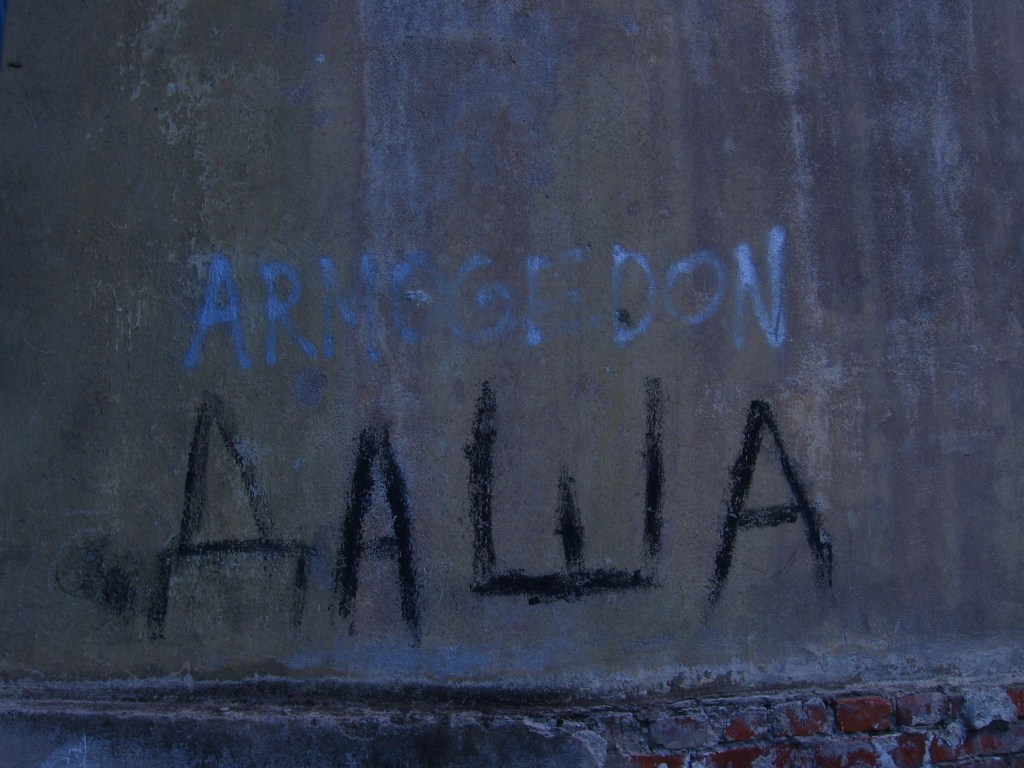
 Foreign Ministry Spokeswoman Maria Zakharova’s comment on Zelensky’s voyage to Washington, D.C. (March 1, 2025)
 Leader of the neo-Nazi regime Zelensky’s visit to Washington D.C. on February 28 is an epic political and diplomatic failure of the Kiev regime.
 The Kiev regime refused to continue talks on a political and diplomatic settlement in the spring of 2022, using lies and fake claims to justify continued hostilities and keep receiving Western military and financial aid.
 has destroyed the opposition,
 The sooner Kiev and the European capitals come to realise this, the closer to a peaceful settlement of the Ukraine crisis we will be.