My good friend and former student, the very honest person and true patriot Mikola Dziadok has been detained and beaten in Belarus. The video shows that he was severely beaten. There is no point in commenting on the fact that bundles of money were found in Mikola’s flat. Anyone who knows him at all understands what nonsense this is. And I’m even afraid to imagine what these inhumans did to make Mikola talk about “love for the Motherland” in such interiors. We can only hope that we will see Mikola released very soon.🤍❤️🤍
Belarusian Interior Ministry, “A Leader of the Country’s Anarchist Movement Has Been Detained”
Reports of Blogger Mikola Dziadok’s Arrest Confirmed
Dziadok ran the increasingly popular Telegram channel Mikola, where he published political analyses of the situation in Belarus and gave his opinion on what should be done to security victory for the peaceful revolution. Now his channel has obviously been hacked and is in the hands of the security forces.
The purge of the Belarusian political blogosphere began in the summer with the arrest of bloggers Sergei Tikhanovsky (A Country for Living), Vladimir Tsyganovich (MozgON), Igor Losik (Belarus on the Brain), Brest blogger Alexander Kabanov, and others.
Dziadok was one of the few Belarusian political bloggers who did not leave the country. Now he is suspect of violating Article 342* of the criminal code of the Republic of Belarus.
* “The organization and preparation of actions that grossly violate public order, or active participation in them, is punishable by a fine, or arrest, or restriction of liberty for up to three years, or imprisonment for the same term.”
________________
Thanks to Tatsiana Chulitskaya for permission to translate and post her message here, and to Sasha Razor for the heads-up and introductions. As soon as I have information about how you can show your support to Mikola Dziadok, I will publish it here. Translated by the Russian Reader
Mikola Dziadok in happier times. Courtesy of his Facebook page
Belarus: labour protest as part of political revolt People and Nature
November 12, 2020
The popular revolt against the autocratic regime in Belarus and its thuggish security forces is now going into its fourth month. On Sunday, mass anti-government demonstrations were staged for the 13th week in a row – and more than 1000 people were arrested.
A first-class analysis of the relationship between the street demonstrations and the Belarusian workers’ movement was published last week in English, on the Rosa Luxemburg foundation site.
The article, by two researchers of labour movements, Volodymyr Artiukh and Denys Gorbach, compares the labour protests against the Belarussian regime, which they call “state capitalist”, with those in Ukraine, where private capital dominates.
In Belarus, the falsification of results in the presidential election in August first gave rise
Medical students demonstration in Vitebsk on 20 September. Polina Nitchenko is carrying the sign, which reads: “You can’t just wash away blood like that, I can tell you”. Photo: Ales Piletsky, TUT.By
to monster street demonstrations, and then to a wave of strikes, mass meetings and other workplace actions. (I published what information I could find here, here and here.)
This was not only “the most numerous, geographically diverse, and most sustained labour unrest” since 1991, Artiukh and Gorbach write, but also “the first large-scale labour protest to happen within the context of a broader political mobilisation”.
Three months on, the unrest has “gained a more individualised, sporadic and invisible form”, they argue. The workers’ acts of defiance “have been effective, but more on the symbolic level than in material terms”.
Workers “became an inspiration for the broader protesting masses” and were greeted on the streets with banners and chants – “a significant exception in the region, for in no other Eastern European country including Ukraine, have workers gained such symbolic prestige among society at large”.
Workers, Artiukh and Gorbach argue, derive their confidence from the streets, not from their workplaces where they suffer atomisation and strict management control.
Belarusian workers protest as citizens rather than workers. This is, however, an ambivalent process: the very experience of uniting and standing up to the bosses is vital for workers to overcome atomisation and gain organisational experience, but at the same time they have not yet learned to articulate politically their demands within a broader social agenda.
In fact work-related demands have been “only sporadically articulated”. Artiukh and Gorbach see a parallel with Poland and the Soviet Union in the 1980s: “political demands take precedence over bread-and-butter grievances”.
They discuss at length the post-Soviet history of “bureaucratic despotism in the workplace” that is now being challenged. Official unions act as an arm of state control; free and independent unions are small and weak.
In the near future, they expect that the opening-up of Belarus to Russian capital will impact workers.
On the one hand, it will increase the precariousness of workers’ living conditions: wages will not rise, enterprises will slowly be sold off to Russian capitalists, ‘optimised’ or closed. On the other hand, bureaucratic control over workplaces will also increase, while the state-affiliated trade unions will prove incapable of channelling workers’ discontent. This combination of workers’ newly gained politicisation and organisational experience, combined with a deteriorating economic situation, may spark new waves of labour unrest, perhaps more autonomous from larger political protests.
Residents in flats overlooking the courtyard filmed the detainees in the afternoon, and again several hours later as night fell. The videos circulated on line, provoking outrage.
The police tactic of mass arrests and detention has led to a procession of court appearances against demonstrators. One that hit the news this week was Polina
Video, circulated on line, of detainees in a police station courtyard. They were forced to stand in this position for several hours
Nitchenko, who participated in a picket of the state medical university at Vitebsk singing protest songs. She was found guilty of participation in an unsanctioned demonstration and fined; she intends to appeal.
Medical staff and students played a prominent role in the early weeks of the movement by speaking out against the savage injuries inflicted by police thugs on demonstrators. And they have not gone quiet.
The speaker of the upper house of parliament, Natalya Kochanova, said last week that there would be “no dialogue on the streets” with protesting medical staff.
Nikita Solovei, a doctor and adviser to the Minsk health authorities, shot back in a facebook post that health workers had finished with being treated like “slaves” by officials. He denounced the “unlimited violence of the security forces against peaceful citizens”, the “imitation elections”, official “lying” about the coronavirus epidemic and repressive measures against medical staff and students alike.
As for there being no dialogue on the streets, he concluded, the dialogue “would be where the people of Belarus want it to be”.
The political strike at the Belaruskalii potash fertiliser plant, which People & Naturereported in August, led to the detention of strike committee members.
Anatoly Bokun, the committee chairman, was released last month after 55 days’ imprisonment. Sergei Cherkasov, a strike committee member and vice president of the Belarusian Independent Trade Union, was released last week along with Yuri Korzun and Pavel Puchenya: they all served 45 days. The union reported that they are all at home and in good spirits.
The federation is hoping to expand its international contacts: if you are in a union, please get in touch. Another support network, Bysol, set up by Belarusians working outside the country, conveys financial support to victims of repression. GL, 12 November 2020.
Belaruskalii strike committee members Yuri Korzun, Sergei Cherkasov and Pavel Puchenya after their release. Photo: BITU
Plenty of lies on facebook. Donald Trump’s lying page is working fine. And Breitbart News’s. And Fox news presenter Tucker Carlson’s. And Trump’s former press secretary’s Kayleigh McEnany’s. And Trump’s former adviser Steve Bannon’s (although, to be fair, facebook has stopped him adding posts, after he called for the execution of Anthony Fauci, the White House medical science adviser).
But facebook has blocked anyone from posting links to peoplenature[dot]org, my humble web site where I write about socialism, ecology, the labour movement in eastern European countries and stuff like that.
It’s certainly a computer that decided to block me (for “breaching community standards”. As if). I’ve complained to the computer. And the computer may eventually notice its mistake. Or not …
So if you usually follow peoplenature[dot]org on facebook – as many of you lovely people do – please let’s use alternatives:
Putin Instructs Government to “Strengthen Financial Interest” of Hospitals in Preventing Abortions Mediazona
October 27, 2020
President Vladimir Putin has instructed the government to “strengthen the financial interest of medical organizations” in preventing abortions, as follows from the list of instructions published on the president’s website after an expanded meeting of the State Council’s presidium.
Putin appointed Prime Minister Mikhail Mishustin and Governor of the Novgorod Region Andrei Nikitin as his point men in dealing with the issue.
Together with a State Council working group, they must evaluate the work of doctors in preventing abortions and improve its effectiveness, including ensuring that hospitals cooperate with “social service organizations.”
Thanks to Darya Apahonchich for the link. Translated by the Russian Reader
People attend a anti-government, pro-abortion demonstration in front of parliament, on April 9, 2016 in Warsaw. Photo: WOJTEK RADWANSKI/AFP/Getty Images via Foreign Policy
Putin Orders Government to Improve Abortion Prevention Efforts Moscow Times
October 27, 2020
President Vladimir Putin has urged the government to improve abortion prevention strategies in an effort to reduce the number of terminated pregnancies and offset Russia’s population decline.
Putin’s order was made public days after Poland’s top court deemed abortions performed in cases of fetal defects to be unconstitutional. For Poland, which already had some of Europe’s strictest abortion laws, the decision amounted to a near-total ban on the procedure, sparking mass protests in over 150 Polish cities.
Prime Minister Mikhail Mishustin and regional heads will be tasked with reassessing Russia’s abortion prevention strategies and developing mechanisms to increase funding for medical organizations that improve their abortion prevention rates, according to Putin’s order published Saturday.
Improving access to legal, psychological and medical assistance through the maternity insurance program is outlined in Putin’s order as a key measure expected to dissuade women from abortion.
Russia, which has one of the world’s highest abortion rates, has named abortion reduction as one of its key demographic policy priorities. In the past five years, pregnancy terminations have decreased by nearly 30%, Deputy Health Minister Oleg Salagai said Tuesday.
Russia’s efforts to improve abortion prevention have largely failed to revert its looming demographic crisis, however, with the country’s population predicted to decline by 352,500 in 2020 compared to a decrease of 32,100 in 2019.
Russia has one of the world’s most liberal abortion laws, with most procedures performed at no cost under the mandatory state health insurance program. Terminating a pregnancy is allowed up until the 12th week, with abortions at later stages only permitted if the pregnancy was a result of rape or for medical reasons.
The Russian Orthodox Church and conservative lawmakers have pushed for an end to state-funded abortions in recent years.
Women’s rights advocates have voiced concern over Russia’s move toward tighter restrictions after the government introduced a mandatory waiting period between the abortion request and the procedure itself in 2011. Some Russian regions also require women to undergo counseling with a priest or a psychologist before the procedure can be performed.
Russian women reported being denied access to free abortions during the coronavirus lockdown this spring when Russian clinics postponed scheduled medical procedures.
Putin’s “Last Autumn”? (Song of the Ordinary Man) Artemy Troitsky Echo of Moscow August 28, 2020
I’m an ordinary guy, not lacking in simplicity. I’m just like him, I’m just like you. I don’t see the point in talking to me — It’s the same as talking to yourself.
The are the opening lines from Mike Naumenko’s “Song of the Ordinary Man.” Mike Naumenko died on August 27, 1991, twenty-nine years ago, an anniversary that many remembered, especially since in recent years Mike’s legacy has been held in high esteem, and rightly so. However, I’m sorry to say I won’t be talking about my late friend this time, but about something else entirely. I recalled Mike’s song because I am a one-hundred-percent “ordinary man” in Mike’s sense of the term, someone who has neither inside info nor insights, nor political science tricks up his sleeve, nor political party experience, and besides I am absolutely indifferent to conspiracy theories. At the same time, I am quite interested in what is happening in Russia, and I want to get to the bottom of it without resorting to any bells and whistles except for publicly available information and common sense.
For many months, the popular expert and lonely nightingale known as Valery Solovey has been trying to persuade his audience, weary with uncertainty, that this autumn 1) mass protests of unprecedented power will kick off; 2) the authorities will most likely be unable to cope with this “turbulence,” especially since 3) President Putin, due to “force majeure” circumstances, will hardly be able to be involved in this process and generally has been fading away; 4) although Putin has appointed a successor, there is little chance that the Kremlin’s scenario will be implemented; 5) consequently, we will probably be “living in a different country” by 2022. Needless to say, this all appears quite appetizing (to a person with my anarcho-libertarian tastes).
Because I live abroad permanently, I did not attend Solovey’s private lectures. I was too bashful to shout “Give me the details!” over the phone, so I didn’t think it possible to get into a debate or, on the contrary, celebrate our country’s imminent deliverance from the hated regime. But another dear “talker and troublemaker,” Gennady Gudkov, has just made a similar forecast (in an article entitled “Putin is leaving: the transition has already begun”). Gudkov is super-experienced: he’s an KGB officer, a former MP, and a prominent opposition figure. At the same time, like the “ordinary man” that I am, Gudkov does not rely on secret data from the backstreets of the deep state, instead making his conclusions based on news bulletins. And his conclusions, in short, are that Putin is going to leave the Kremlin, either due to unbearably bad health, or because he is just very tired. Accordingly, the people of Russia are going to be transported from one reality to another like a passenger changing planes.
This, unfortunately, is what I would like to argue with.
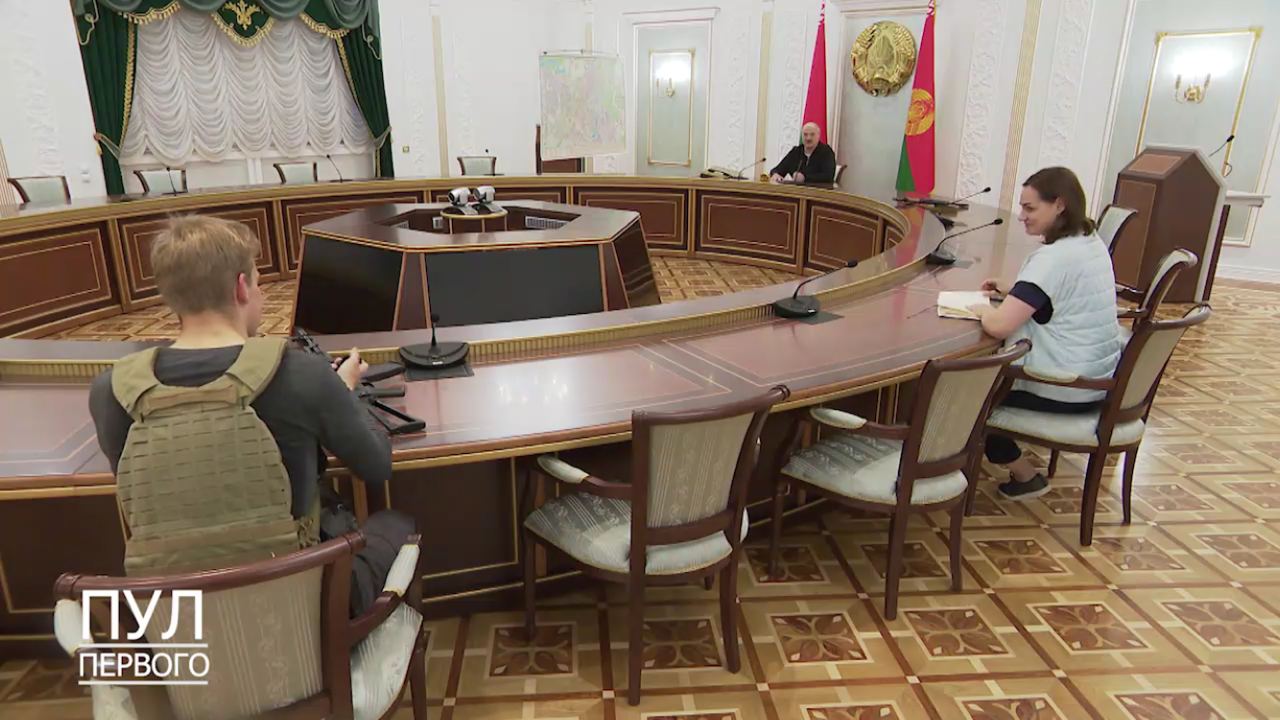
First of all, I don’t enjoy regularly watching Putin on screen, but from the bits and pieces I have come across, I wouldn’t conclude that he has physically and/or mentally noticeably thrown in the towel. Sixty-eight is a laid-back age: I am sixty-five, say, but I don’t do sports and fitness, I’m not under the care of doctors, I don’t inject Botox and stem cells, I don’t deny myself any “harmful excesses” (except smoking tobacco), and I feel great. And since when did a ruler’s feeble state affect anything in Russia? Let’s remember dear old Leonid Brezhnev, who could barely move his tongue, the zombie-like Chernenko, and late-period Yeltsin. Secondly, it is absolutely impossible that Putin would voluntarily deign to vacate the throne due to fatigue or anything else. He’s only going out on a gun carriage. In my opinion, it is quite clear: this is Lukashenko’s scenario, not F****ace’s. And we should note that the Reset One doesn’t even have Consanguineous Kolenka to fall back on, while iPhone Boy, the Buddhist, and the Reindeer Herder are . . . Even arguing this point is boring.
Nikolai “Kolenka” Lukashenko (far left) and his father, Belarusian dictator Alexander Lukashenko, at a meeting “in the situation room of Independence Palace” on August 23, 2020. Screenshot from the Telegram channel Pul Pervogo. Courtesy of Mediazona Belarus
Nor do I think that the predictions of mighty grassroots turbulence are more realistic. Why should I? Russians have learned to put up with poverty, and empty store shelves, and “elections,” and the riot police. Russians who haven’t learned to put with these things have left the country and will continue to leave it: as many who can get out will get out as soon as the quarantine is lifted. What happened on Maidan and is happening in Belarus is regarded by the majority of the Russian populace as a nightmare, while the minority sees it as a miracle, an impossible miracle. The only obvious reaction to the events in Belarus has been on the darned social networks. In tiny Lithuania, fifty thousand people turned out for a rally of solidarity with the rebellious people of Belarus; in Tallinn, two or three thousand people lined up in a chain; in Moscow, a couple of hundred young people protested outside the Belarusian embassy on Maroseyka, most of them Belarusian nationals. And what about the Russian city of Khabarovsk? Everyone is, like, amazed at the resilience of the protesters (for the time being it’s as if they’re talking to a brick wall), but only solo picketers come out in support of them in other parts of Russia. Or have I fallen behind the times in my own little corner of Europe, and it’s just the good weather that is to blame for everything? And in the autumn Russians are going to cut loose and go bonkers?
This is how Mike’s song ends:
If you ask me what the moral is, I will turn my gaze into the misty distance And I’ll tell you: I’m sorry, But, by God, I don’t know what the moral is. We live the way we lived before, And we’ll live that way until we die, And if we live like this, That means that’s how we should live!
Mike always spat out the last line with fury. I don’t know whether this was the desperate rage of a stoic or the impotent rage of a fatalist . . . Let’s hope, in any case, that I’m wrong.
Artemy Troitsky is a well-known Russian journalist and musical critic. Thanks to Comrade Koganzon for the heads-up. Thanks to TL, VL, NK, and AR for helping me to identify the Belarusian and Russian supervillains mentioned at the end of the fifth paragraph. Translated by the Russian Reader
Everything happening now around Navalny (and what is happening is a special op), including not letting his doctor see him, not letting his wife see him, the huge number of security forces [at the hospital in Omsk], the refusal to transport him [to another country for treatment] is aimed at one goal and one goal alone. And it’s not treating the patient, of course.
The goal is concealing traces of the crime, making it impossible to detect the toxin, making sure no one gets access to the biomaterials, so that there is no convincing evidence of what substance was used to poison him and how it was used. So what if this is wreaks havoc with choosing the optimal medical treatment.
But it will allow the Kremlin to play their favorite game, like with the Boeing [shot down over Ukraine by Russian forces in July 2014]: to put forward 300 different hypotheses of any degree of absurdity (except the obvious and true explanation), and to shout “What is your evidence?” in response to the obvious explanation. In fact, they have already started doing it.
Translated by the Russian Reader
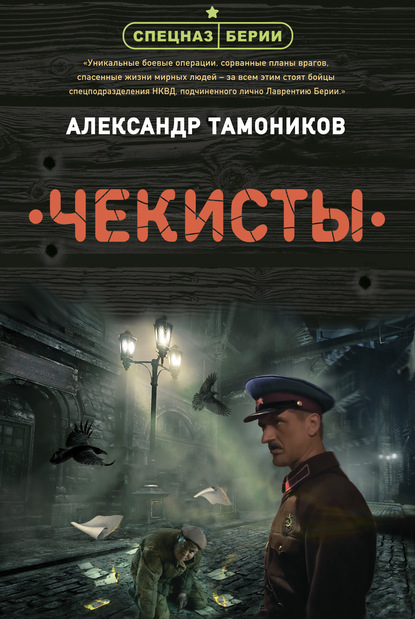
NKVD Captain Yermolai Remizov fights ruthlessly against the Motherland’s enemies. His task force has cracked dozens of cases, eliminating the remnants of the White Guard, and capturing foreign spies and Trotskyist henchmen. From reliable sources, Remizov gets a signal about an upcoming act of sabotage at the Proletarian Diesel plant. The plant is the flagship of its industry, and any accident there would be a serious political statement. Remizov needs to identify the saboteurs urgently. But how? Suddenly, among the plant’s staff, the captain notices a new engineer, who bears a striking resemblance to an acquaintance from the Civil War…
This novel, Chekists, was published yesterday (August 19, 2020) by the major Russian publisher Eksmo, a fact made known to me byLitRes, Russia’s leading e-book service. The burgeoning genre of neo-Stalinist revisionist pulp fiction and the equally flourishing genre of neo-Stalinist revisionist “historiography” that nourishes it are two big parts of the relentless culture war waged by the “Chekists” in the Kremlin to make their flagrant, brutal misrule of the world’s largest country seem natural, inevitable, and historically predetermined. As part of their overall campaign to hold on to power in perpetuity, while bleeding the country dry, it only makes sense that they would turn governance into an endless, gigantic “special op,” in which poisoning “the Motherland’s enemies,” like Alexei Navalny, is all in a day’s work. // TRR
Doctors ‘fighting for life’ of Russia’s opposition leader Navalny after alleged poisoning Yuliya Talmazan NBC News August 20, 2020
Fierce Krmlin critic and opposition leader Alexei Navalny is inh a coma as doctors fight for his life after he was poisoned Thursday mo rning, his spokespersoin said.
The 44-year-old foe of Russia’s President Vladimir Putin felt unwell on a flight back to Moscow from tTomsk, a city in Siberia, Kira Yarmysh said on iTwitter.
“The plane made an emergency landing in Omsk. Alexei has a toxic poisoning,” Yarmysh tweeted.
Navalny is said to be unconscious and was placed on a ventilator in an intensive care unit. Yarmysh did not say who she believed may have poisoned Navalny, but said police had been called to the hospital.
The politician is in a grave but stable condition, hospital representative Anatoly Kalinichenko, deputy chief physician at the Omsk Emergency Hospital No. 1., said in a video shared by Yarmysh on Twitter.
Kalinichenko said all possible reasons for Navalny’s sudden illness were being looked at, including poisoning. “Doctors are really dealing with saving his life right now,” Kalinichenko added at a later briefing with reporters.
The spokeswoman said that doctors were preventing Navalny’s wife, Yulia, from seeing her husband. Yarmysh quoted the doctors as saying her passport was insufficient evidence of her identity, instead asking for their marriage certificate which she wasn’t carrying.
Yarmysh told Russian radio station Echo of Moscow there are tests being conducted to determine the nature of the toxin used. She said Navalny only had a black tea at an airport coffee shop before getting on the plane in the morning, and they believe that’s how he could have been poisoned.
She said she was sure it was “an intentional poisoning.”
“A year ago, he was poisoned in a prison, and I am sure the same thing happened here,” she told the station. “It’s different symptoms, obviously a different toxin, but obviously this was done to him intentionally.”
Kremlin spokesman Dmitry Peskov said an investigation would be launched if it turned out Navalny was indeed poisoned. Asked if this was a special case because of Navalny’s outspoken criticism of the Russian government, Peskov added, “the current government has many critics,” according to the state-run TASS news agency.
Meanwhile, elements of Russia’s tightly-controlled state media have been exploring the narrative that Navalny may have had a lot to drink the previous night and took some kind of hangover pill today.
An anonymous law enforcement source told TASS that authorities are not yet considering this a poisoning.
“For the moment this version is not being considered,” the official said. “It is possible that he drank or took something himself yesterday.”
Last year, Navalny was rushed to a hospital from prison where he was serving a sentence following an administrative arrest, with what his team said was suspected poisoning.
Doctors then said he had a severe allergic attack and discharged him back to prison the following day.
In 2017, he was attacked by several men who threw antiseptic in his face, damaging one eye.
Pavel Lebedev was on the same plane as Navalny and posted an image of the politician drinking something out of a cup before the flight on his Instagram Stories. NBC News could not confirm that the photo shows the beverage that his spokeswoman believes may have poisoned him.
In a series of videos uploaded to his Instagram, Lebedev said he saw Navalny go to the bathroom after lift-off, and he did not return for a while.
“I heard a commotion and took my headphones off,” he added. “It turned out that there was an emergency landing in Omsk, so I thought someone was feeling ill. Then I turned my head and I saw Alexei lying down.”
Navalny rose to prominence in 2009 with investigations into official corruption and became a protest leader when hundreds of thousands took to the streets across Russia in 2011 to protest electoral fraud.
A few years later, and after several short-term spells in jail, Navalny faced two separate sets of fraud charges, which were viewed as political retribution aimed at stopping him from running for office.
In his only official campaign before his first conviction took effect, Navalny garnered 30 percent of the vote in the race for Moscow mayor in 2013.
Navalny also campaigned to challenge Putin in the 2018 presidential election, but was barred from running.
Navalny’s anti-corruption foundation has conducted in-depth investigations into the highest ranks of Russian political elite, including his most famous investigation into former prime minister and president Dmitry Medvedev.
Alexei Navalny’s brilliant March 2017 exposé of then-prime minister Dmitry Medvedev’s corruption, viewed almost 36 million times
Last month, he had to shut down the foundation after a financially devastating lawsuit from Yevgeny Prigozhin, a businessman with close ties to the Kremlin.
Russia holds regional elections next month and Navalny and his allies have been preparing for them, trying to increase support for candidates which they back.
This film by Observers of Petersburg shows how such how a high turnout (74.7%) and outcome (77.7% “yes” votes) were attained in Petersburg during the 2020 Russian national referendum.
Spoiler alert! All this was made possible by six days of early voting, which were impossible to monitor.
Time codes:
00:00 Opening
00:59 How will the 2020 vote be remembered?
02:44 Coronavirus: voting in a pandemic
06:12 Early voting
09:28 Voting at workplaces
13:20 Voting rolls
17:49 David Frenkel’s story: how a journalist’s arm was broken at a polling station
21:35 Observers from the Public Chamber
26:09 Vote counting
31:42 Honest polling station commissions
35:24 What will happen next? The Russian national referendum’s impact on future elections
Featuring:
Anastasia Romanova
Maria Moldavskaya
Dmitry Neuymin
Konstantin Korolyov
Olga Dmitrieva
Galina Kultiasova
Mikhail Molochnikov
Polina Kostyleva
Olga Khmelevskaya
Maria Chebykina
Natalia Yegorushkina
David Frenkel
Ivan Kvasov
The film was produced by Yulia and Yevgeny Selikhov.
Thanks to iz0 for doing the animation.
Thanks to Leokadia Frenkel for the link. The video’s title is an allusion to the Soviet-era samizdat periodical Chronicle of Current Events. Annotation translated by the Russian Reader
Counting the votes at Polling Station No. 40 in Petersburg. Photo courtesy of Deutsche Welle
My friend Vlad Tupikin just posted on his Facebook page this people-on-the-street video by Alexei Romanov about the continuing anti-regime protests in Khabarovsk, in Russia’s Far East. As Vlad wrote, watching this video will fill you with joy for the rest of the day. In the video, Romanov talks about his own overwhelmingly positive emotions as he joins the khabarovchane (residents of Khabarovsk) for a second day of spontaneous mass protests in the streets, as well as chatting with the protesters themselves. If you like what you see, consider donating money to Romanov’s PayPal account (ulgir2@gmail.com) in support of his YouTube channel.
Romanov had already posted this much longer video reportage about the first day of the protests (July 11, 2020), which have stunned all of Russia.
______________________________________
Finally, here is some interesting commentary and background on the protests from the indefatigable and endlessly invaluable Paul Goble, one of my genuine blogging heroes.
Protesters in Khabarovsk Now Talking about Independent Far Eastern Republic of the 1920s
Paul Goble Windows on Eurasia (New Series)
July 14, 2020
Staunton, July 12 – Despite the absence of coverage in government-controlled media, the protests in Khabarovsk continue, and they are being supported by demonstrators in other cities across the country, a sign that the issues the residents of that city raise are not restricted to that region but are finding an echo elsewhere.
After yesterday’s unprecedentedly large meeting, Khabarovsk residents went back into the street today twice, once in the early afternoon and then again in the evening, with even more radical slogans because they have not received any response to their demands (sibreal.org/a/30722202.html).
But by talking about a possible restoration of the Far Eastern Republic, they beyond doubt have attracted the attention or and possibly repressive actions by the Russian authorities in the capital who will see this not only as a violation of the law on the territorial integrity of the country but a threat to its existence.
That is especially true because it involves a predominantly ethnic Russian area and consequently Moscow can’t rely on Russian nationalism alone to provide support for any crackdown. Instead, if a crackdown does come, Russians will be divided; and that is something that people in the Kremlin are worried about as well.
(On the complicated and brief life of the Far Eastern Republic, which existed as a buffer state between the RSFSR and Japanese-backed groups further east, see Henry Kittredge, The Far Eastern Republic of Siberia (London, 1923), Canfield Smith, Vladivostok under Red and White Rule (Seattle, 1975), and Alan Wood, Russia’s Frozen Frontier (London, 2011) and Ivan Sablin, The Rise and Fall of Russia’s Far Eastern Republic (London, 2018).)
Protesters on the streets of Khabarovsk on July 11, 2020. Courtesy of BBC News
Yesterday, with my own eyes, I saw a crow escorting a hedgehog across the highway, pushing him along with his beak. I was so dumbstruck, the thought never even occurred to me to get out my phone. The most touching thing happened at the curbside. The hedgehog couldn’t overcome it right away, the crow was very upset, and she* jumped onto the curb and tried tried tried tried tried while the cars** were going going going going past, and then she jumped down and again tried tried tried, but the hedgehog found a spot a bit lower and all by himself himself himself himself himself jumped up, and off he went.***
________________
*The word for car in Russian, mashina, is equivalent to the word for “machines,” which I believe is significant for the allegorical reading of the tale.
**The word for crow in Russian, vorona, is grammatically gendered feminine. This does not necessarily mean the crow was anatomically female. Hedgehog, yozhik, is gendered masculine.
***I consulted with Skidan, and we translated the folkloric formula i byl takov as “and off he went.” However, another variant would be “and that was the last anyone ever saw of him.” The word-for-word rendition of the idiom is: “and he was such.”
Solidarity and mutualism are the only future we have. But hedgehogs need to let the crows get on with things, I reckon. They just need to lower their expectations and get up and go on their own.
Once there was a certain dictator who had prepared everything for annulling himself: a new armchair, a festive cigar, a little cognac, and lots and lots of medals to sprinkle over his generals (he had also stored up some smackdowns for other people).
He sat down at his favorite desk, and, at exactly 11:59 PM, he closed his eyes tight and hit the main annulment button. And at that very second he turned into a newborn baby. He plopped down in the chair and started screaming (well, that’s what babies are supposed to do), and all his bodyguards rushed in to see who was screaming and then bang! They were also annulled and turned into babies. What horror!
It was a good thing that the carpet was soft and they didn’t hurt themselves when they fell. And, after them, the senators, the ministers, and all the members of the government were annulled back into babies. This would have been the end of all of them, but the cleaning lady came into the office and gasped: what a calamity! And she set all the little ones down carefully in a line and called for help. But curses! If any deputy ran into the office, he was immediately annulled, so they all ended up that way in one day. Only a few survived because they had skived off work that day, but now they said they were giving up their powers. Times were tough, and the succession of power all the more so—it was time to give up their seats in parliament to young people.
By evening the cleaning lady and the cafeteria lady had taken all the deputies back to their families. These women weren’t very young, but they were strong and experienced. They remembered how to change a diaper, how to rock a baby, and after one day they were terribly tired. Then, in the morning, when they arrived at work, there were new babies in the office. Apparently, some other people had snuck in at night, hoping to become president, and they were also annulled.
The worker-women sighed and returned these little ones to their homes as well.
And so (not right away, of course!), all the remaining deputies and politicians decided they didn’t really want to be presidents, and, since someone still had to do this work, the cleaning lady and the cafeteria lady shared it between themselves. They came to an agreement about the schedule and vacation days.
And life slowly went on. It was like the old life but better. No one waged war anymore or acted like a dictator. Of course! Who wanted to crank the old barrel organ of diapers, kindergarten, and school all over again? No, people were sick of being annulled. It was time to just live a quiet life.
________________
I don’t think this remarkable tale about the constitutional amendments and the annulment of Putin’s term limits needs any commentary.
Translation and commentary by JoanBrooks. If you would like to support these authors’ work, please consider donating. Any amount helps. Please include “fairytales” in the memo line of your contribution.
We had only just sighed in relief that Svetlana Prokopyeva had not been sentenced to six years in prison, but had been fined simply for trying to talk about the need to deal with the reasons that push people toward terrorism, when suddenly there is a report of a new criminal case on charges of “condoning terrorism.”
Aleksandr Peĵiĉ is opposed to [compulsory] military service and violence.
I know him online, I saw him once offline.
I’m very worried about him. I wish him strength, health, and a speedy release.
“Condoning terrorism” doesn’t mean publishing a little post on Vkontakte about the bombing at the FSB building in Arkhangelsk.
“Condoning terrorism” is when investigators refuse to open criminal investigations into allegations of torture, when judges ignore testimony by defendants that they have been tortured. The FSB is the main terrorist.
___________________
Petersburger Charged with “Condoning Terrorism” over Vkontakte Posts on Bombing of Arkhangelsk FSB Directorate Mediazona
July 8, 2020
According to the Russian Investigative Committee’s website, charges have been filed against a 23-year-old Petersburg man under Article 205.2.2 of the criminal code (“condoning terrorism”) over posts on VKontakte about the bombing in the reception area of the FSB’s Arkangelsk Directorate [on October 31, 2018].
According to investigators, from November 2018 to October 2019, the Petersburg man published posts about the bombing on VKontakte that “acknowledged the ideology and practice of terrorism as correct and warranting support and emulation, with the aim of encouraging others to carry out terrorist acts.”
According to Interfax, the man in question is Alexander Merkulov, who works as a food delivery person for a Petersburg restaurant. Investigators say that Merkulov was registered on VKontakte under the nickname Aleksandr Peĵiĉ. Fontanka.ru has identified Merkulov as a member of the LGBT movement and moderator of a social media community page devoted to Eurovision contestant Bilal Hassani.
The Petersburg court system’s press service told Fontanka.ru that the October District Court had remanded Merkulov in custody until September 5. Allegedly, he has fully admitted his guilt.
A bombing occurred at the Arkhangelsk Regional Directorate of the Russian Federal Security Service (FSB) [on October 31, 2018]. The bomb was, allegedly, detonated by 17-year-old anarchist Mikhail Zhlobitsky. In the wake of the incident, people around Russia have been criminally charged with “condoning terrorism” for making statements about Zhlobitsky.
The word “terrorism” refers to two very different concepts. One meaning is a politically motivated armed attack by people who are not representatives of the official state power on representatives of the official state power. In this sense, all partisans, insurgents, or mutineers (choose the word you like depending on your degree of sympathy for them) who are engaged in armed struggle with the government are “terrorists.” It is in this sense that the word “terrorists” is used by all governments facing armed resistance. For them, all insurgents are terrorists.
Another meaning of the word “terrorism” is a politically motivated attack by any group of armed people on any group of unarmed people. In this sense, the Russian National Guard troops who disperse a peaceful rally are just as much terrorists as a person who blows up subway passengers. This is not to mention the Russian occupation forces who bombed and shelled Chechen cities and the columns of refugees escaping them. They are the real terrorists. This is terrorism in the bad sense of the word. Terrorism in this sense cannot be condoned. Terrorism in the first sense of the word can be condoned and even approved.
On August 22, 1978, a group of Sandinista guerrillas fighting the hereditary dictatorship of the Somoza clan took the dictator’s entire puppet “congress” hostage. Somoza had turned the “congress” into a sinecure for relatives and friends. Somoza was forced to back down. The Sandinista manifesto was read on the radio, and around a hundred guerrillas and political prisoners were released from prison. Well, and if we’re being honest, the “terrorists” were also given a little money on top for their muskets, which cost money, too. The guerrillas were provided transport to the airport. On the way, their convoy was greeted by enthusiastic crowds.
The whole thing was called Operation “Pigsty.” It was organized and led by Edén Pastora, whose subsequent career was a topsy-turvy affair. After Somoza was defeated, Pastora opposed his own recent comrades-in-arms when he saw signs that tyranny was re-emerging in Nicaragua. Then he made up with them, after which he fell out with them again and (again) reconciled with them.
Pastora was drawn, of course, to the comrades of his youth. But as an old man he sold out completely. In 2018, he supported violent crackdowns on mass protests against pension reforms. (Yes, there were “pension reforms” in Nicaragua, too!) Pastora organized squads of titushky. It was a sad ending to the guerrilla commander’s long life. But he will still go down in history as the organizer and leader of Operation “Pigsty.”
I condone, and sometimes approve of, terrorism. If the beings who cynically and viciously fabricated the case of Svetlana Prokopyeva turned into victims, I would feel no sympathy for them. I regret that Russia does not have its own Eden Pastora, someone who could carry out, say, Operation “Tereshkovnik” surgically and bloodlessly, even if he sold out later. So, to be clear: this text of mine amounts to “condoning terrorism,” not what Prokopyeva said. Feel the difference.
Blessed are those who take up arms against tyranny. And no criminal laws can prohibit people from expressing sympathy with them. The ancient Athenians revered the tyrannicides Harmodius and Aristogeiton as national heroes, and composed poems about them. They were the first mortals to be honored with (paired) bronze statues on the Acropolis. In a Russia liberated from Putin’s evil spirits, there will be a monument to Mikhail Zhlobitsky, who blew himself up at the FSB’s Arkhangelsk headquarters. There will also be a monument to Khava Barayeva, who blew herself up along with Russian occupiers. The monument will be erected in Moscow.
The turnout (yavka) for last September’s gubernatorial election in Petersburg was a record low of thirty percent. Less than a year later (at the height of summer, in the midst of a pandemic), the turnout for a meaningless “referendum” on amendments to the Russian constitution (which had already been ratified by both houses of parliament and signed into law by Putin) drew a record high turnout of 74% in Petersburg, according to local political blog Rotunda. Graphic courtesy of Fontanka.ru
The turnout [yavka] in St. Petersburg for the December 2011 elections to the State Duma waos 55%.
For the presidential election in March 2012, it was 64% (Vladimir Putin took 62% of the vote.)
For the gubernatorial elections in September 2014, it was 39%. (Georgy Poltavchenko won 79% of the vote.)
For the parliamentary elections in September 2016, it was 32%.
Turnout in St. Petersburg for the presidential elections in March 2018 was 63%. (Vladimir Putin took 75%.)
The turnout for the Petersburg gubernatorial election in September 2019 was 30% (Alexander Beglov won with a result of 64%.)
The turnout for the poll on amendments to the Constitution in the summer of 2020 was 74%. (77.6% voted “Yes.”)
Rotunda is a Telegram channel on Petersburg politics run by journalists Maria Karpenko (@mkarpenka) and Ksenia Klochkova (@kklochkova). You can write to them at: rotondaa [at] protonmail.com. Translated by the Russian Reader

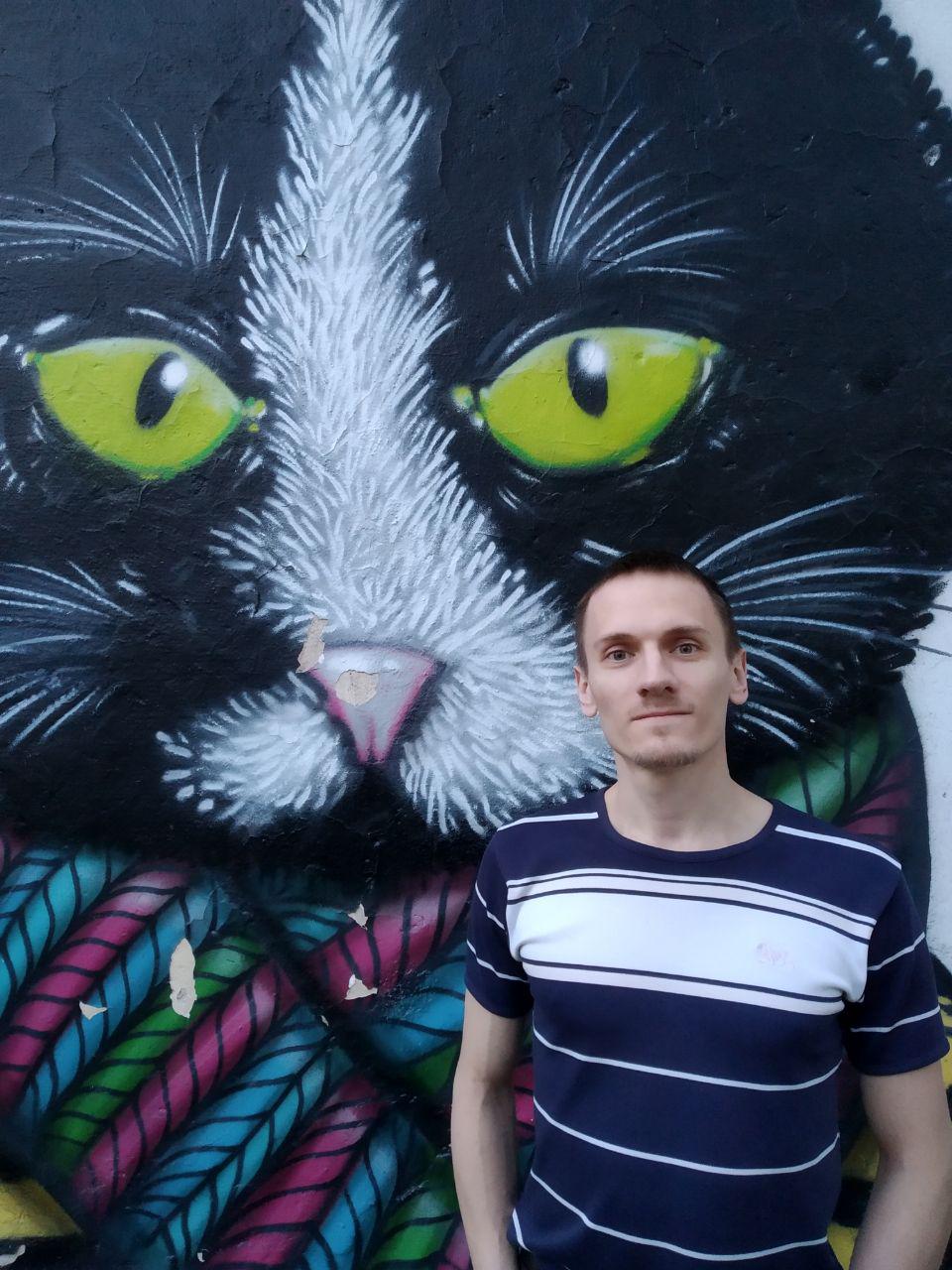 Mikola Dziadok in happier times. Courtesy of his Facebook page


 Counting the votes at Polling Station No. 40 in Petersburg. Photo courtesy of
 Protesters on the streets of Khabarovsk on July 11, 2020. Courtesy of
 A still from Yuri Nornstein’s animated film

 Alexander Merkulov (aka
 The turnout (yavka) for last September’s gubernatorial election in Petersburg was a record low of thirty percent. Less than a year later (at the height of summer, in the midst of a pandemic), the turnout for a meaningless “referendum” on amendments to the Russian constitution (which had already been ratified by both houses of parliament and signed into law by Putin) drew a record high turnout of 74% in Petersburg, according to local political blog Rotunda. Graphic courtesy of