When the Night Lanterns Sway

When the Night Lanterns Sway: It’s Useless to Try and Beat the State on Its Own “Legal Turf”
Alexander Skobov
Kasparov.ru
February 13, 2021

On February 9, Leonid Volkov, head of Navalny’s network of local teams, announced a flash mob for February 14, Valentine’s Day: residents of large cities should go into their courtyards at 8 p.m. and turn on their mobile phone flashlights. This is an attempt to adopt Belarusian know-how [see the article, below]. The idea is that residents of the same yard who are sympathetic to the protest movement but don’t know each other can get acquainted and create a grassroots network for rapid notification and mobilization.

Putin’s occupation army has reacted hysterically to the undertaking. A yahoo from the Assembly for Approving the Cutie Pie Slutsky’s Sexual Harassment (colloquially known as the State Skank) compared the flashlights in the courtyards with the signals of saboteurs guiding German bombers to their targets. The Investigative Committee, the Interior Ministry, and the Prosecutor General’s Office declared it a call for “mass rioting” and threatened potential flash mob participants with criminal charges. Roskomnadzor has been chasing down internet media officially operating in Russian Federation and forcing them to delete reports about the planned event.

The point here is not a “shutdown of law in Russia,” which, according to Vladimir Pastukhov, occurred after Navalny’s return. A completely anti-legal, multi-level system for cracking down on street activism has long been erected in Russia. It consists of three elements: 1) laws aimed at restricting the right to public expression of opinion; 2) a dishonest and broad interpretation of these laws by the police and the courts; 3) and pure lawlessness, as when the police engage directly in frame-ups and fakery, and the obedient courts pretend not to see it.

Those who tried to defend the Article 31 of the Russian Constitution [“Citizens of the Russian Federation shall have the right to gather peacefully, without weapons, and to hold meetings, rallies, demonstrations, marches and pickets”] focused mainly on the third element and sluggishly butted heads with the authorities over the second element, while almost ignoring the first element. Meanwhile, it was all about the first element. The second and third elements were just an appendix to it.

The Code of Administrative Offenses contains an article that punishes involvement in unauthorized events. The shapes and features of this involvement are not described. They are listed in Federal Law No. 54 (“On Mass Events”). In particular, it says that at a mass public event, participants express their attitude to current socio-political problems by chanting slogans and holding up placards.

For many years, opposition activists have been looking for an “unauthorized” way to publicly voice their opinions that would not get them detained. For a long time, they unsuccessfully tried to prove in the courts that if they did not chant slogans and did not hold up placards, there was no protest rally as such. However, the list of ways of participating in a rally, as enumerated in Federal Law No. 54, is not exhaustive. That is, any way of voicing one’s stance is considered an indication of having participated in a public event. That is, expression of a position as such is considered “participation.”

The phrase “expressed [his/her] attitude to current socio-political problems” is often found in police reports on the arrest of people involved in unauthorized public events. The phrase sounds crazy and comical when it comes to legally justifying arresting people and charging them with administrative offenses. It was not invented by the police goons, however. It was borrowed from the definition of a protest rally contained in Federal Law No. 54.

In fact, this coinage, found in police reports and “court” rulings, expresses the collective unconscious of the bureaucratic police regime—its dream, its loftiest ideal. Ordinary citizens should not publicly voice their opinions on current socio-political issues. It is better for them not to have such opinions at all. Voicing opinions is the prerogative of the authorities.

Hence, the very fact that an ordinary citizen voices their socio-political position is considered an anomaly, a deviation from the norm, a violation of public order. And when you start arguing with the authorities at the police station or in “court,” asking them what socially dangerous or simply harmful actions were committed by a citizen who was detained for publicly expressing their position by attending an outdoor rally, they sincerely don’t understand what you are talking about. It is clear to them that publicly voicing a position itself is a socially harmful action if ever there was one.

Since (they say) the greatest geopolitical catastrophe happened, and we are now forced to temporarily recognize a citizen’s right to voice their position at least formally, we’ll load your opportunity to exercise this right with so many conditions that you’ll rue the day you tried to do it. And they really have been doing just this—purposefully, consistently, for the entire length of Putin’s rule.

The lawless authorities refuse to authorize opposition rallies at central and iconic locations under completely far-fetched and false pretexts, and our “managed” injustice system almost always takes the side of the authorities. On the other hand, the “legislators” in the State Skank seek to block any chance people have to publicly voice their stance without prior approval. As soon as the opposition finds a new way of protesting, enabling it to circumvent previously imposed bans, a new amendment or a new law immediately follows, sealing this loophole as well.

It is useless to try to win against the state on its own “legal turf” as long as it has the will and power to shut society up. The state’s will can be opposed only by society’s will not to obey anti-legal prohibitions. The point of unauthorized public events is that they demonstratively violate prohibitions on “unauthorized” expressions of one’s opinion.

I have already had occasion to write that prohibiting people from publicly expressing their attitude to current socio-political issues without permission is an important part of the system for manipulating the admission of players to the “political market.” The entire social and political system that has taken shape in Russia is based on this system of manipulation. In order to reliably guarantee citizens their constitutional right to freely express their attitude to socio-political issues peacefully and unarmed, we have to replace the entire socio-political system.

Translated by the Russian Reader

When the Night Lanterns Sing

When the night lanterns swing,
And it’s dangerous for you to walk the dark streets,
I’m coming from the pub,
I’m not expecting anyone,
I can’t love anyone anymore.

The girls kissed my feet like they were crazy,
A widow and I drank through my father’s  house.
And my cheeky laugh
Was always a success,
And my youth has cracked like a nut!

I sit on a bunk like a king at a birthday party,
And I dream of getting a drab ration.
I look out the window like an owl:
Now I don’t care!
I’m ready to put out my torch before anyone else.

When the night lanterns swing,
And the black cat runs down the street like the devil,
I’m coming from the pub,
I’m not expecting anyone,
I’ve broken my lifetime record forever!

Lyrics by Gleb Gorbovsky. Source: a-pesni. Performance by Beseder and Lyonchik. Translated by the Russian Reader

A protest in Minsk. Photo: Valery Sharifulin/TASS. Courtesy of MBKh Media

Belarusian Courtyard Protests Model for Latest Navalny Tactic
Window on Eurasia
February 13, 2021

Staunton, February 11 — The Navalny organization’s decision to shift at least for a time from mass public protests to smaller but perhaps even more numerous demonstrations in the courtyards of Russian apartment blocks is not a unique Russian innovation. Instead, it has its roots in what Belarusian protesters have been doing since last fall.

In Belarusian cities, MBKh journalist Arina Kochemarova says, this shift has led to the emergence of whole areas devoted to protests and to the first flowering of what many people there hope will result in the formation of local self-administration, yet another way they hope to undermine Alyaksandr Lukashenka’s regime.

In these Belarusian courtyards, she points out, places that people have christened “squares of change,” people fly the white-red-white Belarusian flag, organize concerns and flash mobs, and in many cases get to know their neighbors better than they ever have in the past, something that by itself promotes solidarity against the government.

Yegor Martinovich, editor of Belarusian Nasha Niva newspaper, says that Belarusians made the shift because of the rising tide of repression and arrests of those taking part in major demonstrations. Fewer people are taking part in the courtyard protests, but at the same time, he suggests, courtyard meetings are forming a sense of solidarity for the future.

Courtyard protests are not only harder for the authorities to counter, but they also can take a variety of formats ranging from flash mobs to the emergence of genuinely independent community organization. “Civil society has begun to flourish everywhere which in general is a good thing. People have begun to unite,” the editor says.

The biggest problem with this shift, Martinovich says, is that the media pays a great deal more attention to one big demonstration than it does to many smaller ones, even if the smaller ones collectively include more people and have a greater impact. Moreover, Lukashenka is learning how to react, cutting off utilities where there are white-red-white flags.

Now, this Belarusian tactic is coming to Russia, intensifying fears among the authorities that the Navalny movement could develop the way in which the Belarusian one has. Russian officials have already made clear that they will crack down hard early on lest the shift from the streets to the courtyards takes off.

Evil vs. the People

Khabarovsk, January 31, 2021. Photo: Yevgeny Pereverzev. Courtesy of Vitaliy Blazhevich

Vitaliy Blazhevich
Facebook
February 5, 2021

The most important observation of the last few weeks is that there were more than enough riot police for all the cities: each detainee was dragged away by five or six riot policemen. They have enough batons, shields, and paddy wagons, they have stun guns, rubber-bullets pistols, and even combat firearms. Evil was prepared for the new wave of protests. Evil did not sit idly by all this time: it built up its strength and increased its forces. Evil has stolen enough from the people to maintain and equip this vast army.

Well, never mind, we’ll see who comes out on top. After all, it is quite obvious that this time Putin is not opposed by a particular social stratum, by a particular political force, or by one region. The entire country and the entire people have risen up, and Putin’s “power vertical,” including the riot police, cannot be regarded as part of the people.

Translated by the Russian Reader

There Are No Exceptions to the State of Exception

Sergey Abashin
Facebook
February 2, 2021

I have always said that many practices that are later transferred to Russian citizens are first tested out on “migrants.” Mechanisms for securing human rights and ordinary social rights and living conditions first stop functioning for migrants. They were the first to get what amounted to criminal punishments for administrative violations. They were the first to be stripped of their rights as workers. They were the first to be subjected to a universal system of total electronic surveillance. It is hard not to notice, for example, the link between the concept of “illegals” and the concept of “foreign agents.” It is symbolic that people illegally detained in Moscow for coming out to protest an anti-constitutional regime are now being transported to Sakharovo, a place where foreign nationals are imprisoned, often illegally. It’s very simple: there can be no human rights and rule of law if even one group is (initially with the public’s general consent) excluded from the protection of these laws and rights. Sooner or later, the exceptions will apply to everyone else.

Darya Apahonchich
Facebook
February 1, 2021

Re: the police search

THIS MESSAGE (MATERIAL) WAS CREATED AND (OR) DISTRIBUTED BY A FOREIGN MASS MEDIA OUTLET PERFORMING THE FUNCTIONS OF A FOREIGN AGENT, AND (OR) A RUSSIAN LEGAL ENTITY, PERFORMING THE FUNCTIONS OF A FOREIGN AGENT

While have never been a neat freak, I have never let things get like this. I had collected the posters for the Museum of Political History, and now I am sorting them out. Thank you for your words of support and anger: they help a lot. The children are still with relatives: I want to clean the place up before they come back. In the meantime, I have restored our SIM cards and bought new phones for myself and my daughter.

You ask how you can help? Stop by if you’re going to be near Vladimirskaya subway station today or tomorrow: we’ll drink coffee and rummage through my things. I’ve also been asked whether I need money to buy computers. [The police confiscated all the electronic devices in Apahonchich’s flat.] Of course, they’re obliged to return them, but in practice they often take their time doing it. They might turn them over in six months or give them back broken.

And I want to say a huge thank you to the advocates who were on duty in the help groups. Yesterday I watched how these wonderful, brave people work, and I was filled with admiration for them.

I am very worried about all the victims [of the mass arrests on Sunday, January 31].

I’m writing my [Sberbank] card number down here. If I get more money than I need for new computers, I will transfer the surplus to Mediazona and OVD Info.

4276 5500 7321 7849

Although I look rumpled (I didn’t sleep for almost two days), I’m in good spirits.

Svetlana Prokopyeva
Facebook
February 1, 2021

More than two years ago, I wrote a column about how the law enforcement system in our country had turned into a system of repression, and the state’s monopoly on violence had been turned against ordinary citizens who had grievances with the regime. As an example, I cited the arrest of Artyom Milushkin, the organizer of an authorized rally against corruption. On his way to the rally, he was thrown face-first into the mud by two men, who didn’t identify themselves. It later transpired that they were police officers.

It seems like such a minor thing today, doesn’t it?

And it is not surprising, given that the official response to my opinion piece was a criminal case against me, not an attempt to explain or discuss anything.

Of course, I was not the first to catch this trend, but it seems that I was the first to get such a clear and abrupt response. It was my text, the ideas I expressed, and my individual judgment that were declared the corpus delicti. My criminal case seems to have marked a watershed: we can no longer have our own opinions. People are tried for their opinions. Don’t ask questions.

What is happening on the streets today shows how cohesively the state repressive machine has crystallized. I don’t know what kind of orders those dashing fellows in helmets receive before going to disperse the guys and gals, but it is clear from the confident swings of their billy clubs that they see the enemy before them. The regime they serve has declared war on those who accuse it of theft and murder, although it seems that they already constitute a majority.

This is the death certificate for public politics in Russia, which was the point of my column “Crackdowns for the State.” For publishing it, I was found guilty of “condoning terrorism” (punishable under Article 205.2 of the Russian criminal code) and fined 500,000 rubles. I have an appeals hearing tomorrow at 10 a.m., but I don’t think we’ll be able to overturn the verdict, especially at a time like now.

I wrote that column in the belief that dialogue was possible, that it was not only necessary, but a real possibility, that it was still possible to prevent and stop what was happening, to force the authorities to think hard. Unfortunately, I no longer have that feeling.

(The photo, above, shows me halfway to the paddy wagon, but I never made it there because “Sorry, we didn’t figure out right away [that you were a journalist].”)

Translated by the Russian Reader

Putin’s Base

Jenya Kulakova
Facebook
January 30, 2021

A random interlocutor told me about their friend, a Russian National Guardsman. Last Saturday, he worked the protests in St. Petersburg from 9 am to 10 pm without a single lunch break. After the elections in Belarus, his unit was taken to Pskov, where they removed all their insignia: if necessary, they could be shipped to Belarus to beat up the protesters. For a week, two hundred of them lived in a school, sleeping on mattresses tossed on the floor: “It was great way to get covid! But nobody gives a shit.”

They weren’t exported to Belarus, so they went home. The friend makes 40 grand a month. [40,000 rubles is approximately 435 euros at the current exchange rate.] “Do you think he loves Putin? No. But he took out a mortgage, and he has to pay it back.”

I wonder: do they really do what they do for forty thousand rubles a month and humiliating “working conditions”? Or do they do it out of conviction?

But they are now being forcibly vaccinated, and so the friend is thinking about quitting. Not because he has to harass peaceful fellow citizens, mind you.

The Flying Spaghetti Monster

Dmitry Gudkov
Facebook
January 30, 2021

All day I was planning to write about the awful things that the regime has done, but every time it seemed that they couldn’t do more and go lower, it turned out that no, they could, and then some. So, now I will summarize what were probably the most egregious things that happened during the day to remind you once again that we are not dealing with “police,” “judges,” and “prosecutors,” but with people (?) who are ready to commit any crime in order to preserve their power, salaries, and AMP license plates.

In Tver, the security forces came for the deputy coordinator of Navalny’s local HQ, Pavel Kuzmin. When he refused to come out, they cut off his electricity and internet, and then grabbed his fiancee. He surrendered.

In Yakutsk, the security forces came for Sergei Tikhy and Viktoria Postnikova, a couple who support the shaman [Alexander] Gabyshev and have a large family. The security forces shined a laser in their windows (apparently they had the family in their sights), and it seems that they still have not left.

In Moscow, the security forces came for the editor-in-chief of Mediazona Sergei Smirnov when he was out walking with his young child. Now he is in the holding cage at the Tverskaya police precinct, a place I know well. He is accused of participating in the demonstration on January 23, although at the time he was at home coordinating his website’s news coverage of the event.

In Nizhny Novgorod, the security forces came to the special detention center to visit the coordinator of Navalny’s local HQ, Roman Tregubov. They threatened him into reading on camera a text renouncing the protests (which he has now disavowed). I should explain that Roman had every reason to take the threats seriously: Nizhny, which is only three and a half hours from Moscow by train, is known for the insane torture that the local “anti-extremism” police practice. They made one guy sit naked on an anthill, and then for a long time publicly mocked him on “anonymous Telegram channels.”

The security forces in Nizhny also came for my friend Mikhail Iosilevich, who had already been charged with two felonies for cooperating with Open Russia and for not informing the authorities about his dual citizenship. Terrible crimes! Today, a court changed his pre-trial restrictions and remanded him in custody to a pre-trial detention center, and in this case too they hastened to mockingly report this fact on an “anonymous Telegram channel.”

It was after her apartment was searched as part of the case against Ioselevich that Irina Slavina set herself on fire and died.

This story is very personal to me. I know Ioselevich and knew Slavina, and I like visiting Nizhny. Mikhail was always willing to help me and local activists, and he had fun founding the local branch of the Flying Spaghetti Monster Church. But only cops—angry, offended, and embittered—can “have fun” in Russia nowadays.

I used to appeal to the reason of the “other side,” but now I understand that it’s like admonishing a mad wolf to go vegetarian. It’s useless. The conversation is over, and the wolf, no longer a man, has pounced.

Image courtesy of Wikipedia. Translated by the Russian Reader

All in a Day’s Work

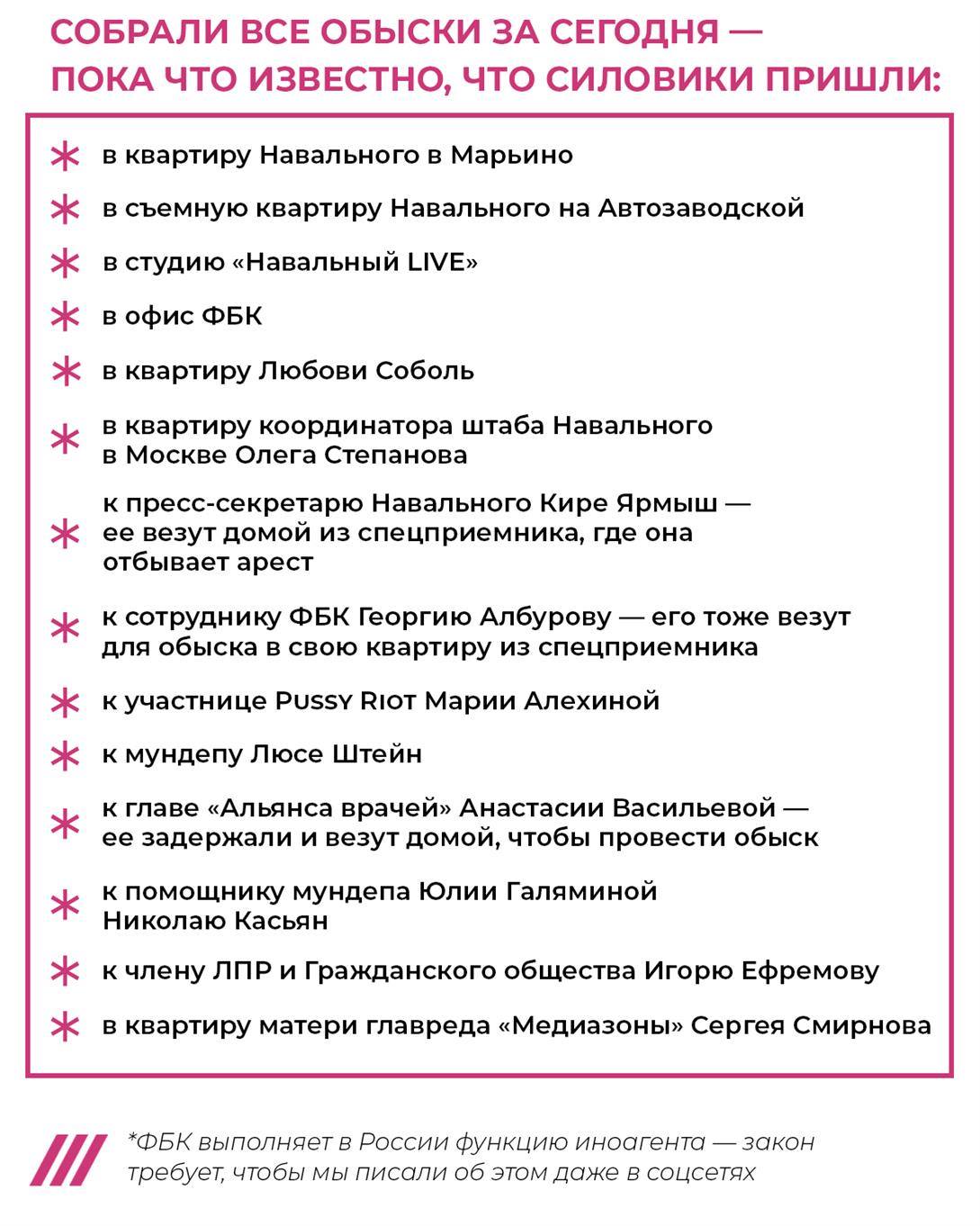
TV Rain has made the following list of people and places in Moscow raided and searched today (January 27, 2020) by the Putinist security forces. Thanks to Darya Apahonchich for the heads-up. \\ TRR

We made a list of all police searches today. As of now, we know that the security services have raided the following:

    • Navalny’s apartment in the Maryino district of Moscow
    • An apartment rented by Navalny near the Avtozavodskaya subway station
    • The Navalny LIVE studio
    • The Anti-Corruption Foundation’s offices
    • Lyubov Sobol’s apartment
    • Moscow Navalny HQ coordinator Oleg Stepanov
    • The apartment of Navalny’s press secretary Kira Yarmysh, who has been transported home from a special detention center for the search
    • The apartment of Anti-Corruption Foundation employee Georgy Alburov, who has also been transported home from a special detention center for the search
    • The apartment of Pussy Riot member Maria Alyokhina
    • The apartment of municipal district councilor Lusya Stein
    • The apartment of Anastasia Vasilyeva, head of the Alliance of Doctors: she has been detained and taken there for the search
    • The apartment of Nikolai Kasyan, aide to municipal district councilor Yulia Galyamina
    • The apartment of Yegor Yefremov, a member of the Libertarian Party of Russia (LPR) and Civil Society
    • The apartment of the mother of Sergei Smirnov, editor-in-chief of Mediazona

Translated by the Russian Reader

The Helmets Come Off

The Helmets Come Off
Alexander Skobov
Grani.ru
January 24, 2021

Alexander Skobov. Photo: Anna Plitman/Grani.ru

Ksenia Sobchak has equated the cruelty and violence against a woman who was kicked in the stomach by a riot policeman with the violence and cruelty against a riot policeman’s helmet, which was kicked around [during Saturday’s anti-Putin rallies] by “radicals.”

“This is all, or almost all, that you need to know about Ksenia Sobchak’s mental makeup,” writes Igor Yakovenko. It’s almost everything, because Sobchak’s short text contains another interesting tidbit. She also argues that resistance to tyranny is not only futile, but also harmful, because it pushes tyranny to get tougher. The “unbroken generation” will simply have to be “broken.” The bloodthirsty lady recommends relaxing and having fun.

In some ways, however, it is worth heeding Sobchak. We should not, indeed, hope for a “thaw,” for concessions from the authorities. The Putin regime is organically incapable of this, for the whole thing is built on criminal grandstanding. The very flesh and blood of the “new Putin elite,” Sobchak knows what she is talking about.

The criminal grandstanding is just a shell. The bottom line is that Putin’s regime  carried the germ of fascism from the get-go, and now this “alien” is finally hatching from the egg. The ruling class abhors liberal democracy, with its rule of law and its prioritization of human rights. It hates everything that limits its power over the serfs, and now it is trying to finally tear off the “hybrid” liberal-democratic bunting.

A riot policeman in Petersburg kicks a woman in the stomach when she attempts to ask why they have detained the young man they are escorting, January 23, 2021. Video: Fontanka.ru. Courtesy of Mediazona

Of course, the regime will respond to the protests with a further tightening of the screws—with new criminal cases, with new pogroms of opposition organizations, with new repressive and prohibitive laws. It will try and break the unbroken generation broken. I’m afraid that the new generation will not manage to avoid having this life experience. It must firmly understand that the current regime is an enemy with which compromise is impossible, and so everyone is faced with an extremely simple and tough choice of what way to choose in life.

One way is to capitulate, relax, have fun, and eventually become an accomplice of riot policemen who kick women in the stomach. The other way is to stand up for your own dignity, despite the price you have to pay for it, to resist by all available means, and ultimately to overthrow Putin’s fascist regime. And not worry about the fact that, meanwhile, some people are kicking a riot policeman’s helmet around.

The prospect of such a tough choice scares those who are used to living according to the principle voiced by a character in the epoch-making TV series Gangster Petersburg, a corrupt cop who was fond of saying, “I’m mean, but in moderation.” The fascist system increasingly and imperiously demands that they go beyond the moderate meanness that they are used to deeming permissible for themselves. And they feel uncomfortable about it.

Hence Sobchak’s long-standing complaints about escalating confrontation and mutual bitterness, about black-and-white thinking that admits no shades of gray. She now has to solve a truly existential question: who is she? A woman, or a riot police helmet?

Sobchak has not said anything fundamentally new. She has consistently defended the Putin regime from revolution. After all, revolution is worse than when a woman is kicked in the stomach. Revolution is when a riot policeman’s helmet is kicked around.

Protesters snowballing riot police on Tsvetnoy Boulevard in Moscow yesterday, January 23, 2021. Courtesy of Ksenia Larina’s Facebook page

The power of today’s protest was far from enough for revolution. Its reserves of strengths are unknown. In any case, it proved much more powerful than those who believed Fukuyama had expected. No one can predict when and why Putin’s autocratic fascist regime will be overthrown, and who will overthrow it. We must be prepared for a long period of resistance under a repressive dictatorship.

To avoid coming apart during this period, we must nurture in ourselves not only faith in the beautiful Russia of the future, but also a hatred of lies, meanness, and violence—a hatred for the powerful scoundrels who have trampled law and justice to death, a hatred for riot police who kick a woman in stomach, and a hatred for their helmets.

Five days ago, Alexander Skobov reported on his Facebook page that he had been summoned by the FSB for questioning at 2 p.m., January 27, 2021, at its Petersburg headquarters. Translated by the Russian Reader

Don’t Let Strangers Wreck Their Minds (Putin’s Palace)

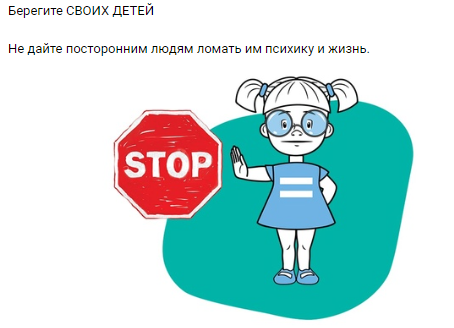
“Protect your children. Don’t let strangers wreck their minds and their lives.” Screenshot of a social media post by the Udelnaya Library of the Vyborg District Centralized Library System in Petersburg. Courtesy of dp.ru

“Protect your children”: Smolny launches mass posting before rally
Delovoi Peterburg
January 21, 2021

On January 21, the social network pages of Petersburg’s district administrations, as well as of municipal schools, libraries, and educational organization, published the same message, appealing to parents not to let their children attend the rally urging the release of politician Alexei Navalny.

“Protect your children from being dragged into destructive actions that can lead to psychological problems in the future, but also to unpredictable consequences in their lives today,” the text of the mass posting says. It stresses that the upcoming rally is a “blatant provocation.”

A search for the phrase “protect your children from being dragged into destructive actions” yielded around a hundred hits on the social media pages of municipal organizations. At the time of writing, the post had been published on the VK pages of the Kolpino and Vyborg districts, as well as the press services of the Shuvalovo-Ozerki, Posadsky, Kronverk, and Sampsonievsky municipal districts, and dozens of schools.

Earlier today, First Deputy Interior Minister Alexander Gorovoy said that the Russian Interior Ministry has “all legal grounds” to charge with misdemeanors those who “in person, on the internet, [or] by sending written appeals” call on people to attend the rally [sic]. The Prosecutor General’s Office ordered the blocking of websites containing posts with calls to attend the [rallies].

Alexey Navalny recently published a large-scale investigation dealing with the construction of a grand residence on the Black Sea. The Anti-Corruption Fund (FBK) founder claims that the palace was built for Vladimir Putin. Navalny and his FBK team have called on their supporters to come out to protest on January 23. He has been supported by bloggers on Instagram and TikTok who have over a million followers.

________________________

Alexei Navalny, Putin’s Palace: The Story of the World’s Largest Bribe, January 19, 2021. [There were over 51 million views as of 1:00 a.m. Moscow time, January 22, 2021]

The printed text of the investigation, including all relevant documents, is here: https://palace.navalny.com/

Navalny recorded this video before his return to Russia, but we immediately agreed that we would release it after he returned: Alexei did not want the protagonist of this investigation—Vladimir Putin—to think that we were afraid of him and that we were telling his biggest secret from abroad.

Today, you will see something that is considered impossible to see up close. Along with us, you will go where no one is allowed. We will go for a visit to Putin’s house. With our own eyes, we will see that, in his craving for luxury and wealth, Putin has completely lost his mind. We will find out whose money has financed this luxury and how it was done. And we will learn how, over the past fifteen years, the biggest bribe in history was paid and the most expensive palace in the world was built.

Alexey was detained at the airport [in Moscow], where he arrived after five months of medical treatment in Germany. He went to Germany after Putin tried to kill him. On January 18, Navalny was illegally arrested and placed in a pre-trial detention center.

Alexei has always fought for our rights, and now we have to fight for his. Vladimir Putin must answer for all his crimes.

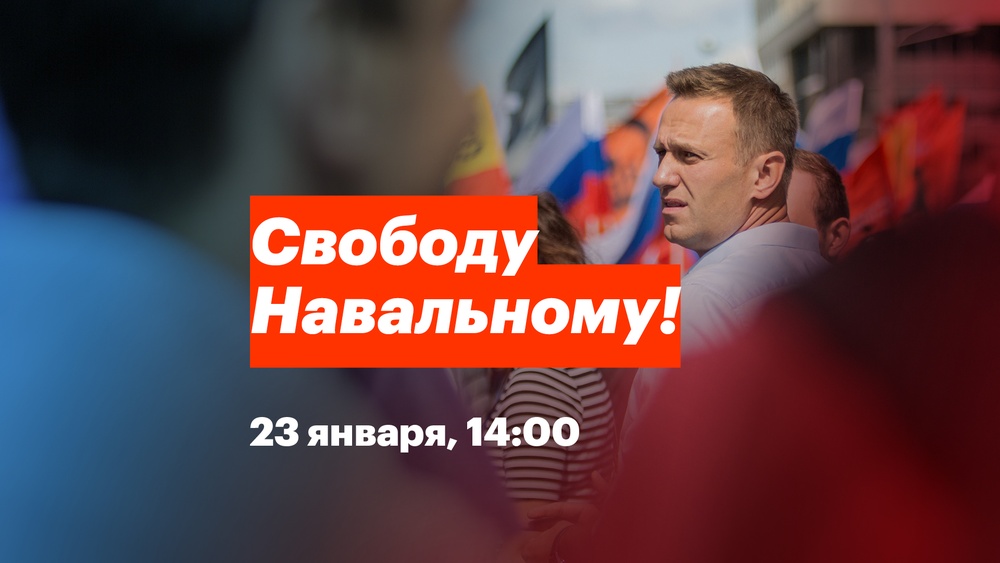
At 2:00 p.m. on January 23, go to the central streets of your cities. Don’t stand on the sidelines.

Here is a link to information about the rallies in different cities (this post will be updated): https://navalny.com/p/6454/

Translated by the Russian Reader

“Free Navalny! 2:00 p.m., January 23.” Image courtesy of navalny.com

Kalinka Malinka

Authentic Russian with Katya 2RU
September 23, 2019

Калинка-малинка is a Russian song that the whole world is singing! Learning this hit if you study Russian language is a must! Watch this video to know HOW TO PRONOUNCE THE LYRICS of Kalinka-Malinka!

Калинка, калинка, калинка моя!
В саду ягода малинка, малинка моя!
Ах! Под сосною под зеленою
Спать положите вы меня;
Ай, люли, люли, ай, люли, люли,
Спать положите вы меня.

Калинка, калинка, калинка моя!
В саду ягода малинка, малинка моя!
Ах! Сосенушка ты зеленая,
Не шуми же надо мной!
Ай, люли, люли, ай, люли, люли,
Не шуми же надо мной!

Калинка, калинка, калинка моя!
В саду ягода малинка, малинка моя!
Ах! Красавица, душа-девица,
Полюби же ты меня!
Ай, люли, люли, ай, люли, люли,
Полюби же ты меня!

Калинка, калинка, калинка моя!
В саду ягода малинка, малинка моя!

Little snowberry, snowberry, snowberry of mine!
Little raspberry in the garden, my little raspberry!
Ah, under the pine, the green one,
Lay me down to sleep,
Rock-a-bye, baby, rock-a-bye, baby,
Lay me down to sleep.

Little snowberry, snowberry, snowberry of mine!
Little raspberry in the garden, my little raspberry!
Ah, little pine, little green one,
Don’t rustle above me,
Rock-a-bye, baby, rock-a-bye, baby,
Don’t rustle above me.

Little snowberry, snowberry, snowberry of mine!
Little raspberry in the garden, my little raspberry!
Ah, you beauty, pretty maiden,
Take a fancy to me,
Rock-a-bye, baby, rock-a-bye, baby,
Take a fancy to me.

Little snowberry, snowberry, snowberry of mine!
Little raspberry in the garden, my little raspberry!

Like her compatriots, Katya 2RU has plenty of time nowadays to look great and teach foreigners a lesson, but at least she teaches them Russian folk songs instead of lessons about democracy and free speech. Image courtesy of her YouTube channel
The Capitol Storming Gives Russians an Escape From Their Reality
The great majority of Russians have no say over the future of their cities or regions and so resort to events outside the country.
Ilya Klishin
Moscow Times
January 14, 2021

Anyone following U.S. and Russian social networks in recent days might have had the impression that Russians were more upset by the recent siege of the Capitol building and the decision by Twitter and Co. to block Donald Trump than even the Americans themselves were.

Although CNN and the New York Times only sounded the alarm, popular and little-known bloggers on this side of the Atlantic absolutely went into hysterics.

Of course, many of the issues concerning this incident deserve deep and thoughtful discussion, such as, at what point should IT companies become accountable to society?

And, is there a difference between today’s Twitter and the telegraph and newspapers of 100 years ago? Here, however, I would like to focus not on the substance of the psychosis, but on its nature and origin.

Why did so many Russians go into a frenzy over the events in the U.S.?

To begin with, consider a popular Russian meme called “Barnaul, Altai Region.” In all of its iterations, the cartoon shows a young Russian woman voicing anxieties to her psychologist.

One day she’s worried about SJW, the next, BLM, and most recently, the Capitol siege. But whatever the problem, the psychologist always responds with the same words, “What the f—k do you care?! You live in Barnaul!”

Then he grabs a megaphone and shouts it again for emphasis: “IN BARNAUL, THE ALTAI REGION!!!”

Now, you might not have heard of this Siberian city, but that’s the whole point. Barnaul is so far from the problems dominating Western headlines that it is absurd for someone living there to lose any sleep over them.

Rude as it is, the meme remains popular because it touches on a very real but unspoken, almost intuitive aspect of the Russian psyche.

The great majority of Russians have no say over the future of their cities or regions, much less the country as a whole. This is especially depressing for young people who have grown up during the 20 years of President Vladimir Putin’s rule, and who have never experienced anything else. After all, they are naturally overflowing with youthful energy. They would like to change the world around them and contribute to society in some small way.

But they can’t. Everything is off limits. They can either violate their own principles by going along with the abominable, soul-crushing system, or else buck that system and risk paying a very high price, up to and including prison time.

Of course, most young people avoid that extreme, teetering on the edge of open disobedience without crossing the line.

Once a young person realizes that the authorities block every path for positive change, they subconsciously switch to the path of least resistance.

Like water flowing around a rock in its way, young Russians who find that they cannot change the fundamental picture shift their focus to concerns of secondary importance.

If you can’t raise the standard of living for the elderly in your economically depressed region, stop the police from torturing people or prevent the authorities from “calling in” verdicts to the courts, you can at least become a vegan activist or radical feminist and oppose the use of animal fur.

Don’t get me wrong — these are all worthwhile causes.

But in today’s Russia, they represent a form of escapism. A “fur fighter” poses no threat to Putin’s regime and comes off as more comical than menacing. Kremlin leaders simply laugh at them, saying, “Let them have their fun.”

The same is true of Russia’s homegrown BLM activists and surprisingly numerous Trump supporters. In fact, the whole lot of them is even more harmless than the activists are because they do nothing but sit on their couches and argue with each other online.

It is a pastime along the lines of watching football, Game of Thrones and reality TV. It is fun and brings the occasional rush of adrenaline during particularly intense arguments.

And so, the days and weeks pass with everyone arguing. Some are on the left, others on the right. One is a feminist, another an anti-feminist. This one is a tree hugger while that one ridicules environmentalists. But outside their windows is the same old Russia, ruled by the same old Vladimir Putin.

Ilya Klishin is the former Digital Director of the New York-based Russian-language RTVI channel. He is the founder of KFConsulting.

David Frenkel: The Year 2020 in Pictures

David Frenkel
Facebook
December 30, 2020

I had a poor year shooting photographs: there were few events in [Petersburg], and I missed some important stories due to my arm being broken. But in the end, it seems that the photos still piled up.

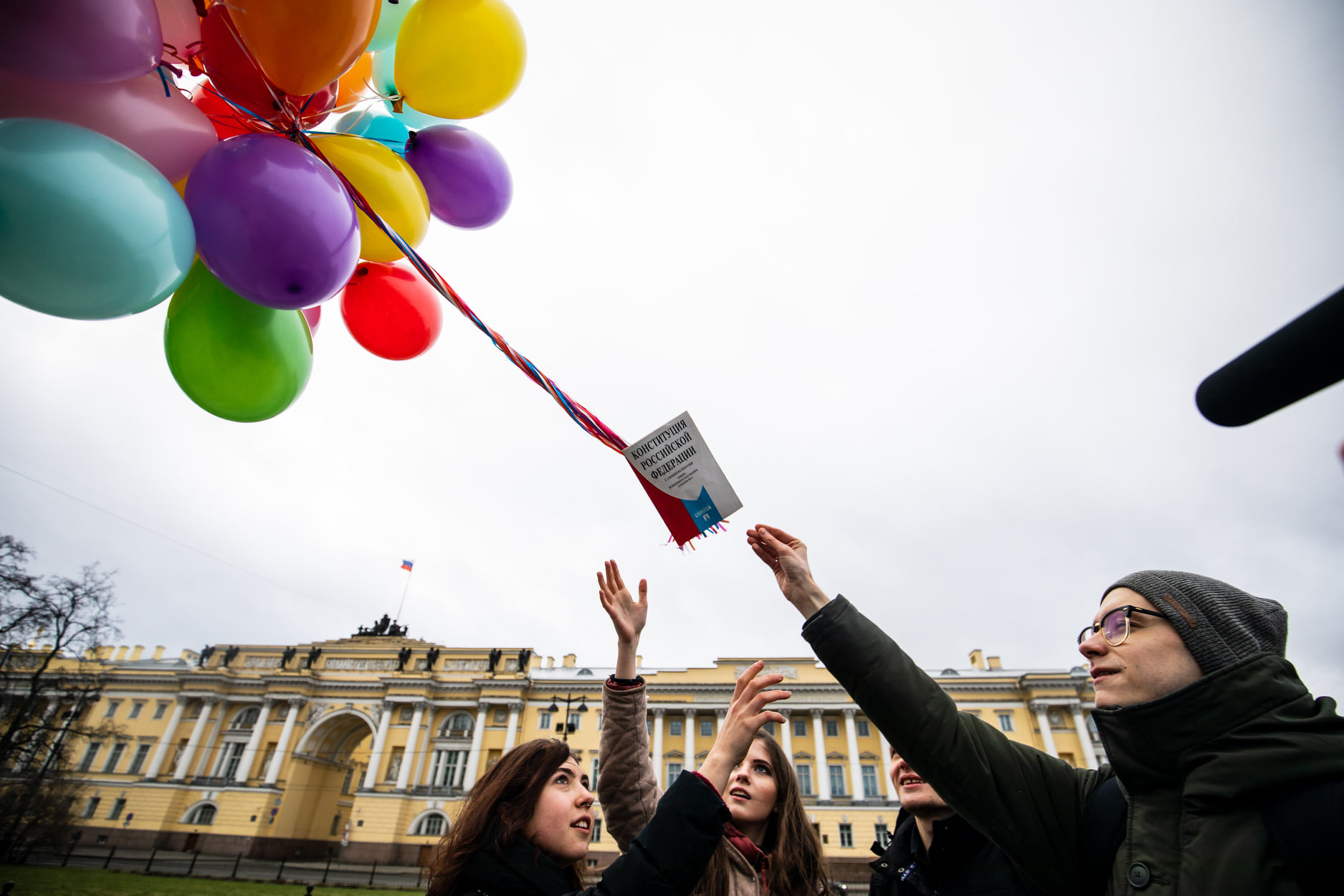
January 19, 2020. Activists of the Vesna Movement say goodbye to the Russia Constitution near the Constitutional Court in Petersburg.
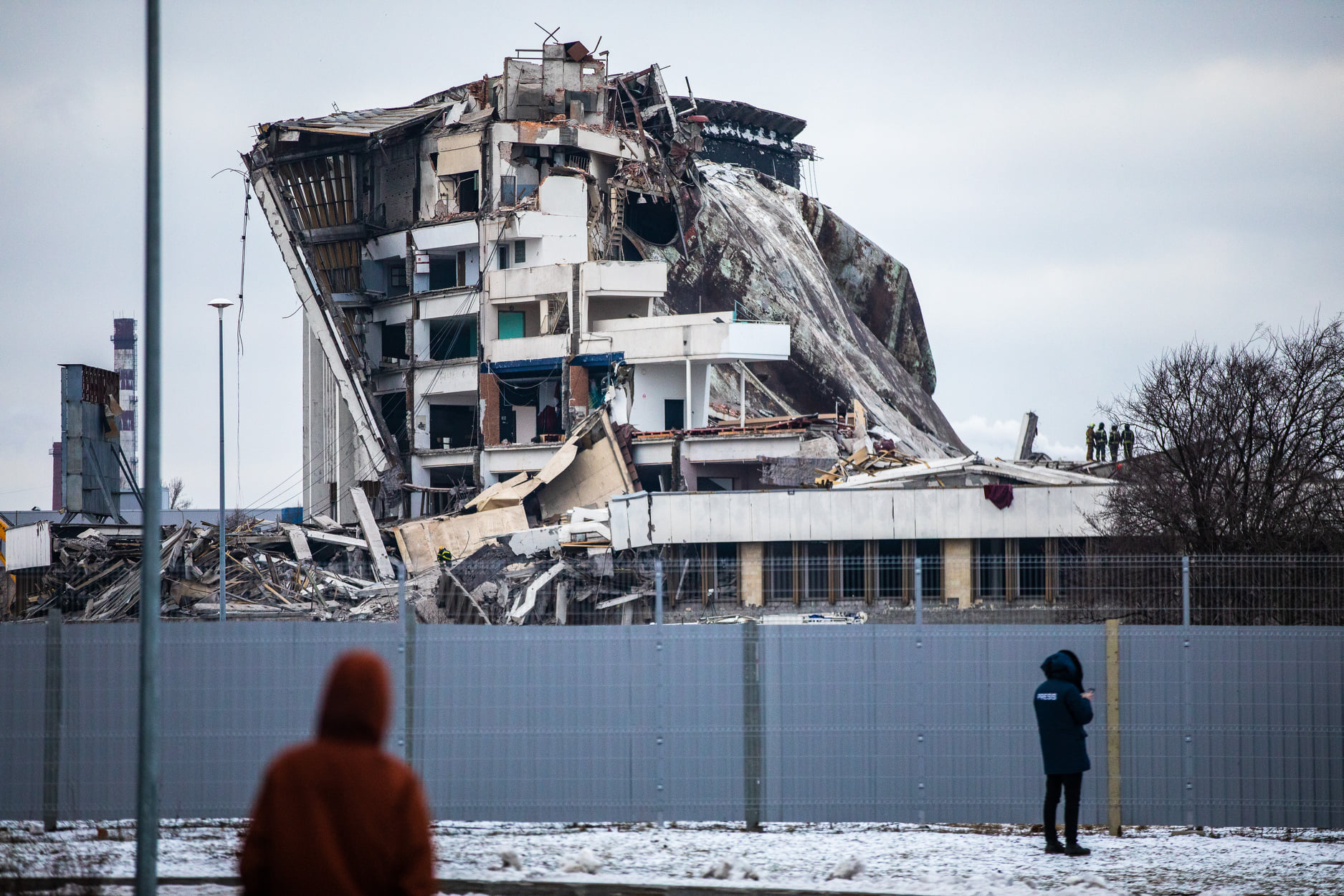
January 31, 2020. Authorities analyze the debris after the Sport and Concert Complex (SKK) in Petersburg collapses.
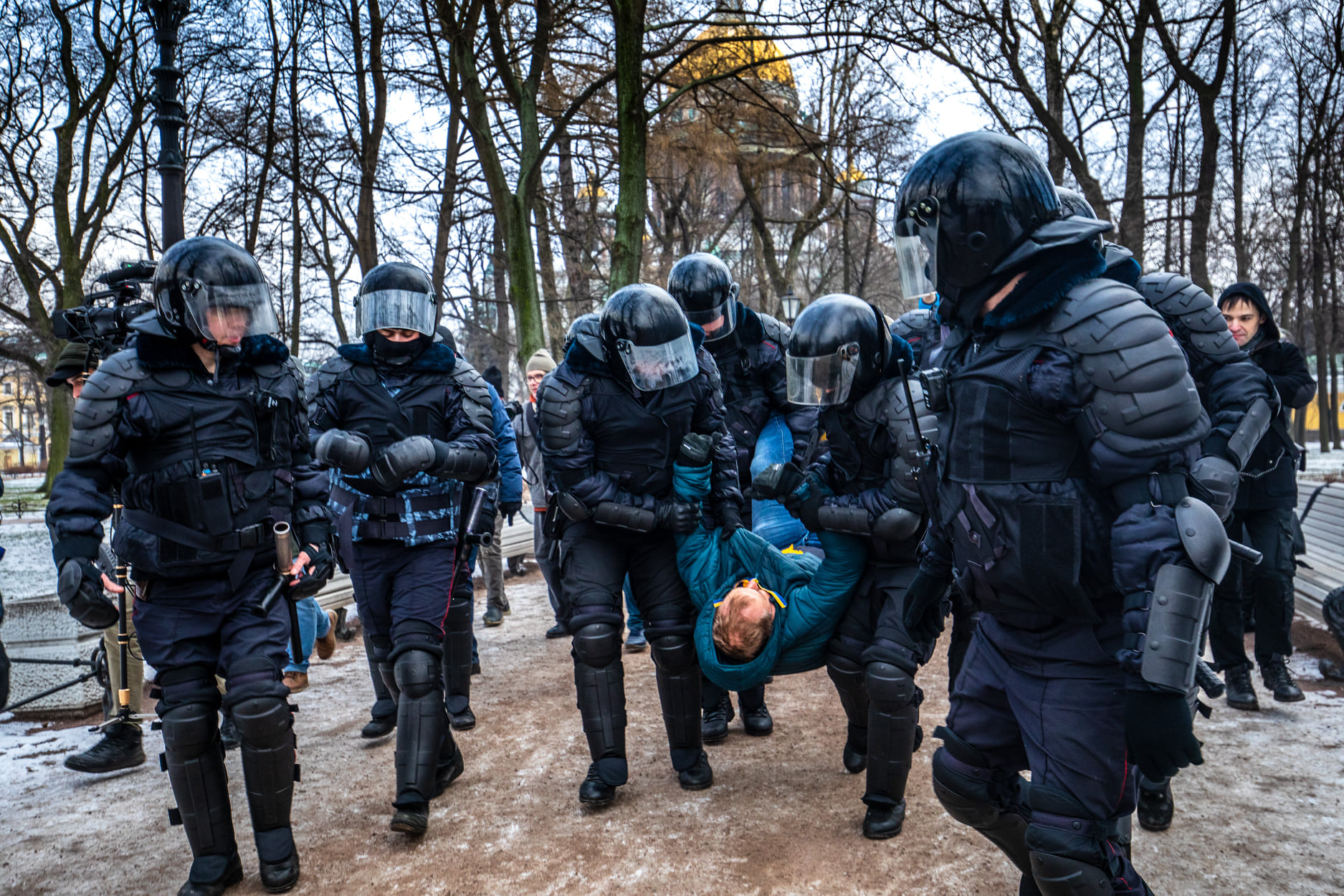
February 1, 2020. Police detain a man for a picketing against proposed amendments to the Russian Constitution on Senate Square in Petersburg.
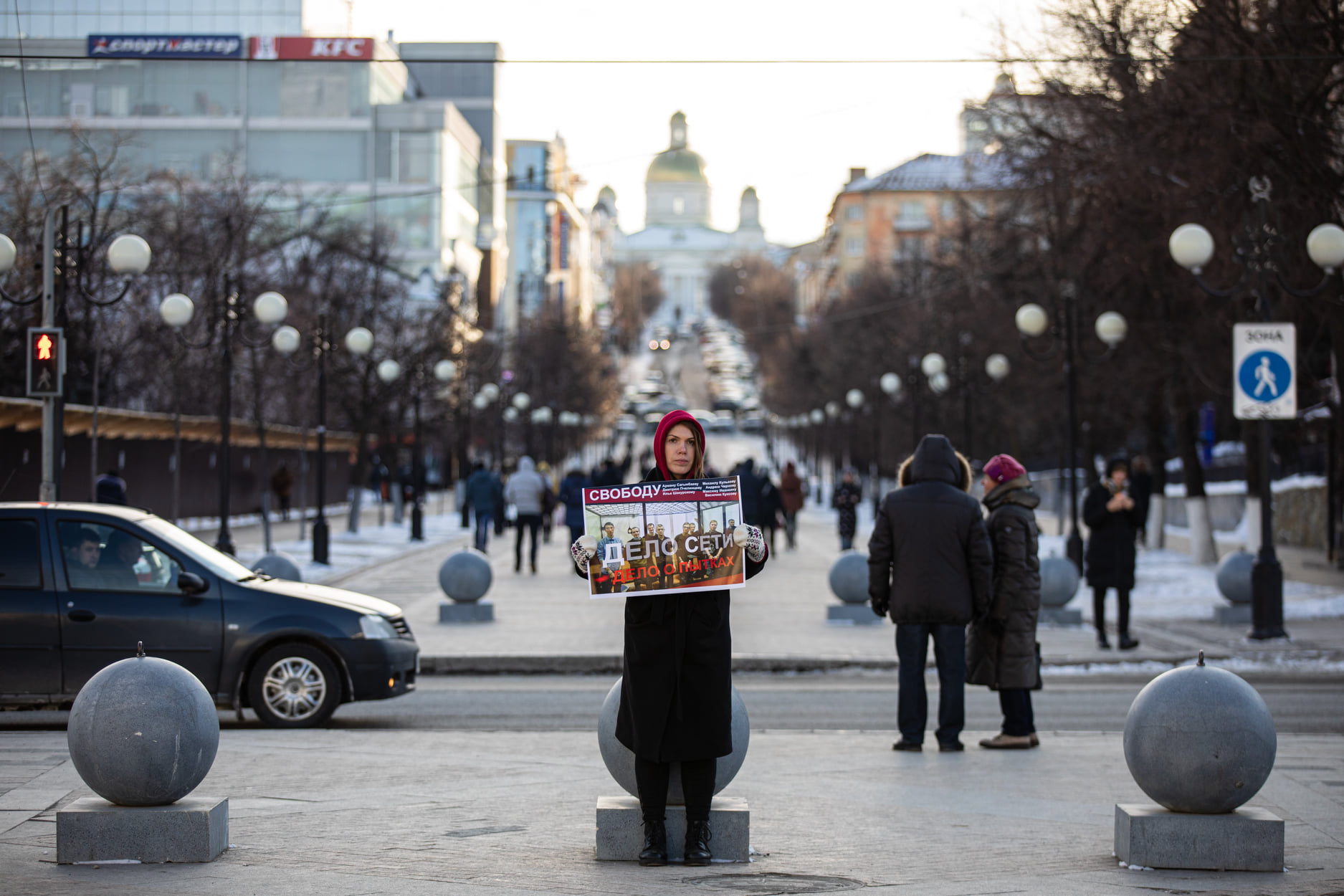
February 9, 2020. A solo picket in Penza before the verdict in the Network Case was announced.
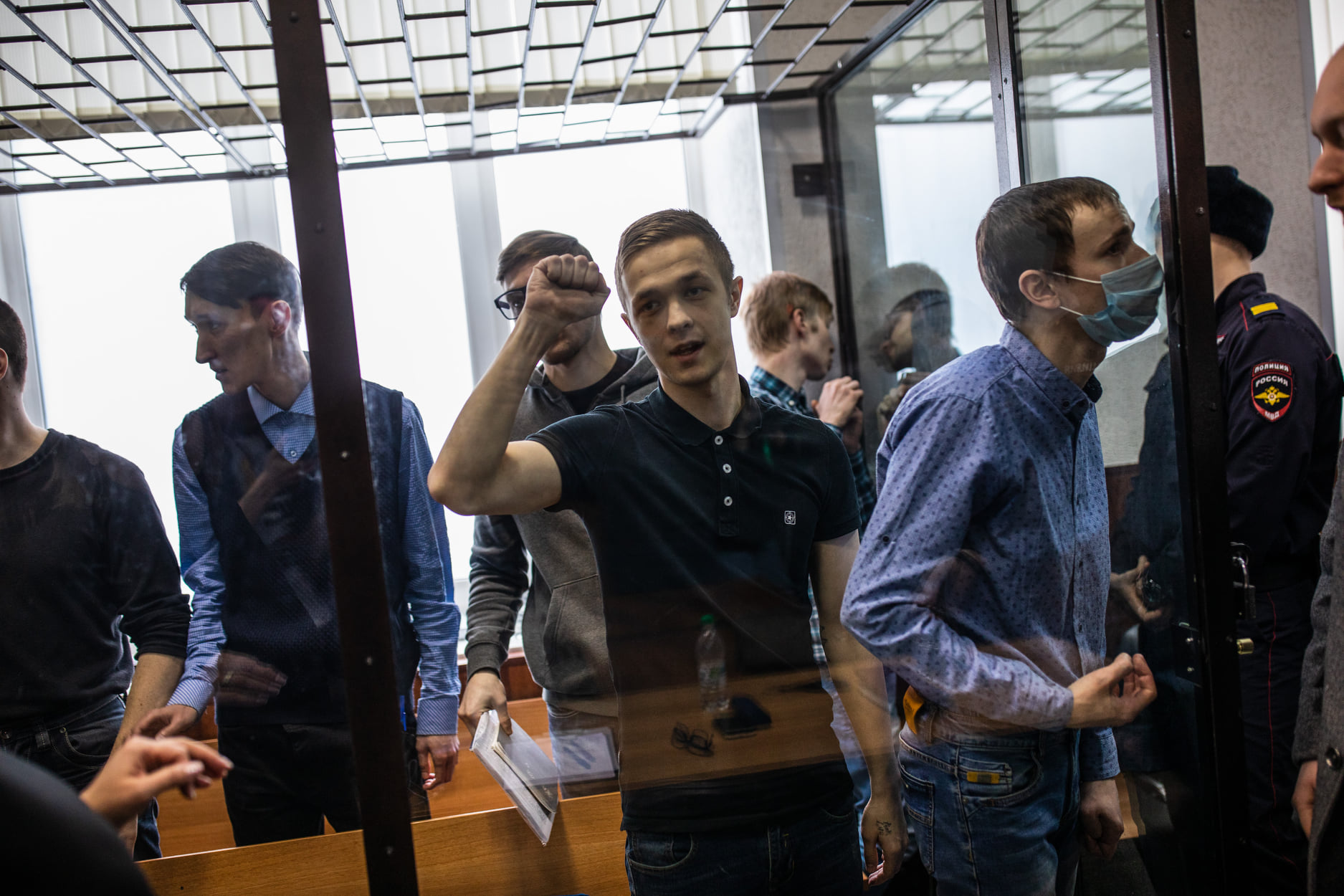
February 10, 2020. Defendants in the Network Case after the verdict was announced in the Penza Regional Court.

Continue reading “David Frenkel: The Year 2020 in Pictures” →

Russian Justice Ministry Adds Five New “Foreign Agents” to Its List

“The register of foreign mass media performing the functions of a foreign agent has been updated. On December 28, 2020, in compliance with the requirements of the current legislation of the Russian Federation, Darya Apahonchich, Denis Kamalyagin, Sergey Markelov, Lev Ponomarev, and Lyudmila Savitskaya were included in the register of foreign mass media performing the functions of a foreign agent.” Screenshot of Russian Justice Ministry website, 28 December 2020

Human Rights Activists Lev Ponomaryov and Four Other People Added to List of “Foreign Agents”
OVD Info
December 28, 2020

For the first time, the Russian Ministry of Justice has placed individuals, including journalists and the human rights activist Lev Ponomaryov, on its registry of “[foreign] mass media acting as foreign agents,” as reflected on the ministry’s website.

Lev Ponomaryov, head of the movement For Human Rights, Radio Svoboda and MBKh Media journalist Lyudmila Savitskaya, 7×7 journalist Sergei Markelov, Pskovskaya Guberniya editor-in-chief Denis Kamalyagin, and grassroots activist and performance artist Darya Apahonchich.

Savitskaya, Markelov and Kamalyagin were probably placed on the registry of “foreign agents” due to their work with Radio Svoboda, which was placed on the registry of “foreign agents” in 2017.

In late December, the State Duma introduced and partly considered bills that would tighten the law on “foreign agents.” Thus, repeated violations of accountability under the law can now result in five years in prison. According to the new clarifications, the status of “foreign agent” can be granted to individuals engaged in political activities and receiving money for this work from abroad. Another bill would prohibit the dissemination of information in the media produced by foreign agents unless it is specially labelled.

Translated by the Russian Reader