Policing the Polls

Elections observer who left message on ballot jailed for 5 days

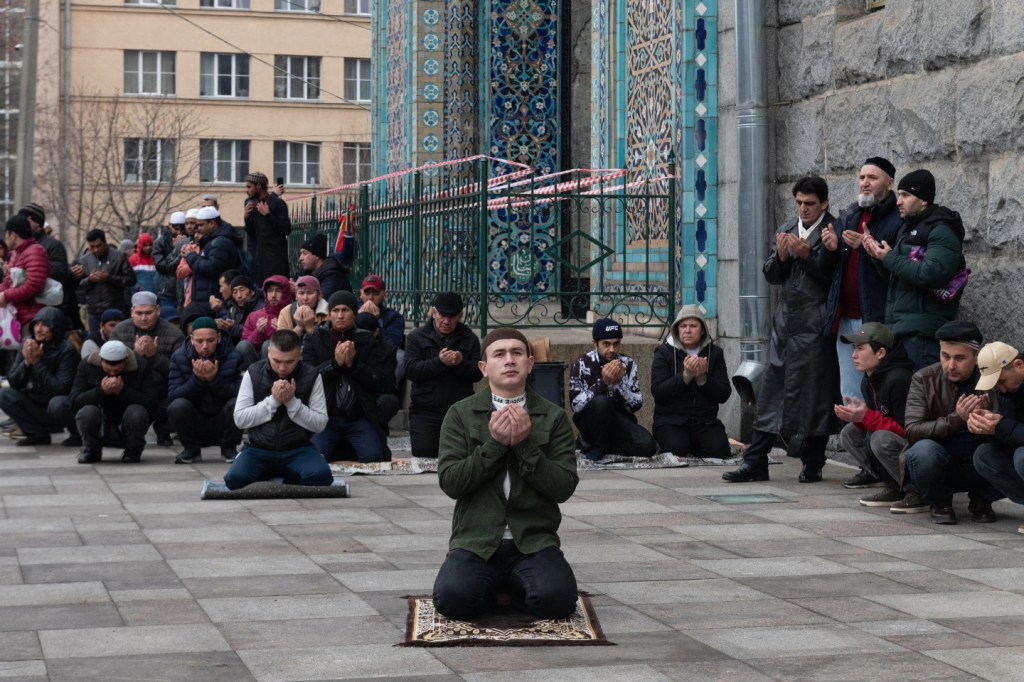
Marina Popova served as an observer during the elections in St. Petersburg. On Sunday, she decided to vote herself. Prior to this, she specially had herself reassigned to Polling Station No. 2213 on Lomonosov Street [where she was working as an elections observer].

Popova told Rotunda that two other people voted after her. A police officer then noticed a ballot in the ballot box on which a pacifist message [“No war!”] had been written. According to Popova, a polling board member wrote out a statement saying that it was Popova who had dropped the ballot with the message into the ballot box.

Consequently, Popova was detained and taken to the police station. There, she was charged with “petty hooliganism” and, later, “discrediting the army.” The first charge sheet says that Popova disturbed the peace because she wrote a pacifist message in large letters in bright blue ink that was seen by people at the polling station.

Popova was taken to the police station on Sunday morning and never returned to the polling station. She was taken to court on Tuesday. When her detention period expired, she went home. She was taken back to court in handcuffs—the police collected her from her home.

At the court hearing, Popova’s lawyer Alyona Skachko told Rotunda, polling board members claimed that the ballot was state property, which the observer had spoiled. As a result, Popova was fined 30,000 rubles [approx. 300 euros] and jailed for five days.

📌 Marina’s husband Dmitry Popov and two people from the United Russia party were the only observers left at the polling station on Lomonosov Street after it closed on the last day of voting. During the vote tally, Popov was forcibly restrained by persons unknown who, as he claimed, tried to strangle him. Eventually, however, the police arrived and detained Popov. At the police station, he was charged with “petty hooliganism.” It is alleged that he used foul language.

Source: Rotunda (Telegram), 10 September 2024. Photo courtesy of Fontanka.ru. Translated by the Russian Reader


Residents of 81 federal subjects of Russia will vote in regional and municipal elections starting Friday. 

The elections mark the second time this year that Russians are heading to the polls following the March presidential election. That vote, which saw Vladimir Putin win a fifth term virtually unchallenged, was marred by widespread reports of vote tampering, restrictions on monitors and pressure on voters. 

But unlike the presidential campaign, Russian media coverage of this year’s regional elections has been scarce — likely the result of a deliberate government strategy of decreasing voter turnout to a bare minimum of loyal voters, an analysis published by independent election watchdog Golos suggests. 

Golos analysts believe that the Kremlin is betting on mobilizing a relatively small number of voters working in the government sector and demotivating all the rest to ensure a smooth victory for its candidates.

To help you understand what else is expected in the upcoming September elections, the Moscow Times has gathered everything known about the vote so far[.]

What will the voting look like? 

Multi-day voting, which was first introduced across Russia during the Covid-19 pandemic, will be implemented in most regions for the September 2024 elections. The majority of voters will have two or three days to cast their ballots depending on the region. 

Some regional electoral commissions, including in the republics of Chechnya, Tatarstan and Sakha (Yakutia), have chosen to hold voting on one day on Sunday. 

Twenty-five regions will allow residents to vote online via the state portal Gosuslugi, while election officials in Moscow have scrapped paper ballots altogether in favor of online voting.  

Independent observers have long argued that extended voting periods and online voting make voter fraud more likely, as it becomes harder for independent monitors and poll workers to do their jobs.

Meanwhile, the CEC advised authorities in six southern Russian regions near Ukraine and in occupied Crimea to limit access to online broadcasts from polling stations, citing public safety concerns. 

G[ubernatorial] elections 

Residents of 21 regions, including the city of St. Petersburg, will vote for their governors. 

Among these, the Far East Zabaikalsky region, the Siberian republic of Altai and the southern republic of Kalmykia stand out as some of the most “troublesome” regions for the Kremlin. 

The ruling United Russia party has struggled to secure strong wins for its candidates in these regions in the past and incumbents hoping for reelection remain largely unpopular among local populations and elites, according to Golos.

The Urals republic of Bashkortostan will also be under the Kremlin’s close watch as Moscow-backed incumbent Radiy Khabirov stands for reelection in the wake of the January protests in support of jailed activist Fayil Alsynov. 

Coupled with high numbers of war casualties in Ukraine and a slew of recent corruption scandals involving Khabirov’s inner circle, those protests forced the incumbent’s approval ratings to plummet. 

But as in most other regions, the Kremlin mitigated the possibility of a potential blow in Bashkortostan by not allowing a single independent candidate on the ballot. 

Regional parliament elections 

Members of regional parliaments will be chosen across 11 regions, including the capital Moscow, the republics of Tatarstan and Tyva and the Khabarovsk region. 

This year’s election will see the participation of a record-low number of political parties with an average of 6.2 parties represented on the ballot, according to Golos. 

Golos said this worrying statistic is a direct result of an unprecedented scale of repression faced by independent politicians regardless of their political views.

“[A politician] can be declared a foreign agent or convicted of extremism to be removed from the elections,” Golos wrote in an analytical report published last month. 

“And if they still [manage to] register and win, there is…the possibility of being declared a foreign agent and deprived of his mandate a couple of weeks after the elections,” the watchdog said. 

Municipal elections

Elections for city mayors and city parliaments will take place across 22 regions. 

Abakan, the capital of the Siberian republic of Khakassia, and Anadyr, the capital of the Chukotka autonomous district, are two of only four Russian cities where mayors are still chosen through direct election. 

Mayoral elections had also been set for Ulan-Ude, the capital of the Siberian republic of Buryatia, but the region’s parliament scrapped the procedure in favor of the council electors system in March. 

In St. Petersburg, where 1,560 seats in the city’s [municipal district councils] are up for grabs, candidates running from so-called “systemic opposition” parties — namely the Communist Party (CPRF) and the social-liberal Yabloko party — were barred from registering en masse.

And while CPRF managed to get 25% of its original pool of candidates onto the ballot, Yabloko will not have any representation in this year’s [m]unicipal [c]ouncil[s] race.   

Occupied Ukrainian and Russian territories 

In annexed Crimea, Kremlin-installed head Sergei Aksyonov will stand for reelection and members of the regional parliament and the legislative assembly of the Crimean port city of Sevastopol — its own federal subject — will be voted in. 

The Kremlin refused to cancel voting in the Kursk border region, where Ukrainian forces have been carrying out a bold incursion for more than a month, and where Putin appointee Alexei Smirnov is seeking to secure his mandate as governor.

The CEC instead extended the voting period to 10 days and is supplying local election officials with bulletproof vests and helmets. 

Kursk regional authorities announced Thursday that nearly 27% of eligible voters [had] already cast their ballots in the [gubernatorial] election.

Source: “The Roadmap to Russia’s 2024 Regional Elections,” Moscow Times, 6 September 2024.


[…]

GROSS: So Trump recently spoke to the Fraternal Order of Police, and he urged them to watch out for voter fraud. Let’s hear what he said.

(SOUNDBITE OF ARCHIVED RECORDING)

DONALD TRUMP: You’re in serious trouble if you get caught trying to find out what are the real results of an election. It’s an amazing thing. Do you ever see that? They go after the people that are looking at the crime, and they do terrible things to them. But the people that committed the voter fraud and everything, they can do whatever they want to do. It’s so crazy. And I hope you, as the greatest people – just as great as there is anybody in our country – I hope you watch for voter fraud.

So it starts early. You know, it starts in a week, but I hope you can watch, and you’re all over the place. Watch for the voter fraud because we win. Without voter fraud, we win so easily. Hopefully, we’re going to win anyway, but we want to keep it down. You can keep it down just by watching because, believe it or not, they’re afraid of that badge. They’re afraid of you people. They’re afraid of that.

GROSS: Nick, is that voter intimidation? He’s telling the police that these fraudulent voters are afraid of police, implying that the police should use that fear to find voter fraud so that Trump can win.

CORASANITI: I think it – certainly, were it to be carried out – would be challenged by voting rights groups, Democrats and probably even some Republicans – that that would amount to voter intimidation. It’s also pretty important to note that a couple states have very specific laws that, you know, outlaw uniformed police officers having a kind of patrolling presence in – at polling places during elections.

And, you know, there’s a very dark history in the Jim Crow South about uniformed police officers and voter suppression within the Black community. So a combination of history and state laws and then the kind of instruction that the former president was giving to these police officers could certainly amount to voter intimidation or possibly even more unlawful behavior.

[…]
Source: Terry Gross, “How Democrats and Republicans are gearing up for a post-election legal fight,” Fresh Air (NPR), 12 September 2024

French Kiss

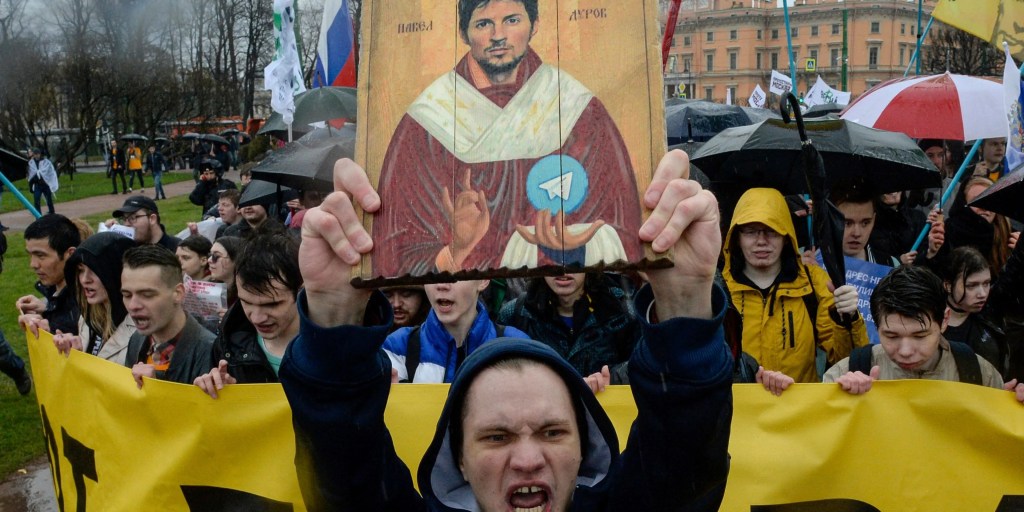
Saint Pavel? A scene from a march protesting the blocking of Telegram, St. Petersburg, 1 May 2018.
Photo: Olga Maltseva/AFP, via Important Stories

French Kiss is an enchanting cabaret show in the style of the Moulin Rouge, as performed by the world-famous Bize Lisu Show Ballet.

The ballet dancers have already conquered the whole world with their performances. They have garnered roaring applause at the birthday of the Prince of Monaco and in the Kremlin Palace, at Europe’s oldest theaters in Malta and the largest modern concert halls in China.

The unique hand-sewn costumes, the sensual dances, the expressive vocals and the compère’s unsurpassed humor are all part of the grandiose performance.

Duration: 2 hours (with 1 intermission)
Age limit: 18+

Performers:
Bize Lisu Show Ballet
Vocals – Yana Radion, Maria Mantrova, Anastasia Radion
Compère – Denis Groshev

*Seat numbers 200 to 220, at the buffet tables in the second row of the balcony.

“French Kiss, the Show”

The venue
The show French Kiss will take place in one of the most entrancing places in St. Petersburg— the cultural space Gaika Space. And it will be held in LUXURY format [sic], in which the audience is able to choose festive board tables for two to four people.

The original menu, featuring delicious appetizers and exquisite drinks from the bar, will help you not only to enjoy the show, but will plunge you into a world of gastronomic discoveries. Our show will make your evening unforgettable!

Secure free parking is provided to guests of the show for the entire duration of the performance.

Source: Bileter.ru. Translated by the Russian Reader


A very cold welcome awaited Pavel Durov in France, but it increasingly seems this is exactly what Durov was aiming for.

Did he come clean? No, it’s just business

Only a week into the discussion of the Pavel Durov case did commentators begin recalling what kind of person he was, and several stories emerged about his life, which, incidentally, has involved support (including financial support), from the “authoritative” Petersburg entrepreneur Mikhail Mirilashvili. Without this support, Durov’s main business venture, the social network VKontakte, might perhaps not have taken off. (Formally, Mikhail’s son, Vyacheslav, was involved in the business, but the money belonged to Mirilashvili père.) To complete the picture, it should be remembered that Mikhail Mirilashvili “developed” (as they say) Petersburg’s casinos, for licensing of which the then-deputy mayor of St. Petersburg Vladimir Putin was responsible.

Vladimir Putin (left) and Mikhail Mirilashvili (right)

Vkontakte rose and flourished on pirated content, which is still abundant on the network, despite the fierce efforts to combat it. Business journalists relish recalling how Durov fought for Vkontakte—not in the sense of freedom of speech, but in the sense of the value of his stake in the social network—and won, pocketing 400 million dollars.

For an interpretation of Durov’s arrest and persecution by the French authorities, see Baruch Taskin and Aaron Lea’s column. I would like to reiterate that Durov is first and foremost a businessman, and a very cynical one at that. It suffices to recall [the time Durov threw money out of a window] in Petersburg and Durov’s reaction [to the crowd’s reaction and the public and media backlash]. He laughed, before summarizing his mockery in philosophical terms:

“We refuse to accept a world where people can betray their humanity for money. If there are people who agree to do it, their behavior should be severely ostracized.”

We know nothing about Durov’s involvement with the FSB—all our assumptions are based on circumstantial evidence—but the left-wing albeit decent newspaper Liberation has written about his cooperation with the French security services, quoting Durov’s own statements.

Pavel Durov (center) may even benefit from his arrest in France:
the court ruling will be an excuse for Telegram’s transition from a media platform to a crypto-business.

Source: Moscow Times Russian Service weekly newsletter, 1 September 2024. All images and captions were included in the original publication. Translated by the Russian Reader


“Pavel Durov launched money from a window (Vesti report)”

Pavel Durov launched paper airplanes with five-thousand ruble bills on board into a crowd on 26 May 2012, which was St. Petersburg City Day. How the crowd lunged for the five-thousand ruble bills can be seen on the footage recorded by the Kazan Cathedral superview webcam. About ten banknotes were thrown, after which the crowd finally became furious and the amusement was stopped.

The webcam continues to follow the events as bloggers give Pavel Durov a bloody nose on 31 May at 6pm (GMT+4). Watch http://vpiter.com/web-camera-kazan/ for the live stream.

Source: Mobotix Webcams Russia (YouTube), 29 May 2012


The webcam is installed on Nevsky Prospekt. The webcam offers a view of the Kazan Cathedral. On the left in the frame is the house of the Singer company. On the days of city holidays, Nevsky Prospekt in this section becomes pedestrian. Live 24/7 we broadcast the life of our metropolis.

Kazan Cathedral (Cathedral of the Kazan Icon of the Mother of God) is one of the largest churches in St. Petersburg. It was built on Nevsky Prospekt in 1801–1811 by architect Andrey Voronikhin in the style of Russian classicism to store a revered list of the miraculous icon of the Mother of God of Kazan. After the Patriotic War of 1812, it acquired the significance of a monument of Russian military glory. In 1813, the commander Mikhail Illarionovich Kutuzov was buried here and the keys to the captured cities and other military trophies were placed.

Source: Taxi Crew (YouTube), accessed 1 September 2024. Happening upon this livestream of Kazan Cathedral and environs, the neighborhood where I lived for my first two years in Petersburg, was oddly reassuring, and so I left it on in the background as I worked on this “collage” of news and views and images. It was only now, as I was finishing the piece, that I realized that Kazan Cathedral itself is a monument to the centuries-long profound misunderstanding, sometimes tawdry, sometimes violent, that goes by the name of “Franco-Russian relations” in polite society. ||| TRR

Hideout

It took me a while to understand why the news about the prisoner swap has been making me feel bitter rather than happy, although I wish all these people freedom, of course.

No, it wasn’t because, thanks to an American journalist’s arrogance and a German tourist’s stupidity, a professional FSB killer has been set free, meaning that his crime will go unpunished and nullifying the enormous efforts a large number of people made in apprehending him. And not because they mainly swapped for prisoners celebrated by the media, leaving in the gulag the unknown loners who wanted to fight on behalf of Ukraine. And not even because the leaders of the Anti-Corruption Foundation themselves took credit for the release of Navalny’s supporters while failing to thank the US authorities for their unbelievable efforts in haggling for their people’s freedom.

My bitterness arises from the very fact that the haggling took place. It shows that Putin is treated as a force to be reckoned with, that he is given what he wants. And that means that Putin’s Russia will be around for a long time to come. The regime is recognized and there is still no strategic decision on what to do about it.

Source: Julia Khazagaeva (Facebook), 1 August 2024. Translated by the Russian Reader


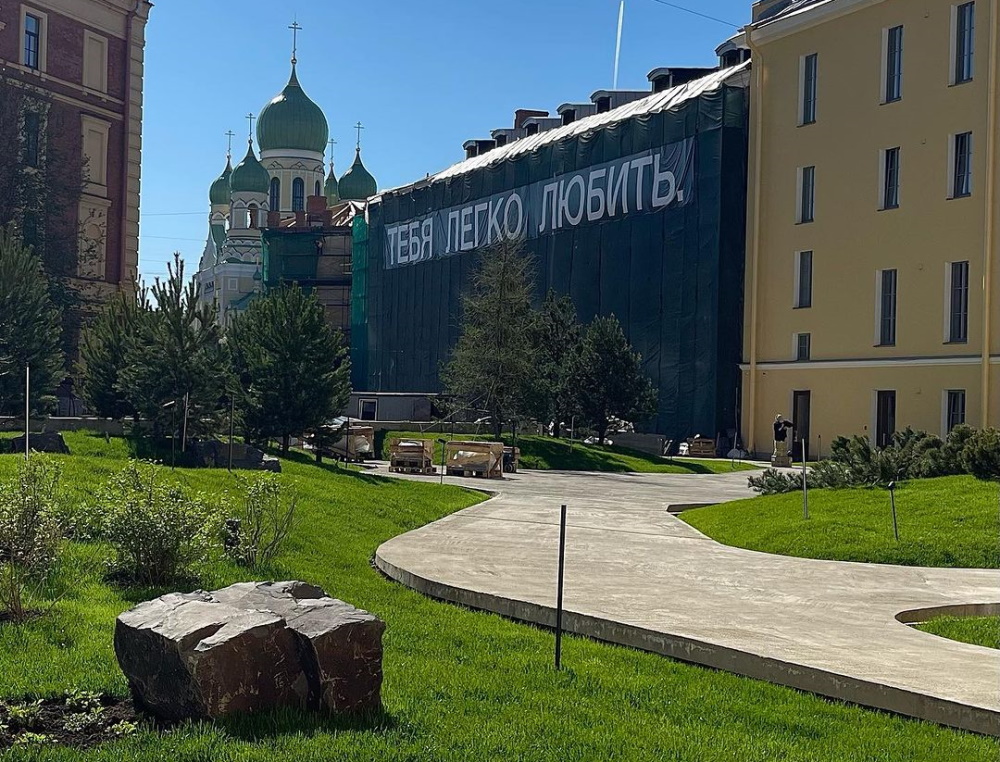
In 2024, the creators of the Wynwood Hotel opened Hideout, a new public space [sic] at 22 Rimsky-Korsakov Avenue [in Petersburg]. Bumaga shows its readers what the neighborhood looks like and explains how it is laid out.

“You’re easy to love.” Photo: @3axapkina (Instagram)

People started talking about the space in the spring of 2024, when a banner emblazoned with the words “You’re easy to love” was hung on the facade of a historic building. This Is a Sign, a team that installs similar messages in the urban environment, was commissioned by Hideout to do the piece.

The Hideout Residence apartments began operating in the summer, and a Scandinavian garden in the courtyard was also opened, Hideout told Bumaga.

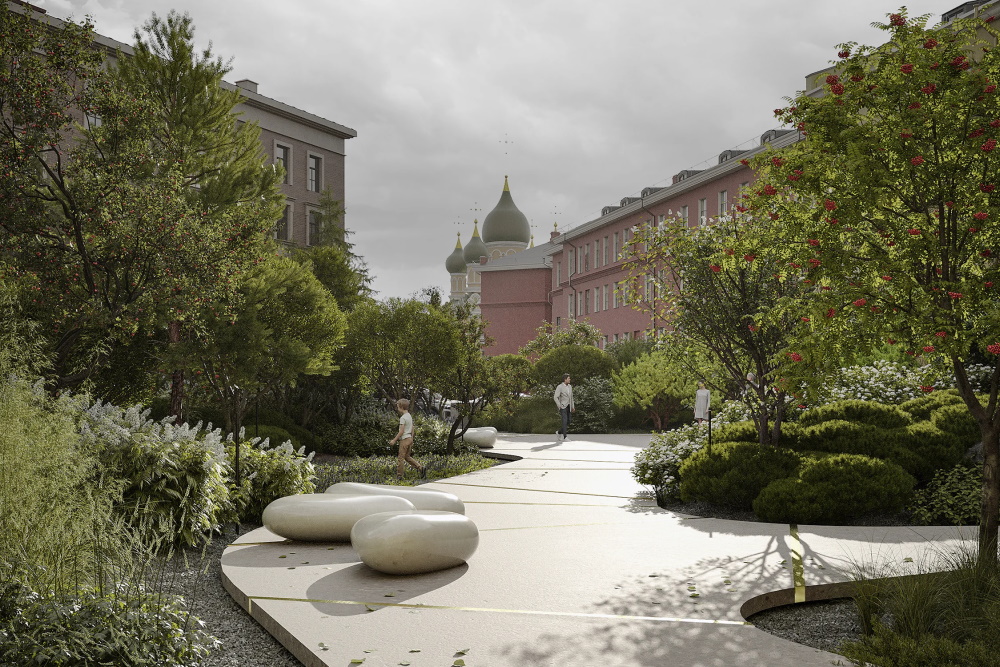
The garden in the courtyard was designed by landscape architecture studio L.Buro. The main works have been completed, but the garden will be developed and improved in the future, Hideout said.


L.Buro’s new Scandinavian garden project is now open to the public! Hideout is an urban space featuring an aparthotel, restaurants, and a fitness studio. Spoiler: a hotel and a contemporary art gallery will open there soon🤫 When designing this project, the studio’s architects managed to take a fresh look at Petersburg’s historic centre . In the video, L.Buro founders Valery Fedotov and Pyotr Lari talk in detail about the Hideout project.

The space’s press service of the space also noted that trees and plants were already growing at the site in the late eighteenth century. State Councillor Charles Gascoine, who owned the plot, laid out a fruit orchard near his mansion.

L.Buro’s rendering of Hideout’s garden

Suite Beauty Salon, Power Peach Yoga and Functional Training Studio, and other tenants operate in the space. The space’s first gastronomic tenant was Jam Café, by the creators of Atelier Tapas & Bar, which opened at the beginning of the year.

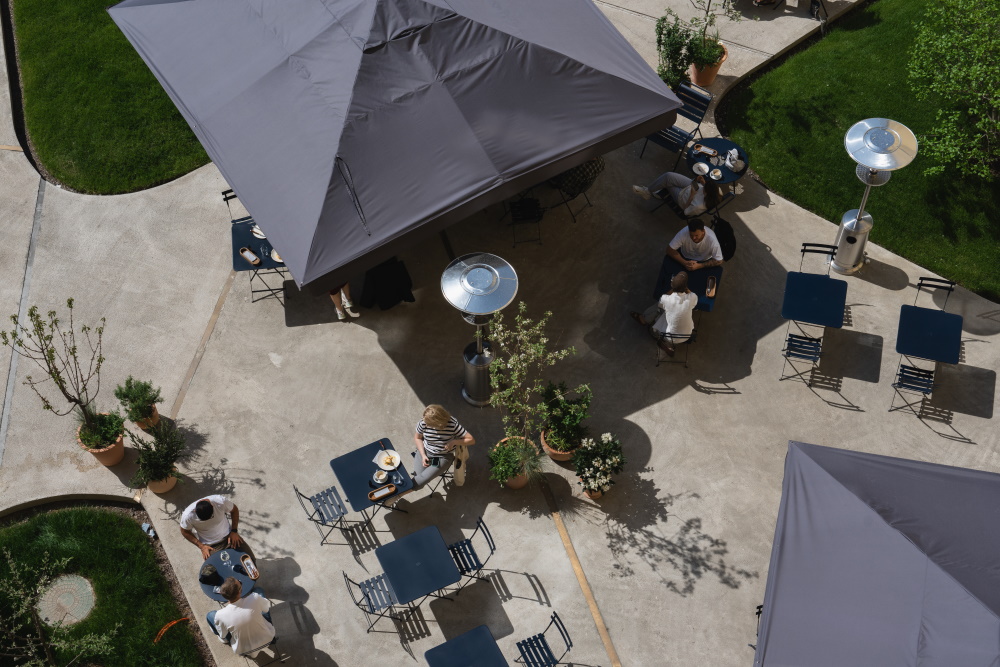
In the summer, Hideout added another gastro project, Aster Bakery‘s 23-table patio terrace in the courtyard.

Aster Bakery’s patio terrace. Photo: Hideout

An aparthotel featuring 60- to 100-square-metre residences has been welcoming guests. They have been decorated in neutral colors and sport designer furniture.

In August, the residences can be booked starting at 43,000 rubles [approx. 500 USD] a night.

A residence at Hideout

Source: “Hideout is a space in Kolomna with a Scandinavian garden, an Aster Bakery patio, and a sign that says, ‘You’re easy to love.’ Here’s what it looks like,” Bumaga, 31 July 2024. Translated by the Russian Reader

Leningrad 4

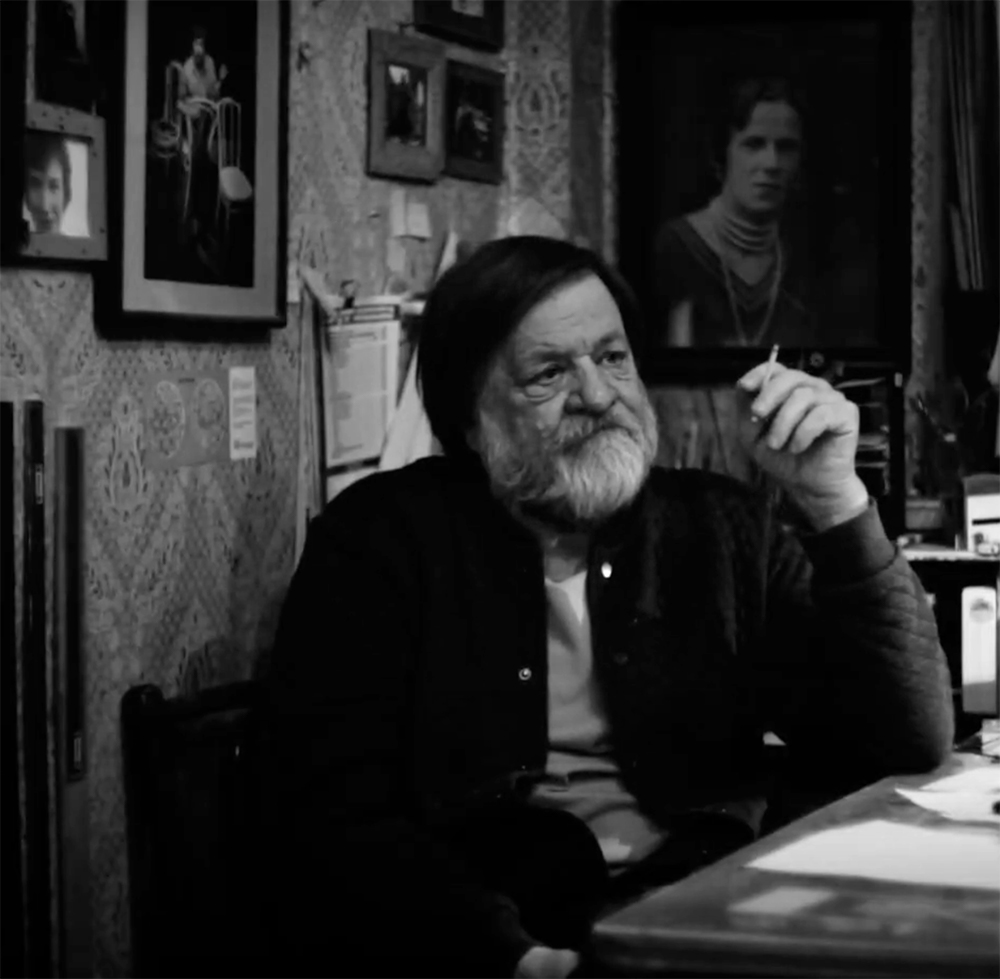
If you have been to Chronicles Bar [in downtown St. Petersburg], you have definitely seen the photos discussed in this film. In today’s session of “Screening the Real,” we are watching Leningrad 4, a documentary about Sergei Podgorkov and other champions of Leningrad’s unofficial photography scene during perestroika. Yuri Mikhailin spoke to the filmmaker, Dmitry Fetisov, about dramatic structure, time as a form and rhythm, and Soviet-era beer stalls.

“Leningrad 4,” Dmitry Fetisov, 2023 (in Russian with no subtitles)

My path to documentary filmmaking was a tortuous one. At school, I was interested in writing texts, and at the age of seventeen I decided to apply to the St. Petersburg State University of Film and Television (KiT) to study drama, but at the interview I was advised to go into documentary directing. At the time, Victor Kossakovsky was accepting students, but I didn’t go to study with him, I went to Tver (I’m from the Tver Region) and studied three years at the College of Culture, specializing in directing and theatrical acting. Then I went to study in Konstantin Lopushansky’s feature filmmaking program at KiT. I studied for a year, but them I decided to try my hand at documentary filmmaking again, although I didn’t really understand what it was.

I transferred to Vladislav Borisovich Vinogradov’s course, and I more or less made a go of it there. I guess I had found my master. It was the first time I saw examples of poetic documentary films with characters and dramatic structures that intrigued me. I also really liked Vladislav Borisovich’s work (I Return Your Portrait, A New Year at the End of the Century). I think that I have inherited to some extent his format, in which the films are based on interviews with the characters, and the themes have something to do with Leningrad culture.

Still from “Leningrad 4,” Dmitry Fetisov, 2023

My interest in photography stemmed from moving to St. Petersburg. I liked the texture of its central districts, the most banal things—palaces and , the difference between the Petrograd Side and Vasilievsky Island. And I was very interested in the movies made at Lenfilm Studios—Ilya Averbakh, the so-called Leningrad school, the perestroika-era pictures. This texture intrigued me. I came across the photographs of Boris Smelov, Leonid Bogdanov, and Boris Kudryakov. I became a big fan of theirs, and started looking for lesser-known photographers.

You could say that Leningrad 4 was born in 2011, when I went to a photo exhibition at the legendary Borey Gallery on Liteiny for the first time and saw Sergei Podgorkov’s work. I thought that I should make a movie about this man. I was very impressed by Ludmila Tabolina’s show at the Akhmatova Museum, as well as the exhibition on the Zerkalo photo club, from which many photographers had emerged.

Still from “Leningrad 4,” Dmitry Fetisov, 2023

In 2021, I decided to make a short film about Sergei Podgorkov. At the time, I had no idea that it would turn out to be a forty-minute movie. I wrote to Sergei on VKontakte, and he invited me to his place in Borovichi. If I were making the film now, I would probably add a video chronicle of the trip. Podgorkov showed us around the town, including the old railway station, and after filming we drank some good Novgorod moonshine with him to celebrate our acquaintance.

Many of the shots were made with Soviet gear—a Helios 40 telephoto lens. I bought it in a thrift store, and I successfully fitted this 1965-made lens to a Sony mirrorless camera. The Helios 40 handsomely blurs the edges and thus emphasizes the subject in the frame. It is my favorite lens.

After filming Podgorkov, I realized that the topic could be pursued further. I had always been interested in the Leningrad Rock Club, and so I decided to film Andrei “Willie” Usov, who was the staff photographer for the band Aquarium and did all the covers of their records, and was friends with Mike Naumenko.

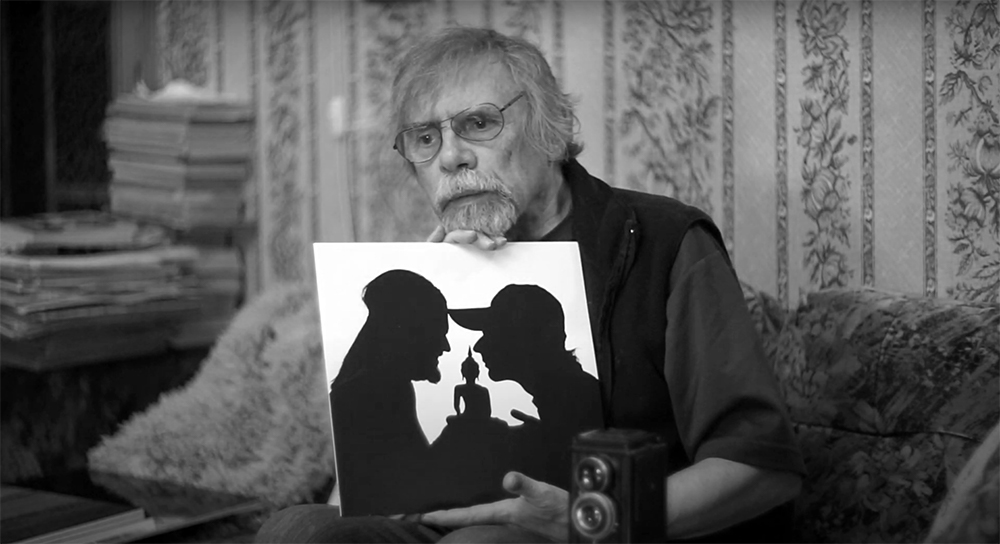
Andrei “Willie” Usov, holding his iconic image
of Boris Grebenshchikov and Mike Naumenko. Still from “Leningrad 4,” Dmitry Fetisov, 2023

The third character was the pictorialist Ludmila Tabolina. I appreciate this movement in photography. The next character was Alexander Kitaev. I liked the Kitaev’s powerful countenance, that of a bohemian. Petersburg photographer, and I decided that I would film him even before I got acquainted with his images myself.

Another character is Valery Valran. He is not a photographer, but a well-known artist in Petersburg, a popularizer of photography, a curator of photo exhibitions, and the first to turn [photos by Leningrad’s underground photographers] into a photo album: the book Leningrad Photo Underground appears at the beginning of the film. I decided to include it in the film to tell about this photography movement a little from the outside.

And finally, there was Sergei Korolyov. I filmed him, but during editing I realized that, unfortunately, a short subject about him did not fit into the film. I edited it separately and posted it on my “Blog Stall” which I dreamed up when blogging was the cool thing and where I publish stories related to cinema. This episode is called “The Photographer Korolyov”.

“The Photographer Koroylov,” Blog Stall, episode 26

How did I realize that these characters were enough? When I filmed them, I had an idea for the next film I might make: about photographers who are no longer alive, like Bogdanov and Kudryakov. And I decided that the filming was over.

The film took a long time to edit, almost a year. I realized that each photographer has a certain leitmotif. Sergei Podgorkov has a story connected with beer stalls (although he does not emphasize it himself), Andrei Usov has rock, Ludmila Tabolina has the white nights, and Kitaev has [Petersburg’s] Kolomna neighborhood.

Still from “Leningrad 4,” Dmitry Fetisov, 2023

To separate the interviews and photos, I decided to use a film footage frame. Some of my colleagues think that this is visual bad form, but for me it seems logical: conversations with photographers are the present day, while their photos are the past, and the footage works as a transition between them.

Sometimes I wanted to connect the times. The chapter “Conversations at Beer Stalls” features music by contemporary jazz-noir artist Bebopovsky and the Orkestry Podyezdov. I had enjoyed him for a long time. I met the artist, and the opportunity to use his music in the film presented itself.

While I was editing, I did a photo shoot on black and white film for an acquaintance. I was supposed to make shots like in the scene in Godard’s movie Le petit soldat in which the main character takes a picture of a young woman. For this photo shoot, my friend bought a Leningrad 4 light meter on Avito. I realized that I would call the film that, because the main character is late Soviet Leningrad, and there are four photographers in it. Then I decided that I would divide the movie into four parts. Besides, perhaps these photographers possibly also used the Leningrad 4, as it was one of the most popular exposure meters of its time.

It was later that Sonia Minovskaya, my co-director and assistant on the movie, noticed that in some mythologies the nuumber four is the number of decay, death, and demised. And indeed, in each chapter something fades away or dies. In the first one, the Leningrad white nights are buried, while in the second, Mike Naumenko and a whole erа exits the stage. Then we see the end of the Summer Garden in its historical guise, and in the final chapter, where the rallies in the squares are shown, we see a country disintegrating. I didn’t think about this symbolism when I was making the film. I did it intuitively.

Photographer Alexander Kitaev. Still from “Leningrad 4,” Dmitry Fetisov, 2023

I understand that the editing is finished when a special, unique time emerges in a film. Time is a rhythmic form to me. A movie is ready to go when it suits me rhythmically. My films are calm, lyrical, and meditative. I probably like the documentaries of Wim Wenders for a reason.

Leningrad 4 was screened at the Arctic Open Festival in Arkhangelsk, where it got a super-warm reception; at the Salt of the Earth Festival in Samara; and in the online program at Artdocfest.

At one of the premiere screenings at the Rosphoto Museum, Sergei Podgorkov, with his usual irony, criticized the film for being too sentimental about an era that, in his opinion, is not worth the nostalgia. I did not put nostalgia in the movie, especially nostalgia for the Soviet Union, which I do not have. Andrei Usov noted that the films uses images from a time when the city was more interesting texturally for photographers. Nowadays, Petersburg is quite touristy, shiny and bright. He also admitted that the film left him with a heavy feeling. He and Naumenko had a great, strong friendship, and he still takes his departure quite personally.

Still from “Leningrad 4,” Dmitry Fetisov, 2023. Photo by Sergei Podgorkov

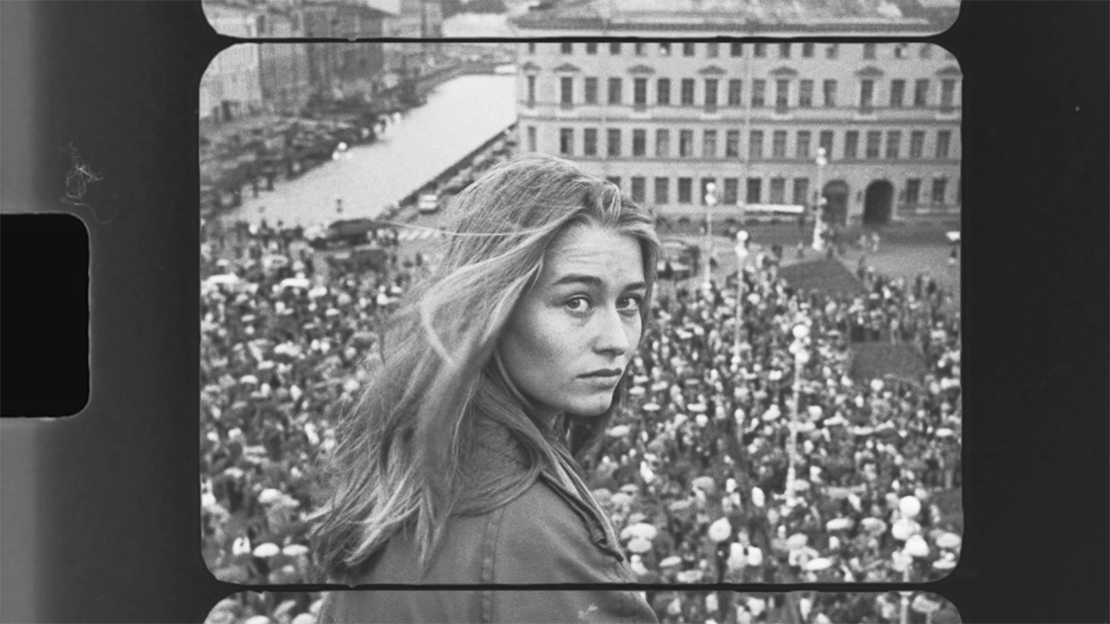
Another character in the movie, Svetlana, attended the screening at the bar WÖD. In the final scene, we see a photo of her standing on the roof of a building opposite the Mariinsky Palace during the attempted coup in August 1991 and looking into the lens—as if that era were upon us today. This is a famous photo by Sergei Podgorkov. Recently, Sergei found Svetlana through the internet and invited her to the screening. And now, thirty-three years later, she saw herself on the screen and recounted how the picture was taken. Podgorkov had run out of film, but Svetlana was also an amateur photographer, so she lent him her own camera, and he photographed her.

Recently, I went to Chronicles Bar on Nekrasov Street and saw Podgorkov’s photos there. It was amazing. It is a young people’s bar, and yet the walls are adorned with photos of Soviet-era beer stalls, so it is as if two eras were connected through Podgorkov’s photographs.

Source: Yuri Mikhailin, “Screening the Real: Dmitry Fetisov’s ‘Leningrad 4,'” Seans, 25 May 2024. Translated by the Russian Reader

Leonid Fyodorov: Mir

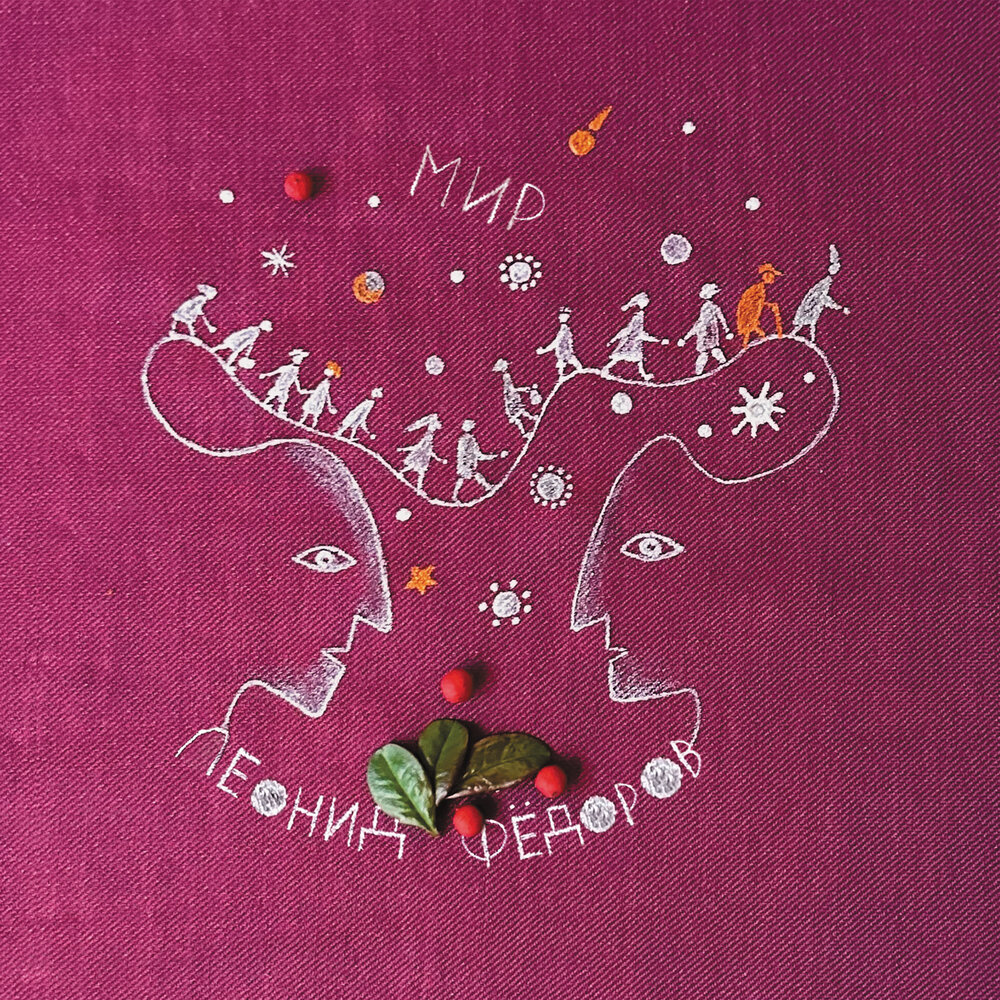
The cover of Leonid Fyodorov’s LP Mir (2024)

I see that I’m quoted on the web all the time in connection with Shaman and other bastards. Yes, I have had to write a lot about them in the line of duty. But it would be a shame if I were to die tomorrow and be remembered for only this. I want to share something more interesting with you, music I’ve been listening to lately. Oddly enough, there’s very little outward political protest in this music.

Leonid Fyodorov has released an album entitled Mir [which means both “peace” and “world” in Russian]. Yes, I do recall that it [peace? world?] is a forbidden word. We understand what Fyodorov’s stance [on the war?] is, although he doesn’t say anything outright, but then again he is not a person who can be measured in terms of his [political] stance — his music is much more interesting. His music is always strange, chockablock with dissonances, avant-garde twists, noises, and sudden pauses. He doesn’t write songs that are not odd.

And this is despite the fact that Fyodorov is an amazing melodist, one of the best in Russia. But he creates melodies of astonishing beauty, sings them in his magical voice, and in the middle of the melodies he inserts unbearable guitar scrapes or something of the sort, as if he wanted to show that he didn’t believe in the very possibility of harmony. I once asked him about it, and he said something like, “It’s the times, I guess. I feel it’s the right thing to do.”

I got so used to it that I was expecting the same thing from every new album. Yes, the album was going to be great, but it was clear in advance exactly how it would be great. Even weirdness can become familiar and predictable.

Suddenly, over the last few years, I see that something has changed. I listen attentively: almost ubiquitously in Fyodorov’s songs there’s a perfectly even, constant rhythm and repetitive bits in the arrangements. In our country, however, even when I was at school, this has been considered a sign of bubblegum pop. There is nothing to it, in point of fact: you turn on a simple drum machine track and out comes fucking “White Roses” or “Svetka Sokolova.” There’s no creativity involved.

But a craftsman of Fyodorov’s stature doesn’t do anything for no reason. If he had wanted to make the rhythm more complicated, he would have made it more complicated. So he has to do it: he’s trying to say something.

I close my eyes and suddenly I see a river flowing. It flows swiftly, swiftly, and birds of prey circle above it. They are shrieking, trying to scare it, but it cannot be stopped. But they are really trying to scare it with all their might, and at times the music is quite scary.

And the lyrics have become different. Fyodorov used to employ lyrics (most often penned by Dmitry Ozersky) like a musical instrument. He had little interest in their meaning: he was mainly interested in how they sounded, how they fit the music. There was a lot of cosmic absurdity, a lot of onomatopoeia and, again, a lot of weirdness. They were lyrics, not poems.

What do we hear now? Almost the entire album consists of perfectly regular couplets with proper rhymes. The lyrics are eminently intelligible and designed to be listened to carefully.

На вопросы есть ответы.
Бедный мальчик, где ты, где ты?
Сам как будто маленький,
Но как будто старенький.
Было грустно, стало пусто.
У меня такое чувство,
Что зачем-то, почему-то
Мы не нравимся кому-то.

[Questions have answers.
Poor little boy, where are you, where are you?
You look like you’re little yourself,
But you look kind of old.
I was sad and now I’m empty.
I have this feeling:
For some reason, for some reason
Somebody doesn’t like us.]

The strange thing is that the music is quite sad, restrained, and expressionless. [Fyodorov] sings as if the jig is up and there’s no point in trying. But the music goes on anyway, and you can’t stop it. Fyodorov’s strange fluidity gives hope for life and peace. You can defeat man, beast, and the state, but you cannot defeat water.

The link to the album is in the first comment.

Source: Yan Shenkman (Facebook), 16 June 2024. Translated by the Russian Reader


The video for “Mir” (“Peace” or “World”), the title track of Auktyon frontman Leonid Fyodorov’s 2024 solo LP

Следите за нами, смотрите за нами,
Идём в путешествие между мирами,
На лестнице странной находится вход,
Чтоб прыгать обманно, ногами вперёд.
Дверь спрятана в мире 134,
Здесь люди похожи на крем на зефире,
Мы здесь никого ни о чём не попросим,
А спрячемся в мире 178.
И тут же ныряем в созвездие Звон,
Здесь звон геликоновый с разных сторон,
И мы принимаемся сразу за дело,
Чтоб громко гремело и звонко звенело.
Приятно орудовать палкой железной —
И звук интересный и опыт полезный.
А в мире 14 дяди и тёти.
Они сразу спросят: «А где вы живёте?
А как вас зовут? А конфетку хотите?
Уходите? Ладно, тогда уходите…
У нас здесь не любят врунов и смутьянов!
Здесь мир тараканов и мир хулиганов!»
Планета 15, и смотрим мы на…
Здесь нет ничего, здесь одна тишина.
На это приятно смотреть и занятно,
Что нет ничего, лишь какие-то пятна.
Есть мир номер 8 и мир номер 3,
Здесь 5 человек заблудились внутри,
У них не осталось ни воли, ни мнений,
И скорбно блуждают в тени отражений.
И плачут во сне, и глаза прикрывают,
Кричат: «Нам противно, таких не бывает»,
Кричат: «Уходите!», и машут руками,
А это они отражаются сами.
Планета 14-76!
Здесь что не придумаешь — всё уже есть.
Приятно девчонкам, приятно мальчишкам,
Здесь весело — очень! Но, тоже, не слишком.
Есть Розовый Штрудель и Мир Голубой.
Где люди бессмысленно спорят с собой.
Они отрицают, что есть и что будет,
И спорят с судьбой. Интересные люди.
На лестнице странной, в созвездии странном,
В краю безымянном, в щели под диваном,
Есть радостный мир, под названием «Где-то»,
Здесь море и солнце, и вечное лето,
А рядом, конечно, находтится «Что-то»,
Здесь только дремота, тоска и зевота,
И петь неохота, и лень веселиться —
Я чувствую: что-то должно приключиться…
Бежим — нас преследует Мир Сорок-дыр!
Он ловит детей — это призрачный мир!
Здесь только часы, и нельзя оставаться,
Здесь можно в себе навсегда потеряться
Здесь всё забываешь, и сны и мечты
И сам не узнаешь, что ты — это ты!
И будешь ходить и дрожать еле-еле…
Успели, наверное… Если успели.
Есть мир Вычислитель и Чёрная Кошка.
Приятно, что каждый из них понарошку.
Есть мир Колесо и созвездие Спящий.
Ужасно, что каждый из них настоящий…
Есть мир Крокодил и вселенная Горе.
Пожалуй, заделаем дырку в заборе.

Follow us, watch us,
We’re going on a journey between worlds.
On a strange staircase the entrance is such
That you leap deceitfully, feet first.
The door is hidden in World 134,
Where the people are like the fluff in a marshmallow.
We won’t ask anyone here for anything,
But we’ll hide in World 178.
And then we dive into the Ringing Constellation:
There’s heliconic ringing from every corner,
And we get right down to business
Loudly rattling, jingling and jangling.
It’s nice to wield a rod of iron —
It’s an interesting sound and a rewarding experience.
There are uncles and aunties in World 14.
They’ll ask you right off the bat, “Where do you live?
And what’s your name? Would you like some candy?
Are you leaving? Okay, then go away…
We don’t like liars and troublemakers here!
It’s a world of cockroaches and a world of bullies!”
Planet 15, and we’re looking at —
There’s nothing here, there’s only silence.
It’s nice to look at and entertaining
That there’s nothing, just spots and specks.
There’s World No. 8 and World No. 3,
There are five people lost inside,
They have no will, no opinions,
And wander mournfully in the shadows of reflections.
They cry in their sleep and cover their eyes,
They shout, “We’re disgusted, such people don’t exist.”
They shout, “Go away!” and wave their hands,
And that’s them reflecting themselves.
Planet 14-76!
Whatever you can think of, they’ve got it all.
It’s nice for the girls, it’s nice for the boys.
It’s a lot of fun! But it’s not too much fun either.
There’s Pink Strudel and Blue World,
Where people argue senselessly with themselves.
They deny what is and what will be,
And argue with fate. Interesting people.
On a strange staircase, in a strange constellation,
In a nameless corner, in a crevice beneath a sofa,
There’s a joyful world called Somewhere,
There’s sea and sunshine and eternal summer.
And next door, of course, there’s Something.
Here, there’s only slumber, languor and yawning:
You don’t feel like singing, you don’t feel like having fun.
I feel something’s going to happen.
Come on, we’re being chased by World Forty-hole!
He catches children, it’s a ghostly world!
There’s only hours and you can’t stay here.
Here you can lose yourself forever.
Here you forget everything, your dreams and your hopes,
And you’ll never know you’re you!
And you’ll walk around shivering.
They must have made it. If they did make it.
There’s the world of the Calculator and the Black Cat.
It’s nice that each of them is made-up.
There’s the world of the Wheel and the Sleeper Constellation.
The terrible thing is that each one is real….
There’s the world of the Crocodile and the universe of Woe.
Let’s patch up the hole in the fence.

Source: Leonid Fyodorov (YouTube), 14 April 2024. Music: Leonid Fyodorov; lyrics: Dmitry Ozersky; video: Lydia and Leonid Fyodorov. Translated by the Russian Reader

New Trumped-Up Criminal Charges Against Soviet Dissident and Russian Opposition Activist Alexander Skobov

Alexander Skobov. Photo courtesy of V. Izotov/Deutsche Welle

A new criminal case, on charges of “involvement in a terrorist community,” has been opened against former Soviet dissident and Russian political journalist Alexander Skobov, who has been detained for over a month on charges of “condoning terrorism.” This news was reported on Saturday, 18 May, on Skobov’s official Facebook account by his wife, Olga Shcheglova.

Shcheglova said that she visited her husband on 14 May in the pretrial detention center in Syktyvkar, where he had been transferred from St. Petersburg. During a conversation with him, his lawyer and local police investigators, she learned that Skobov has also been charged with “condoning terrorism” and “involvement in a terrorist community.” The dissident’s wife is convinced that these two charges stem from her husband’s affiliation with the Free Russia Forum.

According to Shcheglova, on 21 May, Skobov will be sent to the regional psychiatric hospital in Komi for a forensic psychiatric examination. Skobov himself has stated that he would not participate in the investigation and forensic expertise, and he would appear in court only if his mother were present at the hearings. Skobov’s defense has filed an appeal, which will be heard by the court on 22 May.

Skobov’s Persecution in the USSR and Russia

On 22 March 2024, Russian authorities designated Skobov a “foreign agent.” According to the Justice Ministry, he had “disseminated unreliable information” about the decisions of public officials, opposed the war, “identified the Russian Federation with a terrorist organization,” been involved in the work of an “undesirable organization,” and produced and distributed “foreign agent materials” [sic], the human rights project OVD Info reports.

In 1978, Skobov was arrested over his active involvement in the Left Opposition group and the samizdat publication of an anti-government magazine. He was later sentenced by the court to undergo treatment at a psychiatric hospital, from which he was released in the summer of 1987.

This time around, the political journalist was arrested on charges of “condoning terrorism.” Skobov was detained in St. Petersburg on 2 April 2024. In protest, the dissident refused to take with him to jail his diabetes medication and his glasses, despite his poor eyesight. According to the Telegram channel Memorial Support for Political Prisoners, the real reason for his arrest was “a [social media] post condoning the bombing of the Crimean Bridge.”

Source: Asya Miller, “New criminal case opened against dissident Skobov,” Deutsche Welle Russian Service, 18 May 2024. Translated by the Russian Reader


In early April, 66-year-old dissident Alexander Skobov was arrested for allegedly “justifying terrorism” in his posts online. For his friends and family members, the arrest came as no surprise.

Skobov, a long-time dissident who was made to spend seven years in a psychiatric ward after taking part in protests against the Soviet authorities in the 1970s, had published multiple posts condemning Russia’s actions in Ukraine since 2014. In March he was named a “foreign agent”, and since then people close to him said his arrest had seemed inevitable.

“He and I talked a hundred times about the fact that he would be arrested — if not today then tomorrow,” said Skobov’s friend Yuly Rybakov, a human rights activist and former deputy in the State Duma, Russia’s lower house of parliament. “People have been imprisoned for much less.”

Skobov’s 90-year-old mother, whom he lives with and cares for, said she had been having nightmares about his arrest for months before it happened, and Rybakov recalled that Skobov himself said he “didn’t understand” why the authorities hadn’t come for him yet.

Skobov’s children, who moved abroad long before Russia’s invasion of Ukraine, urged their father to flee the country when they saw him in Istanbul in early March. Other friends have also tried to convince him to leave and avoid arrest, citing his many health issues, including severe diabetes, hepatitis C, chronic obstructive pulmonary disease and near blindness.

But, Rybakov said, Skobov was resolute, telling him that he “wanted to be part of his own judicial process” when he was inevitably arrested.

Rybakov said that Skobov had been “driven to despair” by what had been happening in Russia in recent years and “felt that someone had to be radical”.

Another friend, Mikhail Sedunov, said that trying to convince Skobov to change his course of action was like “grabbing the wing of a plane that was already accelerating down the runway”.

On 2 April, masked policemen arrived at Rybakov’s flat, where Skobov had been staying. When Rybakov left to take the dog for a walk, the police reportedly entered the property, threw Skobov to the ground, twisted his arms and handcuffed him. According to Rybakov, Skobov “defiantly” refused to take either warm clothing, his diabetes medication, or his glasses with him, intending these gestures as an “act of protest”.

Skobov’s wife, Olga Shcheglova, managed to buy him replacement medication and glasses, which she brought to him ahead of his interrogation by Russia’s Investigative Committee. But Skobov refused to accept them — a reaction Shcheglova said she had “expected” from her husband.

Resistance to the authorities and a fight for justice had defined Skobov’s life for more than four decades. His first foray into political activism was in 1976, when he and other university students in St. Petersburg scattered leaflets calling for the “establishment of true humane socialism” and the “overthrow of the tyranny of officials” ahead of a meeting of the Communist Party of the Soviet Union. The students were expelled from university and brought before a court, and some, like Skobov, were then sentenced to compulsory treatment in psychiatric hospitals because, according to Rybakov, it was believed that “only crazy people could dislike the Soviet regime”.

Skobov’s radical spirit remained unquelled when he was finally released from hospital in 1981, however, and he immediately joined the Free Inter-Professional Association of Workers, a dissident group that led the first attempt to create an independent trade union in the USSR. In 1982 he was arrested for his involvement with the group and sent back to hospital, where he spent another three years.

In the early 1990s Skobov taught history at a secondary school for gifted students, writing and publishing his own award-winning textbooks. But later in the decade political activism again became the focal point of his life as he took part in protests against the Chechen wars.

When Russia annexed Ukraine in 2014, Skobov took to social media to rail against the regime, openly supporting Ukraine and condemning Russia’s military action. The same year, two unidentified men armed with knives attacked him outside his home in what his friends and family members say they are sure was retribution for his criticism of the regime.

Even this did not deter him, however, and his friends said his statements opposing Putin’s rule became “even sharper, more unrestrained, and more radical”. Speaking last year at the Free Russia Forum, an opposition conference held biannually in the Lithuanian capital Vilnius, Skobov condemned the regime more harshly than any of the other attendees, despite being one of the only participants still living in Russia.

Another friend of Skobov, Nikita Yeliseyev, said he doubted Skobov would survive the 7.5-year sentence that he is almost certain to receive.

“He is an old man,” Yeliseyev said. “And he has a number of very serious illnesses.”

Sedunov said all of Skobov’s actions stemmed from a desire to “struggle, as vigorously as possible, against the obvious evil represented by the current Russian government”.

“This is the way he was brought up: he wanted to fight evil any way he could. And this was the only way left,” Sedunov said.

Source: Dmitry Tsyganov, “‘Someone has to be radical’: Former Soviet dissident Alexander Skobov is determined to defend his beliefs — even if it means dying in prison,” Novaya Gazeta Europe, 8 May 2024


Aleksandr Skobov has been a thorn in the side of authoritarian governments for more than four decades, from the Soviet era to President Vladimir Putin’s long rule. And now, in pretrial detention in St. Petersburg and facing prison, he is in no mood for compromise.

“On principle I refuse to comply with fascist laws,” he told RFE/RL late last month, shortly after the Russian government designated him a “foreign agent” on March 22. “I don’t intend to get into debates with the government. I will not try to prove my innocence. I will not label my writings, and I will not write any financial reports for them.”

“A criminal case could be launched at any moment,” he concluded.

He was right: On April 3, the 66-year-old was arrested and charged with “justifying terrorism” for a social-media post about the Ukrainian attacks that damaged the Crimea Bridge that links Russia with the Ukrainian region of Crimea, which Moscow occupied in 2014. The following day, a St. Petersburg court ordered Skobov held in pretrial detention for at least two months.

“If you take any of my articles or YouTube videos, you can find a whole bouquet of possible charges,” Skobov said in the March 31 interview. “Discrediting the army. Inciting hatred and enmity. Justifying terrorism. The rehabilitation of Nazism. I directly equate the actions of the Stalin regime with those of Hitler’s during World War II.”

Another reason for Skobov’s prosecution, his supporters believe, is his leadership role in the Free Russia Forum, a group of mostly exiled opposition figures founded by former world chess champion Garry Kasparov and activist Ivan Tyutrin in 2016 that has been declared “undesirable” in Russia. If he is charged with participation in an “undesirable” organization, he could face up to six years in prison.

“I am a member of the forum’s council, and I regularly participate in its broadcasts,” Skobov told RFE/RL. “I help write its statements and official pronouncements. Several of them I have written myself. I am actively involved, and I do not intend to stop.”

Skobov said he was drawn to the group because “it was the only opposition organization that categorically rejected the idea of the peaceful transformation of Putin’s dictatorship toward democracy using the procedure established by that dictatorship.”

“It was the only organization that, beginning with the annexation of Crimea, unambiguously stood by Ukraine as a victim of aggression,” he added. “We try to help the Ukrainian Army and the Russian volunteer formations that are fighting with them.”

Writing on Facebook after Skobov’s arrest, writer and critic Mikhail Berg said Skobov suffered from “an unbearable fear of being afraid.”

“And that is why he chooses the most painful forms of criticizing the authorities,” he wrote. “He shouts even though the authorities have long been destroying people for whispering or even for just opening their mouths.”

Parallel Lives

Born in Leningrad, as St. Petersburg was called then, in 1957, Skobov participated in his first anti-government protest when he was 19. He and other members of an underground organization threw about 100 flyers calling for “humanistic socialism” from the roof of a downtown building on the eve of the 25th congress of the Soviet Communist Party. Several of the protesters were kicked out of their universities, but Skobov — a first-year history student at Leningrad State University — got off with a disciplinary meeting of the Komsomol youth group.

In October 1978, he was arrested for publishing an underground, anti-government magazine called Perspectives. He spent half a year in a KGB prison before being sentenced to forced psychiatric treatment.

“In the late 1970s and early 1980s, political prisoners in Soviet psychiatric hospitals were rarely forcibly medicated, although there were such cases, of course,” Skobov said. “But I was treated more or less OK. Most of the doctors that I encountered tried to avoid playing the role of executioners or stranglers.”

He spent three years in confinement.

In 1982, he was again sentenced to psychiatric treatment, this time for a samizdat article he wrote defending Chile’s former socialist president, Salvador Allende, who died in unclear circumstances in 1973, and criticizing the rightist dictator General Augusto Pinochet. That article was deemed “anti-Soviet propaganda.”

This time, Skobov spent five years in the hospital before being released in the summer of 1987 during the initial phase of Soviet leader Mikhail Gorbachev’s liberalization campaign.

In many ways, Skobov and Putin led parallel lives during this period. Putin was born in Leningrad almost exactly five years before Skobov and studied at Leningrad State University just before him. But as Skobov became drawn into a life of opposition to authoritarianism, Putin joined the KGB secret police.

The president’s official biography insists that Putin always worked for the KGB’s First Directorate, which carried out counterintelligence operations. However, rumors have persisted for years that he worked for some time in the Fifth Directorate, which was responsible for suppressing internal dissent and prosecuting political dissidents. At the time, a senior figure in that department was Viktor Cherkesov, a longtime member of Putin’s inner circle who served as his deputy when he headed the Federal Security Service — the KGB successor organization — in the 1990s and who died in 2022.

In 2022, journalist and researcher Konstantin Sholmov published a photograph of a KGB archival document from 1976 that he said was on display at the Political History Museum in St. Petersburg. The document, a protocol of a search of the residence of Leningrad artist and dissident Oleg Volkov, named “Lieutenant Putin” as one of the officers carrying out the search.

In 2013, a series of photographs emerged showing a 1989 Leningrad protest during which KGB operatives roughly detained dissident Valery Terekhov. One of the men in the photograph resembles Putin. The Kremlin later denied that the man was Putin, saying the future president had already been sent to East Germany by 1989.

Prominent human rights activist Aleksandr Cherkasov of the banned rights group Memorial told the news outlet Agentstvo earlier this month that he believes Putin was involved in the investigation of Skobov. He said Skobov had told him Putin staked out his Leningrad apartment in November 1982 when prominent dissidents gathered to celebrate Skobov’s birthday.

Despite the danger growing around him after he was designated a “foreign agent,” Skobov refused to consider emigration.

“I’m not going to quit,” he said.

“Today anyone in Russia who disagrees with Putin’s Nazi regime is taking a risk,” he added, “even if he doesn’t really stick out or act publicly. Since the regime has already made the transformation from ‘hybrid totalitarian’ to totalitarian, it demands not just silence from its loyal subjects, but active participation. And even avoidance can be dangerous.”

Opposition leader Aleksei Navalny’s suspicious death in prison on February 16 was “to be expected,” Skobov said.

“Navalny constantly laughed in [Putin’s] face, and a dictator cannot stand that,” he added. “Unfortunately, I don’t think it will be the last death of a political prisoner in Putin’s Russia.”

Source: Robert Coalson & RFE/RL’s North.Realities, “‘I’m Not Going To Quit’: Facing Prison, Soviet-Era Dissident Skobov Speaks Out Against War, Repression,” RFE/RL, 10 April 2024

Russian Bus Plunges into River, Killing Passengers

Security camera footage shows a bus in St. Petersburg, Russia, veering across the road and off a bridge into the Moika River. At least three people were killed, with several others in serious condition in hospital.

Source: NBC News, 10 May 2024. Thanks to Marina Varchenko for the heads-up.


“Multipolarity Forum”

While the international far right was busy meeting in Washington, D.C., for the CPAC 2024 conference in late February, on the other side of the world, a grab bag of “anti-Western” groups, including a handful of far-right leaders from Europe, North America, and South America, gathered in the Lomonosov innovation cluster in Moscow for two conferences held in parallel. One was the Multipolarity Forum (Форум многополярности) and the other, the Second Congress of the International Russophile Movement (Второй конгресс Международного движения русофилов, МДР). 

The two meetings, which centered on support for Russia’s invasion of Ukraine, attacking the LGBTQ+ community, opposition to “Western hegemony,” and opposition to the “russophobia” of the West, brought together an odd assortment of leaders. There were representatives from the Global South, National Bolsheviks, acolytes of far right Russian ideologue Alexander Dugin, European neo-fascists, revolutionary leftists, and leaders of various religious denominations. All in all, the gathering included more than 300 representatives from 130 countries.

While Moscow has hosted large conferences attended by significant far-right groups in the past, these two events mark a shift towards official institutional support as high-ranking government officials officially sanctioned the gathering. Present were two members of Putin’s cabinet, Maria Zakharova, the director of the information and press department of the Russian Ministry of Foreign Affairs, and Sergey Lavrov, the Russian foreign minister, who presented opening remarks from Putin. 

Other foreign state officials were invited to the congress as well. They included Darko Mladić, the son of General Ratko Mladić, convicted war criminal for genocide and former general of the Republika Srpska (RS), Zhang Weiwei, an ideologue for the Chinese Communist Party (CCP), Syrian diploma and current ambassador to Russia Bashar Al Jaafari, former Prime Minister of the Slovak Republic Jan Czarnogursky, and South African MP for the African National Congress (ANC) and grandson of Nelson Mandela, Zwelivelile “Mandla” Mandela. Pierre de Gaulle, the grandson of former French President Charles de Gaulle, who has expressed pro-Russian sympathies throughout the war, noted his grandfather’s alleged support for relations with Russia.

“Russophobia,” the “racism” of the West, and the “canceling of Russia” were common themes at the event. Tsargrad TV founder Konstantin Malofeev claimed that the current wave of alleged xenophobia and racism against Russians was comparable to what happened in Nazi Germany. Going further, he underlined that, “we understand that this is the hatred of the globalist elite, not the people.” However, at times, some speakers revealed that the “russophobia” they were referring to was not simply a perceived xenophobia towards Russians, but the West’s insistence that LGBTQ+ people simply not be discriminated against. In fact, one of the three thematic sections for the International Russophile Movement Congress included a section on “traditional values.” In his speech, Alexander Dugin mentioned the following: 

“The West has racistly and imperialistically identified itself with humanity. There was a time when Britain claimed all seas and oceans as its own. Western civilisation declared all of humanity its property — primarily its consciousness. This led to the formation of a unipolar world. In this world, there are only Western values. Only one political system — liberal democracy. Only one economic model — neoliberal capitalism. Only one culture — postmodernism. Only one conception of genders and family — LGBT. Only one version of development — technological perfection up to post-humanism and the complete displacement of humanity by AI and cyborgs.”

Dugin, the leader of the International Eurasian Movement (Международная евразийская движения, MED), and theorist of “Eurasianism,” and the neo-fascist “Fourth Political Theory” which aims to unite far right and far left groups around the world to destabilize Western democracies, was a key speaker at the event. He received widespread attention from conference attendees and Russian propaganda outlets RT, Sputnik, and Tsargrad. Other followers of the “Fourth Political theory” present at the conference included Raphael Machado, leader of the far right Brazilian group Nova Resistência (New Resistance), which the U.S. State Department recently classified as a source of “Pro-Kremlin Disinformation” in Brazil. According to Machado, the conferences, which were first organized in 2023, are the brainchild of he and Dugin, with support from the Thinkers Forum in China and the International Movement of Russophiles. Following the 2023 conferences, Machado was named the Latin American coordinator for the event. During Machado’s trip to Moscow, he met with many of the speakers, including Maria Zakharova, the President of the Eurasian Youth Union (Евразийский союз молодежи) chapter in Russia, Pavel Kiselev, and Leonid Savin, the longtime editor of Dugin’s website Geopolitika.ru.

Another individual with whom Machado had contact while on his trip was a member of the ultranationalist Two-Headed Eagle movement (Всероссийский съезд общества “Двуглавый Орел”), led by Malofeev, and which Machado claims has a formal partnership with Nova Resistência and is currently fighting in Ukraine. The Two-Headed Eagle movement was created by Malofeev in 2017 with the objective of supporting Putin, ridding the country of secularism and returning the Orthodox monarchy to the country, as well as the demolition of Lenin’s mausoleum.

Malofeev, the director of Russian Christian nationalist and conspiracist media platform Tsargrad (Царьград), and wealthy financier of anti-LGBTQ+ causes around the world, who has paid millions of dollars to separatists in the Donbass region of Ukraine, was another star speaker. During his speech, he made the following comments directed at the LGBTQ+ community: 

“I think everyone in this room is well aware that the World Health Organization was created with Rockefeller money, and now its main sponsor is the Bill Gates Foundation. Therefore, transnational corporations and international organizations have long merged and serve the interests of the globalist elite. WHO recently adopted the International Classification of Diseases No. 11 (ICD-11), which excluded perversion from mental disorders and pedophilia ceased to be a disease, but became just a disorder. This is not the imposition of new social norms, but rather it is the abandonment of God and the embodiment of Satanism.”

Formally, the Russian Ministry of Foreign Affairs and the head of the International Movement of Russophiles (MDR) Nikolai Malinov, a former Bulgarian politician who was once accused of spying for Russia and sanctioned by the United States, organized the events. In practice, however, it is understood that Malofeev was the primary financier of the congresses.

Italian far right leader Roberto Fiore, acting as a representative on behalf of his neo-fascist political party Forza Nuova (New Force, FN) and the EU parliamentary far-right coalition Alliance for Peace and Freedom (APF), made up of the Die Heimat (DH)Parti Nationaliste Français (PNF)Democracia Nacional (DN) and other far-right parties, was also an invited attendee of the conferences. Fiore presented a proposal for “a Russian intervention of 50 billion euros to regenerate the agriculture of our territory and consequently its social fabric, eroded by years of capitalism and policies distant from the earth.” This would apparently “allow Italy to gradually move away from the diabolical Western world that is leading our country to the abyss.”

Another attendee was Belgian Kris Roman, a Russian propagandist with ties to both Russian intelligence, and various groups on the international far right. Roman, who considers himself a “reformed racist,” has a history steeped in Nazism and white supremacist politics, which later led him to make connections with the Russian far right in the early 2000s and build bridges with Russians over the years through his organization Euro-Rus. During the event, Roman met with Maria Zakharova. Other far-right attendees included Zmago Jelinčič Plemeniti, the leader of the far right, anti-LGBTQ+, anti-Roma party Slovenska Nacionalna Stranka (Slovenian National Party, SNS), Mitsuhiro Kimura, the leader of the Japanese ultranationalist and anti-American group Issuikai (一水会), and Kemi Seba, a French-Beninese, pro-Russian activist against French colonialism in Africa with a history of holding strongly antisemitic beliefs.

A number of pro-Russian journalists, who frequently speak on air on Russian propaganda channels such as RT and Sputnik, were present for the event. Brazilian journalist for the Asia Times Pepe Escobar, who commonly appears on Russian media channels, was invited to speak alongside Maria Zakharova. Another attendee was conspiracist and Syrian dictator Bashar Assad propagandist Maram Susli, AKA “Syrian Girl,” known for her television appearances on Russia Today (Россия Сегодня, RT) and the American conspiracy outfit Infowars, who has ties to white nationalist identitarian groups in Austria and the US. Other influencers present at the conferences were Peruvian war correspondent and Russian propagandist Carlos Mamani, American MMA fighter and RT host Jeff Monson, and Russian-American television host for Channel One Russia (Первый канал) Dimitri K. Simes. A representative from the far right conspiracist website Counterspin New Zealand was present to cover the event.

A cohort of representatives from religious movements were invited to the conference, including the Archbishop Savva of Zelenograd, the Catholic Cardinal ViganòSheikh Iman Hussein, and Archpriest Tkachev. The Duginist outlet Geopolitika’s summary of the event described their speeches as follows: 

“In the speeches of Cardinal Viganò and Archpriest Tkachev, a verdict was made on the hegemony of Western elites, a condemnation of their diabolical roots and the closed club of Satan worshipers. They openly criticized the hatred of traditional biblical man, dotting the i’s and calling a spade a spade.”

The Portuguese commentator Alexandre Guerreiro, was also present to give a speech on multipolarity. Guerreiro was previously named in a report by Portuguese news outlet Sábado to be a part of the “far-right network spreading Russian propaganda in Portugal,” and has appeared several times on the podcast of Nova Resistência. From Poland, Tomasz Jankowski, previously the general secretary of the pro-Russian Zmiana political party (Change), and the magazine Myśl Polska, made an appearance. CIA veteran Larry Johnson was another popular guest who claimed in his speech that the United States had become a country like the Soviet Union that “restricted free speech, jailed political opponents, and had elderly leaders.”

Finally, testifying to the Red-Brown alliance (between far left, far right, and nationalist groups) that the Russian government has done so much to help foster in recent years, members of the traditional radical left also sent representatives to the conferences. Chief amongst them was Jesus Salazar Velásquez, the Venezuelan ambassador to Russia who voiced his support for “Russia and the country’s fight for a just world without the hegemony of the ‘collective West.’” From the U.S., the pro-Russian communist Haz Al-Din, and the German communist Liane Kilinc, president of the “Peace Bridge – War Victims Aid,” met with other pro-Russian influencers outside of the event. Two attendees coming from Latin America, Elier Ramírez Cañedo, the Deputy director of the Fidel Castro Ruz Center, and the Argentinian sociologist Atilio Boron, were in attendance. Jackson Hinkle the “MAGA Communist” from the United States, was another attendee who met with many of the speakers including Alexander DuginMaria ZakharovaSergey Lavrov, and Kris Roman.

Source: “Russia Hosts Large Far Right Conference Attacking LGBTQ+ Rights, ‘Russophobes,’ and ‘Globalists,'” Global Project Against Hate and Extremism, 5 March 2024


Crimean pensioner Maria Zamyrailo-Levytska has been jailed for five days and fined 35 thousand roubles over ‘liked’ posts on the social network Odnoklassniki, including one containing the Ukrainian trident.  The 64-year-old is one of a huge number of Ukrainian men and women who have been ‘denounced’ by so-called ‘Crimean SMERSH’ vigilantes working closely with the Russian occupation enforcement bodies to hunt down those expressing pro-Ukrainian views or opposition to Russia’s war of aggression against Ukraine. 

Judging by the material shown on the Crimean SMERSH Telegram channel, Zamyrailo-Levytska may well have only ‘liked’ the posts of others, with this on Odnoklassniki meaning that the posts appear on her page also.  All of the posts which Crimean SMERSH and the Russian occupation regime found ‘incriminating’ demonstrate support for Ukraine, as well as gratitude and deep respect for Ukraine’s defenders.

The occupation enforcement bodies came up with two charges.  She was accused of ‘discrediting’ the Russian armed forces, under Article 20.3.3 of Russia’s code of administrative offences.  This was one of four charges hastily added to Russian legislation following the full-scale invasion of Ukraine and it is standardly used in occupied Crimea to prosecute for Ukrainian patriotic songs, the Ukrainian flag or for expressing opposition to the war.  She was, however, also charged under Article 20.3 § 1 because of the Ukrainian Trident on posts.  Although the ‘court press service’ typically reported this as being a conviction for “publicly demonstrating Nazi symbols”, it went on to explain that it was, in fact, because it was considered to be a symbol of the Organization of Ukrainian Nationalists, one of many Ukrainian organizations banned in Russia and in parts of Ukraine while they remain under Russian occupation.   There were, seemingly, two separate ‘hearings’ on 7 May 2024, with both under ‘judge’ Georgy Davidovich Tsertsvadze from the occupation ‘Kirovske district court’.  It is likely that she received the five-day term of imprisonment over the Trident, and the 35-thousand rouble fine over posts claimed to ‘discredit’ the invading country’s armed forces. 

‘Crimean SMERSH’ do not appear to have extracted one of their standard videoed ‘confessions’ which are normally shot in occupation ‘police’ offices.  It is clear from the part of the ‘court’ hearing that Crimean SMERSH, or the latter’s most notorious collaborator Aleksandr Talipov, posted, that Zamyrailo-Levytska was clearly terrorized, and can be seen ‘admitting guilt’ and promising not to do it again. 

The original SMERSH was active in the Soviet Union during World War II and immediately afterwards.  While supposedly created to hunt down those working for the Nazis, it is most notorious for having targeted opponents of the communist regime. The term SMERSH was, apparently, coined by Joseph Stalin as an abbreviation for ‘death to spies’.  As in Stalin’s USSR, the victims of the modern day ‘Crimean SMERSH’ are those who oppose the current occupation regime.  Russia originally used ‘videoed confessions’ as part of its terror in Chechnya, however the Russian human rights monitors OVD.info reported in June 2023 that two thirds of these alleged ‘confessions’ now come from occupied Crimea. 

If, in occupied Crimea, Talipov & Co. carry out their denunciations and use torture or terror to extract ‘confessions’ in obvious, yet not officially stated collaboration with the occupation authorities, that may well be about to change.

In December 2023, Russian Duma deputy Andrei Gurulev, a lieutenant general on the Duma defence committee, announced the creation of SMERSH in occupied parts of Ukraine.  The aim of SMERSH, he claimed, was “to fight saboteurs and spies” and he called for SMERSH to be revived throughout Russia.  While the security service is working all out, he wrote, they could miss something, and claimed that there are internal enemies acting against Russia’s interests “with the help of Western security services”.  Although both Russian-installed Crimean leader Sergei Aksyonov and Yan Gagin from the Russian proxy ‘Donetsk people’s republic’ were cited as having called for such units, this was seemingly the first time that a Russian official said that SMERSH was already functioning in occupied parts of Donetsk, Luhansk, Kherson and Zaporizhzhia oblasts.

Source: Halya Coynash, “64-year-old pensioner jailed in Russian-occupied Crimea for social media posts of a Ukrainian Trident and thanking Ukraine’s defenders,” Human Rights in Ukraine, 10 May 2024


The Russian capture of Avdiivka and its military’s slow subsequent advance this spring has come at the cost of thousands of deaths of its own servicemen, to say nothing of Ukrainian losses. Since the summer of 2022, Russian commanders have repeatedly sent their soldiers on suicidal assaults, essentially using them as cannon fodder. Deprived of proper support, sapped of motivation, denied medical aid, and left with no route of retreat that does not involve the high risk of being shot by their own side, Russian soldiers are dying in droves for every kilometer of uninhabitable territory “liberated” by Kremlin forces.

Survivors of these “meat grinder” assaults supplied The Insider with harrowing accounts. They took cover behind the corpses of their former comrades during shelling. They were tasked with collecting the shredded remains of blown apart bodies. They were trapped in trenches for days with no food, water, ammunition, or hope of evacuation.

[…]

Source: Victoria Ponomareva, “‘Shreds of bodies hung from the branches’: Confessions of ‘meat grinder’ assault veterans,” The Insider, 8 May 2024

Adios, America!

“Adios, America! Now it’s only this way (tacos). End of story.”

This ultra-patriotic gem was just beamed to me by my fellow Petersburg psychogeographer V., who found it forlornly pasted up in the former “party zone” on Dumskaya and Lomonosov streets in downtown Petersburg, a quarter which was thoroughly purged last year by the local powers that be for no good reason.

A quick scan of the QR code leads to the now-equally shuttered website El-Chapo.rf. According to the restaurant review site Restoclub, El Chapo is “closed indefinitely.” But what it must have been back in its heyday, during the first year of Russia’s glorious war against fascist Ukraine and its Western puppet masters!

Dance bar with Mexican cuisine on Lomonosov Street. El Chapo serves Mexican cuisine: quesadillas with oyster mushrooms, burritos with shredded beef and shrimp in coconut. To try the spicy chimichanga tortillas with meat, you have to sign a special contract. Here they mix cocktails based on tequila, rum and house-made tinctures. At the bar you can have your photo taken with local star Frida the Pig. El Chapo hosts DJ sets and parties, and plays Mexican rap, funk, and sometimes disco.

The once lively (and, in the early 2000s, avowedly ethnically and internationally tolerant) Dumskaya bar district is indeed now a ghost town, as witnessed by another snapshot which V. sent to me. ||| TRR


After breathing a sigh of relief, this was the first question that popped in my head:

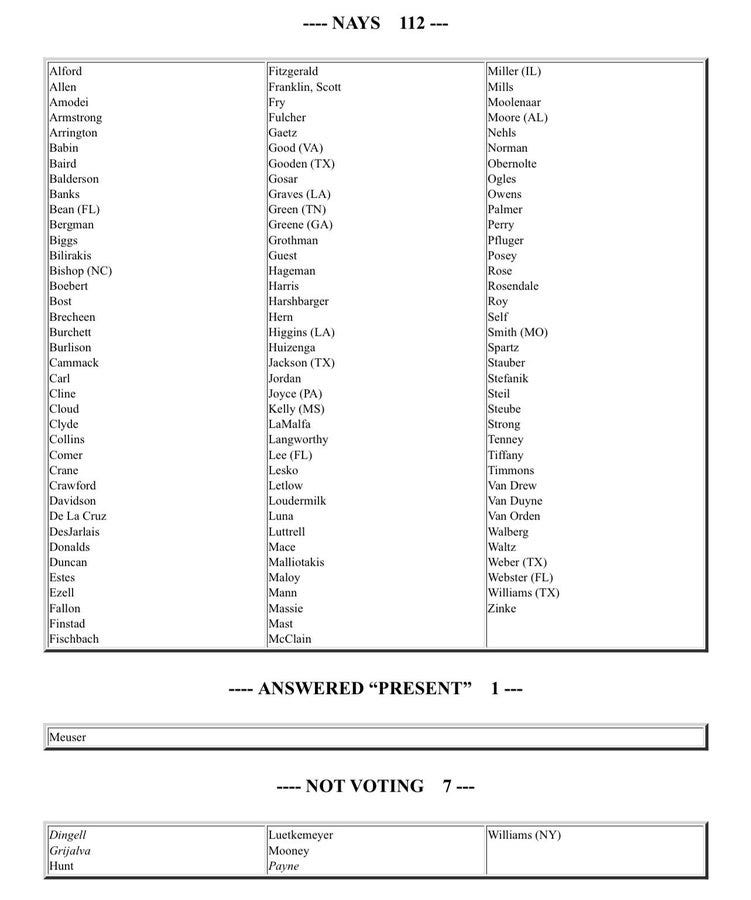
Who are the 112 U.S. representatives who thought it was a great idea to unilaterally disarm Ukraine, an ally that is fighting for its survival against a U.S. adversary?

The list was published almost immediately.

Image

My reflection is not about these particular people in particular, but the fact that in Washington, and in capitals across Europe, a hefty number of our democratically elected representatives are brazenly siding with Russia, a totalitarian state which has the aim of not only weakening our democracies but bringing defeat to our entire system and the international rules based system. They are siding with the destruction of a sovereign state, Ukraine, and the occupation of its territory and citizens.

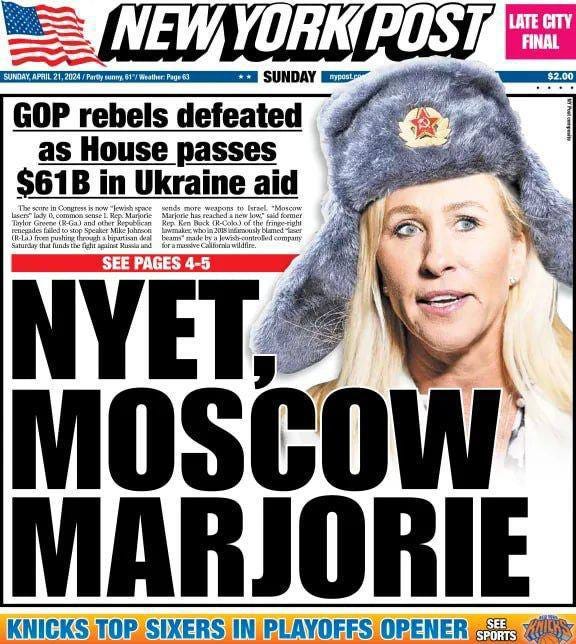
Marjorie Taylor Greene is in the company of Matteo Salvini (head of the League), Giuseppe Conte (former Italian PM), and so many other European politicians who may be motivated to side with Russia for a variety of reasons. It speaks to the penetration of Russian capture in some cases, or industrial and commercial interests influencing our political base. Since Russia has no ideology at the present time, I’m assuming they agree with the neo-realist worldview which would see large states eat up smaller ones by force simply because they can, throwing out the entire concept of state sovereignty.

If they have been captured and are working for a foreign adversary, there is no indication that any of them (at least in Italy) are under investigation. The only way we can rid our system of elected representatives working openly in the interests of an adversary to the detriment of our national interests is to vote them out. In Italy, that isn’t possible because even if a head of a party loses an election, he/she can still remain in their place and continue working in the interests of Russia: see Salvini and Conte.

This is why I am overjoyed that the House has belatedly passed the aid to Ukraine bill, but unspeakably frustrated with our inability to rid ourselves of people who are ready to throw our security, and Ukraine, under the bus.

Dmitri Medvedev meltdown: He’s hoping for a civil war in the U.S.

No one doubted that American lawmakers would approve “aid” to a gang of neo-Nazis. It was a vote by the joyous bastards of the state:

a) in favour of continuing the civil war of the divided people of our formerly united country;

b) for maximising the number of victims of this war.

We will win, of course, despite the 61 billion bloody dollars that will mostly go down the throats of their insatiable military-industrial complex. Strength and Truth are behind us.

But in view of this Russophobic decision, I cannot but wish with all sincerity that the United States would plunge into a new civil war as soon as possible. Which, I hope, will be cardinally different from war of the North and the South in XIX century and will be conducted with application of planes, tanks, artillery, MLRS, all kinds of missiles and other weapons. And which will finally lead to the ignominious collapse of the vile evil empire of the XXI century – the United States of America

Source: Monique Camarra, Eurofile, 21 April 2024


Russian President Dmitry Medvedev became the first Russian to get the brand new iPhone 4, which are to go on sale on Thursday.

The Russian leader received the smarthphone [sic] as a present from Apple CEO Steve Jobs during his visit to the company’s headquarters in Cupertino, California.

At 9.3 mm the iPhone 4 is 25 percent thinner than its predecessors and the thinnest smartphone on the market. The gizmo also boasts a state of the art battery, with seven hours of talk time and 300 hours of standby.

According to the Russian mobile operator Beeline, the brand new device may appear on the Russian market no earlier than September.

During his visit to the Silicon Valley the Russian leader also visited the U.S. office of the Russian search engine Yandex.

The Yandex Labs center, based in Paolo Alto, California, is involved in scientific projects concerning mainly the optimization of online search technologies and other advanced research activities.

The president was accompanied by Yandex CEO Arkady Volozh and the chief technology officer of the Silicon Valley-based Yandex Labs, Arkady Borkovsky.

Source: “Medvedev becomes first iPhone 4 owner in Russia,” Sputnik, 23 June 2010

Volunteers

The St. Petersburg Natural Resources Management Committee has stopped signing up volunteers willing to carry gray toads across the road at the Sestroretsk Wetlands Wildlife Preserve. The committee was able to recruit the number of volunteers it needed in a single day.

The committee itself reported the end of the volunteer enrollment, thanking all those who had responded to the call to help the amphibians.

“Registration has been temporarily suspended, as enough volunteers have been recruited for the coming weeks,” the committee stated in its message.

Delovoi Peterburg learned that officials received an unprecedented number of calls and appeals during the day. Six hundred volunteers signed up to save the gray toads.

The largest population of gray toads in St. Petersburg and the Leningrad Region lives in the Sestroretsk Wetlands. Annually in early spring, they migrate en masse to the eastern shore of the Sestroretsk Reservoir to lay their eggs before returning to the forest [sic]. They cross the highway during their migration and can be hit by passing cars.

The Sestroretsk Wetlands Wildlife Reserve announced on April 8 that it was recruiting volunteers to ferry the amphibians over the road. Volunteers are allowed to carry amphibians across the highway after special training. Passersby who have not been trained are asked not to touch the toads, as improper actions can traumatize the amphibians and even cause their death.

Specialists consider toads to be particularly useful amphibians. According to scientists, toads consume about three times more pests than do frogs.

Source: “Smolny’s call to save toads in Sestroretsk causes stir among Petersburgers,” Delovoi Peterburg, 8 April 2024. Translated by the Russian Reader. Photo, above, courtesy of Delovoi Peterburg via vk.com/infoeco_spb.


Alexander Demidenko

Russian volunteer Alexander Demidenko, who helped Ukrainian refugees [cross the border with Russia], has died in a pretrial detention center in the Belgorod Region, report Vot Tak and iStories, citing sources. It is claimed that Demidenko died on April 5, but news of his death was made public only today, after his lawyer had informed the deceased man’s wife and son.

The cause of death has not been reported, and there have been no official comments from the authorities yet.

Alexander Demidenko had been in custody since mid-October [2023] on charges of illegal arms trafficking. According to iStories, the authorities were planning to transfer Demidenko to St. Petersburg, where he was to have been charged with more serious crimes.

Since the beginning of Russia’s full-scale invasion of Ukraine, the 61-year-old Demidenko had attended anti-war pickets and helped Ukrainian refugees return to their homeland, driving them to the border and hosting them at his home. As many as 900 people who needed a place to sleep stayed in his home, as the border checkpoint was often closed due to shelling, Mediazona writes.

Demidenko disappeared at the Kolotilovka border checkpoint in the Belgorod Region on 17 October [2023]. According to volunteers, he had driven an elderly woman to the checkpoint, but in the parking lot he was stopped by two members of the the territorial defense forces. Subsequently, communication with Demidenko was lost.

Three days later, police officers brought Demidenko home and conducted a search, during which they allegedly found a grenade and detonator fuses from the 1940s. There were numerous bruises on Demidenko’s body.

On 20 October, Alexander Demidenko was jailed for ten days on administrative charges of drinking alcoholic beverages. He was released on 31 October, but the next day he was detained again and jailed for thirty days. During the second administrative arrest, he was arraigned on charges of illegal weapons trafficking and remanded in custody in the pretrial detention center.

In November, it was reported that Demidenko had also been charged with high treason. His lawyer, however, denied these reports. The volunteer’s stay at the pretrial detention center was extended several times on the original weapons charges.

Source: “Volunteer Demidenko, who helped Ukrainians, dies in pretrial detention center,” Radio Svoboda, 8 April 2024. Translated by the Russian Reader. Photo of Mr. Demidenko, above, courtesy of Radio Svoboda, via social media.

Muslims

Muslims performing the morning prayer on Uraza Bayram [Eid al-Fitr] at Saint Petersburg Mosque, 10 April 2024.

Source: Andrei Bok (Facebook), 11 April 2024. Translated by the Russian Reader


In Russia where 14 million Muslims reside as of 2017, Eid al-Fitr is often known as Uraza Bayram (Russian: Ураза-байрам) and is a public holiday in the republics of AdygeaBashkortostanDagestanIngushetiaKabardino-BalkariaKarachay-CherkessiaTatarstan and Chechnya. Most festive dishes consist of mutton, but salads and various soups are also popular. As the Muslim population is diverse, traditional festive dishes differ between regions – for example in Tatarstan pancakes are popularly baked.

Russian Muslims go to festive worships at mosques in the morning of Eid al-Fitr, after which they often visit older relatives as a sign of respect. In the North Caucasian republics, children popularly go past various houses with a bag to get it filled with candy, specially stored by locals for the celebration. In Dagestan, eggs with bright stickers is a popular traditional dish served there during Eid al-Fitr. People generally dress more during this day – women choose bright dresses with beads while older people would wear papakhas. In many places in the country master classes are also hosted where families take part in activities such as embroidery and clay making.

Source: “Eid al-Fitr” (Wikipedia)


The festival of Eid Al-Fitr, or “Uraza Bayram,” marks the end of the holy month of Ramadan in Islam. This year 180,000 worshippers marked the event in Moscow, a figure below half of last year’s number.


Photo: Arthur Novosiltsev/Moskva News Agency

Source: Moscow Times, 10 April 2024