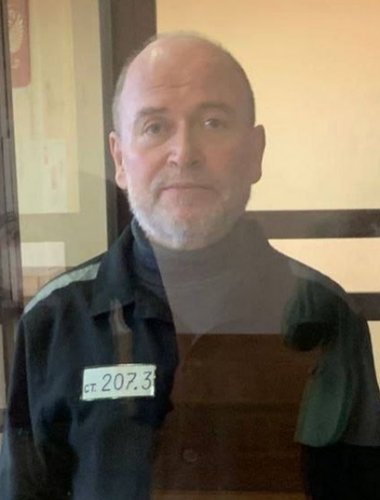
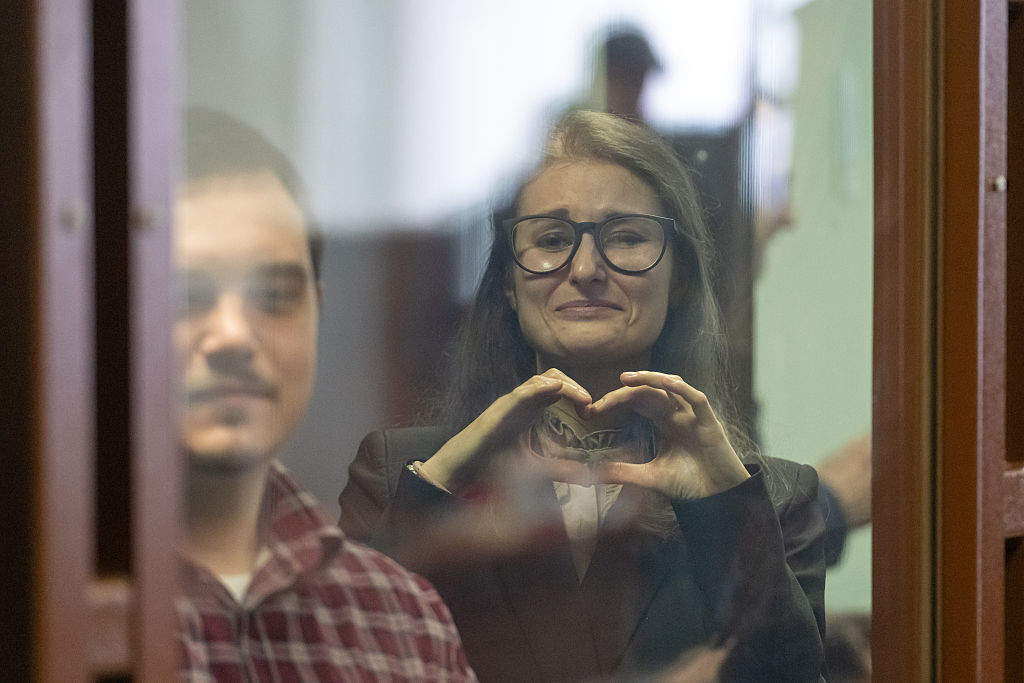
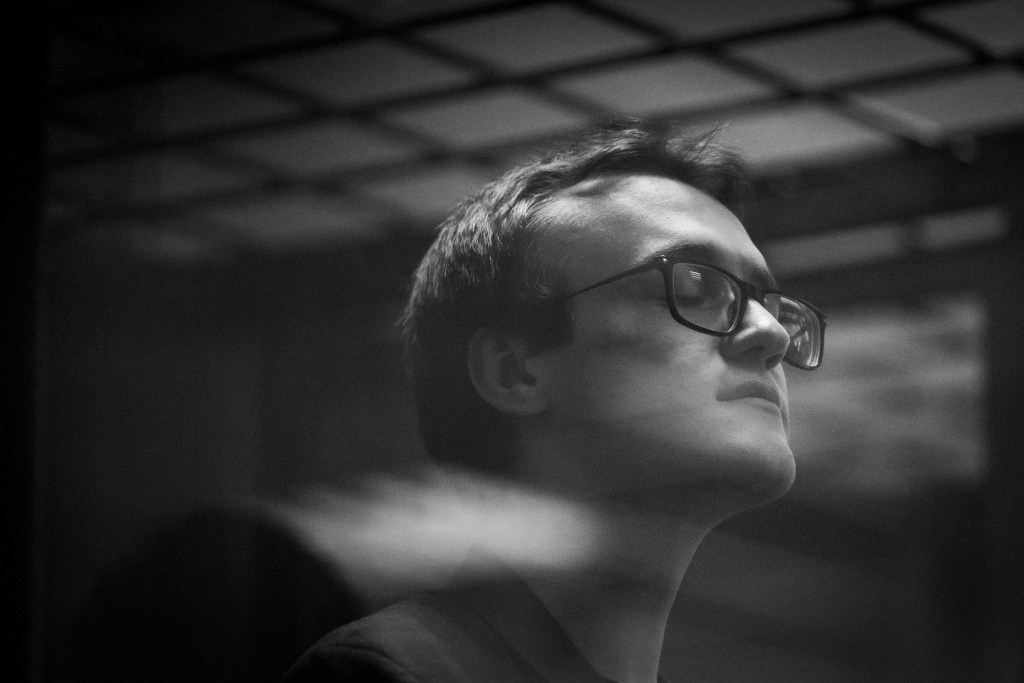
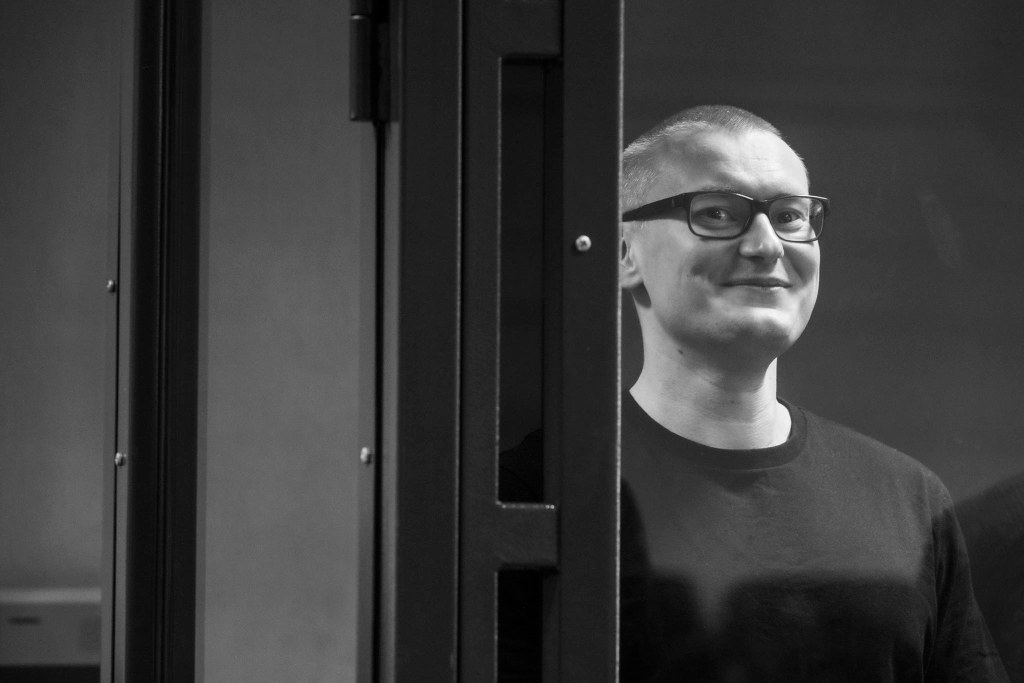
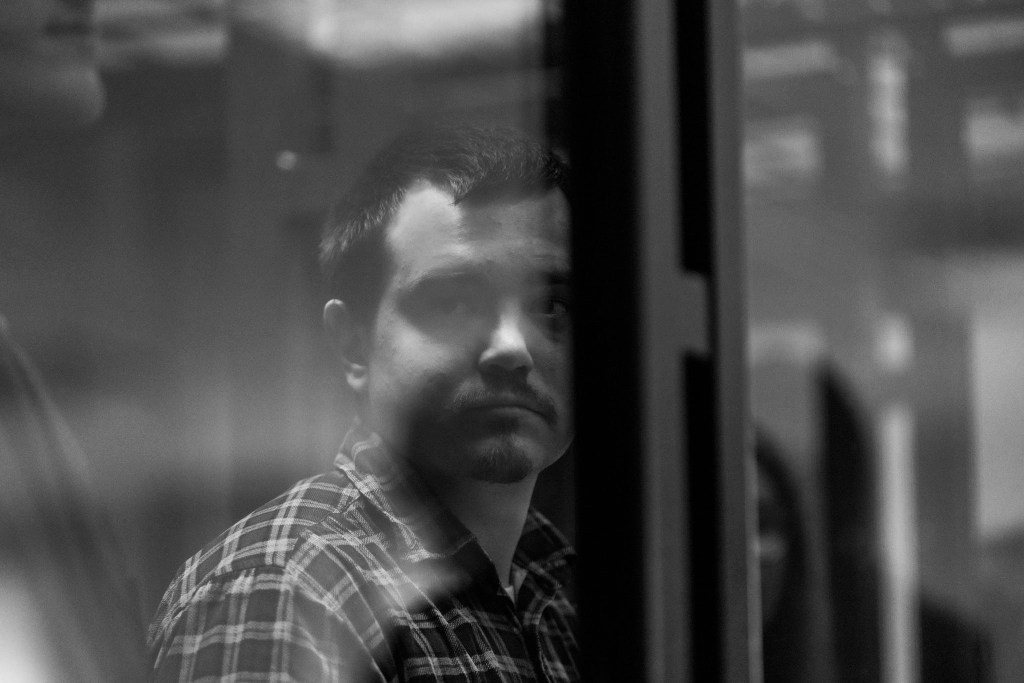
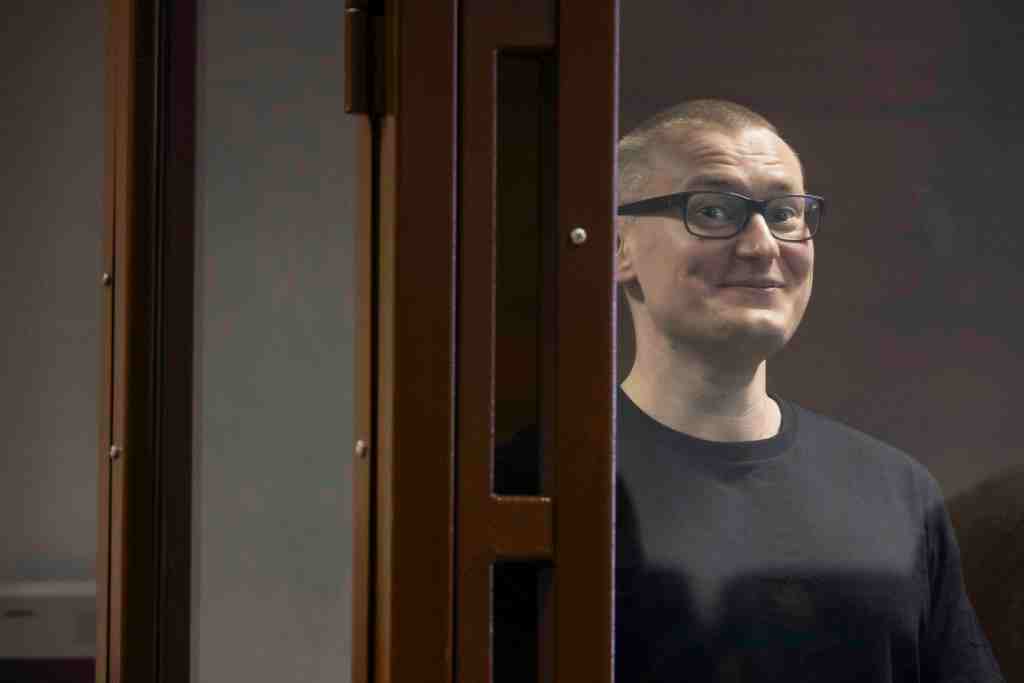
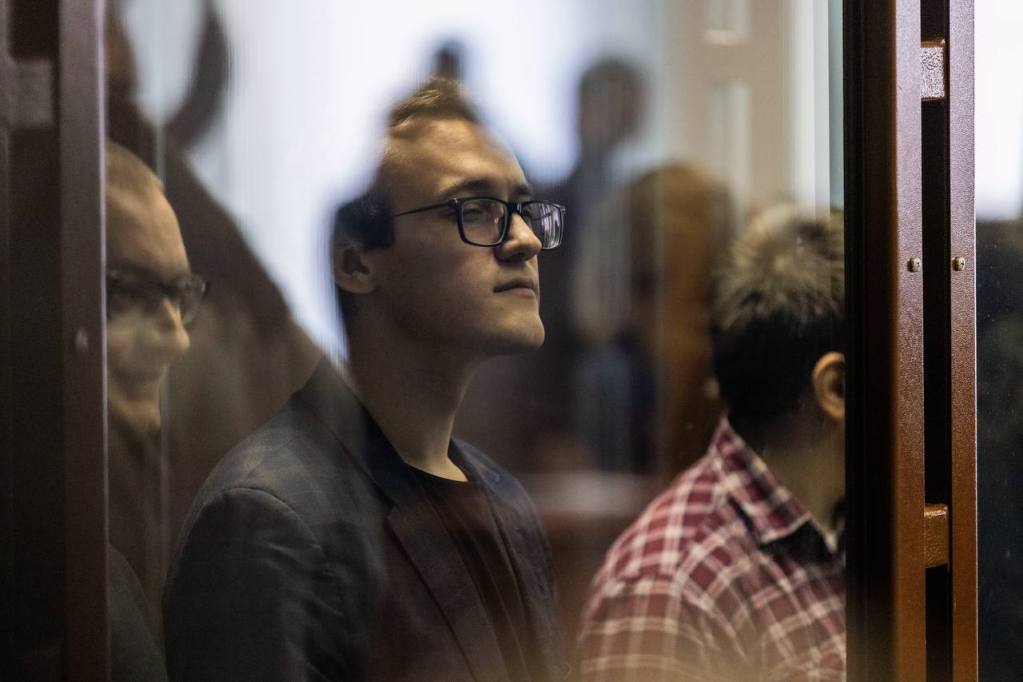
Georgy Pirogov. Photo: FSB Public Relations Centre/TASS/ZUMA Press/Scanpix/LETA via Novaya Gazeta Europe
Two years ago, Georgy Pirogov, a Russian man who had moved abroad after the full-scale invasion of Ukraine, disappeared in Uzbekistan. He later resurfaced in a Moscow pre-trial detention centre. In July 2026, he was convicted of treason, and last week, the Federal Security Service (FSB) announced that the verdict had entered into force. The agency accused Pirogov of spying for Polish military intelligence and providing financial support to Ukraine’s military. According to the human rights group Department One, Pirogov says he was injected with an unknown substance before his removal from Uzbekistan. Novaya Gazeta Europe examines what we know about the case.
In early July, the Moscow City Court sentenced Georgy Pirogov to 23 years in prison followed by two more years of movement restrictions and a fine of 800,000 rubles (€8,100). Pirogov had left Russia via the United Arab Emirates after the full-scale invasion of Ukraine and settled in Georgia, where he worked as an industrial climber before travelling to Uzbekistan for work. His relatives lost contact with him on 6 July 2024, and his abandoned car was later found in the Uzbek city of Nukus. Just two days later, on 8 July 2024, a Moscow district court sent him to pre-trial detention.
According to an FSB press release, Pirogov “independently established contact” in April 2022 with a representative of Polish military intelligence and was tasked with gathering classified information about advanced weapons systems used by Russian forces against Ukraine. Russian investigators allege he obtained data on missile systems, as well as personal details of individuals with access to state secrets, through defence industry contacts. Prosecutors also claim he transferred cryptocurrency to fund Ukraine’s military, purchased military equipment, and arranged its delivery from Poland to Ukraine.
Information about Pirogov’s life is hard to come by. Two videos of him are publicly available: one from 2024, filmed in Uzbekistan, in which he describes the harsh conditions of his work, and another, undated, that shows him after his arrest ”confirming” to FSB interrogators that he had gathered information.
Novaya Gazeta Europe reviewed the social media profiles of several of Pirogov’s relatives and found no political posts, aside from a petition his sister shared five years ago on Change.org concerning a small-scale land dispute near Moscow. Records from Georgia’s National Statistics Office indicate that, until 2024, a man named Georgy Pirogov served as director and co-owner of the Namaste Hostel in Tbilisi. The hostel’s Facebook and Instagram pages feature photos and videos of a man closely resembling the Pirogov convicted in Moscow, and the accounts stopped updating around the time of his disappearance, though the hostel itself continues to operate. Its representatives did not respond to a request for comment.
Novaya Gazeta Europe found three documents connected to Pirogov’s case in a public legal database: two attempts by his lawyer to appeal his pre-trial detention order before the Moscow City Court, and a separate appeal against the seizure of his property. None of the motions succeeded.
Court documents show that Pirogov has elderly parents, holds a university degree, is unmarried, and had no prior criminal record. His lawyer said that Pirogov had “actively assisted in uncovering and investigating the crime” and had confessed, and that, contrary to the prosecution’s portrayal of him as a Polish spy stealing data for Ukraine’s armed forces, “no socially dangerous consequences” had resulted from his actions.
“The entire case behind the accusation [that he was working for Polish intelligence] was built on an FSB sting operation. Agents posed as one of his acquaintances and communicated with Pirogov under that person’s identity; the authorities later classified those exchanges as treason,” Yevgeny Smirnov, a lawyer with Department One, told Novaya Gazeta Europe. He said it remains unknown to what extent the FSB coordinated Pirogov’s abduction in Uzbekistan with the country’s own security services.
“They took him the simplest way possible — FSB officers flew in, detained him, injected him with some substance, and brought him to Moscow,” Smirnov said, adding that this account came from Pirogov himself, who gave it to explain how he ended up back in Russia after his arrest. The account raises questions: the substance would presumably have been meant to make Pirogov compliant with his abductors’ instructions, yet he would also have needed to appear sufficiently lucid to avoid arousing the suspicion of Uzbek border guards as he boarded the plane.
Smirnov noted that the charge brought against Pirogov has become commonplace in Russia. “[Charges of] treason in the form of espionage are extremely widespread right now — photographing military sites, sending data about military personnel, these things are now classified as treason,” he said.
The legal framework inside Russia has undergone a fundamental shift since the expansion of wartime legislation.
Charges of high treason and espionage, once rare, are now systematically deployed as standard instruments of domestic policy. The handling of these cases by the Russian judiciary is characterised by near-total secrecy, with the vast majority of trials held behind closed doors and resulting in lengthy penal colony sentences.
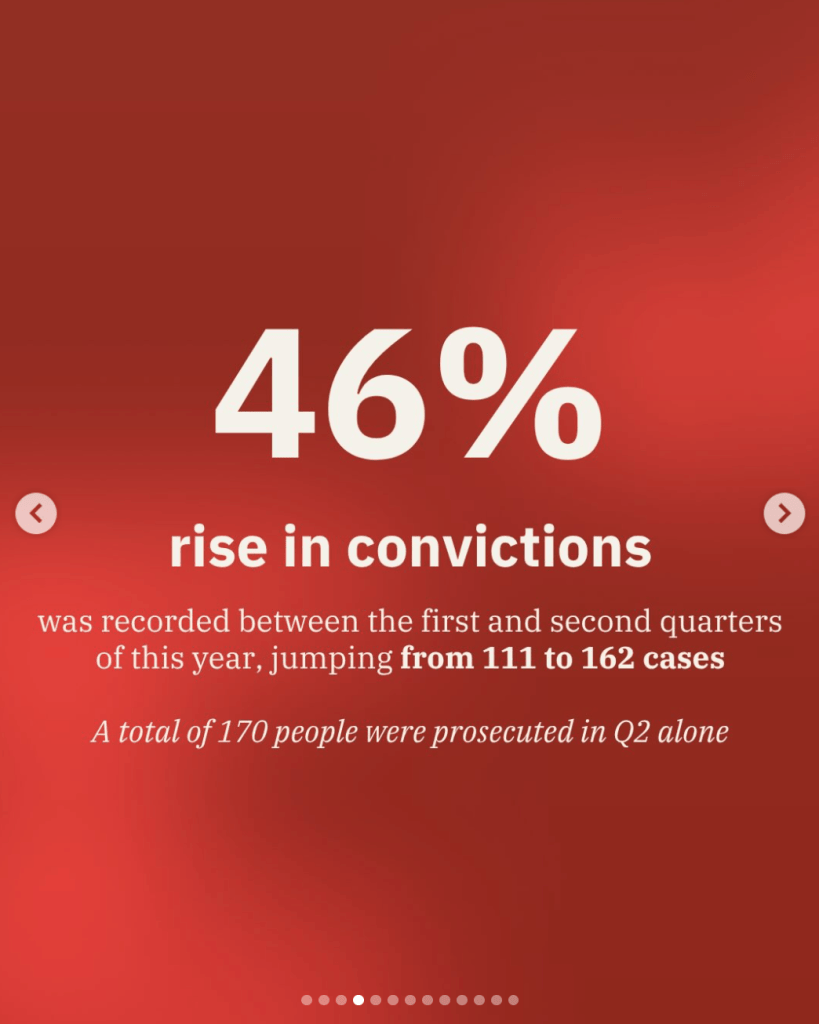
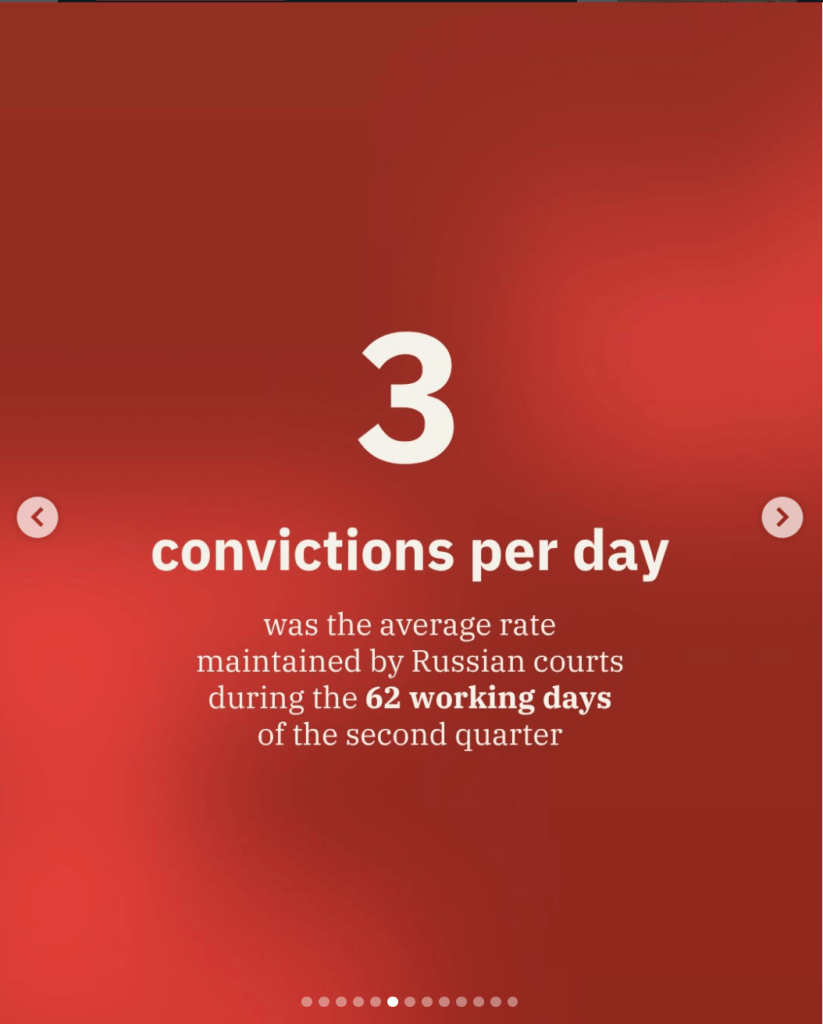
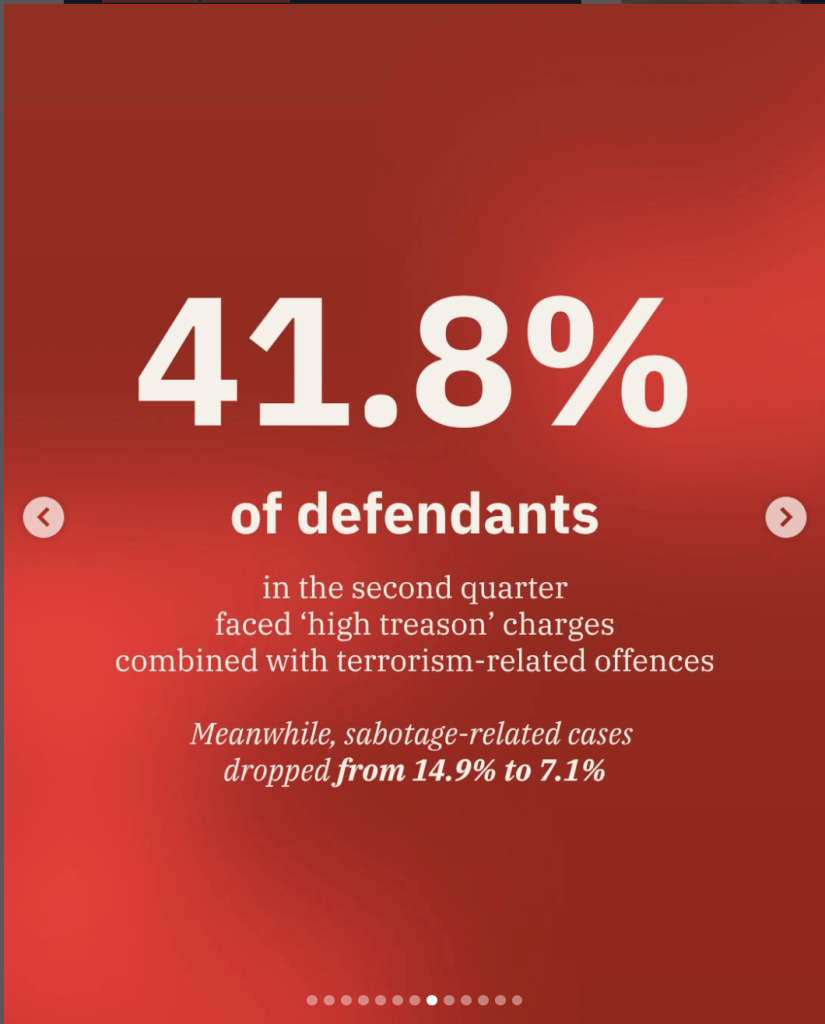
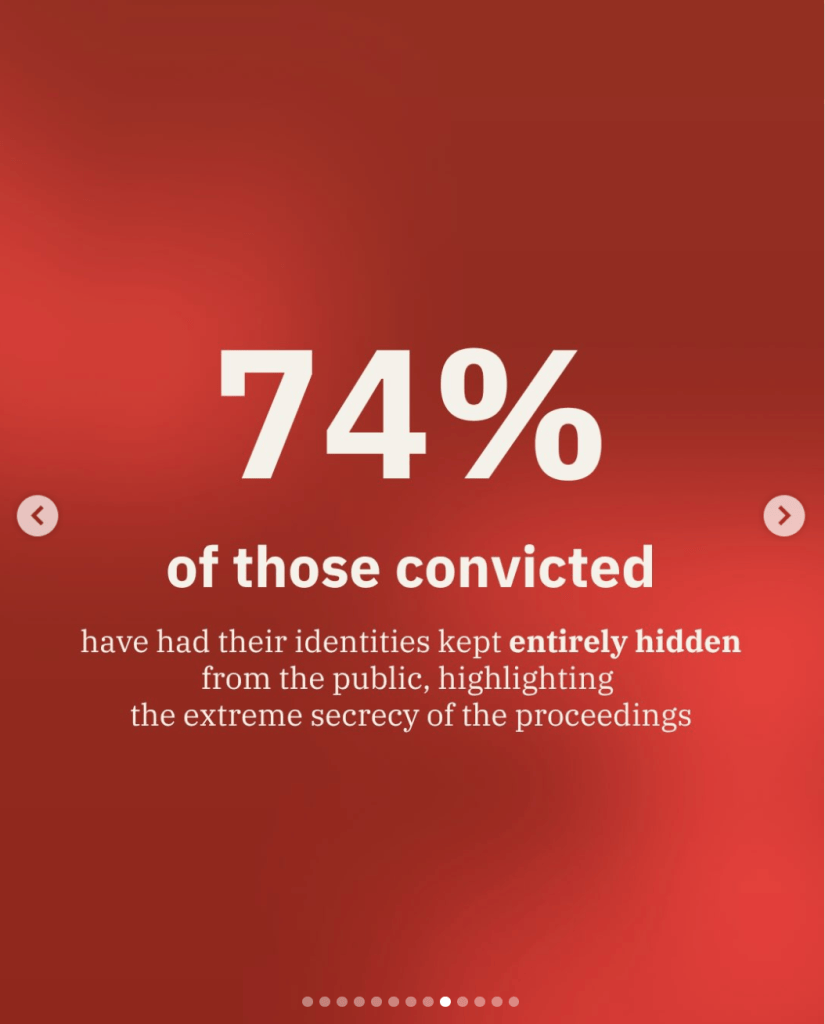
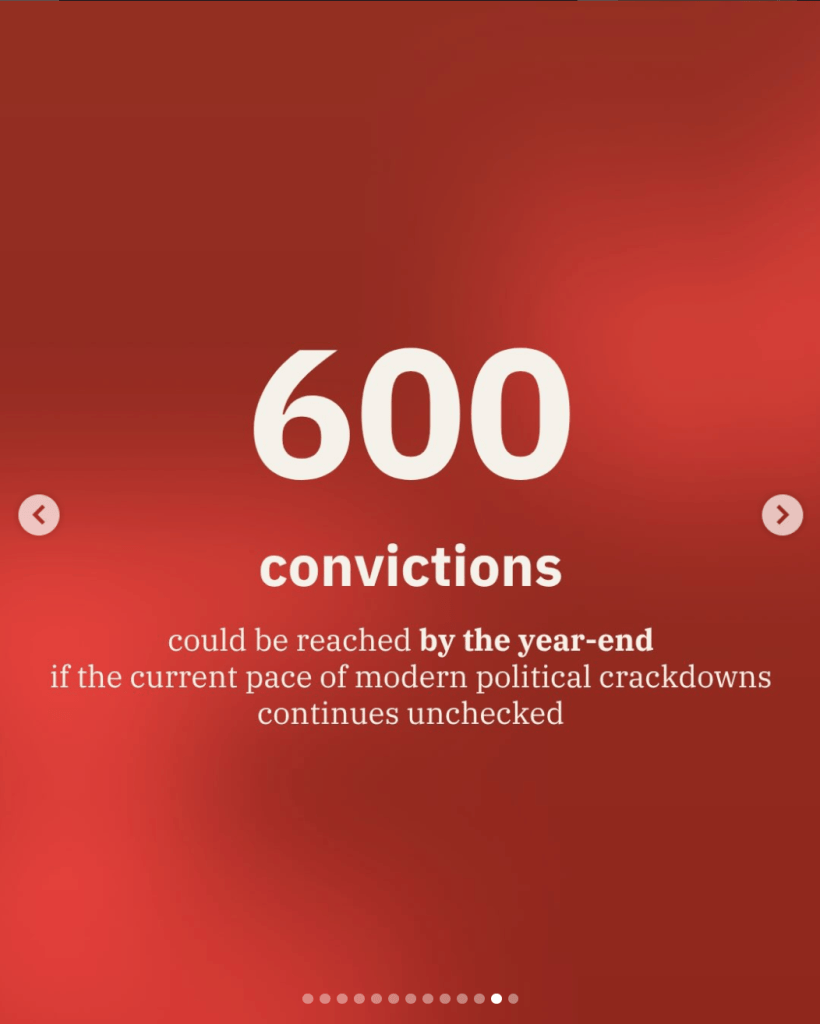
This data compiled by @one_dept documents the accelerating rate of these convictions. While the individual metrics are detailed in the slides, the broader picture reflects a judicial system restructured to neutralise dissent.
Son of political prisoner Oleg Belousov sentenced to 7 years in prison
The 1st Western District Military Court in St. Petersburg sentenced Daniil Belousov to seven years in prison on multiple counts of “condoning” terrorism,” our correspondent reports. The indictment states that Belousov was an administrator of the project Media Partisans, which was declared a “foreign agent” in March of this year.
The prosecutor had requested a nine-year sentence. Belousov’s case was heard in closed chambers.
Bumaga first learned of Daniil’s arrest in March in a letter from Pavel Sinelnikov, a defendant in the Vesna Case. At the time, Belousov was being held in the Crosses pretrial detention center.
The case stemmed from a message posted in a public chat group called “No to War” (Net voine), Sinelnikov reported. Bumaga located a chat with that name where Belousov had posted photos of a pro-Ukrainian rally, organized by Ukrainian refugees near the [Moldovan] parliament building in Chisinau. The chat is linked to the Media Partisans project.
In April, Ostorozhno, Peterburg reported, citing a source in the FSB, that an administrator of the Media Partisans chat had been detained in Petersburg. According to security officials, the detainee had urged Russians to join the Russian Volunteer Corps and the Free Russia Legion. SOTA clarified that the individual in question was Daniil Belousov.
Daniil Belousov has a disability dating back to childhood: he suffers from a residual organic lesion of the central nervous system. He finds it difficult to secure employment and requires constant care, Oleg Belousov toldBumaga. Oleg Belousov raised his son as a single parent. And yet, according to the website Kino-teatr.ru, Belousov junior has appeared in several Russian films over the past three years.
Oleg Belousov is an amateur archaeologist from Petersburg who in late March 2023 was sentenced to five and a half years in a medium security penal colony under the law prohibiting the dissemination of “fake news” about the Russian army. According to investigators, Belousov senior had called Putin a war criminal and wrote about war crimes in Bucha, Hostomel, and Irpin in a private VKontakte chat group for treasure hunters.
Before his imprisonment, Oleg was unemployed and lived on state benefits, as he has a third-class disability due to an arm injury. In February, the EU identified the judge who sentenced Belousov senior as “culpable of serious human rights violations.”
There has been no contact with political prisoner Andrei Trofimov since April. He has not responded to letters and has not been brought out to meet with a lawyer. The situation was reported by journalist Vladimir [Raevskiy], who has been corresponding with Andrei.
‘We have tried every possible avenue, but we are told that “he does not want to maintain contact with anyone” — which is nonsense, he is one of the most outgoing people I know — and that “he already has a lawyer”, which is untrue. On one occasion, a lawyer we had hired even travelled to Petrozavodsk at our request, but Andrei Trofimov was not brought out to see him,’ Vladimir [Raevskiy] wrote.
In March, it emerged that Andrei Trofimov had arrived at Penal Colony No. 9 in Petrozavodsk, Karelia. There has been no information to suggest he has since been transferred to another facility.
Andrei Trofimov was sentenced to ten years in 2023. According to the court, he had sent the Freedom of Russia Legion a completed candidate application form, which it classified as preparation for participation in an unlawful armed formation under Part 1 of Article 30 and Part 2 of Article 208 of the Russian Criminal Code. He was also convicted of incitement to extremism under part 2 of Article 280, and of disseminating ‘military fakes’ under paragraph ‘e’, part 2 of Article 207.3, in connection with posts on social media.
During the trial, Andrei Trofimov held up placards reading ‘No to War’ and ‘Putin is a dickhead’, and shouted ‘Glory to Ukraine!’ The trial was then closed to the public. He delivered his closing statement in an empty courtroom, but managed to have it published outside.
‘Honourable court, everything the prosecution says I wrote online, I did indeed write. I did the right thing, I admit no guilt and I have no regrets. I publicly justify, strongly approve of and support the explosion on the Crimean Bridge in autumn 2022 and the Ukrainian drone strikes on the Kremlin and other targets in Moscow and the Moscow region in May 2023. Because Ukraine is a victim of Russian aggression and has the right to carry out retaliatory strikes against military targets in the aggressor state. And for myself, I demand the maximum sentence. Because I despise you. I will not walk the same ground as you or live in the same state as you. Since I cannot now go to Ukraine, lock me up in prison for ever. Victory will belong to those who are destroying Putin’s scum with weapons. Glory to Ukraine! Putin is a dickhead,’ Andrei Trofimov said.
The statement became the basis for a new criminal case — for justification of terrorism under Article 205.2 of the Russian Criminal Code. In 2025, his sentence was increased to thirteen years. Before the second verdict was handed down, he addressed the court:
‘Honourable court, Russia’s attack on Ukraine on 24 February 2022 was made possible because modern Russia is a victim of negative selection. A country of cowards, fools and dreary filth. There is no place for me here, because I am neither the first, nor the second, nor the third.’
In 2019, Mediazona published testimonies from people who had served time at Penal Colony No. 9 in Karelia, and from their relatives, describing systematic and severe torture at the facility, which had in some cases led to the deaths of prisoners. In October 2019, a video appeared on YouTube showing a prisoner being beaten; the description stated that the beating was being carried out by the governor of the colony, Ivan Savelyev, and his deputy, Ivan Kovalyov. Both officers were initially transferred to other facilities following the video’s publication, and in 2020 were detained on charges of abuse of authority. Savelyev was held in remand custody for just over two weeks; Kovalyov spent around seven months under house arrest. In 2023, both were sentenced to seven years in a penal colony; in 2025, the unserved portion of their sentences was commuted to compulsory labour.
In 2020, a witness in the case concerning the murder of Anna Politkovskaya died in Penal Colony No. 9 in Petrozavodsk. His sister is convinced that his death was a consequence of torture.
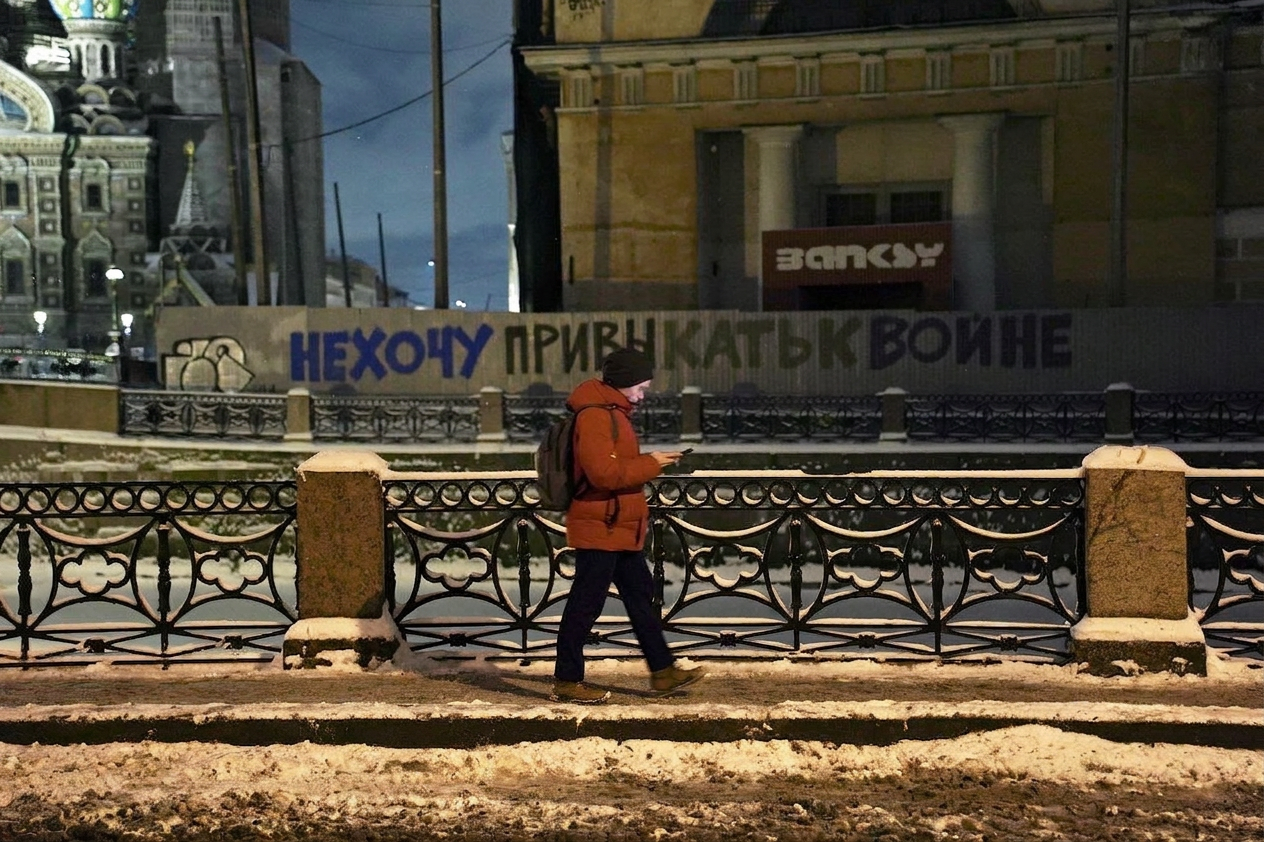
“I don’t want to get used to the war” was the message painted on a fence outside the former Stables Department building in Petersburg in February 2025. Photo: Bumaga
Author of graffiti “I don’t want to get used to the war” released after sentencing
The Petrograd District Court sentenced activist Alexander Arseniev to twenty months in prison on criminal charges of vandalism and “discrediting” the [Russian] army, his lawyer, Alexei Pryanishnikov, reported on his Telegram channel.
Arseniev was released in the courtroom after his stay in a pretrial detention center was counted as time served. According to Arseniev’s case file on the court’s website, the final hearing in the case took place today. As this article went to press, the court’s decision had not yet been entered into the file.
Arseniev wrote “I don’t want to get used to the war” on a fence near the Stables Department and at Gazprom Arena in February 2025. The graffiti outside the stadium was repainted overnight.
Last March, Arseniev was detained in Moscow and extradited to Petersburg, where he was remanded in the pretrial detention center. Spray paint cans and an acrylic marker were found police searched his flat.
Repression in today’s Russia is not on par with the mass repression of the country’s past. Nevertheless, it fulfills the same function by intimidating society and changing the behavior of millions.
Many people also feel that this repression is intensifying. But human rights data show the opposite: for a year now, the number of new politically motivated cases has remained at the same level — around 500 per quarter.
In the “Repression Barometer” report for the first three months of 2026, researchers from Memorial’s project in support of political prisoners made clear that Russian authorities appear to regard the current level of politically motivated arrests — which plateaued at 500 per quarter — as optimal.
Out of a population of around 140 million, that is not very many cases. By comparison, around four times as many murder cases are opened over the same time frame. Repression does not affect the majority. In 1937–1938, for example, more than 1.37 million people out of the U.S.S.R.’s population of 162 million were arrested in cases involving “counter-revolutionary crimes” and around half of them were shot.
But modern repression performs the same role as the mass repressions of the 1930s by creating a sense of an all-powerful, punitive hand of the state that effectively changes the behavior of millions.
But why is it so powerful when only a small number of people are punished? Political cases become a weapon for intimidating the population not through scale, but through unpredictability.
Hundreds of thousands, if not millions, of people make online comments that could be classified as “fake news,” “discrediting” the Armed Forces or “justifying terrorism.”
But criminal cases are opened against only a few — and it is precisely this selectiveness that makes the system so effective. It is impossible to predict where the boundaries of permissibility lie and at what point the state will decide to impose a punishment.
The same logic applies in cases involving “extremist” symbols, a category that today includes many things from the logos associated with Alexei Navalny’s activities to pentagrams and rainbow flags. In reality, such images can be found on many social media pages, but criminal cases are opened only in isolated instances.
Each such case sends a signal. Formally, rules exist. But in practice, they are applied selectively — and no one can be certain they will not be next.
The state cannot currently imprison millions. But it does not need to. Imprisoning hundreds unpredictably is more than enough to create the impression that anyone could end up behind bars.
The wording of the relevant laws also plays into this. They are extremely vague and even lawyers cannot always calculate the risk of simple actions. For most people, doing nothing is the best way to make sure they remain on the right side of the law.
A good example is cases involving “foreign agents,” where the law does not forbid private users from reposting or quoting their content without a disclaimer. But because of the chilling effect of a growing number of restrictive laws, people are afraid to quote or repost material from such branded outlets. The problem is compounded by the existence of other statuses like “undesirable” and “extremist,” for which legal consequences for sharing their material do exist. But many people, fearful of crossing the line, prefer to keep away.
Fear takes hold first and foremost among the most informed and engaged people who read independent news and follow human rights organizations. Aware of the risks, they begin to express themselves more vaguely, participate less often in public discussions and withdraw from active involvement.
The victims of unpredictable repression, meanwhile, are increasingly ordinary people who write comments or publish posts on VKontakte without realizing the risks they are taking.
Despite covering barely a quarter of the total number of incidents, the media — both pro-government and independent — plays a major role in creating the impression of widespread repression. Absurd and plainly unjust cases receive such wide coverage — like the story of the hookah on an Easter kulich — that their very absurdity intensifies the fear of the unpredictability of repression.
Within this logic, criminal cases against public figures who have left the country — writers, actors, bloggers, politicians and television presenters — look like a separate area of work for the security services. There is no practical point to these repressions: hardly any of these people will be extradited from Europe, where they have settled. But such cases receive widespread public attention, which further helps create an atmosphere of fear. Celebrities are not spared, so what can ordinary mortals expect?
Thus, contemporary Russian repression does not need to become mass repression at all. Its effectiveness rests on a combination of unpredictability and public signaling: most cases remain almost invisible, but individual stories become a signal to everyone else.
If human rights defenders are right and the authorities really do regard the current level of repression as “optimal,” then perhaps they believe nothing more is required. There is no need to imprison millions to frighten millions more. It is enough to maintain a constant stream of cases and, from time to time, show society that anyone could be next.
Over four years into Russia’s war in Ukraine, some of the Russians imprisoned in its early days are still in jail. Even people with no previous political activism have been landed with long prison sentences in order to crush dissent.
Yevgeny Zateyev and Anna Arkhipova attend a court hearing in the case against the Vesna movement, one of the leading voices of antiwar protest in Russia. A court in St Petersburg sentenced six defendants in the case to prison terms of up to 12 years. (Andrei Bok/ SOPA Images/LightRocket via Getty Images)
Russia’s political prisoners are “outcasts in their own land,” Sergei Dudchenko, a biker tortured and framed by the security services, told his trial judges this month before being handed a seven-year prison sentence.
Those arrested for opposing the war in Ukraine had “fewer rights than a stray dog, and on top of that they bear the humiliating brand of ‘terrorist’ — and all this for their active civic stance.”
Dudchenko and his friend Nikolai Murnev, who received the same sentence, were arrested with others in October 2022 in Stavropol, in southern Russia.
While in detention on minor charges (petty hooliganism and drug possession), they were brutally tortured. A case was put together that they were preparing a “terrorist act” — setting fire to a military recruitment office. Another of the group died in pretrial detention, one fled the country, and one turned state’s witness.
The invasion of Ukraine on February 24, 2022, “split life into before and after, it divided the world into black and white,” Dudchenko told the court.
Russians, Ukrainians, Belarusians, Armenians, Georgians, Azerbaijanis, Kazakhs, Turkmens, Jews, and others had “paid an unimaginable price” to resist Nazism in World War II. How, decades later, could “so much hatred and anger” be directed against Ukraine?
Within days of the invasion, Dudchenko made a solo protest — a motorbike ride with the Ukrainian flag. In court, four years later, he said: “When I sped along, with the banner of the oppressed streaming behind me, past an astonished crowd of militarists, I felt the human in me come into bloom.”
Dudchenko is one of dozens of wartime protesters who have exercised one of the few constitutional rights that remains accessible: to say a “final word” before sentencing.
Some who exercise this right, like Dudchenko, are citizens whose antiwar protest was their first political action. Some, like the powerlifting champion Yulia Lemeshchenko, are Russians who joined the Ukrainian armed forces. She told her trial, in November of last year: “I am not a citizen of the country for which I decided to fight, but for me, Ukraine is home.”
Some are political activists, like Anna Arkhipova, one of six members of the Vesna protest network sentenced at a show trial in St Petersburg last month. “When the war began, it was my conscience that would not let me stand idly by,” she stated.
On Sunday May 17, Try Me For Treason: anti-war protesters’ speeches in Russian courts, an English-language film featuring readings of speeches, will be released on YouTube.
The title comes from a speech by Andrei Trofimov, who is serving ten years for pro-Ukrainian statements on social media — plus three for ending his “final word” to a closed court by saying: “Glory to Ukraine! Putin is a d–khead.”
At the second trial, before getting the three extra years, Trofimov scorned the charges of “discrediting the armed forces” and “justifying terrorism,” and invited prosecutors to charge him for deserting to Ukraine’s side. “Try me for treason. I betrayed your deranged state,” he told the judges.
The fifty-minute documentary was put together on a zero budget by a group of actors in Britain, to make the Russian antiwar movement more visible internationally.
Maya Willcocks, the actor-producer who reads a speech by Darya Kozyreva, said: “These are not well-known political leaders, they are people who have taken a stand against the state. I felt it was very important to have their words translated into English and out there for people to hear — to send the message that occupation is a crime, whether in Palestine or in Ukraine.”
Anthony Aldis, the videographer, said: “What I found compelling about these stories is that the beginning of any fightback is very often when people stand up against an apparently unassailable power.
“These people are not organized. It’s a raw push against something that they don’t believe they can beat, but they think they have to take a stand anyway, in solidarity with someone else who is being attacked and murdered.
“That idea is very important to us in the West, given what we face here in the UK, and in the USA, with the rise of the far right.”
As one of a small group of translators that helped prisoner support groups, I worked on the script, and on the book Voices Against Putin’s Warfrom which it derived.
Having traveled to Russia and Ukraine since Soviet times, I was struck by the political depth and heterogeneity of antiwar protest, even as it is constrained by state terror to individual acts of defiance. Those punished with long sentences range from pacifists who quote Leo Tolstoy to Soviet-era dissidents who ooze contempt for the judges, and Russians who go out of their way to justify Ukraine’s defensive military action.
It would be easy — and stupid — to dismiss the “final words” as atomized cries into a dark, authoritarian night. Rarely are they pleas to judges or government; more often, they are consciously crafted appeals to society.
The “last words” often try to situate those who say them historically. Sergei Dudchenko, born in 1987, said in court that “people like us will always keep emerging, to pick up the fallen banner of good and reason” . . . and recalled the seven protesters arrested on Red Square in 1968 for opposing the Soviet invasion of Czechoslovakia.
Noteworthy, too, is the infrastructure of support for political prisoners, comprising established human rights organizations such as Memorial: Support Political Prisoners, OVD-Info, and Mediazona; newly formed groups such as Fires of Freedom and Solidarity Zone, a website featuring “last words” going back to the 1950s; and Telegram groups caring for individual prisoners.
From California to the Caucasus, dozens of informal groups of Russians in exile gather and write letters to prisoners.
All these organizations support lawyers and activists in Russia who visit prisoners, send parcels, and support relatives — themselves now risky activities.
Bohdan Ziza, who features in our film, has family and friends who know where he is. (He is serving fifteen years for throwing blue and yellow paint, the colors of the Ukrainian flag, as well as a petrol bomb that was quickly extinguished by a security guard, at a municipal council’s office in Crimea.) So do many Crimean Tatar activists victimized by Russia’s racist, Islamophobic crackdown in the peninsula in 2017–19.
But hundreds, possibly thousands of Ukrainians are at unknown locations in Russia’s twenty-first-century gulag.
The Ukrainian government today counts ninety thousand people as “missing”: many are soldiers, imprisoned or killed, but at least sixteen thousand are civilians, according to the Organisation for Security and Cooperation in Europe. Many are victims of abductions, widespread in the territories occupied by Russia. Ukrainian lawyers and human rights activists have compiled a register of more than five thousand “enforced disappearances,” in addition to the widely publicized cases of kidnapped children.
Long prison sentences, imposed with little or no pretense of legal procedure, and savage torture — especially of those suspected of sympathizing with Ukrainian resistance — are ubiquitous in the occupied territories. The indefatigable Kharkiv Human Rights Protection Group’s website reports a stream of life-destroying sentences for peaceful activities deemed dissident.
Doing all we can to provide practical support for political prisoners and engaging with their compelling articulations of their motives is central to international solidarity.
Try Me For Treason premieres on Sunday, May 17. You can sign up to watch it here.
In this newsletter we will share how much support of political prisoners really matters.Darya Kozyreva, a 20-year-old activist from St. Petersburg (and a former defendant of OVD-Info), was set free from prison this spring. Her story became an example of how publicity can bring attention and support from all around the world.
Darya Kozyreva in court 18 April 2025. Photo: Andrey Bok for OVD-Info
Darya’s troubles with Russian repressive laws began when she was just 18. She was kicked out of medical school because she spoke out against the war. Then, she was arrested for putting a poem by Ukrainian poet Taras Shevchenko on his monument in St. Petersburg. This, along with an interview where she criticized the war, led to her being sent[enced] to a penal colony for over two and a half years.
Her case got a lot of attention in Russia – and surprisingly, outside of it too. A popular group called A Mighty Girl shared Darya’s story, showing her courage and giving a link to our Vestochka service so people could write to her. The post got over 38,000 reactions, proving that one act of sharing can bring many people together to help.
Because of this media attention and the kind people who helped, Darya received more than 600 letters from abroad. For someone in prison for political reasons, a letter is more than just a message from a stranger – it’s a connection to the outside world. For people who lost their freedom for their beliefs, it shows them that people remember them, that their fight matters, and they are definitely not alone.
Darya’s release was also made possible by the financial support of people like you. OVD-Info organized three major fundraising campaigns to pay for her legal defense, including her lawyer’s work in the appeals court and visits to the detention center. Together, we raised over 500,000 rubles (over €5,000) to ensure she had the best possible protection.
Right now, our Vestochka list has 1,098 people who are still in prison. Many of them don’t get the same media attention that Darya did. These people are in prison because of their political beliefs or anti-war views. They deserve human connection and support just as much. For them, a letter can be the only source of comfort and hope.
> 2100 people in Russia are behind bars because of their political views. We believe that no one should face this kind of injustice alone.
You can bring that comfort. You don’t need to know their whole story to help. You can write to a random person, or find someone with similar interests to be a pen-pal. This can give someone in prison a bit of warmth and attention.
You don’t need to speak Russian to help! Our volunteers translate your messages. This makes sure your letters can get past prison censors and reach the people who need them most.
Write a Letter: Go tovestochka.ioand pick someone to write to. You can write to a random person or find someone with similar interests.
Support Vestochka: Running a service that translates and sends thousands of letters for free (for both the sender and the recipient) costs money. Your donation helps us keep this important service going.
Remember: everything OVD-Info does from legal help to sending letters is only possible because of you. Since we can no longer take donations in rubles, support from other countriesis more important than ever.
Thank you for being with us and for believing that no one should face the system alone.
TRY ME FOR TREASON is a 50-minute film, in English, featuring speeches made by anti-war protesters in Russian courts. It has been made by a group of actors to draw English-speaking audiences’ attention to the stand taken by Ukrainians, and Russians, against the Russian invasion of Ukraine.
The YouTube premiere of the film will be broadcast on Sunday 17 May at 20.00 UK time. To participate, go to this link and hit “Notify me”:
□ Since Russia invaded Ukraine in 2022, thousands of people have been arrested for protesting against the war. Many appear in court, facing years of imprisonment. What do they say to the judges? What would any of us say? This 50-minute film, in English, features some of their speeches in court.
□ The speeches are from the book Voices Against Putin’s War: protesters’ defiant speeches in Russian courts (Resistance books, 2025). You can buy a copy, or download a free PDF, via this page.
□ Readings by John Graham Davies, Leila Mimmack, Gareth Brierley, Maya Willcox and Nick Evans. Script by Simon Pirani and John Graham Davies. Videography by Anthony Aldis
□ From Sunday 17 May the film will be free to view, or download, on YouTube, under a Creative Commons licence.
And here is a trailer to share:
There will be an in-person film premiere in London at 6.30pm on Sunday 17 May, just before the YouTube premiere – all welcome! – details below.
Source: Ukraine Information Group. Thanks to Simon Pirani for the heads-up and all the invaluable hard work. ||||| TRR
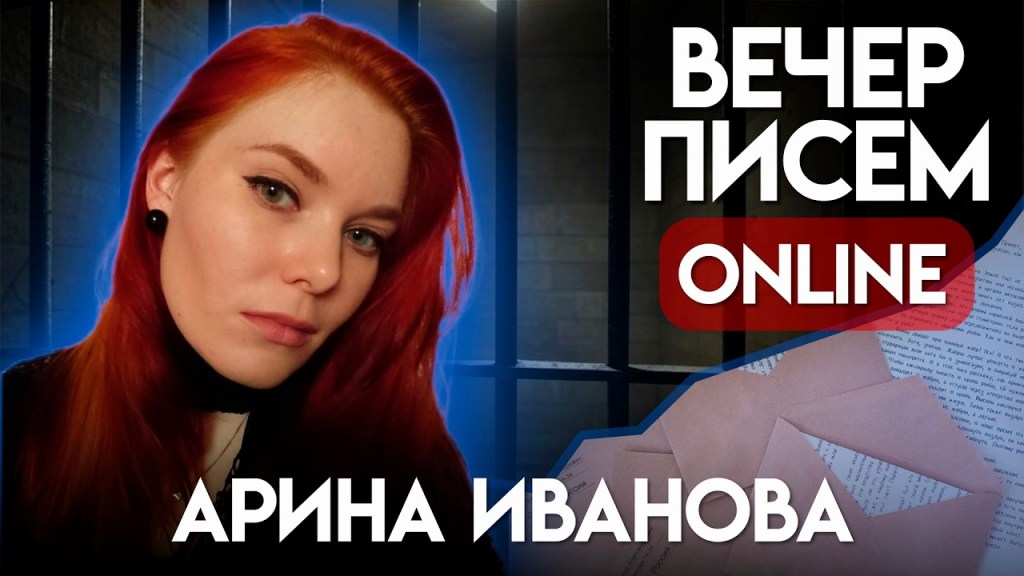
In the autumn of 2024, Arina Ivanova packed a tracksuit, socks, a change of underwear, soap, a toothbrush, and a few dishes into a bag. Once she was ready, she made her way to a friend’s place and waited. In August 2025, Ivanova was sentenced to five years in a penal colony for disseminating “fake news” about the Russian army. In January, she was transferred to a penal colony, and there has been no contact with her since.
Thirty-eight-year-old Ivanova was born and raised in Novokuznetsk, a coal and iron ore mining town in the southern Kuzbass (Kemerovo) Region of Siberia. On 13 August 2025, three days after Arina’s birthday, local media outlets reported on inspections of local schools in the runup to the new academic year, a military recruiting officer caught taking bribes, and the sale of an “elite three-bedroom apartment.”
Arina was sentenced to five years in a penal colony the same day, but there was no mention of it in the city’s media. Neither journalists nor human rights activists knew about Arina until Darya, who was working as a news editor at OVD Info, accidently discovered her in a Novokuznetsk pretrial detention center.
“Some colleagues of mine noticed on a court website that an Arina Sergeyevna Ivanova had been sentenced in Novokuznetsk for violating the law on ‘fake news.’ They sent them an official request for information,” recounts Darya. “The reply came back that the defendant had been sentenced to five years in prison. I took an interest, partly because I’m from Novokuznetsk myself. We turned up several administrative charges for various antiwar statements, and we sensed that this person had a firm stance, that she had convictions, which made us even more determined to locate and help her. Then I googled something like ‘Novokuznetsk woman fined for discrediting army” and found a news item about her on “Kuzbass without Extremism,” a [Telegram channel] for Center “E” [anti-extremism police] officers.
A post there dated 13 October of last year reports that an administrative offenses case had been launched against “Citizen Arina I.” for displaying Nazi symbols (per Article 20.3.1 of the Administrative Offenses Code), specifically for posting the slogan “Glory to Ukraine.” It further alleges that Ivanova “deliberately committed this offense with the aim of obtaining political asylum.”
Further down in the post are a few seconds of audio labeled “Arina I. Conversation with a Girlfriend.” The voices have been altered, and the words are barely decipherable: “Well, yes, I deliberately posted those comments so I could get political asylum.” “Do you realize that’s dangerous? They could even put you in jail for that.”
“They could show up any day now”
On the morning of 24 December 2024, a man identifying himself as a police investigator called Karina, a childhood friend of Arina’s, on her mobile phone. He told her they needed to meet to talk about Arina.
She immediately told Arina about the call, as Arina had been staying at Karina’s home since the autumn. Arina went to the door. Standing on the other side of it were men in uniform.
Ivanova was first summoned to the police in October 2023. The grounds for the summons, as stated in the case file, was an antiwar post of hers on [the Russian social media network] VKontakte, featuring a video titled “StopRussianfascism” and “an image of human figures arranged in the shape of a Nazi swastika.” Arina was fined 1,500 rubles under the Administrative Offenses Code article prohibiting the public display of banned symbols (Article 20.3.1). She was handed a second fine, in the same amount, for violating the same article, over a message posted on Telegram containing a “slogan used by Ukrainian nationalists.”
“She said she was having endless panic attacks,” Karina recalls. “The walls felt like they were closing in. She knew that any day now they could show up and take her away, and she, a ordinary, law-abiding person, would end up in prison for things she had said.”
In the autumn of 2024, Arina once again confided in her friend that she was having a hard time, and Karina suggested she come stay with her, just as before. Arina moved in with Karina four months prior to her arrest.
Karina says that her friend didn’t try to leave the country, even after being slapped with several administrative citations.
“People react to stress in different ways: some are proactive, while Arina just freezes up and takes a ‘come what may’ attitude,” Karina recounts. “We talked about the possibility of her leaving and seeking political asylum. I tried to urge her to go, but when I got home from work, she would just be lying there watching TV. That’s just how her psyche responded: she retreated into her shell and couldn’t find her way back out. Arina didn’t do anything at all, because she was scared, I think.”
On the morning of 24 December, three men entered Karina’s apartment.
“I didn’t want to let them in at all at first,” she recalls. “They asked whether I knew that Arina was on the wanted list. I didn’t. They went downstairs, brought back an arrest warrant, and said that if I didn’t let them in, they would break down the door and come in without asking me.”
“They don’t give a damn how many cats you have”
“She used to say, ‘They won’t take me away because I have so many cats,'” recounts Karina. “She’s a kind, naive gal, and telling her the truth felt like twisting the knife, but I had to snap her out of it and bring her back down to earth, because she was completely living in a fantasy world. I told her, ‘Arina, it makes absolutely no difference to them how many cats you have; they don’t give a damn. They’ll just show up, take you away, open the door, let the cats out, and that will be the end of it.'”
It wasn’t just her loved ones who noticed her bewilderment. Through mutual acquaintances, Arina got in touch with Yevgeny, a lawyer in Novokuznetsk. According to him, it was already clear at the time that things wouldn’t stop at just an administrative offenses case.
“Arina came to my office,” recalls Yevgeny. “She seemed lost and didn’t fully grasp what was happening. She had no clear plan: all her actions appeared chaotic and disjointed. I drafted a formal complaint regarding the administrative offense case free of charge, but it was never filed. Nor did Arina go to see the lawyer I had advised her to consult. I got the impression that she didn’t understand the gravity of the situation—specifically, how the mechanism for prosecution and imprisonment actually works.”
Realizing that arrest was imminent, Arina entrusted her cats to Svetlana, a volunteer. Arina had previously brought animals to Svetlana for spaying and neutering, and had sought her advice on their medical treatment and care. Svetlana, by her own account, runs a temporary foster facility located within a veterinary clinic.
When she was already in pretrial detention, Arina learned that the volunteer had demanded that the animals be retrieved, threatening to euthanize them otherwise.
“In my opinion, [Svetlana] isn’t a terribly rational woman. She wrote to me saying that ‘winter is coming’ and that she would have to euthanize these [cats] in order to take others in from the streets,” says Karina. “I don’t know what became of them…. I asked that woman to stop doing this work and to stop ‘rescuing’ animals.”
“My childish love for animals grew into something bigger”
“Like many others, I couldn’t decide what I wanted to be early on in life,” Arina writes in a letter from the detention center. “Everything was decided by chance. When I was seventeen, I was looking for a summer job, and I stumbled upon a job posting for a small flower shop. I’ve always loved flowers, so I decided it was a good opportunity to learn something new.”
After graduating from a technical college specializing in construction, Arina worked as a florist for about fifteen years. When she realized that arranging bouquets no longer brought her the joy it once had, she decided to turn her hobby—cooking—into a career.
During the ten years previous to 2024, Arina and Karina had little contact with each other. Their paths began to diverge when Karina started a relationship and had a son.
“Arina mostly stayed at home,” recalls Karina. “We lost touch for a time. I would try to get us back in touch and would invite her over. It’s not like she turned me down exactly, but she was seemingly avoiding spending time with me, and so finally we settled on merely congratulating each other on holidays and birthdays. Then she took up volunteering, and she and her mom started taking in stray cats from everywhere. Then her mom emigrated and she stayed behind [in Russia] with the cats.”
Arina writes that she had been surrounded by animals since childhood. She would drag every stray cat and dog home, and spend all her pocket money on their medical care.
“I thank Mom for supporting me in this,” she writes in the letter. “My childhood love of animals grew into something bigger. Volunteering became not only a hobby but an important part of my life. Thanks precisely to the animals who acted as my lifeline, I stayed afloat in the wake of the events of February [2022].”
Arina’s mother Tatyana, born in the town of Perevalsk in [Ukraine’s] Luhansk Region, also had a tough time when the war broke out. She has been living for the past ten years in South Korea and, according to her, had been writing antiwar social media posts intended for Russian immigrants to South Korea who “support the whole thing.”
“I’m from Ukraine myself, and Arina and I traveled there so many times,” says Tatyana. “[The war’s outbreak] was a tragedy for me and sent me into a depression. I would scroll through my news feed to see what was happening there, and it was unthinkable. Arina naturally couldn’t help thinking about it either.”
“I relied on her like she was an adult”
Tatyana is sixty years old. In South Korea, she works as a hotel housekeeper. She had worked as a train conductor in the 1990s in Russia. She got the job when “salaries at some workplaces were delayed for a year, but there was a stable income on the railway.” But even there, the screws began to tighten: wages dropped, while responsibilities increased. When Arina was twenty-five, her mother moved to South Korea.
“We would have an ancient railcar, yet it had to look brand-new for the federal inspection commission,” Tatiana recalls. “Sometimes we would buy paints and varnishes—even a toilet seat—with our own money. My gut told me that things in Russia were only going to get worse, and that I needed to escape this hopelessness.”
According to Tatyana, Arina became independent at an early age. Her mother would leave for long stints working on the railroad, and the girl would be left alone in their apartment: there was simply no other way to feed the family, since unemployment was rampant throughout the country. Tatyana and Arina’s father had separated long ago, and Tatyana had no other relatives, so mother and daughter relied entirely on one another.
“It would happen that I’d travel to Simferopol or Kislovodsk, where fruit was cheap. I’d buy several bucketfuls, bring them home, hand them over to my daughter, and leave the same evening. When I came back home, there would be the jars of jam that my ten-year-old child had made. I relied on her like she was an adult.”
When Tatyana tried to find common ground with the investigator in Arina’s case, she described her daughter as a “Turgenev girl” and underscored that Arina had never had a boyfriend.
Since childhood, Arina had described herself as a “bookworm.” She tried to spend as little time in public as possible and avoided big groups. Even going to the supermarket was stressful for her, and so, according to Tatyana, she had the groceries delivered more often.
Karina has her own views of Arina’s relationship with her mother. The girls became friends when Karina was thirteen and Arina eleven. Karina says that Tatyana often manipulated Arina by suggesting that she couldn’t live without her, “that if Arina left, she would drop dead on the spot.”
“Arina would often leave home and live at our place,” says Karina. “One time her mom came and got her only after [she had been gone for] two weeks. To me as an outsider, it seemed that her mom used her like her own personal Cinderella. She did all the chores and had no personal life.”
Karina argues that this upbringing made Arina eager to please. Once, when Arina was staying with her, Karina had fancied “a particular kind of belyash,” and so Arina had brought her these belyash every single day, recalls Karina.
“Sad to say, I didn’t grow up in the happiest family, so I know firsthand what domestic violence is,” Arina writes from Pretrial Detention Center No. 2 in Novokuznetsk. “My parents got divorced when I was around five years old. When I turned nine, the man who would become my stepfather appeared in our lives. The problems started almost immediately: my stepfather turned out to be a maniacally cruel man. There were rows nearly every day at home, rows that would end with him beating up my mom. When I would try to defend her, he would beat me as well. […] [Once] my stepfather came home at night and woke us up. He sat me on the bed, put a knife to Mom’s neck, sat down opposite me, and said that if I tried to get up he would slice her throat. And so I sat there till morning.”
Arina writes that calls to the police were of no help. To get away from her mother’s live-in partner, they moved frequently, but the man always learned where they were.
“He was a terrible man,” Tatyana recounts. “He drank a lot and suffered from a maniacal persecution complex. I would rent [other] apartments to hide from him. I would ask the police to intervene and then write to the prosecutor’s office because the police would take no action. But like a cunning worm, he would go to ground and vanish—and then it would all begin over again. That hell lasted nine years.”
Arina says that she left home at thirteen due to the situation there, “because it was unbearable, but after a month or so I came back since I was worried about Mom.”
Tatyana recalls this story differently. As she tells it, Arina had got mixed up with a bad crowd that used hard drugs, and it was during this time that she left home.
“Arina means everything to me: she’s my air, my sunshine, my life,” says Tatyana. “When I realized I couldn’t bring her back, I went to the hairdresser’s and got my hair done, bought a bottle of sleeping pills, and got ready to end my life. I was sitting in an armchair, the pills and a glass of water in front of me on a stand. I thought that I’d watch a TV program and that would be it. I was watching the TV, without seeing or understanding anything, when suddenly the phone rang. I picked up the telephone, and it was Arina.”
“I’m in outer space without her”
Karina telephoned Arina’s mom after her arrest and told her everything. They are now in constant contact and trying support each other.
“I’m only just coming to my senses, thanks to the antidepressants,” says Tatyana. “Until April, I was going out in my winter clothing and didn’t even realize that summer was round the corner: I was still living back in December, when they arrested her. You can’t even imagine how difficult it is for her and me that we’re separated. I have the feeling that I’m in outer space without her.”
On 13 August of last year, Novokuznetsk’s Kuibyshev District Court sentenced Arina Ivanova to five years in a medium-security penal colony for antiwar social media posts and comments on the law criminalizing the dissemination of “fake news.”
“I heard those comments in court,” says Karina. “I realize that she’s partly in the wrong: you shouldn’t speak out against your country at such a time. There are people who try to hold protest rallies against their country, and that’s a criminal offense because such people can cause trouble for the country. But I can say for certain that if Russia were picking a bone with Kazakhstan, Arina would be worried about the civilians there as well. I don’t get why the people who are baying for blood and writing ‘let’s nuke them’ on social media don’t get in trouble for it, while a person calling for peace is in the wrong.”
Pretrial Detention Center No. 2 in Novokuznetsk is an elongated brick building. Karina headed there on 30 December, bearing a care package with which she hoped to cheer up her friend on the eve of the New Year’s holiday. Karina had never been in a place like that before.
“It’s a majorly depressing place,” she says. “There are nasty women who bark at you like dogs and treat you like an inmate. The first time I left that place, I felt so horrible that I cried all day and didn’t want to talk to anyone. That kept happening until I saw [Arina] in court, where she kept her chin up.”
Karina is also taking antidepressants now. She says that over the past year the overwhelming sense of injustice she feels had caused her to cry “a ton of tears.”
“I’m finally starting to get a grip on reality,” adds Tatyana. “Previously, I felt total apathy. I could think only about her. I worked like a robot, not even realizing I was working. The pills have kicked in now, but I’m having a hard time all the same. Why did they arrest my child and hand her such a long sentence? Because she loves people? Because she’s warm and compassionate? I just can’t wrap my head around it.”
In mid-November 2025, the appellate court upheld Arina’s sentence.
“Although I knew this would be the outcome, I was upset anyway,” Arina wrote. “In the near future, I have to get ready for the transfer to the penal colony. It is terrifying for me.”
I managed to speak with Svetlana, the volunteer to whom Arina entrusted her cats. According to her, she had seen Arina’s antiwar posts and advised her to delete them.
“I said to her, ‘Do you remember Solzhenitsyn’s The Oak and the Calf? You won’t be able to change things. Think about the animals. You need to be thinking about them.'”
She says that the animals are alive (only three elderly cats have died, of natural causes) and that she had blurted out the remark about euthanasia to Karina “in the heat of the moment,” simply because Karina had not responded to her calls and messages.
According to Svetlana, she is currently fostering around forty cats. Some of the fourteen cats handed over to her by Arina have already been placed in new homes. Others remain in her care to live out their days, and “none have been euthanized.”
“I’m feeling so many emotions that I’m at a loss for words,” Arina wrote in reply to my letter recounting the plight of her kitties. “I spent the whole year feeling guilty for the animals’ death. Not a day went by when I didn’t remember them. And then, on Christmas Eve, I get such a letter. I don’t know any other word for it but a miracle!”
Arina was transported to the penal colony in the town of Yurga in January. There has been no contact with her since then. She has not answered letters from her mom, Darya, or me.
“There was a short prayer in the last letter I sent her. Later, she wrote that she’d been labeled a ‘religious extremist’ in the pretrial detention center and was threatened that such people were treated differently in the penal colonies. It was after that that she was sent to the penal colony, and there’s been no word of her for three months now. I don’t know what to think,” says Tatyana.
As this article goes to press (on 24 April 2026), we have still had no contact with Arina.
Azat Miftakhov is being transferred to the colony where Alexei Navalny was murdered
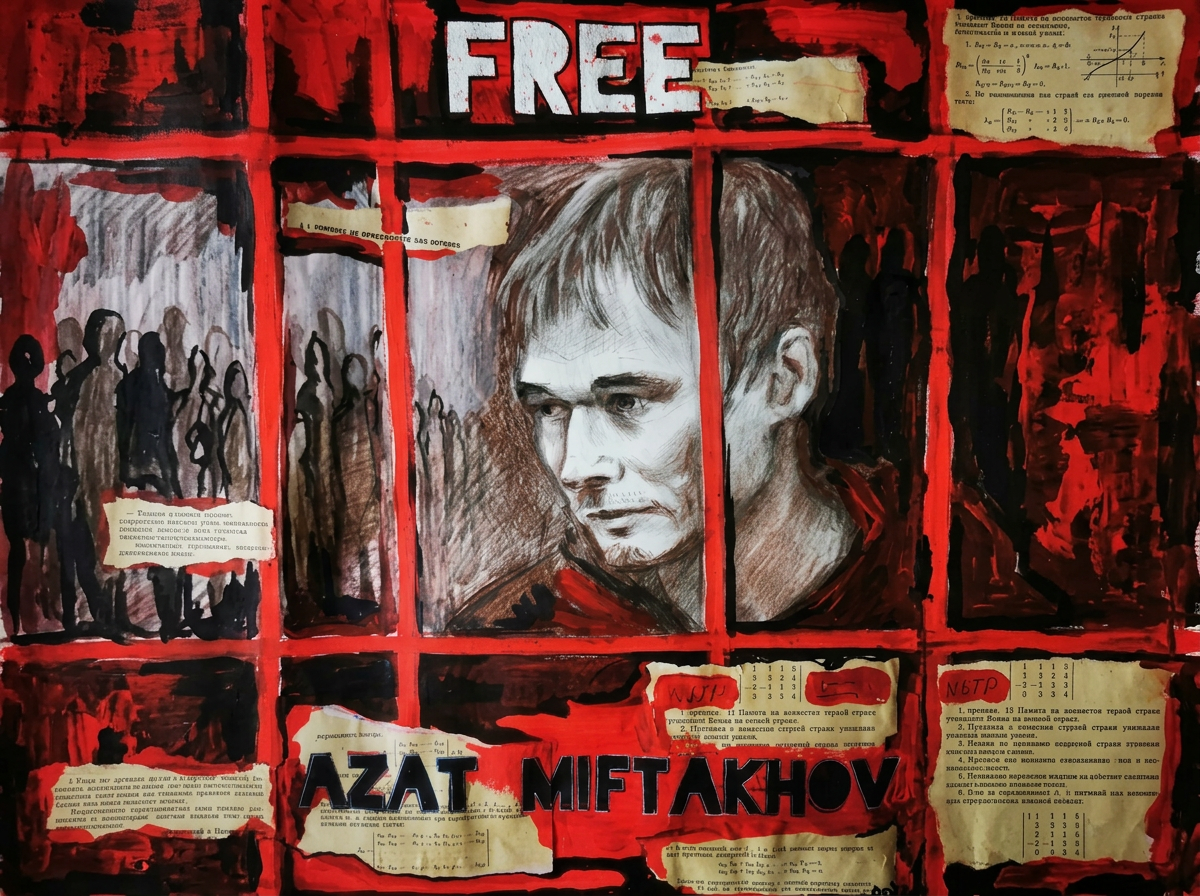
Anarchist, mathematician, and political prisoner Azat Miftakhov was sentenced on March 28, 2024, to 4 additional years in prison. On September 4, 2023, he was detained upon leaving IK-17 [Correctional Colony No. 17] in Omutninsk, Kirov region, where he had already served his first sentence—allegedly for breaking a window at a United Russia office in Moscow’s Khovrino district. The basis for the new prosecution for “justifying terrorism” was (allegedly) comments Azat made while watching a TV program with other inmates about anarchist Mikhail Zhlobitsky, who carried out an explosion at the FSB office in Arkhangelsk. Testimony against Azat was given by fellow prisoners and a prison employee.
Recently, the political prisoner was transferred from a prison in Dimitrovgrad, Ulyanovsk region. In a letter dated April 19, Azat reported on his transfer from Kirov to Vorkuta:
“I’m writing to you from Vorkuta. And as you understand, I’m heading to Kharp. I think no further comments are needed.
“Two days on the train have worn me out quite a bit. The toilet—once every 4 hours, hot water—three times a day, there’s no room to turn around in the compartments, my bones ache from constantly lying on a hard bunk and the shaking of the train. So the stop in Vorkuta is very welcome. Tomorrow morning we depart, and we’ll arrive in Kharp the same day. It seems I’ll go straight from the train to the camp without intermediate stops (apparently there are no detention centers there).”
The prisoner’s support group comment[ed] on this news:
“It is quite obvious that transferring Azat to Kharp is nothing other than a desire to take revenge on him for his firm stance. It is both a threat that his life depends on the will of the security apparatus and the creation of significant hardship for the remaining 1.5 years of his sentence.
“Kharp is one of the northernmost places of detention in Russia; it is located beyond the Arctic Circle, in permafrost conditions. It was established in 1961 on the basis of preserved buildings of a former camp unit of the Gulag’s Construction Site No. 501.
“In addition to Alexei Navalny, who was unable to leave the colony alive, well-known political prisoners held in Kharp include Platon Lebedev (2005–2006) and Oleg Sentsov (2017–2019).”
“As his lawyer, I visited Azat monthly in the Ulyanovsk region, spending under 10,000 rubles (circa 110 euros) on travel (or not much more, depending on circumstances). Now I understand that a trip to the Yamalo-Nenets Autonomous Okrug will cost closer to 40,000 (circa 440 euros): 5000 for two nights in a hostel, 12000 and 20000 for flights… (12000 is with a middle-of-the-night layover and worst possible service).
“I’ll also have to cross the Ob River to and from the airport. And I hope I won’t have to open and close the swimming season immediately… since, according to a hostel worker, ice crossing is still operational.
“Maybe later I’ll figure out how to make these trips cheaper, but it’s unlikely I’ll manage without expensive flights… after all, two days by train one way, especially when trains don’t run daily, is not something you can do regularly.
“Oh, and if Azat ends up specifically in the colony in the village of Kharp, and not in Labytnangi (the nearest city), then it seems there’s no electronic mail there. That already borders on torture.”
On [5 August 2025] Russia’s Supreme Court rejected the final appeal for Azat Miftakhov, a mathematician and anarchist serving his second politically motivated prison sentence. His latest conviction, for “justifying terrorism,” rests entirely on the testimony of a fellow inmate who claimed Miftakhov had praised an attack on the security services. For over six years, Miftakhov has navigated two coexisting identities in Russia’s brutal penal system: that of a political prisoner and a member of the “obizhennye”, or the “degraded”—the untouchable caste at the bottom of the prison hierarchy. In letters from behind bars, he tells Mediazona how he survives.
Azat Miftakhov, 31, was a graduate student in mathematics at Moscow State University when he was first arrested in February 2019.
Initially accused of making explosives, he was beaten and tortured by security service agents who threatened to rape him with an electric screwdriver. Another detainee was tortured with an electric shocker by security forces who demanded he incriminate the mathematician. After his detention, Miftakhov attempted to slit his wrists but gave no confession.
Bespectacled, short and soft-spoken, the anarchist has not yielded to this day, despite pressure from the FSB and a second fabricated terrorism case.
Back in February 2019, when the security forces failed to find evidence that the young man had been making explosives, Miftakhov was accused in a case concerning a window broken a year earlier at a ruling United Russia party office in Moscow’s Khovrino district.
The pressure campaign continued inside the prison. Officers from the FSB informed other inmates of Miftakhov’s bisexuality. The move was a calculated effort to have him ostracised and forced into the “degraded” caste, a group subject to constant humiliation, violence, and forced labour. Miftakhov did not deny the officers’ words; back in 2019, intimate photos of him were published by Telegram channels linked to security services and later by the state-run TV channel Rossiya-1.
A vigorous public campaign in support of Miftakhov began from the first days of his arrest, so he could not hide his status as a political prisoner from other detainees, though he did not deliberately advertise it.
“During mail call, the whole prison section is standing in formation,” he explains. “An activist comes up with a stack of letters. The first is for me, the second for me, the third, the fourth… In the end, only two or three letters go to other inmates. The rest are mine.” He often received letters and postcards from France, Germany, and Sweden, something extraordinary for other prisoners. “They’re writing even from America!” they would marvel. The camp’s population changed, but newcomers would often approach me and ask: “Is it true that Oxxxymiron wrote a song about you?”
—
In the winter of 2021, Azat Miftakhov was sentenced to six years in a penal colony. A secret witness, interrogated a year after the case was opened, claimed to have identified Miftakhov among the group that broke the United Russia office window and threw a smoke bomb inside, recognising him by his “expressive eyebrows.” The anarchist himself denied any involvement in the action.
After his time in Moscow’s pre-trial detention centres, Miftakhov was transferred in August 2021 to serve his sentence at Penal Colony No. 17 (IK-17) in Omutninsk, Kirov region. The prison was “red”, or tightly controlled by the administration through “activists” from among the prisoners.
Although severe physical violence had become a rarity there in recent decades, the colony’s reputation for torture dated back to the late 1980s, especially as punishment for refusing to prepare for official holidays. For many years, the most important of these was Victory Day, and all prisoners without exception were required to participate in preparations for a “parade” featuring models of military equipment.
“It was considered an absolutely mandatory thing, and to refuse meant condemning yourself to unimaginable torment: torture with shockers, bleach, and the punishment cell,” recalls Timur Isayev, who was incarcerated in IK-17 at the same time as Miftakhov. He was serving a sentence for organising an escort agency. After his release, Isayev left Russia.
Miftakhov impressed Isayev immediately upon his arrival at the colony. The inmates learned that during quarantine, security officers had offered the mathematician the chance to “hide” his “degraded” status in exchange for cooperation, but he refused.
“He told them: ‘Chief, you protect laws and rights, yet you speak to me in some kind of criminal jargon that you yourself are supposed to fight against. I don’t recognise your stinking ponyatiya. I don’t recognise this division of people either. Do what you think is necessary.’ The cops were just stunned by such audacity and directness,” Isayev recalls.
Thus, from the perspective of the other prisoners, Miftakhov had essentially “defined” himself as “degraded”, since he had the opportunity to hide his status, explains the source to Mediazona. Therefore, each of [the] muzhiki, or “the men”, regular prisoners, had to decide for himself whether it was appropriate to communicate with him. Isayev says he spoke with him without regard for others: “He had a normal social life in the zone, he was treated very well—not like the others in that caste, with whom he could still interact. He had a completely special position.”
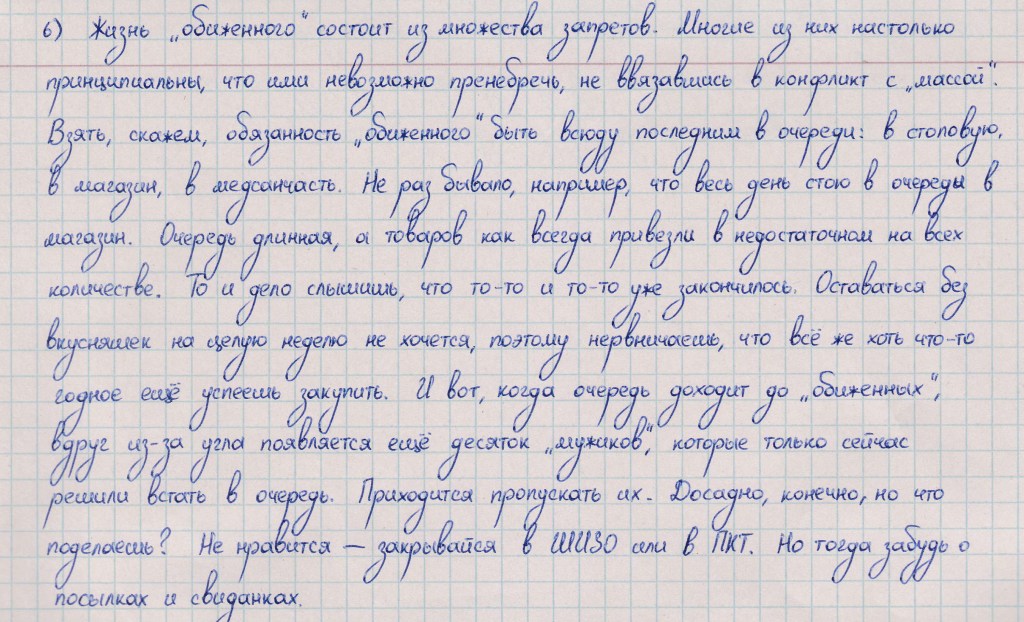
From Azat Miftakhov’s letter to Mediazona (abridged)
You can’t get “infected”’ by talking to someone who is “degraded”, but it’s considered improper for one of “the men” to hang around a “degraded” person for too long. You won’t be “called to account” for it, but you might catch ridicule and taunts from others, even provocations. They might suggest that a “man” “share” living quarters with the “degraded” since he gets along with them so well.
The life of a “degraded” person consists of many prohibitions. Many of them are so fundamental that they cannot be ignored without getting into a conflict with “the men”. Take, for example, the obligation for the “degraded” to be last in every queue: for the canteen, the shop, the medical unit. It happened more than once, for instance, that I’d stand in line for the shop all day. The queue is long, and as always, they’ve brought in an insufficient amount of goods. Every now and then, you hear that this or that has already run out. And then, just as the queue reaches the “degraded” inmates, a dozen more of “the men” suddenly appear from around the corner, having only just decided to join the line. You have to let them go first. It’s frustrating, of course, but what can you do? If you don’t like it, you can get locked in a punishment cell or a cell-type unit. But then you can forget about parcels and visits.
There is only one prohibition that I refuse to accept—the ban on fighting one of “the men”. If someone tries to humiliate my human dignity with an insult or by forcing me to do something, I consider it my sacred right to respond with force. The only thing I have to be wary of when exercising this right is punishment from the activists or the criminal elites. They can beat you severely for it, causing serious injury. However, I value my human dignity too highly to allow it to be debased, even under the threat of injury. Prison is a place where you’d better not “swallow” humiliation. If you “swallow” it once, you convince those around you that you can “swallow” it again and again. It’s better to nip it in the bud. That’s my philosophy on the matter.
I have had to fight “the men” several times, and each time it was over my status. It didn’t always lead to a scandal. Sometimes we managed to make peace with my opponent afterwards. A couple of times, a “case” was brought against me. The “trial” took place in a storeroom. Activists and various influential people as “judges” would cram in there, along with both sides of the conflict, meaning me and my “victim”. Witnesses were also called. Some “judges” seemed eager to pass a harsh sentence, which could have been carried out on the spot. I had to be prepared for such a turn of events and at the same time maintain my composure while justifying my position. Although according to the “prison” law, I was already in the wrong from the start, so my universal human arguments were unlikely to work there.
Fragment of Miftakhov’s letter to Mediazona
—
Miftakhov’s principles faced a major test in the spring of 2022, as the colony prepared for its annual Victory Day parade.
When Miftakhov saw other prisoners painting the “Z” and “V” symbols of the Ukraine invasion onto military props, he informed his detachment chief he would not participate. He expected to be sent to a punishment cell, but the administration, wary of his high profile, opted for a different strategy.
The day before the parade, Miftakhov was summoned; he expected to be tortured there, but instead, an inspector led him to a windowless room hidden deep within the medical unit, furnished only with a bed, a bedside table, and a toilet. Soon, the head of the operational department arrived. He explained that the room would temporarily become a “safe place” for the political prisoner.
From Azat Miftakhov’s letter to Mediazona (abridged)
“We’ve received information that some convicts are unhappy with your position,” the officer told me. “They want to teach you a lesson.”
“Therefore,” he continued, “it was decided to provide you with a safe place. Due to the threat to your health.”
“And how long will I be in this safe place?” I asked.
“Well,” the officer seemed to ponder, “I don’t know. Maybe a month, maybe a year. Or maybe until the last convict who wants to beat your ass is released.”
After talking with me a little more, he left, and I remained in that room. That’s how I began to learn what a “safe place” was. And I must say, it was the best gift the IK-17 administration could have possibly given me.
From then on, I didn’t have to go to work. I could spend all day on self-development, solving math problems and reading books. But most importantly, I could rest from the constant hustle and bustle of the common area. I wished it could last until my release. However, my happiness was not destined to last long. A week later, some random people were asked to sign off that the threat against me was gone. I had to return.
—
It was in IK-17 that Miftakhov formed a friendship with Evgeny Trushkov, another “degraded” prisoner serving a long sentence for charges including group rape. This friendship would prove to be his undoing. As Miftakhov’s release date in September 2023 approached, the FSB scrambled to build a new case against him. Trushkov became their star witness.
He testified that Miftakhov had “justified terrorism” in conversations with him, allegedly praising Mikhail Zhlobitsky, a teenager who bombed an FSB office in 2018. “I admire the actions of Mikhail Zhlobitsky, who was not afraid to lay down his life in the fight against Putin’s regime,” Trushkov claimed Miftakhov had said.
From Azat Miftakhov’s letter to Mediazona (abridged)
In the two years we knew each other, I received nothing but support from him. Sometimes he would tell me how he wanted to help me evade the FSB’s attention, that he was even willing to postpone his own freedom for it. Some of his suggestions were naive, which only convinced me of their sincerity. So when I found out that Trushkov had testified against me, I didn’t believe it at first. Only gradually, as I got acquainted with my new criminal case, did I begin to understand that he had betrayed me.
I do not think Trushkov initiated the criminal case, as he claimed in court. I am sure his story about how he, out of patriotic feelings, went to report the alleged crime to the detachment chief was fabricated to make the prosecution’s evidence seem coherent.
I believe this is what happened. On July 20, he was presented with a choice: either you give us the testimony we need against Azat, or you get “spun up” with him on a terrorism charge, but a more severe one. And they probably made it clear that the necessary witnesses for such a charge would be found. From there, I see two possible scenarios. First: he got scared for himself. Second: he made a deal with the FSB for my own good. I do not rule out either of these options, nor do I justify them.
Making deals with the FSB is a losing game from the start. One should not think that you can outsmart them this way, gaining more than you lose. Such underestimation of the enemy is extremely dangerous. Once you make one concession to them, they will force you to make a second, a third, and so on, until you give them your soul. In my conversations with him, I noticed this naive underestimation of the special services.
—
On the day he was due to be freed, Miftakhov was met at the prison gates by FSB agents who immediately re-arrested him. In a new trial based on his friend’s testimony, he was sentenced to another four years for “justifying terrorism.”
He is now held in a high-security prison in Dimitrovgrad, mostly in solitary confinement. His mental health has declined sharply. Trushkov, meanwhile, was released from the colony to fight for [the Wagner Group] in Ukraine. In a phone call to Miftakhov’s wife from the front, he slurred, “Get the kid out of there,” knowing Dimitrovgrad prison’s reputation.
Miftakhov is not scheduled for release until September 2027.
From Azat Miftakhov’s letter to Mediazona (abridged)
“There are no friends in prison,” as the inmates say. I don’t like such generalisations, but there is a certain amount of truth in it. Inmates are inherently placed in a vulnerable position. One wants to be released as soon as possible, another hopes for an unscheduled visit with his wife, and all of this depends on the goodwill of the administration. The administration knows the value of these benefits and sells them for special services. Snitching and betrayal are among them. And yes, prison status has no meaning here: “snitches” are found among both the “degraded” and “the men”. And you can’t say that the proportion among the former is noticeably different from the proportion among the latter.
Nevertheless, I managed to get burned by my friendship with Trushkov. Well, I have to admit that I am apparently a poor judge of character. This incident has significantly affected my perception of people in places of detention. When I meet a new person, I can’t help but start to assess whether he is capable of refusing the chekists if they try to force him to testify against me with threats and promises.
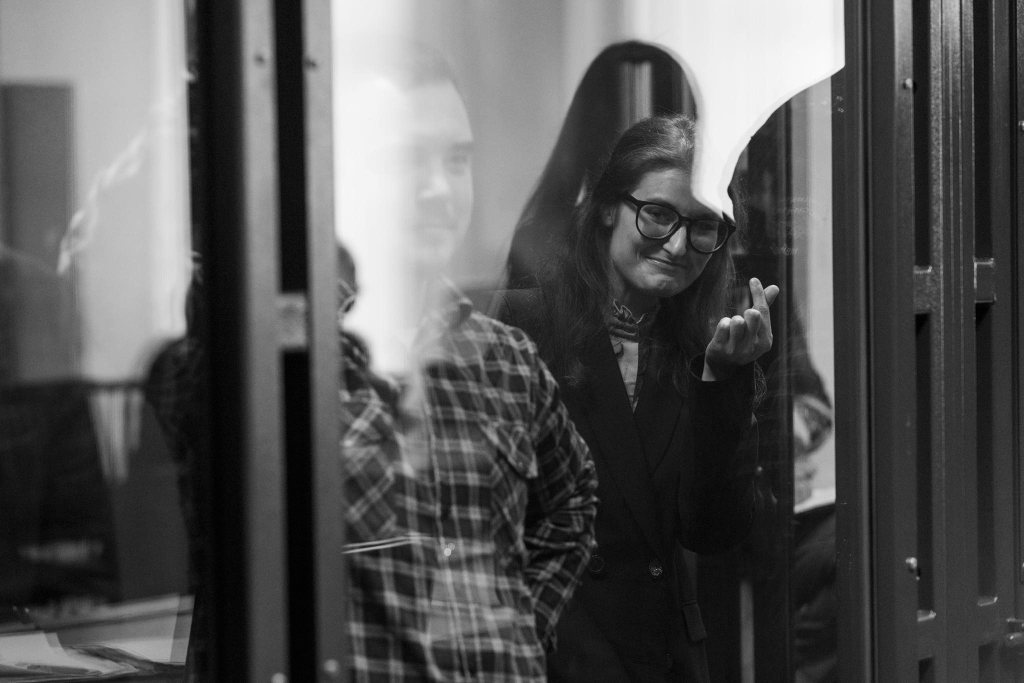
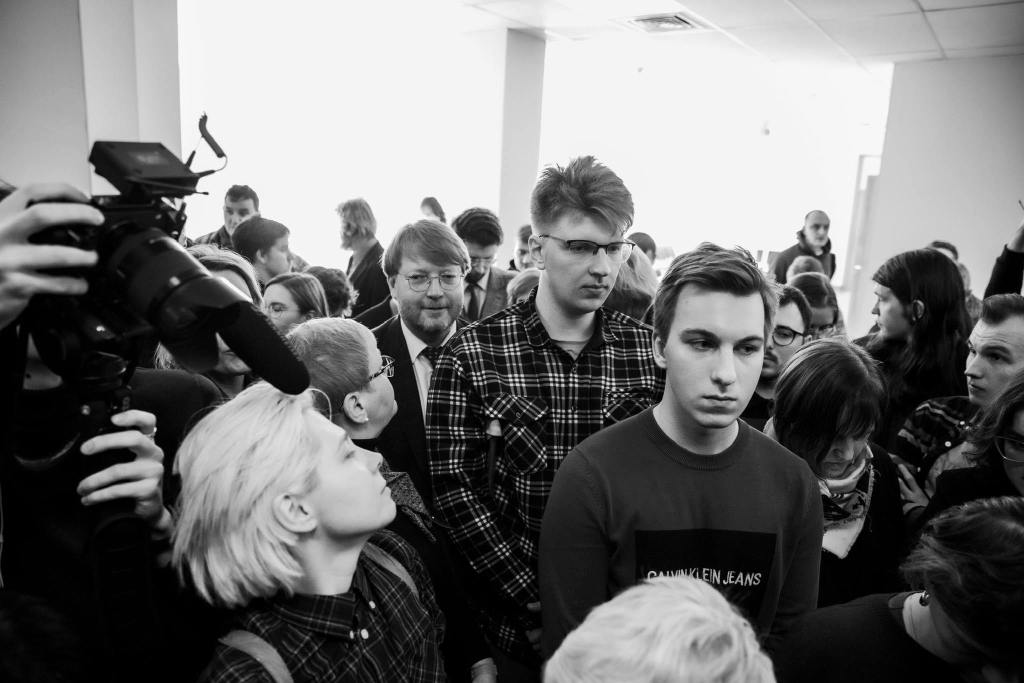
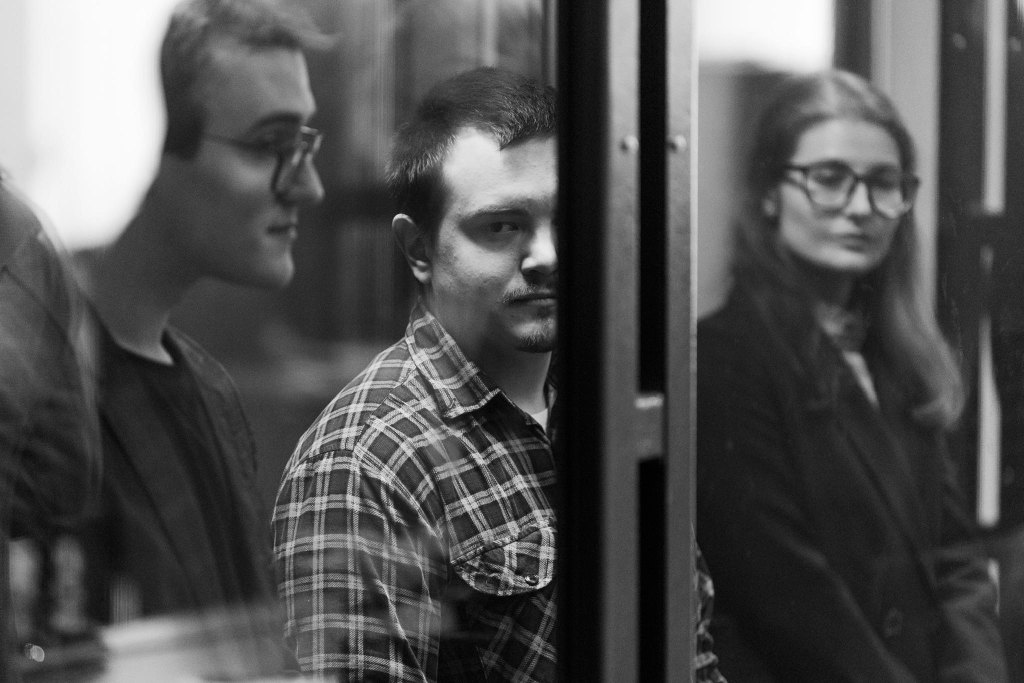
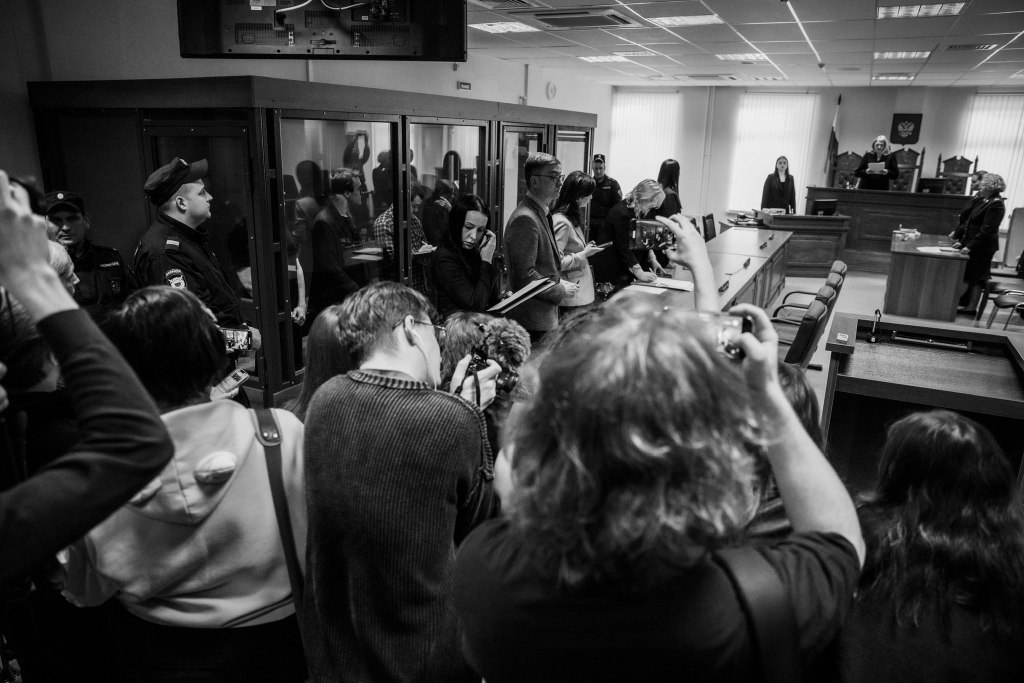
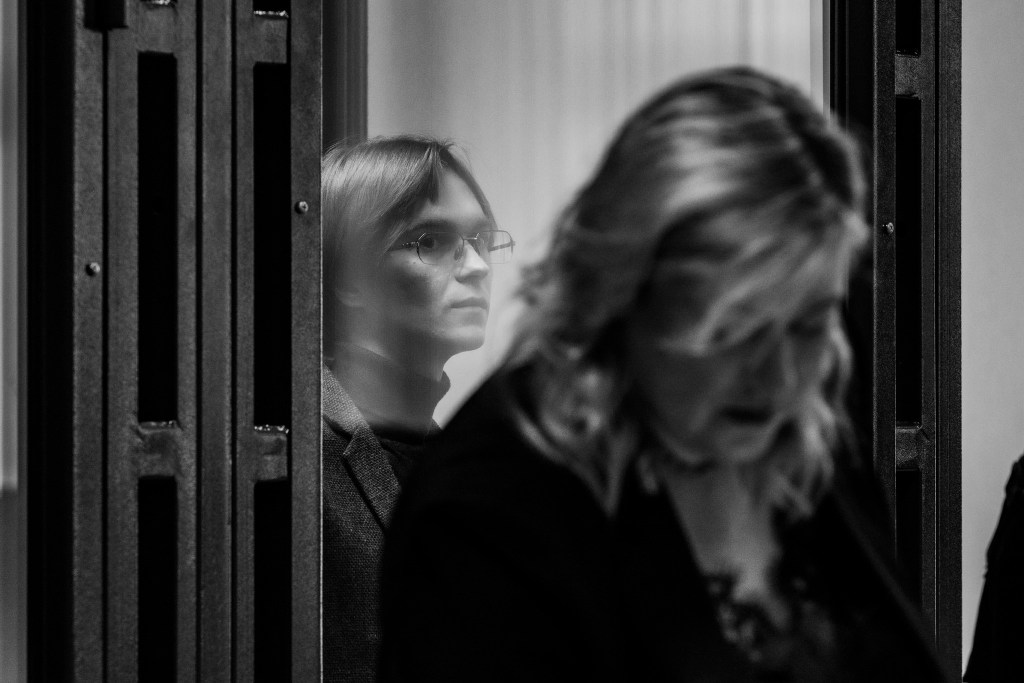
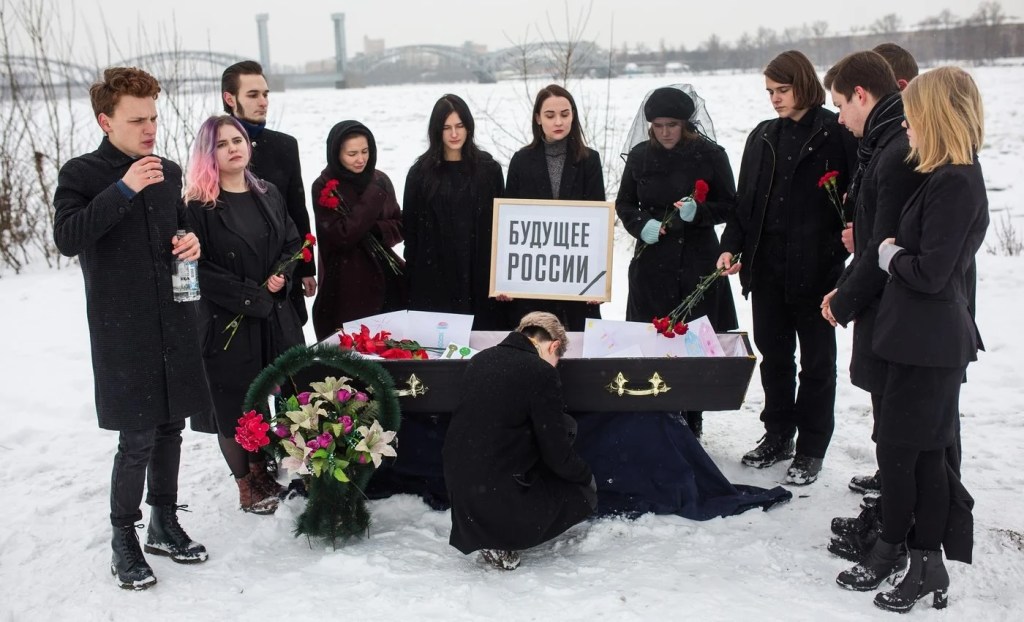
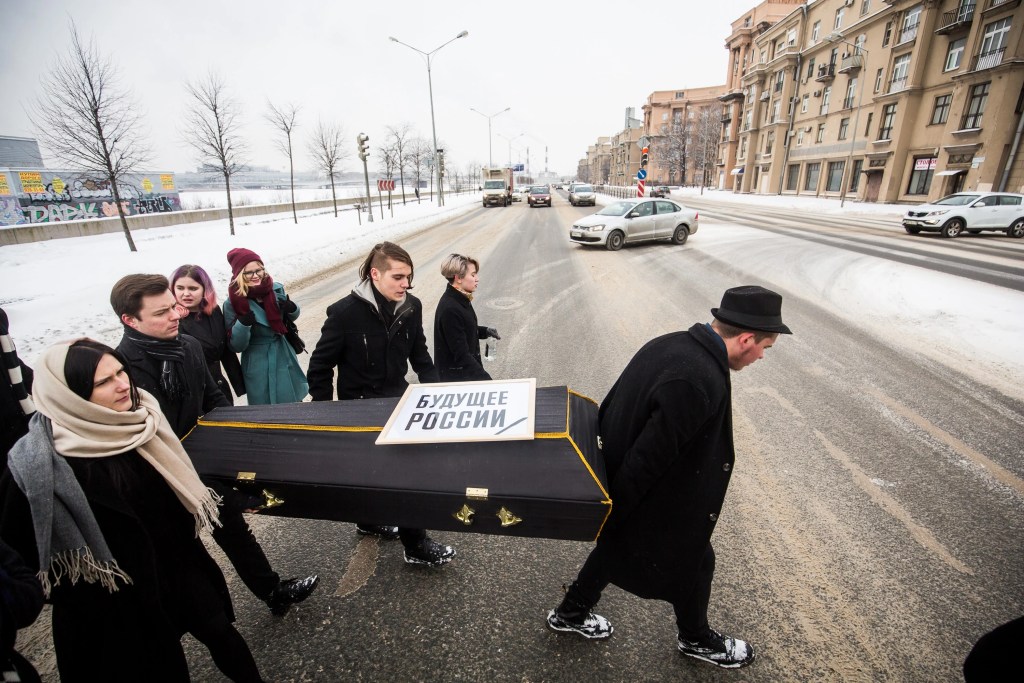
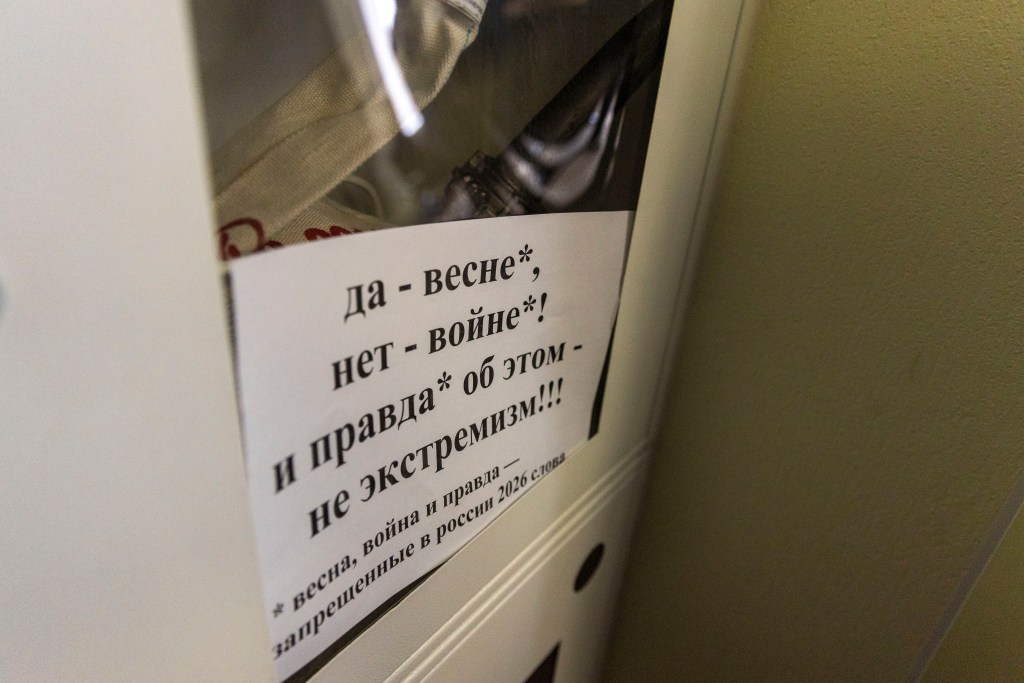
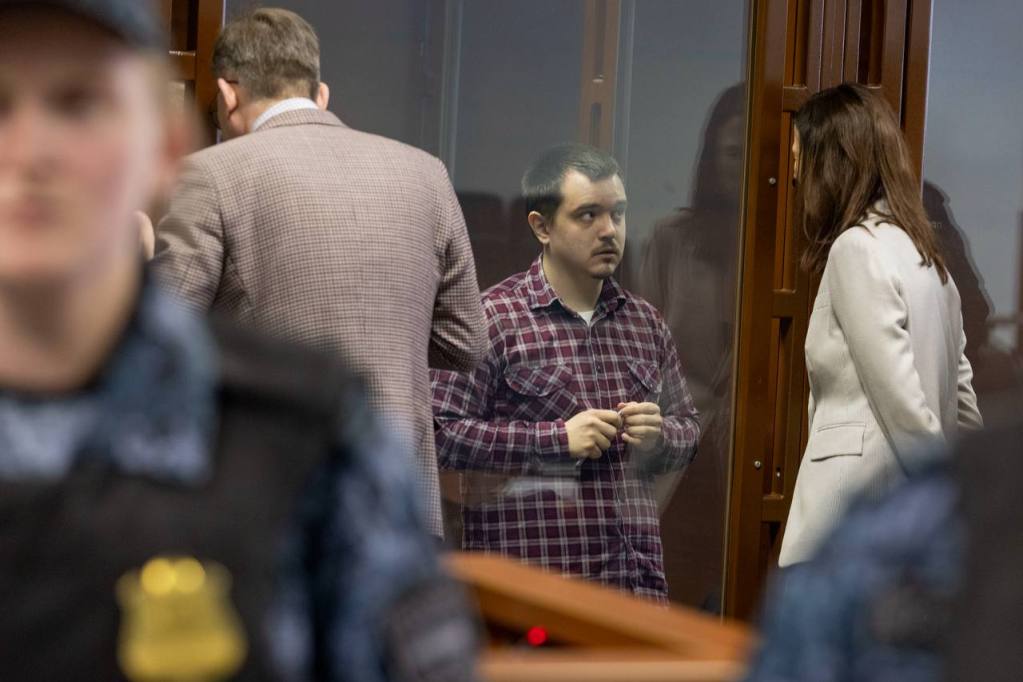
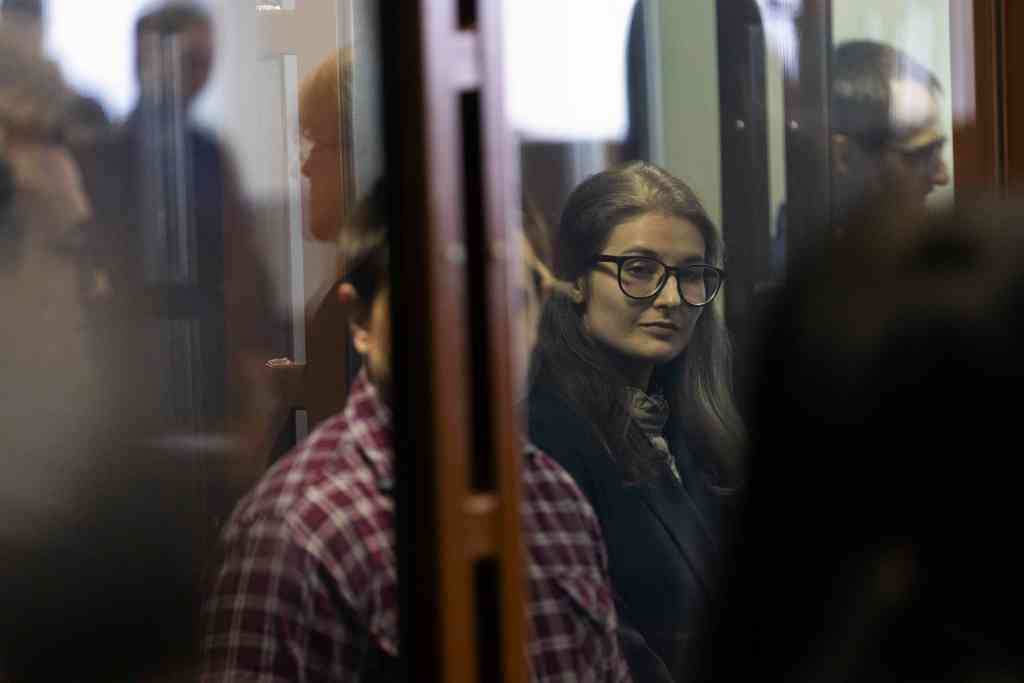
A verdict was handed down in the Vesna case in Petersburg today. In 2018, members of this movement, which Russia designated “extremist” and “hostile” (or something along those lines, “undesirable,” etc.), held a protest: a funeral for Russia’s future. It turned out to be a long process: burying the future, imprisoning spring… Today is a bad day. The activists were convicted and sentenced to extremely long prison terms! The only female defendant, Anna Arkhipova, was sentenced to twelve years in prison; Yan Ksenzhepolsky, to eleven years; Vasily Neustroyev, to ten years; Pavel Sinelnikov, to seven and a half years; Yevgeny Zateyev, to six years and two months. Valentin Khoroshenin was also sentenced to six years and two months in prison despite the fact that he had testified against his comrades while in jail. It didn’t do him any good…. Look at his face today. He is the only one who looks lost to me. The other defendants were calm and dignified.
I may be naive, but I still believe that the future isn’t buried, that spring will come, that the gloom and the cold will simply fade away. It will happen naturally because that’s how the world works, and I believe this especially during Holy Week. “Wind and weather [will] change direction,” and spring will arrive.
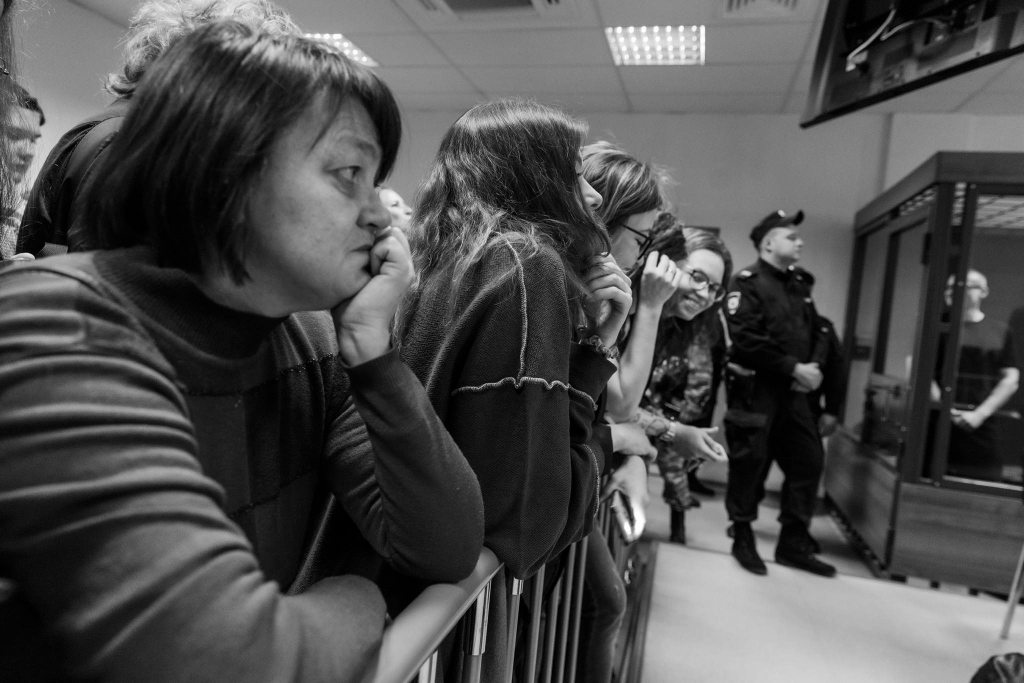
I hadn’t taken photos in a courtroom for nearly nine months. Today was tough. I can recall only one case which dragged on longer than the Vesna case—the trial of the twenty-four fighters from the Azov Regiment. My sister Lizka has provided a detailed account of the Vesna case and the young people sentenced today. Give it a listen and/or a read! [See the embedded YouTube video and translation of the Mediazona article below—TRR.]
The natural flow of life suffices to make spring come, but to ensure that the earth hasn’t been depopulated by the time it does come—so that there is someone other than the beasties left to welcome that spring—we must remain human beings: we must know what is going on, empathize, and help out.
A judge in St. Petersburg on Wednesday sentenced six former members of the democratic youth organization Vesna to prison sentences of varying lengths after they were found guilty of charges including extremism and spreading “war fakes.”
The activists, including one woman and five men, were no longer members of Vesna at the time of their arrests in June 2023.
Vesna, which means spring in Russian, was founded in St. Petersburg in 2013. After the full-scale invasion of Ukraine, it staged anti-war rallies in Russian cities, shortly after which it was designated as an “extremist” organization.
The human rights group Memorial recognized the six former members sentenced to jail on Wednesday as political prisoners.
St. Petersburg’s City Court found all six guilty of organizing an extremist group, mass unrest, disseminating “fakes” about the Russian army, calling for actions that undermine national security and rehabilitating [sic] Nazism.
The longest prison sentence of 12 years was handed to Anna Arkhipova, followed by 11 years for Yan Ksenzhepolsky and 10 years for Vasily Neustroyev.
Pavel Sinelnikov was sentenced to 7.5 years in prison, while Yevgeny Zateyev and Valentin Khoroshenin each received six years and two months.
State prosecutors had requested prison sentences between eight years and 13 years.
The former activists initially pleaded not guilty in October 2024, but last July, Khoroshenin provided a “full confession” and testified against his co-defendants.
Arkhipova later said that Khoroshenin had told her after giving his confession that “what really matters isn’t what actually happened, but how the investigator wrote it up.”
Vesna declined a request for comment when contacted by the Moscow Times.
“Russia’s Future”: a 2018 protest action by Vesna. Photo: David Frenkel/Mediazona
Saint Petersburg City Court has handed down sentences to six former activists in the Vesna movement: Yevgeny Zateyev, Vasily Neustroyev, and Valentin Khoroshenin, of Petersburg; Yan Ksenzhepolsky, of Tver; Anna Arkhipova, of Novosibirsk; and Pavel Sinelnikov, of Barnaul. They were sentenced to stints in prison ranging from six to twelve years. In total, the case involves twenty-one suspects from thirteen regions. One of the defendants unexpectedly testified against his comrades in court. Mediazona offers its readers this brief overview of one of the most wide-ranging and dramatic trials against dissidents in recent years.
The democratic youth movement Vesna came to life with spirited, theatrical street protests in Petersburg over a dozen years ago. It came to an end in 2022 when it was banned, followed by the launching of a criminal case against it, leading to the arrests of some activists, and the exile of others.
“They made up their minds that [Vesna] was something along the lines of [Alexei Navalny’s] Anti-Corruption Foundation, I suppose,” muses one former Vesna member. The young woman asked not to be named, even though she had stepped away from politics before the movement was officially deemed “extremist.” She continues to live in Russia and hopes that the security services will “continue to overlook her.”
The playbooks for dismantling the Anti-Corruption Foundation and Vesna are indeed broadly similar:
The prosecution of Vesna activists began with searches warranted under an obscure criminal law statute concerning the creation of NGOs which infringe on people’s personal and civil rights. Charges of violating this very same statute had also formed the core of the case against the Anti-Corruption Foundation.
As happened with the Anti-Corruption Foundation, the security forces got Vesna designated an “extremist” organization. Following this, any public activity that police investigators deemed as “continuing” the movement’s work, such as posting on its social media, was regarded as a punishable offense.
In both cases, a wave of police searches of activists’ homes swept across various regions of Russia, and this was followed by a series of arrests.
Vesna’s most prominent figures were designated “foreign agents.” Many of them fled Russia and were placed on the wanted list. The security forces then took their revenge on those who remained behind.
The trial of the six Vesna activists in Petersburg had dragged on since the summer of 2024 and been one of the most high-profile political trials in wartime Russia, owing both to the steadfast stance taken by some of the defendants and to the dramatic about-face by others.
Vesna was founded in February 2013. The new movement consisted of approximately fifty activists, many of whom hailed from the Petersburg branch of Youth Yabloko, which had dissolved a short time earlier. The goals Vesna voiced at the time were far removed from radicalism: “increasing the level of political engagement among young people” and “participating in Petersburg’s legislature and local government through elections.”
In their hometown, Vesna’s theatricalized processions and pickets quickly became a familiar fixture on the cultural and political scenes.
In the summer of 2015, Vesna held an anti-war protest on Nevsky Prospekt, [Petersburg’s main thoroughfare]. Five activists stood holding signs that read “Write kind words to Ukraine” and a box where anyone could drop a postcard with words of support for the Ukrainian people.
In May 2016, Vesna marched through the city holding a banner reading “Circus, go away!” Opposition activists had not been permitted to hold May Day marches on Nevsky Prospekt, even though the country’s ruling United Russia party had been granted permission to march down the same route without any issues. In protest, Vesna activists staged an alternative procession in guise of a carnival: a young woman in church vestments with a fake belly demanded a ban on abortions, while another waved a censer by way of blessing a silver “Rogozin 1” rocket. Behind them walked a man with a TV set instead of a head. Someone carried a huge saw with the slogan “I support embezzlement!” Another carried a cello case stuffed with banknotes.
“Russia’s Future”: a 2018 protest action by Vesna. Photo: David Frenkel/Mediazona
In January 2018, Vesna staged a mock funeral for Russia’s future: people dressed in mourning attire and with sorrowful expressions on their faces carried a coffin through the streets, adorned with children’s drawings that symbolized hopes for life in a free, democratic country.
Photo: David Frenkel/Mediazona
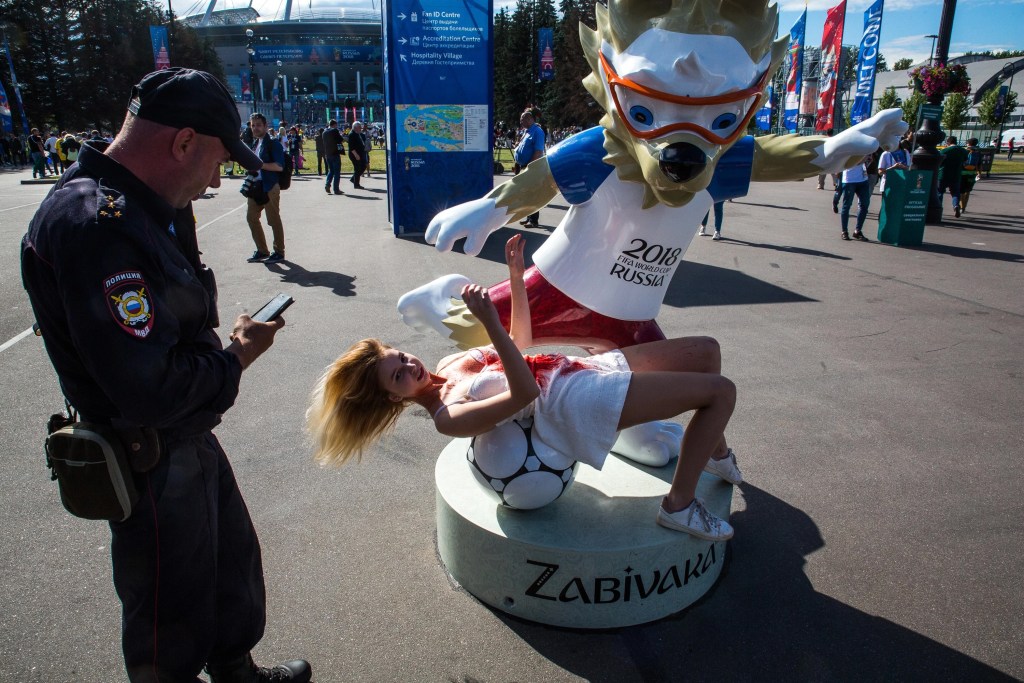
In the summer of 2018, when Russia was hosting the FIFA World Cup, Vesna activists unfurled a banner reading “This World Cup Is Filled with Blood” on Palace Bridge in Petersburg. Vesna timed another protest against [torture in police custody] to coincide with the World Cup—a young woman, doused in red paint, lay down on a pedestal beneath a replica of the tournament’s official mascot, the wolf Zabivaka.
Photo: David Frenkel/Mediazona
The movement grew rapidly. Regional chapters emerged, and by 2018 there were already around a dozen of them. By the late 2010s, Vesna was the most prominent youth organization in the Russian opposition’s ecosystem. No major protest took place without its activists being present. And yet, Vesna activists emphasized their commitment to legal methods of campaigning, as stated in their charter: “The movement pursues its work in accordance with the current laws of the Russian Federation.”
Vesna during the war: the first raids and interrogations
After Russia invaded Ukraine, the price of political dissent in Russia skyrocketed for all opponents of the government, and Vesna activists were no exception. On 3 May 2022, the movement announced the campaign “They Didn’t Fight for This,” calling on dissenters to attend the Immortal Regiment marches on 9 May (WWII Victory Day) but to carry anti-war placards at them.
A few days later, Vesna activists Yevgeny Zateyev and Valentin Khoroshenin, of Petersburg, and Roman Maximov, of Veliky Novgorod, who had already quit the movement, were targeted with searches of their homes. All three men were taken to Moscow for questioning and held in a temporary detention center pending trial.
These were the first steps in the investigation against Vesna activists. It was then that law enforcement authorities launched a criminal case into the setting up of an NGO that infringes on the personal rights of citizens.
The same day, search warrants were executed in Petersburg at the homes of the parents of Bogdan Litvin, Vesna’s federal coordinator, who had already left Russia, and activist Polina Barabash, as well as at the homes of former movement members Alexei Bezrukov and Artem Uimanen. In Moscow, searches were conducted at the homes of Timofei Vaskin, Angelina Roshchupko, Daria Pak, and Ivan Drobotov.
On 10 and 11 May 2022, the court issued restraining orders against Vaskin, Drobotov, Angelina Roshchupko, Maximov, Zateyev, and Khoroshenin, prohibiting them from certain actions. Soon after, Litvin and Drobotov were placed on the wanted list, as they had managed to leave Russia.
This did not stop Vesna, however. In September 2022, the youth activists announced protests against the military mobilization across Russia. Less than a month later, the Justice Ministry added the movement to its list of “foreign agents,” and the Saint Petersburg City Court ruled Vesna an “extremist” organization on 6 December 2022.
The charges and the trial
On 5 June 2023, the Investigative Committee opened a new criminal case, which later came to be known simply as the “big Vesna case.”
Searches were carried out the following day in Barnaul, Novosibirsk, Petersburg, and Tver. Six people were detained and taken to Moscow: Zateyev, Pavel Sinelnikov, Anna Arkhipova, Vasily Neustroyev, Yan Ksenzhepolsky, and Khoroshenin. On 8 June, a Moscow court remanded them to pretrial detention.
During the same pretrial detention hearing, the prosecution listed five charges: organizing and participating in an extremist group, desecrating the memory of defenders of the Fatherland, spreading “fake news” about the army, and calling for actions contrary to national security.
A year later, when the Saint Petersburg City Court began hearing the case against the six activists on its merits, there were seven charges. Incitement to mass unrest and the creation of an NGO infringing on citizens’ rights (the very same charge under which the activists’ homes had initially been searched in 2022) had been added to the bill of particulars.
The investigation assigned the role of leader and ideological instigator to Vesna’s federal coordinator Bogdan Litvin, who had managed to flee the country. According to law enforcement officials, it was Litvin who had driven the movement toward “extremism.”
Most of the charges were related to posts on Vesna’s social media accounts. Entered into the recorded were ninety posts made in Vesna’s name at various times on various platforms. When presenting evidence in court, the prosecution primarily read these posts aloud, listed the names of Telegram channels, cited viewer statistics, and read out the comments.
The indictment placed particular emphasis on a comment posted by a user known as “Kanoki Nagato,” on 1 May 2022. On one of Vesna’s Telegram channels, he suggested that Russians would one day start “killing the pigs, just like the Ukrainians did at Maidan.” According to the prosecution, the appearance of such a comment proved that Vesna was inciting dangerous actions. None of the defendants knows who “Kanoki Nagato” is, and law enforcement officials have not been able to identify this person either.
They did examine the personal accounts of the six defendants, however. Some of their Instagram accounts were found to be private. Speaking in court, the prosecutor called this “an attempt to conceal information from the investigation.”
When the prosecution presented its evidence in court, some of the hearings were held in closed session at the prosecutor’s office’s request, and members of the public and journalists were not allowed in the courtroom. Those involved in the proceedings are not permitted to disclose what they heard behind closed doors, but it is known that during at least some of these sessions, the court examined the results of intelligence operations—a term used in the Code of Criminal Procedure to refer, among other things, to wiretapping, undercover operations, and the interception and vetting of correspondence.
When it was the defense attorneys’ turn to present evidence, Arkhipova’s support group issued a public appeal: “The defense now urgently needs witnesses—people who actually took part in peaceful anti-war protests between February and May 2022 and have already suffered administrative penalties for doing so.”
Witnesses who responded to this post testified in court.
“To my mind, every citizen took to the streets out of a sense of duty and conscience. It was an entirely peaceful demonstration,” said one of them.
Another witness recounted that she was detained at an Immortal Regiment rally while holding up a portrait of her great-grandfather, and an administrative charge was filed against her for “discrediting” the army.
“I came out of my own free will. I’d participated in Immortal Regiment rallies before as well. At the time I made my decision, I hadn’t seen any notices on Telegram channels,” she explained.
A placard hung in the courthouse on the day the verdict in the Vesna trial was read out: “Yes to Vesna,* / No to war*! / And the truth* about them / is not extremism. / *Vesna, war, and truth are words forbidden in Russia in 2026.” Photo: Mediazona
At nearly every hearing in the trial, the defense insisted that the prosecution had no evidence that the accused activists were involved in posting most of the messages mentioned in the case file. Moreover, some of the defendants not only did not know each other prior to their arrest, but were also not members of Vesna at the time it was classified as an “extremist” organization.
Who’s who in the Vesna case
Yevgeny Zateyev. Photo: Mediazona
Yevgeny Zateyev, 24 years old
A resident of Petersburg, Zateyev was charged with violating Article 354.1.4 (“condoning Nazism”) and Article 282.1.1 (“establishing an extremist community”) of the Russian Federal Criminal Code. The charge that he had violated Article 239.2 (“organizing an association that infringes on the personhood and rights of citizens”) was dropped due to the statute of limitations. The prosecutor asked the court to sentence Zateyev to ten years in a penal colony. The actual sentence was six years and two months.
Zateyev served as the press secretary for the Vesna movement’s Petersburg branch. In court, he insisted that his duties were limited to local topics: news about life in Petersburg, announcements of lectures, and film screenings.
He viewed the outbreak of the war as a “personal tragedy.”
“Vesna tried to prevent further destruction and loss of life on both sides of the border—among both civilians and military personnel—through peaceful means. I still regard this goal in an entirely positive light,” Zateyev said in court.
He was one of the first Vesna activists to face criminal charges in the spring of 2022. Some of his comrades left Russia, but Zateyev stayed behind and wound up in a pretrial detention center a year later.
In the summer of 2023, Zateyev wrote a letter from jail explaining why he had decided against fleeing the country.
“I made a very difficult and very painful choice. Was it a painful choice? Of course it was. I find it hard to imagine, though, how I could have left everything behind, gone away, and watched as my friends and acquaintances were imprisoned. This choice was easy for some, but I don’t judge them.”
In the same letter, Zateyev asked that his family not be judged for failing to “change [his] mind.”
In November 2023, Zateyev partially admitted his guilt in the hope of having his pretrial detention conditions eased. He was concerned about his family, especially his grandmother, who was seventy-seven years old at the time of his arrest. Zateyev was not released from pretrial detention, and so he withdrew his confession.
In January 2024, Zateyev’s grandmother died. Four months later, his mother also died, from cirrhosis of the liver.
Zateyev’s pretrial detention was extended once again shortly thereafter. Addressing the court, he mentioned the deaths of his loved ones. Judge Irina Furmanova interrupted him.
“Please do not try to pressure the court by bringing up the deaths of your relatives.”
“I am not putting any pressure on the court. I am simply stating the facts of my life.”
“We are familiar with them. You can merely note what you’ve been through. There’s no need to pressure us like that.”
“Your Honor, pressure—”
“Everyone has, or some people no longer have, a mother. There’s no need to pressure us in that regard. I’ll say it again. Let’s continue.”
In his closing statement, Zateyev said that he was forgiving the investigators, prosecutors, and judges.
“I caution against the false belief that forgiveness absolves one of responsibility. It does not. I do believe, however, that through forgiveness, we can understand the reasons behind what is happening—why and for what purpose. By ridding ourselves of an age-old evil, learning to treat one another with understanding, we can finally find love. I believe that this is possible and even inevitable in Russia. Spring [vesna] is inevitable. The season, of course. What did you think I meant?”
Mailing address for letters:
Russia 196655 St. Petersburg, Kolpino Kolpinskaya St., d. 9, str. 1 Pretrial Detention Center No. 1 Federal Penitentiary Service of Russia for St. Petersburg and the Leningrad Region Yevgeny Artemovich Zateyev, born 2001
Bank card number for donations: 2200 7009 1119 8470
Anna Arkhipova. Photo: Mediazona
Anna Arkhipova, 28 years old
A resident of Novosibirsk, Arkhipova was charged with violating Articles 282.1.1 and 282.1.2 (“organizing an extremist community”), Article 354.1.4 (“condoning Nazism”), Article 280.4.3 (“discrediting the Russian armed forces”), Article 212.1.1 (“repeatedly violating the law on public assemblies”), and Articles 207.3.2.b and 207.3.2.e (“disseminating knowingly false information about the Russian armed forces”) of the Russian Federal Criminal Code. The charge that she had violated Article 239.3 (“organizing an association that infringes on the personhood and rights of citizens”) was dropped due to the statute of limitations. The prosecutor asked the court to sentence Arkhipova to thirteen years in prison. The judge sentenced her to twelve years in prison instead.
Arkhipova joined Vesna in February 2021 to “take a civic stand, engage in publicly vital work, and meet new people.” She wrote posts for the movement’s social media accounts but quickly grew tired of “conflicts within the group” and left in May 2022.
Once the war in Ukraine had kicked off, Vesna’s work became “random and certainly not organized,” according to Arkhipova.
“Everything happened naturally,” Arkhipova said in court. “I felt the need to protest the war, as I regarded it and continue to regard it as a great catastrophe and tragedy. That is why I took part in a street protest in Novosibirsk on 24 February 2022.”
Of the ninety posts listed in the criminal indictment, she wrote one.
“I was involved in the publication dated 29 April 2022, [as charged] under Article 207.3, but I find it difficult to say exactly what role I played. [The text] was discussed at great length, and I didn’t really want to have anything to do with it at all. Either I acted as the author, after which it was heavily edited, or another person was the author, after which I heavily edited it,” the young woman explained in court.
Arkhipova’s support group runs a Telegram channel where her letters to the outside world are posted sometimes. In the “Cell Librarian” section, she talks about the books she has read in pretrial detention.
She also writes about the health problems typically experienced by prisoners. Due to poor nutrition, all women in the detention center lose their hair, and even a simple cold is dangerous.
“The worst part is that you’re not permitted to make your bed during the day, so you’re freezing and shivering, and all you have to cover yourself with is a towel. Illnesses are illnesses, but we still have to follow the prison rules!”
Arkhipova is a vegan. It is difficult to follow this diet in pretrial detention. She is very dependent on care packages, which arrive with considerable delays. Her support group secured permission to send her plant-based milk substitutes, but the detention center declined to accept them, stating, “We don’t even allow dairy products for mothers with children.”
“My motivation is simple: I oppose the war. I want a better future for Russia. I have tried to act on my conscience all my life, even though I haven’t always succeeded. When the war began, it was my conscience that wouldn’t let me stand idly by. People on both sides of the border deserve peace: soldiers should be with their families, not in foxholes, and those who were killed should have lived. I feel the same pain for everyone, regardless of their uniform,” said Arkhipova in her closing statement.
Mailing address for letters:
Russia 195009 St. Petersburg 11 Arsenalnaya St. Pretrial Detention Center No. 5 Federal Penitentiary Service of Russia for St. Petersburg and the Leningrad Region Anna Nikolayevna Arkhipova, born 1997
Bank account numbers for donations: 2200 7008 6021 1167 (T-Bank) • 2202 2071 9921 3904 (Sberbank)
You can follow the latest news on the Telegram channel of Arkhipova’s support group.
Vasily Neustroyev. Photo: Mediazona
Vasily Neustroyev, 30 years old
A resident of Petersburg, Vasily Neustroyev was charged with violating Article 280.4.3 (“publicly threatening national security”), Article 212.1.1 (“repeatedly violating the law on public assemblies”), Article 354.1.4 (“condoning Nazism”), Article 282.1.1 (“organizing an extremist community”) and Articles 207.3.2.b and 207.3.2.e (“disseminating knowingly false information about the Russian armed forces”) of the Russian Federal Criminal Code. The charge that Neustroyev had violated Article 239.2 (“organizing an association that infringes on the personhood and rights of citizens”) was dropped due to the statute of limitations. The prosecution asked the court to sentence Neustroyev to twelve years in prison, but the judge sentenced him to ten years instead.
According to the prosecution, Neustroyev was on Vesna’s federal audit commission and was one of its leaders. Neustroyev himself stated in court that he did not make any decisions within the movement. He did not even have access to social media and could not have published any of the posts ascribed to him. He met most of his “accomplices” only after his arrest. Before his arrest, he was acquainted only with Khoroshenin and Maximov, and knew Zateyev only by sight.
When asked about Litvin—whom investigators consider the leader of Vesna and under whose influence the movement allegedly turned into an “extremist organization”—Neustroyev laughed and said that the main topic of their conversations had been cats.
“Since the autumn of 2018, we’ve been the owners of cats—brothers from the same litter, which we got from the same source,” Neustroyev explained. “Since then, Bogdan Gennadyevich has left his cat with me to look after two or three times. You could say that we became something like in-laws through the cats. The cats were the main topic of our conversations in the years leading up to my arrest.”
The Petersburger did not renounce his anti-war views in court.
“I consider the actions of Vladimir Vladimirovich Putin not only a crime against both Ukraine and Russia in equal measure, but also a great folly.”
And yet, Neustroyev “remained skeptical of mass street protests.” He was a member of Petersburg Yabloko’s council and was heavily involved in elections work for a long time. He coordinated election monitoring, and since 2020 had been a voting member of one of the city’s Territorial Election Commissions.
In a letter from the detention center, Neustroev voiced deep regret that he had not yet managed to finish his university education. He had just resumed his studies before his arrest, and if not for the criminal case, he might already have a degree.
“Nevertheless, I still plan to eventually obtain a formal tertiary degree and put this source of anxiety behind me.”
He spoke about Russia in his closing statement.
“Russia is strong. Russia will survive all tyrants and dictators, just as it has done before. I know that Russia will be peaceful, Russia will be happy, Russia will be free. And all of us will be peaceful, happy, and free along with her.”
Mailing address for letters:
Russia 196655 St. Petersburg, Kolpino Kolpinskaya St., d. 9, str. 1 Pretrial Detention Center No. 1 Federal Penitentiary Service of Russia for St. Petersburg and the Leningrad Region Vasily Petrovich Neustroyev, born 1995
You can follow the latest news on the Telegram channel of Neustroyev’s support group.
Pavel Sinelnikov. Photo: Mediazona
Pavel Sinelnikov, 24 years old
A resident of Barnaul, Pavel Sinelnikov was charged with violating Articles 282.1.1 and 282.1.2 (“organizing and participating in an extremist community”) of the Russian Federal Criminal Code. The prosecution had asked the court to send him down for ten years, but instead the judge sentenced to him to seven and a half years in prison.
Sinelnikov served as Vesna’s executive secretary for several months but left the movement in 2021, long before it had been designated “extremist.”
“The work isn’t hard: you just sit there and write. But taking all those minutes is time-consuming and quite boring. So I really feel for the court clerk,” Sinelnikov explained in court.
He was baffled how the same person could be accused of both establishing an “extremist community” and participating in it, and he made no secret of the fact that the arrest had come as a shock to him.
“I didn’t expect at all that some police investigators would actually fly all the way from Moscow to Barnaul just to get me. As far as I’m concerned, the police search itself is a form of intense coercion, especially the way it’s done. They force their way into your life while yelling and shouting, don’t even let you get dressed, push you face-down on the floor, and then turn everything upside down while cracking high-school-level jokes,” Sinelnikov recalled.
He confessed immediately after his arrest, but later recanted his testimony.
“You can’t take away people’s opinions, but it’s easy to take away their freedom of speech. That’s what happened to me, even though I’m just a binnocent eyestander.”
In court, Sinelnikov explained that he had been fascinated by science and maths at school. He often traveled to academic competitions, and became interested in politics during one such trip to Moscow. He described himself as an introvert and a loner, and his mother even called her son a “slacker” in court.
“Well, Mom knows best,” Sinelnikov replied.
Sinelnikov began his closing statement by admitting that he didn’t really have much to say. But then he called the charges politically motivated and the trial “abhorrent.”
“There was no criminal extremist group. No one planned any crimes, no socially dangerous actions were committed, and there were no socially dangerous consequences either. No harm was done either to society or the public interest. We didn’t even have any motives for or intentions of doing so. Do I deserve ten years in prison for that?”
Mailing address for letters:
Russia 196655 St. Petersburg, Kolpino Kolpinskaya St., d. 9, str. 1 Pretrial Detention Center No. 1 Federal Penitentiary Service of Russia for St. Petersburg and the Leningrad Region Pavel Nikolayevich Sinelnikov, born 2001
Bank account number for donations: 2200 7019 7373 4749
You can follow the latest news on the Telegram channel of Sinelnikov’s support group.
Yan Ksenzhepolsky. Photo: Mediazona
Yan Ksenzhepolsky, 25 years old
A resident of Tver, Yan Ksenzhepolsky was charged with violating Article 280.4.3 (“discrediting the Russian armed forces”), Article 212.1.1 (“repeatedly violating the law on public assemblies”), Article 354.1.4 (“condoning Nazism”), Article 282.1.1 (“organizing an extremist community”), and Articles 207.3.2.b and 207.3.2.e (“disseminating knowingly false information about the Russian armed forces”) of the Russian Federal Criminal Code. The charge that he had violated Article 239.2 (“organizing an association that infringes on the personhood and rights of citizens”) was dropped due to the statute of limitations. The prosecution had asked the court to send him down for twelve years, but instead the judge sentenced to him to eleven years in prison.
Ksenzhepolsky joined Vesna’s federal coordinating council in August 2021. According to him, by October–November of that year his involvement in the council had become “nominal” due to his work commitments. He was employed as a welding production specialist at the National Welding Control Agency and served as an aide to a deputy in the Tver Regional Legislative Assembly.
“I realized that the Vesna movement made a lot of noise but didn’t accomplish anything tangible,” Ksenzhepolsky said in court. “Meanwhile, I was involved in real institutional politics at the Legislative Assembly and could actually influence things—or at least try to.”
On paper, however, Ksenzhepolsky remained a member of Vesna until the summer of 2022.
Ksenzhepolsky is accused of posting on the movement’s Telegram channels, although, according to him, he had access to only one of them, “Tver Vesna,” which had sixteen subscribers. He handed over the password to the new administrator in November 2021, when he left the organization.
In court, Ksenzepolsky reiterated that he believes street protests in Russia are ineffective.
“I believe these actions are completely pointless and do more harm than good.”
In September 2022, when Russia announced a military mobilization, Ksenzhepolsky, according to his own testimony, was on holiday in Georgia but returned home—after Vesna had been declared an “extremist” organization.
“In any case, I know that we will ultimately be vindicated in the eyes of society, history, and the Last Judgment. After all, everything was forever, until it was no more. This regime will come to an end too, and within our lifetimes, something tells me. If not, then the Kingdom of Heaven is not a bad consolation prize,” said Ksenzhepolsky in his closing statement.
Mailing address for letters:
Russia 196655 St. Petersburg, Kolpino Kolpinskaya St., d. 9, str. 1 Pretrial Detention Center No. 1 Federal Penitentiary Service of Russia for St. Petersburg and the Leningrad Region Yan Alexandrovich Ksenzhepolsky, born 2000
Bank account number for donations: 2200 2479 5715 1401
You can follow the latest news on the Telegram channel of Ksenzhepolsky’s support group.
Valentin Khoroshenin. Photo: Mediazona
Valentin Khoroshenin, 24 years old
A resident of Petersburg, Khoroshenin was charged with violating Article 212.1.1 (“repeatedly violating the law on public assemblies”) and Article 354.1.4 (“condoning Nazism”) of the Russian Federal Criminal Code. The charge that he had violated Article 239.2 of the Criminal Code was dropped due to the statute of limitations. The prosecution asked the court to send Khoroshenin to prison for eight years, but he was sentenced to six years and two months behind bars.
A co-founder of the now-shuttered Fogel lecture bar in Petersburg, Khoroshenin was the sole defendant who not only pleaded guilty to the charges but also testified against the other defendants in the case and many other Vesna activists.
The names mentioned by Valentin Khoroshenin in his testimony: Vladimir Arzhanov, Yekaterina Alexandrova, Makar Andreyev, Nikolai Artemenko, Anna Arkhipova, Yekaterina Bushkova, Alexander Vereshchagin, Yekaterina Goncharova, Timofei Gorodilov, Anastasia Gof, Lev Gyammer, Semyon Yerkin, Yevgeny Zateyev, Semyon Zakhariev, Anastasia Kadetova, Vladimir Kazachenko, Alexander Kashevarov, Gleb Kondratyev, Semyon Kochkin, Yan Ksenzhepolsky, Ilya Kursov, Maria Lakhina, Nikita Levkin, Bogdan Litvin, Andrei Lozitsky, Alexandra Lukyanenko, Yelizaveta Lyubavina (Sofya Manevich), Ilya Lyubimov, Timofei Martynchenko, Daria Mernenko, Anzhelika Mustafina, Anna Nazarova, Vasily Neustroyev, Maxim Potemkin, Konstantin Pokhilchuk, Kira Pushkareva, Lilia Safronova, Pavel Sinelnikov, Yevgenia Fedotova, Anastasia Filippova, Artur Kharitonov, Alexei Shvarts
Khoroshenin’s testimony came as a surprise to everyone in court. He requested that the testimony be heard in closed session and asked that the public and the press be removed from the courtroom, but the judge turned down his request.
Khoroshenin did not merely agree with the charge of “extremism.” He called Vesna “a sort of incubator for Navalny.” His testimony suggested that the movement’s branches were directly linked to the opposition politician’s field offices, where distinguished young activists would then “move up the ranks.” Khoroshenin mentioned the “grant support” that Vesna received, including from “undesirable organizations,” and complained that rank-and-file activists “spent the night in a back room, while Litvin bought himself a new apartment.”
“We systematically violated the law. We held protests and placed ourselves above the law. There were also slogans about undermining the country’s defense capabilities and justifying the use of violence. We organized events that violated existing laws but looked good on the surface,” Khoroshenin said in court.
“I have always believed that everything I am involved in should bring something positive to people. The Vesna movement was perhaps the only exception to this rule,” he argued, adding that he no longer supports any of the points in Vesna’s platform except for the one regarding support for “family and motherhood.”
Toward the end of his court testimony, Khoroshenin urged the other defendants to plead guilty—“to change their stance on the charges against them and set aside ideological pretense.”
“Don’t dig your own graves, colleagues!” he said.
In a letter from the detention center, Anna Arkhipova later quoted the words Khoroshenin had spoken after the hearing: “What really matters isn’t what actually happened, but how the investigator wrote it up.”
In his final statement, Khoroshenin lamented that his former comrades in Vesna had made him look like “some kind of Luntik,” once again acknowledged his guilt, asked for forgiveness “from society and especially from his family,” and voiced his hope that the court would allow him “to return to a normal life for constructive self-realization for the benefit of society.”
Mailing address for letters:
Russia 196655 St. Petersburg, Kolpino Kolpinskaya St., d. 9, str. 1 Pretrial Detention Center No. 1 Federal Penitentiary Service of Russia for St. Petersburg and the Leningrad Region Valentin Alexeyevich Khoroshenin, born 2001
Bank account number for donations: 4476 2461 7307 7443
You can follow the latest news on the Telegram channel of Khoroshenin’s support group.