Half a Million Migrants in Moscow Have Lost All Sources of Income

d8a5aa0e-9470-11ea-be48-fa163e074e61Photo by Sergei Lantyukhov for NEWS.ru

Study: Half a Million Migrants in Moscow Have Lost All Sources of Income
Sociologists say government should introduce social security for foreigners, otherwise “social tension” inevitable
Sergei Vilkov
NEWS.ru
May 12, 2020

More than half the migrants in Moscow have lost their jobs, and a significant portion of them have also lost all sources of income, according to a study done by a group of sociologists, led by Evgeni Varshaver, at the Center for Regional and Urban Studies in RANEPA’s Institute for Applied Economic Research. NEWS.ru took a look at their preliminary findings, which have been presented to the Russian government in the form of a briefing paper. The sociologists analyzed the risk of a sharp uptick in crime and social unrest among migrants, as well as making recommendations, one of which was to provide migrants with social security and health insurance. The lead author of the study backed up the findings with his own arguments.

An Invisible Army

While 32% of Moscow residents who are Russian nationals have lost their jobs or been sent on unpaid leave [due to the coronavirus pandemic], 54% of those who come from other countries have lost their jobs in the Russian capital. 32% of migrants have lost all sources of income, while among Muscovites who are Russian nationals this figure is 17%. Only about one in ten guest workers reported that their financial situation had not changed, the report says. (NEWS.ru has a copy of the report.)

If one extrapolates the data from the study to all migrant workers in Moscow, then, given that their number has been estimated by experts at about 1.5 million people, around 500,000 people have completely lost their livelihoods, according to the briefing paper. Reports continue to appear about migrants who have lost their homes and remain in the Russian Federation with no fixed abode [i.e., they are homeless de jure, if not de facto—a critical distinction in Russia, where everyone is required by law to be registered with the authorities at their actual residence]. Migrants often do not receive the free medical care to which they are entitled by law, and other forms of medical care are often too expensive for them.

As the researchers note, migrants are, at the same time, at special risk for the epidemic. The apartments that they rent are, on average, twice as densely inhabited as those of Russian nationals.

Speaking of a possible increase in crime among migrants due to the pandemic, the researchers argue that “although it is possible to assume a slight increase in the number of property crimes by this category of persons, expectations of an explosive increase in crime among migrant workers are not borne out.”

The researchers argue that there was no surge in criminal activity among guest workers during previous crises. This was partly due to oversight by diasporas and similar communities.

When NEWS.ru asked whether diasporas can really control their fellow countrymen, the head of the research group, Evgeni Varshaver, warns against extreme views on this issue. Migrants, he says, like all other people, listen to figures of authority. It is also important to understand that if such respected people have been living in Russia for a long time, they have often been incorporated into local elites (albeit, sometimes, as something exotic), and it is in their interests to prevent the growth of crime among migrants, because in the eyes of their “partners” in Russia, they are responsible for the behavior of their compatriots. Varshaver admits, however, that this influence is often exaggerated.

“However, this does not mean that it does not exist at all. It does exist, and the smaller the locality, the more intense the communication among elites and ordinary migrants, and the more these two groups rely on each other: the first can help with money or put in a word with the migration service; the second, if push comes to shove, can stage a protest rally.  In a large city, due to greater differentiation and multilayered social structure, this link is not so obvious, and the possibilities of atomization are greater. But now let’s get back to what prompted us to discuss diasporas, namely, whether migrants will commit more crimes. I think that they will, along, however, with other deprived groups, and this is understandable in circumstances of acute impoverishment, but this surge will not be as powerful as predicted in some pro-migrant and anti-migrant publications,” says Varshaver, a senior researcher and head of the Migration and Ethnicity Research Group at RANEPA.

In addition, the authors of the study refer to the findings of sociological studies of past years, indicating that among migrant workers in Russia, “the prevailing attitude has been to comply with the laws of the country of residence.”

In 2016, RANEPA sociologists surveyed 2,412 migrant workers in different regions of Russia. 83% of them indicated that it was absolutely necessary to comply with the laws of the host country. However, it would be strange to expect respondents to say the opposite, although even in that study, 3% of migrants chose the option “No, it’s okay if not all the rules are followed.”

A Reason for Welfare

Separately, the researchers considered measures to support migrants. They identified as positive the fact that the presidential decree of April 18 granted foreigners the right to stay in Russia regardless of the length of their residence permits. The requirement to obtain a work permit was then temporarily lifted, meaning that if migrants were out of work and their permit expired, they would not have to buy one. From the same decree, it followed that migrants no longer had to work in the region where they were issued a work permit. The ability to move to another region without bureaucratic barriers has significantly expanded the options of migrants for finding work in crisis conditions, according to the authors of the study. Simultaneously, volunteer aid programs have been implemented, and some migrants are now able to receive charitable support in the form of food and compensation for housing costs.

However, these measures do not solve the problem. According to the RANEPA researchers, it is necessary to ensure that the minimum needs for food and housing of migrants who remain in Russia are met until they have been employed or they can return to their countries of origin. During an epidemic, the link between the well-being of local residents and the circumstances of migrants is more pronounced than in other periods, including after the the risk of property crimes has been taken into account, they argue. In addition, it is necessary to ensure better access to medical care for migrants and to lessen the load on temporary detention centers for foreign nationals subject to deportation.

“This will inevitably be an unpopular decision; moreover, such assistance should be provided along with the assistance that is provided to non-migrants,” explains Varshaver. “A pained reaction on the part of nationalistically minded Russians to the decision to provide this assistance is inevitable, but on the other side of the scale you have total impoverishment accompanied by real hunger, a possible increase in crime, and other negative social consequences, and so it is necessary to make an informed decision, which obviously is to take care of all those who were forced to stay in Russia when the borders closed and hence cannot go anywhere.”

These measures seem to be necessary at the moment. Otherwise, a significant number of migrants will lose their livelihoods, which, regardless of how valid current alarmist expectations are, will lead to significant social tension, the authors of the study claim.
cd21b5aa-9471-11ea-a603-fa163e074e61Photo by Kirill Zykov for Moskva News Agency

When asked how the end of “non-workdays,” as announced by President Vladimir Putin, would affect the circumstances of migrants, Varshaver explains that it is difficult to make forecasts.

“On the one hand, there has been a lot of talk about the situation with migrants, and aid resources have been mobilized, which is why the crisis has been dampened as much as possible. On the other hand, every day of quarantine has a negative impact on the economy as a whole and on migrants in particular. On the third hand, yes, of course, the exit from the quarantine, for example, of the construction industry (I wonder if it has really gone into a full lockdown?) will also enable migrants working in construction to start earning money. On the fourth hand, not all migrants work in construction. There is also, say, the hospitality sector, which the crisis has affected and will continue to affect much more, and this is the second important area of migrant employment, and many who were employed, say, as waiters, are now out of work. On the fifth hand, the summer season is beginning, and this means dacha construction and agricultural work, which means additional jobs. Generally, predicting is not easy, but that the lives of migrants are now no bowl of cherries is a fact, and most likely they are no bowl of cherries to an even greater extent than life for Russian nationals,” says Varshaver.

In late March, NEWS.ru investigated how the crisis brought on by the coronavirus epidemic had severely affected people from Central Asia who work in Russia or even found themselves passing through the country. Transit areas in some of the capital’s airports experienced a collapse due to flight cancellations. Workers and visitors from neighboring countries faced not only being forced to wait for weeks to be sent home without having a source of income. NEWS.ru talked to migrants waiting to leave and found out how the spread of COVID-19 and related quarantine measures had affected these people. We also learned that problems with departing Russia were not the only ones that had impacted migrants, further aggravating the situation of one of the most vulnerable groups in Moscow.

Additional reporting by Marina Yagodkina

Translated by the Russian Reader
Outcasts

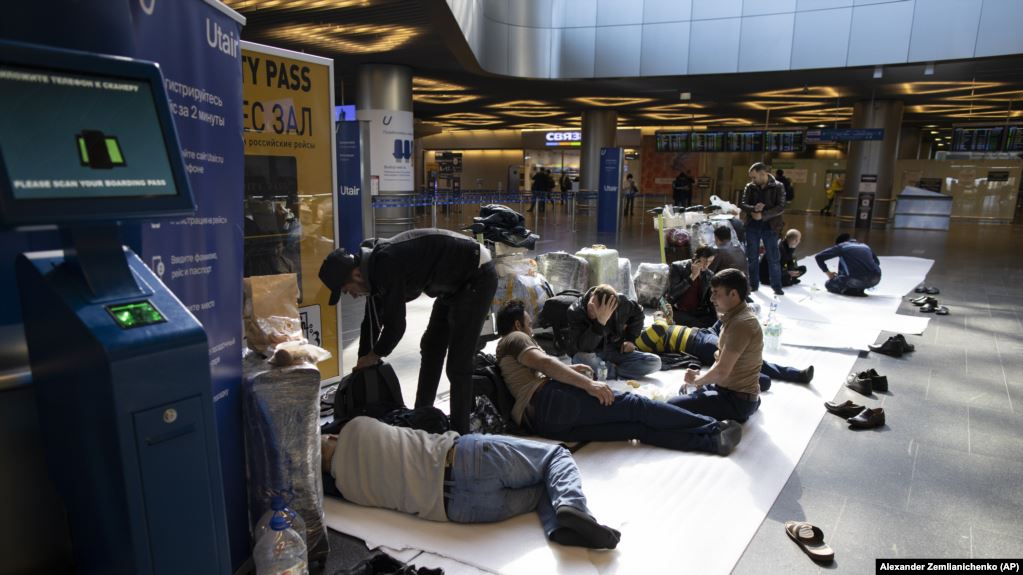
domoMigrant workers from Tajikistan stranded at Moscow’s Vnukovo Airport, March 31, 2020. Photo by Alexander Zemlianichenko. Courtesy of AP and Radio Azzatyq
Around 300 Migrant Workers Driven from Domodedovo onto Street at Night
Radio Azzatyq
Март 31, 2020

In the early hours of March 31, unidentified uniformed men chased about three hundred migrant workers, two hundred of them Tajik nationals, from the terminal building of Moscow’s Domodedovo Airport, as reported by Russian journalist Galiya Ibragimova on her Facebook page. All of them, she wrote, were trying to return home, but had been stranded at the airport due to the coronavirus and closed borders.

According to Ibragimova, she got a call from Farukh, a migrant worker from Tajikistan who was stranded at Domodedovo, and he told her what happened.

“We were kicked out of the airport. Uniformed employees arrived, asked how many of us there were, and told us to get everyone together. They promised that we would fly home tonight. We gathered everyone, nearly three hundred people. When we had gathered, they just tossed us out on the street at night, in the cold. They said, That’s it, you can’t be in the airport. And they kicked us out. People are now out on the street. We don’t know what to do,” he told Ibragimova.

Farukh also complained that the migrant workers did not have the means to leave the airport and get to temporary accommodation.

“We  work like oxen in Russia. We rarely have a day off. But now no one wants us. We were simply thrown out like an unnecessary burden. Why are things this way? Help us!” Farukh complained to Ibragimova.

Farukh also made a video of how people ended up on the street in the wee hours of March 31.

The TV channel Current Time also made a report about migrant workers who were stranded at Domodedovo: they had no way to wash up and slept on chairs.

According to the migrant workers, neither the Tajik embassy nor the Russian authorities helped them in any way—it was volunteers and compatriots who brought them food and water. A promised charter flight to Tajikistan on Somon Air was canceled.

Translated by the Russian Reader

Scapegoats

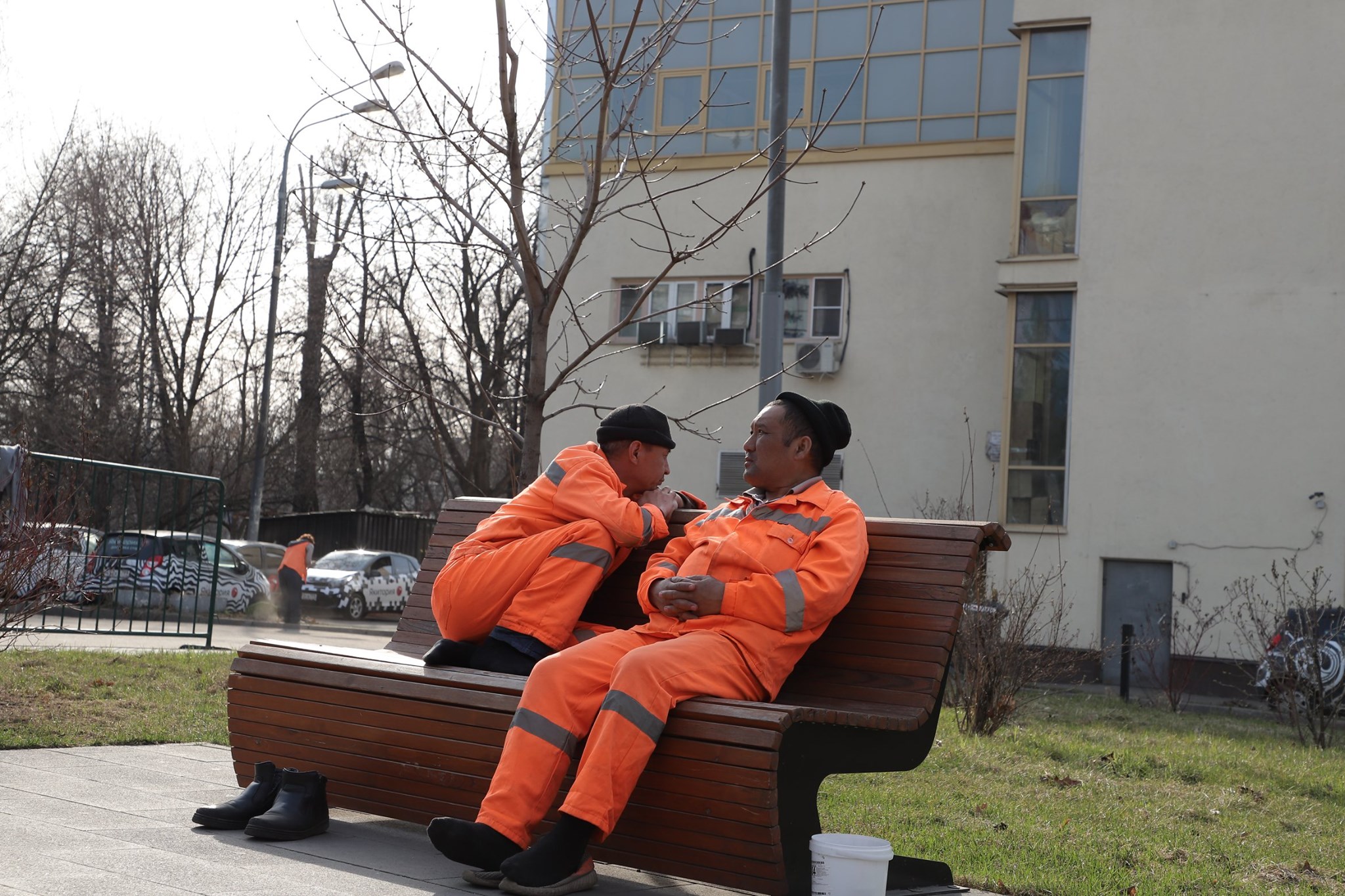
anatrrra-dvornikiCentral Asian yardmen in Moscow taking a break from their work. Photo by and courtesy of Anatrrra
‘People shout “Coronavirus!” at me as if it were my middle name’
Lenta.ru
March 29, 2020

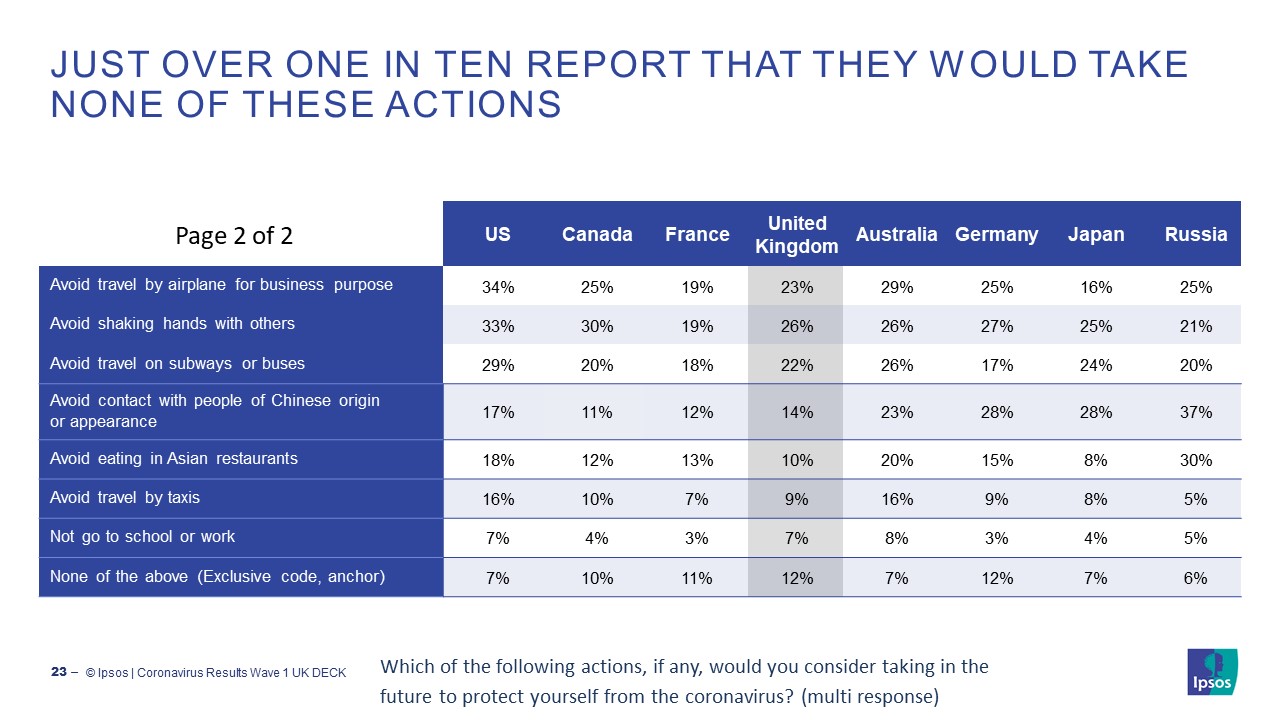
The coronavirus pandemic has led to an increase in xenophobic attitudes towards people of Asian background around the world, even though the US has already overtaken China in the number of infected people, as have European countries, if you add up all the cases. However, according to an international survey of several thousand people, it is Russians who are most likely to avoid contact with people of Asian appearance, although one in five residents of Russia is not an ethnic Russian. Our compatriots of Asian appearance have been subjected to increasing attacks, harassment, and discrimination. Lenta.ru recorded their monologues.

“Being Asian now means being a plague rat”
Lisa, Buryat, 27 years old

Sometimes I am mistaken for a Korean, and this is the best option in Russia, when you are mistaken for Chinese, Koreans or Japanese. The disdainful attitude is better than when you are mistaken for a migrant worker from Central Asia, because the attitude towards them is clearly aggressive. At least it was before the coronavirus.

Now, basically, being Asian means being a plague rat.

A couple of days ago, a young woman approached me at work—I’m a university lecturer. The lecture was on fashion, and naturally I had talked about the epidemic’s consequences for the fashion industry. The young woman works in a Chanel boutique. She said right to my face that “only the Chinese have the coronavirus,” and she tries not wait on them at her store, but “everything’s cool” with Europeans.

My mother has to listen to more racist nonsense because she has a more pronounced Asian appearance than I do, because my father is Russian. For example, there are three women named Sveta at her work. Two are called by their last names, but she is called “the non-Russian Sveta,” although she has lived in Petersburg since the nineteen-seventies. And when I enrolled in school, the headmaster asked my father to translate what he said for my mother, although five minutes earlier my mother had been speaking Russian.

In the subway, she can be told that immigrants are not welcome here and asked to stand up. A couple of times, men approached her on the street and asked whether she wasn’t ashamed, as a Muslim woman, to wear tight jeans. She is learning English, and when she watches instructional videos, people in the subway, for example, say, “Oh, can these monkeys speak Russian at all? They’re learning English!” Police are constantly checking her papers to see whether she’s a Russian citizen. When I was little, we were even taken to a police station because the policemen decided she had abducted an ethnic Russian child—I had very light hair as a child.

Recently, she was traveling by train to Arkhangelsk, and children from two different cars came to look at her. At such moments, you feel like a monkey. (By the way, “monkey from a mountain village” is a common insult.)

Everyone used to be afraid of skinheads. Everyone in the noughties had a friend who had been attacked by skinheads. Everyone [in Buryatia] was afraid to send their children to study in Moscow. But being a Russian Asian, you could pretend to be a tourist: my Buryat friend, who knows Japanese, helped us a couple of times make groups of people who had decided we were migrant workers from Central Asia leave us alone. Another time, the son of my mother’s friend, who was studying at Moscow State University, was returning home late at night and ran into a crowd of skinheads. They asked where he was from, and when he said he was from Buryatia, one of them said, “I served in Buryatia! Buryats are our guys, they’re from Russia,” and they let him go.

Now all Asians are objects of fear. People shout “Coronavirus!” at me on the street as if it were my middle name. They get up and move away from me on public transport, and they give me wide berth in queues. A man in a store once asked me not to sneeze on him as soon as I walked in. I constantly hear about people getting beat up, and I’m very worried. My Buryat girlfriends, especially in Moscow, are afraid to travel alone in the evening. People also move away from them on transport and behave aggressively.

You can put it down to human ignorance, but you get tired of living like this. When you talk about everyday racism with someone, they say they worked with an Asian and everything was fine. This constant downplaying is even more annoying. You haven’t insulted Asians—wow, here’s your medal! It doesn’t mean there is no problem with grassroots racism in multi-ethnic Russia.

“When are you all going to die?!”
Zhansaya, Kazakh, 27 years old

On Sunday morning, my boyfriend, who is an ethnic Kazakh like me, and I got on a half-empty car on the subway. We sat down at the end of the car. At the next station, an elderly woman, who was around sixty-five, got on. When she saw us, she walked up to my boyfriend, abruptly poked him with her hand, and said through clenched teeth, “Why are you sitting down? Get up! We didn’t fight in the war for people like you.”

I am a pharmacist by education, and I have seven years of experience working in a pharmacy. The pharmacy is next to a Pyatyorochka discount grocery store. Recently, I was standing at the register when a woman of Slavic appearance, looking a little over fifty, came in. She came over with a smile that quickly faded from her face when she saw me. I only had time to say hello when suddenly she screamed, “When are you all going to die?! We are tired of you all! You all sit in Pyatyorochkas, stealing our money, and then act as if nothing has happened!”

I didn’t hold my tongue, replying abruptly, “Excuse me! Who do you mean by you all?” The woman was taken aback as if something had gone wrong. Then she said something about “CISniks” [people from the Commonwealth of Independent States], ran out of the pharmacy, and never came back.

I had always dreamed about driving a car since I was a kid. At the age of eighteen, I found a driving school, where I successfully passed the classroom training, and after three months of practice I had to pass exams at the traffic police. I got 100% on the written test the first time. But during the behind-the-wheel exam, the examiner began talking crap the minute I got into the car. When I introduced myself by first name, middle name, and last name, he said something I missed since I was nervous. Then he, a rather obese man, hit me on the thighs and screamed, “Do you want me to say that in Uzbek?”

I immediately unbuckled my seat belt and got out of the car. I gave up for good the idea of taking the driving test.

covid-19-coronavirus-actions-ipsos-moriResults of an Ipsos MORI poll published on February 14, 2020

“The chinks piled into our country and brought this plague”
Anna, Buryat, 27 years old

We live in a multi-ethnic country that supposedly defeated fascism, but now every time I go into the subway, the police check my papers as if I were a terrorist. People really have begun to move away from me, give me a wide berth, and throw me contemptuous glances, as if to say “There goes the neighborhood!”

I live near University subway station [in Moscow], and there really are lots of Chinese students there. I feel quite sorry for them: they are constantly stopped by the police in the subway, and people look at them with disgust and demonstratively steer clear of them. If there are Chinese people who have stayed here, they probably didn’t go home for the Chinese New Year. Where would they bring the virus from? If they had gone home for the holidays, they would not have returned to Russia, since the border was already closed by the end of the holidays. Accordingly, the Chinese who are here are not carrying the virus.

Recently, I was going down an escalator. My nose was stuffy from the cold, and so I blew my noise softly. I thought I was going to be murdered right on the escalator: some people bolted straight away from me, while others shouted that I was spreading the contagion.

Recently, in a grocery store, a woman and her teenage daughter were standing behind me. The woman said something to the effect that all sorts of chinks have come to our country and brought the plague. She said it out loud and without any bashfulness, aiming her words at me. She and her daughter were less than a meter away from me, as if I didn’t understand them. My level of indignation was off the charts, but I didn’t say anything.

Another time, I went into my building and approached the elevator. A woman and her children literally recoiled and almost ran out—they didn’t want to ride in the elevator with me! I said I’d wait for the next one. They were not at all perplexed by the fact that I spoke Russian without an accent.

“I will always be second class here”
Malika, Uzbek, 21 years old

Recently, a mother and daughter passed by my house. Tajik yardmen were cleaning the yard. The girl asked the mother why she was rolling her eyes, and the mother explained that the yardmen were probably illegal aliens and terrorists. I walked next to them all the way to the bus stop—it was unpleasant.

During three years of living in Moscow, I very rarely felt like an outsider: the people around me were always sensible, and I was almost never stopped by police in the subway to check my papers. But when I decided to leave the student dorm, I realized that I would always be a second-class person here. It took four months to find an apartment. A girlfriend and I were looking for a two-room flat for the two of us for a reasonable amount of money, but every other ad had phrases like “only for Slavs.” There were jollier phrases like “white Europe” or “Asia need not apply.” But even in cases where there were no such restrictions, we would still be turned down when we went to look at flats.

After a while, I started saying on the phone that I was from Uzbekistan. Some people would hang up, while others would make up ridiculous excuses. In the end, we found a place through friends, but the process was quite unpleasant.

I’m no longer bothered by such everyday questions as “Why is your Russian so good?” I like talking about my own culture if the curiosity is not mean-spirited. But I am terribly disgusted to see how my countrymen are treated on the streets and realize that I’m left alone only because I’m a couple of shades lighter. Because of this, people take me for a Russian and complain about “those wogs” to my face.

“He shouted that I was a yakuza and had come here to kill people”
Vika, Korean, 22 years old

I’m an ethnic Korean. I was born and raised in North Ossetia, and graduated from high school in Rostov-on-Don. I have lived in Moscow since 2015, and I encounter more everyday racism here.

One day a woman on the street started yelling at me to get the hell out of Moscow and go back to my “homeland.” Another time, a madman in the subway sat down next to me and shouted that I was a yakuza and had come here to kill people.

When I was getting a new internal passport at My Documents, the woman clerk asked several times why I was getting a new passport and not applying for citizenship, although I had brought a Russian birth certificate and other papers.

Once my mother was attempting to rent an apartment for us and humiliated herself by persuading the landlords that Koreans were a very good and decent people. I wanted to cry when she said that.

There is a stereotype that Asians are quite smart and study hard, that they have complicated, unemotional parents, and so on. As a teenager, I tried to distance myself as much as possible from stereotypical ideas about Koreans. Now I can afford to listen to K-pop and not feel guilty about being stereotypical.

Generally, we are not beaten or humiliated much, but I don’t feel equal to the dominant ethnic group [i.e., ethnic Russians], especially now, when everyone is so excited about Korean pop culture, generalize everything they see in it to all Koreans and can come up to you out of the blue and say they love doramas. That happened to me once. It is very unpleasant—you feel like a pet of a fashionable breed.

In questionnaires on dating sites you can often find preferences based on ethnicity, and they can take the form of refusals to date people of a certain race, as well as the opposite, the desire to date such people. It is not a sign of tolerance, however, but the flip side of racism—fetishization. It still reduces a person to her ethnic group, suggesting she should be perceived not as an individual, but as a walking stereotype.

“Several times it ended in attempted rape”
Madina, from a mixed family (Tatar/Tajik/Kazakh/Russian), 25 years old

I was born in Moscow. My Russian teacher from the fifth grade on liked to repeat loudly to the entire class, “Can you imagine? Madina is the best Russian and literature student in my class!” By the end of the sixth grade, my classmates were sick and tired of this, but instead of boning up on Russian, they decided to throw me a blanket party. They got together, backed me into a corner, and kicked the hell out of me.

I recently returned from doing a master’s degree abroad and was looking for an apartment to rent in Moscow. Several times, landlords offered to rent an apartment without a contract, explaining that I undoubtedly needed a residence permit. When I showed them my internal passport and Moscow residence permit, they turned me down anyway.

Before moving to the United States, I had to forget about romantic relationships for several years because several times it all ended with attempted rape under the pretext “You’re an Asian woman, and I’ve always dreamed of fucking a woman like you  in the ass.”

Nor was it strangers I’d met on Tinder who told me this, but guys from my circle of friends at school and university. There were three such incidents, and all of them combined racism, objectification, and a lack of understanding of the rules of consent.

“She looked at me like I was death, shoved me, and ran out of the car”
Aisulu, Kazakh, 22 years old

Recently, I was a little ill: I had a runny nose and sneezed once in a while. I wouldn’t even say it was the flu, just the common cold. I decided to attend lectures and put on a mask for decency’s sake.

I went into the subway, where people got up and moved away from me twice. I wasn’t particularly offended, but it was unpleasant when I stood next to a women after moving to another car and sneezed. She looked at like I was death, shoved me, and ran out of the car. That was quite odd.

I told a classmate about the incident, and she asked why I was wearing a mask, because it attracts more attention. I felt even worse, and took it off.

Translated by the Russian Reader

Making Women Visible: Russian Language Classes for Immigrants and Refugees in Petersburg

apa-1
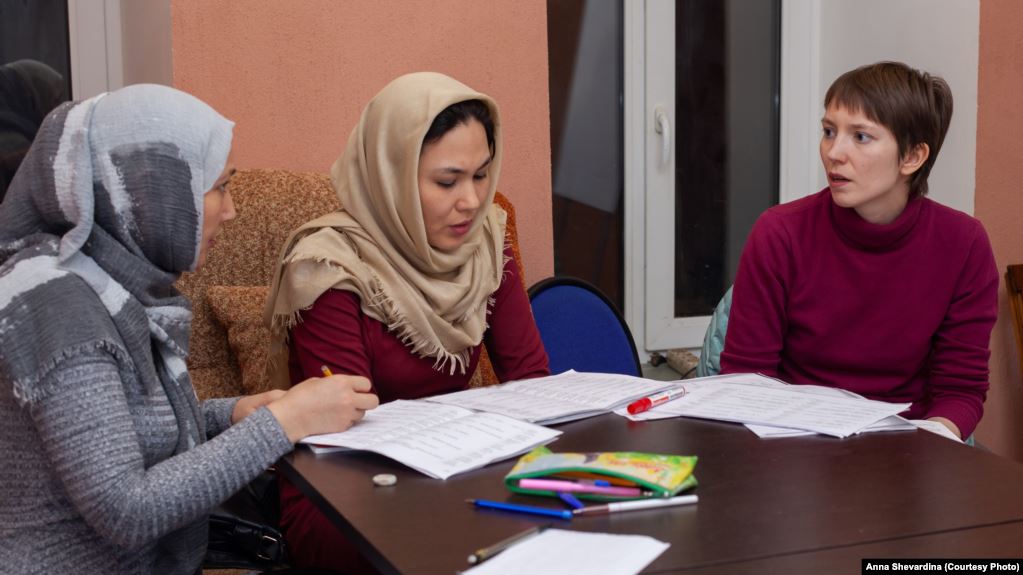
Darya Apahonchich with students during class. Photo by Anna Shevardina. Courtesy of Radio Svoboda

“Making Women Visible”: Why Female Immigrants Stay at Home for Seven Years
Karina Merkurieva
Sever.Realii (Radio Svoboda)
March 7, 2020

“My husband and children and I came to Russia from Afghanistan over eight years ago. At first, I had no time to learn the language: I had to help the children and work at home, and then I was unable to find suitable courses. So this is only my second year studying Russian,” says Suraya.

Since she is shy about speaking Russian, she agrees only to a written interview. She has been studying Russian for a second year at courses for female immigrants and refugees in Petersburg. Classes are held at Open Space, a co-working space for social activists, and at two libraries. Groups are divided into several levels according to how well the students speak Russian.

In February, project organizer Darya Apahonchich announced the launch of a new group for beginners. According to her, she saw the need for such courses in 2018, when she worked for a similar project run by the International Committee of the Red Cross.

“There were classes for children and adults. I taught Russian as a foreign language. The only problem was that only those who had official immigrant or refugee status could attend. In Russia, not everyone obtains this status. Another thing was that the course was limited in time. Not everyone was able to get the necessary minimum of Russian under their belt in this time,” Apahonchich says.

The group she led mostly consisted of women over the age of thirty.

“Young women who come to Russia at an earlier age and go to university have one set of opportunities. As soon as a woman becomes a mother, her set of opportunities decreases dramatically,” Apahonchich adds.

At one of the classes, a new student from Syria decided to join the group. In order for the students to get acquainted, Apahonchich suggested that everyone introduce themselves by telling what country they had come from, how long they had lived in Russia, and how long they had been studying Russian. It transpired that nearly all the women in the class had lived in Russia around seven years, but had only begun to study the language. According to them, they had no opportunity to study Russian before: they had to raise children. Working outside the home was not the custom in their native countries, so their husbands had not allowed them to take language classes.

apa-2A lesson in Darya Apahonchich’s group. Photo by Anna Shevardina. Courtesy of Radio Svoboda

“I was very shocked at the time. These women’s children have basically grown up in Russia: they know Russia on the level of native speakers, and make jokes more easily in Russian than in their native languages. The women have found themselves linguistically and culturally isolated, however. They stayed at home all those years. They didn’t even have a place to learn the language,” says Apahonchich.

When the Red Cross courses were coming to an end, Apahonchich suggested to the women that they should not quit their studies, but continue studying Russian elsewhere. They leapt at the suggestion.

“I realized that those woman would go back to their families, and that would be the end of their introduction to the Russian language. I didn’t want to let that happen,” she recalls.

Other groups and new teachers have subsequently emerged. The project currently encompasses four groups at different levels of proficiency. Classes are taught by eight volunteer teachers. Some of them, like Apahonchich, majored in Russian language pedagogy at university, while others are native Russian speakers with humanities backgrounds and experience teaching history or Spanish, for example.

“I wanted to create a horizontal structure in which each teacher could organize their own groups and take responsibility for the learning process,” says Apahonchich.

As a result, the teachers work autonomously: they find venues for holding classes on their own, and decide with their groups what topics would be interesting to discuss in class.

In her group, for example, Apahonchich focuses not only on teaching the Russian language, but also on the legal aspects of life as an immigrant in Russia. During classes, her students read brochures on how to behave if you are faced with aggression from the police, how to get a job, and how to rent an apartment without falling victim to fraud.

“Our all-female collective discusses issues related to health and doctor visits,” says Apahonchich.

According to Suraya from Afghanistan, this is one of her favorite topics.

“I also like to read texts about Russia and Petersburg, and discuss the weather and family. I really need this vocabulary when I pick up my daughter from kindergarten or go to the clinic. In the clinic, however, I often encounter aggression. The people at reception shout at me if I don’t immediately know what to say,” Suraya explains.

While the courses are more aimed at teaching Russian, the instructors sometimes also talk to the female immigrants about women’s rights.

“Right now, the easiest way, I think, to get women out of linguistic and cultural isolation is to get them into the world of work. That way they could learn Russian more quickly, adapt socially, and make new friends. At the same time, we have before our very eyes the example of women from Central Asia who come to Russia to work and eventually find themselves separated from their families. That is the other extreme. For the time being, I just want these women to stop being invisible. Currently, the majority of the Russian populace doesn’t even suspect how many female immigrants live in cultural isolation in their country,” says Apahonchich.

According to the UNHCR, about 220,000 refugees and persons with temporary asylum status were registered in Russia in 2019. Most of those people came from Afghanistan, Ukraine, Syria, and Yemen.

Thanks to Darya Apahonchich for the heads-up. Translated by the Russian Reader

“Aggressive Migrants Without Money Advance on Lakhta Center”

fullsizeoutput_2003The Lakhta Center skyscraper construction site in November 2018. Photo by the Russian Reader

Aggressive Migrants Without Money Advance on Lakhta Center
Lidia Lvova
Moyka78
February 1, 2020

The workers who have been building Lakhta Center, apparently, have no plans to retreat after hearing promises that they would be paid for their work—but not now, later, possibly within six to eight months.

Moyka78 has a video showing offended workers storming an office building on the premises of the skyscraper complex construction site.

It seems that hundreds of people are not willing to wait for months for their hard-earned pay.

Amid the shouting, a mediator can be heard trying to negotiate with the strikers. The builders of Lakhta Center respond only with indignation to his promises.

The workers make obscene gestures and react aggressively to the promises.

It is possible that to improve their performance the workers were fed such performance-enhancement drugs as meldonium.

Videos Showing Unrest Among Workers at Lakhta Center Have Appeared on the Internet: According to Our Information, They Were Pacified a Week Ago 
Fontanka.ru
February 2, 2020

Videos showing unrest among workers of the Turkish company Renaissance Construction, which is doing construction work at the Lakhta Center complex, have appeared on the internet. Fontanka has learned that the events recorded in the videos took place on the premises of Lakhta Center last Monday, January 27.

Police had to go to the site on the morning of January 27. The incident ended with one accidentally broken office window, the police issuing a ticket for swearing in a public place, and an awareness-raising discussion among the parties to the conflict.

Around two hundred employees of Renaissance Construction, the general construction contractor at the facility, demanded payment of their 2019 end-of-year bonus from management.

“Owing to the unrest among workers at the Lakhta Center construction site on January 27, 2020, Renaissance Construction JSC has conducted negotiations with the workforce to ascertain all the circumstances that gave rise to their complaints and looked into all their claims,” a spokesperson for Renaissance Construction told Fontanka.

As the spokesperson noted, the company explained to workers that they had been paid in full on January 15, and no back pay was owed to them.

“Currently, work has resumed at the site, and a constructive dialogue with the workers and outreach work are underway,” the spokesperson told Fontanka.

Thanks to Sergey Abashin for the heads-up. Translated by the Russian Reader

Sergey Abashin: “Aliens” on Red Square

echo

A screenshot of the Ekho Moskvy website, showing the results of an online survey conducted on January 3, 2020. When asked “Does the abundance of migrants on Red Square on New Year’s bother you?” 68% of those who voted said yes, 26% said no, and 6% were undecided.

Will the Topic of Immigration Return to Russian Politics in 2020? “Aliens on Red Square” as a Factor in the 2021 Elections
Sergey Abashin
Liberal Mission Foundation
January 6, 2020

On January 3, the website of radio station Ekho Moskvy (Echo of Moscow) asked its audience, allegedly liberal, whether it was bothered by the abundance of migrants on Red Square during New Year’s celebrations. Almost 4,000 people voted over the next twenty-four hours, with seventy percent of them answering “Yes.”  Although the survey lacks sociological representativity and is a purely rhetorical device, it does enable us to raise the question of whether immigration could be an important item on the social and political agenda in Russia in 2020. In my short comment, I will first analyze the wording of Ekho Moskvy’s question and show how it was manipulative before trying to link this story to recent trends in the debate on immigration and, finally, forecasting how the topic could evolve in the coming year.

The question (“Does the abundance of migrants on Red Square on New Year’s bother you?”) already sends a specific message that would have been decipherable by everyone who decided to take part in the survey. Instead of the neutral “How do you feel about…” the people who phrased the question immediately introduced the negative assessment implied by “bother,” inviting readers not to voice their opinions, but to agree or disagree with a stated stance in the absence of alternatives. The vagueness of the word “abundance”—how can it be quantified? what number or percentage is enough to render a verdict?—leaves a lot to the respondent’s imagination.

The notion of “migrants” is typically manipulative, of course. Who did the people who phrased the question have in mind? People who had come to Moscow from other parts of Russia, such as the Moscow Region and the Caucasus? Tourists from China and Italy? Migrant laborers from Ukraine and Central Asia? Formally speaking, all of them are migrants, and each of these groups could irritate the average Muscovite for some reason. In other words, “migrants” is a term that is already chockablock with stereotypes and laden with negativity.

Finally, the phrase “on Red Square on New Year’s” connotes a symbolic, even sacred time and space in which “migrants” are a priori contrasted as something alien, even if “migrants” also enjoy celebrating New Year’s and regard Red Square as a landmark in their own biographies, for example, as immigrants from the former Soviet hinterlands. Muscovites themselves might not even go to Red Square but, in keeping with the conceptual framework suggested by Ekho Moskvy’s survey, they should protect it from imaginary others.

Why, then, did Ekho Moskvy have to ask its listeners and readers a question about immigration in such a manipulative and negative form, putting it on a par with the current dramatic events in the Middle East? I am least inclined to imagine it was a deliberate conspiracy in service of a hidden agenda. It was, rather, a spontaneous reaction, a playing along with sentiments popular among listeners that encourage them to visit the radio station’s website.  And indeed we have seen signs in the past year that the topic of immigration has returned to the public agenda. After a surge in interest in immigration in 2013, during the Moscow mayoral election, and the highest recorded levels of antipathy to migrants, the topic of immigration gradually faded from the public eye, overshadowed by the economic crisis and the war in Ukraine.

According to polls conducted in the summer of 2019 by Levada Center, these numbers started to increase again after a twofold decline in previous years. A similar trend (among far-right groups and ideologues) has been noted by analysts at the SOVA Center, who write that the summer and autumn of 2019 saw a “partial revival of the traditional anti-immigrant discourse.”

Will the topic of immigration continue to be raised in various opinion polls, widening the debate to include, besides nationalists, liberals, leftists, and conservatives? The image of so-called aliens and others has always been an important constituent of self-identification, a building block of how we define ourselves, an obligatory component of the most varied ideologies. Given the recent warming (albeit not full normalization) in relations between Russia and Ukraine, the resulting vacancy for the role of aliens has to be filled by someone else, and “migrants” (less real than imaginary) are a strong and familiar irritant and a convenient tool for skewing public opinion.

Provided that a greater number of parties and new political figures are allowed to participate, the upcoming electoral cycle, which should end with elections to the State Duma in autumn of 2021, also creates conditions for both the opposition and pro-Kremlin groups to ratchet up the topic of immigration. The example of politicians in Europe and America who parlayed criticism of immigration policies into success at the ballot box is fresh in everyone’s mind.

Such conditions and examples are not sufficient, however, to revive the debate on immigration in the Russian political arena. The “reconciliation” with Ukraine and western countries may prove unstable and temporary. The Kremlin might choose to keep a tight rein on the elections and thus find it disadvantageous to let its opponents have a go at the topic of immigration. Despite the growth in anti-immigration rhetoric noted by pollsters and analysts in 2019, I would nevertheless cautiously suggest that immigration won’t dominate the political and public agenda in the new year.  Nor will it fade away, however. It will continue to fester, with parties as various as the newspaper Komsomolskaya Pravda and the radio station Ekho Moskvy fanning the embers. It will thus remain a political backup weapon that could go off at any moment.

Translated by the Russian Reader

Happy New Year!


“Avtozak is coming, avtozak is coming…”*

On New Year’s Night Moscow Police Carry Out Operation to “Clear Non-Residents from Places of Mass Celebration”
MBKh Media
January 1, 2019

Baza reports that on the night of January 1 Moscow police carried out an operation to “clear Central Asian non-residents from places of mass celebration.”

Baza writes that Moscow police chief Oleg Baranov issued the orders for the operation. Police officers were instructed to deliver all “non-residents” to precincts and check each of them in the databases. In addition, employees of subcontractors involved in staging the celebrations were checked separately.

According to the publication, although the results of the operation have not yet been tallied, there are reports that police detained several hundred people. Most of them were released soon after their arrests.

*Avtozak = paddy wagon.

znakcom-765441-580x436Young Moscow activists on their way to the hoosegow in Troitsk

30 People Detained in Moscow on Tverskaya for Picketing in Support of Political Prisoners
Znak.com
December 31, 2019

Police in Moscow detained over thirty people after they held solo pickets demanding freedom for jailed and imprisoned political activists. OVD Info writes that the first picketer, activist Temuuzhin Sambuudavaagiin, held up a placard that read, “While you’re chopping up your Olivier salad, innocent people are in prison. Free political prisoners!” He was released after police checked his papers, but then police detained a female picketer and several students who approached their paddy wagon.

The Telegram channel Freedom for Russia reports that the young people are being taken to the police precinct in the town of Troitsk in Moscow Region. Mansur Gilmanov, a lawyer with the organization Apologia for Protest, is traveling to meet the detainees.

Update. Apologia for Protest reports that all the detainees were released without charge in Troitsk later in the evening (TRR).

Video courtesy of Notes of an Old Cynic via Grigory Mikhnov-Vaytenko. Thanks to Alexei Zverev and Sergey Abashin for the heads-up on the articles. Photo courtesy of Znak.com. Translated by the Russian Reader


Prosecutor Asks for Life in Prison for Four Defendants in Petersburg Show Trial

KMO_158163_00033_1Shohista Karimova. Photo courtesy of Fontanka.ru

Court Asked to Sentence Some Defendants in Petersburg Subway Bombing Case to Life in Prison
Mediazona
November 18, 2019

The prosecutor has asked the court to sentence some of the defendants in the 2017 Petersburg subway bombing case to life in prison, our correspondent has reported from the courtroom.

The prosecutor [Nadezhda Tikhonova] asked the court to sentence Akram Azimov, Abror Azimov, Ibrahimjon Ermatov, and Muhamadusup Ermatov to life imprisonment in a high-security penal colony and fines of one million rubles [approximately 14,000 euros] each. She asked the court to sentence Sodik Ortikov to 28 years in a maximum-security penal colony and a fine of one million rubles. She requested sentences of 27 years in a maxium-security penal colony and fines of one million rubles each for Mahamadusuf Mirzaalimov, Azamjon Mahmudov, Seifulla Hakimov, Bahrom Ergashev, and Dilmurod Muidinov.

Defendant Shohista Karimova had a nervous breakdown during the hearing, which led to a thirty-minute recess. After the recess, Karimova refused to return to the courtroom, screaming and resisting attempts to make her move. Consequently, the hearing was postponed until tomorrow.

Convening in Petersburg, the Moscow District Military Court began hearing the case on April 2, 2019. All the defendants pleaded not guilty, and four of them said they had been brutally tortured. On April 17, 2017, an explosion occurred on a subway train traveling between the stations Sennaya Ploshchad and Tekhnologichesky Institut. Sixteen people were killed, and another fifty [sic] people were injured.

_______________________________________

Yana Teplitskaya
Facebook
November 18, 2019

Today, the state prosecutor announced her wishes in the Petersburg subway bombing case: life imprisonment for four of the defendants (the Azimov brothers and the Ermatov brothers), and between 27 and 28 years in prison for all the other defendants, except Shohista Karimova. (The prosecutor will request a sentence for her tomorrow.)

And she asked that all the defendants be fined a million rubles each.

Most likely, the sentences handed down by the court will not differ greatly from the prosecution’s wishes. (Maybe the more uproar there is now, the greater the difference will be.)

Most likely, the verdict will be upheld on appeal.

Most likely, someday this case (like hundreds of others) will be reviewed, and the convicted defendants exonerated.

I’d like to live to see the day when that happens. And for the accused and their loved ones to live to see it, too.

http://3apr2017.tilda.ws/#court

Translated by the Russian Reader. Please read my previous posts on the terrorist attack, the case against its alleged planners, its roots in the Islamophobia that has infected Russia under Putin, and the shocking lack of local and international solidarity with the thirteen defendants in the case:

Zhilkomservis No. 3: The Central Asian Janitors of Petersburg’s Central District

Central District for a Comfortable Environment
PB Films, 2019
vk.com/pb_films

On National Unity Day, after much deliberation, ordinary janitors agreed to tell us their stories of corruption, slave-like exploitation, “dead souls,” meager salaries, and problems with housing and working conditions.

Everything you see in our film is true.

Join the group Central District for a Comfortable Environment.

Ibrahimjon Ermatov: “The FSB Let the Terrorist Slip, and a Terrible Tragedy Happened”

ermatovIbrahimjon Ermatov. Photo courtesy of The Insider
“The FSB Let the Terrorist Slip, and a Terrible Tragedy Happened”: Man Accused of Planning Terrorist Attack in Petersburg Subway Calls Case Frame-Up
Yevgenia Tamarchenko
The Insider
November 2, 2019

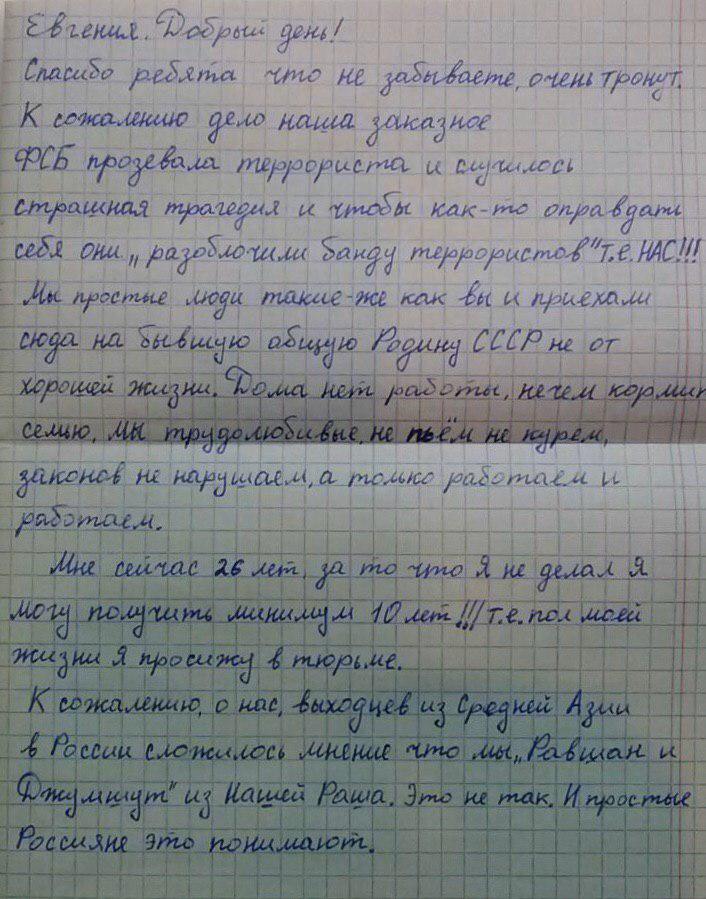
Ibrahimjon Ermatov, accused of planning a terrorist attack in the St. Petersburg subway, declared his innocence and called the case a frame-up in a letter that has been made available to The Insider.

“Unfortunately, our case is a frame-up. The FSB let the terrorist slip, and a terrible tragedy happened. To vindicate themselves somehow, they ‘exposed a gang of terrorists,” that is, us,” Ermatov writes.

“We are ordinary people, just like you. And we did not come here […] for the fun of it. There is no work at home, no way to feed our families. We are hardworking, we don’t drink or smoke, we don’t break the laws, we only work and work,” he writes. “I’m now twenty-six. I could be sentenced to ten years, at least, for something I didn’t do. That is, I will spend half my life in prison.”

“We simply have no rights here and can be easily manipulated. The FSB has taken advantage of this,” Ermatov notes.

letter-1

letter-2Ibrahimjon Ermatov’s letter. Courtesy of The Insider. “Hello, Yevgenia! Thanks, guys, that you have not forgotten me. I am very touched. Unfortunately, our case is a frame-up. The FSB let the terrorist slip, and a terrible tragedy happened. To vindicate themselves somehow, they ‘exposed a gang of terrorists,’ that is, us. We are ordinary people, just like you. And we did not come here to the big common motherland of the USSR for the fun of it. There is no work at home, no way to feed our families. We are hardworking, we don’t drink or smoke, we don’t break the laws, we only work and work. I’m now twenty-six. I could be sentenced to ten years, at least, for something I didn’t do. That is, I will spend half my life in prison. Unfortunately, there is the opinion in Russia that we immigrants from Central Asias are like the characters Ravshan and Jamshut in [the Russian TV comedy show] Our Russia. This is wrong, and ordinary Russians understand this. We simply have no rights here and can be easily manipulated. The FSB has taken advantage of this. [They think] Who would believe them (that is, us)? I would again like to thank you and all the people who care about our situation. I would have perished with you. May Allah be with you.”

On April 17, 2017, an explosion occurred on a subway train traveling between the stations Sennaya Ploshchad and Tekhnologichesky Institut. Sixteen people were killed, and over a hundred people were injured. According to investigators, the bomb was detonated by a suicide bomber, 22-year-old Akbarjon Jalilov. Eleven people were arrested and charged with planning the attack. The FSB abducted three of the defendants before formally arresting them. They tortured the men in an attempt to force them to confess. One of these men was Ermatov’s brother Muhamadusup. None of the defendants pleaded guilty.

Prosecutors have claimed the terrorist group Katibat al Tawhid wal Jihad was behind the attack. However, there is no corraborated evidence that the group claimed responsibility for the blast or made demands.

You can read more about the case in the following articles [in Russian]:

“‘I Could Hear My Brother’s Screams from the Next Cell’: Torture, Secret FSB Prisons, and Falsified Evidence in the Case of the Terrorist Attack in the Petersburg Subway”

“Copy Pasters Are Running the Investigation: Thirteen Glaring Inconsistencies in the Official Charges in the Case of the Terrorist Attack in the Petersburg Subway

You can also find more information on the website created by a pressure group that has been publicizing the case.

Thanks to Yana Teplitskaya for the heads-up. Translated by the Russian Reader. Please read my previous posts on the terrorist attack, the case against its alleged planners, its roots in the Islamophobia that has infected Russia under Putin, and the shocking lack of international solidarity with Ermatov and the other twelve defendants in the case:

“Binoculars,” a sketch featuring the fictional Central Asian migrant workers Ravshan and Jamshut on the Russian TV comedy show Our Russia