A Little Song about the Physicist Sakharov


A statue of Soviet dissident Andrei Sakharov was unveiled Monday in St. Petersburg, despite criticism from his widow who said today’s Russia has failed her husband.

The 10 1/2-foot bronze statue depicts the Nobel peace laureate, slightly stooped but with his head held high, standing with hands tied behind his back atop a stone pedestal on a square that was named after him in 1996.

The monument by sculptor Levon Lazarev’s was unveiled a few weeks after a city commission in Moscow gave the green light to a stalled plan for another statue of Sakharov in the capital.

Yelena Bonner was opposed to both statues, saying Russia has failed to live up to Sakharov’s ideals of freedom and democracy since the 1991 collapse of the Soviet Union.

“It is out of place to erect a monument to Sakharov in today’s Russia,″ the Interfax news agency quoted Bonner as saying. She said she was not consulted.

“There’s no money to publish his works widely, so that people would finally read them, but they can put up a monument,″ Bonner told Russia’s TVS television by phone from Boston, where she lives.

The unveiling drew about 100 people, among them intellectuals and former dissidents who supported a transition to democracy at the time of the Soviet collapse.

A physicist who helped design the Soviet hydrogen bomb, Sakharov became a staunch promoter of human rights and world peace, and spent seven years in internal exile for speaking out. He won the Nobel Peace Prize in 1975.

Source: “Monument to Sakharov Unveiled in Russia,” Associated Press, 5 May 2003


A Little Song about the Physicist Sakharov

The physicist Sakharov
Was one bad dude.
Oh, how he made us seethe!
Why do we suffer that fool?

It later suddenly transpired
That he was a real good cat.
We felt sorry for the poor man
And guiltily ate our hats.

Now it’s been ascertained
That he was bad news after all.
We’re seething once again.
Why did we suffer that fool?

If again it turns out
That he was, in fact, a good egg,
Ah, we'll regret it again,
And put on guilty mugs.

8 August 2022

Source: German Lukomnikov, “New Poems,” Volga 1 (2023). Thanks to ES for the suggestion. Translated by the Russian Reader

Russian prosecutors on Monday declared as “undesirable” the U.S.-based foundation that preserves the legacy of Nobel Peace Prize winner Andrei Sakharov as Moscow continues to crack down on dissent in the wake of Russia’s invasion of Ukraine.

The activities of the Andrei Sakharov Foundation (ASF) “constitute a threat to the foundation of Russia’s constitutional order and security,” the Prosecutor General’s Office said in a statement.

Under Russian law, individuals believed to have cooperated with an “undesirable” international NGO face steep fines and jail terms.

ASF, based in Springfield, Virginia outside Washington, says its goal is to promote Sakharov’s works to “support peace efforts and anti-war events.”

The organization chaired by mathematician Alexei Semyonov has not yet commented on Russia’s latest designation.

Russian authorities have declared more than 70 organizations — including media outlets focused on exposing fraud and corruption in Russia — “undesirable” between mid-2015 and early 2023.

Sakharov, once feted as a hero of the Soviet defense industry for his role in developing the Soviet nuclear bomb, became one of the U.S.S.R.’s most prominent dissidents from the late 1960s. 

He received the Nobel Peace Prize in 1975 for his work against the nuclear arms race he had helped precipitate, though he was not permitted to leave the Soviet Union to accept the award.

Sakharov became one of the most distinctive personalities of the perestroika era, rising to the status of a national moral authority.

Arrested in 1980 after denouncing the Soviet war in Afghanistan, Sakharov was sent into internal exile in the city of Nizhny Novgorod, then closed to foreigners.

After six years in exile, during which he undertook several hunger strikes, Sakharov was released over a telephone call by reformist Soviet leader Mikhail Gorbachev.

Source: “Russia Labels U.S.-Based Sakharov Foundation ‘Undesirable,’” Moscow Times, 24 January 2023
The Siege

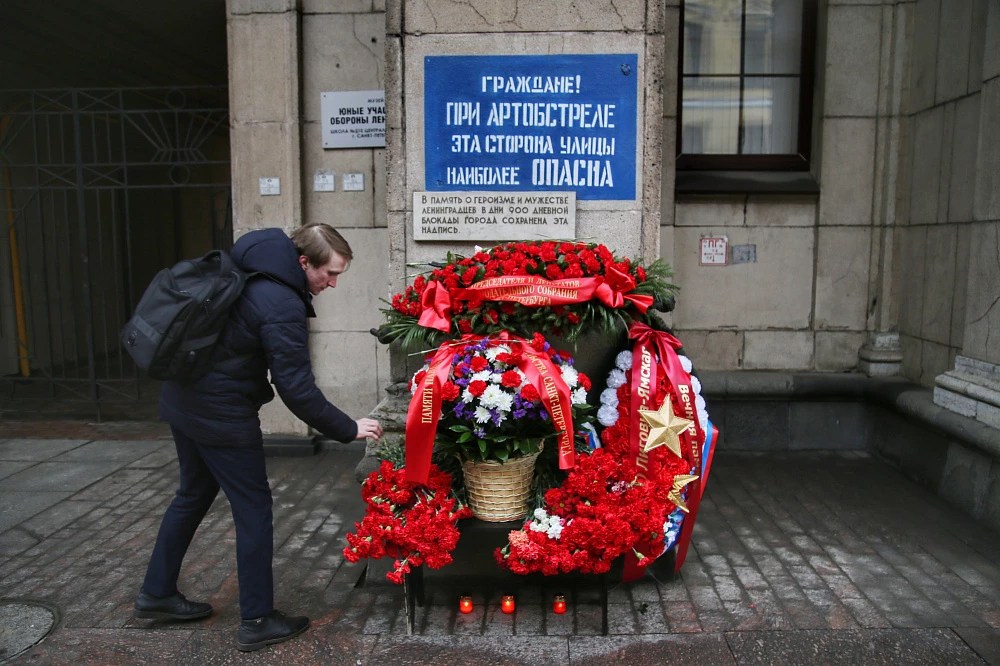
[Blue sign] “Citizens! During artillery attacks this side of the street is the most dangerous.” [Small plaque below blue sign]: “This sign has been preserved in memory of the heroism and courage of Leningrad residents during the 900-day siege of the city.” Photo courtesy of Pavel Karavashkin/Fontanka.ru

Alexander Beglov said that Siege survivors “fully support” the fighting in Ukraine

🪖 At the Petersburg municipal government’s final session this year, the celebration of the breakthrough of the Siege [of Leningrad] was discussed. The governor of the city stated: “Veterans and Siege survivors approach the current difficult situation with understanding. They express their full support to our soldiers. Siege survivors from Donetsk have traveled here. In their life there was heroic Leningrad, and today there is the heroic Donbas. All these years they have preserved the memory of their hometown and the Siege.”

Beglov stressed that not a single Siege survivor should freeze during the festive events.

🪖 Elena Tikhomirova, the 88-year-old board chair of the organization Residents of Besieged Leningrad, was invited to the session. She thanked the governor, invited him to tea, and asked him to tackle unpatriotic advertising.

“The only thing I want to say is that you need to pay attention to advertising,” Tikhomirova said. “I ask the heads of districts to pay attention to advertising. We once raised the issue that there should be as little advertising in English as possible. But now the special military operation is underway. We need to be more patriotic, as they say. So that everyone in our city approaches this issue more patriotically.”

🪖 In an interview with a Yevgeny Prigozhin-owned publication, in 2021, Tikhomirova stressed that the most important thing that the Russian authorities had managed to achieve was many years of “peacetime.” “This year is the seventy-sixth anniversary of [victory in the Second World War]. And there has not been a single war since then. [Young people] were gifted life,” she said. She did not mention “peacetime” this year.

Source: Rotunda (Telegram), 27 December 2022. Translated by TRR

Last Address in Petersburg: Pavel Tsesinsky and Solomon Davidson

Three Last Address plaques on Dostoevsky Street in downtown Petersburg, autumn 2018. Photo by the Russian Reader

Dear participants of the Last Address project!

This coming Sunday, December 4, new Last Address plaques will be installed in St. Petersburg.

At 12:00 p.m. a plaque in memory of Pavel Markovich Tsesinsky, an accountant at the Red Triangle factory, will be mounted at 47 Bolshoi Prospekt, Petrograd Side. Tsesinsky was arrested on September 21, 1937 and shot less than a month later, on October 15, 1937. His wife Bella and five-year-old son Volodar were exiled to the Arkhangelsk region, where his wife was arrested and died, and his son was sent to an orphanage. Another son, Ernest, who was only six months old, was adopted by relatives. The brothers were reunited only eighteen years later. Pavel Markovich’s eldest son is now ninety years old.

At 1:00 p.m., at 15 Tchaikovsky Street, relatives will install a plaque memorializing Solomon Borisovich Davidson, head of procurement at the Bolshevik factory. He was first arrested in 1935, but released a year later, and the case was dismissed. He was re-arrested on July 26, 1938, and shot on October 8, 1938, on charges of espionage. His wife Elizabeth died in 1942 in the Siege of Leningrad, but their daughters Irina and Mariana were evacuated and were able to return to Leningrad after the war.

Pavel Tselinsky was exonerated in 1957, while Solomon Davidson was exonerated in 1964.

We invite you to join the installation ceremonies.

Yours,

The Last Address Team in St. Petersburg

Source: Last Address in Petersburg email newsletter, 27 November 2022. Translated by the Russian Reader

We Do Not Have to Be This Way

I read the following two passages just now in quick succession, quite by chance, while eating lunch:

1) “I would try to kill anyone who harmed or spoke ill of you. You would try to kill anyone who harmed or spoke ill of me. But neither of us would ever, under any circumstance, be honest about yesterday. This is how we are taught to love in America. Our dishonesty, cowardice, and misplaced self-righteousness, far more than how much, or how little we weigh is part of why we are suffering. In this way, and far too many others, we are studious children of this nation. We do not have to be this way.”

2) “In 2014, a U.S.-driven Maidan coup in Ukraine overthrew the elected government and burned down the trade union headquarters building in Odessa, killing 48 people. In opposition to the coup two Russian-speaking provinces of Eastern Ukraine, Donetsk and Luhansk, seceded. The democratic right to self-determination from the nationalist Kiev government which banned the Russian language must be recognized for the Eastern and Southern provinces. The neo-fascist Azov Brigade opened fire on the two newly-founded republics of the Donbas region, killing over 15,000 civilians. African immigrants in Ukraine attempting to flee the war were subjected to racial discrimination by the Zelensky government.”

Yesterday morning, while drinking coffee, I read the following two passages hard on each other’s heels:

3) “As a child, one of my grandmothers wandered Siberia with her mother (in the thirties). She told me many times about a crazy old woman they met. The old woman went around pointing her finger at passersby and saying, ‘The blood of the murdered innocents will fall on everyone. On everyone! On everyone! On everyone!’ I remembered this today. She was right.”

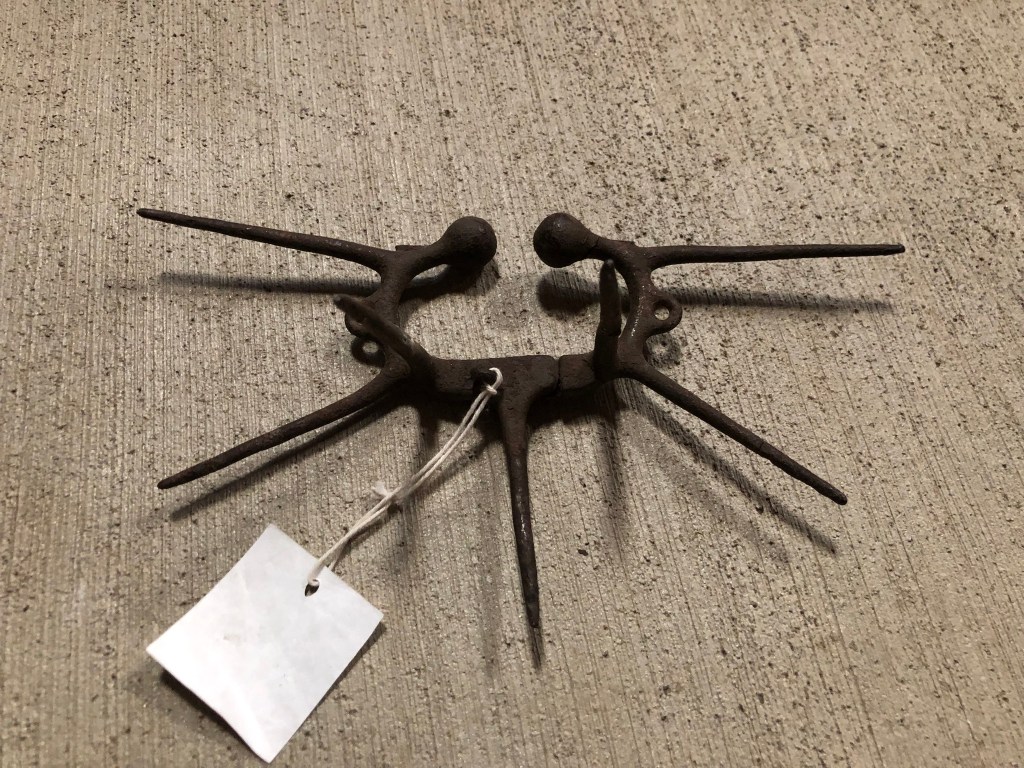
4) “This spiky looking object is an anti-suckling device. The artifact is made up of a nose ring with seven long (and sharp) spikes welded onto it. When the farmer decided that it was time for a calf to be weaned from its mother, they would use this item. The ring would be placed in the nose of a young calf—when the calf would try to nurse from its mother, the spikes would poke the mother causing her pain. The mother would then kick the calf away or avoid the calf to escape the discomfort of being poked.”

Sources: 1) Kiese Laymon, Heavy; 2) Various alleged ILWU members (including Angela Davis), “Stop the Ukraine War—refuse to handle military cargo,” MR Online (thanks to Marxmail for the heads-up); 3) Natalia Vvedenskya, Facebook, 11 October 2022 (translated by the Russian Reader); 4) Murray County Historical Museum, Facebook, 11 October 22. Photo, above, also courtesy of the Murray County Historical Museum.

Leave the Capitol

A view of Nevsky Prospect, Petersburg’s main thoroughfare, with the Russian National Library (the so-called Publichka), Gostiny Dvor shopping center, the tower of the former City Duma building, the cupola of Kazan Cathedral, and the cupola of St. Isaac’s Cathedral visible on the left in ascending. This picture-perfect cityscape was used by the Facebook page I Love St. Petersburg to illustrate the bizarre, banal, pseudo-historical sentiment that I’ve translated, below. Petersburg was built on the land of the Ingrian people and the captured Swedish fortress of Nyenskans. Or rather, that’s a no less valid way of putting it.

St. Petersburg is the only European capital that has not been captured by the enemy in any period of history.

Source: I Love St. Petersburg (@spb.love.you), Facebook, 13 August 2022. Translated by the Russian Reader


(Upper left, in Russian) “Kiev is the mother of Russian cities.”
(Lower right, in Ukrainian) “If I had known, I would have had an abortion.”

Source: Petya Pyatochkin, Facebook, 12 August 2022. Thanks to Volodya Y. for the heads-up. Translated by the Russian Reader


Leave the Capitol

Lyrics

(1)

The tables covered in beer
Showbiz whines, minute detail (2)
Hand on the shoulder in Leicester Square (3)
It’s vaudeville pub back room dusty pictures of
White frocked girls and music teachers
The beds too clean
Water’s poisonous for the system (4)

And you know in your brain
Leave the capitol!   (5)
Exit this Roman Shell!   (6)
Then you know you must leave the capitol

Straight home, straight home, straight home
One room, one room  (7)

Continue reading “Leave the Capitol”

Ramil Niyazov: This War Didn’t Begin Only Eight Years Ago

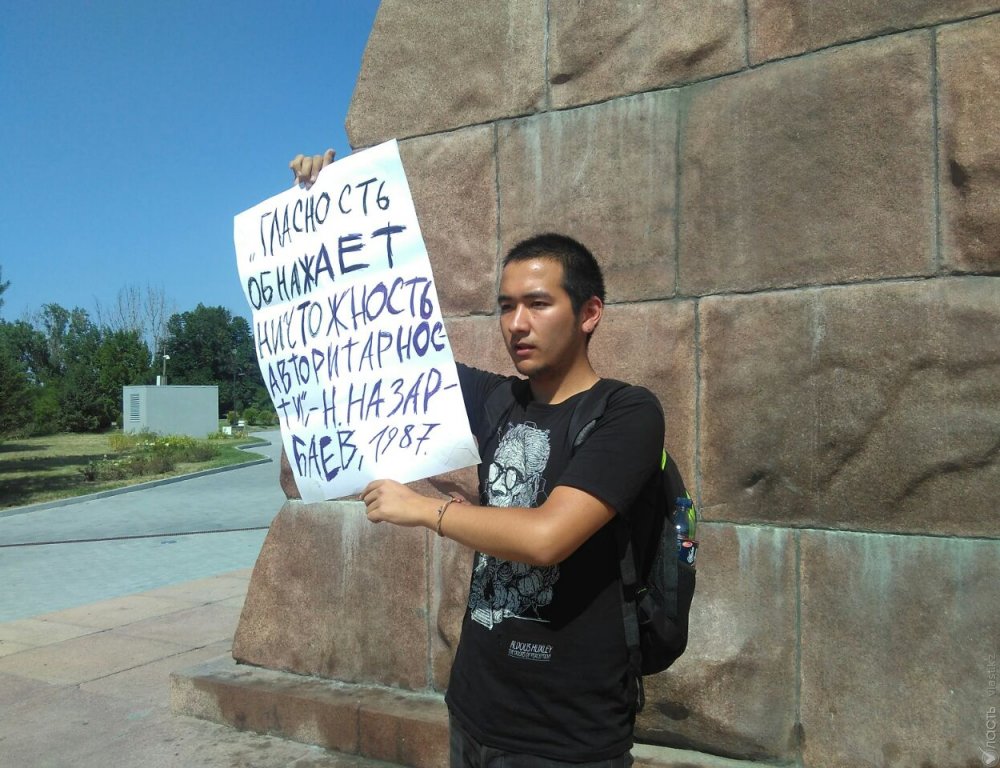
Ramil Niyazov, protesting next to the Abai Qunanbaiuly monument in Almaty in July 2019 with a placard that reads, “‘Glasnost exposes the paltriness of authoritarianism,’ N. Nazarbayev, 1987.” Photo courtesy of Vlast (Kazakhstan)

What, for so many centuries, has your soul been seeking here, Rusich? / You have so much land that you cannot embrace it all.

My heart has grown rooted to these bare gorges and cliffs. / So why have you come here to die again?

Khas-Magomed Hadjimuradov, “New Year’s Eve in Grozny” (1999)

You can point to various dates: fourteen years ago, when Russia invaded Georgia; twenty-eight years ago, when Moscow went to war in Grozny; thirty-one years ago, when the Kremlin got involved in the conflict in Moldova. Or we could quote Timur Mutsurаyev, who sang that “We’ve been three hundred years at war with Russia…” This would also be true, though that is a whole other story, of course. But for me, a person known in Russia as a khach and a churok [common Russian racial slurs for Central Asian, Caucasian, and dark-skinned people], it makes the most sense to say, “Dear Russians, welcome to New Year’s Eve in Grozny! We’ve been waiting for you. It’ll last forever for you, until it ends. And it’ll definitely end soon, and then it will be a New Year.

What is this “New Year’s Eve in Grozny” on a symbolic level? It’s not just a tragedy. It’s the beginning of History, which, according to Francis Fukuyama, was supposed to have ended already. The tragicomedy is that the “end of history” didn’t occur in 2001. It occurred—as we can see now—in 1995, with the start of the First Chechen War, which painfully resembles the one underway right now in Ukraine. For examples, see here, here, and here, as well as this, of course:

“Grozny. Aleppo. Mariupol. Kharkiv. Fascists Z Murderers.” Image courtesy of Radio Svoboda

But why was the continuation of the Russian Federation’s terrible, bloody, and inhumane war against its former colonies on February 24, 2022, such a shock for me, a Kazakhstani and, I’m sure, for many of you?

The simplest and most correct answer lies in the fact that its previous phases did not affect us. It all happened (I have in mind primarily the Chechen Wars) somewhere else, and involved non-white Muslims, gangsters, and terrorists. It was Russia’s internal affair, to which all so-called progressive humanity more or less gave its blessing. Well and what do you expect? It would hardly have befitted the US, after the Gulf War and in the midst of bombing Iraq, to stand up for Muslim Chechnya. But not everyone let Russia off the hook and forgot about this. The first foreign volunteers in unrecognized Ichkeria were, in fact, not Arabs or Afghanis but Ukrainians (see the interview with Aleksandr Muzychko, a.k.a. Sashko Bily). But even I (as, again, a Kazakhstani) thought before February 24 that if Russia were ever going to change, it would be due to civil war rather than military defeat. And so much more terrifying is the irony in the fact that people who previously didn’t care about the fate of Chechnya massively reposted an interview with [Dzhokhar Dudayev], the first president of the Chechen Republic of Ichkeria, in which he predicted this war with Ukraine a full twenty-seven years ago.

But the reasons that prompted me to write this text have nothing to do with a foreigner’s apparent decolonial attack against white masters, one full of ressentiment along the lines of “Did you really think that the slaughter in Bucha wouldn’t happen after the ‘mopping-up’ (this term actually first came into use then) in the village of Novye Aldy? Did you really think there wouldn’t be a strike on the Kramatorsk train station after the missile strike on the Grozny central market? Did you really think that Russian soldiers wouldn’t commit war crimes if, after two wars in Ichkeria, only two people were convicted of war crimes—Budanov and Lapin? If all the people who gathered evidence and conducted investigations (Anna Politkovskaya, Natalia Estemirova, and Stanislav Markelov) were murdered, all three of them?”

No, not at all. First and foremost, I want to repeat for everyone in Central Asia, the Baltics, the North Caucasus, and Eastern Europe who hasn’t yet understood it (and there are fewer and fewer of these people with every passing day): our life didn’t just change into a “before” and “after” on February 24. Those thirty years since the collapse of the USSR took shape as History. That whole viscous, formless time—in which we had led our private lives, built nation-states, felt that we were, as Sergei Timofeev’s poem has it, “the underbelly of Europe” (or Asia), and watched wars in the Middle East—that whole time the History of the post-Soviet space had been going on outside of our private lives. Every attack by Russian officials on various minorities and every minute of propaganda TV broadcasts (as we all found out after the war was continued) were not just a way of consolidating the electorate of Russia’s ruling party, which allegedly had no ideology. No, they were all drops in the ocean of Russism, as Dzhokhar Dudayev called it, something with which we all collided on February 24, 2022. For thirty-one years it had been growing and maturing, and all of our hopes (including my own) for decolonizing Russian and Russia without a military defeat in a monstrous war, were lost. Future historians will describe this time as “the years of Russism and the struggle against it.” While we thought we had been living in an era of local conflicts, nation-states, and gradual democratization!

I thus declare with confidence that the most decolonial (in all senses) decision right now for everyone, for the whole world, is to completely support Ukraine. Because if it’s permitted to bomb even white Christian Europe, then it’s okay to “not sweat it” like China with the Uyghurs and just build concentration camps in downtown Paris. For anyone you want.

To sum up, I want to quote a poem by the Soviet poet Vladimir Burich, who was born in Kharkiv (cruel irony)—a poem we can all feel right now with our whole bodies:

The world is filling up with

postwar people

postwar things

among my letters I found

a bar of prewar soap

I didn’t know what to do

wash

cry

The prewar era is 

a lost Atlantis 

And we

the miraculous survivors

Our prewar era has truly gone under, and we are its last witnesses. Just as the Second World War turned the Great War into the First World War, the thirty-one years between the collapse of the USSR and the bombing of Kyiv on February 24, 2022, have crystalized. Our political philosophy, historiography, and humanities will change. Our whole understanding of social reality will change, whether we want it to or not. History, as is still often the case, is unfolding before our very eyes. Better not blink and miss it.

Source: Ramil Niyazov-Adyldzhyan, “This War Didn’t Start Eight Years Ago,” Sibir.Realii (Radio Svoboda), 8 July 2022. Mr. Niyazov is a Kazakhstani poet. Translated by the Fabulous AM

Twelve Years Ago Today

“Let’s clear the forest of the fascist occupation, 1941-2010.” 28 July 2010, Khimki. Photo courtesy of Antifa FM

It’s the 12th anniversary of the antifa protest in Khimki

Antifa.ru and other channels have recalled the historical date of 28 July 2010, when, at the height of its popularity, the antifa movement in Moscow was involved in solving social issues.

Throughout 2010, progressive Muscovites were extremely agitated about the planned construction of an alternate to the Leningrad Highway through the Khimki Forest in the nearest part of the Moscow Region. A lot of money was riding on the project, but responsibility for fighting the protesters was entrusted to the local Khimki authorities. Judging by their tactics, they were probably quite criminalized.

For antifa, the line was crossed when right-wing football hooligans — neo-Nazis, in other words — were involved in dispersing a tent camp set up in the forest by the protesters.

In late July, a secret concert by the bands Inspection Line and Moscow Death Brigade, popular among the antifa crowd, was advertised on social media. On July 28, Inspection Line vocalist and writer Petya Kosovo famously said to those who had come to the rendezvous point, “I hope there are no rubes here who think they just came to a concert? We’re going to Khimki!”

Several hundred young people exploded: they went to Khimki “to protect the Russian forest from Nazi occupation.”

Upon arriving in Khimki, right at the train station, they asked where city hall was, and the locals happily showed them the way. The protesters immediately produced masks and a banner about the Russian forest, and the crowd of about 400 people headed to the hated city hall, cheerfully chanting as they marched. On a video that circulated at the time, you can clearly see a police jeep fleeing from the determined young people.

It was the weekend, so the protesters were not able to talk with the local administration. The protesters decorated city hall with protest graffiti and shots from trauma pistols. They actually did very little damage to the building.

But this incident was followed by a shellacking. Only not the mythical shellacking of the Khimki City Hall, but the real shellacking of the antifa movement by the so-called law enforcement agencies.

Police raids took place all over central Russia — in Nizhny Novgorod, in Kostroma (where a whole punk-hardcore festival on a riverboat was arrested), not to mention Moscow and the Moscow Region. Hundreds of people were detained and beaten; hundreds fled Russia. Some left forever, while others returned after a year or two. But their spirit wasn’t the same when they came home: they hunkered down. And the movement — that big and formidable movement that had caused a stir in 2010, the movement that had protected workers and refugees from being illegally evicted from dorms and had defended the Khimki Forest — that movement no longer existed. The gloomy era of Bolotnaya Square and the constant stomping of protests, the era of crackdowns, was coming.

[…]

Source: Volja (Telegram), 28 July 2022. Translated by the Russian Reader


Vitaly Shushkevich: “Several hundred antifa and anarchists smashed [sic] the facade of Khimki city hall.
The activists demanded an end to the logging currently underway in the Khimki Forest.” Posted on 28 July 2010.

118 Years Ago Today

From Boris Savinkov’s Memoirs of a Terrorist:

It was a clear sunny day. When I approached the square at the Church of the Intercession [in Petersburg], I saw the following scene. Sazonov, sitting on a bench, was exhaustively and animatedly relating to Sikorsky how and where to sink the bomb. Sazonov was calm and seemed to have completely forgotten about himself. Sikorsky listened to him attentively. Borishansky sat on a bench in the distance, his face imperturbable as usual. Even further away, at the gates of the church, stood Kalyayev who, doffing his cap, crossed himself.

[…]

When I approached 7th Company of the Izmailovsky Regiment Street [currently known as 7th Red Army Street], I saw a policeman on the corner stand at attention. At the same moment, I noticed Sazonov on the bridge over the Obvodny Canal. He walked, as before, with his head held high, carrying the projectile at his shoulder. Immediately, I heard loud trotting behind me, and a carriage pulled by black horses rushed past.

[…]

Suddenly, a heavy, strange, unwieldy sound rent the street’s monotonous hubbub. It was if someone had struck a cast-iron stove with a cast-iron hammer. At the same moment, the broken glass in the windows rattled pitifully. I saw a pillar of grayish yellow, almost black smoke rising from the ground in a narrow funnel. This pillar, ever expanding, flooded the entire street to the height of the fifth floor. It dissipated as quickly as it rose. I thought I saw some black debris amid the smoke.

For the first second, my breath caught in my throat. But I was waiting for an explosion, and so I came to my senses more quickly than the others. I ran kitty-corner down the street to the Warsaw Hotel.

One hundred and eighteen years later.

Pokrovsky Square (Church of the Intercession Square) aka Turgenev Square, in central Petersburg
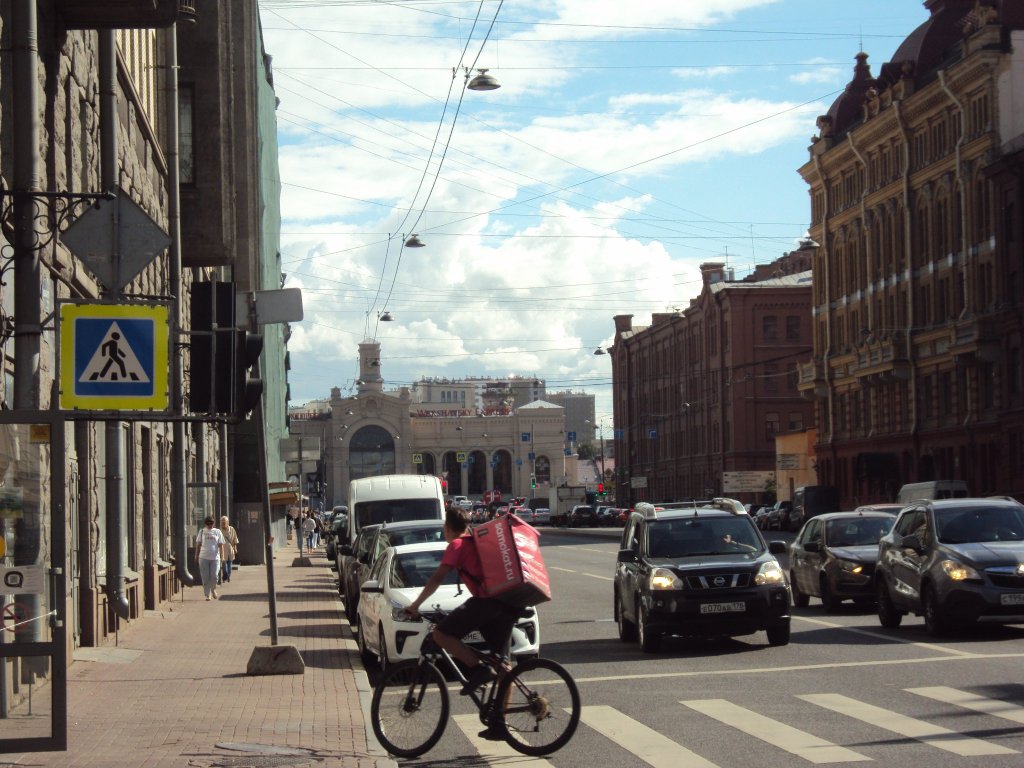
Izmailovsky Prospect in Petersburg. The former Warsaw Station, now a shopping and entertainment center, is in the background.
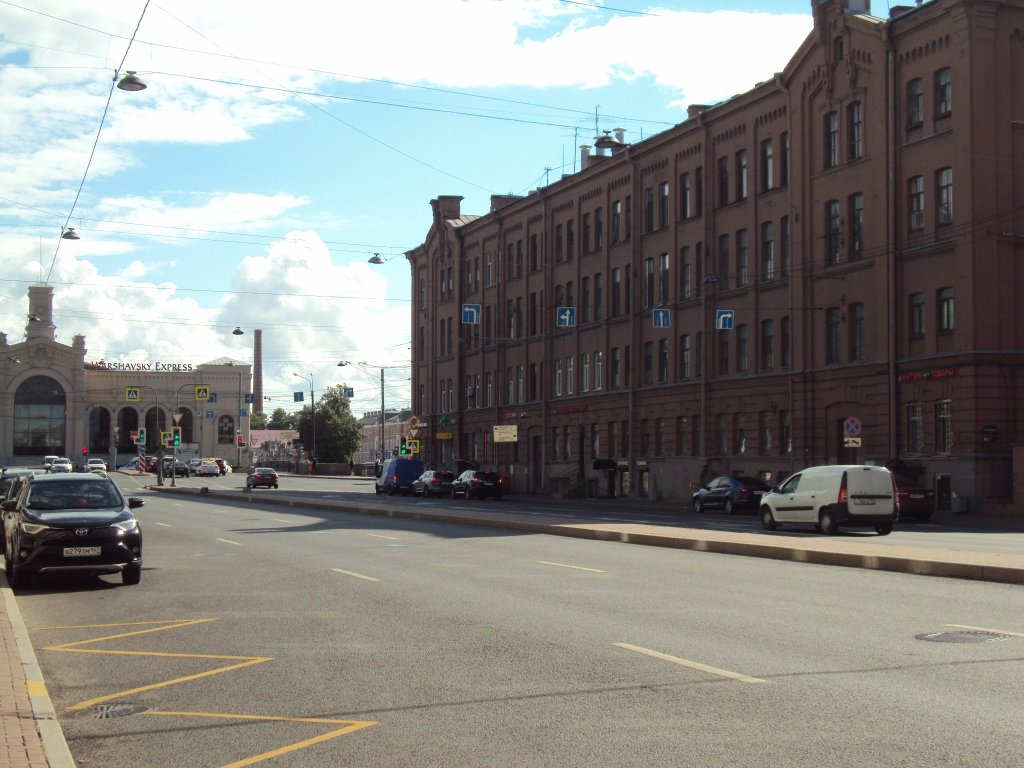
The end of Izmailovsky Prospect, with a clearer view of the former Warsaw Station. A statue of Lenin once stood in front of it.

Source: Aleksandr Ermakov, Facebook, 28 July 2022. Translated by the Russian Reader, since a copy of Joseph Shaplen’s 1931 English translation of Boris Savinkov’s Memoirs of a Terrorist is hard to come by in print and nearly invisible online. I also added the captions to Mr. Ermakov’s snapshots.


The routes taken by Savinkov, Plehve, and the members of the SR Combat Organization on 28 July 1904. Source: Visions of Terror

On 15 July 1904 [28 July 1904 in the reformed, post-revolutionary calendar], the notoriously oppressive and unpopular Minister of the Interior, Viacheslav Konstantinovich von Plehve stepped into his armored carriage, complete with an entourage of bicycle detectives, and set off from his dacha to the Warsaw Station on his way to regular meeting with Tsar Nicholas II, now residing at his summer palace in Peterhof. Plehve, who had already survived several attacks on his life, probably took this trip in stride, but as he approached his destination, a young man, Egor Sazonov darted towards his carriage and threw a bomb underneath its speeding wheels. Sazonov was just one of several assassins that day who were poised and ready to trade their own lives for the Minister’s. They were members of the Combat Organization (Boevaia Organizatsiia), the terrorist branch of the Socialist Revolutionaries who ultimately murdered a number of prominent political figures, most notably […] Tsar Alexander II.

Source: Visions of Terror

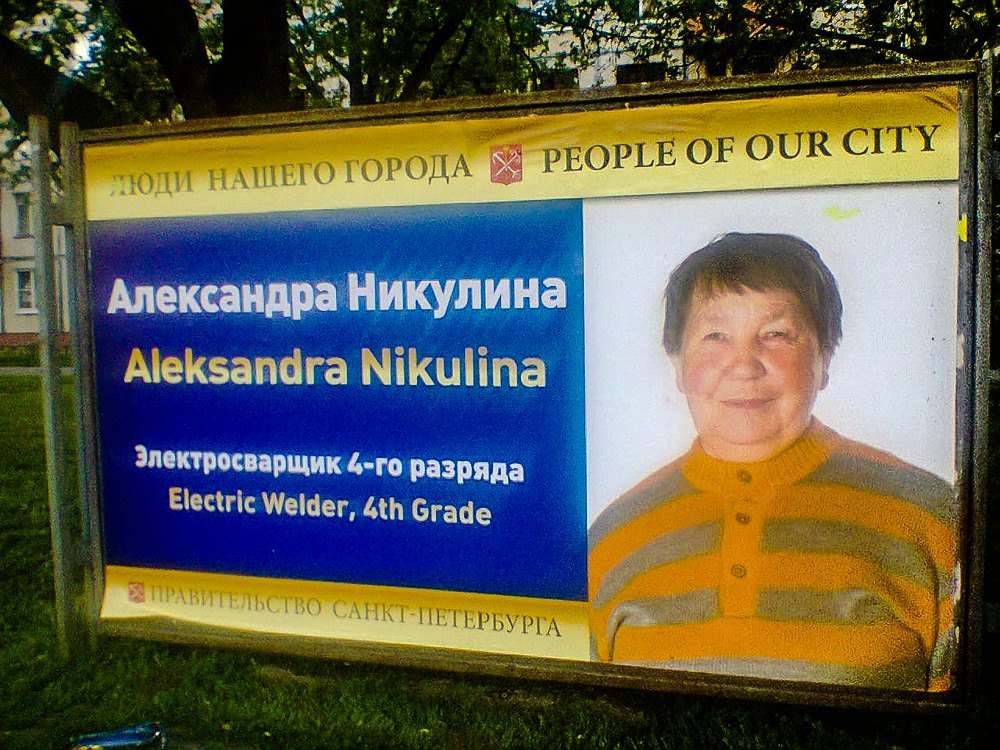
People of Our City

When you’re a real artist, you make art with whatever comes to hand. Legendary Petersburg artist Oleg Kotelnikov (a driving force behind the New Artists of Leningrad) is definitely the real thing. Here, the late Yuri “Compass” Krasev (of the necrorealists and Pop Mechanics) displays a shower curtain that Mr. Kotelnikov repurposed back in the good bad old days. Photo by the late Oleg Kuptsov, as posted on his Facebook page on 2 June 2015.


The equally legendary Petersburg rock music and grassroots politics journalist Sergey Chernov snapped these latter-day post-Soviet “socialist” icons and posted them on his Facebook page on 3 June 2013.


Sometimes a picture is worth more than a thousand words, as when a whole time and a place is captured in a single snapshot, as in this one taken in Petersburg by the fantastic photographer, anthropologist, photo archivist, and frequent TRR contributor Vadim F. Lurie, who posted it on his Facebook page on 3 June 2015.


On 3 June 2019, I posted this announcement from Last Address in Petersburg: “Next Thursday, June 6, at 12 p.m., a Last Address plaque will be installed at 12th Line, No. 9, on Vasilievsky Island in Petersburg, in memory of Konstantin Andreyevich Poplavsky, who served as a seaman on the battleship Marat and worked at the Bolshevik Factory. A father of two children, he was shot by order of an NKVD troika on 28 October 1938, a few days after his 28th birthday. His great-granddaughter will install the plaque for him.”

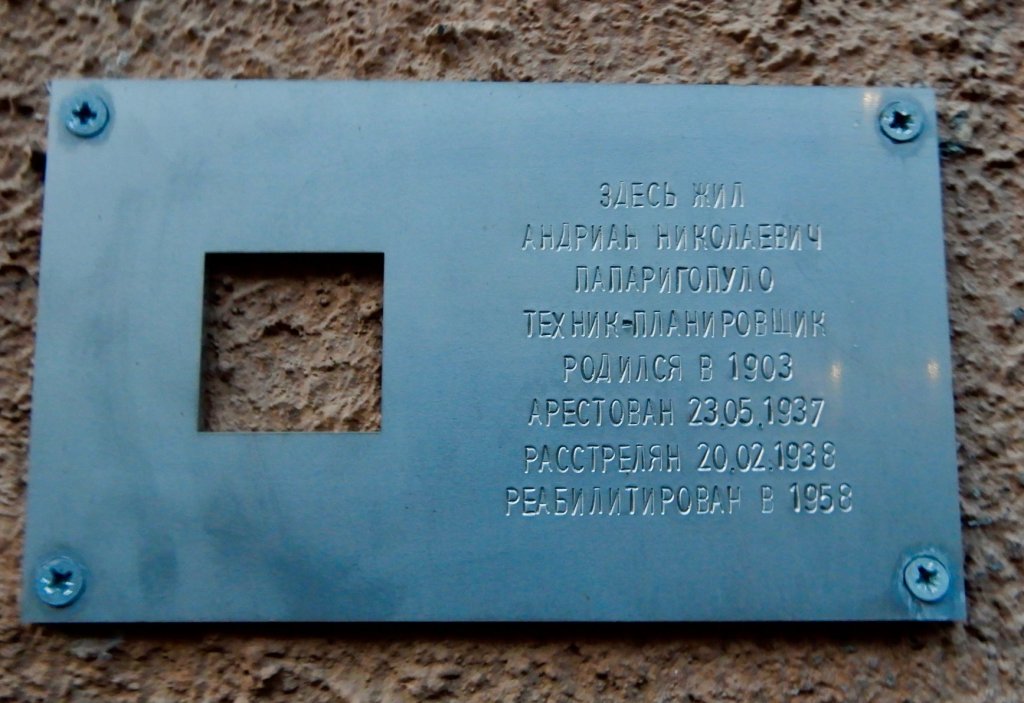
But by way of illustrating this announcement I used a snapshot I had taken in 2018 during an inventory of Last Address plaques in my neighborhood to check on their condition. (The inventory was a citywide affair performed by numerous volunteers.) The plaque pictured above memorializes Andrian Nikolayevich Paparigopulo, whose story is told on the Last Address Foundation’s website (and duplicated on the Open List project’s website):

Andrian Nikolayevich Paparigopulo was born in Narva in 1903 to a family of hereditary nobles. His father was a retired major general who died in 1915. Andrian Nikolayevich and his mother presumably moved to Petrograd in the early 1920s. His investigative file in the archives records that in 1922 they traveled to Estonia to sell a dacha located near Narva that belonged to his mother. After the sale, they went back to Petrograd without having their passports checked at the Soviet Consulate in Reval. This was regarded as an illegal border crossing, for which Andrian Nikolayevich was consequently sentenced to three months of forced labor.

After moving to the city on the Neva, Andrian enrolled at the Institute of Technology, but failed to finish his studies. On 23 March 1935, he was arrested, and later, along with his mother Vera Nikolayevna, he was exiled to Kuibyshev for five years as a “family member of a socially dangerous element.” However, a year later, the Special Council of the NKVD canceled the expulsion order, and the family returned to Leningrad.

Andrian got a job at the Krasnyi Rabochii [Red Worker] plant as a planning technician. The Great Terror did not spare him: on 23 May 1937, he was arrested for the third time. For nine months, NKVD officers cooked up a case against him that was based on two interrogations that took place in May and September 1937. During the May interrogation, Paparigopulo denies his involvement in counter-revolutionary and espionage work. The September 28th interrogation begins on the same note. But there soon appears in the interrogation record a reference to the testimony of Georgy Kirillovich Kolychev (whom Andrian Nikolayevich mentions as an artist friend in the 1935 case file): “There is a group of artists bonded by their common counter-revolutionary beliefs who organized their c-r gatherings at Paparigopulo’s apartment.” Later in the record, Andrian Nikolayevich admits his guilt: “I have to admit that Kolychev is telling the truth… Indeed, I have been an active member of the c-r fascist group and its leader since 1933.

According to the fabricated evidence, the group’s members included Viktor Konstantinovich Lavrovsky, Georgy Kirillovich Kolychev, Ivan Ivanovich Bogdanov, Mikhail Vasilyevich Ivanov, and Terenty Romanovich Romanov.

On 20 February 1938, a military collegium sentenced Paparigopulo to death in a closed court hearing for involvement in a “terrorist organization.” Andrian Nikolayevich did not admit his guilt at the trial, nor did he corroborate the testimony he had given, allegedly, during the preliminary investigation, calling it phony. He was shot on the day of his sentencing. He was thirty-four years old.

The list of items seized from Paparigopulo during the search of his home includes letters and photographs, as well as four tickets to the Hermitage. The confiscated correspondence was destroyed in its entirety on 13 March 1938, after Andrian Nikolayevich’s execution. His wife (whose name, like his mother’s, was Vera Nikolayevna) was sentenced to eight years in correctional labor camps as a “family member of a traitor to the Motherland.” She served her sentence in Karlag.

Andrian Paparigopulo was fully exonerated only twenty years later, in 1958.

Source: Last Address Foundation, “Malaya Moskovskaya Street, 4, St. Petersburg.” Translated by the Russian Reader. The pictures below were taken by Jenya Kulakova at the ceremony to install Andrian Paparigopulo’s Last Address plaque.

A Completely Different Country

Would-be Young Pioneers in Novosibirsk. Gorky Palace of Culture in Novosibirsk/vk.com. Courtesy of the Moscow Times

This is a completely different country

This social media post about life in the late USSR helps to better understand where we find ourselves today.

The latest insane campaign to create some kind of children’s organization has everyone and their mother cursing their childhoods as Young Pioneers. I won’t do it. There was all kinds of stuff back then, both good and disgusting. 

All these conversations about how the USSR is being reincarnated right now are utter horseshit. There’s almost nothing now that resembles what I witnessed from my birth to 1991. This is a completely different country with a completely different state ideology.

Many of us were naive and lived a life of illusions. We were dazed and confused, sometimes dreadfully so, but we cheerfully scorned the authorities. Not in our wildest nightmares could we have imagined the insane public statements of support you see nowadays. Today’s archaic cannibals were mostly hiding out in their caves back then. And there wasn’t anything like today’s monstrous inequality. Although the costs were terrible, there was actual social mobility in many respects.

Yes, we lived much more poorly than now. The economy was a ridiculous mess, and the whole country worked for the defense industry, and there was all kinds of insanity. But people wanted a peaceful life, not a great empire at any cost.

I wouldn’t want to go back to the USSR for anything in the world. But what’s been built over the past thirty years is worse, way worse.

Source: Nevoina (“No(t)war”), Telegram, 20 May 2022. Translated by the Fabulous AM


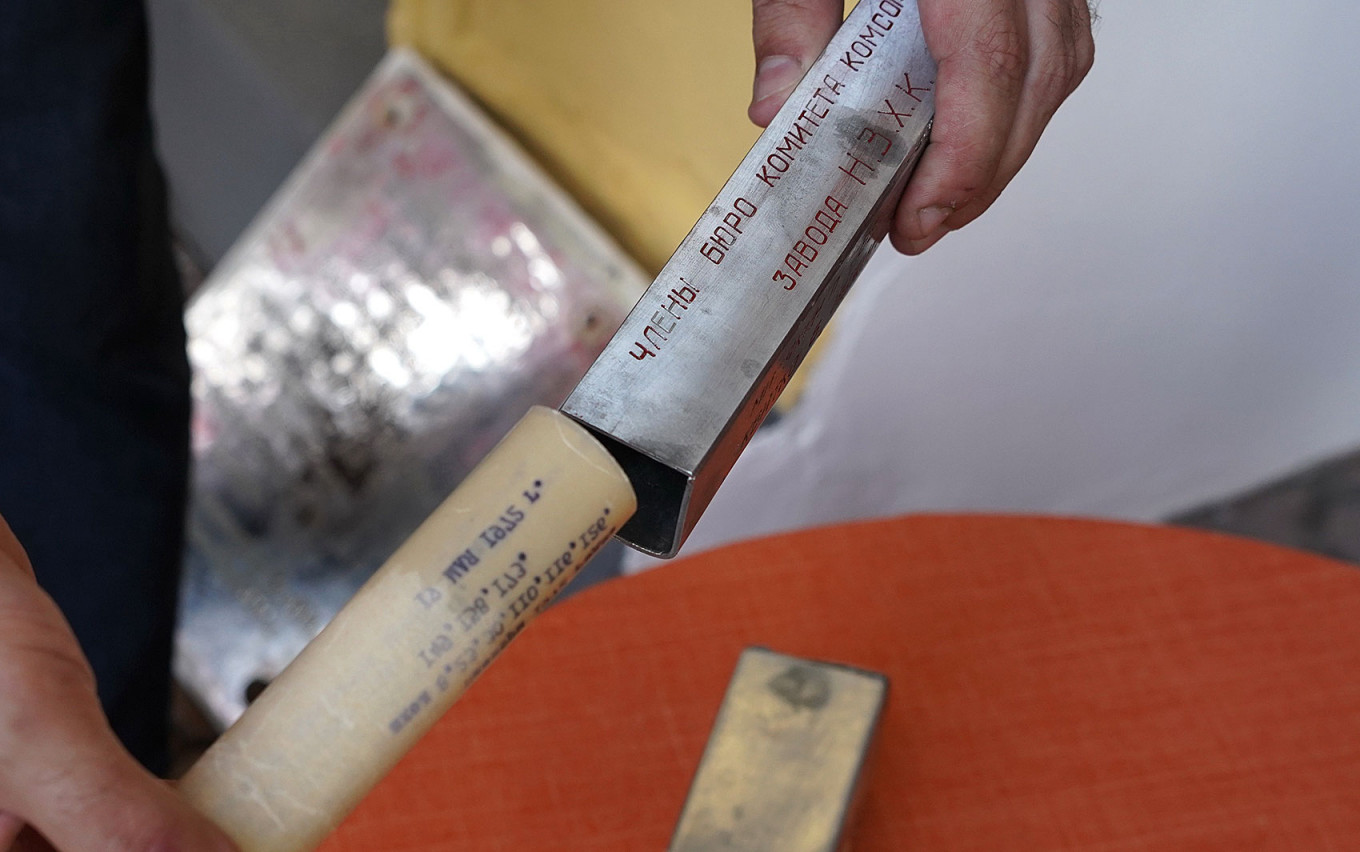
Students in Siberia have opened a 50-year-old time capsule containing a wish for peace and international friendship from their Soviet peers, local media reported Thursday.

The Soviet students’ message of hope for a peaceful future was unearthed as Russia faces unprecedented economic and political isolation in the wake of its invasion of Ukraine. 

To mark the 50th anniversary of the Soviet Union’s founding, members of the Pioneers youth organization in the city of Novosibirsk sealed a time capsule in their school’s walls in May 1972 — to be opened by future students after another 50 years.

Those same Soviet students, now well into adulthood, helped open the time capsule at a ceremony Thursday.


										 					Gorky Palace of Culture in Novosibirsk / vk.com
Photo: Gorky Palace of Culture in Novosibirsk/vk.com. Courtesy of the Moscow Times

In a letter placed inside the time capsule, the Soviet middle schoolers recite the history of the Young Pioneers and boast of the engineering achievements of the U.S.S.R. before wishing their descendants peace and international cooperation.

“Life is so beautiful and amazing, and you have to make it even more wonderful, so don’t waste your time. […] Live your life the same way that the bright sun shines on everyone, so that your thoughts and deeds warm and delight everyone,” the message reads.

“May you have friends all over the world. May there always be peace!” 

The letter’s now-elderly authors read the message themselves on stage, Sibir Media reported

Russia celebrated Thursday the one hundredth anniversary of the Young Pioneers — the Soviet youth organization whose members ranged from age 9 to 15 — with events including costumed parades and speeches at schools.

Source: “Siberian Students Uncover Soviet Peers’ Wish for Peace in 50-Year-Old Time Capsule,” Moscow Times, 20 May 2022.