Amending the Dead

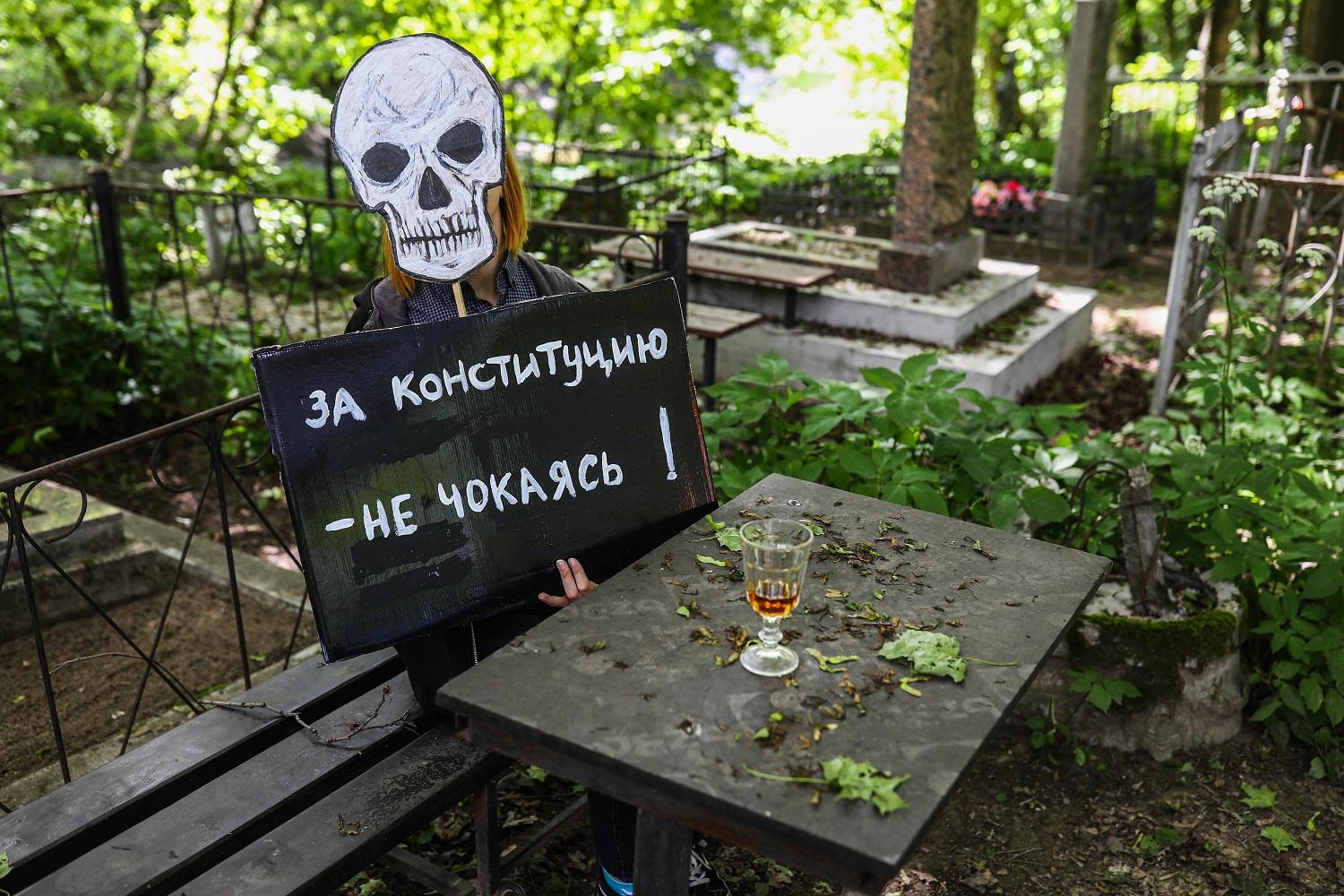
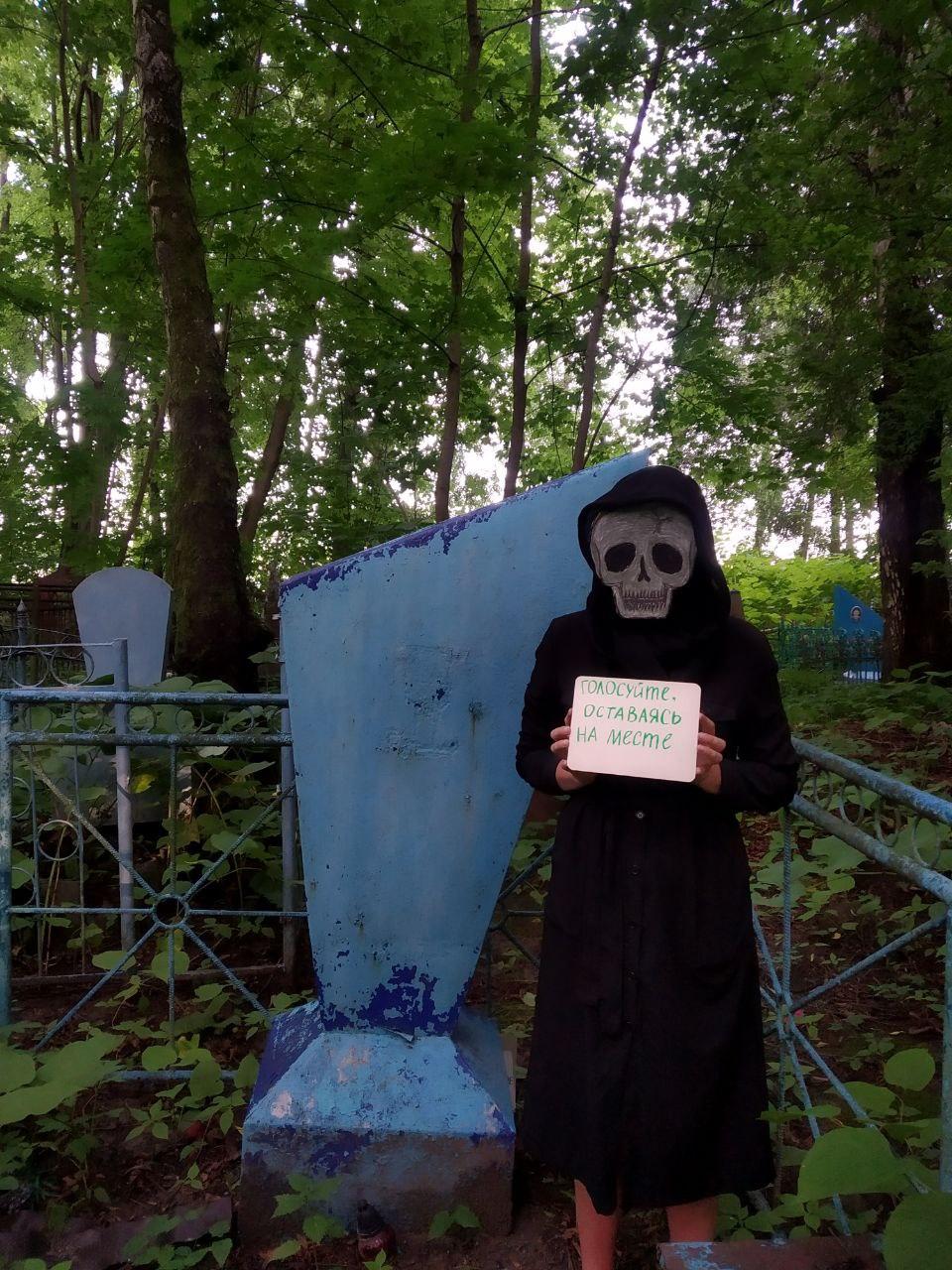
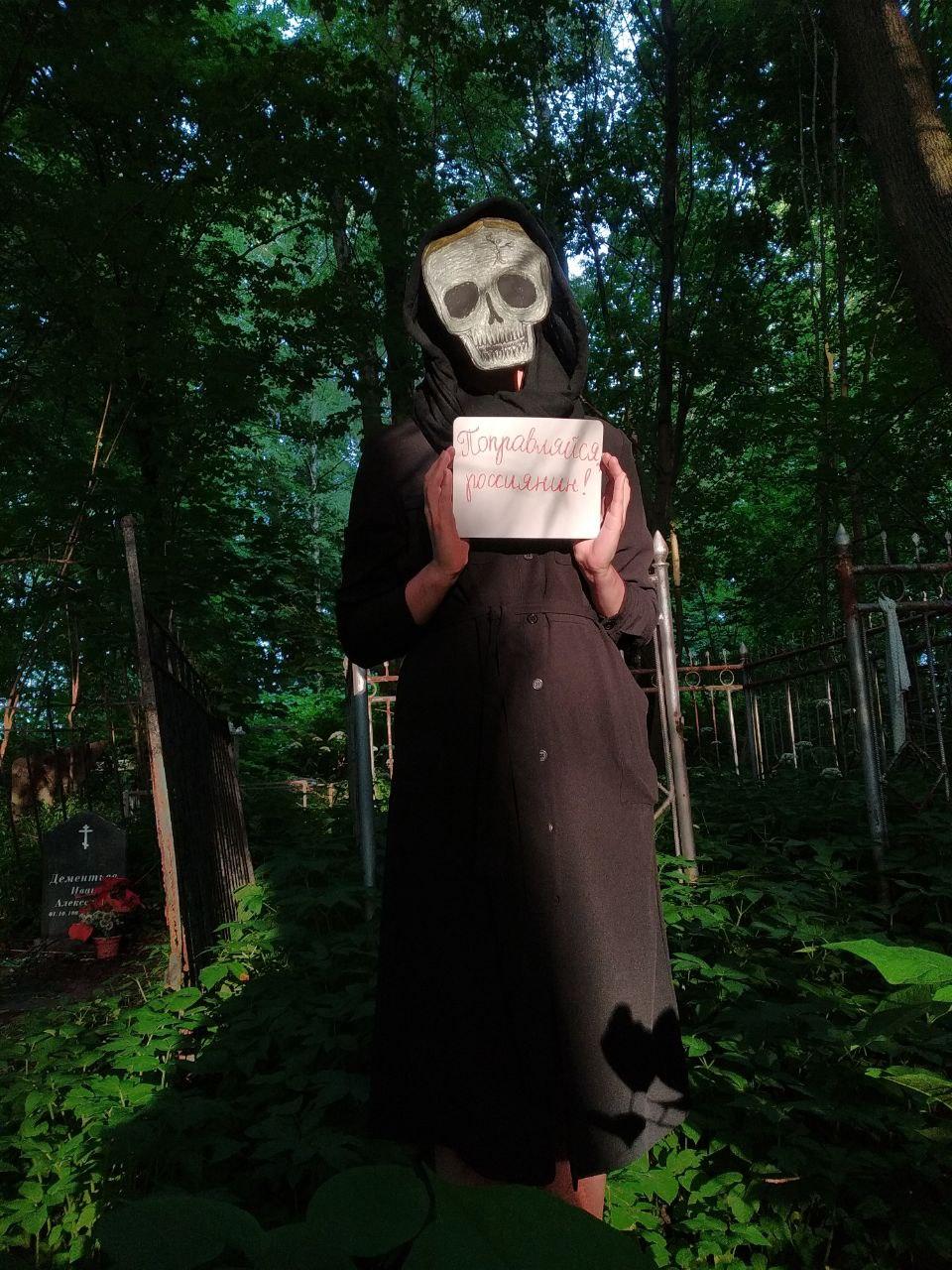
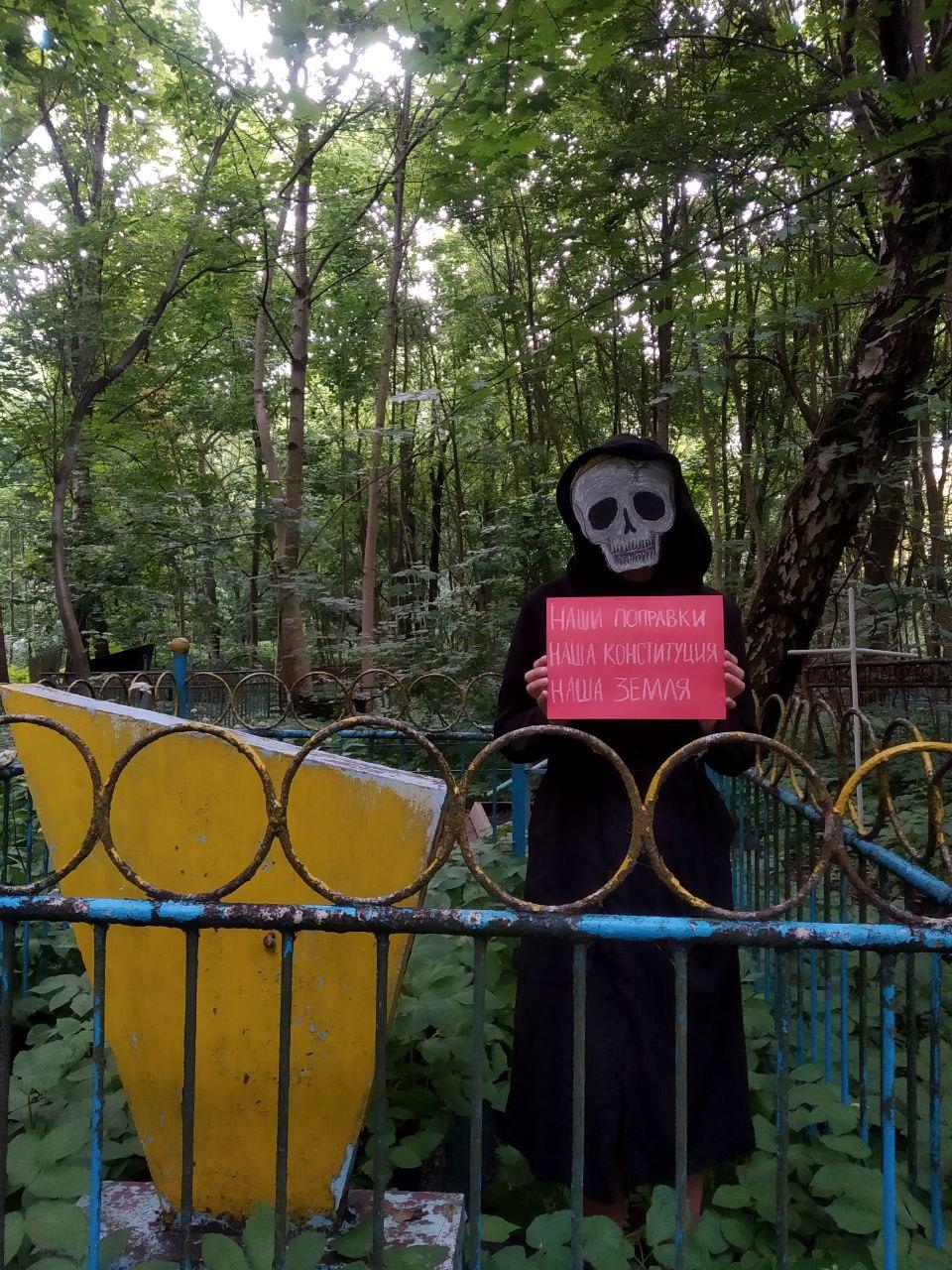
On June 21, 2020, the Party of the Dead staged two actions, one at the Volkovskoye cemetery in Petersburg, and another, by “Corpse Corpsevich,” in a cemetery somewhere in the Baltics, subversively affirming the proposed amendments to the Russian constitution, which would “annul” President Putin’s four terms in office, allowing him to remain in power until 2036. On July 1, 2020, Russians will vote on the amendments in a nationwide referendum widely seen as meaningless, and whose (affirmative) outcome is a foregone conclusion. (For more information, see “Russia’s Constitutional Court Approves Amendments Allowing Putin to Rule Until 2036,” RFE/RL, March 16, 2020.)

01
Eternity smells of Putin.
We shall annul ourselves and begin to live! We shall annul ourselves and return to life!
Dead people, get well soon!
The amendments are like hot packs for the dead.
The grave will straighten everyone out.*
Yes to death! Yes to the amendments!

*(This slogan plays off the Russian saying: “only the grave will straighten out the hunchback,” referring to an irredeemably flawed or “incorrigible” person.)

02
To the Constitution without clinking glasses!

(When toasting the dead, Russians do not clink glasses.)

Source: Activatica

 03
Vote while sheltering in place.

04
Be on the mend, Russian citizen!

(The reflexive Russian verb popravliatsia means to get well, to be on the mend. The non-reflexive form popravliat means to amend.)

05
Our amendments. Our constitution. Our country.

06
The “absolute majority” of citizens support the amendments.

(During his first public appearance after weeks in lockdown, Putin claimed that an “absolute majority” of Russians back his plan to change the Russian Constitution.)

07
Two things are certain in life: death and amendments.
It’s all predetermined on high.
Don’t console yourself with fleeting hope,
Annulment is our fate.

10
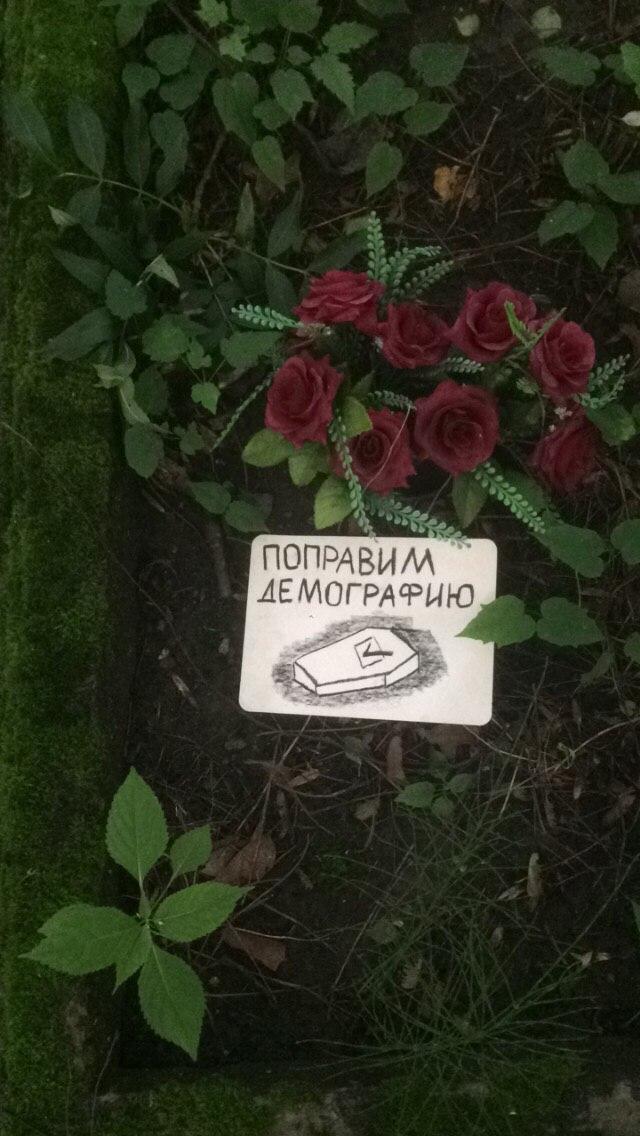
We will amend our demographics.

09
Here lies Vladimir Putin’s social approval rating.

Source: Facebook

We Can Dance If We Want To


dance
Jenya Kulakova
Facebook
June 22, 2020

His hands trembling and sounding breathless, Judge Muranov sentenced Vitya [Viktor Filinkov] to 7 years and Julian [Yuli Boyarshinov] to 5 1/2 years in prison. He read out the date of Vitya’s ACTUAL arrest, that is, a day before his arrest was registered in the case file. (I wonder how this will be substantiated in the published verdict.)

We took a selfie as a keepsake.

As I was leaving the empty courtroom, I shouted, “Guys, we need to dance!” and I danced a little jig. The guys seemed to be smiling, but the bailiff said, “Dance somewhere else, young lady.” Where else should I dance? I think this is the most appropriate place.

#NetworkCase #OperationBarbarossa #Antifa

As my virtual acquaintance Liza Smirnova just reminded her readers, June 22 is not just any day for people in the former Soviet Union. In fact, you could hardly think of a more inappropriate day to sentence two young antifascists to twelve and a half years in prison.

Operation Barbarossa (German: Unternehmen Barbarossa) was the code name for the Axis invasion of the Soviet Union, which started on Sunday, 22 June 1941, during World War II. The operation put into action Nazi Germany’s ideological goal of conquering the western Soviet Union so as to repopulate it with Germans. The German Generalplan Ost aimed to use some of the conquered as slave labour for the Axis war effort, to acquire the oil reserves of the Caucasus and the agricultural resources of Soviet territories, and eventually through extermination, enslavement, Germanization and mass deportation to Siberia, remove the Slavic peoples and create Lebensraum for Germany.

In the two years leading up to the invasion, Germany and the Soviet Union signed political and economic pacts for strategic purposes. Nevertheless, the German High Command began planning an invasion of the Soviet Union in July 1940 (under the codename Operation Otto), which Adolf Hitler authorized on 18 December 1940. Over the course of the operation, about three million personnel of the Axis powers—the largest invasion force in the history of warfare—invaded the western Soviet Union along a 2,900-kilometer (1,800 mi) front, with 600,000 motor vehicles and over 600,000 horses for non-combat operations. The offensive marked an escalation of World War II, both geographically and in the formation of the Allied coalition including the Soviet Union.

The operation opened up the Eastern Front, in which more forces were committed than in any other theater of war in history. The area saw some of the war’s largest battles, most horrific atrocities, and highest casualties (for Soviet and Axis forces alike), all of which influenced the course of World War II and the subsequent history of the 20th century. The German armies eventually captured some five million Soviet Red Army troops, a majority of whom never returned alive. The Nazis deliberately starved to death, or otherwise killed, 3.3 million Soviet prisoners of war, and a vast number of civilians, as the “Hunger Plan” worked to solve German food shortages and exterminate the Slavic population through starvation. Mass shootings and gassing operations, carried out by the Nazis or willing collaborators, murdered over a million Soviet Jews as part of the Holocaust.

The failure of Operation Barbarossa reversed the fortunes of the Third Reich. Operationally, German forces achieved significant victories and occupied some of the most important economic areas of the Soviet Union (mainly in Ukraine) and inflicted, as well as sustained, heavy casualties. Despite these early successes, the German offensive stalled in the Battle of Moscow at the end of 1941, and the subsequent Soviet winter counteroffensive pushed German troops back. The Germans had confidently expected a quick collapse of Soviet resistance as in Poland, but the Red Army absorbed the German Wehrmacht’s strongest blows and bogged it down in a war of attrition for which the Germans were unprepared. The Wehrmacht’s diminished forces could no longer attack along the entire Eastern Front, and subsequent operations to retake the initiative and drive deep into Soviet territory—such as Case Blue in 1942 and Operation Citadel in 1943—eventually failed, which resulted in the Wehrmacht’s retreat and collapse.

Source: Wikipedia

#NetworkCase

claims

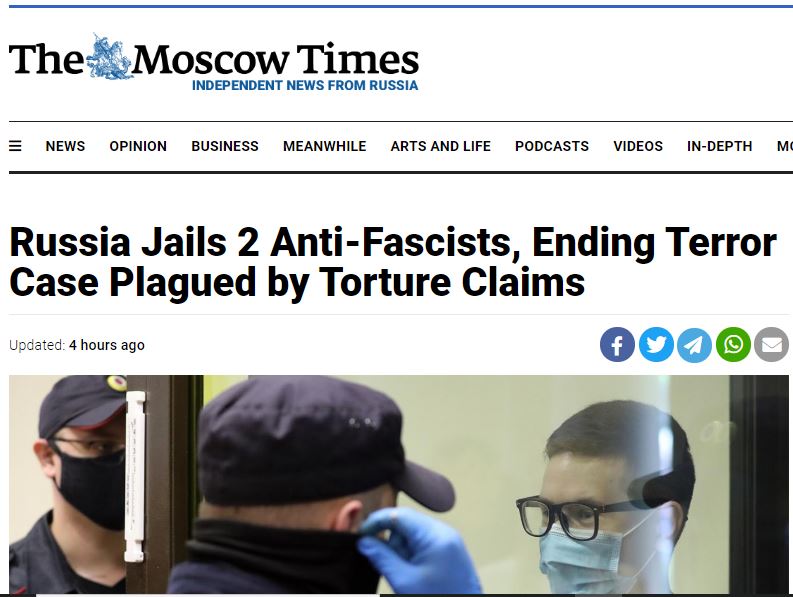
https://www.themoscowtimes.com/2020/06/22/russia-jails-e2-anti-fascists-ending-terror-case-plagued-by-torture-claims-a70653

“Plagued by torture claims” is a funny way of putting it. The Russian Federal Security Service (FSB) is the real plague. It tortured the defendants in the Network Case and concocted their alleged “terrorist community” from whole cloth.

I realize that editors and journalists think they’re being “balanced” when they report the news this way. But in reality they’re lending legitimacy to systematic state terror against dissidents, minorities, and oddballs.

bus

#NetworkCase

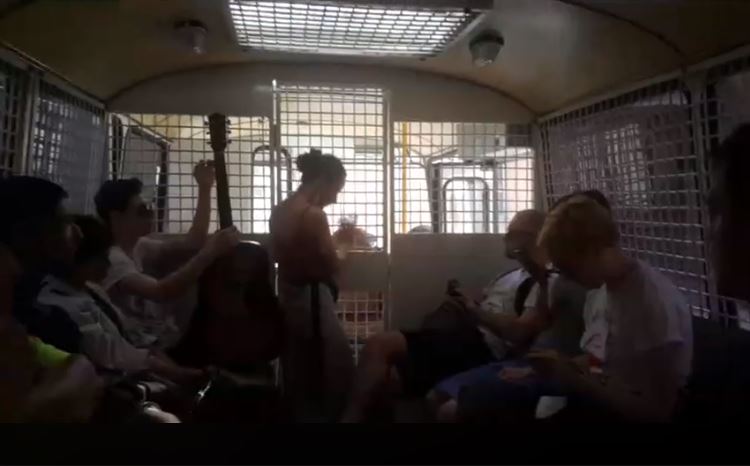
Where are these people going? Why are they in a caged bus?

Why are they singing? What are they singing?

They made the “mistake” of being outside the courthouse in Petersburg earlier today to protest the outrageous but predictable verdict in the trial of Viktor Filinkov and Yuli Boyarshinov, who were sentenced by a military court to 7 and 5 1/2 years in prison, respectively, for the awful crime of being antifascists in a country run by a certifiable fascist, Vladimir Putin.

What will happen to the people in this bus? I don’t know for certain, but I would guess they’ll be held at a police precinct overnight and then taken to their own kangaroo court hearings sometime tomorrow, where they will be sentenced to as many as 15 days in jail and stiff fines.

Thanks to Marina Ken for the video and much else.

bbc

#NetworkCase

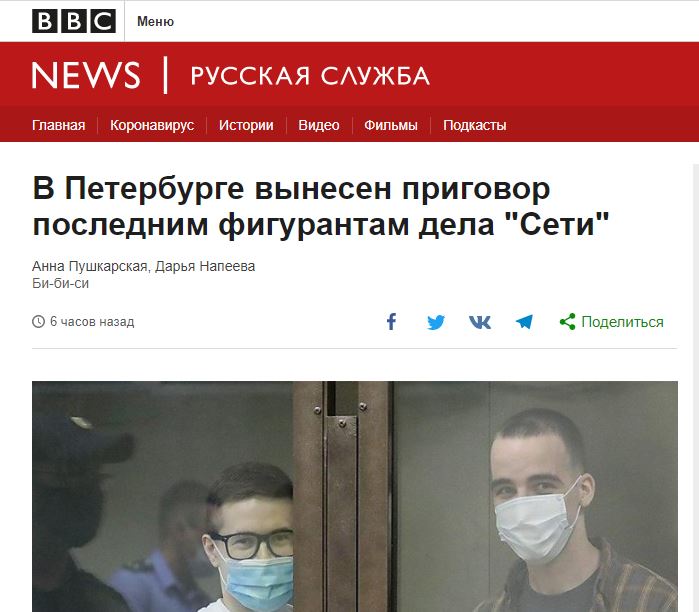
Earlier today in Petersburg, the final two defendants in the notorious frame-up known, hilariously, as the Network Case, were sentenced to seven and five and a half years in prison, respectively, for “involvement in a terrorist community.”

In reality, anxious to show their paranoid fascist president that he was right to surround himself with one of the largest security and bureaucratic apparatuses in history, the Russian Federal Security Service (FSB) abducted and tortured a dozen absolutely harmless young men in Penza and Petersburg, and then cooked up a fascist fairy tale about how these young men (many of whom most of us would be happy to have as neighbors) were actually a secret “terrorist community,” code-named “the Network,” who were planning to cause mayhem on the eve of Putin’s triumphant re-election and the soccer World Cup in 2018.

There wasn’t any “Network,” and it had no plans of doing anything of the sort. But it is now over two and a half years since the FSB kicked off its little adventure in Penza (in October 2017). Over the last year, the ten defendants in the case have been sentenced to a total of 110 years in prison due to the FSB’s sick fantasy.

Thanks to the BBC Russian Service for the picture, the news reports and so much else.

video

#NetworkCase

It wasn’t bad enough that Viktor Filinkov and Yuli Boyarshinov were sentenced today in Petersburg to 7 years and 5 1/2 years, respectively, for “involvement” in the nonexistent “terrorist community” “the Network.” No, the Putinist police state had to send a small army of riot police and “Russian National Guardsmen” to the courthouse to settle the hash of the brave people who came out to protest the verdict, which was a foregone conclusion.

If you’re sitting in other parts of the world, especially the US, and having a hard time getting your head around this story, just think about the remarkable “coincidence” that, just before his now infamous conference call with US governors, Trump had been chatting with his mentor and idol Vladimir Putin on the phone.

What is happening in Petersburg today is what happens when “policing” is the end all and be of “government,” when the powers that be have to preserve their supreme power at all costs, even if this means, ultimately, destroying their people and their country.

Thanks to Yevgenia Litvinova, who shared this video (which she found on Telegram), and all the other people who have taught me the lesson of endurance and solidarity in the face of overwhelming odds.

Edited, written and translated by the Russian Reader

Dreaming

Darya Apahonchich
Facebook
June 20, 2020

(just dreaming a little)

I look at how everyone is tired after twenty years of putin’s rule—tired of cursing, tired of fighting, tired of resisting, tired even of taking toll of the damage.

the alleged referendum is a three-ring circus, but (speaking for myself) my lack of surprise and faith in the success of resistance are such that I listlessly repost things and make sarcastic jokes, but don’t think seriously at all about acts of resistance.

but i believe in acts of feminist resistance: they work, albeit slowly, albeit surgically. no, there is no law against domestic violence, but individual rapists have been suspended or dismissed from their jobs, new codes of ethics are being written, and so on. all of you are watching this happen. i see how women’s self-esteem has been growing, i see that what was the norm for my parents’ generation is no longer the norm for my generation. women have become more active, they are increasingly choosing not to be silent when they encounter injustice.

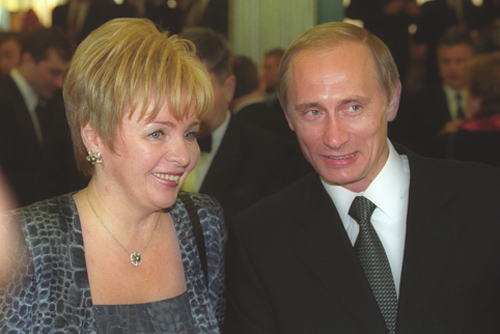
Vladimir_Putin_with_Lyudmila_Putin-1

and so i am thinking: what if we suddenly stopped tolerating a “home boxer” and tyrant as president?

we know that putin is an abuser. we know he beat his wife, that he tortured her. even lyudmila putina’s memoir, chockablock with self-accusation and meekness, makes it clear that he treated his loved ones terribly. his wife published a memoir, which was quickly withdrawn from sale. but it’s all on the internet.

just dreaming a little: what if we stopped putting up with this scoundrel? (yes, we are used to putting up with him, but what if it’s reversible?)

Photo courtesy of Wikipedia. Translated by the Russian Reader

The Rain Came Down


TV Rain, April 8, 2020. “Three years after the first terrorist attack in the Petersburg subway, the court sent eleven people to prison—an entire terrorist network. We studied the evidence, talked to witnesses in Russia and Kyrgyzstan, and realized that there are too many secrets and questions left in the case. We assembled our own jury to decide whether the case should be reopened.”

People Freaked Out in a Good Way
Ilya Ershov spoke with TV Rain reporter Yevgenia Zobnina about her documentary film on the strange investigation of the April 3, 2017, terrorist attack in the Petersburg subway.
Open Space

Why did you decide to tackle this topic?

I was working as a correspondent for TV Rain in Petersburg and spent the whole day [of April 3, 2017] outside the Tekhnologicheskii Institut subway station. The most amazing thing was what happened afterward. The entire city raised money [for the victims and their families], government-organized rallies were held, and then somehow everyone abruptly forgot about it . Then there were fragmentary reports that the culprits had been caught. Next there was the trial. On the first day, reporters came running to film and photograph those eleven [defendants]. That was it. And then there was the verdict. There has been a good trend in journalism, on YouTube, of returning to the sore spots in our history. It seemed to me that this story should also be told.

Were there things you found out when shooting the film that didn’t end up in the film?

There was this thing with one of the relatives of the Azimov brothers, who had been corresponding on WhatsApp with unknown numbers. The investigation used some of them as evidence of [the brothers’] connection with terrorists. One of the relatives said, This is my number, I exist, I live in Ukraine, I am not a terrorist. If Ukraine had not gone into quarantine, we could have found more witnesses there.

How many people refused to talk to you?

It was a big problem for the relatives of the defendants to give their relatives’ contacts, because everyone is scared. None of the relatives turned us down. They were happy that someone was interested in their lives. They say that if their relatives were terrorists, the local security service would not have left them alone. But they came once, took their information, and never showed up again.

zobninaYevgenia Zobnina. Photo courtesy of her Facebook page

How openly were Kyrgyzstan’s human rights defenders ready to communicate with you? Were they and the relatives [of the defendants] under pressure from the local security services?

It was a great surprise for me to talk with Sardorbek, a lawyer at the [Kyrgyz] human rights organization Justice. He says that they know how to assert their rights. In Kyrgyzstan, there are laws that enable one to defend one’s rights. When they found out about the disappearance of their relatives, the Azimov family practically lived in the offices of the human rights defenders for several days, and no one came and tried to take them away. But we did not find any attempts by [the governments of] Kyrgyzstan and Uzbekistan to stand up for their citizens.

Have the Russian authorities reacted to the film?

We made official inquiries even as we were making the film, but we didn’t get any answers. This film was made for society, not for the state.

What kind of reactions have their been to the film in general?

People have freaked out in a good way. Their reaction has been, “Wow, why is it like that in our country?”

You staged a jury trial in the film? Are such trials the future?

There should be jury trials at some stage. But there will never be a jury trial in this case. [On the day the verdict in the real trial was announced] Putin came to Petersburg: how could those people have not been convicted? In the film, the jury was there to keep us from turning into accusers of the FSB. We thought it vital to turn this into a conversation about what was wrong with the case. Jury trials are demonstrative. Every detail of a case is examined carefully, because both sides understand that they are facing people who do not understand anything about it. The verdict depends on how you explain the evidence. When we begin to explain what happened in the investigation of the terrorist attack, everything immediately becomes clear.

Thanks to Ilya Ershov for the heads-up and for permission to translate and publish this interview here. Translated by the Russian Reader. Please read my previous posts on the terrorist attack, the case against its alleged financiers and planners, its roots in the Islamophobia that has infected Russia under Putin, and the shocking absence of local and international solidarity with the eleven people convicted and sentenced to long prison terms in the case:


Ivan Davydov: A Poor Excuse for a Belarus

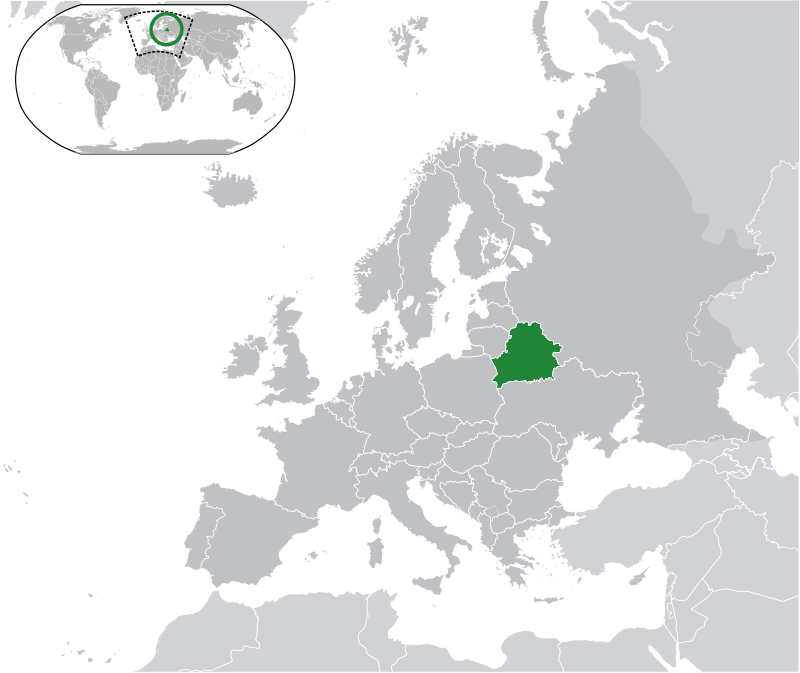
800px-Europe-Belarus.svgHow many Belaruses would fit into Mother Russia? Eighty-three! And yet, as Ivan Davydov argues, the current Russian regime is a “failed police state,” unlike the Belarusian regime. Neither fish nor fowl (although most certainly foul), Putin and his vassals have tanked their country’s economy while also signally failing to save people’s lives, nor have they been able to conjure away the coronavirus pandemic (rhetorically, if not in reality) as successfully as their frenemy the Belarusian dictator Alexander Lukashenko. Image courtesy of Wikipedia

A Poor Excuse for a Belarus: The Collapse of Vladimir Putin’s Police State
Ivan Davydov
Republic
May 14, 2020

My apartment looks onto the Yauza River and the park on the shore. In peacetime, there are crowds of people strolling there when the weather is good. And lots of shishkebabers, who are famously to blame for all our troubles.

For more than a month now, I have been locked up like all law–abiding Russians, making only occasional trips out of the house on urgent business. I watch the world mostly from my balcony, and my world has narrowed to the size of this selfsame park.

Going to parks has been prohibited in Moscow by a special decree of the city’s all-powerful mayor. In parks, the coronavirus is particularly brutal, tracking down rare passersby, lonely morning jogging enthusiasts, and mothers with children, attacking and devouring them. On construction sites, on the contrary, the virus is weak and cowardly: it is afraid of construction workers, whom it does not touch.

Parks are a different matter.

The irresponsible residents of my neighborhood would still go to the park. Not in droves, as was the case before, no. They would go in small groups, as families, apparently. Joggers occasionally popped up, and bicyclists flashed by. Children made their way to the playgrounds (which were also closed, of course). In other words, they violated the mayor’s wise orders.

To put a stop to this unbridled lawlessness, police patrols would come to the park. The guardians of law and order would park their car on a hillock and stand around smoking and watching people walking. Once, when it was particularly cold, wet snow was pouring down, and only a lone madman was sitting on a bench, they went up to the madman and forced him to sign some papers.

And once they went down to the park and fed the ducks, pointedly ignoring the people walking around, before returning to their car. Oh yes, and a couple of times they shouted into a megaphone about the fact that going to parks was temporarily prohibited, and that citizens should look out for themselves and their loved ones.

I will explain later what this pastoral sketch was all about, but in the meantime let us look through the window at our neighbor to the west. It is a fascinating story.

A Wonderful Neighbor
While the rest of the world has been in quarantine, Alexander Lukashenko has gained fame as a maestro of fiery speeches and colorful aphorisms. He has suggested treating the coronavirus with vodka, a bath, and field work. He has advised Belarusians who have lost their jobs to find a job and get to work. (It’s brilliant, really, and simple, like all brilliant solutions.) He advised overly light-minded men to be patient and not to mix with other men’s women for a while. Lukashenko is a president with real gusto, not a president who talks about ancient battles with the Polovtsy from his bunker.

To the frenzied delight of Russian jingoists, Lukashenko held a parade on May 9 [Victory Day], attracting crowds of people, including the elderly. And the very elderly—veterans, in fact. But that was only half the trouble. He also said that after the parade, the statistics on the incidence of pneumonia had gone down. He confessed (he’s an honest man) that he had feared an increase in the incidence of pneumonia, but it didn’t happen. “Well, what did we end up with? There has been a significant reduction in pneumonia in Minsk: it dropped by half yesterday. And I made the sign of the cross yesterday: God grant that we will continue giving hell to pneumonia like this.” Fresh air, he said, helps a lot.

And if Lukashenko had wanted, he could have said that people who died from the coronavirus had begun resurrecting after the parade. (As of May 12, according to the official statistics, 142 people in Belarus had died from the coronavirus.) Why? Because he can, that’s why. He can stamp out any protest. He can ignore the reports from the doctors.

It’s not even the Swedish model. The Swedish model, whose success is a matter of debate (a debate we will have later) stipulates that big public events not be held, and citizens behave responsibly. The Belarusian model assumes that there are no citizens. There is a populace that absolutely obeys the decisions of the supreme leader. Happily for us, the new virus is not the medieval black death: clearly, the country will not die off if you purposely avoid imposing a quarantine in order to save the economy. The Belarusian president made his choice by deliberately deciding to sacrifice a certain (non-essential) number of inhabitants, who cannot be saved by vodka or field work.

And after Vladimir Putin announced a “phased exit” from the semi-imposed non-quarantine, Lukashenko condescendingly praised his junior comrade, saying that Russia had followed the Belarusian path.

The Russian Miracle
But in fact, Russia has its own special path. The “non-working weeks” battered the economy considerably, but it is questionable whether they were able to protect residents. When the quarantine was imposed, there were very few cases. When the government started lifting the quarantine, Russia shot up to second place worldwide in the number of infected people.

Discussing the reliability of Russian statistics is a risky business: nowadays, the prosecutor’s office does not see much difference between well-founded criticism and “spreading fake news” about the coronavirus. But we will not make any arguments, we will just note what respected officials and politicians have been saying.

On May 12, Anna Popova, the head of [Russian federal consumer watchdog] Rospotrebnadzor, said that 28.4% of people identified in Russia as infected with the coronavirus were hospitalized. At the time, the total number of people identified as infected was around 230,000; a simple mathematical calculation gives us approximately 65,000 people in hospitals. (In fact, the real figure is another ten thousand less, since we are not taking into account the people who have recovered). But the next day, Health Minister Mikhail Murashko said at a cabinet meeting that there were more than 100,000 Russians hospitalized with the coronavirus. You would agree that all this makes it seem that our government is surprisingly footless and fancy-free with statistics, even with their own official statistics, with statistics intended for the public.

On May 13, the Moscow Health Department reported that 60% of those who died with a diagnosed coronavirus had not been included in the coronavirus fatality statistics for capital, because they had died from “obvious alternative causes.” The governor of Petersburg also reported that there had been a spike in the incidence of pneumonia in the city: the indicators were “five and a half times higher than the average.” Since the first of March, 694 residents of Petersburg have died from pneumonia, and 63 from the coronavirus.

Perhaps this is the reason for the Russian miracle of rather low mortality rates from the coronavirus infection. Especially if you remember that Russia is not only made up of capital districts and metropolitan areas, that in the regions, as a rule, all or almost all media outlets are controlled by the local administrations, and it is even easier for them to turn statistics from an enemy into an ally.

And why did the head honcho announce the end of the “non-working weeks”? Well, it’s not so hard to turn a terrible virus into a non-scary one. It’s like with elections: what matters is not what really happened, but who counts the votes and how they count them.

Amulets for MPs
But what’s really going on? In fact, our high officials are afraid, and they are trying to protect themselves by turning the nightmare into a joke and not standing on ceremony with the public. Saving your own life is more important than standing on ceremony.

On May 13, Igor Molyakov, an MP from A Just Russia, asked State Duma Speaker Vyacheslav Volodin why some of their colleagues were coming to sessions of parliament not wearing their MP pins, as required by law, but wearing quite different pins featuring a white cross on a black background. Molyakov added that he was a dog breeder himself and would like to know whether it would be possible for him to wear the pin of his kennel club instead of the Russian tricolor on his lapel.

Volodin’s answer, I hope, will go down in the annals: “Let’s ask the people who are wearing these pins, but as far as my colleagues have told me, they are special devices for repelling the virus.”

I wouldn’t be surprised if, one day soon, MPs ran naked around the State Duma building on Okhotny Ryad banging on pots: this method of fighting pestilence has been described by anthropologists. And we can only pray that no one tells them that fresh human flesh, for example, staves off the virus. They would believe them.

Dmitry Peskov, the president’s press Secretary, has fallen ill. And now he remembers regretfully the “virus blocker” that he wore and then stopped wearing after he was mocked in the press.

Here it is important to understand that the people wearing the miracle badges and warding off the virus with life-giving white crosses are the same people who explain why “phasing out restrictions” at the peak of the epidemic is justified, and make decisions that affect our lives.

Of course, they themselves get sick and get infected, but let’s not forget that we will be treated in slightly different hospitals, if push comes to shove.

It’s hard to stop. For dessert we have another intellectual delicacy, this time from Petersburg Governor Alexander Beglov. He has explained why masks cannot be distributed for free in the city during the mandatory mask regime: “Yesterday, we adopted a resolution not to give out free masks, but to hand out money. There are a lot of people in our city, both visitors and non-visitors, and people from other regions. How should we should distribute these masks? We should make you show your passport and ask where you are registered.”

The virus, you understand, asks to see people’s residence permits and attacks only native Petersburgers. It presents no danger to out-of-towners and migrant workers, nor can they themselves infect anyone. Governor Beglov is in charge of Russia’s second largest city, the home to millions of people and a “pneumonia outbreak” that, of course, has nothing to do with the coronavirus.

By the way, Beglov’s “money” amounts to 800 rubles [approx. 10 euros] for pensioners and members of large families to buy masks.

A Failed Police State
But let’s go back to my park. I started with it to illustrate the fact that the police state in Russia has failed. There has been a lot of overkill, and people all over Russia have been pretty annoyed, but the police have been unable to ensure compliance with the imposed restrictions. They are good at breaking up peaceful protest rallies, but bad at everything else.

The government had a choice. It could have engaged the citizenry in dialogue, rejected intimidation in favor of education, sought compromises where possible, and, of course, provided direct financial assistance to those forced to stay at home. It could have made Russia’s citizens its allies instead of making them the targets of an incoherent police dragnet. To do this, however, it would have had to see the populace as citizens, but we have a big problem with this sort of thing in Russia.

The government could have done it, but it was impossible—forbidden—for the government to do it.

It would have been possible to issue endless prohibitions of varying degrees of savagery and to force the population to comply with them using an old and proven argument—the police billy club. But that didn’t work out either. It turns out that there is no police state in these parts. There is a useless system of governance that starts to crumble at the first serious test. Ensconced in his bunker, the head honcho denounces the immorality of the Spartans, while his subordinates are decked out in life-saving amulets, expecting that by summer everything will have somehow worked itself out.

The reason they terminated the “non-working weeks” is that they simply could not enforce the lockdown measures. And they decided to rescue the economy since they had been unable to save people. But there was a tiny twist: they did this only after after the economy had been dealt a serious blow.

The Russian state makes war on Russian citizens as if they were the main threat when, in fact, there are no real threats to it, but it simply vanishes when there is a real threat. This is exactly what Putin has built over the last twenty years. This is the whole “Russian federal system”—terrifying, unsinkable, tending to totalitarianism. It’s a poor excuse for a Belarus. It’s a slightly rotten Belarus.

Take care of yourselves and help each other. No one else is going to help us.

Translated by the Russian Reader

Russia’s Most Dangerous Shaman

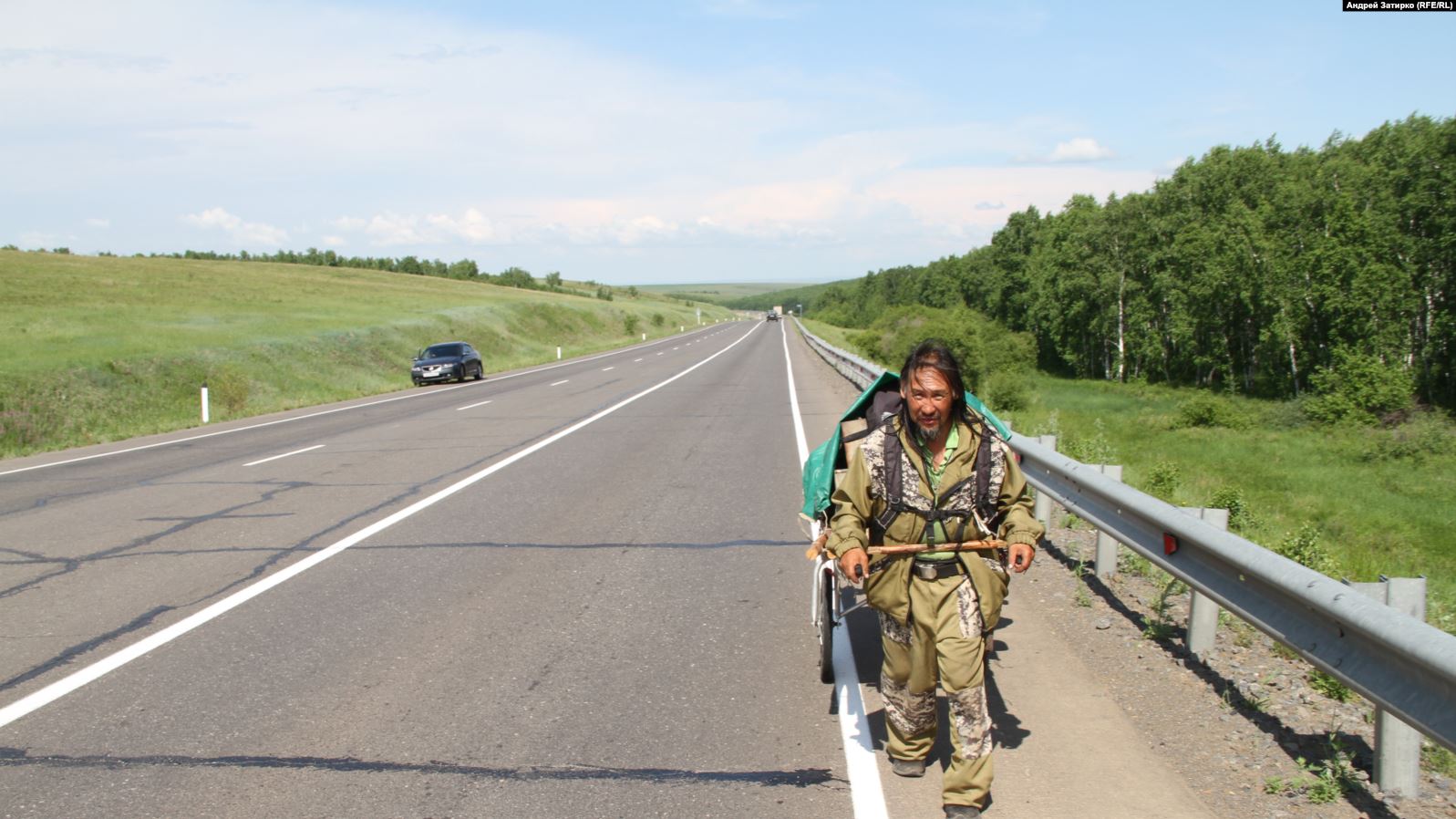
shamanAlexander Gabyshev. Photo by Andrei Zatirko. Courtesy of RFE/RL

Riot Police Storm House of Alexander Gabyshev, Yakut Shaman Who Promised to Exorcise Putin
Radio Svoboda
May 12, 2020

Riot police have detained Alexander Gabyshev, the Yakut shaman who last year promised to exorcise Russian President Vladimir Putin from the Kremlin, and taken him to a mental hospital, according to MBKh Media, citing Alexei Pryanishnikov, the coordinator of Pravozashchita Otkrytki [Open Russia’s human rights program].

According to the human rights activist, at least twenty special forces officers had stormed the shaman’s house in Yakutsk. The reason for his arrest is unknown. Earlier in the day, Gabyshev had been visited several times by people who presented themselves as medical professionals, and asked to test him for the coronavirus. Two of Gabyshev’s supporters were detained along with him for violating self-isolation rules.

Gabyshev gained notoriety in the spring of 2019, when he set off on foot to Moscow to perform an exorcism ritual to force Russian President Vladimir Putin from the Kremlin.

___________________________________


A Shaman for Putin: What Siberians Are Telling Gabyshev on His Way to Moscow, Radio Svoboda, September 12, 2019. Yakut shaman Alexander Gabyshev believes that Vladimir Putin is the “spawn of dark forces,” so he set off on foot to Moscow to “exorcise” him. The shaman began the journey alone, but soon followers began to join him. In Chita, he spoke to a large rally. Buryatia was the next region on Gabyshev’s journey: mass protests started in Ulan-Ude after his supporters were arrested. Gabyshev planned to take two years to get to Moscow so he could unhurriedly converse with the people along the way. The shaman and his followers moved along the roads, covering an average of twenty kilometers a day, stopping for the night in tents, sometimes at roadside motels. Local residents and passing people went to talk to Gabyshev, taking pictures, and helping with food and money.

___________________________________

On September 19 of last year, Gabyshev was detained at the border between Buryatia and Irkutsk Region during an operation involving special forces. He was identified as a suspect in a criminal investigation into alleged instances of “incitement to extremism” and released on his own recognizance. A psychological and psychiatric examination ordered by police investigators found that Gabyshev was mentally incompetent.

Gabyshev subsequently tried to resume his campaign, promising to make another march on Moscow in June.

The criminal case against Gabyshev was suspended for the duration of the epidemic. International human rights organization Amnesty International declared him a prisoner of conscience.

“‘What sounds like a tale from Russian folklore has become, in today’s Russia, just another act of brutal suppression of human rights,” the organization noted.

Translated by the Russian Reader

BBC Russian Service, From Yakutia to Moscow: A Shaman’s Journey Against Putin, September 24, 2019

Penalty Kick in the Teeth

Krylya Sovetov Goalkeeper to Be Punished for Unauthorized Interview in Which He Criticized Regime
OVD Info
April 27, 2020

According to MBKh Media and the club’s website, the Samara football club Krylya Sovetov will take disciplinary action against goalkeeper Yevgeny Frolov for giving an interview not authorized by the club.

In an interview with football columnist Sergei Yegorov on the YouTube channel Futbolnyi Bigi, Frolov called the Russian president’s televised addresses “empty talk.”

In particular, the footballer said, “Like it or not, we won’t be getting anything—the regime will just blow us off.”

Prompted by media coverage, the club’s management issued a statement that it and the coaching staff do not share Frolov’s opinion.

“Recently, the federal and regional authorities have done a great deal to grow football in Samara Region and Russia,” it says in the statement.

According to team management, the new Samara Arena stadium “would not have been possible without the support of the senior leadership not only of the region but also the country.”

“By giving an interview without prior agreement with the club, [Frolov] violated the terms of his contract, harming the team’s interests. The player will be punished according to the club’s regulations on disciplinary actions, ” the statement reads.

______________________

141760-27Krylya Sovetov goalkeeper Yevgeny Frolov. Photo courtesy of Sport

On April 26, Yevgeny Frolov gave an interview to the YouTube channel Futbolnyi Bigi. In particular, he said that Russian authorities have not been helping ordinary citizens during the coronavirus pandemic and [and the ensuing economic] crisis.

“Like it or not, we won’t be getting anything—the regime will just blow us off. It will blow us off and say, ‘There’s no money, but hang in there.’ They have money for themselves, but they have nothing for people. Take America and Europe: in many countries, [the authorities] have been helping their citizens, helping business. There is none of that here in Russia. What the president says on TV is all empty talk. There is no real action at all,” said Frolov.

Source: MBKh Media

Translated by the Russian Reader

Andrei Rudomakha, Russia’s Most Famous Environmentalist

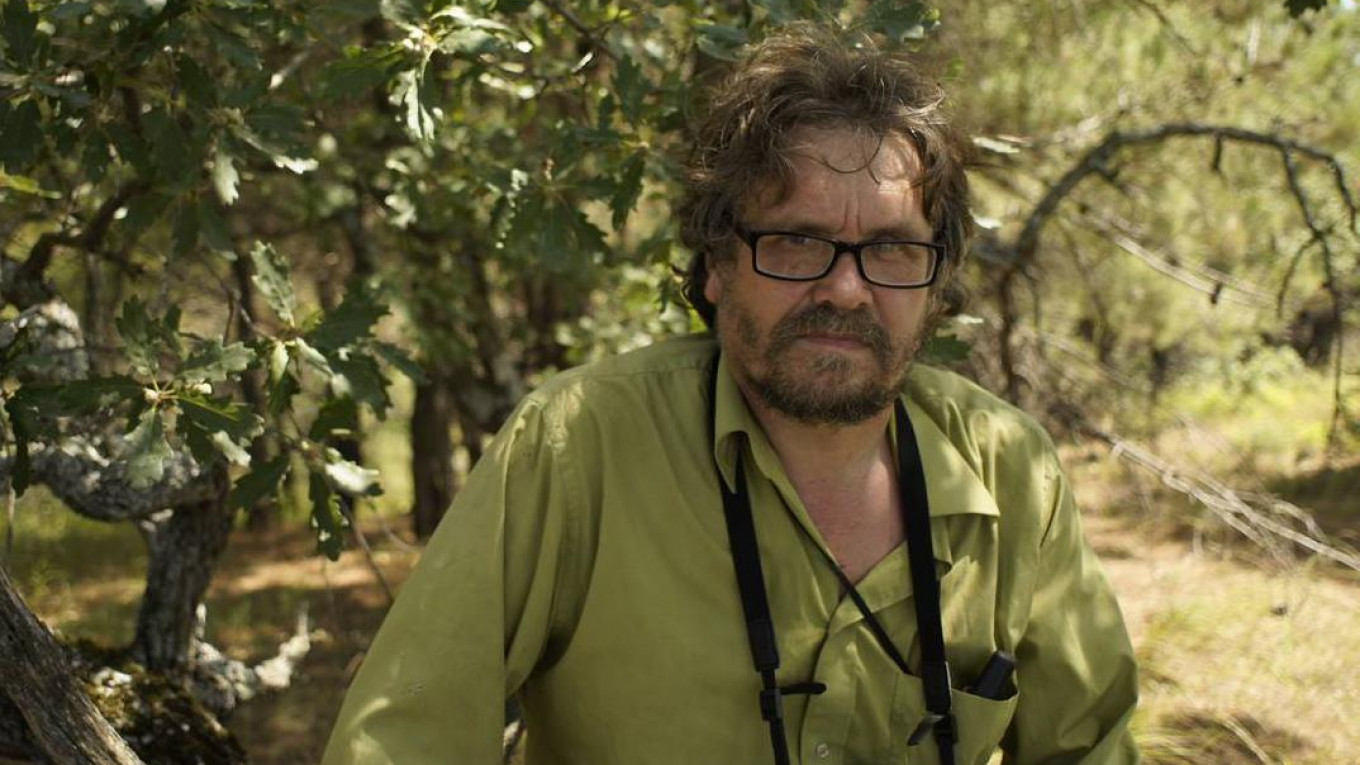
rudomakhaAndrei Rudomakha. Photo courtesy of his Facebook page and the Moscow Times

On the Watch: The Story of Andrei Rudomakha, Russia’s Most Famous Environmentalist
Vladimir Prikhodko and Angelina Davydova
Proekt
October 2, 2019

Protests against waste landfills, the clearcutting of parks, and illegally enclosed forests—the environment has been a frequent topic of regional protests in Russia. Persecution by the authorities, criminal cases, beatings, and even murders are everyday risks for environmental activists. Proekt tells the story of the persecution of the head of Environmental Watch of the North Caucasus (EcoWatch), which has been going on for almost forty years.

They go to bed late in the private house on Kerchenskaya Street in Krasnodar. The place resembles a commune. This is the home and office of Andrei Rudomakha and Environmental Watch of the North Caucasus aka EcoWatch, perhaps the most famous grassroots environmental organization in Russia. Rudomakha has led EcoWatch for fifteen years.

At 5:55 a.m. on July 30, everyone was asleep. At that moment, Investigative Committee investigator Sergei Kalashnikov and an unidentified FSB officer in a mask rang the doorbell. Not waiting for the homeowner to open the door, they ordered Emergencies Ministry officers to break down the gate. Within a couple of minutes, officers in masks had flooded the house, and two masked men with automatic rifles had thrown Rudomakha to the floor. When Rudomakha attempted to get up, the officer holding the activist pepper-sprayed him in the face.

Enemies of the State
This was the fifth search at EcoWatch in less than three years, and the second in the last four months.

“That morning, I was supposed to go to court in Maykop to face charges that we allegedly broke the law on ‘undesirable organizations’ by linking to Open Russia’s website on our sites and social media pages. My trip was canceled because of the search, and no one from our group was at the court hearing. Naturally, we lost the case,” says Rudomakha, meeting with our correspondent at the selfsame commune-like house.

EcoWatch was the first nonprofit organization in Russia to be found guilty of collaborating with Mikhail Khodorkovsky’s Open Russia.

In recent years, the number of environmental protests in various regions of Russia has certainly grown—from campaigns against waste landfills in parts of European Russia to protests against coal dust in the port of Nakhodka, in the country’s Far East, says Svyatoslav Zabelin, coordinator for the International Socio-Ecological Union. The most turbulent environmental protests of the past summer were in the village of Shiyes in Arkhangelsk Region, where the authorities wanted to transport garbage from Moscow. It was in the village of Loginovskaya in Arkhangelsk Region where Rudomakha was born fifty-five years ago.

rud-2
A 2018 protest rally in Severodvinsk against the Shiyes landfill. Source: activatica.org

“My father was a descendant of Kuban Cossacks. My mother is from Perm. That is where my parents met when they were at university. After their studies, they were assigned to work in the taiga in Arkhangelsk Region, on one of the local farms. Shortly after, we all moved to my father’s native land, the Taman Peninsula. I was still a very young child when my parents divorced. My mother raised me on her own. She worked for more than forty years in the village of Oktyabrsky in the Seversky District, where we relocated. The test fields of the Tobacco, Shag, and Tobacco Products Research Institute were located there.”

At the age of sixteen, Andrei set out for Cuba. He went to Moscow, supposedly to matriculate at the university, and along the way, he hopped a freight train in order to leave the Soviet Union—but he was found by frontier guards at the Romanian border.

“During the interrogation, the KGB guys thought long and hard about what to do with me,” Rudomakha says with a laugh. “After all, I had said to them, ‘Send me to Cuba, to a school for revolutionaries.’ The KGB officers reacted to this with their peculiar sense of humor and sent me to the Kishinev Mental Hospital. I was retrieved from there by my mother. From that point on I’ve never been out of the sight [of the authorities].”

rud-3
Andrei Rudomakha and his mother

This was how the secret services, rebellion, and forests came into Rudomakha’s life.

“A military coup occurred in Chile in 1973. All of the news contrasted sharply with the reality in which I lived. Oktyabrsky was a very boring place. Books were my salvation. And the forest. I rather quickly got keen on hikes in the woods. Che Guevara was my idol and hero.”

Rudomakha studied Spanish and Greek, began playing guitar and formed a band. He calls his mid-1980s self a “rocker.” In 1987, immediately after his army service, Andrei was offered a job at the Krasnodar House of Young Pioneers, in the Candle Amateur Song Club.

The Rocker
Peaceful and troubled
Troubled and easy
What infuses the air
In the meadows around Pseushkho?

These are lines from a poem by the bard poet Vladimir “Berg” Lantzberg. In the 1980s, he was living in Tuapse, putting together amateur song festivals and establishing the first communes. It was then that Rudomakha first encountered the communard scene, whose principles he would later adopt. The Pseushkho of which Lantzberg sang is a mountain with an Adyghe name in Krasnodar Territory’s Tuapse District. In 2019, Rudomakha would protest against the construction of a limestone quarry there.

In the 1980s, however, the Kuban was fighting another construction project. A nuclear power plant was slated to be built in the Energetiki district of the village of Mostovskaya. In its waning years, the Soviet Union had planned to build dozens of such plants, from Crimea to the Ural Mountains.
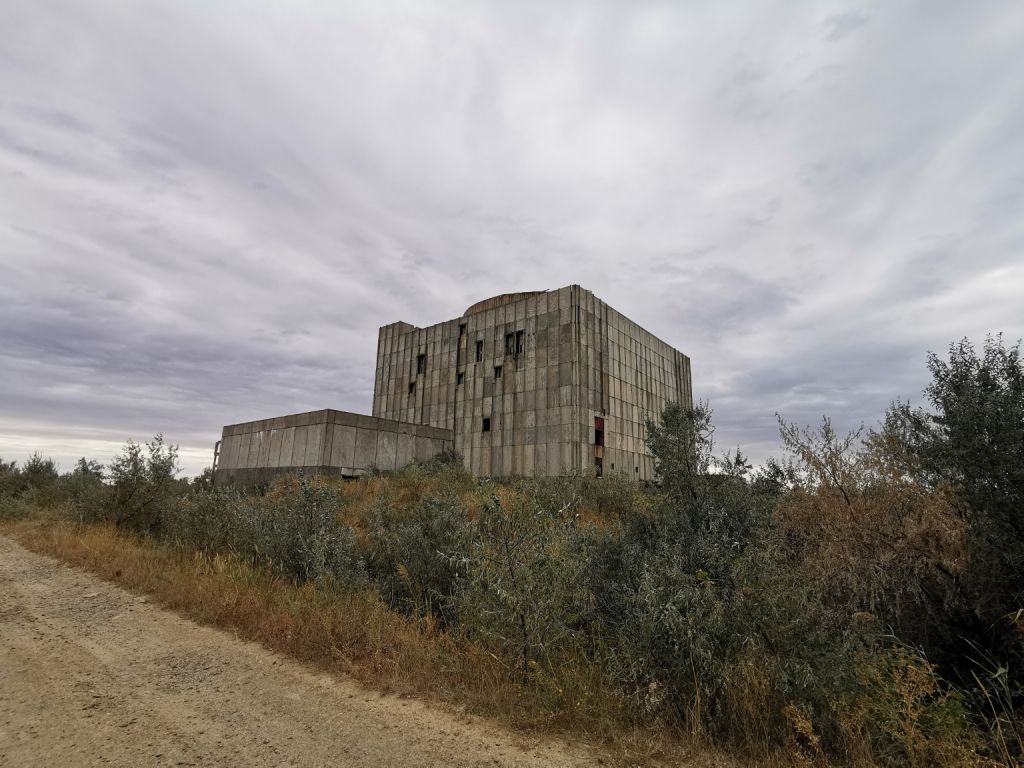
rud-4Several Soviet nuclear plants whose construction was begun in the late 1970s and early 80s were not completed. After the breakup of the USSR, one of those stations, Krymskaya, came in handy anyway—not, however, for the nuclear energy industry, but for purveyors of electronic music: it became the venue for the Republic of KaZantip festival of electronic dance music.

“Back in the early 80s, the mammoth construction of a power plant similar to Chernobyl began. In 1988, I was one of the people behind a protest rally. We organized it near Goryachy Klyuch on Lysaya Gora.  I remember how we went underground and hid from the KGB. It was then that I first crossed paths with the Nature Conservation Brigades (DOPs), which had been organized at the universities,” recounts Rudomakha.

During perestroika, university students were often certified as conservation, fishing, and hunting inspectors; these groups were then dispatched into the forests to arrest poachers. Later, alumni of the DOPs would become the backbone of the Russian branches of the WWF and Greenpeace.

Like nearly all the nuclear power plants whose construction kicked off at the turn of the 70s and 80s, construction at the Krasnodar plant was soon frozen. But Rudomakha’s career as a music teacher also came to a screeching halt: KGB officers showed up at the Young Pioneers House, and Rudomakha lost his job. His employment at the Candle Club would be the only entry in his official work record book.

The Communard
Over the last nine years, four criminal cases have been brought against Rudomakha, and seven police searches conducted. He has been jailed on misdemeanor convictions more than fifty times. In the end, EcoWatch was even declared a “foreign agent,” although the decision was reconsidered last year.

In recent years, the growing physical and legal pressure on environmental activists has been as big a trend as the increase in the number of environmental protest rallies. Among the main methods of pressure are forcible dispersal of protests by police, pressure on activists at work, threats to relatives, court cases, straightforward violence, and even murder. In March 2019, environmental activist Denis Shtroo was murdered in Kaluga while participating in, among other things, a campaign against the building of a waste landfill near the village of Mikhali.

______________________________________________________________

Intimidation of Russian Environmental Activists in the First Five Months of 2019
According to information from the Russian Socio-Ecological Union

rud-5Denis Shtroo

activist murdered. In March 2019, environmentalist Denis Shtroo died of stab wounds in Kaluga. He was involved in a campaign against the construction of a waste landfill in the village of Mikhali.

5 cases of criminal prosecution.

7 attacks on activists, attacks on dwellings, property damage, and police searches.

110 cases of administrative prosecution. The total in fines has amounted to more than a million rubles [approx. 12,000 euros].

In 2019, cases of intimidation against environmentalists were most often recorded in Shiyes, Arkhangelsk Region, where illegal construction of a landfill for Moscow’s solid household waste is underway; in Yekaterinburg, where activists were defending the city’s green spaces; and, as in years past, against activists from Stop GOK, in Chelyabinsk, and EcoWatch.

______________________________________________________________

When the New Russia of the early 90s dawned, Rudomakha was in the woods.

“I decided to build a commune at Kisha Station in the Caucasus Nature Reserve. It is a secluded place in Adygea’s Maykop District. Later, our base moved to Ust-Sakhray. In 1988, for a ridiculously small amount of money (the cost of a Zaporozhets car), we bought a house there. It was an area of abandoned villages that people were trying to leave, but we were doing the opposite. I lived in Ust-Sakhray until 1995. I won’t mention the names of the comrades with whom I started out. Many have their own lives and families now,” he says.

Andrei has his own way of viewing everyday life. Remembering those days, he says with regret that the communes fell apart because people started romantic relationships and left.

“We had a lot of ideas: we wanted to transform all of Sakhray and build a public school. My first daughter was born there, and my wife left — she preferred me to another. All of our ideas were shattered by the internal conflicts and disagreements that arose among the settlers. And, basically, I regret that we sat out perestroika in the mountains. It would have been better, of course, in the city,” he says.

The New Russia brought big money to the Kuban. With its sea, mountains, forests, and springs, the southern region attracted businessmen and politicians from Moscow. Some businessmen began to cut down wood on the unique Bolshoi Thach Mountain and haul it out with helicopters.

“And I came out of the woods. The times had drastically changed, as it turned out. Grassroots organizations were on the upswing,” Rudomakha says.

Soon Rudomakha would turn up in Maykop, where he lived in a small house at a weather station run by Vladimir Karatayev, leader of the Union of the Slavs of Adygea. There a branch of the Socio-Environmental Union would be opened, the first environmental organization founded by Rudomakha.
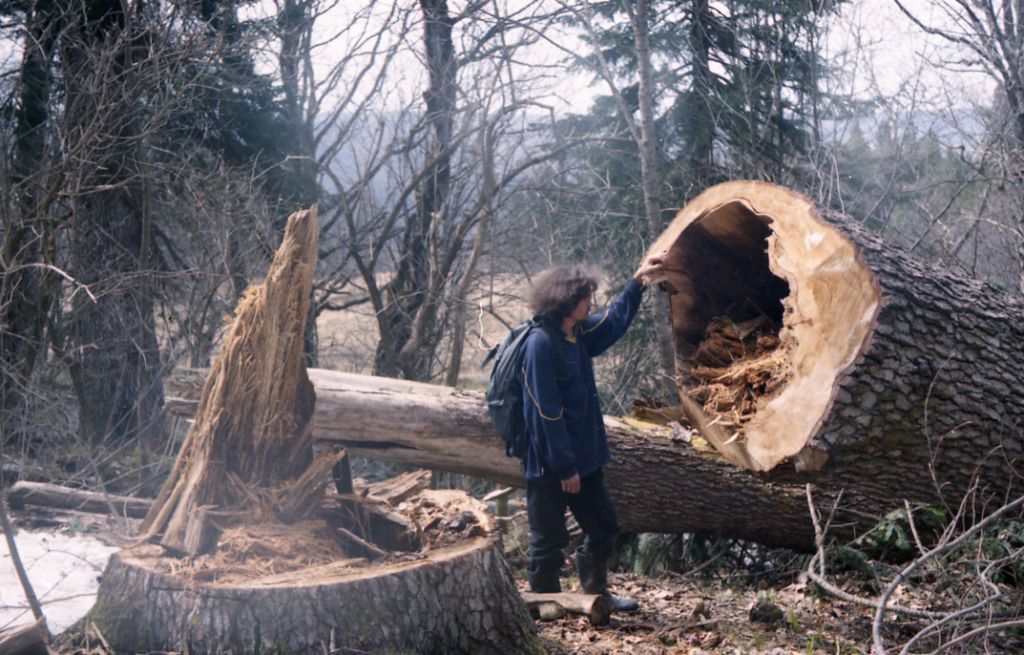
rud-6Rudomakha examines a forest clearcutting in the Caucasus Nature Reserve

“With money from western foundations, we bought a computer and a modem—and things took off. We organized protest rallies, spiked tree trunks, and stopped clearcutting. And, as a result, Bolshoi Thach was made part of the Western Caucasus UNESCO World Heritage Site,” Rudomakha explains.

Pandora’s Box
The planet in Ursula K. Le Guin’s cult science fiction novella The Word for World Is Forest is called Athshe. This planet would become the prototype for Pandora in the movie Avatar, and would also give its name to Rudomakha’s 1990s commune, from which EcoWatch arose. Le Guin grew up in leftist Berkeley and was interested in anarchism and environmental movements. In her novella, the kind forest inhabitants, called “creechies” by earthlings, defend their planet from the “yumens.” Athshe Commune was also focused on environmental protests. Commune members took names from the novella’s characters.

Today, activists would be jailed for many of the protest actions carried out then. Rudomakha’s commune took part in many of them alongside the Federal Anarchists of Kuban (FAK) and radical environmentalists from the Keepers of the Rainbow.

“We were always blocking or blockading something,” Rudomakha recalls. “There were tragedies, too. In 1997, we locked ourselves together with metal chains and blocked the road to Sochi. A crazy trucker drove at us, who knows why, and Anya Koshikovaya’s hand was torn off. In the late 90s, this sort of thing brought palpable results. We seriously considered the idea of creating a guerrilla environmental army, to waste everyone. The forests here are wonderful—one could be guerrillas endlessly. Theoretically, if the necessary contingent of people were found, all this would be quite feasible. To do that you would need to break with your usual life and go rogue. Basically, I’ve been ready for that since childhood. If I could find five people just as mad as me!”

rud-7An environmental protest involving Rudomakha, 1990s

In the finale of Le Guin’s novella, the creechies surround and kill almost all the earthlings. They are especially keen to hunt down the women to prevent new generations of humans from taking over their forests.

Palace Coup
“Sanya [i.e., Alexander] is a thief”: in November 2011, Rudomakha’s comrades in arms spray-painted this graffiti, among others, on the fence of a luxurious estate on the Black Sea shore in Blue Bay, not far from Tuapse. The estate was officially called the Agrocomplex JSC Recreation Center, and it was owned by the family of Alexander Tkachov, former Krasnodar Territory governor and former Russian federal agriculture minister. For all of 2011, enviro-activists battled against this dacha, on whose premises rare trees were presumably being clearcut and access to the sea was illegally fenced. A protest action in November, during which one section of the fence fell, was the last for many activists. Agrocomplex soon filed criminal charges for property damage. Rudomakha’s comrade in arms Suren Gazaryan left the country after receiving political asylum in Estonia. (He now lives in Germany.) Yevgeny Vitishko, another EcoWatchman, was given a three-year suspended sentence, with two years of probation; in December 2013, the suspended sentence was replaced with a real one, and Vitishko served more than a year in a work-release penal colony near Tambov. Amnesty International recognized the activist as a prisoner of conscience.

rud-8“Sanya is a thief”: graffiti on the illegally erected fence in Blue Bay

“The constitution is in a noose, Vitishko is in prison,” Pussy Riot sang at the time. And, in fact, environmental protests against palaces owned by high-ranking officials and the upcoming Sochi Winter Olympics were perhaps the main public issue in southern Russia in the early 2010s.

EcoWatch had taken on palaces practically from its official founding in 2004. There was good reason to work on the issue—the Kuban had become a favorite spot for both officials and businessmen.

______________________________________________________________

rud-9Putin’s palace on Cape Idokopas. Source: navalny.com

The Kuban—Homeland of Palaces: Vladimir Putin’s Palace

In 2010, businessman Sergei Kolesnikov told the world about the construction of a luxurious palace for the Russian president. The site was located in the Kuban, not far from Praskoveyevka on Cape Idokopas. In 2006, the land plot was transferred from the Russian Federation to the Tuapse Vacation House of the Office of Presidential Affairs, and then to the Indokopas Company in 2010.

According to EcoWatch, during construction of the residence and the roads leading up to it, more than forty-five hectares of forest were clearcut; among them, parcels harboring the threatened Pitsunda Pine (Pinus pityusa) were destroyed. According to the calculations of EcoWatch and Greenpeace, the damage from illegal clearcutting came to more than 2.7 billion rubles. Inquiries to the authorities from EcoWatch about the illegal cutting on the palace territory went unanswered.

[Note: the original article in Russian also has short briefs on the Kuban “dachas” of Dmitry Medvedev, Yevgeny Prigozhin, Alexander Tkachov, Alexander Remezkov, Patriarch Kirill, and Anatoly Serdyukov. — TRR]

______________________________________________________________

“Lots of federal officials have dachas on the coast. And basically, we don’t care who owns them. We’d like for those people not to behave like swine. It doesn’t matter whose they are,” says Rudomakha.

The first and perhaps most well-known victory was scored in 2009 when the Watchmen halted construction of a proposed dacha for Dmitri Medvedev in the tiny town of Utrish.

The campaign against environmental violations in the runup to the Olympics brought Rudomakha and EcoWatch international fame: foreign journalists flocked to them in droves. Rudomakha is now certain that the series of refusals by European cities to bid to host the Olympic games (for example, when residents of Munich voted no in a referendum on the city’s bidding for the 2022 Olympics) came about precisely because “we succeeded in creating an image of the Sochi Olympics as the most anti-environmental, expensive, and absurd in the entire history of the Olympic movement.”

“It was then that the authorities started to vigorously persecute us,” Rudomakha says about the time. “I understood that serious ‘winds of change’ had begun to blow. They no longer tried to sit down at the negotiating table with us, and cops chased us around the woods. It was kind of funny.”

The Autocrat
“Andrei’s authoritarianism has always been my number one problem,” Yevgeny Vitishko now recounts. In 2016, he and another well-known EcoWatch alumnus, Suren Gazaryan, left the organization.

“From the outside, the Watch looked quite democratic, but in fact everything revolved around one person. His leadership style can be described in sociological terms as narcissistic,” says Gazaryan.

Vitishko and Rudomakha have since reconciled. However, for many, the head of EcoWatch remains a fanatic with autocratic manners.

For several years, local and even national media have been publishing stories about Rudomakha hinting that he is guilty of everything from pedophilia to cooperating secretly with officials. Rudomakha calls the reports nonsense, saying that the regional government is behind them.

rud-9“Gazprom is a murderer” / “Stop Blue Stream”: Kuban environmentalists protesting against Gazprom 

Rudomakha does not separate the personal from his work life: he admits that his activism has not affected his family’s fortunes in the best of ways. The first floor of the rented house on Kerchenskaya is used as an office, while the second floor is home to Rudomakha and his second daughter, who, in the wake of her parents’ divorce, enrolled in university in Krasnodar and moved in with her father. Rudomakha had once hoped that his daughter would also become an environmentalist, but now he has lost that hope.

“I am quite pessimistic when I assess the evolution of Russia’s environmental movement,” says Rudomakha. “The population is very inert and severely intimidated, and the level of passionarity among people is at a minimum. People rise up, for the most part, only when they are personally affected. If there were organizations like ours in every region, it would be possible to change the situation in this arena and in the country as a whole. After all, a large number of such organizations would naturally make it necessary for them to unite.”

“I haven’t seen an influx of new people into EcoWatch,” notes Rudomakha’s former colleague Gazaryan. “Andrei’s lifestyle and views are on the fringe, and his office is also his residence. It’s hard to work in this environment. And there is no [broad environmental] movement in Russia. There are separate organizations and local groups, but they have no coordination or goals. They are not represented on the political level, and fall apart after a problem is solved,” Gazaryan says, but after thinking about it, he adds that he could be mistaken. “I haven’t lived in Russia for a long time.”

* * *

Late in the evening of December 28, 2017, Rudomakha, his colleague Viktor Chirikov, and journalist Vera Kholodnaya had just arrived at the commune house on Kerchenskaya. Rudomakha had just exited the car when three men ran up to him. Dousing him in the eyes with pepper spray, they knocked him down to the ground and kicked him repeatedly. He lost consciousness. Chirikov was beaten less, and Kholodnaya was only “blinded” by the pepper spray. After that, the attackers took several cameras and a GPS navigator from the car. The entire incident lasted no more than two minutes.

Doctors diagnosed Rudomakha with broken bones in his face and nose, a concussion, and pneumocephalus—the leakage of air into his cranial cavity. He spent three weeks in the hospital.

An investigation into the attack yielded no results. But the enviro-activists have their own theory. They had returned that day from a trip to the area around the village Krinitsa, a small resort in Gelendzhik. There, in the forest, construction had begun on a site resembling a wine-making chateau—such was EcoWatch’s assessment. A prefabricated chapel had also been erected there by order of Axis Investment JSC.  The owner of this firm is Alexei Toth, a business partner of Nikolai Yegorov, who is a well-known Petersburg lawyer and a personal friend of Vladimir Putin.

Translated by Mary Rees. Except where noted, all photos courtesy of Proekt.

Hard to Be a God

Moscow City Duma Deputy Besedina Ruled Out of Order for Proposing Putin Officially Be Called “God” and “Bright Star”
Mediazona
March 12, 2020

Darya Besedina, a deputy of the Moscow City Duma from the Yabloko faction, was ruled out of order after proposing fifty amendments to a draft resolution on amendments to the Russian Constitution. The session was broadcast on the Moscow City Duma’s YouTube channel.


Footage of Darya Besedina addressing the Moscow City Duma, followed by a brief interview with Besedina on Radio Svoboda’s  Current Time program.

“I believe that the text of the submitted amendments contains deliberately false information,” said Moscow City Duma Speaker Alexey Shaposhnikov, without specifying what information he had in mind.

Besedina’s fifty amendments included suggestions to insert the words “given that Putin is the apostle of national unity” and “noting that in future it will be necessary to add to the Constitution that a family is a sacred union between a man and a woman and Putin” before the phrase “the Moscow City Duma resolves.” Besedina also suggested inserting the phrases “faith in the God Vladimir Vladimirovich Putin” and “V.V. Putin is a Bright Star.”


https://twitter.com/naive_elf/status/1238126214503698432/photo/1

Besedina posted the text of her proposed amendments on Twitter

The deputies decided to vote on the entire set of amendments rather than considering each one separately. Besedina’s proposed amendments were thus rejected since only three deputies voted for them, including Besedina herself. Soon thereafter the Moscow City Duma approved the amendments to the Russian Constitution itself.

obnulis

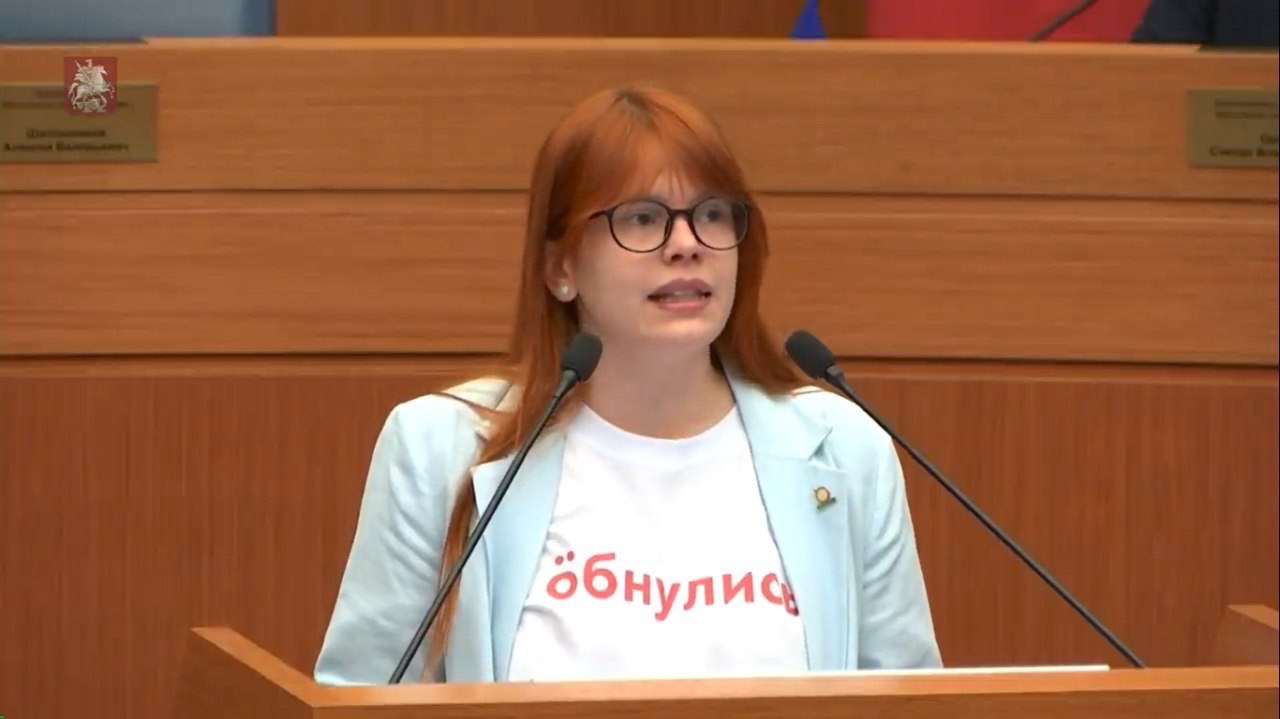
Besedina came to the session wearing a t-shirt embossed with the slogan “Zero Out (Fuсked in the Head)”* and harshly criticized the new amendments to the Russian Constitution. Moscow City Duma Deputy Chair Stepan Orlov said her speech was an “assault” and asked the regulations committee to analyze it for possible slander. Deputy Elena Nikolayeva called on Besedina to resign her seat.

The previous day, the Russian State Duma approved an amendment to the Constitution that would give Vladimir Putin the right to seek two more presidential terms.

* The umlauted ö on Besedina’s shirt suggests that obnulis’ (“zero out”) should also be read as ëbnulis’ (“they’re fucked in the head,” “they hit themselves hard on the head”).

Photo courtesy of Medialeaks. Translated by the Russian Reader