Happy Russia Day 2017

Office of the Guidance Counselor, Saint Petersburg State University of Film and Television
VK
9:11 p.m., June 9, 2017

Dear students,

June 12 is a public holiday, Russian Sovereignty Day [sic]. Certain people have been trying to use our national holiday to destabilize the situation in the country. Alexei Navalny has called for Russians to take to the streets of their cities in protest against the current regime.

The administration of Saint Petersburg State University of Film and Television asks you to approach the question of involvement in such events responsibly, not to yield to such calls and other provocative proposals whose objective is inveigle young people in unauthorized mass actions and marches aimed at destabilizing public order, calls and proposals that are transmitted via social networks and other sources of information. We cannot let these people achieve their political ambitions illegally.

Thanks to Comrade VS for the heads-up

happy russia day
“⚡️Gas sprayed on Pushkinskaya Square. Police in gas masks. If you smell gas, wet t-shirts and breathe through them. #12june.”

Alexandra Krylenkova
Facebook
June 12, 2017

So, 658 people were detained [in Petersburg]. Minors whose parents were able to come and get them and people with disabilities have been released. Nearly everyone else will spend the night in jail.

There will be court hearings tomorrow. Everyone who can make it should come. The hearings will take place at the Dzerzhinsky District Court [in downtown Petersburg]. The first detainees are scheduled to arrive at the court at 9:30 a.m. Considering the number of detainees, we will probably be there into the night.

happy russia day-2
Field of Mars, Petersburg, June 12, 2017. Photo courtesy of Alexandra Polukeyeva/Rosbalt

Alexei Gaskarov
I was invited to speak at the rally on Sakharov Avenue. I planned to talk about why it was important to support the anti-corruption campaign despite our political differences. In short, in order to put a stop to reaction, dissenters need to be represented on a massive scale, so the elites would not even think about just trampling them or not noticing them.  Everyone has the same goal right now: resurrecting political freedoms. The contradictions among people are secondary. Considering the scale of protests nationwide, things turned out quite well. You can see that people have stopped fearing crackdowns, and that intimidation no longer works. In Moscow, switching the rally to a stroll down Tverskaya was an absolutely apt response to the Kremlin’s behavior. Everyone who wanted to avoid arrest had the chance to do that. There were downsides as well, but given the colossal confrontation, they don’t seem important.

Ilya Budraitskis
Of course, one cannot help but welcome today’s protests on a nationwide scale. We are witnessing the continuing rise of a new protest movement that emerged on March 26. This movement is indivisible from Alexei Navalny’s presidential campaign and owes both its virtues and weaker aspects to that campaign. Despite the fact that Navalny’s campaign could have launched a broad grassroots movement, on the contrary, it has been built like a personalistic, vertical political machine in which decisions made by a narrow group of experts and approved by the leader are mandatory for the rank-and-file. This raises the majority’s political consciousness to the degree necessary at each specific moment of the campaign. The leader’s political strategy, his objectives, and the meaning of decisions are not up for discussion. Navalny must be believed like a charismatic CEO. What matters is that he is personally honest and “he has a plan.” On the eve of the protest rally, authorized for June 12 in Moscow, the rank-and-file found out a new particular in the plan: everyone had to go to an unauthorized protest march, which would predictably end in arrests and criminal charges along the lines of the March 26 protests. The rationale of the organizers is understandable. They have to pull out all the stops to keep the campaign moving at a fever pitch, keep it in the public eye, and use the threat of riots to pressure the Kremlin. Moreover, this radicalization in the media reduces the complicated picture presented by Russian society to a simple confrontation: the thieves in the Kremlin versus the honest leader who has united the nation. This set-up renders all forms of public self-organization and all social movements secondary and insignificant, and their real interest ultimately boils down to making Navalny president. However, even Navalny’s most dedicated supporters should pause to think today, the day after June 12. Would his campaign be weakened if it were opened up to internal criticism, if horizontal discussions of his political program and strategy were made possible, and the political machine, now steered by a few people, turned into a real coalition, where differences did not get in people’s way but helped them agree on common goals?

Anna Ivanova
“Sakharov Avenue is out,” Navalny said in his morning video message.

Navalny’s adviser Leonid Volkov put it more democratically.

“The hypocritical scum who dreamed up the ‘opposition rally on Sakharov’ will fry on a separate frying pan.”

The rally on Sakharov happened anyway. It was mainly attended by opponents of Moscow’s new law on the large-scale renovation of residential buildings: urban activists and residents of the buildings slated for demolition, as well as defrauded investors in residential building projects, foreign currency mortgage holders, and other victims of the construction sector. Many fewer of them came out, however, than on May 14, even considering that some of the outraged Muscovite anti-renovation protesters followed Navalny over to Tverskaya. Protests rise and ebb like the sea, and this time round the excitement was muted. These people—old women, families with children, old men—were not suitable for getting arrested at an unauthorized protest. Although they realize that Moscow’s problems are merely one logical outcome of the Russian political system, they are in no hurry to support Navalny and other inveterate oppositionists, for what is at stake are their housing and property, not supreme civil liberties.

happy russian day-4
“Day of Russian Cops” on Tverskaya in Moscow, June 12, 2017

Meanwhile, on Tverskaya, young folks realized that A.C.A.B. Around 700 people were detained in Moscow, and the social networks were flooded with even more photographs of derring-do amidst the so-called cosmonauts [riot cops]. The ultimate damage from the protest might be acknowledged only over time, when we know whether there will be new criminal cases, and if there are, what charges are laid against the protesters. But everyone loves looking at riot porn (and being involved in it), although this hobby devastates and dulls the senses as much as watching ordinary porn. This is the danger of protests “for all things good,” of protests focused on a certain political agenda or figure: neither fat nor thin, neither old nor young, neither socialist nor nationalist, but generally sweet and better than the old protest rallies. In this case, protest risks degenerating into a social order in which everything is decided by Sturm und Drang. Not the worse prospect, some would argue, but others would argue it would be a disaster. But whether you like it or not, “Russia has thousands of young people dreaming of revolution,” for the time abstractly encapsulated in the slogan “Dimon must answer for his actions,” and they have been taking to the streets.

Two worlds did not in fact meet in Moscow today. One world is the world of people who are mostly old, people whose property is threatened with eminent domain and who imagine politics as a way of building an urban environment. The second world is the world of bold young people (and their slightly older idols), who are hellbent on regime change. It would not be a bad thing if these worlds met and acted in concert. This is the only way for a democratic politics to emerge from this.

Source: openleft.ru
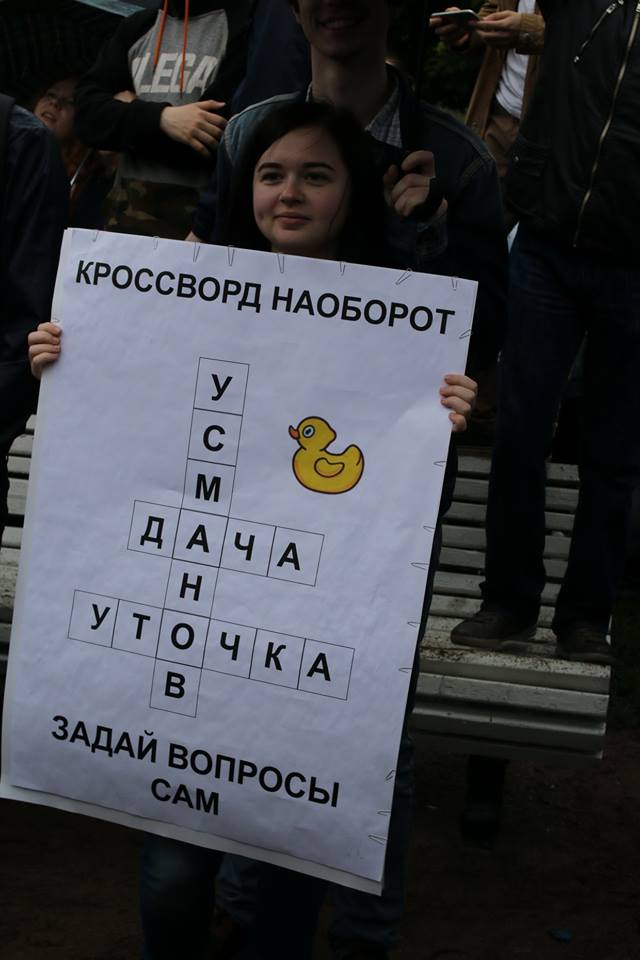
happy russia day-3
“A crossword in reverse. USMANOV, DACHA, DUCKIE. You provide the clues.”

Carine Clement
Facebook
June 13, 2017

Notes from the field (the Field of Mars). Putting aside emotions:
1. It’s true there were lots of young people. And they are not afraid of anything.
2. There were many young families, who are likewise not afraid for their children.
3. “We’re fed up” is the key phrase.
4. There were slogans about healthcare, infrastructure, and pension. Well, and about corruption, too.
5. The out-of-town students came out because “it is wrong to drive the regions into a pit like this.”
6. There was a sense of support and public acceptance.
7) The people who came out were true patriots genuinely worried about the country’s future.
8) A spirit of freedom . . .

Photos courtesy of Protestnaya Moskva, Rosbalt, anatrrra, and Vadim F. Lurie. Translated by the Russian Reader

P.S. On the Six O’Clocks News last night, BBC Radio 4’s Moscow correspondent had the temerity to refer to yesterday’s protest march on Tverskaya as “illegal.” Is this the new tariff for keeping one’s press accreditation under Putin’s perpetual reign? TRR

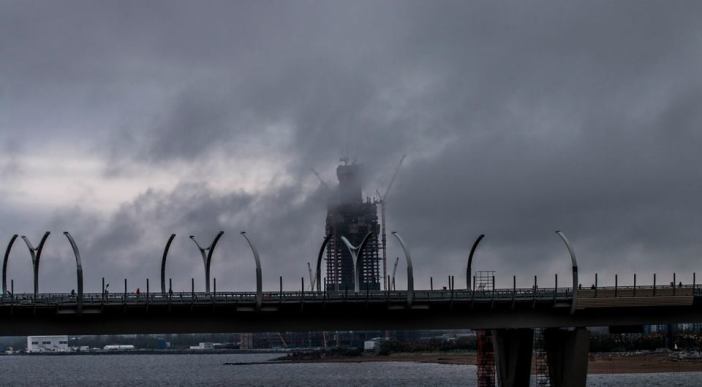
The Two Towers

akhmat-tower
Artist’s rendering of Akhmat Tower, Grozny, Chechnya. Courtesy of The Village

Price Tag of Grozny’s Akhmat Tower Rises to One Billion Dollars
Anton Pogorelsky
RBC
October 21, 2016

The cost of building Chechyna’s tallest tower has doubled

The final cost of building the Akhmat Tower, the tallest building in Grozny, will be one billion US dollars or 66 billion rubles, reports Rambler News Service, quoting Muslim Khuchiyev, the city’s mayor. This is twice the earlier announced amount of five hundred million US dollars. The reason for the increase in the skyscraper’s price was not specified.

“This is nothing other than [private] investments. Not a kopeck of the budget [will be spent],” Rambler News Service quoted Khuchiyev as saying.

The 102-storey Akhmat Tower will be 435 meters high, 35 meters more than was planned initially. According to Khuchiyev, after construction of the Akhmat Tower has been completed, it will be the tallest building in Europe. At the moment, the title belongs to the 374-meter-high Federation Tower in Moscow. However, the title of the tallest building on the continent should pass to the Lakhta Center in Petersburg. It will be 462 meters tall, 27 meters more than the Chechen tower.

Translated by the Russian Reader

Vadim F. Lurie, Lahta Center (under construction) seen through the Western High-Speed Diameter (ZSD) highway, Petersburg, September 30, 2016. Photo courtesy of the photographer
Lakhta Center (under construction), as seen over the Western High-Speed Diameter (ZSD) highway, Petersburg, September 30, 2016. Photo by Vadim F. Lurie. Reprinted with his kind permission

Walk

PfbwzqRfC-A
Walk, May 29, 2016, Saint Petersburg, Russia. The city’s famous Church on Spilled Blood is in the background. Photo by David Frenkel

Varya Mikhaylova
Vkontakte
May 29, 2016

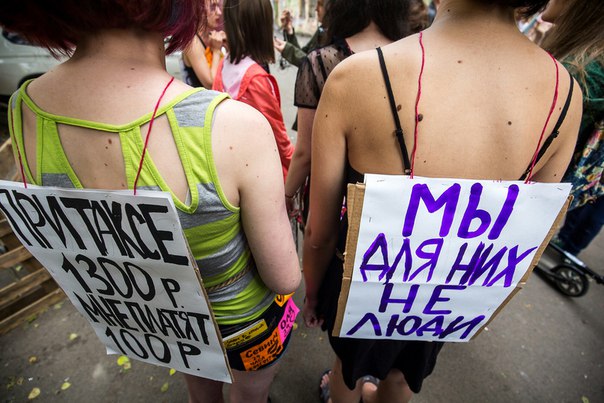
Petersburg female activists have staged the performance Walk to call for a humane attitude towards women involved in the sex industry, the prosecution of pimps, and the decriminalization of prostitutes themselves.

Wearing dresses pasted over with advertising flyers for brothels, and sporting painted bruises and black eyes, the five female performers were marched by a “pimp” through downtown Petersburg.

The young women bore placards on their backs featuring such quotations from real interviews with prostitutes as “I have always been raped, now I’m getting raped for money,” and “We are not human beings to them.”

"My rate is 1,300 rubles an hour. I get paid a 100 rubles." // "We are not human beings to them."
“My rate is 1,300 rubles an hour. I get paid a 100 rubles.” // “We are not human beings to them.” Photo by David Frenkel

On Arts Square, the young women slipped away from the supervision of their “pimp.” They turned their placards arounds, revealing the inscriptions “Not a commodity,” “Not a thing,” “Not a criminal,” “Not a slave,” and “Human being.”

At this point, the other performers, depicting prosperous citizens who have a contemptuous attitude towards prostitutes and their problems, shouted angrily at the young women and pelted them with dirt.

Rapes, beatings, fear, constant threats to their lives, no protection from law enforcement, a lack of medical care, and endless public scorn: these are the real lives hidden by brightly colored flyers advertising “Masha,” “Sevinch,” “Girls,” “Relaxation,” and “Massages.”

Prostitutes lead closed and stigmatized lives. Our prosperous society is irritated more by the flyers and ads that disfigure our beautiful city than by the slavery and human trafficking occurring behind its disfigured façades.

The recent raid by “defender of morals” Vyacheslav Datsik has returned the subject of sexual slavery, which society and the media persist in calling “sex work” to the public discourse and underscored the fact that society has no sympathy for these women. It only feels contempt for them. If Datsik had forced any other women to walk naked down the street, everyone would have been up in arms. But prostitutes are not people. No one cares about their misfortunes.

Datsik has even seemed like a savior to many people, because he liberated the residents of a building from a brothel. And indeed, although brothels operate outside the law, politicians and policemen are also involved in the profitable business of selling women. So complaints against brothels filed by ordinary people are ignored and drown in bureaucratic rigmarole. However, a new brothel will open to replace the one Datsik, allegedly, shut down. And it will be that way until there is the political will to denounce and prosecute the people who trick and force women into slavery and sell their customers the right to violence. People should realize that the last thing they should do is blame the prostitutes themselves. They should stop seeing these women as criminals.

Pay attention to the slaves who live invisibly in our midst. And don’t call them “workers.” But do call them human beings.

Walking past St. Catherine’s Catholic Church on Nevsky Prospekt, the city’s main drag. Photo by David Frenkel
Walking past the Chamber Concert Hall of the Petersburgh Philharmonic (right) and a poster advertising a “gala concert” celebrating the 140th anniversary of the translation of the Russian Synodal Version of the Bible by the Russian Orthodox Church. Oddly, the concert was held on May 26 at nearby St. Peter’s Lutheran Church. Photo by David Frenkel
Walking past the entrance to the city’s premier hotel, the Grand Hotel Europe. Photo by David Frenkel
Enraged “citizens” pelt the “prostitutes” with dirt.
“Human being.” // “Not a criminal.” // “Not a thing.” Photo by David Frenkel
“Not a commodity.” // “Not a slave.” Photo by David Frenkel
“Igor is married but goes to prostitutes because his wife is not willing to give him the humiliating, painful sex he likes, which one can only endure out of fear or for money.” // “Yulduz does not speak Russian and does not understand how to escape from the brothel. Human trafficking is a global problem.” // “Round-the-clock rape for money. Using another person’s body to masturbate while ignoring their needs is rape.” Flyers handed out to passersby during the performance Walk. Photo by Ksenia Chapkevich

Translated by the Russian Reader. For more on this subject, see my post “Let’s (Not) Talk about Sex,” from December 2014.

Uncle Misha Is Back (He Was Never Gone)

Vadim F. Lurie
Facebook
May 7, 2016

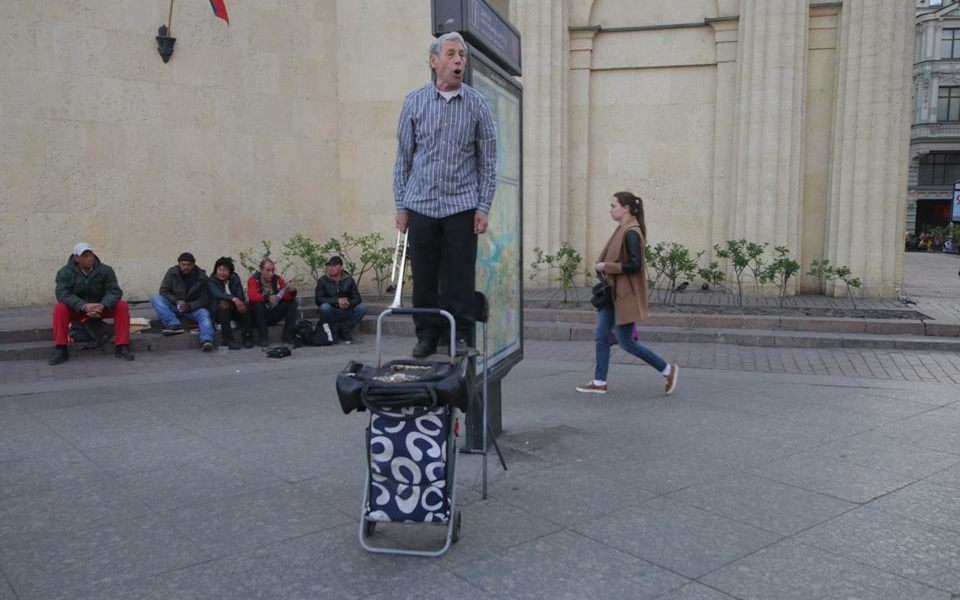
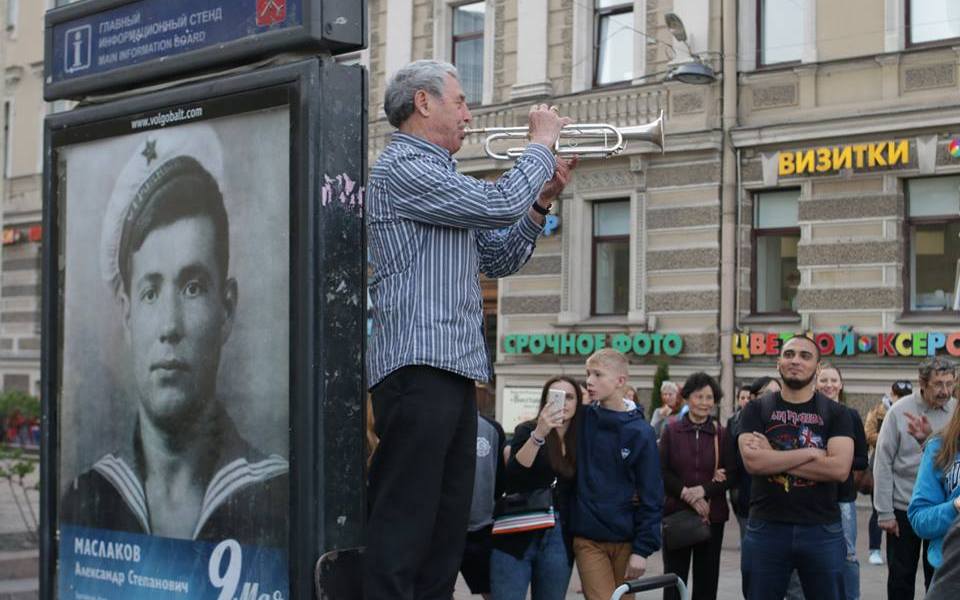
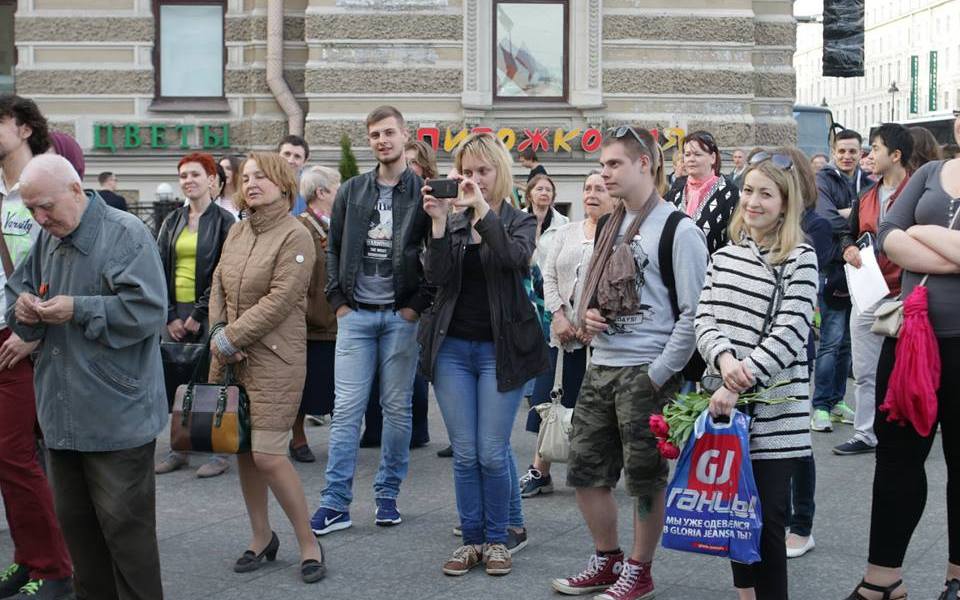
I have run into Uncle Misha around town two days in a row.  Yesterday, I said hello to him, asked him whether he knew what people had been writing about him (if you recall, they had been writing he had died), and wished him a long life. Uncle Misha said he knew about all of it, and everything was cool. Today, he rocked Ploshchad Vosstaniya. People reacted very positively.

misha-1
Street trumpeter Uncle Misha outside the Ploshchad Vosstaniya subway station in Petersburg. All photos by Vadim F. Lurie

misha-2

misha-3

misha-4

Uncle Misha playing outside the Nevsky Prospekt subway station in downtown Petersburg. Photo by Vadim F. Lurie

Translated by the Russian Reader. Thanks to Vadim Lurie for permission to reproduce parts of his photo reportage here.

The Crime of Speaking Up in Russia: Solidarity with Dadin and Polyudova

Vadim F. Lurie
Facebook
March 23, 2016

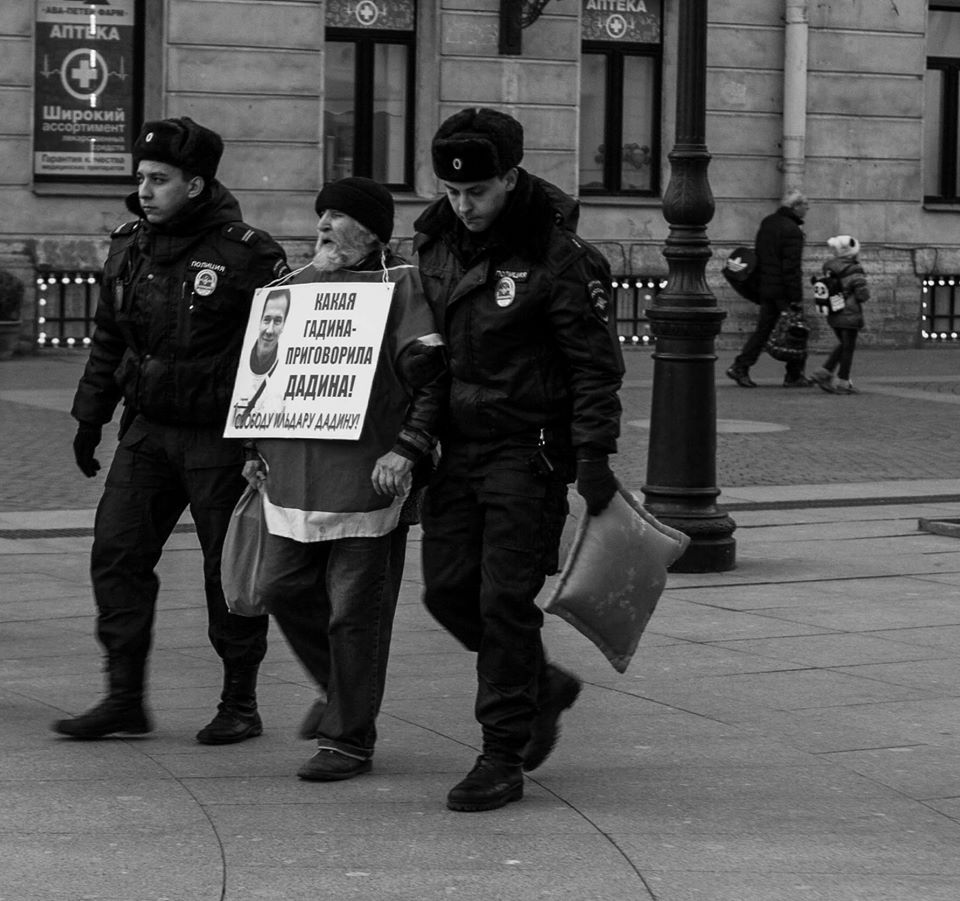
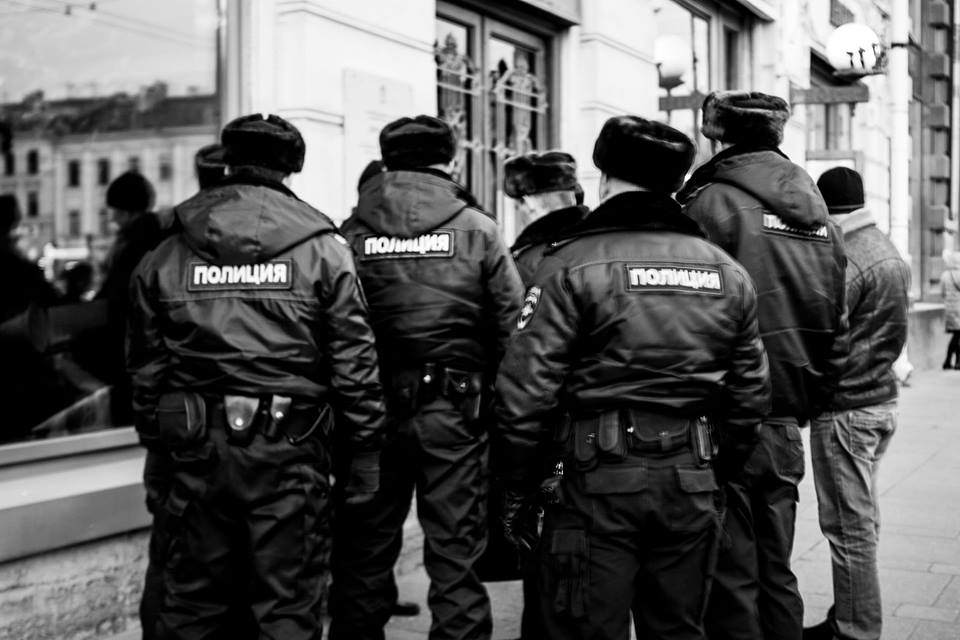
The people’s assembly [to publicize an appeals hearing in the case of Ildar Dadin, sentenced in December 2015 to three years in prison for the heretofore unknown offense of “repeat unauthorized protesting”] did not come off. [Nor did Dadin’s appeals hearing in Moscow City Court: it was postponed to a later date.] There were fewer people in attendance than the day before yesterday, the day Nadiya Savchenko was sentenced. But the picketers decided to spread out along the Nevsky, and members of the National Liberation Movement (NOD) wandered around searching for them, trying to pester and troll them.

The most successful at this was a bearded specimen, who yelled, “Look, a real live national traitor! A Maidanite, a Banderite, funded by the State Department!

The passerbys, who usually do not pay much attention to people standing holding placards, mostly regarded them sympathetically thanks to this spiel.

lurie-skhod-1
“What a viper sentenced Dadin! Free Ildar Dadin!” Local police detain veteran democratic activist Igor “Stepanych” Andreyev. Petrograd, March 23, 2016. Photo by Vadim F. Lurie
lurie-skhod-2
Petersburg police surround a picketer, demanding he produce his documents. Petrograd, March 23, 2016. Photo by Vadim F. Lurie
lurie-skhod-3
A member of the so-called National Liberation Movement (NODS) scans the Nevsky for “national traitors.” Petrograd, March 23, 2016. Photo by Vadim F. Lurie
lurie-skhod-4
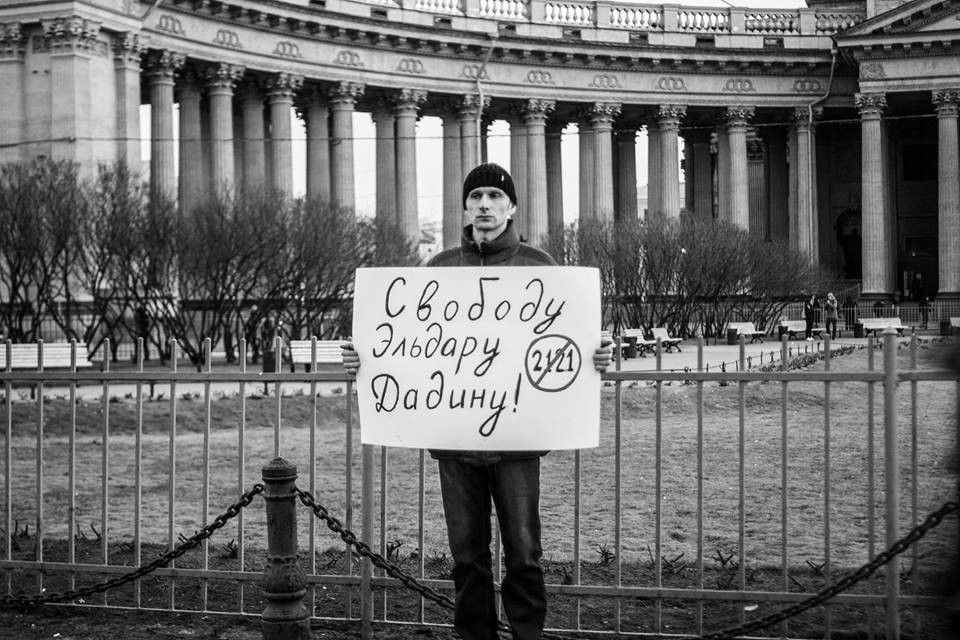
“Free [Ildar Dadin! No to Article 212.1!” A picketer stands in front of Our Lady of Kazan Cathedral. Petrograd, March 23, 2016. Photo by Vadim F. Lurie
lurie-skhod-5
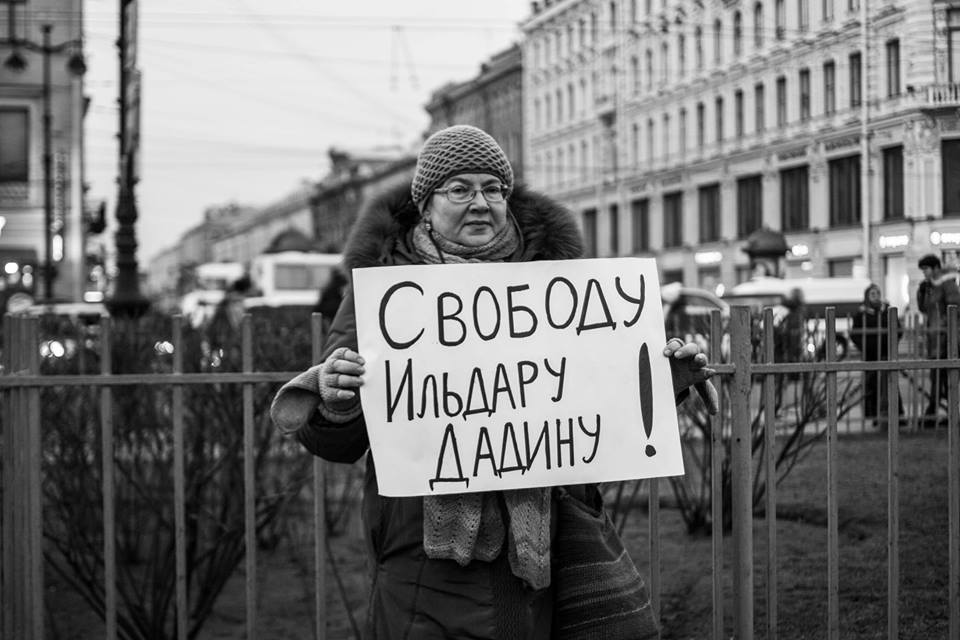
“Free Ildar Dadin!” Petrograd, March 23, 2016. Photo by Vadim F. Lurie
lurie-skhod-7
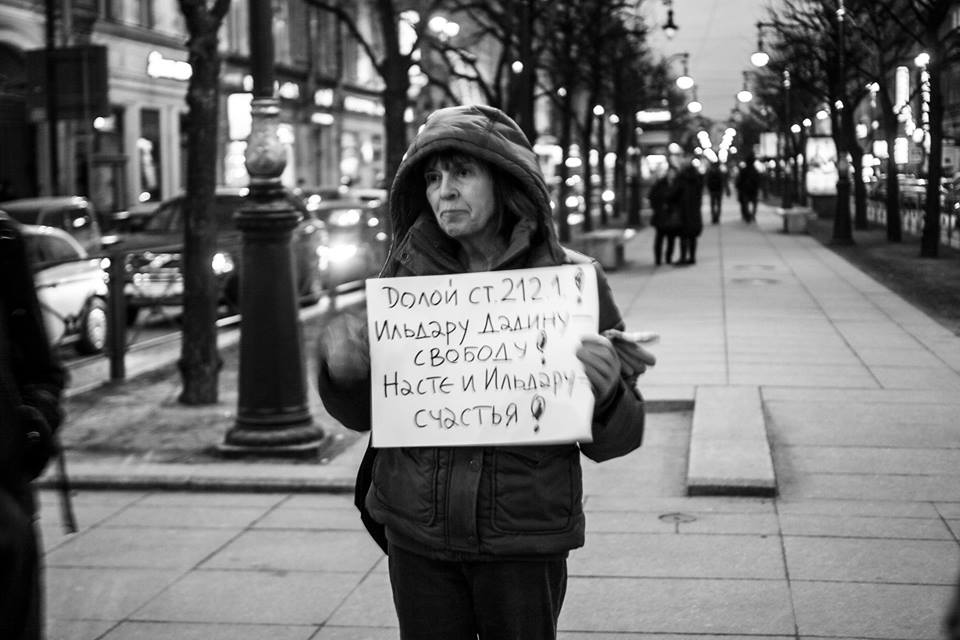
“Down with Article 212.1!* Free Ildar Dadin! Congratulations, Nastya and Ildar!” Petrograd, March 23, 2016. Photo by Vadim F. Lurie
lurie-skhod-8
“Free Darya Polyudova,** sentenced to two years in a work-release prison as an extremist for a repost on Vkontakte.” Image of Polyudova with placard: “Ukraine, we are with you.” Petrograd, March 23, 2016. Photo by Vadim F. Lurie

Translated by the Russian Reader. Thanks to Vadim F. Lurie for his kind permission to republish his photos here.

*Despite the obstacles, Russia’s opposition continued to organize protests. So last summer in 2014, the Kremlin effectively criminalized all peaceful protests and assemblies. Article 212.1, which went into effect in January 2015, amends the previous law in a considerably more punitive manner, carrying up to 5-year criminal prison terms for repeated protests. This law has a “3 strikes” feature, stating that anyone who has been convicted 3 times for the administrative offense of ‘violating the regulations governing public rallies,’ within a six month period is subject to criminal liability. With these laws and their particular application against political critics, the Putin regime is sending a powerful message heard throughout Russia of a repressive new reality unseen in decades: If you dare to speak out against government policies or leadership, the authorities will ruthlessly treat you as a common criminal and send you away for years in penal colonies. [] A young protester named Ildar Dadin became the first person to be convicted under Article 212.1 for having protested 3 times within a 6-month span. Ildar Dadin engaged in a completely benign peaceful protest, mostly standing alone holding a sign expressing his opinions, specifically about releasing political prisoners, the need to change power in the Kremlin, and to end the war in Ukraine. Until his trial in December, Dadin had been confined to house arrest. But on December 7, Dadin was sentenced to 3 years of actual prison time in a penal colony for simply exercising his constitutional right to express his opinion. Yes, Russia’s Constitution under Articles 29, 30 and 31 guarantees freedom of expression and freedom of assembly. But the new laws make those guarantees not worth the paper they’re written on. (Paula Chertok, “New Normal in Russia: Putin Critics Punished with Harsh Prison Terms,” Euromaidan Press, January 6, 2015)

**Dispatches: The Crime of Speaking Up in Russia
Tanya Lokshina, Russian Program Director
Human Rights Watch
December 22, 2015

A left-wing political activist has been convicted of inciting separatism and extremist activities, the latest in a series of criminal prosecutions in Russia against people who dare speak their minds online.

Unless the December 21 ruling by a court in Krasnodar in southern Russia is quashed on appeal, the accused, Darya Polyudova, 26, will spend the next two years behind bars. The charges against her derived from three posts she published on her page in VKontakte (VK), Russia’s most popular social network.

All three posts had to do with Ukraine. The one that triggered the incitement to separatism charge – in Russian law, making “public, online calls aimed at violating the territorial integrity of the Russian Federation” – was not even written by her. It was a flippant comment by another user, which Polyudova shared on her page, about supposed demands by local ethnic Ukrainians of the Krasnodar region to be incorporated into Ukraine.

The second post, deemed by authorities as “public calls to extremist activities,” was a photo of Polyudova with a poster that said, “No war in Ukraine but a revolution in Russia!” The slogan did not include any advocacy of violence.

The third one was a commentary about how the situation in Russia was intolerable and Russians needed to follow the example of Ukraine’s Maidan activists, take to the streets, and bring down the government. These are strong words, but didn’t include any specific action plan.

Polyudova’s VK page has all of 38 followers, and most of her posts draw very few comments. Her words can’t be taken as inciting violence, and they certainly didn’t pose a “danger to the public,” as Russian law requires for criminal prosecution.

Polyudova’s prosecution is one in a growing number of cases where Russians are being punished for speaking their mind. This autumn, a court in Tatarstan sentenced an activistto three years in prison on very similar charges. Since the return of Vladimir Putin to the Kremlin in 2012, the Russian government has instituted an unprecedented and sweeping crackdown on critics of the government, and one of its tools has been overbroad and vague anti-extremism legislation. As the space for freedom of speech in the traditional media narrows, the government is now going after the Internet and targeting individuals who try to stir public debate about sensitive issues, especially Ukraine.

Until her trial, Polyudova was relatively unknown. But by criminally prosecuting her, the government is sending a chilling signal to Internet users across country – if you think you can speak your mind online, think again.

Nadiya Savchenko: Closing Statement in Court

"Russia is dead, although it seems to be alive. But Nadiya can be saved." Demonstrator at International Women's Day rally on the Field on Mars, Petrograd, March 8, 2016. Photo by and courtesy of Sergey Chernov
“Russia is dead, although it seems to be alive. But Nadiya [Nadezhda] can be saved.” Demonstrator at International Women’s Day rally on the Field on Mars, Petrograd, March 8, 2016. Photo by and courtesy of Sergey Chernov

Nadiya Savchenko: Closing Statement in Court

I accept neither guilt, nor the verdict, nor the Russian court. In the case of a guilty verdict there will be no appeal. I want the whole democratic civilized world to realize that Russia is a third-world country, with a totalitarian regime and a petty tyrant-dictator, where human rights and international law are spat upon.

It is an absurd situation when those who abduct people subject them to torture then act as if they have a right to judge them! How can one talk about a fair trial? In Russia, there are no trials or investigations, only a farce played out by Kremlin puppets. And I find it superfluous to waste time in my life participating in it!

And so there will be no appeal, but this is what will happen: After the verdict I will continue my hunger strike for 10 more days, until the verdict comes into force, and this is regardless of the translation [of the verdict] into Ukrainian, because they can drag that out for a long time, too. In 10 days I will begin a dry hunger strike [refusing both food and water], and then Russia will have no more than 10 days to return me to Ukraine, where they abducted me! And I don’t care how they justify it! I have heard that [Ukrainian President] Petro Oleksiyovych Poroshenko is quite adept at diplomacy. I hope his diplomatic skills will suffice to reach agreement in Russia with a certain idiot; after all, he promised my mother that I would be home in time for the May holidays of 2015.

And while they are bargaining over me, my life will be draining away and Russia will return me to Ukraine in any case: it will return me, dead or alive!

Throughout these 10 days, day and night, my sister will be standing at the jail gates, and she will wait and see whether they release me or not. And if you put her in jail, my mother will come and take her place. She is 77, will you put her in jail, too? In that case my friend will take her place, and after her, Ukrainian after Ukrainian! And remember: you can’t shove everybody in here. And while my compatriots are standing there, simple, honest, and decent Russians living in nearby homes will bring them hot tea, sandwiches, and warm blankets, because each one of them understands that tomorrow their child could be in my place, in this prison of all peoples called Russia!

That is how Maidans (revolutions) start! Do you need that?! You fear it like the plague! So it is better for the Kremlin to return me to Ukraine as soon as possible, and alive!

And those in the world with democratic values ought to learn their history lessons before it’s too late and remember that there was a time when Europe was tolerant toward Hitler, and America wasn’t decisive enough, and this led to World War II. Putin is a tyrant with imperial manners and a Napoleon and Hitler complex put together. The [Russian] bear doesn’t understand human language, he understands only the language of force. Therefore, unless we become more decisive and determine the right priorities on time, we will soon have World War III.

And I, as a politician now, won’t shake Russia’s hand in the political arena. It is not right to extend a hand to someone who kept you in handcuffs and your people in chains. But every time I make a political decision, I will always think how it would affect ordinary people, both in Ukraine and Russia. Because in Russia, in spite of everything, there are many honest, kind, and decent people.

Demonstrator at International Women's Day rally on the Field on Mars, Petrograd, March 8, 2016. Photo by and courtesy of Vadim Lurie
Demonstrator at International Women’s Day rally on the Field on Mars, Petrograd, March 8, 2016. Photo by and courtesy of Vadim F. Lurie

{NE MIR} Dialogues (Riga)

Vadim F. Lurie
Facebook
February 21, 2016

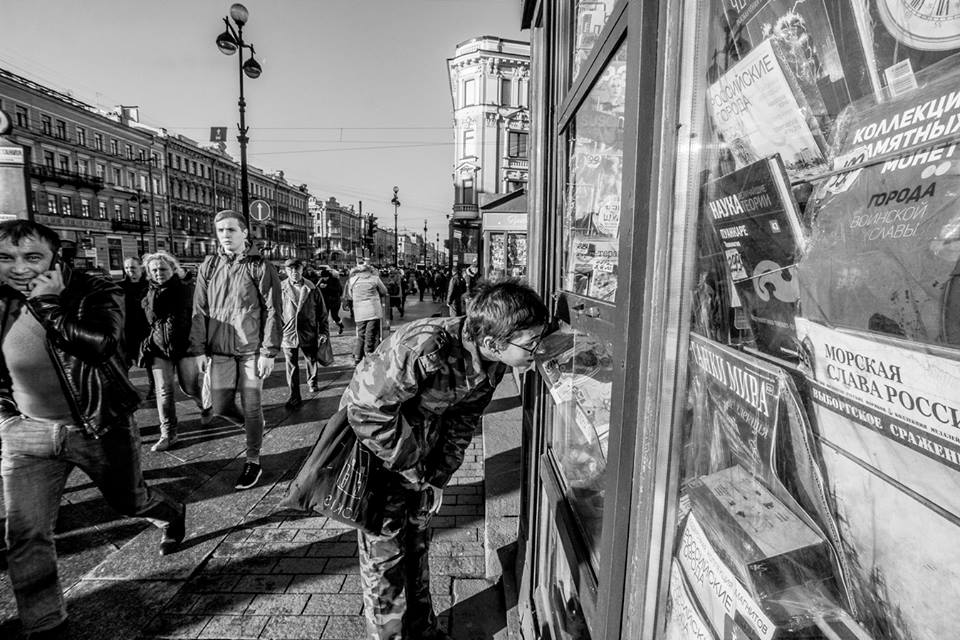
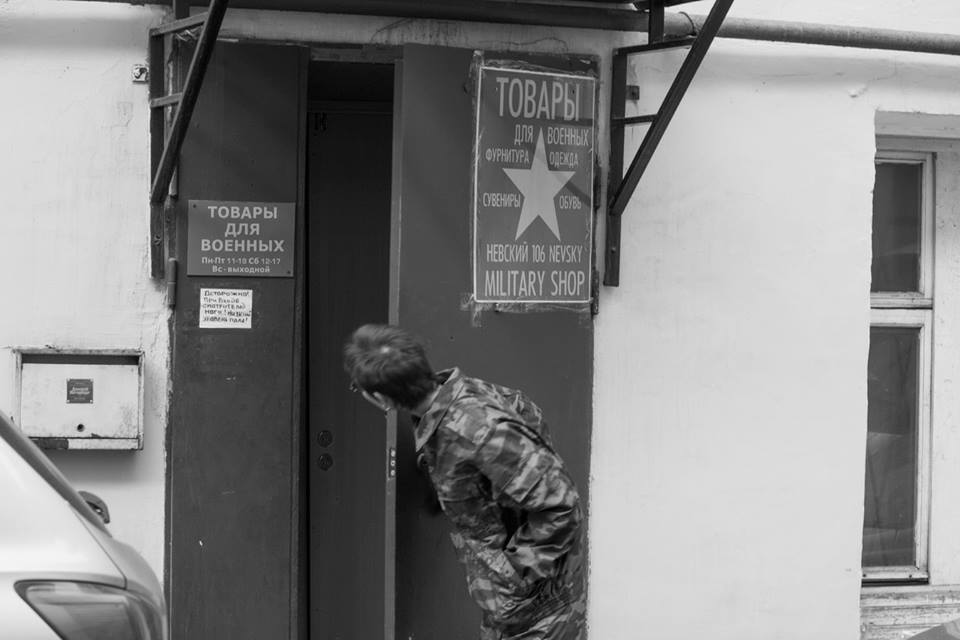
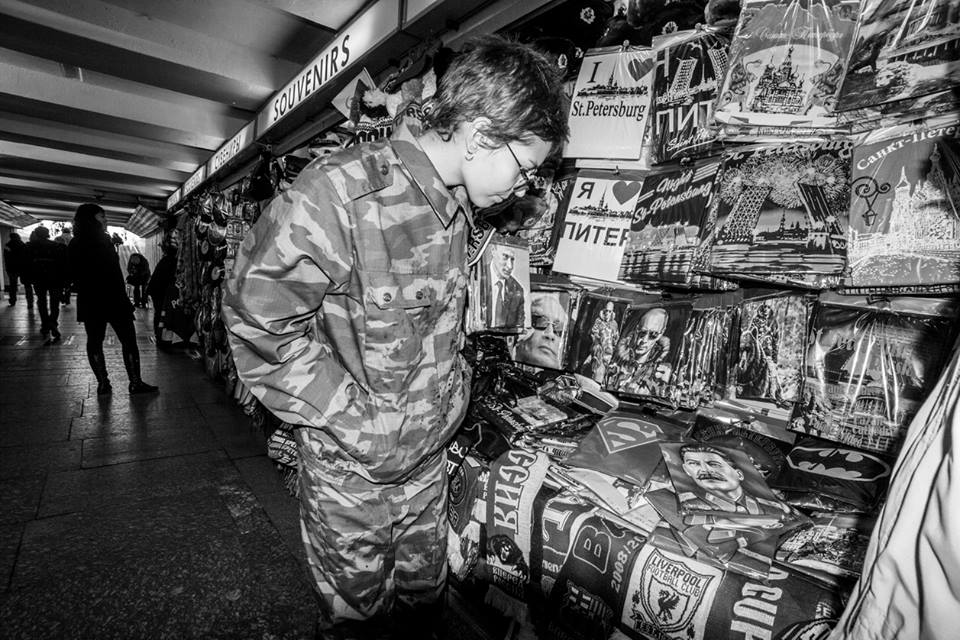
The exhibition {NE MIR} (NO PEACE), a sequel to and an elaboration on the itinerant exhibition/performance that recently took place in Petersburg, opens today in Riga. I sent my photographs of Antiwar Weekend, a walk around the city made by Ekaterina Nenasheva. She strolled around Petersburg in a blood-stained, camouflage uniform. We looked for places in one way or another connected with war, aggression, the army or the memory of them. Actually, we didn’t have to love for them: they were everywhere. Our city is traumatized. Aggression and the memory of wars are offered to tourists as souvenirs, and I see this as an attempt not only at self-assertion but also at conveying this feeling to everyone. As we walked round the city, passersby paid no special attention to the young woman in camouflage. She had become yet another military artifact, a customary sight here. Thirteen photographs, Petersburg, a sunny day in 2015.

Translated by the Russian Reader

12717180_10205713548746516_5004147964005267285_n
Ekaterina Nenasheva, Antiwar Weekend, 2015. Photograph by Vadim F. Lurie. Items for sale in the far right of the kiosk include “Cities of Military Glory,” “Russia’s Naval Glory,” and “The Battle for Vyborg.”
12715679_10205713548426508_695270159562902442_n
Ekaterina Nenasheva, Antiwar Weekend, 2015. Photograph by Vadim F. Lurie.
12742264_10205713548706515_5009893401106894565_n
Ekaterina Nenasheva, Antiwar Weekend, 2015. Photograph by Vadim F. Lurie.

__________

12705378_560104237485253_5926362963602784144_n

{NE MIR}: Dialogues in Riga
Opening: February 21, 2016, 7 p.m.
BOLDERĀJA, AVOTU, 29, RIGA

{NE MIR} is a series of antiwar street exhibitions launched by a group of artists from Moscow and Petersburg. The project’s objective is to discuss war in its different forms, make a collective artistic statement on the relationship between the individual and the state, and investigate the borders of street art in today’s Russia.

The first {NE MIR} exhibition took place in Petersburg on December 27, 2015.

In Russia, there is a law prohibiting marches and rallies (in fact, any political or public gathering of more than two people) without obtaining permission from the authorities ten days beforehand. Moreover, these rallies can be held only in specific places, which are usually situated on the outskirts of cities or are difficult for the public to access. The Russian authorities have the right to prohibit any rally, and in that case it will be considered illegal.

Since their request was turned down three times by local authorities, the artists who launched {NE MIR} had no other choice than to make mobile banners and wander the city under the watchful eye of regular police and riot police.

The urban environment, which dictated the form of protest (wandering round the city), thus functioned as the exhibition’s curator.

This interactive format raised many questions both in terms of art and civic involvement.

How should Russian artists act in the current situation when any statement is deemed disorderly conduct or even a crime? What is the visual code used by police and random passersby, and what are the circumstances under which dialogue is possible? How are absolutely defenseless artists regarded by viewers when they display their artworks in such an aggressive environment?

We intend to look for answers to these questions both inside and outside Russia.

{NE MIR}: Dialogues is a series of itinerant exhibitions and discussions held outside Russia in free art spaces and galleries. It is an attempt to promote dialogue among citizens, artists, and activists, and spark cultural and social interaction between people from different societies and countries.

The exhibition of the {NE MIR} project in Riga will include paintings, graphic art, installations, photographs, and video works by artists from Russia, Ukraine, Denmark, and Chile.

A discussion entitled “The Image of War: The Mass Image and the Private Image” will be held at 7 p.m. on February 21 at Bolderāja Bookshop and Cafe (Avotu 29, Riga), with the exhibition opening to follow at 8 p.m.

Adapted and edited from the original event notice in English on Bolderāja’s Facebook page

Happy Russia Day!

At three-thirty this afternoon I was awoken from a well-deserved nap by an incoming SMS on my cellphone, which read:

Уважаемый Клиент, поздравляем Вас с Днём России – праздником свободы, мира, равноправия и справедливости! Искренне желаем Вам и Вашим близким душевного тепла, достатка, счастливой, долгой и благополучной жизни! С праздником, Ваш “Билайн”

I.e.,

Dear Customer, we congratulate you on Russia Day, a holiday of freedom, peace, equality, and justice! We sincerely wish you and your family warmth, prosperity, and a long, happy, safe life! Congratulations, Your Beeline

Aside from irritating the drowsy me to no end, the SMS inadvertently reminded me of an article I had read earlier in the day on the topic of equality in Russia.

One in six Russians lives below the poverty line
June 11, 2015
ru.euronews.com

The numbers of Russians whose income is below the subsistence level increased by 3.1 million people in the first quarter of this year, up to 22.9 million. These figures have been published by Rosstat. The poverty rate rose to 15.9%, meaning that every sixth Russian falls into this category.

From January to March, the average subsistence level reached 9,662 rubles [approx. 155 euros] per person per month (a year ago it was 7,688 rubles). But inflation has also surged, which has been an especially painful blow to the poor.

The embargo on food imports from Europe and the United States, [introduced] in August 2014, fueled an inflation of food prices, and the 200% drop in the ruble’s value at year’s end drove up the prices of imported goods. As a result, by the end of the first quarter, the annual inflation rate in Russia had reached a thirteen-year maximum, 16.9%, according to Rosstat. By May, the figure had dropped slightly to 15.8%.

The statistics agency blames the increase in poverty on inflation. Average per capita monthly income, now at 25,210 rubles [approx. 400 euros per month], seems to have increased compared with the first quarter of 2015 by 11%, but fell by a quarter compared with the fourth quarter of last year.

Do you wonder how many Russians 15.9% is? The hipsters at The Village told their readers the answer yesterday evening as the latter were gearing up for the long holiday weekend: 22,900,000.

But how many people live in Russia?

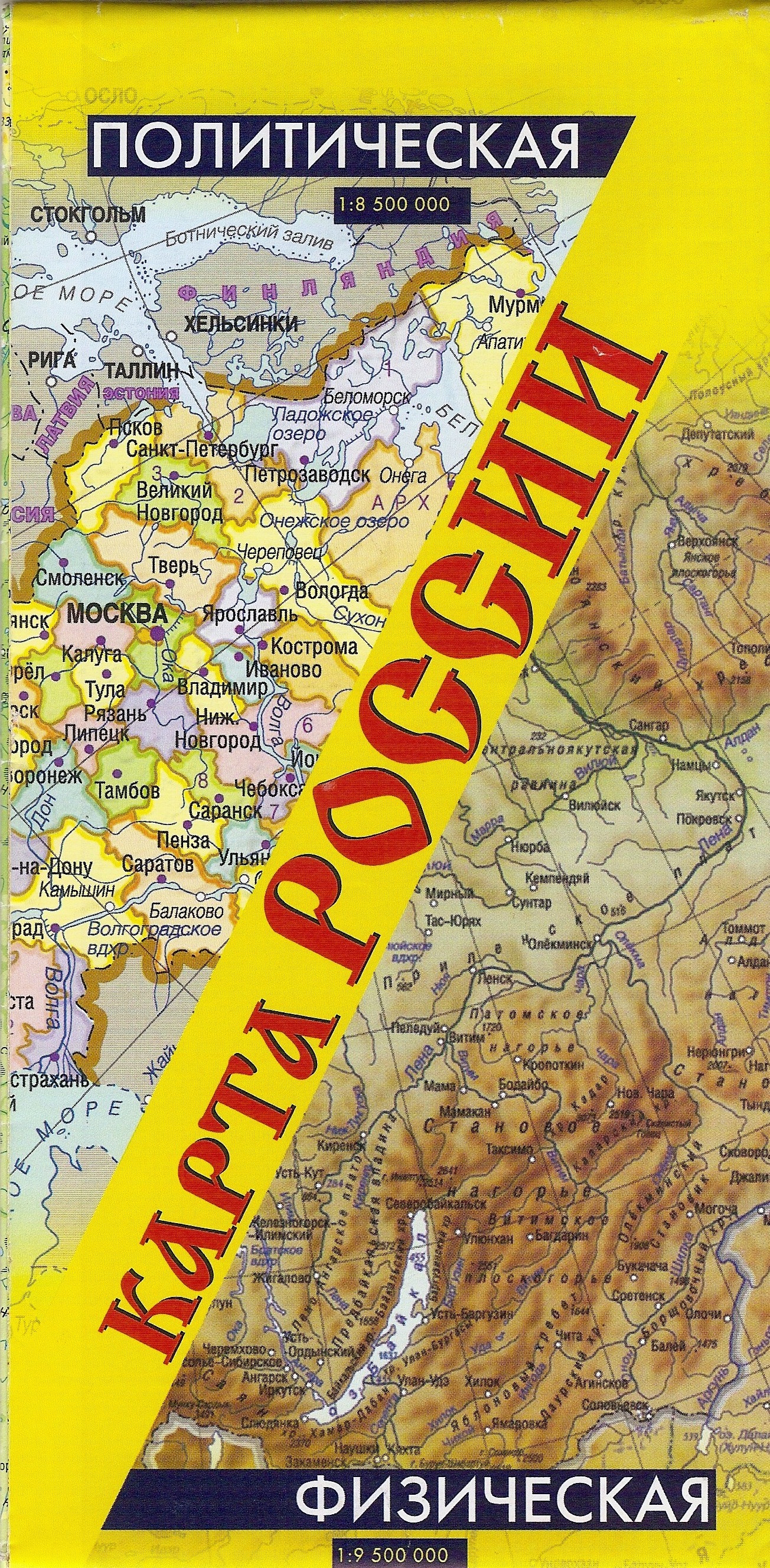
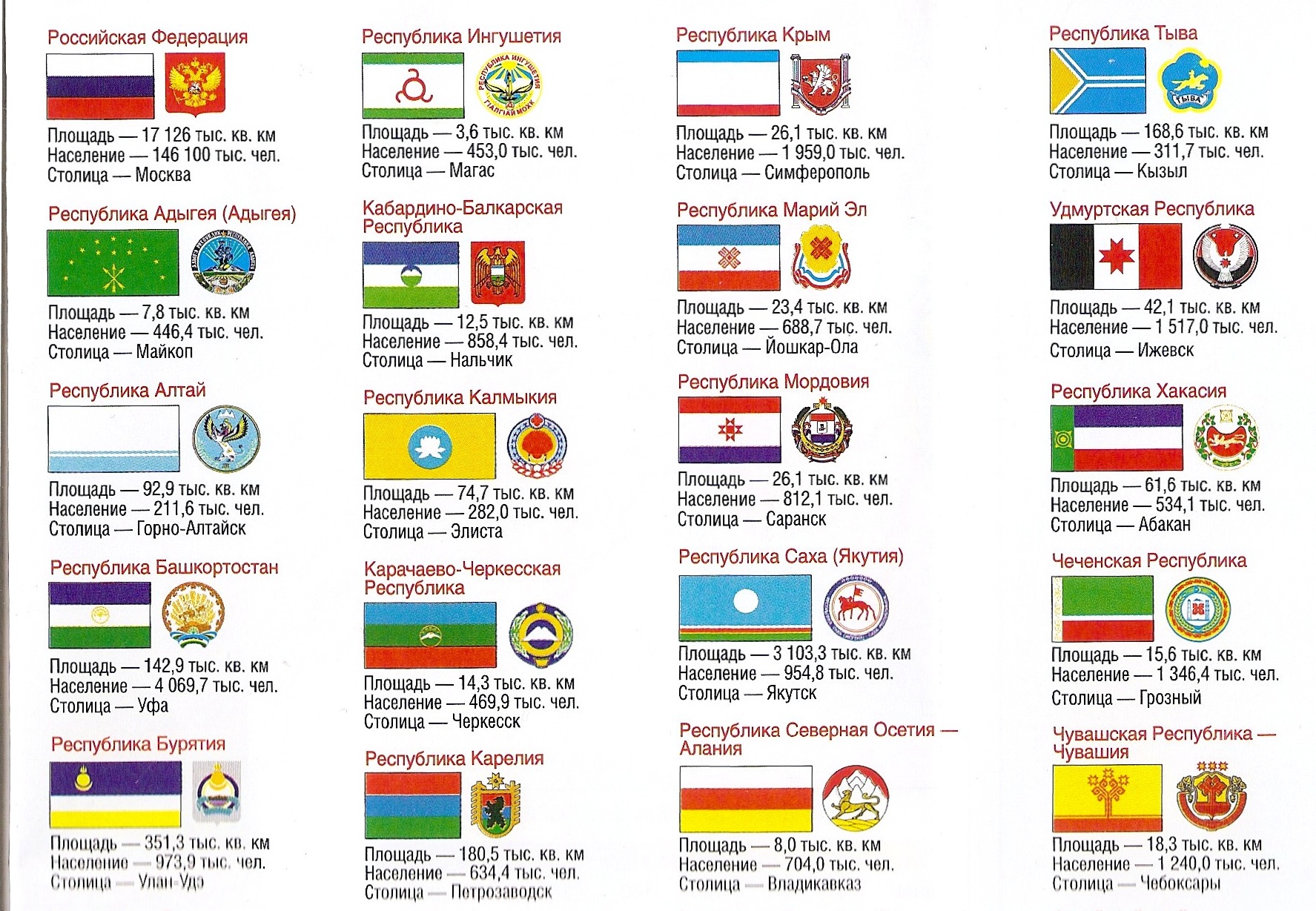
According to the handy Political and Physical Map of Russia, published by AST Publishers in February 2015, which I recently picked up at my local French-owned hypermarket, the Russian Federation’s population stands at a healthy 146,100,000, now, apparently, that is, that the Republic of Crimea’s nearly two million former wayfarers have returned to home port.

map 1

map 3map 5

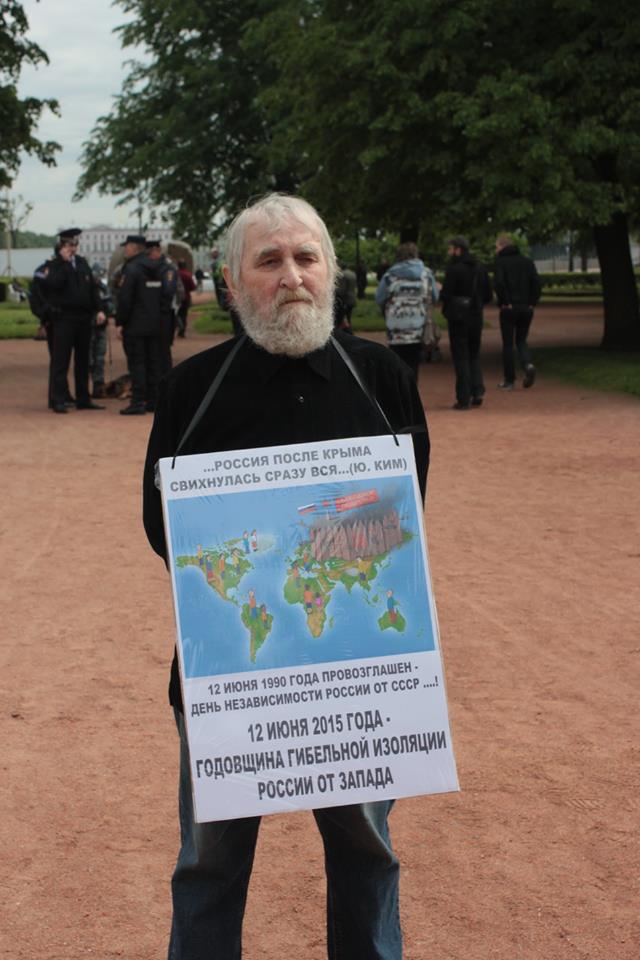
But there are a handful of malcontents who bristle at this new method of fighting poverty by annexing the territory and populations of other countries. One of them is  a stalwart of the Petersburg protest scene, Igor “Stepanych” Andreyev, who showed up to a “prayer for deliverance of the Fatherland from the oppression of lawless men in power” this afternoon, at the city’s Solovetsky Stone, sporting a provocative but veritable downer of a placard.

stepanych-2

Russia immediately went mad after [the annexation of] Crimea (Yuly Kim). On June 12, 1990, Russia’s day of independence from the USSR was proclaimed! June 12, 2015, is the anniversary of Russia’s destructive isolation from the West.

Source: Facebook (Vadim F. Lurie)

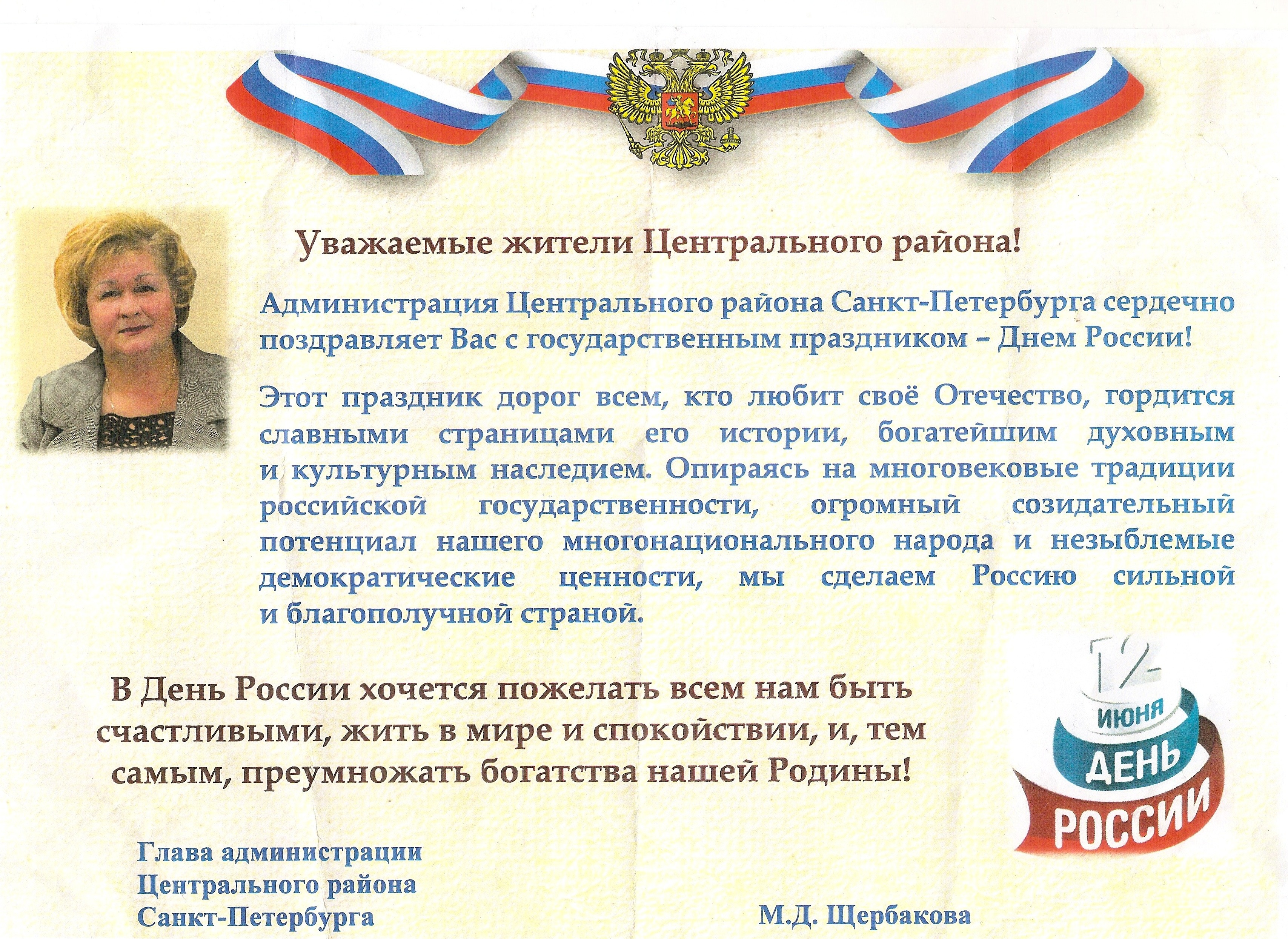
Fortunately, the Russian authorities are not as down in the mouth as the sour old multiple arrestee Stepanych. For example, Maria Shcherbakova, the seemingly perpetual head of the city’s Central District, had these uplifting holiday congratulatory printouts pasted on every front door in our neighborhood the other day.

shcherbakov kongrats

Dear Central District Residents!

The Administration of Saint Petersburg’s Central District warmly congratulates you on the national holiday, Russia Day.

This holiday is dear to everyone who loves their Fatherland and takes pride in the glorious pages of its history and its extremely rich spiritual and cultural legacy. Based on the centuries-old traditions of Russian statehood, the huge creative potential of our multi-ethnic people, and unshakeable democratic values, we will make Russia a strong and successful country.

On Russia Day, I would like to wish all of us to be happy, to live in peace and tranquillity, and to thereby multiply the riches of our Motherland!

M.D. Shcherbakova
Chief Executive, Central District of Saint Petersburg

Earlier today, President Putin expressed similarly upbeat patriotic sentiments while handing out state prizes for achievements in science, technology, literature, and the arts:

“These ideals of patriotism are so deep and strong that no one has ever been able and will ever be able to recode Russia, to convert it to fit their formats. We cannot be separated, torn, and isolated from our native roots and origins.”

Who would want to “recode” and “reformat” Russia anyway? Grumpy old Stepanych? The nearly twenty-three million Russians now living on less than 155 euros a month?

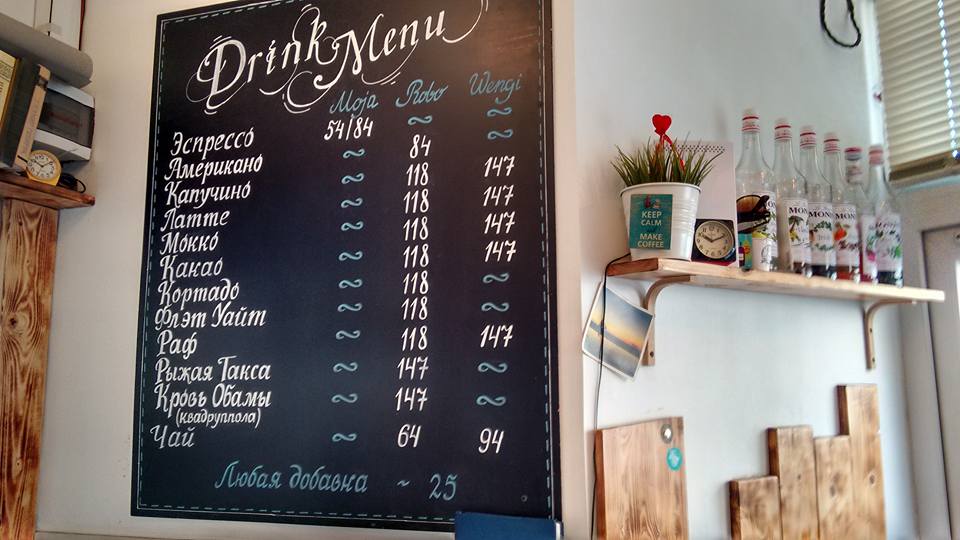
Of course not, you sillies. It is that wicked, black-as-tar, uppity Negro from across the seas, Barack Obama, as the hipster baristas in the coffee hut on the corner of Liteiny Prospekt and ulitsa Belinskogo have pointed out in their own droll way.

obama's blood

We continue our trek around Petersburg’s fashionable spots:

“What is Obama’s Blood?”

“A quadruple espresso.”

“And why did you call it that?”

“That’s just what we came up with.”

Source: Facebook (Alexander Nazarov)

At 147 rubles a cup, Obama’s Blood is the most expensive item on the menu, as a friend has pointed out to me, but when you convert it to euros (€2.36) or dollars ($2.66), it is practically a steal.

And it will get in you in the mood for a fun albeit nerve-wracking Russia Day.

* * * * * *

Russia Day (Russian: День России, Den’ Rossii) is the national holiday of the Russian Federation, celebrated on June 12. It has been celebrated every year since 1992. The First Congress of People’s Deputies of the Russian Federation adopted the Declaration of State Sovereignty of the Russian Soviet Federative Socialist Republic on June 12, 1990.

Kado Cornet: Russia, the General, and Other Folks

Kado Cornet
The Story of Russia, the General, and Other Folks
www.facebook.com
September 8, 2014

The General is the man who attempted to revive Russia.

“I’m the General, I served in Rostov!” is how he later introduced himself.

Actually, I feel terribly uncomfortable because I had called him a “homeless alcoholic” or “drunk tramp” (in an English-language post). These words carry many negative connotations, unfortunately. It was just difficult to succinctly and neutrally define his social position and state of mind or something. But by no means do I want this description to belittle him in the eyes of an outside observer.

Some people have suggested the General’s role in the performance was planned. But that is not the case at all. Before I appeared, he was sleeping peacefully on the windowsill of the Yeliseyevsky store. To be honest, I had turned onto Malaya Sadovaya completely by accident, because I really was blindfolded.

10632728_829520100394304_6699857443009993006_n

“What the f#ck you waking me up for?” the poor guy said, outraged, in response to my cries.

I decided to fall down after I heard someone say, “Just f#ck her, what is the bitch doing?” and felt that someone, either one of the homeless people or a cop, had grabbed my arm.

Lying on the pavement, I listened to a very serious dialogue between a little boy and his mother about what was happening. I promised myself to remember it, but alas, I wasn’t able to. It’s too bad.

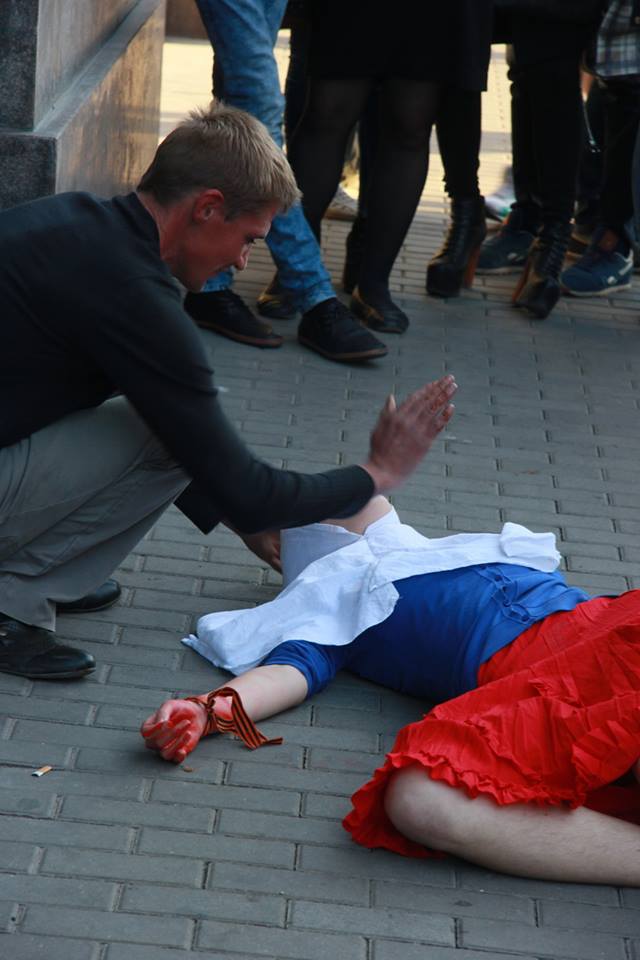
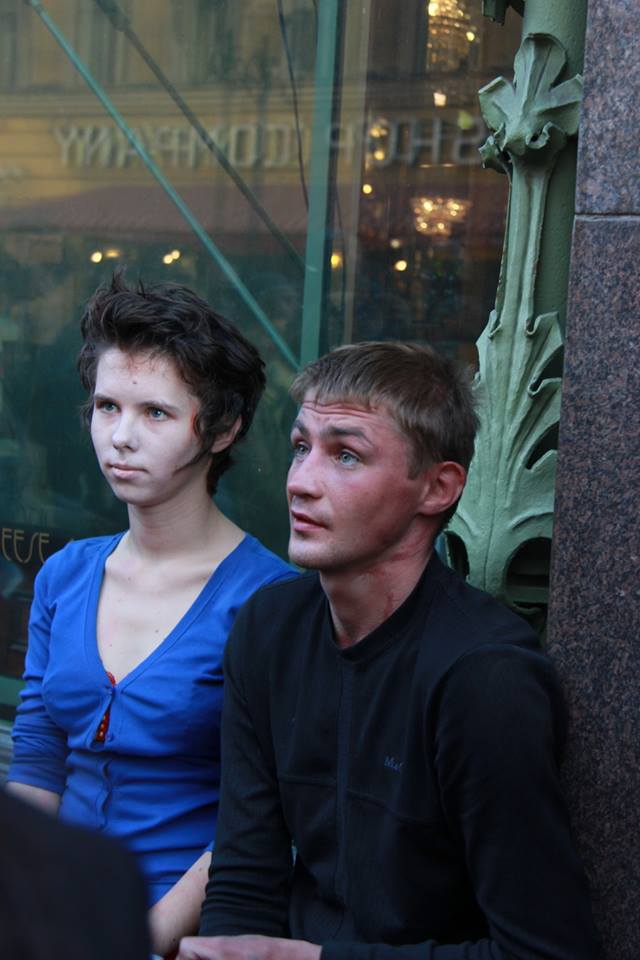
“Is she dead or something?” the General asked, bewildered, and began feeling my pulse. The crowd laughed and took pictures.

I don’t know what the story is with his generalship, but the guy clearly knows first aid. He found the pulse on my arm and neck, removed my blindfold, pulled my eyes open, and checked my pupils (“Ha-ha, you’re not dead! Get up and quit pretending!”). Then he slapped my face (it hurt!) and pulled me up by the arms. He didn’t even spare his booze, pouring it all over my face. My eyes stung for the rest of the day.

10653775_829520253727622_8113700646923691719_n

“Kiss her!” someone cried out from the crowd.

To my great relief, the General didn’t dare. A moment later, Russia miraculously awoke, finally, from her sleep.

It turned out that a policeman had already called an ambulance. He kept guard over me until it came, not believing me when I said I was fine. The General solicitously questioned me about the incident.

“What did you fall down for? I was really scared! And why are your hands red? I got all dirty while I was resuscitating you! Now I’m all red, too!”

“I’m sorry.”

“Why did you fall? Did something happen to you?”

“I was feeling bad, but you saved me.”

“Here, at least put on my shoes. You’re sitting there barefoot.”

He started taking off his shoes and proffering them to me. It wasn’t cold, but I had to get out my shoes and put them on to calm him down.

Two women butted into our conversation.

“Quit bothering her! Leave her alone!”

“He just wants to help her!”

“What do you want?”

“I don’t want anything, I’m just—”

“Even cats don’t just f#ck.”

“What did you say?”

“Nothing.”

“I will always help you! Do you need money? Take some money!” said the General, pulling a crumpled ten-ruble bill from his pocket.

10649852_829521547060826_900824948027444574_n

“Aha, you’re getting paid!” said a man in the crowd, catching me red-handed.

 “Now I am, as you can see.”

I couldn’t have got away with lying: there were too many witnesses. I managed to return the money later, although not right away. Unfortunately, I didn’t have anything with me except a subway token. Getting taken to the police station with cash on you is bad luck.

That’s when the ambulance pulled up.

“What you got here?” the doctor asked.

“This girl here was yelling and lunging at people,” the policeman said.

 “Was she screaming anti-government things?”

 “Uh-huh.”

“Maybe you should take her in, then?”

“No, you’d better examine her.”

“I am so fed up with all this stuff.”

They led me to the ambulance. The male doctor was skeptical, the female doctor, supportive. They politely asked me about my occupation, attitude towards alcohol, education, health, source of income, and, finally, the meaning of my performance.

The female doctor tossed me a couple of interesting ideas.

“Well, I understand you wanted to show suffering Russia. You should have done it so that people would understand and not get worried about you! And warn the policeman ahead of time.”

I apologized to them at length for the inconvenience.

“Alright, sign this and get out of here.”

The doctor handed me a document stating I had declined hospitalization.

While recording my passport information, the policeman asked, hopefully, “Now you’re going to go home, young lady?”

“Yes!”

I didn’t want to upset him any more than I already had.

In conclusion, here is a small vignette as told by Vadim Lurie.

Three young Armenian men in their forties were watching the performance. Two of them soon decided to move on, but one was so fascinated they had to call out to him.

“Let’s go already, Odysseus!”

Translated by Bela Shaveyich and edited by the Russian Reader.

_________

Activist Stages Dramatic Protest Against Russia’s Policies on Ukraine
Anna Dolgov
The Moscow Times
September 8, 2014

A peace activist has staged an emotive protest against the Kremlin’s policies on Ukraine by wandering blindfolded through St. Petersburg with her hands stained blood-red.

The activist, who goes by pseudonym Kado Cornet, was captured in a YouTube video walking barefoot down St. Petersburg’s central Nevsky Prospect, clad in a red skirt, blue shirt and a white headscarf — the colors of the Russian flag.

Cornet also wore on her wrists the orange-and-black ribbons of St. George — a Russian symbol of military valor — and a blindfold over her eyes, while walking with her outstretched hands stained in red.

“This is my Motherland. Blinded, insane, screaming in agony,” the activist said Saturday on her Facebook page. “It does not know where it is going, but it is sure that everyone should be afraid of its hands, which are stained in blood — others’ and its own.”

Passersby stopped in their tracks to watch the young woman as she staggered forward, emitting screams, witnesses said.

“This action made a most powerful impression on me,” Vadim Lurie from St. Petersburg said on his Facebook page. “Kado walked and screamed, and her scream could not be ignored. People received this action much more readily than any [protest] sign.”

The action titled “Russia’s Scream” ended after Cornet collapsed near the renowned Yeliseyevsky food store, lying motionlessly on the pavement, according to social media accounts.

While some passersby expressed concerns that the young woman may have fallen ill, nobody appeared willing to approach her except a homeless man, the protester and witnesses reported.

“When [Russia] falls, it will turn out that nobody except a homeless drunk is able to come to its aid,” Cornet said via Facebook.

A police officer summoned to the scene called an ambulance, Lurye said, though the protester appeared to be in good health, saying later on her Facebook page that she planned to travel around the country and eastern Europe in the coming days.

The artistic action was received positively by a number of Facebook users.

One woman praised the “fragile young woman, who is stronger than a million healthy men who are quietly watching from the side or yapping support for the authorities.”

“Brave girl, well done,” wrote another Facebook user.

The West has repeatedly accused the Kremlin of supplying arms to pro-Russian separatists in eastern Ukraine, leading to a conflict with government forces that has left thousands dead and many more displaced. The Kremlin has denied the charges.

But Cornet in her Facebook message was keen to underline that her protest was not just directed at those in power: “No one who has tried to turn a deaf ear to this scream will be able to wash off the blood,” she wrote.