News from Ukraine Bulletin 70

Pacific Grove, California, 2 July 2023. Photo by the Russian Reader

News from Ukraine Bulletin 70 (30 October 2023)

A Digest of News from Ukrainian sources

In this week’s bulletin: More evidence of Russian torture; plus UN documentation of Russian rape, torture, indiscriminate bombing of civilians and other war crimes. And much more

News from the territories occupied by Russia:  

Russia drops all pretence in ‘trial’ of Ukrainian hostages imprisoned since 2018 in occupied Donbas  (Kharkiv Human Rights Protection Group, October 27th)

Massive increase in Russian spending on its war against Ukraine and indoctrination on occupied territory  (Kharkiv Human Rights Protection Group, October 27th)

Russia stages new ‘trial’ to increase sentence against 64-year-old Ukrainian imprisoned for affirming that Crimea is Ukraine (Kharkiv Human Rights Protection Group, October 26th)

Zaporizhzhia nuclear plant engineer held and tortured by Russian invaders for over a year  (Kharkiv Human Rights Protection Group,October 25th)

Fake ‘secret witness’ exposed in Russia’s politically timed persecution of Crimean Solidarity journalist and other Crimean Tatars  (Kharkiv Human Rights Protection Group, October 24th)

‘More than 20 bullets were fired into my car’ (Kharkiv Human Rights Protection Group, October 23)

Russia stages illegal raids against Ukrainians as supposed ‘foreigners’ in occupied Ukraine (Kharkiv Human Rights Protection Group,October 24th)

Crimean artist Bohdan Ziza’s 15-year ‘terrorism’ sentence for opposing Russia’s war against Ukraine (Kharkiv Human Rights Protection Group, October 23rd)

News from Ukraine – general:  

Miners’ solidarity mission – Confederation of Free Trade Unions of Ukraine 26 October

Ukraine’s desperate search for war funding hits local budgets (Open Democracy, October 26th)

At least 508 Ukrainian children killed by Russia (Ukrainska Pravda, October 23rd)

Analysis and comment: 

How the Karabakh conflict might impact Moldova, Georgia, Ukraine – The Insider, 18 October

Research of human rights abuses: 

‘I see no path to reconciliation until evil is called evil’  (Kharkiv Human Rights Protection Group, October 27th)

As long as there is any hope, we should look for missing persons  (Tribunal for Putin, October 27th)

The destruction of Cherkaski Tyshky viewed from the air (Tribunal for Putin, October 26th)

Dreams turned to ashes  (Kharkiv Human Rights Protection Group, October 26th)

Life is like a horror movie (Kharkiv Human Rights Protection Group, October 25th)

‘A whole family died in a neighbouring house’ — resident of Sievierodonetsk  (Tribunal for Putin, October 25th)

Center for Civil Liberties took part in the conference “Justice and Accountability – New Ways of Thinking”, dedicated to war crimes in Ukraine and Syria  (Centre for Civil Liberties, October 24th)

‘We were bombed every day’  (Kharkiv Human Rights Protection Group, October 24th)

UN documents Russian rape, torture, indiscriminate bombing of civilians and other war crimes in Ukraine  (Kharkiv Human Rights Protection Group, October 23rd)

ZMINA discusses rescue of Crimean political prisoners in Brussels (Zmina, October20th)

How migration was affected by Russia’s targeted shelling of Kyiv in May 2023 – Opora, 17 October

War-related news from Russia and Belarus:

How residents of southern Siberia show support for a war thousands of miles away – Meduza, 26 October 

International solidarity: upcoming events

Commons Conference – Dialogues of the Peripheries – November 4th-5th

Eating in crisis: food sovereignty, war and environment – November 4th, 10.00. Registration here 

International (in)security: building solidarity in a rupturing world? – November 4th, 13.00. Registration here 

Women during the war: between defense of the country and lack of social security – November 4th, 16.00. Registration here.  

Labour rights in conditions of war and mass migration: how to work under attack?  November 5th, 10.00. Registration here.  

Approved or refused: how the international refugee system has to work? – November 5th, 13.00. Registration here.  

Authoritarian regimes and imperialist aggression – November 5th. Registration here.  

Ukrainian Feminist Kitchen #4

October 30th at 18.00. REGISTRATION HERE 

Art show fundraiser for Ukraine

29th October – 10th November. Details here.

From Ukraine to Palestine, Occupation is a Crime

2nd November, 18.00.  Sponsored by the Ukraine Solidarity Network. Details here.

==

This bulletin is put together by labour movement activists in solidarity with Ukrainian resistance. More information at https://ukraine-solidarity.org/. We are also on Twitter. We aim to circulate information in English that to the best of our knowledge is reliable. Send items for inclusion to 2022ukrainesolidarity@gmail.com. The bulletin is also stored online here

To receive the bulletin regularly, send your email to 2022ukrainesolidarity@gmail.com. To stop it, please reply with the word “STOP” in the subject field.  

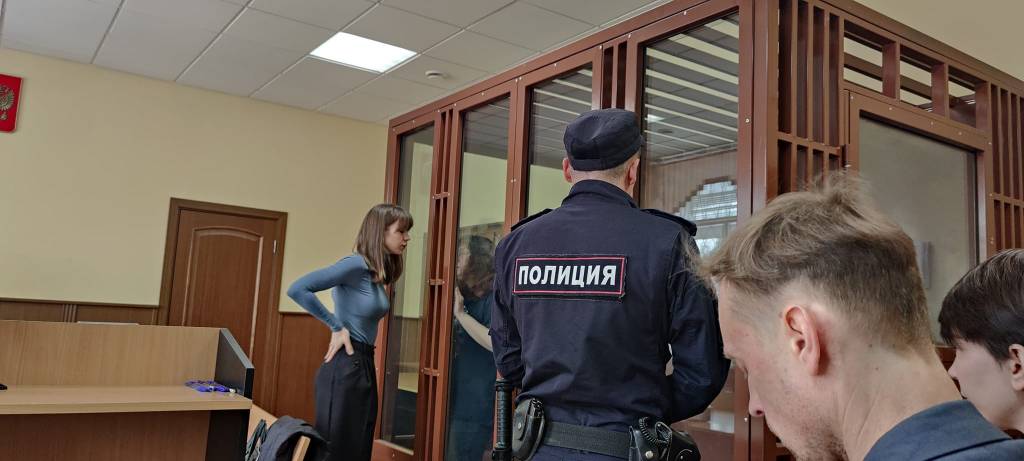
Scenes from Olga Smirnova’s Show Trial

“Fun times” today at the trial of Olga Borisovna Smirnova. The escort guard pushed the defense lawyer, Zyryanova, and ripped a phone from her hands, injuring her fingers. As soon as the ambulance arrived, the doctors took Olga’s defense attorney downstairs to the vehicle and drove her away.

At the trial itself, the prosecutor read out a bunch of papers for three hours regarding the searches of the homes of Olga’s associates. In each instance the investigator wrote that none of this evidence was entered into the case file, whereas earlier she herself had insisted on urgent searches without a court order, which were carried out.

The only variety in these boilerplate search and inspection reports was provided by the descriptions of apartments and rooms. And, for some reason, the prosecutor always says “kitCHEN table,” with the stress on the second syllable.

But there is nothing [“incriminating” in these reports?] except literature in Ukrainian (the prosecutor reads the title in Ukrainian and then the Russian translation, as supplied by Yandex Translate) and placards whose slogans the prosecutor was occasionally ashamed to read aloud, claiming that the slogan “Free political prisoners” was “obscene,” and the slogan “Putin resign” was “illegible.” What sort of sharp practice is it to fill the criminal case file, under the guise of evidence, with stuff that has nothing to do with the case and even according to the investigator is not evidence? Is the prosecutor trying to generate an overall fogginess?

While there is a break in the trial, people wait in the hallway. More than twenty people have come to hearing, including a group of supporters and journalists.

When Olga is escorted out now, the bailiffs close the door to the stairs, where people are standing, apparently so that they won’t be able to shout out words of support to her.

Source: Alexei Sergeyev (Facebook), 4 April 2023, from Kirovsky District Court in St. Petersburg. Translated by the Russian Reader


As our correspondent reports, at the latest hearing in the trial of activist Olga Smirnova, in the Kirovsky District Court, the prosecution made public the contents of the nine posts on VKontakte which occasioned criminal charges of disseminating “fake news” about the Russian army.

The posts listed by the prosecution were made on the public social media page of the movement Democratic Petersburg.

  • A post with a link to a video titled “We will never be brothers,” in which it is reported that the Russian army is “reducing Ukrainian cities to ruins.”
  • A post with a link to a video that concludes with the words [in Ukrainian], “Glory to Ukraine, glory to the defenders, death to the enemy.”
  • A post with a link to a video titled “We show Russians photos from Ukraine. The reaction of Russians to the war in Ukraine.” In the video, “the assertion is made” that the photos show Ukrainian cities destroyed by Russian shelling.
  • A post featuring a photo of a placard on which “the assertion is made” that the Babyn Yar Holocaust Memorial Center was damaged by Russian bombing.
  • A link to a video titled “No war with Ukraine.”
  • A post titled “Chronicles of the war, March 9,” in which it is reported that over 1,300 civilians were killed in Mariupol, most of whom were Russian-speaking.
  • A post titled “Chronicles of the war, March 9, continued,” which reports that Russian troops continue to bomb Kharkiv’s civilian infrastructure facilities.
  • A post which”sarcastically” reports on a battle between Kadyrovites and Ukrainian National Guardsmen on the premises of the Zaporizhzhia nuclear power plant, claiming that goal of the Kadyrovites is to seize the nuclear power plant in order to “blackmail the whole of Europe with radioactive contamination.”
  • A post titled “Anti-war pickets: greetings and glory to Ukraine,” which reports that supporters of peaceful resistance in Petersburg came out to protest against the criminal war which Russia is waging against Ukraine.

Due to the absence of witnesses, the prosecution moved to postpone the trial until March and the court granted the motion.

Olga Smirnova is a grassroots activist. She is one of the founders of Strategy 18, an ongoing campaign in support of the Crimean Tatars. She is also a a member of the Petersburg movement Peaceful Resistance, which, according to its own description, “spreads the truth about the Russian Federation’s large-scale criminal war against Ukraine.”

Until 2014, Smirnova worked as an architect, but after Crimea was occupied, she devoted herself to grassroots activism. In 2021, her home was searched due to Strategy 18’s protest campaign, as part of a criminal investigation into “condoning the activities of a terrorist organization banned in Russia.”

The Petersburger faces up to ten years in prison if convicted. You can write to Olga Smirnova in jail: Bumaga explains how to do it.

Source: Bumaga, “What posts by Petersburger Olga Smirnova does the prosecution consider ‘fakes’ about the Russian army?” 20 February 2023. Translated by the Russian Reader. You can send letters — written in or translated into Russian (if you don’t know a competent translator, you can use a free online translation service such as Google Translate) — to Olga Smirnova and other Russian political prisoners via the free, volunteer-run service RosUznik. You may ask me (avvakum@pm.me) for assistance and advice in sending such letters.

“Our People Are Not Terrorists”

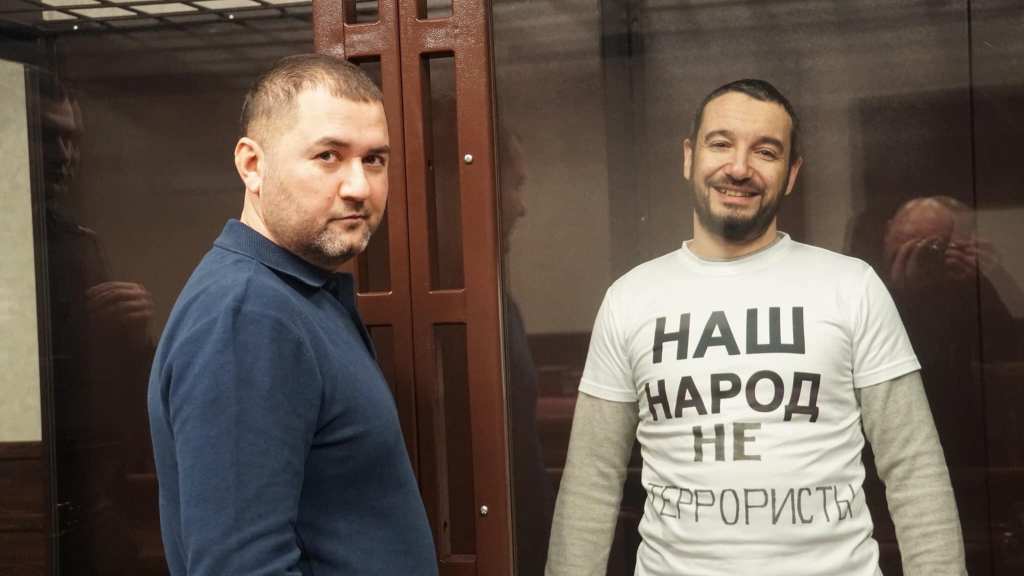
Defense attorney Edem Semedlyaev and Crimean Tatar political prisoner Raif Fevziev, Rostov-on-Don, Russia, 12 January 2023. Imam Fevziev’s t-shirt reads, “Our people are not terrorists.” Photo courtesy of Imam Fevziev and Crimean Solidarity via Mumine Saliyeva

In one of his interviews from the dungeons of the Rostov pretrial detention center, Dagestani journalist Abdulmumin Hajiyev commented on the everyday lives of inmates: “Lately, I’ve been thinking about taking cooking lessons. For some reason, there has been a skilled cook in every cell I’ve inhabited since Makhachkala. Sirazhutdin (Kumyk), Magomed (Avar), Rutem and Alim (Crimean Tatars) — I always admired the enthusiasm and care with which those guys spent several hours every day cooking something delicious for their cellmates with only a bucket and an immersion hot-water boiler to hand. Hajiyev also mentions Alim Karimov, a defendant in the Crimean Hizb ut-Tahrir case, with whom he has shared a cell for a over year a year. Over this time, Alim has learned Arabic.

Yesterday, a Russian court sentenced Karimov and four other defendants, among whom there are pensioners with disabilities, to thirteen years in prison each. The two years it took to try the case on the merits were memorable in several ways. There was an ambulance present at the hearings, but its crew did not provide qualified medical care to the defendants, who were forbidden to speak Crimean Tatar during the proceedings. Putting old men in the dock for talking about Islam had nothing to do with the letter of the law. Instead, it speaks to Islamophobia cloaking itself in the law’s guise, and to the disgrace of the foot soldiers who executed this drama.

A few days ago, my fellow journalist had the opportunity to hand over to me his new articles, one of which tells the story of Ernes Ametov, a cellmate from Crimea, who was sentenced to eleven years in prison by a military court in late December because he would not do a deal with a lie.

Today, Russia’s Southern District Military Court again handed down a verdict to a Crimean Tatar religious figure. Imam Raif Fevziev was sentenced to seventeen years in a high-security penal colony (with the first three years to be served in an ordinary prison) for having a seventy-minute conversation about religion. His trial took place at the same time as the trial of Crimean defendants in another criminal case. Friends and colleagues of Fevziev’s — the religious figures Ismet Ibragimov, Vadim Bektemirov, Aider Dzhapparov, and Lenur Khalilov — had earlier been sentenced to brutal terms of imprisonment by the very same court. These are textbook political persecutions: the NKVD used the same methods, in the past, to eradicate and destroy religious and public figures who had influence among the people.

It is quite difficult to cope with such a merciless chronicle of crackdowns. But when you see and feel what kind of regime you have come face to face with, and how the political prisoners, their families, and a whole people wisely and peacefully oppose it, you have no choice but to recharge your batteries, be more resilient, and go on working, while believing ever more fiercely that change will come.

I read in a book that a system based on segregation and tyranny is a large-scale manmade disaster. The people involved in perpetuating it may well understand that the breakdown of such a “juggernaut” is inevitable, and that they themselves, collectively, are causing the breakdown. But each of them assumes that it’s not their own personal fault, but everyone else’s. Each of them, on the contrary, believes that they are trying to save it — through cruelty, by cracking down on those dubbed “enemies” and “undesirables.” Ultimately, however, they fail to save it.

Source: Mumine Saliyeva, Facebook, 12 January 2023. Translated by Hecksinductionhour

Pleased to Meat You

Dana Sideros

In English lessons at school
it was dictations that scared me most
because I would mix up meet and meat,
ship and sheep, chick and cheek.

I would write
The ship eats green grass.
The big sheep goes to sea at dawn.
I like this fried meet.
Grandma’s cheeks are yellow and funny.

If a native speaker hears you,
one of the teachers told us,
if a native speaker hears you,
they’ll find it painful, and you’ll be embarrassed.

My English has grown a bit since then,
but it is still hamstrung and stunted.

On an island in the middle of the ocean
My clumsy English and I
chatted once with a hostel mate, a Chinese woman.
She told me she had traveled by bus
through Texas, Louisiana, and Florida,
but then in Florida, in Miami,
homesickness had caught up with her,
because she did not find a Chinatown there.
Her story was exactly the same as mine.
I had traveled the same route,
and for some reason it was in Miami,
a city of dancing in the streets, beaches, cocktails, happiness, and sunshine,
where I’d also felt like going home
to the dirty gloom of Moscow in November.

But earlier, on the outskirts of Orlando,
my poor English and I
told a homeless guy,
sitting on the sidewalk in a bad neighborhood,
that my country
had, a year earlier, attacked its neighbor
and taken away the island of Cream
(I still don’t remember the word for “semi-island.”)
People always thinking up some shit, he nodded,
vaguely motioning
towards a better neighborhood.

My lopsided English and I
bought a summer dress
(baby, why do you hide your figure),
looked for a laundromat
(I had to wash my clothes),
explained the rules of a board game
(and then these guys die and go home the same way).

Language wasn’t the problem, it turned out.
I, a native speaker of Russian,
hear native speakers of Russian,
and all the words are muddled.
But my clumsy Russian and I
don’t despair — we memorize words
and phrases that come in handy in conversation.

If someone slaps you,
turn the other chick.
Pleased to meat you.

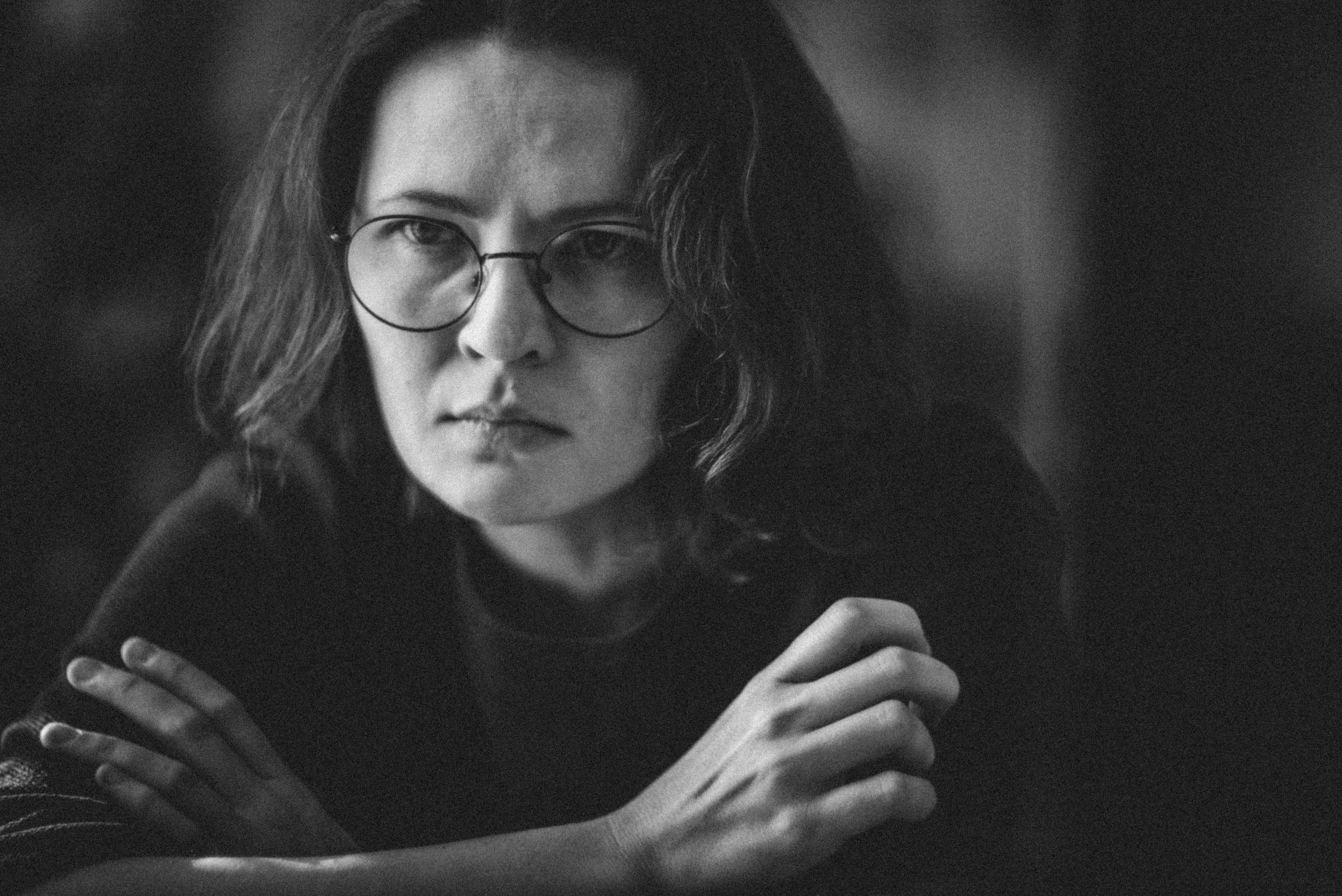
Source: Dana Sideros, Facebook, 26 June 2022. Translated by the Russian Reader. Dana Sideros is a Russian playwright and poet, currently living in Portugal. The photo of her, above, is by Slava Kovalevich.

Selling Eclairs at the Gates of Auschwitz

I am subscribed to a number of email newsletters from theaters, publishers, and clubs, including Russian ones.

And until recently, I myself came up with advertising for the books that we released.

But certain things have changed, haven’t they? Many, of course, have stopped sending newsletters, but some continue. Here is a letter from the International Baltic House Theater Festival [in Petersburg], summoning people to its performances as if nothing has happened. And the venerable publishers Ad Marginem fervently invite people to their tent at the Red Square Book Festival. It’s right on Red Square, where the earth is the roundest!

Hello, friends, have you lost your fucking minds by any chance? I don’t know how it looks in Moscow or Petersburg, but from where I’m sitting, it looks as appropriate as selling eclairs at the gates of Auschwitz.

Source: Dmitry Volchek, Facebook, 2 June 2022. Screenshot and translation by the Russian Reader


Approaching the 100-day mark in a war that he refuses to call by its name, Russian President Vladimir Putin is a man intent on conveying the impression of business as usual.

As his army fought its way into the Ukrainian city of Severodonetsk this week, Putin was making awkward small talk in a televised ceremony to honor parents of exceptionally large families.

Since the start of May, he has met – mostly online – with educators, oil and transport bosses, officials responsible for tackling forest fires, and the heads of at least a dozen Russian regions, many of them thousands of miles from Ukraine.

Along with several sessions of his Security Council and a series of calls with foreign leaders, he found time for a video address to players, trainers and spectators of the All-Russian Night Hockey League.

The appearance of solid, even boring routine is consistent with the Kremlin’s narrative that it is not fighting a war – merely waging a “special military operation” to bring a troublesome neighbor to heel.

For a man whose army has heavily underperformed in Ukraine and been beaten back from its two biggest cities, suffering untold thousands of casualties, Putin shows no visible sign of stress.

In contrast with the run-up to the Feb. 24 invasion, when he denounced Ukraine and the West in bitter, angry speeches, his rhetoric is restrained. The 69-year-old appears calm, focused and fully in command of data and details.

While acknowledging the impact of Western sanctions, he tells Russians their economy will emerge stronger and more self-sufficient, while the West will suffer a boomerang effect from spiraling food and fuel prices.

[…]

But as the war grinds on with no end in sight, Putin faces an increasing challenge to maintain the semblance of normality.

Economically, the situation will worsen as sanctions bite harder and Russia heads towards recession.

[…]

The words “war” and “Ukraine” were never spoken during Putin’s 40-minute video encounter on Wednesday with the prolific families, including Vadim and Larisa Kadzayev with their 15 children from Beslan in the North Caucasus region.

Wearing their best dresses and suits, the families sat stiffly at tables laden with flowers and food as Putin called on them in turn to introduce themselves. On the same day, eight empty school buses pulled into the main square of Lviv in western Ukraine to serve as a reminder of 243 Ukrainian children killed since the start of Putin’s invasion.

The closest he came to acknowledging the war was in a pair of references to the plight of children in Donbas and the “extraordinary situation” there.

Russia had many problems but that was always the case, he said as he wrapped up the online meeting. “Nothing unusual is actually happening here.”

Source: Mark Trevelyan, “Putin clings to semblance of normality as his war grinds on,” Reuters, 2 June 2022


Simon Pirani:

‘At least as bad as Russia itself are the areas of Ukraine occupied by Russian armed forces in 2014 – Crimea and the so called “people’s republics” of Donetsk and Luhansk – and the small amount of territory Russia has taken this year. In Crimea, all civic activism, especially by the Tatar community, has been savagely punished. People are being sent to jail for many years for something they posted on line. The “republics” are ruled by lawless, quasi-state administrations. The list of human rights abuses – torture, illegal imprisonment, forced labour, terrorism against political opponents – is long. Most of the population of the “republics” left, years ago. Industry has collapsed. As for Kherson and other areas occupied this year, local government and civil society has been assaulted, opponents of Russian rule assassinated and kidnapped, and demonstrations broken up. Putin forecast that Ukrainians would welcome his army with open arms; I literally do not know of one single example of that happening. If people are looking for explanations about Ukrainians’ heightened sense of nationalism, part of it may be in the horrendous conditions in the parts of their country occupied by Russia. Who would welcome being ruled by a bunch of cynical, lawless thugs?’

Source: “In Quillversation: A Russian Imperial Project (Simon Pirani and Anthony McIntyre Discuss the Russian War on Ukraine),” The Pensive Quill, 1 June 2022

Irina Danilovich: A Political Prisoner in Russian-Occupied Crimea

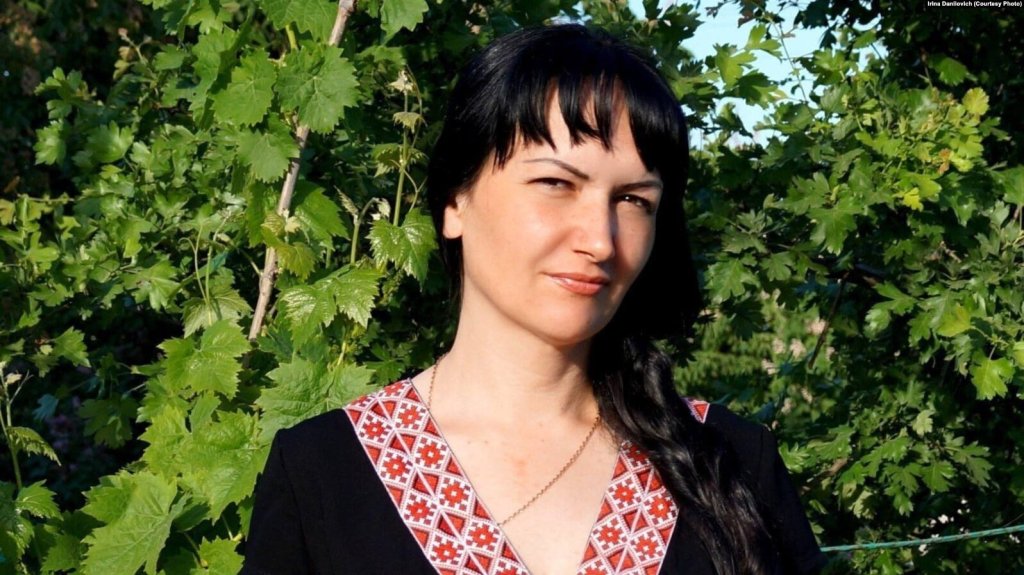
Irina Danilovich. Photo courtesy of Ivan Astashin

Who is Irina Danilovich? Why is she in a remand prison? How can we support her?

The wave of criminal cases directly related to anti-war stances sometimes obscures other politically motivated cases. I want to tell you about one of them.

Irina Danilovich worked as a nurse at Koktebel’s post-stroke rehabilitation center while being heavily involved in civic affairs. Irina can be called a grassroots activist, human rights defender, and journalist. She was, for example, the coordinator of the information campaign Crimean Medicine Without a Cover and in this capacity she harshly criticized the Crimean authorities during the coronavirus pandemic. Danilovich has collaborated with the alternative news website Injir Media and the human rights project Crimean Process. Radio Svoboda reports that Irina defended the interests of medical workers on the peninsula and wrote extensively about violations of their rights. Recently, writes Injir Media, Danilovich had been drawing attention to the war and related problems, including in the healthcare sector.

On April 29, 2022, Irina Danilovich was abducted by the FSB. She was found in the Simferopol pretrial detention center almost two weeks later.

As attorney Aider Azamatov discovered, Irina had been held in the FSB building for eight days, where officers made her take a lie-detector test and threatened to take her into the woods [and shoot her] if she concealed anything from them. She was fed once a day this entire time. After a week of torture, Danilovich was told to sign blank forms in exchange for her release. However, after complying with the demands of the security officers, Danilovich was not released, but sent to the pretrial detention center – allegedly, 200 grams of explosives were unexpectedly found in her eyeglass case.

It is quite obvious to me that the 200 grams of explosives “found” in the eyeglass case of the grassroots activist, journalist, and human rights defender are part of a politically motivated trumped-up criminal case. Especially since this is happening in Crimea. The Memorial Human Rights Center has repeatedly drawn attention to trumped-up criminal cases against Crimeans disloyal to the Russian authorities involving weapons, explosives or ammunition planted during searches.

Now Irina Danilovich is in jail. How can we help her? By doing all the usual things – getting the word about her case out, sending her letters and parcels (there are no restrictions on receiving parcels at the pretrial detention center), and holding solidarity actions.

Crimea became a lawless place after 2014, but public attention to Irina’s case can protect her from further mistreatment and enable her to live to see her release with minimal injuries.

✉️📦 Send letters and parcels to:

295006, Republic of Crimea, Simferopol, Lenin Blvd., 4, SIZО-1,

Danilovich Irina Bronislavovna (born 1979)

Free everyone!

Source: Ivan Astashin, Facebook, 25 May 2022. Translated by the Russian Reader

Bad Manicure

A woman with a yellow and blue manicure was detained in Yalta. Girls, be careful with the nails.

46-year-old Olga Dyachenko was detained following a complaint from a local resident. The man went to the translation agency where Olga works, and saw a woman with a manicure in the colors of a national traitor [sic]. One of Olga’s nails was decorated in yellow and blue, and the other could have been dubbed extremist per se: on the woman’s ring finger, the man made out the Right Sector’s red and black flag.

The woman told the police that she had been a citizen of Ukraine, but in 2021 she became a Russian citizen. She had had her manicure done two weeks earlier, and since that time no one had paid it any mind. Moreover, there was nothing suspicious about it: according to Olga, she had an ordinary multicolored manicure, and the man [who filed the complaint] had just imagined things.

The police interviewed Olga, photographed her hands, had a preventive conversation with her, and reported the manicure to the local FSB office — just in case. After her conversation with the police, the woman had the manicure removed.

Source: Baza (Telegram), 13 April 2022. Thanks to Maria Mila for the link. I have no idea whether the woman in the photo, above, is Olga Dyachenko, but this was the photo published along with the dispatch. Translated by the Russian Reader

“Goszakaz”: Crimean Tatar Activists Sentenced to Monstrous Prison Terms by Russian Occupation Regime


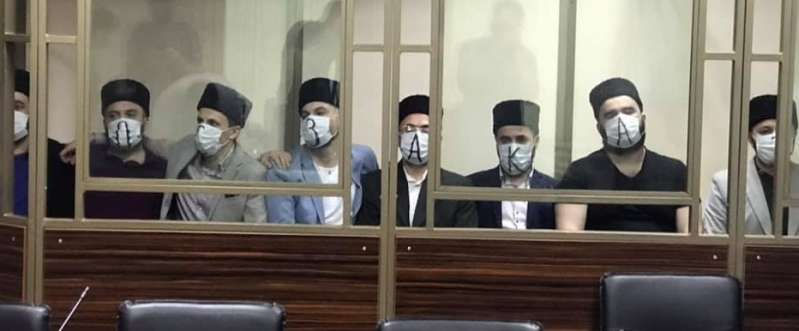
Reading of the sentence on 16.09.2020. The men are each wearing one letter each of the word ГОСЗАКАЗ (“commissioned by the state”). Photo by Crimean Solidarity. Courtesy of khpg.org

Acquittal and monstrous sentences in Russia’s offensive against Crimean Tatar civic journalists & activists
Kharkiv Human Rights Protection Group
Halya Coynash
September 17, 2020

In the last decades of the Soviet regime, dissidents received 7-10-year sentences for so-called ‘anti-Soviet agitation and propaganda’. Modern Russia, persecuting Ukrainian citizens on illegally occupied territory for their religious beliefs and political views, is doubling such sentences. Seven Crimean Tatar civic journalists and activists have received sentences of up to 19 years, without any crime. Justice had not been expected from a Russian court, however absurd the charges and flawed the ‘trial’, so the only – wonderful – surprise was the acquittal of Crimean Solidarity civic journalist and photographer Ernes Ametov. If Russia was hoping, in this way, to prove that these are real ‘trials’ before independent courts, there is no chance. All eight men have long been recognized as political prisoners, and all should have been acquitted.

The sentences passed on 16 September by judges Rizvan Zubairov (presiding); Roman Saprunov; and Maxim Nikitin from the Southern District Military Court in Rostov (Russia) were all lower than those demanded by the prosecutor Yevgeny Kolpikov, but still shocking.

Crimean Solidarity civic journalist Marlen (Suleyman) Asanov: 19 years

Crimean Solidarity activist Memet Belyalov: 18 years and 18 months restriction of liberty

Crimean Solidarity civic journalist Timur Ibragimov: 17 years and 18 months restriction of liberty

Crimean Solidarity Coordinator and journalist Server Mustafayev: 14 years and 1 year restriction of liberty

Crimean Solidarity civic journalist Seiran Saliyev: 16 years and 1 year restriction of liberty

Edem Smailov (the leader of a religious community): 13 years and 1 year restriction of liberty

Crimean Solidarity volunteer Server Zekiryaev: 13 years

In Soviet times, dissidents received a term of imprisonment, then one of exile. Now they add ‘restriction of liberty’ (ban on going outside Crimea and attending events, as well as having to register with the police). In all of the above cases, the sentences are for maximum security prison colonies, although not one of the men was even accused of an actual crime. They are also sentences that Russia, as occupying state, is prohibited by international law from imposing.

The armed searches and arrests of the men in October 2017 and May 2018 were the first major offensive against Crimean Solidarity. This important civic organization arose in April 2016 in response to the mounting persecution of Crimean Tatars and other Ukrainians in occupied Crimea. The initiative not only helped political prisoners and their families, but also ensured that information was streamed onto the Internet and in other ways circulated about armed searches, arrests, disappearances and other forms of repression. Given Russia’s crushing of independent media in occupied Crimea, the work that Crimean Solidarity activists and journalists do is absolutely invaluable. It has, however, subjected them to constant harassment, including administrative prosecutions, and, when that has not stopped them, to trumped-up criminal charges.

The charges
The men were essentially accused only of ‘involvement’ in Hizb ut-Tahrir, a peaceful Muslim organization which is legal in Ukraine. In declaring all Ukrainian Muslims arrested on such charges to be political prisoners, the renowned Memorial Human Rights Centre has repeatedly pointed out that Russia is in breach of international law by applying its own legislation on occupied territory. It has, however, also noted that Russia is the only country in the world to have called Hizb ut-Tahrir ‘terrorist’ and the Russian Supreme Court did so in 2003 at a hearing which was deliberately kept secret until it was too late to lodge an appeal.

In occupied Crimea, the Russian FSB are increasingly using such prosecutions as a weapon against civic activists and journalists, particularly from Crimean Solidarity.

Initially, the FSB designated only Asanov as ‘organizer of a Hizb ut-Tahrir group’ under Article 205.5 § 1 of Russia’s criminal code. The other men were all charged with ‘involvement in such an alleged ‘group’ (Article 205.5 § 2). Then suddenly in February 2019 it was announced that Belyalov and Ibragimov were now also facing the ‘organizer’ charge.  The essentially meaningless distinction is reflected in the sentences passed on 16 September, with the difference in sentence between Timur Ibragimov as supposed ‘organizer’ only one year longer than that passed on fellow civic journalist, Seiran Saliyev (accused of being a member of the so-called Hizb ut-Tahrir cell).

All eight men were also charged (under Article 278) with ‘planning to violently seize power’. This new charge also appeared only in February 2019, with no attempt ever made to explain how the men were planning such a ‘violent seizure’. The charge only highlights the shocking cynicism of any such ‘terrorism’ charges when the only things ‘found’ when armed searches were carried out of the men’s homes were books (not even Hizb ut-Tahrir books), no weapons, no evidence of plans to commit violence. Russian prosecutors simply claim that this follows from Hizb ut-Tahrir ideology. Memorial HRC notes that the extra charge is often laid where political prisoners refuse to ‘cooperate with the investigators’. Since all the Crimean Muslims prosecuted in these cases have stated that they are political prisoners and have refused to ‘cooperate’, the extra charge is becoming standard.

‘Evidence’
The prosecution’s case was based on the testimony of Nikolai Artykbayev, a Ukrainian turncoat, now working for the Russian FSB; two secret witnesses whose identity and motives for testifying are known, and the ‘expert assessments’ of three people with no expert knowledge of the subject.

Russia is now using so-called ‘secret witnesses’ in all politically-motivated trials of Crimeans and other Ukrainians. No good reason is ever provided for concealing the alleged witnesses’ identity, and the bad reason can easily be seen in this case where their identity was understood.  Konstantin Tumarevich (who used the pseudonym ‘Remzi Ismailov’) is a Latvian citizen and fugitive from justice who could not risk being sent back to Latvia after his passport expired. It is likely that the FSB realized this back in May 2016 and have used his vulnerable position as blackmail, getting him to testify both in the earlier trial of four Crimean Tatars from Bakhchysarai, and now in this case.

There is a similar situation with Narzulayev Salakhutdin (whose testimony was under the name ‘Ivan Bekirov’).  He is from Uzbekistan and does not have legal documents.

These men gave testimony that in many places was demonstrably false, yet ‘Judge’ Zubairov constantly blocked attempts by the defendants and their lawyers to ask questions demonstrating that the men were telling lies.

As mentioned, the main ‘material evidence’ was in the form of three illicitly taped conversations in a Crimean mosque. These were supposedly understood to be ‘incriminating’ by Artykbayev, although the latter does not know Crimean Tatar (or Arabic) [or] who transcribed them. That transcript, of highly questionable accuracy, was then sent to three supposed ‘experts’: Yulia Fomina and Yelena Khazimulina, and Timur Zakhirovich Urazumetov. Without any professional competence to back their assessments, all of the three ‘found’ what the FSB was looking for.

While the judges also lack such professional competence, they did hear the testimony of Dr Yelena Novozhilova, an independent and experienced forensic linguist, who gave an absolutely damning assessment of the linguistic analysis produced by Fomina and Khazimulina.

This was only one of the many pieces of testimony that the court ignored. Zubairov actually refused to allow a number of defence witnesses to appear and used punitive measures against the defendants and their lawyers.

All such infringements of the men’s rights will be raised at appeal level, although this will also be before a Russian court, with the charges of justice being minimal.

PLEASE WRITE TO THE MEN!
They are likely to be imprisoned at the addresses below until the appeal hearing and letters tell them they are not forgotten, and show Moscow that the ‘trial’ now underway is being followed.

Letters need to be in Russian, and on ‘safe’ subjects. If that is a problem, use the sample letter below (copying it by hand), perhaps adding a picture or photo. Do add a return address so that the men can answer.

Sample letter

Привет,

Желаю Вам здоровья, мужества и терпения, надеюсь на скорое освобождение. Простите, что мало пишу – мне трудно писать по-русски, но мы все о Вас помним.

[Hi.  I wish you good health, courage and patience and hope that you will soon be released.  I’m sorry that this letter is short – it’s hard for me to write in Russian., but you are not forgotten.]

Addresses

Marlen  Asanov

344010, Россия, Ростов-на-Дону, ул. Максима Горького, 219 СИЗО-1.

Асанову, Марлену Рифатовичу, 1977 г. р

[In English:  344010 Russian Federation, Rostov on the Don, 219 Maxim Gorky St, SIZO-1

Asanov, Marlen Rifatovich, b. 1977]

Memet Belyalov

344010, Россия, Ростов-на-Дону, ул. Максима Горького, 219 СИЗО-1.

Белялову, Мемету Решатовичу, 1989 г.р.

[In English:  344010 Russian Federation, Rostov on the Don, 219 Maxim Gorky St, SIZO-1

Belyalov, Memet Reshatovich, b. 1989]

Timur Ibragimov

344010, Россия, Ростов-на-Дону, ул. Максима Горького, 219 СИЗО-1.

Ибрагимову, Тимуру Изетовичу, 1985 г.р.

[In English:  344010 Russian Federation, Rostov on the Don, 219 Maxim Gorky St, SIZO-1

Ibragimov, Timur Izetovich, b. 1985]

Server Mustafayev

344010, Россия, Ростов-на-Дону, ул. Максима Горького, 219 СИЗО-1.

Мустафаеву,  Серверу Рустемовичу, 1986 г.р.

[In English:  344010 Russian Federation, Rostov on the Don, 219 Maxim Gorky St, SIZO-1

Mustafayev, Server Rustemovich,  b. 1986]

Seiran Saliyev

344010, Россия, Ростов-на-Дону, ул. Максима Горького, 219 СИЗО-1.

Салиеву,  Сейрану Алимовичу, 1985 г.р.

[In English:  344010 Russian Federation, Rostov on the Don, 219 Maxim Gorky St, SIZO-1

Saliyev, Seiran Alimovich, b. 1985]

Edem Smailov

344010, Россия, Ростов-на-Дону, ул. Максима Горького, 219 СИЗО-1.

Смаилову,  Эдему Назимовичу, 1968 г.р.

[In English:  344010 Russian Federation, Rostov on the Don, 219 Maxim Gorky St, SIZO-1

Smailov, Edem Nazimovich, b. 1968]

Server Zekiryaev

344010, Россия, Ростов-на-Дону, ул. Максима Горького, 219 СИЗО-1.

Зекирьяеву, Серверу Зекиевичу, 1973 г.р.

[In English:  344010 Russian Federation, Rostov on the Don, 219 Maxim Gorky St, SIZO-1

Zekiryaev, Server Zekievich, b. 1973]

Thanks to Comrades SP and RA for the heads-up. The text has been very lightly edited for readability. || TRR

Russia’s War on “Terrorists” and “Extremists” in Crimea and Syria

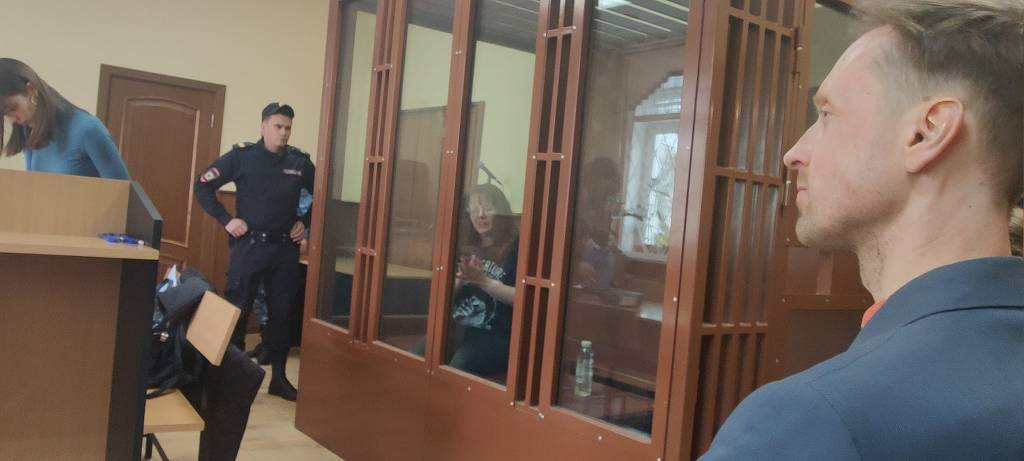
filatovPersecuted Crimean Jehovah’s Witness Sergei Filatov faces seven years in prison for “extremism.” Photo courtesy of Grati

Prosecutor Requests Seven Years in High-Security Prison for Jehovah’s Witness in Crimea
OVD Info
February 25, 2020

During closing arguments in the trial of local resident Sergei Filatov, who organized meetings of Jehovah’s Witnesses, the prosecutor asked the Dzhankoy District Court to sentence Filatov to seven years in a high-security penal colony, according to the online publication Grati, which cited Filatov himself as its source.

Filatov, who is currently free on his own recognizance, is accused of “organizing the activities of an extremist organization,” punishable under Article 282.2.1 of the Russian Federal Criminal Code. According to investigators, Filatov, as the head of a religious organization, “undermined the foundations of the constitutional system and the security of the state.” The case files include an audio recording, made by local FSB field officer Vladislav Stradetsky, in which Filatov and other believers can be heard discussing religious topics.

The prosecution claims that Filatov is a co-organizer of a Jehovah’s Witness organization called Sivash, which held gatherings and religious lectures at the defendant’s registered domicile.

The only witness at the previous hearings in Filatov’s trial was a man named Verbitsky, a computer science teacher at a rural school. In September 2019, he testified that he had gone to Jehovah’s Witness gatherings right up until the organization was banned in April 2017, and therefore was unaware of Filatov’s further actions. In November 2019, however, he changed his testimony, saying he had continued attending meetings of believers for another six months or so.

Verbitsky claimed the defendant was intimidating him, so the judge honored his request to hold the hearings in closed chambers. The website Jehovah’s Witnesses in Russia reports that the “intimidation” in question was phone calls from strangers. The defense made several requests to hold the trial in open chambers, but to no avail.

Filatov has four children, two of whom are minors. He considers the trial biased,  and the whole case an instance of religious persecution.

“The prosecutor asked the judge to sentence me to seven years for extremist activity—seven years for religious convictions, for believing in God. There was no crime, no culpability. 1951 and 1937 are coming back. They happened in Russia and here [in Crimea]: there are people among us today who were persecuted and sent into exile. This is tyranny and genocide,” Grati reports Filatov as saying after the trial.

In November 2018, the security forces raided a number of homes of Jehovah’s Witnesses in Dzhankoy. Searches were conducted at several dozen addresses, but only Filatov was detained, allegedly because police found extremist literature and manuals on psychology and recruiting in his home.

On April 20, 2017, the Russian Supreme Court declared the Administrative Center of Jehovah’s Witnesses in Russia an “extremist organization,” disbanded it, and prohibited it from operating in Russia. In August 2017, all Jehovah’s Witness organizations were placed on the official list of banned organizations, sparking a subsequent wave of criminal cases against members of the confession.

Translated by the Russian Reader

_______________________

Putin: Our Forces Stopped a Serious Threat to Russia in Syria
Asharq Al-Aswat
February 24, 2020

President Vladimir Putin has revealed a decisive Russian military attack last week to prevent Turkish-backed Syrian opposition factions from advancing towards Neirab city.

The Russian military has rooted out well-equipped terrorist groups in Syria and prevented major threats to Russia, Putin said at a gala on Defender of the Fatherland Day.

The attack was followed by intense airstrikes on militant sites in Idlib province.

Putin’s statements came in line with accusations launched by the Kremlin against Turkey on its violation of the Sochi Agreement.

According to Russian sources, the military sought to prevent Ankara from trying to impose a new fait accompli by controlling sites that have been recently occupied by the regime.

Russia “will not allow the return of the previous situation, when Idlib province and its surrounding areas were under the control of Syrian factions,” the sources added.

Putin, however, revealed on Sunday another aim for his country’s intervention in Syria.

Russia’s officers and soldiers have confidently confirmed their high professionalism and combat capabilities, the strength of spirit and their best qualities during the military operation in Syria, he said.

“They have wiped out large and well-equipped terrorist groups, thwarted major threats for our motherland at distant frontiers, and helped the Syrians save the sovereignty of their country,” he stressed, thanking all soldiers who have participated in the fight in Syria.

Putin’s remarks highlighted information circulated on Ankara supplying the Syrian factions with US mobile anti-air systems, which enabled them to shoot down two Syrian army helicopters last week.

The Ministry of Defense said these weapons could be used against Russian forces, slamming Ankara and Washington.

It said both sides “cannot predict how and when the terrorists will use these weapons.”

Putin affirmed Moscow’s intention to continue to enhance its military capabilities and provide its armed forces with the most advanced arms, including laser weapons, hypersonic systems and high-precision systems.