Opponents of Plato Road Tolls System Complain to European Court of Human Rights They Have Been Victims of Political Persecution
Their Organization Was Earlier Ruled a “Foreign Agent”
Anastasia Kornya
Vedomosti
December 26, 2018
The Association of Russian Carriers (OPR), an organization of independent truck drivers the Russian Justice Ministry placed on its list of “foreign agents” late last year, has filed a complaint with the European Court of Human Rights (EHCR) in Strasbourg, claiming its right to freedom of association had been violated and it had been subjected to political persecution, in violation of Article 11 and Article 18 of the European Convention on Human Rights, as reported by Alexei Glukhov, a lawyer with the Agora International Human Rights Group who represents the OPR in Strasbourg.
The OPR emerged during the campaign for the rights of truckers that kicked off after the Plato road tolls payment system went online in November 2015. The OPR brought together independent truck owners and truck drivers. In June 2017, it announced it was planning to nominate its chair, Andrei Bazhutin, as a candidate for the Russian presidency. Shortly thereafter, the Justice Ministry launched an audit of the OPR, resulting in its being ruled a “foreign agent.” The ministry cited four donations from private individuals in Germany, totaling 3,620 euros, as evidence of “foreign financing.”
In a report on its oversight of the work of “foreign agent” NGOs in 2017, the Justice Ministry claimed the OPR had engaged in “political activity” by “organizing and holding events calling for the resignation of the Russian federal government.” In June of this year, the Krasnogvardeisky District Court in Petersburg fined the OPR 400,000 rubles [approx. $5,755] for failing to voluntarily [sic] register itself as a “foreign agent.”
The complaint says the OPR has been a nuisance to the Putin regime since the organization has led the campaign against the Plato road tolls payment system, which ultimately benefits businessmen closely allied with the Kremlin. The truckers are certain it was their grassroots activism that caused the authorities to persecute them. The fine leveled against the OPR not only was far in excess of the foreign donations it received but has also financially ruined the organization.
Glukhov points out the ECHR has received several dozen complaints from Russian NGOs labeled “foreign agents” by the Russian government, but the court has not yet ruled on Russia’s “foreign agent” law and its application in practice. However, the court has communicated the facts of the first large group of cases to the Russian authorities, while a second group of cases was nearing completion, meaning that a ruling on complaints filed by Russian “foreign agent” NGOs could be expected next year, argues Glukhov. The OPR’s complaint is part of a third wave of complaints filed in Strasbourg. As they await the court’s ruling, Russian NGOs continue to suffer from the harsh law.
Everyone has the right to complain to the EHCR, but the Russian Justice Ministry begins to work with a complaint [sic] only after the court has communicated its consent to hear the case, says Andrei Fyodorov, head of the office of Russia’s representative to the EHCR.
Lawyer Dmitry Agranovsky says the EHCR has rarely ruled that Article 18 of the European Convention has been violated. Recently, however, in response to a complaint filed by opposition politician Alexei Navalny, the court ruled Russia had violated Article 18. The ruling was a precedent of sorts. Agranovsky has the sense that, before the Navalny case, the court’s Grand Chamber had postponed other cases in which Article 18 had been invoked, but now it had worked out a common set of rules that could be applied in other cases as well. On the other hand, there was a risk Article 18 would be devalued, Agranovsky warns [sic].
______________________
[Three] Years of Plato: How Russian Authorities Forced Truckers to Pay Road Tolls
 [Three] years ago, on November 15, 2015, Russian authorities launched the Plato system (“Plato” is an acronym for “payment for a ton” in Russian) to collect tolls from owners of heavy-duty trucks traveling on federal highways. The authorities claimed their goal was to compensate for the damage the trucks caused to roads. It was decided the toll would be applied to owners of trucks weighing over twelve tons. Photo courtesy of Maxim Stulov/Vedomosti and RBC
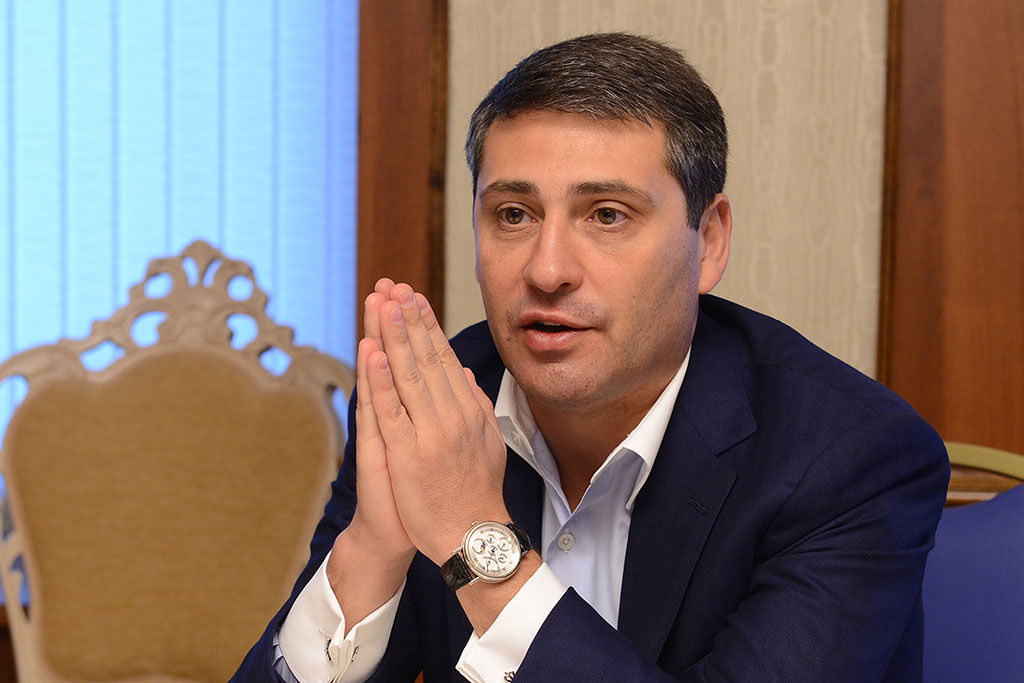 The right to develop and implement Plato was awarded to RT Invest Transport Systems without tendering. The company is owned on a parity basis by Igor Rotenberg and RT Invest, which is 25.01% owned by Rostec and 74.99% owned by Andrei Shipelov’s firm Tsaritsyn Capital LLC. The Russian government agreed to pay Plato’s developer and operator 10.6 billion rubles [approx. $153 million at current exchange rates] annually. Photo of Igor Rotenberg courtesy of Nikolai Galkin/TASS and RBC
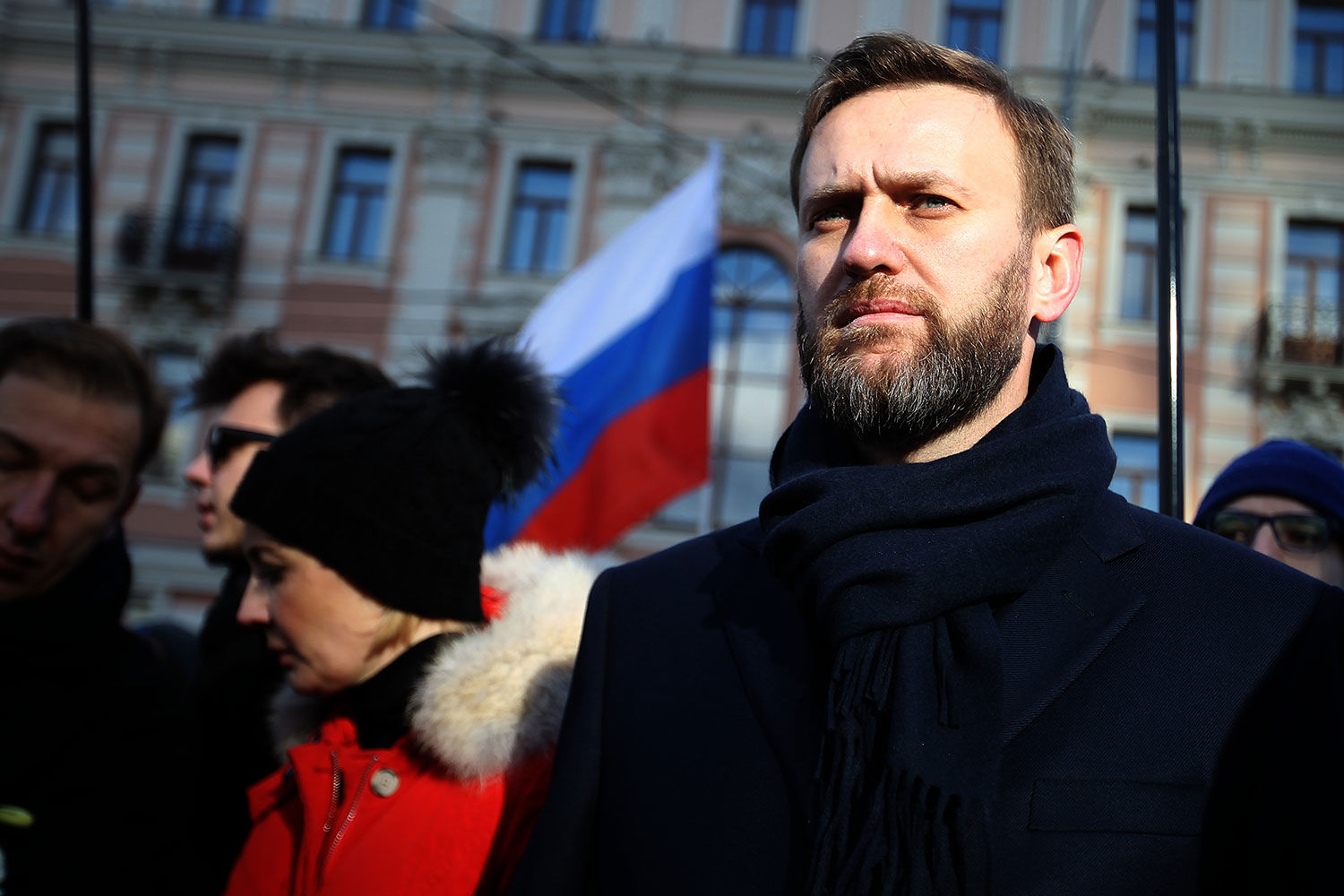 Opposition politician Alexei Navalny and Anti-Corruption Foundation (FBK) lawyer Ivan Zhdanov asked that the courts declare the government’s agreement with RT Invest Transport Systems null and void. Their lawsuit was rejected first by the Moscow Court of Arbitration, and later by the Russian Constitutional Court. Photo of Alexei Navalny courtesy of Yevgeny Razumny/Vedomosti and RBC
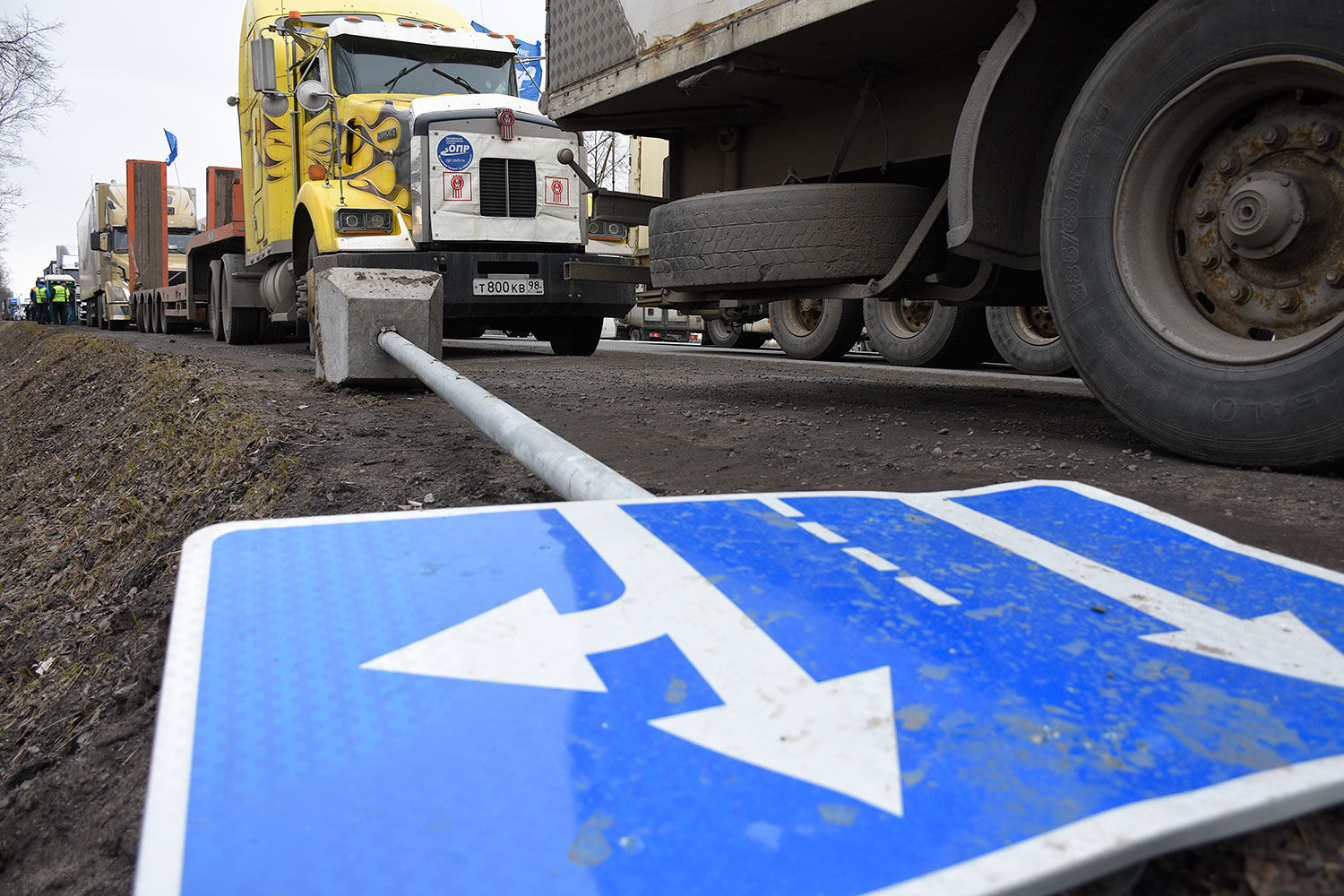 Truckers in forty Russian regions protested against Plato in November 2016. They demanded Plato be turned off, a three-year moratorium imposed on its use, and the system be tested for at least a year. Photo by Yevgeny Yegorov/Vedomosti and RBC
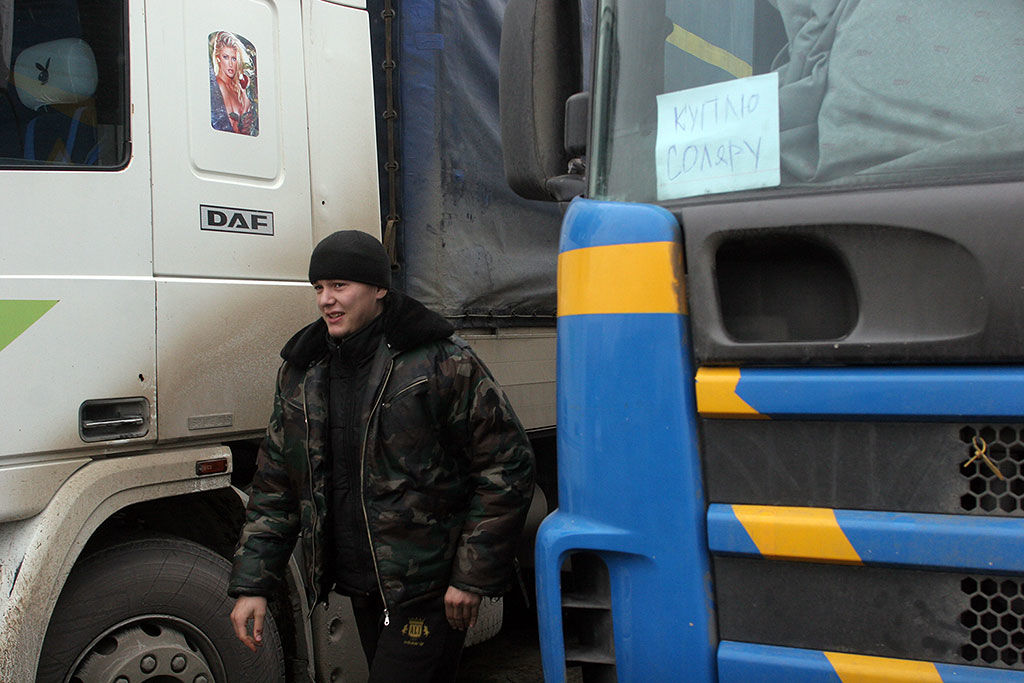 When Plato was launched in November 2015, truck drivers paid 1.53 rubles a kilometer. Four months later, the authorities planned to double the toll, but after negotiations with truckers they made concessions, reducing the toll increase to 25%. Since April 15, 2017, the authorities have charged trucks 1.91 rubles a kilometer. Photo courtesy of Sergei Nikolayev/Vedomosti and RBC
 However, even the discounted [sic] toll increase did not sit well with all truckers [sic]. On March 27, 2016, the OPR went on what it called an indefinite nationwide strike. Truckers protested the toll increases and demanded fairness and transparency at weight stations. Photo by Yevgeny Razumny/Vedomosti and RBC. [The slogans read, “Down with Plato!!! It’s Rotenberg’s Feeding Trough” and “We’re Against Toll Roads.”]
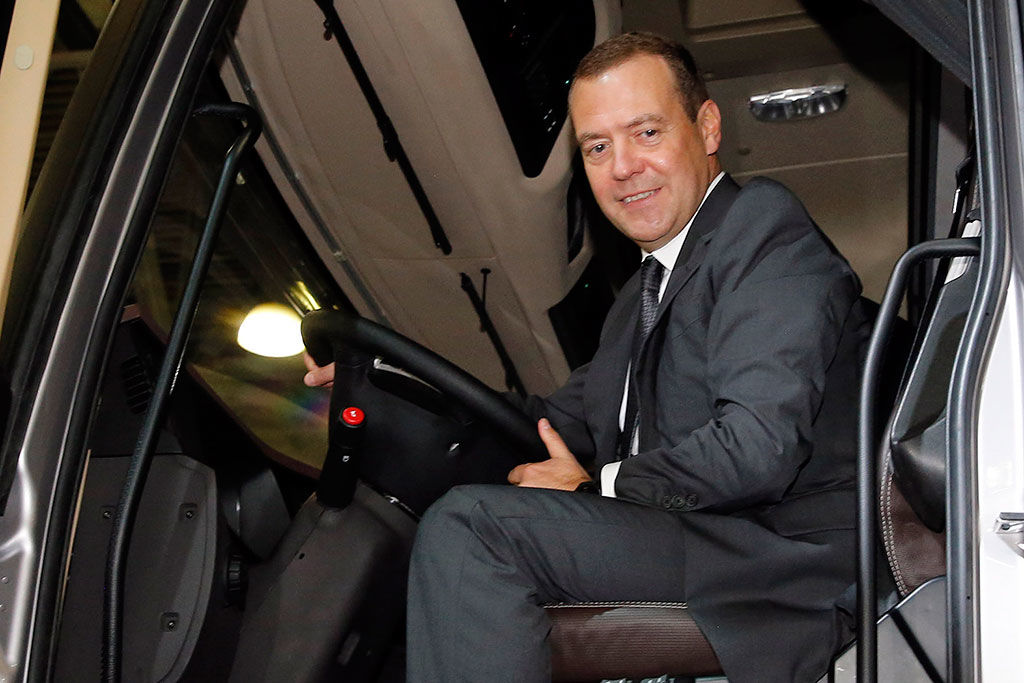 In October 2017, the government approved a bill increasing fines for nonpayment of Plato tolls from 5,000 rubles to 20,000 rubles. If passed, the law would make it possible to charge drivers for violations that occurred six months earlier. The new rules were set to take effect in 2018. Photo of Dmitry Medvedev courtesy of Dmitry Astakhov/TASS and RBC
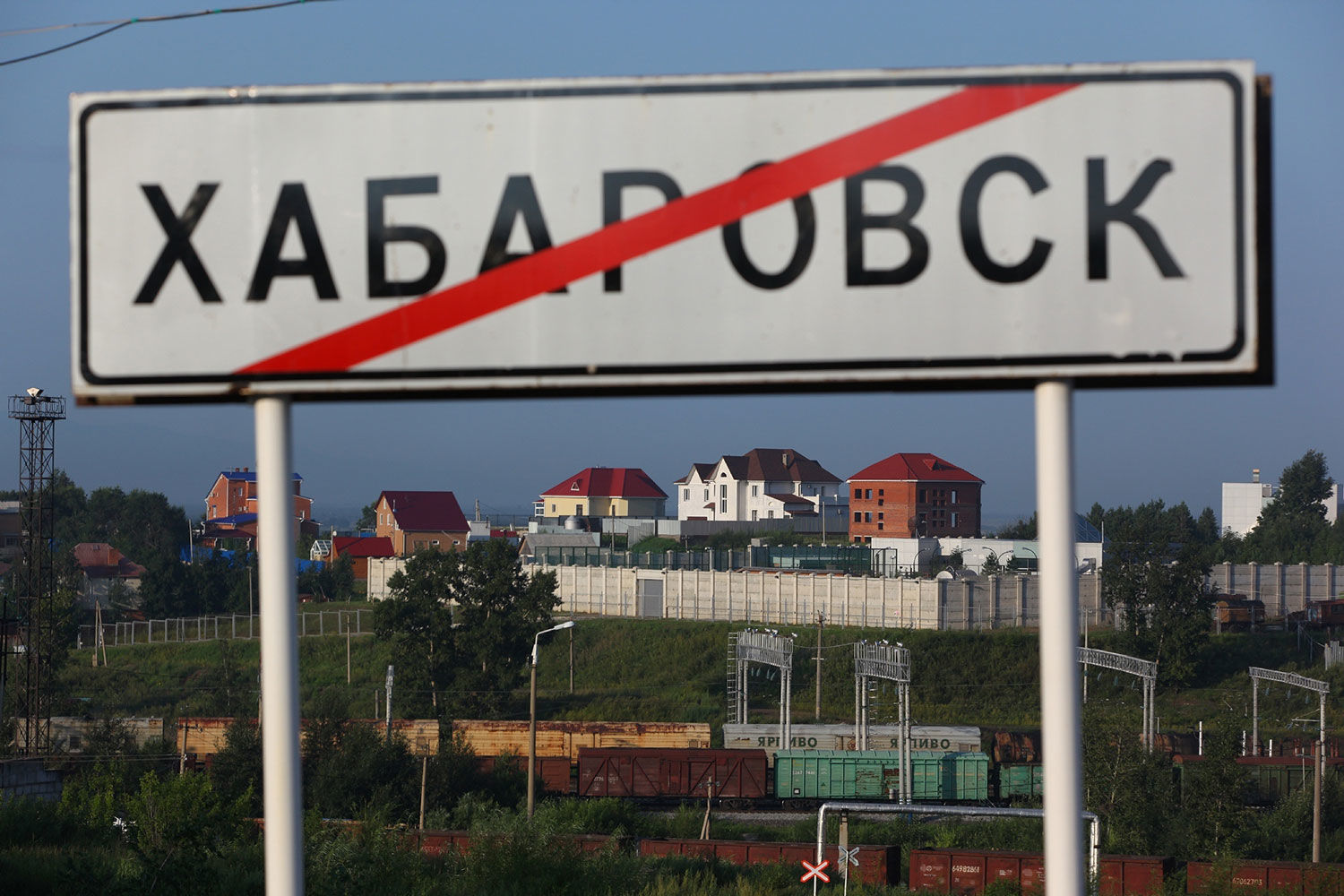 Plato’s database has registered 921,000 vehicles weighing over twelve tons. According to the Russian Transport Ministry, during its first two years of operation, Plato raised 37 billion rubles for the Federal Roads Fund. In the autumn of 2017, the government selected three projects that would be financed by the monies raised by Plato: a fourth bridge in Novosibirsk and bypasses around the cities of Chusovoy (Perm Territory) and Khabarovsky. Photo courtesy of Georgy Shpikalov/PhotoXPress and RBC
 Vehicles that transport people are exempt from Plato tolls, as are emergency vehicles, including vehicles used by firefighters, police, ambulance services, emergency services, and the military traffic police. Vehicles used to transport military equipment are also exempt from the toll. Photo courtesy of Gleb Garanich/Reuters and RBC




 A pie chart, using information from November 2017, showing the numbers and kinds of NGOS designated as “foreign agents” by the Russian Justice Ministry. Moving clockwise, the chart shows that 24 Russian human rights organizations have been registered as “foreign agents,” along with 4 NGOs working on healthcare issues, 2 trade union associations, 6 analytical and social research organizations, 3 women’s organizations, 10 civic education organizations, 9 media support organizations, 3 ethnic minority organizations, 7 NGOs involved in defending democracy and democratic principles, 11 humanitarian and social welfare organizations, and 8 environmental organizations. Courtesy of Deutsche Welle. As of November 15, 2019, there were ten media outlets
  “Should we go and search someone’s home, Piglet?” Cartoon by
 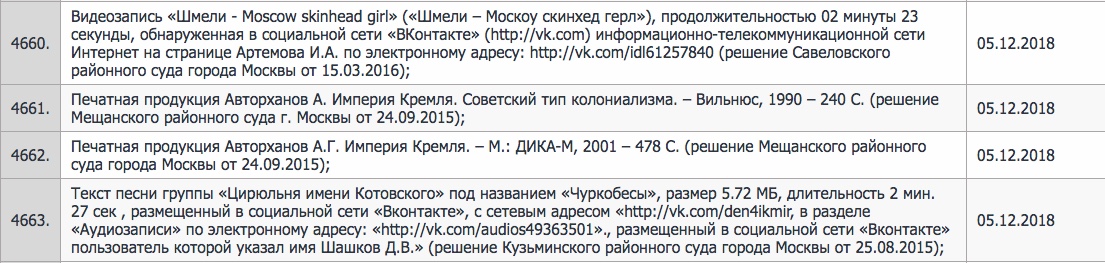 A screenshot of the section of the Russian Justice Ministry’s list of “extremist” matter containing two editions of Abdurakhman Avtorkhanov’s The Kremlin’s Empire: The Soviet Style of Colonialism. They are wedged between a video entitled “Bumblebees: Moscow Skinhead Girl,” and the lyrics to a song entitled “Wog Devils” by the group Kotovsky Barbershop, each of them posted on personal pages on the Russian social media network VK.
  The Russian Justice Ministry insists there have been no violations by Russian law enforcers at protest rallies, but that complainants broke the law themselves. Photo by Yevgeny Razumny. Courtesy of Vedomosti
 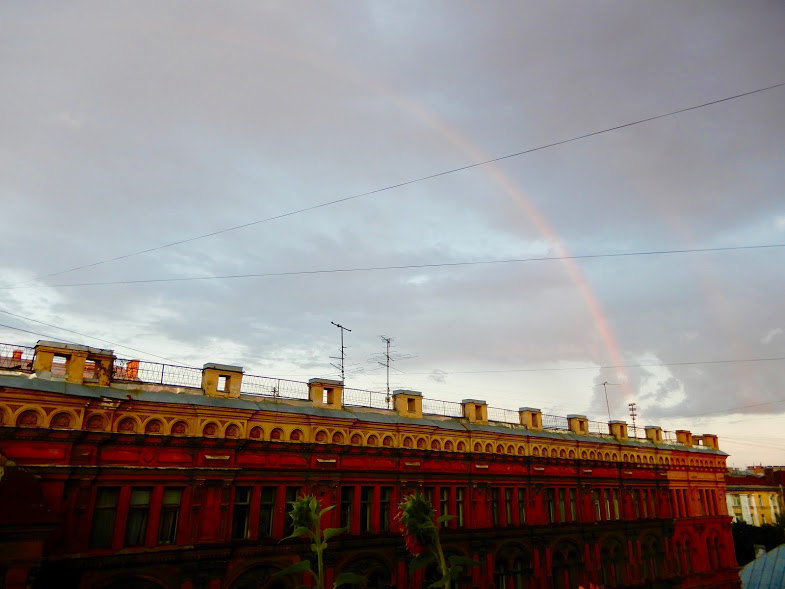 While rainbows do occasionally appear in the skies above Russia, the Putin regime has pursued a consistent course of official homophobia and avoidance of the country’s out-of-control HIV epidemic. Photo by the Russian Reader
 “While