Terribly Far

This is the premiere of Terribly Far, a new program by Lyudmila Savitskaya.

We will talk about what is happening to people who are terribly far from Moscow and St. Petersburg. Who are terribly far from the congresses, conferences and conflicts of opposition leaders. Who are terribly far even from popular YouTube channels and shows. Who are also terribly far even from Telegram.

Why does this matter? It matters because otherwise we won’t understand how the country got to this point and why some Russians volunteer to fight in the war.

In this episode, you’ll learn what worries Russians more than Prigozhin’s rebellion, why the Baltic Sea in Kaliningrad is becoming bloody, in which city it is easiest to encounter wild bears on the streets, and the job you have to land to make a dream salary of 8,000 rubles [approx. 80 euros] a month.

00:10  Why this program is needed

02:05 “We support the president, but where is the water?!” On Prigozhin and the water in Kostroma

06:06 There is no money to pay mail carriers in Buryatia

09:26 People in Kaliningrad are trying to save the Baltic Sea from pig’s blood

12:44 People in Tomsk are fleeing from bears on the streets

15:20 Taxis in Penza risk sinking underwater even after a normal rain shower

16:18 Why all this matters even in wartime

Subscribe to our channel, where we talk about the problems of ordinary people. And if you live beyond the Moscow Ring Road and are facing trouble right now, write to us at:

strashnodaleki@gmail.com

We will definitely tell our viewers about it. Because we do care.

Source: “Terribly Far No. 1: Pigs vs. People | Prigozhin and Hot Water | Bears on the Streets,” Open Media (YouTube), 7 July 2023. In Russian, with Russian captions. Annotation translated by the Russian Reader

__________________
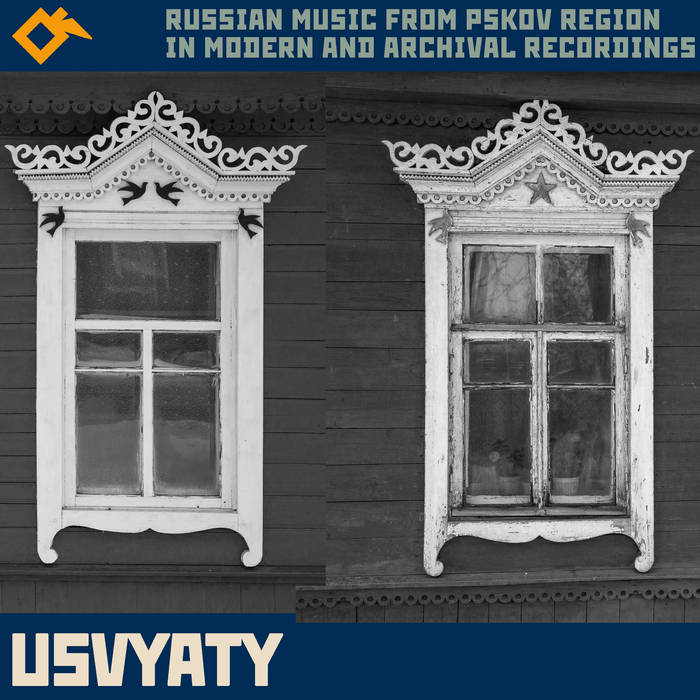
The Usvyaty District of the Pskov Region belongs to the ethnographic area known as Poozerye (Lakeland). There used to be many folk musicians there, the most famous of whom was the singer Olga Sergeeva (1922-2002).

Ekaterina Trusova (maiden name Kozintseva, tracks 1-7) is a garmon (Russian button accordeon) player living in Usvyaty. She was recorded at the Usvyaty House of Culture on December 12, 2021.

The other two musicians featured on this album belong to a previous generation and were recorded by Ekaterina herself in the 1990s on a home cassette tape recorder. The cassettes were digitized by Alexander Yuminov (KAMA Records) in 2022.

Sofya Rubisova (tracks 8-13) is a folk singer from the village of Sterevnevo, Usvyaty District.

Dmitry Kozintsev (tracks 14-17) is Ekaterina’s father, a garmon player from the village of Pysi. Unfortunately, the recordings of him are of poor quality, as the tape in the cassette turned upside down. But we still decided to include them in the album.

Another album from the area, from the village of Tserkovishchi, can be found here.

Source: Antonovka Records (Bandcamp), 8 July 2023. I’ve lightly edited the original annotation to make it more readable. ||| TRR

__________________

Branded “foreign agent,” Yaroslavl media outlet announces closure

YARNOVOSTI announced it was suspending its work on July 7. The publication had been running for over ten years. It covered the inhabitants of Yaroslavl, corruption, problems with public amenities, and politics.

In June, the Justice Ministry had declared YARNOVOSTI a “foreign agent.” None of its employees agreed to work under this label. The editors said that during its entire existence it had not received “a kopeck” of foreign funding.

“Of course, we expected to continue working, but, as Vladimir Putin said, nothing lasts forever. We are still getting to the bottom of what happened on June 2: we have made all possible and even impossible inquiries, and have drawn up the paperwork for the court,” the media outlet’s editorial team wrote.

Source: 7 x 7 (Telegram), 7 July 2023. Translated by the Russian Reader. As of this writing, YARNOVOSTI seems to have shut down its website, but its page on VKontakte is still functioning. In its latest post there, published on 7 July 2023, it informed readers of the decision to suspend its work.
Foreign Agents

Lyudmila Savitskaya • Facebook • December 28, 2021

A year ago, the Russian authorities labeled me a foreign agent. THIS MESSAGE (MATERIAL) WAS CREATED AND (OR) DISTRIBUTED BY A FOREIGN MASS MEDIA OUTLET PERFORMING THE FUNCTIONS OF A FOREIGN AGENT AND (OR) A RUSSIAN LEGAL ENTITY PERFORMING THE FUNCTIONS OF A FOREIGN AGENT. During these 365 days, one of my bank cards was blocked on suspicion of money laundering, I was fined over ten thousand rubles for the Journalist-Foreign Agent LLC that I created by order of the Justice Ministry, and I was deprived of the opportunity to work on certain projects. Antidepressants appeared in my medicine cabinet, and a psychiatrist became one of my friends.

My husband Dmitry Permyakov was turned into a family member of an enemy of the people: as a person affiliated with a “foreign agent” he was summoned for questioning by Center “E” and threatened with torture in prison. And another person close to the police called to solicitously warn us that our home had been bugged. You can read this year’s other sad particulars in my column for Sever.Realii – “Luda, the floor is burning under your feet!” (See the link in the first comment.)

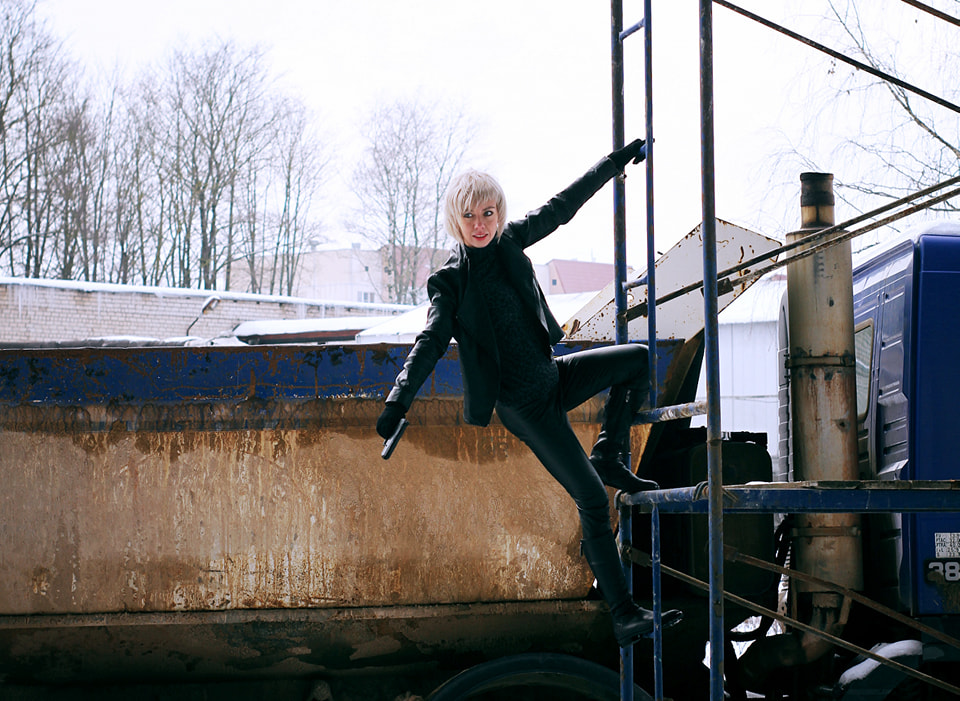
But here you can admire my super agent photo shoot, which was cold but quite a lot of fun. No time to die, happy new year!


Russia Labels Pussy Riot Activists, Satirist ‘Foreign Agents’ • Moscow Times • December 30, 2021

Russia has added members of the Pussy Riot art activist collective, a prominent satirist and an independent journalist its registry of “foreign agents” Thursday.

The designations close a year in which Russia labeled nearly every major independent domestic news outlet, as well as dozens of individual journalists and activists, a “foreign agent.”

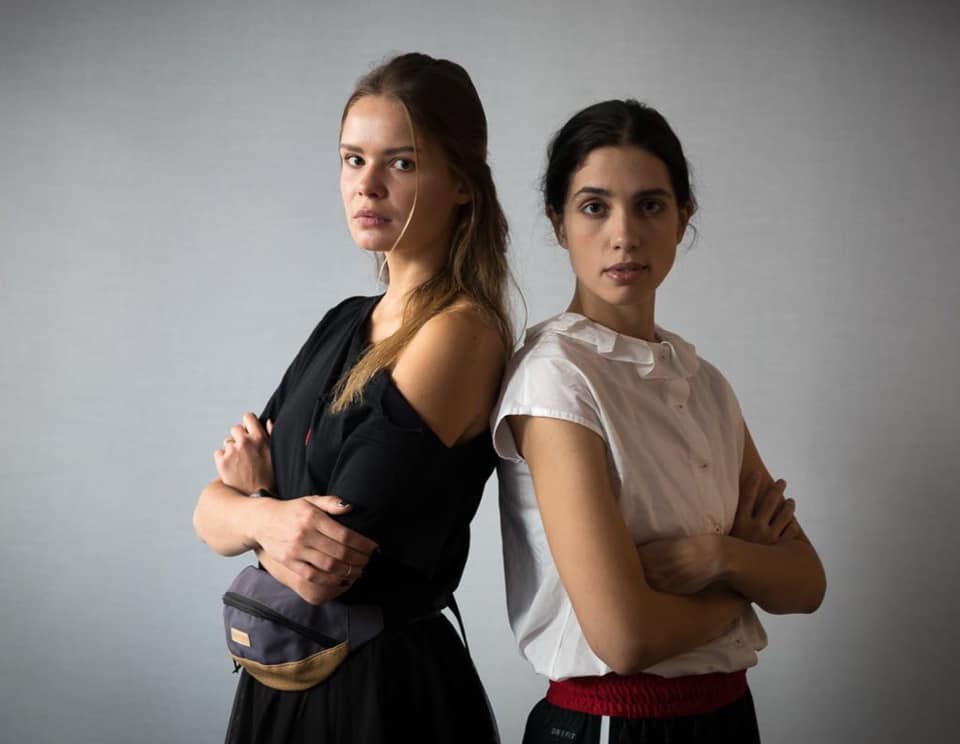
Founding Pussy Riot member Nadezhda Tolokonnikova and fellow member Nika Nikulshina have been added to the Justice Ministry’s “foreign agents” registry.

Tolokonnikova, 32, was among the Pussy Riot members who were sentenced to prison for their 2012 protest performance in central Moscow’s Christ the Savior Cathedral that criticized the Russian Orthodox Church’s close ties with President Vladimir Putin.

Anti-Kremlin satirist Viktor Shenderovich; Taisiya Bekbulatova, chief editor of the independent Holod news website; and art collector and former Kremlin advisor Marat Gelman have also been added to the list.

“These people systematically distribute materials to an indefinite circle of persons, while receiving foreign funds,” the Justice Ministry’s statement said.

The ministry’s registry now includes more than 100 entities and individuals, most of which were added in 2021.

Rights advocates denounce the country’s “foreign agents” law, saying it seeks to silence groups and individuals that dissent from state narratives by branding them with a label that carries dark connotations from the Soviet era.

Labeled individuals and entities must submit regular financial reports and detailed lists of income and spending, as well as prominently display a wordy disclaimer on all articles, social media posts and other publications — or else face criminal charges.

But officials defend the law, pointing to what they say are harsher equivalent laws in Western countries.

On Monday, prominent BBC Russian investigative journalist ​Andrei Zakharov said he left the country two months after being labeled a “foreign agent,” saying he faced “unprecedented surveillance” following his designation.

And Russian courts this week ruled to liquidate the two main structures of Memorial, Russia’s leading human rights group and a key pillar of its civil society, citing repeated violations of the “foreign agent” law.


Alexander Morozov • Facebook • December 30, 2021

After seeing today’s list of “foreign agents,” I thought: is any more proof required that this status is exclusively political, that its legal aspect does not matter at all? These are not foreign agents in the sense of “lobbyists of a foreign state.” They are “agents of the West” (in the broad sense of “the hostile West”). In this respect, their status directly depends on the Kremlin’s conflict with the outside world. The next stage of escalation (which, in my opinion, is inevitable) will automatically mean that, regardless of their legal status as “foreign agents,” the people on the list will be criminally prosecuted. After all, the list is “good to go”: it exists and therefore should be put to work. So the list is no joke at all. Anyone who does not leave the country before the Kremlin’s conflict with the West accidentally escalates will end up behind bars. Therefore, I won’t congratulate people dear to me on having this label conferred on them. It’s a very dangerous and grim business.


Pussy Riot • Facebook • December 30, 2021

THIS MESSAGE (MATERIAL) CREATED AND DISTRIBUTED BY A FOREIGN MASS MEDIA PERFORMING THE FUNCTIONS OF A FOREIGN AGENT

two of Pussy Riot, Nadya Tolokonnikova and Nika Nikulshina, were added to the government list of “foreign agents” & required to start every tweet w this disclaimer.

OFFICIAL REACTION:

1. lol

2. we will not label my posts, the government can label their asses if they’d like.

3. we will appeal in court.

4. Russia will be free.


Matvey Ganapolsky • Facebook • December 30, 2021

I want to say what will happen with the Russian media in 2022.

1. Domestic opposition media outlets will be destroyed and gutted. TV Rain and Echo of Moscow will have huge problems, including closure or reformatting, because they broadcast oppositional viewpoints. Neither [Alexei] Venediktov nor [Nobel Peace Prize winner Dmitry] Muratov will be able to save them.

2. Under various, poorly concealed pretexts, the local offices of Radio Svoboda [Radio Liberty] and the BBC will be closed. Radio Svoboda’s internet broadcasts and podcasts will be blocked, as well as the websites of these companies. VPNs will also be blocked.

3. The West will find itself in a paradoxical situation in which it will be necessary to resume short-wave broadcasting. Russia will respond by jamming them. Young people will run to their grandparents to retrieve old radios.

4. The media situation will be at the level of the late USSR. It will change only with Putin’s departure or death.

Items 1, 3, and 5 translated by the Russian Reader

Russian Justice Ministry Adds Five New “Foreign Agents” to Its List

“The register of foreign mass media performing the functions of a foreign agent has been updated. On December 28, 2020, in compliance with the requirements of the current legislation of the Russian Federation, Darya Apahonchich, Denis Kamalyagin, Sergey Markelov, Lev Ponomarev, and Lyudmila Savitskaya were included in the register of foreign mass media performing the functions of a foreign agent.” Screenshot of Russian Justice Ministry website, 28 December 2020

Human Rights Activists Lev Ponomaryov and Four Other People Added to List of “Foreign Agents”
OVD Info
December 28, 2020

For the first time, the Russian Ministry of Justice has placed individuals, including journalists and the human rights activist Lev Ponomaryov, on its registry of “[foreign] mass media acting as foreign agents,” as reflected on the ministry’s website.

Lev Ponomaryov, head of the movement For Human Rights, Radio Svoboda and MBKh Media journalist Lyudmila Savitskaya, 7×7 journalist Sergei Markelov, Pskovskaya Guberniya editor-in-chief Denis Kamalyagin, and grassroots activist and performance artist Darya Apahonchich.

Savitskaya, Markelov and Kamalyagin were probably placed on the registry of “foreign agents” due to their work with Radio Svoboda, which was placed on the registry of “foreign agents” in 2017.

In late December, the State Duma introduced and partly considered bills that would tighten the law on “foreign agents.” Thus, repeated violations of accountability under the law can now result in five years in prison. According to the new clarifications, the status of “foreign agent” can be granted to individuals engaged in political activities and receiving money for this work from abroad. Another bill would prohibit the dissemination of information in the media produced by foreign agents unless it is specially labelled.

Translated by the Russian Reader

The Syrian Breakthrough

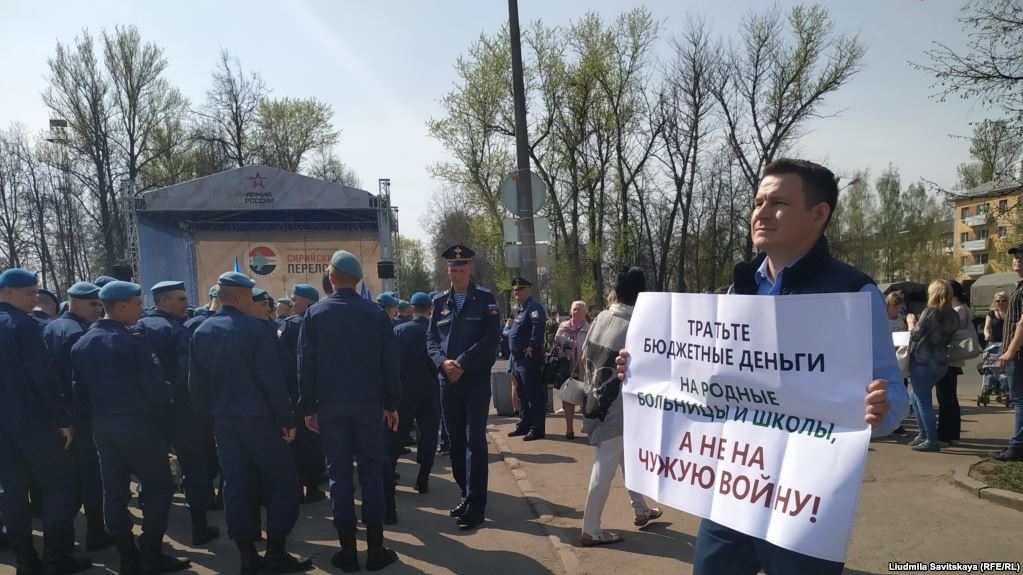
kuzminNikolai Kuzmin during his solo picket outside the exhibition The Syrian Breakthrough, in Pskov. His placard reads, “Spend budget money on our own schools and hospitals, not on someone else’s war.” Photo by Lyudmila Savitskaya. Courtesy of Radio Free Europe/Radio Liberty

Yabloko Activist Detained in Pskov at “Syrian Breakthrough” Exhibition
Lyudmila Savitskaya
Radio Svoboda
April 26, 2019

In Pskov, police have detained local Yabloko Party activist Nikolai Kuzmin, who held a solo picket outside an exhibition of military equipment entitled The Syrian Breakthrough. Kuzmin stood behind servicemen queued at the city’s train station to see the exhibition.

He held a placard that read, “Spend budget money on our own schools and hospitals, not on someone else’s war.”

Commenting on his actions, Kuzmin claimed over 25,000 schools had been closed in Russia over the past twenty years. The activist argued that, outside Moscow and Petersburg, it was nearly impossible to get an ambulance, and half of the men in Pskov Region did not live to retirement age.

“As in a dystopia, however, instead of being productive and saving the lives of Russians, we have raised war into a cult that we worship. Lacking reasons to feel proud, we are administered daily injections of patriotism. But patriotism does not mean fighting wars in someone else’s countries. It means building things in your own country and having a critical attitude toward the mania for military victory,” Kuzmin added.

Kuzmin’s picket lasted around ten minutes. During this time, members of the pro-regime organization Team 2018 managed to have their picture taken with him. Kuzmin was then surrounded by military police who asked him to leave. Kuzmin responded by asking them to identify themselves [as required by Russian laws regulating the police] and explain their grounds for wanting to remove him from a public event.

The military policemen were unable to fulfill Kuzmin’s request, so Sergei Surin, head of the Interior Ministry Directorate for Pskov [i.e., the local police chief] came to their aid. He personally detained Kuzmin while repeatedly refusing to explain the grounds for the arrest to Kuzmin and comment on it to reporters who were present.

Lev Schlosberg, leader of the Yabloko Party in Pskov, demanded Kuzmin’s immediate release and the removal from Pskov of The Syrian Breakthrough, which he dubbed a “propaganda scrap heap.”

“Russia must cease military operations in Syria, while government funds should be spent on peaceful goals that further the interests of Russia’s citizens,” Schlosberg said.

In February 2019, the Russian Defense Ministry launched a train containing weapons seized, it claimed, by Russian servicemen during combat in Syria. The train departed Moscow on an itinerary of sixty cities and towns. When it reaches Vladivostok, the train will head back to Moscow. It is scheduled to arrive there on the eve of Victory Day, May 9.

Thanks to Nikolai Boyarshinov for the heads-up. Translated by the Russian Reader