Azat Miftakhov: “It’s Like They’re Telling Us, It’s No Trouble for Us to Put Anyone Away”

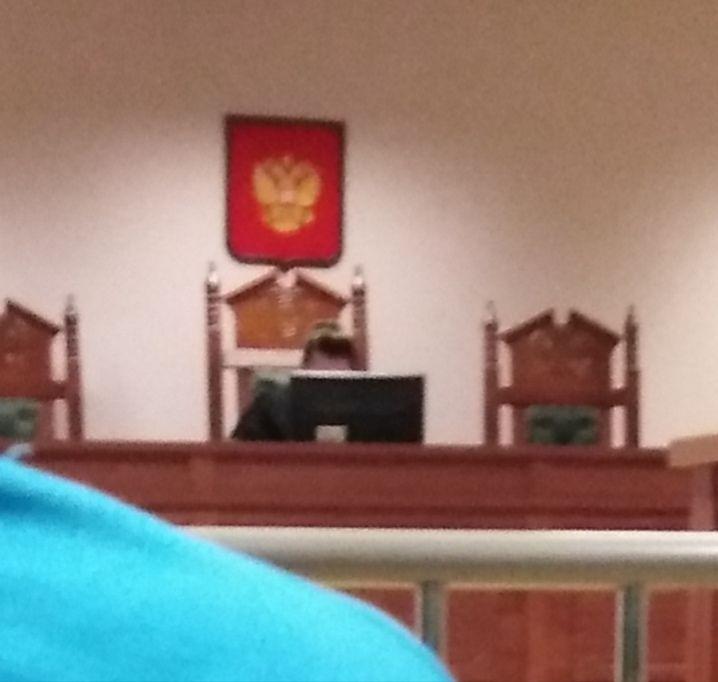
Azat Miftakhov in court. Photo: OVD Info

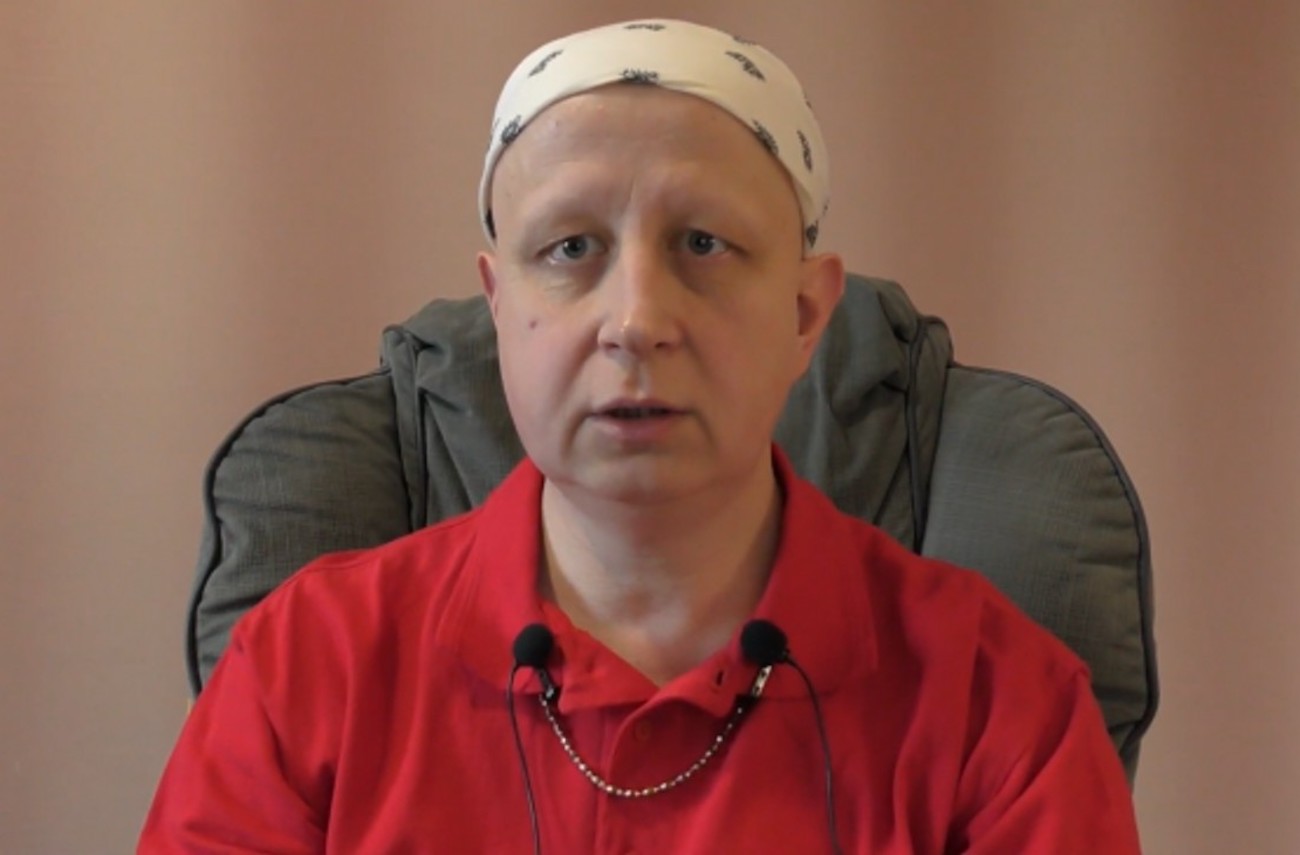
Anarchist and mathematician Azat Miftakhov has been sentenced to four years in a maximum security facility on criminal charges of “condoning terrorism.” The young man will spend the first two and a half years of his sentence in a closed prison. Miftakhov was detained in September 2023 as he was leaving the penal colony from which he had been released after completing his sentence on charges related to the breaking of a window at a United Russia party office. The next day he was remanded in custody in a pretrial detention center. According to the security forces, while watching TV with other inmates Miftakhov had spoken approvingly of the actions of Mikhail Zhlobitsky, who bombed the FSB’s Arkhangelsk offices [in 2018].

Why do I need to know this? Miftakhov’s wife, Yelena Gorban, argues that this criminal case was launched by members of the security forces who wanted to “extend Azat’s sentence for his past political activity.” In her statement to the court, she said that her husband was aware of the dangers of wiretapping in the penal colony, and so he had avoided discussing political topics in the company of inmates. “The conspicuousness and brazenness with which they fake evidence doesn’t embarrass them. It even plays into their hands. It’s like they’re telling us, ‘It’s no trouble for us to put anyone away,'” the anarchist himself said in [his closing statement at the trial].

Source: It’s Been That Kind of Week newsletter (OVD Info), 30 March 2024. Translated by the Russian Reader


A video and audio recording of Azat Miftakhov’s closing statement at his trial and his sentencing, 28 March 2024, Yekaterinburg. Source: FreeAzat (Telegram), 31 March 2024

During the years I was imprisoned on the charges in previous criminal case, I failed to fall head over heels in love with the state, and now I again find myself in the dock. I am now on trial for what the security forces have deigned to call “condoning terrorism” by faking the evidence, as they did five years ago. The conspicuousness and brazenness with which they fake evidence doesn’t embarrass them. It even plays into their hands. It’s like they’re telling us, “It’s no trouble for us to put anyone away.”

We see the same brazenness in the numerous incidents of barbarous torture perpetrated by the regime’s guardians, the FSB. These guardians don’t care that their shameful deeds are made public. On the contrary, these deeds are flaunted as a source of pride. In this way, the state shows its terrorist nature, as anarchists pointed out before the previous presidential election by taking to the streets with the slogan “The FSB are the main terrorists.”

What we were saying back then has now become obvious not only in our country but all over the world. We how see how the [Russian] state’s entire foreign and domestic policy has become a conveyor belt of murder and intimidation. While fake witnesses attempt to prove the charges that I “condoned terrorism,” national TV channels broadcast calls for the mass murder of people who disagree with state policy. We see that the state, while paying lip service to combating terrorism, in fact seeks to maintain its monopoly on terror.

No matter how the Chekists try to intimidate civil society, we see even in these dark times people who find the courage to resist the terror that has spilled over the state’s borders. Risking their freedom and their lives, their actions awaken our society’s conscience, whose lack we now feel so acutely, and their steadfastness to the bitter end stands as an example for us all.

One such example for me was my friend and comrade Dmitry Petrov (aka Dima the Ecologist), who died defending Bakhmut from soldiers who had become tools of imperialism. I knew him as a fiery anarchist who, amidst a dictatorship, did everything he could to lead us to a society based on the principles of mutual aid and direct democracy.

As a graduate of the history program at Moscow State University and a PhD in history, he was well versed in the structure of society and was able to argue his position well, something I had always lacked. And yet he was not limited to theorizing but was also heavily involved in organizing the guerrilla movement, which did not escape the FSB’s notice. Because of this, he was forced to continue his work as an anarchist in Ukraine.

When the grim events of the last two years kicked off, he could not stay on the sidelines. An enterprising comrade, he sought to create an association of libertarian-minded people who would fight for the freedom of the peoples of Ukraine and Russia. Unfortunately, no war is without casualties, and Dima was one of them. It would be unjustifiably selfish of me to admire the selflessness of strangers alone and not to acknowledge the sacrifice of those who are personally dear to me. I am well aware of this, despite my regret that all my fellowship with him is now irrevocably a thing of the past.

And yet I find it hard to accept this loss. Knowing that he was one of the best of us, and wanting to do my best to ensure his sacrifice was not in vain, I have to recognize that my contribution will be insignificant compared to what he was capable of.

What I’ve just said was perhaps unexpected for some people. I cannot rule out that some of my supporters could be disappointed, as I find it difficult, to my own regret, to speak out publicly. Perhaps someone will disagree with my beliefs, which are at odds with pacifism.

Striving to be rational about everything, however, I reject a belief in things whose existence has not been proven. Among other things, I do not believe in the world’s justice. I do not believe that all evil will be punished as a matter of course. That’s why I support vigorously resisting evil and fighting for a better world for all of us.

But even if some of my supporters do not share all of my beliefs, I am still grateful for all of their help.

I am grateful to everyone who has written me letters full of warmth and good wishes. Even amidst the desolation of the penal colony, I received stacks of them almost every week. I am certain that such great attention to me was borne in mind by the people who set out to make me submissive. I find it quite pleasant and touching that people share a part of their lives with me, whether the experiences are joyful or sad. Every letter is very dear to my heart, and I read every single one of them.

Many thanks to all those who have supported me financially. Thanks to them I have never lacked anything during all the years of my imprisonment. There have been times when I have run out of money to support me, but as soon as I put out a call for help, within a few days people who cared about me brought my budget back to a comfortable level. This is very pleasant and impossible to forget. Special thanks to Vladimir Akimenkov, who for more than ten years has been organizing fundraisers to support political prisoners, including me.

I am extremely grateful to the activists in the FreeAzat and Solidarité FreeAzat collectives, who have organized campaigns and events in solidarity with me on a scale which boggles my mind. Your recent “1001 Letters” campaign was one of them. After reading all those letters, I was pleasantly surprised to find out that people in dozens of different countries are concerned about me. Thank you very much to everyone who was involved in this campaign, thus showing me how much you support me.

I am extremely grateful to mathematicians all over the world, and specifically to the Azat Miftakhov Committee, for supporting me on behalf of the mathematical community. I am very touched that people to whom I look up, whose scholarly prowess I dream of achieving someday, know about me and voice their solidarity.

Thank you very much to everyone who has spoken publicly about me. And special thanks to Mikhail Lobanov, who was forced to emigrate to France for vigorously supporting me. But even there, despite all the difficulties of exile, his solidarity with me has been as strong as ever.

Many thanks to the Russian activists, including those who don’t belong to collectives mentioned above, who have risked their comfort by showing solidarity with me while living under a dictatorship. I am very grateful to all who came to support me with their presence by attending the trial. Some of you traveled hundreds of kilometers for this purpose, and some of you did it more than once and more than twice. I was once again pleasantly surprised by such a huge attention to me.

Many thanks to all the honest members of the press who, through their work, have been helping the public to follow my trial.

I thank my defense counsel, Svetlana Sidorkina, for her dedication in defending me at my trials. I never cease to admire her professionalism and I am convinced that I am very lucky to have her. Finally, I would like to thank Lena, my main support in my tribulations. She has helped me through her dedication to overcoming all the difficulties of my imprisonment. On top of that, I am blessed to be in love with her.

As I finish my acknowledgements, I am left with the feeling that someone may have been overlooked. This is a consequence of the tremendous, steady support I have received since the moment of my arrest. I am pleased to see I am not the only one who has been the object of your support—that, despite the dark events of recent years, your solidarity knows no territorial boundaries. This is what gives me hope for a bright future for all of us.

Source: “Azat Miftakhov’s Closing Statement in Court: Yekaterinburg, 28 March 2024,” Telegra.ph. The emphasis is in the original. Translated by the Russian Reader. Thanks to the Fabulous AM for the heads-up.

1001 Letters for Azat Miftakhov

687 letters out of 1,001. “I wish [you] much strength and determination. It’s always darkest before the dawn.”

💌The Azat Miftakhov letter writing campaign continues!

🔥 Since the last appeal to write to Azat, the Solidarité FreeAzat Association has received 687 letters out of its goal of 1,001 letters!

✈️ We received letters from a huge number of countries. Azat is supported by people in France, Russia, Belgium, Nicaragua, Mexico, Germany, Lithuania, the UK, Switzerland, Italy, Poland, Canada, Finland, Australia, Brazil, Côte d’Ivoire, Mali, Georgia, South Korea, Armenia, New Zealand….

Fifty countries in all!

🫠Today we learned that the military court’s first hearing in Azat’s case has been scheduled for February 12 in Yekaterinburg. We have even less time than we thought. There is one week left to get all the letters.

🫶 We urge everyone who hasn’t written yet to write a letter to Azat Miftakhov before February 12, to show solidarity with and verbal support for a person who has been imprisoned for no particular reason.

😳You can write to the Association’s e-mail—libertepourazat@gmail.com—or use the Google form.

😳We would like to remind you that Solidarité FreeAzat Association is going to send the letters via Zonatelecom, an electronic service for dispatching letters to Russian inmates, and therefore we need your full support.

😳You can make a donation to offset the cost of sending the letters.

🤮 If you have a Russian bank card, send money to:

Mastercard 5469 3800 5929 3380 (Sberbank)
Elena Gorban

🤮 If you want to donate using a non-Russian bank card you can use this payment service:

https://www.helloasso.com/associations/solidarite-freeazat/formulaires/3

Please note that the service will charge a commission on the payment, and you need to manually lower the amount of the commission to 0 euros.

Write letters to those who need them so much now!

❣️*The postcard [above] was drawn by Hans, an artist from Germany.

Source: FreeAzat! (Telegram), 5 February 2024. Translated by the Russian Reader. Thanks to Posle for the heads-up. Please note that the Google letter-writing form, linked to above, is in Russian not least because the correspondence received by Russian inmates must be in Russian in order to pass censorship. If you need help negotiating this, don’t hesitate to write to me at avvakum@protonmail.com.


Azat Miftakhov

We’re launching a fundraiser to pay for mathematician Azat Miftakhov’s lawyer

Azat Miftakhov is a political prisoner, anarchist and mathematician convicted in 2019 on charges of disorderly conduct for allegedly breaking a window at a United Russia party office. In 2023, Azat was detained when he was released from prson and charged with “condoning terrorism.” According to police investigators, Miftakhov “deliberately in the presence of two convicts publicly condoned terrorism” while serving his sentence for disorderly conduct in Penal Colony No. 17.

According to the testimony of the other inmates, while watching the evening news on TV in May 2023, Miftakhov said that he would “avenge” a friend who had been killed while fighting for the Ukrainian army. The principal testimony in Azat’s new case was given by a identity-protected witness. He claimed that Miftakhov had condoned the actions of Mikhail Zhlobitsky, who carried out a suicide bombing at the Arkhangelsk offices of the Federal Security Service (FSB).

We are now raising 500,000 rubles [approx. 5,100 euros] to pay the lawyer defending Miftakhov against the new charges of violating Article 205.2.2 of the Russian Federal Criminal Code.

You can click the link, below, to support the fundraiser using a non-Russian bank card [via Stripe].

I want to help!

You can send a transfer in Russian rubles to Tinkoff card 5536 9140 9963 7302, tied to phone number +7 (991) 938-0181, Roman Vyacheslavovich P. (Mark the reason for payment as “mathematics.”)

Source: Memorial Political Prisoners Support, 9 Februrary 2024. Translated by the Russian Reader. Thanks to Posle for the heads-up.

Never Speak of Him

The Second District Military Court in Moscow has fined Lilia Zhlobitskaya 300 thousand rubles [approx. 3,600 euros] for publishing poems about her nephew Mikhail Zhlobitsky, who blew himself up at the FSB’s Arkhangelsk regional offices. She herself reported this news to OVD Info.

A criminal case against Zhlobitskaya was launched in December. She was released on her own recognizance after being charged with “publicly condoning terrorism,” per Article 205.2.2 of the Criminal Code. The charge was triggered by posts she had made in November and December 2019 on VKontakte. Among them are reposts of poems from the website stihi.ru, as well as two reposts from the group page of the People’s Self-Defense with information about the bomb blast at the FSB.

According to the prosecution’s expert witnesses, Mikhail Zhlobitsky’s actions in the posts in question were deemed “correct, worthy of support and imitation,” and he himself was characterized as a “good guy.”

17-year-old student Mikhail Zhlobitsky detonated a homemade bomb in the lobby of the FSB’s Arkhangelsk directorate on [October 31,] 2018, killing himself and injuring three security forces officers. A few minutes before the blast, a warning about the attack from Zhlobitsky appeared in the chat of the Telegram channel “A Rebel’s Speech.” The message said that his act, in particular, was motivated by the fact that the FSB had been fabricating criminal cases.

Source: “Aunt of Mikhail Zhlobitsky, Who Blew Himself Up in Arkhangelsk FSB Offices, Fined for Publishing Poems About Her Nephew,” Mediazona, 27 March 2023. Lilia Zhlobitskya is the latest in a long list of Russians who have been investigated or prosecuted for, allegedly, “exonerating” or “condoning” the apparent suicide bombing by Mikhail Zhlobitsky on October 31, 2018. Other victims of this bizarre witch hunt include Yevgeny GavrilovSergei ArbuzovAlexander MerkulovAlexei ShibanovSvetlana ProkopyevaNadezhda BelovaLyudmila StechOleg NemtsevIvan LyubshinAnton AmmosovPavel ZlomnovNadezhda RomasenkoAlexander DovydenkoGalina GorinaAlexander SokolovYekaterina Muranova15-year-old Moscow schoolboy Kirill, and Vyacheslav Lukichev. Translated by the Russian Reader

Back in the USSR: “Sluggish Schizophrenia”

Back in the USSR: Sluggish Schizophrenia
LiveJournal (Alexei Nasedkin)
July 26, 2021

The man in the photo is Dmitry Nadein, a grassroots political activist from Irkutsk. He’s not just an activist, but was once a volunteer at Alexei Navalny’s local headquarters. Russian law enforcement agencies could not overlook such a dangerous criminal, of course, and, putting aside all their other business, they rushed into battle with him.

Nadein was arrested on February 4 on charges of “condoning terrorism,” in a case launched by FSB investigators. Taiga.Info reported that, on November 21 of last year, Nadein published on his Vkontakte page the news that a military court had sentenced Lyudmila Stech, a Kaliningrad resident, to pay a large fine for “condoning” the “Arkhangelsk terrorist.”

In early April, Nadein was forced to undergo a forensic psychiatric examination: he was diagnosed with “sluggish schizophrenia” and labeled “especially dangerous to society.” And today, thanks to OVD Info, it transpired that [on July 19] the First Eastern District Military Court had ordered Dmitry to undergo compulsory psychiatric treatment.

I’ll take this opportunity to note that there is no such thing as “sluggish schizophrenia” at all. It is a typical Soviet diagnosis, dreamed up by Andrei Snezhnevsky back in 1969 by analogy with Eugen Bleuler’s “latent schizophrenia,” which today is listed as one variety of “schizotypal disorder” (coded as F21 in the ICD-10). Beginning in the 1960s, many ideological opponents of the Soviet Communist Party found themselves under this psychiatric stigma. About a third of all political prisoners were forcibly “treated,” crippling their lives. By the way, this treatment was applied not only to political dissidents per se, but also to “deviants” more generally, as well as to many homeless people and those who avoided military service. Need I mention how many of their civil liberties were violated and how their health was ruined?

Today, step by step, the Soviet model of punitive psychiatry is being restored and modified to new realities. After all, no holds are barred when it comes to “mopping up” the political landscape.

Translated by the Russian Reader

Why Small-Town Electrician Vladimir Yegorov Had to Flee Russia

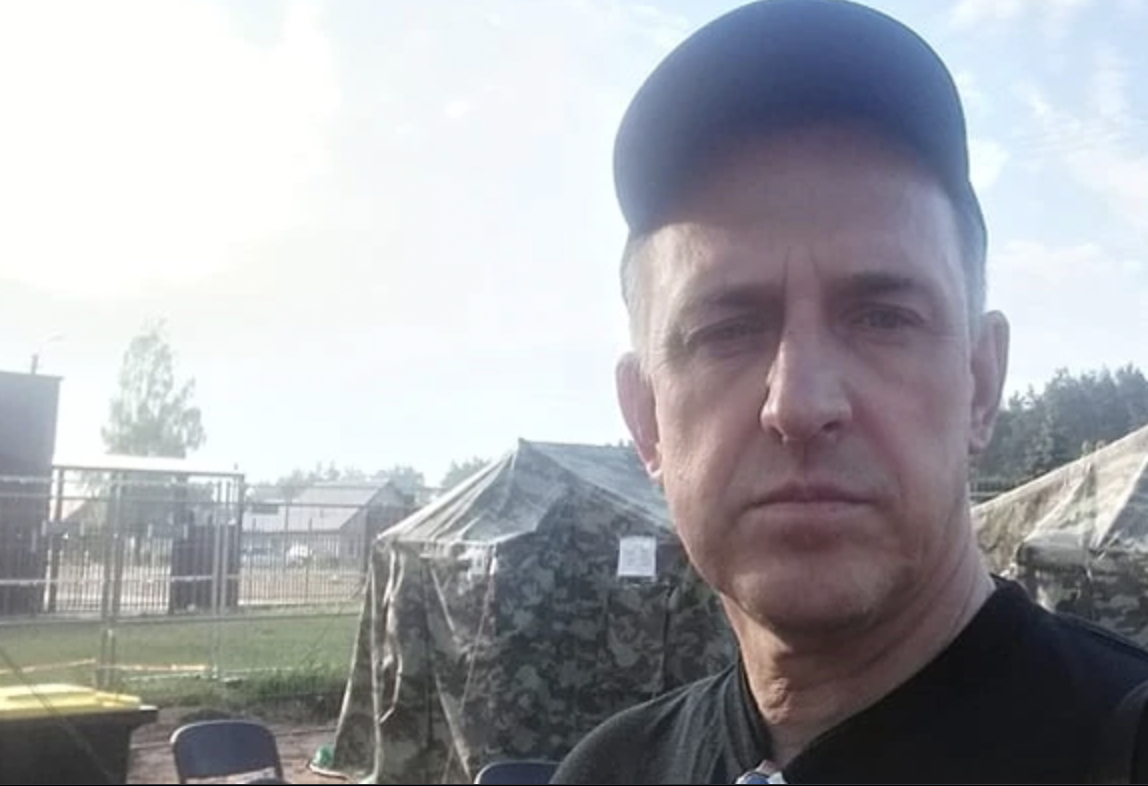
Vladimir Yegorov is still in quarantine and lives in a tent camp for refugees in Lithuania. Photo courtesy of Vladimir Yegorov and Radio Svoboda

“I realized that the country was over”: a “terrorist” electrician from Toropets flees to Lithuania
Radio Svoboda
Elizaveta Mayetnaya
June 28, 2021

Vladimir Yegorov, 54, from Toropets, Tver Region, was an ordinary electrician, but he has now become a political refugee in Lithuania. He fled there because in Russia he was threatened with up to ten years in prison on two criminal charges: “condoning terrorism” and “calling for extremism.” “I outfoxed the FSB: I lived under their nose for four months while they were looking for me everywhere,” Yegorov tells Radio Svoboda. “They can only steal, torture and invent criminal cases. They are no match for real terrorists.”

On June 27, Vladimir Yegorov posted these photos on his Facebook page, writing, “[My] final days in Russia. It’s a pity. It could be such a [great] country. But we are the people, and we fucked it all up. And it’s our fault that Putin exists here. Now all I can do is run. I did what I could.”

Yegorov says that he was not very interested in politics until the war in Ukraine began.

“My mother was seriously ill. She was a doctor, the head of the medical clinic, a respected person in the town. And then came the war, the seizure of foreign territory by Russia, the dead, the prisoners of war: my mother read all about it and could not believe that such a thing was even possible. And before that, holding her heart, almost crying, she told me how our entire healthcare system had been ruined,” Yegorov recalls. “Before the war with Ukraine, I still somehow hoped that all was not lost, but then I finally realized that the country was over.”

Yegorov worked at a sawmill and earned money on the side as an electrician. Then he joined the opposition Yabloko party and moderated (first at the party’s request, then on his own behest) Citizens of Toropets, a social media community page that was popular in the area.

“Of course, we have mass media there, but they only write what suits the authorities, while I, though I’m a simple electrician, was like an independent journalist. I wrote on the community page about our ‘crooks and thieves.’ In our wildest fantasies, we expected that three hundred people would read it, but the page was quite popular: we had more than a thousand subscribers, nearly every resident of the district read it! Sand was being stolen from quarries there by the tons and hauled out in KAMAZ trucks, but the local police and administration covered up the whole thing. After I wrote about this in May 2017, windows were broken in my house. A stone was thrown into the room where my little daughter was sleeping, and a canister of gasoline was found lying nearby.”

Yegorov was not intimidated and sent the evidence of theft at the sand quarry to Moscow. But instead of investigating the theft and the attack on his family, the authorities opened a criminal case against Yegorov himself over an old post on the social network VKontakte. In 2016, Yegorov had bluntly commented on a statement made by Prime Minister Dmitry Medvedev, who suggested that a teacher who had complained about a low salary “earn some more” and go into business if he wanted a high income. “We need to understand that all these ‘statements’ in public by these morons with zero popularity ratings, who occupy high-ranking posts, are nothing more than part of a special operation by the KGB to whitewash the main culprit of all the troubles and his closest cronies,” Yegorov wrote. His post was accompanied by a photo of President Vladimir Putin.

Police investigators interpreted the expressions used in the post as “extremist.” One of their forensic linguistic experts deemed it a call for the physical destruction of the Russian leadership, and a witness in court said that he read the post as an appeal to overthrow the government. Consequently, Yegorov was sentenced to two years of probation and forbidden from moderating websites. Memorial recognized him as a political prisoner.

Fearing criminal prosecution, Yegorov fled to Ukraine, where he applied for political asylum. The Ukrainian authorities denied him refugee status and took him to a neutral zone near the border with Russia. Yegorov left for Belarus, but he was detained there and sent back to Russia. He spent several months in jail before getting a suspended sentence.​

“My wife left me and took my daughter with. No one anywhere would hire me because I was immediately put on Rosfinmonitoring’s list of extremists; my bank accounts were blocked, and the house was also impounded. When I would go to the Federal Penitentiary Service (FSIN) to check in, they mocked me, telling me to get a job! But no one anywhere would hire me. I went all over town many times, applying for all the vacancies, even the lousiest ones, which no one at the unemployment office would apply for, but I was turned down everywhere,” he says. “I, a healthy man who can do anything with my own hands, whom the whole town used to ask to fix things, was an outcast. I ate only potatoes and noodles for four years, and lived with boarded-up windows, because I had no money to replace the windows broken by those gangster. I didn’t go anywhere much: it was almost like being in prison, only at home. And the court had ruled that I could no longer moderate the community page, either.”

The patriarchal town of Toropets is, as it were, a dead end. Moscow is 400 kilometers away, and Tver is 350 kilometers away. Yegorov’s house stands almost in the center of the town, and is perfectly visible from the highway, where hundreds of cars pass every day. In March 2019, Yegorov hung a Ukrainian flag over his house, which he had ordered for 167 rubles on AliExpress. He posted a photo of it on social networks along with a list of political demands: “Putin, liberate the occupied territory of Ukraine! Release [Oleg] Sentsov, the [imprisoned Ukrainian] sailors and all prisoners of war! Don’t meddle in the affairs of a neighboring country! Take care of your own people! I am a simple Russian man, I don’t want my country to be like this.”

“The Ukrainian flag didn’t make [the local authorities] happy, of course, but according to the law, I can do what I want on my 2,200 square meters, and you can’t touch me. Basically, I made a nuisance of myself,” says Yegorov. “During that time, I figured out computers and learned how to use a VPN. When it comes to modern technology, those [FSB] field officers are just kids compared to me.”

Nor did the law enforcement agencies leave Yegorov alone: several times his home was searched, and in December 2019 and July 2020 his computer was seized. In December 2020, Yegorov was named the defendant in two new criminal cases: he was charged with “publicly condoning terrorism on the internet” (punishable under Article 205.2.2 of the Criminal Code) and “publicly calling for extremism” (punishable under Article 280.2 of the Criminal Code). This happened after the security forces had again searched his home on December 4.

“I supported Katya Muranova from Medvezhegorsk in Karelia on social networks. She is still very young, she has a sick child on her hands, and she was also convicted, fined and put on the Rosfinmonitoring list, allegedly for condoning terrorism [Ekaterina Muranova of Medvezhegorsk was accused of “condoning terrorism” in 2019. For commenting on a social media post about the suicide bombing at the FSB’s Arkhangelsk offices by the 17-year-old anarchist Mikhail Zhlobitsky on November 4, 2018, she was sentenced to pay a fine of 350 thousand rubles. Several dozen people in Russia have also been convicted on the same charge for commenting on the bombing — Radio Svoboda.] I feel very sorry for Katya, who also can’t get a job anywhere because of this stigma. She and I became friends, and I wrote a post about the anarchist Zhlobitsky. According to the FSB, it contains ‘statements condoning terrorist activities and creating a positive image of terrorists,'” says Yegorov.

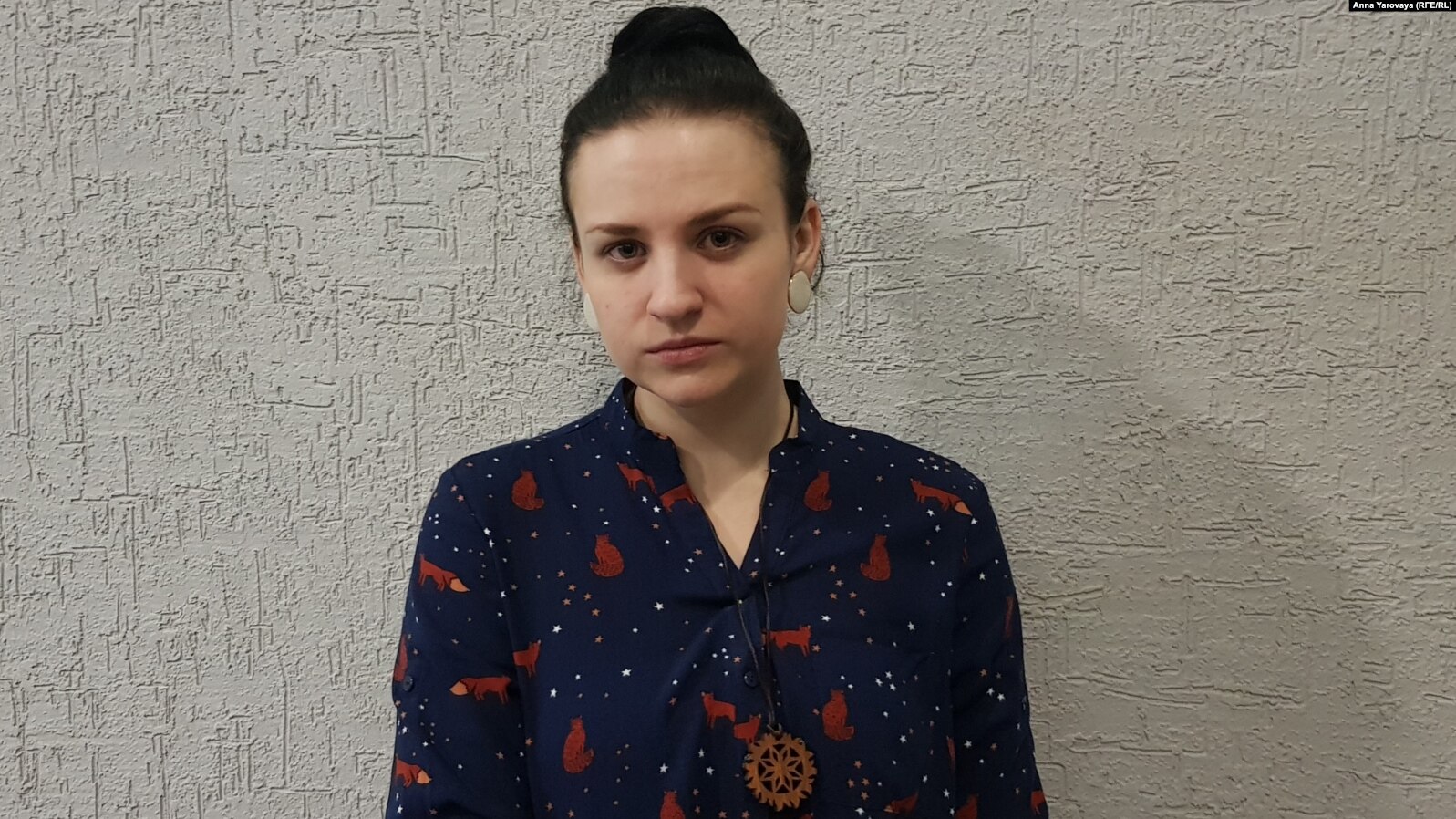
Ekaterina Muranova, convicted in 2019 of “condoning terrorism.” Photo courtesy of Radio Svoboda

Actually, it was this post that led to the charge of “condoning terrorism” against Yegorov. Law enforcement agencies detected “publicly calling for extremism” in another post, which Yegorov allegedly made on January 1, 2020, in the VK group Toropets Realities, referring to a news item published on Ura.Ru, “District head blown up near Voronezh.” There was a note under the news story: “All of them should be blown up.” The FSB believes that it was Egorov who posted this comment from someone else’s account, accessing the page from a virtual Ukrainian number.

“At first I denied everything, but then, during the search, they showed me some kind of knife. I had never had such a thing in my life, and they said that they could find something worse. Consequently, I dismissed my lawyer Svetlana Sidorkina and confessed to everything. In exchange, they promised to leave me on my own recognizance until the trial. I didn’t want to go to prison again,” says Egorov. “I was then actively corresponding on social networks with one person who promised to help me. He also had problems with his wife: it was our common ground. So I decided that I would let [the authorities] think that they had broken me, and I would hide and run away from them. On February 10, I left.”

In the evening, Yegorov lit a stove in his house and left his mobile phone there. Under cover of darkness, he got into the car of his new acquaintance, whom he had never seen before, and left with him for Moscow.

“I helped him with electrical work and did a lot of other things around the house, and then he took me to his dacha,” Yegorov recounts. “All those four months they were looking for me. They hassled my wife’s relatives: they thought that she was hiding me, but no one knew anything. And all that time we were reading everything we could about the border and the best places to cross it. We were on different online chat groups, carefully gathering information. Then we went to Belarus by car. My friend took his family along so the authorities would not suspect anything. We even went to a restaurant, like we were ordinary tourists. And then for seven thousand rubles illegal guides took us to the border. At the lake that divides the border in half, I jumped out of the car and immediately dove into the water. I was wearing swim fins, and had a hermetically sealed bag and sat nav with me. I was supposed to swim 400 meters under water, but I surface at the wrong spot: the water had risen, and there was grass and swamp all round. I ended up swimming 1,200 meters, paddling for a very long time along the Lithuanian shore. Nothing was visible, and I didn’t turn on the flashlight to avoid being detected. I got out on the shore: there was no one in sight. I quickly changed my clothes and went to the road to take a minibus to Vilnius. I came to the road and everywhere there were signs, in Russian, advertising houses for sale. I was afraid that I had come ashore in Russia.”

In Vilnius, Yegorov turned himself in to the police.

“I told them: you’d better me shoot here than hand me over to Russia! They would put me away for ten years for nothing, and then they would me kill me prison. They would hang me like Tesak, and then they say I did it myself,” Yegorov argues.

At first, Yegorov was housed in the transit zone at Vilnius Airport.

“I have never seen a Boeing, I have never flown anywhere on airplanes, only by helicopter when I was in the army. Basically, I haven’t been anywhere: I’ve been to Moscow, to Tver for interrogations, and to Velikiye Luki. I fled unsuccessfully to Ukraine, but they sent me back… So my whole life has been lived in Toropets: I have graves of relatives there that are 300 years old. I didn’t think that I would go on the run in my old age, but I didn’t have much choice, ” says Yegorov.

After several days in the transit zone, Yegorov was transferred to a quarantine camp. He now lives in a tent for twenty-two people.

“The food here is quite tasty: they give us cheese and pears. After my long life of semi-starvation in Toropets, I feel like I’m at a health spa now,” Yegorov says, smiling. “Most of the refugees here are Iraqis, Sri Lankans, and Arabs. The staff treat us well. All of them speak Russian, and I communicate with the other refugees using an online translator: somehow we understand each other. They are all in transit to Europe via Belarus, where it is now a well-established business. This, however, has turned out to be in my favor.”

On June 6, 2021, Agnė Bilotaitė, Lithuania’s interior minister, said that the situation with migrants in her country was getting worse.

“We live next door to an unpredictable terrorist regime,” she said. “After Lukashenko’s threats about unleashing an unprecedented flow of migrants, we are seeing an increase in illegal migrants. Four times a week, flights from Istanbul and Baghdad arrive Minsk, whence the migrants head for Lithuania. At least 600 people fly from these destinations every week. The price of transporting people illegally across the border is as much as 15 thousand euros per person, and 30 thousand euros per family.”

This year, over 400 illegal migrants have arrived in Lithuania from Belarus, which is five times more than during the whole of 2020.

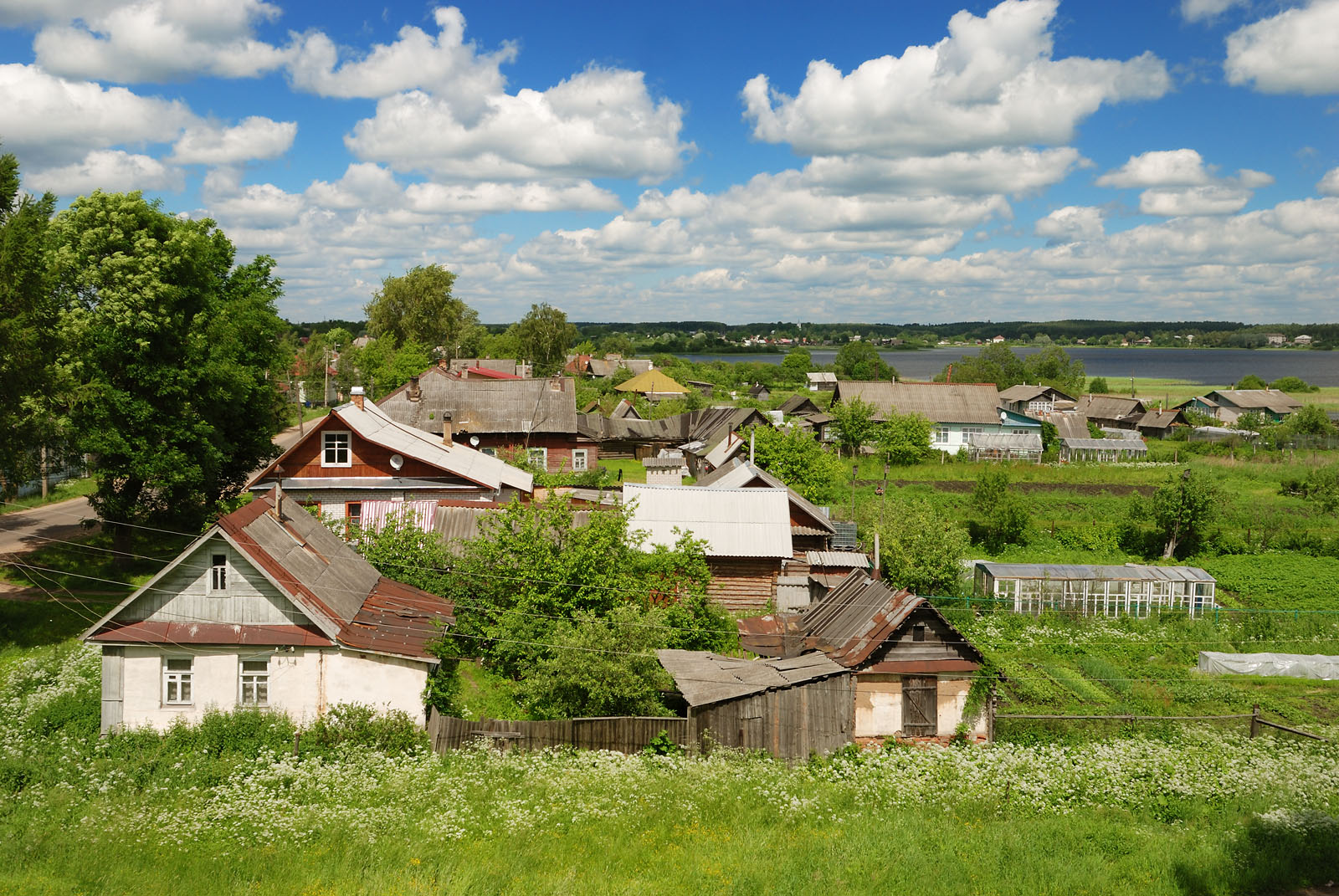
A view of Vladimir Yegorov’s hometown of Toropets. Courtesy of Wikipedia

“The flow of refugees is huge, and they spend a lot of time vetting everyone. I was given [refugee] status five years ago after waiting a month and a half, but the folks who came after me waited for six months,” says Irina Kalmykova. Criminal charges were filed against Kalmykova in Moscow for her repeated participation in solo pickets and protest rallies, and she was fined 150 thousand rubles. Instead of waiting until she was arrested again and faced a second set of criminal charges, she and her son fled to Belarus in January 2016, and from there they went to Lithuania, where she was granted political asylum.

Kalmykova was one of the co-founders of the Russian European Movement, which was organized to bring together Russian political refugees in Lithuania.

“We have a very friendly Russian diaspora here now,” says Kalmykova. “We help each other out because, until recently, we ourselves were in the same situation: no money, no clothes, no documents, nothing at all. The guys have already found an apartment where Vladimir can stay, and they will help him find a job. Lithuania is considered one of the poorest countries in Europe, but, you know, people here are quite responsive and kind, and everyone knows Russian, so it is much easier to adapt here than in some other countries The main thing is that Vladimir already has support, because it is quite important that a person doesn’t feel unwanted in their new home. I have no doubt that Lithuania will grant him political asylum: criminal charges have been filed against him, and he has been persecuted for his political stance.”

Yegorov says that he really hopes that his life will finally get better in Lithuania.

“Maybe when I can work here, my wife and daughter will move here to join me. I would really like that,” he says.

Thanks to Comrade Koganzon for the heads-up. Translated by the Russian Reader. In my “real life” as a professional translator, I would have earned around 170 euros for translating a text of this length. Instead, I have provided translations of this and thousands of other compelling texts for free over the last fourteen years here and at Chtodelat News. So, please consider donating money via PayPal or Ko-Fi to help support this work and encourage me to continue it. You’ll find “Donate” and “Buy me a coffee” buttons in the sidebar on the left of this page. Click on one of them to make a donation. Thanks! ||| TRR

Number Seventeen

The Belomor Canal Administrative building in Medvezhyegorsk, Russia. Photo courtesy of Wikimedia

Medvezhyegorsk Resident Suspected of “Condoning Terrorism” over Posts on VK Group Page
OVD Info
October 31, 2020

Yevgeny Gavrilov, a resident of Medvezhyegorsk and the admin of the public page Cocktail on the social network VK, is suspected of “condoning terrorism” (punishable under Part 2 of Article 205.2 of the criminal code) over posts about the bombing at the FSB’s Arkhangelsk offices [on October 31, 2018]. Gavrilov informed OVD Info about the case himself.

The criminal case was launched due to two posts about Mikhail Zhlobitsky’s suicide bombing of the Arkhangelsk offices of FSB, as published on the group page Cocktail (Kokteil’). In the first post, dated November 2, 2018, the author, identified as Yarey Tengri, argues that “Russia can look forward to People’s Will-style underground terrorism.” The second post is an attempt by the Telegram channel Awakening (Probuzhdenie) to analyze Zhlobitsky’s actions.

Gavrilov has no idea why these posts were classified as “condoning terrorism.”

“I’m not an expert. Apparently, they didn’t like something about them. They could have asked VK to delete them, and then launched criminal cases,” he said.

According to Gavrilov, the security forces searched his home, seizing all his computer equipment and devices. He is free on his own recognizance. He is a suspect in the criminal investigation.

“At first, in 2017, Cocktail was conceived as a humor project,” says Gavrilov about his group page. “Then, a year later, as there was nothing for people to eat, [contributors] started writing to me: ‘Let’s slowly switch [the page’s agenda] more to politics. Living on an empty stomach is not funny.’ We shifted to politics and the economy, and then to a focus on the news. Now, probably, we will refrain from all this, but we are not closing the group yet.”

____________

Yevgeny Gavrilov is the seventeenth person in Russia who has been investigated or prosecuted for, allegedly, “exonerating” or “condoning” the apparent suicide bombing by Mikhail Zhlobitsky on October 31, 2018. The others are Sergei Arbuzov, Alexander MerkulovAlexei ShibanovSvetlana ProkopyevaNadezhda BelovaLyudmila StechOleg NemtsevIvan LyubshinAnton AmmosovPavel ZlomnovNadezhda RomasenkoAlexander DovydenkoGalina GorinaAlexander SokolovYekaterina Muranova15-year-old Moscow schoolboy Kirill, and Vyacheslav Lukichev. Translated by the Russian Reader

Three Years of Revenge (A Chronicle of the Network Case)

The Three-Year Revenge
The appeals hearing in the Network Case is over. The sentences are the same: from six to eighteen years in prison
Yan Shenkman
Novaya Gazeta
October 20, 2020

The Network Case […] has been going on for exactly three years. Today, we can say that the case has come to an end: an appeals court has upheld the convictions of all the defendants [in the Penza portion of the case, not the Petersburg portion], who face six to eighteen years in prison. In the coming days and weeks, they will be transported to penal colonies to serve their sentences, while their lawyers file complaints with the Russian Court of Cassation and the European Court of Human Rights in Strasbourg. Novaya Gazeta recalls how one of the most dramatic and unjust cases of the 2010s unfolded.

2017

October

The Maltsev/Artpodgotovka Case […] had just exploded on the front pages, and the World Cup and the presidential election were on the horizon. The circumstances were perfect for the special services to uncover a “terrorist plot” and impress their superiors. A year and and a half earlier, an ambitious FSB colonel, Sergei Sizov, took charge of the agency’s Penza office: it is believed that he launched the Network Case. Now a lieutenant-general, Sizov currently heads the agency’s Chelyabinsk regional office. Soon after he was assigned to Chelyabinsk, news broke of the so-called Chelyabinsk Case, which is quite reminiscent of the Network Case.

The arrests in Penza began on October 18, 2017. Yegor Zorin was the first to be taken. He had drugs on him, allegedly, but now that we know how investigators handled the evidence in the case, this circumstance is in doubt. Zorin was pressured into cooperating with the authorities, giving evidence about a certain organization, to which he and his friend Ilya Shakursky belonged, allegedly. Shakursky is a well-known anti-fascist activist, organizer of charitable and environmental campaigns, and musician. The authorities had long had their eyes on him and were so interested that they sicked a provocateur on him. This provocateur, Vladislav Gresko-Dobrovolsky, would later be a secret witness for the prosecution at the trial.

Dmitry Pchelintsev, Andrei Chernov, Vasily Kuksov and, a bit later, Arman Sagynbayev are arrested. The young men are beaten and threatened during their arrests. Although weapons were found, allegedly, on Kuksov, Shakursky, and Pchelintsev, no traces of the accused or their body tissues are detected on the weapons.

Everything is held against them: the books they read (including Tolstoy), a staged airsoft video, shot two years earlier; their correspondence on messengers; and hikes in the forest that involved practicing survival skills and first aid. But what matters most is their own testimony, obtained under torture, something that no one except the prosecutor’s office doubts anymore. The conclusion: the accused are a “terrorist community” that was planning to seize power and enact regime change.

November

Rumors reach Moscow that anarchists and antifascists have been disappearing in Penza. Their arrests are really like abductions: a person disappears, and that is it. Alexei Polikhovich, a correspondent with OVD Info and an anarchist who recently served time in the Bolotnaya Square Case, travels to Penza. He learns about what has happened, including the torture, but the relatives of the detainees ask him not to publish the information. The general sentiment at the time was not to make a fuss: things would only get worse, and most importantly, the torture would resume. Consequently, the information is published only in January, after the arrests in Petersburg of Viktor Filinkov, Igor Shishkin, and Yuli Boyarshinov as part of the same case.

2018

January

Yana Teplitskaya and Katya Kosarevskaya, members of the Petersburg Public Monitoring Commission, find Filinkov in the Crosses Prison, recording “numerous traces of burns from a stun gun on the entire surface of [his] right thigh, a hematoma on [his] right ankle, [and] burns from a stun gun in [his] chest area.” There were more than thirty such signs of injury. Filinkov claims he was tortured. Slightly later, Pchelintsev and Shakursky would claim they were tortured. Doctors confirm that Shishkin suffered a fracture in the lower wall of his eye socket, as well as numerous bruises and abrasions.

Pchelintsev: “When I was tortured with electrical shocks, my mouth was full of ‘crushed teeth’ due to the fact I gritted my teeth since the pain was strong, and I tore the frenulum of my tongue. My mouth was full of blood, and at some point one of my torturers stuck my sock in my mouth.”

The case attracts attention.

February 14

A banner bearing the inscription “The FSB is the main terrorist” is hung on the fence of the FSB building in Chelyabinsk “in solidarity with repressed anarchists all over the country.” The people who hung the banner are detained and, according to them, tortured. They are charged with disorderly conduct. Six months later, the charges are dropped due to lack of evidence. It is in Chelyabinsk that investigators use the phrase “damage to the FSB’s reputation” for the first time. The phrase is the key to the entire process. Subsequently, the security forces would take revenge against those who publicized instances of torture and procedural violations. People who supported the accused would sometimes be punished: they would face criminal charges and threats to their lives. The motive of revenge is clearly legible in all the actions taken by investigators, in the stance adopted by the prosecutors and the judges, and in the verdict itself.

Spring

Gradually, information about the Network Case is published in the media, first as brief news items, then as full-fledged articles in independent publications. By the end of April, everyone is writing about the case. The solidarity campaign becomes massive, and the case gains notoriety. At the same time, the NTV propaganda film Dangerous Network is broadcast: in terms of genre, it  resembles other such film, including Anatomy of a Protest and 13 Friends of the Junta. It attacks not only the accused, making them look like bin Laden-scale terrorists , but also the human rights defenders and activists who support them and thus, allegedly, betray Russian interests. Dangerous Network was the first of many similar “documentaries” and articles on the case.

The first solidarity rallies and concerts are held in May. The parents of the defendants create the Parents Network, an association aimed at protecting their children, and ask for help from federal human rights ombudswoman Tatyana Moskalkova. Consequently, the torture stops, but no one thinks to close the case.

In July, there are new arrests in the case: Penza residents Mikhail Kulkov and Maxim Ivankin are arrested. At the same time, in July, during a session of the UN Committee Against Torture, the Russian delegation is asked about the Network Case. The delegation ignores the question.

October 28

An unauthorized “people’s meeting” in support of the defendants in the Network and New Greatness cases takes place outside FSB headquarters on Lubyanka Square in Moscow. Similar protests are held in Petersburg, Penza, Novosibirsk, Rostov-on-Don, and Irkutsk. Among those detained after the protest in Moscow is activist Konstantin Kotov. A week later, 77-year-old human rights activist Lev Ponomaryov is fined and sentenced to 25 days of administrative arrest for calling for the meeting. Ponomaryov comments, “This is the FSB’s revenge.” The gatherings on Lubyanka against torture and crackdowns would continue in 2019.

October 31

In Arkhangelsk, 17-year-old anarchist Mikhail Zhlobitsky blows himself up at the local offices of the FSB. Shortly before the blast, a message appears on the Telegram channel Rebel Talk [Rech’ buntovshchika]: “Since the FSB fabricates cases and tortures people, I decided to go for it.” There is no indication of a specific case, but the phrase “fabricates cases and tortures” suggests the Network Case.

December

At a meeting of the Human Rights Council, journalist Nikolai Svanidze and council chair Mikhail Fedotov tell Putin about the provocations in the New Greatness Case and the torture in the Network Case. “This is the first time I’ve heard about it,” Putin says, promising to “sort it out.” Fedotov also appealed to FSB director Nikolai Bortnikov, but none of the internal investigations into the Network Case revealed any wrongdoing by law enforcement officers. The reason is simple: law enforcement agencies investigate themselves, and complaints of torture and other wrongdoing are sent down the chain of command to the local level—to those guilty of torture and other crimes.

2019

February

Moscow State University graduate student Azat Miftakhov is detained by police. At the police department, he slashes his wrists—to avoid torture, as he explains to his lawyer. According to one theory, Miftakhov has been detained in an attempt to “uncover” the Network’s “Moscow cell.”

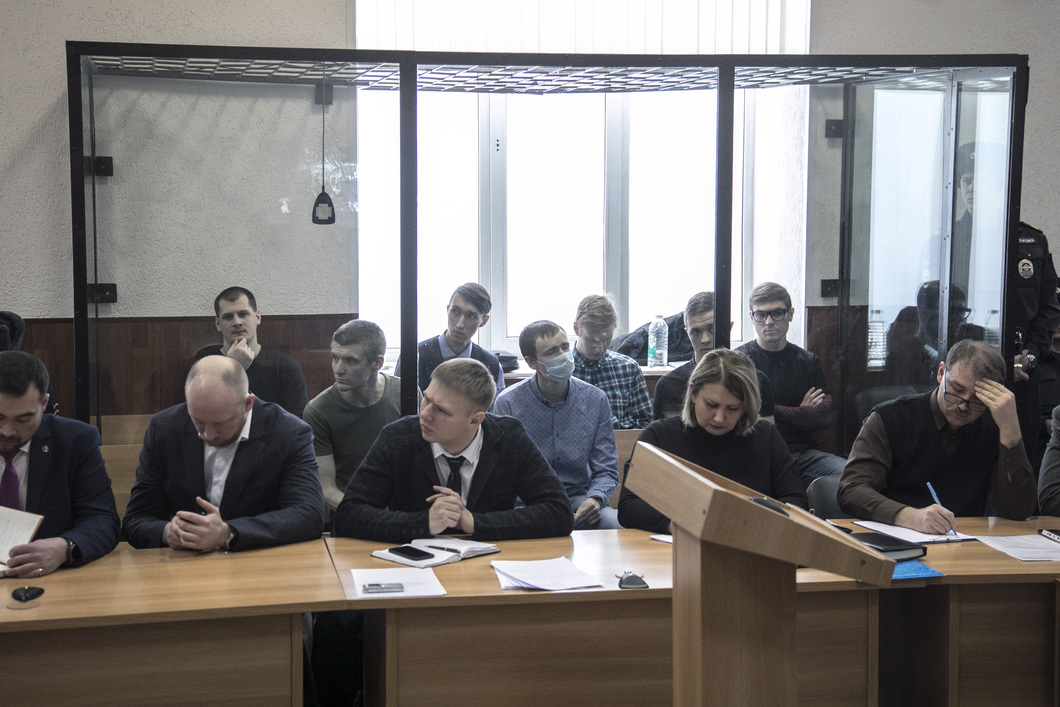
Azat Miftakhov. Photo: Victoria Odissonova/Novaya Gazeta
April 

A petition is posted on Change.org demanding that the Network Case be dropped and that the allegations of torture be investigated. It is signed by rock musician Andrey Makarevich, actress Liya Akhedzhakova, writer Lyudmila Ulitskaya, actress Natalya Fateyeva, animator Garri Bardin, and many others.

On April 8, by decision of the Moscow District Military Court, the FSB places the Network on its list of “terrorist” organizations. It bothers no one that the guilt of the defendants in the case has not yet been proven in court.

May

The case is brought to trial: the [Penza] trial will last until February 10, 2020. At the trial, the prosecution’s witnesses will recant their earlier statements, which they claim were given either under duress or misrepresented. The prosecution still has confessions made under torture, the testimony of secret witnesses, and physical evidence, including internet correspondence and computer files that were altered after they were confiscated, weapons of unknown origin, and a conclusion by FSB experts that the defendants constituted a group, and Pchelintsev was their leader.  This is enough to persuade the court to sentence the seven Penza defendants to 86 years in prison in total: Pchelintsev is sentenced to 18 years; Shakursky, to 16; Chernov, to 14; Ivankin, to 13; Kulkov, to 10; Kuksov, to 9; and Sagynbayev, to 6.

Penza Network defendants during the reading of the verdict. Photo: Victoria Odissonova/Novaya Gazeta

2020

February

There is unprecedented public outrage at the verdict and the prison sentences requested by the prosecutor. Hundreds of open letters and appeals—from musicians, poets, cinematographers, book publishers, artists, teachers, and municipal councilors—are published. For the first time in Russia, the practice of torture by the special services is openly and massively condemned. The verdict is called an attempt to intimidate the Russian people. The public demands a review of the Network Case and an investigation of the claims of torture. People stand in a huge queue on Moscow’s Lubyanka Square to take turns doing solo pickets.

Journalist Nikolai Solodnikov, holding a placard that reads, “I demand an investigation of the torture in the Network Case.” Photo: Svetlana Vidanova/Novaya Gazeta

But a week later, the wave of indignation is shot down. Meduza publishes a controversial article, “Four Went In, Only Two Returned,” in which a certain Alexei Poltavets confesses to a double murder that he committed, allegedly, with defendants in the Network Case. There had long been rumors about the so-called Ryazan Case—the murders of Artyom Dorofeyev and Ekaterina Levchenko in the woods near Ryazan—within the activist community, but the story had never surfaced, because there was no evidence. There is no evidence now, either: the Network’s involvement in the murder is not corroborated by anything other than the claims made by Poltavets. Poltavets himself is in Kiev, and no formal murder charges are made against the Network. But it is enough to discredit the solidarity campaign. Now, in the eyes of society, those who take the side of the Network Case defendants are defending murderers. Public outrage fades, and the verdict remains the same.

June

In Petersburg, Filinkov and Boyarshinov are sentenced to seven years and five and a half years in prison, respectively. Shishkin made a deal with the investigation and was sentenced to three and a half years in prison in 2019.

Viktor Filinkov and Yuli Boyarshinov. Photo: David Frenkel/Mediazona

Putin signs a decree awarding Sergei Sizov the rank of lieutenant general. Other Russia activists are arrested in Chelyabinsk. The so-called Chelyabinsk Case begins.

September

The appeals hearing in the Network Case has begun. It is held in the closed city of Vlasikha near Moscow, with a video link from Penza. The issue now is not torture, but the lack of evidence for the verdict. And indeed, from the point of view of any lawyer, the verdict look quite odd. It is not the verdict of an independent court, but a rewrite of excerpts from the case file and the indictment, a sloppy collection of unconfirmed facts and unreliable expertise. The verdict is reminiscent of the famous line from the 1979 Soviet TV miniseries The Meeting Place Cannot Be Changed: “He’s going to prison! I said so.”

October 20
The appeal hearing ends and the verdict is upheld. The authorities have enacted their revenge. The defense concludes that there is no more justice in Russia.

Translated by the Russian Reader. Please read my previous posts on the Network Case, and go to Rupression.com to find out how you can show your solidarity with the defendants in the case.

And Then There Were Sixteen (“Condoning Terrorism” Witch Hunt Continues)

Vologda Resident Sentenced to Five Years in Prison for Comments about Bombing at Arkhangelsk FSB
OVD Info
October 18, 2020

On October 15, the Vologda Garrison Military Court sentenced Sergei Arbuzov, a resident of Vologda, to five years in a high-security penal colony for “condoning terrorism on the internet” (punishable under Article 205.2.2 of the criminal code) writes local politician Sergei Gusev on his VK group page.

Arbuzov was found guilty of “condoning terrorism” over several comments he posted on a VK public page under a news item about anarchist Mikhail Zhlobitsky’s suicide bombing at the FSB’s Arkhangelsk offices.

Photo of a page from Arbuzov’s case file, as posted on the VK group page The Nationalist Guzhev Is the People’s Politician 

In particular, Arbuzov was charged with writing, on November 1, 2018, “That’s who should be given the title Hero of Russia: he did not cut himself any slack.” According to Guzhev, the accused had admitted his guilt, repented [sic] and actively cooperated with the prosecution throughout the investigation.

In addition, according to the politician, Arbuzov has two young children and certificates of merit for volunteering in the social sector. Despite this, the court sent the Vologda resident to a high-security penal colony for five years.

Sergei Arbuzov is the sixteenth person in Russia who has been convicted of or prosecuted for, allegedly, “exonerating” or “condoning” the suicide bomber Mikhail Zhlobitsky. The others are Alexander Merkulov, Alexei ShibanovSvetlana ProkopyevaNadezhda BelovaLyudmila StechOleg NemtsevIvan LyubshinAnton AmmosovPavel ZlomnovNadezhda RomasenkoAlexander DovydenkoGalina GorinaAlexander SokolovYekaterina Muranova15-year-old Moscow schoolboy Kirill, and Vyacheslav Lukichev. Translated by the Russian Reader

The Alexander Merkulov Test

“I am/we are Alexander Merkulov”

Alexei Sergeyev
Facebook
September 8, 2020

The Alexander Merkukov Test

An abyss of silence. You shout at the top of your lungs, but there’s no response, only silence. It’s like in a dream when you need to shout, but you have no voice at all. It’s gone. In a dream, however, you can wake up, while in this case…

On the placard, I had tied a bell to a symbolic spool of the white thread that was used to sew the shaky case against Alexander shut. It trembles in the wind, and passersby hear its “ding-ding.” For whom does the bell toll? Don’t walk on by, don’t look away…

Why did I get involved in the case of Alexander Merkulov (aka Aleksandr Peĵiĉ)? We weren’t friends, just acquaintances. Why, even though I hate court hearings, did I attend three court hearings last week?

The bell has a tongue. Many people in prison don’t have a tongue. The Russian Themis does not hear them. Not only has she blindfolded her eyes, but she has also put earplugs in her ears and plugged them tight. Whether you yell or not, you will be sentenced The judicial ear is sensitive only to the sovereign’s oprichniks. Gulag-minded, the courts presume that you are guilty, nor are their verdicts subject to review or appeal.

So it turns out that the only voice prisoners have is their circle of support on the outside. These groups are different for everyone. The famous blogger has hundreds of thousands of subscribers. The arrested journalist enjoys the corporate solidarity of the media: the major newspapers publish editorials about him, while his colleagues devote columns and radio and TV broadcasts to him.

A prominent public figure is supported by ordinary Russians, his fellow activists, and human rights defenders. And doctors, actors, truckers, feminists, LGBT activists, etc., have the support of their own communities. But Merkulov’s case has nothing to do with LGBT issues, so LGBT organizations can’t give it the proper attention and resources.

Sometimes, it is possible to raise a regional case to a national and even international level of publicity, as many people have managed to do in the case of Yulia Tsvetkova by pooling their efforts. While it is no guarantee of victory, it increases the chances.

But most cases in Russian courts are heard in complete silence. People are sentenced, transported to prison, and serve their sentences or die trying, and yet nobody says a word. Of the five cases that were heard in Petersburg City Court on Wednesday morning in the same courtroom as Alexander’s case, only his hearing featured a few members of the public in the gallery. The other defendants faced indifferent silence before hearing the judge say, “The appeal is denied, the defendant will remain in custody.”

Recently, the Perm human rights activist Igor Averkiev wrote an excellent post entitled “The Personal Usefulness of Crowds.” It’s not about people, it’s about animals—about the chances a hypothetical “introverted reindeer named Sergei,” a “social reindeer named Kostya,” or a “young musk ox named Proshka” would have against a pack of predators, a pack of “Lake Taimyr wolves.” I will quote a couple of passages from it.

“I’m a reindeer named Sergei. But I’m a very introverted, nearly autistic reindeer, and I only really feel good when I’m alone. And so, being the only other reindeer for many miles around, I come across a pack of hungry wolves. My chances are almost zero: I run faster, but they are more resilient. Moreover, when I’m alone, it’s easier for the wolves to work together smoothly as a group. Basically, I’m no longer here… Natural selection is why we don’t see ‘nearly autistic introverts’ among reindeer.”

“Any danger forces people (and not only people) to band together in a group, in a crowd. This happens instinctively. The import of this instinct is obvious: it depersonalizes the threat. When I am in a crowd, the danger is not focused on me personally, but rather is distributed over a large number of people, which increases my own chances of survival. But you can not only hide in a crowd, the crowd can also protect you. When it comes to self-defense, the size of the crowd matters.”

Any metaphor has its limits, of course. So, returning to Alexander, I want to talk about more than just him. We know that he is one of Averkiev’s “autistic introverts.” Not only does he lack media fame, but he also lacks a large number of what are called “stable social connections.”

(The topic of how the system cracks down on people with psychiatric or mental peculiarities deserves a separate post).

And this was where I said to myself: Stop, Alexei. There is no retreating. If it weren’t for you and the few colleagues who have got involved in this ‘hopeless case,’ and for Alexander’s mother, Alexander would be a goner.

I think this was what Olga Masina, who is seriously ill and undergoing medical treatment, and yet still works, said to herself. She stubbornly spends the few free hours and energy she has covering Alexander’s case. And then, like ripples on water, other people plug into the campaign. Svetlana Prokopyeva, who was convicted of the same “crime,” wrote an article about Alexander between her trial and her appeal. And Grigory Mikhnov-Vaytenko has got involved, too.

This story is not so much about Alexander, it’s about all of us. This is a test of our personal commitment, of our capacity for overcoming ourselves and our circumstances. Do we do something, however small, or do we just turn away and make excuses?

Of course, even a serious public response does not guarantee a 100% positive outcome. But the lack of support almost guarantees a negative outcome. And, at least, our involvement is felt by Alexander, and it is important for him, he writes about it in his letters.

I will end this post with two actual quotations.

“We’re not going to Merkulov’s court hearings. He’s not as cute as Yegor Zhukov,” writes a gay man.

No comment.

“I’m not ready to picket yet. The case itself is quite murky.”

Of course, I respect the right to choose.

But let me remind you that Alexander, a pacifist and anti-fascist, is accused of “condoning terrorism” on the internet for three reposts and a four-word post about 17-year-old [Mikhail] Zhlobitsky, who blew himself up in the FSB building in Arkhangelsk.

Does this warrant up to 7 years in prison? Do we need to keep Alexander in jail for three months running as if he were a particularly dangerous criminal? For me, the answer is obvious, and the point is clear in this sense: there were no calls for violence in Alexander posted. On the contrary, when reposting, he wrote that he did not approve of violence.

There is no counting the streets in our country that still bear the names of terrorists, but our valiant security forces could not care less. We LGBT activists send notarized bundles of the threats we receive to the police, but they don’t open criminal investigations because, they say, “the threats are not real.” Assaults, domestic violence, and poisoning are “not grounds for criminal prosecution.”

But Alexander’s actions are a “threat to national security”? The criminal case against him is a joke. The article in the criminal code under which he has been charged [Article 205.2] a mockery of the law. In my opinion, if it is left on the law books, then at most it should be an administrative offense.

Read the Wikipedia article about the bombing in Arkhangelsk: more and more people have been getting prison sentences for its “long echo.”

We’re talking about people’s lives here. We’re talking about Alexander’s life. Will his fate be decided in silence, or will we pass this test of caring? We don’t have horns and hooves like musk oxen and deer, the only things we have are our voices and our conscience.

At 12:30 p.m. on September 10, the appeals hearing on Alexander’s remand in police custody will take place at Petersburg City Court.

Follow Alexander’s case on Telegram: https://t.me/save_merkulov

#FreeMerkulov

Save Alexander Merkulov (Peĵiĉ)
Telegram
September 10, 2020

The Petersburg City Court upheld the original decision to remand Alexander Merkulov in custody. In the photo, you see the face of this “justice”: Judge Tatyana Matveyeva Tatyana , hiding behind the monitor.

Prosecutor Minina didn’t even stay for the announcement of the court’s decision. Apparently, she already knew it in advance.

Alexander was present via video link and was very happy to see us in the camera🙂

Alexander Merkulov is among a long list of Russians who have been prosecuted for or charged with “exonerating” or “condoning” the suicide bomber Mikhail Zhlobitsky. The others are Alexei Shibanov, Svetlana Prokopyeva, Nadezhda BelovaLyudmila StechOleg NemtsevIvan LyubshinAnton AmmosovPavel ZlomnovNadezhda RomasenkoAlexander DovydenkoGalina GorinaAlexander SokolovYekaterina Muranova15-year-old Moscow schoolboy Kirill, and Vyacheslav Lukichev. Translated by the Russian Reader

The 15th

number15

Man Suspected of “Condoning Terrorism” Remanded in Custody by Pskov City Court
Lyudmila Savitskaya
Sever.Realii
June 13, 2020

Pskov City Court has remanded in custody for two months 47-year-old Alexei Shibanov, whom the regional FSB office suspects of “condoning terrorism” and publicly calling for extremism in sixteen entries on his personal page on the social network VK (Vkontakte), lawyer Tatyana Martynova has reported to us.

Shibanov will be jailed until August 10.

On VK, Shibanov had commented on the suicide bombing of the Arkhangelsk FSB office in 2018, the criminal case against journalist Svetlana Prokopieva (who has also been charged with “condoning terrorism),” the protests against plans to build a church in a park in Yekaterinburg, the suicide of a Russian National Guard deputy commander in Moscow, and the incident in Smolensk Region in which an armored vehicle hit two Russian National Guardsman. The suspect expressed his agreement with Georgian TV presenter Giorgi Gabunia’s televised tirade against Vladimir Putin, and he criticized the actions of the Moscow police during the summer 2019 protests in the city.

At his court hearing, Shibanov said that he made all the entries himself. An FSB investigator testified that more than two persons had read them. Experts at the Moscow State Linguistic University had found in the texts linguistic and psychological cues “to commit violent actions,” “incitement and veiled calls to commit destructive acts,” and “evidence of the condoning of terrorist activity.”

According to Martynova, Shibanov was detained on June 11. He was sitting on a bench when a busload of Russian National Guardsman drove up to his house. They put him on the ground, and one of the officers stepped on him with a boot. After that, Shibanov’s house was searched and his computer and laptop were seized.

After the bombing in Arkhangelsk, the FSB opened several criminal investigations into “condoning terrorism” over comments published on social networks and in the media. Yekaterina Muranova, a resident of Karelia, was 350,000 rubles for a comment on a social network. A resident of Kaluga, Ivan Lyubshin, was sentenced to five years in prison. Vyacheslav Lukichev, a 24-year-old anarchist, anti-fascist and environmental activist from Kaliningrad, was sentenced to a fine of 300,000 rubles for posting an article about the Arkhangelsk bomber [Mikhail] Zhlobitsky on Telegram. Criminal charges have been filed against Pskov journalist Svetlana Prokopieva.

Alexei Shibanov is the fifteen person in Russia who has been prosecuted for, charged with, or accused of “exonerating” or “condoning” the suicide bomber Mikhail Zhlobitsky since October 31, 2018. The others are Nadezhda BelovaLyudmila StechOleg NemtsevIvan Lyubshin, Svetlana Prokopieva, Anton AmmosovPavel ZlomnovNadezhda RomasenkoAlexander DovydenkoGalina GorinaAlexander SokolovYekaterina Muranova15-year-old Moscow schoolboy Kirill, and Vyacheslav Lukichev. Translated by the Russian Reader. The number 15 courtesy of Kids Math Games

Reviewed, it seemed
5 As if someone were watching over it
Before it was
As if response were based on fact
Providing, deciding, it was soon there
Squared to it, faced to it, it was not there
Renewed, it fought
As if it had a cause to live for
Denied, it learned
As if it had sooner been destroyed
Providing, deciding, it was soon there
Squared to it, faced to it, it was not there
Reviewed, it fought
As if someone were watching over it
Before it had sooner been denied
Renewed, it seemed
As if it had a cause to live for
Destroyed, it was later based on fact