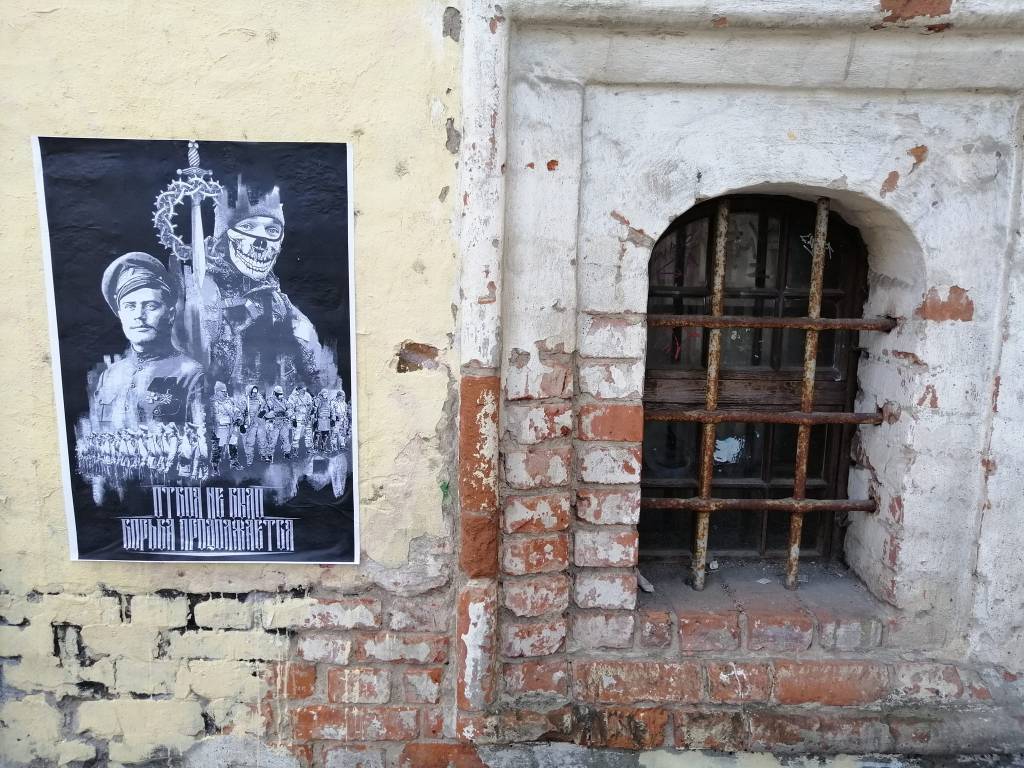
¡Me monté en la montaña rusa tres veces!

Hello, Moscow Times readers! This is your weekly newsletter, which will shed light on:

  • a time of rapid price growth in Russia
  • how Africa feels about free Russian cheese grain
  • why Vladimir Putin remained standing.

But first we will discuss a seemingly not too high-profile event—the arrest of the Soviet dissident and prominent Russian leftist Boris Kagarlitsky.
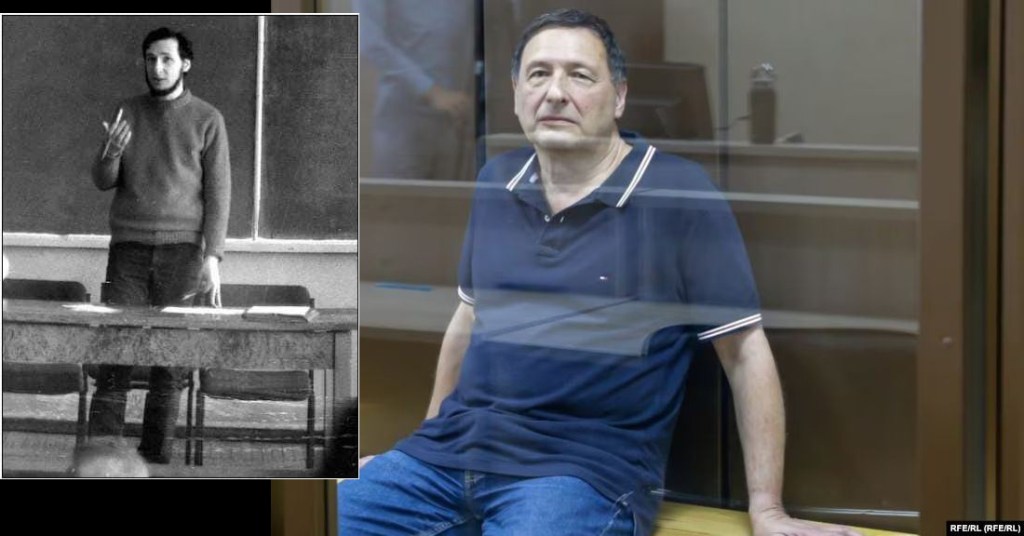
Boris Kagarlitsky was jailed by the Soviet regime, and now he’s been jailed by the Putin regime too.

On the face of it, it looks like yet another trumped-up “condoning terrorism” case! Zhenya Berkovich and Svetlana Petriichuk were also arrested under this article and are currently in pretrial detention.

But Boris Kagarlitsky is not a great theater director chockablock with interesting creative ideas. He is a veteran anti–American and anti-globalist. Few people remember how vigorously Kagarlitsky supported Russia’s invasion of Georgia, how he spoke as critically as possible about the Ukrainian Maidan of 2013, and how later he consistently criticized what he saw as Volodymyr Zelensky’s “puppet” government. And he lent his support to the “separatists” in the Donetsk and Luhansk regions.

In other words, Kagarlitsky has generally been an ideological ally of the Russian regime, and his criticism of the Kremlin is based on the argument that the regime has been insufficiently consistent in its anti-Americanism and anti-globalism, in its fight against the global financial monster and its ubiquitous outstretched tentacles.

Does that remind you of anyone? That’s right: Igor Girkin-Strelkov. The arrested leader of the so-called Russian World likewise did not just support the Kremlin’s plans for conquering Ukraine. He onstantly stressed the insufficient efforts and inconsistency evinced by the Russian authorities in its “final solution” of the “Ukrainian question.”
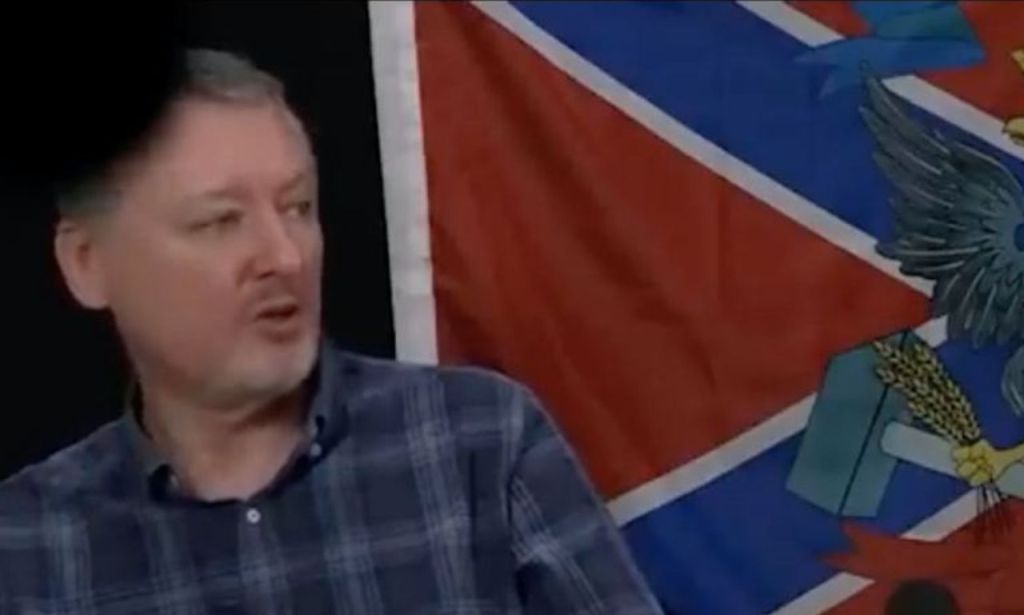
Igor Girkin accused Putin of indecisiveness.

Thus, in the wake of Yevgeny Prigozhin’s rebellion (but not necessarily because of it, although this could be the case), the authorities, realizing that liberals no longer pose any danger, have gone after political opponents of a different stripe—after fellow travelers who rabidly dared to tell them what to do. Prigozhin did something similar, but he bit his tongue after his pseudo-mutiny. Unlike Kagarlitsky and Girkin, he stands for no ideology other than self-enrichment, and this stance is is something the Kremlin can comprehend and even adore.

What matters is that Kagarlitsky’s arrest, hard on the heels of Girkin’s arrest, shows that the regime is at a total ideological impasse. Its amorphous anti–western rhetoric has no clear conceptual basis, and hence anyone who espouses something resembling a real concept is an indubitable threat.

Putin’s only real ideological ally remains Alexander Lukashenko, a politician who has an immense arsenal of ridiculous arguments for explaining away the actions of his aggressive Moscow meal ticket.
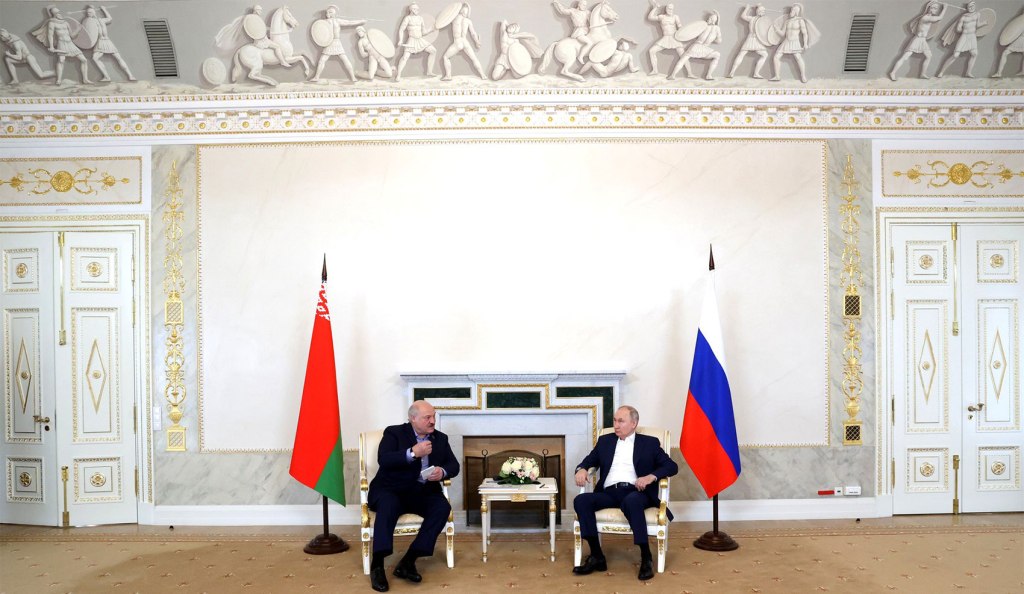
The Belarusian pretender always points out where the attack is coming from.

[…]

Alexei Navalny also made a very unexpected public statement. He stood up for Girkin-Strelkov and even counted him among his fellow political prisoners. Note that from a formal point of view, the herald of the Russian World, who has the blood of many people on his hands, cannot be classified as a political prisoner.
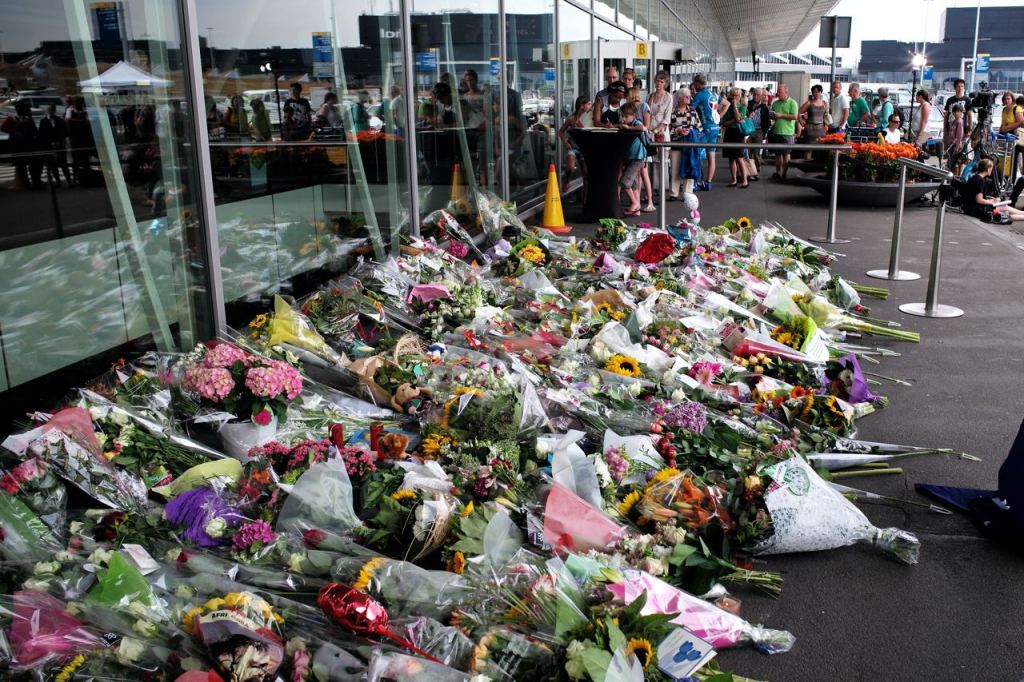
Игорь Гиркин осужден за сбитый Boeing Гаагским судом

[…]

Source: Moscow Times Russian Service weekly newsletter, 30 July 2023. Translated by the Russian Reader. The photos, above, were captioned as such by the authors, not by me. Thanks to SpanishDictionary.com for the quotation that I used as the title of this post.


Vladyslav Starodubtsev, historian – contribution to debate on Boris Kagarlitsky, antiwar activism in Russia and more:

“Its just very hard to agitate for person, who called for occupation of your land and promoted and helped, including monetarly, people who kill your friends. Calling this “a difference of opinions” doesn’t seem a right thing. In 2014 he took huge effort to align far-right and far-left in support of Russian war against Ukraine, and got Presidential grant for it. Had strong connections with both Putinist elite and Russian neo-nazi criminals in Donbass. And before — justifying need to invade Georgia https://rabkor.ru/columns/debates/2008/09/09/debate-53/

“It is not surprising that the Western left, having no illusions about the order prevailing in our country, unanimously supported Russia. The blow inflicted on the United States has global implications and opens up new perspectives for their struggle. It would be naive, to say the least, to maintain power. This is not our government, and it will never be ours. But you need to take advantage of the situation. And if the government nevertheless did something that meets our own requirements, this should be treated as a success, and this success should be developed.

We have always been against NATO, against orientation towards the United States. We have always opposed the WTO. These are our fundamental positions.

It would not only be foolish to miss the chances that history offers us today. That would be criminal!” – Boris Kagarlitsky in times of Russian invasion in Georgia

The person who not only called, but participated in promoting violence and occupation, using millions given directly by Putin’s office, then helping monetarly to occupational forces and using any possible platform to promote campism and pro-Russian views amongst the Western left. He justified terrorism. And he become the architector of his own fate. The power that he critically supported in his nationalist crusade against “The West”, against Georgians and Ukrainians, now consumed him. It seems that he relied that connections with Putinist elite will save him. But after Wagner coup, Russia represses everyone. It doesn’t make these people political prisoners. I won’t agitate for any morally compromised

He by definition is not a political prisoner, so agitate for his release doesn’t make much sense. In the biggest – agitate to his extradiction to Ukrainian court. Organize media campaigns for any of it would be pretty absurd.

“3.3. A person is not to be regarded as a political prisoner, if, under the above circumstances, the person has committed:

a violent offence against persons, except in cases of self-defence or necessity;

a hate crime against a person or property; or the person has called for violent action on national, ethnic, racial, religious or other grounds.”

(https://memohrc.org/…/guidelines-definition-political…)

That is why I never called for release of any nazi in Russia, even if they had the change of heart, either because of elite reshuffle in Putin’s office, and their allies falling down, or because they understood what horrible monstrosity they helped to build and in what they participated, under tens of thousand people were killed by Russia’s full-scale invasion. Why nobody thinks from perspective who Kagarlitsky agitated to roll over on tanks? And yes, it is a part of bigger problem, that all the left is crazy when Russian left-nationalist Kagarlitsky is arrested, after a year of being allowed to criticize Russia, but the genuine activists, who aren’t xenophobic – ignored.”

Source: Maire Kelly (Facebook), 29 July 2023. The spelling and punctuation of the original post have been preserved.

Stand with all antiwar protest -stop Russia – tell the whole story Ukraine Socialist Solidarity Campaign: “Many people on this FB page are familiar with Russian leftist commentator and intellectual Boris Kagarlitsky. He has been a controversial figure for good reason. He supported the annexation of Crimea and the war in Donbass in 2014. He is a friend of Girkiin, the committed war criminal.

For reasons unknown he chose to stay in Russia while many of his colleagues fled. And this week he was detained by the FSB in Moscow, taken to a pre trial detention center where he will stay until the end of September when he will face charges on “justifying terrorism” for his criticisms of Russia’s invasion of Ukraine. A petition is being circulated calling for his freedom, along with other anti war Russians. Supporting Kagarlitsky as a political prisoner does not in any way imply an endorsement of his extremely objectional views. As Ilya Budraitsis writes in the statement below, Kagarlitsky’s arrest is part of a new wave of repression against any critics of the war.

The following statement was released by Russian socialist and anti war dissident Ilya Budraitskis and other comrades. Please see the petition below and sign/share if you support it.

Two days ago in Moscow, FSB officers detained well-known leftist theorist, activist and commentator Boris Kagarlitsky. At present, Boris has been transferred to the pre-trial detention center in Syktyvkar, where he will stay at least until the end of September. Kagarlitsky was charged with “justifying terrorism”, for which he could face up to 7 years in prison. At the same time, in Moscow, Yekaterinburg and Penza, searches were carried out at the homes of Kagarlitsky’s associates on the YouTube channel Rabkor. It is obvious to us that the arrest of Kagarlitsky is part of a new large-scale repressive campaign by the authorities aimed at completely clearing the political space of any critics of the war. Since February 2022, Boris has taken a pronounced anti-war stance, and we are sure that this was the only real reason for his arrest.

Boris’s personal political trajectory began more than 40 years ago and has not always been flawless. In the early 1980s, Kagarlitsky was a member of the underground group of “young socialists” and was subjected to repression by the KGB, and since the early 1990s he played a prominent role in the left opposition, first to the Yeltsin and then to the Putin regime. His numerous books and public speeches had a great influence on several generations of the Russian left, and that is why his responsibility for certain assessments remained exceptionally high. In 2014, Kagarlitsky actively supported the annexation of Crimea and the creation of the so-called. “People’s Republics” in eastern Ukraine. And this support, unfortunately, played a role in disorienting part of the Russian left. These, like many other moments in Kagarlitsky’s activities, are completely unacceptable for the members of the “After” team. And now our fundamental differences have not gone away, and we will certainly discuss them with Boris – but only after his release.

It must also be acknowledged that after the start of the full-scale invasion, Kagarlitsky was one of the few Russian leftists who, while remaining in the country, continued to publicly condemn the war on the part of Russia. It can be assumed that only the wide popularity of Kagarlitsky has kept the authorities from arresting him until now. Now that this has happened, it has become clear that repression is reaching a new level and the number of activists in the immediate risk zone has increased significantly. That is why we call for an international campaign in support of Kagarlitsky and all political prisoners in the Russian Federation”.

Source: Maire Kelly (Facebook), 29 July 2023. The spelling and punctuation of the original post have been preserved.

This American Life

Pacific Grove, California, 10 June 2023. Photo by the Russian Reader

Jose Martinez has lived and worked in the United States since he was 14 years old. Now 67, he drives around the Yakima Valley in Washington state checking on fellow workers.

“When it’s hot, do you have a place to protect yourself from the sun and heat?” he calls out to some workers on the side of an apple orchard on a sunny June morning.

Martinez worked in agriculture across the fields of California and, most recently, Washington state. Irrigation, grapes, apples, mushrooms, dairies and now cherries. He’s done a little bit of everything.

“I love the fields because you’re in the open air,” he told NPR in his native Spanish, sitting on the lawn outside his home in Sunnyside, Wash. “It’s beautiful. I am proud to do it, to be a farmworker. Why not?”

When people think of farmworkers, often they think of migrant workers and labor organizers like Cesar Chavez and Dolores Huerta. Now, they may add another name to those creating major changes in the farming workplace: Jose Martinez.

Over the past decade, Martinez has been central to two flagship lawsuits creating policy changes in the state — making Washington one of the leaders in providing overtime to farmworkers and settling a civil rights case in favor of workers. And recently, he has taken his fight to Washington, D.C., where he has pushed for an expansion of legal status and protections for farmworkers.

Federally, farmworkers are largely excluded from many federal workplace safety regulations. They don’t have a right to overtime pay or to unionize, and children as young as 12 can legally work in the fields. As a result, some states, like Washington, have extended additional rights and regulations.

[…]

Source: Ximena Bustillo and Andrea Hsu, “They put food on our tables but live in the shadows. This man is fighting to be seen,” NPR, 26 July 2023


[…]

The Nottingham Starbucks voted to join Starbucks Workers United in June 2022 — and Ms. Torregoza and her colleagues stepped into a world of trouble.

The corporate dirty war that ensued — in Nottingham and at newly unionized Starbucks cafes across the country — draws a sobering picture of employee rights casually crushed and labor laws too weak to help. Starbucks continues to fight and appeal the many labor complaints pending against it and maintains that the company has done nothing wrong.

But these professions of innocence are countered by piles of testimony from workers and National Labor Relations Board findings suggesting that Starbucks has indeed illegally repressed employees’ rights. The company has so far racked up a staggering number of complaints from the agency. In 100 cases, many of which consolidate a number of incidents, regional N.L.R.B. offices have decided there is sufficient evidence to pursue litigation against Starbucks. That includes a nationwide complaint, consolidating 32 charges across 28 states, alleging that Starbucks failed or refused to bargain with union representatives from 163 cafes.

Starbucks lacks the glamour of Hollywood and the indispensability of UPS, but as strikes and union drives erupt across the economy, the coffee workers’ struggle illuminates the stark and sometimes insurmountable challenges confronted by ordinary American workers who try to exercise their right to organize.

That Starbucks is carrying on this campaign in plain sight may be the most damning aspect: Union busting is illegal, but consequences are inconsequential. The Starbucks case demonstrates that a large corporation can effectively bust a union with time, by dithering over details and exhausting legal appeals. According to national labor laws, an employer “must bargain in good faith.” But that is a squishy and essentially unenforceable rule. Starbucks may yet succeed in smothering one of the most energized labor movements of our time.

[…]

Source: Megan K. Stack, “Inside Starbucks’ Dirty War Against Organized Labor,” New York Times, 21 July 2023


The striking miners were 10,000 strong on the first day of September 1921 as they charged up the slope of Blair Mountain, propelled by a radical faith in the American dream. According to an Associated Press reporter who crouched behind a log and watched through field glasses, each time they pressed forward, a “veritable wall” of machine gun fire drove them back. As the barrage echoed through the hollows, reminding some of the action they had just seen in the forests of France, the advancing miners soon heard a different sound: deeper, earthshaking explosions. From biplanes above, tear gas, explosive powder and metal bolts rained down. “My God,” screamed one miner fighting his way up Crooked Creek Gap. “They’re bombing us!”

“They” were Sheriff Don Chafin and his deputies, who terrorized the citizens of Logan County, W.Va., by the authority of the coal companies. The miners vastly outnumbered their opponents, but Chafin had the superior position and weapons. “ACTUAL WAR IS RAGING IN LOGAN,” one local paper declared the day before.

The miners were fighting for the right to unionize, and to end the reviled “mine guard system,” a private force of armed guards who brutally enforced the company’s control in the coal fields. Unless the mine guard system was removed, John L. Lewis, president of the United Mine Workers of America, had warned, “the dove of peace” would “never make permanent abode in this stricken territory.”

On Sept. 4, federal troops arrived at Blair Mountain. The miners cheered, thinking Uncle Sam had come to liberate them from King Coal. Uncle Sam had no such plans. In 1921, about three million Americans were unemployed, and Washington was concerned that the industrial war raging in southern West Virginia could spread to other states. The troops told miners to stand down, and they did. “We wouldn’t revolt against the national government,” one of them said.

The miners were roundly defeated, but their struggle was not in vain: Years later, as part of the New Deal, the rights they were fighting for — including the right to collectively bargain — were written into law. Black, white and immigrant, the “Red Neck Army” (so named for the red bandannas they wore) had mounted the largest working-class uprising in U.S. history and the largest armed insurrection since the Civil War.

Today, Blair Mountain is just that: a mountain. While many battlefields are the object of exhaustive study and veneration — places and times when power wobbled and blood was shed — Blair Mountain is still largely unexplored. No statue or roadside attraction commemorates it; no tour buses roll up and disgorge visitors. Despite a burst of recent interest, for most West Virginians, the story of Blair Mountain barely even exists.

[…]

Source: Cassady Rosenblum, “The Redneck Army Refuses to Stay Buried,” New York Times, 21 July 2023


The global craze around “Barbie” has reached Russia — even though many Russians will be unable to see the movie about the iconic doll.

The movie will not be legally shown in Russian theaters due to Western studios leaving the country over the invasion of Ukraine.

But that hasn’t deterred Barbie fans from dressing up in pink, going to Barbie-themed parties and living out their Barbie dreams:

Tanya Tuzova, who was nicknamed the “Russian Barbie” after she changed her appearance to resemble the doll.

[…]

Source: “In Photos: ‘Barbie’ Mania Sweeps Russia Despite Absence from Theaters,” Moscow Times, 26 July 2023. The Instagram post, above, was not used in the original article.

This Iranian Life

Photo: Sergei Yermokhin/Delovoi Peterburg

Petersburg is getting ready to welcome groups of visa-free travelers from Iran. It could increase the tourist flow to the city by as much as eight percent.

The Economic Development Ministry reported that Russia has completed the procedure of exchanging lists of tourist organizations with China and Iran for the early launch of bilateral intergovernmental agreements on visa-free group tourist trips. In preparation for this, the St. Petersburg Tourism Development Committee and representatives of the hospitality industry held a series of “Welcome to St. Petersburg!” field presentations in the largest cities of the Islamic Republic of Iran—Tehran, Isfahan, and Shiraz. The events were attended by over 250 professionals from the country’s tourism industry.

“The people of Iran love to travel. The interest of the citizens of this country in Petersburg has been growing noticeably lately. The field events, realized as part of the national project ‘Tourism and the Hospitality Industry,’ provide Petersburg tourism industry professionals with a unique opportunity to establish new contacts with Iranian colleagues and, of course, increase interest in our city,” says Sergei Korneyev, chair of the St. Petersburg Tourism Development Committee Sergey Korneev.

On May 26, St. Petersburg welcomed the first passenger flight from Tehran, operated by Meraj Airlines, and on June 1, a direct flight from Iranian capital to St. Petersburg was made by Russia’s Nordwind Airlines. “Previously, when there were direct flights from Iran only to Moscow, trips were planned to the two cities at once. Now that direct flights have been established, tourists from Iran will be able to go straight to Petersburg and its suburbs,” says Yana Kozhevnikova, a partners and agencies specialist at tour operator Bon Tour.

Next year, Petersburg is planning to send a cultural and business mission to its Iranian sister city of Isfahan. Hossein Nasr, head of the Isfahan Association of Tour Operators, spoke of the need for vigorous development of tourism between the two cities. “Events where new connections can be established are very important to us. Representatives of the relevant companies in our city held constructive talks with their Petersburg colleagues, and this is a good foundation for strengthening relations and mutually increasing the tourist flow in the future,” he said.

Dmitry Tyurin, head of the commercial department at the international transfer ordering service I’way, argues that cooperation in the field of tourism between Iran and Petersburg opens up significant prospects for both sides. “This cooperation will bring many benefits both to the city and to business. An increase in the number of tourists will lead to an increase in the load on infrastructure facilities, thus contributing to the growth of profits and the development of the city’s economy. And the variety of needs and preferences among Iranian tourists will generate new opportunities for entrepreneurs involved in the hotel business, restaurants, souvenir shops, and travel agencies. In addition, the development of cooperation with Iran can contribute to the strengthening of diplomatic and cultural ties between the countries. The influx of Iranian tourists will enable local residents and entrepreneurs to better understand Iranian culture,” he says.

According to political scientist Inna Litvinenko, the willingness of Iranian tour operators to send tourists to Petersburg points to large-scale prospects for developing the tourism sector and related sectors of the city’s economy.

“First of all, it will affect the hotel and restaurant business, airlines, and tourist agencies. The growing interest in visiting Petersburg is explained by the Northern Capital’s rich historical legacy, its geographical location, and the concentration of business flows. Visa-free agreements with Iran will increase the tourist flow by 5–8%, and the word-of-mouth effect on neighboring Islamic states will also kick in, making it possible to achieve a 12–15% increase in tourists by the end of 2024. Another obvious plus will be the influx of investments into actively developing industries—construction, the hotel and restaurant business, and the service sector,” predicts Litvinenko.

Source: Elizaveta Sumriakova, “Eastern tilt: visa-free agreement with Iran will increase tourist flow to Petersburg,” Delovoi Peterburg, 24 July 2023. Translated by the Russian Reader


I was just flying from Leningrad to Istanbul, and the coach of an Iranian football team was seated next to me. I had this feeling like I was in the movie Cabaret. On the other hand, if I had said to him, ‘Well, how’s it going with the ayatollahs?’ he could have said to me, ‘And how’s it going with Putin?’ He got up in the middle of the flight and handed out our poor northern apples to his players while I drank white wine. We caught each other’s eye and smiled at each other. For the last hour, he studied English on his phone using an Iranian app. The good guys will beat the bad guys.

Source: Nikolay Konoshenok (Facebook), 24 July 2023. Translated by the Russian Reader


The Russian state is keen to foster loyal young people. We have already recounted how the authorities have clamped down on liberal universities and brought them to heel, rewritten school history textbooks, and shut down independent educational projects. But this is just the tip of the iceberg.

Today, the website Protocol and the YouTube channel RZVRT claimed that college students in Tatarstan’s Alabuga Special Economic Zone have been made to assemble [Iranian] kamikaze drones. They face expulsion and a fine of 1.5 million rubles if they refuse to do it. Students also have to play paintball, and the losers are forced to dig trenches and are “executed” with paintball guns. Two cases of suicide have already been reported. In addition, the college management tricks female students from African countries into doing the dirtiest menial labor.

“‘Alabuga: producing death with the hands of death.’ The second part of Protocol and RZVRT’s joint investigation of Alabuga. We talk about how students are forced to dig trenches and assemble Iranian Shahed drones, about how students from African countries were lured into applying to the college through Tinder, and about how the leadership of the special economic zone treats students.” Protocol (YouTube), 24 July 2023 (in Russian)

This is not the only such case. The authorities in Russia have recently been inspired by the idea of free child labor, including for the needs of the army fighting in Ukraine.

Thus, on July 20, the State Duma immediately passed in its second and third readings a bill on “community service” for schoolchildren. Children will now have to clean classrooms, plant trees at school, and help in the library on a “voluntary-compulsory” basis. Permission from parents will no longer be required for this. Commenting on the new law, State Duma Speaker Vyacheslav Volodin said that “only through labor can one cultivate an attitude to many issues that [the child] will later need to solve. The child will grow up different. Harmony will come.”

“Community service” goes hand in hand with the militarization of schools. During “basic training” lessons, children will learn how to pilot drones. “Today’s army is not only the Kalashnikov assault rifle, but also advanced unmanned vehicles,” said Federation Council member Artyom Sheinin.

From September 1, military training will be introduced for pupils in grades ten and eleven. Among other things, children will practice military greetings, drilling, handling small arms, combat actions, and first aid during hostilities.

And the name of subject itself, “Fundamentals of Security and Vital Activity,” in which schoolchildren study the basics of military affairs, has been changed by the State Duma to “Fundamentals of Security and Protection of the Motherland.”

There are also serious changes to the history curriculum. In September, high school students will get new textbooks featuring chapters about the “special military operation.” They will be told that:

  • Kiev “secretly colluded with NATO.”
  • Peace in Crimea was preserved by the “polite people”, that is, by the unidentified Russian soldiers who seized the peninsula in March 2014.
  • It was the West’s fault that new “Minsk agreements” were not signed.
  • Ukraine wanted to get its hands on nuclear weapons.
  • The war, which was the Kremlin’s only option, has “consolidated society.”
  • There is a “fake news industry” in the world that allegedly lies about the Russian army’s actions in Ukraine.

Schoolchildren will also be made to read excerpts from Putin’s speeches and look at a map of Russia that includes the occupied territories in Ukraine.

The refusal of State Duma deputies to raise the lower limit of the draft age from 18 to 21 is part and parcel of the same series of initiatives for turning schoolchildren into propagandized soldiers. Deputies claims that there are a lot of young people who want to go to serve right after leaving school. Meanwhile, universities are raising tuition fees, effectively introducing income barriers to higher education.

Children must learn in advance how to shoot, assemble deadly drones, pilot them, and love the Motherland. The Russian state doesn’t seem to need anything else from them.

Source: “Children are forced to march in formation, assemble drones, and study Putin’s speeches,” I Don’t Get It newsletter (Mediazona), 24 July 2023. Translated by the Russian Reader

Do Russians Have a Conscience?

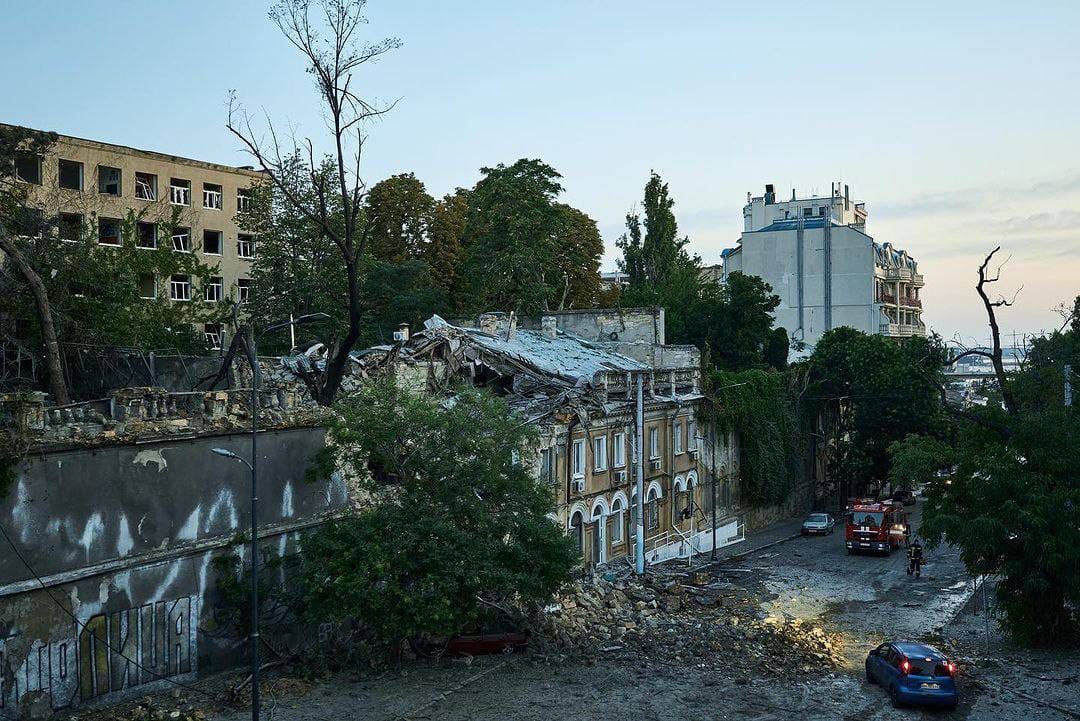
This is Odessa today. It is useless to appeal to the conscience of Russians. They don’t have one. None of them, practically none of them. Accordingly, one can only wish them one thing: may you all go to the devil, bastards! And so it will be, I believe, and fairly.

Source: Yuri Leiderman (Facebook), 23 July 2023. Translated by the Russian Reader


Punters outside Chronicle Bar Nekrasov Street in Petersburg, 27 June 2021
Photo: vladislavkharchev (Instagram), via Bumaga

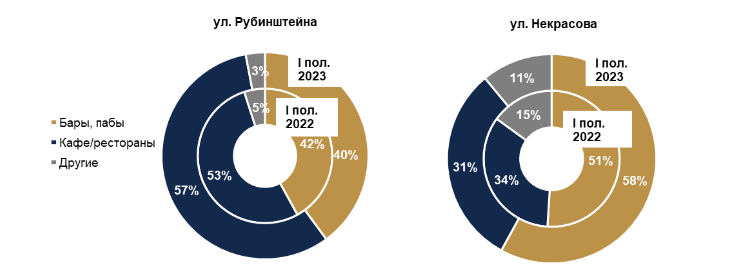
Consulting company NF Group analyzed the trends for the openings of cafes, bars and restaurants in downtown Petersburg in the first six moths of 2023. Their analysts came to the conclusion that the city’s principal bar street is Nekrasov Street, the NF Group’s press service informed Bumaga.

This claim is based on statistics on the distribution among different types of establishments on Nekrasov and Rubinstein streets. By mid-2023, bars and pubs accounted for 58% of all public dining projects on Nekrasov. On Rubinstein Street, this figure was lower: only 40% of all establishments there are bars or pubs.

In the first six months of last year, Rubinstein was also inferior to Nekrasov in terms of the percentage of bars and pubs: 42% on Rubinstein and 51% on Nekrasov, respectively.

Percentages of bars/pubs (goldenrod), cafes/restaurants (navy blue), and other business that opened on Rubinstein (left) and Nekrasov streets in central Petersburg in the first six months of 2022 (inner circles) and 2023 (outer circles).
Pie charts courtesy of NF Group

What other conclusions did the analysts draw?

  • In the first six months of 2023, fifty bars, restaurants, and cafes were opened in Petersburg. This is comparable to the figures that were observed in the city before the coronavirus pandemic.
  • On Nevsky Prospekt, restaurateurs are increasingly opening affordable establishments, including chain outlets.
  • Public dining establishments have room to grow on Nekrasov Street: there they occupy 51% of all commercial space. This figure is much higher—78%—on Rubinstein Street.

The Context. Rubinstein was long considered Petersburg’s primary bar street, but the recent Bar Affair and other scandals have spoiled this location’s image. Recently, the security forces have been organizing raids on Nekrasov Street: police visited local bars several times in July alone.

Source: “Nekrasov Street is Petersburg’s main bar location, according to statistics,” Bumaga, 22 July 2023. Translated by the Russian Reader

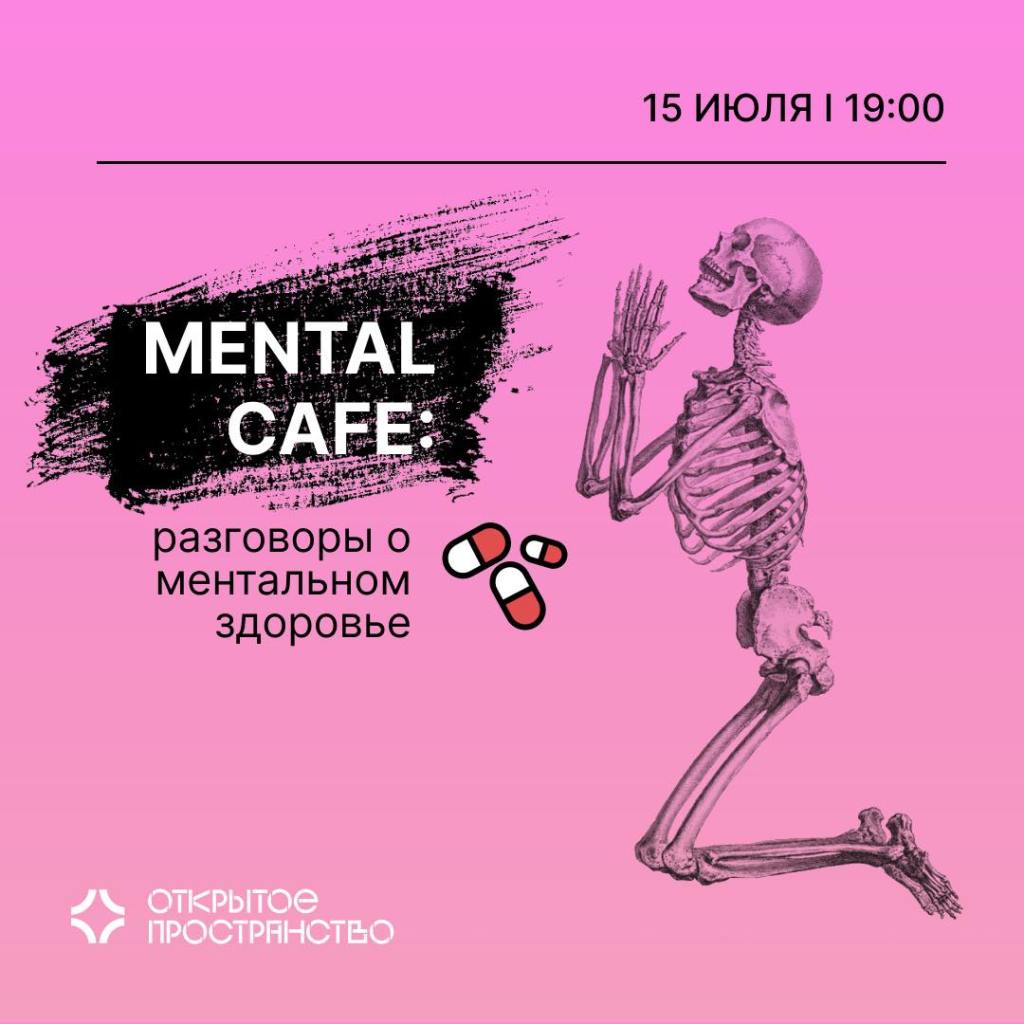
Mental Cafe

“July 15, 7 p.m. Mental Cafe: conversations about mental health. Open Space”

Mental Cafe is a cafe without food service and a permanent address where people come together to discuss topics related to mental health.

It is not a support group or a grief group. It does not provide psychological assistance. It is just a conversation club where you can share your experiences and ask any questions about mental disorders.

You can even choose not to participate in the conversation, but just listen. Anyone—not just people with mental disorders—can attend.

🔹 7 p.m., Saturday, July 15

📍 Open Space in St. Petersburg, 25 Rubinstein Street

How to find us: https://t.me/spbopenspace/3704

Source: Open Space in Petersburg (Facebook), 15 July 2023. Translated by the Russian Reader


The war with Ukraine, which has been going on for more than a year, continues to intensify the psychoticization of Russian society. Russians spent 4.32 billion rubles on antidepressants in the period from January to May 2023, Vedomosti reports, citing statistics compiled by the DSM Group.

Sales increased by 2% compared to the same period last year. And yet the early months of the invasion of Ukraine were accompanied by a surge in demand for antidepressants, which increased by 87% year on year. Thus, in 2023, Russians set a new record for purchases of antidepressants, whose volumes nearly doubled compared to pre-war levels.

Players in the psychotropic drugs market confirmed to Vedomosti the further increase in demand for antidepressants, despite the high benchmark set last year. According to Eapteca, the demand for this category of medicines increased by 30% in the period from January to May 2023. According to Kirill Yakobenko, general director of Uteca, sales of such products “have grown in terms of both sheer numbers and turnover.”

The increase in demand for antidepressants may indicate that people have become more prone to mental disorders treated with antidepressants. These include not only depression but also adjustment and anxiety disorders, psychiatrist Viktor Lebedev told The Moscow Times.

He notes that his colleagues in Russia speak of their increased workload. “People come to see them more often and talk during their sessions about the special military operation and how it has affected their lives,” he says, adding that large-scaled emigration has also led to an increase in depression and other mental problems among Russians.

It will be possible to make a genuine assessment of the war’s impact on overall mental health only a few years from now, but we should not expect positive forecasts, psychiatrist Dmitry Kutovoy said pessimistically.

“After Putin, the new regime will face the daunting task of normalizing society’s mental state and we, as professionals, must be ready for this,” he adds.

Source: “Russians set record for purchases of antidepressants,” Moscow Times Russian Service, 14 July 2023. Translated by the Russian Reader


In 2022, alcohol sales in Petersburg increased by 4.8%, although prior to this they had been declining. The demand was powered by cheap and strong Russian drinks, which have replaced the beverages produced by departed foreign producers. At the same time, the reported incidence of alcohol dependence has been growing in Petersburg.

Bumaga requested data from official departments and analysts. We show how much alcohol is consumed both nationwide and in Petersburg, how many people have been diagnosed with alcoholism, and how alcohol consumption is associated with an increase in homicides.

Russians drinking more, alcohol consumption in Petersburg four times greater than in 2021

According to Rosalkogolregulirovanie (Federal Service for Alcohol Market Regulation), Russians are buying more and more alcohol every year. In 2022, this volume reached its peak: 2.2 billion liters of strong alcohol and beer were purchased. Rosalkogolregulirovanie told Bumaga that this was mainly due to an increase in sales of spirits and wine, while beer was bought in roughly the same quantities as a year earlier.

Alcohol consumption decreased in Petersburg from 2018 to 2020, but the trend was reversed in 2021, while growth in 2022 was four times higher than a year earlier.

Purchases of alcoholic beverages (in millions of liters) in Petersburg, 2017–2022

Strong and cheap alcohol more popular

In 2022, foreign alcohol producers such as Brown-Forman and William Grant & Sons left the Russian market. Because of this, the prices of imported alcohol increased by 10–20% from the beginning of the year, restaurateurs noted. Prices for foreign-made beer increased even more, by an average of 30–50%, Alexander Romanenko, the founder of Bakunin Brewery and several other Petersburg establishments, told Bumaga.

“If we take into account premium brands, then the price increase most likely did not affect their consumption in any way, since elite alcohol is drunk by wealthy people. The consumption of alcohol in the mid-price range has been changing the most. With the price rises of these products, consumers have been looking for cheaper substitutes or switching to other categories of drinks,” said Agvan Mikaelyan, who sits on the board of directors of the audit and consulting network FinExpertiza.

Rosalkogolregulirovanie notes that domestic producers have already more than doubled the volume of alcoholic beverages that were once imported to Russia.

However, new products often prover to be of poorer quality, Mikaelyan told Bumaga. According to him, Russian-made gin, rum, and whiskey are “imitations,” since they have not yet gone through a full production cycle.

Purchases of alcoholic beverages stronger than 9% ABV (in millions of liters) in Petersburg, 2017–2022

In 2022, the level of consumption of beverages with a strength greater than 9% ABV increased by 6% in Petersburg. In the first four months of 2023, Petersburg residents purchased a third of what they had bought during the whole of last year—that is, there has been no slowdown in sales.

According to FinExpertiza, Petersburgers bought 3.2% more strong alcohol (i.e., vodka, cognac, and other distilled beverages), raising their consumption to 6.9 liters per capita. At the same time, in Russia as a whole, purchases of these beverages rose by 7.5%, thus increasing per capita consumptions to 6.8 liters. In 2021, this figure had increased by only 1.2%, while it went up by 3.3% in the pandemic year of 2020.

Purchases of vodka (in millions of liters) in Petersburg, 2017–2022

Mikaelyan added that vodka consumption has been growing, as it remains the cheapest strong drink. In Petersburg, as in all of Russia, 2022 saw a 6% increase in purchases of vodka. Vodka consumption had decreased by about the same percentage in 2021.

Level of alcoholism falling, but more new cases reported in Petersburg every year

Despite the recent rise in alcohol consumption (especially of strong beverages), the number of residents with diagnosed alcohol addiction has been decreasing in Petersburg for the past five years. In 2022, there were a little more than 18,000 people official diagnosed with alcoholism in the city, according to data provided to Bumaga by Petrostat.

Diagnoses of alcoholism in Petersburg, 2018–2022. Total diagnoses are indicated by the figures inside the dark green bars, while first-time diagnoses are indicated by the figures next to the light-green bars.

However, the number of Petersburgers who were diagnosed with alcoholism for the first time increased last year. It exceeded one thousand people for the first time in five years.

The latest data we have on deaths due to alcohol poisoning is for 2021. In that year, according to Rosstat, 9,274 Russians died of alcohol poisoning, 199 of them from Petersburg.

Only incidents of “accidental alcohol poisoning,” which is classified as an external cause of death, are counted in the official statistics, and so these figures do not show how many people died from diseases caused by alcohol consumption. At the same time, Rosstat points out that among those who died from diseases of the circulatory, nervous or digestive systems, as well as from neoplasms, there are also those who suffered from alcoholism.

The more Russians drink, the more murders occur

Every year, between a quarter and a third of the crimes in Russia are committed under the influence of alcohol, according to data from the Judicial Department. In 2022, however, this figure fell by 2.7% compared to the previous year.

The states in which crimes for which people were convicted in 2022 were committed:
sober – 74%, alcohol inebriation – 25%, narcotic intoxication – 0.5%, other – 0.2%

The Trauma Center Lawyers Association claim that up to 80% of murders in Russia occur after alcohol is consumed. The lawyers point out that in 2022, for the first time in twenty years, the number of murders and attempted murders increased by 4% in Russia. The lawyers attribute this increase to the growth in sales of alcoholic beverages.

Due to alcohol consumption, there are more murders on holidays than on other days. On New Year’s Eve, for example, the murder rate increases as much as fivefold, criminologist Vladimir Kudryavtsev, an associate researcher at the Institute for the Rule of Law, explained to Bumaga.

“During the holidays, a certain standard scenario is replayed that leads to lethal violence: people sit together in a closed room, consuming alcohol. And most often people kill people they know, people with whom they must share things. The holidays are a ‘petri dish’ that reproduces the environment for conflicts,” he said.

Source: “More vodka means more murders: how has alcohol consumption in Russia and Petersburg changed amid the war?” Bumaga, 18 May 2023. Translated by the Russian Reader


The war in Ukraine, which began on 24 February 2022 at the whim of the President of Russia, destroyed the lives of thousands of people overnight. Almost immediately after the outbreak of hostilities, the government of my country issued decrees that cut off the oxygen to independent journalists, forbidding them to cover events truthfully and without partiality toward Russian politicians. News websites were blocked, freedom of speech ceased to exist. As a freelance photographer, I was forced to leave Russia on 4 March 2022 to avoid the risks associated with my work.

Like other Russians who do not support the war, I departed for points unknown, taking with me only a backpack and hope for change. I left tormented by feelings of guilt and shame, which still haunt me at every step. I have been having nightmares the entire time since I left. The news from the frontline and Ukrainian cities has been even more unbearable, however. I still can’t believe that all these events are real. My current project, based on self-portraits, visualizes my nightmares and explores feelings of shame and guilt. The visual sequence also incorporates drawings from the diary I have kept since my departure from Russia and screenshots of the news from Ukraine. All these layers recreate my personal space, thus enabling the viewer to dive deeply into my state of mind. I hope that this work will show that not all Russians support this terrible war or have been brainwashed by propaganda.

[…]

Source: Sergei Stroitelev, “‘I wish it was just a nightmare’: a visual story about emotional states amid the war in Ukraine,” Republic, 18 July 2023. Translated by the Russian Reader, who would like to remind you that he does not necessarily endorse any of the views expressed on this website.

Em Uyaya’am (Things I Saw, Read and Watched This Week)

Asilomar State Beach, 21 July 2023. Photo by the Russian Reader

Who is Girkin?

Igor Girkin (Strelkov) is an ethno-fascist FSB officer and the warlord who prepared the ground and then launched the war in Donbas in 2014. He stated that without him, “there wouldn’t be any war”. He is also responsible for ordering the execution of numerous civilians, for which he still face justice. He was sentenced to life imprisonment in absentia by the International Criminal Court on November 17, 2022 as perpetrator of the downing of Malaysian Airlines 17 and the murder of 298 people—a war criminal.

[…]

Source: Monique Camarra, “Igor Girkin arrested in Moscow: the Kremlin is clamping down,” EuroFile, 22 July 2023


“The all-clear hasn’t sounded, the fight continues.”

Source: Sergey Abashin (Facebook), 21 July 2023


Stunning drone footage has revealed details of the Batagaika crater, a one-kilometer-long gash in Russia’s Far East that forms the world’s biggest permafrost crater.

In the video two explorers clamber across uneven terrain at the base of the depression, marked by irregular surfaces and small hummocks, which began to form after the surrounding forest was cleared in the 1960s and the permafrost underground began to melt, causing the land to sink.

“We locals call it ‘the cave-in,'” local resident and crater explorer Erel Struchkov told Reuters as he stood on the crater’s rim. “It developed in the 1970s, first as a ravine. Then by thawing in the heat of sunny days, it started to expand.”

Scientists say Russia is warming at least 2.5 times faster than the rest of the world, melting the long-frozen tundra that covers about 65% of the country’s landmass and releasing greenhouse gases stored in the thawed soil.

[…]

Source: “World’s biggest permafrost crater in Russia’s Far East thaws as planet warms,” Reuters, 21 July 2023


“Let’s remember these people”

After the court hearing [in his criminal case], Oleg Orlov read out a long list of names of people convicted of “disseminating fake news” or “discrediting the army.” He mentioned Alexei Gorinov, Dmitry Ivanov, Samiel Vedel (aka Sergei Klokov), Vladimir Kara-Murza, Ilya Yashin, Maxim Lypkan, and many others.

“I am not imprisoned, and I can say what I deem necessary. I can answer your questions. But how many of my and your kindred spirits are deprived of this opportunity,” Orlov reminded. “I consider it my duty to read out the list. These are only some of the people who have been imprisoned for their anti-war stance.”

After reading out the names, Orlov cited data from OVD Info. “634 people from 78 regions [of Russia] have faced criminal charges for anti-war protests, for words and statements,” the human rights activist said. “And 200 of them have already been incarcerated. Let’s remember these people.”

Orlov stressed that he was fighting not only for his own sake. “Both my lawyer Katerina Tertukhina and my public defender Dmitry Muratov — we are fighting like this and trying to prove the nullity of the charges [against him], the nullity of the [prosecution’s] expert witness analysis, because we are trying to fight for all people.”

Video courtesy of SOTA

Source: memorial.hrc (Instagram), 21 July 2023. Translated by the Russian Reader


Crimean Tatar-led underground movement is already active behind Russian lines and hundreds of young Tatar men are ready to take up arms to liberate the occupied peninsula, a veteran community leader has said.

Mustafa Dzemilev, widely seen as the godfather of the Crimean Tatar rights movement, pointed to operations by the Atesh guerrilla group, comprising Crimean Tatars, Ukrainians and Russians, in Crimea and other occupied Ukrainian regions.

Atesh, which means “fire” in Crimean Tatar, was created in September last year, primarily to carry out acts of sabotage from within the ranks of the Russian army. It claims more than 4,000 Russian soldiers have already enrolled in an online course on how to “survive the war” by wrecking their own equipment.

There is no evidence linking the group to the latest attack on the Kerch Bridge, early on Monday morning, but the group has claimed a string of smaller-scale attacks, blowing up Russian checkpoints, assassinating Russian officers, setting fire to barracks and feeding sensitive information to Ukrainian intelligence. It recently accused Russian sappers of laying mines in the Krymskyi Titan chemical works in Armiansk, northern Crimea. An explosion there could spread an ammonia cloud across the land bridge between the peninsula and mainland Ukraine.

“Atesh is very deep underground,” Dzhemilev, 79, told the Guardian in an interview in Kyiv. “There was not a single arrest among Atesh members, but they are working inside Crimea territory blowing up targets.”

[…]

Source: Julian Borger, “The underground Crimean Tatar group taking up arms against Russia,” Guardian, 17 July 2023


Hello! This is Alexandra Prokopenko with your weekly guide to the Russian economy — brought to you by The Bell. In this newsletter we focus on the Kremlin’s decision to seize the Russian assets of two major foreign companies and what it means for the business climate and the other Western businesses who cannot — or will not — leave Russia. We also look at Friday’s interest rate hike and new Western sanctions on Russia.

Nationalization of Western assets heralds broader property redistribution

Finland’s Fortum and Germany’s Uniper saw their Russian assets seized by the Kremlin earlier this year. This week was the turn of France’s Danone and Denmark’s Carlsberg. It feels like we are witnessing the final chapter in the history of Western business in post-Soviet Russia. If the transfer of Fortum and Uniper’s energy assets to external management was explained as a response to the European Union’s treatment of Russian energy companies, there is no such obvious reason for the behavior toward Carlsberg and Danone and it likely reveals the Kremlin’s real intentions. This is direct nationalization — and opens the door to a new distribution of property in Russia.

[…]

Source: Alexandra Prokopenko, “Kremlin asset seizures the new normal,” The Bell, 21 July 2023


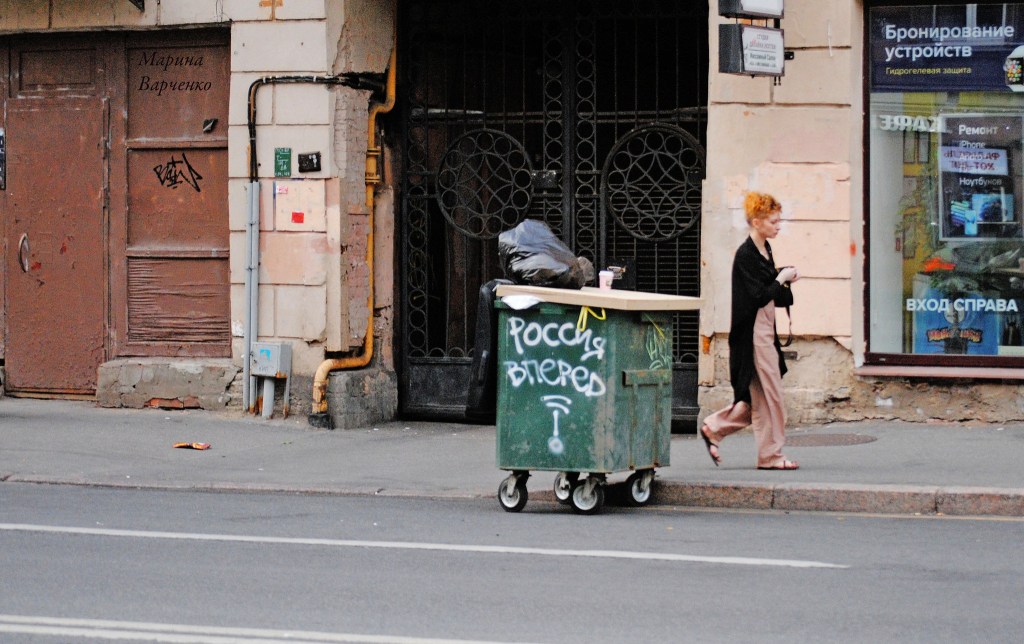
This image has an empty alt attribute; its file name is 360096182_6574069839310211_6569062695868766924_n.jpg

“Russia, forward!”

Source: Marina Varchenko (Facebook), 14 July 2023. She writes: “In our hood) Petersburg, Razyezzhaya Street.


The Arkhangelsk Region has allocated 800 million rubles to the occupied Ukrainian city of Melitopol, which will be used to repair the city, which has suffered from Russia’s invasion. However, the region itself does not have enough money to repair its own housing. Arkhangelsk is considered the capital of the Russian North, but has been informally dubbed the “capital of dilapidated housing.” Many people live in substandard housing: the city is chockablock with barracks and crumbling wooden houses. Watch Valeria Ratnikova’s report on how the region copes with a budget deficit while its money is spent on the war.

00:00 Opening 02:15 Ruins, barracks, and crumbling houses 06:00 Brevennik Island: expensive prices and derelict housing 10:56 Natalia Zubarevich about the lack of money in the region 12:04 The campaign against waste haulage to the region 16:18 The authorities are taking revenge on opposition activists opposed to landfills 31:35 Denunciations and criminal cases for statements about the war 33:22 One of the protesters went to the war 36:15 What residents say about the war 38:26 Getting fired for criticizing the war 39:40 A female student fled to Lithuania — the authorities wanted to jail her for talking about the war 46:25 The region’s environmental problems 49:10 Journalists detained during Putin’s visit 51:11 How the war has affected life in the region

Source: “The ruins of Arkhangelsk: how people whose money was given to occupied city live,” TV Rain (YouTube), 16 July 2023. Annotation translated by the Russian Reader

“Conscience and Intellect”: Alexei Navalny’s Closing Statement in Court

“‘Conscience and intellect’: Navalny’s last word in his ‘extremism’ trial,” Alexei Navalny (YouTube), 20 July 2023


I’ve always liked a certain phrase from our fellow countryman, the philologist Professor Lotman. In one of his university lectures he said: “A person is always in an unforeseen situation. And here they have two legs: conscience and intellect.”

This is a very wise thought, I think. And a person must rely on both of those legs.

Relying on your conscience alone seems intuitively right. But abstract morals that fail to take into account human nature and the real world will devolve into either stupidity or evil-doing, as we’ve seen more than once in the past.

Then you have reliance on the intellect without conscience—which is exactly what lies at the foundations of the Russian state today. At first this idea seemed logical to the elites. Using petroleum, gas and other resources, we’ll build a conscience-free, but very clever, modern, rational and merciless state. We’ll become richer than the tsars of the past. And we have so much gas that even the populace will get a little something. Making use of the contradictions and vulnerability of democracy, we will become leaders and be respected. And if not, then feared.

But what happens is what happens everywhere. The intellect, unfettered by conscience, whispers: seize, steal. If you’re stronger, then your interests are always more important than the rights of others. 

Not wishing to rely on the leg of conscience, my Russia made several big leaps, pushing everyone else around, but then slipped and came crashing down, destroying everything all around it. And now it is floundering in a pool of either mud or blood, its bones broken, its population destitute and robbed blind, while all around lie tens of thousands of people killed in the stupidest and most senseless war of the 21st century.

But sooner or later, of course, Russia will rise again. And it’s up to us what [leg] it will rely on in the future.

Source: Team Navalny (Telegram), 20 July 2023. Translated by the Fabulous AM


Russian prosecutors have requested a 20-year prison sentence for jailed Kremlin critic Alexei Navalny on a new string of “extremism” charges, his team reported Thursday.

Navalny, 47, has been charged with creating an extremist community and an organization that infringes on the rights of citizens; financing extremism; making calls to extremism; and involving minors in dangerous acts and the rehabilitation of Nazism.

He and his allies have denied the charges as “absurd” and politically motivated.

If convicted, the trained lawyer and Putin opponent will spend a total of 29 years in prison. 

In his final word in a prison court before his sentencing, Navalny slammed the invasion of Ukraine and expressed his hope for Russia’s future.

“My Russia made several big jumps, pushing everyone around, but then slipped and with a roar, destroying everything around, collapsed,” Navalny said, according to a statement published by his team. 

“And now it is floundering in a pool of either mud or blood, with broken bones, with a poor and robbed population, and around it lie tens of thousands of people killed in the most stupid and senseless war of the 21st century.

“But sooner or later, of course, it [Russia] will rise again. And it’s up to us what it will rely on in the future,” he added.

His verdict is expected to take place on August 4.

The European Union added the chief of the Russian prison camp holding Navalny to its sanctions list as prosecutors requested the 20-year sentence.

Navalny was jailed upon his January 2021 return to Russia after recovering from a near-fatal poisoning with what Western scientists determined was Novichok, a banned military-grade nerve agent developed by the Soviets.

Russian officials outlawed Navalny’s political and activist organizations as “extremist” organizations later that year, prompting nearly all of his close associates to leave the country.

Source: “Russian Prosecutors Seek 20-Year Sentence for Navalny in ‘Extremism’ Trial,” Moscow Times, 20 July 2023

“Russia Isn’t a Fascist State, Because a Fascist State is Totalitarian, While Russia Is Democratic” (At the Sasha Skochilenko Trial)

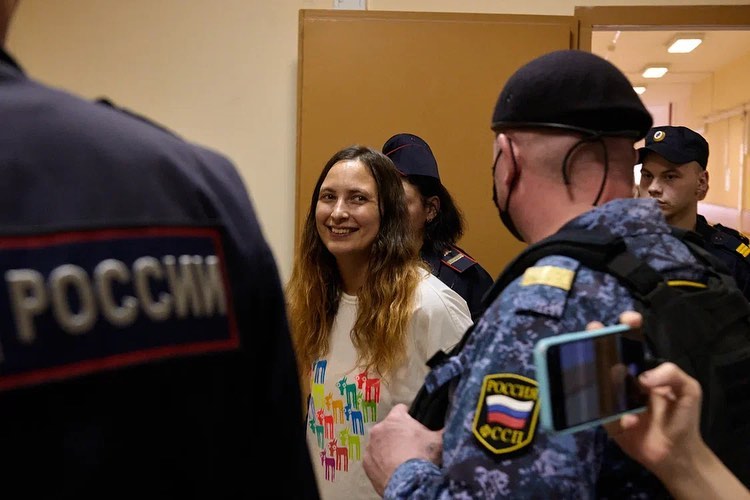
Sasha Skochilenko, facing ten years in prison for anti-war price tags. Vasileoostrovsky District Court, St. Petersburg, 18 July 2023

Today’s hearing lasted almost nine hours!

It was finally possible to resume the cross-examination of Olga Safonova, on whose linguistic analysis of the price tags the prosecution’s case is largely based. At the last hearing it transpired that Safonova is actually a political science specialist who is brought in to provide linguistic (!) expertise on “political” issues. Moreover, she has already admitted that she cannot judge whether the information on price tags was “knowingly false,” although she wrote just the opposite in her expert analysis.

The cross-examination of Safonova took up most of the hearing, and it involved the lawyers, the independent expert Svetlana Drugoveyko-Dolzhanskaya, Sasha [Skochilenko] herself, and Prosecutor Gladyshev. (The defense requested that Gladyshev be recused for a number of reasons—including because he distorted the facts about Sasha’s income—but the motion was denied.) Safonova had a visibly hard time answering questions about the content of individual price tags and the linguistic terms she employs, and how she was able to identify motives of “political enmity” in the texts she analyzed. In fact, experts cannot assess an author’s motives, but Safonova refused to confirm this outright. “Just stay that this is not within your competence,” the lawyer Novolodsky asked her. “I won’t,” she replied.

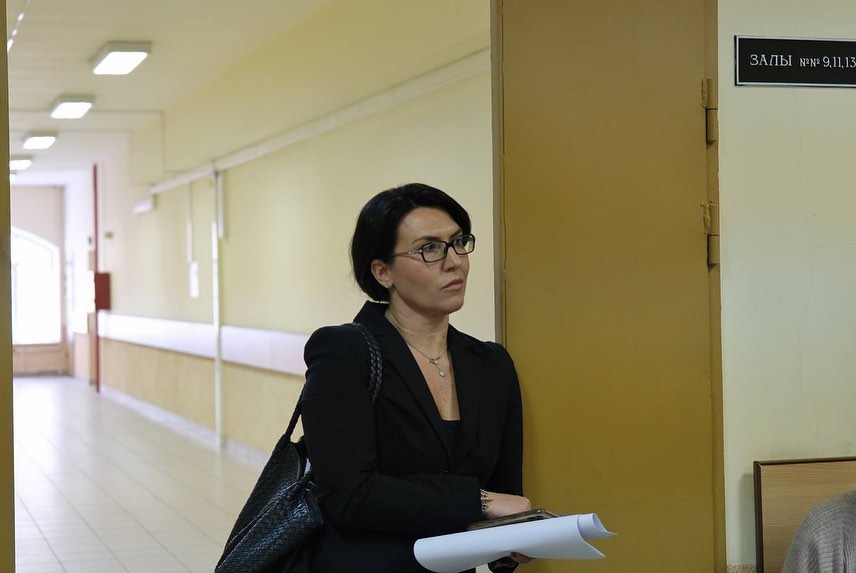
Olga Safonova, expert witness for the prosecution. Vasileoostrovsky District Court, St. Petersburg, 18 July 2023

This was not the only occasion for laughter at today’s hearing. During a discussion of the texts on the price tags, Safonova also claimed that Russia is not a fascist state, since “a fascist state is totalitarian, while Russia is democratic.” She also asked that the defense not “examine every word [said or written] by expert witnesses with a magnifying glass, for crying out loud!” (She said this, I would like to remind you, at a criminal trial that could send Sasha to prison for ten years.)

As always, we want to say a huge thank-you to the journalists who have been covering Sasha’s case, and to everyone who came out to support Sasha! The next hearing will be held on September 14, after the judge’s vacation. Safonova will be summoned to court again. In addition, the court ordered the linguist Grishanina, the co-author of the expert analysis, forcibly delivered to the hearing.

P.S. We will have more to say about today’s hearing, so stay with us!

Photos courtesy of Andrei Bok and others

#freesashaskochilenko

Source: Sasha Skochilenko (Facebook), 18 July 2023. Translated by the Russian Reader

“Incompatible with the Prestige of a University Student”

Alexandra Zaitseva

The St. Petersburg State University Ethics Commission has ruled that a statement made by Alexandra Zaitseva, a first-year student and editor of the student media outlet Studen, was “incompatible with the prestige of a university student.” Another student media outlet, Lupa and Pupa, has publicized the incident.

The Details. Zaitseva was summoned to appear before the commission on July 7. Initially, the hearing was supposed to be held online, but the university subsequently changed the format to in-person and refused to change it back. According to Zaitseva, this was done so that she would be unable to record the hearing.

The Reasons. In June, an anonymous denunciation of Alexandra Zaitseva was posted in St. Petersburg State University’s virtual guestbook. The author of the denunciation did not like Zaitseva’s post on VKontakte about the expulsion of Mikhail Belousov’s students from the university’s history faculty.

“In this publication, she talks about the ‘vile and unjust expulsion,’ in her opinion, ‘of the students implicated in the sensational Belousov affair.’ In addition, she publicly insults other students (‘a bunch of bastards shouting goida on PUNK at night’) while obviously demeaning and voicing disdain for the patriotic citizens of our country,” the denunciation reads.

St. Petersburg State University replied that they had contacted “law enforcement agencies” and called a hearing of their ethics commission.

The Decision. “We consider A.N. Zaitseva’s behavior incompatible with the prestige of a St. Petersburg State University student,” the St. Petersburg State University Ethics Commission ruled.

Zaitseva told Bumaga that she believes she will be expelled. “I guess the outcome is pretty obvious. Although, I can’t say for sure—no order has been issued yet,” the student said.

The ethics commission members did not like the fact that Zaitseva had given a comment to TV Rain. According to them, in this way the young woman “once again displayed her openly negative attitude towards the university of which she is a student.”

Just prior to the hearing, St. Petersburg State University had banned university employees from giving comments and interviews to “foreign agent” media outlets.

The commission ruled that Zaitseva had violated the second and third paragraphs of the University Student’s Code, i.e., “To represent the university in extracurricular settings with dignity” and “To honor teachers, respect colleagues and students, maintain friendly relations both inside and outside the University, [and] contribute to the creation of an environment of mutual understanding and cooperation.”

“Apparently, the authors really don’t fancy the idea that someone might have principles: this is the only explanation why such a large piece of the text is devoted to them, and not to an analysis of my post,” Zaitseva said in reaction to the commission’s decision.

Source: “St. Petersburg State University student summoned by ethics commission over statement about expelled history faculty students,” Bumaga, 18 July 2023. Translated by the Russian Reader


The leadership of St. Petersburg State University (SPBGU) has fired Mikhail Belousov, a professor at the university’s History Institute, for committing an “immoral act” by speaking out against Russia’s invasion of Ukraine. The university posted its decision on its website. 

The university’s decision followed an investigation, during which university leadership confirmed that Belousov had circulated materials “discrediting” the Russian army, and “insulting the memory of those killed while fulfilling their military duty.”

“Belousov’s behavior violates the university’s moral traditions and generally accepted ethical norms, his actions are out of keeping with his and the university’s prestigious positions,” the document detailing the university’s decision says.

Petersburg publication Rotunda says the university began investigating Belousov and his students after Russian official and social media channels circulated screenshots of messages, allegedly written by the professor and his students, openly criticizing the war in Ukraine while the university was mourning one of its students, Fyodor Solomonov, who was killed in Ukraine.

Source: “St. Petersburg State University fires history professor for criticizing Russia’s invasion of Ukraine,” Meduza, 3 June 2023


Seven students of the previously dismissed associate professor Mikhail Belousov were expelled from the Faculty of History of St. Petersburg State University, Bumaga reports, citing sources at the university. They were among the ten people who were previously called to the ethics commission. The remaining three will have “some kind of meeting with the vice-rector for educational work.”

One of the expelled students told the publication that he would challenge the decision of the university.

At the end of May, Z-channels circulated screenshots with messages in which Belousov allegedly condemned the “internal” symbolism and said that “a direct and open approval of rashism is disgusting.” It was alleged that the associate professor wrote all this in the context of discussing the death of St. Petersburg University student Fyodor Solomonov in the war in Ukraine.

On June 3, Belousov was fired, and a group of his students were summoned to the ethics committee, which ruled that they “considered it appropriate to make fun of” Solomonov’s death instead of “showing normal human feelings.” It was also decided that the students’ actions were “incompatible with the status of a student at St. Petersburg State University.”

In October last year, associate professor Denis Skopin was fired from the same university for participating in a rally against mobilization, calling it an “immoral act.”

Source: “‘Paper’: St. Petersburg State University expelled seven students. Earlier, the university ethics commission condemned them for mocking a student who died in the war in Ukraine,” Russian Free Press, 16 June 2023

Valeria Zotova: Framed

Valeria Zotova

Defense appeals Valeria Zotova’s verdict

On June 28, the 2nd Western District Military Court sentenced nineteen-year-old Valeria Zotova to six years in prison in a criminal case fabricated by the FSB.

The court has not yet provided a copy of the verdict to either Valeria or her lawyer. Therefore, the lawyer could not prepare a full-fledged appeal. But he did file a brief complaint to meet the deadline: an appeal must be filed within fifteen days of the date of sentencing.

The appeals process is a very important component of legal proceedings. Until the appeals stage has been completed and the sentence comes into force, there is hope that the verdict will be reversed or changed and Valeria will not be sent to a penal colony at this time.

You can always support Valeria by writing her a letter or sending a parcel.

💌📦 Address for letters and parcels:

Zotova Valeria Igorevna (born 2003)
10 ul. Portovaya nab., SIZO-1
Yaroslavl 150001 Russian Federation

Solidarity Zone is supporting Valeria Zotova.

#politicalprisoners#crackdown#solidarity#fsb#fsblawlessness#provocation#yaroslavl#no war#wewriteletters

Source: Solidarity Zone (Facebook), 16 July 2023. Translated by the Russian Reader. People living outside of Russia will find it difficult or impossible to send parcels to Russian prisons or to use the FSIN-Pismo and Zonatelecom services to contact Russian political prisoners. In many cases, however, you can send letters (which must be written in Russian or translated into Russian) via the free, volunteer-run service RosUznik. As of this writing, Ms. Zotova has not appeared on their list of supported addressees. You can also ask me (avvakum@pm.me) for assistance and advice in sending letters to her and other Russian political prisoners.


Valeria Zotova, 19, from Russia’s Yaroslavl has been sentenced to six years behind bars for plotting to set a military aid collection point on fire, Solidarity Zone reports.

The woman was found guilty of attempted “terrorist attack”. The state prosecution wanted eight years in prison for Zotova.

“However, the case materials, correspondence received by the lawyer and Valeria’s own words indicate that the case was a provocation staged by the FSB, whose agents actively persuaded the woman to set the aid collection point for the Russian military ablaze. Zotova may have attracted the attention of the special services due to her anti-war stance,” human rights activists said.

A criminal case against Zotova was opened in February. The woman went for a walk with her friends in mid-February. Later that night, law enforcers showed up at her place for a search without any explanation. During the search, the detainee’s mother was threatened with promises to make her a suspect in her daughter’s case for “participating in anti-war rallies”. She denies these accusations: despite her anti-war views, she did not participate in rallies against the Ukraine war. The news emerged later that Valeria was held in a detention centre in Yaroslavl.

In April, Russian authorities placed Valeria’s mother Svetlana Zotova on the extremist list. The woman had previously been charged with “calls” to commit terrorist and extremist actions. The charges stemmed from comments allegedly posted by Svetlana Zotova on Telegram channels. The woman was prohibited from leaving the country. She could face up to ten years in prison on the charges.

Source: “Russian Valeria Zotova sentenced to six years in prison for attempting to set military aid collection point on fire,” Novaya Gazeta Europe, 28 June 2023