Maria Kuvshinova: What Sentsov Could Die For

What Sentsov Could Die For
Maria Kuvshinova
Colta.Ru
May 25, 2018
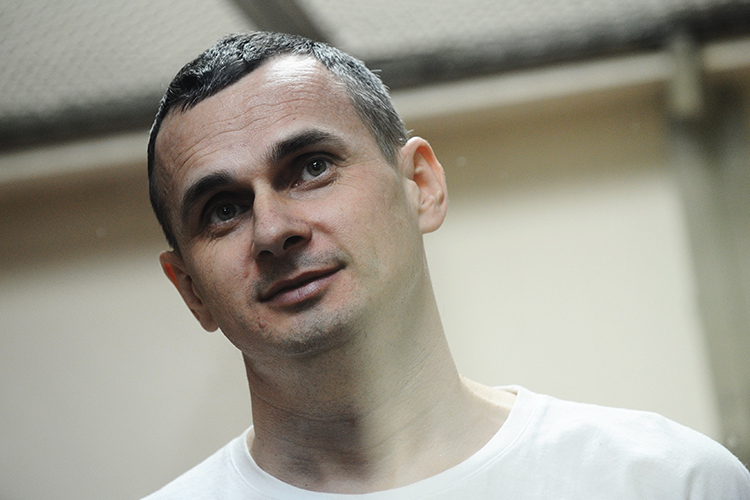
Detailed_pictureOleg Sentsov. Photo by Sergei Pivovarov. Courtesy of RIA Novosti and Colta.Ru 

On May 14, 2018, Oleg Sentsov went on an indefinite hunger strike in a penal colony located north of the Arctic Circle. His only demand is the release of all Ukrainian political prisoners in Russia. According to Memorial’s list, there are twenty-four such prisoners.

In August 2015, Sentsov was sentenced to twenty years for organizing a terrorist community and planning terrorist attacks. The second defendant in the case, Alexander Kolchenko, was sentenced to ten years in prison. Mediazona has published transcripts of the hearings in their trial. Around three hundred people have read them over the last three years. The transcripts make it plain the only evidence of the alleged terrorist organization’s existence was the testimony of Alexei Chirniy, who was not personally acquainted with Sentsov. It is police footage of Chirniy’s arrest while he was carrying a rucksack containing a fake explosive device that propagandists often pass off as police footage of Sentsov’s arrest.

Before his arrest, Sentsov was an Automaidan activist. In the spring of 2014, he organized peaceful protests against Crimea’s annexation by Russia.

“Yesterday’s ‘suicide bomber auto rally’ took place in Simferopol yesterday, but in quite abridged form,” Sentsov wrote on Facebook on March 12, 2014. “Only eight cars, six reporters with cameras, and twenty-five activists/passengers assembled at the starting point. I would have liked to have seen more. Unfortunately, most of the armchair revolutionaries who were invited were afraid to go. The traffic cops and regular police also showed up at the starting line, insisting we not leave for our own safety. We told them our protest was peaceful. We had no plans of breaking the rules, so we suggested they escort us to keep the peace for everyone’s sake.”

The second defendant, Kolchenko, admitted involvement in the arson of an office that was listed in the case file as belonging to the United Russia Party, but which in April 2014 was an office of Ukraine’s Party of Regions. The arson took place at night. It was meant to cause physical damage while avoiding injuring anyone.

The Russian authorities tried to prove both Sentsov and Kolchenko were linked with Right Sector, a charge that was unsubstantiated in Sentsov’s case and absurd in the latter case due to Kolchenko’s well-known leftist and anarchist convictions. Gennady Afanasyev, the second witness on whose testimony the charges against the two men were based, claimed he had been tortured and coerced into testifying against them.

Sentsov and Kolchenko’s show trial, like the show trials in the Bolotnaya Square Case, were supposed to show that only a handful of terrorists opposed the referendum on Crimea’s annexation and thus intimidate people who planned to resist assimilation. The Russian authorities wanted to stage a quick, one-off event to intimidate and crack down on anti-Russian forces. But two circumstances prevented the repressive apparatus from working smoothly. The first was that the defendants did not make a deal with prosecutors and refused to acknowledge the trial’s legitimacy. The second was that Automaidan activist Oleg Sentsov unexpectedly turned out to be a filmmaker, provoking a series of public reactions ranging from protests by the European Film Academy to questions about whether cultural producers would be capable of blowing up cultural landmarks. Segments of the Russian film community reacted to the situation with cold irritation. According to them, Sentsov was a Ukrainian filmmaker, not a Russian filmmaker, and he was not a major filmmaker. The owner of a computer club in Simferopol, his semi-amateur debut film, Gamer, had been screened at the festivals in Rotterdam and Khanty-Mansiysk, while release of his second picture, Rhino, had been postponed due to Euromaidan.

The Ukrainian intelligentsia have equated Sentsov with other political prisoners of the empire, such as the poet Vasyl Stus, who spent most of his life in Soviet prisons and died in Perm-36 in the autumn of 1985, a week after he had gone on yet another hunger strike. The Ukrainian authorities see Sentsov, a Crimean who was made a Russian national against his will and is thus not eligible for prisoner exchanges, as inconvenient, since he smashes the stereotype of the treacherous peninsula, a part of Ukraine bereft of righteous patriots. Sentsov’s death on the eve of the 2018 FIFA World Cup would be a vexing, extremely annoying nuisance to the Russian authorities.

Sentsov is an annoyance to nearly everyone, but he is a particular annoyance to those people who, while part of the Russian establishment, have openly defended him, although they have tried with all their might to avoid noticing what an inconvenient figure he has been. Although he was not a terrorist when he was arrested, he has become a terrorist of sorts in prison, because his trial and his hunger strike have been a slowly ticking time bomb planted under the entire four-year-long post-Crimean consensus, during which some have been on cloud nine, others have put down stakes, and still others have kept their mouths shut. Yet everyone reports on the success of their new endeavors on Facebook while ignoring wars abroad and torture on the home front. Sentsov represents a rebellion against hybrid reality and utter compromise, a world in which Google Maps tells you Crimea is Russian and Ukrainian depending on your preferences. To what count does “bloodlessly” annexed Crimea belong, if, four years later, a man is willing to die to say he does not recognize the annexation?

The success of Gamer on the film festival circuit, which made Sentsov part of the international film world, and his current address in a prison north of the Arctic Circle beg three questions. What is culture? Who produces culture? What stances do cultural producers take when they produce culture? There are several possible answers. Culture is a tool for reflection, a means for individuals and societies to achieve self-awareness and define themselves. It is not necessarily a matter of high culture. In this case, we could also be talking about pop music, fashion, and rap. (See, for example, the recent documentary film Fonko, which shows how spontaneous music making has gradually been transformed into a political force in post-colonial Africa.) On the contrary, culture can be a means of spending leisure time for people with sufficient income, short work days, and long weekends.

Obviously, the culture produced in Russia today under the patronage of Vladimir Medinsky’s Culture Ministry is not the first type of culture, with the exception of documentary theater and documentary cinema, but the founders of Theater.Doc have both recently died, while Artdocfest has finally been forced to relocate to Riga. The compromised, censored “cultural production” in which all the arts have been engaged has no way of addressing any of the questions currently facing Russia and the world, from shifts in how we view gender and the family (for which you can be charged with the misdemeanor of “promoting homosexualism”) to the relationship between the capitals and regions (for which you can charged with the felony of “calling for separatism”). Crimea is an enormous blank spot in Russian culture. Donbass and the rest of Ukraine, with which Russia still enjoyed vast and all-pervasive ties only five years ago, are blank spots. But cultural producers have to keep on making culture, and it is easier to say no one is interested in painful subjects and shoot a film about the complicated family life of a doctor with a drinking problem and a teetotalling nurse.

When we speak of the second type of culture—culture as leisure—we primarily have in mind Moscow, which is brimming over with premieres, lectures, and exhibitions, and, to a much lesser extent, Russia’s other major cities. So, in a country whose population is approaching 150 million people, there is a single international film festival staged by a local team for its hometown, Pacific Meridian in Vladivostok. All the rest are produced by Moscow’s itinerant three-ring circus on the paternalist model to the delight of enlightened regional governors. It matters not a whit that one of them ordered a brutal assault on a journalist, nor that another was in cahoots with the companies responsible for safety at the Sayano-Shushenskaya Dam, where 75 people perished in 2009. What matters is that the festival movement should go on. There is no room in this model for local cultural progress. There can be no free discussion generated by works of art when everyone is engaged in total self-censorship. After I went to Festival 86 in Slavutych, whose curators have been conceptually reassessing the post-Soviet individual and the post-Soviet space, I found it painful to think about Russian film festivals. This sort of focused conceptualization is impossible in Russia. It is of no interest to anyone.

There are two more possible answers to the question of what culture is. Culture is propaganda. Or, finally, culture is only the marquee on a commercial enterprise profiting at the taxpayer’s expense. It is not a big choice, and the kicker is that by agreeing today to be involved in churning out propaganda, milking taxpayers, supplying optional leisure time activities, producing censored works, and colonizing one’s own countrymen for the sake of money, status, and membership in a professional community, the people involved in these processes automatically stop making sense. It is naïve to think the audience has not noticed this forfeiture. It is no wonder the public has an increasingly hostile reaction to cultural producers and their work.

No one has the guts to exit this vicious circle even in protest at the slow suicide of a colleague convicted on trumped-up charges, because it would not be “practical.” The events of recent months and years, however, should have transported us beyond dread, since everyone without exception is now threatened with being sent down, the innocent and the guilty alike.

Post-Soviet infantilism is total. It affects the so-called intelligentsia no less than the so-called ordinary folk. Infantilism means being unable to empathize, being unable to put yourself in another person’s shoes, even if that person is President Putin, a man with a quite distinct sense of ethics, a man who has been studied backwards and forwards for twenty years. Apparently, the message sent to the creative communities through the arrest of Kirill Serebrennikov was not registered. If you want to be a dissident, start down the hard road of doing jail time for misdemeanor charges, facing insuperable difficulties in renting performance and exhibition spaces, becoming an outsider, and experiencing despair. If you want a big theater in downtown Moscow, play by the rules. Like your average late-Soviet philistine, Putin regarded the creative intelligentsia with respect at the outset of his presidential career. (See, for example, footage from his visit to Mosfilm Studios in 2003.) However, a few years later, he was convinced the creative intelligentsia was a rampantly conformist social group who would never move even a millimeter out of its comfort zone and would make one concession after another. A lack of self-respect always generates disrespect in counterparts.

By signing open letters while remaining inside the system and not backing their words with any actions whatsoever, the cultural figures currently protesting the arrests of colleagues are viewed by the authorities as part of the prison’s gen pop, while people who live outside Moscow see them as accomplices in looting and genocide. No one takes seriously the words of people who lack agency. Agency is acquired only by taking action, including voluntarily turning down benefits for the sake of loftier goals. The acquisition of agency is practical, because it is the only thing that compels other people to pay heed to someone’s words. I will say it again: the acquisition of agency is always practical. At very least, it generates different stances from which to negotiate.

Sentsov has made the choice between sixteen years of slow decay in a penal colony and defiant suicide in order to draw attention not to his own plight, but to the plight of other political prisoners. Regardless of his hunger strike’s outcome, he has generated a new scale for measuring human and professional dignity. It is an personal matter whether we apply the scale or not, but now it is impossible to ignore.

Thanks to Valery Dymshits for the heads-up. Translated by the Russian Reader
Locos In Loco Parentis (Perfecting the Russian Police State)

DSCN1069

Making as many ordinary people as possible de facto accomplices or targets of thoroughgoing injustice, an endless series of crimes great and small, daily repression, and ubiqitous surveillance smacks more of totalitarianism than it does of the run-of-the-mill authoritarianism that, if you believe the most progressive political scientists, currently rules the roost in Russia. TRR

Culture to Be Equated with Cigarettes and Alcohol
Fontanka.ru
October 17, 2017

The Culture Ministry has drafted a bill which, if adopted into law, will vest ticket sellers and ticket takers at theatrical and entertainment events with the authority to check people’s passports. In addition, the Culture Ministry wants to legally forbid persons under the age of eighteen from attending events with an 18+ rating. Currently, the rating is advisory in nature, and parents make the final decision.

The media were informed on October 17 that a document containing such provisions had been drafted by the Culture Ministry. They were referred to Natalya Romashova, head of the ministry’s legal and regulatory department. According to Romashova, the draft amendments to the law “On the Protection of Children from Information Harmful to Their Health and Development” will shortly be submitted to the State Duma.

“The organizer of an entertainment event containing information prohibited for children is obliged to take measures eliminating the possibility that persons under 18 years of age attend the event,” the draft bill reads. “Failure by the organizer of the entertainment event to take the measures indicated shall entail liability as established by Russian federal legislation.”

At the same time, the draft law bill specifies that the documents checks will also affect foreign nationals and stateless persons. The list of admissible documents should be established by an executive body authorized by the government.

Translation and photo by the Russian Reader. Thanks to Comrade Uvarova for the heads-up

Alexei Malobrodsky: Speech in Court

21314625_10210167764566670_399178550936906940_n
Alexei Malobrodsky, former director of Moscow’s Gogol Center theater, in Moscow City Court on September 6.

Zhanna Zaretskaya
Facebook
September 6, 2017

Alexei Malobrodsky is awesome. I am speechless. He is tough as nails.

What follows is the speech Malobrodsky made in Moscow City Court on September 6, 2017. Everyone who considers himself or herself a decent person in this fucked-up country, which destroys the best people and supports thieves and scoundrels, should read this.

“Today is the seventh court hearing in which I have taken part. Your honor, honor has a place in court. All parties to the proceedings should be guided by the law. So the police investigators should follow these rules. How long can they make do with false accusations and false facts? The team of investigators has been mocking the law. They have not carried out any investigative actions. They have only been busy with lies and intimidation. I refuse to take part in any investigative actions in handcuffs. I have a right to be treated decently and presumed innocent. When the investigators suggest I ‘confess to something or other,’ I refuse to reply. Except for the ridiculous story about [Gogol Center’s production of] Midsummer Night’s Dream, I have not been suspected of anything. I have been denied visits from and communication with my wife; my property has been arrested, our things and dishes; my and my wife’s work and home computers have been confiscated. What is this, if not coercion? I am ready to cooperate with the investigators and answer their questions, but don’t force me to bear false witness against my colleagues.”

Over thirty people agreed to stand surety for Alexei Malobrodsky, including Chulpan Khamatova, Lev Rubinstein, Vladimir Mirzoyev, Vasily Sigarev, Andrei Moguchy, Marina Davydova, Elena Koreneva, Ksenia Larina, and Yevgenia Shermeneva. But he was left behind bars.

I ask you to repost this text and Alexei’s speech so that as many people as possible find about Alexei Malobrodsky, who has been behind bars since June 21, although no charges have been filed against him.

Thanks to Comrade AK for the heads-up. Translated by the Russian Reader

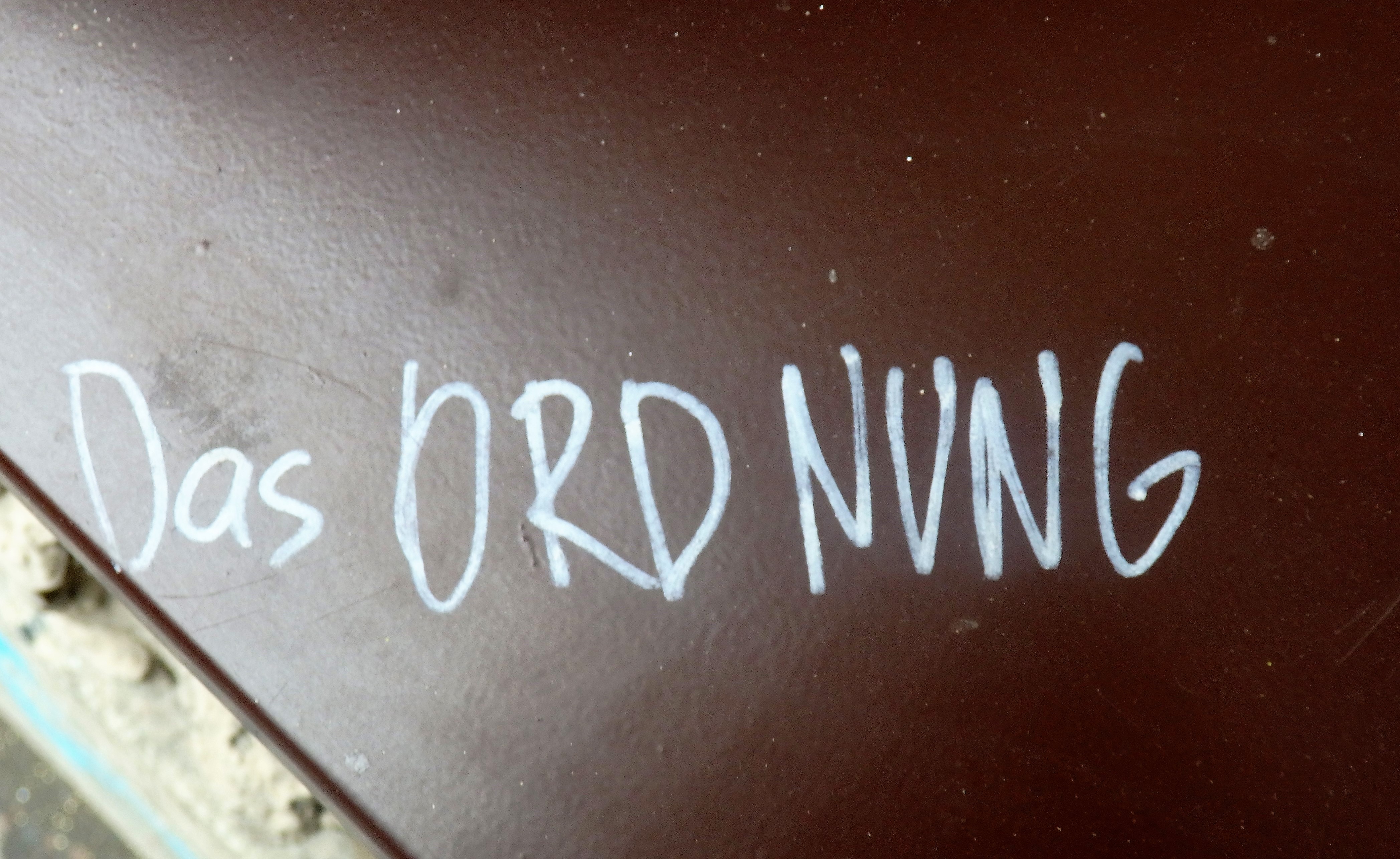
“Das Ordnung”

OLYMPUS DIGITAL CAMERA

Putinism has triumphed not because the majority of Russians have become convinced “Putinists,” whatever that would mean, or have been persuaded by the man’s notorious “power vertical” system of governance, which in reality is an inefficient, irresponsible literal disaster waiting to happen somewhere nearly every single day (witness the fires in Rostov-on-Don).

It has triumphed because people have, seemingly, lost the will to eject, by whatever means would work best under the circumstances, the entire noxious, corrupt, incredibly expensive, and utterly futureless non-system that Putin and his clique have erected over eighteen long years of conspicuous consumption in a few happy oases, mixed with criminal wars, “legal nihilism,” an incredible gap between the super wealthy and the super poor, the destruction of all the things the Soviet Union did right or, at least, not terribly badly, in terms of education, social provision, healthcare, and housing, and the most inconsistent, frighteningly hilarious “national ideology” ever devised anywhere, which pretends to be “conservative” and “authentically Russian,” but mostly looks as if it had been dreamed up one night by three or four Kremlin spin doctors on a bender, as a bad-spirited practical joke.

At worst, people either pretend, especially in the two capitals, to be incredibly busy and content with their lives. At best, they argue about the particulars—say, about the details of the trumped-up case against director Kirill Serebrennikov, arrested in Petersburg yesterday, and temporarily sentenced to house arrest pending trial on embezzlement charges today in Moscow—as if the system didn’t have the power to turn literally anyone except the members of Putin’s inner circle (and maybe even them) into a “vicious criminal” literally overnight, as if Serebrennikov has made some particular fatal mistake that nearly everyone else would never be so stupid to make. Or that they would never be so stupid to get close to so much money or power and end up in the pickle the feckless Serebrennikov got himself into.

The idea that the country could go on being itself, that is, being mostly messed up and weird and not like any other country, because you cannot be like any other country when you’re the biggest country in the world, but a billion times more productive and easier to live in simply by ditching the crappy, greedy junta that will certainly kill it off in the next few years is a thought that either literally everyone is thinking right now or everyone has forbidden themselves to think at all.

Unfortunately, I’m afraid it’s the latter.

So it doesn’t matter whether you call the reactionary regime currently in power authoritarian, post-authoritarian, fascist, post-fascist, post-truth or pre-truth because, eventually, it will go down in flames, taking with it, alas, the magnificent country that has had the misfortune to engender it. TRR

Photo by the Russian Reader

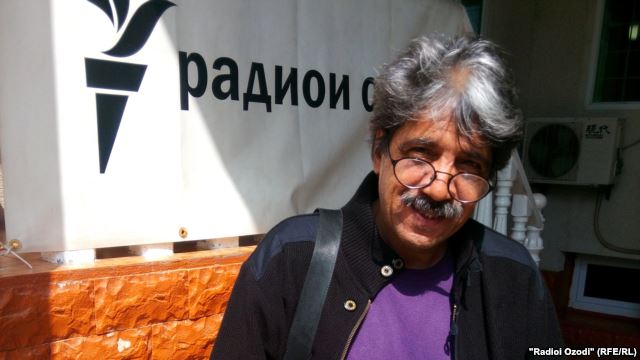
Renowned Tajik Theater Director Barzu Abdurazzokov Expelled from Russia

Barzu Abdurazzokov
Barzu Abdurazzokov

On His Way to Meetings in Russia, Director Expelled from Country
Radio Ozodi
April 13, 2016

Seeing stamps from Ukraine, Turkey, and Georgia in the passport of famous Tajik director Barzu Abdurazzokov, Russia border guards denied him entry to Moscow. 

Russian border guards did not allow the famous Tajik director Barzu Abdurazzokov entry to the country. After detaining and questioning him for an hour, he was expelled to Tajikistan.

Abdurazzokov had flown to Moscow with a company of Kyrgyz actors, and from Moscow he was scheduled to fly to Saint Petersburg, where he was staging a production of Ballad of a Mankurt at Meetings in Russia, an international theater festival of CIS and Baltic countries.

The famous theater director told Radio Ozodia in an interview on April 13 that the actors of the Chingiz Aitmatov State National Russian Drama Theater were judged the best at the festival and won the Kirill Lavrov Prize, named in memory of the People’s Artist of the Soviet Union.

The play Ballad of a Mankurt is based on Chingiz Aitmatov’s novel The Day Lasts More than a Hundred Years.  Abdurazzokov was the production’s director, script writer, and musical director.

The festival, which was held for the eighteenth time, also featured another production by the Tajik director, Classmates: Life Lessons.

Abdurazzokov said that over the past six years he had traveled to different countries with his passport and had encountered no problems, but Russian border guards took issue with his papers and expelled him.

​”We flew from Bishkek to Moscow, whence we were supposed to fly to Saint Petersburg. When we arrived in Moscow, the Russian border guards examined my passport, in which there were numerous stamps from Ukraine, Turkey, Georgia, and Iran, for a long while. An FSB officer came up, took my passport, and made a photocopy. I was told there were inaccuracies in the document and was detained. I wanted to call the Russian Ministry of Culture so they would know about the difficulties one encounters, but the border guards didn’t let me call,” said the director.

Abdurazzakov said he was held at Domodedovo Airport around an hour and then sent home to Tajikistan on the next flight from Moscow to Kulyab.

“On the day the festival opened, I was already in Dushanbe, and my company was performing there without me,” he said.

Abdurazzokov has already received a new passport and should leave the country in a few days to continue working. He believes his sudden arrival  Tajikistan was no coincidence. He had a ticket for an April 10 flight from Petersburg to Dushanbe, because he wanted to visit his mother immediately after the festival.

“Fate decided to speed up our meeting,” he said, laughing.

Honored Artist of Tajikistan Barzu Abdurazzokov was born in 1959 in Dushanbe. His father is the famous actor Habibullo Abdurazzokov;  his mother, the actress Fotima Gulomova. In 1980, he graduated from the directing  department at the Tajik Institute of Arts, and in 1987, from the directing department at Lunacharsky State Institute for Theatre Arts (GITIS) in Moscow.

In 2009, his production Madness: The Year 1993, staged at the Russian Dramatic Theater in Dushanbe, was banned by the country’s culture ministry.  Subsequently, Abdurazzokov was unable to get work in Tajikistan, but Bishkek was happy to have him. Since 2013, he has worked at the Aitmatov Theater, and for two years in a row he was awarded Kyrgyzstan’s best director award.

Translated by the Russian Reader. Photo courtesy of Radio Ozodi

Show Trial

Police Show Up to Evening in Support of Political Prisoners
Grani.ru
March 30, 2016

Police showed up at the Moscow cafe Dozhd-Mazhor, where an evening in support of political prisoners had been scheduled. Our correspondent reported that around fifteen officers entered the space, inspected it, and then went outside to the entrance and proceeded to ID everyone leaving the cafe.

Later, police tried to detain activist Habib Poghosyan. They claimed an APB had been issued for his arrest on suspicion of theft. Poghosyan refused to show the officers his internal passport, while they demanded he go with them to a police station. After several minutes of negotiation, the police officers left. The play started a little late.

Show Trial, a fantasy play about how Ildar Dadin‘s upcoming appeals hearing should turn out, and the itinerant exhibition {NE MIR} took place at the Moscow club Dozhd-Mazhor on March 29. Video by Vladimir Borko

“We believe that Ildar’s trial was a show trial, and so we decided to stage Show Trial, with a prisoner of conscience as the defendant. We will show people how such trials should be conducted, not only Ildar’s trial but also the trials of other political prisoners, including Darya Polyudova and Ivan Nepomnyashchikh, whose appeals are pending, and Dmitry Buchenkov and Pyotr Pavlensky, who are under investigation. We will also be recalling Alexei Sutuga, Alexander Kolchenko, and other people in prison on trumped-up charges for their beliefs,” said the evening’s organizers.

In addition to the performance, the art cafe hosted an exhibition dealing with the topic of unlawful arrests and trials. Poets and bard singers performed after the play.

Dadin’s appeals hearing will take place at 10 a.m., March 31, in Moscow City Court. Attorney Henri Reznik will represent Dadin at the hearing.

The hearing, which had begun on March 23, was postponed because the panel of judges had not been informed whether the defense had examined the minutes of the trial, and the defense had not been provided with audio recordings of the hearings.

On December 7, 2015, Judge Natalia Dudar of the Basmanny District Court sentenced Dadin to three years in a minimum security prison under Article 212.1 of the Criminal Code (repeated violations at rallies). However, the prosecutor had asked the court to sentence the activist to only two years in a minimum security prison. Dadin was accused of involvement in “unauthorized” protest rallies on August 6, August 23, September 13, and December 5, 2014.

It was the first guilty verdict handed down under the new law, which was inserted into the Criminal Code in 2014.

During his closing statement at the trial, Dadin said the article under which he had been charged was deliberately unconstitutional, “criminal, and political,” and has been designed to crack down on activists.

Translated by the Russian Reader. Thanks to Comrade VZ for the heads-up

Anna Gaskarova: What the Bolotnaya Square Case Will Leave Behind

What the Bolotnaya Square Case Will Leave Behind
Anna Gaskarova
May 26, 2015
Snob.ru

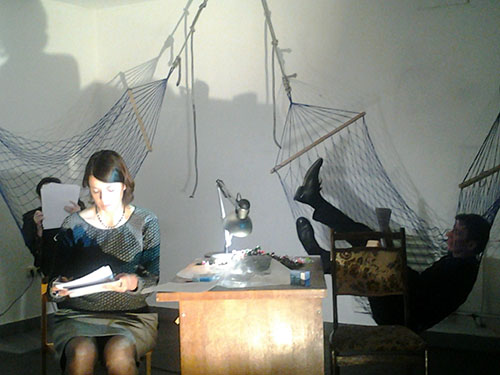
My husband, who has been behind bars for over two years as a suspect, defendant, and convict in the Bolotnaya Square case, and I have long had a tradition of giving theater tickets to our parents on birthdays, New Year’s, and other holidays, nearly always to productions by Teatr.doc. Our favorite, by the way, is Two in Your House, about the house arrest of Belarusian opposition leader Uladzimir Nyaklyaeu. It is one of the theater’s rare productions in which there are more laughter-inducing scenes than frustrating ones.

Six months ago I was contacted by the playwright Polina Borodina and asked to help collect material for a production about the Bolotnaya Square case for the theater that I loved so much. All that was required of me was to give an interview. At the time I thought that Polina would find it hard to write the play: there was nothing impressive about being the relative of a prisoner. It is very boring. I didn’t think she could manage to put together a story about the Bolotnaya Square case that would be interesting to anyone besides those involved in it.

pict2883506107

The premiere took place on the anniversay of the events on Bolotnaya. Policemen gathered outside the theater, and plainclothes officers sat in the audience. I saw the third performance of the production, and police were again standing on duty outside. It was raining, and Elena Gremina, the theater’s director, asked the officers to come inside.

“It is warm in here, and the play is quite good,” she told them.

They would not come in.

I fidgeted, giggled, and fretted, because I could not remember a thing I had said to Polina in the interview. It was scary to hear myself. And every time I recognized my own words in the lines of the actors, I cringed, buried my face in the shoulder of my sister, who was sitting next to me, and thought to myself with relief that it was a good thing I had not put my foot in my mouth.

The boring trials, the red tape of the remand prisons, the monotony of putting together food parcels, and the terrible anguish of the relatives in the Bolotnaya Square case has been turned into a very interesting story told by four actors in the words of the mothers, fathers, wives, fiancées, and friends of the arrestees. There are no exaggerations and distortions; only quotations from interviews with loved ones. They talk about how visits go, how to get married in a remand prison, how the defendants entertained themselves during the boring trials—and how to inform a defendant that his mother has died.

I had always wondered whether anything except shame, three and a half lost years, and painful memories would remain after the the Bolotnaya Square trial, something decent and instructive—not for us relatives but for those were there with us on Bolotnaya Square on May 6, 2012, and for those who were not.

I think this question has stopped vexing me. Stalin’s purges have left us Solzhenitsyn’s Gulag Archipelago and Shalamov’s Kolyma Tales. The Bolotnaya Square case will leave behind Teatr.doc’s The Bolotnaya Square Case.

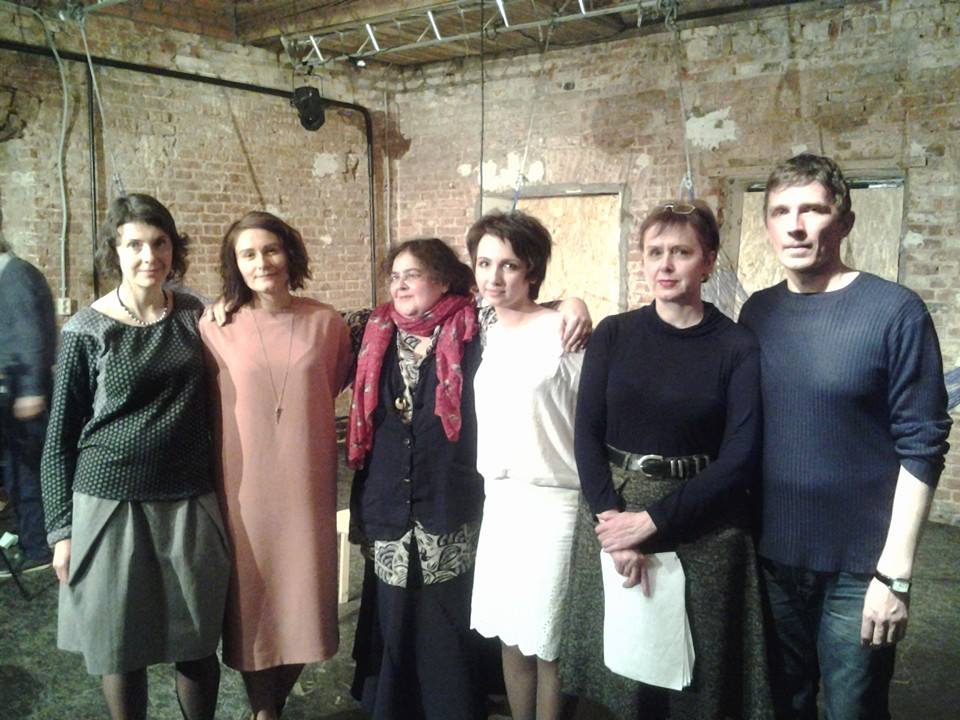
ee61b2c98d7567978852636630bb38f2Many thanks to Polina Borodina, Elena Gremina, Konstantin Kozhevnikov, Anastasia Patlay, Varvara Faer, and Marina Boyko.

Photos courtesy of Snob.ru