Anything Goes

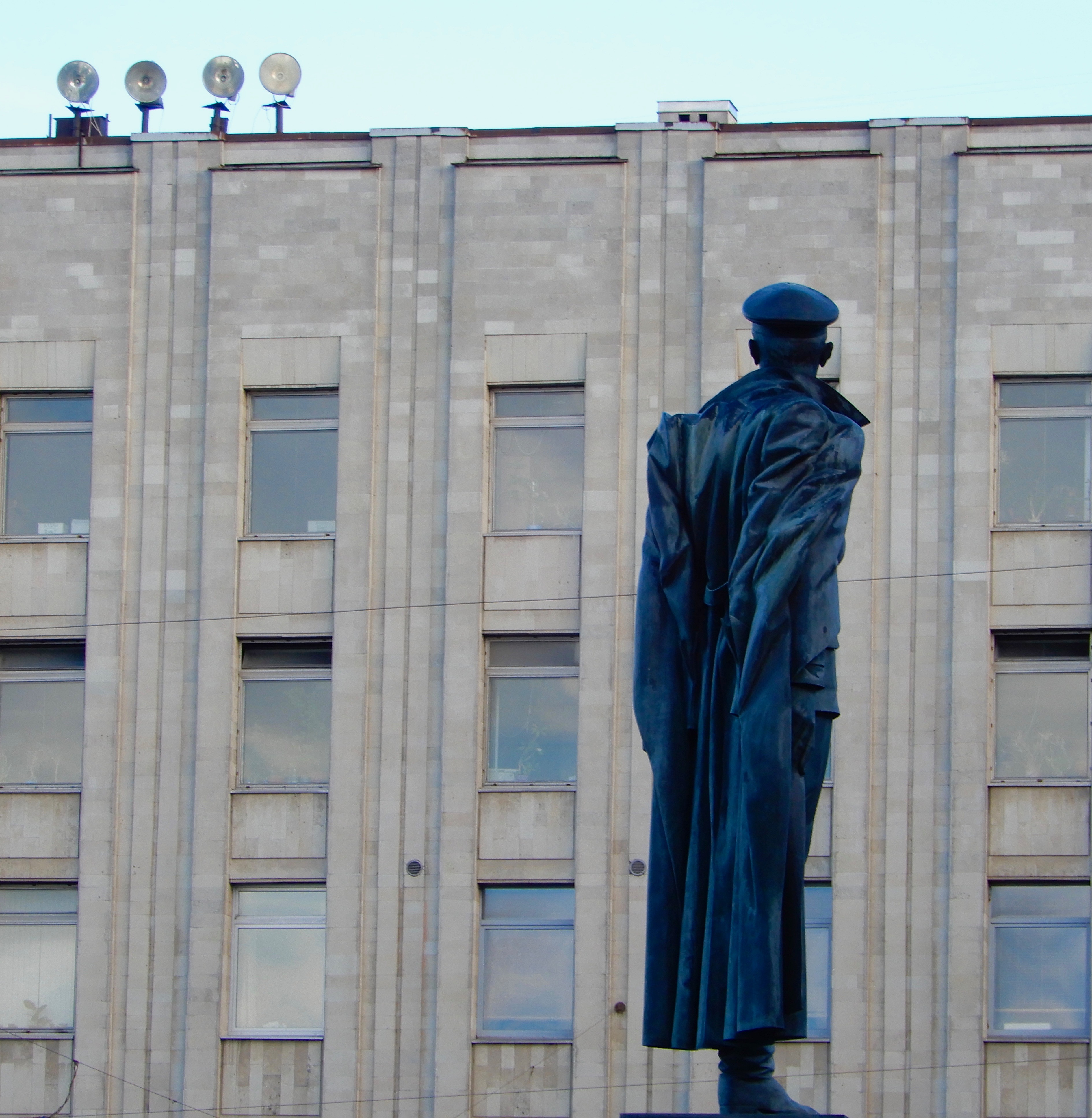
DSCN6137A monument to Felix Dzerzhinsky, founder of the Soviet secret police, in central Petersburg, 6 May 2018. Photo by the Russian Reader

Ukrainian political prisoner Oleg Sentsov has been on hunger strike for sixty-six days.

Can you imagine not eating for sixty-sixty days? I can’t.

Instead of supporting Mr. Sentsov, most of the world decided to turn its back on him by staying glued to their TV sets during Vladimir Putin’s expensive celebration of his despotic regime’s extraordinary ability to pull the wool over nearly everyone’s eyes.

Certainly he didn’t get any pushback yesterday from the putative “leader of the free world,” who is a vain, spineless traitor who has probably never heard of Oleg Sentsov.

Solidarity with Oleg Sentsov doesn’t mean you have to stop eating, too, but it should mean not having your cake and eating it, too.

The World Cup was cake. Nobody can live for a month on a diet of cake without getting sick. The world has just done it, and now, at least as I see it, the world is a lot sicker than before the World Cup.

When infants are baptized in the Lutheran church, the priest asks the godparents and parents whether they “renouce the Devil and all his ways.”

Putin is a devil. You cannot embrace some of his ways while denouncing others. You either take the whole package or reject it. If you reject it, you show a little bit of willpower—for the sake of Crimean political prisoners Vladimir Balukh and Oleg Sentsov, for the sake of people bombed by the Russian airforce in Syria, for the sake of persecuted Karelian historian Yuri Dmitriev, for the sake of Russian Jehovah’s Witnesses, now branded “extremists” and subject to increasingly numerous arrests, for the sake of the innocent young people framed in the New Greatness and Network “terrorist” cases, for the sake of ordinary Russians everywhere fighting the government’s plans to drastically raise the pension age—and you don’t have anything to do with the World Cup or anything else sponsored, promoted, and supported by the current Russian regime.

The sheer number of people, including my own acquaintances, who could not bear to show solidarity with any of these people at all, if only for one month, has shocked me.

Please don’t pretend now that you’re really opposed to the Putin regime. You’ve shown your true colors.

Anything goes, right? || TRR

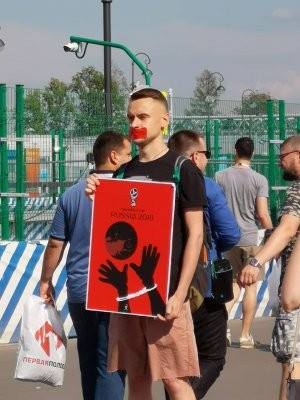
“A Truly Great Competition”: Yegor Yekimov Jailed in Petersburg for Picketing in Solidarity with Oleg Sentsov

37117187_528244187619896_1623487471700410368_n

St. Petersburg Group for Assistance to Detainees
Facebook
July 15, 2018

On Saturday, Yegor Yekimov was detained in the Petersburg 2018 FIFA World Cup Fan Zone for holding a solo picket in solidarity with Oleg Sentsov and handing out leaflets.

The activist spent the night at the 71st Police Precinct.

Today, the Petrograd District Court sentenced him to five days in jail.

Mr. Yekimov has an illness that requires constant maintenance therapy. He must strictly avoid catching any infection whatsoever.

This fact, however, did not stop Judge Irina Grechishko, who sentenced Mr. Yekimov to jail.

Additionally, Mr. Yekimov is a voting member of an election commission, and the court had no right to try him without authorization from a prosecutor.

Mr. Yekimov has been taken to the detention facility on Zakharyevskaya Street in central Petersburg. Attorney Daniil Semyonov will file an appeal of the verdict tomorrow.

Translated by the Russian Reader

#SaveSentsov

Sisters Have to Do It for Themselves

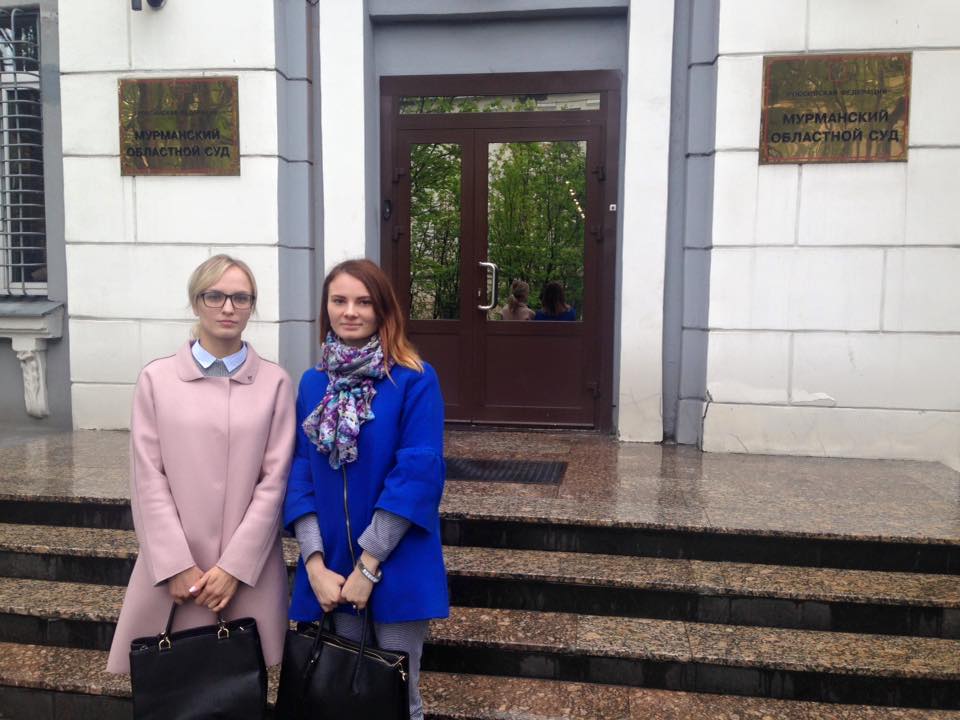
37045808_10209682377334711_3615467989047967744_nIrina Kovalenko and Ksenia Mikhaylichenko, outside of Murmansk Regional Court. Photo courtesy of Ms. Mikhaylichenko’s Facebook page

Ksenia Mikhaylichenko
Facebook
July 11, 2018

It’s great to talk about cases in which you walloped the opposing counsel, the judges gave you a standing applause, and you galloped off on your steed to deliver more justice and do more good. Today, though, I would like to tell a different sory, a story in which you and your client are obviously in the right, but the system tells you, “Hang on, guys. We have our own way of doing things here. Goodbye.”

[…]

Irina graduated from the mechanics and mathematics department at the Peoples’ Friendship University (RUDN) and worked for a major company in Moscow. Then, for family reasons, she moved to Murmansk, where she faced a problem. No one wanted to hire her, explaining she was too well educated, had done internships abroad, and had experience working at a major company, which was way too cool for the folks in Murmansk.

Ultimately, Irina got a job at the Murmansk Regional Information Technology Center, a government-funded agency. Everything would have been great if the head of the place had not hit on Irina big time. When she rejected his advances, she faced harassment in the literal sense of the word: humiliation, insults, daily rants, and charges of incompetence. At the same time, this guy held drinking bouts at work. (Here is the proof.) I would remind you all this took place in a government-funded agency, paid for by our taxes.

Finally, the boss fired Irina. She filed complaints with the State Labor Inspectorate, the prosecutor’s office, and the Murmansk Regional Committee for Information Technology and Communications, which had founded the agency. They promised they would get to the bottom of the matter and get her her job back. Seven months went by, seven months during which Irina received medical treatment in Moscow for terrible headaches and panic attacks. She was prescribed heavy antidepressants.

Seven months later, her ex-boss was fired after five millions rubles went missing from the agency’s books. No one faced criminal charges, of course. On the contrary, the agency’s wonderful head was given severance pay.

Irina had been forgotten, however. She was told to take her case to court and seek justice there. Irina did go to court. At the preliminary hearing, the judge refused to hear the case, citing the statute of limitations.

I came on board during the appeal, but the case file from the hearing in the lower court immediately amazed me. Irina had filed for an adjournment, since the clinic in Moscow where she had been treated was slow in putting together the papers she needed, and so she had to fly to Moscow to retrieve the originals, meaning she needed at least a couple of days. But the judge would not have any of it.

At the appeals hearing, we tried to get all these papers admitted into evidence while thoroughly explaining all the circumstances of the case and Irina’s terrible state of health over the past seven months. Irina was still suffering from pneumonia and pyelonephritis, which we had also documented medically. The stone-faced judges rejected our motion, however.

The prosecutor at the appeals hearing made the biggest impression on me. Foaming at the mouth and raising her voice, she argued Irina had made everything up about the harassment and her health.

“She wasn’t a disabled person, so she could have gone to court.”

This is a direct quotation.

We lost our appeal. It has made me feel terrible. Our system could not care less what happens to women who suffer harassment at work. It is simply impossible to prove either that harassment took place or that it had something to do with a woman being fired.

There are only prosecutors screaming, “You’re pretending to be the victim in this case” so loudly everyone in the courtroom can hear it.

I feel terrible when female friends tell me how their bosses molest them at work more or less arrogantly. Complete strangers write to me with enviable regularity, asking me to advise them what to do if their boss asks them to go to his office after everyone leaves, or they will have to tender their resignations. I don’t know how to reply to them, because it would be a blatant lie to tell them that there are effective legal defenses and the Russian state will defend them.

Thanks to Alena Popova, who introduced me to Irina and had also been helping her all she can. Together we will definitely think of a way to win the case.

Everything is definitely going to be fine for Irina. It cannot be otherwise for fighters for justice like her[.]

Thanks to Elena Konte for the heads-up. Translated by the Russian Reader

You Gotta Fight for Your Right to Party

Involving Teenagers in Unauthorized Protest Rallies Could Cost as Much as One Million Rubles
Experts Say Authorities Won’t Find It Hard to Prove Charges
Olga Churakova
Vedomosti
July 11, 2018

Госдума готовится ввести многотысячные штрафы за вовлечение подростков в несанкционированные митингиThe State Duma plans to introduce hefty finds for involving teenagers in unauthorized protest rallies. Photo by Andrei Gordeyev. Courtesy of Vedomosti

On Tuesday, the State Duma’s Family Affairs Committee gave the go-ahead to a law bill that would introduce penalties for “encouraging” teenagers to attend unauthorized protest rallies. On Monday, the bill was approved by the government’s Legislative Affairs Commission. In its written appraisal of the bill, the Family Affairs Committee recommended clarifying the minimum age at which offenders would be held liable for violations, although the relevant committee reviewing the bill is the Committee on Constitutional Law.

Tabled by Alyona Arshinova, Anatoly Vyborny, and other United Russia MPs, the law would amend the Administrative Violations Code to include penalties of 15 days in jail, 100 hours of community service or a fine of 50,000 rubles for individuals who encourage minors to attend unauthorized protest rallies. Fines for officials would range from 50,000 to 100,000 rubles, while fines for legal entities would range from 250,000 to 500,000 rubles. A repeat violation could send individuals to jail for up to thirty days, while legal entities would be fined as much as one million rubles [approx. €13,800].

“In my experience, there is no such thing as a perfect law bill. As for the current bill, the relevant committee has not yet meet to discuss it,” says Vyborny.

However, Vyborny is certain the amendments are necessary.

“Children cannot resist the negative influence of adults. It matters to them to express themselves, and we hope this bill will deter them from ill-considered actions. Administrative liability will be a deterrent,” he says.

What matters is that young people are not drawn into a culture of legal nihilism, the MP argues. According to Vyborny, the bill does not aim to punish minors, but protest rally organizers. Hence, the age limit is defined in the bill.

OVD Info estimated that ninety-one teenagers were detained on May 5, 2018, in Moscow at an unauthorized protest rally to mark the inauguration of Vladimir Putin as president for the fourth time. According to OVD Info, at least 158 minors were detained nationwide on May 5 at similar protests. OVD Info estimated that a total of 1,600 people were detained that day.

Lawyer Oleg Sukhov says proving protest rally organizers are in violation of the new law would be a piece of cake. Rallies are organized in different ways, including personal contacts and public announcements.

“Our government is planning to deter all means of organizing protest rallies. It realizes this work on the part of the opposition will only intensify over time not only via the web but also through communication with young Russians,” notes Sukhov.

The main point is the government would not have to prove anything, argues Sukhov. Minors will go on attending protest rallies. Whenever they tell police they saw an announcement on the web, the organizers will be charged with violating the law according to a fast-track procedure.

“Clearly, the law will be enforced selectively. It’s a classic manifestation of the so-called mad printer. The terms used in the wording of the bill are not defined at all. For example, what does it mean to ‘encourage’ a teenager to attend a rally? Can teenagers attend rallies? They can. So, how do we figure out whether they attended on their own or were ‘encouraged’? We can’t,” says Navalny’s righthand man Leonid Volkov.

Volkov does not believe the law will be effective since protesters have been paying fines as it is.

“It is no accident this attempt to intimidate young people made the news today, the same day the Investigative Committee released a video about a teenager who goes to prison for reposting [‘extremist’ items] on social media. Of course, this will only produce new Primorsky Partisans,” Volkov concludes.

“Extremism Is a Crime,” a video posted on YouTube on June 25, 2018, by the MultiKit Video Studio. The annotation to the video reads, “A public service video on the dangers of extremism, produced by MultiKit Video Studio for the Russian Investigative Committee’s Altai Territory Office. The video will be shown in schools to prevent such crimes.”

__________________________

__________________________

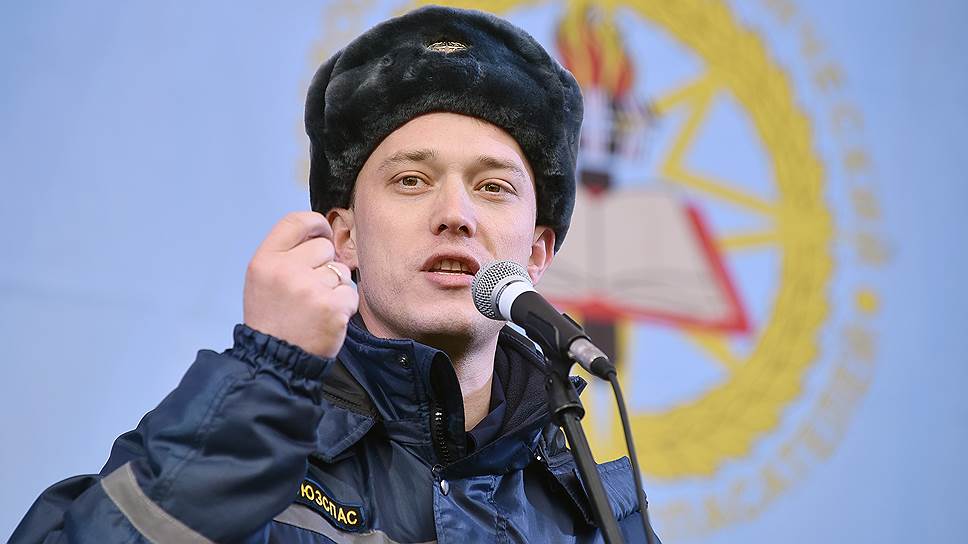
KMO_156800_00022_1_t218_212746.jpgAlexei Avetisov. Photo by Emin Dzhafarov. Courtesy of Kommersant

Youth Policy Finds a Direction
Kremlins Finds a Specialist in Subcultures and Extremism
Sofia Samokhina, Maxim Ivanov and Lada Shamardina
Kommersant
July 11, 2018

Kommersant has learned Alexei Avetisov, member of the Russian Public Chamber and president of the Russian Student Rescue Corps, could join the Office of Public Projects in the Kremlin. Avetisov has been tapped to head the Department for Combating Extremism among Youth. Ksenia Razuvayeva, head of Rospatriotcenter (Russian Center for the Civic and Patriotic Education of Children and Young People) has been named as a candidate for head of the Department of Youth Policy in the Office of Public Projects. Both candidates would still have to be vetted by the Kremlin.

Alexei Avetisov, member of the Russian Public Chamber and president of the Russian Student Rescue Corps, could head the Department for Combating Extremism among Youth in the Kremlin’s Office of Public Projects. Currently, the Office of Public Projects, which is run by Sergei Kiriyenko, the president’s first deputy chief of staff, has no such department. Our sources say Mr. Avetisov would be tasked with overseeing youth subcultures and decriminalizing the youth scene, in particular, by dealing with the popular AUE network of criminal gangs. The Presidential Human Rights Council discussed the issue with Vladimir Putin in December 2016.

Olga Amelchenkova, head of the Victory Volunteers Movement and member of the Russian Public Chamber, told us there were few organizations in Russia involved in volunteering in emergencies, and Mr. Avetisov was one of the few people who had constantly brought up the subject in the Public Chamber.

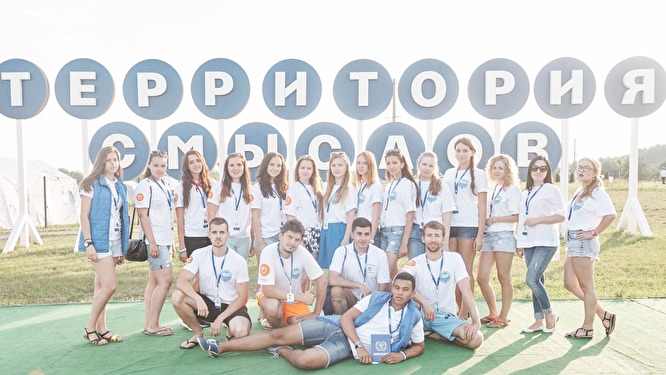
An acquaintance of Mr. Avetisov’s said his Russian Student Rescue Corps had brought many universities together. The organization took part in the first Taurida Camp held after the annexation of Crimea in 2014, an event attended by MPs and high-ranking officials. From 2015 to 2017, Mr. Avetisov was director of Territory of Meanings on the Klyazma, a youth education form, sponsored by Rosmolodezh (Russian Agency for Youth Affairs). His main job at the forum was providing technical support for the camp.

On June 6, Znak.com, citing its own sources, reported law enforcement agences were investigating Territory of Meanings on the Klyazma and, in this connection, “questions for the forum’s ex-director Alexei Avetisov could arise.” The website indicated companies allegedly affiliated with Mr. Avetisov had for several years been awarded “lucrative” contracts for constructing venues at the forum. The firms in question had no experience implementing government contracts. Currently, some of the companies have either gone out of business or are dormant, wrote the website.

Timur Prokopenko, deputy chief of staff in charge of the Office of Domestic Policy in the Kremlin, had been in charge of youth forums in recent years. He also handleded youth policy in his capacity as head of the Office of Domestic Policy. However, on June 14, a presidential decree turned youth policy over to the Office of Public Projects.

znakcom-2039402-666x375Territory of Meanings staffers. Photo from the camp’s VK page. Courtesy of Znak.com

Gazeta.Ru has reported that Rospatriotcenter head Ksenia Razuvayeva could take charge of the Office of Public Project’s Department of Youth Policy. Before taking over the running of Rospatriotcenter, Ms. Razuvayeva ran the Moscow branch of the Russian Volunteers Union and collaborated with the Young Guard of United Russia (MGER), which Mr. Prokopenko ran from 2010 to 2012. Ms. Razuvayeva would not confirm to us that she was moving to the Office of Public Projects Earlier, a source of ours in the Kremlin said she might not make it through the vetting process. Another of our sources noted a possible conflict of interests was at play. Ms. Razuvayeva also told us it was the first time she had heard about Mr. Avetisov’s moving to the Office of Public Projects.

“The vast majority of Young Guardsmen and other pro-regime activists brought up through the ranks in the past decades are supremely focused on their careers. The system simply spits out anyone else,” political scientist Abbas Gallyamov told us.

According to Gallyamov, “Changing colors for the new boss and refusing to have anything to do with people they worshipped only the day before are quite ordinary for this crowd.”

“Therefore, it does not matter whose people they were considered yesterday. They will be loyal to any boss, just because he or she is the boss,” Gallyamov added.

Translated by the Russian Reader

The New Serfs

kozyrev-muscovitesPhoto by Yuri Kozyrev for the project Muscovites. Courtesy of Novaya Gazeta

The New Serfs
On July 9, Millions of Migrant Workers and Foreign Students Will Be Stripped of the Right to Freedom of Movement in Russia in a Single Bound. What Has Happened?
Vyacheslav Polovinko and Tatyana Vasilchuk
Novaya Gazeta
July 6, 2018

On June 28, Vladimir Putin signed Federal Law No. 163-FZ, which clarifies the guidelines for immigration registration in Russia. According to the amended law, such notions as a foreign national’s place of residence and the party hosting the foreign national have been defined more precisely. The majority of media outlets have described the new law as making the lives of migrant workers less burdensome, since the new law says foreign workers can be registered as dwelling in construction site trailers. This has provoked grumbling among “tolerant” Russians, who have complained migrant workers will arrive in even greater numbers and occupy all the country’s trailers.

In fact, the situation is quite different. The new rules are a blow to all law-abiding migrant workers and nearly all foreign students. Any legal entity that attempts to hire foreign nationals to work or study in Russia could find itself in violation of the law.

Even people who have all the papers and permissions for staying in Russia could be deemed lawbreakers.

The July Eighth Law
When a foreign national arrives in Russia, she is obliged to present herself to the immigration authorities and register her place of residence. However, she cannot register herself: the people or entities who invited her are obliged to do this. If she has come on a private visit, this would be the owner of the flat she has rented or the hotel where she is staying. If she has come to Russia to study, the university where she will be studying is obliged to register her. If she has come to Russia to work, the company in which she is employed must register her. (The last instance is more flexible, because her company is obliged to register her with the immigration authorities, but they may or may not register her place of residence as they wish, apparently.) Private landlords are a separate topic, but legal entities would take the easy way out. The law used to permit them to register the university or the company’s main address as a student’s or employee’s domicile. However, the foreign national could actually live somewhere else. It was understood, however, that if the police or other competent authorities were looking for her, they could do so at the address where she was officially registered.

The old system had its advantages and its shortcomings.

“There are companies that have five or six thousand foreign nationals on staff. It is convenient for them to register people at their business address to oversee whether their employees are paying for work permits and extending their residence permits on time,” says migration expert Svetlana Salamova.

The other side of the coin has to do with the poor living conditions of some foreign workers. This is most often the case among migrant workers from Central Asia.

“Employers would sometimes accommodate fifteen people at a time in trailers, in which the living conditions were rough. Besides, finding people via their legally registered domicile was often quite complicated,” explains human rights defender Andrei Babushkin.

To solve these problems, the definitions of key notions in the immigration laws have been amended. Actually, however the circumstances of migrant workers and their Russian employers have been considerably worsened, not improved. The amendments signed into law on June 28 stipulate that the place where the foreign national stays cannot be a normal domicile, but it can be other premises where the foreign national or stateless person actually resides, i.e., regularly uses for sleep and relaxation. If she is registered by a Russian organization, the foreigner must live for all intents and purposes in premises belonging to the organization. However, the premises must be equipped as a dwelling space.

In other words, if a foreign worker wants her company to register her with the authorities, she is obliged to reside full time in the company’s living accommodations.

The catch is that most legal entities simply do not having living accommodations. Construction companies will have the easiest time of it. They will now actually be able to register workers as legally residing in trailers and makeshift barracks at construction sites. All other companies have nowhere to accommodate their employees from other countries. A sofa and a microwave are not sufficient conditions for turning a room into a legal residence.

“Legally speaking, a domicile is a place that has been registered as such,” says Salamova. “An office with a sofa in it is not a domicile, but if your company lets you keep your suitcases there and install a stove and refrigerator, theoretically you could be registered as dwelling there. In this case, however, the employee from the personnel department who registers you with the Russian Interior Ministry [i.e., the police] will have to supply the immigration authorities with paperwork showing the room has been registered as a domicile.”

Will Russian companies be willing to turn their offices into bedrooms? The answer is obviously no.

Large auditing and consulting agencies, a field in which many foreign nationals are employed in Russia (not only expatriates but also graduates of Russian universities who are nationals of the former Soviet republics) have started to warn their employees about the need to look for a place where they can be registered as residing. Victoria Plotinskaya, marketing and public relations director at AT Consulting, told us that foreign employees at her company must register at their actual addresses before July 9. Previously, AT Consulting registered them at its business address, but now it is willing to provide them with legal assistance. Plotinskaya assumes their employees will have no difficulties, since registering oneself as residing in a rented flat is not a problem,  she claims.

We, however, have learned that several employees of major companies have been thinking about quitting their jobs or transferring to their home countries because their landlords have no intention of registering them.

“Companies will lose the ability to keep track of the immigration registration of their foreign national employees, while  foreign nationals who live in rented flats will have to negotiate with their landlords about registering them,” says Roman Gusev, director of Ernst & Young’s taxation and legal services department. The company does not plan to lay off any employees.

“In practice,” Gusev continues, “we see that many landlords refuse to deal with this procedure, because they don’t want the added administrative burden. In such cases, foreign nationals will have to urgently look for new accommodations. On the other hand, landlords who agree to meet the new requirements will have to keep close watch over their foreign tenants’ arrivals in the Russian Federation, since they have to be registered with immigration authorities after each such arrival.

“There are also risks for conscientious landlords. If their foreign national tenants arrive in the Russian Federation and fail to inform them, the landlords will be breaking the law without knowing it. On the other hand, foreign nationals could also find themselves in a pickle if their landlords suddenly refuse to register them with the immigration authorities or are simply unable to do what the law requires of them because they happen to be out of town,” concludes Gusev.

Unfortunately, the new rules are also retroactive, apparently, meaning everyone who is registered as residing at a business beyond July 8 will be in violation of the law come this Monday—unless, of course, they are unable to swiftly persuade their landlords to register them. In this case, however, no one can vouch that landlord will supply this service for free. Rental agreements presume that landlords pay taxes on the rent they charge. Verbal agreements to rent someone a flat and register them while not paying taxes could lead to a rise in the price of flats let to foreign nationals in Russia.

Formally, nothing has been said about the retroactive force of the amendments to the law, as signed by Putin. However, human rights activists have already been getting reports of attempts to deport migrant workers for dwelling in places where they are not registered to reside. In fact, the Interior Ministry already has the power to deport a non-Russian national if an inspector discovers him somewhere other than his registered domicile, say, at another flat in the evening.

This was what happened to Uzbek nationals in Omsk Region, says human rights activist Valentina Chupik. The Uzbeks went to a immigration center with registration papers obtained from a middleman, and they were sent off to be deported, allegedly because they did not live at their registered domicile.

In other words, under the new law, migrant workers no longer have the right to spend the night somewhere other than their legally registered, actual residence.

Under Article 54 of the Russian Constitution, laws cannot be applied retroactively. This was underscored by the specialists at Alliance Legal Migration, a firm based in Petersburg. In theory, then, all registrations issued before July 8 should be valid for their full terms. This can be proven only in court, however. Yet Russian courts rarely side with migrant workers.

Dormitory Hostages
Foreign nationals employed by Russian companies are only half of the problem. If push comes to shove, they can pay landlords extra money to register them. All foreign students in Russia are now at risk as well. Previously, universities would register their main buildings as the legal domiciles of their foreign students, but now they will be obliged to register all of them in university dormitories. However, the number of rooms in the dorms does not match the number of foreign students, and out-of-town Russian students have to live in dorms as well. Besides, there are students who do not want to live in dorms and can rent flats, students who have children, for example. Previously, they could count on their universities registering them, but now they will have to take care of their own registration.

The new law also applies to students who left for summer holidays not knowing they would return to Russia in the autumn on new terms. In addition, students who are registered in dorms are virtually their hostages.

Any violation of university regulations or, for example, attendance at an opposition rally gives university deans the chance to opportunity to revoke the registration of “troublesome” foreign students, which automatically means they are in violation of immigration laws and can be deported. Considering the fact that many international students have never experienced serfdom, they behave like free women and men. Their freedom will now be harshly restricted by the hours when the dorm’s main entrance closes.

Universities themselves seemingly have not yet figured out yet what they are going to do. The new rules have been a big surprise to most of them. The main issue they face is how they will now enroll international students if registering all of them legally has become impossible.

The Peoples’ Friendship University of Russia (RUDN) refused to comment on the amended rules. We were told by a spokesperson at the Higher School of Economics (HSE) that they were in the process of working out a way of dealing with the new rules. However, we have in our possession correspondence between students and the HSE’s immigration department, who categorically informed the students they could be registered only at their actual places of residence.

At Moscow State University (MGU), we were told, “The issues of timely migration registration and visa extensions for foreign students residing in rented flats is currently being examined by university management in order to find the optimal solution.”

“The university has not contemplated any limitations to enrolling foreign students due to the adoption of Federal Law No. 163-FZ, dated June 27, 2018,” a MGU spokesperson added.

Other universities failed to respond to our inquiries before this issue of the newspaper was sent to the presses.

“If a university does not have a dormitory or does not have enough room in its dormitories, students can ask for a written request from the university to landlords, asking them to register the students at their actual domiciles. And then the landlords can register them if they want to do so,” explains Salamova.

Closely Watched Flats
You should not imagine that all of the above is a headache for foreigners, but has nothing to do with you.

According to the new rules, Russian nationals who let flats to foreign nationals are automatically regarded as “hosts,” meaning they are obliged to register them as residing in their dwellings and are responsible for them.

“There will also be increased check-ups and fines in the case of noncompliance with the laws for people who let flats to foreigners,” predicts Salamova.

In all fairness, such fines also existed earlier, but they were almost never issued. We have been informed that as soon as the World Cup ends, the police will make an extra effort to inspect all residential buildings and search for unregistered foreigners living in them.

Moreover, Russians are currently responsible for foreign nationals, even if they have left the country but their immigration registration is still valid. A law bill, sponsored by Irina Yarovaya and on the verge of its second reading, has been tabled in the State Duma. If passed, it would make it possible to remove foreigners from the immigration registry instantly and on one’s own via the web. This means landlords would also be able to remove tenants from the registry whenever they wanted, claiming, for example, that they had lost touch with the migrant workers in question. Foreign tenants would thus be subject to the whims of landlords, who could raise their rent at the drop of a hat, threatening to remove them from the immigration registry if they failed to pay. Besides, if a migrant worker does not live in the flat where she is officially registered, she can find herself without papers at any minute because, according to yet another amendment, she can be stricken from the rolls as residing in a particular flat without her knowledge. This means that beat cops can stop her on the street and automatically fine and deport her.

In mid June, the State Duma approved yet another law bill in its second reading. If passed, it would make organizations that invite foreigners to Russia wholly responsible for their actions. For example, if a foreign national works somewhere else than the organization that invited him or “is up to no good,” as MP Viktor Karamyshev has put it, the authorities will pay a call to the foreigner’s primary host organization. In addition, companies would have to make sure that when an employment contract ends, the migrant worker leaves the country instantly. Otherwise, the companies would be fined.

At the same time, the State Duma approved a new list of fines for noncompliance with all these rules on the part of organizations and ordinary Russians.

Under the new regulations in the Administrative Offenses Code, individuals will pay fines of up to 4,000 rubles for violations involving migrant workers, while officials will pays up to 50,000 rubles, and legal entities will pay up to 500,000 rubles [approx. 6,700 euros].

Beneficiaries  
By and large, the batch of laws that have been adopted or are still under consideration (the Interior Ministry, for example, has launched an expert group to draft a Migration Code) should at least be sent back to the relevant committee for revision, since, as Babushkin says, “The harm they do outweighs the good.” But the way the new rules have been drafted and adopted behind the scenes—they did not warrant a single public hearing nor, as far we have ascertained, did their authors consult with independent migration lawyers—suggests their oppressiveness is advantageous as they currently stand.

Who stands to gain, however? MP Irina Yarovaya, for example, argues that certain changes, such as the ability to remove migrant workers from the registration rolls on one’s own, are in the interests of ordinary Russians. She states her case in a clarification to the law bill that the MP’s aides sent to us in reply to a request for comments. On the contrary, human rights activists argue the Interior Ministry, which now has complete oversight over immigration, has received yet another tool for extorting bribes. Any migrant worker can be stopped on the street by the police and threatened with deportation: he will find it easier to pay them off. Any landlord can be intimidated with fines.

The threat of deportation is a convenient tool for dealing with troublesome individuals.

Our newspaper published the story of Gulchekhra Aliyeva and her family. She and her son were locked up for five days without food and water at the Ramenki District Police Station in Moscow. They were let out of their cells twice a day to go to the toilet. According to the Aliyevs and human rights advocates, the police tried to extort them, promising to deport them if they did not pay up. The ostensible cause was the tightening of security on the eve of the World Cup. After human right defenders intervened, the Aliyevs were released, and a criminal investigation into allegations of torture was launched.

“However, when the Aliyevs were summoned for questioning, it transpired  the police planned to deport them for being registered at their place of work rather than where they actually lived,” says Chupik.

Moreover, this happened before the new law had taken effect.

“We basically saved them by escaping the police station,” recalls Chupik.

The special services also stand to benefit from the new law. As we have learned from a source with ties to the academic world, special services officers have connections to the immigration departments in several Russian universities.

This is tantamount to reviving the Soviet system of “working” with international students at universities. Given that they inevitably violate the rules, they can be inclined to “friendship” and “cooperation” when necessary.

Besides, foreigners per se will now be unable to take the slightest step in Russia without official registration. Nationals of our allies Kyrgyzstan and Kazakhstan will also be punished, but that is collateral damage.

Finally, fly-by-night fake migration registrars stand to gain from the law, since their entire business will disappear into the shadow economy. Even now, migrant workers who travel to the Multi-Purpose Migration Center (MMTs) in Sakharovo, in the far southern outskirts of Moscow, cannot have their domiciles registered while other papers are being processed, including their work permits. Human rights activists say the MMTs has lost this right due to the new law.

“Everyone mobs Kazan Station, getting registered by people who give them counterfeit papers,” claims Chupik.

As far as we know, the neighborhood around the Kazan Railway Station, in central Moscow, has the largest number of people offering such dubious services. Moreover, these deals are made more or less in plain view of law enforcement officers, who do nothing about them: maybe they know something important we do not know or know more thane we. The price of counterfeit registration papers is between seven and eight thousand rubles [approx. 95 to 110 euros], a hefty sum of money for migrant workers.

The Interior Ministry stubbornly persists in saying nothing about how the new law will be enforced: it has not published any official clarifications. We have sent the ministry a request to comment, but when this newspaper went to the print, the ministry had not yet responded.

Thanks to Sergey Abashin for the heads-up. Translated by the Russian Reader
Two More Suspects Detained in Network Case

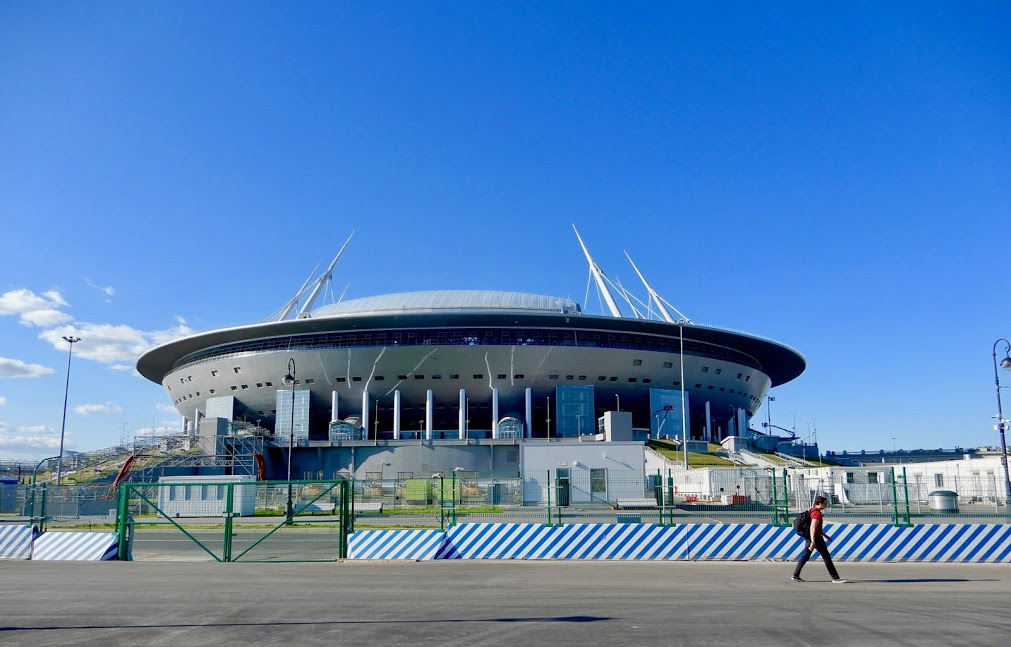
krestovsky stadiumThe members of the wholly mythical terrorist organization the Network have been accused by the FSB of planning to disrupt the March presidential elections and this summer’s World Cup in order to foment rebellion among the hoi polloi. These accusations would be hilarious if they were not served up with heavy helpings of torture, intimidation, and incarceration. Photo of Krestovsky Stadium in Petersburg, a World Cup venue, by the Russian Reader

Two Suspects Detained in Network Case
OVD Info
July 5, 2018

Mikhail Kulkov and Maxim Ivankin, two suspects in the so-called Network Case, have been detained and placed in police custody, OVD Info has learned from Yelena Bogatova, the mother of Ilya Shakursky, another suspect in the case.

The Lenin District Court in Penza has remanded Kulkov and Ivankin in custody until September.

Bogatova had been waiting for a lawyer outside the Penza Remand Prison when Ivankin and Kulkov were brought there. According to her, their parents learned of their arrests on July 4. Their custody hearings took place at 2 p.m. on July 5.

Alexei Kulkov, Mikhail Kulkov’s father, told OVD Info the young men had been detained in Moscow without IDs. Penza’s Lenin District Court has remanded them in custody until September 18. Mr. Kulkov reported that his son and Maxim Kulkin have been charged with organizing a “terrorist community.”  He said he saw the two young men for several minutes in the courthouse as they were escorted down the hallway. He noticed they had black eyes and bruises on their bodies.

Previously, Ivankin and Kulkov were detained in Penza in March 2017 along with antifascist Alexei Poltavets. They were initially charged with drugs possession. According to Poltavets, after they were detained, Russian Federal Security Service (FSB) officers tortured and beat them, demanding they testify against their friends in the antifascist scene. Poltavets later left Russia and had not seen Ivankin and Kulkov since then.

In June 2018, it transpired that Ivankin and Kulkov’s case had been combined with the investigation of the so-called Network, an organization that FSB investigators claim is a terrorist group. Ivankin and Kulkov have been charged with planning to produce or sell drugs in large quantities (Russian Criminal Code Article 228.1 Part 4 Paragraph G and Article 30 Part 3).

In the criminal case files, Ivankin, Kulkov, and Poltavets are identified both by their real names and the pseudonyms Redhead, Ilya, and Boris.

It transpired on July 4 that another suspect in the Network Case, Dmitry Pchelintsev, had been transferred from Penza Remand Prison No. 1, most likely to St. Petersburg.

On May 23, a friend of the accused, Victoria Frolova, was detained at the Russian-Ukrainian border. She was forced to testify against her Penza friends, including Ivankin and Kulkov. In her signed statement, Ivankin and Kulkov are identified as members of the 5.11 (“November Fifth”) cell of the Network. According to FSB investigators, all members of the Network trained with sticks in the woods, practice orienteering and first aid, and learned to set traps.

In the autumn of 2017, five young men were arrested in Penza: Yegor Zorin, Ilya Shakursky, Dmitry Pchelintsev, Vasily Kuksov, and Andrei Chernov. Arman Sagynbayev was detained in St. Petersburg and extradited to Penza. All of them were charged with involvement in a “terrorist” community. The FSB claimed the young young were involved in a terrorist organization known as the Network, whose cells, allegedly, existed in Moscow, Petersburg, Penza, and Belarus. The accused men gave accounts of mental coercion, electrical shock torture, and being hung upside down by FSB officers, as well as their planting weapons in the men’s cars and flats.

Later, several of the suspects renounced their confessions, saying they had been given under torture.

Besides the six suspects jailed in Penza, there are three more young men who have been charged with involvedment in the Network who have been remanded in custody in Petersburg. They are Viktor Filinkov and Igor Shishkin, on whose bodies human rights activists found physical traces of their having been tortured, and Yuli Boyarshinov, originally accused of illegal possession of explosive substances. Later, investigators tried to force him to testifying against the men accused in the Network Case and charged him with the same offenses.

Translated by the Russian Reader

***************

What can you do to support the Penza and Petersburg antifascists and anarchists tortured and imprisoned by the FSB?

  • Donate money to the Anarchist Black Cross via PayPal (abc-msk@riseup.net). Make sure to specify your donation is earmarked for “Rupression.”
  • Spread the word about the Network Case aka the Penza-Petersburg “terrorism” case. You can find more information about the case and in-depth articles translated into English on this website (see below), rupression.com, and openDemocracyRussia.
  • Organize solidarity events where you live to raise money and publicize the plight of the tortured Penza and Petersburg antifascists. Go to the website It’s Going Down to find printable posters and flyers you can download. You can also read more about the case there.
  • If you have the time and means to design, produce, and sell solidarity merchandise, please write to rupression@protonmail.com.
  • Write letters and postcards to the prisoners. Letters and postcards must be written in Russian or translated into Russian. You can find the addresses of the prisoners here.
  • Design a solidarity postcard that can be printed and used by others to send messages of support to the prisoners. Send your ideas to rupression@protonmail.com.
  • Write letters of support to the prisoners’ loved ones via rupression@protonmail.com.
  • Translate the articles and information at rupression.com and this website into languages other than Russian and English, and publish your translations on social media and your own websites and blogs.
  • If you know someone famous, ask them to record a solidarity video, write an op-ed piece for a mainstream newspaper or write letters to the prisoners.
  • If you know someone who is a print, internet, TV or radio journalist, encourage them to write an article or broadcast a report about the case. Write to rupression@protonmail.com or the email listed on this website, and we will be happy to arrange interviews and provide additional information.
  • It is extremely important this case break into the mainstream media both in Russia and abroad. Despite their apparent brashness, the FSB and their ilk do not like publicity. The more publicity the case receives, the safer our comrades will be in remand prison from violence at the hands of prison stooges and torture at the hands of the FSB, and the more likely the Russian authorities will be to drop the case altogether or release the defendants for time served if the case ever does go to trial.
  • Why? Because the case is a complete frame-up, based on testimony obtained under torture and mental duress. When the complaints filed by the accused reach the European Court of Human Rights in Strasbourg and are examined by actual judges, the Russian government will again be forced to pay heavy fines for its cruel mockery of justice.

***************

If you have not been following the Penza-Petersburg “terrorism” case and other recent cases involving frame-ups, torture, and violent intimidation by the Russian Federal Security Service (FSB) and other arms of the Russian police state, read and republish the recent articles the Russian Reader has posted on these subjects.

ЗОЖ (“Civic Activists” Assault and Detain Theater.Doc Members in Moscow)

zozh-1-sairon-ruThe newfangled promotion of ЗОЖ (a Russian acronym for “a healthy lifestyle”) has clear neofascist overtones in post-communist Russia. Image courtesy of Sairon.ru

Ten Theater.Doc Company Member Detained in Moscow
Anastasia Torop
Novaya Gazeta
July 5, 2018

Ten Theater.Doc employees have been detained on Chistoprudny Boulevard, actress Maria Chuprinskaya has informed our newspaper.

She said that, after a performance of the production Adults on the Outside, the actors had set off for the Chistye Prudy subway station and had stopped on the boulevard, when they were approached by a police officer and five men in plain clothes who introduced themselves as “civic activists.” They claimed the theater troupe was drinking alcoholic beverages.

“They said they were in favor of HLS [ЗОЖ, in Russian, an acronym for “a healthy lifestyle” promoted as a crypto-fascist post-Soviet cult] and were ready to testify to any of our crimes. Then they showed me, Lena Nosova, and Alisa Safina photos, from our Facebook pages, relating to Oleg Sentsov on their telephones. They knew our names and surnames, although we had not show them any IDs,” said Chuprinskya.

She added that when actress Tatyana Demidova was detained, one of the men punched her in the stomach.

Then a paddy wagon arrived, and ten members of the company were taken to the Basmanny District Police Station. According to Chuprinskya, Demidova stayed behind on the boulevard with three of the so-called civic activists.

On June 18, Chuprinskaya, Theater.Doc actor Grigory Gandlevsky, artist Alisa Safina, and activist Natalya Savoskina were detained in downtown Moscow for handing out leaflets, printed in English and Spanish, supporting Ukrainian filmmaker Oleg Sentsov.

[…]

UPDATE
OVD Info reports the Theater.Doc employees have begun to be released from the Basmanny District Police Station. Theater member Irina Vekshina writes that actress Tatyana Demidova, who was punched in the stomach, has made her way home.

Translated by the Russian Reader. Thanks to Askold Kurov for the heads-up.

Given that Putin’s machinery of repression has literally not let up for a second while the World Cup has been on, I would like to voice my personal shame that I know people who have not heeded the numerous calls by me and other, smarter people with a clearer, longer view of the Putinist police state to avoid the World Cup like the plague. This would have meant not writing about it on Facebook, not watching it on TV, having nothing to do with it whatsoever. I imagined this was not such a huge thing to ask of people who preach progressive politics and claim to practice international solidarity. I was completely wrong. Instead, foreign fans and reporters alike have been fooled by the unsurprising fact that the Russian police state has not targeted them during the World Cup, and that businesses that stand to make money off their presence in the country have welcomed them with open arms. As if any reasonable person would have expected anything else on this minor score, which means nothing in terms of the bigger picture: i.e., what is life in Russia like for Russians themselves, especially Russians not approved by the Putin regime—gays and lesbians, migrant workers, grassroots activists, religious minorities, ethnic minorities, independent trade unionists, independent activist truckers, small activist farmers from Krasnodar Territory, environmentalists, antifascists, anarchists, dissident bloggers, “foreign agents” (i.e., NGOs not approved by the Kremlin), Ukrainian political prisoners, torture victims, alternative theater directors and actors, and on and on and on. By plugging into World Cup “madness,” you have given the Putin regime a massive shot of self-confidence and swagger. You have sent a loud message to all the groups of “bad” Russians I have listed here that they can take a long walk off a short pier as far as the wider world is concerned. After the World Cup has ended in ten days, things will continue to degenerate under Putin’s misrule. But you will have missed your chance to put a sizable, palpable roadblock in front of an extraordinarily aggressive, mean-spirited, thuggish regime that cannot abide opposition of any kind. // TRR

Patriots

pyotr tolstoy's daughter“While Pyotr Tolstoy, deputy speaker of the State Duma, battles the treacherous West and discusses labeling journalists ‘foreign agents,’ his daughter is on vacation in Crimea and Suzdal. (In fact, she is in Rome.)” Miracles of OSINT, July 5, 2018

__________________________________

Russian Duma Committee OKs Legislation to Label Individual Journalists “Foreign Agents”
Committee to Protect Journalists
July 3, 2018

The Committee to Protect Journalists today called on Russian authorities to refrain from labeling individual bloggers and journalists as foreign agents. The State Duma’s information and communication committee today approved legislation that would allow authorities to label private persons as foreign agents if they work for organizations the Justice Ministry labels as foreign agents or receive funding for producing content for these organizations, according to media reports.

The proposed legislation would require individuals to go through annual audit, submit a bi-annual report on their work activities, and put a “foreign agent” label on all produced content, according to the reports.

“Labeling journalists, including bloggers, as foreign agents is the latest step in the Russian authorities’ systematic policy towards obstructing the free flow of news,” said CPJ’s Europe and Central Asia research associate, Gulnoza Said. “We call on Russian authorities to reverse course and allow its citizens to receive information and opinion from a wide range of sources.”

The Duma, the lower house of parliament, initially passed a related bill in January. The parliament’s upper house, the Federation Council, is yet to vote on the legislation, which also requires presidential approval before becoming law.

The information and communication committee’s chair, Leonid Levin, who co-authored the latest proposals, told the state news agency Interfax that the Foreign Ministry and State Prosecutor’s office, two separate entities, would be responsible for labeling private persons as foreign agents “for additional protection of individuals from accidental decisions” from the Justice Ministry. Those bloggers who “simply repost information of foreign agents” will not “suffer,” Levin said. The Justice Ministry will still determine which groups fall into the category of foreign agent.

The latest legislation also includes provisions that would prevent websites or other media being blocked without a court ruling, according to news reports.

Today’s action came after the Kremlin-funded television station RT, formerly Russia Today, said in November that it had complied with a U.S. Justice Department order to register under the Foreign Agents Registration Act (FARA).

The Justice Ministry has already used the newly expanded laws to designate nine U.S.-funded news outlets, including the U.S. Congress-funded Voice of America (VOA) and Radio Free Europe/Radio Liberty (RFE/RL), as foreign agents, according to reports.

“He’s Lost Fifteen Kilos on the Hunger Strike”: Oleg Sentsov’s Cousin Visits Filmmaker in Prison

oleg

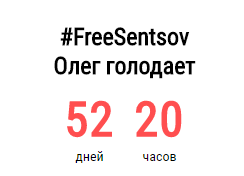
“Oleg has been on hunger strike for 52 days and 20 hours.”

“He Has Lost Fifteen Kilos during the Hunger Strike”: Oleg Sentsov’s Cousin Visits Filmmaker in Prison
Novaya Gazeta
July 5, 2018

Natalya Kaplan, cousin of Ukrainian filmmaker Oleg Sentsov, has visited him at the Polar Bear Penal Colony in Labytnangi, reports Gromadskoe.

“I met with Oleg. We chatted for two hours. It was a short visit. Oleg, who is 190 centimeters tall, now weighs 75 kilos. He has lost 15 kilos during the hunger strike,” said Ms. Kaplan.

According to her, Mr. Sentsov’s health is currently listed as satisfactory. His lab results are not good, but “there is nothing critical.”

“Yesterday, he felt quite sick. Today, he was fine. He came to the meeting on his own. He feels worse in the evenings. He says he now has a much easier time of it. The first three weeks of the hunger strike were the most agonizing period. He has been getting IVs now. He would not survive without them. He has no plans of ending the hunger strike. His outlook is optimistic. He believes what he is doing has a purpose. And he believes he will win,” said the filmmaker’s cousin.

Kaplan added that Sentsov has asked the public not to visit him in prison, but to visit the other political prisoners for whom he has been fighting.

Mr. Sentsov was convicted in Russia on charges of planning terrorist attacks in Crimea. He has been on hunger strike since May 14, demanding the Russian authorities release all Ukrainian political prisoners in their custody except him. Many Russian and international cultural figures and human rights activists have voiced their support for him.

In recent weeks, the Russian and Ukrainian sides have been trying to agree on a prisoner exchange and iron out a schedule of visits to penal colonies. Lyudmila Denisova, the Verkhovna Rada’s human rights ombudsman, has voiced Ukraine’s willingness to implement an exchange of twenty-three prisoners from each side.

Thanks to Dmitry Dinze and Askold Kurov for the heads-up.

___________________________________________________________________

Here is what Novaya Gazeta omitted from the original article as published on the Gromadskoye website.

[…]

Natalya Kaplan told Oleg that Emir Hussein Kuku had joined his hunger strike and about the demonstrations supporting him.

“He is really grateful there have been so many rallies in his support, that people have not given up and keep on fighting. At the same time, however, he is quite disappointed very little attention has been paid to the other political prisoners. He thinks that if he alone were released, it would be a complete failure,” she said.

[…]

“In particular, he asked Ombudsman Denisova, Father Kliment, the independent doctors, and consular officials who have tried to visit him to go visit the other political prisoners, so that no one forgets them,” said Ms. Kaplan.

[…]

According to her, he has television for entertainment, and he has also been writing and editing his old diary entries. He asks that no more books be sent to him. He has lots of books as it is.

It has transpired the former so-called prosecutor of Russia-annexed Crimea, Natalia Poklonskaya, was involved in Mr. Sentsov’s illegal trial in the Russian Federation, during which he was sentenced to twenty years in prison.

On June 29, Mr. Sentsov’s attorney, Dmitry Dinze, reported Mr. Sentsov was in the prison infirmary, but his condition was stable.

Mr. Dinze also reported Russia had received two requests to pardon Mr. Sentsov.

On June 15, Ms. Denisova was not allowed to see Mr. Sentsov. Subsequently, Ms. Denisova was also not allowed to see Ukrainian political prisoner Mykola Karpyuk, imprisoned in the Russian city of Vladimir.

On June 21, the Ukrainian Embassy in Russia demanded Ms. Denisova be granted priority access to the prisons where political prisoners Oleg Sentsov, Stanislav Klykh, Alexander Kolchenko, and Vladimir Balukh have been incarcerated.

On June 21, Ukrainian President Petro Poroshenko again talked on the phone with Russian President Vladimir Putin, urging him to release the Ukrainian political prisoners.

The ambassadors of the G7 countries have expressed deep concern about the circumstances of Mr. Sentsov and the other Ukrainian political prisoners incarcerated in Russia.

On June 14, the European Parliament passed a resolution demanding the immediate release of Mr. Sentsov and the Kremlin’s other Ukrainian political prisoners.

On June 19, President Putin’s press secretary, Dmitry Peskov, said the Kremlin’s position on Mr. Sentsov had not changed after an appeal to release him was made by prominent Russian cultural figures.

Sixty-four Ukrainian political prisoners are currently being held in Russia and annexed Crimea, twenty-seven of them in Russia proper. Fifty-eight of them were either arrested in Crimea or arrested on charges involving Crimea. These numbers do not take into account the currently held in the self-proclaimed Republics of Donetsk and Luhansk.

Translated by the Russian Reader. Image courtesy of Gromadskoye


Kicker Conspiracy

Go to Russia for a few World Cup fixtures, get rip-roaring drunk, hit on a married Russian woman, and you are an instant “Russia expert,” fit for print in the bloody Guardian.

And don’t forget to thank the Russian security forces for their professionalism in keeping your jet-setting, neo-colonialist, neo-imperialist ass safe while you’re making an ass of yourself.

Huge congratulations must go to the law enforcement that’s been put in place to stop both the most fighty Russians and the most fighty English from making their presence felt. But those responsible for the headlines with TOO MANY CAPITAL LETTERS should be ashamed. Not just for denying England fans these experiences, but for allowing the Russian people to feel demonised, and indeed for allowing Putin to capitalise on this othering of the Russian people to support his us-against-them narrative. Every English person that has a positive interaction with a Russian person is a step further away from letting the people in power turn us against each other … is what I drunkenly mumbled into Anastasia’s ear a few minutes before I learned she had a husband, and a few minutes after she’d said there are no good computer hackers in Russia, and about 20 minutes after I’d been singing “Football’s coming home”. We’re all living in our own fantasies I suppose.

_________________________________________

I wish everyone could read this detailed interview with the fearless Russian human rights activist Anatoly Kalyapin and head of the Committee for the Prevention of Torture about the nearly ubiquitous use of torture by Russian law enforcement.

Under ordinary circumstances, I might even think about translating the interview and publishing it on this website.

But these are not ordinary circumstances. As the Putin regime ratchets up its “Great Terror Lite” apparatus, a frighteningly large segment of apparently educated and even liberal Russians and non-Russians have persuaded me that having fun, partying like it’s 1999, and staying glued to their TV sets watching World Cup fixtures trump petty considerations like human rights and international solidarity.

So, if you’d like to read this interview with a knowledgeable, brave man, run it through whatever online translation machine you prefer and see what miserable gobbledygook comes out the other end.

It has finally dawned on me how few people, both inside and outside Russia, really care to know anything about the real Russia, especially since Don Putin started kicking magical, psychedelic, multi-colored sand in their face with his twelve-billion-dollar “kicker conspiracy.”

I have no hope for a planet whose most powerful, empowered, and well-off inhabitants have such a strong will to be fooled and such an insuperable desire to kick up their heels as if they were teenagers. // TRR

Thanks to Lika Frenkel for the heads-up and the late Mark E. Smith (March 5, 1957–January 24,  2018) for not refusing his vision and sharing it with us so generously for so many years.

_________________________________________

Kicker, Kicker Conspiracy

J. Hill’s satanic reign
Ass-lickers, Keegan’s Team

Kicker, Kicker Conspiracy

In the marble halls of the charm school
How flair is punished
Under Marble Millichip, the F.A. broods 
On how flair can be punished
Their guest is a Euro-State magnate
Corporate-u-lent

Kicker, Kicker Conspiracy 

In the booze club, George Best does rule
How flair is punished
His downfall was a blonde girl,
but that’s none of your business!

Kicker, Kicker Conspiracy

Football fan at the bus stop
Stretched on the balls of his feet
In the Christmas rush
Had in his hands two lager cans
Talks to himself
At the back
At the top

But in the pavement on the club unit
Plastic, Slime, Partitions, Cocktail, Zig-Zag, Tudor Bar

Pat McCat. Pat McCat, the very famous sports reporter is
talking there.

Fans remember, you are abroad!
Remember the police are rough!
Remember the unemployed!
Remember my expense account!

Hot dogs and seat for Mr. Hogg!
Hot dogs and seat for Mr. Hogg
And his grotty spawn!

Lurid brochures for ground unit
How style is punished

Kicker, Kicker Conspiracy
Remember, don’t collect with the rough
Kicker, Kicker Conspiracy

Kicker, destroy the facilities!

Kicker Conspiracy

Source: The Fall, “Kicker Conspiracy” (1983); lyrics courtesy of The Annotated Fall