Experiencing all of the Tiny Desks this Black Music Month has made many of my dreams come true, and Meshell Ndegeocello’s performance was no exception. For 30 years the Grammy-winning artist’s music has cast an unflinching gaze on love, race, sexuality and religion. Her new album out in August, No More Water: The Gospel of James Baldwin, zooms out to focus on the love of humanity as inspired by the writer and civil rights activist.
Her performance includes three songs from that album, starting with “Travel,” which features Kenita Miller’s swirling whispers alongside Jake Sherman’s organ and Ndegeocello’s bass, which ushers us into her church service. “Thus Sayeth The Lorde” references the writings of Audre Lorde: “If I did not define myself for myself, I’d be crunched into other people’s fantasies for me and eaten alive.” This conviction has been the binding agent of Ndegeocello’s career. Releasing her debut album at a time when many of the women who dominated Black music were singers who adopted an ultra-feminine aesthetic, as a bassist and vocalist she gallantly eschewed that standard for androgyny, fully embracing her queer, two-spirit identity.
“Love” continues this theme, urging you to allow love to take over and accept yourself in the face of existential crisis. The final songs of Ndegeocello’s Tiny Desk Concert are fan favorites. First, we’re sent off into space with the playful “Virgo,” from Ndegeocello’s album The Omnichord Real Book. Then she brings us back to Earth with the yearning “Outside Your Door.”
SET LIST: “Travel,” “Thus Sayeth The Lorde,” “Love,” “Virgo,” “Outside Your Door”
The Kremlin has sent recommendations to state-run and pro-government media outlets on how to cover the prisoner exchange between Russia and the West, Meduza has reported, citing sources close to the Russian presidential administration and a source in a major Russian online media outlet. The presidential administration has not prepared detailed instructions this time, the publication notes.
The mass media have been advised that when mentioning the names of Russian political prisoners, they should cite the crimes of which they were convicted, such as “discrediting” the army, “espionage,” or “treason,” as well as the terms of imprisonment to which the court sentenced them.
The presidential administration thus wants to emphasize that “saboteurs and traitors, their own agents, were handed over to the West,” one of the sources explained to Meduza. “Quote: nothing terrible has happened—we got rid of some unwanted people,” they said. Another of the publication’s sources, a political scientist who gives official comments on state-run and pro-Kremlin media, holds a similar view.
On the contrary, when reporting on those who have been returned to Russia after the prisoner exchange the media have been told to say they are people who “worked for their motherland.” In particular, when discussing Vadim Krasikov—an agent of the Russian security services who murdered former Chechen commander Zelimkhan Khangoshvili in central Berlin in 2019—the mass media are urged to say that he “eliminated the enemy.” One of the publication’s sources suggests that Vladimir Putin will want to make Krasikov a public figure, as he did with Maria Butina and Victor Bout, but so far the presidential administration has not received any such instructions from the president.
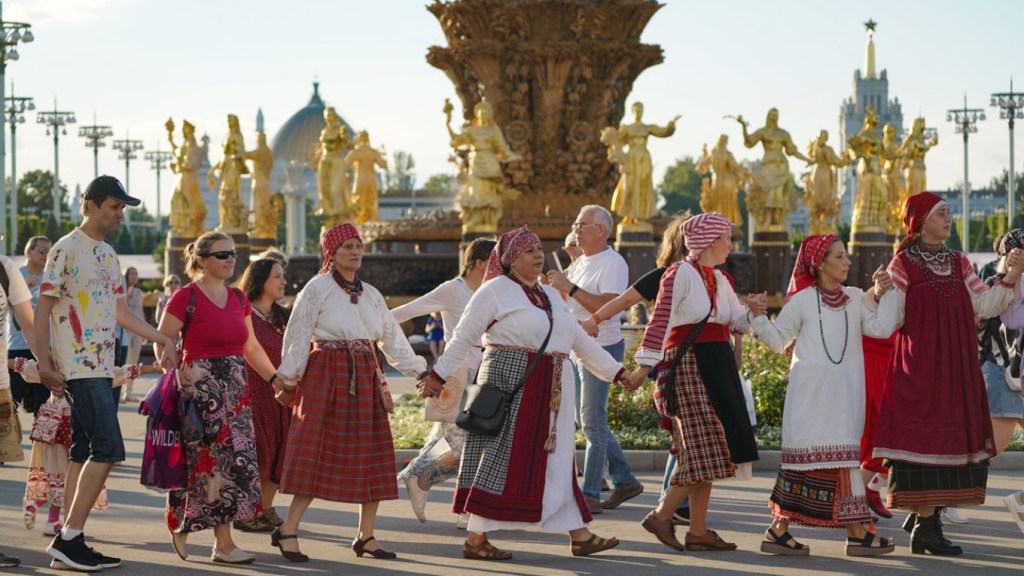
All modern entertainment that “undermines” traditional values should be banned in Russia, conservative philosopher and “Russian World” ideologue Alexander Dugin has said.
“Only morally healthy entertainment should be allowed — first of all, round dances and traveling around one’s native land, and even better, pilgrimages to holy places. Everything else should be banned,” Dugin wrote on his Telegram channel.
According to Dugin, a healthy nation should have wholesome leisure activities, “and not all of that stuff.” As a negative example of entertainment, he cited KVN, which has become, he claims, “a poisonous matrix of degeneration.”
“The sinister nature of this pernicious phenomenon is now clearly visible. [Ukrainian President Volodymyr] Zelensky, [comedian Maxim] Galkin, and all the rest,” Dugin said.*
Earlier, the philosopher claimed that the West regards Russia as its principal foe because Russian President Vladimir Putin has been reviving traditional values and liberating the country from global influence. This, in his opinion, is what provoked the disgust of Western “progressive elites” with Putin.
Dugin has also argued that Russia has neither a parliament nor democracy, but a de facto monarchy headed by Putin, who can do whatever he wants. The philosopher noted the irrelevance of certain laws in Russia, as well as the people who propose or support them. In his opinion, all of this is “boyars dancing for the time being,” that is, until the sovereign pays attention to the antics of these “selfish and thieving bastards.”
Dugin has argued that Russia itself is the Katechon — the last bulwark against the Antichrist, who today reigns in a West “totally perverted” by LGBT+, postmodernism, relativism, and transhumanism.
The philosopher has dubbed the war in Ukraine “the most important event in history.” In his opinion, it is being waged on behalf of a multipolar world, with many superpowers. Consequently, according to Dugin, Russia will free other countries of the world from Western liberal imperialism, in whose grip they are trapped. And yet, Dugin acknowledged that Russia would lose a great many people in the course of the war.
* Zelensky was captain of the Kryvyi Rih KVN team Kvartal 95 from 1998 to 2003.
Enter Thoughts of Days to Come, dressed to the nines in khaki blouses. They are lugging atom bombs, ICBMs, a launching pad. O, how they reel, dance, and caper: “We are warriors and carousers! Russians and Germans will fall together; for example, at Stalingrad.” And like old widow Matryona, cyclotrons are dumbly howling. In the Ministry of Defense a nest of crows is loudly cawing. Look at the pillow. What do you know! Shiny medals all in a row.
“Where there’s a will, there’s a way.” “A pint of vodka, they say, Soon’ll be a ruble a pop.” “Mom, I really don’t love Pop.”
Enter a certain Orthodox, saying: “These days I’m number one. I’m pining for the sovereign, and in my soul the Firebird flares. Soon Igor will reunite with Yaroslavna and have his fun. Let me make the benediction or else I’ll box you on the ears. Worse than evil eye or herpes is the plague of Western thinking. Sing, accordion, and drown out the saxophone, jazz’s vile offspring.” On the icons they plant a kiss, Sobbing victims of circumcis—
Andrei Loshak, “The Age of Dissent 2024” (in Russian, with English subtitles)
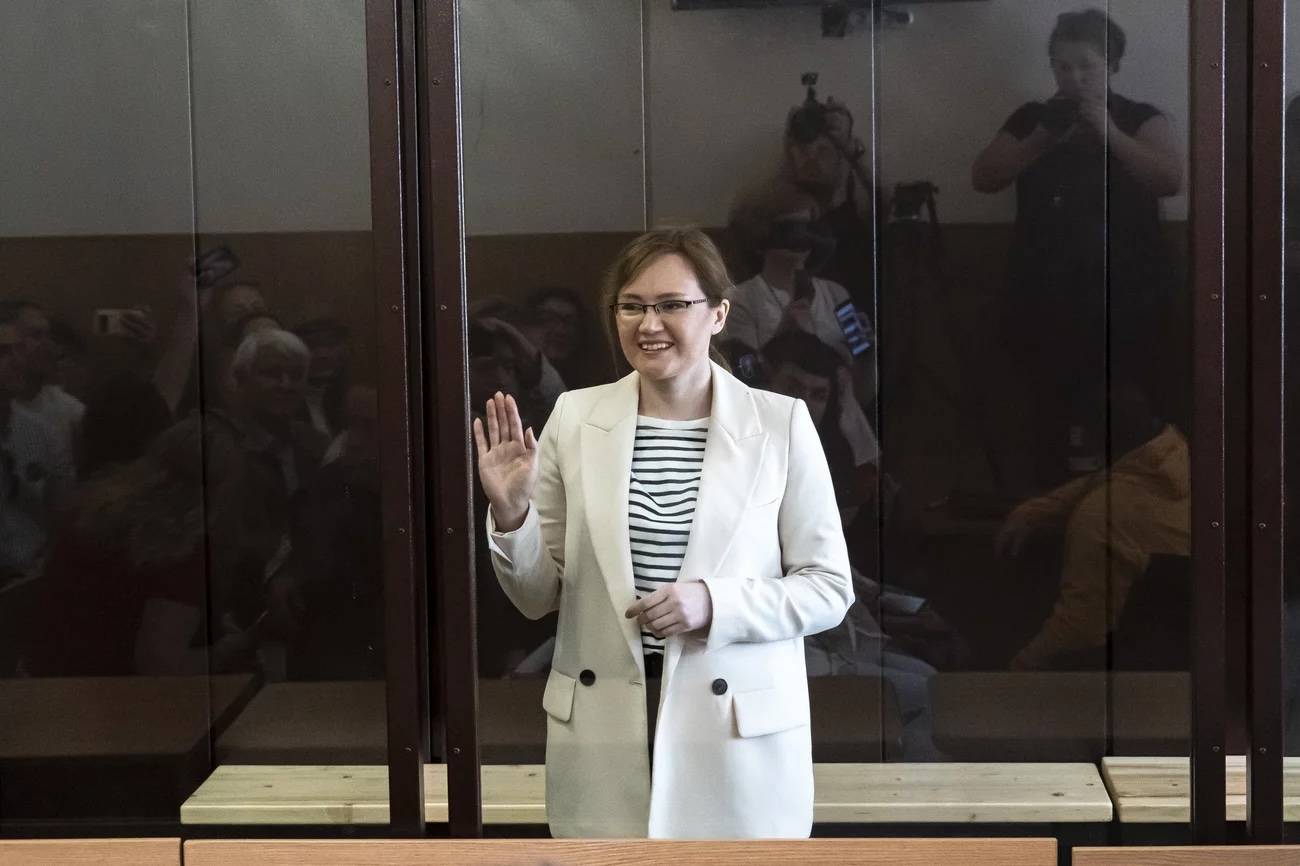
The eve of the 2018 presidential election saw the release of Andrei Loshak’s series Age of Dissent, about young supporters of Alexei Navalny who were involved in his election campaign.
The sequel to the series, filmed on the eve of the latest presidential “election,” recounts how the lives of the activists who dreamed together with Navalny of “the wonderful Russia of the future” have changed dramatically in six years. Filming was almost completed when news came Navalny’s death. The movie’s protagonists ask themselves how to live without dreams and hope.
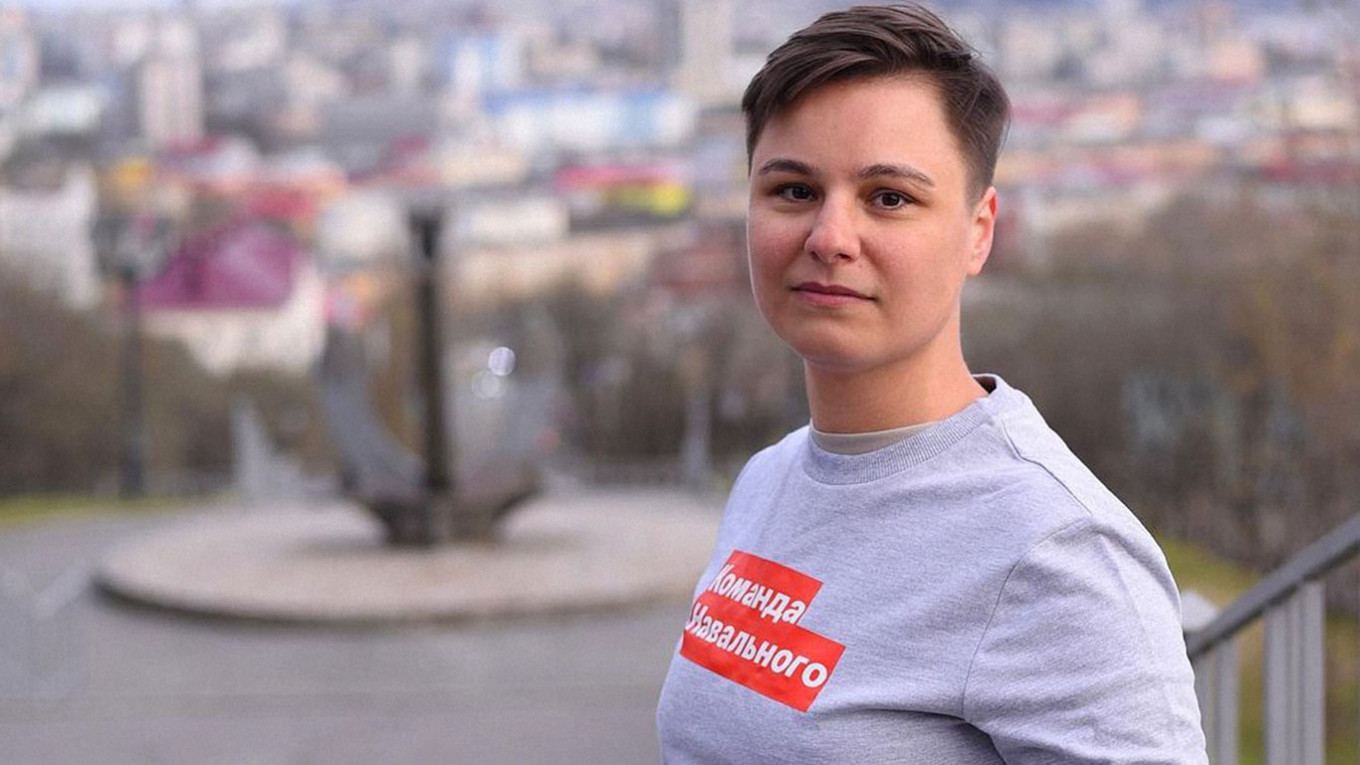
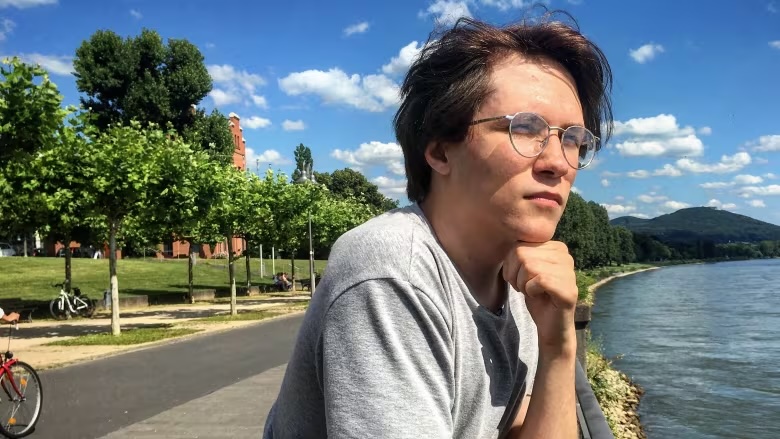
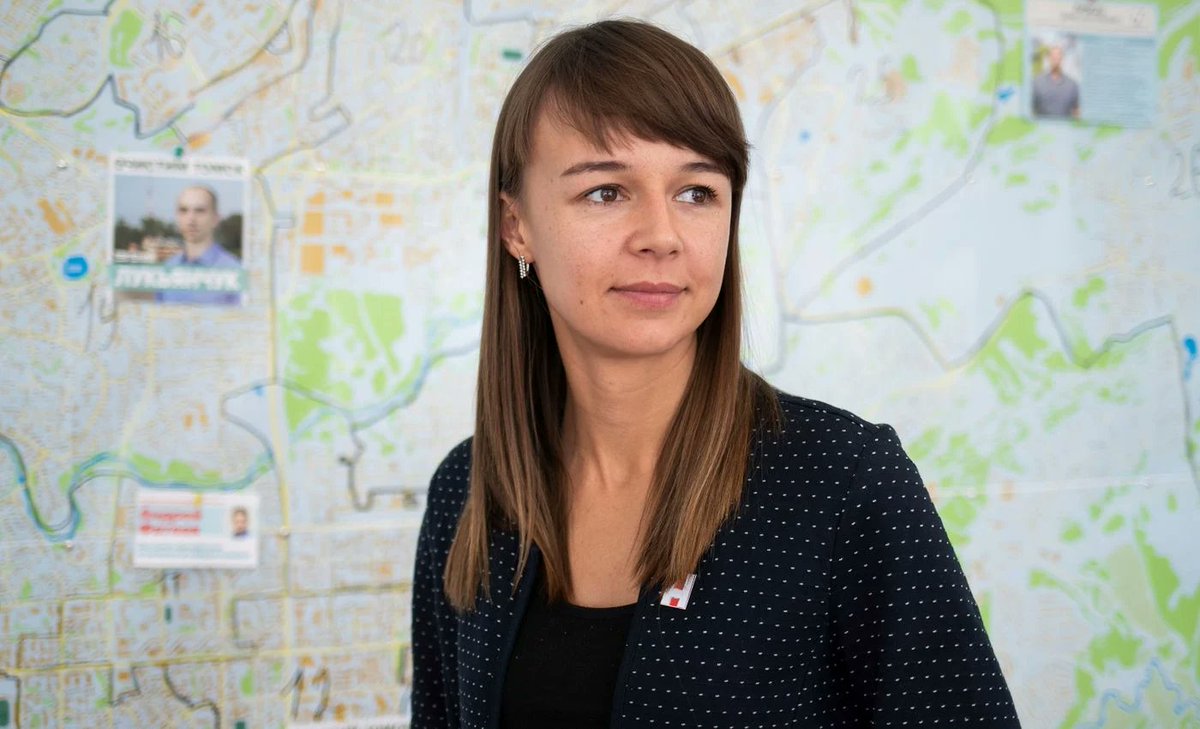
The protagonists of Andrei Loshak’s documentary film Age of Dissent 2024: (clockwise, from upper left corner) Filipp Simpkins, Lilia Chanysheva, Ksenia Fadeeva, Yegor Chernyuk, and Violetta Grudina
On June 3, Current Time hosted the premiere of Russian filmmaker Andrei Loshak’s documentary Age of Dissent 2024. It is a sequel to Age of Dissent, which was filmed on the eve of the 2018 presidential election in Russia and focused on opposition politician Aleksei Navalny and the young supporters who helped him with his unofficial campaign. He was denied registration as a candidate but campaigned as if he was on the ballot.
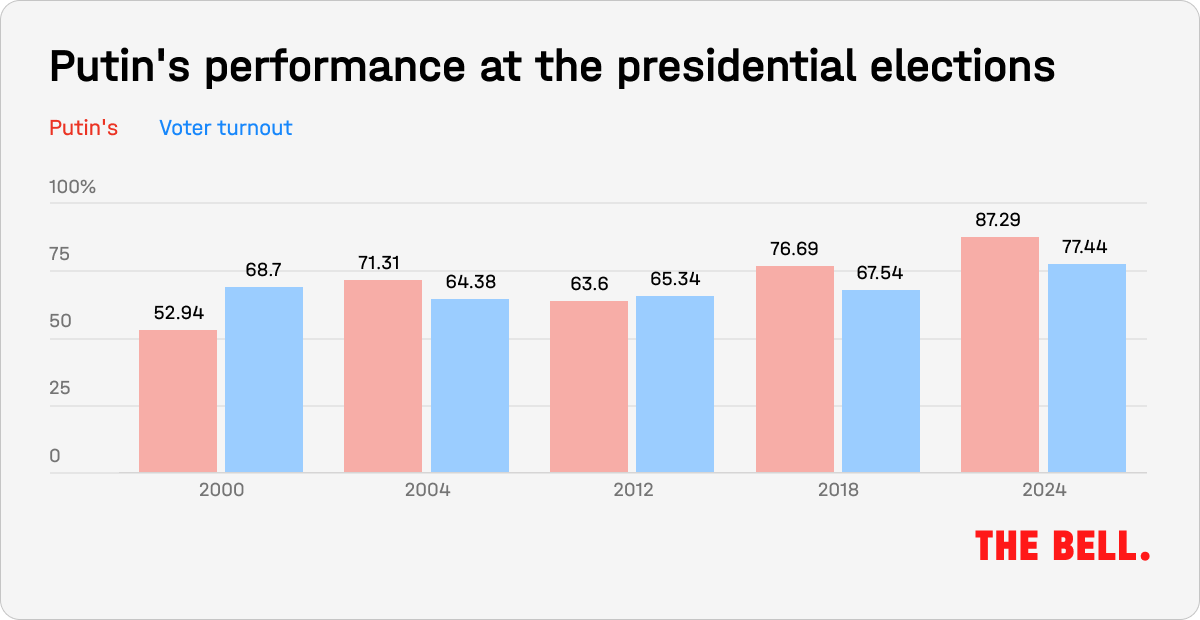
Fast forward six years, to 2024, and another Russian presidential election, which was held in March and won, again, by Vladimir Putin with what the state said was 87.3 percent of the vote. Loshak’s new film, commissioned by Current Time, RFE/RL’s Russian-language TV and digital network, tells how the lives of the same activists who had dreamed, together with Navalny, of a “beautiful Russia of the future” changed dramatically.
Filming was almost completed when news broke in February of Navalny’s mysterious death in a Russian Arctic prison while serving a 19-year term on charges his supporters and many Western governments considered politically motivated.
On the eve of the film’s premiere, Current Time journalist Ksenia Sokolyanskaya met with Loshak in Tel Aviv.
RFE/RL: Did you think from the very beginning that this story would have some kind of sequel? Or did something happen at a certain moment that made you want to return to these people?
Andrei Loshak: I must say that, probably, this idea was there from the very beginning. After I released the first film, I saw that it kind of took off. People began to tell me that they wondered what would happen to the subjects next. And I thought, yeah, it’s really interesting that it will be a new election cycle six years later.
I had to monitor their fates, so I asked to film some things, although I didn’t know for whom it was to be done or when. But then I realized that they had all left Russia, that their fates had changed very dramatically, and that everything that they had fought for and lived for, all of it was destroyed in these past six years.
Yes, it seemed to me that this was enough to return to them and film what had happened to them. But you have to understand that we finished filming in January and early February [of 2024]. I sat in Tbilisi and thought about what to do with all of this.
What was my idea? To draw attention to Aleksei Navalny, because for me, this was such a serious motivator. There was a moment when he was being transferred to [the Polar Wolf prison in Russia’s Arctic town of] Kharp, and he disappeared, and I was struck by how few people wrote about it. For two weeks, it was not clear whether he was alive or not.
They killed Aleksei on February 16. At that moment, I was simply lost. I didn’t understand what to do with the material.
I think it was important to record the reactions of [the film’s subjects] to the news of that day, before they had time to get used to it. Although, to be honest, I’m still not used to it. It killed me, too.
This is probably the most personal film I’ve made in a long time. Because usually you take the position of an observer and film all sorts of things, but in this film I lived with the subjects — with one dream, one hope — and Aleksei was as important a figure for me as he was for them.
RFE/RL: I read the comments under the teaser for the film, which was posted the other day. People wrote that it was painful to watch, that their hearts were broken. We live in a Russia we don’t want to live in, and Violetta in the film talks about “those traumatized by Russia.”
Loshak: Moreover, a psychotherapist gave them such a diagnosis.
RFE/RL: In the film, a separate theme is the question: How do you live when the main thing you’re living for is taken away? Do you think there is an answer?
Loshak: We are all asking this question now, and few people understand how to overcome all this. This is a recording of this moment, when our homeland rejected us. We found ourselves superfluous and unnecessary there. She needs us, but the circumstances are such that they don’t expect us there, they don’t want us there, they push us out of there.
Hope is such a straw. You still clutch at it. Of course, a few months is not enough time to understand how to live now. I am in this process, and my heroes are in this process of understanding. [In the film,] Oleg says this [phrase] from the point of view of common sense: “We need to stop this, guys.”
RFE/RL: Meaning that political activism is not a profession?
Loshak: Yes. It is possible in some historical cycles, but in others it is impossible. And when you find yourself rejected, uprooted and without a homeland, your plan must change….
That’s why I always look at this whole “opposition movement” with great skepticism. I don’t know who looks at it without skepticism. But on the other hand, I don’t deny it. It’s kind of necessary, because they’re doing the right things, but it’s virtually impossible to influence anything in Russia from [exile]. This must be understood clearly.
This feeling of helplessness with which Violetta says: “What, how, and why?” — the loss of these meanings is very painful. But we always have to say goodbye to something; everything has its own lifespan. And unfortunately, we are now at this point where we need to say goodbye to all this and start something new. The question is: What?
RFE/RL: Do you have faith? In the film people talk a lot about faith, and it ends with Aleksei’s words about the need to believe. Do you have faith that Aleksei’s story can also transform into something that people will watch, and that if they don’t know the story of Jan Palach, they will learn it from your film? (Editor’s Note: On January 16, 1969, 20-year-old university student Jan Palach set himself on fire in Prague to protest the August 1968 invasion of Czechoslovakia by Warsaw Pact troops. He died of his burns three days later.)
Loshak: I’m sure of it. I’m convinced of it. Such sacrifices, heroic deeds of such magnitude, cannot be in vain. I am absolutely sure that this is not a wasted sacrifice and that Aleksei will remain in the history of Russia forever as one of these heroic figures, which, of course, will acquire its own mythology. And in what our grandchildren and great-grandchildren will read about him, we would hardly recognize Aleksei.
There are always few such figures in history. I have never encountered anything like this in my life, such a level of self-sacrifice.
RFE/RL: The scale.
Loshak: Yes, but we also had, of course, our own Jan Palach: [Russian journalist] Irina Slavina, who set herself on fire in Nizhny Novgorod [in 2020], opposite the city police headquarters. (Editor’s Note: Before self-immolating, Slavina wrote on Facebook, “Blame the Russian Federation for my death.” A day earlier, she had written that police had searched her apartment, trying to find evidence linking her with the opposition Open Russia group and confiscated her computers and mobile phone.)
She didn’t do it in vain, either. I’m absolutely sure. Although who remembers her now? This was just a few years ago, before the war [in Ukraine]…. She will also be in this pantheon of heroic people who openly came out against evil.
Of course, Aleksei and what he did, and the way he died — all of this will later inspire people because everyone always needs bright examples, everyone needs these myths. And Aleksei has already become this myth. I can already see how people who never appreciated him during his lifetime — and, in general, I heard little good from them about Navalny — are now writing: “But Navalny would not have said that,” or, “Navalny would not have done that.”
His wings have already grown; he is already soaring over this unfortunate Russia, and he will always soar there from now on. This is actually good because you have to believe in something.
RFE/RL: After Navalny’s death, a discussion appeared in the Russian-speaking, mostly emigrant, community. It seems to me that the impetus was Shura Burtin’s manifesto on Meduza that a “beautiful Russia of the future” will not happen and that hope for some kind of good future is harmful. One of your subjects, Violetta, also talks about how she doesn’t feel joy, that she can’t say she lives, she just exists. Do you think you should actually believe such stories?
Loshak: Believe in what?
RFE/RL: You said Aleksei’s sacrifice was not in vain, but it seems to me that for a large number of people this is not true.
Loshak: That everything is in vain, that evil triumphs over good, and that this has always been the case in Russia? It has always been this way. But it seems to me that everything has its time. Even if we look at the history of Russia, evil has always defeated good, but there have also been moments when good had a chance.
There have always been thaws, rollbacks toward democratization, and liberation from the shackles with which the state always entangles people in Russia. We have always had this chance; we just never took advantage of it.
With Aleksei there was this chance; he gave us this chance throughout his political life, starting in 2017, but this liberal layer of us, so to speak, simply looked at it all with the curiosity of a TV viewer, nothing more.
Then he returned. He returned [to Russia from Germany in January 2021 after being treated for poisoning], realizing that, of course, he would most likely be imprisoned. But he gave us this chance again, and it was as if it was all staged. He returned, his documentary Putin’s Palace was released, which was watched by 100 million people. Then there was a rally, and the usual 20,000 to 40,000 people came out.
We wasted the chances that Navalny gave us.
I really believe that at some point people will understand how important it is to participate in politics, how important it is to be a citizen, and not just to be a resident of this country. One of the subjects in the first part of the documentary in 2017 said to me — I won’t say his name now, because he is in Russia, but he was on the Maidan; by accident, he ended up there — “When 10,000 people come out, it’s nothing. But when 1 million people come out, you can’t do anything about it.”
This is why I endlessly respect Navalny: for the fact that he did everything he could, and more than he could, to give us these chances. And we blew them. And I hope that someday this will become obvious. You see, what is happening to Russia now cannot last forever.
RFE/RL: Why?
Loshak: Because it’s against common sense, it’s against the passage of time. This is an attempt to turn back time, to turn it around….
In general, history is cyclical. Now there is some moment of crisis in which Western civilization finds itself. We see incredible divisions within Western countries. I don’t remember this before. This is also some kind of new sign of the times. But nevertheless, Western societies have gone through many crises, and their strength is that they are democratic, and thanks to this openness they survive them, work through them, and reach a new level.
But Russia is not doing this. Russia is simply driving us into some kind of Middle Ages with its boots. The rhetoric that is heard now is about a “holy war,” about the defense of traditional values. It all comes down to homophobia really. This is the only thing they found as a scarecrow around which they built this whole structure about the “holy war” of the Russian world with Western civilization, which is satanic, because gay people can openly hold each other’s hands and recognizes their marriages. This is complete bulls**t.
For this generation, about which I filmed in 2017, there was no issue of homophobia at all. They had already grown up in this cross-border world of the Internet. They saw that this was normal. This is how all people live, and they are happy.
I subscribe to Russian-language Iranian opposition channels. You’re amazed how much the same is there. It’s just that these grandfathers look more colorful there. Ours are in secular blue jackets, and in Iran there are bearded ones in dressing gowns. But everything is the same. People want to live freely; they want to be happy. It is impossible to be happy when everything is forbidden.
It is impossible to keep these prohibitions all your life because the reverse process is taking place all over the world. People are following the path of gaining more and more freedom, because it is more comfortable to live this way, and at the same time respect the freedom of others….
But at any moment the Russian state can invade your life and tell you how you should behave, how to dress. You have nothing. You owe them everything for some reason, but they don’t owe you anything.
This is such an old patriarchal model of the world order. If you look at all this more broadly, I see it as a rebellion against patriarchy. And what is happening in Russia is the agony of the patriarchy. In Russia, the strong are always right. To the question, “What is strength?” [I answer that] in Russia there is strength in strength. Not in any truth. This is nonsense. What is the truth? The truth was on Aleksei’s side. And where is he? I’m sure [these grandfathers] are becoming decrepit. Time will simply kill them because time is not on their side. And at some point they will simply stop being strong, and then they will be finished.
Arriving at Jan Palach’s grave [in Prague], Oleg tells the story about what happened in 1969. And in 1989, the Velvet Revolution [in Czechoslovakia] began with people coming to his grave. Yes, we had to wait 20 years for this name and this feat to become an impulse and begin to work. But now, it seems to me, time flows faster. I would like to believe that we will not have to wait another 20 years.
RFE/RL: When you invited people to the premiere in Tel Aviv on Facebook, you wrote: “I don’t wish you a pleasant viewing. That would be hypocritical on my part.” As someone who has seen the film twice, I can say it is indeed very difficult to watch. What effect do you, as an auteur, hope for?
Loshak: Due to what happened during the filming — and it was not I who wrote Navalny’s death into the script — I stopped thinking at all about who I was doing it for. It’s just a film that has a lot of my personal pain in it. I did this in order to try to part with this pain. It’s like psychotherapy: You have to work through it and live it in order to move on….
Navalny was important to so many people. This is a figure on a much larger scale than perhaps even we thought. Both importance and value. Still, his presence in Russia, even in prison, in this political landscape was completely incommensurable. We just don’t even understand yet how important. And we will understand gradually more and more. This film is probably for these people.
RFE/RL: You wrote a big post on Facebook about Aleksei and said that you miss him, and that it doesn’t go away. And in the end you say that despondency is a mortal sin, that Russia is a terrible fairy tale with a bad ending. You say that faith is an irrational thing. Do you want to return to Russia?
Loshak: Of course, I want to return to Russia now…. If Putin dies, then, of course, I will return….
Listen, this is our homeland. It’s not that we’re injured. It’s normal to want to live in your homeland with your people. They turned us into some kind of national traitors, although they are the national traitors. But we ourselves even began to get used to it, feeling that we were somehow different, which means we don’t belong there, that this is not our homeland.
But, damnit, this is our homeland, our roots are there, our everything is there. Why shouldn’t we want to go back? It’s normal to want to go back and desire to live in a different country. That is, to want changes in your country, which has simply turned into a fiend of hell, which threatens the whole world with nuclear disaster and is working to split the whole world and plunge it into some kind of abyss of chaos.
What is Western civilization? If we talk about European values, this is democracy, this is human rights, this is freedom — these are normal things. This is the norm. And they declared the norm to be evil. Who are they after that? This is some kind of madness that will end either in a nuclear apocalypse or in the fact that at some point they will simply die, as generally happens in history with villains: At some point, they simply died, and the world sighed freely until a new one was born.
RFE/RL: In an interview, you said you’d like to shoot a film in [the Ukrainian city of] Odesa, which is an important place for you. Did you have in mind a film that is less heavy than the one you have made for Current Time? Something entirely different?
Loshak: I really want to. I am very tired of politics, of Putin — of this creature, this absolutely insignificant bastard, who forces us to follow him all the time. Then we all write about it, film it, and react in horror. We are forced to because we react to abuse, to constant violence against us, because this person mocks us.
I want to film about something more metaphysical. With hope, with faith, with love. There is a lot of love missing.
Tell Gordeeva: “The Yashins: ‘His Sentence Will End When the Regime Ends'” (in Russian; no subtitles)
In February 2022, opposition politician Ilya Yashin openly spoke out against the war while declaring that he would never leave Russia. In December, he was sentenced to eight and a half years in prison on charges of “discrediting” the army. Yashin has been held in a punishment cell over a month (since 17 May 2024), a visit from his parents was canceled, and nothing is known about the state of his health. We talked to Yashin’s parents about their son, whom they are proud of.
Contents: 00:00 Why do the Yashins not keep their son’s letters at home? 2:45 “A person is jailed for 15 days and until the last minute he doesn’t know whether he’ll be released or not” 7:15 “I’ll be the first to tell you’re wrong” 10:16 “Emigrating means admitting that we lost”11:47 “Gorinov doesn’t have it better because Ilya’s in prison” 13:43 “Who will know whether you gave your consent or not?” 17:36 “I guess I’ll have to be in prison for a while. What’s a little bit?” 21:21 How the clerk at the Tushino district court fell in love with Yashin and quit her job 22:36 Does Ilya Yashin have a fiancee? 25:20 How Yashin’s ex-girlfriends attend his court hearings 27:29 “We don’t communicate with Ksenia Sobchak” 31:27 Why didn’t Yashin become an actor? 33:53 “We accidentally met Lyudmila Navalnaya at the trial” 35:31 How Lyudmila Navalnaya taught Tatyana Yashina to put together prison care packages 36:48 Why do shampoo and toothpaste have to be poured into a plastic bag? 39:08 “His sentence will end when the regime ends” 40:46 “Now nothing good will ever happen” — on Navalny’s death 42:52 “Both my friends are dead” — Yashin’s letter after Navalny’s murder 44:55 “There are people who have it worse than we do” 48:53 Yashin’s health problems 52:49 How did Yashin’s parents meet? 54:58 Who taught Ilya to box and why 56:46 “I did everything to make sure Ilya was a momma’s boy” — Valery Yashin on parenting 1:00:28 “We Spartak fans are indomitable!” 1:02:16 Yashin asked for a wash basin in prison 1:06:01 “Ilya lived in a barracks in the tenth grade” 1:11:09 “He’s serving the longest sentence in the penal colony in Smolensk” 1:13:47 How his son has changed in prison, according to his father 1:14:36 …and according to his mother 1:19:19 “It’s him doing, but I’m the one who’s ashamed” — how Yasha’s mom taught her son to be a good deputy 1:25:00 “He went to his first protest rally in the eleventh grade after school”1:28:08 “Yabloko decided to do a deal with the Kremlin”1:31:24 How did Yashin and Nemtsov become friends? 1:33:48 “Even from prison, Ilya manages to send me flowers for my birthday” 1:34:46 “Mom, I’m in a paddy wagon but I’m okay” 1:36:57 The scariest day in Tatyana Yashina’s life 1:42:52 “I don’t consider Putin my enemy” 1:47:21 “Our son really did something wrong, but your son is paying for everyone” — what relatives of other prisoners say to Yashins 1:58:20 “Absolute strangers made care packages for him” — about the prisoner transport to Izhevsk 2:01:05 How did Yashin end up in the Okrestina detention center in Belarus in 2020? 2:03:48 “If you haven’t raised a person who is smarter than you, you’ve wasted your life” 2:05:34 “This is a marathon, and I have no doubt you’ll make it to the finish line” — a three-day visit with Ilya 2:07:05 “I missed your omelettes the most” 2:08:03 Why does Ilya Yashin’s mom not want him to become president? 2:10:13 “Guys, don’t get upset!”
Russian opposition politician Ilya Yashin is currently serving an eight-and-a-half year sentence in prison for spreading “disinformation” about the Russian army after speaking out against the mass murder of civilians in Bucha, Ukraine. Journalist Katerina Gordeeva sat down with his parents, Tatyana and Valery, who still live in Russia, to learn how they’re coping with his incarceration, how they support their son in prison, and what hopes they have for the future. Meduza shares key points from the interview.
On not persuading him to leave Russia
We never pressured him on any issue — neither small ones nor something like this. It’s his life, and he has to make these decisions; we can only help. I always told him, “Ilya, no matter what happens in life, know that you have a strong support system. That doesn’t mean you’ll always be right. And if I think you’re wrong, I’ll be the first to tell you.” The decision [not to leave Russia] came in 2012, after the Bolotnaya Square case. Leaving would mean giving up, admitting that everything was in vain.
He didn’t leave then. And then Boris Nemtsov was killed, and he said, “Now, even more so, I can’t leave. Leaving would mean admitting that we lost. As long as I’m alive, I don’t believe that I’ve lost.” We didn’t try to talk him out of it because I understood how he felt, and I can’t imagine him being abroad now. I think it would have been such an ordeal that what he’s going through now is still much easier.
On an exchange
He himself doesn’t want an exchange. His main argument is: “Even if there are any exchanges, I’m far from being the first in line, and probably I’m the last, because there are people for whom it’s a matter of life and death. Secondly, I’m not ready to be exchanged for a hired killer who will then be free. Thirdly, agreeing to an exchange means leaving the country. I could have left the country right away.” I told him, “Ilya, it’s clear which way everything is going. Maybe if the opportunity arises, you shouldn’t be stubborn and should agree? After all, who will know whether you gave consent [for the exchange] or not?” He said: “I will know. That’s enough.”
On why they themselves stay in Russia
Because our son is here. We use any possible fleeting opportunity to see [him]. If there’s an appeal hearing, and he’ll be there via teleconference, maybe he’ll see us, and we’ll wave to him. And then he’ll see and make a heart. Maybe we’ll be given five minutes to exchange a few words. Letters are one thing, but it’s another when you can see him and understand by his expression, [by the way] he shuffles papers, what state he’s in, what his mood is. That’s why we attend all the court sessions.
On their son’s sentence
I was shocked when the prosecutor requested nine years for Ilya. I thought I’d misunderstood, I had misheard, because it couldn’t be true. Then, after we’d left the courtroom but before the sentence was pronounced, there was a moment when it overwhelmed me a little. But I quickly pulled myself together, and by the time of the sentencing, we took it quite calmly, philosophically: when the regime ends, the term will end. He chose this path, and we’re walking it with him. We are beside him, we are helping, and what will be, will be.
On family life
We never had any secrets. In our family, we made all our decisions collectively, so to speak. Any decisions — important or unimportant — were discussed by the whole family, and we included Ilya in this from a very young age.
On how Ilya has changed in prison
Tatyana: He’s become kinder and less rigid, paradoxical as it may sound. When he was young, he could break off relationships abruptly. Now, he’s more understanding, he doesn’t judge. Some things make him smile wryly — but without judgment.
Valery: He used to have moments where he was very categorical in his judgments. He’d listen, understand, agree, but still stick to his opinion. Now, he’s grown more tolerant. He’s developed [an open-mindedness]; he’s matured and become more resilient.
On people’s support
We were in Smolensk; the court was hearing an appeal on an administrative case for failing to fulfill the so-called duties of a “foreign agent.” And the [train] arrives just on the dot, so we had to take a taxi and rush into the building. When we got there, a journalist who’d arrived earlier called us and said, “They changed the courtroom because there are a lot of people.” And when we walked in, we saw a full hall — Smolensk residents of all ages. […]
And then these people came up to us — there were these guys, a very young man, a student, young women, and a local lawyer. They said, “Come with us, we’ll show you where you can sit, have coffee, eat, and warm up.” It was so touching. Then a charming woman, about our age, maybe a bit younger, came up to us. She said, “I live nearby too, you can always rely on me.” I’ve met a lot of people who say things like, “Hold on, everything will be fine, this will all end.” But no one has ever called my son a traitor or whispered it behind my back.
On the future
During our last visit, which lasted three days and was the first in two years, we could hug and talk about anything. We talked a lot. He said: “What can you do? It’s a marathon.” I told him, “Ilya, I might not make it to the end.” He said: “You’ll make it. I have no doubt.”
Alexander Skobov. Photo courtesy of V. Izotov/Deutsche Welle
A new criminal case, on charges of “involvement in a terrorist community,” has been opened against former Soviet dissident and Russian political journalist Alexander Skobov, who has been detained for over a month on charges of “condoning terrorism.” This news was reported on Saturday, 18 May, on Skobov’s official Facebook account by his wife, Olga Shcheglova.
Shcheglova said that she visited her husband on 14 May in the pretrial detention center in Syktyvkar, where he had been transferred from St. Petersburg. During a conversation with him, his lawyer and local police investigators, she learned that Skobov has also been charged with “condoning terrorism” and “involvement in a terrorist community.” The dissident’s wife is convinced that these two charges stem from her husband’s affiliation with the Free Russia Forum.
According to Shcheglova, on 21 May, Skobov will be sent to the regional psychiatric hospital in Komi for a forensic psychiatric examination. Skobov himself has stated that he would not participate in the investigation and forensic expertise, and he would appear in court only if his mother were present at the hearings. Skobov’s defense has filed an appeal, which will be heard by the court on 22 May.
Skobov’s Persecution in the USSR and Russia
On 22 March 2024, Russian authorities designated Skobov a “foreign agent.” According to the Justice Ministry, he had “disseminated unreliable information” about the decisions of public officials, opposed the war, “identified the Russian Federation with a terrorist organization,” been involved in the work of an “undesirable organization,” and produced and distributed “foreign agent materials” [sic], the human rights project OVD Info reports.
In 1978, Skobov was arrested over his active involvement in the Left Opposition group and the samizdat publication of an anti-government magazine. He was later sentenced by the court to undergo treatment at a psychiatric hospital, from which he was released in the summer of 1987.
This time around, the political journalist was arrested on charges of “condoning terrorism.” Skobov was detained in St. Petersburg on 2 April 2024. In protest, the dissident refused to take with him to jail his diabetes medication and his glasses, despite his poor eyesight. According to the Telegram channel Memorial Support for Political Prisoners, the real reason for his arrest was “a [social media] post condoning the bombing of the Crimean Bridge.”
In early April, 66-year-old dissident Alexander Skobov was arrested for allegedly “justifying terrorism” in his posts online. For his friends and family members, the arrest came as no surprise.
Skobov, a long-time dissident who was made to spend seven years in a psychiatric ward after taking part in protests against the Soviet authorities in the 1970s, had published multiple posts condemning Russia’s actions in Ukraine since 2014. In March he was named a “foreign agent”, and since then people close to him said his arrest had seemed inevitable.
“He and I talked a hundred times about the fact that he would be arrested — if not today then tomorrow,” said Skobov’s friend Yuly Rybakov, a human rights activist and former deputy in the State Duma, Russia’s lower house of parliament. “People have been imprisoned for much less.”
Skobov’s 90-year-old mother, whom he lives with and cares for, said she had been having nightmares about his arrest for months before it happened, and Rybakov recalled that Skobov himself said he “didn’t understand” why the authorities hadn’t come for him yet.
Skobov’s children, who moved abroad long before Russia’s invasion of Ukraine, urged their father to flee the country when they saw him in Istanbul in early March. Other friends have also tried to convince him to leave and avoid arrest, citing his many health issues, including severe diabetes, hepatitis C, chronic obstructive pulmonary disease and near blindness.
But, Rybakov said, Skobov was resolute, telling him that he “wanted to be part of his own judicial process” when he was inevitably arrested.
Rybakov said that Skobov had been “driven to despair” by what had been happening in Russia in recent years and “felt that someone had to be radical”.
Another friend, Mikhail Sedunov, said that trying to convince Skobov to change his course of action was like “grabbing the wing of a plane that was already accelerating down the runway”.
On 2 April, masked policemen arrived at Rybakov’s flat, where Skobov had been staying. When Rybakov left to take the dog for a walk, the police reportedly entered the property, threw Skobov to the ground, twisted his arms and handcuffed him. According to Rybakov, Skobov “defiantly” refused to take either warm clothing, his diabetes medication, or his glasses with him, intending these gestures as an “act of protest”.
Skobov’s wife, Olga Shcheglova, managed to buy him replacement medication and glasses, which she brought to him ahead of his interrogation by Russia’s Investigative Committee. But Skobov refused to accept them — a reaction Shcheglova said she had “expected” from her husband.
Resistance to the authorities and a fight for justice had defined Skobov’s life for more than four decades. His first foray into political activism was in 1976, when he and other university students in St. Petersburg scattered leaflets calling for the “establishment of true humane socialism” and the “overthrow of the tyranny of officials” ahead of a meeting of the Communist Party of the Soviet Union. The students were expelled from university and brought before a court, and some, like Skobov, were then sentenced to compulsory treatment in psychiatric hospitals because, according to Rybakov, it was believed that “only crazy people could dislike the Soviet regime”.
Skobov’s radical spirit remained unquelled when he was finally released from hospital in 1981, however, and he immediately joined the Free Inter-Professional Association of Workers, a dissident group that led the first attempt to create an independent trade union in the USSR. In 1982 he was arrested for his involvement with the group and sent back to hospital, where he spent another three years.
In the early 1990s Skobov taught history at a secondary school for gifted students, writing and publishing his own award-winning textbooks. But later in the decade political activism again became the focal point of his life as he took part in protests against the Chechen wars.
When Russia annexed Ukraine in 2014, Skobov took to social media to rail against the regime, openly supporting Ukraine and condemning Russia’s military action. The same year, two unidentified men armed with knives attacked him outside his home in what his friends and family members say they are sure was retribution for his criticism of the regime.
Even this did not deter him, however, and his friends said his statements opposing Putin’s rule became “even sharper, more unrestrained, and more radical”. Speaking last year at the Free Russia Forum, an opposition conference held biannually in the Lithuanian capital Vilnius, Skobov condemned the regime more harshly than any of the other attendees, despite being one of the only participants still living in Russia.
Another friend of Skobov, Nikita Yeliseyev, said he doubted Skobov would survive the 7.5-year sentence that he is almost certain to receive.
“He is an old man,” Yeliseyev said. “And he has a number of very serious illnesses.”
Sedunov said all of Skobov’s actions stemmed from a desire to “struggle, as vigorously as possible, against the obvious evil represented by the current Russian government”.
“This is the way he was brought up: he wanted to fight evil any way he could. And this was the only way left,” Sedunov said.
Aleksandr Skobov has been a thorn in the side of authoritarian governments for more than four decades, from the Soviet era to President Vladimir Putin’s long rule. And now, in pretrial detention in St. Petersburg and facing prison, he is in no mood for compromise.
“On principle I refuse to comply with fascist laws,” he told RFE/RL late last month, shortly after the Russian government designated him a “foreign agent” on March 22. “I don’t intend to get into debates with the government. I will not try to prove my innocence. I will not label my writings, and I will not write any financial reports for them.”
“A criminal case could be launched at any moment,” he concluded.
He was right: On April 3, the 66-year-old was arrested and charged with “justifying terrorism” for a social-media post about the Ukrainian attacks that damaged the Crimea Bridge that links Russia with the Ukrainian region of Crimea, which Moscow occupied in 2014. The following day, a St. Petersburg court ordered Skobov held in pretrial detention for at least two months.
“If you take any of my articles or YouTube videos, you can find a whole bouquet of possible charges,” Skobov said in the March 31 interview. “Discrediting the army. Inciting hatred and enmity. Justifying terrorism. The rehabilitation of Nazism. I directly equate the actions of the Stalin regime with those of Hitler’s during World War II.”
Another reason for Skobov’s prosecution, his supporters believe, is his leadership role in the Free Russia Forum, a group of mostly exiled opposition figures founded by former world chess champion Garry Kasparov and activist Ivan Tyutrin in 2016 that has been declared “undesirable” in Russia. If he is charged with participation in an “undesirable” organization, he could face up to six years in prison.
“I am a member of the forum’s council, and I regularly participate in its broadcasts,” Skobov told RFE/RL. “I help write its statements and official pronouncements. Several of them I have written myself. I am actively involved, and I do not intend to stop.”
Skobov said he was drawn to the group because “it was the only opposition organization that categorically rejected the idea of the peaceful transformation of Putin’s dictatorship toward democracy using the procedure established by that dictatorship.”
“It was the only organization that, beginning with the annexation of Crimea, unambiguously stood by Ukraine as a victim of aggression,” he added. “We try to help the Ukrainian Army and the Russian volunteer formations that are fighting with them.”
Writing on Facebook after Skobov’s arrest, writer and critic Mikhail Berg said Skobov suffered from “an unbearable fear of being afraid.”
“And that is why he chooses the most painful forms of criticizing the authorities,” he wrote. “He shouts even though the authorities have long been destroying people for whispering or even for just opening their mouths.”
Parallel Lives
Born in Leningrad, as St. Petersburg was called then, in 1957, Skobov participated in his first anti-government protest when he was 19. He and other members of an underground organization threw about 100 flyers calling for “humanistic socialism” from the roof of a downtown building on the eve of the 25th congress of the Soviet Communist Party. Several of the protesters were kicked out of their universities, but Skobov — a first-year history student at Leningrad State University — got off with a disciplinary meeting of the Komsomol youth group.
In October 1978, he was arrested for publishing an underground, anti-government magazine called Perspectives. He spent half a year in a KGB prison before being sentenced to forced psychiatric treatment.
“In the late 1970s and early 1980s, political prisoners in Soviet psychiatric hospitals were rarely forcibly medicated, although there were such cases, of course,” Skobov said. “But I was treated more or less OK. Most of the doctors that I encountered tried to avoid playing the role of executioners or stranglers.”
He spent three years in confinement.
In 1982, he was again sentenced to psychiatric treatment, this time for a samizdat article he wrote defending Chile’s former socialist president, Salvador Allende, who died in unclear circumstances in 1973, and criticizing the rightist dictator General Augusto Pinochet. That article was deemed “anti-Soviet propaganda.”
This time, Skobov spent five years in the hospital before being released in the summer of 1987 during the initial phase of Soviet leader Mikhail Gorbachev’s liberalization campaign.
In many ways, Skobov and Putin led parallel lives during this period. Putin was born in Leningrad almost exactly five years before Skobov and studied at Leningrad State University just before him. But as Skobov became drawn into a life of opposition to authoritarianism, Putin joined the KGB secret police.
The president’s official biography insists that Putin always worked for the KGB’s First Directorate, which carried out counterintelligence operations. However, rumors have persisted for years that he worked for some time in the Fifth Directorate, which was responsible for suppressing internal dissent and prosecuting political dissidents. At the time, a senior figure in that department was Viktor Cherkesov, a longtime member of Putin’s inner circle who served as his deputy when he headed the Federal Security Service — the KGB successor organization — in the 1990s and who died in 2022.
In 2022, journalist and researcher Konstantin Sholmov published a photograph of a KGB archival document from 1976 that he said was on display at the Political History Museum in St. Petersburg. The document, a protocol of a search of the residence of Leningrad artist and dissident Oleg Volkov, named “Lieutenant Putin” as one of the officers carrying out the search.
In 2013, a series of photographs emerged showing a 1989 Leningrad protest during which KGB operatives roughly detained dissident Valery Terekhov. One of the men in the photograph resembles Putin. The Kremlin later denied that the man was Putin, saying the future president had already been sent to East Germany by 1989.
Prominent human rights activist Aleksandr Cherkasov of the banned rights group Memorial told the news outlet Agentstvo earlier this month that he believes Putin was involved in the investigation of Skobov. He said Skobov had told him Putin staked out his Leningrad apartment in November 1982 when prominent dissidents gathered to celebrate Skobov’s birthday.
Despite the danger growing around him after he was designated a “foreign agent,” Skobov refused to consider emigration.
“I’m not going to quit,” he said.
“Today anyone in Russia who disagrees with Putin’s Nazi regime is taking a risk,” he added, “even if he doesn’t really stick out or act publicly. Since the regime has already made the transformation from ‘hybrid totalitarian’ to totalitarian, it demands not just silence from its loyal subjects, but active participation. And even avoidance can be dangerous.”
Opposition leader Aleksei Navalny’s suspicious death in prison on February 16 was “to be expected,” Skobov said.
“Navalny constantly laughed in [Putin’s] face, and a dictator cannot stand that,” he added. “Unfortunately, I don’t think it will be the last death of a political prisoner in Putin’s Russia.”
Dark Matter contained a re-recorded version of his Emmy award-winning song ‘It’s a Jungle Out There’, which was used as the theme song for the television series Monk. The album tells countless humorous tales. However, one of its most memorable cuts is the track ‘Putin’, which sees Newman sarcastically attack the Russian president.
The song pokes fun at Putin’s efforts to appear macho, with Newman singing, “And when he takes his shirt off/ He drives the ladies crazy/ When he takes his shirt off/ Makes me wanna be a lady.” A chorus of ‘Putin Girls’ chime in to sing, “Putin if you put it/ Will you put it next to me?”
To accompany the scathing lyrics, Newman uses chaotic instrumentation that sounds like the perfect theme for a cartoon villain. The musician explained that he wrote the song when “all those pictures were appearing of him with his shirt off, and I couldn’t understand why. What did he want?”
He continued: “I think it was just personal vanity of some kind, like he wanted to be Tom Cruise. It wasn’t enough to be the richest and most powerful. He wanted to be the most handsome and a superhero, throwing young people around and wrestling.”
Newman claims that he originally wrote a much harsher version but had to tone down the insults. In 2018, the song won the singer his seventh Grammy, this time for the relatively obscure category of Best Arrangement, Instrumentals and Vocals.
Source: Aimee Ferrier, “Remembering Randy Newman’s satirical warning about Vladimir Putin,” Far Out, 14 October 2022
“RUSSIAN PROPAGANDA HAS MADE ITS WAY into the United States, unfortunately, and it’s infected a good chunk of my party’s base.” That acknowledgement from Michael McCaul, Republican chairman of the House Foreign Affairs Committee, was echoed a few days later by Michael Turner, the chairman of the Intelligence Committee. “It is absolutely true, we see, directly coming from Russia, attempts to mask communications that are anti-Ukraine and pro-Russia messages, some of which we even hear being uttered on the House floor.” Among the falsehoods that GOP members of Congress are repeating is the notion that the Ukraine war is actually a battle between NATO and Russia. “Of course it is not,” Turner told CNN. “To the extent that this propaganda takes hold, it makes it more difficult for us to really see this as an authoritarian versus democracy battle.”
What makes it even more difficult to see reality plainly is the presence in the GOP of dunderheads like Sen. Tommy Tuberville, who gushed to an Alabama radio show that “Putin is on top of his game,” while scorning U.S. media accounts of Russian behavior. “The propaganda media machine over here, they sell anything they possibly can to go after Russia.” Tuberville may be the dimmest Putin booster on the Hill, but he is hardly lonely.
It has been two months since the Senate passed, in a 70–29 vote (including 22 Republican yes votes), a $95 billion foreign aid bill that included $60 billion for Ukraine. The Republican-controlled House, by contrast, has been paralyzed. Stories leak out that Speaker Mike Johnson, apparently influenced by high-level briefings he’s received since capturing the gavel, has changed his posture and wants to approve the aid. But Johnson leads, or is at least is the titular congressional chief, of a party that contains a passionate “Putinwing,” and so he dithers. This week, Volodomyr Zelensky has warned that Ukraine will lose the war if the aid is not approved. Yet Johnson is heading not to Kyiv but to Mar-a-Lago.
Pause on that for a moment. The Republican party is now poised to let a brave, democratic ally be defeated by the power that the last GOP presidential nominee save one called “without question, our number one greatest geopolitical foe.” One member of Congress has sworn to introduce a resolution to vacate the speaker’s chair if Johnson puts aid for Ukraine on the floor. And the entertainment wing of conservatism—most egregiously Tucker Carlson—has gone into full truckling mode toward the ex-KGB colonel in the Kremlin.
It’s worth exploring how the Republican party, the party of “Mr. Gorbachev, tear down this wall,” became the party that now credulously traffics in blatant Russian disinformation while it flirts with betraying an important ally—along with all of its principles.
To some degree, people’s foreign policy inclinations are reflections of their domestic views. During the later years of the Cold War, large numbers of liberals and Democrats were more sympathetic to leftist regimes like Cuba (see Bernie Sanders) and Nicaragua (see Michael Harrington) than were conservatives and Republicans. I wrote a book about liberal softness toward left-wing authoritarianism and, though I haven’t yet read it, I gather that Jacob Heilbrunn’s new book does some similar spelunking about conservatives’ tolerance for right-wing dictators. Certainly some conservatives were more inclined than any liberal to go easy on South Africa because it was perceived to be a Cold War ally. On the other hand, Republican administrations did push allies to clean up their act on corruption, democratic elections, and other matters where they could (as for example in El Salvador).
Trump’s particular preferences and ego needs play a starring role in the GOP’s devolution. Cast your minds back to 2016 and the revelation that the Russians had hacked the Democratic National Committee. To rebut this damaging development, Fox News conjurers got busy inventing a tale about CrowdStrike, the company that documented the hack, alleging that the servers had been mysteriously moved to Ukraine so that the FBI could not examine them. In his infamous phone call with Zelensky, Trump fished out this debunked nugget and asked Ukraine’s president, who was then already fighting Russia in the Donbas, to do him a favor before he released the weapons Congress had approved:
I would like you to find out what happened with this whole situation with Ukraine, they say CrowdStrike. . . . I guess you have one of your wealthy people. . . . The server, they say, Ukraine has it. I would like to have the attorney general call you or your people and I would like you to get to the bottom of it.
This was bonkers. As the Mueller report made clear, the FBI did get all the data regarding the DNC hack. There was never a shred of evidence that the servers were moved to Ukraine, and in any case physical control of the servers was unnecessary. But what was Zelensky supposed to say? He promised to look into it just as a courtier to a mad king will say, “Yes, your majesty, we will look into why your slippers are turning into marshmallows when the sun goes down.”
As Fiona Hill told me, Tom Bossert, Trump’s first homeland security advisor, tried “a million times” to disabuse Trump of this Ukraine myth, as did CIA Director Gina Haspel, Cybersecurity and Infrastructure Security Agency Director Chris Krebs, and many others, to no avail. It was, Hill notes, “a too-convenient fiction.”
Because Trump regarded any implication that he had received assistance from Russia as impugning his victory, he latched onto the idea (perhaps whispered by Putin himself in one of their many private conversations) that, yes, there had indeed been foreign interference in the election, but it was Ukraine boosting Hillary Clinton, not Russia aiding Trump. Now, it’s true that Ukraine’s friends reached out to Clinton, but why wouldn’t they? Trump’s campaign manager was Paul Manafort, a paid agent of Viktor Yanukovych, the ousted pro-Putin Ukrainian leader.
Trump nurtured his misplaced grudge for years. Recall that when Putin launched the full-scale invasion of Ukraine in 2022, Trump’s initial response was that it was a “genius” move.
I went in yesterday and there was a television screen, and I said, “This is genius.” Putin declares a big portion of the Ukraine—of Ukraine—Putin declares it as independent. Oh, that’s wonderful. He used the word “independent” and “we’re gonna go out and we’re gonna go in and we’re gonna help keep peace.” You gotta say that’s pretty savvy.
A non-sociopath would say it was raw aggression of the worst kind. A normal Republican of the pre-Trump mold would have been outraged at the attempted rape of a peaceful, democratic neighbor.
Most Republican officeholders are not sociopaths, but they take their marching orders from one and have adjusted their consciences accordingly. The talking point J.D. Vance and his ilk favor is that they cannot be concerned about Ukraine’s border when our southern border is also being invaded. Of course it’s absurd to compare immigrants looking for work or safety to tanks, bombs, and missiles, but that’s what passes for Republican reasoning these days. In any case, it was revealed to be hollow when Biden and the Democrats offered an extremely strict border bill to sweeten aid for Ukraine, and the GOP turned it down flat.
Russia’s fingerprints are all over the Republicans’ failed attempt to impeach (in all senses of the word) Joe Biden. Their star witness, Alexander Smirnov—who alleged that Hunter and Joe Biden had been paid $5 million in bribes by Burisma—was indicted in February for making false statements. High-ranking Russians appear to be his sources.
Whether the subject is Ukraine, Biden’s so-called corruption, or NATO, Putin seems to have pulled off the most successful foreign influence operation in American history. If Trump were being blackmailed by Putin it’s hard to imagine how he would behave any differently. And though it started with Trump, it has not ended there. Putin now wields more power over the GOP than anyone other than Trump. GOP propagandists indulge fictions that even many Russians can see through: Ukraine is governed by Nazis; Russia is a religious, Christian nation; Russia is fighting “wokeness.”
Republicans are not so much isolationist as pro-authoritarian. They’ve made Hungary’s Viktor Orbán a pinup and they mouth Russian disinformation without shame. Putin must be pinching himself.
Putin recommends reviving ‘Come On, Girls!’ contest, following Uralvagonzavod’s example
Following his visit to the Sverdlovsk and Chelyabinsk regions, President Vladimir Putin instructed regional heads to explore the initiative.
This isn’t the winner of the Come On, Girls! contest in Nizhny Tagil, but a stock image that Rabota.ru figured was good enough.
The list of the head of state’s mandates includes holding corporate Come On, Girls! contests, as is already being done at Uralvagonzavod in Nizhny Tagil, where Putin met with the event’s winner.
Top officials have until November to submit a report detailing how they have implemented the mandate.
Come On, Girls! was a televised Soviet competition that aired from 1970 to 1987. Members of particular professions competed both for the title of best specialist and in creative contests.
During the same visit to Uralvagonzavod, it was suggested to Putin that excursions by schoolchildren to industrial enterprises be made mandatory. For the time being, authorities are drafting labor education lessons for pupils modeled on the Soviet system.
The trailer to A Shaman’s Tale (Beata Bashkirova & Mikhail Bashkirov, 2024). Thanks to Pavel Sulyandziga for the heads-up
A Shaman’s Tale
A modern-day shaman sets out across Siberia to Moscow on a protest march and is gradually joined by others. How will the Russian authorities react?
Alexander Gabyshev, a shaman from Yakutia in the Russian Far East, has a revelation: God has chosen him to be a crusader, whose role is to exorcise a demon – Vladimir Vladimirovich Putin – from the Kremlin. He’s willing to sacrifice his life to fulfil this task, which will lead to a new and bright future for Russia. Alexander’s walking pilgrimage captures the attention of many people as well as the police. He discusses his ambitious plan with passers-by in remote parts of Siberia and with lorry drivers travelling on the endless roads. His 8,000 km journey offers a mosaic of current pro- and anti-Putin opinions, and highlights the social instability in both the eastern and the western parts of Russia.
Five years ago, in the spring of 2019, Alexander Gabyshev, who calls himself a warrior shaman, set out on foot from Yakutsk to Moscow. When he arrived in the Russian capital, he wanted to perform a ritual to exorcise Vladimir Putin from the Kremlin. Along the way he was joined by kindred spirits, and he held numerous protest rallies.
The shaman’s trek was cut short: Gabyshev was detained on the border of Buryatia and the Irkutsk Region and charged with “calling for extremism.” In October 2021, a court ordered him to undergo compulsory treatment at a special psychiatric hospital.
The Memorial Human Rights Centre placed Gabyshev on its list of political prisoners, and Amnesty International recognized him as a prisoner of conscience. Despite an international campaign in his defense, the shaman remains in a psychiatric hospital.
The documentary film A Shaman’s Tale details Alexander Gabyshev’s plight. It was made by documentary filmmaker Beata Bashkirova (née Bubenets) and her husband, playwright Mikhail Bashkirov, who live in France. Bashkirova joined Alexander Gabyshev on his trek, while Mikhail Bashkirov wrote a play about the shaman. Performances of the play at Moscow’s Theatre.doc were disrupted by Putinists. This was not Bashkirova’s first clash with ultra-patriots: in 2017, screenings of her documentary film Flight of the Bullet, about the soldiers of the Ukrainian Aidar Battalion, fighting in Donbas, were disrupted in the same way.
This conversation with Beata Bashkirova for the Radio Svoboda programme “Cultural Diary” was recorded after the film’s premiere at the One World International Film Festival in Prague.
Beata, how did you meet the shaman Gabyshev?
I first heard about the shaman in March 2019, when he had just set off on his journey. At that time he was not yet known throughout Russia, but he was beginning to gain popularity in Yakutia and in the Amur Region. He initially gained popularity thanks to truckers: they shot videos [of him] and posted them on their own network, then on YouTube. When I went to Yakutia in the spring to look for an idea for a film, my friends sent me videos of the shaman, recommending him as my future protagonist. But I decided to film him only in June. That was when Vlad Ketkovich, an independent documentary film producer, contacted me. He had made many political films and not only offered to be my producer, but also contributed his own money to my project. We dreamed of making a road movie about the shaman, of filming for two years on the roads of Russia. It was a beautiful idea, which unfortunately didn’t come to pass, because it ended up being film about the political crackdown. In recent years, nearly all films from Russia are about that.
Did you become friends with the shaman?
Yes, we developed a very good relationship. When we were filming in Yakutsk, we were probably among the people closest to him.
He didn’t mind you filming?
He welcomed us filming: he wanted more people and different people to talk about him, to spread his ideas. He was accompanied by a lot of bloggers, and journalists were heavily filming him. Although in the beginning he didn’t let us in so easily. The distrust was not on his part, but on the part of his entourage. They were wary of us, but later everything was fine.
Gabyshev and his squad marching toward Moscow
The shaman is certainly a charming man. But you can’t say that about some of the people in his entourage, judging by your film. Colourful personalities, I guess, always attract strange people, to put it mildly.
Yes, he had a very motley entourage, and he realised it himself. He gave everyone who joined him fabulous nicknames. He called his first two companions Raven and Angel. One was a good, happy man of the new world (the shaman divided the world into the new world and the old world), while other was a man of the old world, a dark character; he had been in prison before, he was this maverick. Raven had many conflicts with other members of the squad. The shaman told me often that yes, there are very different people walking with me, but this is Russia, you have to accept them as they are. Yes, they are different, everyone has their own peculiarities, not all of them are the nicest people in the world, but at the same time they are not the most terrible evil, which they all oppose.
In the film, Gabyshev tries to explain to a Japanese journalist how he became a shaman. Why did he decide to go to Moscow and exorcise the demon Putin?
The poster for the film “A Shaman’s Tale”
He studied at university and served in the army: he had an ordinary life. Then he got married, but his wife was quite ill and died, and that was a huge blow to him. For some time he went to live in the woods: he lived there for several years. Naturally, he knew who Putin was, but he was not interested in politics. As he says, at some point he heard the voice of God telling him that Putin was a demon and you should go and exorcise him from the Kremlin. It was a very clear thought, a realisation that this was his mission. It didn’t come to him in 2019, when he set out, but much earlier. He started preparing years before his trek, but he prepared in secret; he didn’t tell anyone that he had this mission. He practised martial arts — not to fight, but for the spiritual benefits.
And for quite a long time he travelled unhindered, and the authorities didn’t immediately realise what was happening?
Yes, in fact, not many people took it seriously at first: everyone thought it was a joke. But then people started joining him. A few months later, when we were walking with him, there were thirty people with him, and new people were joining every day. His squad grew quite quickly. Two theories as to why he was stopped. The first is that after a few months there would have been hundreds of people walking with him, and that would have been a political threat. But the second theory is that the authorities were afraid of his mystical power. The closer he got to Moscow, the worse things went for Putin, the more protests kicked off. The protests in Belarus began around the same time. Putin was allegedly having health problems — again this is a matter of rumor. So, perhaps, the shaman has now been exiled to the farthest point from Moscow, not even to Yakutsk, but even farther away. That is, as he got closer to Moscow, the Russian authorities lost their grip on things.
Yes, they say there is a lot of superstition in the Kremlin. And in your film, the lawyer Pryanishnikov also explains that the authorities were afraid of the shaman’s mystical power.
That the authorities are superstitious is, of course, a hypothesis — Putin doesn’t perform rituals for us, and there are a lot of myths around this. It is known that one of his closest associates, Shoigu, is a Tuvan and he practices shamanism. So it is quite possible. My Yakutian acquaintances often said that an acquaintance of their acquaintance performed rituals for Putin himself. But, of course, this is all very secret and impossible to prove. I would not claim that Putin performs shamanistic rituals.
Did you have the feeling that Gabyshev actually has supernatural powers?
The first time was in 2020. When the year 2020 came, the shaman kept saying: guys, new times have come, everything will be different now, this year the worldview of all people on the planet will change. And in 2020 there was a pandemic, and mankind did indeed transit into another reality. His words proved prophetic.
Filmmaker Beata Bashkirova
People who met Rasputin spoke of his incredible magnetism. They say the same thing about many prophets and magicians. Did you feel something similar when you conversed with Gabyshev?
He is very kind and very open, and there were people in his entourage who believed in his mystical power. I am a rather skeptical person in this sense, but still I noticed a good energy emanating from him.
Did people in his entourage regard him as a prophet, as a saint?
Yes, of course, there were people in his entourage who believed primarily in his mystical power. The Moscow crowd, the opposition-minded liberal intelligentsia, basically sympathised with him, but regarded him ironically. If we’re not talking about Moscow, but about the rest of Russia, I had impression that people believed in his mystical power.
When you presented the film in Prague, you compared Gabyshev with Navalny. This is a quite unusual comparison: in Moscow, few people would agree that these people are cut from the same cloth. Why do you think it is possible to put their names in the same sentence?
At the time, it had been forty days since Navalny’s death. Navalny in his last years seemed like a loner who was fighting the system. Our protagonist is also a loner who fights the system. In this way, I think, they are similar.
Were you present at the moment when his journey to Moscow was finally thwarted?
That was 19 September, and I was not with him on that day. Eyewitnesses say it happened at night, and very quickly. For the first few days nobody knew where he was; there were various rumours. Then it transpired that he was in Yakutsk. We met almost immediately, and he was in pretty good spirits despite what had happened.
Why did they decide to permanently isolate him?
He was going to set out again in the spring. Members of his squad had come to see him. I don’t know whether that’s why they decided to shut him down permanently.
Maybe it was the New York Times article, the attention from the West?
Maybe, but that was in September. The first time he was detained, in the spring of 2020, he was taken away from his home, but then he was released. They finally decided to close him down in early 2021.
The Shaman in the Theatre.doc production of A Shaman’s Tale
In the film, you show excerpts from a performance about the shaman at Theatre.doc. Did your husband direct this production based on his own play?
Yes, my husband wrote the play, and he and I staged it together. It was an experimental work. We decided to make a puppet show, a fairy tale, because the shaman conceived his own story as a fairy tale: he gave fairy tale names to all the folks who accompanied him, and he gave Putin a fairy tale name. That was the reason for our fairy-tale production, which did not last long, because on opening day pro-Kremlin provocateurs came and tried to disrupt it. Every time [the play was performed], they put obstacles in the way: they would come in a big group, stage a performance in front of the theatre, call the police, and start shouting from the auditorium during the performance. The owner of the premises where Theatre.doc was located became afraid that he would face consequences nd broke his lease with the theatre. It became apparent that we wouldn’t be able to perform the play.
Beata, when did you leave Russia?
We left in late March 2022.
And it was only in France that you decided to edit the film?
The film had been in post-production while we were still in Russia. The shaman predicted that he had to reach Putin in 2021, because otherwise there would be a catastrophe not only for Russia but for the whole world. Principal filming wrapped in early 2020, but we realised we had to wait. We were editing the film and discussing it with the producers. The producers suggested releasing the film in 2020, when it became clear that the shaman would not be allowed to go [to Moscow], but we understood that the story was not finished: the drama had already been defined by the shaman himself, and we would have to wait until 2022. The events that followed affected how I saw the story; I started to look at it differently, if we’re talking about the mystical aspects. The shaman had been right: he was talking about war. He was saying that there would be a physical war, not a spiritual war, if he wasn’t allowed to reach Moscow. It’s amazing that somehow he knew all the dates.
Did he have a premonition there would be a war in 2022?
He spoke about the fact that mankind, Russia had two ways to evolve. The first way was the good way, the happy way. If he were allowed to reach the Kremlin, Putin would simply resign peacefully, the regime in Russia would change, and then people would move to a new level. If they didn’t let him [reach the Kremlin], a dark path would ensue, the path of warriors, and that meant war. He didn’t say that there would be a war between Russia and Ukraine. He said that there would be a war and only by military means would it be possible to overthrow Putin.
He’s been transferred from one hospital to another several times. What is happening to him now?
He is in a psycho-neurological clinic in the Maritime Territory (Primorsky Krai). Since this system has several levels, the lawyer is trying to ensure he is transferred to Yakutsk, where he can be released through the court. A legal fight is now underway that is aimed at achieving his release step by step.
At first they held him in a high-security facility and tried to “treat” him with haloperidol?
At the very beginning, in Yakutsk, he was given harsh drugs that did have a negative effect on him. Things in the Maritime Territory are now easier: they give him medication, but it’s not so heavy.
You wrote that he knew about the film’s premiere in Prague and conveyed his greetings to the audience. Are you able to correspond with him?
Yes, we communicate through intermediaries; the lawyer Pryanishnikov has the most access to him. His friends talk to him on the telephone from time to time: he is able to call once a week.
What’s his condition? Haloperidol and other serious drugs can be very harmful to a person’s health.
Fortunately, they are not injecting him with these drugs now. He always tries to be in a cheerful mood. You can write him a letter or send him a card. He is very much encouraged by the thought that people remember him. He is, of course, happy that the film has come out because it is a continuation of the message he preached. His emotional state is also very much affected by whether his mission can be completed.
For several years he had many supporters who were will to march with him to Moscow. Did this circle disperse or has the core group remained intact?
We can say that the core has been preserved. For example, Viktor Yegorov (aka Father Frost), who makes videos (you can watch them on YouTube), is constantly in touch with him. Other Yakutian friends of his also continue to support him. There were those who walked with him, and those he met on the road, but there was also the rest of Russia, which did not walk with him, but followed him via YouTube. People still even ask me about him, and so I feel like there are a lot of people who remember him and support him.
“Father Frost from the Shaman’s Squad Appeals to Vladimir Putin,” 25 September 2019 (in Russian; no subtitles)
Did you ever suspect that he might be mentally unwell?
No, never. He’s a fairly well-educated man, he has a broad outlook, and he is quite self-deprecating. I’m not a psychiatrist, but I haven’t detected any mental abnormalities in him. I much more often encounter people on the streets who are crazier looking than he is.
It is quite difficult to make films on Russian topics nowadays: Russian directors are viewed with suspicion in Europe because they are seen as representatives of an aggressor state. Was it complicated for you to make this film?
Yes, it was indeed difficult to make the film because of the tendency towards boycotting. I think that this boycott helps Russian propaganda first of all, because the voices of independent, opposition filmmakers are not heard, but the voices of the propagandists, who cannot be influenced by this boycott, are heard. Consequently, propaganda wins out in the information sphere. The boycott of Russian culture works in favour of Russian propaganda, it seems to me.
Will Russian viewers be able to see your film?
We’re in the festivals stage of screening now. The film will later be shown on Current Time, but it’s hard to say when yet. Current Time broadcasts to a Russophone audience, and so one will be able to watch the film on the internet in Russia.
First broadcast in 1981, this Hidden Treasure play by Dennis Potter stars Denholm Elliott as Harris and Ian Ogilvy as James. It has not been heard for over 40 years.
In a dingy flat in Moscow, he sits alone — a traitor to his family, his friends, his colleagues. Then the international press descend upon him and he gives his first interview — an interview which brings forth terrible, haunting memories.
Adapted for radio and directed by Derek Hoddinott A BBC World Service Drama production
With thanks to Keith Wickham, Dr Steve Arnold, Ruby Churchill, Louisa Britton, Alison Hindell, Matthew Dodd, Claire Coss, Carl Davies, Helen Toland, Richard Culver, Andrew Jupp, James Peak, BBC Archives and the Radio Circle.
On Sunday, Representative Michael R. Turner (R-OH), chair of the House Intelligence Committee, said it is “absolutely true” that Republican members of Congress are parroting Russian propaganda. “We see directly coming from Russia attempts to mask communications that are anti-Ukraine and pro-Russia messages, some of which we even hear being uttered on the House floor,” he said on CNN’s State of the Union.
Turner was being questioned about an interview in which Representative Michael McCaul (R-TX), chair of the House Foreign Affairs Committee, told Russia specialist Julia Ioffe that “Russian propaganda has made its way into the United States, unfortunately, and it’s infected a good chunk of my party’s base.” McCaul blamed right-wing media. When asked which Republicans he was talking about, McCaul answered that it is “obvious.”
Catherine Belton and Joseph Menn reviewed more than 100 internal Kremlin documents from 2022 and 2023 obtained by a European intelligence service and reported in the Washington Post today that the Russian government is running “an ongoing campaign that seeks to influence congressional and other political debates to stoke anti-Ukraine sentiment.” Kremlin-backed trolls write fake “news articles, social media posts and comments that promote American isolationism, stir fear over the United States’ border security and attempt to amplify U.S. economic and racial tensions” while claiming that “Biden’s policies are leading the U.S. toward collapse.”
Aaron Blake pointed out in the Washington Post that Republicans are increasingly warning that Russian propaganda has fouled their party. Blake notes that Russia specialist Fiona Hill publicly told Republicans during the 2019 impeachment inquiry into Trump that they were repeating “politically driven falsehoods that so clearly advance Russian interests,” but Republicans angrily objected.
Now Senators Mitt Romney (R-UT), Thom Tillis (R-NC), and John Cornyn (R-TX) and a top aide to Senator Todd Young (R-IN), as well as former South Carolina governor Nikki Haley and even Trump’s vice president Mike Pence, have warned about the party’s ties to Russia. Former Representative Liz Cheney (R-WY) has said the Republican Party now has “a Putin wing.”
Trump has hinted that he has a plan to end Russia’s war in Ukraine in 24 hours. Yesterday, Isaac Arnsdorf, Josh Dawsey, and Michael Birnbaum reported in the Washington Post on the details of that plan: he would accept Russian annexation of Ukraine’s Crimea and the Donbas region. He refuses to say how he would negotiate with Ukraine president Volodymyr Zelensky, who has been adamant that Ukraine will not give up its territory to an invader, or Russia president Vladmir Putin, who has claimed all of Ukraine, but after meeting with Trump last month, Hungarian prime minister Viktor Orbán said Trump told him he would accomplish “peace” by cutting off funds to Ukraine.
Trump’s team said Orbán’s comment was false, but it is worth noting that this plan echoes the one acknowledged by Trump’s 2016 campaign director Paul Manafort as the goal of Russian aid to Trump’s campaign.
Fiona Hill told the Washington Post reporters that Trump’s team “is thinking…that this is just a Ukraine-Russia thing…rather than one about the whole future of European security and the world order.”
Trump’s MAGA loyalists in the House of Representatives have held up funding for Ukraine for six months. Although a national security supplemental bill that would fund Ukraine has passed the Senate and would pass the House if it were brought to the floor, House speaker Mike Johnson (R-LA) refuses to bring it to the floor. The House returns to work tomorrow after a two-week recess but is so backed up on work that Johnson is not expected to bring up the Ukraine measure this week.
Clint Watts, the head of Microsoft’s Threat Analysis Center, told the Washington Post’s Belton and Menn: “The impact of the Russian program over the last decade…is seen in the U.S. congressional debate over Ukraine aid…. They have had an impact in a strategic aggregate way.”
Each Wednesday we tell you what material has been the most interesting for one of the residents [sic] of the Delovoi Peterburg Experts Club, a reader, or one of our employees.
Today, Zurab Pliyev, first deputy director general of Northern Capital LLC, shared an article with us.
“Putin’s final result in the presidential election was 87.28%”
During the recent Russian presidential election, we were honored to be part of the team that ensured the smooth operation of 248 polling stations in St. Petersburg. Our company was responsible for their catering for all three days.
We catered hot meals for all polling station employees, election commission members, observers, and representatives of law enforcement agencies free of charge.
And we read this article in Delovoi Peterburg with a sense of pride that we had also made a contribution to the way those three days came off.
Article of the week:
Putin’s final result in the presidential election was 87.28%
Source: Delovoi Peterburg “Article of the Week” email newsletter, 27 March 2024. Translated by the Russian Reader
Vladimir Putin won the Russian presidential election with 87.28% of the vote. The final vote count was announced by the head of the Central Election Commission, Ella Pamfilova.
76,277,708 people voted for Putin.
After all the votes were tabulated, the candidate from the Communist Party Nikolai Kharitonov garnered 4.31%, the leader of the LDPR Leonid Slutsky received 3.2%, and the candidate from New People, Vladislav Davankov, got 3.85%, Pamfilova said.
Earlier, the CEC had announced a record-high turnout in the history of presidential elections in [post-Soviet] Russia.
The 2024 presidential election also was the first multi-day campaign in the history of [post-Soviet] Russia. It was possible to vote for the new [sic] head of state on March 15, 16 and 17.
The regions of the Northwestern Federal District were among the worst in terms of turnout in the Russian Federation. The lowest turnout for the presidential election was in the Komi Republic, at 58.52%. Karelia, where 60.08% voted in the election, was also among the five regions with the lowest turnout.
Northern Capital LLC’s cabbage pasties are only 75 rubles a pop. Photo courtesy of Delovoi Peterburg
The presidential election was held, a decisive event not only for the future of the country, but also for every Russian citizen. Over the course of three days, Russian citizens chose a worthy candidate for the post of the head of state, and, according to experts, the turnout at polling stations was the highest in the history of [post-Soviet] Russia.
The catering service Northern Capital LLC also compiled its own statistics for the three days of elections. The snack bars at the 248 polling stations were supplied with the most relevant and necessary items. Current and future voters enjoyed pancakes, pastries, pies, and drinks. For the Central District alone, Northern Capital produced 23,679 baked goods. Polling station workers, election commissioners, law enforcers, and election observers did not go hungry either. At the behest of Zurab Pliyev, first deputy director general of Northern Capital LLC, they were provided with free hot lunches and beverages.
“We consider it our duty to continue and support the tradition of snack bars at polling stations, which has passed from generation to generation. We want to maintain that special election atmosphere that makes the celebration a family affair. The snack bar is the second largest component of the process. That is why we made sure that there was a wide variety of high-quality and tasty food not only for voters, but also for those who directly implement the electoral process,” said Zurab Izrailovich Pliyev, first deputy director general of Northern Capital LLC.
This is not the first time the editors of our local newspaper have “platformed” the lies of the mendacious and violent fascist butcher Vladimir Putin.
1. US warns that Russia will invade Ukraine. General disbelief, daily Russian mockery. (December 3 2021-February 24 2022)
2. Russia invades Ukraine, kills tens of thousands of people, kidnaps tens of thousands of children, commits other ongoing war crimes (February 24 2022-present)
3. Russia blames US for Russia’s invasion of Ukraine (March 2022-present)
4. US warns of terror attack in Moscow. Putin denies any risk and mocks the United States. (March 7 and March 19 2024).
5. Terror attack near Moscow, ISIS takes responsibility, Russia meanwhile kills Ukrainian citizens with drones and missiles as it has for more than two years. (today, March 22 2024)
6. Russia’s security apparatus, focused on bringing carnage to Ukraine, has failed in Moscow. Russia’s leaders, focused on demonizing the US, did not protect Russians. What next? Where to direct the blame?
7. It would not be very surprising if the Kremlin blames Ukraine and the United States for terror in Moscow and uses the Moscow attack to justify continuing and future atrocities in Ukraine.
This past Friday, 22 March, a horrifying terrorist attack took place in Crocus City Hall in the outskirts of Moscow. Islamic State plausibly claimed responsibility.
Earlier that day, Russian authorities had designated international LGBT organizations as “terrorist.” Also earlier that day, Russia had carried out massive terror attacks on Ukrainian cities. Those actions reveal the enemies Putin has chosen. As the attack on Crocus City Hall demonstrated, his choices have nothing to do with actual threats facing Russians.
Russia and the Islamic State have long been engaged in conflict. Russia has been bombing Syria since 2015. Russia and the Islamic State compete for territory and resources in Africa. Islamic State attacked the Russian embassy in Kabul. This is the relevant context for the attack outside Moscow. The horror at Crocus City Hall obviously has nothing to do with gays or Ukrainians or any other of Putin’s enemies of choice.
Putin had publicly dismissed the real threat. The United States had warned Russia of a coming attack by Islamic State. The United States operates under a “duty to warn,” which means that summaries of intelligence about coming terrorist attacks are passed on, even to states considered hostile, including (to take recent examples) Iran and Russia. Putin chose to mock the United States in public three days before the attack.
People reasonably ask how a terror attack could succeed in Russia, which is a police state. Regimes like Russia’s devote their energy to defining and combating fake threats. When a real threat emerges, the fake threats must be emphasized. Predictably (and as predicted), Putin sought to blame Ukraine for Crocus City Hall.
What if Russians realize that Putin’s designations of threats are self-serving and dangerous? What if they understand that there are real threats to Russians ignored by Putin? He has devoted the security apparatus to the project [of] destroying the Ukrainian nation and state. What if Putin’s obsession with Ukraine has only made life worse for Russians, including by opening [t]he way to actors who are in fact threats to Russian life, such as Islamic State?
These are the questions Putin must head off. It is not easy, however, to blame Ukraine for Islamic State terrorism. Putin’s first media appearance, nearly a day after the attack, was far from convincing. The specifics he offered were nonsensical. He claimed that the suspects in the terrorist act were heading for an open “window” on the Russian-Ukrainian border.
The term “window” is KGB jargon for a spot where the border has been cleared for a covert crossing. That the leader of the Russian Federation uses this term in a public address is a reminder of his own career inside the KGB. Yet Putin had obviously not thought this claim through, since a “window” must involve a clear space on both sides of the border. For escaping terrorists, it would be the Russian side that opened the window. By speaking of a “window” Putin indicated that the terrorists had Russian confederates preparing their exit, which he presumably did not mean. It seems that Putin was hastily making things up.
Setting aside the “window” business, though, the whole idea that escaping terrorists would head for Ukraine is daft. Russia has 20,000 miles of border. The Russian-Ukrainian part of it is covered with Russian soldiers and security forces. On the Ukrainian side it is heavily mined. It is a site of active combat. It is the last place an escaping terrorist would choose.
And there is no evidence that this is what happened. Russia claims that it has apprehended suspects in Bryansk, and claimed that this means that they were headed for Ukraine. (Western media have unfortunately repeated this part of the claim.) Regardless of whether anything about these claims is true, Bryansk would suggest flight in the direction of Belarus. Indeed, the first version of the story involved Belarus, before someone had a “better” idea.
In moments of stress, Russian propaganda tries out various ways to spin the story in the direction preferred by the Kremlin. The reputed suspects are being tortured, presumably with the goal of “finding” some connection to Ukraine. The Kremlin has instructed Russian media to emphasize any possible Ukrainian elements in the story. Russian television propaganda published a fake video implicating a Ukrainian official. The idea is to release a junk into the media, including the international media, and to see if anything works.
Amidst the flotsam and jetsam are those who spread Russian propaganda abroad, who try out versions more extreme than Putin’s. Putin does not directly deny that Islamic State was the perpetrator — he simply wants to direct attention towards Ukraine. But actors outside Russia can simply claim that Ukraine was at fault. Such actors push the discussion further than the Kremlin, and thereby allow Russia to test what might work abroad.
As a result, we have a bizarre discussion that leads to a harmful place. Islamic State claims responsibility for Crocus City Hall. The Islamic State publishes dreadful video footage. Russia cannot directly deny this but seeks help anyway in somehow pushing Ukraine into the picture. Those providing that help open a “debate” by denying that Islamic State was involved and making far more direct claims about Ukraine than the Kremlin does. (This brazen lying leads others to share [a] Islamic State perpetration video (don’t share it; don’t watch it). So the senseless “debate” helps Islamic State, since the reason it publishes perpetration videos is to recruit future killers.)
Meanwhile, Russia’s senseless war of aggression against Ukraine continues. In its occupied zones, Russia continues to kidnap Ukrainian children for assimilation and continues to torture Ukrainians and place them in concentration camps. It continues to send glider bombs, drones, cruise missiles and rockets at Ukrainian towns and cities.
On the same day as the attack at Crocus City Hall, Russia carried out its single largest attack to date on the Ukrainian energy grid, leaving more than a million people without power. Among other things it fired eight cruise missiles at the largest Ukrainian dam. Russia attacked the city of Zaporizhzhia (the consequences are in the four photos) and other cities throughout Ukraine.
On Friday Russia fired, in all, eighty-eight missiles and sixty-three explosive drones into Ukraine. And that represents just a single day (if an unusually bad one) of a Russian war of terror in Ukraine that has gone on for more than two years.
Putin is responsible for his mistakes inside Russia. And he is at fault for the war in Ukraine. He is trying to turn two wrongs into a right: into his own right to define reality however he likes, which means his right to kill whomever he chooses.
It is obvious that the terrorist attack at Crocus City Hall on the evening of 22 March 2024, during which 133 people were killed, according to the official count, has clear goals and objectives. A week before Putin’s “election” I wrote that, after receiving a “mandate from the people,” Putin would unleash a mass terror campaign. But for this, of course, he needs a decent and obvious excuse. The exemplary terrorist attack in broad daylight in politically unreliable Moscow is intended to convince society that “decisive action” is what it needs now.
Why would Putin do that? It’s simple logic. Come hell or high water he has to win the war he has unleashed. This is obvious, for it is a matter of self-preservation. If Putin does not win, he is a weakling, a lowlife, and at the same time the person to blame for hundreds of thousands of deaths not only of Ukrainians, but also of Russians. It is clear that he will not last long in this state. Not to mention such a trifle as his sick, wounded ego, repeatedly insulted by Ukraine. But victory would wipe everything out, because victors are not judged, Putin is convinced, taking his cue from his idol Catherine the Great.
So, Putin has to have victory at any cost. But two things have long prevented him from achieving it: 1) his numerous domestic enemies, and 2) a lack of “manpower” in the ranks of the army.
Putin intends to solve problem number one by means of a mass terror campaign against malcontents, especially since he has long been urged to do so by a well-rehearsed chorus of heralds, from Dmitry Medvedev and General Gurulyov to a host of other, lower-ranking epigones of contemporary Russian fascism. Guessing the mood of their Führer, they demand that, at very least, he restore the death penalty; at most, that he carry out “total executions of the terrorists and crackdowns against their families” (per the latest quotable quote from Medvedev).
We can only guess at this point whether Putin’s forthcoming terror will exceed Stalin’s body count or whether the current ruler in the Kremlin will limit himself to “merely” increasing the number of prison sentences meted out to dissidents by a factor of two and carrying out demonstrative executions of dozens or hundreds of his fellow citizens. But there is no doubt that a serious expansion of such tactics is on his agenda.
Putin will solve problem number two through a mass mobilization. This is nothing new either. Piling hundreds of thousands of soldiers into the enemy’s trenches is a time-honored tactic practiced by both the Russian and Soviet military, and, as Putin has seen, it has worked well in the “meat assaults” on Avdiivka, Bakhmut, Severodonetsk, and many other small Ukrainian towns. But these towns are nothing compared to the million-strong cities of Kharkiv, Dnipro, Zaporizhzhia, and Odesa, not to mention the three-million-strong Kyiv. So there must be massively more cannon fodder. The second problem is directly related to the first.
Combined with large-scale crackdowns, the mobilization is sure to proceed more vigorously this time round.
As a bonus for the Kremlin, this terrorist attack diverts public attention (at least for a while) from such things as Russia’s largest-ever strike on Ukraine, involving a hundred and fifty missiles and drones, which happened just a day before the events at Crocus City Hall.
I’d now like to talk about other explanations of this terrorist attack. Looking through the news related to it, I honestly could not help but marvel at the comments of certain respected colleagues, opposition Russian analysts, who easily took the bait about IS, Islamist terrorists, and the other nonsense that the FSB obligingly leaked to the public in the first hours after the attack through the Russian media and Telegram channels.
To clarify, certain people of “non-Slavic ethnicity” were chosen to directly perpetrate this heinous crime. There are hundreds of thousands of Tajik, Uzbek, and Kyrgyz migrant workers in Russia, EVERY ONE of whom is literally turned inside out by the Russian Interior Ministry upon arriving in Russia, including with regard to their attitudes to radical Islam and similar things. The Russian secret services thus have the broadest selection of perpetrators available for such a terrorist attack.
Let us ask ourselves an elementary question: how could Islamist radicals purchase not only assault rifles and pistols but also the flamethrower with which the terrorists torched the unfortunate audience members at Crocus City Hall without the knowledge and support of Russian “law enforcement”? Is such a thing possible in today’s Russia, and in Moscow to boot? If someone thinks that it is possible, I would simply remind them that when members of Eduard Limonov’s National Bolshevik Party tried to buy weapons somewhere in the Altai Territory back in the 2000s, their plan was instantly exposed. The idea of Tajiks buying assault rifles and flamethrowers in today’s militarized Russia, which is chockablock with surveillance cameras and special services, is a bad joke.
Let me also remind you that the initial semi-official Russian explanation was that the terrorist attack at Crocus City Hall was revenge on Russia for its actions in Syria and Chechnya. Seriously? So, it matters not a whit that the Russian army and its air force have not conducted any active operations in Syria for two years now? If you have not been paying attention during this time, let me just remind you that the Kremlin is certainly not concerned with Syria right now. For the last two years all Russian armed forces, including those operating from military bases in Syria and in Armenia, have been deployed in destroying Ukraine. There have been no large-scale military operations in Chechnya for almost twenty years.
However, as it turned out, all this argumentation was completely superfluous, because my gullible colleagues were made to eat their lunch by Putin himself and his favorite propagandist, Margarita Simonyan. As a shadow of her “boss” (as she herself dubs Putin), Simonyan naturally cannot afford to indulge in improvisations not vetted by him, and especially at such a crucial moment. On her Telegram channel, she bluntly pointed out who, in her (and therefore her boss’s) opinion, had organized and perpetrated the terrorist attack: “It wasn’t IS. It was the Khokhols.”
The “boss” himself, who was supposed to address the nation in the early hours after the terrorist attack, unexpectedly postponed his address by twenty-four hours. The delay appears to have been caused by technical blunders. Obviously, organizing the details of a terrorist attack is not Putin’s pay grade. It is clear that in such cases the relevant special services are simply given the go-ahead from the top brass. They are told to do their job. The operation was entrusted, of course, to professional hatchet men. As usual, they made a miserable mess of it. You need a large-scale terrorist attack? The Russian security services always have two or three dozen Tajiks on hand for this purpose, who can be hastily given their marching orders, paid, and… And that’s basically it. The Tajik passport found in a car allegedly belonging to the terrorists is, of course, a masterpiece. It is clear that no terrorist, as he sets off to carry out an attack, ever forgets to take his passport with him. It was meant as a helpful hint to law enforcers, and also so decent folk would know whom to hate. It is strange that the business card of the already half-forgotten Dmytro Yarosh was not found in the car as well.
But the point is that this special operation were certainly not meant to spoil relations with the Islamic world. Russia’s allies—Iran, Hezbollah, Hamas—might take offense.
In addition to the domestic agenda we mentioned above, the terrorist attack was meant to firmly link the globally condemned villains of IS with Ukraine in world public opinion.
This was why Putin’s speech on the terrorist attack was postponed for almost twenty-four hours. The dictator’s dodgy mind was deciding how to clean up the mess made by his numbskulls and tie up the loose ends. That is, to tie IS (or any other Islamists) to Ukraine. And he probably thinks he has figured out how to do it. As he put it, [the terrorists were trying to escape through] “a window prepared for them on the Ukrainian side of the border.”
All these tricks of Putin’s are painfully obvious to people capable of thinking, but he doesn’t care about that. Moreover, having sensed a change in the mood of his American “partners” (remember the reports that the U.S. has been pressuring Ukraine to stop hitting Russian oil refineries, and the fact that for almost two months no American aid has arrived in Ukraine and it is not known whether it will arrive in the future), Putin makes a high-pitched appeal to all countries to unite against this inhuman evil—that is, against Ukraine + Daesh.
Another very important point from Putin’s speech, indicating that he is paving the way for a mass terror campaign at home, is that he called the shooting of civilians at Crocus City Hall nothing more or less than “a blow to Russia, to our people.” He, his propagandists, and the Russian media have already established the link between Islamist terrorists and Ukraine. The next logical step is to claim that those Russians who support Ukraine are direct and immediate supporters of the terrorists who struck “a blow to Russia, to our people”—that is, that they are enemies of the people.
To be honest, all of this is as monstrous as it is predictable. I will repeat what I have said many times before: as long as Putin is alive and in power, things will get even worse and even scarier.
This security footage of apparent ballot stuffing at a polling station in Petersburg was released by the Petersburg [Elections] Observers movement on their Telegram channel on 20 March. The polling station was later identified as No. 5, housed in School No. 260 in the city’s Admiralty District. The women shown doing their patriotic duty to prolong Russia’s current fascist regime were identified by another source as school teachers.
Vladimir Putin was re-elected as Russian president. Officially it’s his fifth term in the Kremlin — although in practice it’s six if we include his stint pulling the strings as prime minister. The official results have Putin polling even higher than predicted, taking 87% of the vote. That figure looks utterly implausible and places Putin among the likes of Asian, Middle Eastern and Central Asian autocrats. The election itself went ahead against a tense background, with Ukrainian shelling and attempted incursions into Russia’s border regions along with on-going drone attacks on Russian oil refineries.
The official election result is already out — Vladimir Putin secured 87.28% on a turnout of 77.44%. Both those numbers are record highs since the collapse of the Soviet Union. And both are about 10 percentage points up on 2018 (when Putin polled 76.8% on a 67% turnout). This suggests that the Kremlin’s political managers were tasked with delivering a significant increase in Putin’s popularity. That in itself is not surprising: in the current circumstances an autocrat needs to demonstrate how his people have rallied around the flag.
Initial research by journalists and independent experts suggests the vote could have been the most heavily falsified in the history of post-Soviet Russia. Analysis by IStories and Ivan Shukshin, a researcher and activist with the Golos vote monitoring NGO, estimated that around 22 million of the 76.3 million votes cast for Putin were “anomalous.” In other words, almost a third of Putin’s official tally could have been false.
Their methodology is based on analyzing the turnout and vote shares at individual polling stations, using the central election commission’s official data. Districts with higher turnouts also have larger vote shares for Putin — a fact which suggests ballot-stuffing since the two shouldn’t be strongly correlated. IStories and Shukshin didn’t include results in Moscow, where online voting makes the analysis trickier. A third report by Novaya Gazeta Europe said as many as 31.6 million votes — almost half of Putin’s total — could have been fake.
Many experienced observers of Russian politics (1,2) believe that election organizers in provincial Russia “overdid it” this time round. Most pre-election leaks of the Kremlin’s vote strategy featured more modest targets. In spring 2023, for instance, RBC wrote that the Kremlin wanted to secure 75% of the vote on a 70% turnout. A few months later, Meduza wrote that regional authorities were advised that they should secure at least 80% of the vote for Putin. The final pre-election opinion polls conducted by state pollster VTsIOM (which also represent indirect instructions to regional election officials for polling day) showed Putin’s result was at the initial target level of 75%.
The record result places Putin firmly among his fellow autocrats. In free democratic elections, it’s a rare anomaly for a candidate to poll even at 60-70%. Only once, in extreme circumstances, have we seen more than 80% in a democratic country — a huge protest vote that gave France’s Jacques Chirac 82% in a presidential run-off against Jean-Marie le Pen in 2002, the BBC reported. In Russian history, Putin still has something to aim for if we look back to Soviet times. The turnout in 2024 was slightly higher than when Boris Yeltsin was voted president of the Russian Soviet Federative Socialist Republic in 1991, but there is still some way to go to match the Stalin era of 100% turnout in votes to appoint new deputies.
Since Putin was re-elected in 2018, voting in Russia has become even less transparent, and offered greater opportunities for fraud. Remote electronic voting was conducted in 29 Russian regions. Some 70% of the 4.7 million voters registered to vote online apparently cast their votes on the first of the three-day poll. Monitoring violations at physical polling stations is an almost impossible task. The Central Electoral Commission stopped broadcasting live footage from monitoring cameras in polling stations after the pictures from 2018 had depicted numerous violations and led observers to conclude that the scale of ballot stuffing was so great that the real result could not be determined in at least 11 regions.
The 2024 poll also differed from Putin’s two most recent victories in the selection of candidates who ran against the Kremlin leader. In 2012, political strategists allowed businessman Mikhail Prokhorov to stand, proposing that Russia’s marginal liberal opposition would consolidate around him. And in 2018, that same role went to TV presenter Ksenia Sobchak. But this time round there was no acceptable liberal candidate. Even the little-known politician Boris Nadezhdin, who timidly spoke out against the war in Ukraine, was denied registration. On the ballot were only Putin’s “rivals” from the systemic opposition parties. All of them have been equally supportive of Russia’s repressive turn, backing various crackdown measures that have come before the State Duma in recent years.
The extras in the 2024 race — Communist Nikolai Kharitonov, Vladislav Davankov of New People, and Leonid Slutsky of the LDPR — polled less than 12% combined. That’s slightly less than communist candidate Pavel Grudinin managed on his own in 2018. The 75-year-old Kharitonov’s 4.3% was better than the youthful Davankov’s 3.8%, while Slutsky, the unsuccessful heir to charismatic populist Vladimir Zhirinovsky, trailed in last with 3.2%.
Despite intimidation by the authorities, many Russians went to polling stations across the country and abroad at noon on 17 March as part of the Noon Against Putin protest, which was conceived as one of the few safe ways for Russians to voice their dissent. After all, it is hard to punish people for going to a polling station on election day and queueing.
The protest was the brainchild of Maxim Reznik, a former member of St. Petersburg’s legislative assembly, and it was endorsed by Alexei Navalny. After the opposition politician was murdered in a Russian penal colony, his supporters and other Kremlin opponents urged Russians to take part in Midday Against Putin.
This time round the last day of the election fell on the end of Shrovetide, and the powers that be tried to take advantage of it. For example, in Tomsk, they organized Shrovetide festivities at one of the polling stations to generate “hustle and bustle.” In Arkhangelsk, local restaurants were forced to cook pancakes for free distribution at the polling stations. Festivities were also organized, for example, in Moscow Region, Perm, Chuvashia, Murmansk Region, and Kamchatka.
Investigative journalist Andrei Zakharov quoted an anonymous agitator who, along with his colleagues, was tasked with “inviting people to a Shrovetide party in a park while also suggesting they take their [internal] passports with them in order to vote. It’s not far to the polling station.”
Those who decided to take part in the noonday protest were intimidated by fake mailings. As early as 13 March, some users in Russia received messages purporting to be from Navalny supporters postponing the Noon Against Putin protest to late Sunday. On Saturday, some Muscovites got messages accusing them of supporting “extremist ideas” and demands to vote “without waiting in line.”
There was also intimidation from actual law enforcers. The Moscow Prosecutor’s Office issued three warnings about the danger of the protest and possible criminal chargers against the protesters.
In spite of this, people in Russia and around the world came to the polling stations at noon on 17 March.
The huge queues abroad attracted a lot of media attention. Just look at the number of people at [Russia’s] diplomatic missions in Almaty and Bishkek. In European countries, people stood in line for many hours.
The long waits at polling stations abroad were sometimes caused by the deliberately slow work of the election commissions. For example, in Riga, voters were let in two at a time, although there were six voting booths and four polling station officials available. Voting was also delayed because many embassies and consulates banned cell phones, searched voters as they entered, and made them temporarily surrender their belongings.
In Russia, people were also searched in many polling places after dozens of incidents of attempted arson and spoiling ballot boxes with paint (the handiwork of phone scammers) took place. “First, two policemen search the bags [of voters] very thoroughly outside. I even had to show them my deodorant stick,” a reader of Dmitry Kolezev’s Telegram channel from Moscow wrote.
Due to the [long] queues in Riga, Vienna and Yerevan, for example, the polls were kept open for at least another hour [after they were to have been closed]. But in Berlin, the embassy was immediately closed, prompting the people gathered there to stage an impromptu protest. One of the staffers at the diplomatic mission danced a little jig as they shouted “Shame!”
The queues were de facto protest rallies. People lined up outside polling stations in Moscow, St. Petersburg, Arkhangelsk, and Sochi. Officials tried to persuade them to cast their votes on electronic terminals — it is easier to rig the vote that way — but people took paper ballots and either voted for someone other than Putin or defaced them by writing on them such things as “Love is stronger than hate,” or “You have the blood of Ukrainians on your hands, scumbag” (the latter remark was addressed to Vladimir Putin).
As it turned out, nobody interfered with the queues; the police were not violent and did not detain anyone. Most of the detentions that did occur were of independent observers and members of elections commissions who had tried to prevent violations. According to OVD Info, 17 March was “relatively calm.”
The election’s outcome surprised no one in a country where wartime censorship has virtually been introduced. Vladimir Putin took more than 87% of the vote according to the official count — a result almost like that of Central Asian dictators, and greater than that of [Belarusian dictator Alexander] Lukashenko.
The main outcome was that many Russians took advantage of the procedure as one of the few remaining opportunities to safely speak out against Putin and his policies. And they saw that they were not alone.
In a third video, another man detained by law enforcement agents identified himself as Rajab Alizadeh.
A man off camera asked him: “When you fled from Moscow, you had weapons. Where did you throw them? There or here?”
Alizadeh, whose face and shirt were covered in blood and whose head was wrapped in medical gauze, said “somewhere along the road,” but could not recall exactly where he and his accomplices left their weapons.
An unverified graphic video shared online showed what was said to be Alizadeh lying face down on the ground as Russian law enforcement agents cut off his ear, which, if confirmed, could explain why the man’s head was wrapped in bandages in the interrogation video.